Posts Tagged ‘DAVID CROCKETT’
ABC NEWS, ALAMO, ALTERNET, AMERICABLOG, ANDREW JACKSON, AP, BABY BOOMER RESISTANCE, BUZZFEED, CAMERON JUDD, CBS NEWS, CNN, CROCKETT OF TENNESSEE, CROOKS AND LIARS, DAILY KOS, DAVID CROCKETT, DAVY CROCKETT: KING OF THE WILD FRONTIER, DONALD TRUMP, FIVETHIRTYEIGHT, INDIAN WARS, JAMES BOWIE, MITT ROMNEY, MOTHER JONES, MOVEON, MSNBC, NBC NEWS, NBCNEWS, NEWSWEEK, NPR, PBS NEWSHOUR, POLITICO, POLITICUSUSA, RAW STORY, REUTERS, SALON, SEATTLE TIMES, SLATE, TALKING POINTS MEMO, TEXAS REVOLUTION, THE ATLANTIC, THE CHICAGO SUN-TIMES, THE CHICAGO TRIBUNE, THE DAILY BEAST, THE DAILY BLOG, THE GUARDIAN, THE HILL, THE HUFFINGTON POST, THE LOS ANGELES TIMES, THE NATION, THE NEW YORK TIMES, THE WASHINGTON POST, THINKPROGRESS, TIME, TRUTHDIG, U.S. NEWS & WORLD REPORT, UPI, USA TODAY, WALT DISNEY, WILLIAM BARRETT TRAVIS, X
In Bureaucracy, Business, History, Military, Politics, Social commentary on January 16, 2026 at 12:10 am
March 6, 2026, will mark the 190th anniversary of the fall of the Alamo, a crumbling former Spanish mission in the heart of San Antonio, Texas.
It’s been the subject of novels, movies, biographies, histories and TV dramas (most famously Walt Disney’s 1955 “Davy Crockett: King of the Wild Frontier” series).
Perhaps the most extraordinary scene of any Alamo movie or book occurs in the 1993 novel, Crockett of Tennessee, by Cameron Judd.
And it is no less affecting for its being—so far as we know—entirely fictional.
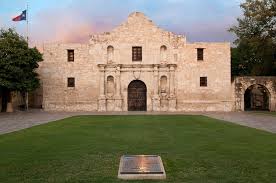
The Alamo
It’s March 5, 1836—the last night of life for the Alamo garrison. The next morning, 2,000 men of the Mexican Army will hurl themselves at the former mission and slaughter its 200 “Texian” defenders.
The fort’s commander, William Barrett Travis, has drawn his “line in the sand” and invited the garrison to choose: To surrender, to try to escape, or to stay and fight to the death.
And the garrison—except for one man—chooses to stay and fight.

An hour after deciding to stand and die in the Alamo, wrapped in the gloom of night, David Crockett is seized with paralyzing fear.
“We’re going to die here,” he chokes out to his longtime friend, Persius Tarr. “You understand that, Persius? We’re going to die!” 
“I know, Davy. But there ain’t no news in that,” says Tarr. “We’re born to die. Every one of us. Only difference between us and most everybody else is we know when and where it’s going to be.”
“But I can’t be afraid—not me. I’m Crockett. I’m Canebrake Davy. I’m half-horse, half-alligator.”
“I know you are, Davy,” says Tarr. “So do all these men here. That’s why you’re going to get past this.
“You’re going to put that fear behind you and walk back out there and fight like the man you are. The fear’s come and now it’s gone. This is our time, Davy.”
And then Tarr delivers a sentiment wholly alien to money-obsessed men like Donald Trump—who comprise the richest and most privileged 1% of today’s Americans.
“There’s men out there with their eyes on you. You’re the only thing keeping the fear away from them. You’re joking and grinning and fiddling—it gives them courage they wouldn’t have had without you.
“Maybe that’s why you’re here, Davy—to make the little men and the scared men into big and brave men. You’ve always cared about the little men, Davy. Remember who you are.
“You’re Crockett of Tennessee, and your glory-time has come. Don’t you miss a bit of it.”
The next morning, the Mexicans assault the Alamo. Crockett embraces his glory-time—and becomes a legend for all-time.

David Crockett (center) at the fall of the Alamo
David Crockett (1786-1836) lived—and died—a poor man. But this did not prevent him from trying to better the lives of his family and fellow citizens—and even his former enemies.
During the war of 1812, he served as a scout under Andrew Jackson. His foes were the Creek Indians, who had massacred 500 settlers at Fort Mims, Alabama—and threatened to do the same to Crockett’s family and neighbors in Tennessee.
But as a Congressman from Tennessee, he opposed then-President Jackson’s efforts to force the same defeated Indians to depart the lands guaranteed them by treaty.
To Crockett, a promise was sacred—whether given by a single man or the United States Government.

David Crockett
And his presence during the 13-day siege of the Alamo did cheer the spirits of the vastly outnumbered defenders.
Crockett, with his fiddle—and a Scotsman named MacGregor, with his bagpipes—often staged musical “duels” to see who could make the most noise.
Contrast this devotion of Crockett to the rights of “the little men,” with the boasts of Donald Trump, the billionaire President of the United States:

Donald Trump
- “The first thing they [doctors] is say: ‘Take off your shirt, sir, and show us that gorgeous chest. We’ve never seen a chest quite like it.’”
- “My fingers are long and beautiful, as, it has been well documented, are various other parts of my body.”
- “Actually, throughout my life, my two greatest assets have been mental stability and being, like, really smart.”
- “My IQ is one of the highest—and you all know it.”
- “My Twitter has become so powerful that I can actually make my enemies tell the truth.”
- “I think the only difference between me and the other candidates is that I’m more honest and my women are more beautiful.”
Unlike Crockett, who defended the weak, Trump boasted of his power:
- “You know I’m automatically attracted to beautiful—I just start kissing them. It’s like a magnet. Just kiss. I don’t even wait. And when you’re a star they let you do it. You can do anything.”
- “The Monroe Doctrine is a big deal, but we’ve superseded it by a lot, by a real lot. They now call it the ‘Donroe Doctrine.'”
- “I have the right to do anything I want to do.”
Those who give their lives for others are rightly loved and remembered as heroes. Those who dedicate their lives solely to their wallets and egos are rightly despised and then forgotten.
2024 PRESIDENTIAL CAMPAIGN, ABC NEWS, ALAMO, ALIEN-SMUGGLING RINGS, ALTERNET, AMNEXTY INTERNATIONAL, ANTONIO LOPEZ DE SANTA ANNA, AP, ARIZONA, BUZZFEED, CALIFORNIA, CBS NEWS, CNN, COLORADO, CROOKS AND LIARS, DAILY KOZ, DAVID CROCKETT, DONALD TRUMP, FACEBOOK, FELIPE CALDERON, GOLIAD MASSACRE, illegal immigration, IMMIGRATIONS AND CUSTOMS ENFORCEMENT (ICE), JAMES BOWIE, JEFF SESSIONS, MEXICAN WAR, MEXICO CITY, MOSES AUSTIN, MOTHER JONES, MOVEON, MSNBC, NBC NEWS, NEVADA, NEW MEXICO, NEWSWEEK, NPR, POLITICO, RAW STORY, REUTERS, SALON, SAM HOUSTON, SAN JACINTO, SEATTLE TIMES, SLATE, SLAVERY, STEPHEN AUSTIN, TEXAS, THE ATLANTIC, THE CHICAGO SUN-TIMES, THE CHICAGO TRIBUNE, THE DAILY BEAST, THE GUARDIAN, THE HILL, THE HUFFINGTON POST, THE LOS ANGELES TIMES, THE NATION, THE NEW YORK TIMES, THE WASHINGTON POST, THOMAS HOMAN, TIME, U.S. NEWS & WORLD REPORT, UNITED STATES DEPARTMENT OF JUSTICE, UNITED STATES HEALTH AND HUMAN SERVICES DEPARTMENT, UPI, USA TODAY, USA TODAY MEXICO, UTAH, X
In Bureaucracy, History, Law, Law Enforcement, Military, Politics, Social commentary on December 3, 2025 at 12:24 am
On November 16, Immigration and Customs Enforcement (CE) published online that it was holding 65,135 people in detention facilities throughout the United States.
This is the largest number of arrested illegal aliens publicly reported by the agency, which was created in 2003 following the 9/11 terrorist attacks.
Critics point out that illegal aliens without criminal records comprise the vast majority of those held in federal detention centers—30,986, or 48%.
This number has increased by over 2,000% since the start of the second Trump administration in January.

Those with criminal convictions represented about 26%, or 17,171, of all ICE detainees.
Illegal presence in the United States, including after overstaying a visa, used to be generally handled as a civil matter in immigration court. Those accused of doing so usually had their cases treated as civil immigration violations, absent additional criminal activity.
Not anymore.
Donald Trump made illegal immigration a key issue in his 2024 campaign for President—and Republicans gleefully signed on. At their nominating convention—July 15-18—a virtual sea of delegates held up blue and white signs reading: “MASS DEPORTATIONS NOW!”
Despite this, numerous Hispanics, when interviewed, said they didn’t feel threatened. They felt certain that Trump would deport “only the bad people.”

Young Latinos, particularly young Latino men, were more supportive to Trump than in 2020. Roughly half of young Latino men voted for Vice President Kamala Harris, compared with about six in 10 who went for Trump.
Since Trump assumed the Presidency on January 20, that “mass deportations now” policy has gone into effect. And it has generated widespread outrage by
- Civil liberties organizations; and
- Those who believe the United States should not have—or enforce—its immigration laws.
Certainly past presidents of Mexico didn’t believe the United States had the right to do so.
On May 20, 2010, Mexico’s then-President Felipe Calderon addressed a joint session of the United States Congress—and attacked a recently-enacted Arizona law that allowed law enforcement officials to detain anyone suspected of being in the country illegally.
According to Calderon, the law “introduces a terrible idea: using racial profiling as a basis for law enforcement: I have said that Mexico does not stop at its border, that wherever there is a Mexican, there is Mexico.”
Ironically, Mexico knows even better than the United States the perils of unchecked illegal immigration.
In 1821, Moses Austin sought a grant from Mexico to settle Texas. After he died in 1821, his son, Stephen, won recognition of the grant by Mexico.
The Mexican government had been unable to persuade large numbers of its own citizens to move to Texas, owing largely to raiding by such fierce Indian tribes as the Comanches.
The government saw the Anglo settlement of Texas as its best hope to tame an otherwise untamable frontier.

Stephen Austin
Austin convinced numerous American settlers to move to Texas, and by 1825 he had brought the first 300 American families into the territory.
Throughout the 1820s, Austin helped ensure the introduction of slavery into Texas, even though, under Mexican law, this was illegal. Tensions developed between unchecked numbers of Anglo settlers flooding into Texas and the Mexican authorities in charge there.
(“GTT”—“Gone to Texas”—was often carved on cabin doors by debt-ridden settlers who decided to seek their fortune in Texas. And some of the most notorious criminals on the frontier—such as land swindler and knife-fighter James Bowie—joined them.)

James Bowie
Eventually, the irresistible force of unlimited Anglo illegal immigration rebelled against the immovable object of Mexican legal/military authority.
The result:
- The battle of the Alamo: From February 23 to March 6, 1836, about 200 rebellious Texans withstood a 13-day siege in a former San Antonio mission, only to be slaughtered to the last man by an army of 2,000 Mexican soldiers commanded by President (actually, dictator) Antonio Lopez de Santa Anna. Among the victims: James Bowie and former Congressman David Crockett.
- The massacre at Goliad: On March 27, 1836, 425-445 Texans captured after the battle of Coleto were shot en masse by Mexican soldiers.
- The battle of San Jacinto: On April 21, 1836, Texans led by General Sam Houston won a surprise Texas victory over Mexican forces who were caught in a mid-afternoon siesta. Santa Anna—who had fled—was captured the next day.
Mexico was forced to give up all rights to Texas—which, nine years after winning its independence, became a state.
But ongoing conflicts between Mexico and the United States over Texas led to the Mexican war in 1846.
This, in turn, led to a series of devastating American victories over the Mexican army, and the capture of Mexico City itself.

Territory (in brown) that Mexico lost after the Mexican War
Mexico suffered the humiliation of both military defeat and the loss of its land holdings within the American Southwest—which, up to 1848, it had controlled.
This territory later became the states of California, New Mexico, Utah, Nevada, Arizona, Texas, and western Colorado.
And the United States finally spread “from sea to shining sea.”
So Mexico knows what it’s doing when it unloads millions of its own citizens—and those of other Latin and Central American countries—on the United States.
Mexico, in short, is a textbook case of what happens to a country that is unable to enforce its own immigration laws.
2018 FEDERAL GOVERNMENT SHUTDOWN, ABC NEWS, ADOLF, ADOLF HITLER, AFFORDABLE CARE ACT (ACT), ALAMO, ALTERNET, AMERICABLOG, ANTONIO LOPEZ DE SANTA ANNA, AP, “BIG BEAUTIFUL BILL, BABY BOOMER RESISTANCE, BBC, BLOOMBERG, BLUESKY, BOB WOODWARD, BORDER WALL, BUZZFEED, CBS NEWS, CNN, CROOKS AND LIARS, CZECHOSLOVAKIA, DAILY KOS, DAVID CROCKETT, DEMOCRATS, DONALD TRUMP, FBI, FEDERAL AVIATION ADMINISTRATION, FEDERAL GOVERNMENT SHUTDOWN, FIVETHIRTYEIGHT, FURLOUGHS, GOVERNMENT SHUTDOWN, HAKEEM JEFFRIES, HARPER’S MAGAZINE, HUFFINGTON POST, ILLEGAL ALIENS, J.D. VANCE, JACK SMITH, JAMES BOWIE, JIMMY KIMMEL, JOHN F. KENNEDY, JOSE ANDRES, JOSEPH STALIN, KIM JONG UN, MANUEL CASTILLON, MEDIA MATTERS, MEDICAID, MEDICARE, MOTHER JONES, MOVEON, MSNBC, MSNBC'S "HARDBALL", NATIONAL PARK SERVICE, NBC NEWS, NEWSDAY, NEWSWEEK, NPR, OBAMACARE, PBS NEWSHOUR, POLITICO, POLITICUSUSA, RAW STORY, REPUBLICAN PARTY, REPUBLICANS, REUTERS, RICHARD NIXON, ROBERT MUELLER, ROBERT PAYNE, SALON, SEATTLE TIMES, SLATE, SOVIET UNION, TALKING POINTS MEMO, THE ATLANTIC, THE CHICAGO SUN-TIMES, THE CHICAGO TRIBUNE, THE DAILY BEAST, THE DAILY BLOG, THE GUARDIAN, THE HILL, THE HUFFINGTON POST, THE INTERCEPT, THE LIFE AND DEATH OF ADOLF HITLER (BOOK), THE LOS ANGELES TIMES, THE NATION, THE NEW REPUBLIC, THE NEW YORK TIMES, THE NEW YORKER, THE PRINCE, THE VILLAGE VOICE, THE WASHINGTON POST, THINKPROGRESS, TIME, TRANSPORTATION SAFETY ADMINISTRATION (TSA), TRUTHDIG, TRUTHOUT, TWO POLITICAL JUNKIES, U.S. NEWS & WORLD REPORT, UNITED STATES HOLOCAUST MEMORIAL, UNITED STATES HOUSE OF REPRESENTATIVES, UNITED STATES SENATE, UPI, USA TODAY, WASHINGTON WEEK, WINSTON CHURCHILL, WONKETTE, WORLD WAR 11, X
In Bureaucracy, Business, History, Law, Medical, Military, Politics, Social commentary on October 7, 2025 at 12:10 am
On October 1, President Donald Trump shut down the Federal government.
On July 4, Trump had signed the One Big Beautiful Bill Act into law, which impacts Medicaid, Medicare and the Affordable Care Act (ACA), and is projected to cause millions of Americans to lose health insurance coverage.
The bill includes the largest cuts in Medicaid’s history, reducing funding by nearly $1 trillion over the next decade.
Or, as Trump and Republicans might say: “What are the lives of Americans but so many chickens?”
Democratic senators refused to support a temporary spending bill to fund the government unless it included an extension of these subsidies, which keep health care plans affordable for many Americans.
Trump—and Congressional Republicans—refused to do this. In addition, both falsely claimed that Democrats wanted to give health coverage to illegal aliens.
For Trump, winning—not truth—is all that matters. During his first term as President, he told 30,573 lies.

Donald Trump
Congress failed to pass the annual appropriations bills required to fund government agencies before the new fiscal year began on October 1, 2025. As a result, federal agencies must cease all “non-essential” functions until funding is approved.
The Congressional Budget Office estimated that about 750,000 employees will be furloughed on the average day. That’s $400 million in salary each day that the government will ultimately pay, but will not get work for.
Trump had threatened to use a shutdown to permanently reduce the size of the federal workforce.
“We can get rid of a lot of things that we didn’t want and they’d be Democrat things,” Trump told reporters in the Oval Office. “They just don’t learn. So we have no choice. I have to do that for the country.
“When you shut it down, you have to do layoffs, so we’d be laying off a lot of people. They’re going to be Democrats.”
This is the language—and “negotiating” style—of Adolf Hitler.
Robert Payne, author of the bestselling biography, The Life and Death of Adolf Hitler (1973), described Hitler’s “negotiating” style thus:

“Although Hitler prized his own talents as a negotiator, a man always capable of striking a good bargain, he was totally lacking in finesse.
“He was incapable of bargaining. He was like a man who goes up to a fruit peddler and threatens to blow his brains out if he does not sell his applies at the lowest possible price.”
Like Hitler, Trump relies on insults and anger to put his victims on the defense.
On September 29, Trump posted an AI-generated video on social media depicting House Democratic leader Hakeem Jeffries wearing a sombrero and curly mustache as mariachi music plays in the background.
After Jeffries condemned the video as racist and bigoted, on September 30 Trump posted another deepfake video mocking his reaction.
On October 1, Vice President J.D. Vance called the videos “funny,” adding, “The president’s joking, and we’re having a good time.”
Yet Trump has raged when late-night comedians like Jimmy Kimmel have joked about him.
Like Hitler, Trump relies on fear: “Real power is—I don’t even want to use the word—fear,” he told journalist Bob Woodward in March 2016 when still a Presidential candidate.
On the October 3 edition of Washington Week with the Atlantic, Ashley Parker, a staff writer for The Atlantic magazine, said:
“[Trump] likes threatening Democrats, right, saying, we’re going to do what Project 2025 promised. We’re going to fire all these workers. We’re going to figure out what agencies we can just eliminate forever. It’s a fun thing to say. That’s for him. That’s why I say it’s trolling, but it’s not quite clear that that’s actually what he wants to do.”

Federal agencies began explicitly blaming Democrats for the government shutdown—even before it happened.
On September 30, the Department of Housing and Urban Development’s website posted: “The radical left are going to shut down the government.”
For Trump, everyone who opposes him is a “radical leftist”-–even though he boasted that he and Communist North Korean dictator Kim Jong-Un “fell in love.”
Democrats fear they will be blamed for the shutdown. Yet they might triumph if they remember that what worked against Hitler will most likely work against Trump.
Rule #1: Refuse to placate a brutal dictator. Such men see any concessions as weakness—and make only greater demands. Hitler, for example, demanded only a part of Czechoslovakia—and then seized the whole country.
Rule #2: When Hitler found himself facing an opponent who couldn’t be bribed or cowed—such as British Prime Minister Winston Churchill or Soviet Premier Joseph Stalin—he raged and/or sulked.
When Trump has faced an opponent he can’t buy or intimidate—such as Special Counsels Robert Mueller and Jack Smith—he has done the same.
Rule #3: Don’t sell out an ally or make concessions to an insatiable dictator—and believe he can be trusted to keep his word. Trump has repeatedly proven his word can’t be trusted.
Far more than a government shutdown is at stake.
If Democrats fall victim to their usual cowardice and disunity in the face of Right-wing threats and attacks, they will:
- End their relevance as a political party; and
- Condemn to death millions of Americans who cannot obtain life-saving medical care while billionaires gain huge tax cuts.
ABC NEWS, ADOLF HITLER, AFFORDABLE CARE ACT (ACT), ALAMO, ALTERNET, AMERICABLOG, ANTONIO LOPEZ DE SANTA ANNA, AP, “BIG BEAUTIFUL BILL, BABY BOOMER RESISTANCE, BARACK OBAMA, BBC, BLOOMBERG, BLUESKY, BOB WOODWARD, BORDER WALL, BUZZFEED, CBS NEWS, CNN, CROOKS AND LIARS, CZECHOSLOVAKIA, DAILY KOS, DAVID CROCKETT, DEMOCRATS, DONALD TRUMP, FBI, FEDERAL AVIATION ADMINISTRATION, FEDERAL GOVERNMENT SHUTDOWN, FIVETHIRTYEIGHT, HAKEEM JEFFRIES, HARPER’S MAGAZINE, HUFFINGTON POST, ILLEGAL ALIENS, J.D. VANCE, JACK SMITH, JAMES BOWIE, JIMMY KIMMEL, JOSE ANDRES, JOSEPH STALIN, KIM JONG UN, MANUEL CASTILLON, MEDIA MATTERS, MEDICAID, MEDICARE, MOTHER JONES, MOVEON, MSNBC, NANCY PELOSI, NBC NEWS, NEWSDAY, NEWSWEEK, NPR, OBAMACARE, PBS NEWSHOUR, POLITICO, POLITICUSUSA, RAW STORY, REPUBLICANS, REUTERS, ROBERT MUELLER, ROBERT PAYNE, SALON, SEATTLE TIMES, SLATE, TALKING POINTS MEMO, THE ATLANTIC, THE CHICAGO SUN-TIMES, THE CHICAGO TRIBUNE, THE DAILY BEAST, THE DAILY BLOG, THE GUARDIAN, THE HILL, THE HUFFINGTON POST, THE INTERCEPT, THE LIFE AND DEATH OF ADOLF HITLER (BOOK), THE LOS ANGELES TIMES, THE NATION, THE NEW REPUBLIC, THE NEW YORK TIMES, THE NEW YORKER, THE PRINCE, THE VILLAGE VOICE, THE WASHINGTON POST, THINKPROGRESS, TIME, TRANSPORTATION SAFETY ADMINISTRATION (TSA), TRUTHDIG, TRUTHOUT, TWO POLITICAL JUNKIES, U.S. NEWS & WORLD REPORT, UNITED STATES HOUSE OF REPRESENTATIVES, UNITED STATES SENATE, UPI, USA TODAY, UV LIGHT, WASHINGTON WEEK, WINSTON CHURCHILL, WONKETTE, X
In Bureaucracy, Business, History, Medical, Military, Politics, Social commentary on October 6, 2025 at 12:46 am
It was the night of March 5, 1836. For the roughly 200 men inside the surrounded Alamo, death lay only hours away.
Inside a house in San Antonio, Texas, Mexican dictator Antonio Lopez de Santa Anna was holding a council of war with his generals.
For 12 days, his army had bombarded the old mission. Still, the Texians—whose numbers included the legendary bear hunter and Congressman David Crockett and knife fighter James Bowie—held out.
Now Santa Anna was in a hurry to take the makeshift fortress. Once its defenders were dead, he could march on to sweep all American settlers from Texas.
One of his generals, Manuel Castrillón, urged Santa Anna to wait just a few more days. By then, far bigger cannon would be available. When the Alamo’s three-feet-thick walls had been knocked down, the defenders would be forced to surrender.
The lives of countless Mexican soldiers would thus be spared.
Santa Anna was eating a late-night chicken dinner. He held up a chicken leg and said: “What are the lives of soldiers but those of so many chickens?”
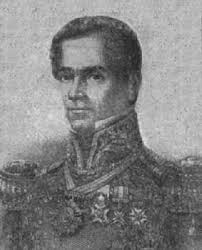
Antonio Lopez de Santa Anna
Santa Anna ordered his generals to prepare an all-out attack on the Alamo, to be launched the next morning—March 6, 1836—at 5 a.m.
Hours later, the attack went forward. Within 90 minutes, every Alamo defender was dead—and so were at least 600 Mexican soldiers.
“What are the lives of Americans but those of so many chickens?”
That could well be the slogan of President Donald Trump and his fellow Republicans during the October 1 shutdown of the Federal government.
On July 4, Trump signed the One Big Beautiful Bill Act into law, which enacts significant cuts to federal health programs to help pay for tax reductions.
The law primarily impacts Medicaid, Medicare, and the Affordable Care Act (ACA), and is projected to cause millions of Americans to lose health insurance coverage. The bill includes the largest cuts in Medicaid’s history, reducing funding by nearly $1 trillion over the next decade.
Democrats had demanded a bill that reversed cuts to Medicaid and prevented health insurance premiums from rising at the end of the year. Republicans had refused.
Trump had threatened to use a shutdown to permanently reduce the size of the federal work force:
“We can do things during the shutdown that are irreversible, that are bad for them and irreversible by them, like cutting vast numbers of people out, cutting things that they like, cutting programs that they like.”

Donald Trump
And Trump’s Congressional supporters quickly issued threats of their own:
“We have never had Democrats that are so insane as this,” said Senator Bernie Moreno (R-OH), “because this is going to last a long—if they shut down the government tonight, my prediction is it will go on for a long, long time.”
“Far-left interest groups and far-left Democrat members wanted to show down with the president, and so Senate Democrats have sacrificed the American people to Democrats’ partisan interests,” Senate majority leader John Thune said.
Republicans control the White House, the Senate and the House of Representatives. Yet they are blaming the shutdown on the party that doesn’t control any of these institutions.
And they are using a Trump lie to justify it: “One of the things [Democrats] want to do is, they want to give incredible Medicare, Cadillac, the Cadillac Medicare, to illegal immigrants. And what that does is, it keeps them coming into our country like they do in California. And no country can afford that, no country.”
On the September 30 edition of The PBS News Hour, Liz Landers, the News Hour’s White House correspondent, said: “Undocumented immigrants are not allowed to be enrolled in federally funded health care coverage in this country. That includes Medicare, Medicaid, CHIP, the child health care program, and even some of those Affordable Care Act subsidies.”
This is the first government shutdown since December 22, 2018, during Trump’s first term. Angered that Democrats refused his demands for border wall funding, Trump declared the government closed.
About 380,000 government employees were furloughed and another 420,000 were ordered to work without pay.
The shutdown lasted 35 days—December 22, 2018 to January 25, 2019. It ended only when House Speaker Nancy Pelosi refused to open the House of Representatives for Trump’s annual State of the Union message.
The effects of the shutdown quickly became evident:
- For weeks, hundreds of thousands of government workers missed paychecks.
- Trash piled up in national parks.
- Increasing numbers of employees of the Transportation Safety Administration (TSA)—which provides security against airline terrorism—began refusing to come to work, claiming to be sick.
- At the Federal Aviation Administration (FAA) many air traffic controllers called in “sick.” Those who showed up to work without pay grew increasingly frazzled as they feared being evicted for being unable to make rent or house payments.
- Due to the shortage of air traffic controllers, many planes weren’t able to land safely at places like New York’s LaGuardia Airport.
- Many Federal employees—such as FBI agents—were forced to rely on soup kitchens to feed their families.
- Celebrity chef Jose Andres launched ChefsForFeds, which offered free hot meals for government employees and their families at restaurants across the country.
- Many workers tried to bring in money by babysitting or driving for Uber.
ABC NEWS, ALAMO, ALTERNET, AMERICABLOG, ANDREW JACKSON, ANTONIO LOPEZ DE SANTA ANNA, AP, BABY BOOMER RESISTANCE, BBC, BLOOMBERG NEWS, BUZZFEED, CBS NEWS, CHARLES VII, CNN, CROOKS AND LIARS, DAILY KOZ, DAVID CROCKETT, FIVETHIRTYEIGHT, FRANCE, HARPER’S MAGAZINE, HUFFINGTON POST, JAMES BOWIE, JOAN OF ARC, LONE STAR: A HISTORY OF TEXAS AND THE TEXANS (BOOK), MEDIA MATTERS, MOTHER JONES, MOVEON, MSNBC, NBC NEWS, NEW REPUBLIC, NEWSDAY, NEWSWEEK, NPR, PBS NEWSHOUR, POLITICO, POLITICUSUSA, RAW STORY, REUTERS, RUSSIA, SALON, SAM HOUSTON, SEATTLE TIMES, SLATE, T.R. FEHRENBACH, TALKING POINTS MEMO, TEXAS, THE ATLANTIC, THE CHICAGO SUN-TIMES, THE CHICAGO TRIBUNE, THE DAILY BEAST, THE DAILY BLOG, THE GUARDIAN, THE HILL, THE HUFFINGTON POST, THE INTERCEPT, THE LOS ANGELES TIMES, THE NATION, THE NEW REPUBLIC, THE NEW YORK TIMES, THE NEW YORKER, THE VILLAGE VOICE, THE WASHINGTON POST, THINKPROGRESS, TIME, TRUTHDIG, TRUTHOUT, TWO POLITICAL JUNKIES, U.S. NEWS & WORLD REPORT, UKRAINE, UPI, USA TODAY, VLADIMIR PUTIN, VOLODYMYR ZELENSKY, WILLIAM BARRET TRAVIS, WONKETTE, X
In History, Military, Politics, Social commentary on January 1, 2025 at 12:05 am
They seem to come out of nowhere—people who have never had military training nor even any experience with violence. Yet they display an utter fearlessness and eloquence that inspires others to great deeds in the face of overwhelming danger.
For 13 days—from February 23 to March 6, 1836—about 200 frontiersmen defended a ruined mission in San Antonio, Texas, against an army of 2,000 Mexican soldiers.
Few of them had known each other before finding themselves besieged. None of them had had professional military training. Some had served in local militias or as irregulars fighting Indians under the command of frontier officers such as Andrew Jackson.
One of these was David Crockett, recently a Congressman from Tennessee.
Since the vast majority of the garrison were volunteers, they could have deserted the fortress at any time.
Holding them in place was a former lawyer named William Barret Travis. Gifted with an eloquence beyond his 26 years, he gave purpose to their stand.
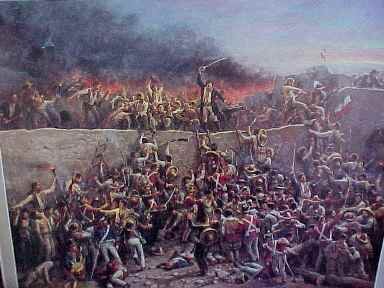
William Barret Travis (with sword) at the Alamo
As historian T.R. Fehrenbach writes in his monumental book, Lone Star: A History of Texas and the Texans:
“From the Alamo, from his first message before the arrival of the Mexicans to his last, his words had the ring of prophecy. The Texas historian who stated publicly that few people would want to have a son serve under William Barret Travis had forgotten, in the comforts of long security, the reasons why men make war.”
When the final assault came before dawn on March 6, 1836, the roughly 200 defenders killed and wounded about 600 of their enemies—inflicting a casualty rate of 33% on the Mexican army.
Travis’ body was found near his cannon on the north wall. He had been shot through the forehead.
The garrison’s sacrifice inspired Sam Houston’s ragtag army to fall on the Mexican army at San Jacinto on April 21. Slaughtering about 800 soldiers, the Texans captured Mexican dictator Antonio Lopez de Santa Anna—and forced him to surrender control of Texas in return for his life.
- Volodymyr Zelensky (January 25, 1978 – ) is a former attorney, actor and comedian who, as the sixth president of Ukraine, now leads his country in a life-or-death struggle against the aggressive Russia of Vladimir Putin.
After earning a law degree from the Kiev National Economic University, he pursued a career in comedy. He created his own production company, Kvartal 95, which produced films, cartoons, and TV shows. His comedy, Servant of the People, starred Zelensky as the president of Ukraine.

Volodymyr Zelensky
In 2019, he announced his candidacy for president of Ukraine. He opposed the corruption that had been rife under the country’s luxury-loving president, Victor Yanukovych.
(In 2014, Ukrainians had rioted in Kiev and evicted Yanukovych. And that didn’t sit well with his “sponsor”—Russian President Vladimir Putin.)
A second feature of Zelensky’s presidential campaign: He promised to resolve the Russia-sponsored separatist movement in Donbas and end Ukraine’s protracted conflict there with Russia.
Zelensky won election by a landslide, with 72% of the vote.
In 2021, his administration came under mounting pressure from Russia. On February 24, 2022, Putin ordered a full-scale invasion of Ukraine.
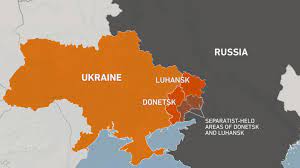
Ukraine vs. Russia
In the early hours of February 24, shortly before the start of the Russian invasion, Zelensky recorded an address to both Ukraine and Russia. As a Jew, he refuted Putin’s claims that there were Neo-Nazis in the Ukrainian government.
And he appealed to Russians—in Russian—to pressure their leadership to prevent war.
During the assault by Russian troops on the capital of Kiev, the Biden administration urged Zelensky to evacuate to a safer location and offered to help him do so. Zelensky refused, saying: “The fight is here [in Kiev]; I need ammunition, not a ride.”
As CBS correspondent Scott Pelley put it: “The moment Zelensky told his people he refused to flee, they refused to fall.”
Russia expected Kiev to fall in three days. But almost three years after the invasion, Kiev still remains defiant—and in the hands of Ukrainians.
When he wasn’t broadcasting defiance at Russia and rousing Ukrainians to heroism, he was often visiting the battlefront.
Interviewed on CBS’ 60 Minutes, Zelensky said: “I don’t want to make myself out to be a hero. I love my family. I want to live many more years, but choosing between running or being with my people, of course I’m ready to give my life for my country.”
Since the start of the invasion, he has reportedly been the target of more than a dozen assassination attempts.
Other world leaders have applauded his courage and leadership. Historian Andrew Roberts compared him to Winston Churchill.
The Harvard Political Review said that Zelensky “has harnessed the power of social media to become history’s first truly online wartime leader, bypassing traditional gatekeepers as he uses the internet to reach out to the people.”
Zelensky sees Ukraine’s struggle as the opening round of Russia’s war against the West.
“Some are….saying, ‘We can’t defend Ukraine because there could be a nuclear war.’ I think that today, no one in this world can predict what Russia will do. If they invade further into our territory, then they will definitely move closer and closer to Europe. They will only become stronger and less predictable.”
ABC NEWS, ALAMO, ALTERNET, AMERICABLOG, ANDREW JACKSON, ANTONIO LOPEZ DE SANTA ANNA, AP, BABY BOOMER RESISTANCE, BBC, BLOOMBERG NEWS, BUZZFEED, CBS NEWS, CHARLES VII, CNN, CROOKS AND LIARS, DAILY KOZ, DAVID CROCKETT, FIVETHIRTYEIGHT, FRANCE, HARPER’S MAGAZINE, HUFFINGTON POST, JAMES BOWIE, JOAN OF ARC, LONE STAR: A HISTORY OF TEXAS AND THE TEXANS (BOOK), MEDIA MATTERS, MOTHER JONES, MOVEON, MSNBC, NBC NEWS, NEW REPUBLIC, NEWSDAY, NEWSWEEK, NPR, PBS NEWSHOUR, POLITICO, POLITICUSUSA, RAW STORY, REUTERS, RUSSIA, SALON, SAM HOUSTON, SEATTLE TIMES, SLATE, T.R. FEHRENBACH, TALKING POINTS MEMO, TEXAS, THE ATLANTIC, THE CHICAGO SUN-TIMES, THE CHICAGO TRIBUNE, THE DAILY BEAST, THE DAILY BLOG, THE GUARDIAN, THE HILL, THE HUFFINGTON POST, THE INTERCEPT, THE LOS ANGELES TIMES, THE NATION, THE NEW REPUBLIC, THE NEW YORK TIMES, THE NEW YORKER, THE VILLAGE VOICE, THE WASHINGTON POST, THINKPROGRESS, TIME, TRUTHDIG, TRUTHOUT, TWO POLITICAL JUNKIES, U.S. NEWS & WORLD REPORT, UKRAINE, UPI, USA TODAY, VLADIMIR PUTIN, VOLODYMYR ZELENSKY, WILLIAM BARRET TRAVIS, WONKETTE, X
In History, Military, Politics, Social commentary on December 31, 2024 at 12:02 am
Joan of Arc. William Barret Travis. Volodymyr Zelensky.
The first two names long ago burned themselves into the pages of history. The third one is now doing the same.
They seem to come out of nowhere—people who have never had military training nor even any experience with violence. Yet they display an utter fearlessness and eloquence that inspires others to great deeds in the face of overwhelming danger.
- Joan of Arc (c. 1412 – 30 May 1431) was an illiterate peasant girl who, in France’s darkest hour, became its greatest hero.
In 1428, when she was about 17, Joan traveled to Vaucouleurs and asked for an armed escort to King Charles V11. She said that she had received visions from the archangel Michael, Saint Margaret and Saint Catherine of Alexandra, instructing her to deliver France from English domination.
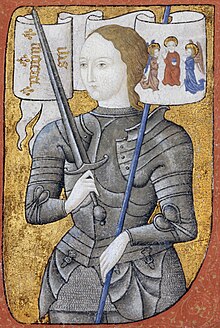
Joan of Arc
Her request was rejected twice, but eventually Robert de Baudricourt, the garrison commander, relented and gave her an escort to meet Charles at Chinon. She had never seen Charles, but even though he disguised himself among his courtiers, she instantly recognized him.
After their interview, Charles sent Joan at the head of a relief army to lift the siege of Orléans.
She had never wielded a lance or sword, or even ridden a war horse. She had never studied military strategy nor even seen a battlefield. Yet nine days after arriving at Orléans, she lifted the siege on May 8, 1429.
On May 4, her army attacked the outlying fortress of Saint Loup. She arrived just as the French soldiers were retreating after a failed attempt. Her sudden appearance roused the soldiers to cheer and launch another assault—which overwhelmed the fortress.
In June, Joan decisively defeated the English at the Battle of Patay. She then advanced on Reims, entering the city on July 16. The next day, Charles was consecrated as the King of France in Reims Cathedral with Joan at his side.
These victories paved the way for the final French victory in the Hundred Years’ War at Castillon in 1453.
Joan never attributed her success to anyone but God. She referred to herself as “Joan the Maid” and demanded that her soldiers refrain from sexual activity. At her orders, prostitutes—the camp followers of both French and British armies—were driven out of her encampments.
She did not expect to live a long life—and warned that the French had only about a year to claim their victories before she died.
On May 23, 1430, while relieving the siege of Compiegne, she was captured by Burgundians troops and exchanged to the English. Tried for heresy, she was declared guilty and burned at the stake on May 30,1431.
Only 19 when she died, she had, through her inspired leadership, restored the kingdom of France.
- William Barret Travis (August 1, 1809 – March 6, 1836) was a South Carolina lawyer whose courage and eloquence inspired 200 Texans to hold back a Mexican army at the Alamo.
An early advocate of Texas’ independence from Mexico, Travis entered the newly-formed Texas army as a regular officer. Although he had no experience in battle, he burned for glory as a cavalryman. But he accepted the order of Governor Henry Smith to go to San Antonio and defend the Alamo from the approaching Mexicans.
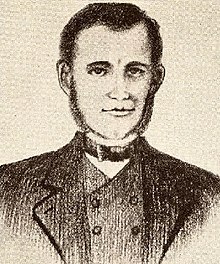
William Barret Travis
Arriving there, he found himself overshadowed by the popularity of co-commander James Bowie, the legendary knife fighter. But when Bowie collapsed with pneumonia on February 23, 1836—the first day of the siege—Travis took command.
According to historian T.R. Fehrenbach:
“The true measure of this man, with his soldier’s cap, his sword, his exalted ideas of honor, and his florid rhetoric, was that he captured these violent frontiersmen and bent them to his purpose.
“No competent Texas historian really believes Travis drew his line on the ground with his sword and invited his men to leave or stay. That was not Buck Travis’ style. He intended to keep his command on the walls regardless of what the men wanted. He was consciously guarding the ramparts of Texas.”

The siege of the Alamo
On February 23, 1836, Travis penned one of the most famous letters in early American history. Addressing it “To the People of Texas and All Americans in the World,” he wrote:
“I am besieged with a thousand or more of the Mexicans under Santa Anna [the president and dictator of Mexico]…..
“The enemy has demanded our surrender at discretion, otherwise the garrison is to be put to the sword. I shall never surrender or retreat. Thus, I call on you in the name of Liberty, of patriotism, and everything dear to the American character, to come to my aid with all dispatch…
“If this call is neglected I am determined to sustain myself as long as possible and die like a soldier who never forgets what is due his honor and that of his country. VICTORY OR DEATH.”
On March 3, Travis wrote his last letter, addressing it to the newly-declared Republic of Texas. “I shall have to fight the enemy on his own terms….The victory will cost the enemy so dear it will be worse for him than a defeat.”
On March 6, 1836, his prophecy came true.
ABC NEWS, ALAMO, ALTERNET, AMERICABLOG, ANDREW JACKSON, AP, BABY BOOMER RESISTANCE, BUZZFEED, CAMERON JUDD, CBS NEWS, CNN, CROCKETT OF TENNESSEE, CROOKS AND LIARS, DAILY KOS, DAVID CROCKETT, DAVY CROCKETT: KING OF THE WILD FRONTIER, DONALD TRUMP, FIVETHIRTYEIGHT, INDIAN WARS, JAMES BOWIE, MITT ROMNEY, MOTHER JONES, MOVEON, MSNBC, NBC NEWS, NBCNEWS, NEWSWEEK, NPR, PBS NEWSHOUR, POLITICO, POLITICUSUSA, RAW STORY, REUTERS, SALON, SEATTLE TIMES, SLATE, TALKING POINTS MEMO, TEXAS REVOLUTION, THE ATLANTIC, THE CHICAGO SUN-TIMES, THE CHICAGO TRIBUNE, THE DAILY BEAST, THE DAILY BLOG, THE GUARDIAN, THE HILL, THE HUFFINGTON POST, THE LOS ANGELES TIMES, THE NATION, THE NEW YORK TIMES, THE WASHINGTON POST, THINKPROGRESS, TIME, TRUTHDIG, U.S. NEWS & WORLD REPORT, UPI, USA TODAY, WALT DISNEY, WILLIAM BARRETT TRAVIS, X
In Bureaucracy, Business, History, Military, Politics, Social commentary on October 7, 2024 at 12:20 am
March 6, 2024, marked the 188th anniversary of the fall of the Alamo, a crumbling former Spanish mission in the heart of San Antonio, Texas.
It’s been the subject of novels, movies, biographies, histories and TV dramas (most notably Walt Disney’s 1955 “Davy Crockett: King of the Wild Frontier”).
Perhaps the most extraordinary scene in any Alamo movie or book occurs in the 1993 novel, Crockett of Tennessee, by Cameron Judd.
And it is no less affecting for its being—so far as we know—entirely fictional.
The Alamo
It’s March 5, 1836—the last night of life for the Alamo garrison. The next morning, 2,000 men of the Mexican Army will hurl themselves at the former mission and slaughter its 200 “Texian” defenders.
The fort’s commander, William Barrett Travis, has drawn his “line in the sand” and invited the garrison to choose: To surrender, to try to escape, or to stay and fight to the death.
And the garrison—except for one man—chooses to stay and fight.
For the garrison, immortality lies only hours away. Or does it?
An hour after deciding to stand and die in the Alamo, wrapped in the gloom of night, David Crockett is seized with paralyzing fear.
“We’re going to die here,” he chokes out to his longtime friend, Persius Tarr. “You understand that, Persius? We’re going to die!”
“I know, Davy. But there ain’t no news in that,” says Tarr. “We’re born to die. Every one of us. Only difference between us and most everybody else is we know when and where it’s going to be.”
“But I can’t be afraid—not me. I’m Crockett. I’m Canebrake Davy. I’m half-horse, half-alligator.”
“I know you are, Davy,” says Tarr. “So do all these men here. That’s why you’re going to get past this.
“You’re going to put that fear behind you and walk back out there and fight like the man you are. The fear’s come and now it’s gone. This is our time, Davy.”
And then Tarr delivers a sentiment wholly alien to money-obsessed men like Donald Trump—who comprise the richest and most privileged 1% of today’s Americans.
“There’s men out there with their eyes on you. You’re the only thing keeping the fear away from them. You’re joking and grinning and fiddling—it gives them courage they wouldn’t have had without you.
“Maybe that’s why you’re here, Davy—to make the little men and the scared men into big and brave men. You’ve always cared about the little men, Davy. Remember who you are.
“You’re Crockett of Tennessee, and your glory-time has come. Don’t you miss a bit of it.”
The next morning, the Mexicans assault the Alamo. Crockett embraces his glory-time—and becomes a legend for all-time.
David Crockett (center) at the fall of the Alamo
David Crockett (1786-1836) lived—and died—a poor man. But this did not prevent him from trying to better the lives of his family and fellow citizens—and even his former enemies.
During the war of 1812, he served as a scout under Andrew Jackson. His foes were the Creek Indians, who had massacred 500 settlers at Fort Mims, Alabama—and threatened to do the same to Crockett’s family and neighbors in Tennessee.
But as a Congressman from Tennessee, he opposed then-President Jackson’s efforts to force the same defeated Indians to depart the lands guaranteed them by treaty.
To Crockett, a promise was sacred—whether given by a single man or the United States Government.
David Crockett
And his presence during the 13-day siege of the Alamo did cheer the spirits of the vastly outnumbered defenders.
Crockett, with his fiddle—and a Scotsman named MacGregor, with his bagpipes—often staged musical “duels” to see who could make the most noise.
Contrast this devotion of Crockett to the rights of “the little men,” with the attitude of Donald Trump, the alleged billionaire former President of the United States.
Donald Trump
Throughout the 2016 Presidential campaign, Trump made such statements as:
- “…I don’t need anybody’s money. It’s nice. I’m using my own money. I’m not using lobbyists, I’m not using donors. I don’t care. I’m really rich.”
- “I did a lot of great deals and I did them early and young, and now I’m building all over the world….”
- “So I have a total net worth, and now with the increase, it’ll be well over $10 billion.”
- My fingers are long and beautiful, as, it has been well documented, are various other parts of my body.”
- “My IQ is one of the highest—and you all know it.”
- “My Twitter has become so powerful that I can actually make my enemies tell the truth.”
- “I think the only difference between me and the other candidates is that I’m more honest and my women are more beautiful.”
Unlike Crockett, who defended the weak, Trump boasted of his power:
“You know I’m automatically attracted to beautiful—I just start kissing them. It’s like a magnet. Just kiss. I don’t even wait. And when you’re a star they let you do it. You can do anything.”
Those who give their lives for others are rightly loved and remembered as heroes. Those who dedicate their lives solely to their wallets and egos are rightly soon forgotten.
ABC NEWS, ALAMO, ALTERNET, AMERICABLOG, ANDREW JACKSON, ANTONIO LOPEZ DE SANTA ANNA, AP, BABY BOOMER RESISTANCE, BBC, BLOOMBERG NEWS, BUZZFEED, CBS NEWS, CHARLES VII, CNN, CROOKS AND LIARS, DAILY KOZ, DAVID CROCKETT, FIVETHIRTYEIGHT, FRANCE, HARPER’S MAGAZINE, HUFFINGTON POST, JAMES BOWIE, JOAN OF ARC, LONE STAR: A HISTORY OF TEXAS AND THE TEXANS (BOOK), MEDIA MATTERS, MOTHER JONES, MOVEON, MSNBC, NBC NEWS, NEW REPUBLIC, NEWSDAY, NEWSWEEK, NPR, PBS NEWSHOUR, POLITICO, POLITICUSUSA, RAW STORY, REUTERS, RUSSIA, SALON, SAM HOUSTON, SEATTLE TIMES, SLATE, T.R. FEHRENBACH, TALKING POINTS MEMO, TEXAS, THE ATLANTIC, THE CHICAGO SUN-TIMES, THE CHICAGO TRIBUNE, THE DAILY BEAST, THE DAILY BLOG, THE GUARDIAN, THE HILL, THE HUFFINGTON POST, THE INTERCEPT, THE LOS ANGELES TIMES, THE NATION, THE NEW REPUBLIC, THE NEW YORK TIMES, THE NEW YORKER, THE VILLAGE VOICE, THE WASHINGTON POST, THINKPROGRESS, TIME, TRUTHDIG, TRUTHOUT, TWO POLITICAL JUNKIES, U.S. NEWS & WORLD REPORT, UKRAINE, UPI, USA TODAY, VLADIMIR PUTIN, VOLODYMYR ZELENSKY, WILLIAM BARRET TRAVIS, WONKETTE, X
In History, Military, Politics, Social commentary on May 21, 2024 at 12:10 am
They seem to come out of nowhere—people who have never had military training nor even any experience with violence. Yet they display an utter fearlessness and eloquence that inspires others to great deeds in the face of overwhelming danger.
For 13 days—from February 23 to March 6, 1836—about 200 frontiersmen defended a ruined mission in San Antonio, Texas, against an army of 2,000 Mexican soldiers.
Few of them had known each other before finding themselves besieged. None of them had had professional military training. Some had served in local militias or as irregulars fighting Indians under the command of frontier officers such as Andrew Jackson.
One of these was David Crockett, recently a Congressman from Tennessee.
Since the vast majority of the garrison were volunteers, they could have deserted the fortress at any time.
Holding them in place was a former lawyer named William Barret Travis. Gifted with an eloquence beyond his 26 years, he gave purpose to their stand.
William Barret Travis (with sword) at the Alamo
As historian T.R. Fehrenbach writes in his monumental book, Lone Star: A History of Texas and the Texans:
“From the Alamo, from his first message before the arrival of the Mexicans to his last, his words had the ring of prophecy. The Texas historian who stated publicly that few people would want to have a son serve under William Barret Travis had forgotten, in the comforts of long security, the reasons why men make war.”
When the final assault came before dawn on March 6, 1836, the roughly 200 defenders killed and wounded about 600 of their enemies—inflicting a casualty rate of 33% on the Mexican army.
Travis’ body was found near his cannon on the north wall.
The garrison’s sacrifice inspired Sam Houston’s ragtag army to fall on the Mexican army at San Jacinto on April 21. Slaughtering about 800 soldiers, the Texans captured Mexican dictator Antonio Lopez de Santa Anna—and forced him to surrender control of Texas in return for his life.
- Volodymyr Zelensky (January 25, 1978 – ) is a former attorney, actor and comedian who, as the sixth president of Ukraine, now leads his country in a life-or-death struggle against the aggressive Russia of Vladimir Putin.
After earning a law degree from the Kiev National Economic University, he pursued a career in comedy. He created his own production company, Kvartal 95, which produced films, cartoons, and TV shows. His comedy, Servant of the People, starred Zelensky as the president of Ukraine.
Volodymyr Zelensky
In 2019, he announced his candidacy for president of Ukraine. He opposed the corruption that had been rife under the country’s luxury-loving president, Victor Yanukovych.
(In 2014, Ukrainians had rioted in Kiev and evicted Yanukovych. And that didn’t sit well with his “sponsor”—Russian President Vladimir Putin.)
A second feature of Zelensky’s presidential campaign: He promised to resolve the Russia-sponsored separatist movement in Donbas and end Ukraine’s protracted conflict there with Russia.
Zelensky won election by a landslide, with 72% of the vote.
In 2021, his administration came under mounting pressure from Russia. On February 24, 2022, Putin ordered a full-scale invasion of Ukraine.
Ukraine vs. Russia
In the early hours of February 24, shortly before the start of the Russian invasion, Zelensky recorded an address to both Ukraine and Russia. As a Jew, he refuted Putin’s claims that there were Neo-Nazis in the Ukrainian government.
And he appealed to Russians—in Russian—to pressure their leadership to prevent war.
During the assault by Russian troops on the capital of Kiev, the Biden administration urged Zelensky to evacuate to a safer location and offered to help him do so. Zelensky refused, saying: “The fight is here [in Kiev]; I need ammunition, not a ride.”
As CBS correspondent Scott Pelley put it: “The moment Zelensky told his people he refused to flee, they refused to fall.”
Russia expected Kiev to fall in three days. But 61 days after the invasion, Kiev still remains defiant—and in the hands of Ukrainians.
When he wasn’t broadcasting defiance at Russia and rousing Ukrainians to heroism, he was often visiting the battlefront.
Interviewed on CBS’ 60 Minutes, Zelensky said: “I don’t want to make myself out to be a hero. I love my family. I want to live many more years, but choosing between running or being with my people, of course I’m ready to give my life for my country.”
Since the start of the invasion, he has reportedly been the target of more than a dozen assassination attempts.
Other world leaders have applauded his courage and leadership. Historian Andrew Roberts compared him to Winston Churchill.
The Harvard Political Review said that Zelensky “has harnessed the power of social media to become history’s first truly online wartime leader, bypassing traditional gatekeepers as he uses the internet to reach out to the people.”
Zelensky sees Ukraine’s struggle as the opening round of Russia’s war against the West.
“Some are….saying, ‘We can’t defend Ukraine because there could be a nuclear war.’ I think that today, no one in this world can predict what Russia will do. If they invade further into our territory, then they will definitely move closer and closer to Europe. They will only become stronger and less predictable.”
ABC NEWS, ALAMO, ALTERNET, AMERICABLOG, ANDREW JACKSON, ANTONIO LOPEZ DE SANTA ANNA, AP, BABY BOOMER RESISTANCE, BBC, BLOOMBERG NEWS, BUZZFEED, CBS NEWS, CHARLES VII, CNN, CROOKS AND LIARS, DAILY KOZ, DAVID CROCKETT, FIVETHIRTYEIGHT, FRANCE, HARPER’S MAGAZINE, HUFFINGTON POST, JAMES BOWIE, JOAN OF ARC, LONE STAR: A HISTORY OF TEXAS AND THE TEXANS (BOOK), MEDIA MATTERS, MOTHER JONES, MOVEON, MSNBC, NBC NEWS, NEW REPUBLIC, NEWSDAY, NEWSWEEK, NPR, PBS NEWSHOUR, POLITICO, POLITICUSUSA, RAW STORY, REUTERS, RUSSIA, SALON, SAM HOUSTON, SEATTLE TIMES, SLATE, T.R. FEHRENBACH, TALKING POINTS MEMO, TEXAS, THE ATLANTIC, THE CHICAGO SUN-TIMES, THE CHICAGO TRIBUNE, THE DAILY BEAST, THE DAILY BLOG, THE GUARDIAN, THE HILL, THE HUFFINGTON POST, THE INTERCEPT, THE LOS ANGELES TIMES, THE NATION, THE NEW REPUBLIC, THE NEW YORK TIMES, THE NEW YORKER, THE VILLAGE VOICE, THE WASHINGTON POST, THINKPROGRESS, TIME, TRUTHDIG, TRUTHOUT, TWO POLITICAL JUNKIES, U.S. NEWS & WORLD REPORT, UKRAINE, UPI, USA TODAY, VLADIMIR PUTIN, VOLODYMYR ZELENSKY, WILLIAM BARRET TRAVIS, WONKETTE, X
In History, Military, Politics, Social commentary on May 20, 2024 at 12:10 am
Joan of Arc. William Barret Travis. Volodymyr Zelensky.
The first two names long ago burned themselves into the pages of history. The third one is now doing the same.
They seem to come out of nowhere—people who have never had military training nor even any experience with violence. Yet they display an utter fearlessness and eloquence that inspires others to great deeds in the face of overwhelming danger.
- Joan of Arc (c. 1412 – 30 May 1431) was an illiterate peasant girl who, in France’s darkest hour, became its greatest hero.
In 1428, when she was about 17, Joan traveled to Vaucouleurs and asked for an armed escort to King Charles V11. She said that she had received visions from the archangel Michael, Saint Margaret and Saint Catherine of Alexandra, instructing her to deliver France from English domination.
Joan of Arc
Her request was rejected twice, but eventually Robert de Baudricourt, the garrison commander, relented and gave her an escort to meet Charles at Chinon. She had never seen Charles, but even though he disguised himself among his courtiers, she instantly recognized him.
After their interview, Charles sent Joan at the head of a relief army to lift the siege of Orléans.
She had never wielded a lance or sword, or even ridden a war horse. She had never studied military strategy nor even seen a battlefield. Yet nine days after arriving at Orléans, she lifted the siege on May 8, 1429.
On May 4, her army attacked the outlying fortress of Saint Loup. She arrived just as the French soldiers were retreating after a failed attempt. Her sudden appearance roused the soldiers to cheer and launch another assault—which overwhelmed the fortress.
In June, Joan decisively defeated the English at the Battle of Patay. She then advanced on Reims, entering the city on July 16. The next day, Charles was consecrated as the King of France in Reims Cathedral with Joan at his side.
These victories paved the way for the final French victory in the Hundred Years’ War at Castillon in 1453.
Joan never attributed her success to anyone but God. She referred to herself as “Joan the Maid” and demanded that her soldiers refrain from sexual activity. At her orders, prostitutes—the camp followers of both French and British armies—were driven out of her encampments.
She did not expect to live a long life—and warned that the French had only about a year to claim their victories before she died.
On May 23, 1430, while relieving the siege of Compiegne, she was captured by Burgundians troops and exchanged to the English. Tried for heresy, she was declared guilty and burned at the stake on May 30,1431.
Only 19 when she died, she had, through her inspired leadership, restored the kingdom of France.
- William Barret Travis (August 1, 1809 – March 6, 1836) was a South Carolina lawyer whose courage and eloquence inspired 200 Texans to hold back a Mexican army at the Alamo.
An early advocate of Texas’ independence from Mexico, Travis entered the newly-formed Texas army as a regular officer. Although he had no experience in battle, he burned for glory as a cavalryman. But he accepted the order of Governor Henry Smith to go to San Antonio and defend the Alamo from the approaching Mexicans.
William Barret Travis
Arriving there, he found himself overshadowed by the popularity of co-commander James Bowie, the legendary knife fighter. But when Bowie collapsed with pneumonia on February 23, 1836—the first day of the siege—Travis took command.
According to historian T.R. Fehrenbach:
“The true measure of this man, with his soldier’s cap, his sword, his exalted ideas of honor, and his florid rhetoric, was that he captured these violent frontiersmen and bent them to his purpose.
“No competent Texas historian really believes Travis drew his line on the ground with his sword and invited his men to leave or stay. That was not Buck Travis’ style. He intended to keep his command on the walls regardless of what the men wanted. He was consciously guarding the ramparts of Texas.”
The siege of the Alamo
On February 23, 1836, Travis penned one of the most famous letters in early American history. Addressing it “To the People of Texas and All Americans in the World,” he wrote:
“I am besieged with a thousand or more of the Mexicans under Santa Anna [the president and dictator of Mexico]…..
“The enemy has demanded our surrender at discretion, otherwise the garrison is to be put to the sword. I shall never surrender or retreat. Thus, I call on you in the name of Liberty, of patriotism, and everything dear to the American character, to come to my aid with all dispatch…
“If this call is neglected I am determined to sustain myself as long as possible and die like a soldier who never forgets what is due his honor and that of his country. VICTORY OR DEATH.”
On March 3, Travis wrote his last letter, addressing it to the newly-declared Republic of Texas. “I shall have to fight the enemy on his own terms….The victory will cost the enemy so dear it will be worse for him than a defeat.”
On March 6, 1836, his prophecy came true.
ABC NEWS, ADOLF HITLER, ALAMO, ALTERNET, AMERICABLOG, ANDREW CUOMO, ANTHONY FAUCI, ANTONIO LOPEZ DE SANTA ANNA, AP, BABY BOOMER RESISTANCE, BLOOMBERG, BUZZFEED, CALIFORNIA, CBS NEWS, CLOROX, CNN, CORONAVIRUS, COVID-19, CROOKS AND LIARS, DAILY KOZ, DAVID CROCKETT, DONALD TRUMP, DRUDGE RETORT, FEDERAL EMERGENCY MANAGEMENT AGENCY (FEMA), FIVETHIRTYEIGHT, GAVIN NEWSOM, HARPER’S MAGAZINE, JAMES BOWIE, MANUEL CASTILLON, MASKS, MEDIA MATTERS, MICHIGAN, MINNESOTA, MOTHER JONES, MOVEON, MSNBC, NBC NEWS, NEW YORK, NEWSWEEK, NPR, NUREMBERG RALLIES, PBS NEWSHOUR, PERSONAL PROTECTIVE EQUIPMENT (PPE), POLITICO, POLITICUSUSA, RAW STORY, REUTERS, SALON, SEATTLE TIMES, SLATE, SOCIAL DISTANCING, TALKING POINTS MEMO, THE ATLANTIC, THE CHICAGO SUN-TIMES, THE CHICAGO TRIBUNE, THE DAILY BEAST, THE DAILY BLOG, THE GUARDIAN, THE HILL, THE HUFFINGTON POST, THE LOS ANGELES TIMES, THE NATION, THE NEW REPUBLIC, THE NEW YORK TIMES, THE VILLAGE VOICE, THE WASHINGTON POST, THINKPROGRESS, TIME, TRUTHDIG, TRUTHOUT, TWITTER, TWO POLITICAL JUNKIES, U.S. NEWS & WORLD REPORT, UPI, USA TODAY, UV LIGHT, VIRGINIA, WONKETTE
In Bureaucracy, History, Medical, Politics, Social commentary on March 22, 2024 at 1:17 am
It was the night of March 5, 1836. For the roughly 200 men inside the surrounded Alamo, death lay only hours away.
Inside a house in San Antonio, Texas, Mexican dictator Antonio Lopez de Santa Anna was holding a council of war with his generals.
For 12 days, his army had bombarded the old mission. Still, the Texians—whose numbers included the legendary bear hunter and Congressman David Crockett and knife fighter James Bowie—held out.
Now Santa Anna was in a hurry to take the makeshift fortress. Once its defenders were dead, he could march on to sweep all American settlers from Texas.
One of his generals, Manuel Castrillón, urged Santa Anna to wait just a few more days. By then, far bigger cannon would be available. When the Alamo’s three-feet-thick walls had been knocked down, the defenders would be forced to surrender.
The lives of countless Mexican soldiers would thus be spared.
Santa Anna was eating a late-night chicken dinner. He held up a chicken leg and said: “What are the lives of soldiers but those of so many chickens?”
Antonio Lopez de Santa Anna
Santa Anna ordered his generals to prepare an all-out attack on the Alamo, to be launched the next morning—March 6, 1836—at 5 a.m.
Hours later, the attack went forward. Within 90 minutes, every Alamo defender was dead—and so were at least 600 Mexican soldiers.
“What are the lives of Americans but those of so many chickens?”
That could well be the slogan of President Donald Trump in his approach to COVID-19.
The United States has become the country worst-affected by Coronavirus—with more than 8.38 million diagnosed cases and more than 222,000 deaths.
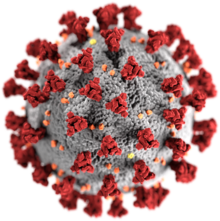
Coronavirus
Americans are living through their tenth month with the virus, and still the Trump administration cannot—or will not—design a coordinated plan to combat it.
Trump started out 2020 by dismissing COVID-19 as a threat. On January 22 he said: “We have it totally under control. It’s one person coming in from China.”
By February 28, he had termed the disease the Democrats’ “new hoax.”
By March, he was making it clear that each state was responsible for securing its needed supply of Personal Protective Equipment (PPEs) for its doctors and nurses aiding Coronavirus patients.
This resulted in a dog-eat-dog atmosphere of cutthroat competition and scarcity, with Americans not only fighting the virus but each other.
Even worse: Trump didn’t simply refuse to provide states with vitally-needed medical supplies—he ordered the Federal Emergency Management Agency (FEMA) to illegally seize those supplies that states had ordered.
Donald Trump
When states’ governors issued stay-at-home orders, Trump was forced to cancel his campaign rallies. Starting Easter weekend, he held almost 50 daily press briefings at the White House.
Their official purpose: To update the country on the administration’s ongoing response to the Coronavirus pandemic.
Their real purpose: To serve as a substitute for Trump’s hate-filled political rallies, which have been likened to those staged by Germany’s Fuhrer, Adolf Hitler, at Nuremberg.
Eager to return to his mass rallies and reignite his support from Right-wingers, he began furiously campaigning to end social distancing and the wearing of masks. Both of these had been mandated by such governors as California’s Gavin Newsom and New York’s Andrew Cuomo.
He also demanded the reopening of businesses across the nation—although no vaccine nor even adequate testing and contact-tracing facilities existed. This led many states—especially in the South and Midwest—to reopen prematurely, with a resulting rise in COVID infections and deaths.
He urged his Right-wing supporters to flood into the capitols of such states as Michigan, Minnesota and Virginia—whose governors were Democrats—and demand an end to mask-wearing and social distancing. This was in direct defiance of the laws legally in force in those states.
And they did as he ordered—massing shoulder-to-shoulder, most of them not wearing masks, and with many of them carrying automatic rifles.
On April 23, at a White House press briefing, he suggested that UV light and disinfectant—such as Clorox—might prove an effective preventative or cure for Coronavirus. This prompted alarm from medical professionals—even as some Americans believed him and swallowed disinfectant to prevent COVID-19.
Unable—or unwilling—to effectively attack the virus, Trump chose to attack the medical professionals desperately trying to save lives. He accused them of hoarding scarce medical supplies and lying about the number of COVID cases they were treating.
As fall approached, Trump demanded that Americans risk the lives of their children by sending them back to school. This would allow their parents to return to work. Then Trump could claim that he had “saved” the American economy—and be re-elected.
His chief target: Dr. Anthony Fauci, director of the U.S. National Institute of Allergy and Infectious Diseases. There were two reasons for this:
- Fauci repeatedly warned about the dangers of the virus—and criticized the failures of the Federal Government to effectively combat it; and
- His warnings repeatedly proved correct—while Trump’s rosy predictions proved wrong.
Finally, Trump wanted Americans to simply ignore the virus—and re-elect him.
Like Santa Anna, Trump could have easily said: “What are the lives of Americans but those of so many chickens?”

 Bureaucracybuster's Blog
ABC NEWS, ALAMO, ALTERNET, AMERICABLOG, ANDREW JACKSON, AP, BABY BOOMER RESISTANCE, BUZZFEED, CAMERON JUDD, CBS NEWS, CNN, CROCKETT OF TENNESSEE, CROOKS AND LIARS, DAILY KOS, DAVID CROCKETT, DAVY CROCKETT: KING OF THE WILD FRONTIER, DONALD TRUMP, FIVETHIRTYEIGHT, INDIAN WARS, JAMES BOWIE, MITT ROMNEY, MOTHER JONES, MOVEON, MSNBC, NBC NEWS, NBCNEWS, NEWSWEEK, NPR, PBS NEWSHOUR, POLITICO, POLITICUSUSA, RAW STORY, REUTERS, SALON, SEATTLE TIMES, SLATE, TALKING POINTS MEMO, TEXAS REVOLUTION, THE ATLANTIC, THE CHICAGO SUN-TIMES, THE CHICAGO TRIBUNE, THE DAILY BEAST, THE DAILY BLOG, THE GUARDIAN, THE HILL, THE HUFFINGTON POST, THE LOS ANGELES TIMES, THE NATION, THE NEW YORK TIMES, THE WASHINGTON POST, THINKPROGRESS, TIME, TRUTHDIG, U.S. NEWS & WORLD REPORT, UPI, USA TODAY, WALT DISNEY, WILLIAM BARRETT TRAVIS, X
HEROISM VS. THUGISM
In Bureaucracy, Business, History, Military, Politics, Social commentary on January 16, 2026 at 12:10 amMarch 6, 2026, will mark the 190th anniversary of the fall of the Alamo, a crumbling former Spanish mission in the heart of San Antonio, Texas.
It’s been the subject of novels, movies, biographies, histories and TV dramas (most famously Walt Disney’s 1955 “Davy Crockett: King of the Wild Frontier” series).
Perhaps the most extraordinary scene of any Alamo movie or book occurs in the 1993 novel, Crockett of Tennessee, by Cameron Judd.
And it is no less affecting for its being—so far as we know—entirely fictional.
The Alamo
It’s March 5, 1836—the last night of life for the Alamo garrison. The next morning, 2,000 men of the Mexican Army will hurl themselves at the former mission and slaughter its 200 “Texian” defenders.
The fort’s commander, William Barrett Travis, has drawn his “line in the sand” and invited the garrison to choose: To surrender, to try to escape, or to stay and fight to the death.
And the garrison—except for one man—chooses to stay and fight.
An hour after deciding to stand and die in the Alamo, wrapped in the gloom of night, David Crockett is seized with paralyzing fear.
“We’re going to die here,” he chokes out to his longtime friend, Persius Tarr. “You understand that, Persius? We’re going to die!”
“I know, Davy. But there ain’t no news in that,” says Tarr. “We’re born to die. Every one of us. Only difference between us and most everybody else is we know when and where it’s going to be.”
“But I can’t be afraid—not me. I’m Crockett. I’m Canebrake Davy. I’m half-horse, half-alligator.”
“I know you are, Davy,” says Tarr. “So do all these men here. That’s why you’re going to get past this.
“You’re going to put that fear behind you and walk back out there and fight like the man you are. The fear’s come and now it’s gone. This is our time, Davy.”
And then Tarr delivers a sentiment wholly alien to money-obsessed men like Donald Trump—who comprise the richest and most privileged 1% of today’s Americans.
“There’s men out there with their eyes on you. You’re the only thing keeping the fear away from them. You’re joking and grinning and fiddling—it gives them courage they wouldn’t have had without you.
“Maybe that’s why you’re here, Davy—to make the little men and the scared men into big and brave men. You’ve always cared about the little men, Davy. Remember who you are.
“You’re Crockett of Tennessee, and your glory-time has come. Don’t you miss a bit of it.”
The next morning, the Mexicans assault the Alamo. Crockett embraces his glory-time—and becomes a legend for all-time.
David Crockett (center) at the fall of the Alamo
David Crockett (1786-1836) lived—and died—a poor man. But this did not prevent him from trying to better the lives of his family and fellow citizens—and even his former enemies.
During the war of 1812, he served as a scout under Andrew Jackson. His foes were the Creek Indians, who had massacred 500 settlers at Fort Mims, Alabama—and threatened to do the same to Crockett’s family and neighbors in Tennessee.
But as a Congressman from Tennessee, he opposed then-President Jackson’s efforts to force the same defeated Indians to depart the lands guaranteed them by treaty.
To Crockett, a promise was sacred—whether given by a single man or the United States Government.
David Crockett
And his presence during the 13-day siege of the Alamo did cheer the spirits of the vastly outnumbered defenders.
Crockett, with his fiddle—and a Scotsman named MacGregor, with his bagpipes—often staged musical “duels” to see who could make the most noise.
Contrast this devotion of Crockett to the rights of “the little men,” with the boasts of Donald Trump, the billionaire President of the United States:
Donald Trump
Unlike Crockett, who defended the weak, Trump boasted of his power:
Those who give their lives for others are rightly loved and remembered as heroes. Those who dedicate their lives solely to their wallets and egos are rightly despised and then forgotten.
Share this: