Posts Tagged ‘COMMUNISM’
ABC NEWS, ALTERNET, AMERICAN TABLOID, AP, ASSASSINATION, BUZZFEED, CBS NEWS, CIA, CNN, COMMUNISM, CROOKS AND LIARS, CUBA, CUBAN MISSILE CRISIS, DAILYKOS, DONALD TRUMP, DWIGHT D. EISENHOWER, FBI, FIDEL CASTRO, FLORIDA, FULGENCIO BATISTA, GUAM, GUS RUSSO, JAMES ELLROY, JOE BIDEN, JOHN F. KENNEDY, JOHNNY ROSELLI, LEE HARVEY OSWALD, LIVE BY THE SWORD, LYNDON B. JOHNSON, MAFIA, MOTHER JONES, MOVEON, NBC NEWS, NEWSWEEK, NEWT GINGRICH, NIKITA KHRUSHCHEV, NORTH KOREA, NPR, NUCLEAR WAR, POLITICO, RAW STORY, REUTERS, ROBERT F. KENNEDY, SALON, SAM GIANCANA, SEATTLE TIMES, SLATE, THE ATLANTIC, THE CHICAGO SUN-TIMES, THE CHICAGO TRIBUNE, THE DAILY BEAST, THE GUARDIAN, THE HILL, THE HUFFINGTON POST, THE LOS ANGELES TIMES, THE NATION, THE NEW YORK TIMES, THE WASHINGTON POST, TIME, U.S. NEWS & WORLD REPORT, UKRAINE, UP, UPI, USA TODAY, VLADIMIR PUTIN, WARREN COMMISSION, X
In Bureaucracy, History, Law, Law Enforcement, Military, Politics, Social commentary on April 7, 2026 at 12:17 am
“John and Robert Kennedy knew what they were doing. They waged a vicious war against Fidel Castro—a war someone had to lose.”
And the loser turned out to be John F. Kennedy.
So writes investigative reporter Gus Russo in Live By the Sword: The Secret War Against Castro and the Death of JFK, published in 1998.
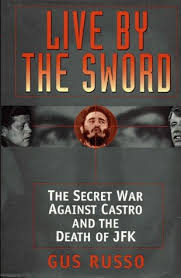
In what is almost certainly the definitive account of the assassination of President John F. Kennedy, Russo reaches some startling—but highly documented—conclusions:
- Lee Harvey Oswald assassinated Kennedy.
- He did it alone.
- Oswald, a former Marine, was a committed Marxist—whose hero was Castro.
- The CIA’s ongoing campaign to overthrow and/or assassinate Castro was an open secret throughout the Gulf.
- Oswald visited New Orleans in the spring of 1963.
- There he learned that Castro was in the crosshairs of the CIA.
- Oswald told his Russian-born wife, Marina: “Fidel Castro needs defenders. I’m going to join his army of volunteers.”
- Jack Ruby, a Dallas nightclub owner, murdered Oswald because he was distraught over Kennedy’s death.
- Ruby was not part of a Mafia conspiracy to silence Oswald.
- Skeptics of the Warren Commission—which concluded that Oswald had acted alone—asked the wrong question: “Who killed Kennedy?”
- They should have asked: “Why was he killed?”
- The answer–according to Russo: “The Kennedys’ relentless pursuit of Castro and Cuba backfired in tragedy on that terrible day in November, 1963.”
Another book well worth reading about America’s Cuban obsession during the early 1960s is American Tabloid, by James Ellroy.
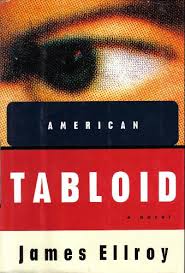
Although a novel, it vividly captures the atmosphere of intrigue, danger and sleaziness that permeated that era in a way that dry, historical documents never can.
“The 50’s are finished,” reads its paperback dust jacket. “Zealous young lawyer Robert Kennedy has a red-hot jones to nail Jimmy Hoffa. JFK has his eyes on the Oval Office.
“J. Edgar Hoover is swooping down on the Red Menace. Howard Hughes is dodging subpoenas and digging up Kennedy dirt. And Castro is mopping up the bloody aftermath of his new Communist nation….
“Mob bosses, politicos, snitches, psychos, fall guys and femmes fatale. They’re mixing up a Molotov cocktail guaranteed to end the country’s innocence with a bang.”
Among the legacies of America’s twisted romance with anti-Castro Cubans:
- Following the JFK assassination, there was a coverup.
- Its purposes: To protect the reputation of the United States government—and that of its newly-martyred President.
- Thus, the CIA and FBI concealed the CIA-Mafia assassination plots from the Warren Commission assigned to investigate Kennedy’s murder.
- Other government officials participating in the coverup included Attorney General Robert F. Kennedy and President Lyndon B. Johnson.
- Ironically, this secrecy ignited the widespread—and false—belief that the President had died at the hands of a government conspiracy.
- Robert Kennedy feared that his relentless pursuit of Castro might have led Castro to “take out” JFK first.
- Fearing his own assassination if he continued Kennedy’s efforts to murder Castro, President Johnson ordered the CIA to halt its campaign to overthrow and/or assassinate the Cuban leader.
- The huge Cuban community throughout Florida—and especially Miami—continues to exert a blackmailing influence on American politics.
- Right-wing politicians from Richard Nixon to Donald Trump have reaped electoral rewards by catering to the demands of this hate-obsessed voting block.
- These Cuban ex-patriots hope that the United States will launch a full-scale military invasion of the island to remove Castro.
The Cuban Missile Crisis was the deadliest moment of the Cold War, when the world stood only minutes away from nuclear Armageddon.
That crisis stemmed from America’s twisted obsession with Cuba, an obsession that continues today.
Sixty-three years after that crisis, the world wonders: Could nuclear war erupt over Cuba?
And, once again, that decision lies in the hands of two men—Vladimir Putin and Donald Trump—out of a world population of more than eight billion.
The Soviet Union began aiding Cuba in early 1960, shortly after the 1959 revolution, with a formal trade agreement signed in February 1960. This deal involved exchanging Soviet oil for Cuban sugar. The relationship quickly expanded to include extensive economic subsidies and military support that continued through 1990.
On January 29, 2026, President Donald Trump threatened to impose huge tariffs on goods from any country that supplied oil to Cuba. Declaring a national emergency, he aims to cripple the island’s energy supply.
On February 18, Russian President Vladimir Putin met with Cuban Foreign Minister Bruno Rodriguez in Moscow and reaffirmed his support for the island nation. Putin reminded his guest that Russia “will not accept anything of the sort” when discussing the sanctions against the country.
“I do believe I’ll be having the honor of taking Cuba. That’s a big honor. Taking Cuba in some form,” Trump said on March 16. “Whether I free it, take it, I think I could do anything I want with it, if you want to know the truth. They are a very weakened nation right now.”
Nikita Khrushchev, facing a choice of humiliation or Armageddon during the Cuban Missile Crisis, chose humiliation—so his country could live another day.
It remains to be seen if Vladimir Putin is willing to make the same decision.
ABC NEWS, ALTERNET, AMERICAN TABLOID, AP, ASSASSINATION, BUZZFEED, CBS NEWS, CIA, CNN, COMMUNISM, CROOKS AND LIARS, CUBA, CUBAN MISSILE CRISIS, DAILY KOS, DONALD TRUMP, DWIGHT D. EISENHOWER, FBI, FIDEL CASTRO, FLORIDA, FULGENCIO BATISTA, GUAM, GUS RUSSO, JAMES ELLROY, JOE BIDEN, JOHN F. KENNEDY, JOHNNY ROSELLI, LEE HARVEY OSWALD, LIVE BY THE SWORD, LYNDON B. JOHNSON, MAFIA, MOTHER JONES, MOVEON, NBC NEWS, NEWSWEEK, NIKITA KHRUSHCHEV, NORTH KOREA, NPR, NUCLEAR WAR, POLITICO, RAW STORY, REUTERS, ROBERT F. KENNEDY, SALON, SAM GIANCANA, SEATTLE TIMES, SLATE, THE ATLANTIC, THE CHICAGO SUN-TIMES, THE CHICAGO TRIBUNE, THE DAILY BEAST, THE GUARDIAN, THE HILL, THE HUFFINGTON POST, THE LOS ANGELES TIMES, THE NATION, THE NEW YORK TIMES, THE WASHINGTON POST, TIME, U.S. NEWS & WORLD REPORT, UKRAINE, UP, UPI, USA TODAY, VLADIMIR PUTIN, WARREN COMMISSION, X
In Bureaucracy, History, Law, Law Enforcement, Military, Politics, Social commentary on April 6, 2026 at 12:17 am
On October 22, 1962, President John F. Kennedy announced on nationwide TV the discovery of Russian missiles installed in Cuba—and his blockade of that island.
He warned that any nuclear missile launched from Cuba against any nation would be regarded as an attack on the United States by the Soviet Union—and would trigger “a full retaliatory response” upon the U.S.S.R.
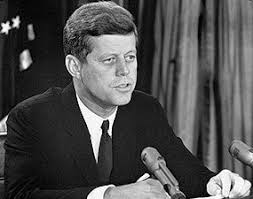
John F. Kennedy address the nation
And he demanded that the Soviets remove all of their offensive weapons from Cuba: “The cost of freedom is always high, but Americans have always paid it. And one path we shall never choose, and that is the path of surrender or submission.”
On October 26, the United States raised the readiness level of SAC forces to DEFCON 2—the step just short of war. For the only time in U.S. history, B-52 bombers were dispersed to various locations and made ready to take off, fully equipped, on 15 minutes’ notice.
Other measures taken included:
- One-eighth of America’s 1,436 bombers were on airborne alert.
- About 145 intercontinental ballistic missiles stood on ready alert.
- Air Defense Command redeployed 161 nuclear-armed interceptors to 16 dispersal fields within nine hours with one-third maintaining 15-minute alert status.
- Twenty-three nuclear-armed B-52s were sent to orbit points within striking distance of the Soviet Union.
An invasion date was set for October 29. But the Kennedy Administration—and the American military—didn’t know that the Russian soldiers guarding the missiles had been armed with tactical nuclear weapons.
Had the Marines gone in, those mini-nukes would have been used. And a fullscale nuclear exchange between the United States and the Soviet Union would have almost certainly followed.
At the height of the crisis, Attorney General Robert F. Kennedy offered a solution.
Khrushchev had sent two teletypes to Kennedy. The first had agreed to remove the missiles, but the second had demanded that the United States remove its own missiles from Turkey, which bordered the Soviet Union.
Robert Kennedy’s solution: The administration should ignore the second message—and announce that it had accepted Premier Nikita Khrushchev’s offer to remove the missiles.
After this announcement was made, President Kennedy said to his advisors: “It can go either way now.”
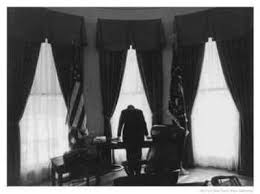
John F. Kennedy
The crisis ended on October 28. Under enormous pressure, Khrushchev agreed to remove the missiles from Cuba.
Behind his decision lay a secret promise by the Kennedy administration to remove its obsolete nuclear missiles from Turkey. And a public pledge to not invade Cuba.
On the night the crisis ended, a prophetic exchange occurred between the two Kennedy brothers:
JFK: “Maybe this is the night I should go to the theater”—a reference to Abraham Lincoln’s fatal attendance of Ford’s Theater at the end of the Civil War.
RFK: “If you go, I want to go with you.”
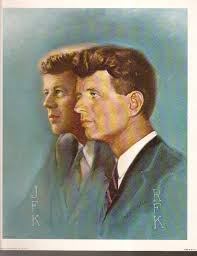
John F. and Robert F. Kennedy
But President Kennedy was not finished with Castro. While continuing the campaign of sabotage throughout Cuba, the Kennedys were preparing something far bigger: A full-scale American invasion of the island.
On October 4, 1963, the Joint Chiefs of Staff submitted its latest version of the invasion plan, known as OPLAN 380-63. Its timetable went:
- January, 1964: Infiltration into Cuba by Cuban exiles.
- July 15, 1964: U.S. conventional forces join the fray.
- August 3, 1964: All-out U.S. air strikes on Cuba.
- October 1, 1964: Full-scale invasion to install “a government friendly to the U.S.”
During the Cuban Missile Crisis, Robert Kennedy—referring to the 1941 Japanese attack on Pearl Harbor—had resisted demands for a “sneak attack” on Cuba by saying: “I don’t want my brother to be the Tojo of the 1960s.”
Now the Kennedys planned such an attack on Cuba just one month before the November, 1964 Presidential election.
Then fate—in the unlikely figure of Lee Harvey Oswald—intervened.
On November 22, 1963, while the President rode through Dallas in an open-air automobile, a rifle-wielding assassin opened fire. He scored two hits on Kennedy—in the back of the neck and head. The second wound proved instantly fatal.
The nation and the world were shocked—and plunged into deep mourning.
But for some of those who had waged a secret, lethal war against Fidel Castro for the previous two years, Kennedy’s death—at least in retrospect—didn’t come as a surprise.
Robert Kennedy, in particular, spent the remaining years of his life agonizing over the possibility that his highly personal war against Castro had backfired.
That Castro, fed up with the CIA’s assassination plots against him, had retaliated with one of his own.
Robert Kennedy’s fears and guilt were compounded by the fact that, while waging war on Castro, he had waged an equally ruthless crusade against organized crime.
And some of the mobsters he had done his best to put into prison had played a major role in the CIA’s efforts to “hit” Castro. Had the Mafia—believing itself the victim of a double-cross—put out a “contract” on JFK instead?
“John and Robert Kennedy knew what they were doing. They waged a vicious war against Fidel Castro—a war someone had to lose.”
And the loser turned out to be John F. Kennedy.
So writes investigative reporter Gus Russo in Live By the Sword: The Secret War Against Castro and the Death of JFK, published in 1998.
ABC NEWS, ALTERNET, AMERICAN TABLOID, AP, ASSASSINATION, BUZZFEED, CBS NEWS, CIA, CNN, COMMUNISM, CROOKS AND LIARS, CUBA, CUBAN MISSILE CRISIS, DAILY KOZ, DONALD TRUMP, DWIGHT D. EISENHOWER, FACEBOOK, FBI, FIDEL CASTRO, FLORIDA, FULGENCIO BATISTA, GUAM, GUS RUSSO, JAMES ELLROY, JOE BIDEN, JOHN F. KENNEDY, JOHNNY ROSELLI, LEE HARVEY OSWALD, LIVE BY THE SWORD, LYNDON B. JOHNSON, MAFIA, MOTHER JONES, MOVEON, NBC NEWS, NEWSWEEK, NIKITA KHRUSHCHEV, NORTH KOREA, NPR, NUCLEAR WAR, POLITICO, RAW STORY, REUTERS, ROBERT F. KENNEDY, SALON, SAM GIANCANA, SEATTLE TIMES, SLATE, THE ATLANTIC, THE CHICAGO SUN-TIMES, THE CHICAGO TRIBUNE, THE DAILY BEAST, THE GUARDIAN, THE HILL, THE HUFFINGTON POST, THE LOS ANGELES TIMES, THE NATION, THE NEW YORK TIMES, THE WASHINGTON POST, TIME, TWITTER, U.S. NEWS & WORLD REPORT, UKRAINE, UP, UPI, USA TODAY, VLADIMIR PUTIN, WARREN COMMISSION
In Bureaucracy, History, Law, Law Enforcement, Military, Politics, Social commentary on April 3, 2026 at 12:14 am
In April, 1961, the CIA tried to overthrow the Communist regime of Cuba’s “Maximum Leader,” Fidel Castro, at the Bay of Pigs.
When that failed, President John F. Kennedy ordered Castro’s removal through a campaign of sabotage and assassination.
These covert operatives became known within the CIA as the Special Group, and were ultimately supervised by Robert F. Kennedy, the President’s brother and Attorney General.
The war against Castro became known within the CIA as Operation Mongoose.
But not everyone in the CIA was enthusiastic about the “get Castro” effort.
“Everyone at CIA was surprised at Kennedy’s obsession with Fidel,” recalled Sam Halpern, who was assigned to the Cuba Project. “They thought it was a waste of time. We all knew [Fidel] couldn’t hurt us. Most of us at CIA initially liked Kennedy, but why go after this little guy?
“One thing is for sure: Kennedy wasn’t doing it out of national security concerns. It was a personal thing. The Kennedy family felt personally burnt by the Bay of Pigs and sought revenge.”
It was all-out war. Among the tactics used:
- Hiring Cuban gangsters to murder Cuban police officials and Soviet technicians.
- Sabotaging mines.
- Paying up to $100,000 per “hit” for the murder or kidnapping of Cuban officials.
- Using biological and chemical warfare against the Cuban sugar industry.
“Bobby (Kennedy) wanted boom and bang all over the island,” recalled Halpern. “It was stupid. The pressure from the White House was very great.”
Among that “boom and bang” were a series of assassination plots against Castro, in which the Mafia was to be a key player.
Chicago Mobster Johnny Rosselli proposed a simple plan: Through its underworld connections in Cuba, the Mafia would recruit a Cuban in Castro’s entourage, such as a waiter or bodyguard, who would poison him.
The CIA’s Technical Services division produced a botulinus toxin which was then injected into Castro’s favorite brand of cigars. The CIA also produced simpler botulinus toxin pills that could be dissolved in his food or drink.
But the deputized Mafia contacts failed to deliver any of the poisons to Castro.
Rosselli told the CIA that the first poisoner had been discharged from Castro’s employ before he could kill him, and the back-up agent got “cold feet.”
Other proposals or attempts included:
- Planting colorful seashells rigged to explode at a site where Castro liked to go skindiving.
- Trying to arrange for his being presented with a wetsuit impregnated with noxious bacteria and mold spores, or with lethal chemical agents.
- Attempting to infect Castro’s scuba regulator with tuberculous bacilli.
- Trying to douse his handkerchiefs, tea and coffee with other lethal bacteria.
Americans would rightly label such methods as ”terrorist” if another power used them against the United States today. And that was how the Cuban government saw the situation.
So Castro appealed to Nikita Khrushchev, leader of the Soviet Union, for assistance.

Fidel Castro

Nikita Khrushchev
Khrushchev was quick to comply: “We must not allow the communist infant to be strangled in its crib,” he told members of his inner circle.
By October, 1962, the Soviet Union had sent more than
- 40,000 soldiers,
- 1,300 field pieces,
- 700 anti-aircraft guns,
- 350 tanks and
- 150 jets
to Cuba to deter another invasion.
Most importantly, Khrushchev began supplying Castro with nuclear-tipped ballistic missiles.
Their discovery, on October 15, 1962, ignited the single most dangerous confrontation of the 50-year Cold War.
Suddenly, the United States and the Soviet Union—bristling with nuclear weapons—found themselves on the brink of nuclear war.
At the time, Kennedy officials claimed they couldn’t understand why Khrushchev had placed nuclear missiles in Cuba. “Maybe Khrushchev’s gone mad” was a typical public musing.
None of these officials admitted that JFK had been waging a no-holds-barred campaign to overthrow the Cuban government and assassinate its leader.
On October 16, the next day, President Kennedy was informed of the missile installations. He immediately convened a group of his 12 most important advisors, which became known as Ex-Comm, for Executive Committee.
Then followed seven days of guarded and intense debate by Kennedy and his advisors. Some of the participants—such as Air Force General Curtis LeMay—urged an all-out air strike against the missile sites.
Others—such as Adlai Stevenson, the United States delegate to the United Nations—urged a reliance on quiet diplomacy.
It was Secretary of Defense Robert S. McNamara who suggested a middle course: A naval blockade—a “quarantine” in Kennedy’s softened term—around Cuba. This would hopefully prevent the arrival of more Soviet offensive weapons on the island.
Finally, the President decided to to impose a naval blockade.
On October 22, Kennedy went on nationwide TV to announce the discovery of the missiles and his blockade of Cuba.
He warned that any nuclear missile launched from Cuba against any nation would be regarded as an attack on the United States by the Soviet Union—and would trigger “a full retaliatory response” upon the U.S.S.R.
John F. Kennedy address the nation
And he demanded that the Soviets remove all of their offensive weapons from Cuba:
“The path we have chosen for the present is full of hazards, as all paths are, but it is the one most consistent with our character and courage as a nation and our commitments around the world.”
ABC NEWS, ALTERNET, AMERICAN TABLOID, AP, ASSASSINATION, BUZZFEED, CBS NEWS, CIA, CNN, COMMUNISM, CROOKS AND LIARS, CUBA, CUBAN MISSILE CRISIS, DAILY KOS, DONALD TRUMP, DWIGHT D. EISENHOWER, FBI, FIDEL CASTRO, FLORIDA, FULGENCIO BATISTA, GUAM, GUS RUSSO, JAMES ELLROY, JOHN F. KENNEDY, JOHNNY ROSELLI, LEE HARVEY OSWALD, LIVE BY THE SWORD, LYNDON B. JOHNSON, MAFIA, MOTHER JONES, MOVEON, NBC NEWS, NEWSWEEK, NIKITA KHRUSHCHEV, NORTH KOREA, NPR, NUCLEAR WAR, POLITICO, RAW STORY, REUTERS, ROBERT F. KENNEDY, SALON, SAM GIANCANA, SEATTLE TIMES, SLATE, THE ATLANTIC, THE CHICAGO SUN-TIMES, THE CHICAGO TRIBUNE, THE DAILY BEAST, THE GUARDIAN, THE HILL, THE HUFFINGTON POST, THE LOS ANGELES TIMES, THE NATION, THE NEW YORK TIMES, THE WASHINGTON POST, TIME, U.S. NEWS & WORLD REPORT, UKRAINE, UP, UPI, USA TODAY, VLADIMIR PUTIN, WARREN COMMISSION, X
In Bureaucracy, History, Law, Law Enforcement, Military, Politics, Social commentary on April 2, 2026 at 12:38 am
On January 29, 2026, President Donald Trump threatened to impose huge tariffs on goods from any country that supplied oil to Cuba. Declaring a national emergency, he aims to cripple the island’s energy supply.
On February 18, Russian President Vladimir Putin met with Cuban Foreign Minister Bruno Rodriguez in Moscow and reaffirmed his support for the island nation. Putin reminded his guest that Russia “will not accept anything of the sort” when discussing the sanctions against the country.
“I do believe I’ll be having the honor of taking Cuba. That’s a big honor. Taking Cuba in some form,” Trump said on March 16. “Whether I free it, take it, I think I could do anything I want with it, if you want to know the truth. They are a very weakened nation right now.”
Sixty-two years ago, similar American aggression toward Cuba almost led to full-scale nuclear war between the United States and the Soviet Union—and the end of all life on Earth.
On January 1, 1959, Fidel Castro swept triumphantly into Havana after a two-year guerrilla campaign against Cuban dictator Fulgencio Batista.
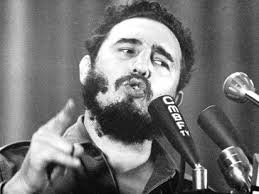
Fidel Castro
Almost immediately, hundreds of thousands of Cubans began fleeing to America. The first émigrés were more than 215,000 Batista followers. The exodus escalated, peaking at approximately 78,000 in 1962.
Between 1962 and 1979, hundreds of thousands of Cubans entered the United States under the Attorney General’s parole authority.
By 2008, more than 1.24 million Cubans were living in the United States, mostly in South Florida, where the population of Miami was about one-third Cuban. Their sheer numbers transformed the state’s political, economic and cultural life. And not entirely for the better.
Many of these Cubans viewed themselves as political exiles, rather than immigrants, hoping to eventually return to Cuba after its Communist regime fell from power.
The large number of Cubans in South Florida, particularly in Miami’s “Little Havana,” allowed them to preserve their culture and customs to a degree rare for immigrant groups.
With so many discontented immigrants concentrated in Florida, they became a potential force for politicians to court.
And the issue guaranteed to sway their votes was unrelenting hostility to Castro. Unsurprisingly, most of their votes went to right-wing Republicans.
John F. Kennedy was the first President to face this dilemma.
During the closing months of the administration of President Dwight D. Eisenhower, the CIA had begun training Cuban exiles for an invasion of their former homeland.
The exiles’ goal: To do what Castro had done—seek refuge in the mountains and launch a successful anti-Castro revolution.
But word of the coming invasion quickly leaked: The exiles were terrible secret-keepers. (A joke at the CIA went: “A Cuban thinks a secret is something you tell to only 300 people.”)
Kennedy insisted the invasion must appear to be an entirely Cuban enterprise. He refused to commit U.S. Marines and Air Force bombers.
The invaders landed on April 17, 1961 at the Bay of Pigs—and were quickly overwhelmed, with hundreds of the men taken prisoner.
Kennedy publicly took the blame for its failure: “Victory has a hundred fathers but defeat is an orphan.” But privately he seethed, and ordered the CIA to redouble its efforts to remove Castro at all costs.
To make certain his order was carried out, he appointed his brother, Robert—then Attorney General—to oversee the CIA’s “Castro removal” program.
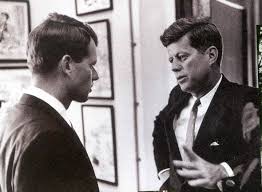
Robert F. Kennedy and John F. Kennedy
It’s here that America’s obsession with Cuba entered its darkest and most disgraceful period.
The CIA and the Mafia entered into an unholy alliance to assassinate Castro—each for its own benefit:
The CIA wanted to please Kennedy.
The mob wanted to regain its casino and brothel holdings that had made Cuba their private playground in pre-Castro times. They also hoped to use their pose as patriots to win immunity from future prosecution.
The CIA supplied poisons and explosives to various members of the Mafia. It was then up to the mobsters to assassinate Castro.
The CIA asked Johnny Roselli, a mobster linked to the Chicago syndicate, to go to Florida in 1961 and 1962 to organize assassination teams of Cuban exiles. They were to infiltrate their homeland and assassinate Castro.

Johnny Roselli
Rosselli called upon two other crime figures: Chicago Mafia boss Sam Giancana and Santos Trafficante, the Costra Nostra chieftain for Tampa, for assistance.

Sam Giancana
Giancana, using the name “Sam Gold” in his dealings with the CIA, was meanwhile being hounded by the FBI on direct orders of Attorney General Robert Kennedy.
The mobsters were authorized to offer $150,000 to anyone who would kill Castro and were promised any support the Agency could yield.
Giancana was to locate someone who was close enough to Castro to be able to drop pills into his food. Trafficante would serve as courier to Cuba, helping to make arrangements for the murder on the island.
Rosselli was to be the main link between all of the participants in the plot.
Some authorities believe that the Mob made a genuine effort to “whack” Fidel.
Others are convinced the mobsters simply ran a scam on the government. They would pretend to carry out their “patriotic duty” while in fact making no effort at all to penetrate Castro’s security.
ABC NEWS, ALTERNET, AMERICABLOG, AP, ATOMIC BOMB, BABY BOOMER RESISTANCE, BARACK OBAMA, BBC, BEIRUT BOMBING, BILL CLINTON, BLOOMBERG NEWS, BUZZFEED, CBS NEWS, CHRIS MATTHEWS, CNN, COMMUNISM, CROOKS AND LIARS, CULTS, DAILY KOS, DONALD TRUMP, ECONOMICS, FIVETHIRTYEIGHT, GEORGE H.W. BUSH, HARDBALL, HARPER’S MAGAZINE, HUFFINGTON POST, IRAN, IRAN-CONTRA AFFAIR, JOHN F. KENNEDY, JOSEPH STALIN, MEDIA MATTERS, MEET THE PRESS, MOTHER JONES, MOVEON, MSNBC, NBC NEWS, NEW REPUBLIC, NEWSDAY, NEWSWEEK, NPR, PBS NEWSHOUR, POLITICO, POLITICUSUSA, POLLUTION, RAW STORY, REPUBLICAN PARTY, REUTERS, Ronald Reagan, SALON, SEATTLE TIMES, Secret Service, SLATE, SOVIET NUCLEAR PHYSICS, SOVIET UNION, TALKING POINTS MEMO, TAX CUTS, TERRORISM, THE ATLANTIC, THE CHICAGO SUN-TIMES, THE CHICAGO TRIBUNE, THE DAILY BEAST, THE DAILY BLOG, THE GUARDIAN, THE HILL, THE HUFFINGTON POST, THE INTERCEPT, THE LOS ANGELES TIMES, THE NATION, THE NEW REPUBLIC, THE NEW YORK TIMES, THE NEW YORKER, THE VILLAGE VOICE, THE WASHINGTON POST, THINKPROGRESS, THIS WEEK, TIME, TRUTHDIG, TRUTHOUT, TWO POLITICAL JUNKIES, U.S. NEWS & WORLD REPORT, UPI, USA TODAY, Vladimir Lenin, X
In Bureaucracy, Business, History, Military, Politics, Social commentary on October 27, 2025 at 12:05 am
On February 6, 2011, Ronald Reagan, if he had been alive, would have been 100 years old.
Publishers rushed to put out worshipful tributes to his eight years as President. Network political programs such as “This Week” and “Meet the Press” assembled surviving members of his administration to re-live the “glory days” of Reagan’s—and their—time in power.
Actually, it was during the Reagan administration that America entered its decline—a Right-wing legacy of huge Federal deficits, tax-cuts for the rich, bloated military budgets and cutbacks in government programs to aid the poor and middle-class.
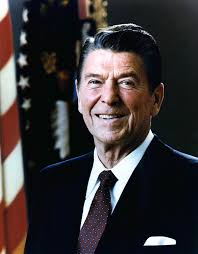
Ronald Reagan
No two men could have been more different than Vladimir Lenin and Ronald Reagan. Lenin created the Soviet Union in 1917 and became its first in a series of absolute dictators. Reagan spent his life fighting Communism, most notably as President.
So it’s ironic that both men, in death, got essentially the same funeral—and for the same reason: To sanctify and legitimize their respective organizations—and the authority of their potential successors.
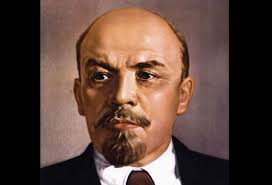
Vladimir Lenin
Lenin died on January 21, 1924, and was immediately succeeded by the party’s General Secretary, Joseph Stalin. Stalin, as a youth, had been a seminary student. He knew that, despite Communism’s official atheistic stance, most Russians remained loyal to the Russian Orthodox Church.
So in giving Lenin’s funeral oration, Stalin used the language of religion to confer sainthood upon a militant atheist—and upon his successor, Stalin himself: “We vow to thee, Comrade Lenin, that we will fulfill this, thy commandment….”
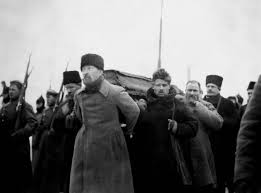
Funeral for Vladimir Lenin
Stalin and his fellow Communists immediately launched the “cult of Lenin,” depicting him as a fatherly, all-wise leader whose genius could only be bestowed upon his closest disciples.
Lenin’s extensive political writings were treated as divine writ, and were used to justify everything Stalin and his own successors wanted to do.
A classic example: Although he died 20 years before the American creation of the atomic bomb, Lenin was hailed by the Soviets as the “father” of “Soviet nuclear physics.”
Similarly, Republicans quickly turned Reagan into a modern-day saint of mythical proportions.
They did so for the same reason that Stalin deliberately forged a cult around the dead Lenin—to create a “holy” figure of whom other Republicans can claim to be true disciples.
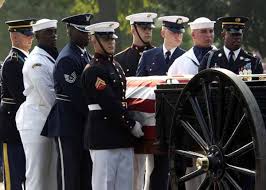
Funeral for Ronald Reagan
These deliberate fictions conveniently ignore a series of ugly truths:
- Reagan was only one of a series of Presidents who held the line against the Soviet Union.
- His budgets were just as stained with red ink as those of all previous Presidents.
- By the end of his term, 138 Reagan administration officials had been investigated, indicted or convicted for official misconduct and/or criminal violations.
- His “trickle-down” Reganomics brought prosperity to only the wealthiest 1% of Americans, proving that “a rising tide lifts some yachts.”
- By drastically shrinking the tax-base, bloating the defense budget and destroying programs to benefit the poor and middle-class, Reagan produced a $1 trillion deficit-–which only the Clinton Administration eliminated.
- Reagan believed that government should not help the impoverished. Those who lacked wealth to buy such necessities as housing and medical insurance were written off as unimportant.
- John F. Kennedy had praised government service as an honor. Reagan repeatedly said that “the best and the brightest” could be found only in business.
- This denigration of government service continues among Republicans to this day—defaming the very institutions they lust to control.
- Although he often berated the poor for their “laziness,” Reagan adhered to a “banker’s hours” schedule: During his working hours in the Oval Office, he often had blocks of free time—two to three hours. He would call for his fan mail and answer it.
- Reagan saw no need to protect America’s fragile environment against corporate polluters, eager to enrich themselves at its expense. He ignorantly stated: “Approximately 80% of our air pollution stems from hydrocarbons released by vegetation, so let’s not go overboard in setting and enforcing tough emission standards from man-made sources.”
Reagan famously attacked “welfare queens” and sought to deny government benefits for the poor. But he didn’t hesitate to enrich himself at public expense.
- Before his Presidency ended, 18 wealthy Californians contributed $156,000 apiece to buy him a 7,200 square-foot mansion overlooking Beverly Hills.
- Reagan signed a multi-million dollar deal to write his Presidential memoirs and publish a collection of his speeches.
- He signed an exclusive contract with a Washington lecture bureau, which paid him $50,000 per speech given in the United States and $100,000 overseas. This made him the highest-paid speaker in the country.
- These monies came in addition to his Presidential pension of $99,500 a year for life and his $30,000 annual pension as a former governor of California.
- At a cost to the government of $10 million annually, Reagan—a millionaire who could afford private security—continued to receive lifetime Secret Service protection from 40 fulltime agents.
The “cult of Lenin” died when the Soviet Union collapsed in 1991. The “cult of Reagan” died only when it was superseded by that of Donald Trump.
The difference: Reagan hid his brutal deeds behind a smile; Trump celebrates his openly with a frown.
2016 PRESIDENTIAL CAMPAIGN, ABC NEWS, ADOLF HITLER, ALTERNET, AMERICABLOG, AP, BABY BOOMER RESISTANCE, BERNIE SANDERS, BUZZFEED, CARLY FIORINA, CBS NEWS, CNBC, CNN, COMMUNISM, COVID-19, CROOKS AND LIARS, DAILY KOS, DAVID BROOKS, DAVID HALBERSTAM, DEMOCRATIC PARTY, DEMOCRATS, DENNIS HASTERT, DONALD TRUMP, ELIZABETH WARREN, FACEBOOK, FINANCIAL TIMES, FIVETHIRTYEIGHT, HELEN GAHAGAN DOUGLAS, HILLARY CLINTON, JEB BUSH, JOHN KASICH, JOHNNY B. GOOD (SONG), JOSEPH MCCARTHY, JOSEPH R. MCCARTHY, JOSH DUGGAR, KRISTI NOEM, LANGUAGE, LIBERALS, MARCO RUBIO, MARJORIE TAYOR GREENE, MARK SHIELDS, MAXINE WATERS, MEGAN CASELLA, MEGYN KELLY, MICHELLE OBAMA, MOTHER JONES, MOVEON, MSNBC, NANCY PELOSI, NATO, NBC NEWS, NEWSWEEK, NEWT GINGRICH, NPR, PBS NEWSHOUR, POLITICO, POLITICUSUSA, RAW STORY, REPUBLICAN PARTY, REPUBLICANS, REUTERS, RICHARD NIXON, RICK PERRY, ROBERT ARMSTRONG, RUSSIA, SALON, SATIRE, SEATTLE TIMES, SLANDER, SLATE, TALKING POINTS MEMO, THE ATLANTIC, THE CHICAGO SUN-TIMES, THE CHICAGO TRIBUNE, THE DAILY BEAST, THE DAILY BLOG, THE GUARDIAN, THE HILL, THE HUFFINGTON POST, THE LOS ANGELES TIMES, THE NATION, THE NEW YORK TIMES, THE RAINBOW CONNECTION (SONG), THE WASHINGTON POST, THINKPROGRESS, TIME, TRUTHDIG, U.S. NEWS & WORLD REPORT, UPI, USA TODAY, VLADIMIR PUTIN, WALL STREET, X, YOUTUBE
In Bureaucracy, History, Humor, Politics, Social commentary on September 11, 2025 at 12:10 am
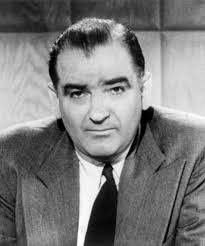
Pulitzer-Prize winning author David Halberstam summed up the effectiveness of 1950s Republicans’ smear tactics in his monumental 1972 study of the origins of the Vietnam War, The Best and the Brightest:
“But if they did not actually stick, and they did not, [Joseph McCarthy’s] charges had an equally damaging effect: They poisoned. Where there was smoke, there must be fire. He wouldn’t be saying these things [voters reasoned] unless there was something to it.”
Joseph McCarthy
As a whole, Democrats have proven indifferent to or ignorant of the power of effective language.
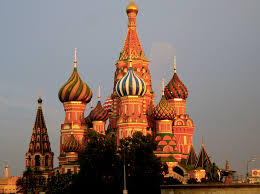
Donald Trump solicited Russian Communist aid to win the Presidency in 2016 and Chinese Communist aid to retain it in 2020.
Yet Democrats refused to directly accuse him of treason, as in:
- “TrumPutin”
- “Commissar-in-Chief”
- “Putin’s Poodle”
- “Red Donald”
- “Putin’s Puppet”
The Kremlin
Similarly, the news media has not dared state the obvious: That Trump moved boxes of classified documents to his Mar-a-Lago estate to sell them to America’s enemies in exchange for huge sums to pay his upcoming legal bills.
During the COVID-19 pandemic, Trump repeatedly lied about its lethality and opposed the use of masks and social distancing to combat it. As a result, 400,000 Americans had died by the time he left office.
Yet no Democrat has dared label him “Coronavirus-in-Chief.”
Nor has the news media directly held him accountable for those deaths.
Tyrants are conspicuously vulnerable to ridicule. Yet in this YouTube-obsessed age, Democrats have proven unable or unwilling to make use of this powerful weapon.
For example, Trump’s well-established “bromance” with Vladimir Putin could be turned into a parody of the famous song, “Johnny B. Good”:
Way back inside the Kremlin where the lights glow red
There ruled a man named Putin who would poison you dead.
He came up with a plan to make his Russia great
And all it took was bribes and Republican hate.
And Trumpy was a man who couldn’t read or spell
But he could sell out his land just like he’s ringing a bell.

Many of Trump’s fiercest defenders in the House and Senate have taken “campaign contributions” (i.e., bribes) from Russian oligarchs linked to Putin. They could be pointedly attacked by turning the Muppet song, “The Rainbow Connection,” into “The Russian Connection.”
Why are there so many tales about Russians
And Right-wingers taking bribes?
Russians are Commies and have lots of rubles
For traitors with something to hide.
So I’ve been told and some choose to believe it
It’s clear as the old KGB.
Someday we’ll find it
The Russian Connection—
The bribers, the traitors—you’ll see.
Kristi Noem, Trump’s Secretary of the Department of Homeland Security, became infamous in 2024 for bragging about shooting her 14-month-old wirehair pointer, “Cricket.” A parody of Marty Robbins’ hit “Big Iron” could easily be turned into a musical indictment of animal cruelty:
Now the woman started talking
Made it plain to folks around
Was a South Dakota Governor
Wouldn’t be too long in town.
She came here to take a doggie
On a hunt or shoot it dead.
And she said it didn’t matter
She was after Cricket’s head—
After Cricket’s head.
A continuing theme among Republican politicians is that they are paragons of religious virtue, while Democrats are champions of Satan.
Yet Democrats have done nothing to publicize such truths as:
- Former Speaker of the House Newt Gingrich is a serial adulterer.
- Former Speaker Dennis Hastert is a convicted sodomizer of teenage boys.
- Josh Duggar, a Right-wing star of the high-rated “reality” series, 19 Kids and Counting, has been sentenced to 12 years’ imprisonment for possessing child pornography.
- Georgia Representative Marjorie Taylor Greene, has boasted: “Marriage is a wonderful thing and I’m a firm believer in it.” Yet she engaged in open affairs with at least two members of her local gym—for which Perry Greene has divorced her.
Most Americans don’t follow political news closely—and know nothing of such revelations.
Moreover, Democrats need to repeatedly advertise such facts—to counter Republicans’ constant claims of being the moral arbiters of America. And this needs to be done through major advertising campaigns on TV—where most Americans get their news about politics.
Throughout 2016, liberals celebrated on Facebook and Twitter the “certain” Presidency of former First Lady Hillary Clinton. They were cheered on by First Lady Michelle Obama’s naive advice on political tactics: “When they go, we go high.”
Meanwhile, Donald Trump planned to subvert the 2016 election by Russian Intelligence agents and millions of Russian trolls flooding the Internet with legitimately fake news.
History has proven which tactics proved superior.
It’s long past time for Democrats to accept that they—and the country’s democratic traditions—are engaged in a death-match with their Republican opponents.
Only certain defeat is guaranteed by adhering to Marquis of Queensbury when your enemy is using brass knuckles.
For Democrats to win elective victories and preserve America’s democratic traditions, they must find their own George Pattons to confront the Waffen-SS generals among Republican ranks.
2016 PRESIDENTIAL CAMPAIGN, ABC NEWS, ADOLF HITLER, ALTERNET, AMERICABLOG, AP, BABY BOOMER RESISTANCE, BERNIE SANDERS, BUZZFEED, CARLY FIORINA, CBS NEWS, CNBC, CNN, COMMUNISM, COVID-19, CROOKS AND LIARS, DAILY KOS, DAVID BROOKS, DAVID HALBERSTAM, DEMOCRATIC PARTY, DEMOCRATS, DENNIS HASTERT, DONALD TRUMP, ELIZABETH WARREN, FACEBOOK, FINANCIAL TIMES, FIVETHIRTYEIGHT, HELEN GAHAGAN DOUGLAS, HILLARY CLINTON, JEB BUSH, JOHN KASICH, JOHNNY B. GOOD (SONG), JOSEPH MCCARTHY, JOSEPH R. MCCARTHY, JOSH DUGGAR, KRISTI NOEM, LANGUAGE, LIBERALS, MARCO RUBIO, MARJORIE TAYOR GREENE, MARK SHIELDS, MAXINE WATERS, MEGAN CASELLA, MEGYN KELLY, MICHELLE OBAMA, MOTHER JONES, MOVEON, MSNBC, NANCY PELOSI, NATO, NBC NEWS, NEWSWEEK, NEWT GINGRICH, NPR, PBS NEWSHOUR, POLITICO, POLITICUSUSA, RAW STORY, REPUBLICAN PARTY, REPUBLICANS, REUTERS, RICHARD NIXON, RICK PERRY, ROBERT ARMSTRONG, RUSSIA, SALON, SATIRE, SEATTLE TIMES, SLANDER, SLATE, TALKING POINTS MEMO, THE ATLANTIC, THE CHICAGO SUN-TIMES, THE CHICAGO TRIBUNE, THE DAILY BEAST, THE DAILY BLOG, THE GUARDIAN, THE HILL, THE HUFFINGTON POST, THE LOS ANGELES TIMES, THE NATION, THE NEW YORK TIMES, THE RAINBOW CONNECTION (SONG), THE WASHINGTON POST, THINKPROGRESS, TIME, TRUTHDIG, U.S. NEWS & WORLD REPORT, UPI, USA TODAY, VLADIMIR PUTIN, WALL STREET, X, YOUTUBE
In Bureaucracy, History, Politics, Social commentary on September 10, 2025 at 12:18 am
Donald Trump is furious. The man who sticks humiliating nicknames on people he hates has had one stuck on him: TACO.
Or: “Trump Always Chickens Out.”
The TACO nickname was coined in May, 2025, by Financial Times columnist Robert Armstrong. It refers to Trump’s practice of spooking the market with his tariff threats before ultimately backing off, prompting them to rebound.
The nickname went national on May 28, when CNBC’s Megan Casella alluded to Trump’s repeated tariff threats while asking him about the “TACO trade” theory:
“Mr. President, Wall Street analysts have coined a new term called the TACO trade. They’re saying Trump always chickens out on your tariff threats and that’s why markets are higher this week. What’s your response to that?”
“I’ve never heard that,” said Trump. “You mean because I reduced China from 145 percent that I set down to 100, and then down to another number, and I said you have to open up your whole country? And because I gave the European Union a 50 percent tax—tariff—and they called up and said, ‘Please let’s meet right now.'”
And then came the explosion: “But don’t ever say what you said. That’s a nasty question. To me, that’s the nastiest question.”
According to an unidentified source for CNN: “It clearly bothered him, primarily because it demonstrated a lack of understanding about how he actually utilizes those threats for leverage. But obviously he’s not a guy who looks kindly on weakness, so the idea anyone would think that with respect to his actions isn’t received well.”
Republicans generally—and Trump in particular—aren’t used to being insulted. This is primarily because Democrats lack the courage and/or imagination to fight fire with fire.
For example:
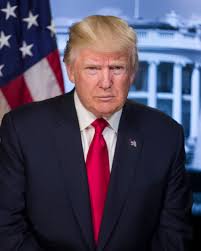
On May 27, 2016, conservative New York Times columnist David Brooks analyzed the use of insults by then-Republican Presidential front-runner Donald Trump. He did so with his then-counterpart, liberal syndicated columnist, Mark Shields, on The PBS Newshour.
DAVID BROOKS: “Trump, for all his moral flaws, is a marketing genius. And you look at what he does. He just picks a word and he attaches it to a person. Little Marco [Rubio], Lyin’ Ted [Cruz], Crooked Hillary [Clinton].
“And that’s a word. And that’s how marketing works. It’s a simple, blunt message, but it gets under.
“It sticks, and it diminishes. And so it has been super effective for him, because he knows how to do that. And she [Hillary Clinton] just comes with, ‘Oh, he’s divisive.’
“These are words that are not exciting people. And her campaign style has gotten, if anything…a little more stagnant and more flat.”
Donald Trump
MARK SHIELDS: “Donald Trump gratuitously slandered Ted Cruz’s wife. He libeled Ted Cruz’s father for being potentially part of Lee Harvey Oswald’s assassination of the president of the United States, suggesting that he was somehow a fellow traveler in that.
“This is a libel. You don’t get over it….”
Hillary Clinton wasn’t the only Presidential candidate who proved unable to cope with Trump’s gift for insult. His targets—and insults—included:
- Former Texas Governor Rick Perry: “Wears glasses to seem smart.”
- Former Florida Governor Jeb Bush: “Low Energy Jeb.”
- Vermont U.S. Senator Bernie Sanders: “Crazy Bernie.”
- Ohio Governor John Kasich: “Mathematically dead and totally desperate.”
Trump has reserved his most insulting words for women. For example:
- Carly Fiorina, his Republican primary competitor: “Look at that face. Would anyone vote for that?”
- Megyn Kelly, Fox News reporter: “You could see there was blood coming out of her eyes. Blood coming out of her wherever.”
- California Rep. Maxine Waters: “An extremely low IQ person.”
- Then-Speaker of the House Nancy Pelosi: “MS-13 Lover Nancy Pelosi.”
Only one candidate has shown the ability to rattle Trump: Massachusetts Senator Elizabeth Warren.
As Mark Shields noted on The PBS Newshour.
“Elizabeth Warren gets under Donald Trump’s skin. And I think she’s been the most effective adversary. I think she’s done more to unite the Democratic party than either Hillary Clinton or Bernie Sanders.”
Among her attacks:
- “Donald Trump was drooling over the idea of a housing meltdown because it meant he could buy up a bunch more property on the cheap. What kind of a man roots for people to lose their jobs and be kicked out of their houses? What kind of a man does that?”
- “When Donald Trump says ‘great,’ I ask: ‘great for who, exactly? When Donald says he’ll make America great, he means greater for rich guys just like Donald Trump. That’s who Donald Trump is. … And you have to watch out for him, because he’ll crush you into the dirt.”
- ”Donald Trump is a bigger, uglier threat every day that goes by – and it’s time for decent people everywhere— Republican, Democrat, Independent—to say, ‘No more Donald.'”
Words are weapons—or can be, if used properly.
Republicans learned this truth after World War II.
- Richard Nixon became a United States Senator in 1950 by attacking Helen Gahagen Douglas as “The Pink Lady.”
- From 1950 onward, Senator Joseph R. McCarthy and other Red-baiting Republicans essentially paralyzed the Democratic party through such slanderous terms as “Comsymps,” “fellow-travelers” and “Fifth Amendment Communists.”
ABC NEWS, AFGHANISTAN, ALTERNET, AMERICABLOG, AP, BABY BOOMER RESISTANCE, BARACK OBAMA, BBC, BLOOMBERG, BLOOMBERG NEWS, BUZZFEED, CANADA, CBS NEWS, CENTRAL AMERICA, CHIANG KAI-SHEK, CHINA, CNN, COLUMBIA, COMMUNISM, CRIMEA, CROOKS AND LIARS, CUBA, CZECHOSLAVAKIA, DAILY KOS, DAILY KOZ, DEMOCRATS, DONALD TRUMP, DWIGHT D. EISENHOWER, FACEBOOK, FIVETHIRTYEIGHT, GUATEMALA, GUNBOAT DIPLOMACY, HARPER’S MAGAZINE, HARRY S. TRUMAN, HUFFINGTON POST, HUNGARY, IRAQ, JOHN F. KENNEDY, JOSEPH MCCARTHY, LATIN AMERICA, LYNDON B. JOHNSON, MAO TSE-TUNG, MEDIA MATTERS, MICK MULVANEY, MITT ROMNEY, MONROE DOCTRINE, MOTHER JONES, MOVEON, MSNBC, NBC NEWS, NEW REPUBLIC, NEWSDAY, NEWSWEEK, NICARAGUA, NPR, PANAMA, PBS NEWSHOUR, POLAND, POLITICO, POLITICUSUSA, RAW STORY, REPUBLICANS, REUTERS, RICHARD M. NIXON, SALON, SEATTLE TIMES, SLATE, SOCHI OLYMPICS, SOVIET UNION, SPHERES OF INFLUENCE, SYRIA, TALKING POINTS MEMO, TARIFFS, THE ATLANTIC, THE CHICAGO SUN-TIMES, THE CHICAGO TRIBUNE, THE DAILY BEAST, THE DAILY BLOG, THE GUARDIAN, THE HILL, THE HUFFINGTON POST, THE INTERCEPT, THE LOS ANGELES TIMES, THE NATION, THE NEW REPUBLIC, THE NEW YORK TIMES, THE NEW YORKER, THE VILLAGE VOICE, THE WASHINGTON POST, THINKPROGRESS, TIME, TOM COTTON, TRUTHDIG, TRUTHOUT, TWO POLITICAL JUNKIES, U.S. NEWS & WORLD REPORT, UKRAINE, UPI, USA TODAY, VICTOR YANUKOVYCH, VIETNAM, VLADIMIR PUTIN, VOLODYMYR ZELENSKY, WONKETTE, X
In Bureaucracy, History, Military, Social commentary on August 14, 2025 at 12:14 am
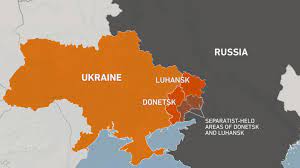
Since February 24, 2022, Ukraine has been under Russian assault. For more than two years, President Joseph R. Biden supplied Ukrainians with arms and Intelligence.
Then voters elected Donald Trump President in 2024.
Suddenly, the future of Ukraine—and those countries making up the 75-year-old North Atlantic Treaty Organization (NATO)—looked very different.
Numerous commentators have noted that Trump is a “transactional President.” Meaning that he doesn’t enter any enterprise unless he believes there’s something in it for him.
Thus, defending a nation simply because it’s a democracy is a waste of time—unless he can gain something from it.
Ukraine vs. Russia
Trump wants access to Ukraine’s rare earth minerals, which are key to manufacturing high-tech products like computer chips and military equipment.
The reason: In April, 2025, China announced export restrictions on some of these minerals in retaliation for Trump’s placing tariffs on Chinese goods.
In asserting the United States’ sphere of influence, Trump sees himself as the leader of a country that’s expansive and claims new territory,
As a result, he has attacked America’s longtime ally and neighbor, Canada with tariffs. He’s even threatened it with possible military invasion.
Vladimir Putin is another politician who believes in spheres of influence.
Since the breakup of the Soviet Union in 1991, Putin has yearned for its reestablishment. He has called that breakup “the greatest geopolitical tragedy of the 20th century.”

Vladimir Putin
Kremlin.ru, CC BY 4.0 <https://creativecommons.org/licenses/by/4.0>, via Wikimedia Commons
Russia has long resisted Ukraine’s move towards European institutions—especially entry into NATO.
Since late February, 2014, he began moving Russian troops into Ukraine and its autonomous Republic, Crimea. Russia annexed Ukraine’s southern Crimean peninsula and backed separatists who captured large swathes of eastern Ukraine.
On December 3, 2021, the Washington Post reported: “The Kremlin was planning a multi-front offensive as soon as early next year involving up to 175,000 troops” against Ukraine.
And where there is activity by Russians, American Rightists are eager to turn such events to their own political advantage.
All of which overlooks a number of brutal political truths.
First, all great powers have spheres of interest—and jealously guard them.
For the United States, it’s Latin and Central America, as established by the Monroe Doctrine.
And just what is the Monroe Doctrine?
It’s a statement made by President James Monroe in his 1823 annual message to Congress, which warned European powers not to interfere in the affairs of the Western Hemisphere.
The Monroe Doctrine has no legitimacy except the willingness of the United States to use armed force to back it up. When the United States no longer has the will or resources to enforce the Doctrine, it will cease to have meaning.
In 1962, President John F. Kennedy threatened Russian premier Nikita Khrushchev with nuclear oblivion unless Soviet nuclear missiles were withdrawn from Cuba.
For the Soviet Union, its spheres of influence include the Ukraine. Long known as “the breadbasket of Russia,” in 2011, it was the world’s third-largest grain exporter.
Russia will no more give up access to that breadbasket than the United States would part with the rich farming states of the Midwest.
Second, spheres of influence often prove disastrous to those smaller countries affected.
Throughout Latin and Central America, the United States remains highly unpopular for its brutal use of “gunboat diplomacy” during the 20th century.
Among those countries invaded or controlled by America: Mexico, Cuba, Guatemala, Nicaragua, Columbia, Panama and the Dominican Republic.
The resulting anger has led many Latin and Central Americans to support Communist Cuba, even though its political oppression and economic failure are universally apparent.
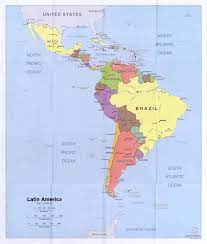
Latin and Central America
Similarly, the Soviet Union forced many nations—such as Poland, Hungary and Czechoslovakia—to submit to the will of Moscow.
The alternative? The threat of Soviet invasion—as occurred in Hungary in 1956 and Czechoslovakia in 1968.
Third, even “great powers” are not all-powerful.
In 1949, after a long civil war, the forces of Mao Zedong defeated the Nationalist armies of Chiang Kai-Shek, who withdrew to Taiwan.
China had never been a territory of the United States. Nor could the United States have prevented Mao from defeating the corrupt, ineptly-led Nationalist forces.
Even so, Republican Senators and Representatives such as Richard Nixon and Joseph McCarthy eagerly blamed President Harry S. Truman and the Democrats for “losing China.”
The fear of being accused of “losing” another country led Presidents Dwight D. Eisenhower, John F. Kennedy, Lyndon B. Johnson and Richard M. Nixon to tragically commit the United States to “roll back” Communism in Cuba and Vietnam.
Now Republicans—who claim the United States can’t afford to provide healthcare for its poorest citizens—want to turn the national budget over to the Pentagon.
They want the United States to “intervene” in Syria following the overthrow of Bashar al-Assad’s government in late 2024
This would insert the United States into yet another war in yet another Islamic country—after our disastrous forays in Iraq and Afghanistan.
Before plunging into conflicts that don’t concern us and where there is absolutely nothing to “win,” Americans would do well to remember the above-stated lessons of history. And to learn from them.
2016 PRESIDENTIAL CAMPAIGN, ABC NEWS, ADOLF HITLER, ALTERNET, AMERICABLOG, AP, BABY BOOMER RESISTANCE, BERNIE SANDERS, BUZZFEED, CARLY FIORINA, CBS NEWS, CNN, COMMUNISM, COVID-19, CROOKS AND LIARS, DAILY KOS, DAILY KOZ, DAVID BROOKS, DAVID HALBERSTAM, DEMOCRATIC PARTY, DEMOCRATS, DENNIS HASTERT, DONALD TRUMP, ELIZABETH WARREN, FIVETHIRTYEIGHT, HELEN GAHAGAN DOUGLAS, HILLARY CLINTON, JEB BUSH, JOHN KASICH, JOSEPH MCCARTHY, JOSEPH R. MCCARTHY, JOSH DUGGAR, LANGUAGE, LIBERALS, MARCO RUBIO, MARJORIE TAYOR GREENE, MARK SHIELDS, MAXINE WATERS, MEGYN KELLY, MICHELLE OBAMA, MOTHER JONES, MOVEON, MSNBC, NANCY PELOSI, NATO, NBC NEWS, NEWSWEEK, NEWT GINGRICH, NICCOLO MACHIAVELLI, NPR, PBS NEWSHOUR, POLITICO, POLITICUSUSA, RAW STORY, REPUBLICAN PARTY, REPUBLICANS, REUTERS, RICHARD NIXON, RICK PERRY, RUSSIA, SALON, SATIRE, SEATTLE TIMES, SLANDER, SLATE, TALKING POINTS MEMO, THE ATLANTIC, THE CHICAGO SUN-TIMES, THE CHICAGO TRIBUNE, THE DAILY BEAST, THE DAILY BLOG, THE GUARDIAN, THE HILL, THE HUFFINGTON POST, THE LOS ANGELES TIMES, THE NATION, THE NEW YORK TIMES, THE WASHINGTON POST, THINKPROGRESS, TIME, TRUTHDIG, U.S. NEWS & WORLD REPORT, UPI, USA TODAY, VLADIMIR PUTIN, X, YOUTUBE
In Bureaucracy, History, Politics, Social commentary on March 24, 2025 at 1:00 am
In 1996, Newt Gingrich, then Republican Speaker of the House of Representatives, wrote a memo that encouraged Republicans to “speak like Newt.”
Entitled “Language: A Key Mechanism of Control,” it urged Republicans to attack Democrats with such words as “corrupt,” “selfish,” “destructive,” “hypocrisy,” “liberal,” “sick,” and “traitors.”
Even worse, Gingrich encouraged the news media to disseminate such accusations. Among his suggestions:
- “Fights make news.”
- Create a “shield issue” to deflect criticism: “A shield issue is, just, you know, your opponent is going to attack you as lacking compassion. You better…show up in the local paper holding a baby in the neonatal center.”
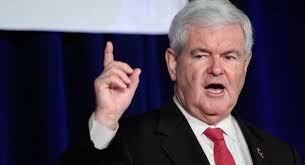
Newt Gingrich
This is in line with the advice of Florentine statesman Niccolo Machiavelli: “For men in general judge more by the eyes than by the hands; for everyone can see, but very few have to feel. Everyone sees what you appear to be, few feel what you are….”
In the memo, Gingrich advised:
“….In the video “We are a Majority,” Language is listed as a key mechanism of control used by a majority party, along with Agenda, Rules, Attitude and Learning.
“…We believe that you could have a significant impact on your campaign and the way you communicate if we help a little. That is why we have created this list of words and phrases….
“This list is prepared so that you might have a directory of words to use in writing literature and mail, in preparing speeches, and in producing electronic media.
“The words and phrases are powerful. Read them. Memorize as many as possible. And remember that like any tool, these words will not help if they are not used.”
Here is the list of words Gingrich urged his followers to use in attacking “the opponent, their record, proposals and their party”:
- abuse of power
- anti- (issue): flag, family, child, jobs
- betray
- bizarre
- bosses
- bureaucracy
- cheat
- coercion
- “compassion” is not enough
- collapse(ing)
- consequences
- corrupt
- corruption
- criminal rights
- crisis
- cynicism
- decay
- deeper
- destroy
- destructive
- devour
- disgrace
- endanger
- excuses
- failure (fail)
- greed
- hypocrisy
- ideological
- impose
- incompetent
- insecure
- insensitive
|
- intolerant
- liberal
- lie
- limit(s)
- machine
- mandate(s)
- obsolete
- pathetic
- patronage
- permissive attitude
- pessimistic
- punish (poor …)
- radical
- red tape
- self-serving
- selfish
- sensationalists
- shallow
- shame
- sick
- spend(ing)
- stagnation
- status quo
- steal
- taxes
- they/them
- threaten
- traitors
- unionized
- urgent (cy)
- waste
- welfare
|
And to the dismay of both Republicans and Democrats, Donald Trump has learned his lessons well.
On May 27, 2016, conservative New York Times columnist David Brooks analyzed the use of insults by Republican Presidential front-runner Donald Trump. He did so with his counterpart, liberal syndicated columnist, Mark Shields, on The PBS Newshour.
DAVID BROOKS: “Trump, for all his moral flaws, is a marketing genius. And you look at what he does. He just picks a word and he attaches it to a person. Little Marco [Rubio], Lyin’ Ted [Cruz], Crooked Hillary [Clinton].
“And that’s a word. And that’s how marketing works. It’s a simple, blunt message, but it gets under.
“It sticks, and it diminishes. And so it has been super effective for him, because he knows how to do that. And she [Hillary Clinton] just comes with, ‘Oh, he’s divisive.’
“These are words that are not exciting people. And her campaign style has gotten, if anything…a little more stagnant and more flat.”
Donald Trump
MARK SHIELDS: “Donald Trump gratuitously slandered Ted Cruz’s wife. He libeled Ted Cruz’s father for being potentially part of Lee Harvey Oswald’s assassination of the president of the United States, suggesting that he was somehow a fellow traveler in that.
“This is a libel. You don’t get over it….”
Hillary Clinton wasn’t the only Presidential candidate who proved unable to cope with Trump’s gift for insult. His targets—and insults—included:
- Former Texas Governor Rick Perry: “Wears glasses to seem smart.”
- Former Florida Governor Jeb Bush: “Low Energy Jeb.”
- Vermont U.S. Senator Bernie Sanders: “Crazy Bernie.”
- Ohio Governor John Kasich: “Mathematically dead and totally desperate.”
His victims, in turn, struggled to respond. Florida U.S. Senator Marco Rubio tried to out-insult Trump at the Republican Presidential candidates’ debate on March 3, 2016.
“I call him Little Marco. Little Marco. Hello, Marco,” said Trump.
Rubio retaliated with “Big Donald.” Since Americans generally believe that “bigger is better,” this was a poor choice of insult.
A better choice, given Trump’s “bromance” with Russian dictator Vladimir Putin: “Red Donald.”
Trump has reserved his most insulting words for women. For example:
- Carly Fiorina, his Republican primary competitor: “Look at that face. Would anyone vote for that?”
- Megyn Kelly, Fox News reporter: “You could see there was blood coming out of her eyes. Blood coming out of her wherever.”
- California Rep. Maxine Waters: “An extremely low IQ person.”
- Speaker of the House Nancy Pelosi: “MS-13 Lover Nancy Pelosi.”
Only one candidate has shown the ability to rattle Trump: Massachusetts Senator Elizabeth Warren.
As Mark Shields noted on The PBS Newshour.
“Elizabeth Warren gets under Donald Trump’s skin. And I think she’s been the most effective adversary.”
And David Brooks offered: “And so the tactics…is either you do what Elizabeth Warren has done, like full-bore negativity, that kind of [get] under the skin, or try to ridicule him and use humor.”
2016 PRESIDENTIAL ELECTION, ABC NEWS, ADOLF HITLER, AFGHANISTAN, ALTERNET, AMERICABLOG, AP, ASIANS, ” 9/11, BABY BOOMER RESISTANCE, BARACK OBAMA, BLACKS, BULLYING, BUZZFEED, CBS NEWS, CNN, COMMUNISM, CROOKS AND LIARS, DAILY KOZ, DONALD TRUMP, DRUDGE RETORT, FACEBOOK, FASCISM, FIVETHIRTYEIGHT, GEORGE W. BUSH, GREAT DEPRESSION, HARPER’S MAGAZINE, HILLARY CLINTON, HISPANICS, IRAQ, JEWS, KONRAD ADENAUR, MEDIA MATTERS, MOTHER JONES, MOVEON, MSNBC, MUSLIMS, NAZI GERMANY, NAZI PARTY, NBC NEWS, NEWSWEEK, NPR, PAUL VON HINDENBURG, PBS NEWSHOUR, POLITICO, POLITICUSUSA, RACISM, RAW STORY, REPUBLICANS, REUTERS, ROBERT PAYNE, SALON, SEATTLE TIMES, SLATE, TALKING POINTS MEMO, THE ATLANTIC, THE CHICAGO SUN-TIMES, THE CHICAGO TRIBUNE, THE DAILY BEAST, THE DAILY BLOG, THE GUARDIAN, THE HILL, THE HUFFINGTON POST, THE LIFE AND DEATH OF ADOLF HITLER, THE LOS ANGELES TIMES, THE LOS ANGELS TIMES, THE NATION, THE NEW REPUBLIC, THE NEW YORK TIMES, THE VILLAGE VOICE, THE WASHINGTON POST, THINKPROGRESS, TIME, TRUTHDIG, TRUTHOUT, TWO POLITICAL JUNKIES, U.S. NEWS & WORLD REPORT, UPI, USA TODAY, WONKETTE, WORLD WAR 11, X
In Bureaucracy, History, Politics, Social commentary on November 29, 2024 at 12:57 am
In his bestselling 1973 biography, The Life and Death of Adolf Hitler, British historian Robert Payne harshly condemned the German people for the rise of the Nazi dictator.
“[They] allowed themselves to be seduced by him and came to enjoy the experience….[They] followed him with joy and enthusiasm because he gave them license to pillage and murder to their hearts’ content. They were his servile accomplices, his willing victims….
“If he answered their suppressed desires, it was not because he shared them, but because he could make use of them. He despised the German people, for they were merely the instruments of his will.”
On November 8, 2016, millions of ignorant, hate-filled, Right-wing Americans elected Donald Trump—a man reflecting their own hate and ignorance—to the Presidency.
Yet, in some ways, Americans had fewer excuses for turning to a Fascistic style of government than the Germans did.
Adolf Hitler, joined the National Socialist German Workers (Nazi) Party in 1919—the year after World War 1 ended.
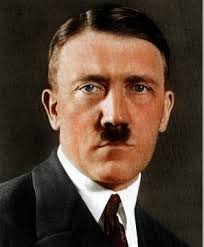
Adolf Hitler
In 1923, he staged a coup attempt in Bavaria—which was quickly and brutally put down by police. He was arrested and sentenced to less than a year in prison.
After that, Hitler decided that winning power through violence was no longer an option. He must win it through election—or appointment.
When the 1929 Depression struck Germany, the fortunes of Hitler’s Nazi party rose as the life savings of ordinary Germans fell. Streets echoed with bloody clashes between members of Hitler’s Nazi Stormtroopers and those of the German Communist Party.
Germans desperately looked for a leader—a Fuhrer—who could somehow deliver them from the threat of financial ruin and Communist takeover.
In early 1933, members of his own cabinet persuaded aging German president, Paul von Hindenburg, that only Hitler’s appointment as Chancellor could do this.
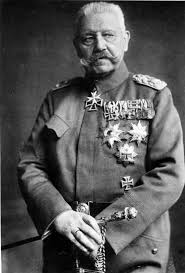
Paul von Hindenburg
Hindenburg was reluctant to do so. He considered Hitler a dangerous radical. But he let himself be convinced that he could “box in” and control Hitler by putting him in the Cabinet.
So, on January 30, 1933, Hindenburg appointed Adolf Hitler Chancellor (the equivalent of Attorney General) of Germany.
On August 2, 1934, Hindenburg died. Hitler immediately assumed the titles—and duties—of the offices of Chancellor and President. His rise to total power was complete.
It had taken him 14 years to do so.
In 2015, Donald Trump declared his candidacy for President.
Now, consider this:
- America was technically at war in the Middle East—but its fate was not truly threatened, as it had been during the Civil War.
- Government loans from President Barack Obama had saved American capitalism from its own excesses during the George W. Bush administration.
- Employment was up.
- No scandals had plagued the Obama Presidency—unlike the Reagan one.
- There been no large-scale terrorist attacks on American soil—such as 9/11 under George W. Bush.
Yet—not 17 months after announcing his candidacy for President—enough Americans fervently embraced Donald Trump to give him the most powerful position in the country and the world.
.jpg/220px-Donald_Trump_August_19,_2015_(cropped).jpg)
Donald Trump
Whites comprised the overwhelming majority of the audiences at Trump rallies. Not all were racists, but many of those who were advertised it on T-shirts: “MAKE AMERICA WHITE AGAIN.”
Birthrates among nonwhites were rising. By 2045, whites would make up less than 50 percent of the American population.
The 2008 election of the first black President had shocked whites. His 2012 re-election had deprived them of the hope that 2008 had been an accident.
Then came 2016—and the possibility that a black President might actually be followed by a woman: Hillary Clinton.
During Trump’s four years in office, he:
- Fired FBI Director James Comey for investigating Russia’s subversion of the 2016 Presidential election.
- Attacked Federal judges whose rulings displeased him.
- Repeatedly and enthusiastically defended Vladimir Putin, the dictator of Russia, America’s mortal enemy.
- Installed three Right-wing Justices on the Supreme Court who overturned Roe v. Wade, allowing states to once again outlaw abortion.
- Attacked and alienated America’s oldest allies, such as Canada and Great Britain.
- Shut down the United States Government, imperiling the lives of 800,000 Federal employees, to extort money from Congress for a worthless wall on the U.S.-Mexico border.
- Attacked the free press as “the enemy of the people.”
- Repeatedly lied about the dangers of COVID-19 while attacking governors who supported mask-wearing and social distancing; 400,000 Americans died.
- Refused to accept his loss in the 2020 Presidential election and spread “The Big Lie” that he had been cheated of victory by massive voter fraud.
- Incited a deadly attack on Congress to stop the counting of Electoral College votes—proving that Joe Biden had won the 2020 Presidential election—so he could remain in office as “President-for-Life.”
On November 5, 2024, 76,414,580 ignorant, hate-filled, Right-wing Americans eagerly voted to again install him as their Fuhrer.
Imagine that, four years after World War II, Germans had voted to replace their “colorless” chancellor, Konrad Adenauer, with the one who had ignited World War II and slaughtered six million Jews: Adolf Hitler.
All of this should be remembered the next time an American blames Germans for their embrace of Adolf Hitler.


 Bureaucracybuster's Blog
ABC NEWS, ALTERNET, AMERICAN TABLOID, AP, ASSASSINATION, BUZZFEED, CBS NEWS, CIA, CNN, COMMUNISM, CROOKS AND LIARS, CUBA, CUBAN MISSILE CRISIS, DAILYKOS, DONALD TRUMP, DWIGHT D. EISENHOWER, FBI, FIDEL CASTRO, FLORIDA, FULGENCIO BATISTA, GUAM, GUS RUSSO, JAMES ELLROY, JOE BIDEN, JOHN F. KENNEDY, JOHNNY ROSELLI, LEE HARVEY OSWALD, LIVE BY THE SWORD, LYNDON B. JOHNSON, MAFIA, MOTHER JONES, MOVEON, NBC NEWS, NEWSWEEK, NEWT GINGRICH, NIKITA KHRUSHCHEV, NORTH KOREA, NPR, NUCLEAR WAR, POLITICO, RAW STORY, REUTERS, ROBERT F. KENNEDY, SALON, SAM GIANCANA, SEATTLE TIMES, SLATE, THE ATLANTIC, THE CHICAGO SUN-TIMES, THE CHICAGO TRIBUNE, THE DAILY BEAST, THE GUARDIAN, THE HILL, THE HUFFINGTON POST, THE LOS ANGELES TIMES, THE NATION, THE NEW YORK TIMES, THE WASHINGTON POST, TIME, U.S. NEWS & WORLD REPORT, UKRAINE, UP, UPI, USA TODAY, VLADIMIR PUTIN, WARREN COMMISSION, X
AMERICA’S BRUSH WITH ARMAGEDDON: PART FOUR (END)
In Bureaucracy, History, Law, Law Enforcement, Military, Politics, Social commentary on April 7, 2026 at 12:17 am“John and Robert Kennedy knew what they were doing. They waged a vicious war against Fidel Castro—a war someone had to lose.”
And the loser turned out to be John F. Kennedy.
So writes investigative reporter Gus Russo in Live By the Sword: The Secret War Against Castro and the Death of JFK, published in 1998.
In what is almost certainly the definitive account of the assassination of President John F. Kennedy, Russo reaches some startling—but highly documented—conclusions:
Another book well worth reading about America’s Cuban obsession during the early 1960s is American Tabloid, by James Ellroy.
Although a novel, it vividly captures the atmosphere of intrigue, danger and sleaziness that permeated that era in a way that dry, historical documents never can.
“The 50’s are finished,” reads its paperback dust jacket. “Zealous young lawyer Robert Kennedy has a red-hot jones to nail Jimmy Hoffa. JFK has his eyes on the Oval Office.
“J. Edgar Hoover is swooping down on the Red Menace. Howard Hughes is dodging subpoenas and digging up Kennedy dirt. And Castro is mopping up the bloody aftermath of his new Communist nation….
“Mob bosses, politicos, snitches, psychos, fall guys and femmes fatale. They’re mixing up a Molotov cocktail guaranteed to end the country’s innocence with a bang.”
Among the legacies of America’s twisted romance with anti-Castro Cubans:
The Cuban Missile Crisis was the deadliest moment of the Cold War, when the world stood only minutes away from nuclear Armageddon.
That crisis stemmed from America’s twisted obsession with Cuba, an obsession that continues today.
Sixty-three years after that crisis, the world wonders: Could nuclear war erupt over Cuba?
And, once again, that decision lies in the hands of two men—Vladimir Putin and Donald Trump—out of a world population of more than eight billion.
The Soviet Union began aiding Cuba in early 1960, shortly after the 1959 revolution, with a formal trade agreement signed in February 1960. This deal involved exchanging Soviet oil for Cuban sugar. The relationship quickly expanded to include extensive economic subsidies and military support that continued through 1990.
On January 29, 2026, President Donald Trump threatened to impose huge tariffs on goods from any country that supplied oil to Cuba. Declaring a national emergency, he aims to cripple the island’s energy supply.
On February 18, Russian President Vladimir Putin met with Cuban Foreign Minister Bruno Rodriguez in Moscow and reaffirmed his support for the island nation. Putin reminded his guest that Russia “will not accept anything of the sort” when discussing the sanctions against the country.
“I do believe I’ll be having the honor of taking Cuba. That’s a big honor. Taking Cuba in some form,” Trump said on March 16. “Whether I free it, take it, I think I could do anything I want with it, if you want to know the truth. They are a very weakened nation right now.”
Nikita Khrushchev, facing a choice of humiliation or Armageddon during the Cuban Missile Crisis, chose humiliation—so his country could live another day.
It remains to be seen if Vladimir Putin is willing to make the same decision.
Share this: