Posts Tagged ‘CIVIL WAR’
2016 PRESIDENTIAL RACE, ABC NEWS, ALL THE KING’S MEN, ALL THE KINIG’S MEN (BOOK), ALTERNET, AMERICABLOG, ANDREW GOODMAN, ANGELO BRUNO, AP, BABY BOOMER RESISTANCE, BBC, BLOOMBERG NEWS, BLUE BLOODS, BUZZFEED, CAPITOL ATTACK, CARLO GAMBINO, CBS, CBS NEWS, CIVIL WAR, CNN, COINTELPRO, COUPS, CROOKS AND LIARS, DAILY KOS, DEMOCRATS, DEPARTMENT OF HOMELAND SECURITY, DONALD TRUMP, ELECTORAL COLLEGE, ERIC SCHNEIDERMAN, FACEBOOK, FBI, FIVETHIRTYEIGHT, FRANK REAGAN, GAMBINO FAMILY, HARPER’S MAGAZINE, HUFFINGTON POST, INDEPENDENT COUNSEL, INSIDE HOOVER'S FBI (BOOK), J. EDGAR HOOVER, JAMES CHANEY, JAMES COMEY, JEFF SESSIONS, JOSEPH BIDEN, jOSH HAWLEY, JUSTICE DEPARTMENT, KU KLUX KLAN, LYNDON B. JOHNSON, MAFIA, MARJORIE TAYLOR GREENE, MEDIA MATTERS, MERRICK GARLAND, MICHAEL SCHWERNER, MILITIA GROUPS, MO BROOKS, MOTHER JONES, MOVEON, MSNBC, NBC NEWS, NEIL J. WELCH, NEW REPUBLIC, NEW YORK POLICE DEPARTMENT, NEWSDAY, NEWSWEEK, NPR, OBSTRUCTING CONGRESSIONAL PROCEEDINGS, PBS NEWSHOUR, POLITICO, POLITICUSUSA, RAW STORY, REPUBLICANS, REUTERS, RIGHT-WING TERRORISM, ROBERT MUELLER, ROBERT PENN WARREN, RUSSIA, SALON, SEATTLE TIMES, SERGEI KISLYAK, SEXUAL ASSAULT, SLANDER, SLATE, SWAT TEAMS, TALKING POINTS MEMO, TERRORISM, TERRORIST FINANCE TRACKING PROJECT, THE ATLANTIC, THE CHICAGO SUN-TIMES, THE CHICAGO TRIBUNE, THE DAILY BEAST, THE DAILY BLOG, THE GUARDIAN, THE HILL, THE HUFFINGTON POST, THE LOS ANGELES TIMES, THE NATION, THE NEW REPUBLIC, THE NEW YORK TIMES, THE NEW YORKER, THE VILLAGE VOICE, THE WASHINGTON POST, THINKPROGRESS, TIM WEINER, TIME, TOM SELLECK, TREASON, TRUMP UNIVERSITY, TRUTHDIG, TRUTHOUT, TWITTER, TWO POLITICAL JUNKIES, U.S. NEWS & WORLD REPORT, UNITED STATES DEPARTMENT OF JUSTICE, UNITED STATES DEPARTMENT OF THE TREASURY, UNITED STATES HOUSE OF REPRESENTATIVES, UNITED STATES PARK POLICE, UNITED STATES SECRET SERVICE, UNITED STATES SENATE, UNITED STATES SUPREME COURT, UPI, USA PATRIOT ACT, USA TODAY, USA TODAY DONALD TRUMP, VLADIMIR PUTIN, WILLIAM C. SULLIVAN, WILLIE STARK, WONKETTE
In Bureaucracy, History, Law, Law Enforcement, Politics, Social commentary on August 29, 2022 at 12:10 am
After taking office as President, Donald Trump openly waged war on his own Justice Department—and especially its chief investigative agency, the FBI.
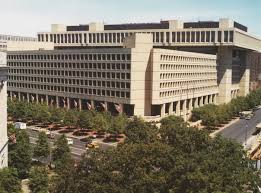
FBI headquarters
Among his attacks on federal law enforcers:
- Fired James Comey, the FBI director pursuing an investigation into Russia’s meddling in the 2016 Presidential race to ensure Trump’s election.
- Threatened to fire Independent Counsel Robert Mueller, who continued that investigation after he fired Comey.
- Repeatedly attacked—verbally and on Twitter—his Attorney General, Jeff Sessions, for recusing himself from overseeing the Russia investigation.
- (Sessions did so after the press revealed that, during the 2016 race, he twice met secretly with Russian Ambassador Sergei Kislyak.)
- Repeatedly attacked the integrity of the FBI, raising the possibility of his firing more of its senior leadership for investigating his ties to Russian president Vladimir Putin.
- Forced House Republicans to release a memo falsely accusing the FBI of pursuing a vendetta against him.
But the FBI could have refused to meekly accept such assaults.
A February 2 episode of the popular CBS police drama, “Blue Bloods,” offered a vivid lesson on bureaucratic self-defense against tyrants.
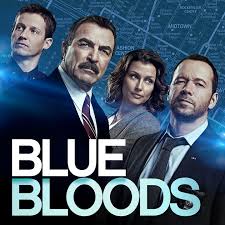
A shootout erupts in a crowded pub between a gunman and NYPD officers. Results: One dead gunman and one wounded bystander.
Problem: The bystander is an aide to New York Governor Martin Mendez.
Mendez visits One Police Plaze, NYPD headquarters, for a private chat with Commissioner Frank Reagan (Tom Selleck). From the outset, he’s aggressive, rude and threatening.
MENDEZ: I know you guys like to whitewash officer-involved shootings.
REAGAN: I do not.
MENDEZ: That’s not going to happen here. I want the cop who shot my guy fired and charged.
REAGAN: If the grand jury indicts, my officer could be terminated.
MENDEZ: We all want to protect our people, but mine come first.
Governor Mendez leaves Commissioner Reagan’s office. Later, he returns:
MENDEZ: We’ve got a serious problem.
REAGAN: Why? The grand jury declined to indict my officer.
MENDEZ: Your cop fired into a crowded room.
REAGAN: She returned fire, took out the shooter and likely saved lives.
MENDEZ: What are you going to do?
REAGAN: Our Internal Affairs investigation supports the grand jury’s finding, so the case is closed.
MENDEZ: Either you fire this cop, or I’ll order the Attorney General to investigate every questionable police shooting in the past 10 years and hold public hearings out loud and lights up.
REAGAN: Everybody loves a circus.
MENDEZ: Except the guy who’s got to shovel up afterwards.
At the end of the episode, a third—and final—meeting occurs in a restaurant between Reagan and Mendez.
MENDEZ: Have you dumped the cop who shot my guy?
REAGAN: No.
MENDEZ: Bad news.
REAGAN: Depends on what you compare it to. It turns out that your aide wasn’t drinking alone the night he was shot.
MENDEZ: So what? He’s single.
REAGAN: He was with a married woman.
MENDEZ: That’s on her, not on him.
REAGAN: Except she is married to his boss, your Chief of Staff.
MENDEZ: Sheesh!
REAGAN: Turns out this has been going on for over a year.
MENDEZ: So what are we doing?
REAGAN: If this gets out, the circus comes to Albany [where the governor has his office].
MENDEZ: Who else knows?
REAGAN: Right now it’s safe in the notebook of my lead detective. Whether or not it finds its way into an arrest report that’s subject to a Freedom of Information Act request—that’s a judgment call.
MENDEZ: Your judgment?
REAGAN: Yes.
MENDEZ: And if my investigation goes away?
REAGAN: Neither of us is shoveling up after the circus.
MENDEZ: I have your word on that?
REAGAN: Yes.
MENDEZ: You have a good evening, Commissioner.
J. Edgar Hoover, the legendary FBI director, used Realpolitik to ensure his reign for 48 years.
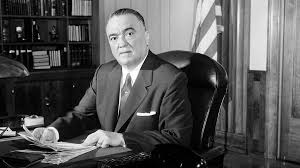
J. Edgar Hoover
As William C. Sullivan, the onetime director of the FBI’s Domestic Intelligence Division, revealed after Hoover’s death in 1972:
“The moment [Hoover] would get something on a senator, he’d send one of the errand boys up and advise the senator that ‘we’re in the course of an investigation, and we by chance happened to come up with this data on your daughter.
“‘But we wanted you to know this. We realize you’d want to know it.’ Well, Jesus, what does that tell the senator? From that time on, the senator’s right in his pocket.”
Donald Trump has long pursued a strategy of intimidation. But when people have refused to be cowed by his threats, he’s backed off.
During the 2016 Presidential campaign, more than a dozen women accused Trump of sexual misconduct, ranging from inappropriate comments to assault.
Trump responded: “The events never happened. Never. All of these liars will be sued after the election is over.”
Yet he didn’t file a single slander suit.
Similarly, when New York’s Attorney General Eric Schneiderman sued Trump for running a fraudulent university, Trump initially said he would fight the charge.
Instead, he settled the case by paying $25 million to compensate the 3,700 students Trump University had defrauded.
“You never have to frame anyone,” says Governor Willie Stark in Robert Penn Warren’s Pulitzer Prize-winning 1946 novel, All the King’s Men. “Because the truth is always sufficient.”
2020 PRESIDENTIAL ELECTION, ABC NEWS, ABRAHAM LINCOLN, ALTERNET, AMERICABLOG, AP, ARIZONA, ATTORNEYS GENERAL, BABY BOOMER RESISTANCE, BEN SASSE, BLOOMBERG, BRAD RAFFENSPERGER, BRIAN KEMP, BUZZFEED, CBS NEWS, CHRIS MURPHY, CIVIL WAR, CNN, CROOKS AND LIARS, DAILY KOZ, DEMOCRATS, DONALD TRUMP, DRUDGE REPORT, ELECTORAL COLLEGE, FACEBOOK, FIVETHIRTYEIGHT, GEORGIA, HARPER’S MAGAZINE, HUFFINGTON POST, JOSEPH BIDEN, jOSH HAWLEY, JOSH SHAPIRO, KEN PAXTON, KEVIN MCCARTHY, MEDIA MATTERS, MENNESOTA, MICHIGAN, MIKE KELLY, MIKE PENCE, MOTHER JONES, MOVEON, MSNBC, NANCY PELOSI, NBC NEWS, NEVADA, NEWSWEEK, NPR, PAT A. CIPOLLONE, PBS NEWSHOUR, PENNSYLVANIA, POLITICO, POLITICUSUSA, RAW STORY, REPUBLICANS, REUTERS, SALON, SEATTLE TIMES, SLATE, STEVE SCALISE, SUPREME COURT, TALKING POINTS MEMO, TEXAS, THE ATLANTIC, THE CHICAGO SUN-TIMES, THE CHICAGO TRIBUNE, THE DAILY BEAST, THE DAILY BLOG, THE GUARDIAN, THE HILL, THE HUFFINGTON POST, THE LOS ANGELES TIMES, THE NATION, THE NEW REPUBLIC, THE NEW YORK TIMES, THE VILLAGE VOICE, THE WASHINGTON POST, THINKPROGRESS, TIME, TRUTHDIG, TRUTHOUT, TWITTER, TWO POLITICAL JUNKIES, U.S. NEWS & WORLD REPORT, UNITED STATES HOUSE OF REPRESENTATIVES, UNITED STATES SENATE, UPI, USA TODAY, VOTER FRAUD, WISCONSIN, WONKETTE
In Bureaucracy, History, Law, Politics, Social commentary on August 12, 2022 at 12:12 am
On November 3, 2020, 81,255,933 Democratic voters elected former Vice President Joseph Biden the 46th President of the United States.
President Donald J. Trump, running for a second term, got 74,196,153 votes. Biden also won decisively in the Electoral College: 306 votes to 232 for Trump.
Yet more than two months after the election, Trump refused to concede, insisting that he won—and repeatedly claiming falsely that he was the victim of massive vote fraud.
Immediately after the election, Trump ordered his attorneys to file lawsuits to overturn the election results.
Throughout November and December, cases were filed in Wisconsin, Arizona, Nevada, Michigan, Minnesota and Georgia challenging the election results. None were supported by evidence of fraud—as even Trump’s lawyers admitted when questioned by judges.
On November 13, nine cases attacking President-Elect Joe Biden’s win in key states were denied or dropped. A law firm challenging the vote count in Pennsylvania withdrew from the effort.
By November 21, more than 30 cases were withdrawn by Trump’s attorneys or dismissed by Federal judges—some of them appointed by Trump himself.
Ultimately, from November 3 to December 14, Trump and his allies lost 59 times in court, either withdrawing cases or having them dismissed by Federal and state judges.
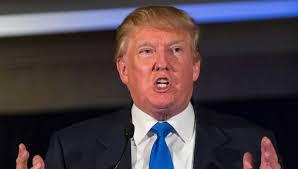
Donald Trump
On November 19, losing in the courts, Trump invited two Republican legislative leaders from Michigan to the White House. The reason: To persuade them to stop the state from certifying the vote.
The Michigan legislators said they would follow the law.
On December 5, Trump called Georgia Governor Brian Kemp and asked him to call a special legislative session and convince state legislators to select their own electors that would support him, thus overturning Biden’s win.
Kemp refused, saying he lacked the authority to do so.

Brian Kemp
On December 8, the Supreme Court refused to hear Trump’s bid to reverse Pennsylvania’s certification of Biden’s victory.
Representative Mike Kelly (R-PA), a Trump ally, argued that the state’s 2.5 million mail-in votes were unconstitutional.
The Court’s order read, “The application for injunctive relief presented to Justice [Samuel] Alito and by him referred to the Court is denied.”
Although Trump had appointed three of the Court’s Justices, not one of them dissented.
On December 8, Texas Attorney General Ken Paxton filed his own lawsuit at the Supreme Court. A Trump ally, Paxton has been indicted on felony securities fraud charges.
In Texas v. Pennsylvania, he alleged that Georgia, Michigan, Pennsylvania and Wisconsin violated the United States Constitution by changing election procedures through non-legislative means.
On December 10, 2020, the Supreme Court refused to hear the case.
“Texas has not demonstrated a judicially cognizable interest in the manner in which another state conducts its elections,” the court said without further comment. It dismissed all other related claims as moot.
Seventeen Republican state Attorney Generals—and 126 Republican members of Congress—supported the lawsuit. They did so in an amicus curiae (“friend of the court”) brief.
They feared Trump’s fanatical base would “primary” them if they didn’t publicly declare their loyalty—to a man they knew was slated to leave office within two months.

The Supreme Court
Had the Court acted on Paxton’s request, the results for democracy would have been catastrophic.
“Texas seeks to invalidate elections in four states for yielding results with which it disagrees,” Pennsylvania Attorney General Josh Shapiro told the justices in legal papers.
“Its request for this court to exercise its original jurisdiction and then anoint Texas’s preferred candidate for president is legally indefensible and is an affront to principles of constitutional democracy.
“The court should not abide this seditious abuse of the judicial process, and should send a clear and unmistakable signal that such abuse must never be replicated,”
The outcome of the 2020 Presidential election marked the first time a losing candidate tried to overturn the will of millions of American voters.
It also marked the first time that state Attorney Generals and members of Congress tried to overturn the results of a Presidential election.
The signers represented nearly two-thirds of the House GOP.
Among them: The House’s top two Republicans: Minority Leader Kevin McCarthy (R-Calif.) and Minority Whip Steve Scalise (R-La.),
Only 70 Republican House members refused to sign the brief.
By December 11, 2020, only 23 Republicans in Congress—14 Representatives and nine Senators—had acknowledged Biden’s victory.
On January 6, Trump instigated an attack on the Capitol Building to stop the counting of Electoral College votes, which was certain to prove Biden the winner.
Despite this, Republican members of Congress continued trying to throw the election Trump’s way.
Six Republicans in the Senate and 121 in the House backed objections to certifying Arizona’s electoral outcome. Seven Republicans in the Senate and 138 in the House supported an objection to certifying Pennsylvania’s electoral outcome.
Not since the American Civil War (1861-1865) has the United States seen a more blatant—and deadly—case of sedition.
In 1861, 11 Senators and three Representatives were expelled from Congress for refusing to recognize Abraham Lincoln’s election—and supporting insurrection.
Democrats need to summon the same courage and ruthlessness against their sworn enemies.
Trump’s refusal to admit that he lost fuels the danger of another attack on Congress and/or President Biden.
He—and his Republican accomplices—must be forcibly taught there are penalties for treason.
ABC NEWS, ABORTION, ABRAHAM LINCOLN, ALTERNET, AMERICABLOG, AP, BABY BOOMER RESISTANCE, BBC, BENITO MUSSOLINI, BLOOMBERG NEWS, BLUE STATES, BUZZFEED, CBS NEWS, CHARLES ROYSTER, CIVIL WAR, CNN, CONTRACEPTION, CROOKS AND LIARS, DAILY KOZ, DEMOCRATS, DONALD KETTL, DONALD TRUMP, DWIGHT D. EISENHOWER, FACEBOOK, FIVETHIRTYEIGHT, GAY RIGHTS, HARPER’S MAGAZINE, HUFFINGTON POST, JOHN WILKES BOOTH, JOHNS HOPKINS UNIVERSITY, LILLIANA MASON, MEDIA MATTERS, MOTHER JONES, MOVEON, MSNBC, NATHAN P. KALMOE, NBC NEWS, NEW REPUBLIC, NEWSDAY, NEWSWEEK, NPR, PBS NEWSHOUR, POLITICO, POLITICUSUSA, RAW STORY, RDICAL AMERICANPARTISANSHIP (BOOK), RED STATES, REPUBLICANS, REUTERS, ROBERT E. LEE, RONALD BROWNSTEIN, SALON, SEATTLE TIMES, SLATE, SOUTH, TALKING POINTS MEMO, THE ATLANTIC, THE CHICAGO SUN-TIMES, THE CHICAGO TRIBUNE, THE DAILY BEAST, THE DAILY BLOG, THE DESTRUCTIVE WAR (BOOK), THE GUARDIAN, THE HILL, THE HUFFINGTON POST, THE INTERCEPT, THE LOS ANGELES TIMES, THE NATION, THE NEW REPUBLIC, THE NEW YORK TIMES, THE NEW YORKER, THE VILLAGE VOICE, THE WASHINGTON POST, THEODORE ROOSEVELT, THINKPROGRESS, TIME, TRUTHDIG, TRUTHOUT, TWITTER, TWO POLITICAL JUNKIES, U.S. NEWS & WORLD REPORT, UPI, USA TODAY, USLYSSES S. GRANT, WONKETTE
In Bureaucracy, History, Law, Law Enforcement, Medical, Politics, Social commentary on August 11, 2022 at 12:10 am
It’s the racism and sexism, stupid!
That’s how Lilliana Mason, an associate professor of political science at Johns Hopkins University’s SNF Agora Institute, sees the reason for the animosity between Republicans and Democrats.
“Part of the reason that partisan animosity between Democrats and Republicans is so terrible right now is because what the parties are fighting over are really matters of racial and gender equality—the traditional social hierarchy—and whether we’re going to go back to being a country where White Christian men were always at the top of that hierarchy or become a more egalitarian, multiethnic democracy.”

Lilliana Mason
Referring to the book she co-wrote with fellow political scientist Nathan P. Kalmoe, Radical American Partisanship: Mapping Violent Hostility, Its Causes, and the Consequences for Democracy, she said:
“What we found in our data was that, particularly on the right, Republicans who really hated Democrats the most were also the highest in racial resentment and sexism.
“And those who hated Democrats the least were those who were lowest in racial resentment and sexism. Actually, in our data, racial resentment is one of the most powerful predictors of Republicans hating Democrats.”
Once again—as in the years leading to the Civil War—it’s the South trying to impose a slavocracy mentality and control over the rest of the nation.
From 1860 to 1865, the South—Texas, Arkansas, Louisiana, Tennessee, Mississippi, Alabama, Georgia, Florida, South Carolina, North Carolina and Virginia—produced the greatest case of mass treason in America’s history.
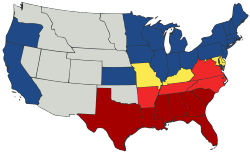
Union (blue) and Confederate (red) states: 1860 – 1865
According to The Destructive War, by Charles Royster, it wasn’t the cause of “states’ rights” that led 13 Southern states to withdraw from the Union in 1860-61. It was their demand for “respect.”
“The respect Southerners demanded did not consist simply of the states’ sovereignty or of the equal rights of Northern and Southern citizens, including slaveholders’ right to take their chattels into Northern territory.
“It entailed, too, respect for their assertion of the moral superiority of slaveholding society over free society,” writes Royster.
It was not enough for Southerners to claim equal standing with Northerners; Northerners must acknowledge it. But this was something that the North refused to do.
Finally, its citizens dared to elect Abraham Lincoln President in 1860.

Abraham Lincoln
Lincoln and his new Republican party damned slavery—and slaveholders—as morally evil, obsolete and ultimately doomed. And they were determined to prevent slavery from spreading any further throughout the country.
Southerners found all of this intolerable.
On April 12, 1861—just over a month since Lincoln’s inauguration on March 4—Southern batteries opened fire on Union Fort Sumter in Charleston Harbor, South Carolina, triggering the Civil War.
More than 750,000.Americans died—when the population of the United States stood at 31,443,321.
Four years later, Confederate General Robert E. Lee surrendered the Army of Northern Virginia to Union General Ulysses S. Grant at Appomattox Courthouse.
Now Southerners are trying to win through political manipulation what they couldn’t by open treason.
Red states are adopting Fascistic social policies on such issues as abortion, gay rights and classroom censorship. And they are trying to prevent the federal government or their own largest metro areas to resist those policies.
In the case of abortion, Red states are not only outlawing it within their own borders but trying to prevent states where abortion is legal from providing that service.
Thus Republicans, who began as the party of freedom, have mutated into the party now trying to end it.

According to Donald Kettl, the former dean of the public policy school at the University of Maryland:
“The only time I can recall in American history even remotely like this [divergence] was after the Civil War when the separate but equal doctrine began to emerge” across the South as a backlash against the attempts of the 13th, 14th and 15th Constitutional amendments to ensure equality for the freed slaves.
CNN Correspondent Ronald Brownstein warns of this development:
“The real threat in the red state effort to set their own course may be less an advantage for one side or another than a challenge to the nation’s underlying cohesion.
“As red states grow more aggressive about going their own way, while working to preempt challenges from above (the federal government) or below (blue local governments), they are testing how much divergence the nation’s fundamental cohesion can take before it begins to unravel.”
Thirty-one states voted for Donald Trump in 2024. Of these:
- Twenty of these states rank among the least educated in the U.S.
- They encompass almost all of the top 10 “most religious” states, concentrated in the “Bible Belt” and the South.
- They are primarily energy-producing, leading to the highest per capita CO2 emissions in the country.
- These states have long sought to reverse the “rights revolution” of the last 60 years—on such issues as abortion, same-sex marriage and contraception.
Today’s Republican party is no longer the party of Abraham Lincoln, Theodore Roosevelt and Dwight D. Eisenhower.
It has become the party of John Wilkes Booth, Benito Mussolini and Donald Trump.
2016 PRESIDENTIAL ELECTION, 2020 PRESIDENTIAL ELECTION, 9/11 ATTACKS, ABC NEWS, ABRAHAM LINCOLN, ALTERNET, AMERICABLOG, AP, APPOMATTOX DEMOCRATS, ARNOLD SCHWARTZENEGGER, ASIANS, BABY BOOMER RESISTANCE, BARACK OBAMA, BBC, BLACKS, BLOOMBERG NEWS, BUZZFEED, CBS NEWS, CHARLES ROYSTER, CIVIL RIGHTS ACT OF 1964, CIVIL WAR, CNN, CONFEDERATE STATES OF AMERICA, COVID-19, CROOKS AND LIARS, DAILY KOZ, DAVID BROOKS, DELTA VARIANT, DONALD TRUMP, FACEBOOK, FIVETHIRTYEIGHT, FORT SUMTER, GEORGE W. BUSH, HARPER’S MAGAZINE, HILLARY CLINTON, HISPANICS, HUFFINGTON POST, JOHN OLIVER, JOHNSON & JOHNSON VACCINE, JONATHAN CAPEHART, KGB, LYNDON B. JOHNSON, MASKS, MEDIA MATTERS, MERYL STREEP, MODERNA VACCINE, MOTHER JONES, MOVEON, MSNBC, MUSLIMS, NBC NEWS, NEIL YOUNG, NEW REPUBLIC, NEWSDAY, NEWSWEEK, NPR, PBS NEWSHOUR, PHIZER VACCINE, POLITICO, POLITICUSUSA, PRISONERS OF WAR, RACISM, RAW STORY, RECONSTURCTION, REPUBLICANS, REUTERS, ROBERT E. LEE, RUSSIA, SALON, SEATTLE TIMES, SLATE, TALKING POINTS MEMO, THE ATLANTIC, THE CHICAGO SUN-TIMES, THE CHICAGO TRIBUNE, THE DAILY BEAST, THE DAILY BLOG, THE DESTRUCTIVE WAR (BOOK), THE DISABLES, THE GUARDIAN, THE HILL, THE HUFFINGTON POST, THE LOS ANGELES TIMES, THE NATION, THE NEW REPUBLIC, THE NEW YORK TIMES, THE NEW YORKER, THE SOUTH, THE VILLAGE VOICE, THE WASHINGTON POST, THINKPROGRESS, TIME, TREASON, TRUTHDIG, TRUTHOUT, TWITTER, TWO POLITICAL JUNKIES, U.S. NEWS & WORLD REPORT, ULYSSES S. GRANT, UPI, USA TODAY, VACCINATIONS, VLADIMIR PUTIN, WHITES, WOMEN, WONKETTE
In Bureaucracy, History, Medical, Politics, Social commentary, Uncategorized on July 29, 2022 at 12:11 am
Whites comprised the overwhelming majority of the audiences at Donald Trump’s 2016 Presidential campaign rallies. Not all were racists, but many of those who were advertised it on T-shirts: “MAKE AMERICA WHITE AGAIN.”
And the vast majority of the white votes Trump got were in the South.
The 2008 election of Barack Obama as the first black President had shocked whites. His 2012 re-election had deprived them of the hope that 2008 had been an accident.
Then came 2016—and the possibility that a black President might actually be followed by a woman: Former Secretary of State Hillary Clinton.
And for macho, largely uneducated, anti-black Southern males, the idea of a woman dictating to men was simply too much to bear.
Thus, the third map of Southern infamy: The election of Donald Trump.
When Trump declared his candidacy:
- The country was essentially at peace.
- Thanks to government loans from President Obama, American capitalism had been saved from its own excesses during the George W. Bush administration.
- Employment was up. CEOs were doing extremely well.
- Unlike the administration of Ronald Reagan, there had been no corruption scandals during the Obama Presidency.
- Nor had there been any large-scale terrorist attacks on American soil—like 9/11 under President George W. Bush.
Above all, the news was filled with reputable reports—later confirmed—that Trump’s campaign was backed by Russian oligarchs linked to Vladimir Putin, the former head of the KGB and now President of Russia.
In short: Southerners—who had long portrayed themselves as America’s most dedicated patriots—flocked to the banner of a man who publicly called on “Russia” to interfere in an American Presidential election.

Red States voted for Donald Trump – 2016
BobWyatt07, CC BY-SA 4.0 <https://creativecommons.org/licenses/by-sa/4.0>, via Wikimedia Commons
The fourth map of Southern infamy.
Donald Trump’s four-year Presidency produced a legacy of unprecedented racism, criminality, abuse of power and treason.
But the crime for which he will be longest-remembered—and which finally brought him down—was his unwillingness to protect Americans from the deadly COVID-19 pandemic.
The COVID-19 catastrophe slammed into the United States in January, 2020. It was the inevitable result of a natural disaster colliding with an evil and incompetent administration.
Trump’s “cures” for COVID-19 included denial, lies, Republican subservience, chaos, extortion, propaganda as news, quackery as medicine, demands to “re-open the country,” Ignoring the danger and—finally—resignation (“Learn to live with the virus”).
Early on, Trump made the virus a referendum on himself. If you supported him, you didn’t wear a mask when you ventured out in public. This despite the fact that, throughout 2020, there was no vaccine available and hospitals were rapidly overwhelmed by debilitated and dying casualties of the virus.
“I think, once Donald Trump and other Republicans made it a manhood issue, or a freedom issue, or whatever kind of issue they made it, it’s hard to walk back that culture war signal,” said conservative New York Times columnist David Brooks on the PBS Newshour on July 23, 2021.
Washington Post Columnist Jonathan Capehart echoed him: “I think, if we had had a president of the United States who took this seriously when this first came on the scene, if we had a Republican party that took this seriously enough to warn everyone, their constituents saying, wash your hands, then put on a mask, then go get the vaccine, we wouldn’t be where we are right now.”
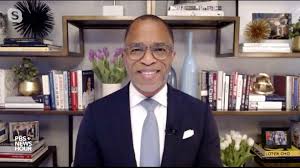
Jonathan Capehart
But neither Trump nor the Republican party urged Americans to “wash your hands, put on a mask, then go get the vaccine.”
By March, 2021, three vaccines—by Pfizer, Moderna and Johnson & Johnson—became available. A total of 90.4 million doses of these vaccines had been given. And 30.7 million Americans had been fully vaccinated against the virus.
But after a triumphant beginning, the pace of vaccinations slowed, then halted. By late July, 2021, only 49.6% of Americans had been fully vaccinated.

COVID-19 vaccination map – July 21, 2021
George Karabassis, CC BY 4.0 <https://creativecommons.org/licenses/by/4.0>, via Wikimedia Commons
Many of those who had gotten one shot of the Pfizer and Moderna vaccines refused to get the necessary second one. These must be given almost a month apart.
(The Johnson & Johnson vaccine requires only one shot.)
What had happened?
“The people I know personally who are not getting the vaccine, for them, it was like, ‘They rushed this thing,'” theorized David Brooks. “‘Who knows what’s going to happen to all these people who get the shots in 10 years or 20 years?’ So, why should I take the risk?’
“And that’s not completely crazy, but it’s not—it’s based on some sense of general distrust for the establishment, including the medical establishment. And that establishment—that distrust is the core of this thing.”
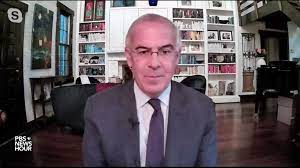
David Brooks
And leading the way to this catastrophe of self-destruction were the states of the South and Midwest: Mississippi (47.1%,), Alabama (50.5%), Arkansas (53.2%), and Tennessee (52.9%) with the lowest rates of residents who have gotten at least one shot.
By late July, 2021, three states—Florida, Texas and Missouri—with lower vaccination rates accounted for 40 percent of all cases nationwide.
And colliding head-on with the refusals of millions to get vaccinated was the newer—and deadlier—Delta variant of COVID-19.
Just as the South unleashed the Civil War on America, it has now ignited a new wave of COVID-19 on America.
2016 PRESIDENTIAL ELECTION, 2020 PRESIDENTIAL ELECTION, 9/11 ATTACKS, ABC NEWS, ABRAHAM LINCOLN, ALTERNET, AMERICABLOG, AP, APPOMATTOX DEMOCRATS, ARNOLD SCHWARTZENEGGER, ASIANS, BABY BOOMER RESISTANCE, BARACK OBAMA, BBC, BLACKS, BLOOMBERG NEWS, BUZZFEED, CBS NEWS, CHARLES ROYSTER, CIVIL RIGHTS ACT OF 1964, CIVIL WAR, CNN, CONFEDERATE STATES OF AMERICA, COVID-19, CROOKS AND LIARS, DAILY KOZ, DAVID BROOKS, DELTA VARIANT, DONALD TRUMP, FACEBOOK, FIVETHIRTYEIGHT, FORT SUMTER, GEORGE W. BUSH, HARPER’S MAGAZINE, HILLARY CLINTON, HISPANICS, HUFFINGTON POST, JOHN OLIVER, JOHNSON & JOHNSON VACCINE, JONATHAN CAPEHART, KGB, LYNDON B. JOHNSON, MASKS, MEDIA MATTERS, MERYL STREEP, MODERNA VACCINE, MOTHER JONES, MOVEON, MSNBC, MUSLIMS, NBC NEWS, NEIL YOUNG, NEW REPUBLIC, NEWSDAY, NEWSWEEK, NPR, PBS NEWSHOUR, PHIZER VACCINE, POLITICO, POLITICUSUSA, PRISONERS OF WAR, RACISM, RAW STORY, RECONSTURCTION, REPUBLICANS, REUTERS, ROBERT E. LEE, RUSSIA, SALON, SEATTLE TIMES, SLATE, TALKING POINTS MEMO, THE ATLANTIC, THE CHICAGO SUN-TIMES, THE CHICAGO TRIBUNE, THE DAILY BEAST, THE DAILY BLOG, THE DESTRUCTIVE WAR (BOOK), THE DISABLES, THE GUARDIAN, THE HILL, THE HUFFINGTON POST, THE LOS ANGELES TIMES, THE NATION, THE NEW REPUBLIC, THE NEW YORK TIMES, THE NEW YORKER, THE SOUTH, THE VILLAGE VOICE, THE WASHINGTON POST, THINKPROGRESS, TIME, TREASON, TRUTHDIG, TRUTHOUT, TWITTER, TWO POLITICAL JUNKIES, U.S. NEWS & WORLD REPORT, ULYSSES S. GRANT, UPI, USA TODAY, VACCINATIONS, VLADIMIR PUTIN, WHITES, WOMEN, WONKETTE
In Bureaucracy, History, Medical, Politics, Social commentary on July 28, 2022 at 12:11 am
Throughout its history the South has been a hotbed of treason, racism and ignorance.
Today, it proudly continues holding fast to these traditions—even as it places the entire country in danger of contagion and dictatorship.
From 1860 to 1865, the South—Texas, Arkansas, Louisiana, Tennessee, Mississippi, Alabama, Georgia, Florida, South Carolina, North Carolina and Virginia—produced the greatest case of mass treason in America’s history.
Southern infamy’s first map was called the Confederate States of America.
Union (blue) and Confederate (red) states: 1860 – 1865
Júlio Reis, CC BY-SA 3.0 <https://creativecommons.org/licenses/by-sa/3.0>, via Wikimedia Commons
According to The Destructive War, by Charles Royster, it wasn’t the cause of “states’ rights” that led 13 Southern states to withdraw from the Union in 1860-61. It was their demand for “respect,” which, in reality, translates into “e-g-o.”
“The respect Southerners demanded did not consist simply of the states’ sovereignty or of the equal rights of Northern and Southern citizens, including slaveholders’ right to take their chattels into Northern territory.
“It entailed, too, respect for their assertion of the moral superiority of slaveholding society over free society,” writes Royster.
It was not enough for Southerners to claim equal standing with Northerners; Northerners must acknowledge it. But this was something that the North was less and less willing to do.
Finally, its citizens dared to elect Abraham Lincoln in 1860.
Lincoln and his new Republican party damned slavery—and slaveholders—as morally evil, obsolete and ultimately doomed. And they were determined to prevent slavery from spreading any further throughout the country.
Southerners found all of this intolerable.
Lincoln—during his First Inaugural Address—bluntly said that he did not intend to “directly or indirectly…interfere with the institution of slavery in the States where it exists. I believe I have no lawful right to do so, and I have no inclination to do so.”
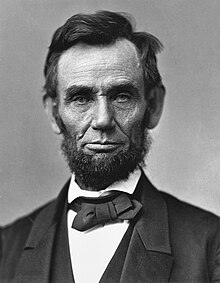
Abraham Lincoln
But that was not enough for Southerners.
Only 10% of Southerners owned slaves. The other 90% of the population “had no dog in this fight,” as Southerners liked to say.
Yet they so admired and aspired to be like their “gentleman betters” that they threw in their lot with them.
On April 12, 1861—just over a month since Lincoln’s inauguration on March 4—Southern batteries opened fire on Union Fort Sumter in Charleston Harbor, South Carolina.
This ignited the American Civil War, costing the lives of 750,000.Americans—at a time when the population of the United States stood at 31,443,321.
Four years later, Confederate General Robert E. Lee surrendered the Army of Northern Virginia to Union General Ulysses S. Grant at Appomattox Courthouse.
Huge sections of the South had been laid waste by Union troops and more than 258,000 Southerners had been killed.
And slavery, the mainstay of Southern plantation life, had been ended forever.
The South had paid a high price for its investment in treason.
Southern infamy’s second map dates from 1964 to 2016.
In 1964, Democratic President Lyndon B. Johnson pushed the Civil Rights Act through Congress, ending more than a century of blatant discrimination against blacks.
The South—which before the Civil War had been solidly Democratic—suddenly went solidly Republican.
To understand this mammoth shift, it’s vital to realize: In Lincoln’s time, the Republicans were the party of progressives.
The party was founded on an anti-slavery platform. Its members were thus reviled as “Black Republicans.” And until the 1960s, the South was solidly Democratic.
Democrats were the ones defending the status quo—slavery—and opposing the rights of freed blacks in the South of Reconstruction and long afterward.
When, in the early 1960s, Democrats championed the rights of blacks, Southerners bolted for the Republican party—which held to the same values that slavery/discrimination-supporting Democrats once did.
After signing the Civil Rights Act of 1964 into law, President Lyndon B. Johnson told an aide: “We have just lost the South for a generation.”
Johnson was wrong: A generation lasts 20 to 30 years. It’s been 58 years since the signing of the Act, and the South is still solidly within the Republican camp.
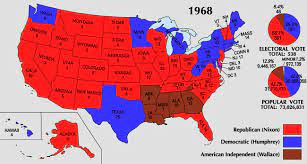
1968 election
The South’s third map of infamy culminated with the election of Donald Trump as President in 2016.
Repeatedly, when asked why they supported Trump, his followers said: “He says what I’ve been thinking!”
And what Trump appealed to, above all else, was hatred.
From June 15, 2015, when he launched his Presidential campaign, until October 24, 2016, Trump fired almost 4,000 angry, insulting tweets at 281 people and institutions that had somehow offended him.
Donald Trump
The New York Times needed two full pages of its print edition to showcase them.
Among his targets:
- Democratic Presidential Nominee Hillary Clinton
- President Barack Obama
- Actress Meryl Streep
- Singer Neil Young
- Actor Arnold Schwarzenegger
- Comedian John Oliver
- News organizations
- The State of New Jersey
- Beauty pageant contestants
Others he clearly delighted in insulting during the campaign included:
- Women
- Blacks
- Hispanics
- Asians
- Muslims
- The disabled
- Prisoners-of-war
Whites comprised the overwhelming majority of the audiences at Trump rallies. Not all were racists, but many of those who were advertised it on T-shirts: “MAKE AMERICA WHITE AGAIN.”
And the vast majority of the white votes Trump got were in the South.
1776 (PLAY), ABC NEWS, ALTERNET, AMERICABLOG, AP, “SOUTHERN STRAGEGY”, BABY BOOMER RESISTANCE, BARACK OBAMA, BLOOMBERG, BUZZFEED, CBS NEWS, CEOS, CHRIS MATHEWS, CIVIL RIGHTS ACT OF 1964, CIVIL WAR, CNN, CROOKS AND LIARS, DAILY KOZ, DECLARATION OF INDEPENDENCE, DONALD TRUMP, DRUDGE REPORT, FACEBOOK, FIVETHIRTYEIGHT, FOOD STAMPS, FRED TRUMP, HARPER’S MAGAZINE, HOWARD STERN, HUFFINGTON POST, JOHN DICKINSON, JOHN HANCOCK, MEDIA MATTERS, MEDICARE, MOTHER JONES, MOVEON, MSNBC, NBC NEWS, NEWSWEEK, NPR, PBS NEWSHOUR, PEW FOUNDATION, POLITICO, POLITICUSUSA, PROPAGANDA, RAW STORY, REPUBLICAN PARTY, REPUBLICANS, REUTERS, Ronald Reagan, SALON, SEATTLE TIMES, SLATE, SLAVERY, SOCIAL SECURITY, TALKING POINTS MEMO, THE ATLANTIC, THE CHICAGO SUN-TIMES, THE CHICAGO TRIBUNE, THE DAILY BEAST, THE DAILY BLOG, THE GUARDIAN, THE HILL, THE HUFFINGTON POST, THE LOS ANGELES TIMES, THE NATION, THE NEW REPUBLIC, THE NEW YORK TIMES, THE SOUL OF BATTLE (BOOK), THE VILLAGE VOICE, THE WALL STREET JOURNAL, THE WASHINGTON POST, THINKPROGRESS, TIME, TIME MAGAZINE, TRUTHDIG, TRUTHOUT, TWITTER, TWO POLITICAL JUNKIES, U.S. NEWS & WORLD REPORT, UPI, USA TODAY, VICTOR DAVIS HANSON, VIETNAM WAR, VOTING RIGHTS ACT OF 1965, WILLIAM TECUMSEH SHERMAN, WONKETTE
In Bureaucracy, History, Politics, Social commentary on July 27, 2022 at 12:12 am
Republicans have long tried to prevent or eliminate programs that aid the poor and middle-class, including:
- Social Security (since it began in 1935)
- Medicare
- National health insurance
- Food stamps
- WIC (Women, Infants, Children).
So why are so many poor Americans now flocking to this party’s banner?
Two reasons: Racism and greed. There are historical parallels for both.
First, race:
In 1999, historian Victor Davis Hanson noted the huge gap in wealth between the aristocratic, slave-owning minority of the pre-Civil War South and the vast majority of poor white Southerners.
Victor Davis Hanson
“Before the war in the counties [Union General William Tecumseh] Sherman would later ruin, the top 10% of the landowners controlled 40% of the assessed wealth.”
In contrast, “more than half of those who were lucky enough to own any property at all still possessed less than 15% of the area’s valuation.”
So Hanson asked: “Why did the millions of poor whites of the Confederacy fight at all?”
He supplied the answer in his brilliant work on military history, The Soul of Battle: From Ancient Times to the Present Day, How Three Great Liberators Vanquished Tyranny.
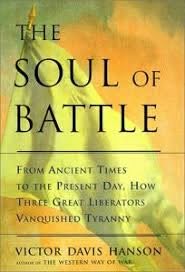
One of those liberators was General William Tecumseh Sherman, who led 62,000 Union troops in a victorious “March to the Sea” through the Confederacy in 1864.
So why did so many poor Southern whites literally lay down their lives for the wealthy planter class, which despised them?
According to Hanson: “Behind the entire social fabric of the South lay slavery.
“If slavery eroded the economic position of the poor free citizens, if slavery encouraged a society of haves and have-nots…then it alone offered one promise to the free white man–poor, ignorant and dispirited–that he was at least not black and not a slave.”
And the planter class and its allies in government easily fobbed off their poor white countrymen with cheap flattery. Said Georgia Governor Joseph Brown:
“Among us the poor white laborer is respected as an equal. His family is treated with kindness, consideration, and respect. He does not belong to the menial class. The negro is in no sense his equal. He belongs to the only true aristocracy, the race of white men.”
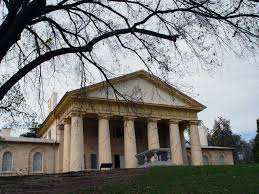
Arlington House and plantation, former home of Robert E. Lee
Similarly, poor whites now flock to the Republican Party–which holds them in equal contempt– in large part to protest the 2008 election of the first black President of the United States.
According to a Pew Research Center study released on July 22, 2011: “Notably, the GOP gains have occurred only among white voters; a 2-point Republican edge among whites in 2008 (46% to 44%) has widened to a 13-point lead today (52% to 39%).”
Since the 1960s, Republicans have pursued a campaign policy of “divide and rule”–divide the nation along racial lines and reap the benefits at election time.
- Republicans opposed the Civil Rights Act of 1964.
- Republicans opposed the Voting Rights Act of 1965.
- Republicans, with Richard Nixon as their Presidential candidate in 1968 and 1972, pursued what they called a “Southern strategy”: Use “code language” to stoke fear and hatred of blacks among whites.
- Republicans have falsely identified welfare programs exclusively with non-whites. (Of the six million Americans receiving food stamps, about 42% are white, 32% are black, and 22% are Latino–with the growth fastest among whites during the recession.)
Thus, in voting Republican, many of these poor whites believe they are “striking a blow for the white race.”
And they can do so in a more socially acceptable way than joining a certified hate group such as the American Nazi Party or Ku Klux Klan.
Since 2015, openly racist groups such as the Klan and the American Nazi Party have flocked to the banner of Presidential candidate Donald Trump. By enthusiastically courting their support, the real estate mogul has made it possible for Republican candidates to openly display their own racism.
Now greed:
In the hit play, 1776, on the creation and signing of the Declaration of Independence, there is a telling exchange between John Dickinson and John Hancock. It comes during the song, “Cool, Cool, Considerate Men.”
Dickinson, the delegate from Pennsylvania, urges Hancock, president of the Second Continental Congress, “to join us in our minuet.” By “us” he means his fellow conservatives who fear losing their property and exalted status by supporting American independence from Great Britain.
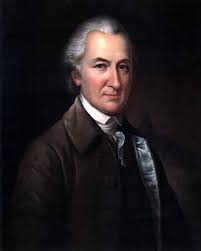
John Dickinson
Hancock declines, saying: “Fortunately, there are not enough men of property in America to dictate policy.”
To which Dickinson replies: “Perhaps not. But don’t forget that most men with nothing would rather protect the possibility of becoming rich than face the reality of being poor. And that is why they will follow us.”
Today, poor whites generally identify with the CEOs of powerful corporations. They believe the Republican gospel that they can attain such wealth–if only the government will “get out of my way.”
They forget—or ignore—the truth that government, for all its imperfections, is sometimes all that stands between them and a wide range of predators.
In return, the CEOs despise them as the privileged have always despised their social and economic “inferiors.”
Unless the Democratic Party can find ways to directly address these bitter, Politically Incorrect truths, it will continue its decline into insignificance.
1776 (PLAY), ABC NEWS, ALTERNET, AMERICABLOG, AP, “SOUTHERN STRAGEGY”, BABY BOOMER RESISTANCE, BARACK OBAMA, BLOOMBERG, BUZZFEED, CBS NEWS, CEOS, CHRIS MATHEWS, CIVIL RIGHTS ACT OF 1964, CIVIL WAR, CNN, CROOKS AND LIARS, DAILY KOZ, DECLARATION OF INDEPENDENCE, DONALD TRUMP, DRUDGE REPORT, FACEBOOK, FIVETHIRTYEIGHT, FOOD STAMPS, FRED TRUMP, HARPER’S MAGAZINE, HOWARD STERN, HUFFINGTON POST, JOHN DICKINSON, JOHN HANCOCK, MEDIA MATTERS, MEDICARE, MOTHER JONES, MOVEON, MSNBC, NBC NEWS, NEWSWEEK, NPR, PBS NEWSHOUR, PEW FOUNDATION, POLITICO, POLITICUSUSA, PROPAGANDA, RAW STORY, REPUBLICAN PARTY, REPUBLICANS, REUTERS, Ronald Reagan, SALON, SEATTLE TIMES, SLATE, SLAVERY, SOCIAL SECURITY, TALKING POINTS MEMO, THE ATLANTIC, THE CHICAGO SUN-TIMES, THE CHICAGO TRIBUNE, THE DAILY BEAST, THE DAILY BLOG, THE GUARDIAN, THE HILL, THE HUFFINGTON POST, THE LOS ANGELES TIMES, THE NATION, THE NEW REPUBLIC, THE NEW YORK TIMES, THE SOUL OF BATTLE (BOOK), THE VILLAGE VOICE, THE WALL STREET JOURNAL, THE WASHINGTON POST, THINKPROGRESS, TIME, TIME MAGAZINE, TRUTHDIG, TRUTHOUT, TWITTER, TWO POLITICAL JUNKIES, U.S. NEWS & WORLD REPORT, UPI, USA TODAY, VICTOR DAVIS HANSON, VIETNAM WAR, VOTING RIGHTS ACT OF 1965, WILLIAM TECUMSEH SHERMAN, WONKETTE
In Bureaucracy, Business, History, Politics, Social commentary on July 26, 2022 at 12:16 am
On July 22, 2011, ABC News carried the following story:
The Pew Foundation, analyzing voter identification, found “the electorate’s partisan affiliations have shifted significantly” since Barack Obama won office in 2008.
The GOP had gained strength among white voters, most specifically “the young and poor.”

A seven-point Democratic advantage among whites under age 30 three years ago had turned into an 11-point GOP advantage. And a 15-point Democratic advantage among whites earning less than $30,000 annually had swung to a slim four-point Republican edge by 2011.
In addition:
- The GOP gains had occurred only among white voters.
- Republicans had made sizable gains among white voters since 2008. Fifty-two percent of white voters called themselves Republicans or leaned to the GOP, compared with 39% who affiliated with the Democratic Party or leaned Democratic.
- Democrats had lost their edge among lower income white voters.
- In 2008, Democrats had a 15 point lead among white voters with family incomes less than $30,000. By 2011, Republicans had a four-point edge among this group.
- The GOP’s lead among middle income white voters had grown since 2008, and Republicans held a substantial advantage with higher income white voters.
- Republicans have made gains among whites with a high school education or less. The GOP’s advantage over Democrats had grown from one point in 2008 to 17 points in 2011 among less educated whites.
- Republicans had made smaller gains among white voters who had college degrees.
Five years later, in 2016, these masses of disaffected white men would overwhelmingly vote for Donald Trump, a real estate mogul-turned-celebrity-TV-host of “The Apprentice.”
Trump had been born into a life of luxury. He began his real estate career at his father’s real estate and construction company. He rose to wealth and fame after his father, Fred, gave him control of the business in 1971.
Similarly, soon after acquiring the family business, Trump set out to build his own empire—hotels, golf courses, casinos and skyscrapers across North and South America, Europe and Asia. Of the 515 entities he owns, 268 of them—52%—bear his last name. He often refers to his properties as “the swankiest,” “the most beautiful.”
During the Vietnam war, his father reportedly paid a doctor to claim that Trump suffered from “bone spurs” in his foot—thus enabling him to escape the draft.
Donald Trump
In short, Trump has literally nothing in common with the masses of poor whites who worship him.
Howard Stern, the notorious radio host, has known Trump many years. Commenting on the appeal Trump has for his followers, Stern says: “The oddity of all this is the people Trump despises most, love him the most.
“The people who are voting for Trump for the most part …he wouldn’t even let them in his fucking hotel. He’d be disgusted by them. Go to Mar-a-Lago. See if there’s any people who look like you. I’m talking to you in the audience.”
Yet, while the poor worship Trump and Republicans generally, there is a disconnect between them: Since 1980, Republicans have pursued a policy of gutting programs aimed at helping the poor—while repeatedly creating tax-breaks for the wealthiest 1% of the population.
For Republicans, the patron saint of this “love-the-rich-screw-the-poor” ideology remains Ronald Reagan—two-time governor of California and twice-elected President of the United States (1981-1989)
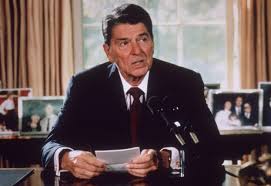
Ronald Reagan, who taught Americans to worship the wealthy
Among those charting Reagan’s legacy as President was former CBS Correspondent David Shoenbrum.
In his bestselling autobiography, America Inside Out: At Home and Abroad from Roosevelt to Reagan, he noted:
- On January 28, 1981, keeping a pledge to his financial backers in the oil industry, Reagan abolished Federal controls on the price of oil.
- Within a week, Exxon, Texaco and Shell raised gasoline prices and prices of home heating oil.
- Reagan saw it as his duty to put a floor under prices, not a ceiling above them.
- Reagan believed that when government helped business it wasn’t interfering. Loaning money to bail out a financially incompetent Chrysler was “supporting the free enterprise system.”
- But putting a high-profits tax on price-gouging corporations or filing anti-trust suits against them was “Communistic” and therefore intolerable.
- Tax-breaks for wealthy businesses meant helping America become stronger.
- But welfare for the poor or the victims of a predatory marketplace economy weakened America by sapping its morale.
“In short, welfare for the rich is good for America. But welfare for the poor is bad for America, even for the poor themselves, for it encourages them to be shiftless and lazy.
“Somehow, loans to the inefficient management of American corporations would not similarly encourage them in their inefficient methods,” wrote Shoenbrun.
Republicans have sought to dismantle Social Security ever since that program began in 1935. And Republicans have furiously opposed other programs aiding the poor and middle-class—such as Medicare, food stamps and WIC (Women, Infants, Children).
In short, this is not a political party with a history of rushing to the defense of those most in need.
So the question remains: Why are so many poor Americans flocking to its banner?
The answer lies in the history of the American South—and slavery.
2016 PRESIDENTIAL RACE, ABC NEWS, ABRAHAM LINCOLN, ALTERNET, AMERICABLOG, AP, BABY BOOMER RESISTANCE, BARACK OBAMA, BBC, BLOOMBERG NEWS, BUZZFEED, CBS NEWS, CIVIL RIGHTS ACT OF 1964, CIVIL WAR, CNN, CROOKS AND LIARS, DAILY KOZ, DANIEL DAY-LEWIS, DONALD TRUMP, EMANCIPATION PROCLAMATION, FACEBOOK, FIVETHIRTYEIGHT, HARPER’S MAGAZINE, HUFFINGTON POST, LYNDON B. JOHNSON, MEDIA MATTERS, MITT ROMNEY, MOTHER JONES, MOVEON, MOVIES, MSNBC, NBC NEWS, NEW REPUBLIC, NEWSDAY, NEWSWEEK, NPR, PBS NEWSHOUR, POLITICO, POLITICUSUSA, RAW STORY, REUTERS, SALON, SEATTLE TIMES, SLATE, SLAVERY, STEVEN SPIELBERG, TALKING POINTS MEMO, THE ATLANTIC, THE CHICAGO SUN-TIMES, THE CHICAGO TRIBUNE, THE DAILY BEAST, THE DAILY BLOG, THE GUARDIAN, THE HILL, THE HUFFINGTON POST, THE INTERCEPT, THE LOS ANGELES TIMES, THE NATION, THE NEW REPUBLIC, THE NEW YORK TIMES, THE NEW YORKER, THE VILLAGE VOICE, THE WASHINGTON POST, THINKPROGRESS, THIRTEENTH AMENDMENT, TIME, TRUTHDIG, TRUTHOUT, TWITTER, TWO POLITICAL JUNKIES, U.S. NEWS & WORLD REPORT, UPI, USA TODAY, VOTER ID LAWS, VOTING RIGHTS ACT OF 1965, WONKETTE
In Bureaucracy, Entertainment, History, Law, Military, Politics, Social commentary on July 22, 2022 at 12:18 am
Steven Spielberg’s Lincoln is more than a mesmerizing history lesson.
It’s a timely reminder that racism and repression are not confined to any one period or political party.
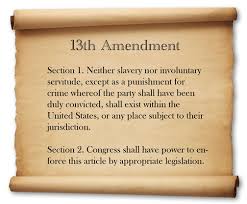
At the heart of the film: Abraham Lincoln (Daniel Day-Lewis) wants to win ratification of what will be the Thirteenth Amendment to the United States Constitution. An amendment that will forever ban slavery.
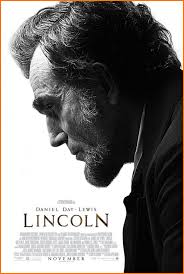
True, Lincoln, in 1862, had issued the Emancipation Proclamation. This–in theory–freed slaves held in the Confederate states that had seceded from the Union in 1861.
But Lincoln regards this as a temporary wartime measure. he fears that once the war is over, the Supreme Court may rule the Proclamation unconstitutional. This might allow Southerners to continue practicing slavery, even after losing the war.
To prevent this, Congress must pass an anti-slavery amendment.
But winning Congressional passage of such an amendment won’t be easy.
The Senate had ratified its passage in 1864. But the amendment must secure approval from the House of Representatives to become law.
And the House is filled with men–there are no women menmbers during the 19th century–who seethe with hostility.
Some are hostile to Lincoln personally. One of them dubs him a dictator–Abraham Africanus.” Another accuses him of shifting his positions for the sake of expediency.
Other members–white men all–are hostile to the idea of “equality between the races.” To them, ending slavery means opening the door to interracial marriage–especially marriage between black men and white women.
Perhaps even worse, it means possibly giving blacks–or women–the the right to vote.
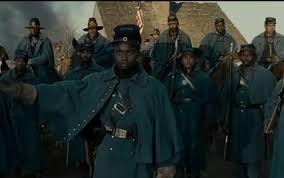
In fact, the possibility that blacks might win voting rights arises early in the movie. Lincoln is speaking to a couple of black Union soldiers, and one of them is unafraid to voice his discontent. He’s upset that black soldiers are paid less than white ones–and that they’re led only by white officers.
He says that, in time, maybe this will change. Maybe, in 100 years, he guesses, blacks will get the right to vote.
(To the shame of all Americans, that’s how long it will eventually take. Not until the passage of the Voting Rights Act of 1965 will blacks be guaranteed legal protection against discriminatory voting practices.)
To understand the Congressional debate over the Thirteenth Amendment, it’s necessary to remember this: In Lincoln’s time, the Republicans were the party of progressives.
The party was founded on an anti-slavery platform. Its members were thus reviled as “Black Republicans.” And until the 1960s, the South was solidly Democratic.
Democrats were the ones defending the status quo–slavery–and opposing freed blacks in the South of Reconstruction and long afterward.
In short, in the 18th century, Democrats in the South acted as Republicans do now. The South went Republican only after a Democratic President–Lyndon B. Johnson–rammed the Civil Rights Act of 1964 through Congress.
Watching this re-enactment of the 1865 debate in Lincoln is like watching the current Presidential campaign. The same mentalities are at work:
-
Those (in this case, slave-owners) who already have a great deal want to gain even more at the expense of others.
-
Those (slaves and freed blacks) who have little strive to gain more or at least hang onto what they have.
-
Those who defend the privileged wealthy refuse to allow their “social inferiors” to enjoy similar privileges (such as the right to vote).
During the 2012 Presidential race, Republicans tried to bar those likely to vote for President Barack Obama from getting into the voting booth. But their bogus “voter ID” restrictions were struck down in courts across the nation.
Listening to those opposing the amendment, one is reminded of Mitt Romney’s infamous comments about the “47%”:
“Well, there are 47% of the people who will vote for the president no matter what….
“Who are dependent upon government, who believe that–that they are victims, who believe that government has a responsibility to care for them, who believe that they’re entitled to healthcare, to food, to housing, to you name it. But that’s–it’s an entitlement. And the government should give it to them.”
Put another way: “Who says people have a right to obtain medical care, food and housing? If they can’t inherit unearned wealth the way I did, screw them.”
In the end, it’s Abraham Lincoln who has the final word–and leaves his nation the better for it. Through diplomacy and backroom dealings (trading political offices for votes) he wins passage of the anti-slavery amendment.
The ownership of human chattel is finally an ugly memory of the American past.
The movie closes with a historically-correct tribute to Lincoln’s generosity toward those who opposed him–in Congress and on the battlefield. It occurs during Lincoln’s Second Inaugural Address:
“With malice toward none, with charity for all….To bind up the nation’s wounds. To care for him who shall have bourne the battle, and for his widow and his orphan….”
This ending presents a vivid philosophical contrast with the increasingly mean-spirited rhetoric and policies of 2016’s Republican candidates for President–especially those of Donald Trump.
Watching Lincoln, you realize how incredibly lucky America was as a nation to have had such leadership when it was most urgently needed.
ABC NEWS, ABORTION, ABRAHAM LINCOLN, ADOLF HITLER, AFFORDABLE CARE ACT, ALTERNET, AMERICABLOG, AP, BABY BOOMER RESISTANCE, BARACK OBAMA, BBC, BIRTH CONTROL, BLOOMBERG NEWS, BUZZFEED, CBS NEWS, CIVIL RIGHTS ACT, CIVIL WAR, CLARENCE THOMAS, CNN, CROOKS AND LIARS, DAILY KOZ, DEMOCRATS, DRED SCOTT, FACEBOOK, FASCISM, FIVETHIRTYEIGHT, HARPER’S MAGAZINE, HUFFINGTON POST, INFLATION, JULIUS CAESAR, KENJI YOSHINO, MARK ANTONY, MEDIA MATTERS, MEDICARE, MOTHER JONES, MOVEON, MSNBC, NAZI GERMANY, NBC NEWS, NEW REPUBLIC, NEW YORK UNIVERSITY SCHOOL OF LAW, NEWSDAY, NEWSWEEK, NIGHT OF THE LONG KNIVES, NINTH AMENDMENT, NPR, PBS NEWSHOUR, POLITICO, POLITICUSUSA, PRIVACY, RAPE, RAW STORY, RELIGIOUS RIGHT, REPUBLICANS, REUTERS, ROE V. WADE, ROGER B. TANEY, SALON, SEATTLE TIMES, SLATE, SOCIAL SECURITY, TALKING POINTS MEMO, THE ATLANTIC, THE CHICAGO SUN-TIMES, THE CHICAGO TRIBUNE, THE DAILY BEAST, THE DAILY BLOG, THE GUARDIAN, THE HILL, THE HUFFINGTON POST, THE INTERCEPT, THE LOS ANGELES TIMES, THE NATION, THE NEW REPUBLIC, THE NEW YORK TIMES, THE NEW YORKER, THE VILLAGE VOICE, THE WASHINGTON POST, THINKPROGRESS, TIME, TRUTHDIG, TRUTHOUT, TWITTER, TWO POLITICAL JUNKIES, U.S. NEWS & WORLD REPORT, UNITED STATES CONSTITUTION, UNITED STATES SUPREME COURT, UPI, USA TODAY, WILLIAM SHAKESPEARE, WONKETTE
In Bureaucracy, History, Law, Law Enforcement, Medical, Politics, Social commentary on June 29, 2022 at 12:12 am
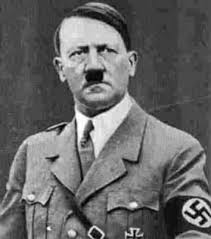
“If anyone reproaches me and asks why I did not resort to the regular courts of justice, then all I can say is this: In this hour I was responsible for the fate of the German people, and thereby I became the Supreme Judge of the German people!”
That was how Chancellor—not yet Fuhrer-–Adolf Hitler justified his June 30, 1934 purge of his private army, the brown-shirted S.A. It has gone down in history as “The Night of the Long Knives.”
Adolf Hitler
It took five “Supreme Judges” of the American people to purge the right to abortion for millions of American women—including victims of rape and incest.
Hitler’s “blood purge” carried Germany yet another step closer to Nazi dictatorship. Similarly, the Supreme Court has carried the United States yet another step closer to a Republican dictatorship.
In the past, the Supreme Court has made decisions that have blackened its reputation in the eyes of historians.
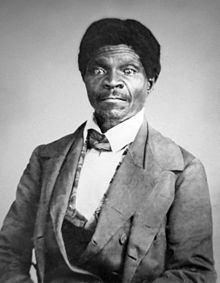
One of these occurred in 1857, in what has become known as the “Dred Scott decision.” The Court decided 7–2 that neither Scott nor any other person of African ancestry could claim citizenship in the United States.
The case centered on slaves Dred and Harriet Scott and their children, Eliza and Lizzie. The Scotts claimed that they should be granted their freedom because Dred had lived in Illinois and the Wisconsin Territory for four years. Slavery was illegal in those jurisdictions, and their laws said that slaveholders gave up their rights to slaves if they stayed for an extended period.
Dred Scott
Chief Justice Roger B. Taney ruled that freeing Scott and his family would “improperly deprive Scott’s owner of his legal property.”
As despicable as the Dred Scott decision was, it nevertheless lay grounded in the existing laws of that time. The Court did not reverse an earlier ruling. Millions who were already enslaved were kept enslaved. But it did not extend slavery throughout the country.
The Court’s reversal of Roe v. Wade set a huge and dangerous legal precedent.
On January 22, 1973, the Court had struck down virtually every anti-abortion law in the country. On June 24, 2022, it overturned that decision.
It went, in effect, from having expanded freedom of choice to suddenly abolishing it. And the Justices did so in the single most intimate aspect of a woman’s life.
Once people have tasted a benefit, they expect it to continue. When President Barack Obama fought to secure passage of the Affordable Care Amendment (ACA) Republicans repeatedly and savagely tried to prevent its becoming law.
And once it became law, Republicans continued to try to overturn it. They knew that if millions of poor and middle-class Americans finally won the right to obtain medical care, they would support it as wholeheartedly as they did Medicare, Social Security and the Civil Rights Act.
For 49 years, Republicans made ending the right to abortion their key issue for gaining and holding elective office. It won them cheers, votes and monies from the Religious Right and powerful Right-wing forces such as Fox News.
Now, suddenly, they have attained their objective. Millions of women will no longer be able to obtain an abortion in cases of rape or incest—let alone because of a failed condom or birth control pill.
Nor is that the only right the Justices intend to revoke.
In his concurring opinion, Justice Clarence Thomas said that the Roe decision should prompt the Court to reconsider all of this Court’s substantive due process precedents. And he named the three landmark decisions that established those rights.

Clarence Thomas
According to Kenji Yoshino, Professor of Constitutional Law at the New York University School of Law:
“The Ninth Amendment says that there are unenumerated [implied] rights in the Constitution. And those include things that we take for granted every day, like the right to vote, the right to marry, the right to travel.
“These are all rights that are nowhere enumerated explicitly in the constitution but that we nonetheless take for granted as Americans.
“One of the most shocking things about [the Court’s] opinion was that these unenumerated rights will only be respected if they are deeply rooted in this nation’s history and traditions. And so it essentially said that if the framers of the 14th Amendment in 1868 didn’t recognize the right and question that the right didn’t have constitutional existence.
“And so that’s what leads Justice Thomas and that concurrence, to see an opening to say, ‘Well, maybe we’ll get rid of not just the right to abortion, but also the right to same-sex marriage, the right to sexual intimacy and the privacy of your home, and even the right to contraception.'”
Thomas, says Yoshino, is inviting lower courts to reach that conclusion. He is also inviting Right-wing litigants to bring cases which can eventually reach the Supreme Court.
Thomas is in effect saying that once this happens, the right to same-sex marriage, contraception and privacy can be struck down by the Court—just as it has struck down the right to abortion.
Mark Antony, speaking in William Shakespeare’s “Julius Caesar,” had it right: “The evil that men do lives after them.”
2020 PRESIDENTIAL ELECTION, ABC NEWS, ABRAHAM LINCOLN, ALTERNET, AMERICABLOG, ANDREW GOODMAN, ANDREW JOHNSON, AP, BABY BOOMER RESISTANCE, BLOOMBERG, BUZZFEED, CBS NEWS, CIVIL WAR, CNN, COINTELPRO, CROOKS AND LIARS, DAILY KOZ, DONALD TRUMP, DRUDGE REPORT, ENEMIES: A HISTORY OF THE FBI, FACEBOOK, FBI, FEDERAL EMERGENCY MANAGEMENT AGENCY (FEMA), FIVETHIRTYEIGHT, HARPER’S MAGAZINE, HUFFINGTON POST, INSIDE HOOVER'S FBI (BOOK), J. EDGAR HOOVER, JAMES CHANEY, JOINT CHIEFS OF STAFF, JOSEPH BIDEN, Kamala Harris, KU KLUX KLAN, LYNDON B. JOHNSON, MAR-A-LAGO, MAXINE WATERS, MEDIA MATTERS, MICHAEL SCHWERNER, MOTHER JONES, MOVEON, MSNBC, NATIONAL GUARD, NATIONAL PARKS SERVICE, NBC NEWS, NEIL J. WELCH, NEWSWEEK, NINA SILBER, NPR, PBS NEWSHOUR, POLITICO, POLITICUSUSA, RAW STORY, REUTERS, SALON, SEATTLE TIMES, SLATE, SOCIETY OF CIVIL WAR HISTORIANS, STEPHEN B. OATES, TALKING POINTS MEMO, THE ATLANTIC, THE CHICAGO SUN-TIMES, THE CHICAGO TRIBUNE, THE DAILY BEAST, THE DAILY BLOG, THE GUARDIAN, THE HILL, THE HUFFINGTON POST, THE LOS ANGELES TIMES, THE NATION, THE NEW REPUBLIC, THE NEW YORK TIMES, THE VILLAGE VOICE, THE WASHINGTON POST, THINKPROGRESS, TIME, TRUTHDIG, TRUTHOUT, TWITTER, TWO POLITICAL JUNKIES, U.S. NEWS & WORLD REPORT, ULYSSES S. GRANT, UNITED STATES SECRET SERVICE, UPI, USA TODAY, WASHINGTON METROPOLITAN POLICE DEPARTMENT, WILLIAM C. SULLIVAN, WINFIELD SCOTT, WITH MALICE TOWARD NONE: THE LIFE OF ABRAHAM LINCOLN (BOOK), WONKETTE
In Bureaucracy, History, Law, Law Enforcement, Military, Politics, Social commentary on June 24, 2022 at 12:10 am
“At the time of the Civil War [white anger and resentment] took the form of Southern white men angry at the idea that the federal government would interfere with their right to own black slaves.
“Today, I think this takes the form of white people who believe that black and brown people are making gains, or getting special treatment, at their expense,” warns Nina Silber, co-president of the Society of Civil War Historians.
And California Democratic Representative Maxine Waters believes this anger could lead to civil war: “Since his first day in office, [Donald Trump] has spent four years abusing his power, lying, embracing authoritarianism (and) radicalizing his supporters against democracy.
“This corruption poisoned the minds of his supporters, inciting them to willingly join with white supremacists, neo-Nazis and paramilitary extremists in a siege of the United State Capitol building, the very seat of American democracy.”
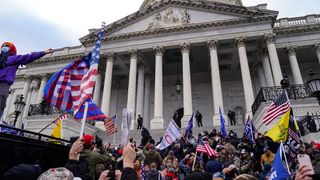
Attack on the Capitol Building
But there is a way to abort that danger—provided that those who cherish democracy are willing to employ weapons as effective as those used by the Right.
Case in point: The FBI’s successful war on the Ku Klux Klan.
Klansmen had shot, lynched and bombed their way across the Deep South, especially in Alabama and Mississippi. Many Southern sheriffs and police chiefs were Klan sympathizers, if not outright members and accomplices.
On June 21, 1964, three civil rights workers disappeared in Philadelphia, Mississippi.
President Lyndon B. Johnson called J. Edgar Hoover, the legendary director of the FBI, and ordered an all-out investigation: “I want you to have the same kind of Intelligence [on the Klan] that you have on the communists.”
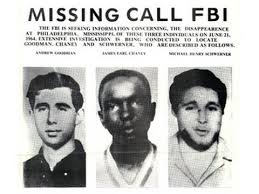
Poster for missing civil rights workers
For decades, Hoover had refused to tackle white hate groups. And, in truth, no President had been willing to give him the order to do so. But now a President had given him such an order.
In August, the FBI uncovered the bodies of the three missing civil rights activists—Michael Schwerner, Andrew Goodman and James Chaney.
On September 2, 1964, the Bureau launched a full-blown counterintelligence program against the Klan—COINTELPRO—WHITE HATE in FBI-speak.
Tim Weiner, author of Enemies: A History of the FBI, chronicles the methods used by the Bureau:
“WHITE-HATE intensified in the fall of 1964. It involved all the techniques in the FBI’s long-running attack on the Left. Once a week….FBI agents interrogated all known members of the White Knights of the KKK, blaming other Klansmen for being snitches and naming names, sowing deep suspicion among Klan members. Few knew who was an informer and who was not.

A Ku Klux Klan meeting
“The FBI dangled small fortunes before potential Klan informers, offered outright bribes to Klansmen who could serve as double agents inside state and local police forces, planted bugs and wiretaps in Klaverns, carried out black bag jobs to steal membership lists….”
Other tactics included:
- Contacting the news media to publicize arrests and identify Klan leaders;
- Informing the employers of known Klansmen of their employees’ criminal activity, resulting in the firing of untold numbers of them;
- Breaking up the marriages of Klansmen by circulating rumors of their infidelity among their wives.
“My father fought the Klan in Massachusetts,” recalled William C. Sullivan, who headed the FBI’s Domestic Intelligence Division in the 1960s. “I always used to be frightened when I was a kid and I saw the fiery crosses burning in the hillside near our farm.
“When the Klan reached 14,000 in the mid-sixties, I asked to take over the investigation of the Klan. When I left the Bureau in 1971, the Klan was down to a completely disorganized 4,300. It was broken.
“They were dirty, rough fellows. And we went after them with rough, tough methods.”

William C. Sullivan
According to Neil J. Welch, the retired Special Agent in Charge (SAC) of the FBI’s Buffalo, New York office:
In a rural county near Natchez, two Klansmen threatened to kill the next FBI agent who came to town. Agent Paul Cummings organized a squad of G-men and visited the Klansmen’s favorite bar. He dared the Klansmen to back up their threat. When none appeared, Cummings shot out the bar’s windows. There were no more threats on FBI agents in that area.
“A Klan Bureau of Investigation (KBI) was created to counter the FBI, and its members placed the wives and children of agents under surveillance, harassing them with taunts and anonymous phone calls,” wrote Welch in his memoir, Inside Hoover’s FBI.
“It was a serious miscalculation. The most dangerous members of the KBI were systematically identified and assigned to agents selected solely because they were comparatively dangerous. The agents had full discretion.
“During the next few months, a number of men previously involved in Klan violence around the state seemed, by remarkable coincidence, to experience misfortune. Some disappeared from the area. Some were forced to leave Mississippi for health reasons. A few took unplanned trips to places like Mexico and seemed to lose all interest in the Klan upon their return.”
The FBI’s counterintelligence war against the Klan ended in 1971.
Only when America has a President willing to wage all-out war on the Fascistic Right will the country be safe from this enemy within.


 Bureaucracybuster's Blog
2016 PRESIDENTIAL RACE, ABC NEWS, ALL THE KING’S MEN, ALL THE KINIG’S MEN (BOOK), ALTERNET, AMERICABLOG, ANDREW GOODMAN, ANGELO BRUNO, AP, BABY BOOMER RESISTANCE, BBC, BLOOMBERG NEWS, BLUE BLOODS, BUZZFEED, CAPITOL ATTACK, CARLO GAMBINO, CBS, CBS NEWS, CIVIL WAR, CNN, COINTELPRO, COUPS, CROOKS AND LIARS, DAILY KOS, DEMOCRATS, DEPARTMENT OF HOMELAND SECURITY, DONALD TRUMP, ELECTORAL COLLEGE, ERIC SCHNEIDERMAN, FACEBOOK, FBI, FIVETHIRTYEIGHT, FRANK REAGAN, GAMBINO FAMILY, HARPER’S MAGAZINE, HUFFINGTON POST, INDEPENDENT COUNSEL, INSIDE HOOVER'S FBI (BOOK), J. EDGAR HOOVER, JAMES CHANEY, JAMES COMEY, JEFF SESSIONS, JOSEPH BIDEN, jOSH HAWLEY, JUSTICE DEPARTMENT, KU KLUX KLAN, LYNDON B. JOHNSON, MAFIA, MARJORIE TAYLOR GREENE, MEDIA MATTERS, MERRICK GARLAND, MICHAEL SCHWERNER, MILITIA GROUPS, MO BROOKS, MOTHER JONES, MOVEON, MSNBC, NBC NEWS, NEIL J. WELCH, NEW REPUBLIC, NEW YORK POLICE DEPARTMENT, NEWSDAY, NEWSWEEK, NPR, OBSTRUCTING CONGRESSIONAL PROCEEDINGS, PBS NEWSHOUR, POLITICO, POLITICUSUSA, RAW STORY, REPUBLICANS, REUTERS, RIGHT-WING TERRORISM, ROBERT MUELLER, ROBERT PENN WARREN, RUSSIA, SALON, SEATTLE TIMES, SERGEI KISLYAK, SEXUAL ASSAULT, SLANDER, SLATE, SWAT TEAMS, TALKING POINTS MEMO, TERRORISM, TERRORIST FINANCE TRACKING PROJECT, THE ATLANTIC, THE CHICAGO SUN-TIMES, THE CHICAGO TRIBUNE, THE DAILY BEAST, THE DAILY BLOG, THE GUARDIAN, THE HILL, THE HUFFINGTON POST, THE LOS ANGELES TIMES, THE NATION, THE NEW REPUBLIC, THE NEW YORK TIMES, THE NEW YORKER, THE VILLAGE VOICE, THE WASHINGTON POST, THINKPROGRESS, TIM WEINER, TIME, TOM SELLECK, TREASON, TRUMP UNIVERSITY, TRUTHDIG, TRUTHOUT, TWITTER, TWO POLITICAL JUNKIES, U.S. NEWS & WORLD REPORT, UNITED STATES DEPARTMENT OF JUSTICE, UNITED STATES DEPARTMENT OF THE TREASURY, UNITED STATES HOUSE OF REPRESENTATIVES, UNITED STATES PARK POLICE, UNITED STATES SECRET SERVICE, UNITED STATES SENATE, UNITED STATES SUPREME COURT, UPI, USA PATRIOT ACT, USA TODAY, USA TODAY DONALD TRUMP, VLADIMIR PUTIN, WILLIAM C. SULLIVAN, WILLIE STARK, WONKETTE
TAKING OFF THE GLOVES AT THE FBI: PART ONE (OF THREE)
In Bureaucracy, History, Law, Law Enforcement, Politics, Social commentary on August 29, 2022 at 12:10 amAfter taking office as President, Donald Trump openly waged war on his own Justice Department—and especially its chief investigative agency, the FBI.
FBI headquarters
Among his attacks on federal law enforcers:
But the FBI could have refused to meekly accept such assaults.
A February 2 episode of the popular CBS police drama, “Blue Bloods,” offered a vivid lesson on bureaucratic self-defense against tyrants.
A shootout erupts in a crowded pub between a gunman and NYPD officers. Results: One dead gunman and one wounded bystander.
Problem: The bystander is an aide to New York Governor Martin Mendez.
Mendez visits One Police Plaze, NYPD headquarters, for a private chat with Commissioner Frank Reagan (Tom Selleck). From the outset, he’s aggressive, rude and threatening.
MENDEZ: I know you guys like to whitewash officer-involved shootings.
REAGAN: I do not.
MENDEZ: That’s not going to happen here. I want the cop who shot my guy fired and charged.
REAGAN: If the grand jury indicts, my officer could be terminated.
MENDEZ: We all want to protect our people, but mine come first.
Governor Mendez leaves Commissioner Reagan’s office. Later, he returns:
MENDEZ: We’ve got a serious problem.
REAGAN: Why? The grand jury declined to indict my officer.
MENDEZ: Your cop fired into a crowded room.
REAGAN: She returned fire, took out the shooter and likely saved lives.
MENDEZ: What are you going to do?
REAGAN: Our Internal Affairs investigation supports the grand jury’s finding, so the case is closed.
MENDEZ: Either you fire this cop, or I’ll order the Attorney General to investigate every questionable police shooting in the past 10 years and hold public hearings out loud and lights up.
REAGAN: Everybody loves a circus.
MENDEZ: Except the guy who’s got to shovel up afterwards.
At the end of the episode, a third—and final—meeting occurs in a restaurant between Reagan and Mendez.
MENDEZ: Have you dumped the cop who shot my guy?
REAGAN: No.
MENDEZ: Bad news.
REAGAN: Depends on what you compare it to. It turns out that your aide wasn’t drinking alone the night he was shot.
MENDEZ: So what? He’s single.
REAGAN: He was with a married woman.
MENDEZ: That’s on her, not on him.
REAGAN: Except she is married to his boss, your Chief of Staff.
MENDEZ: Sheesh!
REAGAN: Turns out this has been going on for over a year.
MENDEZ: So what are we doing?
REAGAN: If this gets out, the circus comes to Albany [where the governor has his office].
MENDEZ: Who else knows?
REAGAN: Right now it’s safe in the notebook of my lead detective. Whether or not it finds its way into an arrest report that’s subject to a Freedom of Information Act request—that’s a judgment call.
MENDEZ: Your judgment?
REAGAN: Yes.
MENDEZ: And if my investigation goes away?
REAGAN: Neither of us is shoveling up after the circus.
MENDEZ: I have your word on that?
REAGAN: Yes.
MENDEZ: You have a good evening, Commissioner.
J. Edgar Hoover, the legendary FBI director, used Realpolitik to ensure his reign for 48 years.
J. Edgar Hoover
As William C. Sullivan, the onetime director of the FBI’s Domestic Intelligence Division, revealed after Hoover’s death in 1972:
“The moment [Hoover] would get something on a senator, he’d send one of the errand boys up and advise the senator that ‘we’re in the course of an investigation, and we by chance happened to come up with this data on your daughter.
“‘But we wanted you to know this. We realize you’d want to know it.’ Well, Jesus, what does that tell the senator? From that time on, the senator’s right in his pocket.”
Donald Trump has long pursued a strategy of intimidation. But when people have refused to be cowed by his threats, he’s backed off.
During the 2016 Presidential campaign, more than a dozen women accused Trump of sexual misconduct, ranging from inappropriate comments to assault.
Trump responded: “The events never happened. Never. All of these liars will be sued after the election is over.”
Yet he didn’t file a single slander suit.
Similarly, when New York’s Attorney General Eric Schneiderman sued Trump for running a fraudulent university, Trump initially said he would fight the charge.
Instead, he settled the case by paying $25 million to compensate the 3,700 students Trump University had defrauded.
“You never have to frame anyone,” says Governor Willie Stark in Robert Penn Warren’s Pulitzer Prize-winning 1946 novel, All the King’s Men. “Because the truth is always sufficient.”
Share this: