Archive for the ‘Law Enforcement’ Category
ABC NEWS, ALCOHOLISM, ALTERNET, AMERICABLOG, AP, BABY BOOMER RESISTANCE, BBC, BLOOMBERG NEWS, BUMS, BUZZFEED, CBS NEWS, CNN, COVID-19, CROOKS AND LIARS, CVS, DAILY KOS, DRUG ADDICTION, FIVETHIRTYEIGHT, FRANKLIN D. ROOSEVELT, GAVIN NEWSOM, HARPER’S MAGAZINE, HOMELESSNESS, HUFFINGTON POST, IPS SECURITY, JOSEPH STALIN, LOS ANGELES, MEDIA MATTERS, MENTAL ILLNESS, MICHAEL SHELLENBERGER, MOTHER JONES, MOVEON, MSNBC, NAVIGATION CENTERS, NBC NEWS, NEW REPUBLIC, NEWSDAY, NEWSWEEK, NPR, ORACLE, PBS NEWSHOUR, POLITICO, POLITICUSUSA, PORTLAND, RAW STORY, REUTERS, SALON, SAN FRANCISCO, SAN FRANCISCO BOARD OF SUPERVISORS, SAN FRANCISCO MAYOR'S OFFICE, SAN FRANSICKO: WHY PROGRESSIVES RUIN CITIES (BOOK), SEATLE, SEATTLE TIMES, SLATE, TALKING POINTS MEMO, THE ATLANTIC, THE CHICAGO SUN-TIMES, THE CHICAGO TRIBUNE, THE DAILY BEAST, THE DAILY BLOG, THE GUARDIAN, THE HILL, THE HUFFINGTON POST, THE INTERCEPT, THE LOS ANGELES TIMES, THE NATION, THE NEW REPUBLIC, THE NEW YORK TIMES, THE NEW YORKER, THE VILLAGE VOICE, THE WASHINGTON POST, THINKPROGRESS, TIME, TRUTHDIG, TRUTHOUT, TWITTER, U.S. NEWS & WORLD REPORT, UPI, USA TODAY, VMWARE, WALGREENS
In Bureaucracy, Business, History, Law, Law Enforcement, Medical, Politics, Social commentary on April 11, 2023 at 4:58 pm
Spend any amount of time in California, and a new foreign word will enter your vocabulary: Untermenschen.
In German, this means “subhumans.”
Or “Unters,” for short.
California has a population of nearly 40 million people—and has nearly one-third of the nation’s “homeless” population. The majority of that population consists of hardcore drug addicts, hardcore alcoholics, the mentally ill, and those who refuse to work for a living.
In short: Druggies, Drunks, Mentals and Bums—or DDMBs.
And their numbers are growing much faster in California than in other states, according to an analysis of federal data by the Public Policy Institute of California.
Tent encampments block pedestrians from walking along sidewalks. And when pedestrians aren’t contending with tents, they’re forced to navigate around empty beer cans, empty wine bottles, piles of human feces, pools of human urine and used hypodermic syringes.
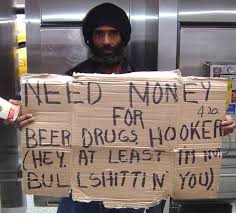
California’s Governor, Gavin Newsom, has a plan for addressing this catastrophe. He will ask allies in the Democratic-controlled Legislature for a measure on the 2024 ballot to authorize funding to build residential facilities where up to 12,000 people a year could live and be treated.
But 12,000 is essentially meaningless when the numbers of Untermenschen in California are estimated at 171,000.
And how much does Newsom want to spend on people who make absolutely no positive contribution to society? From $3 billion to $5 billion.
The money would partially come from general obligation bonds that would go toward construction of “campus-style” facilities along with smaller homes and long-term residential settings.
“Modernizing” California’s Mental Health Services Act is another goal of Newsom’s office. It would cost at least $1 billion every year for housing, treating drug abuse and providing other services.

Gavin Newsom
On March 16, Newsom announced a plan to spend about $30 million to build 1,200 small homes across the state to help house people living on the streets. The homes can be assembled quickly and cost a fraction of what it takes to build permanent housing. Federal courts have ruled cities can’t clear homeless encampments if there are no shelter beds available.
This is a difficult time for California. The state has an estimated $22.5 billion deficit, with state revenues falling as the stock market slows.
And many Californians are convinced the state is headed in the wrong direction. After years of growth, the state’s population has been dropping.
According to the U.S. Census Bureau, California’s total population declined by more than 500,000 between April 2020 and July 2022. California is one of only 18 states that saw its numbers decline and had the fourth biggest drop as a share of its population.
The reasons: They’re seeking more affordable homes and a better quality of life.
And a major reason for their unhappiness: The state’s intractable “homeless” problem.
Decades ago, being “homeless” meant you lost your home due to fire, flood or earthquake. For a few weeks or months, you lived with friends or family as you searched for a new residence. Then you resumed your former life as a productive citizen.
Today, being “homeless” means living for years—even decades—on the street. Selling drugs, using drugs, getting drunk, staying drunk, living in filth, refusing treatment for drug and/or alcohol addiction, refusing even shelter from the cold, rain and terrors of street life—these are the realities of most of today’s “homeless” population.
To fully understand the consequences of this, one needs only to look at what this population has done to San Francisco.
In 2022, the San Francisco “homeless” population was officially estimated to be 7,754. Of these, 3,357 were staying in shelter. Many of those who could find shelter refused to make use of it—or were refused entry due to their rampant drug and/or alcohol addictions.
If it’s a mystery why so many people would prefer to live on the streets—especially during a cold and rainy winter—it’s equally mystifying why so many politicians cater to this population.
Politicians are notorious for “going where the votes are.”
Thus, during his first meeting with Soviet dictator Joseph Stalin (November 28 – December 1, 1943) in Tehran, President Franklin D. Roosevelt said he could not openly support Stalin’s ambitions to conquer Poland.
The reason: The 1944 Presidential election was fast approaching. And Poles made up a substantial portion of the voters FDR needed to win a fourth—and unprecedented—term. He could not afford to alienate them.
Yet drug addicts, alcoholics, the mentally ill and bums are infamous for not showing up at the polls on Election Day. So what can be the reason San Francisco politicians cater so fervently to this population?
In his 2021 bestseller, San Fransicko: Why Progressives Ruin Cities, author Michael Shellenberger provides the answer.
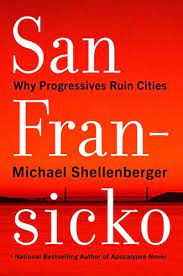
According to its dust jacket:
“Progressives claimed they knew how to solve homelessness, inequality, and crime. But in cities they control, progressives made those problems worse.
“Michael Shellenberger has lived in the San Francisco Bay Area for thirty years. During that time, he advocated for the decriminalization of drugs, affordable housing, and alternatives to jail and prison.
“But as homeless encampments spread, and overdose deaths skyrocketed, Shellenberger decided to take a closer look at the problem. What he discovered shocked him. The problems had grown worse not despite but because of progressive policies.”
2016 PRESIDENTIAL ELECTION, A BRONX TALE, ABC NEWS, ADOLF HITLER, ALTERNET, AMERICABLOG, AP, BABY BOOMER RESISTANCE, BBC, BILL CLINTON, BLOOMBERG NEWS, BUZZFEED, CBS NEWS, CHAZZ PALMINTERI, CNN, CROOKS AND LIARS, DAILY KOS, DAILY KOZ, DONALD TRUMP, FBI, FIVETHIRTYEIGHT, H.R. MCMASTER, HARPER’S MAGAZINE, HILLARY CLINTON, HUFFINGTON POST, IRS, J. EDGAR HOOVER, JEFF SESSIONS, JOHN F. KENNEDY, JOHN KELLY, LYNDON B. JOHNSON, MEDIA MATTERS, MOTHER JONES, MOVEON, MSNBC, NBC NEWS, NEW REPUBLIC, NEWSDAY, NEWSWEEK, NICCOLO MACHIAVELLI, NPR, PBS NEWSHOUR, POLITICO, POLITICUSUSA, RAW STORY, REINCE PREBIUS, REPUBLICAN PARTY, REUTERS, RICHARD M. NIXON, ROBERT DE NIRO, ROBERT F. KENNEDY, Ronald Reagan, SALON, SEATTLE TIMES, SERGEI KISLYAK, SLATE, TALKING POINTS MEMO, THE ATLANTIC, THE CHICAGO SUN-TIMES, THE CHICAGO TRIBUNE, THE DAILY BEAST, THE DAILY BLOG, THE GUARDIAN, THE HILL, THE HUFFINGTON POST, THE INTERCEPT, THE LOS ANGELES TIMES, THE NATION, THE NEW REPUBLIC, THE NEW YORK TIMES, THE NEW YORKER, THE PRINCE, THE VILLAGE VOICE, THE WASHINGTON POST, THINKPROGRESS, TIME, TRUTHDIG, TRUTHOUT, TWITTER, U.S. NEWS & WORLD REPORT, UP, UPI, USA TODAY, WILLIAM RALPH INGE
In Bureaucracy, History, Law Enforcement, Politics, Social commentary on April 10, 2023 at 12:19 am
American Presidents—like politicians everywhere—strive to be loved. There are two primary reasons for this.
First, even the vilest dictators want to believe they are good people—and that their goodness is rewarded by the love of their subjects.
Second, it’s universally recognized that a leader who’s beloved has greater clout than one who isn’t. In the United States, a Presidential candidate who wins by a landslide is presumed to have a mandate to pursue his agenda—at least, for the first two years of his administration.
But those—like Barack Obama—who strive to avoid conflict often get treated with contempt and hostility by their adversaries.
Barack Obama
In Renegade: The Making of a President, Richard Wolffe chronicled Obama’s successful 2008 bid for the White House. Among his revelations:
Obama, a believer in rationality and decency, felt more comfortable in responding to attacks on his character than in attacking the character of his enemies.
A graduate of Columbia University and Harvard Law School, Obama was one of the most academically gifted Presidents in United States history.
Yet he failed to grasp and apply this fundamental lesson taught by Niccolo Machiavelli, the father of modern political science:
A man who wishes to make a profession of goodness in everything must inevitably come to grief among so many who are not good. And therefore it is necessary for a prince, who wishes to maintain himself, to learn how not to be good, and to use this knowledge and not use it, according to the necessity of the case.
This explains why Obama found most of his legislative agenda stymied by Republicans.
In 2014, Senator Rand Paul (R-Ky.) sought to block David Barron, Obama’s nominee to the First Circuit Court of Appeals.
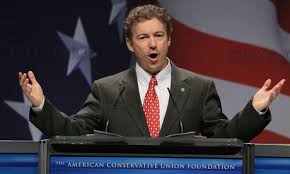
Rand Paul
Paul objected to Barron’s authoring memos that justified the killing of an American citizen by a drone in Yemen on September 30, 2011.
The target was Anwar al-Awlaki, a radical Muslim cleric notorious on the Internet for encouraging Muslims to attack the United States.
Paul demanded that the Justice Department release the memos Barron crafted justifying the drone policy.
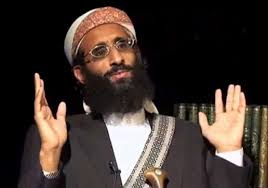
Anwar al-Awlaki
Republicans would have attacked any Democratic—or Republican—Senator who did the same with a Republican President as a traitor who supported terrorists.
But Obama did nothing of the kind.
(On May 22, 2014, the Senate voted 53–45 to confirm Barron to the First Circuit Court of Appeals.)
But Presidents who seek to rule primarily by fear can encounter their own limitations. Which immediately brings to mind Donald Trump.
As a Presidential candidate and President, Trump repeatedly used Twitter to attack hundreds of real and imagined enemies in politics, journalism, TV and films.
From June 15, 2015, when he launched his Presidential campaign, until October 24, 2016, Trump fired almost 4,000 angry, insulting tweets at 281 people and institutions that had somehow offended him.
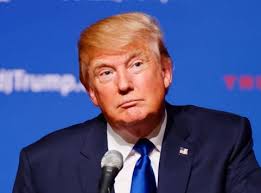
Donald Trump
The New York Times needed two full pages of its print edition to showcase them.
As a Presidential candidate and President, he displayed outright hatred for President Obama. For five years, he slandered Obama as a Kenyan-born alien who had no right to hold the Presidency.
Then, on March 4, 2017, in a series of unhinged tweets, Trump falsely accused Obama of committing an impeachable offense: Tapping his Trump Tower phones prior to the election.
Trump refused to reach beyond the narrow base of white, racist, ignorant, hate-filled, largely rural voters who elected him.
And he bullied and insulted even White House officials and his own handpicked Cabinet officers:
- Trump waged a Twitter-laced feud against Jeff Sessions, his Attorney General. Sessions’ “crime”? Recusing himself from investigations into well-established ties between Russian Intelligence agents and members of Trump’s Presidential campaign.
- Trump repeatedly humiliated Chief of Staff, Reince Priebus—at one point ordering him to kill a fly that was buzzing about. On July 28, 2017, Priebus resigned.
- Trump similarly tongue-lashed Priebus’ replacement, former Marine Corps General John Kelly. Trump has reportedly been angered by Kelly’s efforts to limit the number of advisers who have unrestricted access to him. Kelly told colleagues he had never been spoken to like that during 35 years of military service—and would not tolerate it again.
- After Trump gave sensitive Israeli intelligence to Russian ambassador Sergey Kislyak, his national security advisor, H.R. McMaster, denied this had happened. Trump then contradicted McMaster in a tweet: “As president, I wanted to share with Russia (at an openly scheduled WH meeting) which I have the absolute right to do, facts pertaining to terrorism and airline flight safety.”
If Trump ever read Niccolo Machiavelli’s The Prince, he’s clearly forgotten this passage:
Cruelties ill committed are those which, although at first few, increase rather than diminish with time….Whoever acts otherwise….is always obliged to stand with knife in hand, and can never depend on his subjects, because they, owing to continually fresh injuries, are unable to depend upon him.
And this one:
Still, a prince should make himself feared in such a way that if he does not gain love, he at any rate avoids hatred.
Or, as Cambridge Professor of Divinity William Ralph Inge put it: “A man may build himself a throne of bayonets, but he can’t sit on it.”
ABC NEWS, ALAMO, ALIEN-SMUGGLING RINGS, ALTERNET, AMERICABLOG, AMNEXTY INTERNATIONAL, ANTONIO LOPEZ DE SANTA ANNA, AP, ARIZONA, BABY BOOMER RESISTANCE, BLOOMBERG, BUZZFEED, CALIFORNIA, CBS NEWS, CNN, COLORADO, CROOKS AND LIARS, DAILY KOZ, DAVID CROCKETT, DONALD TRUMP, DRUDGE REPORT, FACEBOOK, FIVETHIRTYEIGHT, GOLIAD MASSACRE, HARPER’S MAGAZINE, HUFFINGTON POST, illegal immigration, IMMIGRATIONS AND CUSTOMS ENFORCEMENT (ICE), JAMES BOWIE, JEFF SESSIONS, MEDIA MATTERS, MEXICAN WAR, MEXICO CITY, MOSES AUSTIN, MOTHER JONES, MOVEON, MSNBC, NBC NEWS, NEVADA, NEW MEXICO, NEWSWEEK, NPR, PBS NEWSHOUR, POLITICO, POLITICUSUSA, RAW STORY, REUTERS, SALON, SAM HOUSTON, SAN JACINTO, SEATTLE TIMES, SLATE, SLAVERY, STEPHEN AUSTIN, TALKING POINTS MEMO, TEXAS, THE ATLANTIC, THE CHICAGO SUN-TIMES, THE CHICAGO TRIBUNE, THE DAILY BEAST, THE DAILY BLOG, THE GUARDIAN, THE HILL, THE HUFFINGTON POST, THE LOS ANGELES TIMES, THE NATION, THE NEW REPUBLIC, THE NEW YORK TIMES, THE VILLAGE VOICE, THE WASHINGTON POST, THINKPROGRESS, THOMAS HOMAN, TIME, TRUTHDIG, TRUTHOUT, TWITTER, TWO POLITICAL JUNKIES, U.S. NEWS & WORLD REPORT, UNITED STATES DEPARTMENT OF JUSTICE, UNITED STATES HEALTH AND HUMAN SERVICES DEPARTMENT, UPI, USA TODAY, USA TODAY MEXICO, UTAH, WONKETTE
In Bureaucracy, History, Law, Law Enforcement, Military, Politics, Social commentary on April 7, 2023 at 12:23 am
On May 8, 2018, one year after Donald Trump became President, United States Attorney General Jeff Sessions announced that a “zero-tolerance” policy toward people illegally entering the United States might separate families while parents are prosecuted.
“We don’t want to separate families, but we don’t want families to come to the border illegally and attempt to enter into this country improperly,” Sessions said. “The parents are subject to prosecution while children may not be. So, if we do our duty and prosecute those cases, then children inevitably for a period of time might be in different conditions.”
Actually, the policy of family separations began a year before its public announcement.
Children who are separated from their parents would be put under supervision of the U.S. Health and Human Services Department, Sessions said.
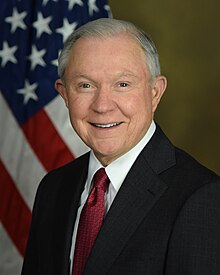
Jeff Sessions
Thomas Homan, U.S. Immigration and Customs Enforcement’s acting director, backed up Sessions’ “get tough” policy change: “Every law enforcement agency in this country separates parents from children when they’re arrested for a crime. There is no new policy. This has always been the policy.”
So that policy went into effect. And it has generated widespread outrage from:
- Civil liberties organizations; and
- Those who believe the United States should not have—or enforce—its immigration laws.
“Criminalizing and stigmatizing parents who are only trying to keep their children from harm and give them a safe upbringing will cause untold damage to thousands of traumatized families who have already given up everything to flee terrible circumstances in their home countries,” said Erika Guevara-Rosas, Amnesty International’s Americas director.
In fact, alien-smugglers have increasingly used children as a wedge against American immigration laws. Their strategy: “Surely, Americans won’t arrest innocent children—or the adults who bring children with them.“
The Trump administration proved them wrong.
This is typical behavior for law enforcement agencies: When criminals devise new ways to defeat existing police measures, the police devise new ways to counter those methods.
Meanwhile, those who believe the United States should throw open its doors to everyone who wants to enter are missing—or ignoring—a vital historical lesson learned by Mexico.
Mexico knows even better than the United States the perils of unchecked illegal immigration.
In 1821, Moses Austin sought a grant from Mexico to settle Texas. After he died in 1821, his son, Stephen, won recognition of the grant by Mexico.
The Mexican government had been unable to persuade large numbers of its own citizens to move to Texas, owing largely to raiding by such fierce Indian tribes as the Comanches.
The government saw the Anglo settlement of Texas as its best hope to tame an otherwise untamable frontier.

Stephen Austin
Austin convinced numerous American settlers to move to Texas, and by 1825 he had brought the first 300 American families into the territory.
Throughout the 1820s, Austin helped ensure the introduction of slavery into Texas, even though, under Mexican law, this was illegal. Tensions developed between unchecked numbers of Anglo settlers flooding into Texas and the Mexican authorities in charge there.
(“GTT”—“Gone to Texas”—was often carved on cabin doors by debt-ridden settlers who decided to seek their fortune in Texas. And some of the most notorious criminals on the frontier—such as land swindler and knife-fighter James Bowie—joined them.)

James Bowie
Eventually, the irresistible force of unlimited Anglo illegal immigration rebelled against the immovable object of Mexican legal/military authority.
The result:
- The battle of the Alamo: From February 23 to March 6, 1836, about 200 rebellious Texans withstood a 13-day siege in a former San Antonio mission, only to be slaughtered to the last man by an army of 2,000 Mexican soldiers commanded by President (actually, dictator) Antonio Lopez de Santa Anna. Among the victims: James Bowie and former Congressman David Crockett.
- The massacre at Goliad: On March 27, 1836, 425-445 Texans captured after the battle of Coleto were shot en masse by Mexican soldiers.
- The battle of San Jacinto: On April 21, 1836, Texans led by General Sam Houston won a surprise Texas victory over Mexican forces who were caught in a mid-afternoon siesta. Santa Anna—who had fled—was captured the next day.
Mexico was forced to give up all rights to Texas—which, 10 years after winning its independence, became a state.
But ongoing conflicts between Mexico and the United States over Texas led to the Mexican war in 1846.
This, in turn, led to a series of devastating American victories over the Mexican army, and the capture of Mexico City itself.
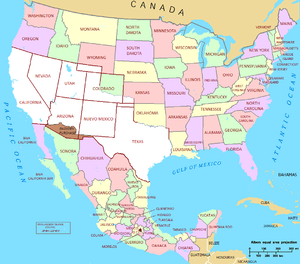
Territory (in white) that Mexico lost after the Mexican War
Mexico suffered the humiliation of both military defeat and the loss of its land holdings within the American Southwest—which, up to 1848, it had controlled.
This territory later became the states of California, New Mexico, Utah, Nevada, Arizona, Texas, and western Colorado.
And the United States finally spread “from sea to shining sea.”
So Mexico knows what it’s doing when it unloads millions of its own citizens—and those of other Latin and Central American countries—on the United States.
Mexico, in short, is a textbook case of what happens to a country that is unable to enforce its own immigration laws.
9/11 ATTACKS, ABC NEWS, ALTERNET, AMERICABLOG, AMERICAN EMPIRE, AP, BABY BOOMER RESISTANCE, BBC, BILL CLINTON, BLOOMBERG NEWS, BUREAUCRACY, BUZZFEED, CBS NEWS, CHRIS MATHEWS, CNN, CROOKS AND LIARS, DAILY KOS, DAILY KOZ, DONALD TRUMP, DWIGHT EISENHOWER, FBI, FIVETHIRTYEIGHT, FRANKLIN D. ROOSEVELT, GEORGE H.W. BUSH, GEORGE W. BUSH, GERALD R. FORD, HARPER’S MAGAZINE, HARRY S. TRUMAN, HUFFINGTON POST, JEB BUSH, JIMMY CARTER, JOHN F. KENNEDY, LYNDON B. JOHNSON, MEDIA MATTERS, MOTHER JONES, MOVEON, MSNBC, NBC NEWS, NEW REPUBLIC, NEWSDAY, NEWSWEEK, NIGEL HAMILTON, NPR, PBS NEWSHOUR, POLITICO, POLITICUSUSA, RAW STORY, REPUBLICAN PARTY, REUTERS, SALON, SEATTLE TIMES, SLATE, SUETONIUS, SYRIAN CIVIL WAR, SYRIAN REFUGEES, TALKING POINTS MEMO, TERRORISM, THE ATLANTIC, THE CHICAGO SUN-TIMES, THE CHICAGO TRIBUNE, THE DAILY BEAST, THE DAILY BLOG, THE GUARDIAN, THE HILL, THE HUFFINGTON POST, THE INTERCEPT, THE LOS ANGELES TIMES, THE NATION, THE NEW REPUBLIC, THE NEW YORK TIMES, THE NEW YORKER, THE TWELVE CAESARS, THE VILLAGE VOICE, THE WASHINGTON POST, THINKPROGRESS, TIME, TRUTHDIG, TRUTHOUT, TWITTER, U.S. NEWS & WORLD REPORT, UPI, USA TODAY
In Bureaucracy, History, Law Enforcement, Military, Politics, Social commentary on April 3, 2023 at 12:06 am
On October 16, 2015, then-Republican Presidential candidate Donald Trump told a brutal truth to take down his opponent, Jeb Bush, former governor of Florida.
Interviewed on Bloomberg TV, Trump said what—to Republicans—had been the unsayable about former President George W. Bush: “I mean, say what you want, the World Trade Center came down during his time.”
“Hold on,” said correspondent Stephanie Ruhle, “you can’t blame George Bush for that.”
“He was President, okay? Blame him or don’t blame him, but he was President,” Trump said. “The World Trade Center came down during his reign.”

Donald Trump
Immediately after Trump’s remarks, the Right exploded.
Representative Peter King (R-NY) said that no one saw the 9/11 attacks coming and that blaming the former president was a cheap shot.
Speaking on Right-wing Fox Radio, King added: “I think Donald Trump is totally wrong there. That sounds like a Michael Moore talking point.”
And Jeb Bush rushed to his brother’s defense on Twitter: “How pathetic for @realdonaldtrump to criticize the president for 9/11. We were attacked & my brother kept us safe.”
Of course, “my brother” didn’t keep safe those 3,000 Americans who died on 9/11.
Nor did Jeb mention that, during his first eight months in office before September 11, “my brother” was on vacation 42% of the time.
But holding Bush accountable for the September 11, 2001 terror attacks on the Pentagon and World Trade Center is taboo for Right-wing Republicans.
Conversely, Republicans spent four years blaming President Barack Obama for the deaths of four Americans killed in an American consulate in Benghazi, Libya, in 2012.
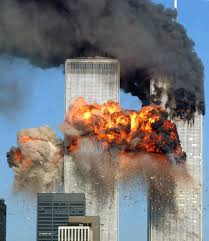
The World Trade Center on September 11, 2001
Fortunately, British historian Nigel Hamilton has brutally laid bare the facts of this needless tragedy.
Hamilton is the author of several acclaimed political biographies, including JFK: Reckless Youth and Bill Clinton: Mastering the Presidency.
His book: American Caesars: The Lives of the Presidents from Franklin D. Roosevelt to George W. Bush, appeared in 2010.
It was inspired by a classic work of ancient biography: The Twelve Caesars, by Gaius Suetonius Tranquillus—known as Suetonius.
Suetonius, a Roman citizen and historian, had chronicled the lives of the first 12 Caesars of Imperial Rome: Julius Caesar, Augustus, Tiberius, Caligula, Claudius, Nero, Galba, Otho, Vitellius, Vespasian, Titus and Domitian.
Hamilton wanted to examine post-World War II United States history as Suetonius had examined that of ancient Rome: Through the lives of the 12 “emperors” who had held the power of life and death over their fellow citizens—and those of other nations.
For Hamilton, the “greatest of American emperors, the Caesar Augustus of his time,” was Franklin D. Roosevelt, who led his country through the Great Depression and World War II.
His “”great successors” were Harry S. Truman, Dwight D. Eisenhower and John F. Kennedy—who, in turn, contained the Soviet Union abroad and presided over sustained economic prosperity at home.
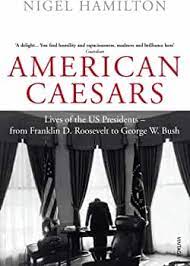
By contrast, “arguably the worst of all the American Caesars” was “George W. Bush, and his deputy, Dick Cheney, who willfully and recklessly destroyed so much of the moral basis of American leadership in the modern world.”
Among the most lethal of Bush’s offenses: The appointing of officials who refused to take seriously the threat posed by Al-Qaeda.
These included:
- Paul Wolfowitz, the deputy Secretary of Defense: “I don’t understand why we are beginning by talking about this one man, bin Laden.”
- National Security Adviser Condoleeza Rice initially refused to hold a cabinet-level meeting on the subject. Then she insisted the matter be handled only by a more junior Deputy Principals meeting in April, 2001.
- Vice President Dick Cheney focused his attention on fomenting a war against Iraq.
- Secretary of Defense Donald Rumsfeld repeatedly ignored American Intelligence warnings that Al-Qaeda was planning a major attack on the American mainland.
The only major administration official who did take Al-Qaeda seriously was Richard Clarke, the chief counter-terrorism adviser on the National Security Council. But Clarke’s position didn’t give him Cabinet-level rank.
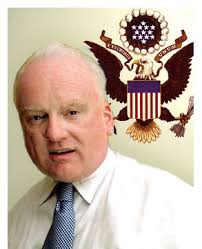
Richard Clarke
This put him at a severe disadvantage when dealing with higher-ranking Bush officials—such as Cheney, Rumsfeld, Wolfowitz and Rice.
Clarke alerted Federal Intelligence agencies that “Al-Qaeda is planning a major attack on us.” He asked the FBI and CIA to report to his office all they could learn about suspicious persons or activities at home and abroad.
Finally, at a meeting with Rice on September 4, 2001, Clarke challenged her to “picture yourself at a moment when in the very near future Al-Qaeda has killed hundreds of Americans, and imagine asking yourself what you wish then that you had already done.”
Seven days later, Al-Qaeda struck, and 3,000 Americans died horrifically—and needlessly.
Neither
Bush,
Cheney,
Rice,
Rumsfeld
nor Wolfowitz
ever apologized for their criminal negligence.
Nor has any of them ever been held accountable.
After 9/11, they wrapped themselves in the flag and posed as America’s saviors.
Only Richard Clarke—who had vainly argued for stepped-up security precautions and taking the fight to Al-Qaeda—gave that apology.
On March 24, 2004, Clarke testified at the public 9/11 Commission hearings. Addressing relatives of victims in the audience, he said: “Your government failed you, those entrusted with protecting you failed you, and I failed you.”
2016 PRESIDENTIAL CAMPAIGN, 2020 PRESIDENTIAL ELECTION, ABC NEWS, ADOLF HITLER, ALTERNET, AMERICABLOG, AP, AUSTRIA, BABY BOOMER RESISTANCE, BERLIN, BLOOMBERG, BORDER WALL, BRIAN KEMP, BUZZFEED, CBS NEWS, CIA, CNN, COVID-19, CROOKS AND LIARS, CZECHOSLOVAKIA, DAILY KOZ, DEMOCRATS, DONALD TRUMP, DRUDGE REPORT, EMILY MURPHY, ENGLAND, FBI, FIVETHIRTYEIGHT, FRANCE, GAIUS CALIGULA, GENERAL SERVICES ADMINISTRATION, GEORGE FLOYD, GOVERNMENT SHUTDOWN, HARPER’S MAGAZINE, HUFFINGTON POST, JAMES COMEY, JEFF SESSIONS, JOE BIDEN, LAMAR ALEXANDER, MARTIN GUGINO, MEDIA MATTERS, MIKE PENCE, MITCH MCCONNELL, MITCH MECONNELL, MOTHER JONES, MOVEON, MSNBC, MUNICH CONFERENCE, NANCY PELOSI, NATIONAL SECURITY AGENCY, NAZI GERMANY, NBC NEWS, NEWSWEEK, NPR, PBS NEWSHOUR, POLAND, POLITICO, POLITICUSUSA, RAFAEL EDUARDO "TED" CRUZ, RAW STORY, REPUBLICANS, REUTERS, ROME, RON JOHNSON, RUSSIA, SALON, SEATTLE TIMES, Secret Service, SERGEY KISLYAK, SERGEY LAVROV, SLATE, TALKING POINTS MEMO, THE ATLANTIC, THE CHICAGO SUN-TIMES, THE CHICAGO TRIBUNE, THE DAILY BEAST, THE DAILY BLOG, THE DISCOURSES, THE GUARDIAN, THE HILL, THE HUFFINGTON POST, THE LOS ANGELES TIMES, THE NATION, THE NEW REPUBLIC, THE NEW YORK TIMES, THE PRESS, THE VILLAGE VOICE, THE WALL STREET JOURNAL, THE WASHINGTON POST, THINKPROGRESS, TIME, TREASON, TRUTHDIG, TRUTHOUT, TWENTY-FIFTH AMENDMENT, TWITTER, TWO POLITICAL JUNKIES, U.S. NEWS & WORLD REPORT, UKRAINE, UNITED STATES HOUSE OF REPRESENTATIVES, UNITED STATES SENATE, UPI, USA TODAY, VLADIMIR PUTIN, VOLODMYR ZELENSKY, WONKETTE
In Bureaucracy, History, Law, Law Enforcement, Military, Politics, Social commentary on March 31, 2023 at 12:13 am
Once he became the 45th President of the United States, Donald Trump began undermining one public or private institution after another.
On November 3, 2020, 80 million voters decided they wanted a change—and elected former Vice President Joe Biden as the 46th President of the United States.
Trump refused to accept that verdict.
Speaking from the White House in the early hours of November 4, he said:
“Millions and millions of people voted for us tonight, and a very sad group of people is trying to disenfranchise that group of people and we won’t stand for it.”
For the first time in American history, a President demanded a halt to the counting of votes while the outcome of an election hung in doubt.
States ignored his demand and kept counting.
Next, Trump ordered his attorneys to file lawsuits to overturn the election results, charging electoral fraud.
Specifically:
- Illegal aliens had been allowed to vote.
- Trump ballots had been systematically destroyed.
- Tampered voting machines had turned Trump votes into Biden ones.
Throughout November and December, cases were filed in Wisconsin, Arizona, Nevada, Michigan, Minnesota and Georgia challenging the election results. And, one by one, more than 30 cases were withdrawn by Trump’s attorneys or dismissed by Federal judges—some of them appointed by Trump himself.
For 20 days, General Services Administrator Emily Murphy refused to release $7.3 million in transition funding and Federal resources to the President-elect’s team.
Under the law governing presidential transitions, Murphy was responsible for determining the winner based on publicly available information before the actual Electoral College vote.
Finally, on November 23, Murphy released the transition funding and resources.
Losing in the courts, Trump invited two Republican legislative leaders from Michigan to the White House to persuade them to stop the state from certifying the vote.
Nothing changed.
On December 5, Trump called Georgia Governor Brian Kemp and asked him to call a special legislative session and convince state legislators to select their own electors that would support him, thus overturning Biden’s win.
Kemp refused, saying he lacked the authority to do so.
Meanwhile, top Republicans—such as Vice President Mike Pence and Senate Majority Leader Mitch McConnell—refused to congratulate Biden as the winner.
None of them branded Trump’s efforts to overturn the election as those of a tyrant.
Just as Germans did nothing to stop Adolf Hitler’s inexorable march toward war—and the destruction of millions of lives and Germany itself—so, too, did Americans seem paralyzed to put an end to the equally self-destructive reign of the man often dubbed “Carrot Caligula.”

Gaius Caligula was “the mad emperor” of ancient Rome. Like Trump, he lived by a philosophy of “Let them hate me, so long as they fear me.”
He ruled as the most powerful man of his time—three years, 10 months and eight days. And all but the first six months of his reign were drenched in slaughter and debauchery.
There are basically three ways America’s continuing slide into tyranny could have been stopped:
Congressional Republicans could have revolted against Trump’s authority and/or agenda.
They could, for example, have demanded that Trump accept the verdict of the electorate—as every other past President had. But they didn’t.
Invoking the Twenty-Fifth Amendment to the United States Constitution.
This allows the Vice President and a majority of the Cabinet to recommend the removal of the President in cases where he is “unable to discharge the powers and duties of his office.” It also allows the House and Senate to confirm the recommendation over the President’s objection by two-thirds vote.
The Vice President then takes over as President.
A case could easily have been made that Trump, emotionally distraught over his loss and determined to circumvent the will of the electorate, had been rendered unfit to continue in office. But, once again, Republicans let fear be their guide.
He had fired FBI Director James Comey in 2017 and publicly humiliated his Attorney General, Jeff Sessions, for more than a year until firing him in 2018. Vice President Mike Pence in particular had set new records for sycophancy.
The “Caligula solution.” Like Trump, Roman emperor Gaius Caligula delighted in humiliating others. His fatal mistake was taunting Cassius Chaerea, a member of his own bodyguard. Caligula considered Chaerea effeminate because of a weak voice and mocked him with names like “Priapus” and “Venus.”

Gaius Caligula
On January 22 41 A.D. Chaerea and several other bodyguards hacked Caligula to death with swords before other guards could save him.
Trump had similarly behaved arrogantly toward his Secret Service guards. He forced them to work without pay during his 35-day government shutdown in 2018. He also forced them to accompany him to COVID-infected states—both during the Presidential campaign and afterward. Many of them were stricken with this often lethal disease as a result.
During the 12 years that Adolf Hitler ruled Nazi Germany, at least 42 assassination plots were launched against him.
The best-known of these literally exploded on July 20, 1944, when Colonel Count Claus Shenk von Stauffenberg planted a bomb in a conference room attended by Hitler and his generals. Hitler survived only by sheer luck.
By contrast, no similar plot was aimed at Donald Trump.
2016 PRESIDENTIAL CAMPAIGN, 2020 PRESIDENTIAL CAMPAIGN, ABC NEWS, ADOLF HITLER, ALTERNET, AMERICABLOG, AP, AUSTRIA, BABY BOOMER RESISTANCE, BERLIN, BLOOMBERG, BORDER WALL, BRIAN KEMP, BUZZFEED, CBS NEWS, CIA, CNN, COVID-19, CROOKS AND LIARS, CZECHOSLOVAKIA, DAILY KOZ, DEMOCRATS, DONALD TRUMP, DRUDGE REPORT, EMILY MURPHY, ENGLAND, FBI, FIVETHIRTYEIGHT, FRANCE, GAIUS CALIGULA, GENERAL SERVICES ADMINISTRATION, GEORGE FLOYD, GOVERNMENT SHUTDOWN, HARPER’S MAGAZINE, HUFFINGTON POST, JAMES COMEY, JEFF SESSIONS, JOE BIDEN, LAMAR ALEXANDER, MARTIN GUGINO, MEDIA MATTERS, MIKE PENCE, MITCH MCCONNELL, MITCH MECONNELL, MOTHER JONES, MOVEON, MSNBC, MUNICH CONFERENCE, NANCY PELOSI, NATIONAL SECURITY AGENCY, NAZI GERMANY, NBC NEWS, NEWSWEEK, NICCOLO MACHIAVELLI, NPR, PBS NEWSHOUR, POLAND, POLITICO, POLITICUSUSA, RAFAEL EDUARDO "TED" CRUZ, RAW STORY, REPUBLICANS, REUTERS, ROME, RON JOHNSON, RUSSIA, SALON, SEATTLE TIMES, Secret Service, SERGEY KISLYAK, SERGEY LAVROV, SLATE, TALKING POINTS MEMO, THE ATLANTIC, THE CHICAGO SUN-TIMES, THE CHICAGO TRIBUNE, THE DAILY BEAST, THE DAILY BLOG, THE DISCOURSES, THE GUARDIAN, THE HILL, THE HUFFINGTON POST, THE LOS ANGELES TIMES, THE NATION, THE NEW REPUBLIC, THE NEW YORK TIMES, THE PRESS, THE VILLAGE VOICE, THE WALL STREET JOURNAL, THE WASHINGTON POST, THINKPROGRESS, TIME, TRUTHDIG, TRUTHOUT, TWENTY-FIFTH AMENDMENT, TWITTER, TWO POLITICAL JUNKIES, U.S. NEWS & WORLD REPORT, UKRAINE, UNITED STATES HOUSE OF REPRESENTATIVES, UNITED STATES SENATE, UPI, USA TODAY, VLADIMIR PUTIN, VOLODMYR ZELENSKY, WONKETTE
In Bureaucracy, History, Law, Law Enforcement, Military, Politics, Social commentary on March 30, 2023 at 12:13 am
“Why are we letting one man systematically destroy our nation before our eyes?”
It’s a question millions of Americans asked themselves since Donald Trump became President of the United States.
Millions of Germans asked themselves the same question throughout the six years of World War II.
In September, 1938, as Adolf Hitler threatened to go to war against France and England over Czechoslovakia, most Germans feared he would. They knew that Germany was not ready for war, despite all of their Fuhrer’s boasts about how invincible the Third Reich was.
A group of high-ranking German army officers was prepared to overthrow Hitler—provided that England and France held firm and handed him a major diplomatic reverse.
But then England and France—though more powerful than Germany—flinched at the thought of war.
They surrendered to Hitler’s demands that he be given the “Sudetenland”—the northern, southwest and western regions of Czechoslovakia, inhabited mostly by ethnic Germans.
Hitler’s popularity among Germans soared. He had expanded the territories of the Reich by absorbing Austria and Czechoslovakia—without a shot being fired!
The plotters in the German high command, realizing that public opinion stood overwhelmingly against them, abandoned their plans for a coup. They decided to wait for a more favorable time.
It never came.
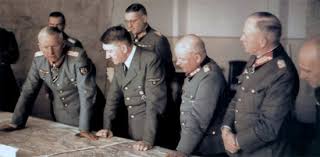
Adolf Hitler and his generals
Less than one year after the infamous “Munich conference,” England and France were at war—and fighting for the lives of their peoples.
As for the Germans: Most of them blindly followed their Fuhrer right to the end—believing his lies (or at least wanting to believe them), serving in his legions, defending his rampant criminality.
And then, in April, 1945, with Russian armies pouring into Berlin, it was too late for conspiracies against the man who had led them to total destruction.
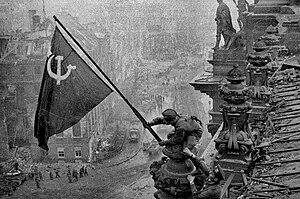
Soviet flag waves over defeated Nazi Germany
Berliners paid the price for their loyalty to a murderous dictator—through countless rapes, murders and the wholesale destruction of their city. And from 1945 to 1989, Germans living in the eastern part of their country paid the price as slaves to the Soviet Union.
Have Americans learned anything from this warning from history about subservience to a madman?
The answer seems to be half-no, half-yes.
Half-no: In 2016, almost 63 million Americans elected Donald Trump—a racist, serial adulterer and longtime fraudster—as President.
On November 3, 2020, 81,255,933 Democratic voters outvoted 74,196,153 Republican voters to elect former Vice President Joseph Biden as the 46th President of the United States.
Donald Trump
Upon taking office on January 20, 2017, Trump began undermining one public or private institution after another.
- Repeatedly attacking the nation’s free press for daring to report his growing list of crimes and disasters, calling it “the enemy of the American people.”
- Siding with Russian dictator Vladimir Putin against the FBI, CIA and National Security Agency which unanimously agreed that Russia had subverted the 2016 Presidential election.
- Firing FBI Director James Comey for investigating that subversion.
- Giving Russian Foreign Minister Sergey Lavrov and Russian Ambassador Sergey Kislyak highly classified CIA Intelligence about an Islamic State plot to turn laptops into concealable bombs.
- Shutting down the Federal Government for 35 days because Democrats refused to fund his ineffective “border wall” between the United States and Mexico. An estimated 380,000 government employees were furloughed and another 420,000 were ordered to work without pay. The shutdown ended due to public outrage—without Trump getting the funding amount he had demanded.
- Trying to coerce Ukrainian President Volodymyr Zelensky to smear former Vice President Joe Biden, who was likely to be his Democratic opponent in the 2020 Presidential election.
- Allowing the deadly COVID-19 virus to ravage the country, infecting (to date) 14.8 million Americans and killing 282,000.
- Attacking medical experts and governors who urged Americans to wear masks and socially distance to protect themselves from COVID-19.
- Ordering his Right-wing followers to defy states’ orders to citizens to “stay-at-home” and wear of masks in public to halt surging COVID-19 rates.
And throughout all those outrages, House and Senate Republican majorities remained silent or vigorously supported him.
A typical example:
On June 4, 2020, during protests over the police murder of black security guard George Floyd, a curfew was imposed on Buffalo, New York. As police swept through Niagara Square, Martin Gugino, a 75-year-old peace activist with the Catholic Worker Movement, walked into their path as if attempting to speak with them.
Two officers pushed him and he fell backwards, hitting the back of his head on the pavement and losing consciousness.
On June 9, Trump charged that Gugino was part of a radical leftist “set up.” Trump offered no evidence to back up his slander.
Typical Republican responses included:
- Kentucky Senate Majority Leader Mitch McConnell refused to say whether Trump’s tweet was appropriate.
- Texas Senator Ted Cruz: “I don’t comment on the tweets.”
- Wisconsin Senator Ron Johnson said he hadn’t seen the tweet—and didn’t want it read to him: “I would rather not hear it.”
- Tennessee Senator Lamar Alexander: “Voters can evaluate that. I’m not going to give a running commentary on the President’s tweets.”
Half-yes: On November 3, 2020, 80 million voters decided they wanted a change—and elected former Vice President Joe Biden as the 46th President of the United States.
ABC NEWS, ADDICTION, ALTERNET, AMERICABLOG, AP, BABY BOOMER RESISTANCE, BBC, BLOOMBERG NEWS, BUZZFEED, CBS NEWS, CNN, CROOKS AND LIARS, DAILY KOS, DON WINSLOW, DRUG ENFORCEMENT ADMINISTRATION (DEA), FIVETHIRTYEIGHT, HARPER’S MAGAZINE, HUFFINGTON POST, JOAQUIN "EL CHAPO" GUZMAN, MEDIA MATTERS, MEXICO, MOTHER JONES, MOVEON, MSNBC, NBC NEWS, NEW REPUBLIC, NEW YORK TIMES V. SULLIVAN, NEWSDAY, NEWSWEEK, NPR, PBS NEWSHOUR, POLITICO, POLITICUSUSA, RAW STORY, REUTERS, SALON, SEATTLE TIMES, SIDNEY POWELL, SINALOA DRUG CARTEL, SLATE, TALKING POINTS MEMO, THE ATLANTIC, THE BORDER (BOOK), THE CARTEL (BOOK), THE CHICAGO SUN-TIMES, THE CHICAGO TRIBUNE, THE DAILY BEAST, THE DAILY BLOG, THE GUARDIAN, THE HILL, THE HUFFINGTON POST, THE INTERCEPT, THE LOS ANGELES TIMES, THE NATION, THE NEW REPUBLIC, THE NEW YORK TIMES, THE NEW YORKER, THE POWER OF THE DOG (BOOK), THE VILLAGE VOICE, THE WASHINGTON POST, THINKPROGRESS, TIME, TRUTHDIG, TRUTHOUT, TWITTER, U.S. NEWS & WORLD REPORT, UPI, USA TODAY, WAR ON DRUGS
In Bureaucracy, History, Law, Law Enforcement, Medical, Politics, Social commentary on March 29, 2023 at 12:10 am
As the author of three bestselling novels about America’s “War on Drugs,” Don Winslow is appalled at the terrifying carnage it has wreaked on Mexico.
Winslow sees the drug problem not as one being inflicted on Americans by outsiders—such as the Mexican drug cartels—but as one that Americans are inflicting on themselves:
“Look, from my slice of this world, which is the narco world, the answers aren’t in Mexico. They’re here. And until we get our act straightened out, it will have the damaging effects on Mexico.
“That’s why it just pisses me off so much when these guys go down to the border and make these pronouncements about, you know, ‘Build a wall and stop crime from coming into the United States.’ I mean shit, if I were Mexican, I’d build the wall to keep American money from buying guns and weapons and making billionaires out of psychopaths.
“The hypocrisy of this is mind-boggling. Not in the history of the world have I ever heard of a Mexican coming into America, sticking a gun in somebody’s head and making them buy a drug.”
Don Winslow
It’s definitely time to seriously reexamine America’s decades-long war on drugs.
Today, the dangers of drug-abuse are available to anyone who wants to discover them. Yet people continue to play Russian Roulette by taking “recreational” drugs that can leave them sickened or dead.
One “recreational” drug is Fentanyl, a potent synthetic opioid approved by the Food and Drug Administration to relieve pain. It’s approximately 100% more potent than morphine and 50% more potent than heroin.
“One pill. One time. It can kill you,” said Brian Clark, Special Agent in Charge of the Drug Enforcement Administration’s San Francisco office. “Fentanyl is without a doubt the deadliest threat that we’ve ever faced in this country.
And with a powerful animal tranquilizer—Xylazine—being mixed into it, it’s even deadlier.
Another such drug is Krokodil (pronounced “crocodile”), an injectable opioid derivative. It’s made from over-the-counter codeine medicine mixed with ethanol, gasoline, red phosphorus, iodine, hydrochloric acid and paint thinner.
It can produce gangrenous inflammations at the injection site, which resemble the scales of a crocodile. The skin can deteriorate so severely that flesh can fall from bone, producing a “zombie-like” appearance.
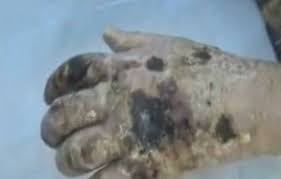
Effects of Krokodil
Yet customers still line up to buy it.
In short: No amount of publicity about the dangers of illicit drug-abuse will stop those looking for a quick “high” from thumbing their nose at the law—and their own safety.
No matter how many low-level drug dealers are arrested, others quickly take their places. The profits are simply too great—especially for those who lack education or incentive to attain professional employment.
And no sooner does a cartel kingpin get imprisoned or killed than his place is taken by one or more successors.
A classic example of this: Joaquín Archivaldo Guzmán Loera, better known as “El Chapo.” As the head of the Sinaloa drug cartel, he reigned as one of the most powerful criminal kingpins in Mexico. His enterprise spanned continents and triggered waves of bloodshed throughout Mexico.
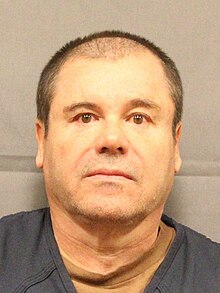
Joaquín Archivaldo “El Chapo” Guzmán
In 2016, Mexican authorities arrested him. With a history of two escapes from Mexican prisons, Guzmán was extradited to the United States the following year.
On February 12, 2019, a jury found him guilty on 12 counts, including engaging in a continuing criminal enterprise, conspiracy to launder narcotics proceeds, international distribution of cocaine, heroin, marijuana and other drugs, and use of firearms.
He was subsequently sentenced to life imprisonment plus 30 years.
As of 2023, the Sinaloa Cartel remains Mexico’s most dominant drug cartel. It’s now headed by Ismael Zambada García and Guzmán’s sons, Jesús Alfredo Guzmán and Ivan Archivaldo Guzmán Salazar.
So: What to do?
Aim to protect drug-avoiding people from druggies.
- Recognize that America’s drug epidemic is caused by Americans’ insatiable demand for drugs.
- Recognize that so long as demand persists, suppliers will be eager to fill it.
- Allow druggies to endanger themselves but not others—the way smokers are allowed to get cancer and emphysema but not give it to nonsmokers.
- Limit the types of places where druggies are allowed to drug up—such as their own homes.
- Druggies involved in auto accidents should be presumed guilty unless they can prove otherwise.
- If convicted, they should face mandatory 10-year prison terms.
- Ban open-air drug markets.
- Don’t allow druggies who are charged with crimes like burglary or robbery to cite their addiction as a defense.
- States should ship their druggies to Texas—the way Texas ships its illegal aliens to Blue states.
Quit trying to protect self-destructive people from themselves.
- Stop providing Naloxone to opioid addicts.
- Stop providing free needles to heroin users.
- Stop providing welfare and free housing to known drug addicts.
- Parents should tell their teenagers: “If you get arrested for drugs, don’t expect me to bail you out or pay for treatment. We can’t afford it.”
- If their teens are arrested as druggies, parents should say: “You’re on your own.”
ABC NEWS, ADDICTION, ALTERNET, AMERICABLOG, AP, BABY BOOMER RESISTANCE, BBC, BLOOMBERG NEWS, BUZZFEED, CBS NEWS, CNN, CROOKS AND LIARS, DAILY KOS, DON WINSLOW, DRUG ENFORCEMENT ADMINISTRATION (DEA), FIVETHIRTYEIGHT, HARPER’S MAGAZINE, HUFFINGTON POST, JOAQUIN "EL CHAPO" GUZMAN, MEDIA MATTERS, MEXICO, MOTHER JONES, MOVEON, MSNBC, NBC NEWS, NEW REPUBLIC, NEW YORK TIMES V. SULLIVAN, NEWSDAY, NEWSWEEK, NPR, PBS NEWSHOUR, POLITICO, POLITICUSUSA, RAW STORY, REUTERS, SALON, SEATTLE TIMES, SIDNEY POWELL, SINALOA DRUG CARTEL, SLATE, TALKING POINTS MEMO, THE ATLANTIC, THE BORDER (BOOK), THE CARTEL (BOOK), THE CHICAGO SUN-TIMES, THE CHICAGO TRIBUNE, THE DAILY BEAST, THE DAILY BLOG, THE GUARDIAN, THE HILL, THE HUFFINGTON POST, THE INTERCEPT, THE LOS ANGELES TIMES, THE NATION, THE NEW REPUBLIC, THE NEW YORK TIMES, THE NEW YORKER, THE POWER OF THE DOG (BOOK), THE VILLAGE VOICE, THE WASHINGTON POST, THINKPROGRESS, TIME, TRUTHDIG, TRUTHOUT, TWITTER, U.S. NEWS & WORLD REPORT, UPI, USA TODAY, WAR ON DRUGS
In Bureaucracy, History, Law, Law Enforcement, Medical, Politics, Social commentary on March 28, 2023 at 12:10 am
It’s time to seriously reexamine America’s decades-long “War on Drugs” from a fresh perspective.
And an excellent starting point is three gripping novels about that war—and the horrific violence it has spawned in Mexico.
The author is Don Winslow, a former private investigator. And he has grounded his works in solid research among addicts, narcotics traffickers and the law enforcement agents who pursue them.
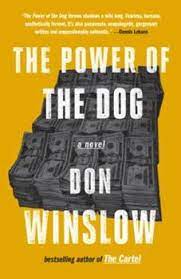
His first novel, The Power of the Dog, introduces readers to Art Keller, a dedicated agent of the Federal Drug Enforcement Administration (DEA). Although a Vietnam vet, this is his first outing into Mexico—and he’s an innocent in the ways of Mexican drug traffickers.

When Miguel Angel Barrera, a high-ranking Mexican police official, seemingly befriends him, Keller enthusiastically signs on for the ride. Only to discover—later—that he’s been used.
When the “Mr. Big” dealer he’s pursuing is shot to pieces by corrupt Mexican police, the man waiting to take his place is none other than Barrera.
For the next 40 years, Keller wages all-out war on Barrera—and his nephew, Adán, who succeeds him as the godfather of the powerful Sinaloa Cartel.
Two more novels follow: The Cartel and The Border. All three vividly portray the violent costs of an unwinnable conflict.
In Dog, Winslow explains how America’s “War on Drugs” has actually made the crime cartels that produce them ever richer. He does so from the viewpoint of Adán Barrera:

Don Winslow
Malarrama, CC BY-SA 4.0 <https://creativecommons.org/licenses/by-sa/4.0>, via Wikimedia Commons
“…While Keller’s revenge obsession might cost me money in the short run, in the long run it makes me money. And that is what the Americans cannot seem to understand—that all they do is drive up the price and make us rich.
“Without their help, any bobo with an old truck or a leaky boat with an outboard motor could run drugs into El Norte. But as it is, it takes millions of dollars to move the drugs, and the prices are accordingly sky-high.
“The Americans take a product that literally grows on trees and turn it into a valuable commodity. Without them, cocaine and marijuana would be like oranges, and instead of making billions smuggling it, I’d be making pennies doing stoop labor in some California field, picking it.
“And the truly funny thing is that Keller is himself another product because I make millions selling protection against him, charging the independent contractors who want to move their product through La Plaza thousands of dollars for the use of our cops, soldiers, Customs agents, Coast Guard, surveillance equipment, communications….
“This is what Mexican cops appreciate that American cops don’t. We are partners…in the same enterprise.”
Looking at the “War on Drugs” from DEA agent Keller’s obsessive viewpoint, Winslow writes:
“I’ve fought it my whole goddamn life, and for what? Billions of dollars, trying unsuccessfully to keep drugs out of the world’s most porous border? One-tenth of the anti-drug budget going into education and treatment; nine-tenths of those billions into interdiction?
“And not enough money from anywhere going into the root causes of the drug problem itself. And the billions spent keeping drug offenders locked up in prison, the cells now so crowded we have to give early release to murderers. Not to mention the fact that two-thirds of ‘non-drug’ offenses in America are committed by people high on dope or alcohol.
“And our solutions are the same futile non-solutions: Build more prisons, hire more police, spend more and more billions of dollars not curing the symptoms while we ignore the disease. Most people in my area who want to kick drugs can’t afford to get into a treatment program unless they have blue-chip health insurance, which most of them don’t.
“And there’s a six-month-to-two-year waiting list to get a bed in a subsidized treatment program. We’re spending almost $2 billion poisoning cocaine crops over here [Mexico] while there’s no money at home to help someone who wants to get off drugs. It’s insanity.”
In short: For all their differences, police and traffickers share one thing in common: The conclusion that the “War on Drugs” is a futile waste of time and resources.
In a February 18, 2019 interview with Rolling Stone, Winslow underscored his comments:
“Addiction will always be with us, albeit not at this rate, right? Criminality will always be with us. But the first thing we can do to fix it is [to] legalize drugs. Period. Across the board. Take the enormous profit out of the drug.
“That would be the first absolute major step. We’ve done that with marijuana. The problem is, of course, the balloon effect. It’s a theory in criminology: if you squeeze the balloon in one place the air goes to another. And so we squeezed the balloon in the marijuana place and the air went to heroin.”
Winslow sees the drug problem not as one being inflicted on Americans by outsiders—such as the Mexican drug cartels—but as one that Americans are inflicting on themselves.
No matter how many drug dealers are imprisoned, Americans’ insatiable demand for illicit drugs will keep the supplies flowing.
2016 PRESIDENTIAL CAMPAIGN, ABC NEWS, AL QAEDA, ALEXANDER THE GREAT, ALTERNET, AMERICABLOG, ANDREW G. MCCABE, AP, BABY BOOMER RESISTANCE, BARACK OBAMA, BLOOMBERG, BUZZFEED, CBS NEWS, CHINA, CIA, CNN, CONSERVATIVE POLITICAL ACTION CONFERENCE, CROOKS AND LIARS, DAILY KOS, DAILY KOZ, DONALD TRUMP, DRUDGE RETORT, FACEBOOK, FBI, FEDERAL JUDICIARY, FIVETHIRTYEIGHT, FOX NEWS SUNDAY, HARPER’S MAGAZINE, INTELLIGENCE AGENCIES, JAMES COMEY, JAMES ROBART, JEFF SESSIONS, MEDIA MATTERS, MOTHER JONES, MOVEON, MSNBC, NAVY SEALS, NBC NEWS, NEW YORK TIMES, NEWSWEEK, NINTH CIRCUIT COURT OF APPEALS, NPR, NSA, PBS NEWSHOUR, PLUTARCH, POLITICO, POLITICUSUSA, RAW STORY, REPUBLICAN DONORS, REUTERS, ROBERT MUELLER, ROD J. ROSENSTEIN, RUSSIA, RUSSIAN INTELLIGENCE, SALON, SEATTLE TIMES, SLATE, STEPHEN MILLER, TALKING POINTS MEMO, THE ATLANTIC, THE CHICAGO SUN-TIMES, THE CHICAGO TRIBUNE, THE DAILY BEAST, THE DAILY BLOG, THE GUARDIAN, THE HILL, THE HUFFINGTON POST, THE LOS ANGELES TIMES, THE NATION, THE NEW REPUBLIC, THE NEW YORK TIMES, THE PRESS, THE VILLAGE VOICE, THE WALL STREET JOURNAL, THE WASHINGTON POST, THINKPROGRESS, TIME, TRUTHDIG, TRUTHOUT, TWITTER, TWO POLITICAL JUNKIES, U.S. NEWS & WORLD REPORT, UPI, USA TODAY, WILLIAM “RYAN” OWENS, WIRETAPPING, WONKETTE, XI JINPING, YEMEN
In Bureaucracy, History, Law, Law Enforcement, Military, Politics, Social commentary on March 27, 2023 at 12:10 am
And the most glorious exploits do not always furnish us with the clearest discoveries of virtue or vice in men; sometimes a matter of less moment, an expression or a jest, informs us better of their characters and inclinations, than the most famous sieges, the greatest armaments, or the bloodiest battles whatsoever.
—Plutarch, “Life of Alexander”
In a closed-door speech to Republican donors on March 3, 2018, President Donald Trump proved the accuracy of Plutarch’s observation.
He praised China’s President, Xi Jinping, for recently assuming full dictatorial powers: “He’s now president for life. President for life. No, he’s great. And look, he was able to do that. I think it’s great. Maybe we’ll have to give that a shot some day.”
The statement was greeted with cheers and laughter by Republican donors.
And, in making that unguarded statement, Trump revealed his ultimate intention: To overthrow America’s constitutional government.
Donald Trump
Since then, Trump continued to “joke” about serving more than the legal limit of eight years.
In April, 2019, at a White House event, he said he might remain in the Oval Office “at least for 10 or 14 years.”
In May, 2019, Trump retweeted Evangelical leader Jerry Falwell Jr.’s suggestion that he’s owed “2 yrs added to his 1st term” due to distractions caused by the Robert Mueller investigation.
Anyone who thought he was simply joking got a rude awakening on July 30, 2020, when Trump tweeted: “With Universal Mail-In Voting (not Absentee Voting, which is good), 2020 will be the most INACCURATE & FRAUDULENT Election in history. It will be a great embarrassment to the USA. Delay the Election until people can properly, securely and safely vote???”
Leaders of both Republican and Democratic parties quickly attacked Trump for suggesting that the election might be delayed.
With COVID-19 ravaging the nation and many economists predicting a coming Depression, Trump was desperate to reverse his falling poll numbers. But the election was now less than 100 days away and, short of a miracle—or indefinitely postponing the vote—he looked increasingly like a one-term President.

Coronavirus
Since taking office as the Nation’s 45th President, Donald Trump had attacked or undermined one public or private institution after another.
Among these:
- American Intelligence: Even before taking office, Trump refused to accept the findings of the FBI, CIA and NSA that Russian Intelligence agents had intervened in the 2016 election to ensure his victory.
- And when FBI Director James Comey dared to pursue a probe into “the Russia thing,” Trump fired him without warning.
- American law enforcement agencies: Trump repeatedly attacked—and later fired—his own Attorney General, Jeff Sessions, for not “protecting” him from agents pursuing the Russia investigation.
- He repeatedly attacked the integrity of Deputy FBI Director Andrew G. McCabe until the latter resigned.
- He threatened to fire Rod J. Rosenstein, the deputy attorney general who oversaw Special Counsel Robert Mueller’s investigation into Russian subversion of the 2016 election.
- The press: On February 17, 2017, Trump tweeted: “The FAKE NEWS media (failing @nytimes, @NBCNews, @ABC, @CBS, @CNN) is not my enemy, it is the enemy of the American People!”
- Seven days later, appearing before the Conservative Political Action Conference on February 24, Trump said: “I want you all to know that we are fighting the fake news. It’s fake, phony, fake….I’m against the people that make up stories and make up sources. They shouldn’t be allowed to use sources unless they use somebody’s name. Let their name be put out there.”
- The judiciary: Trump repeatedly attacked Seattle U.S/ District Judge James Robart, who halted Trump’s first travel ban.
- At Trump’s bidding, White House aide Stephen Miller attacked the Ninth Circuit Court of Appeals: “We have a judiciary that has taken far too much power and become, in many cases, a supreme branch of government.”
- President Barack Obama: For five years, Trump, more than anyone else, popularized the slander that Barack Obama was born in Kenya—and was therefore not an American citizen.
- Even after Obama released the long-form version of his birth certificate—on April 27, 2011—Trump tweeted, on August 6, 2012: “An ‘extremely credible source’ has called my office and told me that @BarackObama‘s birth certificate is a fraud.”
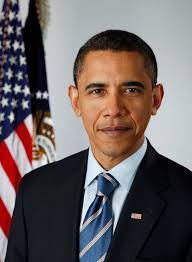
Barack Obama
- On March 4, 2017, in a series of unhinged tweets, Trump accused Obama of tapping his Trump Tower phones prior to the election: “Terrible! Just found out that Obama had my ‘wires tapped’ in Trump Tower just before the victory. Nothing found. This is McCarthyism!”
Trump was later forced to admit he had no evidence to back up his slanderous claims.
* * * * *
Donald Trump wasn’t crazy, as many of his critics charge. He knew what he was doing—and why.
He had tried to strip every potential challenger to his authority–and version of reality—of legitimacy. He intends there will be:
- No independent press to reveal his failures and crimes.
- No independent law enforcement agencies to investigate his abuses of office.
- No independent judiciary to hold him accountable.
- No independent military to dissent as he recklessly hurtles toward a nuclear disaster.
- No candidate—Democrat or Republican—to challenge him for re-election in 2020.
In short: No one—ever—to challenge his remaining in office as “President-for-Life.”
1912 PRESIDENTIAL ELECTION, 2016 PRESIDENTIAL ELECTION, 2020 PRESIDENTIAL ELECTION, 2024 PRESIDENTIAL ELECTION, ABC NEWS, ADOLF HITLER, ALBERT SPEER, ALTERNET, AMERICABLOG, AP, BABY BOOMER RESISTANCE, BBC, BLACKS, BLOOMBERG NEWS, BORDER WALL, BUZZFEED, CASEY DESANTIS, CBS NEWS, CIA, CNN, COVID-19, CROOKS AND LIARS, DAILY KOS, DEMOCRATS, DONALD TRUMP, ELECTORAL COLLEGE, FBI, FIVETHIRTYEIGHT, FOX NEWS, GAYS, GOVERNMENT SHUTDOWN, HARPER’S MAGAZINE, HARRY S. TRUMAN, HUFFINGTON POST, ILLEGAL ALIENS, JAMES COMEY, JANUARY 6 COUP ATTEMPT, JOE BIDEN, JOSEPH STALIN, MAGGIE HABERMAN, MASKS, MEDIA MATTERS, MOTHER JONES, MOVEON, MSNBC, NATIONAL SECURITY AGENCY, NAZI GERMANY, NBC NEWS, NEW REPUBLIC, NEW YORK POST, NEWSDAY, NEWSWEEK, NICHOLE HEMMER, NPR, PBS NEWSHOUR, POLITICO, POLITICUSUSA, PROTESTERS, PUBLIC HEALTH WORKERS, RACISM, RAW STORY, REPUBLICANS, REUTERS, ROGER STONE, RON DESANTIS, SALON, SCHOOLS, SEATTLE TIMES, SERGEY KISLYAK, SERGEY LAVROV, SEXUALITY, SLATE, SOVIET UNION, TALKING POINTS MEMO, THE ATLANTIC, THE CHICAGO SUN-TIMES, THE CHICAGO TRIBUNE, THE DAILY BEAST, THE DAILY BLOG, THE GUARDIAN, THE HILL, THE HUFFINGTON POST, THE INTERCEPT, THE LOS ANGELES TIMES, THE NATION, THE NEW REPUBLIC, THE NEW YORK TIMES, THE NEW YORKER, THE PRESS, THE VILLAGE VOICE, THE WASHINGTON POST, THEODORE ROOSEVELT, THINKPROGRESS, TIME, TRUTH SOCIAL, TRUTHDIG, TRUTHOUT, TWITTER, U.S. NEWS & WORLD REPORT, UKRAINE, UPI, USA TODAY, VACCINATIONS, VANDERBILT UNIVERSITY, VLADIMIR PUTIN, VOLODYMYR ZELENSKY, WALL STREET JOURNAL, WALT DISNEY CORPORATION, WILLIMAM HOWWARD TAFT, WOODROW WILSON
In Bureaucracy, History, Law, Law Enforcement, Politics, Social commentary, Uncategorized on March 24, 2023 at 12:10 am
In his coming war against Florida Governor Ron DeSantis, Donald Trump may have the last word.
The former President has warned that if he can’t be the Republican Presidential nominee in 2024, “he’s willing to burn it all down.”
New York Times reporter Maggie Haberman, who has intimately covered Trump for years, has tweeted:
“Yes, Trump is more vulnerable than he’s been in a long time. But that has happened before and he’s survived.”

Maggie Haberman
Andrew Lih, CC BY-SA 4.0 <https://creativecommons.org/licenses/by-sa/4.0>, via Wikimedia Commons
“Trump has extremely few major donors who want to do anything for him right now and a number of them are having active conversations about the best way to stop him. But. Again….sound familiar?
“Trump has made clear he’s willing to burn it all down if he doesn’t get what he wants, which is maintaining his grip on the product line he’s been developing for six years: the Republican party. So a lot of electeds will have to make a choice they’ve not had to before.”
There is precedent for this. After serving two terms in the White House (1901-1909) Theodore Roosevelt became increasingly disillusioned with his handpicked successor: William Howard Taft.

Theodore Roosevelt
By 1912, he decided to run for a third term as a third-party candidate. His candidacy split the Republican vote—and enabled Democrats to elect Woodrow Wilson President.
No doubt many Democrats are now salivating at the possibility of the same occurring in 2024.
And even more of them are looking forward to seeing two would-be tyrants—Donald Trump and Ron DeSantis—trading lethal blows for most of the Presidential year.
Their reaction would be similar to that expressed by then-Senator Harry S. Truman when Nazi Germany invaded the Soviet Union on June 22, 1941: “If we see that Germany is winning the war, we ought to help Russia; and if that Russia is winning, we ought to help Germany, and in that way let them kill as many as possible.”
* * * * *
As the Third Reich came to its fiery end, its dictator, Adolf Hitler, sought to punish the German people for being “unworthy” of his “genius” and losing the war he had started.
His attitude was: “If I can’t rule Germany, then there won’t be a Germany.”
In his infamous “Nero Order,” he decreed the destruction of everything still remaining–industries, ships, harbors, communications, roads, mines, bridges, stores, utility plants, food stuffs.
Fortunately for Germany, one man–Albert Speer–finally broke ranks with his Fuhrer.

Albert Speer
Risking death, he refused to carry out Hitler’s “scorched earth” order. Even more important, he mounted a successful effort to block such destruction and persuade influential military and civilian leaders to disobey the order as well.
As a result, those targets slated for destruction were spared.
Throughout his four years in office, President Donald Trump made it clear that America faced a stark choice: It could remain a constitutional democracy—or allow him to become an all-powerful “President-for-Life.”
Among his outrages:
- Repeatedly attacking the nation’s free press for daring to report his growing list of crimes and disasters, calling it “the enemy of the American people.”
- Siding with Russian dictator Vladimir Putin against the FBI, CIA and National Security Agency which unanimously agreed that Russia had subverted the 2016 Presidential election.
- Firing FBI Director James Comey for investigating that subversion.
- Giving Russian Foreign Minister Sergey Lavrov and Russian Ambassador Sergey Kislyak highly classified CIA Intelligence about an Islamic State plot to turn laptops into concealable bombs.
- Shutting down the Federal Government for 35 days in 2018-19 because Democrats refused to fund his ineffective “border wall” between the United States and Mexico.
- An estimated 380,000 government employees were furloughed and another 420,000 were ordered to work without pay. The shutdown ended due to public outrage—without Trump getting the funding amount he had demanded.
- Trying to coerce Ukrainian President Volodymyr Zelensky to smear former Vice President Joe Biden, who was likely to be his Democratic opponent in the 2020 Presidential election.
- Repeatedly lying about the dangers posed by the COVID-19 virus, and thus enabling it to ravage the country and ultimately kill 400,000 by the time Trump left office.
- Attacking medical experts and governors who urged Americans to wear masks and socially distance to protect themselves from COVID-19.
Trump’s ultimate act of criminality and treason came on January 6, 2021, when he incited his followers to violently attack the United States Capitol Building. Their goal: To prevent Republicans and Democrats from counting the Electoral Votes cast in the 2020 Presidential election.
Trump fully understood that an accurate count of those votes would reveal his loss to Joe Biden: 306 votes for Biden, compared with 232 for Trump.
Fortunately for American democracy, there were enough patriots determined to prevent Trump from becoming the absolute dictator he clearly intended to be.
Like Adolf Hitler, Donald Trump’s attitude was: “If I can’t rule America, there won’t be an America.”
Deprived of his chance to destroy the country he claimed to love, Trump now threatens to destroy the political party that brought him to near-absolute power in 2016.
And Ron DeSantis stands ready to establish himself as an equally Trumpian dictator.
Their party is still waiting for a Republican Albert Speer to step forward and save America from the self-destructive brutalities of its own Right-wing fanatics.


 Bureaucracybuster's Blog
ABC NEWS, ALCOHOLISM, ALTERNET, AMERICABLOG, AP, BABY BOOMER RESISTANCE, BBC, BLOOMBERG NEWS, BUMS, BUZZFEED, CBS NEWS, CNN, COVID-19, CROOKS AND LIARS, CVS, DAILY KOS, DRUG ADDICTION, FIVETHIRTYEIGHT, FRANKLIN D. ROOSEVELT, GAVIN NEWSOM, HARPER’S MAGAZINE, HOMELESSNESS, HUFFINGTON POST, IPS SECURITY, JOSEPH STALIN, LOS ANGELES, MEDIA MATTERS, MENTAL ILLNESS, MICHAEL SHELLENBERGER, MOTHER JONES, MOVEON, MSNBC, NAVIGATION CENTERS, NBC NEWS, NEW REPUBLIC, NEWSDAY, NEWSWEEK, NPR, ORACLE, PBS NEWSHOUR, POLITICO, POLITICUSUSA, PORTLAND, RAW STORY, REUTERS, SALON, SAN FRANCISCO, SAN FRANCISCO BOARD OF SUPERVISORS, SAN FRANCISCO MAYOR'S OFFICE, SAN FRANSICKO: WHY PROGRESSIVES RUIN CITIES (BOOK), SEATLE, SEATTLE TIMES, SLATE, TALKING POINTS MEMO, THE ATLANTIC, THE CHICAGO SUN-TIMES, THE CHICAGO TRIBUNE, THE DAILY BEAST, THE DAILY BLOG, THE GUARDIAN, THE HILL, THE HUFFINGTON POST, THE INTERCEPT, THE LOS ANGELES TIMES, THE NATION, THE NEW REPUBLIC, THE NEW YORK TIMES, THE NEW YORKER, THE VILLAGE VOICE, THE WASHINGTON POST, THINKPROGRESS, TIME, TRUTHDIG, TRUTHOUT, TWITTER, U.S. NEWS & WORLD REPORT, UPI, USA TODAY, VMWARE, WALGREENS
UNTERS, AWAY!–PART ONE (OF FOUR)
In Bureaucracy, Business, History, Law, Law Enforcement, Medical, Politics, Social commentary on April 11, 2023 at 4:58 pmSpend any amount of time in California, and a new foreign word will enter your vocabulary: Untermenschen.
In German, this means “subhumans.”
Or “Unters,” for short.
California has a population of nearly 40 million people—and has nearly one-third of the nation’s “homeless” population. The majority of that population consists of hardcore drug addicts, hardcore alcoholics, the mentally ill, and those who refuse to work for a living.
In short: Druggies, Drunks, Mentals and Bums—or DDMBs.
And their numbers are growing much faster in California than in other states, according to an analysis of federal data by the Public Policy Institute of California.
Tent encampments block pedestrians from walking along sidewalks. And when pedestrians aren’t contending with tents, they’re forced to navigate around empty beer cans, empty wine bottles, piles of human feces, pools of human urine and used hypodermic syringes.
California’s Governor, Gavin Newsom, has a plan for addressing this catastrophe. He will ask allies in the Democratic-controlled Legislature for a measure on the 2024 ballot to authorize funding to build residential facilities where up to 12,000 people a year could live and be treated.
But 12,000 is essentially meaningless when the numbers of Untermenschen in California are estimated at 171,000.
And how much does Newsom want to spend on people who make absolutely no positive contribution to society? From $3 billion to $5 billion.
The money would partially come from general obligation bonds that would go toward construction of “campus-style” facilities along with smaller homes and long-term residential settings.
“Modernizing” California’s Mental Health Services Act is another goal of Newsom’s office. It would cost at least $1 billion every year for housing, treating drug abuse and providing other services.
Gavin Newsom
On March 16, Newsom announced a plan to spend about $30 million to build 1,200 small homes across the state to help house people living on the streets. The homes can be assembled quickly and cost a fraction of what it takes to build permanent housing. Federal courts have ruled cities can’t clear homeless encampments if there are no shelter beds available.
This is a difficult time for California. The state has an estimated $22.5 billion deficit, with state revenues falling as the stock market slows.
And many Californians are convinced the state is headed in the wrong direction. After years of growth, the state’s population has been dropping.
According to the U.S. Census Bureau, California’s total population declined by more than 500,000 between April 2020 and July 2022. California is one of only 18 states that saw its numbers decline and had the fourth biggest drop as a share of its population.
The reasons: They’re seeking more affordable homes and a better quality of life.
And a major reason for their unhappiness: The state’s intractable “homeless” problem.
Decades ago, being “homeless” meant you lost your home due to fire, flood or earthquake. For a few weeks or months, you lived with friends or family as you searched for a new residence. Then you resumed your former life as a productive citizen.
Today, being “homeless” means living for years—even decades—on the street. Selling drugs, using drugs, getting drunk, staying drunk, living in filth, refusing treatment for drug and/or alcohol addiction, refusing even shelter from the cold, rain and terrors of street life—these are the realities of most of today’s “homeless” population.
To fully understand the consequences of this, one needs only to look at what this population has done to San Francisco.
In 2022, the San Francisco “homeless” population was officially estimated to be 7,754. Of these, 3,357 were staying in shelter. Many of those who could find shelter refused to make use of it—or were refused entry due to their rampant drug and/or alcohol addictions.
If it’s a mystery why so many people would prefer to live on the streets—especially during a cold and rainy winter—it’s equally mystifying why so many politicians cater to this population.
Politicians are notorious for “going where the votes are.”
Thus, during his first meeting with Soviet dictator Joseph Stalin (November 28 – December 1, 1943) in Tehran, President Franklin D. Roosevelt said he could not openly support Stalin’s ambitions to conquer Poland.
The reason: The 1944 Presidential election was fast approaching. And Poles made up a substantial portion of the voters FDR needed to win a fourth—and unprecedented—term. He could not afford to alienate them.
Yet drug addicts, alcoholics, the mentally ill and bums are infamous for not showing up at the polls on Election Day. So what can be the reason San Francisco politicians cater so fervently to this population?
In his 2021 bestseller, San Fransicko: Why Progressives Ruin Cities, author Michael Shellenberger provides the answer.
According to its dust jacket:
“Progressives claimed they knew how to solve homelessness, inequality, and crime. But in cities they control, progressives made those problems worse.
“Michael Shellenberger has lived in the San Francisco Bay Area for thirty years. During that time, he advocated for the decriminalization of drugs, affordable housing, and alternatives to jail and prison.
“But as homeless encampments spread, and overdose deaths skyrocketed, Shellenberger decided to take a closer look at the problem. What he discovered shocked him. The problems had grown worse not despite but because of progressive policies.”
Share this: