Archive for the ‘Entertainment’ Category
"SPRINGTIME FOR HITLER" (SONG), "THE PRODUCERS" (MOVIEI), "WITH A LITTLE HELP FROM MY FRIENDS" (SONG), 2016 PRESIDENTIAL CAMPAIGN, ABC NEWS, ALEC BALDWIN, ALTERNET, AMERICABLOG, AP, ASTROLOGY, “JESUS LOVES ME” (SONG), “LITTLE BOXES” SONG, “YAKETY YAK” (SONG), BABY BOOMER RESISTANCE, BARACK OBAMA, BBC, BERNIE SANDERS, BLOOMBERG, BUZZFEED, CBS NEWS, CNN, CROOKS AND LIARS, CRUELTY, DAILY KOS, DAILY KOZ, DAVID BROOKS, DEMOCRATIC PARTY, DEMOCRATS, DONALD TRUMP, EGOTISM, ELIZABETH WARREN, EVANGELICALS, FIVETHIRTYEIGHT, HARPER’S MAGAZINE, HILLARY CLINTON, HUFFINGTON POST, HUMOR, IGNORANCE, IT'S A WONDERFUL LIFE (MOVIE), IVANKA TRUMP, JEB BUSH, JEFFREY EPSTEIN, JESUS, JOHN KASICH, LAUGHTER, LIBERALS, MARCO RUBIO, MARJORIE TAYLOR GREENE, MARK HARRISON, MARK SHIELDS, MAYO CLINIC, MEDIA MATTERS, MELANIA TRUMP, MICHELLE OBAMA, MOTHER JONES, MOVEON, MSNBC, NBC NEWS, NEW REPUBLIC, NEWSDAY, NEWSWEEK, NPR, ONE DAY WE WILL LIVE WITHOUT FEAR: EVERYDAY LIVES UNDER THE SOVIET POLICE STATE (BOOK), PARODY, PBS NEWSHOUR, POLITICO, POLITICUSUSA, POPE FRANCIS, RAND PAUL, RAW STORY, READERS DIGEST, REPUBLICAN PARTY, REPUBLICANS, REUTERS, RICK PERRY, RIDICULE, SALON, SATIRE, SATURDAY NIGHT LIVE, SEATTLE TIMES, SLANDER, SLATE, TALKING POINTS MEMO, TED CRUZ, THE ATLANTIC, THE BEATLES, THE CHICAGO SUN-TIMES, THE CHICAGO TRIBUNE, THE COASTERS, THE DAILY BEAST, THE DAILY BLOG, THE GUARDIAN, THE HILL, THE HUFFINGTON POST, THE INTERCEPT, THE LOS ANGELES TIMES, THE NATION, THE NEW REPUBLIC, THE NEW YORK TIMES, THE NEW YORKER, THE VILLAGE VOICE, THE WASHINGTON POST, THINKPROGRESS, TIME, TRUTHDIG, TRUTHOUT, TWO POLITICAL JUNKIES, U.S. NEWS & WORLD REPORT, UPI, USA TODAY, VLADIMIR PUTIN, X
In Bureaucracy, Entertainment, History, Humor, Politics, RELIGION, Social commentary on July 15, 2025 at 12:13 am
Donald Trump—as political candidate and President—has repeatedly expressed admiration for Russian dictator Vladimir Putin—and disdain for a wide array of democratic leaders.
Yet Democrats have never called called him to account for this—even though a plentiful series of insults exist:
- “TrumPutin”
- “Commissar-in-Chief”
- “Putin’s Poodle”
- “Commissar Bone Spurs”
- “Red Donald”
- “Putin’s Puppet”
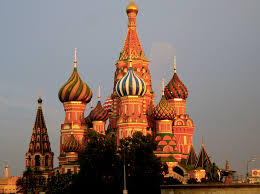
The Kremlin
Trump has attached insulting nicknames to those he hates: “Little Marco” [Rubio], “Lyin’ Ted” [Cruz], “Crooked Hillary” [Clinton]. Yet Democrats have never inflicted the same on him, although a great many are available:
- DJTraitor
- Fake President
- Carrot Caligula
- El Dunce
- Trumpy Traitor
Ridicule is a highly effective weapon. That’s why dictators always try to stamp it out. They know that if you’re laughing at them, you’re not afraid of them. And men like Trump prize being feared above all else.
Yet Democrats and liberals (the two are not always the same) have failed to produce hard-hitting anti-Trump jokes.
For example, limitless opportunities exist to use humor to attack Trump’s notorious dictatorial nature:
- Trump is sitting in the Oval Office, when suddenly the door bursts open and an aide rushes in, shouting: “Mr. President, the House and Senate are on fire!” Trump looks at his watch and says, “Already?

- A reporter asks him: “Mr. President, do you ever collect the jokes that some people tell about you?” Trump: “I sure do. Two camps full.”
- A man knocks at the door of his neighbor’s apartment, shouting: “Quick, get up, get dressed!” From inside he hears terrified screams. “Don’t worry,” he says. “I’m not with the Trump Police. I just want you to know your flat is on fire.”
Donald Trump’s egomania is universally known:
- Trump says he’s smart because his uncle was smart. He could be related to Albert Einstein—but that wouldn’t make him an Einstein. It would, however, make Einstein turn over in his grave.
- What’s the difference between Donald Trump and God? God never thinks he’s Donald Trump.
- Donald Trump dies and ascends to Heaven. But God is so disgusted by him He returns him to Earth—as a mouse. Being Trump-Mouse, he immediately begins raping all the other mice he encounters. But then he decides: “I deserve something better. I’m going to bag me an elephant.” So he visits a nearby waterhole, where a female elephant is munching on grass. Trump-Mouse shimmies up her leg to her backside, and begins pounding away. Suddenly, the elephant grunts, and Trump-Mouse says: “Did I hurt you, sweetheart?”
Nor have Democrats attacked the ignorant semi-literates who comprise most of Trump’s voters:
- Why do Donald Trump’s supporters always travel in threes? One who can read, one who can write, and one to keep his eye on the two intellectuals.
- “Hey,” says a comedian to a stranger at a bar, “you wanna hear a good Donald Trump joke?” “I think you should know I’m a Trump supporter,” shouts the stranger. “Don’t worry,” says the comedian. “I’ll tell it very slowly.”
- What’s the difference between a smart Trump supporter and a unicorn? Nothing. They’re both fictional characters.

Trump’s legendary cruelty could fill volumes of joke books:
- What’s the difference between a Donald Trump optimist and a Donald Trump pessimist? A Donald Trump pessimist says Donald Trump can’t any more vindictive. A Donald Trump optimist says he can.
- After Donald Trump won the Presidency in 2016, news analysts wondered: Why did so many people vote for him instead of Hillary Clinton? Interviewed on the subject, a Trump spokesman said: “Voters really responded to his campaign slogan: ‘Trump in 2016—Or He’ll Shoot Your Family.”
- What is the Donald Trump version of a microwave oven? It seats 300.
There is overwhelming evidence that Russian dictator Vladimir Putin subverted the 2016 Presidential election to seat Trump in the White Houses:
- Over 70% of evangelicals say that God helped get Donald Trump elected President. If so, then God must speak with a Russian accent.
- Donald Trump says Democrats are like Communists. In Hell, Joseph Stalin is laughing—and waiting for Trump to show up.
- What’s the difference between Vladimir Putin and Donald Trump? Putin didn’t get HIS position through Donald Trump.
Trump’s well-known misogyny provides ample fodder for comedians:
- President Donald Trump is holding a press conference. REPORTER: “Do you talk with your wife when you’re having sex?” TRUMP: “Only if there’s a phone handy.”
- IVANKA TRUMP: “What’s the difference between kinky sex and perverted sex?” DONALD TRUMP: “In kinky sex, you use a feather. In perverted sex, you use the whole daughter.”
Then there is the very real threat that Trump represents to not only the United States but the world itself:
- Worried about the future if Donald Trump is elected President in 2024, a woman rushes to a local astrologer to ask: “If Donald Trump is elected President, will there still be life on the Earth in 2025?” And the astrologer replies: “Do you mean ‘LIFE’ the cereal or ‘Life’ the Milton-Bradley parlor game?”
- In President Donald Trump’s America, what is black and knocking at the door? The Future.
"SPRINGTIME FOR HITLER" (SONG), "THE PRODUCERS" (MOVIEI), "WITH A LITTLE HELP FROM MY FRIENDS" (SONG), 2016 PRESIDENTIAL CAMPAIGN, ABC NEWS, ALEC BALDWIN, ALTERNET, AMERICABLOG, AP, ASTROLOGY, “JESUS LOVES ME” (SONG), “LITTLE BOXES” SONG, “YAKETY YAK” (SONG), BABY BOOMER RESISTANCE, BARACK OBAMA, BBC, BERNIE SANDERS, BLOOMBERG, BUZZFEED, CBS NEWS, CNN, CROOKS AND LIARS, CRUELTY, DAILY KOS, DAILY KOZ, DAVID BROOKS, DEMOCRATIC PARTY, DEMOCRATS, DONALD TRUMP, EGOTISM, ELIZABETH WARREN, EVANGELICALS, FIVETHIRTYEIGHT, HARPER’S MAGAZINE, HILLARY CLINTON, HUFFINGTON POST, HUMOR, IGNORANCE, IT'S A WONDERFUL LIFE (MOVIE), IVANKA TRUMP, JEB BUSH, JEFFREY EPSTEIN, JESUS, JOHN KASICH, LAUGHTER, LIBERALS, MARCO RUBIO, MARJORIE TAYLOR GREENE, MARK HARRISON, MARK SHIELDS, MAYO CLINIC, MEDIA MATTERS, MELANIA TRUMP, MICHELLE OBAMA, MOTHER JONES, MOVEON, MSNBC, NBC NEWS, NEW REPUBLIC, NEWSDAY, NEWSWEEK, NPR, ONE DAY WE WILL LIVE WITHOUT FEAR: EVERYDAY LIVES UNDER THE SOVIET POLICE STATE (BOOK), PARODY, PBS NEWSHOUR, POLITICO, POLITICUSUSA, POPE FRANCIS, RAND PAUL, RAW STORY, READERS DIGEST, REPUBLICAN PARTY, REPUBLICANS, REUTERS, RICK PERRY, RIDICULE, SALON, SATIRE, SATURDAY NIGHT LIVE, SEATTLE TIMES, SLANDER, SLATE, TALKING POINTS MEMO, TED CRUZ, THE ATLANTIC, THE BEATLES, THE CHICAGO SUN-TIMES, THE CHICAGO TRIBUNE, THE COASTERS, THE DAILY BEAST, THE DAILY BLOG, THE GUARDIAN, THE HILL, THE HUFFINGTON POST, THE INTERCEPT, THE LOS ANGELES TIMES, THE NATION, THE NEW REPUBLIC, THE NEW YORK TIMES, THE NEW YORKER, THE VILLAGE VOICE, THE WASHINGTON POST, THINKPROGRESS, TIME, TRUTHDIG, TRUTHOUT, TWO POLITICAL JUNKIES, U.S. NEWS & WORLD REPORT, UPI, USA TODAY, VLADIMIR PUTIN, X
In Bureaucracy, Entertainment, History, Humor, Politics, RELIGION, Social commentary on July 14, 2025 at 12:12 am
Reader’s Digest once carried a page entitled: “Laughter is the Best Medicine.” And from a purely medicinal viewpoint, it’s absolutely true.
According to the Mayo Clinic website: “Whether you’re guffawing at a sitcom on TV or quietly giggling at a newspaper cartoon, laughing does you good. Laughter is a great form of stress relief, and that’s no joke.
“A good laugh has great short-term effects. When you start to laugh, it doesn’t just lighten your load mentally, it actually induces physical changes in your body. Laughter can: Stimulate many organs, activate and relieve your stress response, soothe tension.”
In the long term: “Laughter may improve your immune system, relieve pain, improve your mood, increase personal satisfaction.”
But laughter may also prove the best weapon against tyrants and self-righteous hypocrites.
According to the 2016 book, One Day We Will Live Without Fear: Everyday Lives Under the Soviet Police State, by Mark Harrison, tyrants operate on seven working principles:
- Your enemy is hiding.
- Start from the usual suspects.
- Study the young.
- Stop the laughing.
- Rebellion spreads like wildfire.
- Stamp out every spark.
- Order is created by appearance.
Republicans have long won electoral victories through vivid appeals to Hatred, Greed and/or Fear. And in Donald Trump, they have found a candidate who delights in sticking ugly labels on his opponents.
Yet Trump carries a major Achilles heel: He’s unable to poke fun at himself—and he grows livid when anybody else does. Like all tyrants, he knows—and fears—that if people are laughing at you, they don’t fear you.
And, for Trump, being feared lies at the root of his drive for absolute power. As a result, “Stop the laughing” rises to the top of his list of priorities.
At Christmastime, 2018, “Saturday Night Live” aired a parody of the classic movie, “It’s a Wonderful Life.” Its title: “It’s a Wonderful Trump.”
In it, Trump (portrayed by actor Alec Baldwin) discovers what the United States would be like if he had never become President: A great deal better-off.
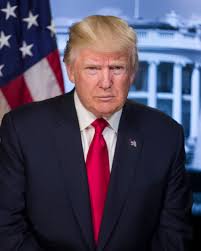
Donald Trump
As usual, Trump expressed his resentment through Twitter: The Justice Department should stop investigating his administration and go after the real enemy: “SNL.”
Despite Trump’s obvious vulnerability to ridicule, Democrats have proven utterly unable or unwilling to deploy this powerful weapon against him.
One reason for this: Their apparent indifference to or ignorance of the power of effective language.
Another reason: Democrats seem uneasy with using ridicule or insults as a weapon. Many of them fear it will make them look silly. Others—such as former President Barack Obama—take the view: “I’m not going to get into the gutter like my opponents.”
Thus, they take the “high ground”—while their sworn Republican enemies undermine them via ridicule and “smear and fear” tactics.
On May 27, 2016, syndicated columnist Mark Shields—a liberal, and New York Times columnist David Brooks, a conservative—exchanged opinions on Donald Trump’s use of insults against his political opponents.
MARK SHIELDS: “Donald Trump gratuitously slandered Ted Cruz’s wife. He libeled Ted Cruz’s father for being potentially part of Lee Harvey Oswald’s assassination of the president of the United States, suggesting that he was somehow a fellow traveler in that.
“This is a libel. You don’t get over it….”

Mark Shields
DAVID BROOKS: “Trump, for all his moral flaws, is a marketing genius. And you look at what he does. He just picks a word and he attaches it to a person. Little Marco [Rubio], Lyin’ Ted [Cruz], Crooked Hillary [Clinton].
“And that’s a word. And that’s how marketing works. It’s a simple, blunt message, but it gets under.
“It sticks, and it diminishes. And so it has been super effective for him, because he knows how to do that. And she [Hillary Clinton] just comes with, ‘Oh, he’s divisive.’”

David Brooks
DC_Rebecca from Washington, DC, USA, CC BY 2.0 <https://creativecommons.org/licenses/by/2.0>, via Wikimedia Commons
Hillary Clinton wasn’t the only Presidential candidate who proved unable to cope with Trump’s gift for insult. His targets—and insults—included:
- Former Texas Governor Rick Perry: “Wears glasses to seem smart.”
- Former Florida Governor Jeb Bush: “Low Energy Jeb.”
- Vermont U.S. Senator Bernie Sanders: “Crazy Bernie.”
- Ohio Governor John Kasich: “Mathematically dead and totally desperate.”
Only one of Trump’s 2016 opponents tried to match him in insults—Florida’s United States Senator Marco Rubio.
At the 11th GOP presidential debate in Detroit, Rubio “countered” Trump’s insult of “Little Marco” by calling him “Big Donald.”
Since Americans believe that “bigger is better,” this was a poor choice of ridicule. A better choice: “Red Donald,” to highlight his notorious admiration for Vladimir Putin.
So why hasn’t anyone come up with a way to counter Trump’s repeated insults?
According to David Brooks: Democrats face two choices in combating Trump:
“Either you do what [Massachusetts United States Senator] Elizabeth Warren has done, like full-bore negativity, that kind of [get] under the skin, or try to ridicule him and use humor. Humor is not Hillary Clinton’s strongest point.”
Humor was not Hillary Clinton’s strong suit. But her limitations need not be those of other Democrats.
All that’s required: Creativity—and the courage to apply it.
ABC NEWS, ADOLF HITLER, ALTERNET, AMERICABLOG, AP, BABY BOOMER RESISTANCE, BBC, BLIND AMBITION (SERIES), BLOOMBERG, BLUESKY, BUZZFEED, CBS NEWS, CHINA, CIVIL WAR, CNN, CONSPIRACY (MOVIE), CROOKS AND LIARS, DAILY KOS, DONALD TRUMP, DOUGLAS MACARTHUR, FIVETHIRTYEIGHT, GUTS AND GLORY: THE RISE ND FALL OF OLIVER NORTH (SERIES), HARPER’S MAGAZINE, HITLER: THE RISE OF EVIL (SERIES), HITLER’S PEOPLE: THE FACES OF THE THIRD REICH (BOOK), HITLER’S SS: PORTRAIT OF EVIL (MOVIE), HOLOCAUST, HOLOCAUST (SERIES), HUFFINGTON POST, INSIDE THE THIRD REICH (SERIES), JOSEPH MCCARTY, KOREAN WAR, MEDIA MATTERS, MOTHER JONES, MOVEON, MSNBC, NAZI GERMANY, NAZIS, NBC NEWS, NEW REPUBLIC, NEWSDAY, NEWSWEEK, NPR, NUREMBERG (MOVIE), OLIVER NORTH, PBS NEWSHOUR, POLITICO, POLITICUSUSA, RAW STORY, REPUBLICANS, REUTERS, RICHARD J. EVANS, RICHARD NIXON, Ronald Reagan, SALON, SEATTLE TIMES, SLATE, SOVIET UNION, SPANISH-AMERICAN WAR, TAIL GUNNER JOE (MOVIE), TALKING POINTS MEMO, THE ATLANTIC, THE BUNKER (MOVIE), THE CHICAGO SUN-TIMES, THE CHICAGO TRIBUNE, THE DAILY BEAST, THE DAILY BLOG, THE FINAL DAYS (MOVIE), THE GUARDIAN, THE HILL, THE HUFFINGTON POST, THE INTERCEPT, THE LOS ANGELES TIMES, THE NATION, THE NEW REPUBLIC, THE NEW YORK TIMES, THE NEW YORKER, THE PLOT TO KILL HITLER (MOVIE), THE VILLAGE VOICE, THE WASHINGTON POST, THINKPROGRESS, THIRD REICH, TIME, TRUTHDIG, TRUTHOUT, TV, TWO POLITICAL JUNKIES, U.S. NEWS & WORLD REPORT, UPI, USA TODAY, VIETNAM WAR, WORLD WAR 1, WORLD WAR 11, X
In Entertainment, History, Military, Politics, Social commentary on April 2, 2025 at 12:08 am
Future historians—if there are any—may well view the administration of President Donald Trump the same way that historian Richard J. Evans analyzes the Third Reich.
To place the infamy of the Trump administration in the same context as that of the Third Reich, consider the opening paragraph from his latest bestseller: Hitler’s People: The Faces of the Third Reich.
Substitute “Republicans” for “Nazis,” “Donald Trump” for “Adolf Hitler,” and “Americans” for “Germans.”
As in the following:
“Who were the Republicans? What motivated the leaders and functionaries of the Republican movement and those who put their project into action? What had happened to their moral compass?
“Were they in some sense deviant, or deranged, or degenerate? Were they gangsters acting with criminal intent? Or were they ‘ordinary men’ (and a few women), or perhaps, more precisely, ‘ordinary Americans’? Did they come from the margins of society, were they outsiders, or were they in some sense part of American society’s mainstream?
“And how do they explain Trump’s drive to achieve dictatorial power? Was he a kind of empty shell, devoid of personal qualities and without a personal life, into which Americans poured their deepest political ambitions and desires?

“What made otherwise normal people carry out, or approve, terrible and murderous atrocities against Republicans’ real and supposed enemies? Or were they perhaps not normal at all? Beyond this, why did so many leading Americans in responsible positions, in the key institutions of society, go along with the dictatorship….?
“And what did those of them who survived….think of about their conduct during the Trump administration? Did they gain a moral perspective on it, did they repent, did they come to an understanding of what they had done?”
Americans have always considered themselves separate from—and superior to—those in other nations. Germans and Russians might fall prey to evil dictators, but Americans? Never!
Evangelical Americans believe that the United States is divinely inspired—and protected.
Thus, American TV networks have filled the airwaves with movies and doc-u-dramas about Nazi Germany such as: “Hitler: The Rise of Evil,” “The Bunker,” “Nuremberg,” “Holocaust,” “Inside the Third Reich,” “Conspiracy,” “Hitler’s SS: Portrait of Evil,” “The Plot to Kill Hitler.”
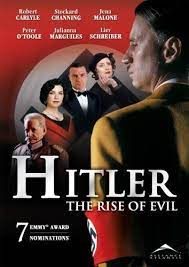
Yet American networks have been unwilling to produce films about the evil of America’s own Right-wing leaders. It’s extremely unlikely that future network executives will OK a miniseries on “Trump: The Rise of Evil.”
To date, only one film—“Tail Gunner Joe”—has been made about the rise and fall of Senator Joseph McCarthy.
For four years (1950-1954) McCarthy terrorized Americans with false charges of a massive Communist conspiracy, leaving broken lives and national mistrust in his wake.
And “Tail Gunner Joe” was made in 1974.
The fall of President Richard Nixon in 1974 led networks to produce such movies as “Blind Ambition” (1979) and “The Final Days” (1989). But those appeared decades ago. And no new ones have appeared since.
In 1989, CBS found the courage to run “Guts and Glory: The Rise and Fall of Oliver North.” What made this unusual was that it appeared only three years after the story of the infamous “Iran-Contra” arms-for-hostages story broke.
But the role of former President Ronald Reagan in waging unjustified terror-war against Nicaragua was totally ignored. And no other movie has since been made on this disgraceful period in United States history.
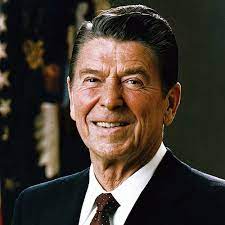
Ronald Reagan
Americans have always been convinced of their own purity as a people—especially when compared to those supposedly corrupt, undemocratic European nations. And so, according to popular mythology, the United States is constantly losing its innocence.
Such as:
I861 – 1865: Civil War—When brother supporting slavery fought brother supporting freedom.
1898: Spanish-American War––The United States freed Cuba from the Spanish.
1917 – 1918: World War 1––When innocent American “doughboys” rushed to Europe to save immoral France and England from the Hunnish Germans.
1942 – 1945: World War II––Once again, Americans rushed to Europe to (again) save impure France and England from (again) the Hunnish Germans and end the Holocaust.
1954 – 1975: Vietnam War––The United States rushed to fight Communism on behalf of a people struggling to be free.
Lost in all these “innocent” scenarios are such unpleasant realities as:
- After the Civil War, millions of former slaves were left to fend for themselves. Although freed, blacks were left poor, despised and subject to violence at any time by the Ku Klux Klan.
- After the Spanish-American war, America seized the Philippines for itself—and relinquished them only in 1946.
- Before World War II, the United States turned away thousands of would-be Jewish immigrants, dooming them to the Holocaust. And it entered the war only after it was attacked at Pearl Harbor.
- During the Vietnam war, the United States defended an unpopular dictatorship in the South against a popular Communist one in the North.
During the 1950s, Baby Boom schoolers were spoon-fed a Disney version of American history. When they grew old enough to witness the struggles for black civil rights and against the Vietnam war, they felt they had been lied to—and reacted with anger and protest.
Generations that have been “protected” against the ugly realities of the past are ill-equipped to cope with those in their own lives.
ABC NEWS, ALTERNET, AMERICABLOG, AP, APACHES, BABY BOOMER RESISTANCE, BBC, BLOOMBERG, BLUESKY, BROCK PETERS, BUZZFEED, CBS NEWS, CHARLTON HESTON, CIVIL WAR, CNN, CROOKS AND LIARS, DAILY KOS, FIVETHIRTYEIGHT, HARPER’S MAGAZINE, HUFFINGTON POST, INDIAN WARS, INDIANS, JAMES COBURN, JIM HUTTON, MAJOR DUNDEE, MEDIA MATTERS, MEXICO, MICHAEL ANDERSON JR., MOTHER JONES, MOVEON, MSNBC, NBC NEWS, NEW REPUBLIC, NEWSDAY, NEWSWEEK, NPR, PBS NEWSHOUR, POLITICO, POLITICUSUSA, RAW STORY, REUTERS, RICHARD HARRIS, SALON, SAM PECKINPAH, SAVING PRIVATE RYAN, SEATTLE TIMES, SLATE, SPANISH-AMERICAN WAR, STEVEN SPIELBERG, TALKING POINTS MEMO, THE ATLANTIC, THE CHICAGO SUN-TIMES, THE CHICAGO TRIBUNE, THE DAILY BEAST, THE DAILY BLOG, THE GUARDIAN, THE HILL, THE HUFFINGTON POST, THE INTERCEPT, THE LOS ANGELES TIMES, THE NATION, THE NEW REPUBLIC, THE NEW YORK TIMES, THE NEW YORKER, THE VILLAGE VOICE, THE WASHIGNTON POST, THE WASHINGTON POST, THE WILD BUNCH, THINKPROGRESS, TIME, TOM HANKS, TRUTHDIG, TRUTHOUT, TWO POLITICAL JUNKIES, U.S. NEWS & WORLD REPORT, UPI, USA TODAY, WESTERNS, WORLD WAR 1, WORLD WAR 11, X
In Entertainment, History, Military, Politics, Social commentary on March 14, 2025 at 12:06 am
Major Dundee is a 1965 Sam Peckinpah Western focusing on a Union cavalry officer (Charlton Heston) who leads a motley troop of soldiers into Mexico to rescue three children kidnapped by Apaches.
Along the way they liberate Mexican villagers and clash with French lancers trying to establish the Austrian Archduke Maximillian 1 as emperor of Mexico.
The Wild Bunch is universally recognized as Peckinpah’s greatest achievement. It has certainly had a far greater impact on audiences and critics than Major Dundee. According to Heston, this was really the movie Peckinpah wanted to make while making Dundee, but he couldn’t quite get his hands around it.
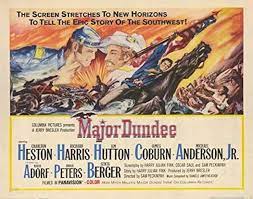
As a result, Dundee’s virtues have been tragically overlooked. It has a larger cast of major characters than Bunch, and these are men you can truly like and identify with:
- The charm of Benjamin Tyreen (Richard Harrs), a Confederate lieutenant forced into Union service;
- The steady courage of Sergeant Gomez;
- The quiet dignity of Aesop (Brock Peters), a black soldier;
- The quest for maturity in a young, untried bugler Tim Ryan (Michael Anderson, Jr.);
- The on-the-job training experience of Lt. Graham (Jim Hutton); and
- The stoic endurance of Indian scout Sam Potts (James Coburn).
These men are charged with a dangerous and dirty mission, and do it as well as they can, but you wouldn’t fear inviting them to meet your family.

Charlton Heston as Major Dundee
That was definitely not the case with The Wild Bunch, four hardened killers prepared to rip off anyone, anytime, and leave a trail of bodies in their wake. The only place where you would have felt safe seeing them, in real-life, was behind prison bars.
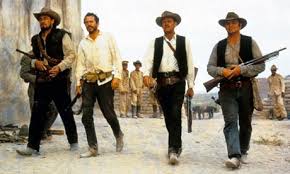
The Wild Bunch
Dundee is an odyssey movie, in the same vein as Saving Private Ryan. Both films start with a battle, followed by the disappearance of characters who need to be searched for and brought back to safety.
Just as Dundee assembles a small force to go into French-occupied Mexico, so, too, does Captain John Miller (Tom Hanks) do the same, with his hunting ground being German-occupied France.
Dundee’s men retrieve the kidnapped children and survive a near-fatal battle with Indians. Miller’s men twice clash with the Germans before finding their quarry, James Ryan.
Before Dundee can return to the United States, he must face and defeat a corps of French soldiers.
Before Miller can haul Ryan back to safety, he must repulse a German assault.

Both groups of soldiers—Dundee’s and Miller’s—are transformed by their experiences in ways neither group could possibly articulate. (Miller, being a highly literate schoolteacher, would surely do a better job of this than the tight-jawed Dundee.)
Dundee’s soldiers return to a United States that’s just ended its Civil War with a Union victory—and the death of slavery. Miller’s soldiers return to a nation that is now a global superpower.
Of course, Ryan was fortunate in having Steven Spielberg as its director. With his clout, there was no question that Ryan would emerge as the film he wanted.
Peckinpah lacked such clout. And he fought with everyone, including the producer, Jerry Bressler, who ultimately held the power to destroy his film. This guaranteed that his movie would emerge far differently than he had envisioned.
In 2005, an extended version of Dundee was released, featuring 12 minutes of restored footage. (Much of the original footage was lost after severe cuts to the movie.)
In this, we fully see how unsympathetic a character the martinet Dundee really is. Owing to Heston’s record of playing heroes, it’s easy to overlook Dundee’s arrogance and lethal fanaticism and automatically view him as a hero. If he is indeed that, he is a hero with serious flaws.
And his self-imposed mission poses questions for us today:
- Where is the line between professional duty and personal fanaticism?
- How do we balance the success of a mission against its potential costs—especially if they prove appalling?
- At what point—if any—does personal conscience override professional obligations?
Whether intentionally or not, in Major Dundee, Peckinpah laid out a microcosm of the American history that would immediately follow the Civil War:
- Former Confederates and Unionists would forego their regional animosities and fight against a recognized mutual enemy—the Indians. This would prove a dirty and drawn-out war, shorn of the glory and (later) treasured memories of the Civil War.
- Just as Dundee’s final battle with French lancers ended with an American victory won at great cost, so, too, would America’s forays into the Spanish-American War and World Wars 1 and 11 prove the same.
- Ben Tyreen’s commentary on the barbarism of French troops (“Never underestimate the value of a European education”) would be echoed by twentieth-century Americans uncovering the horrors of Dachau and Buchenwald.
- America would learn to project its formidable military power at great cost.
Toward the end of the movie, Teresa Santiago (Senta Berger), the ex-patriot Austrian widow, would ask Dundee: “But who do you answer to?”It is a question that still vividly expresses the view of the international community as this superpower colossus hurtles from one conflict to the next.
ABC NEWS, ALTERNET, AMERICABLOG, ANTHONY FAUCI, AP, ATTACK ON THE UNITED STATES CAPITOL BUILDING, BABY BOOMER RESISTANCE, BBC, BLOOMBERG NEWS, BUZZFEED, CBS NEWS, CENTERS FOR DISEASE CONTROL AND PREVENTION, CLOROX BLEACH, CNN, COVID-19, CROOKS AND LIARS, DAILY KOZ, DONALD TRUMP, FACEBOOK, FIVETHIRTYEIGHT, HARPER’S MAGAZINE, HUFFINGTON POST, JAMES COBURN, JOE BIDEN, JULIUS CAESAR (PLAY), MARK ANTHONY, MASKS, MEDIA MATTERS, MOTHER JONES, MOVEON, MSNBC, NBC NEWS, NEW REPUBLIC, NEWSDAY, NEWSWEEK, NPR, PBS NEWSHOUR, POLITICO, POLITICUSUSA, RAW STORY, REUTERS, ROBERT F. KENNEDY JR., ROD SERLING, SALON, SEATTLE TIMES, SLATE, SOCIAL DISTANCING, TALKING POINTS MEMO, THE ATLANTIC, THE CHICAGO SUN-TIMES, THE CHICAGO TRIBUNE, THE DAILY BEAST, THE DAILY BLOG, THE GUARDIAN, THE HILL, THE HUFFINGTON POST, THE LOS ANGELES TIMES, THE NATION, THE NEW REPUBLIC, THE NEW YORK TIMES, THE NEW YORKER, THE VILLAGE VOICE, THE WASHINGTON POST, THINKPROGRESS, TIME, TRUTHDIG, TRUTHOUT, TWILIGHT ZONE, TWO POLITICAL JUNKIES, U.S. NEWS & WORLD REPORT, UPI, USA TODAY, UV LIGHT, WILLIAM SHAKESPEARE, WONKETTE, X
In Business, Entertainment, History, Medical, Military, Politics, Social commentary on March 6, 2025 at 12:12 am
On November 8, 1963—57 years before COVID-19 invaded the United States—Rod Serling’s “The Twilight Zone” offered a prophecy of future disaster for the country.
“The Old Man in the Cave” is set in a post-apocalyptic rural town in 1974, 10 years after a nuclear war has devastated the United States.

A nuclear explosion
The townspeople have discovered a supply of canned food. However, they are waiting for Mr. Goldsmith [John Anderson], their leader, to return with a message from the mysterious and unseen “old man in the cave.” Then they will learn whether the food is contaminated with radiation.
When Goldsmith returns, he informs them that the old man has declared the food is contaminated and that it should be destroyed.
Shortly thereafter, three soldiers led by Major French [James Coburn] enter the town and clash with Goldsmith as they try to establish their authority.
French is clearly a precursor of Donald Trump: Demanding instant obedience and threatening death to anyone who disobeys him, he claims he will organize the region to rebuild society..

Donald Trump
However, Goldsmith believes that French and his men simply want to strip the town of its food.
French attacks the townspeople’s belief in the seemingly infallible “old man in the cave.” He tells them they have survived these past 10 years—but they haven’t lived.
Fifty-seven years later, Donald Trump will furiously attack not COVID-19 but the medical advice of his own Centers for Disease Control and Prevention (CDC)—especially that provided by Dr. Anthony Fauci, the nation’s top expert on infectious disease.
He will disdain the wearing of masks and social distancing, and attack those Democratic governors who impose stay-at-home orders to contain the virus. He will offer a series of rosy predictions—none of which come true—that the virus will soon end.
His “cures” include ingesting Clorox bleach and/or having UV light shined up one’s anus.

COVID-19 virus
And French holds himself out as the man who can deliver them a wonderful new future.
Fifty-seven years later, Donald Trump will similarly declare: “I have joined the political arena so that the powerful can no longer beat up on people that cannot defend themselves. Nobody knows the system better than me, which is why I alone can fix it.”
French tempts the townspeople to eat the food Goldsmith warned was contaminated. There is a wild orgy of gluttony as they greedily consume it.
Only Goldsmith refuses to partake in the food orgy.
The townspeople turn on Goldsmith and threaten him with death unless he reveals the identity of “the old man in the cave.” Goldsmith finally takes the assembly to the cave to reveal his source: A computer.
French incites the townspeople to stone the computer with rocks and canned goods until it explodes. Then French leads the people into celebrating their new-found freedom from this “tyranny”.
Fifty-seven years later, Trump will similarly incite his followers to attack the United States Capitol building to halt the legal transfer of Presidential power from himself to Joe Biden.
But as Goldsmith had insisted, the “old man” was correct: The canned goods were contaminated with radiation. All the townspeople—including French and the soldiers—die, their bodies left lying throughout the streets.
Trump will similarly tempt millions of Americans to ignore the deaths of tens of thousands of their fellow citizens from COVID-19 and the overwhelming of the nation’s hospitals. The result will be a vast increase in deaths.
Only one man survives—Goldsmith, who has refused to eat the forbidden food and somberly walks out of the now-dead town.
As always in a “Twilight Zone” episode, it is Rod Serling who gets the final word: “Mr. Goldsmith, survivor. An eyewitness to man’s imperfection. An observer of the very human trait of greed. And a chronicler of the last chapter—the one reading ‘suicide’. Not a prediction of what is to be, just a projection of what could be. This has been The Twilight Zone.”

Rod Serling
Except that Serling was wrong: “The Old Man in the Cave” has proven an uncanny prediction of what did happen in America.
* * * * *
The chief lesson to be learned from the COVID-19 epidemic is that catastrophe inevitably results when natural disaster collides with an evil and incompetent administration.
And totally ignoring that lesson were the 77 million Americans who re-elected Donald Trump—the man most responsible for the deaths of 400,000 Americans—as President.
Under his tyrannical rule, the United States suffered not simply from a lethal virus but a combination of denial, lies, Republican subservience, chaos, extortion, propaganda as news, quackery as medicine, premature demands to “re-open the country,” ignoring the danger and—finally—resignation (“Learn to live with the virus”).
Even after three vaccines were produced, millions of Americans—almost all of them Right-wing Trump supporters—refused to protect themselves and the families and friends they claimed to love.
And Trump has appointed Robert F. Kennedy, Jr.—a 14-year heroin addict and fanatical anti-vaccine proponent—Secretary of Health and Human Services.
As if on cue: A mystery illness has emerged in the Congo whose symptoms—which include fever, vomiting and internal bleeding—result in death in 48 hours.
ABC NEWS, ADOLF HITLER, ALTERNET, AMERICABLOG, AP, ASSASSINATION, BABY BOOMER RESISTANCE, BBC, BLOOMBERG NEWS, BRETT KAVANAUGH, BUZZFEED, CBS NEWS, CLARENCE THOMAS, CNN, CROOKS AND LIARS, CZECHOSLOVAKIA, DAILY KOS, DONALD TRUMP, DRUDGE REPORT, FINAL SOLUTION, FIVETHIRTYEIGHT, HARPER’S MAGAZINE, HEINRICH HIMMLER, HERMANN GOERING, HUFFINGTON POST, JANUARY 6 INSURRECTION, MARCO RUBIO, MEDIA MATTERS, MEDICAID, MITCH MCCONNEL, MOTHER JONES, MOVEON, MSNBC, NATIONAL RIFLE ASSOCIATION, NAZI GERMANY, NBC NEWS, NEW REPUBLIC, NEWSDAY, NEWSWEEK, NPR, PBS NEWSHOUR, POLITICO, POLITICUSUSA, RAND PAUL, RAW STORY, REINHARD HEYDRICH, REUTERS, ROLAND FREISLER, RON DESANTIS, RUDOLF HESS, SALON, SAMUEL ALITO, SEATTLE TIMES, SLATE, SS, STEVE BANNON, SUPPLEMENTAL NUTRITION ASSISTANCE PROGRAM (SNAP), TALKING POINTS MEMO, TED CRUZ, THE ATLANTIC, THE CHICAGO SUN-TIMES, THE CHICAGO TRIBUNE, THE DAILY BEAST, THE DAILY BLOG, THE GUARDIAN, THE HILL, THE HUFFINGTON POST, THE LOS ANGELES TIMES, THE NATION, THE NEW REPUBLIC, THE NEW YORK TIMES, THE NEW YORKER, THE SUPREME COURT, THE VILLAGE VOICE, THE WASHINGTON POST, THINKPROGRESS, TIME, TRUTHDIG, TRUTHOUT, TWO POLITICAL JUNKIES, U.S. NEWS & WORLD REPORT, UPI, USA TODAY, WANNSEE CONFERENCE, X
In Bureaucracy, Entertainment, History, Politics, Social commentary on February 28, 2025 at 3:05 am
“We mock you. We mock your fear. We want your fear. It’s going to be accountability. We are taking apart the administrative state. We’re going to destroy the deep state, and we’re going to hold everybody responsible that put this republic in the situation its in today.
“Accountability, responsibility. And that will come with authority. The authority of Donald J. Trump as the 47th president of the United States.”
The speaker was Steve Bannon, former Trump campaign manager and White House advisor. And he was issuing a warning to everyone who didn’t enthusiastically accept Donald Trump as his Once and Future Fuhrer.
Threats of violence have become common among Republicans since 2015, when Trump first ran for President. And they continue to cast a shadow over the 2024 Presidential campaign.
On March 16, 2016, Trump warned Republicans that if he didn’t win the GOP nomination in July, his supporters would literally riot: “I think you’d have riots. I think you would see problems like you’ve never seen before. I think bad things would happen. I really do. I wouldn’t lead it, but I think bad things would happen.”
Almost five years later, on January 6, 2021, Trump incited a deadly riot against the United States Capitol to stop Congress from certifying the electoral victory of Joe Biden in the 2020 presidential election.
Upon taking office again as President on January 20, 2025, Trump issued a blanket pardon to about 1,500 of his supporters who carried out the attack. This sent a clear message to his future opponents: “I will similarly pardon anyone who assaults you.”
The Third Reich similarly relied on violence—or the threat of it—to preserve its dictatorial control over Germany.
A key representative of that violence was Reinhard Tristan Eugen Heydrich.
A tall, blond-haired former naval officer, Heydrich was both a champion fencer and talented violinist. Heydrich joined the Schutzstaffel, or Protective Squads, better known as the SS, in 1931, and quickly became head of its counterintelligence service.
In 1934, he oversaw the “Night of the Long Knives” purge of Hitler’s brown-shirted S.A., or Stormtroopers.
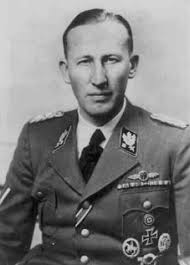
Reinhard Heycrich
In September, 1941, Heydrich was appointed “Reich Protector” of Czechoslovakia, which had fallen prey to Germany in 1938 but whose citizens were growing restless under Nazi rule.
Heydrich immediately ordered a purge, executing 92 people within the first three days of his arrival in Prague. By February, 1942, 4,000-5,000 people had been arrested.
In January, 1942, Heydrich convened a meeting of high-ranking political and military leaders in Wannsee, Germany, to streamline “the Final Solution to the Jewish Question.”
An estimated six million Jews were thus slaughtered.
Returning to Prague, Heydrich continued his policy of carrot-and-stick with the Czechs—improving the social security system and requisitioning luxury hotels for middle-class workers, alternating with arrests and executions.
Two British-trained Czech commandos—Jan Kubis and Joseph Gabcik—parachuted into Prague.
On May 27, 1942, they waited at a hairpin turn in the road always taken by Heydrich. When Heydrich’s Mercedes slowed down, Gabcik raised his machinegun—which jammed.
Rising in his seat, Heydrich aimed his revolver at Gabcik—as Kubis lobbed a hand grenade at the car. The explosion drove steel and leather fragments of the car’s upholstery into Heydrich’s diaphragm, spleen and lung.

Scene of Reinhard Heydrich’s assassination
Hitler dispatched doctors from Berlin to save the Reich Protector. But infection set in, and on June 4, Heydrich died at age 38.
The assassination sent shockwaves through the upper echelons of the Third Reich. No one had dared assault—much less assassinate—a high-ranking Nazi official.
Nazis had slaughtered tens of thousands without hesitation—or fear that the same might happen to them.
Suddenly they realized that the fury they had aroused could be turned against themselves.
Which brings us to the leaders of America’s own Right-wing.
The names of infamous Nazis were widely known:
- Reichsmarshall Hermann Goering;
- Propaganda Minister Paul Joseph Goebbels;
- Deputy Fuhrer Rudolf Hess;
- SS-Reichsfuhrer Heinrich Himmler;
- “Hanging Judge” Roland Freisler;
- SS Obergruoppenfuhrer Reinhard Heydrich; and
- Fuhrer Adolf Hitler.
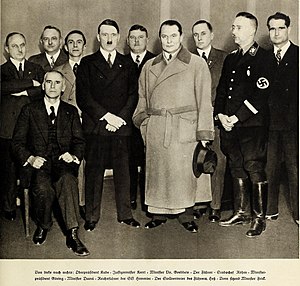
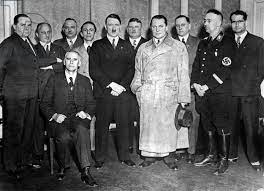
Members of the Nazi government
And so are the names of the infamous leaders of the American Right:
- Texas Senator Ted Cruz;
- Supreme Court Justice Clarence Thomas;
- Evangelist Franklin Graham;
- Georgia Congressman Marjorie Taylor Greene;
- Supreme Court Justice Samuel Alito;
- Florida Governor Ron DeSantis;
- President Donald Trump.
The difference between these two infamous groups is this:
In Nazi Germany, ordinary Germans could not learn about the personal lives of their dictators—including their home addresses—and to conspire against them.
In the United States, ordinary citizens have an array of means to do this. They can turn to newspapers, TV and magazines. And if that isn’t enough, “people finder” websites, for a modest price, provide addresses and names of relatives of potential targets.
In Nazi Germany, firearms were tightly controlled.
In the United States, the Right’s National Rifle Association has successfully lobbied to put lethal firepower into the hands of virtually anyone who wants it.
Eighty-three years ago, Reinhard Heydrich believed himself invulnerable from the hatred of the enemies he had made. That arrogance cost him his life.
The day may soon come when America’s own Right-wingers start learning that same lesson.
"TOMBSTONE", ABC NEWS, AFFORDABLE CARE ACT, ALTERNET, AMERICABLOG, AP, ARNOLD SCHWARTZNEGGER, ASIANS, BABY BOOMER RESISTANCE, BARACK OBAMA, BBC, BIRTHRIGHT CITIZENSHIP, BLACKS, BLOOMBERG, BLOOMBERG NEWS, BLUESKY, BUZZFEED, CBS NEWS, CNN, CONSTITUTION OF THE UNITED STATES, CROOKS AND LIARS, DAILY KOS, DEATH PENALTY, DISABLED, DISCRIMINATION, DONALD TRUMP, FBI, FIVETHIRTYEIGHT, FOREIGN AID, GRANTS, HARPER’S MAGAZINE, HILLARY CLINTON, HISPANICS, HUFFINGTON POST, IKE CLANTON, illegal immigration, JANUARY 6 COUP ATTEMPT, JOHN H. "DOC" HOLLIDAY, JOHN OLIVER, JOHNNY RINGO, JUSTICE DEPARTMENT, LOANS, MEDIA MATTERS, MERYL STREEP, MIGRANTS, MORGAN EARP, MOTHER JONES, MOVEON, MSNBC, MUSLIMS, NBC NEWS, NEIL YOUNG, NEW REPUBLIC, NEWSDAY, NEWSWEEK, NPR, OBAMACARE, PARIS CLIMATE AGREEMENT, PBS NEWSHOUR, POLITICO, POLITICUSUSA, PRISONERS OF WAR, RAW STORY, REFUGEES, REUTERS, SALON, SEAN SPICER, SEATTLE TIMES, SLATE, TALKING POINTS MEMO, THE ATLANTIC, THE CHICAGO SUN-TIMES, THE CHICAGO TRIBUNE, THE DAILY BEAST, THE DAILY BLOG, THE GUARDIAN, THE HILL, THE HUFFINGTON POST, THE INTERCEPT, THE LOS ANGELES TIMES, THE NATION, THE NEW REPUBLIC, THE NEW YORK TIMES, THE NEW YORKER, THE VILLAGE VOICE, THE WASHINGTON POST, THINKPROGRESS, TIME, TRUTHDIG, TRUTHOUT, TWO POLITICAL JUNKIES, U.S. NEWS & WORLD REPORT, UP, UPI, USA TODAY, VIRGIL EARP, WOMEN, WORLD HEALTH ORGANIZATION (WHO), WYATT EARP, X
In Bureaucracy, Entertainment, History, Politics, Social commentary on February 6, 2025 at 12:28 am
During his 1992 Presidential campaign, Bill Clinton had “It’s the Economy, Stupid,” as his mantra for staying focused on the issue that recession-suffering Americans most cared about.
Donald Trump’s mantra—as Presidential candidate and President—could be summed up as: “It’s the Hatred, Stupid.”
From June 15, 2015, when he launched his first Presidential campaign, until October 24, 2016, Trump fired almost 4,000 angry, insulting tweets at 281 people and institutions that had somehow offended him— in politics, journalism, TV and films.
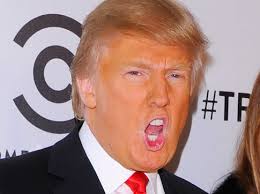
Donald Trump
The New York Times needed two full pages of its print edition to showcase them. Among his targets:
- Women
- Blacks
- Hispanics
- Asians
- Muslims
- News organizations
- The disabled
- POWs
And his base is equally motivated by hatred—of the same persons and organizations whom Trump regularly attacks. During the 2016 campaign, countless such voters told interviewers: “He says what I’ve long been thinking!”
Trump didn’t implant hatred in them—he simply gave it legitimacy. And they love him for it.
And since coming to power once again as President on January 20, Trump has given his lust for hatred free reign.
- Issued pardons to about 1,500 of his followers who violently tried to overturn the outcome of the 2020 Presidential election in the January 6, 2021 attack on Congress. Move than 250 of those pardoned had been convicted of assaulting police.
- Withdrew the United States from the World Health Organization (WHO).
- Suspended all foreign aid for at least three months.
- Withdrew from the Paris climate agreement.
- Ordered the dismissal of 5,000 FBI agents who investigated his incitement of the January 6 riot and his own hoarding of classified documents at Mar-a-Lago.
- Declared “a national emergency” targeting migrants—legal and illegal.
- Sought to cancel automatic citizenship for U.S.-born children, known as birthright, and enshrined within the United States Constitution.
- Withdrew the security detail assigned to former Chairman of the Joint Chiefs of Staff Mark Milley for rightly criticizing him as a wannabe dictator.
- Cancelled travel to the United States for refugees, including those who had been approved to resettle within the country.
- Committed to pursue federal death sentences and pledged to ensure that states have sufficient supplies of lethal injection drugs for executions.
- Withdrew the security detail assigned to Anthony Fauci, the former director of the National Institute of Allergy and Infectious Disease. Fauci’s crime: Contradicting Trump’s lies about the dangers of COVID-19.
- Put federal employees working to halt discrimination on paid leave.
- All Federal Diversity, Equity, Inclusion and Accessibility offices, positions, plans, actions, initiatives or programs will be scrapped within 60 days.
United States District judge Loren AliKhan granted a temporary halt to Trump’s intended “pause” after several advocacy groups argued this would devastate programs ranging from healthcare to road construction.
Just as Adolf Hitler moved quickly to make himself absolute dictator upon being named Chancellor on January 30, 1933, so has Donald Trump within a week of falsely promising to “preserve, protect and defend the Constitution of the United States.”
* * * * * * * * * *
As non- and anti-Fascist Americans have watched Trump’s behavior with fear and morbid fascination, many of them have asked: “What makes him do the things he does?”
It’s a question asked—and answered—in the 1993 Western, Tombstone. And the answer given in that movie may just hold the answer to the question so many Americans are now asking about Trump.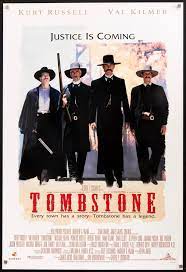
Tombstone recounts the legendary blood feud between the Ike Clanton outlaw gang and the Earp brothers—Wyatt, Morgan and Virgil—in the famous gold-mining town in 1880s Arizona.
Wyatt Earp has been challenged to a gunfight by quick-trigger gunman Johnny Ringo. Although he impulsively accepted the challenge, Wyatt now realizes he’s certain to be killed. Thus follows this exchange with his longtime friend, the pistol-packing dentist, John H. “Doc” Holliday:
WYATT EARP: What makes a man like Ringo, Doc? What makes him do the things he does?
JOHN H. “DOC” HOLLIDAY: A man like Ringo’s got a great empty hole right through the middle of him. He can never kill enough or steal enough or inflict enough pain to ever fill it.
EARP: What does he need?
HOLLIDAY: Revenge.
EARP: For what?
HOLLIDAY: Bein’ born.
Donald Trump was born into a world of wealth and privilege. His father gave him $200 million, which he channeled into a real estate empire. He has claimed to be worth a billion dollars.
He has been linked—often by his own boasts—to some of the most beautiful women in the world. He has been a major force on TV through his “reality show,” The Apprentice. He has literally stamped his name on hundreds of buildings.
And now he holds the Presidency of the United States, the most powerful office in the Western world.
Yet he remains filled with a poisonous hatred that encompasses almost everyone.
Since taking office, he has offered nothing positive in his agenda. Instead, he has focused his efforts on what he can take from others. At the top of his list: Declaring war on millions of illegal immigrants—many of whom hold menial jobs most other Americans refuse to take.
As first-mate Starbuck says of Captain Ahab in Herman Melville’s classic novel, Moby Dick: “He is a champion of darkness.”
ABC NEWS, ALTERNET, AMERICABLOG, ANNE FRANK, AP, AS I LAY DYING (BOOKK), BABY BOOMER RESISTANCE, BBC, BELOVED (BOOK), BEYONCE, BILL O'REILLY, BLACK LIKE ME (BOOK), BLOOMBERG, BLUESKY, BOOKS, BRAVE NEW WORLD (BOOK), BUZZFEED, CATCH-22 (BOOK), CBS NEWS, CENSORSHIP, CNN, CROOKS AND LIARS, DAILY KOS, DIARY OF A YOUNG GIRL (BOOK), DOCTOR ZHIVAGO (BOOK), DRACULA, ERICH FROMM, ESCAPE FROM FREEDOM (BOOK), FIVETHIRTYEIGHT, FLORIDA, FLOWERS FOR ALGERNON (BOOK), FOR WHOM THE BELL TOLLS (BOOK), HARPER’S MAGAZINE, HUFFINGTON POST, INVISIBLE MAN (BOOK), KILLING JESUS (BOOK), KILLING REAGAN (BOOK), LADY GAGA, LES MISERABLES (BOOK), LIBRARIES, LORD OF THE FLIES (BOOK), MEDIA MATTERS, MERRIMAN-WEBSTER’S ELEMENTARY DICTIONARY, MOTHER JONES, MOVEON, MSNBC, NATIVE SON (BOOK), NBC NEWS, NEW REPUBLIC, NEWSDAY, NEWSWEEK, NPR, OPRAH WINFREY, PBS NEWSHOUR, POLITICO, POLITICUSUSA, RAW STORY, REPUBLICANS, REUTERS, RIPLEY’S BELIEVE IT OR NOT, RON DESANTIS, SALON, SCHINDLER’S LIST (BOOK), SEATTLE TIMES, SLATE, SLAUGHTERHOUSE FIVE (BOOK), TALKING POINTS MEMO, THE ADVENTURES OF TOM SAWYER (BOOK), THE ATLANTIC, THE AUTOBIOGRAPHY OF MALCOM X, THE CHICAGO SUN-TIMES, THE CHICAGO TRIBUNE, THE DAILY BEAST, THE DAILY BLOG, THE FOUNTAINHEAD (BOOK), THE GUARDIAN, THE GUINNESS BOOK OF WORLD RECORDS, THE HANDMAID’S TALE (BOOK), THE HILL, THE HUFFINGTON POST, THE INTERCEPT, THE LOS ANGELES TIMES, THE NATION, THE NEW REPUBLIC, THE NEW YORK TIMES, THE NEW YORKER, THE SILENCE OF THE LAMBS (BOOK), THE VILLAGE VOICE, THE WASHINGTON POST, THE WINDS OF WAR, THE WINDS OF WAR (BOOK), THINKPROGRESS, THURGOOD MARSHALL, TIME, TONI MORRISON, TRUTHDIG, TRUTHOUT, TWO POLITICAL JUNKIES, U.S. NEWS & WORLD REPORT, UPI, USA TODAY, X
In Bureaucracy, Entertainment, History, Law, Law Enforcement, Politics, Social commentary on January 16, 2025 at 12:12 am
Republican Governor Ron DeSantis likes to refer to his state as “the free state of Florida.”
But for those who cherish the right to read whatever they want, Florida’s legislative agenda offers anything but freedom.
Among those books pulled from public libraries—temporarily or permanently—are John Green’s “Looking for Alaska,” Colleen Hoover’s “Hopeless,” Margaret Atwood’s “The Handmaid’s Tale” and Grace Lin’s picture story “Dim Sum for Everyone!”
Florida’s Martin County school district removed dozens of books from its middle schools and high schools. Among these: Toni Morrison’s Pulitzer Prize-winning “Beloved,” James Patterson’s “Maximum Ride” thrillers, and numerous novels by Jodi Picoult.

Ron DeSantis
Bill O’Reilly, the former Fox News host, staunchly supported Florida’s book ban laws enacted by DeSantis. Then two of his own books—Killing Jesus and Killing Reagan: The Violent Assault That Changed a Presidency—were temporarily removed from the Escambia County School District.
Suddenly, O’Reilly changed his mind.
“It’s absurd. Preposterous,” O’Reilly told Newsweek. He threatened to “find out exactly who made the decisions … [and] put their pictures on television and on my website … and I’m going to ask them for a detailed explanation of why they did that.
“When DeSantis signed the book law, I supported the theme because there was abuse going on in Florida. There were far-left progressive people trying to impose an agenda on children, there’s no doubt about it.”
So O’Reilly believes it’s OK to censor books promoting a “far-left progressive” view. Censorship is wrong only when it condemns his books to oblivion.
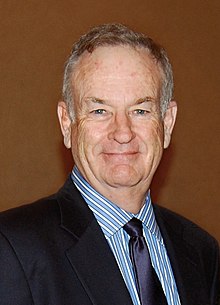
Bill O’Reilly
Bill O’Reilly at the World Affairs Council of Philadelphia.jpg: World Affairs Council of Philadelphiaderivative work: Karppinen, CC BY 3.0 <https://creativecommons.org/licenses/by/3.0>, via Wikimedia Commons
Under Florida’s HB 1069 bill, affected titles include dictionaries, The Autobiography of Malcolm X, and Anne Frank’s Diary of a Young Girl.
A partial list of the 1,600 books banned in Escambia County, Florida, includes:
- The Guinness Book of World Records
- Ripley’s Believe It or Not
- Biographies of Beyonce, Lady Gaga, Oprah Winfrey, Thurgood Marshall
- The Gods and Goddesses of Olympus
- Titans and Olympians: Greek and Roman Myths
- I Know Why the Caged Bird Sings
- The Martian Chronicles
- Van Gough and Gauguin: The Studio of the South
- Invisible Man
- As I Lay Dying
- Light in August
- The Reivers
- The Sound and the Fury
- Tender Is the Night
- Lord of the Flies
- I Never Promised You a Rose Garden

- Catch-22
- For Whom the Bell Tolls
- Heretics of Dune
- Brave New World
- Ulysses
- Dubliner
- A Portrait of the Artist as a Young Man
- Carrie
- Pet Sematary
- Daniel Boone
- Babbitt
- Doctor Zhivago
- Coping with Date Rape and Acquaintance Rape
- Super Human Encyclopedia: Discover the Amazing Things Your Body Can Do
- HIV infection: The Facts You Need to Know
- King Arthur and the Knights of the Round Table
- Malcolm: The Life of a Man Who Changed Black America
- Tess of the D’Urbervilles
- The Fountainhead
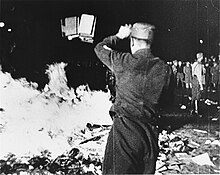
Nazi book burning
- The Lizard King: The Essential Jim Morrison
- Black Like Me
- Atlas Shrugged
- Flowers for Algernon
- James Dean: Rebel Life
- The Silence of the Lambs
- Slaughterhouse Five
- The Last Boy: Mickey Mantle and the End of America’s Childhood
- Serial Killers: The Method and Madness of Monsters
- Paul McCartney: The Life
- Augustus Caesar
- Dracula
- Coping As a Survivor of Violent Crime
- Schindler’s List
- Date Rape
- France: A History in Art
- The AIDS Epidemic: Disaster & Survival
- Divine Secrets of the Ya-Ya Sisterhood

- The Adventures of Tom Sawyer
- Tupac Shakur
- Hernan Cortes
- Female Serial Killers: How and Why Women Become Monsters
- Native Son
- The Clear and Simple Thesaurus Dictionary
- Illustrated Who’s Who in Mythology
- Black Enough: Stories of Being Young & Black in America
- STDs
- Merriam-Webster’s Elementary Dictionary
- Encyclopedia of World Costume
- The Winds of War
- Early Humans
- Child Abuse
- The Bible Book
- Les Misérables
All of which means: If you want to read something forbidden by the State and can’t meet the high prices of bookstores, you’re not going to read it.
At least, not in Florida.
In 1969, the Young Rascals sang:
All the world over, so easy to see
People everywhere just wanna be free.
But this ignores a grim and fundamental truth: Many people don’t want to be free. And they don’t want you to be free, either.
Psychoanalyst Erich Fromm noted this in his 1941 bestseller, Escape From Freedom.
Its thesis: People who can’t accept the dangers and responsibilities that come with freedom will probably turn to authoritarianism.
Democracy has freed many people, but it also makes others feel alienated and dehumanized. Many Germans turned to Nazism for a sense of belonging and purpose.
Many people hold a twisted concept of what accounts for freedom. They accuse their enemies of being tyrants, while fiercely supporting a dictatorship of their own. A favorite marching song of Hitler’s SS went:
Clear the streets, the SS marches!
They will take the road from tyranny to freedom!
Such people fervently believe that they are being persecuted if they aren’t allowed to persecute those they hate.
Thus, during the Presidency of Barack Obama, millions of Republicans believed themselves victims because they weren’t allowed to
(1) discriminate on the basis of race or sex; and
(2) deny medical care to millions of poor and middle-class Americans.
The same holds true for the followers of Ron DeSantis.
ABC NEWS, ABORTION, ALTERNET, AMERICABLOG, AP, BABY BOOMER RESISTANCE, BBC, BLOOMBERG, BLUESKY, BUZZFEED, CBS NEWS, CNN, CROOKS AND LIARS, DAILY KOS, DONALD TRUMP, FASCISM, FIVETHIRTYEIGHT, HARPER’S MAGAZINE, HUFFINGTON POST, MEDIA MATTERS, MOTHER JONES, MOVEON, MSNBC, NAZI GERMANY, NBC NEWS, NEW REPUBLIC, NEWSDAY, NEWSWEEK, NPR, PBS NEWSHOUR, POLITICO, POLITICUSUSA, RAPE, RAW STORY, REPUBLICAN PARTY, REPUBLICANS, REUTERS, SALON, SEATTLE TIMES, SEXISM, SLATE, TALKING POINTS MEMO, THE ATLANTIC, THE CHICAGO SUN-TIMES, THE CHICAGO TRIBUNE, THE DAILY BEAST, THE DAILY BLOG, THE GUARDIAN, THE HILL, THE HUFFINGTON POST, THE INTERCEPT, THE LOS ANGELES TIMES, THE NATION, THE NEW REPUBLIC, THE NEW YORK TIMES, THE NEW YORKER, THE VILLAGE VOICE, THE WASHINGTON POST, THINKPROGRESS, TIME, TRUTHDIG, TRUTHOUT, TWO POLITICAL JUNKIES, U.S. NEWS & WORLD REPORT, UPI, USA TODAY, WOMEN'S RIGHTS, WONDER WOMAN, X
In Bureaucracy, Entertainment, Humor, Law Enforcement, Politics, Social commentary on January 10, 2025 at 7:40 pm
WONDER WOMAN MEETS REPUBLICANAZI MAN

“Don’t worry, Wonder Woman. You can’t get pregnant if it’s legitimate rape.”
ABC NEWS, ALTERNET, AMERICABLOG, AP, BABY BOOMER RESISTANCE, BBC, BLOOMBERG, BUZZFEED, CBS NEWS, CLASS WARFARE, CNN, CROOKS AND LIARS, DAILY KOS, DAILY KOZ, DANA CARVEY, DICK CHENEY, ECONOMIC DISPARITY, FIVETHIRTYEIGHT, FRANK CAPRA, GEORGE BAILEY, HARPER’S MAGAZINE, HENRY F. POTTER, HUFFINGTON POST, IT'S A WONDERFUL LIFE, JAMES STEWART, LIONEL BARRYMORE, MEDIA MATTERS, MOTHER JONES, MOVEON, MOVIES, MSNBC, NBC NEWS, NEW REPUBLIC, NEWSDAY, NEWSWEEK, NPR, PBS NEWSHOUR, POLITICO, POLITICUSUSA, RAW STORY, REUTERS, SALON, SATURDAY NIGHT LIVE, SEATTLE TIMES, SLATE, TALKING POINTS MEMO, THE ATLANTIC, THE CHICAGO SUN-TIMES, THE CHICAGO TRIBUNE, THE DAILY BEAST, THE DAILY BLOG, THE GUARDIAN, THE HILL, THE HUFFINGTON POST, THE INTERCEPT, THE LOS ANGELES TIMES, THE NATION, THE NEW REPUBLIC, THE NEW Y ORK TIMES, THE NEW YORK TIMES, THE NEW YORKER, THE VILLAGE VOICE, THE WASHINGTON POST, THINKPROGRESS, TIME, TRUTHDIG, TRUTHOUT, TWO POLITICAL JUNKIES, U.S. NEWS & WORLD REPORT, UNEMPLOYMENT, UPI, USA TODAY, X
In Business, Entertainment, Law, Law Enforcement, Politics, Social commentary on December 23, 2024 at 12:24 am
Every Christmas, TV audiences find comfort and triumph in the rerunning of a black-and-white 1946 movie: It’s a Wonderful Life.
It’s the story of George Bailey (James Stewart), a decent husband and father who hovers on the brink of suicide—until his guardian angel, Clarence, suddenly intervenes.

Clarence reveals to George what his home town, Bedford Falls, New York, would be like if he had never been born. George finds himself shocked to learn:
- With no counterweight to the schemes of rapacious slumlord Henry F. Potter, Bedford Falls becomes Potterville, filled with pawn shops and sleazy nightclubs.
- With no George Bailey to save his younger brother, Harry, from drowning in a frozen pond, Harry drowns.
- With no Harry to live to become a Naval fighter pilot in World War II, he’s not on hand to shoot down two Japanese planes targeting an American troopship.
- As a result, the troopship and its crew are destroyed.
George is forced to face the significant role he has played in the lives of so many others.
Armed with this knowledge, he once again embraces life, running through the snow-covered streets of Bedford Falls and shouting “Merry Christmas!” to everyone he meets.
Audiences have hailed George Bailey as an Everyman hero—and the film as a life-affirming testament to the unique importance of each individual.
But there is another aspect of the movie that has not been so closely studied: The legacy of its villain, Henry F. Potter, who, as played by Lionel Barrymore, bears a striking resemblance to former Vice President Dick Cheney.

Henry F. Potter
It is Potter—the richest man in Bedford Falls—whose insatiable greed threatens to destroy it. And it is Potter whose criminality drives George Bailey to the brink of suicide.
The antagonism between Bailey and Potter starts early in the movie. George dreams of leaving Bedford Falls and building skyscrapers. Meanwhile, he works at the Bailey Building and Loan Association, which plays a vital role in the life of the community.
Potter, a member of the Building and Loan Association board, tries to persuade the board of directors to dissolve the firm. He objects to their providing home loans for the working poor.
George persuades them to reject Potter’s proposal, but they agree only on condition that George run the Building and Loan. Reluctantly, George agrees.
Later, Potter tries to lure George away from the Building and Loan, offering him a $20,000 salary and the chance to visit Europe. George is briefly tempted.
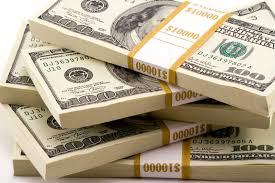
But then he realizes that Potter intends to close down the Building and Loan and deny financial help to those who most need it. Angrily, he turns down Potter’s offer:
“You sit around here and you spin your little webs and you think the whole world revolves around you and your money. Well, it doesn’t, Mr. Potter!
“In the whole vast configuration of things, I’d say you were nothing but a scurvy little spider.”
It is a setback for Potter, but he’s willing to bide his time for revenge.
On Christmas Eve morning, the town prepares a hero’s welcome for George’s brother, Harry. George’s scatter-brained Uncle Billy visits Potter’s bank to deposit $8,000 of the Building and Loan’s cash funds.
He taunts Potter by reading the newspaper headlines announcing the coming tribute. Potter snatches the paper, and Billy unthinkingly allows the money to be snatched with it.
When Billy leaves, Potter opens the paper and sees the money. He keeps it, knowing that misplacement of bank money will bankrupt the Building and Loan and bring criminal charges against George.
But at the last minute, word of George’s plight reaches his wide range of grateful friends. A flood of townspeople arrive with more than enough donations to save George and the Building and Loan.
The movie ends on a triumphant note, with George basking in the glow of love from his family and friends.
But no critic seems to have noticed that Henry Potter’s theft has gone unnoticed. (Uncle Billy can’t recall how he lost the money.) Potter is richer by $8,000. And ready to go on taking advantage of others.
Perhaps it’s time to see Potter’s actions in a new light—that of America’s richest 1%, ever ready to prey upon the weaknesses of others.
Justice never catches up with Potter in the movie. But the joke-writers at Saturday Night Live have conjured up a satisfactory punishment for his avarice.
In this version, Uncle Billy suddenly remembers that he left the money with Potter. Enraged, George Bailey (Dana Carvey) leads his crowd of avenging friends to Potter’s office.
Potter realizes the jig is up and offers to return the money. But George wants more than that—and he and his friends proceed to stomp and beat Potter to death.
The skit ends with with George and his friends singing “Auld Ang Syne”—as they do in the movie—as they finish off Potter with clubs.
America is rapidly a divided nation—one where the richest 1% lord it over an increasingly impoverished 99%.
The time may be coming when many Americans are ready to embrace the SNL approach to economic justice.


 Bureaucracybuster's Blog
"SPRINGTIME FOR HITLER" (SONG), "THE PRODUCERS" (MOVIEI), "WITH A LITTLE HELP FROM MY FRIENDS" (SONG), 2016 PRESIDENTIAL CAMPAIGN, ABC NEWS, ALEC BALDWIN, ALTERNET, AMERICABLOG, AP, ASTROLOGY, “JESUS LOVES ME” (SONG), “LITTLE BOXES” SONG, “YAKETY YAK” (SONG), BABY BOOMER RESISTANCE, BARACK OBAMA, BBC, BERNIE SANDERS, BLOOMBERG, BUZZFEED, CBS NEWS, CNN, CROOKS AND LIARS, CRUELTY, DAILY KOS, DAILY KOZ, DAVID BROOKS, DEMOCRATIC PARTY, DEMOCRATS, DONALD TRUMP, EGOTISM, ELIZABETH WARREN, EVANGELICALS, FIVETHIRTYEIGHT, HARPER’S MAGAZINE, HILLARY CLINTON, HUFFINGTON POST, HUMOR, IGNORANCE, IT'S A WONDERFUL LIFE (MOVIE), IVANKA TRUMP, JEB BUSH, JEFFREY EPSTEIN, JESUS, JOHN KASICH, LAUGHTER, LIBERALS, MARCO RUBIO, MARJORIE TAYLOR GREENE, MARK HARRISON, MARK SHIELDS, MAYO CLINIC, MEDIA MATTERS, MELANIA TRUMP, MICHELLE OBAMA, MOTHER JONES, MOVEON, MSNBC, NBC NEWS, NEW REPUBLIC, NEWSDAY, NEWSWEEK, NPR, ONE DAY WE WILL LIVE WITHOUT FEAR: EVERYDAY LIVES UNDER THE SOVIET POLICE STATE (BOOK), PARODY, PBS NEWSHOUR, POLITICO, POLITICUSUSA, POPE FRANCIS, RAND PAUL, RAW STORY, READERS DIGEST, REPUBLICAN PARTY, REPUBLICANS, REUTERS, RICK PERRY, RIDICULE, SALON, SATIRE, SATURDAY NIGHT LIVE, SEATTLE TIMES, SLANDER, SLATE, TALKING POINTS MEMO, TED CRUZ, THE ATLANTIC, THE BEATLES, THE CHICAGO SUN-TIMES, THE CHICAGO TRIBUNE, THE COASTERS, THE DAILY BEAST, THE DAILY BLOG, THE GUARDIAN, THE HILL, THE HUFFINGTON POST, THE INTERCEPT, THE LOS ANGELES TIMES, THE NATION, THE NEW REPUBLIC, THE NEW YORK TIMES, THE NEW YORKER, THE VILLAGE VOICE, THE WASHINGTON POST, THINKPROGRESS, TIME, TRUTHDIG, TRUTHOUT, TWO POLITICAL JUNKIES, U.S. NEWS & WORLD REPORT, UPI, USA TODAY, VLADIMIR PUTIN, X
LAUGHTER MAKES THE BEST WEAPON: PART TWO (OF THREE)
In Bureaucracy, Entertainment, History, Humor, Politics, RELIGION, Social commentary on July 15, 2025 at 12:13 amDonald Trump—as political candidate and President—has repeatedly expressed admiration for Russian dictator Vladimir Putin—and disdain for a wide array of democratic leaders.
Yet Democrats have never called called him to account for this—even though a plentiful series of insults exist:
The Kremlin
Trump has attached insulting nicknames to those he hates: “Little Marco” [Rubio], “Lyin’ Ted” [Cruz], “Crooked Hillary” [Clinton]. Yet Democrats have never inflicted the same on him, although a great many are available:
Ridicule is a highly effective weapon. That’s why dictators always try to stamp it out. They know that if you’re laughing at them, you’re not afraid of them. And men like Trump prize being feared above all else.
Yet Democrats and liberals (the two are not always the same) have failed to produce hard-hitting anti-Trump jokes.
For example, limitless opportunities exist to use humor to attack Trump’s notorious dictatorial nature:
Donald Trump’s egomania is universally known:
Nor have Democrats attacked the ignorant semi-literates who comprise most of Trump’s voters:
Trump’s legendary cruelty could fill volumes of joke books:
There is overwhelming evidence that Russian dictator Vladimir Putin subverted the 2016 Presidential election to seat Trump in the White Houses:
Trump’s well-known misogyny provides ample fodder for comedians:
Then there is the very real threat that Trump represents to not only the United States but the world itself:
Share this: