Archive for the ‘Entertainment’ Category
2016 PRESIDENTIAL CAMPAIGN, ABC NEWS, ACADEMY AWARDS, ALTERNET, AP, BEST ACTRESS, BEST SUPPORTING ACTRESS, BULLYING, BUZZFEED, CBS NEWS, CNN, CROOKS AND LIARS, DAILY KOZ, DISABILITY, DONALD TRUMP, FACEBOOK, FOX AND FRIENDS, GOLDEN GLOBES, KELLEYANNE CONWAY, KRAMER VS. KRAMER, MERYL STREEP, MOTHER JONES, MOVEON, NBC NEWS, NEEWSWEEK, NEWSWEEK, NPR, POLITICO, RAW STORY, REUTERS, SALON, SEATTLE TIMES, SERGE KOVALESKI, SLATE, SOPHIE'S CHOICE, THE ATLANTIC, THE CHICAGO SUN-TIMES, THE CHICAGO TRIBUNE, THE DAILY BEAST, THE GUARDIAN, THE HILL, THE HUFFINGTON POST, THE IRON LADY, THE LOS ANGELES TIMES, THE NATION, THE NEW YORK TIMES, THE WASHINGTON POST, TIME, TWITTER, U.S. NEWS & WORLD REPORT, UP, UPI, USA TODAY
In Bureaucracy, Entertainment, History, Politics, Social commentary on October 4, 2017 at 12:05 am
Every year, the 93 members of the Hollywood Foreign Press Association (HFPA) bestow Golden Globe awards to recognize excellence in television and film, both inside and outside the United States.
And on Sunday, January 8, the presenters honored actress Meryl Streep with the Cecil B Demille lifetime achievement Award.
Since 1979, she’s been nominated for more Academy Awards than any other actor—15 nominations for Best Actress and four for Best Supporting Actress.
She won Best Supporting Actress in 1980 for Kramer vs. Kramer, Best Actress in 1983 for Sophie’s Choice and again in 2012 for The Iron Lady.
But when Streep appeared to accept her latest award, she had a nomination of her own to present: One for a performance that “broke my heart.”
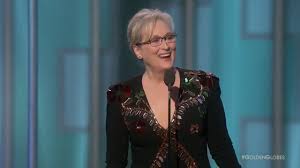
Meryl Streep at the Golden Globes
It had come in real life, not a movie. And the performer she nominated was Donald Trump, for his mockery of a disabled New York Times reporter in 2015.
The reporter, Serge Kovaleski, suffers from arthrogryposis, a congenital condition that restricts the movement of the muscles in his arms.
Since declaring his Presidential candidacy on June 16, 2015, Trump had attacked the patriotism of America’s Islamic population. He claimed that he had seen Muslims in New Jersey celebrating the collapse of the Twin Towers on September 11, 2001.
To prove this, Trump cited a September 18, 2001 article written by Kovaleski when he was a reporter for The Washington Post.
In this, Kovaleski wrote that police “detained and questioned a number of people who were allegedly seen celebrating the attacks and holding tailgate-style parties.”
After Trump mentioned the story, Kovaleski said that the key word in it was “allegedly,” adding that there were no credible reports of such celebrations.
At a South Carolina rally on November 24, 2015, Trump claimed that Kovaleski was backing away from his article.
To mock Kovaleski, he flopped his right arm around with his hand held at an odd angle while imitating the reporter: “Now, the poor guy, you’ve got to see this guy: ‘Uhh, I don’t know what I said. Uhh, I don’t remember,’ he’s going like ‘I don’t remember. Maybe that’s what I said.’”
Attacked for mocking Kovaleski’s disability, Trump claimed: “Serge Kovaleski must think a lot of himself if he thinks I remember him from decades ago–if I ever met him at all, which I doubt I did.”
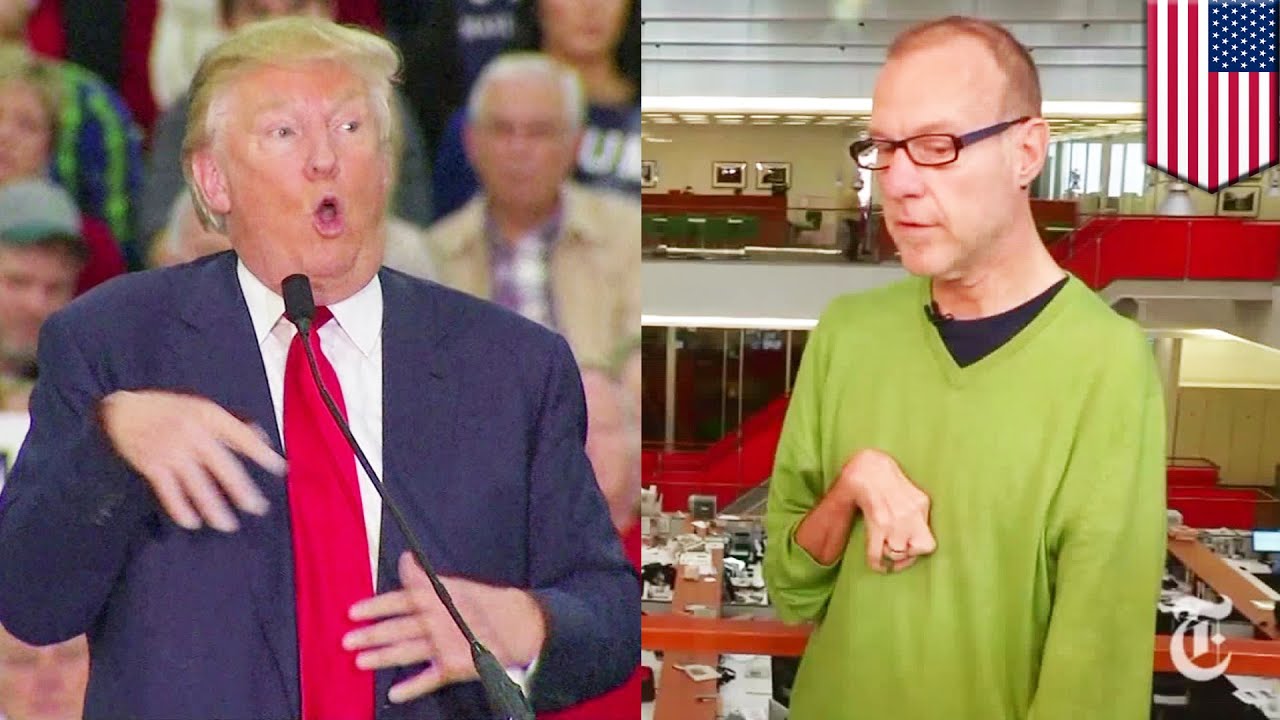
Trump mocking Kovaleski, left; Kovaleski, right
But Kovaleski quickly contradicted Trump: He had covered Trump as a reporter for the New York Daily News and had met him face-to-face on at least a dozen occasions.
So Meryl Streep knew what she was talking about when she said:
“There was one performance this year that stunned me. It sank its hooks in my heart. Not because it was good. There was nothing good about it. But it was effective, and it did its job. It made its intended audience laugh and show their teeth.
“It was that moment when the person asking to sit in the most respected seat in our country imitated a disabled reporter. Someone he outranked in privilege, power and the capacity to fight back. It kind of broke my heart when I saw it. I still can’t get it out of my head because it wasn’t in a movie. It was real life.
“And this instinct to humiliate, when it’s modeled by someone in the public platform, by someone powerful, it filters down into everybody’s life, because it kind of gives permission for other people to do the same thing.
“Disrespect invites disrespect. Violence incites violence. When the powerful use their position to bully others, we all lose.”
Kelleyanne Conway served as Trump’s mouthpiece during the 2016 Presidential campaign. She continued in that rule as he prepared to take office as President on January 20.
And she was thoroughly upset with Streep’s remarks.
Appearing on Right-wing Fox and Friends the next morning, she said: “We have to now form a government, and I’m concerned that somebody with a platform like Meryl Streep is also, I think, inciting people’s worst instincts.
“When she won’t get up there and say, ‘I don’t like it, but let’s try to support him and see where we can find some common ground with him, which [Trump] has actually done from moment one.”
What common ground she didn’t say. Agreeing on mocking the disabled?
Not to be outdone in “inciting people’s worst instincts,” President-elect Trump quickly took to Twitter—his preferred mode of communication.
Since Twitter allows only 140 characters, Trump couldn’t say all he wanted in one tweet. So it took three:
Meryl Streep, one of the most over-rated actresses in Hollywood, doesn’t know me but attacked last night at the Golden Globes. She is a…..
Hillary flunky who lost big. For the 100th time, I never “mocked” a disabled reporter (would never do that) but simply showed him…….
“groveling” when he totally changed a 16 year old story that he had written in order to make me look bad. Just more very dishonest media!
In 2015—before she insulted him—Trump told The Hollywood Reporter: “Julia Roberts is terrific, and many others. Meryl Streep is excellent; she’s a fine person, too.”
ABC NEWS, ALTERNET, AP, BUZZFEED, CBS NEWS, CNN, CROOKS AND LIARS, DAILY KOZ, DONALD TRUMP, FACEBOOK, FRED ZINNEMANN, GARY COOPER, GRACE KELLY, HIGH NOON, JOSEPH R. MCCARTHY, MOTHER JONES, MOVEON, NBC NEWS, NEWSWEEK, NPR, POLITICO, RAW STORY, REPUBLICANS, REUTERS, SALON, SEATTLE TIMES, SLATE, THE ATLANTIC, THE CHICAGO SUN-TIMES, THE CHICAGO TRIBUNE, THE DAILY BEAST, THE GUARDIAN, THE HILL, THE HUFFINGTON POST, THE LOS ANGELES TIMES, THE NATION, THE NEW YORK TIMES, THE WASHINGTON POST, TIME, TWITTER, U.S. NEWS & WORLD REPORT, UP, UPI, USA TODAY
In Bureaucracy, Entertainment, History, Law Enforcement, Politics, Social commentary on August 31, 2017 at 12:10 am
A Pew Research Center survey released on August 29 found that 36% of Americans approve of President Donald Trump. Most other polling rates his approval between 35 and 40%.
Other findings of the survey included:
- Just over two-thirds of Republicans agree with his positions;
- Among Democrats, 94% disagree with them;
- 15% of respondents agreed with Trump on all or nearly all issues;
- 18% agreed with him on many issues;
- 21% agreed on a few issues; and
- 45% didn’t agree with him on issues at all.
Asked what they thought of Trump’s conduct in office, Republicans were divided:
- 19% didn’t like his conduct;
- 46% said they had mixed feelings;
- 34% liked the way he behaved as President.
When asked what they liked most about Trump’s Presidency, those who approved of his performance cited his personality and conduct four times more often than his policies.
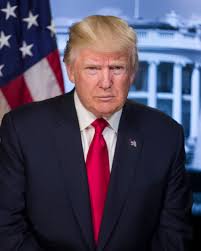
Donald Trump
On August 30, an article in Salon tackled this group head-on: “Most Americans Strongly Dislike Trump, But the Angry Minority That Adores Him Controls Our Politics.”
It described these voters as representing about one-third of the Republican party:
“These are older and more conservative white people, for the most part, who believe he should not listen to other Republicans and should follow his own instincts….
“They like Trump’s coarse personality, and approve of the fact that he treats women like his personal playthings. They enjoy it when he expresses sympathy for neo-Nazis and neo-Confederate white supremacists.
“They cheer when he declares his love for torture, tells the police to rough up suspects and vows to mandate the death penalty for certain crimes. (Which of course the president cannot do.)
“…This cohort of the Republican party didn’t vote for Trump because of his supposed policies on trade or his threat to withdraw from NATO. They voted for him because he said out loud what they were thinking. A petty, sophomoric, crude bully is apparently what they want as a leader.”
According to the Pew survey, they only comprise 16% of the population. That leaves 65% of Republicans who are revolted by Trump’s personality and behavior.
But they are being advised by GOP political consultants to vigorously support him.
“Your heart tells you that he’s bad for the country,” one anonymous consultant told the Salon reporter. “Your head looks at polling data among Republican primary voters and sees how popular he is.”
It’s precisely these hard-core Fascists who come out in mid-term elections—and they’re scaring the remaining 65% who make up the GOP establishment.
Their highest priority, after all, is to hold onto their privileged positions in the House and Senate. And anything that might jeopardize that—including what’s best for the country—can go hang.
Perhaps it’s time for Republicans to remember the lesson taught by High Noon, the classic 1952 Western starring Gary Cooper and Grace Kelly.

Town marshal Will Kane (Cooper) has just marred Amy Fowler (Kelly) a Quaker. It should be the happiest day of his life. But shortly after the ceremony, word comes that Frank Miller—a notorious murderer Kane once sent to prison—has been released.
Even worse, Miller and three other killers are coming into town on the noon train—to kill Kane.
Kane’s first instinct is to flee: He and his wife get into a buggy and dash out of town. But then his sense of duty takes over. He returns to town, intending to recruit a posse.
But this proves impossible—everyone is scared to death of Miller and his gang. And everyone Kane approaches has a reason for not backing him up.
Even Amy—a fervent believer in non-violence—threatens to leave him if he stands up to Miller. She will be on the noon train leaving town—with or without him.
When the clock strikes noon, the train arrives, and Kane—alone—faces his enemies. He shoots and kills two of them.
Then, as he’s pinned down by the third, he gets some unexpected help—from his wife: Amy shoots the would-be killer in the back—only to be taken hostage by Miller himself.
Miller tells Kane to leave his concealed position or he’ll kill Amy. Kane steps into the open—and Amy claws at Miller’s face, buying Kane the time he needs to shoot Miller down.
It’s over.
At that point, the townspeople rush to embrace Kane and congratulate him. But he’s now seen them for the cowards they are and holds them in total contempt.
Saying nothing, he drops the marshal’s star into the dirt. He and Amy then get into a buggy and leave town.
Fred Zinnemann, the film’s director, intended the movie as an attack on those frightened into silence by Joseph McCarthy, the infamous Red-baiting Senator from Wisconsin.
More than 50 years later, the movie remains a powerful indictment of civil cowardice—and a testament to the courage of a committed individual.
Gary Cooper won a Best Actor Academy Award for his performance.
Today’s Republicans would do well to find the same courage as Will Kane—and choose love of country over love of self.
Human nature being what it is, that is highly unlikely to happen.
ABC NEWS, ALTERNET, ANTHONY SCARAMUCCI, AP, BUZZFEED, CBS NEWS, CNN, CROOKS AND LIARS, DAILY KOZ, DEIDRE BALL, DONALD TRUMP, FACEBOOK, JOAN BENNETT, JOHN F. KELLY, MOTHER JONES, MOVEON, NBC NEWS, NEWSWEEK, NPR, POLITICO, RAW STORY, REINCE PRIEBUS, REUTERS, RYAN LIZZA, SALON, SEAN SPICER, SEATTLE TIMES, SLATE, STEVE BANNON, THE ATLANTIC, THE CHICAGO SUN-TIMES, THE CHICAGO TRIBUNE, THE DAILY BEAST, THE GUARDIAN, THE HILL, THE HUFFINGTON POST, THE LOS ANGELES TIMES, THE MAN I MARRIED, THE NATION, THE NEW YORK TIMES, THE NEW YORKER, THE WASHINGTON POST, TIME, TWITTER, U.S. NEWS & WORLD REPORT, UP, UPI, USA TODAY, WHITE HOUSE CHIEF OF STAFF, WHITE HOUSE COMMUNICATIONS DIRECTOR, WHITE HOUSE PRESS SECRETARY
In Bureaucracy, Business, Entertainment, History, Military, Social commentary, Uncategorized on August 2, 2017 at 1:51 am
Anthony “The Mooch” Scaramucci desperately sought a high-stakes position with the Donald Trump White House.
He would have done better to have studied the truths offered in the 1940 movie, The Man I Married.
Carol Cabbott (Joan Bennett) is the editor of The Smart World, married to Eric Hoffman (Francis Lederer) a German. They have a seven-year-old son, Ricky (Johnny Russell).
Sometime in the 1930s they decide to vacation in Nazi Germany. Eric is quickly enamored of the Third Reich. His ardor is shared by Frieda (Anna Sten) a former schoolmate who reunites with him.
Frieda and Eric attend Nazi gatherings, and he decides to stay in Germany. Carol, however, is appalled at the cruelty and barbarism of the Reich and can’t wait to return to the United States.
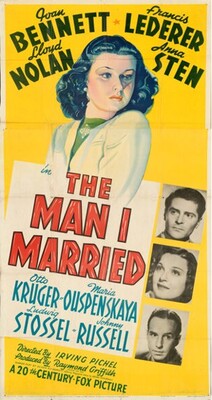
As time passes, Eric becomes more strident in his worship of Adolf Hitler. Carol and he grow increasingly estranged.
Eventually, Eric tells Carol he is in love with Frieda and wants a divorce. Even worse, he wants to keep his son in Germany, to become a loyal follower of the Nazis.
For Carol, the situation is desperate: Under German law, Eric’s rights will trump hers.
But then fate takes a hand. While visiting his elderly father, Eric learns something truly shocking: His mother was a Jewess—the absolute worst calamity that could befall an ardent Nazi.
“If you won’t let your son return to America with his mother,” says his father, “I will go to the authorities and show them the marriage certificate.”
Eric is stunned. So is Frieda, who is standing by when the news breaks. Disgusted that she was about to “racially defile” herself, she angrily stalks out.
Suddenly, Eric now says he doesn’t know what came over him, and he wants to return to the United States. Even more startling, he expects to go on with his marriage to Carol, as if nothing has happened.
But, for Carol, the damage is too great and the marriage is over.
She and Ricky return to the United States without Eric—who has lost everything: His wife, his son and his future with the Third Reich.
Now, fast forward to the 21st century of Donald Trump’s America—and the fate of Anthony Scaramucci.

Anthony Scaramucci
Jdarsie11 [CC BY-SA 4.0 (https://creativecommons.org/licenses/by-sa/4.0)%5D
In 2005, Scaramucci founded SkyBridge Capital, a global alternative investment firm.
But, in 2017, hoping to attain a position with the Trump administration, he resigned from his co-management role and ended his affiliation with SkyBridge.
On January 12, he was named Assistant to President Trump and director of the White House Office of Public Liaison and Intergovernmental Affairs.
Then disaster struck. On January 31, Trump’s chief of staff, Reince Priebus, called Scaramucci “to tell him he should pull out of consideration.”
Priebus opposed Scaramucci’s appointment because of Scaramucci’s stake in Skybridge Capital. The reason: Skybridge held a majority stake sale to RON Transatlantic EG and HNA Capital (U.S.) Holding, a Chinese conglomerate with close ties to China’s Communist Party.
But then Scaramucci’s future with the Trump administration suddenly appeared a reality.
On July 21, 2017, he was named as White House Communications Director, to take office on July 25. Even more importantly, he would report directly to the President—and not to Priebus, as had White House Press Secretary Sean Spicer.
Spicer, who had opposed Scarmucci’s hiring, resigned on the day of the appointment. Priebus had also strongly argued against the hiring, to no avail.
Then Scaramucci’s own hubris intervened.
On July 26, in a call to Ryan Lizza of The New Yorker, Scaramucci said he would rid the White House of “leakers.” He threatened to fire the entire White House Communications staff if Lizza didn’t reveal the source who had leaked the story of a dinner he had had with Trump.
He blasted Priebus as a “leaker” and “a fucking paranoid schizophrenic, a paranoiac,” and predicted that Priebus “would resign soon.”
Scaramucci also had harsh words for Trump’s chief strategist, Steve Bannon: “I’m not Steve Bannon, I’m not trying to suck my own cock. I’m not trying to build my own brand off the fucking strength of the President. I’m here to serve the country.”
On July 27, Priebus resigned as chief of staff.
The next day, Trump announced that he had named retired general John F. Kelley as Priebus’ replacement.
Then, on July 31, Scaramucci joined Spicer and Priebus as an ex-White House employee—dismissed by Trump at Kelly’s request, according to The New York Times.
And, like Eric Hoffman in The Man I Married, Scaramucci found himself without a marriage.
His wife, Deidre Ball—like Carol Hoffman—despised the man he yearned to work for: Donald Trump.
Married to Scaramucci in 2014, Ball filed for divorce in early July 2017 when she was eight months pregnant with their second child.
On July 24, Deidre gave birth to the couple’s son, James—while Anthony was in West Virginia attending the Boy Scouts Jamboree with Trump. He reportedly sent her a note: “Congratulations, I’ll pray for our child.”
Like Icarus, the mythical character who flew too close to the sun, he rose to the heights—and plunged to his doom.
"TOMBSTONE", ABC NEWS, AFFORDABLE CARE ACT, ALTERNET, AMERICABLOG, AP, ARNOLD SCHWARTZNEGGER, ASIANS, “BIRTHER” CAMPAIGN, BABY BOOMER RESISTANCE, BARACK OBAMA, BBC, BLACKS, BLOOMBERG NEWS, BOY SCOUT JAMBOREE, BUZZFEED, CBS NEWS, CNN, CROOKS AND LIARS, DAILY KOS, DAILY KOZ, DISABLED, DONALD TRUMP, FACEBOOK, FBI, FIVETHIRTYEIGHT, HARPER’S MAGAZINE, HILLARY CLINTON, HISPANICS, HUFFINGTON POST, IKE CLANTON, JEFF SESSIONS, JOHN H. "DOC" HOLLIDAY, JOHN OLIVER, JOHNNY RINGO, JUSTICE DEPARTMENT, MEDIA MATTERS, MERYL STREEP, MORGAN EARP, MOTHER JONES, MOVEON, MSNBC, MUSLIMS, NBC NEWS, NEIL YOUNG, NEW REPUBLIC, NEWSDAY, NEWSWEEK, NPR, OBAMACARE, PBS NEWSHOUR, POLITICO, POLITICUSUSA, PRISONERS OF WAR, RAW STORY, REINCE PRIEBUS, REUTERS, ROSIE O’DONNELL, SALON, SEAN SPICER, SEATTLE TIMES, SLATE, TALKING POINTS MEMO, THE ATLANTIC, THE CHICAGO SUN-TIMES, THE CHICAGO TRIBUNE, THE DAILY BEAST, THE DAILY BLOG, THE GUARDIAN, THE HILL, THE HUFFINGTON POST, THE INTERCEPT, THE LOS ANGELES TIMES, THE NATION, THE NEW REPUBLIC, THE NEW YORK TIMES, THE NEW YORKER, THE POPE, THE VILLAGE VOICE, THE WASHINGTON POST, THINKPROGRESS, TIME, TRUTHDIG, TRUTHOUT, TWITTER, U.S. NEWS & WORLD REPORT, UP, UPI, USA TODAY, VIRGIL EARP, WOMEN, WYATT EARP
In Bureaucracy, Entertainment, History, Politics, Social commentary on July 31, 2017 at 12:56 am
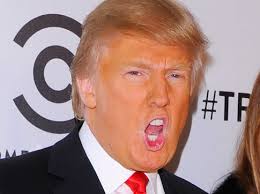
As both a Presidential candidate and President, Donald Trump has repeatedly used Twitter to attack hundreds of real and imagined enemies in politics, journalism, TV and films.
From June 15, 2015, when he launched his Presidential campaign, until October 24, 2016, Trump fired almost 4,000 angry, insulting tweets at 281 people and institutions that had somehow offended him.
Donald Trump
The New York Times needed two full pages of its print edition to showcase them.
Among his targets:
- Hillary Clinton
- President Barack Obama
- Actress Meryl Streep
- Singer Neil Young
- Actor Arnold Schwarzenegger
- Comedian John Oliver
- News organizations
- The State of New Jersey
- Beauty pageant contestants
Others he clearly delighted in insulting during the campaign included:
- Women
- Blacks
- Hispanics
- Asians
- Muslims
- The disabled
- Prisoners-of-war
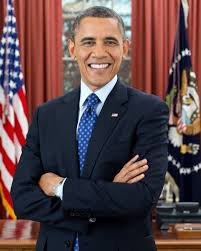
As a Presidential candidate and President, he has shown outright hatred for President Barack Obama. For five years, he slandered Obama as a Kenyan-born alien who had no right to hold the Presidency.
Barack Obama
Only on the eve of the first Presidential debate with Hillary Clinton—in September, 2016—did he finally admit that Obama had been born in the United States.
Then, on March 4, 2017, in a series of unhinged tweets, Trump accused Obama of tapping his Trump Tower phones prior to the election:
“Terrible! Just found out that Obama had my ‘wires tapped’ in Trump Tower just before the victory. Nothing found. This is McCarthyism!”
Thus, without offering a shred of evidence to back it up, Trump accused his predecessor of committing an impeachable offense.
Both the FBI and Justice Department have vigorously refuted this slander.
Trump’s all-out effort to destroy the Affordable Care Act—nicknamed “Obamacare”—has been driven by his mania to erase every vestige of the Obama Presidency.
Even attending a Boy Scout Jamboree became, for Trump, a way to attack the former President.
“By the way, just a question. Did President Obama ever come to a jamboree?” Trump asked the crowd of 40,000, encouraging them to boo Obama. And many of them did.
As President, he has bullied and insulted even his own handpicked Cabinet officers and White House officials.
- His press secretary, Sean Spicer, quit on July 21. The reason: He believed—correctly—that his loyalty to Trump had become a one-way street. Trump kept him in the dark about events Spicer needed to know—such as an interview that Trump arranged with the New York Times—and which ended disastrously for Trump.
- Trump has waged a Twitter-laced feud against Jeff Sessions, his Attorney General. Sessions’ “crime”? Recusing himself from any decisions involving investigations into well-established ties between Russian Intelligence agents and members of Trump’s Presidential campaign.
- Trump has publicly said that if he had known Sessions would recuse himself—because of his past contacts with Russian officials—he would have picked someone else for Attorney General.
- Trump repeatedly humiliated his chief of staff, Reince Priebus—at one point ordering him to kill a fly that was buzzing about. On July 28, Priebus resigned.
As Americans have watched Trump’s behavior with morbid fascination, many of them have asked: “What makes him do the things he does?”
It’s a question asked–and answered—in the 1993 Western, Tombstone. And the answer given in that movie may be just hold the answer to the question so many Americans are now asking about Trump.
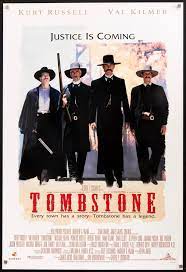
Tombstone recounts the legendary blood feud between the Ike Clanton outlaw gang and the Earp brothers—Wyatt, Morgan and Virgil—in the famous gold-mining town in 1880s Arizona.
Wyatt Earp has been challenged to a gunfight by quick-trigger gunman Johnny Ringo. Although he impulsively accepted the challenge, Wyatt now realizes he’s certain to be killed. Thus follows this exchange with his longtime friend, the pistol-packing dentist, John H. “Doc” Holliday:
WYATT EARP: What makes a man like Ringo, Doc? What makes him do the things he does?
JOHN H. “DOC” HOLLIDAY: A man like Ringo….got a great empty hole right through the middle of him. He can never kill enough or steal enough….or inflict enough pain to ever fill it.
EARP: What does he need?
HOLLIDAY: Revenge.
EARP: For what?
HOLLIDAY: Bein’ born.
Donald Trump was born into a world of wealth and privilege. His father gave him $200 million, which he channeled into a real estate empire. He has claimed to be worth a billion dollars.
He has been linked—often by his own boasts—to some of the most beautiful women in the world. He has been a major force on TV through his “reality show,” The Apprentice. He has literally stamped his name on hundreds of buildings.
And now he holds the Presidency of the United States, the most powerful office in the Western world.
Yet he remains filled with a poisonous hatred that encompasses almost everyone. Since taking office, he has offered nothing positive in his agenda.
Instead, he has focused his efforts on what he can take from others. At the top of his list: The Affordable Health Act, which provides access to medical care for millions who previously could not obtain it.
As first-mate Starbuck says of Captain Ahab in Herman Melville’s classic novel, Moby Dick: “He is a champion of darkness.”
ABC NEWS, ALTERNET, BUZZFEED, CBS NEWS, CNN, DAILY KOS, DONALD TRUMP, FACEBOOK, HERMAN WOUK, HUMPHREY BOGART, JOSE FERRER, MOTHER JONES, MOVEON, NBC NEWS, NEWSWEEK, NPR, POLITICO, RAW STORY, SALON, SLATE, THE CAINE MUTINY, THE CHICAGO SUN-TIMES, THE CHICAGO TRIBUNE, THE DAILY BEAST, THE HUFFINGTON POST, THE LOS ANGELES TIMES, THE NEW YORK TIMES, THE WALL STREET JOURNAL, THE WASHINGTON POST, TIME, TWITTER, U.S. NEWS & WORLD REPORT, USA TODAY, VAN JOHNSON
In Bureaucracy, Entertainment, History, Politics, Social commentary on February 21, 2017 at 12:04 am
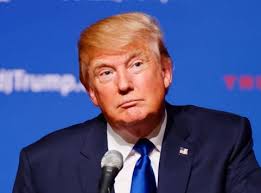
It was February 16–and Trump’s first press conference as President.
Like the climatic showdown in The Caine Mutiny, it offered an unhinged rant, full of anger, personal attacks, self-pity and self-glorification.
But the man doing the ranting was not Captain Philip Francis Queeg. It was President Donald J. Trump, speaking from the East Room of the White House.
He opened casually: “Thank you very much. I just wanted to begin by mentioning that the nominee for Secretary of the Department of Labor will be Mr. Alex Acosta….”
Donald Trump
For the next hour and 15 minutes, Trump let raw emotion do his talking.
Among the highlights:
His hates the press: “….The press has become so dishonest that if we don’t talk about it, we are doing a tremendous disservice to the American people. Tremendous disservice. We have to talk about it to find out what is going on, because the press, honestly, is out of control. The level of dishonesty is out of control.”
He won “bigly” in the Electoral College: “I put it out before the American people, got 306 electoral college votes. They said there’s no way to get 222. 230 is impossible. 270 which you need, that was laughable. We got 306, because people came out and voted like they’ve never seen before. So that’s the way it goes. I guess it was the biggest electoral college win since Ronald Reagan.”
[Actually, it wasn’t. He got a smaller share of the Electoral College votes–56.88% than former presidents George H. W. Bush–79.18%; Bill Clinton–68.77% in 1992; and 70.45% in 1996; and Barack Obama–67.84% in 2008; and 61.71% in 2012.
[No other President had ever felt it necessary to brag about his Electoral College victory. And Trump didn’t mention that he lost the popular vote–with Hillary Clinton getting almost 2.9 million more votes than he did.]
He ignored the turmoil in his month-old administration: “I turn on the TV, open the newspapers and I see stories of chaos. Chaos. Yet it is the exact opposite. This administration is running like a fine-tuned machine, despite the fact that I can’t get my Cabinet approved, and they’re outstanding people.”
[His National Security Adviser, Michael T. Flynn, a retired Army lieutenant general, was forced to resign after 24 days.

Mike Flynn
[The reason: The media reported that Flynn had misled the vice president and other White House colleagues about a conversation with the Russian ambassador to the United States.
[In addition, Trump:
- Had his executive order banning travel by Muslims to the United States halted by Federal courts;
- Fired his acting attorney general for refusing to defend the ban;
- Angered the president of Mexico into cancelling a summit meeting;
- Bragged about the size of his electoral win to Australia’s prime minister, then hung up on him;
- Authorized a commando raid that resulted in the death of a Navy SEAL;
- Lied that he had been prevented from winning the popular vote by millions of illegal aliens; and
- Attacked Nordstrom’s department store for dropping the clothing and accessories lines of his daughter, Ivanka.
[In fact, Trump’s Cabinet–with the exception of his pick for Secretary of Labor–had been steamrollered through the Senate by Republicans.]
The press persecutes him: “I watch CNN. It’s so much anger and hatred and just the hatred. I don’t watch it anymore, because it’s very good….
“You look at your show [CNN Tonight] that goes on at 10 in the evening. You just take a look at that show. That is a constant hit. The panel is almost always exclusive anti-Trump. The good news is he doesn’t have good ratings, but the panel is almost exclusive anti-Trump. And the hatred and venom coming from his mouth. The hatred coming from other people on your network.”
He’s really a good, misunderstood person: “….I can handle a bad story better than anybody, as long as it is true. Over a course of time, I will make mistakes and you will write badly, and I am OK with that. But I am not OK when it is fake….
“I know when you’re telling the truth or when you’re not. I just see many, many untruthful things. And I’ll tell you what else I see, I see tone….The tone is such hatred. I’m really not a bad person, by the way. No, but the tone is such–I do get good ratings. You have to admit that.”
His campaign never colluded with Russian Intelligence: “Well, the failing New York Times wrote a big, long front-page story yesterday. And it was very much discredited, as you know. It [was] — it’s a joke. … Russia is fake news. This is fake news put out by the media.”
[Several of Trump’s high-level advisers were in constant communication during the campaign with Russian Intelligence agents. These contacts are now being investigated by the FBI, CIA and National Security Agency.]
* * * * *
By the end of The Caine Mutiny, Stephen Maryk is acquitted of mutiny. Captain Queeg is presumably relieved of future commands.
By the end of President Trump’s bizarre and frightening press conference, there is no telling what lies ahead for the United States–or the world.
ABC NEWS, ALTERNET, BUZZFEED, CBS NEWS, CNN, DAILY KOS, DONALD TRUMP, FACEBOOK, HERMAN WOUK, HUMPHREY BOGART, JOSE FERRER, MOTHER JONES, MOVEON, NBC NEWS, NEWSWEEK, NPR, POLITICO, RAW STORY, SALON, SLATE, THE CAINE MUTINY, THE CHICAGO SUN-TIMES, THE CHICAGO TRIBUNE, THE DAILY BEAST, THE HUFFINGTON POST, THE LOS ANGELES TIMES, THE NEW YORK TIMES, THE WALL STREET JOURNAL, THE WASHINGTON POST, TIME, TWITTER, U.S. NEWS & WORLD REPORT, USA TODAY, VAN JOHNSON
In Bureaucracy, Entertainment, History, Politics, Social commentary on February 20, 2017 at 12:03 am
Watching President Donald Trump’s first press conference, some viewers might have flashed back to the climatic scene in the 1954 movie, The Caine Mutiny.
Based on Herman Wouk’s bestselling novel, it centers on the minesweeper USS Caine. Stationed in the Pacific during World War II, its captain is by-the-book Lt. Commander Philip Francis Queeg (Humphrey Bogart).
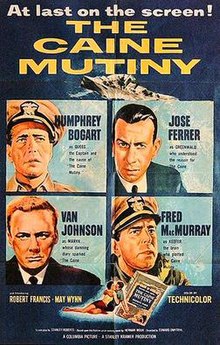
Queeg is determined to bring a sense of discipline to the ship’s lax seamen. But he can’t admit mistakes, and his bullying approach to command alienates both officers and crew.
Soon after, a typhoon overtakes the Caine. Queeg becomes paralyzed with fear. His executive officer, Steve Maryk (Van Johnson), relieves the captain of command to prevent the loss of the ship. Maryk turns the Caine into the wind and rides out the storm.
Maryk is tried by court-martial for mutiny. His case looks hopeless: Queeg has been found sane by three Navy psychiatrists.
Naval Prosecutor Lt. Commander John Challee depicts Maryk as a reckless mutineer. And Queeg portrays himself as the persecuted victim of a malignant conspiracy by his own officers.
Knowing that Queeg reacts badly to stress, Maryk’s attorney, Lt. Barney Greenwald (Jose Ferrer) relentlessly cross-examines him:
GREENWALD: Did you steam over your tow line?
QUEEG: I’m happy to dispose of this particular slander. When we were towing the target, I saw some anti-aircraft bursts. I turned to avoid them. My unreliable helmsman failed to warn me about that. But I saw it and reversed course. We didn’t steam over the tow line.
GREENWALD: Did nothing else distract you?
QUEEG: Not that I recall.
GREENWALD: Weren’t you reprimanding a seaman for having his shirt-tail out while the ship turned?
QUEEG: That only took two seconds.
GREENWALD: Were all your officers disloyal?
QUEEG: I didn’t say that. Only some were disloyal.
GREENWALD: Mr Keith and Mr Maryk?
QUEEG: Yes.
GREENWALD: Did you turn your ship upside down searching for a phantom key?
QUEEG: I don’t know what lies have been sworn to here, but a key definitely did exist.
PROSECUTOR LT. COMMANDER JOHN CHALLEE: The witness is understandably agitated. I request a recess.
QUEEG: I don’t want a recess. I’ll answer all questions right here and now.
GREENWALD: Did you conduct such a search?
QUEEG: Yes, I did. My disloyal officers failed me, and the key couldn’t be found.
GREENWALD: Wasn’t this whole fuss over a quart of strawberries?
QUEEG: The pilfering of food in large amounts or small is a very serious occurrence on board a ship.
GREENWALD: You were told that the mess boys ate the berries. There was no key.
QUEEG: The key was not imaginary. I don’t know anything about mess boys eating strawberries.
GREENWALD: Have you no recollection of a conversation with Ensign Harding? Didn’t he tell you that the mess boys ate the strawberries?
QUEEG: I remember he was grateful for his transfer. His wife was ill in the States.
GREENWALD: Do you know where Ensign Harding is now? He’s in San Diego. He can be flown up here in three hours if necessary. Would it serve any useful purpose to have him testify?
QUEEG: Now, there’s no need for that.
[He reaches into the pocket of his Navy coat and removes two little steel balls, which he rolls together whenever he feels under stress. He starts rolling them together now and continues to do so throughout the rest of the proceeding.]
Now that I recall, he might have said something about mess boys. I questioned many men, and Harding was not the most reliable officer.
GREENWALD: The defense has no other recourse than to produce Ensign Harding.
QUEEG: Now, there’s no need for that. I know exactly what he’ll tell you–lies. He was no different from any other officer in the wardroom. They were all disloyal. I tried to run the ship properly, by the book, but they fought me at every turn. If the crew wanted to walk around with their shirt-tails out, let them. Take the tow line–defective equipment.
But they began spreading wild rumors about steaming in circles. And then “Old Yellowstain.” I was to blame for Maryk’s incompetence and poor seamonship. Lt. Maryk was the perfect officer, but not Queeg.
But the strawberries, ah, that’s where I had them. They laughed at me and made jokes. But I proved beyond a shadow of a doubt and with geometric logic that a duplicate key to the wardroom icebox did exist. I could have produced that key if they hadn’t pulled the Caine out of action. I know now they were only trying to protect some fellow officer.
Naturally, I can only cover these things from memory. If I’ve left anything out, just ask me specific questions and I’ll be glad to answer them one by one.
[The courtroom falls silent–except for the tinkling of the steel balls that Queeg keeps rolling in his right hand. The judges stare at him as he does so. They say nothing, but it’s clear they know they’re looking at a man at the end of his sanity–and naval career.]
GREENWALD: No further questions, sir.
Maryk is acquitted.
* * * * *
So much for fiction. Now for the terrifying reality.
2016 PRESIDENTIAL CAMPAIGN, ABC NEWS, ACADEMY AWARDS, BEST ACTRESS, BEST SUPPORTING ACTRESS, BULLYING, CBS NEWS, CNN, DISABILITY, DONALD TRUMP, FOX AND FRIENDS, GOLDEN GLOBES, KELLEYANNE CONWAY, KRAMER VS. KRAMER, MERYL STREEP, MOTHER JONES, MOVEON, NBC NEWS, NEEWSWEEK, NPR, POLITICO, SALON, SERGE KOVALESKI, SLATE, SOPHIE'S CHOICE, THE CHICAGO SUN-TIMES, THE CHICAGO TRIBUNE, THE IRON LADY, THE LOS ANGELES TIMES, THE NEW YORK TIMES, THE WASHINGTON POST, TIME, TWITTER, U.S. NEWS & WORLD REPORT, USA TODAY
In Bureaucracy, Entertainment, History, Politics, Social commentary on January 10, 2017 at 12:06 am
Every year, the 93 members of the Hollywood Foreign Press Association (HFPA) bestow Golden Globe awards to recognize excellence in television and film, both inside and outside the United States.
And on Sunday, January 8, the presenters honored actress Meryl Streep with the Cecil B Demille lifetime achievement Award.
Since 1979, she’s been nominated for more Academy Awards than any other actor–15 nominations for Best Actress and four for Best Supporting Actress.
She won Best Supporting Actress in 1980 for Kramer vs. Kramer, Best Actress in 1983 for Sophie’s Choice and again in 2012 for The Iron Lady.
But when Streep appeared to accept her latest award, she had a nomination of her own to present: One for a performance that “broke my heart.”
Meryl Streep at the Golden Globes
It had come in real life, not a movie. And the performer she nominated was Donald Trump, for his mockery of a disabled New York Times reporter in 2015.
The reporter, Serge Kovaleski, suffers from arthrogryposis, a congenital condition that restricts the movement of the muscles in his arms.
Since declaring his Presidential candidacy on June 16, Trump had attacked the patriotism of America’s Islamic population. He claimed that he had seen Muslims in New Jersey celebrating the collapse of the Twin Towers on September 11, 2001.
To prove this, Trump cited a September 18, 2001 article written by Kovaleski when he was a reporter for The Washington Post.
In this, Kovaleski wrote that police “detained and questioned a number of people who were allegedly seen celebrating the attacks and holding tailgate-style parties.”
After Trump mentioned the story, Kovaleski said that the key word in it was “allegedly,” adding that there were no credible reports of such celebrations.
At a South Carolina rally on November 24, 2015, Trump claimed that Kovaleski was backing away from his article.
To mock Kovaleski, he flopped his right arm around with his hand held at an odd angle while imitating the reporter: “Now, the poor guy, you’ve got to see this guy: ‘Uhh, I don’t know what I said. Uhh, I don’t remember,’ he’s going like ‘I don’t remember. Maybe that’s what I said.'”
Click here: Donald Trump mocks disabled New York Times reporter – Donald Trump mocks reporter with disability – YouTube
Attacked for mocking Kovaleski’s disability, Trump claimed: “Serge Kovaleski must think a lot of himself if he thinks I remember him from decades ago–if I ever met him at all, which I doubt I did.”
Trump mocking Kovaleski, left; Kovaleski, right
But Kovaleski quickly contradicted Trump: He had covered Trump as a reporter for the New York Daily News and had met him face-to-face on at least a dozen occasions.
So Meryl Streep knew what she was talking about when she said:
“There was one performance this year that stunned me. It sank its hooks in my heart. Not because it was good. There was nothing good about it. But it was effective, and it did its job. It made its intended audience laugh and show their teeth.
“It was that moment when the person asking to sit in the most respected seat in our country imitated a disabled reporter. Someone he outranked in privilege, power and the capacity to fight back. It kind of broke my heart when I saw it. I still can’t get it out of my head because it wasn’t in a movie. It was real life.
“And this instinct to humiliate, when it’s modeled by someone in the public platform, by someone powerful, it filters down into everybody’s life, because it kind of gives permission for other people to do the same thing.
“Disrespect invites disrespect. Violence incites violence. When the powerful use their position to bully others, we all lose.”
Kelleyanne Conway served as Trump’s mouthpiece during the 2016 Presidential campaign. She continues in that rule as he prepares to take office as President on January 20.
And she was thoroughly upset with Streep’s remarks.
Appearing on Right-wing Fox and Friends the next morning, she said: “We have to now form a government, and I’m concerned that somebody with a platform like Meryl Streep is also, I think, inciting people’s worst instincts.
“When she won’t get up there and say, ‘I don’t like it, but let’s try to support him and see where we can find some common ground with him, which [Trump] has actually done from moment one.”
What common ground she didn’t say. Agreeing on mocking the disabled?
Not to be outdone in “inciting people’s worst instincts,” President-elect Trump quickly took to Twitter–his preferred mode of communication.
Since Twitter allows only 140 characters, Trump couldn’t say all he wanted in one tweet. So it took three:
Meryl Streep, one of the most over-rated actresses in Hollywood, doesn’t know me but attacked last night at the Golden Globes. She is a…..
Hillary flunky who lost big. For the 100th time, I never “mocked” a disabled reporter (would never do that) but simply showed him…….
“groveling” when he totally changed a 16 year old story that he had written in order to make me look bad. Just more very dishonest media!
In 2015–before she insulted him–Trump told The Hollywood Reporter: “Julia Roberts is terrific, and many others. Meryl Streep is excellent; she’s a fine person, too.”
2016 PRESIDENTIAL RACE, ABC NEWS, ADOLF HITLER, ALTERNET, AMERICABLOG, AP, ASSASSINATION, BABY BOOMER RESISTANCE, BBC, BLOOMBERG NEWS, BUZZFEED, CBS NEWS, CILLIAN MURPHY, CNN, CROOKS AND LIARS, CZECHOSLOVAKIA, DAILY KOZ, DONALD TRUMP, DRUDGE REPORT, FACEBOOK, FINAL SOLUTION, FIVETHIRTYEIGHT, HARPER’S MAGAZINE, HILLARY CLINTON, HUFFINGTON POST, JAMIE DORNAN, JEB BUSH, MEDIA MATTERS, MOTHER JONES, MOVEON, MOVIES, MSNBC, NAZI GERMANY, NBC NEWS, NEW REPUBLIC, NEWSDAY, NEWSWEEK, NPR, OPERATION ANTHROPOID, PBS NEWSHOUR, POLITICO, POLITICUSUSA, RAW STORY, REINHARD HEYDRICH, REUTERS, SALON, SEATTLE TIMES, SLATE, SS, TALKING POINTS MEMO, THE ATLANTIC, THE CHICAGO SUN-TIMES, THE CHICAGO TRIBUNE, THE DAILY BEAST, THE DAILY BLOG, THE GUARDIAN, THE HILL, THE HUFFINGTON POST, THE LOS ANGELES TIMES, THE NATION, THE NEW REPUBLIC, THE NEW YORK TIMES, THE NEW YORKER, THE VILLAGE VOICE, THE WASHINGTON POST, THINKPROGRESS, TIME, TRUTHDIG, TRUTHOUT, TWITTER, TWO POLITICAL JUNKIES, U.S. NEWS & WORLD REPORT, UPI, USA TODAY, WANNSEE CONFERENCE
In Bureaucracy, Entertainment, History, Politics, Social commentary on August 15, 2016 at 1:03 am
August is the month for…assassination. Or at least for advocating—and dramatizing—it.
On August 9, Republican Presidential candidate Donald Trump told a rally in Wilmington, North Carolina: “Hillary [Clinton] wants to abolish, essentially abolish, the Second Amendment.
“If she gets to pick her [Supreme Court] judges, nothing you can do folks. Although the Second Amendment people, maybe there is, I don’t know.”
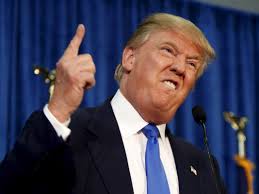
Donald Trump
The Clinton camp instantly saw it as a “dog-whistle” solicitation for political assassination:
“Don’t treat this as a political misstep,” Senator Christopher S. Murphy of Connecticut, who has called for stiffer gun laws, wrote on Twitter. “It’s an assassination threat, seriously upping the possibility of a national tragedy & crisis.”
“A person seeking to be the President of the United States should not suggest violence in any way,” Clinton campaign manager Robby Mook said in a statement.
The Trump campaign issued a statement denying that he had meant any such thing.
Three days after Trump’s remarks, Operation Antrhopoid, a UK-French-Czech historical film, appeared in theaters. Directed by Sean Ellis, it stars Cillian Murphy, Jamie Dornan, Charlotte Le Bon and Bill Milner.
Its subject: The 1942 assassination of SS Obergruppenführer (General) Reinhard Heydrich.
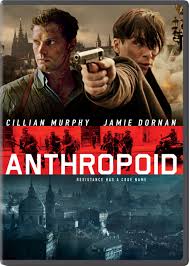
For Trump it was a moment of supreme, if unnoticed, irony.
“The constant violent, brutish talk from Donald Trump,” said Michael Steel, a top adviser to former Florida Governor Jeb Bush, “is unworthy of the office he seeks.”
Political violence has long been a feature of Trump’s campaign. During the primaries, he openly endorsed retaliation against protesters who disrupted his rallies, many of whom accused him of racism.
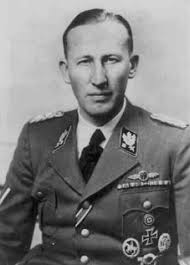
Reinhard Heycrich
And Heydrich—“the man with the iron heart,” as Adolf Hitler eulogized at his funeral—similarly earned a reputation for brutality and racism.
A tall, blond-haired formal naval officer, he was both a champion fencer and talented violinist. Heydrich joined the Schutzstaffel, or Protective Squads, better known as the SS, in 1931, and quickly became head of its counterintelligence service.
In 1934, he oversaw the “Night of the Long Knives” purge of Hitler’s brown-shirted S.A., or Stormtroopers.
The S.A. had been instrumental in securing Hitler’s rise to Chancellor of Germany in 1933. They had intimidated political opponents and organized mass rallies for the Nazi Party. But after Hitler attained power, he saw them as a liability.
In September, 1941, Heydrich was appointed “Reich Protector” of Czechoslovakia, which had fallen prey to Germany in 1938 but whose citizens were growing restless under Nazi rule.
Heydrich immediately ordered a purge, executing 92 people within the first three days of his arrival in Prague. By February, 1942, 4,000-5,000 people had been arrested.
In January, 1942, Heydrich convened a meeting of high-ranking political and military leaders to streamline “the Final Solution to the Jewish Question.”
Up until that time, the Nazis had been unable to agree on a comprehensive anti-Jewish policy. Some had argued for the “mere” expulsion of Jews from Germany while others advocated their wholesale extermination.
At the now-infamous Wannsee conference, Heydrich decreed that, henceforth, all Jews in Reich-occupied territories would be shipped to extermination camps. No exceptions would be made for women, children or the infirm.
An estimated six million Jews were thus slaughtered.
Returning to Prague, Heydrich continued his policy of carrot-and-stick with the Czechs—improving the social security system and requisitioning luxury hotels for middle-class workers, alternating with arrests and executions.
The Czech government-in-exile, headquartered in London, feared that Heydrich’s incentives might lead the Czechs to passively accept domination. They decided to assassinate Heydrich.
Two British-trained Czech commandos—Jan Kubis and Joseph Gabcik—parachuted into Prague.
With limited intelligence on Heydrich’s movements and little equipment in a city under lockdown, they had to find a way to carry out their assignment.
Unexpectedly, they got help from Heydrich himself. Supremely arrogant, he traveled the same route every day from home to his downtown office and refused to be escorted by armed guards, claiming no one would dare attack him.
On May 27, 1942, Kubis and Gabcik waited at a hairpin turn in the road always taken by Heydrich. When Heydrich’s Mercedes slowed down, Gabcik raised his machinegun–which jammed.
Instead of ordering his driver to “step on it,” Heydrich ordered him to halt—so he could take aim at his would-be assassins.
Rising in his seat, he aimed his revolver at Gabcik—as Kubis lobbed a hand grenade at the car. The explosion drove steel and leather fragments of the car’s upholstery into Heydrich’s diaphragm, spleen and lung.
Hitler dispatched doctors from Berlin to save the Reich Protector. But infection set in, and on June 4, Heydrich died at age 38.
For Donald Trump, the timing of Operation Antrhopoid couldn’t be worse.
Trump has long been accused of being a racist and would-be dictator. Facebook routinely carries memes of him wearing a Nazi uniform, complete with Hitler forelock and toothbrush mustache.
It is Trump who raised the issue of using assassination to attain political ends. The last thing he needs is a movie showing that Right-wingers can also be targets for death.
"SPRINGTIME FOR HITLER", "SPRINGTIME FOR TRUMPLAND", "THE PRODUCERS", ABC NEWS, ADOLF HITLER, CBS NEWS, CNN, DAVID BROOKS, DEMOCRATIC NATIONAL CONVENTION, DEMOCRATIC PARTY, DONALD TRUMP, ELIZABETH WARREN, FACEBOOK, HILLARY CLINTON, HUMOR, MARCO RUBIO, MARK SHIELDS, MEL BROOKS, NAZIS, NBC NEWS, PBS NEWSHOUR, POLITICAL CORRECTNESS, RAFAEL EDUARDO "TED" CRUZ, SATIRE, THE CHICAGO SUN-TIMES, THE CHICAGO TRIBUNE, THE LOS ANGELES TIMES, THE NEW Y ORK TIMES, THE WASHINGTON POST, TIM KANE, TWITTER
In Bureaucracy, Entertainment, History, Humor, Politics, Social commentary, Uncategorized on July 25, 2016 at 12:05 am
Donald Trump has attached nicknames to his many political opponents.
“Little Marco” – Florida U.S. Senator Marco Rubio
“Goofy” – Massachusetts U.S. Senator Elizabeth Warren
“Lyin’ Ted” – Texas U.S. Senator Rafael Eduardo “Ted” Cruz
“Crooked Hillary” – Hillary Clinton, former First Lady, U.S. Senator from New York and Secretary of State, now the all-but-confirmed Democratic nominee for President.

Donald Trump
And now he’s picked out another catchy nickname–this time for Virginia U.S. Senator Tim Kane, chosen by Hillary Clinton to be her Vice Presidential running mate: “Corrupt Kane.”
Nicknames and ridicule can be powerful weapons.
David Brooks, a conservative columnist for the New York Times, assessed Trump’s ability to effectively use both.
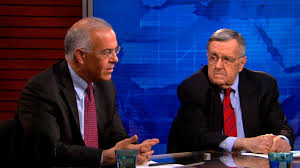
David Brooks and Mark Shields
He did so on the May 27 edition of the PBS Newshour. Said Brooks:
“Trump, for all his moral flaws, is a marketing genius. And you look at what he does. He just picks a word and he attaches it to a person. Little Marco [Rubio], Lyin’ Ted [Cruz], Crooked Hillary [Clinton].
“And that’s a word. And that’s how marketing works. It’s a simple, blunt message, but it gets under. It sticks, and it diminishes.
“And so it has been super effective for him because he knows how to do that. And she [Hillary Clinton[ just comes on with, ‘Oh, he’s divisive.’
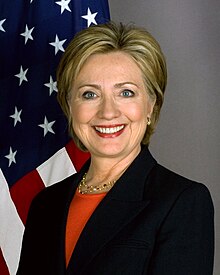
Hillary Clinton
“These are words that are not exciting people. And her campaign style has gotten, if anything…a little more stagnant and more flat.”
But Democrats can fight back with catchy nicknames of their own: Such as: “Deadbeat Donald,” “Nazi Boy,” “Devious Donald” or “Der Fuehrer.”
So far, only one opponent has managed to verbally stand up to Trump: Massachusetts U.S. Senator Elizabeth Warren.
A May 12 story on CNN–“Elizabeth Warren Gives Trump a Dose of His Own Medicine on Twitter”–notes:
“In the past week, the Massachusetts Democrat has refined an aggressive anti-Trump message through a series of so-called tweetstorms.”
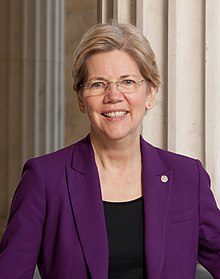
Elizabeth Warren
On the May 27 edition of the PBS Newshour, syndicated columnist Mark Shields noted Warren’s ability to rattle Trump:
“Elizabeth Warren gets under Donald Trump’s skin. And I think she’s been the most effective adversary. I think she’s done more to unite the Democratic party than either Hillary Clinton or Bernie Sanders.”
David Brooks added: “And so the tactics…is either you do what Elizabeth Warren has done, like bull-bore negativity, that kind of [get] under the skin, or try to ridicule him and use humor. Humor is not Hillary Clinton’s strongest point.”
Yet that need not remain the situation.
The Democratic convention could use ridicule to strike a deadly blow against the Presidential ambitions of Donald Trump.
Everyone expects this convention—like all political conventions—to be filled with boring, self-serving speeches. And its purpose—to nominate Hillary Clinton for President—is a foregone conclusion.
But the message of this convention–the necessity for defeating Trump–need not be forgotten. And it won’t be–if convention planners are willing to do something truly daring and memorable.
In 1988, Mel Brooks did exactly this with his now-classic comedy, “The Producers.”
Brooks used this as a vehicle for lampooning the criminality of the Third Reich–and especially that of its Fuehrer, Adolf Hitler. Especially memorable: Its production number, “Springtime for Hitler.”
The press has had a field day with Melania Trump’s plagiarizing of Michelle Obama’s speech before the 2008 Democratic convention.
Facebook and Twitter have been filled with ridicule–such as a “Rocky and Bullwinkle” cartoon image of villainess Natasha Fatale saying: “I write. But Moose and Squirrel say I copy.”
So it’s easy to imagine how a staged musical number like “Springtime for Trumpland”–complete with Nazi uniforms–would rage through the Internet. Not to mention make a great TV commercial.
SPRINGTIME FOR TRUMPLAND
America was having trouble
What a sad, sad story
Needed a new Leader
To restore its former glory.
Where oh where was he?
Who could that man be?
We looked around
And then we found
The man for you and me.
And now it’s….
Springtime for Trumpland and bigotry–
Trumpland is happy and gay.
Our Leader’s put on a Nazi face–
Look out, here comes the Whiter race.
Springtime for Trump goons and bigotry–
Winter for Reason and Light.
Springtime for Trump goons and infamy–
Come on, Trumpsters, let’s go pick a fight.
I love Trump
My name is Dave
I’ll hunt you down
And dig your grave.
Don’t be stupid
Be a smarty.
Come and join
The RepublicaNazi party.
Springtime for Trump goons and infamy—
Killing is thrilling again.
A-bombs are saving us from toil
Soon we’ll have all the world’s black oil.
Springtime for Trumpland and infamy—
Prisons are filling once more.
Springtime for Trumpland and infamy—
Means that soon things will be swell.
You pray they will be swell
You know we’ll be going to HELL.
The question remains: Is a political party noted for its cowardly Political Correctness willing to take the plunge?
Most likely, the answer is: No.
ABC NEWS, ACADEMY AWARDS, BARACK OBAMA, BEN-HUR, CBS NEWS, CHARLTON HESTON, CNN, EL CID, FACEBOOK, FOX NEWS, GUN CONTROL, JIM CARREY, JOHN F. KENNEDY, KHARTOUM, MAJOR DUNDEE, MOSES, MOVIES, NATIONAL RIFLE ASSOCIATION, NBC NEWS, PLANET OF THE APES, RICHARD M. NIXON, ROBERT F. KENNEDY, SCREEN ACTORS GUILD, THE CHICAGO SUN-TIMES, THE CHICAGO TRIBUNE, THE LOS ANGELES TIMES, THE NEW YORK TIMES, THE TEN COMMANDMENTS, THE WAR LORD, THE WASHINGTONPOST, TWITTER
In Bureaucracy, Entertainment, History, Politics on June 17, 2016 at 12:05 am
In March, 2013, the National Rifle Association (NRA) and its Right-wing allies declared war on comedian Jim Carrey.
The reason: His music parody video: “Cold Dead Hand,” which mocked gun fanatics and the late Charlton Heston, former president of the NRA.
Click here: Jim Carrey’s Pro-Gun Control Stance Angers Conservatives
Among its lyrics:
Charlton Heston movies are no longer in demand
And his immortal soul may lay forever in the sand.
The angels wouldn’t take him up to heaven like he’d planned.
’Cause they couldn’t pry that gun from his cold, dead hand.
The phrase, “cold dead hand,” originated with Heston himself.
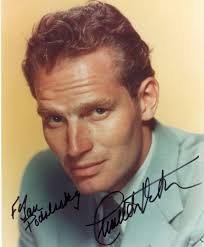
Charlton Heston in his prime
On May 20, 2000, the actor and then-president of the NRA addressed the organization at its 129th convention in Charlotte, North Carolina.
He warned that then-Vice President and Democratic Presidential candidade Al Gore “is going to smear you as the enemy,” and concluded:
“So, as we set out this year to defeat the divisive forces that would take freedom away, I want to say those fighting words for everyone within the sound of my voice to hear and to heed, and especially for you, Mr. Gore: ‘From my cold, dead hands!’”
Carrey’s stance on gun control couldn’t have been more opposite.
In in February, 2013, he outraged Right-wingers by tweeting: “Any1 who would run out to buy an assault rifle after the Newton massacre has very little left in their body or soul worth protecting.”
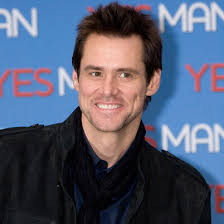
Jim Carrey
Fox Nation referred to the tweet as “nasty.”
Red Alert Politics writer Erin Brown dismissed it as “a careless remark …rooted in the shallow, parroted talking points so commonly espoused by liberal elites.”
But that was nothing compared to the rage that has greeted “Cold Dead Hand.” Reason TV’s Remy offered a parody rebuttal to Carrey’s song. Its lyrics included:
It takes a talking ass
to oppose a vaccination
when your PhD is in
making funny faces.
None of which bothered Carrey. In fact, he exulted in Right-wing outrage, tweeting: “Cold Dead Hand’ is abt u heartless motherf%ckers unwilling 2 bend 4 the safety of our kids. Sorry if you’re offended…”
Among its lyrics:
It takes a cold, dead hand to decide to pull the trigger.
Takes a cold, dead heart and as near as I can figger.
With your cold, dead aim you’re tryin’ to prove your dick is bigger …..
Many psychologists have long theorized that a fascination with firearms can compensate for inadequate sexual performance.
But it’s one thing for an unknown psychologist to write this in an obscure medical journal and another for a famous comedian to splash it across the Internet.
Carrey is especially ruthless in attacking those who–like the NRA–make a lucrative living off gun sales:
Imagine if the Lord were here…
And on the ones
Who sell the guns
He’d sic the vultures and coyotes
Only the devil’s true devotees
Could profiteer
From pain and fear.
Many Rightists attacked Carrey for parodying a man–Heston–who died in 2008 and could not defend himself. But Heston had appeared several times on “Saturday Night Live” to spoof his granite-hard image.
In his video, Carrey dares to attack not simply the masculinity of the Rightist NRA crowd, but even its courage:
You don’t want to get caught
With your trousers down
When the psycho killer
Comes around
So you make your home
Like a Thunderdome
And you’re always packin’
Everywhere you roam.
Perhaps that’s what most outraged the Right–the accusation that its members live in fear and do their best to generate needless fear in others.
Fear that can supposedly be abated by turning America into a society where everyone packs a weapon and every moment holds a potential High Noon.
Carrey was not shy in responding to his Rightist critics. On March 29, 2013, he issued this statement:
“Since I released my “Cold Dead Hand” video on Funny or Die this week, I have watched Fux News rant, rave, bare its fangs and viciously slander me because of my stand against large magazines and assault rifles.
“I would take them to task legally if I felt they were worth my time or that anyone with a brain in their head could actually fall for such irresponsible buffoonery. That would gain them far too much attention which is all they really care about.
“I’ll just say this: in my opinion Fux News is a last resort for kinda-sorta-almost-journalists whose options have been severely limited by their extreme and intolerant views; a media colostomy bag that has begun to burst at the seams and should be emptied before it becomes a public health issue.”
The NRA has spent decades bribing and intimidating its way through Congress. Those members who subscribe to its “guns for everyone” agenda get legalized bribes (i.e., “campaign contributions”).
Those who refuse to do so face the threat–if not the reality–of being ousted.
Bullies are conspicuously vulnerable to ridicule. Their only “defense” is to smash anyone who dares to mock their folly, brutality or pretense to omnipotence.
Or, as Ernest Hemingway once put it: “Fascism is a lie told by bullies.”


 Bureaucracybuster's Blog
2016 PRESIDENTIAL CAMPAIGN, ABC NEWS, ACADEMY AWARDS, ALTERNET, AP, BEST ACTRESS, BEST SUPPORTING ACTRESS, BULLYING, BUZZFEED, CBS NEWS, CNN, CROOKS AND LIARS, DAILY KOZ, DISABILITY, DONALD TRUMP, FACEBOOK, FOX AND FRIENDS, GOLDEN GLOBES, KELLEYANNE CONWAY, KRAMER VS. KRAMER, MERYL STREEP, MOTHER JONES, MOVEON, NBC NEWS, NEEWSWEEK, NEWSWEEK, NPR, POLITICO, RAW STORY, REUTERS, SALON, SEATTLE TIMES, SERGE KOVALESKI, SLATE, SOPHIE'S CHOICE, THE ATLANTIC, THE CHICAGO SUN-TIMES, THE CHICAGO TRIBUNE, THE DAILY BEAST, THE GUARDIAN, THE HILL, THE HUFFINGTON POST, THE IRON LADY, THE LOS ANGELES TIMES, THE NATION, THE NEW YORK TIMES, THE WASHINGTON POST, TIME, TWITTER, U.S. NEWS & WORLD REPORT, UP, UPI, USA TODAY
FINDING COMMON CAUSE WITH BULLYING
In Bureaucracy, Entertainment, History, Politics, Social commentary on October 4, 2017 at 12:05 amEvery year, the 93 members of the Hollywood Foreign Press Association (HFPA) bestow Golden Globe awards to recognize excellence in television and film, both inside and outside the United States.
And on Sunday, January 8, the presenters honored actress Meryl Streep with the Cecil B Demille lifetime achievement Award.
Since 1979, she’s been nominated for more Academy Awards than any other actor—15 nominations for Best Actress and four for Best Supporting Actress.
She won Best Supporting Actress in 1980 for Kramer vs. Kramer, Best Actress in 1983 for Sophie’s Choice and again in 2012 for The Iron Lady.
But when Streep appeared to accept her latest award, she had a nomination of her own to present: One for a performance that “broke my heart.”
Meryl Streep at the Golden Globes
It had come in real life, not a movie. And the performer she nominated was Donald Trump, for his mockery of a disabled New York Times reporter in 2015.
The reporter, Serge Kovaleski, suffers from arthrogryposis, a congenital condition that restricts the movement of the muscles in his arms.
Since declaring his Presidential candidacy on June 16, 2015, Trump had attacked the patriotism of America’s Islamic population. He claimed that he had seen Muslims in New Jersey celebrating the collapse of the Twin Towers on September 11, 2001.
To prove this, Trump cited a September 18, 2001 article written by Kovaleski when he was a reporter for The Washington Post.
In this, Kovaleski wrote that police “detained and questioned a number of people who were allegedly seen celebrating the attacks and holding tailgate-style parties.”
After Trump mentioned the story, Kovaleski said that the key word in it was “allegedly,” adding that there were no credible reports of such celebrations.
At a South Carolina rally on November 24, 2015, Trump claimed that Kovaleski was backing away from his article.
To mock Kovaleski, he flopped his right arm around with his hand held at an odd angle while imitating the reporter: “Now, the poor guy, you’ve got to see this guy: ‘Uhh, I don’t know what I said. Uhh, I don’t remember,’ he’s going like ‘I don’t remember. Maybe that’s what I said.’”
Attacked for mocking Kovaleski’s disability, Trump claimed: “Serge Kovaleski must think a lot of himself if he thinks I remember him from decades ago–if I ever met him at all, which I doubt I did.”
Trump mocking Kovaleski, left; Kovaleski, right
But Kovaleski quickly contradicted Trump: He had covered Trump as a reporter for the New York Daily News and had met him face-to-face on at least a dozen occasions.
So Meryl Streep knew what she was talking about when she said:
“There was one performance this year that stunned me. It sank its hooks in my heart. Not because it was good. There was nothing good about it. But it was effective, and it did its job. It made its intended audience laugh and show their teeth.
“It was that moment when the person asking to sit in the most respected seat in our country imitated a disabled reporter. Someone he outranked in privilege, power and the capacity to fight back. It kind of broke my heart when I saw it. I still can’t get it out of my head because it wasn’t in a movie. It was real life.
“And this instinct to humiliate, when it’s modeled by someone in the public platform, by someone powerful, it filters down into everybody’s life, because it kind of gives permission for other people to do the same thing.
“Disrespect invites disrespect. Violence incites violence. When the powerful use their position to bully others, we all lose.”
Kelleyanne Conway served as Trump’s mouthpiece during the 2016 Presidential campaign. She continued in that rule as he prepared to take office as President on January 20.
And she was thoroughly upset with Streep’s remarks.
Appearing on Right-wing Fox and Friends the next morning, she said: “We have to now form a government, and I’m concerned that somebody with a platform like Meryl Streep is also, I think, inciting people’s worst instincts.
“When she won’t get up there and say, ‘I don’t like it, but let’s try to support him and see where we can find some common ground with him, which [Trump] has actually done from moment one.”
What common ground she didn’t say. Agreeing on mocking the disabled?
Not to be outdone in “inciting people’s worst instincts,” President-elect Trump quickly took to Twitter—his preferred mode of communication.
Since Twitter allows only 140 characters, Trump couldn’t say all he wanted in one tweet. So it took three:
Meryl Streep, one of the most over-rated actresses in Hollywood, doesn’t know me but attacked last night at the Golden Globes. She is a…..
Hillary flunky who lost big. For the 100th time, I never “mocked” a disabled reporter (would never do that) but simply showed him…….
“groveling” when he totally changed a 16 year old story that he had written in order to make me look bad. Just more very dishonest media!
In 2015—before she insulted him—Trump told The Hollywood Reporter: “Julia Roberts is terrific, and many others. Meryl Streep is excellent; she’s a fine person, too.”
Share this: