Archive for the ‘Entertainment’ Category
ABC NEWS, ALTERNET, AMERICABLOG, AP, BABY BOOMER RESISTANCE, BUZZFEED, CANDICE BERGIN, CBS NEWS, CNN, CROOKS AND LIARS, DAILY KOZ, DRUDGE RETORT, ENGLAND, FACEBOOK, FIVETHIRTYEIGHT, FRANCE, GERMANY, HARPER’S MAGAZINE, ISRAEL, JAPAN, JOHN MILIUS, MEDIA MATTERS, MOROCCO, MOTHER JONES, MOVEON, MOVIES, MSNBC, NBC NEWS, NEWSWEEK, NPR, PBS NEWSHOUR, POLITICO, POLITICUSUSA, RAW STORY, REUTERS, SALON, SEAN CONNERY, SEATTLE TIMES, SLATE, TALKING POINTS MEMO, THE ATLANTIC, THE CHICAGO SUN-TIMES, THE CHICAGO TRIBUNE, THE DAILY BEAST, THE DAILY BLOG, THE GUARDIAN, THE HILL, THE HUFFINGTON POST, THE LOS ANGELES TIMES, THE NATION, THE NEW REPUBLIC, THE NEW YORK TIMES, THE VILLAGE VOICE, THE WALL STREET JOURNAL, THE WASHINGTON POST, THE WIND AND THE LION, THEODORE ROOSEVELT, THINKPROGRESS, TIME, TRUTHDIG, TRUTHOUT, TWITTER, TWO POLITICAL JUNKIES, U.S. NEWS & WORLD REPORT, UPI, USA TODAY, USA TODAY ABC NEWS, WONKETTE, WORLD WAR ii, WORLD WAR l, YELLOWSTONE NATIONAL PARK
In Entertainment, History, Military, Politics, Social commentary on May 18, 2018 at 1:12 am
There is a poignant scene in the middle of John Milius’ classic 1975 adventure film, The Wind and the Lion, that Americans would do well to remember.
The movie is set in 1904 America and Morocco. An American woman, Eden Pedicaris (Candice Bergen) and her two children have been kidnapped while vacationing in Tangier.
The kidnapper is a Berber brigand named Mulai Ahmed el Raisuli (Sean Connery—then successfully trying to shed his recent James Bond image).
To Raisuli, the Sultan and his uncle, the Pasha of Tangier, are corrupt and beholden to the European powers struggling to control Morocco.
Raisuli issues an outrageous ransom demand to provoke an international incident, embarrass the Sultan and start a civil war.
In the United States, President Theodore Roosevelt (Brian Keith) is running for re-election. He sees the crisis as a way to win votes and demonstrate America’s military strength as a new power.
So he issues a demand of his own: “Pedicarus alive—or Raisuli dead!”
While events rapidly spiral out of control in the Middle East, Roosevelt decides to vacation in Yellowstone National Park.
One night, a grizzly bear attacks the camp and is shot by Roosevelt and several other campers. The next morning, Roosevelt holds an imprumptu press conference for the reporters who have accompanied him.

Brian Keith (left) as Theodore Roosevelt
REPORTER: Did you take part in killing the grizzly, Mr. President?
ROOSEVELT: Yes, unfortunately.
REPORTER: Why do you say, ‘unfortunately,’ Mr. President?
ROOSEVELT: The American grizzly is a symbol of the American character: strength, intelligence, ferocity. Maybe a little blind and reckless at times, but courageous beyond all doubt. And one other trait that goes with all previous.
REPORTER: And that, Mr. President?
ROOSEVELT: Loneliness. The American grizzly lives out his life alone. Indomitable, unconquered—but always alone. He has no real allies, only enemies, but none of them as great as he.
REPORTER: And you feel this might be an American trait?
ROOSEVELT: Certainly. The world will never love us. They respect us—they might even grow to fear us. But they will never love us, for we have too much audacity! And, we’re a bit blind and reckless at times, too.
REPORTER: Are you perhaps referring to the situation in Morocco and the Panama Canal.
ROOSEVELT: If you say so. The American grizzly embodies the spirit of America. He should be our symbol! Not that ridiculous eagle—he’s nothing more than a dandified vulture.
When the Pasha of Tangier refuses to negotiate with Raisuli to secure the return of Pedecaris, the American Consul to Tangier, Samuel Gummere, decides on action. He confers with Admiral Chadwick, commanding the South Atlantic Squadron, and a Marine captain named Jerome.
Gummere then orders a company of Marines, supported by a small detachment of sailors, to seize the Pasha. But then he admits to the riskiness of the decision:
GUMMERE: You realize, of course, that if we fail in even the slightest way, we’ll all be killed.
CHADWICK: Yes, and the whole world will probably go to war.
JEROME: Gentlemen, if we fail and are killed, I certainly hope the world does go to war.
CHADWICK: A world ar war!
GUMMERE: A world war. Now that would be something to go out on.
In just ten years, they will get their hearts’ desire when World War 1 erupts.
The Marines quickly overwhelm the Pasha’s palace guard, take the Pasha hostage and force him to negotiate.
During the hostage exchange, Raisuli is betrayed and captured by German and Moroccan troops. His friend, the Sherif of Wazan, organizes the Berber tribe for an attack on the Europeans and their Moroccan lackeys.
Eden Pedecaris, who has grown to admire Raisuli, convinces a Marine captain and his men to rescue the Berber chieftain. She argues that President Roosevelt had promised that Raisuli would be unharmed if the Pedecarises were returned safely.
The Berbers and Marines team up to defeat the Germans and their Moroccan allies, rescuing Raisuli in the process.
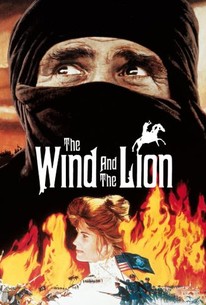
Thirteen years later—in 1917—the United States will officially take on the Germans in World War 1. And in another 37 years—in 1941—America will again declare war on Germany.
The film ends with a confident Theodore Roosevelt expecting (accurately) to be re-elected—and telling reporters that “the fate of Morocco will be decided tomorrow by me.”
The Wind and the Lion is set in an era when
- Nuclear weapons did not exist;
- Russia and China were militarily insignificant nations;
- England was the world’s superpower;
- America, Germany and Japan were on the rise;
- Israel was still a distant dream in the eyes of European Jews;
- The “Great Powers”—Germany, France and Great Britain—were struggling to carve up the Middle East to exploit its massive oil reserves; and
- Americans did not feel threatened by Islamic radicals.
As complex and dangerous as that era often seemed to those living more than 100 years ago, it has been succeeded by one even more complex and dangerous.
In this new and even more lethal era, it is well to remember Theodore Roosevelt’s warning that “we’re a bit blind and reckless at times, too.”
ABC NEWS, ALCOHOL, ALTERNET, AP, BLAKE EDWARDS, BOBBY BROWN, BUZZFEED, CAMELOT, CBS NEWS, CELEBRITIES, CIAGREETES, CNN, COCAINE, CONRAD MURRAY, CRACK, CROOKS AND LIARS, DAILY KOZ, DIANE SAWYER, DRUGS, ELVIS PRESLEY, FACEBOOK, JULIE ANDREWS, MARILYN MONROE, MARY POPPINS, MICHAEL JACKSON, MOTHER JONES, MOUNT SIANI MEDICAL CENTER, MOVEON, MSNBC, MY FAIR LADY, NATIONAL ENQUIRER, NBC NEWS, NEWSWEEK, NODULES, NPR, OPHRAH WINFREY, OPRAH WINFREY, PILLS, POLITICO, RAW STORY, REUTERS, SALON, SEATTLE TIMES, SLATE, STAR SPANGLED BANNER, THE ATLANTIC, THE CHICAGO SUN-TIMES, THE CHICAGO TRIBUNE, THE DAILY BEAST, THE GUARDIAN, THE HILL, THE HUFFINGTON POST, THE LOS ANGELES TIMES, THE NATION, THE NEW YORK TIMES, THE SOUND OF MUSIC, THE WASHINGTON POST, TIME, TWITTER, U.S. NEWS & WORLD REPORT, UPI, USA TODAY, WHITNEY HOUSTON
In Entertainment, History, Medical, Social commentary on May 10, 2018 at 12:18 am
Whtney Houston drowned in her bathtub at the Beverly Hilton Hotel on February 11, 2012.
The cause of death: Coronary artery disease—and cocaine use. She was 48.
Ever since, reporters and commentators have repeatedly used the word “tragedy” to describe her fate.
But there are tragedies that are brought on by events beyond human control—and tragedies that are self-inflicted.
Consider:
Julie Andrews: Whose four-octave soprano voice has delighted audiences for decades on Broadway (Camelot, My Fair Lady) and movies (Mary Poppins, The Sound of Music).
In 1964, she won the Academy Award for Best Actress and Golden Globe Award for Best Actress (for Mary Poppins).
Her performance in The Sound of Music made it the highest-grossing film of 1965—and won her a second Golden Globe Award for Best Actress.
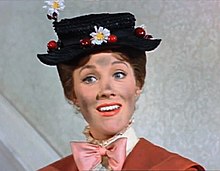
Julie Andrews, in her best-loved role as “Mary Poppins”
In 1997, she underwent surgery at Mount Sinai Medical Center to remove non-cancerous nodules in her throat. The nodules were removed—but so was her ability to sing.
Her husband, Blake Edwards, was widely quoted as saying that Andrews’ voice hds been all but ruined: ”If you heard it, you’d weep.”
Whitney Houston: Blessed with beauty, charm and a golden, intense singing voice that can turn even the almost-unsingable “Star Spangled Banner” into a rousing anthem.
As a beloved, internationally-recognized vocalist, she enjoyed even greater fame and wealth as a movie star (The Bodyguard, Waiting to Exhale).
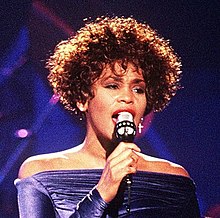
Whitney Houston
Meanwhile, she took on increasingly deadly habits. She chain-smoked cigarettes. And marijuana—“a lot.” She dove into alcohol, pills, cocaine.
During a 2002 interview with Diane Sawyer, she denied using crack. Not because it’s lethal, or because it would destroy The Voice that she believed was God’s gift to her.
No, it was because “I make too much money to ever smoke crack. Let’s get that straight. OK? We don’t do crack. We don’t do that. Crack is whack.”
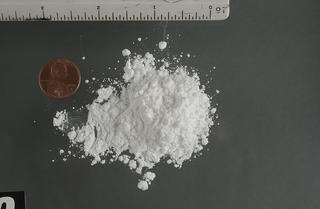
Crack cocaine
In 2006, the National Enquirer ran an interview with her sister-in-law, Tina, who charged that Houston spent her days locked in her bedroom “smoking crack, using sex toys to satisfy herself and ignoring personal hygiene.”
Then, in 2009, appearing on Oprah Winfrey’s season premiere, Houston finally admitted that she used drugs with her ex-husband, Bobby Brown, who “laced marijuana with rock cocaine.”
In other words, crack.
So, apparently, crack wasn’t whack.
Over time, the once-magnificent instrument that was your voice started to change noticeably. She could no longer hit high notes, or hold one the way she did in her immortal hit, “I Will Always Love You.”
Her voice now sounded hoarse, raspy.
In 2010, she embarked on a “Nothing But Love World Tour.” It was a disaster. In Brisbane, she paused during singing to take a drink of water.
A critic said her performance in London was marked by a strained voice filled with coughs and wheezes.
Fans felt cheated—especially after paying $165 for a ticket—and reacted with jeers and boos. Some walked out in mid-concert.
On the night before her death, Houston become belligerent and almost duked it out with singer Stacy Francis at the Tru Hollywood nightclub. Her boyfriend, Ray J, had to step in to prevent a fistfight.
Houston was seen leaving the club drunk, with scratches and blood-stains on her legs.
* * * * *
Whose tragedy was genuine—and which was self-inflicted?
The ugly truth is that Whitney Houston’s singing career ended long before her life did.
When people remember her monumental hits like “I Will Always Love You,” they’re recalling a time more than 20 years ago.
Another ugly truth is that each of us is responsible for our own actions.
Attorney and talk-show host Nancy Grace blamed Houston’s doctors for her death. She argued that they had kept writing prescriptions for “America’s songbird” when they knew she was an addict.
But Houston was the one who requested that they write those prescriptions. And she was the one who administered them.
The same chain of events occurred in the Michael Jackson case.
Jackson wanted his drug-of-choice: propofol, a hypnotic sedative used for general anesthesia. And he got it.
He paid his private doctor, Conrad Murray, $150,000—a-month. For a salary that large, Jackson clearly expected to get more than the standard: “Take two aspirins and call me in the morning.”
So he got what he wanted—and it killed him.
Houston, for all her charm, was also used to getting her own way. Once. on an airplane, she tried to light up in the bathroom. When the pilot warned that she could be fined $2,000, she offered to write out a check that moment if she could have her smoke. The pilot refused.
No matter how famous, talented, beautiful and/or wealthy you might be, in the end, you remain a mere mortal. Even if you are allowed to flout the laws of man, you will be held accountable by your own body for bouts of deadly excess.
That, in the end, is the real legacy of Whitney Houston. And Michael Jackson. And Elvis Presley. And Marilyn Monroe. And a great many other now-dead celebrities.
Sadly, it is a truth that both celebrities and their worshipers must re-learn—over and over.
ABC NEWS, ALTERNET, ANTHONY BOURDAIN, AP, BUZZFEED, CBS NEWS, CNN, COLLEGE OF WILLIAM & MARY, COMEDY CELLAR, CROOKS AND LIARS, DAILY KOZ, DONALD TRUMP, ENVIRONMENTAL PROTECTION AGENCY, FACEBOOK, HARVEY WEINSTEIN, HBO, JIMMY KIMMEL, LATE NIGHT WITH SETH MEYERS, MICHELLE WOLF, MIKE PENCE, MOTHER JONES, MOVEON, NBC NEWS, NEWSWEEK, NPR, POLITICO, RAW STORY, REUTERS, SALON, SARAH HUCKABEE SANDERS, SCOTT PRUITT, SEAN HANNITY, SEATTLE TIMES, SLATE, THE ATLANTIC, THE CHICAGO SUN-TIMES, THE CHICAGO TRIBUNE, THE DAILY BEAST, THE DAILY SHOW WITH TREVOR NOAH, THE GUARDIAN, THE HILL, THE HUFFINGTON POST, THE LOS ANGELES TIMES, THE NATION, THE NEW YORK TIMES, THE WASHINGTON POST, TIME, TWITTER, U.S. NEWS & WORLD REPORT, UPI, USA TODAY, USA TODAY JOSEPH STALIN, WHITE HOUSE CORRESPONDENTS DINNER
In Bureaucracy, Entertainment, History, Humor, Politics, Social commentary on May 3, 2018 at 12:09 am
Call it a case of dueling offensives.
One took place at the White House Correspondents Dinner at the Washington Hilton Hotel in Washington, D.C.
The other occurred in a political rally at Washington Township, in Washington, Michigan.
One starred a female comedian known for obscenity-laced humor.
The other starred a President known for brutal, coarse speech.
What both events had in common: Both featured speakers guaranteed to arouse highly partisan emotions.
The comedian, Michelle Wolf, cracked a joke: “Of course, Trump isn’t here, if you haven’t noticed. And I know, I would drag him here myself. But it turns out the president of the United States is the one pussy you’re not allowed to grab. He said it first. Yeah, he did. Do you remember? Good.”

Michelle Wolf
The President, Donald Trump, had previously made a similar remark: “You know I’m automatically attracted to beautiful—I just start kissing them. It’s like a magnet. Just kiss. I don’t even wait. And when you’re a star they let you do it. You can do anything. Grab them by the pussy. You can do anything.”
Michelle Wolf: “Now, I know people really want me to go after Trump tonight, but I think we should give the president credit when he deserves it. Like, he pulled out the Paris agreement, and I think he should get credit for that because he said he was going to pull out and then he did. And that’s a refreshing quality in a man.”
Donald Trump: “The Democrats don’t care about our military. They don’t. They don’t care about our borders or crime.”
[This is patently untrue. Democrats routinely vote for increasing the military budget.]
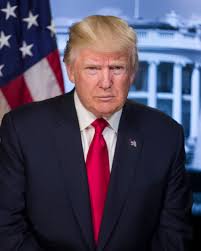
Donald Trump
Wolf: “Trump is racist, though. He loves white nationalists, which is a weird term for a Nazi. Calling a Nazi a white nationalist is like calling a pedophile a kid friend or Harvey Weinstein a ladies’ man.”
Trump: “They were saying, ‘What you think President Trump had to do with it?’ I will do you what. How about, everything?”
[Trump is claiming he deserved credit for making possible the April 27 meeting between the leaders of North and South Korea. His only “contribution”: Threatening North Korea with the “fire and fury of nuclear war.]
Wolf: “Mike Pence is the kind of guy that brushes his teeth and then drinks orange juice and thinks, ‘Mmm.’ Mike Pence is also very anti-choice. He thinks abortion is murder, which, first of all, don’t knock it till you try it. And when you do try it, really knock it. You know, you got to get that baby out of there.”
Trump: “I know things about the senator I can say, too. If I said them, he would never be elected again.”
[Trump is insinuating he has “dirt” on Montana United States Senator Jon Tester, who opposed the nomination of White House physician Ronny Jackson as Secretary of Veterans Affairs.
[For the record: Trump also claimed to have proof that President Barack Obama was not a United States citizen—a claim he was forced to retract. He also claimed that Obama had illegally wiretapped him during the 2016 Presidential campaign—another charge for which he offered no proof.]
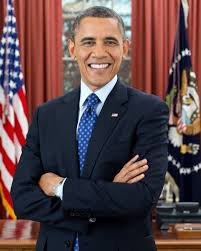
Barack Obama
Wolf: “And, yes, sure, you can groan all you want. I know a lot of you are very antiabortion. You know, unless it’s the one you got for your secret mistress. It’s fun how values can waiver. But good for you.”
Trump: “A woman lawyer, she said, ‘I know nothing.’ Now, she supposedly — you know why? Putin and the group said, ‘Trump is killing us. Why don’t you say you are involved with government so that we can go and make their life in the United States even more chaotic?'”
[Trump is making light of a documented meeting in Trump Tower in June, 2016, starring his son, Donald, Jr., his son-in-law, Jared Kushner, and his campaign manager, Paul Manafort—and several Russian Intelligence agents who offered to provide “dirt” on Hillary Clinton, in exchange for—what?]
Wolf: “Which, of course, brings me to the Me Too movement; it’s probably the reason I’m here. They were like, ‘A woman’s probably not going to jerk off in front of anyone, right?’ And to that, I say, ”Don’t count your chickens.'”
Trump: “The only collusion is the Democrats colluding with the Russians, the Democrats colluding with lots of other people.”
[Ties between Russian Intelligence agents and members of the Trump Presidential campaign have been well-documented. Special Counsel Robert Mueller is now investigating those contacts. To date, there has not been one documented instance of collusion between any Democrat and Russian Intelligence.]
* * * * *
So take your choice.
Right-wingers have universally branded Michelle Wolf as thoroughly disgusting. They profess to be especially upset by jokes she made about White Hose Press Secretary Sarah Huckabee Sanders.
Liberals have chosen Donald Trump as the more repulsively obscene—for his attacks on women, the media, the judiciary, the FBI and Justice Department and the Intelligence community.
The winner of the title Mr./Miss Obscene depends on what you hold most sacred: Words or actions?
ABC NEWS, ABORTION, ALTERNET, AP, BEN BAGDIKIAN, BUZZFEED, CARLY FIORINA, CBS NEWS, CNN, CONTRACEPTION, CROOKS AND LIARS, DAILY KOZ, DEAN OBEIDALLAH, FACEBOOK, FOX & FRIENDS, FOX NETWORK, HILLARY CLINTON, HULU, MAGGIE HABERMAN, MEGYN KELLY, MERCEDES SCHLAPP, MICHELLE WOLF, MOTHER JONES, MOVEON, MSNBC, NBC NEWS, NELL SCOVELL, NEWSWEEK, NPR, PENTAGON PAPERS CASE, PETER BAKER, PJ MEDIA, PLANNED PARENTHOOD, POLITICO, RAW STORY, REUTERS, RICK WILSON, SALON, SARAH HUCKABEE SANDERS, SEATTLE TIMES, SLATE, THE ATLANTIC, THE CHICAGO SUN-TIMES, THE CHICAGO TRIBUNE, THE DAILY BEAST, THE GUARDIAN, THE HANDMAID’S TALE, THE HILL, THE HUFFINGTON POST, THE LOS ANGELES TIMES, THE NATION, THE NEW YORK TIMES, THE WASHINGTON POST, TIME, TWITTER, TYLER O’NEIL, U.S. NEWS & WORLD REPORT, UPI, USA TODAY, USA TODAY DONALD TRUMP, WHITE HOUSE CORRESPONDENTS DINNER
In Bureaucracy, Entertainment, History, Humor, Politics, Social commentary on May 2, 2018 at 12:10 am
On April 28, comedian Michelle Wolf skewered high-ranking Trump administration officials and members of the nation’s elite media.
She did so as the host of the annual White House Correspondents Dinner in Washington, D.C.
Traditionally, it’s been an occasion where Washington’s political and media elites enjoy dinner and trade barbed quips at one another.
But President Donald Trump chose to skip the dinner in 2017 and 2018. Trump—who repeatedly insults others—is too thin-skinned to accept even harmless jokes aimed at him.
That, however, didn’t deter Wolf. And she served up a series of barbed jokes aimed at the greed, deceit and hypocrisy of high-ranking Trump administration officials.
Michelle Wolf
For which, she has herself been attacked by defenders of the Right-wing Trump administration and some of the nation’s most prominent media.
Tyler O’Neil, a Right-wing commentator for PJ Media, was outraged at Wolf’s comparing White House Press Secretary Sarah Huckabee Sanders to Aunt Lydia in the Hulu series, The Handmaid’s Tale.
“The premise of The Handmaid’s Tale, and the suggestion that Trump or anyone associated with him would ever countenance such a hateful submission of women, is bad enough,” wrote O’Neil, “but Wolf arguably compared Sarah Huckabee Sanders to the worst character in the novel and show.
“Aunt Lydia, played excellently by Ann Dowd, is not just part of the oppressive regime – she is the enforcer. She patrols the quarters of the ‘handmaids’ to ensure silence, she assigns handmaids to watch one another, and she leads the handmaids to carry out brutal punishments to anyone who steps out of line.”
The Trump administration has mercilessly attacked Planned Parenthood and championed rules allowing employers to not cover birth control on their insurance plans. Trump himself has said “there has to be some form of punishment” for women who get abortions.
“Unfortunately, I don’t think we advanced the cause of journalism tonight,” said Peter Baker, an MSNBC analyst and chief White House correspondent for The New York Times.
As Ben Bagdikian, a Pulitzer Prize-winning Washington Post reporter, said in arguing for the Post to publish the Pentagon Papers in 1971: “The only way to assert the right to publish is to publish.” Freedom of the press is not advanced by sucking up to those who—like Sarah Huckabee Sanders—routinely lie to reporters.
Much of the criticism aimed at Wolf centered on her joke about Sanders: “I actually really like [Press Secretary] Sarah [Huckabee Sanders]. I think she’s very resourceful. She burns facts and then she uses that ash to create a perfect smoky eye. Like maybe she’s born with it, maybe it’s lies. It’s probably lies.”
“That [Sanders] sat and absorbed intense criticism of her physical appearance, her job performance, and so forth, instead of walking out, on national television, was impressive,” the New York Times‘s Maggie Haberman tweeted.

Sarah Huckabee Sanders
Trump himself has repeatedly attacked women, often for their physical appearance. Among these:
- Hillary Clinton: “If Hillary Clinton can’t satisfy her husband what makes her think she can satisfy the country?”
- Carly Fiorina:” Look at that face! Would anyone vote for that? Can you imagine that, the face of our next president?!”
- Megyn Kelly: “You could see there was blood coming out of her eyes. Blood coming out of her wherever.”
And Sanders has blatantly lied countless times on behalf of Trump. Among these:
- “Everybody acts like President Trump is the one that came up with this idea. …There are multiple news outlets that have reported former President Barack Obama ordered wiretapping on Trump.” [In fact, Trump started this issue with his specific and libelous tweet.]
- “I can definitely say the president is not a liar. It’s frankly insulting that question would be asked.” [In fact, by January 10, 2018, the Washington Post reported: “Since taking office, President Trump has made 2,436 false or misleading claims and flip-flops.”]
“The reason [Sanders] does that is because her job is contingent upon her being a serial congenital liar in defense of Donald Trump’s latest outrages,” said GOP strategist Rick Wilson in November, 2017.
“She goes out and she tries to bury people in an avalanche of horseshit everyday, because this is her job.”

Rick Wilson
Mercedes Schlapp, a White House senior communications adviser, took to the Fox Network—the unofficial propaganda arm of the Republican party—to voice her outrage at Wolf.
Schlapp and her husband had stormed out of the correspondents dinner in protest. She told “Fox & Friends” that Wolf’s jokes were “so incredibly disrespectful.”
Dean Obeidallah, a columnist for The Daily Beast, responded: “The way I see it, a person in the Trump administration saying something was ‘disrespectful’ while defending a man who bragged on the ‘Access Hollywood’ tape about grabbing women by the pu**y, has demonized Muslims and Mexicans and mocked a disabled reporter is truly hilarious.”
And as comedy writer Nell Scovell put it: Comedians are stepping up in a way that journalists aren’t—as in Wolfe’s jokes about Sanders’ lying.
“If the job of journalism is to get at the truth,” said Scovell, “they need to do a better job.”
ABC NEWS, ALTERNET, BUZZFEED, CBS NEWS, CNN, DAILY KOS, DONALD TRUMP, FACEBOOK, HERMAN WOUK, HOUSE OF REPRESENTATIVES, HUMPHREY BOGART, JOSE FERRER, MOTHER JONES, MOVEON, NBC NEWS, NEWSWEEK, NPR, PENNSYLVANIA, POLITICO, RAW STORY, RICK SACCONE, SALON, SLATE, THE CAINE MUTINY, THE CHICAGO SUN-TIMES, THE CHICAGO TRIBUNE, THE DAILY BEAST, THE HUFFINGTON POST, THE LOS ANGELES TIMES, THE NEW YORK TIMES, THE WALL STREET JOURNAL, THE WASHINGTON POST, TIME, TWITTER, U.S. NEWS & WORLD REPORT, USA TODAY, VAN JOHNSON
In Bureaucracy, Entertainment, History, Social commentary on March 14, 2018 at 12:20 am
It was March 10, and President Donald Trump was on the campaign trail—and the warpath.
He was speaking at a rally in Pittsburgh, Pennsylvania. Officially, he was there to support State Representative Rick Saccone, the Republican candidate for the House of Representatives.
In reality, Trump was there to support his favorite candidate—himself.
Like Captain Philip Francis Queeg in The Caine Mutiny, Trump offered a mixture of anger, personal attacks, self-pity and self-glorification.
Like Napoleon, he spoke of himself in the third person:
- “Pennsylvania is the state that gave us the 45th president of the United States.”
- “President Moon of South Korea said without Donald Trump, the Olympics would have been a total failure. That’s true. True.”
He bragged about his great accomplishments as President:
- “So we are doing a great, great job.”
- “We have done more than any first term administration in the history of our country.” (So much for Franklin D. Roosevelt’s New Deal, which saved American business from its own excesses.)
- “I’ve got all the big builders, the best ones in the world. I know the best builders. We want to use the good builders, not the bad ones.”
- “By the way, if we coasted for two-and-a-half years, we did a hell of a job.” (He’s claiming that if he did nothing more in his term until 2020, he should still be re-elected.)
He gratuitously insulted “Meet the Press” host Chuck Todd:
- “He’s a sleeping son of a bitch.”
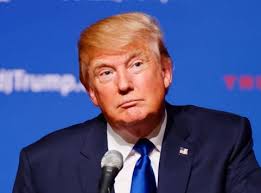
Donald Trump
He attacked the news media:
- “A certain anchor on CNN …fake as hell CNN, the, fake as hell CNN, the worst, so fake, fake news.”
- “NBC is perhaps worst than CNN, I have to tell you. And MSNBC is horrible.”
He salivated at running in 2020 against Oprah Winfrey:
- “I’d love to beat Oprah. I know her weakness.” (But he never said what that was.)
He ridiculed the belief that a President should act in a dignified manner:
- “Remember how easy it is to be presidential? But you’d all be out of here right now. You’d be so bored.”
He celebrated his election as President in 2016:
- “One of the greatest nights in the history of television in terms of people watching.” (He didn’t say his win was good for the country, just that it was a great night in television history.)
- “Remember they said 270, you cannot—remember the famous 270? [The number needed to claim victory in the Electoral College.] He cannot win the election because he cannot get above 270.”
After praising his wife, Melania, for serving on a blue ribbon commission on the opioid addiction problem, he said blue ribbon commissions were useless:
- “We can’t just keep setting up blue ribbon committees with your wife and your wife and your husband, and they meet and they have a meal and they talk.”
He bragged about his academic record:
- “And, you know, I went to the Wharton School of Finance. That’s a great school. The best business school, I think.”
- “I went to school. I went to Wharton. I went to school here.”
He pathetically asked the audience to show that they loved him:
- “But you like me? I think so, right? I like you, too. I love you.”
- “Did I do a good job? Atlanta?” (He is referring to the Republican victory in Georgia’s Sixth District special election in 2017.)
He attacked fellow celebrities for not succeeding on TV:
- “Arnold Schwarzenegger failed when he did the show [The Apprentice] and he was a movie star. Martha Stewart failed.”
He praised his own appearance:
- “I hear he’s [Conor Lamb, the Democratic candidate running against Rick Saccone] better looking. I think I’m better looking than him. I do. I do.”
He attacked California’s Democratic Representative Maxine Waters:
- “She’s a low IQ individual. She can’t help it.” (He implies that she criticizes him because she’s stupid.)
He made a pitch for the women’s vote:
- “Women, women, we love you, we love you.” (This is dangerous territory for Trump. He has a long history of making improper advances toward women, if not actually assaulting them.
- (During the 2016 Presidential race, a leaked 2005 Access Hollywood tape revealed him saying that, as a celebrity, he could do anything with women: “Grab ’em by the pussy.”
- (Finally, he is now locked in a legal war with porn star Stormy Daniels, who claims she had a tryst with in 2006—just months after Melania gave birth to his son, Barron.)
He insulted Massachusetts’ United States Senator Elizabeth Warren, who has been highly critical of him:
- “I was watching, during the campaign, and Hillary was sitting right there, and Pocahontas was up, she was so angry, you know, I think she’s losing the audience.”
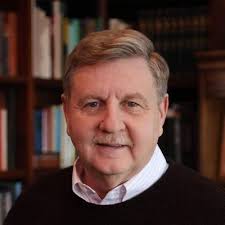
Rick Saccone
* * * * *
Trump rambled on—unscripted—for more than an hour, barely mentioning Rick Saccone—the man he had supposedly come to support. At the end, Trump handed him the microphone and invited him to say a few words.
By the end of The Caine Mutiny, Stephen Maryk is acquitted of mutiny. Captain Queeg is presumably relieved of future commands.
By the end of President Trump’s bizarre and frightening campaign speech, it’s clear that America faces an uncertain and dangerous future.
ABC NEWS, ALTERNET, BUZZFEED, CBS NEWS, CNN, DAILY KOS, DONALD TRUMP, FACEBOOK, HERMAN WOUK, HOUSE OF REPRESENTATIVES, HUMPHREY BOGART, JOSE FERRER, MOTHER JONES, MOVEON, NBC NEWS, NEWSWEEK, NPR, PENNSYLVANIA, POLITICO, RAW STORY, RICK SACCONE, SALON, SLATE, THE CAINE MUTINY, THE CHICAGO SUN-TIMES, THE CHICAGO TRIBUNE, THE DAILY BEAST, THE HUFFINGTON POST, THE LOS ANGELES TIMES, THE NEW YORK TIMES, THE WALL STREET JOURNAL, THE WASHINGTON POST, TIME, TWITTER, U.S. NEWS & WORLD REPORT, USA TODAY, VAN JOHNSON
In Bureaucracy, Entertainment, History, Politics, Social commentary on March 13, 2018 at 12:03 am
Watching President Donald Trump’s campaigning for Pennsylvania State Representative Rick Saccone, some viewers might have flashed back to the climatic scene in the 1954 movie, The Caine Mutiny.
On March 10, Trump appeared at a rally for Saccone, who is campaigning in a special election for a Republican seat in the United States House of Representatives.
In 2016, Trump carried the 18th congressional district by 20 points. But now his favored candidate is fighting for his political life against Democrat Conor Lamb.
Nationwide, Republicans fear that if Saccone loses in the heart of “Trump country,” this could be a prelude to massive rejections by voters in November.
How did this come to be? Let’s start with The Caine Mutiny.
Based on Herman Wouk’s bestselling novel, it centers on the minesweeper USS Caine. Stationed in the Pacific during World War II, its captain is by-the-book Lt. Commander Philip Francis Queeg (Humphrey Bogart).
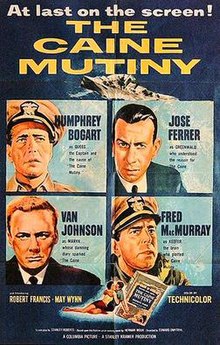
Movie poster for “The Caine Mutiny”
Queeg intends to restore a sense of discipline to the ship’s lax seamen. But he can’t admit mistakes, and his bullying approach to command alienates both officers and crew.
Soon after, a typhoon overtakes the Caine. Queeg becomes paralyzed with fear. His executive officer, Steve Maryk (Van Johnson), relieves the captain of command to prevent the loss of the ship. Maryk turns the Caine into the wind and rides out the storm.
Maryk is tried by court-martial for mutiny. His case looks hopeless: Queeg has been found sane by three Navy psychiatrists.
Naval Prosecutor Lt. Commander John Challee depicts Maryk as a reckless mutineer. And Queeg portrays himself as the persecuted victim of a malignant conspiracy by his own officers.
Knowing that Queeg reacts badly to stress, Maryk’s attorney, Lt. Barney Greenwald (Jose Ferrer) relentlessly cross-examines him:
GREENWALD: Were all your officers disloyal?
QUEEG: I didn’t say that. Only some were disloyal.
GREENWALD: Mr Keith and Mr Maryk?
QUEEG: Yes.
GREENWALD: Did you turn your ship upside down searching for a phantom key?
QUEEG: I don’t know what lies have been sworn to here, but a key definitely did exist.
PROSECUTOR LT. COMMANDER JOHN CHALLEE: The witness is understandably agitated. I request a recess.
QUEEG: I don’t want a recess. I’ll answer all questions right here and now.
GREENWALD: Did you conduct such a search?
QUEEG: Yes, I did. My disloyal officers failed me, and the key couldn’t be found.
GREENWALD: Wasn’t this whole fuss over a quart of strawberries?
QUEEG: The pilfering of food in large amounts or small is a very serious occurrence on board a ship.
GREENWALD: You were told that the mess boys ate the berries. There was no key.
QUEEG: The key was not imaginary. I don’t know anything about mess boys eating strawberries.
GREENWALD: Have you no recollection of a conversation with Ensign Harding? Didn’t he tell you that the mess boys ate the strawberries?
QUEEG: I remember he was grateful for his transfer.
GREENWALD: Do you know where Ensign Harding is now? He’s in San Diego. He can be flown up here in three hours if necessary. Would it serve any useful purpose to have him testify?
QUEEG: Now, there’s no need for that.
[He reaches into the pocket of his Navy coat and removes two little steel balls, which he rolls together whenever he feels under stress. He starts rolling them together now and continues to do so throughout the rest of the proceeding.]
Humphrey Bogart as Captain Philip Francis Queeg
Now that I recall, he might have said something about mess boys. I questioned many men, and Harding was not the most reliable officer.
GREENWALD: The defense has no other recourse than to produce Ensign Harding.
QUEEG: Now, there’s no need for that. I know exactly what he’ll tell you–lies. He was no different from any other officer in the wardroom. They were all disloyal. I tried to run the ship properly, by the book, but they fought me at every turn. If the crew wanted to walk around with their shirt-tails out, let them. Take the tow line–defective equipment.
But they began spreading wild rumors about steaming in circles. And then “Old Yellowstain.” I was to blame for Maryk’s incompetence and poor seamanship. Lt. Maryk was the perfect officer, but not Queeg.
But the strawberries, ah, that’s where I had them. They laughed at me and made jokes. But I proved beyond a shadow of a doubt and with geometric logic that a duplicate key to the wardroom icebox did exist. I could have produced that key if they hadn’t pulled the Caine out of action. I know now they were only trying to protect some fellow officer.
Naturally, I can only cover these things from memory. If I’ve left anything out, just ask me specific questions and I’ll be glad to answer them one by one.
[The courtroom falls silent–except for the tinkling of the steel balls that Queeg keeps rolling in his right hand. The judges stare at him as he does so. They say nothing, but it’s clear they know they’re looking at a man at the end of his sanity–and naval career.]
GREENWALD: No further questions, sir.
Maryk is acquitted.
* * * * *
So much for fiction. Now for the terrifying reality.
ABC NEWS, ALTERNET, AP, BUZZFEED, CBS NEWS, CNN, CROOKS AND LIARS, DAILY KOZ, DONALD TRUMP, FACEBOOK, FRED ZINNEMANN, GARY COOPER, GRACE KELLY, HIGH NOON, JOSEPH R. MCCARTHY, MOTHER JONES, MOVEON, NBC NEWS, NEWSWEEK, NPR, POLITICO, RAW STORY, REPUBLICANS, REUTERS, SALON, SEATTLE TIMES, SLATE, THE ATLANTIC, THE CHICAGO SUN-TIMES, THE CHICAGO TRIBUNE, THE DAILY BEAST, THE GUARDIAN, THE HILL, THE HUFFINGTON POST, THE LOS ANGELES TIMES, THE NATION, THE NEW YORK TIMES, THE WASHINGTON POST, TIME, TWITTER, U.S. NEWS & WORLD REPORT, UP, UPI, USA TODAY
In Bureaucracy, Entertainment, History, Law Enforcement, Politics, Social commentary on February 12, 2018 at 12:25 am
On August 30, 2017, an article in Salon sought to explain why President Donald Trump was so popular among his supporters.
Its headline ran: “Most Americans Strongly Dislike Trump, But the Angry Minority That Adores Him Controls Our Politics.”
It described these voters as representing about one-third of the Republican party:
“These are older and more conservative white people, for the most part, who believe he should not listen to other Republicans and should follow his own instincts….
“They like Trump’s coarse personality, and approve of the fact that he treats women like his personal playthings. They enjoy it when he expresses sympathy for neo-Nazis and neo-Confederate white supremacists.
“They cheer when he declares his love for torture, tells the police to rough up suspects and vows to mandate the death penalty for certain crimes. (Which of course the president cannot do.)
“…This cohort of the Republican party didn’t vote for Trump because of his supposed policies on trade or his threat to withdraw from NATO. They voted for him because he said out loud what they were thinking. A petty, sophomoric, crude bully is apparently what they want as a leader.”
Donald Trump
According to a Pew Research Center survey, they only comprise 16% of the population. That leaves 65% of Republicans who are revolted by Trump’s personality and behavior.
But they are being advised by GOP political consultants to vigorously support him.
“Your heart tells you that he’s bad for the country,” one anonymous consultant told the Salon reporter. “Your head looks at polling data among Republican primary voters and sees how popular he is.”
It’s precisely these hard-core Fascists who come out in mid-term elections—and they’re scaring the remaining 65% who make up the GOP establishment.
Their highest priority, after all, is to hold onto their privileged positions in the House and Senate. And anything that might jeopardize that—including what’s best for the country—can go hang.
Perhaps it’s time for Republicans to remember the lesson taught by High Noon, the classic 1952 Western starring Gary Cooper and Grace Kelly.

Town marshal Will Kane (Cooper) has just marred Amy Fowler (Kelly) a Quaker. It should be the happiest day of his life. But shortly after the ceremony, word comes that Frank Miller—a notorious murderer Kane once sent to prison—has been released.
Even worse, Miller and three other killers are coming into town on the noon train—to kill Kane.
Kane’s first instinct is to flee: He and his wife get into a buggy and dash out of town. But then his sense of duty takes over. He returns to town, intending to recruit a posse.
But this proves impossible—everyone is scared to death of Miller and his gang. And everyone Kane approaches has a reason for not backing him up.
Even Amy—a fervent believer in non-violence—threatens to leave him if he stands up to Miller. She will be on the noon train leaving town—with or without him.
When the clock strikes noon, the train arrives, and Kane—alone—faces his enemies. He shoots and kills two of them.
Then, as he’s pinned down by the third, he gets some unexpected help—from his wife: Amy shoots the would-be killer in the back—only to be taken hostage by Miller himself.
Miller tells Kane to leave his concealed position or he’ll kill Amy. Kane steps into the open—and Amy claws at Miller’s face, buying Kane the time he needs to shoot Miller down.
It’s over.
At that point, the townspeople rush to embrace Kane and congratulate him. But he’s now seen them for the cowards they are and holds them in total contempt.
Saying nothing, he drops the marshal’s star into the dirt. He and Amy then get into a buggy and leave town.
Fred Zinnemann, the film’s director, intended the movie as an attack on those frightened into silence by Joseph McCarthy, the infamous Red-baiting Senator from Wisconsin.
Gary Cooper won a Best Actor Academy Award for his performance.
Today’s Republicans would do well to find the same courage as Will Kane—and choose love of country over love of self.
Human nature being what it is, that is highly unlikely to happen.
ABC NEWS, ALTERNET, AP, BUZZFEED, CBS NEWS, CLASS WARFARE, CNN, CROOKS AND LIARS, DAILY KOZ, DANA CARVEY, DICK CHENEY, ECONOMIC DISPARITY, FACEBOOK, FRANK CAPRA, GEORGE BAILEY, HENRY F. POTTER, IT'S A WONDERFUL LIFE, JAMES STEWART, LIONEL BARRYMORE, MOTHER JONES, MOVEON, MOVIES, NBC NEWS, NEWSWEEK, NPR, POLITICO, RAW STORY, REUTERS, SALON, SATURDAY NIGHT LIVE, SEATTLE TIMES, SLATE, THE ATLANTIC, THE CHICAGO SUN-TIMES, THE CHICAGO TRIBUNE, THE DAILY BEAST, THE GUARDIAN, THE HILL, THE HUFFINGTON POST, THE LOS ANGELES TIMES, THE NATION, THE NEW Y ORK TIMES, THE NEW YORK TIMES, THE WASHINGTON POST, TIME, TWITTER, U.S. NEWS & WORLD REPORT, UNEMPLOYMENT, UPI, USA TODAY
In Business, Entertainment, Law, Law Enforcement, Politics, Social commentary on December 25, 2017 at 12:01 am
Every Christmas, TV audiences find comfort and triumph in the rerunning of a black-and-white 1946 movie: It’s a Wonderful Life.
It’s the story of George Bailey (James Stewart), a decent husband and father who hovers on the brink of suicide—until his guardian angel, Clarence, suddenly intervenes.

Clarence reveals to George what his home town, Bedford Falls, New York, would be like if he had never been born. George finds himself shocked to learn:
- With no counterweight to the schemes of rapacious slumlord Henry F. Potter, Bedford Falls becomes Potterville, filled with pawn shops and sleazy nightclubs.
- With no George Bailey to save his younger brother, Harry, from drowning in a frozen pond, Harry drowns.
- With no Harry to live to become a Naval fighter pilot in World War II, he’s not on hand to shoot down two Japanese planes targeting an American troopship.
- As a result, the troopship and its crew are destroyed.
George is forced to face the significant role he has played in the lives of so many others.
Armed with this knowledge, he once again embraces life, running through the snow-covered streets of Bedford Falls and shouting “Merry Christmas!” to everyone he meets.
Audiences have hailed George Bailey as an Everyman hero—and the film as a life-affirming testament to the unique importance of each individual.
But there is another aspect of the movie that has not been so closely studied: The legacy of its villain, Henry F. Potter, who, as played by Lionel Barrymore, bears a striking resemblance to former Vice President Dick Cheney.

Henry F. Potter
It is Potter—the richest man in Bedford Falls—whose insatiable greed threatens to destroy it. And it is Potter whose criminality drives George Bailey to the brink of suicide.
The antagonism between Bailey and Potter starts early in the movie. George dreams of leaving Bedford Falls and building skyscrapers. Meanwhile, he works at the Bailey Building and Loan Association, which plays a vital role in the life of the community.
Potter, a member of the Building and Loan Association board, tries to persuade the board of directors to dissolve the firm. He objects to their providing home loans for the working poor.
George persuades them to reject Potter’s proposal, but they agree only on condition that George run the Building and Loan. Reluctantly, George agrees.
Later, Potter tries to lure George away from the Building and Loan, offering him a $20,000 salary and the chance to visit Europe. George is briefly tempted.
But then he realizes that Potter intends to close down the Building and Loan and deny financial help to those who most need it. Angrily, he turns down Potter’s offer:
“You sit around here and you spin your little webs and you think the whole world revolves around you and your money. Well, it doesn’t, Mr. Potter!
“In the whole vast configuration of things, I’d say you were nothing but a scurvy little spider.”
It is a setback for Potter, but he’s willing to bide his time for revenge.
On Christmas Eve morning, the town prepares a hero’s welcome for George’s brother, Harry. George’s scatter-brained Uncle Billy visits Potter’s bank to deposit $8,000 of the Building and Loan’s cash funds.
He taunts Potter by reading the newspaper headlines announcing the coming tribute. Potter snatches the paper, and Billy unthinkingly allows the money to be snatched with it.
When Billy leaves, Potter opens the paper and sees the money. He keeps it, knowing that misplacement of bank money will bankrupt the Building and Loan and bring criminal charges against George.
But at the last minute, word of George’s plight reaches his wide range of grateful friends. A flood of townspeople arrive with more than enough donations to save George and the Building and Loan.
The movie ends on a triumphant note, with George basking in the glow of love from his family and friends.
But no critic seems to have noticed that Henry Potter’s theft has gone unnoticed. (Uncle Billy can’t recall how he lost the money.) Potter is richer by $8,000. And ready to go on taking advantage of others.
Perhaps it’s time to see Potter’s actions in a new light—that of America’s richest 1%, ever ready to prey upon the weaknesses of others.
Justice never catches up with Potter in the movie. But the joke-writers at Saturday Night Live have conjured up a satisfactory punishment for his avarice.
In this version, Uncle Billy suddenly remembers that he left the money with Potter. Enraged, George Bailey (Dana Carvey) leads his crowd of avenging friends to Potter’s office.
Potter realizes the jig is up and offers to return the money. But George wants more than that—and he and his friends proceed to stomp and beat Potter to death.
The skit ends with with George and his friends singing “Auld Ang Syne”—as they do in the movie—as they finish off Potter with clubs.
America is rapidly a divided nation—one where the richest 1% lord it over an increasingly impoverished 99%.
The time may be coming when many Americans are ready to embrace the SNL approach to economic justice.
9/11 ATTACKS, ABC NEWS, ALTERNET, AP, ARTHUR M. CUMMINGS, BOSTON GLOBE, BOSTON MARATHON, BOSTON MARATHON BOMBING, BOSTON PATCH, BRUSSELS BOMBINGS, BUZZFEED, CBS NEWS, CNN, CROOKS AND LIARS, DAILY KOZ, DONALD TRUMP, FACEBOOK, FBI, FIRST AMENDMENT, FRANKLIN D. ROOSEVELT, ISIS, ISLAM, ISLAMIC TERRORISM, JIHADIST, MOTHER JONES, MOVEON, NAZI GERMANY, NBC NEWS, NEWSWEEK, NPR, PARIS TERRORIST ATTACKS, POLITICAL CORRECTNESS, POLITICO, RADICAL ISLAM, RAW STORY, REUTERS, SALON, SAMUEL P. HUNTINGTON, SAN BERNARDINO MASSACRE, SEATTLE TIMES, SECURITY, SLATE, STEVEN EMERSON, THE ATLANTIC, THE CHICAGO SUN-TIMES, THE CHICAGO TRIBUNE, THE CLASH OF CIVILIZATIONS AND THE REMAKING OF WORLD ORDER, THE DAILY BEAST, THE GUARDIAN, THE HILL, THE HUFFINGTON POST, THE LOS ANGELES TIMES, THE NATION, THE NEW YORK TIMES, THE WASHINGTON POST, TIME, TWITTER, U.S. NEWS & WORLD REPORT, UP, UPI, US NEWS, USA TODAY, WORLD WAR 11
In Bureaucracy, Entertainment, History, Law, Law Enforcement, Military, Politics, Social commentary on November 3, 2017 at 12:13 am
Islamics are quick to assert that they, too, are Americans. But getting Islamics to point out the terrorists within their ranks is an entirely different matter.
According to author Ronald Kessler, this has caused serious problems for the FBI. In his 2011 book, The Secrets of the FBI, Kessler notes the refusal of the Islamic community to identify known or potential terrorists within its ranks.
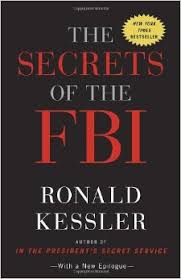
Says Arthur M. Cummings, the Bureau’s executive assistant director for national security: “I had this discussion with the director of a very prominent Muslim organization here in [Washington] D.C. And he said, ‘Why are you guys always looking at the Muslim community?’”
“I can name the homegrown cells, all of whom are Muslim, all of whom were seeking to kill Americans,” replied Cummings. “It’s not the Irish, it’s not the French, it’s not the Catholics, it’s not the Protestants. It’s the Muslims.”
Occasionally, Muslims will condemn Al Qaeda. But “rarely do we have them coming to us and saying, ‘There are three guys in the community that we’re very concerned about.’” said Cummings.
“They don’t want anyone to know they have extremists in their community. Well, beautiful. Except do you read the newspapers? Everybody already knows it. The horse has left the barn.
“So there’s a lot of talk about engagement. But, realistically, we’ve got a long, long way to go.”
At one community meeting, an Islamic leader suggested to Cummings that then-FBI director Robert Meuller III should pose for a picture with his group’s members. The reason: To show that Islamics are partners in the “war on terror.”
“When you bring to my attention real extremists who are here to plan and do something, who are here supporting terrorism,” said Cummings, “then I promise you, I will have the director stand up on the stage with you.”
“That could never happen,” replied the Islamic leader. “We would lose our constituency. We could never admit to bringing someone to the FBI.”
Cummings has no use for such Politically Correct terms as “man-caused disasters” to refer to terrorism. Nor does he shy away from terms such as “jihadists” or “Islamists.”
“Of course Islamists dominate the terrorism of today,” he says bluntly.
In May, 2014, Steven Emerson, a nationally recognized expert on terrorism, posted an ad in The New York Times, warning about the dangers of PC-imposed censorship:
“Our nation’s security and its cherished value of free speech has been endangered by the bullying campaigns of radical Islamic groups, masquerading as ‘civil rights’ organizations, to remove any reference to the Islamist motivation behind Islamic terrorist attacks.
“These groups have pressured or otherwise colluded with Hollywood, the news media, museums, book publishers, law enforcement and the Obama Administration in censoring the words ‘Islamist’, ‘Islamic terrorism’, ‘radical Islam’ and ‘jihad’ in discussing or referencing the threat and danger of Islamic terrorism.
“This is the new form of the jihadist threat we face. It’s an attack on one of our most sacred freedoms—free speech—and it endangers our very national security. How can we win the war against radical Islam if we can’t even name the enemy?”
He has a point—and a highly legitimate one.
Imagine the United States fighting World War II—and President Franklin Roosevelt banning the use of “fascist” in referring to Nazi Germany or “imperialist” in describing Imperial Japan.
Imagine CNN-like coverage of the Nazi extermination camps, with their piles of rotting corpses and smoking gas ovens, while a commentator reminds us that “Nazism is an ideology of peace.”
Then try to imagine how the United States could have won that life-and-death struggle under such unrealistic and self-defeating restrictions.
It couldn’t have done so then. And it can’t do so now.
Then consider these Islamic terrorist outrages of our own time:
- The 9/11 attacks on the World Trade Center in New York City and the Pentagon in Washington, D.C., which snuffed out the lives of 3,000 Americans.
- The 2004 bombing of Madrid’s commuter train system.
- The attack on the London subway in 2005. The killing of 13 U.S. Army personnel at Fort Hood, Texas, by a Muslim army major in 2009.
- The bombing of the Boston Marathon in 2013.
- The kidnapping of 300 Nigerian school girls by Boko Haram in 2014.
- The slaughter of 12 people at a Paris satirical magazine that had published cartoons about the Prophet Mohammed in 2015.
- The slaughter of more than 100 people in ISIS attacks across Paris in 2015.
- A series of deadly terrorist attacks in Brussels, killing 31 and injuring 270 in 2016.
- The mashing of eight bicyclists and pedestrians by a truck-driving ISIS supporter in 2017.
In every one of these attacks, the perpetrators openly announced that their actions had been motivated by their Islamic beliefs.
In his groundbreaking book, The Clash of Civilizations (1996) Samuel Huntington, the late political scientist at Harvard University, noted:
“The fundamental problem for the West is not Islamic fundamentalism. It is Islam, a different civilisation whose people are convinced of the superiority of their culture and are obsessed with the inferiority of their power.”
The West may not be at war with Islam—as countless Western politicians repeatedly assert. But Islamics have no qualms about declaring that they are at war with the West.
9/11 ATTACKS, ABC NEWS, ALTERNET, AP, ARTHUR M. CUMMINGS, BOSTON GLOBE, BOSTON MARATHON, BOSTON MARATHON BOMBING, BOSTON PATCH, BRUSSELS BOMBINGS, BUZZFEED, CBS NEWS, CNN, CROOKS AND LIARS, DAILY KOZ, DONALD TRUMP, FACEBOOK, FBI, FIRST AMENDMENT, FRANKLIN D. ROOSEVELT, ISIS, ISLAM, ISLAMIC TERRORISM, JIHADIST, MOTHER JONES, MOVEON, NAZI GERMANY, NBC NEWS, NEWSWEEK, NPR, PARIS TERRORIST ATTACKS, POLITICAL CORRECTNESS, POLITICO, RADICAL ISLAM, RAW STORY, REUTERS, SALON, SAMUEL P. HUNTINGTON, SAN BERNARDINO MASSACRE, SEATTLE TIMES, SECURITY, SLATE, STEVEN EMERSON, THE ATLANTIC, THE CHICAGO SUN-TIMES, THE CHICAGO TRIBUNE, THE CLASH OF CIVILIZATIONS AND THE REMAKING OF WORLD ORDER, THE DAILY BEAST, THE GUARDIAN, THE HILL, THE HUFFINGTON POST, THE LOS ANGELES TIMES, THE NATION, THE NEW YORK TIMES, THE WASHINGTON POST, TIME, TWITTER, U.S. NEWS & WORLD REPORT, UP, UPI, US NEWS, USA TODAY, WORLD WAR 11
In Bureaucracy, Entertainment, History, Law, Law Enforcement, Military, Politics, Social commentary on November 2, 2017 at 12:12 am
The 2016 Boston Marathon was scheduled for April 18, 2016.
And local, State and Federal law enforcement authorities had been planning security for the event since October, 2015.
So it was only natural that these agencies wanted the public to know the Marathon would be as safe as more than 5,000 law enforcement officers could make it.

The Boston Marathon
“‘Leave the worrying to us’: Security Ramped Up for Boston Marathon,” read the headline of the April 16 issue of USA Today.
And it gave the reason for this: Three years earlier, on April 15, 2013, two bombers had wreaked havoc at the finish line of the race.
It also named the bombers—brothers Dzhokhar and Tamerlan Tsarnaev—whose terrorist act killed three people and injured about 264 others.

Tamerlan and Dzhokhar Tsarnaev
It further noted that Tamerlan had died in a shootout with police three days after the marathon–and police had captured Dzhohkar several hours later. (He was convicted by a jury and sentenced to death.)
But the story said nothing about their citing Islam as the reason for their murderous rampage.
Click here: ‘Leave the worrying to us’: Security ramped up for Boston Marathon
The April 16 edition of The Boston Patch carried this headline: “Boston Marathon 2016: Security Changes You Can’t See All Around You.”
The article stated that most of these precautions couldn’t be revealed. Then it added that even though law enforcement officials hadn’t identified a credible threat to this year’s Boston Marathon, “recent events make the world feel less safe today than in 2013.”
But the article said nothing about those “recent events,” such as:
- In 2013, two Muslims butchered and beheaded a British soldier on a busy London street.
- In 2014, an ax-wielding Muslim slashed two New York police officers before being shot by other cops.
- In 2015, Muslims slaughtered 12 people at a Paris satirical magazine for publishing cartoons about the Prophet Mohammed.
- In 2015, more than 100 people were murdered in ISIS attacks across Paris.
- In 2016, a series of Islamic terrorist bombings in Brussels killed 31 and injured more than 300.
Nor did the story say that all of these “recent events” were carried out by followers of the Islamic religion. Or that the perpetrators openly announced that their actions had been motivated by their Islamic beliefs.
Click here: Brussels attacks add urgency to Boston Marathon security | US News
On April 6, 2016, The Boston Globe announced: “Tight Security Planned for Upcoming Boston Marathon.”
The story noted that, in drawing up their security arrangements, “authorities analyzed terrorist attacks in Paris, San Bernardino, Calif., and Brussels in recent months.”
The San Bernardino attack had occurred on December 2, 2015.
The story said that Syed Rizwan Farook and Tashfeen Malik, had slaughtered 14 people and wounded 22 at a Department of Public Health training event and birthday party.
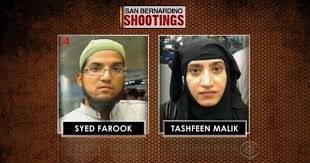
Tashfeen Malik and Syed Rizwan Farook
But the article did not inform readers that Farook and Malik were Muslims acting in the name of Islam.
The story quoted Harold Shaw, special agent in charge of the FBI’s Boston Field Office, as saying: “San Bernardino taught us something very significant. They [the killers] were not on the radar.”
But the article omitted “something very significant”: Farook and Malik had melded perfectly into American society before their outrage.
Thus, the only factor that could have put them “on the radar” as potential terrorists was their being Muslims.
And in an America driven by Political Correctness, noting that would have been verboten.
Click here: Tight security planned for upcoming Boston Marathon – The Boston Globe
NBC News carried a story on “How the Boston Marathon is Using Security Technology.”
The story then described how police used a high-tech partner, Esri, to track, in real-time, the progress of the morning’s race.
“When you look [at] security, there’s three legs to the stool: People, process and technology,” said Arnette Heintze, CEO and co-founder of Hillard Heintze, an investigation and security risk management company.
Click here: How the Boston Marathon is Using Security Technology – NBC News
Yet for all the gushing kudos leveled at the new uses of sophisticated technology for keeping people safe, one thing was conspicuously ignored.
The opening paragraph, “Three years after a deadly bombing at the Boston Marathon….” left unnamed those had made the use of this technology necessary–Tamerlan and Dzhokhar Tsarnaev.
Nor did it mention that Dzhokhar had laid out, in a note, his reason for attacking innocent men and women: “We Muslims are one body, you hurt one you hurt us all.
“Well at least that’s how Muhammed wanted it to be forever. The ummah [Islamic community] is beginning to rise.
“Know you are righting men who look into the barrel of your gun and see heaven, how how can you compete with that. We are promised victory and will surely get it.”
Click here: Text from Dzhokhar Tsarnaev’s note left in Watertown boat – The Boston Globe
Of all the Democratic and Republican Presidential candidates in 2016, only Donald Trump dared to say the politically un-sayable: Islam is at war with us.
And this candor—coupled with repeated Islamic atrocities—gained him both the Republican nomination and the White House.


 Bureaucracybuster's Blog
ABC NEWS, ALTERNET, AMERICABLOG, AP, BABY BOOMER RESISTANCE, BUZZFEED, CANDICE BERGIN, CBS NEWS, CNN, CROOKS AND LIARS, DAILY KOZ, DRUDGE RETORT, ENGLAND, FACEBOOK, FIVETHIRTYEIGHT, FRANCE, GERMANY, HARPER’S MAGAZINE, ISRAEL, JAPAN, JOHN MILIUS, MEDIA MATTERS, MOROCCO, MOTHER JONES, MOVEON, MOVIES, MSNBC, NBC NEWS, NEWSWEEK, NPR, PBS NEWSHOUR, POLITICO, POLITICUSUSA, RAW STORY, REUTERS, SALON, SEAN CONNERY, SEATTLE TIMES, SLATE, TALKING POINTS MEMO, THE ATLANTIC, THE CHICAGO SUN-TIMES, THE CHICAGO TRIBUNE, THE DAILY BEAST, THE DAILY BLOG, THE GUARDIAN, THE HILL, THE HUFFINGTON POST, THE LOS ANGELES TIMES, THE NATION, THE NEW REPUBLIC, THE NEW YORK TIMES, THE VILLAGE VOICE, THE WALL STREET JOURNAL, THE WASHINGTON POST, THE WIND AND THE LION, THEODORE ROOSEVELT, THINKPROGRESS, TIME, TRUTHDIG, TRUTHOUT, TWITTER, TWO POLITICAL JUNKIES, U.S. NEWS & WORLD REPORT, UPI, USA TODAY, USA TODAY ABC NEWS, WONKETTE, WORLD WAR ii, WORLD WAR l, YELLOWSTONE NATIONAL PARK
FROM “BIG STICK” TO “BIG MOUTH”
In Entertainment, History, Military, Politics, Social commentary on May 18, 2018 at 1:12 amThere is a poignant scene in the middle of John Milius’ classic 1975 adventure film, The Wind and the Lion, that Americans would do well to remember.
The movie is set in 1904 America and Morocco. An American woman, Eden Pedicaris (Candice Bergen) and her two children have been kidnapped while vacationing in Tangier.
The kidnapper is a Berber brigand named Mulai Ahmed el Raisuli (Sean Connery—then successfully trying to shed his recent James Bond image).
To Raisuli, the Sultan and his uncle, the Pasha of Tangier, are corrupt and beholden to the European powers struggling to control Morocco.
Raisuli issues an outrageous ransom demand to provoke an international incident, embarrass the Sultan and start a civil war.
In the United States, President Theodore Roosevelt (Brian Keith) is running for re-election. He sees the crisis as a way to win votes and demonstrate America’s military strength as a new power.
So he issues a demand of his own: “Pedicarus alive—or Raisuli dead!”
While events rapidly spiral out of control in the Middle East, Roosevelt decides to vacation in Yellowstone National Park.
One night, a grizzly bear attacks the camp and is shot by Roosevelt and several other campers. The next morning, Roosevelt holds an imprumptu press conference for the reporters who have accompanied him.
Brian Keith (left) as Theodore Roosevelt
REPORTER: Did you take part in killing the grizzly, Mr. President?
ROOSEVELT: Yes, unfortunately.
REPORTER: Why do you say, ‘unfortunately,’ Mr. President?
ROOSEVELT: The American grizzly is a symbol of the American character: strength, intelligence, ferocity. Maybe a little blind and reckless at times, but courageous beyond all doubt. And one other trait that goes with all previous.
REPORTER: And that, Mr. President?
ROOSEVELT: Loneliness. The American grizzly lives out his life alone. Indomitable, unconquered—but always alone. He has no real allies, only enemies, but none of them as great as he.
REPORTER: And you feel this might be an American trait?
ROOSEVELT: Certainly. The world will never love us. They respect us—they might even grow to fear us. But they will never love us, for we have too much audacity! And, we’re a bit blind and reckless at times, too.
REPORTER: Are you perhaps referring to the situation in Morocco and the Panama Canal.
ROOSEVELT: If you say so. The American grizzly embodies the spirit of America. He should be our symbol! Not that ridiculous eagle—he’s nothing more than a dandified vulture.
When the Pasha of Tangier refuses to negotiate with Raisuli to secure the return of Pedecaris, the American Consul to Tangier, Samuel Gummere, decides on action. He confers with Admiral Chadwick, commanding the South Atlantic Squadron, and a Marine captain named Jerome.
Gummere then orders a company of Marines, supported by a small detachment of sailors, to seize the Pasha. But then he admits to the riskiness of the decision:
GUMMERE: You realize, of course, that if we fail in even the slightest way, we’ll all be killed.
CHADWICK: Yes, and the whole world will probably go to war.
JEROME: Gentlemen, if we fail and are killed, I certainly hope the world does go to war.
CHADWICK: A world ar war!
GUMMERE: A world war. Now that would be something to go out on.
In just ten years, they will get their hearts’ desire when World War 1 erupts.
The Marines quickly overwhelm the Pasha’s palace guard, take the Pasha hostage and force him to negotiate.
During the hostage exchange, Raisuli is betrayed and captured by German and Moroccan troops. His friend, the Sherif of Wazan, organizes the Berber tribe for an attack on the Europeans and their Moroccan lackeys.
Eden Pedecaris, who has grown to admire Raisuli, convinces a Marine captain and his men to rescue the Berber chieftain. She argues that President Roosevelt had promised that Raisuli would be unharmed if the Pedecarises were returned safely.
The Berbers and Marines team up to defeat the Germans and their Moroccan allies, rescuing Raisuli in the process.
Thirteen years later—in 1917—the United States will officially take on the Germans in World War 1. And in another 37 years—in 1941—America will again declare war on Germany.
The film ends with a confident Theodore Roosevelt expecting (accurately) to be re-elected—and telling reporters that “the fate of Morocco will be decided tomorrow by me.”
The Wind and the Lion is set in an era when
As complex and dangerous as that era often seemed to those living more than 100 years ago, it has been succeeded by one even more complex and dangerous.
In this new and even more lethal era, it is well to remember Theodore Roosevelt’s warning that “we’re a bit blind and reckless at times, too.”
Share this: