Archive for July, 2024|Monthly archive page
1984 NOVEL, 2020 PRESIDENTIAL ELECTION, ABC NEWS, ADOLF HITLER, AFFORDABLE HEALTHCARE ACT, ALCOHOLISM, ALTERNET, ALVIN BRAGG, AMERICABLOG, ANDREW CLYDE, ANN COULTER, AP, ARIZONA, ARIZONA SHOOTINGS, ASHLI BABBITT, ASSASSINATION, BABY BOOMER RESISTANCE, BARACK OBAMA, BARRON TRUMP, BBC, BILL CLINTON, BIRTHERS, BLACKS, BLOOMBERG NEWS, BUZZFEED, CBS NEWS, CHILD MOLESTERS, CHRISTINA-TAYLOR GREEN, CLASSIFIED DOCUMENTS, CNN, CONFEDERATE FLAG, COVID-19, CROOKS AND LIARS, CVS, DAILY KOS, DEMOCRATIC PARTY, DEMOCRATS, DENNIS HASTERT, DEVIN NUNES, DICK ARMEY, DICK MORRIS, DONALD TRUMP, FAMILY RESEARCH COUNCIL, FANNI WILLIS, FBI, FIVETHIRTYEIGHT, FRANKLIN D. ROOSEVELT, GABRIELLE GIFFORDS, GAYS, GEORGE H.W. BUSH, GEORGE ORWELL, GEORGE W. BUSH, GLENN BECK, HARPER’S MAGAZINE, HARRY S. TRUMAN, HATE CRIMES, HEALTHCARE, HISPANICS, HOUSE OVERSIGHT COMMITTEE, HUFFINGTON POST, JACK SMITH, JAN BREWER, JANUARY 6 COUP ATTEMPT, JGB BUSH, JIM JORDAN, JOSEPH MCCARTHY, JOSEPH R. BIDEN, JOSEPH STALIN, JOSH DUGGAR, KANSAS, LAUREN BOEBERT, LESBIANS, LOS ANGELES, MARJORIE TAYLOR GREEN, MATT GAETZ, MEDIA MATTERS, MEIN KAMPF, MELANIA TRUMP, MICHAEL COHEN, MICHAEL SAVAGE, MICHELE BACHMANN, MIKE HUCKABEE, MIKE PENCE, MOTHER JONES, MOVEON, MSNBC, MUSLIMS, NBC NEWS, NEW REPUBLIC, NEWSDAY, NEWSWEEK, NEWT GINGRICH, NPR, OBAMACARE, ORACLE, PBS NEWSHOUR, PHIL GRAMM, POLITICO, POLITICUSUSA, PORTLAND, PROPAGANDA, RAFAEL "TED" CRUZ, RAW STORY, RELIGIOUS FREEDOM RESTORATION ACT, REP. GABRIELLE GIFFORDS, REPUBLICAN PARTY, REPUBLICANS, REUTERS, RICHARD NIXON, RICK PERRY, RODNEY KING RIOTS, ROLLING STONE MAGAZINE, RUSH LIMBAUGH, SALON, Sarah Palin, SEAN HANNITY, SEATTLE TIMES, SHARIA LAW, SLATE, SOUTH DAKOTA, SOVIET UNION, SPIRO AGNEW, STEVE BANNON, STORMY DANIELS, TALKING POINTS MEMO, TEA PARTY, TERRORISM, THE ATLANTIC, THE CHICAGO SUN-TIMES, THE CHICAGO TRIBUNE, THE DAILY BEAST, THE DAILY BLOG, THE GUARDIAN, THE HILL, THE HUFFINGTON POST, THE INTERCEPT, THE LOS ANGELES TIMES, THE NATION, THE NEW REPUBLIC, THE NEW YORK TIMES, THE NEW YORKER, THE VILLAGE VOICE, THE WASHINGTON POST, THINKPROGRESS, TIME, TRUTHDIG, TRUTHOUT, U.S. DISTRICT JUDGE JOHN ROLL, U.S. MARSHALS SERVICE, U.S. NEWS & WORLD REPORT, UNITED STATES HOUSE OF REPRESENTATIVES, UNITED STATES SENATE, UPI, USA TODAY, WOMEN, WORLD WAR 11, X
In Bureaucracy, History, Law, Law Enforcement, Politics, Social commentary on July 17, 2024 at 12:06 am
The electoral success of Senator Joseph McCarthy’s Red-baiting treason slanders proved too alluring for other Republicans to resist.
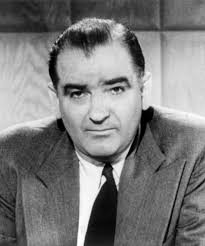
Joseph McCarthy
Among those who have greatly profited from hurling similar charges are:
- President Richard Nixon
- His vice president, Spiro Agnew
- Former Speaker of the House Newt Gingrich
- Former Congressman Dick Armey
- President George W. Bush
- Vice Presidential candidate Sarah Palin
- Congresswoman Michelle Bachmann
- Rush Limbaugh
- Sean Hannity
- Bill O’Reilly.
During the 1992 Presidential campaign, Republicans tried to paint Bill Clinton as a brainwashed “Manchurian candidate” because he had briefly visited the Soviet Union during his college years.
After the Soviet Union collapsed in 1991, Republicans lost their “soft on Communism” slander-line. So they tried to persuade voters that Democrats were “soft on crime.”
When riots flared in 1992 after the acquittal of LAPD officers who had savagely beaten Rodney King, President George H.W. Bush blamed the carnage on the “Great Society” programs of the 1960s.
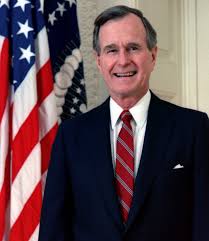
George H.W. Bush
After losing the White House to Clinton at the polls in 1992 and 1996, Republicans tried to oust him another way: By impeaching him over a tryst with a penis-loving intern named Monica Lewinsky.
The Republican-controlled House of Representatives voted to impeach, but the effort was defeated in the Democratically-controlled Senate.
The 2008 election of Barack Obama pushed the Republican “treason chorus” to new heights of infamy.
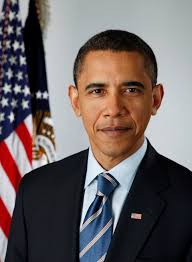
Barack Obama
Almost immediately after Obama took office, he came under attack by an industry of Right-wing book authors such as Sean Hannity, Ann Coulter and Rush Limbaugh.
The following titles vividly reveal the hates, fears and ambitions of their authors—and audience:
- Conservative Victory: Defeating Obama’s Radical Agenda by Sean Hannity
- Obama Zombies: How the Liberal Machine Brainwashed My Generation by Jason Mattera
- How Barack Obama is Bankrupting the U.S. Economy by Stephen Moore
- Let Freedom Ring: Winning the War of Liberty over Liberalism by Sean Hannity
- The Manchurian President: Barack Obama’s Ties to Communists,Socialists and Other Anti-American Extremists by Aaron Klein
- The Blueprint: Obama’s Plan to Subvert the Constitution and Build an Imperial Presidency by Ken Blackwell
- Culture of Corruption: Obama and His Team of Tax Cheats, Crooks, and Croniesby Michelle Malkin
- Why Obama’s Government Takeover of Health Care Will Be a Disaster by David Gratzer
- To Save America: Stopping Obama’s Secular-Socialist Machine by Newt Gingrich
- Obama’s Radical Transformation of America: Year One by Joshua Muravchik
- How the Obama Administration Threatens to Undermine Our Elections by John Fund
- Power Grab: How Obama’s Green Policicies Will Steal Your Freedom and Bankrupt America by Christopher C. Horner
- The Bad Science and Bad Policy of Obama’s Global Warning Agenda by Roy W. Spencer
- America’s March to Socialism: Why We’re One Step Closer to Giant Missile Parades by Glenn Beck
- Obama’s Betrayal of Israel by Michael Ledeen
- The Obama Nation: Leftist Politics and the Cult of Personality by Jerome R. Corsi
- The Case Against Barack Obama: The Unlikely Rise and Unexamined Agenda of the Media’s Favorite Candidate by David Freddoso
- Censorship: The Threat to Silence Talk Radio by Brian Jennings
- The War On Success: How the Obama Agenda Is Shattering the American Dream by Tommy Newberry
- Green Hell: How Environmentalists Plan to Control Your Life and What You Can Do to Stop Them by Steven Milloy
- Liberalism is a Mental Disorder: Savage Solutions by Michael Savage
- Treason: Liberal Treachery from the Cold War to the War on Terrorism by Ann Coulter
- How to Talk to a Liberal (If You Must): The World According to Ann Coulter by Ann Coulter
- Slander: Liberal Lies About the American Right by Ann Coulter
- If Democrats Had Any Brains, They’d Be Republicans by Ann Coulter
- Guilty: Liberal “Victims” and Their Assault on America by Ann Coulter
- Catastrophe: How Obama, Congress and the Special Interests Are Transforming…a Slump into a Crash, Freedom Into Socialism and a Disaster into a Catastrophe….And How to Fight Back by Dick Morris
Consider the vocabulary Right-wingers use to describe their political adversaries:
“Liberals,” “radicals, “bankrupting,” “treason,” subversion,” “slander,” “terrorism,” “betrayal,” “catastrophe,” “shattering the American dream,” “leftists,” “Communists,” “government takeover,” “socialism,” “power grab,” “secularism,” “environmentalism.”
And while the Right lusts to constantly compare Democrats and liberals (the two aren’t always the same) to Adolf Hitler, its propaganda campaign draws heavily on the Nazi leader’s own advice.
In Mein Kampf, Hitler laid out his formula for successful propaganda: “All effective propaganda must be confined to a few bare essentials.
“Those must be expressed as far as possible in stereotypical formulas. These slogans should be persistently repeated until the very last individual has come to grasp the idea that has been put forward.
“[The masses] more readily fall victims to the big lie than the small lie, since they themselves often tell small lies in little matters but would be ashamed to resort to large-scale falsehoods.”
Thus, Republicans—led by Donald Trump—spent the eight years of Barack Obama’s Presidency repeating the lie that he was born in Kenya—not Hawaii, as the long-form version of his birth certificate attests.
The reason: To “prove” that he was an illegitimate President, and should be removed from office.
To Republicans’ dismay, their slander campaign didn’t prevent Obama from being elected in 2008—and re-elected in 2012.
1984 NOVEL, 2020 PRESIDENTIAL ELECTION, ABC NEWS, ADOLF HITLER, AFFORDABLE HEALTHCARE ACT, ALTERNET, ALVIN BRAGG, AMERICABLOG, ANDREW CLYDE, ANN COULTER, AP, ARIZONA, ARIZONA SHOOTINGS, ASHLI BABBITT, ASSASSINATION, BABY BOOMER RESISTANCE, BARACK OBAMA, BARRON TRUMP, BBC, BILL CLINTON, BIRTHERS, BLACKS, BLOOMBERG NEWS, BUZZFEED, CBS NEWS, CHILD MOLESTERS, CHRISTINA-TAYLOR GREEN, CLASSIFIED DOCUMENTS, CNN, CONFEDERATE FLAG, CROOKS AND LIARS, CVS, DAILY KOS, DEMOCRATIC PARTY, DEMOCRATS, DENNIS HASTERT, DEVIN NUNES, DICK ARMEY, DICK MORRIS, DONALD TRUMP, FAMILY RESEARCH COUNCIL, FANNI WILLIS, FBI, FIVETHIRTYEIGHT, FRANKLIN D. ROOSEVELT, GABRIELLE GIFFORDS, GAYS, GEORGE H.W. BUSH, GEORGE ORWELL, GEORGE W. BUSH, GLENN BECK, HARPER’S MAGAZINE, HARRY S. TRUMAN, HATE CRIMES, HEALTHCARE, HISPANICS, HOUSE OVERSIGHT COMMITTEE, HUFFINGTON POST, JACK SMITH, JAN BREWER, JANUARY 6 COUP ATTEMPT, JGB BUSH, JIM JORDAN, JOSEPH MCCARTHY, JOSEPH R. BIDEN, JOSEPH STALIN, JOSH DUGGAR, KANSAS, LAUREN BOEBERT, LESBIANS, LOS ANGELES, MARJORIE TAYLOR GREEN, MATT GAETZ, MEDIA MATTERS, MEIN KAMPF, MELANIA TRUMP, MICHAEL COHEN, MICHAEL SAVAGE, MICHELE BACHMANN, MIKE HUCKABEE, MIKE PENCE, MOTHER JONES, MOVEON, MSNBC, MUSLIMS, NBC NEWS, NEW REPUBLIC, NEWSDAY, NEWSWEEK, NEWT GINGRICH, NPR, OBAMACARE, ORACLE, PBS NEWSHOUR, PHIL GRAMM, POLITICO, POLITICUSUSA, PROPAGANDA, RAFAEL "TED" CRUZ, RAW STORY, RELIGIOUS FREEDOM RESTORATION ACT, REP. GABRIELLE GIFFORDS, REPUBLICAN PARTY, REPUBLICANS, REUTERS, RICHARD NIXON, RICK PERRY, RODNEY KING RIOTS, ROLLING STONE MAGAZINE, RUSH LIMBAUGH, SALON, Sarah Palin, SEAN HANNITY, SEATTLE TIMES, SHARIA LAW, SLATE, SOUTH DAKOTA, SOVIET UNION, SPIRO AGNEW, STEVE BANNON, STORMY DANIELS, TALKING POINTS MEMO, TEA PARTY, TERRORISM, THE ATLANTIC, THE CHICAGO SUN-TIMES, THE CHICAGO TRIBUNE, THE DAILY BEAST, THE DAILY BLOG, THE GUARDIAN, THE HILL, THE HUFFINGTON POST, THE INTERCEPT, THE LOS ANGELES TIMES, THE NATION, THE NEW REPUBLIC, THE NEW YORK TIMES, THE NEW YORKER, THE VILLAGE VOICE, THE WASHINGTON POST, THINKPROGRESS, TIME, TRUTHDIG, TRUTHOUT, U.S. DISTRICT JUDGE JOHN ROLL, U.S. MARSHALS SERVICE, U.S. NEWS & WORLD REPORT, UNITED STATES HOUSE OF REPRESENTATIVES, UNITED STATES SENATE, UPI, USA TODAY, WOMEN, WORLD WAR 11, X
In Bureaucracy, History, Law, Law Enforcement, Politics, Social commentary on July 16, 2024 at 12:14 am
“The Republican Party has weaponized its supporters, made violence a virtue and, with almost every pronouncement for 50 years, given them an enemy politicized, radicalized and indivisible.”
So wrote Rolling Stone writer Jeb Lund in a blistering June 19, 2015 editorial.
But the proof of Republican culpability in political violence goes back much further.
Consider:
Gabrille Giffords, 40, is a moderate Democrat who narrowly wins re-election in November, 2010, against a Republican Tea Party candidate.
Her support of President Barack Obama’s health care reform law has made her a target for violent rhetoric–-especially from former Alaska Republican Governor Sarah Palin.
In March, 2010, Palin releases a map featuring 20 House Democrats that uses cross-hairs images to show their districts. In case her supporters don’t get the message, she later writes on Twitter: “Don’t Retreat, Instead – RELOAD!”

Sarah Palin’s “Crosshairs” Map
As the campaign continues, Giffords finds her Tucson office vandalized after the House passes the healthcare overhaul in March.
Giffords senses that she has become a target for removal—in more than political terms. In an interview after the vandalizing of her office, she refers to the animosity against her by conservatives.
She specifically cites Palin’s decision to list her seat as one of the top “targets” in the midterm elections.
“For example, we’re on Sarah Palin’s targeted list, but the thing is, that the way that she has it depicted has the cross-hairs of a gun sight over our district. When people do that, they have to realize that there are consequences to that action,” Giffords tells MSNBC.
At one of her rallies, her aides call the police after an attendee drops a gun.
Giffords may have seen the spectre of violence closing in on her. In April, 2010, she supported Rep. Raúl Grijalva after he had to close two offices when he and his staff received threats.
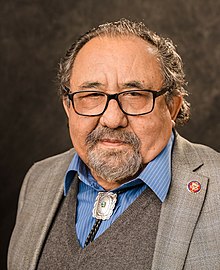
Raúl Grijalva
He had called for a boycott of Arizona businesses in opposition to the state’s controversial immigration law.
“I am deeply troubled about reports that Congressman Grijalva and members of his staff have been subjected to death threats,” Giffords said.
“This is not how we, as Americans, express our political differences. Intimidation has no place in our representative democracy. Such acts only make it more difficult for us to resolve our differences.”
But intimidation—-and worse—-does have a place among the tactics used by influential Republicans in the pursuit of absolute power.
Increasingly, Republicans have repeatedly aimed violent—-and violence-arousing—-rhetoric at their Democratic opponents. This is not a case of careless language that is simply misinterpreted, with tragic results.
Republicans like Sarah Palin fully understand the constituency they are trying to reach: Those masses of alienated, uneducated Americans who live only for their guns and hardline religious beliefs—and who can be easily manipulated by perceived threats to either.

Sarah Palin
Gage Skidmore from Surprise, AZ, United States of America, CC BY-SA 2.0 <https://creativecommons.org/licenses/by-sa/2.0>, via Wikimedia Commons
If a “nutcase” assaults a Democratic politician and misses, then the Republican establishment claims to be shocked—-shocked!—that such a thing could have happened.
And if the attempt proves successful—as the January 8, 2011 Tucson shootings did—then Republicans weep crocodile tears for public consumption.
The difference is that, in this case, they rejoice in knowing that Democratic ranks have been thinned and their opponents are even more on the defensive, for fear of the same happening to them.
Consider the following:
- Rep. Randy Neugebauer (R-Tex.) yelled “baby killer” at Bart Stupak (D-Mich.) on the House floor.
- Florida GOP Congressional candidate Allen West, referring to his Democratic opponent, Rep. Ron Klein, told Tea Party activists: “You’ve got to make the fellow scared to come out of his house. That’s the only way that you’re going to win. That’s the only way you’re going to get these people’s attention.”
- Rep. Devin Nunes (R-CA) said Tea Partiers had “every right” to use racist and homophobic slurs against Democrats, justifying it via Democrats’ “totalitarian tactics.”
- Rep. Michelle Bachmann (R-Minn.) said she wanted her constituents “armed and dangerous” against the Obama administration.
- Sarah Palin told her supporters: “Get in their face and argue with them. No matter how tough it gets, never retreat, instead RELOAD!”
- Right-wing pundit Ann Coulter: “My only regret with Timothy McVeigh is he did not go to the New York Times building.”
- Senator Phil Gramm (R-Tex.) “We’re going to keep building the party until we’re hunting Democrats with dogs.”
- Rep. Louisa M. Slauter (D-NY) received a phone message threatening sniper attacks against lawmakers and their families.
Since the end of World War 11, Republicans have regularly hurled the charge of “treason” against anyone who dared to run against them for office or think other than Republican-sponsored thoughts.
Republicans had been locked out of the White House from 1933 to 1952, during the administrations of Franklin D. Roosevelt and Harry S. Truman.
Determined to regain the Presidency by any means, they found that attacking the integrity of their fellow Americans a highly effective tactic.
During the 1950s, Wisconsin Senator Joseph R. McCarthy rode a wave of paranoia to national prominence—by attacking the patriotism of anyone who disagreed with him.
The fact that McCarthy never uncovered one actual case of treason was conveniently overlooked during his lifetime.
1984 NOVEL, 2020 PRESIDENTIAL ELECTION, ABC NEWS, ADOLF HITLER, AFFORDABLE HEALTHCARE ACT, ALTERNET, ALVIN BRAGG, AMERICABLOG, ANDREW CLYDE, ANN COULTER, AP, ARIZONA, ARIZONA SHOOTINGS, ASHLI BABBITT, ASSASSINATION, BABY BOOMER RESISTANCE, BARACK OBAMA, BARRON TRUMP, BBC, BILL CLINTON, BIRTHERS, BLACKS, BLOOMBERG NEWS, BUZZFEED, CBS NEWS, CHILD MOLESTERS, CHRISTINA-TAYLOR GREEN, CLASSIFIED DOCUMENTS, CNN, CONFEDERATE FLAG, CROOKS AND LIARS, CVS, DAILY KOS, DEMOCRATIC PARTY, DEMOCRATS, DENNIS HASTERT, DEVIN NUNES, DICK ARMEY, DICK MORRIS, DONALD TRUMP, FAMILY RESEARCH COUNCIL, FANNI WILLIS, FBI, FIVETHIRTYEIGHT, FRANKLIN D. ROOSEVELT, GABRIELLE GIFFORDS, GAYS, GEORGE H.W. BUSH, GEORGE ORWELL, GEORGE W. BUSH, GLENN BECK, HARPER’S MAGAZINE, HARRY S. TRUMAN, HATE CRIMES, HEALTHCARE, HISPANICS, HOUSE OVERSIGHT COMMITTEE, HUFFINGTON POST, JACK SMITH, JAN BREWER, JANUARY 6 COUP ATTEMPT, JGB BUSH, JIM JORDAN, JOSEPH MCCARTHY, JOSEPH R. BIDEN, JOSEPH STALIN, JOSH DUGGAR, KANSAS, LAUREN BOEBERT, LESBIANS, MARJORIE TAYLOR GREEN, MATT GAETZ, MEDIA MATTERS, MEIN KAMPF, MELANIA TRUMP, MICHAEL COHEN, MICHAEL SAVAGE, MICHELE BACHMANN, MIKE HUCKABEE, MIKE PENCE, MOTHER JONES, MOVEON, MSNBC, MUSLIMS, NBC NEWS, NEW REPUBLIC, NEWSDAY, NEWSWEEK, NEWT GINGRICH, NPR, ORACLE, PBS NEWSHOUR, PHIL GRAMM, POLITICO, POLITICUSUSA, PROPAGANDA, RAFAEL "TED" CRUZ, RAW STORY, RELIGIOUS FREEDOM RESTORATION ACT, REP. GABRIELLE GIFFORDS, REPUBLICAN PARTY, REPUBLICANS, REUTERS, RICHARD NIXON, RICK PERRY, RODNEY KING RIOTS, ROLLING STONE MAGAZINE, RUSH LIMBAUGH, SALON, Sarah Palin, SEAN HANNITY, SEATTLE TIMES, SHARIA LAW, SLATE, SOUTH DAKOTA, SOVIET UNION, SPIRO AGNEW, STEVE BANNON, STORMY DANIELS, TALKING POINTS MEMO, TEA PARTY, TERRORISM, THE ATLANTIC, THE CHICAGO SUN-TIMES, THE CHICAGO TRIBUNE, THE DAILY BEAST, THE DAILY BLOG, THE GUARDIAN, THE HILL, THE HUFFINGTON POST, THE INTERCEPT, THE LOS ANGELES TIMES, THE NATION, THE NEW REPUBLIC, THE NEW YORK TIMES, THE NEW YORKER, THE VILLAGE VOICE, THE WASHINGTON POST, THINKPROGRESS, TIME, TRUTHDIG, TRUTHOUT, U.S. DISTRICT JUDGE JOHN ROLL, U.S. MARSHALS SERVICE, U.S. NEWS & WORLD REPORT, UNITED STATES HOUSE OF REPRESENTATIVES, UNITED STATES SENATE, UPI, USA TODAY, WOMEN, WORLD WAR 11, X
In Bureaucracy, History, Law, Law Enforcement, Politics, Social commentary on July 15, 2024 at 12:22 am
“We mock you. We mock your fear. We want your fear. It’s going to be accountability. We are taking apart the administrative state. We’re going to destroy the deep state, and we’re going to hold everybody responsible that put this republic in the situation its in today.
“Accountability, responsibility. And that will come with authority. The authority of Donald J. Trump as the 47th president of the United States.”
The speaker was Steve Bannon, former Trump campaign manager and White House advisor. And he was issuing a warning to everyone who didn’t enthusiastically accept Donald Trump as his Once and Future Fuhrer.
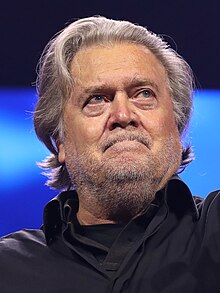
Steve Rannon
Gage Skidmore, CC BY-SA 2.0 <https://creativecommons.org/licenses/by-sa/2.0>, via Wikimedia Commons
Threats of violence have become common among Republicans since 2015, when Trump first ran for President. And they continue to cast a shadow over the 2024 Presidential campaign.
On March 16, 2016, Trump warned Republicans that if he didn’t win the GOP nomination in July, his supporters would literally riot: “I think you’d have riots. I think you would see problems like you’ve never seen before. I think bad things would happen. I really do. I wouldn’t lead it, but I think bad things would happen.”
An NBC reporter summed it up as: “The message to Republicans was clear: ‘Nice convention you got there, shame if something happened to it.’”
Eight years later, on March 16, 2024, Trump made a similar threat: “Now if I don’t get elected, it’s going to be a bloodbath for the whole—that’s gonna be the least of it….If this election isn’t won, I’m not sure that you’ll ever have another election in this country.”
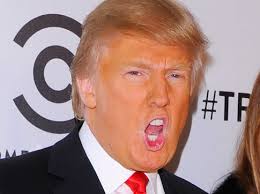
Donald Trump
On August 9, 2016, Trump told a rally in Wilmington, North Carolina: “Hillary [Clinton] wants to abolish, essentially abolish, the Second Amendment. If she gets to pick her [Supreme Court] judges, nothing you can do folks. Although the Second Amendment people, maybe there is, I don’t know.”
This was Trump’s “dog-whistle” attempt to incite the assassination of Hillary Clinton—and it was so seen by responsible authorities: “Well, let me say if someone else said that outside of the hall, he’d be in the back of a police wagon now, with the Secret Service questioning him,” said Michael Hayden, former head of the CIA and National Security Agency (NSA).
In Cincinnati, a Trump supporter threatened to forcibly remove Clinton from the White House if she won the race: “If she’s in office, I hope we can start a coup. She should be in prison or shot. That’s how I feel about it,”
Dan Bowman, a 50-year-old contractor, said of Hillary Clinton, the Democratic nominee. “We’re going to have a revolution and take them out of office if that’s what it takes. There’s going to be a lot of bloodshed. But that’s what it’s going to take….I would do whatever I can for my country.”
In a June 19, 2015 editorial, Rolling Stone writer Jeb Lund had noted:
“The Republican Party has weaponized its supporters, made violence a virtue and, with almost every pronouncement for 50 years, given them an enemy politicized, racialized and indivisible.
“Movement conservatives have fetishized a tendentious and ahistorical reading of the Second Amendment to the point that the Constitution itself somehow paradoxically ‘legitimizes’ an armed insurrection against the government created by it.
“This is no longer an argument about whether one party’s beliefs are beneficial or harmful, but an attitude that labels leftism so antithetical to the American idea that empowering it on any level is an act of usurpation.”
Consider:
On January 8, 2011, Democratic Rep. Gabrielle Giffords was shot in the head while meeting with constituents outside a grocery store in Tucson, Arizona. After a miraculous recovery, she continues to struggle with language and has lost 50% of her vision in both eyes.
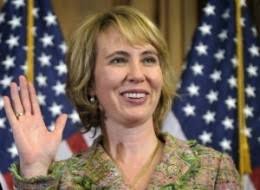
Rep. Gabrielle Giffords
She vowed to return to her former Congressional duties, but was forced to resign for health reasons in 2012.
Giffords was only one victim of a shooting spree that claimed the lives of six people and left 13 others wounded.
Also killed was Arizona’s chief U.S. District judge, John Roll, who had just stopped by to see his friend Giffords after celebrating Mass.
Although the actual shooter, Jared Lee Loughner, was immediately arrested, those who fanned the flames of political violence that consumed 19 people that day have remained unpunished.
Consider the circumstances behind the shootings:
John Roll is Arizona’s chief federal judge. Appointed in 2006, he wins acclaim as a respected jurist and leader who pushes to beef up the court’s strained bench to handle a growing number of border crime-related cases.
In 2009, he becomes a target for threats after allowing a $32 million civil-rights lawsuit by illegal aliens to proceed against a local rancher. The case arouses the fury of local talk radio hosts, who encourage their audiences to threaten Roll’s life.
In one afternoon, Roll logs more than 200 threatening phone calls. Callers threaten the judge and his family. They post personal information about Roll online.
Roll and his wife are placed under fulltime protection by deputy U.S. marshals. Roll finds living under security “unnerving and invasive.”
Authorities identify four men believed responsible for the threats. But Roll declines to press charges on the advice of the Marshals Service.
ABC NEWS, AL QAEDA, ALTERNET, AMERICABLOG, AMERICAN EXCEPTIONALISM, AMERICAN RECKONING: THE VIETNAM WAR AND OUR NATIONAL IDENTITY (BOOK), AP, BABY BOOMER RESISTANCE, BARACK OBAMA, BASHIR AL-ASSAD, BBC, BLOOMBERG NEWS, BUZZFEED, CANADA, CBS NEWS, CHINA, CHRISTIAN G. APPY, CNN, CROOKS AND LIARS, DAILY KOZ, DEMOCRATS, FIVETHIRTYEIGHT, HARPER’S MAGAZINE, HOUSE UN-AMERICAN ACTIVITIES COMMITTEE, HUFFINGTON POST, HUMAN RIGHTS, MEDIA MATTERS, MOTHER JONES, MOVEON, MSNBC, NBC NEWS, NEW REPUBLIC, NEWSDAY, NEWSWEEK, NPR, PBS NEWSHOUR, POLITICO, POLITICUSUSA, RAW STORY, REPUBLICANS, REUTERS, RUSSIA, SALLY YATES, SALON, SEATTLE TIMES, SLATE, SYRIA, TALKING POINTS MEMO, THE ATLANTIC, THE CHICAGO SUN-TIMES, THE CHICAGO TRIBUNE, THE DAILY BEAST, THE DAILY BLOG, THE GUARDIAN, THE HILL, THE HUFFINGTON POST, THE LOS ANGELES TIMES, THE NATION, THE NEW REPUBLIC, THE NEW YORK TIMES, THE NEW YORKER, THE VILLAGE VOICE, THE WASHINGTON POST, THINKPROGRESS, TIME, TRUTHDIG, TRUTHOUT, TWO POLITICAL JUNKIES, TYRANNY, U.S. NEWS & WORLD REPORT, UNITED STATES CONSTITUTION, UPI, USA TODAY, VIETNAM WAR, VLADIMIR PUTIN, WONKETTE, X
In Bureaucracy, History, Military, Politics, Social commentary on July 12, 2024 at 12:15 am
“Who are we?” asks Christian G. Appy in the opening of his 2015 book, American Reckoning: The Vietnam War and Our National Identity.
For Appy, it’s impossible to understand the enormous impact of the Vietnam war on the United States without first understanding the image that Americans had of themselves before that conflict. And he describes that image as:
“The broad faith that the United States [was] a unique force for good in the world, superior not only in its military and economic power but in the quality of its government and institutions, the character and morality of its people, and its way of life…..
“It was still unimaginable to most Americans that their own nation would wage aggressive war and justify it with unfounded claims, that it would support undemocratic governments reviled by their own people, and that American troops would be sent to fight in countries where they were widely regarded not as liberators but as imperialist invaders.”
Appy contends that, for millions of Americans, the Vietnam war dealt a mortal blow to that tremendously appealing self-image.
Yet for millions more, the United States remains an exemplary nation with a divine mission to lead other nations—willingly or unwillingly—to follow its example. And those Americans become furious when anyone—especially a foreigner—dares question that belief.
On September 11, 2013, the New York Times published an Op-Ed (guest editorial) from Russian President Vladimir Putin, entitled: “A Plea for Caution from Russia: What Putin Has to Say to Americans About Syria.”
To no one’s surprise, Putin strongly opposed an American air strike on Syria. Its “President” (i.e., dictator) Bashir al-Assad, is a close ally of Russia. Just as his late father and dictator, Hafez al-Assad, was a close ally of the Soviet Union.
And Putin is a former member of the KGB, the infamous secret police which ruled the Soviet Union from its birth in 1917 to its collapse in 1991.In his September 11 guest editorial in the New York Times, Putin offered the expected Russian take on Syria:
- Poison gas was used in Syria.
- It wasn’t used by the Syrian Army.
- “Opposition forces [used it] to provoke intervention by their powerful foreign patrons.”
- “There are few champions of democracy in Syria. But there are more than enough [al] Qaeda fighters and extremists of all stripes battling the government.”
But it’s the concluding paragraph that enraged American politicians the most—especially Right-wing ones. In it, Putin took exception with American “exceptionalism.”
Referring to then-President Barack Obama, Putin wrote:
“And I would rather disagree with a case he made on American exceptionalism, stating that the United States’ policy is ‘what makes America different. It’s what makes us exceptional.’
“It is extremely dangerous to encourage people to see themselves as exceptional, whatever the motivation. There are big countries and small countries, rich and poor, those with long democratic traditions and those still finding their way to democracy. Their policies differ, too.
“We are all different, but when we ask for the Lord’s blessings, we must not forget that God created us equal.”
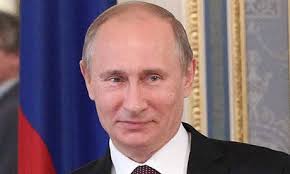
Vladimir Putin
Putin has never publicly shown any interest in religion. But by invoking “the Lord,” he was able to turn the Christian beliefs of his Western audience into a useful weapon.
Americans’ outrage quickly erupted.
“I was insulted,” then-House Speaker John Boehner (R-Ohio) told reporters when asked for his blunt reaction to the editorial.
“I have to be honest with you, I was at dinner, and I almost wanted to vomit,” said U.S. Senator Bob Menendez (D-New Jersey).
Putin had dared to question the self-righteousness of American foreign policy—and those who make it.
Making his case for war with Syria, Obama had said: “America is not the world’s policeman….But when, with modest effort and risk, we can stop children from being gassed to death, and thereby make our own children safer over the long run, I believe we should act.
“That’s what makes America different. That’s what makes us exceptional. With humility, but with resolve, let us never lose sight of that essential truth.”

Barack Obama
In short: Because we consider ourselves “exceptional,” we have the divine right to do whatever we want.
It’s not necessary to see Putin as a champion of democracy (he isn’t) to see the truth in this part of his editorial:
“It is extremely dangerous to encourage people to see themselves as exceptional, whatever the motivation.”
From 1938 to 1969, the House Un-American Activities Committee sought to define what was “American” and what was “Un-American.”
As if “American” stood for all things virtuous.
Whoever heard of an “Un-French Activities Committee”? Or an “Un-German” or “Un-British” one?
The late S.I. Hayakawa was a professor of semantics (the study of the relationship between words and what they stand for).In his bestselling book, Language in Thought and Action, he observed that a person has four ways of responding to a message:
- Accept the speaker and his message.
- Accept the speaker but reject the message.
- Accept the message but reject the speaker.
- Reject the message and the speaker.
In this case, Americans might want to consider #3 where “American exceptionalism” is concerned.
ABC NEWS, ACADEMY AWARDS, ALTERNET, AMERICABLOG, AP, AV FILM, “BROKEN ARROW”, “GREEN BOOK”, BABY BOOMER RESISTANCE, BROKEN ARROW (MOVIE), BUZZFEED, CBS NEWS, CIVIL RIGHTS, CLASSICAL PIANO, CNN, COCHISE, CROOKS AND LIARS, DAILY KOZ, DON SHIRLEY, DRUDGE RETORT, FIVETHIRTYEIGHT, FREEDOM RIDERS, HARPER’S MAGAZINE, HOMOSEXUALITY, JAMES MEREDITH, JAMES STEWART, JAZZ PIANO, JEFF CHANCLER, KU KLUX KLAN, MAHERSHALA ALI, MEDIA MATTERS, MISSISSIPPI, MOTHER JONES, MOVEON, MSNBC, NBC NEWS, NEWSWEEK, NPR, PBS NEWSHOUR, POLITICO, POLITICUSUSA, RACISM, RAW STORY, REBECCA THEODORE-VACHON, REUTERS, ROBERT F. KENNEDY, ROSS BARNETT, SALON, SEATTLE TIMES, SEGREGATION, SLATE, TALKING POINTS MEMO, THE ATLANTIC, THE CHICAGO SUN-TIMES, THE CHICAGO TRIBUNE, THE DAILY BEAST, THE DAILY BLOG, THE GUARDIAN, THE HILL, THE HUFFINGTON POST, THE LOS ANGELES TIMES, THE NATION, THE NEW REPUBLIC, THE NEW YORK TIMES, THE VILLAGE VOICE, THE WASHINGTON POST, THINKPROGRESS, TIME, TOM JEFFORDS, TONY VALLELONGA, TRUMP ADMINISTRATION, TRUTHDIG, TRUTHOUT, TWO POLITICAL JUNKIES, U.S. NEWS & WORLD REPORT, UNIVERSITY OF MISSISSIPPI, UPI, USA TODAY, VIGGO MORTENSEN, WONKETTE, X
In Entertainment, History, Law, Law Enforcement, Politics, Social commentary on July 11, 2024 at 12:30 am
Every year, the Academy of Motion Picture Arts and Sciences hosts its Academy Awards ceremony, better known as “Oscar Night.”
Each year, Academy members make their choices for such categories as Best Picture, Best Actor, Best Actress, Best Supporting Actor and Actress.
And each year, before those selections are announced at the ceremony, there is a huge buildup of anticipation among Americans over which person or movie should win acclaim.
Then that year’s selections are quickly forgotten.
But some movies should not be quickly forgotten. Among these: Green Book, which won the Oscar for Best Picture at the 91st annual Academy Awards in 2019.
Green Book is based on the true story of a concert tour by a black classical and jazz pianist, Don Shirley, and his driver and bodyguard, Tony Vallelonga. Mahershala Ali plays Shirley and Viggo Mortensen plays Vallelonga.
The two men are polar opposites: Shirley is cultured and eloquent; Vallelonga is streetwise and volatile. Shirley is used to dealing with the cream of New York society. Vallelonga is used to dealing with its dregs—as a nightclub bouncer.
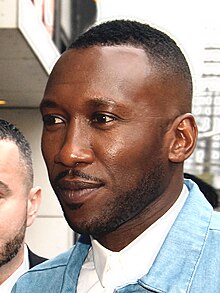
Mahershala Ali as Don Shirley
Gordon Correll [CC BY-SA 2.0 (https://creativecommons.org/licenses/by-sa/2.0)%5D
When his nightclub closes for renovations, he responds to an ad by Shirley for a driver for his eight-week concert tour through the Midwest and Deep South.
This is 1962, a time when a black Air Force veteran, James Meredith, must be given protection by deputy U.S. marshals when he enters the segregated University of Mississippi. White and black “Freedom Riders” are canvassing the South, sitting at segregated lunch counters and often being attacked by members of the Ku Klux Klan and equally racist Southern police.
In fact, the title of the movie—Green Book—is derived from a travel guide written for blacks venturing into the Deep South: The Negro Motorist Green Book. Written by Victor Hugo Green, its purpose is to help blacks find motels and restaurants that will accept them.
And as Shirley and Vallelonga make their odyssey through the South, they find themselves staying at separate hotels—and sometimes together, after Vallelonga slips Shirley into his own room.
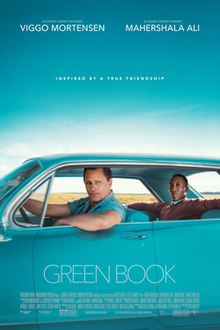
An AV Film review called Green Book “a kind of comforting liberal fantasy, a #NotAllRacists trifle that suggests that our deep, festering divisions can be sutured through some quality time on the open road, resolving differences over a bucket of KFC.”
Not so. It took far more than a bucket of KFC to cement the friendship between Shirley and Vallelonga.
At the start of the movie, Vallelonga throws away a glass after a black construction worker drinks from it. But during his tour of the South, he becomes increasingly sympathetic to the plight suffered by Shirley—and other blacks forced to daily endure a series of humiliations.
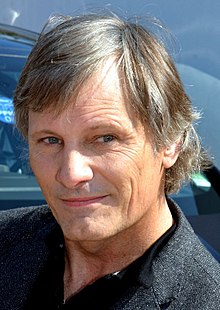
Viggo Mortensen as Tony Vallelonga
Georges Biard [CC BY-SA 3.0 (https://creativecommons.org/licenses/by-sa/3.0)%5D
According to television critic Rebecca Theodore-Vachon: “Green Book is a feel-good movie. It doesn’t really require a lot of critical thinking or self-analysis. You know, people walk out of the movie feeling that, oh, well, racism is over, we’re good.”
Actually, the film makes clear that some people will always be racists. Thus, Shirley finds himself repeatedly forced to eat in the segregated rooms of the hotels where he’s to play concerts. And he’s almost murdered by a group of racists when he makes the mistake of going into a whites’ only bar. He survives only because Vallelonga arrives in time to rescue him.
And Shirley proves just as great a friend to Vallelonga. He introduces the semi-literate bouncer to the power of the written word by helping him craft articulate, heartfelt letters to his wife.
Toward the end of the movie, Vallelonga and Shirley are pulled over by a Mississippi police officer. Shirley’s “crime”: Being black—and out at night. When the officer insults Vallelonga, Tony punches him—and he and Shirley wind up in jail.
Shirley asks for permission to call his “lawyer”—and the man he dials is Attorney General Robert F. Kennedy.
Kennedy, in turn, calls Mississippi Governor Ross Barnett. Barnett is already having his share of troubles with the Kennedys, and he orders the police: Let those men go—now!
This scene underscores the importance of electing people who will stand against injustice. Watching the release of Vallelonga and Shirley, it’s impossible to imagine the Trump administration intervening in such a manner.
At the end of the movie, Shirley visits Vallelonga’s home—where he’s warmly received by Tony and his family. The film’s end credits reveal that the two men remained friends until they died, within months of each other, in 2013.
In 1950, a Western called Broken Arrow-–starring James Stewart as Tom Jeffords and Jeff Chandler as Cochise—told the true story of a friendship between a white man and an Apache. For many Americans, this came as a revelation.
After decades of seeing Indians depicted as bloodthirsty savages, audiences saw that there were those—among red men and white men—who could rise above prejudice and see each other as worthy of respect.
The lesson of Green Book is exactly the same. And it’s needed now more than ever.
ABC NEWS, ABRAHAM LINCOLN, AFGHANISTAN, ALEXANDER THE GREAT, ALTERNET, AMERICABLOG, ANDREW JACKSON, AP, BABY BOOMER RESISTANCE, BBC, BLOOMBERG, BUZZFEED, CBS NEWS, CHARLIE KIRK, CIVIL WAR, CNN, CROOKS AND LIARS, DAILY KOS, FIVETHIRTYEIGHT, FOX NEWS CHANNEL, GATES OF FIRE (BOOK), HARPER’S MAGAZINE, HUFFINGTON POST, JACK SMITH, JOHN C. CALHOUN, JOSEPH BIDEN, LIZ CHENEY, MEDIA MATTERS, MERCENARIES, MERRICK GARLAND, MOTHER JONES, MOVEON, MSNBC, NBC NEWS, NEW REPUBLIC, NEWSDAY, NEWSWEEK, NPR, ORGANIZED CRIME, PBS NEWSHOUR, POLITICO, POLITICUSUSA, PROJECT 2025, RAW STORY, REPUBLICANS, REUTERS, SALON, SEATTLE TIMES, SLATE, SPARTA, STEVEN PRESSFIELD, STORMY DANIELS, TALKING POINTS MEMO, THE AFGHAN CAMPAIGN (BOOK), THE ATLANTIC, THE CHICAGO SUN-TIMES, THE CHICAGO TRIBUNE, THE DAILY BEAST, THE DAILY BLOG, THE GUARDIAN, THE HILL, THE HUFFINGTON POST, THE INTERCEPT, THE LOS ANGELES TIMES, THE NATION, THE NEW REPUBLIC, THE NEW YORK TIMES, THE NEW YORKER, THE PROFESSION (BOOK), THE VILLAGE VOICE, THE VIRTUES OF WAR (BOOK), THE WASHINGTON POST, THERMOPYLAE, THINKPROGRESS, TIME, TREASON, TRUTHDIG, TRUTHOUT, TWO POLITICAL JUNKIES, U.S. NEWS & WORLD REPORT, UNITED STATES SUPREME COURT, UPI, USA TODAY, X
In Bureaucracy, History, Law, Law Enforcement, Military, Politics, Social commentary on July 10, 2024 at 12:10 am
President Joseph Biden now faces the most monumental decision of his life. And no matter what choice he makes, his name will live in infamy for millions of Americans—whether they lean Right or Left.
Thanks entirely to the Supreme Court’s July 1 ruling giving almost unlimited immunity to former President Donald Trump, Biden can go down in history as the man who saved—at least temporarily—the American republic.

Joseph Biden
Or he can go down in history as the man who presided over the end of the American republic.
To save it, he must
- Purge, through arrests and trials, almost the entire treason-conspiring Republican party, starting with Trump, its Fuhrer-in-waiting.
- Do this officially, because the Court has ruled that he (and future Presidents) can only be prosecuted for unofficial acts.
- Do this while he still commands the full resources of the military and Justice Department.

- Sweep clean the Federal courts of all Right-wing, treason-supporting judges—such as Aileen Cannon, who has repeatedly thwarted efforts to try Trump for stealing and hiding almost 300 highly classified government documents at his Mar-a-Lago estate.
- This includes the six Right-wing Supreme Court Justices who have given future Presidents the legal authority to assassinate rivals, take bribes and/or foment coups.
If Biden does this, he will damned as the first President since Abraham Lincoln to brutally crush political opposition.
But he will also be hailed for having—at least temporarily—prevented a wholesale Right-wing takeover and dictatorship under Project 2025. Its’ goal: Replace existing federal civil service workers with tens of thousands of radical Right-wingers.

To preside over the end of the American republic, all Biden need do is what he’s done for the last three years: Nothing.
Example #1: Only on November 18, 2022, did Attorney General Merrick Garland appoint Jack Smith Special Counsel to investigate Trump’s attempt to overturn the legitimate results of the 2020 Presidential election and become “President-for-Life.”
This was clearly treason—and Garland should have appointed Smith, at the latest, by mid-2021.

Merrick Garland
Example #2: Trump’s accomplices included 147 members of Congress who voted to invalidate the 2020 Electoral College vote count. A total of 139 served in the House of Representatives, and eight served in the Senate.
To date, not one of these accessories has even been indicted, let alone convicted, for treason.
Arguably, Biden’s worst appointment has been Merrick Garland as Attorney General.
In 1961, when Robert F. Kennedy became Attorney General, he moved quickly and forcefully to wage war on America’s organized crime syndicates. Unprecedented numbers of mobsters found themselves facing vigorous FBI investigations, indictments and/or convictions.
By contrast, Garland’s timidity in prosecuting the crimes of Right-wing Republicans serves as not only a national embarrassment but a threat to national security.
On May 30, a Manhattan jury convicted Donald Trump of 34 felonies for falsifying New York business records in 2016. He had done so to conceal his hush money payoff to porn “star” Stormy Daniels for his extramarital tryst with her.
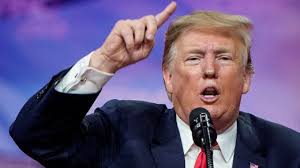
Donald Trump
Even though the Biden administration had nothing to do with the case, Republicans immediately blamed the President—and demanded wholesale prosecutions of the Left.
Right-wing activist Charlie Kirk urged Republican prosecutors to get “creative” in bringing charges: “Indict the left, or lose America,” he said on X.
And Trump quickly issued his own calls for “vengeance”:
“Wouldn’t it be terrible to throw the president’s wife and the former secretary of state, think of it, the former secretary of state, but the president’s wife, into jail? Wouldn’t that be a terrible thing? But they want to do it,” Trump said in an interview on Newsmax.
“It’s a terrible, terrible path that they’re leading us to. And it’s very possible that it’s going to have to happen to them.”
Nor has Trump forgotten former Republican Representative Liz Cheney, who chaired the House 1/6 Committee investigating the Trump-inspired attack on Congress.
“ELIZABETH LYNNE CHENEY IS GUILTY OF TREASON,” Trump posted on his social media website Truth Social. “RETRUTH IF YOU WANT TELEVISED MILITARY TRIBUNALS.”
There can be absolutely no doubt that Trump will pursue “vengeance” against everyone who has ever opposed him if he is re-elected President.
There can also be no doubt that he will remain in office until he dies as “President-for-Life.”
When Andrew Jackson, seventh President of the United States from 1829 to 1837, was close to death, he asked his doctor: “What act of my administration will be most severely condemned by future Americans?”
“Perhaps the removal of the bank deposits,” said the doctor—referring to Jackson’s withdrawal of U.S. Government monies from the first Bank of the United States.
“Oh, no,” said Jackson, his eyes blazing. “I can tell you. Posterity will condemn me more because I was persuaded not to hang John C. Calhoun as a traitor than for any other act in my life!”
John C. Calhoun had once been Vice President under Jackson and later a United States Senator from South Carolina. His fiery, pro-slavery rhetoric and radical theories of “nullification” of Federal laws played a major role in bringing on the Civil War (1861-1865).
Whether Biden moves to prevent a Trump/Republican dictatorship or allows it to become reality, he will be simultaneously praised and damned by future generations of Americans.
ABC NEWS, ABRAHAM LINCOLN, AFGHANISTAN, ALEXANDER THE GREAT, ALTERNET, AMERICABLOG, ANDREW JACKSON, AP, BABY BOOMER RESISTANCE, BBC, BLOOMBERG, BUZZFEED, CBS NEWS, CHARLIE KIRK, CIVIL WAR, CNN, CROOKS AND LIARS, DAILY KOS, FIVETHIRTYEIGHT, FOX NEWS CHANNEL, GATES OF FIRE (BOOK), HARPER’S MAGAZINE, HUFFINGTON POST, JACK SMITH, JOHN C. CALHOUN, JOSEPH BIDEN, LIZ CHENEY, MEDIA MATTERS, MERCENARIES, MERRICK GARLAND, MOTHER JONES, MOVEON, MSNBC, NBC NEWS, NEW REPUBLIC, NEWSDAY, NEWSWEEK, NPR, ORGANIZED CRIME, PBS NEWSHOUR, POLITICO, POLITICUSUSA, PROJECT 2025, RAW STORY, REPUBLICANS, REUTERS, SALON, SEATTLE TIMES, SLATE, SPARTA, STEVEN PRESSFIELD, STORMY DANIELS, TALKING POINTS MEMO, THE AFGHAN CAMPAIGN (BOOK), THE ATLANTIC, THE CHICAGO SUN-TIMES, THE CHICAGO TRIBUNE, THE DAILY BEAST, THE DAILY BLOG, THE GUARDIAN, THE HILL, THE HUFFINGTON POST, THE INTERCEPT, THE LOS ANGELES TIMES, THE NATION, THE NEW REPUBLIC, THE NEW YORK TIMES, THE NEW YORKER, THE PROFESSION (BOOK), THE VILLAGE VOICE, THE VIRTUES OF WAR (BOOK), THE WASHINGTON POST, THERMOPYLAE, THINKPROGRESS, TIME, TREASON, TRUTHDIG, TRUTHOUT, TWO POLITICAL JUNKIES, U.S. NEWS & WORLD REPORT, UNITED STATES SUPREME COURT, UPI, USA TODAY, X
In Bureaucracy, Business, History, Law, Law Enforcement, Military, Politics, Social commentary on July 9, 2024 at 12:10 am
The Supreme Court has spoken. And Donald Trump, who tried to treasonously overturn the 2020 Presidential election and make himself “President-for-Life,” is now armed with the almost total immunity he has long sought.
As Trump and his entrenched Right-wing allies move ever closer to establishing an absolute dictatorship, this is an apt time to discover—or rediscover—the frighteningly real world of The Profession, a 2011 futuristic novel by bestselling author Steven Pressfield.
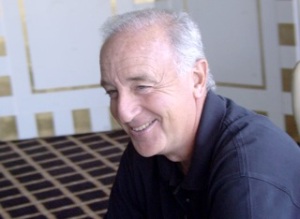
Steven Pressfield
Pressfield had previously made his mark as an author of historical novels—primarily set in ancient Greece.
In Gates of Fire (1998) he explored the rigors and heroism of Spartan society—and the famous last stand of its 300 picked warriors at Thermopylae.
In The Virtues of War (2004) Pressfield adopted the identity of Alexander the Great, explaining what it was like to command invincible armies that swept across the known world.
Finally, in The Afghan Campaign (2006) he chronicled—from the viewpoint of a lowly Greek soldier—Alexander’s brutal, three-year anti-guerrilla campaign in Afghanistan.
But in The Profession, Pressfield created a seemingly plausible world set in the future. The book’s dust jacket offers an excellent summary of its plot-line:
“The year is 2032. Everywhere military force is for hire. Oil companies, multi-national corporations and banks employ powerful, cutting-edge mercenary armies to control global chaos and protect their riches.
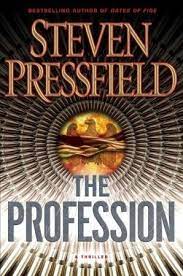
“Even nation states enlist mercenary forces to suppress internal insurrections, hunt terrorists, and do the black bag jobs necessary to maintain the new New World Order.
“Force Insertion is the world’s merc monopoly. Its leader is the disgraced former United States Marine General James Salter, stripped of his command by the president for nuclear saber-rattling with the Chinese and banished to the Far East.
“A grandmaster military and political strategist, Salter plans to take vengeance on those responsible for his exile and then come home…as Commander in Chief.”
Salter appears as a hybrid of World War II General Douglas MacArthur and Iraqi War General Stanley McCrystal. Like MacArthur, Salter has butted heads with his President—and paid dearly for it. Now his ambition—like MacArthur—is to become President himself by popular acclaim.

Douglas MacArthur
And like McCrystal, he is a pure warrior who leads from the front and is revered by his men. Salter seizes Saudi oil fields and strategically rigs them with explosives to be used if threatened.
Then he offers them as a gift to America. By doing so, he makes himself the most popular man in the country—and a guaranteed occupant of the White House.

Stanley McCrystal
And in 2032 the United States is a far different nation from the one its Founding Fathers created in 1776.
“Any time that you have the rise of mercenaries…society has entered a twilight era, a time past the zenith of its arc,” says Salter. “The United States is an empire…but the American people lack the imperial temperament. We’re not legionaries, we’re mechanics. In the end the American Dream boils down to what? ‘I’m getting mine and the hell with you.'”
Americans, asserts Salter, have come to like mercenaries: “They’ve had enough of sacrificing their sons and daughters in the name of some illusory world order. They want someone else’s sons and daughters to bear the burden….
“They want their problems to go away. They want me to make them go away.”
Yet unlike Donald Trump, who infamously shouted, “I love the poorly educated!” Salter is a highly intellectual man. He feels himself a tragic figure, lamenting that the United States has abandoned its longstanding political values even as he prepares to extinguish the most basic one by becoming dictator.
“The moment compels me to seize it. If I don’t someone or something worse will step in. But if I perform the bidding of Necessity, I violate the code of the republic to which all of us have sworn allegiance. I cross a line, beyond which there can be no return.
“But what, I ask, is the alternative? The nation has lost its way and is struggling desperately, merely to hang on. The nation can’t go on as it is, and everyone knows it. If not me, who? If not me, what?
“So, yes, I will go home. And yes, I will accept whatever crown, of paper or gold, that my country wants to press upon me. Not because I believe such a coronation will make any difference in the long run.
“But maybe in the short run, it’s better that my hand be on the wheel rather than some other self-aggrandizing sonofabitch whose motives might not be as well-intentioned or whose consciousness so painfully evolved.”
At a nationally televised press conference, Salter hands a loaded pistol to a longtime friend and disciple who now fears his dictatorial ambitions.
“Go ahead,” says Salter. “You’ll be saving the republic. And me, too.”
But the former disciple cannot bring himself to kill his longtime idol: “Now I’m guilty with you,” he says.
Steven Pressfield, in a work of fiction, has given us a nightmarish vision of a futuristic America.
Donald Trump and his Right-wing disciples may soon make that vision a reality.
2008 PRESIDENTIAL CAMPAIGN, 2016 PRESIDENTIAL CAMPAIGN, ABC NEWS, AFFORDABLE CARE ACT, ALTERNET, AMERICABLOG, ANDREW SHAFFER, AP, BABY BOOMER RESISTANCE, BARACK OBAMA, BLOOMBERG, BORDER WALL, BUZZFEED, CBS NEWS, CNN, CROOKS AND LIARS, DAILY KOZ, DON WINSLOW, DONALD TRUMP, DRUDGE REPORT, DRUG ENFORCEMENT ADMINISTRATION, DRUG TRAFFICKING, FIVETHIRTYEIGHT, GOODREADS, HARPER’S MAGAZINE, HEROIN, HOPE NEVER DIES (BOOK), HUFFINGTON POST, JOE BIDEN, JOHN F. KENNEDY, LOS ANGELES TIMES, MEDIA MATTERS, MEXICO, MOTHER JONES, MOVEON, MSNBC, NBC NEWS, NEWSWEEK, NPR, PBS NEWSHOUR, POLITICO, POLITICUSUSA, RAW STORY, REUTERS, RICHARD M. NIXON, ROLLING STONE, SALON, SEATTLE TIMES, SINALOA CARTEL, SLATE, TALKING POINTS MEMO, THE ATLANTIC, THE BORDER (BOOK), THE CHICAGO SUN-TIMES, THE CHICAGO TRIBUNE, THE DAILY BEAST, THE DAILY BLOG, THE GUARDIAN, THE HILL, THE HUFFINGTON POST, THE LOS ANGELES TIMES, THE NATION, THE NEW REPUBLIC, THE NEW YORK TIMES, THE VILLAGE VOICE, THE WASHINGTON POST, THINKPROGRESS, TIME, TRUTHDIG, TRUTHOUT, TWO POLITICAL JUNKIES, U.S. NEWS & WORLD REPORT, UPI, USA TODAY, WAR ON DRUGS, WONKETTE, X
In Bureaucracy, Entertainment, History, Politics, Social commentary on July 8, 2024 at 12:10 am
Joe Biden defeated Donald Trump to become the 46th President of the United States on January 20, 2021.
But before scoring that victory, he racked up a series of incredible adventures as a private investigator—in fiction.
In Hope Never Dies: An Obama-Biden Mystery, author Andrew Shaffer has fashioned a novel that is half-mystery, half-bromance.
Vice President Joe Biden has just left the Obama White House and doesn’t know what to do with the rest of his life. Then Finn Donnelly, his favorite railroad conductor, dies in a suspicious accident, leaving behind an ailing wife and a trail of clues.
To unravel the mystery, “Amtrak Joe” calls on the skills of his former boss: Barack Obama, the 44th President of the United States. Together they scour biker bars, cheap motels and other memorable haunts throughout Delaware.![]()
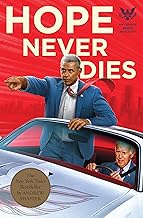
Then Biden unearths a disturbing truth about his longtime—and now dead—friend. This, in turn, leads Biden and Obama to uncover the sinister forces behind America’s opioid epidemic.
The book is pure fantasy fun, as evidenced from this review by Alexandra Alter in The New York Times:
“[Hope Never Dies is] a roughly 300-page work of political fanfiction, an escapist fantasy that will likely appeal to liberals pining for the previous administration, longing for the Obama-Biden team to emerge from political retirement as action heroes. But it’s also at times a surprisingly earnest story about estranged friends who are reunited under strange circumstances.”
A reader named Casey, reviewing the novel for Goodreads, writes: “While Shaffer could have leaned into nostalgia alone, he’s written a solid mystery with the characters fleshed out as more than just clichés.
“The reader really feels Biden’s longing to be helpful and his anguish over seeing 44’s legacy undone so quickly by an individual who shall remain nameless. (The presidential zings in this book are incredible, truly.)
“The tension between the two rings as true as it did when they were in office….By all means, this book shouldn’t work as well as it does. For a few hours, I got to enjoy the company of politicians who behaved like adults (mostly). It sure was nice.”
Contrasting with the relatively lighthearted fictional images of Joe Biden and Barack Obama is the immensely darker one of Donald Trump.
Don Winslow offers Trump an extended cameo appearance in The Border, his massive, 736-page novel about America’s war on drugs—and the horrific violence it has spawned in Mexico. It’s the third of a trilogy of novels vividly portraying the violent costs of an unwinnable conflict.
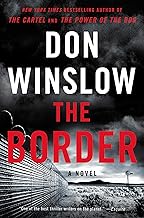
Art Keller is a dedicated agent of the Federal Drug Enforcement Administration (DEA). For over 40 years, he has waged all-out war on Adán Barrera, the godfather of the powerful Sinaloa Cartel.
Appointed director of the DEA, Keller now faces a series of deadly enemies:
- A heroin epidemic surging across America;
- Hitmen who want to kill him;
- Politicians who want to sabotage his agenda; and
- An incoming administration that’s allied with the very drug traffickers he’s trying to destroy.
And heading this administration is John Dennison—Donald Trump in all but name—who:
- Gratuitously insults people on Twitter;
- Fires a Special Counsel;
- Gets blackmailed by a woman he once bedded; and
- Colludes with drug traffickers for a multi-million dollar loan to finance his Presidential campaign.
Whereas the reviews for Hope Never Dies were as upbeat as the book itself, those of The Border reflect the novel’s mercilessly grim take on a war that can’t be won.
Los Angeles Times: “The Border is intricate, mean and swift, a sprawling canvass of characters including narco kingpins, a Guatemalan stowaway, a Staten Island heroin addict, a kinky hit woman, a barely veiled Donald Trump and DEA agent Art Keller, who….has been noble and merciless, a conflicted wanderer who makes America face the transgressions committed in its name.”
Rolling Stone: “Clocking in at over 700 pages, it is his most overtly political installment yet. He takes on the Trump administration directly, creating a fictional candidate, then president, who stokes racist fears of Mexicans, campaigns on ‘building the wall’ and, along with his venal son-in-law, gets caught up in a shady real estate deal involving Cartel money.”
NPR: “The Border becomes a book for our times. Like Shakespeare, it makes a three-act drama of our modern moment. Like Shakespeare’s plays, it shows us a world that is our own, a history that is our own, a burden that is our own, rendered out into the rhythm of scenes and arcs, chapters and parts.”
Obama concentrated the full force of his attention on reforming American healthcare—by making it available to millions whose insurance refused to provide coverage.
Trump’s top priority was to separate the United States from Mexico with an impenetrable wall—and he even diverted $3.6 billion from Pentagon funding to pay for it.
Like John F. Kennedy, Barack Obama will likely be positively remembered as much for what he tried to do as what he succeeded at doing.
Like Richard M. Nixon, Donald Trump will likely be remembered as a menacing stain on American history.
1968 PRESIDENTIAL CAMPAIGN, 2020 PRESIDENTIAL CAMPAIGN, ABC NEWS, ALTERNET, AMERICABLOG, AMERICAN INDIANS, AP, BABY BOOMER RESISTANCE, BARBARA GARSON, BBC, BLACK LIVES MATTER, BLOOMBERG, BUZZFEED, CBS NEWS, CIVIL RIGHTS, CNN, COMING APART: AMERICA IN THE 1960S (BOOK), CROOKS AND LIARS, DAILY KOS, DAILY KOZ, DEMOCRATS, DRUDGE REPORT, EUGENE MCCARTHY, FIVETHIRTYEIGHT, GEORGE BERNARD SHAW, GROSS NATIONAL PRODUCT, HARPER’S MAGAZINE, HUFFINGTON POST, JIM SLATTERY, JOHN F. KENNEDY, Kamala Harris, KANSAS STATE UNIVERSITY, LOOK MAGAZINE, LYNDON B. JOHNSON, MCBIRD!, MEDIA MATTERS, MISSISSIPPI, MOTHER JONES, MOVEON, MSNBC, NBC NEWS, NEW REPUBLIC, NEWSDAY, NEWSWEEK, NPR, PBS NEWSHOUR, POLITICO, POLITICUSUSA, RAW STORY, REPUBLICANS, REUTERS, ROBERT F. KENNEDY, SALON, SEATTLE TIMES, SIRHAN SIRHAN, SLATE, SOPHOCLES, STANLEY TRETICK, TALKING POINTS MEMO, TET OFFENSIVE, THE ATLANTIC, THE CHICAGO SUN-TIMES, THE CHICAGO TRIBUNE, THE DAILY BEAST, THE DAILY BLOG, THE GUARDIAN, THE HILL, THE HUFFINGTON POST, THE INTERCEPT, THE LOS ANGELES TIMES, THE NATION, THE NEW REPUBLIC, THE NEW YORK TIMES, THE NEW YORKER, THE VILLAGE VOICE, THE WASHINGTON POST, THINKPROGRESS, TIME, TIME MAGAZINE, TRUTHDIG, TRUTHOUT, TWO POLITICAL JUNKIES, U.S. NEWS & WORLD REPORT, UNIVERSITY OF KANSAS, UPI, USA TODAY, VIETNAM WAR, WILLIAM L. O'NEIL, WONKETTE, X
In Bureaucracy, History, Law, Law Enforcement, Military, Politics, Social commentary on July 5, 2024 at 12:10 am
On March 18, 1968, Presidential candidate Robert F. Kennedy, speaking at the University of Kansas, called on his fellow citizens to show compassion for those less fortunate and in need of relief through the Federal Government.
“If we believe that we, as Americans, are bound together by a common concern for each other, then an urgent national priority is upon us. We must begin to end the disgrace of this other America.”
Finally, Kennedy did something almost no other politician—in his time or since—has ever done: He dared to attack that holy-of-holies, the Gross Domestic Product (then called the Gross National Product).
“If we believe that we, as Americans, are bound together by a common concern for each other, then an urgent national priority is upon us. We must begin to end the disgrace of this other America.
“Too much and for too long, we seemed to have surrendered personal excellence and community values in the mere accumulation of material things. Our Gross National Product, now, is over $800 billion dollars a year, but that Gross National Product….counts air pollution and cigarette advertising, and ambulances to clear our highways of carnage.
“It counts special locks for our doors and the jails for the people who break them. It counts the destruction of the redwood and the loss of our natural wonder in chaotic sprawl. It counts napalm and counts nuclear warheads and armored cars for the police to fight the riots in our cities. It counts Whitman’s rifle and Speck’s knife, and the television programs which glorify violence in order to sell toys to our children.
“Yet the Gross National Product does not allow for the health of our children, the quality of their education or the joy of their play. It does not include the beauty of our poetry or the strength of our marriages, the intelligence of our public debate or the integrity of our public officials.
“It measures neither our wit nor our courage, neither our wisdom nor our learning, neither our compassion nor our devotion to our country. It measures everything in short, except that which makes life worthwhile. And it can tell us everything about America except why we are proud that we are Americans….

Senator Robert F. Kennedy campaigning for President
“George Bernard Shaw once wrote, ‘Some people see things as they are and say why? I dream things that never were and say, why not?’
“So I come here to Kansas to ask for your help. In the difficult five months ahead, before the convention in Chicago. I ask for your help and for your assistance.
“If you believe that the United States can do better. If you believe that we should change our course of action. If you believe that the United States stands for something here internally as well as elsewhere around the globe, I ask for your help and your assistance and your hand over the period of the next five months.
“And when we win in November….and we begin a new period of time for the United States of America, I want the next generation of Americans to look back upon this period and say as they said of Plato: ‘Joy was in those days, but to live.’ Thank you very much.”
At the end of Kennedy’s wildly popular speech at Kansas State University, photographer Stanley Tretick, of Look magazine, shouted, “This is Kansas, fucking Kansas! He’s going all the fucking way!”
But he didn’t go all the way. On June 5, 1968—82 days after announcing his Presidential candidacy—an assassin’s bullet suddenly halted his short-lived campaign—and his life.

Robert Kennedy’s funeral train
Historian William L. O’Neil delivered a poignant summary of Robert Kennedy’s legacy in his 1971 book, Coming Apart: An Informal History of America in the 1960′s:
“He aimed so high that he must be judged for what he meant to do, and through error and tragic accident, failed at…..He will also be remembered as an extraordinary human being who, though hated by some, was perhaps more deeply loved by his countrymen than any man of his time.
“That, too, must be entered into the final account, and it is no small thing. With his death, something precious vanished from public life.”
As United States Attorney General (1961-1964) Robert F. Kennedy had the courage to wage all-out war on the Mafia. As a United States Senator (1964-1968) he had the compassion to champion aid to impoverished Americans.
Even in his own era—a half-century ago—Robert Kennedy stood out as the only major Presidential candidate who could legitimately make both claims.
Today, most Democrats—battered by decades of Republican charges that they’re “big spenders”—fear supporting big-ticket items to help the poor.
And the Black Lives Matter movement has made any connection to law enforcement a disqualification for higher office—as former California Attorney General Kamala Harris found out as a 2020 Presidential candidate.
America may never again see a Presidential candidate who can combine a strong stand against crime with an equally strong commitment to helping the poor and disadvantaged.
1968 PRESIDENTIAL CAMPAIGN, 2020 PRESIDENTIAL CAMPAIGN, ABC NEWS, ALTERNET, AMERICABLOG, AMERICAN INDIANS, AP, BABY BOOMER RESISTANCE, BARBARA GARSON, BBC, BLACK LIVES MATTER, BLOOMBERG, BUZZFEED, CBS NEWS, CIVIL RIGHTS, CNN, COMING APART: AMERICA IN THE 1960S (BOOK), CROOKS AND LIARS, DAILY KOS, DAILY KOZ, DEMOCRATS, DRUDGE REPORT, EUGENE MCCARTHY, FIVETHIRTYEIGHT, GEORGE BERNARD SHAW, GROSS NATIONAL PRODUCT, HARPER’S MAGAZINE, HUFFINGTON POST, JIM SLATTERY, JOHN F. KENNEDY, Kamala Harris, KANSAS STATE UNIVERSITY, LOOK MAGAZINE, LYNDON B. JOHNSON, MCBIRD!, MEDIA MATTERS, MISSISSIPPI, MOTHER JONES, MOVEON, MSNBC, NBC NEWS, NEW REPUBLIC, NEWSDAY, NEWSWEEK, NPR, PBS NEWSHOUR, POLITICO, POLITICUSUSA, RAW STORY, REPUBLICANS, REUTERS, ROBERT F. KENNEDY, SALON, SEATTLE TIMES, SIRHAN SIRHAN, SLATE, SOPHOCLES, STANLEY TRETICK, TALKING POINTS MEMO, TET OFFENSIVE, THE ATLANTIC, THE CHICAGO SUN-TIMES, THE CHICAGO TRIBUNE, THE DAILY BEAST, THE DAILY BLOG, THE GUARDIAN, THE HILL, THE HUFFINGTON POST, THE INTERCEPT, THE LOS ANGELES TIMES, THE NATION, THE NEW REPUBLIC, THE NEW YORK TIMES, THE NEW YORKER, THE VILLAGE VOICE, THE WASHINGTON POST, THINKPROGRESS, TIME, TIME MAGAZINE, TRUTHDIG, TRUTHOUT, TWO POLITICAL JUNKIES, U.S. NEWS & WORLD REPORT, UNIVERSITY OF KANSAS, UPI, USA TODAY, VIETNAM WAR, WILLIAM L. O'NEIL, WONKETTE, X
In Bureaucracy, History, Law, Law Enforcement, Military, Politics, Social commentary on July 4, 2024 at 12:10 am
On March 18, 1968, Presidential candidate Robert F. Kennedy did what few politicians have ever done: He accepted public responsibility for a war that had since become a national disaster—the Vietnam war.
Addressing a packed audience of students and faculty at Kansas State University, he said:
“Let me begin this discussion with a note both personal and public. I was involved in many of the early decisions on Vietnam, decisions that helped set us on our present path.
“It may be that the effort was doomed from the start; that it was never really possible to bring all the people of South Vietnam under the rule of the successive governments we supported—governments, one after another, riddled with corruption, inefficiency, and greed; governments which did not and could not successfully capture and energize the national feeling of their people.
“If that is the case, as it well may be, then I am willing to bear my share of the responsibility, before history and before my fellow citizens. But past error is no excuse for its own perpetuation. Tragedy is a tool for the living to gain wisdom, not a guide by which to live.
“Now as ever, we do ourselves best justice when we measure ourselves against ancient tests, as in the Antigone of Sophocles: ‘All men make mistakes, but a good man yields when he knows his course is wrong, and repairs the evil. The only sin is pride.’
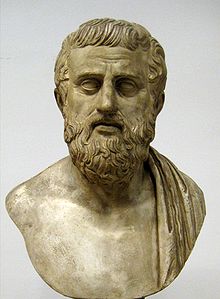
Sophocles
And he dared to attack the war as more than a military and political disaster: He saw it as a stain on America’s moral fiber:
“Can we ordain to ourselves the awful majesty of God—to decide what cities and villages are to be destroyed, who will live and who will die, and who will join the refugees wandering in a desert of our own creation?
“If it is true that we have a commitment to the South Vietnamese people, we must ask, are they being consulted—in Hue, or Ben Tre, or in the villages from which the three million refugees have fled?
“If they believe all the death and destruction are a lesser evil than the Wet Cong, why did they not warn us when the Viet Cong came into Hue, and the dozens of other cities, before the Tet Offensive? Why did they not join the fight?
“Will it be said of us, as Tacitus said of Rome: ‘They made a desert and called it peace?'”
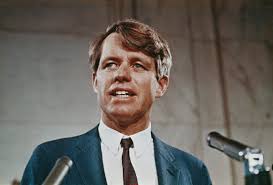
Robert F. Kennedy
The students gave him an ovation worthy of a rock star.
Time correspondent Hays Gorey said the electricity between Kennedy and the K.S.U. students was “real and rare.” “A good part of it is John F. Kennedy’s, of course, but John Kennedy…himself couldn’t be so passionate, and couldn’t set off such sparks.”
Jim Slattery, who would later be elected to Congress from Kansas, reread the K.S.U. speech during the second Iraq war and decided it was so powerful “because Kennedy was talking about what was right!”
As Kennedy started to leave, students rushed the platform where he stood, knocking over chairs and grabbing at him. They stroked his hair and ripped his shirtsleeves.
Later that day, Kennedy addressed another wildly enthusiastic audience—at the University of Kansas, in Lawrence, Kansas.
Then he addressed the glaring disparities between rich and poor Americans—a topic now generally ignored by Democrats and turned into an attack line by Republicans:
“All around us, all around us….men have lost confidence in themselves, in each other. It is confidence which has sustained us so much in the past. Rather than answer the cries of deprivation and despair….hundreds of communities and millions of citizens are looking for their answers, to force and repression and private gun stocks— so that we confront our fellow citizen across impossible barriers of hostility and mistrust.
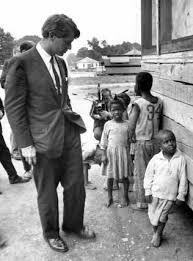
Robert F. Kennedy talking with black children
“And again, I don’t believe that we have to accept that. I don’t believe that it’s necessary in the United States of America. I think that we can work together. I don’t think that we have to shoot at each other, to beat each other, to curse each other and criticize each other, I think that we can do better in this country. And that is why I run for President of the United States….
“I have seen children in Mississippi starving, their bodies so crippled from hunger and their minds have been so destroyed for their whole life that they will have no future. I have seen children in Mississippi—here in the United States—with a gross national product of $800 billion dollars.
“I have seen children in the Delta area of Mississippi with distended stomachs, whose faces are covered with sores from starvation, and we haven’t developed a policy so we can get enough food so that they can live, so that their children, so that their lives are not destroyed, I don’t think that’s acceptable in the United States of America and I think we need a change.”


 Bureaucracybuster's Blog
1984 NOVEL, 2020 PRESIDENTIAL ELECTION, ABC NEWS, ADOLF HITLER, AFFORDABLE HEALTHCARE ACT, ALCOHOLISM, ALTERNET, ALVIN BRAGG, AMERICABLOG, ANDREW CLYDE, ANN COULTER, AP, ARIZONA, ARIZONA SHOOTINGS, ASHLI BABBITT, ASSASSINATION, BABY BOOMER RESISTANCE, BARACK OBAMA, BARRON TRUMP, BBC, BILL CLINTON, BIRTHERS, BLACKS, BLOOMBERG NEWS, BUZZFEED, CBS NEWS, CHILD MOLESTERS, CHRISTINA-TAYLOR GREEN, CLASSIFIED DOCUMENTS, CNN, CONFEDERATE FLAG, COVID-19, CROOKS AND LIARS, CVS, DAILY KOS, DEMOCRATIC PARTY, DEMOCRATS, DENNIS HASTERT, DEVIN NUNES, DICK ARMEY, DICK MORRIS, DONALD TRUMP, FAMILY RESEARCH COUNCIL, FANNI WILLIS, FBI, FIVETHIRTYEIGHT, FRANKLIN D. ROOSEVELT, GABRIELLE GIFFORDS, GAYS, GEORGE H.W. BUSH, GEORGE ORWELL, GEORGE W. BUSH, GLENN BECK, HARPER’S MAGAZINE, HARRY S. TRUMAN, HATE CRIMES, HEALTHCARE, HISPANICS, HOUSE OVERSIGHT COMMITTEE, HUFFINGTON POST, JACK SMITH, JAN BREWER, JANUARY 6 COUP ATTEMPT, JGB BUSH, JIM JORDAN, JOSEPH MCCARTHY, JOSEPH R. BIDEN, JOSEPH STALIN, JOSH DUGGAR, KANSAS, LAUREN BOEBERT, LESBIANS, LOS ANGELES, MARJORIE TAYLOR GREEN, MATT GAETZ, MEDIA MATTERS, MEIN KAMPF, MELANIA TRUMP, MICHAEL COHEN, MICHAEL SAVAGE, MICHELE BACHMANN, MIKE HUCKABEE, MIKE PENCE, MOTHER JONES, MOVEON, MSNBC, MUSLIMS, NBC NEWS, NEW REPUBLIC, NEWSDAY, NEWSWEEK, NEWT GINGRICH, NPR, OBAMACARE, ORACLE, PBS NEWSHOUR, PHIL GRAMM, POLITICO, POLITICUSUSA, PORTLAND, PROPAGANDA, RAFAEL "TED" CRUZ, RAW STORY, RELIGIOUS FREEDOM RESTORATION ACT, REP. GABRIELLE GIFFORDS, REPUBLICAN PARTY, REPUBLICANS, REUTERS, RICHARD NIXON, RICK PERRY, RODNEY KING RIOTS, ROLLING STONE MAGAZINE, RUSH LIMBAUGH, SALON, Sarah Palin, SEAN HANNITY, SEATTLE TIMES, SHARIA LAW, SLATE, SOUTH DAKOTA, SOVIET UNION, SPIRO AGNEW, STEVE BANNON, STORMY DANIELS, TALKING POINTS MEMO, TEA PARTY, TERRORISM, THE ATLANTIC, THE CHICAGO SUN-TIMES, THE CHICAGO TRIBUNE, THE DAILY BEAST, THE DAILY BLOG, THE GUARDIAN, THE HILL, THE HUFFINGTON POST, THE INTERCEPT, THE LOS ANGELES TIMES, THE NATION, THE NEW REPUBLIC, THE NEW YORK TIMES, THE NEW YORKER, THE VILLAGE VOICE, THE WASHINGTON POST, THINKPROGRESS, TIME, TRUTHDIG, TRUTHOUT, U.S. DISTRICT JUDGE JOHN ROLL, U.S. MARSHALS SERVICE, U.S. NEWS & WORLD REPORT, UNITED STATES HOUSE OF REPRESENTATIVES, UNITED STATES SENATE, UPI, USA TODAY, WOMEN, WORLD WAR 11, X
REPUBLICANS: PREDATORS, NOT PACIFISTS: PART THREE (OF FIVE)
In Bureaucracy, History, Law, Law Enforcement, Politics, Social commentary on July 17, 2024 at 12:06 amThe electoral success of Senator Joseph McCarthy’s Red-baiting treason slanders proved too alluring for other Republicans to resist.
Joseph McCarthy
Among those who have greatly profited from hurling similar charges are:
During the 1992 Presidential campaign, Republicans tried to paint Bill Clinton as a brainwashed “Manchurian candidate” because he had briefly visited the Soviet Union during his college years.
After the Soviet Union collapsed in 1991, Republicans lost their “soft on Communism” slander-line. So they tried to persuade voters that Democrats were “soft on crime.”
When riots flared in 1992 after the acquittal of LAPD officers who had savagely beaten Rodney King, President George H.W. Bush blamed the carnage on the “Great Society” programs of the 1960s.
George H.W. Bush
After losing the White House to Clinton at the polls in 1992 and 1996, Republicans tried to oust him another way: By impeaching him over a tryst with a penis-loving intern named Monica Lewinsky.
The Republican-controlled House of Representatives voted to impeach, but the effort was defeated in the Democratically-controlled Senate.
The 2008 election of Barack Obama pushed the Republican “treason chorus” to new heights of infamy.
Barack Obama
Almost immediately after Obama took office, he came under attack by an industry of Right-wing book authors such as Sean Hannity, Ann Coulter and Rush Limbaugh.
The following titles vividly reveal the hates, fears and ambitions of their authors—and audience:
Consider the vocabulary Right-wingers use to describe their political adversaries:
“Liberals,” “radicals, “bankrupting,” “treason,” subversion,” “slander,” “terrorism,” “betrayal,” “catastrophe,” “shattering the American dream,” “leftists,” “Communists,” “government takeover,” “socialism,” “power grab,” “secularism,” “environmentalism.”
And while the Right lusts to constantly compare Democrats and liberals (the two aren’t always the same) to Adolf Hitler, its propaganda campaign draws heavily on the Nazi leader’s own advice.
In Mein Kampf, Hitler laid out his formula for successful propaganda: “All effective propaganda must be confined to a few bare essentials.
“Those must be expressed as far as possible in stereotypical formulas. These slogans should be persistently repeated until the very last individual has come to grasp the idea that has been put forward.
“[The masses] more readily fall victims to the big lie than the small lie, since they themselves often tell small lies in little matters but would be ashamed to resort to large-scale falsehoods.”
Thus, Republicans—led by Donald Trump—spent the eight years of Barack Obama’s Presidency repeating the lie that he was born in Kenya—not Hawaii, as the long-form version of his birth certificate attests.
The reason: To “prove” that he was an illegitimate President, and should be removed from office.
To Republicans’ dismay, their slander campaign didn’t prevent Obama from being elected in 2008—and re-elected in 2012.
Share this: