Posts Tagged ‘WEHRMACHT’
2016 PRESIDENTIAL ELECTION, 2020 PRESIDENTIAL ELECTION, ABC NEWS, ADAM SCHIFF, ADOLF HITLER, ALTERNET, AMERICABLOG, AP, ARMENIA, BABY BOOMER RESISTANCE, BBC, BUZZFEED, CBS NEWS, CHARLES PIERCE, CNN, CONVERSATION WITH AN AMERICAN WRITER (POEM), CORY GARDNER, CORY GRADINER, CROOKS AND LIARS, DAILY KOS, DAILY KOZ, DIMITRI SHOSTAKOVICH, DONALD TRUMP, ESQUIRE MAGAZINE, FACEBOOK, FBI, FIVETHIRTYEIGHT, FOREIGN SERVICE, GREAT TERROR, HOUSE INTELLIGENCE COMMITTEE, HOUSE OF REPRESENTATIVES, HUNTER BIDEN, JAMES COMEY, JEFF SESSIONS, JOE BIDEN, JONI ERNST, JOSEPH STALIN, KEITH SCHILLER, KYRGYZSTAN, MARIA YOVANOVITCH, MARIE YOVANOVICH, MARTHA MCSALLY, MICHAEL ATKINSON, MIKE FLYNN, MIKHAIL TUKHACHEVESKY, MOTHER JONES, MOVEON, MSNBC, NAZI GERMANY, NBC NEWS, NEWSWEEK, NICCOLO MACHIAVELLI, NIKITA KHRUSHCHEV, NIKOLAI ZHILAYEV, NPR, PBS NEWSHOUR, POLITICO, POLITICUSUSA, RAW STORY, REUTERS, ROBERT MUELLER III, ROD ROSENSTEIN, RUDOLPH GIULIANI, RUDY GIULIANI, RUSSIAN ESPIONAGEky, SALON, SEATTLE TIMES, SENATE INTELLIGENCE COMMITTEE, SERGEY KISLYAK, SERGEY LAVOV, SLATE, SOVIET UNION, STATE DEPARTMENT, TALKING POINTS MEMO, THE ATLANTIC, THE CHICAGO SUN-TIMES, THE CHICAGO TRIBUNE, THE DAILY BEAST, THE DAILY BLOG, THE DISCOURSES, THE GUARDIAN, THE HILL, THE HUFFINGTON POST, THE LOS ANGELES TIMES, THE NATION, THE NEW YORK TIMES, THE WALL STREET JOURNAL, THE WASHINGTON POST, THINKPROGRESS, THOM TILLIS, TIME, TRUTHDIG, TWITTER, U.S. NEWS & WORLD REPORT, UKRAINE, UPI, USA TODAY, WEHRMACHT, WORLD WAR 11, YEVGENEY YEVTUSHENKO
In Bureaucracy, History, Law, Law Enforcement, Medical, Military, Politics, Social commentary on February 2, 2022 at 1:38 am
…A truly great man is ever the same under all circumstances. And if his fortune varies, exalting him at one moment and oppressing him at another, he himself never varies, but always preserves a firm courage, which is so closely interwoven with his character that everyone can readily see that the fickleness of fortune has no power over him.
The conduct of weak men is very different. Made vain and intoxicated by good fortune, they attribute their success to merits which they do not possess. And this makes them odious and insupportable to all around them. And when they have afterwards to meet a reverse of fortune, they quickly fall into the other extreme, and become abject and vile.
—Niccolo Machiavelli, The Discourses
Four heroes, three villains.
Two of the heroes are Russians; three are Americans.
The villains: One Russian (actually, Georgian); two American.
First up—in order of disappearance: Mikhail Nikolayevich Tukhachevsky (pronounced too-ka-chev-sky).
Tukhachevsky (February 4, 1893 – June 12, 1937) was a major Soviet military leader and theoretician from 1918 to 1937.
He commanded the Soviet Western Front during the Russian-Polish War (1920-21) and served as Chief of Staff of the Red Army (1925-1928).
He fought to modernize Soviet armament, as well as develop airborne, aviation and mechanized forces. Almost singlehandedly, he created the theory of deep operations for Soviet forces.

Mikhail Tukhachevsky
All of these innovations would reap huge dividends when the Soviet Union faced the lethal fury of Adolf Hitler’s Wehrmacht.
In 1936, Tukhachevsky warned Soviet dictator Joseph Stalin that Nazi Germany might attack without warning—and ignite a long and murderous war.
Stalin—the son of a Georgian cobbler—resented Tukhachevsky’s coming from a noble family. A monumental egomaniac, he also hated that Tukhachevesky’s fame rivaled his own.
Warned of the approaching German danger, Stalin shouted: “What are you trying to do—frighten Soviet authority?”
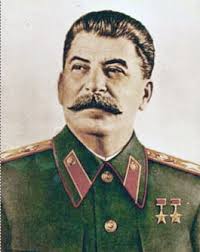
Joseph Stalin
The attack that Tukhachevsky warned against came five years later—on June 22, 1941, leaving at least 26 million Russians dead.
But Tukhachevsky wasn’t alive to command a defense.
The 1930s were a frightening and dangerous time to be alive in the Soviet Union. In 1934, Stalin, seeing imaginary enemies everywhere, ordered a series of purges that lasted right up to the German invasion.
An example of Stalin’s paranoia occurred one day while the dictator walked through the Kremlin corridors with Admiral Ivan Isakov. Officers of the NKVD (the predecessor to the KGB) stood guard at every corner.
“Every time I walk down the corridors,” said Stalin, “I think: Which one of them is it? If it’s this one, he will shoot me in the back. But if I turn the corner, the next one can shoot me in the face.”
In 1937-38, the Red Army fell prey to Stalin’s paranoia.
Its victims included:
- Three of five marshals (five-star generals);
- Thirteen of 15 army commanders (three- and four-star generals);
- Fifty of 57 army corps commanders; and
- One hundred fifty-four out of 186 division commanders.
And heading the list of those marked for death was Marshal Mikhail Tukhachevsky.
Arrested on May 22, 1937, he was interrogated and tortured. As a result, he “confessed” to being a German agent plotting to overthrow Stalin and seize power.
On his confession, which survives in the archives, his bloodstains can clearly be seen.
On June 11, 1937, the Soviet Supreme Court convened a special military tribunal to try Tukhachevsky and eight generals for treason.
It was a sham: The accused were denied defense attorneys, and could not appeal the verdict—-which was foregone: Death.
In a Russian version of poetic justice, five of the eight generals who served as Tukhachevsky’s judges were themselves later condemned and executed as traitors.
Within hours of the verdict, Tukhachevsky was summoned from his cell and shot once in the back of the head.
From 1937 until 1956, Tukhachevsky was officially declared a traitor and fifth-columnist.
Then, on February 25, 1957, Soviet Premier Nikita Khrushchev delivered his bombshell “Secret Speech” to the 20th Congress of the Communist Party of the Soviet Union.
In this, he denounced Stalin (who had died in 1953) as a ruthless tyrant responsible for the slaughter of millions of innocent men, women and children. He condemned Stalin for creating a “personality cult” around himself, and for so weakening the Red Army that Nazi Germany was able to easily overrun half of the Soviet Union from 1941 to 1943.
On January 31, 1957, Tukhachevsky and his co-defendants were declared innocent of all charges and were “rehabilitated.”
Today, he is once again—rightly—considered a Russian hero and military genius. And Stalin is universally—and rightly—seen as a blood-stained tyrant.

Mikhail Tukhachevsky appears on a 1963 Soviet Union postage stamp
Next hero: Nikolai Sergeyvich Zhilayev (pronounced Zill-lay-ev)
Zhilayev (November 18, 1881 – January 20, 1938) was a Russian musicologist and the teacher of several 20th-century Russian composers. Among these: Dimitri Shostakovich.
Zhilayev, a member of the Russian Academy of Art-Sciences, taught at the Moscow Conservatory. Among his friends—to his ultimate misfortune—was Mikhail Tukhachevsky.
In 1938, he, too, became a casualty of what has become known as The Great Terror.
In his posthumously-published memoirs, Testimony, Shostakovich, his pupil and friend, described how Zhilayev faced his end with a calmness that awed even the NKVD secret police sent to arrest him.
ABC NEWS, ADOLF HITLER, ALTERNET, AMERICABLOG, AP, BABY BOOMER RESISTANCE, BBC, BLOOMBERG, BLOOMBERG NEWS, BUZZFEED, CBS NEWS, CNN, COVID-19, CROOKS AND LIARS, DAILY KOZ, DONALD J. TRUMP, DRUDGE RETORT, ECONOMY, EMPLOYMENT, FACEBOOK, FBI, FIVETHIRTYEIGHT, GESTAPO, HARPER’S MAGAZINE, HUFFINGTON POST, INDEPENDENT COUNSEL, JEWS, JOE BIDEN, JOE SCARBOROUGH, MEDIA, MEDIA MATTERS, MEXICO, MIKA BRZEZINSKI, MORNING JOE, MOTHER JONES, MOVEON, MSNBC, NAZI ATROCITIES, NBC NEWS, NEW REPUBLIC, NEWSDAY, NEWSWEEK, NPR, PAM BONDI, PBS NEWSHOUR, POLITICO, POLITICUSUSA, RAW STORY, REPUBLICANS, REUTERS, SALON, SARAH HUCKABEE SANDERS, SEATTLE TIMES, SLATE, SOVIET UNION, TALKING POINTS MEMO, THE ATLANTIC, THE CHICAGO SUN-TIMES, THE CHICAGO TRIBUNE, THE DAILY BEAST, THE DAILY BLOG, THE GUARDIAN, THE HILL, THE HUFFINGTON POST, THE LOS ANGELES TIMES, THE NATION, THE NEW REPUBLIC, THE NEW YORK TIMES, THE NEW YORKER, THE VILLAGE VOICE, THE WASHINGTON POST, THINKPROGRESS, TIME, TRUMP UNIVERSITY SCANDAL, TRUTHDIG, TRUTHOUT, TWITTER, TWO POLITICAL JUNKIES, U.S. NEWS & WORLD REPORT, UNEMPLOYMENT, UPI, USA TODAY, WEHRMACHT, WONKETTE
In Bureaucracy, History, Politics, Social commentary on December 22, 2021 at 12:10 am
On April 27, 2020, Joe Scarborough offered an important insight about why most Americans ignored President Donald Trump’s crimes and outrages for so long:
“Back in January Joe Biden wrote an Op-Ed that the President was not prepared for this coming pandemic, and things were going to get worse. And he said ‘Let your doctors talk. Let your scientists talk. Follow their lead.’
“…And it’s been one scam idea after another, that people then promoted on other networks, scam doctors promoting these scam solutions, claiming that everybody who had taken this malaria drug had been cured in certain hospitals. This is just the sort of thing that catches up to Donald Trump.
“I’ve said from the very beginning: You can lie about independent counsels, people won’t listen. You can lie about former FBI directors—“
MIKA BRZEZINSKI: “It doesn’t impact their lives.”
JOE SCARBOROUGH: “They’re still going to work, the kids are doing fine, they’ve got enough money to pay their rent, to pay their mortgage, You can even lie about the Ukraine call—they don’t really care.
“But all of these lies, all of these [COVID-19] scams that he’s been pushing…have been revealed as lies—not by the people on cable news, but by their doctors. By nurses they know. If you’ve got a doctor who’s been treating your family for 20-25 years, you’re going to believe that person more than a scam artist that’s pushing propaganda for Donald Trump on talk radio.”
On August 23, 2018, Trump appearing on “Fox and Friends,” said: “I tell you what, if I ever got impeached, I think the market would crash, I think everybody would be very poor.”
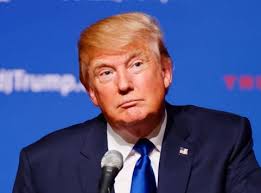
Donald Trump
Thus, he appealed to the greed and fear of his voting base—and no doubt hoped to reach beyond it: “Keep me in power or you’ll all suffer for it.”
Then-White House Press Secretary Sarah Huckabee Sanders bragged, on June 4, 2018:
“Since taking office, the President has strengthened American leadership, security, prosperity, and accountability. And as we saw from Friday’s jobs report, our economy is stronger, Americans are optimistic, and business is booming.”
Many Congressional Republicans echoed this: The American people care only about the economy—and how well-off they are.
For eight years, Nazi Germany underwent such an epoch. Germans called it “The Happy Time.”
It began on January 30, 1933, when Adolf Hitler became Chancellor—and lasted until June 22, 1941, when Hitler invaded the Soviet Union.
Germans knew about the Nazis’ cruelty to the Jews, the conquests of Austria and Czechoslovakia, the mass arrests and concentration camps.
They didn’t care.
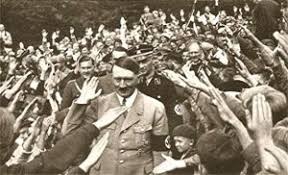
Frenzied Germans greet Adolf Hitler
The Gestapo didn’t have to watch everyone: German “patriots” gladly reported their fellow citizens—especially Jews—to the secret police.
As far as everyday Germans were concerned:
- The streets were clean and peaceful.
- Employment was high.
- The trouble-making unions were gone.
- Germany was once again “taking its rightful place” among ruling nations, after its catastrophic defeat in World War 1.
The height of “The Happy Time” came in June, 1940. In just six weeks, the Wehrmacht accomplished what the German army hadn’t in four years during World War 1: The total defeat of its longtime enemy, France.
Suddenly, French clothes, perfumes, delicacies, paintings and other “fortunes of war” came pouring into the Fatherland.
Most Germans believed der Krieg—“the war”—was over, and only good times lay ahead.
Then, on June 22, 1941, three million Wehrmacht soldiers slashed their way into the Soviet Union. The Third Reich was now locked in a death-struggle with a nation even more powerful than itself.

German soldiers in the Soviet Union
And then, on December 11, 1941—four days after Germany’s ally, Japan, attacked Pearl Harbor—Hitler declared war on the United States.
“The Happy Time” for Germans was over. Only prolonged disaster lay ahead.
Donald Trump has spent his life appealing to the greed or fear of those around him. For example:
- Florida Attorney General Pam Bondi personally solicited a political contribution from Trump around the same time her office deliberated joining an investigation of alleged fraud at Trump University and its affiliates.
- After Bondi dropped the Trump University case against Trump, he wrote her a $25,000 check for her re-election campaign.
- According to an April 14, 2019 story by ABC News, a nationwide review uncovered at least 36 criminal cases where Trump was invoked in direct connection with violent acts, threats of violence or allegations of assault.
- In nine cases, attackers hailed Trump in the midst or immediate aftermath of physically assaulting victims. In 10 more cases, perpetrators cheered or defended Trump while taunting or threatening others. And in another 10 cases, Trump and his rhetoric were cited in court to explain a defendant’s violent or threatening behavior.
But starting on February 28, 2026, Trump faced an enemy that he couldn’t bribe or intimidate.
A fanatical regime like COVID-19 doesn’t accept bribe-monies or grovel before a raging tyrant.
The Germans made a devil’s-bargain with Adolf Hitler—and paid dearly for it.
Millions of greedy Americans have embraced Donald Trump—another would-be tyrant—as America’s economic savior.
By supporting Trump—or at least not opposing him—they also made a devil’s-bargain. And such bargains always end with the devil winning.
2020 PRESIDENTIAL ELECTION, ABC NEWS, ADOLF HITLER, ALBERT SPEER, ALTERNET, AMERICABLOG, AP, ATTACK ON THE UNITED STATES CAPITOL BUILDING, BABY BOOMER RESISTANCE, BLOOMBERG, BOB WOODWARD, BUZZFEED, CBS NEWS, CIA, CNN, CROOKS AND LIARS, DAILY KOS, DAILY KOZ, DISOBEYING HITLER: GERMAN RESISTANCE AFTER VALKYRIE (BOOK), DONALD TRUMP, FACEBOOK, FASCISM, FIVETHIRTYEIGHT, GINA HASPEL, HARPER’S MAGAZINE, HERMAN GORING, HUFFINGTON POST, JOE BIDEN, MARK ESPER, MEDIA MATTERS, MIKE POMPEO, MOTHER JONES, MOVEON, MSNBC, NANCY PELOSI, NATIONAL SECURITY AGENCY, NAZI GERMANY, NBC NEWS, NEWSWEEK, NPR, PBS NEWSHOUR, PERIL (BOOK), POLAND, POLITICO, POLITICUSUSA, RANDALL HANSEN, RAW STORY, REPUBLICAN PARTY, REPUBLICANS, REUTERS, ROBERT COSTA, SALON, SLATE, TALKING POINTS MEMO, THE ATLANTIC, THE CHICAGO SUN-TIMES, THE CHICAGO TRIBUNE, THE DAILY BEAST, THE DAILY BLOG, THE GUARDIAN, THE HILL, THE HUFFINGTON POST, THE LOS ANGELES TIMES, THE NATION, THE NEW REPUBLIC, THE NEW YORK TIMES, THE PENTAGON, THE VILLAGE VOICE, THE WALL STREET JOURNAL, THE WASHINGTON POST, THINKPROGRESS, TIME, TRUTHDIG, TRUTHOUT, TWITTER, TWO POLITICAL JUNKIES, U.S. NEWS & WORLD REPORT, UPI, USA TODAY, VLADIMIR PUTIN, VOTER FRAUD, WEHRMACHT, WONKETTE, WORLD WAR 11
In Bureaucracy, History, Military, Politics, Social commentary on September 22, 2021 at 12:12 am
On January 8, 2021, General Mark Milley, Chairman of the Joint Chiefs of Staff, calls a secret meeting in his Pentagon office to review the process for military action, including launching nuclear weapons.
It’s two days since President Donald Trump incited an attack on the United States Capitol Building to stop the certifying of Joe Biden as the next President of the United States. And Milley fears Trump intends to launch a full-fledged coup to remain in power.
He instructs his senior military officials to not take orders from anyone unless he is involved: “No matter what you are told, you do the procedure. You do the process. And I’m part of that procedure.”
He looks each officer in the eye, and asks him to verbally confirm that he understands.
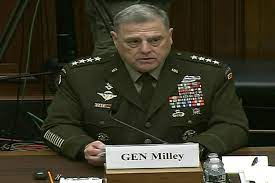
Mark Milley
Fearful of Trump’s actions in his final weeks as President, Milley twice calls China’s top general, Li Zuocheng, of the People’s Liberation Army.
China is on high alert because of the chaos in the United States.
Milley assures Zuocheng there is no cause to fear an American attack, despite Trump’s provocative rhetoric against China. He promises that he will warn Zuocheng in the event of an American attack.
Donald Trump, in a September 14, 2021 interview on Newsmax, says Milley’s calls to the Chinese could amount to treason: “If it is actually true, which is hard to believe, that he would have called China and done these things and was willing to advise them of an attack, or in advance of an attack, that’s treason.
“For him to say that I was going to attack China is the most ridiculous thing I’ve ever heard.”
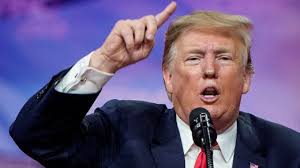
Donald Trump
At least three Republican Senators and nine members of the House of Representatives have demanded that Milley resign or be fired.
“He should be court-martialled if true,” Senator Rand Paul (R-Ky) writes on Twitter.
“(Milley) worked to actively undermine the sitting commander in chief of the U.S. armed forces,” Senator Marco Rubio (R-Fla.) posts on Twitter.
Senator Dick Durbin (D-Ill.) disagrees. He tells reporters that Democratic lawmakers “were circumspect in our language [to Milley] but many of us made it clear that we were counting on him to avoid the disaster which we knew could happen at any moment.”
Nazi defendants at Nuremberg had reacted with similar outrage upon learning that former Minister of Armaments Albert Speer had considered assassinating Adolf Hitler. Hitler had given orders for the total destruction of Germany when he realized he had lost World War II.
“Traitor!” they shouted at Speer in the courtroom.
Former Reichmarshall Herman Goring—who had himself been condemned to death by Hitler in the closing days of the war—vowed: “If we ever get into power again, we’ll execute you for treason!”
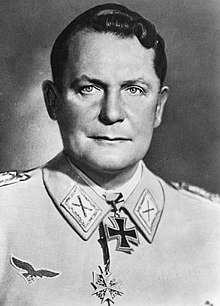
Herman Goring
Adding to the pressures on Milley is a blunt phone call from House Speaker Nancy Pelosi: “What I’m saying to you is that if they couldn’t even stop him from an assault on the Capitol, who even knows what else he may do? And is there anybody in charge at the White House who was doing anything but kissing his fat butt all over this?
“You know he’s crazy. He’s been crazy for a long time.”
Milley replied: “Madam Speaker, I agree with you on everything.”
After that call, Milley:
- Orders his top service chiefs to watch everything “all the time.”
- Tells the director of the National Security Agency: “Needles up. Keep watching, scan.”
- Tells then-CIA Director Gina Haspel: “Aggressively watch everything, 360.”
Write Bob Woodward and Robert Costa in their forthcoming book, Peril: “Milley was overseeing the mobilization of America’s national security state without the knowledge of the American people or the rest of the world.
“Some might contend that Milley had overstepped his authority and taken extraordinary power for himself, but he believed his actions were a good faith precaution to ensure there was no historic rupture in the international order, no accidental war with China or others, and no use of nuclear weapons.”
Milley has been shocked when, immediately after losing the 2020 election, Trump signs a secret military order withdrawing all America troops from Afghanistan by January 15, 2021—five days before he is scheduled to leave the White House.
After Trump incites the January 6 attack on the Capitol, write Woodward and Costa, Milley “felt no absolute certainty that the military could control or trust Trump and believed it was his job as the senior military officer to think the unthinkable and take any and all necessary precautions.”
Nor is Milley the only high-ranking national security official who fears Trump’s vindictiveness: CIA Director Gina Haspel warns Milley, “We are on the way to a right-wing coup. The whole thing is insanity. He is acting out like a six-year-old with a tantrum.”
Haspel also worries that Trump will try to attack Iran.
Milley intends above all to ensure a peaceful transfer of power from Donald Trump to Joe Biden on January 20:
“We’ve got a plane with four engines and three of them are out. We’ve got no landing gear. But we’re going to land this plane and we’re going to land it safely,” he tells Secretary of State Mike Pompeo.
On January 20, 2021, that plane lands safely.
2020 PRESIDENTIAL ELECTION, ABC NEWS, ADOLF HITLER, ALBERT SPEER, ALTERNET, AMERICABLOG, AP, ATTACK ON THE UNITED STATES CAPITOL BUILDING, BABY BOOMER RESISTANCE, BLOOMBERG, BOB WOODWARD, BUZZFEED, CBS NEWS, CIA, CNN, CROOKS AND LIARS, DAILY KOS, DAILY KOZ, DISOBEYING HITLER: GERMAN RESISTANCE AFTER VALKYRIE (BOOK), DONALD TRUMP, FACEBOOK, FASCISM, FIVETHIRTYEIGHT, GINA HASPEL, HARPER’S MAGAZINE, HERMAN GORING, HUFFINGTON POST, JOE BIDEN, MARK ESPER, MEDIA MATTERS, MIKE POMPEO, MOTHER JONES, MOVEON, MSNBC, NANCY PELOSI, NATIONAL SECURITY AGENCY, NAZI GERMANY, NBC NEWS, NEWSWEEK, NPR, PBS NEWSHOUR, PERIL (BOOK), POLAND, POLITICO, POLITICUSUSA, RANDALL HANSEN, RAW STORY, REPUBLICAN PARTY, REPUBLICANS, REUTERS, ROBERT COSTA, SALON, SLATE, TALKING POINTS MEMO, THE ATLANTIC, THE CHICAGO SUN-TIMES, THE CHICAGO TRIBUNE, THE DAILY BEAST, THE DAILY BLOG, THE GUARDIAN, THE HILL, THE HUFFINGTON POST, THE LOS ANGELES TIMES, THE NATION, THE NEW REPUBLIC, THE NEW YORK TIMES, THE PENTAGON, THE VILLAGE VOICE, THE WALL STREET JOURNAL, THE WASHINGTON POST, THINKPROGRESS, TIME, TRUTHDIG, TRUTHOUT, TWITTER, TWO POLITICAL JUNKIES, U.S. NEWS & WORLD REPORT, UPI, USA TODAY, VLADIMIR PUTIN, VOTER FRAUD, WEHRMACHT, WONKETTE, WORLD WAR 11
In Bureaucracy, History, Military, Politics, Social commentary on September 21, 2021 at 12:07 am
On November 3, 2020, 81,255,933 Democratic voters elect former Vice President Joseph Biden the 46th President of the United States.
President Donald J. Trump, running for a second term, gets 74,196,153 votes. Biden also wins decisively in the Electoral College: 306 votes to 232 for Trump.
Facing the end of his Presidency, Trump desperately seeks to remain in power. Having “joked” about being “President-for-Life,” he’s now fighting to make that a reality.
He spreads The Big Lie that he has been robbed by fraud. He summons his Stormtrumper followers to Washington, D.C. for a massive “Stop the Steal” rally set for January 6.
It is on that day that members of the House and Senate will meet in the United States Capitol Building to officially count the Electoral College votes. Since that total is known, it’s a foregone conclusion that Biden will be officially pronounced President-Elect.
Unwilling to accept this verdict, Trump demands that his vice president, Mike Pence, refuse to certify the election of Joe Biden as America’s next President.
When Pence refuses to break the law, Trump incites his followers in Washington, D.C., to storm the Capitol building on January 6 to stop the certification.
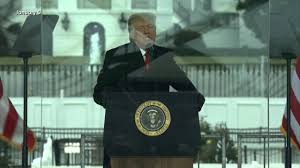
Donald Trump addresses his Stormtrumpers
The Stormtrumpers march to the United States Capitol—and quickly brush aside Capitol Police.
- Members of the mob attack police with chemical agents, metal poles and lead pipes.
- At least 140 police officers suffer injuries, including concussions, broken ribs, smashed spinal discs, a lost eye.
- Many of the lawmakers’ offices are occupied and vandalized—including that of House Speaker Nancy Pelosi, a favorite Right-wing target.
- Lawmakers huddle under desks and behind locked doors, expecting to die any minute.
- More than three hours pass before police—using riot gear, shields and batons—retake control of the Capitol.
And Trump? After giving his inflammatory speech, he returns to the White House—to watch his handiwork on television. He initially rebuffs requests to mobilize the National Guard.
With the United States seemingly on the brink of a Trumpian coup, General Mark Milley—Chairman of the Joint Chiefs of Staff—steps forward to save his country from a President he distrusts.
Appointed to that position by Trump in 2018, his career includes assignments with the 82nd Airborne Division, 5th Special Forces Group, Joint Readiness Training Center, Operations Staff of the Joint Staff, and Military Assistant to the Secretary of Defense.
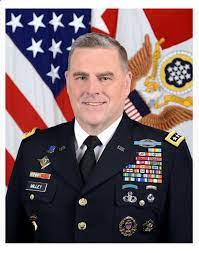
Mark Milley
Two days after the treasonous January 6 attack, Milley single-handedly takes secret action to prevent Trump from potentially ordering a dangerous military strike or launching nuclear weapons.
That’s one of a series of startling revelations in Peril, a new book by legendary journalist Bob Woodward and veteran Washington Post reporter Robert Costa.
Milley, deeply shaken by the Capitol assault, “was certain that Trump had gone into a serious mental decline in the aftermath of the election, with Trump now all but manic, screaming at officials and constructing his own alternate reality about endless election conspiracies.”
“You never know what a president’s trigger point is,” Milley tells his senior staff.
On January 8, Milley calls a secret meeting in his Pentagon office to review the process for military action, including launching nuclear weapons.
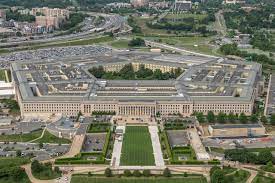
The Pentagon
Touch Of Light, CC BY-SA 4.0 <https://creativecommons.org/licenses/by-sa/4.0>, via Wikimedia Commons
He instructs his senior military officials to not take orders from anyone unless he is involved: “No matter what you are told, you do the procedure. You do the process. And I’m part of that procedure.”
He looks each officer in the eye, and asks him to verbally confirm that he understands.
Fearful of Trump’s actions in his final weeks as President, Milley twice calls China’s top general, Li Zuocheng of the People’s Liberation Army to assure him that the two nations will not suddenly go to war.
China is on high alert because of the chaos in the United States.
Milley assures him there is no cause to fear an American attack, despite Trump’s provocative rhetoric against that country. He promises Zuocheng that he will warn him in the event of an upcoming American attack:
“General Li, I want to assure you that the American government is stable and everything is going to be okay,” Milley says in the first call on October 30, 2020. “We are not going to attack or conduct any kinetic operations against you.
“If we’re going to attack, I’m going to call you ahead of time. It’s not going to be a surprise,” Milley reportedly says.
The second call is on January 8, 2021, to assure Zuocheng the United States isn’t on the brink of collapse.
Zuocheng isn’t easily convinced, even after Milley promises him: “We are 100 percent steady. Everything’s fine. But democracy can be sloppy sometimes.”
According to the Woodward-Costa book, Milley calls the admiral overseeing the U.S. Indo-Pacific Command, the military unit responsible for Asia and the Pacific region, and recommends postponing upcoming military exercises.
He also asks senior officers to swear that Milley will be involved if Trump orders the launch of nuclear weapons.
2020 PRESIDENTIAL ELECTION, ABC NEWS, ADOLF HITLER, ALBERT SPEER, ALTERNET, AMERICABLOG, AP, ATTACK ON THE UNITED STATES CAPITOL BUILDING, BABY BOOMER RESISTANCE, BLOOMBERG, BOB WOODWARD, BUZZFEED, CBS NEWS, CIA, CNN, CROOKS AND LIARS, DAILY KOS, DAILY KOZ, DISOBEYING HITLER: GERMAN RESISTANCE AFTER VALKYRIE (BOOK), DONALD TRUMP, FACEBOOK, FASCISM, FIVETHIRTYEIGHT, GINA HASPEL, HARPER’S MAGAZINE, HERMAN GORING, HUFFINGTON POST, JOE BIDEN, MARK ESPER, MEDIA MATTERS, MIKE POMPEO, MOTHER JONES, MOVEON, MSNBC, NANCY PELOSI, NATIONAL SECURITY AGENCY, NAZI GERMANY, NBC NEWS, NEWSWEEK, NPR, PBS NEWSHOUR, PERIL (BOOK), POLAND, POLITICO, POLITICUSUSA, RANDALL HANSEN, RAW STORY, REPUBLICAN PARTY, REPUBLICANS, REUTERS, ROBERT COSTA, SALON, SLATE, TALKING POINTS MEMO, THE ATLANTIC, THE CHICAGO SUN-TIMES, THE CHICAGO TRIBUNE, THE DAILY BEAST, THE DAILY BLOG, THE GUARDIAN, THE HILL, THE HUFFINGTON POST, THE LOS ANGELES TIMES, THE NATION, THE NEW REPUBLIC, THE NEW YORK TIMES, THE PENTAGON, THE VILLAGE VOICE, THE WALL STREET JOURNAL, THE WASHINGTON POST, THINKPROGRESS, TIME, TRUTHDIG, TRUTHOUT, TWITTER, TWO POLITICAL JUNKIES, U.S. NEWS & WORLD REPORT, UPI, USA TODAY, VLADIMIR PUTIN, VOTER FRAUD, WEHRMACHT, WONKETTE, WORLD WAR 11
In Bureaucracy, History, Military, Politics, Social commentary on September 20, 2021 at 12:05 am
Albert Speer, Minister of Armaments for the Third Reich, is appalled.
His Fuhrer, Adolf Hitler—the man he had idolized for 14 years—has just passed a death sentence on Germany, the nation he claimed to love above all others.
On March 19, 1945, facing certain defeat, Hitler had ordered a massive “scorched-earth” campaign throughout Germany.
All German agriculture, industry, ships, communications, roads, food stuffs, mines, bridges, stores and utility plants are to be destroyed.
If implemented, it will deprive the entire German population of even the barest necessities after the war.
Now living in a bunker 50 feet below bomb-shattered Berlin, Hitler gives full vent to his most destructive impulses.
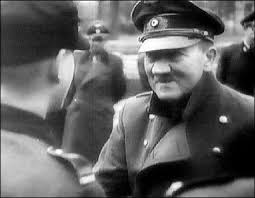
Adolf Hitler addressing boy soldiers as the Third Reich crumbles
“If the war is lost,” Hitler tells Speer, “the nation will also perish. This fate is inevitable. There is no necessity to take into consideration the basis which the people will need to continue even a most primitive existence.
“On the contrary, it will be better to destroy these things ourselves, because this nation will have proved to be the weaker one and the future will belong solely to the stronger eastern nation.
“Besides, those who will remain after the battle are only the inferior ones, for the good ones have all been killed.”
His attitude is: “If I can’t rule Germany, then there won’t be a Germany.”
Speer argues in vain that there must be a future for the German people. But Hitler refuses to back down. He gives Speer 24 hours to reconsider his opposition to the order.
The next day, Speer tells Hitler: “My Fuhrer, I stand unconditionally behind you!”
“Then all is well,” says Hitler, suddenly with tears in his eyes.

Albert Speer
“If I stand unreservedly behind you,” says Speer, “then you must entrust me rather than the Gauleiters [district Party leaders serving as provincial governors] with the implementation of your decree.”
Filled with gratitude, Hitler signs the decree Speer has thoughtfully prepared before their fateful meeting.
By doing so, Hitler unintentionally gives Speer the power to thwart his “scorched earth” decree.
Speer has been the closest thing to a friend in Hitler’s life. Trained as an architect, he joined the Nazi Party in 1931.
He met Hitler in 1933, when he presented the Fuhrer with architectural designs for the Nuremberg Rally scheduled for that year.
From then on, Speer became Hitler’s “genius architect” assigned to create buildings meant to last for a thousand years.
In 1943, Hitler appointed him Minister of Armaments, charged with revitalizing the German war effort.
Nevertheless, Speer now crisscrosses Germany, persuading military leaders and district governors to not destroy the vital facilities that would be needed after the war.
“No other senior National Socialist could have done the job,” writes Randall Hanson, author of Disobeying Hitler: German Resistance After Valkyrie.
Risking death, Speer refuses to carry out Hitler’s “scorched earth” order. Even more important, he successfully blocks such destruction and persuades influential military and civilian leaders to disobey the order as well.
As a result, those targets slated for destruction are spared.
Despite his later conviction for war crimes at Nuremberg, Speer never regrets his efforts to save Germany from total destruction at the hands of Adolf Hitler.
Fast forward 75 years: On November 3, 2020, 81,255,933 Democratic voters elect former Vice President Joseph Biden the 46th President of the United States.
President Donald J. Trump, running for a second term, gets 74,196,153 votes. Biden also wins decisively in the Electoral College: 306 votes to 232 for Trump.
Facing the end of his Presidency, Trump desperately seeks to remain in power. Having “joked” about being “President-for-Life,” he’s now fighting to make that a reality.
Unlike his 44 predecessors, he refuses to concede. For almost three weeks he denies his successor access to the resources he needs to launch a smooth transition.
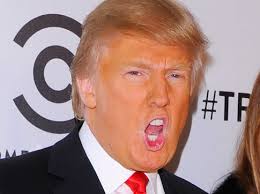
Donald Trump
Even worse: Instead of showing concern for the country he claims to love, Trump is now relentlessly destroying those institutions that guarantee American freedom and safety:
- The Pentagon
- The CIA
- The FBI
- The Cybersecurity and Infrastructure Security Agency
Trump spreads The Big Lie that the election had been stolen. He repeatedly presses his vice president, Mike Pence, to refuse to certify the election results at the Capitol on January 6. When Pence refuses to break the law, Trump incites his followers to storm the building to stop the vote counting.
His attitude clearly is: “If I can’t rule America, there won’t be an America.”
Meanwhile, House and Senate Republicans have embraced his most outrageous lies—or refused to openly refute them—as the COVID-19 pandemic slaughters about 1,000 Americans a day.
Even Republicans who privately admit the Trump era is ending realize that 74 million hate-filled Americans voted for him in 2020. And eagerly await the coming of the next would-be Fuhrer.
They will also eagerly vote out of office any Republican who dares break with the man they worship like a cult leader.
For Congressional Republicans, staying in office—and keeping their power and perks—is their top priority.
It is at this moment that one man—General Mark Milley, Chairman of the Joint Chief of Staff—steps forward to save his country from a President he distrusts.
ABC NEWS, ADOLF HITLER, ALTERNET, AMERICABLOG, AP, BABY BOOMER RESISTANCE, BLOOMBERG, BUZZFEED, CBS NEWS, CNN, COVID-19, CROOKS AND LIARS, DAILY KOZ, DONALD J. TRUMP, DRUDGE RETORT, ECONOMY, EMPLOYMENT, FACEBOOK, FBI, FIVETHIRTYEIGHT, GESTAPO, HARPER’S MAGAZINE, INDEPENDENT COUNSEL, JEWS, JOE BIDEN, JOE SCARBOROUGH, MEDIA, MEDIA MATTERS, MEXICO, MIKA BRZEZINSKI, MORNING JOE, MOTHER JONES, MOVEON, MSNBC, NAZI ATROCITIES, NBC NEWS, NEWSWEEK, NPR, PAM BONDI, PBS NEWSHOUR, POLITICO, POLITICUSUSA, RAW STORY, REPUBLICANS, REUTERS, SALON, SARAH HUCKABEE SANDERS, SEATTLE TIMES, SLATE, SOVIET UNION, TALKING POINTS MEMO, THE ATLANTIC, THE CHICAGO SUN-TIMES, THE CHICAGO TRIBUNE, THE DAILY BEAST, THE DAILY BLOG, THE GUARDIAN, THE HILL, THE HUFFINGTON POST, THE LOS ANGELES TIMES, THE NATION, THE NEW REPUBLIC, THE NEW YORK TIMES, THE VILLAGE VOICE, THE WASHINGTON POST, THINKPROGRESS, TIME, TRUMP UNIVERSITY SCANDAL, TRUTHDIG, TRUTHOUT, TWITTER, TWO POLITICAL JUNKIES, U.S. NEWS & WORLD REPORT, UNEMPLOYMENT, UPI, USA TODAY, WEHRMACHT, WONKETTE
In Bureaucracy, History, Medical, Politics on September 3, 2021 at 12:10 am
On April 27, 2020, MSNBC host Joe Scarborough explained why most Americans ignored President Donald Trump’s crimes and outrages for so long:
“Back in January Joe Biden wrote an Op-Ed that the President was not prepared for this coming pandemic, and things were going to get worse. And he said ‘Let your doctors talk. Let your scientists talk. Follow their lead.’
“…And it’s been one scam idea after another, that people then promoted on other networks, scam doctors promoting these scam solutions, claiming that everybody who had taken this malaria drug had been cured in certain hospitals. This is just the sort of thing that catches up to Donald Trump,” said the host of “Morning Joe.”
“I’ve said from the very beginning: You can lie about independent counsels, people won’t listen. You can lie about former FBI directors—“
MIKA BRZEZINSKI: “It doesn’t impact their lives.”
JOE SCARBOROUGH: “They’re still going to work, the kids are doing fine, they’ve got enough money to pay their rent, to pay their mortgage, You can even lie about the Ukraine call—they don’t really care.
“But all of these lies, all of these scams that he’s been pushing…have been revealed as lies—not by the people on cable news, but by their doctors. By nurses they know. If you’ve got a doctor who’s been treating your family for 20-25 years, you’re going to believe that person more than a scam artist that’s pushing propaganda for Donald Trump on talk radio.”
On August 23, 2018, Trump, appearing on “Fox and Friends,” said: “I tell you what, if I ever got impeached, I think the market would crash, I think everybody would be very poor.”
Donald Trump
Thus, he appealed to the greed and fear of his voting base—and no doubt hoped to reach beyond it: “Keep me in power or you’ll all suffer for it.”
Then-White House Press Secretary Sarah Huckabee Sanders bragged, on June 4, 2018:
“Since taking office, the President has strengthened American leadership, security, prosperity, and accountability. And as we saw from Friday’s jobs report, our economy is stronger, Americans are optimistic, and business is booming.”
Many Congressional Republicans echoed this: The American people care only about the economy—and how well-off they are.
For eight years, Nazi Germany underwent such an epoch. Germans called it “The Happy Time.”
It began on January 30, 1933, when Adolf Hitler became Chancellor—and lasted until June 22, 1941. Germans knew about the Nazis’ cruelty to the Jews, the mass arrests and concentration camps.
They didn’t care.
Frenzied Germans greet Adolf Hitler
The Gestapo didn’t have to watch everyone: German “patriots” gladly reported their fellow citizens—especially Jews—to the secret police.
As far as everyday Germans were concerned:
- The streets were clean and peaceful.
- Employment was high.
- The trouble-making unions were gone.
- Germany was once again “taking its rightful place” among ruling nations, after its catastrophic defeat in World War 1.
The height of “The Happy Time” came in June, 1940. In just six weeks, the Wehrmacht accomplished what the German army hadn’t in four years during World War 1: The total defeat of its longtime enemy, France.
Suddenly, French clothes, perfumes, delicacies, paintings and other “fortunes of war” came pouring into the Fatherland.
Most Germans believed the war was over, and only good times lay ahead.
Then, on June 22, 1941, three million Wehrmacht soldiers slashed their way into the Soviet Union. The Third Reich was now locked in a death-struggle with a nation even more powerful than itself.

German soldiers in the Soviet Union
And then, on December 11, 1941—four days after Germany’s ally, Japan, attacked Pearl Harbor—Hitler declared war on the United States.
“The Happy Time” for Germans was over. Only prolonged disaster lay ahead.
Donald Trump has spent his life appealing to the greed or fear of those around him. For example:
- Florida Attorney General Pam Bondi personally solicited a political contribution from Trump around the same time her office deliberated joining an investigation of alleged fraud at Trump University and its affiliates.
- After Bondi dropped the Trump University case, Trump wrote her a $25,000 check for her re-election campaign.
- According to an April 14, 2019 story by ABC News, a nationwide review uncovered at least 36 criminal cases where Trump was invoked in direct connection with violent acts, threats of violence or allegations of assault.
- In nine cases, attackers hailed Trump in the midst or immediate aftermath of physically assaulting victims. In 10 more cases, perpetrators cheered or defended Trump while taunting or threatening others. And in another 10 cases, Trump and his rhetoric were cited in court to explain a defendant’s violent or threatening behavior.
But in 2020, Trump came up against an enemy—to his re-election—that he couldn’t bribe or intimidate: COVID-19.
The Germans made a devil’s-bargain with Adolf Hitler—and paid dearly for it.
Millions of greedy Americans embraced Donald Trump, another would-be tyrant, as America’s economic savior. And paid for it—with the COVID-stricken lives of 375,000 men, women and children.
By supporting Trump—or at least not opposing him—they made a devil’s-bargain. And such bargains always end with the devil winning.
2003 IRAQ WAR, 2020 PRESIDENTIAL ELECTION, 9/11 ATTACKS, ABC NEWS, ADOLF HITLER, ALTERNET, AMERICABLOG, AP, BABY BOOMER RESISTANCE, BATTLE OF BRITAIN, BILL KRISTOL, BLOOMBERG, BUZZFEED, CAROL LEONNIG, CBS NEWS, CHAIRMAN OF THE JOINT CHIEFS OF STAFF, CIA, CNN, COUP, CROOKS AND LIARS, DAILY KOZ, DEPARTMENT OF DEFENSE, DONALD TRUMP, DRUDGE RETORT, FACEBOOK, FBI, FIVETHIRTYEIGHT, FOREIGN POLICY MAGAZINE, HARPER’S MAGAZINE, HERMANN GORING, HITLER OATH, I ALONE CAN FIX IT (BOOK), JAMES MATTIS, MARK MILLEY, MEDIA MATTERS, MICHAEL CUTRONE, MIKE PENCE, MOTHER JONES, MOVEON, MSNBC, NBC NEWS, NEWSWEEK, NPR, OSAMA BIN LADEN, PAUL VON HINDENBURG, PBS NEWSHOUR, PENTAGON, PHILIP RUCKER, POLITICO, POLITICUSUSA, RAW STORY, REICHSTAG FIRE, REPUBLICANS, REUTERS, SALON, SEATTLE TIMES, SLATE, SYRIA, TALKING POINTS MEMO, THE ATLANTIC, THE CHICAGO SUN-TIMES, THE CHICAGO TRIBUNE, THE DAILY BEAST, THE DAILY BLOG, THE GUARDIAN, THE HILL, THE HUFFINGTON POST, THE LOS ANGELES TIMES, THE NATION, THE NEW REPUBLIC, THE NEW YORK TIMES, THE PENTAGON, THE VILLAGE VOICE, THE WASHINGTON POST, THE WEEKLY STANDARD, THINKPROGRESS, THIRD REICH, TIME, TRUTHDIG, TRUTHOUT, TWITTER, TWO POLITICAL JUNKIES, U.S. NEWS & WORLD REPORT, UPI, USA TODAY, WEEKLY STANDARD, WEHRMACHT, WILLIAM KRISTOL, WONKETTE
In Bureaucracy, History, Military, Politics, Social commentary on July 20, 2021 at 12:06 am
On August 2, 1934, German President Paul von Hindenburg died.
Adolf Hitler was then serving as Reich Chancellor—the equivalent of prime minister. Within hours, the Nazi Reichstag [parliament] announced the following law, back-dated to August 1st:
“The office of Reich President will be combined with that of Reich Chancellor. The existing authority of the Reich President will consequently be transferred to the Führer and Reich Chancellor, Adolf Hitler.”
Immediately following the announcement of the new Führer law, the German officer corps and every individual soldier in the German Army [Wehrmacht] was made to swear a new oath of allegiance:
“I swear by God this holy oath, that I will render to Adolf Hitler, Führer of the German Reich and People, Supreme Commander of the Armed Forces, unconditional obedience, and that I am ready, as a brave soldier, to risk my life at any time for this oath.”
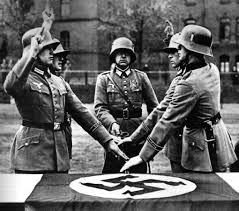
Soldiers swearing the Fuhrer Oath
For Germans—especially officers of the Wehrmacht—taking an oath was a holy act. Previously they had sworn obedience to the German state. Now they swore personal allegiance to Adolf Hitler.
President Donald Trump wanted to resurrect “the German experiment.”
On February 5, 2020, Republicans refused to impeach Trump for abuse of power and obstruction of Congress. Trump quickly began purging independent officials throughout government—and appointing political loyalists in their places.
On May 6, 2000, Foreign Policy magazine carried an alarming story under the headline: “Trump Taps Point Man to Remove Pentagon Officials Seen as Disloyal.”
Specifically: “Michael Cutrone, who has been detailed as Vice President Mike Pence’s top national security aide for South Asia, is set to arrive at the Pentagon to serve in a behind-the-scenes role vetting Defense Department officials for loyalty to the president, according to two current administration officials.”
Veteran Pentagon officials feared that the few remaining professional appointees who could resist illegal or irrational policy ideas would be removed from their posts or undermined. This would ensure far tighter White House control than had been the case under Defense Secretary James Mattis.
Their fears reached a crescendo during the months after Trump lost the 2020 Presidential election—from November 3, 2020 to January 20, 2021.
Chairman of the Joint Chiefs of Staff General Mark Milley feared that Trump and his allies might attempt a coup or take other dangerous or illegal measures. He and the other Joint Chiefs planned to resign, one-by-one, rather than carry out orders from Trump that they considered to be illegal, dangerous or ill-advised.

Mark Milley
Milley shared his fears of a coup with friends, lawmakers and colleagues.
“They may try, but they’re not going to fucking succeed,” Milley told his deputies. “You can’t do this without the military. You can’t do this without the CIA and the FBI. We’re the guys with the guns.”
In the days leading up to the January 6 attack on the Capitol Building, Milley told his staff that he believed Trump was stoking unrest, possibly in hopes of an excuse to invoke the Insurrection Act and call out the military.
Milley saw Trump as the classic authoritarian leader with nothing to lose.
“This is a Reichstag moment,” Milley told aides—referring to the February 27, 1933 arson of Germany’s parliament building which enabled Adolf Hitler to assume dictatorial powers.
The military’s plans to thwart a Trump coup are revealed in the new book I Alone Can Fix It: Donald J. Trump’s Catastrophic Final Year, by Carol Leonnig and Philip Rucker.
In a July 15 statement, Trump attacked Milley: “I never threatened, or spoke about, to anyone, a coup of our Government. So ridiculous!
“Sorry to inform you, but an Election is my form of ‘coup,’ and if I was going to do a coup, one of the last people I would want to do it with is General Mark Milley.”
Which implies he would choose some other general to plot a coup.
William Kristol—a Right-wing political analyst—has been dubbed “the godfather of neoconservatism.” And with good reason.
Immediately following the 9/11 attacks, Kristol, the editor of the Weekly Standard, was one of the leading instigators of the 2003 war with Iraq.
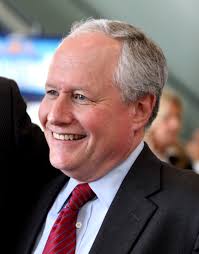
Bill Kristol
But on February 15, 2019, Kristol posted on Twitter:
“Members of Congress take this oath of office (see Title 5, Section 3331 of the United States Code): ‘I do solemnly swear (or affirm) that I will support and defend the Constitution of the United States against all enemies, foreign and domestic; that I will bear true faith and allegiance to the same; that I take this obligation freely, without any mental reservation or purpose of evasion, and that I will well and faithfully discharge the duties of the office on which I am about to enter. So help me God.'”
On May 7, 2019, he posted “the new GOP Congressional oath”:
“I do solemnly swear that I will support and defend Donald Trump against all oversight; that I will bear true faith and allegiance to him; that I take this obligation despite mental reservation and in the spirit of evasion of duty. So help me God.”
No doubt Kristol, who considers himself a dyed-in-the-wool conservative, remembers all too well the fate of those who took a similar oath to Adolf Hitler.
ABC NEWS, ADOLF HITLER, ALTERNET, AMERICABLOG, ANTHONY FAUCI, AP, BABY BOOMER RESISTANCE, BARACK OBAMA, BERLIN, BUZZFEED, CBS NEWS, CENTERS FOR DISEASE CONTROL, CNN, COMMISSARS, CORONAVIRUS, CROOKS AND LIARS, DAILY KOZ, DEPARTMENT OF HEALTH AND HUMAN SERVICES, DEPARTMENT OF HOMELAND SECURITY, DONALD TRUMP, DRUDGE RETORT, FACEBOOK, FIVETHIRTYEIGHT, FRIEDRICH VON PAULUS, GERMAN-SOVIET NON-AGGRESSION PACT, GREAT BRITAIN, HARPER’S MAGAZINE, JOHN BOLTON, JOSEPH STALIN, MALARIA, MEDIA MATTERS, MICK MULVANEY, MOSCOW, MOTHER JONES, MOVEON, MSNBC, NATIONAL INSTITUTE OF ALLERGY AND INFECTIOUS DISEASES, NAZI GERMANY, NBC NEWS, NEWSWEEK, NIKITA KHRUSHCHEV, NPR, PBS NEWSHOUR, POLAND, POLITICO, POLITICUSUSA, PRISONERS-OF-WAR, RAW STORY, REUTERS, ROLLING STONE MAGAZINE, SALON, SEATTLE TIMES, SLATE, SOVIET UNION, STALINGRAD, TALKING POINTS MEMO, THE ATLANTIC, THE CHICAGO SUN-TIMES, THE CHICAGO TRIBUNE, THE DAILY BEAST, THE DAILY BLOG, THE GUARDIAN, THE HILL, THE HUFFINGTON POST, THE LOS ANGELES TIMES, THE NATION, THE NATIONAL SECURITY COUNCIL, THE NEW REPUBLIC, THE NEW YORK TIMES, THE VILLAGE VOICE, THE WASHINGTON POST, THE WHITE HOUSE PANDEMIC OFFICE, THINKPROGRESS, THIRD REICH, TIME, TOM BOSSERT, TRUTHDIG, TRUTHOUT, TWITTER, TWO POLITICAL JUNKIES, U.S. NEWS & WORLD REPORT, UNITED STATES, UPI, USA TODAY, Vladimir Lenin, WEHRMACHT, WEIMAR REPUBLIC, WONKETTE
In Bureaucracy, History, Medical, Military, Politics, Social commentary on July 16, 2021 at 12:39 am
Two dictators. Two crises.
Next up: Donald Trump.
Soviet dictator Joseph Stalin received multiple warnings that his supposed ally, Nazi Germany, would soon invade Russia. He ignored all of them. And when the invasion came—on June 22, 1941—the result was the loss of 26 million men, women and children and four years of devastation.
President Donald Trump similarly received warnings that Coronavirus was a major world threat—and would likely hit the United States. Like Stalin, he ignored those warnings—with similarly disastrous consequences.
The virus first appeared in Wuhan, China, in December, 2019. Its first reported victim became ill on December 1.
By December 31, the outbreak was traced to a novel strain of Coronavirus.
Coronaviruses are a group of viruses that affect birds and mammals. In humans, Coronaviruses can cause pneumonia and may cause bronchitis.
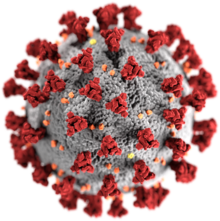
Coronavirus
According to the March 21, 2020 edition of Rolling Stone magazine: “The United States intelligence community has been warning the president since January and February about the dire consequences that would occur when coronavirus reached America, but the president seemed determined to play down the threat, leaving the country largely unaware and unprepared.”
An anonymous Intelligence official cited by the Washington Post said: “Donald Trump may not have been expecting this, but a lot of other people in the government were—they just couldn’t get him to do anything about it. The system was blinking red.”
Trump first learned of the virus on January 3, 2020. This did not prevent him from playing golf on January 4, 5, 18 and 19.
On January 19, the first Coronavirus case appeared in the United States.
On January 27, then-acting chief of staff Mick Mulvaney tried to get the President to act. But, according to officials who spoke with the Post, Trump was “dismissive” of early briefings “because he did not believe that the virus had spread widely throughout the United States.”
Trump fired Mulvaney one month later.
Then, for Trump, it was back to the golf course—on February 1, 2, 15.

Refusing to take action against the emerging Coronavirus threat, Trump repeatedly made statements that minimized it.
January 22: “We have it totally under control. It’s one person coming in from China. We have it under control. It’s going to be just fine.”
January 30: “We think we have it very well under control. We have very little problem in this country at this moment–five—and those people are all recuperating successfully. But we’re working very closely with China and other countries, and we think it’s going to have a very good ending for us .…that I can assure you.”
February 10: “Now, the virus that we’re talking about having to do—you know, a lot of people think that goes away in April with the heat—as the heat comes in. Typically, that will go away in April. We’re in great shape though. We have 12 cases—11 cases, and many of them are in good shape now.”
February 28: “[Democrats] tried the impeachment hoax…They lost…. And this is their new hoax.”
A major reason for the spectacular early victories of the German army in Russia was that, from 1936 to 1938, Stalin had gutted his own military by a series of systematic purges. Thus, there were few experienced, competent officers—from army corps commanders to four-star generals—to mount a strategic defense.
Similarly, upon taking office, Trump had gutted the permanent epidemic monitoring and command groups set up inside the White House: The National Security Council (NSC) and the Department of Homeland Security (DHS).
Pathologically jealous of Barack Obama, Trump tried to destroy every vestige of Obama’s legacy as the first black President of the United States. And these disease-monitoring groups were set up by Obama following the Ebola outbreak in West Africa in 2014.
In the spring of 2018, Trump pushed Congress to cut $15 billion from national health spending—and cutting the global disease-fighting budgets of the Centers for Disease Control, National Security Council, Department of Homeland Security and the Department of Health and Human Services (HHS).
In April, 2018, then-National Security Adviser John Bolton forced Tom Bossert, director of the infectious disease unit at DHS, to resign—along with his entire team.
On February 29, the first American died of Coronavirus.
Trump continued to be unconcerned about the growing threat.
On March 7, reporters asked him if he was concerned that Coronavirus had arrived in Washington, D.C. He replied: “No, I’m not concerned at all. No, we’ve done a great job with it.”
And in a March 9 tweet, Trump wrote: “So last year 37,000 Americans died from the common Flu. It averages between 27,000 and 70,000 per year. Nothing is shut down, life & the economy go on. At this moment there are 546 confirmed cases of CoronaVirus, with 22 deaths. Think about that!”
Perhaps most dangerously of all, Trump from the outset blatantly contradicted health officials—even when standing next to them at press conferences.
On March 21, Trump insisted he had a “very good” feeling about using a malaria drug to combat the virus. It fell to Dr. Anthony Fauci, head of the National Institute of Allergy and Infectious Diseases, to set the record straight: “No.”
By January 20, 2021—the end of Trump’s term—the United States had more than 24.2 million confirmed Coronavirus cases—and more than 400,000 deaths.
ABC NEWS, ADOLF HITLER, ALTERNET, AMERICABLOG, ANTHONY FAUCI, AP, BABY BOOMER RESISTANCE, BARACK OBAMA, BERLIN, BUZZFEED, CBS NEWS, CENTERS FOR DISEASE CONTROL, CNN, COMMISSARS, CORONAVIRUS, CROOKS AND LIARS, DAILY KOZ, DEPARTMENT OF HEALTH AND HUMAN SERVICES, DEPARTMENT OF HOMELAND SECURITY, DONALD TRUMP, DRUDGE RETORT, FACEBOOK, FIVETHIRTYEIGHT, FRIEDRICH VON PAULUS, GERMAN-SOVIET NON-AGGRESSION PACT, GREAT BRITAIN, HARPER’S MAGAZINE, JOHN BOLTON, JOSEPH STALIN, MALARIA, MEDIA MATTERS, MICK MULVANEY, MOSCOW, MOTHER JONES, MOVEON, MSNBC, NATIONAL INSTITUTE OF ALLERGY AND INFECTIOUS DISEASES, NAZI GERMANY, NBC NEWS, NEWSWEEK, NIKITA KHRUSHCHEV, NPR, PBS NEWSHOUR, POLAND, POLITICO, POLITICUSUSA, PRISONERS OF WAR, RAW STORY, REUTERS, ROLLING STONE MAGAZINE, SALON, SEATTLE TIMES, SLATE, SOVIET UNION, STALINGRAD, TALKING POINTS MEMO, THE ATLANTIC, THE CHICAGO SUN-TIMES, THE CHICAGO TRIBUNE, THE DAILY BEAST, THE DAILY BLOG, THE GUARDIAN, THE HILL, THE HUFFINGTON POST, THE LOS ANGELES TIMES, THE NATION, THE NATIONAL SECURITY COUNCIL, THE NEW REPUBLIC, THE NEW YORK TIMES, THE VILLAGE VOICE, THE WASHINGTON POST, THE WHITE HOUSE PANDEMIC OFFICE, THINKPROGRESS, THIRD REICH, TIME, TOM BOSSERT, TRUTHDIG, TRUTHOUT, TWITTER, TWO POLITICAL JUNKIES, U.S. NEWS & WORLD REPORT, UNITED STATES, UPI, USA TODAY, Vladimir Lenin, WEHRMACHT, WEIMAR REPUBLIC, WONKETTE
In Bureaucracy, History, Medical, Military, Politics, Social commentary on July 15, 2021 at 12:25 am
Two dictators. Two crises.
First up: Joseph Stalin.
“I know what Hitler’s up to. He thinks he’s outsmarted me. But in actuality, it is I who have outsmarted him.”
So spoke Joseph Stalin, absolute dictator of the Soviet Union, to his future successor, Nikita Khrushchev, in 1939.
Less than two years later, on June 22, 1941, three million German soldiers poured across the western border of the Soviet Union.
On August 23, 1939, Stalin had signed the German-Soviet Nonaggression Pact with German Fuhrer Adolf Hitler. The reason: Each dictator got what he wanted—for the moment. Hitler was planning to invade Poland in a matter of days—and he wanted to avoid a war with the Soviet Union. And Stalin got what he wanted: The eastern half of Poland.
Joseph Stalin
The agreement stunned the world. Since 1919, Nazis and Communists had fought bitter battles against each other in the streets of Germany during the Weimar Republic.
When this was replaced in 1933 by the Third Reich, German Communists were rounded up and imprisoned, if not murdered, by Hitler’s ruthless secret police, the Schutzstaffel (“Protective Squads”).
For the moment, however, all of that was conveniently forgotten.
But Hitler hadn’t forgotten his life’s ambition to conquer the Soviet Union and utterly destroy “the scourge of Jewish-Marxism.”
Stalin received numerous warnings from the United States and Great Britain about the coming invasion. But he dismissed them as efforts by the West to trick him into violating the pact and turning Nazi Germany into his mortal enemy.
When informed of the attack, Stalin at first believed it was being made by rogue German forces. He refused to order an immediate counterattack. Upon being convinced that the Wehrmacht intended to wage all-out war, he went into a funk in his dacha and shut himself off from everyone. To his closest associates he wailed: “Lenin left us a great inheritance and we, his heirs, have fucked it all up!”
Meanwhile, the Red Air Force was destroyed on the ground by the awesome Luftwaffe. And the Wehrmacht was advancing at a rate of 25 miles a day.
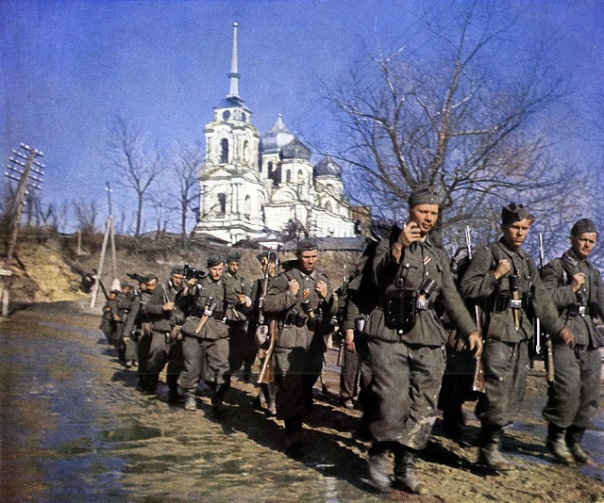
German soldiers marching through Russia
On July 3, after 10 days of brooding (and probably drinking heavily) in his dacha, Stalin finally took to the airways. He didn’t speak live; Radio Moscow played a recording of his voice across the Soviet Union.
Never a spellbinding orator, Stalin spoke in slow and faltering tones. Nevertheless, his opening words were startling: “Comrades! Citizens! Brothers and sisters! Men of our army and navy! I am addressing you, my friends!”
Stalin had never addressed an audience this way, and he never would again. Born Joseph Vissarionovich Djugashvili, he had given himself the name of “Stalin”—“Man of Steel.” And he had lived up to it, sending tens of thousands to the Soviet penal system known as the Gulag while ordering the executions of tens of thousands of others.
He said the “peace loving” Soviet Union had been attacked by “fiends and cannibals.” He claimed the non-aggression pact with Germany had given the army much-needed time to rearm and reorganize its forces. He claimed the Germans wanted to restore the rule of the landlords and re-establish Tsarism.
He repeatedly spoke of the treachery of the enemy—and of the need for constant vigilance against traitors: “We must wage a ruthless fight against all disorganizers of the rear, deserters, panic-mongers and rumor-mongers.”
This was accompanied by orders unprecedented in any other army: Those taken prisoner by the Germans were to be considered traitors—and shot or imprisoned. Those suspected of wounding themselves to avoid combat were also subject to summary execution. So were soldiers who had been legitimately wounded in battle but were suspected of inflicting those injuries.
The first two years of the war—1941 to 1943—proved disastrous for the Soviet Union.
During the first six months—June to December, 1941—German armies lured huge Soviet forces into gigantic “cauldron battles,” surrounding and exterminating them. An estimated 5.7 million prisoners of war (POWs) fell into German hands. Of these, at least 3.5 million died in custody.
But then the infamous Russian cold and snows of winter halted the Wehrmacht before Moscow. In the summer of 1942 German forces once again mounted a ferocious offensive, driving all the way to the Volga—and Stalingrad.
But they became bogged down in bitter house-to-house fighting. With the arrival of winter, Soviet forces surrounded the Wehrmacht’s powerful Sixth Army. The besiegers became the besieged. On February 2, 1943, Field Marshal Friedrich von Paulus surrendered what remained of his army. The battle cost Germany 500,000 men, including 91,000 taken prisoner.
As the Red Army finally began to go over on the offensive, Stalin relaxed the iron controls that had long stifled creativity on the part of his commandeers.
The infamous political commissars were removed from control over Russian generals. Gold braid and fancy uniforms were manufactured and rushed to the front as morale boosters.
At last, Stalin realized there was no way to win a life-and-death struggle than to give his soldiers the flexibility they needed.
The war would last another two years—costing the Soviet Union at least 26 million citizens—before it ended with the Red flag flying over Berlin.
ABC NEWS, ADOLF HITLER, ALTERNET, AMERICABLOG, AP, BABY BOOMER RESISTANCE, BLOOMBERG, BUZZFEED, CBS NEWS, CNN, COVID-19, CROOKS AND LIARS, DAILY KOZ, DONALD J. TRUMP, DRUDGE RETORT, ECONOMY, EMPLOYMENT, FACEBOOK, FBI, FIVETHIRTYEIGHT, GESTAPO, HARPER’S MAGAZINE, INDEPENDENT COUNSEL, JEWS, JOE BIDEN, JOE SCARBOROUGH, MEDIA, MEDIA MATTERS, MEXICO, MIKA BRZEZINSKI, MORNING JOE, MOTHER JONES, MOVEON, MSNBC, NAZI ATROCITIES, NBC NEWS, NEWSWEEK, NPR, PAM BONDI, PBS NEWSHOUR, POLITICO, POLITICUSUSA, RAW STORY, REPUBLICANS, REUTERS, SALON, SARAH HUCKABEE SANDERS, SEATTLE TIMES, SLATE, SOVIET UNION, TALKING POINTS MEMO, THE ATLANTIC, THE CHICAGO SUN-TIMES, THE CHICAGO TRIBUNE, THE DAILY BEAST, THE DAILY BLOG, THE GUARDIAN, THE HILL, THE HUFFINGTON POST, THE LOS ANGELES TIMES, THE NATION, THE NEW REPUBLIC, THE NEW YORK TIMES, THE VILLAGE VOICE, THE WASHINGTON POST, THINKPROGRESS, TIME, TRUMP UNIVERSITY SCANDAL, TRUTHDIG, TRUTHOUT, TWITTER, TWO POLITICAL JUNKIES, U.S. NEWS & WORLD REPORT, UNEMPLOYMENT, UPI, USA TODAY, WEHRMACHT, WONKETTE
In Bureaucracy, History, Medical, Politics, Social commentary on April 19, 2021 at 12:05 am
On April 27, 2020, Joe Scarborough offered an important insight about why most Americans had ignored President Donald Trump’s crimes and outrages for so long:
“Back in January Joe Biden wrote an Op-Ed that the President was not prepared for this coming pandemic, and things were going to get worse. And he said ‘Let your doctors talk. Let your scientists talk. Follow their lead.’
“…And it’s been one scam idea after another, that people then promoted on other networks, scam doctors promoting these scam solutions, claiming that everybody who had taken this malaria drug had been cured in certain hospitals. This is just the sort of thing that catches up to Donald Trump.
“I’ve said from the very beginning: You can lie about independent counsels, people won’t listen. You can lie about former FBI directors—“
MIKA BRZEZINSKI: “It doesn’t impact their lives.”
JOE SCARBOROUGH: “They’re still going to work, the kids are doing fine, they’ve got enough money to pay their rent, to pay their mortgage, You can even lie about the Ukraine call—they don’t really care.
“But all of these lies, all of these scams that he’s been pushing…have been revealed as lies—not by the people on cable news, but by their doctors. By nurses they know. If you’ve got a doctor who’s been treating your family for 20-25 years, you’re going to believe that person more than a scam artist that’s pushing propaganda for Donald Trump on talk radio.”
On August 23, 2018, Trump appearing on “Fox and Friends,” said: “I tell you what, if I ever got impeached, I think the market would crash, I think everybody would be very poor.”
Donald Trump
Thus, he appealed to the greed and fear of his voting base—and no doubt hoped to reach beyond it: “Keep me in power or you’ll all suffer for it.”
Then-White House Press Secretary Sarah Huckabee Sanders bragged, on June 4, 2018:
“Since taking office, the President has strengthened American leadership, security, prosperity, and accountability. And as we saw from Friday’s jobs report, our economy is stronger, Americans are optimistic, and business is booming.”
Many Congressional Republicans echoed this: The American people care only about the economy—and how well-off they are.
For eight years, Nazi Germany underwent such an epoch. Germans called it “The Happy Time.”
It began on January 30, 1933, when Adolf Hitler became Chancellor—and lasted until June 22, 1941. Germans knew about the Nazis’ cruelty to the Jews, the mass arrests and concentration camps.
They didn’t care.
Frenzied Germans greet Adolf Hitler
The Gestapo didn’t have to watch everyone: German “patriots” gladly reported their fellow citizens—especially Jews—to the secret police.
As far as everyday Germans were concerned:
- The streets were clean and peaceful.
- Employment was high.
- The trouble-making unions were gone.
- Germany was once again “taking its rightful place” among ruling nations, after its catastrophic defeat in World War 1.
The height of “The Happy Time” came in June, 1940. In just six weeks, the Wehrmacht accomplished what the German army hadn’t in four years during World War 1: The total defeat of its longtime enemy, France.
Suddenly, French clothes, perfumes, delicacies, paintings and other “fortunes of war” came pouring into the Fatherland.
Most Germans believed der Krieg—“the war”—was over, and only good times lay ahead.
Then, on June 22, 1941, three million Wehrmacht soldiers slashed their way into the Soviet Union. The Third Reich was now locked in a death-struggle with a nation even more powerful than itself.
German soldiers in the Soviet Union
And then, on December 11, 1941—four days after Germany’s ally, Japan, attacked Pearl Harbor—Hitler declared war on the United States.
“The Happy Time” for Germans was over. Only prolonged disaster lay ahead.
Donald Trump had spent his life appealing to the greed or fear of those around him. For example:
- Florida Attorney General Pam Bondi personally solicited a political contribution from Trump around the same time her office deliberated joining an investigation of alleged fraud at Trump University and its affiliates.
- After Bondi dropped the Trump University case against Trump, he wrote her a $25,000 check for her re-election campaign.
- According to an April 14, 2019 story by ABC News, a nationwide review uncovered at least 36 criminal cases where Trump was invoked in direct connection with violent acts, threats of violence or allegations of assault.
- In nine cases, attackers hailed Trump in the midst or immediate aftermath of physically assaulting victims. In 10 more cases, perpetrators cheered or defended Trump while taunting or threatening others. And in another 10 cases, Trump and his rhetoric were cited in court to explain a defendant’s violent or threatening behavior.
But since January, 2020, Trump had come up against an enemy—to his re-election—that he couldn’t intimidate or buy off.
A deadly virus like COVID-19 doesn’t accept bribe-monies or grovel before a raging tyrant.
Decades earlier, the Germans, making a devil’s-bargain with Adolf Hitler, embraced him as Germany’s savior—and paid dearly for it.
Decades later, millions of greedy Americans embraced Donald Trump, another would-be tyrant, as America’s economic savior.
By supporting Trump—or at least not opposing him—they made a similar devil’s-bargain. And such bargains always end with the devil winning.


 Bureaucracybuster's Blog
2016 PRESIDENTIAL ELECTION, 2020 PRESIDENTIAL ELECTION, ABC NEWS, ADAM SCHIFF, ADOLF HITLER, ALTERNET, AMERICABLOG, AP, ARMENIA, BABY BOOMER RESISTANCE, BBC, BUZZFEED, CBS NEWS, CHARLES PIERCE, CNN, CONVERSATION WITH AN AMERICAN WRITER (POEM), CORY GARDNER, CORY GRADINER, CROOKS AND LIARS, DAILY KOS, DAILY KOZ, DIMITRI SHOSTAKOVICH, DONALD TRUMP, ESQUIRE MAGAZINE, FACEBOOK, FBI, FIVETHIRTYEIGHT, FOREIGN SERVICE, GREAT TERROR, HOUSE INTELLIGENCE COMMITTEE, HOUSE OF REPRESENTATIVES, HUNTER BIDEN, JAMES COMEY, JEFF SESSIONS, JOE BIDEN, JONI ERNST, JOSEPH STALIN, KEITH SCHILLER, KYRGYZSTAN, MARIA YOVANOVITCH, MARIE YOVANOVICH, MARTHA MCSALLY, MICHAEL ATKINSON, MIKE FLYNN, MIKHAIL TUKHACHEVESKY, MOTHER JONES, MOVEON, MSNBC, NAZI GERMANY, NBC NEWS, NEWSWEEK, NICCOLO MACHIAVELLI, NIKITA KHRUSHCHEV, NIKOLAI ZHILAYEV, NPR, PBS NEWSHOUR, POLITICO, POLITICUSUSA, RAW STORY, REUTERS, ROBERT MUELLER III, ROD ROSENSTEIN, RUDOLPH GIULIANI, RUDY GIULIANI, RUSSIAN ESPIONAGEky, SALON, SEATTLE TIMES, SENATE INTELLIGENCE COMMITTEE, SERGEY KISLYAK, SERGEY LAVOV, SLATE, SOVIET UNION, STATE DEPARTMENT, TALKING POINTS MEMO, THE ATLANTIC, THE CHICAGO SUN-TIMES, THE CHICAGO TRIBUNE, THE DAILY BEAST, THE DAILY BLOG, THE DISCOURSES, THE GUARDIAN, THE HILL, THE HUFFINGTON POST, THE LOS ANGELES TIMES, THE NATION, THE NEW YORK TIMES, THE WALL STREET JOURNAL, THE WASHINGTON POST, THINKPROGRESS, THOM TILLIS, TIME, TRUTHDIG, TWITTER, U.S. NEWS & WORLD REPORT, UKRAINE, UPI, USA TODAY, WEHRMACHT, WORLD WAR 11, YEVGENEY YEVTUSHENKO
INTEGRITY IN A TIME OF TYRANNY: PART ONE (OF THREE)
In Bureaucracy, History, Law, Law Enforcement, Medical, Military, Politics, Social commentary on February 2, 2022 at 1:38 am…A truly great man is ever the same under all circumstances. And if his fortune varies, exalting him at one moment and oppressing him at another, he himself never varies, but always preserves a firm courage, which is so closely interwoven with his character that everyone can readily see that the fickleness of fortune has no power over him.
The conduct of weak men is very different. Made vain and intoxicated by good fortune, they attribute their success to merits which they do not possess. And this makes them odious and insupportable to all around them. And when they have afterwards to meet a reverse of fortune, they quickly fall into the other extreme, and become abject and vile.
—Niccolo Machiavelli, The Discourses
Four heroes, three villains.
Two of the heroes are Russians; three are Americans.
The villains: One Russian (actually, Georgian); two American.
First up—in order of disappearance: Mikhail Nikolayevich Tukhachevsky (pronounced too-ka-chev-sky).
Tukhachevsky (February 4, 1893 – June 12, 1937) was a major Soviet military leader and theoretician from 1918 to 1937.
He commanded the Soviet Western Front during the Russian-Polish War (1920-21) and served as Chief of Staff of the Red Army (1925-1928).
He fought to modernize Soviet armament, as well as develop airborne, aviation and mechanized forces. Almost singlehandedly, he created the theory of deep operations for Soviet forces.
Mikhail Tukhachevsky
All of these innovations would reap huge dividends when the Soviet Union faced the lethal fury of Adolf Hitler’s Wehrmacht.
In 1936, Tukhachevsky warned Soviet dictator Joseph Stalin that Nazi Germany might attack without warning—and ignite a long and murderous war.
Stalin—the son of a Georgian cobbler—resented Tukhachevsky’s coming from a noble family. A monumental egomaniac, he also hated that Tukhachevesky’s fame rivaled his own.
Warned of the approaching German danger, Stalin shouted: “What are you trying to do—frighten Soviet authority?”
Joseph Stalin
The attack that Tukhachevsky warned against came five years later—on June 22, 1941, leaving at least 26 million Russians dead.
But Tukhachevsky wasn’t alive to command a defense.
The 1930s were a frightening and dangerous time to be alive in the Soviet Union. In 1934, Stalin, seeing imaginary enemies everywhere, ordered a series of purges that lasted right up to the German invasion.
An example of Stalin’s paranoia occurred one day while the dictator walked through the Kremlin corridors with Admiral Ivan Isakov. Officers of the NKVD (the predecessor to the KGB) stood guard at every corner.
“Every time I walk down the corridors,” said Stalin, “I think: Which one of them is it? If it’s this one, he will shoot me in the back. But if I turn the corner, the next one can shoot me in the face.”
In 1937-38, the Red Army fell prey to Stalin’s paranoia.
Its victims included:
And heading the list of those marked for death was Marshal Mikhail Tukhachevsky.
Arrested on May 22, 1937, he was interrogated and tortured. As a result, he “confessed” to being a German agent plotting to overthrow Stalin and seize power.
On his confession, which survives in the archives, his bloodstains can clearly be seen.
On June 11, 1937, the Soviet Supreme Court convened a special military tribunal to try Tukhachevsky and eight generals for treason.
It was a sham: The accused were denied defense attorneys, and could not appeal the verdict—-which was foregone: Death.
In a Russian version of poetic justice, five of the eight generals who served as Tukhachevsky’s judges were themselves later condemned and executed as traitors.
Within hours of the verdict, Tukhachevsky was summoned from his cell and shot once in the back of the head.
From 1937 until 1956, Tukhachevsky was officially declared a traitor and fifth-columnist.
Then, on February 25, 1957, Soviet Premier Nikita Khrushchev delivered his bombshell “Secret Speech” to the 20th Congress of the Communist Party of the Soviet Union.
In this, he denounced Stalin (who had died in 1953) as a ruthless tyrant responsible for the slaughter of millions of innocent men, women and children. He condemned Stalin for creating a “personality cult” around himself, and for so weakening the Red Army that Nazi Germany was able to easily overrun half of the Soviet Union from 1941 to 1943.
On January 31, 1957, Tukhachevsky and his co-defendants were declared innocent of all charges and were “rehabilitated.”
Today, he is once again—rightly—considered a Russian hero and military genius. And Stalin is universally—and rightly—seen as a blood-stained tyrant.
Mikhail Tukhachevsky appears on a 1963 Soviet Union postage stamp
Next hero: Nikolai Sergeyvich Zhilayev (pronounced Zill-lay-ev)
Zhilayev (November 18, 1881 – January 20, 1938) was a Russian musicologist and the teacher of several 20th-century Russian composers. Among these: Dimitri Shostakovich.
Zhilayev, a member of the Russian Academy of Art-Sciences, taught at the Moscow Conservatory. Among his friends—to his ultimate misfortune—was Mikhail Tukhachevsky.
In 1938, he, too, became a casualty of what has become known as The Great Terror.
In his posthumously-published memoirs, Testimony, Shostakovich, his pupil and friend, described how Zhilayev faced his end with a calmness that awed even the NKVD secret police sent to arrest him.
Share this: