Posts Tagged ‘VOLODYMYR ZELENSKY’
2016 PRESIDENTIAL ELECTION, 2020 PRESIDENTIAL ELECTION, ABC NEWS, ADAM SCHIFF, ALTERNET, AMERICABLOG, AP, BABY BOOMER RESISTANCE, BENJAMIN NETANAHU, BILL O'REILLY, BRETT KAVANAUGH, BUZZFEED, CATHOLOCISM, CBS NEWS, CHINA, CHRISTINE BLAZEY FORD, CIA, CNN, CORRUPTION, CROOKS AND LIARS, DAILY KOZ, DEMOCRATIC NATIONAL COMMITTEE, DONALD TRUMP, EXTORTION, FACEBOOK, FIVETHIRTYEIGHT, FOUNDING FATHERS, FOX NEWS NETWORK, HILLARY CLINTON, HOUSE INTELLIGENCE COMMITTEE, HOUSE OF REPRESENTATIVES, ISRAEL, JAMES COMEY, JARED KUSHNER, JOE BIDEN, JOHN STUBBS, KIM JONG-UN, LOUIS X1V, MAR-A-LAGO, MICK MULVANEY, MOTHER JONES, MOVEON, MSNBC, NANCY PELOSI, NATALIA VESELNITSKAYA, NBC NEWS, NEWSWEEK, NPR, PARODY, PAUL MANAFORT, PBS NEWSHOUR, POLITICO, POLITICUSUSA, POLITIFACT, QUEEN ELIZABETH 1, RAW STORY, RECEP TAYYIP ERDOGAN, REUTERS, RINAT AKHMETSHIN, ROBERT A. PRENTICE, RODRIGO DUTERTE, RUSSIA, SALON, SEATTLE TIMES, SERGE KOVALESKI, SLATE, SNOPES, TALKING POINTS MEMO, THE ATLANTIC, THE CHICAGO SUN-TIMES, THE CHICAGO TRIBUNE, THE DAILY BEAST, THE DAILY BLOG, THE GUARDIAN, THE HILL, THE HUFFINGTON POST, THE LOS ANGELES TIMES, THE NATION, THE NEW YORK TIMES, THE WASHINGTON POST, THINKPROGRESS, TIME, TREASON, TRUTHDIG, TWITTER, U.S. NEWS & WORLD REPORT, UKRAINE, UNITED STATES CONSTITUTION, UPI, USA TODAY, VICTOR YANUKOVYCH, VLADIMIR PUTIN, VOLODYMYR ZELENSKY, WILLIAM BARR, XI JINPING
In Bureaucracy, History, Law, Politics, Social commentary, Uncategorized on October 11, 2019 at 12:07 am
Donald Trump routinely makes fun of others.
During the 2016 Presidential campaign, he infamously mocked New York Times reporter Serge Kovaleski, who has arthrogryposis, a congenital condition affecting the joints.
In 2018, Trump viciously attacked Christine Blasey Ford, the woman who had come forward to allege that Trump’s Supreme Court nominee, Brett Kavanaugh, had sexually assaulted her when she was 15.
But he holds himself immune from ridicule.
On September 26, Adam Schiff (D-CA), chairman of the House Intelligence Committee, rose to the occasion.
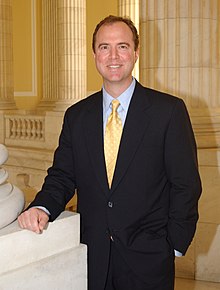
Adam Schiff
During a hearing of his committee, he gave a dramatic reading—part news summary, part parody. It centered on an extortion call Trump had made on July 25 to Ukrainian President Volodymyr Zelensky.
Trump had wanted a “favor”: Investigate 2020 Democratic Presidential Candidate Joe Biden and his son, Hunter, who has had business dealings in Ukraine.
Unspoken was the threat of cancelling $400 million in promised American military aid to Ukraine.
So Schiff—whose committee is investigating that incident—gave a summary of that call during a hearing.
It wasn’t the news summary part that infuriated Trump, but the mockery included within it.
As Schiff explained to CNN: “The fact that that’s not clear is a separate problem in and of itself. Of course, the President never said, ‘If you don’t understand me I’m going to say it seven more times.’ My point is, that’s the message that the Ukraine president was receiving in not so many words.”
Trump had aimed his own brand of juvenile humor at Schiff in the past, referring to him as “little Adam Schit.”
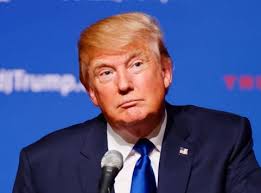
Donald Trump
But for Schiff to dare to make fun of him was—for Trump—entirely too much.
“Rep. Adam Schiff illegally made up a FAKE & terrible statement, pretended it to be mine as the most important part of my call to the Ukrainian President, and read it aloud to Congress and the American people,” Trump tweeted. “It bore NO relationship to what I said on the call. Arrest for Treason?”
Trump is the first President to openly equate criticism—especially mockery—of himself with treason. Like the French King, Louis X1V, he believes: L’État, c’est moi—“I am the State.”
And treason is a crime that has traditionally been punished with death.
So Trump more than gave the game away when he tweeted, on October 7: “Nancy Pelosi knew of all of the many Shifty Adam Schiff lies and massive frauds perpetrated upon Congress and the American people.
“This makes Nervous Nancy every bit as guilty as Liddle’ Adam Schiff for High Crimes and Misdemeanors, and even Treason. I guess that means that they, along with all of those that evilly ‘Colluded’ with them, must all be immediately Impeached!”
Nancy Pelosi, as speaker of the House of Representatives, has done nothing that meets the Constitutional definition of treason: “Treason against the United States, shall consist only in levying War against them, or in adhering to their Enemies, giving them Aid and Comfort.”
Moreover, members of Congress cannot be impeached. Impeachment is a Congressional tool for investigating judges or executive branch officials they believe may have committed crimes.
No doubt many people believe that Trump wouldn’t dare ask his hand-picked Attorney General, William Barr, to indict Adam Schiff or Nancy Pelosi for treason.
Of course, there were many people who believed that Trump wouldn’t dare fire FBI Director James Comey for pursuing an investigation into Russia’s subversion of the 2016 Presidential election.
Or that he would openly call on a hostile foreign power—China—to intervene in the 2020 Presidential election.
A President who can invite a hostile foreign power to slander his political opponent can just as easily call on a hostile foreign power to assassinate that opponent.
Trump has claimed: “Let me tell you, I’m only interested in corruption. I don’t care about politics. I don’t care about Biden’s politics….”
But if Trump were concerned about fighting corruption, he wouldn’t have:
- Focused his anti-corruption campaign entirely on Biden;
- Defended his former 2016 campaign chairman, Paul Manafort, who made millions working for former Ukrainian President Viktor Yanukovych;
- Praised others mired in corruption scandals—such as Russian President Vladimir Putin and Israeli Prime Minister Benjamin Netanyahu.
Trump is counting on Americans’ awe of the Presidency to convince them of his integrity.
But according to Robert A. Prentice, Professor of Government and Society at the McCombs School of Business at The University of Texas at Austin:
“President Donald Trump’s lying is off the charts. No prominent politician in memory bests Trump for spouting spectacular, egregious, easily disproved lies. The birther claim. The vote fraud claim. The attendance at the inauguration claim. And on and on and on.
“Every fact checker—Kessler, Factcheck.org, Snopes.com, PolitiFact—finds a level of mendacity unequaled by any politician ever scrutinized. For instance, 70 percent of his campaign statements checked by PolitiFact were mostly false, totally false, or “pants on fire” false.”
Donald Trump prides himself on setting Presidential precedents. He may turn out to be the first President who invoked “treason” against his political opponents—and was himself found to be a menace to the nation he claimed to love.
2016 PRESIDENTIAL ELECTION, 2020 PRESIDENTIAL ELECTION, ABC NEWS, ADAM SCHIFF, ALTERNET, AMERICABLOG, AP, BABY BOOMER RESISTANCE, BENJAMIN NETANAHU, BILL O'REILLY, BRETT KAVANAUGH, BUZZFEED, CATHOLOCISM, CBS NEWS, CHINA, CHRISTINE BLAZEY FORD, CIA, CNN, CORRUPTION, CROOKS AND LIARS, DAILY KOZ, DEMOCRATIC NATIONAL COMMITTEE, DONALD TRUMP, EXTORTION, FACEBOOK, FIVETHIRTYEIGHT, FOUNDING FATHERS, FOX NEWS NETWORK, HILLARY CLINTON, HOUSE INTELLIGENCE COMMITTEE, HOUSE OF REPRESENTATIVES, ISRAEL, JAMES COMEY, JARED KUSHNER, JOE BIDEN, JOHN STUBBS, KIM JONG-UN, LOUIS X1V, MAR-A-LAGO, MICK MULVANEY, MOTHER JONES, MOVEON, MSNBC, NANCY PELOSI, NATALIA VESELNITSKAYA, NBC NEWS, NEWSWEEK, NPR, PARODY, PAUL MANAFORT, PBS NEWSHOUR, POLITICO, POLITICUSUSA, POLITIFACT, QUEEN ELIZABETH 1, RAW STORY, RECEP TAYYIP ERDOGAN, REUTERS, RINAT AKHMETSHIN, ROBERT A. PRENTICE, RODRIGO DUTERTE, RUSSIA, SALON, SEATTLE TIMES, SERGE KOVALESKI, SLATE, SNOPES, TALKING POINTS MEMO, THE ATLANTIC, THE CHICAGO SUN-TIMES, THE CHICAGO TRIBUNE, THE DAILY BEAST, THE DAILY BLOG, THE GUARDIAN, THE HILL, THE HUFFINGTON POST, THE LOS ANGELES TIMES, THE NATION, THE NEW YORK TIMES, THE WASHINGTON POST, THINKPROGRESS, TIME, TREASON, TRUTHDIG, TWITTER, U.S. NEWS & WORLD REPORT, UKRAINE, UNITED STATES CONSTITUTION, UPI, USA TODAY, VICTOR YANUKOVYCH, VLADIMIR PUTIN, VOLODYMYR ZELENSKY, WILLIAM BARR, XI JINPING
In Bureaucracy, History, Law, Politics, Social commentary, Uncategorized on October 10, 2019 at 12:07 am
In 2016, Donald Trump asked Russia to intervene in the upcoming Presidential election.
At a July 22, 2016 press conference in Doral, Florida, Trump said: “Russia, if you are listening, I hope you are able to find the 33,000 emails that are missing [from Democratic Presidential candidate Hillary Clinton’s computer]. I think you will probably be rewarded mightily by our press.”
Hours later, the Main Intelligence Directorate in Moscow targeted Clinton’s personal office and hit more than 70 other Clinton campaign accounts.
And on October 3, 2019, Trump called on another foreign—and enemy—nation to churn out “dirt” on another Democratic Presidential candidate: Former Vice President Joe Biden: “China should start an investigation into the Bidens.”
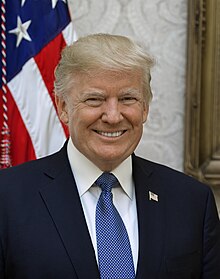
Donald Trump
Asked if he had requested China’s “President-for-Life” Xi Jinping to do so, Trump replied: “I haven’t. But it’s certainly something we should start thinking about.”
Trump’s comments came just one week before a Chinese delegation was to arrive in Washington to resume protracted trade negotiations.
And to make certain the Chinese got the message, Trump warned: “I have a lot of options on China, but if they don’t do what we want, we have tremendous power.”
Despite Trump’s accusations, there has been no evidence of corruption by Biden or his son, Hunter.
Having twice called on foreign—and enemy—nations to subvert American Presidential elections, Trump feels himself qualified to define who is guilty of treasonous behavior.
Enter Adam Schiff (D-CA), chairman of the House Intelligence Committee.

Adam Schiff
In July, 2019, Trump told his acting chief of staff, Mick Mulvaney, to withhold almost $400 million in promised military aid for Ukraine, which faces increasing aggression from Russia.
On July 25, Trump telephoned Ukrainian President Volodymyr Zelensky to “request” a “favor”: Investigate 2020 Democratic Presidential Candidate Joe Biden and his son, Hunter, who has had business dealings in Ukraine.
The reason for such an investigation: To find embarrassing “dirt” on Biden.
But then a CIA whistleblower filed a complaint about the extortion attempt—and the media and Congress soon learned of it.
Schiff tweeted: “The transcript of the call reads like a classic mob shakedown: — We do a lot for Ukraine — There’s not much reciprocity — I have a favor to ask — Investigate my opponent — My people will be in touch — Nice country you got there. It would be a shame if something happened to her.”
Then, even worse for Trump’s ego, Schiff went further. He dared to parody Trump’s extortion attempt.

Joe Biden
On September 26, during a session of the Intelligence Committee, Schiff gave a dramatic reading—part news summary, part parody—of the call with Zelensky.
He prefaced the reading by saying, “In not so many words, this is the essence of what the President communicates.
“President Zelensky, eager to establish himself at home as the friend of the President of the most powerful nation on earth, had at least two objectives: Get a meeting with the President and get more military help. And so what happened on that call?
“Zelensky begins by ingratiating himself, and he tries to enlist the support of the President. He expresses his interest in meeting with the President, and says his country wants to acquire more weapons from us to defend itself.
“And what is the President’s response? Well, it reads like a classic organized crime shakedown.
“Shorn of its rambling character and in not so many words, this is the essence of what the President communicates. ‘We’ve been very good to your country. Very good. No other country has done as much as we have. But you know what? I don’t see much reciprocity here.
“‘I hear what you want. I have a favor I want from you, though. And I’m going to say this only seven times, so you better listen good. I want you to make up dirt on my political opponent. Understand? Lots of it, on this and on that.
“‘I’m going to put you in touch with people, and not just any people. I’m going to put you in touch with the attorney general of the United States, my attorney general, Bill Barr. He’s got the whole weight of the American law enforcement behind him. And I’m going to put you in touch with Rudy [Trump’s personal attorney and fixer].
“‘You’re going to love him [Giuliani]. Trust me. You know what I’m asking? And so I’m only going to say this a few more times in a few more ways. And by the way, don’t call me again. I’ll call you when you’ve done what I asked.'”
Schiff later told CNN that he was trying to mock the President’s conduct.
The next day, September 27, Trump demanded in a tweet that Schiff “immediately resign.”
Trump, of course, has no power to force a member of Congress to resign.
And on September 29, Trump tweeted: “….Schiff made up what I actually said by lying to Congress……
“His lies were made in perhaps the most blatant and sinister manner ever seen in the great Chamber. He wrote down and read terrible things, then said it was from the mouth of the President of the United States. I want Schiff questioned at the highest level for Fraud & Treason…..”
Treason?
2016 PRESIDENTIAL ELECTION, 2020 PRESIDENTIAL ELECTION, ABC NEWS, ADAM SCHIFF, ALTERNET, AMERICABLOG, AP, BABY BOOMER RESISTANCE, BENJAMIN NETANAHU, BILL O'REILLY, BRETT KAVANAUGH, BUZZFEED, CATHOLOCISM, CBS NEWS, CHINA, CHRISTINE BLAZEY FORD, CIA, CNN, CORRUPTION, CROOKS AND LIARS, DAILY KOZ, DEMOCRATIC NATIONAL COMMITTEE, DONALD TRUMP, EXTORTION, FACEBOOK, FIVETHIRTYEIGHT, FOUNDING FATHERS, FOX NEWS NETWORK, HILLARY CLINTON, HOUSE INTELLIGENCE COMMITTEE, HOUSE OF REPRESENTATIVES, ISRAEL, JAMES COMEY, JARED KUSHNER, JOE BIDEN, JOHN STUBBS, KIM JONG-UN, LOUIS X1V, MAR-A-LAGO, MICK MULVANEY, MOTHER JONES, MOVEON, MSNBC, NANCY PELOSI, NATALIA VESELNITSKAYA, NBC NEWS, NEWSWEEK, NPR, PARODY, PAUL MANAFORT, PBS NEWSHOUR, POLITICO, POLITICUSUSA, POLITIFACT, QUEEN ELIZABETH 1, RAW STORY, RECEP TAYYIP ERDOGAN, REUTERS, RINAT AKHMETSHIN, ROBERT A. PRENTICE, RODRIGO DUTERTE, RUSSIA, SALON, SEATTLE TIMES, SERGE KOVALESKI, SLATE, SNOPES, TALKING POINTS MEMO, THE ATLANTIC, THE CHICAGO SUN-TIMES, THE CHICAGO TRIBUNE, THE DAILY BEAST, THE DAILY BLOG, THE GUARDIAN, THE HILL, THE HUFFINGTON POST, THE LOS ANGELES TIMES, THE NATION, THE NEW YORK TIMES, THE WASHINGTON POST, THINKPROGRESS, TIME, TREASON, TRUTHDIG, TWITTER, U.S. NEWS & WORLD REPORT, UKRAINE, UNITED STATES CONSTITUTION, UPI, USA TODAY, VICTOR YANUKOVYCH, VLADIMIR PUTIN, VOLODYMYR ZELENSKY, WILLIAM BARR, XI JINPING
In Bureaucracy, History, Law, Politics, Social commentary, Uncategorized on October 9, 2019 at 12:03 am
The American colonists had learned firsthand how capricious and deadly a monarch’s rage could be. Under English law, “treason” could be liberally applied to anyone who offended the Royal Personage.
For example: During the reign of Queen Elizabeth 1, John Stubbs, an English pamphleteer and political commentator, opposed her proposed marriage to Francis, Duke of Anjou, a Roman Catholic—and the brother of the King of France.
Stubbs, a Puritan who hated Catholicism, damned in in a scathing pamphlet—which infuriated Elizabeth’s court. At first, the Queen favored the death penalty. But then she was persuaded to choose a lesser sentence: Amputation of his right hand by driving a cleaver driven through the wrist with a mallet.
After the sentence was carried out, Stubbs cried, “God save the Queen!” before fainting. He was then imprisoned for eighteen months.
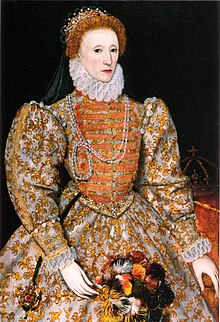
Queen Elizabeth 1
So when the Founding Fathers drafted the Constitution of the United States, they specifically restricted the definition of treason.
In Article III, section 3, the framers wrote:
Treason against the United States, shall consist only in levying War against them, or in adhering to their Enemies, giving them Aid and Comfort. No Person shall be convicted of Treason unless on the Testimony of two Witnesses to the same overt Act, or on Confession in open Court.
The Congress shall have Power to declare the Punishment of Treason, but no Attainder of Treason shall work Corruption of Blood, or Forfeiture except during the Life of the Person attainted.
The Constitution permits the United States Congress to create the offense, and restricts any punishment for treason to only the convicted (the second paragraph). The crime is prohibited by legislation passed by Congress.
The United States Code, in 18 U.S.C. 2381, states:
Whoever, owing allegiance to the United States, levies war against them or adheres to their enemies, giving them aid and comfort within the United States or elsewhere, is guilty of treason and shall suffer death, or shall be imprisoned not less than five years and fined under this title but not less than $10,000; and shall be incapable of holding any office under the United States.
For President Donald Trump, treason means any opposition to or criticism of himself.
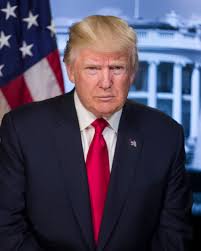
Donald Trump
A tyrant by nature, he envies foreign tyrants who have powers to slaughter anyone they dislike. Among the proofs of this:
- During a February, 2017 interview with Fox News host Bill O’Reilly, Trump defended Russian President Vladimir Putin’s killing of political opponents. When O’Reilly noted, “But he’s a killer,” Trump replied: “There are a lot of killers. You think our country’s so innocent?”
- Asked by a Fox News reporter why he praised murderous North Korean dictator Kim Jong-Un, he replied: “He’s a tough guy. Hey, when you take over a country, tough country, tough people, and you take it over from your father.…If you could do that at 27 years old, I mean, that’s one in 10,000 that could do that.”
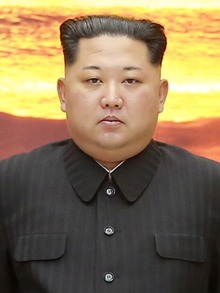
Kim Jong-Un
Blue House (Republic of Korea) [KOGL (http://www.kogl.or.kr/open/info/license_info/by.do) %5D, via Wikimedia Commons
- Of Philippines dictator Rodrigo Duterte, whose death squads have slaughtered more than 6,000 citizens, Trump said: “I just wanted to congratulate you because I am hearing of the unbelievable job on the drug problem.”
- After Turkish dictator Recep Tayyip Erdogan cracked down on Turkish civil society, the media, and his opponents, Trump congratulated him: “Frankly, he’s getting very high marks. He’s also been working with the United States. We have a great friendship and the countries—I think we’re right now as close as we’ve ever been….a lot of that has to do with a personal relationship.”
- And at a party fundraiser at his Mar-a-Lago resort in March, 2018, Trump praised China’s dictator Xi Jinping: “He’s now president for life. President for life. No, he’s great. And look, he was able to do that. I think it’s great. Maybe we’ll have to give that a shot some day.”
Nor has Trump blanched at calling on foreign dictators to destroy his political opponents.
On July 9, 2016, high-ranking members of his Presidential campaign met at Trump Tower with at least two lobbyists with ties to Russian dictator Vladimir Putin. The participants included:
- Trump’s son, Donald Trump Jr.;
- His son-in-law, Jared Kushner;
- His then-campaign manager Paul Manafort;
- Natalia Veselnitskaya, a Russian lawyer with ties to Putin; and
- Rinat Akhmetshin, a former Soviet counterintelligence officer suspected of “having ongoing ties to Russian Intelligence.”
The purpose of that meeting: To gain access to any “dirt” Russian Intelligence could supply on Democratic Presidential Nominee Hillary Clinton.
And at a July 22, 2016 press conference in Doral, Florida, Trump said: “Russia, if you are listening, I hope you are able to find the 33,000 emails that are missing [from Democratic Presidential candidate Hillary Clinton’s computer]. I think you will probably be rewarded mightily by our press.”
This was nothing less than treason—calling upon a foreign power, hostile to the United States, to interfere in its Presidential election.
Hours later, the Main Intelligence Directorate in Moscow targeted Clinton’s personal office and hit more than 70 other Clinton campaign accounts.
And on October 3, 2019, Trump called on another dictator—China’s “President-for-Life”” Xi Jinping—to churn out “dirt” on Democratic Presidential candidate Joe Biden.
2016 PRESIDENTIAL ELECTION, ABC NEWS, ALTERNET, AMERICABLOG, ANDREW JACKSON, AP, BABY BOOMER RESISTANCE, BUZZFEED, CBS NEWS, CIA, CNN, COLLEGE FOOTBALL, CONSUMER PROTECTION, CONVERSATION WITH AN AMERICAN WRITER (POEM), CROOKS AND LIARS, DAILY KOZ, DONALD TRUMP, DREW PEARSON, DWIGHT D. EISENHOWER, EDWARD R. MURROW, ENVIRONMENTAL PROTECTION, EXTORTION, FACEBOOK, FBI, FEDERAL GOVERNMENT SHUTDOWN, FIVETHIRTYEIGHT, FREEDOM OF THE PRESS, GEORGE C. MARSHALL, HARRY S. TRUMAN, HUNTER BIDEN, JAMES COMEY, JEFF BUSH, JERRY SANDUSKY, JOE BIDEN, JOE PATERNO, JOHN MCCAIN, JOSEPH MCCARTHY, LOUIS FREEH, MIKE MURPHY, MITT ROMNEY, MORAL COURAGE, MOTHER JONES, MOVEON, MSNBC, NATIONAL SECURITY AGENCY, NBC NEWS, NEWSWEEK, NIKE, NPR, PBS NEWSHOUR, PENN STATE UNIVERSITY, POLITICO, POLITICUSUSA, RAW STORY, REPUBLICANS, REUTERS, RUSSIA, SALON, SEATTLE TIMES, SLATE, SUBVERSION, TALKING POINTS MEMO, THE ATLANTIC, THE CHICAGO SUN-TIMES, THE CHICAGO TRIBUNE, THE DAILY BEAST, THE DAILY BLOG, THE GUARDIAN, THE HILL, THE HUFFINGTON POST, THE LOS ANGELES TIMES, THE NATION, THE NEW YORK TIMES, THE WASHINGTON POST, THINKPROGRESS, TIME, TRUTHDIG, TWITTER, U.S. NEWS & WORLD REPORT, UKRAINE, UP, UPI, USA TODAY, VLADIMIR PUTIN, VOLODYMYR ZELENSKY, YEVGENEY YEVTUSHENKO
In Bureaucracy, History, Law, Law Enforcement, Military, Politics, Social commentary on October 3, 2019 at 12:24 am
“One man with courage,” said frontier general Andrew Jackson, “makes a majority.”
Yet many “heroes” come out of the woodwork only after the danger is safely past.
On September 25, 2019, GOP consultant Mike Murphy said that a Republican senator had told him the majority of Republican senators “would vote to impeach” President Donald Trump if they could do so anonymously.
“One Republican senator told me if it was a secret vote, 30 Republican senators would vote to impeach Trump,” he claimed during an interview on MSNBC.
Murphy—who has advised Republican politicians such as Mitt Romney, John McCain and Jeb Bush—implied that the GOP lawmakers fear that voting against Trump could harm them politically.
Yes, a shining example of true moral courage at its finest—and just when it’s most needed: “If we just didn’t have to risk our skins, we’d be glad to do the right thing.”
Donald Trump
Throughout Trump’s nearly three years in office, Republicans have remained silent or vigorously supported him as he:
- Repeatedly and viciously attacked the nation’s free press for daring to report his growing list of crimes and disasters, calling it “the enemy of the American people.”
- Publicly siding with Russian dictator Vladimir Putin against American Intelligence agencies (FBI, CIA, National Security Agency) which unanimously agreed that Russia had subverted the 2016 Presidential election,
- Firing FBI Director James Comey for investigating that subversion.
- Allowing predatory corporations to subvert Federal regulatory protections for consumers and the environment.
- Shutting down the Federal Government for more than a month on December 22, 2018, because Democrats refused to fund his “border wall” between the United States and Mexico.
- Attempting to extort a “favor” from Ukrainian President Volodymyr Zelensky: Threatening to withhold military aid unless Zelensky agreed to slander Hunter Biden, the son of Democratic Presidential candidate Joseph Biden.
“I was never courageous,” the Russian poet, Yevgeney Yevtushenko, wrote in his famous poem, “Conversation With an American Writer.” “I simply felt it unbecoming to stoop to the cowardice of my colleagues.”
For Republicans “stooping to the cowardice” of their colleagues has long been a recipe for political survival.
Yet another Republican—Wisconsin Senator Joseph R. McCarthy—terrorized the nation from 1950 to 1954, accusing anyone who disagreed with him of being a Communist, and leaving only ruined lives in his wake.

Joseph R. McCarthy
Among those civilians and government officials he slandered as Communists were:
- President Harry S. Truman
- President Dwight D. Eisenhower
- Broadcast journalist Edward R. Murrow
- Secretary of State George C. Marshall
- Columnist Drew Pearson
Finally, in 1954, McCarthy overreached himself and accused the U.S. Army of being a hotbed of Communist traitors. Joseph Welch, counsel for the Army, destroyed McCarthy’s credibility in a now-famous retort:
“Senator, may we not drop this?….You’ve done enough. Have you no sense of decency, sir? At long last, have you left no sense of decency?”
Later that year, the Senate censured McCarthy, and he rapidly declined in power and health.
Senatorial colleagues who had courted his support now left the Senate when he rose to speak. Reporters who had once fawned on him for his latest sensational slander now ignored him.
But cowardice isn’t confined to politicians.
Fast-forward to July 12, 2012—and the release of former FBI Director Louie Freeh’s report on serial pedophile Jerry Sandusky. As the assistant football coach at Penn State University (PSU), he had used the football facilities to sexually attack numerous young boys.

Jerry Sandusky
But Sandusky was regarded as more than a second-banana. He received Assistant Coach of the Year awards in 1986 and 1999, and authored several books about his coaching experiences.
In 1977, Sandusky founded The Second Mile, a non-profit charity serving underprivileged, at-risk youth.
“Our most saddening and sobering finding is the total disregard for the safety and welfare of Sandusky’s child victims by the most senior leaders at Penn State,” Freeh stated.
College football is a $2.6 billion-a-year business. And Penn State is one of its premiere brands, with revenue of $70 million in 2010.
PSU’s seven-month internal investigation, headed by Freeh, revealed:
- Joe Paterno, head coach of the Penn State Nittany Lions, was aware of a 1998 criminal investigation of Sandusky.
- So were president Graham Spanier, athletic director Tim Curley and vice president Gary Schultz.
- In 2001, then-graduate assistant Mike McQueary reported to Paterno that he’d seen Sandusky attacking a boy in the shower.
- Paterno, Spanier, Curley and Schultz then conspired to cover up for Sandusky.
- The rapes of these boys occurred in the Lasch Building—where Paterno had his office.
- A janitor who had witnessed a rape in 2000 said he had feared losing his job if he told anyone about it. “It would be like going against the President of the United States,” Freeh said at a press conference.
In 2011, Sandusky was arrested and charged with sexually abusing young boys over a 15-year period. On June 22, 2012, he was convicted on 45 of the 48 charges. He will likely spend the rest of his life in prison.
On the day the Freeh report was released, Nike—a longtime sponsor for Penn State—announced that it would remove Paterno’s name from the child care center at its world headquarters in Beaverton, Oregon.
2016 PRESIDENTIAL CAMPAIGN, A HIGHER LOYALTY (BOOK), ABC NEWS, ADAM SCHIFF, ALTERNET, AMERICABLOG, ANTHONY "FAT TONY" SALERNO, AP, “FLIPPING”, BABY BOOMER RESISTANCE, BERNIE SANDERS, BUZZFEED, CBS NEWS, CIA, CNN, CROOKS AND LIARS, DAILY KOZ, DEMOCRATIC NATIONAL COMMITTEE (DNC), DONALD TRUMP, ESQUIRE, EXTORTION, FACEBOOK, FBI, FIVETHIRTYEIGHT, FOX AND FRIENDS, FOX NEWS, FOX NEWS NETWORK, GAMBINO MAFIA FAMILY, HILLARY CLINTON, HOUSE OF REPRESENTATIVES, HUNTER BIDEN, IVANA TRUMP, JAMES COMEY, JEFF SESSIONS, JOE BIDEN, JOHN DEAN, JOHN GOTTI, MAFIA, MICHAEL COHEN, MICHAEL FLYNN, MICK MULVANEY, MOTHER JONES, MOVEON, MSNBC, NANCY PELOSI, NBC NEWS, NEWSWEEK, NPR, ORGANIZED CRIME, ORGANIZED CRIME CONTROL ACT OF 1970, PAM BONDI, PAUL CASTELLANO, PBS NEWSHOUR, POLITICO, POLITICUSUSA, RACKETEER INFLUENCED CORRUPT ORGANIZATIONS ACT (RICO), RAW STORY, REINCE PRIEBUS, REPUBLICANS, REUTERS, RICHARD M. NIXON, RICHARD NIXON, ROBERT MUELLER, RUSSIA, SALON, SEATTLE TIMES, SLATE, STORMY DANIELS, TALKING POINTS MEMO, THE ATLANTIC, THE CHICAGO SUN-TIMES, THE CHICAGO TRIBUNE, THE DAILY BEAST, THE DAILY BLOG, THE GUARDIAN, THE HILL, THE HUFFINGTON POST, THE LOS ANGELES TIMES, THE NATION, THE NEW YORK TIMES, THE WASHINGTON POST, THINKPROGRESS, TIME, TREASON, TRUMP ORGANIZATION, TRUTHDIG, TWITTER, U.S. NEWS & WORLD REPORT, UKRAINE, UNITED STATES DEPARTMENT OF JUSTICE, UNITED STATES JUSTICE DEPARTMENT, UPI, USA TODAY, VLADIMIR PUTIN, VOLODYMYR ZELENSKY, WHISTLEBLOWERS, WIKILEAKS
In Bureaucracy, History, Law, Law Enforcement, Politics, Social commentary on October 1, 2019 at 12:08 am
Former FBI Director James Comey has had firsthand experience in attacking organized crime—and in spotting its leaders.
In his bestselling memoir, A Higher Loyalty, he writes:
“As I found myself thrust into the Trump orbit, I once again was having flashbacks to my earlier career as a prosecutor against the mob. The silent circle of assent. The boss in complete control. The loyalty oaths. The us-versus-them worldview. The lying about all things, large and small, in service to some code of loyalty that put the organization above morality and the truth.”

James Comey
Validating Comey’s comparison of Trump to a mobster:
On August 21, 2018, Trump’s former attorney, Michael Cohen, pleaded guilty to eight counts of campaign finance violations, tax fraud and bank fraud. He also said he had made illegal campaign contributions “in coordination and at the direction of a candidate for federal office”—Donald Trump.
On August 23, on the Fox News program, “Fox and Friends,” Trump attacked Cohen for “flipping” on him:
“For 30, 40 years I’ve been watching flippers. Everything’s wonderful and then they get 10 years in jail and they—they flip on whoever the next highest one is, or as high as you can go. It—it almost ought to be outlawed. It’s not fair.””
Making “flipping” illegal would undo decades of organized crime prosecutions—and make future ones almost impossible.

United States Department of Justice
To penetrate the secrets of criminal organizations, investigators and prosecutors need the testimony of those who are parties to those secrets.
The Organized Crime Control Act of 1970 gave Justice Department prosecutors unprecedented weapons for attacking crime syndicates across the country. One of these was the authority to give witnesses immunity from prosecution on the basis of their own testimony.
Thus, a witness to a criminal conspiracy could be forced to tell all he knew—and thus implicate his accomplices—and bosses. In turn, he wouldn’t be prosecuted on the basis of his testimony.
Organized crime members aggressively damn such “rats.” There is no more obscene word in a mobster’s vocabulary.
But no President—until Trump—has ever attacked those who make possible a war on organized crime.
On August 19, he tweeted:
“The failing @nytimes wrote a Fake piece today implying that because White House Councel Don McGahn was giving hours of testimony to the Special Councel, he must be a John Dean type “RAT.” But I allowed him and all others to testify – I didn’t have to. I have nothing to hide……”
In 1973, former White House Counsel John Dean testified before the United States Senate on a litany of crimes committed by President Richard M. Nixon. Dean didn’t lie about Nixon—who ultimately resigned in disgrace.
For Trump, Dean’s sin is that he “flipped” on his former boss, violating the Mafia’s code of omerta, or silence.
But Trump feels completely different abut “flippers” when their revelations serve his interests.
On July 22, 2016, Wikileaks released 19,252 emails and 8,034 attachments hacked from computers of the highest-ranking officials of the Democratic National Committee (DNC).
The leak revealed a DNC bias for Hillary Clinton and against her lone challenger, Vermont United States Senator Bernie Sanders. Clinton, who was about to receive the Democratic nomination for President, was thoroughly embarrassed. Sanders’ supporters were enraged.
Donald Trump’s reaction:
- “WikiLeaks, I love WikiLeaks.”
- “This WikiLeaks stuff is unbelievable. It tells you the inner heart, you gotta read it.”
- This WikiLeaks is like a treasure trove.”
- “WikiLeaks just came out with a new one just a little while ago it’s just been shown that a rigged system with more collusion, probably illegal, between the Department of Justice the Clinton campaign and the State Department, you saw that.”
But now Trump has reverted to his longtime hatred of “leakers.”
In July, 2019, he told his acting chief of staff, Mick Mulvaney, to withhold almost $400 million in promised military aid for Ukraine, which faces increasing aggression from Russia.
On July 25, Trump telephoned Ukrainian President Volodymyr Zelensky to “request” a “favor”: Investigate Democratic Presidential Candidate Joe Biden and his son, Hunter, who has had business dealings in Ukraine.
The reason for such an investigation: To find embarrassing “dirt” on Biden.
But then a CIA whistleblower filed a complaint about the extortion attempt—and the media and Congress soon learned of it.
Rep. Adam Schiff, D-Calif., tweeted: “The transcript of the call reads like a classic mob shakedown: — We do a lot for Ukraine — There’s not much reciprocity — I have a favor to ask — Investigate my opponent — My people will be in touch — Nice country you got there. It would be a shame if something happened to her.”
On September 24, 2019, Nancy Pelosi, speaker to the House of Representatives, announced a formal impeachment inquiry into Trump.
On September 26, Trump told a private group at a midtown hotel: “I want to know who’s the person, who’s the person who gave the whistleblower the information? Because that’s close to a spy.
“You know what we used to do in the old days when we were smart? Right? The spies and treason, we used to handle it a little differently than we do now.”
2016 PRESIDENTIAL CAMPAIGN, A HIGHER LOYALTY (BOOK), ABC NEWS, ADAM SCHIFF, ALTERNET, AMERICABLOG, ANTHONY "FAT TONY" SALERNO, AP, “FLIPPING”, BABY BOOMER RESISTANCE, BERNIE SANDERS, BUZZFEED, CBS NEWS, CIA, CNN, CROOKS AND LIARS, DAILY KOZ, DEMOCRATIC NATIONAL COMMITTEE (DNC), DONALD TRUMP, ESQUIRE, EXTORTION, FACEBOOK, FBI, FIVETHIRTYEIGHT, FOX AND FRIENDS, FOX NEWS NETWORK, GAMBINO MAFIA FAMILY, HILLARY CLINTON, HOUSE OF REPRESENTATIVES, HUNTER BIDEN, IVANA TRUMP, JAMES COMEY, JEFF SESSIONS, JOE BIDEN, JOHN DEAN, JOHN GOTTI, MAFIA, MICHAEL COHEN, MICHAEL FLYNN, MICK MULVANEY, MOTHER JONES, MOVEON, MSNBC, NANCY PELOSI, NBC NEWS, NEWSWEEK, NPR, ORGANIZED CRIME, ORGANIZED CRIME CONTROL ACT OF 1970, PAM BONDI, PAUL CASTELLANO, PBS NEWSHOUR, POLITICO, POLITICUSUSA, RACKETEER INFLUENCED CORRUPT ORGANIZATIONS ACT (RICO), RAW STORY, REINCE PRIEBUS, REPUBLICANS, REUTERS, RICHARD M. NIXON, RICHARD NIXON, ROBERT MUELLER, RUSSIA, SALON, SEATTLE TIMES, SLATE, STORMY DANIELS, TALKING POINTS MEMO, THE ATLANTIC, THE CHICAGO SUN-TIMES, THE CHICAGO TRIBUNE, THE DAILY BEAST, THE DAILY BLOG, THE GUARDIAN, THE HILL, THE HUFFINGTON POST, THE LOS ANGELES TIMES, THE NATION, THE NEW YORK TIMES, THE WASHINGTON POST, THINKPROGRESS, TIME, TREASON, TRUMP ORGANIZATION, TRUTHDIG, TWITTER, U.S. NEWS & WORLD REPORT, UKRAINE, UNITED STATES DEPARTMENT OF JUSTICE, UNITED STATES JUSTICE DEPARTMENT, UPI, USA TODAY, VLADIMIR PUTIN, VOLODYMYR ZELENSKY, WHISTLEBLOWERS, WIKILEAKS
In Bureaucracy, History, Law, Law Enforcement, Politics, Social commentary on September 30, 2019 at 12:06 am
Donald Trump resembles his fellow New Yorker, Mafia “Boss of all Bosses” John Gotti, in more ways than he would like to admit. Among these:
- He craves publicity like a drug.
- His egomania long ago reached psychotic heights: In a 1990 interview with Playboy magazine, he offered his worldview: “The show is Trump, and it is sold-out performances everywhere.”
- He impulsively and brutally badmouths virtually everyone—in press conferences and on Twitter.
- He brags constantly—about his wealth, his intelligence, his sexual prowess, his achievements: “My fingers are long and beautiful, as, it has been well documented, are various other parts of my body.”
- He has bought his way out of legal trouble: Florida Attorney General Pam Bondi personally solicited a political contribution from him while her office deliberated joining an investigation of alleged fraud at Trump University and its affiliates. After Bondi dropped the case against Trump, he wrote her a $25,000 check for her re-election campaign.
Donald Trump
- He repeatedly threatens violence against his opponents: On March 16, 2016, he warned Republicans that if he didn’t win the GOP nomination in July, “I think you’d have riots….I think bad things would happen.”
- Although not a member of the Mafia, he has often been linked—directly or indirectly—to men who are, such as “Anthony Fat Tony” Salerno and Paul Castellano.
- He prizes being seen as a tough guy: “I could stand in the middle of Fifth Avenue and shoot somebody and I wouldn’t lose voters.” At a Las Vegas rally in 2016, he said about a protester: “I’d like to punch him in the face.”
- He has no loyalty to anyone. He has badmouthed—and fired—such ardent supporters as his ex-Chief of Staff Reince Priebus and former Attorney General Jeff Sessions.
- He has an unrelenting hatred for “rats” who prove equally disloyal to him.
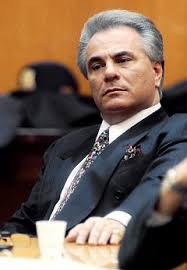
John Gotti
Consider the case of attorney Michael Cohen.
- An executive of the Trump Organization, Cohen acted as “Trump’s pit bull.” “If somebody does something Mr. Trump doesn’t like,” he told ABC News in 2011, “I do everything in my power to resolve it to Mr. Trump’s benefit.”
- In 2015, a reporter for The Daily Beast asked Cohen about Ivana Trump’s charge (later recanted) that Trump had raped her while they were married. Cohen: “I’m warning you, tread very fucking lightly, because what I’m going to do to you is going to be fucking disgusting.”
- In 2016, while Trump was running for President, Cohen acted as the go-between for a $130,000 hush-money payoff to porn “star” Stormy Daniels. The reason: To prevent her from revealing a 2006 tryst she had had with Trump.
In April 2018, the United States Attorney for the Southern District of New York began investigating Cohen. Charges reportedly included bank fraud, wire fraud and violations of campaign finance law.

Michael Cohen
By IowaPolitics.com (Trump executive Michael Cohen 012) [CC BY-SA 2.0 (https://creativecommons.org/licenses/by-sa/2.0)%5D, via Wikimedia Commons
On April 9, 2018, the FBI, executing a federal search warrant, raided Cohen’s office at the law firm of Squire Patton Boggs, as well as at his home and his hotel room in the Loews Regency Hotel in New York City. Agents seized emails, tax and business records and recordings of phone conversations that Cohen had made.
Trump’s response: “Michael Cohen only handled a tiny, tiny fraction of my legal work.”
Thus Trump undermined the argument of Cohen’s lawyers that he was the President’s personal attorney—and therefore everything Cohen did was protected by attorney-client privilege.
Cohen, feeling abandoned and enraged, struck back: He “rolled over” on the man he had once boasted he would take a bullet for.
On August 21, 2018, Cohen pleaded guilty in federal court in Manhattan to eight counts of campaign finance violations, tax fraud and bank fraud. He also said he had made illegal campaign contributions “in coordination and at the direction of a candidate for federal office”—Donald Trump.
Among his revelations:
- Trump has repeatedly asserted that Russia didn’t interfere with the 2016 Presidential election. But Cohen said he believed it did.
- Trump has repeatedly claimed he had “no business” in Russia. But Cohen testified that the Trump Organization had sought to “pursue a branded property in Moscow.”
- Trump denied having had sex with and paid off porn “actress” Stormy Daniels. But Cohen confirmed that Trump had instructed him to pay her $130,000 to buy her silence during the 2016 Presidential campaign.
On August 23, on the Fox News program, “Fox and Friends,” Trump attacked Cohen for “flipping” on him:
“For 30, 40 years I’ve been watching flippers. Everything’s wonderful and then they get 10 years in jail and they—they flip on whoever the next highest one is, or as high as you can go. It—it almost ought to be outlawed. It’s not fair.
“You know, campaign violations are considered not a big deal, frankly. But if somebody defrauded a bank and he’s going to get 10 years in jail or 20 years in jail but if you can say something bad about Donald Trump and you’ll go down to two years or three years, which is the deal he made.”
ABC NEWS, ADOLF HITLER, ALTERNET, AMERICABLOG, AP, BABY BOOMER RESISTANCE, BBC, BLOOMBERG NEWS, BUZZFEED, CBS NEWS, CNN, CRIME, CROOKS AND LIARS, DAILY KOS, DAILY KOZ, FACEBOOK, FIVETHIRTYEIGHT, GUN CONTROL, HARPER’S MAGAZINE, HUFFINGTON POST, JOSEPH STALIN, MARTIN LUTHER KING, MEDIA MATTERS, MOTHER JONES, MOVEON, MSNBC, NATIONAL RIFLE ASSOCIATION, NAZI-SOVIET NON-AGGRESSION PACT, NBC NEWS, NEW REPUBLIC, NEWSDAY, NEWSWEEK, NPR, PBS NEWSHOUR, POLITICO, POLITICUSUSA, RAW STORY, REUTERS, ROBERT F. KENNEDY, SALON, SEATTLE TIMES, SECOND AMENDMENT, SELF-DEFENSE, SLATE, STAND-YOUR-GROUND LAWS, TALKING POINTS MEMO, THE ATLANTIC, THE CHICAGO SUN-TIMES, THE CHICAGO TRIBUNE, THE DAILY BEAST, THE DAILY BLOG, THE GUARDIAN, THE HILL, THE HUFFINGTON POST, THE INTERCEPT, THE LOS ANGELES TIMES, THE NATION, THE NEW REPUBLIC, THE NEW YORK TIMES, THE NEW YORKER, THE SS, THE VILLAGE VOICE, THE WASHINGTON POST, THINKPROGRESS, THIRD REICH, TIME, TRUTHDIG, TRUTHOUT, TWITTER, U.S. CONSTITUTION, U.S. NAVY SEALS, U.S. NEWS & WORLD REPORT, UKRAINE, UPI, USA TODAY, VIRGINIA TECH SHOOTINGS, VLADIMIR PUTIN, VOLODYMYR ZELENSKY, WEHRMACHT, WORLD WAR 11, WRONGFUL-DEATH
In Bureaucracy, Business, History, Law, Law Enforcement, Politics, Social commentary on August 6, 2019 at 12:05 am
The victims of the violence are black and white, rich and poor, young and old, famous and unknown. They are, most important of all, human beings whom other human beings loved and needed. No one—no matter where he lives or what he does—can be certain who will suffer from some senseless act of bloodshed. And yet it goes on and on.
–Robert F. Kennedy, April 4, 1968
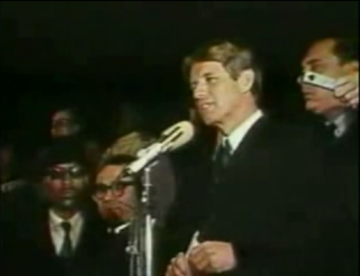
Senator Robert F. Kennedy announcing the murder of Dr. Martin Luther King, Jr.
What should the surviving victims of gun massacres do to seek redress?
And how can the relatives and friends of those who didn’t survive seek justice for those they loved?
Two things:
First, don’t count on politicians to support a ban on assault weapons.
Politicians—with rare exceptions—have only two goals:
- Get elected to office, and
- Stay in office.
And too many of them fear the economic and voting clout of the NRA to risk its wrath.
Consider Mitt Romney and President Barack Obama.
Both rushed to offer condolences to the surviving victims of the massacre at the Century 16 Theater in Aurora, Colorado, on July 20, 2012.
And both steadfastly refused to even discuss gun control—let alone support a ban on the type of assault weapons used by James Holmes, leaving 12 dead and 58 wounded.
Second, those who survived the massacre–and the relatives and friends of those who didn’t–should file wrongful death, class-action lawsuits against the NRA.
There is sound, legal precedent for this.
- For decades, the American tobacco industry peddled death and disability to millions and reaped billions of dollars in profits.
- The industry vigorously claimed there was no evidence that smoking caused cancer, heart disease, emphysema or any other ailment.
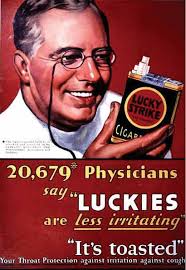
- Tobacco companies spent billions on slick advertising campaigns to win new smokers and attack medical warnings about the dangers of smoking.
- Tobacco companies spent millions to elect compliant politicians and block anti-smoking legislation.
- From 1954 to 1994, over 800 private lawsuits were filed against tobacco companies in state courts. But only two plaintiffs prevailed, and both of those decisions were reversed on appeal.
- In 1994, amidst great pessimism, Mississippi Attorney General Mike Moore filed a lawsuit against the tobacco industry. But other states soon followed, ultimately growing to 46.
- Their goal: To seek monetary, equitable and injunctive relief under various consumer-protection and anti-trust laws.
- The theory underlying these lawsuits was: Cigarettes produced by the tobacco industry created health problems among the population, which badly strained the states’ public healthcare systems.
- In 1998, the states settled their Medicaid lawsuits against the tobacco industry for recovery of their tobacco-related, health-care costs. In return, they exempted the companies from private lawsuits for tobacco-related injuries.
- The companies agreed to curtail or cease certain marketing practices. They also agreed to pay, forever, annual payments to the states to compensate some of the medical costs for patients with smoking-related illnesses.
The parallels with the NRA are obvious:
- For decades, the NRA has peddled deadly weapons to millions, reaped billions of dollars in profits and refused to admit the carnage those weapons have produced: “Guns don’t kill people. People kill people.” With guns.
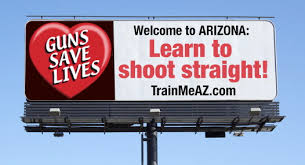
- The NRA has bitterly fought background checks on gun-buyers, in effect granting even criminals and the mentally ill the right to own arsenals of death-dealing weaponry.
- The NRA has spent millions on slick advertising campaigns to win new members and frighten them into buying guns.
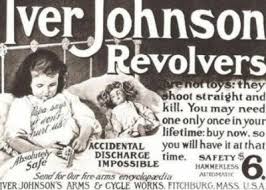
- The NRA has spent millions on political contributions to block gun-control legislation.
- The NRA has spent millions attacking political candidates and elected officials who warned about the dangers of unrestricted access to assault and/or concealed weapons.
- The NRA has spent millions pushing “Stand Your Ground” laws in more than half the states, which potentially give every citizen a “license to kill.”
- The NRA receives millions of dollars from online sales of ammunition, high-capacity ammunition magazines, and other accessories through its point-of-sale Round-Up Program—thus directly profiting by selling a product that kills about 30,288 people a year.
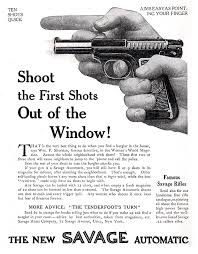
- Firearms made indiscriminately available through NRA lobbying have filled hospitals with casualties, and have thus badly strained the states’ public healthcare systems.
It will take a series of highly expensive and well-publicized lawsuits to significantly weaken the NRA, financially and politically.
The first ones will have to be brought by the surviving victims of gun violence—and by the friends and families of those who did not survive it. Only they will have the courage and motivation to take such a risk.
As with the cases first brought against tobacco companies, there will be losses. And the NRA will rejoice with each one.
But, in time, state Attorneys General will see the clear parallels between lawsuits filed against those who peddle death by cigarette and those who peddle death by armor-piercing bullet.
And then the NRA—like the tobacco industry—will face an adversary wealthy enough to stand up for the rights of the gun industry’s own victims.
Only then will those politicians supporting reasonable gun controls dare to stand up for the victims of these needless tragedies.
2016 PRESIDENTIAL RACE, ABC NEWS, ABORTION, ADOLF HITLER, ALTERNET, AMERICABLOG, ANDREW CUOMO, AP, BABY BOOMER RESISTANCE, BBC, BIRTH CONTROL, BLOOMBERG NEWS, BUZZFEED, CAPITAL PUNISHMENT, CBS NEWS, CHARLES SCHULTZ, CNN, CONSERVATIVE VICTORY (BOOK), CONTRACEPTION, CROOKS AND LIARS, DAILY KOS, DAILY KOZ, DONALD TRUMP, FACEBOOK, FIVETHIRTYEIGHT, HARPER’S MAGAZINE, HUFFINGTON POST, JOSEPH STALIN, MEDIA MATTERS, MOTHER JONES, MOVEON, MSNBC, NAZI-SOVIET NON-AGGRESSION PACT, NBC NEWS, NEW REPUBLIC, NEWSDAY, NEWSWEEK, NPR, NUCLEAR WAR, PBS NEWSHOUR, PEANUTS CARTOON SERIES, POLITICO, POLITICUSUSA, RAW STORY, REPUBLICAN PARTY, REPUBLICANS, REUTERS, ROE V. WADE, Ronald Reagan, RUSH LIMBAUGH, SALON, SANDRA FLUKE, SCOTT DESJARLIS, SEAN HANNITY, SEATTLE TIMES, SLATE, TALIBAN, TALKING POINTS MEMO, THE ATLANTIC, THE CHICAGO SUN-TIMES, THE CHICAGO TRIBUNE, THE DAILY BEAST, THE DAILY BLOG, THE GUARDIAN, THE HILL, THE HUFFINGTON POST, THE INTERCEPT, THE LOS ANGELES TIMES, THE NATION, THE NEW REPUBLIC, THE NEW YORK TIMES, THE NEW YORKER, THE SS, THE VILLAGE VOICE, THE WASHINGTON POST, THINKPROGRESS, THIRD REICH, TIME, TRUTHDIG, TRUTHOUT, TWITTER, U.S. NEWS & WORLD REPORT, UKRAINE, UPI, USA TODAY, VLADIMIR PUTIN, VOLODYMYR ZELENSKY, WAR, WEHRMACHT, WORLD WAR 11
In Bureaucracy, History, Law, Law Enforcement, Politics, Social commentary on January 23, 2019 at 12:56 am
Forty-nine years ago—on January 22, 1973—the United States Supreme Court struck down most of America’s laws banning abortion.
Its decision in Roe v. Wade marked the first time American law recognized the right of a woman to choose whether she wanted to become a mother.
Fittingly, on this date in 2019, New York Governor Andrew Cuomo signed into law the Reproductive Health Act that had just passed the Senate and Assembly.
The law
- Allows abortions after the 24-week mark to protect the mother’s health or in cases where the fetus won’t survive.
- Protects doctors from prosecution by shifting abortion law from the state’s penal code to its health code.
- Allows physician assistants, nurse practitioners and midwives to provide non-surgical abortion care.
The bill had been introduced to the Assembly in 2007 by Democratic Governor Eliot Spitzer. But it had been blocked for 11 years in the Republican-controlled State Senate.
Then, in November, 2018, Democrats overwhelmingly gained control of the Senate.
But since 1980, starting with Ronald Reagan, every “small government” Republican President has tried to force the government into the vagina of every abortion-seeking woman.
Several factors are responsible for all this fetus fanaticism.
First, there is an energized constituency for politicians willing to wave this red flag. Almost every major Republican Presidential candidate since Ronald Reagan has tapped into this voting bloc. And each has found plenty of votes to be gotten from it.
Second, many fetus fanatics simply dislike women. They fear and resent the women’s movement, which has given women the right to enter the workforce and compete directly with men.
And what they hate most is the legal right of a woman to avoid becoming pregnant via birth control—or to abort the result of a male’s sperm if they do. They see this as a personal rejection.
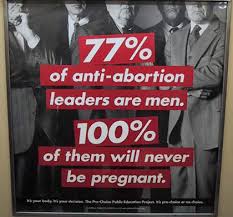
The Right is made up overwhelmingly of white males. And many of these men would feel entirely at home with a Christianized version of the Taliban. They long for a world where women meekly cater to their every demand and believe only what their male masters approve for them to believe.
Third, many fetus fanatics are not truly “pro-life.” They totally oppose abortion under most—-if not all—circumstances. But they also fully support:
- making military-style assault weapons available to nutcases;
- capital punishment;
- going to war for almost any reason;
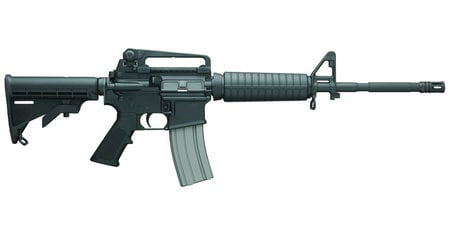
Remington AR-15 Bushmaster
- wholesale massacres of wildlife;
- despoiling of the environment; and
- even nuclear war.
And many of those who fanatically defend the right of a fetus to emerge from the womb just as fanatically oppose welfare for those who can’t support that newborn.
Fourth, many fetus fanatics are “family values” hypocrites. For example: Representative Scott DesJarlais (R-TN), an anti-abortion, “family values” doctor, had an affair with a patient and later pressured her to get an abortion. He also agreed that his wife should have two abortions.
Fifth, many fetus fanatics feel guilty about their own past sexual transgressions—especially if these resulted in pregnancy. And they want to prevent others from living the same life they did.
Some of these people are well-intentioned. Even so, they usurp unto themselves a God-like right to intrude on the most intimate decisions for others—regardless of what those people may need or want.
Sixth, many fetus fanatics embrace their own pas. On one hand, most of them claim they want to “get government off the backs of the people.” That usually means allowing corporations to pollute, sell dangerous products and treat their employees as slaves.
On the other hand, they want to empower State and Federal authorities to prevent women from getting an abortion—even in cases of rape, incest, or to save the life of the mother.
Seventh, many leaders of the fetus fanatics movement are independently wealthy. This means that even if abortion could be outlawed for the vast majority, they could always bribe a willing doctor—-here or abroad—–to perform such an operation on their wife, daughter and/or mistress. For them, there is always an escape clause.
Eighth, many fetus fanatics are “pro-life” when it comes to fetuses, but hypocritically refuse to support the needs of children from low-income families.
Ninth, many fetus fanatics believe that since their religion teaches that abortion is wrong, they have a moral duty to enforce that belief on others.
Evangelical Christians harshly condemn Muslims—such as those in Afghanistan—for segregating women, forbidding them to drive and forcing them to wear burqas—black robes covering them from head to foot.
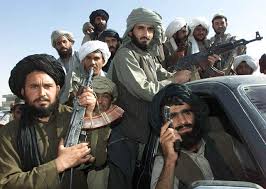
Taliban: Islam’s version of the “Right-to-Life” movement
But while they condemn Islamics for their general intolerance of others’ religious beliefs, they lust to impose their own upon those who belong to other churches. Or who belong to no church at all.
Tenth, many fetus fanatics are just as opposed to birth control as they are to abortion. Thus, when Georgia University law student Sandra Fluke asked Congress to require insurance companies to cover birth control, Rush Limbaugh branded her a “slut” and a “prostitute.”
* * * * *
It’s time to face the blunt truth: A “Conservative Victory,” as the title of Sean Hannity’s book puts it, would impose an anti-women Taliban on America.
ABC NEWS, ADOLF HITLER, ADVICE, ALTERNET, AMERICABLOG, AP, BABY BOOMER RESISTANCE, BAY OF PIGS, BBC, BENITO MUSSOLINI, BLOOMBERG NEWS, BUZZFEED, CAESARE BORGIA, CBS NEWS, CNN, CORPORATIONS, CROOKS AND LIARS, CUBA, DAILY KOS, DAILY KOZ, FACEBOOK, FIDEL CASTRO, FIVETHIRTYEIGHT, FLORENCE, HARPER’S MAGAZINE, HUFFINGTON POST, JOHN F. KENNEDY, JOSEPH STALIN, KING PERSEUS OF MACEDON, MEDIA MATTERS, MOTHER JONES, MOVEON, MSNBC, NAZI-SOVIET NON-AGGRESSION PACT, NBC NEWS, NEW REPUBLIC, NEWSDAY, NEWSWEEK, NICCOLO MACHIAVELLI, NPR, PBS NEWSHOUR, POLITICO, POLITICS, POLITICUSUSA, POPE JULIUS 11, RAW STORY, REUTERS, SALON, SEATTLE TIMES, SLATE, TALKING POINTS MEMO, THE ATLANTIC, THE CHICAGO SUN-TIMES, THE CHICAGO TRIBUNE, THE DAILY BEAST, THE DAILY BLOG, THE DISCOURSES, THE GUARDIAN, THE HILL, THE HUFFINGTON POST, THE INTERCEPT, THE LOS ANGELES TIMES, THE NATION, THE NEW REPUBLIC, THE NEW YORK TIMES, THE NEW YORKER, THE PRINCE, THE SS, THE VILLAGE VOICE, THE WASHINGTON POST, THINKPROGRESS, THIRD REICH, TIME, TRUTHDIG, TRUTHOUT, TWITTER, U.S. NEWS & WORLD REPORT, UKRAINE, UPI, USA TODAY, VLADIMIR PUTIN, VOLODYMYR ZELENSKY, WEHRMACHT, WORLD WAR 11
In Bureaucracy, Business, History, Military, Politics, Social commentary on August 17, 2018 at 12:15 am
Ask the average person, “What do you think of Niccolo Machiavelli?” and he’s likely to say: “The devil.”
In fact, “The Old Nick” became an English term used to describe Satan and slander Machiavelli at the same time.

Niccolo Machiavelli
The truth, however, is more complex. Machiavelli was a passionate Republican, who spent most of his adult life in the service of his beloved city-state, Florence.
The years he spent as a diplomat were tumultuous ones for Italy—with men like Pope Julius II and Caesare Borgia vying for power and plunging Italy into one bloodbath after another.
Florence, for all its wealth, lacked a strong army, and thus lay at the mercy of powerful enemies, such as Borgia. Machiavelli often had to use his wits to keep them at bay.
Machiavelli is best-known for his writing of The Prince, a pamphlet on the arts of gaining and holding power. Its admirers have included Benito Mussolini and Joseph Stalin.
But his longer and more thoughtful work is The Discourses, in which he offers advice on how to maintain liberty within a republic. Among its admirers were many of the men who framed the Constitution of the United States.
Most people believe that Machiavelli advocated evil for its own sake.
Not so. Rather, he recognized that sometimes there is no perfect—or perfectly good—solution to a problem.
Sometimes it’s necessary to take stern—even brutal—action to stop an evil (such as a riot) before it becomes widespread:
“A man who wishes to make a profession of goodness in everything must inevitably come to grief among so many who are not good. And therefore it is necessary for a prince, who wishes to maintain himself, to learn how not to be good, and to use this knowledge and not use it, according to the necessity of the case.”
His counsel remains as relevant today as it did during his lifetime (1469 – 1527). This is especially true for politicians—and students of political science.
But plenty of ordinary citizens can also benefit from the advice he has to offer—such as those in business who are asked to give advice to more powerful superiors.
Machiavelli warns there is danger in urging rulers to take a particular course of action: “For men only judge of matters by the result, all the blame of failure is charged upon him who first advised it, while in case of success he receives commendations. But the reward never equals the punishment.”
This puts would-be counselors in a difficult position: “If they do not advise what seems to them for the good of the republic or the prince, regardless of the consequences to themselves, then they fail to do their duty.
“And if they do advise it, then it is at the risk of their position and their lives, for all men are blind in thus, that they judge of good or evil counsels only by the results.”
Thus, Machiavelli warns that an adviser should “take things moderately, and not to undertake to advocate any enterprise with too much zeal, but to give one’s advice calmly and modestly.”
The person who asked for the advice may follow it, or not, as of his own choice, and not because he was led or forced into it by the adviser.
Above all, the adviser must avoid the danger of urging a course of action that runs “contrary to the wishes of the many.
“For the danger arises when your advice has caused the many to be contravened. In that case, when the result is unfortunate, they all concur in your destruction.”
Or, as President John F. Kennedy famously said after the disastrous invasion of Cuba at the Bay of Pigs in April, 1961: “Victory has a hundred fathers and defeat is an orphan.”
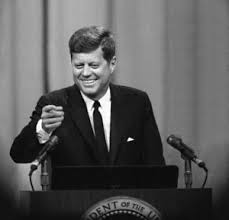
John F. Kennedy
By “not advocating any enterprise with too much zeal,” the adviser gains two advantages:
“The first is, you avoid all danger.
“And the second consists in the great credit which you will have if, after having modestly advised a certain course, your counsel is rejected, and the adoption of a different course results unfortunately.”
Finally, the time to give advice is before a catastrophe occurs, not after. Machiavelli gives a vivid example of what can happen if this rule is ignored.
King Perseus of Macedon had gone to war with Paulus Aemilius—and suffered a humiliating defeat. Fleeing the battlefield with a handful of his men, he later bewailed the disaster that had overtaken him.
Suddenly, one of his lieutenants began to lecture Perseus on the many errors he had committed, which had led to his ruin.
“Traitor,” raged the king, turning upon him, “you have waited until now to tell me all this, when there is no longer any time to remedy it—” And Perseus slew him with his own hands.
Niccolo Machiavelli sums up the lesson as this:
“Thus was this man punished for having been silent when he should have spoken, and for having spoken when he should have been silent.”
Be careful that you don’t make the same mistake.
ABC NEWS, ABORTION, ADOLF HITLER, ALTERNET, AMERICABLOG, AP, BABY BOOMER RESISTANCE, BBC, BLOOMBERG NEWS, BUZZFEED, CBS NEWS, CNN, CROOKS AND LIARS, DAILY KOS, DAILY KOZ, FACEBOOK, FIVETHIRTYEIGHT, GAYS, HARPER’S MAGAZINE, HOMOSEXUALITY, HUFFINGTON POST, INDIANA, ISLAM, JOSEPH STALIN, MEDIA MATTERS, MIKE PENCE, MOTHER JONES, MOVEON, MSNBC, NAZI-SOVIET NON-AGGRESSION PACT, NBC NEWS, NEW REPUBLIC, NEWSDAY, NEWSWEEK, NPR, PBS NEWSHOUR, POLITICO, POLITICUSUSA, RAW STORY, RELIGION, RELIGIOUS FREEDOM RESTORATION ACT, REPUBLICAN PARTY, REUTERS, SALON, SCIENCE, SEATTLE TIMES, SHARIA, SLATE, SOVIET UNION, TALKING POINTS MEMO, THE ATLANTIC, THE CHICAGO SUN-TIMES, THE CHICAGO TRIBUNE, THE DAILY BEAST, THE DAILY BLOG, THE GUARDIAN, THE HILL, THE HUFFINGTON POST, THE INTERCEPT, THE LOS ANGELES TIMES, THE NATION, THE NEW REPUBLIC, THE NEW YORK TIMES, THE NEW YORKER, THE SS, THE VILLAGE VOICE, THE WASHINGTON POST, THINKPROGRESS, THIRD REICH, TIME, TRUTHDIG, TRUTHOUT, TWITTER, U.S. NEWS & WORLD REPORT, UKRAINE, UPI, USA TODAY, VLADIMIR PUTIN, VOLODYMYR ZELENSKY, WEHRMACHT, WOMEN'S RIGHTS, WORLD WAR 11
In Bureaucracy, History, Law, Politics, Social commentary on May 24, 2016 at 3:08 am
Adolf Hitler had a warning for the Indiana legislators who passed the Religious Freedom Restoration Act.
A warning they should have heeded–but didn’t.
It all started on June 22, 1941.
On that date, Hitler ordered his powerful Wehrmacht to invade the Soviet Union.
Less than two years earlier, in August, 1939, he had signed a “non-aggression” pact with his longtime arch-enemy, Joseph Stalin.
Since then, his army had conquered Poland, Norway, Denmark, Holland, Belgium and France.
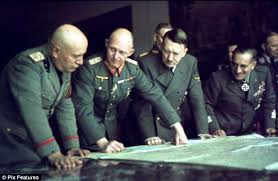
Adolf Hitler with his generals
Now, he believed, it was time to “settle accounts” with the Soviet Union.
Only there could Germany obtain the “living space” it “needed” for its expanding population.
So at 3 a.m. on June 22, 1941, Hitler once again launched an invasion.
At first, Hitler–no doubt like the Indiana legislators–felt giddy with excitement.
Turning to Alfred Jodl, his chief of operations of the Wehrmacht, he said: “We have only to kick in the door and the whole rotten structure will come crashing down.”
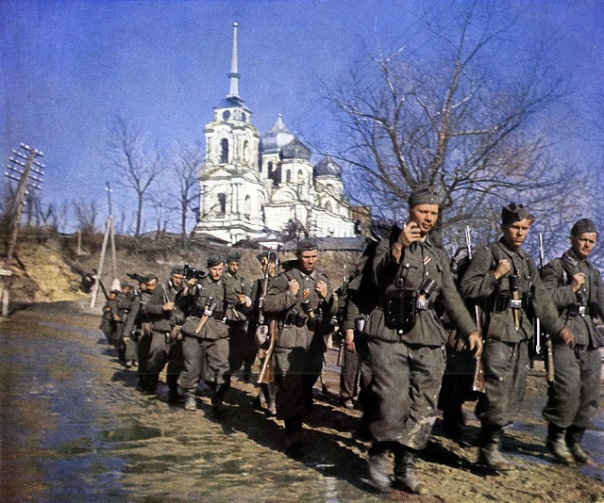
German soldiers marching through Russia
But soon afterward–almost as if he had just looked into the future and seen that he had none–he told an aide: “At the beginning of each campaign, one pushes a door into a dark, unseen room. One can never know what is hiding inside.”
That certainly proved true for Hitler.
Within four years, he was dead and the Red Army occupied Berlin.
And now the law of unintended consequences may be coming true for Indiana.
On March 26, 2015, its governor, Mike Pence, signed into law the Religious Freedom Restoration Act.
This will allow any individual or corporation to cite its religious beliefs as a defense when sued by a private party.
Officially, its intent is to prevent the government from forcing business owners to act in ways contrary to strongly held religious beliefs.
Unofficially, its intent is to appease the hatred of gays and lesbians by the religious Right, a key constituency of the Republican party.
In short, a bakery that doesn’t want to make a cake to be used at a gay wedding or a restaurant that doesn’t want to serve lesbian patrons can legally refuse to do so.
The bill was passed overwhelmingly by both chambers of the Republican-controlled state legislature. And signed into law by a Republican governor.
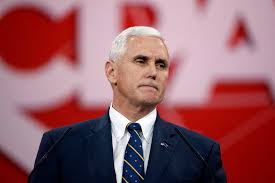
Indiana Governor Mike Pence
“Today I signed the Religious Freedom Restoration Act, because I support the freedom of religion for every Hoosier of every faith,” Mike Pence said in a statement on the day he signed the bill.
“The Constitution of the United States and the Indiana Constitution both provide strong recognition of the freedom of religion but today, many people of faith feel their religious liberty is under attack by government action.”
Bill-signing ceremonies are usually highly public events. Governors–and presidents–normally want their constituents to see them creating new legislation.
Yet for all his praise for the bill, Pence signed it in a ceremony closed to the public and the press. The media were asked to leave even the waiting area of the governor’s office.
It’s almost as if Pence sensed–like Hitler–that he was about to push open “a door into a dark, unseen room.” And this may well be the case.
Through that door may soon march the First Church of Cannabis.
The day after Pence signed the Act, church founder Bill Levin announced on his Facebook page that he had filed paperwork with the office of the Indiana Secretary of State.
Its registration had been approved–and Levin was ecstatic: “Now we begin to accomplish our goals of Love, Understanding, and Good Health.
“Donate $100 or more and become a GREEN ANGEL.
“Donate $500 or more and become a GOLD ANGEL.
“Donate $1000 or more and become a CHURCH POOHBA.”
Click here: Whoops: Indiana’s Anti-Gay ‘Religious Freedom’ Act Opens the Door For the First Church of Cannabis | Alternet
And Levin had a personal comment for the governor who had made it all possible:
“Dear Mikey Pence…
“DUDE!.. keep crapping all over the state.. and I will plant a seed of LOVE, UNDERSTANDING and COMPASSION in each pile you leave.. and it will grow into a big skunky cannabis tree. Crap away Mikey.. Crap Away…”
No doubt many Indiana legislators are furious that their effort to attack gays may have brought legal marijuana to their highly conservative state.
But worse may yet come.
Since 9/11, Right-wingers such as Rush Limbaugh and Sean Hannity have warned that Muslims are trying to impose Sharia (Islamic law) on America.
And now Indiana’s legislators, in elevating religion above the law, may have pushed upon that door “into a dark, unseen room.”
What will happen when:
- Muslims in Indiana claim their right–guaranteed in Islamic religious law–to have as many as four wives?
- Muslims demand a taxpayer-funded “halal” non-pork food shelf at free food pantries for the poor? (Exactly this happened among Somali refugees in Minnesota in 2015.)
- Muslims demand that police departments cancel counter-terrorism courses by claiming that their materials are anti-Muslim? (Exactly this happened to several police departments in Illinois.)
And when they cite the Religious Freedom Restoration Act as the basis for their demands?
Fasten your seatbelts. It’s going to be a bumpy nightmare.


2016 PRESIDENTIAL ELECTION, 2020 PRESIDENTIAL ELECTION, ABC NEWS, ADAM SCHIFF, ALTERNET, AMERICABLOG, AP, BABY BOOMER RESISTANCE, BENJAMIN NETANAHU, BILL O'REILLY, BRETT KAVANAUGH, BUZZFEED, CATHOLOCISM, CBS NEWS, CHINA, CHRISTINE BLAZEY FORD, CIA, CNN, CORRUPTION, CROOKS AND LIARS, DAILY KOZ, DEMOCRATIC NATIONAL COMMITTEE, DONALD TRUMP, EXTORTION, FACEBOOK, FIVETHIRTYEIGHT, FOUNDING FATHERS, FOX NEWS NETWORK, HILLARY CLINTON, HOUSE INTELLIGENCE COMMITTEE, HOUSE OF REPRESENTATIVES, ISRAEL, JAMES COMEY, JARED KUSHNER, JOE BIDEN, JOHN STUBBS, KIM JONG-UN, LOUIS X1V, MAR-A-LAGO, MICK MULVANEY, MOTHER JONES, MOVEON, MSNBC, NANCY PELOSI, NATALIA VESELNITSKAYA, NBC NEWS, NEWSWEEK, NPR, PARODY, PAUL MANAFORT, PBS NEWSHOUR, POLITICO, POLITICUSUSA, POLITIFACT, QUEEN ELIZABETH 1, RAW STORY, RECEP TAYYIP ERDOGAN, REUTERS, RINAT AKHMETSHIN, ROBERT A. PRENTICE, RODRIGO DUTERTE, RUSSIA, SALON, SEATTLE TIMES, SERGE KOVALESKI, SLATE, SNOPES, TALKING POINTS MEMO, THE ATLANTIC, THE CHICAGO SUN-TIMES, THE CHICAGO TRIBUNE, THE DAILY BEAST, THE DAILY BLOG, THE GUARDIAN, THE HILL, THE HUFFINGTON POST, THE LOS ANGELES TIMES, THE NATION, THE NEW YORK TIMES, THE WASHINGTON POST, THINKPROGRESS, TIME, TREASON, TRUTHDIG, TWITTER, U.S. NEWS & WORLD REPORT, UKRAINE, UNITED STATES CONSTITUTION, UPI, USA TODAY, VICTOR YANUKOVYCH, VLADIMIR PUTIN, VOLODYMYR ZELENSKY, WILLIAM BARR, XI JINPING
“TREASON”: TRUMP LIKES THE SOUND OF THE WORD: PART THREE (END)
In Bureaucracy, History, Law, Politics, Social commentary, Uncategorized on October 11, 2019 at 12:07 amDonald Trump routinely makes fun of others.
During the 2016 Presidential campaign, he infamously mocked New York Times reporter Serge Kovaleski, who has arthrogryposis, a congenital condition affecting the joints.
In 2018, Trump viciously attacked Christine Blasey Ford, the woman who had come forward to allege that Trump’s Supreme Court nominee, Brett Kavanaugh, had sexually assaulted her when she was 15.
But he holds himself immune from ridicule.
On September 26, Adam Schiff (D-CA), chairman of the House Intelligence Committee, rose to the occasion.
Adam Schiff
During a hearing of his committee, he gave a dramatic reading—part news summary, part parody. It centered on an extortion call Trump had made on July 25 to Ukrainian President Volodymyr Zelensky.
Trump had wanted a “favor”: Investigate 2020 Democratic Presidential Candidate Joe Biden and his son, Hunter, who has had business dealings in Ukraine.
Unspoken was the threat of cancelling $400 million in promised American military aid to Ukraine.
So Schiff—whose committee is investigating that incident—gave a summary of that call during a hearing.
It wasn’t the news summary part that infuriated Trump, but the mockery included within it.
As Schiff explained to CNN: “The fact that that’s not clear is a separate problem in and of itself. Of course, the President never said, ‘If you don’t understand me I’m going to say it seven more times.’ My point is, that’s the message that the Ukraine president was receiving in not so many words.”
Trump had aimed his own brand of juvenile humor at Schiff in the past, referring to him as “little Adam Schit.”
Donald Trump
But for Schiff to dare to make fun of him was—for Trump—entirely too much.
“Rep. Adam Schiff illegally made up a FAKE & terrible statement, pretended it to be mine as the most important part of my call to the Ukrainian President, and read it aloud to Congress and the American people,” Trump tweeted. “It bore NO relationship to what I said on the call. Arrest for Treason?”
Trump is the first President to openly equate criticism—especially mockery—of himself with treason. Like the French King, Louis X1V, he believes: L’État, c’est moi—“I am the State.”
And treason is a crime that has traditionally been punished with death.
So Trump more than gave the game away when he tweeted, on October 7: “Nancy Pelosi knew of all of the many Shifty Adam Schiff lies and massive frauds perpetrated upon Congress and the American people.
“This makes Nervous Nancy every bit as guilty as Liddle’ Adam Schiff for High Crimes and Misdemeanors, and even Treason. I guess that means that they, along with all of those that evilly ‘Colluded’ with them, must all be immediately Impeached!”
Nancy Pelosi, as speaker of the House of Representatives, has done nothing that meets the Constitutional definition of treason: “Treason against the United States, shall consist only in levying War against them, or in adhering to their Enemies, giving them Aid and Comfort.”
Moreover, members of Congress cannot be impeached. Impeachment is a Congressional tool for investigating judges or executive branch officials they believe may have committed crimes.
No doubt many people believe that Trump wouldn’t dare ask his hand-picked Attorney General, William Barr, to indict Adam Schiff or Nancy Pelosi for treason.
Of course, there were many people who believed that Trump wouldn’t dare fire FBI Director James Comey for pursuing an investigation into Russia’s subversion of the 2016 Presidential election.
Or that he would openly call on a hostile foreign power—China—to intervene in the 2020 Presidential election.
A President who can invite a hostile foreign power to slander his political opponent can just as easily call on a hostile foreign power to assassinate that opponent.
Trump has claimed: “Let me tell you, I’m only interested in corruption. I don’t care about politics. I don’t care about Biden’s politics….”
But if Trump were concerned about fighting corruption, he wouldn’t have:
Trump is counting on Americans’ awe of the Presidency to convince them of his integrity.
But according to Robert A. Prentice, Professor of Government and Society at the McCombs School of Business at The University of Texas at Austin:
“President Donald Trump’s lying is off the charts. No prominent politician in memory bests Trump for spouting spectacular, egregious, easily disproved lies. The birther claim. The vote fraud claim. The attendance at the inauguration claim. And on and on and on.
“Every fact checker—Kessler, Factcheck.org, Snopes.com, PolitiFact—finds a level of mendacity unequaled by any politician ever scrutinized. For instance, 70 percent of his campaign statements checked by PolitiFact were mostly false, totally false, or “pants on fire” false.”
Donald Trump prides himself on setting Presidential precedents. He may turn out to be the first President who invoked “treason” against his political opponents—and was himself found to be a menace to the nation he claimed to love.
Share this: