Posts Tagged ‘UPI’
2003 IRAQ WAR, ABC NEWS, ADOLF HITLER, ALTERNET, AMERICABLOG, AP, BABY BOOMER RESISTANCE, BBC, BLOOMBERG NEWS, BUZZFEED, CBS NEWS, CNN, CRIMEAN PENINSULA, CROOKS AND LIARS, DAILY KOS, DONALD TRUMP, ECONOMIC SANCTIONS, EDOUARD DELADIER, FACEBOOK, FIVETHIRTYEIGHT, FRANCE, GEORGE W. BUSH, HARPER’S MAGAZINE, HUFFINGTON POST, IRAN, JOACHIM VON RIBBENTROP, KIEV, MEDIA MATTERS, MOSKOVA (SHIP), MOTHER JONES, MOVEON, MSNBC, MUNICH CONFERENCE, NATO, NBC NEWS, NEVILLE CHAMBERLAIN, NEW REPUBLIC, NEWSDAY, NEWSWEEK, NPR, PBS NEWSHOUR, POLAND, POLITICO, POLITICUSUSA, RAW STORY, REPUBLIC OF GEORGIA, REUTERS, RUBLES, RUSSIA, SADDAM HUSSEIN, SALON, SEATTLE TIMES, SECOND CHECHEN WAR, SLATE, SOVIET UNION, TALKING POINTS MEMO, THE ATLANTIC, THE CHICAGO SUN-TIMES, THE CHICAGO TRIBUNE, THE DAILY BEAST, THE DAILY BLOG, THE GUARDIAN, THE HILL, THE HUFFINGTON POST, THE INTERCEPT, THE LOS ANGELES TIMES, THE NATION, THE NEW REPUBLIC, THE NEW YORK TIMES, THE NEW YORKER, THE VILLAGE VOICE, THE WASHINGTON POST, THINKPROGRESS, TIME, TRUTHDIG, TRUTHOUT, TWITTER, TWO POLITICAL JUNKIES, U.S. NEWS & WORLD REPORT, UKRAINE, UNITED STATES, UPI, USA TODAY, VLADIMIR PUTIN, WONKETTE
In Bureaucracy, Business, History, Military, Politics, Social commentary on December 2, 2022 at 12:14 am
On February 24, Russia launched an unprovoked attack on Ukraine with missiles and artillery, striking major Ukrainian cities, including its capitol, Kiev.
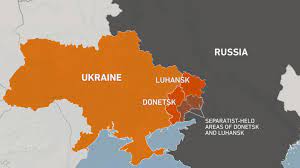
Ukraine vs. Russia
Russian President Vladimir Putin had every reason to believe that the conquest of Ukraine would be a cakewalk. Intent on restoring the borders of the former Soviet Union, he had swept from one successful war to the next:
- In 1999-2000, he waged the Second Chechen War, restoring federal control of Chechnya.
- In 2008, he invaded the Republic of Georgia, which had declared its independence as the Soviet Union began to crumble. By war’s end, Russia occupied 20% of Georgia’s territory.
- In 2014, Putin invaded and annexed the Crimean Peninsula from Ukraine.
Meanwhile, the North Atlantic Treaty Organization (NATO) launched only verbal condemnations.
The reasons:
- Fear of igniting a nuclear war;
- Belief that Russia was simply acting within its own sphere of influence; and/or
- Then-President Donald Trump’s repeated attacks on NATO and displays of subservience to Putin.
NATO emblem
When Russia invaded, the United States—now led by anti-Putin President Joe Biden—and its Western European allies retaliated with unprecedented economic sanctions.
Among the resulting casualties:
- The ruble crashed.
- Russia’s central bank more than doubled interest rates to 20%.
- The European subsidiary of Russia’s biggest bank almost collapsed in a massive Depression-era run by savers.
- Economists predicted the Russian economy could decline by five percent.
- The West—especially the United States—froze at least half of the $630 billion in international reserves that Putin had amassed to stave off tough sanctions.
On the battlefield, the war bogged down for Russia:
- Kiev remains unconquered.
- The Moskva, the flagship of Russia’s Black Sea Fleet, was sunk on April 14 after being struck by two Ukrainian Neptune anti-ship missiles.
- On September 21, with Russian forces bogged down or retreating, Putin announced the partial mobilization of 300,000 military reservists. All male citizens below 60 are now eligible to be drafted.
- More than 194,000 Russian men (and their wives or girlfriends) fled to such neighboring countries as Turkey, Georgia, Kazakhstan and Mongolia.
- Ukrainian forces retook the key city of Kherson in November; Russian forces, which had occupied the city since March, withdrew.
In short: The war is not going the way Putin assumed it would.

Vladimir Putin
Kremlin.ru, CC BY 4.0 <https://creativecommons.org/licenses/by/4.0>, via Wikimedia Commons
This is not the first time a dictator has guessed wrong about the results of his actions.
On September 1, 1939, German Fuhrer Adolf Hitler ordered his armies to invade Poland.
Almost a year earlier—on September 29, 1938—he had bullied British Prime Minister Neville Chamberlain and French Prime Minister Edouard Daladier into surrendering the northern, southwest and western regions of Czechoslovakia, inhabited mostly by ethnic Germans.
The Munich Agreement—which Chamberlain boasted meant “peace in our time—only whetted Hitler’s appetite for greater conquests.
It also led him to hold France and England in contempt: “Our enemies are little worms,” he said in a conference with his generals. “I saw them at Munich.”
He believed he could conquer Poland, and Chamberlain and Daladier would meekly ratify his latest acquisition.
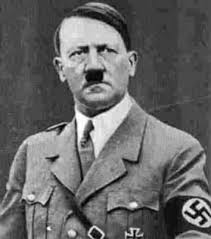
Adolf Hitler
So he was stunned when, on September 3, 1939, Britain and France—however reluctantly—honored their pledged word to Poland and declared war on Germany.
“What now?” Hitler furiously asked his Foreign Minister, Joachim von Ribbentrop.
Ribbentrop had no answer.
Hitler knew that Germany didn’t have the resources for a long war. He had intended to fight a series of quick, small wars, gobbling up one country at a time. Now he found himself locked in an endless war with heavyweights France and England.
In time, he would fatally add the Soviet Union and the United States to his list of enemies.
And he stayed locked into that war until he committed suicide on April 30, 1945, and the Third Reich officially collapsed on May 7.
Fast forward to March 21, 2003 and President George W. Bush’s launching of an attack on Saddam Hussein’s Iraq.
George W. Bush
The war got off to an impressive start with 1,700 air sorties and 504 Cruise missiles.
Within roughly two weeks, American ground forces entered Baghdad, and after four days of intense fighting, the Iraqi regime fell. By April 14, the Pentagon reported that major military operations had ended.
On May 1, 2003, Bush declared that the war was won.
But then American forces became embroiled in an endless, nationwide guerrilla war. Eighteen years later, the United States was still fighting in Iraq.
The war that Bush had deliberately provoked:
- Took the lives of 4,484 Americans.
- Cost the United States Treasury at least $2 trillion.
- Created a Middle East power vacuum.
- Allowed Iran—Iraq’s arch enemy—to eagerly fill it.
- Frightened and repelled even America’s closest allies.
- Killed at least 655,000 Iraqis.
- Frightened China and Russia into expanding the size of their militaries.
Bush came to a better end than Adolf Hitler: He retired from office with a lavish pension and full Secret Service protection.
And Putin?
His attack on Ukraine was reportedly motivated, in part, to ensure that Ukrainians did not join NATO.
But his invasion has frightened Sweden and Finland into joining NATO.
And NATO is now fully revitalized to meet future Russian threats.
Thus can the worst intentions of hubristic dictators come undone.
ABC NEWS, ALTERNET, AP, BUZZFEED, CALVIN COOLIDGE, CBS NEWS, CHERYL BEHYMER, CNN, CROOKS AND LIARS, DAILY KOS, EMPLOYERS, FISHER & PHILLIPS LAW FIRM, GLASSDOOR, JERRY BROWN, JOB-SEEKERS, MOTHER JONES, MOVEON, NBC NEWS, NEWSWEEK, NPR, POLITICO, RAW STORY, REUTERS, SALARY HISTORY, SALON, SEATTLE TIMES, SLATE, SUSAN EGGMAN, THE ATLANTIC, THE CHICAGO SUN-TIMES, THE CHICAGO TRIBUNE, THE DAILY BEAST, THE GUARDIAN, THE HILL, THE HUFFINGTON POST, THE LOS ANGELES TIMES, THE NATION, THE NEW YORK TIMES, THE WASHINGTON POST, TIME, TWITTER, U.S. NEWS & WORLD REPORT, UNEMPLOYMENT, UPI, USA TODAY, USA TODAY NICCOLO MACHIAVELLI, WAGE GAP
In Bureaucracy, Business, History, Politics, Social commentary on December 1, 2022 at 12:10 am
“All those who have written upon civil institutions demonstrate…that whoever desires to found a state and give it laws, must start with assuming that all men are bad and ever ready to display their vicious nature, whenever they may find occasion for it.
“If their evil disposition remains concealed for a time, it must be attributed to some unknown reason; and we must assume that it lacked occasion to show itself. But time, which has been said to be the father of all truth, does not fail to bring it to light.”
—Niccolo Machiavelli
Niccolo Machiavelli knew what he was talking about.
As of January 1, 2018, it became illegal for California employers to ask job applicants about their former salaries and benefits.
Governor Jerry Brown signed a state privacy bill into law during the last week of December, 2017.
This is good news for applicants who believe they shouldn’t be judged on how much—or little—money they earned in the past.
For decades, employers have used “salary histories” to discriminate against applicants who earned large—or small—salaries in their previous jobs.

For example: If an applicant had been paid a miserly wage even though he had performed major tasks for an employer, the new potential one would use that low salary as a weapon against him: “Well, it says here you earned $—– in your most recent job. Why should we pay you more than that?”
And if an applicant had earned a high salary, an employer would often use that against him: “We can’t afford to match that, let alone give you more than that.” In many cases, employers simply refused to give a reason for refusing to hire the applicant.
In either case, it was clearly an “I win/You lose” situation.
And, naturally, when employers whine about how expensive it was to pay a living wage to those who made their profits a reality, they never mention the exorbitant salary paid to their own CEO.
Even CEOs who are fired—even for reasons of outright criminality—usually receive severance packages in the tens of thousands of dollars—a gift that no ordinary employee can expect to receive.
According to Glassdoor: “The estimated total pay for a Chief Executive Officer is $403,919 per year in the United States area, with an average salary of $186,399 per year. Additional pay could include cash bonus, commission, tips, and profit sharing.”
CEO’s of major corporations often wail that they can’t afford to hire more employees—or whine that, to “cut costs,” they must fire tens of thousands of existing ones. But they almost never offer to trim their own bloated salaries.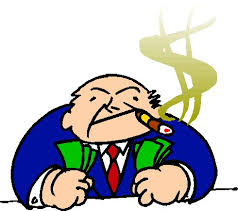
One job-seeking applicant tried to finesse the salary history demand by filling out the job application form except for the salary history part. He then attached a cover-letter, which read:
“I am interested in speaking with you or one of your representatives about the above-named position. I have filled out the required application—-with the exception of the box inquiring into my Current/last Income.
“I have been paid on a per-hour basis, a per-assignment basis, and on a bi-weekly basis. Each of these salaries was for a different job, and each job required a specific set of skills and efforts on my part.
“I am prepared to discuss in detail how my skills and experiences can prove of use to your company. But I do not discuss past salaries earned with anyone but the Internal Revenue Service.”
But the relationship between employers and job-seekers has always been a lopsided one, with the “rights” of employers far exceeding those of applicants.
Since January 1, 2018, California job-seekers no longer have to worry about that part of the application.
Supporters of the law believe it will help reduce the notorious wage-gap between male and female employees.
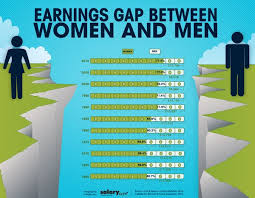
“Women negotiating a salary shouldn’t have to wrestle an entire history of wage disparity,” said the bill’s principal author, California Assemblywoman Susan Talamantes Eggman.
California’s law also requires potential employers to disclose a salary range for the job in question, should an applicant ask about it.
This arms job seekers with valuable information because they will now know how much a company is willing to offer for that position.
In the past, employers held that information close to the vest as one more way of gaining control over their potential employee.
Although California has long been a trailblazer in employee/employer relations, it was not the first state to pass such a law. Oregon, Delaware and Massachusetts had already passed laws forbidding employers from asking about salary history.
Many employers and their paid shills believe that President Calvin Coolidge was right when he said: “The man who builds a factory builds a temple; the man who works there worships there.”
Cheryl Behymer, an attorney for the law firm Fisher & Phillips, which represents employers, said: “Here’s another point where the government is dictating to an employer how to conduct its business and employers resent that.”
She speaks for all tyrants forced to relinquish any part of their tyranny.
ABC NEWS, ALTERNET, AMERICABLOG, AP, BABY BOOMER RESISTANCE, BBC, BLOOMBERG, BLOOMBERG NEWS, BLUESKY, BUZZFEED, CAILY KOS, CBS NEWS, CENSORSHIP, CNN, COVID-19, CROOKS AND LIARS, DAILY KOS, DAVID MCCULLOUGH, DEMOCRATS, DISNEY, FACEBOOK, FIRST AMENDMENT, FIVETHIRTYEIGHT, HARPER’S MAGAZINE, HISTORICAL ILLITERACY, HISTORY, HUFFINGTON POST, JAY LENO, JOE BIDEN, MARK ZUCKERBERG, MEDIA MATTERS, MOTHER JONES, MOVEON, MSNBC, NAZI GERMANY, NBC NEWS, NEW REPUBLIC, NEWSDAY, NEWSWEEK, NPR, PBS NEWSHOUR, POLITICO, POLITICUSUSA, RAW STORY, REPUBLICANS, REUTERS, SALON, SEATTLE TIMES, SHERYL SANDBERG, SLATE, TALKING POINTS MEMO, THE ATLANTIC, THE CHICAGO SUN-TIMES, THE CHICAGO TRIBUNE, THE DAILY BEAST, THE DAILY BLOG, THE GUARDIAN, THE HILL, THE HUFFINGTON POST, THE INTERCEPT, THE LOS ANGELES TIMES, THE NATION, THE NEW REPUBLIC, THE NEW YORK TIMES, THE NEW YORKER, THE VILLAGE VOICE, THE WASHINGTON POST, THINKPROGRESS, TIME, TONIGHT SHOW, TRUTHDIG, TRUTHOUT, TWO POLITICAL JUNKIES, U.S. NEWS & WORLD REPORT, UPI, USA TODAY, WONKETTE, X
In Bureaucracy, Business, Entertainment, History, Politics, Social commentary on November 30, 2022 at 12:15 am
As it now operates, Facebook poses a direct threat to the First Amendment, the privacy of its users and democratic elections.
Facebook is the world’s largest social media company. Its social and political influence on the United States is enormous. According to its profile on Wikipedia:
“The subject of numerous controversies, Facebook has often been criticized over issues such as user privacy (as with the Cambridge Analytica data scandal), political manipulation (as with the 2016 U.S. elections) and mass surveillance.
“Facebook has also been subject to criticism over psychological effects such as addiction and low self-esteem, and various controversies over content such as fake news, conspiracy theories, copyright infringement, and hate speech. Commentators have accused Facebook of willingly facilitating the spread of such content as well as exaggerating its number of users to appeal to advertisers.”
To which can be added the following:
- I was sentenced to “Facebook Jail” for two posts. The first of these stated: “Americans are historical illiterates.” This was labeled “hate speech and inferiority.” The fact that the distinguished historian David McCullough had said exactly the same meant nothing to Facebook.
- A second post deleted showed a group of heavily-armed Proud Boys standing around a cross. Above this I had posted the caption: “Proud Boys posing with their latest victim.” This was labeled as “hate speech.”
- Since this post was bluntly critical of the Proud Boys, the question emerges: Does criticizing the Proud Boys—Fascists who played a major role during the January 6 attempted coup against the Capitol Building—constitute “hate speech”?

Proud Boys
Anthony Crider, CC BY 2.0 <https://creativecommons.org/licenses/by/2.0>, via Wikimedia Commons
- I am currently banned from Facebook for posting the following: A Facebook member had posted this solution for achieving universal peace: All enlisted members of all the world’s militaries should refuse to serve. In 2002-3, I had watched President George W. Bush lie the country into a needless, bloody, budget-busting war in Iraq. Thus, I felt the poster’s “solution” required a serious dose of realism.
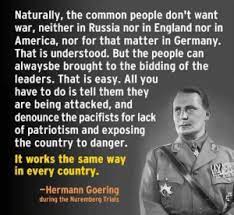
- So I posted a meme below that contained an image of Herman Goring—chief of the German Luftwaffe (air force) during World War II. As a convicted war criminal, he should, I felt, have insight into how easy it is to lead a nation into war.
- And he did: “Naturally, the common people don’t want war, neither in Russia nor in England nor in America, nor for that matter in Germany. That is understood. But the people can always be brought to the bidding of the leaders. That is easy. All you have to do is tell them they are being attacked, and denounce the pacifists for lack of patriotism and exposing the country to danger. It works the same way in every country.”
- No sooner had I posted this than I found myself once again accused of violating Facebook’s “Community Standards.” As in past cases, Facebook did not deign to state, specifically, what standards I had violated, or how the post endangered other Facebook members. I simply found myself blocked from Facebook.
- Facebook has made its founder, Mark Zuckerberg, worth $40.7 billion. Yet he refuses to provide Facebook users with an 800 number—or even an Instant Messaging service—so they can appeal directly to the Censorship Committee and share their reasons for posting the comments they did.
- And there’s absolutely no point in writing to Zuckerberg or any of his thralls at the corporate address of 1 Hacker Way, Menlo Park, California 94025. With the sheer arrogance only a true billionaire can exude, Zuckerberg refuses to answer (or even open) his mail.
- Frances Haugen, a former Facebook employee, disclosed tens of thousands of Facebook’s internal documents to the Securities and Exchange Commission and the Wall Street Journal in 2021. She testified before Congress that Facebook promotes conflict to increase its readership and keep them reading—and buying. So the comment I made fell exactly into that category of exciting controversy.
People who libel and/or harass others should be banned from social media. It’s precisely because Twitter refuses to do so that its reputation is fatally tainted.
But posting a comment that is based on accurate history should not qualify as hate speech. And none of the examples I have cited fits that definition.
Through its worldwide membership, Facebook exerts an influence that rivals—if not exceeds—that of most government institutions. Its greatest infamy: Allowing Russian trolls to play a lethal role in electing Donald Trump President in 2016. And no doubt they are preparing to do so again in 2024.
In a highly polarized political environment, Mark Zuckerberg holds the unique distinction of having infuriated both Democrats and Republicans during his appearances before Congress. His secret: The overweening arrogance he routinely displays to those he considers lesser mortals. His motto is: ““Move fast and break things. Unless you are breaking stuff, you are not moving fast enough.”
It’s long past time for those at the legislative level to show him that some things—such as the First Amendment, the right to privacy and elections free of foreign influence—should not be broken. And that there is a high price to pay for those who do.
ABC NEWS, ALTERNET, AMERICABLOG, AP, BABY BOOMER RESISTANCE, BBC, BLOOMBERG, BLOOMBERG NEWS, BLUESKY, BUZZFEED, CBS NEWS, CENSORSHIP, CNN, COVID-19, CROOKS AND LIARS, DAILY KOS, DAVID MCCULLOUGH, DEMOCRATS, DISNEY, FACEBOOK, FIRST AMENDMENT, FIVETHIRTYEIGHT, HARPER’S MAGAZINE, HISTORICAL ILLITERACY, HISTORY, HUFFINGTON POST, JAY LENO, JOE BIDEN, MARK ZUCKERBERG, MEDIA MATTERS, MOTHER JONES, MOVEON, MSNBC, NAZI GERMANY, NBC NEWS, NEW REPUBLIC, NEWSDAY, NEWSWEEK, NPR, PBS NEWSHOUR, POLITICO, POLITICUSUSA, RAW STORY, REPUBLICANS, REUTERS, SALON, SEATTLE TIMES, SHERYL SANDBERG, SLATE, TALKING POINTS MEMO, THE ATLANTIC, THE CHICAGO SUN-TIMES, THE CHICAGO TRIBUNE, THE DAILY BEAST, THE DAILY BLOG, THE GUARDIAN, THE HILL, THE HUFFINGTON POST, THE INTERCEPT, THE LOS ANGELES TIMES, THE NATION, THE NEW REPUBLIC, THE NEW YORK TIMES, THE NEW YORKER, THE VILLAGE VOICE, THE WASHINGTON POST, THINKPROGRESS, TIME, TONIGHT SHOW, TRUTHDIG, TRUTHOUT, TWO POLITICAL JUNKIES, U.S. NEWS & WORLD REPORT, UPI, USA TODAY, WONKETTE, X
In Bureaucracy, Business, History, Politics, Social commentary on November 29, 2022 at 12:14 am
There is an urgent need for states—and especially the Federal government—to impose serious regulatory controls on Facebook.
Facebook is the world’s largest social media company, with 2.934 billion users by July, 2022. Its social and political influence on the United States is enormous. According to its profile on Wikipedia:
“The subject of numerous controversies, Facebook has often been criticized over issues such as user privacy (as with the Cambridge Analytica data scandal), political manipulation (as with the 2016 U.S. elections) and mass surveillance.
“Posts originating from the Facebook page of Breitbart News, a media organization previously affiliated with Cambridge Analytica, are currently among the most widely shared political content on Facebook.
“Facebook has also been subject to criticism over psychological effects such as addiction and low self-esteem, and various controversies over content such as fake news, conspiracy theories, copyright infringement, and hate speech. Commentators have accused Facebook of willingly facilitating the spread of such content as well as exaggerating its number of users to appeal to advertisers.”

Facebook / Meta headquarters in Menlo Park, California
LPS.1, CC0, via Wikimedia Commons
To which should be added the following:
- Facebook operates as virtually a law unto itself, arbitrarily deciding which posts violate its “Community Standards” and deleting them (and their posters) without warning and right to appeal.
- No details are ever given as to what about the post, specifically, posed a threat to other Facebook members.
- Facebook claims that its users have the right to appeal: “You can disagree with the decision if you think we got it wrong.”
- But then Facebook declares: “We usually offer the chance to request a review and follow up if we got the decision wrong. We have fewer reviewers available right now because of the coronavirus (COVID-19) outbreak. We’re trying hard to priorities reviewing content with the most potential for harm. This means we may not be able to follow up with you, though your feedback helps us do better in the future.”
- Using COVID as an excuse to avoid responsible behavior is despicable. If Facebook is going to ban people for supposedly violating its “Community Standards,” there is a moral obligation—if not a legal one—to give them a chance to share their side of the story.
- Facebook revenues have made its CEO, Mark Zuckerberg, worth $71.5 billion. But Facebook refuses to provide its users with an 800 number so they can appeal directly to the Censorship Committee and share their reasons for posting the comments they did.
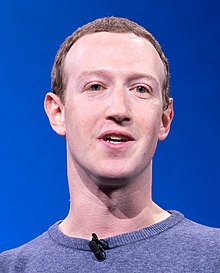
Mark Zuckerberg
Anthony Quintano from Westminster, United States, CC BY 2.0 <https://creativecommons.org/licenses/by/2.0>, via Wikimedia Commons
- Nor does Facebook provide even an Instant Messaging capability, so members can do so.
- Facebook’s refusal to provide a contact number for its members exposes them to potential fraud. National Public Radio published a January 31, 2017 article on “Searching for ‘Facebook Customer Service’ Can Lead To a Scam.”
- According to Google data: “‘Facebook customer service’ gets searched, on average, about 27,000 times a month in the U.S.” Yet on its own “Help Community” page, Facebook admits: “Facebook doesn’t offer a phone number for support.”
- Nor do Facebook’s executives deign to respond to letters sent to them. I have sent letters to its CEO, Mark Zuckerberg, and to Sheryl Sandberg, a member of its board of directors. Neither had the courtesy to reply.
- Many of those I know on Facebook have been censored for posts that criticize Donald Trump. Apparently, “freedom of expression” exists only for those who support a man who staged an illegal coup to overturn a totally legitimate election.
- Members can be banned from Facebook for posting entirely legitimate news stories. One such story described how Texas Congressman Joe Burton had sent a series of smarmy emails to numerous women—while posing as a paragon of “family values.”
- The post was removed and its poster was sent the following message: “We removed content you posted. We removed this content because it doesn’t follow the Facebook Community Standards.” Then the member who posted it found himself blocked from Facebook.
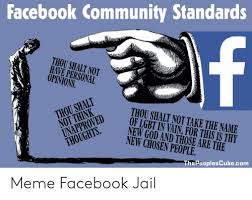
- One Facebook member posted an innocuous anti-Trump cartoon: A group of children are lined up at a house on Halloween. A woman at the door says: “Oh, look. We have a pirate, a witch and a Trump supporter [a boy wearing a white sheet as a ghost].” The post was removed and the poster blocked from Facebook:
- Many Facebook users have found themselves punished after Facebook’s star chamber censors found a post they didn’t like from four years earlier.
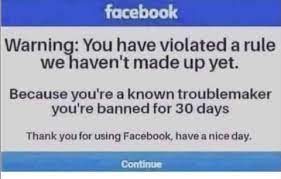
- Facebook’s arbitrary and punitive actions are so notorious they have become grist for countless memes—some of which are hilarious: “Warning: You have violated a rule we haven’t made up yet. Because you’re a known troublemaker you’ve been banned for 30 days. Thank you for using Facebook, have a nice day.”
- I was sentenced to “Facebook Jail” for two posts. The first of these stated: “Americans are historical illiterates.” This was labeled “hate speech and inferiority.” The fact that the distinguished historian David McCullough had said exactly the same meant nothing to Facebook.
- Taken to its logical conclusion, only comments celebrating the ignorance of ignorant people will be considered acceptable on Facebook.
ABC NEWS, ALTERNET, ANTI-COMMUNISM, AP, BUZZFEED, CBS NEWS, CIA, CNN, COLLUSION, COMMUNISM, CROOKS AND LIARS, DAILY KOZ, DEMOCRATIC PARTY, DONALD TRUMP, DONALD TRUMP JUNIOR, FACEBOOK, FBI, FOX NEWS, G.O.P., GRU (RUSSIAN MILITARY INTELLIGENCE), HILLARY CLINTON, INTELLIGENCE, ISLAMIC STATE OF IRAQ AND SYRIA (ISIS), JAMES B. COMEY, JAMES COMEY, JARED KUSHNER, MAIN INTELLIGENCE DIRECTORATE, MICHAEL FLYNN, MOSSAD, MOTHER JONES, MOVEON, NATIONAL SECURITY AGENCY, NBC NEWS, NEWSWEEK, NPR, PAUL MANAFORT, POLITICO, RAW STORY, REPUBLICAN PARTY, REUTERS, ROGER STONE, RUSSIA, SALLY YATES, SALON, SEATTLE TIMES, SERGEY KISLYAK, SERGEY LAVROV, SLATE, STATE OF THE UNION, STATE OF THE UNION ADDRESS, THE ATLANTIC, THE CHICAGO SUN-TIMES, THE CHICAGO TRIBUNE, THE DAILY BEAST, THE GUARDIAN, THE HILL, THE HUFFINGTON POST, THE LOS ANGELES TIMES, THE NATION, THE NEW YORK TIMES, THE WASHINGTON POST, TIME, TREASON, TRUMP TOWER MEETING, TWITTER, U.S. CONSTITUTION, U.S. NEWS & WORLD REPORT, UNITED STATES CONSTITUTION, UPI, USA TODAY, VLADIMIR PUTIN
In Bureaucracy, History, Military, Politics, Social commentary on November 28, 2022 at 12:14 am
Less than three years before committing his ultimate act of treason, President Donald Trump determined that Democrats were guilty of it.
Their crime? Refusing to stand and applaud him during his State of the Union message in January, 2018.
On February 5, he told a crowd in Cincinnati: “They were like death and un-American. Un-American. Somebody said, ‘treasonous.’ I mean, Yeah, I guess why not? Can we call that treason? Why not? I mean they certainly didn’t seem to love our country that much.”
For Trump, to love the United States, you must first prove that you love him.
Article Three of the United States Constitution defines treason as:
“Treason against the United States, shall consist only in levying War against them, or in adhering to their Enemies, giving them Aid and Comfort. No Person shall be convicted of Treason unless on the Testimony of two Witnesses to the same overt Act, or on Confession in open Court.”
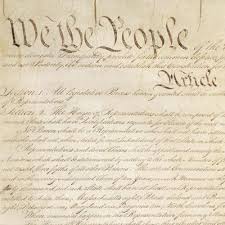
United States Constitution
In short: Actions such as colluding with a foreign power hostile to the United States (such as Russia) to subvert America’s democratic election process.
By that standard, Donald Trump stands rightly accused of a crime that traditionally carries the penalty of death.
Example #1: The infamous June, 2016 meeting at Trump Tower starring Donald Trump’s son, Donald, Jr.; Trump’s son-in-law, Jared Kushner; and Trump’s then-campaign manager, Paul Manafort—and two Russian lobbyists who wanted the United States to end its sanctions against Russia for human rights abuses.
The meeting’s purpose: To obtain from Russian Intelligence agents “dirt” on Trump’s opponent, Hillary Clinton.
Example #2: On July 27, 2016, Trump said at a press conference in Doral, Florida: “Russia, if you are listening, I hope you are able to find [Hillary Clinton’s] 33,000 emails that are missing—I think you will probably be rewarded mightily by our press.”
Hours later, the Main Intelligence Directorate in Moscow targeted Hillary Clinton’s personal office and hit more than 70 other Clinton campaign accounts,
Donald Trump
Example #3: On December 16, 2016, then-FBI Director James B. Comey and Director of National Intelligence James R. Clapper Jr. agreed with a CIA assessment that Russia intervened in the 2016 election in part to help Donald Trump win the White House.
Trump, however has steadfastly denied any such role by Russia.
On July 16, 2018, he attended a press conference in Helsinki, Finland, with Russian President Vladimir Putin. There he blamed American Intelligence agencies—such as the FBI, CIA and National Security Agency—instead of Putin for Russia’s subversion of the 2016 Presidential election: “I have President Putin. He just said it’s not Russia. I will say this: I don’t see any reason why it would be.”
Example #4: On May 9, 2017, Trump fired FBI Director James Comey for investigating Russia’s subversion of the 2016 Presidential race. His motive: To end that investigation before it reached him.
The next day, meeting with Russian Foreign Minister Sergey Lavrov and Russian Ambassador Sergey Kislyak in the Oval Office, Trump said: “I just fired the head of the FBI. He was crazy, a real nut job. I faced great pressure because of Russia. That’s taken off.”
On May 11, during an interview with NBC’s Lester Holt, Trump admitted: “And, in fact, when I decided to just do it, I said to myself, I said: ‘You know, this Russia thing with Trump and Russia is a made up story, it’s an excuse by the Democrats for having lost an election that they should’ve won.’”
Example #5: During that same meeting, Trump gave the Russian officials highly classified Israeli Intelligence about an Islamic State plot to turn laptops into concealable bombs.
At first, the White House denied Trump had done so. Then Trump admitted in a tweet: “As President I wanted to share with Russia (at an openly scheduled W.H. meeting) which I have the absolute right to do, facts pertaining … to terrorism and airline flight safety.
Example #6: Trump surrounded himself with men who had close ties to Russian dictator Vladimir Putin. Among these:
- Paul Manafort – His former campaign manager. His longstanding ties to pro-Russian politicians in Ukraine lead directly to Putin.
- Roger Stone – Self-confessed dirty trickster and former business partner of Manafort. Stone had extensive contacts with hacker Guccifer 2.0, whom the CIA, NSA and FBI believe was actually a front for GRU, Russian military intelligence.
- Michael T. Flynn – Former United States Army lieutenant general and director of the Defense Intelligence Agency. A leading Trump supporter during the 2016 Presidential campaign, he was rewarded with the post of National Security Adviser when Trump took office.

Michael T. Flynn
- On February 13, 2017, The Washington Post reported that Acting Attorney General Sally Yates had warned Trump in late January that Flynn had lied about his contacts with Kislyak—and that he could be blackmailed by Russian Intelligence. Flynn was forced to resign that same day.
- In December, 2015, he had appeared on Russia Today, the news network that serves as “the Kremlin’s principal international propaganda outlet.” For this he received more than $45,000 as a “speaking fee.”
- At the gala where Flynn received the fee, he sat next to Putin for dinner.
The Republican party—which for 50 years claimed to be America’s defender against Communism—has now fervently embraced a man with demonstrated ties to a Communist dictator.
2016 PRESIDENTIAL CAMPAIGN, ABC NEWS, ALTERNET, AMERICABLOG, ANTHONY FAUCI, AP, BABY BOOMER RESISTANCE, BLOOMBERG, BUZZFEED, CBS NEWS, CNN, CORONAVIRUS, CROOKS AND LIARS, DAILY KOZ, DEMOCRATS, DONALD TRUMP, DRUDGE RETORT, EDUCATION, FACEBOOK, FIVETHIRTYEIGHT, FOX NEWS NETWORK, HARPER’S MAGAZINE, HYDROXYCHLORQUINE, KAYLEIGH MCENANY, LUNG CANCER, MALARIA, MEDIA MATTERS, MOTHER JONES, MOVEON, MSNBC, NBC NEWS, NEWSWEEK, NPR, PBS NEWSHOUR, PEW RESEARCH CENTER, POLITICO, POLITICUSUSA, RAW STORY, REPUBLICANS, REUTERS, RUSH LIMBAUGH, SALON, SEATTLE TIMES, SLATE, SMOKING, TALKING POINTS MEMO, THE ATLANTIC, THE CHICAGO SUN-TIMES, THE CHICAGO TRIBUNE, THE DAILY BEAST, THE DAILY BLOG, THE GUARDIAN, THE HILL, THE HUFFINGTON POST, THE LOS ANGELES TIMES, THE NATION, THE NEW REPUBLIC, THE NEW YORK TIMES, THE VILLAGE VOICE, THE WASHINGTON POST, THINKPROGRESS, TIME, TRUTHDIG, TRUTHOUT, TWITTER, TWO POLITICAL JUNKIES, U.S. MARSHALS SERVICE, U.S. NEWS & WORLD REPORT, UPI, USA TODAY, WITNESS SECURITY PROGRAM, WONKETTE
In Bureaucracy, History, Medical, Politics, Social commentary on November 25, 2022 at 12:36 am
“I’ve chosen this life. I know what it is. There are things about it that sometimes are disturbing. But you just focus on the job you have to do. And just put all that other stuff aside.””
The speaker wasn’t a longtime Mafia enforcer turned-State’s-witness. He was Dr. Anthony Fauci, director of the National Institute of Allergy and Infectious Diseases.
And he was speaking with an NBC News reporter about death threats he had received.
At 81, Fauci is getting the sort of protection reserved for organized crime witnesses through the Justice Department’s Witness Security Program.
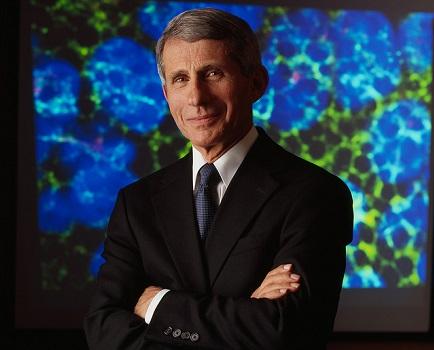
Dr. Anthony Fauci
The U.S. Marshals Service has deputized nine officers from the Department of Health and Human Services as bodyguards for Fauci.
So what has this man—who has dedicated his entire adult life to protecting Americans against infectious diseases—done to require such protection?
He has merely spoken the hard medical truth about Coronavirus. In doing so, he has at times contradicted former President Donald Trump’s ignorance- and lie-riddled statements.
For example: Trump has loudly touted hydroxychloroquine, used for treating malaria, as a miracle cure for the Coronavirus.
Yet Fauci has dared to point out there have been no scientific trials of the drug for its effectiveness against Coronavirus. Moreover, given the medical condition of some patients, it could even prove fatal.
Statements like this have infuriated Trump’s base of—at best—half-educated fans.
During the 2016 Presidential race, after winning the Nevada primary, Trump infamously celebrated his victory: “We won the evangelicals. We won with young. We won with old. We won with highly educated. We won with poorly educated. I love the poorly educated.”
A February 24, 2016 USA Today story covering this event carried the headline: “Donald Trump loves the poorly educated—and they love him.”
And at the bottom of the story came this warning: “Some—journalists, mostly—noted that Trump’s proud embrace of poorly less educated voters and the resulting shock may only cause those less educated voters to embrace Trump all the more.”
And they do.
There has been a growing divide between Democrats and Republicans on the merits of higher education.
An August 20, 2019 story in Forbes noted that a Pew Research survey, conducted in July, had found that “67% of Democrats and Democrat-leaning respondents say higher education is having a positive effect on the country compared to only 33% of Republicans and Republican-leaning participants.”
Furthermore, “the percentage of Republicans attributing a positive effect to higher education has steadily eroded from 58% (2010), 53% (2012), 54% (2015), 43% (2016), and 36% (2017). Among Republicans, 59% now say higher education has a negative effect on the U.S., compared to just 18% of Democrats.”
This disdain for education in general—and science in particular—has led to the following: In March, 2020, an NBC News poll found that only 30% of Republicans said that they would actually listen to the advice of doctors to stay away from large, crowded areas to avoid Coronavirus.
These are the same people who get their version of reality from Right-wing sources like Fox News Network and Rush Limbaugh.
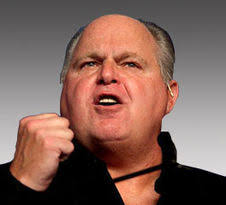
Rush Limbaugh
On his March 27, 2020 show, Limbaugh dismissed Coronavirus as “the common cold,” then added: “We didn’t elect a president to defer to a bunch of health experts that we don’t know.
“And how do we know they’re even health experts? Well, they wear white lab coats, and they’ve been in the job for a while, and they’re at the CDC and they’re at the NIH, and they’re up, well—yeah, they’ve been there, and they are there.
“But has there been any job assessment for them? They’re just assumed to be the best because they’re in government. But, these are all kinds of things that I’ve been questioning.”
This is the same Rush Limbaugh who said, in 2015: “Firsthand smoke takes 50 years to kill people, if it does. Not everybody that smokes gets cancer. Now, it’s true that everybody who smokes dies, but so does everyone who eats carrots.”
Five years later, in February, 2020, Limbaugh—a longtime and heavy cigar smoker—announced that he had Stage Four lung cancer. He died on February 17, 2021.
And then there is former President Trump—and his chorus of cheerleaders.
On February 25, 2020, Kayleigh McEnany, his fourth press secretary in three years, said on Fox Business: “This President will always put America first. He will always protect American citizens. We will not see diseases like the Coronavirus come here.”
During February and March, she repeatedly downplayed the threat of the disease, even as it spread across the United States.
These, then, are the types of “reliable sources” that millions of Right-wingers take as gospel—while dismissing the warnings of the medical profession as erroneous or, worse, products of a liberal conspiracy.
And by daring to contradict such blatant ignorance—if not outright lies—Dr. Anthony Fauci has made himself a target for Right-wing hatred and death threats.
Their hatred for Fauci proves once again the correctness of Ernest Hemingway’s definition of Fascism: “Fascism is a lie told by bullies.”
By the time Trump left office—on January 20, 2021—more than 400,000 Americans had died of COVID-19.
2016 PRESIDENTIAL CAMPAIGN, ABC NEWS, ALTERNET, AMERICABLOG, AMERICAN UNIVERSITY, AP, APOLLO MOON LANDING, BABY BOOMER RESISTANCE, BARACK OBAMA, BARBARA TUCHMAN, BBC, BLOOMBERG NEWS, BUZZFEED, CBS NEWS, CNN, COLD WAR, CROOKS AND LIARS, CUBAN MISSILE CRISIS, DAILY KOS, DAILY KOZ, DONALD TRUMP, DREAMS FROM MY FATHER, FIVETHIRTYEIGHT, HARPER’S MAGAZINE, HERMAN CAIN, HUFFINGTON POST, JOHN F. KENNEDY, KELLEYANNE CONWAY, LIBYA, LILTERACY, LYNDON B. JOHNSON, MEDIA MATTERS, MOTHER JONES, MOVEON, MSNBC, NBC NEWS, NEW REPUBLIC, NEWSDAY, NEWSWEEK, NPR, NUCLEAR TEST BAN TREATY, PBS NEWSHOUR, POLITICO, POLITICUSUSA, RATIONALITY, RAW STORY, REUTERS, RICHARD M. NIXON, RICK PERRY, SALON, SEAN SPICER, SEATTLE TIMES, SLATE, SUPER COMMITTEE OF CONGRESS, SUPREME COURT, TALKING POINTS MEMO, THE ATLANTIC, THE AUDACITY OF HOPE, THE CHICAGO SUN-TIMES, THE CHICAGO TRIBUNE, THE DAILY BEAST, THE DAILY BLOG, THE GUARDIAN, THE GUNS OF AUGUST, THE HILL, THE HUFFINGTON POST, THE INTERCEPT, THE LOS ANGELES TIMES, THE NATION, THE NEW REPUBLIC, THE NEW YORK TIMES, THE NEW YORKER, THE VILLAGE VOICE, THE WASHINGTON POST, THINKPROGRESS, TIME, TRUTHDIG, TRUTHOUT, TWITTER, U.S. NEWS & WORLD REPORT, UPI, USA TODAY, VIETNAM WAR, WORLD WAR 1
In Bureaucracy, History, Military, Politics, Social commentary on November 24, 2022 at 12:10 am
Fifty-nine years ago, on November 22, 1963, two bullets slammed into the neck and head of President John Fitzgerald Kennedy.
It has been said that JFK left his country with three great legacies:
- The Nuclear Test Ban Treaty;
- The Apollo moon landing; and
- The Vietnam war.
Of these, the following can be said with certainty:
- The Test Ban Treaty has prevented atmospheric testing—and poisoning—by almost all the world’s nuclear powers.
- After reaching the moon—in 1969—Americans quickly lost interest in space and have today largely abandoned plans for manned exploration. For America, as for JFK, beating the Russians to the moon was the end-goal.
- Under Presidents Lyndon Johnson and Richard Nixon, 58,000 Americans died in Vietnam; 153,303 were wounded; and billions of dollars were squandered in a hopeless effort to intervene in what was essentially a Vietnamese civil war. From 1965 to 1972, the war angrily divided Americas as had no event since the Civil War.
But there was a fourth legacy—and perhaps the most important of all: The belief that mankind could overcome its greatest challenges through rationality and perseverance.
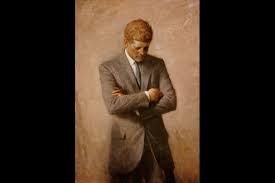
White House painting of JFK
At American University on June 10, 1963, Kennedy called upon his fellow Americans to re-examine the events and attitudes that had led to the Cold War. And he declared that the search for peace was by no means absurd:
“Our problems are man-made; therefore, they can be solved by man. And man can be as big as he wants. No problem of human destiny is beyond human beings.
“Man’s reason and spirit have often solved the seemingly unsolvable, and we believe they can do it again.”
Today, politicians from both parties cannot agree on solutions to even the most vital national problems.
On November 21, 2011, the 12 members of the “Super-Committee” of Congress, tasked with finding $1.2 trillion in cuts in government spending, threw up their hands in defeat.
President Kennedy insisted on being well-informed. He speed-read several newspapers every morning and nourished personal relationships with the press-–and not for altruistic reasons. These journalistic contacts gave Kennedy additional sources of information and perspectives on national and international issues.
During the 2012 Presidential campaign, Republican Presidential candidates celebrated their ignorance of both.
Former Godfather’s Pizza CEO Herman Cain famously said, “We need a leader, not a reader.” Thus he excused his ignorance for why President Barack Obama had intervened in Libya.
Texas Governor Rick Perry (and later Secretary of Energy) showed similar pride in not knowing there are nine judges on the United States Supreme Court:
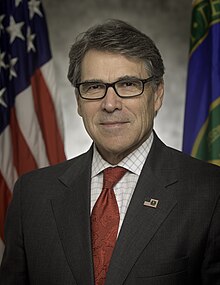
Rick Perry
“Well, obviously, I know there are nine Supreme Court judges. I don’t know how eight came out my mouth. But the, uh, the fact is, I can tell you—I don’t have memorized all of those Supreme Court judges. And, uh, ah—
“Here’s what I do know. That when I put an individual on the Supreme Court, just like I done in Texas, ah, we got nine Supreme Court justices in Texas, ah, they will be strict constructionists….”
In short, it’s the media’s fault if they ask you a question and your answer reveals your own ignorance, stupidity or criminality.
Donald Trump—as a Presidential candidate—went even further. After winning the Nevada caucuses in February, 2016 he said: “We won the evangelicals, we won with young, we won with old, we won with highly educated, we won with poorly educated! I love the poorly educated.”
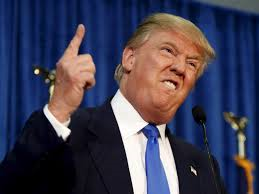
Donald Trump
His senior adviser, Kelleyanne Conway, set the tone of his administration’s approach to the truth right at the outset. Asked why then-White House press secretary Sean Spicer had lied about the size of the crowd at Trump’s inauguration, Conway replied:
“You’re saying it’s a falsehood. And they’re giving—Sean Spicer, our press secretary—gave alternative facts.”
“Alternative facts” aren’t facts—they are falsehoods.
During the height of the Cuban Missile Crisis, Kennedy spoke with aides about a book he had just finished: Barbara Tuchman’s The Guns of August, about the events leading to World War 1.
He said that the book’s most important revelation was how European leaders had blindly rushed into war, without thought to the possible consequences. Kennedy told his aides he did not intend to make the same mistake–that, having read his history, he was determined to learn from it.
Republicans attacked President Obama for his Harvard education and articulate use of language. Among their taunts: “Hitler also gave good speeches.”
And they resented his having earned most of his income as a writer of two books: Dreams From My Father and The Audacity of Hope. As if being a writer is somehow subversive.
When knowledge and literacy are attacked as “highfalutin’” arrogance, and ignorance and incoherence are embraced as sincerity, national decline lies just around the corner.
During the 2016 Presidential campaign, Donald Trump infamously chortled after winning the Nevada Republican primary: “We won with poorly educated. I love the poorly educated.”
And, that November, “the poorly educated” elected him President.
In retrospect, the funeral for President Kennedy marked the death of more than a rational and optimistic human being.
It marked the death of Americans’ pride in choosing reasoning and educated citizens for their leaders.

The Eternal Flame at the grave of President John F. Kennedy
ABC NEWS, ABORTION, AFFORDABLE CARE ACT, AFFORDABLE HOUSING, ALTERNET, AMERICABLOG, AP, BABY BOOMER RESISTANCE, BBC, BLACKS, BLOOMBERG NEWS, BUZZFEED, CBS NEWS, CHINA, CNN, COMMUNISM, CORONAVIRUS, CRIME, CROOKS AND LIARS, DAILY KOZ, DENNIS HASTERT, DONALD TRUMP, DWIGHT D. EISENHOWER, ECONOMY, ELECTION-RIGGING, FACEBOOK, FIVETHIRTYEIGHT, FLORIDA, FOOD STAMPS, FRANCIS BELLAMY, GAYS, GLOBALISM, HARPER’S MAGAZINE, HISPANICS, HUFFINGTON POST, illegal immigration, IMPORTS, JANUARY 6 COUP ATTEMPT, JOSH DUGGAR, KIM JONG-UN, LESBIANS, MEDIA MATTERS, MEDICARE, MEXICO, MIKE PENCE, MOTHER JONES, MOVEON, MSNBC, NBC NEWS, NEW REPUBLIC, NEWSDAY, NEWSWEEK, NORTH KOREA, NPR, NUCLEAR FAMILY, PBS NEWSHOUR, PLEDGE OF ALLEGIANCE, POLITICO, POLITICUSUSA, RAW STORY, RELIGIOUS, RELIGIOUS FREEDOM RESTORATION ACT, REUTERS, RICHARD M. NIXON, RICK SCOTT, RUSSIA, SALON, SEATTLE TIMES, SLATE, SOCIAL SECURITY, SOCIALISM, TALKING POINTS MEMO, THE ATLANTIC, THE CHICAGO SUN-TIMES, THE CHICAGO TRIBUNE, THE DAILY BEAST, THE DAILY BLOG, THE GUARDIAN, THE HILL, THE HUFFINGTON POST, THE INTERCEPT, THE LOS ANGELES TIMES, THE NATION, THE NEW REPUBLIC, THE NEW YORK TIMES, THE NEW YORKER, THE VILLAGE VOICE, THE WASHINGTON POST, THINKPROGRESS, TIME, TRADEMARKS, TRANSGENDERS, TRUTHDIG, TRUTHOUT, TWITTER, TWO POLITICAL JUNKIES, U.S. NEWS & WORLD REPORT, UKRAINE, UPI, USA TODAY, VLADIMIR PUTIN, WONKETTE, XI JINPING
In Bureaucracy, Business, History, Law, Law Enforcement, Medical, Military, Politics, Social commentary on November 23, 2022 at 12:25 am
Next to the American flag, Republicans have loudly pledged their loyalty to the nuclear family.
And Florida United States Senator Rick Scott, in his “11 Point Plan to Rescue America,” is no exception.
Point 8: We will protect, defend, and promote the American Family at all costs. The nuclear family is crucial to civilization, it is God’s design for humanity, and it must be protected and celebrated. To say otherwise is to deny science.
Scott he claims that the nuclear family is “God’s design for humanity”—and that to disagree is to “deny science.”
Here are the facts:
First of all, there is no scientific proof for the existence of God. It is simply a belief.
Second, the nuclear family—a married couple and their dependent children under the age of 18—is a fast-disappearing species.

Nuclear family – 1955
Seattle Municipal Archives from Seattle, WA, CC BY 2.0 <https://creativecommons.org/licenses/by/2.0>, via Wikimedia Commons
There are currently just 23.1 million American homes with those ‘nuclear families,’ which is the fewest since 1959. So much for “God’s design for humanity.”
Point 9: Men are men, women are women, and unborn babies are babies.
“Men are men, women are women”: Republicans seek to frighten voters into voting for them by appealing to the fear that “Gays and transgenders are coming for your children.”
Without offering proof, they slander their opponents as “groomers”—pedophiles who befriend children and build their trust, leading to their sexual abuse.
Actually, gays don’t prey on heterosexuals but seek out others of their own sexual persuasion. The same is true for transgenders.
Meanwhile, the Republican party has had its own share of closeted pedophiles.
Among them:
- Josh (“18 Kids and Counting”) Duggar, recently sentenced to 12 years for possession of child pornography;
- Dennis Hastert, former Speaker of the House of Representatives, who sexually molested four young boys when he was their high school wrestling coach.
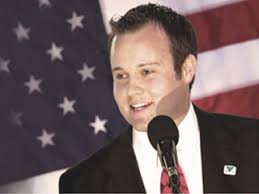
Josh Duggar
As for “Unborn babies are babies”: Those who have not yet been born are fetuses.
While Republicans have waged an almost 50-year war against legalized abortion, they have waged an equally aggressive war against Social Security, Medicare, the Affordable Care Act, food stamps, affordable housing, and aid to the blind and disabled.
In short: They oppose all those programs intended to help those who have been born.
Point 10: Americans will be free to welcome God into all aspects of our lives, and we will stop all government efforts to deny our religious freedom and freedom of speech.
The Democratic party is not trying to “deny our religious freedom and freedom of speech.”
On the contrary: It’s Republicans who have crafted laws to turn claimed religious beliefs into a weapon of discrimination.
A classic example: On March 26, 2015, Indiana’s then-Governor Mike Pence signed into law the Religious Freedom Restoration Act.
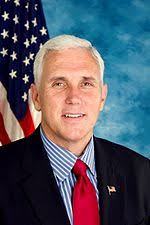
Mike Pence
This allows any individual or corporation to cite its religious beliefs as a defense when sued by a private party.
Thus, a bakery that doesn’t want to make a cake to be used at a gay wedding or a restaurant that doesn’t want to serve lesbian patrons can legally refuse to do so.
Republicans have introduced similar “right-to-discriminate” legislation in other states as well—such as Kansas, Arizona and South Dakota. So far, all have failed to win passage.
Republicans claim they want to “get the government off the backs of the people.” But their fixation on regulating the sexual lives of Americans ensures government intrusions of the most intimate kind.
Point 11: We are Americans, not globalists. America will be dependent on NO other country. We will conduct no trade that takes away jobs or displaces American workers.
This would be laughable except for the bitter truth: Countless numbers of Americans have lost their jobs because their companies deserted the United States for Third World nations like China, Vietnam or Mexico.
There are three reasons for this:
- To pay their employees far less than they would be paid in the United States;
- To avoid American health and safety restrictions on how employees can be treated; and
- To avoid enforcement of quality control regulations which ensure that products are safe and effective for use.
During Donald Trump’s Presidency, the Chinese government granted 18 trademarks to companies linked to him and his daughter, Ivanka, within two months.
In addition, Trump won approval to register three dozen trademarks in China covering everything from bars and hotels to child-care and massage services, raising further concerns over potential conflicts of interest.
From 2005 to 2017, Trump filed for 126 trademarks in China for his business empire.
As for Scott’s claim, “America will be dependent on NO other country”:
Like it or not, the United States can no longer separate itself from the rest of the world.
The ongoing war between Russia and Ukraine has badly affected American imports of grain products from Ukraine. And America’s continued reliance on fossil fuels forces it to depend on despotic Middle East oil kingdoms.
Finally, the Coronavirus pandemic has led to crucial shortages in goods America has long imported: Medicines, electronics, auto parts, solar panels, toys, air conditioners.
Thus, this provision—like the rest of Scott’s plan—runs head-on into the ugliness of sheer reality.
ABC NEWS, ABORTION, AFFORDABLE CARE ACT, AFFORDABLE HOUSING, ALTERNET, AMERICABLOG, AP, BABY BOOMER RESISTANCE, BBC, BLACKS, BLOOMBERG NEWS, BUZZFEED, CBS NEWS, CHINA, CNN, COMMUNISM, CORONAVIRUS, CRIME, CROOKS AND LIARS, DAILY KOZ, DENNIS HASTERT, DONALD TRUMP, DWIGHT D. EISENHOWER, ECONOMY, ELECTION-RIGGING, FACEBOOK, FIVETHIRTYEIGHT, FLORIDA, FOOD STAMPS, FRANCIS BELLAMY, GAYS, GLOBALISM, HARPER’S MAGAZINE, HISPANICS, HUFFINGTON POST, illegal immigration, IMPORTS, JANUARY 6 COUP ATTEMPT, JOSH DUGGAR, KIM JONG-UN, LESBIANS, MEDIA MATTERS, MEDICARE, MEXICO, MIKE PENCE, MOTHER JONES, MOVEON, MSNBC, NBC NEWS, NEW REPUBLIC, NEWSDAY, NEWSWEEK, NORTH KOREA, NPR, NUCLEAR FAMILY, PBS NEWSHOUR, PLEDGE OF ALLEGIANCE, POLITICO, POLITICUSUSA, RAW STORY, RELIGIOUS, RELIGIOUS FREEDOM RESTORATION ACT, REUTERS, RICHARD M. NIXON, RICK SCOTT, RUSSIA, SALON, SEATTLE TIMES, SLATE, SOCIAL SECURITY, SOCIALISM, TALKING POINTS MEMO, THE ATLANTIC, THE CHICAGO SUN-TIMES, THE CHICAGO TRIBUNE, THE DAILY BEAST, THE DAILY BLOG, THE GUARDIAN, THE HILL, THE HUFFINGTON POST, THE INTERCEPT, THE LOS ANGELES TIMES, THE NATION, THE NEW REPUBLIC, THE NEW YORK TIMES, THE NEW YORKER, THE VILLAGE VOICE, THE WASHINGTON POST, THINKPROGRESS, TIME, TRADEMARKS, TRANSGENDERS, TRUTHDIG, TRUTHOUT, TWITTER, TWO POLITICAL JUNKIES, U.S. NEWS & WORLD REPORT, UKRAINE, UPI, USA TODAY, VLADIMIR PUTIN, WONKETTE, XI JINPING
In Bureaucracy, Business, History, Law, Law Enforcement, Medical, Military, Politics, Social commentary on November 22, 2022 at 12:16 am
Florida’s Republican United States Senator Rick Scott’s has an “11 Point Plan to Rescue America”—and catapult himself into the White House.
Point 4: We will secure our border, finish building the wall, and name it after President Donald Trump.
The United States is surrounded by water on three sides—East, West and South. So anyone with a boat can smuggle illegal aliens into the country at any point along its 12,383 miles of coastline.
For those who get seasick, there’s a land route available—not across burning Mexican deserts but under them.
Over the years, officials have found at least 200 tunnels along the 2,000-mile-long U.S.-Mexico border, mostly in Arizona and California. They range from rudimentary crawlspaces to “super tunnels” that cost more than a million dollars and are equipped with elevators, ventilation shafts electric lights, and disguised exits and entrances.

Drug tunnel
U.S. Customs and Border Protection, Public domain, via Wikimedia Commons
Many of those who want to infiltrate the United States can simply fly in.
Wealthy and pregnant Chinese women often fly to the United States to “anchor” themselves via a baby born on American soil. The same is true for many Russian women.
And the Number One cause of illegal immigration: Foreigners’ overstaying their visas. In 2017, more than 600,000 foreigners who legally entered the United States overstayed their visas and remained in the country by the end of the year, according to the Department of Homeland Security.
So a wall is not going to solve America’s problem with illegal immigration.
Point 5: We will grow America’s economy, starve Washington’s economy, and stop Socialism.
When Republicans promise to “grow America’s economy,” they mean: Remove all government controls from business.
In real-world terms, this means corporations will be legally allowed to:
- Ignore existing laws protecting employees from unsafe working conditions;
- Ignore existing laws protecting the environment;
- Produce unsafe goods and fraudulent services;
- Pay their employees the lowest acceptable wages, in return for the “privilege” of working at these companies;
- Discriminate on the basis of race, sex, religion or sexual orientation; and/or
- Pay little or no business taxes, at the expense of communities who are required to make up for lost tax revenues.
Anyone who doubts this need only look at the living standards in “Red”, Republican-governed states such as Florida and Texas.
“Starve Washington’s economy” means: Eliminating programs that Republicans don’t like—starting with Social Security, Medicare and the Affordable Care Act. Anything that benefits ordinary Americans and not multi-billion dollar corporations will be slated for scrapping.
“Stopping socialism” is ludicrous: During his Presidency, Donald Trump’s best friends were Communist dictators: Vladimir Putin (Russia), Kim Jong-Un (North Korea) and Xi Jinping (China).
Trump actually bragged that, after an exchange of letters between himself and the murderous Kim Jong-Un, “We fell in love.”

Kim Jong-Un and Donald Trump
Had a Democratic President made a similar statement, Republicans would have screamed “Treason!” In Trump’s case, they said nothing.
Point 6: We will eliminate all federal programs that can be done locally, and enact term limits for federal bureaucrats and Congress.
As for “enacting term limits for federal bureaucrats and Congress”: This is the party that tried to illegally and treasonously overturn the results of a legitimate Presidential election so its candidate—Donald Trump—could remain in office as “President-for-Life” after losing the vote.
Point 7: We will protect the integrity of American Democracy and stop left-wing efforts to rig elections.
Scott’s platform is worth quoting in full on this issue:
Today’s Democrat Party is trying to rig elections and pack the courts because they have given up on Democracy. They don’t believe they can win based on their ideas, so they want to game the system and legalize voter fraud to stay in power. In true Orwellian fashion, Democrats refer to their election rigging plans as “voting rights”. We won’t allow the radical left to destroy our democracy by institutionalizing dishonesty and fraud.
Immediately after the verdict of the November 3, 2020 Presidential election was announced, President Donald Trump ordered his attorneys to file lawsuits overturning the results.
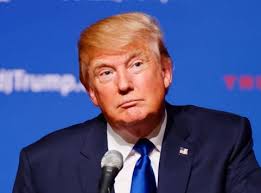
Donald Trump
- Throughout November and December, 2020, cases were filed in Wisconsin, Arizona, Nevada, Michigan, Minnesota and Georgia challenging the election results. None were supported by evidence of fraud—as even Trump’s lawyers admitted when questioned by judges.
- On November 13, nine cases meant to attack President-Elect Joe Biden’s win in key states were denied or dropped. A law firm challenging the vote count in Pennsylvania withdrew from the effort.
- In Michigan, Trump’s attorneys dropped their federal suit to block the certification of Detroit-area ballots.
- By November 21, more than 30 cases were withdrawn by Trump’s attorneys or dismissed by Federal judges—some of them appointed by Trump himself.
Ultimately, from November 3 to December 14, 2020, Trump and his allies lost 59 times in court, either withdrawing cases or having them dismissed by Federal and state judges.
This is the party that, since November, 2020, has sold a lie to millions of Right-wing Americans that the election was “stolen” from Donald trump.
It is Republicans—not Democrats—who have stopped trying to win elections based on their ideas and are now trying to win them by massive voter suppression. It’s hardly a party to be entrusted with election security.
2022 MIDTERM ELECTIONS, ABC NEWS, ABORTION, AFFORDABLE CARE ACT, AFFORDABLE HOUSING, ALTERNET, AMERICABLOG, AP, BABY BOOMER RESISTANCE, BBC, BLACKS, BLOOMBERG NEWS, BUZZFEED, CBS NEWS, CHINA, CNN, COMMUNISM, CORONAVIRUS, CRIME, CROOKS AND LIARS, DAILY KOZ, DENNIS HASTERT, DONALD TRUMP, DWIGHT D. EISENHOWER, ECONOMY, ELECTION DENIERS, ELECTION-RIGGING, FACEBOOK, FIVETHIRTYEIGHT, FLORIDA, FOOD STAMPS, FRANCIS BELLAMY, GAYS, GLOBALISM, HARPER’S MAGAZINE, HISPANICS, HUFFINGTON POST, illegal immigration, IMPORTS, JANUARY 6 COUP ATTEMPT, JOE BIDEN, JOSH DUGGAR, KIM JONG-UN, LESBIANS, MEDIA MATTERS, MEDICARE, MEXICO, MIKE PENCE, MOTHER JONES, MOVEON, MSNBC, NBC NEWS, NEW REPUBLIC, NEWSDAY, NEWSWEEK, NORTH KOREA, NPR, NUCLEAR FAMILY, PBS NEWSHOUR, PLEDGE OF ALLEGIANCE, POLITICO, POLITICUSUSA, RAW STORY, RELIGIOUS, RELIGIOUS FREEDOM RESTORATION ACT, REUTERS, RICHARD M. NIXON, RICK SCOTT, RUSSIA, SALON, SEATTLE TIMES, SLATE, SOCIAL SECURITY, SOCIALISM, TALKING POINTS MEMO, THE ATLANTIC, THE CHICAGO SUN-TIMES, THE CHICAGO TRIBUNE, THE DAILY BEAST, THE DAILY BLOG, THE GUARDIAN, THE HILL, THE HUFFINGTON POST, THE INTERCEPT, THE LOS ANGELES TIMES, THE NATION, THE NEW REPUBLIC, THE NEW YORK TIMES, THE NEW YORKER, THE VILLAGE VOICE, THE WASHINGTON POST, THINKPROGRESS, TIME, TRADEMARKS, TRANSGENDERS, TRUTHDIG, TRUTHOUT, TWITTER, TWO POLITICAL JUNKIES, U.S. NEWS & WORLD REPORT, UKRAINE, UPI, USA TODAY, VLADIMIR PUTIN, WONKETTE, XI JINPING
In Bureaucracy, Business, History, Law, Law Enforcement, Medical, Military, Politics, Social commentary on November 21, 2022 at 12:14 am
For decades, many dissatisfied voters have argued there’s no real difference between the Democratic and Republican parties.
So Rick Scott, former governor of Florida and now a United States Senator from that state, has decided to prove there is a difference between him and every other Presidential candidate.
With the next Presidential election approaching in less than two years, Scott is positioning himself to be the next Republican nominee for that office.
That’s why Scott has crafted “An 11 Point Plan to Rescue America.”
It merits close inspection—because if Scott or someone else with his agenda becomes President of the United States with a united Republican House and Senate behind him, this country will become entirely different from the one that exists today.
It was to prevent that from happening that millions of Democrats—joined by independents and moderate Republicans—turned out in unprecedented numbers on November 8.
For months, Republicans had been predicting that a “Red wave” would sweep Democrats from local, state and Federal offices across the country. Their strategy centered on propagating “The Big Lie” that President Donald Trump was robbed of victory in 2020 by massive voter fraud.
This was of course the authentic voice of former President Trump. Despite four years of lies, crime and treason, he remains in command of the Republican party.
And how did that strategy work out? No candidate who denied the legitimacy of the 2020 election won a 2022 race to run future elections in a swing state.
These include:
- Eight nominees for state elections chief;
- Thirteen nominees for governor;
- Eight nominees for United States Senator.

Rick Scott
Republicans have been stunned by their unexpected losses. The party out of power usually does well in midterm elections. Add to this the fact that President Joe Biden was widely seen as unpopular even among Democrats—and therefore vulnerable.
Nevertheless, Scott remains convinced that he has crafted the winning formula for Republicans—and for his election as President in 2024.
Its provisions follow.
Point 1: Our kids will say the pledge of allegiance, salute the Flag, learn that America is a great country, and choose the school that best fits them.
Like so many Right-wingers, Scott is apparently unaware that the Pledge of Allegiance was written in August, 1892, by the socialist minister Francis Bellamy. He hoped that the pledge would be used by citizens in any country, not just the United States.

Francis Bellamy
In its original form it read:
“I pledge allegiance to my Flag and the Republic for which it stands, one nation, indivisible, with liberty and justice for all.”
In 1923, the words, “the Flag of the United States of America” were added.
In 1954, President Dwight D. Eisenhower encouraged Congress to add the words “under God,” to distinguish Americans from “Godless” Communists.
“Learn that America is a great country” conjures up images of the propaganda force-fed to students of the former Soviet Union—and now in Russia. Just as Russians are taught that their military has never fought an aggressive war, so, too, do Republicans want to erase the subject of slavery and its long-term effects on society from American classrooms
Point 2: Government will never again ask American citizens to disclose their race, ethnicity, or skin color on any government forms.
Republicans have made race—as a source of friction between voters—a crucial part of their electoral campaigns. As far back as 1968, Richard Nixon campaigned on a “Southern strategy”—of stoking white fears of blacks.
It was this that won Nixon the Presidency in 1968 and 1972 and the White House for George H.W. Bush in 1988.
As blacks have gained in population and political clout, they have been succeeded by Hispanics as the Great Enemy for Republicans.
The top priority for Donald Trump—both as a Presidential candidate and President—was building a wall along the U.S.-Mexico border. That this would not have stopped illegal immigration meant nothing to him—or his millions of Right-wing followers.
Without a way to track the growth rates of nonwhites, Republicans won’t know how to target their self-declared enemies.
Point 3: The soft-on-crime days of coddling criminal behavior will end. We will re-fund and respect the police because they, not the criminals, are the good guys.
On January 6, 2021, “law and order” President Donald Trump incited a mob to attack the United States Capitol Building. Inside, members of Congress were meeting to count and certify Electoral College votes for the 2020 Presidential election.
Trump had clearly lost that election in November, yet for the previous two months he had repeatedly and falsely claimed he was the victim of a “rigged” election. His followers, believing that lie, intended to overturn the results of a legitimate election.
After more than three hours, police—using riot gear, shields and batons—retook control of the Capitol. More than 150 officers were injured in the attack by “law and order” Republicans.

January 6, 2021 coup attempt
TapTheForwardAssist, CC BY-SA 4.0 <https://creativecommons.org/licenses/by-sa/4.0>, via Wikimedia Commons
Even after the failed coup, 147 House and Senate Republicans voted to overturn the election.
Not the sort of behavior calculated to instill respect for the rule of law.
 Bureaucracybuster's Blog
2003 IRAQ WAR, ABC NEWS, ADOLF HITLER, ALTERNET, AMERICABLOG, AP, BABY BOOMER RESISTANCE, BBC, BLOOMBERG NEWS, BUZZFEED, CBS NEWS, CNN, CRIMEAN PENINSULA, CROOKS AND LIARS, DAILY KOS, DONALD TRUMP, ECONOMIC SANCTIONS, EDOUARD DELADIER, FACEBOOK, FIVETHIRTYEIGHT, FRANCE, GEORGE W. BUSH, HARPER’S MAGAZINE, HUFFINGTON POST, IRAN, JOACHIM VON RIBBENTROP, KIEV, MEDIA MATTERS, MOSKOVA (SHIP), MOTHER JONES, MOVEON, MSNBC, MUNICH CONFERENCE, NATO, NBC NEWS, NEVILLE CHAMBERLAIN, NEW REPUBLIC, NEWSDAY, NEWSWEEK, NPR, PBS NEWSHOUR, POLAND, POLITICO, POLITICUSUSA, RAW STORY, REPUBLIC OF GEORGIA, REUTERS, RUBLES, RUSSIA, SADDAM HUSSEIN, SALON, SEATTLE TIMES, SECOND CHECHEN WAR, SLATE, SOVIET UNION, TALKING POINTS MEMO, THE ATLANTIC, THE CHICAGO SUN-TIMES, THE CHICAGO TRIBUNE, THE DAILY BEAST, THE DAILY BLOG, THE GUARDIAN, THE HILL, THE HUFFINGTON POST, THE INTERCEPT, THE LOS ANGELES TIMES, THE NATION, THE NEW REPUBLIC, THE NEW YORK TIMES, THE NEW YORKER, THE VILLAGE VOICE, THE WASHINGTON POST, THINKPROGRESS, TIME, TRUTHDIG, TRUTHOUT, TWITTER, TWO POLITICAL JUNKIES, U.S. NEWS & WORLD REPORT, UKRAINE, UNITED STATES, UPI, USA TODAY, VLADIMIR PUTIN, WONKETTE
WHEN TYRANTS’ PLANS FAIL
In Bureaucracy, Business, History, Military, Politics, Social commentary on December 2, 2022 at 12:14 amOn February 24, Russia launched an unprovoked attack on Ukraine with missiles and artillery, striking major Ukrainian cities, including its capitol, Kiev.
Ukraine vs. Russia
Russian President Vladimir Putin had every reason to believe that the conquest of Ukraine would be a cakewalk. Intent on restoring the borders of the former Soviet Union, he had swept from one successful war to the next:
Meanwhile, the North Atlantic Treaty Organization (NATO) launched only verbal condemnations.
The reasons:
NATO emblem
When Russia invaded, the United States—now led by anti-Putin President Joe Biden—and its Western European allies retaliated with unprecedented economic sanctions.
Among the resulting casualties:
On the battlefield, the war bogged down for Russia:
In short: The war is not going the way Putin assumed it would.
Vladimir Putin
Kremlin.ru, CC BY 4.0 <https://creativecommons.org/licenses/by/4.0>, via Wikimedia Commons
This is not the first time a dictator has guessed wrong about the results of his actions.
On September 1, 1939, German Fuhrer Adolf Hitler ordered his armies to invade Poland.
Almost a year earlier—on September 29, 1938—he had bullied British Prime Minister Neville Chamberlain and French Prime Minister Edouard Daladier into surrendering the northern, southwest and western regions of Czechoslovakia, inhabited mostly by ethnic Germans.
The Munich Agreement—which Chamberlain boasted meant “peace in our time—only whetted Hitler’s appetite for greater conquests.
It also led him to hold France and England in contempt: “Our enemies are little worms,” he said in a conference with his generals. “I saw them at Munich.”
He believed he could conquer Poland, and Chamberlain and Daladier would meekly ratify his latest acquisition.
Adolf Hitler
So he was stunned when, on September 3, 1939, Britain and France—however reluctantly—honored their pledged word to Poland and declared war on Germany.
“What now?” Hitler furiously asked his Foreign Minister, Joachim von Ribbentrop.
Ribbentrop had no answer.
Hitler knew that Germany didn’t have the resources for a long war. He had intended to fight a series of quick, small wars, gobbling up one country at a time. Now he found himself locked in an endless war with heavyweights France and England.
In time, he would fatally add the Soviet Union and the United States to his list of enemies.
And he stayed locked into that war until he committed suicide on April 30, 1945, and the Third Reich officially collapsed on May 7.
Fast forward to March 21, 2003 and President George W. Bush’s launching of an attack on Saddam Hussein’s Iraq.
George W. Bush
The war got off to an impressive start with 1,700 air sorties and 504 Cruise missiles.
Within roughly two weeks, American ground forces entered Baghdad, and after four days of intense fighting, the Iraqi regime fell. By April 14, the Pentagon reported that major military operations had ended.
On May 1, 2003, Bush declared that the war was won.
But then American forces became embroiled in an endless, nationwide guerrilla war. Eighteen years later, the United States was still fighting in Iraq.
The war that Bush had deliberately provoked:
Bush came to a better end than Adolf Hitler: He retired from office with a lavish pension and full Secret Service protection.
And Putin?
His attack on Ukraine was reportedly motivated, in part, to ensure that Ukrainians did not join NATO.
But his invasion has frightened Sweden and Finland into joining NATO.
And NATO is now fully revitalized to meet future Russian threats.
Thus can the worst intentions of hubristic dictators come undone.
Share this: