Posts Tagged ‘TWO POLITICAL JUNKIES’
ABC NEWS, ADOLF HITLER, ALTERNET, AMERICABLOG, AP, ASSASSINATION, BABY BOOMER RESISTANCE, BBC, BLOOMBERG, BUZZFEED, CBS NEWS, CNN, CONSPIRACIES, CROOKS AND LIARS, DAILY KOS, DAY OF THE JACKAL, DONALD TRUMP, FACEBOOK, FIVETHIRTYEIGHT, FREDERICK FORSYTHE, GAIUS CASSIUS, HARPER’S MAGAZINE, HUFFINGTON POST, JULIUS CAESAR, LINCOLN MEMORIAL, MAR-A-LAGO, MARCUS BRUTUS, MARK ANTHONY, MEDIA MATTERS, MOTHER JONES, MOVEON, MSNBC, NBC NEWS, NEW REPUBLIC, NEWSDAY, NEWSWEEK, NICCOLO MACHIAVELLI, NPR, PBS NEWSHOUR, PLOTS, POLITICO, POLITICUSUSA, RAW STORY, REUTERS, RICHARD M. NIXON, SALON, SEATTLE TIMES, Secret Service, SLATE, TALKING POINTS MEMO, THE ATLANTIC, THE CHICAGO SUN-TIMES, THE CHICAGO TRIBUNE, THE DAILY BEAST, THE DAILY BLOG, THE DISCOURSES, THE GUARDIAN, THE HILL, THE HUFFINGTON POST, THE INTERCEPT, THE LOS ANGELES TIMES, THE NATION, THE NEW REPUBLIC, THE NEW YORK TIMES, THE NEW YORKER, THE VILLAGE VOICE, THE WALL STREET JOURNAL, THE WASHINGTON POST, THINKPROGRESS, TIME, TRUTHDIG, TRUTHOUT, TWO POLITICAL JUNKIES, U.S. NEWS & WORLD REPORT, UPI, USA TODAY, VIETNAM WAR, WHITE HOUSE STAFFER, X
In Bureaucracy, History, Law Enforcement, Military, Politics, Social commentary on October 10, 2018 at 12:01 am
In the 1973 movie, The Day of the Jackal, a methodical assassin devises an ingenious plan to kill French President Charles de Gaulle.
Despite the best efforts of French security forces to entrap him, he eludes them time and again—and comes within an ace of assassinating de Gaulle.

The Day of the Jackal is fiction, based on a 1971 novel by Frederick Forsythe. In real life, most would-be political assassins lack the skills and sophistication of Forsythe’s anti-hero.
Take the case of the man who, on March 18, 2017, jumped over a bicycle rack outside the security perimeter of the White House. Within two minutes, agents of the U.S. Secret Service had tackled and arrested him.
Then, hours later, a motorist drove up to a White House checkpoint and claimed to have a bomb. Secret Service agents immediately arrested him and seized the stolen 2017 Chevrolet Impala. After a careful search, no explosives were found.
Both men will face criminal prosecution—and probably years in prison.
Even if they had been armed, President Donald J. Trump would not have faced any danger.
For the fifth time since taking office on January 20, he was in Florida, vacationing at his Mar-a-Lago resort.
That does not mean, of course, that future assassins will prove so inept.
More than 500 years ago, Niccolo Machiavelli, the father of modern political science, offered sound advice for would-be conspirators—and for rulers seeking to thwart conspiracies.
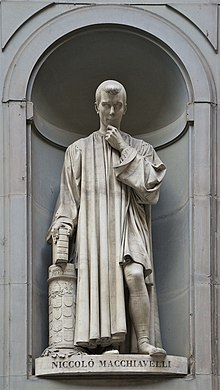
Niccolo Machiavellil
Niccolo Machiavelli: When a prince becomes universally hated, it is likely that he’s harmed some individuals—who thus seek revenge. This desire is increased by seeing the prince is widely loathed.
A prince, then, should avoid incurring such universal hatred….
By doing this, he protects himself from such vengeance-seekers. There are two reasons for this:
(1) Men rarely risk danger to avenge a wrong; and
(2) Even if they want to avenge a wrong, they know they will face almost universal condemnation because the prince is held in such high esteem.
So much for Machiavelli.
Now consider some of the tweets of “White House Staffer,” a self-proclaimed member of the Trump administration who claims 160,000 Twitter followers.
Since January 27, 2017, he has blasted a series of short, information-crammed tweets about daily life in the Executive Mansion.
[NOTE: Although I can’t confirm the legitimacy of his status or his tweets, I believe they are real. They contain too many small, intimate secrets of life in a paranoia-laced White House to not be genuine.]
March 1, 2017: Well the good times didn’t last long here. POTUS is back to flipping out on us.
March 13: POTUS [President of the United States] is thinking about suspending daily press briefings until the media “learn to be nice.” [Steve] Bannon [a top Trump adviser] is pushing for it.
March 16: Sean Hannity was asked to be Press Secretary last week. He turned it down because he didn’t want to take the pay cut. [Sean] Spicer survives.

Donald Trump
Niccolo Machiavelli: He who is threatened, and decides to avenge himself on the prince, becomes a truly dangerous man.
Anger is most likely aroused by injury to a a man’s property or honor. A prince should carefully avoid injuring either, for such a victim will always desire vengeance.
White House Staffer – February 25, 2017: The President keeps saying we’re a finely tuned machine. If that’s true why has he been fricking screaming at us all week? He’s losing it.
February 27: [Steve] Bannon is the scariest person here. He’s broken so much White House stuff by throwing it in anger. Plates, phones, chairs, etc.
February 27: It’s one thing to swear but [Steve] Bannon does it in front of the women here. C**t this, c**t that. He can’t finish a sentence without it.
Machiavelli draws a distinction between plots and conspiracies. A plot may be formed by a single individual or by many. The first isn’t a conspiracy, since that would involve at least two participants.
A single plotter avoids the danger faced by two or more conspirators: Since no one knows his intention, he can’t be betrayed by an accomplice.
Anyone may form a plot, whether he is prominent or insignificant, because everyone is at some time allowed to speak to the prince. And he can use this opportunity to satisfy his desire for revenge.
On the other hand, says Machiavelli, the dangers of assassination by a trusted intimate are slight: Few people dare to assault a prince. Of those who do, few or none escapes being killed in the attempt, or immediately afterward. As a result, only a small number of people are willing to incur such certain death.
Those who take part in a conspiracy against a ruler are “the great men of the state, or those on terms of familiar intercourse with the prince.”
These are men who have access to him. Julius Caesar, for example, was stabbed to death by members of the Roman Senate, who feared his assuming dictatorial powers.
And Adolf Hitler was conspired against by colonels and generals of the German Army. He was in fact holding a war conference when a briefcase bomb exploded, killing three officers and a stenographer, but leaving Hitler only slightly injured.
ABC NEWS, ALTERNET, AMERICABLOG, AP, ARMED ROBBERY, BABY BOOMER RESISTANCE, BBC, BLACK LIVES MATTER, BLOOMBERG NEWS, BUZZFEED, CBS NEWS, CNN, CRIME, CROOKS AND LIARS, DAILY KOZ, DAVID CAMPOS, ED LEE, FACEBOOK, FIVETHIRTYEIGHT, GANG ACTIVITY, GEORGE GASCON, GREG SUHR, HARPER’S MAGAZINE, HEROISM, HUFFINGTON POST, MARIO WOODS, MEDIA MATTERS, MOTHER JONES, MOVEON, MSNBC, NBC NEWS, NEW REPUBLIC, NEWSDAY, NEWSWEEK, NPR, OAKDALE MOB, PBS NEWSHOUR, POLITICO, POLITICUSUSA, RAW STORY, REUTERS, SALON, SAN FRANCISCO BOARD OF SUPERVISORS, SAN FRANCISCO MAYOR ED LEE, SAN FRANCISCO POLICE DEPARTMENT, SEATTLE TIMES, SLATE, TALKING POINTS MEMO, THE ATLANTIC, THE CHICAGO SUN-TIMES, THE CHICAGO TRIBUNE, THE DAILY BEAST, THE DAILY BLOG, THE GUARDIAN, THE HILL, THE HUFFINGTON POST, THE INTERCEPT, THE LOS ANGELES TIMES, THE NATION, THE NEW REPUBLIC, THE NEW YORK TIMES, THE NEW YORKER, THE VILLAGE VOICE, THE WASHINGTON POST, THINKPROGRESS, TIME, TRUTHDIG, TRUTHOUT, TWITTER, TWO POLITICAL JUNKIES, U.S. NEWS & WORLD REPORT, UPI, USA TODAY, WONKETTE
In Bureaucracy, History, Law Enforcement, Politics, Social commentary on May 29, 2018 at 12:03 am
“I am extremely disturbed by the state of the law today, and yet I am duty bound to adhere to the law. Under current law, police officers do not have to retreat, police officers don’t have to use the minimum force necessary.”
So said San Francisco District Attorney George Gascón, almost in tears, on May 24, 2018.
The reason: He could not file charges against the San Francisco Police Department (SFPD) officers who shot a drugged-up, knife-slashing assailant to death on December 2, 2015.
The dead slasher: Mario Woods, a known gang member, armed robber and car thief.
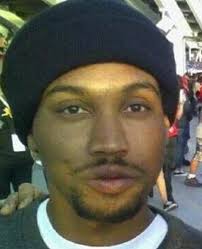
Mario Woods
At 26, Woods—born on July 22, 1989—had a well-documented history of criminality:
- He was an active member of the notorious Oakdale Mob infesting the predominantly black Bayview-Hunters Point area of San Francisco.
- His gang-related activities included armed robbery; attempted armed robbery; shooting incidents; being a felon in illegal possession of a firearm; car theft; driving a stolen car; and being involved in an automobile injury accident while fleeing from police.
- In 2008, he pleaded guilty to possession of a firearm by a felon.
- In 2009, he was one of six gang members added to the provisions of a 2007 gang injunction against the Oakdale Mob.
- Under the terms of this injunction, Oakdale Mob members are forbidden to engage in gang-related conduct within a four-block safety zone.
- Among those prohibited activities: Possessing guns or dangerous weapons; possessing illegal drugs; loitering with intent to sell drugs; intimidating witnesses or victims; using threats to recruit or retain gang members; defacing property with graffiti.
- In 2012, he was sentenced to seven years in state prison for armed robbery. (He had already spent almost three years in County Jail.) He was released in 2014.
On December 2, 2015, San Francisco police officers took a report from a 26-year-old Bayview man who had been slashed in the left shoulder.
He and a female friend had been eating in a car parked in front of an apartment building. They saw a man “walking back and forth on the sidewalk talking” to himself, according to the police report.
The man—wielding a knife—reached into the passenger’s side of the car. The passenger opened the door to push the assailant away.
When he got out of the car, the man slashed him across the left shoulder. Bleeding heavily, the passenger fled to San Francisco General Hospital.
Two officers responded to the crime scene. Police radioed in a description of the attacker, and more officers joined in the search.
Minutes later, officers spotted Mario Woods, who matched the suspect’s description. When he saw the officers get out of their car, he pulled a knife from his jeans pocket and said: “You’re not taking me today.”
The two officers drew their pistols and ordered Woods to drop the knife.
“You better squeeze that motherfucker and kill me,” said Woods.
Still refusing to drop the knife, Woods was hit with three nonlethal beanbag rounds fired from a 12-gauge weapon.

12-gauge Beanbag shotgun rounds
A woman repeatedly yelled to Woods: “Oh, my God, drop it! Drop it!”
A fourth beanbag from a 40mm gun hit Woods. Although he crouched on one knee, he still held the knife. Then he quickly regained his balance and stood up.
A dose of pepper spray had no apparent effect on him.
A crowd gathered—and an officer moved toward them to warn: “Back up!”
Suddenly, Woods moved toward the crowd.
The officer stepped into Woods’ path, to keep him from reaching the bystanders.
As Woods kept advancing, the officer fired his pistol. So did four other officers, riddling Woods with bullets.
The autopsy revealed that Woods had methamphetamine, marijuana, anti-depressants, cough syrup, nicotine and caffeine in his system.
Two of the officers were black—as was Woods. But in Uber-liberal San Francisco, police are widely regarded with suspicion, if not outright hostility. Especially when a black suspect is involved.
Predictably, Black Lives Matter called for a protest and vigil on December 3, 2015.
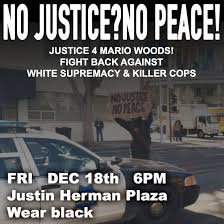
On January 25, 2016, San Francisco Mayor Ed Lee requested a federal investigation into Woods’ death.
And San Francisco Supervisor David Campos introduced a resolution to name July 22—Woods’ birthday—as “Mario Woods Day.”
On January 26, 2016, the Board of Supervisors unanimously passed Campos’ resolution.
The effort sparked outrage from the San Francisco Police Officers Association (POA) which represents rank-and-file officers.
In a letter addressed to the Board of Supervisors, POA President Martin Halloran wrote:
“It will be a hurtful day to [the families of SFPD officers killed in the line of duty] if this city’s elected officials decide to recognize and honor an individual that preyed upon our most vulnerable citizens.”
Woods’ mother, Gwen, was elated by the vote: “Sometimes you have to stand up and look life in the eye. Everyone can’t be bullied.”
Except those her son victimized.
Since December 2—the date of Woods’ shooting—blacks had demanded the firing of Greg Suhr, chief of the San Francisco Police Department and a 35-year veteran of the force.
On May 20, 2016, Shur was forced to resign at the request of then-Mayor Ed Lee.
Thus do criminals become heroes and sworn law enforcement officers villains in San Francisco.
ABC NEWS, ALTERNET, AMERICABLOG, AP, BABY BOOMER RESISTANCE, BUZZFEED, CANDICE BERGIN, CBS NEWS, CNN, CROOKS AND LIARS, DAILY KOZ, DRUDGE RETORT, ENGLAND, FACEBOOK, FIVETHIRTYEIGHT, FRANCE, GERMANY, HARPER’S MAGAZINE, ISRAEL, JAPAN, JOHN MILIUS, MEDIA MATTERS, MOROCCO, MOTHER JONES, MOVEON, MOVIES, MSNBC, NBC NEWS, NEWSWEEK, NPR, PBS NEWSHOUR, POLITICO, POLITICUSUSA, RAW STORY, REUTERS, SALON, SEAN CONNERY, SEATTLE TIMES, SLATE, TALKING POINTS MEMO, THE ATLANTIC, THE CHICAGO SUN-TIMES, THE CHICAGO TRIBUNE, THE DAILY BEAST, THE DAILY BLOG, THE GUARDIAN, THE HILL, THE HUFFINGTON POST, THE LOS ANGELES TIMES, THE NATION, THE NEW REPUBLIC, THE NEW YORK TIMES, THE VILLAGE VOICE, THE WALL STREET JOURNAL, THE WASHINGTON POST, THE WIND AND THE LION, THEODORE ROOSEVELT, THINKPROGRESS, TIME, TRUTHDIG, TRUTHOUT, TWITTER, TWO POLITICAL JUNKIES, U.S. NEWS & WORLD REPORT, UPI, USA TODAY, USA TODAY ABC NEWS, WONKETTE, WORLD WAR ii, WORLD WAR l, YELLOWSTONE NATIONAL PARK
In Entertainment, History, Military, Politics, Social commentary on May 18, 2018 at 1:12 am
There is a poignant scene in the middle of John Milius’ classic 1975 adventure film, The Wind and the Lion, that Americans would do well to remember.
The movie is set in 1904 America and Morocco. An American woman, Eden Pedicaris (Candice Bergen) and her two children have been kidnapped while vacationing in Tangier.
The kidnapper is a Berber brigand named Mulai Ahmed el Raisuli (Sean Connery—then successfully trying to shed his recent James Bond image).
To Raisuli, the Sultan and his uncle, the Pasha of Tangier, are corrupt and beholden to the European powers struggling to control Morocco.
Raisuli issues an outrageous ransom demand to provoke an international incident, embarrass the Sultan and start a civil war.
In the United States, President Theodore Roosevelt (Brian Keith) is running for re-election. He sees the crisis as a way to win votes and demonstrate America’s military strength as a new power.
So he issues a demand of his own: “Pedicarus alive—or Raisuli dead!”
While events rapidly spiral out of control in the Middle East, Roosevelt decides to vacation in Yellowstone National Park.
One night, a grizzly bear attacks the camp and is shot by Roosevelt and several other campers. The next morning, Roosevelt holds an imprumptu press conference for the reporters who have accompanied him.

Brian Keith (left) as Theodore Roosevelt
REPORTER: Did you take part in killing the grizzly, Mr. President?
ROOSEVELT: Yes, unfortunately.
REPORTER: Why do you say, ‘unfortunately,’ Mr. President?
ROOSEVELT: The American grizzly is a symbol of the American character: strength, intelligence, ferocity. Maybe a little blind and reckless at times, but courageous beyond all doubt. And one other trait that goes with all previous.
REPORTER: And that, Mr. President?
ROOSEVELT: Loneliness. The American grizzly lives out his life alone. Indomitable, unconquered—but always alone. He has no real allies, only enemies, but none of them as great as he.
REPORTER: And you feel this might be an American trait?
ROOSEVELT: Certainly. The world will never love us. They respect us—they might even grow to fear us. But they will never love us, for we have too much audacity! And, we’re a bit blind and reckless at times, too.
REPORTER: Are you perhaps referring to the situation in Morocco and the Panama Canal.
ROOSEVELT: If you say so. The American grizzly embodies the spirit of America. He should be our symbol! Not that ridiculous eagle—he’s nothing more than a dandified vulture.
When the Pasha of Tangier refuses to negotiate with Raisuli to secure the return of Pedecaris, the American Consul to Tangier, Samuel Gummere, decides on action. He confers with Admiral Chadwick, commanding the South Atlantic Squadron, and a Marine captain named Jerome.
Gummere then orders a company of Marines, supported by a small detachment of sailors, to seize the Pasha. But then he admits to the riskiness of the decision:
GUMMERE: You realize, of course, that if we fail in even the slightest way, we’ll all be killed.
CHADWICK: Yes, and the whole world will probably go to war.
JEROME: Gentlemen, if we fail and are killed, I certainly hope the world does go to war.
CHADWICK: A world ar war!
GUMMERE: A world war. Now that would be something to go out on.
In just ten years, they will get their hearts’ desire when World War 1 erupts.
The Marines quickly overwhelm the Pasha’s palace guard, take the Pasha hostage and force him to negotiate.
During the hostage exchange, Raisuli is betrayed and captured by German and Moroccan troops. His friend, the Sherif of Wazan, organizes the Berber tribe for an attack on the Europeans and their Moroccan lackeys.
Eden Pedecaris, who has grown to admire Raisuli, convinces a Marine captain and his men to rescue the Berber chieftain. She argues that President Roosevelt had promised that Raisuli would be unharmed if the Pedecarises were returned safely.
The Berbers and Marines team up to defeat the Germans and their Moroccan allies, rescuing Raisuli in the process.
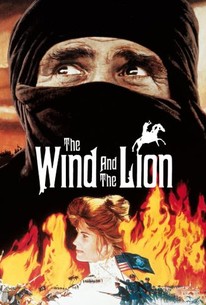
Thirteen years later—in 1917—the United States will officially take on the Germans in World War 1. And in another 37 years—in 1941—America will again declare war on Germany.
The film ends with a confident Theodore Roosevelt expecting (accurately) to be re-elected—and telling reporters that “the fate of Morocco will be decided tomorrow by me.”
The Wind and the Lion is set in an era when
- Nuclear weapons did not exist;
- Russia and China were militarily insignificant nations;
- England was the world’s superpower;
- America, Germany and Japan were on the rise;
- Israel was still a distant dream in the eyes of European Jews;
- The “Great Powers”—Germany, France and Great Britain—were struggling to carve up the Middle East to exploit its massive oil reserves; and
- Americans did not feel threatened by Islamic radicals.
As complex and dangerous as that era often seemed to those living more than 100 years ago, it has been succeeded by one even more complex and dangerous.
In this new and even more lethal era, it is well to remember Theodore Roosevelt’s warning that “we’re a bit blind and reckless at times, too.”
2016 PRESIDENTIAL ELECT, ABC NEWS, ADOLF HITLER, ALTERNET, AMERICABLOG, ANTONIN SCALIA, AP, BABY BOOMER RESISTANCE, BARACK OBAMA, BBC, BERNIE SANDERS, BLOOMBERG NEWS, BUZZFEED, CBS NEWS, CNN, CROOKS AND LIARS, D-DAY, DAILY KOZ, DONALD TRUMP, FACEBOOK, FIVETHIRTYEIGHT, GEORGE S. PATTON, GREAT BRITAIN, HARPER’S MAGAZINE, HEINZ GUDERIAN, HILLARY CLINTON, HUFFINGTON POST, ION, JIMMY CARTER, MEDIA MATTERS, MOTHER JONES, MOVEON, MSNBC, NAZI GERMANY, NBC NEWS, NEW REPUBLIC, NEWSDAY, NEWSWEEK, NICCOLO MACHIAVELLI, NPR, PBS NEWSHOUR, POLITICO, POLITICUSUSA, RAW STORY, REPUBLICANS, REUTERS, SALON, SEATTLE TIMES, SLATE, SOVIET UNION, STALINGRAD, TALKING POINTS MEMO, TERRORISM, THE ATLANTIC, THE CHICAGO SUN-TIMES, THE CHICAGO TRIBUNE, THE DAILY BEAST, THE DAILY BLOG, THE GUARDIAN, THE HILL, THE HUFFINGTON POST, THE INTERCEPT, THE LOS ANGELES TIMES, THE NATION, THE NEW REPUBLIC, THE NEW YORK TIMES, THE NEW YORKER, THE PRINCE, THE VILLAGE VOICE, THE WASHINGTON POST, THINKPROGRESS, TIME, TRUTHDIG, TRUTHOUT, TWITTER, TWO POLITICAL JUNKIES, U.S. NEWS & WORLD REPORT, UPI, USA TODAY, WAFFEN-SS, WORLD WAR 11
In Bureaucracy, History, Law, Politics, Social commentary on March 28, 2018 at 12:12 am
Most Americans believe that Nazi Germany was defeated because “we were the Good Guys and they were the Bad Guys.”
Not so.
The United States—and its allies, Great Britain and the Soviet Union—won the war for reasons that had nothing to do with the righteousness of their cause. These included:
- Nazi Germany—–i.e, its Fuehrer, Adolf Hitler—made a series of disastrous decisions. Chief among these: Attacking its ally, the Soviet Union, and declaring war on the United States;
- The greater material resources of the Soviet Union and the United States; and
- The Allies waged war as brutally as the Germans.
On this last point:
- From D-Day to the fall of Berlin, captured Waffen-SS soldiers were often shot out of hand.
- When American troops came under fire in the German city of Aachen, Lt. Col. Derrill Daniel brought in a self-propelled 155mm artillery piece and opened up on a theater housing German soldiers. After the city surrendered, a German colonel labeled the use of the 155 “barbarous” and demanded that it be outlawed.
- During the battle of Stalingrad in 1942, Wilhelm Hoffman, a young German soldier and diarist, was appalled that the Russians refused to surrender. He wrote: “You don’t see them at all, they have established themselves in houses and cellars and are firing on all sides, including from our rear–barbarians, they used gangster methods….”

German soldiers in Stalingrad
In short: The Allies won because they dared to meet the brutality of a Heinz Guderian with that of a George S. Patton.
This is a lesson long ignored by the liberals of the Democratic Party. As a result, Republicans now hold both houses of Congress and the Presidency.
An example of this occurred as recently as March 25.
On CBS’ “Sunday Morning,” former President Jimmy Carter said that even if Special Counsel Robert Mueller found evidence that President Donald Trump had broken the law, “my own preference would be that he not be impeached.”
Instead, Carter would want Trump to “be able to serve out his term, because I think he wants to do a good job. And I’m willing to help him, if I can help him, and give him the benefit of the doubt.
“You know, I have confidence in the American system of government. I think ultimately the restraints on a president from the Congress and from the Supreme Court will be adequate to protect our nation, if he serves a full term.”
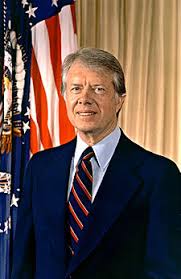
Jimmy Carter
Since becoming President on January 20, 2017, Trump has:
- Fired FBI Director James Comey for refusing to pledge his personal loyalty—and for investigating documented ties between Russian Intelligence agents and the 2016 Trump Presidential campaign.
- Threatened to fire Special Counsel Robert Mueller, who was assigned to take over that investigation after the Comey firing.
- Repeatedly attacked the nation’s press as “fake news” and “the enemy of the American people.”
- Contemptuously dismissed the warnings of American Intelligence agencies that Russia tried to subvert the 2016 Presidential campaign—and plans to do the same for the upcoming mid-term elections in November.
- Repeatedly praised Russian dictator Vladimir Putin—and refused to enforce Congressionally-mandated sanctions against Russia for its attempted subversion of the 2016 Presidential election.
Trump, in short, is not going to be “helped” by the humility of a Jimmy Carter.
Barack Obama, like Jimmy Carter, believes in rationality and decency. Like Carter, he feels more comfortable responding to attacks on his character than attacking the character of his enemies.
As a graduate of Columbia University and Harvard Law School, Obama was one of the most academically gifted Presidents in American history.
Yet he failed—like Carter—to grasp and apply this fundamental lesson taught by Niccolo Machiavelli, the father of modern political science.
In The Prince, Machiavelli warns:
From this arises the question whether it is better to be loved than feared, or feared more than loved.
The reply is, that one ought to be both feared and loved, but as it is difficult for the two to go together, it is much safer to be feared than loved….
And men have less scruple in offending one who makes himself loved than one who makes himself feared; for love is held by a chain of obligations which, men being selfish, is broken whenever it serves their purpose; but fear is maintained by a dread of punishment which never fails.
Obama’s failure to recognize the truth of Machiavelli’s lesson allowed Republicans to thwart many of his Presidential ambitions—such as picking a replacement for deceased Supreme Court Justice Antonin Scalia.
Throughout 2016, liberals celebrated on Facebook and Twitter the “certain” Presidency of Vermont U.S. Senator Bernie Sanders or former First Lady Hillary Clinton.
They fully expected to win the White House again, and thought they might retake the Senate—and maybe even the House of Representatives.
But Donald Trump had a different plan—to subvert the 2016 election by Russian Intelligence agents and millions of Russian trolls flooding the Internet with legitimately fake news.
For Democrats to win elective victories and enact their agenda, they must find their own George Pattons to take on the Waffen-SS generals among Republican ranks.
ABC NEWS, ACADEMY AWARDS, ALTERNET, AMERICABLOG, AP, BABY BOOMER RESISTANCE, BARACK OBAMA, BBC, BEN-HUR, BLOOMBERG NEWS, BUZZFEED, CBS NEWS, CHARLTON HESTON, CNN, CROOKS AND LIARS, DAILY KOZ, DRUDGE REPORT, EL CID, FACEBOOK, FIVETHIRTYEIGHT, FOX NEWS, GUN CONTROL, HARPER’S MAGAZINE, HUFFINGTON POST, JIM CARREY, JOHN F. KENNEDY, KHARTOUM, MAJOR DUNDEE, MEDIA MATTERS, MOSES, MOTHER JONES, MOVEON, MOVIES, MSNBC, NATIONAL RIFLE ASSOCIATION, NBC NEWS, NEW REPUBLIC, NEWSDAY, NEWSWEEK, NPR, PBS NEWSHOUR, PLANET OF THE APES, POLITICO, POLITICUSUSA, RAW STORY, REUTERS, RICHARD M. NIXON, ROBERT F. KENNEDY, SALON, SCREEN ACTORS GUILD, SEATTLE TIMES, SLATE, TALKING POINTS MEMO, THE ATLANTIC, THE CHICAGO SUN-TIMES, THE CHICAGO TRIBUNE, THE DAILY BEAST, THE DAILY BLOG, THE GUARDIAN, THE HILL, THE HUFFINGTON POST, THE LOS ANGELES TIMES, THE NATION, THE NEW REPUBLIC, THE NEW YORK TIMES, THE NEW YORKER, THE TEN COMMANDMENTS, THE VILLAGE VOICE, THE WAR LORD, THE WASHINGTON POST, THE WASHINGTONPOST, THINKPROGRESS, TIME, TRUTHDIG, TRUTHOUT, TWITTER, TWO POLITICAL JUNKIES, U.S. NEWS & WORLD REPORT, UPI, USA TODAY, WONKETTE
In Bureaucracy, History, Humor, Law Enforcement, Politics, Social commentary on February 23, 2018 at 12:03 am
In March, 2013, the National Rifle Association (NRA) and its Right-wing allies declared war on comedian Jim Carrey.
The reason: His music parody video: “Cold Dead Hand,” which mocked gun fanatics and the late Charlton Heston, former president of the NRA.
Click here: Jim Carrey’s Pro-Gun Control Stance Angers Conservatives
Among its lyrics:
Charlton Heston movies are no longer in demand
And his immortal soul may lay forever in the sand.
The angels wouldn’t take him up to heaven like he’d planned.
’Cause they couldn’t pry that gun from his cold, dead hand.
The phrase, “cold dead hand,” originated with Heston himself.
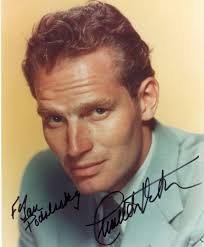
Charlton Heston in his prime
On May 20, 2000, the actor and then-president of the NRA addressed the organization at its 129th convention in Charlotte, North Carolina.
He warned that then-Vice President and Democratic Presidential candidade Al Gore “is going to smear you as the enemy,” and concluded:
“So, as we set out this year to defeat the divisive forces that would take freedom away, I want to say those fighting words for everyone within the sound of my voice to hear and to heed, and especially for you, Mr. Gore: ‘From my cold, dead hands!’”
Carrey’s stance on gun control couldn’t have been more opposite.
In in February, 2013, he outraged Right-wingers by tweeting: “Any1 who would run out to buy an assault rifle after the Newton massacre has very little left in their body or soul worth protecting.”
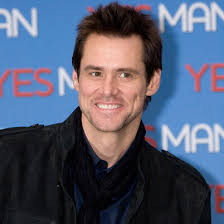
Jim Carrey
Fox Nation referred to the tweet as “nasty.”
Red Alert Politics writer Erin Brown dismissed it as “a careless remark …rooted in the shallow, parroted talking points so commonly espoused by liberal elites.”
But that was nothing compared to the rage that has greeted “Cold Dead Hand.” Reason TV’s Remy offered a parody rebuttal to Carrey’s song. Its lyrics included:
It takes a talking ass
to oppose a vaccination
when your PhD is in
making funny faces.
None of which bothered Carrey. In fact, he exulted in Right-wing outrage, tweeting: “Cold Dead Hand’ is abt u heartless motherf%ckers unwilling 2 bend 4 the safety of our kids. Sorry if you’re offended…”
Among its lyrics:
It takes a cold, dead hand to decide to pull the trigger.
Takes a cold, dead heart and as near as I can figger.
With your cold, dead aim you’re tryin’ to prove your dick is bigger …..
Many psychologists have long theorized that a fascination with firearms can compensate for inadequate sexual performance.
But it’s one thing for an unknown psychologist to write this in an obscure medical journal—and another for a famous comedian to splash it across the Internet.
Carrey is especially ruthless in attacking those who—like the NRA—make a lucrative living off gun sales:
Imagine if the Lord were here…
And on the ones
Who sell the guns
He’d sic the vultures and coyotes
Only the devil’s true devotees
Could profiteer
From pain and fear.
Many Rightists attacked Carrey for parodying a man—Heston—who died in 2008 and could not defend himself. But Heston had appeared several times on “Saturday Night Live” to spoof his granite-hard image.
In his video, Carrey dares to attack not simply the masculinity of the Rightist NRA crowd, but even its courage:
You don’t want to get caught
With your trousers down
When the psycho killer
Comes around
So you make your home
Like a Thunderdome
And you’re always packin’
Everywhere you roam.
Perhaps that’s what most outraged the Right—the accusation that its members live in fear and do their best to generate needless fear in others.
Fear that can supposedly be abated by turning America into a society where everyone packs a weapon and every moment holds a potential High Noon.
Carrey was not shy in responding to his Rightist critics. On March 29, 2013, he issued this statement:
“Since I released my “Cold Dead Hand” video on Funny or Die this week, I have watched Fux News rant, rave, bare its fangs and viciously slander me because of my stand against large magazines and assault rifles.
“I would take them to task legally if I felt they were worth my time or that anyone with a brain in their head could actually fall for such irresponsible buffoonery. That would gain them far too much attention which is all they really care about.
“I’ll just say this: in my opinion Fux News is a last resort for kinda-sorta-almost-journalists whose options have been severely limited by their extreme and intolerant views; a media colostomy bag that has begun to burst at the seams and should be emptied before it becomes a public health issue.”
The NRA has spent decades bribing and intimidating its way through Congress. Those members who subscribe to its “guns for everyone” agenda get legalized bribes (i.e., “campaign contributions”).
Those who refuse to do so face the threat—if not the reality—of being ousted.
Bullies are conspicuously vulnerable to ridicule. Their only “defense” is to smash anyone who dares to mock their folly, brutality or pretense to omnipotence.
Or, as Ernest Hemingway once put it: “Fascism is a lie told by bullies.”
ABC NEWS, ACADEMY AWARDS, ALTERNET, AMERICABLOG, AP, BABY BOOMER RESISTANCE, BARACK OBAMA, BBC, BEN-HUR, BLOOMBERG NEWS, BUZZFEED, CBS NEWS, CHARLTON HESTON, CNN, CROOKS AND LIARS, DAILY KOZ, DRUDGE REPORT, EL CID, FACEBOOK, FIVETHIRTYEIGHT, FOX NEWS, GUN CONTROL, HARPER’S MAGAZINE, HUFFINGTON POST, JIM CARREY, JOHN F. KENNEDY, KHARTOUM, MAJOR DUNDEE, MEDIA MATTERS, MOSES, MOTHER JONES, MOVEON, MOVIES, MSNBC, NATIONAL RIFLE ASSOCIATION, NBC NEWS, NEW REPUBLIC, NEWSDAY, NEWSWEEK, NPR, PBS NEWSHOUR, PLANET OF THE APES, POLITICO, POLITICUSUSA, RAW STORY, REUTERS, RICHARD M. NIXON, ROBERT F. KENNEDY, SALON, SCREEN ACTORS GUILD, SEATTLE TIMES, SLATE, TALKING POINTS MEMO, THE ATLANTIC, THE CHICAGO SUN-TIMES, THE CHICAGO TRIBUNE, THE DAILY BEAST, THE DAILY BLOG, THE GUARDIAN, THE HILL, THE HUFFINGTON POST, THE LOS ANGELES TIMES, THE NATION, THE NEW REPUBLIC, THE NEW YORK TIMES, THE NEW YORKER, THE TEN COMMANDMENTS, THE VILLAGE VOICE, THE WAR LORD, THE WASHINGTON POST, THE WASHINGTONPOST, THINKPROGRESS, TIME, TRUTHDIG, TRUTHOUT, TWITTER, TWO POLITICAL JUNKIES, U.S. NEWS & WORLD REPORT, UPI, USA TODAY, WONKETTE
In Bureaucracy, History, Humor, Law Enforcement, Social commentary on February 22, 2018 at 12:05 am
Bullies do not like to be mocked.
Anyone who doubts this need only examine the Right’s reaction to actor Jim Carrey’s March, 2013 “Cold Dead Hand” music video.
In this, Carrey—–a strong advocate of gun control—mocked the National Rifle Association (NRA) and its right-wing allies.
These included rural America and (for the video’s purposes) the late actor Charlton Heston, who served as the NRA’s five-term president (1998-2003).
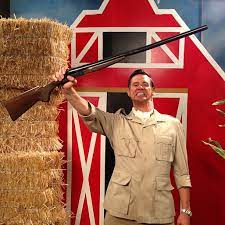
Jim Carrey as Charlton Heston
The video featured Carrey and alt-rock band Eels as “Lonesome Earl And The Clutterbusters,” a country band on a TV set modeled after the 1960s variety show, “Hee Haw.” Carrey also portrayed Heston as a dim-witted, teeth-clenching champion of the NRA.
“I find the gun problem frustrating,” Carrey said in a press release, “and ‘Cold Dead Hand’ is my fun little way of expressing that frustration.”
Carrey’s frustration triggered NRA outrage.
Click here: Jim Carrey’s Pro-Gun Control Stance Angers Conservatives
Fox News personality Greg Gutfeld ranted: “He is probably the most pathetic tool on the face of the earth and I hope his career is dead and I hope he ends up sleeping in a car.
“This video made me want to go out and buy a gun. He thinks this is biting satire going after rural America and a dead man… He’s a dirty, stinking coward… He’s such a pathetic, sad, little freak. He’s a gibbering mess. He’s a modern bigot.”
Columnist Larry Elder spared no venom in attacking Carrey: “Let’s be charitable—call Carrey ignorant, not stupid.”
Click here: Jim Carrey: Not ‘Dumb & Dumber,’ Just Ignorant
Much of his March 29 column centered on defending Heston, who died at 84 in 2008.
A lyric in Carrey’s song says “Charlton Heston’s movies are no longer in demand.” This prompted Elder to defend the continuing popularity of Heston’s 1956 movie, “The Ten Commandments,” where he played Moses.
Elder felt compelled to defend Heston’s off-screen persona as well, citing his 64-year marriage to his college sweetheart, Lydia.
On the other hand, writes Elder, Carrey, “followed the well-worn Hollywood path: Get famous; get rich; dump the first wife/mother of your kid(s), who stood by you during the tough times; and act out your social life in the tabs to the embarrassment of your kid(s).”
Clearly, Carrey’s video struck a nerve with Right-wing gun fanatics. But why?
Start with Gutfield’s accusation that Carry was “going after rural America.”
Rural America—home of the most superstitious, ignorant and knee-jerk Fascistic elements in American society—boastfully refers to itself as “The Heartland.”
In short: a prime NRA and Rightist constituency.
It was rural America to which Senator Barack Obama referred—accurately—during his 2008 Presidential campaign:
“They get bitter, they cling to guns or religion or antipathy to people who aren’t like them or anti-immigrant sentiment or anti-trade sentiment as a way to explain their frustrations.”
Second, there’s Elder’s outrage that Carrey should dare to say that Heston’s movies “are no longer in demand.”
Among these movies: “Major Dundee,” “El Cid,” “Khartoum,” “The War Lord.” And even the hammiest film for which he is best-known: “The Ten Commandments.”
In a film career spanning 62 years, Heston vividly portrayed such historical characters as:
- Rodrigo Diaz de Bivar in “El Cid’:
- Mark Anthony in “Julius Caesar”;
- John the Baptist in “The Greatest Story Ever Told”;
- Andrew Jackson in “The President’s Lady” and “The Buccaneer”;
- Michaelangelo in “The Agony and the Ecstasy”;
- General Charles Gordon in “Khartoun.”
And he played fictitious characters, too:
- Civil War officers (“Major Dundee”);
- Norman knights (“The War Lord”);
- Ranchers (“Three Violent People”;
- Explorers (“The Naked Jungle”).
- Judah Ben-Hur (“Ben-Hur”); and
- Astronauts (“Planet of the Apes”)’
Heston was a widely respected actor who won the Academy Award for Best Actor in 1959 for “Ben Hur” and servecd as the president of the Screen Actors Guild from 1965 to 1971.
But it was not Heston’s film career that Carrey focused on—but his role as president of the NRA.
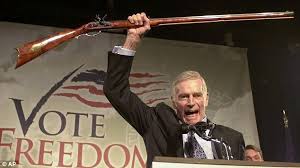
Charlton Heston at the NRA convention
Ironically, Heston had identified himself with liberal causes long before he became the face and voice of the gun lobby.
In 1961, he campaigned for Senator John F. Kennedy for President. In 1963, he took part in Martin Luther King’s March on Washington.
In 1968, after the assassination of Senator Robert F. Kennedy, he joined actors Kirk Douglas, James Stewart and Gregory Peck in issuing a statement supporting President Lyndon Johnson’s Gun Control Act of 1968.
But over the coming decades, Heston became increasingly conservative:
- Reportedly voting for Richard Nixon in 1972;
- Supporting gun rights; and
- Campaigning for Republican Presidential candidates Ronald Reagan, George H.W. Bush and George W. Bush.
When asked why he changed political alliances, Heston replied: “I didn’t change. The Democratic party changed.”
ABC NEWS, ALTERNET, AMERICABLOG, ANWAR SADAT, AP, AR-15 ASSAULT RIFLES, ARTHUR BREMER, ASSASSINATION, BABY BOOMER RESISTANCE, BBC, BLACK LIVES MATTER, BLOOMBERG NEWS, BUZZFEED, CBS NEWS, CHARLES L. COTTON, CIA, CNN, CROOKS AND LIARS, DAILY KOS, DAILY KOZ, DALLAS POLICE OFFICER SHOOTINGS, FACEBOOK, FIVETHIRTYEIGHT, GEORGE C. WALLACE, GUN CONTROL, HARPER’S MAGAZINE, HUFFINGTON POST, MARJORY STONEMAN DOUGLAS HIGH SCHOOL, MARK RAWLINGS, MEDIA MATTERS, MOTHER JONES, MOVEON, MSNBC, NATIONAL RIFLE ASSOCIATION, NBC NEWS, NEW REPUBLIC, NEWSDAY, NEWSWEEK, NIKOLAS CRUZ, NPR, OPEN CARRY LAWS, PBS NEWSHOUR, POLITICO, POLITICUSUSA, RAW STORY, REPUBLICAN PARTY, REPUBLICANS, REUTERS, ROBERT F. KENNEDY, SALON, SEATTLE TIMES, Secret Service, SLATE, TALKING POINTS MEMO, THE ATLANTIC, THE CHICAGO SUN-TIMES, THE CHICAGO TRIBUNE, THE DAILY BEAST, THE DAILY BLOG, THE GUARDIAN, THE HILL, THE HUFFINGTON POST, THE INTERCEPT, THE LOS ANGELES TIMES, THE NATION, THE NEW REPUBLIC, THE NEW YORK TIMES, THE NEW YORKER, THE SECOND AMENDMENT, THE VILLAGE VOICE, THE WALL STREET JOURNAL, THE WASHINGTON POST, THINKPROGRESS, TIME, TRUTHDIG, TRUTHOUT, TWITTER, TWO POLITICAL JUNKIES, U.S. NEWS & WORLD REPORT, UPI, USA TODAY
In Bureaucracy, History, Law Enforcement, Politics, Social commentary on February 16, 2018 at 12:03 am
On February 14, Nikolas Cruz found an unforgettable way to celebrate Valentine’s Day.
The 19-year-old former student returned to Marjory Stoneman Douglas High School in Parkland, Florida, and allegedly slaughtered at least 17 people.
As in: “What are all these allegedly dead people doing here?”
The massacre has now become one of the 10 deadliest mass shootings in modern United States history.
He carried out his massacre with at least one AR-15 assault rifle and multiple magazines.
Although he had posted “I wanna die Fighting killing shit ton of people” he didn’t have the nerve to shoot it out with police SWAT teams. Instead, he concealed himself among the hundreds of students fleeing the school.

Nikolas Cruz posted this picture of himself on the Internet
Investigators used school security videos to identify Cruz and found him in a nearby neighborhood in Coral Springs, Florida.
Cruz had posted “I am going to kill law enforcement one day they go after the good people.” But he was arrested without incident.
Like so many other mass killers, he didn’t have the courage to shoot it out with armed police. He could only prey on defenseless men, women and children.
According to a CNN law enforcement source, he is now talking with investigators.
As always, most Republican lawmakers believe the answer to halting such future attacks lies in giving everybody a firearm.
That, of course, is the standard mantra of the National Rifle Association (NRA), which lavishly bankrolls the GOP.
(In 2016, the NRA spent more than $36 million on elections. Donald Trump proved the largest beneficiary—netting more than $21 million.)
But it it true?
On July 7, 2016, five Dallas police officers were shot and killed by a disgruntled ex-Army Reserve Afghan War veteran named Michah Xavier Johnson. Another seven officers and two civilians were wounded before the carnage ended.
The shootings erupted during a Black Lives Matter protest march in downtown Dallas.
Texas has long been an “open carry” state for those who want to brandish rifles without fear of arrest. And about 20 people wearing “ammo gear and protective equipment [had] rifles slung over their shoulder,” said Dallas Mayor Mike Rawlings.
“When the shooting started, at different angles, [the armed protesters] started running,” Rawlings said, adding that open carry only brings confusion to a shooting scene. What I would do [if I were a police officer] is look for the people with guns,” he said.
“There were a number of armed demonstrators taking part,” said Max Geron, a Dallas police major. “There was confusion about the description of the suspects and whether or not one or more was in custody.”
A 2012 Mother Jones article on “More Guns, More Mass Shootings–Coincidence?” offered a striking finding: After analyzing 62 mass shootings over a 30-year period, the magazine determined: “In not a single case was the killing stopped by a civilian using a gun.”
So much for the ability of gun-toting, untrained amateurs to “stop a bad guy with a gun.”
But even highly-trained shooters—such as those assigned to the United States Secret Service—don’t always respond as expected.
On May 15, 1972, Alabama Governor George C. Wallace was campaigning for President in Laurel, Maryland. He gave a speech behind a bulletproof podium at the Laurel Shopping Center. Then he moved from it to mingle with the crowd.
Since the 1968 assassination of Senator Robert F. Kennedy, all those campaigning for President have been assigned Secret Service bodyguards. And Wallace was surrounded by them as he shook hands with his eager supporters.
Suddenly, Arthur Bremer, a fame-seeking failure in life and romance, pushed his way forward, aimed a .38 revolver at Wallace’s abdomen and opened fire. Before the Secret Service could subdue him, he hit Wallace four times, leaving him paralyzed for the rest of his life.

Arthur Bremer shoots George Wallace
Nor was he Bremer’s only victim. Three other people present were wounded unintentionally:
- Alabama State Trooper Captain E C Dothard, Wallace’s personal bodyguard, who was shot in the stomach;
- Dora Thompson, a campaign volunteer, who was shot in the leg; and
- Nick Zarvos, a Secret Service agent, who was shot in the neck, severely impairing his speech.
None of Wallace’s bodyguards got off a shot at Bremer—before or after he pulled the trigger.
On October 6, 1981, Egyptian President Anwar Sadat was reviewing a military parade in Cairo when a truck apparently broke down directly across from where he was seated.
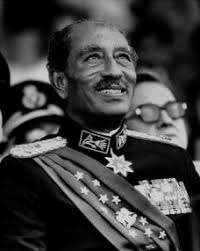
Anwar Sadat, moments before his assassination
Suddenly, soldiers bolted from the rear of the vehicle, throwing hand grenades and firing assault rifles. They rushed straight at Sadat—who died instantly under a hail of bullets.
Meanwhile, Sadat’s bodyguards—who had been trained by the CIA—panicked and fled.
Sadat had been assassinated by army officers who believed he had betrayed Islam by making peace with Israel in 1977.
The ultimate test of the NRA’s mantra that “there should not be any gun-free zones…anywhere” will come only when one or more heavily-armed gunmen target an NRA convention.
It will then be interesting to see if the surviving NRA members are as quick to blame themselves for being victims as they are to blame the victims of other mass slaughters.
ABC NEWS, ALTERNET, AMERICABLOG, AP, BABY BOOMER RESISTANCE, BBC, BIG BEAR LAKE, BLOOMBERG, BLUESKY, BUZZFEED, CARLOS THE JACKAL, CBS NEWS, CHARLES DE GAULLE, CHRISTOPHER DORNER, CNN, CROOKS AND LIARS, DAILY KOS, DAILY KOZ, DAY OF THE JACKAL, FACEBOOK, FBI, FIVETHIRTYEIGHT, FREDERICK FORSYTH, HARPER’S MAGAZINE, HAWAII FIVE-O, HUFFINGTON POST, JACK LORD, LOS ANGELES POLICE DEPARTMENT, MEDIA MATTERS, MILITARY DRONES, MOTHER JONES, MOVEON, MSNBC, NBC NEWS, NEW REPUBLIC, NEWSDAY, NEWSWEEK, NPR, PBS NEWSHOUR, POLITICO, POLITICUSUSA, RAW STORY, REUTERS, SALON, SEATTLE TIMES, SLATE, SWAT TEAMS, TALKING POINTS MEMO, THE ATLANTIC, THE CHICAGO SUN-TIMES, THE CHICAGO TRIBUNE, THE DAILY BEAST, THE DAILY BLOG, THE GUARDIAN, THE HILL, THE HUFFINGTON POST, THE INTERCEPT, THE LOS ANGELES TIMES, THE NATION, THE NEW REPUBLIC, THE NEW YORK TIMES, THE NEW YORKER, THE VILLAGE VOICE, THE WASHINGTON POST, THINKPROGRESS, TIME, TRUTHDIG, TRUTHOUT, TWITTER, TWO POLITICAL JUNKIES, U.S. MARSHALS SERVICE, U.S. NEWS & WORLD REPORT, UPI, USA TODAY, X
In Bureaucracy, History, Law Enforcement, Politics, Social commentary on February 7, 2018 at 12:24 am
The unprecedented manhunt for cop-killer Christopher Dorner has important—and brutal—lessons to teach.
First, above everyone else, police look out for each other.
Robert Daley bluntly revealed this truth in his 1971 bestseller, Target Blue: An Insider’s View of the N.Y.P.D. A police reporter for the New York Times, he served for one year as a deputy police commissioner.
“The murderers of all patrolmen almost invariably were identified at once and caught soon after,” wrote Daley. “Organized crime was too smart to get involved in the type of investigation that followed a cop killing.
“A great many solvable crimes in the city were never solved, because not enough men were assigned to the case, or because those assigned were lazy or hardly cared or got sidetracked.
“But when a cop got killed, no other cop got sidetracked. Detectives worked on the case night and day….Cops were all ears as far as murdered patrolmen were concerned; they heard details all over the city…and fed all this into the detectives who had the case.
“In effect, the citizen who murdered his wife’s lover was sought by a team of detectives, two men. But he who killed a cop was sought by 32,000.”
Although Dorner targeted only local police officers, the Federal Government quickly poured resources into the manhunt. These included the FBI, the U.S. Marshals Service and even unmanned military drones.
Second, don’t expect the police to do for you what they’ll do for one another.
The LAPD assigned security and surveillance details to at least 50 threatened officers and their families. A typical detail consists of two to five or more guards. And those guards must be changed every eight to 12 hours.
And those details stayed in place long after Dorner was killed in a firefight on February 12.
But if your bullying neighbor threatens to kill you, don’t expect the police to send a guard detail over. They’ll claim: “We can’t do anything until he does something. If he does, give us a call.”
And if your loved one is murdered, don’t expect the mayor’s office to offer a $1 million reward or the military to deploy drones to find the killer.
Third, the more status and wealth you command, the more likely the police are to address your complaint or solve your case.
Police claim to enforce the law impartially, “without fear or favor.” But that happens only in TV crime shows.
If you’re rich, your complaint will likely get top priority and the best service the agency can provide.
But if you’re poor or even middle-class without high-level political or police connections, your case will almost certainly wind up in “the round file” (a wastebasket).
And it works the other way, too. Anthony Bouza, former chief of the Minneapolis Police Department, notes in his 1990 book, The Police Mystique: “When cops deal with the poor (blacks, Hispanics, the homeless and the street people) the rubber of power meets the road of abuse.”
Fourth, don’t expect your police department to operate with the vigor or efficiency of TV police agencies.
“I want this rock [Hawaii] sealed off,” Steve McGarrett (Jack Lord) routinely ordered when pursuing criminals on “Hawaii Five-O.”
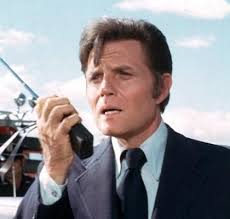
Jack Lord as Steve McGarrett
But in San Jose—a city close to bankruputpsy—residents can’t get police to respond to break-ins because the police department is dangerously understaffed.
And neighbors in Oakland, fed up with a slow police response—or none at all—are banding together to protect their properties by hiring private security officers.
In San Francisco, if you’re assaulted and can’t give police “a named suspect,” they won’t assign the case. As far as they’re concerned, the solvability rate is too low.
Fifth, the result of all this can only be increased disrespect for law enforcement from a deservedly–and increasingly–cynical public.
Surveys reveal that those who don’t need to call the police have a higher opinion of their integrity and efficiency than those who are the victims of crime. Among those reasons:
- Many police departments lack state-of-the-art crime labs to analyze evidence.
- Files often get lost or accidentally destroyed.
- Some officers are lazy, indifferent, incompetent—or corrupt.
- Police are notoriously competitive, generally refusing to share information with other officers or other police departments—and thus making it easier for criminals to run amok.
- Even when police “solve” a crime, that simply means making an arrest. The perpetrator may cop to a lesser offense and serve only a token sentence—or none at all. Or he might be found not guilty by a judge or jury.
But it is the witnessing of blatant inequities and hypocrisies such as those displayed in the Christopher Dorner manhunt that most damages public support for police at all levels.
When citizens believe police care only about themselves, and lack the ability—or even the willingness—to protect them or avenge their victimization by arresting the perpetrators, that is a deadly blow to law enforcement.
Police depend on citizens for more than crime tips. They depend upon them to support hiring more cops and buying state-of-the-art police equipment. When public support vanishes, so does much of that public funding.
The result can only be a return to the days of the lawless West, where citizens looked only to themselves for protection.
ABC NEWS, ALTERNET, AMERICABLOG, AP, BABY BOOMER RESISTANCE, BBC, BIG BEAR LAKE, BLOOMBERG, BLUESKY, BUZZFEED, CARLOS THE JACKAL, CBS NEWS, CHARLES DE GAULLE, CHRISTOPHER DORNER, CNN, CROOKS AND LIARS, DAILY KOS, DAILY KOZ, DAY OF THE JACKAL, FACEBOOK, FBI, FIVETHIRTYEIGHT, FREDERICK FORSYTH, HARPER’S MAGAZINE, HAWAII FIVE-O, HUFFINGTON POST, JACK LORD, LOS ANGELES POLICE DEPARTMENT, MEDIA MATTERS, MILITARY DRONES, MOTHER JONES, MOVEON, MSNBC, NBC NEWS, NEW REPUBLIC, NEWSDAY, NEWSWEEK, NPR, PBS NEWSHOUR, POLITICO, POLITICUSUSA, RAW STORY, REUTERS, SALON, SEATTLE TIMES, SLATE, SWAT TEAMS, TALKING POINTS MEMO, THE ATLANTIC, THE CHICAGO SUN-TIMES, THE CHICAGO TRIBUNE, THE DAILY BEAST, THE DAILY BLOG, THE GUARDIAN, THE HILL, THE HUFFINGTON POST, THE INTERCEPT, THE LOS ANGELES TIMES, THE NATION, THE NEW REPUBLIC, THE NEW YORK TIMES, THE NEW YORKER, THE VILLAGE VOICE, THE WASHINGTON POST, THINKPROGRESS, TIME, TRUTHDIG, TRUTHOUT, TWITTER, TWO POLITICAL JUNKIES, U.S. MARSHALS SERVICE, U.S. NEWS & WORLD REPORT, UPI, USA TODAY, X
In Bureaucracy, History, Law Enforcement, Politics, Social commentary on February 6, 2018 at 1:20 am
Christopher Dorner—33, black, powerfully-built, standing six feet and weighing 270 pounds—seemed to have vanished from the face of the earth.
This despite an unprecedented manhunt by local and Federal law enforcement agencies and the lure of a $1 million reward for information leading to his arrest.
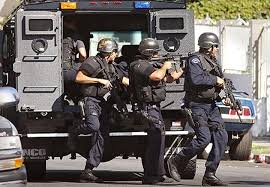
LAPD SWAT team
But Dorner made several major errors in his one-man crusade for vengeance against the agency he blamed for ending his “dream job” police career.
First, shortly before or after he began his murderous rampage, Dorner posted an 11-page “manifesto” of his intentions on his Facebook page.
In this, he spewed contempt for the LAPD and declared his intention to wage war against it.
I will bring unconventional and asymmetrical warfare to those in LAPD uniform whether on or off duty….You will now live the life of the prey….You have misjudged a sleeping giant.
Dorner’s online rant forewarned police that he intended to put them literally in the cross-hairs of his anger. As a result, his intended targets remained on hair-trigger alert for his attacks.
Second, in that “manifesto,” he specifically named many of the officers he intended to kill.
This allowed the LAPD to rush bodyguards to the homes of those he had threatened. The LAPD would have been at a great disadvantage if it hadn’t known where he might strike next.
Third, Dorner boasted of the weaponry he had available.
In my cache you will find several small arms. In the cache, Bushmaster firearms, Remington precision rifles, and AAC Suppressors (silencers)….As you know I also own Barrett .50′s so your APC are defunct and futile.
A Barrett .50 is a sniper’s rifle whose five-inch bullets can penetrate bulletproof vests, steel and concrete. An APC is military shorthand for Armored Personnel Carrier.
Dorner should have kept this information to himself—and allowed the LAPD to discover the truth only in a firefight. By bragging about it, he allowed his enemies to design strategies and deploy resources (such as unmanned drones) to neutralize his powerful weapons.
Fourth, he posted not simply his biography but his psychology for his enemies to exploit.
He sees himself as all-powerful:
I am here to change and make policy…I am here to correct and calibrate your morale compasses to true north….
I know your TTP’s, (techniques, tactics, and procedures). Any threat assessments you generate will be useless…. I will mitigate any of your attempts at preservation.
Besides assailing the LAPD, he plays political analyst—Wayne La Pierre is “a vile and inhumane piece of shit”—and even movie critic, calling Charlie Sheen “awesome.”
And fashion critic: Off the record, I love your new bangs, Mrs. Obama.
He clearly has a high opinion of himself:
I lived a good life and though not a religious man I always stuck to my own personal code of ethics, ethos and always stuck to my shoreline and true North. I didn’t need the US Navy to instill Honor, Courage, and Commitment in me but I thank them for re-enforcing it. It’s in my DNA.
And he reveals a clear history of anger at what he considers racial animosity directed against him, citing incidents as far back as high school.
No doubt psychologists who design behavioral profiles thoroughly analyzed Dorner’s self-portrait and advised police on the best ways to counter his threats.
Fifth, Dorner, sought refuge in a mountainous, snow-covered tourist resort.
This made it impossible for him—a black—to blend in against an almost totally white population.
And once his truck broke down, he was at a severe disadvantage. He was temporarily stranded and forced to abandon many of the high-powered weapons and other supplies he had brought. This gave him less firepower to use in his war on police.
He would have blended in with the majority black population had he fled to South Central Los Angeles. And he might well have found allies there to supply him with tips or equipment.
More importantly, police would have been hard-pressed during a firefight with him in a congested urban setting: They would have had to worry about civilian casualties.
And the proximity of the site to local TV stations would have meant far greater media scrutiny of police tactics.
Sixth, Dorner set fire to his Nissan Titan truck when it broke down near snow-covered Big Bear Lake, California, on February 7.
This quickly attracted the attention of an army of lawmen who were searching for any clue to his whereabouts.
There was no need to burn the vehicle. If Dorner had covered the truck with snow it might well have stayed concealed for days or longer. This would have given him more time to evacuate the area.
Seventh, he took refuge in a cabin when police closed in.
Once he did this, the game was over. Dorner, of all people, should have known how “barricaded suspect” sieges always end: With the death or surrender of the besieged.
His best bet for at least temporary safety was to stay in the open and on the move.
If his skills as a marksman had kept police at a distance long enough, the coming of night could have allowed him to escape their dragnet—at least for the moment.
In the end, however, his death or capture was certain. There were simply too many lawmen determined to hunt him down.
ABC NEWS, ALTERNET, AMERICABLOG, AP, BABY BOOMER RESISTANCE, BBC, BIG BEAR LAKE, BLOOMBERG, BLUESKY, BUZZFEED, CARLOS THE JACKAL, CBS NEWS, CHARLES DE GAULLE, CHRISTOPHER DORNER, CNN, CROOKS AND LIARS, DAILY KOS, DAILY KOZ, DAY OF THE JACKAL, FACEBOOK, FBI, FIVETHIRTYEIGHT, FREDERICK FORSYTH, HARPER’S MAGAZINE, HAWAII FIVE-O, HUFFINGTON POST, JACK LORD, LOS ANGELES POLICE DEPARTMENT, MEDIA MATTERS, MILITARY DRONES, MOTHER JONES, MOVEON, MSNBC, NBC NEWS, NEW REPUBLIC, NEWSDAY, NEWSWEEK, NPR, PBS NEWSHOUR, POLITICO, POLITICUSUSA, RAW STORY, REUTERS, SALON, SEATTLE TIMES, SLATE, SWAT TEAMS, TALKING POINTS MEMO, THE ATLANTIC, THE CHICAGO SUN-TIMES, THE CHICAGO TRIBUNE, THE DAILY BEAST, THE DAILY BLOG, THE GUARDIAN, THE HILL, THE HUFFINGTON POST, THE INTERCEPT, THE LOS ANGELES TIMES, THE NATION, THE NEW REPUBLIC, THE NEW YORK TIMES, THE NEW YORKER, THE VILLAGE VOICE, THE WASHINGTON POST, THINKPROGRESS, TIME, TRUTHDIG, TRUTHOUT, TWITTER, TWO POLITICAL JUNKIES, U.S. MARSHALS SERVICE, U.S. NEWS & WORLD REPORT, UPI, USA TODAY, X
In Bureaucracy, History, Law Enforcement, Politics, Social commentary on February 5, 2018 at 12:15 am
The LAPD’s leadership were terrified after they read Christopher Dorner’s 11-page “manifesto” published on his Facebook page.
Clearly, he intended to take revenge on the agency he blamed for the 2008 termination of his police career.
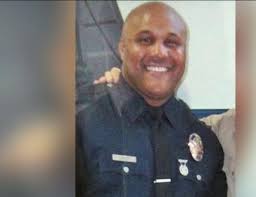
Christopher Dorner
As a result, the LAPD rushed to provide security and surveillance details to more than 50 endangered police officers and their families.
The agency also declared a “tactical alert,” forcing officers to remain on their shifts as long as needed.
Shortly after 1 a.m. on February 7, in Corona, California, Dorner fired at Los Angeles police officers who had been assigned to protect someone connected to threats he had posted in an online “manifesto.”
One officer was grazed in the head, but the wound was not life-threatening. The officers returned fire, and Dorner fled.
Then, at about 1:35 a.m., Dorner struck again, shooting two Riverside police officers who had stopped at a red light during a routine patrol. One officer was killed and the other wounded. The injured officer was taken to a hospital and was reported to be in stable condition.
Word instantly spread through the police grapevine about the shootings. And officers decided it was better to shoot first and ask questions later.
At 5:30 a.m. on February 7, LAPD officers were patrolling a Torrance neighborhood to guard yet another target named in Dorner’s manifesto.
They spotted a car they thought was Dorner’s and opened fire, injuring two women. One suffered a minor bullet wound, and the other was shot twice. Taken to a hospital, the latter was reported to be in stable condition.
Sometime after the Torrance shooting, a passer-by found a wallet with an LAPD badge and a picture ID of Dorner on a street near San Diego International Airport.
This was only a short distance from the naval base motel where he had reportedly checked in on February 7—but had never checked out.
Amid frantic TV news reports that Dorner was barricaded inside, police swarmed the hotel. But the soon learned that he hadn’t been there after all.
The FBI and U.S. Marshals Service, meanwhile, were seeking the public’s help in providing information about Dorner or his whereabouts.
At about noon on February 7, a burning truck was located in the snow-covered woods near Big Bear Lake, 80 miles east of Los Angeles.
The San Bernardino Sheriff’s Department later confirmed that the vehicle was Dorner’s Nissan Titan. No one was in the truck.
SWAT teams from the LAPD, San Bernardino Sheriff’s deputies, FBI agents and deputy U.S. marshals flooded the area. All were heavily armed, carrying assault rifles or machine guns.
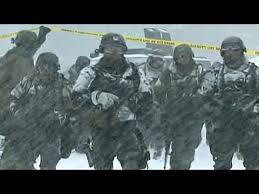
 A SWAT team
Dorner, in his manifesto, had boasted of owning assault rifles and even a Barrett .50 caliber sniper rifle whose bullets can pierce bulletproof vests and even tanks, airplanes and concrete. A marksman with a Barrett could easily hit a target from a mile away.
Police initially searched 400 homes in the area, but found no trace of Dorner.
The manhunt was slowed down by a heavy snowfall, but police, determined to find Dorner, pressed on.
Meanwhile, FBI SWAT teams and local police served a search warrant at a Las Vegas home belonging to Dorner. The lawmen carried out boxes of his possessions. No weapons were found.
After issuing a search warrant, Irvine police combed through the La Pama house belonging to Christopher Dorner’s mother. Investigators removed from the home seven grocery bags of evidence and several electronic items.
On February 9, at a late afternoon press conference, authorities announced the creation of a joint task force to search for Dorner. The task force comprised the Los Angeles, Irvine and Riverside police departments, the FBI and U.S. Marshals, and other affiliated law enforcement agencies.
“We will look under every rock, around every corner, we will search mountain tops for him,” said Riverside Police Assistant Chief Chris Vicino at the press conference.
Underscoring this point, LAPD Chief Charlie Beck said: “This is an act–and make no mistake about it–of domestic terrorism. This is a man who has targeted those that we entrust to protect the public. His actions cannot go unanswered.”
Besides manpower and technology, police employed psychology. That same day, the LAPD announced that it would reopen the investigation into Dorner’s firing.
“I do this not to appease a murderer,” LAPD Chief Beck said in a statement. “I do it to reassure the public that their police department is transparent and fair in all the things we do.”
Clearly police hoped this would lead Dorner to back off or even surrender.
On February 10, at 11:46 a.m., Los Angeles County Supervisors Michael D. Antonovich and Mark Ridley-Thomas announced they were offering a $100,000 reward for information leading to the arrest of Dorner.
Later that day, at 1 p.m., a joint task force offered a $1 million reward for information leading to Dorner’s arrest.
Federal authorities were also relentlessly hunting Dorner—and not only through the FBI and U.S. Marshals Service. The Bureau of Customs and Border Protection deployed unmanned drone aircrafts to find him.
As in The Day of the Jackal, despite a widespread dragnet and all-out search, law enforcement’s Number One fugitive had vanished.


 Bureaucracybuster's Blog
ABC NEWS, ADOLF HITLER, ALTERNET, AMERICABLOG, AP, ASSASSINATION, BABY BOOMER RESISTANCE, BBC, BLOOMBERG, BUZZFEED, CBS NEWS, CNN, CONSPIRACIES, CROOKS AND LIARS, DAILY KOS, DAY OF THE JACKAL, DONALD TRUMP, FACEBOOK, FIVETHIRTYEIGHT, FREDERICK FORSYTHE, GAIUS CASSIUS, HARPER’S MAGAZINE, HUFFINGTON POST, JULIUS CAESAR, LINCOLN MEMORIAL, MAR-A-LAGO, MARCUS BRUTUS, MARK ANTHONY, MEDIA MATTERS, MOTHER JONES, MOVEON, MSNBC, NBC NEWS, NEW REPUBLIC, NEWSDAY, NEWSWEEK, NICCOLO MACHIAVELLI, NPR, PBS NEWSHOUR, PLOTS, POLITICO, POLITICUSUSA, RAW STORY, REUTERS, RICHARD M. NIXON, SALON, SEATTLE TIMES, Secret Service, SLATE, TALKING POINTS MEMO, THE ATLANTIC, THE CHICAGO SUN-TIMES, THE CHICAGO TRIBUNE, THE DAILY BEAST, THE DAILY BLOG, THE DISCOURSES, THE GUARDIAN, THE HILL, THE HUFFINGTON POST, THE INTERCEPT, THE LOS ANGELES TIMES, THE NATION, THE NEW REPUBLIC, THE NEW YORK TIMES, THE NEW YORKER, THE VILLAGE VOICE, THE WALL STREET JOURNAL, THE WASHINGTON POST, THINKPROGRESS, TIME, TRUTHDIG, TRUTHOUT, TWO POLITICAL JUNKIES, U.S. NEWS & WORLD REPORT, UPI, USA TODAY, VIETNAM WAR, WHITE HOUSE STAFFER, X
SECRETS OF CONSPIRACIES: PART ONE (OF THREE)
In Bureaucracy, History, Law Enforcement, Military, Politics, Social commentary on October 10, 2018 at 12:01 amIn the 1973 movie, The Day of the Jackal, a methodical assassin devises an ingenious plan to kill French President Charles de Gaulle.
Despite the best efforts of French security forces to entrap him, he eludes them time and again—and comes within an ace of assassinating de Gaulle.
The Day of the Jackal is fiction, based on a 1971 novel by Frederick Forsythe. In real life, most would-be political assassins lack the skills and sophistication of Forsythe’s anti-hero.
Take the case of the man who, on March 18, 2017, jumped over a bicycle rack outside the security perimeter of the White House. Within two minutes, agents of the U.S. Secret Service had tackled and arrested him.
Then, hours later, a motorist drove up to a White House checkpoint and claimed to have a bomb. Secret Service agents immediately arrested him and seized the stolen 2017 Chevrolet Impala. After a careful search, no explosives were found.
Both men will face criminal prosecution—and probably years in prison.
Even if they had been armed, President Donald J. Trump would not have faced any danger.
For the fifth time since taking office on January 20, he was in Florida, vacationing at his Mar-a-Lago resort.
That does not mean, of course, that future assassins will prove so inept.
More than 500 years ago, Niccolo Machiavelli, the father of modern political science, offered sound advice for would-be conspirators—and for rulers seeking to thwart conspiracies.
Niccolo Machiavellil
Niccolo Machiavelli: When a prince becomes universally hated, it is likely that he’s harmed some individuals—who thus seek revenge. This desire is increased by seeing the prince is widely loathed.
A prince, then, should avoid incurring such universal hatred….
By doing this, he protects himself from such vengeance-seekers. There are two reasons for this:
(1) Men rarely risk danger to avenge a wrong; and
(2) Even if they want to avenge a wrong, they know they will face almost universal condemnation because the prince is held in such high esteem.
So much for Machiavelli.
Now consider some of the tweets of “White House Staffer,” a self-proclaimed member of the Trump administration who claims 160,000 Twitter followers.
Since January 27, 2017, he has blasted a series of short, information-crammed tweets about daily life in the Executive Mansion.
[NOTE: Although I can’t confirm the legitimacy of his status or his tweets, I believe they are real. They contain too many small, intimate secrets of life in a paranoia-laced White House to not be genuine.]
March 1, 2017: Well the good times didn’t last long here. POTUS is back to flipping out on us.
March 13: POTUS [President of the United States] is thinking about suspending daily press briefings until the media “learn to be nice.” [Steve] Bannon [a top Trump adviser] is pushing for it.
March 16: Sean Hannity was asked to be Press Secretary last week. He turned it down because he didn’t want to take the pay cut. [Sean] Spicer survives.
Donald Trump
Niccolo Machiavelli: He who is threatened, and decides to avenge himself on the prince, becomes a truly dangerous man.
Anger is most likely aroused by injury to a a man’s property or honor. A prince should carefully avoid injuring either, for such a victim will always desire vengeance.
White House Staffer – February 25, 2017: The President keeps saying we’re a finely tuned machine. If that’s true why has he been fricking screaming at us all week? He’s losing it.
February 27: [Steve] Bannon is the scariest person here. He’s broken so much White House stuff by throwing it in anger. Plates, phones, chairs, etc.
February 27: It’s one thing to swear but [Steve] Bannon does it in front of the women here. C**t this, c**t that. He can’t finish a sentence without it.
Machiavelli draws a distinction between plots and conspiracies. A plot may be formed by a single individual or by many. The first isn’t a conspiracy, since that would involve at least two participants.
A single plotter avoids the danger faced by two or more conspirators: Since no one knows his intention, he can’t be betrayed by an accomplice.
Anyone may form a plot, whether he is prominent or insignificant, because everyone is at some time allowed to speak to the prince. And he can use this opportunity to satisfy his desire for revenge.
On the other hand, says Machiavelli, the dangers of assassination by a trusted intimate are slight: Few people dare to assault a prince. Of those who do, few or none escapes being killed in the attempt, or immediately afterward. As a result, only a small number of people are willing to incur such certain death.
Those who take part in a conspiracy against a ruler are “the great men of the state, or those on terms of familiar intercourse with the prince.”
These are men who have access to him. Julius Caesar, for example, was stabbed to death by members of the Roman Senate, who feared his assuming dictatorial powers.
And Adolf Hitler was conspired against by colonels and generals of the German Army. He was in fact holding a war conference when a briefcase bomb exploded, killing three officers and a stenographer, but leaving Hitler only slightly injured.
Share this: