Posts Tagged ‘THE PENTAGON’
2020 PRESIDENTIAL ELECTION, AFFORDABLE CARE ACT (ACA), ALEC BALDWIN, ALTERNET, AMERICABLOG, AMNESTY INTERNATIONAL, AP, ARTICLE 1, BABY BOOMER RESISTANCE, BANDY X. LEE, BBC, BILL CLINTON, BIRTHRIGHT CITIZENSHIP, BLOOMBERG, BLUESKY, BUREAU OF LABOR STATISTICS (BLS), BUZZFEED, CANADA, CBS NEWS, CHICAGO, CHRIS KREBS, CNN, CONSUMER PROTECTION FINANCIAL BUREAU, CROOKS AND LIARS, CYBERSECURITY AND INFRASTRUCTURE SECURITY AGENCY (CISA), DAILY KOS, DAVID BROOKS, DEMOCRATS, DEPARTMENT OF JUSTICE (DOJ), DIVERSITY EQUITY AND INCLUSION (DEI), DONALD TRUMP, ELON MUSK, FBI, FEDERAL AVIATION ADMINISTRATION (FAA), FIVETHIRTYEIGHT, FLETCHER KNEBEL, GAIUS CALIGULA, GAZA, GEOFF BENNETT, GEORGE STEPHANOPOULOS, GORE VIDAL, GREENLAND, GULF OF AMERICA, GULF OF MEXICO, HARD UNIVERSITY, HARPER’S MAGAZINE, HARVARD MEDICAL SCHOOL, HUFFINGTON POST, illegal immigration, IMMIGRATION AND CUSTOMS ENFORCEMENT (ICE), INSPECTORS GENERAL, IRAN WAR, JANUARY 6 COUP ATTEMPT, JEFFREY EPSTEIN, JOHN ADAMS, JOHN D. GARTNER, JOHN F. KENNEDY CENTER FOR THE PERFORMING ARTS, JOHNS HOPKINS UNIVERSITY MEDICAL SCHOOL, JONATHAN CAPEHART, JOSEPH BIDEN, KEVIN SPACEY, LANCE DODES, LOS ANGELES, MARK MEADOWS, MEDAL OF HONOR WINNERS, MEDIA MATTERS, MEDICAID, MEDICARE, MICHAEL JACKSON, MICK JAGGER, MINNEAPOLIS, MOTHER JONES, MOVEON, MS NOW, MSNBC, NARCISSISM, NBC NEWS, NEWSDAY, NEWSWEEK, NIGHT AT CAMP DAVID (BOOK), NORTH ATLANTIC TREATY ORGANIZATION (NATO), NPR, Oil, PARIS CLIMATE AGREEMENT, PBS NEWSHOUR, POLITICO, POLITICUSUSA, PRINCE ANDREW, QATAR, RAW STORY, REPUBLICANS, REUTERS, RICHARD BRANSON, ROMAN EMPERORS, ROMAN EMPIRE, RUDY GIULIANI, SALLUST, SALON, SEATTLE TIMES, SLATE, ST. PAUL, STRAIT OF HORMUZ, SUPPLEMENTAL NUTRITION ASSISTANCE PROGRAM (SNAP), TACITUS, TALKING POINTS MEMO, THE ATLANTIC, THE CHICAGO SUN-TIMES, THE CHICAGO TRIBUNE, THE DAILY BEAST, THE DAILY BLOG, THE DANGEROUS CASE OF DONALD TRUMP (BOOK), THE GUARDIAN, THE HILL, THE HUFFINGTON POST, THE INTERCEPT, THE LOS ANGELES TIMES, THE NATION, THE NEW REPUBLIC, THE NEW YORK TIMES, THE NEW YORKER, THE PENTAGON, THE TWELVE CAESARS (ESSAY), THE VILLAGE VOICE, THE WASHINGTON POST, THINKPROGRESS, TIME, TRUTHDIG, TRUTHOUT, TWO POLITICAL JUNKIES, U.S. NEWS & WORLD REPORT, UNITED STATES CONSTITUTION, UPI, USA TODAY, VLADIMIR PUTIN, WAR CRIMES, WASHINGTON D.C., WOODY ALLEN, WORLD HEALTH ORGANIZATION, X, YALE SCHOOL OF MEDICINE
In Bureaucracy, History, Law, Law Enforcement, Military, Politics, Social commentary, Uncategorized on May 14, 2026 at 12:05 am
Among the outrages President Donald Trump has committed since returning to power on January 20:
- Launched an unprovoked attack on Iran on February 28, believing that in six weeks he could force its Islamic rulers to abandon their plans to develop nuclear weapons.
- When Iran closed the Strait of Hormuz—through which about 20%-25% of the world’s oil flows—Trump threatened: “A whole civilization will die tonight, never to be brought back again. I don’t want that to happen, but it probably will.”
- He backed off—at least temporarily—only after legal experts and organizations such as Amnesty International warned that attacking civilian infrastructure would constitute war crimes under international law.
Trump’s vindictiveness, his narcissism, his compulsive aggression, his complaints that his “enemies” in government and the press are trying to destroy him, have caused many to ask: Could the President of the United States be suffering from mental illness?
One who has dared to answer this question is John D. Gartner, a practicing psychotherapist.
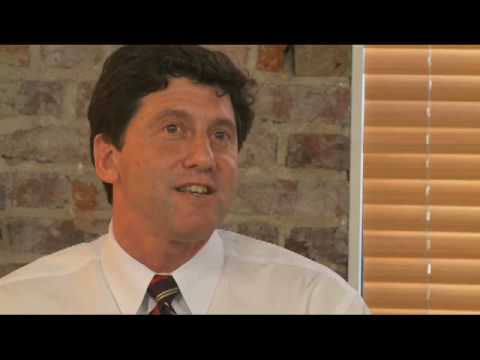
John D. Gartner
Gartner graduated magna cum laude from Princeton University, received his Ph.D in clinical psychology from the University of Massachusetts, and served as a part-time assistant professor of psychiatry at Johns Hopkins University Medical School for 28 years.
During an interview by U.S. News & World Report (published on January 27, 2017), Gartner said: “Donald Trump is dangerously mentally ill and temperamentally incapable of being president.”
Gartner said that Trump suffers from “malignant narcissism,” whose symptoms include:
- anti-social behavior
- sadism
- aggressiveness
- paranoia
- grandiosity.
“We’ve seen enough public behavior by Donald Trump now that we can make this diagnosis indisputably,” says Gartner, who admits he has not personally examined Trump.
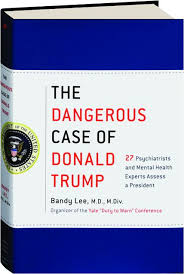
Another psychiatrist who’s determined that Trump is “mentally compromised” is Bandy X. Lee, an assistant clinical psychiatry professor at the Yale School of Medicine.
And she offered her reasons for doing so as the editor of The Dangerous Case of Donald Trump: 27 Psychiatrists and Mental Health Experts Assess a President.
“It doesn’t take a psychiatrist to notice that our president is mentally compromised,” she and colleague Judith Lewis Herman asserted in the book’s prologue.
According to Dr. Craig Malkin, a Lecturer in Psychology for Harvard Medical School and a licensed psychologist, Trump is a pathological narcissist:
“Pathological narcissism begins,” Malkin writes, “when people become so addicted to feeling special that, just like with any drug, they’ll do anything to get their ‘high,’ including lie, steal, cheat, betray and even hurt those closest to them.
“When they can’t let go of their need to be admired or recognized, they have to bend or invent a reality in which they remain special despite all messages to the contrary. In point of fact, they become dangerously psychotic. It’s just not always obvious until it’s too late.”
Lance Dodes, a retired psychiatry professor at Harvard Medical School, believes that Trump is a sociopath:
“The failure of normal empathy is central to sociopathy, which is marked by an absence of guilt, intentional manipulation and controlling or even sadistically harming others for personal power or gratification.”
* * * * * * * * * *
Americans have long believed that they—and especially their leaders—are an “exceptional” people. As a result, they consider themselves immune from the threats of corruption and dictatorship that have plagued other nations.
Millions of Americans—including many Trump supporters—have been shaken by the revelations of the Epstein Files, which chronicle the sexual depravities of convicted pedophile Jeffrey Epstein. Even more disturbing has been the knowledge that he and Donald Trump maintained a friendship for 15 to 17 years.
The Files so far released are replete with names of celebrities such as Michael Jackson, Mick Jagger, Kevin Spacey, Alec Baldwin, Woody Allen, George Stephanopoulos, Elon Musk, Richard Branson, former President Bill Clinton and Prince Andrew.
This has added to the shock and revulsion felt by millions of Americans. Yet they might have been less shocked had they read Gore Vidal’s 1959 essay, “The Twelve Caesars.”

Gore Vidal
Mark Coggins from San Francisco, CC BY 2.0 <https://creativecommons.org/licenses/by/2.0>, via Wikimedia Commons
Vidal’s essay is an ode to The Twelve Caesars, a classic work of ancient biography by Gaius Suetonius Tranquillus—known as Suetonius.
Suetonius, a Roman citizen and historian, chronicled the lives of the first twelve Caesars of imperial Rome: Julius Caesar, Augustus, Tiberius, Caligula, Claudius, Nero, Galba, Otho, Vitellius, Vespasian, Titus and Domitian.
Vidal sought to show the relevance of Suetonius’ work to present-day America: “It would be wrong, however, to dismiss, as so many commentators have, the wide variety of Caesarean sensuality as simply the viciousness of twelve abnormal men. They were, after all, a fairly representative lot.
“They differed from us – and their contemporaries – only in the fact of power, which made it possible for each to act out his most recondite sexual fantasies. This is the psychological fascination of Suetonius. What will men so placed do? The answer, apparently, is anything and everything.”
Thus the lesson taught by the celebrities—including Trump—who glommed onto Jeffrey Epstein: They differed from ordinary citizens only in the power they held over themselves—and others. And, reveling in that power, they felt free to indulge the most depraved fantasies, sexual and otherwise.
2020 PRESIDENTIAL ELECTION, AFFORDABLE CARE ACT (ACA), ALEC BALDWIN, ALTERNET, AMERICABLOG, AMNESTY INTERNATIONAL, AP, ARTICLE 1, BABY BOOMER RESISTANCE, BANDY X. LEE, BBC, BILL CLINTON, BIRTHRIGHT CITIZENSHIP, BLOOMBERG, BLUESKY, BUREAU OF LABOR STATISTICS (BLS), BUZZFEED, CANADA, CBS NEWS, CHICAGO, CHRIS KREBS, CNN, CONSUMER PROTECTION FINANCIAL BUREAU, CROOKS AND LIARS, CYBERSECURITY AND INFRASTRUCTURE SECURITY AGENCY (CISA), DAILY KOS, DAVID BROOKS, DEMOCRATS, DEPARTMENT OF JUSTICE (DOJ), DIVERSITY EQUITY AND INCLUSION (DEI), DONALD TRUMP, ELON MUSK, FBI, FEDERAL AVIATION ADMINISTRATION (FAA), FIVETHIRTYEIGHT, FLETCHER KNEBEL, GAIUS CALIGULA, GAZA, GEOFF BENNETT, GEORGE STEPHANOPOULOS, GORE VIDAL, GREENLAND, GULF OF AMERICA, GULF OF MEXICO, HARD UNIVERSITY, HARPER’S MAGAZINE, HARVARD MEDICAL SCHOOL, HUFFINGTON POST, illegal immigration, IMMIGRATION AND CUSTOMS ENFORCEMENT (ICE), INSPECTORS GENERAL, IRAN WAR, JANUARY 6 COUP ATTEMPT, JEFFREY EPSTEIN, JOHN ADAMS, JOHN D. GARTNER, JOHN F. KENNEDY CENTER FOR THE PERFORMING ARTS, JOHNS HOPKINS UNIVERSITY MEDICAL SCHOOL, JONATHAN CAPEHART, JOSEPH BIDEN, KEVIN SPACEY, LANCE DODES, LOS ANGELES, MARK MEADOWS, MEDAL OF HONOR WINNERS, MEDIA MATTERS, MEDICAID, MEDICARE, MICHAEL JACKSON, MICK JAGGER, MINNEAPOLIS, MOTHER JONES, MOVEON, MS NOW, MSNBC, NARCISSISM, NBC NEWS, NEWSDAY, NEWSWEEK, NIGHT AT CAMP DAVID (BOOK), NORTH ATLANTIC TREATY ORGANIZATION (NATO), NPR, Oil, PARIS CLIMATE AGREEMENT, PBS NEWSHOUR, POLITICO, POLITICUSUSA, PRINCE ANDREW, QATAR, RAW STORY, REPUBLICANS, REUTERS, RICHARD BRANSON, ROMAN EMPERORS, ROMAN EMPIRE, RUDY GIULIANI, SALLUST, SALON, SEATTLE TIMES, SLATE, ST. PAUL, STRAIT OF HORMUZ, SUPPLEMENTAL NUTRITION ASSISTANCE PROGRAM (SNAP), TACITUS, TALKING POINTS MEMO, THE ATLANTIC, THE CHICAGO SUN-TIMES, THE CHICAGO TRIBUNE, THE DAILY BEAST, THE DAILY BLOG, THE DANGEROUS CASE OF DONALD TRUMP (BOOK), THE GUARDIAN, THE HILL, THE HUFFINGTON POST, THE INTERCEPT, THE LOS ANGELES TIMES, THE NATION, THE NEW REPUBLIC, THE NEW YORK TIMES, THE NEW YORKER, THE PENTAGON, THE TWELVE CAESARS (ESSAY), THE VILLAGE VOICE, THE WASHINGTON POST, THINKPROGRESS, TIME, TRUTHDIG, TRUTHOUT, TWO POLITICAL JUNKIES, U.S. NEWS & WORLD REPORT, UNITED STATES CONSTITUTION, UPI, USA TODAY, VLADIMIR PUTIN, WAR CRIMES, WASHINGTON D.C., WOODY ALLEN, WORLD HEALTH ORGANIZATION, X, YALE SCHOOL OF MEDICINE
In Bureaucracy, History, Law, Law Enforcement, Military, Politics, Social commentary, Uncategorized on May 13, 2026 at 12:33 am
Night at Camp David is a 1965 novel about the danger of a President of the United States going insane.
In a November 30, 2018 review of the book, Tom McCarthy, national affairs correspondent for the British newspaper, The Guardian, wrote of President Donald Trump:
“The current president has seen crowds where none exist, deployed troops to answer no threat, attacked national institutions – the military, the justice department, the judiciary, the vote, the rule of law, the press – tried to prosecute his political enemies, elevated bigots, oppressed minorities, praised despots while insulting global allies and wreaked diplomatic havoc from North Korea to Canada.
“He stays up half the night watching TV and tweeting about it, then wakes up early to tweet some more, in what must be the most remarkable public diary of insecurity, petty vindictiveness, duplicity and scattershot focus by a major head of state in history.”
And the nightmare isn’t over.
Among the outrages Trump has committed since returning to power on January 20:
- Pardoned about 1,500 of his followers who violently tried to overturn the outcome of the 2020 Presidential election in the January 6, 2021 attack on Congress. Move than 250 of those pardoned had been convicted of assaulting police.
- Signed 26 executive orders reversing climate change initiatives, eliminating DEI programs, changing the federal designation for the Gulf of Mexico to the “Gulf of America” and initiating a federal hiring freeze.
- Fired the inspectors general—who are charged with protecting the government from waste and corruption—from more than a dozen federal agencies.
- Following Trump’s anti-DEI executive order, the Department of Defense deleted content that included the achievements of nonwhites—such as Navajo code talkers, black Tuskegee Airmen, Medal of Honor winners and women veterans.
- Fired Rohit Chopra, the director of the Consumer Financial Protection Bureau, which protects consumers from unfair, deceptive and fraudulent business practices.

Donald Trump
- Withdrew the United States from the World Health Organization (WHO).
- Withdrew the United States from the Paris climate agreement.
- Fired the non-partisan board members at the John F. Kennedy Center for the Performing Arts. His toadies illegally renamed it the Trump-Kennedy Center and appointed him as its chairman—just as Joseph Stalin made himself arbiter of what was permissible for artists in the Soviet Union.
- When artists and audiences—outraged by the takeover—boycotted the Center, an embarrassed Trump ordered its closure, claiming a two-year repair renovation was necessary
- Purged about a half-dozen executive assistant directors at the FBI. These were some of the bureau’s top managers overseeing criminal, national security and cyber investigations. Their “crime”: Investigating Trump’s inciting the January 6, 2021 coup attempt and illegally holding highly sensitive national security documents after leaving office.
- Ordered the Justice Department to indict his critics such as New York Attorney General Letitia James and former FBI Director James Comey.

- Declared “a national emergency” targeting migrants—legal and illegal.
- Tried to cancel birthright citizenship—enshrined within the United States Constitution— for U.S.-born children.
- Demanded a military parade for his 79th birthday, poorly disguised as a salute to the 250th anniversary of the United States Army.
- Pardoned favored political allies and loyalists. Among these: Seventy-seven people associated with the Trump fake electors plot to overturn the results of the 2020 U.S. presidential election, including Trump’s personal attorney Rudy Giuliani and former chief of staff Mark Meadows.
- Angrily fired the Commissioner of the Bureau of Labor Statistics following a weak jobs report, triggering fears about his extortionate tariff policy.
- Demanded that the media refer to the Gulf of Mexico as “the Gulf of America” and banned the Associated Press from the White House for refusing to do so.
- Ordered the closure of all Federal Diversity, Equity, Inclusion and Accessibility offices.
- Demanded that Canada become the 51st state and aggressively raised tariffs on Canadian goods.
- Shut down the Federal Government on October 1, when Democrats refused to agree to his gutting Medicaid, Medicare and the Affordable Care Act (ACA), causing 10-15 million Americans to lose health insurance coverage.
- Among those not getting paid: Air traffic controllers for the Federal Aviation Administration (FAA). Owing to many controllers’ refusing to work, the FAA reduced air traffic by 10% at many airports.
- Shut off the Supplemental Nutrition Assistance Program (SNAP) for the poor to pressure Democrats to support his gutting of healthcare programs.

- Issued executive orders revoking the security clearance of Chris Krebs, former director of the Cybersecurity and Infrastructure Security Agency. Krebs’ “crime”: Preventing lies spread by Russians—and Americans—on social media platforms from swaying the 2020 Presidential election to Trump.
- Flooded the streets of Los Angeles, Washington, D.C., Chicago with federalized National Guard troops against state governors’ wishes during immigration crackdowns and civil unrest.
- Flooded Minneapolis and St. Paul, Minnesota, with 3,000 Immigration and Customs Enforcement (ICE) agents who terrorized (and in two cases murdered) both American citizens and illegal aliens.
- Threatened Harvard University with the loss of billions of dollars in federal funding, claiming that 2023 student protests about Gaza violated the civil rights of Jewish students.
- Threatened Greenland—an autonomous territory within the Kingdom of Denmark—with invasion unless it agreed to acquisition by the United States. Since Denmark is a member of NATO, such an invasion would pit the United States against its own alliance.
2020 PRESIDENTIAL ELECTION, AFFORDABLE CARE ACT (ACA), ALEC BALDWIN, ALTERNET, AMERICABLOG, AMNESTY INTERNATIONAL, AP, ARTICLE 1, BABY BOOMER RESISTANCE, BANDY X. LEE, BBC, BILL CLINTON, BIRTHRIGHT CITIZENSHIP, BLOOMBERG, BLUESKY, BUREAU OF LABOR STATISTICS (BLS), BUZZFEED, CANADA, CBS NEWS, CHICAGO, CHRIS KREBS, CNN, CONSUMER PROTECTION FINANCIAL BUREAU, CROOKS AND LIARS, CYBERSECURITY AND INFRASTRUCTURE SECURITY AGENCY (CISA), DAILY KOS, DAVID BROOKS, DEMOCRATS, DEPARTMENT OF JUSTICE (DOJ), DIVERSITY EQUITY AND INCLUSION (DEI), DONALD TRUMP, ELON MUSK, FBI, FEDERAL AVIATION ADMINISTRATION (FAA), FIVETHIRTYEIGHT, FLETCHER KNEBEL, GAIUS CALIGULA, GAZA, GEOFF BENNETT, GEORGE STEPHANOPOULOS, GORE VIDAL, GREENLAND, GULF OF AMERICA, GULF OF MEXICO, HARD UNIVERSITY, HARPER’S MAGAZINE, HARVARD MEDICAL SCHOOL, HUFFINGTON POST, illegal immigration, IMMIGRATION AND CUSTOMS ENFORCEMENT (ICE), INSPECTORS GENERAL, IRAN WAR, JANUARY 6 COUP ATTEMPT, JEFFREY EPSTEIN, JOHN ADAMS, JOHN D. GARTNER, JOHN F. KENNEDY CENTER FOR THE PERFORMING ARTS, JOHNS HOPKINS UNIVERSITY MEDICAL SCHOOL, JONATHAN CAPEHART, JOSEPH BIDEN, KEVIN SPACEY, LANCE DODES, LOS ANGELES, MARK MEADOWS, MEDAL OF HONOR WINNERS, MEDIA MATTERS, MEDICAID, MEDICARE, MICHAEL JACKSON, MICK JAGGER, MINNEAPOLIS, MOTHER JONES, MOVEON, MS NOW, MSNBC, NARCISSISM, NBC NEWS, NEWSDAY, NEWSWEEK, NIGHT AT CAMP DAVID (BOOK), NORTH ATLANTIC TREATY ORGANIZATION (NATO), NPR, Oil, PARIS CLIMATE AGREEMENT, PBS NEWSHOUR, POLITICO, POLITICUSUSA, PRINCE ANDREW, QATAR, RAW STORY, REPUBLICANS, REUTERS, RICHARD BRANSON, ROMAN EMPERORS, ROMAN EMPIRE, RUDY GIULIANI, SALLUST, SALON, SEATTLE TIMES, SLATE, ST. PAUL, STRAIT OF HORMUZ, SUPPLEMENTAL NUTRITION ASSISTANCE PROGRAM (SNAP), TACITUS, TALKING POINTS MEMO, THE ATLANTIC, THE CHICAGO SUN-TIMES, THE CHICAGO TRIBUNE, THE DAILY BEAST, THE DAILY BLOG, THE DANGEROUS CASE OF DONALD TRUMP (BOOK), THE GUARDIAN, THE HILL, THE HUFFINGTON POST, THE INTERCEPT, THE LOS ANGELES TIMES, THE NATION, THE NEW REPUBLIC, THE NEW YORK TIMES, THE NEW YORKER, THE PENTAGON, THE TWELVE CAESARS (ESSAY), THE VILLAGE VOICE, THE WASHINGTON POST, THINKPROGRESS, TIME, TRUTHDIG, TRUTHOUT, TWO POLITICAL JUNKIES, U.S. NEWS & WORLD REPORT, UNITED STATES CONSTITUTION, UPI, USA TODAY, VLADIMIR PUTIN, WAR CRIMES, WASHINGTON D.C., WOODY ALLEN, WORLD HEALTH ORGANIZATION, X, YALE SCHOOL OF MEDICINE
In Bureaucracy, History, Law, Law Enforcement, Military, Politics, Social commentary on May 12, 2026 at 12:05 am
On the April 10 edition of The PBS Newshour, David Brooks of The Atlantic and Jonathan Capehart of MS NOW—exchanged opinions on the mental health of President Donald Trump.
Although Brooks, a conservative, and Capehart, a liberal, usually find themselves on opposite sides of a subject, this time they reached a consensus: Trump is dangerously ill.
David Brooks: Last January, as we watched this spiral psychologically….I read Roman histories. And so you get Tacitus and Sallust and those old guys, because they had a front-row seat to tyranny. And they watched authoritarians, one after another, Caligula, all these guys. And the one thing they all said was that they deteriorate.
They create a situation around them, when the sycophants have to get more sycophant. Anybody who’s reasonable is either dead or gone. And then the urge to dominate, the lust for power becomes drunk. They become drunk on that. And they get more and more daring, more and more out of control, and then you get this spiral.
And our founding fathers, they understood this so well. They read Tacitus. They loved these guys. And John Adams said, if we get a leader like that, he will run through our Congress, our Constitution the way a whale goes through a net. And so they completely understood. And their worst nightmare is now happening.
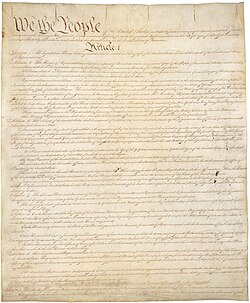
The Constitution of the United States
Moderator Geoff Bennett: And, Jonathan, 61 percent of Americans, including 30 percent of Republicans, now say that President Trump has become erratic with age. That’s according to a recent Reuters-Ipsos poll.
The press corps — I guess we should hold up a mirror to ourselves. The press corps spent two years making President Biden’s mental fitness, his acuity the story. Why isn’t that same scrutiny now being applied to President Trump broadly?
Jonathan Capehart: Yes, exactly. That has been my question since January 20 of last year. We, the press, spent a lot of time talking about President Biden and his age because he looked old. He moved slowly. He wasn’t as vigorous and agile, supposedly, as the guy he pushed out of office and then the guy who was running against him.
And even little slips of the tongue were used to show, see, aha, he’s not all there. He’s losing his mind. How does that compare to what we’re going through right now? I wish people who have written books — people who have gone on air talking about President Biden nonstop, where are they now?
Where are those books now that we have a president who has given ample evidence, ample evidence that something is not right? Where are the people who are standing up and saying, you know what, something needs to be done?
And that goes back to some — you were talking about the founders. They were prepared for something like this. What they weren’t prepared for was the Article I branch just ceding all authority. What they weren’t prepared for were people from the president’s own party willing to either turn a blind eye or enable him to run roughshod over the Constitution.

Donald Trump
Even when you have got him out there threatening annihilation of a civilization, even when he’s started a war for no reason and the enemy is in a stronger position now than it was before he started this war of his own choosing?
At some point, Republicans writ large and those on Capitol Hill have to start standing up for the Article I prerogatives, but also start standing up for the country. I don’t know how much longer we as a nation can withstand this. And I know the world is beyond done with us, but I think they’re also frightened of us.
* * * * * * * * * *
This is not the first time the subject of Donald Trump’s mental instability has been raised. In 2018, during Trump’s first term as President, a 53-year-old novel was re-released: Night at Camp David, by Fletcher Knebel.
At the time of its 1965, release, its plot was considered so over-the-top as to be worthy of science fiction:
Iowa Democratic Senator Jim MacVeagh is summoned to Camp David, the Presidential retreat, by President Mark Hollenbach. MacVeagh is expected to become Hollenbach’s next Vice President. But he becomes alarmed that Hollenbach is clearly suffering from intense paranoia.
Hollenbach wants to develop a closer relationship between the United States and Russia—while cutting ties with American allies in Europe. Moreover, he believes the American news media are conspiring against him with his political enemies.
Its paperback edition offered a sentence that went straight for the jugular: “What would happen if the President of the United States went stark-raving mad?”
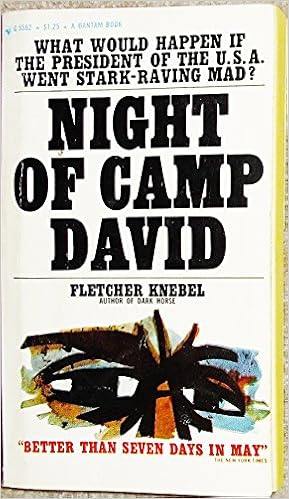
In a November 30, 2018 review of Night at Camp David, Tom McCarthy, national affairs correspondent for the British newspaper, The Guardian, wrote:
“The current president has seen crowds where none exist, deployed troops to answer no threat, attacked national institutions – the military, the justice department, the judiciary, the vote, the rule of law, the press – tried to prosecute his political enemies, elevated bigots, oppressed minorities, praised despots while insulting global allies and wreaked diplomatic havoc from North Korea to Canada.”
2020 PRESIDENTIAL ELECTION, AFFORDABLE CARE ACT (ACA), ALEC BALDWIN, ALTERNET, AMERICABLOG, AMNESTY INTERNATIONAL, AP, ARTICLE 1, BABY BOOMER RESISTANCE, BANDY X. LEE, BBC, BILL CLINTON, BIRTHRIGHT CITIZENSHIP, BLOOMBERG, BLUESKY, BUREAU OF LABOR STATISTICS (BLS), BUZZFEED, CANADA, CBS NEWS, CHICAGO, CHRIS KREBS, CNN, CONSUMER PROTECTION FINANCIAL BUREAU, CROOKS AND LIARS, CYBERSECURITY AND INFRASTRUCTURE SECURITY AGENCY (CISA), DAILY KOS, DAVID BROOKS, DEMOCRATS, DEPARTMENT OF JUSTICE (DOJ), DIVERSITY EQUITY AND INCLUSION (DEI), DONALD TRUMP, ELON MUSK, FBI, FEDERAL AVIATION ADMINISTRATION (FAA), FIVETHIRTYEIGHT, FLETCHER KNEBEL, GAIUS CALIGULA, GAZA, GEOFF BENNETT, GEORGE STEPHANOPOULOS, GORE VIDAL, GREENLAND, GULF OF AMERICA, GULF OF MEXICO, HARD UNIVERSITY, HARPER’S MAGAZINE, HARVARD MEDICAL SCHOOL, HUFFINGTON POST, illegal immigration, IMMIGRATION AND CUSTOMS ENFORCEMENT (ICE), INSPECTORS GENERAL, IRAN WAR, JANUARY 6 COUP ATTEMPT, JEFFREY EPSTEIN, JOHN ADAMS, JOHN D. GARTNER, JOHN F. KENNEDY CENTER FOR THE PERFORMING ARTS, JOHNS HOPKINS UNIVERSITY MEDICAL SCHOOL, JONATHAN CAPEHART, JOSEPH BIDEN, KEVIN SPACEY, LANCE DODES, LOS ANGELES, MARK MEADOWS, MEDAL OF HONOR WINNERS, MEDIA MATTERS, MEDICAID, MEDICARE, MICHAEL JACKSON, MICK JAGGER, MINNEAPOLIS, MOTHER JONES, MOVEON, MS NOW, MSNBC, NARCISSISM, NBC NEWS, NEWSDAY, NEWSWEEK, NIGHT AT CAMP DAVID (BOOK), NORTH ATLANTIC TREATY ORGANIZATION (NATO), NPR, Oil, PARIS CLIMATE AGREEMENT, PBS NEWSHOUR, POLITICO, POLITICUSUSA, PRINCE ANDREW, QATAR, RAW STORY, REPUBLICANS, REUTERS, RICHARD BRANSON, ROMAN EMPERORS, ROMAN EMPIRE, RUDY GIULIANI, SALLUST, SALON, SEATTLE TIMES, SLATE, ST. PAUL, STRAIT OF HORMUZ, SUPPLEMENTAL NUTRITION ASSISTANCE PROGRAM (SNAP), TACITUS, TALKING POINTS MEMO, THE ATLANTIC, THE CHICAGO SUN-TIMES, THE CHICAGO TRIBUNE, THE DAILY BEAST, THE DAILY BLOG, THE DANGEROUS CASE OF DONALD TRUMP (BOOK), THE GUARDIAN, THE HILL, THE HUFFINGTON POST, THE INTERCEPT, THE LOS ANGELES TIMES, THE NATION, THE NEW REPUBLIC, THE NEW YORK TIMES, THE NEW YORKER, THE PENTAGON, THE TWELVE CAESARS (ESSAY), THE VILLAGE VOICE, THE WASHINGTON POST, THINKPROGRESS, TIME, TRUTHDIG, TRUTHOUT, TWO POLITICAL JUNKIES, U.S. NEWS & WORLD REPORT, UNITED STATES CONSTITUTION, UPI, USA TODAY, VLADIMIR PUTIN, WAR CRIMES, WASHINGTON D.C., WOODY ALLEN, WORLD HEALTH ORGANIZATION, X, YALE SCHOOL OF MEDICINE
In Bureaucracy, History, Law, Law Enforcement, Military, Politics, Social commentary on May 11, 2026 at 12:10 am
On April 10, David Brooks of The Atlantic and Jonathan Capehart of MS NOW appeared—as they do every Friday—on the PBS Newshour to discuss the week’s political events.
Brooks is a conservative, Capehart, a liberal, but they exchange their often differing views in a calm, civil manner. But on this date, there was unanimity between them on the subject of President Donald Trump’s deteriorating mental state.
Moderator Geoff Bennett kicked off the exchange with this:
So, David, the president this week threatened to wipe out an entire civilization, and then he took a cease-fire deal 88 minutes before his own deadline. Is this maximum pressure or maximum chaos?
David Brooks: Maximum malevolence. We shouldn’t let that comment about the wiping out of civilization go by without saying what an antithesis it is of American history….We have always prided ourselves, whether — whatever stupid stuff we do, on not being a rapacious European-style imperial dominating power.
After World War II, we didn’t try to take over Germany and Japan. We gave them money so they could recover. Even George W. Bush, whatever you think of the war, the intentions were OK. But to threaten to wipe out a civilization is pure malevolence.

David Brooks
It’s an assertion of true evil. And it didn’t work. And so, if you want to know how the war is going, look at who’s moving. The U.S. used to have regime change. Now, today, Trump said just so we can stop the nuclear program. And the nuclear material have been unaffected by this war, by the way. So we’re pulling back our goals.
The Iranians, when they put forth their negotiating position, they’re sticking with the goals they had and then they’re adding more. We want to control the Straits of Hormuz. We want reparations. We want you to release all our money.
So they’re clearly on the offensive. And so if you…think America’s winning, why are we going backwards and why are we retreating?
Bennett: And, Jonathan, what does it mean for American foreign policy when the distance between the president saying on social media a whole civilization will die tonight and a cease-fire announcement is roughly eight hours?
Jonathan Capehart: It speaks to the chaos that….that characterizes the president himself, that characterizes how he is running his administration. I was on air Sunday morning….where he was demanding explicitly to open the Strait of Hormuz, you crazy bastards, from a president of the United States on Easter Sunday. To your point, this is not the America that we know.
The American president is supposed to be a statesman, supposed to be someone who is a reflection of our better selves or who we hope to be, who we project our image to be. And, right now, our image is so bad that we not only have the French leader calling out the American president, but the British prime minister called out the American president, basically lumping him with Vladimir Putin of Russia in terms of malevolent force on the world stage.

Jonathan Capehart
….This gets to the bigger question for me about….is the president all right? Because no American president ever has written the things, said the things, threatened the things that he did in the span of, what, 72 hours.
Bennett: Let’s talk more about that, because, last night, President Trump shared this graphic video of a woman being beaten to death. We’re not going to show that video, but you can see the screenshot of the social media message there on the screen.
And he used this video to attack former President Biden, Democrats, federal judges. A sitting president posting footage of a murder as political content, is there no line left?
Brooks: Apparently not. I think he is spiraling out of control. And I say that in part, and a little psychologically, narcissists tend to disinhibit as they age. And so they….just get more of themselves, which is not a good thing.
Donald Trump
But last January, as we watched this spiral psychologically….I read Roman histories. And so you get Tacitus and Sallust and those old guys, because they had a front-row seat to tyranny. And they watched authoritarians, one after another, Caligula, all these guys. And the one thing they all said was that they deteriorate.
They create a situation around them, when the sycophants have to get more sycophant. Anybody who’s reasonable is either dead or gone. And then the urge to dominate, the lust for power becomes drunk. They become drunk on that. And they get more and more daring, more and more out of control, and then you get this spiral.
And our founding fathers, they understood this so well. They read Tacitus. They loved these guys. And John Adams said, if we get a leader like that, he will run through our Congress, our Constitution the way a whale goes through a net. And so they completely understood. And their worst nightmare is now happening.
ABC NEWS, ABC’S THE WEEK, ADOLF HITLER, ALTERNET, AMERICABLOG, AP, AUSTRIA, BABY BOOMER RESISTANCE, BBC, BC NEWS, BEVIN ALEXANDER, BLOOMBERG, BLUESKY, BUZZFEED, CANADA, CBS NEWS, CHARLES “CQ” BROWN, CNN, CROOKS AND LIARS, CZECHOSLOVAKIA, D-DAY, DAILY KOS, DONALD TRUMP, ERWIN ROMMEL, FIVETHIRTYEIGHT, FRANCE, FUHRER OATH, GREAT BRITAIN, GREENLAND, HARPER’S MAGAZINE, HEINZ GUDERIAN, HOW HITLER COULD HAVE WON WORLD WAR II (BOOK), HUFFINGTON POST, IRAN, JAMES SLIFE, JEFFREY EPSTEIN, JEFFREY KRUSE, JIMMY CARTER, JOINT OPERATIONS COMMAND, JUSTIN TRUDEAU, LISA FRANCHETTI, MEDIA MATTERS, MEXICO, MOTHER JONES, MOVEON, MSNBC, MUNICH CONFERENCE, NATIONAL SECURITY AGENCY, NAZI GERMANY, NBC NEWS, NEWSDAY, NEWSWEEK, NPR, NUCLEAR WEAPONS SITES, PANAMA, PAUL VON HINDENBURG, PBS NEWSHOUR, PETE HEGSETH, POLAND, POLITICIZING THE MILITARY, POLITICO, POLITICUSUSA, RAMDY GEORGE, RANDY GEORGE, RAW STORY, REPUBLICANS, REUTERS, RHINELAND, RUSSIA, SALON, SEATTLE TIMES, SECRETARY OF DEFENSE, SHOSHANA CHATFIELD, SLATE, SUDENTENLAND, TALKING POINTS MEMO, THE ATLANTIC, THE CHICAGO SUN-TIMES, THE CHICAGO TRIBUNE, THE DAILY BEAST, THE DAILY BLOG, THE GUARDIAN, THE HILL, THE HUFFINGTON POST, THE INTERCEPT, THE LOS ANGELES TIMES, THE NATION, THE NEW REPUBLIC, THE NEW YORK TIMES, THE NEW YORKER, THE PENTAGON, THE SS, THE VILLAGE VOICE, THE WASHINGTON POST, THEODORE ROOSEVELT, THINKPROGRESS, TIME, TIMOTHY HAUGH, TRUTHDIG, TRUTHOUT, TWO POLITICAL JUNKIES, U.S. NEWS & WORLD REPORT, UPI, USA TODAY, WERNER VON BLOMBERG, WERNER VON FRITSCH, WONKETTE, WORLD WAR 11, X
In Bureaucracy, History, Military, Politics, Social commentary, Uncategorized on May 7, 2026 at 12:13 am
When Donald Trump isn’t picking fights with Americans, he picks them with the leaders of democratic countries.
At a November 30, 2024 dinner at Mar-a-Lago, Trump’s estate in Palm Beach, Florida, he told Canadian Prime Minister Justin Trudeau that Canada could become the 51st state of the United States.
Canada’s Public Safety Minister Dominic LeBlanc, who attended the dinner, insisted that Trump was joking.
But on December 2, Trump threatened to impose a 25% tax on all products entering the United States from Canada and Mexico unless they stopped the flow of drugs and illegal aliens.
And on December 3, Trump posted on his Truth Social platform an AI-generated image of himself standing on a mountain with a Canadian flag beside him. Its caption: “Oh Canada!”
Trudeau had requested the Mar-a-Lago meeting to convince Trump that the northern border is completely different from the southern one with Mexico.

Canadian flag
“Less than one percent of migrants coming into the United States irregularly come from Canada and 0.2 percent of the fentanyl coming into the United States comes from Canada,” Trudeau said in Parliament.
During the last fiscal year, American customs agents seized 43 pounds of fentanyl at the Canadian border, compared with 21,100 pounds at the Mexican border.
Most of the fentanyl reaching the U.S. is made by Mexican drug cartels using precursor chemicals smuggled from Asia.
Utterly unmentioned in Trump’s demand: It’s America’s insatiable demand for illicit drugs that is the root cause of the drug trade.
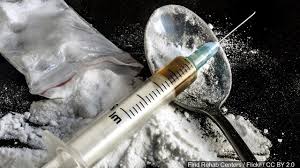
Heroin syringe
Also unmentioned—if not deliberately ignored by Trump: Canada plays a substantial role as a U.S. trading partner. About 60% of U.S. crude oil imports are from Canada, and 85% of U.S. electricity imports as well.
Canada is also the largest foreign supplier of steel, aluminum and uranium to the U.S. and has 34 critical minerals and metals that the Pentagon eagerly desires. About 77% of Canada’s exports go to the U.S.
Trudeau pleaded with Trump not to impose the tariff because because it would “kill” Canada’s economy.
Trump responded: “So your country can’t survive unless it’s ripping off the US to the tune of $100 billion?”
His comments referred to the American trade deficit with Canada.
The U.S. had a $75 billion trade deficit with Canada in 2023 but a third of what Canada sells into the U.S. is energy exports and prices have been high.
Trudeau left the meeting without reassurance that Trump would not impose a 25% tariff on products from Canada.
But on March 5, 2025, Trump slapped 25% tariffs on Canada. Six days later, Trump announced that he would impose an additional 25% tariff on all Canadian steel and aluminum imports effective March 12.
Yet another country Trump has aimed his hostility at is Greenland.
“For purposes of National Security and Freedom throughout the World, the United States of America feels that the ownership and control of Greenland is an absolute necessity,” Trump wrote on Truth Social on December 23, 2024.
The next day, Greenland’s Prime Minister Mute Egede told Trump to back off: “Greenland is ours. We are not for sale and will never be for sale. We must not lose our long struggle for freedom.”
The Kingdom of Denmark holds control of the semi-autonomous Greenland.
Trump had previously floated the idea of the U.S. buying Greenland in 2019, which the Danish prime minister at the time called “absurd.”

Greenland is home to America’s Pituffik Space Base which “detects and reports attack assessments of sea-launched and intercontinental ballistic missile threats in support of strategic missile warning and missile defense,” according to the base’s website.
Greenland is strategically significant to the United States because it sits between Russia and the eastern coast of the United States, and is the fastest way from Europe to New York.
Some critics believe that Trump is floating headline-getting assaults on other nations to divert attention from his domestic agenda—which includes deporting millions of men, women and children from Hispanic countries.
Others believe it’s to divert attention from the recently released Epstein Files, which document his longtime ties to convicted pedophile Jeffrey Epstein
In January, 2026, Danish military personnel were deployed to Greenland with instructions to prepare to disable key airport runways in Nuuk and Kangerlussuaq to prevent U.S. military aircraft from landing. Danish forces brought explosives and blood supplies in preparation for potential conflict.
NATO had been created in 1949 to deter Soviet Union aggression against Europe. For the first time in its 77-year history, its European members prepared to repulse an invasion by the United States.
Trump’s actions faced heavy opposition in Congress from both major parties. Republican Speaker of the House Mike Johnson described Trump’s threats as “completely inappropriate.”
On January 21, 2026, Trump reversed course, first ruling out military force and then abandoning tariff threats after talks with NATO secretary-general Mark Rutte.
And while Trump picks needless fights with America’s longtime allies, China—the first peer competitor that can challenge America economically, militarily, and technologically—is deepening its ties with Russia, Iran, North Korea, and other countries that seek to weaken U.S. power.
ABC NEWS, ABC’S THE WEEK, ADOLF HITLER, ALTERNET, AMERICABLOG, AP, AUSTRIA, BABY BOOMER RESISTANCE, BBC, BC NEWS, BEVIN ALEXANDER, BLOOMBERG, BLUESKY, BUZZFEED, CANADA, CBS NEWS, CHARLES “CQ” BROWN, CNN, CROOKS AND LIARS, CZECHOSLOVAKIA, D-DAY, DAILY KOS, DONALD TRUMP, ERWIN ROMMEL, FIVETHIRTYEIGHT, FRANCE, FUHRER OATH, GREAT BRITAIN, GREENLAND, HARPER’S MAGAZINE, HEINZ GUDERIAN, HOW HITLER COULD HAVE WON WORLD WAR II (BOOK), HUFFINGTON POST, JAMES SLIFE, JEFFREY EPSTEIN, JEFFREY KRUSE, JIMMY CARTER, JOINT OPERATIONS COMMAND, JUSTIN TRUDEAU, LISA FRANCHETTI, MEDIA MATTERS, MEXICO, MOTHER JONES, MOVEON, MSNBC, MUNICH CONFERENCE, NAZI GERMANY, NBC NEWS, NEWSDAY, NEWSWEEK, NPR, PANAMA, PAUL VON HINDENBURG, PBS NEWSHOUR, PETE HEGSETH, POLAND, POLITICIZING THE MILITARY, POLITICO, POLITICUSUSA, RAMDY GEORGE, RANDY GEORGE, RAW STORY, REPUBLICANS, REUTERS, RHINELAND, RUSSIA, SALON, SEATTLE TIMES, SECRETARY OF DEFENSE, SHOSHANA CHATFIELD, SLATE, SUDENTENLAND, TALKING POINTS MEMO, THE ATLANTIC, THE CHICAGO SUN-TIMES, THE CHICAGO TRIBUNE, THE DAILY BEAST, THE DAILY BLOG, THE GUARDIAN, THE HILL, THE HUFFINGTON POST, THE INTERCEPT, THE LOS ANGELES TIMES, THE NATION, THE NEW REPUBLIC, THE NEW YORK TIMES, THE NEW YORKER, THE PENTAGON, THE SS, THE VILLAGE VOICE, THE WASHINGTON POST, THEODORE ROOSEVELT, THINKPROGRESS, TIME, TIMOTHY HAUGH, TRUTHDIG, TRUTHOUT, TWO POLITICAL JUNKIES, U.S. NEWS & WORLD REPORT, UPI, USA TODAY, WERNER VON BLOMBERG, WERNER VON FRITSCH, WONKETTE, WORLD WAR 11, X
In Bureaucracy, History, Military, Politics, Social commentary on May 6, 2026 at 12:15 am
On August 22, 2025, the PBS Newshour website carried the following headline: HEGSETH FIRES GENERAL WHOSE AGENCY’S INTEL ASSESSMENT OF U.S. STRIKES ON IRAN ANGERED TRUMP.
The story opened: “Defense Secretary Pete Hegseth has fired a general whose agency’s initial intelligence assessment of damage to Iranian nuclear sites from U.S. strikes angered President Donald Trump, according to two people familiar with the decision and a White House official.
“Lt. Gen. Jeffrey Kruse will no longer serve as head of the U.S. Defense Intelligence Agency, according to the people, who spoke on condition of anonymity because they were not authorized to discuss it publicly.
“The firing is the latest upheaval in military leadership and in the country’s intelligence agencies, and comes a few months after details of the preliminary assessment leaked to the media. It found that Iran’s nuclear program has been set back only a few months by the U.S. strikes, contradicting assertions from Trump and Israeli Prime Minister Benjamin Netanyahu.”
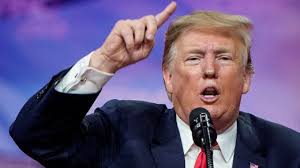
Donald Trump
After the June 21 strikes, Hegseth attacked the press, claiming that it had an anti-military bias . But he refused to provide evidence that proved the nuclear sites had been wiped out.
Since re-taking office on January 20, 2025, President Donald Trump, through Hegseth, has fired more than 10 senior military leaders. Critics have called this an unprecedented purge of the Pentagon.
Among those fired:
- General Charles “CQ” Brown Jr.: Chairman of the Joint Chiefs of Staff, Brown was the nation’s highest-ranking military officer
- Admiral Lisa Franchetti: The Chief of Naval Operations and the first woman to lead the U.S. Navy.
- General James Slife: The Vice Chief of Staff of the Air Force was fired along with Brown and Franchetti
- General Timothy Haugh: The head of U.S. Cyber Command and the director of the National Security Agency (NSA)
- Vice Admiral Shoshana Chatfield: The U.S. military representative to NATO
- Lieutenant General Jeffrey Kruse: The director of the Defense Intelligence Agency
- Army Chief of Staff Randy George: The Army’s most senior general
Hegseth had stopped George from promoting several high-ranking service members—including four Army officers, two black men and two female soldiers—from becoming one-star generals.
The reason: To purge “woke” leadership and prevent a black female officer from standing next to the President.
Decades of experience have been wiped from the highest levels of the U.S. military through removals and retirements during the first year of the second Trump administration.
Trump’s determination to remake the armed forces in his own image reflects he mindset of an earlier dictator whose rage and egotism carried him—and his country—to ruin: Adolf Hitler.
Bevin Alexander provides an overall—but colorful—view of Hitler’s generalship in How Hitler Could have Won World War II.

Among the fatal military mistakes that led to the defeat of the Third Reich:
- Wasting hundreds of Luftwaffe [air force] pilots, fighters and bombers in a halfhearted attempt to conquer England.
- Ignoring the pleas of generals like Erwin Rommel to conquer Syria, Iraq and Saudi Arabia, which would have given Germany control of most of the world’s oil.
- Attacking his ally, the Soviet Union, while still at war with Great Britain.
- Turning millions of Russians into enemies rather than allies by his brutal and murderous policies.
- Needlessly declaring war on the United States after the Japanese attacked Pearl Harbor. (Had he not done so, Americans would have focused all their attention on defeating Japan.)
- Insisting on a “not-one-step-back” military “strategy” that led to the needless surrounding, capture and/or deaths of hundreds of thousands of German servicemen.
As the war turned increasingly against him, Hitler demanded absolute control over the smallest details of his forces.
On June 6, 1944, General Gerd von Rundstedt insisted that Panzer tanks be released to drive the Allies from the Normandy beaches. But these could not be released except on direct orders of the Fuehrer.

Panzer tank
Hitler’s chief of staff, General Alfred Jodl, informed Rundstedt: The Fuhrer was asleep-–and was not to be awakened. By the time Hitler awoke and issued the order, it was too late.
He refused to accept responsibility for his policies that were leading Germany to certain defeat. He blamed his generals, accused them of cowardice, and relieved many of the best ones from command.
Among those sacked was Heinz Guderian, creator of the German Panzer corps—and responsible for the Blitzkreig victory against France in 1940.

Finally, on April 29, 1945—with the Russians only blocks from his underground Berlin bunker—Hitler dictated his “Last Political Testament.”
Once again, he refused to accept responsibility for unleashing a war that ultimately consumed 50 million lives:
“It is untrue that I or anyone else in Germany wanted war in 1939. It was desired and instigated exclusively by those international statesmen who either were of Jewish origin or worked for Jewish interests.”
Hitler had launched the invasion of Poland—and World War II—with a lie: That Poland had attacked Germany.
Fittingly, he closed the war—and his life—with a final lie.
The ancient Greeks believed that “a man’s character is his destiny.”
For Adolf Hitler—and the nations he ravaged—that proved fatally true.
The same has proven true for Donald Trump—and the United States.
ABC NEWS, ABC’S THE WEEK, ADOLF HITLER, ALTERNET, AMERICABLOG, AP, AUSTRIA, BABY BOOMER RESISTANCE, BBC, BC NEWS, BEVIN ALEXANDER, BLOOMBERG, BLUESKY, BUZZFEED, CANADA, CBS NEWS, CHARLES “CQ” BROWN, CNN, CROOKS AND LIARS, CZECHOSLOVAKIA, D-DAY, DAILY KOS, DONALD TRUMP, ERWIN ROMMEL, FIVETHIRTYEIGHT, FRANCE, FUHRER OATH, GREAT BRITAIN, GREENLAND, HARPER’S MAGAZINE, HEINZ GUDERIAN, HOW HITLER COULD HAVE WON WORLD WAR II (BOOK), HUFFINGTON POST, JAMES SLIFE, JEFFREY EPSTEIN, JEFFREY KRUSE, JIMMY CARTER, JOINT OPERATIONS COMMAND, JUSTIN TRUDEAU, LISA FRANCHETTI, MEDIA MATTERS, MEXICO, MOTHER JONES, MOVEON, MSNBC, MUNICH CONFERENCE, NAZI GERMANY, NBC NEWS, NEWSDAY, NEWSWEEK, NPR, PANAMA, PAUL VON HINDENBURG, PBS NEWSHOUR, PETE HEGSETH, POLAND, POLITICIZING THE MILITARY, POLITICO, POLITICUSUSA, RAMDY GEORGE, RAW STORY, REPUBLICANS, REUTERS, RHINELAND, RUSSIA, SALON, SEATTLE TIMES, SHOSHANA CHATFIELD, SLATE, SUDENTENLAND, TALKING POINTS MEMO, THE ATLANTIC, THE CHICAGO SUN-TIMES, THE CHICAGO TRIBUNE, THE DAILY BEAST, THE DAILY BLOG, THE GUARDIAN, THE HILL, THE HUFFINGTON POST, THE INTERCEPT, THE LOS ANGELES TIMES, THE NATION, THE NEW REPUBLIC, THE NEW YORK TIMES, THE NEW YORKER, THE PENTAGON, THE SS, THE VILLAGE VOICE, THE WASHINGTON POST, THEODORE ROOSEVELT, THINKPROGRESS, TIME, TIMOTHY HAUGH, TRUTHDIG, TRUTHOUT, TWO POLITICAL JUNKIES, U.S. NEWS & WORLD REPORT, UPI, USA TODAY, WERNER VON BLOMBERG, WERNER VON FRITSCH, WONKETTE, WORLD WAR 11, X
In Bureaucracy, History, Military, Politics, Social commentary on May 5, 2026 at 12:05 am
Donald Trump has often claimed himself an “America First” President. But his attitude and policies toward the military are clearly based on the “Germany First” policies of Adolf Hitler.
On August 2, 1934, the aged German President Paul von Hindenburg died.
Hitler had been serving as Reich Chancellor—the equivalent of attorney general—since January 30, 1933. Within hours, the Nazi Reichstag [parliament] announced the following law, back-dated to August 1st:
“The office of Reich President will be combined with that of Reich Chancellor. The existing authority of the Reich President will consequently be transferred to the Führer and Reich Chancellor, Adolf Hitler.”
Immediately following the announcement of the new Führer law, the German Officer Corps and every individual soldier in the German Army was made to swear a brand new oath of allegiance:
“I swear by God this holy oath, that I will render to Adolf Hitler, Führer of the German Reich and People, Supreme Commander of the Armed Forces, unconditional obedience, and that I am ready, as a brave soldier, to risk my life at any time for this oath.”
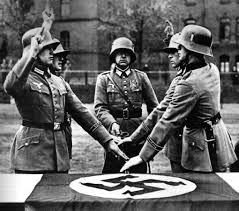
Soldiers swearing the Fuhrer Oath
In the past, German soldiers had sworn loyalty to Germany. Now they had sworn it to a single man.
For men of honor in uniform, conspiracy against the Führer now meant betrayal of the Fatherland itself. They considered this oath sacred, overriding all others. And the vast majority would fanatically obey it right to the end of the disastrous war Hitler was leading them into.
Yet even that didn’t give Hitler the absolute control over the Armed Forces that he sought.
Since taking command of Germany in the summer of 1934, Hitler wanted to replace two high-ranking military officials: General Werner von Fritsch and Colonel General Werner von Blomberg. Both were convinced that Hitler’s increasingly aggressive foreign policy was putting Germany on a collision course with war—a war the Fatherland could not win.
Hitler, in fact, meant to go to war—and despised Fritsch’s and Blomberg’s hesitation to do so. He decided to rid himself of both men.
But how?
Accident played a part in the case of Blomberg.
On January 12, 1938, Blomberg married Erna Gruhn, with Hitler and Reichsmarshall Hermann Goring attending as witnesses. Soon afterward, Berlin police discovered that Gruhn had a criminal record as a prostitute and had posed for pornographic photographs.
Marrying a woman with such a background violated the standard of conduct expected of German officers. Hitler was infuriated at having served as a witness to the ceremony.
But he also saw the scandal as an opportunity to dispose of Blomberg—who was forced to resign.
Shortly after Blomberg was forced out in disgrace, the SS—Hitler’s private police force—presented Hitler with a file that falsely accused Werner von Fritsch of homosexuality. Fritsch angrily denied the accusation but resigned on February 4, 1938.
From that point on, Hitler was in de facto command of the German Armed Services.
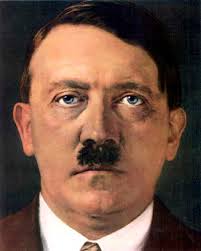
Adolf Hitler
Hitler had a timetable of conquest:
- On March 7, 1936, he seized the Rhineland, the demilitarized zone between Germany and its arch-enemy, France.
- On March 12, 1838, he “unified” Austria with Germany by annexing it.
- In September, 1938, he seized a large portion of western Czechoslovakia after that nation’s British and French “allies” sold it out at the infamous Munich Conference.
- On March 15, 1939, he ordered the Wehrmacht to occupy the rest of Czechoslovakia.
- On September 1, 1939, he ordered the invasion of Poland—unintentionally igniting World War II and the eventual destruction of Nazi Germany.
Like Hitler, Donald Trump has a plan of conquest. Since taking office on January 20, 2025, he has repeatedly threatened the economic—if not the military—security of:
- Canada
- Mexico
- Panama
- Greenland.
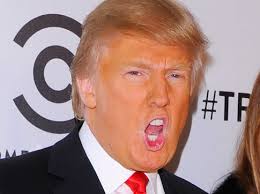
Donald Trump
On December 25, 2024, Trump told a conservative conference in Arizona that Panama was charging U.S. ships “ridiculous, highly unfair” fees to use its namesake canal.
The United States built the canal during the administration of President Theodore Roosevelt and opened it in 1914. It remained controlled by the United States until President Jimmy Carter signed a a 1977 agreement for its eventual handover to Panama in 1999.
On December 25, Trump posted on his website, Truth Social: “Merry Christmas to all, including to the wonderful soldiers of China, who are lovingly, but illegally, operating the Panama Canal.”
“There is not a single Chinese soldier in the canal,” the president of Panama, José Raúl Mulino, told reporters the next day, adding that there is “absolutely no Chinese interference.”
Another country that Trump has rushed to make an enemy of is America’s longtime ally—Canada.
At a November 30 dinner at Mar-a-Lago, Trump’s estate in Palm Beach, Florida, he told Canadian Prime Minister Justin Trudeau that Canada could become the 51st state of the United States.
Canada’s Public Safety Minister Dominic LeBlanc, who attended the dinner, insisted that Trump was joking.
But on December 2, Trump threatened to impose a 25% tax on all products entering the United States from Canada and Mexico unless they stopped the flow of drugs and illegal aliens.
And on December 3, Trump posted on his Truth Social platform an AI-generated image of himself standing on a mountain with a Canadian flag beside him. Its caption: “Oh Canada!”
60 MIINUTES, ABORTION, ADOLF HITLER, ALBERT SPEER, ALTERNET, AMERICABLOG, AP, BABY BOOMER RESISTANCE, BBC, BERLIN, BIRTH CONTROL, BLOOMBERG, BLUESKY, BUZZFEED, CANADA, CBS NEWS, CENSUS BUREAU, CENTERS FOR DISEASE CONTROL AND PREVENTION (CDC), CNN, CONSUMER FINANCIAL PROTECTION BUREAU, CONTRACEPTION, CONVERSATION WITH AN AMERICAN WRITER (POEM), COVID-19, CROOKS AND LIARS, DAILY KOS, DEMOCRATS, DENMARK, DEPARTMENT OF DEFENSE (DOD), DEPARTMENT OF GOVERNMENT EFFICIENCY (DOGE), DEPARTMENT OF JUSTICE (DOJ), DIVERSITY EQUITY AND INCLUSION (DEI), DONALD TRUMP, ELON MUSK, ENVIRONMENTAL PROTECTION AGENCY, FASCISM, FBI, FEDERAL COMMUNICATIONS COMMISSION (FCC), FEDERAL TRADE COMMISSION (FTC), FIVETHIRTYEIGHT, FOSSIL FUELS, FRANCE, GAS, GEORGE STEPHANOPOULOS, HARPER’S MAGAZINE, HERITAGE FOUNDATION, HUFFINGTON POST, HUNTER BIDEN, INSPECTORS GENERAL, INTELLIGENCE OFFICERS, IRAN, ISRAEL, JANUARY 6 COUP ATTEMPT, JOE BIDEN, JOHN F. KENNEDY CENTER FOR THE PERFORMING ARTS, JOSEPH STALIN, LUXURY JET, MEDAL OF HONOR, MEDIA MATTERS, MOTHER JONES, MOVEON, MSNBC, NATIONAL OCEANIC AND ATMOSPHERIC AGENCY (NOAA), NAZI GERMANY, NBC NEWS, NEWSDAY, NEWSWEEK, NORWAY, NPR, Oil, PARDONS, PBS NEWSHOUR, POLAND, POLITICO, POLITICUSUSA, PROJECT 2025, PUBLIC TRANSIT SYSTEMS, QATAR, RAPE, RAW STORY, REPUBLICAN PARTY, REPUBLICANS, REUTERS, ROBERT PAYNE, SALON, SEATTLE TIMES, SECURITY CLEARANCES, SLATE, SOVIET UNION, STALINGRAD, STRAIT OF HORMUZ, TALKING POINTS MEMO, TAX CUTS, THE ATLANTIC, THE CHICAGO SUN-TIMES, THE CHICAGO TRIBUNE, THE DAILY BEAST, THE DAILY BLOG, THE GUARDIAN, THE HILL, THE HUFFINGTON POST, THE INTERCEPT, THE LIFE AND DEATH OF ADOLF HITLER (BOOK), THE LOS ANGELES TIMES, THE NATION, THE NEW REPUBLIC, THE NEW YORK TIMES, THE NEW YORKER, THE PENTAGON, THE VILLAGE VOICE, THE WASHINGTON POST, THINKPROGRESS, TIME, TRUTHDIG, TRUTHOUT, TWO POLITICAL JUNKIES, U.S. NEWS & WORLD REPORT, UKRAINE, UPI, USA TODAY, VLADIMIR PUTIN, VOLODYMYR ZELENSKY, WAR CRIMES, WEHRMACHT, WORLD WAR 11, X, YEVGENEY YEVTUSHENKO
In Bureaucracy, Business, History, Law, Law Enforcement, Military, Politics, Social commentary on April 30, 2026 at 12:18 am
Eighty-one years ago, on March 19, 1945, facing certain defeat, Adolf Hitler ordered a massive “scorched-earth” campaign throughout Germany.
All German agriculture, industry, ships, communications, roads, food stuffs, mines, bridges, stores and utility plants were to be destroyed.
If implemented, it would deprive the entire German population of even the barest necessities after the war.
Opposing him—at first openly, and later secretly—was Albert Speer, his former architect and now Minister of Armaments.

Albert Speer
Speer argued that there must be a future for the German people: “If our enemies wish to destroy us, why help them? We must leave the people something.”
But Hitler refused to back down: “I don’t want to hear any more.”
He gave Speer 24 hours to reconsider his opposition to the order.
Speer could not directly promise to carry out Hitler’s “scorched earth” order. So he gave Hitler a vague answer that essentially committed him to nothing: “My Fuhrer, I stand unconditionally behind you!”
“Then all is well,” said Hitler, suddenly with tears in his eyes.
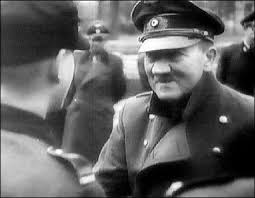
Adolf Hitler addressing boy soldiers as the Third Reich crumbles
“If I stand unreservedly behind you,” said Speer, “then you must entrust me rather than the Gauleiters [district Party leaders serving as provincial governors] with the implementation of your decree.”
Filled with gratitude, Hitler signed the decree Speer had thoughtfully prepared before their fateful meeting.
By doing so, Hitler unintentionally gave Speer the power to thwart his “scorched earth” order.
Trained as an architect, Speer had joined the Nazi Party in 1931. He met Hitler in 1933, when he presented the Fuhrer with architectural designs for the Nuremberg rally scheduled for that year.
From then on, Speer became Hitler’s “genius architect” assigned to create buildings meant to last for a thousand years. “If Hitler had been capable of friendship,” Speer said after the war, “I would have been that friend.”
In 1943, Hitler appointed him Minister of Armaments, charged with revitalizing the German war effort.
Nevertheless, Speer now crisscrossed Germany, persuading military leaders and district governors to not destroy the vital facilities that would be needed after the war.
“No other senior National Socialist could have done the job,” writes Randall Hanson, author of Disobeying Hitler: German Resistance After Valkyrie.
“Speer was one of the very few people in the Reich—-perhaps even the only one—with such power to influence actors’ willingness/unwillingness to destroy.”
Despite his later conviction for war crimes at Nuremberg, Speer never regretted his efforts to save Germany from total destruction at the hands of Adolf Hitler.
* * * * * * * * * *
Why have Republicans almost unanimously stood by Donald Trump despite the wreckage he has made of American foreign and domestic policy?
Fear—that they will lose their privileged positions in Congress if they don’t.
This could happen by:
- Their being voted out of Congress by Trump’s fanatical base; or
- Their being voted out of Congress by anti-Trump voters fed up with Trump’s appalling behavior.
House and Senate Republicans’ support for Trump hinges on one question: “Can I hold onto my power and all the privileges that accompany it by sticking—or breaking—with him?”
The Original Nazis were guided by Hitler’s belief that the world was polluted by corruption and ugliness—and their mission was to remove that ugliness and corruption.
This meant removing those peoples they deemed inferior—Jews, Slavs (Poles, Serbs, Russians), Communists, liberals, gypsies, the physically and mentally handicapped.
Today’s Fascistic Republicans believe themselves to be the only legitimate political party. And so do their supporters.
No sin—or even crime—is intolerable if it’s committed by a Republican.
In his bestselling 1973 biography, The Life and Death of Adolf Hitler, British historian Robert Payne harshly condemned the German people for the rise of the Nazi dictator:
“[They] allowed themselves to be seduced by him and came to enjoy the experience….[They] followed him with joy and enthusiasm because he gave them license to pillage and murder to their hearts’ content. They were his servile accomplices, his willing victims.”
Like Hitler, Trump offered his Republican voters and Congressional allies intoxicating dreams: “I will enrich all of you. And I will humiliate and destroy those Americans you most hate.”
For his white, Fascistic, largely elderly audience, those enemies included blacks, atheists, Hispanics, non-Christians, Muslims, liberals, “uppity” women, Asians.
For most of the first three years of his first term, he faced little opposition. What cost Trump the White House wasn’t Democratic or Republican courage but a deadly disease—COVID-19—which Trump refused to take seriously.
Democrats cowered before Trump’s slanders—thereby ensuring more assaults.
Most of the press quailed before Trump. Only a few media outlets—notably The New York Times, CNN and The Washington Post––dared investigate his crimes and blunders.
In 1960, the Russian poet, Yevgeney Yevtushenko, published “Conversation With an American Writer”—a stinging indictment of the cowardly opportunists who had supported the brutal tyranny of Joseph Stalin:
“You have courage,” they tell me.
It’s not true. I was never courageous.
I simply felt it unbecoming
to stoop to the cowardice of my colleagues.
Too many Republicans know all-too-well how it feels to stoop to the cowardice of their colleagues.
60 MIINUTES, ABORTION, ADOLF HITLER, ALBERT SPEER, ALTERNET, AMERICABLOG, AP, BABY BOOMER RESISTANCE, BBC, BERLIN, BIRTH CONTROL, BLOOMBERG, BLUESKY, BUZZFEED, CANADA, CBS NEWS, CENSUS BUREAU, CENTERS FOR DISEASE CONTROL AND PREVENTION (CDC), CNN, CONSUMER FINANCIAL PROTECTION BUREAU, CONTRACEPTION, CONVERSATION WITH AN AMERICAN WRITER (POEM), COVID-19, CROOKS AND LIARS, DAILY KOS, DEMOCRATS, DENMARK, DEPARTMENT OF DEFENSE (DOD), DEPARTMENT OF GOVERNMENT EFFICIENCY (DOGE), DEPARTMENT OF JUSTICE (DOJ), DIVERSITY EQUITY AND INCLUSION (DEI), DONALD TRUMP, ELON MUSK, ENVIRONMENTAL PROTECTION AGENCY, FASCISM, FBI, FEDERAL COMMUNICATIONS COMMISSION (FCC), FEDERAL TRADE COMMISSION (FTC), FIVETHIRTYEIGHT, FOSSIL FUELS, FRANCE, GAS, GEORGE STEPHANOPOULOS, HARPER’S MAGAZINE, HERITAGE FOUNDATION, HUFFINGTON POST, HUNTER BIDEN, INSPECTORS GENERAL, INTELLIGENCE OFFICERS, IRAN, ISRAEL, JANUARY 6 COUP ATTEMPT, JOE BIDEN, JOHN F. KENNEDY CENTER FOR THE PERFORMING ARTS, JOSEPH STALIN, LUXURY JET, MEDAL OF HONOR, MEDIA MATTERS, MOTHER JONES, MOVEON, MSNBC, NATIONAL OCEANIC AND ATMOSPHERIC AGENCY (NOAA), NAZI GERMANY, NBC NEWS, NEWSDAY, NEWSWEEK, NORWAY, NPR, Oil, PARDONS, PBS NEWSHOUR, POLAND, POLITICO, POLITICUSUSA, PROJECT 2025, PUBLIC TRANSIT SYSTEMS, QATAR, RAPE, RAW STORY, REPUBLICAN PARTY, REPUBLICANS, REUTERS, ROBERT PAYNE, SALON, SEATTLE TIMES, SECURITY CLEARANCES, SLATE, SOVIET UNION, STALINGRAD, STRAIT OF HORMUZ, TALKING POINTS MEMO, TAX CUTS, THE ATLANTIC, THE CHICAGO SUN-TIMES, THE CHICAGO TRIBUNE, THE DAILY BEAST, THE DAILY BLOG, THE GUARDIAN, THE HILL, THE HUFFINGTON POST, THE INTERCEPT, THE LIFE AND DEATH OF ADOLF HITLER (BOOK), THE LOS ANGELES TIMES, THE NATION, THE NEW REPUBLIC, THE NEW YORK TIMES, THE NEW YORKER, THE PENTAGON, THE VILLAGE VOICE, THE WASHINGTON POST, THINKPROGRESS, TIME, TRUTHDIG, TRUTHOUT, TWO POLITICAL JUNKIES, U.S. NEWS & WORLD REPORT, UKRAINE, UPI, USA TODAY, VLADIMIR PUTIN, VOLODYMYR ZELENSKY, WAR CRIMES, WEHRMACHT, WORLD WAR 11, X, YEVGENEY YEVTUSHENKO
In Bureaucracy, Business, History, Law, Law Enforcement, Military, Politics, Social commentary on April 29, 2026 at 12:10 am
Since Donald Trump retook the office of President on January 20, 2025, Republicans have lustily supported or remained silent about his litany of criminal, if not treasonous, actions:
- Trump fired the inspectors general—who are charged with protecting the government from waste and corruption—from more than a dozen federal agencies.
- Several career lawyers who worked on the criminal investigations into Trump during the Biden administration were fired by Acting Attorney General James McHenry because he “do[es] not believe that the leadership of the Department can trust you to assist in implementing the President’s agenda faithfully.”
- Trump ordered a purge of about a half-dozen executive assistant directors at the FBI. These were some of the bureau’s top managers overseeing criminal, national security and cyber investigations.
- Their “crime”: Trump blamed them for investigating his inciting the January 6, 2021 coup attempt and his illegal holding of highly sensitive national security documents after leaving office.

- Without explanation, Trump fired Rohit Chopra, the director of the Consumer Financial Protection Bureau, which protects consumers from unfair, deceptive and fraudulent business practices.
- Following Trump’s executive orders, federal agencies deleted multiple federal web pages and data. Among the agencies: The Pentagon, the Centers for Disease Control and Prevention and the Census Bureau. The changes affected content related to diversity, equity and inclusion (DEI), gender identity, public health research, environmental policy and social programs.
- Following Trump’s anti-DEI executive order, the United States Department of Defense (DOD) deleted content that included the achievements of nonwhite groups, such as Navajo code talkers, black Tuskegee Airmen, Medal of Honor winners and women veterans. As in Joseph Stalin’s Soviet Union, those that Trump hates are made to disappear from history.

- Trump fired the board members at the John F. Kennedy Center for the Performing Arts and appointed himself as chairman—just as Joseph Stalin made himself arbiter of what was permissible for artists in the Soviet Union.
- Trump held what amounted to an ambush meeting with Ukrainian President Volodymyr Zelensky at the White House. Siding with Russian dictator Vladimir Putin, Trump blamed Zelensky for Russia’s 2022 invasion of Ukraine.
- Trump demanded that Zelensky sign over mineral rights to the United States without America’s providing a security guarantee for Ukraine. Zelensky left without signing such an agreement.
- The Trump-authorized and illegitimate Department of Government Efficiency (DOGE) led by billionaire Elon Musk, dismantled multiple agencies, invaded the privacy of untold millions by accessing sensitive data systems and fired tens of thousands of federal workers.
- Trump filed frivolous and extortionate lawsuits against major news networks CBS and ABC.
- Against CBS: Trump claimed that its news magazine, “60 Minutes” deceptively edited an interview with Kamala Harris to damage his presidential campaign and influence the election. He initially sought $10 billion in damages, then increased it to $20 billion. Paramount, the owner of CBS, agreed to pay $16 million in legal fees and a contribution to the future Trump Library.

- Against ABC: He claimed that its commentator, George Stephanopoulos, falsely stated he was found liable for “rape” in the case brought by columnist E. Jean Carroll. The jury found Trump liable for sexual abuse and defamation, but not rape. The judge later clarified that what the jury found Trump did was in fact rape, as commonly understood.
- Nevertheless, in December 2024, ABC News agreed to pay $15 million to a foundation for Trump’s presidential library and $1 million in legal fees to settle the lawsuit.
- Trump solicited and received a $400 million luxury jet from Qatar for use as Air Force One, in direct violation of the Emoluments Clause of the United States Constitution, which prohibits federal officials from accepting gifts from foreign countries.
- The jet will cost taxpayers hundreds of millions of dollars to bring it up to presidential standards, including a security sweep of the entire aircraft and costly upgrades to ensure classified communications. After Trump leaves office, it will be transferred to his Presidential library.
Qatar’s donated plane
John Taggart from Claydon Banbury, Oxfordshire, CC BY-SA 2.0 <https://creativecommons.org/licenses/by-sa/2.0>, via Wikimedia Commons
- On February 28, 2026, Trump—in concert with Israel—launched an unprovoked series of devastating airstrikes against Iran.
- On March 11, Trump told a reporter: “You know, you never like to say too early you won. We won. We won the, in the first hour, it was over.”
- But then—to Trump’s surprise and fury—Iran closed the narrow Strait of Hormuz, through which about 20%-25% of the world’s total liquid petroleum consumption (about 20–21 million barrels per day) flows.
- Overnight, gas prices rose. By late April, the national average for a gallon of regular gas reached $4.02 to $4.04, compared to roughly $2.98 before military operations began.
- On April 5—Easter Sunday, no less—Trump posted on his website, Truth Social: “Tuesday will be Power Plant Day, and Bridge Day, all wrapped up in one, in Iran. There will be nothing like it!!! Open up the Fuckin’ Strait, you crazy bastards, or you’ll be living in Hell – JUST WATCH! Praise be to Allah. President DONALD J. TRUMP”
- This was followed on April 7 by another post: “A whole civilization will die tonight, never to be brought back again. I don’t want that to happen, but it probably will.”
- Legal experts and international organizations such as Amnesty International warned that attacking civilian infrastructure would constitute war crimes under international law.
60 MIINUTES, ABORTION, ADOLF HITLER, ALBERT SPEER, ALTERNET, AMERICABLOG, AP, BABY BOOMER RESISTANCE, BBC, BERLIN, BIRTH CONTROL, BLOOMBERG, BLUESKY, BUZZFEED, CANADA, CBS NEWS, CENSUS BUREAU, CENTERS FOR DISEASE CONTROL AND PREVENTION (CDC), CNN, CONSUMER FINANCIAL PROTECTION BUREAU, CONTRACEPTION, CONVERSATION WITH AN AMERICAN WRITER (POEM), COVID-19, CROOKS AND LIARS, DAILY KOS, DEMOCRATS, DENMARK, DEPARTMENT OF DEFENSE (DOD), DEPARTMENT OF GOVERNMENT EFFICIENCY (DOGE), DEPARTMENT OF JUSTICE (DOJ), DIVERSITY EQUITY AND INCLUSION (DEI), DONALD TRUMP, ELON MUSK, ENVIRONMENTAL PROTECTION AGENCY, FASCISM, FBI, FEDERAL COMMUNICATIONS COMMISSION (FCC), FEDERAL TRADE COMMISSION (FTC), FIVETHIRTYEIGHT, FOSSIL FUELS, FRANCE, GAS, GEORGE STEPHANOPOULOS, HARPER’S MAGAZINE, HERITAGE FOUNDATION, HUFFINGTON POST, HUNTER BIDEN, INSPECTORS GENERAL, INTELLIGENCE OFFICERS, IRAN, ISRAEL, JANUARY 6 COUP ATTEMPT, JOE BIDEN, JOHN F. KENNEDY CENTER FOR THE PERFORMING ARTS, JOSEPH STALIN, LUXURY JET, MEDAL OF HONOR, MEDIA MATTERS, MOTHER JONES, MOVEON, MSNBC, NATIONAL OCEANIC AND ATMOSPHERIC AGENCY (NOAA), NAZI GERMANY, NBC NEWS, NEWSDAY, NEWSWEEK, NORWAY, NPR, Oil, PARDONS, PBS NEWSHOUR, POLAND, POLITICO, POLITICUSUSA, PROJECT 2025, PUBLIC TRANSIT SYSTEMS, QATAR, RAPE, RAW STORY, REPUBLICAN PARTY, REPUBLICANS, REUTERS, ROBERT PAYNE, SALON, SEATTLE TIMES, SECURITY CLEARANCES, SLATE, SOVIET UNION, STALINGRAD, STRAIT OF HORMUZ, TALKING POINTS MEMO, TAX CUTS, THE ATLANTIC, THE CHICAGO SUN-TIMES, THE CHICAGO TRIBUNE, THE DAILY BEAST, THE DAILY BLOG, THE GUARDIAN, THE HILL, THE HUFFINGTON POST, THE INTERCEPT, THE LIFE AND DEATH OF ADOLF HITLER (BOOK), THE LOS ANGELES TIMES, THE NATION, THE NEW REPUBLIC, THE NEW YORK TIMES, THE NEW YORKER, THE PENTAGON, THE VILLAGE VOICE, THE WASHINGTON POST, THINKPROGRESS, TIME, TRUTHDIG, TRUTHOUT, TWO POLITICAL JUNKIES, U.S. NEWS & WORLD REPORT, UKRAINE, UPI, USA TODAY, VLADIMIR PUTIN, VOLODYMYR ZELENSKY, WAR CRIMES, WEHRMACHT, WORLD WAR 11, X, YEVGENEY YEVTUSHENKO
In Bureaucracy, Business, History, Law, Law Enforcement, Military, Politics, Social commentary on April 28, 2026 at 12:10 am
Albert Speer, Minister of Armaments for the Third Reich, was appalled.
His Fuhrer, Adolf Hitler—the man he had idolized for 14 years—had just passed a death sentence on Germany, the nation he claimed to love above all others.
On September 1, 1939, Hitler had triggered World War II with the invasion of Poland. This led to a series of quick, spectacular victories—over Poland, Norway, Denmark and France.
Then, on June 22, 1941, Hitler turned on his ally, the Soviet Union, with which he had signed a non-aggression pact in August, 1939.
It had taken the Wehrmacht six weeks to conquer France. Hitler believed that was how long it would take to defeat the Soviet Union.
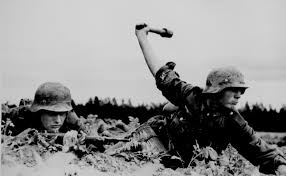
German soldiers invading the Soviet Union
Again, a series of spectacular battlefield victories followed—before the Wehrmacht was halted at the gates of Moscow. A year later, still enmeshed in Russia, the turning point came at Stalingrad, with the loss of the elite Sixth Army and 800,000 soldiers.
Starting in 1943, the Red Army slowly but steadily regained ground it had lost—the western half of Russia—and began pushing back the Germans. By March, 1945, it was fighting inside Germany—and heading straight for its capital: Berlin.
And by March, 1945, so were American and British forces. After landing in Normandy on June 6, 1944, they had steadily pushed their way across Europe and into Germany.
On March 19, 1945, facing certain defeat, Hitler ordered a massive “scorched-earth” campaign throughout Germany.
All German agriculture, industry, ships, communications, roads, food stuffs, mines, bridges, stores and utility plants were to be destroyed.
If implemented, it would deprive the entire German population of even the barest necessities after the war. And he entrusted the campaign to Albert Speer, his favorite architect-turned-Minister-of-Armaments.
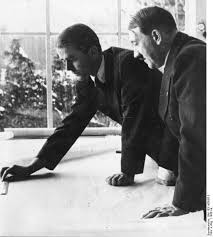
Albert Speer and Adolf Hitler pouring over architectural plans
Now living in a bunker 50 feet below bomb-shattered Berlin, Hitler gave full vent to his most destructive impulses.
“If the war is lost,” Hitler told Speer, “the nation will also perish. This fate is inevitable. There is no necessity to take into consideration the basis which the people will need to continue even a most primitive existence.
“On the contrary, it will be better to destroy these things ourselves, because this nation will have proved to be the weaker one and the future will belong solely to the stronger eastern nation.
“Besides, those who will remain after the battle are only the inferior ones, for the good ones have all been killed.”
* * * * *
During the 2024 Presidential campaign, Americans were repeatedly warned that Donald Trump intended to embrace Project 2025, a collection of policy proposals to fundamentally reshape the U.S. federal government.
Among these:
- The Department of Justice must be thoroughly “reformed” and tightly overseen by the White House.
- The director of the FBI must be personally accountable to the President—just as the head of the KGB is personally accountable to Vladimir Putin.

Seal of the Justice Department
- Federal employees could be instantly fired for not obeying illegal orders, or on mere whim—including the whim of the President.
- The Environmental Protection Agency would be stripped of its authority to protect the air, water and soil.
- The National Oceanic and Atmospheric Administration (NOAA) which the project calls “one of the main drivers of the climate change alarm industry” would be abolished.
- Fossil fuels—the leading cause of global warming—would be favored and environmental regulations to combat climate change abolished.
- Federal funding for all public transit systems across the country would be eliminated.
- Traditionally independent federal agencies such as the Department of Justice, Federal Communications Commission and the Federal Trade Commission would be placed under Presidential control.
- The wealthiest 1% would receive massive tax cuts at the expense of the poor and middle class.
- Conception would be designated as the point where life begins.
- Abortion would be outlawed.
- Access to birth control would be sharply restricted, if not banned.
All of these have since been vigorously implemented by the Trump administration. Yet almost no Republican members of Congress have dared to oppose this wholesale rejection of almost 250 years of American democracy.
Since Trump retook office on January 20, 2025, Republicans have lustily supported or remained silent about his following acts of criminality, if not treason:
- On January 20, 2025—his first day as re-elected President—Trump granted clemency to more than 1,500 people convicted of offenses related to the January 6, 2021 United States Capitol attack. This sends a clear message that his supporters can commit virtually any crime against his opponents with impunity.
Donald Trump
- Trump revoked the security clearances of 51 former Intelligence officials. Their “crime”: Signing a letter in 2020 stating that reports about a laptop allegedly belonging to Hunter Biden, son of then-presidential candidate Joe Biden, had “classic earmarks of a Russian information operation.”
- During a press conference in North Carolina, Trump reaffirmed his stance that Canada should become the 51st state. Rejecting the longtime friendship between the two countries, Trump took an increasingly aggressive stance toward Canada, imposing steep tariffs and even threatening military intervention.


 Bureaucracybuster's Blog
2020 PRESIDENTIAL ELECTION, AFFORDABLE CARE ACT (ACA), ALEC BALDWIN, ALTERNET, AMERICABLOG, AMNESTY INTERNATIONAL, AP, ARTICLE 1, BABY BOOMER RESISTANCE, BANDY X. LEE, BBC, BILL CLINTON, BIRTHRIGHT CITIZENSHIP, BLOOMBERG, BLUESKY, BUREAU OF LABOR STATISTICS (BLS), BUZZFEED, CANADA, CBS NEWS, CHICAGO, CHRIS KREBS, CNN, CONSUMER PROTECTION FINANCIAL BUREAU, CROOKS AND LIARS, CYBERSECURITY AND INFRASTRUCTURE SECURITY AGENCY (CISA), DAILY KOS, DAVID BROOKS, DEMOCRATS, DEPARTMENT OF JUSTICE (DOJ), DIVERSITY EQUITY AND INCLUSION (DEI), DONALD TRUMP, ELON MUSK, FBI, FEDERAL AVIATION ADMINISTRATION (FAA), FIVETHIRTYEIGHT, FLETCHER KNEBEL, GAIUS CALIGULA, GAZA, GEOFF BENNETT, GEORGE STEPHANOPOULOS, GORE VIDAL, GREENLAND, GULF OF AMERICA, GULF OF MEXICO, HARD UNIVERSITY, HARPER’S MAGAZINE, HARVARD MEDICAL SCHOOL, HUFFINGTON POST, illegal immigration, IMMIGRATION AND CUSTOMS ENFORCEMENT (ICE), INSPECTORS GENERAL, IRAN WAR, JANUARY 6 COUP ATTEMPT, JEFFREY EPSTEIN, JOHN ADAMS, JOHN D. GARTNER, JOHN F. KENNEDY CENTER FOR THE PERFORMING ARTS, JOHNS HOPKINS UNIVERSITY MEDICAL SCHOOL, JONATHAN CAPEHART, JOSEPH BIDEN, KEVIN SPACEY, LANCE DODES, LOS ANGELES, MARK MEADOWS, MEDAL OF HONOR WINNERS, MEDIA MATTERS, MEDICAID, MEDICARE, MICHAEL JACKSON, MICK JAGGER, MINNEAPOLIS, MOTHER JONES, MOVEON, MS NOW, MSNBC, NARCISSISM, NBC NEWS, NEWSDAY, NEWSWEEK, NIGHT AT CAMP DAVID (BOOK), NORTH ATLANTIC TREATY ORGANIZATION (NATO), NPR, Oil, PARIS CLIMATE AGREEMENT, PBS NEWSHOUR, POLITICO, POLITICUSUSA, PRINCE ANDREW, QATAR, RAW STORY, REPUBLICANS, REUTERS, RICHARD BRANSON, ROMAN EMPERORS, ROMAN EMPIRE, RUDY GIULIANI, SALLUST, SALON, SEATTLE TIMES, SLATE, ST. PAUL, STRAIT OF HORMUZ, SUPPLEMENTAL NUTRITION ASSISTANCE PROGRAM (SNAP), TACITUS, TALKING POINTS MEMO, THE ATLANTIC, THE CHICAGO SUN-TIMES, THE CHICAGO TRIBUNE, THE DAILY BEAST, THE DAILY BLOG, THE DANGEROUS CASE OF DONALD TRUMP (BOOK), THE GUARDIAN, THE HILL, THE HUFFINGTON POST, THE INTERCEPT, THE LOS ANGELES TIMES, THE NATION, THE NEW REPUBLIC, THE NEW YORK TIMES, THE NEW YORKER, THE PENTAGON, THE TWELVE CAESARS (ESSAY), THE VILLAGE VOICE, THE WASHINGTON POST, THINKPROGRESS, TIME, TRUTHDIG, TRUTHOUT, TWO POLITICAL JUNKIES, U.S. NEWS & WORLD REPORT, UNITED STATES CONSTITUTION, UPI, USA TODAY, VLADIMIR PUTIN, WAR CRIMES, WASHINGTON D.C., WOODY ALLEN, WORLD HEALTH ORGANIZATION, X, YALE SCHOOL OF MEDICINE
ABSOLUTE POWER = ABSOLUTE CORRUPTION: PART FOUR (END)
In Bureaucracy, History, Law, Law Enforcement, Military, Politics, Social commentary, Uncategorized on May 14, 2026 at 12:05 amAmong the outrages President Donald Trump has committed since returning to power on January 20:
Trump’s vindictiveness, his narcissism, his compulsive aggression, his complaints that his “enemies” in government and the press are trying to destroy him, have caused many to ask: Could the President of the United States be suffering from mental illness?
One who has dared to answer this question is John D. Gartner, a practicing psychotherapist.
John D. Gartner
Gartner graduated magna cum laude from Princeton University, received his Ph.D in clinical psychology from the University of Massachusetts, and served as a part-time assistant professor of psychiatry at Johns Hopkins University Medical School for 28 years.
During an interview by U.S. News & World Report (published on January 27, 2017), Gartner said: “Donald Trump is dangerously mentally ill and temperamentally incapable of being president.”
Gartner said that Trump suffers from “malignant narcissism,” whose symptoms include:
“We’ve seen enough public behavior by Donald Trump now that we can make this diagnosis indisputably,” says Gartner, who admits he has not personally examined Trump.
Another psychiatrist who’s determined that Trump is “mentally compromised” is Bandy X. Lee, an assistant clinical psychiatry professor at the Yale School of Medicine.
And she offered her reasons for doing so as the editor of The Dangerous Case of Donald Trump: 27 Psychiatrists and Mental Health Experts Assess a President.
“It doesn’t take a psychiatrist to notice that our president is mentally compromised,” she and colleague Judith Lewis Herman asserted in the book’s prologue.
According to Dr. Craig Malkin, a Lecturer in Psychology for Harvard Medical School and a licensed psychologist, Trump is a pathological narcissist:
“Pathological narcissism begins,” Malkin writes, “when people become so addicted to feeling special that, just like with any drug, they’ll do anything to get their ‘high,’ including lie, steal, cheat, betray and even hurt those closest to them.
“When they can’t let go of their need to be admired or recognized, they have to bend or invent a reality in which they remain special despite all messages to the contrary. In point of fact, they become dangerously psychotic. It’s just not always obvious until it’s too late.”
Lance Dodes, a retired psychiatry professor at Harvard Medical School, believes that Trump is a sociopath:
“The failure of normal empathy is central to sociopathy, which is marked by an absence of guilt, intentional manipulation and controlling or even sadistically harming others for personal power or gratification.”
* * * * * * * * * *
Americans have long believed that they—and especially their leaders—are an “exceptional” people. As a result, they consider themselves immune from the threats of corruption and dictatorship that have plagued other nations.
Millions of Americans—including many Trump supporters—have been shaken by the revelations of the Epstein Files, which chronicle the sexual depravities of convicted pedophile Jeffrey Epstein. Even more disturbing has been the knowledge that he and Donald Trump maintained a friendship for 15 to 17 years.
The Files so far released are replete with names of celebrities such as Michael Jackson, Mick Jagger, Kevin Spacey, Alec Baldwin, Woody Allen, George Stephanopoulos, Elon Musk, Richard Branson, former President Bill Clinton and Prince Andrew.
This has added to the shock and revulsion felt by millions of Americans. Yet they might have been less shocked had they read Gore Vidal’s 1959 essay, “The Twelve Caesars.”
Gore Vidal
Mark Coggins from San Francisco, CC BY 2.0 <https://creativecommons.org/licenses/by/2.0>, via Wikimedia Commons
Vidal’s essay is an ode to The Twelve Caesars, a classic work of ancient biography by Gaius Suetonius Tranquillus—known as Suetonius.
Suetonius, a Roman citizen and historian, chronicled the lives of the first twelve Caesars of imperial Rome: Julius Caesar, Augustus, Tiberius, Caligula, Claudius, Nero, Galba, Otho, Vitellius, Vespasian, Titus and Domitian.
Vidal sought to show the relevance of Suetonius’ work to present-day America: “It would be wrong, however, to dismiss, as so many commentators have, the wide variety of Caesarean sensuality as simply the viciousness of twelve abnormal men. They were, after all, a fairly representative lot.
“They differed from us – and their contemporaries – only in the fact of power, which made it possible for each to act out his most recondite sexual fantasies. This is the psychological fascination of Suetonius. What will men so placed do? The answer, apparently, is anything and everything.”
Thus the lesson taught by the celebrities—including Trump—who glommed onto Jeffrey Epstein: They differed from ordinary citizens only in the power they held over themselves—and others. And, reveling in that power, they felt free to indulge the most depraved fantasies, sexual and otherwise.
Share this: