Posts Tagged ‘RICHARD M. NIXON’
ABC NEWS, ADOLF HITLER, ALTERNET, AMERICABLOG, AP, ASSASSINATION, BABY BOOMER RESISTANCE, BUZZFEED, CBS NEWS, CNN, CONSPIRACIES, CROOKS AND LIARS, DAILY KOS, DONALD TRUMP, DRUDGE RETORT, FIVETHIRTYEIGHT, FREDERICK FORSYTHE, GAIUS CASSIUS, HARPER’S MAGAZINE, JULIUS CAESAR, LINCOLN MEMORIAL, MAR-A-LAGO, MARCUS BRUTUS, MARK ANTHONY, MEDIA MATTERS, MOTHER JONES, MOVEON, MSNBC, NBC NEWS, NEWSWEEK, NICCOLO MACHIAVELLI, NPR, PBS NEWSHOUR, PLOTS, POLITICO, POLITICUSUSA, RAW STORY, REUTERS, RICHARD M. NIXON, SALON, SEATTLE TIMES, Secret Service, SLATE, TALKING POINTS MEMO, THE ATLANTIC, THE CHICAGO SUN-TIMES, THE CHICAGO TRIBUNE, THE DAILY BEAST, THE DAILY BLOG, THE DISCOURSES, THE GUARDIAN, THE HILL, THE HUFFINGTON POST, THE LOS ANGELES TIMES, THE NATION, THE NEW REPUBLIC, THE NEW YORK TIMES, THE VILLAGE VOICE, THE WALL STREET JOURNAL, THE WASHINGTON POST, THINKPROGRESS, TIME, TRUTHDIG, TRUTHOUT, TWO POLITICAL JUNKIES, U.S. NEWS & WORLD REPORT, UPI, USA TODAY, VIETNAM WAR, WHITE HOUSE STAFFER, WONKETTE, X
In Bureaucracy, History, Law Enforcement, Military, Politics, Social commentary on December 2, 2025 at 12:49 am
More than 500 years ago, Niccolo Machiavelli, the Florentine statesman, authored The Discourses on Livy, a work of political history and philosophy. In it, he outlined how citizens of a republic can maintain their freedoms.
One of the longest chapters—Book Three, Chapter Six—covers “Of Conspiracies.” In it, those who wish to conspire against a ruler will find highly useful advice.
And so will those who wish to foil such a conspiracy.
For conspirators, there are three ways their efforts can be foiled.
- Discovery through denunciation;
- Discovery through incautiousness;
- Discovery through writings.
The first has already been covered. Now for the second and third.
Discovery through Writings: “You may talk freely with any one man about everything, for unless you have committed yourself in writing, the “Yes” of one man is worth as much as the “No” of another.
“Thus, you should guard most carefully against writing, as against a dangerous rock, for nothing will convict you quicker than your own handwriting.
“You may escape, then, from the accusation of a single individual, unless you are convicted by some writing or other pledge, which you should be careful never to give.
“If you are denounced, there are means of escaping punishment:
- By denying the accusation and claiming that the person making it hates you; or
- Claiming that your accuser was tortured or coerced into giving false testimony against you.
“But the most prudent course is to not tell your intentions to anyone, and to carry out the attempt yourself.”
Even if you’re not discovered before you carry out your attack, there are still two dangers facing a conspirator:
Dangers in Execution: These result from:
- An unexpected change in the routine of the intended target;
- The lack of courage among the conspirators; or
- An error on their part, such as leaving some of those alive whom the conspirators intended to kill.
Adolf Hitler, who claimed to have a sixth-sense for danger, was famous for changing his routine at the last minute.
On November 9, 1939, this instinct saved his life. He had been scheduled to give a long speech at a Munich beer hall before the “Old Fighters” of his storm troopers.
But that evening he cut short his speech and left the beer hall. Forty-five minutes later, a bomb exploded inside a pillar—before which Hitler had been speaking.
Conspirators can also be doomed by their good intentions.
In 44 B.C., Gaius Cassius, Marcus Brutus and other Roman senators decided to assassinate Julius Caesar, whose dictatorial ambitions they feared.
Cassius also intended to murder Mark Anthony, Caesar’s strongest ally. But Brutus objected, fearing the plotters would look like butchers, not saviors. Even worse, he allowed Anthony to deliver a eulogy at Caesar’s funeral.
This proved so inflammatory that the mourners rioted, driving the conspirators out of Rome. Soon afterward, they were defeated in a battle with the legions of Anthony and Octavian Caesar—and forced to commit suicide to avoid capture and execution.
Machiavelli closes his chapter “Of Conspiracies” with advice to rulers on how they should act when they find a conspiracy has been formed against them.
“If they discover that a conspiracy exists against them, they must, before punishing its authors, strive to learn its nature and extent. And they must measure the danger posed by the conspirators against their own strength.
“And if they find it powerful and alarming, they must not expose it until they have amassed sufficient force to crush it. Otherwise, they will only speed their own destruction. They should try to pretend ignorance of it. If the conspirators find themselves discovered, they will be forced by necessity to act without consideration.”
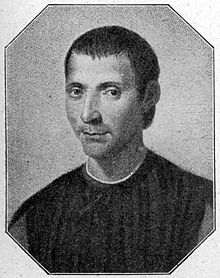
Niccolo Machiavelli
The foregoing was taken from Book Three, Chapter Six, of Machiavelli’s masterwork, The Discourses on Livy, which was published posthumously in 1531. But elsewhere in this volume, he notes how important it is for rulers to make themselves loved—or at least respected—by their fellow citizens:
“Note how much more praise those Emperors merited who, after Rome became an empire, conformed to her laws like good princes, than those who took the opposite course.
“Titus, Nerva, Trajan, Hadrian, Antoninus and Marcus Auelius did not require the Praetorians nor the multitudinous legions to defend them, because they were protected by their own good conduct, the good will of the people, and by the love of the Senate.
“On the other hand, neither the Eastern nor the Western armies saved Caligula, Nero, Vitellius and so many other wicked Emperors from the enemies which their bad conduct and evil lives had raised up against them.”
In his better-known work, The Prince, he warns rulers who—like Donald Trump–are inclined to rule by fear:
A prince should make himself feared in such a way that if he does not gain love, he at any rate avoids hatred: for fear and the absence of hatred may well go together.
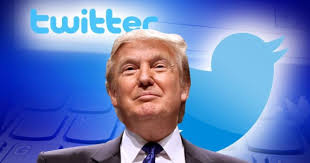
Donald Trump
By Machiavelli’s standards, Trump has made himself the perfect target for a conspiracy.
“When a prince becomes universally hated, it is likely that he’s harmed some individuals—who thus seek revenge. This desire is increased by seeing that the prince is widely loathed.”
ABC NEWS, ADOLF HITLER, ALTERNET, AMERICABLOG, AP, ASSASSINATION, BABY BOOMER RESISTANCE, BUZZFEED, CBS NEWS, CNN, CONSPIRACIES, CROOKS AND LIARS, DAILY KOS, DONALD TRUMP, FIVETHIRTYEIGHT, FREDERICK FORSYTHE, GAIUS CASSIUS, HARPER’S MAGAZINE, JULIUS CAESAR, LINCOLN MEMORIAL, MAR-A-LAGO, MARCUS BRUTUS, MARK ANTHONY, MEDIA MATTERS, MOTHER JONES, MOVEON, MSNBC, NBC NEWS, NEWSWEEK, NICCOLO MACHIAVELLI, NPR, PBS NEWSHOUR, PLOTS, POLITICO, POLITICUSUSA, RAW STORY, REUTERS, RICHARD M. NIXON, SALON, SEATTLE TIMES, Secret Service, SLATE, TALKING POINTS MEMO, THE ATLANTIC, THE CHICAGO SUN-TIMES, THE CHICAGO TRIBUNE, THE DAILY BEAST, THE DAILY BLOG, THE DISCOURSES, THE GUARDIAN, THE HILL, THE HUFFINGTON POST, THE LOS ANGELES TIMES, THE NATION, THE NEW REPUBLIC, THE NEW YORK TIMES, THE VILLAGE VOICE, THE WALL STREET JOURNAL, THE WASHINGTON POST, THINKPROGRESS, TIME, TRUTHDIG, TRUTHOUT, TWO POLITICAL JUNKIES, U.S. NEWS & WORLD REPORT, UPI, USA TODAY, VIETNAM WAR, WONKETTE, X
In Bureaucracy, History, Law Enforcement, Military, Politics, Social commentary on December 1, 2025 at 12:10 am
More than 500 years ago, Niccolo Machiavelli, the father of modern political science, offered sound advice for would-be conspirators—and for rulers seeking to thwart conspiracies.
It’s advice to which tyrants like Vladimir Putin and Donald Trump should pay close attention.
He did so in The Discourses on Livy, a work of political history and philosophy. In it, he outlined how citizens of a republic can maintain their freedoms.
One of the longest chapters—Book Three, Chapter Six—covers “Of Conspiracies.” In it, those who wish to conspire against a ruler will find highly useful advice. And so will those who might well become the targets of conspiracies—such as President Donald J. Trump.
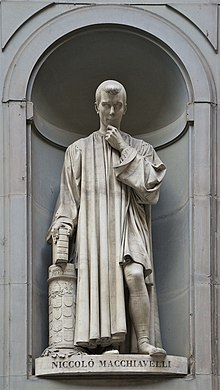
Niccolo Machiavellil
The most dangerous time for a ruler comes when he is universally hated.
Niccolo Machiavelli: When a prince becomes universally hated, it is likely that he’s harmed some individuals—who thus seek revenge. This desire is increased by seeing the prince is widely loathed.
A prince, then, should avoid incurring such universal hatred….
By doing this, he protects himself from such vengeance-seekers. There are two reasons for this:
(1) Men rarely risk danger to avenge a wrong; and
(2) Even if they want to avenge a wrong, they know they will face almost universal condemnation because the prince is held in such high esteem.
Machiavelli draws a distinction between plots and conspiracies.
A plot may be formed by a single individual or by many. The first isn’t a conspiracy, since that would involve at least two participants.
A single plotter avoids the danger faced by two or more conspirators:
Since no one knows his intention, he can’t be betrayed by an accomplice.
Anyone may form a plot, whether he is prominent or insignificant, because everyone is at some time allowed to speak to the prince. And he can use this opportunity to satisfy his desire for revenge.
On the other hand, says Machiavelli, the dangers of assassination by a trusted intimate are slight.
Few people dare to assault a prince. Of those who do, few or none escapes being killed in the attempt, or immediately afterward. As a result, only a small number of people are willing to incur such certain death.
Those who take part in a conspiracy against a ruler are “the great men of the state, or those on terms of familiar intercourse with the prince.”
These are men who have access to him. Julius Caesar, for example, was stabbed to death by members of the Roman Senate, who feared his assuming dictatorial powers.
And Adolf Hitler was conspired against by colonels and generals of the German Army. He was in fact holding a war conference when a briefcase bomb exploded, killing three officers and a stenographer, but leaving Hitler only slightly injured.
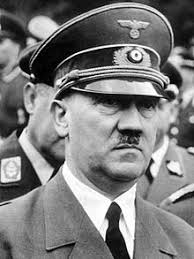

Adolf Hitler
There are three ways a conspiracy can be foiled:
- Discovery through denunciation;
- Discovery through incautiousness;
- Discovery through writings.
Discovery through Denunciation: This occurs through treachery or lack of prudence among one or more conspirators.
Treachery is so common that you can safely tell your plans to only your most trusted friends who are willing to risk their lives for your sake. You may find that you have only one or two of these.
But as you are bring more people into the conspiracy, the chances of discovery greatly increase. It’s impossible to find many who can be completely trusted: For their devotion to you must be greater than their sense of danger and fear of punishment.
Discovery through Carelessness: This happens when one of the conspirators speaks incautiously, so that a third person overhears it Or it may occur from thoughtlessness, when a conspirator tells the secret to his wife or child, or to some other indiscreet person.
When a conspiracy has more than three or four members, its discovery is almost certain, either through treason, imprudence or carelessness.
If more than one conspirator is arrested, the whole plot is discovered, for it will be impossible for any two to agree perfectly as to all their statements.
If only one is arrested, he may—through courage and stubbornness—be able to conceal the names of his accomplices. But then the others, to remain safe, must not panic and flee, since this is certain to be discovered.
If one of them becomes fearful—whether it’s the one who was arrested or is still at liberty—discovery of the conspiracy is certain. The best way to avoid such detection is to confide your project to your intended fellow conspirators at the moment of execution—and not sooner.
A classic example of this occurred in ancient Persia. According to the Greek historian Herodotus: A group of nobles assembled to discuss overthrowing a usurper to the throne. The last one to arrive was Darius.
When one of the conspirators asked, “When should we strike?” Darius replied: “We must either go now at this very moment and carry it into execution, or I shall go and denounce you all. For I will not give any of you time to denounce me.”
At that, they went directly to the palace, assassinated the usurper and proclaimed Darius their new king.
ABC NEWS, AFGHANISTAN, ALTERNET, AMERICABLOG, AP, BABY BOOMER RESISTANCE, BARACK OBAMA, BBC, BLOOMBERG, BLOOMBERG NEWS, BUZZFEED, CANADA, CBS NEWS, CENTRAL AMERICA, CHIANG KAI-SHEK, CHINA, CNN, COLUMBIA, COMMUNISM, CRIMEA, CROOKS AND LIARS, CUBA, CZECHOSLAVAKIA, DAILY KOS, DAILY KOZ, DEMOCRATS, DONALD TRUMP, DWIGHT D. EISENHOWER, FACEBOOK, FIVETHIRTYEIGHT, GUATEMALA, GUNBOAT DIPLOMACY, HARPER’S MAGAZINE, HARRY S. TRUMAN, HUFFINGTON POST, HUNGARY, IRAQ, JOHN F. KENNEDY, JOSEPH MCCARTHY, LATIN AMERICA, LYNDON B. JOHNSON, MAO TSE-TUNG, MEDIA MATTERS, MICK MULVANEY, MITT ROMNEY, MONROE DOCTRINE, MOTHER JONES, MOVEON, MSNBC, NBC NEWS, NEW REPUBLIC, NEWSDAY, NEWSWEEK, NICARAGUA, NPR, PANAMA, PBS NEWSHOUR, POLAND, POLITICO, POLITICUSUSA, RAW STORY, REPUBLICANS, REUTERS, RICHARD M. NIXON, SALON, SEATTLE TIMES, SLATE, SOCHI OLYMPICS, SOVIET UNION, SPHERES OF INFLUENCE, SYRIA, TALKING POINTS MEMO, TARIFFS, THE ATLANTIC, THE CHICAGO SUN-TIMES, THE CHICAGO TRIBUNE, THE DAILY BEAST, THE DAILY BLOG, THE GUARDIAN, THE HILL, THE HUFFINGTON POST, THE INTERCEPT, THE LOS ANGELES TIMES, THE NATION, THE NEW REPUBLIC, THE NEW YORK TIMES, THE NEW YORKER, THE VILLAGE VOICE, THE WASHINGTON POST, THINKPROGRESS, TIME, TOM COTTON, TRUTHDIG, TRUTHOUT, TWO POLITICAL JUNKIES, U.S. NEWS & WORLD REPORT, UKRAINE, UPI, USA TODAY, VICTOR YANUKOVYCH, VIETNAM, VLADIMIR PUTIN, VOLODYMYR ZELENSKY, WONKETTE, X
In Bureaucracy, History, Military, Social commentary on August 14, 2025 at 12:14 am
Since February 24, 2022, Ukraine has been under Russian assault. For more than two years, President Joseph R. Biden supplied Ukrainians with arms and Intelligence.
Then voters elected Donald Trump President in 2024.
Suddenly, the future of Ukraine—and those countries making up the 75-year-old North Atlantic Treaty Organization (NATO)—looked very different.
Numerous commentators have noted that Trump is a “transactional President.” Meaning that he doesn’t enter any enterprise unless he believes there’s something in it for him.
Thus, defending a nation simply because it’s a democracy is a waste of time—unless he can gain something from it.
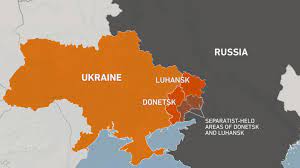
Ukraine vs. Russia
Trump wants access to Ukraine’s rare earth minerals, which are key to manufacturing high-tech products like computer chips and military equipment.
The reason: In April, 2025, China announced export restrictions on some of these minerals in retaliation for Trump’s placing tariffs on Chinese goods.
In asserting the United States’ sphere of influence, Trump sees himself as the leader of a country that’s expansive and claims new territory,
As a result, he has attacked America’s longtime ally and neighbor, Canada with tariffs. He’s even threatened it with possible military invasion.
Vladimir Putin is another politician who believes in spheres of influence.
Since the breakup of the Soviet Union in 1991, Putin has yearned for its reestablishment. He has called that breakup “the greatest geopolitical tragedy of the 20th century.”

Vladimir Putin
Kremlin.ru, CC BY 4.0 <https://creativecommons.org/licenses/by/4.0>, via Wikimedia Commons
Russia has long resisted Ukraine’s move towards European institutions—especially entry into NATO.
Since late February, 2014, he began moving Russian troops into Ukraine and its autonomous Republic, Crimea. Russia annexed Ukraine’s southern Crimean peninsula and backed separatists who captured large swathes of eastern Ukraine.
On December 3, 2021, the Washington Post reported: “The Kremlin was planning a multi-front offensive as soon as early next year involving up to 175,000 troops” against Ukraine.
And where there is activity by Russians, American Rightists are eager to turn such events to their own political advantage.
All of which overlooks a number of brutal political truths.
First, all great powers have spheres of interest—and jealously guard them.
For the United States, it’s Latin and Central America, as established by the Monroe Doctrine.
And just what is the Monroe Doctrine?
It’s a statement made by President James Monroe in his 1823 annual message to Congress, which warned European powers not to interfere in the affairs of the Western Hemisphere.
The Monroe Doctrine has no legitimacy except the willingness of the United States to use armed force to back it up. When the United States no longer has the will or resources to enforce the Doctrine, it will cease to have meaning.
In 1962, President John F. Kennedy threatened Russian premier Nikita Khrushchev with nuclear oblivion unless Soviet nuclear missiles were withdrawn from Cuba.
For the Soviet Union, its spheres of influence include the Ukraine. Long known as “the breadbasket of Russia,” in 2011, it was the world’s third-largest grain exporter.
Russia will no more give up access to that breadbasket than the United States would part with the rich farming states of the Midwest.
Second, spheres of influence often prove disastrous to those smaller countries affected.
Throughout Latin and Central America, the United States remains highly unpopular for its brutal use of “gunboat diplomacy” during the 20th century.
Among those countries invaded or controlled by America: Mexico, Cuba, Guatemala, Nicaragua, Columbia, Panama and the Dominican Republic.
The resulting anger has led many Latin and Central Americans to support Communist Cuba, even though its political oppression and economic failure are universally apparent.
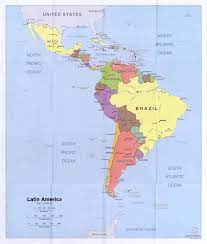
Latin and Central America
Similarly, the Soviet Union forced many nations—such as Poland, Hungary and Czechoslovakia—to submit to the will of Moscow.
The alternative? The threat of Soviet invasion—as occurred in Hungary in 1956 and Czechoslovakia in 1968.
Third, even “great powers” are not all-powerful.
In 1949, after a long civil war, the forces of Mao Zedong defeated the Nationalist armies of Chiang Kai-Shek, who withdrew to Taiwan.
China had never been a territory of the United States. Nor could the United States have prevented Mao from defeating the corrupt, ineptly-led Nationalist forces.
Even so, Republican Senators and Representatives such as Richard Nixon and Joseph McCarthy eagerly blamed President Harry S. Truman and the Democrats for “losing China.”
The fear of being accused of “losing” another country led Presidents Dwight D. Eisenhower, John F. Kennedy, Lyndon B. Johnson and Richard M. Nixon to tragically commit the United States to “roll back” Communism in Cuba and Vietnam.
Now Republicans—who claim the United States can’t afford to provide healthcare for its poorest citizens—want to turn the national budget over to the Pentagon.
They want the United States to “intervene” in Syria following the overthrow of Bashar al-Assad’s government in late 2024
This would insert the United States into yet another war in yet another Islamic country—after our disastrous forays in Iraq and Afghanistan.
Before plunging into conflicts that don’t concern us and where there is absolutely nothing to “win,” Americans would do well to remember the above-stated lessons of history. And to learn from them.
2016 PRESIDENTIAL ELECTION, 2024 PRESIDENTIAL ELECTION, ABC NEWS, ALTERNET, AMERICABLOG, AP, BABY BOOMER RESISTANCE, BARACK OBAMA, BBC, BENEDICT ARNOLD, BLOOMBERG, BLOOMBERG NEWS, BLUESKY, BOSTON CONSULTING GROUP, BUZZFEED, CBS NEWS, CHRISTOPHER LASCH, CITIZENS FOR TAX JUSTICE, CNN, CORPORATE TAXES, CORRUPTION, CROOKS AND LIARS, DAILY KOS, DAILY KOZ, DEPARTMENT OF GOVERNMENT EFFICIENCY (DOGE), DONALD TRUMP, EDUARDO SAVEREN, ELON MUSK, FIVETHIRTYEIGHT, FORBES MAGAZINE, GROVER NORQUIST, HARPER’S MAGAZINE, HUFFINGTON POST, MEDIA MATTERS, MOTHER JONES, MOVEON, MSNBC, NBC NEWS, NEW REPUBLIC, NEWSDAY, NEWSWEEK, NICCOLO MACHIAVELLI, NPR, PBS NEWSHOUR, POLITICO, POLITICUSUSA, PUBLIC CAMPAIGN, RAW STORY, REPUBLICAN PARTY, REUTERS, RICHARD M. NIXON, RUSH LIMBAUGH, SALON, SEATTLE TIMES, SENATOR CHARLES SCHUMER, SLATE, STEPHEN DECATUR, TALKING POINTS MEMO, TAX AVOIDANCE, THE ATLANTIC, THE CHICAGO SUN-TIMES, THE CHICAGO TRIBUNE, THE DAILY BEAST, THE DAILY BLOG, THE DISCOURSES, THE GUARDIAN, THE HILL, THE HUFFINGTON POST, THE INTERCEPT, THE LOS ANGELES TIMES, THE NATION, THE NEW REPUBLIC, THE NEW YORK TIMES, THE NEW YORKER, THE REVOLT OF THE ELITES (BOOK), THE VILLAGE VOICE, THE WALL STREET JOURNAL, THE WASHINGTON POST, THINKPROGRESS, TIME, TREASON, TRUTHDIG, TRUTHOUT, TWO POLITICAL JUNKIES, U.S. NEWS & WORLD REPORT, U.S. PUBLIC INTEREST RESEARCH GROUP EDUCATION FUND, UPI, USA TODAY, WALL STREET, WEALTH GAP, WONKETTE, X
In Bureaucracy, History, Law, Politics, Social commentary on May 29, 2025 at 12:05 am
Niccolo Machiavelli, the father of modern politics, warns in his masterwork, The Discourses:
All those who have written upon civil institutions demonstrate…that whoever desires to found a state and give it laws, must start with assuming that all men are bad and ever ready to display their vicious nature, whenever they may find occasion for it.
If their evil disposition remains concealed for a time, it must be attributed to some unknown reason; and we must assume that it lacked occasion to show itself. But time, which has been said to be the father of all truth, does not fail to bring it to light.
Where the crimes of corporate employers are concerned, Americans need not wait for their evil disposition to reveal itself. It has been fully revealed for decades.
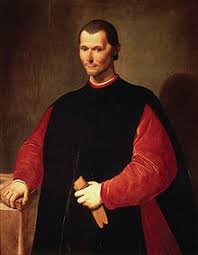
Niccolo Machiavelli
Increased media attention to “income inequality” has led some Democratic lawmakers to press for a long-overdue reform: Raising the stock threshold to 50%, making it harder for firms to abandon their country.
Yet a more comprehensive reform package would include legislation that mandates:
- American companies that move their headquarters abroad would be officially declared “agents of a foreign power engaged in hostile activity against the United States.”
- Those “foreign-owned” companies would be forbidden to sell products within the United States.
- Their assets would be subject to seizure by the Internal Revenue Service.
- The citizenship of those Americans engaged in such activity would be revoked and they would be ordered to leave the United States or face criminal prosecution for treason—and face trial for this if they returned.
Public Campaign is a non-profit, non-partisan organization dedicated to eliminating special interest money in American politics by securing publicly-funded elections at local, state and federal levels.
According to Public Campaign: “Twenty-five profitable Fortune 500 companies, some with a history of tax dodging, spent more on lobbying than they paid in federal taxes between 2008 and 2012….
“Over the past five years, these 25 corporations generated nearly $170 billion in combined profits and received $8.7 billion in tax rebates while paying their lobbyists over half a billion ($543 million), an average of nearly $300,000 a day.
“Based on newly released data by Citizens for Tax Justice, these 25 companies actually received tax refunds over all those five years.
“So most individual American families and small businesses have bigger tax bills than these corporate giants. Unfortunately, most American families and businesses do not have the lobbying operation and access these 25 companies enjoy.”
Several companies on this list are well-known—and spend millions of dollars on self-glorifying ads every year to convince consumers how wonderful they are. Among these:
- General Electric
- PG&E Corp
- Verizon Communications
- Boeing
- Consolidated Edison
- MetroPCS Communications
Republicans—and some Democrats—have tirelessly defended the greed of the richest and most privileged in America. For example, they have dubbed the estate tax—-which affects only a tiny, rich minority—“the death tax.”
This makes it appear to affect everyone. So millions of poor and middle-class Americans who will never have to pay a cent in estate taxes vigorously oppose it.
It’s time to recognize that a country can be betrayed for other than political reasons. It can be sold out for economic ones, too.
Trea$on
* * * * *
The United States desperately needs a new definition of treason—one that takes into account the following:
- Employers who set up offshore accounts to claim their American companies are foreign-owned—and thus exempt from taxes—-are traitors.
- Employers who enrich themselves by firing American workers and moving their plants to other countries—are traitors.
- Employers who systematically violate Federal immigration laws to hire illegal aliens at cut-rate wages—-instead of American workers—are traitors.
For thousands of years, otherwise highly intelligent men and women believed that kings ruled by divine right. That kings held absolute power, levied extortionate taxes and sent countless millions of men off to war—all because God wanted it that way.
That lunacy was dealt a deadly blow in 1776 when American Revolutionaries threw off the despotic rule of King George III of England.
But today, millions of Americans remain imprisoned by an equally outrageous and dangerous theory: The Theory of the Divine Right of Employers.
America can no longer afford such a dangerous fallacy as the Theory of the Divine Right of Employers.
The solution lies in remembering that the powerful never voluntarily surrender their privileges. Americans did not win their freedom from Great Britain—and its enslaving doctrine of the “divine right of kings”—by begging for their rights.
Americans will not win their freedom from their corporate masters—and the equally enslaving doctrine of “the divine right of employers”—by begging for the right to work and support themselves and their families.
And they will most certainly never win such freedom by supporting Right-wing political candidates whose first and only allegiance is to the corporate interests who bankroll their campaigns.
Corporations can—and do—spend millions of dollars on TV ads, selling lies—such as if the wealthy are forced to pay their fair share of taxes, jobs will inevitably disappear.
But Americans can choose to reject those lies—and demand that employers behave like patriots instead of predators.
2016 PRESIDENTIAL ELECTION, 2024 PRESIDENTIAL ELECTION, ABC NEWS, ALTERNET, AMERICABLOG, AP, BABY BOOMER RESISTANCE, BARACK OBAMA, BBC, BENEDICT ARNOLD, BLOOMBERG, BLOOMBERG NEWS, BLUESKY, BOSTON CONSULTING GROUP, BUZZFEED, CBS NEWS, CHRISTOPHER LASCH, CITIZENS FOR TAX JUSTICE, CNN, CORPORATE TAXES, CORRUPTION, CROOKS AND LIARS, DAILY KOS, DAILY KOZ, DEPARTMENT OF GOVERNMENT EFFICIENCY (DOGE), DONALD TRUMP, EDUARDO SAVEREN, ELON MUSK, FIVETHIRTYEIGHT, FORBES MAGAZINE, GROVER NORQUIST, HARPER’S MAGAZINE, HUFFINGTON POST, MEDIA MATTERS, MOTHER JONES, MOVEON, MSNBC, NBC NEWS, NEW REPUBLIC, NEWSDAY, NEWSWEEK, NICCOLO MACHIAVELLI, NPR, PBS NEWSHOUR, POLITICO, POLITICUSUSA, PUBLIC CAMPAIGN, RAW STORY, REPUBLICAN PARTY, REUTERS, RICHARD M. NIXON, RUSH LIMBAUGH, SALON, SEATTLE TIMES, SENATOR CHARLES SCHUMER, SLATE, STEPHEN DECATUR, TALKING POINTS MEMO, TAX AVOIDANCE, THE ATLANTIC, THE CHICAGO SUN-TIMES, THE CHICAGO TRIBUNE, THE DAILY BEAST, THE DAILY BLOG, THE DISCOURSES, THE GUARDIAN, THE HILL, THE HUFFINGTON POST, THE INTERCEPT, THE LOS ANGELES TIMES, THE NATION, THE NEW REPUBLIC, THE NEW YORK TIMES, THE NEW YORKER, THE REVOLT OF THE ELITES (BOOK), THE VILLAGE VOICE, THE WALL STREET JOURNAL, THE WASHINGTON POST, THINKPROGRESS, TIME, TREASON, TRUTHDIG, TRUTHOUT, TWO POLITICAL JUNKIES, U.S. NEWS & WORLD REPORT, U.S. PUBLIC INTEREST RESEARCH GROUP EDUCATION FUND, UPI, USA TODAY, WALL STREET, WEALTH GAP, WONKETTE, X
In Bureaucracy, History, Law, Politics, Social commentary on May 28, 2025 at 12:13 am
The British offered Revolutionary War General Benedict Arnold £20,000 for betraying West Point to the Crown.
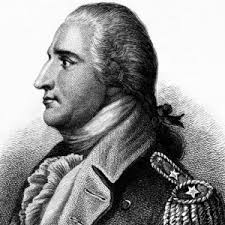
Benedict Arnold
But Arnold was a piker compared to companies that are raking in literally billions of untaxed dollars by betraying the United States in its time of economic trial.
To avoid paying their legitimate share of taxes, they move their headquarters overseas to countries with reduced tax rates. In tax parlance, this is called an “inversion.”
For almost 20 years, tax-avoiding corporations fled to Caribbean countries such as Bermuda and the Cayman Islands. But in 2004, Congress ruled that American companies could relocate overseas if foreign shareholders owned 20% of their stock.
According to statistics compiled by the Congressional Research Service (CRS) in 2014:

“Forty-seven U.S. corporations have reincorporated overseas through corporate inversions in the last 10 years, far more than during the previous 20 years combined.
“In total, 75 U.S. corporations have inverted since 1994 – with one other inversion occurring in 1983. What’s more, there are a dozen prospective inversion deals involving U.S. corporations looking to reincorporate overseas, according to CRS
“The new data underscores the significant increase in the number of U.S. corporations that have or are seeking to lower their U.S. taxes by reincorporating overseas.
“It also adds urgency to a legislative solution. Ways and Means Committee Ranking Member Sander Levin in May introduced legislation that would tighten rules to limit inversions.
“The Joint Committee on Taxation estimates that the legislation would save $19.5 billion over 10 years. Companion legislation was introduced in the Senate by Sen. Carl Levin.
“‘Barely a week seems to pass without news that another corporation plans to move its address overseas simply to avoid paying its fair share of U.S. taxes,’” said Ranking Member Levin.
“These corporate inversions are costing the U.S. billions of dollars and undermining vital domestic interests.
“‘We can and should address this problem immediately through legislation to tighten rules to limit the ability of corporations to simply change their address and ship U.S. tax dollars overseas.’”
According to a September 23, 2023 report by Boston Consulting Group, more than 90% of North American companies had relocated production and sourcing over the past five years.
Among those companies that have chosen to betray their country in its time of economic need:
- Tupperware
- Burger King
- Medtronic
- Purina
- Coors
- McDermott
- Ingersoll Rand
- Perrico
- Carnival Cruise Lines
- Seagate Technology
- Good Humor
- Frigidaire
- Lucky Strike
- Budweiser
- Firestone
- Ben & Jerry’s
- 7-Eleven
- Smithfield Foods
- IBM’s PC Business
- AMC Theaters
- General Electric appliances
- Trader Joe’s
- Holiday Inn
- Hoover
- Sunglass Hut
The 500 largest American companies hold more than $2.1 trillion in accumulated profits offshore to avoid U.S. taxes and would collectively owe an estimated $620 billion in U.S. taxes if they repatriated the funds.
So says a 2015 study released by two non-profit groups: Citizens for Tax Justice and the U.S. Public Interest Research Group Education Fund.
“At least 358 companies, nearly 72 percent of the Fortune 500, operate subsidiaries in tax haven jurisdictions as of the end of 2014,” the study said. “All told these 358 companies maintain at least 7,622 tax haven subsidiaries.”
Niccolo Machiavelli, the father of modern political science, foresaw this danger more than 500 years ago. He deeply mistrusted the nobility of his own time, because they stood above the law with estates, subjects and even armies of their own.
For Machiavelli one of the likeliest sources of corruption lay in their ability to buy influence through patronage, nepotism and favors.
The 2024 Presidential election provides the most blatant example of this: Elon Musk, the world’s richest man and the owner of SpaceX and X (formerly Twitter) donated $288 million to Donald Trump’s re-election campaign for President.
This allowed Musk to buy himself a high-ranking position within the new administration: The director of DOGE (Department of Government Efficiency)—a fictional agency whose power derived solely from Trump and charged with firing tens of thousands of federal employees.
To protect against such corruption, Machiavelli favored “good laws”—including, if necessary, the severest penalties—to coerce citizens to prefer the common good to private greed. Thus, civic duties would be maintained and private bids for power would be punished.
But Machiavelli also counseled the use of the carrot as well as the stick: Citizens should receive greater rewards for performing public services than private ones.
The American historian, Christopher Lasch, warned about this trend in his 1995 book, The Revolt of the Elites. Until recently, the economic and cultural elites of Western nations willingly shouldered civic responsibilities.
But that has changed.
According to Lasch: “The markets on which the fortunes of the new elites rely are tied to enterprises that operate across international boundaries….They have more in common with their counterparts in Brussels or Hong Kong than with the masses of people in their own country who are not yet plugged into the network of global communications.”
CEOs and their high-ranking lieutenants in such corporations send their children to private schools. They have their own private healthcare systems and even protection by armies of private security officers.
As far as they are concerned: “Why should we pay for public services that we don’t even use?”
The results of this greed and indifference can be seen across the nation.
2016 PRESIDENTIAL ELECTION, 2024 PRESIDENTIAL ELECTION, ABC NEWS, ALTERNET, AMERICABLOG, AP, BABY BOOMER RESISTANCE, BARACK OBAMA, BBC, BENEDICT ARNOLD, BLOOMBERG, BLOOMBERG NEWS, BLUESKY, BOSTON CONSULTING GROUP, BUZZFEED, CBS NEWS, CHRISTOPHER LASCH, CITIZENS FOR TAX JUSTICE, CNN, CORPORATE TAXES, CORRUPTION, CROOKS AND LIARS, DAILY KOS, DAILY KOZ, DEPARTMENT OF GOVERNMENT EFFICIENCY (DOGE), DONALD TRUMP, EDUARDO SAVEREN, ELON MUSK, FIVETHIRTYEIGHT, FORBES MAGAZINE, GROVER NORQUIST, HARPER’S MAGAZINE, HUFFINGTON POST, MEDIA MATTERS, MOTHER JONES, MOVEON, MSNBC, NBC NEWS, NEW REPUBLIC, NEWSDAY, NEWSWEEK, NICCOLO MACHIAVELLI, NPR, PBS NEWSHOUR, POLITICO, POLITICUSUSA, PUBLIC CAMPAIGN, RAW STORY, REPUBLICAN PARTY, REUTERS, RICHARD M. NIXON, RUSH LIMBAUGH, SALON, SEATTLE TIMES, SENATOR CHARLES SCHUMER, SLATE, STEPHEN DECATUR, TALKING POINTS MEMO, TAX AVOIDANCE, THE ATLANTIC, THE CHICAGO SUN-TIMES, THE CHICAGO TRIBUNE, THE DAILY BEAST, THE DAILY BLOG, THE DISCOURSES, THE GUARDIAN, THE HILL, THE HUFFINGTON POST, THE INTERCEPT, THE LOS ANGELES TIMES, THE NATION, THE NEW REPUBLIC, THE NEW YORK TIMES, THE NEW YORKER, THE REVOLT OF THE ELITES (BOOK), THE VILLAGE VOICE, THE WALL STREET JOURNAL, THE WASHINGTON POST, THINKPROGRESS, TIME, TREASON, TRUTHDIG, TRUTHOUT, TWO POLITICAL JUNKIES, U.S. NEWS & WORLD REPORT, U.S. PUBLIC INTEREST RESEARCH GROUP EDUCATION FUND, UPI, USA TODAY, WALL STREET, WEALTH GAP, WONKETTE, X
In Bureaucracy, History, Law, Politics, Social commentary on May 27, 2025 at 12:14 am
On May 13, 2012, Forbes magazine ran an Op-Ed piece under the headline: “For De-Friending The U.S., Facebook’s Eduardo Saverin Is an American Hero.”
Democratic Senator Chuck Schumer of New York angrily disagreed.

Chuck Shumer
“It is scary. It is a scary, absurd place where even a tax dodger who renounces America for his own 30 pieces of silver is celebrated as a patriot and an American hero.
“It is perverse. I am appalled by making heroic a man who renounces citizenship to escape a tax rate of capital gains of 15%.
“No one gets rich in America on their own,” Schumer said. “And when people do well in America, they should do well by America. I believe the vast majority of Americans believe this, too.”
From that Op-Ed piece:
“Saverin’s flight from the U.S. is yet another reminder of the superiority of a national consumption tax that in a perfect world would be implemented in concert with the abolition of the I.R.S.”
It’s tempting to imagine a world without an agency to collect taxes. But it’s nightmarish to contemplate a world where there were no taxes to pay for
- A powerful military to protect us;
- An FBI to combat terrorism and organized crime;
- An FAA to safely regulate airline traffic;
- Agencies to repair roads;
- Agencies to erect public buildings (such as schools, courts and libraries) and
- Agencies (such as the EPA and FDA) to protect us from predatory businessmen.
The Op-Ed piece further asserts that “you cannot limit the power of the Federal Government if its officials hold the power to tax incomes.”
Every nation in history—whether a democracy or a dictatorship, whether capitalist, socialist or communist—has understood the absolute necessity for collecting public revenues. And it has created means by which to do so.
“When individuals resist governmental hubris, we should exalt their actions.”
We should, in short, celebrate those who come to the United States to make fortunes they could not make anywhere else—and then, when they do, turn their backs on their adopted country.
We should rejoice that they have stuffed billions of dollars more into their already-fat pockets and left their supposed fellow countrymen to shift for themselves.
“In an ideal world the Federal Government should implement a consumption tax. And if, as a result, poor people suffer because they’re taxed at the same level as rich ones, fine.
“Everyone should know how much it costs to run the government.”
Of course we should have a “regressive” tax that “hits low incomes at the same percentage as high ones.”
Of course, those who are barely able to feed their families or can’t afford medical care should pay as much in taxes as a rich parasite who, like Mitt Romney, throws out $10,000 bets like so many dimes.
“If the Federal Government can’t fund all its programs because rich people like Saverin refuse to pay taxes, then U.S. taxpayers generally will have to make good for the missing taxes. It’s the fault of Congress that it cannot put an end to any program.”
For billionaires like Saverin and the well-heeled types who subscribe to Forbes, it doesn’t matter whether “the Federal Government can’t fund all its programs.”

San Simeon, estate of William Randolph Hearst
Greed-obsessed “swells” like Saverin:
- Don’t depend on Medicare—they can easily afford the best doctors money can buy;
- Don’t have to depend on Social Security to see them through old age;
- Don’t have to worry about standing in food bank lines;
- Don’t need to rely on police departments—if they’re threatened, they can easily afford round-the-clock bodyguards;
- Don’t need consumer protection agencies; if they’re victimized by unscrupulous businessmen, they can hire platoons of lawyers and private detectives.
A contemporary writer who warned of America’s abandonment by its privileged classes was Christopher Lasch. In his posthumously published last book, The Revolt of the Elites and the Betrayal of Democracy [2005] he wrote:

Christopher Lasch
“There has always been a privileged class, even in America. But it has never been so dangerously isolated from its surroundings.
“George Bush’s [the president who served from 1989 to 1992] wonderment, when he saw for the first time an electronic scanning device at a supermarket checkout counter, revealed…the chasm that divides the privileged classes from the rest of the nation.”
Until recently, wrote Lasch, American cultural and economic elites willingly shouldered civic responsibilities. But in post-modern capitalism, a professional elite defines itself as entirely separate from civic concerns.
The new elites flourish through enterprises that operate across international borders. The rich in America have more in common with their fellows in Europe or Asia than with the vast majority of their fellow Americans who don’t share their comfortable surroundings.
Thus, the privileged class in America—the top 1%—has separated itself from the crumbling public services and industrial cities that are used and lived in by the rest of the country’s citizens.
Even worse, our society has condoned their exalted status. The dust jacket blurb for James Patterson’s crime-thriller, NYPD Red, says it best:
“NYPD Red is a special task force charged with protecting the interests of Manhattan’s wealthiest and most powerful citizens.”
It’s time to protect the 99% of America’s citizens against the predators of its 1% wealthiest.
2016 PRESIDENTIAL ELECTION, 2024 PRESIDENTIAL ELECTION, ABC NEWS, ALTERNET, AMERICABLOG, AP, BABY BOOMER RESISTANCE, BARACK OBAMA, BBC, BENEDICT ARNOLD, BLOOMBERG, BLOOMBERG NEWS, BLUESKY, BOSTON CONSULTING GROUP, BUZZFEED, CBS NEWS, CHRISTOPHER LASCH, CITIZENS FOR TAX JUSTICE, CNN, CORPORATE TAXES, CORRUPTION, CROOKS AND LIARS, DAILY KOS, DAILY KOZ, DEPARTMENT OF GOVERNMENT EFFICIENCY (DOGE), DONALD TRUMP, EDUARDO SAVEREN, ELON MUSK, FIVETHIRTYEIGHT, FORBES MAGAZINE, GROVER NORQUIST, HARPER’S MAGAZINE, HUFFINGTON POST, MEDIA MATTERS, MOTHER JONES, MOVEON, MSNBC, NBC NEWS, NEW REPUBLIC, NEWSDAY, NEWSWEEK, NICCOLO MACHIAVELLI, NPR, PBS NEWSHOUR, POLITICO, POLITICUSUSA, PUBLIC CAMPAIGN, RAW STORY, REPUBLICAN PARTY, REUTERS, RICHARD M. NIXON, RUSH LIMBAUGH, SALON, SEATTLE TIMES, SENATOR CHARLES SCHUMER, SLATE, STEPHEN DECATUR, TALKING POINTS MEMO, TAX AVOIDANCE, THE ATLANTIC, THE CHICAGO SUN-TIMES, THE CHICAGO TRIBUNE, THE DAILY BEAST, THE DAILY BLOG, THE DISCOURSES, THE GUARDIAN, THE HILL, THE HUFFINGTON POST, THE INTERCEPT, THE LOS ANGELES TIMES, THE NATION, THE NEW REPUBLIC, THE NEW YORK TIMES, THE NEW YORKER, THE REVOLT OF THE ELITES (BOOK), THE VILLAGE VOICE, THE WALL STREET JOURNAL, THE WASHINGTON POST, THINKPROGRESS, TIME, TREASON, TRUTHDIG, TRUTHOUT, TWO POLITICAL JUNKIES, U.S. NEWS & WORLD REPORT, U.S. PUBLIC INTEREST RESEARCH GROUP EDUCATION FUND, UPI, USA TODAY, WALL STREET, WEALTH GAP, WONKETTE, X
In Bureaucracy, History, Law, Politics, Social commentary on May 26, 2025 at 12:10 am
Americans need to realize that a country can be betrayed for other than political reasons. It can also be sold out for economic ones.
On May 15, 2012, Facebook co-founder Eduardo Saverin renounced his U.S. citizenship.
Born in Brazil, the then-30-year-old Saverin became a U.S. citizen in 1998 but had lived in Singapore since 2009.
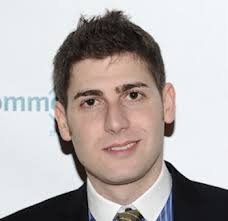
Eduardo Saverin
Giving up his citizenship allowed him to avoid paying taxes on billions of dollars on capital gains when Facebook launched its IPO on May 18, 2012. Singapore does not have a capital gains tax.
And America’s extreme Right couldn’t have been happier.
Take Rush Limbaugh, the former Right-wing talk-show host. The Rush Limbaugh Show aired throughout the U.S. on over 400 stations and was the highest-rated talk-radio program in the United States.
When Limbaugh spoke, his “dittohead” audience listened—and acted as he decreed.

Rush Limbaugh
“So if it’s a more favorable tax haven that you can find elsewhere and you go there,” asked Limbaugh, “why is it automatically that you are unpatriotic?
“Why is it automatically that you are a coward, that you are not paying your fair share? It’s this whole class envy thing rearing its head again.”
For Limbaugh, the villain wasn’t a billionaire who turned his back on the country that gave him the opportunity to become one. No, the villain lay in those who believe that even wealthy businessmen should behave like patriots—instead of parasites.
“But [Barack Obama is] out there demonizing successful people every day,” said Limbaugh, “targeting successful people every day, running a presidential campaign based on class warfare, trying to get the 99% of the country who are not in the top 1% to hate the 1%, to literally despise ’em.”
Consider the implications of this:
On November 1, 2011, Forbes magazine reported that, in 2007, the then-richest 1% of the American population owned 34.6% of the country’s total wealth, and the next 19% owned 50.5%.
Thus, the top 20% of Americans owned 85% of the country’s wealth and the bottom 80% of the population owned 15%.
According to Limbaugh’s philosophy, the bottom 80% of the population owning 15% of the country’s wealth should pay homage to the top 20% of Americans who own 85% of the country’s wealth.
In short, they should “know their place” and not expect the moneyed few to pay their fair share of taxes.
Of course, this was to be expected of Limbaugh—whose own wealth made him a multi-millionaire.
In 2001, U.S. News & World Report noted that Limbaugh had an eight-year contract, with Clear Channel Communications, for $31.25 million a year.
And according to a July 2, 2008, Matt Drudge column, Limbaugh had signed a contract extension through 2016 that was worth over $400 million.
And Limbaugh wasn’t alone in his praise for Saverin.
Another right-winger who defended those who run out on their country was anti-tax activist Grover Norquist.
On May 7, 2012, two Democratic Senators—Chuck Schumer of New York and Bob Casey of Pennsylvania—introduced legislation designed to tax expatriates even after they left the country.
Their “Ex-PATRIOT Act” would have imposed a mandatory 30% tax on American investments for those who renounce their citizenship and would also prohibit individuals like Saverin from re-entering the country.
But the bill died in committee.
In 2013, Schumer and two other Senators added similar provisions to a major immigration reform bill. But their amendment was not included in the version of the bill that passed the Senate.
“Saverin has turned his back from the country that welcomed him, kept him safe, educated him and helped him become a billionaire,” Schumer said at a press conference. He added that it was time to “de-friend” the Facebook co-founder.
Norquist, the president of Americans for Tax Reform (ATF) said that targeting people who turn in their passports reminded him of regimes that had driven people out of the country, only to confiscate their wealth at the door.
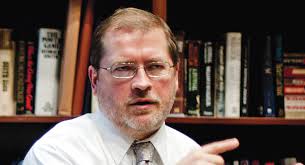
Grover Norquist
“I think Schumer can probably find the legislation to do this,” said Norquist. “It existed in Germany in the 1930s and Rhodesia in the ’70s and in South Africa as well. He probably just plagiarized it and translated it from the original German.”
On the floor of the Senate, Schumer denounced Norquist in return:
“I know a thing or two about what the Nazis did. Some of my relatives were killed by them.
“Saying that a person who made their fortune specifically because of the positive elements in American society, in turn, has a responsibility to do right by America is not even on the same planet as comparing to what Nazis did to Jews.”

Chuck Schumer
Schumer added that he found it troubling that conservatives would lionize someone like Saverin, who was called “an American hero” by Forbes magazine.
On May 13, 2012, Forbes—which describes itself as “The Capitalist Tool”—had run an Op-Ed piece under the headline: “For De-Friending The U.S., Facebook’s Eduardo Saverin Is an American Hero.”
“Can you believe it?” asked Schumer. “An American hero? Renouncing your citizenship now qualifies as heroic for the hard Right-wing?”
“This has gone so far, this idolatry they have taken to such an extreme end, they make Eduardo Saverin into their patron saint. In the name of low taxes for the wealthy, they have lionized an inherently unpatriotic person.”
ABC NEWS, ADOLF HITLER, AFGHANISTAN, ALTERNET, AMERICABLOG, AP, BABY BOOMER RESISTANCE, BBC, BLOOMBERG, BLUESKY, BUZZFEED, CBS NEWS, CIVIL WAR, CNN, CROOKS AND LIARS, DAILY KOS, DWIGHT D. EISENHOWER, EVA BRAUN, FIVETHIRTYEIGHT, GERALD R. FORD, HARPER’S MAGAZINE, HUFFINGTON POST, JOHN F. KENNEDY, JOSEPH R. BIDEN, JOSEPH STALIN, LEND LEASE, LYNDON B. JOHNSON, MEDIA MATTERS, MOTHER JONES, MOVEON, MSNBC, NAZI GERMANY, NBC NEWS, NEW REPUBLIC, NEWSDAY, NEWSWEEK, NPR, PBS NEWSHOUR, POLITICO, POLITICUSUSA, RAW STORY, REUTERS, RICHARD M. NIXON, SAIGON, SALON, SEATTLE TIMES, SLATE, SOUTH VIETNAMESE ARMY, SOVIET UNION, TALKING POINTS MEMO, THE ATLANTIC, THE CHICAGO SUN-TIMES, THE CHICAGO TRIBUNE, THE DAILY BEAST, THE DAILY BLOG, THE GUARDIAN, THE HILL, THE HUFFINGTON POST, THE INTERCEPT, THE LOS ANGELES TIMES, THE NATION, THE NEW REPUBLIC, THE NEW YORK TIMES, THE NEW YORKER, THE VILLAGE VOICE, THE WASHINGTON POST, THINKPROGRESS, THIRD REICH, TIME, TRUTHDIG, TRUTHOUT, TWO POLITICAL JUNKIES, U.S. NEWS & WORLD REPORT, UNITED STATES, UPI, USA TODAY, VIETNAM, X
In Bureaucracy, History, Military, Politics, Social commentary on May 21, 2025 at 12:06 am
April 30: Two anniversaries—one of American victory, the other of American defeat.
April 30, 1945: With Berlin, the capitol of Nazi Germany burning and in ruins, Germany’s Fuhrer, Adolf Hitler raises a 7.65 caliber, seven-shot Walther PPK pistol to his right temple and pulls the trigger as he bites on a cyanide capsule.
Then, his corpse—along with that of Eva Braun, his longtime mistress and hastily-married wife of less than 24 hours—is carried out of the underground Fuhrerbunker. Both bodies are carried into the Reich Chancellery garden, doused with petrol, and set afire.
Hitler’s 12-year-reign of terror and infamy is finally over.
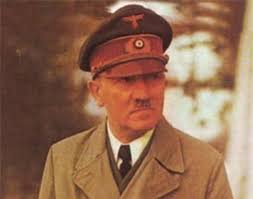
Adolf Hitler
America had been waging war against Nazi Germany since December 11, 1941.
That was when Hitler—just four days after Japanese aircraft had bombed Pearl Harbor—declared war on the United States. There was nothing to be gained by adding the world’s most powerful industrial nation to his list of enemies. But he did it anyway.
Starting in 1942, American forces gradually moved from triumph to triumph. These culminated in the June 6, 1944 D-Day invasion of France, which sealed the fate of the Third Reich in the West.
American military forces had been halted at the Elbe River, where they had met with Soviet forces. This was a strategic decision by General Dwight D. Eisenhower, the Allied Supreme Commander, to not continue into eastern Germany, which was to be occupied by the Red Army
Even though Soviet forces are the ones to capture Berlin, this amounts to an American victory. The last outpost of Nazi Germany is destroyed, and at no cost to American soldiers.
Neither the United States nor the Soviet Union is willing to officially acknowledge the contributions of the other in achieving victory over Nazi Germany.
Russians (from Soviet dictator Joseph Stalin on down) refuse to admit that without a massive infusion of aid from the United States, their final victory over Nazi Germany would have been delayed by years.
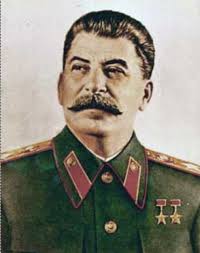
Joseph Stalin
Under the Lend-Lease program, the United States contributed tons of military and civilian equipment the Soviets desperately needed, including:
- 400,000 jeeps and trucks
- 14,000 airplanes
- 13,000 tanks
- 1,640 flat cars and rail accessories
- 15 million pairs of army boots
- 107,000 tons of cotton
- 2.7 million tons of petroleum products
- 4.5 million tons of food
Americans, in turn, are unwilling to admit that their strategy for defeating Germany depended on the Soviet Union bearing the brunt of Allied casualties.
The Soviet Union suffered an estimated 26.6 million casualties, including both military (8.7 million) and (19 million) civilian deaths.
By contrast, about 250,000 American soldiers died in the European theater.
Fast forward 30 years—to April 30, 1975.
The South Vietnamese Army suddenly crumbles under an all-out offensive by North Vietnamese regular army units.
The United States—which had been been supplying military assistance to Vietnam since the Presidency of Dwight D. Eisenhower—suddenly sees its worst nightmare come to life.
Eisenhower had sent 700 military advisors in 1955. President John F. Kennedy increased the number of advisors to 16,300.
Starting in 1965, President Lyndon B. Johnson committed wholesale combat troops to Vietnam. By April, 1969—three months after Richard M. Nixon took office—there were approximately 543,400 personnel serving there.
America poured more than $120 billion into the conflict in Vietnam from 1965-73. At least 2.7 million soldiers served there–and 58,000 died there. Another 304,000 were wounded. At home, the war divided Americans as no other event since the Civil War (1861-1865).
Decades later, Americans still debate whether “we should have gone all the way” in Vietnam—including the use of atomic bombs.
The unspoken reason for this carnage: Four Presidents—Eisenhower, Kennedy, Johnson and Nixon—kept the war going because they feared they would be turned out of office if they didn’t.
Such a fate overtook President Joseph Biden when he dared to pull American forces out of a 20-year effort to “civilize” Afghanistan in September, 2021.
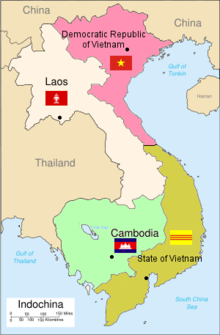
Vietnam during the Vietnam war
The last American troops left Vietnam on March 29, 1973. President Nixon claimed that he had achieved “peace with honor.” The South Vietnamese Army was supposedly now trained by Americans to defend the “country” from attack by North Vietnam.
Then came December 13, 1974—the start of the North’s all-out offensive.
The result: South Vietnamese forces melted away.
President Gerald R. Ford, who had replaced Nixon upon his August 9, 1974 resignation, asked Congress for permission to send American soldiers to rescue the situation. But Congress refused, leaving Vietnam to its own fate
This was hardly surprising to American veterans of the war. Among them a favorite joke had been: “There’s a new batch of South Vietnamese rifles for sale. Never fired, and only dropped once.”
By April 30, 1975, Saigon, the capitol of South Vietnam, fell to the People’s Army of Vietnam and the Viet Cong.

Fall of Saigon
At home, watching TV, Americans felt shame as Army helicopters hurriedly lifted off the roof of the United States embassy.
Numerous South Vietnamese desperately tried to climb aboard—only to have their hands stomped on by Americans equally desperate to get out before North Vietnamese forces reached them.
Thus a great nation goes from waging a victorious war against a deadly enemy to waging a losing war against a needless enemy in just 30 years.
ABC NEWS, ADOLF HITLER, ALTERNET, AMERICABLOG, AP, ASSASSINATION, BABY BOOMER RESISTANCE, BUZZFEED, CBS NEWS, CNN, CONSPIRACIES, CROOKS AND LIARS, DAILY KOS, DAILY KOZ, DAY OF THE JACKAL, DEPARTMENT OF DEFENSE, DEPARTMENT OF HOMELAND SECURITY, DEPARTMENT OF VETERANS AFFAIRS, DONALD TRUMP, DRUDGE RETORT, ENVIRONMENTAL PROTECTION AGENCY, FACEBOOK, FBI, FIVETHIRTYEIGHT, FREDERICK FORSYTHE, GAIUS CASSIUS, HARPER’S MAGAZINE, INTERNAL REVENUE SERVICE, JULIUS CAESAR, LINCOLN MEMORIAL, MAR-A-LAGO, MARCUS BRUTUS, MARK ANTHONY, MEDIA MATTERS, MOTHER JONES, MOVEON, MSNBC, NBC NEWS, NEWSWEEK, NICCOLO MACHIAVELLI, NPR, PBS NEWSHOUR, PLOTS, POLITICO, POLITICUSUSA, RAW STORY, REUTERS, RICHARD M. NIXON, SALON, SEATTLE TIMES, Secret Service, SLATE, TALKING POINTS MEMO, THE ATLANTIC, THE CHICAGO SUN-TIMES, THE CHICAGO TRIBUNE, THE DAILY BEAST, THE DAILY BLOG, THE DISCOURSES, THE GUARDIAN, THE HILL, THE HUFFINGTON POST, THE LOS ANGELES TIMES, THE NATION, THE NEW REPUBLIC, THE NEW YORK TIMES, THE VILLAGE VOICE, THE WALL STREET JOURNAL, THE WASHINGTON POST, THINKPROGRESS, TIME, TRUTHDIG, TRUTHOUT, TWO POLITICAL JUNKIES, U.S. NEWS & WORLD REPORT, UPI, USA TODAY, VIETNAM WAR, WHITE HOUSE STAFFER, WONKETTE, X
In Bureaucracy, History, Law Enforcement, Military, Politics, Social commentary on March 4, 2025 at 12:06 am
More than 500 years ago, Niccolo Machiavelli, the Florentine statesman, authored The Discourses on Livy, a work of political history and philosophy. In it, he outlined how citizens of a republic can maintain their freedoms.
For conspirators, there are three ways their efforts can be foiled.
- Discovery through denunciation;
- Discovery through incautiousness;
- Discovery through writings.
The first has already been covered. Now for the second and third.
Discovery through Writings: “You may talk freely with anyone man about everything, for unless you have committed yourself in writing, the “Yes” of one man is worth as much as the ‘No’ of another.
Thus, you should guard most carefully against writing, as against a dangerous rock, for nothing will convict you quicker than your own handwriting.
If you are denounced, there are means of escaping punishment:
- By denying the accusation and claiming that the person making it hates you; or
- Claiming that your accuser was tortured or coerced into giving false testimony against you.
“But the most prudent course is to not tell your intentions to anyone, and to carry out the attempt yourself.”
Even if you’re not discovered before you carry out your attack, there are still two dangers facing a conspirator:
Dangers in Execution: These result from:
- An unexpected change in the routine of the intended target;
- The lack of courage among the conspirators; or
- An error on their part, such as leaving some of those alive whom the conspirators intended to kill.
Adolf Hitler, who claimed to have a sixth-sense for danger, was famous for changing his routine at the last minute.
On November 9, 1939, this instinct saved his life. He had been scheduled to give a long speech at a Munich beer hall before the “Old Fighters” of his storm troopers.
But that evening he cut short his speech and left the beer hall. Forty-five minutes later, a bomb exploded inside a pillar—before which Hitler had been speaking.
Conspirators can also be doomed by their good intentions.
In 44 B.C., Gaius Cassius, Marcus Brutus and other Roman senators decided to assassinate Julius Caesar, whose dictatorial ambitions they feared.
Cassius also intended to murder Mark Anthony, Caesar’s strongest ally. But Brutus objected, fearing the plotters would look like butchers, not saviors. Even worse, he allowed Anthony to deliver a eulogy at Caesar’s funeral.
This proved so inflammatory that the mourners rioted, driving the conspirators out of Rome. Soon afterward, they were defeated in a battle with the legions of Anthony and Octavian Caesar—and forced to commit suicide to avoid capture and execution.
Machiavelli closes his chapter “Of Conspiracies” with advice to rulers on how they should act when they find a conspiracy has been formed against them.
“If they discover that a conspiracy exists against them, they must, before punishing its authors, strive to learn its nature and extent. And they must measure the danger posed by the conspirators against their own strength.
And if they find it powerful and alarming, they must not expose it until they have amassed sufficient force to crush it. Otherwise, they will only speed their own destruction. They should try to pretend ignorance of it. If the conspirators find themselves discovered, they will be forced by necessity to act without consideration.”
Niccolo Machiavelli
But Machiavelli also notes how important it is for rulers to make themselves loved—or at least respected—by their fellow citizens:
“Note how much more praise those Emperors merited who, after Rome became an empire, conformed to her laws like good princes, than those who took the opposite course.
Titus, Nerva, Trajan, Hadrian, Antoninus and Marcus Auelius did not require the Praetorians nor the multitudinous legions to defend them, because they were protected by their own good conduct, the good will of the people, and by the love of the Senate.
On the other hand, neither the Eastern nor the Western armies saved Caligula, Nero, Vitellius and so many other wicked Emperors from the enemies which their bad conduct and evil lives had raised up against them.”
In his better-known work, The Prince, he warns rulers who—like Donald Trump–are inclined to rule by fear:
“A prince should make himself feared in such a way that if he does not gain love, he at any rate avoids hatred: for fear and the absence of hatred may well go together.”
Donald Trump
By Machiavelli’s standards, Trump has made himself the perfect target for a conspiracy.
Since being inaugurated President a second time, he—and his billionaire enforcer, Elon Musk—have fired about 30,000 federal civil service workers. Another 75,000 have accepted buyouts under threat of being fired.
Among the purged agencies:
- Homeland Security
- Defense
- FBI
- Internal Revenue Service
- Veterans Affairs
- Environmental Protection Agency.
Many of these ex-employees have backgrounds in security. Combine this with the anger fired employees feel at the injustices to themselves and their families, and the result is a recipe for conspiratorial hatred.
“When a prince becomes universally hated, it is likely that he’s harmed some individuals—who thus seek revenge. This desire is increased by seeing that the prince is widely loathed.”
ABC NEWS, ADOLF HITLER, ALTERNET, AMERICABLOG, AP, ASSASSINATION, BABY BOOMER RESISTANCE, BUZZFEED, CBS NEWS, CNN, CONSPIRACIES, CROOKS AND LIARS, DAILY KOS, DAILY KOZ, DAY OF THE JACKAL, DEPARTMENT OF DEFENSE, DEPARTMENT OF HOMELAND SECURITY, DEPARTMENT OF VETERANS AFFAIRS, DONALD TRUMP, DRUDGE RETORT, ENVIRONMENTAL PROTECTION AGENCY, FACEBOOK, FBI, FIVETHIRTYEIGHT, FREDERICK FORSYTHE, GAIUS CASSIUS, HARPER’S MAGAZINE, INTERNAL REVENUE SERVICE, JULIUS CAESAR, LINCOLN MEMORIAL, MAR-A-LAGO, MARCUS BRUTUS, MARK ANTHONY, MEDIA MATTERS, MOTHER JONES, MOVEON, MSNBC, NBC NEWS, NEWSWEEK, NICCOLO MACHIAVELLI, NPR, PBS NEWSHOUR, PLOTS, POLITICO, POLITICUSUSA, RAW STORY, REUTERS, RICHARD M. NIXON, SALON, SEATTLE TIMES, Secret Service, SLATE, TALKING POINTS MEMO, THE ATLANTIC, THE CHICAGO SUN-TIMES, THE CHICAGO TRIBUNE, THE DAILY BEAST, THE DAILY BLOG, THE DISCOURSES, THE GUARDIAN, THE HILL, THE HUFFINGTON POST, THE LOS ANGELES TIMES, THE NATION, THE NEW REPUBLIC, THE NEW YORK TIMES, THE VILLAGE VOICE, THE WALL STREET JOURNAL, THE WASHINGTON POST, THINKPROGRESS, TIME, TRUTHDIG, TRUTHOUT, TWO POLITICAL JUNKIES, U.S. NEWS & WORLD REPORT, UPI, USA TODAY, VIETNAM WAR, WHITE HOUSE STAFFER, WONKETTE, X
In Bureaucracy, History, Law Enforcement, Military, Politics, Social commentary on March 3, 2025 at 12:05 am
More than 500 years ago, Niccolo Machiavelli, the father of modern political science, offered sound advice for would-be conspirators—and for rulers seeking to thwart conspiracies.
He did so in The Discourses on Livy, a work of political history and philosophy. In it, he outlined how citizens of a republic can maintain their freedoms.
One of the longest chapters—Book Three, Chapter Six—covers “Of Conspiracies.” In it, those who wish to conspire against a ruler will find highly useful advice. And so will those who might well become the targets of conspiracies—such as President Donald J. Trump.
Niccolo Machiavellil
The most dangerous time for a ruler comes when he is universally hated.
Niccolo Machiavelli: “When a prince becomes universally hated, it is likely that he’s harmed some individuals—who thus seek revenge. This desire is increased by seeing the prince is widely loathed.
A prince, then, should avoid incurring such universal hatred….
By doing this, he protects himself from such vengeance-seekers. There are two reasons for this:
(1) Men rarely risk danger to avenge a wrong; and
(2) Even if they want to avenge a wrong, they know they will face almost universal condemnation because the prince is held in such high esteem.”
Machiavelli draws a distinction between plots and conspiracies.
“A plot may be formed by a single individual or by many. The first isn’t a conspiracy, since that would involve at least two participants.”
A single plotter avoids the danger faced by two or more conspirators:
“Since no one knows his intention, he can’t be betrayed by an accomplice.
Anyone may form a plot, whether he is prominent or insignificant, because everyone is at some time allowed to speak to the prince. And he can use this opportunity to satisfy his desire for revenge.”
On the other hand, says Machiavelli, the dangers of assassination by a trusted intimate are slight.
“Few people dare to assault a prince. Of those who do, few or none escapes being killed in the attempt, or immediately afterward. As a result, only a small number of people are willing to incur such certain death.”
Those who take part in a conspiracy against a ruler are “the great men of the state, or those on terms of familiar intercourse with the prince.”
These are men who have access to him. Julius Caesar, for example, was stabbed to death by members of the Roman Senate, who feared his assuming dictatorial powers.
And Adolf Hitler was conspired against by colonels and generals of the German Army. He was in fact holding a war conference when a briefcase bomb exploded, killing three officers and a stenographer, but leaving Hitler only slightly injured.
Adolf Hitler
There are three ways a conspiracy can be foiled:
- Discovery through denunciation;
- Discovery through incautiousness;
- Discovery through writings.
Discovery through Denunciation: This occurs through treachery or lack of prudence among one or more conspirators.
“Treachery is so common that you can safely tell your plans to only your most trusted friends who are willing to risk their lives for your sake. You may find that you have only one or two of these.
But as you are bring more people into the conspiracy, the chances of discovery greatly increase. It’s impossible to find many who can be completely trusted: For their devotion to you must be greater than their sense of danger and fear of punishment.”
Discovery through Carelessness: “This happens when one of the conspirators speaks incautiously, so that a third person overhears it Or it may occur from thoughtlessness, when a conspirator tells the secret to his wife or child, or to some other indiscreet person.
When a conspiracy has more than three or four members, its discovery is almost certain, either through treason, imprudence or carelessness.
If more than one conspirator is arrested, the whole plot is discovered, for it will be impossible for any two to agree perfectly as to all their statements.
If only one is arrested, he may—through courage and stubbornness—be able to conceal the names of his accomplices. But then the others, to remain safe, must not panic and flee, since this is certain to be discovered.
If one of them becomes fearful—whether it’s the one who was arrested or is still at liberty—discovery of the conspiracy is certain.
The best way to avoid such detection is to confide your project to your intended fellow conspirators at the moment of execution—and not sooner.”
A classic example of this occurred in ancient Persia. According to the Greek historian Herodotus: A group of nobles assembled to discuss overthrowing a usurper to the throne. The last one to arrive was Darius.
When one of the conspirators asked, “When should we strike?” Darius replied: “We must either go now at this very moment and carry it into execution, or I shall go and denounce you all. For I will not give any of you time to denounce me.”
At that, they went directly to the palace, assassinated the usurper and proclaimed Darius their new king.


 Bureaucracybuster's Blog
ABC NEWS, ADOLF HITLER, ALTERNET, AMERICABLOG, AP, ASSASSINATION, BABY BOOMER RESISTANCE, BUZZFEED, CBS NEWS, CNN, CONSPIRACIES, CROOKS AND LIARS, DAILY KOS, DONALD TRUMP, DRUDGE RETORT, FIVETHIRTYEIGHT, FREDERICK FORSYTHE, GAIUS CASSIUS, HARPER’S MAGAZINE, JULIUS CAESAR, LINCOLN MEMORIAL, MAR-A-LAGO, MARCUS BRUTUS, MARK ANTHONY, MEDIA MATTERS, MOTHER JONES, MOVEON, MSNBC, NBC NEWS, NEWSWEEK, NICCOLO MACHIAVELLI, NPR, PBS NEWSHOUR, PLOTS, POLITICO, POLITICUSUSA, RAW STORY, REUTERS, RICHARD M. NIXON, SALON, SEATTLE TIMES, Secret Service, SLATE, TALKING POINTS MEMO, THE ATLANTIC, THE CHICAGO SUN-TIMES, THE CHICAGO TRIBUNE, THE DAILY BEAST, THE DAILY BLOG, THE DISCOURSES, THE GUARDIAN, THE HILL, THE HUFFINGTON POST, THE LOS ANGELES TIMES, THE NATION, THE NEW REPUBLIC, THE NEW YORK TIMES, THE VILLAGE VOICE, THE WALL STREET JOURNAL, THE WASHINGTON POST, THINKPROGRESS, TIME, TRUTHDIG, TRUTHOUT, TWO POLITICAL JUNKIES, U.S. NEWS & WORLD REPORT, UPI, USA TODAY, VIETNAM WAR, WHITE HOUSE STAFFER, WONKETTE, X
CONSPIRACIES: A TYRANT’S WORST ENEMY–PART TWO (END)
In Bureaucracy, History, Law Enforcement, Military, Politics, Social commentary on December 2, 2025 at 12:49 amMore than 500 years ago, Niccolo Machiavelli, the Florentine statesman, authored The Discourses on Livy, a work of political history and philosophy. In it, he outlined how citizens of a republic can maintain their freedoms.
One of the longest chapters—Book Three, Chapter Six—covers “Of Conspiracies.” In it, those who wish to conspire against a ruler will find highly useful advice.
And so will those who wish to foil such a conspiracy.
For conspirators, there are three ways their efforts can be foiled.
The first has already been covered. Now for the second and third.
Discovery through Writings: “You may talk freely with any one man about everything, for unless you have committed yourself in writing, the “Yes” of one man is worth as much as the “No” of another.
“Thus, you should guard most carefully against writing, as against a dangerous rock, for nothing will convict you quicker than your own handwriting.
“You may escape, then, from the accusation of a single individual, unless you are convicted by some writing or other pledge, which you should be careful never to give.
“If you are denounced, there are means of escaping punishment:
“But the most prudent course is to not tell your intentions to anyone, and to carry out the attempt yourself.”
Even if you’re not discovered before you carry out your attack, there are still two dangers facing a conspirator:
Dangers in Execution: These result from:
Adolf Hitler, who claimed to have a sixth-sense for danger, was famous for changing his routine at the last minute.
On November 9, 1939, this instinct saved his life. He had been scheduled to give a long speech at a Munich beer hall before the “Old Fighters” of his storm troopers.
But that evening he cut short his speech and left the beer hall. Forty-five minutes later, a bomb exploded inside a pillar—before which Hitler had been speaking.
Conspirators can also be doomed by their good intentions.
In 44 B.C., Gaius Cassius, Marcus Brutus and other Roman senators decided to assassinate Julius Caesar, whose dictatorial ambitions they feared.
Cassius also intended to murder Mark Anthony, Caesar’s strongest ally. But Brutus objected, fearing the plotters would look like butchers, not saviors. Even worse, he allowed Anthony to deliver a eulogy at Caesar’s funeral.
This proved so inflammatory that the mourners rioted, driving the conspirators out of Rome. Soon afterward, they were defeated in a battle with the legions of Anthony and Octavian Caesar—and forced to commit suicide to avoid capture and execution.
Machiavelli closes his chapter “Of Conspiracies” with advice to rulers on how they should act when they find a conspiracy has been formed against them.
“If they discover that a conspiracy exists against them, they must, before punishing its authors, strive to learn its nature and extent. And they must measure the danger posed by the conspirators against their own strength.
“And if they find it powerful and alarming, they must not expose it until they have amassed sufficient force to crush it. Otherwise, they will only speed their own destruction. They should try to pretend ignorance of it. If the conspirators find themselves discovered, they will be forced by necessity to act without consideration.”
Niccolo Machiavelli
The foregoing was taken from Book Three, Chapter Six, of Machiavelli’s masterwork, The Discourses on Livy, which was published posthumously in 1531. But elsewhere in this volume, he notes how important it is for rulers to make themselves loved—or at least respected—by their fellow citizens:
“Note how much more praise those Emperors merited who, after Rome became an empire, conformed to her laws like good princes, than those who took the opposite course.
“Titus, Nerva, Trajan, Hadrian, Antoninus and Marcus Auelius did not require the Praetorians nor the multitudinous legions to defend them, because they were protected by their own good conduct, the good will of the people, and by the love of the Senate.
“On the other hand, neither the Eastern nor the Western armies saved Caligula, Nero, Vitellius and so many other wicked Emperors from the enemies which their bad conduct and evil lives had raised up against them.”
In his better-known work, The Prince, he warns rulers who—like Donald Trump–are inclined to rule by fear:
A prince should make himself feared in such a way that if he does not gain love, he at any rate avoids hatred: for fear and the absence of hatred may well go together.
Donald Trump
By Machiavelli’s standards, Trump has made himself the perfect target for a conspiracy.
“When a prince becomes universally hated, it is likely that he’s harmed some individuals—who thus seek revenge. This desire is increased by seeing that the prince is widely loathed.”
Share this: