Posts Tagged ‘REPUBLICANS’
1984 NOVEL, 9/11, ABC NEWS, ADOLF HITLER, BARACK OBAMA, BILL CLINTON, BIRTH CONTROL, BLACKS, CBS NEWS, CNN, COMMUNISM, DENNIS HASTERT, DISABLED, DISCRIMINATION, DWIGHT D. EISENHOWER, EDWARD R. MURROW, ENVIRONMENTALISTS, FACEBOOK, FAMILY RESEARCH COUNCIL, FRANKLIN D. ROOSEVELT, GAYS, GEORGE C. MARSHALL, GEORGE H.W. BUSH, GEORGE ORWELL, GOP, GREAT SOCIETY, HARRY S. TRUMAN, HISPANICS, HIV MEDICATION, HOUSE OF REPRESENTATIVES, J. ROBERT OPPENHEIMER, JOHN BIRCH SOCIETY, JOHN F. KENNEDY, JOHN STEINBECK, JOSEPH R. MCCARTHY, JOSEPH STALIN, JOSH DUGGAR, KGB, LEE ATWATER, LEON TROTSKY, LESBIANS, LIBERALS, LUCILLE BALL, LYNDON B. JOHNSON, MEDICAL CARE, MEIN KAMPF, MICHAEL DUKAKIS, MICHELLE BACHMANN, MITT ROMNEY, MUSLIMS, NBC NEWS, PETE SEEGER, PROPAGANDA, RELIGION, REPUBLICANS, RICHARD NIXON, RICK SANTORUM, ROBERT WELCH, RODNEY KING RIOTS, SCAPEGOATING, SHARIA LAW, SOCIALISTS, SOVIET UNION, THE LOS ANGELES TIMES, THE NEW YORK TIMES, THE RELIGIOUS FREEDOM RESTORATION ACT, THE WASHINGTON POST, TRANSGENDERS, TWITTER, WILLIAM L. SHIRER, WOMEN, WORLD WAR ii
In Bureaucracy, History, Politics, Social commentary on May 19, 2016 at 12:01 am
The Right’s fixation on transgender “dangers” is only the latest in a long string of “enemies” painted by the Republican party.
During the 1960s and 1970s, the “enemy” was blacks. The key to winning votes of racist whites without appearing racist lay in what Republicans called “the Southern Strategy.”
It was this that won Richard Nixon the Presidency in 1968 and 1972 and the White House for George H.W. Bush in 1988.
In a now-infamous 1981 interview, Right-wing political consultant Lee Atwater explained how this worked:
“You start out in 1954 by saying, ‘Nigger, nigger, nigger.’ By 1968 you can’t say ‘nigger’—that hurts you, backfires.
“So you say stuff like, uh, forced busing, states’ rights, and all that stuff, and you’re getting so abstract.
“Now, you’re talking about cutting taxes, and all these things you’re talking about are totally economic things and a byproduct of them is, blacks get hurt worse than whites.…
“’We want to cut this,’ is much more abstract than even the busing thing, uh, and a hell of a lot more abstract than ‘Nigger, nigger.’
“So anyway you look at it, race is coming on the back burner.”

Lee Atwater
At the end of his life, Atwater recognized the monster he had helped unleash.
Like Reinhard Heydrich–the designer of the “Final Solution” who, on his deathbed, begged forgiveness for his crimes–Atwater, in a 1991 article for Life, apologized to former Democratic Presidential nominee Michael Dukakis for the “naked cruelty” of the 1988 campaign.
But blacks have by no means been the only targets–and victims–of Republican hate campaigns. A partial list of these would include:
- Liberals
- Women
- Socialists
- Secularists
- Disabled
- Environmentalists
- Hispanics
- Gays
- Lesbians
And now transgenders.
George Orwell’s classic 1949 novel, 1984, serves as a better guide to Republican electioneering than any official statement of the GOP.

1984 is set in a futuristic dictatorship called Oceania, whose constantly alternating mortal enemies are Eurasia and Eastasia.
A daily fixture of life in Oceania is the “Two Minutes Hate.” During this, Party members must watch a film depicting the Party’s enemies and express their hatred for them in exactly two minutes.
Chief among these is Emmanuel Goldstein, who is obviously based on Leon Trotsky, the longtime antagonist of Joseph Stalin, dictator of the Soviet Union for almost 30 years.
The “Two Minutes Hate” serves as a form of brainwashing, whose purpose is to whip ordinary citizens into a frenzy of hatred and loathing for whoever the Party designates as its–and their–mortal enemies.
Since the end of World War II, Republicans have regularly hurled the charge of “treason” against anyone who dared to run against them for office or think other than Republican-approved thoughts.
Republicans had been locked out of the White House from 1933 to 1952, during the administrations of Franklin D. Roosevelt and Harry S. Truman.
Determined to regain the Presidency by any means, they found that attacking the integrity of their fellow Americans a highly effective tactic.
During the 1950s, Wisconsin Senator Joseph R. McCarthy rode a wave of paranoia to national prominence–by attacking the patriotism of anyone who disagreed with him.
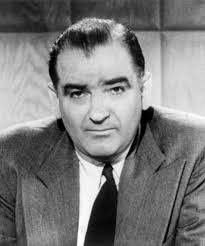
Joseph McCarthy
Elected to the Senate in 1946, he rose to national prominence on February 9, 1950, after giving a fiery speech in Wheeling, West Virginia:
“The State Department is infested with communists. I have here in my hand a list of 205—a list of names that were made known to the Secretary of State as being members of the Communist Party and who nevertheless are still working and shaping policy in the State Department.”
Americans were already growing increasingly fearful of Communism:
- Soviet dictator Joseph Stalin had not withdrawn the Red Army from the countries it had occupied in Eastern Europe during World War II.
- In 1948, the Soviet Union developed–and demonstrated–its own atomic bomb, an achievement U.S. scientists had claimed would not happen for at least a decade.
- In 1949, China fell to the triumphant armies of Mao Tse Tung.
But anti-communism as a lever to political advancement sharply accelerated following McCarthy’s speech. Republicans–resentful at being denied the White House since 1932–seized upon anti-communism as their passport to power.
No American–no matter how prominent–was safe from the accusation of being a Communist or a Communist sympathizer–”a Comsymp” or “fellow traveler” in the style of the era.
Among those accused:
- Secretary of State George C. Marshall, who had overseen America’s strategy for defeating Nazi Germany and Imperial Japan
- President Harry S. Truman
- Playwrights Lillian Hellman and Arthur Miller
- Actors Charlie Chaplin, Zero Mostel, Lloyd Bridges, Howard Da Silva, Edward G. Robinson and John Garfield
- Composers Arron Copland and Elmer Bernstein
- Physicist J. Robert Oppenheimer, who presided over the creation of America’s atomic bomb
- Actresses Lee Grant, Delores del Rio, Ruth Gordon and Lucille Ball
- Journalists Edward R. Murrow and William L. Shirer, who had chronicled the rise of Nazi Germany
- Folksinger Pete Seeger
- Writers Irwin Shaw, Howard Fast, John Steinbeck and Dashiell Hammett
Even “untouchable” Republicans became targets for such slander.
The most prominent of these was President Dwight D. Eisenhower–labeled ”a conscious, dedicated agent of the Communist Conspiracy” by Robert Welch, who founded the John Birch Society in 1958.
ABC NEWS, ANCHOR BABIES, BARACK OBAMA, BERLIN AIRLIFT, CBS NEWS, CNN, DEMOCRATIC PARTY, DEPARTMENT OF HOMELAND SECURITY, EGYPT, FRANCISCO SANCHEZ, ILLEGAL ALIENS, illegal immigration, IRAQ, ISRAEL, MEXICO, MSNBC, OPERATION NICKEL GRASS, RACIAL PROFILING, REPUBLICANS, RICHARD NIXON, SAN FRANCISCO, sanctuary cities, SOVIET UNION, SYRIA, THE CHICAGO SUN-TIMES, THE CHICAGO TRIBUNE, THE LOS ANGELES TIMES, THE NEW YORK TIMES, THE OUTER LIMITS, THE WASHINGTON POST, YOM KIPPUR WAR
In Bureaucracy, Business, History, Law, Law Enforcement, Military, Politics, Social commentary on May 2, 2016 at 11:22 am
Except in times of war, no nation has ever been invaded by so many alien residents as the United States.
Throughout 2014, tens of thousands of unaccompanied Hispanic minors–all of them uninvited–illegally entered the United States through the Mexican border.
They are backed up by an estimated 11 to 20 million illegal aliens now living more or less openly throughout the country.
Just as sheer numbers of Mexicans overwhelmed the defenders of the Alamo, this similar Hispanic tidal wave has overwhelmed immigration officials.
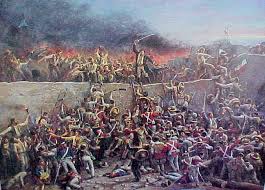
Mexicans storming the Alamo – March 6, 1836
It’s also forced the Obama administration to declare a humanitarian crisis and open three emergency shelters on military bases in California, Oklahoma and Texas.
The invasion is taking its greatest toll in cities that already have large numbers of immigrants–such as New York and Los Angeles.
Newly-arrived alien children and their relatives are flooding into schools and hospitals that are supposedly intended for American citizens. No sooner do they cross the border than they aggressively seek legal aid in converting their illegal arrival into a lifelong legal stay.

Mexicans storming the United States border – today
For years, Republicans and Democrats have clashed over the subject of illegal immigration. Each side has taken what seems to be an opposing position.
Democrats favor wholesale grants of unearned citizenship to the estimated 11 to 20 million illegal aliens who brazenly violated the law when they sneaked across American borders.
And Republicams favor beefing up security against future waves of such invaders.
But the brutal truth is that neither Democrats nor Republicans truly want to end these invasions. Nor do they want to deport the millions of illegals who have already taken up residence here.
Each party has its own reasons for this.
Democrats, primarily governed by liberal ideology, believe it’s racist for whites to demand control of their own national borders.
They ignore the blunt reality that Mexico–America’s largest source of illegal aliens–strictly enforces control of its own borders.
Mexico has a single, streamlined law that ensures that foreign visitors and immigrants are:
- In the country legally;
- Have the means to sustain themselves economically;
- Not destined to be burdens on society;
- Of economic and social benefit to society;
- Of good character and have no criminal records; and
- Contribute to the general well-being of the nation.
The law also ensures that:
- Immigration authorities have a record of each foreign visitor;
- Foreign visitors do not violate their visa status;
- Foreign visitors are banned from interfering in the country’s internal politics;
- Foreign visitors who enter under false pretenses are imprisoned or deported;
- Foreign visitors violating the terms of their entry are imprisoned or deported;
- Those who aid in illegal immigration are sent to prison.
But there’s another reason why Democrats are keen to grant automatic citizenship to millions of illegal aliens: They see them as a huge constituency.
They don’t care that these illegals’ defiance of American immigration laws:
- Floods the United States with millions of poor non-citizens who don’t speak English;
- Overwhelms the public school system with children–who also don’t speak English–who require bilingual education;
- Overwhelms the public healthcare system–especially emergency rooms–with illegal aliens. As a result, urgently-needed medical care is often denied to American citizens.
Click here: Cost of Unlawful Immigrants to the U.S. Taxpayers
But Republicans are equally guilty of refusing to take a hard stand against deporting those whose presence is a blatant affront to America’s immigration laws.
There are two reasons for this:
- Like Democrats, Republicans want to recruit them as knee-jerk voters.
- Republicans want them as low-skilled, low-wage fodder for their major campaign contributors–such as corporate farms and retail outlets like Wal-Mart.
Unlike Democrats, however, Republicans like to feign outrage at the presence of so many illegal aliens within their midst.
It’s the Republican base that’s demanding an end to illegal immigration.
Those masses of alienated and angry whites who find themselves living in a nation that’s increasingly alien from themselves.
A nation where “Press One for English” is now the norm when contacting government agencies. A nation where illegal aliens can obtain free medical care that’s denied to native-born citizens.

American citizens protesting illegal immigration
It was enraged citizens like this who, on June 10, 2014, cost Virginia Congressman Eric Cantor his bid for re-election. Cantor’s 14-year political career crashed on the fury of Tea Party opposition to illegal immigration.
Still, the question remains: What should be done about the tens of thousands of illegals now swarming into the United States?
Democrats hasten to defend President Barack Obama’s refusal to deport en masse these violators. They claim he is the victim of unpredictable circumstances.
But they don’t offer any solution that involves wholesale deportations of such invaders. It’s as if they believe this onrushing tidal wave will somehow recede on its own momentum.
Meanwhile, Republicans essentially take the position of Mitt Romney, their failed 2012 Presidential candidate: Self-deportation.
This way, the party doesn’t have to actually come out in favor of forcibly returning unwanted foreigners to their respective countries.
But there is a way the United States could deal with this unceasing tsunami of foreign invasions. It might be called “The Zanti Misfits” solution.
ABC NEWS, ADOLF HITLER, ALTERNET, ANWAR AL-AWLAKI, AP, BARACK OBAMA, BERNIE SANDERS, BILL CLINTON, BUZZFEED, CBS NEWS, CNN, CROOKS AND LIARS, D-DAY, DAILY KOZ, FACEBOOK, GEORGE H.W. BUSH, GEORGE S. PATTON, GEORGE W. BUSH, GREAT BRITAIN, HEINZ GUDERIAN, HERMAN CAIN, HILLARY CLINTON, ISLAM, MOTHER JONES, MOVEON, NAZI GERMANY, NBC NEWS, NEWSWEEK, NICCOLO MACHIAVELLI, NPR, POLITICO, PREDATOR DRONES, RAND PAUL, RAW STORY, RENEGADE: THE MAKING OF A PRESIDENT, REPUBLICANS, REUTERS, RICHARD NIXON, RICHARD WOLFFE, Ronald Reagan, SALON, SEATTLE TIMES, SENATOR RAND PAUL, SLATE, SOVIET UNION, STALINGRAD, TERRORISM, THE ATLANTIC, THE CHICAGO SUN-TIMES, THE CHICAGO TRIBUNE, THE DAILY BEAST, THE GUARDIAN, THE HILL, THE HUFFINGTON POST, THE LOS ANGELES TIMES, THE NATION, THE NEW YORK TIMES, THE PRINCE, THE WASHINGTON POST, TIME, TWITTER, U.S. NEWS & WORLD REPORT, UPI, USA TODAY, WAFFEN-SS, WORLD WAR ii
In Bureaucracy, History, Law, Military, Politics, Social commentary on April 28, 2016 at 12:01 am
Most Americans believe that Nazi Germany was defeated because “we were the Good Guys and they were the Bad Guys.”
Not so.
The United States–and its allies, Great Britain and the Soviet Union–won the war for reasons that had nothing to do with the righteousness of their cause. These included:
- Nazi Germany–i.e, its Fuehrer, Adolf Hitler–made a series of disastrous decisions. Chief among these: Attacking its ally, the Soviet Union, and declaring war on the United States;
- The greater material resources of the Soviet Union and the United States; and
- The Allies waged war as brutally as the Germans.
On this last point:
- From D-Day to the fall of Berlin, captured Waffen-SS soldiers were often shot out of hand.
- When American troops came under fire in the German city of Aachen, Lt. Col. Derrill Daniel brought in a self-propelled 155mm artillery piece and opened up on a theater housing German soldiers. After the city surrendered, a German colonel labeled the use of the 155 “barbarous” and demanded that it be outlawed.
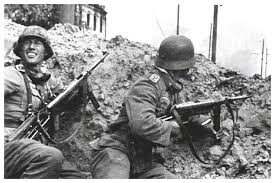
German soldiers at Stalingrad
- During the battle of Stalingrad in 1942, Wilhelm Hoffman, a young German soldier and diarist, was appalled that the Russians refused to surrender. He wrote: “You don’t see them at all, they have established themselves in houses and cellars and are firing on all sides, including from our rear–barbarians, they used gangster methods….”
In short: The Allies won because they dared to meet the brutality of a Heinz Guderian with that of a George S. Patton.
This is a lesson that has been totally lost on the liberals of the Democratic Party.
Which explains why they lost most of the Presidential elections of the 20th century.
It also explains why President Barack Obama has found most of his legislative agenda stymied by Right-wing Republicans.
Consider this example: In 2014, Senator Rand Paul (R-Ky.) warned then-Senate Majority Leader Harry Reid (D-Nev.) that he would place a hold on one of President Obama’s appellate court nominees.
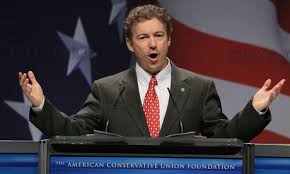
Rand Paul
David Barron had been nominated to the First Circuit Court of Appeals. And Paul objected to this because Barron authored memos justifying the killing of an American citizen by a drone in Yemen.
The September 30, 2011 drone strike killed Anwar al-Awlaki, a radical Muslim cleric notorious on the Internet for encouraging Muslims to attack the United States.
So President Obama authorized a Predator drone stroke against him, thus removing that danger. Paul demanded that the Justice Department release the memos Barron crafted justifying the drone policy.
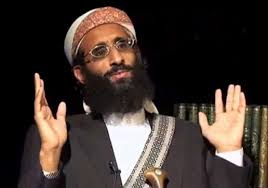
Anwar al-Awlaki
Imagine how Republicans would depict Paul–or a Democratic Senator–if he behaved in a similar manner with a Republican President: “Rand Paul: A traitor who supports terrorists. he sides with America’s sworn enemies against its own lawfully elected President.”
On May 22, 2014, the Senate voted 53–45 to confirm Barron to the First Circuit Court of Appeals.
To Republicans, “lawfully elected” applies only to Republican Presidents. A Democrat who runs against a Republican is automatically considered a traitor.
And a Democrat who defeats a Republican is automatically considered a usurper, and thus deserves to be slandered and obstructed, if not impeached.
Unable to defeat Bill Clinton in 1992 and 1996, Republicans tried in 1998 to impeach him for getting oral sex in the White House.
Similarly, 2012 Presidential candidate Herman Cain, asked in a conference call with bloggers why Republicans couldn’t just impeach President Obama, replied:
“That’s a great question and it is a great–it would be a great thing to do but because the Senate is controlled by Democrats we would never be able to get the Senate first to take up that action.”
In Renegade: The Making of a President, Richard Wolffe chronicled Obama’s successful 2008 bid for the White House. Among his revelations:
Obama, a believer in rationality and decency, felt more comfortable in responding to attacks on his character than in making them on the character of his enemies.
A graduate of Columbia University and Harvard Law School, Obama is easily one of the most academically gifted Presidents in United States history.
But for all this, he failed–from the onset of his Presidency–to grasp and apply this fundamental lesson taught by Niccolo Machiavelli, the father of modern political science.
In The Prince, Machiavelli warns:
From this arises the question whether it is better to be loved than feared, or feared more than loved.
The reply is, that one ought to be both feared and loved, but as it is difficult for the two to go together, it is much safer to be feared than loved….
And men have less scruple in offending one who makes himself loved than one who makes himself feared; for love is held by a chain of obligations which, men being selfish, is broken whenever it serves their purpose; but fear is maintained by a dread of punishment which never fails.
On Facebook and Twitter, liberals are already celebrating the “certain” Presidency of Vermont U.S. Senator Bernie Sanders or former First Lady Hillary Clinton in 2016.
They forget that, in 1968, 1980, 1988 and 2000, liberals couldn’t believe America would elect, respectively, Richard Nixon, Ronald Reagan, George H.W. Bush and George W. Bush.
For Democrats to win elective victories and enact their agenda, they must find their own George Patton to take on the Waffen-SS generals among Republican ranks.
2016 PRESIDENTIAL RACE, ABC NEWS, ADOLF HITLER, CBS NEWS, CNN, DAVID BROOKS, DONALD TRUMP, EDUARDO "TED" CRUZ, FACEBOOK, FOX NEWS, HEINZ GUDERIAN, MARK SHIELDS, MEGYN KELLY, PBS NEWSHOUR, REPUBLICANS, ROBERT PAYNE, THE CHICAGO SUN-TIMES, THE CHICAGO TRIBUNE, THE LIFE AND DEATH OF ADOLF HITLER, THE LOS ANGELES TIMES, THE NEW YORK TIMES, THE WASHINGTON POST, TWITTER, WOMEN
In Bureaucracy, History, Politics, Social commentary on April 20, 2016 at 12:05 am
Syndicated columnist Mark Shields and New York Times columnist David Brooks appear every Friday on the PBS Newshour to review the week’s major political events.
On March 25, Shields–a liberal, and Brooks, a conservative–came to some disturbingly similar conclusions about Donald Trump.
Eerily, their conclusions echo those reached by former Panzer General Heinz Guderian about German dictator Adolf Hitler.
Guderian created the concept of motorized blitzkrieg warfare, whereby masses of tanks and planes moved in coordination to strike at the vital nerve centers of an enemy.
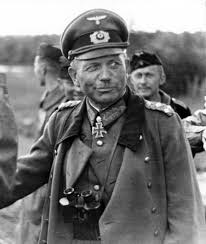
Heinz Guderian
As a result, Guderian enabled Hitler to conquer France in only six weeks in 1940, and to come to the brink of crushing the Soviet Union in 1941.
He recounted his career as the foremost tank commander of the Third Reich in his 1950 autobiography, Panzer Leader.
Moderator Judy Woodruff noted that “polls show Trump’s standing with women voters has worsened in recent months.”
A Washington Post/ABC News poll reveals that 64% of women say they have a strongly unfavorable reaction to Trump. That’s 18 points higher than it was in August, 2015.
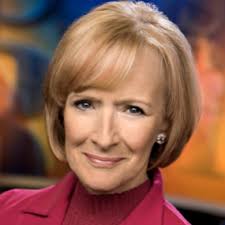
Judy Woddruff
This led David Brooks to declare that Trump has shown “a consistent misogynistic view of women as arm candy, as pieces of meat. It’s a consistent attitude toward women which is the stuff of a diseased adolescent.”
Judy Woodruff noted that Fox News Correspondent Megyn Kelly “has asked him tough questions” in a recent debate.
MARK SHIELDS: “She just asked him tough questions and was totally fair, by everybody else’s standards.
“But there is something really creepy about this that’s beyond locker room. It’s almost like a stalker, and I just–I thought this was–it actually did the impossible. It made Ted Cruz look like an honorable, tough guy on the right side of an issue.”
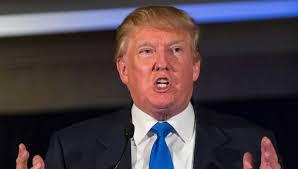
Donald Trump
HEINZ GUDERIAN: Once in power, Hitler quickly–and violently–eliminated his opposition.
He make no attempt to disguise this aspect of his character, because the opposition was weak and divided and soon collapsed after the first violent attack.
This allowed Hitler to pass laws which destroyed the safeguards enacted by the Weimar Republic against the the dangers of dictatorship.
MARK SHIELDS: “And I don’t know at what point it becomes…politically, he’s still leading. And I would have to say he’s the overwhelming favorite for the Republican nomination.”
HEINZ GUDERIAN: Hitler promised to “make Germany great again” both domestically and internationally. And this won him many followers. In time he controlled the largest party in the land and this allowed him, by democratic procedure, to assume power.
DAVID BROOKS: “The odd thing about [Trump’s] whole career and his whole language, his whole world view is there is no room for love in it. You get a sense of a man who received no love, can give no love, so his relationship with women, it has no love in it. It’s trophy.”
HEINZ GUDERIAN: [Hitler] was isolated as a human being. He had no real friend. There was nobody who was really close to him.
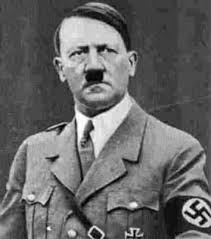
Adolf Hitler
There was nobody he could talk to freely and openly. And just as he never found a true friend, he was denied the ability to deeply love a woman.
DAVID BROOKS: “And [Trump’s] relationship toward the world is one of competition and beating, and as if he’s going to win by competition what other people get by love.”
HEINZ GUDERIAN: Everything on this earth that casts a glow of warmth over our life as mortals–friendship with fine men, the pure love for a wife, affection for one’s own children–all this was and forever remained unknown to him.
DAVID BROOKS: “And so you really are seeing someone who just has an odd psychology unleavened by kindness and charity, but where it’s all winners and losers, beating and being beat. And that’s part of the authoritarian personality, but it comes out in his attitude towards women.”
HEINZ GUDERIAN: He lived alone, cherishing his loneliness, with only his gigantic plans for company.
His relationship with Eva Braun may seem to contradict what I have written. But it is obvious that she could not have had any influence over him. And this is unfortunate, for it could only have been a softening one.
* * * * *
In his bestselling 1973 biography, The Life and Death of Adolf Hitler, British historian Robert Payne harshly condemned the German people for the rise of the Nazi dictator:
“[They] allowed themselves to be seduced by him and came to enjoy the experience….[They] followed him with joy and enthusiasm because he gave them license to pillage and murder to their hearts’ content.”
There is a very real danger that millions of ignorant, hate-filled, Right-wing Americans will catapult Donald Trump–a man with an “odd psychology unleavened by kindness and charity”–into the Presidency.
And that this man–“who received no love, can give no love”–will assume all the awesome power that goes with that office.
If that happens, future historians–if there are any–may similarly condemn those Americans who stood by like “good Germans” and allowed their country to fall into the hands of a ruthless tyrant.
2016 PRESIDENTIAL RACE, ABC NEWS, ADOLF HITLER, CBS NEWS, CNN, DAVID BROOKS, DONALD TRUMP, EDUARDO "TED" CRUZ, FACEBOOK, FOX NEWS, HEINZ GUDERIAN, MARK SHIELDS, MEGYN KELLY, NBC NEWS, PBS NEWSHOUR, REPUBLICANS, ROBERT PAYNE, THE CHICAGO SUN-TIMES, THE CHICAGO TRIBUNE, THE LIFE AND DEATH OF ADOLF HITLER, THE LOS ANGELES TIMES, THE NEW YORK TIMES, THE WASHINGTON POST, TWITTER, WOMEN
In Bureaucracy, Business, History, Politics, Social commentary on April 19, 2016 at 12:11 am
Syndicated columnist Mark Shields and New York Times columnist David Brooks appear every Friday on the PBS Newshour to review the week’s major political events.
On March 25, Shields–a liberal, and Brooks, a conservative–came to some disturbingly similar conclusions about the character of Republican Presidential front-runner Donald Trump.
As the business magnate moves ever closer to winning the 2016 Republican Presidential nomination, both columnists appear increasingly dismayed.
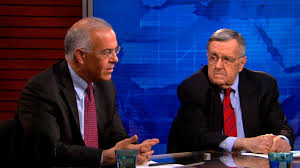
David Brooks and Mark Shields
Eerily, their conclusions about Trump’s character echo those reached by former Panzer General Heinz Guderian about German dictator Adolf Hitler.
Guderian created the concept of motorized blitzkrieg warfare, whereby masses of tanks and planes moved in coordination to strike at the vital nerve centers of an enemy.
As a result, Guderian enabled Hitler to conquer France in only six weeks in 1940, and to come to the brink of crushing the Soviet Union in 1941.
He recounted his career as the foremost tank commander of the Third Reich in his 1950 autobiography, Panzer Leader.

Heinz Guderian
Moderator Judy Woodruff opened the discussion by alluding to the blood feud raging between Trump and his fellow Republican, Texas U.S. Senator Eduardo “Ted” Cruz.
Both are seeking their party’s Presidential nomination–and both are ruthlessly determined to attain it.
Cruz accused Trump of behind a recent National Enquirer story charging him with having a series of extramarital affairs.
An anti-Trump Super PAC posted on Facebook a photo of a scantily-clad Melania Trump–his wife. The photo had been taken 16 years ago when, as a model, she posed for “British GQ.
Its publication came just ahead of the primary caucuses in sexually conservative Utah, which Cruz won.
Trump quickly responded on Twitter, accusing the Cruz campaign of leaking the photo, warning Cruz: “Be careful or I will spill the beans on your wife.”
Cruz struck back, defending his wife, Heidi, and calling Trump a coward. The next day, Trump retweeted an unflattering image of Mrs. Cruz.
This “war of the wives” has cost Trump dearly in his standing with American women. In March, a Washington Post/ABC News poll showed that 64% of women felt highly unfavorably disposed toward him.
DAVID BROOKS: “The Trump comparison of the looks of the wives, he does have, over the course of his life, a consistent misogynistic view of women as arm candy, as pieces of meat.
“It’s a consistent attitude toward women which is the stuff of a diseased adolescent.

Donald Trump
“And so we have seen a bit of that show up again. But if you go back over his past, calling into radio shows bragging about his affairs, talking about his sex life in public, he is childish in his immaturity. And his–even his misogyny is a childish misogyny….
“He’s of a different order than your normal candidate. And this whole week is just another reminder of that.”
HEINZ GUDERIAN: As Hitler’s self-confidence grew, and as his power became more firmly established both inside and outside Germany, he became overbearing and arrogant. Everyone appeared to him unimportant compared to himself.
Previously, Hitler had been open to practical considerations, and willing to discuss matters with others. But now he became increasingly autocratic.
Judy Woodruff asked Mark Shields if the uproar over Donald Trump’s disdain for women could really hurt his candidacy.
MARK SHIELDS: The ad featuring a scantily-clad Melania Trump “elicited from Donald Trump the worst of his personality, the bullying, the misogyny, as David has said, brought it out.
“But I think it’s more than childish and juvenile and adolescent. There is something creepy about this, his attitude toward women.
“Take Megyn Kelly of FOX News, who he just has an absolute obsession about, and he’s constantly writing about, you know, how awful she is and no talent and this and that.

Megyn Kelly
“And I don’t know if he’s just never had women–strong, independent women in his life who have spoken to him. It doesn’t seem that way….”
HEINZ GUDERIAN: Hitler’s most outstanding quality was his will power. It was by this that he compelled men to follow him.
When Hitler spoke to a small group he closely observed each person to determine how his words were affecting each man present.
If he noticed that some member of the group was not being swayed by his speech, he spoke directly to that person until he believed he had won him over.
But if the target of his persuasive effort still remained obstinate, Hitler would exclaim: “I haven’t convinced that man!”
His immediate reaction was to get rid of such people. As he grew increasingly successful, he grew increasingly intolerant.
ABC NEWS, BENJAMIN C. BRADLEE, BLACKMAIL, CBS NEWS, CNN, DENNIS HASTERT, DUKE OF WELLINGTON, FACEBOOK, FBI, J. EDGAR HOOVER, JOHN F. KENNEDY, JUDITH CAMPBELL, MAFIA, NAPOLEON BONAPARTE, NBC NEWS, REPUBLICANS, ROBERT F. KENNEDY, SAM GIANCANA, THE CHICAGO SUN-TIMES, THE CHICAGO TRIBUNE, THE LOS ANGELES TIMES, THE NEW YORK TIMES, THE WALL STREET JOURNAL, THE WASHINGTON POST, TWITTER, WATERLOO, WILLIAM C. SULLIVAN
In Bureaucracy, History, Law, Law Enforcement, Military, Politics, Social commentary on April 18, 2016 at 12:06 am
On May 28, 2015, Hastert, the former Republican Speaker of the House of Representatives (1999-2007) was indicted for violating Federal banking laws and lying to the FBI.
He had tried to conceal $3.5 million he had paid since 2010 to a man whom he had molested as a high school student. The student had been on the wrestling team that Hastert had coached.
The relationship had occurred while Hastert was a teacher and wrestling coach at Yorkville High School in Yorkville, Ill.
Later, in 1981, Hastert entered Congress.
On October 28, 2015, Hastert pleaded guilty to structuring money transactions in a way to avoid requirements to report where the money was going.

Dennis Hastert
“I felt a special bond with our wrestlers,” Hastert wrote in his 2004 memoirs, Speaker: Lessons From Forty Years of Coaching and Politics. “And I think they felt one with me.”
Apparently that “special bond” extended to activities outside the ring.
In the pre-sentence report, Justice Department prosecutors charged that Hastert had abused four young boys when he was their wrestling coach. One was only 14 years old.
Hastert had claimed that a coach should never strip away another person’s dignity.
But, said federal prosecutors, “that is exactly what defendant did to his victims. He made them feel alone, ashamed, guilty, and devoid of dignity.”
Hastert’s sentencing, delayed because of health problems, is now scheduled for April 27.
Thus, irony: By giving in to blackmail, Hastert:
- Lost $3.5 million;
- Unintentionally engineered his arrest and indictment; and
- Ensured that his darkest secret would be revealed.
There is a lesson to be learned here–one that longtime FBI Director J. Edgar Hoover well understood: Giving in to blackmail only empowers the blackmailer even more.
As William C. Sullivan, the onetime director of the FBI’s Domestic Intelligence Divison, revealed after Hoover’s death in 1972:
“The moment [Hoover] would get something on a senator, he’d send one of the errand boys up and advise the senator that ‘we’re in the course of an investigation, and we by chance happened to come up with this data on your daughter.
“‘But we wanted you to know this. We realize you’d want to know it.’ Well, Jesus, what does that tell the senator? From that time on, the senator’s right in his pocket.”
“Boy, the dirt he [Hoover] has on those Senators!” John F. Kennedy–a former Senator now President–gushed to his journalist-friend, Benjamin C. Bradlee.
Kennedy soon came to know that even Presidents could be targeted for blackmail.
In May, 1962, Hoover privately informed Kennedy that the FBI had learned that Judith Campbell, the mistress of Chicago Mafia boss Sam Giancana, had another bedmate: JFK himself.

John F. Kennedy, J. Edgar Hoover and Robert F. Kennedy
Hoover had feared being retired by the President’s brother, Attorney General Robert F. Kennedy. It had been RFK who had ordered Hoover to attack the Mafia as he had long attacked the Communist Party USA.
Now, as a result of that anti-Mob effort, the FBI had picked up evidence linking the President with the mistress of a top Mafia boss.
Hoover’s tenure as FBI director was thus assured–until his death on May 2, 1972, of a heart attack.
Narcotics agents have their own methods of blackmail in dealing with informants.
When a drug-abuser and/or dealer is coerced into becoming a “snitch,” the narcotics agent orders him to call another user/dealer he knows.
The agent then tapes the call–and makes sure his new informant knows it. From that moment, the “snitch” knows there’s no way out except cooperating with his new master.
The only effective way of handling blackmail was demonstrated by Arthur Wellesley, known to history as the Duke of Wellington.
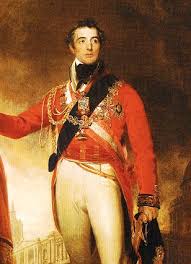
The Duke of Wellington
In 1815, he had defeated Napoleon at the battle of Waterloo, ending France’s longstanding threat to England. With that victory came the honors of a grateful nation.
Then, in December, 1824, Wellington found himself the target of blackmail by Joseph Stockdale, a pornographer and scandal-monger.
“My Lord Duke,” Stockdale write in a letter, “In Harriette Wilson’s memoirs, which I am about to publish, are various anecdotes of Your Grace which it would be most desirable to withhold….
“I have stopped the Press for the moment, but as the publication will take place next week, little delay can necessarily take place.”
Wilson was a famous London courtesan past her prime, then living in exile in Paris. She was asking Wellington to pay money to be left out of her memoirs.
From Wellington came the now-famous reply: “Publish and be damned!”
Wilson’s memoirs appeared in installments, naming half the British aristocracy and scandalizing London society.
And, true to her threat, she named Wellington as one of her lovers–and a not very satisfying one at that.
Wellington was a national hero, husband and father. Even so, his reputation did not suffer, and he went on to become prime minister.
Click here: Rear Window: When Wellington said publish and be damned: The Field Marshal and the Scarlet Woman – Voices
Dennis Hastert, former Speaker of the House, might now wish he had followed the example of the Duke of Wellington.
His reputation might have been trashed, but he wouldn’t now be facing prosecution.
ABC NEWS, BILL CLINTON, BOB LIVINGSTON, CBS NEWS, CHILD MOLESTATION, CNN, DEFENSE OF MARRIAGE ACT, DENNIS HASTERT, FACEBOOK, FAMILY VALUES, FBI, HUSTLER, HYPOCRISY, JUSTICE DEPARTMENT, JUVENAL, LARRY FLYNT, NBC NEWS, NERO, NEWT GINGRICH, REPUBLICANS, ROMAN EMPIRE, SAME-SEX MARRIAGE, SEX ABUSE, THE CHICAGO SUN-TIMES, THE CHICAGO TRIBUNE, THE LOS ANGELES TIMES, THE NEW YORK TIMES, THE WALL STREET JOURNAL, THE WASHINGTON POST, TWITTER, USA TODAY, WHEATON COLLEGE
In Bureaucracy, History, Law, Law Enforcement, Politics, Social commentary on April 13, 2016 at 12:01 am
“Yesterday they were ruffians. Today they control our lives. Tomorrow they will wind up as keepers of the public lavoratories.”
So wrote the ancient Roman poet Juvenal about the brutal non-entities who reigned at the court of the Caesars.

Roman Emperor Nero
Yet he could have been writing about the rise and fall of a onetime American Caesar named Dennis Hastert.
On May 28, 2015, Hastert, the former Republican Speaker of the House of Representatives (1999-2007) was indicted for violating Federal banking laws and lying to the FBI.
He had tried to conceal $3.5 million he had paid since 2010 to a man whom he had molested as a high school student. The student had been on the wrestling team that Hastert had coached.
The relationship had occurred while Hastert was a teacher and wrestling coach at Yorkville High School in Yorkville, Ill.
Later, in 1981, Hastert entered Congress.
On October 28, 2015, Hastert pleaded guilty to structuring money transactions in a way to avoid requirements to report where the money was going.
Dennis Hastert
“I felt a special bond with our wrestlers,” Hastert wrote in his 2004 memoirs, Speaker: Lessons From Forty Years of Coaching and Politics. “And I think they felt one with me.”
Apparently that “special bond” extended to activities outside the ring.
In the pre-sentence report, Justice Department prosecutors charged that Hastert had abused four young boys when he was their wrestling coach. One was only 14 years old.
Hastert had claimed that a coach should never strip away another person’s dignity.
But, said federal prosecutors, “that is exactly what defendant did to his victims. He made them feel alone, ashamed, guilty, and devoid of dignity.”
Hastert’s sentencing, delayed because of health problems, is now scheduled for April 27.
Hastert wasn’t indicted for having had a sexual relationship with underage students. The statute of limitations had long ago run out on those offenses.
He was indicted for trying to evade federal banking laws and lying to the FBI.
Shortly after his indictment, Hastert resigned from the board of Wheaton College, an evangelical university in Chicago known for its anti-gay policies.
The FBI began investigating the cash withdrawals in 2013.
The Bureau wanted to know if Hastert was using the cash for criminal purposes or if he was the victim of a criminal extortion.
When questioned by the FBI, Hastert said he was storing cash because he didn’t feel safe with the banking system: “Yeah … I kept the cash. That’s what I’m doing.”
One part of Hastert’s life was not secret: His opposition to homosexual rights.
From 1997 to 2007, Hastert voted for the Marriage Protection Act, which “forbids requiring any state or any other political subdivision of the United States to credit as a marriage a same-sex relationship treated as marriage in another state or equivalent government.”
Hastert also voted in favor of a Constitutional amendment to “establish that marriage shall consist of one man and one woman.”
He also voted against the Employment Non-Discrimination Act, which banned companies from discriminating against employees “on the basis of sexual orientation.”
Owing to Hastert’s “deeply conservative” voting record, in 1998, he received perfect scores of 100 from
- The National Rifle Association;
- The Christian Coalition;
- The National Right to Life Committee; and
- The Chamber of Commerce
Click here: Dennis Hastert’s secret gay ‘misconduct’ is even worse given his terrible voting record on gay rights
Hastert, who concealed his past as a sexual predator while claiming to be a man of virtue, wrote in his autobiography:
“I was never a very good liar. Maybe I wasn’t smart enough. I could never get away with it, so I made up my mind as a kid to tell the truth and pay the consequences.”
Hastert makes the third Republican “family values” Speaker of the House to become ensnared in an ethics scandal.
Newt Gingrich was the first Speaker (1985-1999) in the history of the House to be reprimanded and punished for ethics violations. His offense: Claiming tax-exempt status for a college course run for political purposes.
He successor, Bob Livingston, was forced to resign when Hustler publisher Larry Flynt revealed his sexual infidelities.
And now there’s Dennis Hastert, whose conduct involved neither money nor women–but a series of male high school students.
Of course, Democrats have had their sex scandals as well–as President Bill Clinton can thoroughly attest. But Democrats usually don’t suffer as badly from them.
The reason: Republicans portray themselves as moral examples for the nation. So for them, being caught literally with their pants down proves a double-whammy.
They are condemned for their specific illegal/immoral acts–and for the sheer hypocrisy of their false claims of sainthood.
Ironically, Right-wingers like Hastert would fare better when caught in homosexual affairs if they simply admitted their sexual tastes and registered as Democrats.
But in heavily Right-wing states like Texas and Oklahoma, they wouldn’t stand a chance of being elected as a Democrat.
And Red-state voters, feeling themselves moral arbiters of the nation, wouldn’t elect anyone they thought was “unnatural.”
So Right-wingers will continue pretending to be moral paragons–and will continue paying the price when they’re exposed as fallible humans.
ABC NEWS, ABORTION, ADOLF HITLER, ALBERT SPEER, AMERICAN TALIBAN, CBS NEWS, CNN, DAILY KOS, DINESH D'SOUZA, FACEBOOK, FBI, HOMELAND SECURITY, HOMOSEXUALITY, ISLAM, JIHADISTS, MARKOS MOULITSAS, MUSLIMS, NAZI GERMANY, NBC NEWS, REPUBLICANS, RIGHT-WING EXTREMISTS, TALIBAN, TERRORISM, THE CHICAGO SUN-TIMES, THE CHICAGO TRIBUNE, THE ENEMY AT HOME, THE LOS ANGELES TIMES, THE NEW YORK TIMES, THE WASHINGTON POST, TWITTER, USA TODAY
In Bureaucracy, History, Law, Law Enforcement, Politics, Social commentary on April 6, 2016 at 12:10 am
On April 15, 2015, CBS News broke a truly sensational and disturbing story:
Agents from the FBI and Department of Homeland Security (DHS) were investigating the online leak of home addresses of senior and former officials of the FBI, DHS and other Federal law enforcement agencies.

Even worse: Rather than Islamic terrorists being the culprits, the suspects are believed to be members of an American Right-wing extremist group.
The message was entitled: DHS-CIA-FBI TRAITORS HOME ADDRESSES.
It read:
“LET THESE EVIL NWO SATANISTS KNOW THAT THERE WILL BE HELL TO PAY FOR THEIR 911 TREASON, AND THEIR FUTURE FEMA CAMP PLANNED PUBLIC CRACKDOWN TREASON ALSO
“JESUS IS LORD, AND THE PUBLIC IS IN CHARGE, NOT THESE SATANIC NWO STOOGES”
“NWO” could be an acronym for “New World Order,” a term used by conspiracy theorists to refer to a totalitarian world government.
In a statement, DHS said:
“The safety of our workforce is always a primary concern. DHS has notified employees who were identified in the posting and encouraged them to be vigilant. DHS will adjust security measures, as appropriate, to protect our employees.”

CBS did not say where the information was posted.
Click here: Right-Wing Group Blamed In Leak Of U.S. Officials’ Home Addresses: Report
Almost one year later, a check of Google stories about this crime shows no updates released by the government. So presumably the investigation is continuing.
Americans shouldn’t be shocked to find that a Right-wing group betrayed the safety of its fellow Americans.
The goals of both the American Right and Islamic terrorist groups such as the Taliban actually share much in common:
- Women should have fewer rights than men.
- Abortion should be illegal.
- There should be no separation between church and state.
- Religion should be taught in school.
- Religious doctrine trumps science.
- Government should be based on religious doctrine.
- Homosexuality should be outlawed.
A 2010 book, American Taliban: How War, Sex, Sin, and Power Bind Jihadists and the Radical Right, vividly documents the similarities between these two groups.
Its author is Markos Moulitsas, founder of Daily Kos, an American political blog that publishes news and opinions from a liberal viewpoint.

American Taliban opens with this provocative statement:
“Yes, the Republican party, and the entire modern conservative movement is, in fact, very much like the Taliban.
“In their tactics and on the issues, our homegrown American Taliban are almost indistinguishable from the Afghan Taliban.
“The American Taliban–whether in their militaristic zeal, their brute faith in masculinity, their disdain for women’s rights, their outright hatred of gays, their aversion to science and modernity or their staunch anti-intellectualism–share a litany of mores, values, and tactics with Islamic extremists….
“Let’s be honest, the freedoms that jihadists hate are the very same freedoms that our own homegrown repressive ideologues hate: freedom of thought, of inquiry, of lifestyle.”
Its subsequent chapters document the all-consuming rage of the American Right to brutally control the lives of their fellow citizens.
Ironically, Moulitsas’ thesis is–unintentionally–supported by no less an authority than Right-wing author Dinesh D’Souza.
Among the bestsellers D’Souza has written: Ronald Reagan: How an Ordinary Man Became an Extraordinary Leader, and Obama’s America: Unmaking the American Dream.
The title of his 2008 bestseller sums up D’Souza’s take on liberalism: The Enemy At Home: The Cultural Left and Its Responsibility for 9/11.

From the book’s dustjacket:
“Muslims and other traditional people around the world allege that secular American values are being imposed on their societies and that these values undermine religious belief, weaken the traditional family, and corrupt the innocence of children.
“But it is not ‘America’ that is doing this to them, it is the American cultural left. What traditional societies consider repulsive and immoral, the cultural left considers progressive and liberating….
“D’Souza argues that the war on terror is really a war for the hearts and minds of traditional Muslims—and traditional peoples everywhere. The only way to win the struggle with radical Islam is to convince traditional Muslims that America is on their side.”
In short: America needs to adopt the values of the Taliban.
* * * * *
On March 19, 1945, facing certain defeat, Adolf Hitler ordered a massive “scorched-earth” campaign throughout Germany.
All German agriculture, industry, ships, communications, roads, food stuffs, mines, bridges, stores and utility plants were to be destroyed.
If implemented, it would deprive the entire German population of even the barest necessities after the war.
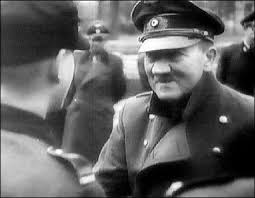
Adolf Hitler addressing boy soldiers as the Third Reich crumbles
“If the war is lost,” Hitler told Albert Speer, his former architect and now Minister of Armaments, “the nation will also perish.
“This fate is inevitable. There is no necessity to take into consideration the basis which the people will need to continue even a most primitive existence.
“On the contrary, it will be better to destroy these things ourselves, because this nation will have proved to be the weaker one and the future will belong solely to the stronger eastern nation.
“Besides, those who will remain after the battle are only the inferior ones, for the good ones have all been killed.”
Hitler’s view was: “If I can’t rule Germany, there won’t be a Germany.”
Apparently, some members of the American Right have reached the same decision about the United States.
2016 REPUBLICAN CONVENTION, ABC NEWS, AFFORDABLE CARE ACT, BARACK OBAMA, BILL CLINTON, CBS NEWS, CHRIS MATTHEWS, CNN, CUBAN MISSILE CRISIS, DEBT CEILING, DONALD TRUMP, EXTORTION, FACEBOOK, HARDBALL, JOHN F. KENNEDY, JUDGE MERRICK GARLAND, MSNBC, NBC NEWS, NEWT GINGRICH, NICCOLO MACHIAVELLI, OBAMACARE, Racketeer Influenced Corrupt Organizations (RICO) Act, REPUBLICANS, RICHARD WOLFFE, ROBERT PAYNE, THE CHICAGO SUN-TIMES, THE CHICAGO TRIBUNE, THE LIFE AND DEATH OF ADOLF HITLER, THE LOS ANGELES TIMES, THE NEW YORK TIMES, THE PRINCE, THE WALL STREET JOURNAL, THE WASHINGTON POST, TWITTER, U.S. HOUSE OF REPRESENTATIVES, U.S. JUSTICE DEPARTMENT, U.S. SENATE, U.S. SENATOR MITCH MCCONNELL, U.S. SUPREME COURT, USA PATRIOT ACT, WARREN BUFFETT
In Bureaucracy, History, Law, Law Enforcement, Politics, Social commentary on March 25, 2016 at 12:04 am
In September, 2013, President Barack Obama and Senate Democrats refused to knuckle under to yet another Republican extortion threat: Defund the Affordable Care Act (ACA) or we’ll shut down the government.
Republicans claimed it was Obama and Senate Democrats who refused to see reason and negotiate.
But then a Republican accidentally gave away the real reason for the shutdown.
“We’re not going to be disrespected,” Rep. Marlin Stutzman (R-Ind.) told the Washington Examiner. “We have to get something out of this. And I don’t know what that even is.”
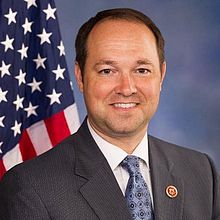
Marlin Stutzman
In short, Republicans–as admitted by Martlin Stutzman–were out to get “respect.” A member of the Crips or Bloods couldn’t have said it better.
The shutdown began on October 1, 2013–and ended 16 days later with even Republicans admitting it had been a failure.
President Obama, a former attorney, denounced House Republicans as guilty of “extortion” and “blackmail.” Had the President acted to prosecute such criminal conduct, the results would have been:
- Facing lengthy prison terms, those indicted Republicans would been forced to lawyer-up. That in itself would have been no small thing, since good criminal lawyers cost big bucks.
- Obsessed with their own personal survival, they would have found little time for engaging in the same thuggish behavior that got them indicted. In fact, doing so would have only made their conviction more likely.
- Those Republicans who hadn’t been indicted would have realized: “I could be next.” This would have produced a chilling effect on their willingness to engage in further acts of subversion and/or extortion.
- The effect on Right-wing Republicans would have been the same as that of President Ronald Reagan’s firing of striking air traffic controllers: “You cross me and threaten the security of this Nation at your own peril.”

True, some prosecuted Republicans might have beaten the rap. But first they would have been forced to spend huge amounts of time and money on their defense.
And with 75% of Americans voicing disgust with Congress, most of those prosecuted might well have been convicted.
It would have been a long time before Republicans again dared to engage in such behavior.
The ancient Greeks believed: “A man’s character is his fate.” It is Obama’s character–and America’s fate–that he is more inclined to conciliation than confrontation.
Richard Wolffe chronicled Obama’s winning of the White House in his book Renegade: The Making of a President. He noted that Obama was always more comfortable when responding to Republican attacks on his character than he was in making attacks of his own.
Obama came into office determined to find common ground with Republicans. But they quickly made it clear to him that they only wanted his political destruction.
At that point, he should have put aside his hopes for a “Kumbaya moment” and applied what Niccolo Machiavelli famously said in The Prince on the matter of love versus fear:

Niccolo Machiavelli
From this arises the question whether it is better to be loved than feared, or feared more than loved. The reply is, that one ought to be both feared and loved, but as it is difficult for the two to go together, it is much safer to be feared than loved.
For it may be said of men in general that they are ungrateful, voluble, dissemblers, anxious to avoid danger and covetous of gain.
As long as you benefit them, they are entirely yours: they offer you their blood, their goods, their life and their children, when the necessity is remote. But when it approaches, they revolt….
And men have less scruple in offending one who makes himself loved than one who makes himself feared; for love is held by a chain of obligations which, men being selfish, is broken whenever it serves their purpose; but fear is maintained by a dread of punishment which never fails.
By refusing to vigorously prosecute acts of Republican extortion, President Obama has unleashed twin disasters upon himself and the United States:
First, Republicans have been encouraged to intensify their acts of aggression against him.
Their most recent act: Refusing to meet with federal appeals court judge Merrick Garland. Obama’s designated nominee to the Supreme Court after the February 13 death of Justice Antonin Scalia.
Kentucky United States Senator Mitch McConnell has flatly stated: There will be no Supreme Court hearings–not during regular business or a post-election lame-duck session.
Had Obama proceeded with indictments against Republican extortion in 2011 or 2013, McConnell–who supported the extortion attempts of those years–would now be desperately meeting with his lawyers.
Second, Republicans have unleashed their tactics of extortion against one another.
Donald Trump, their front-running Presidential candidate, has openly threatened to aim violence at Republican delegates who do not accept him as their nominee.
As Philip Klein, the managing editor of the Washington Examiner, recently wrote:
“Political commentators now routinely talk about the riots that would break out in Cleveland if Trump were denied the nomination, about how his supporters have guns and all hell could break loose, that they would burn everything to the ground. It works to Trump’s advantage to not try too hard to dispel these notions.”
Thus, those who submit to the aggression of criminals only encourage contempt–and increased aggression–from those same criminals.
2016 REPUBLICAN CONVENTION, ABC NEWS, AFFORDABLE CARE ACT, BARACK OBAMA, BILL CLINTON, CBS NEWS, CHRIS MATTHEWS, CNN, CUBAN MISSILE CRISIS, DEBT CEILING, DONALD TRUMP, EXTORTION, FACEBOOK, HARDBALL, JOHN F. KENNEDY, JUDGE MERRICK GARLAND, MSNBC, NBC NEWS, NEWT GINGRICH, NICCOLO MACHIAVELLI, OBAMACARE, Racketeer Influenced Corrupt Organizations (RICO) Act, REPUBLICANS, RICHARD WOLFFE, ROBERT PAYNE, THE CHICAGO SUN-TIMES, THE CHICAGO TRIBUNE, THE LIFE AND DEATH OF ADOLF HITLER, THE LOS ANGELES TIMES, THE NEW YORK TIMES, THE PRINCE, THE WALL STREET JOURNJAL, TWITTER, U.S. HOUSE OF REPRESENTATIVES, U.S. JUSTICE DEPARTMENT, U.S. SENATE, U.S. SENATOR MITCH MCCONNELL, U.S. SUPREME COURT, USA PATRIOT ACT, WARREN BUFFETT
In Bureaucracy, History, Law, Law Enforcement, Politics, Social commentary on March 24, 2016 at 12:30 am
On July 9, 2011, Republican extortionists threatened the Nation with financial ruin and international disgrace unless their demands were met.
President Barack Obama could have countered that danger with the Racketeer Influenced Corrupt Organizations (RICO) Act. Among the crimes it authorizes for prosecution: Extortion.
Extortion is defined as “a criminal offense which occurs when a person unlawfully obtains either money, property or services from a person(s), entity, or institution, through coercion.”
And if President Obama had believed that RICO was not sufficient to deal with extortionate behavior, he could have relied on the USA Patriot Act of 2001, passed in the wake of 9/11.
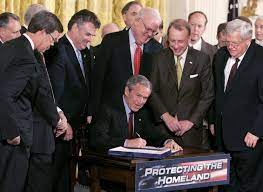
President George W. Bush signs the USA Patriot Act into law – October 26, 2001
In Section 802, the Act defines domestic terrorism. Among the behavior that is defined as criminal:
“Activities that…appear to be intended…to influence the policy of a government by intimidation or coercion [and]…occur primarily within the territorial jurisdiction of the United States.”
The remedies for punishing such criminal behavior were legally in place. President Obama needed only to direct the Justice Department to apply them.
Prosecuting members of Congress would not have violated the separation-of-powers principle. Congressmen have in the past been investigated, indicted and convicted for various criminal offenses.
Such prosecutions–and especially convictions–would have served notice on current and future members of Congress that the lives and fortunes of American citizens may not be held hostage as part of a negotiated settlement.
On August 1, Chris Matthews, host of MSNBC’s “Hardball,” wrapped up his program with a search for “options” to avoid another round of Republican extortion tactics.
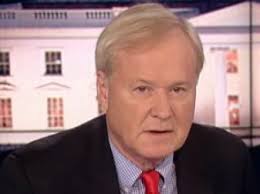
Chris Matthews
“I want to know what steps the president ‘could’ have taken to avoid this hostage-taking.
“…Is there another way than either buckling to the Republicans or letting the government and the country crash?
“How does he use the power of the presidency, the logic, emotion and basic patriotism of the people, to thwart those willing to threaten, disrupt, even possibly destroy to get their way?”
The answer to his questions–then and now–is: Replace the law of fear with the rule of law.
But there was another way Obama could have stood up to Republican extortionists: By urging his fellow Americans to rally to him in a moment of supreme national danger.
President John F. Kennedy did just that–successfully–during the most dangerous crisis of his administration.
Addressing the Nation on October 22, 1962, Kennedy shocked his fellow citizens by revealing that the Soviet Union had installed offensive nuclear missiles in Cuba.
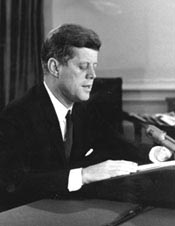
John F. Kennedy
After outlining a series of steps he had taken to end the crisis, Kennedy sought to reassure and inspire his audience. His words are worth remembering today:
“The path we have chosen for the present is full of hazards, as all paths are, but it is the one most consistent with our character and courage as a nation and our commitments around the world.
“The cost of freedom is always high, but Americans have always paid it. And one path we shall never choose, and that is the path of surrender or submission.”
President Obama could have sent that same message to the extortionists of the Republican Party.
Yet this was another option he failed to exploit. And he and the Nation have continued to pay the price for it.
In the fall of 2013, Republicans once again threatened to shut down the Federal Government unless the President agreed to defund the Affordable Care Act (ACA), better known as “Obamacare.
They were enraged that millions of uninsured Americans might receive medical care on a par with that given members of the House and Senate.
So on September 20, the House voted on a short-term government funding bill that included a provision to defund Obamacare.
That provision was a no-go for Senate Democrats and President Obama. If the House and Senate couldn’t reach a compromise, many functions of the federal government would be shut down indefinitely on October 1.
The official reason given by Republicans: They wanted to save the country from bankruptcy–although the Congressional Budget Office stated that the ACA would lower future deficits and Medicare spending.
After passing the House and Senate, the ACA had been signed into law by President Obama on March 23, 2010.
On June 28, 2012, the United States Supreme Court–whose Chief Justice, John Roberts, is a Republican–had upheld the constitutionality of the ACA.
Yet House Republicans continued searching for a way to stop the law from taking effect. By September, 2013, they had voted 42 times to repeal “Obamacare.”
But their efforts had failed; the Democratic-led Senate made it clear it would never go along with such legislation.
Finally, unable to legally overturn the Act or to legislatively repeal it, House Republicans fell back on something much simpler: Threats and fear.
Threats–of voting to shut down salaries paid to most Federal employees. Most, because they themselves would continue to draw hefty salaries while denying them to FBI agents, air traffic controllers and members of the military, among others.
And fear–that would be generated throughout the Federal government, the United States and America’s international allies.
On October 1, 2013, House Republicans made good on their threat. They “shut down the government.”


(3)(1)(1).jpg&imgrefurl=http%3A%2F%2Fsilkroadsandsiamesesmiles.com%2F2011%2F01%2F26%2Froot-causes-illegal-immigration%2F&docid=undefined&tbnid=MpAe36i-e_f-BM%3A&w=576&h=421&ei=uJyeVZa6D4PwoAT3_Z2wBg&ved=0CAIQxiAwAA&iact=c "https://www.google.com/imgres?imgurl=http://www.examiner.com/images/blog/wysiwyg/image/StopIllegalAlienInvasionBanner(1)(3)(1)(1).jpg&imgrefurl=http://silkroadsandsiamesesmiles.com/2011/01/26/root-causes-illegal-immigration/&docid=undefined&tbnid=MpAe36i-e_f-BM:&w=576&h=421&ei=uJyeVZa6D4PwoAT3_Z2wBg&ved=0CAIQxiAwAA&iact=c")


1984 NOVEL, 9/11, ABC NEWS, ADOLF HITLER, BARACK OBAMA, BILL CLINTON, BIRTH CONTROL, BLACKS, CBS NEWS, CNN, COMMUNISM, DENNIS HASTERT, DISABLED, DISCRIMINATION, DWIGHT D. EISENHOWER, EDWARD R. MURROW, ENVIRONMENTALISTS, FACEBOOK, FAMILY RESEARCH COUNCIL, FRANKLIN D. ROOSEVELT, GAYS, GEORGE C. MARSHALL, GEORGE H.W. BUSH, GEORGE ORWELL, GOP, GREAT SOCIETY, HARRY S. TRUMAN, HISPANICS, HIV MEDICATION, HOUSE OF REPRESENTATIVES, J. ROBERT OPPENHEIMER, JOHN BIRCH SOCIETY, JOHN F. KENNEDY, JOHN STEINBECK, JOSEPH R. MCCARTHY, JOSEPH STALIN, JOSH DUGGAR, KGB, LEE ATWATER, LEON TROTSKY, LESBIANS, LIBERALS, LUCILLE BALL, LYNDON B. JOHNSON, MEDICAL CARE, MEIN KAMPF, MICHAEL DUKAKIS, MICHELLE BACHMANN, MITT ROMNEY, MUSLIMS, NBC NEWS, PETE SEEGER, PROPAGANDA, RELIGION, REPUBLICANS, RICHARD NIXON, RICK SANTORUM, ROBERT WELCH, RODNEY KING RIOTS, SCAPEGOATING, SHARIA LAW, SOCIALISTS, SOVIET UNION, THE LOS ANGELES TIMES, THE NEW YORK TIMES, THE RELIGIOUS FREEDOM RESTORATION ACT, THE WASHINGTON POST, TRANSGENDERS, TWITTER, WILLIAM L. SHIRER, WOMEN, WORLD WAR ii
THE “TWO MINUTES HATE”–A GOP GIFT: PART ONE (OF THREE)
In Bureaucracy, History, Politics, Social commentary on May 19, 2016 at 12:01 amThe Right’s fixation on transgender “dangers” is only the latest in a long string of “enemies” painted by the Republican party.
During the 1960s and 1970s, the “enemy” was blacks. The key to winning votes of racist whites without appearing racist lay in what Republicans called “the Southern Strategy.”
It was this that won Richard Nixon the Presidency in 1968 and 1972 and the White House for George H.W. Bush in 1988.
In a now-infamous 1981 interview, Right-wing political consultant Lee Atwater explained how this worked:
“You start out in 1954 by saying, ‘Nigger, nigger, nigger.’ By 1968 you can’t say ‘nigger’—that hurts you, backfires.
“So you say stuff like, uh, forced busing, states’ rights, and all that stuff, and you’re getting so abstract.
“Now, you’re talking about cutting taxes, and all these things you’re talking about are totally economic things and a byproduct of them is, blacks get hurt worse than whites.…
“’We want to cut this,’ is much more abstract than even the busing thing, uh, and a hell of a lot more abstract than ‘Nigger, nigger.’
“So anyway you look at it, race is coming on the back burner.”
Lee Atwater
At the end of his life, Atwater recognized the monster he had helped unleash.
Like Reinhard Heydrich–the designer of the “Final Solution” who, on his deathbed, begged forgiveness for his crimes–Atwater, in a 1991 article for Life, apologized to former Democratic Presidential nominee Michael Dukakis for the “naked cruelty” of the 1988 campaign.
But blacks have by no means been the only targets–and victims–of Republican hate campaigns. A partial list of these would include:
And now transgenders.
George Orwell’s classic 1949 novel, 1984, serves as a better guide to Republican electioneering than any official statement of the GOP.
1984 is set in a futuristic dictatorship called Oceania, whose constantly alternating mortal enemies are Eurasia and Eastasia.
A daily fixture of life in Oceania is the “Two Minutes Hate.” During this, Party members must watch a film depicting the Party’s enemies and express their hatred for them in exactly two minutes.
Chief among these is Emmanuel Goldstein, who is obviously based on Leon Trotsky, the longtime antagonist of Joseph Stalin, dictator of the Soviet Union for almost 30 years.
The “Two Minutes Hate” serves as a form of brainwashing, whose purpose is to whip ordinary citizens into a frenzy of hatred and loathing for whoever the Party designates as its–and their–mortal enemies.
Since the end of World War II, Republicans have regularly hurled the charge of “treason” against anyone who dared to run against them for office or think other than Republican-approved thoughts.
Republicans had been locked out of the White House from 1933 to 1952, during the administrations of Franklin D. Roosevelt and Harry S. Truman.
Determined to regain the Presidency by any means, they found that attacking the integrity of their fellow Americans a highly effective tactic.
During the 1950s, Wisconsin Senator Joseph R. McCarthy rode a wave of paranoia to national prominence–by attacking the patriotism of anyone who disagreed with him.
Joseph McCarthy
Elected to the Senate in 1946, he rose to national prominence on February 9, 1950, after giving a fiery speech in Wheeling, West Virginia:
“The State Department is infested with communists. I have here in my hand a list of 205—a list of names that were made known to the Secretary of State as being members of the Communist Party and who nevertheless are still working and shaping policy in the State Department.”
Americans were already growing increasingly fearful of Communism:
But anti-communism as a lever to political advancement sharply accelerated following McCarthy’s speech. Republicans–resentful at being denied the White House since 1932–seized upon anti-communism as their passport to power.
No American–no matter how prominent–was safe from the accusation of being a Communist or a Communist sympathizer–”a Comsymp” or “fellow traveler” in the style of the era.
Among those accused:
Even “untouchable” Republicans became targets for such slander.
The most prominent of these was President Dwight D. Eisenhower–labeled ”a conscious, dedicated agent of the Communist Conspiracy” by Robert Welch, who founded the John Birch Society in 1958.
Share this: