Posts Tagged ‘NUCLEAR WEAPONS’
ABC NEWS, ADOLF HITLER, ALI HOSSEINI KHAMENEI, ALTERNET, AMERICABLOG, AP, AYATOLLAH ALI KHAMENEI, BABY BOOMER RESISTANCE, BAHRAIN, BBC, BERLIN, BLOOMBERG, BLOOMBERG NEWS, BLUESKY, BUZZFEED, CBS NEWS, CNN, CROOKS AND LIARS, DAILY KOS, DONALD TRUMP, DRONES, FINLAND, FIVETHIRTYEIGHT, FRANCE, GREAT BRITAIN, HARPER’S MAGAZINE, HUFFINGTON POST, IRAN, ISRAEL, ITALY, JAPAN, JOACHIM VON RIBBENTROP, JOSEPH STALIN, KIEV, KUWAIT, LENINGRAD, LUFTWAFFE, MEDIA MATTERS, MOJTABA KHAMENEI, MOSCOW, MOTHER JONES, MOVEON, MSNBC, NAZI GERMANY, NBC NEWS, NEW REPUBLIC, NEWSDAY, NEWSWEEK, NEWT GINGRICH, NPR, NUCLEAR WEAPONS, OIL FIELDS, OMAN, OPERATION BARBAROSSA, PBS NEWSHOUR, PETE HEGSETH, POLAND, POLITICO, POLITICUSUSA, QATAR, QATER, RAW STORY, REUTERS, SALON, SAUDI ARABIA, SEATTLE TIMES, SLATE, SOVIET UNION, SS, TALKING POINTS MEMO, THE ATLANTIC, THE CHICAGO SUN-TIMES, THE CHICAGO TRIBUNE, THE DAILY BEAST, THE DAILY BLOG, THE GUARDIAN, THE HILL, THE HUFFINGTON POST, THE INTERCEPT, THE LONGEST DAY (MOVIE, THE LOS ANGELES TIMES, THE NATION, THE NEW REPUBLIC, THE NEW YORK TIMES, THE NEW YORKER, THE PENTAGON, THE UNITED ARAB EMIRATES, THE VILLAGE VOICE, THE WASHINGTON POST, THINKPROGRESS, THIRD REICH, TIME, TRUTHDIG, TRUTHOUT, TWO POLITICAL JUNKIES, U.S. NEWS & WORLD REPORT, UKRAINE, UNIFORMS, UPI, USA TODAY, VYACHESLAV MOLOTOV, WEHRMACHT, WONKETTE, WORLD WAR 11, X
In Bureaucracy, History, Military, Politics, Social commentary on March 31, 2026 at 12:48 am
The city: Berlin.
The date: November 12–13, 1940.
The event: A meeting between German Fuhrer Adolf Hitler and Soviet Foreign Minister Vyacheslav Molotov.
The purposes: To discuss:
- Soviet expansion and control over Finland, Bulgaria, and the Turkish Straits; and
- Germany’s desire for the USSR to attack British interests in India and Iran.
Hitler wanted the USSR to join the Axis (Germany, Italy, and Japan) and expand “southward” toward the Indian Ocean to avoid conflict in Europe.
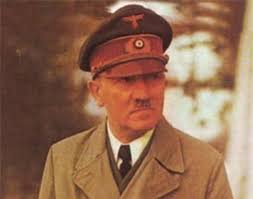
Adolf Hitler
Molotov ignored the talk of India and instead demanded control over Finland, Bulgaria, and the Turkish Straits.
Hitler adamantly opposed Soviet control over Finland, which he considered a strategic ally. He feared a Soviet expansion into Scandinavia would threaten German iron ore supplies from Sweden and northern interests.
And he deeply feared that the Soviet Union would cut off Germany’s vital Romanian oil supplies. Romania provided roughly 75% of German oil in 1941. A late 1940 Soviet attack on the Ploiești oil fields would render Germany helpless and force an end to the war.
On a personal level, Molotov and Hitler grated on each other’s nerves. Molotov was blunt in his remarks and didn’t spare Hitler at all. He seldom smiled and refused to compromises on Russia’s demands for control of Finland, Bulgaria, and the Turkish Straits.
At one point, Molotov asked: “Is last year’s agreement [between Germany and Russia] still valid?”
Hitler replied that it was.
“I asked this question,” said Molotov, “because of the Finns. You are on very friendly relations with the Finns. You invite people from Finland to Germany and you send missions there. And the Finns are very dangerous people. They undermine our security and we’ll have to do something about that and we are going to do something about that.”

Vyacheslav Molotov
“I understand you very well,” exploded Hitler. “You want to wage war against Finland and that is quite out of the question. Do you hear me? It’s impossible because my supplies of iron, nickel and other important raw materials would be cut.”
During the talks, British Royal Air Force (RAF) bombers appeared overhead, forcing the leaders to move to an air raid shelter.
German Foreign Minister Joachim von Ribbentrop had been trying to convince Molotov that Great Britain was “beaten” and that the British Empire was a “gigantic world-wide estate in bankruptcy” ready for partition.
Molotov sarcastically replied: “If England is beaten, why are we in this shelter and whose are the bombs that are falling?”
Even while Molotov was still in Berlin, Hitler ordered his generals to attack the Soviet Union on May 15, 1941.
Within a month they responded with a detailed plan code-named “Operation Barbarossa.”
Less than one year later—on June 22, 1941—with 134 divisions at full fighting strength and 73 more divisions for deployment behind the front, the German Wehrmacht invaded the Soviet Union.
Now the two most ruthless dictators on earth—Adolf Hitler and Joseph Stalin—were locked in a fight to the death.
At the outset, the odds clearly favored the Germans.
The invasion caught the Soviet Union by surprise. Joseph Stalin had received Intelligence reports from Great Britain that Germany was preparing to attack. But Stalin, who believed the British were trying to drive a wedge between him and Hitler, put his faith in Hitler, whose guarantees had long proved worthless.

German army units
From June to September, the Wehrmacht captured vast territories and encircled hundreds of thousands of Red Army troops. German forces quickly advanced toward Leningrad, Moscow, and Kiev, inflicting massive casualties.
The Luftwaffe destroyed much of the Soviet air force on the ground.
In June and July, German panzers quickly advanced, capturing over 300,000 Soviet prisoners in the Minsk-Bialystok pocket. By late September, Army Group South captured Kiev, resulting in the largest encirclement in history, with roughly 600,000 Soviet soldiers trapped.
By the end of 1941, more than three million Soviet soldiers were captured or killed. Still, the Soviet Union did not collapse and continued to commit new field armies to the conflict.
By December, the Wehrmacht, besieging Moscow, were literally freezing to death in their summer uniforms. Then, on December 5-6, the Soviets launched their decisive counter-offensive before Moscow, forcing German forces into a retreat.
It marked the first major land defeat for the Wehrmacht since its September 1, 1939 invasion of Poland, which ignited World War II.
Now, fast-forward 85 years. Substitute President Donald Trump for Fuhrer Adolf Hitler and Mojtaba Khamenei for Joseph Stalin—and Iran for the Soviet Union.

Donald Trump and Adolf Hitler
Just as Hitler launched his attack on the Soviet Union without warning, so did Trump launch his on Iran—on February 28.
Hitler’s attack didn’t kill Joseph Stalin, the all-powerful dictator of the Soviet Union. But Trump’s airstrikes killed Ali Hosseini Khamenei, who had ruled Iran as its supreme leader from 1989.

Ayatollah Ali Khamenei
Still, the Iranians quickly elevated his son, Mojtaba Khamenei, to the same position—and went on fighting.
Hitler—and numerous members of the Wehrmacht—believed that Germany’s mechanized panzers would succeed where Napoleon Bonaparte had failed in 1812. And that they could conquer the Soviet Union in only three months.
They were wrong.
ABC NEWS, ADOLF HITLER, ALFRED JODL, ALTERNET, AMERICABLOG, AP, AYATOLLAH ALI KHAMENEI, BABY BOOMER RESISTANCE, BBC, BELGIUM, BLOOMBERG, BLOOMBERG NEWS, BLUESKY, BUZZFEED, CBS NEWS, CNN, CROOKS AND LIARS, DAILY KOS, FIVETHIRTYEIGHT, FRANCE, GREECE, HARPER’S MAGAZINE, HEINZ GUDERIAN, HOLLAND, HUFFINGTON POST, ISRAEL, JORDAN, JOSEPH STALIN, KUWAIT, LENINGRAD, MEDIA MATTERS, MOSCOW, MOTHER JONES, MOVEON, MSNBC, NAPOLEON BONAPARTE, NAZI GERMANY, NBC NEWS, NEW REPUBLIC, NEWSDAY, NEWSWEEK, NORTH ATLANTIC TREATY ORGANIZATION (NATO), NORWAY DENMARK, NPR, NUCLEAR WEAPONS, OIL FIELDS, PBS NEWSHOUR, PETE HEGSETH, POLAND, POLITICO, POLITICUSUSA, QATAR, RAW STORY, REPUBLICAN PARTY, REUTERS, SALON, SAUDI ARABIA, SAVING PRIVATE RYAN (MOVIE), SEATTLE TIMES, SLATE, SOVIET UNION, TALKING POINTS MEMO, TERRORISM, THE ATLANTIC, THE CHICAGO SUN-TIMES, THE CHICAGO TRIBUNE, THE DAILY BEAST, THE DAILY BLOG, THE GUARDIAN, THE HILL, THE HUFFINGTON POST, THE INTERCEPT, THE LONGEST DAY (MOVIE, THE LOS ANGELES TIMES, THE NATION, THE NEW REPUBLIC, THE NEW YORK TIMES, THE NEW YORKER, THE PENTAGON, THE UNITED ARAB EMIRATES, THE VILLAGE VOICE, THE WASHINGTON POST, THINKPROGRESS, THIRD REICH, TIME, TRUTHDIG, TRUTHOUT, TWO POLITICAL JUNKIES, U.S. NEWS & WORLD REPORT, UPI, USA TODAY, WEHRMACHT, WONKETTE, X, YUGOSLAVIA
In Bureaucracy, History, Law, Politics, Social commentary on March 26, 2026 at 12:17 am
Donald Trump’s unprovoked attack on Iran is separated from Adolf Hitler’s attack on the Soviet Union by a span of 84 years. Yet despite differences in geography and history, eerie similarities exist between the two.
Hitler launched his assault on the Soviet Union on June 22, 1941—after a series of quick military conquests: Poland (1939); Norway, Denmark, Holland, Belgium, France (1940); Greece and Yugoslavia (1941).
Similarly, before launching his assault on Iran on February 28, Trump had scored a number of triumphs–albeit of a non-military nature. A March 19, 2026 article in The New Republic offers a partial summary:
Donald Trump and Adolf Hitler
“In the first year since returning to power, Trump and his subordinates have pushed the country toward fascism and oligarchy. He has turned Washington into an orgy of corruption and self-dealing beyond even the most cynical observer’s imagination.
“He has transformed Immigration and Customs Enforcement and Border Patrol into a lawless paramilitary force that has besieged American cities and killed at least five U.S. citizens and 22 foreign nationals. He has abused Americans and their immigrant neighbors alike simply because he can.”
In his attempt to conquer the Soviet Union, Hitler made the fatal mistake of trying to conquer too much territory all at once.
In August 1941, Hitler diverted forces from the central push on Moscow to surround Leningrad and industrial regions in the South, which delayed the attack on Moscow. By the time Hitler decided to capture Moscow, the weather had turned cold and the Germans were exhausted and freezing.
As in the case of Hitler, Trump assumed that Iran could be forced to quickly surrender. But that effort has been handicapped by a series of shifting and contradictory goals:
- Preventing Iran from developing nuclear weapons.
- Destroying Iran’s missile capabilities.
- Annihilating the Iranian navy.
- Ensuring that Iran quit arming, funding and/or directing “terrorist armies” outside its borders.
In the opening day of the war, American and Israeli airstrikes killed Iran’s Supreme Leader, Ayatollah Ali Khamenei. By March 17, Israel announced that it had killed two more top Iranian leaders in airstrikes. Still, Iranians chose new leaders to succeed dead ones and went on fighting.
Ayatollah Ali Khamenei
On March 19, Israeli airstrikes hit Iran’s largest gas field—South Pars, which is part of the world’s largest natural gas reserves. In retaliation, Iran launched drone and missile attacks against energy infrastructure in Saudi Arabia, the United Arab Emirates (UAE), Qatar, and Kuwait.
Iran also targeted Israel and attacked U.S. military bases in the region, including in Bahrain and Jordan.
Trump said there would be no further attacks on South Pars unless Iran attacked Qatar again. In that case the U.S. “will massively blow up the entirety” of the gas field.
Hitler expected the Soviet Union to collapse in a matter of weeks. France, which supposedly had the strongest army in Europe, had collapsed in six weeks in 1940. He believed that General Winter, which had defeated Napoleon in 1812, would not be a problem for the mechanized Wehrmacht.
Yet the Wehrmacht was far less mechanized than portrayed by German propagandists. It relied heavily on horses for approximately 80% of its transport needs throughout World War II. During the winter of 1941 – 1942, the Wehrmacht lost over 179,000 horses. In the Army Group Center sector, losses reached roughly 1,000 per day.
In movies like “The Longest Day” and “Saving Private Ryan,” Americans celebrate the D-Day landings on France, on June 6, 1944. But for Nazi Germany, “the real war” was in the East. There the Wehrmacht concentrated the largest proportion of its forces—and suffered 85% of its casualties.
By March 19, the United States had spent $12 to over $12.7 billion on military operations against Iran, which began on February 28.
And by March 19, the Pentagon was asking for an additional $200 billion for the war. Secretary of Defense Pete Hegseth said “that number could move.” When asked why so much more funding was needed, he replied: “It takes money to kill bad guys.”
It also takes money—lots of it—to keep Pentagon brass well-supplied with luxuries denied to Americans forced to live on Food Stamps.
In September 2025, the Pentagon spent a record-breaking $93.4 billion in a single month. While most of this was for military grants and contracts, a significant portion was used for high-end furniture, luxury food and musical instruments.
This spending surge, often called a “use-it-or-lose-it” spree, occurs at the end of the fiscal year as agencies rush to exhaust their budgets to avoid future cuts. Examples:
- Luxury Food: Lobster tail, $15 million on ribeye steak, $9 million on Alaskan King Crab, $25 million+ on salmon
- Furniture: High-end office furniture: $225.6 million, including $60,000 for Herman Miller recliners
- Instruments: $1.8 million: Steinway & Sons grand piano ($98,329), a $21,750 custom handmade flute and a $26,000 violin
- IT/Devices: High-Spec Apple iPad Air M3s and Samsung 98-inch monitors – $5.3 million
- Goodies: Ice cream machines, doughnuts, fruit basket stands – $275,000+
Meanwhile, Trump has called for huge increases to the Pentagon’s budget. In January, he posted that the 2027 fiscal year budget should be $1.5 trillion—a 50% increase.
“This will allow us to build the ‘Dream Military’ that we have long been entitled to and, more importantly, that will keep us SAFE and SECURE, regardless of foe.”
Fasten your seatbelts. It’s going to be a bumpy—and expensive—nightmare.
ABC NEWS, ADOLF HITLER, ALFRED JODL, ALTERNET, AMERICABLOG, AP, AYATOLLAH ALI KHAMENEI, BABY BOOMER RESISTANCE, BBC, BELGIUM, BLOOMBERG, BLOOMBERG NEWS, BLUESKY, BUZZFEED, CBS NEWS, CNN, CROOKS AND LIARS, DAILY KOS, FIVETHIRTYEIGHT, FRANCE, GREECE, HARPER’S MAGAZINE, HEINZ GUDERIAN, HOLLAND, HUFFINGTON POST, ISRAEL, JORDAN, JOSEPH STALIN, KUWAIT, LENINGRAD, MEDIA MATTERS, MOSCOW, MOTHER JONES, MOVEON, MSNBC, NAPOLEON BONAPARTE, NAZI GERMANY, NBC NEWS, NEW REPUBLIC, NEWSDAY, NEWSWEEK, NORTH ATLANTIC TREATY ORGANIZATION (NATO), NORWAY DENMARK, NPR, NUCLEAR WEAPONS, OIL FIELDS, PBS NEWSHOUR, PETE HEGSETH, POLAND, POLITICO, POLITICUSUSA, QATAR, RAW STORY, REPUBLICAN PARTY, REUTERS, SALON, SAUDI ARABIA, SAVING PRIVATE RYAN (MOVIE), SEATTLE TIMES, SLATE, SOVIET UNION, TALKING POINTS MEMO, TERRORISM, THE ATLANTIC, THE CHICAGO SUN-TIMES, THE CHICAGO TRIBUNE, THE DAILY BEAST, THE DAILY BLOG, THE GUARDIAN, THE HILL, THE HUFFINGTON POST, THE INTERCEPT, THE LONGEST DAY (MOVIE, THE LOS ANGELES TIMES, THE NATION, THE NEW REPUBLIC, THE NEW YORK TIMES, THE NEW YORKER, THE PENTAGON, THE UNITED ARAB EMIRATES, THE VILLAGE VOICE, THE WASHINGTON POST, THINKPROGRESS, THIRD REICH, TIME, TRUTHDIG, TRUTHOUT, TWO POLITICAL JUNKIES, U.S. NEWS & WORLD REPORT, UPI, USA TODAY, WEHRMACHT, WONKETTE, X, YUGOSLAVIA
In Bureaucracy, History, Military, Politics, Social commentary on March 25, 2026 at 12:02 am
Adolf Hitler had a warning for Donald Trump on the eve of his launching airstrikes against Iran.
A warning Trump should have heeded—but didn’t.
It all started on June 22, 1941.
On that date, Hitler ordered his powerful Wehrmacht o invade the Soviet Union.
Less than two years earlier, on August 23, 1939, he had signed a “non-aggression” pact with his longtime arch-enemy, Joseph Stalin, dictator of the Soviet Union.
Since then, his army had conquered Poland, Norway, Denmark, Holland, Belgium and France.
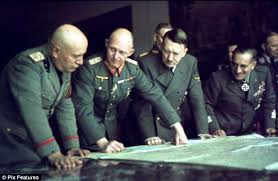
Adolf Hitler with his generals
Now, he believed, it was time to “settle accounts” with the Soviet Union.
Only there could Germany obtain the “living space” it “needed” for its expanding population.
So at 3 a.m. on June 22, 1941, Hitler once again launched an invasion.
At first, Hitler felt giddy with excitement.
Turning to Alfred Jodl, his chief of operations for the Wehrmacht, he said: “We have only to kick in the door and the whole rotten structure will come crashing down.”
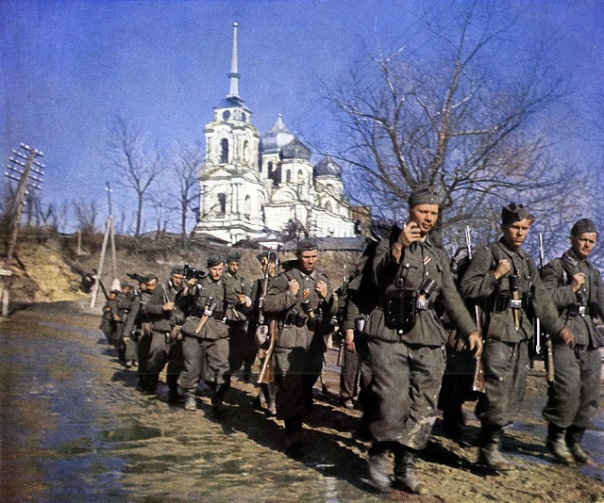
German soldiers marching through Russia
But soon afterward—almost as if he had just looked into the future and seen that he had none—he told an aide: “At the beginning of each campaign, one pushes a door into a dark, unseen room. One can never know what is hiding inside.”
That certainly proved true for Hitler.
Within four years, he was dead and the Red Army occupied Berlin.
And now the law of unintended consequences may be coming true for President Donald Trump and the United States.
On February 28, Trump—in concert with Israel—launched a series of devastating, unprovoked airstrikes against Iran. Since then, Trump and his Secretary of Defense, Pete Hegseth, have been all over the map with rosy predictions.

Donald Trump
- February 28: Trump posted on Truth Social that the bombing would continue “throughout the week or as long as necessary to achieve our objective of PEACE THROUGHOUT THE MIDDLE EAST AND, INDEED, THE WORLD!”
- March 1: In a video Trump declared that the war would continue “until all of our objectives are achieved.”
- March 2: Trump: “Right from the beginning, we projected four to five weeks, but we have capability to go far longer than that.”
- March 5: Hegseth to Pentagon reporters: “You can say four weeks [how long the war might last] but it could be six, it could be eight, it could be three. Ultimately, we set the pace and the tempo.”
- March 6: Trump: “There will be no deal with Iran except UNCONDITIONAL SURRENDER.”
- March 8: Hegseth: “We’re willing to go as far as we need to in order to be successful.”
- March 9: Trump: “No, but soon. I think so. Very soon” when asked by a reporter if the war would be over that week.
- March 11: “You know, you never like to say too early you won. We won. We won the, in the first hour, it was over.”
Hitler had been similarly optimistic about how long it would take to conquer the Soviet Union: Six to eight weeks, at the longest. And during the first three months of the war—July through September, 1941—that optimism seemed well-placed.
The Wehrmacht repeatedly lured Soviet armies into huge “cauldron battles,” then surrounded them, killing thousands and taking thousands of prisoners. By the end of September, German forces had captured or killed over 650,000 Russian troops in the Battle of Kiev alone, with total Soviet casualties reaching millions.
But then Hitler—and the Wehrmacht—paid a fatal price for their misplaced optimism.
The best—and most lethal—example of this hubris: The Wehrmacht went to war in summer uniforms on June 22—and were still wearing them in December.
Hitler placed infinite faith in the power of will to overcome all obstacles. When his soldiers were literally freezing to death before the gates of Moscow, Hitler believed that with “just one more push” the Soviet capital would fall.
When Heinz Guderian, his foremost expert on tank warfare, informed Hitler that German soldiers had no defense against the bitter cold, Hitler replied: They should dig foxholes.
Guderian replied that the icy ground was too solid to be punctured with spades.
Hitler’s reply: They should fire artillery shells into the ground to build foxholes.
This totally ignored the reality that, by December, 1941, the German army was dangerously short on munitions of all kinds.
Like Hitler, Trump seemed to consider himself omnipotent. Asked by a reporter how long the war would last, the President replied: “Any time I want it to end, it will end.”
Yet by the third week of the war, he began demanding—not asking—the assistance of NATO countries: We’ve had your back, now it’s our turn.
This totally ignored the fact that NATO exists to aid any of its members if it is attacked. After 9/11, NATO air force planes screened American airspace to prevent a repeat of similar carnage.
But NATO members are not obligated to join any nation in igniting a war. And that was precisely what Trump did on February 28—without consulting or even informing NATO of his plans to attack.
The only country that knew his intentions was Israel.
ABC NEWS, ALTERNET, AMERICABLOG, AP, BABY BOOMER RESISTANCE, BANDY X. LEE, BIRTHRIGHT CITIZENSHIP, BLOOMBERG, BUREAU OF LABOR STATISTICS, BUZZFEED, CANADA, CBS NEWS, CHRIS KREBS, CIA, CNN, CONSERVATIVE POLITICLA ACTION CONFERENCE (CPAC), CONSUMER FINANCIAL PROTECTION BUREU, CRAIG MALKIN, CROOKS AND LIARS, CYBERSECURITY AND INFRASTRUCTURE SECURITY AGENCY (CISA), DAILY KOZ, DEI PROGRAMS, DEMOCRATS, DONALD TRUMP, DRUDGE RETORT, EMOLUMENTS CLAUSE OF THE CONSTITUTION, FACEBOOK, FBI, FIRST AMENDMENT, FIVETHIRTYEIGHT, FLETCHER KNEBEL, GAVIN NEWSOM, GAZA, GREENLAND, GULF OF MEXICO, HARPER’S MAGAZINE, HARVARD MEDICAL SCHOOL, HARVARD UNIVERSITY, HOUSE OF REPRESENTATIVES, immigration, IMMIGRATION AND CUSTOMS ENFORCEMENT (ICE), INSPECTORS GENERAL, IVANKA TRUMP, JANUARY 6 COUP ATTEMPT, JOHN T. GARNER, JOSEPH STALIN, KIM JONG-UN, LANCE DODES, LIBEL, MEDIA MATTERS, MICHAEL COHEN, MOTHER JONES, MOVEON, MSNBC, NARCISSISM, NBC NEWS, NEWSWEEK, NIGHT AT CAMP DAVID, NPR, NUCLEAR WEAPONS, OBAMACARE, PARANOIA, PARIS CLIMATE AGREEMENT, PBS NEWSHOUR, POLITICO, POLITICUSUSA, PSYCHOSIS, QATAR, RAW STORY, REPUBLICANS, REUTERS, ROBERT S. MUELLER, ROD ROSENSTEIN, RUSSIA, SALON, SEATTLE TIMES, SLATE, SOCIOPATHY, TALKING POINTS MEMO, THE ATLANTIC, THE CHICAGO SUN-TIMES, THE CHICAGO TRIBUNE, THE DAILY BEAST, THE DAILY BLOG, THE DANGEROUS CASE OF DONALD TRUMP (BOOK), THE GUARDIAN, THE HILL, THE HUFFINGTON POST, THE LOS ANGELES TIMES, THE MEDIA, THE NATION, THE NEW REPUBLIC, THE NEW YORK TIMES, THE VILLAGE VOICE, THE WASHINGTON POST, THINKPROGRESS, TIME, TRUTHDIG, TRUTHOUT, TWITTER, TWO POLITICAL JUNKIES, U.S. NEWS & WORLD REPORT, UPI, USA TODAY, VIETNAM, VLADIMIR PUTIN, WIRETAPPING, WONKETTE, WORLD HEALTH ORGANIZTION (WHO)
In Bureaucracy, History, Medical, Politics, Social commentary on August 11, 2025 at 12:45 am
Donald Trump’s appearance at the Conservative Political Action Conference on March 2, 2019 was an occasion for rejoicing among his supporters.
But for those who prize rationality and decency in a President, it was a dismaying and frightening experience.
For two hours, Trump gave free reign to his anger and egomania.
Among his unhinged commentaries:
“We have people in Congress that hate our country.”
If you don’t agree 100% with Trump on everything, you’re a traitor.
“He called me up. He said, ‘You’re a great President. You’re doing a great job.’ He said, ‘I just want to tell you you’re a great President and you’re one of the smartest people I’ve ever met.'”
Trump attributed these remarks to California’s liberal governor, Gavin Newsom. On February 11, 2019, Newsom had announced he was withdrawing several hundred National Guardsmen from the state’s southern border with Mexico—defying Trump’s request for support from border states.
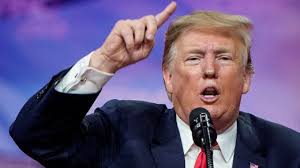
Donald Trump at CPAC
“You know if you remember my first major speech—you know the dishonest media they’ll say, ‘He didn’t get a standing ovation.’ You know why? Because everybody stood and nobody sat. They are the worst. They leave that out.”
Once again, he’s the persecuted victim of an unfair and totally unappreciative news media.
“And I love the First Amendment; nobody loves it better than me. Nobody. I mean, who use its more than I do? But the First Amendment gives all of us—it gives it to me, it gives it to you, it gives it to all Americans, the right to speak our minds freely. It gives you the right and me the right to criticize fake news and criticize it strongly.”
Trump has repeatedly called the nation’s free press “the enemy of the people”—a slander popularized by Soviet dictator Joseph Stalin. And while Trump brags about his usage of the First Amendment, he’s used Non-Disclosure agreements and threats of lawsuits to deny that right to others.
“For too long, we’ve traded away our jobs to other countries. So terrible.”
While this remark got rousing applause, he failed to mention that his own products are made overseas:
- Ties: Made in China
- Suits: Made in Indonesia
- Trump Vodka: Made in the Netherlands, and later in Germany
- Crystal glasses, decanters: Made in Slovenia
- And the clothing and accessories line of his daughter, Ivanka, is produced entirely in factories in Bangladesh, Indonesia and China.
“By the way, you folks are in here—this place is packed, there are lines that go back six blocks and I tell you that because you won’t read about it, OK.”
He’s obsessed with fear that the media won’t make him look popular.
“So we’re all part of this very historic movement, a movement the likes of which, actually, the world has never seen before. There’s never been anything like this. There’s been some movements, but there’s never been anything like this.”
Trump sees himself as the single greatest figure in history. So anything he’s involved with must be unprecedented.
“But I always say, Obamacare doesn’t work. And these same people two years ago and a year ago were complaining about Obamacare.”
In 2010, 48 million Americans lacked health insurance. By 2016, that number had been reduced to 28.6 million. So 20 million Americans now have access to medical care they previously couldn’t get.
“But we’re taking a firm, bold and decisive measure, we have to, to turn things around [with North Korea]. The era of empty talk is over, it’s over.”
- Trump has boasted that he and North Korean dictator Kim Jong-Un “fell in love.” Then he met with Kim in Vietnam—and got stiffed on a deal for North Korea to give up its nuclear weapons.
- On July 16, 2018, Trump attended a press conference in Helsinki, Finland, with Russian President Vladimir Putin. There he blamed American Intelligence agencies—such as the FBI and CIA—instead of Putin for Russia’s subversion of the 2016 Presidential election.
“I’ll tell you what they [agents of Immigration and Customs Enforcement] do, they came and endorsed me, ICE came and endorsed me. They never endorsed a presidential candidate before, they might not even be allowed to.”
Trump can’t stop boasting about how popular he is.
“These are hard-working, great, great Americans. These are unbelievable people who have not been treated fairly. Hillary called them deplorable. They’re not deplorable.”
On the contrary: “Deplorable” is exactly the word for those who vote their racism, ignorance, superstition and hatred of their fellow citizens.
A FINAL NOTE: Trump held himself up for adoration just three days after Michael Cohen, his longtime fixer:
- Damned him as a racist, a conman and a cheat.
- Revealed that Trump had cheated on his taxes and bought the silence of a porn “star” to prevent her revealing a 2006 tryst before the 2016 election.
- Estimated he had stiffed, on Trump’s behalf, hundreds of workers Trump owed money to.
And, only two days earlier, Trump had returned from a much-ballyhooed meeting in Vietnam with North Korean dictator Kim Jong-Un. Trump hoped to get a Nobel Peace Prize by persuading Kim to give up his nuclear arsenal.
Instead, Trump got stiffed—and returned empty-handed.
ABC NEWS, ALTERNET, AMERICABLOG, AP, BABY BOOMER RESISTANCE, BANDY X. LEE, BIRTHRIGHT CITIZENSHIP, BLOOMBERG, BUREAU OF LABOR STATISTICS, BUZZFEED, CANADA, CBS NEWS, CHRIS KREBS, CIA, CNN, CONSERVATIVE POLITICLA ACTION CONFERENCE (CPAC), CONSUMER FINANCIAL PROTECTION BUREU, CRAIG MALKIN, CROOKS AND LIARS, CYBERSECURITY AND INFRASTRUCTURE SECURITY AGENCY (CISA), DAILY KOZ, DEI PROGRAMS, DEMOCRATS, DONALD TRUMP, DRUDGE RETORT, EMOLUMENTS CLAUSE OF THE CONSTITUTION, FACEBOOK, FBI, FIRST AMENDMENT, FIVETHIRTYEIGHT, FLETCHER KNEBEL, GAVIN NEWSOM, GAZA, GREENLAND, GULF OF MEXICO, HARPER’S MAGAZINE, HARVARD MEDICAL SCHOOL, HARVARD UNIVERSITY, HOUSE OF REPRESENTATIVES, immigration, IMMIGRATION AND CUSTOMS ENFORCEMENT (ICE), INSPECTORS GENERAL, IVANKA TRUMP, JANUARY 6 COUP ATTEMPT, JOHN T. GARNER, JOSEPH STALIN, KIM JONG-UN, LANCE DODES, LIBEL, MEDIA MATTERS, MICHAEL COHEN, MOTHER JONES, MOVEON, MSNBC, NARCISSISM, NBC NEWS, NEWSWEEK, NIGHT AT CAMP DAVID, NPR, NUCLEAR WEAPONS, OBAMACARE, PARANOIA, PARIS CLIMATE AGREEMENT, PBS NEWSHOUR, POLITICO, POLITICUSUSA, PSYCHOSIS, QATAR, RAW STORY, REPUBLICANS, REUTERS, ROBERT S. MUELLER, ROD ROSENSTEIN, RUSSIA, SALON, SEATTLE TIMES, SLATE, SOCIOPATHY, TALKING POINTS MEMO, THE ATLANTIC, THE CHICAGO SUN-TIMES, THE CHICAGO TRIBUNE, THE DAILY BEAST, THE DAILY BLOG, THE DANGEROUS CASE OF DONALD TRUMP (BOOK), THE GUARDIAN, THE HILL, THE HUFFINGTON POST, THE LOS ANGELES TIMES, THE MEDIA, THE NATION, THE NEW REPUBLIC, THE NEW YORK TIMES, THE VILLAGE VOICE, THE WASHINGTON POST, THINKPROGRESS, TIME, TRUTHDIG, TRUTHOUT, TWITTER, TWO POLITICAL JUNKIES, U.S. NEWS & WORLD REPORT, UPI, USA TODAY, VIETNAM, VLADIMIR PUTIN, WIRETAPPING, WONKETTE, WORLD HEALTH ORGANIZTION (WHO)
In Bureaucracy, History, Medical, Politics, Social commentary on August 8, 2025 at 12:24 am
“Is Donald Trump simply crazy, or is he crazy like a fox?”
That was the question that Bandy X. Lee, an assistant clinical psychiatry professor at the Yale School of Medicine, wanted to answer.
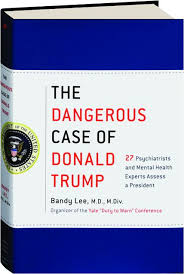
And she tried to do so as the editor of The Dangerous Case of Donald Trump: 27 Psychiatrists and Mental Health Experts Assess a President.
“It doesn’t take a psychiatrist to notice that our president is mentally compromised,” she and colleague Judith Lewis Herman asserted in the book’s prologue.
According to Dr. Craig Malkin, a Lecturer in Psychology for Harvard Medical School and a licensed psychologist, Trump is a pathological narcissist:
“Pathological narcissism begins,” Malkin writes, “when people become so addicted to feeling special that, just like with any drug, they’ll do anything to get their ‘high,’ including lie, steal, cheat, betray and even hurt those closest to them.
“When they can’t let go of their need to be admired or recognized, they have to bend or invent a reality in which they remain special despite all messages to the contrary. In point of fact, they become dangerously psychotic. It’s just not always obvious until it’s too late.”
Lance Dodes, a retired psychiatry professor at Harvard Medical School, believes that Trump is a sociopath: “The failure of normal empathy is central to sociopathy, which is marked by an absence of guilt, intentional manipulation and controlling or even sadistically harming others for personal power or gratification.”
But an observer didn’t need to be a psychiatrist to feel frightened by Trump’s behavior at the Conservative Political Action Conference (CPAC) on March 2, 2019.
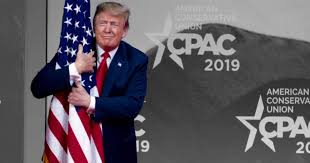
For two hours, in National Harbor, Maryland, Trump delivered the longest address (so far) of his first term as President—and of any American President.
“You know, I’m totally off script right now,” Trump said early on. “This is how I got elected, by being off script.”
And from the moment he embraced an American flag as though he wanted to hump it, it was clear: He was “totally off script.”
“How many times did you hear, for months and months, ‘There is no way to 270?’ You know what that means, right? ‘There is no way to 270.'”
Once again, Trump reveals his obsession with his win in 2016—as if no one else had ever been elected President.
“If you tell a joke, if you’re sarcastic, if you’re having fun with the audience, if you’re on live television with millions of people and 25,000 people in an arena, and if you say something like, ‘Russia, please, if you can, get us Hillary Clinton’s emails. Please, Russia, please.'”
Here he’s trying to “spin” his infamous invitation to hackers in Vladimir Putin’s Russia to intervene in an American Presidential election by obtaining the emails of his campaign rival. Which they did that same day.
“So now we’re waiting for a report [from the office of Special Counsel Robert Mueller] and we’ll find out whether or not, and who we’re dealing with. We’re waiting for a report by people that weren’t elected.”
It doesn’t matter to Trump that America’s foremost enemy—Russia—tried to influence a Presidential election. What matters to him is that the report might end his Presidency.
“Those red hats—and white ones. The key is in the color. The key is what it says. ‘Make America Great Again’ is what it says. Right? Right?”
Color matters. Words, ideas don’t.
“Now, Robert Mueller never received a vote, and neither did the person that appointed him. And as you know, the attorney general says, ‘I’m going to recuse myself.'”
Special Counsel Robert S. Mueller and Assistant Attorney General Rod Rosenstein were career Justice Department officials. They weren’t voted into office.
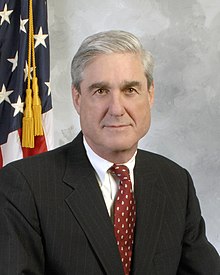
Robert Mueller
“Number one, I’m in love, and you’re in love. We’re all in love together. There’s so much love in this room, it’s easy to talk. You can talk your heart out. You really could. There’s love in this room. You can talk your heart out. It’s easy. It’s easy. It’s easy.”
Trump apparently finds it easy to fall in love—with Right-wing audiences and Communist dictators such as Kim Jong-Un.
“And from the day we came down the escalator, I really don’t believe we’ve had an empty seat at any arena, at any stadium. They did the same thing at our big inauguration speech. You take a look at those crowds.”
Once again, he must brag about how popular he is and how many people want to listen to him.
“A few days ago I called the fake news the enemy of the people. And they are. They are the enemy of the people. Because they have no sources, they just make ’em up when there are none.”
By January 20, 2020, The Washington Post found that Trump had made “16,241 ‘false or misleading claims” in his first three years in office. He is in no position to talk about integrity.
“But we’re going to have regulation. It’s going to be really strong and really good and we’re going to protect our environment and we’re going to protect the safety of our people and our workers, OK?”
To “protect our environment,” Trump appointed Andrew R. Wheeler, a former coal company lobbyist, to head the Environmental Protection Agency.
ABC NEWS, ALTERNET, AMERICABLOG, AP, BABY BOOMER RESISTANCE, BANDY X. LEE, BIRTHRIGHT CITIZENSHIP, BLOOMBERG, BUREAU OF LABOR STATISTICS, BUZZFEED, CANADA, CBS NEWS, CHRIS KREBS, CIA, CNN, CONSERVATIVE POLITICLA ACTION CONFERENCE (CPAC), CONSUMER FINANCIAL PROTECTION BUREU, CRAIG MALKIN, CROOKS AND LIARS, CYBERSECURITY AND INFRASTRUCTURE SECURITY AGENCY (CISA), DAILY KOZ, DEI PROGRAMS, DEMOCRATS, DONALD TRUMP, DRUDGE RETORT, EMOLUMENTS CLAUSE OF THE CONSTITUTION, FACEBOOK, FBI, FIRST AMENDMENT, FIVETHIRTYEIGHT, FLETCHER KNEBEL, GAVIN NEWSOM, GAZA, GREENLAND, GULF OF MEXICO, HARPER’S MAGAZINE, HARVARD MEDICAL SCHOOL, HARVARD UNIVERSITY, HOUSE OF REPRESENTATIVES, immigration, IMMIGRATION AND CUSTOMS ENFORCEMENT (ICE), INSPECTORS GENERAL, IVANKA TRUMP, JANUARY 6 COUP ATTEMPT, JOHN T. GARNER, JOSEPH STALIN, KIM JONG-UN, LANCE DODES, LIBEL, MEDIA MATTERS, MICHAEL COHEN, MOTHER JONES, MOVEON, MSNBC, NARCISSISM, NBC NEWS, NEWSWEEK, NIGHT AT CAMP DAVID, NPR, NUCLEAR WEAPONS, OBAMACARE, PARANOIA, PARIS CLIMATE AGREEMENT, PBS NEWSHOUR, POLITICO, POLITICUSUSA, PSYCHOSIS, QATAR, RAW STORY, REPUBLICANS, REUTERS, ROBERT S. MUELLER, ROD ROSENSTEIN, RUSSIA, SALON, SEATTLE TIMES, SLATE, SOCIOPATHY, TALKING POINTS MEMO, THE ATLANTIC, THE CHICAGO SUN-TIMES, THE CHICAGO TRIBUNE, THE DAILY BEAST, THE DAILY BLOG, THE DANGEROUS CASE OF DONALD TRUMP (BOOK), THE GUARDIAN, THE HILL, THE HUFFINGTON POST, THE LOS ANGELES TIMES, THE MEDIA, THE NATION, THE NEW REPUBLIC, THE NEW YORK TIMES, THE VILLAGE VOICE, THE WASHINGTON POST, THINKPROGRESS, TIME, TRUTHDIG, TRUTHOUT, TWITTER, TWO POLITICAL JUNKIES, U.S. NEWS & WORLD REPORT, UPI, USA TODAY, VIETNAM, VLADIMIR PUTIN, WIRETAPPING, WONKETTE, WORLD HEALTH ORGANIZTION (WHO)
In Bureaucracy, History, Medical, Politics, Social commentary on August 7, 2025 at 12:12 am
What would happen if the President of the United States went stark-raving mad?
That is the premise of the 1965 novel, Night at Camp David, by Fletcher Knebel.
At the time of its release, its plot was considered so over-the-top as to be worthy of science fiction:
Iowa Democratic Senator Jim MacVeagh is summoned to Camp David, the Presidential retreat, by President Mark Hollenbach. MacVeagh is expected to become Hollenbach’s next Vice President. But he becomes alarmed that Hollenbach is clearly suffering from intense paranoia.
Hollenbach wants to develop a closer relationship between the United States and Russia—while cutting ties with American allies in Europe. Moreover, he believes the American news media are conspiring against him with his political enemies.
Only one person possesses evidence that Hollenbach is losing his grip on sanity—his mistress, Rita. Desperate to retain his power, Hollenbach orders the FBI to investigate both MacVeagh and Rita.
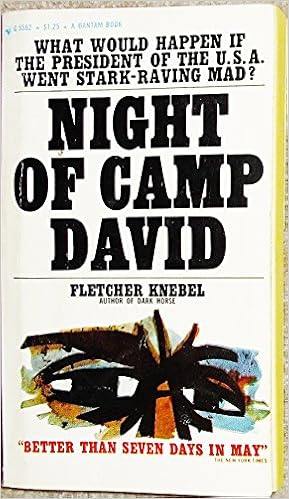
So why was a 53-year-old novel re-released in 2018? The answer lay in two words: Donald Trump.
In a November 30, 2018 review of Night at Camp David, Tom McCarthy, national affairs correspondent for the British newspaper, The Guardian, wrote:
“The current president has seen crowds where none exist, deployed troops to answer no threat, attacked national institutions – the military, the justice department, the judiciary, the vote, the rule of law, the press – tried to prosecute his political enemies, elevated bigots, oppressed minorities, praised despots while insulting global allies and wreaked diplomatic havoc from North Korea to Canada.
“He stays up half the night watching TV and tweeting about it, then wakes up early to tweet some more, in what must be the most remarkable public diary of insecurity, petty vindictiveness, duplicity and scattershot focus by a major head of state in history.”
And the nightmare isn’t over.
Among the outrages Trump has committed since returning to power on January 20:
- Pardoned about 1,500 of his followers who violently tried to overturn the outcome of the 2020 Presidential election in the January 6, 2021 attack on Congress. Move than 250 of those pardoned had been convicted of assaulting police.
- Withdrew the United States from the World Health Organization (WHO).
- Withdrew the United States from the Paris climate agreement.
- Ordered the dismissal of 5,000 FBI agents who investigated his incitement of the January 6 riot and his illegal hoarding of classified documents at Mar-a-Lago.
- Declared “a national emergency” targeting migrants—legal and illegal.
- Tried to cancel birthright citizenship—enshrined within the United States Constitution— for U.S.-born children.
- Demanded a military parade for his 79th birthday, poorly disguised as a salute to the 250th anniversary of the United States Army.
- Fired without cause the director of the Consumer Financial Protection Bureau.
- Angrily fired the Commissioner of the Bureau of Labor Statistics following a weak jobs report, triggering fears about his extortionate tariff policy.
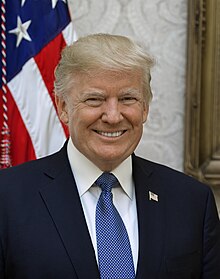
Donald Trump
- Demanded that the media refer to the Gulf of Mexico as “the Gulf of America” and banned the Associated Press from the White House for refusing to do so.
- Ordered the closure of all Federal Diversity, Equity, Inclusion and Accessibility offices.
- Fired the inspectors general from more than a dozen federal agencies.
- Demanded that Canada become the 51st state and aggressively raised tariffs on Canadian goods.
- Aggressively stated that he wanted the United States to acquire Greenland, its longtime ally.
- Issued executive orders revoking the security clearance of Chris Krebs, former director of the Cybersecurity and Infrastructure Security Agency. Krebs’ “crime”: Preventing lies spread by Russians—and Americans—on social media platforms from swaying the 2020 Presidential election to Trump.
- Threatened Harvard University with the loss of billions of dollars in federal funding, claiming that 2023 student protests about Gaza violated the civil rights of Jewish students.
- Accepted a $400 million luxury jet from Qatar for his personal use, a violation of the Emoluments Clause of the Constitution.
Trump’s vindictiveness, his narcissism, his compulsive aggression, his complaints that his “enemies” in government and the press are trying to destroy him, have caused many to ask: Could the President of the United States be suffering from mental illness?
One who has dared to answer this question is John D. Gartner, a practicing psychotherapist.
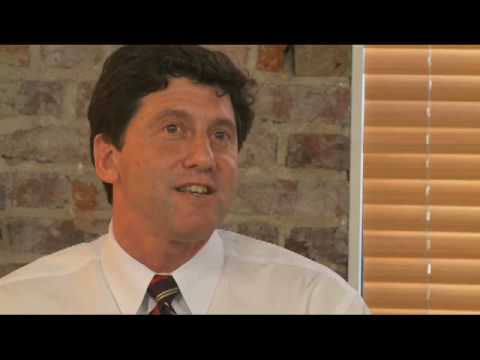
John D. Gartner
Gartner graduated magna cum laude from Princeton University, received his Ph.D in clinical psychology from the University of Massachusetts, and served as a part-time assistant professor of psychiatry at Johns Hopkins University Medical School for 28 years.
During an interview by U.S. News & World Report (published on January 27, 2017), Gartner said: “Donald Trump is dangerously mentally ill and temperamentally incapable of being president.”
Gartner said that Trump suffers from “malignant narcissism,” whose symptoms include:
- anti-social behavior
- sadism
- aggressiveness
- paranoia
- grandiosity.
“We’ve seen enough public behavior by Donald Trump now that we can make this diagnosis indisputably,” says Gartner, who admits he has not personally examined Trump.
More of that behavior was on full display on March 2, 2019 at the annual Conservative Political Action Conference (CPAC), held at the Gaylord National Resort & Convention Center, National Harbor, Maryland.
For more than two hours, Trump delivered the longest speech (so far) of his first term as President to his fanatically Right-wing audience.
ABC NEWS, ALTERNET, AMERICABLOG, AP, BABY BOOMER RESISTANCE, BANDY X. LEE, BIRTHRIGHT CITIZENSHIP, BLOOMBERG, BUREAU OF LABOR STATISTICS, BUZZFEED, CANADA, CBS NEWS, CHRIS KREBS, CIA, CNN, CONSERVATIVE POLITICLA ACTION CONFERENCE (CPAC), CONSUMER FINANCIAL PROTECTION BUREU, CRAIG MALKIN, CROOKS AND LIARS, CYBERSECURITY AND INFRASTRUCTURE SECURITY AGENCY (CISA), DAILY KOZ, DEI PROGRAMS, DEMOCRATS, DONALD TRUMP, DRUDGE RETORT, EMOLUMENTS CLAUSE OF THE CONSTITUTION, FACEBOOK, FBI, FIRST AMENDMENT, FIVETHIRTYEIGHT, FLETCHER KNEBEL, GAVIN NEWSOM, GAZA, GREENLAND, GULF OF MEXICO, HARPER’S MAGAZINE, HARVARD MEDICAL SCHOOL, HARVARD UNIVERSITY, HOUSE OF REPRESENTATIVES, immigration, IMMIGRATION AND CUSTOMS ENFORCEMENT (ICE), INSPECTORS GENERAL, IVANKA TRUMP, JANUARY 6 COUP ATTEMPT, JOHN T. GARNER, JOSEPH STALIN, KIM JONG-UN, LANCE DODES, LIBEL, MEDIA MATTERS, MICHAEL COHEN, MOTHER JONES, MOVEON, MSNBC, NARCISSISM, NBC NEWS, NEWSWEEK, NIGHT AT CAMP DAVID, NPR, NUCLEAR WEAPONS, OBAMACARE, PARANOIA, PARIS CLIMATE AGREEMENT, PBS NEWSHOUR, POLITICO, POLITICUSUSA, PSYCHOSIS, QATAR, RAW STORY, REPUBLICANS, REUTERS, ROBERT S. MUELLER, ROD ROSENSTEIN, RUSSIA, SALON, SEATTLE TIMES, SLATE, SOCIOPATHY, TALKING POINTS MEMO, THE ATLANTIC, THE CHICAGO SUN-TIMES, THE CHICAGO TRIBUNE, THE DAILY BEAST, THE DAILY BLOG, THE DANGEROUS CASE OF DONALD TRUMP (BOOK), THE GUARDIAN, THE HILL, THE HUFFINGTON POST, THE LOS ANGELES TIMES, THE MEDIA, THE NATION, THE NEW REPUBLIC, THE NEW YORK TIMES, THE VILLAGE VOICE, THE WASHINGTON POST, THINKPROGRESS, TIME, TRUTHDIG, TRUTHOUT, TWITTER, TWO POLITICAL JUNKIES, U.S. NEWS & WORLD REPORT, UPI, USA TODAY, VIETNAM, VLADIMIR PUTIN, WIRETAPPING, WONKETTE, WORLD HEALTH ORGANIZTION (WHO)
In Bureaucracy, History, Medical, Politics, Social commentary on August 4, 2025 at 1:28 am
“Is Donald Trump simply crazy, or is he crazy like a fox?”
That was the question that Bandy X. Lee, an assistant clinical psychiatry professor at the Yale School of Medicine, wanted to answer.
And she tried to do so as the editor of The Dangerous Case of Donald Trump: 27 Psychiatrists and Mental Health Experts Assess a President.
“It doesn’t take a psychiatrist to notice that our president is mentally compromised,” she and colleague Judith Lewis Herman asserted in the book’s prologue.
According to Dr. Craig Malkin, a Lecturer in Psychology for Harvard Medical School and a licensed psychologist, Trump is a pathological narcissist:
“Pathological narcissism begins,” Malkin writes, “when people become so addicted to feeling special that, just like with any drug, they’ll do anything to get their ‘high,’ including lie, steal, cheat, betray and even hurt those closest to them.
“When they can’t let go of their need to be admired or recognized, they have to bend or invent a reality in which they remain special despite all messages to the contrary. In point of fact, they become dangerously psychotic. It’s just not always obvious until it’s too late.”
Lance Dodes, a retired psychiatry professor at Harvard Medical School, believes that Trump is a sociopath: “The failure of normal empathy is central to sociopathy, which is marked by an absence of guilt, intentional manipulation and controlling or even sadistically harming others for personal power or gratification.”
But an observer didn’t need to be a psychiatrist to feel frightened by Trump’s behavior at the Conservative Political Action Conference (CPAC) on March 2, 2019.
For two hours, in National Harbor, Maryland, Trump delivered the longest address (so far) of his first term as President—and of any American President.
“You know, I’m totally off script right now,” Trump said early on. “This is how I got elected, by being off script.”
And from the moment he embraced an American flag as though he wanted to hump it, it was clear: He was “totally off script.”
“How many times did you hear, for months and months, ‘There is no way to 270?’ You know what that means, right? ‘There is no way to 270.'”
Once again, Trump reveals his obsession with his win in 2016—as if no one else had ever been elected President.
“If you tell a joke, if you’re sarcastic, if you’re having fun with the audience, if you’re on live television with millions of people and 25,000 people in an arena, and if you say something like, ‘Russia, please, if you can, get us Hillary Clinton’s emails. Please, Russia, please.'”
Here he’s trying to “spin” his infamous invitation to hackers in Vladimir Putin’s Russia to intervene in an American Presidential election by obtaining the emails of his campaign rival. Which they did that same day.
“So now we’re waiting for a report [from the office of Special Counsel Robert Mueller] and we’ll find out whether or not, and who we’re dealing with. We’re waiting for a report by people that weren’t elected.”
It doesn’t matter to Trump that America’s foremost enemy—Russia—tried to influence a Presidential election. What matters to him is that the report might end his Presidency.
“Those red hats—and white ones. The key is in the color. The key is what it says. ‘Make America Great Again’ is what it says. Right? Right?”
Color matters. Words, ideas don’t.
“Now, Robert Mueller never received a vote, and neither did the person that appointed him. And as you know, the attorney general says, ‘I’m going to recuse myself.'”
Special Counsel Robert S. Mueller and Assistant Attorney General Rod Rosenstein were career Justice Department officials. They weren’t voted into office.
Robert Mueller
“Number one, I’m in love, and you’re in love. We’re all in love together. There’s so much love in this room, it’s easy to talk. You can talk your heart out. You really could. There’s love in this room. You can talk your heart out. It’s easy. It’s easy. It’s easy.”
Trump apparently finds it easy to fall in love—with Right-wing audiences and Communist dictators such as Kim Jong-Un.
“And from the day we came down the escalator, I really don’t believe we’ve had an empty seat at any arena, at any stadium. They did the same thing at our big inauguration speech. You take a look at those crowds.”
Once again, he must brag about how popular he is and how many people want to listen to him.
“A few days ago I called the fake news the enemy of the people. And they are. They are the enemy of the people. Because they have no sources, they just make ’em up when there are none.”
By January 20, 2020, The Washington Post found that Trump had made “16,241 ‘false or misleading claims” in his first three years in office. He is in no position to talk about integrity.
“But we’re going to have regulation. It’s going to be really strong and really good and we’re going to protect our environment and we’re going to protect the safety of our people and our workers, OK?”
To “protect our environment,” Trump appointed Andrew R. Wheeler, a former coal company lobbyist, to head the Environmental Protection Agency.
ABC NEWS, ADOLF HITLER, ALTERNET, AMERICABLOG, AP, BABY BOOMER RESISTANCE, BBC, BLOOMBERG NEWS, BUZZFEED, CBS NEWS, CNN, CROOKS AND LIARS, DAILY KOS, FIVETHIRTYEIGHT, HARPER’S MAGAZINE, HUFFINGTON POST, JOSEPH STALIN, MEDIA MATTERS, MOTHER JONES, MOVEON, MSNBC, NAZI-SOVIET "NON-AGGRESSION PACT", NBC NEWS, NEW REPUBLIC, NEWSDAY, NEWSWEEK, NPR, NUCLEAR WEAPONS, PBS NEWSHOUR, POLITICO, POLITICUSUSA, RAW STORY, REUTERS, SALON, SEATTLE TIMES, SLATE, TALKING POINTS MEMO, THE ATLANTIC, THE CHICAGO SUN-TIMES, THE CHICAGO TRIBUNE, THE DAILY BEAST, THE DAILY BLOG, THE GUARDIAN, THE HILL, THE HUFFINGTON POST, THE INTERCEPT, THE LOS ANGELES TIMES, THE NATION, THE NEW REPUBLIC, THE NEW YORK TIMES, THE NEW YORKER, THE SS, THE VILLAGE VOICE, THE WASHINGTON POST, THINKPROGRESS, THIRD REICH, TIME, TRUTHDIG, TRUTHOUT, U.S. NEWS & WORLD REPORT, UKRAINE, UPI, USA TODAY, VLADIMIR PUTIN, VOLODYMYR ZELENSKY, WEHRMACHT, WORLD WAR 11, X
In Bureaucracy, History, Military, Politics, Social commentary on November 21, 2024 at 12:11 am
In the United States, World War II—at least, that part of the war fought in Europe—used to be celebrated in movies and TV shows like “Combat!” and “The Rat Patrol.” Today, it’s largely forgotten, except by veterans groups and the conflict’s rapidly aging veterans.
But in the Soviet Union, “the Great Patriotic War” against Nazi Germany is still celebrated as the triumph of Soviet strength and determination against horrific odds and losses.
Russian President Vladimir Putin’s invasion of Ukraine is unlikely to be remembered so fondly.
On April 28, 2006, Putin publicly stated that the 1991 collapse of the Soviet Union was “the greatest geopolitical catastrophe of the century.
“As for the Russian people, it became a genuine tragedy. Tens of millions of our fellow citizens and countrymen found themselves beyond the fringes of Russian territory.”
Putin was sounding a warning: He saw himself as Russia’s savior who would restore its lost empire.

Vladimir Putin
His invasion of Ukraine—officially called a “special military operation”—was intended as an important step toward that restoration.
Begun on February 24, the invasion targeted the Ukrainian capital, Kyiv, in an attempt to overthrow the democratic government of President Volodymyr Zelensky.
Ukrainian troops were outgunned and outnumbered. As in the case of the Soviet Union in 1941, Western military analystss expected the attack to quickly succeed. The Biden administration offered to evacuate Zelensky to safety.
Zelensky refused: “The fight is here; I need ammunition, not a ride.”
But after weeks of combat, Russian forces retreated, stymied by ferocious Ukrainian resistance.
In July, the last city under Ukrainian control in Luhansk fell to Russia after weeks of artillery bombardment and street fighting. But the Russians made little progress as they tried to conquer the remainder of Donbas.
In late August, after weeks of buildup, Ukraine launched a counteroffensive in the southern region of Kherson. Ukraine deployed newly arrived missile systems supplied by the United States and other Western countries to destroy Russian ammunition dumps and a Russian air base in Crimea.
By September, Ukrainian forces launched a rapid offensive, recapturing much of the northeastern Kharkiv region, including the city of Izium. Previously, the Russians had been using this as a key logistics hub.

Volodymyr Zelensky
On September 21, with Russian forces bogged down or retreating, Vladimir Putin announced the partial mobilization of 300,000 military reservists. All male citizens below 60 are now eligible to be drafted.
There are exceptions: Employees in IT and telecommunications, finance, “systemically-important” mass media outlets and interdependent suppliers, including registered media and broadcasters.
Still, the announcement set off a massive exodus of at least 194,000 Russian men (and their wives or girlfriends) to such neighboring countries as Turkey, Georgia, Kazakhstan and Mongolia.
During World War II, this would have been unthinkable: Whether driven by patriotism or a desire for vengeance on their German tormentors, Russians at all levels threw themselves into the conflict.
On the same day Putin announced the mobilization, he threatened to use nuclear weapons to defend not simply Russia but the Ukrainian territory his forces had captured:
“Our country possesses various means of destruction. When the territorial integrity of our nation is threatened, we, of course, will use all the means at our disposal to protect Russia and our people.”
To underscore his threat, he added: “Those who try to blackmail us with nuclear weapons should know that the weathervane can turn and point towards them.”
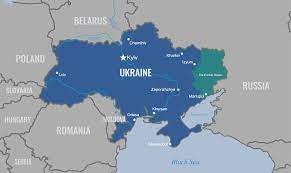
Putin’s threats have heightened world tensions and triggered speculation as to whether he would use nukes—against Ukraine or NATO countries, including the United States.
Volodymyr Zelensky thinks Putin is not bluffing.
President Joe Biden initially assured Americans there was no cause for concern. But since then the United States has stated that it has warned Putin that any use of nuclear weapons would trigger a catastrophic (non-specific) response against Russia.
Seen against the backdrop of Russia’s titanic victory in “the Great Patriotic War,” Putin’s repeated threats to use nuclear weapons actually underscore Russia’s weakness, not its strength.
Consider:
- “The Great Patriotic War” lasted almost four years—from June 22, 1941, to May 7, 1945.
- Russia’s opponent, Nazi Germany, was the most-feared military power in Europe.
- The war cost the Soviet Union at least 26 million lives before ending with the Red flag flying over Berlin.
- Almost the entire western half of the Soviet Union was devastated—first as the Germans overran territory from the Polish border to the gates of Moscow, and then again as the Soviets slowly pushed them back to Germany itself.
- For Russians, this was truly a “people’s war,” won through massive sacrifice and heroism—and without the use of nuclear weapons, which did not then exist.
Seventy-seven years after the end of World War II:
- Against the smaller and initially ill-equipped Ukrainian army, Russia has enjoyed a huge advantage in manpower and material.
- Yet so low is Russian morale that Putin has been forced to offer huge bribes to foreign mercenaries and even convicted criminals to refill his dispirited legions.
- Ukrainians, fueled by patriotism and a desire for vengeance, are fighting—and winning—their own version of “the Great Patriotic War.”
ABC NEWS, ADOLF HITLER, ALTERNET, AMERICABLOG, AP, BABY BOOMER RESISTANCE, BBC, BLOOMBERG NEWS, BUZZFEED, CBS NEWS, CNN, CROOKS AND LIARS, DAILY KOS, FIVETHIRTYEIGHT, HARPER’S MAGAZINE, HUFFINGTON POST, JOSEPH STALIN, MEDIA MATTERS, MOTHER JONES, MOVEON, MSNBC, NAZI-SOVIET "NON-AGGRESSION PACT", NBC NEWS, NEW REPUBLIC, NEWSDAY, NEWSWEEK, NPR, NUCLEAR WEAPONS, PBS NEWSHOUR, POLITICO, POLITICUSUSA, RAW STORY, REUTERS, SALON, SEATTLE TIMES, SLATE, TALKING POINTS MEMO, THE ATLANTIC, THE CHICAGO SUN-TIMES, THE CHICAGO TRIBUNE, THE DAILY BEAST, THE DAILY BLOG, THE GUARDIAN, THE HILL, THE HUFFINGTON POST, THE INTERCEPT, THE LOS ANGELES TIMES, THE NATION, THE NEW REPUBLIC, THE NEW YORK TIMES, THE NEW YORKER, THE SS, THE VILLAGE VOICE, THE WASHINGTON POST, THINKPROGRESS, THIRD REICH, TIME, TRUTHDIG, TRUTHOUT, U.S. NEWS & WORLD REPORT, UKRAINE, UPI, USA TODAY, VLADIMIR PUTIN, VOLODYMYR ZELENSKY, WEHRMACHT, WORLD WAR 11, X
In Bureaucracy, History, Military, Politics, Social commentary on November 20, 2024 at 12:05 am
On June 22, 1941, with 134 Divisions at full fighting strength and 73 more divisions for deployment behind the front, the German Wehrmacht invaded the Soviet Union.
Joseph Stalin, the longtime Soviet dictator, was stunned. The invasion had come less than two years after Germany had signed a non-aggression pact with the Soviet Union.
On August 23, 1939, Stalin had signed the German-Soviet Nonaggression Pact with German Fuhrer Adolf Hitler.
The reason: Each dictator got what he wanted—for the moment. Hitler was planning to invade Poland in a matter of days—and he wanted to avoid a war with the Soviet Union.
And Stalin got what he wanted: The eastern half of Poland.
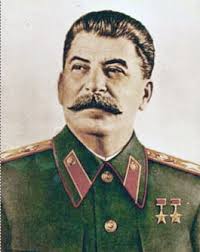
Joseph Stalin
The agreement stunned the world. Since 1919, Nazis and Communists had fought bitter battles against each other in the streets of Germany during the Weimar Republic.
When this was replaced in 1933 by the Third Reich, German Communists were rounded up and imprisoned, if not murdered, by Hitler’s ruthless secret police, the Schutzstaffel (“Protective Squads”).
For the moment, however, all of that was conveniently forgotten.
And, surprising as it might seem, each dictator harbored a secret respect for the other.
After Hitler launched a blood-purge of his own private Stormtroopers army on June 30, 1934, Stalin exclaimed: “Hitler, what a great man! That is the way to deal with your political opponents!”
And Hitler was equally admiring of Stalin’s notorious ruthlessness: “After the victory over Russia,” he told his intimates, “it would be a good idea to get Stalin to run the country, with German oversight, of course. He knows better than anyone how to handle the Russians.”
Adolf Hitler
But Hitler hadn’t forgotten his life’s ambition to conquer the Soviet Union and utterly destroy “the scourge of Jewish-Marxism.”
Stalin received numerous warnings from the United States and Great Britain about the coming invasion. But he dismissed them as efforts by the West to trick him into violating the pact and turning Nazi Germany into his mortal enemy.
When informed of the attack, Stalin at first believed it was being made by rogue German forces. He refused to order an immediate counterattack.
Upon being convinced that the Wehrmacht intended to wage all-out war, he went into a funk in his dacha and shut himself off from everyone. To his closest associates he wailed: “Lenin left us a great inheritance and we, his heirs, have fucked it all up!”
Meanwhile, the Red Air Force was destroyed on the ground by the awesome Luftwaffe. And the Wehrmacht was advancing at a rate of 25 miles a day.
German soldiers marching through Russia
On July 3, after 10 days of brooding (and probably drinking heavily) in his dacha, Stalin finally took to the airways across the Soviet Union.
Never a spellbinding orator, Stalin spoke in slow and faltering tones. Nevertheless, his opening words were startling: “Comrades! Citizens! Brothers and sisters! Men of our army and navy! I am addressing you, my friends!”
Stalin had never addressed an audience this way, and he never would again.
He said the “peace loving” Soviet Union had been attacked by “fiends and cannibals” who wanted to restore the rule of the landlords and Czars. He claimed the non-aggression pact with Germany had given the army much-needed time to rearm and reorganize its forces.
This was accompanied by orders unprecedented in any other army: Those taken prisoner by the Germans were to be considered traitors—and shot or imprisoned. Those suspected of wounding themselves to avoid combat were also subject to summary execution. So were soldiers who had been legitimately wounded in battle but were suspected of inflicting those injuries.
The first two years of the war—1941 to 1943—proved disastrous for the Soviet Union.
During the first six months—June to December, 1941—German armies lured huge Soviet forces into gigantic “cauldron battles,” surrounding and exterminating them. An estimated 5.7 million prisoners of war (POWs) fell into German hands. Of these, at least 3.5 million died in custody.
But then the infamous Russian cold and snows of winter halted the Wehrmacht before Moscow.
In the summer of 1942 German forces once again mounted a ferocious offensive, driving all the way to the Volga—and Stalingrad.
But they became bogged down in bitter house-to-house fighting. With the arrival of winter, Soviet forces surrounded the Wehrmacht’s powerful Sixth Army. The besiegers became the besieged. On February 2, 1943, Field Marshal Friedrich von Paulus surrendered what remained of his army. The battle cost Germany 500,000 men, including 91,000 taken prisoner.
As the Red Army finally began to go over on the offensive, Stalin relaxed the iron controls that had long stifled creativity on the part of his commanders.
The infamous political commissars were removed from control over Russian generals. Gold braid and fancy uniforms were manufactured and rushed to the front as morale boosters.
The war would last another two years—costing the Soviet Union at least 26 million citizens—before it ended with the Red flag flying over Berlin.
Almost the entire western half of the Soviet Union was devastated—first as the Germans overran territory from the Polish border to the gates of Moscow, and then again as the Soviets slowly pushed them back to Berlin—the capital of the Third Reich itself.
2016 PRESIDENTIAL CAMPAIGN, ABC NEWS, AFFORDABLE CARE ACT, ALTERNET, AMERICABLOG, AP, ARNOLD SCHWARTNEGGER, BABY BOOMER RESISTANCE, BANDY X. LEE, BARACK OBAMA, BLOOMBERG, BUZZFEED, CBS NEWS, CIA, CNN, CONSERVATIVE POLITICLA ACTION CONFERENCE (CPAC), CRAIG MALKIN, CROOKS AND LIARS, DAILY KOZ, DEMOCRATS, DONALD TRUMP, FBI, FIRST AMENDMENT, FIVETHIRTYEIGHT, FLETCHER KNEBEL, GAVIN NEWSOM, HARPER’S MAGAZINE, HARVARD MEDICAL SCHOOL, HILLARY CLINTON, HOUSE OF REPRESENTATIVES, IMMIGRATION AND CUSTOMS ENFORCEMENT (ICE), IVANKA TRUMP, JOHN T. GARNER, JOSEPH STALIN, KIM JONG-UN, LANCE DODES, LIBEL, MEDIA MATTERS, MERYL STREEP, MICHAEL COHEN, MOTHER JONES, MOVEON, MSNBC, NARCISSISM, NBC NEWS, NEIL YOUNG, NEWSWEEK, NIGHT AT CAMP DAVID (BOOK), NPR, NUCLEAR WEAPONS, OBAMACARE, PARANOIA, PBS NEWSHOUR, POLITICO, POLITICUSUSA, PSYCHOSIS, RAW STORY, REPUBLICANS, REUTERS, ROBERT S. MUELLER, ROD ROSENSTEIN, RUSSIA, SALON, SEATTLE TIMES, SLATE, SOCIOPATHY, TALKING POINTS MEMO, THE ATLANTIC, THE CHICAGO SUN-TIMES, THE CHICAGO TRIBUNE, THE DAILY BEAST, THE DAILY BLOG, THE DANGEROUS CASE OF DONALD TRUMP (BOOK), THE GUARDIAN, THE HILL, THE HUFFINGTON POST, THE LOS ANGELES TIMES, THE MEDIA, THE NATION, THE NEW REPUBLIC, THE NEW YORK TIMES, THE VILLAGE VOICE, THE WASHINGTON POST, THINKPROGRESS, TIME, TRUTHDIG, TRUTHOUT, TWO POLITICAL JUNKIES, U.S. NEWS & WORLD REPORT, UPI, USA TODAY, VIETNAM, VLADIMIR PUTIN, WIRETAPPING, WONKETTE, X
In Bureaucracy, History, Medical, Politics, Social commentary on August 7, 2024 at 12:14 am
Donald Trump’s appearance at the Conservative Political Action Conference on March 2, 2019 was an occasion for rejoicing among his supporters.
But for those who prize rationality and decency in a President, it was a dismaying and frightening experience.
For two hours, Trump gave free reign to his anger and egomania.
Among his unhinged commentaries:
“We have people in Congress that hate our country.”
If you don’t agree 100% with Trump on everything, you’re a traitor.
“He called me up. He said, ‘You’re a great President. You’re doing a great job.’ He said, ‘I just want to tell you you’re a great President and you’re one of the smartest people I’ve ever met.'”
Trump attributed these remarks to California’s liberal governor, Gavin Newsom. On February 11, 2019, Newsom had announced he was withdrawing several hundred National Guardsmen from the state’s southern border with Mexico—defying Trump’s request for support from border states.
Donald Trump at CPAC
“You know if you remember my first major speech—you know the dishonest media they’ll say, ‘He didn’t get a standing ovation.’ You know why? Because everybody stood and nobody sat. They are the worst. They leave that out.”
Once again, he’s the persecuted victim of an unfair and totally unappreciative news media.
“And I love the First Amendment; nobody loves it better than me. Nobody. I mean, who use its more than I do? But the First Amendment gives all of us—it gives it to me, it gives it to you, it gives it to all Americans, the right to speak our minds freely. It gives you the right and me the right to criticize fake news and criticize it strongly.”
Trump has repeatedly called the nation’s free press “the enemy of the people”—a slander popularized by Soviet dictator Joseph Stalin. And while Trump brags about his usage of the First Amendment, he’s used Non-Disclosure agreements and threats of lawsuits to deny that right to others.
“For too long, we’ve traded away our jobs to other countries. So terrible.”
While this remark got rousing applause, he failed to mention that his own products are made overseas:
- Ties: Made in China
- Suits: Made in Indonesia
- Trump Vodka: Made in the Netherlands, and later in Germany
- Crystal glasses, decanters: Made in Slovenia
- And the clothing and accessories line of his daughter, Ivanka, is produced entirely in factories in Bangladesh, Indonesia and China.
“By the way, you folks are in here—this place is packed, there are lines that go back six blocks and I tell you that because you won’t read about it, OK.”
He’s obsessed with fear that the media won’t make him look popular.
“So we’re all part of this very historic movement, a movement the likes of which, actually, the world has never seen before. There’s never been anything like this. There’s been some movements, but there’s never been anything like this.”
Trump sees himself as the single greatest figure in history. So anything he’s involved with must be unprecedented.
“But I always say, Obamacare doesn’t work. And these same people two years ago and a year ago were complaining about Obamacare.”
In 2010, 48 million Americans lacked health insurance. By 2016, that number had been reduced to 28.6 million. So 20 million Americans now have access to medical care they previously couldn’t get.
“But we’re taking a firm, bold and decisive measure, we have to, to turn things around [with North Korea]. The era of empty talk is over, it’s over.”
- Trump has boasted that he and North Korean dictator Kim Jong-Un “fell in love.” Then he met with Kim in Vietnam—and got stiffed on a deal for North Korea to give up its nuclear weapons.
- On July 16, 2018, Trump attended a press conference in Helsinki, Finland, with Russian President Vladimir Putin. There he blamed American Intelligence agencies—such as the FBI, CIA—instead of Putin for Russia’s subversion of the 2016 Presidential election.
“I’ll tell you what they [agents of Immigration and Customs Enforcement] do, they came and endorsed me, ICE came and endorsed me. They never endorsed a presidential candidate before, they might not even be allowed to.”
Trump can’t stop boasting about how popular he is.
“These are hard-working, great, great Americans. These are unbelievable people who have not been treated fairly. Hillary called them deplorable. They’re not deplorable.”
On the contrary: “Deplorable” is exactly the word for those who vote their racism, ignorance, superstition and hatred of their fellow citizens.
A FINAL NOTE: Trump held himself up for adoration just three days after Michael Cohen, his longtime fixer:
- Damned him as a racist, a conman and a cheat.
- Revealed that Trump had cheated on his taxes and bought the silence of a porn “star” to prevent her revealing a 2006 tryst before the 2016 election.
- Estimated he had stiffed, on Trump’s behalf, hundreds of workers Trump owed money to.
And, only two days earlier, Trump had returned from a much-ballyhooed meeting in Vietnam with North Korean dictator Kim Jong-Un. Trump hoped to get a Nobel Peace Prize by persuading Kim to give up his nuclear arsenal.
Instead, Trump got stiffed—and returned empty-handed.


 Bureaucracybuster's Blog
ABC NEWS, ADOLF HITLER, ALI HOSSEINI KHAMENEI, ALTERNET, AMERICABLOG, AP, AYATOLLAH ALI KHAMENEI, BABY BOOMER RESISTANCE, BAHRAIN, BBC, BERLIN, BLOOMBERG, BLOOMBERG NEWS, BLUESKY, BUZZFEED, CBS NEWS, CNN, CROOKS AND LIARS, DAILY KOS, DONALD TRUMP, DRONES, FINLAND, FIVETHIRTYEIGHT, FRANCE, GREAT BRITAIN, HARPER’S MAGAZINE, HUFFINGTON POST, IRAN, ISRAEL, ITALY, JAPAN, JOACHIM VON RIBBENTROP, JOSEPH STALIN, KIEV, KUWAIT, LENINGRAD, LUFTWAFFE, MEDIA MATTERS, MOJTABA KHAMENEI, MOSCOW, MOTHER JONES, MOVEON, MSNBC, NAZI GERMANY, NBC NEWS, NEW REPUBLIC, NEWSDAY, NEWSWEEK, NEWT GINGRICH, NPR, NUCLEAR WEAPONS, OIL FIELDS, OMAN, OPERATION BARBAROSSA, PBS NEWSHOUR, PETE HEGSETH, POLAND, POLITICO, POLITICUSUSA, QATAR, QATER, RAW STORY, REUTERS, SALON, SAUDI ARABIA, SEATTLE TIMES, SLATE, SOVIET UNION, SS, TALKING POINTS MEMO, THE ATLANTIC, THE CHICAGO SUN-TIMES, THE CHICAGO TRIBUNE, THE DAILY BEAST, THE DAILY BLOG, THE GUARDIAN, THE HILL, THE HUFFINGTON POST, THE INTERCEPT, THE LONGEST DAY (MOVIE, THE LOS ANGELES TIMES, THE NATION, THE NEW REPUBLIC, THE NEW YORK TIMES, THE NEW YORKER, THE PENTAGON, THE UNITED ARAB EMIRATES, THE VILLAGE VOICE, THE WASHINGTON POST, THINKPROGRESS, THIRD REICH, TIME, TRUTHDIG, TRUTHOUT, TWO POLITICAL JUNKIES, U.S. NEWS & WORLD REPORT, UKRAINE, UNIFORMS, UPI, USA TODAY, VYACHESLAV MOLOTOV, WEHRMACHT, WONKETTE, WORLD WAR 11, X
THE DICTATORS’ DANCE–PAST AND PRESENT: PART ONE (OF TWO)
In Bureaucracy, History, Military, Politics, Social commentary on March 31, 2026 at 12:48 amThe city: Berlin.
The date: November 12–13, 1940.
The event: A meeting between German Fuhrer Adolf Hitler and Soviet Foreign Minister Vyacheslav Molotov.
The purposes: To discuss:
Hitler wanted the USSR to join the Axis (Germany, Italy, and Japan) and expand “southward” toward the Indian Ocean to avoid conflict in Europe.
Adolf Hitler
Molotov ignored the talk of India and instead demanded control over Finland, Bulgaria, and the Turkish Straits.
Hitler adamantly opposed Soviet control over Finland, which he considered a strategic ally. He feared a Soviet expansion into Scandinavia would threaten German iron ore supplies from Sweden and northern interests.
And he deeply feared that the Soviet Union would cut off Germany’s vital Romanian oil supplies. Romania provided roughly 75% of German oil in 1941. A late 1940 Soviet attack on the Ploiești oil fields would render Germany helpless and force an end to the war.
On a personal level, Molotov and Hitler grated on each other’s nerves. Molotov was blunt in his remarks and didn’t spare Hitler at all. He seldom smiled and refused to compromises on Russia’s demands for control of Finland, Bulgaria, and the Turkish Straits.
At one point, Molotov asked: “Is last year’s agreement [between Germany and Russia] still valid?”
Hitler replied that it was.
“I asked this question,” said Molotov, “because of the Finns. You are on very friendly relations with the Finns. You invite people from Finland to Germany and you send missions there. And the Finns are very dangerous people. They undermine our security and we’ll have to do something about that and we are going to do something about that.”
Vyacheslav Molotov
“I understand you very well,” exploded Hitler. “You want to wage war against Finland and that is quite out of the question. Do you hear me? It’s impossible because my supplies of iron, nickel and other important raw materials would be cut.”
During the talks, British Royal Air Force (RAF) bombers appeared overhead, forcing the leaders to move to an air raid shelter.
German Foreign Minister Joachim von Ribbentrop had been trying to convince Molotov that Great Britain was “beaten” and that the British Empire was a “gigantic world-wide estate in bankruptcy” ready for partition.
Molotov sarcastically replied: “If England is beaten, why are we in this shelter and whose are the bombs that are falling?”
Even while Molotov was still in Berlin, Hitler ordered his generals to attack the Soviet Union on May 15, 1941.
Within a month they responded with a detailed plan code-named “Operation Barbarossa.”
Less than one year later—on June 22, 1941—with 134 divisions at full fighting strength and 73 more divisions for deployment behind the front, the German Wehrmacht invaded the Soviet Union.
Now the two most ruthless dictators on earth—Adolf Hitler and Joseph Stalin—were locked in a fight to the death.
At the outset, the odds clearly favored the Germans.
The invasion caught the Soviet Union by surprise. Joseph Stalin had received Intelligence reports from Great Britain that Germany was preparing to attack. But Stalin, who believed the British were trying to drive a wedge between him and Hitler, put his faith in Hitler, whose guarantees had long proved worthless.
German army units
From June to September, the Wehrmacht captured vast territories and encircled hundreds of thousands of Red Army troops. German forces quickly advanced toward Leningrad, Moscow, and Kiev, inflicting massive casualties.
The Luftwaffe destroyed much of the Soviet air force on the ground.
In June and July, German panzers quickly advanced, capturing over 300,000 Soviet prisoners in the Minsk-Bialystok pocket. By late September, Army Group South captured Kiev, resulting in the largest encirclement in history, with roughly 600,000 Soviet soldiers trapped.
By the end of 1941, more than three million Soviet soldiers were captured or killed. Still, the Soviet Union did not collapse and continued to commit new field armies to the conflict.
By December, the Wehrmacht, besieging Moscow, were literally freezing to death in their summer uniforms. Then, on December 5-6, the Soviets launched their decisive counter-offensive before Moscow, forcing German forces into a retreat.
It marked the first major land defeat for the Wehrmacht since its September 1, 1939 invasion of Poland, which ignited World War II.
Now, fast-forward 85 years. Substitute President Donald Trump for Fuhrer Adolf Hitler and Mojtaba Khamenei for Joseph Stalin—and Iran for the Soviet Union.
Donald Trump and Adolf Hitler
Just as Hitler launched his attack on the Soviet Union without warning, so did Trump launch his on Iran—on February 28.
Hitler’s attack didn’t kill Joseph Stalin, the all-powerful dictator of the Soviet Union. But Trump’s airstrikes killed Ali Hosseini Khamenei, who had ruled Iran as its supreme leader from 1989.
Ayatollah Ali Khamenei
Still, the Iranians quickly elevated his son, Mojtaba Khamenei, to the same position—and went on fighting.
Hitler—and numerous members of the Wehrmacht—believed that Germany’s mechanized panzers would succeed where Napoleon Bonaparte had failed in 1812. And that they could conquer the Soviet Union in only three months.
They were wrong.
Share this: