Posts Tagged ‘NEGOTIATING’
ABC NEWS, ADOLF HITLER, ALTERNET, AMERICABLOG, AP, BABY BOOMER RESISTANCE, BBC, BLOOMBERG NEWS, BLUESKY, BUZZFEED, CANADA, CBS NEWS, CLAUDIA SHEINBAUM PARDO, CNN, CNN'S "STARTING POINT", CROOKS AND LIARS, DAILY KOS, DEPARTMENT OF HOMELAND SECURITY, DEPARTMENT OF JUSTICE, EXTORTION, FBI, FIVETHIRTYEIGHT, HARPER’S MAGAZINE, HUFFINGTON POST, INSIDER, JUDICIARY, JUSTIN TRUDEAU, MASTADON, MEDIA MATTERS, MEXICO, MOTHER JONES, MOVEON, MSNBC, MSNBC'S "HARDBALL", NAZI GERMANY, NBC NEWS, NEGOTIATING, NEW REPUBLIC, NEWSDAY, NEWSWEEK, NPR, PBS NEWSHOUR, POLAND, POLITICO, POLITICUSUSA, PRESS, RAW STORY, REPUBLICAN PARTY, REPUBLICANS, REUTERS, SALON, SEATTLE TIMES, SLATE, TALKING POINTS MEMO, THE ATLANTIC, THE CHICAGO SUN-TIMES, THE CHICAGO TRIBUNE, THE DAILY BEAST, THE DAILY BLOG, THE GUARDIAN, THE HILL, THE HUFFINGTON POST, THE LOS ANGELES TIMES, THE NATION, THE NEW REPUBLIC, THE NEW YORK TIMES, THE NEW YORKER, THE PENTAGON, THE VILLAGE VOICE, THE WASHINGTON POST, THINKPROGRESS, TIME, TRUTHDIG, TRUTHOUT, TWO POLITICAL JUNKIES, U.S. NEWS & WORLD REPORT, UPI, USA TODAY, WONKETTE, WORLD WAR 11, X
In Bureaucracy, Business, History, Military, Politics, Social commentary on March 5, 2025 at 12:05 am
To understand what is happening in the United States today, it’s necessary to realize this:
Its decent, democracy-cherishing citizens find themselves in the same position as decent, democracy-cherishing citizens of Nazi Germany from 1933 to 1945.
And just as Germany’s government became a ruthless dictatorship, so has that of the United States.
And just as ordinary, peace-loving Germans hoped for a powerful, democratic outsider to remove the menace of Adolf Hitler, so do ordinary, peace-loving Americans hope the same will happen to Donald Trump.
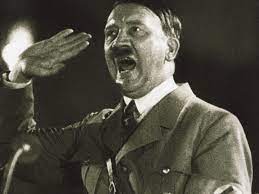
Adolf Hitler
From 1939 to 1945, those democracy-cherishing outsiders consisted of Canada, England and the United States. (The Soviet Union reluctantly joined this alliance only after it became yet another victim of Adolf Hitler’s aggression.)
In the case of the United States, that solution can only be achieved economically—by pressuring Right-wing Republican members of Congress in Red states to end their support for Trump’s dictatorial agenda.
And the only democratic countries with the power to do this are Mexico and Canada, America’s foremost trading partners.
The 2024 elections gave Republicans not only the White House but control of the House and Senate.
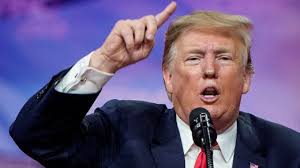
Donald Trump
Republicans don’t care that Trump has trashed the institutions that Americans have cherished for more than 200 years. Institutions like an independent judiciary, a free press, and an incorruptible Justice Department.
He has viciously attacked all of these—and Republicans have either said nothing or rushed to his defense.
What Republicans truly fear about Donald Trump is that if they dare to hold him accountable for his lifetime of criminality, his Fascistic base will turn on them—and turn them out of Congress.
If they are conflicted—whether to continue supporting Trump or desert him—the reason is the same: How can I hold onto my power and all the privileges that go with it?

Claudia Sheinbaum Pardo, President of Mexico

Justin Trudeau, Prime Minister of Canada
Republicans—with Trump as their Fuhrer—are utilizing the same my-way-or-else “negotiating” strategy as Nazi Germany’s Fuhrer, Adolf Hitler.
And Democrats—out of cowardice and/or ignorance of history—are, as usual, refusing to publicly make this comparison.
Thus, America’s rescue from Trump can only come from outside the United States.
Donald Trump has proven his affinity for dictators and dictatorships—lavishing praise on Russia’s Vladimir Putin, China’s Xi Jinping and North Korea’s Kim Jong-Un.
It’s with the leaders of democratic nations that he loves to pick fights. And he will go on doing so until he is stopped.
There are two reasons for his hostile behavior in foreign affairs:
- Trump admires dictators, desires to become one himself, and is now stocking essential federal agencies—such as the Pentagon, FBI and Department of Homeland Security—with his political hacks to make this a reality.
- He knows that compared to the dictatorships of Russia and China, democracies such as those of Canada, Mexico and Ukraine are comparatively weak militarily.
As with Adolf Hitler, attempting to reason with Trump will prove fruitless. He respects only superior force.
But he has blinked when confronted with serious opposition.
Thus, on February 1, he threatened to hit Mexico and Canada with 25% tariffs, accusing them of injecting huge amounts of Fentanyl and huge numbers of illegal aliens into the United States. This allowed him to look tough to his legions of uneducated, Fascistic voters.
But then Mexican President Claudia Sheinbaum Pardo and Canadian Prime Minister Justin Trudeau threatened to retaliate with their own 25% tariffs on American goods.
And the financially conservative Wall Street Journal-–whose target audience includes business leaders, investors, and affluent consumers—called Trump’s threat “the dumbest trade war in history.”
Suddenly, Trump found a way to declare victory, claiming that Mexico and Canada would vastly increase border security to stop the flow of Fentanyl and illegal aliens.
And dropping his threat of a trade war.
So Trump can be beaten—if his enemies are willing to go all the way.
Democratic nations like Canada and Mexico dare not attack Donald Trump militarily. The United States has such a powerful military it’s threatened only by China and Russia.
But Canada and Mexico can target with ruthless tariffs those Red states whose Fascistic voting blocs fanatically support Trump—and the House and Senate members who support him.
They can
- Deprive Red state populations of the fruits, vegetables, meats, cars, computers, oil, gas—and especially beer and alcohol—they take for granted.
- Refuse to stock goods from Red states in their stores.
- Appeal to the patriotism of Canadians and Mexicans to maintain the boycott despite the suffering this will impose on their own countries.
Americans have grown used to seeking simple, painless solutions to major problems. Thus, Trump won 77 million votes by promising to drastically reduce the price of eggs.
This despite a loss of millions of bird flu-infected chickens.
With egg prices continuing to drastically rise, Americans are already getting impatient for Trump to work a miracle—as he falsely promised to do during the campaign.
When Red states are forced to suffer staggering losses for months on end, they will elect anti-Fascist Senators and Representatives to nullify the evils of Trump’s administration.
ABC NEWS, ADOLF HITLER, ALTERNET, AMERICABLOG, AP, BABY BOOMER RESISTANCE, BBC, BLOOMBERG NEWS, BLUESKY, BUZZFEED, CANADA, CBS NEWS, CLAUDIA SHEINBAUM PARDO, CNN, CNN'S "STARTING POINT", CROOKS AND LIARS, CZECHOSLAVAKIA, DAILY KOS, DAVID BROOKS, DEPARTMENT OF HOMELAND SECURITY, DEPARTMENT OF JUSTICE, DONALD TRUMP, EXTORTION, FBI, FIVETHIRTYEIGHT, GREENLAND, HARPER’S MAGAZINE, HUFFINGTON POST, INSIDER, JACK SMITH, JIMMY CARTER, JUSTIN TRUDEAU, MASTADON, MEDIA MATTERS, MEXICO, MOTHER JONES, MOVEON, MSNBC, MSNBC'S "HARDBALL", NAZI GERMANY, NBC NEWS, NEGOTIATING, NEVILLE CHAMBERLAIN, NEW REPUBLIC, NEWSDAY, NEWSWEEK, NEWT GINGRICH, NICCOLO MACHIAVELLI, NPR, PANAMA, PBS NEWSHOUR, POLAND, POLITICO, POLITICUSUSA, R.I.CO. ACT, RAW STORY, REPUBLICAN PARTY, REPUBLICANS, REUTERS, ROBERT MEULLER, SALON, SEATTLE TIMES, SLATE, TALKING POINTS MEMO, THE ATLANTIC, THE CHICAGO SUN-TIMES, THE CHICAGO TRIBUNE, THE DAILY BEAST, THE DAILY BLOG, THE GUARDIAN, THE HAMILTON PROJECT, THE HILL, THE HUFFINGTON POST, THE LOS ANGELES TIMES, THE NATION, THE NEW REPUBLIC, THE NEW YORK TIMES, THE NEW YORKER, THE PENTAGON, THE PRINCE, THE VILLAGE VOICE, THE WASHINGTON POST, THINKPROGRESS, TIME, TRUTHDIG, TRUTHOUT, TWO POLITICAL JUNKIES, U.S. NEWS & WORLD REPORT, UKRAINE, UPI, USA TODAY, VLADIMIR PUTIN, VOLODMYR ZELENSKY, WONKETTE, WORLD WAR 11, X
In Bureaucracy, Business, History, Military, Politics, Social commentary on February 19, 2025 at 12:16 am
The “negotiating” methods of German Fuhrer Adolf Hitler serve as a useful guide to what domestic and world leaders can expect from trying to reach an agreement with President Donald Trump.
In September, 1938, seven months after seizing Austria, Hitler gave another exhibition of his “negotiating” methods.
This time, the target of his aggression was Czechoslovakia. Once again, he opened “negotiations” with a lie: The Czechoslovak government was trying to exterminate 3.5 million Germans living in the “Sudetenland.”
Then he threatened war: Germany would protect its citizens and halt such “oppression.”
For British Prime Minister Neville Chamberlain, the thought of another European war erupting less than 20 years after the end of World War I was simply unthinkable.
He quickly sent Hitler a telegram, offering to help resolve the crisis: “I could come to you by air and am ready to leave tomorrow. Please inform me of earliest time you can receive me, and tell me the place of the meeting. I should be grateful for a very early reply.”
[Mistake #1: Showing his willingness to placate a brutal dictator. Such men see any concessions as weakness—leading to only greater demands. Trump, like Hitler relishes attacking those weaker than himself.]
The two European leaders met in Berchtesgaden, Germany, on September 15, 1938.
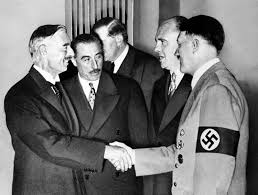
Neville Chamberlain and Adolf Hitler
Hitler denied that he had threatened war: “Force? Who speaks of force?“
Then, suddenly, he accused the Czechs of having mobilized their army in May. They had mobilized—in response to the mobilization of the German army.
“I shall not put up with this any longer,” shouted Hitler. “I shall settle this question in one way or another. I shall take matters in my own hands!”
Suddenly, Chamberlain seemed alarmed: “If I understood you right, you are determined to proceed against Czechoslovakia in any case. In the circumstances, it is best for me to return at once. Anything else now seems pointless.”
Hitler, taken aback, softened his tone and said they should consider the Sudetenland according to the principle of self-determination.
Chamberlain agreed to the cession of the Sudetenland. Three days later, French Prime Minister Edouard Daladier did the same. No Czechoslovak representative was invited to these discussions.
[Mistake #2: Instead of conceding to Hitler, which emboldened the dictator, he should have pressed his advantage. When Hitler found himself facing an opponent who couldn’t be bribed or cowed—such as British Prime Minister Winston Churchill or Soviet Premier Joseph Stalin—he raged and sulked.
[When Trump has faced an opponent he can’t buy or intimidate—such as Special Counsels Robert Mueller and Jack Smith—he has done the same.]
Chamberlain met Hitler again in Godesberg, Germany, on September 22 to confirm the agreements. But Hitler aimed to use the crisis as a pretext for war.
He now demanded not only the annexation of the Sudetenland but the immediate military occupation of the territories. This would give the Czechoslovak army no time to adapt their defense measures to the new borders.
To achieve a solution, Italian dictator Benito Mussolini suggested a conference of the major powers in Munich.
On September 29, Hitler, Daladier and Chamberlain met and agreed to Mussolini’s proposal. They signed the Munich Agreement, which accepted the immediate occupation of the Sudetenland.
The Czechoslovak government had not been a party to the talks. Nevertheless, it promised to abide by the agreement on September 30.
It actually had no choice. It faced the threat of an immediate German invasion after being deserted by its pledged allies: Britain, France and the Soviet Union.
[Mistake #3: Selling out an ally and making a concession to an insatiable dictator—and believing that Hitler could be trusted to keep his word.
[Just as Chamberlain sold out Czechoslovakia, Trump plans on selling out Ukraine to Russian dictator Vladimir Putin. He’s blamed Ukraine for starting the 2022 war—even though Russia invaded Ukraine.
He’s also attacked Ukrainian President Volodymyr Zelensky—and repeatedly praised Putin. And he’s unilaterally announced that he will begin directing “peace talks” with Putin to end his war on Ukraine.]
Chamberlain returned to England a hero. Holding aloft a copy of the worthless agreement he had signed with Hitler, he told cheering crowds in London: “I believe it is peace for our time.”
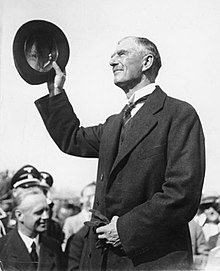
Neville Chamberlain
Winston Churchill knew better, predicting: “Britain and France had to choose between war and dishonor. They chose dishonor. They will have war.”
Hitler—still planning more conquests—also knew better. In March, 1939, the German army occupied the rest of Czechoslovakia.
Chamberlain would soon be seen as a naive weakling—even before bombs started falling on London.
Then Hitler turned his attention—and demands—to Poland.
When his generals balked, warning that an invasion would trigger a war with France and Britain, Hitler quickly brushed aside their fears: “Our enemies are little worms. I saw them at Munich.”
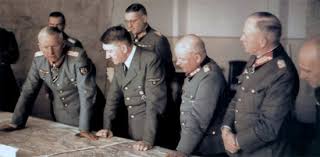
Adolf Hitler and his generals
Similarly, Trump drew the same lesson from his repeated escapes from American justice—that he was untouchable
Hitler ordered the invasion of Poland on September 1, 1939—unintentionally triggering World War II.
In time, historians and statesmen would regard Munich as an object lesson in the futility—and danger—in appeasing evil and aggression.
History has yet to record the all-but-certain disasters—foreign and domestic—of the Trump administration.
ABC NEWS, ADOLF HITLER, ALTERNET, AMERICABLOG, AP, AUSTRIA, BABY BOOMER RESISTANCE, BBC, BLOOMBERG NEWS, BLUESKY, BUZZFEED, CANADA, CBS NEWS, CLAUDIA SHEINBAUM PARDO, CNN, CNN'S "STARTING POINT", CROOKS AND LIARS, CZECHOSLAVAKIA, CZECHOSLOVAKIA, DAILY KOS, DAVID BROOKS, DEPARTMENT OF HOMELAND SECURITY, DEPARTMENT OF JUSTICE, DONALD TRUMP, EXTORTION, FBI, FIVETHIRTYEIGHT, FRANCE, GELI rAUBAL, GREENLAND, HARPER’S MAGAZINE, HUFFINGTON POST, INSIDER, JACK SMITH, JIMMY CARTER, JUSTIN TRUDEAU, MASTADON, MEDIA MATTERS, MEXICO, MOTHER JONES, MOVEON, MSNBC, MSNBC'S "HARDBALL", NAZI GERMANY, NBC NEWS, NEGOTIATING, NEVILLE CHAMBERLAIN, NEW REPUBLIC, NEWSDAY, NEWSWEEK, NEWT GINGRICH, NICCOLO MACHIAVELLI, NPR, PANAMA, PBS NEWSHOUR, POLAND, POLITICO, POLITICUSUSA, R.I.CO. ACT, RAW STORY, REPUBLICAN PARTY, REPUBLICANS, REUTERS, ROBERT MEULLER, SALON, SEATTLE TIMES, SLATE, TALKING POINTS MEMO, TARIFFS, THE ATLANTIC, THE CHICAGO SUN-TIMES, THE CHICAGO TRIBUNE, THE DAILY BEAST, THE DAILY BLOG, THE GUARDIAN, THE HAMILTON PROJECT, THE HILL, THE HUFFINGTON POST, THE LOS ANGELES TIMES, THE NATION, THE NEW REPUBLIC, THE NEW YORK TIMES, THE NEW YORKER, THE PENTAGON, THE PRINCE, THE VILLAGE VOICE, THE WASHINGTON POST, THINKPROGRESS, TIME, TRADE WARS, TRUTHDIG, TRUTHOUT, TWO POLITICAL JUNKIES, U.S. NEWS & WORLD REPORT, UKRAINE, UPI, USA TODAY, VLADIMIR PUTIN, VOLODMYR ZELENSKY, WONKETTE, WORLD WAR 11, X
In Bureaucracy, Business, History, Military, Politics, Social commentary on February 18, 2025 at 12:10 am
To understand the “negotiating” style of Donald Trump, it’s essential to study that of Adolf Hitler.
Both men, dictatorial by nature, did/do not believe in compromise. Their idea of “compromise” was/is: “You do what I want–or I’ll destroy you.”
In Hitler’s case, his mania for absolute control began with the Nazi party and eventually extended to Germany. Then it reached to Austria, Czechoslovakia, Poland, Norway, Denmark, France and Russia. At least 50 million men, women and children perished in the wars he unleashed from 1939 to 1945.
Adolf Hitler
Similarly, Trump’s mania for control started with building a real estate empire. Then it encompassed his “reality TV” show, The Apprentice—and finally politics.
He began dominating the Republican party by winning a series of Presidential primaries—and then the White House. Then came asserting control over the the Justice Department and the judiciary—up to the Supreme Court.
Re-elected in 2024, he now seeks to dominate Americans, demands military control over Gaza, threatens Mexico and Canada with trade wars, and Greenland and Panama with invasion.
Much can be learned about Trump’s “negotiating” methods—and what it takes to counter them—by studying those of Germany’s Fuhrer.
Robert Payne, author of the bestselling biography, The Life and Death of Adolf Hitler (1973), described Hitler’s “negotiating” style thus:
“Although Hitler prized his own talents as a negotiator, a man always capable of striking a good bargain, he was totally lacking in finesse.
Donald Trump
“He was incapable of bargaining. He was like a man who goes up to a fruit peddler and threatens to blow his brains out if he does not sell his applies at the lowest possible price.”
A classic example of Hitler’s “bargaining style” came in 1938, when he invited Austrian Chancellor Kurt von Schuschnigg to his mountaintop retreat in Obersalzberg, Germany.
Hitler, an Austrian by birth, intended to annex his native land to Germany. Schuschnigg was aware of Hitler’s desire, but nevertheless felt secure in accepting the invitation. He had been assured that the question of Austrian sovereignty would not arise.
The meeting occurred on February 12, 1938.
Shuschnigg opened the discussion with a friendly compliment. Walking over to a large window, he admired the breathtaking view of the mountains.
HITLER: We haven’t come here to talk about the lovely view or the weather!
Austria has anyway never done anything which was of help to the German Reich….I am resolutely determined to make an end to all this business. The German Reich is a great power. Nobody can and nobody will interfere if it restores order on its frontiers.
[Like Hitler, Trump relies on insults and anger to put his victims on the defense.]
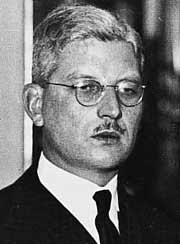
Kurt von Schuschnigg
SCHUSCHNIGG: We simply have to go on living alongside one another, the little state next to the big one. We have no other choice.
And that is why I ask you to tell me what your concrete complaints are. We will do all in our power to sort things out and establish a friendly relationship, as far as it is possible to do so.
HITLER: That’s what you say, Herr Schuschnigg. And I am telling you that I intend to clear up the whole of the so-called Austrian question—one way or another. Do you think I don’t know that you are fortifying Austria’s border with the Reich?
SCHUSCHNIGG: There can be no suggestion at all of that—
HITLER: Ridiculous explosive chambers are being built under bridges and roads—
This was a lie, and Hitler knew it was a lie. But it gave him an excuse to threaten to destroy Austria.
[For Trump, winning—not truth—is all that matters. During his first term as President, he told 30,573 lies.]
HITLER: I have only to give one command and all this comic stuff on the border will be blown to pieces overnight. You don’t seriously think you could hold me up, even for half an hour, do you?
The S.A. [Hitler’s private army of Stormtroopers] and the [Condor] lLegion [which had bombed much of Spain into rubble during the Spanish Civil War] would come in after the troops and nobody—not even I—could stop them from wreaking vengeance.
Schnuschigg made a cardinal mistake in dealing with Hitler: He showed fear. And this was precisely what the Nazi dictator looked for in an opponent.
[Like Hitler, Trump relies on fear: “Real power is—I don’t even want to use the word—fear,” he said in March 2016 when still only a candidate for President.]
Contrary to popular belief, Hitler did not constantly rage at everyone. He used rage as a weapon, knowing that most people feel intimidated by it.
In the case of Schuschnigg, Hitler opened with insults and threats at the outset of their discussion. Then there was a period of calm, to convince the Austrian chancellor the worst was over.
Finally, he once again attacked—this time with so much fury that Schuschnigg was terrified into submission.
With one stroke of a pen, Austria became a vassal-state to Nazi Germany.
[Like Hitler, Trump threatens only those he feels are weak—thus his threats to use military force against Canada, Greenland and Panama.]
ABC NEWS, ADOLF HITLER, ALTERNET, AMERICABLOG, AP, BABY BOOMER RESISTANCE, BARACK OBAMA, BBC, BILL CLINTON, BLOOMBERG NEWS, BUZZFEED, CBS NEWS, CHINA, CHRIS MATTHEWS, CNN, CNN'S "STARTING POINT", CROOKS AND LIARS, CZECHOSLAVAKIA, DAILY KOS, DARRELL ISSA, DAVID BROOKS, DEBT CEILING, DENMARK, EXECUTIVE ORDERS, EXTORTION, FIVETHIRTYEIGHT, GEORGE W. BUSH, GREENLAND, HARPER’S MAGAZINE, HOUSE SPEAKER JOHN BOEHNER, HUFFINGTON POST, immigration reform, INSIDER, IRAN, JANET YELLEN, JIMMY CARTER, JOSEPH BIDEN, MEDIA MATTERS, MITCH MCCONNELL, MOTHER JONES, MOVEON, MSNBC, MSNBC'S "HARDBALL", NANCY PELOSI, NAZI GERMANY, NBC NEWS, NEGOTIATING, NEVILLE CHAMBERLAIN, NEW REPUBLIC, NEWSDAY, NEWSWEEK, NEWT GINGRICH, NICCOLO MACHIAVELLI, NORTH KOREA, NPR, PAP SMEARS, PBS NEWSHOUR, PITUFFIK SPACE BASE, PLANNED PARENTHOOD, POLAND, POLITICO, POLITICUSUSA, R.I.CO. ACT, RAW STORY, REPUBLICAN PARTY, REPUBLICANS, REUTERS, Ronald Reagan, RUSSIA, SALON, SEATTLE TIMES, SLATE, TALKING POINTS MEMO, THE ATLANTIC, THE CHICAGO SUN-TIMES, THE CHICAGO TRIBUNE, THE DAILY BEAST, THE DAILY BLOG, THE GUARDIAN, THE HAMILTON PROJECT, THE HILL, THE HUFFINGTON POST, THE LOS ANGELES TIMES, THE NATION, THE NEW REPUBLIC, THE NEW YORK TIMES, THE NEW YORKER, THE PRINCE, THE VILLAGE VOICE, THE WASHINGTON POST, THINKPROGRESS, TIME, TITLE X, TRUTHDIG, TRUTHOUT, TWITTER, TWO POLITICAL JUNKIES, U.S. NEWS & WORLD REPORT, UPI, USA TODAY, WARREN BUFFET, WENDY EDELBERG, WINSTON CHURCHILL, WONKETTE, WORLD WAR 11, X
In Bureaucracy, Business, History, Law, Law Enforcement, Military, Politics, Social commentary on January 10, 2025 at 12:10 am
On September 15, 1938, British Prime Minister Neville Chamberlain met with German Chancellor Adolf Hitler in Berchtesgaden, Germany.
The reason: Hitler had threatened war with Czechoslovakia—and even with Great Britain—if the Czechs did not cede to Germany the “Sudetenland.” This consisted of the northern, southwest and western regions of Czechoslovakia, inhabited mostly by ethnic Germans.
Neville Chamberlain and Adolf Hitler
To Chamberlain’s surprise, Hitler denied he intended to use force to gain his ends.
Then, without warning, the Fuhrer switched to an aggressive mode: “I shall not put up with this any longer. I shall settle this question in one way or another. I shall take matters in my own hands!”
Suddenly, Chamberlain seemed alarmed—and possibly angry: “In the circumstances, it is best for me to return at once. Anything else now seems pointless.”
Hitler was taken aback by the unexpected show of defiance. He realized he was about to lose his chance to bully the British into accepting his latest demands.
So he offered to consider the Sudetenland according to the principle of self-determination.
Chamberlain said he must immediately return to England to consult with his colleagues “and then meet you again.” He then agreed to the cession of the Sudetenland.
Three days later, French Prime Minister Edouard Daladier did the same. No Czechoslovak representative was invited to these discussions.
Chamberlain met Hitler again in Godesberg, Germany, on September 22 to confirm the agreements. But Hitler aimed to use the crisis as a pretext for war.
He now demanded not only the annexation of the Sudetenland but the immediate military occupation of the territories. This would give the Czechoslovak army no time to adapt their defense measures to the new borders.
To achieve a solution, Italian dictator Benito Mussolini suggested a conference of the major powers in Munich.
On September 29, Hitler, Daladier and Chamberlain met and agreed to Mussolini’s proposal. They signed the Munich Agreement, which accepted the immediate occupation of the Sudetenland.
The Czechoslovak government had not been a party to the talks. Nevertheless, it promised to abide by the agreement on September 30.
It actually had no choice, having been deserted by its pledged allies: Britain, France and the Soviet Union.
Chamberlain returned to England a hero. Holding aloft a copy of the worthless agreement he had signed with Hitler, he told cheering crowds in London: “I believe it is peace for our time.”
Neville Chamberlain
Winston Churchill knew better, predicting: “Britain and France had to choose between war and dishonor. They chose dishonor. They will have war.”
Hitler—still planning more conquests—also knew better. In March, 1939, the German army occupied the rest of Czechoslovakia.
Chamberlain would soon be seen as a naive weakling—even before bombs started falling on London.
Hitler next turned his attention—and demands—to Poland.
When his generals balked, warning that an invasion would trigger a war with France and Britain, Hitler quickly brushed aside their fears: “Our enemies are little worms. I saw them at Munich.”
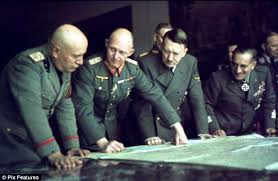
Adolf Hitler with his generals
Hitler ordered the invasion of Poland on September 1, 1939—unintentionally triggering World War II.
In time, historians and statesmen would regard Munich as an object lesson in the futility—and danger—in appeasing evil and aggression.
But for the postwar Republican party, Hitler’s my-way-or-else “negotiating” methods would become standard operating procedure. Latest case in point: President-elect Donald Trump’s aggressive moves toward Greenland.
“For purposes of National Security and Freedom throughout the World, the United States of America feels that the ownership and control of Greenland is an absolute necessity,” Trump wrote on Truth Social on December 23.
The next day, Greenland’s Prime Minister Mute Egede told Trump to back off: “Greenland is ours. We are not for sale and will never be for sale. We must not lose our long struggle for freedom.”
The Kingdom of Denmark holds control of the semiautonomous Greenland.
Trump had previously floated the idea of the U.S. buying Greenland in 2019, which the Danish prime minister at the time called “absurd.”
This is not a time for the United States to endanger its relationship with Greenland—which is more than the world’s biggest island.
It’s home to America’s Pituffik Space Base which “detects and reports attack assessments of sea-launched and intercontinental ballistic missile threats in support of strategic missile warning and missile defense,” according to the base’s website.
Greenland is strategically significant to the United States because it sits between Russia and the eastern coast of the United States, and is the fastest way from Europe to New York.
It’s also located beside the Norwegian Sea, which connects the Atlantic Ocean to the Arctic Ocean and the Barents Sea, where the Russian navy’s northern fleet operates.
Some critics have speculated that Trump is floating headline-getting assaults on other nations to divert attention from his domestic agenda—which includes deporting millions of men, women and children from Hispanic countries.
And while Trump picks needless fights with America’s longtime allies, China—the first peer competitor that can challenge America economically, militarily, and technologically—is deepening its ties with Russia, Iran, North Korea, and other countries that seek to weaken U.S. power.
ABC NEWS, ADOLF HITLER, ALTERNET, AMERICABLOG, AP, BABY BOOMER RESISTANCE, BARACK OBAMA, BBC, BILL CLINTON, BLOOMBERG NEWS, BUZZFEED, CBS NEWS, CHINA, CHRIS MATTHEWS, CNN, CNN'S "STARTING POINT", CROOKS AND LIARS, CZECHOSLAVAKIA, DAILY KOS, DARRELL ISSA, DAVID BROOKS, DEBT CEILING, DENMARK, EXECUTIVE ORDERS, EXTORTION, FIVETHIRTYEIGHT, GEORGE W. BUSH, GREENLAND, HARPER’S MAGAZINE, HOUSE SPEAKER JOHN BOEHNER, HUFFINGTON POST, immigration reform, INSIDER, IRAN, JANET YELLEN, JIMMY CARTER, JOSEPH BIDEN, MEDIA MATTERS, MITCH MCCONNELL, MOTHER JONES, MOVEON, MSNBC, MSNBC'S "HARDBALL", NANCY PELOSI, NAZI GERMANY, NBC NEWS, NEGOTIATING, NEVILLE CHAMBERLAIN, NEW REPUBLIC, NEWSDAY, NEWSWEEK, NEWT GINGRICH, NICCOLO MACHIAVELLI, NORTH KOREA, NPR, PAP SMEARS, PBS NEWSHOUR, PITUFFIK SPACE BASE, PLANNED PARENTHOOD, POLAND, POLITICO, POLITICUSUSA, R.I.CO. ACT, RAW STORY, REPUBLICAN PARTY, REPUBLICANS, REUTERS, Ronald Reagan, RUSSIA, SALON, SEATTLE TIMES, SLATE, TALKING POINTS MEMO, THE ATLANTIC, THE CHICAGO SUN-TIMES, THE CHICAGO TRIBUNE, THE DAILY BEAST, THE DAILY BLOG, THE GUARDIAN, THE HAMILTON PROJECT, THE HILL, THE HUFFINGTON POST, THE LOS ANGELES TIMES, THE NATION, THE NEW REPUBLIC, THE NEW YORK TIMES, THE NEW YORKER, THE PRINCE, THE VILLAGE VOICE, THE WASHINGTON POST, THINKPROGRESS, TIME, TITLE X, TRUTHDIG, TRUTHOUT, TWITTER, TWO POLITICAL JUNKIES, U.S. NEWS & WORLD REPORT, UPI, USA TODAY, WARREN BUFFET, WENDY EDELBERG, WINSTON CHURCHILL, WONKETTE, WORLD WAR 11, X
In Bureaucracy, Business, History, Law, Military, Politics, Social commentary on January 9, 2025 at 12:10 am
Contrary to popular belief, Adolf Hitler did not constantly rage at everyone. On the contrary: he could, when he desired, be charming, especially to women. He used rage as a weapon, knowing that most people feel intimidated by it.
In his “negotiations” for control of Austria with Austrian Chancellor Kurt von Schuschnigg. Hitler opened with insults and threats at the outset of their discussion. Then there was a period of calm, to convince the Austrian chancellor the worst was over.
Finally, he once again attacked—this time with so much fury that Schuschnigg was terrified into submission.
With one stroke of a pen, Austria became a vassal-state to Nazi Germany.
Seven months later, in September, 1938, Hitler turned his rage and aggression against Czechoslovakia.
Once again, he opened “negotiations” with a lie: The Czechoslovak government was trying to exterminate 3.5 million Germans living in the “Sudetenland.”
This consisted of the northern, southwest and western regions of Czechoslovakia, inhabited mostly by ethnic Germans.
Then he followed this up with the threat of war: Germany would protect its citizens and halt such “oppression.”
For British Prime Minister Neville Chamberlain, the thought of another European war erupting less than 20 years after the end of World War I was simply unthinkable.

The Cenotaph, in London, honoring the unknown British dead of World War 1
Something had to be done to prevent it. And he believed himself to be just the man to do it.
He quickly sent Hitler a telegram, offering to help resolve the crisis: “I could come to you by air and am ready to leave tomorrow. Please inform me of earliest time you can receive me, and tell me the place of the meeting. I should be grateful for a very early reply.”
Once again, another head-of-state was prepared to meet Hitler on his home ground. Again, Hitler took this concession as a sign of weakness. And Chamberlain’s use of such words as “please” and “grateful” only further convinced Hitler of another impending triumph.
Chamberlain was determined to grant Hitler’s every demand—so long as this meant avoiding a second world war.
As a political party, Democrats have generally copied this same “strategy” when dealing with Republicans.
On January 6, 2021, President Donald Trump—supported by at least 147 Republicans in the House and Senate—incited a treasonous coup to remain in office. This despite the overwhelming evidence that he had lost the 2020 election to former Vice President Joseph Biden.
By the time the Biden administration neared its end, not one Republican House or Senate member supporting such treason had been indicted for that infamy. Let alone tried, convicted and imprisoned.
Had this occurred, the Biden administration’s agenda would have been far more advanced than it is. Republicans who were raising funds for re-election campaigns would have been forced to raise them to pay huge legal bills.
They would have had far less time to plot to overthrow democracy. Instead, their attention would have been increasingly focused on their upcoming trials for treason.
Even more important: Donald Trump should have been indicted for treason by no later than mid-2021. Even then, the evidence was overwhelming that he had instigated the coup attempt.

Yet it wasn’t until November 18, 2022, that Jack Smith was appointed Special Counsel to oversee the criminal investigations into Trump’s role in the January 6 Capitol attack and his illegal storage of classified documents at his Mar-a-Lago estate.
And Smith allowed Trump-appointed Florida Judge Aileen Cannon to repeatedly postpone the stolen documents trial.
Meanwhile, Trump won repeated delays in his trial for inciting a violent attack on the Capitol. His victory on November 5 guarantees he will not be prosecuted for any of his crimes.

To bring down Mafia “boss of all bosses” John Gotti, the FBI waged a seven-year, $75 million campaign—which included the use of electronic bugs and recruitment of informants.
To date, there is no evidence that the Bureau applied such an effort against Trump—although he, unlike Gotti, threatens the very foundations of American democracy.
To avert war, British Prime Minister Neville Chamberlain met with German Chancellor Adolf Hitler in Berchtesgaden, Germany, on September 15, 1938.
Neville Chamberlain and Adolf Hitler
During their talks, Chamberlain said he had come to discuss German grievances. But, he added, it was necessary in all circumstances to exclude the use of force.
Hitler appeared to be shocked that he could be accused of such intentions: “Force? Who speaks of force?“
Then, without warning, he switched to an aggressive mode. He accused the Czechs of having mobilized their army in May. They had mobilized–in response to the mobilization of the German army.
“I shall not put up with this any longer,” shouted Hitler. “I shall settle this question in one way or another. I shall take matters in my own hands!”
Suddenly, Chamberlain seemed alarmed—and possibly angry: “If I understood you right, you are determined to proceed against Czechoslovakia in any case. If this is so, why did you let me come to Berchtesgaden?”
Hitler was taken aback by the unexpected show of defiance. He realized he was about to lose his chance to bully the British into accepting his latest demands.
ABC NEWS, ADOLF HITLER, ALTERNET, AMERICABLOG, AP, BABY BOOMER RESISTANCE, BARACK OBAMA, BBC, BILL CLINTON, BLOOMBERG NEWS, BUZZFEED, CANADA, CBS NEWS, CHINA, CHRIS MATTHEWS, CNN, CNN'S "STARTING POINT", CROOKS AND LIARS, CZECHOSLAVAKIA, DAILY KOS, DARRELL ISSA, DAVID BROOKS, DEBT CEILING, DENMARK, DONALD TRUMP, DRUG TRAFFICKING, EXECUTIVE ORDERS, EXTORTION, FIVETHIRTYEIGHT, GEORGE W. BUSH, GREENLAND, HARPER’S MAGAZINE, HOUSE SPEAKER JOHN BOEHNER, HUFFINGTON POST, ILLEGAL ALIENS, immigration reform, INSIDER, IRAN, JANET YELLEN, JIMMY CARTER, JOSEPH BIDEN, JUSTIN TRUDEAU, MEDIA MATTERS, MEXICO, MITCH MCCONNELL, MOTHER JONES, MOVEON, MSNBC, MSNBC'S "HARDBALL", NANCY PELOSI, NAZI GERMANY, NBC NEWS, NEGOTIATING, NEVILLE CHAMBERLAIN, NEW REPUBLIC, NEWSDAY, NEWSWEEK, NEWT GINGRICH, NICCOLO MACHIAVELLI, NORTH KOREA, NPR, PANAMA CANAL, PAP SMEARS, PBS NEWSHOUR, PITUFFIK SPACE BASE, PLANNED PARENTHOOD, POLAND, POLITICO, POLITICUSUSA, R.I.CO. ACT, RAW STORY, REPUBLICAN PARTY, REPUBLICANS, REUTERS, Ronald Reagan, RUSSIA, SALON, SEATTLE TIMES, SLATE, TALKING POINTS MEMO, TARIFFS, THE ATLANTIC, THE CHICAGO SUN-TIMES, THE CHICAGO TRIBUNE, THE DAILY BEAST, THE DAILY BLOG, THE GUARDIAN, THE HAMILTON PROJECT, THE HILL, THE HUFFINGTON POST, THE LOS ANGELES TIMES, THE NATION, THE NEW REPUBLIC, THE NEW YORK TIMES, THE NEW YORKER, THE PRINCE, THE VILLAGE VOICE, THE WASHINGTON POST, THINKPROGRESS, TIME, TITLE X, TRUTHDIG, TRUTHOUT, TWITTER, TWO POLITICAL JUNKIES, U.S. NEWS & WORLD REPORT, UPI, USA TODAY, WARREN BUFFET, WENDY EDELBERG, WINSTON CHURCHILL, WONKETTE, WORLD WAR 11, X
In Bureaucracy, Business, History, Law, Law Enforcement, Military, Politics, Social commentary on January 8, 2025 at 12:10 am
By studying the “negotiating” methods used by Adolf Hitler, Americans generally—and Democrats in particular—can learn much about the mindset and “negotiating” style of today’s Republican party.
Consider President-Elect Donald Trump’s recent threats against not only Canada but Panama—specifically, to retake control of the Panama Canal.
On December 25, Trump told a conservative conference in Arizona that Panama was charging US ships “ridiculous, highly unfair” fees to use its namesake canal.
The United States built the canal during the administration of President Theodore Roosevelt and opened it in 1914. It remained controlled by the United States until President Jimmy Carter signed a a 1977 agreement for its eventual handover to Panama in 1999.

Panama Canal (in white)
But this week, Trump threatened that if shipping rates were not lowered, “we will demand that the Panama Canal be returned to us, in full, quickly and without question.”
He accused China of operating the canal and lamented that the United States “puts in Billions of Dollars in ‘repair’ money, but will have absolutely nothing to say about ‘anything.’”
On December 25, Trump posted on his website, Truth Social: “Merry Christmas to all, including to the wonderful soldiers of China, who are lovingly, but illegally, operating the Panama Canal.”
“There is not a single Chinese soldier in the canal,” the president of Panama, José Raúl Mulino, told reporters the next day, adding that there is “absolutely no Chinese interference.”
Trump’s threats against Panama may be connected with the outstanding tax evasion case he faces in the country.
In 2019, the owners of a Panama City hotel tower that was previously managed and operated under the Trump brand accused the Trump Organization of pocketing money meant to pay taxes. According to a lawsuit, Trump’s companies simply kept the money, “intentionally evading taxes” and leaving the new owner liable for millions.
Yet the blunt truth remains: Unless Trump goes to war with Panama, his threat to take over the canal is effectively meaningless.
During the 2024 Presidential campaign, Trump denied reading Adolf Hitler’s notorious book, Mein Kampf (“My Struggle.”)
In the past, however, he has acknowledged owning a copy of it. And he has adopted the same “negotiating” style as the late Fuhrer: Do-as-I-say-or-I’ll-destroy-you.
A classic example of Hitler’s “bargaining style” came in 1938, when he invited Austrian Chancellor Kurt von Schuschnigg to his mountaintop retreat in Obersalzberg, Germany.

Kurt von Schuschnigg
Hitler, an Austrian by birth, intended to annex his native land to Germany. Schuschnigg was aware of Hitler’s desire, but nevertheless felt secure in accepting the invitation. He had been assured that the question of Austrian sovereignty would not arise.
The meeting occurred on February 12, 1938.
Shuschnigg opened the discussion with a friendly compliment. Walking over to a large window, he admired the breathtaking view of the mountains.
HITLER: We haven’t come here to talk about the lovely view or the weather!
Austria has anyway never done anything which was of help to the German Reich….I am resolutely determined to make an end to all this business. The German Reich is a great power. Nobody can and nobody will interfere if it restores order on its frontiers.
SCHUSCHNIGG: We simply have to go on living alongside one another, the little state next to the big one. We have no other choice.
And that is why I ask you to tell me what your concrete complaints are. We will do all in our power to sort things out and establish a friendly relationship, as far as it is possible to do so.
HITLER: That’s what you say, Herr Schuschnigg. And I am telling you that I intend to clear up the whole of the so-called Austrian question—one way or another. Do you think I don’t know that you are fortifying Austria’s border with the Reich?
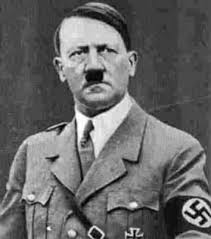
Adolf Hitler
SCHUSCHNIGG: There can be no suggestion at all of that—
HITLER: Ridiculous explosive chambers are being built under bridges and roads—
This was a lie, and Hitler knew it was a lie. But no matter. It gave him an excuse to threaten to destroy Austria—as he was to destroy so many other nations during the next seven years.
HITLER: I have only to give one command and all this comic stuff on the border will be blown to pieces overnight. You don’t seriously think you could hold me up, even for half an hour, do you?
Who knows—perhaps you will find me one morning in Vienna like a spring storm. Then you will go through something! I’d like to spare the Austrians that.
The S.A. [Hitler’s private army of Stormtroopers] and the [Condor] lLegion [which had bombed much of Spain into rubble during the three-year Spanish Civil War] would come in after the troops and nobody—not even I—could stop them from wreaking vengeance.
Schnuschigg made a cardinal mistake in dealing with Hitler: He showed fear. And this was precisely what the Nazi dictator looked for in an opponent.
Contrary to popular belief, Hitler did not constantly rage at everyone. On the contrary: he could, when he desired, be charming, especially to women. He used rage as a weapon, knowing that most people feel intimidated by it.
ABC NEWS, ADOLF HITLER, ALTERNET, AMERICABLOG, AP, BABY BOOMER RESISTANCE, BARACK OBAMA, BBC, BILL CLINTON, BLOOMBERG NEWS, BUZZFEED, CANADA, CBS NEWS, CHINA, CHRIS MATTHEWS, CNN, CNN'S "STARTING POINT", CROOKS AND LIARS, CZECHOSLAVAKIA, DAILY KOS, DARRELL ISSA, DAVID BROOKS, DEBT CEILING, DENMARK, DONALD TRUMP, DRUG TRAFFICKING, EXECUTIVE ORDERS, EXTORTION, FIVETHIRTYEIGHT, GEORGE W. BUSH, GREENLAND, HARPER’S MAGAZINE, HOUSE SPEAKER JOHN BOEHNER, HUFFINGTON POST, ILLEGAL ALIENS, immigration reform, INSIDER, IRAN, JANET YELLEN, JIMMY CARTER, JOSEPH BIDEN, JUSTIN TRUDEAU, MEDIA MATTERS, MEXICO, MITCH MCCONNELL, MOTHER JONES, MOVEON, MSNBC, MSNBC'S "HARDBALL", NANCY PELOSI, NAZI GERMANY, NBC NEWS, NEGOTIATING, NEVILLE CHAMBERLAIN, NEW REPUBLIC, NEWSDAY, NEWSWEEK, NEWT GINGRICH, NICCOLO MACHIAVELLI, NORTH KOREA, NPR, PAP SMEARS, PBS NEWSHOUR, PITUFFIK SPACE BASE, PLANNED PARENTHOOD, POLAND, POLITICO, POLITICUSUSA, R.I.CO. ACT, RAW STORY, REPUBLICAN PARTY, REPUBLICANS, REUTERS, Ronald Reagan, RUSSIA, SALON, SEATTLE TIMES, SLATE, TALKING POINTS MEMO, TARIFFS, THE ATLANTIC, THE CHICAGO SUN-TIMES, THE CHICAGO TRIBUNE, THE DAILY BEAST, THE DAILY BLOG, THE GUARDIAN, THE HAMILTON PROJECT, THE HILL, THE HUFFINGTON POST, THE LOS ANGELES TIMES, THE NATION, THE NEW REPUBLIC, THE NEW YORK TIMES, THE NEW YORKER, THE PRINCE, THE VILLAGE VOICE, THE WASHINGTON POST, THINKPROGRESS, TIME, TITLE X, TRUTHDIG, TRUTHOUT, TWITTER, TWO POLITICAL JUNKIES, U.S. NEWS & WORLD REPORT, UPI, USA TODAY, WARREN BUFFET, WENDY EDELBERG, WINSTON CHURCHILL, WONKETTE, WORLD WAR 11, X
In Bureaucracy, Business, History, Law, Law Enforcement, Military, Politics, Social commentary on January 7, 2025 at 12:10 am
Once again, Republicans are ruthlessly playing “chicken” with the nation’s financial and military security.
Even before taking the oath of office as President on January 20, 2025, Donald Trump has rushed to make an enemy of America’s longtime ally—Canada.
At a November 30 dinner at Mar-a-Lago, Trump’s estate in Palm Beach, Florida, he told Canadian Prime Minister Justin Trudeau that Canada could become the 51st state of the United States.
Canada’s Public Safety Minister Dominic LeBlanc, who attended the dinner, insisted that Trump was joking.
But on December 2, Trump threatened to impose a 25% tax on all products entering the United States from Canada and Mexico unless they stopped the flow of drugs and illegal aliens.
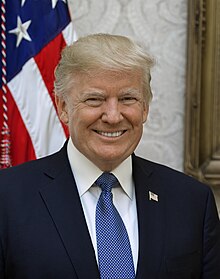
Donald Trump
And on December 3, Trump posted on his Truth Social platform an AI-generated image of himself standing on a mountain with a Canadian flag beside him. Its caption: “Oh Canada!”
Trudeau had requested the Mar-a-Lago meeting to convince Trump that the northern border is completely different from the southern one with Mexico.
“Less than one percent of migrants coming into the United States irregularly come from Canada and 0.2 percent of the fentanyl coming into the United States comes from Canada,” Trudeau said in Parliament.
During the last fiscal year, American customs agents seized 43 pounds of fentanyl at the Canadian border, compared with 21,100 pounds at the Mexican border.
Most of the fentanyl reaching the U.S. is made by Mexican drug cartels using precursor chemicals smuggled from Asia.
Utterly unmentioned in Trump’s demand: It’s America’s insatiable demand for illicit drugs that is the root cause of the drug trade.
Justin Trudeau
CC BY 3.0 <https://creativecommons.org/licenses/by/3.0>, via Wikimedia Commons
On immigration, the U.S. Border Patrol reported 1.53 million encounters with would-be illegal aliens at the Mexican border between October 2023 and September 2024. At the Canadian border, there were 23,721 such encounters.
Also unmentioned—if not deliberately ignored by Trump: Canada plays a substantial role as a U.S. trading partner. About 60% of U.S. crude oil imports are from Canada, and 85% of U.S. electricity imports as well.
Canada is also the largest foreign supplier of steel, aluminum and uranium to the U.S. and has 34 critical minerals and metals that the Pentagon eagerly desires. About 77% of Canada’s exports go to the U.S.
Trudeau pleaded with Trump not to impose the tariff because because it would “kill” Canada’s economy.
Trump responded: “So your country can’t survive unless it’s ripping off the US to the tune of $100 billion?”
His comments referred to the US trade deficit with Canada.
The U.S. had a $75 billion trade deficit with Canada last year but a third of what Canada sells into the U.S. is energy exports and prices have been high.
Trudeau left the meeting without reassurance that Trump would not impose a 25% tariff on products from Canada.
Republicans, in short, are one again utilizing the same “negotiating” strategy as Nazi Germany’s Fuhrer, Adolf Hitler.
And Democrats—out of cowardice or an ignorance of history—are once again refusing to publicly make this comparison.
By studying Adolf Hitler’s mindset and “negotiating” methods, we can learn much about the mindset and “negotiating” style of today’s Republican party.
Robert Payne, author of the bestselling biography, The Life and Death of Adolf Hitler (1973), described Hitler’s “negotiating” style thus:
“Although Hitler prized his own talents as a negotiator, a man always capable of striking a good bargain, he was totally lacking in finesse.
“He was incapable of bargaining. He was like a man who goes up to a fruit peddler and threatens to blow his brains out if he does not sell his applies at the lowest possible price.”
A classic example of Hitler’s “bargaining style” came in 1938, when he invited Austrian Chancellor Kurt von Schuschnigg to his mountaintop retreat in Obersalzberg, Germany.
Hitler, an Austrian by birth, intended to annex his native land to Germany. Schuschnigg was aware of Hitler’s desire, but nevertheless felt secure in accepting the invitation. He had been assured that the question of Austrian sovereignty would not arise.
Kurt von Schuschnigg
The meeting occurred on February 12, 1938.
Shuschnigg opened the discussion with a friendly compliment. Walking over to a large window, he admired the breathtaking view of the mountains.
HITLER: We haven’t come here to talk about the lovely view or the weather!
Austria has anyway never done anything which was of help to the German Reich….I am resolutely determined to make an end to all this business. The German Reich is a great power. Nobody can and nobody will interfere if it restores order on its frontiers.
SCHUSCHNIGG: I am aware of your attitude toward the Austrian question and toward Austrian history….As we Austrians see it, the whole of our history is a very essential and valuable part of German history….And Austria’s contribution is a considerable one.
HITLER: It is absolutely zero—that I can assure you! Every national impulse has been trampled underfoot by Austria….
I could call myself an Austrian with just the same right—indeed with even more right—than you, Herr Schuschnigg. Why don’t you once try a plebiscite in Austria in which you and I run against each other? Then you would see!
ABC NEWS, ADOLF HITLER, ALTERNET, AMERICABLOG, AP, BABY BOOMER RESISTANCE, BARACK OBAMA, BBC, BILL CLINTON, BLOOMBERG NEWS, BORDER WALL, BUZZFEED, CBS NEWS, CHARLES SCHUMER, CHRIS CILLIZZA, CHRIS MATTHEWS, CNN, CROOKS AND LIARS, DAILY KOS, DANIEL ISSA, DAVID BROOKS, DEBT CEILING, EXECUTIVE ORDERS, EXTORTION, FBI, FEDERAL AVIATION ADMINISTRATION, FEDERAL GOVERNMENT SHUTDOWN, FIVETHIRTYEIGHT, HARPER’S MAGAZINE, HOUSE SPEAKER JOHN BOEHNER, HUFFINGTON POST, INSIDER, JOSE ANDRES, JOSEPH R. BIDEN, KEVIN MCCARTHY, LEN BLAVATNICK, MATT GAETZ, MEDIA MATTERS, MITCH MCCONNELL, MOTHER JONES, MOVEON, MSNBC, MSNBC'S "HARDBALL", NANCY PELOSI, NAZI GERMANY, NBC NEWS, NEGOTIATING, NEW REPUBLIC, NEWSDAY, NEWSWEEK, NEWT GINGRICH, NPR, PAP SMEARS, PBS NEWSHOUR, PLANNED PARENTHOOD, POLITICO, POLITICUSUSA, R.I.CO. ACT, RAFEAL “TED” CRUZ, RAW STORY, REINHARD HEYDRICH, REPUBLICAN PARTY, REUTERS, ROBERT PAYNE, SALON, SEATTLE TIMES, SLATE, STATE OF THE UNION ADDRESS, TALKING POINTS MEMO, THE ATLANTIC, THE CHICAGO SUN-TIMES, THE CHICAGO TRIBUNE, THE DAILY BEAST, THE DAILY BLOG, THE GUARDIAN, THE HAMILTON PROJECT, THE HILL, THE HUFFINGTON POST, THE INTERCEPT, THE LIFE AND DEATH OF ADOLF HITLER (BOOK), THE LOS ANGELES TIMES, THE NATION, THE NEW REPUBLIC, THE NEW YORK TIMES, THE NEW YORKER, THE VILLAGE VOICE, THE WASHINGTON POST, THINKPROGRESS, TIME, TITLE X, TRANSPORTATION SAFETY ADMINISTRATION (TSA), TRUTHDIG, TRUTHOUT, TWITTER, TWO POLITICAL JUNKIES, U.S. NEWS & WORLD REPORT, UNITED STATES HOUSE OF REPRESENTATIVES, UNITED STATES SENATE, UPI, USA TODAY, VLADIMIR PUTIN, VOLODYMYR ZELENSKY, WARREN BUFFETT, WILBUR ROSS, WINSTON CHURCHILL, WONKETTE
In Bureaucracy, History, Law, Law Enforcement, Medical, Politics, Social commentary on October 6, 2023 at 12:11 am
Republicans are already gearing up for their next extortionate threat: Do what we want or we’ll shut down the Federal Government.
Among the consequences:
“If you don’t send out Social Security checks, I would hate to think about the credit meeting at S&P and Moody’s the next morning,” said Warren Buffett, CEO of Berkshire Hathaway
“If you’re not paying millions and millions and millions of people that range in age from 65 on up, money you promised them, you’re not a AAA” credit rating.
But this does not have to happen.
REMEDY 2: THE JUSTICE DEPARTMENT SHOULD INDICT FOR EXTORTION THOSE HOLDING THE GOVERNMENT HOSTAGE.
President Joseph Biden could order the Justice Department to invoke the Racketeer Influenced Corrupt Organizations (RICO) Act.
Passed by Congress in 1970, as Title 18, United States Code, Sections 1961-1968, its goal was to destroy the Mafia.

The United States Department of Justice
RICO opens with a series of definitions of “racketeering activity” which can be prosecuted by Justice Department attorneys. Among those crimes: Extortion.
Extortion is defined as “a criminal offense which occurs when a person unlawfully obtains either money, property or services from a person(s), entity, or institution, through coercion.”
And if President Biden believed that RICO was not sufficient to deal with Republicans’ extortion attempts, he could rely on the USA Patriot Act of 2001, passed in the wake of 9/11.
In Section 802, the Act defines domestic terrorism. Among the behavior defined as criminal:
“Activities that…appear to be intended…to influence the policy of a government by intimidation or coercion [and]…occur primarily within the territorial jurisdiction of the United States.”
The remedies for punishing such criminal behavior were now legally in place. President Biden needs only to direct the Justice Department to apply them.
PROBLEM: This would require a Democratic President and Justice Department to act courageously—which would be a rarity for either.
Example: 147 Republican Congressional members voted to invalidate the Electoral College vote count of the 2020 Presidential election. To this date, not one has been indicted for treason.
REMEDY 3: PRESIDENT BIDEN SHOULD ATTACK THE REPUBLICAN PARTY AS A THREAT TO NATIONAL SECURITY.
Numerous Republicans have taken “campaign contributions”—i.e., bribes—from Russian oligarchs linked to Russian dictator Vladimir Putin.
One Russian oligarch—Len Blavatnik—has given millions of dollars to top Republican leaders such as Senators Mitch McConnell (Kentucky), Marco Rubio (Florida) and Lindsey Graham (South Carolina).
Putin’s monies have been well-spent: About 90 House Republicans—out of a total of 213—attended Volodymyr Zelensky’s address to Congress on December 21, according to CQ Roll Call. Some who did spent much of the speech on their phones.
Many Republicans—such as former House Speaker Kevin McCarthy, who in 2021 received about $255,000 from Blavatnik—have openly threatened to end all funding for Ukraine’s heroic struggle against Russian aggression.
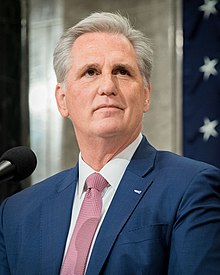
Kevin McCarthy
Even some “Reagan Republicans”—such as James Kirchick, a conservative foreign correspondent and author—have openly denounced this treason.
Thus, the White House could ignite an internal conflict within the Right by pitting Republicans against each other.
PROBLEM: Democrats rarely find the courage to attack their enemies as traitors, even when the treason is manifest—as it was when Donald Trump was elected President with the support of Vladimir Putin.
REMEDY 4: CITIZENS WHOSE LIVES HAVE BEEN DRASTICALLY HARMED BY REPUBLICAN POLICIES COULD CHOOSE “THE HEYDRICH SOLUTION.”
Reinhard Heydrich was second-in-command of the dreaded Schutzstaffel, or Protective Squads, better known as the SS. Among his his multitude of crimes Designing “The Final Solution to the Jewish Question,” resulting in the slaughter of six million men, women and children.
In 1941 he was appointed “Reich Protector” of Czechoslovakia, which Nazi Germany had absorbed in 1938. The Czechs were growing restive under brutal Nazi rule, and Heydrich’s mission was to stamp out that unrest.
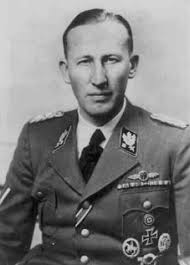
Reinhard Heydrich
The Czech government-in-exile, headquartered in London, decided to assassinate Heydrich.
Two British-trained Czech commandos—Jan Kubis and Joseph Gabcik—parachuted into Prague—where they got unexpected help from Heydrich himself.
Supremely arrogant, like today’s Republican leaders, he traveled the same route every day from home to his downtown office, refusing to be escorted by armed guards. He claimed that no one would dare attack him.
He was wrong.
On May 27, 1942, Kubis and Gabcik waited at a hairpin turn in the road always taken by Heydrich. When Heydrich’s Mercedes slowed down, Gabcik raised his machinegun–which jammed. Rising in his seat, Heydrich aimed his revolver at Gabcik—as Kubis lobbed a hand grenade at the car.
The explosion drove steel and leather fragments of the car’s upholstery into Heydrich’s diaphragm, spleen and lung.
Adolf Hitler dispatched doctors from Berlin to save the Reich Protector. But infection set in, and on June 4, 1942, Heydrich died at age 38.
ADVISORY: While this remedy is not suggested, it remains an extremely real possibility. Those who have lost access to food, housing and/or medical care for themselves or loved ones under “screw-the-poor” Republican policies could easily decide to follow the advice of Winston Churchill.
When England seemed threatened with a German invasion in 1940, his daughter-in-law, Pamela, asked: “But, Papa, what can I do?”
Replied Churchill: “You can always get a carving knife from the kitchen and take one of the bastards with you.”
ABC NEWS, ADOLF HITLER, ALTERNET, AMERICABLOG, AP, BABY BOOMER RESISTANCE, BARACK OBAMA, BBC, BILL CLINTON, BLOOMBERG NEWS, BORDER WALL, BUZZFEED, CBS NEWS, CHARLES SCHUMER, CHRIS CILLIZZA, CHRIS MATTHEWS, CNN, CROOKS AND LIARS, DAILY KOS, DANIEL ISSA, DAVID BROOKS, DEBT CEILING, EXECUTIVE ORDERS, EXTORTION, FBI, FEDERAL AVIATION ADMINISTRATION, FEDERAL GOVERNMENT SHUTDOWN, FIVETHIRTYEIGHT, HARPER’S MAGAZINE, HOUSE SPEAKER JOHN BOEHNER, HUFFINGTON POST, INSIDER, JOSE ANDRES, JOSEPH R. BIDEN, KEVIN MCCARTHY, LEN BLAVATNICK, MATT GAETZ, MEDIA MATTERS, MITCH MCCONNELL, MOTHER JONES, MOVEON, MSNBC, MSNBC'S "HARDBALL", NANCY PELOSI, NAZI GERMANY, NBC NEWS, NEGOTIATING, NEW REPUBLIC, NEWSDAY, NEWSWEEK, NEWT GINGRICH, NPR, PAP SMEARS, PBS NEWSHOUR, PLANNED PARENTHOOD, POLITICO, POLITICUSUSA, R.I.CO. ACT, RAFEAL “TED” CRUZ, RAW STORY, REINHARD HEYDRICH, REPUBLICAN PARTY, REUTERS, ROBERT PAYNE, SALON, SEATTLE TIMES, SLATE, STATE OF THE UNION ADDRESS, TALKING POINTS MEMO, THE ATLANTIC, THE CHICAGO SUN-TIMES, THE CHICAGO TRIBUNE, THE DAILY BEAST, THE DAILY BLOG, THE GUARDIAN, THE HAMILTON PROJECT, THE HILL, THE HUFFINGTON POST, THE INTERCEPT, THE LIFE AND DEATH OF ADOLF HITLER (BOOK), THE LOS ANGELES TIMES, THE NATION, THE NEW REPUBLIC, THE NEW YORK TIMES, THE NEW YORKER, THE VILLAGE VOICE, THE WASHINGTON POST, THINKPROGRESS, TIME, TITLE X, TRANSPORTATION SAFETY ADMINISTRATION (TSA), TRUTHDIG, TRUTHOUT, TWITTER, TWO POLITICAL JUNKIES, U.S. NEWS & WORLD REPORT, UNITED STATES HOUSE OF REPRESENTATIVES, UNITED STATES SENATE, UPI, USA TODAY, VLADIMIR PUTIN, VOLODYMYR ZELENSKY, WARREN BUFFET, WARREN BUFFETT, WILBUR ROSS, WINSTON CHURCHILL, WONKETTE
In Bureaucracy, History, Law, Law Enforcement, Medical, Politics, Social commentary on October 5, 2023 at 12:10 am
One reason why a handful of House Republicans threatened to shut down the Federal Government by October 1: Calling themselves “budget deficit hawks,” they demanded huge cuts in non-military spending.
Among the programs these cuts would have devastated: Food safety, education, law enforcement, housing, public health, Head Start and child care, Meals on Wheels.
Their attitude toward budget deficits had been vastly different while Donald Trump was President.
On August 2, 2019, Trump signed into law a two-year budget deal that raised spending by $320 billion over existing spending caps set in a 2011 law—and boosted military and domestic spending.
The bill also lifted the debt ceiling, which is the legal limit on the amount of debt the federal government can have.
The bill threatened to push the budget deficit to more than $1 trillion in 2019 for only the second time since the Great Recession of 2007-2008 and add $1.7 trillion to the federal debt over a decade.
Donald Trump
By January, 2021, the national debt had risen by almost $7.8 trillion during Trump’s four years in office. It amounted to about $23,500 in new federal debt for every person in the country.
Senate Majority Leader Mitch McConnell (R-KY) praised the Republicans’ massive contribution to the national debt.
Now, with a Democratic President in office, Republicans—invoking the my-way-or-else “negotiating” strategy of Adolf Hitler—were threatening to plunge the United States into financial ruin unless their extortion demands were met.
The casualties of a government shutdown would include:
- Seven million vulnerable mothers and children would stop receiving monies for food under the Women and Children (WIC) program.
- All active-duty military personnel and law enforcement officers would be forced to work without pay until appropriated funds became available.
- If additional catastrophes occurred, FEMA’s Disaster Relief Fund could be depleted, thus complicating new emergency response efforts.
- Critical research on diseases like cancer and Alzheimer’s would stall because the National Institutes of Health would be forced to delay new clinical trials.
- Air traffic controllers and Transportation Safety Administration (TSA) officers would be forced to work without pay. The added stress they would face from being unable to meet rent and food payments could dangerously affect their job performance.
- Most EPA-led inspections at hazardous waste sites as well as drinking water and chemical facilities would stop.
- The Food and Drug Administration would be forced to delay food safety inspections for a wide variety of products across the country.
Here’s what Republicans demanded in return for not shutting down the government:
- Severe cuts would be made to Social Security by increasing the age of future retirees.
- Disabled Americans on Medicare would be forced to wait longer to receive benefits.
- Medicare would be turned into a voucher system—which would remove the guarantee for seniors to have access to affordable medical care.
- Taxes would be cut for the wealthy and corporations.
- More requirements would be imposed on the poor trying to obtain social services.
- “Regulatory reforms that increase economic growth” (i.e. allowing corporations to ignore laws protecting employees, customers and/or the environment) would become law.
- Further funding to defend Ukraine against continuing aggression by Russia would end.

By a last-minute compromise between House Majority Leader Kevin McCarthy and Democrats, this latest Republican extortion attempt was averted.
But current funding will expire on November 17. And then the country will face yet another date with financial disaster.
Fortunately, there are several ways to permanently address these exercises in political criminality.
REMEDY 1: LEGALLY REQUIRE CONGRESS TO STAY IN SESSION UNTIL A BUDGET COMPROMISE IS REACHED.
The federal government’s fiscal year ends every September 30. Before this deadline, Congress must write and pass the budget for the next fiscal year. If a budget agreement is not reached in time, funding for federal agencies lapse and the government shuts down.
Yet with the shutdown deadline looming, on July 29, the House and Senate broke for their annual August recess. The Senate remained in recess until September 5; the House remained in recess until September 12.
Congress had to enact all 12 appropriations bills or pass a Continuing Resolution (CR) to keep the federal government funded and avoid a shutdown on October 1.
NEEDED: A law requiring Congress to remain in session until a budget compromise is reached. Any Congressional member who leaves before this occurs would be immediately discharged and never allowed to return.
PROBLEM: This would require Congressional members to impose restrictions on themselves—which they are unwilling to do.
REMEDY 2: THE JUSTICE DEPARTMENT SHOULD INDICT FOR EXTORTION THOSE HOLDING THE GOVERNMENT HOSTAGE.
President Joseph Biden could order the Justice Department to invoke the Racketeer Influenced Corrupt Organizations (RICO) Act.
Passed by Congress in 1970, as Title 18, United States Code, Sections 1961-1968, its goal was to destroy the Mafia. But in United States v. Turkette, 452 U.S. 576 (1981), the Supreme Court held that RICO applied as well to legitimate enterprises being operated in a criminal manner.
After Turkette, RICO could also be used against corporations, political protest groups, labor unions and loosely knit-groups of people.
RICO opens with a series of definitions of “racketeering activity” which can be prosecuted by Justice Department attorneys.
These activities include a Republican favorite: Extortion.
ABC NEWS, ADOLF HITLER, ALTERNET, AMERICABLOG, AP, BABY BOOMER RESISTANCE, BARACK OBAMA, BBC, BILL CLINTON, BLOOMBERG NEWS, BORDER WALL, BUZZFEED, CBS NEWS, CHARLES SCHUMER, CHRIS CILLIZZA, CHRIS MATTHEWS, CNN, CROOKS AND LIARS, DAILY KOS, DANIEL ISSA, DAVID BROOKS, DEBT CEILING, EXECUTIVE ORDERS, EXTORTION, FBI, FEDERAL AVIATION ADMINISTRATION, FEDERAL GOVERNMENT SHUTDOWN, FIVETHIRTYEIGHT, HARPER’S MAGAZINE, HOUSE SPEAKER JOHN BOEHNER, HUFFINGTON POST, INSIDER, JOSE ANDRES, JOSEPH R. BIDEN, KEVIN MCCARTHY, LEN BLAVATNICK, MATT GAETZ, MEDIA MATTERS, MITCH MCCONNELL, MOTHER JONES, MOVEON, MSNBC, MSNBC'S "HARDBALL", NANCY PELOSI, NAZI GERMANY, NBC NEWS, NEGOTIATING, NEW REPUBLIC, NEWSDAY, NEWSWEEK, NEWT GINGRICH, NPR, PAP SMEARS, PBS NEWSHOUR, PLANNED PARENTHOOD, POLITICO, POLITICUSUSA, R.I.CO. ACT, RAFEAL “TED” CRUZ, RAW STORY, REINHARD HEYDRICH, REPUBLICAN PARTY, REUTERS, ROBERT PAYNE, SALON, SEATTLE TIMES, SLATE, STATE OF THE UNION ADDRESS, TALKING POINTS MEMO, THE ATLANTIC, THE CHICAGO SUN-TIMES, THE CHICAGO TRIBUNE, THE DAILY BEAST, THE DAILY BLOG, THE GUARDIAN, THE HAMILTON PROJECT, THE HILL, THE HUFFINGTON POST, THE INTERCEPT, THE LIFE AND DEATH OF ADOLF HITLER (BOOK), THE LOS ANGELES TIMES, THE NATION, THE NEW REPUBLIC, THE NEW YORK TIMES, THE NEW YORKER, THE VILLAGE VOICE, THE WASHINGTON POST, THINKPROGRESS, TIME, TITLE X, TRANSPORTATION SAFETY ADMINISTRATION (TSA), TRUTHDIG, TRUTHOUT, TWITTER, TWO POLITICAL JUNKIES, U.S. NEWS & WORLD REPORT, UNITED STATES HOUSE OF REPRESENTATIVES, UNITED STATES SENATE, UPI, USA TODAY, VLADIMIR PUTIN, VOLODYMYR ZELENSKY, WARREN BUFFETT, WILBUR ROSS, WINSTON CHURCHILL, WONKETTE
In Bureaucracy, History, Law, Law Enforcement, Medical, Politics, Social commentary on October 4, 2023 at 12:15 am
Republicans have repeatedly utilized the same my-way-or-else “negotiating” strategy as Nazi Germany’s Fuhrer, Adolf Hitler.
And Democrats—out of cowardice or an ignorance of history—have repeatedly refused to publicly make this comparison.
By studying Adolf Hitler’s mindset and “negotiating” methods, we can learn much about the mindset and “negotiating” style of today’s Republican party.
Robert Payne, author of the bestselling biography, The Life and Death of Adolf Hitler (1973), described Hitler’s “negotiating” style thus:
“Although Hitler prized his own talents as a negotiator, a man always capable of striking a good bargain, he was totally lacking in finesse.
“He was incapable of bargaining. He was like a man who goes up to a fruit peddler and threatens to blow his brains out if he does not sell his applies at the lowest possible price.”

Republicans have repeatedly threatened to shut down the government unless their constantly escalating demands are met.
A shutdown occurs when Congress fails to approve funding for federal agencies.
In November, 1995, Newt Gingrich, then Speaker of the House of Representatives, carried out his threat to shut down the government. Gingrich unwisely admitted that he did so because President Bill Clinton had put him in the back of Air Force One during a recent trip to Israel.
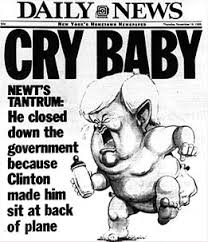
The shutdown proved a disaster for Republicans. Clinton was handily re-elected in 1996 and Gingrich suddenly resigned from Congress in 1998.
Still, the Republicans continued their policy of my-way-or-else.
In April, 2011, the United States government almost shut down over Republican demands about subsidized pap smears.
During a late-night White House meeting with President Barack Obama and key Congressional leaders, Republican House Speaker John Boehner made this threat: His conference would not approve funding for the government if any money were allowed to flow to Planned Parenthood through Title X legislation.
Facing an April 8 deadline, negotiators worked day and night to strike a compromise—and finally reached one.
Three months later—on July 9—Republican extortionists again threatened the Nation with financial ruin and international disgrace unless their demands were met.
Symbol of the Mafia “Black Hand”
This time, Republicans refused to raise the debt ceiling unless Democrats agreed to massively cut social programs for the elderly, poor and disabled.
And while Republicans demanded that the disadvantaged tighten their belts, they rejected any raising of taxes on their foremost constituency—the wealthiest 1%.
To raise taxes on the wealthy, they insisted, would be a “jobs-killer.” It would “discourage” corporate CEOs from creating tens of thousands of jobs they supposedly wanted to create.
President Obama had offered to make historic cuts in the federal government and the social safety net—on which millions of Americans depend for their most basic needs.
But House Speaker John Boehner rejected that offer. He could not agree to the tax increases that Democrats wanted to impose on the wealthiest 1% as part of the bargain.
As the calendar moved ever closer to the fateful date of August 2, Republican leaders continued to insist: Any deal that includes taxes “can’t pass the House.”
One senior Republican said talks would go right up to—and maybe beyond—the brink of default.
“I think we’ll be here in August,” said Republican Representative Pete Sessions, of Texas. “We are not going to leave town until a proper deal gets done.”
President Obama had previously insisted on extending the debt ceiling through 2012. But in mid-July, he simply asked congressional leaders to review three options with their members:
- The “Grand Bargain” choice—favored by Obama—would cut deficits by about $4 trillion, including spending cuts and new tax revenues.
- A medium-range plan would aim to reduce the deficit by about $2 trillion.
- The smallest option would cut between $1 trillion and $1.5 trillion, without increased tax revenue or any Medicare and Medicaid cuts.
And the Republican response?
Said Rep. Darrell Issa, chairman of the House Oversight and Government Reform Committee: “Quite frankly, [Republican] members of Congress are getting tired of what the president won’t do and what the president wants.”
Noted political analyst Chris Matthews summed up the sheer criminality of what happened within the House of Representatives.
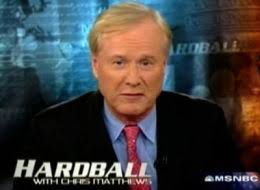
Chris Matthews
Speaking on MSNBC’s “Hardball,” on July 28—five days before Congress reached its August 2 deadline to raise the debt-ceiling—Matthews noted:
“The first people to bow to the demands of those threatening to blow up the economy were the Republicans in the House, the leaders. The leaders did what the followers told them to do: meet the demands, hold up the country to get their way.
“Those followers didn’t win the Senate, or the Presidency, just the House. But by using the House they were able to hold up the entire United States government. They threatened to blow things up economically and it worked.
“They said they were willing to do that—just to get their way—not by persuasion, not by politics, not by democratic government, but by threatening the destruction of the country’s finances.
“Right. So what’s next? The power grid? Will they next time threaten to close down the country’s electricity and communications systems?”
With the United States teetering on the brink of national bankruptcy, President Obama caved in to Republican demands.

 Bureaucracybuster's Blog
ABC NEWS, ADOLF HITLER, ALTERNET, AMERICABLOG, AP, BABY BOOMER RESISTANCE, BBC, BLOOMBERG NEWS, BLUESKY, BUZZFEED, CANADA, CBS NEWS, CLAUDIA SHEINBAUM PARDO, CNN, CNN'S "STARTING POINT", CROOKS AND LIARS, DAILY KOS, DEPARTMENT OF HOMELAND SECURITY, DEPARTMENT OF JUSTICE, EXTORTION, FBI, FIVETHIRTYEIGHT, HARPER’S MAGAZINE, HUFFINGTON POST, INSIDER, JUDICIARY, JUSTIN TRUDEAU, MASTADON, MEDIA MATTERS, MEXICO, MOTHER JONES, MOVEON, MSNBC, MSNBC'S "HARDBALL", NAZI GERMANY, NBC NEWS, NEGOTIATING, NEW REPUBLIC, NEWSDAY, NEWSWEEK, NPR, PBS NEWSHOUR, POLAND, POLITICO, POLITICUSUSA, PRESS, RAW STORY, REPUBLICAN PARTY, REPUBLICANS, REUTERS, SALON, SEATTLE TIMES, SLATE, TALKING POINTS MEMO, THE ATLANTIC, THE CHICAGO SUN-TIMES, THE CHICAGO TRIBUNE, THE DAILY BEAST, THE DAILY BLOG, THE GUARDIAN, THE HILL, THE HUFFINGTON POST, THE LOS ANGELES TIMES, THE NATION, THE NEW REPUBLIC, THE NEW YORK TIMES, THE NEW YORKER, THE PENTAGON, THE VILLAGE VOICE, THE WASHINGTON POST, THINKPROGRESS, TIME, TRUTHDIG, TRUTHOUT, TWO POLITICAL JUNKIES, U.S. NEWS & WORLD REPORT, UPI, USA TODAY, WONKETTE, WORLD WAR 11, X
ONLY CANADA AND MEXICO CAN SAVE AMERICAN DEMOCRACY
In Bureaucracy, Business, History, Military, Politics, Social commentary on March 5, 2025 at 12:05 amTo understand what is happening in the United States today, it’s necessary to realize this:
Its decent, democracy-cherishing citizens find themselves in the same position as decent, democracy-cherishing citizens of Nazi Germany from 1933 to 1945.
And just as Germany’s government became a ruthless dictatorship, so has that of the United States.
And just as ordinary, peace-loving Germans hoped for a powerful, democratic outsider to remove the menace of Adolf Hitler, so do ordinary, peace-loving Americans hope the same will happen to Donald Trump.
Adolf Hitler
From 1939 to 1945, those democracy-cherishing outsiders consisted of Canada, England and the United States. (The Soviet Union reluctantly joined this alliance only after it became yet another victim of Adolf Hitler’s aggression.)
In the case of the United States, that solution can only be achieved economically—by pressuring Right-wing Republican members of Congress in Red states to end their support for Trump’s dictatorial agenda.
And the only democratic countries with the power to do this are Mexico and Canada, America’s foremost trading partners.
The 2024 elections gave Republicans not only the White House but control of the House and Senate.
Donald Trump
Republicans don’t care that Trump has trashed the institutions that Americans have cherished for more than 200 years. Institutions like an independent judiciary, a free press, and an incorruptible Justice Department.
He has viciously attacked all of these—and Republicans have either said nothing or rushed to his defense.
What Republicans truly fear about Donald Trump is that if they dare to hold him accountable for his lifetime of criminality, his Fascistic base will turn on them—and turn them out of Congress.
If they are conflicted—whether to continue supporting Trump or desert him—the reason is the same: How can I hold onto my power and all the privileges that go with it?
Claudia Sheinbaum Pardo, President of Mexico
Justin Trudeau, Prime Minister of Canada
Republicans—with Trump as their Fuhrer—are utilizing the same my-way-or-else “negotiating” strategy as Nazi Germany’s Fuhrer, Adolf Hitler.
And Democrats—out of cowardice and/or ignorance of history—are, as usual, refusing to publicly make this comparison.
Thus, America’s rescue from Trump can only come from outside the United States.
Donald Trump has proven his affinity for dictators and dictatorships—lavishing praise on Russia’s Vladimir Putin, China’s Xi Jinping and North Korea’s Kim Jong-Un.
It’s with the leaders of democratic nations that he loves to pick fights. And he will go on doing so until he is stopped.
There are two reasons for his hostile behavior in foreign affairs:
As with Adolf Hitler, attempting to reason with Trump will prove fruitless. He respects only superior force.
But he has blinked when confronted with serious opposition.
Thus, on February 1, he threatened to hit Mexico and Canada with 25% tariffs, accusing them of injecting huge amounts of Fentanyl and huge numbers of illegal aliens into the United States. This allowed him to look tough to his legions of uneducated, Fascistic voters.
But then Mexican President Claudia Sheinbaum Pardo and Canadian Prime Minister Justin Trudeau threatened to retaliate with their own 25% tariffs on American goods.
And the financially conservative Wall Street Journal-–whose target audience includes business leaders, investors, and affluent consumers—called Trump’s threat “the dumbest trade war in history.”
Suddenly, Trump found a way to declare victory, claiming that Mexico and Canada would vastly increase border security to stop the flow of Fentanyl and illegal aliens.
And dropping his threat of a trade war.
So Trump can be beaten—if his enemies are willing to go all the way.
Democratic nations like Canada and Mexico dare not attack Donald Trump militarily. The United States has such a powerful military it’s threatened only by China and Russia.
But Canada and Mexico can target with ruthless tariffs those Red states whose Fascistic voting blocs fanatically support Trump—and the House and Senate members who support him.
They can
Americans have grown used to seeking simple, painless solutions to major problems. Thus, Trump won 77 million votes by promising to drastically reduce the price of eggs.
This despite a loss of millions of bird flu-infected chickens.
With egg prices continuing to drastically rise, Americans are already getting impatient for Trump to work a miracle—as he falsely promised to do during the campaign.
When Red states are forced to suffer staggering losses for months on end, they will elect anti-Fascist Senators and Representatives to nullify the evils of Trump’s administration.
Share this: