Posts Tagged ‘LYNDON B. JOHNSON’
2020 PRESIDENTIAL ELECTION, ABC NEWS, ABRAHAM LINCOLN, ALTERNET, AMERICABLOG, ANDREW GOODMAN, ANDREW JOHNSON, AP, BABY BOOMER RESISTANCE, BLOOMBERG, BUZZFEED, CBS NEWS, CIVIL WAR, CNN, COINTELPRO, CROOKS AND LIARS, DAILY KOZ, DONALD TRUMP, DRUDGE REPORT, ENEMIES: A HISTORY OF THE FBI, FACEBOOK, FBI, FEDERAL EMERGENCY MANAGEMENT AGENCY (FEMA), FIVETHIRTYEIGHT, HARPER’S MAGAZINE, HUFFINGTON POST, INSIDE HOOVER'S FBI (BOOK), J. EDGAR HOOVER, JAMES CHANEY, JOINT CHIEFS OF STAFF, JOSEPH BIDEN, Kamala Harris, KU KLUX KLAN, LYNDON B. JOHNSON, MAR-A-LAGO, MAXINE WATERS, MEDIA MATTERS, MICHAEL SCHWERNER, MOTHER JONES, MOVEON, MSNBC, NATIONAL GUARD, NATIONAL PARKS SERVICE, NBC NEWS, NEIL J. WELCH, NEWSWEEK, NINA SILBER, NPR, PBS NEWSHOUR, POLITICO, POLITICUSUSA, RAW STORY, REUTERS, SALON, SEATTLE TIMES, SLATE, SOCIETY OF CIVIL WAR HISTORIANS, STEPHEN B. OATES, TALKING POINTS MEMO, THE ATLANTIC, THE CHICAGO SUN-TIMES, THE CHICAGO TRIBUNE, THE DAILY BEAST, THE DAILY BLOG, THE GUARDIAN, THE HILL, THE HUFFINGTON POST, THE LOS ANGELES TIMES, THE NATION, THE NEW REPUBLIC, THE NEW YORK TIMES, THE VILLAGE VOICE, THE WASHINGTON POST, THINKPROGRESS, TIME, TRUTHDIG, TRUTHOUT, TWITTER, TWO POLITICAL JUNKIES, U.S. NEWS & WORLD REPORT, ULYSSES S. GRANT, UNITED STATES SECRET SERVICE, UPI, USA TODAY, WASHINGTON METROPOLITAN POLICE DEPARTMENT, WILLIAM C. SULLIVAN, WINFIELD SCOTT, WITH MALICE TOWARD NONE: THE LIFE OF ABRAHAM LINCOLN (BOOK), WONKETTE
In Bureaucracy, History, Law, Law Enforcement, Military, Politics, Social commentary on January 19, 2021 at 12:38 am
“At the time of the Civil War [white anger and resentment] took the form of Southern white men angry at the idea that the federal government would interfere with their right to own Black slaves.
“Today, I think this takes the form of white people who believe that Black and brown people are making gains, or getting special treatment, at their expense,” warns Nina Silber, co-president of the Society of Civil War Historians.
And California Democratic Representative Maxine Waters believes this anger could lead to civil war: “Since his first day in office, [Donald Trump] has spent four years abusing his power, lying, embracing authoritarianism (and) radicalizing his supporters against democracy.
“This corruption poisoned the minds of his supporters, inciting them to willingly join with white supremacists, neo-Nazis and paramilitary extremists in a siege of the United State Capitol building, the very seat of American democracy.”
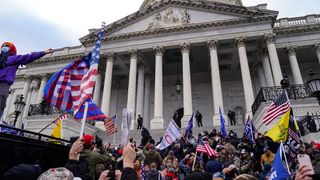
Attack on the Capitol Building
But there is a way to abort that danger—provided that those who cherish democracy are willing to employ weapons as effective as those used by the Right.
Case in point: The FBI’s successful war on the Ku Klux Klan.
Klansmen had shot, lynched and bombed their way across the Deep South, especially in Alabama and Mississippi. Many Southern sheriffs and police chiefs were Klan sympathizers, if not outright members and accomplices.
On June 21, 1964, three civil rights workers disappeared in Philadelphia, Mississippi.
President Lyndon B. Johnson called J. Edgar Hoover, the legendary director of the FBI, and ordered an all-out investigation: “I want you to have the same kind of Intelligence [on the Klan] that you have on the communists.”
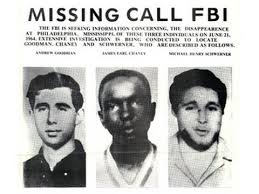
Poster for missing civil rights workers
For decades, Hoover had refused to tackle white hate groups. And, in truth, no President had been willing to give him the order to do so. But now a President had given him such an order.
In August, the FBI uncovered the bodies of the three missing civil rights activists—Michael Schwerner, Andrew Goodman and James Chaney.
On September 2, 1964, the Bureau launched a full-blown counterintelligence program against the Klan—COINTELPRO—WHITE HATE in FBI-speak.
Tim Weiner, author of Enemies: A History of the FBI, chronicles the methods used by the Bureau:
“WHITE-HATE intensified in the fall of 1964. It involved all the techniques in the FBI’s long-running attack on the Left. Once a week….FBI agents interrogated all known members of the White Knights of the KKK, blaming other Klansmen for being snitches and naming names, sowing deep suspicion among Klan members. Few knew who was an informer and who was not.

A Ku Klux Klan meeting
“The FBI dangled small fortunes before potential Klan informers, offered outright bribes to Klansmen who could serve as double agents inside state and local police forces, planted bugs and wiretaps in Klaverns, carried out black bag jobs to steal membership lists….”
Other tactics included:
- Contacting the news media to publicize arrests and identify Klan leaders;
- Informing the employers of known Klansmen of their employees’ criminal activity, resulting in the firing of untold numbers of them;
- Breaking up the marriages of Klansmen by circulating rumors of their infidelity among their wives.
“My father fought the Klan in Massachusetts,” recalled William C. Sullivan, who headed the FBI’s Domestic Intelligence Division in the 1960s. “I always used to be frightened when I was a kid and I saw the fiery crosses burning in the hillside near our farm.
“When the Klan reached 14,000 in the mid-sixties, I asked to take over the investigation of the Klan. When I left the Bureau in 1971, the Klan was down to a completely disorganized 4,300. It was broken.
“They were dirty, rough fellows. And we went after them with rough, tough methods.”

William C. Sullivan
According to Neil J. Welch, the retired Special Agent in Charge (SAC) of the FBI’s Buffalo, New York office:
In a rural county near Natchez, two Klansmen threatened to kill the next FBI agent who came to town. Agent Paul Cummings organized a squad of G-men and visited the Klansmen’s favorite bar. He dared the Klansmen to back up their threat. When none appeared, Cummings shot out the bar’s windows. There were no more threats on FBI agents in that area.
“A Klan Bureau of Investigation (KBI) was created to counter the FBI, and its members placed the wives and children of agents under surveillance, harassing them with taunts and anonymous phone calls,” wrote Welch in his memoir, Inside Hoover’s FBI.
“It was a serious miscalculation. The most dangerous members of the KBI were systematically identified and assigned to agents selected solely because they were comparatively dangerous. The agents had full discretion.
“During the next few months, a number of men previously involved in Klan violence around the state seemed, by remarkable coincidence, to experience misfortune. Some disappeared from the area. Some were forced to leave Mississippi for health reasons. A few took unplanned trips to places like Mexico and seemed to lose all interest in the Klan upon their return.”
The FBI’s counterintelligence war against the Klan ended in 1971.
Only when America has a President willing to wage all-out war on the Fascistic Right will the country be safe from this enemy within.
2020 PRESIDENTIAL ELECTION, ABC NEWS, ABRAHAM LINCOLN, ALTERNET, AMERICABLOG, ANDREW GOODMAN, ANDREW JOHNSON, AP, BABY BOOMER RESISTANCE, BLOOMBERG, BUZZFEED, CBS NEWS, CIVIL WAR, CNN, COINTELPRO, CROOKS AND LIARS, DAILY KOZ, DONALD TRUMP, DRUDGE REPORT, ENEMIES: A HISTORY OF THE FBI (BOOK), FACEBOOK, FBI, FEDERAL EMERGENCY MANAGEMENT AGENCY (FEMA), FIVETHIRTYEIGHT, HARPER’S MAGAZINE, HUFFINGTON POST, INSIDE HOOVER'S FBI (BOOK), J. EDGAR HOOVER, JAMES CHANEY, JOINT CHIEFS OF STAFF, JOSEPH BIDEN, Kamala Harris, KU KLUX KLAN, LYNDON B. JOHNSON, MAR-A-LAGO, MAXINE WATERS, MEDIA MATTERS, MICHAEL SCHWERNER, MOTHER JONES, MOVEON, MSNBC, NATIONAL GUARD, NATIONAL PARKS SERVICE, NBC NEWS, NEIL J. WELCH, NEWSWEEK, NINA SILBER, NPR, PBS NEWSHOUR, POLITICO, POLITICUSUSA, RAW STORY, REUTERS, SALON, SEATTLE TIMES, SLATE, SOCIETY OF CIVIL WAR HISTORIANS, STEPHEN B. OATES, TALKING POINTS MEMO, THE ATLANTIC, THE CHICAGO SUN-TIMES, THE CHICAGO TRIBUNE, THE DAILY BEAST, THE DAILY BLOG, THE GUARDIAN, THE HILL, THE HUFFINGTON POST, THE LOS ANGELES TIMES, THE NATION, THE NEW REPUBLIC, THE NEW YORK TIMES, THE VILLAGE VOICE, THE WASHINGTON POST, THINKPROGRESS, TIME, TRUTHDIG, TRUTHOUT, TWITTER, TWO POLITICAL JUNKIES, U.S. NEWS & WORLD REPORT, ULYSSES S. GRANT, UNITED STATES SECRET SERVICE, UPI, USA TODAY, WASHINGTON METROPOLITAN POLICE DEPARTMENT, WILLIAM C. SULLIVAN, WINFIELD SCOTT, WITH MALICE TOWARD NONE: THE LIFE OF ABRAHAM LINCOLN (BOOK), WONKETTE
In Bureaucracy, History, Law, Law Enforcement, Military, Politics, Social commentary on January 18, 2021 at 12:06 pm
Donald Trump will leave a legacy of lies, racism, criminality and treason when he leaves the White House on January 20.
But his longest-lasting—and most destructive—legacy can now be seen in the nation’s Capitol.
Every Presidential Inaugural proves a nightmarish challenge for Federal military and law enforcement agencies charged with protecting the next President and Vice President of the United States.
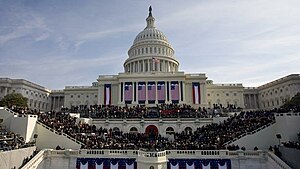
Inauguration of President Barack Obama – January 20, 2009
But that is not the end of their assignment.
Also needing protection are the dignitaries—members of Congress, Supreme Court Justices, invited foreign heads of state—and the crowd of thousands of onlookers attending.
But the January 20 swearing in of Joseph Robinette Biden as President and Kamala Devi Harris as Vice President will be like no other in recent American history.
The reason: The current President, Donald J. Trump, has fiercely resisted the peaceful transfer of power from himself to Biden.
On November 3,2020, 81,255,933 Democratic voters elected former Vice President Biden the 46th President of the United States. Trump, running for a second term, got 74,196,153 votes.
Since then, Trump has:
- Refused to concede;
- Claimed he was the victim of massive vote fraud;
- Ordered his attorneys to file at least 60 lawsuits to overturn the election results;
- Tried to strongarm governors and secretaries of state in contested states to give him the election; and
- Encouraged members of the House and Senate to contest the counting of Electoral College votes.
With all of that failed, Trump played his final card to illegally gain another four years of power: He summoned thousands of his Stormtrumper followers to Washington, D.C. And, on January 6, he ordered them to “fight like hell” and “stop the steal.”

Stormtrumpers attacking the Capitol Building
Tyler Merbler from USA, CC BY 2.0 <https://creativecommons.org/licenses/by/2.0>, via Wikimedia Commons
Tens of thousands of Stormtrumpers attacked and breached the United States Capitol. They easily brushed aside Capitol Police, who made no effort to arrest or shoot them.
Many of the lawmakers’ offices were occupied and vandalized. One Capitol police officer was killed and more than 50 others were injured.
Not until nightfall—hours later—did police finally restore order to the capitol.
That night, members of Congress once again met to count Electoral College votes—and certify Biden as the winner.
Nevertheless, Trump still refuses to concede and even attend the inauguration of his successor—something that every outgoing President has done with one exception.
In 1869, outgoing President Andrew Johnson refused to attend the inaugural ceremonies, as President-elect Ulysses S. Grant refused to sit with him in the carriage going to it.
Early on the morning of January 20, Trump reportedly intends to take Air Force One to his Mar-a-Lago resort in Palm Beach, Florida. He doesn’t intend to meet with Biden or ask him for use of Air Force One to reach Mar-a-Lago.
As a result of the January 6 assault on the Capitol Building, Federal law enforcement is bracing for the worst.
Before that assault, plans had called for 10,000 National Guard troops to protect the Inaugural celebration. Now 25,000 are being deployed—more troops in Washington than in Iraq and Afghanistan. Their gear includes shields for COVID and combat.

Installing razor wire for security at Capitol
The FBI has warned of armed protests by Right-wing groups in Washington, D.C., and in state capitols across the country. Among the precautions taken:
- A seven-foot, non-scalable fence—topped with barbed wire—has been erected around the Capitol Hill complex.
- Road traffic in much of Washington has been halted.
- Streets have been closed through January 21, the day after the Inauguration.
- The closures are centered around downtown Washington, Capitol Hill, Union Station, the Lincoln Memorial, the National Mall and the White House.
- Vehicles entering these restricted zones will be swept for weapons and explosives before being allowed to proceed.
- Four major bridges between Virginia and Washington, D.C., will also be closed to all traffic for 48 hours.
- National Guard troops are patrolling the city in Humvees.
- Agents from the FBI, Secret Service, the National Parks Service, FEMA and the Washington Metropolitan Police Department will provide constant security until the event has concluded.
In addition, the Joint Chiefs of Staff issued a statement that the United States Army would supply troops to ensure a smooth transition of power.
The last time Washington, D.C. saw such heavy precautions imposed was on March 4, 1861—with the First Inaugural of President Abraham Lincoln. The South had warned that the election of an anti-slavery President would mean the dissolving of the Union
There was a frightening sense of tension as rumors floated of a plot to assassinate Lincoln before or during the ceremony.

Inauguration of Abraham Lincoln
Historian Stephen B. Oates, in his highly acclaimed 1977 biography With Malice Toward None: The Life of Abraham Lincoln, writes:
“[The Presidential] carriage bumped over the cobblestones of Pennsylvania Avenue, part of a gala parade that featured horse-drawn floats and strutting military bands. Double files of cavalry road along the flanks of the carriage and infantry marched behind….
“And troops were everywhere, deployed by General [Winfield] Scott to guard against assassination. Cavalry on skittish horses cordoned off intersections. Infantry mingled with the sidewalk crowds, and sharpshooters peered over rooftops on both sides of the avenue. It was as though the country were already at war.”
2003 IRAQ WAR, ABC NEWS, ADOLF HITLER, AFFORDABLE CARE ACT, ALTERNET, AMERICABLOG, ANDREW CUOMO, AP, BABY BOOMER RESISTANCE, BARACK OBAMA, BLOOMBERG, BUZZFEED, CBS NEWS, CNN, CORONAVIRUS, CROOKS AND LIARS, DAILY KOZ, DEMOCRATS, DONALD TRUMP, DRUDGE RETORT, FACE SHIELDS, FACEBOOK, FEDERAL EMERGENCY MANAGEMENT AGENCY, FIVETHIRTYEIGHT, FOX NEWS, FRANKLIN D. ROOSEVELT, GEORGE W. BUSH, GRETCHEN WHITMER, HARPER’S MAGAZINE, JAY INSLEE, JOE BIDEN, LYNDON B. JOHNSON, MEDIA MATTERS, MEDICARE, MIKE PENCE, MOTHER JONES, MOVEON, MSNBC, N95 RESPIRATORS, NBC NEWS, NEWSWEEK, NPR, PBS NEWSHOUR, POLITICO, POLITICUSUSA, PRISONERS-OF-WAR, RAW STORY, REPUBLICANS, REUTERS, RUDY GIULIANI, SALON, SEAN HANNITY SHOW, SEATTLE TIMES, SLATE, SOCIAL SECURITY, SOVIET UNION, SURGICAL MASKS, TALKING POINTS MEMO, THE ATLANTIC, THE CHICAGO SUN-TIMES, THE CHICAGO TRIBUNE, THE DAILY BEAST, THE DAILY BLOG, THE GUARDIAN, THE HILL, THE HUFFINGTON POST, THE LOS ANGELES TIMES, THE NATION, THE NEW REPUBLIC, THE NEW YORK TIMES, THE VILLAGE VOICE, THE WASHINGTON POST, THINKPROGRESS, TIME, TRUTHDIG, TRUTHOUT, TWITTER, TWO POLITICAL JUNKIES, U.S. NEWS & WORLD REPORT, UKRAINE, UPI, USA TODAY, VENDORS, VENTILATORS, VOLODYMIR ZELENSKY, WASHINGTON MONTHLY, WONKETTE
In Bureaucracy, History, Law, Law Enforcement, Medical, Politics, Social commentary on January 8, 2021 at 12:05 am
On June 22, 1941, German Fuhrer Adolf Hitler sent three million soldiers smashing into the Soviet Union. During the first six months—June to December, 1941—German armies lured huge Soviet forces into gigantic “cauldron battles,” surrounding and exterminating them.
An estimated 5.7 million prisoners of war (POWs) fell into German hands. The Germans found themselves surprised and overwhelmed by the sheer numbers of them. But their mandate demanded that they keep marching forward—ever forward.
So they simply imprisoned their captives behind barbed wire and wasted no food or medical care on them. Between starvation, illness and the brutal Russian cold, at least 3.5 million POWs died in custody.
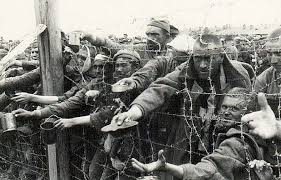
Soviet POWs
Republicans have learned a serious lesson from this. If you simply deprive those you detest of food, clothing and shelter, you don’t need gas chambers or firing squads.
That has been their chief reason for opposing Social Security since President Franklin D. Roosevelt signed it into law in 1935.
That is why they opposed President Lyndon B. Johnson when he pushed Medicare through Congress in 1965.
And that is why they have fervently tried to overturn the Affordable Care Act—better known as Obamacare—since it went into effect in 2010.
Of course, Republicans will never admit this. Their mantra has always been they fear such programs will bankrupt the country.
That claim might have credibility—if they didn’t recklessly plunge into budget-busting wars like the 2003 Iraq war started by President George W. Bush. Not a single Republican opposed this needless, bloody conflict—which has cost the United States more than $1.1 trillion.
But the best evidence of Republicans’ desire to use illness as a weapon against those Americans they hate comes from President Donald J. Trump.
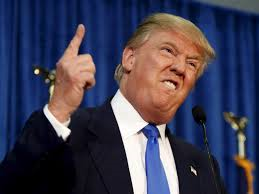
Donald Trump
On March 26, during an interview on Fox News, Trump blamed the failures of his administration’s response to Coronavirus on Democratic state governors like Andrew Cuomo (NY), Jay Inslee (WA), and Gretchen Whitmer (MI).
On March 27, during his press briefing, Trump said he told Vice President Mike Pence—who’s officially in charge of the White House’s response effort—to not call Inslee and Whitmer because they weren’t “appreciative” enough of his efforts.
Trump said this even as hospitals in each of their states were being overwhelmed with Coronavirus patients.
“I tell him—I mean I’m a different type of person— I say, ‘Mike, don’t call the governor in Washington, you’re wasting your time with him. Don’t call the woman in Michigan,’” Trump said. “If they don’t treat you right, I don’t call.”
Echoing French King Louis X1V’s infamous remark—“I am the State”—Trump added: “When they’re [governors] not appreciative to me, they’re not appreciative to the Army Corps, they’re not appreciative to FEMA [Federal Emergency Management Agency]. It’s not right.”
Trump also attacked Whitmer on Right-wing Fox News’ “Sean Hannity Show”: “I don’t know if she knows what’s going on, but all she does is sit there and blame the federal government.”
That same day—March 27—Whitmer told a Michigan radio station: “What I’ve gotten back is that vendors with whom we’ve procured contracts—they’re being told not to send stuff to Michigan. It’s really concerning. I reached out to the White House last night and asked for a phone call with the president, ironically at the time this stuff was going on.”
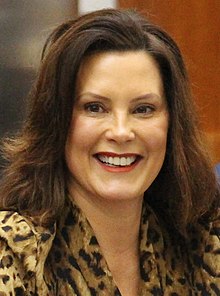
Gretchen Whitmer
Julia Pickett / CC BY-SA (https://creativecommons.org/licenses/by-sa/4.0)
A March 29 story in the Washington Monthly sheds light on what lay behind Whitmer’s inability to secure desperately-needed ventilators from her longtime vendors. Its headline ran: “What If Trump Decides to Save Republicans But Not Democrats?”
And it was followed by a sub-headline: “He’s providing vital resources to red states and ignoring blue states.”
Florida submitted a request to the Federal Emergency Management Agency on March 11 for 430,000 surgical masks, 180,000 N95 respirators, 82,000 face shields and 238,000 gloves—and received a shipment with everything three days later.
It received an identical shipment on March 23, and was soon awaiting a third.
In 2019, Trump demanded a “favor” from the embattled Ukrainian President Volodymyr Zelensky—“dirt” on Democratic Presidential candidate Joe Biden—in return for releasing military aid Ukraine needed to combat an increasingly aggressive Russia.
During the COVID-19 outbreak, he demanded Democratic governors praise him and blame themselves if they waned their citizens to receive desperately-needed medical supplies.
On Fox News, Rudy Giuliani, Trump’s personal lawyer, bluntly told governors: “Take the blame when you have to. When you play with your boss, sometimes it’s better when you don’t win the golf game. He’s the boss, he’s got all the resources.”
This is precisely the dictatorial arrogance of which Republicans falsely accused President Barack Obama.
The Washington Monthly story concluded on an ominous note: “What if the White House simply gives all the masks and ventilators to red states and counties, leaving blue ones to struggle? What mechanisms of accountability are left?
“U.S. democracy wasn’t set up to deal with a president openly behaving like a James Bond villain while being protected by a political party behaving more like a mafia than a civic institution.”
2016 PRESIDENTIAL RACE, 2020 PRESIDENTIAL RACE, ABC NEWS, ALTERNET, AMERICABLOG, AP, BABY BOOMER RESISTANCE, BARACK OBAMA, BLOOMBERG, BRIBERY, BUZZFEED, CBS NEWS, CNN, COURIER, CROOKS AND LIARS, DAILY KOZ, DALLAS MORNING NEWS, DEMOCRATS, DONALD TRUMP, DONALD TRUMP JUNIOR, DRUDGE REPORT, FACEBOOK, FIVETHIRTYEIGHT, FSB, GEORGE STEPHANOPOULOS, HARPER’S MAGAZINE, HILLARY CLINTON, HUFFINGTON POST, JARED KUSHNER, JOE BIDEN, KEVIN MCCARTHY, KGB, LYNDON B. JOHNSON, MEDIA MATTERS, MITCH MCCONNELL, MOTHER JONES, MOVEON, MSNBC, NBC NEWS, NEWSWEEK, NICCOLO MACHIAVELLI, NPR, PAUL MANAFORT, PBS NEWSHOUR, PHARMACEUTICAL INDUSTRY, POLITICO, POLITICUSUSA, RAW STORY, REINCE PRIEBUS, REPUBLICANS, REUTERS, Ronald Reagan, ROY BLUNT, RUSSIA, SALON, SEATTLE TIMES, SLATE, SOVIET UNION, TALKING POINTS MEMO, THE ATLANTIC, THE CHICAGO SUN-TIMES, THE CHICAGO TRIBUNE, THE DAILY BEAST, THE DAILY BLOG, THE GUARDIAN, THE HILL, THE HUFFINGTON POST, THE LOS ANGELES TIMES, THE NATION, THE NEW REPUBLIC, THE NEW YORK TIMES, THE PRINCE, THE VILLAGE VOICE, THE WASHINGTON POST, THINKPROGRESS, THIS WEEK, TIME, TRUMP TOWER MEETING, TRUTHDIG, TRUTHOUT, TWITTER, TWO POLITICAL JUNKIES, U.S. NEWS & WORLD REPORT, UNITED STATES JUSTICE DEPARTMENT, UPI, USA TODAY, VLADIMIR PUTIN, WONKETTE
In Bureaucracy, History, Politics, Social commentary on December 9, 2020 at 12:07 am
On December 8, Republican Senate Majority Leader Mitch McConnell and Missouri United States Senator Roy Blunt joined House Republican Leader Kevin McCarthy in blocking a resolution asserting that Joe Biden is the President-elect of the United States.
Republicans clearly have no intention of cooperating with the incoming Biden administration.

Mitch McConnell
But there is a way for Biden to effectively deal with this:
- Recognize that, for Republicans, “compromise” means: You do all the compromising; and
- Apply the only weapon they respect: Fear.
Biden has repeatedly said he wants to be the President of all Americans—Democrats and Republicans.
Yet, for more than a month after the November 3 Presidential election,, the vast majority of House and Senate Republicans—like McConnell—refuse to publicly admit that Biden won by 81,255,933 votes to 74,196,153 for Trump.
The reason: They are still in thrall to Trump’s fanatical base.
They fear that if they break with the soon-to-be-ex-President, they will be voted out of office at the next election—and lose their cozy positions and the power and perks that come with them.
More than 500 years ago, Niccolo Machiavelli, the father of political science, offered this warning for well-intentioned people like Biden in his classic work: The Prince:
“A man who wishes to make a profession of goodness in everything must inevitably come to grief among so many who are not good. And therefore it is necessary for a prince, who wishes to maintain himself, to learn how not to be good, and to use this knowledge and not use it, according to the necessity of the case.”

Niccolo Machiavelli
A good starting point: Go directly after McConnell himself.
Option #1: A May 8, 2018 story in The Dallas Morning News spotlights “How Putin’s Oligarchs Funneled Millions into GOP Campaigns.” And McConnell has been a major recipient of Russian largesse.
A serious inquiry by the Justice Department might lead to an indictment—if not for treason, then for campaign finance violations.
Option #2: According to an April 15, 2020 story in Courier: “Here’s How Much McConnell Got From Big Pharma After Nixing a Bill to Lower Drug Prices”:
“Senate Majority Leader Mitch McConnell announced in September that he would block any consideration of a bill to lower prescription drug costs. By the end of December, he had raked in more than $50,000 in contributions from political action committees and individuals tied to the pharmaceutical industry.”
There could be a campaign finance violation involving bribery. A good place to start is with the allegations contained in that story.
Even if McConnell escaped prison, such a prosecution would dramatically inform him—and other Republicans—that a new era of accountability had arrived.
Option #3: As President, Biden will have the power to divert Federal projects from Kentucky—and other Republican states
President Lyndon Johnson successfully employed this tactic to keep Republican—and Democratic—troublemakers in line. Once they saw projects for roads, post offices and other Federal amenities disappearing from their districts, they quickly got the message as to who was in charge.
Above all, President Biden must constantly remember: For Republicans, the mathematics of power come down to this: Who/Whom.
Or: Who can do What to Whom?
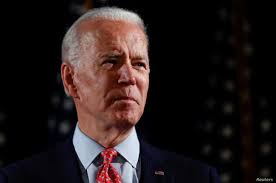
Joe Biden
Republicans believe themselves the only legitimate political party in the country—and champion a double standard for themselves and everyone else.
For example:
On July 9, 2016, high-ranking members of Trump’s Presidential campaign met at Trump Tower with at least two lobbyists with ties to Russian dictator Vladimir Putin. The participants included:
- Trump’s son, Donald Trump Jr.;
- His son-in-law, Jared Kushner;
- His then-campaign manager, Paul Manafort;
- Natalia Veselnitskaya, a Russian lawyer with ties to Putin; and
- Rinat Akhemetshin, a former Soviet counterintelligence officer suspected of “having ongoing ties to Russian Intelligence.”
The purpose of that meeting: To get any “dirt” the Russians might have on Democratic Presidential Nominee Hillary Clinton.
The resulting publicity of this meeting—and Trump’s openly calling on “Russia” to hack Democratic computers—naturally convinced many Americans that he had been elected with the full support of Vladimir Putin.
This alarmed many Republicans—not that their candidate sought help from the FSB (the successor to the KGB) but that many Americans knew he had.
On the January 15, 2017, edition of “This Week,” Reince Priebus, Trump’s incoming chief of staff, whined that President Barack Obama should vouch for Trump’s legitimacy as President.
The host, George Stephanopoulos, noted that Trump had questioned Obama’s legitimacy as an American citizen until almost the end of the 2016 Presidential race.
“But look, George, that’s not the point!” Priebus said, visibly agitated. “The point is not where Barack Obama was born! The point is that we’ve got congressmen on the Democratic side of the aisle that are questioning the legitimacy of President-elect Trump.”
This all-consuming hypocrisy and demand for subservience will not change after Biden becomes President.
The last four years have proven beyond doubt that what Ronald Reagan once said about the leaders of the Soviet Union now applies to those of his own party: “The only morality they recognize is what will further their cause, meaning they reserve unto themselves the right to commit any crime, to lie, to cheat.”
It remains to be seen if Joe Biden has learned anything from those years.
ABC NEWS, ADOLF HITLER, ALBERT SPEER, ALBERT SPEER: HIS BATTLE WITH TRUTH (BOOK), ALTERNET, AMERICABLOG, ANTHONY FAUCI, AP, BABY BOOMER RESISTANCE, BLOOMBERG, BUZZFEED, CBS NEWS, CNN, CORONAVIRUS, COVID-19, CROOKS AND LIARS, DAILY KOZ, DEAN ACHESON, DONALD TRUMP, DRUDGE RETORT, EGOTISM, EMOTIONAL QUOTIENT, FACEBOOK, FIVETHIRTYEIGHT, GITTA SERENY, LYNDON B. JOHNSON, MEDIA MATTERS, MOTHER JONES, MOVEON, MSNBC, NBC NEWS, NEWSWEEK, NPR, POLITICO, POLITICUSUSA, RAW STORY, REUTERS, SALON, SEATTLE TIMES, SLATE, TALKING POINTS MEMO, THE ATLANTIC, THE CHICAGO SUN-TIMES, THE CHICAGO TRIBUNE, THE DAILY BEAST, THE DAILY BLOG, THE GUARDIAN, THE HILL, THE HUFFINGTON POST, THE LOS ANGELES TIMES, THE NATION, THE NEW REPUBLIC, THE NEW YORK TIMES, THE VILLAGE VOICE, THE WASHINGTON POST, THINKPROGRESS, THIRD REICH, TIME, TIME MAGAZINE, TRUMP INAUGURAL, TRUTHDIG, TRUTHOUT, TV RATINGS, TWITTER, TWO POLITICAL JUNKIES, U.S. NEWS & WORLD REPORT, UPI, USA TODAY, WONKETTE
In Bureaucracy, History, Medical, Politics, Social commentary on October 30, 2020 at 12:17 am
“He’s got a very good approval rating,” President Donald Trump said of Anthony Fauci, the nation’s top expert on infectious disease, during a July 28 White House press briefing on the Coronavirus pandemic.
“And I like that, it’s good, because remember, he’s working for this administration. And he’s got this high approval rating,.
“So why don’t I have a high approval rating with respect—and the administration, with respect to the virus? Nobody likes me. It can only be my personality, that’s all.”
He made the remark on the same day that Coronavirus deaths in America reached 150,000.
The previous day, Trump had retweeted Twitter posts that accused Fauci, a member of the White House Coronavirus task force, of misleading Americans.
For months, Trump has been trying to sell the nation on the COVID-curing wonders of hyroxychloroquine, the malaria drug. He seems to be sold on the drug’s effectiveness by such members of his inner circle as trade adviser Peter Navarro and his personal lawyer Rudy Giuliani—neither of whom has ever practiced medicine.
Fauci, director of the National Institute of Allergy and Infectious Diseases, has pointed out there have been no scientific trials of the drug for its effectiveness against Coronavirus. Given the medical condition of some patients, it could even prove fatal.

Anthony Fauci
He has also subscribed to theories stemming from medical quackery—such as his belief that injecting disinfectant could prevent or cure the virus.
During his July 28 press conference, Trump refused to answer a question from CNN reporter Kaitlan Collins about a video Trump had shared on Twitter—and which Twitter subsequently removed.
In the video, Stella Immanuel, a Houston doctor, praised hydroxychloroquine as a cure for COVID-19 and maligned the wearing of face masks to prevent the spread of the pandemic. She has often claimed that gynecological problems like cysts and endometriosis are caused by people having sex in their dreams with demons and witches.
“Mr. President, the woman that you said was a ‘great doctor’ in that video that you retweeted last night said that ‘masks don’t work’ and there is a cure for COVID-19, both of which health experts say is not true,” said Collins.
“She’s also made videos saying that doctors make medicine using DNA from aliens and that they are trying to create a vaccine to make you immune from becoming religious—”
Donald Trump
Trump cut her off: “I don’t know which country she comes from, but she said that she’s had tremendous success with hundreds of different patients. And I thought her voice was an important voice, but I know nothing about her.”
He then stalked out of the briefing room.
This has been one of his routine responses when confronted with unpleasant truths that contradict his lies or crackpot theories. The other one is to label such truths as “fake news.”
Since COVID-19 struck the United States in January, Fauci has dared to speak the hard truth about the pandemic—and the Federal Government’s failure to combat it.
Trump, on the other hand, has offered a cascade of lies, ignorance and rosy predictions that “one day it will be gone.”
The result: Fauci enjoys high approval ratings from public polls on his efforts against the pandemic. Nearly two-thirds of the country has faith in Fauci, said a July Quinnipac poll.
Just over one-third of voters approve of Trump’s handling of the virus, that poll showed.
A reason for Trump’s unpopularity: He has shown no sympathy for those who have died or lost loved ones to COVID-19.
Leaders with a high Emotional Quotient:
- Understand their own emotions, strengths and weaknesses;
- Control their emotions and consistently act with honesty and integrity;
- Have empathy for others;. and
- Inspire enthusiasm and solve disagreements, often with kindness and humor.
In responding to the Coronavirus pandemic, Trump has shown none of these traits.
Contrast Trump’s egotistical, deceptive, anti-scientific and often dictatorial behavior with that of Fauci—and it’s clear why Fauci is far more trusted.
In 1946, Albert Speer, Adolf Hitler’s architect and minister of armaments, was sentenced to 20 years’ imprisonment for war crimes.

Albert Speer
In Albert Speer: His Batle With Truth, Gitty Sereny wrote: “This was an erudite and solitary man who, recognizing his deficiencies in human relations, had read 5,000 books in prison to try to understand the universe and human beings….Empathy is finally a gift, and cannot be learned. So, essentially returning into the world after 20 years, he remained alone.”
Sereny’s words apply equally to Donald Trump: Empathy is finally a gift, and cannot be learned.
One day during his Presidency, Lyndon Johnson—notorious for bullying others—was forced to confront his own repulsiveness as a human being.
“I’ve passed far more legislation than [President John F.] Kennedy ever did,” he complained to former Secretary of State Dean Acheson. “But people still love him, and they don’t love me. Why is that?”
“You are not a very likable man,” said Acheson.
Approaching four years into his own Presidency, there is no evidence that anyone has dared speak that truth to Trump.
It’s a truth that he deserves to hear—and in as public a forum as possible.
2016 PRESIDENTIAL ELECTION, 2020 PRESIDENTIAL ELECTION, ABC NEWS, ALEXANDER THE GREAT, ALTERNET, AMERICABLOG, AP, BABY BOOMER RESISTANCE, BLOOMBERG, BUZZFEED, CBS NEWS, CHARLIE BAKER, CNN, CORONAVIRUS, COVID-19, CROOKS AND LIARS, DAILY KOZ, DONALD TRUMP, DRUDGE REPORT, EVANGELICALS, FACEBOOK, FAMILY RESEARCH COUNCIL, FEDERAL EMERGENCY MANAGEMENT AGENCY (FEMA), FIVETHIRTYEIGHT, FRANKLIN D. ROOSEVELT, HARPER’S MAGAZINE, KATHLEEN CAGNEY, LYNDON B. JOHNSON, MEDIA MATTERS, MEDICAL SUPPLIES, MOTHER JONES, MOVEON, MSNBC, NBC NEWS, NEWSWEEK, NPR, PBS NEWSHOUR, PLUTARCH, POLITICO, POLITICUSUSA, RAW STORY, REUTERS, SALON, SEATTLE TIMES, SLATE, SOUTHERN POVERTY LAW CENTER, TALKING POINTS MEMO, THE ATLANTIC, THE CHICAGO SUN-TIMES, THE CHICAGO TRIBUNE, THE DAILY BEAST, THE DAILY BLOG, THE GUARDIAN, THE HILL, THE HUFFINGTON POST, THE LOS ANGELES TIMES, THE NATION, THE NEW REPUBLIC, THE NEW YORK TIMES, THE VILLAGE VOICE, THE WASHINGTON POST, THINKPROGRESS, TIME, TONY PERKINS, TRUTHDIG, TRUTHOUT, TWITTER, TWO POLITICAL JUNKIES, U.S. NEWS & WORLD REPORT, UPI, USA TODAY, WONKETTE
In Bureaucracy, History, Politics, Social commentary on August 25, 2020 at 12:01 am
And the most glorious episodes do not always furnish us with the clearest discoveries of virtue or vice in men. Sometimes a matter of less moment, an expression or a jest, informs us better of their characters and inclinations than the most famous sieges, the greatest armaments, or the bloodiest battles.”
—Plutarch, Alexander the Great
It’s all about him.
By March 27, more than 100,000 Americans had died of COVID-19.
According to sociology professor Kathleen Cagney, who directs the University of Chicago’s Population Research Center: “What is different about this is, it is affecting all of us in a variety of ways, even if some of us are able to social distance in more effective ways than others. But we all feel at risk.”
But Donald Trump, President of the United States, had a far bigger worry than a virus that had no vaccine or cure. While others worried about the lives of their fellow Americans, Trump was worried about his chances for re-election the coming November.
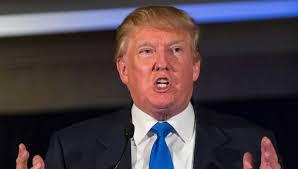
Donald Trump
On March 27, Trump spoke by phone with evangelical leaders and thanked them for their past political support. Then, instead of focusing on the pandemic that threatened their flocks as well as everyone else, he urged them to focus on his own re-election.
“It’s a big date, November 3,” Trump said. “That’s going to be one of the biggest dates in the history of religion, as far as I’m concerned. So, I want you to be, we have to keep aware of that, ‘cause as we fight this, people are forgetting about anything else.
“You turn on the news, and all you see is the Coronavirus or whatever. Some people call it the Chinese virus, they call it a lot of different things—but the virus, that’s all you see. You don’t see anything else.
“So people are forgetting we have the most important election that we’ve had, and I guess when I say the 2016 election, perhaps that’ll always be very special for all of us, but without this one, without a victory here, so much of that can disappear.”
The conference call was organized by the Family Research Council, which is identified as an anti-LGBTQ hate group by the Southern Poverty Law Center, an organization that tracks hate groups in America.
Tony Perkins, the group’s leader, tried—but failed—to direct Trump’s attention to COVID-19. He asked Trump how he wanted the assembled pastors to pray for him.
Trump replied: “Well, I think the health of our country, the strength of our country. We were doing something amazing and then one day, it just ended. So that would be it, and the fact that we make the right choice on November 3 is very important. Tony, you understand that better than most.”
Eight days earlier, on March 19, Trump had had a very different conversation with governors desperately seeking medical equipment to fight COVID-19.
Massachusetts Governor Charlie Baker told Trump during a video conference:
“I’m not quite sure what to do with this, so I’m just going to throw it out there for you. We took very seriously the push [from Trump]….that we should not just rely on the [Federal Government] stockpile, that we should go out there and buy stuff and put in orders and try to create pressure on manufacturers and distributors, and I gotta tell you that on three big orders, we lost to the feds.”

Charlie Baker
Baker, a moderate Republican, added, “I’ve got a feeling that if someone has the chance to sell to you and to sell to me, I am going to lose on every one of those.”
Trump chuckled at the remark, clearly finding mirth in the misfortune of not only the governor but his constituents.
Trump replied he still wanted governors to obtain their own medical equipment—such as respirators and protective gear for doctors and nurses.
“Prices are always a component of that also. And maybe that’s why you lost to the feds, OK, that’s probably why,” Trump said, admitting that the federal government has greater buying power than any state.
The conference was a made-for-TV event at Federal Emergency Management Agency headquarters in Washington.
Trump repeated his belief that the onus should be on the states—and not the federal government—to obtain needed equipment to combat the pandemic.
“The federal government’s not supposed to be out there buying vast amounts of items and then shipping,” Trump had earlier said at a White House briefing. “You know, we’re not a shipping clerk.”
By contrast, Presidents such as Franklin D. Roosevelt and Lyndon B. Johnson had seen it as the responsibility of the Federal Government to ensure that help was directed where most needed.
Roosevelt is still revered as the President who saw Americans through the Great Depression. And Johnson receives praise for his championing of civil rights for blacks and efforts to eliminate poverty.
On the same day as Trump’s conference call with American governors, New York City Mayor Bill de Blasio said that the city—then the center of the worst Coronavirus outbreak in the country—was two to three weeks away from running out of crucial medical supplies.
ABC NEWS, ALGIER HISS, ALTERNET, AMERICABLOG, AP, BABY BOOMER RESISTANCE, BARACK OBAMA, BENJAMIN C. BRADLEE, BILL CLINTON, BLOOMBERG, BUZZFEED, CBS NEWS, CBSNEWS, CNN, CROOKS AND LIARS, DAILY KOZ, DANIEL ELLSBURG, DRUDGE REPORT, FACEBOOK, FIVETHIRTYEIGHT, FRENCH LEGION OF HONOR, HARPER’S MAGAZINE, JASON ROBARDS, JOHN F. KENNEDY, JOURNALISM, LYNDON B. JOHNSON, MEDIA MATTERS, MOTHER JONES, MOVEON, MSNBC, NBC NEWS, NEWSWEEK, NPR, PBS NEWSHOUR, PENTAGON PAPERS, POLITICO, POLITICUSUSA, RAW STORY, REPUBLICAN PARTY, REPUBLICANS, REUTERS, RICHARD NIXON, SALON, SEATTLE TIMES, SLATE, TALKING POINTS MEMO, THE ATLANTIC, THE CHICAGO SUN-TIMES, THE CHICAGO TRIBUNE, THE DAILY BEAST, THE DAILY BLOG, THE GUARDIAN, THE HILL, THE HUFFINGTON POST, THE LOS ANGELES TIMES, THE NATION, THE NEW REPUBLIC, THE NEW YORK TIMES, THE PENTAGON PAPERS, THE VILLAGE VOICE, THE WALL STREET JOURNAL, THE WASHINGTON POST, THE WASHINGTONPOST, THINKPROGRESS, TIME, TRUTHDIG, TRUTHOUT, TWITTER, TWO POLITICAL JUNKIES, U.S. NEWS & WORLD REPORT, UPI, USA TODAY, WATERGATE, WONKETTE, WORLD WAR 11
In Bureaucracy, History, Law Enforcement, Politics, Social commentary on August 14, 2020 at 12:11 am
August 9, 2020, marked an anniversary increasingly fewer Americans remember: Forty-six years to the day that Richard Milhous Nixon, 37th President of the United States, resigned in disgrace.
Benjamin Crowninshield Bradlee, the former executive editor of The Washington Post, remains virtually unknown outside the journalism profession. Yet his paper did more than any other to bring Nixon down.
Both Nixon and Bradlee were driven to succeed. And both achieved fame and power in doing so.
Bradlee made his name in journalism.
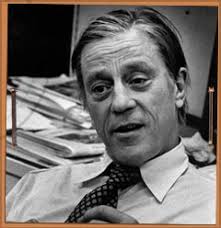
Benjamin C. Bradlee
Nixon made his name in politics.
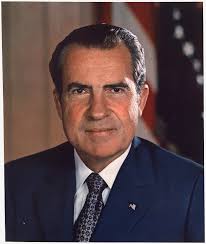
Richard Nixon
Both served in the United States Navy in the Pacific during World War II.
Both had strong connections to John F. Kennedy.
- Bradlee knew him as a friend and reporter during JFK’s years as a Senator and President.
- Nixon—as a Senator and later Vice President—knew Kennedy as a Senatorial colleague and as a political adversary, unsuccessfully contesting him for the Presidency in 1960.
For both, 1948 was a pivotal year.
- Bradlee joined The Washington Post as a reporter.
- Nixon, as a U.S. Representative, accused Algier Hiss, a former State Department official, of having been a Communist spy. Hiss was eventually convicted of perjury and sent to prison.
Both reached their positions of maximum power in 1968:
- Bradlee became executive editor of The Washington Post.
- Nixon became the 37th President of the United States.
But there was a fundamental difference between them:
- Bradlee made it his business to dig up the truth.
- Nixon made it his business to distort the truth—or to conceal it when distortion wasn’t enough.
Nixon and Bradlee had their first major clash in 1971 with the Pentagon Papers, a secret government study of how the United States became enmeshed in the Vietnam war.
- Although the Papers concerned events that had occurred during the Presidencies of John F. Kennedy and Lyndon B. Johnson, Nixon was outraged at their release by a former Defense Department analyst named Daniel Ellsberg.
- Bradlee, as executive editor of The Washington Post, successfully urged his publisher, Katherine Graham, to publish the papers after The New York Times was enjoined from doing so.
- The controversy ended when the Supreme Court ruled, 6–3, that the government failed to meet the burden of proof required for prior restraint of the press.
In 1972, Bradlee and Nixon squared off for their most important battle—a “third-rate burglary” of the Democratic National Committee headquarters at the Watergate Hotel.
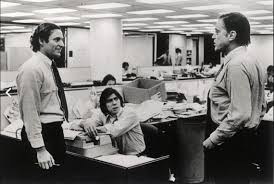
Bob Woodward, Carl Bernstein and Benjamin C. Bradlee
- Bradlee backed two young, aggressive reporters named Bob Woodward and Carl Bernstein, as they probed the burglary.
- This led to their discovering a series of illegal dirty tricks the Nixon re-election campaign had aimed at various Democratic opponents.
- The Post’s revelations led to the formation of the Senate Watergate Committee, the discovery of Nixon’s tape-recordings of his private—and criminal—conversations, and, finally, to Nixon’s own resignation in disgrace on August 9, 1974.
Bradlee became an advocate for education and the study of history.Nixon entered history as the only American President forced to resign from office.
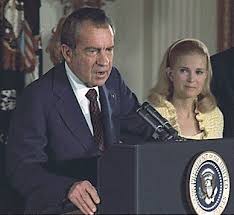
:Richard Nixon saying farewell at the White House
Bradlee became a media celebrity. Nixon became a media target.
- Bradlee was portrayed by Jason Robards in the hit 1976 film, All the President’s Men (for which he won an Academy Award for Best Supporting Actor).
- Nixon was portrayed—in Oliver Stone’s 1995 drama, Nixon—by Anthony Hopkins.
Bradlee and Nixon each published a series of books.
- Bradlee’s: That Special Grace and Conversations With Kennedy focused on his longtime friendship with John F. Kennedy; A Good Life: Newspapering and Other Adventures was Bradlee’s memoirs.
- Nixon’s: Among his 11 titles: Six Crises; RN: The Memoirs of Richard Nixon; The Real War; Leaders; Real Peace; No More Vietnams; Beyond Peace.
After leaving the White House, Nixon worked hard behind-the-scenes to refashion himself into an elder statesman of the Republican Party.
- Throughout the 1980s, he traveled the lecture circuit, wrote books, and met with many foreign leaders, especially those of Third World countries.
- He supported Ronald Reagan for president in 1980, making television appearances portraying himself as the senior statesman above the fray.
- For the rest of his life, he fought ferociously through the courts to prevent the release of most of the infamous “Watergate tapes” that chronicled his crimes as President.
- Only since his death have many of these been made public.
Nixon died on April 22, 1994.
- Eulogists at his funeral included President Bill Clinton and former Presidents Gerald Ford, Ronald Reagan and George H.W. Bush, California Governor Pete Wilson and the Reverend Billy Graham.
- Despite his efforts to portray himself as an elder statesman, Nixon could never erase his infamy as the only President to resign in disgrace.
- To this day, he remains a nonperson within the Republican Party.
Bradlee remained executive editor of The Washington Post until retiring in 1991. But he continued to serve as vice president-at-large until his death on October 21, 2014.
- In 2007, he received the French Legion of Honor, the highest award given by the French government, at a ceremony in Paris.
- In 2013, he was named as a recipient of the Presidential Medal of Freedom by President Barack Obama. He was presented the medal at a White House ceremony on November 20, 2013.
1968 PRESIDENTIAL CAMPAIGN, 2020 PRESIDENTIAL CAMPAIGN, ABC NEWS, ALTERNET, AMERICABLOG, AMERICAN INDIANS, AP, BABY BOOMER RESISTANCE, BARBARA GARSON, BLACK LIVES MATTER, BLOOMBERG, BUZZFEED, CBS NEWS, CIVIL RIGHTS, CNN, COMING APART: AMERICA IN THE 1960S (BOOK), CROOKS AND LIARS, DAILY KOZ, DEMOCRATS, DRUDGE REPORT, EUGENE MCCARTHY, FACEBOOK, FIVETHIRTYEIGHT, GEORGE BERNARD SHAW, GROSS NATIONAL PRODUCT, HARPER’S MAGAZINE, JIM SLATTERY, JOHN F. KENNEDY, Kamala Harris, KANSAS STATE UNIVERSITY, LOOK MAGAZINE, LYNDON B. JOHNSON, MCBIRD!, MEDIA MATTERS, MISSISSIPPI, MOTHER JONES, MOVEON, MSNBC, NBC NEWS, NEWSWEEK, NPR, PBS NEWSHOUR, POLITICO, POLITICUSUSA, RAW STORY, REPUBLICANS, REUTERS, ROBERT F. KENNEDY, SALON, SEATTLE TIMES, SIRHAN SIRHAN, SLATE, SOPHOCLES, STANLEY TRETICK, TALKING POINTS MEMO, TET OFFENSIVE, THE ATLANTIC, THE CHICAGO SUN-TIMES, THE CHICAGO TRIBUNE, THE DAILY BEAST, THE DAILY BLOG, THE GUARDIAN, THE HILL, THE HUFFINGTON POST, THE LOS ANGELES TIMES, THE NATION, THE NEW REPUBLIC, THE NEW YORK TIMES, THE VILLAGE VOICE, THE WASHINGTON POST, THINKPROGRESS, TIME, TIME MAGAZINE, TRUTHDIG, TRUTHOUT, TWITTER, TWO POLITICAL JUNKIES, U.S. NEWS & WORLD REPORT, UNIVERSITY OF KANSAS, UPI, USA TODAY, VIETNAM WAR, WILLIAM L. O'NEIL, WONKETTE
In Bureaucracy, History, Law, Law Enforcement, Military, Politics, Social commentary on August 12, 2020 at 1:26 am
On March 18, 1968, Presidential candidate Robert F. Kennedy, speaking at the University of Kansas, called on his fellow citizens to show compassion for those less fortunate and in need of relief through the Federal Government.
“If we believe that we, as Americans, are bound together by a common concern for each other, then an urgent national priority is upon us. We must begin to end the disgrace of this other America.”
Finally, Kennedy did something almost no other politician—in his time or since—has ever done: He dared to attack that holy-of-holies, the Gross Domestic Product (then called the Gross National Product).
“If we believe that we, as Americans, are bound together by a common concern for each other, then an urgent national priority is upon us. We must begin to end the disgrace of this other America.
“Too much and for too long, we seemed to have surrendered personal excellence and community values in the mere accumulation of material things. Our Gross National Product, now, is over $800 billion dollars a year, but that Gross National Product….counts air pollution and cigarette advertising, and ambulances to clear our highways of carnage.
“It counts special locks for our doors and the jails for the people who break them. It counts the destruction of the redwood and the loss of our natural wonder in chaotic sprawl. It counts napalm and counts nuclear warheads and armored cars for the police to fight the riots in our cities. It counts Whitman’s rifle and Speck’s knife, and the television programs which glorify violence in order to sell toys to our children.
“Yet the Gross National Product does not allow for the health of our children, the quality of their education or the joy of their play. It does not include the beauty of our poetry or the strength of our marriages, the intelligence of our public debate or the integrity of our public officials.
“It measures neither our wit nor our courage, neither our wisdom nor our learning, neither our compassion nor our devotion to our country. It measures everything in short, except that which makes life worthwhile. And it can tell us everything about America except why we are proud that we are Americans….

Senator Robert F. Kennedy campaigning for President
“George Bernard Shaw once wrote, ‘Some people see things as they are and say why? I dream things that never were and say, why not?’
“So I come here to Kansas to ask for your help. In the difficult five months ahead, before the convention in Chicago. I ask for your help and for your assistance.
“If you believe that the United States can do better. If you believe that we should change our course of action. If you believe that the United States stands for something here internally as well as elsewhere around the globe, I ask for your help and your assistance and your hand over the period of the next five months.
“And when we win in November….and we begin a new period of time for the United States of America, I want the next generation of Americans to look back upon this period and say as they said of Plato: ‘Joy was in those days, but to live.’ Thank you very much.”
At the end of Kennedy’s wildly popular speech at Kansas State University, photographer Stanley Tretick, of Look magazine, shouted, “This is Kansas, fucking Kansas! He’s going all the fucking way!”
But he didn’t go all the way. On June 5, 1968—82 days after announcing his Presidential candidacy—an assassin’s bullet suddenly halted his short-lived campaign—and his life.

Robert Kennedy’s funeral train
Historian William L. O’Neil delivered a poignant summary of Robert Kennedy’s legacy in his 1971 book, Coming Apart: An Informal History of America in the 1960′s:
“He aimed so high that he must be judged for what he meant to do, and through error and tragic accident, failed at…..He will also be remembered as an extraordinary human being who, though hated by some, was perhaps more deeply loved by his countrymen than any man of his time.
“That, too, must be entered into the final account, and it is no small thing. With his death, something precious vanished from public life.”
As United States Attorney General (1961-1964) Robert F. Kennedy had the courage to wage all-out war on the Mafia. As a United States Senator (1964-1968) he had the compassion to champion aid to impoverished Americans.
Even in his own era—a half-century ago—Robert Kennedy stood out as the only major Presidential candidate who could legitimately make both claims.
Today, most Democrats—battered by decades of Republican charges that they’re “big spenders”—fear supporting big-ticket items to help the poor.
And the Black Lives Matter movement has made any connection to law enforcement a disqualification for higher office—as former California Attorney General Kamala Harris found out as a 2020 Presidential candidate.
America may never again see a Presidential candidate who can combine a strong stand against crime with an equally strong commitment to helping the poor and disadvantaged.
1968 PRESIDENTIAL CAMPAIGN, 2020 PRESIDENTIAL CAMPAIGN, ABC NEWS, ALTERNET, AMERICABLOG, AMERICAN INDIANS, AP, BABY BOOMER RESISTANCE, BARBARA GARSON, BLACK LIVES MATTER, BLOOMBERG, BUZZFEED, CBS NEWS, CIVIL RIGHTS, CNN, COMING APART: AMERICA IN THE 1960S (BOOK), CROOKS AND LIARS, DAILY KOZ, DEMOCRATS, DRUDGE REPORT, EUGENE MCCARTHY, FACEBOOK, FIVETHIRTYEIGHT, GEORGE BERNARD SHAW, GROSS NATIONAL PRODUCT, HARPER’S MAGAZINE, JIM SLATTERY, JOHN F. KENNEDY, Kamala Harris, KANSAS STATE UNIVERSITY, LOOK MAGAZINE, LYNDON B. JOHNSON, MCBIRD!, MEDIA MATTERS, MISSISSIPPI, MOTHER JONES, MOVEON, MSNBC, NBC NEWS, NEWSWEEK, NPR, PBS NEWSHOUR, POLITICO, POLITICUSUSA, RAW STORY, REPUBLICANS, REUTERS, ROBERT F. KENNEDY, SALON, SEATTLE TIMES, SIRHAN SIRHAN, SLATE, SOPHOCLES, STANLEY TRETICK, TALKING POINTS MEMO, TET OFFENSIVE, THE ATLANTIC, THE CHICAGO SUN-TIMES, THE CHICAGO TRIBUNE, THE DAILY BEAST, THE DAILY BLOG, THE GUARDIAN, THE HILL, THE HUFFINGTON POST, THE LOS ANGELES TIMES, THE NATION, THE NEW REPUBLIC, THE NEW YORK TIMES, THE VILLAGE VOICE, THE WASHINGTON POST, THINKPROGRESS, TIME, TIME MAGAZINE, TRUTHDIG, TRUTHOUT, TWITTER, TWO POLITICAL JUNKIES, U.S. NEWS & WORLD REPORT, UNIVERSITY OF KANSAS, UPI, USA TODAY, VIETNAM WAR, WILLIAM L. O'NEIL, WONKETTE
In Bureaucracy, History, Law, Law Enforcement, Military, Politics, Social commentary on August 11, 2020 at 12:07 am
On March 18, 1968, Presidential candidate Robert F. Kennedy did what few politicians have ever done: He accepted public responsibility for a war that had since become a national disaster—the Vietnam war.
Addressing a packed audience of students and faculty at Kansas State University, he said:
“Let me begin this discussion with a note both personal and public. I was involved in many of the early decisions on Vietnam, decisions that helped set us on our present path.
“It may be that the effort was doomed from the start; that it was never really possible to bring all the people of South Vietnam under the rule of the successive governments we supported—governments, one after another, riddled with corruption, inefficiency, and greed; governments which did not and could not successfully capture and energize the national feeling of their people.
“If that is the case, as it well may be, then I am willing to bear my share of the responsibility, before history and before my fellow citizens. But past error is no excuse for its own perpetuation. Tragedy is a tool for the living to gain wisdom, not a guide by which to live.
“Now as ever, we do ourselves best justice when we measure ourselves against ancient tests, as in the Antigone of Sophocles: ‘All men make mistakes, but a good man yields when he knows his course is wrong, and repairs the evil. The only sin is pride.’
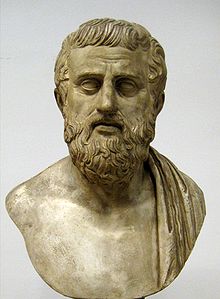
Sophocles
And he dared to attack the war as more than a military and political disaster: He saw it as a stain on America’s moral fiber:
“Can we ordain to ourselves the awful majesty of God—to decide what cities and villages are to be destroyed, who will live and who will die, and who will join the refugees wandering in a desert of our own creation?
“If it is true that we have a commitment to the South Vietnamese people, we must ask, are they being consulted—in Hue, or Ben Tre, or in the villages from which the three million refugees have fled?
“If they believe all the death and destruction are a lesser evil than the Wet Cong, why did they not warn us when the Viet Cong came into Hue, and the dozens of other cities, before the Tet Offensive? Why did they not join the fight?
“Will it be said of us, as Tacitus said of Rome: ‘They made a desert and called it peace?'”
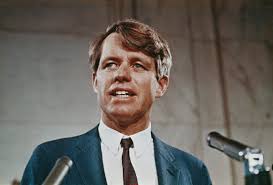
Robert F. Kennedy
The students gave him an ovation worthy of a rock star.
Time correspondent Hays Gorey said the electricity between Kennedy and the K.S.U. students was “real and rare.” “A good part of it is John F. Kennedy’s, of course, but John Kennedy …himself couldn’t be so passionate, and couldn’t set off such sparks.”
Jim Slattery, who would later be elected to Congress from Kansas, reread the K.S.U. speech during the second Iraq war and decided it was so powerful “because Kennedy was talking about what was right!”
As Kennedy started to leave, students rushed the platform where he stood, knocking over chairs and grabbing at him. They stroked his hair and ripped his shirtsleeves.
Later that day, Kennedy addressed another wildly enthusiastic audience—at the University of Kansas, in Lawrence, Kansas.
Then he addressed the glaring disparities between rich and poor Americans—a topic now generally ignored by Democrats and turned into an attack line by Republicans:
“All around us, all around us….men have lost confidence in themselves, in each other. It is confidence which has sustained us so much in the past. Rather than answer the cries of deprivation and despair….hundreds of communities and millions of citizens are looking for their answers, to force and repression and private gun stocks— so that we confront our fellow citizen across impossible barriers of hostility and mistrust.
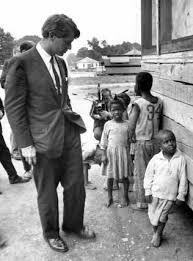
Robert F. Kennedy talking with black children
“And again, I don’t believe that we have to accept that. I don’t believe that it’s necessary in the United States of America. I think that we can work together. I don’t think that we have to shoot at each other, to beat each other, to curse each other and criticize each other, I think that we can do better in this country. And that is why I run for President of the United States….
“I have seen children in Mississippi starving, their bodies so crippled from hunger and their minds have been so destroyed for their whole life that they will have no future. I have seen children in Mississippi—here in the United States—with a gross national product of $800 billion dollars.
“I have seen children in the Delta area of Mississippi with distended stomachs, whose faces are covered with sores from starvation, and we haven’t developed a policy so we can get enough food so that they can live, so that their children, so that their lives are not destroyed, I don’t think that’s acceptable in the United States of America and I think we need a change.”
1968 PRESIDENTIAL CAMPAIGN, 2020 PRESIDENTIAL CAMPAIGN, ABC NEWS, ALTERNET, AMERICABLOG, AMERICAN INDIANS, AP, BABY BOOMER RESISTANCE, BARBARA GARSON, BLACK LIVES MATTER, BLOOMBERG, BUZZFEED, CBS NEWS, CIVIL RIGHTS, CNN, COMING APART: AMERICA IN THE 1960S (BOOK), CROOKS AND LIARS, DAILY KOZ, DEMOCRATS, DRUDGE REPORT, EUGENE MCCARTHY, FACEBOOK, FIVETHIRTYEIGHT, GEORGE BERNARD SHAW, GROSS NATIONAL PRODUCT, HARPER’S MAGAZINE, JIM SLATTERY, JOHN F. KENNEDY, Kamala Harris, KANSAS STATE UNIVERSITY, LOOK MAGAZINE, LYNDON B. JOHNSON, MCBIRD!, MEDIA MATTERS, MISSISSIPPI, MOTHER JONES, MOVEON, MSNBC, NBC NEWS, NEWSWEEK, NPR, PBS NEWSHOUR, POLITICO, POLITICUSUSA, RAW STORY, REPUBLICANS, REUTERS, ROBERT F. KENNEDY, SALON, SEATTLE TIMES, SIRHAN SIRHAN, SLATE, SOPHOCLES, STANLEY TRETICK, TALKING POINTS MEMO, TET OFFENSIVE, THE ATLANTIC, THE CHICAGO SUN-TIMES, THE CHICAGO TRIBUNE, THE DAILY BEAST, THE DAILY BLOG, THE GUARDIAN, THE HILL, THE HUFFINGTON POST, THE LOS ANGELES TIMES, THE NATION, THE NEW REPUBLIC, THE NEW YORK TIMES, THE VILLAGE VOICE, THE WASHINGTON POST, THINKPROGRESS, TIME, TIME MAGAZINE, TRUTHDIG, TRUTHOUT, TWITTER, TWO POLITICAL JUNKIES, U.S. NEWS & WORLD REPORT, UNIVERSITY OF KANSAS, UPI, USA TODAY, VIETNAM WAR, WILLIAM L. O'NEIL, WONKETTE
In Bureaucracy, History, Law, Law Enforcement, Military, Politics, Social commentary, Uncategorized on August 10, 2020 at 1:37 am
He remains forever frozen in time—young, vigorous, with tousled hair and a high-pitched voice calling on Americans to do better for those less fortunate.
It’s been 52 years since his life was brutally cut short—yet he remains forever the age at which he died: 42. Born in 1925, he would turn 95 on November 20 if he were alive today.
And he exuded an idealism which seems totally out of place with today’s “I’ve-got-mine-so-screw-you” politics.
On March 16, 1968, from the Caucus Room of the Old Senate Office building, New York Senator Robert F. Kennedy declared his candidacy for President of the United States.
Eight years earlier, on January 2, 1960, his brother, Massachusetts Senator John F. Kennedy had announced his own candidacy for the Democratic presidential nomination from the same place.
Ten months later, on November 8, that campaign had ended in victory with his election. And that victory, in turn, ended in bitter sorrow with his assassination two years, 10 months and two days later on November 22, 1963.
Robert F. Kennedy’s presidential campaign would not last as long as his late brother’s. Nor would it end in the victory he and his supporters yearned for.
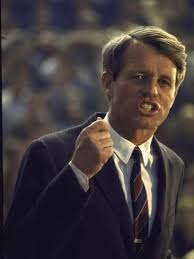
Robert F. Kennedy
Eighty-two days later, he was dead—shot in the back of the head by Sirhan Sirhan, a Palestinian Arab furious at Kennedy’s avowed support for Israel.
For Kennedy, making up his mind to run for the Presidency was no easy task.
Since the assassination of his brother, millions of Americans had assumed—as his admirers or detractors—that he would one day become President.
For his admirers, there was an element of “the once and future king” about this young, intense man with tousled hair and a high-pitched voice.He—they believed—was the man who would somehow avenge his martyred brother by restoring “Camelot” and returning youth, energy and idealism to the White House.
A playwright—Barbara Garson—had even written a 1967 satire depicting then-President Lyndon B. Johnson as the MacBeth-like murderer of John Ken O-Dunc. In the end, he was confronted and killed by Robert Ken O’Dunc.

His detractors saw him as a ruthless upstart who wanted to foist too-liberal policies on the United States. They distrusted his sympathy for the downtrodden—especially blacks and Hispanics. Worse, they saw the Kennedy family as trying to found a dynasty of Presidents that could last until the mid-1980s.
But the real Robert Kennedy was long torn between running against Johnson—whom he had long personally loathed—and letting someone else do so.
Kennedy’s hatred of Johnson—and his irrational belief that LBJ was somehow responsible for his brother’s death—was well-known. And Kennedy feared that if he ran against Johnson, his many enemies would charge he was doing so out of personal animosity.
And there was another reason: Johnson, who had won the Presidency in a landslide in 1964, was certain to seek re-election in 1968. If Kennedy challenged him for the nomination, it might well split the party and result in the election of a Republican that November. And he—Kennedy—would be blamed for it.
Throughout 1966-7, Kennedy was urged to run against Johnson. Still, he dithered.
Then, on March 12, Minnesota United States Senator Eugene McCarthy entered the New Hampshire Democratic primary against Johnson—and won a surprising 42.2% of the vote to Johnson’s 49.4%. Four days later, Robert Kennedy announced his own candidacy.
McCarthy’s supporters were outraged: Their candidate had dared to do what Kennedy had not—directly take on Johnson. And now that he had shown it could be done, the opportunistic Kennedy had jumped in.
On March 18—two days after announcing his candidacy—Kennedy gave his first campaign speech at Kansas State University in Manhattan, Kansas. This was the heart of conservative country, and Kennedy didn’t know how his audience would accept many of his decidedly liberal proposals.
“Do you think they’ll boo him?” his wife, Ethel, asked a friend before the speech. “Will they hate him?”
Arriving at the university, Kennedy ate breakfast at the student union—and told a group of university officials and student leaders: “Some of you may not like what you’re going to hear in a few minutes, but it’s what I believe; and if I’m elected President, it’s what I’m going to do.”

Kansas State University
As events unfolded, he—and Ethel—had no reason to worry.
Kennedy had served as United States Attorney General from 1961 to 1964. Yet he had not limited himself to simply fighting organized crime and enforcing civil rights. He had aggressively urged his brother, the President, to take a hard line on fighting the Communist forces in Vietnam.
But now he did something almost no other politician had—or has—ever done: He publicly accepted responsibly for the disaster the war had become since 1965:
“Let me begin this discussion with a note both personal and public. I was involved in many of the early decisions on Vietnam, decisions that helped set us on our present path.
“It may be that the effort was doomed from the start; that it was never really possible to bring all the people of South Vietnam under the rule of the successive governments we supported.”
.jpg)
.jpeg&imgrefurl=http%3A%2F%2Fwww.whataboutclients.com%2Farchives%2F2014%2F09%2Famerican_authen.html&docid=boFt4L_sotcfWM&tbnid=ouxiHfzJFvsrwM%3A&w=240&h=248&ei=NhtPVKT3GJX6oQSa7YKgDg&ved=0CAIQxiAwAA&iact=c)


 Bureaucracybuster's Blog
2020 PRESIDENTIAL ELECTION, ABC NEWS, ABRAHAM LINCOLN, ALTERNET, AMERICABLOG, ANDREW GOODMAN, ANDREW JOHNSON, AP, BABY BOOMER RESISTANCE, BLOOMBERG, BUZZFEED, CBS NEWS, CIVIL WAR, CNN, COINTELPRO, CROOKS AND LIARS, DAILY KOZ, DONALD TRUMP, DRUDGE REPORT, ENEMIES: A HISTORY OF THE FBI, FACEBOOK, FBI, FEDERAL EMERGENCY MANAGEMENT AGENCY (FEMA), FIVETHIRTYEIGHT, HARPER’S MAGAZINE, HUFFINGTON POST, INSIDE HOOVER'S FBI (BOOK), J. EDGAR HOOVER, JAMES CHANEY, JOINT CHIEFS OF STAFF, JOSEPH BIDEN, Kamala Harris, KU KLUX KLAN, LYNDON B. JOHNSON, MAR-A-LAGO, MAXINE WATERS, MEDIA MATTERS, MICHAEL SCHWERNER, MOTHER JONES, MOVEON, MSNBC, NATIONAL GUARD, NATIONAL PARKS SERVICE, NBC NEWS, NEIL J. WELCH, NEWSWEEK, NINA SILBER, NPR, PBS NEWSHOUR, POLITICO, POLITICUSUSA, RAW STORY, REUTERS, SALON, SEATTLE TIMES, SLATE, SOCIETY OF CIVIL WAR HISTORIANS, STEPHEN B. OATES, TALKING POINTS MEMO, THE ATLANTIC, THE CHICAGO SUN-TIMES, THE CHICAGO TRIBUNE, THE DAILY BEAST, THE DAILY BLOG, THE GUARDIAN, THE HILL, THE HUFFINGTON POST, THE LOS ANGELES TIMES, THE NATION, THE NEW REPUBLIC, THE NEW YORK TIMES, THE VILLAGE VOICE, THE WASHINGTON POST, THINKPROGRESS, TIME, TRUTHDIG, TRUTHOUT, TWITTER, TWO POLITICAL JUNKIES, U.S. NEWS & WORLD REPORT, ULYSSES S. GRANT, UNITED STATES SECRET SERVICE, UPI, USA TODAY, WASHINGTON METROPOLITAN POLICE DEPARTMENT, WILLIAM C. SULLIVAN, WINFIELD SCOTT, WITH MALICE TOWARD NONE: THE LIFE OF ABRAHAM LINCOLN (BOOK), WONKETTE
DONALD TRUMP’S GREATEST CRIME–AND HOW TO COMBAT IT: PART TWO (END)
In Bureaucracy, History, Law, Law Enforcement, Military, Politics, Social commentary on January 19, 2021 at 12:38 am“At the time of the Civil War [white anger and resentment] took the form of Southern white men angry at the idea that the federal government would interfere with their right to own Black slaves.
“Today, I think this takes the form of white people who believe that Black and brown people are making gains, or getting special treatment, at their expense,” warns Nina Silber, co-president of the Society of Civil War Historians.
And California Democratic Representative Maxine Waters believes this anger could lead to civil war: “Since his first day in office, [Donald Trump] has spent four years abusing his power, lying, embracing authoritarianism (and) radicalizing his supporters against democracy.
“This corruption poisoned the minds of his supporters, inciting them to willingly join with white supremacists, neo-Nazis and paramilitary extremists in a siege of the United State Capitol building, the very seat of American democracy.”
Attack on the Capitol Building
But there is a way to abort that danger—provided that those who cherish democracy are willing to employ weapons as effective as those used by the Right.
Case in point: The FBI’s successful war on the Ku Klux Klan.
Klansmen had shot, lynched and bombed their way across the Deep South, especially in Alabama and Mississippi. Many Southern sheriffs and police chiefs were Klan sympathizers, if not outright members and accomplices.
On June 21, 1964, three civil rights workers disappeared in Philadelphia, Mississippi.
President Lyndon B. Johnson called J. Edgar Hoover, the legendary director of the FBI, and ordered an all-out investigation: “I want you to have the same kind of Intelligence [on the Klan] that you have on the communists.”
Poster for missing civil rights workers
For decades, Hoover had refused to tackle white hate groups. And, in truth, no President had been willing to give him the order to do so. But now a President had given him such an order.
In August, the FBI uncovered the bodies of the three missing civil rights activists—Michael Schwerner, Andrew Goodman and James Chaney.
On September 2, 1964, the Bureau launched a full-blown counterintelligence program against the Klan—COINTELPRO—WHITE HATE in FBI-speak.
Tim Weiner, author of Enemies: A History of the FBI, chronicles the methods used by the Bureau:
“WHITE-HATE intensified in the fall of 1964. It involved all the techniques in the FBI’s long-running attack on the Left. Once a week….FBI agents interrogated all known members of the White Knights of the KKK, blaming other Klansmen for being snitches and naming names, sowing deep suspicion among Klan members. Few knew who was an informer and who was not.
A Ku Klux Klan meeting
“The FBI dangled small fortunes before potential Klan informers, offered outright bribes to Klansmen who could serve as double agents inside state and local police forces, planted bugs and wiretaps in Klaverns, carried out black bag jobs to steal membership lists….”
Other tactics included:
“My father fought the Klan in Massachusetts,” recalled William C. Sullivan, who headed the FBI’s Domestic Intelligence Division in the 1960s. “I always used to be frightened when I was a kid and I saw the fiery crosses burning in the hillside near our farm.
“When the Klan reached 14,000 in the mid-sixties, I asked to take over the investigation of the Klan. When I left the Bureau in 1971, the Klan was down to a completely disorganized 4,300. It was broken.
“They were dirty, rough fellows. And we went after them with rough, tough methods.”
William C. Sullivan
According to Neil J. Welch, the retired Special Agent in Charge (SAC) of the FBI’s Buffalo, New York office:
In a rural county near Natchez, two Klansmen threatened to kill the next FBI agent who came to town. Agent Paul Cummings organized a squad of G-men and visited the Klansmen’s favorite bar. He dared the Klansmen to back up their threat. When none appeared, Cummings shot out the bar’s windows. There were no more threats on FBI agents in that area.
“A Klan Bureau of Investigation (KBI) was created to counter the FBI, and its members placed the wives and children of agents under surveillance, harassing them with taunts and anonymous phone calls,” wrote Welch in his memoir, Inside Hoover’s FBI.
“It was a serious miscalculation. The most dangerous members of the KBI were systematically identified and assigned to agents selected solely because they were comparatively dangerous. The agents had full discretion.
“During the next few months, a number of men previously involved in Klan violence around the state seemed, by remarkable coincidence, to experience misfortune. Some disappeared from the area. Some were forced to leave Mississippi for health reasons. A few took unplanned trips to places like Mexico and seemed to lose all interest in the Klan upon their return.”
The FBI’s counterintelligence war against the Klan ended in 1971.
Only when America has a President willing to wage all-out war on the Fascistic Right will the country be safe from this enemy within.
Share this: