Posts Tagged ‘JOHN WAYNE’
2016 PRESIDENTIAL ELECTION, ABC NEWS, AFFORDABLE CARE ACT, ALAN LADD, ALTERNET, AMERICABLOG, AP, BABY BOOMER RESISTANCE, BBC, BLOOMBERG NEWS, BORDER WALL, BRANDON DE WILDE, BUZZFEED, CALVERA (CHARACTER), CANADA, CAPITOL INSURRECTION, CBS NEWS, CHARLES GEORGE GORDON, CHRIS (CHARACTER), CHYE-CHING HUANG, CIA, CNN, COVID-19, CROOKS AND LIARS, DAILY KOZ, DONALD TRUMP, DONALD TRUMP: TRAGIC HERO (ARTICLE), ELECTORAL COLLEGE, FACEBOOK, FBI, FEDERAL FISCAL POLICY, FEDERAL GOVERNMENT SHUTDOWN, FIVETHIRTYEIGHT, HAMLET, HARPER’S MAGAZINE, HOOVER INSTITUTE, HUFFINGTON POST, ISLAMIC STATE, JACK PALANCE, JAMES COMEY, JEFF SESSONS, JOHN FORD, JOHN WAYNE, JOSEPH BIDEN, KHARTOUM, KIM JONG ON, LEE MARVIN, MEDIA MATTERS, MOTHER JONES, MOVEON, MSNBC, NATIONAL SECURITY AGENCY, NBC NEWS, NEW REPUBLIC, NEWSDAY, NEWSWEEK, NORTH KOREA, NPR, PBS NEWSHOUR, POLITICO, POLITICUSUSA, RAW STORY, REUTERS, ROBERT S. MUELLER III, RUFUS RYKER (CHARACTER), RUSSIA, SALON, SEATTLE TIMES, SERGEY KISLYAK, SERGEY LAVROV, SHANE (MOVIE), SLATE, STEVE MCQUEEN, TALKING POINTS MEMO, TAX CUTS AND JOBS ACT OF 2017, THE ATLANTIC, THE CASE FOR TRUMP (BOOK), THE CHICAGO SUN-TIMES, THE CHICAGO TRIBUNE, THE DAILY BEAST, THE DAILY BLOG, THE GUARDIAN, THE HILL, THE HUFFINGTON POST, THE LOS ANGELES TIMES, THE MAGNIFICENT SEVEN (MOVIE), THE MAN WHO SHOT LIBERTY VALANCE (MOVIE), THE NATION, THE NEW REPUBLIC, THE NEW YORK TIMES, THE NEW YORKER, THE PRESS, THE VILLAGE VOICE, THE WASHINGTON POST, THINKPROGRESS, TIME, TRAGEDY, TRUMP FOUNDATION, TRUMP UNIVERSITY, TRUTHDIG, TRUTHOUT, TWITTER, TWO POLITICAL JUNKIES, U.S. NEWS & WORLD REPORT, UKRAINE, UPI, USA TODAY, VICTOR DAVIS HANSON, VLADIMIR PUTIN, VOLODYMYR ZELENSKY, WILLIAM SHAKESPEARE, WILSON (CHARACTER), WONKETTE, YUL BRYNNER
In Bureaucracy, Entertainment, History, Law, Law Enforcement, Medical, Politics, Social commentary on May 6, 2021 at 12:10 am
Victor Davis Hanson has long been a distinguished historian and classicist at the Hoover Institution at Stanford University in Palo Alto, California.
On April 12, 2018, the year before the publication of The Case for Trump, Hanson offered a preview of its upcoming contents in an article published in the well-known conservative magazine, National Review.
Its title: “Donald Trump, Tragic Hero.”
“The very idea that Donald Trump could, even in a perverse way, be heroic may appall half the country,” begins his first paragraph.
“Nonetheless, one way of understanding both Trump’s personal excesses and his accomplishments is that his not being traditionally presidential may have been valuable in bringing long-overdue changes in foreign and domestic policy.”
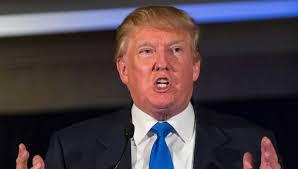
Donald Trump
Having laid out his thesis, Hanson writes: “Tragic heroes, as they have been portrayed from Sophocles’ plays (e.g., Ajax, Antigone, Oedipus Rex, Philoctetes) to the modern western film, are not intrinsically noble.”
On the contrary: A true tragic figure is a noble character with a fatal flaw, which ultimately destroys him.
To cite one from literature: Shakespeare’s Hamlet. Hamlet believes that his father, the king of Denmark, has been murdered. He believes the murderer may be his uncle, Claudius, who has seized the throne. Hamlet is brilliant, athletic, supremely eloquent and conscientious. But he’s not completely certain that Claudius is guilty, and in his hesitation to strike he lays the seeds for his own destruction.
To cite one from history: British General Charles George Gordon, sent by the British government in 1884 to evacuate the Sudanese city of Khartoum. But instead of evacuating its citizens, he chose to stay and fight the oncoming army of Mohammed Achmed, an Islamic religious fanatic who called himself The Madhi (“The Expected One”).
Although Gordon’s dynamic leadership enabled the city to hold out for almost a year, the British relief force arrived too late. The city was overwhelmed and Gordon himself killed.
Various theories have emerged to explain his motive: He was a religious fanatic; he had a death wish; he was arrogant to believe he could hold off an entire army. Any one or more of these theories could be correct.
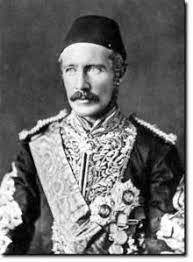
Charles George Gordon
But the fact remains that for almost an entire year he kept alive about 30,000 men, women and children. It was only the failure of the British to send a relief army in time that allowed the city—and Gordon—to perish.
Tragic heroes always have a cause that is bigger than life—something that makes giving up life worthwhile. They always recognize this, and they have the ability to put into perspective the ultimate sacrifice—giving up life—for the good of something bigger.
Which brings us back to Trump. Apart from being a five-times draft-dodger during the Vietnam war, he has never made an act of professional or personal sacrifice for anyone.
On the contrary: he has been forced to shut down both his Trump Foundation and unaccredited Trump University.
Trump was forced to pay more than $2 million in court-ordered damages to eight different charities for illegally misusing charitable funds at the Foundation for political purposes.
And his university scammed its students, promising to teach them “the secrets of success” in the real estate industry—then delivering nothing. In 2016, a federal court approved a $25 million settlement with many of those students.
This is hardly the stuff of which tragic heroes are made.

Hanson cites several examples from famous Western movies to make his case that Trump deserves the status of a tragic hero.
One of these is the classic 1953 “Shane,” starring Alan Ladd as the soft-spoken gunfighter who intervenes decisively in a range war.
Writes Hanson:
“He alone possesses the violent skills necessary to free the homesteaders from the insidious threats of hired guns and murderous cattle barons. Yet by the time of his final resort to lethal violence, Shane has sacrificed all prior chances of reform and claims on reentering the civilized world of the stable ‘sodbuster’ community.”
Comparing Trump to Shane is unbelievably ludicrous. Shane doesn’t boast about his past—in fact, this remains a mystery throughout the movie. Trump constantly brags—about the money he’s made, the buildings he’s put up, the women he’s bedded, the enemies he’s crushed (or plans to).
Moreover, Shane takes the side of poor homesteaders at the mercy of a rich cattle baron, Rufus Ryker. Ryker tries to bully the homesteaders into leaving. When that fails, he hires a ruthless gunman named Jack Wilson (Jack Palance).
In the film’s climax, Shane kills Wilson, and then Ryker, in a barroom showdown. Then he rides off—much to the sadness of Joey (Brandon de Wilde), the homesteaders’ son he has befriended.
“There’s no living with a killing,” says Shane. “There’s no going back from one. Right or wrong, it’s a brand. And a brand sticks.”
And so he rides on, knowing that his gunfighter’s skills make him an outcast among those very homesteaders whose lives he’s saved.
If Trump appeared in the movie, it would be as Ryker, not Shane.
Shane empathizes with the plight of others. Ryker–like Trump–hires others to do his dirty work.
2016 PRESIDENTIAL ELECTION, ABC NEWS, AFFORDABLE CARE ACT, ALAN LADD, ALTERNET, AMERICABLOG, AP, BABY BOOMER RESISTANCE, BBC, BLOOMBERG NEWS, BORDER WALL, BRANDON DE WILDE, BUZZFEED, CALVERA (CHARACTER), CANADA, CAPITOL INSURRECTION, CBS NEWS, CHARLES GEORGE GORDON, CHRIS (CHARACTER), CHYE-CHING HUANG, CIA, CNN, COVID-19, CROOKS AND LIARS, DAILY KOZ, DONALD TRUMP, DONALD TRUMP: TRAGIC HERO (ARTICLE), ELECTORAL COLLEGE, ELI WALLACH, FACEBOOK, FBI, FEDERAL FISCAL POLICY, FEDERAL GOVERNMENT SHUTDOWN, FIVETHIRTYEIGHT, HAMLET, HARPER’S MAGAZINE, HOOVER INSTITUTION, HUFFINGTON POST, ISLAMIC STATE, JACK PALANCE, JAMES COMEY, JEFF SESSONS, JOHN FORD, JOHN WAYNE, JOSEPH BIDEN, KHARTOUM, KIM JONG ON, LEE MARVIN, MEDIA MATTERS, MOTHER JONES, MOVEON, MSNBC, NATIONAL SECURITY AGENCY, NBC NEWS, NEW REPUBLIC, NEWSDAY, NEWSWEEK, NORTH KOREA, NPR, PBS NEWSHOUR, POLITICO, POLITICUSUSA, RAW STORY, REUTERS, ROBERT S. MUELLER III, RUFUS RYKER (CHARACTER), RUSSIA, SALON, SEATTLE TIMES, SERGEY KISLYAK, SERGEY LAVROV, SHANE (MOVIE), SLATE, STEVE MCQUEEN, TALKING POINTS MEMO, TAX CUTS AND JOBS ACT OF 2017, THE ATLANTIC, THE CASE FOR TRUMP (BOOK), THE CHICAGO SUN-TIMES, THE CHICAGO TRIBUNE, THE DAILY BEAST, THE DAILY BLOG, THE GUARDIAN, THE HILL, THE HUFFINGTON POST, THE LOS ANGELES TIMES, THE MAGNIFICENT SEVEN (MOVIE), THE MAN WHO SHOT LIBERTY VALANCE (MOVIE), THE NATION, THE NEW REPUBLIC, THE NEW YORK TIMES, THE NEW YORKER, THE PRESS, THE VILLAGE VOICE, THE WASHINGTON POST, THINKPROGRESS, TIME, TRAGEDY, TRUMP FOUNDATION, TRUMP UNIVERSITY, TRUTHDIG, TRUTHOUT, TWITTER, TWO POLITICAL JUNKIES, U.S. NEWS & WORLD REPORT, UKRAINE, UPI, USA TODAY, VICTOR DAVIS HANSON, VLADIMIR PUTIN, VOLODYMYR ZELENSKY, WILLIAM SHAKESPEARE, WILSON (CHARACTER), WONKETTE, YUL BRYNNER
In Bureaucracy, Business, Entertainment, History, Law, Law Enforcement, Medical, Military, Politics, Social commentary on May 5, 2021 at 12:13 am
“America needs the outsider Trump to do what normal politicians would not and could not do.”
That was the assertion made by Victor Davis Hanson, a classicist and historian at the Hoover Institution, Stanford University, in Palo Alto, California.
Among his bestsellers on military history:
- The Second World Wars
- Carnage and Culture
- Wars of the Ancient Greeks
- The Western Way of War
- The Soul of Battle: How Three Great Liberators Vanquished Tyranny

Victor Davis Hanson
In 2019, Hanson turned his attention to politics—specifically, The Case for Trump.
Its dust-jacket provides a useful summary of its contents:
“This New York Times bestselling Trump biography from a major American intellectual explains how a renegade businessman became one of the most successful—and necessary—presidents of all time.
“In The Case for Trump, award-winning historian and political commentator Victor Davis Hanson explains how a celebrity businessman with no political or military experience triumphed over sixteen well-qualified Republican rivals, a Democrat with a quarter-billion-dollar war chest, and a hostile media and Washington establishment to become president of the United States — and an extremely successful president.
“Trump alone saw a political opportunity in defending the working people of America’s interior whom the coastal elite of both parties had come to scorn, Hanson argues. And Trump alone had the instincts and energy to pursue this opening to victory, dismantle a corrupt old order, and bring long-overdue policy changes at home and abroad.”

Hanson’s book appeared before Trump:
- Tried to coerce Ukrainian President Volodymyr Zelensky to smear former Vice President Joseph Biden, who was likely to be his Democratic opponent in the 2020 Presidential election.
- Allowed the deadly COVID-19 virus to ravage the country, killing more than 400,000 Americans by the time he left office.
- Attacked medical experts and governors who urged Americans to wear masks and socially distance to protect themselves from COVID-19.
- Ordered his Right-wing followers to defy states’ orders to citizens to stay-at-home and wear masks in public to halt surging COVID-19 rates.
- Became the first President in American history to refuse to accept the results of a Presidential election.
- Tried to overturn the November 3, 2020 election of Joe Biden through 60 lawsuits and the arm-twisting of several state lawmakers.
- Sent a mob of his fanatical followers to attack the United States Capitol Building. Their mission: Stop the counting of Electoral College ballots certain to give Biden the victory.
- Was twice impeached during his four years in office—the only President to be impeached twice (and acquitted by a Republican Senate which ignored his litany of crimes).
But his book appeared after Trump had:
- Fired FBI Director James Comey for pursuing ties between Trump’s 2016 Presidential campaign and Russian Intelligence agents.
- Tried to fire Independent Counsel Robert S. Mueller III, who was assigned to investigate those ties after Trump fired Comey.
- Attacked Attorney General Jeff Sessions for refusing to fire Mueller.
- Attacked the integrity of Federal judges whose rulings he disagreed with.
- Given Russian Foreign Minister Sergey Lavrov and Russian Ambassador Sergey Kislyak highly classified CIA Intelligence about an Islamic State plot to turn laptops into concealable bombs.
- Amassed an infamous record as a serial liar, in both personal and Presidential matters.
- Attacked the integrity of the American Intelligence community.
- Sided with Russian dictator Vladimir Putin against the FBI, CIA and National Security Agency which unanimously agreed that Russia had subverted the 2016 Presidential election.
- Repeatedly attacked the nation’s free press for daring to report his growing list of crimes and disasters, calling it “the enemy of the American people.”
- Branded America’s longtime ally, Canada, as “a national security threat.”
- Praised brutal Communist dictators Putin and North Korea’s Kim Jong Un.
- Shut down the Federal Government for 35 days because Democrats refused to fund his ineffective “border wall” between the United States and Mexico. An estimated 380,000 government employees were furloughed and another 420,000 were ordered to work without pay. The shutdown ended due to public outrage—without Trump getting the funding amount he had demanded.
So much for Hanson’s claims that Trump had been “one of the most successful—and necessary—presidents of all time.”
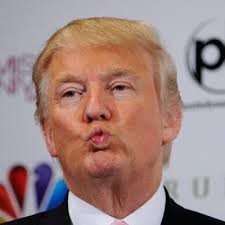
Donald Trump
Then there’s Hanson’s claim that “Trump alone saw a political opportunity in defending the working people of America’s interior whom the coastal elite of both parties had come to scorn.”
In November, 2017, Trump and a Republican-dominated House and Senate rammed the Tax Cuts and Jobs Act of 2017 through Congress. It became law on December 22, 2017.
According to Chye-Ching Huang, Director of Federal Fiscal Policy, the law did nothing to help ordinary Americans.
Testifying before the House Budget Committee on February 27, 2019, Huang stated that the law:
- Ignored the stagnation of working-class wages and exacerbated inequality;
- Weakened revenues when the nation needed to raise more;
- Encouraged rampant tax avoidance and gaming that will undermine the integrity of the tax code;
- Left behind low- and moderate-income Americans—and in many ways hurt them.
For American corporations, however, the law was a godsend:
- Cutting the corporate tax rate from 35 to 21 percent;
- Shifting toward a territorial tax system, where multinational corporations’ foreign profits go largely untaxed;
- Benefitting overwhelmingly wealthy shareholders and highly paid executives.
This was hardly an attempt at “defending the working people of America’s interior.”
Trump never made another attempt to “reform” the tax laws.
2010 OLYMPICS, ABC NEWS, AL QAEDA, BELGIAN MALINOIS, CBS NEWS, CNN, FACEBOOK, ISLAM, ISLAMIC SHARIA COUNCIL, ISRAEL, JOHN FORD, JOHN WAYNE, MUHAMMED, MUSLIMS, NBC NEWS, OSAMA BIN LADEN, TERROR, TERRORISM, TEXAS RANGERS, THE CHICAGO SUN-TIMES, THE CHICAGO TRIBUNE, THE LOS ANGELES TIMES, THE NEW YORK TIMES, THE SEARCHERS, THE WASHINGTON POST, TWITTER, U.S. NAVY SEALS
In Bureaucracy, Entertainment, History, Law Enforcement, Military, Politics, Social commentary on April 1, 2016 at 12:46 am
There’s a scene in the classic 1956 Western, The Searchers, that counterterrorism experts should study closely.
John Wayne–in the role of Indian-hating Ethan Edwards–and a party of Texas Rangers discover the corpse of a Comanche killed during a raid on a nearby farmhouse.
One of the Rangers–a teenager enraged by the Indians’ killing of his family–picks up a rock and bashes in the head of the dead Indian.
Wayne, sitting astride his horse, asks: “Why don’t you finish the job?”
He draws his revolver and fires two shots, taking out the eyes of the dead Comanche–although the mutilation is not depicted onscreen.
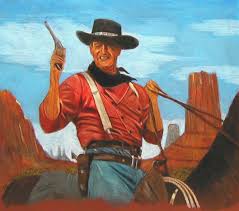
John Wayne as Ethan Edwards in The Searchers
The leader of the Rangers, a part-time minister, asks: ”What good did that do?”
“By what you preach, none,” says Wayne/Edwards. “But by what that Comanche believes–ain’t got no eyes, he can’t enter the Spirit land. Has to wander forever between the winds. You get it, Reverend.”
Now, fast forward to May 1, 2011: U.S. Navy SEALS descend on a compound in Abbottabad, Pakistan, and kill Osama bin Laden, the Al Qaeda chieftain.
Among the details of the raid that most titillates the media and public: The commandos were accompanied by a bomb-sniffing dog, a Belgian Malinois.
The canine was strapped to a member of the SEAL team as he lowered himself and the dog to the ground from a hovering helicopter near the compound.
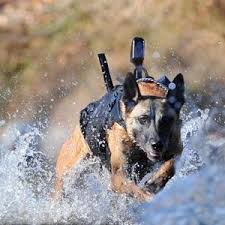
Heavily armored dogs–equipped with infrared night-sight cameras–have been used in the past by the top-secret unit.
The cameras on their heads beam live TV pictures back to the troops, providing them with critical information and warning of ambushes.
The war dogs wear ballistic body armor that is said to withstand damage from single and double-edged knives, as well as protective gear which shields them from shrapnel and gunfire.
Some dogs are trained to silently locate booby traps and concealed enemies such as snipers. The dogs’ keen senses of smell and hearing makes them far more effective at detecting these dangers than humans.
The animals will attack anyone carrying a weapon and have become a pivotal part of special operations as they crawl unnoticed into tunnels or rooms to hunt for enemy combatants.
Which brings us to the ultimate of ironies: Osama bin Laden may have been killed through the aid of an animal Muslims fear and despise.
Muslims generally cast dogs in a negative light because of their ritual impurity. Muhammad did not like dogs according to Sunni tradition, and most practicing Muslims do not have dogs as pets.
It is said that angels do not enter a house which contains a dog. Though dogs are not allowed for pets, they are allowed to be kept if used for work, such as guarding the house or farm, or when used for hunting.
Because Islam considers dogs in general to be unclean, many Muslim taxi drivers and store owners have refused to accommodate customers who have guide dogs.
In 2003, the Islamic Sharia Council, based in the United Kingdom, ruled that the ban on dogs does not apply to those used for guide work.
But many Muslims continue to refuse access, and see the pressure to allow the dogs as an attack upon their religious beliefs.
Counterterror specialists have learned that Muslims’ dread of dogs can be turned into a potent weapon against Islamic suicide bombers.
In Israel, use of bomb-sniffing dogs has proven highly effective—but not simply because of the dogs’ ability to detect explosives through their highly-developed sense of smell.
Muslim suicide-bombers fear that if they blow themselves up near a dog, they might kill the animal—and its unclean blood might be mingled with their own. This would make them unworthy to ascend to Heaven and claim those 72 willing virgins.
Similarly, news in 2009 that bomb-sniffing dogs might soon be patrolling Metro Vancouver’s buses and SkyTrains as a prelude to the 2010 Olympics touched off Muslims’ alarms.
“If I am going to the mosque and pray, and I have this saliva on my body, I have to go and change or clean,” said Shawket Hassan, vice president of the British Columbia Muslim Association.
Hassan said that he wanted the transit police to develop guidelines that would keep the dogs about one foot away from passengers.
What are the lessons to be learned from all this? They are two-fold:
- Only timely tactical intelligence will reveal Islamic terrorists’ latest plans for destruction.
- But no matter how adept such killers prove at concealing their momentary aims, they cannot conceal the attributes and long-term objectives of the religion, history and culture which have scarred and molded them.
American police, Intelligence and military operatives must constantly ask themselves: “How can we turn Islamic religion, Islamic history and islamic culture into weapons against the terrorists we face?”
These institutions must become intimately knowledgeable about the mindset of our Islamic enemies, just as the best frontier Army scouts and officers became knowledgeable about the mindset of the Indians they fought.
And then they must ruthlessly apply that knowledge against the weaknesses of those sworn enemies.
2016 PRESIDENTIAL CAMPAIGN, ABC NEWS, ALAMO, ANDREW JACKSON, CAMERON JUDD, CBS NEWS, CNN, CROCKETT OF TENNESSEE, DAVID CROCKETT, DONALD TRUMP, FACEBOOK, INDIAN WARS, JOHN WAYNE, MITT ROMNEY, NBC NEWS, THE CHICAGO SUN-TIMES, THE CHICAGO TRIBUNE, THE LOS ANGELES TIMES, THE NEW YORK TIMES, THE WASHINGTON POST, TWITTER, USA TODAY, WEALTH
In History, Politics, Social commentary on November 26, 2015 at 8:58 am
It’s a scene you couldn’t imagine seeing in John Wayne’s 1960 film, “The Alamo.” Especially with The Duke playing a hard-drinking, two-fisted Davy Crockett.

John Wayne as Davy Crockett
But it occurs in the novel, Crockett of Tennessee, by Cameron Judd. And it is no less affecting for its being–so far as we know–entirely fictional.
It’s the last night of life for the Alamo garrison–the night before the 2,000 men of the Mexican Army hurl themselves at the former mission and slaughter its 200 Texian defenders.
The fort’s commander, William Barret Travis, has drawn his “line in the sand” and invited the garrison to choose: To surrender, to try to escape, or to stay and fight to the death.
And the garrison–except for one man–chooses to stay and fight. That man is Louis “Moses” Rose, a Frenchman who has served in Napoleon’s Grande Armee and survived the frightful retreat from Moscow.
He vaults a low wall of the improvised fort, flees into the moonless desert, and eventually makes his way to the home of a family who give him shelter.
But for the garrison, immortality lies only hours away. Or does it?
An hour after deciding to stand and die in the Alamo, wrapped in the dark of night, Crockett is seized with paralyzing fear.
“We’re going to die here,” he chokes out to his longtime friend, Persius Tarr. “You understand that, Persius? We’re going to die!”

“I know, Davy. But there ain’t no news in that,” says Tarr. “We’re born to die. Every one of us. Only difference between us and most everybody else is we know when and where it’s going to be.”
“But I can’t be afraid–not me. I’m Crockett. I’m Canebrake Davy. I’m half-horse, half-alligator.”
“I know you are, Davy,” says Tarr. ”So do all these men here. That’s why you’re going to get past this.
“You’re going to put that fear behind you and walk back out there and fight like the man you are. The fear’s come and now it’s gone. This is our time, Davy.”
“The glory-time,” says Crockett.
“That’s right, David. The glory-time.”
And then Tarr delivers a sentiment wholly alien to money-obsessed men like Mitt Romney and Donald Trump–who comprise the richest and most privileged 1% of today’s Americans.
“There’s men out there with their eyes on you. You’re the only thing keeping the fear away from them. You’re joking and grinning and fiddling-–it gives them courage they wouldn’t have had without you.
“Maybe that’s why you’re here, Davy–to make the little men and the scared men into big and brave men. You’ve always cared about the little men, Davy. Remember who you are.
“You’re Crockett of Tennessee, and your glory-time has come. Don’t you miss a bit of it.”
The next morning, the Mexicans assault the Alamo. Crockett embraces his glory-time-–and becomes a legend for all-time.

David Crockett (center) at the fall of the Alamo
David Crockett (1786-1836) lived–and died–a poor man. But this did not prevent him from trying to better the lives of his family and fellow citizens–and even his former enemies.

David Crockett
During the War of 1812, he served as a scout under Andrew Jackson. His foes were the Creek Indians, who had massacred 500 settlers at Fort Mims, Alabama–and threatened to do the same to Crockett’s neighbors in Tennessee.
As a Congressman from Tennessee, he championed the rights of poor whites. And he opposed then-President Jackson’s efforts to force the same defeated Indians to depart the lands guaranteed them by treaty.
To Crockett, a promise was sacred–whether given by a single man or the United States Government.
And his presence during the 13-day siege of the Alamo did cheer the spirits of the vastly outnumbered defenders.
It’s a matter of historical record that he and a Scotsman named MacGregor often staged musical “duels” to see who could make the most noise.
It was MacGregor with his bagpipes against Crockett and his fiddle.
Contrast this devotion of Crockett to the rights of “the little men,” as Persius Tarr called them, with the attitude of Donald Trump, the currently-favored Republican candidate for President in 2016.
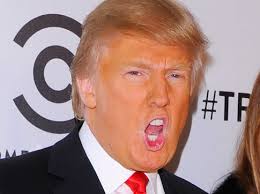
Donald Trump
On June 16, while announcing his candidacy, Trump said:
- “…I don’t need anybody’s money. It’s nice. I don’t need anybody’s money. I’m using my own money. I’m not using lobbyists, I’m not using donors. I don’t care. I’m really rich.”
- “I did a lot of great deals and I did them early and young, and now I’m building all over the world….”
- “So I have a total net worth, and now with the increase, it’ll be well-over $10 billion.”
- “But here, a total net worth of–net worth, not assets, not–a net worth, after all debt, after all expenses, the greatest assets–Trump Tower, 1290 Avenue of the Americas, Bank of America building in San Francisco, 40 Wall Street, sometimes referred to as the Trump building right opposite the New York–many other places all over the world. So the total is $8,737,540,000.”
Those who give their lives for others are rightly loved as heroes. Those who dedicate their lives only to their wallets are rightly soon forgotten.
2016 PRESIDENTIAL CAMPAIGN, ABC NEWS, ALAMO, ANDREW JACKSON, CAMERON JUDD, CBS NEWS, CNN, CROCKETT OF TENNESSEE, DAVID CROCKETT, DONALD TRUMP, FACEBOOK, INDIAN WARS, JOHN WAYNE, MITT ROMNEY, NBC NEWS, THE CHICAGO SUN-TIMES, THE CHICAGO TRIBUNE, THE LOS ANGELES TIMES, THE NEW YORK TIMES, THE WASHINGTON POST, TWITTER, USA TODAY, WEALTH
In Bureaucracy, Business, History, Politics, Social commentary on August 25, 2015 at 12:06 am
It’s a scene you couldn’t imagine seeing in John Wayne’s 1960 film, “The Alamo.” Especially with The Duke playing a hard-drinking, two-fisted Davy Crockett.
John Wayne as Davy Crockett
But it occurs in the novel, Crockett of Tennessee, by Cameron Judd. And it is no less affecting for its being–so far as we know–entirely fictional.
It’s the last night of life for the Alamo garrison–the night before the 2,000 men of the Mexican Army hurl themselves at the former mission and slaughter its 200 Texian defenders.
The fort’s commander, William Barret Travis, has drawn his “line in the sand” and invited the garrison to choose: To surrender, to try to escape, or to stay and fight to the death.
And the garrison–except for one man–chooses to stay and fight. That man is Louis “Moses” Rose, a Frenchman who has served in Napoleon’s Grande Armee and survived the frightful retreat from Moscow.
He vaults a low wall of the improvised fort, flees into the moonless desert, and eventually makes his way to the home of a family who give him shelter.
But for the garrison, immortality lies only hours away. Or does it?
An hour after deciding to stand and die in the Alamo, wrapped in the dark of night, Crockett is seized with paralyzing fear.
“We’re going to die here,” he chokes out to his longtime friend, Persius Tarr. “You understand that, Persius? We’re going to die!”
“I know, Davy. But there ain’t no news in that,” says Tarr. “We’re born to die. Every one of us. Only difference between us and most everybody else is we know when and where it’s going to be.”
“But I can’t be afraid–not me. I’m Crockett. I’m Canebrake Davy. I’m half-horse, half-alligator.”
“I know you are, Davy,” says Tarr. ”So do all these men here. That’s why you’re going to get past this.
“You’re going to put that fear behind you and walk back out there and fight like the man you are. The fear’s come and now it’s gone. This is our time, Davy.”
“The glory-time,” says Crockett.
“That’s right, David. The glory-time.”
And then Tarr delivers a sentiment wholly alien to money-obsessed men like Mitt Romney and Donald Trump–who comprise the richest and most privileged 1% of today’s Americans.
“There’s men out there with their eyes on you. You’re the only thing keeping the fear away from them. You’re joking and grinning and fiddling-–it gives them courage they wouldn’t have had without you.
“Maybe that’s why you’re here, Davy–to make the little men and the scared men into big and brave men. You’ve always cared about the little men, Davy. Remember who you are.
“You’re Crockett of Tennessee, and your glory-time has come. Don’t you miss a bit of it.”
The next morning, the Mexicans assault the Alamo. Crockett embraces his glory-time-–and becomes a legend for all-time.
David Crockett (center) at the fall of the Alamo
David Crockett (1786-1836) lived–and died–a poor man. But this did not prevent him from trying to better the lives of his family and fellow citizens–and even his former enemies.
David Crockett
During the War of 1812, he served as a scout under Andrew Jackson. His foes were the Creek Indians, who had massacred 500 settlers at Fort Mims, Alabama–and threatened to do the same to Crockett’s neighbors in Tennessee.
As a Congressman from Tennessee, he championed the rights of poor whites. And he opposed then-President Jackson’s efforts to force the same defeated Indians to depart the lands guaranteed them by treaty.
To Crockett, a promise was sacred–whether given by a single man or the United States Government.
And his presence during the 13-day siege of the Alamo did cheer the spirits of the vastly outnumbered defenders.
It’s a matter of historical record that he and a Scotsman named MacGregor often staged musical “duels” to see who could make the most noise.
It was MacGregor with his bagpipes against Crockett and his fiddle.
Contrast this devotion of Crockett to the rights of “the little men,” as Persius Tarr called them, with the attitude of Donald Trump, the currently-favored Republican candidate for President in 2016.
Donald Trump
On June 16, while announcing his candidacy, Trump said:
- “…I don’t need anybody’s money. It’s nice. I don’t need anybody’s money. I’m using my own money. I’m not using lobbyists, I’m not using donors. I don’t care. I’m really rich.”
- “I did a lot of great deals and I did them early and young, and now I’m building all over the world….”
- “So I have a total net worth, and now with the increase, it’ll be well-over $10 billion.”
- “But here, a total net worth of–net worth, not assets, not–a net worth, after all debt, after all expenses, the greatest assets–Trump Tower, 1290 Avenue of the Americas, Bank of America building in San Francisco, 40 Wall Street, sometimes referred to as the Trump building right opposite the New York–many other places all over the world. So the total is $8,737,540,000.”
Those who give their lives for others are rightly loved as heroes. Those who dedicate their lives only to their wallets are rightly soon forgotten.
ABC NEWS, ANCIENT ROME, CARLOS THE JACKAL, CBS NEWS, CIA, CNN, DEFENSE INTELLIGENCE AGENCY, DIPLOMATIC ASYLUM, EDWARD SNOWDEN, FACEBOOK, JOHN WAYNE, LAURENCE OLIVER, MERCENARIES, NATIONAL SECURITY AGENCY, NBC NEWS, NICCOLO MACHIAVELLI, OUTSOURCING CONTRACTORS, PAULA DEEN, SPARTACUS, SPYING, STAR TREK, SUDAN, THE GREEN BERETS, THE LOS ANGELES TIMES, THE NEW YORK TIMES, THE WASHINGTON POST, THE WAY OF THE KNIFE, TWITTER
In Bureaucracy, Business, History, Military, Politics, Social commentary on May 15, 2014 at 12:33 am
The 1960 Kirk Douglas epic, Spartacus, may soon prove to be more than great entertainment. It may also turn out to be a prophecy of the end of the American Republic.
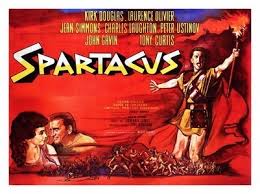
Throughout the movie, wealthy Romans assume they can buy anything–or anyone. When seeking a favor, Marcus Licinius Crassus (Laurence Oliver) says bluntly: “Name your price.”
Today, “Name your price” has become the password for entry into America’s Intelligence community.
Althugh not portrayed in Spartacus, one of the reasons for the fall of the Roman empire lay in its reliance on foreign mercenaries.
Roman citizens, who had for centuries manned their city’s legions, decided to outsource these hardships and dangers to hired soldiers from Germany and Gaul (now France).
Although Germans and Gauls had proven capable fighters when defending their own countries, they proved highly unrelible as paid mercenaries.
Niccolo Machiavelli, the father of political science, drew heavily on ancient history for his examples of how liberty could best be preserved within a republic.
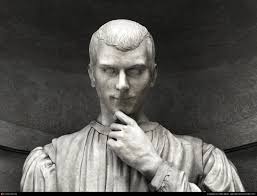
Niccolo Machiavelli
Fully aware of the Romans’ disastrous experience with mercenaries, Machiavelli believed that a nation’s army should be driven by patriotism, not greed. Speaking of mercenaries, he warned:
“Mercenaries…are useless and dangerous. And if a prince holds on to his state by means of mercenary armies, he will never be stable or secure; for they are disunited, ambitious, without discipline, disloyal; they are brave among friends, among enemies they are cowards.”
Americans–generally disdainful of history–have blatantly ignored both the examples of history and the counsel of Machiavelli. To their own peril.
Mark Mazzetti, author of the bestselling The Way of the Knife, chronicles how the CIA has been transformed from a primarily fact-finding agency into a terrorist-killing one.

Along with this transformation has come a dangerous dependency on private contractors to supply information that government agents used to dig up for themselves.
America’s defense and Intelligence industries, writes Mazzetti, once spread across the country, have relocated to the Washington area.
They want to be close to “the customer”: The National Security Agency, the Pentagon, the CIA and an array of other Intelligence agencies.
The U.S. Navy SEALS raid that killed Osama bin Laden has been the subject of books, documentaries and even an Oscar-nominated movie: “Zero Dark Thirty.”
Almost unknown by comparison is a program the CIA developed with Blackwater, a private security company, to locate and assassinate Islamic terrorists.
“We were building a unilateral, unattributable capability,” Erik Prince, CEO of Blackwater, said in an interview. “If it went bad, we weren’t expecting the [CIA] chief of station, the ambassador or anyone to bail us out.”
But the program never got past the planning stage. Senior CIA officials feared the agency would not be able to permanently hide its own role in the effort.
“The more you outsource an operation,” said a CIA official, “the more deniable it becomes. But you’re also giving up control of the operation. And if that guy screws up, it’s still your fault.”
Increased reliance on “outsourcing” has created a “brain-drain” within the Intelligence community. Jobs with private security companies usually pay 50% more than government jobs.
Many employees at the CIA, NSA and other Intelligence agencies leave government service–and then return to it as private contractors earning far higher salaries.
Many within the Intelligence community fear that too much Intelligence work has been outsourced and the government has effectively lost control of its own information channels.
And, as always with the hiring of mercenaries, there is an even more basic fear: How fully can they be trusted?
“There’s an inevitable tension as to where the contractor’s loyalties lie,” said Jeffrey Smith, a former general counsel for the CIA. “Do they lie with the flag? Or do they lie with the bottom line?”
Yet another concern: How much can Intelligence agencies count on private contractors to effectively screen the people they hire?
Edward Snowden, it should be remembered, was an employee of Booz Allen Hamilton, a consulting/security firm. It was through this company that Snowden gained access to a treasury of NSA secrets.
In March 2007, the Bush administration revealed that it paid 70% of its intelligence budget to private security contractors. That remains the case today–and the Intelligence budget for 2012 was $75.4 billion.
A 2010 investigative series by the Washington Post found that “1,931 private companies work on programs related to counterterrorism, homeland security and intelligence in about 10,000 locations across the country.”
Jesus never served as a spy or soldier. But he clearly understood a truth too many officials within the American Intelligence community have forgotten:
“For where your treasure is, there will your heart be also.”
ABC NEWS, CARLOS THE JACKAL, CBS NEWS, CIA, CNN, DEFENSE INTELLIGENCE AGENCY, DIPLOMATIC ASYLUM, EDWARD SNOWDEN, FACEBOOK, JOHN WAYNE, MERCENARIES, NATIONAL SECURITY AGENCY, NBC NEWS, NICCOLO MACHIAVELLI, OUTSOURCING CONTRACTORS, PAULA DEEN, SPYING, STAR TREK, SUDAN, THE GREEN BERETS, THE LOS ANGELES TIMES, THE NEW YORK TIMES, THE WASHINGTON POST, TWITTER
In Bureaucracy, Business, History, Military, Politics, Social commentary on May 14, 2014 at 1:49 am
A movie critic, reviewing John Wayne’s 1968 gung-ho film, The Green Berets, said that Wayne had reduced the complex issues behind the Vietnam war to the simplicity of a barroom brawl.
In the same vein, the American news media displays a genius for ignoring the complexities of a major news story and focusing on just a single, sensationalistic aspect of it.
Take the Paula Deen scandal. The media universally focused on Deen’s admitted use of the “N-word”–and utterly ignored far more important aspects of the story.
According to the complaint filed in the lawsuit, employees at the restaurant were routinely subjected to violent behavior, racial and sexual harassment, assault, bettery and sexual discrimination in pay.
Similarly, in covering the odyssey of Edward Snowden, the former National Security Agency (NSA) employee turned mass secret leaker, the media have followed the same path.
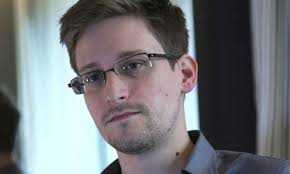
Edward Snowden
Following Snowden’s disappearance from the United States, the media focused their attention on charting the almost daily whereabouts of Snowden.
Would Snowden receive amnesty in Hong Kong? In Russia? In Cuba? China? Venezuela? Nicaragua?
For the moment, he has settled on Russia, whose president, Vladimir Putin, is keeping a protective eye on him.
Yet even though he has momentarily obtained asylum, there’s no guarantee it will last.
Ilich Ramírez Sánchez, the international terrorist better known as “Carlos the Jackal,” can attest to that.
By 1994, he had spent almost 20 years on the run from the French Intellilgence agents. They were seeking him for a series of terrorist attacks across France–and for the 1975 murders of two counter-intellilgence agents and their informant.

Carlos “The jackal”
After living in a series of countries that had no extradition treaty with France–such as Syria, Iraq and Jordan–he settled down in the Sudanese city of Khartoum.
He felt utterly safe, since he had been accorded official protection by the Sudanese government. But he had misjudged his protectors.
French and American Intelligence agencies offered a number of deals to the Sudanese authorities. In 1994, Carlos was scheduled to undergo a minor testicular operation in a Sudanese hospital.
Two days after the operation, Sudanese officials warned him of an assassination plot–and moved him to a villa for protection. They also provided him with bodyguards.
One night later, the bodyguards entered his room while he slept, tranquilized and tied him up–and slipped him into the custody of his longtime pursuers.
On August 14, 1994, Sudan transferred him to French Intelligence agents, who flew him to Paris for trial. He is now serving two sentences of life imprisonment.
There is no guarantee that any nation that guarantees the security of Edward Snowden today won’t decide, in the future, to betray him.
And, eventually he will run out of secrets to spill. That’s assuming that Russian and/or Chinese Intelligence agents haven’t already helped themselves to the secrets on his laptop.
As Mr. Spock once famously said during an episode of Star Trek: “Military secrets are the most fleeting of all.”
So where does the significance of the Snowden story lie?
In the fact that Americans have become too lazy or fearful to do most of their own spying.
Yes, that’s right–60 to 70% of America’s Intelligence budget doesn’t go to the CIA or the National Security Agency (NSA) or the Defense Intelligence Agency (DIA).

Instead, it goes to private contractors who supply secrets or “soldiers of fortune.”
One such contractor is Booz Allen Hamilton–which employed Snowden and gave him access to the super-secret NSA.
The outsourcing of government intelligence work to private contractors took off after 9/11.
This was especially true after the United States invaded Iraq in 2003–and found its Intelligence and armed services stretched to their furtherest limits.
The DIA estimates that, from the mid-1990s to 2005, the number of private contracts awarded by Intelligence agencies rose by 38%.
During that same period, government spending on “spies/guns for hire” doubled, from about $18 billion in 1995 to about $42 billion in 2005.
Many tasks and services once performed only by government employees are being “outsourced” to civilian contractors:
- Analyzing Intelligence collected by drones and satellites;
- Writing reports;
- Creating and maintaining software programs to manipulate data for tracking terrorist suspects;
- Staffing overseas CIA stations;
- Serving as bodyguards to government officials stationed overseas;
- Providing disguises used by agents working undercover.
More than 500 years ago, Niccolo Machiavelli, the Florentine statesman, warned of the dangers of relying on mercenaries:
“There are two types of armies that a prince may use to defend his state: armies made up of his own people or mercenaries….
“Mercenaries…are useless and dangerous. And if a prince holds on to his state by means of mercenary armies, he will never be stable or secure; for they are disunited, ambitious, without discipline, disloyal.
“They are brave among friends, among enemies they are cowards.
“They have neither the fear of God nor fidelity to men, and destruction is deferred only so long as the attack is. For in peace one is robbed by them, and in war by the enemy.”
Machiavelli, on meeting Edward Snowden, would no doubt find his judgment confirmed.
ABC NEWS, BELGIAN MALINOIS, CBS NEWS, CNN, DOGS, FACEBOOK, ISLAM, JOHN FORD, JOHN WAYNE, MUSLIMS, NAVY SEALS, NBC NEWS, OSAMA BIN LADEN, TERRORISM, THE LOS ANGELES TIMES, THE NEW YORK TIMES, THE SEARCHERS, THE WASHINGTON POST, TWITTER
In History, Law Enforcement, Military, Politics, Social commentary on April 25, 2014 at 12:01 am
There’s a scene in the classic 1956 Western, The Searchers, that counterterrorism experts should study closely.
John Wayne–in the role of Indian-hating Ethan Edwards–and a party of Texas Rangers discover the corpse of a Comanche killed during a raid on a nearby farmhouse.
One of the Rangers–a teenager enraged by the Indians’ killing of his family–picks up a rock and bashes in the head of the dead Indian.
Wayne, sitting astride his horse, asks: “Why don’t you finish the job?” He draws his revolver and fires two shots, taking out the eyes of the dead Comanche–although the mutilation is not depicted onscreen.
John Wayne as Ethan Edwards in The Searchers
The leader of the Rangers, a part-time minister, asks: ”What good did that do?”
“By what you preach, none,” says Wayne/Edwards. “But what that Comanche believes–ain’t got no eyes, he can’t enter the Spirit land. Has to wander forever between the winds. You get it, Reverend.”
Now, fast forward to May 1, 2011: U.S. Navy SEALS descend on a compound in Abbottabad, Pakistan, and kill Osama bin Laden, the Al Qaeda chieftain.
Among the details of the raid that most titillates the media and public: The commandos were accompanied by a bomb-sniffing dog, a Belgian Malinois.
The canine was strapped to a member of the SEAL team as he lowered himself and the dog to the ground from a hovering helicopter near the compound.
Heavily armored dogs–equipped with infrared night-sight cameras –have been used in the past by the top-secret unit.
The cameras on their heads beam live TV pictures back to the troops, providing them with critical information and warning of ambushes.
The war dogs wear ballistic body armor that is said to withstand damage from single and double-edged knives, as well as protective gear which shields them from shrapnel and gunfire.
Some dogs are trained to silently locate booby traps and concealed enemies such as snipers. The dog’s keen senses of smell and hearing makes him far more effective at detecting these dangers than humans.
The animals will attack anyone carrying a weapon and have become a pivotal part of special operations as they crawl unnoticed into tunnels or rooms to hunt for enemy combatants.
Which brings us to the ultimate of ironies: Osama bin Laden may have been killed through the aid of an animal Muslims fear and despise.
Muslims generally cast dogs in a negative light because of their ritual impurity. Muhammad did not like dogs according to Sunni tradition, and most practicing Muslims do not have dogs as pets.
It is said that angels do not enter a house which contains a dog. Though dogs are not allowed for pets, they are allowed to be kept if used for work, such as guarding the house or farm, or when used for hunting.
Because Islam considers dogs in general to be unclean, many Muslim taxi drivers and store owners have refused to accommodate customers who have guide dogs.
In 2003, the Islamic Sharia Council, based in the United Kingdom, ruled that the ban on dogs does not apply to those used for guide work.
But many Muslims continue to refuse access, and see the pressure to allow the dogs as an attack upon their religious beliefs.
Counterterror specialists have learned that Muslims’ dread of dogs can be turned into a potent weapon against Islamic suicide bombers.
In Israel, use of bomb-sniffing dogs has proven highly effective—but not simply because of the dogs’ ability to detect explosives through their highly-developed sense of smell.
Muslim suicide-bombers fear that if they blow themselves up near a dog, they might kill the animal—and its unclean blood might be mingled with their own. This would make them unworthy to ascend to Heaven and claim those 72 willing virgins.
Similarly, news in 2009 that bomb-sniffing dogs might soon be patrolling Metro Vancouver’s buses and SkyTrains as a prelude to the 2010 Olympics touched off Muslims’ alarms.
“If I am going to the mosque and pray, and I have this saliva on my body, I have to go and change or clean,” said Shawket Hassan, vice president of the British Columbia Muslim Association.
What are the lessons to be learned from all this? They are two-fold:
- Only timely tactical intelligence will reveal Al Qaeda’s latest plans for destruction.
- But no matter how adept Islamic terrorists prove at concealing their momentary aims, they cannot conceal the attributes and long-term objectives of the religion, history and culture which have scarred and molded them.
American police, Intelligence and military operatives must constantly ask themselves: “How can we turn Islamic religion, Islamic history and islamic culture into weapons against the terrorists we face?”
These institutions must become intimately knowledgeable about the mindset of our Islamic enemies, just as the best frontier Army scouts and officers became knowledgeable about the mindset of the Indians they fought.
And then they must ruthlessly apply that knowledge against the weaknesses of those sworn enemies.
ALAMO, BILLY BOB THORNTON, DAVID CROCKETT, FACEBOOK, FESS PARKER, JAMES BOWIE, JOHN WAYNE, MEXICO, SAM HOUSTON, SLAVERY, STEPHEN F. AUSTIN, STERLING HAYDEN, TEXAS, TEXAS REVOLUTION, TWITTER, WILLIAM B. TRAVIS
In History, Military, Social commentary on March 9, 2014 at 4:00 pm
On the night before the final Mexican assault, one man escaped the Alamo to testify to the defenders’ courage.
Or so goes the most famous story of the 13-day siege.
He was Louis Rose, a veteran of the Napoleonic wars and the dreadful 1812 retreat from Moscow. Unwilling to die in a hopeless battle, he slipped over a wall and sneaked through Mexican siege lines.
At Grimes County, he found shelter at the homestead of Abraham and Mary Ann Zuber.
Their son, William, later claimed that his parents told him of Rose’s visit–and his story of Travis’ “line in the sand” speech. In 1873, he published the tale in the Texas Almanac.
But many historians believe it is a fabrication. The story comes to us third-hand–from Rose to the Zubers to their son. And it was published 37 years after the Alamo fell.
After a 12-day siege, Santa Anna decided to overwhelm the Alamo.
Some of his officers objected. They wanted to wait for bigger siege cannon to arrive–to knock down the Alamo’s three-feet-thick adobe walls. Without shelter, the defenders would be forced to surrender.
But Santa Anna insisted on an all-out assault: “Without blood and tears, there is no glory.”
The first assault came at about 5 a.m. on March 6, 1836.
The fort’s riflemen–aided by 14 cannons–repulsed it. And the second assault as well.
But the third assault proved unstoppable.
The Alamo covered three acres, and held at most 250 defenders–against 2,000 Mexican soldiers. When the Mexicans reached the fort, they mounted scaling ladders and poured over the walls.
Travis was one of the first defenders to fall–shot through the forehead after firing a shotgun into the Mexican soldiery below.
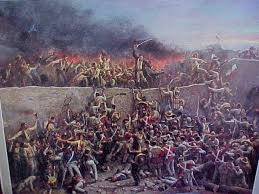
Death of William Barrett Travis (waving sword)
Mexicans broke into the room where the ailing Bowie lay. In Three Roads to the Alamo, historian William C. Davis writes that Bowie may have been unconscious or delirious. Mistaking him for a coward, the soldiers bayoneted him and blew out his brains.
But some accounts claim that Bowie died fighting–shooting two Mexicans with pistols, then plunging his famous knife into a third before being bayoneted. Nearly every Alamo movie depicts Bowie’s death this way.
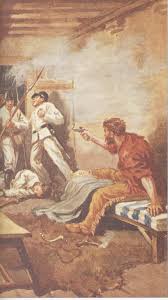
Jim Bowie’s death
As the Mexicans poured into the fort, at least 60 Texans tried to escape over the walls into the surrounding prairie. But they were quickly dispatched by lance-bearing Mexican calvary.
The death of David Crockett remains highly controversial.
Baby boomers usually opt for the Walt Disney version: Davy swinging Old Betsey as Mexicans surround him. Almost every Alamo movie depicts him fighting to the death.
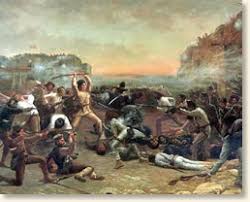
David Crockett’s death
But Mexican Colonel Jose Enrique de la Pena claimed Crockett was one of seven Texans who surrendered or were captured and brought before Santa Anna after the battle. Santa Anna ordered their immediate execution, and they were hacked to death with sabers.
Only the 2004 remake of The Alamo has dared to depict this version.
Although this version is now accepted by most historians, some still believe the de la Pena diary from which it comes is a forgery.
An hour after the battle erupted, it was over.
That afternoon, Santa Anna ordered the bodies of the slain defenders stacked and burned in three pyres.
Contrary to popular belief, some of the garrison survived:
- Joe, a black slave who had belonged to William B. Travis, the Alamo’s commander;
- Susannah Dickinson, the wife of a lieutenant killed in the Alamo, and her baby, Angelina;
- Several Mexican women and their children.
Also contrary to legend, the bravery of the Alamo defenders did not buy time for Texas to raise an army against Santa Anna. This didn’t happen until after the battle.
But their sacrifice proved crucial in securing Texas’ independence:
- The Alamo’s destruction warned those Texans who had not supported the revolution that they had no choice: They must win, die or flee their homes to the safety of the United States.
- It stirred increasing numbers of Americans to enter Texas and enlist in Sam Houston’s growing army.
- Santa Anna’s army was greatly weakened, losing 600 killed and wounded–a casualty rate of 33%.
- The nearly two-week siege bought time for the Texas convention to meet at Washington-on-the-Brazos and declare independence from Mexico.
On April 21, 1836, Santa Anna made a crucial mistake: During his army’s afternoon siesta, he failed to post sentries around his camp. That afternoon, Sam Houston’s 900-man army struck the 1,400-man Mexican force at San Jacinto.
In 18 minutes, the Texans–shouting “Remember the Alamo!”–killed about 700 Mexican soldiers and wounded 200 others. The next day, a Texas patrol captured Santa Anna.
Resisting angry demands to hang the Mexican dictator, Houston forced Santa Anna to surrender control of Texas in return for his life.
The victory at San Jacinto won the independence of Texas. But the 13-day siege and fall of the Alamo remains the most famous and celebrated part of that conflict.
Like Thermopylae, the battle of the Alamo proved both a defeat–and a victory.
ALAMO, BILLY BOB THORNTON, DAVID CROCKETT, FACEBOOK, FESS PARKER, JAMES BOWIE, JOHN WAYNE, MEXICO, SAM HOUSTON, STERLING HAYDEN, TEXAS, TEXAS REVOLUTION, TWITTER, WILLIAM B. TRAVIS
In History, Military, Social commentary on March 8, 2014 at 12:02 am
Americans “remember the Alamo”–but usually for the wrong reasons.
Some historians believe the battle should have never been fought. The Alamo was not Thermopylae–a narrow mountain pass blocking the Persian march into ancient Greece. Santa Anna could have simply bypassed it.
Painting of the Mexicans’ final assault on the Alamo
In fact, several of Santa Anna’s generals urged the Mexican dictator to do just that–leave a small guard to hold down the fort’s defenders and wipe out the undefended, widely-separated Texas settlements.
But pride held Santa Anna fast to the Alamo. His brother-in-law, General Perfecto de Cos, had been forced to surrender the old mission to revolting Texans in December, 1835. Santa Anna meant to redeem the fort–and his family honor–by force.
In almost every movie made about the Alamo, its two co-commanders, James Bowie and William Barret Travis, are portrayed as on the verge of all-out war–with each other.
In John Wayn’e heavily fictionalized 1960 film, The Alamo, Bowie and Travis agree to fight a duel as soon as they’ve whipped the Mexicans besieging them.
In fact, the frictions between the two lasted only a short while. Just before the siege, some of Bowie’s volunteers–a far larger group than the regular soldiers commanded by Travis–got drunk. Travis ordered them jailed–and Bowie ordered his men to release them. Bowie then went on a roaring drunk.
The next day, a sober Bowie apologized to Travis and agreed they should share command. This proved a wise decision, for just as the siege started, Bowie was felled by worsening illness–typhoid-pneumonia or tuberculosis.
In Wayne’s film, Bowie repeatedly leaves the Alamo to ambush unsuspecting Mexicans. In reality, he stayed bed-ridden and lay close to death throughout the 13-day siege.
Most people believe the Texans intended to make a suicidal stand. Not true. From the first day of the siege–February 23–almost to the last–March 6, 1836–messengers rode out of the Alamo seeking help.
The defenders believed that if they could cram enough men into the three-acre former mission, they could hold Santa Anna at bay.
It’s widely believed that no reinforcements reached the Alamo. Not so.
On March 1, thirty-two men from Gonzalez–the only ones to answer Travis’ call–sneaked through the Mexican lines to enter the Alamo.
Meanwhile, the largest Texan force lay at Fort Defiance in Goliad, 85 miles away. This consisted of 500 men commanded by James Walker Fannin, a West Point dropout.
Fannin was better-suited for the role of Hamlet than military commander. Upon receiving a plea of help from Travis, he set out in a half-hearted attempt to reach the mission. But when a supply wagon broke down, he returned to Fort Defiance and sat out the rest of the siege.
After the Alamo fell, Fannin dithered in Fort Defiance until it was too late. Fleeing before the advancing Mexicans, his army was encircled on the open prairie and forced to surrender. On March 27, 1836, Fannin’s entire force was massacred.
After it became obvious that the Alamo would not be sufficiently reinforced, the Texans still refused to evacuate. “I’ll die before I run” might have been their official motto.
The Alamo garrison was fully prepared to confront the Mexican army. False.
When the Mexicans suddenly arrived in San Antonio on the morning of February 23, 1836, they caught the Texans completely by surprise. The previous night, they had been celebrating the birthday of George Washington.
The Texans rushed headlong into the Alamo, hauling all the supplies they could hastily scrounge.
Santa Anna sent a courier under a flag of truce to the Alamo, demanding unconditional surrender. In effect, the Texans were being given the choice of later execution.
Travis replied with a shot from the fort’s biggest cannon, the 18-pounder.
Santa Anna ordered the hoisting of a blood-red flag and the opening of an artillery salvo. The siege of the Alamo was on.
Many Americans believe that San Houston, who was elected general of the non-existent army of Texas, desperately tried to relieve the siege. Not so.

Sam Houston
At Washington-on-the-Brazos, 150 miles east of San Antonio, the Texans convened a convention to form a new government. When news reached the delegates that Travis desperately needed reinforcements, many of them wanted to rush to his defense.
But Houston and others declared they must first declare Texas’ independence. On March 2, 1836, they did just that. Houston spent a good deal of the time drunk.
Did Travis draw a line?
Easily the most famous Alamo story is that of “the line in the sand.” On the night of March 5–just prior to the final assault–there was a lull in the near-constant Mexican bombardment.
Travis assembled his men and gave them a choice: They could surrender and hope that Santa Anna would be merciful. They could try to escape. Or they could stay and fight.
With his sword, Travis drew a line in the dirt and invited those who would stay to cross over to him. The entire garrison did–except for two men.
One of these was bed-ridden James Bowie. He asked that his his sick-bed be carried over to Travis.
The other was a veteran of the Napoleonic wars–Louis Rose.

 Bureaucracybuster's Blog
2016 PRESIDENTIAL ELECTION, ABC NEWS, AFFORDABLE CARE ACT, ALAN LADD, ALTERNET, AMERICABLOG, AP, BABY BOOMER RESISTANCE, BBC, BLOOMBERG NEWS, BORDER WALL, BRANDON DE WILDE, BUZZFEED, CALVERA (CHARACTER), CANADA, CAPITOL INSURRECTION, CBS NEWS, CHARLES GEORGE GORDON, CHRIS (CHARACTER), CHYE-CHING HUANG, CIA, CNN, COVID-19, CROOKS AND LIARS, DAILY KOZ, DONALD TRUMP, DONALD TRUMP: TRAGIC HERO (ARTICLE), ELECTORAL COLLEGE, FACEBOOK, FBI, FEDERAL FISCAL POLICY, FEDERAL GOVERNMENT SHUTDOWN, FIVETHIRTYEIGHT, HAMLET, HARPER’S MAGAZINE, HOOVER INSTITUTE, HUFFINGTON POST, ISLAMIC STATE, JACK PALANCE, JAMES COMEY, JEFF SESSONS, JOHN FORD, JOHN WAYNE, JOSEPH BIDEN, KHARTOUM, KIM JONG ON, LEE MARVIN, MEDIA MATTERS, MOTHER JONES, MOVEON, MSNBC, NATIONAL SECURITY AGENCY, NBC NEWS, NEW REPUBLIC, NEWSDAY, NEWSWEEK, NORTH KOREA, NPR, PBS NEWSHOUR, POLITICO, POLITICUSUSA, RAW STORY, REUTERS, ROBERT S. MUELLER III, RUFUS RYKER (CHARACTER), RUSSIA, SALON, SEATTLE TIMES, SERGEY KISLYAK, SERGEY LAVROV, SHANE (MOVIE), SLATE, STEVE MCQUEEN, TALKING POINTS MEMO, TAX CUTS AND JOBS ACT OF 2017, THE ATLANTIC, THE CASE FOR TRUMP (BOOK), THE CHICAGO SUN-TIMES, THE CHICAGO TRIBUNE, THE DAILY BEAST, THE DAILY BLOG, THE GUARDIAN, THE HILL, THE HUFFINGTON POST, THE LOS ANGELES TIMES, THE MAGNIFICENT SEVEN (MOVIE), THE MAN WHO SHOT LIBERTY VALANCE (MOVIE), THE NATION, THE NEW REPUBLIC, THE NEW YORK TIMES, THE NEW YORKER, THE PRESS, THE VILLAGE VOICE, THE WASHINGTON POST, THINKPROGRESS, TIME, TRAGEDY, TRUMP FOUNDATION, TRUMP UNIVERSITY, TRUTHDIG, TRUTHOUT, TWITTER, TWO POLITICAL JUNKIES, U.S. NEWS & WORLD REPORT, UKRAINE, UPI, USA TODAY, VICTOR DAVIS HANSON, VLADIMIR PUTIN, VOLODYMYR ZELENSKY, WILLIAM SHAKESPEARE, WILSON (CHARACTER), WONKETTE, YUL BRYNNER
TRUMP AND TRAGEDY: PART TWO (OF THREE)
In Bureaucracy, Entertainment, History, Law, Law Enforcement, Medical, Politics, Social commentary on May 6, 2021 at 12:10 amVictor Davis Hanson has long been a distinguished historian and classicist at the Hoover Institution at Stanford University in Palo Alto, California.
On April 12, 2018, the year before the publication of The Case for Trump, Hanson offered a preview of its upcoming contents in an article published in the well-known conservative magazine, National Review.
Its title: “Donald Trump, Tragic Hero.”
“The very idea that Donald Trump could, even in a perverse way, be heroic may appall half the country,” begins his first paragraph.
“Nonetheless, one way of understanding both Trump’s personal excesses and his accomplishments is that his not being traditionally presidential may have been valuable in bringing long-overdue changes in foreign and domestic policy.”
Donald Trump
Having laid out his thesis, Hanson writes: “Tragic heroes, as they have been portrayed from Sophocles’ plays (e.g., Ajax, Antigone, Oedipus Rex, Philoctetes) to the modern western film, are not intrinsically noble.”
On the contrary: A true tragic figure is a noble character with a fatal flaw, which ultimately destroys him.
To cite one from literature: Shakespeare’s Hamlet. Hamlet believes that his father, the king of Denmark, has been murdered. He believes the murderer may be his uncle, Claudius, who has seized the throne. Hamlet is brilliant, athletic, supremely eloquent and conscientious. But he’s not completely certain that Claudius is guilty, and in his hesitation to strike he lays the seeds for his own destruction.
To cite one from history: British General Charles George Gordon, sent by the British government in 1884 to evacuate the Sudanese city of Khartoum. But instead of evacuating its citizens, he chose to stay and fight the oncoming army of Mohammed Achmed, an Islamic religious fanatic who called himself The Madhi (“The Expected One”).
Although Gordon’s dynamic leadership enabled the city to hold out for almost a year, the British relief force arrived too late. The city was overwhelmed and Gordon himself killed.
Various theories have emerged to explain his motive: He was a religious fanatic; he had a death wish; he was arrogant to believe he could hold off an entire army. Any one or more of these theories could be correct.
Charles George Gordon
But the fact remains that for almost an entire year he kept alive about 30,000 men, women and children. It was only the failure of the British to send a relief army in time that allowed the city—and Gordon—to perish.
Tragic heroes always have a cause that is bigger than life—something that makes giving up life worthwhile. They always recognize this, and they have the ability to put into perspective the ultimate sacrifice—giving up life—for the good of something bigger.
Which brings us back to Trump. Apart from being a five-times draft-dodger during the Vietnam war, he has never made an act of professional or personal sacrifice for anyone.
On the contrary: he has been forced to shut down both his Trump Foundation and unaccredited Trump University.
Trump was forced to pay more than $2 million in court-ordered damages to eight different charities for illegally misusing charitable funds at the Foundation for political purposes.
And his university scammed its students, promising to teach them “the secrets of success” in the real estate industry—then delivering nothing. In 2016, a federal court approved a $25 million settlement with many of those students.
This is hardly the stuff of which tragic heroes are made.
Hanson cites several examples from famous Western movies to make his case that Trump deserves the status of a tragic hero.
One of these is the classic 1953 “Shane,” starring Alan Ladd as the soft-spoken gunfighter who intervenes decisively in a range war.
Writes Hanson:
“He alone possesses the violent skills necessary to free the homesteaders from the insidious threats of hired guns and murderous cattle barons. Yet by the time of his final resort to lethal violence, Shane has sacrificed all prior chances of reform and claims on reentering the civilized world of the stable ‘sodbuster’ community.”
Comparing Trump to Shane is unbelievably ludicrous. Shane doesn’t boast about his past—in fact, this remains a mystery throughout the movie. Trump constantly brags—about the money he’s made, the buildings he’s put up, the women he’s bedded, the enemies he’s crushed (or plans to).
Moreover, Shane takes the side of poor homesteaders at the mercy of a rich cattle baron, Rufus Ryker. Ryker tries to bully the homesteaders into leaving. When that fails, he hires a ruthless gunman named Jack Wilson (Jack Palance).
In the film’s climax, Shane kills Wilson, and then Ryker, in a barroom showdown. Then he rides off—much to the sadness of Joey (Brandon de Wilde), the homesteaders’ son he has befriended.
“There’s no living with a killing,” says Shane. “There’s no going back from one. Right or wrong, it’s a brand. And a brand sticks.”
And so he rides on, knowing that his gunfighter’s skills make him an outcast among those very homesteaders whose lives he’s saved.
If Trump appeared in the movie, it would be as Ryker, not Shane.
Shane empathizes with the plight of others. Ryker–like Trump–hires others to do his dirty work.
Share this: