Posts Tagged ‘JIMMY CARTER’
ABC NEWS, ADOLF HITLER, ALTERNET, AMERICABLOG, AP, BABY BOOMER RESISTANCE, BARACK OBAMA, BBC, BILL CLINTON, BLOOMBERG NEWS, BUZZFEED, CANADA, CBS NEWS, CHINA, CHRIS MATTHEWS, CNN, CNN'S "STARTING POINT", CROOKS AND LIARS, CZECHOSLAVAKIA, DAILY KOS, DARRELL ISSA, DAVID BROOKS, DEBT CEILING, DENMARK, DONALD TRUMP, DRUG TRAFFICKING, EXECUTIVE ORDERS, EXTORTION, FIVETHIRTYEIGHT, GEORGE W. BUSH, GREENLAND, HARPER’S MAGAZINE, HOUSE SPEAKER JOHN BOEHNER, HUFFINGTON POST, ILLEGAL ALIENS, immigration reform, INSIDER, IRAN, JANET YELLEN, JIMMY CARTER, JOSEPH BIDEN, JUSTIN TRUDEAU, MEDIA MATTERS, MEXICO, MITCH MCCONNELL, MOTHER JONES, MOVEON, MSNBC, MSNBC'S "HARDBALL", NANCY PELOSI, NAZI GERMANY, NBC NEWS, NEGOTIATING, NEVILLE CHAMBERLAIN, NEW REPUBLIC, NEWSDAY, NEWSWEEK, NEWT GINGRICH, NICCOLO MACHIAVELLI, NORTH KOREA, NPR, PANAMA CANAL, PAP SMEARS, PBS NEWSHOUR, PITUFFIK SPACE BASE, PLANNED PARENTHOOD, POLAND, POLITICO, POLITICUSUSA, R.I.CO. ACT, RAW STORY, REPUBLICAN PARTY, REPUBLICANS, REUTERS, Ronald Reagan, RUSSIA, SALON, SEATTLE TIMES, SLATE, TALKING POINTS MEMO, TARIFFS, THE ATLANTIC, THE CHICAGO SUN-TIMES, THE CHICAGO TRIBUNE, THE DAILY BEAST, THE DAILY BLOG, THE GUARDIAN, THE HAMILTON PROJECT, THE HILL, THE HUFFINGTON POST, THE LOS ANGELES TIMES, THE NATION, THE NEW REPUBLIC, THE NEW YORK TIMES, THE NEW YORKER, THE PRINCE, THE VILLAGE VOICE, THE WASHINGTON POST, THINKPROGRESS, TIME, TITLE X, TRUTHDIG, TRUTHOUT, TWITTER, TWO POLITICAL JUNKIES, U.S. NEWS & WORLD REPORT, UPI, USA TODAY, WARREN BUFFET, WENDY EDELBERG, WINSTON CHURCHILL, WONKETTE, WORLD WAR 11, X
In Bureaucracy, Business, History, Law, Law Enforcement, Military, Politics, Social commentary on January 8, 2025 at 12:10 am
By studying the “negotiating” methods used by Adolf Hitler, Americans generally—and Democrats in particular—can learn much about the mindset and “negotiating” style of today’s Republican party.
Consider President-Elect Donald Trump’s recent threats against not only Canada but Panama—specifically, to retake control of the Panama Canal.
On December 25, Trump told a conservative conference in Arizona that Panama was charging US ships “ridiculous, highly unfair” fees to use its namesake canal.
The United States built the canal during the administration of President Theodore Roosevelt and opened it in 1914. It remained controlled by the United States until President Jimmy Carter signed a a 1977 agreement for its eventual handover to Panama in 1999.

Panama Canal (in white)
But this week, Trump threatened that if shipping rates were not lowered, “we will demand that the Panama Canal be returned to us, in full, quickly and without question.”
He accused China of operating the canal and lamented that the United States “puts in Billions of Dollars in ‘repair’ money, but will have absolutely nothing to say about ‘anything.’”
On December 25, Trump posted on his website, Truth Social: “Merry Christmas to all, including to the wonderful soldiers of China, who are lovingly, but illegally, operating the Panama Canal.”
“There is not a single Chinese soldier in the canal,” the president of Panama, José Raúl Mulino, told reporters the next day, adding that there is “absolutely no Chinese interference.”
Trump’s threats against Panama may be connected with the outstanding tax evasion case he faces in the country.
In 2019, the owners of a Panama City hotel tower that was previously managed and operated under the Trump brand accused the Trump Organization of pocketing money meant to pay taxes. According to a lawsuit, Trump’s companies simply kept the money, “intentionally evading taxes” and leaving the new owner liable for millions.
Yet the blunt truth remains: Unless Trump goes to war with Panama, his threat to take over the canal is effectively meaningless.
During the 2024 Presidential campaign, Trump denied reading Adolf Hitler’s notorious book, Mein Kampf (“My Struggle.”)
In the past, however, he has acknowledged owning a copy of it. And he has adopted the same “negotiating” style as the late Fuhrer: Do-as-I-say-or-I’ll-destroy-you.
A classic example of Hitler’s “bargaining style” came in 1938, when he invited Austrian Chancellor Kurt von Schuschnigg to his mountaintop retreat in Obersalzberg, Germany.

Kurt von Schuschnigg
Hitler, an Austrian by birth, intended to annex his native land to Germany. Schuschnigg was aware of Hitler’s desire, but nevertheless felt secure in accepting the invitation. He had been assured that the question of Austrian sovereignty would not arise.
The meeting occurred on February 12, 1938.
Shuschnigg opened the discussion with a friendly compliment. Walking over to a large window, he admired the breathtaking view of the mountains.
HITLER: We haven’t come here to talk about the lovely view or the weather!
Austria has anyway never done anything which was of help to the German Reich….I am resolutely determined to make an end to all this business. The German Reich is a great power. Nobody can and nobody will interfere if it restores order on its frontiers.
SCHUSCHNIGG: We simply have to go on living alongside one another, the little state next to the big one. We have no other choice.
And that is why I ask you to tell me what your concrete complaints are. We will do all in our power to sort things out and establish a friendly relationship, as far as it is possible to do so.
HITLER: That’s what you say, Herr Schuschnigg. And I am telling you that I intend to clear up the whole of the so-called Austrian question—one way or another. Do you think I don’t know that you are fortifying Austria’s border with the Reich?
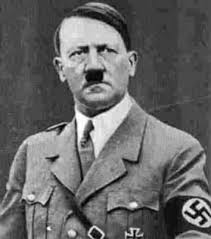
Adolf Hitler
SCHUSCHNIGG: There can be no suggestion at all of that—
HITLER: Ridiculous explosive chambers are being built under bridges and roads—
This was a lie, and Hitler knew it was a lie. But no matter. It gave him an excuse to threaten to destroy Austria—as he was to destroy so many other nations during the next seven years.
HITLER: I have only to give one command and all this comic stuff on the border will be blown to pieces overnight. You don’t seriously think you could hold me up, even for half an hour, do you?
Who knows—perhaps you will find me one morning in Vienna like a spring storm. Then you will go through something! I’d like to spare the Austrians that.
The S.A. [Hitler’s private army of Stormtroopers] and the [Condor] lLegion [which had bombed much of Spain into rubble during the three-year Spanish Civil War] would come in after the troops and nobody—not even I—could stop them from wreaking vengeance.
Schnuschigg made a cardinal mistake in dealing with Hitler: He showed fear. And this was precisely what the Nazi dictator looked for in an opponent.
Contrary to popular belief, Hitler did not constantly rage at everyone. On the contrary: he could, when he desired, be charming, especially to women. He used rage as a weapon, knowing that most people feel intimidated by it.
ABC NEWS, ADOLF HITLER, ALTERNET, AMERICABLOG, AP, BABY BOOMER RESISTANCE, BARACK OBAMA, BBC, BILL CLINTON, BLOOMBERG NEWS, BUZZFEED, CANADA, CBS NEWS, CHINA, CHRIS MATTHEWS, CNN, CNN'S "STARTING POINT", CROOKS AND LIARS, CZECHOSLAVAKIA, DAILY KOS, DARRELL ISSA, DAVID BROOKS, DEBT CEILING, DENMARK, DONALD TRUMP, DRUG TRAFFICKING, EXECUTIVE ORDERS, EXTORTION, FIVETHIRTYEIGHT, GEORGE W. BUSH, GREENLAND, HARPER’S MAGAZINE, HOUSE SPEAKER JOHN BOEHNER, HUFFINGTON POST, ILLEGAL ALIENS, immigration reform, INSIDER, IRAN, JANET YELLEN, JIMMY CARTER, JOSEPH BIDEN, JUSTIN TRUDEAU, MEDIA MATTERS, MEXICO, MITCH MCCONNELL, MOTHER JONES, MOVEON, MSNBC, MSNBC'S "HARDBALL", NANCY PELOSI, NAZI GERMANY, NBC NEWS, NEGOTIATING, NEVILLE CHAMBERLAIN, NEW REPUBLIC, NEWSDAY, NEWSWEEK, NEWT GINGRICH, NICCOLO MACHIAVELLI, NORTH KOREA, NPR, PAP SMEARS, PBS NEWSHOUR, PITUFFIK SPACE BASE, PLANNED PARENTHOOD, POLAND, POLITICO, POLITICUSUSA, R.I.CO. ACT, RAW STORY, REPUBLICAN PARTY, REPUBLICANS, REUTERS, Ronald Reagan, RUSSIA, SALON, SEATTLE TIMES, SLATE, TALKING POINTS MEMO, TARIFFS, THE ATLANTIC, THE CHICAGO SUN-TIMES, THE CHICAGO TRIBUNE, THE DAILY BEAST, THE DAILY BLOG, THE GUARDIAN, THE HAMILTON PROJECT, THE HILL, THE HUFFINGTON POST, THE LOS ANGELES TIMES, THE NATION, THE NEW REPUBLIC, THE NEW YORK TIMES, THE NEW YORKER, THE PRINCE, THE VILLAGE VOICE, THE WASHINGTON POST, THINKPROGRESS, TIME, TITLE X, TRUTHDIG, TRUTHOUT, TWITTER, TWO POLITICAL JUNKIES, U.S. NEWS & WORLD REPORT, UPI, USA TODAY, WARREN BUFFET, WENDY EDELBERG, WINSTON CHURCHILL, WONKETTE, WORLD WAR 11, X
In Bureaucracy, Business, History, Law, Law Enforcement, Military, Politics, Social commentary on January 7, 2025 at 12:10 am
Once again, Republicans are ruthlessly playing “chicken” with the nation’s financial and military security.
Even before taking the oath of office as President on January 20, 2025, Donald Trump has rushed to make an enemy of America’s longtime ally—Canada.
At a November 30 dinner at Mar-a-Lago, Trump’s estate in Palm Beach, Florida, he told Canadian Prime Minister Justin Trudeau that Canada could become the 51st state of the United States.
Canada’s Public Safety Minister Dominic LeBlanc, who attended the dinner, insisted that Trump was joking.
But on December 2, Trump threatened to impose a 25% tax on all products entering the United States from Canada and Mexico unless they stopped the flow of drugs and illegal aliens.
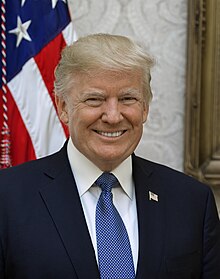
Donald Trump
And on December 3, Trump posted on his Truth Social platform an AI-generated image of himself standing on a mountain with a Canadian flag beside him. Its caption: “Oh Canada!”
Trudeau had requested the Mar-a-Lago meeting to convince Trump that the northern border is completely different from the southern one with Mexico.
“Less than one percent of migrants coming into the United States irregularly come from Canada and 0.2 percent of the fentanyl coming into the United States comes from Canada,” Trudeau said in Parliament.
During the last fiscal year, American customs agents seized 43 pounds of fentanyl at the Canadian border, compared with 21,100 pounds at the Mexican border.
Most of the fentanyl reaching the U.S. is made by Mexican drug cartels using precursor chemicals smuggled from Asia.
Utterly unmentioned in Trump’s demand: It’s America’s insatiable demand for illicit drugs that is the root cause of the drug trade.

Justin Trudeau
CC BY 3.0 <https://creativecommons.org/licenses/by/3.0>, via Wikimedia Commons
On immigration, the U.S. Border Patrol reported 1.53 million encounters with would-be illegal aliens at the Mexican border between October 2023 and September 2024. At the Canadian border, there were 23,721 such encounters.
Also unmentioned—if not deliberately ignored by Trump: Canada plays a substantial role as a U.S. trading partner. About 60% of U.S. crude oil imports are from Canada, and 85% of U.S. electricity imports as well.
Canada is also the largest foreign supplier of steel, aluminum and uranium to the U.S. and has 34 critical minerals and metals that the Pentagon eagerly desires. About 77% of Canada’s exports go to the U.S.
Trudeau pleaded with Trump not to impose the tariff because because it would “kill” Canada’s economy.
Trump responded: “So your country can’t survive unless it’s ripping off the US to the tune of $100 billion?”
His comments referred to the US trade deficit with Canada.
The U.S. had a $75 billion trade deficit with Canada last year but a third of what Canada sells into the U.S. is energy exports and prices have been high.
Trudeau left the meeting without reassurance that Trump would not impose a 25% tariff on products from Canada.
Republicans, in short, are one again utilizing the same “negotiating” strategy as Nazi Germany’s Fuhrer, Adolf Hitler.
And Democrats—out of cowardice or an ignorance of history—are once again refusing to publicly make this comparison.
By studying Adolf Hitler’s mindset and “negotiating” methods, we can learn much about the mindset and “negotiating” style of today’s Republican party.
Robert Payne, author of the bestselling biography, The Life and Death of Adolf Hitler (1973), described Hitler’s “negotiating” style thus:
“Although Hitler prized his own talents as a negotiator, a man always capable of striking a good bargain, he was totally lacking in finesse.
“He was incapable of bargaining. He was like a man who goes up to a fruit peddler and threatens to blow his brains out if he does not sell his applies at the lowest possible price.”
A classic example of Hitler’s “bargaining style” came in 1938, when he invited Austrian Chancellor Kurt von Schuschnigg to his mountaintop retreat in Obersalzberg, Germany.
Hitler, an Austrian by birth, intended to annex his native land to Germany. Schuschnigg was aware of Hitler’s desire, but nevertheless felt secure in accepting the invitation. He had been assured that the question of Austrian sovereignty would not arise.
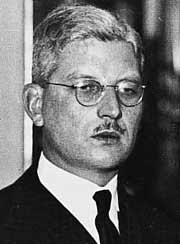
Kurt von Schuschnigg
The meeting occurred on February 12, 1938.
Shuschnigg opened the discussion with a friendly compliment. Walking over to a large window, he admired the breathtaking view of the mountains.
HITLER: We haven’t come here to talk about the lovely view or the weather!
Austria has anyway never done anything which was of help to the German Reich….I am resolutely determined to make an end to all this business. The German Reich is a great power. Nobody can and nobody will interfere if it restores order on its frontiers.
SCHUSCHNIGG: I am aware of your attitude toward the Austrian question and toward Austrian history….As we Austrians see it, the whole of our history is a very essential and valuable part of German history….And Austria’s contribution is a considerable one.
HITLER: It is absolutely zero—that I can assure you! Every national impulse has been trampled underfoot by Austria….
I could call myself an Austrian with just the same right—indeed with even more right—than you, Herr Schuschnigg. Why don’t you once try a plebiscite in Austria in which you and I run against each other? Then you would see!
ABC NEWS, AL QAEDA, ALTERNET, AMERICABLOG, AMERICAN CAESARS: THE LIVES OF THE PRESIDENTS FROM FRANKLIN D. ROOSEVELT TO GEORGE W. BUSH, AMERICAN EMPIRE, AP, ” 9/11, BABY BOOMER RESISTANCE, BASHAR AL-ASSAD, BILL CLINTON, BLOOMBERG, BUREAUCRACY, BUZZFEED, CBS NEWS, CHRIS MATHEWS, CNN, CONDOLEEZA RICE, CROOKS AND LIARS, DAILY KOZ, DONALD TRUMP, DRUDGE REPORT, DWIGHT EISENHOWER, FACEBOOK, FBI, FIVETHIRTYEIGHT, FRANKLIN D. ROOSEVELT, GEORGE H.W. BUSH, GEORGE W. BUSH, GERALD R. FORD, HARPER’S MAGAZINE, HARRY S. TRUMAN, HUFFINGTON POST, JD VANCE, JIMMY CARTER, JOHN F. KENNEDY, JOSEPH BIDEN, Kamala Harris, LYNDON B. JOHNSON, MEDIA MATTERS, MOTHER JONES, MOVEON, MSNBC, NBC NEWS, NEWSWEEK, NIGEL HAMILTON, NPR, OSAMA BIN LADEN, PBS NEWSHOUR, POLITICO, POLITICUSUSA, RAW STORY, REPUBLICAN PARTY, REUTERS, RICHARD CLARKE, RICHARD NIXON, ROMAN EMPIRE, SALON, SEATTLE TIMES, SEPTEMBER 11, SLATE, SUETONIUS, SYRIA, TALKING POINTS MEMO, TERRORISM, THE ATLANTIC, THE CHICAGO SUN-TIMES, THE CHICAGO TRIBUNE, THE DAILY BEAST, THE DAILY BLOG, THE GUARDIAN, THE HILL, THE HUFFINGTON POST, THE LOS ANGELES TIMES, THE NATION, THE NEW REPUBLIC, THE NEW YORK TIMES, THE TWELVE CAESARS, THE VILLAGE VOICE, THE WASHINGTON POST, THINKPROGRESS, TIME, TRUTHDIG, TRUTHOUT, TWITTER, TWO POLITICAL JUNKIES, U.S. NEWS & WORLD REPORT, UPI, USA TODAY
In Bureaucracy, History, Military, Politics, Social commentary on September 16, 2024 at 12:11 am
Colonel Brandt: “I wonder what we’ll do after we lose the war.”
Captain Kiesel: “Prepare for the next one.”
–-“The Cross of Iron,” film by Sam Peckinpah
On September 12, 2001, President George W. Bush attended a meeting of the National Security Council.
“Why shouldn’t we go against Iraq, not just Al-Qaeda?” demanded Donald Rumsfeld, the Secretary of Defense.
Vice President Dick Cheney enthusiastically agreed.
Secretary of State Colin Powell then pointed out there was absolutely no evidence that Iraq had had anything to do with 9/11 or Al-Qaeda. And he added: “The American people want us to do something about Al-Qaeda”—not Iraq.
On November 21, 2001, only 10 weeks after 9/11, Bush told Rumsfeld: It’s time to turn to Iraq.
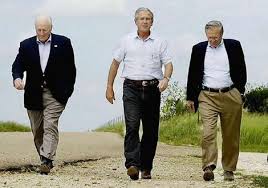
Liars Club: Dick Cheney, George Bush, Donald Rumsfeld
Bush and his war-hungry Cabinet officials knew that Americans demanded vengeance on Al-Qaeda’s mastermind, Osama bin Laden, and not Iraqi dictator Saddam Hussein. So they repeatedly fabricated “links” between the two:
- Saddam had worked hand-in-glove with Bin Laden to plan 9/11.
- Saddam was harboring and supporting Al-Qaeda throughout Iraq.
- Saddam, with help from Al-Qaeda, was scheming to build a nuclear bomb.
Yet as early as September 22, 2001, Bush had received a classified President’s Daily Brief intelligence report, which stated that there was no evidence linking Saddam Hussein to 9/11.
The report added that there was scant credible evidence that Iraq had any significant collaborative ties with Al-Qaeda.
Even more important: Saddam had tried to monitor Al Qaeda through his intelligence service—because he saw Al-Qaeda and other theocratic radical Islamist organizations as a potential threat to his secular regime.
Bush administration officials repeatedly claimed that Iraq possessed huge quantities of chemical and biological weapons, in violation of UN resolutions. And they further claimed that US intelligence agencies had determined:
- the precise locations where these weapons were stored;
- the identities of those involved in their production; and
- the military orders issued by Saddam Hussein for their use in the event of war.
Among other lies stated as fact by members of the Bush administration:
- Iraq had sought uranium from Niger, in west Africa.
- Thousands of aluminum tubes imported by Iraq could be used in centrifuges to create enriched uranium.
- Iraq had up to 20 long-range Scud missiles, prohibited under UN sanctions.
- Iraq had massive stockpiles of chemical and biological agents, including nerve gas, anthrax and botulinum toxin.
- Saddam Hussein had issued chemical weapons to front-line troops who would use them when US forces crossed into Iraq.
Consider the following:
August 26, 2002: Cheney told the Veterans of Foreign Wars, “There is no doubt that Saddam Hussein now has weapons of mass destruction. There is no doubt he is amassing them to use against our friends, against our allies and against us.”
September 8, 2002: National Security Advisor Condoleeza Rice said on CNN: ”There is certainly evidence that Al-Qaeda people have been in Iraq. There is certainly evidence that Saddam Hussein cavorts with terrorists.”
September 18, 2002: Rumsfeld told the House Armed Services Committee, “We do know that the Iraqi regime has chemical and biological weapons. His regime has amassed large, clandestine stockpiles of chemical weapons—including VX, sarin, cyclosarin and mustard gas.”
October 7, 2002: Bush declared in a nationally televised speech in Cincinnati that Iraq “possesses and produces chemical and biological weapons. It is seeking nuclear weapons.”
March 16, 2003: Cheney declared on NBC’s “Meet the Press”: “We believe [Saddam Hussein] has, in fact, reconstituted nuclear weapons.”
March 30, 2003: On ABC’s “This Week” program, 10 days into the war, Rumsfeld said: “We know where they [weapons of mass destruction] are.”
Bush never regretted his decision to invade Iraq, which occurred on March 20, 2003.
Even as American occupying forces repeatedly failed to turn up any evidence of “weapons of mass destruction” (WMDs), Bush and his minions claimed the invasion a good thing.
In fact, Bush—who hid out the Vietnam war in the Texas Air National Guard—even joked publicly about the absence of WMDs.
He did so at a White House Correspondents dinner on March 24, 2004—one year after he had started the war.
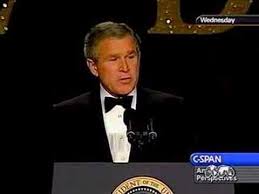
George W. Bush at the 2004 White House Correspondents’ dinner
To Bush, the non-existent WMDs were nothing more than the butt of a joke that night. While an overhead projector displayed photos of a puzzled-looking Bush searching around the Oval Office, Bush recited a comedy routine.
Click here: Bush laughs at no WMD in Iraq – YouTube
“Those weapons of mass destruction have gotta be somewhere,” Bush laughed, while a photo showed him poking around the corners in the Oval Office.
“Nope–no weapons over there! Maybe they’re under here,” he said, as a photo showed him looking under a desk.
Meanwhile, an assembly of wealthy, pampered men and women—the elite of America’s media and political classes—laughed heartily during Bush’s performance. It was a scene worthy of the court of the ancient Caesars, complete with royal flunkies.
Ultimately, the war that Bush had deliberately provoked
- Took the lives of 4,484 Americans.
- Cost the United States Treasury at least $2 trillion.
- Created a Middle East power vacumn.
- Allowed Iran–Iraq’s arch enemy–to eagerly fill it.
- Killed at least 655,000 Iraqis.
- Bush retired from office with a lavish pension and full Secret Service protection.
- He wrote his memoirs and was paid $7 for the first 1.5 million copies.
- Cheney, Rumsfeld, Rice retired to private business, wrote their own memoirs, and lived in comfort as respected elder statesmen.
ABC NEWS, AL QAEDA, ALTERNET, AMERICABLOG, AMERICAN CAESARS: THE LIVES OF THE PRESIDENTS FROM FRANKLIN D. ROOSEVELT TO GEORGE W. BUSH, AMERICAN EMPIRE, AP, ” 9/11, BABY BOOMER RESISTANCE, BASHAR AL-ASSAD, BILL CLINTON, BLOOMBERG, BUREAUCRACY, BUZZFEED, CBS NEWS, CHRIS MATHEWS, CNN, CONDOLEEZA RICE, CROOKS AND LIARS, DAILY KOZ, DONALD TRUMP, DRUDGE REPORT, DWIGHT EISENHOWER, FBI, FIVETHIRTYEIGHT, FRANKLIN D. ROOSEVELT, GEORGE H.W. BUSH, GEORGE W. BUSH, GERALD R. FORD, HARPER’S MAGAZINE, HARRY S. TRUMAN, HUFFINGTON POST, JD VANCE, JIMMY CARTER, JOHN F. KENNEDY, JOSEPH BIDEN, Kamala Harris, LYNDON B. JOHNSON, MEDIA MATTERS, MOTHER JONES, MOVEON, MSNBC, NBC NEWS, NEWSWEEK, NIGEL HAMILTON, NPR, OSAMA BIN LADEN, PBS NEWSHOUR, POLITICO, POLITICUSUSA, RAW STORY, REPUBLICAN PARTY, REUTERS, RICHARD CLARKE, RICHARD NIXON, ROMAN EMPIRE, SALON, SEATTLE TIMES, SEPTEMBER 11, SLATE, SUETONIUS, SYRIA, TALKING POINTS MEMO, TERRORISM, THE ATLANTIC, THE CHICAGO SUN-TIMES, THE CHICAGO TRIBUNE, THE DAILY BEAST, THE DAILY BLOG, THE GUARDIAN, THE HILL, THE HUFFINGTON POST, THE LOS ANGELES TIMES, THE NATION, THE NEW REPUBLIC, THE NEW YORK TIMES, THE TWELVE CAESARS, THE VILLAGE VOICE, THE WASHINGTON POST, THINKPROGRESS, TIME, TRUTHDIG, TRUTHOUT, TWITTER, TWO POLITICAL JUNKIES, U.S. NEWS & WORLD REPORT, UPI, USA TODAY, X
In Bureaucracy, History, Military, Politics, Social commentary on September 13, 2024 at 12:17 am
September 11, 2024, marked the 23rd anniversary of the worst terrorist attack on United States soil. Inevitably, this is a time to remember all those whose lives were so cruelly snuffed out.
But it should also be a time to remember those who made this atrocity inevitable—by refusing to acknowledge and address the impending threat from Al-Qaeda.
British historian Nigel Hamilton has chronicled their arrogance and indifference in his 2010 biography: American Caesars: Lives of the Presidents from Franklin D. Roosevelt to George W. Bush.
Hamilton noted that Richard Clarke, the national security advisor on terrorism, was certain that Osama bin Laden had arranged the [USS.] Cole bombing in Aden on October 12, 2000.
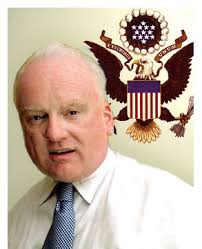
Richard Clarke
For months, Clarke tried to convince others in the Bush Administration that Bin Laden was plotting another attack against the United States—either abroad or at home.
But Clarke could not prevail against the know-it-all arrogance of such higher-ranking Bush officials as Vice President Dick Cheney; Secretary of Defense Donald Rumsfeld; Rumsfeld’s deputy, Paul Wolfowitz; and National Security Advisor Condoleeza Rice.
Rice initially refused to hold a cabinet-level meeting on the subject. Then she “insisted the matter be handled only by a more junior Deputy Principals meeting” in April, 2001, writes Hamilton.
Wolfowitz, the number-two man at the Department of Defense, said: “I don’t understand why we are beginning by talking about this one man, bin Laden.”
Even after Clarke outlined the threat posed by Al-Qaeda, Wolfowitz—whose real target was Saddam Hussein—said: “You give bin Laden too much credit.”
Wolfowitz insisted that bin Laden couldn’t carry out his terrorist acts without the aid of a state sponsor—namely, Iraq.
Wolfowitz, in fact, blamed Iraq for the 1993 bombing of the World Trade Center. Clarke was stunned, since there was absolutely no evidence of Iraqi involvement in this.
“Al-Qaeda plans major acts of terrorism against the United States,” Clarke warned his colleagues. He pointed out that, like Adolf Hitler, bin Laden had actually published his plans for future destruction.
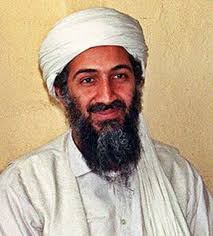
Osama bin Laden
And he added: “Sometimes, as with Hitler in Mein Kampf, you have to believe that these people will actually do what they say they will do.”
Wolfowitz heatedly traded on his Jewish heritage to bring Clarke’s unwelcome arguments to a halt: “I resent any comparison between the Holocaust and this little terrorist in Afghanistan.”
Writing in outraged fury, Hamilton sums up Clarke’s agonizing frustrations:
- Bush’s senior advisors treated their colleagues who had served in the Clinton administration with contempt.
- President Bush, Vice President Dick Cheney, National Security Advisor Condoleeza Rice, Secretary of Defense Donald Rumsfeld and Deputy Defense Secretary Paul Wolfowitz seemed content to ignore the danger signals of an impending Al-Qaeda attack.
- This left only Secretary of State Colin Powell, his deputy Richard Armitage, Richard Clarke and a skeptical Treasury Secretary, Paul O’Neill, to wage “a lonely battle to waken a seemingly deranged new administration.”
Clarke alerted Federal Intelligence agencies that “Al-Qaeda is planning a major attack on us.” He asked the FBI and CIA to report to his office all they could learn about suspicious persons or activities at home and abroad.
Finally, at a meeting with Rice on September 4, 2001, Clarke challenged her to “picture yourself at a moment when in the very near future Al-Qaeda has killed hundreds of Americans, and imagine asking yourself what you wish then that you had already done.”
Seven days later, Al-Qaeda struck, and 3,000 Americans died horrifically—and needlessly.
Neither Bush, Cheney, Rice, Rumsfeld nor Wolfowitz ever admitted their negligence. Nor would any of them be brought to account.
Disgustingly, these were the same officials who, afterward, posed as the Nation’s saviors–and branded anyone who disagreed with them as a traitor, practices the Right continues to exploit to this day.
Only Richard Clarke—who had vainly argued for stepped-up security precautions and taking the fight to Al-Qaeda—gave that apology.
On March 24, 2004, Clarke testified at the public 9/11 Commission hearings. Addressing relatives of victims in the audience, he said: “Your government failed you, those entrusted with protecting you failed you, and I failed you.”
Yet even worse was to come.
On the evening after the September 11 attacks, Bush took Clarke aside during a meeting in the White House Situation Room:
“I want you, as soon as you can, to go back over everything, everything. See if Saddam [Hussein, the dictator of Iraq] did this. See if he’s linked in any way.”
Clarke was stunned: “But, Mr. President, Al-Qaeda did this.”
“I know, I know,” said Bush. “But see if Saddam was involved. I want to know.”
Hussein had not plotted the attack—and there was no evidence proving that he did. But the attack gave “W” the excuse he wanted to remove the man he blamed for the 1992 defeat of his father, President George H.W. Bush.
Bush believed that his father would have been re-elected if he had “gone all the way” into Baghdad during the 1991 Gulf War.
He would finish the job that his father had started but failed to compete.
On September 12, 2001, Bush attended a meeting of the National Security Council.
“Why shouldn’t we go against Iraq, not just Al-Qaeda?” demanded Donald Rumsfeld, the Secretary of Defense.
Vice President Dick Cheney enthusiastically agreed.
ABC NEWS, AL QAEDA, ALTERNET, AMERICABLOG, AMERICAN CAESARS: THE LIVES OF THE PRESIDENTS FROM FRANKLIN D. ROOSEVELT TO GEORGE W. BUSH, AMERICAN EMPIRE, AP, ” 9/11, BABY BOOMER RESISTANCE, BASHAR AL-ASSAD, BILL CLINTON, BLOOMBERG, BUREAUCRACY, BUZZFEED, CBS NEWS, CHRIS MATHEWS, CNN, CONDOLEEZA RICE, CROOKS AND LIARS, DAILY KOZ, DONALD TRUMP, DRUDGE REPORT, DWIGHT EISENHOWER, FBI, FIVETHIRTYEIGHT, FRANKLIN D. ROOSEVELT, GEORGE H.W. BUSH, GEORGE W. BUSH, GERALD R. FORD, HARPER’S MAGAZINE, HARRY S. TRUMAN, HUFFINGTON POST, JD VANCE, JIMMY CARTER, JOHN F. KENNEDY, JOSEPH BIDEN, Kamala Harris, LYNDON B. JOHNSON, MEDIA MATTERS, MOTHER JONES, MOVEON, MSNBC, NBC NEWS, NEWSWEEK, NIGEL HAMILTON, NPR, OSAMA BIN LADEN, PBS NEWSHOUR, POLITICO, POLITICUSUSA, RAW STORY, REPUBLICAN PARTY, REUTERS, RICHARD CLARKE, RICHARD NIXON, ROMAN EMPIRE, SALON, SEATTLE TIMES, SEPTEMBER 11, SLATE, SUETONIUS, SYRIA, TALKING POINTS MEMO, TERRORISM, THE ATLANTIC, THE CHICAGO SUN-TIMES, THE CHICAGO TRIBUNE, THE DAILY BEAST, THE DAILY BLOG, THE GUARDIAN, THE HILL, THE HUFFINGTON POST, THE LOS ANGELES TIMES, THE NATION, THE NEW REPUBLIC, THE NEW YORK TIMES, THE TWELVE CAESARS, THE VILLAGE VOICE, THE WASHINGTON POST, THINKPROGRESS, TIME, TRUTHDIG, TRUTHOUT, TWO POLITICAL JUNKIES, U.S. NEWS & WORLD REPORT, UPI, USA TODAY, X
In Bureaucracy, History, Military, Politics, Social commentary on September 12, 2024 at 12:09 am
It’s that time of year again–-yet another anniversary celebration of September 11, 2001.
The day when Islamic terrorists slammed two jetliners into the World Trade Center and a third into the Pentagon.
They would have crashed a fourth jetliner into the White House or Capitol Building except for the heroic resistance of passengers aboard United Airlines Flight 93.
In the years immediately following 9/11, politicians of both parties used this anniversary to wave flags and make self-serving patriotic speeches.
This was especially true for officials of the administration of President George W. Bush—which, even as the rubble was being cleared at the Pentagon and World Trade Center, was preparing to use the attack as an excuse to topple Iraqi dictator Saddam Hussein.
Hussein had not plotted 9/11, and there was no evidence that he did. But that didn’t matter to Bush and those planning the invasion and conquest of Iraq.
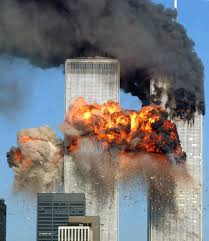
World Trade Center on September 11, 2001
So here it is, 23 years later, and, once again, politicians are using 9/11 as a prop to advance their careers.
Donald Trump, fresh from his disastrous debate with Democratic Presidential nominee Kamala Harris the previous night in Philadelphia, Pennsylvania, attended the commemoration event at Ground Zero in Manhattan.
Joining him was President Joe Biden, Vice President Harris and Trump’s running mate, JD Vance.
As on past commemorations of 9/11, those who died were remembered by friends and relatives of those who knew and loved them.
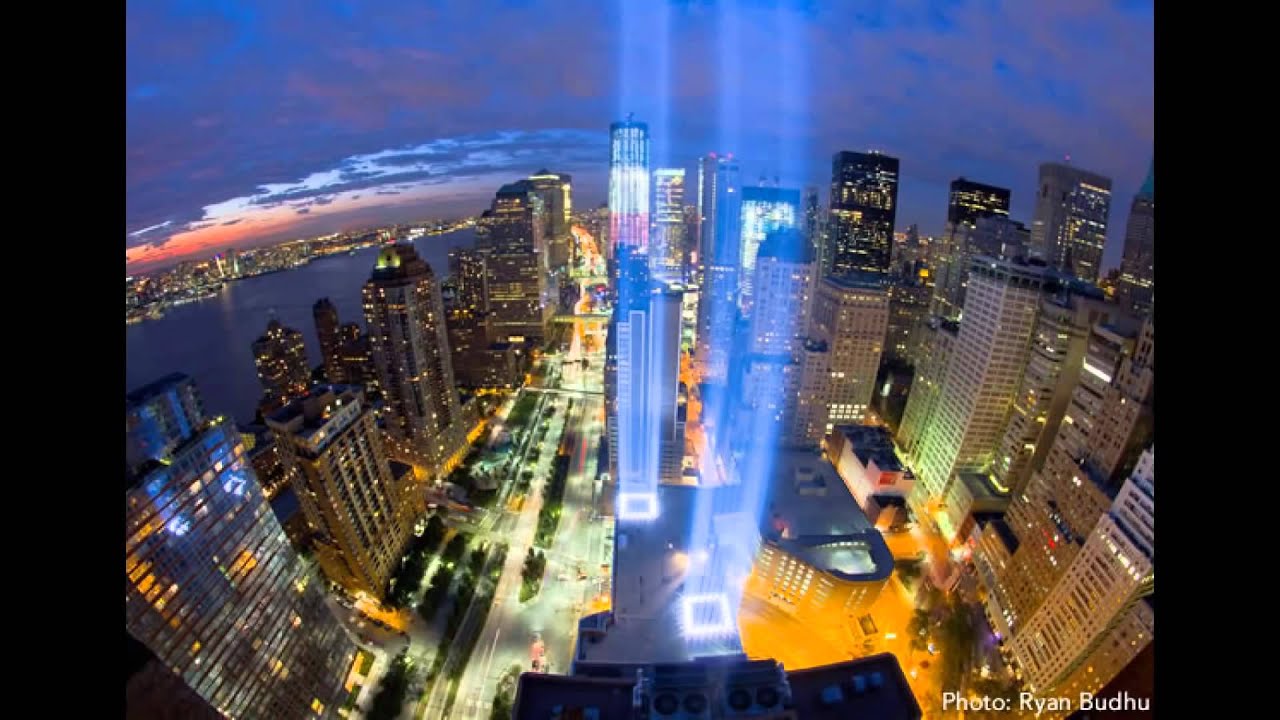
Tribute to 9/11 World Trade Center Victims
It is in fact appropriate to remember the innocents who died on that day—and the heroism of the police and firefighters who died trying to save them.
But it’s equally important to remember those who made 9/11 not simply possible but inevitable.
And that does not mean only the 19 highjackers who turned those planes into fuel-bombs. It means the officials at the highest levels of the administration of President George W. Bush.
Officials who, to this day, have never been held accountable in any way for the resulting death and destruction.
And who have been allowed to blatantly lie that they “kept us safe” from terrorism.
Obviously, such an indictment is not going to be presented by TV commentators today—not even on such liberal networks as CNN and MSNBC. And most definitely not on the right-wing Fox network.
Fortunately, British historian Nigel Hamilton has dared to lay bare the facts of this disgrace. Hamilton is the author of several acclaimed political biographies, including JFK: Reckless Youth and Bill Clinton: Mastering the Presidency.
In 2007, he began research on his latest book: American Caesars: The Lives of the Presidents From Franklin D. Roosevelt to George W. Bush.


Nigel Hamilton
By Nigel Hamilton (Nigel Hamilton picture)
The inspiration for this came from a classic work of ancient biography: The Twelve Caesars, by Gaius Suetonius Tranquillus–-known as Suetonius.
Suetonius, a Roman citizen and historian, had chronicled the lives of the first twelve Caesars of imperial Rome: Julius Caesar, Augustus, Tiberius, Caligula, Claudius, Nero, Galba, Otho, Vitellius, Vespasian, Titus and Domitian.
Hamilton wanted to examine post-World War II United States history as Suetonius had examined that of ancient Rome: Through the lives of the 12 “emperors” who had held the power of life and death over their fellow citizens—and those of other nations.
For Hamilton, the “greatest of American emperors, the Caesar Augustus of his time,” was Franklin D. Roosevelt, who led his country through the Great Depression and World War II.
His “”great successors” were Harry S. Truman, Dwight D. Eisenhower and John F. Kennedy—who, in turn, contained the Soviet Union abroad and presided over sustained economic prosperity at home.
By contrast, “arguably the worst of all the American Caesars” was “George W. Bush, and his deputy, Dick Cheney, who willfully and recklessly destroyed so much of the moral basis of American leadership in the modern world.”
Among the most lethal of Bush’s offenses: The appointing of officials who refused to take seriously the threat posed by Al-Qaeda.
And this arrogance and indifference continued–right up to September 11, 2001, when the World Trade Center and Pentagon became targets for destruction.
Among the few administration officials who did take Al-Qaeda seriously was Richard Clarke, the chief counter-terrorism adviser on the National Security Council.
Clarke had been thus appointed in 1998 by President Bill Clinton. He continued in the same role under President Bush—but the position was no longer given cabinet-level access.
This put him at a severe disadvantage when dealing with other, higher-ranking Bush officials—such as Vice President Dick Cheney, Secretary of Defense Donald Rumsfeld, Rumsfeld’s deputy, Paul Wolfowitz and National Security Advisor Condoleeza Rice.
These turned out to be the very officials who refused to believe that Al-Qaeda posed a lethal threat to the United States.
“Indeed,” writes Hamilton, “in the entire first eight months of the Bush Presidency, Clarke was not permitted to brief President Bush a single time, despite mounting evidence of plans for a new al-Qaeda outrage.” [Italics added]
Nor did it help that, during his first eight months in office before September 11, Bush was on vacation, according to the Washington Post, 42% of the time.
2016 PRESIDENTIAL ELECTION, ABC NEWS, AIR FORCE, ALTERNET, AMERICABLOG, AP, ARMY, “MR. PRESIDENT” TITLE, BABY BOOMER RESISTANCE, BBC, BLOOMBERG, BUZZFEED, CBS NEWS, CNN, CROOKS AND LIARS, DAILY KOS, DAVID PECKER, DONALD TRUMP, DWIGHT D. EISENHOWER, FBI, FEDERAL AVIATION ADMINISTRATION, FIVETHIRTYEIGHT, HARPER’S MAGAZINE, HUFFINGTON POST, JIMMY CARTER, JOHN F. KENNEDY, JOSEPH BIDEN, KAREN MCDOUGAL, KONSTANTIN CHERNENKO, LEONID BREZHNEV, MARINE CORPS, MEDIA MATTERS, MIKHAIL GORBACHEV, MOTHER JONES, MOVEON, MSNBC, NATIONAL ENQUIRER, NAVY, NBC NEWS, NEW REPUBLIC, NEWSDAY, NEWSWEEK, NPR, PBS NEWSHOUR, POLITICO, POLITICUSUSA, RAW STORY, REUTERS, Ronald Reagan, SALON, SEATTLE TIMES, Secret Service, SLATE, SOVIET UNION, STOLEN VALOR ACT, STORMY DANIELS, TALKING POINTS MEMO, THE ATLANTIC, THE CHICAGO SUN-TIMES, THE CHICAGO TRIBUNE, THE DAILY BEAST, THE DAILY BLOG, THE GUARDIAN, THE HILL, THE HUFFINGTON POST, THE INTERCEPT, THE LOS ANGELES TIMES, THE NATION, THE NEW REPUBLIC, THE NEW YORK TIMES, THE NEW YORKER, THE PRESIDENCY, THE VILLAGE VOICE, THE WASHINGTON POST, THINKPROGRESS, TIME, TOMMY TURBERVILLE, TRUTHDIG, TRUTHOUT, TWO POLITICAL JUNKIES, U.S. NEWS & WORLD REPORT, UNITED STATES SECRET SERVICE, UPI, USA TODAY, X, YURI ANDROPOV
In Bureaucracy, History, Law, Law Enforcement, Medical, Politics, Social commentary on May 23, 2024 at 12:36 am
The upcoming 2024 Presidential election has raised serious issues which demand addressing.
Unfortunately, it’s too late to apply such remedies to this election. But they could be in place by the time the 2028 election occurs.
Reform #1: Institute mandatory FBI background investigations on all declared Presidential candidates.
Donald Trump’s trial for hush money payments to porn “star” Stormy Daniels has highlighted an issue that should have been addressed long ago: Americans don’t know as much about their candidates for President as they think they do.
- As the trial testimony of former National Enquirer publisher David Pecker has revealed: In August, 2015, he met with Trump at Trump Tower and offered to use the Enquirer to catch and kill any allegations of extramarital affairs against Trump.
- Later he personally facilitated a $150,000 payment to former Playboy Playmate Karen McDougal to keep her affair with Trump hushed up.
- This came in addition to Trump’s paying $130,000 in hush money to Daniels to ensure his 2006 tryst with her didn’t emerge during the campaign.
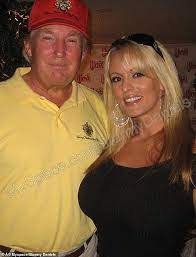
Donald Trump and Stormy Daniels
- Similarly, in 1960, Senator John F. Kennedy successfully ran for President while concealing his affliction with Addison’s Disease—an insufficiency of the Adrenal glands that can prove fatal.
Thus, all future candidates for President should be required to submit to full FBI background investigations at least one year before election time—with the results released before the election. Any candidate refusing to participate should be barred from competing.
You’re not allowed to become an FBI agent or Cabinet Secretary without passing a background investigation. You shouldn’t be allowed to become President without one, either.
Reform #2: No Presidential candidate can be over 70 at the time s/he leaves office.
The Federal Aviation Administration mandates that commercial airlines cannot employ pilots after they reach the age of 65.
FBI agents have a mandatory retirement age of 57.
Commissioned officers of the Army, Navy, Air Force and Marine Corps must retire by 64.
Yet Donald Trump is 77 and will turn 78 on June 14. Joseph Biden is 81 and will turn 82 on November 20.
If Trump wins, he will be 82 in 2028, his last year in office (assuming he doesn’t stage another—and successful—coup attempt). If Biden wins re-election, in 2028 he will be 86 (assuming he’s still alive by then).
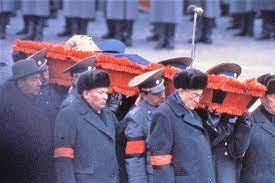
Funeral for Soviet dictator Leonid Brezhnev – 1982
The Presidency is notorious for prematurely ageing its occupants: “The typical president ages two years for every year they are in office,” said Dr. Michael Roizen. He used presidential medical records from the 1920s through today to reach this conclusion.
The United States Presidency is becoming a mirror-image of the former Soviet Union:
- In 1982, General Secretary Leonid Brezhnev died at age 75.
- He was succeeded by Yuri Andropov—who died, in 1984, at age 69.
- He, in turn, was followed by Konstantin Chernenko—who died in 1985 at age 73.
Finally, the Politburo—tired of replacing the General Secretary every two years—elected 54-year-old Mikhail Gorbachev, who lived to leave office six years later at age 60.
In the United States, having two geriatric Presidential candidates has become comic fodder for late-night TV hosts. Yet voters fear that neither candidate can handle the strains of another four years as President—or even survive a full term.
Reform #3: Abolish the honorific title of “Mr. President” for ex-Presidents.
This used to be offered as a tribute to a former President for having won the support of the majority of Americans.
But Donald Trump has corrupted this phrase, as he has so much else in American life. Since losing the 2020 Presidential election, he has continued to insist that he is the legitimate President of the United States, and Joseph Biden is a usurper.
When his fanatical followers refer to him as “President Trump,” that is what they mean—thus trying to de-legitimize Biden’s Presidency and elevate Trump as the rightful victor.
The 2005 Stolen Valor Act makes it a federal misdemeanor for anyone to falsely claim to have received any U.S. military decoration or medal—such as the Medal of Honor or Purple Heart. Violating the law can lead to fines, up to a year in prison, or both.
Thus, Congress should mandate that only the current holder of the Presidency has the legal right to call himself “Mr. President”—and that right ends when he no longer occupies the White House.
Reform #4: Require millionaire ex-Presidents to pay for Secret Service protection.
Every ex-President since Dwight D. Eisenhower—even Jimmy Carter—has been a millionaire.
Assigning a platoon of elite Secret Service agents to watch over every ex-President 24/7 is a huge expense.
The case of Ronald Reagan is instructive: At a cost to the government of $10 million annually, Reagan—while living in a 7,200 square-foot mansion overlooking Beverly Hills—received lifetime Secret Service protection from 40 fulltime agents.
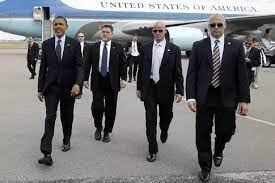
United States Secret Service
It’s also an unnecessary expense. There has never been an attack on an ex-President in all of American history.
Still, if the powers-that-be consider this essential, then millionaire ex-Presidents should be required to pay for their protection—just as moguls and Hollywood celebrities do.
As the situation now exists, the government is simply providing welfare for the rich. Whereas the poor face strict limits on how high their income can be and still receive welfare.
2016 PRESIDENTIAL ELECT, ABC NEWS, ADOLF HITLER, ALTERNET, AMERICABLOG, ANTONIN SCALIA, AP, BABY BOOMER RESISTANCE, BARACK OBAMA, BBC, BERNIE SANDERS, BLOOMBERG NEWS, BUZZFEED, CBS NEWS, CNN, CROOKS AND LIARS, D-DAY, DAILY KOS, DONALD TRUMP, FIVETHIRTYEIGHT, GEORGE S. PATTON, GREAT BRITAIN, HARPER’S MAGAZINE, HEINZ GUDERIAN, HILLARY CLINTON, HUFFINGTON POST, ION, JIMMY CARTER, MEDIA MATTERS, MOTHER JONES, MOVEON, MSNBC, NAZI GERMANY, NBC NEWS, NEVILLE CHAMBERLAIN, NEW REPUBLIC, NEWSDAY, NEWSWEEK, NICCOLO MACHIAVELLI, NPR, PBS NEWSHOUR, POLITICO, POLITICUSUSA, RAW STORY, REPUBLICANS, REUTERS, SALON, SEATTLE TIMES, SLATE, SOVIET UNION, STALINGRAD, TALKING POINTS MEMO, TERRORISM, THE ATLANTIC, THE CHICAGO SUN-TIMES, THE CHICAGO TRIBUNE, THE DAILY BEAST, THE DAILY BLOG, THE GUARDIAN, THE HILL, THE HUFFINGTON POST, THE INTERCEPT, THE LOS ANGELES TIMES, THE NATION, THE NEW REPUBLIC, THE NEW YORK TIMES, THE NEW YORKER, THE PRINCE, THE VILLAGE VOICE, THE WASHINGTON POST, THINKPROGRESS, TIME, TRUTHDIG, TRUTHOUT, TWITTER, TWO POLITICAL JUNKIES, U.S. NEWS & WORLD REPORT, UPI, USA TODAY, WAFFEN-SS, WORLD WAR 11
In Bureaucracy, History, Law, Politics, Social commentary on December 18, 2023 at 12:12 am
Uber liberal Democrats have long forgotten an important truth: The United States and its allies—Great Britain and the Soviet Union—did not defeat Nazi Germany because “we were the Good Guys and they were the Bad Guys.”
The Allies won the war for reasons that had nothing to do with the righteousness of their cause. These included:
- Nazi Germany—–i.e, its Fuehrer, Adolf Hitler—made a series of disastrous decisions. Chief among these: Attacking its ally, the Soviet Union and declaring war on the United States;
- The greater material resources of the Soviet Union and the United States; and
- The Allies—especially the Russians—waged war as brutally as the Germans.
On this last point:
- From D-Day to the fall of Berlin, captured Waffen-SS soldiers were often shot out of hand.
- When American troops came under fire in the German city of Aachen, Lt. Col. Derrill Daniel brought in a self-propelled 155mm artillery piece and opened up on a theater housing German soldiers. After the city surrendered, a German colonel labeled the use of the 155 “barbarous” and demanded that it be outlawed.
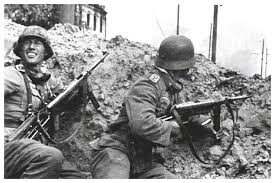

German soldiers at Stalingrad
- During the battle of Stalingrad in 1942, Wilhelm Hoffman, a young German soldier and diarist, was appalled that the Russians refused to surrender. He wrote: “You don’t see them at all, they have established themselves in houses and cellars and are firing on all sides, including from our rear—barbarians, they used gangster methods….”
In short: The Allies won because they dared to meet the ruthlessness of a Heinz Guderian with that of a George S. Patton.
Uber-liberal Democrats have long ignored this truth. That’s why Republicans captured the White House in 2000, 2004 and 2016—and may recapture it in 2024.
A classic example of their naivety occurred on March 25, 2018.
On CBS’ “Sunday Morning,” former President Jimmy Carter said that even if Special Counsel Robert Mueller found evidence that President Donald Trump had broken the law, “my own preference would be that he not be impeached.”
Instead, Carter wanted Trump to “be able to serve out his term, because I think he wants to do a good job. And I’m willing to help him, if I can help him, and give him the benefit of the doubt.
“You know, I have confidence in the American system of government. I think ultimately the restraints on a president from the Congress and from the Supreme Court will be adequate to protect our nation, if he serves a full term.”
This was on a par with British Prime Minister Neville Chamberlain’s believing he had achieved “peace for our time” with Adolf Hitler.
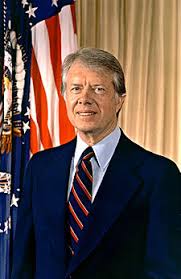
Jimmy Carter
By March 25, 2018, Trump—having held office for little more than a year—had:
- Fired FBI Director James Comey for refusing to pledge his personal loyalty—and for investigating documented ties between Russian Intelligence agents and the 2016 Trump Presidential campaign;
- Threatened to fire Special Counsel Robert Mueller, who was assigned to take over that investigation after the Comey firing;
- Repeatedly attacked the nation’s press as “fake news” and “the enemy of the American people”;
- Contemptuously dismissed the warnings of American Intelligence agencies that Russia subverted the 2016 Presidential campaign—and planned to do the same for the upcoming mid-term elections in November, 2018.
- Repeatedly praised Russian dictator Vladimir Putin—and refused to enforce Congressionally-mandated sanctions against Russia for its subversion of the 2016 Presidential election.
Trump, in short, had only contempt for the humility of a Jimmy Carter.
Barack Obama, like Carter, believes in rationality and decency.
As a graduate of Columbia University and Harvard Law School, Obama was one of the most academically gifted Presidents in American history.
Yet he failed—like Carter—to grasp and apply this fundamental lesson taught by Niccolo Machiavelli, the father of modern political science.
In The Prince, Machiavelli warns:
From this arises the question whether it is better to be loved than feared, or feared more than loved.
The reply is, that one ought to be both feared and loved, but as it is difficult for the two to go together, it is much safer to be feared than loved….
And men have less scruple in offending one who makes himself loved than one who makes himself feared; for love is held by a chain of obligations which, men being selfish, is broken whenever it serves their purpose; but fear is maintained by a dread of punishment which never fails.
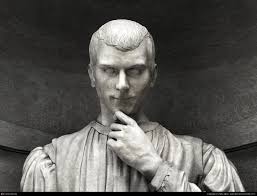
Niccolo Machiavelli
Obama’s failure to recognize the truth of Machiavelli’s lesson allowed Republicans to thwart many of his Presidential ambitions—such as picking a replacement for deceased Supreme Court Justice Antonin Scalia.
Throughout 2016, liberals celebrated on Facebook and Twitter the “certain” Presidency of former First Lady Hillary Clinton.
They fully expected to win the White House again, and thought they might retake the Senate—and maybe even the House of Representatives.
Michelle Obama’s mantra of “When they go low, we go high” proved no match for Trump’s millions of Russian trolls flooding the Internet with legitimately fake news.
For Democrats to win elective victories and enact their agenda, they must find their own George Pattons to take on the Waffen-SS generals among Republican ranks.
ABC NEWS, ADOLF HITLER, ALTERNET, AP, BBC, BUZZFEED, CBS NEWS, CNN, DAILY KOS, DAVID BROOKS, DONALD TRUMP, FBI, GEORGE C. SCOTT, GEORGE S. PATTON, GESTAPO, HOGAN’S HEROES, JACK SMITH, JAMES COMEY, JIMMY CARTER, MEL BROOKS, MIKE FLYNN, MOTHER JONES, MOVEON, NAZI GERMANY, NBC NEWS, NEWSWEEK, NPR, PAUL RYAN, PBS NEWSHOUR, POLITICO, RAW STORY, REPUBLICAN PARTY, REUTERS, RICHARD GRUNBERGER, RICHARD NIXON, ROBERT MEULLER, SALON, SEATTLE TIMES, SLATE, SOVIET UNION, THE 12-YEAR REICH, THE ATLANTIC, THE CHICAGO SUN-TIMES, THE CHICAGO TRIBUNE, THE DAILY BEAST, THE GUARDIAN, THE HILL, THE HUFFINGTON POST, THE LOS ANGELES TIMES, THE NEW YORK TIMES, THE WALL STREET JOURNAL, THE WASHINGTON POST, TIME, TWITTER, U.S. NEWS & WORLD REPORT, UPI, USA TODAY, WAFFEN-SS, WEHRMACHT
In Bureaucracy, History, Law, Law Enforcement, Military, Politics, Social commentary on September 29, 2023 at 12:16 am
As former President Donald Trump lurches almost daily from one legal setback to another, many Americans ask: “Why do so many Republicans continue to support him?”
The answer lies in what happened 78 years ago in Berlin—when the “Thousand-Year” Third Reich collapsed after little more than 12 years.
While the Nazi Party ruled Germany from 1933 to 1945, its influence over all aspects of Germans’ lives was suffocating.
“Censorship prevailed, education was undermined, family life was idealized, but children were encouraged to turn in disloyal parents,” reads the back cover of Richard Grunberger’s classic 1971 book, The 12-Year Reich.
“‘Volk’ festivals, party rallies, awards, uniforms, pageantry all played a part in the massive effort to shape the mind of a nation.”
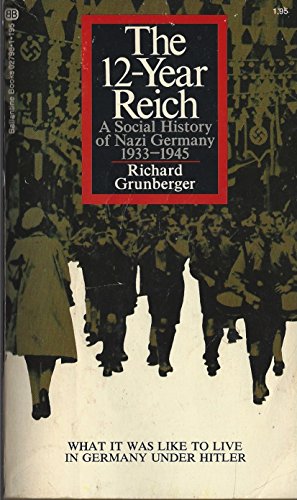
And yet, after the Reich surrendered unconditionally to the Allies on May 8, 1945, a strange thing happened: Virtually no German admitted to having been a Nazi—or having even known one.
American and British soldiers couldn’t find any German veterans willing to admit they had ever fought against Western, democratic nations. All the once-proud legionaries of the Wehrmacht and Waffen-SS swore they had been fighting “the real enemy”—the Russians—on the Eastern front.
Countless Germans claimed to have hidden Jews in their attics—despite the fact that six million Jews died horrifically before the Reich fell.
And almost universally, they blamed the conflict on the man they had embraced as their Fuhrer.
In short: Adolf Hitler had lost the war he started—making him a loser nobody wanted to be identified with.
In the decades since, the “loser” tag has continued to stick with those who once served the Third Reich. Mel Brooks has repeatedly turned German soldiers—once the pride of the battlefield—into idiotic comic foils.
Even the fearsome Gestapo was spoofed for laughs on the long-running TV comedy, “Hogan’s Heroes.”

“Hogan’s Heroes”
“Americans love a winner,” George C. Scott as George S. Patton says at the outset of the classic 1970 movie. “And will not tolerate a loser.”
And that is why Republicans have stuck so closely with Donald J. Trump—as President and former President.
A typical example of this occurred on June 8, 2017 after former FBI director James Comey testified before the United States Senate Select Committee on Intelligence.
Comey revealed that, on February 14, 2017, Trump had ordered everyone but Comey to leave a crowded meeting in the Oval Office.
Flynn had resigned the previous day from his position as National Security Adviser. The FBI was investigating him for his previously undisclosed ties to Russia.
“I hope you can see your way clear to letting this go, to letting Flynn go,” said Trump. “He is a good guy. I hope you can let this go.”
This was clearly an attempt by Trump to obstruct the FBI’s investigation.
Yet Republican House Speaker Paul Ryan rushed to excuse Trump’s clearly illegal behavior: “He’s new at government, so therefore I think he’s learning as he goes.”
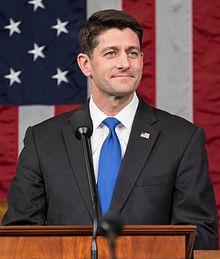
Paul Ryan
David Brooks, the conservative New York Times columnist, offered a more accurate explanation of Trump’s motives. Speaking on The PBS Newshour, Brooks said:
“We are a nation of laws. Donald Trump lives in an entirely different cultural universe. He is more clannist, believing in clan, believing in family, believing in loyalty, not recognizing objective law, not recognizing the procedures that is really how modern government operates….
“It’s not only that he doesn’t know the rules, but at all along and throughout his presidency, he has sort of trampled on the rules almost as a matter of policy, as a matter of character, because he doesn’t believe in that kind of relationships. It’s all personal loyalty, not about laws and norms and standards.”
Republicans don’t care that Trump has trashed the institutions that Americans have cherished for more than 200 years. Institutions like an independent judiciary, a free press, and an incorruptible Justice Department.
He has viciously attacked all of these—and Republicans have either said nothing or rushed to his defense. Many of them have tried to short-circuit Special Counsel Jack Smith’s investigation and prosecution of Trump’s inciting a deadly riot against Congress on January 6, 2021.
What Republicans truly fear about Donald Trump is that if they dare to hold him accountable for his lifetime of criminality, his Fascistic base will turn on them—and turn them out of Congress.
If Trump is convicted of multiple crimes, he will become a man no one any longer fears.
He will likely become the Republican nominee for President—and one almost guaranteed to lose in 2024 as he did in 2000.
He will become a figure held up to ridicule and condemnation.
Like Adolf Hitler. Like Richard Nixon.
And his Congressional supporters will be branded as losers along with him.
Republicans vividly remember what happened after Nixon was forced to resign on August 9, 1974: Democrats, riding a wave of reform fever, swept Republicans out of the House and Senate—and Jimmy Carter into the White House.
If they are conflicted—whether to continue supporting Trump or desert him—the reason is the same: How can I hold onto my power and all the privileges that go with it?
ABC NEWS, AL QAEDA, ALTERNET, AMERICABLOG, AMERICAN CAESARS: THE LIVES OF THE PRESIDENTS FROM FRANKLIN D. ROOSEVELT TO GEORGE W. BUSH, AMERICAN EMPIRE, AP, ” 9/11, BABY BOOMER RESISTANCE, BASHAR AL-ASSAD, BILL CLINTON, BLOOMBERG, BUREAUCRACY, BUZZFEED, CBS NEWS, CHRIS MATHEWS, CNN, CONDOLEEZA RICE, CROOKS AND LIARS, DAILY KOZ, DONALD TRUMP, DRUDGE REPORT, DWIGHT EISENHOWER, FACEBOOK, FBI, FIVETHIRTYEIGHT, FRANKLIN D. ROOSEVELT, GEORGE H.W. BUSH, GEORGE W. BUSH, GERALD R. FORD, HARPER’S MAGAZINE, HARRY S. TRUMAN, HUFFINGTON POST, JIMMY CARTER, JOHN F. KENNEDY, LYNDON B. JOHNSON, MEDIA MATTERS, MOTHER JONES, MOVEON, MSNBC, NBC NEWS, NEWSWEEK, NIGEL HAMILTON, NPR, OSAMA BIN LADEN, PBS NEWSHOUR, POLITICO, POLITICUSUSA, RAW STORY, REPUBLICAN PARTY, REUTERS, RICHARD CLARKE, RICHARD NIXON, ROMAN EMPIRE, SALON, SEATTLE TIMES, SEPTEMBER 11, SLATE, SUETONIUS, SYRIA, TALKING POINTS MEMO, TERRORISM, THE ATLANTIC, THE CHICAGO SUN-TIMES, THE CHICAGO TRIBUNE, THE DAILY BEAST, THE DAILY BLOG, THE GUARDIAN, THE HILL, THE HUFFINGTON POST, THE LOS ANGELES TIMES, THE NATION, THE NEW REPUBLIC, THE NEW YORK TIMES, THE TWELVE CAESARS, THE VILLAGE VOICE, THE WASHINGTON POST, THINKPROGRESS, TIME, TRUTHDIG, TRUTHOUT, TWITTER, TWO POLITICAL JUNKIES, U.S. NEWS & WORLD REPORT, UPI, USA TODAY
In Bureaucracy, History, Military, Politics, Social commentary on September 15, 2023 at 12:12 am
Colonel Brandt: “I wonder what we’ll do after we lose the war.”
Captain Kiesel: “Prepare for the next one.”
–-“The Cross of Iron,” film by Sam Peckinpah
On September 12, 2001, President George W. Bush attended a meeting of the National Security Council.
“Why shouldn’t we go against Iraq, not just Al-Qaeda?” demanded Donald Rumsfeld, the Secretary of Defense.
Vice President Dick Cheney enthusiastically agreed.
Secretary of State Colin Powell then pointed out there was absolutely no evidence that Iraq had had anything to do with 9/11 or Al-Qaeda. And he added: “The American people want us to do something about Al-Qaeda”—not Iraq.
On November 21, 2001, only 10 weeks after 9/11, Bush told Rumsfeld: It’s time to turn to Iraq.
Liars Club: Dick Cheney, George Bush, Donald Rumsfeld
Bush and his war-hungry Cabinet officials knew that Americans demanded vengeance on Al-Qaeda’s mastermind, Osama bin Laden, and not Iraqi dictator Saddam Hussein. So they repeatedly fabricated “links” between the two:
- Saddam had worked hand-in-glove with Bin Laden to plan 9/11.
- Saddam was harboring and supporting Al-Qaeda throughout Iraq.
- Saddam, with help from Al-Qaeda, was scheming to build a nuclear bomb.
Yet as early as September 22, 2001, Bush had received a classified President’s Daily Brief intelligence report, which stated that there was no evidence linking Saddam Hussein to 9/11.
The report added that there was scant credible evidence that Iraq had any significant collaborative ties with Al-Qaeda.
Even more important: Saddam had tried to monitor Al Qaeda through his intelligence service—because he saw Al-Qaeda and other theocratic radical Islamist organizations as a potential threat to his secular regime.
Bush administration officials repeatedly claimed that Iraq possessed huge quantities of chemical and biological weapons, in violation of UN resolutions. And they further claimed that US intelligence agencies had determined:
- the precise locations where these weapons were stored;
- the identities of those involved in their production; and
- the military orders issued by Saddam Hussein for their use in the event of war.
Among other lies stated as fact by members of the Bush administration:
- Iraq had sought uranium from Niger, in west Africa.
- Thousands of aluminum tubes imported by Iraq could be used in centrifuges to create enriched uranium.
- Iraq had up to 20 long-range Scud missiles, prohibited under UN sanctions.
- Iraq had massive stockpiles of chemical and biological agents, including nerve gas, anthrax and botulinum toxin.
- Saddam Hussein had issued chemical weapons to front-line troops who would use them when US forces crossed into Iraq.
Consider the following:
August 26, 2002: Cheney told the Veterans of Foreign Wars, “There is no doubt that Saddam Hussein now has weapons of mass destruction. There is no doubt he is amassing them to use against our friends, against our allies and against us.”
September 8, 2002: National Security Advisor Condoleeza Rice said on CNN: ”There is certainly evidence that Al-Qaeda people have been in Iraq. There is certainly evidence that Saddam Hussein cavorts with terrorists.”
September 18, 2002: Rumsfeld told the House Armed Services Committee, “We do know that the Iraqi regime has chemical and biological weapons. His regime has amassed large, clandestine stockpiles of chemical weapons—including VX, sarin, cyclosarin and mustard gas.”
October 7, 2002: Bush declared in a nationally televised speech in Cincinnati that Iraq “possesses and produces chemical and biological weapons. It is seeking nuclear weapons.”
March 16, 2003: Cheney declared on NBC’s “Meet the Press”: “We believe [Saddam Hussein] has, in fact, reconstituted nuclear weapons.”
March 30, 2003: On ABC’s “This Week” program, 10 days into the war, Rumsfeld said: “We know where they [weapons of mass destruction] are.”
Bush never regretted his decision to invade Iraq, which occurred on March 20, 2003.
Even as American occupying forces repeatedly failed to turn up any evidence of “weapons of mass destruction” (WMDs), Bush and his minions claimed the invasion a good thing.
In fact, Bush—who hid out the Vietnam war in the Texas Air National Guard—even joked publicly about the absence of WMDs.
He did so at a White House Correspondents dinner on March 24, 2004—one year after he had started the war.
George W. Bush at the 2004 White House Correspondents’ dinner
To Bush, the non-existent WMDs were nothing more than the butt of a joke that night. While an overhead projector displayed photos of a puzzled-looking Bush searching around the Oval Office, Bush recited a comedy routine.
Click here: Bush laughs at no WMD in Iraq – YouTube
“Those weapons of mass destruction have gotta be somewhere,” Bush laughed, while a photo showed him poking around the corners in the Oval Office.
“Nope–no weapons over there! Maybe they’re under here,” he said, as a photo showed him looking under a desk.
Meanwhile, an assembly of wealthy, pampered men and women—the elite of America’s media and political classes—laughed heartily during Bush’s performance. It was a scene worthy of the court of the ancient Caesars, complete with royal flunkies.
Ultimately, the war that Bush had deliberately provoked
- Took the lives of 4,484 Americans.
- Cost the United States Treasury at least $2 trillion.
- Created a Middle East power vacumn.
- Allowed Iran–Iraq’s arch enemy–to eagerly fill it.
- Killed at least 655,000 Iraqis.
- Bush retired from office with a lavish pension and full Secret Service protection.
- He wrote his memoirs and was paid $7 for the first 1.5 million copies.
- Cheney, Rumsfeld, Rice retired to private business, wrote their own memoirs, and lived in comfort as respected elder statesmen.
ABC NEWS, AL QAEDA, ALTERNET, AMERICABLOG, AMERICAN CAESARS: THE LIVES OF THE PRESIDENTS FROM FRANKLIN D. ROOSEVELT TO GEORGE W. BUSH, AMERICAN EMPIRE, AP, ” 9/11, BABY BOOMER RESISTANCE, BASHAR AL-ASSAD, BILL CLINTON, BLOOMBERG, BUREAUCRACY, BUZZFEED, CBS NEWS, CHRIS MATHEWS, CNN, CONDOLEEZA RICE, CROOKS AND LIARS, DAILY KOZ, DONALD TRUMP, DRUDGE REPORT, DWIGHT EISENHOWER, FACEBOOK, FBI, FIVETHIRTYEIGHT, FRANKLIN D. ROOSEVELT, GEORGE H.W. BUSH, GEORGE W. BUSH, GERALD R. FORD, HARPER’S MAGAZINE, HARRY S. TRUMAN, HUFFINGTON POST, JIMMY CARTER, JOHN F. KENNEDY, LYNDON B. JOHNSON, MEDIA MATTERS, MOTHER JONES, MOVEON, MSNBC, NBC NEWS, NEWSWEEK, NIGEL HAMILTON, NPR, OSAMA BIN LADEN, PBS NEWSHOUR, POLITICO, POLITICUSUSA, RAW STORY, REPUBLICAN PARTY, REUTERS, RICHARD CLARKE, RICHARD NIXON, ROMAN EMPIRE, SALON, SEATTLE TIMES, SEPTEMBER 11, SLATE, SUETONIUS, SYRIA, TALKING POINTS MEMO, TERRORISM, THE ATLANTIC, THE CHICAGO SUN-TIMES, THE CHICAGO TRIBUNE, THE DAILY BEAST, THE DAILY BLOG, THE GUARDIAN, THE HILL, THE HUFFINGTON POST, THE LOS ANGELES TIMES, THE NATION, THE NEW REPUBLIC, THE NEW YORK TIMES, THE TWELVE CAESARS, THE VILLAGE VOICE, THE WASHINGTON POST, THINKPROGRESS, TIME, TRUTHDIG, TRUTHOUT, TWITTER, TWO POLITICAL JUNKIES, U.S. NEWS & WORLD REPORT, UPI, USA TODAY
In Bureaucracy, History, Military, Politics, Social commentary on September 14, 2023 at 12:43 am
September 11, 2023, marks the 22nd anniversary of the worst terrorist attack on United States soil. Inevitably, this is a time to remember all those whose lives were so cruelly snuffed out.
But it should also be a time to remember those who made this atrocity inevitable—by refusing to acknowledge and address the impending threat from Al-Qaeda.
British historian Nigel Hamilton has chronicled their arrogance and indifference in his 2010 biography: American Caesars: Lives of the Presidents from Franklin D. Roosevelt to George W. Bush.
Hamilton noted that Richard Clarke, the national security advisor on terrorism, was certain that Osama bin Laden had arranged the [USS.] Cole bombing in Aden on October 12, 2000.

Richard Clarke
Aude, CC BY-SA 3.0 <https://creativecommons.org/licenses/by-sa/3.0>, via Wikimedia Commons
For months, Clarke tried to convince others in the Bush Administration that Bin Laden was plotting another attack against the United States—either abroad or at home.
But Clarke could not prevail against the know-it-all arrogance of such higher-ranking Bush officials as Vice President Dick Cheney; Secretary of Defense Donald Rumsfeld; Rumsfeld’s deputy, Paul Wolfowitz; and National Security Advisor Condoleeza Rice.
Rice initially refused to hold a cabinet-level meeting on the subject. Then she “insisted the matter be handled only by a more junior Deputy Principals meeting” in April, 2001, writes Hamilton.
Wolfowitz, the number-two man at the Department of Defense, said: “I don’t understand why we are beginning by talking about this one man, bin Laden.”
Even after Clarke outlined the threat posed by Al-Qaeda, Wolfowitz—whose real target was Saddam Hussein—said: “You give bin Laden too much credit.”
Wolfowitz insisted that bin Laden couldn’t carry out his terrorist acts without the aid of a state sponsor—namely, Iraq.
Wolfowitz, in fact, blamed Iraq for the 1993 bombing of the World Trade Center. Clarke was stunned, since there was absolutely no evidence of Iraqi involvement in this.
“Al-Qaeda plans major acts of terrorism against the United States,” Clarke warned his colleagues. He pointed out that, like Adolf Hitler, bin Laden had actually published his plans for future destruction.
Osama bin Laden
And he added: “Sometimes, as with Hitler in Mein Kampf, you have to believe that these people will actually do what they say they will do.”
Wolfowitz heatedly traded on his Jewish heritage to bring Clarke’s unwelcome arguments to a halt: “I resent any comparison between the Holocaust and this little terrorist in Afghanistan.”
Writing in outraged fury, Hamilton sums up Clarke’s agonizing frustrations:
- Bush’s senior advisors treated their colleagues who had served in the Clinton administration with contempt.
- President Bush, Vice President Dick Cheney, National Security Advisor Condoleeza Rice, Secretary of Defense Donald Rumsfeld and Deputy Defense Secretary Paul Wolfowitz seemed content to ignore the danger signals of an impending Al-Qaeda attack.
- This left only Secretary of State Colin Powell, his deputy Richard Armitage, Richard Clarke and a skeptical Treasury Secretary, Paul O’Neill, to wage “a lonely battle to waken a seemingly deranged new administration.”
Clarke alerted Federal Intelligence agencies that “Al-Qaeda is planning a major attack on us.” He asked the FBI and CIA to report to his office all they could learn about suspicious persons or activities at home and abroad.
Finally, at a meeting with Rice on September 4, 2001, Clarke challenged her to “picture yourself at a moment when in the very near future Al-Qaeda has killed hundreds of Americans, and imagine asking yourself what you wish then that you had already done.”
Seven days later, Al-Qaeda struck, and 3,000 Americans died horrifically—and needlessly.
Neither Bush, Cheney, Rice, Rumsfeld nor Wolfowitz ever admitted their negligence. Nor would any of them be brought to account.
Disgustingly, these were the same officials who, afterward, posed as the Nation’s saviors–and branded anyone who disagreed with them as a traitor, practices the Right continues to exploit to this day.
Only Richard Clarke—who had vainly argued for stepped-up security precautions and taking the fight to Al-Qaeda—gave that apology.
On March 24, 2004, Clarke testified at the public 9/11 Commission hearings. Addressing relatives of victims in the audience, he said: “Your government failed you, those entrusted with protecting you failed you, and I failed you.”
Yet even worse was to come.
On the evening after the September 11 attacks, Bush took Clarke aside during a meeting in the White House Situation Room:
“I want you, as soon as you can, to go back over everything, everything. See if Saddam [Hussein, the dictator of Iraq] did this. See if he’s linked in any way.”
Clarke was stunned: “But, Mr. President, Al-Qaeda did this.”
“I know, I know,” said Bush. “But see if Saddam was involved. I want to know.”
Hussein had not plotted the attack—and there was no evidence proving that he did. But the attack gave “W” the excuse he wanted to remove the man he blamed for the 1992 defeat of his father, President George H.W. Bush.
Bush believed that his father would have been re-elected if he had “gone all the way” into Baghdad during the 1991 Gulf War.
He would finish the job that his father had started but failed to compete.
On September 12, 2001, Bush attended a meeting of the National Security Council.
“Why shouldn’t we go against Iraq, not just Al-Qaeda?” demanded Donald Rumsfeld, the Secretary of Defense.
Vice President Dick Cheney enthusiastically agreed.


.jpg)
 Bureaucracybuster's Blog
ABC NEWS, ADOLF HITLER, ALTERNET, AMERICABLOG, AP, BABY BOOMER RESISTANCE, BARACK OBAMA, BBC, BILL CLINTON, BLOOMBERG NEWS, BUZZFEED, CANADA, CBS NEWS, CHINA, CHRIS MATTHEWS, CNN, CNN'S "STARTING POINT", CROOKS AND LIARS, CZECHOSLAVAKIA, DAILY KOS, DARRELL ISSA, DAVID BROOKS, DEBT CEILING, DENMARK, DONALD TRUMP, DRUG TRAFFICKING, EXECUTIVE ORDERS, EXTORTION, FIVETHIRTYEIGHT, GEORGE W. BUSH, GREENLAND, HARPER’S MAGAZINE, HOUSE SPEAKER JOHN BOEHNER, HUFFINGTON POST, ILLEGAL ALIENS, immigration reform, INSIDER, IRAN, JANET YELLEN, JIMMY CARTER, JOSEPH BIDEN, JUSTIN TRUDEAU, MEDIA MATTERS, MEXICO, MITCH MCCONNELL, MOTHER JONES, MOVEON, MSNBC, MSNBC'S "HARDBALL", NANCY PELOSI, NAZI GERMANY, NBC NEWS, NEGOTIATING, NEVILLE CHAMBERLAIN, NEW REPUBLIC, NEWSDAY, NEWSWEEK, NEWT GINGRICH, NICCOLO MACHIAVELLI, NORTH KOREA, NPR, PANAMA CANAL, PAP SMEARS, PBS NEWSHOUR, PITUFFIK SPACE BASE, PLANNED PARENTHOOD, POLAND, POLITICO, POLITICUSUSA, R.I.CO. ACT, RAW STORY, REPUBLICAN PARTY, REPUBLICANS, REUTERS, Ronald Reagan, RUSSIA, SALON, SEATTLE TIMES, SLATE, TALKING POINTS MEMO, TARIFFS, THE ATLANTIC, THE CHICAGO SUN-TIMES, THE CHICAGO TRIBUNE, THE DAILY BEAST, THE DAILY BLOG, THE GUARDIAN, THE HAMILTON PROJECT, THE HILL, THE HUFFINGTON POST, THE LOS ANGELES TIMES, THE NATION, THE NEW REPUBLIC, THE NEW YORK TIMES, THE NEW YORKER, THE PRINCE, THE VILLAGE VOICE, THE WASHINGTON POST, THINKPROGRESS, TIME, TITLE X, TRUTHDIG, TRUTHOUT, TWITTER, TWO POLITICAL JUNKIES, U.S. NEWS & WORLD REPORT, UPI, USA TODAY, WARREN BUFFET, WENDY EDELBERG, WINSTON CHURCHILL, WONKETTE, WORLD WAR 11, X
HITLER DAYS ARE HERE AGAIN: PART TWO (OF FOUR)
In Bureaucracy, Business, History, Law, Law Enforcement, Military, Politics, Social commentary on January 8, 2025 at 12:10 amBy studying the “negotiating” methods used by Adolf Hitler, Americans generally—and Democrats in particular—can learn much about the mindset and “negotiating” style of today’s Republican party.
Consider President-Elect Donald Trump’s recent threats against not only Canada but Panama—specifically, to retake control of the Panama Canal.
On December 25, Trump told a conservative conference in Arizona that Panama was charging US ships “ridiculous, highly unfair” fees to use its namesake canal.
The United States built the canal during the administration of President Theodore Roosevelt and opened it in 1914. It remained controlled by the United States until President Jimmy Carter signed a a 1977 agreement for its eventual handover to Panama in 1999.
Panama Canal (in white)
But this week, Trump threatened that if shipping rates were not lowered, “we will demand that the Panama Canal be returned to us, in full, quickly and without question.”
He accused China of operating the canal and lamented that the United States “puts in Billions of Dollars in ‘repair’ money, but will have absolutely nothing to say about ‘anything.’”
On December 25, Trump posted on his website, Truth Social: “Merry Christmas to all, including to the wonderful soldiers of China, who are lovingly, but illegally, operating the Panama Canal.”
“There is not a single Chinese soldier in the canal,” the president of Panama, José Raúl Mulino, told reporters the next day, adding that there is “absolutely no Chinese interference.”
Trump’s threats against Panama may be connected with the outstanding tax evasion case he faces in the country.
In 2019, the owners of a Panama City hotel tower that was previously managed and operated under the Trump brand accused the Trump Organization of pocketing money meant to pay taxes. According to a lawsuit, Trump’s companies simply kept the money, “intentionally evading taxes” and leaving the new owner liable for millions.
Yet the blunt truth remains: Unless Trump goes to war with Panama, his threat to take over the canal is effectively meaningless.
During the 2024 Presidential campaign, Trump denied reading Adolf Hitler’s notorious book, Mein Kampf (“My Struggle.”)
In the past, however, he has acknowledged owning a copy of it. And he has adopted the same “negotiating” style as the late Fuhrer: Do-as-I-say-or-I’ll-destroy-you.
A classic example of Hitler’s “bargaining style” came in 1938, when he invited Austrian Chancellor Kurt von Schuschnigg to his mountaintop retreat in Obersalzberg, Germany.
Kurt von Schuschnigg
Hitler, an Austrian by birth, intended to annex his native land to Germany. Schuschnigg was aware of Hitler’s desire, but nevertheless felt secure in accepting the invitation. He had been assured that the question of Austrian sovereignty would not arise.
The meeting occurred on February 12, 1938.
Shuschnigg opened the discussion with a friendly compliment. Walking over to a large window, he admired the breathtaking view of the mountains.
HITLER: We haven’t come here to talk about the lovely view or the weather!
Austria has anyway never done anything which was of help to the German Reich….I am resolutely determined to make an end to all this business. The German Reich is a great power. Nobody can and nobody will interfere if it restores order on its frontiers.
SCHUSCHNIGG: We simply have to go on living alongside one another, the little state next to the big one. We have no other choice.
And that is why I ask you to tell me what your concrete complaints are. We will do all in our power to sort things out and establish a friendly relationship, as far as it is possible to do so.
HITLER: That’s what you say, Herr Schuschnigg. And I am telling you that I intend to clear up the whole of the so-called Austrian question—one way or another. Do you think I don’t know that you are fortifying Austria’s border with the Reich?
Adolf Hitler
SCHUSCHNIGG: There can be no suggestion at all of that—
HITLER: Ridiculous explosive chambers are being built under bridges and roads—
This was a lie, and Hitler knew it was a lie. But no matter. It gave him an excuse to threaten to destroy Austria—as he was to destroy so many other nations during the next seven years.
HITLER: I have only to give one command and all this comic stuff on the border will be blown to pieces overnight. You don’t seriously think you could hold me up, even for half an hour, do you?
Who knows—perhaps you will find me one morning in Vienna like a spring storm. Then you will go through something! I’d like to spare the Austrians that.
The S.A. [Hitler’s private army of Stormtroopers] and the [Condor] lLegion [which had bombed much of Spain into rubble during the three-year Spanish Civil War] would come in after the troops and nobody—not even I—could stop them from wreaking vengeance.
Schnuschigg made a cardinal mistake in dealing with Hitler: He showed fear. And this was precisely what the Nazi dictator looked for in an opponent.
Contrary to popular belief, Hitler did not constantly rage at everyone. On the contrary: he could, when he desired, be charming, especially to women. He used rage as a weapon, knowing that most people feel intimidated by it.
Share this: