Posts Tagged ‘JAPAN’
2020 PRESIDENTIAL ELECTION, ABC NEWS, ABORTION, AGUSTO PINOCHET, ALTERNET, AMERICABLOG, AMERICAN EXCEPTIONALISM, AMERICAN RECKONING: THE VIETNAM WAR AND OUR NATIONAL IDENTITY (BOOK), AP, AYATOLLAH RUHOLLAH KHOMEINI, BABY BOOMER RESISTANCE, BBC, BENJAMIN FRANKLIN, BIBLE BELT, BLOOMBERG NEWS, BUZZFEED, CBS NEWS, CHILE, CHINA, CHRISTIAN G. APPY, CIA, CIVIL RIGHTS ACT, CIVIL WAR, CNN, COAL MINING, CROOKS AND LIARS, DAILY KOS, DEMOCRATS, DONALD TRUMP, DRUG OVERDOSES, DWIGHT EISENHOWER, EDUCATION, FIVETHIRTYEIGHT, FUNDAMENTALIST CHRISTIANS, GERMANY, GUATEMALA, HARPER’S MAGAZINE, HISTORY, HUFFINGTON POST, INDIA, IRAN, ITALY, JACOBO ARBENZ, JAPAN, JOHN F. KENNEDY, JOSEPH R. BIDEN, LYNDON B. JOHNSON, MEDIA MATTERS, MOHAMMED MOSADDEGH, MOHAMMED-REZA SHAH PHLAVI, MOTHER JONES, MOVEON, MSNBC, MYTHS, NARENDRA MODI, NBC NEWS, NEW REPUBLIC, NEWSDAY, NEWSWEEK, NICARAGUA, NPR, OPIOD ADDICTION, PBS NEWSHOUR, POLITICO, POLITICS, POLITICUSUSA, PORNOGRAPHY, POVERTY, RAW STORY, RELIGIOUS CONSERVATIVES, REPUBLICANS, REUTERS, RICHARD NIXON, ROE V. WADE, RURAL AMERICA, SALON, SALVADORE ALLENDE, SEATTLE TIMES, SLATE, SMOKING, STEEL INDUSTRY, TALKING POINTS MEMO, THE ATLANTIC, THE CHICAGO SUN-TIMES, THE CHICAGO TRIBUNE, THE DAILY BEAST, THE DAILY BLOG, THE GUARDIAN, THE HILL, THE HUFFINGTON POST, THE INTERCEPT, THE LOS ANGELES TIMES, THE NATION, THE NEW REPUBLIC, THE NEW YORK TIMES, THE NEW YORKER, THE VILLAGE VOICE, THE WASHINGTON POST, THINKPROGRESS, THOMAS EDISON, TIME, TRUTHDIG, TRUTHOUT, TWITTER, U.S. NEWS & WORLD REPORT, UNITED STATES, UNITED STATES SUPREME COURT, UPI, USA TODAY, VIETNAM WAR, VOTER IGNORANCE, WORLD WAR 11
In Bureaucracy, History, Politics, Social commentary on September 12, 2023 at 12:12 am
Americans live by a series of myths—myths they would be the wiser to abandon. Some are embraced by liberals, others by conservatives, and still others by both.
Myth 4: Americans take pride in their history.
Americans’ ignorance of history—their own and that of other nations—has long been a scandal.
- A 2018 national survey by the Institute for Citizens & Scholars found that only one in three Americans (36%) can actually pass a multiple choice test consisting of items taken from the U.S. Citizenship Test.
- More than half of respondents (60%) didn’t know which countries the United States fought in World War II (Germany, Italy and Japan).
- And 57% did not know how many Justices actually serve on the nation’s highest court (nine).
- Only 24% correctly identified one thing Benjamin Franklin was famous for; 37% believed he invented the lightbulb (that inventor was Thomas Edison).
- Twelve percent incorrectly thought WWII General Dwight Eisenhower led troops in the Civil War; six percent thought he was a Vietnam War general.

if Americans are flagrantly ignorant of their own history, they are even worse at the history of other countries.
A major reason for this lies in Americans’ belief that other nations aren’t worth bothering about except when they threaten us. During the Vietnam war, soldiers referred to the United States as “The World”—as if the rest of the planet didn’t exist.
Americans, protected from Europe by the Atlantic Ocean and the Far East by the Pacific Ocean, allowed geography to isolate themselves from the messiness of the rest of the world.
Donald Trump, as President, gave a frightening example of this during a conversation with Indian Prime Minister Narendra Modi: “It’s not like you’ve got China on your border.” In fact, India does share a border with China.
Myth 5: The “Bible Belt” (the Deep South) is the spiritual capitol of America.
You won’t find these truths on “Green Acres” or “The Andy Griffith Show” but they form a stain on rural America that can’t be ignored:
- A 2015 study published in the Archives of Sexual Behavior found that religious conservatives search more for online pornography on Google than anyone else.
- Educational attainment and college graduation rates in the Bible Belt are among the lowest in the nation.
- Smoking rates are high in West Virginia, Kentucky, Arkansas, Tennessee, Louisiana, and Mississippi—and so are rates for smoking-related diseases and deaths.
- Heart disease, obesity, homicide and teenage pregnancies are among the highest in the nation.
Myth 6: Americans are health-conscious.
The United States is experiencing an epidemic of drug overdose deaths. In 2020, the age-adjusted rate of drug overdose deaths increased 31% compared to 2019.
Adults aged 35-44 experienced the highest rates of drug overdose deaths while young people aged 15-24 experienced the greatest percentage increase in deaths.

In 2019:
- 12 million Americans 12 or older used marijuana
- 9.1 million Americans used tobacco
- 14.5 million Americans aged 12 or older used alcohol
- 9.7 million people misused pain relievers
- 6 million people misused hallucinogens
- 5.9 million people misused depressants
- 5.5 million people misused cocaine
- 4.9 million people misused prescription stimulants
- 2.1 million people misused inhalants
- 2 million people used meth
- 745,000 Americans used heroin
Myth 7: Americans only support democratic regimes.
The United States has long supported foreign dictators—so long as they’re reliably Right-wing.
- Between 1898 and 1934, the United States repeatedly intervened with military force in Central America and the Caribbean.
- The United States occupied Nicaragua almost continuously from 1912 to 1933. Its legacy was the imposition of the tyrannical Somoza family, which ruled from 1936 to 1979.
- In 1953, the Eisenhower administration ordered the CIA to overthrew the democratically-elected government of of Iranian Prime Minister Mohammad Mosaddegh. His crime: Nationalizing the Iranian oil industry, which had been under British control since 1913.
- He was succeeded by Mohammad-Reza Shah Phlavi, a dictator who depended on United States government support to retain power until he was overthrown in 1979 by the Ayatollah Ruhollah Khomeini.
- In 1954, the CIA overthrew the democratically-elected government of Guatemalan President Jacobo Arbenz. His crime: Installing a series of reforms that expanded the right to vote, allowed workers to organize, legitimized political parties and allowed public debate.
- In 1970, President Richard M. Nixon ordered the CIA to prevent Marxist Salvador Allende from being democratically elected as president of Chile. When that failed, he ordered the CIA to overthrow Allende.
- His crime: A series of liberal reforms, including nationalizing large-scale industries (notably copper mining and banking).
- in 1973, he was overthrown by Chilean army units and national police. He was followed by Right-wing dictator Augusto Pinochet, who slaughtered 3,200 political dissidents, imprisoned 30,000 and forced another 200,000 Chileans into exile.
* * * * * * * * * *
Behind these myths: The belief in “American exceptionalism”—that the United States is unlike other nations in its innocence and steadfast dedication to human rights above all else.
Wrote Christian G. Appy, in his 2015 book, American Reckoning: The Vietnam War and Our National Identity:
“It was still unimaginable to most Americans that their own nation would wage aggressive war and justify it with unfounded claims, that it would support undemocratic governments reviled by their own people, and that American troops would be sent to fight in countries where they were widely regarded not as liberators but as imperialist invaders.”
For millions, that belief died a horrific death during the Vietnam war. Yet so long as millions remain convinced that America is guided by God and that its people are His faithful servants, these myths will remain vividly alive.
2020 PRESIDENTIAL ELECTION, ABC NEWS, ABORTION, AGUSTO PINOCHET, ALTERNET, AMERICABLOG, AMERICAN EXCEPTIONALISM, AMERICAN RECKONING: THE VIETNAM WAR AND OUR NATIONAL IDENTITY (BOOK), AP, AYATOLLAH RUHOLLAH KHOMEINI, BABY BOOMER RESISTANCE, BBC, BENJAMIN FRANKLIN, BIBLE BELT, BLOOMBERG NEWS, BUZZFEED, CBS NEWS, CHILE, CHINA, CHRISTIAN G. APPY, CIA, CIVIL RIGHTS ACT, CIVIL WAR, CNN, COAL MINING, CROOKS AND LIARS, DAILY KOS, DEMOCRATS, DONALD TRUMP, DRUG OVERDOSES, DWIGHT EISENHOWER, EDUCATION, FIVETHIRTYEIGHT, FUNDAMENTALIST CHRISTIANS, GERMANY, GUATEMALA, HARPER’S MAGAZINE, HISTORY, HUFFINGTON POST, INDIA, IRAN, ITALY, JACOBO ARBENZ, JAPAN, JOHN F. KENNEDY, JOSEPH R. BIDEN, LYNDON B. JOHNSON, MEDIA MATTERS, MOHAMMED MOSADDEGH, MOHAMMED-REZA SHAH PHLAVI, MOTHER JONES, MOVEON, MSNBC, MYTHS, NARENDRA MODI, NBC NEWS, NEW REPUBLIC, NEWSDAY, NEWSWEEK, NICARAGUA, NPR, OPIOD ADDICTION, PBS NEWSHOUR, POLITICO, POLITICS, POLITICUSUSA, PORNOGRAPHY, POVERTY, RAW STORY, RELIGIOUS CONSERVATIVES, REPUBLICANS, REUTERS, RICHARD NIXON, ROE V. WADE, RURAL AMERICA, SALON, SALVADORE ALLENDE, SEATTLE TIMES, SLATE, SMOKING, STEEL INDUSTRY, TALKING POINTS MEMO, THE ATLANTIC, THE CHICAGO SUN-TIMES, THE CHICAGO TRIBUNE, THE DAILY BEAST, THE DAILY BLOG, THE GUARDIAN, THE HILL, THE HUFFINGTON POST, THE INTERCEPT, THE LOS ANGELES TIMES, THE NATION, THE NEW REPUBLIC, THE NEW YORK TIMES, THE NEW YORKER, THE VILLAGE VOICE, THE WASHINGTON POST, THINKPROGRESS, THOMAS EDISON, TIME, TRUTHDIG, TRUTHOUT, TWITTER, U.S. NEWS & WORLD REPORT, UNITED STATES, UNITED STATES SUPREME COURT, UPI, USA TODAY, VIETNAM WAR, VOTER IGNORANCE, WORLD WAR 11
In Bureaucracy, History, Politics, Social commentary on September 11, 2023 at 12:15 am
“The great enemy of truth is very often not the lie—deliberate, contrived and dishonest—but the myth, persistent, persuasive and unrealistic. Too often we hold fast to the clichés of our forebears. We subject all facts to a prefabricated set of interpretations. We enjoy the comfort of opinion without the discomfort of thought.”
—John F. Kennedy
Americans live by a series of myths—myths they would be the wiser to abandon. Some are embraced by liberals, others by conservatives, and still others by both.
Myth 1: Americans are highly educated.
According to the 2020 U.S. Census:
- In 2022, the highest level of education of the population age 25 and older in the United States ranged from less than high school to advanced degrees beyond a bachelor’s degree.
- 9% had less than a high school diploma or equivalent;
- 28% had high school as their highest level of school completed;
- 15% had completed some college but didn’t have a degree;
- 10% had an associate degree;
- 23% had a bachelor’s degree;
- 14% had completed advanced education such as a master’s degree, professional degree or doctorate.
Myth 2: Rural America is the repository of old-fashioned virtues.
Years of “hayseed” comedies such as “The Beverly Hillbillies,” “The Real McCoys” “Green Acres” and “Petticoat Junction” convinced millions of Americans: If you want to find the “real” America, move to rural America.
If rural America is where you’ll find the “real” Americans, the future of the United States lies in peril.

Marshall County, Indiana
Derek Jensen (Tysto), CC BY 2.0 <https://creativecommons.org/licenses/by/2.0>, via Wikimedia Commons
- Rural Americans overwhelmingly support Donald Trump—who refused to accept defeat in a legitimate Presidential election, schemed to overturn the voters’ decision, and finally incited an attack on Congress to illegally remain in office.
- Rural America is home to fundamentalist Christians, who demand an end to legalized abortion and birth control—and thus hope to gain dictatorial control over women’s lives. They brand pro-choice Democrats as “baby killers.”
- During the 2020 Presidential election, Joe Biden won 91 of the nation’s 100 largest counties, but hardly anywhere else.
- Trump won about five times as many counties. Democrats are thriving in major metropolitan areas, but tanking elsewhere.
- Rather than being a Garden of Eden, rural America shares many big-city ills, such as crime, opioid addiction and a decline in life expectancy.
- Nearly all of the economic growth that occurred between the Great Recession and the start of the pandemic happened in a small number of metropolitan areas, making rural residents feel that the recession had never ended.

- Rural Americans refuse to abandon industries that are now dying out—such as in coal mining and steel. Trump promised—falsely—to bring those jobs back. Rural voters have forgiven him for this because he delivered on cultural issues—such as appointing anti-abortion Justices to the Supreme Court who overturned Roe v. Wade.
- Nearly half (46.7 percent) of all people living in rural areas are in the South. For a century following the Civil War (1861-1865) the South was accurately known as a Democratic stronghold. But that changed after Democratic President Lyndon B. Johnson signed the 1964 Civil Rights Act into law.
- In short: When Democrats went from suppressing black rights to protecting them, the great mass of white, racist rural Southerners moved to the Republican party.
Myth 3: Most Americans take a vital interest in politics.
Most Americans are dismayingly ignorant of politics at all levels—local, state and federal.
- The attempted coup of January 6, 2021, was largely fueled by ignorance. The rioters believed that Donald Trump was the real winner of the 2020 election, and that Joe Biden had “stolen” it through fraud.
- They clung to this belief, despite overwhelming evidence to the contrary, including numerous court decisions rejecting GOP claims of fraud, many of them authored by conservative, Republican-appointed judges.
- And this ignorance continues: A large majority of Republicans still believe that Biden is an illegitimate President—just 21% say that he “probably” or “definitely” won.

Donald Trump
- Most Americans don’t know the names of their state and federal representatives or even the names of the three branches of government.
- Only one third of Americans can name the three branches of our federal government: executive, legislative, judicial.
- Most voters overestimate the percentage of the federal budget spends on foreign aid (actually, about 1%). Yet they underestimate the amount going to entitlement programs, such as Medicare and Social Security. As a result, they believe we can solve our fiscal problems without either cutting entitlements or raising taxes on the vast majority of Americans.
- Voters also often reward or punish elected officials for events they did not cause, such as short-term economic trends or droughts.
Such ignorance makes people more susceptible to lies and conspiracy theories, including those about the 2020 election.
Myth 4: Americans take pride in their history.
Americans’ ignorance of history—their own and that of other nations—has long been a scandal.
- A 2018 national survey by the Institute for Citizens & Scholars found that only one in three Americans (36%) can actually pass a multiple choice test consisting of items taken from the U.S. Citizenship Test.
- More than half of respondents (60%) didn’t know which countries the United States fought in World War II (Germany, Italy and Japan).
2012 PRESIDENTIAL CAMPAIGN, 2016 PRESIDENTIAL CAMPAIGN, ABC NEWS, ABORTION, ALTERNET, AMERICABLOG, AP, ARMY-MCCARTHY HEARINGS, BABY BOOMER RESISTANCE, BBC, BIRTH CONTROL, BLOOMBERG NEWS, BUZZFEED, CBS NEWS, CNN, COMMUNISM, CROOKS AND LIARS, DAILY KOS, DAILY KOZ, DONALD TRUMP, FIVETHIRTYEIGHT, HARPER’S MAGAZINE, HELSINKI SUMMIT, HONOR, HUFFINGTON POST, HURRICANE SANDY, JAPAN, JOSEPH MCCARTHY, MATTHEW 7:17-20, MEDIA MATTERS, MOTHER JONES, MOVEON, MSNBC, NBC NEWS, NEW REPUBLIC, NEWSDAY, NEWSWEEK, NPR, PBS NEWSHOUR, POLITICO, POLITICUSUSA, RAW STORY, REUTERS, RICK SANTORUM, SALON, SAMURAI, SEATTLE TIMES, SLATE, TALKING POINTS MEMO, THE ATLANTIC, THE CHICAGO SUN-TIMES, THE CHICAGO TRIBUNE, THE DAILY BEAST, THE DAILY BLOG, THE GUARDIAN, THE HILL, THE HUFFINGTON POST, THE INTERCEPT, THE LOS ANGELES TIMES, THE NATION, THE NEW REPUBLIC, THE NEW YORK TIMES, THE NEW YORKER, THE VILLAGE VOICE, THE WALL STREET JOURNAL, THE WASHINGTON POST, THINKPROGRESS, TIME, TRUTHDIG, TRUTHOUT, TWITTER, U.S. NEWS & WORLD REPORT, UPI, USA TODAY, VLADIMIR PUTIN
In Bureaucracy, History, Politics, Social commentary on August 18, 2023 at 12:08 am
“Senator, may we not drop this?…You’ve done enough. Have you no sense of decency, sir? At long last, have you left no sense of decency?”
The speaker was Joseph N. Welch, chief counsel for the United States Army—then under investigation by Joseph McCarthy’s Senate Permanent Subcommittee on Investigations for alleged Communist activities.
It was June 9, 1954, the 30th day of the Army-McCarthy hearings.
And it was the pivotal moment that finally destroyed the career of the Wisconsin Senator whose repeated slanders of Communist subversion had bullied and frightened Americans for four years.
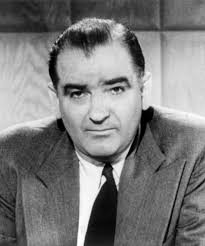
Joseph McCarthy
When the Senate gallery erupted in applause, McCarthy—totally surprised at his sudden reversal of fortune—was finished.
Today, however, other Americans should be asking themselves the question asked by Welch: “At long last, have you left no sense of decency?”
Americans like Rick Santorum, former United States Senator from Pennsylvania (1997 – 2007) and Republican Presidential candidate in 2012.

Santorum has fervently sought to ban legalized abortion—even in rape cases.
He also wants to ban birth control: “It’s not okay. It’s a license to do things in a sexual realm that is counter to how things are supposed to be.”
But this did not stop him from marrying, in 1990, a woman—Karen Garver—who had spent six years as the unmarried bedmate of an OBGYN-abortionist named Tom Allen, who was 40 years her senior.
Today, as Mrs. Santorum, she has totally reversed her view on abortion and wants to see it banned.
Then there’s ex-President Donald Trump.
Donald Trump
On July 15, 2018, Trump tweeted: “Our relationship with Russia has NEVER been worse thanks to many years of U.S. foolishness and stupidity and now, the Rigged Witch Hunt!”
He was referring to Special Counsel Robert S. Mueller, charged by the Justice Department with investigating the subversion of the 2016 Presidential election by Russian Intelligence agents.
The next day, Trump attended a press conference in Helsinki, Finland, with Russian President Vladimir Putin.
“Mr. President,” said Jeff Mason, a reporter from Reuters, “do you hold Russia at all accountable for anything in particular?”
Trump, refusing to condemn Russia, blasted the Mueller probe: “I think that the probe is a disaster for our country. I think it’s kept us apart. It’s kept us separated. There was no collusion at all. Everybody knows it.
“People are being brought out to the fore. So far that I know, virtually, none of it related to the campaign. They will have to try really hard to find something that did relate to the campaign.”
Associated Press Reporter Jonathan Lemire said to Trump: “Just now President Putin denied having anything to do with the election interference in 2016. Every U.S. intelligence agency has concluded that Russia did. My first question for you, sir, is who do you believe?”
Trump responded by attacking Democrats and the FBI as partners in a conspiracy:
“You have groups that are wondering why the FBI never took the server, why haven’t they taken the server? Why was the FBI told to leave the office of the Democratic National Committee?
“I’ve been wondering that. I’ve been asking that for months and months and I’ve been tweeting it out and calling it out on social media. Where is the server? I want to know where is the server and what is the server saying. With that being said, all I can do is ask the question.
“I have President Putin. He just said it’s not Russia. I will say this: I don’t see any reason why it would be, but I really do want to see the server.”
Clearly, the word “hypocrisy” meant nothing to McCarthy—just as it means nothing to Santorum and Trump.
But it should mean something to the rest of us.
In samurai Japan, officials who publicly disgraced themselves knew what to do. The samurai code of Bushido told them when they had crossed the line into eternal damnation.
And it gave them a way to redeem their lost honor—seppuku. With a small “belly-cutting” knife and the help of a trusted assistant who sliced off their head to spare them the agonizing pain of disembowelment.
In the armies of America and Europe, the method was slightly different: A pistol in a private room.

Considering the ready availability of firearms among Right-wing Republicans, redeeming lost honor shouldn’t be a problem for either man.
But of course it will be. It takes more than a trigger pull to “do the right thing.”
It takes insight to recognize that you’ve “done the wrong thing.” And it takes courage to act on that insight.
In men who live only for their own egos and wallets, such insight and courage will be forever missing. They are beyond redemption.
Their lives give proof to the warning offered in Matthew 7:17-20:
“Even so every good tree bringeth forth good fruit; but a corrupt tree bringeth forth evil fruit. A good tree cannot bring forth evil fruit, neither can a corrupt tree bring forth good fruit.
“Every tree that bringeth not forth good fruit is hewn down, and cast into the fire. Wherefore by their fruits ye shall know them.”
ABC NEWS, ALTERNET, AMERICABLOG, AP, BABY BOOMER RESISTANCE, BBC, BLOOMBERG NEWS, BUZZFEED, CANDICE BERGIN, CBS NEWS, CNN, CROOKS AND LIARS, DAILY KOS, DAILY KOZ, DRUDGE RETORT, ENGLAND, FACEBOOK, FIVETHIRTYEIGHT, FRANCE, GERMANY, HARPER’S MAGAZINE, HUFFINGTON POST, ISRAEL, JAPAN, JOHN MILIUS, MEDIA MATTERS, MOROCCO, MOTHER JONES, MOVEON, MOVIES, MSNBC, NBC NEWS, NEW REPUBLIC, NEWSDAY, NEWSWEEK, NPR, PBS NEWSHOUR, POLITICO, POLITICUSUSA, RAW STORY, REUTERS, SALON, SEAN CONNERY, SEATTLE TIMES, SLATE, TALKING POINTS MEMO, THE ATLANTIC, THE CHICAGO SUN-TIMES, THE CHICAGO TRIBUNE, THE DAILY BEAST, THE DAILY BLOG, THE GUARDIAN, THE HILL, THE HUFFINGTON POST, THE INTERCEPT, THE LOS ANGELES TIMES, THE NATION, THE NEW REPUBLIC, THE NEW YORK TIMES, THE NEW YORKER, THE VILLAGE VOICE, THE WALL STREET JOURNAL, THE WASHINGTON POST, THE WIND AND THE LION, THEODORE ROOSEVELT, THINKPROGRESS, TIME, TRUTHDIG, TRUTHOUT, TWITTER, TWO POLITICAL JUNKIES, U.S. NEWS & WORLD REPORT, UPI, USA TODAY, USA TODAY ABC NEWS, WONKETTE, WORLD WAR ii, WORLD WAR l, YELLOWSTONE NATIONAL PARK
In Entertainment, History, Military, Politics, Social commentary on September 9, 2022 at 12:39 am
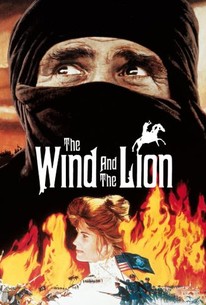
There is a poignant scene in the middle of John Milius’ classic 1975 adventure film, The Wind and the Lion, that Americans would do well to remember.
The movie is set in 1904 America and Morocco. An American woman, Eden Pedicaris (Candice Bergen) and her two children have been kidnapped while vacationing in Tangier.
The kidnapper is a Berber brigand named Mulai Ahmed el Raisuli (Sean Connery—then successfully trying to shed his recent James Bond image).
To Raisuli, the Sultan and his uncle, the Pasha of Tangier, are corrupt and beholden to the European powers struggling to control Morocco.
Raisuli issues an outrageous ransom demand to provoke an international incident, embarrass the Sultan and start a civil war.
In the United States, President Theodore Roosevelt (Brian Keith) is running for re-election. He sees the crisis as a way to win votes and demonstrate America’s military strength as a new power.
So he issues a demand of his own: “Pedicarus alive—or Raisuli dead!”
While events rapidly spiral out of control in the Middle East, Roosevelt decides to vacation in Yellowstone National Park.
One night, a grizzly bear attacks the camp and is shot by Roosevelt and several other campers. The next morning, Roosevelt holds an imprumptu press conference for the reporters who have accompanied him.

Brian Keith (left) as Theodore Roosevelt
REPORTER: Did you take part in killing the grizzly, Mr. President?
ROOSEVELT: Yes, unfortunately.
REPORTER: Why do you say, ‘unfortunately,’ Mr. President?
ROOSEVELT: The American grizzly is a symbol of the American character: strength, intelligence, ferocity. Maybe a little blind and reckless at times, but courageous beyond all doubt. And one other trait that goes with all previous.
REPORTER: And that, Mr. President?
ROOSEVELT: Loneliness. The American grizzly lives out his life alone. Indomitable, unconquered—but always alone. He has no real allies, only enemies, but none of them as great as he.
REPORTER: And you feel this might be an American trait?
ROOSEVELT: Certainly. The world will never love us. They respect us—they might even grow to fear us. But they will never love us, for we have too much audacity! And, we’re a bit blind and reckless at times, too.
REPORTER: Are you perhaps referring to the situation in Morocco and the Panama Canal.
ROOSEVELT: If you say so. The American grizzly embodies the spirit of America. He should be our symbol! Not that ridiculous eagle—he’s nothing more than a dandified vulture.
When the Pasha of Tangier refuses to negotiate with Raisuli to secure the return of Pedecaris, the American Consul to Tangier, Samuel Gummere, decides on action. He confers with Admiral Chadwick, commanding the South Atlantic Squadron, and a Marine captain named Jerome.
Gummere then orders a company of Marines, supported by a small detachment of sailors, to seize the Pasha. But then he admits to the riskiness of the decision:
GUMMERE: You realize, of course, that if we fail in even the slightest way, we’ll all be killed.
CHADWICK: Yes, and the whole world will probably go to war.
JEROME: Gentlemen, if we fail and are killed, I certainly hope the world does go to war.
CHADWICK: A world ar war!
GUMMERE: A world war. Now that would be something to go out on.
In just ten years, they will get their hearts’ desire when World War 1 erupts.
The Marines quickly overwhelm the Pasha’s palace guard, take the Pasha hostage and force him to negotiate.
During the hostage exchange, Raisuli is betrayed and captured by German and Moroccan troops. His friend, the Sherif of Wazan, organizes the Berber tribe for an attack on the Europeans and their Moroccan lackeys.
Eden Pedecaris, who has grown to admire Raisuli, convinces a Marine captain and his men to rescue the Berber chieftain. She argues that President Roosevelt had promised that Raisuli would be unharmed if the Pedecarises were returned safely.
The Berbers and Marines team up to defeat the Germans and their Moroccan allies, rescuing Raisuli in the process.
Thirteen years later—in 1917—the United States will officially take on the Germans in World War 1. And in another 37 years—in 1941—America will again declare war on Germany.
The film ends with a confident Theodore Roosevelt expecting (accurately) to be re-elected—and telling reporters that “the fate of Morocco will be decided tomorrow by me.”
The Wind and the Lion is set in an era when
- Nuclear weapons did not exist;
- Russia and China were militarily insignificant nations;
- England was the world’s superpower;
- America, Germany and Japan were on the rise;
- Israel was still a distant dream in the eyes of European Jews;
- The “Great Powers”—Germany, France and Great Britain—were struggling to carve up the Middle East to exploit its massive oil reserves; and
- Americans did not feel threatened by Islamic radicals.
As complex and dangerous as that era often seemed to those living more than 100 years ago, it has been succeeded by one even more complex and dangerous.
In this new and even more lethal era, it is well to remember Theodore Roosevelt’s warning that “we’re a bit blind and reckless at times, too.”
1999 (YEAR), 2000 (YEAR), 2020, 2020 PRESIDENTIAL ELECTION, ABC NEWS, ABRAHAM LINCOLN, ALTERNET, AMERICABLOG, AP, APOCALYPSE, ARMAGEDDON, BABY BOOMER RESISTANCE, BLOOMBERG, BUZZFEED, CBS NEWS, CHINA, CNN, COLD WAR, COMPUTERS, COVID-19, CROOKS AND LIARS, DAILY KOZ, DONALD TRUMP, DRUDGE REPORT, FACEBOOK, FIVETHIRTYEIGHT, GAIUS CASSIUS, GERMANY, HARPER’S MAGAZINE, HUFFINGTON POST, JAPAN, JESUS CHRIST, JOSEPH BIDEN, JULIUS CAESAR (PLAY), MEDIA MATTERS, MILLENNIUM, MOTHER JONES, MOVEON, MSNBC, NBC NEWS, NEW YEAR'S DAY, NEW YEAR'S EVE, NEW YORK, NEWSWEEK, NPR, PBS NEWSHOUR, POLITICO, POLITICUSUSA, RAW STORY, REUTERS, RIOTS, SALON, SAN FRANCISCO, SEATTLE TIMES, SLATE, SOREN KIERKEGAARD, SOVIET UNION, TALKING POINTS MEMO, THE ATLANTIC, THE CHICAGO SUN-TIMES, THE CHICAGO TRIBUNE, THE DAILY BEAST, THE DAILY BLOG, THE GUARDIAN, THE HILL, THE HUFFINGTON POST, THE LOS ANGELES TIMES, THE MILLENNIUM, THE NATION, THE NEW REPUBLIC, THE NEW YORK TIMES, THE VILLAGE VOICE, THE WASHINGTON POST, THINKPROGRESS, TIME, TIMES SQUARE, TRUTHDIG, TRUTHOUT, TWITTER, TWO POLITICAL JUNKIES, U.S. NEWS & WORLD REPORT, UPI, USA TODAY, WILLIAM SHAESPEARE, WONKETTE, Y2K
In Entertainment, History, Medical, Social commentary on December 31, 2021 at 12:23 am
New Year’s Eve, 2021, will soon lie behind us.
And for most people, saying “Goodbye” to 2021 can’t happen soon enough.
New Year’s Eve is traditionally a time for people to reflect on the major events of the previous 12 months. Some of these are highly personal. Others have been shared by the entire country.
Some of these remembrances inevitably bring pleasure. Others bring pain.
And 2021 has been a year of pain for millions.
Starting on January 6, then-President Donald Trump incited thousands of his fanatical disciples to attack the United States Capitol Building.
The reason: To halt the counting of Electoral College votes to certify the legitimate Presidential victory of Joe Biden in 2020—thus leaving Trump in office as “President-for-Life.”
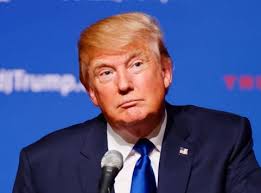
Donald Trump
Fortunately, democracy was saved—for the moment.
Meanwhile, COVID-19 continued to sweep across the globe. To date, it’s infected 285 million worldwide—and killed 5.42 million. In the United States, it’s infected 153.8 million and killed 822,000.
But by March, three new vaccines were being rolled out—and thus saving the lives of untold numbers of potential COVID victims.
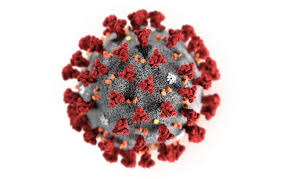
COVID-19
At the heart of every New Year’s Eve celebration is the fantasy that you get to start fresh in a matter of hours. And with that fantasy comes hope—that, this time, you can put your sorrows and failures behind you.
And for millions in 2022, life will look brighter—because Donald Trump, whose Presidency was marked by unprecedented criminality and treason, no longer holds office.
True, Trump has refused to admit that he was defeated in a legitimate election. And his lust to become America’s Dictator-in-chief remains as lethal as ever.
But democracies are always threatened by would-be tyrants. And Americans can take heart in the knowledge that, in 1945, they helped defeat two of the worst—in Germany and Japan.
And, for 50 years during the Cold War, they stood firm against dictators in China and the Soviet Union.
The last New Year’s Eve to be marked by worldwide fears was that of 1999:
- Fear of Y2K—that our highly computerized, globally-interconnected world would crash when the “19″ at the start of every year was replaced with a “20″.
- Fear of Armageddon—that Jesus, after dying 2,000 years ago, would magically return to destroy mankind (except for those 144,000 righteous souls He deemed worthy of salvation).
- Fear of the Millennium itself—of ending not simply another decade and century but an entire thousand-year period of history, and thus losing our historical ties to the familiar highlights of our own (and America’s) past.
And, especially where Y2K was concerned, news commentators were quick to stoke our anxieties.
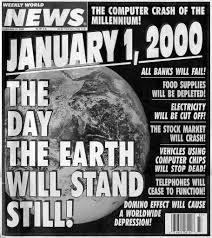
Long before New Year’s Eve, TV newscasters repeatedly warned that, when midnight struck on January 1, 2000, the three places you did not want to be were:
- In an airplane.
- In an elevator.
- In a hospital.
Countless numbers of people in America and around the world stocked up on food, water, batteries and other essentials for surviving an emergency.
Merchants and police feared widespread rioting and violence. If Y2K didn’t set it off, then fears of a heaven-sent Apocalypse might.
In San Francisco, along Powell Street—a major center of tourism and commerce—store owners boarded up their doors and windows as New Year’s Eve approached. Many closed earlier than usual that day.
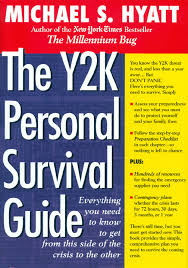
Fortunately, when midnight struck on January 1, 2000, the predictors of the coming Apocalypse were proven wrong.
- Computers kept working—and civilization didn’t crash along with them.
- Jesus didn’t miraculously return from the dead—just as he hadn’t during any previous year.
- And those who feared that the Millennium would usher in a strange and frightening new world soon found that 2000 was not all that different from previous years.
New Year’s Eve 1999 is now 22 years distant. But some lessons may still be learned from it:
Each year is a journey unto itself—filled with countless joys and sorrows. Many of these joys can’t be predicted. And many of these tragedies can’t be prevented.
Learn to tell real dangers from imaginary ones. Computers are real—and sometimes they crash. Men who died 2,000 years ago do not leap out of graveyards, no matter what their disciples predict.
Don’t expect any particular year to usher in the Apocalypse. In any given year there will be wars, famines, earthquakes, riots, floods and a host of other disasters. These have always been with us—and always will be. As Abraham Lincoln once said: “The best thing about the future is that it comes one day at a time.”

BumFluff2009, CC BY-SA 2.0 <https://creativecommons.org/licenses/by-sa/2.0>, via Wikimedia Commons
Don’t expect some Great Leader to lead you to success. As Gaius Cassius says in William Shakespeare’s “Julius Caesar”: “Men at some time are masters of their fate. The fault, dear Brutus, is not in our stars but in ourselves that we are underlings.”
Don’t expect any particular year or event to usher in your happiness. To again quote Lincoln: “Most people are about as happy as they make up their minds to be.”
If your life seems to make no sense to you, consider this: The philosopher Soren Kierkegaard once noted: “Life can only be understood backwards, but it must be lived forwards.”
2012 PRESIDENTIAL CAMPAIGN, 2016 PRESIDENTIAL CAMPAIGN, 2016 PRESIDENTIAL ELECTION, ABC NEWS, ABORTION, ALTERNET, AMERICABLOG, AP, ARMY-MCCARTHY HEARINGS, BABY BOOMER RESISTANCE, BIRTH CONTROL, BUZZFEED, CBS NEWS, CNN, COMMUNISM, CROOKS AND LIARS, DAILY KOZ, DONALD TRUMP, DRUDGE RETORT, FACEBOOK, FBI, FIVETHIRTYEIGHT, HARPER’S MAGAZINE, HELSINKI SUMMIT, HONOR, HURRICANE SANDY, JAPAN, JOSEPH MCCARTHY, KAREN SANTORUM, MATTHEW 7:17-20, MEDIA MATTERS, MOTHER JONES, MOVEON, MSNBC, NBC NEWS, NEWSWEEK, NPR, PBS NEWSHOUR, POLITICO, POLITICUSUSA, RAW STORY, REUTERS, RICK SANTORUM, SALON, SAMURAI, SEATTLE TIMES, SLATE, TALKING POINTS MEMO, THE ATLANTIC, THE CHICAGO SUN-TIMES, THE CHICAGO TRIBUNE, THE DAILY BEAST, THE DAILY BLOG, THE GUARDIAN, THE HILL, THE HUFFINGTON POST, THE LOS ANGELES TIMES, THE NATION, THE NEW REPUBLIC, THE NEW YORK TIMES, THE VILLAGE VOICE, THE WALL STREET JOURNAL, THE WASHINGTON POST, THINKPROGRESS, TIME, TOM ALLEN, TRUTHDIG, TRUTHOUT, TWITTER, TWO POLITICAL JUNKIES, U.S. NEWS & WORLD REPORT, UPI, USA TODAY, VLADIMIR PUTIN, WONKETTE
In Bureaucracy, History, Military, Politics, Social commentary on March 27, 2020 at 12:09 am
“Senator, may we not drop this?…You’ve done enough. Have you no sense of decency, sir? At long last, have you left no sense of decency?”
The speaker was Joseph N. Welch, chief counsel for the United States Army—then under investigation by Joseph McCarthy’s Senate Permanent Subcommittee on Investigations for alleged Communist activities.
It was June 9, 1954, the 30th day of the Army-McCarthy hearings.
And it was the pivotal moment that finally destroyed the career of the Wisconsin Senator whose repeated slanders of Communist subversion had bullied and frightened Americans for four years.
Joseph McCarthy
When the Senate gallery erupted in applause, McCarthy—totally surprised at his sudden reversal of fortune—was finished.
Today, however, other Americans should be asking themselves the question asked by Welch: “At long last, have you left no sense of decency?”
Americans like Rick Santorum, former United States Senator from Pennsylvania (1997 – 2007) and Republican Presidential candidate in 2012.
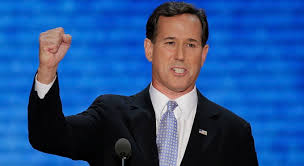
Rick Santorum
Santorum has fervently sought to ban legalized abortion—even in rape cases.
He also wants to ban birth control: “It’s not okay. It’s a license to do things in a sexual realm that is counter to how things are supposed to be.”
But this did not stop him from marrying, in 1990, a woman—Karen Garver—who had spent six years as the unmarried bedmate of an OBGYN-abortionist named Tom Allen, who was 40 years her senior.
Today, as Mrs. Santorum, she has totally reversed her view on abortion and wants to see it banned.
Then there’s President Donald Trump.
Donald Trump
On July 15, 2018, Trump tweeted: “Our relationship with Russia has NEVER been worse thanks to many years of U.S. foolishness and stupidity and now, the Rigged Witch Hunt!”
He was, of course, referring to Special Counsel Robert S. Mueller, charged by the Justice Department with investigating the subversion of the 2016 Presidential election by Russian Intelligence agents.
The next day, Trump attended a press conference in Helsinki, Finland, with Russian President Vladimir Putin.
Addressing a question to Trump, Jeff Mason, a reporter from Reuters, asked: “Mr. President, do you hold Russia at all accountable for anything in particular?”
Trump, refusing to condemn Russia, blasted the Mueller probe: “I think that the probe is a disaster for our country. I think it’s kept us apart. It’s kept us separated. There was no collusion at all. Everybody knows it.
“People are being brought out to the fore. So far that I know, virtually, none of it related to the campaign. They will have to try really hard to find something that did relate to the campaign.”
Associated Press Reporter Jonathan Lemire said to Trump: “Just now President Putin denied having anything to do with the election interference in 2016. Every U.S. intelligence agency has concluded that Russia did. My first question for you, sir, is who do you believe?”
Trump responded by attacking Democrats and the FBI as partners in a conspiracy:
“You have groups that are wondering why the FBI never took the server, why haven’t they taken the server? Why was the FBI told to leave the office of the Democratic National Committee?
“I’ve been wondering that. I’ve been asking that for months and months and I’ve been tweeting it out and calling it out on social media. Where is the server? I want to know where is the server and what is the server saying. With that being said, all I can do is ask the question.
“I have President Putin. He just said it’s not Russia. I will say this: I don’t see any reason why it would be, but I really do want to see the server.”
Clearly, the word “hypocrisy” meant nothing to McCarthy—just as it means nothing to Santorum and Trump.
But it should mean something to the rest of us.
In samurai Japan, officials who publicly disgraced themselves knew what to do. The samurai code of Bushido told them when they had crossed the line into eternal damnation.
And it gave them a way to redeem their lost honor—seppuku. With a small “belly-cutting” knife and the help of a trusted assistant who sliced off their head to spare them the agonizing pain of disembowelment.
In the armies of America and Europe, the method was slightly different: A pistol in a private room.
Considering the ready availability of firearms among Right-wing Republicans, redeeming lost honor shouldn’t be a problem for either man.
But of course it will be. It takes more than a trigger pull to “do the right thing.”
It takes insight to recognize that you’ve “done the wrong thing.” And it takes courage to act on that insight.
In men who live only for their own egos and wallets, such insight and courage will be forever lacking.They are beyond redemption.
Their lives give proof to the warning offered in Matthew 7:17-20:
“Even so every good tree bringeth forth good fruit; but a corrupt tree bringeth forth evil fruit. A good tree cannot bring forth evil fruit, neither can a corrupt tree bring forth good fruit.
“Every tree that bringeth not forth good fruit is hewn down, and cast into the fire. Wherefore by their fruits ye shall know them.”
ABC NEWS, ADOLF HITLER, AFGHANISTAN, AFRIKA KORPS, ALTERNET, AMERICABLOG, AP, BABY BOOMER RESISTANCE, BARACK OBAMA, BUZZFEED, CBS NEWS, CNN, CROOKS AND LIARS, DAILY KOZ, DONALD TRUMP, DRUDGE RETORT, EL ELAMEIN, ERWIN ROMMEL, FACEBOOK, FIVETHIRTYEIGHT, FRIEDRICH VON PAULUS, GEORGE W. BUSH, GREAT BRITAIN, HARPER’S MAGAZINE, IRAQ, JAPAN, JOSEPH GOEBBELS, MEDIA MATTERS, MOSCOW, MOTHER JONES, MOVEON, MSNBC, NAZI GERMANY, NBC NEWS, NEWSWEEK, NPR, PBS NEWSHOUR, PEARL HARBOR, POLITICO, POLITICUSUSA, RAW STORY, REUTERS, SALON, SEATTLE TIMES, SLATE, SOVIET UNION, STALINGRAD, TALKING POINTS MEMO, THANKSGIVING MESSAGE TO U.S. TROOPS, THE ATLANTIC, THE CHICAGO SUN-TIMES, THE CHICAGO TRIBUNE, THE DAILY BEAST, THE DAILY BLOG, THE GUARDIAN, THE HILL, THE HUFFINGTON POST, THE LOS ANGELES TIMES, THE NATION, THE NEW REPUBLIC, THE NEW YORK TIMES, THE VILLAGE VOICE, THE WASHINGTON POST, THINKPROGRESS, TIME, TOTAL WAR SPEECH, TRUTHDIG, TRUTHOUT, TWITTER, TWO POLITICAL JUNKIES, U.S. NEWS & WORLD REPORT, UNITED STATES, UPI, USA TODAY, WEHRMACHT, WINSTON CHURCHILL, WONKETTE, WORLD WAR ii
In Bureaucracy, History, Military, Politics, Social commentary on March 20, 2020 at 12:08 am
By February, 1943, the tide of war had turned irrevocably for Nazi Germany.
The string of quick and easy victories that had started on September 1, 1939 was over:
- Poland
- Norway
- Denmark
- Holland
- Belgium
- Luxembourg
- Greece
- France.
All had fallen under the heel of the Nazi jackboot. The swastika flag still flew triumphantly over the capitols of these once-free nations.
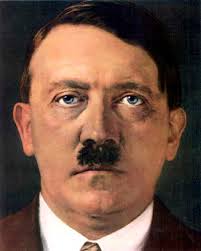
Adolf Hitler
And the word—and whim—of Germany’s Fuhrer, Adolf Hitler remained law for their populations.
But by March, 1943, all except the most fanatical Nazis could see that Germany was on a collision course with disaster.
- Under the unshakable leadership of Prime Minister Winston Churchill, Great Britain still remained a sworn enemy of the Third Reich.
- After six months of spectacular victories against the Soviet Union, the Wehrmacht had become hopelessly bogged down in the snow before Moscow.
- On December 11, 1941, following the attack on Pearl Harbor by his ally, Japan, Hitler declared war on the United States—thus pitting the Reich against the world’s two most powerful nations: America and Russia.
- In November, 1942, at El Alamein, the British Army halted the advance of General Erwin Rommel and his famed Afrika Korps across North Africa.
- On February 2, 1943, General Friedrich von Paulus surrendered the remains of the once-powerful Sixth Army at Stalingrad. The Reich suffered 730,000 total casualties, including nearly 91,000 German prisoners taken prisoner.
- On June 6, 1944, American, British and Canadian armies overwhelmed German’s “impregnable wall of death” on the Normandy beaches.
- In February, 1945, following the Vistula-Oder Offensive, the Red Army temporarily halted 37 miles east of Berlin.
So, by March, 1943, Germany desperately needed to hear some good news. And Propaganda Minister Joseph Goebbels was eager to supply it.
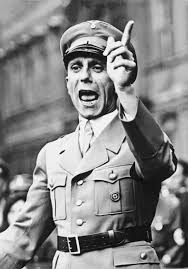
Joseph Goebbels
He did so in one of his last public addresses, delivered to a large but carefully selected audience in Gorlitz.
For Goebbels, the greatest challenge to the Reich lay in “the Bolshevist danger in the East.” And, for him, the solution was clear: “Total war is the demand of the hour.”
“Our soldiers, as soon as the great push on the Eastern Front gets under way, will ask no mercy and give no mercy.
“Already, our forces have begun softening up operations, and in the next weeks and months the big offensive will begin. They will go into battle with devotion like congregations going to a religious service.
“So, as the Fuhrer has overcome crises in the past, so will he triumph now.
“The other day he told me ‘I firmly believe that we shall overcome this crisis. I firmly believe that our army of millions will beat back our enemy and annihilate him. And some day our banners will be victorious. This is my life’s unshakable belief.'”
Thunderous applause repeatedly interrupted Goebbels’ address. Yet this could not replace the enormous losses Germany had suffered since 1939. Nor could it reverse the march of the Allied armies as they closed in on the Reich from East and West.
Now, fast-forward 74 years to November 23, 2017—Thanksgiving Day.
Donald Trump, President of the United States, speaks by video teleconference to American forces stationed in Iraq and Afghanistan.
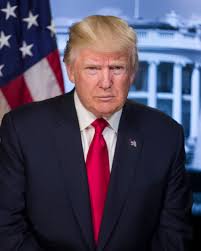
Donald Trump
President George W. Bush had risked his life to fly into Baghdad in 2003 to spend Thanksgiving with American forces. He flew into Iraq once again to visit troops in June, 2006.
And President Barack Obama took a similar risk when he visited American soldiers in Iraq in 2009, in Afghanistan in 2010, 2012 and 2014.
For Trump—who had five times dodged the draft during the Vietnam war—visiting an actual combat zone was apparently out of the question.
So he addressed American troops from the safety and comfort of his Mar-a-Lago Club and Resort in Palm Beach, Florida.
The address started off predictably enough: “It’s an honor to speak with you all and to give God thanks for the blessings of freedom and for the heroes who really have this tremendous courage that you do to defend us and to defend freedom.”
But, being Trump, he could not resist paying homage to himself: “We’re being talked about again as an armed forces. We’re really winning. We know how to win, but we have to let you win. They weren’t letting you win before; they we’re letting you play even. We’re letting you win….”
In short: You’re doing the grunt work, but the glory belongs to me.
“They say we’ve made more progress against ISIS than they did in years of the previous administration, and that’s because I’m letting you do your job….”
Translation: All those sacrifices you made under Presidents Bush and Obama went for nothing.
“A lot of things have happened with our country over the last very short period of time, and they’re really good — they’re really good. I especially like saying that companies are starting to come back.
“Now we’re working on tax cuts—big, fat, beautiful tax cuts. And hopefully we’ll get that and then you’re going to really see things happen.”
Or, put another way: Be grateful they elected me—because you’re about to see the 1% richest get even richer. Too bad you won’t be so lucky.
2016 PRESIDENTIAL CAMPAIGN, ABC NEWS, ADOLF HITLER, ALTERNET, ANN COULTER, AP, AUSTRIA, BARACK OBAMA, BILL CLINTON, BORDER WALL, BUZZFEED, CBS NEWS, CHARLES SCHUMER, CHRIS CILLIZZA, CNN, CONTRACTORS, COUNCIL OF ECONOMIC ADVISERS, CROOKS AND LIARS, CZECHOSLOVAKIA, DAILY KOZ, DAVID BROOKS, DEMOCRATS, DEPARTMENT OF COMMERCE, DEPARTMENT OF HOMELAND SECURITY, DICK CHENEY, DONALD TRUMP, EDOUARD DELADIER, FACEBOOK, FBI, FEDERAL AVIATION ADMINISTRATION (FAA), FOX NEWS, FRANCE, GEORGE W. BUSH, GOVERNMENT SHUTDOWN, HOUSE OF REPRESENTATIVES, JAPAN, JEDEDIAH BILA, JOSE ANDRES, JULIAN ZELITZER, KEVIN HASSETT, KURT VON SCHUSCHNIGG, MARIE ANTOINETTE, MARK SHIELDS, MIKE PENCE, MITCH MECONNELL, MOTHER JONES, MOVEON, MSNBC, MUNICH CONFERENCE, NANCY PELOSI, NAZI GERMANY, NBC NEWS, NEVILLE CHAMBERLAIN, NEWSWEEK, NICCOLO MACHIAVELLI, NPR, PBS NEWSHOUR, POLAND, POLITICO, RAW STORY, REPUBLICANS, REUTERS, ROBERT PAYNE, RUSH LIMBAUGH, SALON, SEATTLE TIMES, SLATE, SOUP KITCHENS, STATE OF THE UNION ADDRESS, SUPER BOWL, THE ATLANTIC, THE CHICAGO SUN-TIMES, THE CHICAGO TRIBUNE, THE DAILY BEAST, THE GUARDIAN, THE HILL, THE HUFFINGTON POST, THE LIFE AND DEATH OF ADOLF HITLER, THE LOS ANGELES TIMES, THE NATION, THE NEW YORK TIMES, THE PRINCE, THE WALL STREET JOURNAL, THE WASHINGTON POST, TIME, TRANSPORTATION SAFETY ADMINISTRATION (TSA), TWITTER, U.S. NEWS & WORLD REPORT, UBER, UNITED STATES HOUSE OF REPRESENTATIVES, UNITED STATES SECRET SERVICE, UNITED STATES SENATE, UPI, USA TODAY, WILBUR ROSS, WINSTON CHURCHILL, WORLD WAR 11
In Bureaucracy, History, Military, Politics, Social commentary on February 1, 2019 at 12:05 am
On January 25, 2019—the 35th day of the Federal Government shutdown—President Donald Trump did what no one expected. He caved.
In a White House press conference, he said:
- Lawmakers would have until February 15 to negotiate a compromise on border security.
- Otherwise, the government would shut down again.
- If Democrats did not give in to his demands to fund a border wall, he might use his executive authority to command the military to build the wall instead.
Essentially, he agreed to the same deal he was offered in December, 2018—before he allowed himself to be bullied by Ann Coulter and Rush Limbaugh into shutting down the government.
For all of Trump’s defiant words, his action was universally seen as a serious defeat—by both his opponents and supporters.
Among the latter was Right-wing provocateur Ann Coulter. Summing up the reaction of his Hispanic-hating supporters, she tweeted: “Good news for George Herbert Walker Bush: As of today, he is no longer the biggest wimp ever to serve as president of the United States.”
On the PBS Newshour, liberal political analyst Mark Shields said: “it was a total defeat for him. And, believe me…there will not be the will among Republicans in three weeks to go back and do this again. Once it’s open, it’s going to be opened.”
His counterpart, conservative analyst David Brooks, agreed: “It is a total—a total victory for the Democrats….If Donald Trump wants bring this on again, [Democrats will be] happy.
“The Republicans are miserable. They never want to come back to where they are right now. And so the odds that we will have another shutdown strike me as low. And it would be—for Trump, it would be suicidally low to—just to try this again.”
* * * * *
During his years as President, Bill Clinton tried to win over Republicans by supporting measures they liked—such as making it harder for the poor to get welfare via the Federal government.
In the end, his efforts to win over Republicans convinced them that he was weak. So they tried to impeach him for getting oral sex from a White House intern.
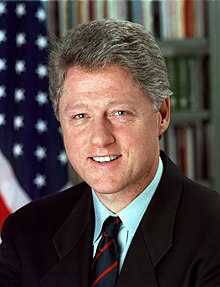
Bill Clinton
Similarly, Barack Obama spent the first two years of his Presidency hopelessly trying to gain Republican support. This only led to Senate Majority Leader Mitch McConnell’s saying that his goal was to make Obama “a one-term President.”
At least for the moment, Democrats seem to have learned that cowering before bullies only wins you their contempt. As Niccolo Machiavelli warned in The Prince, his classic work on politics:
“From this arises the question whether it is better to be loved than feared, or feared more than loved. The reply is, that one ought to be both feared and loved, but as it is difficult for the two to go together, it is much safer to be feared than loved.
“For it may be said of men in general that they are ungrateful, voluble, dissemblers, anxious to avoid danger and covetous of gain. As long as you benefit them, they are entirely yours: they offer you their blood, their goods, their life and their children, when the necessity is remote, but when it approaches, they revolt.
“And the prince who has relied solely on their words, without making other preparations, is ruined. For the friendship which is gained by purchase and not through grandeur and nobility of spirit is bought but not secured, and at a pinch is not to be expended in your service.
“And men have less scruple in offending one who makes himself loved than one who makes himself feared. For love is held by a chain of obligations which, men being selfish, is broken whenever it serves their purpose. But fear is maintained by a dread of punishment which never fails.”
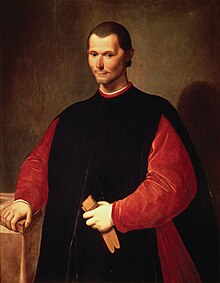
Niccolo Machiavelli
At the time of the 1938 Munich conference, a group of highly-placed German army officers were preparing to overthrow Adolf Hitler in a military coup. They counted on France and England to stand firm against the Fuhrer, handing him a major foreign policy defeat.
The officers intended to use that as an excuse to remove him from power—before he could plunge Germany into a disastrous war it could not win.
But when Britain and France surrendered Czechoslovakia to Hitler, his prestige in Germany shot to unprecedented heights. Knowing that overthrowing such a popular leader would be suicidal, the army officers abandoned their plans for a coup.
Convinced of his own invincibility, Hitler recklessly plunged ahead, demanding that Britain and France agree to cede Danzig, a city in northern Poland, to him.
This time the Allies held firm. The result was World War II.
At least for now, Nancy Pelosi and House Democrats fully understand the lesson of Munich. You must stand up to tyrants—or there will be no end to their evil demands.
The only question is: Will they continue to make use of that lesson—or once again allow themselves to be cowed by a ruthless tyrant?
2016 PRESIDENTIAL CAMPAIGN, ABC NEWS, ADOLF HITLER, ALTERNET, ANN COULTER, AP, AUSTRIA, BARACK OBAMA, BILL CLINTON, BORDER WALL, BUZZFEED, CBS NEWS, CHARLES SCHUMER, CHRIS CILLIZZA, CNN, CONTRACTORS, COUNCIL OF ECONOMIC ADVISERS, CROOKS AND LIARS, CZECHOSLOVAKIA, DAILY KOZ, DAVID BROOKS, DEMOCRATS, DEPARTMENT OF COMMERCE, DEPARTMENT OF HOMELAND SECURITY, DICK CHENEY, DONALD TRUMP, EDOUARD DELADIER, FACEBOOK, FBI, FEDERAL AVIATION ADMINISTRATION (FAA), FOX NEWS, FRANCE, GEORGE W. BUSH, GOVERNMENT SHUTDOWN, HOUSE OF REPRESENTATIVES, JAPAN, JEDEDIAH BILA, JOSE ANDRES, JULIAN ZELITZER, KEVIN HASSETT, KURT VON SCHUSCHNIGG, MARIE ANTOINETTE, MARK SHIELDS, MIKE PENCE, MITCH MECONNELL, MOTHER JONES, MOVEON, MSNBC, MUNICH CONFERENCE, NANCY PELOSI, NAZI GERMANY, NBC NEWS, NEVILLE CHAMBERLAIN, NEWSWEEK, NICCOLO MACHIAVELLI, NPR, PBS NEWSHOUR, POLAND, POLITICO, RAW STORY, REPUBLICANS, REUTERS, ROBERT PAYNE, RUSH LIMBAUGH, SALON, SEATTLE TIMES, SLATE, SOUP KITCHENS, STATE OF THE UNION ADDRESS, SUPER BOWL, THE ATLANTIC, THE CHICAGO SUN-TIMES, THE CHICAGO TRIBUNE, THE DAILY BEAST, THE GUARDIAN, THE HILL, THE HUFFINGTON POST, THE LIFE AND DEATH OF ADOLF HITLER, THE LOS ANGELES TIMES, THE NATION, THE NEW YORK TIMES, THE PRINCE, THE WALL STREET JOURNAL, THE WASHINGTON POST, TIME, TRANSPORTATION SAFETY ADMINISTRATION (TSA), TWITTER, U.S. NEWS & WORLD REPORT, UBER, UNITED STATES HOUSE OF REPRESENTATIVES, UNITED STATES SECRET SERVICE, UNITED STATES SENATE, UPI, USA TODAY, WILBUR ROSS, WINSTON CHURCHILL, WORLD WAR 11
In Bureaucracy, History, Military, Politics, Social commentary on January 31, 2019 at 12:07 am
Billionaire Wilbur Ross—the Trump administration’s Secretary of Commerce—had a suggestion for the 800,000 Federal employees made destitute by the government shutdown: Take out a loan.
“So the 30 days of pay that some people will be out, there’s no real reason why they shouldn’t be able to get a loan against it, and we’ve seen a number of ads of financial institutions doing that.
“True, the people might have to pay a little bit of interest. But the idea that it’s ‘paycheck or zero’ is not a really valid idea.”
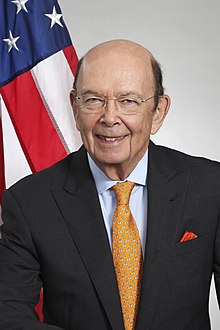
Wilbur Ross
It was a remark worthy of Marie Antoinette’s reported (but inaccurate) dismissal of the miseries of impoverished French citizens: “Let them eat cake.”
Meanwhile, the House of Representatives had undergone a massive sea-change in membership. Ending two years of Republican rule, Democrats had won 27 seats in that body during the November, 2018, elections.
And Nancy Pelosi had gone from being House Minority Leader to wielding the Speaker’s gavel as House Majority Leader on January 3.
Now she blasted Ross’ attitude during a press briefing:
“Is this the ‘Let them eat cake,’ kind of attitude? Or ‘Call your father for money?’ Or ’This is character-building for you; it’s all going to end up very well—just as long as you don’t get your paychecks?’”
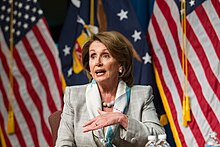
Nancy Pelosi
Thirty-five days passed, with each one bringing increasing stress and fear to the lives of 800,000 Federal employees—those forced to not work and those forced to work for no pay.
Pelosi, meanwhile, did what many of her Democratic colleagues had long refused to do: She dared to stand up against Republicans’ “my-way-or-else” demands.
“The impression you get from the president is he would like to not only close government, build a wall, but also abolish Congress, so the only voice that mattered was his own,” Pelosi said in an interview on “CBS Sunday Morning.”
Pelosi, unlike many Democrats, realized this was America’s version of the Munich Conference: Democrats must hold firm against a tyrant’s extortionate demands. Otherwise, every time Trump didn’t get his way, there would be no end to such shutdowns in the future.
From the start, Pelosi insisted that Democrats would not cooperate with threats to shut down the government if Trump didn’t get the $5.6 billion he wanted for a border wall. And Democrats held firm, refusing to make concessions on the wall.
Second, Pelosi publicly stated that she would not let Trump make his annual State of the Union speech in the House of Representatives until the government was re-opened.
Since both the House and Senate must jointly issue an invitation to the President to make such an address, Pelosi’s veto effectively scotched Trump’s appearance.
For the publicity-addicted Trump, who revels in pontificating to adoring crowds, this was a major blow.
Trump refused to take “No” for an answer and dared Pelosi to deny him access.
She took him up on his dare and issued a statement saying that the speech was off—until the government re-opened.
Soon afterward, Trump agreed that the State of the Union address would have to be postponed.
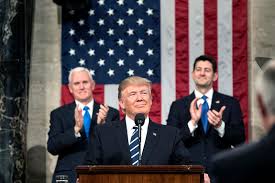
Donald Trump giving State of the Union address in 2018
As CNN political analyst Chris Cillizza saw it: “What Pelosi seems to understand better than past Trump political opponents is that giving ANY ground is a mistake. You have to not only stand firm, but be willing to go beyond all political norms—like canceling the SOTU—to win.”
And Julian Zelitzer, another CNN political analyst, agreed: “Pelosi did not hesitate to use her political power aggressively. From the start of this process, she has remained steadfast in her insistence that closing the government was not a legitimate way to make demands for new forms of spending.
“While sometimes Democrats become leery about seeming too partisan and not being civil enough, Pelosi and the Democrats stood their ground. She drew a line in the sand and stuck by it.”
As Pelosi and the Democrats held firm, Republicans began getting desperate.
- They were being depicted in the news as extortionists while 800,000 of their fellow Americans suffered.
- Those businesses that served Federal employees—such as grocery stores and auto repair shops—were being starved of revenue.
- There was legitimate fear that the entire airline industry might have to shut down for lack of enough air traffic controllers to regulate air traffic.
- Worst of all for Republicans, chaos at airports threatened the travel plans of hundreds of thousands of people traveling to and from the upcoming Super Bowl. Most Americans might not know the name of their Senator, but they take their sports fetish seriously.
By January 25, the 35th day of the shutdown, an ABC News/Washington Post poll showed that 53% of Americans blamed Trump for the shutdown. His popularity had fallen to a historic low of 37%. And 60% disapproved of how he was handling negotiations to re-open the government.
So, on that same date, Trump did what his Hispanic-hating base thought was impossible: He caved.
He walked into the White House Rose Garden and said he would sign a bill to re-open the government for three weeks.
2016 PRESIDENTIAL CAMPAIGN, ABC NEWS, ADOLF HITLER, ALTERNET, ANN COULTER, AP, AUSTRIA, BARACK OBAMA, BILL CLINTON, BORDER WALL, BUZZFEED, CBS NEWS, CHARLES SCHUMER, CHRIS CILLIZZA, CNN, CONTRACTORS, COUNCIL OF ECONOMIC ADVISERS, CROOKS AND LIARS, CZECHOSLOVAKIA, DAILY KOZ, DAVID BROOKS, DEMOCRATS, DEPARTMENT OF COMMERCE, DEPARTMENT OF HOMELAND SECURITY, DICK CHENEY, DONALD TRUMP, EDOUARD DELADIER, FACEBOOK, FBI, FEDERAL AVIATION ADMINISTRATION (FAA), FOX NEWS, FRANCE, GEORGE W. BUSH, GOVERNMENT SHUTDOWN, HOUSE OF REPRESENTATIVES, JAPAN, JEDEDIAH BILA, JOSE ANDRES, JULIAN ZELITZER, KEVIN HASSETT, KURT VON SCHUSCHNIGG, MARIE ANTOINETTE, MARK SHIELDS, MIKE PENCE, MITCH MECONNELL, MOTHER JONES, MOVEON, MSNBC, MUNICH CONFERENCE, NANCY PELOSI, NAZI GERMANY, NBC NEWS, NEVILLE CHAMBERLAIN, NEWSWEEK, NICCOLO MACHIAVELLI, NPR, PBS NEWSHOUR, POLAND, POLITICO, RAW STORY, REPUBLICANS, REUTERS, ROBERT PAYNE, RUSH LIMBAUGH, SALON, SEATTLE TIMES, SLATE, SOUP KITCHENS, STATE OF THE UNION ADDRESS, SUPER BOWL, THE ATLANTIC, THE CHICAGO SUN-TIMES, THE CHICAGO TRIBUNE, THE DAILY BEAST, THE GUARDIAN, THE HILL, THE HUFFINGTON POST, THE LIFE AND DEATH OF ADOLF HITLER, THE LOS ANGELES TIMES, THE NATION, THE NEW YORK TIMES, THE PRINCE, THE WALL STREET JOURNAL, THE WASHINGTON POST, TIME, TRANSPORTATION SAFETY ADMINISTRATION (TSA), TWITTER, U.S. NEWS & WORLD REPORT, UBER, UNITED STATES HOUSE OF REPRESENTATIVES, UNITED STATES SECRET SERVICE, UNITED STATES SENATE, UPI, USA TODAY, WILBUR ROSS, WINSTON CHURCHILL, WORLD WAR 11
In Bureaucracy, History, Military, Politics, Social commentary on January 30, 2019 at 12:08 am
“If we do not have these negotiations over border security with an open government, this president will continue to use this tool. And if we give in, if we pay the ransom now, what will happen the next time there’s a disagreement with this president and Congress?”
—Rep. Katherine Clark, D-Mass.
Republican leaders in Congress didn’t want to be blamed for shutting down the government. They seemed to persuade President Donald Trump to back away from his threat to do so if he didn’t get funding for his border wall.
The Senate passed a short-term funding measure without his wall money.
Vice President Mike Pence told lawmakers that Trump was open to approving it
Then the Fox News Network stepped in

“I think a lot of people who voted for President Trump counted on him on this particular issue,” Fox & Friends host Jedediah Bila said.
“I think their feet were to the fire. And you see a lot of people around the country saying: ‘Hold on a second. You told us that you weren’t afraid to shut down the government, that’s why we like you. What happened? You just gave in right away?’”
And Right-wing columnist Ann Coulter said: “Trump will just have been a joke presidency who scammed the American people, amused the populists for a while, but he’ll have no legacy whatsoever.
“Trump will very likely not finish his term and definitely not be elected to a second term.”
For a man who had “joked” that having a “President-for-Life” would be “great,” Coulter’s words were a nightmare.
On December 22, 2018, Trump shut down the government.
An estimated 380,000 government employees were furloughed and another 420,000 were ordered to work without pay.
And Trump told Congressional leaders the shutdown could last months or even years.
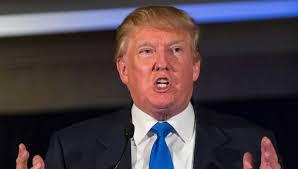
Donald Trump
For Trump, “the wall” was absolutely necessary—but not to keep illegal aliens out. They would go over, under or around it.
The real intent of the wall was to keep Trump in—the White House.
Trump’s fanatical base believed that a wall across the U.S.-Mexico border would stop all illegal immigration. And he knew that if he didn’t build it, they wouldn’t re-elect him.
Like Adolf Hitler, who ordered the complete destruction of Germany when he realized his dreams of conquest were over, Trump’s attitude was: “If I can’t rule America, there won’t be an America.”
Among the agencies directly affected by the shutdown: The Department of Homeland Security (DHS)—whose employees included Secret Service agents.
In short: The men and women guarding Trump were facing financial ruin—along with their families—because Trump didn’t get his way.
The effects of the shutdown quickly became evident:
- For weeks, hundreds of thousands of government workers missed paychecks.
- Smithsonian museums closed their doors.
- Trash piled up in national parks.
- Increasing numbers of employees of the Transportation Safety Administration (TSA)—which provides security against airline terrorism—began refusing to come to work, claiming to be sick.
- At the Federal Aviation Administration (FAA) many air traffic controllers called in “sick.” Those who showed up to work without pay grew increasingly frazzled as they feared being evicted for being unable to make rent or house payments.
- Due to the shortage of air traffic controllers, many planes weren’t able to land safely at places like New York’s LaGuardia Airport.
- Many Federal employees—such as FBI agents—were forced to rely on soup kitchens to feed their families.
- Celebrity chef Jose Andres launched ChefsForFeds, which offered free hot meals for government employees and their families at restaurants across the country.
- Many workers tried to bring in money by babysitting or driving for Uber,
Those employed by the government could at least expect to receive reimbursement for missed pay once the shutdown ended.
The question was: Would they be evicted, need medical care or be unable to pay for food before that happened?
For Federal contractors, the situation was far worse.
During the George W. Bush administration, Vice President Dick Cheney pushed to “outsource” many federal responsibilities to private contractors. This was hugely supported by Republicans and even many Democrats.
Now, in the wake of the shutdown, these employees faced a cruel reality: Since they were not Federal employees, they would not be reimbursed for the time they were forced to not work.
Adding insult to injury were the callous remarks of two Trump administration officials.
“A huge share of government workers were going to take vacation days, say, between Christmas and New Year’s,” said Kevin Hassett, chairman of the Council of Economic Advisers.

Kevin Hassett
“And then we have a shutdown, and so they can’t go to work, and so then they have the vacation, but they don’t have to use their vacation days. And then they come back, and then they get their back pay. Then they’re—in some sense, they’re better off.”
Another equally contemptuous remark was offered by Commerce Secretary Wilbur Ross—a billionaire. Asked on CNBC if he knew that many Federal employees had been reduced to going to food banks, Ross said yes, but he didn’t understand why.
His suggestion: They could just take out a loan.


2020 PRESIDENTIAL ELECTION, ABC NEWS, ABORTION, AGUSTO PINOCHET, ALTERNET, AMERICABLOG, AMERICAN EXCEPTIONALISM, AMERICAN RECKONING: THE VIETNAM WAR AND OUR NATIONAL IDENTITY (BOOK), AP, AYATOLLAH RUHOLLAH KHOMEINI, BABY BOOMER RESISTANCE, BBC, BENJAMIN FRANKLIN, BIBLE BELT, BLOOMBERG NEWS, BUZZFEED, CBS NEWS, CHILE, CHINA, CHRISTIAN G. APPY, CIA, CIVIL RIGHTS ACT, CIVIL WAR, CNN, COAL MINING, CROOKS AND LIARS, DAILY KOS, DEMOCRATS, DONALD TRUMP, DRUG OVERDOSES, DWIGHT EISENHOWER, EDUCATION, FIVETHIRTYEIGHT, FUNDAMENTALIST CHRISTIANS, GERMANY, GUATEMALA, HARPER’S MAGAZINE, HISTORY, HUFFINGTON POST, INDIA, IRAN, ITALY, JACOBO ARBENZ, JAPAN, JOHN F. KENNEDY, JOSEPH R. BIDEN, LYNDON B. JOHNSON, MEDIA MATTERS, MOHAMMED MOSADDEGH, MOHAMMED-REZA SHAH PHLAVI, MOTHER JONES, MOVEON, MSNBC, MYTHS, NARENDRA MODI, NBC NEWS, NEW REPUBLIC, NEWSDAY, NEWSWEEK, NICARAGUA, NPR, OPIOD ADDICTION, PBS NEWSHOUR, POLITICO, POLITICS, POLITICUSUSA, PORNOGRAPHY, POVERTY, RAW STORY, RELIGIOUS CONSERVATIVES, REPUBLICANS, REUTERS, RICHARD NIXON, ROE V. WADE, RURAL AMERICA, SALON, SALVADORE ALLENDE, SEATTLE TIMES, SLATE, SMOKING, STEEL INDUSTRY, TALKING POINTS MEMO, THE ATLANTIC, THE CHICAGO SUN-TIMES, THE CHICAGO TRIBUNE, THE DAILY BEAST, THE DAILY BLOG, THE GUARDIAN, THE HILL, THE HUFFINGTON POST, THE INTERCEPT, THE LOS ANGELES TIMES, THE NATION, THE NEW REPUBLIC, THE NEW YORK TIMES, THE NEW YORKER, THE VILLAGE VOICE, THE WASHINGTON POST, THINKPROGRESS, THOMAS EDISON, TIME, TRUTHDIG, TRUTHOUT, TWITTER, U.S. NEWS & WORLD REPORT, UNITED STATES, UNITED STATES SUPREME COURT, UPI, USA TODAY, VIETNAM WAR, VOTER IGNORANCE, WORLD WAR 11
SEVEN MYTHS AND THE STUPIDS WHO BELIEVE THEM: PART TWO (END)
In Bureaucracy, History, Politics, Social commentary on September 12, 2023 at 12:12 amAmericans live by a series of myths—myths they would be the wiser to abandon. Some are embraced by liberals, others by conservatives, and still others by both.
Myth 4: Americans take pride in their history.
Americans’ ignorance of history—their own and that of other nations—has long been a scandal.
if Americans are flagrantly ignorant of their own history, they are even worse at the history of other countries.
A major reason for this lies in Americans’ belief that other nations aren’t worth bothering about except when they threaten us. During the Vietnam war, soldiers referred to the United States as “The World”—as if the rest of the planet didn’t exist.
Americans, protected from Europe by the Atlantic Ocean and the Far East by the Pacific Ocean, allowed geography to isolate themselves from the messiness of the rest of the world.
Donald Trump, as President, gave a frightening example of this during a conversation with Indian Prime Minister Narendra Modi: “It’s not like you’ve got China on your border.” In fact, India does share a border with China.
Myth 5: The “Bible Belt” (the Deep South) is the spiritual capitol of America.
You won’t find these truths on “Green Acres” or “The Andy Griffith Show” but they form a stain on rural America that can’t be ignored:
Myth 6: Americans are health-conscious.
The United States is experiencing an epidemic of drug overdose deaths. In 2020, the age-adjusted rate of drug overdose deaths increased 31% compared to 2019.
Adults aged 35-44 experienced the highest rates of drug overdose deaths while young people aged 15-24 experienced the greatest percentage increase in deaths.
In 2019:
Myth 7: Americans only support democratic regimes.
The United States has long supported foreign dictators—so long as they’re reliably Right-wing.
* * * * * * * * * *
Behind these myths: The belief in “American exceptionalism”—that the United States is unlike other nations in its innocence and steadfast dedication to human rights above all else.
Wrote Christian G. Appy, in his 2015 book, American Reckoning: The Vietnam War and Our National Identity:
“It was still unimaginable to most Americans that their own nation would wage aggressive war and justify it with unfounded claims, that it would support undemocratic governments reviled by their own people, and that American troops would be sent to fight in countries where they were widely regarded not as liberators but as imperialist invaders.”
For millions, that belief died a horrific death during the Vietnam war. Yet so long as millions remain convinced that America is guided by God and that its people are His faithful servants, these myths will remain vividly alive.
Share this: