Posts Tagged ‘FBI’
2016 PRESIDENTIAL RACE, ABC NEWS, ALL THE KING’S MEN, ALL THE KINIG’S MEN (BOOK), ALTERNET, AMERICABLOG, ANDREW GOODMAN, ANGELO BRUNO, AP, BABY BOOMER RESISTANCE, BBC, BLOOMBERG NEWS, BLUE BLOODS, BUZZFEED, CAPITOL ATTACK, CARLO GAMBINO, CBS, CBS NEWS, CIVIL WAR, CNN, COINTELPRO, COUPS, CROOKS AND LIARS, DAILY KOS, DEMOCRATS, DEPARTMENT OF HOMELAND SECURITY, DONALD TRUMP, ELECTORAL COLLEGE, ERIC SCHNEIDERMAN, FACEBOOK, FBI, FIVETHIRTYEIGHT, FRANK REAGAN, GAMBINO FAMILY, HARPER’S MAGAZINE, HUFFINGTON POST, INDEPENDENT COUNSEL, INSIDE HOOVER'S FBI (BOOK), J. EDGAR HOOVER, JAMES CHANEY, JAMES COMEY, JEFF SESSIONS, JOSEPH BIDEN, jOSH HAWLEY, JUSTICE DEPARTMENT, KU KLUX KLAN, LYNDON B. JOHNSON, MAFIA, MARJORIE TAYLOR GREENE, MEDIA MATTERS, MERRICK GARLAND, MICHAEL SCHWERNER, MILITIA GROUPS, MO BROOKS, MOTHER JONES, MOVEON, MSNBC, NBC NEWS, NEIL J. WELCH, NEW REPUBLIC, NEW YORK POLICE DEPARTMENT, NEWSDAY, NEWSWEEK, NPR, OBSTRUCTING CONGRESSIONAL PROCEEDINGS, PBS NEWSHOUR, POLITICO, POLITICUSUSA, RAW STORY, REPUBLICANS, REUTERS, RIGHT-WING TERRORISM, ROBERT MUELLER, ROBERT PENN WARREN, RUSSIA, SALON, SEATTLE TIMES, SERGEI KISLYAK, SEXUAL ASSAULT, SLANDER, SLATE, SWAT TEAMS, TALKING POINTS MEMO, TERRORISM, TERRORIST FINANCE TRACKING PROJECT, THE ATLANTIC, THE CHICAGO SUN-TIMES, THE CHICAGO TRIBUNE, THE DAILY BEAST, THE DAILY BLOG, THE GUARDIAN, THE HILL, THE HUFFINGTON POST, THE LOS ANGELES TIMES, THE NATION, THE NEW REPUBLIC, THE NEW YORK TIMES, THE NEW YORKER, THE VILLAGE VOICE, THE WASHINGTON POST, THINKPROGRESS, TIM WEINER, TIME, TOM SELLECK, TREASON, TRUMP UNIVERSITY, TRUTHDIG, TRUTHOUT, TWITTER, TWO POLITICAL JUNKIES, U.S. NEWS & WORLD REPORT, UNITED STATES DEPARTMENT OF JUSTICE, UNITED STATES DEPARTMENT OF THE TREASURY, UNITED STATES HOUSE OF REPRESENTATIVES, UNITED STATES PARK POLICE, UNITED STATES SECRET SERVICE, UNITED STATES SENATE, UNITED STATES SUPREME COURT, UPI, USA PATRIOT ACT, USA TODAY, USA TODAY DONALD TRUMP, VLADIMIR PUTIN, WILLIAM C. SULLIVAN, WILLIE STARK, WONKETTE
In Bureaucracy, History, Law, Law Enforcement, Politics, Social commentary on May 13, 2024 at 1:22 am
After taking office as President, Donald Trump openly waged war on his own Justice Department—and especially its chief investigative agency, the FBI.

FBI headquarters
Among his attacks on federal law enforcers:
- Fired James Comey, the FBI director pursuing an investigation into Russia’s meddling in the 2016 Presidential race to ensure Trump’s election.
- Threatened to fire Independent Counsel Robert Mueller, who continued that investigation after he fired Comey.
- Repeatedly attacked—verbally and on Twitter—his Attorney General, Jeff Sessions, for recusing himself from overseeing the Russia investigation.
- (Sessions did so after the press revealed that, during the 2016 race, he twice met secretly with Russian Ambassador Sergei Kislyak.)
- Repeatedly attacked the integrity of the FBI, raising the possibility of his firing more of its senior leadership for investigating his ties to Russian president Vladimir Putin.
- Forced House Republicans to release a memo falsely accusing the FBI of pursuing a vendetta against him.
But the FBI could have refused to meekly accept such assaults.
A February 2, 2022 episode of the popular CBS police drama, “Blue Bloods,” offered a vivid lesson on bureaucratic self-defense against tyrants.
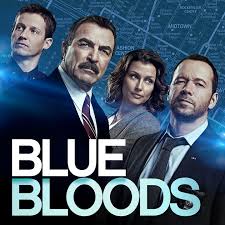
A shootout erupts in a crowded pub between a gunman and NYPD officers. Results: One dead gunman and one wounded bystander.
Problem: The bystander is an aide to New York Governor Martin Mendez.
Mendez visits One Police Plaze, NYPD headquarters, for a private chat with Commissioner Frank Reagan (Tom Selleck). From the outset, he’s aggressive, rude and threatening.
MENDEZ: I know you guys like to whitewash officer-involved shootings.
REAGAN: I do not.
MENDEZ: That’s not going to happen here. I want the cop who shot my guy fired and charged.
REAGAN: If the grand jury indicts, my officer could be terminated.
MENDEZ: We all want to protect our people, but mine come first.
Governor Mendez leaves Commissioner Reagan’s office. Later, he returns:
MENDEZ: We’ve got a serious problem.
REAGAN: Why? The grand jury declined to indict my officer.
MENDEZ: Your cop fired into a crowded room.
REAGAN: She returned fire, took out the shooter and likely saved lives.
MENDEZ: What are you going to do?
REAGAN: Our Internal Affairs investigation supports the grand jury’s finding, so the case is closed.
MENDEZ: Either you fire this cop, or I’ll order the Attorney General to investigate every questionable police shooting in the past 10 years and hold public hearings out loud and lights up.
REAGAN: Everybody loves a circus.
MENDEZ: Except the guy who’s got to shovel up afterwards.
At the end of the episode, a third—and final—meeting occurs in a restaurant between Reagan and Mendez.
MENDEZ: Have you dumped the cop who shot my guy?
REAGAN: No.
MENDEZ: Bad news.
REAGAN: Depends on what you compare it to. It turns out that your aide wasn’t drinking alone the night he was shot.
MENDEZ: So what? He’s single.
REAGAN: He was with a married woman.
MENDEZ: That’s on her, not on him.
REAGAN: Except she is married to his boss, your Chief of Staff.
MENDEZ: Sheesh!
REAGAN: Turns out this has been going on for over a year.
MENDEZ: So what are we doing?
REAGAN: If this gets out, the circus comes to Albany [where the governor has his office].
MENDEZ: Who else knows?
REAGAN: Right now it’s safe in the notebook of my lead detective. Whether or not it finds its way into an arrest report that’s subject to a Freedom of Information Act request—that’s a judgment call.
MENDEZ: Your judgment?
REAGAN: Yes.
MENDEZ: And if my investigation goes away?
REAGAN: Neither of us is shoveling up after the circus.
MENDEZ: I have your word on that?
REAGAN: Yes.
MENDEZ: You have a good evening, Commissioner.
J. Edgar Hoover, the legendary FBI director, used Realpolitik to ensure his reign for 48 years.
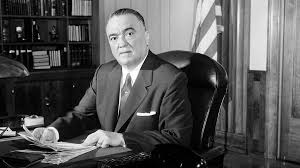
J. Edgar Hoover
As William C. Sullivan, the onetime director of the FBI’s Domestic Intelligence Division, revealed after Hoover’s death in 1972:
“The moment [Hoover] would get something on a senator, he’d send one of the errand boys up and advise the senator that ‘we’re in the course of an investigation, and we by chance happened to come up with this data on your daughter.
“‘But we wanted you to know this. We realize you’d want to know it.’ Well, Jesus, what does that tell the senator? From that time on, the senator’s right in his pocket.”
Donald Trump has long pursued a strategy of intimidation. But when people have refused to be cowed by his threats, he’s backed off.
During the 2016 Presidential campaign, more than a dozen women accused Trump of sexual misconduct, ranging from inappropriate comments to assault.
Trump responded: “The events never happened. Never. All of these liars will be sued after the election is over.”
Yet he didn’t file a single slander suit.
Similarly, when New York’s Attorney General Eric Schneiderman sued Trump for running a fraudulent university, Trump initially said he would fight the charge.
Instead, he settled the case by paying $25 million to compensate the 3,700 students Trump University had defrauded.
“You never have to frame anyone,” says Governor Willie Stark in Robert Penn Warren’s Pulitzer Prize-winning 1946 novel, All the King’s Men. “Because the truth is always sufficient.”
2018 FEDERAL GOVERNMENT SHUTDOWN, 2020 PRESIDENTIAL ELECTION, ABC NEWS, ADOLF HITLER, ALBERT SPEER, ALEXANDER THE GREAT, ALTERNET, AMERICABLOG, AP, ATTACK ON THE UNITED STATES CAPITOL BUILDING, BABY BOOMER RESISTANCE, BBC, BLOOMBERG NEWS, BORDER WALL, BUZZFEED, CANADA, CBS NEWS, CIA, CNN, COVID-19, CROOKS AND LIARS, DAILY KOS, DONALD TRUMP, EMOLUMENTS CLAUSE OF THE CONSTITUTION, FBI, FIVETHIRTYEIGHT, GREAT BRITAIN, HARPER’S MAGAZINE, HOLOCAUST, HOPE HICKS, HUFFINGTON POST, IVANKA TRUMP, JAMES COMEY, JOSEPH BIDEN, JULIE RADFORD, KIM LONG-UN, MEDIA MATTERS, MEXICO, MOTHER JONES, MOVEON, MSNBC, NATIONAL SECURITY AGENCY, NAZI GERMANY, NBC NEWS, NEW REPUBLIC, NEWSDAY, NEWSWEEK, NPR, NUREMBERG WAR CRIMES TRIALS, PBS NEWSHOUR, PLUTARCH, POLITICO, POLITICUSUSA, RAW STORY, RECEP TAYYIP ERDOGAN, REUTERS, ROBERT H. JACKSON, SALON, SEATTLE TIMES, SERGEY KISLYAK, SERGEY LAVROV, SLATE, TALKING POINTS MEMO, THE ATLANTIC, THE CHICAGO SUN-TIMES, THE CHICAGO TRIBUNE, THE DAILY BEAST, THE DAILY BLOG, THE GUARDIAN, THE HILL, THE HUFFINGTON POST, THE INTERCEPT, THE LOS ANGELES TIMES, THE NATION, THE NEW REPUBLIC, THE NEW YORK TIMES, THE NEW YORKER, THE VILLAGE VOICE, THE WASHINGTON POST, THINKPROGRESS, THIRD REICH, TIME, TRUTHDIG, TRUTHOUT, TWITTER, U.S. NEWS & WORLD REPORT, UPI, USA TODAY, VLADIMIR PUTIN, WAR CRIMES
In Bureaucracy, Business, History, Law, Law Enforcement, Medical, Politics, Social commentary on May 9, 2024 at 12:05 am
And the most glorious exploits do not always furnish us with the clearest discoveries of virtue or vice in men. Sometimes a matter of less moment, an expression or a jest, informs us better of their characters and inclinations, than the most famous sieges, the greatest armaments, or the bloodiest battles whatsoever.
—Plutarch, “Life of Alexander”
Hope Hicks served in President Donald Trump’s administration as White House Director of Strategic Communication from January to September, 2017.
Today she’s a prominent witness at his trial for concealing hush money payments in 2016 to porn “actress” Stormy Daniels.
On January 6, 2021, Hicks had a problem: She feared she might never work again.
From 2017 to 2018 she served as White House Communications Director. After leaving the White House, she returned to serve as Counselor to the President from 2020 to 2021.

Hope Hicks
And then came the Trump-inspired attack on Congress on January 6.
Among the infamies and crimes Trump committed—and Hicks witnessed—during his four years as President:
- Repeatedly attacking the nation’s free press as “the enemy of the American people” for daring to report his growing list of crimes and disasters.
- Publicly siding with Russian dictator Vladimir Putin against American Intelligence agencies—such as the FBI, CIA and National Security Agency—which unanimously agreed that Russia had interfered with the 2016 Presidential election.
- Giving highly classified CIA Intelligence to Russian Foreign Minister Sergey Lavrov and Russian Ambassador Sergey Kislyak.
- Using his position as President to further enrich himself, in violation of the Emoluments Clause of the Constitution.
- Firing FBI Director James Comey for refusing to pledge his personal loyalty to Trump—and continuing to investigate Russian subversion of the 2016 election.
- Shutting down the Federal Government on December 22, 2018, because Democrats refused to fund his useless “border wall” between the United States and Mexico. An estimated 380,000 government employees were furloughed and another 420,000 were ordered to work without pay for 35 days.
- Allowing the deadly COVID-19 virus to ravage the country, killing 400,000 Americans by the time he left office.
- Attacking medical experts and governors who urged Americans to wear masks and socially distance to protect themselves against the deadly COVID-19 virus.
- Repeatedly lying—while still in office and afterward—that the 2020 election had been “stolen” from him by massive voter fraud.
- Illegally trying to pressure state legislatures and governors to stop the certification of the vote that had made Joe Biden the president-elect.
- Inciting his followers to attack the Capitol Building where Senators and Representatives were meeting to count the Electoral Votes won by himself and Joe Biden. His objective: Stop the count, which he knew would prove him the loser.
So Hope had plenty to feel tormented about.
Yet it wasn’t any of these offenses that upset her.
It was something far more personal: She feared that the public’s association of her with Trump’s attack on Congress would doom her, at age 32, to permanent unemployment.
On January 6, 2021, she exchanged a series of texts with Julie Radford, First Daughter Ivanka Trump’s chief of staff.
HICKS: “In one day he [Trump] ended every future opportunity that doesn’t include speaking engagements at the local proud boys [sic] chapter
“And all of us that didn’t have jobs lined up will be perpetually unemployed
“I’m so mad and upset
“We all look like domestic terrorists now”
RADFORD: “Oh yes I’ve been crying for an hour”
HICKS: “This made us all unemployable
“Like untouchable
“God I’m so fucking mad”
RADFORD: “I know there isn’t a chance of finding a job
“Visa also sent me a blow off email today
“Already”
HICKS: “Nope. Not being dramatic, but we are all fucked.
[Referring to Trump]: “Attacking the VP [Vice President Mike Pence]?
“Wtf is wrong with him”
Albert Speer, former architect and Minister of Armaments for his late Fuhrer, Adolf Hitler, would have fully empathized.

Albert Speer
Bundesarchiv, Bild 146II-277 / Binder / CC-BY-SA 3.0, CC BY-SA 3.0 DE <https://creativecommons.org/licenses/by-sa/3.0/de/deed.en>, via Wikimedia Commons
With the collapse of the Third Reich, he found himself hurled from power and facing trial as a war criminal at Nuremberg.
His prosecutor, Robert H. Jackson, said: “Speer joined in planning and executing the program to dragoon prisoners of war and foreign workers into German war industries, which waxed in output while the workers waned in starvation.”
Yet Speer falsely claimed he had simply been an apolitical architect who had been drafted into serving as Minister of Armaments—and hadn’t known about the Holocaust.
The prosecution couldn’t prove he had. So he escaped a death sentence—and was sentenced to 20 years’ imprisonment.
Emerging from prison in 1966, Speer lamented that no architectural firm in postwar Germany would hire “Hitler’s architect.”
So he spent the rest of his life writing—at great profit—about his 12 years as a high-ranking official in the Third Reich. As “The Good Nazi,” he portrayed himself as a political innocent deceived into hell by a Mephistopheles-like Hitler.
Like Speer, Hope Hicks has repudiated her own former Fuhrer—after serving him during his worst infamies.
And, like Speer, she isn’t facing the dangers of poverty. Her net worth is estimated at $1 million, owing to her past work as a model and public relations agent.
ABC NEWS, ALTERNET, AMERICABLOG, AP, ARTHUR ENGORON, BABY BOOMER RESISTANCE, BBC, BLOOMBERG, BUZZFEED, CBS NEWS, CLASSIFIED DOCUMENTS, CNN, CROOKS AND LIARS, DAILY KOS, DONALD TRUMP, E. JEAN CARROLL, FBI, FIVETHIRTYEIGHT, HARPER’S MAGAZINE, HUFFINGTON POST, JACK SMITH, JANUARY 6 COMMITTEE, JOINT CHIEFS OF STAFF, JOSEPH BIDEN, KIM JONG-UN, LETITIA JAMES, LIZ CHENEY, MAR-A-LAGO, MARK MILEY, MEDIA MATTERS, MOTHER JONES, MOVEON, MSNBC, NBC NEWS, NEW REPUBLIC, NEWSDAY, NEWSWEEK, NICCOLO MACHIAVELLI, NPR, PBS NEWSHOUR, POLITICO, POLITICUSUSA, RAW STORY, REUTERS, RICHARD NIXON, SALON, SEATTLE TIMES, SLATE, TALKING POINTS MEMO, THE ATLANTIC, THE CHICAGO SUN-TIMES, THE CHICAGO TRIBUNE, THE DAILY BEAST, THE DAILY BLOG, THE DISCOURSES (BOOK), THE GUARDIAN, THE HILL, THE HUFFINGTON POST, THE INTERCEPT, THE LOS ANGELES TIMES, THE NATION, THE NEW REPUBLIC, THE NEW YORK TIMES, THE NEW YORKER, THE VILLAGE VOICE, THE WASHINGTON POST, THINKPROGRESS, TIME, TRUTHDIG, TRUTHOUT, TWO POLITICAL JUNKIES, U.S. NEWS & WORLD REPORT, UPI, USA TODAY, VICTIMHOOD, VLADIMIR PUTIN, X, XI JINPING
In Bureaucracy, History, Law, Law Enforcement, Politics, Social commentary on May 1, 2024 at 12:10 am
…A truly great man is ever the same under all circumstances. And if his fortune varies, exalting him at one moment and oppressing him at another, he himself never varies, but always preserves a firm courage, which is so closely interwoven with his character that everyone can readily see that the fickleness of fortune has no power over him.
The conduct of weak men is very different. Made vain and intoxicated by good fortune, they attribute their success to merits which they do not possess. And this makes them odious and insupportable to all around them. And when they have afterwards to meet a reverse of fortune, they quickly fall into the other extreme, and become abject and vile.
—Niccolo Machiavelli, The Discourses

Niccolo Machiavelli
Donald Trump gives daily proof that Niccolo Machiavelli’s warning remains as timely as ever.
Trump constantly brags about how tough he is, and what he will do to his enemies and those of his version of America.
Among his threats:
- Threatening to appoint a special prosecutor to target President Joe Biden and his family if he’s reelected.
- Saying that Mark Miley, the former chairman of the Joint Chief of Staff, deserves execution. Miley’s “crime”: Ensuring that war did not erupt between China and the United States during Trump’s last months in office.
- Repeatedly attacking prosecutors and judges, their families, former officials and political opponents.
- Calling for the jailing of former Wyoming Republican Representative Liz Cheney and the other members of the House panel that investigated his inciting a violent mob to attack the United States Capitol.
Yet when he has been confronted with men and women who can’t be bribed or intimidated, Trump has reacted with rage, frustration—and outbursts of whining self-pity.
Among these:
- “If I announced that I was not going to run any longer for political office the persecution of Donald Trump would immediately stop,” Trump said at a rally in Prescott Valley, Arizona. “But that is not what I do. I can’t do that, I can’t do that. Can’t do that. Because I love this country and I love you.”
- Facing trial for defrauding New York in taxes, Trump addressed Judge Arthur F. Engoron: “What’s happened here, sir, is a fraud on me. They want to make sure that I don’t win again, and this is partially election interference.”
- “I am a victim,” Trump said in his speech announcing his presidential run. “I will tell you I’m a victim. We will be attacked. We will be slandered. We will be persecuted just as I have been.”
- Accused of raping and defaming writer E. Jean Carroll, Trump said in a deposition: “She said that I did something to her that never took place. There was no anything. I know nothing about this nutjob. She’s accusing me of rape, a woman that I have no idea who she is.”
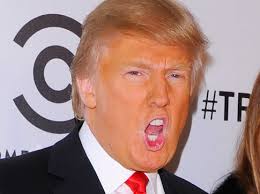
Donald Trump
- At his New York fraud trial in January, Trump whined: “This is a political witch-hunt that was set aside by – should be set aside. We should receive damages for what we’ve gone through, for what they’ve taken this company through.”
- Of New York Attorney General Letitia James, who is prosecuting him for engaging in years of financial fraud and illegal conduct, Trump said: “We have a situation where I’m an innocent man. I’ve been persecuted by somebody running for office. They want to make sure that I don’t win again, that this is partially election interference. But, in particular, the person in the room right now hates Trump and uses Trump to get elected.”
- Of Special Counsel Jack Smith, Trump said: “The prosecutor in the case, I will call our case, is a thug. I have named him ‘Deranged Jack Smith….He does political hit jobs. He’s a raging and uncontrolled Trump hater, as is his wife, who happened to be the producer of that Michelle Obama puff piece. This is the guy I’ve got.”
- Speaking of the FBI’s raid on Mar-a-Lago to recover hundreds of highly classified documents Trump had illegally taken upon leaving the White House, Trump said: “The political persecution of President Donald J. Trump has been going on for years, with the now fully debunked Russia, Russia, Russia Scam, Impeachment Hoax No 1, Impeachment Hoax No 2, and so much more, it just never ends. It is political targeting at the highest level!”
In his masterwork, The Discourses, published in 1531, Florentine statesman Niccolo Machiavelli laid out his advice for preserving liberties within a republic. Among this was the foregoing description of the difference between great leaders and weak ones.
Donald Trump likes to portray himself as a courageous leader. But he is “brave” only when facing those far weaker than himself.
He feels most compatible with ruthless dictators—such as Vladimir Putin, Kim Jong-Un and Xi Jinping. He envies their life-or-death power over their subjects. And he lusts to possess the same.
He is a coward, who demands total immunity for all his actions—most importantly, his criminal ones.
No other President—not even Richard Nixon—has ever made such a demand. Or faced prosecution for so many crimes.
ABC NEWS, ADOLF HITLER, ALBERT ANASTASIA, ALTERNET, ALVIN BRAGG, AMERICABLOG, AP, BABY BOOMER RESISTANCE, BBC, BEER HALL PUTSCH, BLOOMBERG, BUZZFEED, CARLO GAMBINO, CARMINE GALANTE, CBS NEWS, CHARLGES LUCIANO, CNN, CROOKS AND LIARS, DAILY KOS, DAILY KOZ, DONALD TRUMP, FBI, FIVETHIRTYEIGHT, FRANK LOCASCIO, GAMBINO MAFIA FAMILY, HARPER’S MAGAZINE, HITLER: ASCENT (BOOK), HUFFINGTON POST, JACK SMITH, JANUARY 6 COUP ATTEMPT, JOHN GOTTI, JUSTICE DEPARTMENT, LETITIA JAMES, LOUIS DIBONO, LOUIS MILITO, MAFIA, MANHATTAN DISTRICT ATTORNEY'S OFFICE, MEDIA MATTERS, MERRICK GARLAND, MOTHER JONES, MOVEON, MSNBC, MUNICH, NAZI PARTY, NBC NEWS, NEW REPUBLIC, NEW YORK ATTORNEY GENERAL'S OFFICE, NEWSDAY, NEWSWEEK, NICCOLO MACHIAVELLI, NPR, PAUL CASTELLANO, PBS NEWSHOUR, POLITICO, POLITICUSUSA, Racketeer Influenced Corrupt Organizations (RICO) Act, RAVENITE SOCIAL CLUB, RAW STORY, REPUBLICANS, REUTERS, ROBERT DIBERNARDO, SALON, SAMMY "THE BULL" GRAVANO, SEATTLE TIMES, SLATE, STORMY DANIELS, TALKING POINTS MEMO, THE ATLANTIC, THE CHICAGO SUN-TIMES, THE CHICAGO TRIBUNE, THE DAILY BEAST, THE DAILY BLOG, THE DISCOURSES (BOOK), THE GUARDIAN, THE HILL, THE HUFFINGTON POST, THE INTERCEPT, THE LOS ANGELES TIMES, THE NATION, THE NEW REPUBLIC, THE NEW YORK TIMES, THE NEW YORKER, THE VILLAGE VOICE, THE WASHINGTON POST, THINKPROGRESS, THREATS, TIME, TREASON, TRUMP ORGANIZATION, TRUTHDIG, TRUTHOUT, TWITTER, TWO POLITICAL JUNKIES, U.S. NEWS & WORLD REPORT, UPI, USA TODAY, VINCENT "THE CHINS" GIGANTE, VOLKER ULLRICH, WEIMAR REPUBLIC, X
In Bureaucracy, History, Law Enforcement, Politics, Social commentary on April 25, 2024 at 12:11 am
No well-ordered republic should ever cancel the crimes of its citizens by their merits….For if a citizen who has rendered some eminent service to the state should add to the reputation and influence which he has thereby acquired the confident audacity of being able to commit any wrong without fear of punishment, he will in a little while become so insolent and overbearing as to put an end to all power of the law.
—Niccolo Machiavelli, “The Discourses”
When the Justice Department declared war on John Gotti, “Boss of all Bosses” of the most powerful Mafia family in the nation, no holds were barred.
The FBI employed wiretaps, electronic bugs, informants, round-the-clock surveillance and pretrial detention against the so-called “Teflon Don.”
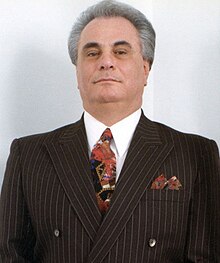
John Gotti
Now consider the DOJ’s approach to the criminality of former President Donald J. Trump.
On January 6, 2021, Trump incited thousands of his fanatical supporters to attack Congress, where Electoral College votes for the 2020 Presidential election were being counted.
About 140 police officers were assaulted; many lawmakers’ offices were vandalized; frightened lawmakers huddled in a barricaded room.
Yet Trump was allowed to remain in office for the next two weeks until the election’s victor—Joseph Biden—legally took office.

Donald Trump
Not until November 18, 2022, did Attorney General Merrick Garland appoint Jack Smith Special Counsel to prosecute Trump for his attempted coup.
To date, there is no evidence that the agency has employed wiretaps, electronic bugs and/or round-the-clock surveillance against Trump. Nor has Trump been held in pretrial detention as a continuing threat to democratic rule.
When Trump left the White House on January 20, 2021, he illegally took hundreds of highly classified documents—and stored them at his Mar-a-Lago estate in Palm Beach, Florida.
He then refused to return them when asked by the Justice Department—forcing the agency to send in an FBI force to retrieve them.
In March, 2023, Trump threatened “death and destruction” if he were criminally charged in New York for making “hush money” payments to porn “actress” Stormy Daniels. Trump shared an image of himself threatening Manhattan District Attorney Alvin Bragg with a baseball bat on his Truth Social platform.
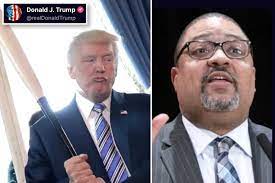
Not even Mafia bosses like Charles “Lucky” Luciano and Albert “The Executioner” Anastasia dared issue such a threat.
Yet Trump has not been arrested, let alone jailed, for an act that would have gotten anyone else charged with a felony.
Nor has Trump limited himself to attacking local New York authorities.
He has branded Jack Smith “a deranged lunatic” and “psycho” for indicting him for his theft of national security documents. He has also attacked Smith’s wife, Katy Gale Chevigny, thus exposing her to possible violence from his fanatical supporters.
Specifically: “His wife is a Trump Hater, just as he is a Trump Hater—a deranged ‘psycho’ that shouldn’t be involved in any case having to do with ‘Justice,’ other than to look at Biden as a criminal, which he is!”

Jack Smith
Trump’s attacks on Smith have led to an increase in security for the Special Counsel. Yet Smith has not moved to have Trump remanded to federal custody for actions that would have put anyone else behind bars.
History warns us of the consequences of allowing a ruthless dictator to pursue his goals with impunity.
On November 9, 1923, Nazi Party Fuhrer Adolf Hitler tried to overthrow the government in Munich, Bavaria.
About 2,000 Nazis marched to the center of Munich, where they confronted heavily-armed police. A shootout erupted, killing 16 Nazis and four policemen.
Hitler was injured during the clash, but managed to escape. Two days later, he was arrested and charged with treason.
Put on trial, he found himself treated as a celebrity by a judge sympathetic to Right-wing groups. He was allowed to brutally cross-examine witnesses and even make inflammatory speeches.
At the end of the trial, he was convicted of treason and sentenced to five years’ imprisonment.
Serving time in Landsberg Prison, in Bavaria. he was given a huge cell, allowed to receive unlimited visitors and gifts, and treated with deference by guards and inmates.
Nine months later, he was released on parole—by authorities loyal to the authoritarian Right instead of the newly-created Weimar Republic.

Adolf Hitler leaving Landsberg Prison, December, 20, 1924
Hitler immediately began rebuilding the shattered Nazi party—and deciding on a new strategy to gain power. Never again would he resort to armed force. He would win office by election—or intrigue.
Writes historian Volker Ullrich, in his monumental new biography, Hitler: Ascent 1889 – 1939: “Historians have perennially tried to answer the question of whether Hitler’s rise to power could have been halted….
“There were repeated opportunities to end Hitler’s run of triumphs. The most obvious one was after the failed Putsch of November 1923. Had the Munich rabble-rouser been forced to serve his full five-year term of imprisonment in Landsberg, it is extremely unlikely that he would have been able to restart his political career.”
The democratic Weimar Republic of Germany (1919 – 1933) found itself menaced by ruthless Fascists, betrayed by its supposed allies, and defended by liberals unwilling to forcefully defeat its enemies.
The same combination of forces is now on full display in the United States.
ABC NEWS, ADOLF HITLER, ALTERNET, ALVIN BRAGG, AMERICABLOG, AP, BABY BOOMER RESISTANCE, BBC, BEER HALL PUTSCH, BLOOMBERG, BUZZFEED, CARLO GAMBINO, CARMINE GALANTE, CBS NEWS, CNN, CROOKS AND LIARS, DAILY KOS, DAILY KOZ, DONALD TRUMP, FBI, FIVETHIRTYEIGHT, FRANK LOCASCIO, GAMBINO MAFIA FAMILY, HARPER’S MAGAZINE, HITLER: ASCENT (BOOK), HUFFINGTON POST, JUSTICE DEPARTMENT, LETITIA JAMES, LOUIS DIBONO, LOUIS MILITO, MAFIA, MANHATTAN DISTRICT ATTORNEY'S OFFICE, MEDIA MATTERS, MOTHER JONES, MOVEON, MSNBC, MUNICH, NAZI PARTY, NBC NEWS, NEW REPUBLIC, NEW YORK ATTORNEY GENERAL'S OFFICE, NEWSDAY, NEWSWEEK, NICCOLO MACHIAVELLI, NPR, PAUL CASTELLANO, PBS NEWSHOUR, POLITICO, POLITICUSUSA, Racketeer Influenced Corrupt Organizations (RICO) Act, RAVENITE SOCIAL CLUB, RAW STORY, REPUBLICANS, REUTERS, ROBERT DIBERNARDO, SALON, SAMMY "THE BULL" GRAVANO, SEATTLE TIMES, SLATE, STORMY DANIELS, TALKING POINTS MEMO, THE ATLANTIC, THE CHICAGO SUN-TIMES, THE CHICAGO TRIBUNE, THE DAILY BEAST, THE DAILY BLOG, THE DISCOURSES (BOOK), THE GUARDIAN, THE HILL, THE HUFFINGTON POST, THE INTERCEPT, THE LOS ANGELES TIMES, THE NATION, THE NEW REPUBLIC, THE NEW YORK TIMES, THE NEW YORKER, THE VILLAGE VOICE, THE WASHINGTON POST, THINKPROGRESS, THREATS, TIME, TREASON, TRUMP ORGANIZATION, TRUTHDIG, TRUTHOUT, TWITTER, TWO POLITICAL JUNKIES, U.S. NEWS & WORLD REPORT, UPI, USA TODAY, VINCENT "THE CHINS" GIGANTE, VOLKER ULLRICH, WEIMAR REPUBLIC, X
In Bureaucracy, History, Law, Law Enforcement, Politics, Social commentary on April 24, 2024 at 12:12 am
On December 11, 1990, FBI agents and NYPD detectives raided the Ravenite Social Club in Manhattan.
They had arrest warrants for John Gotti, boss of the Gambino Mafia Family, and his two lieutenants: Sammy “The Bull” Gravano, his underboss, or second-in-command, and Frankie Locascio, his Consigliere, or adviser.
Federal prosecutors charged Gotti with five murders, conspiracy to murder, loansharking, illegal gambling, obstruction of justice, bribery and tax evasion.
From the date of his arrest to the date of his conviction on all charges on April 2, 1992, Gotti remained in pre-trial detention at the Metropolitan Correctional Center in New York City.
Although he had never threatened prosecutors or judges, he had bribed juries and ordered the murders of gangland associates. The Justice Department considered him too dangerous to be allowed outside confinement.
Gotti had become boss of the Gambino Family in December, 1985—by arranging the execution of its then-boss, Paul “Big Paul” Castellano, on December 16.
Since then, he had moved his headquarters from Queens to the Ravenite. And, like a king holding court, he had ordered all of his captains to report to him at the Ravenite once a week.
Word quickly reached the FBI—and agents in vans shot video as they staked out Prince Street.
Gotti had handed the FBI a mob organization chart.

FBI Seal
It was only a matter of time before the FBI’s Technical Surveillance Squad (TSS) breached the security of the Ravenite.
In 1989, the TSS planted a hidden microphone in an apartment above the Ravenite where Gotti held his secret meetings. Tape recorders were running when he bragged that he had ordered three murders—and was running a criminal enterprise: The Gambino Mafia Family.
When he wasn’t bragging, Gotti was badmouthing virtually everyone—past and present—in the Mafia: Paul Castellano, Carlo Gambino, Vincent “The Chins” Gigante. And, most fatally, his own underboss: Sammy “The Bull” Gravano.
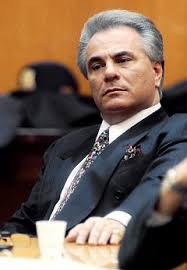
John Gotti
On December 12, 1989, the electronic bug picked up the following conversation between Gotti and his Consigliere, or adviser, Frankie Locascio.
The subject: The murders of three former Gambino Family mobsters: Robert “Deebee” DiBernardo, Louis Milito and Louis DiBono.
DiBernardo had been murdered over Gravano’s objections. A fellow mobster had told Gotti that DiBernardo had made “subversive” comments behind Gotti’s back.
But that wasn’t the way Gotti told it.
GOTTI: “Deebee, did he ever talk subversive to you?”
LOCASCIO: “Never.”
GOTTI: “Never talked it to Angelo, never talked it to [Joseph Armone] either. I took Sammy’s word that he talked about me behind my back….I was in jail when I whacked him. I knew why it was being done. I done it anyway. I allowed it to be done anyway.”
Next Gotti focused on the murders of Louis Milito and Louis DiBono. Milito had been “whacked” for questioning Gotti’s judgment. And DiBono had been hit because he refused to answer a Gotti summons.
But Gotti was determined to lay the blame on Gravano. He claimed that both men had been killed because Gravano had asked for permission to remove his business partners.
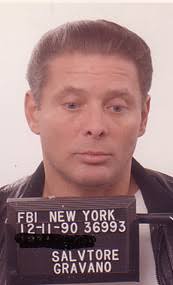
Sammy “The Bull” Gravano
And there was more: Gotti accused Gravano of excessive greed—and hoarding money for himself at the expense of the Family.
GOTTI: “That’s Sammy….Every fucking time I turn around there’s a new company poppin’ up. Building. Consulting. Concrete. Where the hell did all these new companies come from? Where did five new companies come from?”
He accused Gravano of creating “a fuckin’ army inside an army,” adding: “You know what I’m saying, Frankie? I saw that shit and I don’t need that shit.”
At a pretrial hearing following the arrests of Gotti, Gravano and Locascio, prosecutors played the FBI’s tapes of Gotti’s unintended confessions—including his badmouthing of Gravano.
Gravano suddenly realized that his future in the Mafia was nil.
Gravano, Gotti and Locascio were all facing life imprisonment as targets of RICO—the Racketeer Influenced Corrupt Organizations Act.
And if the Feds didn’t send him to prison, mob gunmen—sent by Gotti—would eventually get him. Gotti clearly planned to make him the fall guy—in court or in a coffin—for murders that Gotti himself had ordered.
Only John Gotti was shocked when Gravano agreed to testify against him—and other Mafiosi—in exchange for a five-year prison sentence.
Gravano, as Gotti’s second-in-command, had literally been at the seat of power for five years. He knew the secrets of the Gambino Family—and the other four Mafia families who ruled New York.
On April 2, 1992, a jury convicted Gotti of five murders, conspiracy to murder, loansharking, illegal gambling, obstruction of justice, bribery and tax evasion. He drew a life sentence, without possibility of parole.
Gotti was incarcerated at the United States Penitentiary at Marion, Illinois, in virtual solitary confinement. He died of throat cancer on June 10, 2002, at the age of 61.
Donald Trump resembles his fellow New Yorker, John Gotti, in more ways than he would like to admit: In his greed, arrogance, egomania, love of publicity and vindictiveness.
But there is a huge difference between the no-nonsense way that federal prosecutors and judges treated Gotti—and the way they have cringed before Trump.
2020 PRESIDENTIAL ELECTION, 2022 MIDTERM ELECTIONS, ABC NEWS, ADAM LAXALT, ALEXANDER SHUSTOROVICH, ALTERNET, AMERICABLOG, AP, AUDREY MURAVIEV, BABY BOOMER RESISTANCE, BBC, BLOOMBERG NEWS, BUZZFEED, CARL VON CLAUSEWITZ, CBS NEWS, CHRIS CILLIZZA, CIA, CNN, CROOKS AND LIARS, DAILY KOS, DEBT CEILING, DEFENSE INTELLIGENCE AGENCY, DONALD TRUMP, DONALD TRUMP JR., EMOLUMENTS CLAUSE, ERIC TRUMP, FASCISM, FBI, FEDERAL ELECTIONS COMMISSION, FIVETHIRTYEIGHT, FOX NETWORK, FRANKLIN GRAHAM, GEORGE W. BUSH, HARPER’S MAGAZINE, HUFFINGTON POST, HUNTER BIDEN, INTERNATIONAL BROTHERHOOD OF TEAMSTERS UNION, JAMES KIRCHICK, JANUARY 6 COUP ATTEMPT, JESSE BENTON, JOE BIDEN, JOHN KASICH, JOHN MCCAIN, JOSEPH MCCARTHY, KEVIN MCCARTHY, LEN BLAVATNIK, LIBERALISM, LINDSEY GRAHAM, MAFIA, MARCO RUBIO, MEDIA MATTERS, MICHELLE OBAMA, MOTHER JONES, MOVEON, MSNBC, NANCY PELOSI, NBC NEWS, NEW REPUBLIC, NEWSDAY, NEWSWEEK, NICCOLO MACHIAVELLI, NPR, OLIGARCHS, PBS NEWSHOUR, POLITICO, POLITICUSUSA, RAW STORY, REPUBLICANS, REUTERS, RICHARD NIXON, ROBERT F. KENNEDY, Ronald Reagan, RUSSIA, RUSSIA TODAY, SALON, SCOTT WALKER, SEATTLE TIMES, SLATE, SPIRO AGNEW, TALKING POINTS MEMO, THE ATLANTIC, THE CHICAGO SUN-TIMES, THE CHICAGO TRIBUNE, THE DAILY BEAST, THE DAILY BLOG, THE GUARDIAN, THE HILL, THE HUFFINGTON POST, THE INTERCEPT, THE LOS ANGELES TIMES, THE NATION, THE NEW REPUBLIC, THE NEW YORK TIMES, THE NEW YORKER, THE PRINCE, THE VILLAGE VOICE, THE WASHINGTON POST, THINKPROGRESS, TIME, TRUTHDIG, TRUTHOUT, TWITTER, U.S. NEWS & WORLD REPORT, UKRAINE, UNITED STATES CAPITOL BUILDING, UNITED STATES CONSTITUTION, UNITED STATES HOUSE OF REPRESENTATIVES, UNITED STATES JUSTICE DEPARTMENT, UNITED STATES SENATE, UPI, USA TODAY, VLADIMIR PUTIN, VOLODYMYR ZELENSKY, WORLD WAR 11
In Bureaucracy, History, Law, Law Enforcement, Politics, Social commentary on April 23, 2024 at 12:10 am
….A man who wishes to make a profession of goodness in everything must inevitably come to grief among so many who are not good. And therefore it is necessary, for a prince who wishes to maintain himself, to learn how not to be good, and to use this knowledge and not use it, according to the necessity of the case.
—Niccolo Machiavelli’s advice to President Joseph Biden in “The Prince”
Niccolo Machiavelli
Republicans, having won control of the House of Representatives, are eagerly seeking to destroy whatever legacy President Joseph R. Biden hopes to leave.
Intending to abuse their new-found powers to the utmost, their topmost goals include:
- Bringing false impeachment charges against Biden;
- Investigating FBI officials who rightly investigated evidence of Donald Trump’s collaboration with Russia;
- Investigating the President’s son, Hunter, for unspecified offenses, to damage his father’s credibility; and
- Holding America’s economy hostage by refusing to raise the debt ceiling unless Biden makes cuts in taxes and aid programs for the poor and middle class.
Yet their dictatorial ambitions—lavishly funded by Russian “campaign contributions” (i.e., bribes)—can be thwarted.
Two methods for achieving this have already been discussed in Part one of this series:
- Attack Republicans as traitors selling out the country to Vladimir Putin, and
- Concede NOTHING to Republicans
Here are two more:
Counterattack Strategy #3: Open Senate Investigations on the Trumps
House Republicans have ruthlessly attacked Biden’s son, Hunter, to damage the President’s credibility.
“What’s on Hunter’s laptop?” has become their latest version of “Who promoted Peress?”
Irving Peress was a New York City dentist who became a primary target for Red-baiting Republican Senator Joseph McCarthy during the 1954 Army-McCarthy hearings.
Democrats can effectively blunt this attack: Senatorial Democrats can hold similar investigative hearings on the actions of Donald Trump, Jr., and Eric Trump during their father’s White House tenure.
Both were highly involved with President Trump’s finances during his four years in office. And Trump never hesitated to violate the Emoluments Clause of the United States Constitution.

United States Constitution
Article I, Section 9, Paragraph 8 prohibits federal office holders from receiving gifts, payments, or anything of value from a foreign state or its rulers, officers, or representatives.
The Founders wanted to ensure that the country’s leaders would not be corrupted, even unconsciously, through bribes. At that time, bribery was a common practice among European rulers and diplomats.
Trump encouraged diplomats, lobbyists and insiders to stay at his Washington, D.C. hotel—which lay only a short walk from the White House on Pennsylvania Avenue.
And the prices charged there weren’t cheap:
- Cocktails ran from $23 for a gin and tonic to $100 for a vodka concoction with raw oysters and caviar.
- A seafood pyramid called “the Trump Tower” cost $120.
- A salt-aged Kansas City strip steak cost $59.
It’s a certainty that Trump’s sons, Eric and Donald, Jr., oversaw the profits sheet for this hotel—and other Trump properties across the country visited by members of foreign governments.
Thus, there are legitimate avenues for investigation open to Senatorial subcommittees—just as Robert F. Kennedy once probed financial ties between the Mafia and the International Brother of Teamsters Union.
The Justice Department might even be persuaded to launch its own investigation—not only into possible financial corruption during the Trump administration but into widespread reports of cocaine use by Donald, Jr.

Donald Trump, Jr.
Gage Skidmore from Surprise, AZ, United States of America, CC BY-SA 2.0 <https://creativecommons.org/licenses/by-sa/2.0>, via Wikimedia Commons
The House cannot bring criminal penalties against anyone. But the Justice Department can.
Counterattack Strategy #4: Open Justice Department Investigations on Congress members who supported Trump’s 2020 Coup Attempt
After Donald Trump refused to concede the 2020 Presidential election, 17 Republican state Attorney Generals—and 126 Republican members from both houses of Congress—supported a Texas lawsuit to overturn the results in four battleground states: Georgia, Michigan, Pennsylvania and Wisconsin.
This was nothing less than a Right-wing coup attempt to overturn the results of a legitimate election. As a result, every one of these men and women can be legitimately indicted for treason—provided the Biden Justice Department has has the courage to do so.
Had the Justice Department brought such indictments in 2021 or 2022, the Republican party would now be facing legal and financial ruin. There is still time to do this.
Even if some of its members escape conviction, they will be forced to spend tens of thousands of dollars to stay out of prison.
And those who are convicted and sent to prison will serve notice on to the Right of the dangers of treason and abuse of power.
For decades, Republicans have turned Carl von Clausewitz’ famous dictum—“War is the continuation of politics by other means”—on its head: “Politics is a continuation of war by other means.”
That strategy has given the United States Richard Nixon, Spiro Agnew, George W. Bush, Donald Trump—and a Republican Congress willing to destroy the country it claims to love.
By contrast, Democrats have too often adhered to the Michelle Obama mantra: “When they go low, we go high.”
That strategy has allowed Republicans to give the United States needless wars, an exploding national debt and the near destruction of democracy.
2020 PRESIDENTIAL ELECTION, 2022 MIDTERM ELECTIONS, ABC NEWS, ADAM LAXALT, ALEXANDER SHUSTOROVICH, ALTERNET, AMERICABLOG, AP, AUDREY MURAVIEV, BABY BOOMER RESISTANCE, BBC, BLOOMBERG NEWS, BUZZFEED, CARL VON CLAUSEWITZ, CBS NEWS, CHRIS CILLIZZA, CIA, CNN, CROOKS AND LIARS, DAILY KOS, DEBT CEILING, DEFENSE INTELLIGENCE AGENCY, DONALD TRUMP, DONALD TRUMP JR., EMOLUMENTS CLAUSE, ERIC TRUMP, FASCISM, FBI, FEDERAL ELECTIONS COMMISSION, FIVETHIRTYEIGHT, FOX NETWORK, FRANKLIN GRAHAM, GEORGE W. BUSH, HARPER’S MAGAZINE, HUFFINGTON POST, HUNTER BIDEN, INTERNATIONAL BROTHERHOOD OF TEAMSTERS UNION, JAMES KIRCHICK, JANUARY 6 COUP ATTEMPT, JESSE BENTON, JOE BIDEN, JOHN KASICH, JOHN MCCAIN, JOSEPH MCCARTHY, KEVIN MCCARTHY, LEN BLAVATNIK, LIBERALISM, LINDSEY GRAHAM, MAFIA, MARCO RUBIO, MEDIA MATTERS, MICHELLE OBAMA, MOTHER JONES, MOVEON, MSNBC, NANCY PELOSI, NBC NEWS, NEW REPUBLIC, NEWSDAY, NEWSWEEK, NICCOLO MACHIAVELLI, NPR, OLIGARCHS, PBS NEWSHOUR, POLITICO, POLITICUSUSA, RAW STORY, REPUBLICANS, REUTERS, RICHARD NIXON, ROBERT F. KENNEDY, Ronald Reagan, RUSSIA, RUSSIA TODAY, SALON, SCOTT WALKER, SEATTLE TIMES, SLATE, SPIRO AGNEW, TALKING POINTS MEMO, THE ATLANTIC, THE CHICAGO SUN-TIMES, THE CHICAGO TRIBUNE, THE DAILY BEAST, THE DAILY BLOG, THE GUARDIAN, THE HILL, THE HUFFINGTON POST, THE INTERCEPT, THE LOS ANGELES TIMES, THE NATION, THE NEW REPUBLIC, THE NEW YORK TIMES, THE NEW YORKER, THE PRINCE, THE VILLAGE VOICE, THE WASHINGTON POST, THINKPROGRESS, TIME, TRUTHDIG, TRUTHOUT, TWITTER, U.S. NEWS & WORLD REPORT, UKRAINE, UNITED STATES CAPITOL BUILDING, UNITED STATES CONSTITUTION, UNITED STATES HOUSE OF REPRESENTATIVES, UNITED STATES JUSTICE DEPARTMENT, UNITED STATES SENATE, UPI, USA TODAY, VLADIMIR PUTIN, VOLODYMYR ZELENSKY, WORLD WAR 11
In Bureaucracy, Business, History, Law, Law Enforcement, Politics, Social commentary on April 22, 2024 at 12:17 am
It took 15 voting tries—and a series of humiliating concessions—for Kevin McCarthy (R-CA) to become Speaker of the House of Representatives.
All of the concessions he made were to the most Right-wing members of the House. And all of those members are fanatically dedicated to destroying whatever legacy President Joseph R. Biden hopes to leave.
At the top of their list: Impeaching Biden.
Republicans refused to impeach and convict Donald Trump after he incited a deadly riot against the United States Capitol Building. But they’re eager to remove Biden for what they consider the most impeachable offense of all.
He defeated a Republican candidate for President.

President Joseph Biden
And not just any Republican candidate: The candidate who had made no secret of his desire to be “President-for-Life.”
During the 2022 mid-term elections, Republicans had expected to sweep both the House and Senate. This would have given them virtual control of the government.
The House is the body that initiates revenue bills and impeaches federal officials. And the Senate holds the power to confirm Presidential appointments that require consent, and to provide advice and consent to ratify treaties.
But Democrats went on a rare offensive and rightly attacked Republicans as trying to gain absolute control over the lives of their fellow Americans. And voters rejected the candidates favored by Trump for local and federal offices.
Thus, Republicans had to settle for controlling the House.
Even so, they intended to abuse their new-found powers to the utmost. Among their topmost goals:
- Bringing false impeachment charges against President Biden;
- Investigating FBI officials who rightly investigated evidence of Donald Trump’s collaboration with Russia;
- Investigating the President’s son, Hunter, for unspecified offenses, to damage his father’s credibility; and
- Holding America’s economy hostage by refusing to raise the debt ceiling unless Biden makes cuts in taxes and aid programs for the poor and middle class.
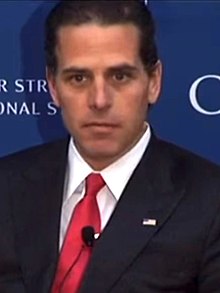
Hunter Biden
Center for Strategic & International Studies, CC BY 3.0 <https://creativecommons.org/licenses/by/3.0>, via Wikimedia Commons
If Democrats follow their usual mantra of “When they go low, we go high,” they will cower before Republican aggression and sacrifice their legislative agenda.
Yet they can snatch victory from the jaws of impending defeat—providing they are willing to follow the advice Robert F. Kennedy offered for combating the Mafia: “If we do not attack organized criminals with weapons and techniques as effective as their own, they will destroy us.”
Counterattack Strategy #1: Attack Republicans as traitors selling out the country to Vladimir Putin
Numerous Republicans have taken “campaign contributions”—i.e., bribes—from Russian oligarchs linked to Putin.
One Russian oligarch—Len Blavatnik—has given millions of dollars to top Republican leaders—such as Senators Mitch McConnell (Kentucky), Marco Rubio (Florida) and Lindsey Graham (South Carolina).

In just 2017, Blavatnik contributed the following to GOP Political Action Committees (PACs):
- $1.5 million to PACs associated with Rubio.
- $1 million to Trump’s Inaugural Committee.
- $1 million to McConnell’s Senate Leadership Fund.
- $3.5 million to a PAC associated with McConnell.
- $1.1 million to Unintimidated PAC, associated with Wisconsin Governor Scott Walker.
- $250,000 to New Day for America PAC, associated with Ohio Governor John Kasich.
- $800,000 to the Security is Strength PAC, associated with Senator Lindsey Graham.
The Biden administration need not ask the CIA or FBI to unearth these contributions. They can be easily found within the files of the Federal Election Commission (FEC).
Putin’s monies have been well-spent: About 90 House Republicans—out of a total of 213—attended Volodymyr Zelensky’s address to Congress on December 21, 2022, according to CQ Roll Call. Some who did spent much of the speech on their phones.
Many Republicans—such as former House Speaker Kevin McCarthy, who in 2021 received about $255,000 from Blavatnik—have openly threatened to end all funding for Ukraine’s heroic struggle against Russian aggression.
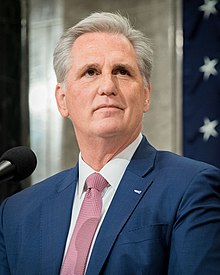
Kevin McCarthy
Attacking Republicans as Communist traitors would prove an effective technique. From the end of World War II to the collapse of the Soviet Union in 1991, Republicans successfully attacked Democrats as at least potential sellouts, if not actual traitors.
The advantage of attacking Russian-bribed Republicans today is that even some “Reagan Republicans”—such as James Kirchick, a conservative reporter, foreign correspondent, author, and columnist—have openly denounced this treason.
Thus, the White House could ignite an internal conflict within the Right by pitting Republicans against each other.
Counterattack Strategy #2: Concede NOTHING to Republicans
Donald Trump shut down the Federal Government on December 22, 2018, because Democrats refused to finance his useless border wall against Mexico.
So Speaker of the House Nancy Pelosi shut down his State of the Union appearance.
As CNN political analyst Chris Cillizza noted: “What Pelosi seems to understand better than past Trump political opponents is that giving ANY ground is a mistake. You have to not only stand firm, but be willing to go beyond all political norms—like canceling the SOTU—to win.”
His ego strung, Trump reopened the government.
And with Republicans threatening to not raise the debt ceiling unless their extortionate demands are met, the White House can effectively counter this danger:
Deduct from the budget every dollar directed toward Republican states. This would vastly reduce the size of the Federal budget, since subsidizing these failed economies accounts for a substantial portion of the budget.
2016 PRESIDENTIAL ELECTION, 2020 PRESIDENTIAL ELECTION, ABC NEWS, ABUSE OF POWER, ADOLF HITLER, ALTERNET, AMANDA CHASE, AMERICABLOG, AP, ARMED SERVICES, BABY BOOMER RESISTANCE, BARACK OBAMA, BLOOMBERG, BUZZFEED, CBS NEWS, CHILE, CIA, CLAUS VON STAUFFENBERG, CNN, COVID-19, CROOKS AND LIARS, DAILY KOZ, DONALD TRUMP, DRUDGE RETORT, FBI, FEDERAL GOVERNMENT SHUTDOWN, FIVETHIRTYEIGHT, GENERAL SERVICES ADMINISTRATION, GESTAPO, HARPER’S MAGAZINE, HILLARY CLINTON, IMPEACHMENT ARTICLES, JAMES B. COMEY, JAMES MATTIS, JOHN KASICH, JOHN MCCAIN, JOSEPH BIDEN, KIM JONG-UN, MARK ESPER, MARTIAL LAW, MARTIN NIEMOELLER, MEDIA MATTERS, MICHAEL FLYNN, MOTHER JONES, MOVEON, MSNBC, MUSLIMS, NATIONAL SECURITY AGENCY, NAZI GERMANY, NBC NEWS, NEWSWEEK, NPR, OBSTRUCTION OF CONGRESS, PBS NEWSHOUR, POLITICO, POLITICUSUSA, RAW STORY, REPUBLICANS, REUTERS, SALON, SEATTLE TIMES, SERGEY KISLYAK, SERGEY LAVROV, SLATE, TALKING POINTS MEMO, THE ATLANTIC, THE CHICAGO SUN-TIMES, THE CHICAGO TRIBUNE, THE DAILY BEAST, THE DAILY BLOG, THE GUARDIAN, THE HILL, THE HUFFINGTON POST, THE LOS ANGELES TIMES, THE NATION, THE NEW REPUBLIC, THE NEW YORK TIMES, THE PENTAGON, THE TWILIGHT ZONE, THE VILLAGE VOICE, THE WASHINGTON POST, THINKPROGRESS, THIRD REICH, TIME, TRUTHDIG, TRUTHOUT, TWENTY-FIFTH AMENDMENT, TWITTER, TWO POLITICAL JUNKIES, U.S. NEWS & WORLD REPORT, UNITED STATES CONSTITUTION, UNITED STATES SECRET SERVICE, UPI, USA TODAY, VLADIMIR PUTIN, VOTER FRAUD, WONKETTE, WORLD WAR 11
In Bureaucracy, History, Law, Law Enforcement, Military, Politics, Social commentary on April 12, 2024 at 12:13 am
During his 12-year reign, Adolf Hitler was the target of at least 42 assassination plots. The most famous of these was the one of July 20, 1944.
- So far as is known, Donald Trump has not been the target of even one.
In Hitler’s case, the plotters were officers of the German general staff—who believed the Fuhrer was leading Germany into a war it could not hope to win.
After the war’s outbreak (on September 1, 1939) most of the plotters were motivated by a desire to end the war before Allied—and especially Russian—soldiers reached Germany. But many plotters were motivated by sheer horror at the wholesale slaughters taking place in Poland and Russia.
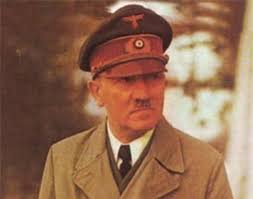
Adolf Hitler
- In Trump’s case, a non-violent method for removal existed in the Twenty-Fifth Amendment to the United States Constitution. This allows the Vice President and a majority of the Cabinet to recommend the removal of the President when he is “unable to discharge the powers and duties of his office.” The Vice President then becomes President.
- No Cabinet members had the courage to invoke this.
- Within the Senate and House of Representatives, Republicans acted as a rubber stamp for his every infamy. When he praised North Korea’s dictator Kim Jong-On or attacked Vietnam POW John McCain, they stayed silent. When he falsely charged massive voter fraud, Republicans stayed silent or loudly parroted his lies.
- Their most notorious example of ambition-fueled cowardice occurred on February 5, 2020. That was when the Republican-dominated Senate—ignoring the overwhelming evidence against him—acquitted Trump on both impeachment articles: Obstruction of Congress and abuse of power.
- At the Pentagon, American generals stood mute as Trump repeatedly sided with Russian dictator Vladimir Putin against the FBI, CIA and National Security Agency—and even gave classified CIA Intelligence to Russian Foreign Minister Sergey Lavrov and Ambassador Sergey Kislyak.
- And just as high-ranking field marshals in Hitler’s Wehrmacht held their tongues when he insulted them, so, too, did American generals when Trump belittled their intelligence and even patriotism.
- When Trump arbitrarily decided to remove American forces from Syria and Afghanistan, Secretary of Defense James Mattis resigned in protest in 2018. But then he was simply replaced by Mark Esper.
- Despite the fact that many of these men regularly came into contact with Trump, not one of them apparently plotted his removal.
- Similarly, Trump repeatedly attacked the integrity of the men and women of the FBI—even firing its director, James Comey, for daring to investigate Russia’s subversion of the 2016 election. If its agents—steeped in Federal criminal law—built a case for Trump’s indictment and prosecution, it has never come to light.
- Neither did any of his Secret Service agents register the slightest protest, despite his arrogant behavior toward them. He forced them to work without pay during his 35-day government shutdown in 2018. And he forced them to accompany him to COVID-infected states—both during the Presidential campaign and afterward. Many of them became stricken with this often fatal disease as a result.
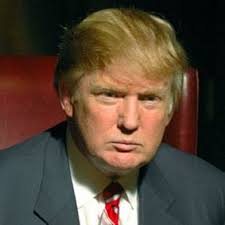
Donald Trump
On November 3, 2020, 81,255,933 Democratic voters elected former Vice President Joseph Biden the 46th President of the United States. Trump, running for a second term, got 74,196,153 votes.
Yet almost two months after the election, Trump refused to concede, insisting that he won—and repeatedly claiming falsely that he is the victim of massive vote fraud.
This toxic lie was feverishly embraced by millions of Right-wingers, and cast a shadow of illegitimacy over the Biden administration.
This refusal to acknowledge the outcome initially denied Biden access to the money, information-sharing and machinery traditionally accorded the President-elect. Trump himself was the beneficiary of such assistance in 2016, after his win over Democratic nominee Hillary Clinton.
Only on November 23, 2020 was Biden acknowledged as the winner by the General Services Administration, as the Trump administration finally began the formal transition process.
Meanwhile, the COVID-19 pandemic raged across the country. More than 400,000 Americans died, by the time Trump left office. Hospitals were filled to capacity, and millions faced starvation and/or eviction.
Yet Trump remained obsessed with his loss, and did nothing to coordinate the Federal response to the pandemic.
Trump’s refusal to accept reality posed an unprecedented danger to democracy: No presidential candidate had ever refused to concede defeat once all the votes were counted and legal challenges resolved.
By refusing to commit to a peaceful transfer of power, Trump took on the classic mantle of of a dictator.
Right-wing Virginia State Senator Amanda Chase urged Trump to declare martial law and allow the military to “oversee” another election. So did disgraced ex-National Security Advisor Michael Flynn, whom Trump pardoned for lying to the FBI about private talks he had with a Russian official.
Reports have surfaced that Trump considered doing so.
History has recorded an active German resistance movement against Adolf Hitler—including no fewer than at least 42 assassination attempts. And posterity has honored its members, many of whom died heroically for standing firm against a brutal tyrant.
To its eternal shame, the same cannot be said of America during the reign of Donald Trump.
2016 PRESIDENTIAL ELECTION, 2020 PRESIDENTIAL ELECTION, ABC NEWS, ABUSE OF POWER, ADOLF HITLER, ALTERNET, AMANDA CHASE, AMERICABLOG, AP, ARMED SERVICES, BABY BOOMER RESISTANCE, BARACK OBAMA, BLOOMBERG, BUZZFEED, CBS NEWS, CIA, CLAUS VON STAUFFENBERG, CNN, COVID-19, CROOKS AND LIARS, DAILY KOZ, DONALD TRUMP, DRUDGE RETORT, FBI, FEDERAL GOVERNMENT SHUTDOWN, FIVETHIRTYEIGHT, GENERAL SERVICES ADMINISTRATION, GESTAPO, HARPER’S MAGAZINE, HILLARY CLINTON, IMPEACHMENT ARTICLES, JAMES B. COMEY, JAMES MATTIS, JOHN KASICH, JOHN MCCAIN, JOSEPH BIDEN, KIM JONG-UN, MARK ESPER, MARTIAL LAW, MARTIN NIEMOELLER, MEDIA MATTERS, MICHAEL FLYNN, MOTHER JONES, MOVEON, MSNBC, MUSLIMS, NATIONAL SECURITY AGENCY, NAZI GERMANY, NBC NEWS, NEWSWEEK, NPR, OBSTRUCTION OF CONGRESS, PBS NEWSHOUR, POLITICO, POLITICUSUSA, RAW STORY, REPUBLICANS, REUTERS, SALON, SEATTLE TIMES, SERGEY KISLYAK, SERGEY LAVROV, SLATE, TALKING POINTS MEMO, THE ATLANTIC, THE CHICAGO SUN-TIMES, THE CHICAGO TRIBUNE, THE DAILY BEAST, THE DAILY BLOG, THE GUARDIAN, THE HILL, THE HUFFINGTON POST, THE LOS ANGELES TIMES, THE NATION, THE NEW REPUBLIC, THE NEW YORK TIMES, THE PENTAGON, THE TWILIGHT ZONE, THE VILLAGE VOICE, THE WASHINGTON POST, THINKPROGRESS, THIRD REICH, TIME, TRUTHDIG, TRUTHOUT, TWENTY-FIFTH AMENDMENT, TWITTER, TWO POLITICAL JUNKIES, U.S. NEWS & WORLD REPORT, UNITED STATES CONSTITUTION, UNITED STATES SECRET SERVICE, UPI, USA TODAY, VLADIMIR PUTIN, VOTER FRAUD, WONKETTE, WORLD WAR 11
In Bureaucracy, History, Law, Law Enforcement, Military, Politics, Social commentary on April 11, 2024 at 12:16 am
On July 20, 1944, Colonel Claus Schenk von Stuaffenberg tried to assassinate Adolf Hitler.
He had served with the Wehrmacht in Poland (1939), France (1940) and the Soviet Union (1941).
While serving in Tunisa, he was seriously wounded on April 7, 1943, when Allied fighters strafed his vehicle. He lost his left eye, right hand and two fingers of his left hand after surgery.
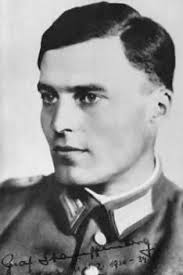
Colonel Claus Schenk von Stuaffenberg
Nevertheless, he now acted as the prime mover for the conspiracy among a growing number of German high command officers to arrest or assassinate Germany’s Fuehrer.
For most of these officers, the motive was craven: The “happy time” of German victories was over. Germany was losing the war it had unleashed on the world in 1939—and now they feared the worst.
This was especially true now that the numerically superior forces of the Soviet Union had gone onto the offensive.
For Stauffenberg, there was another reason: His disgust at the horrors he had seen committed by his fellow Wehrmacht soldiers upon defenseless POW’s and civilians in Russia.
Thus, Stauffenberg—more than many Germans–knew firsthand the vengeance his country could expect if the “Thousand-Year Reich” fell.
Something must be done, he believed, to prove to the world that not all Germans—even members of the Wehrmacht—were criminals.
Most of the conspirators wanted to arrest Hitler and surrender to British and American forces—well before the much-feared Russians gained a toehold in Germany.
Stauffenberg didn’t want to arrest Hitler; he wanted to kill him. A live Hitler might eventually be rescued by his Nazi colleagues.
But Hitler was a closely-guarded target. He was surrounded by fanatical bodyguards who were expert marksmen. He often wore a bulletproof vest and a cap lined with three pounds of laminated steel.
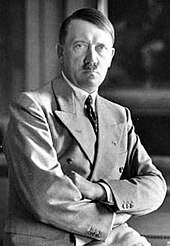
Adolf Hitler
Bundesarchiv, Bild 146-1990-048-29A / CC-BY-SA 3.0 [CC BY-SA 3.0 de (https://creativecommons.org/licenses/by-sa/3.0/de/deed.en)%5D
But his single greatest protection—he claimed—was an instinct for danger. He would suddenly change his schedule—to drop in where he was least expected. Or suddenly depart an event where he was expected to stay a long time.
That instinct had repeatedly saved his life.
A series of assassination attempts had been made against Hitler. All of them involved time-bombs. And all of the would-be assassins were members of the German General Staff.
In one case, a bomb secretly stashed aboard Hitler’s plane failed to explode. In another, an officer who had a bomb strapped to himself unexpectedly found his scheduled meeting with Hitler called off. He had to rush into a bathroom to defuse the bomb before it exploded.
Stauffenberg intended to carry his bomb—hidden in a briefcase—into a “Hitler conference” room packed with military officers. Rigged with a time-fuse, it would be left there while he found an excuse to leave.
After the explosion, he would phone one of his fellow conspirators with the news.
Stauffenberg intended to direct the new government that would replace that of the Nazis—and open peace talks with the British and Americans.
With Hitler dead, the coup—“Operation Valkyrie”—would be on.
Anti-Nazi conspirators would seize control of key posts of the government. The British and Americans would then be informed of Germany’s willingness to surrender. Provided, of course, that the vengeance-seeking Russians did not have a say in its postwar future.
The Wehrmacht and Schutzstaffel (SS) had killed millions of Russians. Many had died in combat. Others had been murdered as captives. Still more had been allowed to die by starvation and exposure to the notorious Russian winter.
So the Germans—both Nazi and anti-Nazi—knew what they could expect if soldiers of the Soviet Union reached German soil.
On July 20, 1944, Stauffenberg appeared at Hitler’s well-guarded military headquarters in East Prussia. Like all his other outposts, Hitler had named it—appropriately enough—“Wolf’s Lair.”

“Wolf’s Lair”
Stauffenberg entered the large, concrete building while the conference was in session. He placed his yellow briefcase next to Hitler—who was standing with his generals at a heavy oaken table. Then he excused himself to take an “urgent” phone call.
After Stauffenberg left the room, Colonel Heinz Brandt, standing next to Hitler, found the briefcase blocking his legs. So he moved it—to the other side of the heavy oaken support, partially shielding Hitler from the blast..
At 12:42 p.m. on July 20, 1944, Stauffenberg’s briefcase bomb erupted.
Brandt died, as did two other officers and a stenographer.
Hitler not only survived, but the plotters failed to seize the key broadcast facilities of the Reich.
This allowed Hitler to make a late-night speech to the nation, revealing the failed plot and assuring Germans that he was still alive. And he swore to flush out the “traitorous swine” who had tried to kill him.
Mass arrests quickly followed.
Among the first victims discovered and executed was the conspiracy’s leader, Colonel Claus von Stauffenberg. Standing before a makeshift firing squad at midnight, he cried: “Long live our sacred Germany!”
At least 7,000 persons were arrested by the Gestapo. Of these, 4,980 were executed.
2016 PRESIDENTIAL ELECTION, 2020 PRESIDENTIAL ELECTION, ABC NEWS, ABUSE OF POWER, ADOLF HITLER, ALTERNET, AMANDA CHASE, AMERICABLOG, AP, ARMED SERVICES, BABY BOOMER RESISTANCE, BARACK OBAMA, BLOOMBERG, BUZZFEED, CBS NEWS, CIA, CLAUS VON STAUFFENBERG, CNN, COVID-19, CROOKS AND LIARS, DAILY KOZ, DANA ANDREWS, DONALD TRUMP, DRUDGE RETORT, FBI, FEDERAL GOVERNMENT SHUTDOWN, FIVETHIRTYEIGHT, GENERAL SERVICES ADMINISTRATION, GESTAPO, HARPER’S MAGAZINE, HILLARY CLINTON, IMPEACHMENT ARTICLES, JAMES B. COMEY, JAMES MATTIS, JOHN KASICH, JOHN MCCAIN, JOSEPH BIDEN, KIM JONG-UN, MARK ESPER, MARTIAL LAW, MARTIN NIEMOELLER, MEDIA MATTERS, MICHAEL FLYNN, MOTHER JONES, MOVEON, MSNBC, MUSLIMS, NATIONAL SECURITY AGENCY, NAZI GERMANY, NBC NEWS, NEWSWEEK, NPR, OBSTRUCTION OF CONGRESS, PBS NEWSHOUR, POLITICO, POLITICUSUSA, RAW STORY, REPUBLICANS, REUTERS, SALON, SEATTLE TIMES, SERGEY KISLYAK, SERGEY LAVROV, SLATE, TALKING POINTS MEMO, THE ATLANTIC, THE CHICAGO SUN-TIMES, THE CHICAGO TRIBUNE, THE DAILY BEAST, THE DAILY BLOG, THE GUARDIAN, THE HILL, THE HUFFINGTON POST, THE LOS ANGELES TIMES, THE NATION, THE NEW REPUBLIC, THE NEW YORK TIMES, THE PENTAGON, THE TWILIGHT ZONE, THE VILLAGE VOICE, THE WASHINGTON POST, THINKPROGRESS, THIRD REICH, TIME, TRUTHDIG, TRUTHOUT, TWENTY-FIFTH AMENDMENT, TWITTER, TWO POLITICAL JUNKIES, U.S. NEWS & WORLD REPORT, UNITED STATES CONSTITUTION, UNITED STATES SECRET SERVICE, UPI, USA TODAY, VLADIMIR PUTIN, VOTER FRAUD, WONKETTE, WORLD WAR 11
In Bureaucracy, History, Law, Law Enforcement, Military, Politics, Social commentary, Uncategorized on April 10, 2024 at 12:13 am
“When Fascism comes to America, it will be called anti-Fascism.”
–Huey Long, Louisiana Governor/Senator
In the Twilight Zone episode, “No Time Like the Past,” Paul Driscoll (Dana Andrews), a scientist in early 1960s America, uses a time machine to visit Nazi Germany on the eve of World War II.
He’s rented a motel room overlooking the balcony from where the Fuhrer, Adolf Hitler will soon make a speech. And he’s eager to watch that speech—through the lens of a telescopic-sighted rifle.
Just as he’s about to pull the trigger, there’s a knock at his door–by the maid. Driscoll hustles her out as soon as possible, then once again picks up his rifle. He—and viewers—can once again see Hitler through the cross-hairs of his weapon.

Paul Driscoll prepares to shoot Adolf Hitler
But instead of the anticipated shot, there’s another knock at his door—his time by the black-uniformed secret police, the SS. Driscoll knows the game is up, and disappears into the present just as the thugs break down his door.
And the audience is left to ponder how different the world would have been if Driscoll—or someone in Nazi Germany—had succeeded in assassinating the man whose wars would wipe out the lives of 50 million men, women and children around the globe.
One 2016 Republican candidate for President dared to invoke the menace of Nazi Germany in warning of the dangers of a Donald Trump Presidency. And to argue that Americans could prevent that past from returning.
In November, 2015, John Kasich, the governor of Ohio, was peddling a message of creating jobs, balancing the Federal budget and disdain for Washington, D.C.
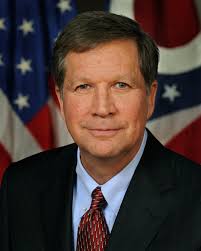
John Kasich
But he remained far behind in the polls, dropping 50% in support in just one month—from September to October. Meanwhile, Trump, the New York billionaire developer, was being backed by 25% of Republican primary voters.
So, with nothing to lose, Kasich decided to take off the gloves. He invoked the “N” word for Republicans: Nazi.
He authorized the creation of a TV ad that opened with ominous music—and the face of a snarling Donald Trump.
“I would like anyone who is listening to consider some thoughts that I’ve paraphrased from the words of German pastor Martin Niemoeller.”
The voice belonged to Tom Moe, a retired colonel in the U.S. Air Force—and a former Vietnam prisoner-of-war.
“You might not care if Donald Trump says Muslims must register with the government, because you’re not one,” continued Moe.
“And you might not care if Donald Trump says he’s going to round up all the Hispanic immigrants, because you’re not one.
Donald Trump
“And you might not care if Donald Trump says it’s OK to rough up black protesters, because you’re not one.
“And you might not care if Donald Trump wants to suppress journalists, because you’re not one.
“But think about this:
“If he keeps going, and he actually becomes President, he might just get around to you. And you’d better hope that there’s someone left to help you.”
Martin Niemoeller (1892–1984) was a prominent Protestant pastor who had commanded a U-boat during World War 1. He became a bitter public foe of Adolf Hitler.
A staunch anti-Communist, he had initially supported the Nazis as Germany’s only hope of salvation against the Soviet Union.
But when the Nazis made the church subordinate to State authority, Niemoeller created the Pastors’ Emergency League to defend religious freedom.
For his opposition to the Third Reich, Niemoeller spent seven years in concentration camps.
With the collapse of the Reich in 1945, he was freed—and elected President of the Protestant church in Hesse and Nassau in 1947. During the 1960s, he was a president of the World Council of Churches.
He is best remembered for his powerful condemnation of the failure of Germans to protest the increasing oppression of the Nazis:
First they came for the Communists, but I was not a Communist, so I did not speak out.
Then they came for the Socialists, but I was not a Socialist, so I did not speak out.
Then they came for the trade unionists, but I was not a trade unionist, so I did not speak out.
Then they came for the Jews, but I was not a Jew, so I did not speak out.
And when they came for me, there was no one left to speak out for me.
Neither “Adolf Hitler” nor “Nazi Party” was mentioned during the one-minute Kassich video. But a furious Trump threatened to sue Kasich if he could find anything “not truthful” within the ad.
Apparently he couldn’t find anything “not truthful,” because he never sued.
So threatened the man who had called Mexican immigrants “rapists” and accused President Barack Obama of being a Muslim and an illegal alien.
The Kasich ad was the darkest attack made against Trump by any candidate—Republican or Democrat. And it raised a disturbing question:
If Donald Trump proved to be America’s Adolf Hitler, would there be an American Claus von Stauffenberg?
Colonel Claus Schenk von Stuaffenberg was the German army officer who, on July 20, 1944, tried to assassinate Adolf Hitler.


2016 PRESIDENTIAL RACE, ABC NEWS, ALL THE KING’S MEN, ALL THE KINIG’S MEN (BOOK), ALTERNET, AMERICABLOG, ANDREW GOODMAN, ANGELO BRUNO, AP, BABY BOOMER RESISTANCE, BBC, BLOOMBERG NEWS, BLUE BLOODS, BUZZFEED, CAPITOL ATTACK, CARLO GAMBINO, CBS, CBS NEWS, CIVIL WAR, CNN, COINTELPRO, COUPS, CROOKS AND LIARS, DAILY KOS, DEMOCRATS, DEPARTMENT OF HOMELAND SECURITY, DONALD TRUMP, ELECTORAL COLLEGE, ERIC SCHNEIDERMAN, FACEBOOK, FBI, FIVETHIRTYEIGHT, FRANK REAGAN, GAMBINO FAMILY, HARPER’S MAGAZINE, HUFFINGTON POST, INDEPENDENT COUNSEL, INSIDE HOOVER'S FBI (BOOK), J. EDGAR HOOVER, JAMES CHANEY, JAMES COMEY, JEFF SESSIONS, JOSEPH BIDEN, jOSH HAWLEY, JUSTICE DEPARTMENT, KU KLUX KLAN, LYNDON B. JOHNSON, MAFIA, MARJORIE TAYLOR GREENE, MEDIA MATTERS, MERRICK GARLAND, MICHAEL SCHWERNER, MILITIA GROUPS, MO BROOKS, MOTHER JONES, MOVEON, MSNBC, NBC NEWS, NEIL J. WELCH, NEW REPUBLIC, NEW YORK POLICE DEPARTMENT, NEWSDAY, NEWSWEEK, NPR, OBSTRUCTING CONGRESSIONAL PROCEEDINGS, PBS NEWSHOUR, POLITICO, POLITICUSUSA, RAW STORY, REPUBLICANS, REUTERS, RIGHT-WING TERRORISM, ROBERT MUELLER, ROBERT PENN WARREN, RUSSIA, SALON, SEATTLE TIMES, SERGEI KISLYAK, SEXUAL ASSAULT, SLANDER, SLATE, SWAT TEAMS, TALKING POINTS MEMO, TERRORISM, TERRORIST FINANCE TRACKING PROJECT, THE ATLANTIC, THE CHICAGO SUN-TIMES, THE CHICAGO TRIBUNE, THE DAILY BEAST, THE DAILY BLOG, THE GUARDIAN, THE HILL, THE HUFFINGTON POST, THE LOS ANGELES TIMES, THE NATION, THE NEW REPUBLIC, THE NEW YORK TIMES, THE NEW YORKER, THE VILLAGE VOICE, THE WASHINGTON POST, THINKPROGRESS, TIM WEINER, TIME, TOM SELLECK, TREASON, TRUMP UNIVERSITY, TRUTHDIG, TRUTHOUT, TWITTER, TWO POLITICAL JUNKIES, U.S. NEWS & WORLD REPORT, UNITED STATES DEPARTMENT OF JUSTICE, UNITED STATES DEPARTMENT OF THE TREASURY, UNITED STATES HOUSE OF REPRESENTATIVES, UNITED STATES PARK POLICE, UNITED STATES SECRET SERVICE, UNITED STATES SENATE, UNITED STATES SUPREME COURT, UPI, USA PATRIOT ACT, USA TODAY, USA TODAY DONALD TRUMP, VLADIMIR PUTIN, WILLIAM C. SULLIVAN, WILLIE STARK, WONKETTE
STANDING UP TO TYRANTS: PART ONE (OF THREE)
In Bureaucracy, History, Law, Law Enforcement, Politics, Social commentary on May 13, 2024 at 1:22 amAfter taking office as President, Donald Trump openly waged war on his own Justice Department—and especially its chief investigative agency, the FBI.
FBI headquarters
Among his attacks on federal law enforcers:
But the FBI could have refused to meekly accept such assaults.
A February 2, 2022 episode of the popular CBS police drama, “Blue Bloods,” offered a vivid lesson on bureaucratic self-defense against tyrants.
A shootout erupts in a crowded pub between a gunman and NYPD officers. Results: One dead gunman and one wounded bystander.
Problem: The bystander is an aide to New York Governor Martin Mendez.
Mendez visits One Police Plaze, NYPD headquarters, for a private chat with Commissioner Frank Reagan (Tom Selleck). From the outset, he’s aggressive, rude and threatening.
MENDEZ: I know you guys like to whitewash officer-involved shootings.
REAGAN: I do not.
MENDEZ: That’s not going to happen here. I want the cop who shot my guy fired and charged.
REAGAN: If the grand jury indicts, my officer could be terminated.
MENDEZ: We all want to protect our people, but mine come first.
Governor Mendez leaves Commissioner Reagan’s office. Later, he returns:
MENDEZ: We’ve got a serious problem.
REAGAN: Why? The grand jury declined to indict my officer.
MENDEZ: Your cop fired into a crowded room.
REAGAN: She returned fire, took out the shooter and likely saved lives.
MENDEZ: What are you going to do?
REAGAN: Our Internal Affairs investigation supports the grand jury’s finding, so the case is closed.
MENDEZ: Either you fire this cop, or I’ll order the Attorney General to investigate every questionable police shooting in the past 10 years and hold public hearings out loud and lights up.
REAGAN: Everybody loves a circus.
MENDEZ: Except the guy who’s got to shovel up afterwards.
At the end of the episode, a third—and final—meeting occurs in a restaurant between Reagan and Mendez.
MENDEZ: Have you dumped the cop who shot my guy?
REAGAN: No.
MENDEZ: Bad news.
REAGAN: Depends on what you compare it to. It turns out that your aide wasn’t drinking alone the night he was shot.
MENDEZ: So what? He’s single.
REAGAN: He was with a married woman.
MENDEZ: That’s on her, not on him.
REAGAN: Except she is married to his boss, your Chief of Staff.
MENDEZ: Sheesh!
REAGAN: Turns out this has been going on for over a year.
MENDEZ: So what are we doing?
REAGAN: If this gets out, the circus comes to Albany [where the governor has his office].
MENDEZ: Who else knows?
REAGAN: Right now it’s safe in the notebook of my lead detective. Whether or not it finds its way into an arrest report that’s subject to a Freedom of Information Act request—that’s a judgment call.
MENDEZ: Your judgment?
REAGAN: Yes.
MENDEZ: And if my investigation goes away?
REAGAN: Neither of us is shoveling up after the circus.
MENDEZ: I have your word on that?
REAGAN: Yes.
MENDEZ: You have a good evening, Commissioner.
J. Edgar Hoover, the legendary FBI director, used Realpolitik to ensure his reign for 48 years.
J. Edgar Hoover
As William C. Sullivan, the onetime director of the FBI’s Domestic Intelligence Division, revealed after Hoover’s death in 1972:
“The moment [Hoover] would get something on a senator, he’d send one of the errand boys up and advise the senator that ‘we’re in the course of an investigation, and we by chance happened to come up with this data on your daughter.
“‘But we wanted you to know this. We realize you’d want to know it.’ Well, Jesus, what does that tell the senator? From that time on, the senator’s right in his pocket.”
Donald Trump has long pursued a strategy of intimidation. But when people have refused to be cowed by his threats, he’s backed off.
During the 2016 Presidential campaign, more than a dozen women accused Trump of sexual misconduct, ranging from inappropriate comments to assault.
Trump responded: “The events never happened. Never. All of these liars will be sued after the election is over.”
Yet he didn’t file a single slander suit.
Similarly, when New York’s Attorney General Eric Schneiderman sued Trump for running a fraudulent university, Trump initially said he would fight the charge.
Instead, he settled the case by paying $25 million to compensate the 3,700 students Trump University had defrauded.
“You never have to frame anyone,” says Governor Willie Stark in Robert Penn Warren’s Pulitzer Prize-winning 1946 novel, All the King’s Men. “Because the truth is always sufficient.”
Share this: