Posts Tagged ‘DONALD TRUMP’
ABC NEWS, AMERICAN TABLOID, ANTI-CASTRO CUBANS, ASSASSINATION, CBS NEWS, CIA, CNN, COMMUNISM, CUBA, CUBAN MISSILE CRISIS, DONALD TRUMP, DWIGHT D. EISENHOWER, FACEBOOK, FBI, FIDEL CASTRO, FLORIDA, FULGENCIO BATISTA, GUS RUSSO, JACK RUBY, JAMES ELLROY, JOHN F. KENNEDY, JOHNNY ROSELLI, LEE HARVEY OSWALD, LIVE BY THE SWORD, LYNDON B. JOHNSON, MAFIA, MARCO RUBIO, NBC NEWS, NIKITA KHRUSHCHEV, ROBERT F. KENNEDY, SAM GIANCANA, THE CHICAGO SUN-TIMES, THE CHICAGO TRIBUNE, THE LOS ANGELES TIMES, THE NEW YORK TIMES, THE WASHINGTON POST, TWITTER, WARREN COMMISSION
In Bureaucracy, History, Military, Politics, Social commentary on December 2, 2016 at 12:02 am
“John and Robert Kennedy knew what they were doing. They waged a vicious war against Fidel Castro–a war someone had to lose.”
And the loser turned out to be John F. Kennedy.
So writes investigative reporter Gus Russo in Live By the Sword: The Secret War Against Castro and the Death of JFK, published in 1998.
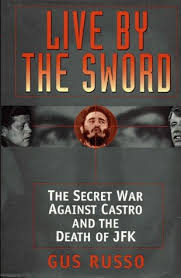
In what is almost certainly the definitive account of the assassination of President John F. Kennedy, Russo reaches some startling–but highly documented–conclusions:
- Lee Harvey Oswald assassinated Kennedy.
- He did it alone.
- Oswald, a former Marine, was a committed Marxist–whose hero was Castro.
- The CIA’s ongoing campaign to overthrow and/or assassinate Castro was an open secret throughout the Gulf.
- Oswald visited New Orleans in the spring of 1963.
- There he learned that Castro was in the crosshairs of the CIA.
- For this, he blamed John F. Kennedy.
- Oswald told his Russian-born wife, Marina: “Fidel Castro needs defenders. I’m going to join his army of volunteers.”
- Jack Ruby, a Dallas nightclub owner, murdered Oswald because he was distraught over Kennedy’s death.
- Ruby was not part of a Mafia conspiracy to silence Oswald.
- Skeptics of the Warren Commission–which concluded that Oswald had acted alone–asked the wrong question: “Who killed Kennedy?”
- They should have asked: “Why was he killed?”
- The answer–according to Russo: “The Kennedys’ relentless pursuit of Castro and Cuba backfired in tragedy on that terrible day in November, 1963.”
Another book well worth reading about America’s Cuban obsession during the early 1960s is American Tabloid, by James Ellroy.
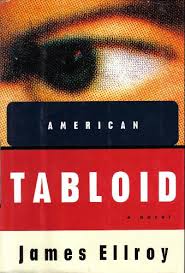
Although a novel, it vividly captures the atmosphere of intrigue, danger and sleaziness that permeated that era in a way that dry, historical documents never can.
“The 50’s are finished,” reads its paperback dust jacket. “Zealous young lawyer Robert Kennedy has a red-hot jones to nail Jimmy Hoffa. JFK has his eyes on the Oval Office.
“J. Edgar Hoover is swooping down on the Red Menace. Howard Hughes is dodging subpoenas and digging up Kennedy dirt. And Castro is mopping up the bloody aftermath of his new Communist nation….
“Mob bosses, politicos, snitches, psychos, fall guys and femmes fatale. They’re mixing up a Molotov cocktail guaranteed to end the country’s innocence with a bang.”
Among the legacies of America’s twisted romance with anti-Castro Cubans:
- Following the JFK assassination, there was a cover-up.
- Its purpose: To protect the reputation of the United States Government–and that of its newly-martyred President.
- The CIA and FBI concealed the CIA-Mafia assassination plots from the Warren Commission assigned to investigate Kennedy’s murder.
- Other government officials participating in the cover-up included Attorney General Robert F. Kennedy and President Lyndon B. Johnson.
- Ironically, this secrecy ignited the widespread–and false–belief that the President had died at the hands of a government conspiracy.
- Robert Kennedy feared that his relentless pursuit of Castro might have led Castro to “take out” JFK first.
- Fearing his own assassination if he continued Kennedy’s efforts to murder Castro, President Johnson ordered the CIA to halt its campaign to overthrow and/or assassinate the Cuban leader.
- The huge Cuban community throughout Florida–and especially Miami–continues to exert a blackmailing influence on American politics.
- Right-wing politicians from Richard Nixon to Donald Trump have reaped electoral rewards by catering to the demands of this hate-obsessed voting block.
- These Cuban ex-patriots hope that the United States will launch a full-scale military invasion of the island to remove Castro.
- Having grown rich and soft in the United States, they fear to risk their own lives by returning to Cuba to overthrow the Castro regime–as he had overthrown Fulgencio Batista.
- Only President Barack Obama had the political courage to re-establish diplomatic relations with Cuba–in 2015.
- This occurred long after the United States had done so with such former enemies as the Soviet Union, China and Vietnam.
- With President-elect Donald Trump due to take office in January, 2017, America’s future relations with Cuba remain in doubt.
The Cuban Missile Crisis remains the single most dangerous moment of the 50-year Cold War, when the world stood only minutes away from nuclear Armageddon.
That crisis stemmed from the American Right’s twisted obsession with Cuba, an obsession that continues today.
So what are the lessons to be learned from that obsession?
- It is long past time to demand major changes in our foreign policy toward Cuba.
- It’s time to end the half-century contamination of American politics by those Cubans who live only for their hatred of Castro–and those political candidates who live to exploit it.
- (For example: Marco Rubio got elected U.S. Senator from Florida in 2010 by claiming that his parents had been forced to leave Cuba in 1959, after Fidel Castro took power. In fact, they had left Cuba in 1956–during the Batista dictatorship.)
- It’s time to end this wag-the-dog relationship. A population of about 1,700,000 Cuban exiles living in Florida should not be allowed to shape the domestic and foreign policy of a nation of 300 million.
- Those who continue to hate–or love–Fidel Castro should be left to their own private feud. But that is a feud they should settle on their own island, and not from the shores of the United States.
ABC NEWS, AMERICAN TABLOID, ANTI-CASTRO CUBANS, ASSASSINATION, CBS NEWS, CIA, CNN, COMMUNISM, CUBA, CUBAN MISSILE CRISIS, DONALD TRUMP, DWIGHT D. EISENHOWER, FACEBOOK, FBI, FIDEL CASTRO, FLORIDA, FULGENCIO BATISTA, GUS RUSSO, JACK RUBY, JAMES ELLROY, JOHN F. KENNEDY, JOHNNY ROSELLI, LEE HARVEY OSWALD, LIVE BY THE SWORD, LYNDON B. JOHNSON, MAFIA, MARCO RUBIO, NBC NEWS, NIKITA KHRUSHCHEV, ROBERT F. KENNEDY, SAM GIANCANA, THE CHICAGO SUN-TIMES, THE CHICAGO TRIBUNE, THE LOS ANGELES TIMES, THE NEW YORK TIMES, THE WASHINGTON POST, TWITTER, WARREN COMMISSION
In Bureaucracy, History, Military, Politics, Social commentary on December 1, 2016 at 10:46 am
On October 22, 1962, President John F. Kennedy went on nationwide TV to announce the discovery of the missiles and his blockade of Cuba.
He warned that any nuclear missile launched from Cuba against any nation would be regarded as an attack on the United States by the Soviet Union–and would trigger “a full retaliatory response” upon the U.S.S.R.
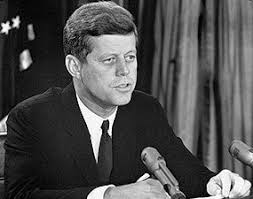
President John F. Kennedy addresses the nation
And he demanded that the Soviets remove all of their offensive weapons from Cuba:
“The path we have chosen for the present is full of hazards, as all paths are, but it is the one most consistent with our character and courage as a nation and our commitments around the world.
“The cost of freedom is always high, but Americans have always paid it. And one path we shall never choose, and that is the path of surrender or submission.”
On October 26, the United States raised the readiness level of SAC forces to DEFCON 2–the step just short of war. For the only time in U.S. history, B-52 bombers were dispersed to various locations and made ready to take off, fully equipped, on 15 minutes’ notice.
Other measures taken included:
- One-eighth of America’s 1,436 bombers were on airborne alert.
- About 145 intercontinental ballistic missiles stood on ready alert.
- Air Defense Command redeployed 161 nuclear-armed interceptors to 16 dispersal fields within nine hours with one-third maintaining 15-minute alert status.
- Twenty-three nuclear-armed B-52 were sent to orbit points within striking distance of the Soviet Union.
An invasion date was set for October 29. But the Kennedy Administration–and the American military–didn’t know that the Russian soldiers guarding the missiles had been armed with tactical nuclear weapons.
Had the Marines gone in, those mini-nukes would have been used. And a fullscale nuclear exchange between the United States and the Soviet Union would have almost certainly followed.
At the height of the crisis, Attorney General Robert F. Kennedy offered a solution.
Khrushchev had sent two teletypes to Kennedy. The first had agreed to remove the missiles, but the second had demanded that the United States remove its own missiles from Turkey, which bordered the Soviet Union.
Robert Kennedy’s solution: The administration should ignore the second message–and announce that it had accepted Khrushchev’s offer to remove the missiles.
After this announcement was made, President Kennedy said to his advisers: “It can go either way now.”
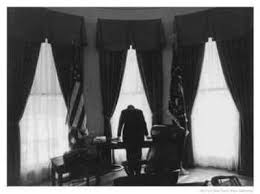
John F. Kennedy in the Oval Office
The crisis ended on October 28. Under enormous pressure, Khrushchev agreed to remove the missiles from Cuba.
Behind his decision lay a secret promise by the Kennedy administration to remove its obsolete nuclear missiles from Turkey, which bordered the Soviet Union. And a public pledge to not invade Cuba.
On the night the crisis ended, there occurred a prophetic exchange between the two Kennedy brothers.
JFK: “Maybe this is the night I should go to the theater”–a reference to Abraham Lincoln’s fatal attendance of Ford’s Theater at the end of the Civil War.
RFK: “If you go, I want to go with you.”
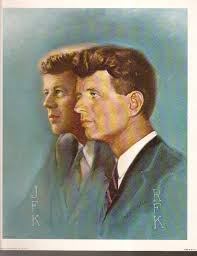
John F. and Robert F. Kennedy
But President Kennedy was not finished with Castro. While continuing the campaign of sabotage throughout Cuba, the Kennedys were preparing something far bigger: A fullscale American invasion of the island.
On October 4, 1963, the Joint Chiefs of Staff submitted its latest version of the invasion plan, known as OPLAN 380-63. Its timetable went:
- January, 1964: Infiltration into Cuba by Cuban exiles.
- July 15, 1964: U.S. conventional forces join the fray.
- August 3, 1964: All-out U.S. air strikes on Cuba.
- October 1, 1964: Full-scale invasion to install “a government friendly to the U.S.”
During the Cuban Missile Crisis, Robert Kennedy–referring to the 1941 Japanese attack on Pearl Harbor–had resisted demands for a “sneak attack” on Cuba by saying: “I don’t want my brother to be the Tojo of the 1960s.”
Now the Kennedys planned such an attack on Cuba just one month before the November, 1964 Presidential election.
Then fate–in the unlikely figure of Lee Harvey Oswald–intervened.
On November 22, 1963, while the President rode through Dallas in an open-air automobile, a rifle-wielding assassin opened fire. He scored two hits on Kennedy–in the back of the neck and head. The second wound proved instantly fatal.
The nation and the world were shocked–and plunged into deep mourning.
But for some of those who had waged a secret, lethal war against Fidel Castro for the previous two years, Kennedy’s death–at least in retrospect–didn’t come as a surprise.
Robert Kennedy, in particular, spent the remaining years of his life agonizing over the possibility that his highly personal war against Castro had backfired.
That Castro, fed up with the CIA’s assassination plots against him, had retaliated with one of his own.
Robert Kennedy’s fears and guilt were compounded by the fact that, while waging war on Castro, he had waged an equally ruthless crusade against organized crime.
He knew that some of the mobsters he had tried to send to prison had played a major role in the CIA’s efforts to “hit” Castro. Had the Mafia–believing itself the victim of a double-cross–put out a “contract” on JFK instead?
It was a question that haunted him until the day he died.
ABC NEWS, AMERICAN TABLOID, ANTI-CASTRO CUBANS, ASSASSINATION, CBS NEWS, CIA, CNN, COMMUNISM, CUBA, CUBAN MISSILE CRISIS, DONALD TRUMP, DWIGHT D. EISENHOWER, FACEBOOK, FBI, FIDEL CASTRO, FLORIDA, FULGENCIO BATISTA, GUS RUSSO, JAMES ELLROY, JOHN F. KENNEDY, JOHNNY ROSELLI, LEE HARVEY OSWALD, LIVE BY THE SWORD, LYNDON B. JOHNSON, MAFIA, MARCO RUBIO, NBC NEWS, NIKITA KHRUSHCHEV, ROBERT F. KENNEDY, SAM GIANCANA, THE CHICAGO SUN-TIMES, THE CHICAGO TRIBUNE, THE LOS ANGELES TIMES, THE NEW YORK TIMES, THE WASHINGTON POST, TWITTER, WARREN COMMISSION
In Bureaucracy, History, Military, Politics, Social commentary on November 30, 2016 at 12:02 am
In April, 1961, the CIA tried to overthrow the Communist regime of Cuba’s “Maximum Leader,” Fidel Castro, at the Bay of Pigs.
When that failed, President John F. Kennedy ordered Castro’s removal through a campaign of sabotage and assassination.
These covert operatives became known within the CIA as the Special Group, and were ultimately supervised by Robert F. Kennedy, the President’s brother and Attorney General.
The war against Castro became known within the CIA as Operation Mongoose.
But not everyone in the CIA was enthusiastic about the “get Castro” effort.
“Everyone at CIA was surprised at Kennedy’s obsession with Fidel,” recalled Sam Halpern, who was assigned to the Cuba Project. “They thought it was a waste of time. We all knew [Fidel] couldn’t hurt us. Most of us at CIA initially liked Kennedy, but why go after this little guy?
“One thing is for sure: Kennedy wasn’t doing it out of national security concerns. It was a personal thing. The Kennedy family felt personally burnt by the Bay of Pigs and sought revenge.”
It was all-out war. Among the tactics used:
- Hiring Cuban gangsters to murder Cuban police officials and Soviet technicians.
- Sabotaging mines.
- Paying up to $100,000 per “hit” for the murder or kidnapping of Cuban officials.
- Using biological and chemical warfare against the Cuban sugar industry.
“Bobby (Kennedy) wanted boom and bang all over the island,” recalled Halpern. “It was stupid. The pressure from the White House was very great.”
Among that “boom and bang” were a series of assassination plots against Castro, in which the Mafia was to be a key player.
Chicago Mobster Johnny Rosselli proposed a simple plan: through its underworld connections in Cuba, the Mafia would recruit a Cuban in Castro’s entourage, such as a waiter or bodyguard, who would poison him.
The CIA’s Technical Services division produced a botulinus toxin which was then injected into Castro’s favorite brand of cigars. The CIA also produced simpler botulinus toxin pills that could be dissolved in his food or drink.
But the deputized Mafia contacts failed to deliver any of the poisons to Castro.
Rosselli told the CIA that the first poisoner had been discharged from Castro’s employ before he could kill him, and the back-up agent got “cold feet.”
Other proposals or attempts included:
- Planting colorful seashells rigged to explode at a site where Castro liked to go skindiving.
- Trying to arrange for his being presented with a wetsuit impregnated with noxious bacteria and mold spores, or with lethal chemical agents.
- Attempting to infect Castro’s scuba regulator with tuberculous bacilli.
- Trying to douse his handkerchiefs, tea and coffee with other lethal bacteria.
Former members of the Kennedy Administration later insisted that neither John nor Robert Kennedy knew or approved of these assassination plots. But the sheer weight of available evidence indicates otherwise.
Bobby, in particular, was constantly pressing the CIA to “do something” about Castro. In the world of covert action, words like “Kill Castro” aren’t committed to paper. Or even spoken.
Castro, rightly seeing his life and regime threatened, appealed to Nikita Khrushchev, leader of the Soviet Union, for assistance.

1960s poster of Fidel Castro and Nikita Khrushchev
Keizers [CC BY-SA 3.0 (https://creativecommons.org/licenses/by-sa/3.0)%5D
Khrushchev was quick to comply: “We must not allow the communist infant to be strangled in its crib,” he told members of his inner circle.
By October, 1962, the Soviet Union had sent more than
- 40,000 soldiers,
- 1,300 field pieces,
- 700 anti-aircraft guns,
- 350 tanks and
- 150 jets
to Cuba to deter another invasion.
Most importantly, Khrushchev began supplying Castro with nuclear-tipped ballistic missiles.
Their discovery, on October 15, 1962, ignited the single most dangerous confrontation of the 50-year Cold War.
Suddenly, the United States and the Soviet Union–bristling with nuclear weapons–found themselves on the brink of nuclear war.
At the time, Kennedy officials claimed they couldn’t understand why Khrushchev had placed nuclear missiles in Cuba. “Maybe Khrushchev’s gone mad” was a typical public musing.
This remained the official American view for years afterward–as depicted in Robert Kennedy’s memoir, Thirteen Days: A Memoir of the Cuban Missile Crisis, published in 1969, the year after his death.
No admission was made that JFK had been waging a no-holds-barred campaign to overthrow the Cuban government and assassinate its leader.
The same proved true for the 1974 doc-u-drama, The Missiles of October, starring William Devane as John F. Kennedy and Martin Sheen as Robert Kennedy.
On October 16, President Kennedy was informed of the missile installations. He immediately convened a group of his 12 most important advisers, which became known as Ex-Comm, for Executive Committee.
Then followed seven days of guarded and intense debate by Kennedy and his advisers. Some of the participants–such as Air Force General Curtis LeMay–urged an all-out air strike against the missile sites.
Others–such as Adlai Stevenson, the United States delegate to the United Nations–urged a reliance on quiet diplomacy.
It was Secretary of Defense Robert S. McNamara who suggested a middle course: A naval blockade–a “quarantine” in Kennedy’s softened term–around Cuba. This would hopefully prevent the arrival of more Soviet offensive weapons on the island.
Finally, the President decided to to impose a naval blockade.
On October 22, Kennedy went on nationwide TV to announce the discovery of the missiles and his blockade of Cuba.
ABC NEWS, AMERICAN TABLOID, ANTI-CASTRO CUBANS, ASSASSINATION, CBS NEWS, CIA, CNN, COMMUNISM, CUBA, CUBAN MISSILE CRISIS, DONALD TRUMP, DWIGHT D. EISENHOWER, FACEBOOK, FBI, FIDEL CASTRO, FLORIDA, FULGENCIO BATISTA, GUS RUSSO, JACK RUBY, JAMES ELLROY, JOHN F. KENNEDY, JOHNNY ROSELLI, LEE HARVEY OSWALD, LIVE BY THE SWORD, LYNDON B. JOHNSON, MAFIA, MARCO RUBIO, NBC NEWS, NIKITA KHRUSHCHEV, ROBERT F. KENNEDY, SAM GIANCANA, THE CHICAGO SUN-TIMES, THE CHICAGO TRIBUNE, THE LOS ANGELES TIMES, THE NEW YORK TIMES, THE WASHINGTON POST, TWITTER, WARREN COMMISSION
In Bureaucracy, History, Military, Politics, Social commentary on November 29, 2016 at 12:08 am
On November 25, Fidel Castro, Cuba’s longtime “Maximum Leader,” died at the age of 90.
Old age and disease finally achieved what years of plotting by CIA and Mafia assassins could not.
To his supporters he was a tireless champion of the poor and a foe of American imperialism. To his enemies he was a ruthless dictator who drove his country to economic ruin in the name of a failed ideology–communism.
His reign began on January 1, 1959, when he swept triumphantly into Havana after a two-year guerrilla campaign against Cuban dictator Fulgencio Batista.
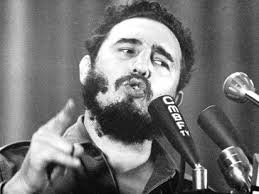
Fidel Castro
Almost immediately, hundreds of thousands of Cubans began fleeing to America. The first émigrés were more than 215,000 Batista followers. The exodus increased, peaking at approximately 78,000 in 1962.
In October, 1962, Castro stopped regularly scheduled travel between the two countries, and asylum seekers began sailing from Cuba to Florida.
Between 1962 and 1979, hundreds of thousands of Cubans entered the United States under the Attorney General’s parole authority.
By 2008, more than 1.24 million Cubans were living in the United States, mostly in South Florida, where the population of Miami was about one-third Cuban. Their sheer numbers transformed the state’s political, economic and cultural life. And not entirely for the better.
Many of these Cubans viewed themselves as political exiles, rather than immigrants, hoping to eventually return to Cuba after its Communist regime fell from power.
The large number of Cubans in South Florida, particularly in Miami’s “Little Havana,” allowed them to preserve their culture and customs to a degree rare for immigrant groups.
With so many discontented immigrants concentrated in Florida, they became a potential force for politicians to court.
And the issue guaranteed to sway their votes was unrelenting hostility to Castro. Unsurprisingly, most of their votes went to Right-wing Republicans.
John F. Kennedy was the first President to face this dilemma.
During the closing months of the administration of President Dwight D. Eisenhower, the CIA had begun training Cuban exiles for an invasion of their former homeland.
The exiles’ goal: To do what Castro had done–seek refuge in the mountains and launch a successful anti-Castro revolution.
But word of the coming invasion quickly leaked: The exiles were terrible secret-keepers. (A joke at the CIA went: “A Cuban thinks a secret is something you tell to only 300 people.”)
Kennedy insisted the invasion must appear to be an entirely Cuban enterprise. He refused to commit U.S. Marines and Air Force bombers.
More than 1,400 invaders landed on April 17, 1961 at the Bay of Pigs–and were quickly overwhelmed, with hundreds of the men taken prisoner.
Kennedy publicly took the blame for its failure: “Victory has a hundred fathers but defeat is an orphan.” But privately he seethed, and ordered the CIA to redouble its efforts to remove Castro at all costs.
To make certain his order was carried out, he appointed his brother, Robert–then Attorney General–to oversee the CIA’s “Castro removal” program.
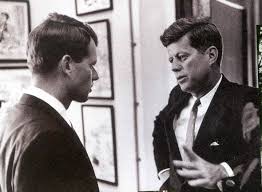
Robert F. Kennedy and John F. Kennedy
It’s here that America’s obsession with Cuba entered its darkest and most disgraceful period.
The CIA and the Mafia entered into an unholy alliance to assassinate Castro–each for its own benefit:
- The CIA wanted to please Kennedy.
- The mobsters wanted to regain their casino and brothel holdings that had made Cuba their private playground in pre-Castro times. They also hoped to use their pose as patriots to win immunity from future prosecution.
The CIA supplied poisons and explosives to various members of the Mafia. It was then up to the mobsters to assassinate Castro.
The CIA asked Johnny Roselli, a mobster linked to the Chicago syndicate, to go to Florida in 1961 and 1962 to organize assassination teams of Cuban exiles. They were to infiltrate their homeland and assassinate Castro.
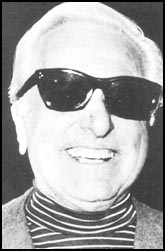
Johnny Roselli
Rosselli called upon two other crime figures: Chicago Mafia boss Sam Giancana and Santos Trafficante, the Costra Nostra chieftain for Tampa, for assistance.
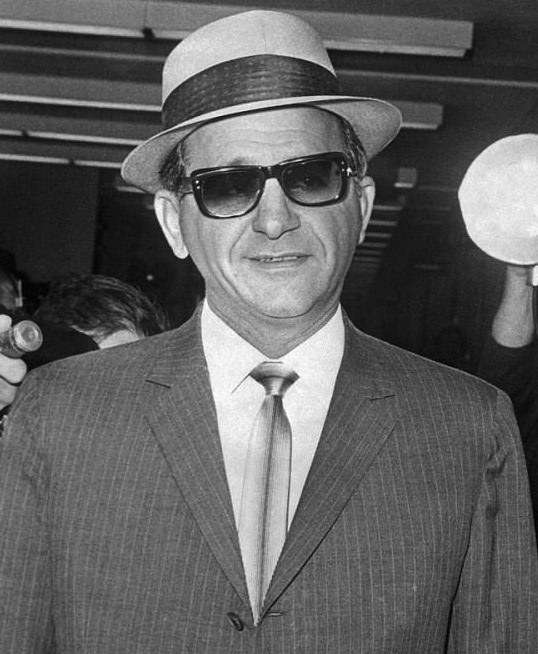
Sam Giancana
Giancana, using the name “Sam Gold” in his dealings with the CIA, was meanwhile being hounded by the FBI on direct orders of Attorney General Robert Kennedy.
The mobsters were authorized to offer $150,000 to anyone who would kill Castro and were promised any support the Agency could yield.
Giancana was to locate someone who was close enough to Castro to be able to drop pills into his food. Trafficante would serve as courier to Cuba, helping to make arrangements for the murder on the island.
Rosselli was to be the main link between all of the participants in the plot.
The available sources disagree on what actually happened. Some believe that the Mob made a genuine effort to “whack” Fidel.
Others are convinced the mobsters simply ran a scam on the government. They pretended to carry out their “patriotic duty” while in fact making no effort at all to penetrate Castro’s security.
The CIA’s war against Castro was known as Operation Mongoose–the mongoose being a traditional enemy of the cobra. And those entrusted with this assignment were known as the Special Group.
“We were hysterical about Castro at about the time of the Bay of Pigs and thereafter,” Secretary of Defense Robert S. McNamara later testified before Congress about these efforts. “And there was pressure from JFK and RFK to do something about Castro.”
"HAMILTON", 2016 PRESIDENTIAL CAMPAIGN, ABC NEWS, BECKET (MOVIE), BLACKS, BRANDON VICTOR DIXON, CBS NEWS, CNN, DONALD TRUMP, FACEBOOK, HAMILTON (MUSICAL), HENRY II, JOHN GIELGUD, KU KLUX KLAN, MIKE PENCE, NBC NEWS, NEWSWEEK, PETER O'TOOLE, POLITICO, RICHARD BURTON, SALON, SLATE, THE CHICAGO SUN-TIMES, THE CHICAGO TRIBUNE, THE HUFFINGTON POST, THE LOS ANGELES TIMES, THE NEW YORK TIMES, THE WASHINGTON POST, THOMAS BECKET, TIME, TWITTER, U.S. NEWS & WORLD REPORT, VICTOR DIXON, WHITE SUPREMACISTS
In History, Law, Politics, Social commentary on November 28, 2016 at 12:01 am
There are many ways a Donald J. Trump Presidency could go fatally wrong. To learn just one, it’s necessary only to watch the 1964 classic, Becket.
This story of a 12th-century struggle between an English king and archbishop may seem irrelevant to the upcoming Trump Presidency.
In fact, it has a dangerous lesson to teach.
Becket (Richard Burton), a brilliant Saxon noble, is the favorite friend of England’s King Henry II (Peter O’Toole). They hunt, fight and bed women together. Henry even appoints him as Chancellor, the highest law enforcement officer in the country.
Where Becket is cold and calculating, Henry is impulsive, often explosive. Henry admires and resents Becket’s keen intelligence, knowing that Becket is better-suited for kingship than himself.
Meanwhile, the power of the Catholic Church is rising. Henry needs a highly-placed ally against its power. When the Archbishop of Canterbury dies, Henry appoints Becket in his place.
Suddenly the entirely secular Becket undergoes a religious conversion–and an unexpected change in allegiance. He insists that priests accused of criminal offenses be tried only in the church’s own courts–thus making them immune from Henry’s secular ones.
For Henry, this isn’t simply a conflict between church and state. It’s an unforgivable betrayal of friendship. And it means all-out war.

He falsely charges Becket with embezzlement during his time as Chancellor.
Becket flees to France, where he’s given asylum by King Louis VII (John Gielgud).
From there, Becket proceeds to Rome, where he meets with the Pope.
He begs the Pope to let him renounce his position as Archbishop and retire to a monastery as an ordinary priest.
But the Pope refuses: Becket must return to England and defend the Church against civil interference in its affairs.
Becket asks Louis to arrange a meeting with Henry on the shores of Normandy to hopefully negotiate a reconciliation.
Henry grudgingly lifts all charges against Becket and allows him to return to England.
But the feud isn’t over–for Henry.
While Becket focuses on his duties as Archbishop of Canterbury, Henry drinks and broods over his lost friendship with Becket.
His barons fuel this hatred by pointing out that the returned Archbishop has become a hero to the vanquished Saxons. They resent their Norman conquerors, and see Becket as the only man brave enough to stand up against them.
Finally, in a drunken rage, Henry blurts out: “Will no one rid me of this meddlesome priest?”
At that, four of his barons ride to Canterbury Cathedral and hack Becket to death with their swords.
When he learns the news, Henry is shocked. He has lost more than a former friend.
His reign–his soul–are now in mortal peril.
His words have caused the murder of the highest religious official in England.
His kingdom could be torn apart in civil war between Becket-loving Saxons and the Normans who conquered them in 1066.
Even worse, Henry could be excommunicated by the Pope and damned to eternal hellfire for this most unthinkable of crimes.
So Henry seeks redemption in the only way he can: He does penance by allowing himself to be publicly whipped by Saxon monks. And he proclaims Thomas Becket a saint.
Like Henry II, Donald Trump is infamous for his quick temper.
According to the The New York Times, during the 2016 Presidential campaign, Trump aimed nearly 4,000 tweets at 281 different targets.
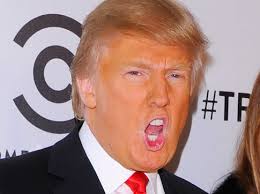
Donald Trump
His Twitter assaults have often dominated entire news cycles for days on end.
As President-elect, he has continued these assaults–the most recent one occurring on November 18.
On that evening, Vice President-elect Mike Pence attended a Broadway performance of the hit musical “Hamilton.”
After the curtain call, the actor Brandon Victor Dixon–who plays Aaron Burr–respectfully addressed Pence:
“We are the diverse America who are alarmed and anxious that your new administration will not protect us, our friends, our children, our parents, or defend us and uphold our inalienable rights. But we truly hope that this show has inspired you to uphold our American values and to work on behalf of all of us.”
Dixon–who is black–is rightly alarmed.
Trump has received the open and enthusiastic support of the Ku Klux Klan and other white supremacist groups. Since his election, white thugs have assaulted blacks and other non-whites across the country.
Trump’s reaction to Dixon’s plea came in two Twitter rants:
“Our wonderful future V.P. Mike Pence was harassed last night at the theater by the cast of Hamilton, cameras blazing. This should not happen!”
And: “The Theater must always be a safe and special place. The cast of Hamilton was very rude last night to a very good man, Mike Pence. Apologize!”
What happens if some of Trump’s 5.9 million Twitter followers decide–like Henry’s barons–to “rid” him of “this meddlesome actor”? Or the whole “meddlesome cast” of “Hamilton”?
And if not Dixon, then whoever next arouses the ire of this most easily-offended egomaniac?
Because he won’t stop.
When the victims of his weaponized tweets appear in hospitals or morgues, will Congress dare to hold him accountable through impeachment?
And, if so, will a Trump Presidency suddenly become a Pence one?
It’s only a matter of time before the explosion occurs.
1984 NOVEL, ABC NEWS, CBS NEWS, CHRISTMAS, CNN, COMMERCIALISM, DONALD TRUMP, EASTASIA, EURASIA, FACEBOOK, FOX NEWS, GEORGE ORWELL, JESUS, MEGYN KELLY, NBC NEWS, OCEANIA, ROMAN EMPIRE, RUPERT MURDOCH, SANTA CLAUS, SATURNALIA, STARBUCK'S, THE CHICAGO SUN-TIMES, THE CHICAGO TRIBUNE, THE LOS ANGELES TIMES, THE NEW YORK TIMES, THE WASHINGTON POST, TWITTER, WAR ON CHRISTMAS
In Bureaucracy, Business, History, Politics, Social commentary on November 25, 2016 at 12:02 am
It’s that time of year again–a time of
- Christmas trees;
- Nativity scenes;
- Singing carols; and
- Exchanging gifts with family and friends.
Christmas is special, so, each year, the executives at Fox News find a new way to stir up emotions by resurrecting the “war on Christmas” slander.
Stirring up false controversies is a daily assignment for the alleged reporters of this company owned by Right-wing patriarch Rupert Murdoch.
In 2013, it fell to Fox hostess Megyn Kelly to carry the ball. And she did so on December 11 on “The Kelly File,” her popular Fox News program.

Megyn Kelly
Referring to an article by Slate writer Aisha Harris on “Santa Claus Should Not Be a White Man Anymore,” she said:
“When I saw this headline, I kinda laughed and I said, ‘Oh, this is ridiculous. Yet another person claiming it’s racist to have a white Santa.’
“And by the way, for all you kids watching at home, Santa just is white. But this person is maybe just arguing that we should also have a black Santa. But, you know, Santa is what he is, and just so you know, we’re just debating this because someone wrote about it, kids.”
Of course, Santa Claus is a completely fictional character. Arguing about his skin color is as pointless as arguing about his weight.
But Kelly wasn’t content to talk only about Santa. So she turned next to Jesus, a historical figure about whom we have not a single reference to his appearance, let alone a picture.
“Just because it makes you feel uncomfortable doesn’t mean it has to change. You know, I mean, Jesus was a white man, too,” Kelly said.
“He was a historical figure; that’s a verifiable fact–as is Santa, I want you kids watching to know that–but my point is: How do you revise it, in the middle of the legacy of the story, and change Santa from white to black?”
Santa Claus a verifiable historical figure? Not even Charlie Brown, in the annually telecast “Peanuts” special, would make that claim.
Two years later, Donald Trump claimed center-stage in “defending” Christmas. And the target of his ire? Starbucks.
In years past, its disposable coffee cups featured snowflakes, winter scenes, reindeer and Christmas ornaments.
But in 2015, Starbucks decided to go with a minimalist, all-red design, its only feature being the company’s green and white logo.
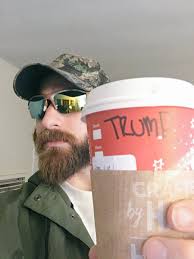
Baked Alaska with his Trump cup
This angered some religious conservatives, who generally care more about symbols than substance.
It’s the old “war on Christmas” mantra all over again. And Trump–who hoped to win evangelical votes throughout the country–was happy to become its biggest cheerleader.
“I guarantee if I become president, we’re going to be saying ‘Merry Christmas’ at every store,” he promised during a campaign rally in October.
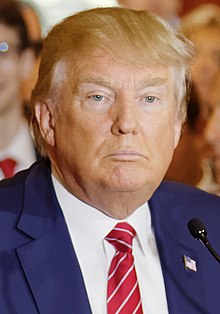
Donald Trump
On November 9, 2015, addressing a crowd of several thousands in Springfield, Illinois, Trump said: “Did you read about Starbucks? No more Merry Christmas on Starbucks.
“I have one of the most successful Starbucks, in Trump Tower. Maybe we should boycott Starbucks? I don’t know. Seriously, I don’t care. That’s the end of that lease, but who cares?
“If I become president, we’re all going to be saying Merry Christmas again, that I can tell you.”
Trump did not explain how he would coerce non-Christian Americans–such as atheists, Jews and Muslims–to observe a Christian holiday.
Those who claim that Christmas is threatened don’t know–or are ignoring–the following:
- The Christmas shopping season can start as early as September. Some consumers begin even earlier.
- In 2013, the American retail industry generated over $3 trillion during the Christmas holidays.
- These holiday sales reflected about 19.2% of the retail industry’s total sales that year.
- More than 768,000 temporary employees were hired throughout the United States to help stores cope with the holiday rush.
- The average American will spend about $805 on on Christmas gifts.
In short, no one is “making war” on Christmas–except Right-wing broadcasters at Fox news to jack up ratings.
As to the historical realities of this season:
- There is no reference anywhere in the Bible to the month–let alone the day–of Jesus’ birth.
- Jesus never commanded his followers to celebrate his birth–but he did call on them to remember his death. It’s called Easter.
- Many of the “religious” traditions associated with Christmas stem from the pagan Roman festival, Saturnalia, which celebrated the “birthday” of the sun.
- This was celebrated December 17-25.
- Saturnalia traditions included feasting, gift-giving, lighting candles (to ward off evil spirits) and displaying wreaths (as a sign of coming spring).
- Early Christians tried mightily to convince their members to stop celebrating the Saturnalia.
- When these efforts failed, the Roman Catholic Church, in the fourth century, “Christianised” the festival by naming Saturnalia’s concluding day, December 25, as Jesus’ birthday.
In George Orwell’s classic novel, 1984, Oceania is always at war with Eurasia or Eastasia. Its citizens are kept in a constant state of frenzy as they’re directed to search for endless “enemies of the state.”
This, in turn, allows the unseen rulers of Oceania to run their dictatorship without interference.
It’s a lesson well-known to hucksters like Donald Trump and the men who run Fox News.
2012 PRESIDENTIAL RACE, 2016 PRESIDENTIAL CAMPAIGN, ABC NEWS, AMERICAN UNIVERSITY SPEECH, BARACK OBAMA, BARBARA TUCHMAN, CBS NEWS, CNN, COLD WAR, CUBAN MISSILE CRISIS, DONALD TRUMP, DREAMS OF MY FATHER, FACEBOOK, HERMAN CAIN, JEB BUSH, JOHN F. KENNEDY, NBC NEWS, NUCLEAR TEST BAN TREATY, REPUBLICANS, RICK PERRY, Sarah Palin, SOVIET UNION, THE AUDACITY OF HOPE, THE CHICAGO SUN-TIMES, THE CHICAGO TRIBUNE, THE GUNS OF AUGUST, THE NEW YORK TIMES, THE WASHINGTON POST, TWITTER, USA TODAY, VIETNAM WAR
In Bureaucracy, History, Politics, Social commentary on November 24, 2016 at 12:19 am
November 22 marked 53 years since President John F. Kennedy was assassinated in Dallas, Texas by an embittered Marxist named Lee Harvey Oswald.
Historians generally agree that he left three great legacies to his country:
- The Nuclear Test Ban Treaty;
- The Apollo moon landing; and
- The Vietnam war.
But there was a fourth legacy—and perhaps the most important of all: The belief that mankind could overcome its greatest challenges through rationality and perseverance.
Kennedy demanded timely, reliable information about national and international issues. He speed-read several newspapers every morning. He nourished personal relationships with reporters—and not for entirely altruistic reasons.
These journalistic relationships gave Kennedy additional sources of information and perspectives he felt he could not get through government agencies.
When giving speeches, Kennedy—a 1940 cum laude graduate of Harvard University with a Bachelor of Arts in Government—never tried to hide his education. Nor did he talk down to his audiences.
Republicans, on the other hand, have made appealing to the ignorant and uneducated a centerpiece of their political campaigns.
During the 2016 Presidential campaign, real estate mogul Trump famously said; “I love the poorly educated.”
Trump may love “the poorly educated,” but he didn’t want to join them. He graduated from the University of Pennsylvania in 1968 with a Bachelor of Science degree in Economics.
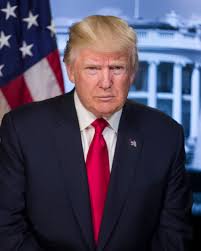
Donald Trump
And for all his notorious bragging about himself, Trump didn’t share this achievement with his audiences.
During the 2012 Presidential race, Republican candidates seemed to value ignorance as a prime requirement for entering the White House.
Former Godfather’s Pizza CEO Herman Cain thus excused his ignorance of the reasons for President Barack Obama’s intervention in Libya: “We need a leader, not a reader.”
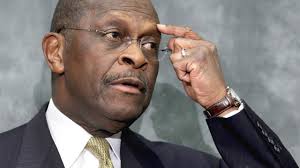
Herman Cain
Texas Governor Rick Perry showed similar pride in not knowing there are nine judges on the United States Supreme Court:
“Well, obviously, I know there are nine Supreme Court judges. I don’t know how eight came out my mouth. But the, uh, the fact is, I can tell you—I don’t have memorized all of those Supreme Court judges. And, uh, ah–
“Here’s what I do know. That when I put an individual on the Supreme Court, just like I done in Texas, ah, we got nine Supreme Court justices in Texas, ah, they will be strict constructionists….”
And former Alaska Governor Sarah Palin rewrote history via “The Midnight Ride of Paul Revere”:
“He warned the British that they weren’t going to be taking away our arms by ringing those bells and, um, making sure as he’s riding his horse through town to send those warning shots and bells that, uh, we were going to be secure and we were going to be free.”
Actually, Revere was warning his fellow Americans about an impending British attack—as his celebrated catchphrase “The British are coming!” made clear.
Republicans have attacked President Obama for his Harvard education and articulate use of language. Among their taunts: “Hitler also gave good speeches.”
And they resent his having earned most of his income as a writer of two books: Dreams From My Father and The Audacity of Hope.
As if being a writer is somehow subversive.
In that sense, Obama is a “throwback” to John F. Kennedy, who was similarly gifted with language as a writer and orator.
Kennedy was perhaps the last President to convince most Americans that they could overcome their problems through reason and open-mindedness.
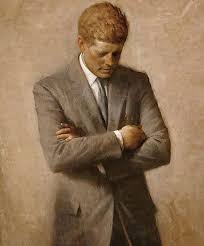
White House painting of JFK
At American University on June 10, 1963, Kennedy called upon his fellow Americans to re-examine the events and attitudes that had led to the Cold War. And he declared that the search for peace was not futile:
“Some say that it is useless to speak of peace or world law or world disarmament….But that is a dangerous, defeatist belief.
“It leads to the conclusion that war is inevitable—that mankind is doomed—that we are gripped by forces we cannot control.
“We need not accept that view. Our problems are man-made; therefore, they can be solved by man. And man can be as big as he wants. No problem of human destiny is beyond human beings.
“Man’s reason and spirit have often solved the seemingly unsolvable, and we believe they can do it again.”
Today, politicians from both parties cannot agree on solutions to even the most vital national problems.
On November 21, 2011, the 12 members of the “Super-Committee” of Congress, tasked with finding $1.2 trillion in cuts in government spending, threw up their hands in defeat.
At the height of the Cuban Missile Crisis, Kennedy spoke with aides about a book he had just finished: Barbara Tuchman’s The Guns of August, on the events leading to World War 1.
For him, the book’s most important revelation was how European leaders had blindly rushed into war, without thought to the possible consequences.
Kennedy said that he did not intend to make the same mistake. Having read his history, he was determined to learn from it.
And he did, for the world escaped all-out nuclear war.
When knowledge and literacy are attacked as “highfalutin’” arrogance, and ignorance and incoherence are embraced as sincerity, national decline and collapse lie just around the corner.
2016 PRESIDENTIAL RACE, ABC NEWS, ADOLF HITLER, ALTERNET, ANTI-SEMITISM, AP, BAKED ALASKA, BIBLE, BREITBART NEWS, BUZZFEED, CBS NEWS, CHRISTMAS, CNN, CROOKS AND LIARS, DAILY KOZ, DONALD TRUMP, FACEBOOK, HILLARY CLINTON, HOWARD SCHULTZ, INTIMIDATION, JESUS CHRIST, LAST SUPPER, MOTHER JONES, MOVEON, NAZI GERMANY, NBC NEWS, NEWSWEEK, NPR, OPERATION TRUMPCUP, POLITICO, RAW STORY, REUTERS, ROGER STONE, SALON, SATURNALIA, SEATTLE TIMES, SLATE, STARBUCK'S, STORMTROOPERS, THE ATLANTIC, THE CHICAGO SUN-TIMES, THE CHICAGO TRIBUNE, THE DAILY BEAST, THE GUARDIAN, THE HILL, THE HUFFINGTON POST, THE LOS ANGELES, THE LOS ANGELES TIMES, THE NATION, THE NEW YORK TIMES, THE WASHINGTON POST, THINK PROGRESS, TIME, TIMES, TWITTER, U.S. NEWS & WORLD REPORT, UP, UPI, USA TODAY, WAR ON CHRISTMAS
In Bureaucracy, Business, History, Politics, Social commentary on November 23, 2016 at 12:09 am
Supporters of President-elect Donald Trump are furious at Starbucks.
For starters, the company’s CEO, Howard Schultz, endorsed Hillary Clinton for President.
Then, Starbucks “declared war on Christmas” by issuing a “less-festive” holiday paper drinking cup.
Starbucks releases its traditional red holiday cup each November. Past designs have included imagery such as snowflakes, snowmen and Christmas trees.
But in 2015, the company issued a plain red cup minus imagery, triggering a backlash among image-obsessed Christians, who saw it as an “attack” on Christmas.

[The Bible doesn’t give even a generalized date for Jesus’ birth. Nor did Jesus command his followers to celebrate his birth. At the Last Supper, he did command them to honor his death by taking the sacrament.
[Most of the traditions now associated with Christmas can be traced directly to the ancient Roman festival, Saturnalia, which celebrated the deity Saturn. These included feasting, drinking, gift-giving, hanging wreaths and decorating trees—which were not brought indoors.]
When Trump—then running for President—learned of the change in Starbucks cups, he was outraged.
“Did you read about Starbucks?” Trump asked supporters during a rally in Springfield, Ill. “No more ‘Merry Christmas’ at Starbucks. No more. Maybe we should boycott Starbucks.
“If I become president, we’re all going to be saying ‘Merry Christmas’ again,” Trump told the crowd—as if, by becoming President, he could issue such an order. “That I can tell you. That I can tell you! Unbelievable.”
Donald Trump
Now that Trump is about to become President, his legions of Trumpsters aren’t waiting for an official order.
On November 17, a Trumpster using the screen name Baked Alaska came up with a new idea to intimidate Starbucks.
Going on Twitter, he advised fellow Trumpsters to proceed with “Operation #TrumpCup.” All they had to do was:
- “Go to Starbucks & tell them your name is Trump
- “If they refuse take video
- “Pls share & spread the word”
One Trumpster subsequently posted on Twitter the following: “I got my Starbucks with Trump name. he yelled Trump get your drink #TrumpCup“
Another one proudly tweeted: “@bakedalaska did this today. They didn’t want to, said it was too political. I reminded her the campaign was over & he’s our president now. pic.twitter.com/LHgi7Vqexh“
This may seem wonderful to Trumpsters, but there are five serious flaws with it:
- By taking on the name of the man they idolize, they are obliterating their own identities.
- They are trying to impose their idol’s name on others, whether they admire him or not.
- This is exactly what the fanatical followers of all tyrants do.
- If there’s more than one Trumpster in a Starbucks, how will each one know which “Trump” is being summoned to get his drink?
- This is actually the opposite of a boycott. They’re making a “statement”—but they’re also putting money into Starbucks’ pocket while doing so.
Baked Alaska, however, intends to stick to his campaign. “We have a culture war to win,” he said in a Periscope video. He claimed that Twitter was suspending accounts of “alt-Right” [i.e., Fascist] users and that liberals were making whites—especially men—feel guilty.
Baked Alaska with his Trump cup
Starbucks reacted by emailing the following statement: “Over the years, writing customer names on cups and calling out their names has been a fun ritual in our stores. Rarely has it been abused or taken advantage of. We hope and trust that our customers will continue to honor that tradition. We don’t require our partners to write or call out names.”
What’s past often turns out to be prologue.
Throughout the 2016 Presidential campaign, Donald Trump relied on threats and insults. He used them against Republicans in the primaries, and against Democrats in the general election.
On March 16, he warned his fellow Republicans that if he didn’t win the GOP nomination at the convention in July, his supporters would literally riot: “I think you’d have riots. I think you would see problems like you’ve never seen before. I think bad things would happen.”
After Trump got the nomination, his surrogates continued to raise the specter of violence. Roger Stone, one of his advisers, told the Right-wing Breitbart News website:
“I think he’s [Trump] gotta put [Democrats] on notice that their inauguration will be a rhetorical and when I mean civil disobedience, not violence, but it will be a bloodbath….We will not stand for it.”
If Clinton had won, Trump’s followers would have remained—waiting for the next champion to voice their hatred and call on their votes. Meanwhile, they would have lost their energy as a social and political force.
But Trump did win, and now they feel emboldened. And they will continue to draw encouragement from a steady stream of attacks by Trump and his surrogates.
During the general election, many Trump supporters openly threatened to wage armed rebellion against the government if Clinton won.
What will they do after Trump becomes President—and starts blasting tweets at those who have offended his fragile ego?
Will they stand in front of Starbucks shops and refuse entry to customers–as Adolf Hitler’s brown-shirted Stormtroopers blocked customers from entering Jewish stores?
And will intimidated local police stand by and allow it—as they did in Hitler’s Germany?
“Operation TrumpCup” is only the beginning.
2016 ELECTION, ABC NEWS, ABRAHAM LINCOLN, BARACK OBAMA, BLACKS, BULLYING, CBS NEWS, CIVIL WAR, CNN, CONFEDERATE STATES OF AMERICA, DONALD TRUMP, FACEBOOK, FORD'S THEATER, FRANKLIN D. ROOSEVELT, HILLARY CLINTON, HISPANICS, JEWS, JOACHIM C. FEST, JOHN WILKES BOOTH, MICHELLE OBAMA, MUSLIMS, NBC NEWS, NICCOLO MACHIAVELLI, REPUBLICAN PARTY, ROBERT E. LEE, SLAVERY, THE CHICAGO SUN-TIMES, THE CHICAGO TRIBUNE, THE HUFFINGTON POST, THE LOS ANGELES TIMES, THE NEW YORK TIMES, THE WASHINGTON POST, THEODORE ROOSEVELT, TRUMP EFFECT, TWITTER, ULYSSES S. GRANT, UNITED STATES SENATE
In Bureaucracy, History, Law, Military, Politics, Social commentary on November 22, 2016 at 12:01 am
A truly great man is ever the same under all circumstances. And if his fortune varies, exalting him at one moment and oppressing him at another, he himself never varies, but always preserves a firm courage, which is so closely interwoven with his character that everyone can readily see that the fickleness of fortune has no power over him.
–Niccolo Machiavelli, The Discourses
For President Barack Obama, the last two months of his eight-year Presidency will be an agony.
Perhaps only his wife, Michelle, truly knows the torments he will so stoically endure.
For stoicism–enduring pain or hardship without complaint or showing emotions–has long been central to Obama’s character.
In 2011, two years into his Presidency, he faced an accusation never before leveled against an American President: That he was not an American citizen–and thus not entitled to hold the office he held.
His accuser-in-chief: Donald Trump, an egomaniacal, thrice-married “reality-TV” host and real estate mogul who had filed for corporate bankruptcy four times.
At first Obama ignored the accusation, assuming it was so ridiculous no one could believe it. But, promoted by Right-wing Fox News and Republican leaders, millions of Fascistic Americans thought it actually might be true.
So, on April 27, 2011, the President called a press conference–where he released the long-form version of his Hawaii birth certificate.
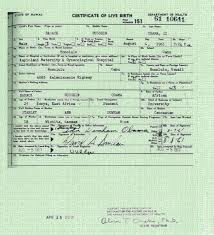
President Obama’s birth certificate
“We do not have time for this kind of silliness,” said Obama, speaking as a father might to a roomful of spiteful children. “We have better stuff to do. I have got better stuff to do. We have got big problems to solve.
“We are not going to be able to do it if we are distracted, if we spend time vilifying each other, if we just make stuff up and pretend that facts are not facts.”
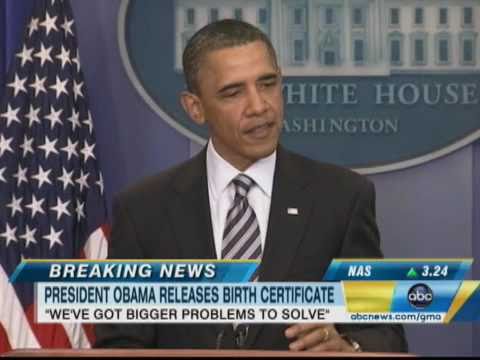
And on May 1, the President announced the solving of one of those “big problems”: Osama bin Laden, mastermind of the September 11, 2001 terrorist attacks, had been tracked down and shot dead by elite U.S. Navy SEALS in Pakistan.
To understand Obama’s agony as he ends his term, imagine the following alternate history:
On April 14, 1865, the slavery-sympathizing actor John Wilkes Booth enters Ford’s Theater in Washington, D.C.
His mission: Assassinate President Abraham Lincoln.
Armed with a knife and Derringer, he reaches the unguarded Presidential box. But just as he’s about to push open the door to his–and Lincoln’s–destiny, he halts.
He’s just thought of a more monstrous fate for the President.
Silently, he leaves the theater–and the world never learns how close Lincoln came to death at the hands of an assassin.
Instead, Booth waits out the next four years–until the election of 1868, when Lincoln’s second term is up.
Lincoln has chosen Andrew Johnson, his Vice President, to succeed him.
For the outgoing President, it’s more than a matter of politics. A Johnson victory will secure the legacies Lincoln has created during the last eight years:
- The Thirteenth Amendment, which bans slavery.
- The stationing of Union troops in the South, to ensure that blacks are not re-enslaved.
- The granting of the vote to blacks.
But Johnson is a lackluster candidate, and, after eight years of war and Reconstruction, Americans are eager for “change.”
Suddenly, an unexpected challenger steps forward: The celebrated Shakespearean actor John Wilkes Booth!
Booth promises that, if elected, he will overturn everything Lincoln has done–most especially the Thirteenth Amendment.
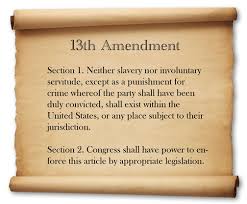
He’ll tear up the surrender treaty that officially ended the Civil War and let the Southern states restore the Confederacy.
His campaign slogan: “Let America Enslave Again.”
He calls the President an ape, a buffoon, a dictator with the blood of countless Americans on his hands.
Newspaper reporters covering Johnson often fall asleep during his speeches. Booth whips up his audiences without even trying.
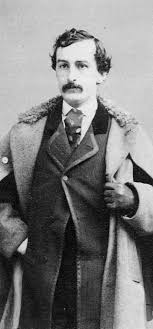
John Wilkes Booth
On November 4, 1868, John Wilkes Booth becomes the seventeenth President of the United States.
It won’t be until 1933 that Presidents begin taking the Oath of Office on January 20. So Abraham Lincoln will remain President until March 4, 1869.
Meanwhile, John Wilkes Booth has never held public office. He needs to pick a cabinet and learn the basics of what it means to be President.
And only one man is qualified to teach him–the man who now holds that office.
Lincoln knows that, in only a matter of months, everything he has worked for will be ruthlessly overturned. Like a beautiful garment pulled apart, thread by thread, until nothing is left but a pile of rubbish on the floor.
But he is a patriot, and a believer in destiny. Fate–or God–has thrust him into the Presidency. And he will carry out the duties that go with that role, however tormenting they now are, right to the end.
He hopes that Divine Providence will bestow a bright future on his beloved country, however bleak its present now looks.
* * * * *
When Barack Obama entered the White House in 2009, he couldn’t imagine spending his last two months in office tutoring the man who had reviled him throughout his Presidency.
It will be his last gift as President to a nation that has often proved ungrateful for his dedicated service.
2016 ELECTION, ABC NEWS, ABRAHAM LINCOLN, ALTERNATE HISTORY, BARACK OBAMA, BLACKS, BULLYING, CBS NEWS, CIVIL WAR, CNN, CONFEDERATE STATES OF AMERICA, DONALD TRUMP, FACEBOOK, FORD'S THEATER, FRANKLIN D. ROOSEVELT, HILLARY CLINTON, HISPANICS, JEWS, JOACHIM C. FEST, JOHN WILKES BOOTH, MICHELLE OBAMA, MUSLIMS, NBC NEWS, NICCOLO MACHIAVELLI, REPUBLICAN PARTY, ROBERT E. LEE, SLAVERY, THE CHICAGO SUN-TIMES, THE CHICAGO TRIBUNE, THE HUFFINGTON POST, THE LOS ANGELES TIMES, THE NEW YORK TIMES, THE WASHINGTON POST, THEODORE ROOSEVELT, TRUMP EFFECT, TWITTER, ULYSSES S. GRANT, UNITED STATES SENATE
In Bureaucracy, History, Law, Military, Politics, Social commentary on November 21, 2016 at 12:01 am
Barack Obama has known ecstasy such as few other men have known it.
In 1989, he met the love of his life, Michelle Robinson, an attorney at the Chicago law firm of Sidley Austin.
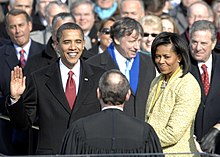
Barack and Michelle Obama
Although she declined his initial requests to date, she finally yielded to his persuasive charm. They were married on October 3, 1992, and have since had two daughters, Malia Ann and Natasha.
On November 2, 2004, Obama joined one of the most exclusive clubs in the world: The United States Senate. With 70% of the vote, he was elected United States Senator from Illinois. He served from 2005 to November 16, 2008, when an even greater event forced him to resign.
That event was his election as the 44th–and first black–President of the United States. On November 4, 2008, he received 52.9% of the votes. He delivered his victory speech before hundreds of thousands of supporters in Chicago’s Grant Park.
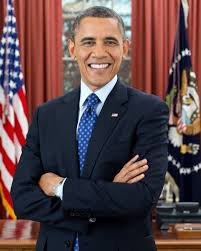
President Barack Obama
Then, on November 6, 2012, Obama was re-elected to a second four-year term, becoming the first Democratic President since Franklin D. Roosevelt to twice win the majority of the popular vote.
But now those eight years are rapidly coming to an end. And just as they opened with the euphoria of joy, they are closing with an agony more horrific for the President than anyone can imagine.
The agony of serving as tutor to Donald Trump, the man who will succeed him. Trump has personally reviled him throughout his Presidency–and intends to destroy as much of Obama’s legacy as possible.
For more than a year, Trump has boasted that he would make a far better President than Obama. But now that he’s won the 2016 election, it turns out he has at best a schoolboy’s knowledge of how government works.
Imagine a similar fate befalling another President whom Barack Obama deeply admires.
Imagine, in an alternate history universe, it’s April 14, 1865.
The four years of carnage known as the Civil War are finally over.
Five days ago, on April 9, Confederate General Robert E. Lee surrendered the Army of Northern Virginia to Union General of the Armies Ulysses S. Grant at Appomattox Court House.
Across the nation, 620,000 Americans lie dead–of wounds or disease. Untold thousands more are coming home as invalids, uncertain how they will care for themselves without limbs or eyes or the ability to walk.
For Abraham Lincoln, sixteenth President of the United States, it is time to ponder the work of rebuilding a shattered nation. He wants a just peace, not vengeance: “Let ’em up easy,” is the way he puts it.

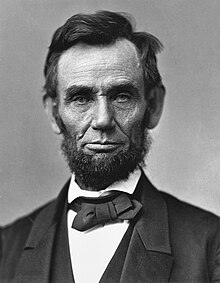
Abraham Lincoln
But, tonight, he needs to put aside his cares and seek a much-deserved respite at Ford’s Theater for a performance of the comedy, Our American Cousin.
At the theater, unknown to Lincoln, the Southern-sympathizing actor, John Wilkes Booth, awaits. For months he’s planned to kidnap Lincoln and hold him for ransom, to force the increasingly victorious Union armies to withdraw from the South.
But now there’s no point in that.
The Confederacy and slavery are dead. Lincoln has even spoken about giving the accursed blacks the right to vote.
Booth has never picked up a rifle to fight for the South, never faced death on a battlefield. Yet he will prove to the South that he is its greatest champion–by killing Lincoln.
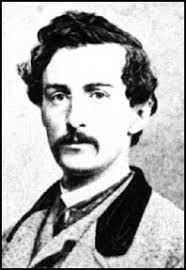
John Wilkes Booth
He has already made his preparations.
At around noon that day–April 14–he had visited Ford’s Theater, where he had a permanent mailbox. There he learned from the brother of John Ford, the owner, that the President and General Grant would be attending the theater to see Our American Cousin.
He knows the theater well–he’s performed there as an actor. And there’s no doubt he’ll have access to it tonight–he’s a celebrity.
That evening, Abraham Lincoln arrives at Ford’s Theater with his wife, Mary. They are accompanied by Union Major Henry Rathbone and his fiancee, Clara Harris. The four settle into the Presidential Box, which overlooks the stage.
Unlike 21st century Presidents, there are no Secret Service bodyguards for Lincoln. Presidents won’t be assigned such protection until 1901, when Theodore Roosevelt takes office.
Tonight, only one man has been assigned to guard Lincoln–a policeman named John Frederick Parker. And during the intermission, Parker decides he needs a drink.
So he slips off to a nearby tavern with Lincoln’s footman and coachman.
Booth arrives at the theater at about 10:25 p.m. Under his coat he’s armed with a knife and an eight-ounce, single-shot Derringer.
Booth walks up the staircase leading to the first of two doors to the President’s box. At the first door he finds Lincoln’s valet, Charles Forbes.
They chat briefly, and then Booth passes through the first door and closes it behind him.
Booth looks through the tiny peep-hole he had carved in the second door (which grants entry to the Presidential Box) earlier that day.
All he has to do is push open the door, aim at the back of Lincoln’s head, and fire. And that’s exactly what he intends to do.
Then–suddenly–he changes his mind.
He has an even more monstrous fate in store for the President.


ABC NEWS, AMERICAN TABLOID, ANTI-CASTRO CUBANS, ASSASSINATION, CBS NEWS, CIA, CNN, COMMUNISM, CUBA, CUBAN MISSILE CRISIS, DONALD TRUMP, DWIGHT D. EISENHOWER, FACEBOOK, FBI, FIDEL CASTRO, FLORIDA, FULGENCIO BATISTA, GUS RUSSO, JACK RUBY, JAMES ELLROY, JOHN F. KENNEDY, JOHNNY ROSELLI, LEE HARVEY OSWALD, LIVE BY THE SWORD, LYNDON B. JOHNSON, MAFIA, MARCO RUBIO, NBC NEWS, NIKITA KHRUSHCHEV, ROBERT F. KENNEDY, SAM GIANCANA, THE CHICAGO SUN-TIMES, THE CHICAGO TRIBUNE, THE LOS ANGELES TIMES, THE NEW YORK TIMES, THE WASHINGTON POST, TWITTER, WARREN COMMISSION
AMERICA’S POISONED CUBAN LEGACY: PART FOUR (END)
In Bureaucracy, History, Military, Politics, Social commentary on December 2, 2016 at 12:02 am“John and Robert Kennedy knew what they were doing. They waged a vicious war against Fidel Castro–a war someone had to lose.”
And the loser turned out to be John F. Kennedy.
So writes investigative reporter Gus Russo in Live By the Sword: The Secret War Against Castro and the Death of JFK, published in 1998.
In what is almost certainly the definitive account of the assassination of President John F. Kennedy, Russo reaches some startling–but highly documented–conclusions:
Another book well worth reading about America’s Cuban obsession during the early 1960s is American Tabloid, by James Ellroy.
Although a novel, it vividly captures the atmosphere of intrigue, danger and sleaziness that permeated that era in a way that dry, historical documents never can.
“The 50’s are finished,” reads its paperback dust jacket. “Zealous young lawyer Robert Kennedy has a red-hot jones to nail Jimmy Hoffa. JFK has his eyes on the Oval Office.
“J. Edgar Hoover is swooping down on the Red Menace. Howard Hughes is dodging subpoenas and digging up Kennedy dirt. And Castro is mopping up the bloody aftermath of his new Communist nation….
“Mob bosses, politicos, snitches, psychos, fall guys and femmes fatale. They’re mixing up a Molotov cocktail guaranteed to end the country’s innocence with a bang.”
Among the legacies of America’s twisted romance with anti-Castro Cubans:
The Cuban Missile Crisis remains the single most dangerous moment of the 50-year Cold War, when the world stood only minutes away from nuclear Armageddon.
That crisis stemmed from the American Right’s twisted obsession with Cuba, an obsession that continues today.
So what are the lessons to be learned from that obsession?
Share this: