Posts Tagged ‘DONALD TRUMP’
2016 PRESIDENTIAL RACE, ABC NEWS, BARACK OBAMA, BASKET OF DEPLORABLES SPEECH, BENGHAZI HEARINGS, BERNIE SANDERS, BILL CLINTON, BLACKS, CBS NEWS, CELINDA LAKE, CLINTON FUNDATION, CNN, COLIN POWELL, COMMUNISM, CONDOLEEZA RICE, DEBBIE WASSERMAN-SCHULTZ, DEMOCRATIC NATIONAL COMMITTEE, DONALD TRUMP, ELIZABETH WARREN, EMAIL SERVER, FACEBOOK, GEORGE W. BUSH, HILLARY CLINTON, HISPANICS, HOUSE OF REPRESENTATIVES, JAMES WEBB, JOSEPH STALIN, KARL MARX, KEVIN MCCARTHY, LIBYA, MAO ZEDONG, MICHELLE OBAMA, NBC NEWS, POPULISM, RACISM, REPUBLICAN NATIONAL COMMITTEE, Ronald Reagan, SATURDAY NIGHT LIVE, SOCIALISM, THE CHICAGO SUN-TIMES, THE CHICAGO TRIBUNE, THE LOS ANGELES TIMES, THE NEW YORK TIMES, THE WASHINGTON POST, TOM BROKAW, TONIGHT SHOW, TWITTER, U.S. HOUSE OF REPRESENTATIVES, U.S. SENATE, Vladimir Lenin, WHITES, WHITEWATER, WIKILEAKS, WOMEN, YOUTH
In Bureaucracy, Business, History, Politics, Social commentary on November 18, 2016 at 10:22 am
Donald Trump owes his victory to a wide range of circumstances. Among these:
#10 Hillary Clinton gave only one memorable speech during the campaign–and then she quashed any benefits that might have come from it.
This was the “basket of deplorables” speech, delivered at a New York fundraiser on September 9. It was the only Clinton speech to be widely quoted by Democrats and Republicans.
She divided Donald Trump’s supporters into two groups. The first group were the “deplorables,” for whom she showed open contempt:
“You know, to just be grossly generalistic, you could put half of Trump’s supporters into what I call the basket of deplorables. Right? The racist, sexist, homophobic, xenophobic, Islamaphobic –you name it. And unfortunately there are people like that. And he has lifted them up.
“He has given voice to their websites that used to only have 11,000 people–now 11 million. He tweets and retweets their offensive hateful mean-spirited rhetoric. Now, some of those folks—they are irredeemable, but thankfully they are not America.”
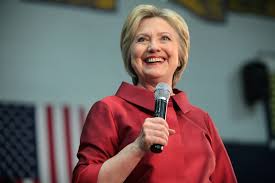
Hillary Clinton (Gage Skidmore photo)
But the second group, she said, consisted of poor, alienated Americans who rightly felt abandoned by their employers and their government:
“But the other basket–and I know this because I see friends from all over America here….but that other basket of people are people who feel that the government has let them down, the economy has let them down, nobody cares about them, nobody worries about what happens to their lives and their futures, and they’re just desperate for change. It doesn’t really even matter where it comes from.
“They don’t buy everything [Trump] says, but he seems to hold out some hope that their lives will be different. They won’t wake up and see their jobs disappear, lose a kid to heroin, feel like they’re in a dead-end. Those are people we have to understand and empathize with as well.”
After giving this speech, Clinton threw away the good it might well have done her.
First, the day after making the speech, she apologized for it: “Last night I was ‘grossly generalistic,’ and that’s never a good idea. I regret saying ‘half’–that was wrong.”
Many of Trump’s followers were racists, sexists and xenophobes–who deserved condemnation, not apologies. By apologizing, she looked weak, indecisive.
Second, having eloquently reached out to many of the men and women who were a prime constituency for Donald Trump, she made no effort to follow up.
She could have used this moment to offer an economic package that would quickly and effectively address their vital needs for jobs and medical care.
But that would have required her to put one together long ago. And all she had to offer now was boilerplate rhetoric, such as: “Education is the answer.”
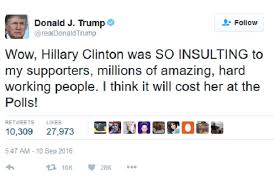
Worst of all, Trump turned her speech against her, tweeting: “Wow, Hillary Clinton was SO INSULTING to my supporters, millions of amazing, hard working people. I think it will cost her at the Polls!”
It did.
#11 Neither the Democrats nor the TV networks dared reveal the full intensity of hatred and violence that were hallmarks of Trump’s rallies–and campaign.
Three New York Times reporters who covered Trump’s rallies for over one year routinely witnessed his supporters hurl vulgar taunts such as:
At Hillary Clinton: “Trump that bitch!” “Kill her!” “Lock her up!” “Hillary is a whore!” “Hang the bitch!”
At protesters: “Get out of here, you fag!” “Get him!” “Get the fuck out of here!”
At Latinos: “Build a wall–kill them all!” “Fuck those dirty beaners!” “Send them bastards back. I’m sure that paperwork comes in Spanish.”
At Muslims: “Fuck Islam!” “Islam is not a religion, partner. It’s an ideology.” “You don’t come and talk about America when you’re supporting Muslims.”
At President Barack Obama: “Fuck that nigger!”
H. Allen Scott, a reporter for Fusion, attended a Trump rally and overheard conversations that startled him.
In one, a man marked Arabs as the enemy: “Those sand niggers are out to get us. We need to bomb the hell out of them.”
In the other, the supposed threat came from a different source: “The Donald will get all those Jews out of Washington.”
When protesters were ejected, Trump supporters went wild–and usually turned violent. Protesters were beaten and kicked–often with Trump’s encouragement.
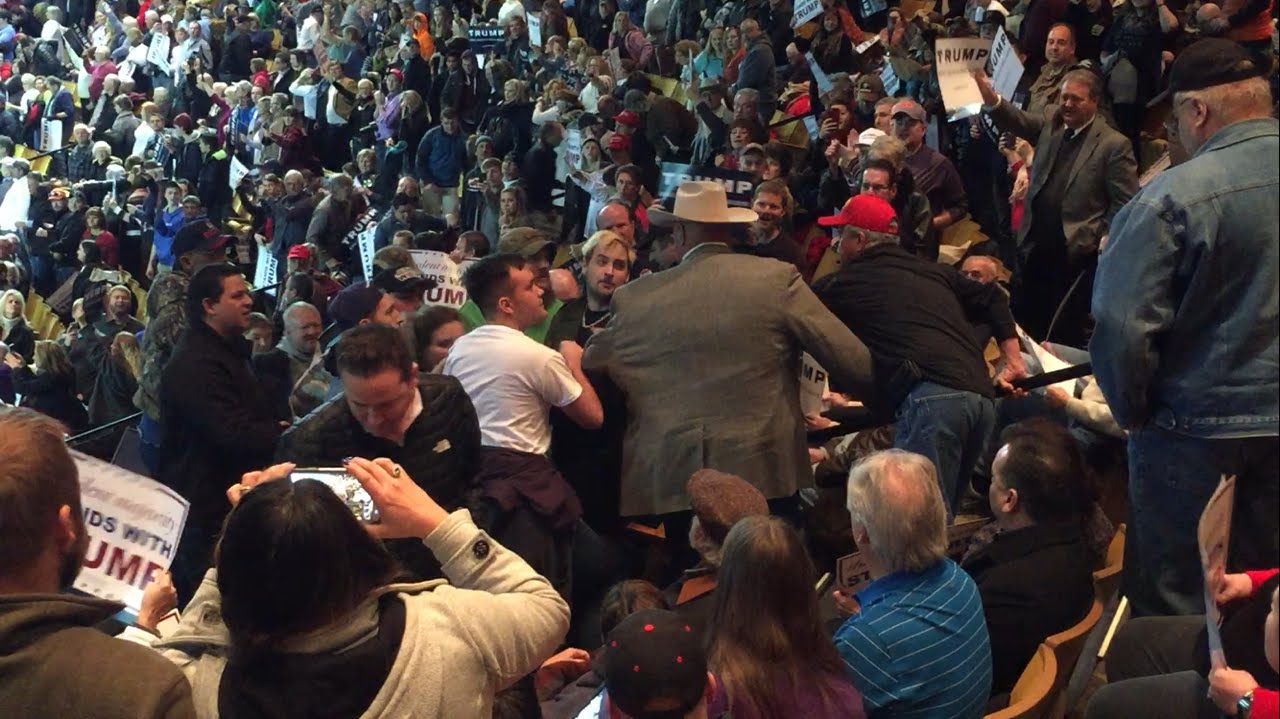
Protesters and supporters duke it out at a Donald Trump rally
Audiences at Trump rallies were overwhelmingly white. Not all were racists, but many of those who were advertised it on T-shirts: “MAKE AMERICA WHITE AGAIN.” Confederate flags were commonly displayed.
TV news networks and the Hillary Clinton campaign could have aired–repeatedly–such footage. Had they done so, Americans would have gotten a brutal, firsthand look at the anger and racism inherent in Trump’s candidacy–and followers.
Instead, Trump was allowed to appear on late-night shows like Saturday Night Live and The Tonight Show where he was treated with kid gloves for fun and laughs.
Thus, it is pointless to blame any one person (such as Hillary Clinton) or group (such as those who voted for third-party candidates) for Clinton’s loss. Many factors played a part–including some that, to keep this series at a reasonable length, could not be mentioned.
2016 PRESIDENTIAL RACE, ABC NEWS, BARACK OBAMA, BASKET OF DEPLORABLES SPEECH, BENGHAZI HEARINGS, BERNIE SANDERS, BILL CLINTON, BLACKS, CBS NEWS, CELINDA LAKE, CLINTON FUNDATION, CNN, COLIN POWELL, COMMUNISM, CONDOLEEZA RICE, DEBBIE WASSERMAN-SCHULTZ, DEMOCRATIC NATIONAL COMMITTEE, DONALD TRUMP, ELIZABETH WARREN, EMAIL SERVER, FACEBOOK, GEORGE W. BUSH, HILLARY CLINTON, HISPANICS, HOUSE OF REPRESENTATIVES, JAMES WEBB, JOSEPH STALIN, KARL MARX, KEVIN MCCARTHY, LIBYA, MAO ZEDONG, MICHELLE OBAMA, NBC NEWS, POPULISM, RACISM, REPUBLICAN NATIONAL COMMITTEE, Ronald Reagan, SATURDAY NIGHT LIVE, SOCIALISM, THE CHICAGO SUN-TIMES, THE CHICAGO TRIBUNE, THE LOS ANGELES TIMES, THE NEW YORK TIMES, THE WASHINGTON POST, TOM BROKAW, TONIGHT SHOW, TWITTER, U.S. HOUSE OF REPRESENTATIVES, U.S. SENATE, Vladimir Lenin, WHITES, WHITEWATER, WIKILEAKS, WOMEN, YOUTH
In Bureaucracy, Business, History, Politics, Social commentary on November 17, 2016 at 12:05 am
Fans of Vermont U.S. Senator Bernie Sanders have loudly claimed that if he had gotten the Democratic Presidential nomination, he would have crushed Donald Trump at the polls.
Since he didn’t get the nomination, we will never know.
But Sanders would have carried his own negatives–which the Republicans would have gleefully exploited. Among the issues he championed:
- Make college tuition free and debt-free.
- Medicare for all.
- Strengthen and expand Social Security.
Although worthy positions, they would have allowed Republicans to label him a “big-spending liberal.”
In addition, Sanders had labeled himself a “democratic Socialist.” For millions of proudly ignorant Americans, “socialist” means “Communist.” And Fox News and the Republican party would have gladly assured them they were correct.
Liberty Maniacs, a Minnesota-based brand that designs and sells political and satirical apparel, literally cashed in on this image with an eye-catching T-shirt.
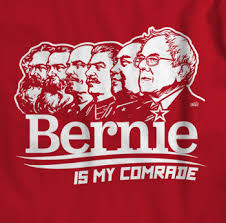
It depicted Sanders’ face alongside those of Karl Marx, Freidrich Engels, Vladimir Lenin, Joseph Stalin and Mao Zedong. And underneath were the words: “Bernie IS MY COMRADE.”
No doubt Republicans would have flooded the airways with similar images.
Sanders’ partisans continue to insist he was “cheated” out of the nomination by Hillary Clinton. But this still leaves unanswered the question:
If Sanders couldn’t prevail against the alleged ruthlessness of Clinton in the primaries, how could he have done so against Trump in the general election?
As the saying goes: “Politics ain’t beanbag.”
#5 Democrats and liberals fell prey to hubris. They dismissed Donald Trump as a bad joke: Surely voters would reject a bombastic, thrice-married “reality show” host who had filed for corporate bankruptcy four times.

If comments on Facebook are any guide, many liberals believed Clinton would bury him at the polls: Blacks, women, youth and Hispanics will turn out huge for her. Democrats will retake the Senate, and maybe even retake the House.
If many Democrats/liberals didn’t vote, one reason may be that they expected others to do it for them.
#6 The coalition that twice elected Barack Obama deserted Hillary Clinton.
Clinton did worse-than-expected among all the groups she was counting on to support her: Blacks, women, youth and Hispanics.
- In 2012, Obama got 93% of the black vote; in 2016, Clinton got 88%.
- In 2012, Obama got 55% of the women’s vote; in 2016, Clinton won 54%.
- In 2012, Obama got 60% of the vote of those under 30; in 2016, Clinton got 54%.
- In 2012, Obama got 71% of the Hispanic vote; in 2016, Clinton got 65%.
Clinton proved less popular even among whites than Obama: In 2012, Obama won 39% of their votes; in 2016, Clinton won 37%.
#7 For years, Republicans had waged a vicious campaign to demonize Hillary Clinton.
This included even falsely accusing her of conspiring to murder American diplomats in Benghazi, Libya.
Kevin McCarthy, a Republican member of the House of Representatives unintentionally admitted this on Fox News on September 30, 2015:
“Everybody thought Hillary Clinton was unbeatable, right? But we put together a Benghazi special committee. A select committee. What are her [poll] numbers today?
“Her numbers are dropping. Why? Because she’s untrustable. But no one would have known that any of that had happened had we not fought to make that happen.”
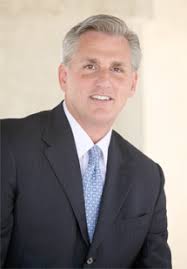
Kevin McCarthy
Thus, McCarthy revealed that:
- The House Select Committee on Benghazi was not a legitimate investigative body.
- Its true purpose was not to investigate the killings of four American diplomats during a 2012 terrorist attack in Benghazi, Libya.
- It’s actual purpose: To destroy the Presidential candidacy of Hillary Clinton.
#8 Republicans attacked Clinton for using a personal email account–while ignoring that her two Republican predecessors had done the same.
General Colin Powell served as Secretary of State under President George W. Bush from 2001 to 2005. He not only used a private email account but advised Clinton to do so as she was about to move into the same job in 2009.
Powell’s successor as Secretary of State, Condoleeza Rice, similarly used a private email account during her tenure (2005-2009).
Yet while Republicans hounded Clinton, accusing her of recklessly endangering national security, they totally ignored Powell’s and Rice’s uses of private email accounts.
#9 Trump, adopting the role of a populist, appealed to blue-collar voters. Clinton offered a “love-your-CEO” economic plan–and suffered for it.
Trump visited “Rustbelt” states like Michigan and Pennsylvania and vowed to “bring back” jobs that had been lost to China, such as those in coal mining and manufacturing. Clinton didn’t deign to show up, assuming she had those states “locked up.”
Most economists agree that, in a globalized economy, such jobs are not coming back, no matter who becomes President.
Even so, voters went for the man who promised them a better future, and shunned the woman who didn’t come to promise them any future at all.
In May, Democratic pollster CeLinda Lake had warned Clinton to revamp her economic platform.
“Democrats simply have to come up with a more robust economic frame and message,” Lake said after the election. “We’re never going to win those white, blue-collar voters if we’re not better on the economy. And 27 policy papers and a list of positions is not a frame. We can laugh about it all we want, but Trump had one.”
2016 PRESIDENTIAL RACE, ABC NEWS, BARACK OBAMA, BASKET OF DEPLORABLES SPEECH, BENGHAZI HEARINGS, BERNIE SANDERS, BILL CLINTON, BLACKS, CBS NEWS, CELINDA LAKE, CLINTON FUNDATION, CNN, COLIN POWELL, COMMUNISM, CONDOLEEZA RICE, DEBBIE WASSERMAN-SCHULTZ, DEMOCRATIC NATIONAL COMMITTEE, DONALD TRUMP, ELIZABETH WARREN, EMAIL SERVER, FACEBOOK, GEORGE W. BUSH, HILLARY CLINTON, HISPANICS, HOUSE OF REPRESENTATIVES, JAMES WEBB, JOSEPH STALIN, KARL MARX, KEVIN MCCARTHY, LIBYA, MAO ZEDONG, MICHELLE OBAMA, NBC NEWS, POPULISM, RACISM, REPUBLICAN NATIONAL COMMITTEE, Ronald Reagan, SATURDAY NIGHT LIVE, SOCIALISM, THE CHICAGO SUN-TIMES, THE CHICAGO TRIBUNE, THE LOS ANGELES TIMES, THE NEW YORK TIMES, THE WASHINGTON POST, TOM BROKAW, TONIGHT SHOW, TWITTER, U.S. HOUSE OF REPRESENTATIVES, U.S. SENATE, Vladimir Lenin, WHITES, WHITEWATER, WIKILEAKS, WOMEN, YOUTH
In Bureaucracy, Business, History, Politics, Social commentary on November 16, 2016 at 12:13 am
Since November 8, Democrats and liberals (the two are not always the same) have been in shock.
“How could this happen?” they keep asking–themselves and others. “How could the country go from electing a brilliant, sophisticated, humane man like Barack Obama to electing an ignorant, coarse, brutal man like Donald Trump?”
Efforts have been made to blame one person/group or another. But the truth is that many factors were involved, and the fallout will be felt for months–if not years–to come.
#1 Hillary Clinton was an uninspiring candidate. When Barack Obama ran for President in 2008, NBC Anchor Tom Brokaw compared his rallies to Hannah Montana concerts. Audiences were excited by his charisma, eloquence, relative youth (47) and optimism (“Yes We Can!”).
Clinton radiated none of these qualities. She was 67 when she declared her candidacy for President–and looked it. Her speaking voice grated like the proverbial fingernail on a blackboard.
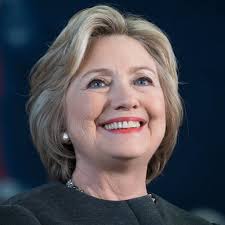
Hillary Clinton
She seemed to have been around forever–as First Lady (1993-2001), as Senator from New York (2001-2009) and as Secretary of State (2009-2013). Those born after 2000 thought of the Clinton Presidency as ancient history. She was offering a resume–and voters wanted an inspiration.
#2 Clinton brought a lot of baggage with her. In contrast to Obama, whose Presidency had been scandal-free, Clinton–rightly or wrongly–has always been dogged by charges of corruption.
During the Clinton Presidency, a failed land deal–Whitewater–while Bill Clinton was Governor of Arkansas triggered a seven-year investigation by a Republican special prosecutor. No criminality was uncovered, and no charge was brought against either Clinton.
After leaving the White House, she and her husband set up the Clinton Foundation, a public charity to bring government, businesses and social groups together to solve problems “faster, better, at lower cost.”
As Secretary of State, more than half of Clinton’s meetings with people outside government were with donors to the Clinton Foundation. If a “pay-to play” system wasn’t at work, one certainly seemed to be.
She cast further suspicion on herself by her unauthorized use of a private email server. This wasn’t revealed until March, 2015–after she was no longer Secretary of State.
She claimed she had used it to avoid carrying two cell-phones. But, as Secretary of State, she traveled with a huge entourage who carried everything she needed. Her critics believed she used a private email system to hide a “pay-for-pay” relationship with Clinton Foundation donors.
Finally, as a candidate for President, she “secretly” worked with Debbie Wasserman-Schultz, the chair of the Democratic National Committee, to ensure that she would get the nomination.
As DNC chair, Wasserman-Schultz was expected to be impartial toward all Democratic candidates seeking the prize. This included Vermont U.S. Senator Bernie Sanders, Clinton’s chief competitor.
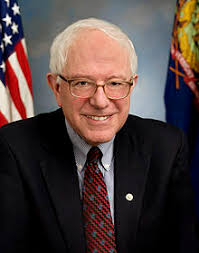
Bernie Sanders
So Sanders and his supporters were outraged when WikiLeaks released 19,252 emails and 8,034 attachments hacked from computers of the highest-ranking officials of the DNC.
The emails revealed a clear bias for Clinton and against Sanders. In one email, Brad Marshall, the chief financial officer of the DNC, suggested that Sanders, who is Jewish, could be portrayed as an atheist.
#3 The Obamas’ support proved a plus/minus for Clinton. Understandably, President Obama wanted to see his legacies continued–and she was the only candidate who could do it.
So he–and his wife, Michelle–stormed the country, giving eloquent, passionate speeches and firing up crowds on Clinton’s behalf.
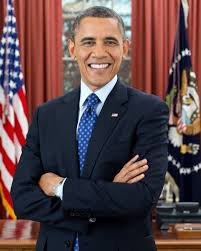
President Barack Obama
So long as either Obama stood before a crowd, the magic lasted. But once the event was over, the excitement vanished. Hillary simply didn’t arouse enough passion to keep it going.
And when Obama supporters compared the President and First Lady with Clinton, they found her wanting–in attractiveness, grace, eloquence, trustworthiness and the ability to inspire.
#4 Not enough Democrats entered the Presidential race. Among those few who did:
- Martin O’Malley, former governor of Maryland;
- Lincoln Chaffee, former governor of Rhode Island;
- James Webb, former U.S. Senator from Virginia;
- Lawrence Lessig, professor at Harvard Law School;
- Vermont U.S. Senator Bernie Sanders;
- and former First Lady/U.S. Senator/Secretary of State Hillary Clinton.
Of these candidates, it’s worth noting that O’Malley withdrew during the primaries. Chaffee, Webb and Lessig withdrew before the primaries started.
Many liberals wanted Massachusetts U.S. Senator Elizabeth Warren to run. As a specialist in consumer protection, she had become a leading figure in the Democratic party and a favorite among progressives.
But, without giving a reason, she declined to do so.
Thus, at least on the Democratic side, the stage was already set at the outset of the race.
No matter who the Republican nominee would be, the Democratic one would be Hillary Clinton or Bernie Sanders.
Sanders fans have loudly claimed that if only he had gotten the Democratic Presidential nomination, he would have crushed Trump at the polls.
But Sanders would have carried big negatives as well–which the Republicans would have gleefully exploited.
These will be explored in Part Two of this continuing series.
2012 ELECTION, 2016 ELECTION, 2016 PRESIDENTIAL RACE, ABC NEWS, ADOLF HITLER, ADULTERY, CBS NEWS, CNN, DONALD TRUMP, FACEBOOK, HOUSE OF REPRESENTATIVES, HUMOR, JOHN KING, JOSEPH MCCARTHY, LANGUAGE, MARIANNE GINTHER, NBC NEWS, NEWT GINGRICH, OPEN MARRIAGE, REPUBLICANS, RICK SANTORUM, RON PAUL, SECRETARY OF STATE, SOUTH CROLINA PRIMARY, SPEAKER OF THE HOUSE, THE CHICAGO SUN-TIMES, THE CHICAGO TRIBUNE, THE LOS ANGELES TIMES, THE NEW YORK TIMES, THE WASHINGTON POST, TWITTER, USA TODAY
In Bureaucracy, History, Politics, Social commentary on November 15, 2016 at 12:09 am
Even so every good tree bringeth forth good fruit; but a corrupt tree bringeth forth evil fruit. A good tree cannot bring forth evil fruit, neither can a corrupt tree bring forth good fruit.
Every tree that bringeth not forth good fruit is hewn down, and cast into the fire. Wherefore by their fruits ye shall know them.
—Matthew 7: 17-20
Meet the Gingrich Twins: Good Newt and Bad Newt.
Both served as Speaker of the House of Representatives from 1995 to 1999.
Both ran–unsuccessfully–for President in 2012.
Both are again seeking power in 2016–as President-elect Donald Trump’s pick for Secretary of State.
And both also have much to teach America about the effective–and unscrupulous–use of language as used by ambitious, ruthless politicians.
Here’s how Good Newt responded to a question by CNN Moderator John King during the GOP Presidential debate at Charleston, South Carolina, on January 19, 2012:
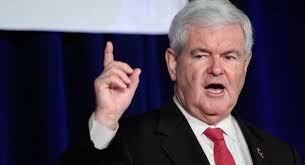
Newt Gingrich, once again giving “the finger” to America
King: “As you know, your ex-wife [Marianne Ginther] gave an interview to ABC News and another interview with The Washington Post.
“And this story has now gone viral on the internet. In it, she says that you came to her in 1999, at a time when you were having an affair. She says you asked her, sir, to enter into an open marriage. Would you like to take some time to respond to that?”

Marianne Ginther
Good Newt: “No, but I will. I think the destructive, vicious, negative nature of much of much of the news media makes it harder to govern this country, harder to attract decent people to run for public office. And I am appalled that you would begin a presidential debate on a topic like that….
“To take an ex-wife and make it two days before the primary a significant question for a presidential campaign is as close to despicable as anything I can imagine….
“Every personal friend I have who knew us in that period said the story was false. We offered several of them to ABC to prove it was false.
“They weren’t interested because they would like to attack any Republican. They’re attacking the governor. They’re attacking me. I’m sure they’ll presently get around to Senator [Rick] Santorum and Congressman [Ron] Paul.”
Good Newt is “appalled” that anyone could stoop so low. He’s concerned not only for himself and his party, but the country.
Unfortunately, for Good Newt, he has an identical evil twin: Bad Newt. And sometimes people–especially Democrats–mistake one for the other.
It was Bad Newt who, as Speaker of the House of Representatives, wrote a 1996 memo that encouraged Republicans to “speak like Newt.”
Entitled “Language: A Key Mechanism of Control,” it urged Republicans to attack Democrats with such words as “corrupt,” “selfish,” “destructive,” “hypocrisy,” “liberal,” “sick,” and “traitors.”
Even worse, Bad Newt encouraged the news media to disseminate such accusations. Among his suggestions:
- “Fights make news.”
- Create a “shield issue” to deflect criticism: “A shield issue is, just, you know, your opponent is going to attack you as lacking compassion. You better…show up in the local paper holding a baby in the neonatal center.”
In the memo, Bad Newt advised:
“….In the video ‘We are a Majority,’ Language is listed as a key mechanism of control used by a majority party, along with Agenda, Rules, Attitude and Learning.
“As the tapes have been used in training sessions across the country and mailed to candidates we have heard a plaintive plea: ‘I wish I could speak like Newt.’
“That takes years of practice. But, we believe that you could have a significant impact on your campaign and the way you communicate if we help a little. That is why we have created this list of words and phrases….
“This list is prepared so that you might have a directory of words to use in writing literature and mail, in preparing speeches, and in producing electronic media.
“The words and phrases are powerful. Read them. Memorize as many as possible. And remember that like any tool, these words will not help if they are not used.”
Here is the list of words Bad Newt urged his followers to use in describing “the opponent, their record, proposals and their party”:
- abuse of power
- anti- (issue): flag, family, child, jobs
- betray
- bizarre
- bosses
- bureaucracy
- cheat
- coercion
- “compassion” is not enough
- collapse(ing)
- consequences
- corrupt
- corruption
- criminal rights
- crisis
- cynicism
- decay
- deeper
- destroy
- destructive
- devour
- disgrace
- endanger
- excuses
- failure (fail)
- greed
- hypocrisy
- ideological
- impose
- incompetent
- insecure
- insensitive
|
- intolerant
- liberal
- lie
- limit(s)
- machine
- mandate(s)
- obsolete
- pathetic
- patronage
- permissive attitude
- pessimistic
- punish (poor …)
- radical
- red tape
- self-serving
- selfish
- sensationalists
- shallow
- shame
- sick
- spend(ing)
- stagnation
- status quo
- steal
- taxes
- they/them
- threaten
- traitors
- unionized
- urgent (cy)
- waste
- welfare
|
Yes, speaking like Newt–or Adolf Hitler or Joseph McCarthy–“takes years of practice.”
So you can understand why Good Newt hates being mistaken for his evil twin, Bad Newt.
Unfortunately, they look–and sound–so alike it’s impossible to tell them apart.
But since they’re both 73, perhaps one day soon we’ll find out which one we’re left with–Good Newt or Bad Newt.
Unless, of course, they both drop off at the same time. Then we will never know which was which.
It’s definitely a mystery worth living with.
2016 PRESIDENTIAL ELECTION, 9/11, ABC NEWS, ADOLF HITLER, AFGHANISTAN, ALTERNET, AMERICABLOG, AP, ASIANS, BABY BOOMER RESISTANCE, BARACK OBAMA, BBC, BLACKS, BLOOMBERG, BULLYING, BUZZFEED, CBS NEWS, CNN, COMMUNISM, CROOKS AND LIARS, DAILY KOS, DAILY KOZ, DONALD TRUMP, FACEBOOK, FASCISM, FIVETHIRTYEIGHT, GEORGE W. BUSH, GREAT DEPRESSION, HARPER’S MAGAZINE, HILLARY CLINTON, HISPANICS, HUFFINGTON POST, IRAQ, JEWS, MEDIA MATTERS, MOTHER JONES, MOVEON, MSNBC, MUSLIMS, NAZI GERMANY, NAZI PARTY, NBC NEWS, NEW REPUBLIC, NEWSDAY, NEWSWEEK, NPR, PAUL VON HINDENBURG, PBS NEWSHOUR, POLITICO, POLITICUSUSA, RACISM, RAW STORY, REPUBLICANS, REUTERS, ROBERT PAYNE, Ronald Reagan, SALON, SEATTLE TIMES, SLATE, TALKING POINTS MEMO, THE ATLANTIC, THE CHICAGO SUN-TIMES, THE CHICAGO TRIBUNE, THE DAILY BEAST, THE DAILY BLOG, THE GUARDIAN, THE HILL, THE HUFFINGTON POST, THE INTERCEPT, THE LIFE AND DEATH OF ADOLF HITLER, THE LOS ANGELES TIMES, THE LOS ANGELS TIMES, THE NATION, THE NEW REPUBLIC, THE NEW YORK TIMES, THE NEW YORKER, THE VILLAGE VOICE, THE WASHINGTON POST, THINKPROGRESS, TIME, TRUMP EFFECT, TRUTHDIG, TRUTHOUT, TWITTER, TWO POLITICAL JUNKIES, U.S. NEWS & WORLD REPORT, UP, UPI, USA TODAY, WORLD WAR 11
In Bureaucracy, History, Politics, Social commentary on November 14, 2016 at 12:05 am
In his bestselling 1973 biography, The Life and Death of Adolf Hitler, British historian Robert Payne harshly condemned the German people for the rise of the Nazi dictator.
“[They] allowed themselves to be seduced by him and came to enjoy the experience….[They] followed him with joy and enthusiasm because he gave them license to pillage and murder to their hearts’ content. They were his servile accomplices, his willing victims….
“If he answered their suppressed desires, it was not because he shared them, but because he could make use of them. He despised the German people, for they were merely the instruments of his will.”
On November 8, millions of ignorant, hate-filled, Right-wing Americans elected Donald Trump—a man reflecting their own hate and ignorance—to the Presidency.
Yet, in some ways, Americans have fewer excuses for turning to a Fascistic style of government than the Germans did.
Adolf Hitler, joined the National Socialist German Workers (Nazi) Party in 1919—the year after World War 1 ended.
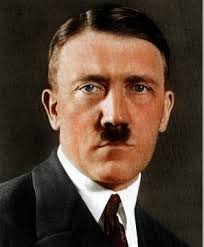
Adolf Hitler
It took him 14 years to win appointment to Chancellor (the equivalent of Attorney General) of Germany in 1933.
In 1923, he staged a coup attempt in Bavaria—which was quickly and brutally put down by police. He was arrested and sentenced to less than a year in prison.
After that, Hitler decided that winning power through violence was no longer an option. He must win it through election—or appointment.
He repeatedly ran for the highest office in Germany—President—but never got a clear majority in a free election.
When the 1929 Depression struck Germany, the fortunes of Hitler’s Nazi party rose as the life savings of ordinary Germans fell. Streets echoed with bloody clashes between members of Hitler’s Nazi Stormtroopers and those of the German Communist Party.
Germany seemed on the verge of collapsing.
Germans desperately looked for a leader—a Fuhrer–who could somehow deliver them from the threat of financial ruin and Communist takeover.
In early 1933, members of his own cabinet persuaded aging German president, Paul von Hindenburg, that only Hitler’s appointment as Chancellor could do this.
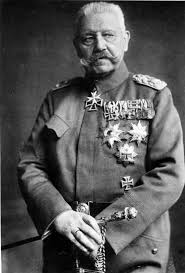
Paul von Hindenburg
Hindenburg was reluctant to do so. He considered Hitler a dangerous radical. But he allowed himself to be convinced that, by putting Hitler in the Cabinet, he could be “boxed in” and thus controlled.
So, on January 30, 1933, he appointed Adolf Hitler Chancellor of Germany.
On August 2, 1934, Hindenberg died, and Hitler immediately assumed the titles—and duties—of the offices of Chancellor and President. His rise to total power was now complete.
It had taken him 14 years to do so.
In 2015, Donald Trump declared his candidacy for President.
Now, consider this:
- The country was technically at war in the Middle East—but the fate of the United States was not truly threatened, as it had been during the Civil War.
- There was no draft; if you didn’t know someone in the military, you didn’t care about the casualties taking place.
- Nor were these conflicts—in Iraq and Afghanistan–imposing domestic shortages on Americans, as World War II had.
- Thanks to government loans from President Barack Obama, American capitalism had been saved from its own excesses during the George W. Bush administration.
- Employment was up. CEOs were doing extremely well.
- In contrast to the corruption that had plagued the administration of Ronald Reagan, whom Republicans idolize, there had been no such scandals during the Obama Presidency.
- Nor had there been any large-scale terrorist attacks on American soil—as there had on 9/11 under President George W. Bush.
Yet—not 17 months after announcing his candidacy for President—enough Americans fervently embraced Donald Trump to give him the most powerful position in the country and the world.
.jpg/220px-Donald_Trump_August_19,_2015_(cropped).jpg)
Donald Trump
The message of Barack Obama’s 2008 campaign had been one of hope—“Yes, We Can!”
That of Donald Trump’s campaign was one of hatred toward everyone who was not an avid Trump supporter: “No, You Can’t!”
Whites comprised the overwhelming majority of the audiences at Trump rallies. Not all were racists, but many of those who were advertised it on T-shirts: “MAKE AMERICA WHITE AGAIN.”
They knew that demographics were steadily working against them. Birthrates among non-whites were rising. By 2045, whites would make up less than 50 percent of the American population.
The 2008 election of the first black President had shocked whites. His 2012 re-election had deprived them of the hope that 2008 had been an accident.
Then came 2016—and the possibility that a black President might actually be followed by a woman: Hillary Clinton.
And the idea of a woman dictating to men was strictly too much to bear.
Since Trump’s election, educators have reported a surge in bullying among students of all ages, from elementary- to high-school. Those doing the bullying are mostly whites, and the victims are mostly blacks, Muslims, Jews, Hispanics, Asians.
It even has a name: “The Trump Effect.”
And this is where matters stand more than two months before Trump takes the oath as President.
All of this should be remembered the next time an American blames Germans for their embrace of Adolf Hitler.
ABC NEWS, ANCHOR BABIES, BARACK OBAMA, CBS NEWS, CHIEF EXECUTIVE OFFICERS, CHINA, CNN, DONALD TRUMP, DREAM ACT, DRUG SMUGGLERS, ENGLISH-ONLY VOTING MATERIALS, FACEBOOK, HISPANICS, HUMAN SMUGGLERS, ILLEGAL ALIENS, illegal immigration, Kamala Harris, MAFIA, MEXICAN WALL, MEXICO, MSNBC, NBC NEWS, POLITICAL CORRECTNESS, RACIAL PROFILING, Racketeer Influenced Corrupt Organizations (RICO) Act, sanctuary cities, THE CHICAGO SUN-TIMES, THE CHICAGO TRIBUNE, THE HUFFINGTON POST, THE LOS ANGELES TIMES, THE NEW YORK TIMES, THE WASHINGTON POST, TWITTER, U.S. DEPARTMENT OF JUSTICE, U.S.-MEXICAN BORDER, U.S.-MEXICO WALL, USA TODAY, VOTING, WAL-MART
In Bureaucracy, Business, History, Law, Law Enforcement, Politics, Social commentary on November 11, 2016 at 12:38 pm
According to Donald Trump, stopping illegal immigration is easy.
Just build a massive, impenetrable wall along the U.S./Mexican border to keep out Mexican immigrants.
“Building a wall is easy, and it can be done inexpensively,” Trump said in an interview. “It’s not even a difficult project if you know what you’re doing.”
Really?
Among the obstacles to erecting such a barrier:
- The United States/Mexican border stretches for 1,954 miles–and encompasses rivers, deserts and mountains.
- Environmental and engineering problems.
- Squabbles with ranchers who don’t want to give up any of their land.
- Building such a wall would cost untold billions of dollars.
- Drug traffickers and human smugglers could easily tunnel under it into the United States–as they are now doing.
Click here: Trump says building a U.S.-Mexico wall is ‘easy.’ But is it really? – The Washington Post
There are, in fact, cheaper and more effective remedies for combating illegal immigration.
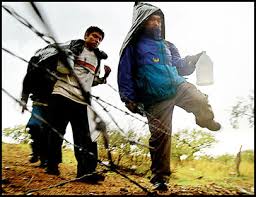
Illegal aliens crossing into the United States
(1) The Justice Department should vigorously attack the “sanctuary movement” that officially thwarts the immigration laws of the United States.
Among the 31 “sanctuary cities” of this country: Washington, D.C.; New York City; Los Angeles; Chicago; San Francisco; Santa Ana; San Diego; Salt Lake City; Phoenix; Dallas; Houston; Austin; Detroit; Jersey City; Minneapolis; Miami; Denver; Baltimore; Seattle; Portland, Oregon; New Haven, Connecticut; and Portland, Maine.
These cities have adopted “sanctuary” ordinances that do not allow municipal funds or resources to be used to enforce federal immigration laws, usually by not allowing police or municipal employees to inquire about one’s immigration status.
(2) The most effective way to combat this movement: Indict the highest-ranking officials of those cities who have actively violated Federal immigration laws.
As District Attorney for San Francisco (2004-2011 Kamala Harris created a secret program called Back on Track, which provided training for jobs that illegal aliens could not legally hold.
She also prevented Immigration and Customs Enforcement (ICE) from deporting even those illegal aliens convicted of a felony. It is not the duty of local law enforcement, she said, to enforce Federal immigration laws.
Harris is now California’s Attorney General and will soon be its U.S. Senator.
(3) Even if some indicted officials escaped conviction, the results would prove worthwhile.
City officials would be forced to spend huge sums of their own money for attorneys and face months or even years of prosecution.
And this, in turn, would send a devastating warning to officials in other “sanctuary cities” that the same fate lies in store for them.
(4) CEOs whose companies–like Wal-Mart–systematically employ illegal aliens should be held directly accountable for the actions of their subordinates.
They should be indicted by the Justice Department under the Racketeer Influenced Corrupt Organizations (RICO) Act, the way Mafia bosses are prosecuted for ordering their own subordinates to commit crimes.
Upon conviction, the CEO should be sentenced to a mandatory prison term of at least 20 years.
This would prove a more effective remedy for combating illegal immigration than stationing tens of thousands of soldiers on the U.S.-Mexican border. CEOs forced to account for their subordinates’ actions would take drastic steps to ensure that their companies strictly complied with Federal immigration laws.
Without employers’ luring illegal aliens at a fraction of the money paid to American workers, the flood of such illegal job-seekers would quickly dry up.

(5) The Government should stop granting automatic citizenship to “anchor babies” born to illegal aliens in the United States.
A comparable practice would be allowing bank robbers who had eluded the FBI to keep their illegally-obtained loot.
A person who violates the bank robbery laws of the United States is legally prosecutable for bank robbery, whether he’s immediately arrested or remains uncaught for years. The same should be true for those born illegally within this country.
If they’re not here legally at the time of their birth, they should not be considered citizens and should–like their parents–be subject to deportation.
(6) The United States Government–from the President on down–should scrap its apologetic tone on the right to control its national borders.
The Mexican Government doesn’t hesitate to apply strict laws to those immigrating to Mexico. And it feels no need to apologize for this.
Neither should Americans.
(7) Voting materials and ballots should be published in one language–English.
Throughout the United States, millions of Mexican illegals refuse to learn English and yet demand that voting materials and ballots be made available to them in Spanish. There is no reason to cater to their hypocrisy.
(8) The United States should vigorously counter the argument that deporting illegal aliens “separates families.” There is absolutely no reason why this should happen. Those American citizens who wish to do so are perfectly free to accompany their illegal relatives to their home countries.
(9) The United States should impose severe economic and even military sanctions against countries–such as China and Mexico–whose citizens make up the bulk of illegal aliens.
Mexico, for example, uses its American border to rid itself of those who might demand major reforms in the country’s political and economic institutions.
Such nations must learn that dumping their unwanteds on the United States now comes at an unaffordably high price. Otherwise those dumpings will continue.
ABC NEWS, ABORTION, ADOLF HITLER, ALTERNET, AMERICABLOG, AP, ATHEISTS, BABY BOOMER RESISTANCE, BBC, BLOOMBERG NEWS, BUZZFEED, CBS NEWS, CNN, CROOKS AND LIARS, DAILY KOZ, DONALD TRUMP, FACEBOOK, FAITH AND FREEDOM COALITION, FIVETHIRTYEIGHT, GAYS, HARPER’S MAGAZINE, HOMOSEXUALITY, HOMOSEXUALS, HUFFINGTON POST, INDIANA, ISLAM, JERRY FALWELL JR., JEWS, LESBIANS, LIBERALS, LIBERTY UNIVERSITY, MEDIA MATTERS, MIKE PENCE, MOTHER JONES, MOVEON, MSNBC, MUSLIMS, NBC NEWS, NEW REPUBLIC, NEWSDAY, NEWSWEEK, NON-CHRISTIANS, NPR, PBS NEWSHOUR, POLITICO, POLITICUSUSA, RALPH REED, RAW STORY, RELIGION, RELIGIOUS FREEDOM RESTORATION ACT, REPUBLICAN PARTY, REUTERS, SALON, SCIENCE, SEATTLE TIMES, SHARIA, SLATE, SOVIET UNION, TALKING POINTS MEMO, THE ATLANTIC, THE CHICAGO SUN-TIMES, THE CHICAGO TRIBUNE, THE DAILY BEAST, THE DAILY BLOG, THE GUARDIAN, THE HILL, THE HUFFINGTON POST, THE LOS ANGELES TIMES, THE NATION, THE NEW REPUBLIC, THE NEW YORK TIMES, THE NEW YORKER, THE VILLAGE VOICE, THE WASHINGTON POST, THINKPROGRESS, TIME, TRUTHDIG, TRUTHOUT, TWITTER, TWO POLITICAL JUNKIES, U.S. NEWS & WORLD REPORT, UP, UPI, USA TODAY, WOMEN, WOMEN'S RIGHTS
In History, Law, Law Enforcement, Politics, Social commentary on November 10, 2016 at 3:34 pm
During the 2016 Presidential campaign, many pundits–and ordinary citizens–repeatedly asked: “Why are so many evangelical leaders supporting Donald Trump?”
Evangelical leaders like:
- Jerry Falwell, Jr., president of Liberty University: “Well, I think Jesus said we’re all sinners.
- “When they ask [if Trump’s personal life is relevant] I always talk about the story of the woman at the well who had had five husbands and she was living with somebody she wasn’t married to, and they wanted to stone her. And Jesus said he’s–he who is without sin cast the first stone. I just see how Donald Trump treats other people, and I’m impressed by that.”
- Ralph Reed, founder and chairman of the Faith & Freedom Coalition: “People of faith are voting on issues like who will protect unborn life, defend religious freedom, grow the economy, appoint conservative judges and oppose the Iran nuclear deal.”
- Mike Pence, Trump’s Vice President-elect. who identifies as an evangelical Catholic.
Donald Trump
After all, evangelicals have long portrayed themselves as champions of “family values.”
And these aren’t exactly consistent with a man who brags: “You know I’m automatically attracted to beautiful–I just start kissing them. It’s like a magnet. Just kiss. I don’t even wait. And when you’re a star they let you do it. You can do anything. Grab them by the pussy.”
So why are they backing Trump?
Power.
Power to control the lives of those they have long hated and despised.
Among these:
- Atheists
- Jews
- Women
- Homosexuals
- Lesbians
- Non-Christians
- Liberals
They expect Trump to sponsor legislation that will–by force of law–make their brand of Christianity supreme above all other religions.
A foretaste of what’s to come occurred on March 26, 2015.
That was when Mike Pence, then Governor of Indiana, signed into law the Religious Freedom Restoration Act.
This allows any individual or corporation to cite its religious beliefs as a defense when sued by a private party.
Officially, its intent is to prevent the government from forcing business owners to violate their religious beliefs.
Unofficially, its intent is to appease the hatred of gays and lesbians by the religious Right, a key constituency of the Republican party.
Thus, a bakery that doesn’t want to make a cake for a gay wedding or a restaurant that doesn’t want to serve lesbian patrons now has the legal right to refuse to do so.
And a hospital can legally turn away a gay patient if it wants to.
The bill passed overwhelmingly by both chambers of the Republican-controlled state legislature. And was signed into law by the governor who is now Vice President-elect.
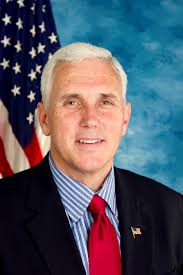
Indiana Governor Mike Pence
“Today I signed the Religious Freedom Restoration Act, because I support the freedom of religion for every Hoosier of every faith,” Mike Pence said in a statement on the day he signed the bill.
“The Constitution of the United States and the Indiana Constitution both provide strong recognition of the freedom of religion but today, many people of faith feel their religious liberty is under attack by government action.”
Bill-signing ceremonies are usually highly public events. Governors–and Presidents–normally want their constituents to see them creating new legislation.
Yet for all his praise for the bill, Pence signed it in a ceremony closed to the public and the press.
On June 22, 1941, German dictator Adolf Hitler ordered the invasion of the Soviet Union. Shortly afterward, he appeared to have second thoughts.
Turning to an aide, he said: “At the beginning of each campaign, one pushes a door into a dark, unseen room. One can never know what is hiding inside.”
Maybe Pence, like Hitler, sensed that he was pushing open “a door into a dark, unseen room.”
And this may well be the case.
Through that door has already marched the First Church of Cannabis, founded by Bill Levin. Its registration has been officially approved by the Indiana Secretary of State, and the IRS has granted the church tax-exempt status.
A mural in the church in the style of “The Creation of Adam” features two hands–where one is passing a joint to the other.
No doubt many Indiana legislators are furious that their effort to attack gays may have brought legal marijuana to their highly conservative state.
But worse may be to come.
Since 9/11, Right-wingers such as Rush Limbaugh and Sean Hannity have warned that Muslims are trying to impose Sharia (Islamic law) on America.
And now Indiana’s legislators, in elevating religion above the law, have pushed upon that door “into a dark, unseen room.”
Actually, both the leaders of the Republican party and adherents of Sharia agree:
- Women should have fewer rights than men.
- Abortion should be illegal.
- There should be no separation between church and state.
- Religion should be taught in school.
- Religious doctrine trumps science.
- Government should be based on religious doctrine.
- Homosexuality should be outlawed.
Eventually, some Muslims in Indiana will claim their rights–guaranteed in Islamic religious law. One of these is to have as many as four wives.
And they will claim that the Religious Freedom Restoration Act protects those rights.
Imagine this happening on a national scale–and you’ll have the America that’s swiftly approaching.
1991 GULF WAR, 2003 IRAQ WAR, 2016 ELECTION, 9/11, 9/11 ATTACKS, ABC NEWS, BARACK OBAMA, BILL CLINTON, CBS NEWS, CLINTON FOUNDATION, CNN, DEBBIE WASSERMAN-SCHULTZ, DEMOCRATIC NATIONAL COMMITTEE, DEMOCRATIC PARTY, DONALD TRUMP, EMAIL SERVER, FACEBOOK, FEDERAL EMERGENCY MANAGEMENT AGENCY, FRANKLIN D. ROOSEVELT, GEORGE H.W. BUSH, GEORGE W. BUSH, GLASS-STEAGALL ACT, HILLARY CLINTON, HURRICANE KATRINA, JEB BUSH, KUWAIT, MICHAEL BROWN, MONICA LEWINSKY, NBC NEWS, REPUBLICAN PARTY, Ronald Reagan, SADDAM HUSSEIN, SATURDAY NIGHT LIVE, SAUDI ARABIA, THE CHICAGO SUN-TIMES, THE CHICAGO TRIBUNE, THE LOS ANGELES TIMES, THE NEW YORK TIMES, THE WASHINGTON POST, TIMOTHY MCVEIGH, TWITTER, VLADIMIR PUTIN, WHITEWATER
In History, Politics, Social commentary on November 9, 2016 at 11:38 am
If there is one thing Republicans, Democrats and Independents can agree on, it’s this: 2016 gave America perhaps its most divisive Presidential election in modern history.
Many pundits have correctly noted that both Hillary Clinton and Donald Trump–especially Trump–brought a coarseness to the election never before seen.
Saturday Night Live brutally captured this in a series of skits featuring Alec Baldwin as Trump and Kate McKinnon as Clinton.

But if basic civility proved a casualty of this campaign, there were two other casualties that the overwhelming majority of Americans will be glad to see finally buried: The Bush and Clinton family political dynasties.
Since 1980–36 years ago–there has been only one American Presidential election that did not feature a Bush or Clinton as a candidate. Consider:
- 1980: George H.W. Bush–first as a Presidential candidate; then, losing the Republican nomination to Ronald Reagan, as Reagan’s pick for Vice President.
- 1984: Bush--as Reagan’s continued choice as Vice President.
- 1988: Bush–as Reagan’s anointed choice for President, and then serving as President for four years.
- 1992: Bush--as President running for a second term, only to be defeated by Bill Clinton, whose star now rises.
- 1996: Clinton–as President, running for and winning a second term until 2001.
- 2000: George W. Bush, son of the former President and Governor of Texas, runs for and wins the Presidency.
- 2004: Bush, running for a second term and winning it.
- 2008: Hillary Clinton–former First Lady and now New York Senator runs for the Democratic nomination and loses it to Barack Obama. Even so, he picks her to be his Secretary of State for the next four years.
- 2012: The only Presidential election year since 1980 when neither a Bush nor a Clinton is a Presidential or Vice Presidential candidate.
- 2016: Jeb Bush–son of George H.W. and brother to George W., he seeks the Republican nomination but is easily humiliated and defeated by Trump.
- 2016: Hillary Clinton–having resigned as Secretary of State, she wins the Democratic nomination and loses the race to Republican nominee Donald Trump.
Among the “legacies” of both the Clintons and the Bushes:
- George H.W. Bush: Sends a half-million American troops to Saudi Arabia to “liberate” Kuwait from Saddam Hussein. The real reason: To secure continued American access to Kuwaiti oil.
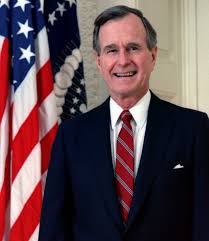
George H.W. Bush
- Presides over one of the worst recessions in American history–causing him to lose the 1992 Presidential election.
- Bill Clinton: “Romances” White House intern Monica Lewinsky–and gets impeached (but not convicted) for it.
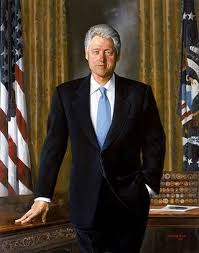
Bill Clinton
- Repeals FDR’s Glass-Steagall Act, which separated commercial and investment banking. This allows big banks to merge, becoming “too big to fail”–and sets the stage for the 2008 financial meltdown.
- After Right-wing terrorist Timothy McVeigh blows up the Oklahoma City Federal Building, Clinton refuses to condemn Republicans’ 50-years’ demonizing of government that is largely responsible for it.
- George W. Bush: Repeatedly ignores intelligence warnings of a coming attack by Al Qaeda, which results in the slaughter of 3,000 Americans on 9/11.
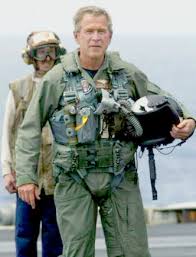
George W. Bush
- Lies the United States into a needless war in Iraq, which costs the lives of 4,486 Americans and costs the treasury at least $2 trillion.
- Assures his fellow Americans that he has “looked into the soul” of Vladimir Putin and found him a man “very straightforward and trustworthy.”
- After Hurricane Katrina devastates New Orleans, his Federal Emergency Management Agency–staffed with political hacks–bungles getting desperately-needed aid to America’s stricken citizens. Bush famously congratulates FEMA Director Michael Brown: “Heck of a job, Brownie.”
- Hillary Clinton: As First Lady, refuses to release documents about Whitewater, a failed Arkansas land deal. This brings on a needless, seven-year investigation by a Republican special prosecutor which turns up–nothing.
Hillary Clinton
- After leaving the White House, she and her husband set up the Clinton Foundation, a public charity to bring government, businesses and social groups together to solve problems “faster, better, at lower cost.”
- As Secretary of State, more than half of Clinton’s meetings with people outside government are with donors to the Clinton Foundation. If there isn’t a “pay-to play” system at work, there certainly is the appearance of one.
- Clinton casts further suspicion on herself by her unauthorized use of a private email server. She claims it’s so she doesn’t have to carry two cell-phones. But, as Secretary of State, she travels with a huge entourage who carry everything she needs.
- As a candidate for President, she “secretly” works with Debbie Wasserman-Schultz, the chair of the Democratic National Committee, to ensure that she will get the nomination.
- She wins the nomination–but is so unpopular she loses to Donald Trump by an overwhelming margin in the Electoral College.
Millions of liberals and Democrats are no doubt dismayed at the outcome of the 2016 election.
And Republicans who sided with Trump will now find themselves at odds with those who refused to do so.
But Democrats and Republicans alike can rejoice that these two embarrassing–and disastrous–family political dynasties have finally been swept into the ashcan of history.
2003 IRAQ WAR, ABC NEWS, ASIANS, BARACK OBAMA, BIRTH CONTROL, BLACKS, CBS NEWS, CNN, DISABLED, DONALD TRUMP, ED MARTIN, FACEBOOK, HILLARY CLINTON, HUMAYUN KHAN, KATRINA PIERSON, LATINOS, MARCO GUTIERREZ, MEDICAID, MEDICARE, MSNBC, MUSLIMS, NBC NEWS, NICCOLO MACHIAVELLI, OBAMACARE, PRISONERS OF WAR, SOCIAL SECURITY, TEA PARTY, THE CHICAGO SUN-TIMES, THE CHICAGO TRIBUNE, THE DISCOURSES, THE LOS ANGELES TIMES, THE NEW YORK TIMES, THE PRINCE, THE WASHINGTON POST, TWITTER, WAYNE ROOT, WOMEN
In Bureaucracy, History, Military, Politics, Social commentary on November 8, 2016 at 9:41 am
No shortage of pundits have sized up Donald Trump as a man and Presidential candidate.
But how does Trump measure up in the estimate of Niccolo Machiavelli, the 16th-century Florentine statesman?
It is Machiavelli whose two great works on politics–The Prince and The Discourses–remain textbooks for successful politicians more than 500 years later.
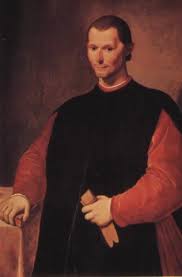
Niccolo Machiavelli
Let’s start with Trump’s notoriety for hurling insults at virtually everyone, including:
- Latinos
- Asians
- Muslims
- Blacks
- The Disabled
- Women
- Prisoners-of-War
These insults delight his white, under-educated followers. But they have alienated millions of other Americans who might have voted for him.
Now consider Machiavelli’s advice on gratuitously handing out insults and threats:
-
“I hold it to be a proof of great prudence for men to abstain from threats and insulting words towards any one.
-
“For neither the one nor the other in any way diminishes the strength of the enemy–but the one makes him more cautious, and the other increases his hatred of you, and makes him more persevering in his efforts to injure you.”
For those who expect Trump to shed his propensity for constantly picking fights, Machiavelli has a stern warning:
-
“…If it happens that time and circumstances are favorable to one who acts with caution and prudence he will be successful. But if time and circumstances change he will be ruined, because he does not change the mode of his procedure.
-
“No man can be found so prudent as to be able to adopt himself to this, either because he cannot deviate from that to which his nature disposes him, or else because, having always prospered by walking in one path, he cannot persuade himself that it is well to leave it…
-
“For if one could change one’s nature with time and circumstances, fortune would never change.”
Then there is Trump’s approach to consulting advisers:
Asked on MSNBC’s “Morning Joe” who he consults about foreign policy, Trump replied; “I’m speaking with myself, number one, because I have a very good brain and I’ve said a lot of things.”
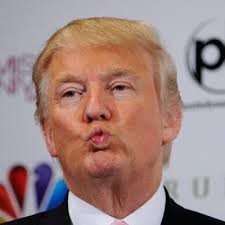
Donald Trump
This totally contrasts the advice given by Machiavelli:
-
“A prudent prince must [choose] for his counsel wise men, and [give] them alone full liberty to speak the truth to him, but only of those things that he asks and of nothing else.
-
“But he must be a great asker about everything and hear their opinions, and afterwards deliberate by himself in his own way, and in these counsels…comport himself so that every one may see that the more freely he speaks, the more he will be acceptable.”
And Machiavelli has potent advice on the selection of advisers:
- “The first impression that one gets of a ruler and his brains is from seeing the men that he has about him.
- “When they are competent and loyal one can always consider him wise, as he has been able to recognize their ability and keep them faithful.
- “But when they are the reverse, one can always form an unfavorable opinion of him, because the first mistake that he makes is in making this choice.”
Consider some of the advisers Trump has relied on in his campaign for President:
- Founder of Latinos for Trump Marco Gutierrez told MSNBC’s Joy Reid: “My culture is a very dominant culture. And it’s imposing, and it’s causing problems. If you don’t do something about it, you’re gonna have taco trucks every corner.”
- At a Tea Party for Trump rally at a Harley-Davidson dealership in Festus, Missouri, former Missouri Republican Party director Ed Martin reassured the crowd that they’re not racist for hating Mexicans.
From the outset of his Presidential campaign, Trump has polled extremely poorly among Hispanic voters. Comments such as these guaranteed his poll figures wouldn’t improve.
- Wayne Root, opening speaker and master of ceremonies at many Trump events, told Virginia radio host Rob Schilling that people on public assistance and women who get their birth control through Obamacare should not be allowed to vote.
Comments like this didn’t increase Trump’s popularity with the the 70% of women who have an unfavorable opinion of him. Nor with anyone who receives Medicaid, Medicare or Social Security.
- Trump’s spokeswoman, Katrina Pierson, claimed that Barack Obama and Hillary Clinton were responsible for the death of Captain Humayun Khan–who was killed by a truck-bomb in Iraq in 2004.
Obama became President in 2009–almost five years after Khan’s death. And Clinton became Secretary of State the same year.
When your spokeswoman becomes a nationwide laughingstock, your own credibility goes down the toilet as well.
Finally, Machiavelli offers a related warning that especially applies to Trump: Unwise princes cannot be wisely advised.
-
“It is an infallible rule that a prince who is not wise himself cannot be well advised, unless by chance he leaves himself entirely in the hands of one man who rules him in everything, and happens to be a very prudent man. In this case, he may doubtless be well governed, but it would not last long, for the governor would in a short time deprive him of the state.”
All of which would lead Niccolo Machiavelli to warn, if he could witness American politics today: “This bodes ill for your Republic.”
2016 PRESIDENTIAL RACE, ABC NEWS, ADOLF HITLER, AGUSTO PINOCHET UGARTE, ANTONIN SCALIA, BARACK OBAMA, CBS NEWS, CHILE, CIA, CNN, DONALD TRUMP, FACEBOOK, HENRY KISSINGER, HILLARY CLINTON, KIM JONG-UN, NAZI GERMANY, NAZI PARTY, NBC NEWS, REPUBLICAN PARTY, RICHARD NIXON, ROBERT F. KENNEDY, ROBERT PAYNE, SALVADOR ALLENDE, SOCIALIST REICH PARTY (SPR), TEAMSTERS UNION, THE CHICAGO SUN-TIMES, THE CHICAGO TRIBUNE, THE LIFE AND DEATH OF ADOLF HITLER, THE LOS ANGELES TIMES, THE NEW YORK TIMES, THE WALL STREET JOURNAL, THE WASHINGTON POST, TWITTER, U.S. CONSTITUTION, U.S. SENATE, U.S. SUPREME COURT, USA TODAY, VLADIMIR PUTIN
In Bureaucracy, History, Law, Military, Politics, Social commentary on November 7, 2016 at 9:19 am
On September 4, 1970, Salvador Allende, a physician and politician, became the 30th President of Chile.
More importantly, he became the first Marxist to win leadership of a Latin American country in a free election.
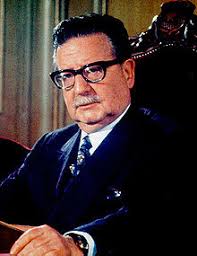
Salvador Allende
Once in office, Allende began carrying out his socialist agenda. This included:
- Nationalizing large-scale industries (notably banking and copper mining);
- Government administration of the educational and health care systems;
- Providing free milk for children in the schools and shanty towns of Chile;
- Allocating 3,000 scholarships to Mapuchechildren to integrate the Indian minority into the educational system; and
- Establishing an obligatory minimum wage for workers of all ages (including apprentices).
For staunchly anti-Communist President Richard Nixon, the rise of Allende to such power was a nightmare. In September, 1970, he authorized the CIA to spend $10 million to prevent Allende from gaining power–or to overthrow him if he did.
After failing to prevent Allende from winning a democratic election, the CIA plotted to replace him with a military junta.
Henry Kissinger, then acting as Nixon’s national security adviser, infamously said: “I don’t see why we need to stand by and watch a country go Communist due to the irresponsibility of its own people.”
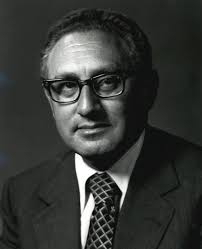
Henry Kissinger
On September 11, 1973, the Chilean military, aided by the United States and the CIA, staged a coup against Allende.
Allende committed suicide or was shot to death (accounts vary) and a brutal military tyranny under General Augusto Pinochet Ugarte was quickly installed.
Only in 1990 was democracy restored in Chile.
So what does a Henry Kissinger remark made 43 years ago have to do with the 2016 American Presidential election?
A November 5 CNN opinion piece explains it best.
Titled, “The World Is Watching America’s Election,” the article noted: “Many months ago” people around the world “sounded a mixture of entertained and puzzled by the campaign.
“People were asking ‘Who is Donald Trump?’ ‘What are Hillary Clinton’s chances?’”
But American elections affect more than Americans–they affect millions of people in countries throughout the world.
“Increasingly, the amusement and befuddlement have given way to alarm and disgust. And in authoritarian countries where ‘democracy’ comes in quotation marks, authorities are deriving visible pleasure from describing American democracy as a chaotic sham.”
During a trip to Japan in May, President Barack Obama said he had found global leaders “rattled” by the rise of Trump.
Donald Trump
Especially alarming to many Americans has been the mutual admiration society among Trump and foreign dictators such as Russia’s Vladimir Putin and North Korea’s Kim Jong On.
Click here: The world is watching America’s election (Opinion) – CNN.com
In his bestselling 1973 biography, The Life and Death of Adolf Hitler, British historian Robert Payne harshly condemned the German people for the rise of the Nazi dictator.
To America’s shame, much of what he wrote about the Germans now applies to those Americans supporting Trump:

“[They] allowed themselves to be seduced by him and came to enjoy the experience….[They] followed him with joy and enthusiasm because he gave them license to pillage and murder to their hearts’ content. They were his servile accomplices, his willing victims….
“If he answered their suppressed desires, it was not because he shared them, but because he could make use of them. He despised the German people, for they were merely the instruments of his will.
“Many Germans voted against Hitler but few fought actively against him, and of these even fewer fought with clean weapons and clear consciences.”
There is a very real danger that millions of ignorant, hate-filled, Right-wing Americans will catapult Donald Trump–a man without kindness or charity–into the Presidency.
And that this man–who apparently received no love, and can give no love–will assume all the awesome power that goes with that office.
Thus, to rephrase Kissinger: “I don’t see why we need to stand by and watch a country go Fascist due to the irresponsibility of its own people.”
A first step in that direction would be the legal abolishing of the Republican party as a threat to the American democratic system.
For example: Several Republican Senators, including John McCain, have openly boasted that even if Hillary Clinton becomes President, they will prevent her from filling the Supreme Court seat left vacant in February by the death of Justice Antonin Scalia.
It’s the President’s duty to nominate Supreme Court Justices–and the Senate’s to vote Yes or No to confirm them.
Ignoring the mandate of a national election and refusing to carry out their Constitutionally-assigned duties is a flagrant violation of their oaths of office.
And that is, in itself, sufficient cause for their removal from office.
To rephrase what Robert F. Kennedy once said about the underworld-dominated Teamsters Union: “Quite literally, your life–the life of every person in the United States–is in the hands of the Republicans and their followers.”
In Germany, the Socialist Reich Party (SPR)–an heir to the Nazi party–has been banned since 1952. Yet Germany remains a strong force for democracy in Europe.
In America, it’s time to remove Right-wing totalitarians–and the dangers they represent to democratic government–from the levers of power they now hold.

&docid=EPok_ZIEc87UzM&tbnid=Mz_XfR6ARm69rM%3A&vet=1&w=215&h=309&bih=469&biw=819&ved=0ahUKEwj-7_me_6zQAhXrwlQKHXAtCcIQxiAIAg&iact=c&ictx=1)


2016 PRESIDENTIAL RACE, ABC NEWS, BARACK OBAMA, BASKET OF DEPLORABLES SPEECH, BENGHAZI HEARINGS, BERNIE SANDERS, BILL CLINTON, BLACKS, CBS NEWS, CELINDA LAKE, CLINTON FUNDATION, CNN, COLIN POWELL, COMMUNISM, CONDOLEEZA RICE, DEBBIE WASSERMAN-SCHULTZ, DEMOCRATIC NATIONAL COMMITTEE, DONALD TRUMP, ELIZABETH WARREN, EMAIL SERVER, FACEBOOK, GEORGE W. BUSH, HILLARY CLINTON, HISPANICS, HOUSE OF REPRESENTATIVES, JAMES WEBB, JOSEPH STALIN, KARL MARX, KEVIN MCCARTHY, LIBYA, MAO ZEDONG, MICHELLE OBAMA, NBC NEWS, POPULISM, RACISM, REPUBLICAN NATIONAL COMMITTEE, Ronald Reagan, SATURDAY NIGHT LIVE, SOCIALISM, THE CHICAGO SUN-TIMES, THE CHICAGO TRIBUNE, THE LOS ANGELES TIMES, THE NEW YORK TIMES, THE WASHINGTON POST, TOM BROKAW, TONIGHT SHOW, TWITTER, U.S. HOUSE OF REPRESENTATIVES, U.S. SENATE, Vladimir Lenin, WHITES, WHITEWATER, WIKILEAKS, WOMEN, YOUTH
WHY TRUMP WON: PART THREE (END)
In Bureaucracy, Business, History, Politics, Social commentary on November 18, 2016 at 10:22 amDonald Trump owes his victory to a wide range of circumstances. Among these:
#10 Hillary Clinton gave only one memorable speech during the campaign–and then she quashed any benefits that might have come from it.
This was the “basket of deplorables” speech, delivered at a New York fundraiser on September 9. It was the only Clinton speech to be widely quoted by Democrats and Republicans.
She divided Donald Trump’s supporters into two groups. The first group were the “deplorables,” for whom she showed open contempt:
“You know, to just be grossly generalistic, you could put half of Trump’s supporters into what I call the basket of deplorables. Right? The racist, sexist, homophobic, xenophobic, Islamaphobic –you name it. And unfortunately there are people like that. And he has lifted them up.
“He has given voice to their websites that used to only have 11,000 people–now 11 million. He tweets and retweets their offensive hateful mean-spirited rhetoric. Now, some of those folks—they are irredeemable, but thankfully they are not America.”
Hillary Clinton (Gage Skidmore photo)
But the second group, she said, consisted of poor, alienated Americans who rightly felt abandoned by their employers and their government:
“But the other basket–and I know this because I see friends from all over America here….but that other basket of people are people who feel that the government has let them down, the economy has let them down, nobody cares about them, nobody worries about what happens to their lives and their futures, and they’re just desperate for change. It doesn’t really even matter where it comes from.
“They don’t buy everything [Trump] says, but he seems to hold out some hope that their lives will be different. They won’t wake up and see their jobs disappear, lose a kid to heroin, feel like they’re in a dead-end. Those are people we have to understand and empathize with as well.”
After giving this speech, Clinton threw away the good it might well have done her.
First, the day after making the speech, she apologized for it: “Last night I was ‘grossly generalistic,’ and that’s never a good idea. I regret saying ‘half’–that was wrong.”
Many of Trump’s followers were racists, sexists and xenophobes–who deserved condemnation, not apologies. By apologizing, she looked weak, indecisive.
Second, having eloquently reached out to many of the men and women who were a prime constituency for Donald Trump, she made no effort to follow up.
She could have used this moment to offer an economic package that would quickly and effectively address their vital needs for jobs and medical care.
But that would have required her to put one together long ago. And all she had to offer now was boilerplate rhetoric, such as: “Education is the answer.”
Worst of all, Trump turned her speech against her, tweeting: “Wow, Hillary Clinton was SO INSULTING to my supporters, millions of amazing, hard working people. I think it will cost her at the Polls!”
It did.
#11 Neither the Democrats nor the TV networks dared reveal the full intensity of hatred and violence that were hallmarks of Trump’s rallies–and campaign.
Three New York Times reporters who covered Trump’s rallies for over one year routinely witnessed his supporters hurl vulgar taunts such as:
At Hillary Clinton: “Trump that bitch!” “Kill her!” “Lock her up!” “Hillary is a whore!” “Hang the bitch!”
At protesters: “Get out of here, you fag!” “Get him!” “Get the fuck out of here!”
At Latinos: “Build a wall–kill them all!” “Fuck those dirty beaners!” “Send them bastards back. I’m sure that paperwork comes in Spanish.”
At Muslims: “Fuck Islam!” “Islam is not a religion, partner. It’s an ideology.” “You don’t come and talk about America when you’re supporting Muslims.”
At President Barack Obama: “Fuck that nigger!”
H. Allen Scott, a reporter for Fusion, attended a Trump rally and overheard conversations that startled him.
In one, a man marked Arabs as the enemy: “Those sand niggers are out to get us. We need to bomb the hell out of them.”
In the other, the supposed threat came from a different source: “The Donald will get all those Jews out of Washington.”
When protesters were ejected, Trump supporters went wild–and usually turned violent. Protesters were beaten and kicked–often with Trump’s encouragement.
Protesters and supporters duke it out at a Donald Trump rally
Audiences at Trump rallies were overwhelmingly white. Not all were racists, but many of those who were advertised it on T-shirts: “MAKE AMERICA WHITE AGAIN.” Confederate flags were commonly displayed.
TV news networks and the Hillary Clinton campaign could have aired–repeatedly–such footage. Had they done so, Americans would have gotten a brutal, firsthand look at the anger and racism inherent in Trump’s candidacy–and followers.
Instead, Trump was allowed to appear on late-night shows like Saturday Night Live and The Tonight Show where he was treated with kid gloves for fun and laughs.
Thus, it is pointless to blame any one person (such as Hillary Clinton) or group (such as those who voted for third-party candidates) for Clinton’s loss. Many factors played a part–including some that, to keep this series at a reasonable length, could not be mentioned.
Share this: