Posts Tagged ‘DONALD TRUMP’
ABC NEWS, ALTERNET, BUZZFEED, CBS NEWS, CNN, DAILY KOS, DONALD TRUMP, FACEBOOK, HERMAN WOUK, HUMPHREY BOGART, JOSE FERRER, MOTHER JONES, MOVEON, NBC NEWS, NEWSWEEK, NPR, POLITICO, RAW STORY, SALON, SLATE, THE CAINE MUTINY, THE CHICAGO SUN-TIMES, THE CHICAGO TRIBUNE, THE DAILY BEAST, THE HUFFINGTON POST, THE LOS ANGELES TIMES, THE NEW YORK TIMES, THE WALL STREET JOURNAL, THE WASHINGTON POST, TIME, TWITTER, U.S. NEWS & WORLD REPORT, USA TODAY, VAN JOHNSON
In Bureaucracy, History, Politics, Social commentary on January 12, 2018 at 12:03 am
It was February 16, 2017—and Donald Trump’s first press conference as President.
Like the climatic showdown in The Caine Mutiny, it offered an unhinged rant, full of anger, personal attacks, self-pity and self-glorification.
But the man doing the ranting was not Captain Philip Francis Queeg. It was President Donald J. Trump, speaking from the East Room of the White House.
He opened casually: “Thank you very much. I just wanted to begin by mentioning that the nominee for Secretary of the Department of Labor will be Mr. Alex Acosta….”
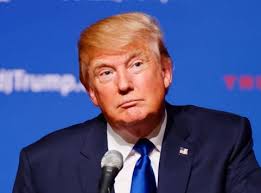
Donald Trump
For the next hour and 15 minutes, Trump let raw emotion do his talking.
Among the highlights:
His hated the press: “….The press has become so dishonest that if we don’t talk about it, we are doing a tremendous disservice to the American people. Tremendous disservice. We have to talk about it to find out what is going on, because the press, honestly, is out of control. The level of dishonesty is out of control.”
He won “bigly” in the Electoral College: “I put it out before the American people, got 306 electoral college votes. They said there’s no way to get 222. 230 is impossible. 270 which you need, that was laughable. We got 306, because people came out and voted like they’ve never seen before. So that’s the way it goes. I guess it was the biggest electoral college win since Ronald Reagan.”
[Actually, it wasn’t. He got a smaller share of the Electoral College votes—56.88% than former presidents George H. W. Bush—79.18% in 1988; Bill Clinton—68.77% in 1992 and 70.45% in 1996; and Barack Obama—67.84% in 2008 and 61.71% in 2012.
[No other President had ever felt it necessary to brag about his Electoral College victory. And Trump didn’t mention that he lost the popular vote—with Hillary Clinton getting almost 2.9 million more votes than he did.]
He ignored the turmoil in his month-old administration: “I turn on the TV, open the newspapers and I see stories of chaos. Chaos. Yet it is the exact opposite. This administration is running like a fine-tuned machine, despite the fact that I can’t get my Cabinet approved, and they’re outstanding people.”
[His National Security Adviser, Michael T. Flynn, a retired Army lieutenant general, was forced to resign after 24 days. On December 1, he would plead guilty to lying to the FBI and agree to cooperate with Special Counsel Robert Mueller’s investigation of Russian subversion of the 2016 Presidential election.

Mike Flynn
[In addition, Trump:
- Had his executive order banning travel by Muslims to the United States halted by Federal courts;
- Fired his acting attorney general for refusing to defend the ban;
- Angered the president of Mexico into cancelling a summit meeting;
- Bragged about the size of his electoral win to Australia’s prime minister, then hung up on him;
- Authorized a commando raid that resulted in the death of a Navy SEAL;
- Lied that he had been prevented from winning the popular vote by millions of illegal aliens; and
- Attacked Nordstrom’s department store for dropping the clothing and accessories lines of his daughter, Ivanka.
[In fact, Trump’s Cabinet—with the exception of his pick for Secretary of Labor—had been steamrollered through the Senate by Republicans.]
The press persecuted him: “I watch CNN. It’s so much anger and hatred and just the hatred. I don’t watch it anymore, because it’s very good….
“You look at your show [CNN Tonight] that goes on at 10 in the evening. You just take a look at that show. That is a constant hit. The panel is almost always exclusive anti-Trump. The good news is he doesn’t have good ratings, but the panel is almost exclusive anti-Trump. And the hatred and venom coming from his mouth. The hatred coming from other people on your network.”
He was truly a good, misunderstood person: “….I can handle a bad story better than anybody, as long as it is true. Over a course of time, I will make mistakes and you will write badly, and I am OK with that. But I am not OK when it is fake….
“I know when you’re telling the truth or when you’re not. I just see many, many untruthful things. And I’ll tell you what else I see, I see tone….The tone is such hatred. I’m really not a bad person, by the way. No, but the tone is such—I do get good ratings. You have to admit that.”
His campaign never colluded with Russian Intelligence: “Well, the failing New York Times wrote a big, long front-page story yesterday. And it was very much discredited, as you know. It [was]— it’s a joke. … Russia is fake news. This is fake news put out by the media.”
[Several of Trump’s high-level advisers were in constant communication during the campaign with Russian Intelligence agents. These contacts are now being investigated by House and Senate subcommittees and the office of the Special Counsel.]
* * * * *
By the end of The Caine Mutiny, Stephen Maryk was acquitted of mutiny. Captain Queeg was presumably relieved of future commands.
By the end of President Trump’s bizarre and frightening press conference, there was no telling what lay ahead for the United States—or the world.
ABC NEWS, ALTERNET, BUZZFEED, CBS NEWS, CNN, DAILY KOS, DONALD TRUMP, FACEBOOK, HERMAN WOUK, HUMPHREY BOGART, JOSE FERRER, MOTHER JONES, MOVEON, NBC NEWS, NEWSWEEK, NPR, POLITICO, RAW STORY, SALON, SLATE, THE CAINE MUTINY, THE CHICAGO SUN-TIMES, THE CHICAGO TRIBUNE, THE DAILY BEAST, THE HUFFINGTON POST, THE LOS ANGELES TIMES, THE NEW YORK TIMES, THE WALL STREET JOURNAL, THE WASHINGTON POST, TIME, TWITTER, U.S. NEWS & WORLD REPORT, USA TODAY, VAN JOHNSON
In Bureaucracy, History, Politics, Social commentary on January 11, 2018 at 12:01 am
Americans eager—or anxious—to discover what the Presidency of Donald Trump would be like only needed to watch his first press conference on February 16, 2017.
For many, it resembled the climatic scene in the 1954 movie, The Caine Mutiny.
Based on Herman Wouk’s bestselling novel, it centers on the minesweeper USS Caine. Stationed in the Pacific during World War II, its captain is by-the-book Lt. Commander Philip Francis Queeg (Humphrey Bogart).
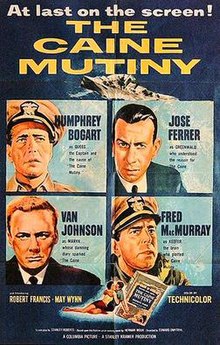
Queeg is determined to bring a sense of discipline to the ship’s lax seamen. But he can’t admit mistakes, and his bullying approach to command alienates both officers and crew.
Soon after, a typhoon overtakes the Caine. Queeg becomes paralyzed with fear. His executive officer, Steve Maryk (Van Johnson), relieves the captain of command to prevent the loss of the ship. Maryk turns the Caine into the wind and rides out the storm.
Maryk is tried by court-martial for mutiny. His case looks hopeless: Queeg has been found sane by three Navy psychiatrists.
Naval Prosecutor Lt. Commander John Challee depicts Maryk as a reckless mutineer. And Queeg portrays himself as the persecuted victim of a malignant conspiracy by his own officers.
Knowing that Queeg reacts badly to stress, Maryk’s attorney, Lt. Barney Greenwald (Jose Ferrer) relentlessly cross-examines him:
GREENWALD: Did you steam over your tow line?
QUEEG: When we were towing the target, I saw some anti-aircraft bursts. I turned to avoid them. My unreliable helmsman failed to warn me about that. But I saw it and reversed course. We didn’t steam over the tow line.
GREENWALD: Did nothing else distract you?
QUEEG: Not that I recall.
GREENWALD: Weren’t you reprimanding a seaman for having his shirt-tail out while the ship turned?
QUEEG: That only took two seconds.
GREENWALD: Did you turn your ship upside down searching for a phantom key?
QUEEG: I don’t know what lies have been sworn to here, but a key definitely did exist.
PROSECUTOR LT. COMMANDER JOHN CHALLEE: The witness is understandably agitated. I request a recess.
QUEEG: I don’t want a recess. I’ll answer all questions right here and now.
GREENWALD: Did you conduct such a search?
QUEEG: Yes, I did. My disloyal officers failed me, and the key couldn’t be found.
GREENWALD: Wasn’t this whole fuss over a quart of strawberries?
QUEEG: The pilfering of food in large amounts or small is a very serious occurrence on board a ship.
GREENWALD: You were told that the mess boys ate the berries. There was no key.
QUEEG: The key was not imaginary. I don’t know anything about mess boys eating strawberries.
GREENWALD: Have you no recollection of a conversation with Ensign Harding? Didn’t he tell you that the mess boys ate the strawberries?
QUEEG: I remember he was grateful for his transfer. His wife was ill in the States.
GREENWALD: Do you know where Ensign Harding is now? He’s in San Diego. He can be flown up here in three hours if necessary. Would it serve any useful purpose to have him testify?
QUEEG: Now, there’s no need for that.
[He reaches into the pocket of his Navy coat and removes two little steel balls, which he rolls together whenever he feels under stress. He starts rolling them together now and continues to do so throughout the rest of the proceeding.]
Now that I recall, he might have said something about mess boys. I questioned many men, and Harding was not the most reliable officer.
GREENWALD: The defense has no other recourse than to produce Ensign Harding.
QUEEG: Now, there’s no need for that. I know exactly what he’ll tell you—lies. He was no different from any other officer in the wardroom. They were all disloyal. I tried to run the ship properly, by the book, but they fought me at every turn. If the crew wanted to walk around with their shirt-tails out, let them. Take the tow line—defective equipment.
But they began spreading wild rumors about steaming in circles. And then “Old Yellowstain.” I was to blame for Maryk’s incompetence and poor seamanship. Lt. Maryk was the perfect officer, but not Queeg.
But the strawberries, ah, that’s where I had them. They laughed at me and made jokes. But I proved beyond a shadow of a doubt and with geometric logic that a duplicate key to the wardroom icebox did exist. I could have produced that key if they hadn’t pulled the Caine out of action. I know now they were only trying to protect some fellow officer.
Naturally, I can only cover these things from memory. If I’ve left anything out, just ask me specific questions and I’ll be glad to answer them one by one.
[The courtroom falls silent—except for the tinkling of the steel balls that Queeg keeps rolling in his right hand. The judges stare at him as he does so. They say nothing, but it’s clear they know they’re looking at a man at the end of his sanity—and naval career.]
GREENWALD: No further questions, sir.
Maryk is acquitted.
* * * * *
So much for fiction. Now for the terrifying reality.
2016 PRESIDENTIAL RACE, ABC NEWS, ANN COULTER, BARACK OBAMA, BIRTH CERTIFICATE, BIRTHERISM, CBS NEWS, CHUCK TODD, CNN, DONALD TRUMP, FACEBOOK, HILLARY CLINTON, JOHN LEWIS, JOHN MCCAIN, MEET THE PRESS, MUSLIMS, NBC NEWS, NEWSWEEK, NPR, POLITICO, REINCE PREIBUS, REPUBLICAN PARTY, SALON, Sarah Palin, SLATE, SOVIET UNION, STEVEN BANNON, TAX RETURNS, TEA PARTY, THE APPRENTICE, THE CHICAGO SUN-TIMES, THE CHICAGO TRIBUNE, THE HUFFINGTON POST, THE LOS ANGELES TIMES, THE NEW YORK TIMES, THE WASHINGTON POST, THIS WEEK, TIME, TWITTER, U.S. NEWS & WORLD REPORT, USA TODAY, VLADIMIR PUTIN
In Bureaucracy, History, Politics, Social commentary, Uncategorized on January 10, 2018 at 12:02 am
For five years, Donald Trump, more than anyone else, popularized the slander that President Barack Obama was born in Kenya—and was therefore not an American citizen.
For more than a year during his 2016 Presidential campaign, Trump continued doing so.
Meanwhile, Trump’s popularity steadily fell among blacks—to 1%, compared to the 91% of black voters who backed Hillary Clinton.
Even the managers of Trump’s campaign urged him to put the “birther” issue behind him.
And so, on September 16, 2016—10 days before his scheduled first debate with Democratic Presidential nominee Hillary Clinton—Trump made his version of a reversal.
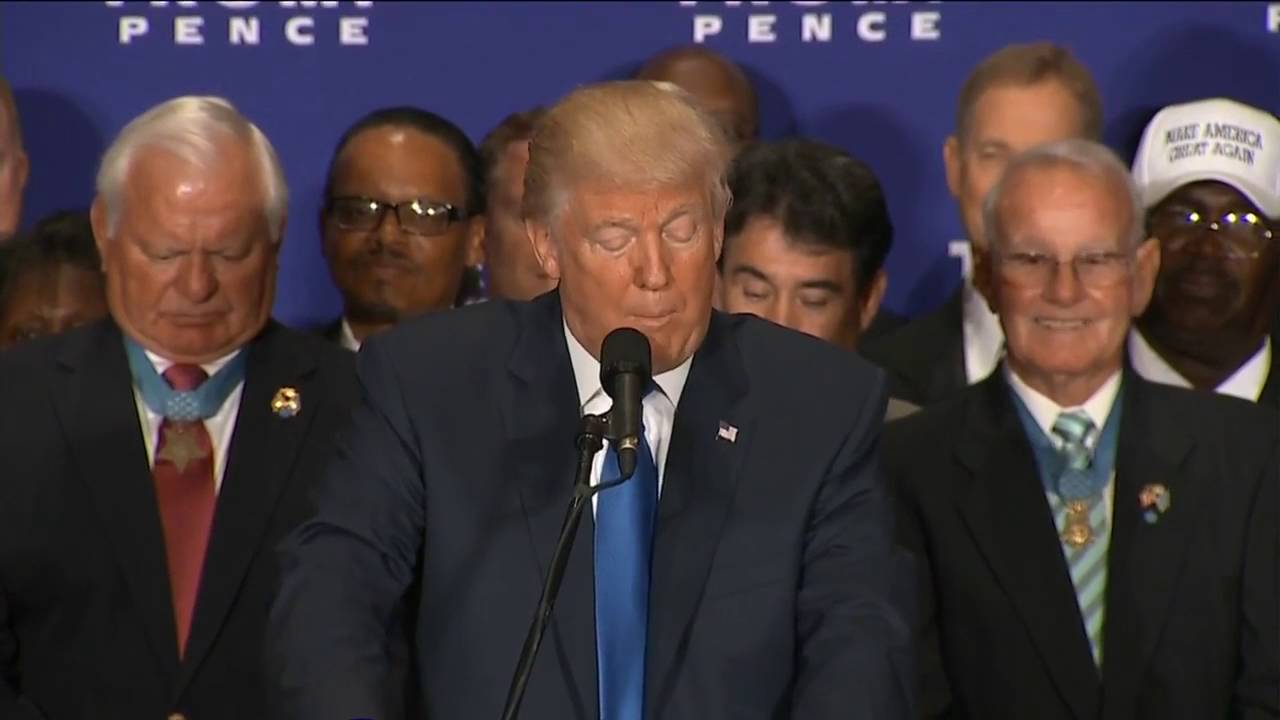
Donald Trump: “President Barack Obama was born in the United States.”
He did so in about seven seconds and 40 words—after spending a half hour paying tribute to the military and promoting his new upscale hotel in Washington, D.C.:
“Now, not to mention her in the same breath, but Hillary Clinton and her campaign of 2008 started the birther controversy.
“I finished it. I finished it. You know what I mean.
“President Barack Obama was born in the United States, period. Now we all want to get back to making America strong and great again.”
His tone made it clear that he felt uneasy making that statement—and wanted to get it over with as fast as possible.
He refused to take questions from reporters covering the event. Nor did he apologize for his five-year campaign of slander.
Nor did any Republican apologize for the eight-year campaign of slander and obstruction their party had waged against the Nation’s first black President.
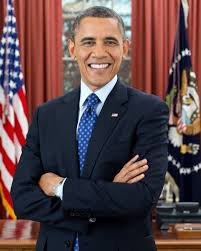
President Barack Obama
Among its highlights:
- In September, 2009, Joe Wilson (R-SC) yelled “You lie!” during Obama’s health care speech to Congress.
- In January, 2010, an effigy of President Barack Obama was found hanging from a building in Plains, Georgia.
- In December, 2011, Brent Bozell, who runs the right-wing Media Research Center, called Obama to “a skinny, ghetto crackhead.”
- In December, 2011, Rep. Jim Sensenbrenner (R-Wisc.), said of Michelle Obama: “She lectures us on eating right while she has a large posterior herself.”
- In January, 2012, Mitt Romney’s son, Matt, said his father might release his tax returns “as soon as President Obama releases his grades and birth certificate and sort of a long list of things.”
- In February, 2012, right-wing columnist Ann Coulter offered: “Voters with forty years of politically correct education are ecstatic to have the first Black president. They just love the idea even if we did get Flavor Flav instead of Thomas Sowell.”
- In May, 2012, a flatbed truck drove through new York holding a trailer with eight mannequin-like bodies hanging on nooses. One of the figures resembled President Obama, with a sign on the truck reading: “Obama Is Onboard, Find Out Why. Visit YouTube.com And Search Keyword PatriotPhipps.”

- Throughout the 2012 Presidential campaign, Newt Gingrich repeatedly called Obama “the greatest food stamp President in American history.”
- Obama has been portrayed as a shoeshine man, an Islamic terrorist and a chimp. The image of his altered face has been shown on a product called Obama Waffles in the manner of Aunt Jemima and Uncle Ben. He has been repeatedly depicted with a Hitler forelock and mustache.
- Among the protest signs they have brandished by Tea Party members: “Obama’s Plan: White Slavery,” “The American Taxpayers are the Jews for Obama’s Ovens,” and “Obama was Not Bowing [to the Saudi King] He was Sucking Saudi Jewels.”
- Other Tea Party posters: “Imam Obama Wants to Ban Pork” and “The Zoo Has An African Lion, and the White House Has a Lyin’ African.”
- Tea Partiers have chanted at Obama: “Bye, bye, Blackbird” and “Kenyan go home!”
- During the Republican-imposed government shutdown—October 1-17, 2013—Rep. Pete Sessions (R-Texas) told Obama: “I cannot even stand to look at you,” The incident occurred when Obama met with lawmakers to try to find a resolution to the shutdown.
- On October 1, 2013, Congressional Republicans shut down the government in an attempt to force President Barack Obama to de-fund his signature achievement: The Affordable Care Act (ACA). President Obama refused, and 800,000 federal workers were furloughed.
- On October 14, while Republicans were threatening to drive the nation into bankruptcy by refusing to raise the debt ceiling, former Alaska Governor Sarah Palin posted on Facebook her “secret plan” to impeach President Obama:
- “It’s time for the president to be honest with the American people for a change. Defaulting on our national debt is an impeachable offense, and any attempt by President Obama to unilaterally raise the debt limit without Congress is also an impeachable offense.”
- In short: If the Republicans force the country into default, Obama should be impeached. And if the President finds a way to avoid default, he should be impeached.
* * * * *
When Republicans say, “We need to support our President,” they don’t mean every President.
They mean: Every Republican President. And only every Republican President.
For Republicans, Presidents of their party carry the status of Fuhrers: To be obeyed instantly and without question.
And for Republicans, Presidents elected by Democrats are usurpers: They must be obstructed as often as possible—and impeached whenever possible.
2016 PRESIDENTIAL RACE, ABC NEWS, ANN COULTER, BARACK OBAMA, BIRTH CERTIFICATE, BIRTHERISM, CBS NEWS, CHUCK TODD, CNN, DONALD TRUMP, FACEBOOK, HILLARY CLINTON, JOHN LEWIS, JOHN MCCAIN, MEET THE PRESS, MUSLIMS, NBC NEWS, NEWSWEEK, NPR, POLITICO, REINCE PREIBUS, REPUBLICAN PARTY, SALON, Sarah Palin, SLATE, SOVIET UNION, STEVEN BANNON, TAX RETURNS, TEA PARTY, THE APPRENTICE, THE CHICAGO SUN-TIMES, THE CHICAGO TRIBUNE, THE HUFFINGTON POST, THE LOS ANGELES TIMES, THE NEW YORK TIMES, THE WASHINGTON POST, THIS WEEK, TIME, TWITTER, U.S. NEWS & WORLD REPORT, USA TODAY, VLADIMIR PUTIN
In Bureaucracy, History, Politics, Social commentary on January 9, 2018 at 10:31 pm
Reince Priebus, the incoming White House Chief of Staff for soon-to-be President Donald J. Trump, was furious.
There were three reasons for his outrage.
First, millions of Americans were questioning whether Trump was legitimately elected. Their suspicions were based on solid evidence, supplied by the American Intelligence community, that Russian President Vladimir Putin intervened in the 2016 Presidential election to help him defeat Hillary Clinton.
Second, among those Americans were members of the United States Congress—such as Georgia Democratic Representative John Lewis.
On the January 15, 2017 edition of “Meet the Press,” Lewis was asked by host Chuck Todd: “Do you plan on trying to forge a relationship with Donald Trump?”
“No,” said Lewis. “I believe [in] forgiveness. I believe in trying to work with people. It’s going to be hard. It’s going to be very difficult. I don’t see this president-elect as a legitimate president.”
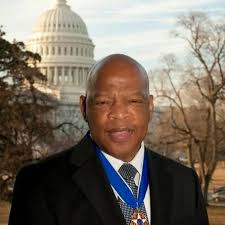
John Lewis
“You do not consider him a legitimate president. Why is that?” asked Todd.
“I think the Russians participated in helping this man get elected and they helped destroy the candidacy of Hillary Clinton.”
And the third reason Priebus was outraged: He believed—or at least claimed to believe—that President Barack Obama should vouch for Trump’s legitimacy.
“I think President Obama should step up,” Priebus said on the January 15 edition of ABC’s “This Week.” “We’ve had a great relationship with the White House….I think the administration can do a lot of good by telling folks that are on the Republican side of the aisle, look, we may have lost the election on the Democratic side, but it’s time to come together.”
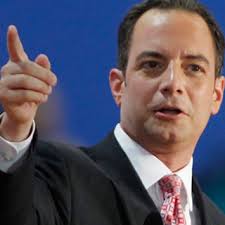
Reince Priebus
“You didn’t have Republicans questioning whether or not Obama legitimately beat John McCain in 2008,” Priebus added.
“This Week” host George Stephanopoulos replied that Trump had questioned Obama’s legitimacy as an American citizen until almost the end of the 2016 Presidential race.
“But look, George, that’s not the point!” Priebus said, visibly agitated. “The point is not where Barack Obama was born! The point is that we’ve got congressmen on the Democratic side of the aisle that are questioning the legitimacy of President-elect Trump.”
In short: Let’s ignore Trump’s five-year slander campaign against the legitimacy of President Obama. What’s important is that people are questioning the legitimacy of a Republican elected with the help of Russian Communists.
In 2011, Trump, then-host of NBC’s “The Apprentice,” was thinking of running for President against Obama.
Seeking to gain popularity among America’s Right-wing, Trump almost singlehandedly created the popular fiction that the President was born in Kenya—and was not an American citizen.
His motive: To convince Americans that Obama was an illegitimate President.
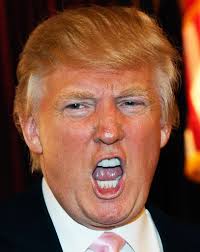
Donald Trump
Among the statements Trump made:
February 10, 2011: “Our current president came out of nowhere. Came out of nowhere. In fact, I’ll go a step further: The people that went to school with him, they never saw him, they don’t know who he is. It’s crazy.”
March 23, 2011: “I want him to show his birth certificate. I want him to show his birth certificate. … There’s something on that birth certificate that he doesn’t like.”
March 28, 2011: “I am really concerned” [that Obama wasn’t born in the United States]. He said that the birth announcement for Obama in a Hawaii newspaper could have been planted “for whatever reason.”
March 30, 2011: “If you are going to be president of the United States you have to be born in this country. And there is a doubt as to whether or not he was. … He doesn’t have a birth certificate. He may have one, but there’s something on that, maybe religion, maybe it says he is a Muslim. I don’t know. Maybe he doesn’t want that. Or he may not have one. But I will tell you this. If he wasn’t born in this country, it’s one of the great scams of all time.”
April 7, 2011: “I have people that have been studying it, and they cannot believe what they’re finding. You are not allowed to be a president if you’re not born in this country. Right now I have real doubts.”
April 25, 2011: “I’ve been told very recently…that the birth certificate is missing. I’ve been told that it’s not there or it doesn’t exist. And if that’s the case, it’s a big problem.”
On April 27, President Obama released his original, long-form Hawiian birth certificate.
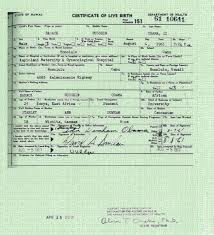
The long-form version of President Obama’s birth certificate
“We do not have time for this kind of silliness,” said Obama at a press conference, speaking as a father might to a roomful of spiteful children. “We have better stuff to do. I have got better stuff to do. We have got big problems to solve.
“We are not going to be able to do it if we are distracted, we are not going to be able to do it if we spend time vilifying each other…if we just make stuff up and pretend that facts are not facts, we are not going to be able to solve our problems if we get distracted by side shows and carnival barkers.”
Trump responded with a series of tweets on Twitter–all of them attacking the legitimacy of the birth certificate that President Obama had released.
ABC NEWS, ALTERNET, ARNOLD SCHWARXENEGGER, BARACK OBAMA, BREITBART NEWS, BUZZFEED, CBS NEWS, CIA, CNN, DAILY KOS, DONALD TRUMP, FACEBOOK, FBI, FLETCHER KNEBEL, HILLARY LINTON, JEFF SESSIONS, JOHN OLIVER, JOSH EARNEST, MARK LEVIN, MENTAL ILLNESS, MERYL STREETP, MOTHER JONES, MOVEON, NATIONAL SECURITY AGENCY, NBC NEWS, NEIL YOUNG, NEW JERSEY, NEWSWEEK, NIGHT AT CAMP DAVID, NPR, OBAMACARE, POLITICO, RAW STORY, RUSSIA, SALON, SEVEN DAYS IN MAY, SLATE, THE CHICAGO SUN-TIMES, THE CHICAGO TRIBUNE, THE DAILY BEAST, THE HUFFINGTON POST, THE LOS ANGELES TIMES, THE NEW YORK TIMES, THE WALL STREET JOURNAL, THE WASHINGTON POST, THIS WEEK, TIME, TWITTER, U.S. NEWS & WORLD REPORT, USA TODAY, WATERGATE, WIRETAPPING
In Bureaucracy, History, Medical, Politics, Social commentary on January 5, 2018 at 11:02 am
On March 4, 2017, in a series of unhinged tweets, President Donald J. Trump accused former President Barack Obama of tapping his Trump Tower phones prior to the election:
“Terrible! Just found out that Obama had my ‘wires tapped’ in Trump Tower just before the victory. Nothing found. This is McCarthyism!”
“Is it legal for a sitting President to be ‘wire tapping’ a race for president prior to an election? Turned down by court earlier. A NEW LOW!”
“I’d bet a good lawyer could make a great case out of the fact that President Obama was tapping my phones in October, just prior to Election!”
“How low has President Obama gone to tapp my phones during the very sacred election process. This is Nixon/Watergate. Bad (or sick) guy!”
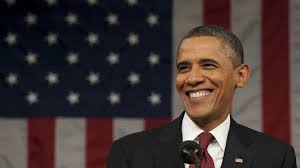
President Barack Obama
Trump offered no proof to substantiate his libelous claims.
There are three plausible theories about what prompted Trump’s accusations.
Theory #1: They were prompted by Right-wing media outlets that had been pushing wiretapping claims in recent days.
On March 2, Right-wing radio host Mark Levin claimed that Obama had used “powers of the federal government to surveil members of the Trump campaign.”
Referring to Attorney General Jeff Sessions and his newly disclosed meetings with Russia’s ambassador in 2016, Levin asked: “Today’s reporting on Sessions having a chance meeting with the ambassador–where did that information come from? Look at the timing of it. Was Obama surveilling top Trump campaign officials during the election?”
On March 3, the Fascist media site Breitbart News echoed that charge. Its story was based on Levin’s show and offered no evidence to back up its accusations.
Trump could have first contacted the directors of the FBI, CIA and National Security Agency–the agencies which are authorized to conduct such an operation. He couldhave asked them, “Did you wiretap me?”
They could have quickly and confidentially given him an answer. And if it was “Yes,” they would have been able to provide him with the records to document it.
That would have been the action of a rational President. But Trump chose to act like a child–or, worse, an unbalanced adult.
After reading the Breitbart story, Trump impulsively chose to go on Twitter and make libelous accusations.
Theory #2: Trump, under scrutiny for ties between his campaign and Russia, sought to deflect attention by making an outrageous accusation.
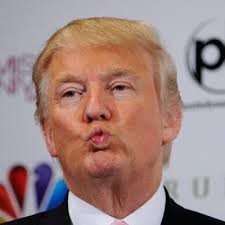
Donald Trump
Former White House Press Secretary Josh Earnest gave his own take on Trump’s motivation. Appearing on the March 5, 2017 edition of ABC’s “This Week”, he said: “We know exactly why President Trump tweeted what he tweeted.
“Because there is one page in the Trump White House crisis management playbook. And that is simply to tweet or say something outrageous to distract from the scandal, and the bigger the scandal, the more outrageous the tweet.”
Earnest served as White House Press Secretary under President Obama from 2014 to 2017.
He added: Obama could not have legally ordered a wiretap: “The President of the United States does not have the authority to unilaterally order the wiretapping of an American citizen.”
Theory #3: Trump is too mentally unbalanced to hold the Presidency–and command of America’s nuclear arsenal.
Trump’s shoot-first-and-never-mind-the-consequences approach to life has been thoroughly documented.
From June 15, 2015, when he launched his Presidential campaign, until October 24, 2016, he fired nearly 4,000 angry, insulting tweets at 281 people and institutions. The New York Times needed two full pages of its print edition to showcase them.
Among these targets were:
- His Democratic rival, Hillary Clinton
- His fellow Republican Presidential candidates
- Actress Meryl Streep
- News organizations
- President Barack Obama
- Comedian John Oliver
- Obamacare
- Singer Neil Young
- The state of New Jersey
- Actor Arnold Schwarzenegger.
And during his first two weeks as President, Trump attacked 22 people, places and things on his @realDonaldTrump account.
Trump’s vindictiveness, his narcissism, his compulsive aggression, his complaints that his “enemies” in government and the press are trying to destroy him, have caused many to ask: Could the President of the United States be suffering from mental illness?
One who has dared to answer this question is John D. Gartner, a practicing psychotherapist.
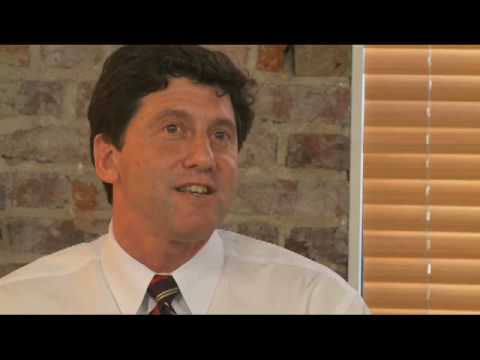
John D. Gartner
Gartner graduated magna cum laude from Princeton University, received his Ph.D in clinical psychology from the University of Massachusetts, and served as a part time assistant professor of psychiatry at Johns Hopkins University Medical School for 28 years.
During an interview by U.S. News & World Report (published on January 27), Gartner said: “Donald Trump is dangerously mentally ill and temperamentally incapable of being president.”
Gartner said that Trump suffers from “malignant narcissism,” whose symptoms include anti-social behavior, sadism, aggressiveness, paranoia and grandiosity.
“We’ve seen enough public behavior by Donald Trump now that we can make this diagnosis indisputably,” says Gartner, who admits he has not personally examined Trump.
In 1965, Fletcher Knebel, the best-selling author of Seven Days in May, raised the then-unthinkable question: “What would happen if the President of the U.S.A. went stark-raving mad?”
He did so in his novel, Night of Camp David.
In 1965, the idea that an American President might become insane was thought so outlandish it could only appear in a novel.
Fifty-three years later, it’s no longer unthinkable. For millions, it’s a terrifying reality.
"THE UNTOUCHABLES" MOVIE, ABC NEWS, AL CAPONE, ALCOHOL, ALTERNET, AP, BUZZFEED, CBS NEWS, CNN, CONSUMER FINANCIAL PROTECTION BUREAU, CROOKS AND LIARS, DAILY KOZ, DODD-FRANK FINANCIAL REFORM LAW, DONALD TRUMP, DRY STATES, ELLIOT NESS, FACEBOOK, FISCAL CLIFF, FLORENCE HARDING, IDAHO, KEVIN COSTNER, MAFIA, MIKE CRAPO, MORMONS, MOTHER JONES, MOVEON, NBC NEWS, NEWSWEEK, NPR, POLITICO, PROHIBITION, RAW STORY, REPUBLICAN PARTY, REUTERS, SALON, SEATTLE TIMES, SLATE, THE ATLANTIC, THE CHICAGO SUN-TIMES, THE CHICAGO TRIBUNE, THE DAILY BEAST, THE GUARDIAN, THE HILL, THE HUFFINGTON POST, THE LOS ANGELES TIMES, THE NATION, THE NEW YORK TIMES, THE WASHINGTON POST, TIME, TWITTER, U.S. NEWS & WORLD REPORT, U.S. TREASURY DEPARTMENT, UPI, USA TODAY, WALL STREET, WARREN G. HARDING, WOMEN'S CHRISTIAN TEMPERANCE UNION, WORD OF WISDOM
In Bureaucracy, History, Law, Law Enforcement, Politics, Social commentary on January 4, 2018 at 12:10 am
At the end of the 1987 movie, “The Untouchables,” a reporter accosts Elliot Ness (Kevin Costner): “Mr. Ness, they’re saying that Congress will repeal Prohibition. If that happens, what will you do?”
And Ness—who has just spent the entire movie trying to put arch-bootlegger Al Capone out of business—replies: “I think I’ll have a drink.”
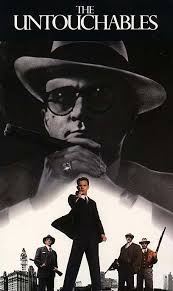
“The Untouchables” (1987)
In 1920, America went “dry”—officially.
The reason: Congressional passage of the Volstead Act—named after Andrew Volstead, chairman of the House Judiciary Committee who managed the legislation.
For Americans generally, the law had a shorter name: Prohibition.
For 12 years—from 1920 to 1932—the United States Treasury Department declared war on the manufacture and sale of alcoholic beverages throughout the country.
It was a losing war. Untold numbers of local police officers gladly turned a blind eye—for a price—to the bootleggers operating in their midst. So did legions of agents of the Treasury Department’s Prohibition Bureau.
And police weren’t the only ones willing to ignore the law. So were politicians at all levels. At the highest level: Warren G. Harding, 29th President of the United States.
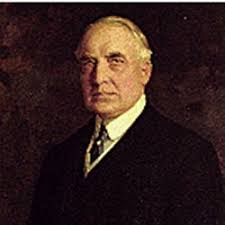
Warren G. Harding
Harding allowed bootleg whiskey to be served to his guests during after-dinner parties. His wife, Florence, known as “The Duchess,” mixed drinks for the visitors.
Many of those public officials (and private citizens) who regularly indulged felt the law was needed to enforce “morality” onto others—especially the poor and immigrants.
Prohibition ended in 1932—to the sorrow of two major organizations. The first was anti-alcohol groups such as the Women’s Christian Temperance Union. The second was the Mafia—which had raised millions of dollars via the sale of forbidden spirits.
Today Americans (except those living in officially “dry” states like Florida, Georgia and Alabama) can easily and legally obtain all the booze they can afford to buy.
But even in “wet” states, it’s illegal to drink and drive—as third-term United States Senator Mike Crapo (R-Idaho) found out in 2012.
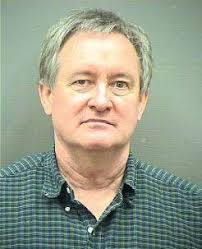
Mike Crapo
Crapo had been elected to the House of Representatives in 1992. After three terms in the House he successfully ran for the Senate in 1998.
On December 23, 2012, Crapo was arrested in Alexandria, Virginia, for driving under the influence. Crapo was pulled over after an officer saw him run a red light.
According to CBS News, Crapo failed several field sobriety tests and was taken into custody without incident. He was later released on an unsecured $1,000 bond.
On January 4, 2013, Crapo pleaded guilty to a drunk driving charge and was sentenced to a $250 fine and court costs, one-year suspension of his driver’s license, and court-ordered alcohol education and awareness classes.
But there’s more to this tale than mere political embarrassment. There’s also a story of religious hypocrisy to be told.
Crapo is a member of the Church of Jesus Christ of Latter-day Saints—the Mormons. He graduated from the church’s Brigham Young University in 1973 with a B.A. in political science.
Among those acts that Mormons are forbidden to partake in is the drinking of alcohol. It’s part of the “Word of Wisdom” embraced by staunch church members: A ban on any use of alcohol, tobacco, coffee and tea.
Indulging in any of these won’t get you excommunicated (as will, say, adultery or murder, which the church puts on the same level of evil). But it can get you banned from entering a Mormon temple, reserved for only the most devout members.
It is in their temples that Mormons perform such rituals as wedding ceremonies and proxy “baptisms for the dead.”
This inevitably came as a huge embarrassment for a man who represents Idaho, a state:
- Where government maintains a monopoly over sales of beverages with greater than 16% ABV;
- Where beer can be sold in grocery stores but not wine;
- Where the sale of distilled spirits is allowed only in certified Liquor Dispensary stores;
- Where 414,182 Mormons comprise the largest single religious group—at 26% of the population.
Thus, Crapo quickly released the following statement:
“I am deeply sorry for the actions that resulted in this circumstance. I made a mistake for which I apologize to my family, my Idaho constituents and any others who have put their trust in me.
“I accept total responsibility and will deal with whatever penalty comes my way in this matter. I will also undertake measures to ensure that this circumstance is never repeated.”
In November, 2016, Crapo was re-elected to a fourth Senate term.
Among his legislative accomplishments:
- Opposing President Barack Obama’s Affordable Care Act, which makes access to health care available to all Americans. He did so after being diagnosed with prostate cancer in 1999 and undergoing surgery to remove all or part of the prostate gland in January 2000.
- Opposing expanded background checks for all gun buyers.
- Chairing the Committee on Banking, Housing and Urban Affairs, where he attacked the Consumer Financial Protection Bureau.
- Urging President Donald Trump to withdraw the United States from the climate-change Paris Agreement.
- Chairing the Committee on Banking, Housing and Urban Affairs, where he sought repeal of the Consumer Financial Protection Bureau. Created by the Dodd-Frank financial reform law, its purpose is to prevent a repeat of the 2008 Wall Street “meltdown” caused by the unchecked greed of speculators.
ABC NEWS, ALTERNET, AP, BBC, BOB CORKER, BUZZFEED, CBS NEWS, CNN, COMMODUS, DAILY KOS, DONALD TRUMP, FACEBOOK, MIKA BRZEZINSKI, MORNING JOE, MOTHER JONES, MOVEON, NBC NEWS, NEWSWEEK, NICCOLO MACHIAVELLI, NPR, POLITICO, QATER, RAW STORY, REPORTERS COMMITTEE FOR FREEDOM OF THE PRESS, REUTERS, REX TILLERSON, SALON, SARAH HUCKABEE SANDERS, SAUDI ARABIA, SEATTLE TIMES, SLATE, THE ATLANTIC, THE CHICAGO SUN-TIMES, THE CHICAGO TRIBUNE, THE DAILY BEAST, THE GUARDIAN, THE HILL, THE HUFFINGTON POST, THE LOS ANGELES TIMES, THE NEW YORK TIMES, THE PRINCE, THE WALL STREET JOURNAL, THE WASHINGTON POST, TIME, TODD WOMACK, TWITTER, U.S. NEWS & WORLD REPORT, UPI, USA TODAY
In Bureaucracy, History, Politics, Self-Help, Social commentary on December 29, 2017 at 12:29 am
If Donald Trump ever read The Prince, by Niccolo Machiavelli, the Florentine statesman, he’s decided he doesn’t need it. And his ever-falling popularity among Americans clearly proves his mistake.
First published in 1532, The Prince lays bare the qualities needed by a successful political leader. At the top of this list must be creating and preserving a sense of his own dignity. Thus, he must appear to be a combination of mercy, faith, integrity, humanity and religion.
As Machiavelli puts it:
A prince must take great care that nothing goes out of his mouth which is not full of the above-named five qualities, and he should seem to be all mercy, faith, integrity, humanity and religion.
Since taking office on January 20, Trump has violated Machiavelli’s injunction on integrity with a vengeance. He has been caught in repeated falsehoods–so many, in fact, that the New York Times gave over its June 23 front page to a story headlined: “Trump’s Lies.”
According to the Times, Trump “told public falsehoods or lies every day for his first 40 days.”
“There is simply no precedent,” went the Times‘ opinion piece, “for an American president to spend so much time telling untruths. Every president has shaded the truth or told occasional whoppers.
“No other president—of either party—has behaved as Trump is behaving. He is trying to create an atmosphere in which reality is irrelevant.”

Donald Trump
Machiavelli also advises:
[He] must contrive that his actions show grandeur, spirit, gravity and fortitude….
It’s hard to convey those qualities in a series of 140-character rants on Twitter. Yet, from the start of his Presidency, Trump has put his ambitions, excuses and rants on social media.
As CNN Political Analyst Julian Zelizer outlined in a July 3 article:
“Putting aside the specific content of the recent blasts from the Oval smart phone, the President’s ongoing Twitter storms make all leaders uneasy. The heads of government in most nations prefer a certain amount of predictability and decorum from other heads of state.
“To have one of the most powerful people in the room being someone who is willing to send out explosive and controversial statements through social media, including nasty personal attacks or an edited video of him physically assaulting the media, does not make others….feel very confident about how he will handle deliberations with them.”
Trump’s apologists have fiercely defended his tweetstorms, claiming they allow him to bypass the media and “communicate directly with the American people.”
On October 8, Trump attacked retiring Tennessee United States Senator Bob Corker on Twitter:
“Senator Bob Corker ‘begged’ me to endorse him for re-election in Tennessee. I said ‘NO’ and he dropped out (said he could not win without…”
“..my endorsement). He also wanted to be Secretary of State, I said “NO THANKS.” He is also largely responsible for the horrendous Iran Deal!”
“…Hence, I would fully expect Corker to be a negative voice and stand in the way of our great agenda. Didn’t have the guts to run!”
Corker decided to give Trump a taste of his own Twitter medicine: “It’s a shame the White House has become an adult day care center. Someone obviously missed their shift this morning.”
Later that day, Corker told The New York Times: “He concerns me. He would have to concern anyone who cares about our nation.
“I know for a fact that every single day at the White House, it’s a situation of trying to contain him,”
And Todd Womack, Corker’s chief of staff, flatly called Trump a liar: “The president called Senator Corker on Monday afternoon and asked him to reconsider his decision not to seek reelection and reaffirmed that he would have endorsed him, as he has said many times.”
Machiavelli urged rulers to safeguard their reputations:

Niccolo Machiavelli
…A prince must show himself a lover of merit, give preferment to the able, and honor those who excel in every art.
Besides this, he ought, at convenient seasons of the year, to keep the people occupied with festivals and shows….mingle with them from time to time, and give them an example of his humanity and munificence, always upholding, however, the majesty of his dignity, which must never be allowed to fail in anything whatever.
Rulers who disregard this advice do so at their peril:
A prince need trouble little about conspiracies when the people are well disposed. But when they are hostile and hold him in hatred, then he must fear everything and everybody….
…[The Roman Emperor Commodus], being of a cruel and bestial disposition, in order to…exercise his rapacity on the people, he sought to favor the soldiers and render them licentious.
On the other hand, by not maintaining his dignity, by often descending into the theater to fight with gladiators and committing other contemptible actions…he became despicable in the eyes of the soldiers. And being hated on the one hand and despised on the other, he was conspired against and killed.
Donald Trump has repeatedly violated these lessons. It remains to be seen if he will pay a price for doing so.
ABC NEWS, ADOLF HITLER, ALTERNET, AP, BBC, BUZZFEED, CBS NEWS, CNN, DAILY KOS, DAVID BROOKS, DONALD TRUMP, FACEBOOK, FBI, GEORGE C. SCOTT, GEORGE S. PATTON, GESTAPO, HOGAN’S HEROES, JAMES COMEY, JIMMY CARTER, MEL BROOKS, MIKE FLYNN, MOTHER JONES, MOVEON, NAZI GERMANY, NBC NEWS, NEWSWEEK, NPR, PAUL RYAN, PBS NEWSHOUR, POLITICO, RAW STORY, REPUBLICAN PARTY, REUTERS, RICHARD GRUNBERGER, RICHARD NIXON, ROBERT MEULLER, Ronald Reagan, SALON, SEATTLE TIMES, SLATE, SOVIET UNION, THE 12-YEAR REICH, THE ATLANTIC, THE CHICAGO SUN-TIMES, THE CHICAGO TRIBUNE, THE DAILY BEAST, THE GUARDIAN, THE HILL, THE HUFFINGTON POST, THE LOS ANGELES TIMES, THE NEW YORK TIMES, THE WALL STREET JOURNAL, THE WASHINGTON POST, TIME, TWITTER, U.S. NEWS & WORLD REPORT, UPI, USA TODAY, WAFFEN-SS, WEHRMACHT
In Bureaucracy, History, Law, Law Enforcement, Politics, Social commentary on December 27, 2017 at 2:10 am
While the Nazi Party ruled Germany from 1933 to 1945, its influence over all aspects of Germans’ lives was suffocating.
“The persuasive influence of the Nazi regime reached into every corner of everyday life in Germany,” reads the back cover of Richard Grunberger’s classic 1971 book, The 12-Year Reich.
“Censorship prevailed, education was undermined, family life was idealized, but children were encouraged to turn in disloyal parents.
“‘Volk’ festivals, party rallies, awards, uniforms, pageantry all played a part in the massive effort to shape the mind of a nation.”
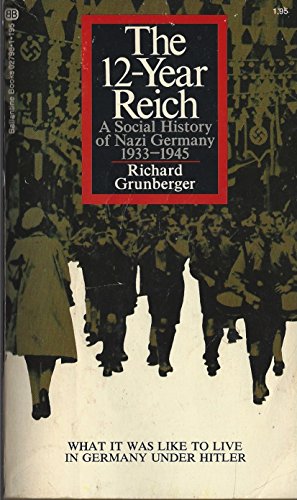
And yet, after the Reich surrendered unconditionally to the Allies on May 8, 1945, a strange thing happened: Virtually no one in Germany admitted to having been a Nazi—or having even known one.
American and British soldiers couldn’t find any German veterans willing to admit they had ever fought against Western, democratic nations. All the once-proud legionaries of the Wehrmacht and Waffen-SS swore they had been fighting “the real enemy”—the Russians—on the Eastern front.
And then there were all the stories of Germans who, at great risk to themselves, had hidden Jews in their attics. Which left unanswered the question: If so many “good Germans” had saved so many Jews, how had six million Jews died horrifically before the Reich fell?
In short: Adolf Hitler had lost the war he started—making him a loser nobody wanted to be identified with.
In the decades since, the “loser” tag has continued to stick with those who once served the Third Reich. Mel Brooks has repeatedly turned German soldiers—once the pride of the battlefield—into idiotic comic foils.
Even the fearsome Gestapo was spoofed for laughs on the long-running TV comedy, “Hogan’s Heroes.”

“Hogan’s Heroes”
“Americans love a winner,” George C. Scott as George S. Patton says at the outset of the classic 1970 movie. “And will not tolerate a loser.”
And that is why Republicans have stuck so closely with President Donald J. Trump.
A typical example of this occurred on June 8 after former FBI director James Comey testified before the United States Senate Select Committee on Intelligence.
Comey revealed that, on February 14, Trump had ordered everyone but Comey to leave a crowded meeting in the Oval Office.
“I want to talk about Mike Flynn,” said Trump.
Flynn had resigned the previous day from his position as National Security Adviser. The FBI was investigating him for his previously undisclosed ties to Russia.
“I hope you can see your way clear to letting this go, to letting Flynn go,” said Trump. “He is a good guy. I hope you can let this go.”
This was clearly an attempt by Trump to obstruct the FBI’s investigation.
Yet Republican House Speaker Paul Ryan rushed to excuse his clearly illegal behavior: “He’s new at government, so therefore I think he’s learning as he goes.”
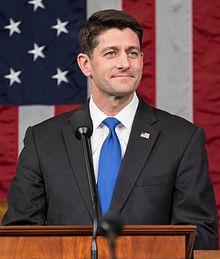
Paul Ryan
David Brooks, the conservative New York Times columnist, offered a more accurate explanation of Trump’s motives. Speaking on The PBS Newshour, Brooks said:
“We are a nation of laws. Donald Trump lives in an entirely different cultural universe. He is more clannist, believing in clan, believing in family, believing in loyalty, not recognizing objective law, not recognizing the procedures that is really how modern government operates….
“It’s not only that he doesn’t know the rules, but at all along and throughout his presidency, he has sort of trampled on the rules almost as a matter of policy, as a matter of character, because he doesn’t believe in that kind of relationships. It’s all personal loyalty, not about laws and norms and standards.”
Republicans don’t fear that Trump will trash the institutions that Americans have cherished for more than 200 years. Institutions like an independent judiciary, a free press, and an incorruptible Justice Department.
He has already attacked all of these—and Republicans have either said nothing or rushed to his defense.
What Republicans truly fear about Donald Trump is that he will finally cross one line too many—like firing Special Counsel Robert Meuller. And that the national outrage following this will force them to launch impeachment proceedings against him.
But it isn’t even Trump they fear will be destroyed.
What they most fear losing is their own hold on nearly absolute power in Congress and the White House.
If Trump is impeached and possibly indicted, he will become a man no one any longer fears. He will be a figure held up to ridicule and condemnation.
Like Adolf Hitler. Like Richard Nixon.
And his Congressional supporters will be branded as losers along with him.
Republicans vividly remember what happened after Nixon was forced to resign on August 9, 1974: Democrats, riding a wave of reform fever, swept Republicans out of the House and Senate—and Jimmy Carter into the White House.
What Ronald Reagan once said about the leadership of the Soviet Union now literally applies to that of the Republican Party:
“They…have openly and publicly declared that the only morality they recognize is what will further their cause, meaning they reserve unto themselves the right to commit any crime, to lie, to cheat, in order to attain that.”
ABC NEWS, ADOLF HITLER, ALBERT SPEER, ALTERNET, ANDY BIGGS, AP, BUZZFEED, CBS NEWS, CNN, CROOKS AND LIARS, DAILY KOZ, DONALD TRUMP, FACEBOOK, FBI, FOX NEWS NETWORK, GEORGE PAPADOPOULOS, GEORGE W. BUSH, JASON CHAFFETZ, JIM JORDAN, JUSTICE DEPARTMENT, LOUIS GOHMERT, MATTHEW GAETS, MICHAEL FLYNN, MOTHER JONES, MOVEON, NAZI GERMANY, NBC NEWS, NEWSWEEK, NPR, ORIN HATCH, PAUL MANAFORT, PAUL RYAN, POLITICO, RAW STORY, REPUBLICANS, REUTERS, RICK GATES, ROBERT MUELLER, SALON, SEAN HANNITY, SEATTLE TIMES, SERGEY KISLYAK, SERGEY LAVROV, SLATE, THE ATLANTIC, THE CHICAGO SUN-TIMES, THE CHICAGO TRIBUNE, THE DAILY BEAST, THE GUARDIAN, THE HILL, THE HUFFINGTON POST, THE LOS ANGELES TIMES, THE NATION, THE NEW YORK TIMES, THE WASHINGTON POST, TIME, TWITTER, U.S. NEWS & WORLD REPORT, UPI, USA TODAY, USA TODAY JAMES COMEY, WORLD WAR 11
In Bureaucracy, History, Law Enforcement, Politics, Social commentary on December 26, 2017 at 3:26 pm
On March 19, 1945, facing certain defeat, German Fuhrer Adolf Hitler ordered a massive “scorched-earth” campaign throughout Germany.
Albert Speer, Minister of Armaments for the Third Reich, was appalled. All German agriculture, industry, ships, communications, roads, food stuffs, mines, bridges, stores and utility plants were to be destroyed.
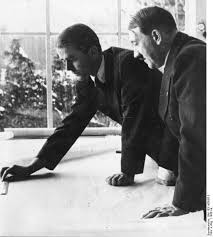
Albert Speer and Adolf Hitler pouring over architectural plans
If implemented, it would deprive the entire German population of even the barest necessities after the war.
Now living in a bunker 50 feet below bomb-shattered Berlin, Hitler gave full vent to his most destructive impulses.
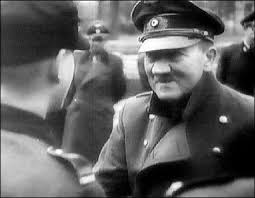
Adolf Hitler addressing boy soldiers as the Third Reich crumbles
“If the war is lost,” Hitler told Speer, “the nation will also perish. This fate is inevitable. There is no necessity to take into consideration the basis which the people will need to continue even a most primitive existence.
“On the contrary, it will be better to destroy these things ourselves, because this nation will have proved to be the weaker one and the future will belong solely to the stronger eastern nation.
“Besides, those who will remain after the battle are only the inferior ones, for the good ones have all been killed.”
Republicans have adopted the same “my-way-or-else” stance as Hitler. Like him, they are determined to gain and hold absolute power—or destroy the Nation they claim to love.
Take their current attitude toward—and attacks on—the U.S.Department of Justice and its chief investigative agency, the FBI.
On May 9, 2017, President Donald Trump fired FBI Director James Comey. Comey had been leading an investigation into alleged collusion between Trump advisers and Russian officials when he was fired.
At first, Trump claimed that he fired Comey for mishandling the FBI’s investigation into Hillary Clinton’s use of a private email server.
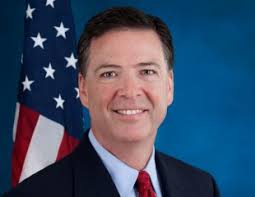
James Comey
But, during a May 10 meeting at the White House, Trump admitted to Russian Foreign Minister Sergey Lavrov and Russian Ambassador Sergey Kislyak: “I faced great pressure because of Russia. That’s taken off.”
Following the uproar over Comey’s firing, on May 17, the Justice Department appointed former FBI director Robert Mueller as Special Counsel to investigate any links the between Russian government and Trump campaign members.
Congressional Republicans joined Democrats in praising the appointment.
- House Oversight and Government Reform Chairman Jason Chaffetz, R-Utah, who had relentlessly pursued Hillary Clinton, said: “Mueller is a great selection. Impeccable credentials. Should be widely accepted.”
- “I commend (Department of Justice) for bringing in an independent voice to help bring clarity to this situation,” said Senator Orrin Hatch, R-Utah, a senior member of the Senate Judiciary Committee.
- House Speaker Paul Ryan, R-Wis., said, “My priority has been to ensure thorough and independent investigations are allowed to follow the facts wherever they may lead. That is what we’ve been doing here in the House. The addition of Robert Mueller as special counsel is consistent with this goal, and I welcome his role at the Department of Justice.”
Yet, since May, Trump, his shills in Congress and Right-wing Fox News have relentlessly attacked Mueller’s integrity and investigative methods. This despite the fact that Mueller was appointed by Republican President George W. Bush and served with an impeccable reputation for 12 years as FBI director (2001-2013).
The attacks grew increasingly vicious as Mueller uncovered evidence linking former high-ranking members of the Trump Presidential campaign to Russian Intelligence officials:
- Former national security adviser Michael Flynn pleaded guilty in December to lying to the FBI about his private conversations with Russian ambassador Kislyak. He is now cooperating with Mueller’s office.
- Trump’s former campaign chairman Paul Manafort and his deputy Rick Gates were indicted in October. They have pleaded not guilty and ordered under house arrest.
- George Papadopoulos, the former Trump campaign foreign policy adviser, pleaded guilty in October to lying to the FBI about his dealings with two Russians who had ties to the Russian government.
And the Republican response?
- “A witch hunt continues against the president with tremendous bias, no purpose and no end in sight,” charged Rep. Matthew Gaets (R-Florida).
- Gaetz joined Rep. Andy Biggs (R-Arizona) and Louie Gohmert (R-Texas) in demanding that Mueller resign because he was the FBI director in 2010 when Federal agencies approved the sale of Uranium One, a Canadian energy company, to a Russian nuclear-energy firm.
- “I think the public trust in this whole thing is gone,” said Rep. Jim Jordan (R-Ohio), a founder of the Right-wing Freedom Caucus.
- “Let’s start off with the head of the snake,” said Sean Hannity, the Fascistic commentator on Right-wing Fox News. “Mueller’s credibility is in the gutter tonight with these new discoveries, his conflicts of interests, his clear bias, the corruption are on full display. Mueller is frankly a disgrace to the American justice system and has put the country now on the brink of becoming a banana republic.”
There are three reasons for these attacks:
First, Republicans fear that Trump’s followers—the hard-core Fascists who turn out in mid-term elections—will reject them if they reject Trump.
Second, they fear that if Mueller’s investigation leads to Trump’s impeachment, they will be turned out of Congress—as many were after Richard Nixon resigned in disgrace.
Third, reports have circulated that many Congressional Republicans have received financial (and possibly intelligence) support from the Kremlin.
ABC NEWS, ALEX ACOSTA, ALTERNET, ANASTAS MIKOYAN, AP, BBC, BUZZFEED, CBS NEWS, CNN, DAILY KOS, DEPARTMENT OF AGRICULTURE, DEPARTMENT OF HEALTH AND HUMAN SERVICES, DEPARTMENT OF JUSTICE, DEPARTMENT OF LABOR, DEPARTMENT OF TRANSPORTATION, DONALD TRUMP, ELAINE CHAO, FACEBOOK, FBI, GEORGI MALENKOV, JAMES COMEY, JEFF SESSIONS, JOSEPH STALIN, KIM JONG ON, KLIMENT VOROSHILOV, LAVRENTI P. BERIA, MICK MULVANEY, MIKE PENCE, MOTHER JONES, MOVEON, NBC NEWS, NEWSWEEK, NIKKI HALEY, NPR, OFFICE OF MANAGEMENT AND BUDGET, POLITICO, RAW STORY, REINCE PRIEBUS, REUTERS, ROBERT PAYNE, SALON, SEATTLE TIMES, SLATE, SONNY PERDUE, SOVIET UNION, THE ATLANTIC, THE CHICAGO SUN-TIMES, THE CHICAGO TRIBUNE, THE DAILY BEAST, THE GUARDIAN, THE HILL, THE HUFFINGTON POST, THE LOS ANGELES TIMES, THE NEW YORK TIMES, THE RISE AND FALL OF STALIN, THE WALL STREET JOURNAL, THE WASHINGTON POST, TIME, TOM PRICE, TWITTER, U.S. NEWS & WORLD REPORT, UNITED NATIONS, UNITED STATES ATTORNEY GENERAL, UPI, USA TODAY, VYACHESLAV MOLOTOV
In Bureaucracy, History, Politics, Social commentary on December 22, 2017 at 12:02 am
On December 21, 1949, Joseph Vissarionovich Djugashvili turned 70. And millions of Russians feverishly competed to out-do one another in singing his praises.
These celebrations weren’t prompted by love—but fear.
For the man being so honored was internationally known by a far different name: Stalin, which in Russian means: “Man of Steel.”
He had lived up to it: For almost 30 years, through purges and starvation caused by enforced collections of farmers’ crops, he had slaughtered 20 to 60 million people.
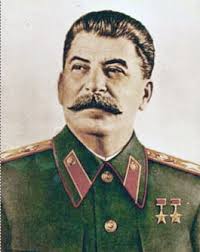
Joseph Stalin
The British historian, Robert Payne, described these rapturous events in his classic 1965 biography, The Rise and Fall of Stalin:
“The guns blazed in salute, the processions marched across the Red Square, and huge balloons bearing the features of a younger Stalin climbed into the wintry sky.
“The official buildings were draped in red, the color of happiness. From all over the country came gifts of embroidered cloth, tapestries and carpets bearing his name or his features.
“Ornamental swords, cutlasses, tankards, cups, everything that might conceivably please him, were sent to the Kremlin, and then displayed in the State Museum of the Revolution….Poets extolled him in verses, He was the sun, the splendor, the lord of creation.
“The novelist Leonid Lenov…foretold the day when all the peoples of the earth would celebrate his birthday; the new calendar would begin with the birth of Stalin rather than with the birth of Christ.”
Lavrenti P. Beria, Stalin’s sinister and feared secret police chief, oozed: “Millions of fighters for peace and democracy in all countries of the world are closing their ranks still firmer around Comrade Stalin.”
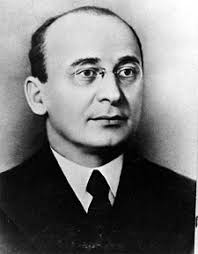
Lavrenti P. Beria
“With a feeling of great gratitude, turning their eyes to Stalin,” gushed Central Committee Secretary Georgi Malenkov, “the peoples of the Soviet Union, and hundreds of millions of peoples in all countries of the world, and all progressive mankind, see in Comrade Stalin their beloved leader and teacher….”
“The mighty voice of the Great Stalin, defending the peace of the world, has penetrated into all corners of the globe,” enthused Defense Commissar Kliment Voroshilov.
“Without Comrade Stalin’s special care,” extolled Trade and Supply Minister Anastas Mikoyan, “we would have never have had a network of meat combines equipped with the latest machinery, canneries and sugar refineries, a fishing industry….”
Foreign Minister Vyacheslav Molotov: “The gigantic Soviet army created during [World War II] was under the direct leadership of Comrade Stalin and built on the basis of the principles of Stalinist military science.”
So those Americans with a sense of history were alarmed and disgusted upon watching President Donald J. Trump—also 70—convene his first full Cabinet meeting since taking office on January 20.
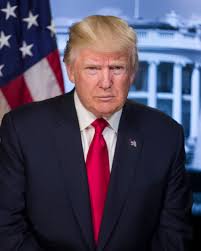
Donald Trump
On June 12, polls showed that only 36% of Americans approved of his conduct. But from his Cabinet members, Trump got praise traditionally lavished on dictators like Stalin and North Korea’s Kim Jong On.
While the Cabinet members sat around a mahogany table in the West Wing of the White House, Trump instructed each one to say a few words about the good work his administration was doing.
“Start with Mike,” ordered Trump, referring to Vice President Mike Pence.
“It is the greatest privilege of my life to serve as the vice president to a president who is keeping his word to the American people,” Pence dutifully said.
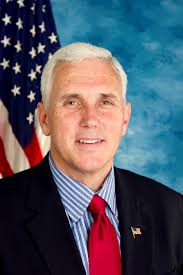
Mike Pence
Then Attorney General Jeff Sessions gushed: “It’s an honor to be able to serve you.”
“My hat’s off to you,” oozed Energy Secretary Rick Perry, referring to Trump’s decision to withdraw from the Paris climate agreement.
Secretary of Agriculture Sonny Perdue flattered: “I just got back from Mississippi. They love you there.”
“What an incredible honor it is to lead the Department of Health and Human Services at this pivotal time under your leadership,” fawned Tom Price. “I can’t thank you enough for the privilege that you’ve given me, and the leadership you’ve shown.”
Secretary of Labor Alex Acosta raved: “I’m deeply honored and I want to thank you for keeping your commitment to the American workers.”
“Thank you for coming over to the Department of Transportation,” eulogized Elaine Chao, its secretary. “I want to thank you for getting this country moving again, and also working again.”
“On behalf of the entire senior staff around you, Mr. President,” brown-nosed Reince Prebus, Trump’s chief of staff, “we thank you for the opportunity and the blessing you’ve given us to serve your agenda and the American people, and we’re continuing to work very hard every day to accomplish those goals.”
Mick Mulvaney, director of the Office of Management and Budget, groveled: “At your direction, we were able to also focus on the forgotten men and women who are paying taxes, so I appreciate your support on pulling that budget together.”
On June 8, former FBI Director James Comey had testified before the Senate Select Committee on Intelligence.
Among the charges he aimed at Trump: The President had demanded a pledge of personal loyalty in return for Comey’s keeping his job.
This would have made Comey his secret police chief.
Comey had refused to give this. And Trump had fired him.
Trump publicly denied this.
Then came the June 12 Cabinet meeting—and all the proof anyone needed.




.jpg)


ABC NEWS, ALTERNET, BUZZFEED, CBS NEWS, CNN, DAILY KOS, DONALD TRUMP, FACEBOOK, HERMAN WOUK, HUMPHREY BOGART, JOSE FERRER, MOTHER JONES, MOVEON, NBC NEWS, NEWSWEEK, NPR, POLITICO, RAW STORY, SALON, SLATE, THE CAINE MUTINY, THE CHICAGO SUN-TIMES, THE CHICAGO TRIBUNE, THE DAILY BEAST, THE HUFFINGTON POST, THE LOS ANGELES TIMES, THE NEW YORK TIMES, THE WALL STREET JOURNAL, THE WASHINGTON POST, TIME, TWITTER, U.S. NEWS & WORLD REPORT, USA TODAY, VAN JOHNSON
CAPTAIN QUEEG COMES TO WASHINGTON: PART TWO (END)
In Bureaucracy, History, Politics, Social commentary on January 12, 2018 at 12:03 amIt was February 16, 2017—and Donald Trump’s first press conference as President.
Like the climatic showdown in The Caine Mutiny, it offered an unhinged rant, full of anger, personal attacks, self-pity and self-glorification.
But the man doing the ranting was not Captain Philip Francis Queeg. It was President Donald J. Trump, speaking from the East Room of the White House.
He opened casually: “Thank you very much. I just wanted to begin by mentioning that the nominee for Secretary of the Department of Labor will be Mr. Alex Acosta….”
Donald Trump
For the next hour and 15 minutes, Trump let raw emotion do his talking.
Among the highlights:
His hated the press: “….The press has become so dishonest that if we don’t talk about it, we are doing a tremendous disservice to the American people. Tremendous disservice. We have to talk about it to find out what is going on, because the press, honestly, is out of control. The level of dishonesty is out of control.”
He won “bigly” in the Electoral College: “I put it out before the American people, got 306 electoral college votes. They said there’s no way to get 222. 230 is impossible. 270 which you need, that was laughable. We got 306, because people came out and voted like they’ve never seen before. So that’s the way it goes. I guess it was the biggest electoral college win since Ronald Reagan.”
[Actually, it wasn’t. He got a smaller share of the Electoral College votes—56.88% than former presidents George H. W. Bush—79.18% in 1988; Bill Clinton—68.77% in 1992 and 70.45% in 1996; and Barack Obama—67.84% in 2008 and 61.71% in 2012.
[No other President had ever felt it necessary to brag about his Electoral College victory. And Trump didn’t mention that he lost the popular vote—with Hillary Clinton getting almost 2.9 million more votes than he did.]
He ignored the turmoil in his month-old administration: “I turn on the TV, open the newspapers and I see stories of chaos. Chaos. Yet it is the exact opposite. This administration is running like a fine-tuned machine, despite the fact that I can’t get my Cabinet approved, and they’re outstanding people.”
[His National Security Adviser, Michael T. Flynn, a retired Army lieutenant general, was forced to resign after 24 days. On December 1, he would plead guilty to lying to the FBI and agree to cooperate with Special Counsel Robert Mueller’s investigation of Russian subversion of the 2016 Presidential election.
Mike Flynn
[In addition, Trump:
[In fact, Trump’s Cabinet—with the exception of his pick for Secretary of Labor—had been steamrollered through the Senate by Republicans.]
The press persecuted him: “I watch CNN. It’s so much anger and hatred and just the hatred. I don’t watch it anymore, because it’s very good….
“You look at your show [CNN Tonight] that goes on at 10 in the evening. You just take a look at that show. That is a constant hit. The panel is almost always exclusive anti-Trump. The good news is he doesn’t have good ratings, but the panel is almost exclusive anti-Trump. And the hatred and venom coming from his mouth. The hatred coming from other people on your network.”
He was truly a good, misunderstood person: “….I can handle a bad story better than anybody, as long as it is true. Over a course of time, I will make mistakes and you will write badly, and I am OK with that. But I am not OK when it is fake….
“I know when you’re telling the truth or when you’re not. I just see many, many untruthful things. And I’ll tell you what else I see, I see tone….The tone is such hatred. I’m really not a bad person, by the way. No, but the tone is such—I do get good ratings. You have to admit that.”
His campaign never colluded with Russian Intelligence: “Well, the failing New York Times wrote a big, long front-page story yesterday. And it was very much discredited, as you know. It [was]— it’s a joke. … Russia is fake news. This is fake news put out by the media.”
[Several of Trump’s high-level advisers were in constant communication during the campaign with Russian Intelligence agents. These contacts are now being investigated by House and Senate subcommittees and the office of the Special Counsel.]
* * * * *
By the end of The Caine Mutiny, Stephen Maryk was acquitted of mutiny. Captain Queeg was presumably relieved of future commands.
By the end of President Trump’s bizarre and frightening press conference, there was no telling what lay ahead for the United States—or the world.
Share this: