Posts Tagged ‘DENMARK’
ADOLF HITLER, ALTERNET, AMERICABLOG, AP, BABY BOOMER RESISTANCE, BBC, BLOOMBERG, BLUESKY, BUZZFEED, CBS NEWS, CHINA, CNN, CROOKS AND LIARS, DAILY KOS, DENMARK, DEPORTATIONS, DONALD TRUMP, FIVETHIRTYEIGHT, GREENLAND, HARPER’S MAGAZINE, HUFFINGTON POST, IRAN, JAKE TAPPER, MEDIA MATTERS, MOTHER JONES, MOVEON, MSNBC, NATO, NBC NEWS, NEWSDAY, NEWSWEEK, NICCOLO MACHIAVELLI, NORTH KOREA, NPR, PBS NEWSHOUR, POLAND, POLITICO, POLITICUSUSA, RAW STORY, REUTERS, RUSSIA, SALON, SEATTLE TIMES, SLATE, STEPHEN MILLER, TALKING POINTS MEMO, THE ATLANTIC, THE CHICAGO SUN-TIMES, THE CHICAGO TRIBUNE, THE DAILY BEAST, THE DAILY BLOG, THE GUARDIAN, THE HILL, THE HUFFINGTON POST, THE INTERCEPT, THE LOS ANGELES TIMES, THE NATION, THE NEW REPUBLIC, THE NEW YORK TIMES, THE NEW YORKER, THE PRINCE (BOOK), THE VILLAGE VOICE, THE WASHINGTON POST, THINKPROGRESS, THOM TILLIS, TIME, TRUTHDIG, TRUTHOUT, TWO POLITICAL JUNKIES, U.S. NEWS & WORLD REPORT, UNITED STATES SENATE, UPI, USA TODAY, VLADIMIR PUTIN, X
In Bureaucracy, History, Military, Politics, Social commentary on January 13, 2026 at 12:23 am
“The first impression that one gets of a ruler and his brains is from seeing the men that he has about him.
“When they are competent and loyal one can always consider him wise, as he has been able to recognize their ability and keep them faithful.
“But when they are the reverse, one can always form an unfavorable opinion of him, because the first mistake that he makes is in making this choice.”
So wrote the Italian statesman Niccolo Machiavelli more than 500 years ago in his famous treatise on politics, The Prince.
And his words remain as true in our day as they were in his.
In fact, he could have been writing about the ability of Donald Trump to choose competent subordinates.

Niccolo Machiavelli
As a Presidential candidate, Trump repeatedly previewed his administrative incompetence—which he has continued to demonstrate as President.
The latest example of this: Stephen Miller, White House deputy chief of staff for policy. He previously served as senior advisor to the President and director of speechwriting from 2017 to 2021 during the first Trump administration.
His politics have been described as anti-immigration, white nationalist and far-right. His policies have resulted in mass deportations, arrests and shootings of innocent American citizens and the testing of the constitutional tenets that grant American citizenship.

Stephen Miller
And thanks to retiring North Carolina United States Senator Thom Tillis, there is another way to describe him: “Stupid.”
“Look, either Stephen Miller needs to get into a lane where he knows what he’s talking about or get out of this job,” Tillis told CNN’s Jake Tapper on the January 7 edition of “The Lead.”
Three days earlier, on January 4, Miller, appearing on the same show, had said: “Greenland should be part of the United States.”
This reflects Trump’s long-held obsession that he should acquire Greenland—by buying it or conquering it.
“What is the basis for their territorial claim?” demanded Miller. “What is their basis of having Greenland as a colony of Denmark?”
The answer: Greenland is a self-governing, autonomous part of the Kingdom of Denmark. The United States has recognized Denmark’s ties to Greenland since 1917 and signed a joint defense agreement in 1951.
This was updated in 2004, acknowledging Greenland’s connection to Denmark.
During the same interview, Miller made it clear that the use of brute force was not only on the table but was the Trump administration’s preferred way to behave on the world stage:
“We live in a world in which you can talk all you want about international niceties and everything else, but we live in a world, in the real world, Jake, that is governed by strength, that is governed by force, that is governed by power. These are the iron laws of the world since the beginning of time.”
Adolf Hitler could not have said it better. In fact, Miller—who is Jewish—could have been reciting the Fuhrer’s August 22, 1939 speech to his generals before the invasion of Poland:
“I shall give a propagandist reason for starting the war, no matter whether it is plausible or not. The victor will not be asked afterwards whether he told the truth or not. When starting and waging war it is not right that matters, but victory.
“Close your hearts to pity. Act brutally. Eighty million people must obtain what is their right. Their existence must be made secure. The stronger man is right.”
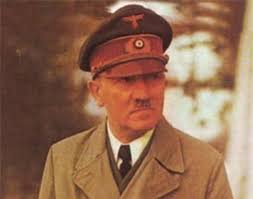
Adolf Hitler
Senator Tillis’ response was equally blunt. Calling the NATO alliance—of which Denmark is a member—critically important, he said:
“Shaking that alliance sends a signal to [Russian President Vladimir] Putin that he’s winning. And Stephen Miller doesn’t represent the United States government. He represents the Article 11 [Executive] branch.

Thom Tillis
“And I, as a member of the United States Senate, get to weigh in to this issue. And I know, whether they say it out loud or not, most of my colleagues agree with me.
“We need to make it very clear that our strength and our ability to project power to stand off against Putin, to stand off Russia, to stand off China, Iran, it all rests on this exquisite capability that we have under NATO.”
Tillis’ remarks came only hours after he delivered a scathing speech to his fellow Senators: “I’m sick of stupid. I want good advice for the president, because I want this president to have a good legacy.
“And this nonsense on what’s going on with Greenland is a distraction from the good work he’s doing, and the amateurs who said it was a good idea should lose their jobs.”
Tillis’ remarks ignore several brutal truths:
First, as Machiavelli notes, when a ruler’s advisors are incompetent, he is to blame for making those choices.
Second, Miller was speaking for Trump, not advising him.
Third, Donald Trump’s legacy will be one of unsurpassed greed, egomania, vindictiveness and authoritarianism.
He has turned America’s longstanding democratic allies into enemies and embraced the ruthless dictators of Russia, China and North Korea—and their style of governing.
His ultimate legacy will be one of infamy.
Nothing Tillis can do will alter that.
ABC NEWS, ADOLF HITLER, ALTERNET, AMERICABLOG, AP, BABY BOOMER RESISTANCE, BARACK OBAMA, BBC, BILL CLINTON, BLOOMBERG NEWS, BUZZFEED, CBS NEWS, CHINA, CHRIS MATTHEWS, CNN, CNN'S "STARTING POINT", CROOKS AND LIARS, CZECHOSLAVAKIA, DAILY KOS, DARRELL ISSA, DAVID BROOKS, DEBT CEILING, DENMARK, EXECUTIVE ORDERS, EXTORTION, FIVETHIRTYEIGHT, GEORGE W. BUSH, GREENLAND, HARPER’S MAGAZINE, HOUSE SPEAKER JOHN BOEHNER, HUFFINGTON POST, immigration reform, INSIDER, IRAN, JANET YELLEN, JIMMY CARTER, JOSEPH BIDEN, MEDIA MATTERS, MITCH MCCONNELL, MOTHER JONES, MOVEON, MSNBC, MSNBC'S "HARDBALL", NANCY PELOSI, NAZI GERMANY, NBC NEWS, NEGOTIATING, NEVILLE CHAMBERLAIN, NEW REPUBLIC, NEWSDAY, NEWSWEEK, NEWT GINGRICH, NICCOLO MACHIAVELLI, NORTH KOREA, NPR, PAP SMEARS, PBS NEWSHOUR, PITUFFIK SPACE BASE, PLANNED PARENTHOOD, POLAND, POLITICO, POLITICUSUSA, R.I.CO. ACT, RAW STORY, REPUBLICAN PARTY, REPUBLICANS, REUTERS, Ronald Reagan, RUSSIA, SALON, SEATTLE TIMES, SLATE, TALKING POINTS MEMO, THE ATLANTIC, THE CHICAGO SUN-TIMES, THE CHICAGO TRIBUNE, THE DAILY BEAST, THE DAILY BLOG, THE GUARDIAN, THE HAMILTON PROJECT, THE HILL, THE HUFFINGTON POST, THE LOS ANGELES TIMES, THE NATION, THE NEW REPUBLIC, THE NEW YORK TIMES, THE NEW YORKER, THE PRINCE, THE VILLAGE VOICE, THE WASHINGTON POST, THINKPROGRESS, TIME, TITLE X, TRUTHDIG, TRUTHOUT, TWITTER, TWO POLITICAL JUNKIES, U.S. NEWS & WORLD REPORT, UPI, USA TODAY, WARREN BUFFET, WENDY EDELBERG, WINSTON CHURCHILL, WONKETTE, WORLD WAR 11, X
In Bureaucracy, Business, History, Law, Law Enforcement, Military, Politics, Social commentary on January 10, 2025 at 12:10 am
On September 15, 1938, British Prime Minister Neville Chamberlain met with German Chancellor Adolf Hitler in Berchtesgaden, Germany.
The reason: Hitler had threatened war with Czechoslovakia—and even with Great Britain—if the Czechs did not cede to Germany the “Sudetenland.” This consisted of the northern, southwest and western regions of Czechoslovakia, inhabited mostly by ethnic Germans.
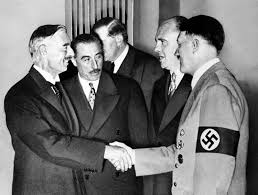
Neville Chamberlain and Adolf Hitler
To Chamberlain’s surprise, Hitler denied he intended to use force to gain his ends.
Then, without warning, the Fuhrer switched to an aggressive mode: “I shall not put up with this any longer. I shall settle this question in one way or another. I shall take matters in my own hands!”
Suddenly, Chamberlain seemed alarmed—and possibly angry: “In the circumstances, it is best for me to return at once. Anything else now seems pointless.”
Hitler was taken aback by the unexpected show of defiance. He realized he was about to lose his chance to bully the British into accepting his latest demands.
So he offered to consider the Sudetenland according to the principle of self-determination.
Chamberlain said he must immediately return to England to consult with his colleagues “and then meet you again.” He then agreed to the cession of the Sudetenland.
Three days later, French Prime Minister Edouard Daladier did the same. No Czechoslovak representative was invited to these discussions.
Chamberlain met Hitler again in Godesberg, Germany, on September 22 to confirm the agreements. But Hitler aimed to use the crisis as a pretext for war.
He now demanded not only the annexation of the Sudetenland but the immediate military occupation of the territories. This would give the Czechoslovak army no time to adapt their defense measures to the new borders.
To achieve a solution, Italian dictator Benito Mussolini suggested a conference of the major powers in Munich.
On September 29, Hitler, Daladier and Chamberlain met and agreed to Mussolini’s proposal. They signed the Munich Agreement, which accepted the immediate occupation of the Sudetenland.
The Czechoslovak government had not been a party to the talks. Nevertheless, it promised to abide by the agreement on September 30.
It actually had no choice, having been deserted by its pledged allies: Britain, France and the Soviet Union.
Chamberlain returned to England a hero. Holding aloft a copy of the worthless agreement he had signed with Hitler, he told cheering crowds in London: “I believe it is peace for our time.”
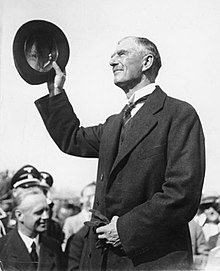
Neville Chamberlain
Winston Churchill knew better, predicting: “Britain and France had to choose between war and dishonor. They chose dishonor. They will have war.”
Hitler—still planning more conquests—also knew better. In March, 1939, the German army occupied the rest of Czechoslovakia.
Chamberlain would soon be seen as a naive weakling—even before bombs started falling on London.
Hitler next turned his attention—and demands—to Poland.
When his generals balked, warning that an invasion would trigger a war with France and Britain, Hitler quickly brushed aside their fears: “Our enemies are little worms. I saw them at Munich.”
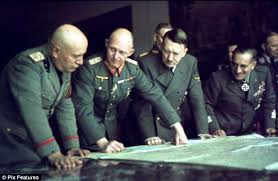
Adolf Hitler with his generals
Hitler ordered the invasion of Poland on September 1, 1939—unintentionally triggering World War II.
In time, historians and statesmen would regard Munich as an object lesson in the futility—and danger—in appeasing evil and aggression.
But for the postwar Republican party, Hitler’s my-way-or-else “negotiating” methods would become standard operating procedure. Latest case in point: President-elect Donald Trump’s aggressive moves toward Greenland.
“For purposes of National Security and Freedom throughout the World, the United States of America feels that the ownership and control of Greenland is an absolute necessity,” Trump wrote on Truth Social on December 23.
The next day, Greenland’s Prime Minister Mute Egede told Trump to back off: “Greenland is ours. We are not for sale and will never be for sale. We must not lose our long struggle for freedom.”
The Kingdom of Denmark holds control of the semiautonomous Greenland.
Trump had previously floated the idea of the U.S. buying Greenland in 2019, which the Danish prime minister at the time called “absurd.”
This is not a time for the United States to endanger its relationship with Greenland—which is more than the world’s biggest island.
It’s home to America’s Pituffik Space Base which “detects and reports attack assessments of sea-launched and intercontinental ballistic missile threats in support of strategic missile warning and missile defense,” according to the base’s website.
Greenland is strategically significant to the United States because it sits between Russia and the eastern coast of the United States, and is the fastest way from Europe to New York.
It’s also located beside the Norwegian Sea, which connects the Atlantic Ocean to the Arctic Ocean and the Barents Sea, where the Russian navy’s northern fleet operates.
Some critics have speculated that Trump is floating headline-getting assaults on other nations to divert attention from his domestic agenda—which includes deporting millions of men, women and children from Hispanic countries.
And while Trump picks needless fights with America’s longtime allies, China—the first peer competitor that can challenge America economically, militarily, and technologically—is deepening its ties with Russia, Iran, North Korea, and other countries that seek to weaken U.S. power.
ABC NEWS, ADOLF HITLER, ALTERNET, AMERICABLOG, AP, BABY BOOMER RESISTANCE, BARACK OBAMA, BBC, BILL CLINTON, BLOOMBERG NEWS, BUZZFEED, CBS NEWS, CHINA, CHRIS MATTHEWS, CNN, CNN'S "STARTING POINT", CROOKS AND LIARS, CZECHOSLAVAKIA, DAILY KOS, DARRELL ISSA, DAVID BROOKS, DEBT CEILING, DENMARK, EXECUTIVE ORDERS, EXTORTION, FIVETHIRTYEIGHT, GEORGE W. BUSH, GREENLAND, HARPER’S MAGAZINE, HOUSE SPEAKER JOHN BOEHNER, HUFFINGTON POST, immigration reform, INSIDER, IRAN, JANET YELLEN, JIMMY CARTER, JOSEPH BIDEN, MEDIA MATTERS, MITCH MCCONNELL, MOTHER JONES, MOVEON, MSNBC, MSNBC'S "HARDBALL", NANCY PELOSI, NAZI GERMANY, NBC NEWS, NEGOTIATING, NEVILLE CHAMBERLAIN, NEW REPUBLIC, NEWSDAY, NEWSWEEK, NEWT GINGRICH, NICCOLO MACHIAVELLI, NORTH KOREA, NPR, PAP SMEARS, PBS NEWSHOUR, PITUFFIK SPACE BASE, PLANNED PARENTHOOD, POLAND, POLITICO, POLITICUSUSA, R.I.CO. ACT, RAW STORY, REPUBLICAN PARTY, REPUBLICANS, REUTERS, Ronald Reagan, RUSSIA, SALON, SEATTLE TIMES, SLATE, TALKING POINTS MEMO, THE ATLANTIC, THE CHICAGO SUN-TIMES, THE CHICAGO TRIBUNE, THE DAILY BEAST, THE DAILY BLOG, THE GUARDIAN, THE HAMILTON PROJECT, THE HILL, THE HUFFINGTON POST, THE LOS ANGELES TIMES, THE NATION, THE NEW REPUBLIC, THE NEW YORK TIMES, THE NEW YORKER, THE PRINCE, THE VILLAGE VOICE, THE WASHINGTON POST, THINKPROGRESS, TIME, TITLE X, TRUTHDIG, TRUTHOUT, TWITTER, TWO POLITICAL JUNKIES, U.S. NEWS & WORLD REPORT, UPI, USA TODAY, WARREN BUFFET, WENDY EDELBERG, WINSTON CHURCHILL, WONKETTE, WORLD WAR 11, X
In Bureaucracy, Business, History, Law, Military, Politics, Social commentary on January 9, 2025 at 12:10 am
Contrary to popular belief, Adolf Hitler did not constantly rage at everyone. On the contrary: he could, when he desired, be charming, especially to women. He used rage as a weapon, knowing that most people feel intimidated by it.
In his “negotiations” for control of Austria with Austrian Chancellor Kurt von Schuschnigg. Hitler opened with insults and threats at the outset of their discussion. Then there was a period of calm, to convince the Austrian chancellor the worst was over.
Finally, he once again attacked—this time with so much fury that Schuschnigg was terrified into submission.
With one stroke of a pen, Austria became a vassal-state to Nazi Germany.
Seven months later, in September, 1938, Hitler turned his rage and aggression against Czechoslovakia.
Once again, he opened “negotiations” with a lie: The Czechoslovak government was trying to exterminate 3.5 million Germans living in the “Sudetenland.”
This consisted of the northern, southwest and western regions of Czechoslovakia, inhabited mostly by ethnic Germans.
Then he followed this up with the threat of war: Germany would protect its citizens and halt such “oppression.”
For British Prime Minister Neville Chamberlain, the thought of another European war erupting less than 20 years after the end of World War I was simply unthinkable.

The Cenotaph, in London, honoring the unknown British dead of World War 1
Something had to be done to prevent it. And he believed himself to be just the man to do it.
He quickly sent Hitler a telegram, offering to help resolve the crisis: “I could come to you by air and am ready to leave tomorrow. Please inform me of earliest time you can receive me, and tell me the place of the meeting. I should be grateful for a very early reply.”
Once again, another head-of-state was prepared to meet Hitler on his home ground. Again, Hitler took this concession as a sign of weakness. And Chamberlain’s use of such words as “please” and “grateful” only further convinced Hitler of another impending triumph.
Chamberlain was determined to grant Hitler’s every demand—so long as this meant avoiding a second world war.
As a political party, Democrats have generally copied this same “strategy” when dealing with Republicans.
On January 6, 2021, President Donald Trump—supported by at least 147 Republicans in the House and Senate—incited a treasonous coup to remain in office. This despite the overwhelming evidence that he had lost the 2020 election to former Vice President Joseph Biden.
By the time the Biden administration neared its end, not one Republican House or Senate member supporting such treason had been indicted for that infamy. Let alone tried, convicted and imprisoned.
Had this occurred, the Biden administration’s agenda would have been far more advanced than it is. Republicans who were raising funds for re-election campaigns would have been forced to raise them to pay huge legal bills.
They would have had far less time to plot to overthrow democracy. Instead, their attention would have been increasingly focused on their upcoming trials for treason.
Even more important: Donald Trump should have been indicted for treason by no later than mid-2021. Even then, the evidence was overwhelming that he had instigated the coup attempt.
Yet it wasn’t until November 18, 2022, that Jack Smith was appointed Special Counsel to oversee the criminal investigations into Trump’s role in the January 6 Capitol attack and his illegal storage of classified documents at his Mar-a-Lago estate.
And Smith allowed Trump-appointed Florida Judge Aileen Cannon to repeatedly postpone the stolen documents trial.
Meanwhile, Trump won repeated delays in his trial for inciting a violent attack on the Capitol. His victory on November 5 guarantees he will not be prosecuted for any of his crimes.

To bring down Mafia “boss of all bosses” John Gotti, the FBI waged a seven-year, $75 million campaign—which included the use of electronic bugs and recruitment of informants.
To date, there is no evidence that the Bureau applied such an effort against Trump—although he, unlike Gotti, threatens the very foundations of American democracy.
To avert war, British Prime Minister Neville Chamberlain met with German Chancellor Adolf Hitler in Berchtesgaden, Germany, on September 15, 1938.
Neville Chamberlain and Adolf Hitler
During their talks, Chamberlain said he had come to discuss German grievances. But, he added, it was necessary in all circumstances to exclude the use of force.
Hitler appeared to be shocked that he could be accused of such intentions: “Force? Who speaks of force?“
Then, without warning, he switched to an aggressive mode. He accused the Czechs of having mobilized their army in May. They had mobilized–in response to the mobilization of the German army.
“I shall not put up with this any longer,” shouted Hitler. “I shall settle this question in one way or another. I shall take matters in my own hands!”
Suddenly, Chamberlain seemed alarmed—and possibly angry: “If I understood you right, you are determined to proceed against Czechoslovakia in any case. If this is so, why did you let me come to Berchtesgaden?”
Hitler was taken aback by the unexpected show of defiance. He realized he was about to lose his chance to bully the British into accepting his latest demands.
ABC NEWS, ADOLF HITLER, ALTERNET, AMERICABLOG, AP, BABY BOOMER RESISTANCE, BARACK OBAMA, BBC, BILL CLINTON, BLOOMBERG NEWS, BUZZFEED, CANADA, CBS NEWS, CHINA, CHRIS MATTHEWS, CNN, CNN'S "STARTING POINT", CROOKS AND LIARS, CZECHOSLAVAKIA, DAILY KOS, DARRELL ISSA, DAVID BROOKS, DEBT CEILING, DENMARK, DONALD TRUMP, DRUG TRAFFICKING, EXECUTIVE ORDERS, EXTORTION, FIVETHIRTYEIGHT, GEORGE W. BUSH, GREENLAND, HARPER’S MAGAZINE, HOUSE SPEAKER JOHN BOEHNER, HUFFINGTON POST, ILLEGAL ALIENS, immigration reform, INSIDER, IRAN, JANET YELLEN, JIMMY CARTER, JOSEPH BIDEN, JUSTIN TRUDEAU, MEDIA MATTERS, MEXICO, MITCH MCCONNELL, MOTHER JONES, MOVEON, MSNBC, MSNBC'S "HARDBALL", NANCY PELOSI, NAZI GERMANY, NBC NEWS, NEGOTIATING, NEVILLE CHAMBERLAIN, NEW REPUBLIC, NEWSDAY, NEWSWEEK, NEWT GINGRICH, NICCOLO MACHIAVELLI, NORTH KOREA, NPR, PANAMA CANAL, PAP SMEARS, PBS NEWSHOUR, PITUFFIK SPACE BASE, PLANNED PARENTHOOD, POLAND, POLITICO, POLITICUSUSA, R.I.CO. ACT, RAW STORY, REPUBLICAN PARTY, REPUBLICANS, REUTERS, Ronald Reagan, RUSSIA, SALON, SEATTLE TIMES, SLATE, TALKING POINTS MEMO, TARIFFS, THE ATLANTIC, THE CHICAGO SUN-TIMES, THE CHICAGO TRIBUNE, THE DAILY BEAST, THE DAILY BLOG, THE GUARDIAN, THE HAMILTON PROJECT, THE HILL, THE HUFFINGTON POST, THE LOS ANGELES TIMES, THE NATION, THE NEW REPUBLIC, THE NEW YORK TIMES, THE NEW YORKER, THE PRINCE, THE VILLAGE VOICE, THE WASHINGTON POST, THINKPROGRESS, TIME, TITLE X, TRUTHDIG, TRUTHOUT, TWITTER, TWO POLITICAL JUNKIES, U.S. NEWS & WORLD REPORT, UPI, USA TODAY, WARREN BUFFET, WENDY EDELBERG, WINSTON CHURCHILL, WONKETTE, WORLD WAR 11, X
In Bureaucracy, Business, History, Law, Law Enforcement, Military, Politics, Social commentary on January 8, 2025 at 12:10 am
By studying the “negotiating” methods used by Adolf Hitler, Americans generally—and Democrats in particular—can learn much about the mindset and “negotiating” style of today’s Republican party.
Consider President-Elect Donald Trump’s recent threats against not only Canada but Panama—specifically, to retake control of the Panama Canal.
On December 25, Trump told a conservative conference in Arizona that Panama was charging US ships “ridiculous, highly unfair” fees to use its namesake canal.
The United States built the canal during the administration of President Theodore Roosevelt and opened it in 1914. It remained controlled by the United States until President Jimmy Carter signed a a 1977 agreement for its eventual handover to Panama in 1999.

Panama Canal (in white)
But this week, Trump threatened that if shipping rates were not lowered, “we will demand that the Panama Canal be returned to us, in full, quickly and without question.”
He accused China of operating the canal and lamented that the United States “puts in Billions of Dollars in ‘repair’ money, but will have absolutely nothing to say about ‘anything.’”
On December 25, Trump posted on his website, Truth Social: “Merry Christmas to all, including to the wonderful soldiers of China, who are lovingly, but illegally, operating the Panama Canal.”
“There is not a single Chinese soldier in the canal,” the president of Panama, José Raúl Mulino, told reporters the next day, adding that there is “absolutely no Chinese interference.”
Trump’s threats against Panama may be connected with the outstanding tax evasion case he faces in the country.
In 2019, the owners of a Panama City hotel tower that was previously managed and operated under the Trump brand accused the Trump Organization of pocketing money meant to pay taxes. According to a lawsuit, Trump’s companies simply kept the money, “intentionally evading taxes” and leaving the new owner liable for millions.
Yet the blunt truth remains: Unless Trump goes to war with Panama, his threat to take over the canal is effectively meaningless.
During the 2024 Presidential campaign, Trump denied reading Adolf Hitler’s notorious book, Mein Kampf (“My Struggle.”)
In the past, however, he has acknowledged owning a copy of it. And he has adopted the same “negotiating” style as the late Fuhrer: Do-as-I-say-or-I’ll-destroy-you.
A classic example of Hitler’s “bargaining style” came in 1938, when he invited Austrian Chancellor Kurt von Schuschnigg to his mountaintop retreat in Obersalzberg, Germany.

Kurt von Schuschnigg
Hitler, an Austrian by birth, intended to annex his native land to Germany. Schuschnigg was aware of Hitler’s desire, but nevertheless felt secure in accepting the invitation. He had been assured that the question of Austrian sovereignty would not arise.
The meeting occurred on February 12, 1938.
Shuschnigg opened the discussion with a friendly compliment. Walking over to a large window, he admired the breathtaking view of the mountains.
HITLER: We haven’t come here to talk about the lovely view or the weather!
Austria has anyway never done anything which was of help to the German Reich….I am resolutely determined to make an end to all this business. The German Reich is a great power. Nobody can and nobody will interfere if it restores order on its frontiers.
SCHUSCHNIGG: We simply have to go on living alongside one another, the little state next to the big one. We have no other choice.
And that is why I ask you to tell me what your concrete complaints are. We will do all in our power to sort things out and establish a friendly relationship, as far as it is possible to do so.
HITLER: That’s what you say, Herr Schuschnigg. And I am telling you that I intend to clear up the whole of the so-called Austrian question—one way or another. Do you think I don’t know that you are fortifying Austria’s border with the Reich?
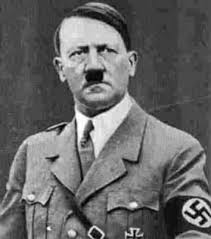
Adolf Hitler
SCHUSCHNIGG: There can be no suggestion at all of that—
HITLER: Ridiculous explosive chambers are being built under bridges and roads—
This was a lie, and Hitler knew it was a lie. But no matter. It gave him an excuse to threaten to destroy Austria—as he was to destroy so many other nations during the next seven years.
HITLER: I have only to give one command and all this comic stuff on the border will be blown to pieces overnight. You don’t seriously think you could hold me up, even for half an hour, do you?
Who knows—perhaps you will find me one morning in Vienna like a spring storm. Then you will go through something! I’d like to spare the Austrians that.
The S.A. [Hitler’s private army of Stormtroopers] and the [Condor] lLegion [which had bombed much of Spain into rubble during the three-year Spanish Civil War] would come in after the troops and nobody—not even I—could stop them from wreaking vengeance.
Schnuschigg made a cardinal mistake in dealing with Hitler: He showed fear. And this was precisely what the Nazi dictator looked for in an opponent.
Contrary to popular belief, Hitler did not constantly rage at everyone. On the contrary: he could, when he desired, be charming, especially to women. He used rage as a weapon, knowing that most people feel intimidated by it.
ABC NEWS, ADOLF HITLER, ALTERNET, AMERICABLOG, AP, BABY BOOMER RESISTANCE, BARACK OBAMA, BBC, BILL CLINTON, BLOOMBERG NEWS, BUZZFEED, CANADA, CBS NEWS, CHINA, CHRIS MATTHEWS, CNN, CNN'S "STARTING POINT", CROOKS AND LIARS, CZECHOSLAVAKIA, DAILY KOS, DARRELL ISSA, DAVID BROOKS, DEBT CEILING, DENMARK, DONALD TRUMP, DRUG TRAFFICKING, EXECUTIVE ORDERS, EXTORTION, FIVETHIRTYEIGHT, GEORGE W. BUSH, GREENLAND, HARPER’S MAGAZINE, HOUSE SPEAKER JOHN BOEHNER, HUFFINGTON POST, ILLEGAL ALIENS, immigration reform, INSIDER, IRAN, JANET YELLEN, JIMMY CARTER, JOSEPH BIDEN, JUSTIN TRUDEAU, MEDIA MATTERS, MEXICO, MITCH MCCONNELL, MOTHER JONES, MOVEON, MSNBC, MSNBC'S "HARDBALL", NANCY PELOSI, NAZI GERMANY, NBC NEWS, NEGOTIATING, NEVILLE CHAMBERLAIN, NEW REPUBLIC, NEWSDAY, NEWSWEEK, NEWT GINGRICH, NICCOLO MACHIAVELLI, NORTH KOREA, NPR, PAP SMEARS, PBS NEWSHOUR, PITUFFIK SPACE BASE, PLANNED PARENTHOOD, POLAND, POLITICO, POLITICUSUSA, R.I.CO. ACT, RAW STORY, REPUBLICAN PARTY, REPUBLICANS, REUTERS, Ronald Reagan, RUSSIA, SALON, SEATTLE TIMES, SLATE, TALKING POINTS MEMO, TARIFFS, THE ATLANTIC, THE CHICAGO SUN-TIMES, THE CHICAGO TRIBUNE, THE DAILY BEAST, THE DAILY BLOG, THE GUARDIAN, THE HAMILTON PROJECT, THE HILL, THE HUFFINGTON POST, THE LOS ANGELES TIMES, THE NATION, THE NEW REPUBLIC, THE NEW YORK TIMES, THE NEW YORKER, THE PRINCE, THE VILLAGE VOICE, THE WASHINGTON POST, THINKPROGRESS, TIME, TITLE X, TRUTHDIG, TRUTHOUT, TWITTER, TWO POLITICAL JUNKIES, U.S. NEWS & WORLD REPORT, UPI, USA TODAY, WARREN BUFFET, WENDY EDELBERG, WINSTON CHURCHILL, WONKETTE, WORLD WAR 11, X
In Bureaucracy, Business, History, Law, Law Enforcement, Military, Politics, Social commentary on January 7, 2025 at 12:10 am
Once again, Republicans are ruthlessly playing “chicken” with the nation’s financial and military security.
Even before taking the oath of office as President on January 20, 2025, Donald Trump has rushed to make an enemy of America’s longtime ally—Canada.
At a November 30 dinner at Mar-a-Lago, Trump’s estate in Palm Beach, Florida, he told Canadian Prime Minister Justin Trudeau that Canada could become the 51st state of the United States.
Canada’s Public Safety Minister Dominic LeBlanc, who attended the dinner, insisted that Trump was joking.
But on December 2, Trump threatened to impose a 25% tax on all products entering the United States from Canada and Mexico unless they stopped the flow of drugs and illegal aliens.
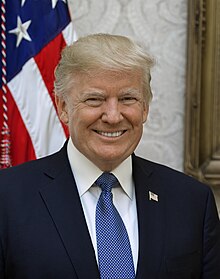
Donald Trump
And on December 3, Trump posted on his Truth Social platform an AI-generated image of himself standing on a mountain with a Canadian flag beside him. Its caption: “Oh Canada!”
Trudeau had requested the Mar-a-Lago meeting to convince Trump that the northern border is completely different from the southern one with Mexico.
“Less than one percent of migrants coming into the United States irregularly come from Canada and 0.2 percent of the fentanyl coming into the United States comes from Canada,” Trudeau said in Parliament.
During the last fiscal year, American customs agents seized 43 pounds of fentanyl at the Canadian border, compared with 21,100 pounds at the Mexican border.
Most of the fentanyl reaching the U.S. is made by Mexican drug cartels using precursor chemicals smuggled from Asia.
Utterly unmentioned in Trump’s demand: It’s America’s insatiable demand for illicit drugs that is the root cause of the drug trade.

Justin Trudeau
CC BY 3.0 <https://creativecommons.org/licenses/by/3.0>, via Wikimedia Commons
On immigration, the U.S. Border Patrol reported 1.53 million encounters with would-be illegal aliens at the Mexican border between October 2023 and September 2024. At the Canadian border, there were 23,721 such encounters.
Also unmentioned—if not deliberately ignored by Trump: Canada plays a substantial role as a U.S. trading partner. About 60% of U.S. crude oil imports are from Canada, and 85% of U.S. electricity imports as well.
Canada is also the largest foreign supplier of steel, aluminum and uranium to the U.S. and has 34 critical minerals and metals that the Pentagon eagerly desires. About 77% of Canada’s exports go to the U.S.
Trudeau pleaded with Trump not to impose the tariff because because it would “kill” Canada’s economy.
Trump responded: “So your country can’t survive unless it’s ripping off the US to the tune of $100 billion?”
His comments referred to the US trade deficit with Canada.
The U.S. had a $75 billion trade deficit with Canada last year but a third of what Canada sells into the U.S. is energy exports and prices have been high.
Trudeau left the meeting without reassurance that Trump would not impose a 25% tariff on products from Canada.
Republicans, in short, are one again utilizing the same “negotiating” strategy as Nazi Germany’s Fuhrer, Adolf Hitler.
And Democrats—out of cowardice or an ignorance of history—are once again refusing to publicly make this comparison.
By studying Adolf Hitler’s mindset and “negotiating” methods, we can learn much about the mindset and “negotiating” style of today’s Republican party.
Robert Payne, author of the bestselling biography, The Life and Death of Adolf Hitler (1973), described Hitler’s “negotiating” style thus:
“Although Hitler prized his own talents as a negotiator, a man always capable of striking a good bargain, he was totally lacking in finesse.
“He was incapable of bargaining. He was like a man who goes up to a fruit peddler and threatens to blow his brains out if he does not sell his applies at the lowest possible price.”
A classic example of Hitler’s “bargaining style” came in 1938, when he invited Austrian Chancellor Kurt von Schuschnigg to his mountaintop retreat in Obersalzberg, Germany.
Hitler, an Austrian by birth, intended to annex his native land to Germany. Schuschnigg was aware of Hitler’s desire, but nevertheless felt secure in accepting the invitation. He had been assured that the question of Austrian sovereignty would not arise.
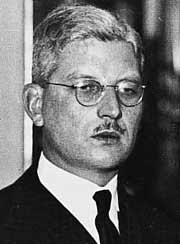
Kurt von Schuschnigg
The meeting occurred on February 12, 1938.
Shuschnigg opened the discussion with a friendly compliment. Walking over to a large window, he admired the breathtaking view of the mountains.
HITLER: We haven’t come here to talk about the lovely view or the weather!
Austria has anyway never done anything which was of help to the German Reich….I am resolutely determined to make an end to all this business. The German Reich is a great power. Nobody can and nobody will interfere if it restores order on its frontiers.
SCHUSCHNIGG: I am aware of your attitude toward the Austrian question and toward Austrian history….As we Austrians see it, the whole of our history is a very essential and valuable part of German history….And Austria’s contribution is a considerable one.
HITLER: It is absolutely zero—that I can assure you! Every national impulse has been trampled underfoot by Austria….
I could call myself an Austrian with just the same right—indeed with even more right—than you, Herr Schuschnigg. Why don’t you once try a plebiscite in Austria in which you and I run against each other? Then you would see!
2016 PRESIDENTIAL ELECTION, 2020 PRESIDENTIAL ELECTION, ABC NEWS, ADAM SCHIFF, ADOLF HITLER, AFGHANISTAN, ALBERT SPEER, ALTERNET, AMERICABLOG, ANTIFA, AP, BABY BOOMER RESISTANCE, BARACK OBAMA, BLOOMBERG, BUZZFEED, CBS NEWS, CHRIS CILLIZZA, CHRIS KREBS, CHRISTOPHER WRAY, CIA, CNN, CORONAVIRUS, COVID-19, CROOKS AND LIARS, CYBERSECURITY AND INFRASTRUCTURE SECURITY AGENCY, DAILY KOS, DAILY KOZ, DENMARK, DEPARTMENT OF HOMELAND SECURITY, DISOBEYING HITLER: GERMAN RESISTANCE AFTER VALKYRIE (BOOK), DONALD TRUMP, DONALDL TRUMP JR., DRUDGE REPORT, FASCISM, FBI, FIVETHIRTYEIGHT, FRANCE, HARPER’S MAGAZINE, HERMANN GORING, HILLARY CLINTON, HUFFINGTON POST, IMPEACHMENT, IRAQ, JAKE TAPPER, JAMES B. COMEY, JARED KUSHNER, JOE BIDEN, MAIL-IN BALLOTS, MARK ESPER, MEDIA MATTERS, MIKE PENCE, MITCH MCCONNELL, MOTHER JONES, MOVEON, MSNBC, NAZI GERMANY, NBC NEWS, NEWSWEEK, NORWAY, NPR, PAUL MANAFORT, PBS NEWSHOUR, PLANNED PARENTHOOD, POLAND, POLITICO, POLITICUSUSA, RANDALL HANSEN, RAW STORY, REPUBLICAN PARTY, REPUBLICANS, REUTERS, RUSSIA, SALON, SEATTLE TIMES, SLATE, SOVIET UNION, SS, STALINGRAD, TALKING POINTS MEMO, THE ATLANTIC, THE CHICAGO SUN-TIMES, THE CHICAGO TRIBUNE, THE DAILY BEAST, THE DAILY BLOG, THE GUARDIAN, THE HILL, THE HUFFINGTON POST, THE LOS ANGELES TIMES, THE NATION, THE NEW REPUBLIC, THE NEW YORK TIMES, THE PENTAGON, THE VILLAGE VOICE, THE WALL STREET JOURNAL, THE WASHINGTON POST, THINKPROGRESS, TIME, TRUMP TOWER MEETING, TRUTHDIG, TRUTHOUT, TWITTER, TWO POLITICAL JUNKIES, U.S. NEWS & WORLD REPORT, UPI, USA TODAY, VLADIMIR PUTIN, VOTER FRAUD, WEHRMACHT, WERNER VON BLOMBERG, WERNER VON FRITCH, WONKETTE, WORLD WAR 11
In Bureaucracy, History, Law, Law Enforcement, Military, Politics, Social commentary on January 26, 2024 at 12:15 am
On March 19, 1945, facing certain defeat, Nazi Fuhrer Adolf Hitler ordered a massive “scorched-earth” campaign throughout Germany:
“Destroy all German agriculture, industry, ships, communications, roads, food stuffs, mines, bridges, stores and utility plants!”
If implemented, it would deprive surviving Germans of even the barest necessities after the war.
Opposing him was Albert Speer, his favorite architect and Minister of Armaments.
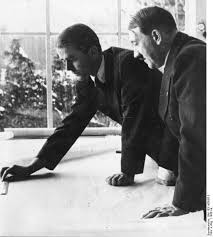
Albert Speer and Adolf Hitler pouring over architectural plans
But Hitler refused to back down. He gave Speer 24 hours to reconsider his opposition to the order.
The next day, Speer told Hitler: “My Fuhrer, I stand unconditionally behind you!”
“Then all is well,” said Hitler, suddenly with tears in his eyes.
“If I stand unreservedly behind you,” said Speer, “then you must entrust me rather than the Gauleiters [district Party leaders serving as provincial governors] with the implementation of your decree.”
Filled with gratitude, Hitler signed the decree Speer had thoughtfully prepared before their fateful meeting.
By doing so, Hitler unintentionally gave Speer the power to thwart his “scorched earth” order.
Trained as an architect, Speer had joined the Nazi Party in 1931. He met Hitler in 1933, when he presented the Fuhrer with architectural designs for the Nuremberg Rally scheduled for that year.
From then on, Speer became Hitler’s “genius architect” assigned to create buildings meant to last for a thousand years. “If Hitler had been capable of friendship,” Speer said after the war, “I would have been that friend.”
In 1943, Hitler appointed him Minister of Armaments, charged with revitalizing the German war effort.
Nevertheless, Speer now crisscrossed Germany, persuading military leaders and district governors to not destroy the vital facilities that would be needed after the war.
“No other senior National Socialist could have done the job,” writes Randall Hanson, author of Disobeying Hitler: German Resistance After Valkyrie.
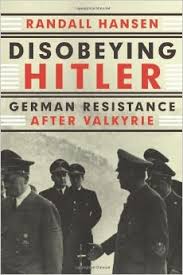
“Speer was one of the very few people in the Reich—-perhaps even the only one—with such power to influence actors’ willingness/unwillingness to destroy.”
Despite his later conviction for war crimes at Nuremberg, Speer never regretted his efforts to save Germany from total destruction at the hands of Adolf Hitler.
* * * * *
As the Third Reich came to its fiery end, Adolf Hitler blamed the German people for being “unworthy” of his “genius” and losing the war he had started.
His attitude was: “If I can’t rule Germany, then there won’t be a Germany.”
Fortunately for Germany, one man—Albert Speer—finally broke ranks with his Fuhrer.

Albert Speer
Risking death, he refused to carry out Hitler’s “scorched earth” order. Even more important, he successfully blocked such destruction and persuaded influential military and civilian leaders to disobey the order as well.
As a result, those targets slated for destruction were spared.
Fast forward 75 years: Facing the end of his Presidency, Donald Trump desperately sought to remain in power. Having “joked” about being “President-for-Life,” he now fought to make that a reality.
Unlike his 44 predecessors, he rejected the will of the voters and for almost three weeks denied his successor access to the resources he needed to launch a smooth transition.
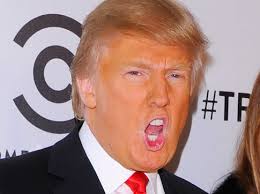
Donald Trump
Even worse: Instead of showing concern for the country he claimed to love, Trump sought to relentlessly destroy those institutions that guarantee American freedom and safety:
- The Pentagon
- The CIA
- The FBI
- The Cybersecurity and Infrastructure Security Agency
His attitude clearly was: “If I can’t rule America, there won’t be an America.”
Meanwhile, House and Senate Republicans embraced his most outrageous lies—or refused to openly refute them—as the COVID-19 pandemic slaughtered about 1,000 Americans a day.
Even Republicans who privately admitted the Trump era was ending realized that 70 million hate-filled Americans voted for him in 2020. And eagerly awaited the coming of the next would-be Fuhrer.
They would also eagerly vote out of office any Republican who dared break with the man they worshiped like a cult leader.
For Congressional Republicans, staying in office—and keeping their power and perks—was their top priority.
On November 25, 2019, CNN political correspondent Jake Tapper interviewed Representative Adam Schiff on Donald Trump’s upcoming impeachment trial for abuse of power and obstruction of Congress.
What would it mean if Republicans uniformly oppose any articles of impeachment against Trump? asked Tapper.
“It will have very long-term consequences, if that’s where we end up,” replied Schiff.
“And if not today, I think Republican members in the future, to their children and their grandchildren, will have to explain why they did nothing in the face of this deeply unethical man who did such damage to the country.”
In the end, only one of 53 Republican Senators—Mitt Romney—dared to vote for impeachment. And he became an instant pariah for it.
On March 18, 1945, Albert Speer, opposing Hitler’s plans to destroy Germany’s infrastructure, addressed a memo to his Fuhrer, in which he wrote: “No one has the right to take the viewpoint that the fate of the German people is tied to his personal fate.”
The country is still waiting for a Republican Albert Speer to step forward and save America from the self-destructive intentions of its own would-be Fuhrer.
2016 PRESIDENTIAL ELECTION, 2020 PRESIDENTIAL ELECTION, ABC NEWS, ADAM SCHIFF, ADOLF HITLER, AFGHANISTAN, ALBERT SPEER, ALTERNET, AMERICABLOG, ANTIFA, AP, BABY BOOMER RESISTANCE, BARACK OBAMA, BLOOMBERG, BUZZFEED, CBS NEWS, CHRIS CILLIZZA, CHRIS KREBS, CHRISTOPHER WRAY, CIA, CNN, CORONAVIRUS, COVID-19, CROOKS AND LIARS, CYBERSECURITY AND INFRASTRUCTURE SECURITY AGENCY, DAILY KOS, DAILY KOZ, DENMARK, DEPARTMENT OF HOMELAND SECURITY, DISOBEYING HITLER: GERMAN RESISTANCE AFTER VALKYRIE (BOOK), DONALD TRUMP, DONALDL TRUMP JR., DRUDGE REPORT, FASCISM, FBI, FIVETHIRTYEIGHT, FRANCE, HARPER’S MAGAZINE, HERMANN GORING, HILLARY CLINTON, HUFFINGTON POST, IMPEACHMENT, IRAQ, JAKE TAPPER, JAMES B. COMEY, JARED KUSHNER, JOE BIDEN, MAIL-IN BALLOTS, MARK ESPER, MEDIA MATTERS, MIKE PENCE, MITCH MCCONNELL, MOTHER JONES, MOVEON, MSNBC, NAZI GERMANY, NBC NEWS, NEWSWEEK, NORWAY, NPR, PAUL MANAFORT, PBS NEWSHOUR, PLANNED PARENTHOOD, POLAND, POLITICO, POLITICUSUSA, RANDALL HANSEN, RAW STORY, REPUBLICAN PARTY, REPUBLICANS, REUTERS, RUSSIA, SALON, SEATTLE TIMES, SLATE, SOVIET UNION, SS, STALINGRAD, TALKING POINTS MEMO, THE ATLANTIC, THE CHICAGO SUN-TIMES, THE CHICAGO TRIBUNE, THE DAILY BEAST, THE DAILY BLOG, THE GUARDIAN, THE HILL, THE HUFFINGTON POST, THE LOS ANGELES TIMES, THE NATION, THE NEW REPUBLIC, THE NEW YORK TIMES, THE PENTAGON, THE VILLAGE VOICE, THE WALL STREET JOURNAL, THE WASHINGTON POST, THINKPROGRESS, TIME, TRUMP TOWER MEETING, TRUTHDIG, TRUTHOUT, TWITTER, TWO POLITICAL JUNKIES, U.S. NEWS & WORLD REPORT, UPI, USA TODAY, VLADIMIR PUTIN, VOTER FRAUD, WEHRMACHT, WERNER VON BLOMBERG, WERNER VON FRITCH, WONKETTE, WORLD WAR 11
In Bureaucracy, History, Law, Law Enforcement, Military, Politics, Social commentary on January 25, 2024 at 12:05 am
President Donald Trump seemed poised to fire his handpicked CIA director.
He believed that Gina Haspel had stonewalled the release of documents supposedly exposing “deep state” plots against his 2016 campaign during the Obama administration.
[In fact, the Obama administration had acted entirely within the law during the 2016 Presidential campaign. The FBI has a legal mandate to keep track of subversive activities—especially when they involve members of a Presidential candidate’s campaign.
[On July 9, 2016, high-ranking representatives of the Trump campaign met at Trump Tower with at least two lobbyists with ties to Russian dictator Vladimir Putin.

Gina Haspel
[The participants included:
- Trump’s son, Donald Trump Jr.;
- His son-in-law, Jared Kushner;
- His then-campaign manager, Paul Manafort;
- Natalia Veselnitskaya, a Russian lawyer with ties to Putin; and
- Rinat Akhmetshin, a former Soviet counterintelligence officer suspected of “having ongoing ties to Russian Intelligence.”
[The reason for the meeting: To dig up “dirt” the Russians might have on Hillary Clinton, Trump’s opponent for the White House.]
Trump was also angry at FBI Director Christopher Wray—who replaced James B. Comey in May, 2017. Trump had fired Comey for daring to investigate ties between his 2016 campaign and Russian Intelligence agents.

Christopher Wray
The reason for his anger at Wray: Wray had dared to contradict Trump’s false claims that
- “Rampant voter fraud” was a widespread problem; and
- Antifa posed a greater terrorism danger than white supremacist groups.
During the 2016 Presidential race, Russian propaganda played a major role in convincing millions of Americans to vote for Donald Trump. Social media platforms—especially Facebook and Twitter—were flooded with genuinely fake news to sow discord among Americans and create a pathway for Trump’s election.
Russian President Vladimir Putin, a former KGB officer, had quickly assessed Trump as an egotistical narcissist. By appealing to Trump’s vanity, Putin expected to sharply reduce the military and political threat the United States represented to a resurgent Russia.
So notorious was the role played by Russian Intelligence in misleading American voters in 2016 that the Department of Homeland Security (DHS) was determined to prevent a repetition in 2020.
The man ultimately tasked with this mission was Chris Krebs, the director of the Cybersecurity and Infrastructure Security Agency run by DHS.
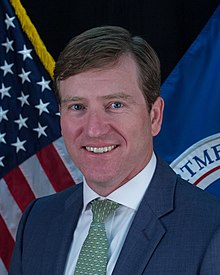
Chris Krebs
Krebs launched a massive effort to counter lies spread by Russians—and Americans—on social media platforms. Among his duties:
- Sharing Intelligence from agencies such as the CIA and National Security Agency with local officials about foreign efforts at election interference.
- Ensuring that domestic voting equipment was secure.
- Attacking domestic misinformation head-on.
As a result, Krebs was widely praised for revamping the department’s cybersecurity efforts and increasing coordination with state and local governments.
By all accounts—except Trump’s—the 2020 election went very smoothly.
On November 17, 2020, Trump fired Chris Krebs.
The reason: Krebs had not only countered Russian propaganda lies—he had dared to counter Trump’s as well. For example: He rejected Trump’s claims of widespread voter fraud: There “is no evidence that any voting system deleted or lost votes, changed votes, or was in any way compromised.”
Trump fired Krebs by tweet—and accompanied the outrage with yet another lie:
“The recent statement by Chris Krebs on the security of the 2020 election was highly inaccurate, in that there were massive improprieties and fraud, including dead people voting, poll watchers not allowed into polling locations, glitches in the voting machines which changed votes from Trump to Biden, late voting, and many more. Therefore, effective immediately, Chris Krebs has been terminated as director of the Cybersecurity and Infrastructure Security Agency.”
In a November 17 story on the CNN website, CNN reporters Kaitlan Collins and Paul LeBlanc bluntly concluded:
“[Krebs’] dismissal underscores the lengths Trump is willing to go to punish those who don’t adopt his conspiratorial view of the election.
“Since CNN and other outlets called the race for President-elect Joe Biden, Trump has refused to accept the results, instead pushing baseless conspiracies that his second term is being stolen.
“This includes falsely claiming during an election night address that he had already won reelection, that he had won states that were actually still up in the air at the time and that his opponents were perpetrating a fraud.”
* * * * *
Seventy-five years earlier, on March 19, 1945, facing certain defeat, Adolf Hitler ordered a massive “scorched-earth” campaign throughout Germany.
All German agriculture, industry, ships, communications, roads, food stuffs, mines, bridges, stores and utility plants were to be destroyed.
If implemented, it would deprive the entire German population of even the barest necessities after the war.
Opposing him—at first openly, and later secretly—was Albert Speer, his former architect and now Minister of Armaments.
Speer argued that there must be a future for the German people: “If our enemies wish to destroy us, why help them? We must leave the people something.”
But Hitler refused to back down: “I don’t want to hear any more.”
He gave Speer 24 hours to reconsider his opposition to the order.
Speer could not directly promise to carry out Hitler’s “scorched earth” order. So he gave Hitler a vague answer that essentially committed him to nothing: “My Fuhrer, I stand unconditionally behind you!”
2016 PRESIDENTIAL ELECTION, 2020 PRESIDENTIAL ELECTION, ABC NEWS, ADAM SCHIFF, ADOLF HITLER, AFGHANISTAN, ALBERT SPEER, ALTERNET, AMERICABLOG, ANTIFA, AP, BABY BOOMER RESISTANCE, BARACK OBAMA, BLOOMBERG, BUZZFEED, CBS NEWS, CHRIS CILLIZZA, CHRIS KREBS, CHRISTOPHER WRAY, CIA, CNN, CORONAVIRUS, COVID-19, CROOKS AND LIARS, CYBERSECURITY AND INFRASTRUCTURE SECURITY AGENCY, DAILY KOS, DAILY KOZ, DENMARK, DEPARTMENT OF HOMELAND SECURITY, DISOBEYING HITLER: GERMAN RESISTANCE AFTER VALKYRIE (BOOK), DONALD TRUMP, DONALDL TRUMP JR., DRUDGE REPORT, FASCISM, FBI, FIVETHIRTYEIGHT, FRANCE, HARPER’S MAGAZINE, HERMANN GORING, HILLARY CLINTON, HUFFINGTON POST, IMPEACHMENT, IRAQ, JAKE TAPPER, JAMES B. COMEY, JARED KUSHNER, JOE BIDEN, MAIL-IN BALLOTS, MARK ESPER, MEDIA MATTERS, MIKE PENCE, MITCH MCCONNELL, MOTHER JONES, MOVEON, MSNBC, NAZI GERMANY, NBC NEWS, NEWSWEEK, NORWAY, NPR, PAUL MANAFORT, PBS NEWSHOUR, PLANNED PARENTHOOD, POLAND, POLITICO, POLITICUSUSA, RANDALL HANSEN, RAW STORY, REPUBLICAN PARTY, REPUBLICANS, REUTERS, RUSSIA, SALON, SEATTLE TIMES, SLATE, SOVIET UNION, SS, STALINGRAD, TALKING POINTS MEMO, THE ATLANTIC, THE CHICAGO SUN-TIMES, THE CHICAGO TRIBUNE, THE DAILY BEAST, THE DAILY BLOG, THE GUARDIAN, THE HILL, THE HUFFINGTON POST, THE LOS ANGELES TIMES, THE NATION, THE NEW REPUBLIC, THE NEW YORK TIMES, THE PENTAGON, THE VILLAGE VOICE, THE WALL STREET JOURNAL, THE WASHINGTON POST, THINKPROGRESS, TIME, TRUMP TOWER MEETING, TRUTHDIG, TRUTHOUT, TWITTER, TWO POLITICAL JUNKIES, U.S. NEWS & WORLD REPORT, UPI, USA TODAY, VLADIMIR PUTIN, VOTER FRAUD, WEHRMACHT, WERNER VON BLOMBERG, WERNER VON FRITCH, WONKETTE, WORLD WAR 11
In Bureaucracy, History, Law, Law Enforcement, Military, Politics, Social commentary on January 24, 2024 at 12:12 am
On November 3, 2020, Joe Biden became President-elect of the United States by winning 79,658,000 votes, or 51% of the vote, compared to 73,886,400 votes, or 47.2% of the vote cast for President Donald Trump.
In the Electoral College—which actually determines the winner—the results were even more stunning: 306 votes for Biden, compared with 232 for Trump. It takes 270 votes to be declared the victor.
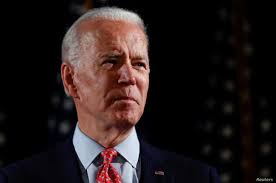
Joe Biden
Despite this, Trump steadfastly refused to concede. He made a series of baseless claims that he was cheated of victory by
- Illegal aliens being allowed to vote.
- A sinister computer program that turned Trump votes into Biden ones.
He repeatedly filed legal challenges to the vote, claiming himself the victim of massive fraud. This despite the utter lack of evidence of it.
On November 13, nine cases meant to attack President-elect Joe Biden’s win in key states were denied or dropped. A law firm challenging the vote count in Pennsylvania withdrew from the effort.
In Michigan, Trump’s attorneys dropped their federal suit to block the certification of Detroit-area ballots.
By November 21, Trump had lost in 30 cases dismissed by judges or withdrawn by his own attorneys.
Meanwhile, top Republicans—such as Vice President Mike Pence and Senate Majority Leader Mitch McConnell—refused to congratulate Biden as the winner.

Mitch McConnell
In a November 17, 2020 analysis, entitled “Donald Trump Doesn’t Seem to Want to Do His Job Anymore,” CNN Editor-at-Large Chris Cillizza wrote:
While Trump relentlessly asserted that he won the 2020 election, “he’s done next to nothing—at least publicly—to suggest he plans to continue doing the job in any serious manner through January 20.”
According to Cillizza, since losing the election, Trump had filled his days with:
- Golfing
- Tweeting
- Making controversial military decisions
- Firing people
Specifically:
Golfing: He played golf at his club in Virginia twice on the weekend of November 14-15. He was golfing the previous weekend, when Joe Biden was declared the winner of the 2020 race by CNN and other media outlets.
Tweeting: He tweeted numerous lies and conspiracy theories, claiming he won a second term but was cheated by the counting of fraudulent votes. This led Twitter to flag a large number of his tweets as “inaccurate.”
Making controversial military decisions: The Pentagon signaled it was planning—on Trump’s orders—to withdraw troops from Afghanistan and Iraq. [American forces had been warring with the Taliban in Afghanistan since 2001; they had been warring against Iraqi insurgents since 2003.]
And in a move that was truly frightening: The New York Times reported that Trump asked his top advisers for options to strike at Iran’s nuclear capabilities before he left office. This would embroil the United States in a war that could easily turn nuclear.
Firing people: On November 9, Trump fired Secretary of Defense Mark Esper. Four senior civilian officials were subsequently fired or resigned—Esper’s chief of staff and the top officials overseeing policy and intelligence.
They were replaced with flunkies loyal to Trump personally.
[This was in fact how Adolf Hitler took control of the Wehrmacht.
Adolf Hitler
[Since taking command of Germany in the summer of 1934, Hitler wanted to replace two high-ranking military officials: General Werner von Fritsch and Colonel General Werner von Blomberg. Both were convinced that Hitler’s increasingly aggressive foreign policy was putting Germany on a collision course with war—a war the Fatherland could not win.
[Hitler, in fact, meant to go to war—and despised Fritsch’s and Blomberg’s hesitation to do so. He decided to rid himself of both men.
[On January 12, 1938, Blomberg married Erna Gruhn, with Hitler and Reichsmarshall Hermann Goring attending as witnesses. Soon afterward, Berlin police discovered that Gruhn had a criminal record as a prostitute and had posed for pornographic photographs.
[Marrying a woman with such a background violated the standard of conduct expected of German officers. Hitler saw the scandal as an opportunity to dispose of Blomberg—who was forced to resign.
[Shortly after Blomberg was forced out in disgrace, the SS—Hitler’s private police force—presented Hitler with a file that falsely accused Werner von Fritsch of homosexuality. Fritsch angrily denied the accusation but resigned on February 4, 1938.
[From that point on, Hitler was in de facto command of the German Armed Services.]
Eighty-two years later, on November 3, 2020, President Donald Trump lost the 2020 Presidential election to former Vice President Joe Biden.
But Trump seemed determine to inflict as much damage as possible on the agencies responsible for protecting the security of the nation.
Besides wreaking havoc on the Pentagon, Trump was reportedly preparing to fire CIA Director Gina Haspel and FBI Director Christopher Wray.
Trump had accused Haspel of stonewalling the release of documents that would supposedly expose “deep state” plots against Trump’s campaign and transition during the Obama administration.
In fact, the Obama administration had acted entirely within the law during the 2016 Presidential campaign. The FBI has a legal mandate to keep track of subversive activities—especially when they involve members of a Presidential campaign such as Trumps.
And he was furious that Wray had dared to contradict Trump’s false claims that:
- “Rampant voter fraud” was a widespread problem; and
- Antifa posed a greater terrorism danger than white supremacist groups.
For Trump, contradiction was the same as treason.
2016 PRESIDENTIAL ELECTION, 2020 PRESIDENTIAL ELECTION, ABC NEWS, ADAM SCHIFF, ADOLF HITLER, AFGHANISTAN, ALBERT SPEER, ALTERNET, AMERICABLOG, ANTIFA, AP, BABY BOOMER RESISTANCE, BARACK OBAMA, BLOOMBERG, BUZZFEED, CBS NEWS, CHRIS CILLIZZA, CHRIS KREBS, CHRISTOPHER WRAY, CIA, CNN, CORONAVIRUS, COVID-19, CROOKS AND LIARS, CYBERSECURITY AND INFRASTRUCTURE SECURITY AGENCY, DAILY KOS, DAILY KOZ, DENMARK, DEPARTMENT OF HOMELAND SECURITY, DISOBEYING HITLER: GERMAN RESISTANCE AFTER VALKYRIE (BOOK), DONALD TRUMP, DONALDL TRUMP JR., DRUDGE REPORT, FASCISM, FBI, FIVETHIRTYEIGHT, FRANCE, HARPER’S MAGAZINE, HERMANN GORING, HILLARY CLINTON, HUFFINGTON POST, IMPEACHMENT, IRAQ, JAKE TAPPER, JAMES B. COMEY, JARED KUSHNER, JOE BIDEN, MAIL-IN BALLOTS, MARK ESPER, MEDIA MATTERS, MIKE PENCE, MITCH MCCONNELL, MOTHER JONES, MOVEON, MSNBC, NAZI GERMANY, NBC NEWS, NEWSWEEK, NORWAY, NPR, PAUL MANAFORT, PBS NEWSHOUR, PLANNED PARENTHOOD, POLAND, POLITICO, POLITICUSUSA, RANDALL HANSEN, RAW STORY, REPUBLICAN PARTY, REPUBLICANS, REUTERS, RUSSIA, SALON, SEATTLE TIMES, SLATE, SOVIET UNION, SS, STALINGRAD, TALKING POINTS MEMO, THE ATLANTIC, THE CHICAGO SUN-TIMES, THE CHICAGO TRIBUNE, THE DAILY BEAST, THE DAILY BLOG, THE GUARDIAN, THE HILL, THE HUFFINGTON POST, THE LOS ANGELES TIMES, THE NATION, THE NEW REPUBLIC, THE NEW YORK TIMES, THE PENTAGON, THE VILLAGE VOICE, THE WALL STREET JOURNAL, THE WASHINGTON POST, THINKPROGRESS, TIME, TRUMP TOWER MEETING, TRUTHDIG, TRUTHOUT, TWITTER, TWO POLITICAL JUNKIES, U.S. NEWS & WORLD REPORT, UPI, USA TODAY, VLADIMIR PUTIN, VOTER FRAUD, WEHRMACHT, WERNER VON BLOMBERG, WERNER VON FRITCH, WONKETTE, WORLD WAR 11
In Bureaucracy, History, Law, Law Enforcement, Military, Politics, Social commentary on January 23, 2024 at 12:13 am
Albert Speer, Minister of Armaments for the Third Reich, was appalled.
His Fuhrer, Adolf Hitler—the man he had idolized for 14 years—had just passed a death sentence on Germany, the nation he claimed to love above all others.
On September 1, 1939, Hitler had triggered World War II with the invasion of Poland. This led to a series of quick, spectacular victories—over Poland, Norway, Denmark and France.
Then, on June 22, 1941, Hitler turned on his ally, the Soviet Union, with which he had signed a non-aggression pact in August, 1939.
It had taken the Wehrmacht six weeks to conquer France. Hitler believed that was how long it would take to defeat the Soviet Union.
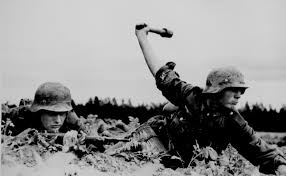
German soldiers invading the Soviet Union
Again, a series of spectacular battlefield victories followed—before the Wehrmacht was halted at the gates of Moscow. A year later, still enmeshed in Russia, the turning point came at Stalingrad, with the loss of the elite Sixth Army and 800,000 soldiers.
Starting in 1943, the Red Army slowly but steadily regained ground it had lost—the western half of Russia—and began pushing back the Germans. By March, 1945, it was fighting inside Germany—and heading straight for its capital: Berlin.
And by March, 1945, so were American and British forces. After landing in Normandy on June 6, 1944, they had steadily pushed their way across Europe and into Germany.
On March 19, 1945, facing certain defeat, Hitler ordered a massive “scorched-earth” campaign throughout Germany.
All German agriculture, industry, ships, communications, roads, food stuffs, mines, bridges, stores and utility plants were to be destroyed.
If implemented, it would deprive the entire German population of even the barest necessities after the war. And he entrusted the campaign to Albert Speer, his favorite architect-turned-Minister-of-Armaments.
Click here: Hitler’s “Scorched Earth” Decree and Albert Speer’s Response
Now living in a bunker 50 feet below bomb-shattered Berlin, Hitler gave full vent to his most destructive impulses.
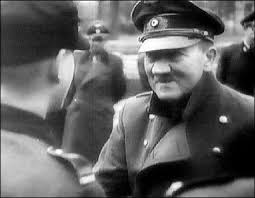
Adolf Hitler addressing boy soldiers as the Third Reich crumbles
“If the war is lost,” Hitler told Speer, “the nation will also perish. This fate is inevitable. There is no necessity to take into consideration the basis which the people will need to continue even a most primitive existence.
“On the contrary, it will be better to destroy these things ourselves, because this nation will have proved to be the weaker one and the future will belong solely to the stronger eastern nation.
“Besides, those who will remain after the battle are only the inferior ones, for the good ones have all been killed.”
* * * * *
Seventy-five years after Adolf Hitler planned the destruction of Germany, Donald Trump planned the same fate for the United States.
On November 3, 2020, Trump lost his bid to win another four years as President of the United States. In the early hours of November 4, 2020, he poured out his fury and self-pity in a televised address from the White House:
“Millions and millions of people voted for us tonight, and a very sad group of people is trying to disenfranchise that group of people and we won’t stand for it, we will not stand for it.”
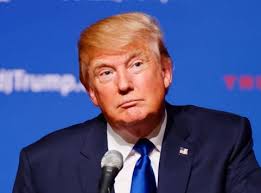
Donald Trump
Sounding like a petulant child whose party has been called off, Trump continued:
“We were getting ready for a big celebration, we were winning everything and all of a sudden it was just called off. The results tonight have been phenomenal…I mean literally we were just all set to get outside and just celebrate something that was so beautiful, so good, such a vote, such a success.”
It was Trump—not his challenger, former Vice President Joe Biden—who was demanding that the electoral process be halted. And that those votes that had not yet been counted be, in effect, flushed down the toilet.
“The citizens of this country have come out in record numbers, this a record, there’s never been anything like it to support our incredible movement….Most importantly, we’re winning Pennsylvania by a tremendous amount of votes. We’re up 690,000 votes.”
Owing to the Coronavirus pandemic—which Trump had refused to aggressively address from its outset in January—millions of Americans had voted by mail. This was especially true of Democrats, who didn’t want to stand in Coronavirus-infected lines.
But Trump had convinced millions of Republican voters that voting by mail was subversive. So they showed up at the polls or stayed away out of a secret fear of COVID-19.
Meanwhile, at the White House on Election Night, Trump continued to rant:
“These aren’t even close, this is not like, Oh, it’s close. With 64% of the vote in, it’s going to be almost impossible and we’re coming into good Pennsylvania areas where they happen to like your president. We’re winning Michigan…I said ‘Wow, that’s a lot’…
“And we’re winning Wisconsin…so when you take those three states in particular and you take all of the others…and all of a sudden it’s not like we’re up 12 votes and we have 60% left, we won states and all of a sudden, I said, ‘What happened to the election? It’s off.’ And we have all these announcers saying, ‘What’s happened’ and then they said, ‘Ohhh.’”
But this did not alter the reality that Joe Biden had become President-elect of the United States by winning 79,106,010 votes, or 51% of the vote.
2016 PRESIDENTIAL ELECTION, 2020 PRESIDENTIAL ELECTION, ABC NEWS, ADAM SCHIFF, ADOLF HITLER, AFGHANISTAN, ALBERT SPEER, ALTERNET, AMERICABLOG, ANTIFA, AP, BABY BOOMER RESISTANCE, BARACK OBAMA, BLOOMBERG, BUZZFEED, CBS NEWS, CHRIS CILLIZZA, CHRIS KREBS, CHRISTOPHER WRAY, CIA, CNN, CORONAVIRUS, COVID-19, CROOKS AND LIARS, CYBERSECURITY AND INFRASTRUCTURE SECURITY AGENCY, DAILY KOS, DAILY KOZ, DENMARK, DEPARTMENT OF HOMELAND SECURITY, DISOBEYING HITLER: GERMAN RESISTANCE AFTER VALKYRIE (BOOK), DONALD TRUMP, DONALDL TRUMP JR., DRUDGE REPORT, FASCISM, FBI, FIVETHIRTYEIGHT, FRANCE, HARPER’S MAGAZINE, HERMANN GORING, HILLARY CLINTON, HUFFINGTON POST, IMPEACHMENT, IRAQ, JAKE TAPPER, JAMES B. COMEY, JARED KUSHNER, JOE BIDEN, MAIL-IN BALLOTS, MARK ESPER, MEDIA MATTERS, MIKE PENCE, MITCH MCCONNELL, MOTHER JONES, MOVEON, MSNBC, NAZI GERMANY, NBC NEWS, NEWSWEEK, NORWAY, NPR, PAUL MANAFORT, PBS NEWSHOUR, PLANNED PARENTHOOD, POLAND, POLITICO, POLITICUSUSA, RANDALL HANSEN, RAW STORY, REPUBLICAN PARTY, REPUBLICANS, REUTERS, RUSSIA, SALON, SEATTLE TIMES, SLATE, SOVIET UNION, SS, STALINGRAD, TALKING POINTS MEMO, THE ATLANTIC, THE CHICAGO SUN-TIMES, THE CHICAGO TRIBUNE, THE DAILY BEAST, THE DAILY BLOG, THE GUARDIAN, THE HILL, THE HUFFINGTON POST, THE LOS ANGELES TIMES, THE NATION, THE NEW REPUBLIC, THE NEW YORK TIMES, THE PENTAGON, THE VILLAGE VOICE, THE WALL STREET JOURNAL, THE WASHINGTON POST, THINKPROGRESS, TIME, TRUMP TOWER MEETING, TRUTHDIG, TRUTHOUT, TWITTER, TWO POLITICAL JUNKIES, U.S. NEWS & WORLD REPORT, UPI, USA TODAY, VLADIMIR PUTIN, VOTER FRAUD, WEHRMACHT, WERNER VON BLOMBERG, WERNER VON FRITCH, WONKETTE, WORLD WAR 11
In Bureaucracy, History, Law, Law Enforcement, Military, Politics, Social commentary on June 2, 2023 at 12:12 am
On March 19, 1945, facing certain defeat, Nazi Fuhrer Adolf Hitler ordered a massive “scorched-earth” campaign throughout Germany:
“Destroy all German agriculture, industry, ships, communications, roads, food stuffs, mines, bridges, stores and utility plants!”
If implemented, it would deprive surviving Germans of even the barest necessities after the war.
Opposing him was Albert Speer, his favorite architect and Minister of Armaments.
Albert Speer and Adolf Hitler pouring over architectural plans
But Hitler refused to back down. He gave Speer 24 hours to reconsider his opposition to the order.
The next day, Speer told Hitler: “My Fuhrer, I stand unconditionally behind you!”
“Then all is well,” said Hitler, suddenly with tears in his eyes.
“If I stand unreservedly behind you,” said Speer, “then you must entrust me rather than the Gauleiters [district Party leaders serving as provincial governors] with the implementation of your decree.”
Filled with gratitude, Hitler signed the decree Speer had thoughtfully prepared before their fateful meeting.
By doing so, Hitler unintentionally gave Speer the power to thwart his “scorched earth” order.
Trained as an architect, Speer had joined the Nazi Party in 1931. He met Hitler in 1933, when he presented the Fuhrer with architectural designs for the Nuremberg Rally scheduled for that year.
From then on, Speer became Hitler’s “genius architect” assigned to create buildings meant to last for a thousand years. “If Hitler had been capable of friendship,” Speer said after the war, “I would have been that friend.”
In 1943, Hitler appointed him Minister of Armaments, charged with revitalizing the German war effort.
Nevertheless, Speer now crisscrossed Germany, persuading military leaders and district governors to not destroy the vital facilities that would be needed after the war.
“No other senior National Socialist could have done the job,” writes Randall Hanson, author of Disobeying Hitler: German Resistance After Valkyrie.
“Speer was one of the very few people in the Reich—-perhaps even the only one—with such power to influence actors’ willingness/unwillingness to destroy.”
Despite his later conviction for war crimes at Nuremberg, Speer never regretted his efforts to save Germany from total destruction at the hands of Adolf Hitler.
* * * * *
As the Third Reich came to its fiery end, Adolf Hitler blamed the German people for being “unworthy” of his “genius” and losing the war he had started.
His attitude was: “If I can’t rule Germany, then there won’t be a Germany.”
Fortunately for Germany, one man—Albert Speer—finally broke ranks with his Fuhrer.
Albert Speer
Risking death, he refused to carry out Hitler’s “scorched earth” order. Even more important, he successfully blocked such destruction and persuaded influential military and civilian leaders to disobey the order as well.
As a result, those targets slated for destruction were spared.
* * * * *
Fast forward 75 years: Facing the end of his Presidency, Donald Trump desperately sought to remain in power. Having “joked” about being “President-for-Life,” he now fought to make that a reality.
Unlike his 44 predecessors, he rejected the will of the voters and for almost three weeks denied his successor access to the resources he needed to launch a smooth transition.
Donald Trump
Even worse: Instead of showing concern for the country he claimed to love, Trump sought to relentlessly destroy those institutions that guarantee American freedom and safety:
- The Pentagon
- The CIA
- The FBI
- The Cybersecurity and Infrastructure Security Agency
His attitude clearly was: “If I can’t rule America, there won’t be an America.”
Meanwhile, House and Senate Republicans embraced his most outrageous lies—or refused to openly refute them—as the COVID-19 pandemic slaughtered about 1,000 Americans a day.
Even Republicans who privately admitted the Trump era was ending realized that 70 million hate-filled Americans voted for him in 2020. And eagerly awaited the coming of the next would-be Fuhrer.
They would also eagerly vote out of office any Republican who dared break with the man they worshiped like a cult leader.
For Congressional Republicans, staying in office—and keeping their power and perks—was their top priority.
On November 25, 2019, CNN political correspondent Jake Tapper interviewed Representative Adam Schiff on Donald Trump’s upcoming impeachment trial for abuse of power and obstruction of Congress.
What would it mean if Republicans uniformly oppose any articles of impeachment against Trump? asked Tapper.
“It will have very long-term consequences, if that’s where we end up,” replied Schiff.
“And if not today, I think Republican members in the future, to their children and their grandchildren, will have to explain why they did nothing in the face of this deeply unethical man who did such damage to the country.”
In the end, only one of 53 Republican Senators—Mitt Romney—dared to vote for impeachment. And he became an instant pariah for it.
On March 18, 1945, Albert Speer, opposing Hitler’s plans to destroy Germany’s infrastructure, addressed a memo to his Fuhrer, in which he wrote: “No one has the right to take the viewpoint that the fate of the German people is tied to his personal fate.”
The country is still waiting for a Republican Albert Speer to step forward and save America from the self-destructive intentions of its own would-be Fuhrer.


 Bureaucracybuster's Blog
ADOLF HITLER, ALTERNET, AMERICABLOG, AP, BABY BOOMER RESISTANCE, BBC, BLOOMBERG, BLUESKY, BUZZFEED, CBS NEWS, CHINA, CNN, CROOKS AND LIARS, DAILY KOS, DENMARK, DEPORTATIONS, DONALD TRUMP, FIVETHIRTYEIGHT, GREENLAND, HARPER’S MAGAZINE, HUFFINGTON POST, IRAN, JAKE TAPPER, MEDIA MATTERS, MOTHER JONES, MOVEON, MSNBC, NATO, NBC NEWS, NEWSDAY, NEWSWEEK, NICCOLO MACHIAVELLI, NORTH KOREA, NPR, PBS NEWSHOUR, POLAND, POLITICO, POLITICUSUSA, RAW STORY, REUTERS, RUSSIA, SALON, SEATTLE TIMES, SLATE, STEPHEN MILLER, TALKING POINTS MEMO, THE ATLANTIC, THE CHICAGO SUN-TIMES, THE CHICAGO TRIBUNE, THE DAILY BEAST, THE DAILY BLOG, THE GUARDIAN, THE HILL, THE HUFFINGTON POST, THE INTERCEPT, THE LOS ANGELES TIMES, THE NATION, THE NEW REPUBLIC, THE NEW YORK TIMES, THE NEW YORKER, THE PRINCE (BOOK), THE VILLAGE VOICE, THE WASHINGTON POST, THINKPROGRESS, THOM TILLIS, TIME, TRUTHDIG, TRUTHOUT, TWO POLITICAL JUNKIES, U.S. NEWS & WORLD REPORT, UNITED STATES SENATE, UPI, USA TODAY, VLADIMIR PUTIN, X
A TYRANT AND HIS BRAINS
In Bureaucracy, History, Military, Politics, Social commentary on January 13, 2026 at 12:23 am“The first impression that one gets of a ruler and his brains is from seeing the men that he has about him.
“When they are competent and loyal one can always consider him wise, as he has been able to recognize their ability and keep them faithful.
“But when they are the reverse, one can always form an unfavorable opinion of him, because the first mistake that he makes is in making this choice.”
So wrote the Italian statesman Niccolo Machiavelli more than 500 years ago in his famous treatise on politics, The Prince.
And his words remain as true in our day as they were in his.
In fact, he could have been writing about the ability of Donald Trump to choose competent subordinates.
Niccolo Machiavelli
As a Presidential candidate, Trump repeatedly previewed his administrative incompetence—which he has continued to demonstrate as President.
The latest example of this: Stephen Miller, White House deputy chief of staff for policy. He previously served as senior advisor to the President and director of speechwriting from 2017 to 2021 during the first Trump administration.
His politics have been described as anti-immigration, white nationalist and far-right. His policies have resulted in mass deportations, arrests and shootings of innocent American citizens and the testing of the constitutional tenets that grant American citizenship.
Stephen Miller
And thanks to retiring North Carolina United States Senator Thom Tillis, there is another way to describe him: “Stupid.”
“Look, either Stephen Miller needs to get into a lane where he knows what he’s talking about or get out of this job,” Tillis told CNN’s Jake Tapper on the January 7 edition of “The Lead.”
Three days earlier, on January 4, Miller, appearing on the same show, had said: “Greenland should be part of the United States.”
This reflects Trump’s long-held obsession that he should acquire Greenland—by buying it or conquering it.
“What is the basis for their territorial claim?” demanded Miller. “What is their basis of having Greenland as a colony of Denmark?”
The answer: Greenland is a self-governing, autonomous part of the Kingdom of Denmark. The United States has recognized Denmark’s ties to Greenland since 1917 and signed a joint defense agreement in 1951.
This was updated in 2004, acknowledging Greenland’s connection to Denmark.
During the same interview, Miller made it clear that the use of brute force was not only on the table but was the Trump administration’s preferred way to behave on the world stage:
“We live in a world in which you can talk all you want about international niceties and everything else, but we live in a world, in the real world, Jake, that is governed by strength, that is governed by force, that is governed by power. These are the iron laws of the world since the beginning of time.”
Adolf Hitler could not have said it better. In fact, Miller—who is Jewish—could have been reciting the Fuhrer’s August 22, 1939 speech to his generals before the invasion of Poland:
“I shall give a propagandist reason for starting the war, no matter whether it is plausible or not. The victor will not be asked afterwards whether he told the truth or not. When starting and waging war it is not right that matters, but victory.
“Close your hearts to pity. Act brutally. Eighty million people must obtain what is their right. Their existence must be made secure. The stronger man is right.”
Adolf Hitler
Senator Tillis’ response was equally blunt. Calling the NATO alliance—of which Denmark is a member—critically important, he said:
“Shaking that alliance sends a signal to [Russian President Vladimir] Putin that he’s winning. And Stephen Miller doesn’t represent the United States government. He represents the Article 11 [Executive] branch.
Thom Tillis
“And I, as a member of the United States Senate, get to weigh in to this issue. And I know, whether they say it out loud or not, most of my colleagues agree with me.
“We need to make it very clear that our strength and our ability to project power to stand off against Putin, to stand off Russia, to stand off China, Iran, it all rests on this exquisite capability that we have under NATO.”
Tillis’ remarks came only hours after he delivered a scathing speech to his fellow Senators: “I’m sick of stupid. I want good advice for the president, because I want this president to have a good legacy.
“And this nonsense on what’s going on with Greenland is a distraction from the good work he’s doing, and the amateurs who said it was a good idea should lose their jobs.”
Tillis’ remarks ignore several brutal truths:
First, as Machiavelli notes, when a ruler’s advisors are incompetent, he is to blame for making those choices.
Second, Miller was speaking for Trump, not advising him.
Third, Donald Trump’s legacy will be one of unsurpassed greed, egomania, vindictiveness and authoritarianism.
He has turned America’s longstanding democratic allies into enemies and embraced the ruthless dictators of Russia, China and North Korea—and their style of governing.
His ultimate legacy will be one of infamy.
Nothing Tillis can do will alter that.
Share this: