Posts Tagged ‘CHIANG KAI-SHEK’
ABC NEWS, AFGHANISTAN, ALTERNET, AMERICABLOG, AP, BABY BOOMER RESISTANCE, BARACK OBAMA, BBC, BLOOMBERG, BLOOMBERG NEWS, BUZZFEED, CANADA, CBS NEWS, CENTRAL AMERICA, CHIANG KAI-SHEK, CHINA, CNN, COLUMBIA, COMMUNISM, CRIMEA, CROOKS AND LIARS, CUBA, CZECHOSLAVAKIA, DAILY KOS, DAILY KOZ, DEMOCRATS, DONALD TRUMP, DWIGHT D. EISENHOWER, FACEBOOK, FIVETHIRTYEIGHT, GUATEMALA, GUNBOAT DIPLOMACY, HARPER’S MAGAZINE, HARRY S. TRUMAN, HUFFINGTON POST, HUNGARY, IRAQ, JOHN F. KENNEDY, JOSEPH MCCARTHY, LATIN AMERICA, LYNDON B. JOHNSON, MAO TSE-TUNG, MEDIA MATTERS, MICK MULVANEY, MITT ROMNEY, MONROE DOCTRINE, MOTHER JONES, MOVEON, MSNBC, NBC NEWS, NEW REPUBLIC, NEWSDAY, NEWSWEEK, NICARAGUA, NPR, PANAMA, PBS NEWSHOUR, POLAND, POLITICO, POLITICUSUSA, RAW STORY, REPUBLICANS, REUTERS, RICHARD M. NIXON, SALON, SEATTLE TIMES, SLATE, SOCHI OLYMPICS, SOVIET UNION, SPHERES OF INFLUENCE, SYRIA, TALKING POINTS MEMO, TARIFFS, THE ATLANTIC, THE CHICAGO SUN-TIMES, THE CHICAGO TRIBUNE, THE DAILY BEAST, THE DAILY BLOG, THE GUARDIAN, THE HILL, THE HUFFINGTON POST, THE INTERCEPT, THE LOS ANGELES TIMES, THE NATION, THE NEW REPUBLIC, THE NEW YORK TIMES, THE NEW YORKER, THE VILLAGE VOICE, THE WASHINGTON POST, THINKPROGRESS, TIME, TOM COTTON, TRUTHDIG, TRUTHOUT, TWO POLITICAL JUNKIES, U.S. NEWS & WORLD REPORT, UKRAINE, UPI, USA TODAY, VICTOR YANUKOVYCH, VIETNAM, VLADIMIR PUTIN, VOLODYMYR ZELENSKY, WONKETTE, X
In Bureaucracy, History, Military, Social commentary on August 14, 2025 at 12:14 am
Since February 24, 2022, Ukraine has been under Russian assault. For more than two years, President Joseph R. Biden supplied Ukrainians with arms and Intelligence.
Then voters elected Donald Trump President in 2024.
Suddenly, the future of Ukraine—and those countries making up the 75-year-old North Atlantic Treaty Organization (NATO)—looked very different.
Numerous commentators have noted that Trump is a “transactional President.” Meaning that he doesn’t enter any enterprise unless he believes there’s something in it for him.
Thus, defending a nation simply because it’s a democracy is a waste of time—unless he can gain something from it.
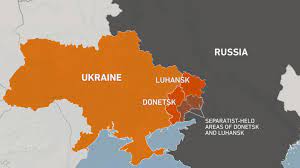
Ukraine vs. Russia
Trump wants access to Ukraine’s rare earth minerals, which are key to manufacturing high-tech products like computer chips and military equipment.
The reason: In April, 2025, China announced export restrictions on some of these minerals in retaliation for Trump’s placing tariffs on Chinese goods.
In asserting the United States’ sphere of influence, Trump sees himself as the leader of a country that’s expansive and claims new territory,
As a result, he has attacked America’s longtime ally and neighbor, Canada with tariffs. He’s even threatened it with possible military invasion.
Vladimir Putin is another politician who believes in spheres of influence.
Since the breakup of the Soviet Union in 1991, Putin has yearned for its reestablishment. He has called that breakup “the greatest geopolitical tragedy of the 20th century.”

Vladimir Putin
Kremlin.ru, CC BY 4.0 <https://creativecommons.org/licenses/by/4.0>, via Wikimedia Commons
Russia has long resisted Ukraine’s move towards European institutions—especially entry into NATO.
Since late February, 2014, he began moving Russian troops into Ukraine and its autonomous Republic, Crimea. Russia annexed Ukraine’s southern Crimean peninsula and backed separatists who captured large swathes of eastern Ukraine.
On December 3, 2021, the Washington Post reported: “The Kremlin was planning a multi-front offensive as soon as early next year involving up to 175,000 troops” against Ukraine.
And where there is activity by Russians, American Rightists are eager to turn such events to their own political advantage.
All of which overlooks a number of brutal political truths.
First, all great powers have spheres of interest—and jealously guard them.
For the United States, it’s Latin and Central America, as established by the Monroe Doctrine.
And just what is the Monroe Doctrine?
It’s a statement made by President James Monroe in his 1823 annual message to Congress, which warned European powers not to interfere in the affairs of the Western Hemisphere.
The Monroe Doctrine has no legitimacy except the willingness of the United States to use armed force to back it up. When the United States no longer has the will or resources to enforce the Doctrine, it will cease to have meaning.
In 1962, President John F. Kennedy threatened Russian premier Nikita Khrushchev with nuclear oblivion unless Soviet nuclear missiles were withdrawn from Cuba.
For the Soviet Union, its spheres of influence include the Ukraine. Long known as “the breadbasket of Russia,” in 2011, it was the world’s third-largest grain exporter.
Russia will no more give up access to that breadbasket than the United States would part with the rich farming states of the Midwest.
Second, spheres of influence often prove disastrous to those smaller countries affected.
Throughout Latin and Central America, the United States remains highly unpopular for its brutal use of “gunboat diplomacy” during the 20th century.
Among those countries invaded or controlled by America: Mexico, Cuba, Guatemala, Nicaragua, Columbia, Panama and the Dominican Republic.
The resulting anger has led many Latin and Central Americans to support Communist Cuba, even though its political oppression and economic failure are universally apparent.
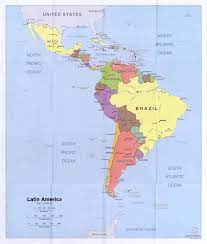
Latin and Central America
Similarly, the Soviet Union forced many nations—such as Poland, Hungary and Czechoslovakia—to submit to the will of Moscow.
The alternative? The threat of Soviet invasion—as occurred in Hungary in 1956 and Czechoslovakia in 1968.
Third, even “great powers” are not all-powerful.
In 1949, after a long civil war, the forces of Mao Zedong defeated the Nationalist armies of Chiang Kai-Shek, who withdrew to Taiwan.
China had never been a territory of the United States. Nor could the United States have prevented Mao from defeating the corrupt, ineptly-led Nationalist forces.
Even so, Republican Senators and Representatives such as Richard Nixon and Joseph McCarthy eagerly blamed President Harry S. Truman and the Democrats for “losing China.”
The fear of being accused of “losing” another country led Presidents Dwight D. Eisenhower, John F. Kennedy, Lyndon B. Johnson and Richard M. Nixon to tragically commit the United States to “roll back” Communism in Cuba and Vietnam.
Now Republicans—who claim the United States can’t afford to provide healthcare for its poorest citizens—want to turn the national budget over to the Pentagon.
They want the United States to “intervene” in Syria following the overthrow of Bashar al-Assad’s government in late 2024
This would insert the United States into yet another war in yet another Islamic country—after our disastrous forays in Iraq and Afghanistan.
Before plunging into conflicts that don’t concern us and where there is absolutely nothing to “win,” Americans would do well to remember the above-stated lessons of history. And to learn from them.
ABC NEWS, ALTERNET, AMERICABLOG, AP, BABY BOOMER RESISTANCE, BARACK OBAMA, BBC, BLOOMBERG, BLOOMBERG NEWS, BUZZFEED, CBS NEWS, CENTRAL AMERICA, CHIANG KAI-SHEK, CHINA, CNN, COLUMBIA, COMMUNISM, CRIMEA, CROOKS AND LIARS, CUBA, CZECHOSLAVAKIA, DAILY KOS, DAILY KOZ, DEMOCRATS, DONALD TRUMP, FACEBOOK, FIVETHIRTYEIGHT, GUATEMALA, GUNBOAT DIPLOMACY, HARPER’S MAGAZINE, HARRY S. TRUMAN, HUFFINGTON POST, HUNGARY, JOHN F. KENNEDY, JOSEPH MCCARTHY, LATIN AMERICA, LYNDON B. JOHNSON, MAO TSE-TUNG, MEDIA MATTERS, MICK MULVANEY, MITT ROMNEY, MONROE DOCTRINE, MOTHER JONES, MOVEON, MSNBC, NBC NEWS, NEW REPUBLIC, NEWSDAY, NEWSWEEK, NICARAGUA, NPR, PANAMA, PBS NEWSHOUR, POLAND, POLITICO, POLITICUSUSA, RAW STORY, REPUBLICANS, REUTERS, RICHARD M. NIXON, SALON, SEATTLE TIMES, SLATE, SOCHI OLYMPICS, SOVIET UNION, SPHERES OF INFLUENCE, TALKING POINTS MEMO, THE ATLANTIC, THE CHICAGO SUN-TIMES, THE CHICAGO TRIBUNE, THE DAILY BEAST, THE DAILY BLOG, THE GUARDIAN, THE HILL, THE HUFFINGTON POST, THE INTERCEPT, THE LOS ANGELES TIMES, THE NATION, THE NEW REPUBLIC, THE NEW YORK TIMES, THE NEW YORKER, THE VILLAGE VOICE, THE WASHINGTON POST, THINKPROGRESS, TIME, TOM COTTON, TRUTHDIG, TRUTHOUT, TWO POLITICAL JUNKIES, U.S. NEWS & WORLD REPORT, UKRAINE, UPI, USA TODAY, VICTOR YANUKOVYCH, VIETNAM, VLADIMIR PUTIN, VOLODYMYR ZELENSKY, WONKETTE, X
In Bureaucracy, History, Military, Social commentary on November 22, 2024 at 12:11 am
The collapse of the Soviet Union in 1991 plunged the American Right into a depression.
Accusing Democrats of being “terrorist-lovers” just didn’t prove as profitable as accusing them of being “Communists.”
Then fate intervened.
The torch had barely gone out at the 2014 Sochi Winter Olympics when Russian President Vladimir Putin began menacing the Ukraine.
Ukraine vs. Russia
Even while the Olympics played out on television, Ukrainians had rioted in Kiev and evicted their corrupt, luxury-loving president, Victor Yanukovych.
And that didn’t sit well with his “sponsor”—Putin.
Yanukovych had rejected a pending European Union association agreement. He had chosen instead to pursue a Russian loan bailout and closer ties with Russia.
And that had sat well with Putin.
Since the breakup of the Soviet Union in 1991, Putin had yearned for its reestablishment. He had called that breakup “the greatest geopolitical tragedy of the 20th century.”
Vladimir Putin
Kremlin.ru, CC BY 4.0 <https://creativecommons.org/licenses/by/4.0>, via Wikimedia Commons
Russia has long resisted Ukraine’s move towards European institutions—especially NATO.
So it was almost a certainty that Putin would retaliate.
And since late February, 2014, he began moving Russian troops into Ukraine and its autonomous republic, Crimea. Russia annexed Ukraine’s southern Crimean peninsula and backed separatists who captured large swathes of eastern Ukraine.
On December 3, 2021, the Washington Post reported: “The Kremlin is planning a multi-front offensive as soon as early next year involving up to 175,000 troops” against Ukraine.
And where there is activity by Russians, American Rightists are eager to turn such events to their own political advantage.
Right-wingers such as Senator Tom Cotton (R-AR): ”It is a result of a year of Joe Biden’s impotence and incompetence towards Russia in particular and in foreign policy more generally.”
Cotton had vigorously defended President Donald Trump’s attempted extortion of Ukrainian President Volodymyr Zelensky in the face of Russian aggression.
In July, 2019, Trump told his acting chief of staff, Mick Mulvaney, to withhold almost $400 million in promised military aid for Ukraine.
Then, on July 25, Trump telephoned Zelensky to “request” a “favor”: Investigate presumed 2020 Democratic Presidential Candidate Joe Biden and his son, Hunter, who had had business dealings in Ukraine.
Clearly implied in the call: Produce “dirt” on Biden—or you won’t get the military aid.
All of which overlooks a number of brutal political truths.
First, all great powers have spheres of interest—and jealously guard them.
For the United States, it’s Latin and Central America, as established by the Monroe Doctrine.
And just what is the Monroe Doctrine?
It’s a statement made by President James Monroe in his 1823 annual message to Congress, which warned European powers not to interfere in the affairs of the Western Hemisphere.
It has no legitimacy except the willingness of the United States to use armed force to back it up. When the United States no longer has the will or resources to enforce the Doctrine, it will cease to have meaning.
For the Soviet Union, its spheres of influence include the Ukraine. Long known as “the breadbasket of Russia,” in 2011, it was the world’s third-largest grain exporter.
Russia will no more give up access to that breadbasket than the United States would part with the rich farming states of the Midwest.
Second, spheres of influence often prove disastrous to those smaller countries affected.
Throughout Latin and Central America, the United States remains highly unpopular for its brutal use of “gunboat diplomacy” during the 20th century.
Among those countries invaded or controlled by America: Mexico, Cuba, Guatemala, Nicaragua, Columbia, Panama and the Dominican Republic.
The resulting anger has led many Latin and Central Americans to support Communist Cuba, even though its political oppression and economic failure are universally apparent.
Latin and Central America
Similarly, the Soviet Union forced many nations—such as Poland, Hungary and Czechoslovakia—to submit to the will of Moscow.
The alternative? The threat of Soviet invasion—as occurred in Hungary in 1956 and Czechoslovakia in 1968.
Third, even “great powers” are not all-powerful.
In 1949, after a long civil war, the forces of Mao Tse-tung defeated the Nationalist armies of Chiang Kai-Shek, who withdrew to Taiwan.
China had never been a territory of the United States. Nor could the United States have prevented Mao from defeating the corrupt, ineptly-led Nationalist forces.
Even so, Republican Senators and Representatives such as Richard Nixon and Joseph McCarthy eagerly blamed President Harry S. Truman and the Democrats for “losing China.”
The fear of being accused of “losing” another country led Presidents John F. Kennedy, Lyndon B. Johnson and Richard M. Nixon to tragically commit the United States to “roll back” Communism in Cuba and Vietnam.
Now Republicans—who claim the United States can’t afford to provide healthcare for its poorest citizens—want to turn the national budget over to the Pentagon.
They want the United States to “intervene” in Ukraine—even though this would mean going to war with the only nuclear power capable of turning America into an atomic graveyard.
Before plunging into conflicts that don’t concern us and where there is absolutely nothing to “win,” Americans would do well to remember the above-stated lessons of history. And to learn from them.
"MISSION: IMPOSSIBLE", 2016 PRESIDENTIAL ELECTION, ABC NEWS, ALTERNET, AMERICABLOG, AP, AUGUSTO PINOCHET, AUGUSTO SANDINO, AYATOLLAH RUHOLLAH KHOMEINI, ” 9/11, BABY BOOMER RESISTANCE, BAY OF PIGS, BBC, BLOOMBERG NEWS, BUZZFEED, CBS NEWS, CHIANG KAI-SHEK, CHILE, CIA, CNN, CROOKS AND LIARS, CUBA, DAILY KOS, DAILY KOZ, DONALD TRUMP, DWIGHT D. EISENHOWER, FIDEL CASTRO, FIVETHIRTYEIGHT, FULGENCIO BATISTA, GEORGE W. BUSH, GUATEMALA, HAITI, HARPER’S MAGAZINE, HONODURAS, HUFFINGTON POST, IRAQ, JACOBO ARBENZ, JOHN F. KENNEDY, MAFIA, MAO TSE-TUNG, MEDIA MATTERS, MOHAMMAD MOSADDEGH, MOHAMMAD-REZA SHAH PHLAVI, MOTHER JONES, MOVEON, MSNBC, NATIONAL SECURITY AGENCY, NBC NEWS, NEW REPUBLIC, NEWSDAY, NEWSWEEK, NICARAGUA, NPR, OSAMA BIN LADEN, PBS NEWSHOUR, POLITICO, POLITICUSUSA, RAW STORY, REUTERS, RICHARD M. NIXON, ROBERT MUELLER, RUSSIA, SADDAM HUSSEIN, SALON, SALVADOR ALLENDE, SEATTLE TIMES, SLATE, SOVIET UNION, TALKING POINTS MEMO, THE ATLANTIC, THE CHICAGO SUN-TIMES, THE CHICAGO TRIBUNE, THE DAILY BEAST, THE DAILY BLOG, THE GUARDIAN, THE HILL, THE HUFFINGTON POST, THE INTERCEPT, THE LOS ANGELES TIMES, THE NATION, THE NEW REPUBLIC, THE NEW YORK TIMES, THE NEW YORKER, THE VILLAGE VOICE, THE WASHINGTON POST, THINKPROGRESS, TIME, TRUTHDIG, TRUTHOUT, TWITTER, U.S. NEWS & WORLD REPORT, UNITED FRUIT COMPANY, UPI, USA TODAY
In Bureaucracy, History, Military, Politics, Social commentary on November 3, 2023 at 12:13 am
The CIA, FBI and National Security Agency (which cracks codes and listens to the telephone conversation of foreign leaders) unanimously agree: Russian trolls and Intelligence agents played a major role in subverting the 2016 Presidential election.
Special Counsel Robert Mueller III, assigned in May, 2017, to investigate charges of Russian interference, believed there was collusion. He indicted or obtained guilty pleas from 34 people and three companies.
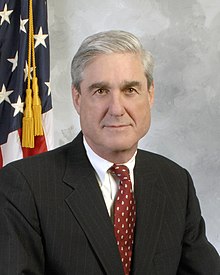
Robert Mueller
And about 58% of Americans believe that President Donald Trump tried to obstruct the investigation.
Apparently, most Americans don’t like having their elections subverted by enemy nations.
Subverting the governments of other countries is a right that Americans have long reserved for themselves. Among those regimes that have been toppled:
- Between 1898 and 1934, the United States repeatedly intervened with military force in Central America and the Caribbean.
- Americans staged invasions of Honduras in 1903, 1907, 1911, 1912, 1919, 1924 and 1925 to defend U.S. interests. These were defined as Standard Oil and the United Fruit Company.
- The United States occupied Nicaragua almost continuously from 1912 to 1933. Its legacy was the imposition of the tyrannical Somoza family, which ruled from 1936 to 1979.
- The United States occupied Haiti from 1915 to 1934. American banks had lent money to Haiti and requested American government intervention.
- In 1918, 13,000 American soldiers joined armies from Europe and Japan to overthrow the new Soviet government and restore the previous Czarist regime. By 1920, the invading forces proved unsuccessful and withdrew.
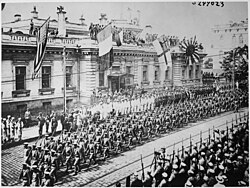
Allied troops parading in Vladivostok, 1918
- From 1946 to 1949, the United States provided military, logistical and other aid to the Right-wing Chinese Nationalist Party of Chiang Kai-shek. Its opponent: Communist forces led by Mao Tse-Tung, who ultimately proved victorious.
- In 1953, the Eisenhower administration ordered the CIA to overthrew the democratically-elected government of of Iranian Prime Minister Mohammad Mosaddegh. His crime: Nationalizing the Iranian oil industry, which had been under British control since 1913. He was succeeded by Mohammad-Reza Shah Phlavi.
- Whereas Mossadeddgh had ruled as a constitutional monarch, Phlavi was a dictator who depended on United States government support to retain power until he was overthrown in 1979 by the Ayatollah Ruhollah Khomeini.
- In 1954, the CIA overthrew the democratically-elected government of Guatemalan President Jacobo Arbenz. His crime: Installing a series of reforms that expanded the right to vote, allowed workers to organize, legitimized political parties and allowed public debate. Most infuriating to American Right-wingers: His agrarian reform law, which expropriated parts of large land-holdings and redistributed them to agricultural laborers.
- The United Fruit Company lobbied the United States government to overthrow him—and the CIA went into action. Arbenz was replaced by the first of a series of brutal Right-wing dictators.
- From 1959 until 1963, the United States government was obsessed with overthrowing the revolutionary Cuban government of Fidel Castro. Although not democratically elected, Castro was wildly popular in Cuba for overthrowing the dictatorial Fulgencio Batista.
- On April 17, 1961, over 1,400 CIA-trained Cuban exiles invaded Cuba at the Bay of Pigs. Cuban military forces crushed the invasion in three days.
- Infuriated with the failure of the Bay of Pigs invasion, President John F. Kennedy authorized “Operation Mongoose” to remove Castro through sabotage and assassination. The CIA, wanting to please Kennedy, teamed up with the Mafia, which wanted to resurrect its casinos on the island.
- Among the tactics used: Hiring Cuban gangsters to murder police officials and Soviet technicians; sabotaging mines; using biological and chemical warfare against the Cuban sugar industry. None of these proved successful in assassinating Castro nor overturning his regime.
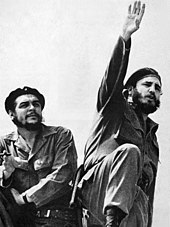
Ernesto “Che” Guevera and Fidel Castro
- In 1970, President Richard M. Nixon ordered the CIA to prevent Marxist Salvador Allende from being democratically elected as president of Chile. When that failed, he ordered the CIA to overthrow Allende. Allende’s crime: A series of liberal reforms, including nationalizing large-scale industries (notably copper mining and banking).
- In 1973, he was overthrown by Chilean army units and national police. He was followed by Right-wing dictator Augusto Pinochet, who slaughtered 3,200 political dissidents, imprisoned 30,000 and forced another 200,000 Chileans into exile.
And how did Americans react to all these attempts—successful and unsuccessful—at regime change?
Through indifference or outright support.
The popular 1960s TV series, “Mission: Impossible,” regularly depicted a CIA-type agency supporting regimes “we” liked or toppling those “we” didn’t.
Americans generally assume their Presidents and Congress know best who is a “friend” and who is an “enemy.” America’s friends usually turn out to be Right-wing dictators like Chiang Kai-Shek, Fulgencio Batista, Augusto Pinochet and Mohammad-Reza Shah Phlavi.
And its enemies often turn out to be liberal reformers like Augusto Sandino, Mohammad Mosaddegh and Salvador Allende.
Americans tend to favor intervention for the flimsiest of reasons. In 2003, President George W. Bush claimed Iraq’s dictator, Saddam Hussein, had plotted 9/11 with Osama bin Laden. There was absolutely no proof to substantiate this, yet Americans overwhelmingly supported Bush’s unprovoked invasion of Iraq.
But now the shoe is on the other foot.
Except for President Donald Trump and his fanatical supporters, Americans are furious that a foreign power has dared to install “regime change” on them.
Americans are now tasting the medicine they have dished out to so many other countries. And they find it as repugnant as those countries have found the American brand.
"MISSION: IMPOSSIBLE", 2016 PRESIDENTIAL ELECTION, ABC NEWS, ADAM SCHIFF, ALTERNET, AMERICABLOG, AP, AUGUSTO PINOCHET, AUGUSTO SANDINO, AYATOLLAH RUHOLLAH KHOMEINI, ” 9/11, BABY BOOMER RESISTANCE, BAY OF PIGS, BERNARD LAW MONTGOMERY, BUZZFEED, CBS NEWS, CHIANG KAI-SHEK, CHILE, CIA, CNN, CROOKS AND LIARS, CUBA, DAILY KOZ, DONALD TRUMP, DRUDGE RETORT, DWIGHT D. EISENHOWER, FBI, FIDEL CASTRO, FIVETHIRTYEIGHT, FULGENCIO BATISTA, GEORGE W. BUSH, GUATEMALA, HAITI, HARPER’S MAGAZINE, HONODURAS, HUNTER BIDEN, IRAQ, JACOBO ARBENZ, JOE BIDEN, JOHN F. KENNEDY, MAFIA, MAO TSE-TUNG, MEDIA MATTERS, MICK MULVANEY, MOHAMMAD MOSADDEGH, MOHAMMAD-REZA SHAH PHLAVI, MOTHER JONES, MOVEON, MSNBC, NANCY PELOSI, NATIONAL SECURITY AGENCY, NBC NEWS, NEWSWEEK, NICARAGUA, NPR, OSAMA BIN LADEN, PBS NEWSHOUR, POLITICO, POLITICUSUSA, RAW STORY, REUTERS, RICHARD M. NIXON, RUSSIA, SADDAM HUSSEIN, SALON, SALVADOR ALLENDE, SEATTLE TIMES, SLATE, SOVIET UNION, TALKING POINTS MEMO, THE ATLANTIC, THE CHICAGO SUN-TIMES, THE CHICAGO TRIBUNE, THE DAILY BEAST, THE DAILY BLOG, THE GUARDIAN, THE HILL, THE HUFFINGTON POST, THE LOS ANGELES TIMES, THE NATION, THE NEW REPUBLIC, THE NEW YORK TIMES, THE VILLAGE VOICE, THE WASHINGTON POST, THINKPROGRESS, TIME, TRUTHDIG, TRUTHOUT, TWITTER, TWO POLITICAL JUNKIES, U.S. NEWS & WORLD REPORT, UKRAINE, UNITED FRUIT COMPANY, UPI, USA TODAY, VOLODYMYR ZELENSKY, WINSTON CHURCHILL, WONKETTE, WORLD WAR 11
In Bureaucracy, History, Politics, Social commentary on September 22, 2023 at 12:18 am
“I have news for everybody: Get over it. There’s going to be political influence in foreign policy.”
The speaker was White House chief of staff Mick Mulvaney. And in an October 17, 2019 press conference, he was trying to put the best possible spin on President Donald Trump’s latest outrage: An attempt to extort a “favor” from the president of Ukraine.
In July, 2019, Trump told Mulvaney to withhold almost $400 million in promised military aid for Ukraine, which faces increasing aggression from Russia.
On July 25, Trump telephoned Ukrainian President Volodymyr Zelensky to “request” a “favor”: Investigate Democratic Presidential Candidate Joe Biden and his son, Hunter, who had had business dealings in Ukraine.The reason for such an investigation: To find embarrassing “dirt” on Biden.
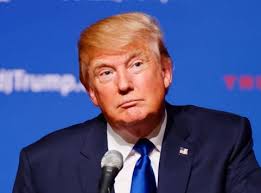
Donald Trump
But then a CIA whistleblower filed a complaint about the extortion attempt—and the media and Congress soon learned of it.
Rep. Adam Schiff, D-Calif., tweeted: “The transcript of the call reads like a classic mob shakedown: — We do a lot for Ukraine — There’s not much reciprocity — I have a favor to ask — Investigate my opponent — My people will be in touch — Nice country you got there. It would be a shame if something happened to her.”
On September 24, 2019, Nancy Pelosi, speaker to the House of Representatives, announced a formal impeachment inquiry into Trump.
During World War II, President Franklin D. Roosevelt didn’t hesitate to leverage the great economic and military power of the United States to gain concessions from Winston Churchill, the prime minister of Great Britain.
At Roosevelt’s insistence, for example, it was an American—General Dwight D. Eisenhower—who was appointed Supreme Allied Commander in Europe. Had the British gotten their way, the post would have almost certainly gone to British Field Marshal Bernard Law Montgomery.
Roosevelt’s insistence, however, had nothing to do with personally benefiting himself.
But the unpleasant truth remains that subverting the governments of other countries is a right that Americans have long reserved for themselves. For example:
- Between 1898 and 1934, the United States repeatedly intervened with military force in Central America and the Caribbean.
- Americans staged invasions of Honduras in 1903, 1907, 1911, 1912, 1919, 1924 and 1925 to defend U.S. interests. These were defined as Standard Oil and the United Fruit Company.
- The United States occupied Nicaragua almost continuously from 1912 to 1933. Its legacy was the imposition of the tyrannical Somoza family, which ruled from 1936 to 1979.
- The United States occupied Haiti from 1915 to 1934. American banks had lent money to Haiti and requested American government intervention.
- In 1918, 13,000 American soldiers joined armies from Europe and Japan to overthrow the new Soviet government and restore the previous Tsarist regime. By 1920, the invading forces proved unsuccessful and withdrew.
Allied troops parading in Vladivostok, 1918
- In 1953, President Dwight D. Eisenhower ordered the CIA to overthrew the democratically-elected government of of Iranian Prime Minister Mohammad Mosaddegh. His crime: Nationalizing the Iranian oil industry, which had been under British control since 1913.
- He was succeeded by Mohammad-Reza Shah Phlavi. Whereas Mossadeddgh had ruled as a constitutional monarch, Phlavi was a dictator who depended on United States government support to retain power until he was overthrown in 1979 by the Ayatollah Ruhollah Khomeini.
- In 1954, the CIA overthrew the democratically-elected government of Guatemalan President Jacobo Arbenz. His crime: Installing a series of reforms that expanded the right to vote, allowed workers to organize, legitimized political parties and allowed public debate.
- Most infuriating to American Right-wingers: His agrarian reform law, which expropriated parts of large land-holdings and redistributed them to agricultural laborers.
- From 1959 until 1963, the United States government was obsessed with overthrowing the revolutionary Cuban government of Fidel Castro. Although not democratically elected, Castro was wildly popular in Cuba for overthrowing the dictatorial Fulgencio Batista.
- On April 17, 1961, over 1,400 CIA-trained Cuban exiles invaded Cuba at the Bay of Pigs. Cuban military forces crushed the invasion in three days.
- Infuriated with the failure of the Bay of Pigs invasion, President John F. Kennedy authorized “Operation Mongoose” to remove Castro through sabotage and assassination. The CIA, wanting to please Kennedy, teamed up with the Mafia, which wanted to resurrect its casinos on the island.
Ernesto “Che” Guevera and Fidel Castro
- In 1970, President Richard M. Nixon ordered the CIA to prevent Marxist Salvador Allende from being democratically elected as president of Chile. When that failed, he ordered the CIA to overthrow Allende.
- Allende’s crime: A series of liberal reforms, including nationalizing large-scale industries (notably copper mining and banking). In 1973, he was overthrown by Chilean army units and national police.
- He was followed by Right-wing dictator Augusto Pinochet, who slaughtered 3,200 political dissidents, imprisoned 30,000 and forced another 200,000 Chileans into exile.
Americans reacted to all these attempts—successful and unsuccessful—with indifference or outright support.
The popular 1960s TV series, “Mission: Impossible,” regularly depicted a CIA-type agency supporting regimes “we” liked or toppling those “we” didn’t.
Americans generally assume their Presidents and Congress know best who is a “friend” and who is an “enemy.” America’s friends often turn out, for the most part, to be Right-wing dictators like Fulgencio Batista, Augusto Pinochet and Mohammad-Reza Shah Phlavi.
And its enemies often turn out to be liberal reformers like Augusto Sandino, Jacobo Arbenz, Mohammad Mosaddegh and Salvador Allende.
ABC NEWS, ALTERNET, AMERICABLOG, AP, BABY BOOMER RESISTANCE, BARACK OBAMA, BBC, BLOOMBERG NEWS, BUZZFEED, CBS NEWS, CENTRAL AMERICA, CHIANG KAI-SHEK, CHINA, CNN, COLUMBIA, COMMUNISM, CRIMEA, CROOKS AND LIARS, CUBA, CZECHOSLAVAKIA, DAILY KOZ, DEMOCRATS, DONALD TRUMP, FACEBOOK, FIVETHIRTYEIGHT, GUATEMALA, GUNBOAT DIPLOMACY, HARPER’S MAGAZINE, HARRY S. TRUMAN, HUFFINGTON POST, HUNGARY, JOHN F. KENNEDY, JOSEPH MCCARTHY, LATIN AMERICA, LYNDON B. JOHNSON, MAO TSE-TUNG, MEDIA MATTERS, MICK MULVANEY, MITT ROMNEY, MONROE DOCTRINE, MOTHER JONES, MOVEON, MSNBC, NBC NEWS, NEW REPUBLIC, NEWSDAY, NEWSWEEK, NICARAGUA, NPR, PANAMA, PBS NEWSHOUR, POLAND, POLITICO, POLITICUSUSA, RAW STORY, REPUBLICANS, REUTERS, RICHARD M. NIXON, SALON, SEATTLE TIMES, SLATE, SOCHI OLYMPICS, SOVIET UNION, SPHERES OF INFLUENCE, TALKING POINTS MEMO, THE ATLANTIC, THE CHICAGO SUN-TIMES, THE CHICAGO TRIBUNE, THE DAILY BEAST, THE DAILY BLOG, THE GUARDIAN, THE HILL, THE HUFFINGTON POST, THE LOS ANGELES TIMES, THE NATION, THE NEW REPUBLIC, THE NEW YORK TIMES, THE NEW YORKER, THE VILLAGE VOICE, THE WASHINGTON POST, THINKPROGRESS, TIME, TOM COTTON, TRUTHDIG, TRUTHOUT, TWITTER, TWO POLITICAL JUNKIES, U.S. NEWS & WORLD REPORT, UKRAINE, UPI, USA TODAY, VICTOR YANUKOVYCH, VIETNAM, VLADIMIR PUTIN, VOLODYMYR ZELENSKY, WONKETTE
In Bureaucracy, History, Military, Politics, Social commentary, Uncategorized on January 24, 2022 at 12:35 am
Ever since the collapse of the Soviet Union in 1991, the American Right felt dejected.
Accusing Democrats of being “terrorist-lovers” just hasn’t been as profitable as accusing them of being “Communists.”
Then fate intervened.
The torch had barely gone out at the 2014 Sochi Winter Olympics when Russian President Vladimir Putin began menacing the Ukraine.
Ukraine vs. Russia
Even while the Olympics played out on television, Ukrainians had rioted in Kiev and evicted their corrupt, luxury-loving president, Victor Yanukovych.
And that didn’t sit well with his “sponsor”—Putin.
Yanukovych had rejected a pending European Union association agreement. He had chosen instead to pursue a Russian loan bailout and closer ties with Russia.
And that had sat well with Putin.
Since the breakup of the Soviet Union in 1991, Putin had yearned for its reestablishment. He had called that breakup “the greatest geopolitical tragedy of the 20th century.”
Vladimir Putin
Kremlin.ru, CC BY 4.0 <https://creativecommons.org/licenses/by/4.0>, via Wikimedia Commons
Russia has long resisted Ukraine’s move towards European institutions—especially NATO.
So it was almost a certainty that Putin would retaliate.
And since late February, 2014, he began moving Russian troops into Ukraine and its autonomous republic, Crimea. Russia annexed Ukraine’s southern Crimean peninsula and backed separatists who captured large swathes of eastern Ukraine.
On December 3, 2021, the Washington Post reported: “The Kremlin is planning a multi-front offensive as soon as early next year involving up to 175,000 troops” against Ukraine.
And where there is activity by Russians, American Rightists are eager to turn such events to their own political advantage.
Right-wingers such as Senator Tom Cotton (R-AR): ”It is a result of a year of Joe Biden’s impotence and incompetence towards Russia in particular and in foreign policy more generally.”
Cotton had vigorously defended President Donald Trump’s attempted extortion of Ukrainian President Volodymyr Zelensky in the face of Russian aggression.
In July, 2019, Trump told his acting chief of staff, Mick Mulvaney, to withhold almost $400 million in promised military aid for Ukraine.
Then, on July 25, Trump telephoned Zelensky to “request” a “favor”: Investigate presumed 2020 Democratic Presidential Candidate Joe Biden and his son, Hunter, who had had business dealings in Ukraine.
Clearly implied in the call: Produce “dirt” on Biden—or you won’t get the military aid.
All of which overlooks a number of brutal political truths.
First, all great powers have spheres of interest—and jealously guard them.
For the United States, it’s Latin and Central America, as established by the Monroe Doctrine.
And just what is the Monroe Doctrine?
It’s a statement made by President James Monroe in his 1823 annual message to Congress, which warned European powers not to interfere in the affairs of the Western Hemisphere.
It has no legitimacy except the willingness of the United States to use armed force to back it up. When the United States no longer has the will or resources to enforce the Doctrine, it will cease to have meaning.
For the Soviet Union, its spheres of influence include the Ukraine. Long known as “the breadbasket of Russia,” in 2011, it was the world’s third-largest grain exporter.
Russia will no more give up access to that breadbasket than the United States would part with the rich farming states of the Midwest.
Second, spheres of influence often prove disastrous to those smaller countries affected.
Throughout Latin and Central America, the United States remains highly unpopular for its brutal use of “gunboat diplomacy” during the 20th century.
Among those countries invaded or controlled by America: Mexico, Cuba, Guatemala, Nicaragua, Columbia, Panama and the Dominican Republic.
The resulting anger has led many Latin and Central Americans to support Communist Cuba, even though its political oppression and economic failure are universally apparent.
Latin and Central America
Similarly, the Soviet Union forced many nations—such as Poland, Hungary and Czechoslovakia—to submit to the will of Moscow.
The alternative? The threat of Soviet invasion—as occurred in Hungary in 1956 and Czechoslovakia in 1968.
Third, even “great powers” are not all-powerful.
In 1949, after a long civil war, the forces of Mao Tse-tung defeated the Nationalist armies of Chiang Kai-Shek, who withdrew to Taiwan.
China had never been a territory of the United States. Nor could the United States have prevented Mao from defeating the corrupt, ineptly-led Nationalist forces.
Even so, Republican Senators and Representatives such as Richard Nixon and Joseph McCarthy eagerly blamed President Harry S. Truman and the Democrats for “losing China.”
The fear of being accused of “losing” another country led Presidents John F. Kennedy, Lyndon B. Johnson and Richard M. Nixon to tragically commit the United States to “roll back” Communism in Cuba and Vietnam.
Now Republicans—who claim the United States can’t afford to provide healthcare for its poorest citizens—want to turn the national budget over to the Pentagon.
They want the United States to “intervene” in Ukraine—even though this would mean going to war with the only nuclear power capable of turning America into an atomic graveyard.
Before plunging into conflicts that don’t concern us and where there is absolutely nothing to “win,” Americans would do well to remember the above-stated lessons of history. And to learn from them.
ABC NEWS, ADOLF HITLER, ALTERNET, AMERICABLOG, AP, BABY BOOMER RESISTANCE, BASKETBALL, BUZZFEED, CBS NEWS, CHIANG KAI-SHEK, CNN, COLD WAR, COLUMBIA BROADCASTING SYSTEM, COMMUNISM, CROOKS AND LIARS, DAILY BEAST, DAILY KOZ, DRUDGE RETORT, EDWARD R. MURROW, ERIK WEMPLE, FACEBOOK, FELICIA SONMEZ, FIVETHIRTYEIGHT, HARPER’S MAGAZINE, JOHN F. KENNEDY, KOBE BRYANT, LIBERALISM, LOYALTY OATH GOVERNMENT EMPLOYEES PROGRAM, MARTY BARON, MEDIA MATTERS, MOTHER JONES, MOVEON, MSNBC, NAZI GERMANY, NBC NEWS, NEWSWEEK, NPR, PBS NEWSHOUR, PENTAGON PAPERS, POLITICO, POLITICUSUSA, RADIO AND TELEVISION NEWS DIRECTORS ASSOCIATION, RAPE, RAW STORY, REUTERS, SALON, SEATTLE TIMES, SEE IT NOW, SLATE, SOVIET UNION, TALKING POINTS MEMO, THE ATLANTIC, THE BLITZ, THE CHICAGO SUN-TIMES, THE CHICAGO TRIBUNE, THE DAILY BEAST, THE DAILY BLOG, THE GUARDIAN, THE HILL, THE HUFFINGTON POST, THE LOS ANGELES TIMES, THE NATION, THE NEW REPUBLIC, THE NEW YORK TIMES, THE VILLAGE VOICE, THE WASHINGTON POST, THINKPROGRESS, TIME, TRACY GRANT, TRUTHDIG, TRUTHOUT, TWITTER, TWO POLITICAL JUNKIES, U.S. NEWS & WORLD REPORT, UNITED STATES INFORMATION AGENCY, UPI, USA TODAY, WATERGATE, WILLIAM L. SHIRER, WILLIAM PALEY, WILLIAM RANDOLPH HEARST, WONKETTE
In Bureaucracy, Business, Entertainment, History, Politics, Social commentary on January 30, 2020 at 12:09 am
During the early and mid-1950s, “CBS” came to have two meanings.
For the overwhelming majority of Americans, it stood for “Columbia Broadcasting System.”
But for many of the reporters and editors working in its News Division, “CBS” came to mean “Cowardly Bastards Syndrome.”
William L. Shirer had worked as a newspaper reporter for Universal News Service, a wire service for William Randolph Hearst. Assigned to Germany, he had been one of the first American reporters to chronicle Adolf Hitler’s rise to power.
In 1937, with the Hearst empire losing money, he found himself fired. Shortly afterward, he was hired by Edward R. Murrow, European manager for CBS News. Murrow hadn’t had any experience in journalism; he needed a top-flight reporter.
Shirer, a veteran reporter speaking fluent German and French, fit that bill.
Together, Shirer and Murrow were the beginning of what would become the CBS News empire. Shirer remained in Nazi Germany until December, 1940, when just ahead of the Gestapo, he left for the United States by passenger ship.

William L. Shirer
Meanwhile, Murrow achieved international fame reporting on the London Blitz, his signature introduction to each broadcast being: “This….is London.”
Thus, when both men returned to the United States after the war, they were genuine celebrities. Murrow took a job as a CBS vice president. Shirer continued to work as a correspondent.
In 1947, however, their longtime friendship came to an end.
Americans’ attitudes toward the Soviet Union—their ally during World War II—were hardening. Right-wingers saw no difference between liberalism and Communism. And Shirer was strongly critical of the Truman “loyalty oath” program for government employees and his catering to foreign dictators like Chiang Kai-Shek.
J. B. Williams, a maker of shaving soap, withdrew sponsorship of Shirer’s highly-rated Sunday news show. Within a month, CBS, through Murrow, moved Shirer’s program to Sunday midday and then canceled it.
Shirer blamed Murrow for not defending him—or the independence of the news division. After being fired by CBS, Shirer warned Murrow; “I’ve been through this before with newspapers. But you’re going to get it, too. Don’t kid yourself.”

Edward R. Murrow
Murrow’s turn did come, starting in 1958, with the cancellation of his hugely successful—and controversial—investigative series, See It Now.
Then, on October 15, 1958, in a speech before the Radio and Television News Directors Association in Chicago, Murrow attacked TV’s emphasis on entertainment and commercialism at the expense of public interest.
William S. Paley, the chairman of CBS and a longtime Murrow friend, never forgave the broadcaster for “biting the hand that feeds him.”
His influence almost ended at CBS, in 1961 Murrow accepted President John F. Kennedy’s invitation to direct the United States Information Agency.
In 1965, Murrow, a heavy cigarette smoker, died of lung cancer at 57. Shirer died in 1993, at 89.
But the Cowardly Bastards Syndrome didn’t die with Shirer and Murrow. It lives on in American journalism—most recently at The Washington Post.
On January 26, basketball celebrity Kobe Bryant died in a helicopter crash in Calabasas, California.
Several hours after Bryant’s death, The Washington Post’s national political reporter, Felicia Sonmez, tweeted a 2016 Daily Beast story that detailed a 2003 sexual assault allegation made against him.
The criminal charge was dropped, but Bryant settled a civil suit with his accuser for an undisclosed amount of money. He didn’t admit guilt, but he admitted that while he saw the encounter as consensual, his accuser did not.
Sonmez’s initial tweet about the allegation against Bryant ignited a firestorm of outrage. But she defended it, writing that “any public figure is worth remembering in their totality.”
 Sports-obsessed fans, who worship celebrity jocks as genuine heroes, loudly disagreed. Sonmez found herself deluged with insults and death threats on Twitter and in her Inbox.
Then came the indignity of being put on suspended leave by her employer—The Washington Post.
Before she was suspended, Sonmez received an email from the Post’s executive editor, Marty Baron: “A real lack of judgment to tweet this. Please stop. You’re hurting this institution by doing this.”
Tracy Grant, the Post’s managing editor, said in a statement that Sonmez’ tweets “displayed poor judgement that undermined the work of her colleagues.”
How tweeting a true story about a dead celebrity “undermined the work of her colleagues” was not explained.
Bryant had been charged with rape.
He had settled out of court on the same charge.
And truth is supposed to be the ultimate defense in a libel or slander lawsuit.
On top of that, Somnez had not even written the story—she had merely posted a Daily Beast story on Twitter.
Erik Wemple, the Post’s media critic, wrote that Grant told Sonmez in an email that her tweet didn’t “pertain” to her “coverage area”—politics.
Responded Wemple: “If journalists at The Post are prone to suspension for tweeting stories off their beats, the entire newsroom should be on administrative leave.”
The Washington Post has had many proud moments—such as the publishing of the Pentagon Papers in 1971 and its monumental coverage of Watergate from 1972 to 1974.
For journalists who cherish their freedom, this moment will long live in infamy.
"MISSION: IMPOSSIBLE", 2016 PRESIDENTIAL ELECTION, 9/11, ABC NEWS, ADAM SCHIFF, ALTERNET, AMERICABLOG, AP, AUGUSTO PINOCHET, AUGUSTO SANDINO, AYATOLLAH RUHOLLAH KHOMEINI, BABY BOOMER RESISTANCE, BAY OF PIGS, BERNARD LAW MONTGOMERY, BUZZFEED, CBS NEWS, CHIANG KAI-SHEK, CHILE, CIA, CNN, CROOKS AND LIARS, CUBA, DAILY KOZ, DONALD TRUMP, DRUDGE RETORT, DWIGHT D. EISENHOWER, FACEBOOK, FBI, FIDEL CASTRO, FIVETHIRTYEIGHT, FULGENCIO BATISTA, GEORGE W. BUSH, GUATEMALA, HAITI, HARPER’S MAGAZINE, HONODURAS, HUNTER BIDEN, IRAQ, JACOBO ARBENZ, JOE BIDEN, JOHN F. KENNEDY, MAFIA, MAO TSE-TUNG, MEDIA MATTERS, MICK MULVANEY, MOHAMMAD MOSADDEGH, MOHAMMAD-REZA SHAH PHLAVI, MOTHER JONES, MOVEON, MSNBC, NANCY PELOSI, NATIONAL SECURITY AGENCY, NBC NEWS, NEWSWEEK, NICARAGUA, NPR, OSAMA BIN LADEN, PBS NEWSHOUR, POLITICO, POLITICUSUSA, RAW STORY, REUTERS, RICHARD M. NIXON, RUSSIA, SADDAM HUSSEIN, SALON, SALVADOR ALLENDE, SEATTLE TIMES, SLATE, SOVIET UNION, TALKING POINTS MEMO, THE ATLANTIC, THE CHICAGO SUN-TIMES, THE CHICAGO TRIBUNE, THE DAILY BEAST, THE DAILY BLOG, THE GUARDIAN, THE HILL, THE HUFFINGTON POST, THE LOS ANGELES TIMES, THE NATION, THE NEW REPUBLIC, THE NEW YORK TIMES, THE VILLAGE VOICE, THE WASHINGTON POST, THINKPROGRESS, TIME, TRUTHDIG, TRUTHOUT, TWITTER, TWO POLITICAL JUNKIES, U.S. NEWS & WORLD REPORT, UKRAINE, UNITED FRUIT COMPANY, UPI, USA TODAY, VOLODYMYR ZELENSKY, WINSTON CHURCHILL, WONKETTE, WORLD WAR 11
In Bureaucracy, History, Politics, Social commentary on January 3, 2020 at 12:03 am
“I have news for everybody: Get over it. There’s going to be political influence in foreign policy.”
The speaker was White House chief of staff Mick Mulvaney. And in an October 17 press conference, he was trying to put the best possible spin on President Donald Trump’s latest outrage: An attempt to extort a “favor” from the president of Ukraine.
In July, 2019, Trump told Mulvaney to withhold almost $400 million in promised military aid for Ukraine, which faces increasing aggression from Russia.
On July 25, Trump telephoned Ukrainian President Volodymyr Zelensky to “request” a “favor”: Investigate Democratic Presidential Candidate Joe Biden and his son, Hunter, who had had business dealings in Ukraine.The reason for such an investigation: To find embarrassing “dirt” on Biden.
Donald Trump
But then a CIA whistleblower filed a complaint about the extortion attempt—and the media and Congress soon learned of it.
Rep. Adam Schiff, D-Calif., tweeted: “The transcript of the call reads like a classic mob shakedown: — We do a lot for Ukraine — There’s not much reciprocity — I have a favor to ask — Investigate my opponent — My people will be in touch — Nice country you got there. It would be a shame if something happened to her.”
On September 24, 2019, Nancy Pelosi, speaker to the House of Representatives, announced a formal impeachment inquiry into Trump.
As far as known, this marked a first in American foreign policy: Trying to extort a patently illegal favor from an ally.
During World War II, President Franklin D. Roosevelt didn’t hesitate to leverage the great economic and military power of the United States to gain concessions from Winston Churchill, the prime minister of Great Britain.
At Roosevelt’s insistence, for example, it was an American—General Dwight D. Eisenhower—who was appointed Supreme Allied Commander in Europe. Had the British gotten their way, the post would have almost certainly gone to British Field Marshal Bernard Law Montgomery.
Roosevelt’s insistence, however, had nothing to do with personally benefiting himself.
But the unpleasant truth remains that subverting the governments of other countries is a right that Americans have long reserved for themselves. For example:
- Between 1898 and 1934, the United States repeatedly intervened with military force in Central America and the Caribbean.
- Americans staged invasions of Honduras in 1903, 1907, 1911, 1912, 1919, 1924 and 1925 to defend U.S. interests. These were defined as Standard Oil and the United Fruit Company.
- The United States occupied Nicaragua almost continuously from 1912 to 1933. Its legacy was the imposition of the tyrannical Somoza family, which ruled from 1936 to 1979.
- The United States occupied Haiti from 1915 to 1934. American banks had lent money to Haiti and requested American government intervention.
- In 1918, 13,000 American soldiers joined armies from Europe and Japan to overthrow the new Soviet government and restore the previous Tsarist regime. By 1920, the invading forces proved unsuccessful and withdrew.
Allied troops parading in Vladivostok, 1918
- In 1953, the Eisenhower administration ordered the CIA to overthrew the democratically-elected government of of Iranian Prime Minister Mohammad Mosaddegh. His crime: Nationalizing the Iranian oil industry, which had been under British control since 1913.
- He was succeeded by Mohammad-Reza Shah Phlavi. Whereas Mossadeddgh had ruled as a constitutional monarch, Phlavi was a dictator who depended on United States government support to retain power until he was overthrown in 1979 by the Ayatollah Ruhollah Khomeini.
- In 1954, the CIA overthrew the democratically-elected government of Guatemalan President Jacobo Arbenz. His crime: Installing a series of reforms that expanded the right to vote, allowed workers to organize, legitimized political parties and allowed public debate. Most infuriating to American Right-wingers: His agrarian reform law, which expropriated parts of large land-holdings and redistributed them to agricultural laborers.
- From 1959 until 1963, the United States government was obsessed with overthrowing the revolutionary Cuban government of Fidel Castro. Although not democratically elected, Castro was wildly popular in Cuba for overthrowing the dictatorial Fulgencio Batista.
- On April 17, 1961, over 1,400 CIA-trained Cuban exiles invaded Cuba at the Bay of Pigs. Cuban military forces crushed the invasion in three days.
- Infuriated with the failure of the Bay of Pigs invasion, President John F. Kennedy authorized “Operation Mongoose” to remove Castro through sabotage and assassination. The CIA, wanting to please Kennedy, teamed up with the Mafia, which wanted to resurrect its casinos on the island.
Ernesto “Che” Guevera and Fidel Castro
- In 1970, President Richard M. Nixon ordered the CIA to prevent Marxist Salvador Allende from being democratically elected as president of Chile. When that failed, he ordered the CIA to overthrow Allende.
- Allende’s crime: A series of liberal reforms, including nationalizing large-scale industries (notably copper mining and banking). In 1973, he was overthrown by Chilean army units and national police. He was followed by Right-wing dictator Augusto Pinochet, who slaughtered 3,200 political dissidents, imprisoned 30,000 and forced another 200,000 Chileans into exile.
Americans reacted to all these attempts—successful and unsuccessful—with indifference or outright support.
The popular 1960s TV series, “Mission: Impossible,” regularly depicted a CIA-type agency supporting regimes “we” liked or toppling those “we” didn’t.
Americans generally assume their Presidents and Congress know best who is a “friend” and who is an “enemy.” America’s friends often turn out, for the most part, to be Right-wing dictators like Fulgencio Batista, Augusto Pinochet and Mohammad-Reza Shah Phlavi.
And its enemies often turn out to be liberal reformers like Augusto Sandino, Jacobo Arbenz, Mohammad Mosaddegh and Salvador Allende.
"MISSION: IMPOSSIBLE", 2016 PRESIDENTIAL ELECTION, 9/11, ABC NEWS, ALTERNET, AMERICABLOG, AP, AUGUSTO PINOCHET, AUGUSTO SANDINO, AYATOLLAH RUHOLLAH KHOMEINI, BABY BOOMER RESISTANCE, BAY OF PIGS, BUZZFEED, CBS NEWS, CHIANG KAI-SHEK, CHILE, CIA, CNN, CROOKS AND LIARS, CUBA, DAILY KOZ, DONALD TRUMP, DWIGHT D. EISENHOWER, FACEBOOK, FBI, FIDEL CASTRO, FIVETHIRTYEIGHT, FULGENCIO BATISTA, GEORGE W. BUSH, GUATEMALA, HAITI, HONODURAS, IRAQ, JACOBO ARBENZ, JOHN F. KENNEDY, MAFIA, MAO TSE-TUNG, MOHAMMAD MOSADDEGH, MOHAMMAD-REZA SHAH PHLAVI, MOTHER JONES, MOVEON, MSNBC, NATIONAL SECURITY AGENCY, NBC NEWS, NEWSWEEK, NICARAGUA, NPR, OSAMA BIN LADEN, PBS NEWSHOUR, POLITICO, POLITICUSUSA, RAW STORY, REUTERS, RICHARD M. NIXON, RUSSIA, SADDAM HUSSEIN, SALON, SALVADOR ALLENDE, SEATTLE TIMES, SLATE, SOVIET UNION, TALKING POINTS MEMO, THE ATLANTIC, THE CHICAGO SUN-TIMES, THE CHICAGO TRIBUNE, THE DAILY BEAST, THE DAILY BLOG, THE GUARDIAN, THE HILL, THE HUFFINGTON POST, THE LOS ANGELES TIMES, THE NATION, THE NEW YORK TIMES, THE WASHINGTON POST, THINKPROGRESS, TIME, TRUTHDIG, TWITTER, U.S. NEWS & WORLD REPORT, UKRAINE, UNITED FRUIT COMPANY, UPI, USA TODAY
In Bureaucracy, History, Law, Law Enforcement, Military, Politics, Social commentary on October 2, 2019 at 12:28 am
On June 12, 2019, during an interview with ABC News correspondent George Stephanopoulos, President Donald Trump said he would accept derogatory information on his 2020 opponents from hostile nations like Russia and China:
“It’s not an interference, they have information. I think I’d take it. If I thought there was something wrong, I’d go maybe to the FBI. If I thought there was something wrong. But when somebody comes up with oppo research, right, they come up with oppo research.
“The FBI doesn’t have enough agents to take care of it, but you go and talk honestly to congressmen, they all do it, they always have. And that’s the way it is. It’s called oppo research.”
But Trump didn’t say he planned to extort derogatory information about his opponents from Ukraine.
In July, 2019, he told his acting chief of staff, Mick Mulvaney, to withhold almost $400 million in promised military aid for Ukraine, which faces increasing aggression from Russia.
On July 25, Trump telephoned Ukrainian President Volodymyr Zelensky to “request” a “favor”: Investigate Democratic Presidential Candidate Joe Biden and his son, Hunter, who had had business dealings in Ukraine.
The reason for such an investigation: To find embarrassing “dirt” on Biden.
Donald Trump
But then a CIA whistleblower filed a complaint about the extortion attempt—and the media and Congress soon learned of it.
Rep. Adam Schiff, D-Calif., tweeted: “The transcript of the call reads like a classic mob shakedown: — We do a lot for Ukraine — There’s not much reciprocity — I have a favor to ask — Investigate my opponent — My people will be in touch — Nice country you got there. It would be a shame if something happened to her.”
On September 24, 2019, Nancy Pelosi, speaker to the House of Representatives, announced a formal impeachment inquiry into Trump.
In truth, however, subverting the governments of other countries is a right that Americans have long reserved for themselves. For example:
- Between 1898 and 1934, the United States repeatedly intervened with military force in Central America and the Caribbean.
- Americans staged invasions of Honduras in 1903, 1907, 1911, 1912, 1919, 1924 and 1925 to defend U.S. interests. These were defined as Standard Oil and the United Fruit Company.
- The United States occupied Nicaragua almost continuously from 1912 to 1933. Its legacy was the imposition of the tyrannical Somoza family, which ruled from 1936 to 1979.
- The United States occupied Haiti from 1915 to 1934. American banks had lent money to Haiti and requested American government intervention.
- In 1918, 13,000 American soldiers joined armies from Europe and Japan to overthrow the new Soviet government and restore the previous Tsarist regime. By 1920, the invading forces proved unsuccessful and withdrew.
Allied troops parading in Vladivostok, 1918
- In 1953, the Eisenhower administration ordered the CIA to overthrew the democratically-elected government of of Iranian Prime Minister Mohammad Mosaddegh. His crime: Nationalizing the Iranian oil industry, which had been under British control since 1913.
- He was succeeded by Mohammad-Reza Shah Phlavi. Whereas Mossadeddgh had ruled as a constitutional monarch, Phlavi was a dictator who depended on United States government support to retain power until he was overthrown in 1979 by the Ayatollah Ruhollah Khomeini.
- In 1954, the CIA overthrew the democratically-elected government of Guatemalan President Jacobo Arbenz. His crime: Installing a series of reforms that expanded the right to vote, allowed workers to organize, legitimized political parties and allowed public debate. Most infuriating to American Right-wingers: His agrarian reform law, which expropriated parts of large land-holdings and redistributed them to agricultural laborers.
- From 1959 until 1963, the United States government was obsessed with overthrowing the revolutionary Cuban government of Fidel Castro. Although not democratically elected, Castro was wildly popular in Cuba for overthrowing the dictatorial Fulgencio Batista.
- On April 17, 1961, over 1,400 CIA-trained Cuban exiles invaded Cuba at the Bay of Pigs. Cuban military forces crushed the invasion in three days.
- Infuriated with the failure of the Bay of Pigs invasion, President John F. Kennedy authorized “Operation Mongoose” to remove Castro through sabotage and assassination. The CIA, wanting to please Kennedy, teamed up with the Mafia, which wanted to resurrect its casinos on the island.
Ernesto “Che” Guevera and Fidel Castro
- In 1970, President Richard M. Nixon ordered the CIA to prevent Marxist Salvador Allende from being democratically elected as president of Chile. When that failed, he ordered the CIA to overthrow Allende.
- Allende’s crime: A series of liberal reforms, including nationalizing large-scale industries (notably copper mining and banking). In 1973, he was overthrown by Chilean army units and national police. He was followed by Right-wing dictator Augusto Pinochet, who slaughtered 3,200 political dissidents, imprisoned 30,000 and forced another 200,000 Chileans into exile.
Americans reacted to all these attempts—successful and unsuccessful—with indifference or outright support.
The popular 1960s TV series, “Mission: Impossible,” regularly depicted a CIA-type agency supporting regimes “we” liked or toppling those “we” didn’t.
Americans generally assume their Presidents and Congress know best who is a “friend” and who is an “enemy.” America’s friends often turn out, for the most part, to be Right-wing dictators like Fulgencio Batista, Augusto Pinochet and Mohammad-Reza Shah Phlavi.
And its enemies often turn out to be liberal reformers like Augusto Sandino, Jacobo Arbenz, Mohammad Mosaddegh and Salvador Allende.
"MISSION: IMPOSSIBLE", 2016 PRESIDENTIAL ELECTION, 9/11, ABC NEWS, ALTERNET, AP, AUGUSTO PINOCHET, AUGUSTO SANDINO, AYATOLLAH RUHOLLAH KHOMEINI, BAY OF PIGS, BUZZFEED, CBS NEWS, CHIANG KAI-SHEK, CHILE, CIA, CNN, CROOKS AND LIARS, CUBA, DAILY KOZ, DONALD TRUMP, DWIGHT D. EISENHOWER, FACEBOOK, FBI, FIDEL CASTRO, FULGENCIO BATISTA, GEORGE W. BUSH, GUATEMALA, HAITI, HONODURAS, IRAQ, JACOBO ARBENZ, JOHN F. KENNEDY, MAFIA, MAO TSE-TUNG, MOHAMMAD MOSADDEGH, MOHAMMAD-REZA SHAH PHLAVI, MOTHER JONES, MOVEON, NATIONAL SECURITY AGENCY, NBC NEWS, NEWSWEEK, NICARAGUA, NPR, OSAMA BIN LADEN, POLITICO, RAW STORY, REUTERS, RICHARD M. NIXON, RUSSIA, SADDAM HUSSEIN, SALON, SALVADOR ALLENDE, SEATTLE TIMES, SLATE, SOVIET UNION, THE ATLANTIC, THE CHICAGO SUN-TIMES, THE CHICAGO TRIBUNE, THE DAILY BEAST, THE GUARDIAN, THE HILL, THE HUFFINGTON POST, THE LOS ANGELES TIMES, THE NATION, THE NEW YORK TIMES, THE WASHINGTON POST, TIME, TWITTER, U.S. NEWS & WORLD REPORT, UNITED FRUIT COMPANY, UPI, USA TODAY
In Bureaucracy, History, Law, Law Enforcement, Military, Politics, Social commentary on June 14, 2019 at 12:09 am
On June 12, during an interview with ABC News correspondent George Stephanopoulos, President Donald Trump said he would accept information on his 2020 opponents from hostile nations like Russia and China:
“It’s not an interference, they have information. I think I’d take it. If I thought there was something wrong, I’d go maybe to the FBI. If I thought there was something wrong. But when somebody comes up with oppo research, right, they come up with oppo research.
“The FBI doesn’t have enough agents to take care of it, but you go and talk honestly to congressmen, they all do it, they always have. And that’s the way it is. It’s called oppo research.”
The reaction was nationwide outrage.
Donald Trump
Apparently, most Americans don’t like having their elections subverted by enemy nations.
Subverting the governments of other countries is a right that Americans have long reserved for themselves. For example:
- Between 1898 and 1934, the United States repeatedly intervened with military force in Central America and the Caribbean.
- Americans staged invasions of Honduras in 1903, 1907, 1911, 1912, 1919, 1924 and 1925 to defend U.S. interests. These were defined as Standard Oil and the United Fruit Company.
- The United States occupied Nicaragua almost continuously from 1912 to 1933. Its legacy was the imposition of the tyrannical Somoza family, which ruled from 1936 to 1979.
- The United States occupied Haiti from 1915 to 1934. American banks had lent money to Haiti and requested American government intervention.
- In 1918, 13,000 American soldiers joined armies from Europe and Japan to overthrow the new Soviet government and restore the previous Tsarist regime. By 1920, the invading forces proved unsuccessful and withdrew.
Allied troops parading in Vladivostok, 1918
- From 1946 to 1949, the United States provided military, logistical and other aid to the Right-wing Chinese Nationalist Party of Chiang Kai-shek. Its opponent were Communist forces led by Mao Tse-Tung, who ultimately proved victorious.
- In 1953, the Eisenhower administration ordered the CIA to overthrew the democratically-elected government of of Iranian Prime Minister Mohammad Mosaddegh. His crime: Nationalizing the Iranian oil industry, which had been under British control since 1913.
- He was succeeded by Mohammad-Reza Shah Phlavi. Whereas Mossadeddgh had ruled as a constitutional monarch, Phlavi was a dictator who depended on United States government support to retain power until he was overthrown in 1979 by the Ayatollah Ruhollah Khomeini.
- In 1954, the CIA overthrew the democratically-elected government of Guatemalan President Jacobo Arbenz. His crime: Installing a series of reforms that expanded the right to vote, allowed workers to organize, legitimized political parties and allowed public debate. Most infuriating to American Right-wingers: His agrarian reform law, which expropriated parts of large land-holdings and redistributed them to agricultural laborers.
- The United Fruit Company lobbied the United States government to overthrow him—and the CIA went into action. Arbenz was replaced by the first of a series of brutal Right-wing dictators.
- From 1959 until 1963, the United States government was obsessed with overthrowing the revolutionary Cuban government of Fidel Castro. Although not democratically elected, Castro was wildly popular in Cuba for overthrowing the dictatorial Fulgencio Batista.
- On April 17, 1961, over 1,400 CIA-trained Cuban exiles invaded Cuba at the Bay of Pigs. Cuban military forces crushed the invasion in three days.
- Infuriated with the failure of the Bay of Pigs invasion, President John F. Kennedy authorized “Operation Mongoose” to remove Castro through sabotage and assassination. The CIA, wanting to please Kennedy, teamed up with the Mafia, which wanted to resurrect its casinos on the island.
- Among the tactics used: Hiring Cuban gangsters to murder police officials and Soviet technicians; sabotaging mines; using biological and chemical warfare against the Cuban sugar industry. None of these proved successful in assassinating Castro nor overturning his regime.
Ernesto “Che” Guevera and Fidel Castro
- In 1970, President Richard M. Nixon ordered the CIA to prevent Marxist Salvador Allende from being democratically elected as president of Chile. When that failed, he ordered the CIA to overthrow Allende.
- Allende’s crime: A series of liberal reforms, including nationalizing large-scale industries (notably copper mining and banking. In 1973, he was overthrown by Chilean army units and national police. He was followed by Right-wing dictator Augusto Pinochet, who slaughtered 3,200 political dissidents, imprisoned 30,000 and forced another 200,000 Chileans into exile.
Americans reacted to all these attempts—successful and unsuccessful—with indifference or outright support.
The popular 1960s TV series, “Mission: Impossible,” regularly depicted a CIA-type agency supporting regimes “we” liked or toppling those “we” didn’t.
Americans generally assume their Presidents and Congress know best who is a “friend” and who is an “enemy.” America’s friends often turn out, for the most part, to be Right-wing dictators like Chiang Kai-Shek, Fulgencio Batista, Augusto Pinochet and Mohammad-Reza Shah Phlavi.
And its enemies often turn out to be liberal reformers like Augusto Sandino, Mohammad Mosaddegh and Salvador Allende.
Americans favor intervention for the flimsiest of reasons. In 2003, President George W. Bush claimed Iraq’s dictator, Saddam Hussein, had plotted 9/11 with Osama bin Laden. There was absolutely no proof to substantiate this, yet Americans overwhelmingly supported Bush’s unprovoked invasion of Iraq.
But now the shoe is on the other foot.
Americans are now tasting the medicine they have dished out to so many other countries. And they find it as repugnant as those countries have found the American brand.
"MISSION: IMPOSSIBLE", 2016 PRESIDENTIAL ELECTION, 9/11, ABC NEWS, ALTERNET, AP, AUGUSTO PINOCHET, AUGUSTO SANDINO, AYATOLLAH RUHOLLAH KHOMEINI, BAY OF PIGS, BUZZFEED, CBS NEWS, CHIANG KAI-SHEK, CHILE, CIA, CNN, CROOKS AND LIARS, CUBA, DAILY KOZ, DONALD TRUMP, DWIGHT D. EISENHOWER, FACEBOOK, FIDEL CASTRO, FULGENCIO BATISTA, GEORGE W. BUSH, GUATEMALA, HAITI, HONODURAS, IRAQ, JACOBO ARBENZ, JOHN F. KENNEDY, MAFIA, MAO TSE-TUNG, MOHAMMAD MOSADDEGH, MOHAMMAD-REZA SHAH PHLAVI, MOTHER JONES, MOVEON, NATIONAL SECURITY AGENCY, NBC NEWS, NEWSWEEK, NICARAGUA, NPR, OSAMA BIN LADEN, POLITICO, RAW STORY, REUTERS, RICHARD M. NIXON, ROBERT MUELLER, RUSSIA, SADDAM HUSSEIN, SALON, SALVADOR ALLENDE, SEATTLE TIMES, SLATE, SOVIET UNION, THE ATLANTIC, THE CHICAGO SUN-TIMES, THE CHICAGO TRIBUNE, THE DAILY BEAST, THE GUARDIAN, THE HILL, THE HUFFINGTON POST, THE LOS ANGELES TIMES, THE NATION, THE NEW YORK TIMES, THE WASHINGTON POST, TIME, TWITTER, U.S. NEWS & WORLD REPORT, UNITED FRUIT COMPANY, UPI, USA TODAY
In Bureaucracy, History, Military, Politics, Social commentary on March 13, 2019 at 12:04 am
The CIA, FBI and National Security Agency (which cracks codes and listens to the telephone conversation of foreign leaders) unanimously agree: Russian trolls and Intelligence agents played a major role in subverting the 2016 Presidential election.
Special Counsel Robert Mueller III, assigned in May, 2017, to investigate charges of Russian interference, believes there was collusion. He has indicted or obtained guilty pleas from 34 people and three companies. And more are undoubtedly coming.
Robert Mueller
And about 58% of Americans believe that President Donald Trump has tried to obstruct the investigation.
Apparently, most Americans don’t like having their elections subverted by enemy nations.
Subverting the governments of other countries is a right that Americans have long reserved for themselves. Among those regimes that have been toppled:
- Between 1898 and 1934, the United States repeatedly intervened with military force in Central America and the Caribbean.
- Americans staged invasions of Honduras in 1903, 1907, 1911, 1912, 1919, 1924 and 1925 to defend U.S. interests. These were defined as Standard Oil and the United Fruit Company.
- The United States occupied Nicaragua almost continuously from 1912 to 1933. Its legacy was the imposition of the tyrannical Somoza family, which ruled from 1936 to 1979.
- The United States occupied Haiti from 1915 to 1934. American banks had lent money to Haiti and requested American government intervention.
- In 1918, 13,000 American soldiers joined armies from Europe and Japan to overthrow the new Soviet government and restore the previous Czarist regime. By 1920, the invading forces proved unsuccessful and withdrew.
Allied troops parading in Vladivostok, 1918
- From 1946 to 1949, the United States provided military, logistical and other aid to the Right-wing Chinese Nationalist Party of Chiang Kai-shek. Its opponent: Communist forces led by Mao Tse-Tung, who ultimately proved victorious.
- In 1953, the Eisenhower administration ordered the CIA to overthrew the democratically-elected government of of Iranian Prime Minister Mohammad Mosaddegh. His crime: Nationalizing the Iranian oil industry, which had been under British control since 1913. He was succeeded by Mohammad-Reza Shah Phlavi.
- Whereas Mossadeddgh had ruled as a constitutional monarch, Phlavi was a dictator who depended on United States government support to retain power until he was overthrown in 1979 by the Ayatollah Ruhollah Khomeini.
- In 1954, the CIA overthrew the democratically-elected government of Guatemalan President Jacobo Arbenz. His crime: Installing a series of reforms that expanded the right to vote, allowed workers to organize, legitimized political parties and allowed public debate. Most infuriating to American Right-wingers: His agrarian reform law, which expropriated parts of large land-holdings and redistributed them to agricultural laborers.
- The United Fruit Company lobbied the United States government to overthrow him—and the CIA went into action. Arbenz was replaced by the first of a series of brutal Right-wing dictators.
- From 1959 until 1963, the United States government was obsessed with overthrowing the revolutionary Cuban government of Fidel Castro. Although not democratically elected, Castro was wildly popular in Cuba for overthrowing the dictatorial Fulgencio Batista.
- On April 17, 1961, over 1,400 CIA-trained Cuban exiles invaded Cuba at the Bay of Pigs. Cuban military forces crushed the invasion in three days.
- Infuriated with the failure of the Bay of Pigs invasion, President John F. Kennedy authorized “Operation Mongoose” to remove Castro through sabotage and assassination. The CIA, wanting to please Kennedy, teamed up with the Mafia, which wanted to resurrect its casinos on the island.
- Among the tactics used: Hiring Cuban gangsters to murder police officials and Soviet technicians; sabotaging mines; using biological and chemical warfare against the Cuban sugar industry. None of these proved successful in assassinating Castro nor overturning his regime.
Ernesto “Che” Guevera and Fidel Castro
- In 1970, President Richard M. Nixon ordered the CIA to prevent Marxist Salvador Allende from being democratically elected as president of Chile. When that failed, he ordered the CIA to overthrow Allende. Allende’s crime: A series of liberal reforms, including nationalizing large-scale industries (notably copper mining and banking).
- In 1973, he was overthrown by Chilean army units and national police. He was followed by Right-wing dictator Augusto Pinochet, who slaughtered 3,200 political dissidents, imprisoned 30,000 and forced another 200,000 Chileans into exile.
And how did Americans react to all these attempts—successful and unsuccessful—at regime change?
Through indifference or outright support.
The popular 1960s TV series, “Mission: Impossible,” regularly depicted a CIA-type agency supporting regimes “we” liked or toppling those “we” didn’t.
Americans generally assume their Presidents and Congress know best who is a “friend” and who is an “enemy.” America’s friends usually turn out to be Right-wing dictators like Chiang Kai-Shek, Fulgencio Batista, Augusto Pinochet and Mohammad-Reza Shah Phlavi.
And its enemies often turn out to be liberal reformers like Augusto Sandino, Mohammad Mosaddegh and Salvador Allende.
Americans tend to favor intervention for the flimsiest of reasons. In 2003, President George W. Bush claimed Iraq’s dictator, Saddam Hussein, had plotted 9/11 with Osama bin Laden. There was absolutely no proof to substantiate this, yet Americans overwhelmingly supported Bush’s unprovoked invasion of Iraq.
But now the shoe is on the other foot.
Except for President Donald Trump and his fanatical supporters, Americans are furious that a foreign power has dared to install “regime change” on them.
Americans are now tasting the medicine they have dished out to so many other countries. And they find it as repugnant as those countries have found the American brand.


 Bureaucracybuster's Blog
ABC NEWS, AFGHANISTAN, ALTERNET, AMERICABLOG, AP, BABY BOOMER RESISTANCE, BARACK OBAMA, BBC, BLOOMBERG, BLOOMBERG NEWS, BUZZFEED, CANADA, CBS NEWS, CENTRAL AMERICA, CHIANG KAI-SHEK, CHINA, CNN, COLUMBIA, COMMUNISM, CRIMEA, CROOKS AND LIARS, CUBA, CZECHOSLAVAKIA, DAILY KOS, DAILY KOZ, DEMOCRATS, DONALD TRUMP, DWIGHT D. EISENHOWER, FACEBOOK, FIVETHIRTYEIGHT, GUATEMALA, GUNBOAT DIPLOMACY, HARPER’S MAGAZINE, HARRY S. TRUMAN, HUFFINGTON POST, HUNGARY, IRAQ, JOHN F. KENNEDY, JOSEPH MCCARTHY, LATIN AMERICA, LYNDON B. JOHNSON, MAO TSE-TUNG, MEDIA MATTERS, MICK MULVANEY, MITT ROMNEY, MONROE DOCTRINE, MOTHER JONES, MOVEON, MSNBC, NBC NEWS, NEW REPUBLIC, NEWSDAY, NEWSWEEK, NICARAGUA, NPR, PANAMA, PBS NEWSHOUR, POLAND, POLITICO, POLITICUSUSA, RAW STORY, REPUBLICANS, REUTERS, RICHARD M. NIXON, SALON, SEATTLE TIMES, SLATE, SOCHI OLYMPICS, SOVIET UNION, SPHERES OF INFLUENCE, SYRIA, TALKING POINTS MEMO, TARIFFS, THE ATLANTIC, THE CHICAGO SUN-TIMES, THE CHICAGO TRIBUNE, THE DAILY BEAST, THE DAILY BLOG, THE GUARDIAN, THE HILL, THE HUFFINGTON POST, THE INTERCEPT, THE LOS ANGELES TIMES, THE NATION, THE NEW REPUBLIC, THE NEW YORK TIMES, THE NEW YORKER, THE VILLAGE VOICE, THE WASHINGTON POST, THINKPROGRESS, TIME, TOM COTTON, TRUTHDIG, TRUTHOUT, TWO POLITICAL JUNKIES, U.S. NEWS & WORLD REPORT, UKRAINE, UPI, USA TODAY, VICTOR YANUKOVYCH, VIETNAM, VLADIMIR PUTIN, VOLODYMYR ZELENSKY, WONKETTE, X
SPHERES OF IINFLUENCE–FOR RUSSIA AND AMERICA
In Bureaucracy, History, Military, Social commentary on August 14, 2025 at 12:14 amSince February 24, 2022, Ukraine has been under Russian assault. For more than two years, President Joseph R. Biden supplied Ukrainians with arms and Intelligence.
Then voters elected Donald Trump President in 2024.
Suddenly, the future of Ukraine—and those countries making up the 75-year-old North Atlantic Treaty Organization (NATO)—looked very different.
Numerous commentators have noted that Trump is a “transactional President.” Meaning that he doesn’t enter any enterprise unless he believes there’s something in it for him.
Thus, defending a nation simply because it’s a democracy is a waste of time—unless he can gain something from it.
Ukraine vs. Russia
Trump wants access to Ukraine’s rare earth minerals, which are key to manufacturing high-tech products like computer chips and military equipment.
The reason: In April, 2025, China announced export restrictions on some of these minerals in retaliation for Trump’s placing tariffs on Chinese goods.
In asserting the United States’ sphere of influence, Trump sees himself as the leader of a country that’s expansive and claims new territory,
As a result, he has attacked America’s longtime ally and neighbor, Canada with tariffs. He’s even threatened it with possible military invasion.
Vladimir Putin is another politician who believes in spheres of influence.
Since the breakup of the Soviet Union in 1991, Putin has yearned for its reestablishment. He has called that breakup “the greatest geopolitical tragedy of the 20th century.”
Vladimir Putin
Kremlin.ru, CC BY 4.0 <https://creativecommons.org/licenses/by/4.0>, via Wikimedia Commons
Russia has long resisted Ukraine’s move towards European institutions—especially entry into NATO.
Since late February, 2014, he began moving Russian troops into Ukraine and its autonomous Republic, Crimea. Russia annexed Ukraine’s southern Crimean peninsula and backed separatists who captured large swathes of eastern Ukraine.
On December 3, 2021, the Washington Post reported: “The Kremlin was planning a multi-front offensive as soon as early next year involving up to 175,000 troops” against Ukraine.
And where there is activity by Russians, American Rightists are eager to turn such events to their own political advantage.
All of which overlooks a number of brutal political truths.
First, all great powers have spheres of interest—and jealously guard them.
For the United States, it’s Latin and Central America, as established by the Monroe Doctrine.
And just what is the Monroe Doctrine?
It’s a statement made by President James Monroe in his 1823 annual message to Congress, which warned European powers not to interfere in the affairs of the Western Hemisphere.
The Monroe Doctrine has no legitimacy except the willingness of the United States to use armed force to back it up. When the United States no longer has the will or resources to enforce the Doctrine, it will cease to have meaning.
In 1962, President John F. Kennedy threatened Russian premier Nikita Khrushchev with nuclear oblivion unless Soviet nuclear missiles were withdrawn from Cuba.
For the Soviet Union, its spheres of influence include the Ukraine. Long known as “the breadbasket of Russia,” in 2011, it was the world’s third-largest grain exporter.
Russia will no more give up access to that breadbasket than the United States would part with the rich farming states of the Midwest.
Second, spheres of influence often prove disastrous to those smaller countries affected.
Throughout Latin and Central America, the United States remains highly unpopular for its brutal use of “gunboat diplomacy” during the 20th century.
Among those countries invaded or controlled by America: Mexico, Cuba, Guatemala, Nicaragua, Columbia, Panama and the Dominican Republic.
The resulting anger has led many Latin and Central Americans to support Communist Cuba, even though its political oppression and economic failure are universally apparent.
Latin and Central America
Similarly, the Soviet Union forced many nations—such as Poland, Hungary and Czechoslovakia—to submit to the will of Moscow.
The alternative? The threat of Soviet invasion—as occurred in Hungary in 1956 and Czechoslovakia in 1968.
Third, even “great powers” are not all-powerful.
In 1949, after a long civil war, the forces of Mao Zedong defeated the Nationalist armies of Chiang Kai-Shek, who withdrew to Taiwan.
China had never been a territory of the United States. Nor could the United States have prevented Mao from defeating the corrupt, ineptly-led Nationalist forces.
Even so, Republican Senators and Representatives such as Richard Nixon and Joseph McCarthy eagerly blamed President Harry S. Truman and the Democrats for “losing China.”
The fear of being accused of “losing” another country led Presidents Dwight D. Eisenhower, John F. Kennedy, Lyndon B. Johnson and Richard M. Nixon to tragically commit the United States to “roll back” Communism in Cuba and Vietnam.
Now Republicans—who claim the United States can’t afford to provide healthcare for its poorest citizens—want to turn the national budget over to the Pentagon.
They want the United States to “intervene” in Syria following the overthrow of Bashar al-Assad’s government in late 2024
This would insert the United States into yet another war in yet another Islamic country—after our disastrous forays in Iraq and Afghanistan.
Before plunging into conflicts that don’t concern us and where there is absolutely nothing to “win,” Americans would do well to remember the above-stated lessons of history. And to learn from them.
Share this: