Posts Tagged ‘BUZZFEED’
ABC NEWS, ADAM SCHIFF, ALTERNET, AMERICABLOG, AP, ARTICLES OF IMPEACHMENT, BABY BOOMER RESISTANCE, BETSY DEVOS, BLOOMBERG, BUZZFEED, CAPITOL BUILDING ATTACK, CAPITOL POLICE, CBS NEWS, CHAD WOLF, CNN, CROOKS AND LIARS, DAILY KOZ, DEPARTMENT OF EDUCATION, DEPARTMENT OF HOMELAND SECURITY, DEPARTMENT OF TRANSPORTATION, DEUTSCHE BANK, DONALD TRUMP, DRUDGE REPORT, ELAINE CHAO, ELECTORAL COLLEGE, FACEBOOK, FIVETHIRTYEIGHT, HARPER’S MAGAZINE, HERODOTUS, HOUSE JUDICIARY COMMITTEE, HUFFINGTON POST, IMPEACHMENT, JERRY NADLER, JOSEPH BIDEN, JOSEPH STALIN, KHRUSHCHEV’S SECRET SPEECH, MEDIA MATTERS, MIKE PENCE, MOTHER JONES, MOVEON, MSNBC, NBC NEWS, NEWSWEEK, NIKITA KHRUSHCHEV, NPR, PBS NEWSHOUR, PGA OF AMERICA, POLITICO, POLITICUSUSA, RAW STORY, REUTERS, ROBERT PAYNE, SALON, SEATTLE TIMES, SLATE, SOVIET UNION, TALKING POINTS MEMO, THE ATLANTIC, THE CHICAGO SUN-TIMES, THE CHICAGO TRIBUNE, THE DAILY BEAST, THE DAILY BLOG, THE GUARDIAN, THE HILL, THE HUFFINGTON POST, THE LOS ANGELES TIMES, THE NATION, THE NEW REPUBLIC, THE NEW YORK TIMES, THE RISE AND FALL OF STALIN (BOOK), THE VILLAGE VOICE, THE WASHINGTON POST, THINKPROGRESS, TIME, TRUTHDIG, TRUTHOUT, TWENTY-FIFTH AMENDMENT, TWITTER, TWO POLITICAL JUNKIES, U.S. NEWS & WORLD REPORT, UNITED STATES HOUSE OF REPRESENTATIVES, UNITED STATES SENATE, UPI, USA TODAY, WONKETTE
In Bureaucracy, History, Law, Law Enforcement, Politics, Social commentary on June 10, 2022 at 12:15 am
Sixty years before an American congress failed to remove a ruthless dictator from its midst, a Russian congress successfully removed their own.
For almost 30 years, from 1924 to 1953, Joseph Vissarionovich Djugashvili—better known as Stalin—had ruled as absolute dictator over the Soviet Union. Hallmarks of his legacy included mass arrests, repeated purges, forced mass starvation and the imprisonment of millions.
As many as 20 million men, women and children died as his victims.
His reign of terror ended only with his death, of a cerebral hemorrhage, on March 5, 1953, at age 74.
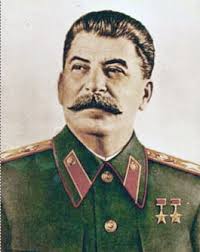
As historian Robert Payne wrote in his monumental 1965 biography The Rise and Fall of Stalin: “The son of an obscure cobbler, he had become during the last years of his life the most powerful man on earth. No emperor had ever enjoyed the power he possessed.
“He had taken the world by the throat, and forced it to do his will. He was one of the world-shakers, and when he died in 1953 it was thought proper that his remains should be exhibited as an object of reverence and worship in the Lenin mausoleum, the holy of holies of the Soviet empire.”
On February 25, 1956, his successor, Nikita Khrushchev, revealed Stalin’s litany of crimes to the 20th Congress of the Communist Party of the Soviet Union.
The speech was the opening shot in Khrushchev’s “de-Stalinization” campaign. He intended to destroy the image of the late dictator as an infallible leader and rein in the infamous KGB secret police.
The speech gave rise to a period of liberalization known as the “Khrushchev thaw” (1956-1964). During this, censorship policy was relaxed, and for the first time books and articles appeared about the huge network of forced labor camps set up by Vladimir Lenin and reaching its peak under Stalin.

Nikita Khrushchev
Creative Commons Attribution-Share Alike 4.0 International license.
Thousands of political prisoners were released, and thousands more who had perished during Stalin’s reign were officially “rehabilitated.”
By 1961, Khrushchev and those seeking to reform the Soviet political system decided to condemn the horrors of the Stalinist decades in a forceful symbolic act.
On October 31, 1961, the body of Joseph Stalin was removed from its honored resting place in the Lenin mausoleum in Red Square. A new grave was dug for him—among the minor heroes of the Russian Revolution. The re-internment took place secretly—at night—without ceremonies. And his name was removed from the mausoleum.
Historian Robert Payne described that event—and its significance: “A dead god was being transformed into a dead man, a dead emperor was being dethroned, a dead criminal was being executed….

“But more than a ritual murder was at stake. The Supreme Soviet and the Central Committee, which decreed the punishment now being inflicted on the corpse of Stalin, were now attempting to absolve themselves from responsibility for his crimes.
“They were saying: ‘We are not responsible, we are casting him away, he is not one of us! He committed such terrible crimes that we will have none of him.’
“For nearly thirty years Stalin had ruled tyrannically over Russia. History, too, was being consigned to oblivion.”
A series of similar events has erupted within the United States since January 6, 2021.
On that day, thousands of Right-wing supporters of President Donald Trump—ignited by his fiery, lie-riddled rhetoric—overwhelmed police guarding the United States Capitol and occupied the building.

Donald Trump
Their intention: To halt the counting of Electoral College votes that would certify former Vice President Joseph Biden as the next President of the United States.
Since then, Trump’s fortunes have sharply declined:
- Twitter—whose platform he had used during his Presidency to ruthlessly attack hundreds of people—finally cut off his account.
- Deutsche Bank, his business lender since the 1990s, announced that it would not continue to do business with him.
- The PGA of America cut ties with Trump by canceling plans to hold the PGA Championship at his New Jersey golf course in 2022.
- On May 24, David Perdue, Trump’s chosen candidate for Governor of Georgia, failed to secure the nomination over Georgia Governor Brian Kemp.
- A September 2020 AP poll shows that 56% of Republicans want him to run for president in 2024; 44% don’t want Trump to run.
- A special grand jury will determine whether Trump broke the law by unsuccessfully pressuring Georgia officials to throw out President Joe Biden’s victory in the 2020 election.
- New York state Attorney General Letitia James stated in a court filing that her office uncovered evidence that Trump used “fraudulent or misleading” valuations of his golf clubs, skyscrapers and other property to secure loans and tax benefits.
- Federal prosecutors are investigating fake certificates sent to the National Archives with made-up slates of electors who wrongly declared Trump the winner in seven states he lost to Biden.
Herodotus, the Greek historian who chronicled the Greek-Persian wars, offers a still-timely explanation of such reverses of fortune—and a warning for those who dare to ignore history:
“Look to the end, no matter what it is you are considering. Often enough God gives a man a glimpse of happiness, and then utterly ruins him.”
ABC NEWS, ADAM SCHIFF, ALTERNET, AMERICABLOG, AP, ARTICLES OF IMPEACHMENT, BABY BOOMER RESISTANCE, BETSY DEVOS, BLOOMBERG, BUZZFEED, CAPITOL BUILDING ATTACK, CAPITOL POLICE, CBS NEWS, CHAD WOLF, CNN, CROOKS AND LIARS, DAILY KOZ, DEPARTMENT OF EDUCATION, DEPARTMENT OF HOMELAND SECURITY, DEPARTMENT OF TRANSPORTATION, DEUTSCHE BANK, DONALD TRUMP, DRUDGE REPORT, ELAINE CHAO, ELECTORAL COLLEGE, FACEBOOK, FIVETHIRTYEIGHT, HARPER’S MAGAZINE, HERODOTUS, HOUSE JUDICIARY COMMITTEE, HUFFINGTON POST, IMPEACHMENT, JERRY NADLER, JOSEPH BIDEN, JOSEPH STALIN, KHRUSHCHEV’S SECRET SPEECH, MEDIA MATTERS, MIKE PENCE, MOTHER JONES, MOVEON, MSNBC, NBC NEWS, NEWSWEEK, NIKITA KHRUSHCHEV, NPR, PBS NEWSHOUR, PGA OF AMERICA, POLITICO, POLITICUSUSA, RAW STORY, REUTERS, ROBERT PAYNE, SALON, SEATTLE TIMES, SLATE, SOVIET UNION, TALKING POINTS MEMO, THE ATLANTIC, THE CHICAGO SUN-TIMES, THE CHICAGO TRIBUNE, THE DAILY BEAST, THE DAILY BLOG, THE GUARDIAN, THE HILL, THE HUFFINGTON POST, THE LOS ANGELES TIMES, THE NATION, THE NEW REPUBLIC, THE NEW YORK TIMES, THE RISE AND FALL OF STALIN (BOOK), THE VILLAGE VOICE, THE WASHINGTON POST, THINKPROGRESS, TIME, TRUTHDIG, TRUTHOUT, TWENTY-FIFTH AMENDMENT, TWITTER, TWO POLITICAL JUNKIES, U.S. NEWS & WORLD REPORT, UNITED STATES HOUSE OF REPRESENTATIVES, UNITED STATES SENATE, UPI, USA TODAY, WONKETTE
In Bureaucracy, History, Law, Law Enforcement, Politics, Social commentary on June 9, 2022 at 12:10 am
On January 13, 2021, for the first time in its history, the United States House of Representatives voted to impeach a President—for the second time during his tenure.
On December 10, 2019, Democratic leaders in the House voted to send two Articles of Impeachment to the House Judiciary Committee.
Their purpose: To remove Donald J. Trump from office as the 45th President of the United States.
House Judiciary Committee Chairman Jerry Nadler read the charges:
Article 1: Abuse of Power: For pressuring Ukraine to assist him in his re-election campaign by damaging former Vice President Joseph Biden, his possible Democratic rival.
Article 2: Obstruction of Congress: For obstructing Congress by blocking testimony and refusing to provide documents in response to House subpoenas in the impeachment inquiry.
On January 23, 2020, House Intelligence Committee Chairman and Lead Impeachment Manager Adam Schiff (D-CA) tweeted a prophecy—and a warning: “Donald Trump must be convicted and removed from office. Because he will always choose his own personal interest over our national interest. Because in America, right matters. Truth matters. If not, no Constitution can protect us. If not, we are lost.”

Adam Schiff
On February 5, 2020, the Republican-dominated Senate—ignoring the overwhelming evidence against him—acquitted Donald Trump on both impeachment articles: Obstruction of Congress and abuse of power.
Schiff’s prophecy came true on January 6, 2021. On that day, Trump unleashed thousands of Right-wing terrorists on the United States Capitol.
Inside, members of Congress were tabulating the Electoral College votes cast in the 2020 Presidential election.
The winner had been former Vice President Joseph Biden. Trump, seeking a second term, had lost, getting 74,196,153 votes.to 81,255,933 for Biden.
Trump had made repeated—and false—claims of electoral fraud. Yet despite filing 60 court cases seeking to overturn the election’s results, his lawyers had failed to produce any proof of it.
Trump had often “joked” about how great it would be for the United States to have a “President-for-Life”—like China. Now his only hope of remaining in power lay in intimidating Congress into ignoring the election results.
Inspired by Trump’s violence-charged rhetoric, the Stormtrumpers marched to the United States Capitol—and quickly brushed aside outnumbered Capitol Police.
- Members of the mob attacked police with chemical agents or lead pipes.
- A Capitol Hill police officer was knocked off his feet, dragged into the mob surging toward the building, and beaten with the pole of an American flag.
- Several rioters carried plastic handcuffs, possibly intending to take hostages. Others carried treasonous Confederate flags.

Stormtrumpers scaling Capitol Building walls
- Shouts of “Hang Pence!” often rang out.
- Improvised explosive devices were found in several locations in Washington, D.C.
- Members of the House and Senate huddled anxiously behind locked doors barricaded with furniture as seditionists tried to break in.
- Many of the lawmakers’ office buildings were occupied and vandalized—including that of House Speaker Nancy Pelosi, a favorite Right-wing target.
More than three hours passed before police—using riot gear, shields and batons—retook control of the Capitol.
Meeting again that evening, members of the Senate and House resumed their vote-counting. In the end, Joseph Biden and Kamala Harris were named, respectively, the President-Elect and Vice-President Elect of the United States.
By the next day, members of the House—especially Democrats—were furious at their near-brush with death. And they were ready to seek retribution on the man responsible.
Their initial hope was that Vice President Mike Pence and a majority of Trump’s cabinet would invoke the 25th Amendment. But hopes for this quickly faded.
A growing number of Cabinet officials began resigning:
- Education Secretary Betsy DeVos
- Transportation Secretary Elaine Chao
- Acting Secretary of Homeland Security Chad Wolf
There was a very real danger there wouldn’t be enough Cabinet members left to invoke the Amendment.
But making the use of the Amendment even more unlikely was the obvious unwillingness of Vice President Pence to invoke it.

Mike Pence
This despite the fact that he could have been hanged as a “traitor” by the Stormtrumpers only days ago.
(He had likely been spared this fate by his Secret Service detail, whisking him out of the Senate—and leaving other government officials to their own fates.)
On January 11, Democrats introduced a single impeachment article charging Trump with “incitement of insurrection” in urging his supporters to march on the U.S. Capitol on January 6.
They also introduced a resolution that called on Pence to invoke the 25th Amendment to the Constitution to remove him from office before January 20.
On January 13, the House met to debate a single article of impeachment: “Incitement of Insurrection.” Its gist:
“Thus incited by President Trump, members of the crowd he had addressed, in an attempt to, among other objectives, interfere with the Joint Session’s solemn constitutional duty to certify the results of the 2020 Presidential election, unlawfully breached and vandalized the Capitol, injured and killed law enforcement personnel, menaced Members of Congress, the Vice President, and Congressional personnel, and engaged in other violent, deadly, destructive, and seditious acts.”
Thus, the House sought to remove a President who intended to rule as a dictator.
Fifty-nine years earlier, a Russian congress had come face-to-face with the despotism of another tyrant.
ABC NEWS, ALEXI KOSYGIN, ALTERNET, AMERICABLOG, AP, BABY BOOMER RESISTANCE, BBC, BLOOMBERG NEWS, BORIS YELTSIN, BUZZFEED, CATHERINE THE GREAT, CBS NEWS, CENSORSHIP, CNN, COMMUNISM, CROOKS AND LIARS, CZARS, CZECHOSLOVAKIA, DAILY KOZ, DONALD TRUMP, FACEBOOK, FIVETHIRTYEIGHT, HARPER’S MAGAZINE, HUFFINGTON POST, JOSEPH STALIN, LEONID BREZHNIEV, MEDIA MATTERS, MIKHAIL TUKHACHEVSKY, MOTHER JONES, MOVEON, MSNBC, NBC NEWS, NEW REPUBLIC, NEWSDAY, NEWSWEEK, NIKOLAI ZHILAYEV, NPR, OLGA MISIK, PBS NEWSHOUR, POLITICO, POLITICUSUSA, PROPAGANDA, RAW STORY, REUTERS, RUSSIA, SALON, SEATTLE TIMES, SLATE, TALKING POINTS MEMO, THE ATLANTIC, THE CHICAGO SUN-TIMES, THE CHICAGO TRIBUNE, THE DAILY BEAST, THE DAILY BLOG, THE GUARDIAN, THE HILL, THE HUFFINGTON POST, THE INTERCEPT, THE LOS ANGELES TIMES, THE NATION, THE NEW REPUBLIC, THE NEW YORK TIMES, THE NEW YORKER, THE VILLAGE VOICE, THE WASHINGTON POST, THINKPROGRESS, TIME, TRUTHDIG, TRUTHOUT, TWITTER, TWO POLITICAL JUNKIES, U.S. NEWS & WORLD REPORT, UKRAINE, UPI, USA TODAY, VLADIMIR PUTIN, VOLODYMYR ZELENSKY, WONKETTE, YEMELYAN PUGACHEF, YEVGENEY YEVTUSHENKO
In Bureaucracy, History, Law, Law Enforcement, Military, Politics, Social commentary on June 8, 2022 at 12:11 am
In Vladimir Putin’s Russia, conscience comes with a price. It can range anywhere from house arrest to years of imprisonment in the Gulag—to being shot or poisoned by the FSB, the secret police successor to the infamous KGB.
It has always been so.
Mikhail Nikolayevich Tukhachevsky was a major Soviet military leader and theoretician from 1918 to 1937. He fought to modernize Soviet armament, as well as develop airborne, aviation and mechanized forces. Almost singlehandedly, he created the theory of deep operations for Soviet forces.
But he fell victim to the paranoia of Soviet dictator Joseph Stalin.

Mikhail Nikolayevich Tukhachevsky
Arrested on May 22, 1937, he was interrogated and tortured. As a result, he “confessed” to being a German agent plotting to overthrow Stalin and seize power.
On June 11, 1937, the Soviet Supreme Court quickly sentenced Tukhachevsky for treason. Hours later, he was executed.
Among his friends had been Nikolai Sergeyvich Zhilayev. a Russian musicologist and the teacher of several 20th-century Russian composers. Knowing that he was a marked man, Zhilayev did something truly extraordinary.
He had a large portrait of Tukhachevsky in his room, and after the announcement that Tukhachevsky had been shot as a traitor to the homeland, Zhilayev did not take the picture down. If discovered, it meant instant arrest—and almost certain execution.
When the secret police came for him, even they were awed: ”“What, it’s still up?”
“The time will come,” Zhilayev replied, “when they’ll erect a monument to him.”
As, in fact, has happened.
Standing before a Russian judge, accused of vandalism for participating in a demonstration against Putin’s suppression of human rights, 19-year-old Olga Misik dared to speak truths most Russians fear to even whisper.

Olga Misik
From her statement to the court on May 11, 2021:
The prosecution is putting all its efforts into proving that I am implicated in the incident. I’m not going to spend much time showing that they can’t even do that professionally: They are using falsified fingerprint analysis, and, as you saw when you were examining the evidence, there was no trace of paint on my clothes….
But what does that matter when no law was broken? What difference does it make whether I was there or not when no crime was committed?….There is a crime, and it was committed by the police and the prosecutors. And I very much hope, Comrade Judge, that you will not become an accomplice to this crime.
This is precisely why I demand a complete and unconditional acquittal. I am not accepting any half measures, like settling for a fine. I am sure of my innocence and am prepared to uncompromisingly defend it to the end….
The past nine months have been very difficult, you know, and I wouldn’t like to repeat them. I kept thinking to myself, What could have happened if, and, Everything could have gone differently. But I was lying to myself, because nothing could have gone differently.
From the moment I picked up the constitution, my fate was set in stone, and I accepted it with pride. I made the right choice, and making the right choice in a totalitarian state will always have horrifying consequences. I always knew I’d end up behind bars—it was only a matter of when.
My lawyer brought up Sophie Scholl [a German student and anti-Nazi political activist] today. Her story is shockingly similar to mine. She was put on trial for flyers and graffiti; I’m being tried for posters and paint.
Like she was, I am essentially on trial for thought crimes. My trial is very similar to Sophie’s, and today’s Russia really resembles Nazi Germany.
Right up to the guillotine, Sophie did not stray from her beliefs. Her story inspired me not to agree to charges being dropped. Sophie Scholl is the embodiment of youth, individuality, and freedom. I would like to believe that to be another thing that makes us similar.
The Nazi regime eventually crumbled, as will the fascist regime in Russia. I don’t know when it will happen, be it a week, a year, or decade, but I know that someday we will be victorious, because love and youth always prevail….
Sophie Scholl’s last words before her execution were, “The sun still shines.” Indeed, the sun still shines. I couldn’t see it out the window of the detention center, but I always knew it was there. And if now, in such dark times, we can turn to the light, then maybe victory isn’t so far after all.
In his 1960 poem, “Conversation With an American Writer,” the Russian poet, Yevgeney Yevtushenko spoke for those Russians who had maintained their integrity in the face of Stalinist terror:
“You have courage,” they tell me.
It’s not true. I was never courageous.
I simply felt it unbecoming
to stoop to the cowardice of my colleagues.
Demonstrating his own moral courage, on August 22, 1968—the day after the Soviet Union invaded Czechoslovakia—Yevtushenko sent a telegram protesting the invasion to Communist Party Boss Leonid Brezhnev and Premier Aleksei Kosygin:
In Russia—under Czars or Commissars—acting on moral courage is no small thing.
A revered poet demonstrated it in 1968. And a teenage girl demonstrated it in 2021.
ABC NEWS, ALEXI KOSYGIN, ALTERNET, AMERICABLOG, AP, BABY BOOMER RESISTANCE, BBC, BLOOMBERG NEWS, BORIS YELTSIN, BUZZFEED, CATHERINE THE GREAT, CBS NEWS, CENSORSHIP, CNN, COMMUNISM, CROOKS AND LIARS, CZARS, CZECHOSLOVAKIA, DAILY KOZ, DONALD TRUMP, FACEBOOK, FIVETHIRTYEIGHT, HARPER’S MAGAZINE, HUFFINGTON POST, JOSEPH STALIN, LEONID BREZHNIEV, MEDIA MATTERS, MIKHAIL TUKHACHEVSKY, MOTHER JONES, MOVEON, MSNBC, NBC NEWS, NEW REPUBLIC, NEWSDAY, NEWSWEEK, NIKOLAI ZHILAYEV, NPR, OLGA MISIK, PBS NEWSHOUR, POLITICO, POLITICUSUSA, PROPAGANDA, RAW STORY, REUTERS, RUSSIA, SALON, SEATTLE TIMES, SLATE, TALKING POINTS MEMO, THE ATLANTIC, THE CHICAGO SUN-TIMES, THE CHICAGO TRIBUNE, THE DAILY BEAST, THE DAILY BLOG, THE GUARDIAN, THE HILL, THE HUFFINGTON POST, THE INTERCEPT, THE LOS ANGELES TIMES, THE NATION, THE NEW REPUBLIC, THE NEW YORK TIMES, THE NEW YORKER, THE VILLAGE VOICE, THE WASHINGTON POST, THINKPROGRESS, TIME, TRUTHDIG, TRUTHOUT, TWITTER, TWO POLITICAL JUNKIES, U.S. NEWS & WORLD REPORT, UKRAINE, UPI, USA TODAY, VLADIMIR PUTIN, VOLODYMYR ZELENSKY, WONKETTE, YEMELYAN PUGACHEF, YEVGENEY YEVTUSHENKO
In Bureaucracy, History, Law, Law Enforcement, Military, Politics, Social commentary on June 7, 2022 at 12:11 am
For 300 years, Russians feared the wrath of their czars, who ruthlessly decreed what their subjects could read, write and say.
Protests were brutally punished, even by so-called “enlightened” Czars. Catherine the Great had Cossack rebel Yemelyan Ivanovich Pugachev beheaded, then drawn and quartered.

Catherine the Great
Czarist rule ended in 1917, when the installation of a democratic Provisional Government. But just nine months later, the Bolsheviks seized power—and starvation, mass executions, forced exiles and repression of religion, speech and press followed until Communism collapsed in 1991.
Then came the wholesale corruption and ineptness of Boris Yeltsin’s brief reign. When Yeltsin picked Vladimir Putin, a former member of the KGB, as his successor, many Russians welcomed his arrival.
Unlike the fat, alcoholic Yeltsin, he appeared to be a man’s man who plunged into icy rivers, slammed opponents to the floor in judo matches, and—shirtless—hunted tigers and bears.
He promised that so long as ordinary Russians stayed out of politics, they would enjoy a level of personal independence totally absent during the 74-year Communist regime.
But, gradually, that promise was revealed as a lie.
At no time has that been more true than following his brutal invasion of Ukraine on February 24. Most Russians can’t imagine waging war against a “brotherly nation.”
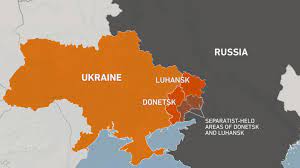
Ukraine vs. Russia
Putin’s government unleashed a massive propaganda campaign to convince Russians that Russia was battling Fascists and taking no casualties. And many have believed it.
(Volodymyr Zelensky, Ukraine’s president, is Jewish, and Western intelligence agencies estimate that 7,000 to 15,000 Russian soldiers have died.)
Nevertheless, thousands flocked to streets and squares throughout Russia despite government threats of prosecution for high treason.
More than 6,500 demonstrators were arrested over a five-day period. Several Russian and Ukrainian news outlets were blocked for covering the invasion.
One of those who has repeatedly demonstrated against Putini’s repressive regime is Olga Misik, a former journalism student at the University of Moscow.
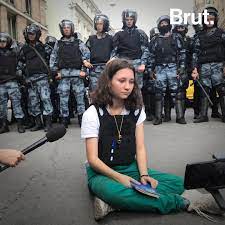
Olga Misik
Accused of vandalism, standing before a judge who could sentence her to literally any punishment he wished, 19-year-old Olga Misik dared to speak forbidden truths about life in Vladimir Putin’s Russia.
On May 11, 2021, she did so again in a Moscow district court.
Below follows relevant portions of her statement to the court:
And maybe I was scared on the way to the protest after all, but I knew I had no other choice. I understood that anything else would be wrong. That if I stayed silent this time, I would never be able to forgive myself….
Of course I was at that protest. I don’t regret it and more so am proud of my actions. In reality, I had no choice. I had to do everything in my power, thus I have no right to regret it. And if I had the option to go back in time, I would do it again.
If I was being threatened with execution, I would do it again. I would do it time and time again, until it finally started to make some change. They say that doing the same thing over and over expecting a different result is the definition of insanity.
I guess hope is insanity. But not doing something you believe in, just because everyone around you thinks it’s pointless, that is learned hopelessness. And better to be insane in your eyes than hopeless in my own….
Denying my participation in the protest would not only be unprincipled, it would erase all of the fear and agony, all we have achieved, all of my pain and rage. I can’t afford such dishonor with which our interrogator and prosecutor live their days….
A fascist government never seems fascist from the inside. It seems like just some minuscule, inconsequential censorship and some targeted repression that will never reach you. I’m not the one on trial today. Today, you are deciding not my fate but yours, and you still have a chance to do the right thing.
You can’t keep lying to yourselves. You know what goes on here. You know what it’s called. You know that there is good and evil, freedom and fascism, love and hatred, and denying that there are sides to take would be a colossal lie.
Those who chose evil have preordered their tickets to the defense table. The Hague awaits all who had a hand in this chaos. I am not promising victory tomorrow, the day after, in a year, or 10. But someday we will win, because love and youth always win. I can’t promise to make it there alive, but I really hope you live to see it.
You’re lying to yourselves if you maintain that I am here because of the protest at the office of the prosecutor general….You know why I’m here….You know what I’m actually being tried for.
For reading the constitution. For my political positions. For being named person of the year. For my principles. For my actions.
I might even be flattered by being singled out for a political trial, if only I really were singled out—when in fact the state is repressing anyone who has an opinion.
ABC NEWS, ALEXI KOSYGIN, ALTERNET, AMERICABLOG, AP, BABY BOOMER RESISTANCE, BBC, BLOOMBERG NEWS, BORIS YELTSIN, BUZZFEED, CATHERINE THE GREAT, CBS NEWS, CENSORSHIP, CNN, COMMUNISM, CROOKS AND LIARS, CZARS, CZECHOSLOVAKIA, DAILY KOZ, DONALD TRUMP, FACEBOOK, FIVETHIRTYEIGHT, HARPER’S MAGAZINE, HUFFINGTON POST, JOSEPH STALIN, LEONID BREZHNIEV, MEDIA MATTERS, MIKHAIL TUKHACHEVSKY, MOTHER JONES, MOVEON, MSNBC, NBC NEWS, NEW REPUBLIC, NEWSDAY, NEWSWEEK, NIKOLAI ZHILAYEV, NPR, OLGA MISIK, PBS NEWSHOUR, POLITICO, POLITICUSUSA, PROPAGANDA, RAW STORY, REUTERS, RUSSIA, SALON, SEATTLE TIMES, SLATE, TALKING POINTS MEMO, THE ATLANTIC, THE CHICAGO SUN-TIMES, THE CHICAGO TRIBUNE, THE DAILY BEAST, THE DAILY BLOG, THE GUARDIAN, THE HILL, THE HUFFINGTON POST, THE INTERCEPT, THE LOS ANGELES TIMES, THE NATION, THE NEW REPUBLIC, THE NEW YORK TIMES, THE NEW YORKER, THE VILLAGE VOICE, THE WASHINGTON POST, THINKPROGRESS, TIME, TRUTHDIG, TRUTHOUT, TWITTER, TWO POLITICAL JUNKIES, U.S. NEWS & WORLD REPORT, UKRAINE, UPI, USA TODAY, VLADIMIR PUTIN, VOLODYMYR ZELENSKY, WONKETTE, YEMELYAN PUGACHEF, YEVGENEY YEVTUSHENKO
In Bureaucracy, History, Law, Law Enforcement, Politics, Social commentary on June 6, 2022 at 12:10 am
“I just read her final speech. And you know what? I felt ashamed,” Andrei Chvanov, from Tatarstan, wrote on Facebook.
He was referring to Olga MisIk, a 17-year-old activist in the Russia of President Vladimir Putin.
“Because my threshold of fear is much lower….She holds strong, jokes, writes, and is 100 percent sure that she is right. And she is right. She sees the truth. And she is not afraid. Not many people in our country have such a gift.”
On July 27, 2019, Olga was among thousands of people attending an unauthorized protest in Moscow against the bar on opposition activists competing for seats in the Duma (parliament) election against Putin’s lackeys.
Heavily-armed riot police—wielding shields, batons and helmets—stood behind her. As if oblivious to their presence, Olga sat cross-legged in the middle of the street.
She pulled out her copy of Russia’s 1993 constitution and began reading from it.
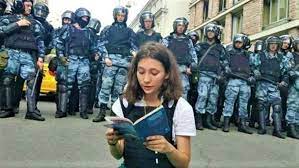
Olga Misik
“I read four sections,” she said in a later interview “An article talking about the right to peacefully protest, an article saying that everyone can take part in elections, has the right to freedom of speech and that the people’s will and power are the most important thing for the country.”
Olga left the scene after the reading, but was later arrested on her way to a metro station. She was among more than 1,000 protesters arrested as a result of the rally. She had been detained four times in the past three months. She says she was peacefully protesting each time.
Misik was released after the protest in 2019, but she later found herself facing charges related to a protest in 2020.
According to the Moscow Times, Olga and two friends were accused of vandalism after police said they hung a banner supporting Putin arch-foe Alexi Navalny and other political prisoners on a government building.
In addition, said the indictment, they “splashed red paint on a security booth outside the Prosecutor General’s Office building in August 2020.”
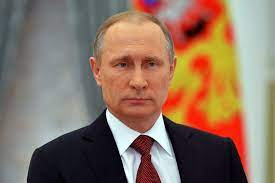
Vladimir Putin
Misik wrote on social media that she was dragged out of her home by police after the 2020 protest.
Olga was sentenced on May 11, 2021, for vandalism. She received two years and two months of “restricted liberty,” which amounted to home confinement, including a curfew that required her to be inside her house from 10 p.m. and 6 a.m. Her two friends received similar sentences.
Prior to her sentencing, Misik read a prepared statement to the court. At a time when millions of Right-wing Americans lust to replace democracy with the dictatorship of Donald Trump, this statement speaks volumes to Americans who would oppose this.
Here are its most moving passages:
People often asked, “Aren’t I scared?” More commonly outside the country than in Russia, because they don’t get the reality of life in Russia. They don’t understand the knock on the door in the middle of the night, the arrests and imprisonment without reason or cause.
They don’t realize that the feeling of despair is passed on to us through our mothers’ milk. And that that feeling of despair causes any semblance of fear to atrophy, infecting us with learned hopelessness. What use is fear if you have no say in your future?
I have never been afraid. I have felt despair, hopelessness, helplessness, disorientation, anxiety, frustration, burnout, but neither politics nor activism ever struck fear in me.
I wasn’t scared when armed thugs stormed my home in the night, threatening me with prison. They wanted to scare me, but I wasn’t afraid. I made jokes and laughed, knowing that the moment I stopped smiling, I would have lost.
I wasn’t scared when they put me in the detention center….My own fate was the last thing on my mind. It is very strange, maybe some sort of coping mechanism, but in those days I wasn’t afraid once….
I was worried and stressed about how things would play out, but unafraid. The night was beautiful. I was aware that it could be my last one in freedom, and yet that did not scare me.
However, after the search, for the past nine months, I have been scared constantly. Ever since the night in the detention center, I haven’t been able to get a good night’s sleep once.
Every night I wake from the smallest of sounds. I keep imagining footsteps in the hallway. Panic washes over me from the sound of the gravel crunching under the wheels of cars outside my window.
I feel like all of the fear accumulated over the past nine months is most concentrated in this exact moment, in my final statement, because public speaking scares me more than the sentencing. My heart is racing at 151 beats per minute, and it feels as though it could explode any second now….
Someone said, “It’s impossible to be afraid if you know you’re right.” But Russia teaches us to always be afraid. A country that attempts to kill us every day, and if you’re not part of the system, you might as well be dead already.
ABC NEWS, ALTERNET, AMERICABLOG, ANTHONY FAUCI, AP, ATTACK ON THE UNITED STATES CAPITOL BUILDING, BABY BOOMER RESISTANCE, BBC, BLOOMBERG NEWS, BUZZFEED, CBS NEWS, CENTERS FOR DISEASE CONTROL AND PREVENTION, CLOROX BLEACH, CNN, COVID-19, CROOKS AND LIARS, DAILY KOZ, DONALD TRUMP, FACEBOOK, FIVETHIRTYEIGHT, HARPER’S MAGAZINE, HUFFINGTON POST, JAMES COBURN, JOE BIDEN, JULIUS CAESAR (PLAY), MARK ANTHONY, MASKS, MEDIA MATTERS, MOTHER JONES, MOVEON, MSNBC, NBC NEWS, NEW REPUBLIC, NEWSDAY, NEWSWEEK, NPR, PBS NEWSHOUR, POLITICO, POLITICUSUSA, RAW STORY, REUTERS, ROD SERLING, SALON, SEATTLE TIMES, SLATE, SOCIAL DISTANCING, TALKING POINTS MEMO, THE ATLANTIC, THE CHICAGO SUN-TIMES, THE CHICAGO TRIBUNE, THE DAILY BEAST, THE DAILY BLOG, THE GUARDIAN, THE HILL, THE HUFFINGTON POST, THE LOS ANGELES TIMES, THE NATION, THE NEW REPUBLIC, THE NEW YORK TIMES, THE NEW YORKER, THE VILLAGE VOICE, THE WASHINGTON POST, THINKPROGRESS, TIME, TRUTHDIG, TRUTHOUT, TWILIGHT ZONE, TWITTER, TWO POLITICAL JUNKIES, U.S. NEWS & WORLD REPORT, UPI, USA TODAY, UV LIGHT, WILLIAM SHAKESPEARE, WONKETTE
In Business, Entertainment, History, Medical, Politics, Social commentary on June 3, 2022 at 12:14 am
On November 8, 1963—57 years before COVID-19 invaded the United States—Rod Serling’s “The Twilight Zone” offered a prophecy of future disaster for the country.
“The Old Man in the Cave” is set in a post-apocalyptic rural town in 1974, 10 years after a nuclear war has devastated the United States.
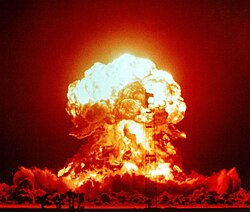
A nuclear explosion
The townspeople have discovered a supply of canned food. However, they are waiting for Mr. Goldsmith [John Anderson], their leader, to return with a message from the mysterious and unseen “old man in the cave.” Then they will learn whether the food is contaminated with radiation.
When Goldsmith returns, he informs them that the old man has declared the food is contaminated and that it should be destroyed.
Shortly thereafter, three soldiers led by Major French [James Coburn] enter the town and clash with Goldsmith as they try to establish their authority.
French is clearly a precursor of Donald Trump: Demanding instant obedience and threatening death to anyone who disobeys him, he claims he will organize the region to rebuild society..

Donald Trump
However, Goldsmith believes that French and his men simply want to strip the town of its food.
French attacks the townspeople’s belief in the seemingly infallible “old man in the cave.” He tells them they have survived these past 10 years—but they haven’t lived.
Fifty-seven years later, Donald Trump will furiously attack not COVID-19 but the medical advice of his own Centers for Disease Control and Prevention (CDC)—especially that provided by Dr. Anthony Fauci, the nation’s top expert on infectious disease.
He will disdain the wearing of masks and social distancing, and attack those Democratic governors who impose stay-at-home orders to contain the virus. He will offer a series of rosy predictions—none of which come true—that the virus will soon end.
His “cures” include ingesting Clorox bleach and/or having UV light shined up one’s anus.
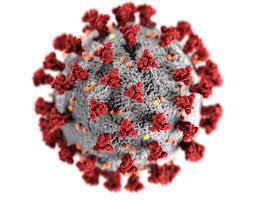
COVID-19 virus
And French holds himself out as the man who can deliver them a wonderful new future.
Fifty-seven years later, Donald Trump will similarly declare: “I have joined the political arena so that the powerful can no longer beat up on people that cannot defend themselves. Nobody knows the system better than me, which is why I alone can fix it.”
French tempts the townspeople to eat the food Goldsmith warned was contaminated. There is a wild orgy of gluttony as they greedily consume it.
Only Goldsmith refuses to partake in the food orgy.
The townspeople turn on Goldsmith and threaten him with death unless he reveals the identity of “the old man in the cave.” Goldsmith finally takes the assembly to the cave to reveal his source: A computer.
French incites the townspeople to stone the computer with rocks and canned goods until it explodes. Then French leads the people into celebrating their new-found freedom from this “tyranny”.
Fifty-seven years later, Trump will similarly incite his followers to attack the United States Capitol building to halt the legal transfer of Presidential power from himself to Joe Biden.
But as Goldsmith had insisted, the “old man” was correct: The canned goods were contaminated with radiation. All the townspeople—including French and the soldiers—die, their bodies left lying throughout the streets.
Trump will similarly tempt millions of Americans to ignore the deaths of tens of thousands of their fellow citizens from COVID-19 and the overwhelming of the nation’s hospitals. The result will be a vast increase in deaths.
Many of the businesses Trump hoped to keep open—to ensure his own re-election—will be shuttered.
Only one man survives—Goldsmith, who has refused to eat the forbidden food and somberly walks out of the now-dead town.
As always in a “Twilight Zone” episode, it is Rod Serling who gets the final word: “Mr. Goldsmith, survivor. An eyewitness to man’s imperfection. An observer of the very human trait of greed. And a chronicler of the last chapter—the one reading ‘suicide’. Not a prediction of what is to be, just a projection of what could be. This has been The Twilight Zone.”

Rod Serling
Except that Serling was wrong: “The Old Man in the Cave” has proven an uncanny prediction of what did happen in America.
* * * * *
The chief lesson to be learned from the COVID-19 epidemic is that catastrophe inevitably results when natural disaster collides with an evil and incompetent administration.
And the man who stands most responsible for the deaths of 400,000 Americans in 2020 is Donald Trump, the 45th President of the United States.
Under his tyrannical rule, the United States suffered not simply from a lethal virus but a combination of denial, lies, Republican subservience, chaos, extortion, propaganda as news, quackery as medicine, premature demands to “re-open the country,” ignoring the danger and—finally—resignation (“Learn to live with the virus”).
Even now, when three vaccines have been produced, millions of Americans—almost all of them Right-wing Trump supporters—refuse to protect themselves and the families and friends they claim to love.
Mark Anthony—in William Shakespeare’s “Julius Caesar”—had it right: “The evil that men do lives after them.”
ABC NEWS, ABORTION, AFFORDABLE CARE ACT, AFFORDABLE HOUSING, ALTERNET, AMERICABLOG, AP, BABY BOOMER RESISTANCE, BBC, BLACKS, BLOOMBERG NEWS, BUZZFEED, CBS NEWS, CHINA, CNN, COMMUNISM, CORONAVIRUS, CRIME, CROOKS AND LIARS, DAILY KOZ, DENNIS HASTERT, DONALD TRUMP, DWIGHT D. EISENHOWER, ECONOMY, ELECTION-RIGGING, FACEBOOK, FIVETHIRTYEIGHT, FLORIDA, FOOD STAMPS, FRANCIS BELLAMY, GAYS, GLOBALISM, HARPER’S MAGAZINE, HISPANICS, HUFFINGTON POST, illegal immigration, IMPORTS, JANUARY 6 COUP ATTEMPT, JOSH DUGGAR, KIM JONG-UN, LESBIANS, MEDIA MATTERS, MEDICARE, MEXICO, MIKE PENCE, MOTHER JONES, MOVEON, MSNBC, NBC NEWS, NEW REPUBLIC, NEWSDAY, NEWSWEEK, NORTH KOREA, NPR, NUCLEAR FAMILY, PBS NEWSHOUR, PLEDGE OF ALLEGIANCE, POLITICO, POLITICUSUSA, RAW STORY, RELIGIOUS, RELIGIOUS FREEDOM RESTORATION ACT, REUTERS, RICHARD M. NIXON, RICK SCOTT, RUSSIA, SALON, SEATTLE TIMES, SLATE, SOCIAL SECURITY, SOCIALISM, TALKING POINTS MEMO, THE ATLANTIC, THE CHICAGO SUN-TIMES, THE CHICAGO TRIBUNE, THE DAILY BEAST, THE DAILY BLOG, THE GUARDIAN, THE HILL, THE HUFFINGTON POST, THE INTERCEPT, THE LOS ANGELES TIMES, THE NATION, THE NEW REPUBLIC, THE NEW YORK TIMES, THE NEW YORKER, THE VILLAGE VOICE, THE WASHINGTON POST, THINKPROGRESS, TIME, TRADEMARKS, TRANSGENDERS, TRUTHDIG, TRUTHOUT, TWITTER, TWO POLITICAL JUNKIES, U.S. NEWS & WORLD REPORT, UKRAINE, UPI, USA TODAY, VLADIMIR PUTIN, WONKETTE, XI JINPING
In Bureaucracy, Business, History, Law, Law Enforcement, Medical, Military, Politics, Social commentary on June 2, 2022 at 12:11 am
Next to the American flag, Republicans have loudly pledged their loyalty to the nuclear family.
And Florida United States Senator Rick Scott, in his “11 Point Plan to Rescue America,” is no exception.
Point 8: We will protect, defend, and promote the American Family at all costs. The nuclear family is crucial to civilization, it is God’s design for humanity, and it must be protected and celebrated. To say otherwise is to deny science.
In two succeeding sentences, Scott manages to ludicrously contradict himself. First he claims that the nuclear family is “God’s design for humanity.” In the next, he says that to contradict him is to “deny science.”
Here are the facts:
First of all, there is no scientific proof for the existence of God. It is simply a belief.
Second, the nuclear family—a married couple and their dependent children under the age of 18—is a fast-disappearing species.

Nuclear family – 1955
Seattle Municipal Archives from Seattle, WA, CC BY 2.0 <https://creativecommons.org/licenses/by/2.0>, via Wikimedia Commons
There are currently just 23.1 million American homes with those ‘nuclear families,’ which is the fewest since 1959. So much for “God’s design for humanity.”
Point 9: Men are men, women are women, and unborn babies are babies.
“Men are men, women are women”: Republicans seek to frighten voters into voting for them by appealing to the fear that “Gays and transgenders are coming for your children.”
Without offering proof, they slander their opponents as “groomers”—pedophiles who befriend children and build their trust, leading to their sexual abuse.
The truth is that gays don’t prey on heterosexuals but seek out others of their own sexual persuasion. The same is true for transgenders.
Meanwhile, the Republican party has had its own share of closeted pedophiles.
Among them:
- Josh (“18 Kids and Counting”) Duggar, recently sentenced to 12 years for possession of child pornography;
- Dennis Hastert, former Speaker of the House of Representatives, who sexually molested four young boys when he was their high school wrestling coach.
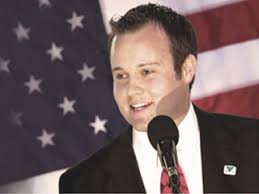
Josh Duggar
As for “Unborn babies are babies”: Those who have not yet been born are fetuses.
While Republicans have waged an almost 50-year war against legalized abortion, they have waged an equally aggressive war against Social Security, Medicare, the Affordable Care Act, food stamps, affordable housing, and aid to the blind and disabled.
In short: They oppose all those programs intended to help those who have been born.
Point 10: Americans will be free to welcome God into all aspects of our lives, and we will stop all government efforts to deny our religious freedom and freedom of speech.
The Democratic party is not trying to “deny our religious freedom and freedom of speech.”
On the contrary: It’s Republicans who have crafted laws to turn claimed religious beliefs into a weapon of discrimination.
A classic example: On March 26, 2015, Indiana’s then-Governor Mike Pence signed into law the Religious Freedom Restoration Act.
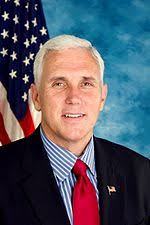
Mike Pence
This allows any individual or corporation to cite its religious beliefs as a defense when sued by a private party.
Thus, a bakery that doesn’t want to make a cake to be used at a gay wedding or a restaurant that doesn’t want to serve lesbian patrons can legally refuse to do so.
Republicans have introduced similar “right-to-discriminate” legislation in other states as well—such as Kansas, Arizona and South Dakota. So far, all have failed to win passage.
Republicans claim they want to “get the government off the backs of the people.” But their fixation on regulating the sexual lives of Americans ensures government intrusions of the most intimate kind.
Point 11: We are Americans, not globalists. America will be dependent on NO other country. We will conduct no trade that takes away jobs or displaces American workers.
This would be laughable except for the bitter truth: Countless numbers of Americans have lost their jobs because their companies deserted the United States for Third World nations like China, Vietnam or Mexico.
There are three reasons for this:
- To pay their employees far less than they would be paid in the United States;
- To avoid American restrictions on how employees can be treated; and
- To avoid enforcement of quality control regulations which ensure that products are safe and effective for use.
Republicans have loudly proclaimed themselves anti-globalists.
But when Donald Trump was President, the Chinese government granted 18 trademarks to companies linked to him and his daughter, Ivanka, within two months.
In addition, Trump won approval to register three dozen trademarks in China covering everything from bars and hotels to child-care and massage services, raising further concerns over potential conflicts of interest.
From 2005 to 2017, Trump filed for 126 trademarks in China for his business empire.
Rick Scott is a fierce defender of the former President and his policies.
As for Scott’s claim, “America will be dependent on NO other country”:
Like it or not, the United States can no longer separate itself from the rest of the world.
The ongoing war between Russia and Ukraine has badly affected American imports of grain products from Ukraine.
And the Coronavirus pandemic has led to crucial shortages in goods America has long imported: Medicines, electronics, auto parts, solar panels, toys, air conditioners.
Thus, this provision—like the rest of Scott’s plan—runs head-on into the ugliness of sheer reality.
ABC NEWS, ABORTION, AFFORDABLE CARE ACT, AFFORDABLE HOUSING, ALTERNET, AMERICABLOG, AP, BABY BOOMER RESISTANCE, BBC, BLACKS, BLOOMBERG NEWS, BUZZFEED, CBS NEWS, CHINA, CNN, COMMUNISM, CORONAVIRUS, CRIME, CROOKS AND LIARS, DAILY KOZ, DENNIS HASTERT, DONALD TRUMP, DWIGHT D. EISENHOWER, ECONOMY, ELECTION-RIGGING, FACEBOOK, FIVETHIRTYEIGHT, FLORIDA, FOOD STAMPS, FRANCIS BELLAMY, GAYS, GLOBALISM, HARPER’S MAGAZINE, HISPANICS, HUFFINGTON POST, illegal immigration, IMPORTS, JANUARY 6 COUP ATTEMPT, JOSH DUGGAR, KIM JONG-UN, LESBIANS, MEDIA MATTERS, MEDICARE, MEXICO, MIKE PENCE, MOTHER JONES, MOVEON, MSNBC, NBC NEWS, NEW REPUBLIC, NEWSDAY, NEWSWEEK, NORTH KOREA, NPR, NUCLEAR FAMILY, PBS NEWSHOUR, PLEDGE OF ALLEGIANCE, POLITICO, POLITICUSUSA, RAW STORY, RELIGIOUS, RELIGIOUS FREEDOM RESTORATION ACT, REUTERS, RICHARD M. NIXON, RICK SCOTT, RUSSIA, SALON, SEATTLE TIMES, SLATE, SOCIAL SECURITY, SOCIALISM, TALKING POINTS MEMO, THE ATLANTIC, THE CHICAGO SUN-TIMES, THE CHICAGO TRIBUNE, THE DAILY BEAST, THE DAILY BLOG, THE GUARDIAN, THE HILL, THE HUFFINGTON POST, THE INTERCEPT, THE LOS ANGELES TIMES, THE NATION, THE NEW REPUBLIC, THE NEW YORK TIMES, THE NEW YORKER, THE VILLAGE VOICE, THE WASHINGTON POST, THINKPROGRESS, TIME, TRADEMARKS, TRANSGENDERS, TRUTHDIG, TRUTHOUT, TWITTER, TWO POLITICAL JUNKIES, U.S. NEWS & WORLD REPORT, UKRAINE, UPI, USA TODAY, VLADIMIR PUTIN, WONKETTE, XI JINPING
In Bureaucracy, Business, History, Law, Law Enforcement, Medical, Military, Politics, Social commentary on June 1, 2022 at 12:10 am
Among the goals of Republican Senator Rick Scott’s “11 Point Plan to Rescue America” are:
Point 4: We will secure our border, finish building the wall, and name it after President Donald Trump.
There are multiple ways to illegally enter the United States—and thus circumvent a wall on its Southern border with Mexico.
The United States is surrounded by water on three sides—East, West and South. So anyone with a boat can smuggle illegal aliens into the country at any point along its 12,383 miles of coastline.
For those who get seasick, there’s a land route available—not across burning Mexican deserts but under them.
Over the years, officials have found at least 200 tunnels along the 2,000-mile-long U.S.-Mexico border, mostly in Arizona and California. They range from rudimentary crawlspaces to “super tunnels” that cost more than a million dollars and are equipped with elevators, ventilation shafts electric lights, and disguised exits and entrances.

Drug tunnel
U.S. Customs and Border Protection, Public domain, via Wikimedia Commons
Many of those who want to infiltrate the United States can simply fly in.
Wealthy and pregnant Chinese women often fly to the United States to “anchor” themselves via a baby born on American soil. The same is true for many Russian women.
And the Number One cause of illegal immigration: Foreigners’ overstaying their visas. In 2017, more than 600,000 foreigners who legally entered the United States overstayed their visas and remained in the country by the end of the year, according to the Department of Homeland Security.
So a wall is not going to solve America’s problem with illegal immigration.
Point 5: We will grow America’s economy, starve Washington’s economy, and stop Socialism.
When Republicans promise to “grow America’s economy,” they mean: Remove all government controls from business.
In real-world terms, this means corporations will be legally allowed to:
- Ignore existing laws protecting employees from unsafe working conditions;
- Ignore existing laws protecting the environment;
- Produce unsafe goods and fraudulent services;
- Pay their employees the lowest acceptable wages, in return for the “privilege” of working at these companies;
- Discriminate on the basis of race, sex, religion or sexual orientation; and/or
- Pay little or no business taxes, at the expense of communities who are required to make up for lost tax revenues.
Anyone who doubts this need only look at the living standards in “Red”, Republican-governed states such as Florida and Texas.
“Starve Washington’s economy” means: Eliminating programs that Republicans don’t like—starting with Social Security, Medicare and the Affordable Care Act. Anything that benefits ordinary Americans and not multi-billion dollar corporations will be slated for scrapping.
“Stopping socialism” is ludicrous: During his Presidency, Donald Trump’s best friends were Communist dictators: Vladimir Putin (Russia), Kim Jong-Un (North Korea) and Xi Jinping (China).
Trump actually bragged that, after an exchange of letters between himself and the murderous Kim Jong-Un, “We fell in love.”

Kim Jong-Un and Donald Trump
Had a Democratic President made a similar statement, Republicans would have screamed “Treason!” In Trump’s case, they said nothing.
Point 6: We will eliminate all federal programs that can be done locally, and enact term limits for federal bureaucrats and Congress.
As for “enacting term limits for federal bureaucrats and Congress”: This is the party that tried to illegally and treasonously overturn the results of a legitimate Presidential election so its candidate—Donald Trump—could remain in office as “President-for-Life” after losing the vote.
Point 7: We will protect the integrity of American Democracy and stop left-wing efforts to rig elections.
Scott’s platform is worth quoting in full on this issue:
Today’s Democrat Party is trying to rig elections and pack the courts because they have given up on Democracy. They don’t believe they can win based on their ideas, so they want to game the system and legalize voter fraud to stay in power. In true Orwellian fashion, Democrats refer to their election rigging plans as “voting rights”. We won’t allow the radical left to destroy our democracy by institutionalizing dishonesty and fraud.
Immediately after the verdict of the November 3, 2020 Presidential election was announced, President Donald Trump ordered his attorneys to file lawsuits overturning the results.
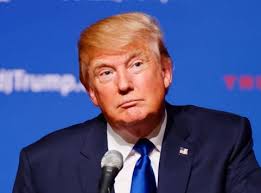
Donald Trump
- Throughout November and December, 2020, cases were filed in Wisconsin, Arizona, Nevada, Michigan, Minnesota and Georgia challenging the election results. None were supported by evidence of fraud—as even Trump’s lawyers admitted when questioned by judges.
- On November 13, nine cases meant to attack President-Elect Joe Biden’s win in key states were denied or dropped. A law firm challenging the vote count in Pennsylvania withdrew from the effort.
- In Michigan, Trump’s attorneys dropped their federal suit to block the certification of Detroit-area ballots.
- By November 21, more than 30 cases were withdrawn by Trump’s attorneys or dismissed by Federal judges—some of them appointed by Trump himself.
Ultimately, from November 3 to December 14, 2020, Trump and his allies lost 59 times in court, either withdrawing cases or having them dismissed by Federal and state judges.
This is the party that, since November, 2020, has sold a lie to millions of Right-wing Americans that the election was “stolen” from Donald trump.
It is Republicans—not Democrats—who have stopped trying to win elections based on their ideas and are now trying to win them by massive voter suppression. It’s hardly a party to be entrusted with election security.
ABC NEWS, ABORTION, AFFORDABLE CARE ACT, AFFORDABLE HOUSING, ALTERNET, AMERICABLOG, AP, BABY BOOMER RESISTANCE, BBC, BLACKS, BLOOMBERG NEWS, BUZZFEED, CBS NEWS, CHINA, CNN, COMMUNISM, CORONAVIRUS, CRIME, CROOKS AND LIARS, DAILY KOZ, DENNIS HASTERT, DONALD TRUMP, DWIGHT D. EISENHOWER, ECONOMY, ELECTION-RIGGING, FACEBOOK, FIVETHIRTYEIGHT, FLORIDA, FOOD STAMPS, FRANCIS BELLAMY, GAYS, GLOBALISM, HARPER’S MAGAZINE, HISPANICS, HUFFINGTON POST, illegal immigration, IMPORTS, JANUARY 6 COUP ATTEMPT, JOSH DUGGAR, KIM JONG-UN, LESBIANS, MEDIA MATTERS, MEDICARE, MEXICO, MIKE PENCE, MOTHER JONES, MOVEON, MSNBC, NBC NEWS, NEW REPUBLIC, NEWSDAY, NEWSWEEK, NORTH KOREA, NPR, NUCLEAR FAMILY, PBS NEWSHOUR, PLEDGE OF ALLEGIANCE, POLITICO, POLITICUSUSA, RAW STORY, RELIGIOUS, RELIGIOUS FREEDOM RESTORATION ACT, REUTERS, RICHARD M. NIXON, RICK SCOTT, RUSSIA, SALON, SEATTLE TIMES, SLATE, SOCIAL SECURITY, SOCIALISM, TALKING POINTS MEMO, THE ATLANTIC, THE CHICAGO SUN-TIMES, THE CHICAGO TRIBUNE, THE DAILY BEAST, THE DAILY BLOG, THE GUARDIAN, THE HILL, THE HUFFINGTON POST, THE INTERCEPT, THE LOS ANGELES TIMES, THE NATION, THE NEW REPUBLIC, THE NEW YORK TIMES, THE NEW YORKER, THE VILLAGE VOICE, THE WASHINGTON POST, THINKPROGRESS, TIME, TRADEMARKS, TRANSGENDERS, TRUTHDIG, TRUTHOUT, TWITTER, TWO POLITICAL JUNKIES, U.S. NEWS & WORLD REPORT, UKRAINE, UPI, USA TODAY, VLADIMIR PUTIN, WONKETTE, XI JINPING
In Bureaucracy, Business, History, Law, Law Enforcement, Medical, Military, Politics, Social commentary on May 31, 2022 at 12:10 am
“The militant left now controls the entire federal government, the news media, academia, Hollywood, and most corporate boardrooms—but they want more. They are redefining America and silencing their opponents.
“Among the things they plan to change or destroy are: American history, patriotism, border security, the nuclear family, gender, traditional morality, capitalism, fiscal responsibility, opportunity, rugged individualism, Judeo-Christian values, dissent, free speech, color blindness, law enforcement, religious liberty, parental involvement in public schools, and private ownership of firearms.
“Is this the beginning of the end of America? Only if we allow it to be.”
So accuses Rick Scott, former governor of Florida and now a United States Senator from that state. With the next Presidential election approaching in less than two years, Scott is positioning himself to be the next Republican nominee for that office.

Rick Scott
For decades, many dissatisfied voters have argued there’s no real difference between the Democratic and Republican parties.
Obviously smarting from that criticism, Scott aims to show that even if there’s no difference between the parties, there is a difference between him and every other Presidential candidate.
That’s why Scott has crafted “An 11 Point Plan to Rescue America.”
It merits close inspection—because if Scott or someone else with his agenda becomes President of the United States with a united Republican House and Senate behind him, this country will become entirely different from the one that exists today.
Point 1: Our kids will say the pledge of allegiance, salute the Flag, learn that America is a great country, and choose the school that best fits them.
Like so many Right-wingers, Scott is apparently unaware that the Pledge of Allegiance was written in August, 1892, by the socialist minister Francis Bellamy. He hoped that the pledge would be used by citizens in any country, not just the United States.

Francis Bellamy
In its original form it read:
“I pledge allegiance to my Flag and the Republic for which it stands, one nation, indivisible, with liberty and justice for all.”
In 1923, the words, “the Flag of the United States of America” were added.
In 1954, President Dwight D. Eisenhower encouraged Congress to add the words “under God,” to distinguish Americans from “Godless” Communists.
“Learn that America is a great country” conjures up images of the propaganda force-fed to students of the former Soviet Union—and now in Russia. Just as Russians are taught that their military has never fought an aggressive war, so, too, do Republicans want to erase the subject of slavery and its long-term effects on society from American classrooms
Point 2: Government will never again ask American citizens to disclose their race, ethnicity, or skin color on any government forms.
Republicans have made race—as a source of friction between voters—a crucial part of their electoral campaigns. As far back as 1968, Richard Nixon campaigned on a “Southern strategy”—of stoking white fears of blacks.
It was this that won Nixon the Presidency in 1968 and 1972 and the White House for George H.W. Bush in 1988.
As blacks have gained in population and political clout, they have been succeeded by Hispanics as the Great Enemy for Republicans.
The top priority for Donald Trump—both as a Presidential candidate and President—was building a wall along the U.S.-Mexico border. That this would not have stopped illegal immigration meant nothing to him—or his millions of Right-wing followers.
Without a way to track the growth rates of nonwhites, Republicans won’t know how to target their self-declared enemies.
Point 3: The soft-on-crime days of coddling criminal behavior will end. We will re-fund and respect the police because they, not the criminals, are the good guys.
On January 6, 2021, “law and order” President Donald Trump incited a mob to attack the United States Capitol Building. Inside, members of Congress were meeting to count and certify Electoral College votes for the 2020 Presidential election.
Trump had clearly lost that election in November, yet for the previous two months he had repeatedly and falsely claimed he was the victim of a “rigged” election. His followers, believing that lie, intended to overturn the results of a legitimate election.
After more than three hours, police—using riot gear, shields and batons—retook control of the Capitol. More than 150 officers were injured in the attack by “law and order” Republicans.

January 6, 2021 coup attempt
TapTheForwardAssist, CC BY-SA 4.0 <https://creativecommons.org/licenses/by-sa/4.0>, via Wikimedia Commons
Even after the failed coup, 147 House and Senate Republicans voted to overturn the election.
Not the sort of behavior calculated to instill respect for the rule of law.
Point 4: We will secure our border, finish building the wall, and name it after President Donald Trump.
For the vast majority of Republican voters, “building the wall” means achieving 100% border security against illegal immigration. This is absurd.
Among the obstacles to erecting such a barrier:
- The United States/Mexican border stretches for 1,954 miles—and encompasses rivers, deserts and mountains;
- Environmental and engineering problems;
- Ranchers who refuse to give up any of their land;
- Building such a wall would cost untold billions of dollars.
Another problem: The United States is surrounded by water on three sides—East, West and South. So anyone with a boat can smuggle illegal aliens into the country at any point along its 12,383 miles of coastline.
ABC NEWS, ABORTION, ABORTION CLINICS, ADAM LANZA, AESOP'S FABLES, ALTERNET, AMERICABLOG, AP, ” 9/11, BABY BOOMER RESISTANCE, BBC, BLOOMBERG NEWS, BUZZFEED, CBS NEWS, CIA, CNN, CROOKS AND LIARS, DAILY KOZ, FACEBOOK, FBI, FIVETHIRTYEIGHT, HARPER’S MAGAZINE, HUFFINGTON POST, JOANN WINDHOLZ, MEDIA MATTERS, MOTHER JONES, MOVEON, MSNBC, NATIONAL ABORTION FEDERATION, NATIONAL RIFLE ASSOCIATION, NBC NEWS, NEW REPUBLIC, NEW YORK POLICE DEPARTMENT (NYPD), NEWSDAY, NEWSWEEK, NEWTOWN SCHOOL SHOOTINGS, NICCOLO MACHIAVELLI, NPR, NYPD, PBS NEWSHOUR, PLANNED PARENTHOOD, POLITICO, POLITICUSUSA, RAW STORY, REPUBLICANS, REUTERS, ROBERT DEAR, ROE V. WADE, SALON, SANDY HOOK ELEMENTARY SCHOOL, SEATTLE TIMES, SLATE, TALKING POINTS MEMO, TERRORISM, THE ATLANTIC, THE CHICAGO SUN-TIMES, THE CHICAGO TRIBUNE, THE DAILY BEAST, THE DAILY BLOG, THE GUARDIAN, THE HILL, THE HUFFINGTON POST, THE INTERCEPT, THE LOS ANGELES TIMES, THE NATION, THE NEW REPUBLIC, THE NEW YORK TIMES, THE NEW YORKER, THE PRINCE, THE VILLAGE VOICE, THE WASHINGTON POST, THINKPROGRESS, TIME, TRUTHDIG, TRUTHOUT, TWITTER, TWO POLITICAL JUNKIES, U.S. NEWS & WORLD REPORT, UPI, USA TODAY, WAYNE LA PIERRE, WAYNE LAPIERRE, WONKETTE, WORLD TRADE CENTER
In Bureaucracy, History, Law, Law Enforcement, Medical, Politics, Social commentary on May 30, 2022 at 12:12 am
Guns and abortion—Republicans’ two most inflammatory issues.
Who would have thought that the first might lead to a solution for the second?
On December 14, 2012, 20-year-old Adam Lanza fatally shot 20 children and six adult staffers at Sandy Hook Elementary School in Newtown, Connecticut.
As it usually does after a mass shooting, the National Rifle Association (NRA) remained silent for a few days.
Then on December 18, its executive vice president, Wayne LaPierre, broke that silence. In doing so, he offered his suggestion for preventing further tragedies perpetrated by heavily armed criminals.
Speaking at an NRA press conference, LaPierre said: “The only thing that stops a bad guy with a gun is a good guy with a gun.
“Would you rather have your 911 call bring a good guy with a gun from a mile away or a minute away?”

Wayne La Pierre
And LaPierre demanded that armed guards be placed in every school in the United States:
“Politicians pass laws for gun-free school zones. They issue press releases bragging about them. They post signs advertising them, and in doing so, they tell every insane killer in America that schools are the safest place to inflict maximum mayhem with minimum risk.
“We care about our president, so we protect him with armed Secret Service agents. Members of Congress work in offices surrounded by Capitol Police officers.
“Yet, when it comes to our most beloved, innocent and vulnerable members of the American family–our children–we as a society leave them everyday utterly defenseless.
“And the monsters and the predators of the world know it and exploit it.
Without knowing it, Wayne LaPierre produced a way to end attacks on Planned Parenthood clinics.
Between 1973, when the Supreme Court made abortion legal throughout the United States via Roe v. Wade, and 2003, abortion providers were targeted for more than 300 acts of extreme violence, including arson, bombings, murders and butyric acid attacks.
The National Abortion Federation documents more than 176,000 instances of picketing at clinics (and nearly 34,000 arrests) since 1977. More than 16,000 hate mail or harassing phone calls, over 1,500 acts of vandalism and 400 death threats have been aimed at clinics.
On November 27, 2015, an anti-abortionist shot and killed a police officer and two civilians at a Planned Parenthood clinic in Colorado Springs, Colorado. An additional five police officers and four civilians were injured.
The arrested suspect, Robert Lewis Dear, mentioned “baby parts” as his reason for the attack. During questioning by police, Dear expressed anti-abortion and anti-government views, a police source told CNN.
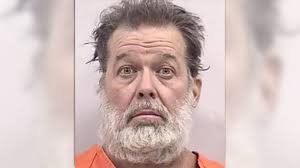
Robert Lewis Dear, Jr.
Those on the Left were outraged at this latest attack on the reproductive rights of women. But those on the Right offered no sympathy for the victims—or women who sought out medical care at Planned Parenthood clinics.
Colorado state Rep. JoAnn Windholz issued a statement blaming Planned Parenthood for the attack:
“Violence is never the answer, but we must start pointing out who is the real culprit. The true instigator of this violence and all violence at any Planned Parenthood facility is Planned Parenthood themselves. Violence begets violence. So Planned Parenthood: YOU STOP THE VIOLENCE INSIDE YOUR WALLS.” [Italics added]

Rep. JoAnn Windholz
Planned Parenthood offers reproductive health care, sex education to women and men and, at some clinics, abortions.
Since Planned Parenthood can’t expect help from Republican lawmakers, perhaps it’s time for its officials to consider the advice of Niccolo Machiavelli.
“For among other evils caused by being disarmed, it renders you contemptible,” he writes in Chapter 14 of The Prince, his primer on gaining political power.
“Because there is no comparison whatever between an armed and a disarmed man. It is not reasonable to suppose that one who is armed will obey willingly one who is unarmed….”
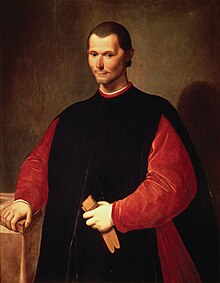
Niccolo Machiavelli
In short: Planned Parenthood should begin training its personnel in the use of automatic firearms. And widely advertising the fate that awaits future terrorist attackers.
This would send an unmistakable message to future would-be terrorists: We will no longer be passive victims to your violent fanaticism. Attack us—and die.
By doing so, Planned Parenthood would be following the advice of Wayne La Pierre—and the example set by New York City after 9/11.
In 1993, Islamic terrorists unsuccessfully bombed the World Trade Center. Six people were killed and 1,042 others were injured during escape attempts.
Eight years later, on September 11, 2001, they launched their second—and this time successful–attack on the Center, killing 2,977 New Yorkers.
On both occasions, New Yorkers had expected the Federal Government to protect them. After 9/11, the NYPD decided it could no longer rely on the FBI and CIA for protection.
The NYPD greatly expanded the ranks of its Counterterrorism Division. More than 600 officers and operatives both stateside and worldwide now stood guard over New York City.
Since 9/11, New York has not faced a similar terrorist attack.
Finally, an Aesop’s fable serves up a lesson known long ago—but repeatedly ignored by the idealistic but ineffectual Left:
A snake was stepped on by so many people that, one day, he prayed to Zeus for help. And Zeus replied: “If you had bitten the first person who stepped on you, the second would have thought twice about it.”
 Bureaucracybuster's Blog
ABC NEWS, ADAM SCHIFF, ALTERNET, AMERICABLOG, AP, ARTICLES OF IMPEACHMENT, BABY BOOMER RESISTANCE, BETSY DEVOS, BLOOMBERG, BUZZFEED, CAPITOL BUILDING ATTACK, CAPITOL POLICE, CBS NEWS, CHAD WOLF, CNN, CROOKS AND LIARS, DAILY KOZ, DEPARTMENT OF EDUCATION, DEPARTMENT OF HOMELAND SECURITY, DEPARTMENT OF TRANSPORTATION, DEUTSCHE BANK, DONALD TRUMP, DRUDGE REPORT, ELAINE CHAO, ELECTORAL COLLEGE, FACEBOOK, FIVETHIRTYEIGHT, HARPER’S MAGAZINE, HERODOTUS, HOUSE JUDICIARY COMMITTEE, HUFFINGTON POST, IMPEACHMENT, JERRY NADLER, JOSEPH BIDEN, JOSEPH STALIN, KHRUSHCHEV’S SECRET SPEECH, MEDIA MATTERS, MIKE PENCE, MOTHER JONES, MOVEON, MSNBC, NBC NEWS, NEWSWEEK, NIKITA KHRUSHCHEV, NPR, PBS NEWSHOUR, PGA OF AMERICA, POLITICO, POLITICUSUSA, RAW STORY, REUTERS, ROBERT PAYNE, SALON, SEATTLE TIMES, SLATE, SOVIET UNION, TALKING POINTS MEMO, THE ATLANTIC, THE CHICAGO SUN-TIMES, THE CHICAGO TRIBUNE, THE DAILY BEAST, THE DAILY BLOG, THE GUARDIAN, THE HILL, THE HUFFINGTON POST, THE LOS ANGELES TIMES, THE NATION, THE NEW REPUBLIC, THE NEW YORK TIMES, THE RISE AND FALL OF STALIN (BOOK), THE VILLAGE VOICE, THE WASHINGTON POST, THINKPROGRESS, TIME, TRUTHDIG, TRUTHOUT, TWENTY-FIFTH AMENDMENT, TWITTER, TWO POLITICAL JUNKIES, U.S. NEWS & WORLD REPORT, UNITED STATES HOUSE OF REPRESENTATIVES, UNITED STATES SENATE, UPI, USA TODAY, WONKETTE
BURYING TRUMP–AND STALIN: PART TWO (END)
In Bureaucracy, History, Law, Law Enforcement, Politics, Social commentary on June 10, 2022 at 12:15 amSixty years before an American congress failed to remove a ruthless dictator from its midst, a Russian congress successfully removed their own.
For almost 30 years, from 1924 to 1953, Joseph Vissarionovich Djugashvili—better known as Stalin—had ruled as absolute dictator over the Soviet Union. Hallmarks of his legacy included mass arrests, repeated purges, forced mass starvation and the imprisonment of millions.
As many as 20 million men, women and children died as his victims.
His reign of terror ended only with his death, of a cerebral hemorrhage, on March 5, 1953, at age 74.
Joseph Stalin
As historian Robert Payne wrote in his monumental 1965 biography The Rise and Fall of Stalin: “The son of an obscure cobbler, he had become during the last years of his life the most powerful man on earth. No emperor had ever enjoyed the power he possessed.
“He had taken the world by the throat, and forced it to do his will. He was one of the world-shakers, and when he died in 1953 it was thought proper that his remains should be exhibited as an object of reverence and worship in the Lenin mausoleum, the holy of holies of the Soviet empire.”
On February 25, 1956, his successor, Nikita Khrushchev, revealed Stalin’s litany of crimes to the 20th Congress of the Communist Party of the Soviet Union.
The speech was the opening shot in Khrushchev’s “de-Stalinization” campaign. He intended to destroy the image of the late dictator as an infallible leader and rein in the infamous KGB secret police.
The speech gave rise to a period of liberalization known as the “Khrushchev thaw” (1956-1964). During this, censorship policy was relaxed, and for the first time books and articles appeared about the huge network of forced labor camps set up by Vladimir Lenin and reaching its peak under Stalin.
Nikita Khrushchev
Creative Commons Attribution-Share Alike 4.0 International license.
Thousands of political prisoners were released, and thousands more who had perished during Stalin’s reign were officially “rehabilitated.”
By 1961, Khrushchev and those seeking to reform the Soviet political system decided to condemn the horrors of the Stalinist decades in a forceful symbolic act.
On October 31, 1961, the body of Joseph Stalin was removed from its honored resting place in the Lenin mausoleum in Red Square. A new grave was dug for him—among the minor heroes of the Russian Revolution. The re-internment took place secretly—at night—without ceremonies. And his name was removed from the mausoleum.
Historian Robert Payne described that event—and its significance: “A dead god was being transformed into a dead man, a dead emperor was being dethroned, a dead criminal was being executed….
“But more than a ritual murder was at stake. The Supreme Soviet and the Central Committee, which decreed the punishment now being inflicted on the corpse of Stalin, were now attempting to absolve themselves from responsibility for his crimes.
“They were saying: ‘We are not responsible, we are casting him away, he is not one of us! He committed such terrible crimes that we will have none of him.’
“For nearly thirty years Stalin had ruled tyrannically over Russia. History, too, was being consigned to oblivion.”
A series of similar events has erupted within the United States since January 6, 2021.
On that day, thousands of Right-wing supporters of President Donald Trump—ignited by his fiery, lie-riddled rhetoric—overwhelmed police guarding the United States Capitol and occupied the building.
Donald Trump
Their intention: To halt the counting of Electoral College votes that would certify former Vice President Joseph Biden as the next President of the United States.
Since then, Trump’s fortunes have sharply declined:
Herodotus, the Greek historian who chronicled the Greek-Persian wars, offers a still-timely explanation of such reverses of fortune—and a warning for those who dare to ignore history:
“Look to the end, no matter what it is you are considering. Often enough God gives a man a glimpse of happiness, and then utterly ruins him.”
Share this: