Posts Tagged ‘BLOOMBERG NEWS’
2016 PRESIDENTIAL ELECTION, ABC NEWS, AFFORDABLE CARE ACT, ALAN LADD, ALTERNET, AMERICABLOG, AP, BABY BOOMER RESISTANCE, BBC, BLOOMBERG NEWS, BORDER WALL, BRANDON DE WILDE, BUZZFEED, CALVERA (CHARACTER), CANADA, CAPITOL INSURRECTION, CBS NEWS, CHARLES GEORGE GORDON, CHRIS (CHARACTER), CHYE-CHING HUANG, CIA, CNN, COVID-19, CROOKS AND LIARS, DAILY KOZ, DONALD TRUMP, DONALD TRUMP: TRAGIC HERO (ARTICLE), ELECTORAL COLLEGE, ELI WALLACH, FBI, FEDERAL FISCAL POLICY, FEDERAL GOVERNMENT SHUTDOWN, FIVETHIRTYEIGHT, HAMLET, HARPER’S MAGAZINE, HOOVER INSTITUTION, HUFFINGTON POST, ISLAMIC STATE, JACK PALANCE, JAMES COMEY, JEFF SESSONS, JOHN FORD, JOHN WAYNE, JOSEPH BIDEN, KHARTOUM, KIM JONG ON, LEE MARVIN, MEDIA MATTERS, MOTHER JONES, MOVEON, MSNBC, NATIONAL SECURITY AGENCY, NBC NEWS, NEW REPUBLIC, NEWSDAY, NEWSWEEK, NORTH KOREA, NPR, PBS NEWSHOUR, POLITICO, POLITICUSUSA, RAW STORY, REUTERS, ROBERT S. MUELLER III, RUFUS RYKER (CHARACTER), RUSSIA, SALON, SEATTLE TIMES, SERGEY KISLYAK, SERGEY LAVROV, SHANE (MOVIE), SLATE, STEVE MCQUEEN, TALKING POINTS MEMO, TAX CUTS AND JOBS ACT OF 2017, THE ATLANTIC, THE CASE FOR TRUMP (BOOK), THE CHICAGO SUN-TIMES, THE CHICAGO TRIBUNE, THE DAILY BEAST, THE DAILY BLOG, THE GUARDIAN, THE HILL, THE HUFFINGTON POST, THE LOS ANGELES TIMES, THE MAGNIFICENT SEVEN (MOVIE), THE MAN WHO SHOT LIBERTY VALANCE (MOVIE), THE NATION, THE NEW REPUBLIC, THE NEW YORK TIMES, THE NEW YORKER, THE PRESS, THE VILLAGE VOICE, THE WASHINGTON POST, THINKPROGRESS, TIME, TRAGEDY, TRUMP FOUNDATION, TRUMP UNIVERSITY, TRUTHDIG, TRUTHOUT, TWO POLITICAL JUNKIES, U.S. NEWS & WORLD REPORT, UKRAINE, UPI, USA TODAY, VICTOR DAVIS HANSON, VLADIMIR PUTIN, VOLODYMYR ZELENSKY, WILLIAM SHAKESPEARE, WILSON (CHARACTER), WONKETTE, X, YUL BRYNNER
In Bureaucracy, Business, Entertainment, History, Law, Law Enforcement, Medical, Military, Politics, Social commentary on June 15, 2026 at 12:10 am
“America needs the outsider Trump to do what normal politicians would not and could not do.”
That was the assertion made by Victor Davis Hanson, a classicist and historian at the Hoover Institution, Stanford University, in Palo Alto, California.
Among his bestsellers on military history:
- The Second World Wars
- Carnage and Culture
- Wars of the Ancient Greeks
- The Western Way of War
- The Soul of Battle: How Three Great Liberators Vanquished Tyranny

Victor Davis Hanson
In 2019, Hanson turned his attention to politics—specifically, The Case for Trump.
Its dust-jacket provides a useful summary of its contents:
“This New York Times bestselling Trump biography from a major American intellectual explains how a renegade businessman became one of the most successful—and necessary—presidents of all time.
“In The Case for Trump, award-winning historian and political commentator Victor Davis Hanson explains how a celebrity businessman with no political or military experience triumphed over sixteen well-qualified Republican rivals, a Democrat with a quarter-billion-dollar war chest, and a hostile media and Washington establishment to become president of the United States — and an extremely successful president.
“Trump alone saw a political opportunity in defending the working people of America’s interior whom the coastal elite of both parties had come to scorn, Hanson argues. And Trump alone had the instincts and energy to pursue this opening to victory, dismantle a corrupt old order, and bring long-overdue policy changes at home and abroad.”
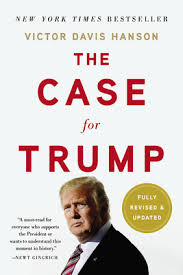
Hanson’s book appeared before Trump:
- Tried to coerce Ukrainian President Volodymyr Zelensky to smear former Vice President Joseph Biden, who was likely to be his Democratic opponent in the 2020 Presidential election.
- Allowed the deadly COVID-19 virus to ravage the country, killing more than 400,000 Americans by the time he left office.
- Attacked medical experts and governors who urged Americans to wear masks and socially distance to protect themselves from COVID-19.
- Ordered his Right-wing followers to defy states’ orders to citizens to stay-at-home and wear masks in public to halt surging COVID-19 rates.
- Became the first President in American history to refuse to accept the results of a Presidential election.
- Tried to overturn the November 3, 2020 election of Joe Biden through 60 lawsuits and the arm-twisting of several state lawmakers.
- Sent a mob of his fanatical followers to attack the United States Capitol Building. Their mission: Stop the counting of Electoral College ballots certain to give Biden the victory.
- Was twice impeached during his four years in office—the only President to be impeached twice (and acquitted by a Republican Senate which ignored his litany of crimes).
But his book appeared after Trump had:
- Fired FBI Director James Comey for pursuing ties between Trump’s 2016 Presidential campaign and Russian Intelligence agents.
- Tried to fire Independent Counsel Robert S. Mueller III, who was assigned to investigate those ties after Trump fired Comey.
- Attacked Attorney General Jeff Sessions for refusing to fire Mueller.
- Attacked the integrity of Federal judges whose rulings he disagreed with.
- Gave Russian Foreign Minister Sergey Lavrov and Russian Ambassador Sergey Kislyak highly classified CIA Intelligence about an Islamic State plot to turn laptops into concealable bombs.
- Amassed an infamous record as a serial liar, in both personal and Presidential matters.
- Attacked the integrity of the American Intelligence community.
- Sided with Russian dictator Vladimir Putin against the FBI, CIA and National Security Agency which unanimously agreed that Russia had subverted the 2016 Presidential election.
- Repeatedly attacked the nation’s free press for daring to report his growing list of crimes and disasters, calling it “the enemy of the American people.”
- Branded America’s longtime ally, Canada, as “a national security threat.”
- Praised brutal Communist dictators Putin and North Korea’s Kim Jong Un.
- Shut down the Federal Government for 35 days because Democrats refused to fund his ineffective “border wall” between the United States and Mexico.
- An estimated 380,000 government employees were furloughed and another 420,000 were ordered to work without pay. The shutdown ended due to public outrage—without Trump getting the funding amount he had demanded.
So much for Hanson’s claims that Trump had been “one of the most successful—and necessary—presidents of all time.”

Donald Trump
Then there’s Hanson’s claim that “Trump alone saw a political opportunity in defending the working people of America’s interior whom the coastal elite of both parties had come to scorn.”
In November, 2017, Trump and a Republican-dominated House and Senate rammed the Tax Cuts and Jobs Act of 2017 through Congress. It became law on December 22, 2017.
According to Chye-Ching Huang, Director of Federal Fiscal Policy, the law did nothing to help ordinary Americans.
Testifying before the House Budget Committee on February 27, 2019, Huang stated that the law:
- Ignored the stagnation of working-class wages and worsened inequality;
- Weakened revenues when the nation needed to raise more;
- Encouraged rampant tax avoidance and gaming that will undermine the integrity of the tax code;
- Left behind low- and moderate-income Americans—and in many ways hurt them.
For American corporations, however, the law was a godsend:
- Cutting the corporate tax rate from 35 to 21 percent;
- Shifting toward a territorial tax system, where multinational corporations’ foreign profits go largely untaxed;
- Benefitting overwhelmingly wealthy shareholders and highly paid executives.
This was hardly an attempt at “defending the working people of America’s interior.”
Trump never made another attempt to “reform” the tax laws.
1968 PRESIDENTIAL CAMPAIGN, 2022 MID-TERM ELECTIONS, 2024 PRESIDENTIAL ELECTIONS, ABC NEWS, ABORTION, ADOLF HITLER, ALTERNET, AMERICABLOG, AP, ARI FLEISCHER, ” 9/11, BABY BOOMER RESISTANCE, BBC, BILL CLINTON, BLOOMBERG NEWS, BUZZFEED, CBS NEWS, CNN, COMMUNISTS, CROOKS AND LIARS, DAILY KOZ, DAVID BROOKS, DEMOCRATS, DONALD TRUMP, ECONOMY, FACEBOOK, FEAR, FIVETHIRTYEIGHT, GEORGE H.W. BUSH, GEORGE W. BUSH, GREED, HARPER’S MAGAZINE, HATRED, HUFFINGTON POST, HUMAN NATURE, JANUARY 6 COUP ATTEMPT, JONATHAN CAPEHART, JOSEPH BIDEN, JOSEPH MCCARTHY, LEE ATWATER, LLEGAL ALIENS, MEDIA MATTERS, MOTHER JONES, MOVEON, MSNBC, NBC NEWS, NEW REPUBLIC, NEWSDAY, NEWSWEEK, NPR, PAUL VON HINDENBURG, PBS NEWSHOUR, POLITICO, POLITICUSUSA, RAW STORY, REPUBLICANS, REUTERS, RICHARD NIXON, SALON, SARAH HUCKABEE SANDERS, SEATTLE TIMES, SLATE, SOUTHERN STRATEGY, SOVIET UNION, TALKING POINTS MEMO, THE ATLANTIC, THE CHICAGO SUN-TIMES, THE CHICAGO TRIBUNE, THE DAILY BEAST, THE DAILY BLOG, THE GUARDIAN, THE HILL, THE HUFFINGTON POST, THE INTERCEPT, THE LOS ANGELES TIMES, THE NATION, THE NEW REPUBLIC, THE NEW YORK TIMES, THE NEW YORKER, THE VILLAGE VOICE, THE WASHINGTON POST, THINKPROGRESS, TIME, TREASON, TRUTHDIG, TRUTHOUT, TWO POLITICAL JUNKIES, U.S. NEWS & WORLD REPORT, UNITED STATES DEPARTMENT OF JUSTICE, UPI, USA TODAY, WEIMAR REPUBLIC, WILLIAM BRANGHAM, WONKETTE, WORLD WAR 11, X
In Bureaucracy, History, Law, Law Enforcement, Medical, Politics, Social commentary on June 12, 2026 at 12:22 am
Democrats want to believe a day will come when all races, colors and creeds will live together in harmony. Their policies aim at creating that sort of society.
Republicans have turned “illegal alien” into a battle cry.
This is especially true when inflation is high, jobs and housing are scarce, and local schools and hospitals are crammed with illegal aliens—who, by law, shouldn’t even be in the country.
Moreover, the “illegal alien” tagline often allows Republicans to sidestep criticism on even the most outrageous of their actions.
Example: The case of a 10-year-old Ohio girl who was raped—and had to travel to Indiana to obtain an abortion after the Supreme Court overturned Roe. v. Wade.
Ohio has a “heartbeat” law making abortion a crime after a fetal heartbeat is determined—usually within the first six weeks.
For Ohio’s Republican legislators and governor, the “rights” of a fetus far outweigh those of an actual human being—even if she is a child.
Ari Fleischer, former press secretary for President George W. Bush, said on Fox News that the girl’s illegal alien rapist from Guatemala was the villain, not the fetal heartbeat law.
“The agenda is to allow people to come into America without having to come here legally. If you start pointing things out like this, it makes it a moral question. And that’s why the press doesn’t want to face up to the fact it’s a moral issue that people should not be allowed in America unless they come here legally.”
If she had been raped by a legal American citizen, the Ohio “fetal heartbeat” law would have still forced her to carry the fetus to term.
Democrats believe—or want to believe—that voters are creatures of rationality.
Republicans learned long ago that most voters aren’t moved by appeals to their rationality. Instead, what counts with them is emotions—such as fear.
From the end of World War II in 1945 to the collapse of the Soviet Union in 1991, the Enemy of Choice for Republicans was the Communists.
Millions of Americans were so pathologically frightened by “The Red Menace” that any Democratic politician libeled as a “Communist,” “Comsymp,” “fellow traveler” was considered at least a potential traitor, if not an actual one.
Among the Republican politicians who rode to victory on a wave of Red hysteria: Richard Nixon and Joseph McCarthy
Even as late as 1992, President George H.W. Bush and the Republican establishment charged that Arkansas Governor Bill Clinton might be a KGB plant. Their evidence: During his tenure at Oxford University in 1969-70, Clinton had briefly visited Moscow—and thus might have been turned into a “Manchurian Candidate.”
After the collapse of the Soviet Union, Right-wingers had to settle for attacking their opponents as “liberals” and “soft on crime.” But these charges didn’t carry the same weight as “Communists” and “traitors.”
Then, on September 11, 2001, Republicans—and their Right-wing supporters—at last found a suitable replacement for the Red Menace: The Maniacal Muslim.
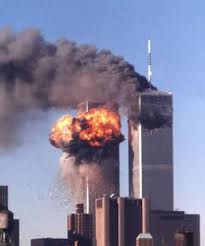
The World Trade Center on September 11, 2001
Led by President George W. Bush, Republicans used fear of Muslims to con and bully the nation into a needless, bloody, budget-busting war on Iraq.
The most immediate danger facing Democratic candidates: Their unwillingness to fight fire with fire.
Example 1: Republicans are organizing a nationwide effort to suppress voter turnout among blacks, Hispanics and liberals.
Yet Democrats are not making any similar effort to suppress Right-wing turnout. Nor did the Biden Justice Department indict those Republicans responsible for their anti-democratic efforts.
Example 2: On January 6, 2021, President Donald Trump—supported by at least 144 Republicans in the House and Senate—incited a treasonous coup to remain in office. This despite the overwhelming evidence that he had lost the 2020 election to Joseph Biden.

By the end of the Biden administration, not one major Republican supporting such treason had been indicted for that infamy. Let alone tried, convicted and imprisoned.
The single biggest reason for the Democrats loss in 2024 lay in the Biden administration’s toleration of Donald Trump’s continuing campaign of lies.
Trump continued to spread The Big Lie that he was robbed by a vast conspiracy—although not one of the more than 60 cases his lawyers brought before Federal judges proved this true.
Trump should have been indicted for treason by no later than mid-2021. Even then, the evidence was overwhelming that he had instigated the coup attempt. He was clearly preparing to run again for President in 2024.
An indictment for treason would cast a heavy—if not fatal—blow to that decision. At the very least, Trump would have been forced to mount a feverish—and expensive—defense.
And even many of his most fanatical supporters would have questioned the wisdom of voting for a man who might well become a Federal prison inmate.
In 2024, America stood at the point where the German Weimar Republic stood in 1932: With an aged President (Paul von Hindenburg) unable—or unwilling—to cope with a surging Fascistic movement (led by Adolf Hitler).
The results of that collective failure destroyed Germany and left 60 million dead around the world.
The 2024 Presidential election proved that history can repeat itself, albeit in different countries.
1968 PRESIDENTIAL CAMPAIGN, 2022 MID-TERM ELECTIONS, 2024 PRESIDENTIAL ELECTIONS, ABC NEWS, ABORTION, ADOLF HITLER, ALTERNET, AMERICABLOG, AP, ARI FLEISCHER, ” 9/11, BABY BOOMER RESISTANCE, BBC, BILL CLINTON, BLOOMBERG NEWS, BUZZFEED, CBS NEWS, CNN, COMMUNISTS, CROOKS AND LIARS, DAILY KOZ, DAVID BROOKS, DEMOCRATS, DONALD TRUMP, ECONOMY, FACEBOOK, FEAR, FIVETHIRTYEIGHT, GEORGE H.W. BUSH, GEORGE W. BUSH, GREED, HARPER’S MAGAZINE, HATRED, HUFFINGTON POST, HUMAN NATURE, JANUARY 6 COUP ATTEMPT, JONATHAN CAPEHART, JOSEPH BIDEN, JOSEPH MCCARTHY, LEE ATWATER, LLEGAL ALIENS, MEDIA MATTERS, MOTHER JONES, MOVEON, MSNBC, NBC NEWS, NEW REPUBLIC, NEWSDAY, NEWSWEEK, NPR, PAUL VON HINDENBURG, PBS NEWSHOUR, POLITICO, POLITICUSUSA, RAW STORY, REPUBLICANS, REUTERS, RICHARD NIXON, SALON, SARAH HUCKABEE SANDERS, SEATTLE TIMES, SLATE, SOUTHERN STRATEGY, SOVIET UNION, TALKING POINTS MEMO, THE ATLANTIC, THE CHICAGO SUN-TIMES, THE CHICAGO TRIBUNE, THE DAILY BEAST, THE DAILY BLOG, THE GUARDIAN, THE HILL, THE HUFFINGTON POST, THE INTERCEPT, THE LOS ANGELES TIMES, THE NATION, THE NEW REPUBLIC, THE NEW YORK TIMES, THE NEW YORKER, THE VILLAGE VOICE, THE WASHINGTON POST, THINKPROGRESS, TIME, TREASON, TRUTHDIG, TRUTHOUT, TWO POLITICAL JUNKIES, U.S. NEWS & WORLD REPORT, UNITED STATES DEPARTMENT OF JUSTICE, UPI, USA TODAY, WEIMAR REPUBLIC, WILLIAM BRANGHAM, WONKETTE, WORLD WAR 11, X
In Bureaucracy, History, Law, Law Enforcement, Medical, Politics, Social commentary on June 11, 2026 at 12:14 am
There are many reasons why Democrats consistently lose elections.
A major one: Democrats believe that people can be better than they are—and, given the chance, want to become better than they are.
Republicans realize that most people like themselves as they are—and don’t want to change. At least, not in the altruistic ways Democrats envision.
If they want to change anything about themselves, it’s strictly at the materialistic level: More money, lower prices, more big-ticket toys.
Susan Page, Washington Bureau Chief for USA TODAY, summed up the popularity of the “Greed Appeal” to voters on the March 13, 2020 edition of “Washington Week in Review”:

Susan Page
“USA Today has conducted a poll about the economic concerns that are out there….And Congress—you’re seeing fear in this country about the economy.
“In fact, when we did this poll this week about how Americans’ lives have been affected by the Coronavirus, people expressed more concern about the economic and financial effect than they did about the health effect. And you know, that goes to why this matters so much to President Trump.
“How many voters have you talked to who said, you know, I don’t really like President Trump’s tweets, but I like what I see happening in my 401(k). And when they look at their 401(k) this week, it may not look quite as bright as it did before.”
Democrats expect people to rise above their worst selves and embrace a higher, altruistic cause—civil rights, abortion rights, healthcare for all.
Republicans look for those who are comfortable in their racism, their greed, their hatred for women. They don’t try to reform them—they encourage them in their racism, greed and misogyny.
This began long before Donald Trump became a Presidential candidate in 2016.
When Richard Nixon announced his candidacy for President in 1968, he pursued what was euphemistically termed “a Southern strategy.”

Ricard Nixon
In reality, this was aimed to exploit whites’ fear and hatred of blacks.
In a now-infamous 1981 interview, Right-wing political consultant Lee Atwater explained how this worked.
“You start out in 1954 by saying, ‘Nigger, nigger, nigger.’ By 1968 you can’t say ‘nigger’—that hurts you, backfires.
“So you say stuff like, uh, forced busing, states’ rights, and all that stuff, and you’re getting so abstract.
“Now, you’re talking about cutting taxes, and all these things you’re talking about are totally economic things and a byproduct of them is, blacks get hurt worse than whites….
“‘We want to cut this,’ is much more abstract than even the busing thing, uh, and a hell of a lot more abstract than ‘Nigger, nigger.’
“So anyway you look at it, race is coming on the back burner.”

Lee Atwater
But blacks have by no means been the only targets—and victims—of Republican hate campaigns. A partial list of these would include:
- Liberals
- Women
- Socialists
- Secularists
- Disabled
- Environmentalists
- Hispanics
- Gays
- Lesbians
And now transgenders.
Republicans are experts at inciting hatred—and reaping huge gains in power as a result.
There can be no better example of a politician who has played successfully on the hatred of American voters than Donald Trump. If Barack Obama was the 2008 candidate of “Hope and Change,” then Trump was the 2016 candidate of “Hate and Fear.”
From June 15, 2015, when he launched his Presidential campaign, until October 24, 2016, Trump fired almost 4,000 angry, insulting tweets at 281 people and institutions that had somehow offended him.
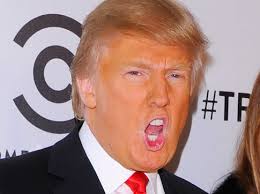
Donald Trump
The New York Times needed two full pages of its print edition to showcase them.
Among his targets:
- Secretary of State Hillary Clinton
- The New York Times
- President Barack Obama
- CNN
- Actress Meryl Streep
- The Washington Post
- Singer Neil Young
- Democrats
- Actor Arnold Schwarzenegger
- Republicans
- Comedian John Oliver
- The State of New Jersey
- Beauty pageant contestants
Others he clearly delighted in insulting during the campaign included:
- Women
- Blacks
- Hispanics
- Asians
- Muslims
- The disabled
- Prisoners-of-war
Democrats want to believe a day will come when all races, colors and creeds will live together in harmony. Their policies aim at creating that sort of society.
Republicans know that most people instinctively feel comfortable with those who most resemble themselves. And they don’t seek out those who differ from themselves.
That’s why—in schools and prisons—whites sit mostly with whites, blacks sit mostly with blacks, and Hispanics sit mostly with Hispanics.
And if most Americans feel uncomfortable with fellow Americans who don’t resemble themselves, they are even more intolerant toward foreigners who don’t.
This is especially true when inflation is high, jobs and housing are scarce, and local schools and hospitals are crammed with illegal aliens—who, by law, shouldn’t even be in the country.
For these Americans, the Democrats’ “Kumbaya” message of love and tolerance falls on deaf ears. By contrast, Republicans’ cries of “Get rid of the illegal aliens!” ring loud and clear.

Illegal aliens crossing into the United States
Moreover, the “illegal alien” tagline often allows Republicans to sidestep criticism on even the most outrageous of their actions.
Example: The case of a 10-year-old Ohio girl who was raped—and had to travel to Indiana to obtain an abortion after the Supreme Court overturned Roe. v. Wade.
1968 PRESIDENTIAL CAMPAIGN, 2022 MID-TERM ELECTIONS, 2024 PRESIDENTIAL ELECTIONS, ABC NEWS, ABORTION, ADOLF HITLER, ALTERNET, AMERICABLOG, AP, ARI FLEISCHER, ” 9/11, BABY BOOMER RESISTANCE, BBC, BILL CLINTON, BLOOMBERG NEWS, BUZZFEED, CBS NEWS, CNN, COMMUNISTS, CROOKS AND LIARS, DAILY KOZ, DAVID BROOKS, DEMOCRATS, DONALD TRUMP, ECONOMY, FACEBOOK, FEAR, FIVETHIRTYEIGHT, GEORGE H.W. BUSH, GEORGE W. BUSH, GREED, HARPER’S MAGAZINE, HATRED, HUFFINGTON POST, HUMAN NATURE, JANUARY 6 COUP ATTEMPT, JONATHAN CAPEHART, JOSEPH BIDEN, JOSEPH MCCARTHY, LEE ATWATER, LLEGAL ALIENS, MEDIA MATTERS, MOTHER JONES, MOVEON, MSNBC, NBC NEWS, NEW REPUBLIC, NEWSDAY, NEWSWEEK, NPR, PAUL VON HINDENBURG, PBS NEWSHOUR, POLITICO, POLITICUSUSA, RAW STORY, REPUBLICANS, REUTERS, RICHARD NIXON, SALON, SARAH HUCKABEE SANDERS, SEATTLE TIMES, SLATE, SOUTHERN STRATEGY, SOVIET UNION, SUSAN PAGE, TALKING POINTS MEMO, THE ATLANTIC, THE CHICAGO SUN-TIMES, THE CHICAGO TRIBUNE, THE DAILY BEAST, THE DAILY BLOG, THE GUARDIAN, THE HILL, THE HUFFINGTON POST, THE INTERCEPT, THE LOS ANGELES TIMES, THE NATION, THE NEW REPUBLIC, THE NEW YORK TIMES, THE NEW YORKER, THE VILLAGE VOICE, THE WASHINGTON POST, THINKPROGRESS, TIME, TREASON, TRUTHDIG, TRUTHOUT, TWO POLITICAL JUNKIES, U.S. NEWS & WORLD REPORT, UNITED STATES DEPARTMENT OF JUSTICE, UPI, USA TODAY, WEIMAR REPUBLIC, WILLIAM BRANGHAM, WONKETTE, WORLD WAR 11, X
In Bureaucracy, History, Law, Law Enforcement, Medical, Politics, Social commentary on June 10, 2026 at 12:17 am
If you’re wondering why Democrats lost the Presidential election of November 5, 2024—you can stop wondering.
Here are the reasons. And they are the reasons why Democrats will likely lose the 2028 Presidential election as well.
Democrats believe that people can be better than they are—and, given the chance, want to become better than they are.
Republicans understand the darker sides of human nature far better than Democrats—and don’t hesitate to take full advantage of them.
Republicans realize that most people like themselves as they are—and don’t want to change. At least, not in the altruistic ways Democrats envision.
If they want to change anything about themselves, it’s strictly at the materialistic level: More money, lower prices, more big-ticket toys.
They may claim concern for others, but if given a choice between their pocketbook and a higher goal, most will vote for their pocketbook.
A first-rate example of this appeared on The PBS Newshour on July 15, 2022, during an exchange between conservative New York Times columnist David Brooks and Jonathan Capehart, associate editor for the Washington Post.
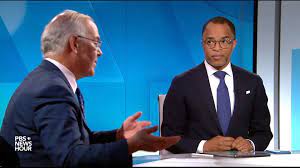
David Brooks (left) and Jonathan Capehart (right) on the PBS Newshour
Host William Brangham led off the exchange:
“I want to switch, Jonathan, to this issue of the continued fallout of the Supreme Court overturning Roe v. Wade. And Democrats seem to believe that this could be one of the things that might give them at least some trace of a fighting chance in the midterms.
“And we saw we this week this sort of horrendous case of a young 10-year-old girl who had been raped. She got pregnant. She then had to leave her state [Ohio] and go to another state [Indiana] where abortion would still be allowed.
“And GOP officials tried to make hay of it. They doubted that that story really existed. The local [Attorney General] said, we’re going to go after the doctor that performed this.
“Do you think that—that issue and the extremity of the way that this is being handled will actually benefit Democrats?”
Capehart: “It should. The idea that we’re talking about violence against a child, and then being forced by the state to give birth to this child, going to another state so she can terminate that pregnancy, and then being persecuted and prosecuted by the state for doing that….

“We are in “Handmaid’s Tale” territory here. We are turning into Gilead. And if there are people out there who are upset by the Supreme Court decision, by what Republican legislators around the country in states and localities are doing to further restrictions and bans on abortion.
“I don’t know what else could push people to the polls more than not just being stripped of a constitutional right, but having your right to — right to freedom, right to privacy, right to liberty not just taken away, but local officials doing everything they can to ensure that you don’t have autonomy over your own body.
“If that doesn’t get people out to the polls, I don’t know what will.”
Brangham then turned to Brooks:
“I mean, David, this was an incredibly extreme case, in some ways crystallized the sharpness and the horribleness of this division in this country.
“Do you think it will redound to the Democrats’ benefit?”
Brooks: “A little, but, frankly, not much.
“Now, abortion rights defenders, they should pursue their cause with the passion that they’re bringing to it….
“But there’s just a giant gap between what a lot of Democrats want to talk about and what the whole rest of the country wants to talk about. And if you ask people, what’s the most important issues, progressives want to talk about abortion and guns.
“The entire rest of the country, independents, conservatives, unaffiliated people, they want talk about the economy. And, for them, the economy is way up here. Jobs are number one. Inflation is number two.

“And so why is Joe Biden at 33 percent approval in the latest Times poll? It’s the economy. Why in the same poll do half of Hispanics support the Republicans now? The economy. These are earthquake numbers for Democrats…..
“But if Democrats, if they’re not talking about economic policy every day, then they’re just not talking about the policy that is clearly ranking number one with a vast majority of voters.”
No Republican has appealed more directly to greed as a motivator than Donald Trump.
On August 23, 2018, Trump, as President, offered additional evidence that he’s “not like other people.” He did so by giving an unprecedented reason why he shouldn’t be impeached: “I tell you what, if I ever got impeached, I think the market would crash, I think everybody would be very poor.”
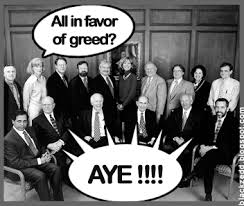
White House Press Secretary Sarah Huckabee Sanders doubtless spoke for millions of Trump supporters when she said, on June 4, 2018:
“Since taking office, the President has strengthened American leadership, security, prosperity, and accountability. And as we saw from Friday’s jobs report, our economy is stronger, Americans are optimistic, and business is booming.”
ABC NEWS, AL QAEDA, ALTERNET, AMERICABLOG, AMERICAN EXCEPTIONALISM, AP, BABY BOOMER RESISTANCE, BARACK OBAMA, BASHIR AL-ASSAD, BBC, BLOOMBERG NEWS, BUZZFEED, CBS NEWS, CHILE, CNN, CROOKS AND LIARS, DAILY KOZ, FACEBOOK, FIVETHIRTYEIGHT, HARPER’S MAGAZINE, HOUSE UN-AMERICAN ACTIVITIES COMMITTEE, HUFFINGTON POST, HUMAN RIGHTS, IRAN, JOHN BOEHNER, JOHN MCCAIN, MEDIA MATTERS, MOTHER JONES, MOVEON, MSNBC, NBC NEWS, NEW REPUBLIC, NEWSDAY, NEWSWEEK, NICARAGUA, NPR, PBS NEWSHOUR, POLITICO, POLITICUSUSA, RAW STORY, REUTERS, RUSSIA, S.I. HAYAKAWA, SALON, SEATTLE TIMES, SLATE, SYRIA, TALKING POINTS MEMO, THE ATLANTIC, THE CHICAGO SUN-TIMES, THE CHICAGO TRIBUNE, THE DAILY BEAST, THE DAILY BLOG, THE GUARDIAN, THE HILL, THE HUFFINGTON POST, THE LOS ANGELES TIMES, THE NATION, THE NEW REPUBLIC, THE NEW YORK TIMES, THE NEW YORKER, THE VILLAGE VOICE, THE WALL STREET JOURNAL, THE WASHINGTON POST, THINKPROGRESS, TIME, TRUTHDIG, TRUTHOUT, TWO POLITICAL JUNKIES, U.S. NEWS & WORLD REPORT, UPI, USA TODAY, VLADIMIR PUTIN, WONKETTE, X
In Bureaucracy, History, Military, Politics, Social commentary on June 9, 2026 at 12:05 am
On July 4, the United States will celebrate the 250th anniversary of its declaring independence from Great Britain. But a new poll finds that fewer Americans see their country as exceptional.
- According to the Associated Press NORC Center for Public Affairs Research, only about one-quarter of Americans say the U.S. stands above all other countries in the world.
- About four in 10, 44%, of adults under 30 say there are other countries better than the U.S., compared with 22% of adults 60 and older.
- About two-thirds of adults say a democratically elected government is highly important to America’s identity as a nation, down from 80% in 2021.
Which harkens back to a 2013 essay on “American Exceptionalism” from an unlikely source.
On September 11, 2013, the New York Times published an Op-Ed (guest editorial) from Russian President Vladimir Putin, entitled: “A Plea for Caution from Russia: What Putin Has to Say to Americans About Syria.”
No one should be surprised that Putin came out strongly against an American air strike on Syria.
Its “President” (i.e., dictator) Bashir al-Assad, was a close ally of Russia. Just as his late father and dictator, Hafez al-Assad, was a close ally of the Soviet Union until its collapse in 1991.

Putin, of course, is a former member of the KGB, the infamous secret police which ruled the Soviet Union from its birth in 1917 to its collapse in 1991.
He grew up under a Communist dictatorship and clearly wishes to return to that era, saying publicly: “First and foremost it is worth acknowledging that the demise of the Soviet Union was the greatest geopolitical catastrophe of the century.”
So it would have been unrealistic to expect him to view the “Syria crisis” the same way that President Barack Obama did.
In his September 11, 2013 guest editorial in the New York Times, Putin offered the expected Russian take on Syria:
- Poison gas was used in Syria.
- It wasn’t used by the Syrian Army.
- It was used by “opposition forces, to provoke intervention by their powerful foreign patrons.”
But it was the concluding paragraph that enraged American politicians the most—especially Right-wing ones. In it, Putin took exception with American “exceptionalism.”
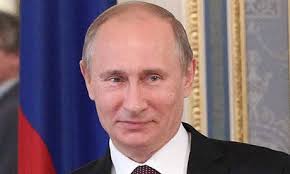
Vladimir Putin
This is the belief that the United States is unlike other nations in its innocence and steadfast dedication to human rights above all else.
Citizens of nations whose governments have been overthrown by the United States—such as Chile, Iran and Nicaragua—and replaced with brutal dictatorships would strongly disagree.
Referring to then-President Obama, Putin wrote:
“And I would rather disagree with a case he made on American exceptionalism, stating that the United States’ policy is ‘what makes America different. It’s what makes us exceptional.’
“It is extremely dangerous to encourage people to see themselves as exceptional, whatever the motivation.
“There are big countries and small countries, rich and poor, those with long democratic traditions and those still finding their way to democracy. Their policies differ, too.
“We are all different, but when we ask for the Lord’s blessings, we must not forget that God created us equal.”
Putin had never publicly shown any interest in religion. But by invoking “the Lord,” he was able to turn the Christian beliefs of his Western audience into a useful weapon.
“I was insulted,” then-House Speaker John Boehner (R-Ohio) told reporters when asked for his blunt reaction to the editorial.
“I have to be honest with you, I was at dinner, and I almost wanted to vomit,” said U.S. Senator Bob Menendez (D-New Jersey).
Putin had dared to question the self-righteousness of American foreign policy—and those who make it.
Making his case for war with Syria, Obama had said: “America is not the world’s policeman….
“But when, with modest effort and risk, we can stop children from being gassed to death, and thereby make our own children safer over the long run, I believe we should act.
“That’s what makes America different. That’s what makes us exceptional. With humility, but with resolve, let us never lose sight of that essential truth.”
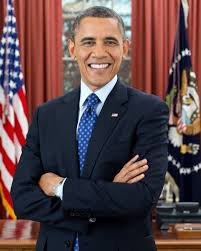
President Barack Obama
* * * * *
In short: Because we consider ourselves “exceptional,” we have the divine right to do whatever we want.
It’s not necessary to see Putin as a champion of democracy (he isn’t) to see the truth in this part of his editorial: “It is extremely dangerous to encourage people to see themselves as exceptional, whatever the motivation.”
From 1938 to 1969, the House Un-American Activities Committee sought to define what was “American” and what was “Un-American.” As if “American” stood for all things virtuous.
Whoever heard of an “Un-French Activities Committee”? Or an “Un-German” or “Un-British” one?
The late S.I. Hayakawa once made an observation that clearly applies to this situation.
Hayakawa was a professor of semantics (the study of meaning, focusing on the relation between words and what they stand for).
In his bestselling book, Language in Thought and Action, he observed that when a person hears a message, he has four ways of responding to it:
- Accept the speaker and his message.
- Accept the speaker but reject the message.
- Accept the message but reject the speaker.
- Reject the message and the speaker.
Americans might want to consider #3 in the recent case of Russian President Vladimir Putin.
2016 PRESIDENTIAL RACE, ABC NEWS, ABORTION, ADOLF HITLER, ALTERNET, AMERICABLOG, AMY CONEY BARRETT, AP, BABY BOOMER RESISTANCE, BBC, BIRTH CONTROL, BLOOMBERG NEWS, BRETT KAVANAUGH, BUZZFEED, CAPITAL PUNISHMENT, CBS NEWS, CHARLES SCHULTZ, CNN, CONSERVATIVE VICTORY (BOOK), CONTRACEPTION, CROOKS AND LIARS, DAILY KOZ, DONALD TRUMP, FACEBOOK, FIVETHIRTYEIGHT, HARPER’S MAGAZINE, HUFFINGTON POST, MEDIA MATTERS, MOTHER JONES, MOVEON, MSNBC, NBC NEWS, NEIL GORSUCH, NEW REPUBLIC, NEWSDAY, NEWSWEEK, NPR, NUCLEAR WAR, PBS NEWSHOUR, POLITICO, POLITICUSUSA, RAW STORY, REPUBLICAN PARTY, REPUBLICANS, REUTERS, ROE V. WADE, Ronald Reagan, RUSH LIMBAUGH, SALON, SANDRA FLUKE, SCOTT DESJARLIS, SEAN HANNITY, SEATTLE TIMES, SLATE, TALIBAN, TALKING POINTS MEMO, THE ATLANTIC, THE CHICAGO SUN-TIMES, THE CHICAGO TRIBUNE, THE DAILY BEAST, THE DAILY BLOG, THE GUARDIAN, THE HILL, THE HUFFINGTON POST, THE LOS ANGELES TIMES, THE NATION, THE NEW REPUBLIC, THE NEW YORK TIMES, THE NEW YORKER, THE VILLAGE VOICE, THE WASHINGTON POST, THINKPROGRESS, TIME, TRUTHDIG, TRUTHOUT, TWO POLITICAL JUNKIES, U.S. NEWS & WORLD REPORT, UPI, USA TODAY, WAR, WONKETTE, X
In Bureaucracy, History, Law Enforcement, Medical, Politics, Social commentary on June 8, 2026 at 12:35 am
On May 2, 2022, POLITICO released a bombshell of a story: The United States Supreme Court intended to strike down Roe v. Wade.
The proof came in an initial draft majority opinion written by Justice Samuel Alito, circulated within the court and obtained by POLITICO.
And on June 24, the Court completely repudiated the 1973 decision which guaranteed federal constitutional protections of abortion rights.
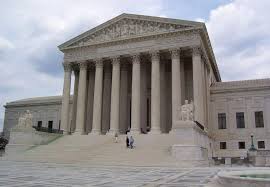
The Supreme Court
“Roe was egregiously wrong from the start,” Alito wrote. “Its reasoning was exceptionally weak, and the decision has had damaging consequences.”
Over 22 million women and girls of reproductive age now live in states with near-total abortion bans,
Making this possible was the appointment of three Right-wing Justices by President Donald Trump: Neil Gorsuch (2017); Brett Kavanaugh (2018); and Amy Coney Barrett (2020).
This has been a dream for Right-wing anti-abortion fanatics since the Court struck down abortion restrictions 53 years ago.
So what’s responsible for all this fetus fanaticism?
First, there is an energized constituency for politicians willing to wave this red flag.
Every major Republican Presidential candidate since Ronald Reagan has tapped into this voting bloc. And each has found plenty of votes to be gotten from it.
Second, many fetus fanatics simply dislike women.
They fear and resent the women’s movement, which has given women the right to enter the workforce and compete directly with men.
And what they hate most is the legal right of a woman to avoid becoming pregnant via birth control—or to abort the result of a male’s sperm if they do. They see this as a personal rejection.
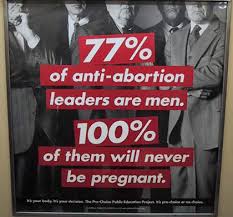
The Right is made up overwhelmingly of uneducated white males. And many of these men would feel entirely at home with a Christianized version of the Taliban. They long for a world where women meekly cater to their every demand and believe only what their male masters approve for them to believe.
Third, many fetus fanatics are “family values” hypocrites.
For example: Representative Scott DesJarlais (R-TN), an anti-abortion, “family values” doctor, had an affair with a patient and later pressured her to get an abortion. He also agreed that his wife should have two abortions.

Scott DesJarlais
People like this subscribe to a philosophy of: “Do as I say, not as I do. And if I do it, it’s in the service of a Higher Cause and therefore entirely justified.”
Many of them refuse aid to women needing food, shelter and healthcare for themselves and/or their children.
Fourth, many fetus fanatics feel guilty about their own past sexual transgressions—especially if these resulted in pregnancy.
And they want to prevent others from living the same life they did.
Some of these people are well-intentioned. Even so, they usurp unto themselves a God-like right to intrude on the most intimate decisions for others—regardless of what those people may need or want.
Fifth, many fetus fanatics embrace contradictory goals.
On one hand, most of them claim they want to “get government off the backs of the people.” That usually means allowing corporations to pollute, sell dangerous products and treat their employees as slaves.
On the other hand, they want to insert the government into the vagina of every woman. That means empowering State and Federal authorities to prevent women from getting birth control or an abortion—even in cases of rape, incest, or to save the life of the mother.
And while they’re gung-ho on protecting fetuses, once a poor pregnant woman gives birth, they attack her for seeking food, shelter and healthcare for her infant and herself.
Sixth, many leaders of the fetus fanatics movement are independently wealthy.
This means that even if abortion could be outlawed for the vast majority, they could always bribe a willing doctor—here or abroad—to perform such an operation on their wife, daughter and/or mistress. For them, there is always an escape clause.
Seventh, many fetus fanatics are not truly “pro-life.”
They totally oppose abortion under most—-if not all—circumstances. But they also fully support:
- Making military-style assault weapons available to nutcases;
- Capital punishment;
- Going to war for almost any reason;
- Wholesale massacres of wildlife;
- Despoiling of the environment; and/or
- Even nuclear war.
For fetus fanatics, the line runs: “I love fetuses. Everything else is expendable.”
Eigth, many fetus fanatics believe that since their religion teaches that abortion is wrong, they have a moral duty to enforce that belief on others.
This is especially true for evangelical Christians. These are the same people who condemn Muslims—such as those in Saudi Arabia—for segregating women, forbidding them to drive and forcing them to wear head scarfs or chadors—loose, usually black robes.
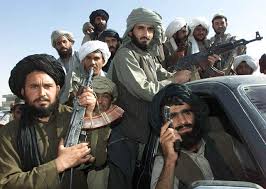
Taliban: Islam’s version of the “Right-to-Life” movement
But while they condemn Islamics for their general intolerance of others’ religious beliefs, they lust to impose their own upon those who belong to other churches. Or who belong to no church at all.
Nineth, many fetus fanatics are just as opposed to birth control as they are to abortion.
Thus, when Georgia University law student Sandra Fluke asked Congress to require insurance companies to cover birth control, Rush Limbaugh branded her a “slut” and a “prostitute.”
1968 PRESIDENTIAL CAMPAIGN, 2003 IRAQ WAR, ABC NEWS, ALTERNET, AMERICABLOG, AP, BABY BOOMER RESISTANCE, BBC, BLACKS, BLOOMBERG NEWS, BUZZFEED, CBS NEWS, CIVIL RIGHTS, CNN, COMING APART: AMERICA IN THE 1960S (BOOK), CROOKS AND LIARS, DAILY KOS, DAILY KOZ, DONALD TRUMP, FIVETHIRTYEIGHT, GEORGE C. WALLACE, GEORGE W. BUSH, HARPER’S MAGAZINE, HILLARY CLINTON, HUFFINGTON POST, JAMES MEREDITH, JOHN F. KENNEDY, MAFIA, MEDIA MATTERS, MOTHER JONES, MOVEON, MSNBC, NBC NEWS, NEW REPUBLIC, NEWSDAY, NEWSWEEK, NPR, PBS NEWSHOUR, POLITICO, POLITICUSUSA, RAW STORY, REUTERS, ROBERT F. KENNEDY, SALON, SEATTLE TIMES, SLATE, TALKING POINTS MEMO, THE ATLANTIC, THE CHICAGO SUN-TIMES, THE CHICAGO TRIBUNE, THE DAILY BEAST, THE DAILY BLOG, THE GUARDIAN, THE HILL, THE HUFFINGTON POST, THE INTERCEPT, THE LOS ANGELES TIMES, THE NATION, THE NEW REPUBLIC, THE NEW YORK TIMES, THE NEW YORKER, THE VILLAGE VOICE, THE WALL STREET JOURNAL, THE WASHINGTON POST, THINKPROGRESS, TIME, TRUTHDIG, TRUTHOUT, U.S. NEWS & WORLD REPORT, UPI, USA TODAY, WILLIAM L. O'NEIL, WOMEN, X
In Bureaucracy, History, Law Enforcement, Military, Politics, Social commentary on June 5, 2026 at 12:10 am
Fifty-eight years ago, Robert Francis Kennedy aroused passions of an altogether different sort from those aroused by Donald Trump.
Kennedy had been a United States Attorney General (1961-1964) and Senator from New York (1964-1968). But it was his connection to his beloved and assassinated brother, President John F. Kennedy, for which he was best known.
Kennedy himself remained haunted by the assassination for the rest of his life. He had spent most of his adult life in service to his brother’s ambitions—first as Congressman (1946), then as Senator (1952) and finally as President (1960).
For the last five years of his life (1963-1968) Robert Kennedy had to chart his own course and find his own voice.
As Attorney General, he had waged an unrelenting war against the Mafia. But he also championed civil rights and guaranteed protection for James Meredith, the first black student to enter the all-white University of Mississippi (1963).
During the Cuban Missile Crisis, in October, 1962, his wise counsel had helped steer America from the brink of nuclear war with the Soviet Union.
As a U.S Senator he continued to support civil rights and urge greater Federal efforts to fight poverty. Like his dead brother, he called on Americans to improve their own lives while aiding the less fortunate.

Robert F. Kennedy campaigning for President
Millions saw RFK as the only candidate who could make life better for America’s impoverished—while standing firmly against those who threatened the Nation’s safety.
As television correspondent Charles Quinn observed: “I talked to a girl in Hawaii who was for [George] Wallace [the segregationist governor of Alabama]. And I said ‘Really?’ [She said] ‘Yeah, but my real candidate is dead.’
“You know what I think it was? All these whites, all these blue collar people who supported Kennedy…all of these people felt that Kennedy would really do what he thought best for the black people, but, at the same time, would not tolerate lawlessness and violence.
“They were willing to gamble…because they knew in their hearts that the country was not right. They were willing to gamble on this man who would try to keep things within reasonable order; and at the same time do some of the things they knew really should be done.”
Campaigning for the Presidency in 1968, RFK had just won the crucial California primary on June 4—when he was shot in the back of the head.
His killer: Sirhan Sirhan, a young Palestinian furious at Kennedy’s support for Israel.
Kennedy died at 1:44 a.m. on June 6, 1968. He was 42.
On June 8, 1,200 men and women boarded a specially-reserved passenger train at New York’s Pennsylvania Station. They were accompanying Kennedy’s body to its final resting place at Arlington National Cemetery.
As the train slowly moved along 225 miles of track, throngs of men, women and children lined the rails to pay their final respects to a man they considered a genuine hero.
Little Leaguers clutched baseball caps across their chests. Uniformed firemen and policemen saluted. Burly men in shirtsleeves held hardhats over their hearts. Black men in overalls waved small American flags. Women from all levels of society stood and cried.

A nation says goodbye to Robert Kennedy
Commenting on RFK’s legacy, historian William L. O’Neil wrote in Coming Apart: An Informal History of America in the 1960′s:
“…He aimed so high that he must be judged for what he meant to do, and, through error and tragic accident, failed at….He will also be remembered as an extraordinary human being who, though hated by some, was perhaps more deeply loved by his countrymen than any man of his time.
“That too must be entered into the final account, and it is no small thing. With his death something precious disappeared from public life.”
America has never again seen a Presidential candidate who combined toughness on crime and compassion for the poor.
Republican candidates appeal to negative emotions—hatred, greed, fear. They constantly seek new “enemies” to frighten their voters: Asians, Hispanics, blacks, “uppity” women, liberals, “socialists.”
They constantly attack the Federal Government as a source of repression—especially when it reins in predatory businesses or levies taxes on the rich. And they try to convince their voters that if only “government gets out of the way” of these businesses and doesn’t tax billionaires, wonderful riches will “trickle down” to those far below.
They champion “law and order” when they control law enforcement—as governors or Presidents. But when the Biden Justice Department started investigating former President Donald Trump for illegally withholding classified documents, Republicans demanded the defunding of the FBI.
And Democratic candidates try to appease the Right by supporting its foreign and domestic agendas. In 2003, liberal Democrats—such as then-Senator Hillary Clinton—supported President George W. Bush’s unprovoked attack on Iraq.
Democrats have aided Republicans in opposing anti-poverty programs and efforts to combat pollution and climate change.
RFK had the courage to fight the Mafia—and the compassion to fight poverty. He called on Americans to act on their best qualities, not their worst.
At a time when Americans long for candidates to give them positive reasons for voting, his kind of politics are sorely missed.
ABC NEWS, ALTERNET, AMERICABLOG, ANTHONY FAUCI, AP, ARMY-MCCARTHY HEARINGS, BABY BOOMER RESISTANCE, BBC, BLOOMBERG, BLOOMBERG NEWS, BLUESKY, BUZZFEED, CBS NEWS, CNN, COVID-19, CROOKS AND LIARS, DAILY KOS, DONALD TRUMP, FIVETHIRTYEIGHT, GEORGE FLOYD RIOTS, HARPER’S MAGAZINE, HUFFINGTON POST, JEFFREY EPSTEIN, JEWS, JOSEPH MCCARTHY, JOSEPH N. WELCH, KEVIN CRAMER, MARCO RUBIO, MARJORIE TAYLOR GREENE, MARTIN GUGINO, MEDIA MATTERS, MITCH MCCONNELL, MOTHER JONES, MOVEON, MSNBC, NAZI GERMNY, NBC NEWS, NEW REPUBLIC, NEWSDAY, NEWSWEEK, NPR, PBS NEWSHOUR, POLITICO, POLITICUSUSA, RAW STORY, REUTERS, RICK SANTORUM, RON JOHNSON, SALON, SAMURAI, SEATTLE TIMES, SLATE, TALKING POINTS MEMO, TED CRUZ, THE ATLANTIC, THE CHICAGO SUN-TIMES, THE CHICAGO TRIBUNE, THE DAILY BEAST, THE DAILY BLOG, THE GUARDIAN, THE HILL, THE HUFFINGTON POST, THE INTERCEPT, THE LOS ANGELES TIMES, THE NATION, THE NEW REPUBLIC, THE NEW YORK TIMES, THE NEW YORKER, THE VILLAGE VOICE, THE WALL STREET JOURNAL, THE WASHINGTON POST, THINKPROGRESS, TIME, TRUTHDIG, TRUTHOUT, TWO POLITICAL JUNKIES, U.S. NEWS & WORLD REPORT, UKRAINE, UPI, USA TODAY, VLADIMIR PUTIN, X
In Bureaucracy, History, Politics, Social commentary on May 25, 2026 at 12:13 am
“Senator, may we not drop this?…You’ve done enough. Have you no sense of decency, sir? At long last, have you left no sense of decency?”
The speaker was Joseph N. Welch, chief counsel for the United States Army—then under investigation by Joseph McCarthy’s Senate Permanent Subcommittee on Investigations for alleged Communist activities.
It was June 9, 1954, the 30th day of the Army-McCarthy hearings.
And it was the pivotal moment that finally destroyed the career of the Wisconsin Senator whose repeated slanders of Communist subversion had bullied and frightened Americans for four years.
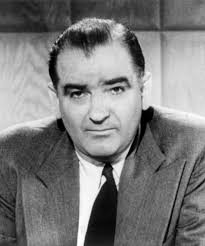
Joseph McCarthy
When the Senate gallery erupted in applause, McCarthy—totally surprised at his sudden reversal of fortune—was finished.
Today, however, other Americans should be asking themselves the question asked by Welch: “At long last, have you left no sense of decency?”
Americans like President Donald Trump:
On June 4, 2020, during nationwide protests over the police murder of black security guard George Floyd, a curfew was imposed on Buffalo, New York. As police swept through Niagara Square, 75-year-old Martin Gugino walked directly into their path as if attempting to speak with them.
Two officers pushed him and he fell backwards, hitting the back of his head on the pavement and losing consciousness. The line of officers walked past Gugino as he lay on the ground with blood pooling around his head.

Martin Gugino falls backward
On June 9 Trump tweeted: “Buffalo protester shoved by Police could be an ANTIFA provocateur. 75 year old Martin Gugino was pushed away after appearing to scan police communications in order to black out the equipment. @OANN I watched, he fell harder than was pushed. Was aiming scanner. Could be a set up?”
Trump offered no evidence to back up his slander. And Republicans refused to condemn him for his latest outrage.
Americans like:
- Texas Senator Ted Cruz: “I don’t comment on the tweets.”
- Florida Senator Marco Rubio: “I didn’t see it. You’re telling me about it. I don’t read Twitter. I only write on it.”
- North Dakota Senator Kevin Cramer: “I’ll say this: I worry more about the country itself than I do about what President Trump tweets.”
- Wisconsin Senator Ron Johnson said he hadn’t seen the tweet—and didn’t want it read to him: “I would rather not hear it.”
- Senate Majority Leader Mitch McConnell (KY) refused to say whether Trump’s tweet was appropriate.

Donald Trump
Americans like Marjorie Taylor Greene:
Greene served as a member of the United States House of Representatives for Georgia’s 14th Congressional district from 2021 until her resignation in 2026. Among the highlights of her career:
- Attacking masking and social distancing—then the only safety measures against COVID-19—to the persecution of Jews in Nazi Germany.
- Attacking Anthony Fauci, director of the National Institute of Allergy and Infectious Disease, for daring to contradict Trump’s ignorance- and lie-riddled statements.
- Praising Russian dictator Vladimir Putin and his invasion of Ukraine, while claiming that Trump would save the United States from “radical socialism.”
She enraged Trump in 2025 by voting to release the Justice Department’s files on convicted sex trafficker Jeffrey Epstein. Trump, a longtime Epstein friend, had fought bitterly to keep them a secret. As a result, Trump threatened to back a primary challenger to her re-election in 2026.
On April 5, she tweeted on X: “Everyone in his administration that claims to be a Christian needs to fall on their knees and beg forgiveness from God and stop worshipping the President and intervene in Trump’s madness. Our President is not a Christian and his words and actions should not be supported by Christians.”
Clearly, the word “hypocrisy” meant nothing to McCarthy—and to his successors in the Republican party.
But it should mean something to the rest of us.
In samurai Japan, officials who publicly disgraced themselves knew what to do. The samurai code of Bushido told them when they had crossed the line into eternal damnation.
And it gave them a way to redeem their lost honor—seppuku. With a small “belly-cutting” knife and the help of a trusted assistant who sliced off their head to spare them the agonizing pain of disembowelment.
In the armies of America and Europe, the method was slightly different: A pistol in a private room.

Considering the ready availability of firearms among Right-wing Republicans, redeeming lost honor shouldn’t be a problem for any of these hypocrites.
But of course it will be. It takes more than a trigger pull to “do the right thing.”
It takes insight to recognize that you’ve “done the wrong thing.” And it takes courage to act on that insight.
In men and women who live only for their own egos and wallets, such insight and courage will be forever missing. They are beyond redemption.
Their lives give proof to the warning offered in Matthew 7:17-20:
“Even so every good tree bringeth forth good fruit; but a corrupt tree bringeth forth evil fruit. A good tree cannot bring forth evil fruit, neither can a corrupt tree bring forth good fruit.
“Every tree that bringeth not forth good fruit is hewn down, and cast into the fire. Wherefore by their fruits ye shall know them.”
ABC NEWS, ADOLF HITLER, ADVICE, ALTERNET, AMERICABLOG, AP, BABY BOOMER RESISTANCE, BAY OF PIGS, BBC, BENITO MUSSOLINI, BLOOMBERG NEWS, BUZZFEED, CAESARE BORGIA, CBS NEWS, CNN, CORPORATIONS, CROOKS AND LIARS, CUBA, DAILY KOS, DAILY KOZ, FIDEL CASTRO, FIVETHIRTYEIGHT, FLORENCE, HARPER’S MAGAZINE, HUFFINGTON POST, JOHN F. KENNEDY, JOSEPH STALIN, KING PERSEUS OF MACEDON, MEDIA MATTERS, MOTHER JONES, MOVEON, MSNBC, NAZI-SOVIET "NON-AGGRESSION PACT", NBC NEWS, NEW REPUBLIC, NEWSDAY, NEWSWEEK, NICCOLO MACHIAVELLI, NPR, PBS NEWSHOUR, POLITICO, POLITICS, POLITICUSUSA, POPE JULIUS 11, RAW STORY, REUTERS, SALON, SEATTLE TIMES, SLATE, TALKING POINTS MEMO, THE ATLANTIC, THE CHICAGO SUN-TIMES, THE CHICAGO TRIBUNE, THE DAILY BEAST, THE DAILY BLOG, THE DISCOURSES, THE GUARDIAN, THE HILL, THE HUFFINGTON POST, THE INTERCEPT, THE LOS ANGELES TIMES, THE NATION, THE NEW REPUBLIC, THE NEW YORK TIMES, THE NEW YORKER, THE PRINCE, THE SS, THE VILLAGE VOICE, THE WASHINGTON POST, THINKPROGRESS, THIRD REICH, TIME, TRUTHDIG, TRUTHOUT, TWITTER, U.S. NEWS & WORLD REPORT, UKRAINE, UPI, USA TODAY, VLADIMIR PUTIN, VOLODYMYR ZELENSKY, WEHRMACHT, WORLD WAR 11
In Bureaucracy, Business, History, Military, Politics, Social commentary on May 22, 2026 at 12:05 am
Ask the average person, “What do you think of Niccolo Machiavelli?” and he’s likely to say: “The devil.”
In fact, “The Old Nick” became an English term used to describe Satan and slander Machiavelli at the same time.

Niccolo Machiavelli
The truth, however, is more complex. Machiavelli was a passionate Republican, who spent most of his adult life in the service of his beloved city-state, Florence.
The years he spent as a diplomat were tumultuous ones for Italy—with men like Pope Julius II and Caesare Borgia vying for power and plunging Italy into one bloodbath after another.
Florence, for all its wealth, lacked a strong army, and thus lay at the mercy of powerful enemies, such as Borgia. Machiavelli often had to use his wits to keep them at bay.
Machiavelli is best-known for his writing of The Prince, a pamphlet on the arts of gaining and holding power. Its admirers have included Benito Mussolini and Joseph Stalin.
But his longer and more thoughtful work is The Discourses, in which he offers advice on how to maintain liberty within a republic. Among its admirers were many of the men who framed the Constitution of the United States.
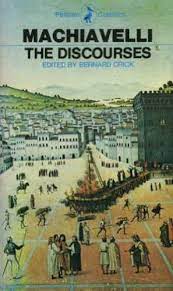


Most people believe that Machiavelli advocated evil for its own sake.
Not so. Rather, he recognized that sometimes there is no perfect—or perfectly good—solution to a problem.
Sometimes it’s necessary to take stern—even brutal—action to stop an evil (such as a riot) before it becomes widespread:
“A man who wishes to make a profession of goodness in everything must inevitably come to grief among so many who are not good. And therefore it is necessary for a prince, who wishes to maintain himself, to learn how not to be good, and to use this knowledge and not use it, according to the necessity of the case.”
His counsel remains as relevant today as it did during his lifetime (1469 – 1527). This is especially true for politicians—and students of political science.
But plenty of ordinary citizens can also benefit from the advice he has to offer—such as those in business who are asked to give advice to more powerful superiors.
Machiavelli warns there is danger in urging rulers to take a particular course of action: “For men only judge of matters by the result, all the blame of failure is charged upon him who first advised it, while in case of success he receives commendations. But the reward never equals the punishment.”
This puts would-be counselors in a difficult position: “If they do not advise what seems to them for the good of the republic or the prince, regardless of the consequences to themselves, then they fail to do their duty.
“And if they do advise it, then it is at the risk of their position and their lives, for all men are blind in thus, that they judge of good or evil counsels only by the results.”
Thus, Machiavelli warns that an adviser should “take things moderately, and not to undertake to advocate any enterprise with too much zeal, but to give one’s advice calmly and modestly.”
The person who asked for the advice may follow it, or not, as of his own choice, and not because he was led or forced into it by the adviser.
Above all, the adviser must avoid the danger of urging a course of action that runs “contrary to the wishes of the many.
“For the danger arises when your advice has caused the many to be contravened. In that case, when the result is unfortunate, they all concur in your destruction.”
Or, as President John F. Kennedy famously said after the disastrous invasion of Cuba at the Bay of Pigs in April, 1961: “Victory has a hundred fathers and defeat is an orphan.”
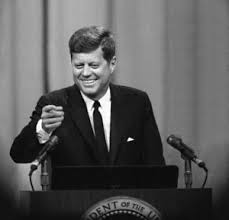
John F. Kennedy
By “not advocating any enterprise with too much zeal,” the adviser gains two advantages:
“The first is, you avoid all danger.
“And the second consists in the great credit which you will have if, after having modestly advised a certain course, your counsel is rejected, and the adoption of a different course results unfortunately.”
Finally, the time to give advice is before a catastrophe occurs, not after. Machiavelli gives a vivid example of what can happen if this rule is ignored.
King Perseus of Macedon had gone to war with Paulus Aemilius—and suffered a humiliating defeat. Fleeing the battlefield with a handful of his men, he later bewailed the disaster that had overtaken him.
Suddenly, one of his lieutenants began to lecture Perseus on the many errors he had committed, which had led to his ruin.
“Traitor,” raged the king, turning upon him, “you have waited until now to tell me all this, when there is no longer any time to remedy it—” And Perseus slew him with his own hands.
Niccolo Machiavelli sums up the lesson as this:
“Thus was this man punished for having been silent when he should have spoken, and for having spoken when he should have been silent.”
Be careful that you don’t make the same mistake.
ABC NEWS, ALTERNET, AMERICABLOG, ANTHONY FAUCI, AP, ATTACK ON THE UNITED STATES CAPITOL BUILDING, BABY BOOMER RESISTANCE, BBC, BLOOMBERG NEWS, BUZZFEED, CBS NEWS, CENTERS FOR DISEASE CONTROL AND PREVENTION, CLOROX BLEACH, CNN, COVID-19, CROOKS AND LIARS, DAILY KOZ, DONALD TRUMP, FACEBOOK, FIVETHIRTYEIGHT, HANTAVIRUS, HARPER’S MAGAZINE, HUFFINGTON POST, JAMES COBURN, JOE BIDEN, JULIUS CAESAR (PLAY), MARK ANTHONY, MASKS, MEDIA MATTERS, MOTHER JONES, MOVEON, MSNBC, NBC NEWS, NEW REPUBLIC, NEWSDAY, NEWSWEEK, NPR, PBS NEWSHOUR, POLITICO, POLITICUSUSA, RAW STORY, REUTERS, ROD SERLING, SALON, SEATTLE TIMES, SLATE, SOCIAL DISTANCING, TALKING POINTS MEMO, THE ATLANTIC, THE CHICAGO SUN-TIMES, THE CHICAGO TRIBUNE, THE DAILY BEAST, THE DAILY BLOG, THE GUARDIAN, THE HILL, THE HUFFINGTON POST, THE LOS ANGELES TIMES, THE NATION, THE NEW REPUBLIC, THE NEW YORK TIMES, THE NEW YORKER, THE VILLAGE VOICE, THE WASHINGTON POST, THINKPROGRESS, TIME, TRUTHDIG, TRUTHOUT, TWILIGHT ZONE, TWITTER, TWO POLITICAL JUNKIES, U.S. NEWS & WORLD REPORT, UPI, USA TODAY, UV LIGHT, WILLIAM SHAKESPEARE, WONKETTE
In Business, Entertainment, History, Medical, Politics, Social commentary on May 18, 2026 at 12:16 am
With the world bracing for a hantavirus outbreak, it’s well to remember the last time a pandemic erupted—in 2020.
On November 8, 1963—57 years before COVID-19 invaded the United States—Rod Serling’s “The Twilight Zone” offered a prophecy of future disaster for the country.
“The Old Man in the Cave” is set in a post-apocalyptic rural town in 1974, 10 years after a nuclear war has devastated the United States.

A nuclear explosion
The townspeople have discovered a supply of canned food. However, they are waiting for Mr. Goldsmith [John Anderson], their leader, to return with a message from the mysterious and unseen “Old Man in the Cave.” Then they will learn whether the food is contaminated with radiation.
When Goldsmith returns, he informs them that the old man has declared the food is contaminated and that it should be destroyed.
Shortly thereafter, three soldiers led by Major French [James Coburn] enter the town and clash with Goldsmith as they try to establish their authority.
French is clearly a precursor of Donald Trump: Demanding instant obedience and threatening death to anyone who disobeys him, he claims he will organize the region to rebuild society..
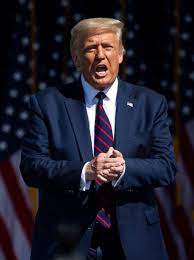
Donald Trump
French attacks the townspeople’s belief in the seemingly infallible “Old Man in the Cave.” He tells them they have survived these past 10 years—but they haven’t lived.
Fifty-seven years later, Donald Trump will furiously attack not COVID-19 but the medical advice of his own Centers for Disease Control and Prevention (CDC)—especially that provided by Dr. Anthony Fauci, the nation’s top expert on infectious disease.
He will disdain the wearing of masks and social distancing, and attack those Democratic governors who impose stay-at-home orders to contain the virus. He will offer a series of rosy predictions—none of which come true—that the virus will soon end.
His “cures” include ingesting Clorox bleach and/or having UV light shined up one’s anus.
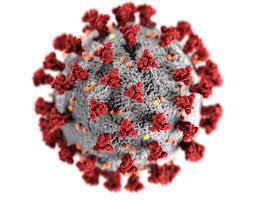
COVID-19 virus
And French holds himself out as the man who can deliver them a wonderful new future.
Fifty-seven years later, Donald Trump will similarly declare: “I have joined the political arena so that the powerful can no longer beat up on people that cannot defend themselves. Nobody knows the system better than me, which is why I alone can fix it.”
French tempts the townspeople to eat the food Goldsmith warned was contaminated. There is a wild orgy of gluttony as they greedily consume it.
Only Goldsmith refuses to partake in the food orgy.
The townspeople turn on Goldsmith and threaten him with death unless he reveals the identity of the “Old Man in the Cave.” Goldsmith finally takes the assembly to the cave to reveal his source: A computer.
French incites the townspeople to stone the computer with rocks and canned goods until it explodes. Then French leads the people into celebrating their new-found freedom from “tyranny”.
Fifty-seven years later, Trump will similarly incite his followers to attack the United States Capitol building to halt the legal transfer of Presidential power from himself to Joe Biden.
But as Goldsmith had insisted, the “Old Man” was correct: The canned goods were contaminated with radiation. All the townspeople—including French and the soldiers—die, their bodies left lying throughout the streets.
Trump will similarly tempt millions of Americans to ignore the deaths of tens of thousands of their fellow citizens from COVID-19 and the overwhelming of the nation’s hospitals. The result will be a vast increase in deaths.
Many of the businesses Trump hoped to keep open—to ensure his own re-election—will be shuttered.
Only one man survives—Goldsmith, who has refused to eat the forbidden food and somberly walks out of the now-dead town.
As always in a “Twilight Zone” episode, it is Rod Serling who gets the final word:
“Mr. Goldsmith, survivor. An eyewitness to man’s imperfection. An observer of the very human trait of greed. And a chronicler of the last chapter—the one reading ‘suicide’. Not a prediction of what is to be, just a projection of what could be. This has been The Twilight Zone.”

Rod Serling
Except that Serling was wrong: “The Old Man in the Cave” has proven an uncanny prediction of what did happen in America.
* * * * *
The chief lesson to be learned from the COVID-19 epidemic is that catastrophe inevitably results when natural disaster collides with an evil and incompetent administration.
And the man who stands most responsible for the deaths of 400,000 Americans in 2020 is Donald Trump, then the 45th President of the United States.
Under his tyrannical rule, the United States suffered not simply from a lethal virus but a combination of denial, lies, Republican subservience, chaos, extortion, propaganda as news, quackery as medicine, premature demands to “re-open the country,” ignoring the danger and—finally—resignation (“Learn to live with the virus”).
Even after three vaccines were produced, millions of Americans—almost all of them Right-wing Trump supporters—refused to protect themselves and the families and friends they claimed to love.
All of which bodes ill for Americans if hantavirus makes a similar attack on the United States under a second Trump administration.


2016 PRESIDENTIAL ELECTION, ABC NEWS, AFFORDABLE CARE ACT, ALAN LADD, ALTERNET, AMERICABLOG, AP, BABY BOOMER RESISTANCE, BBC, BLOOMBERG NEWS, BORDER WALL, BRANDON DE WILDE, BUZZFEED, CALVERA (CHARACTER), CANADA, CAPITOL INSURRECTION, CBS NEWS, CHARLES GEORGE GORDON, CHRIS (CHARACTER), CHYE-CHING HUANG, CIA, CNN, COVID-19, CROOKS AND LIARS, DAILY KOZ, DONALD TRUMP, DONALD TRUMP: TRAGIC HERO (ARTICLE), ELECTORAL COLLEGE, ELI WALLACH, FBI, FEDERAL FISCAL POLICY, FEDERAL GOVERNMENT SHUTDOWN, FIVETHIRTYEIGHT, HAMLET, HARPER’S MAGAZINE, HOOVER INSTITUTION, HUFFINGTON POST, ISLAMIC STATE, JACK PALANCE, JAMES COMEY, JEFF SESSONS, JOHN FORD, JOHN WAYNE, JOSEPH BIDEN, KHARTOUM, KIM JONG ON, LEE MARVIN, MEDIA MATTERS, MOTHER JONES, MOVEON, MSNBC, NATIONAL SECURITY AGENCY, NBC NEWS, NEW REPUBLIC, NEWSDAY, NEWSWEEK, NORTH KOREA, NPR, PBS NEWSHOUR, POLITICO, POLITICUSUSA, RAW STORY, REUTERS, ROBERT S. MUELLER III, RUFUS RYKER (CHARACTER), RUSSIA, SALON, SEATTLE TIMES, SERGEY KISLYAK, SERGEY LAVROV, SHANE (MOVIE), SLATE, STEVE MCQUEEN, TALKING POINTS MEMO, TAX CUTS AND JOBS ACT OF 2017, THE ATLANTIC, THE CASE FOR TRUMP (BOOK), THE CHICAGO SUN-TIMES, THE CHICAGO TRIBUNE, THE DAILY BEAST, THE DAILY BLOG, THE GUARDIAN, THE HILL, THE HUFFINGTON POST, THE LOS ANGELES TIMES, THE MAGNIFICENT SEVEN (MOVIE), THE MAN WHO SHOT LIBERTY VALANCE (MOVIE), THE NATION, THE NEW REPUBLIC, THE NEW YORK TIMES, THE NEW YORKER, THE PRESS, THE VILLAGE VOICE, THE WASHINGTON POST, THINKPROGRESS, TIME, TRAGEDY, TRUMP FOUNDATION, TRUMP UNIVERSITY, TRUTHDIG, TRUTHOUT, TWO POLITICAL JUNKIES, U.S. NEWS & WORLD REPORT, UKRAINE, UPI, USA TODAY, VICTOR DAVIS HANSON, VLADIMIR PUTIN, VOLODYMYR ZELENSKY, WILLIAM SHAKESPEARE, WILSON (CHARACTER), WONKETTE, X, YUL BRYNNER
TRUMP AS A TRAGIC HERO?: PART ONE (OF THREE)
In Bureaucracy, Business, Entertainment, History, Law, Law Enforcement, Medical, Military, Politics, Social commentary on June 15, 2026 at 12:10 am“America needs the outsider Trump to do what normal politicians would not and could not do.”
That was the assertion made by Victor Davis Hanson, a classicist and historian at the Hoover Institution, Stanford University, in Palo Alto, California.
Among his bestsellers on military history:
Victor Davis Hanson
In 2019, Hanson turned his attention to politics—specifically, The Case for Trump.
Its dust-jacket provides a useful summary of its contents:
“This New York Times bestselling Trump biography from a major American intellectual explains how a renegade businessman became one of the most successful—and necessary—presidents of all time.
“In The Case for Trump, award-winning historian and political commentator Victor Davis Hanson explains how a celebrity businessman with no political or military experience triumphed over sixteen well-qualified Republican rivals, a Democrat with a quarter-billion-dollar war chest, and a hostile media and Washington establishment to become president of the United States — and an extremely successful president.
“Trump alone saw a political opportunity in defending the working people of America’s interior whom the coastal elite of both parties had come to scorn, Hanson argues. And Trump alone had the instincts and energy to pursue this opening to victory, dismantle a corrupt old order, and bring long-overdue policy changes at home and abroad.”
Hanson’s book appeared before Trump:
But his book appeared after Trump had:
So much for Hanson’s claims that Trump had been “one of the most successful—and necessary—presidents of all time.”
Donald Trump
Then there’s Hanson’s claim that “Trump alone saw a political opportunity in defending the working people of America’s interior whom the coastal elite of both parties had come to scorn.”
In November, 2017, Trump and a Republican-dominated House and Senate rammed the Tax Cuts and Jobs Act of 2017 through Congress. It became law on December 22, 2017.
According to Chye-Ching Huang, Director of Federal Fiscal Policy, the law did nothing to help ordinary Americans.
Testifying before the House Budget Committee on February 27, 2019, Huang stated that the law:
For American corporations, however, the law was a godsend:
This was hardly an attempt at “defending the working people of America’s interior.”
Trump never made another attempt to “reform” the tax laws.
Share this: