Posts Tagged ‘BARACK OBAMA’
2020 PRESIDENTIAL ELECTION, 9/11 ATTACKS, ABC NEWS, ABUSE OF POWER, AIDS, AIDS EPIDEMIC, AIRLINES, ALEX M. AZAR, ALTERNET, AMERICABLOG, AP, BABY BOOMER RESISTANCE, BARACK OBAMA, BUZZFEED, CARNIVAL CRUISE LINES, CBS NEWS, CENTERS FOR DISEASE CONTROL AND PREVENTION, CHARLES GEORGE GORDON, CHARLTON HESTON, CNN, CORONAVIRUS, CROOKS AND LIARS, CRUISE LINES, DAILY KOZ, DEPARTMENT OF HEALTH AND HUMAN SERVICES, DEPARTMENT OF HOMELAND SECURITY, DONALD TRUMP, DRUDGE RETORT, EBOLA, FACEBOOK, FIVETHIRTYEIGHT, HARPER’S MAGAZINE, IMPEACHMENT, JOHN BOLTON, KATHIE LEE GIFFORD, KHARTOUM (MOVIE), LAURENCE OLIVER, MASS HYSTERIA, MEDIA MATTERS, MOHAMMED, MOTHER JONES, MOVEON, MSNBC, NATIONAL SECURITY COUNCIL, NBC NEWS, NEWSWEEK, NPR, PBS NEWSHOUR, POLITICO, POLITICUSUSA, RAW STORY, REPUBLICANS, REUTERS, SALON, SEATTLE TIMES, SLATE, STOCK MARKET, SURGICAL MASKS, TALKING POINTS MEMO, THE ATLANTIC, THE CHICAGO SUN-TIMES, THE CHICAGO TRIBUNE, THE DAILY BEAST, THE DAILY BLOG, THE GUARDIAN, THE HILL, THE HUFFINGTON POST, THE LOS ANGELES TIMES, THE NATION, THE NEW REPUBLIC, THE NEW YORK TIMES, THE VILLAGE VOICE, THE WASHINGTON POST, THINKPROGRESS, TIME, TIMOTHY ZIEMER, TOM BOSSERT, TOM FRIEDMAN, TOURISM INDUSTRY, TRUTHDIG, TRUTHOUT, TWITTER, TWO POLITICAL JUNKIES, U.S. NEWS & WORLD REPORT, UNITED STATES HOUSE OF REPRESENTATIVES, UNITED STATES SENATE, UPI, USA TODAY, WONKETTE
In Bureaucracy, Business, Entertainment, History, Politics, Social commentary on March 10, 2020 at 9:52 am
The outbreak of the Coronavirus has terrified Americans in ways not seen since the September 11, 2001 terror attacks on New York City and Washington, D.C.
For months after that horror, the two most profitable businesses in the country were video rental stores and food delivery services.
People stayed indoors—and at home, as if they believed this was the one place they would be safe. Everyone feared the next big terror attack—and didn’t want to be on hand when it exploded.
Restaurants, nightclubs, amusement parks and the airlines suffered accordingly.
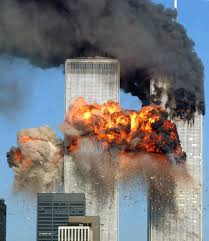
World Trade Center – September 11, 2001
In the early 1980s, the AIDS epidemic had truly frightened millions of Americans. At first, no one knew what caused it—or, more importantly, how it was spread.
At first, gays were thought to be the only ones at risk. Then the list of potential victims kept expanding to
- Intravenous drug abusers
- Native Haitians
- Recipients of blood transfusions
- Those with multiple sex partners.
But with the passage of time—and the introduction of AIDS-fighting drugs that allowed victims to generally live ordinary lives—Americans’ fears gradually decreased. AIDS was seen as a disease like tuberculosis—dangerous, but unlikely to strike if you took reasonable precautions.
And now America is facing a new fear—that of the Coronavirus, otherwise known as COVID-19.
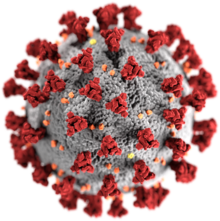
Coronavirus
In December 2019, a pneumonia outbreak was reported in Wuhan, China. By December 31, the outbreak was traced to a novel strain of Coronavirus.
Coronaviruses are a group of viruses that affect birds and mammals. In humans, Coronaviruses cause respiratory tract infections that are typically mild, such as the common cold. Coronaviruses can cause pneumonia and may cause bronchitis.
When the virus surfaced in China, Americans didn’t worry, as it seemed confined to Wuhan. But then it began spreading.
By January 30, 2020, 9,976 cases had been reported in at least 21 countries, including the first case in the United States.
At that time, United States health authorities repeatedly assured Americans they had nothing to worry about, that “we’re on it.”
For example: On January 28, Secretary of Health and Human Services Alex M. Azar II stated at a press conference: “We’ve been monitoring this virus and preparing a response since back in December, but it’s more than that. Preparing for these kinds of outbreaks is part of daily life at HHS and for America’s public health professionals.
“Preparedness is a day job around here. We are constantly making investments, training personnel at all levels, carrying out simulations and exercises, and sharing information.
“This commitment goes straight to the top: The President and I have been speaking regularly about this outbreak, and I have been speaking with the senior officials at HHS and the White House multiple times each day since the outbreak began to represent an international threat.”
This was strictly boilerplate rhetoric. What Azar didn’t say was this:
- Upon taking office as President, Donald Trump had gutted the permanent epidemic monitoring and command groups set up inside the White House: The National Security Council (NSC) and the Department of Homeland Security (DHS).
- The reason: Pathologically jealous of President Barack Obama, Trump has tried to destroy every vestige of Obama’s legacy as the first black President of the United States. And these disease-monitoring groups were set up by Obama following the Ebola outbreak in West Africa in 2014.
- Also: In the spring of 2018, Trump pushed Congress to cut $15 billion from national health spending—and cutting the global disease-fighting budgets of the CDC, National Security Council, Department of Homeland Security and the Department of Health and Human Services.
- The Federal $30 million fund for Complex Crises was eliminated as well.
- In April, 2018, National Security Adviser John Bolton forced Tom Bossert, director of the infectious disease unit at DHS, to resign—along with his entire team.
- In May, 2018, Trump ordered the NSC’s global health security unit shut down.
- Rear Admiral Timothy Ziemer, who headed the unit, was reassigned.
- Neither the NSC nor the DHS epidemic team has been replaced.
- The “advice” Trump has offered on the epidemic is misinformation—based on ignorance or willful lying. Example: “I think the [World Health Organization estimate of Coronavirus casualties of] 3.4 percent is really a false number—and this is just my hunch—but based on a lot of conversations with a lot of people that do this because a lot of people will have this and it’s very mild. They’ll get better very rapidly, they don’t even see a doctor, they don’t even call a doctor. You never hear about those people.”
Above all: Azar didn’t dare say that Trump doesn’t see Coronavirus as a threat to the lives of 300-plus American citizens. Instead, he sees it as a threat to his continued reign as President.
Trump has repeatedly “joked” about how great it would be if the United States—like China—had a “President-for-Life.” And he has accused those Democrats who impeached him for obstructing Congress and abuse of power as guilty of treason.
In the Coronavirus, Trump has met his match in an enemy he cannot bribe or intimidate. The tragedy is that untold numbers of Americans will pay the price for his ignorance and narcissism.
2020 PRESIDENTIAL ELECTION, ABC NEWS, ABUSE OF POWER, ALTERNET, AMERICABLOG, AMERICANS FOR TAX REFORM, AP, BABY BOOMER RESISTANCE, BARACK OBAMA, BRENDA FITZGERALD, BUZZFEED, CBS NEWS, CENTERS FOR DISEASE CONTROL AND PREVENTION, CNN, CORONAVIRUS, CROOKS AND LIARS, DAILY KOZ, DEMOCRATS, DEPARTMENT OF HEALTH AND HUMAN SERVICES, DEPARTMENT OF HOMELAND SECURITY, DONALD TRUMP, DRUDGE RETORT, EBOLA, FACEBOOK, FIVETHIRTYEIGHT, GROVER NORQUIST, HARPER’S MAGAZINE, IMPEACHMENT, JOE BIDEN, JOHN BOLTON, LIBEL, MEDIA MATTERS, MOTHER JONES, MOVEON, MSNBC, NATIONAL SECURITY COUNCIL, NBC NEWS, NEWSWEEK, NPR, OBSTRUCTION OF CONGRESS, PBS NEWSHOUR, POLITICO, POLITICUSUSA, RAW STORY, REPUBLICANS, REUTERS, ROBERT RAY REDFIELD, SALON, SEATTLE TIMES, SLATE, STOCK MARKET, TALKING POINTS MEMO, THE ATLANTIC, THE CHICAGO SUN-TIMES, THE CHICAGO TRIBUNE, THE DAILY BEAST, THE DAILY BLOG, THE GUARDIAN, THE HILL, THE HUFFINGTON POST, THE LOS ANGELES TIMES, THE NATION, THE NEW REPUBLIC, THE NEW YORK TIMES, THE VILLAGE VOICE, THE WASHINGTON POST, THINKPROGRESS, TIME, TIMOTHY ZIEMER, TOM BOSSERT, TOM FRIEDMAN, TRUTHDIG, TRUTHOUT, TWITTER, TWO POLITICAL JUNKIES, U.S. NEWS & WORLD REPORT, UNITED STATES HOUSE OF REPRESENTATIVES, UNITED STATES SENATE, UPI, USA TODAY, WONKETTE
In Bureaucracy, Business, History, Law, Law Enforcement, Politics, Social commentary on March 9, 2020 at 12:07 am
On August 23, 2018, President Donald Trump offered an unprecedented reason why he shouldn’t be impeached.
Appearing on “Fox and Friends,” he said:
- “I don’t know how you can impeach somebody who’s done a great job.”
- “I tell you what, if I ever got impeached, I think the market would crash, I think everybody would be very poor.”
- Pointing to his head, he said: “Because without this thinking, you would see numbers that you wouldn’t believe in reverse.”
He didn’t say: “I shouldn’t be impeached because I’m innocent. I didn’t collude with Russian Intelligence to subvert the 2016 Presidential election.”
Instead, he appealed to the greed and fear of his voting base—and no doubt hoped to reach beyond it: “Keep me in power or you’ll all suffer for it.”
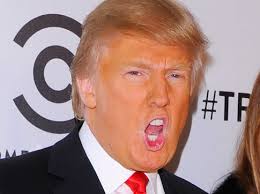
Donald Trump
On February 5, the Republican-dominated Senate acquitted him of the two charges brought by the Democratic House of Representatives on December 18, 2019:
Article 1: Abuse of Power: For pressuring Ukraine to assist him in his re-election campaign by damaging former Vice President Joseph Biden, his possible 2020 Democratic rival; and
Article 2: Obstruction of Congress: For obstructing Congress by blocking testimony of subpoenaed witnesses and refusing to provide documents in response to House subpoenas in the impeachment inquiry.
So Trump escaped impeachment—and the country is now suffering for it. On February 27, the Dow Jones Industrial Average had its single worst one-day drop in history—falling 1,191 points.
The reason can be summed up in one word: Coronavirus. Simply put, investors hate uncertainty, because it makes it hard to plan. And nothing makes uncertainty like a new and frightening virus that’s easily passed on and for which there is no vaccine or cure.
Coronavirus
CDC/ Alissa Eckert, MS; Dan Higgins, MAM / Public domain
And that causes millions of people to change their everyday behavior in unprecedented ways–such as not attending basketball games, eating in restaurants, flying on airplanes, going on cruises—and simply going to work.
Of course, Trump didn’t create the Coronavirus. But he has made it even more of a threat to Americans than it had to be.
In 2017, nearly 700 positions remained vacant at the Centers for Disease Control and Prevention (CDC) because Trump imposed a hiring freeze. This affected programs supporting local and state public health emergency readiness, infectious disease control and chronic disease prevention.
Making the situation worse: The CDC’s director, Tom Friedman, stepped down in January, 2017, and it wasn’t until July that the agency got another one: Brenda Fitzgerald. But she served only until January, 2018. She was succeeded—two months later—by Robert Ray Redfield, Jr. He has been the director since then.
The post of director of the CDC is considered one of the most crucial public health positions in the government. The CDC is charged with tracking and preventing infectious disease outbreaks in the United States and worldwide.
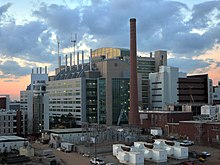
CDC headquarters in Atlanta, Georgia
Another way Trump has sabotaged America’s ability to respond to the Coronavirus outbreak: Gutting the permanent epidemic monitoring and command groups set up inside the White House: The National Security Council (NSC) and the Department of Homeland Security (DHS).
The reason for this: Trump’s pathological jealousy of and hatred for former President Barack Obama.
Since taking office, Trump has made an all-out effort to destroy every vestige of Obama’s legacy as the first black President of the United States. And these disease-monitoring groups were set up by Obama following the Ebola outbreak in West Africa in 2014.
In the spring of 2018, Trump pushed Congress to cut $15 billion from national health spending—and cutting the global disease-fighting budgets of the CDC, National Security Council, Department of Homeland Security and the Department of Health and Human Services.
The Federal $30 million fund for Complex Crises was eliminated as well.
In April, 2018, National Security Adviser John Bolton forced Tom Bossert, director of the infectious disease unit at DHS, to resign—along with his entire team. In May, 2018, Trump ordered the NSC’s global health security unit shut down.
Rear Admiral Timothy Ziemer, who headed the unit, was reassigned.
Neither the NSC nor the DHS epidemic team has been replaced.
The global health section of the CDC was decimated, and had to reduce the number of countries it was monitoring from 49 to 10.
It’s popular to assume that Trump did all of this out of mere ignorance—and there’s plenty of proof of his ignorance in many areas (such as attributing windmills to causing cancer). But far more is at work here.
The vast majority of those who voted for Trump believe that the Federal Government is evil and its agencies that regulate business should be eliminated.
An example of this constituency is Grover Norquist, founder and president of Americans for Tax Reform, which opposes all tax increases and has forced most Republicans to publicly pledge they will as well, under any circumstances.
His most famous quote: “I’m not in favor of abolishing the government. I just want to shrink it down to the size where we can drown it in the bathtub.”
Under Trump, the epidemic-fighting arm of the Federal Government has become so shrunk that America itself may be the one to drown—in an epidemic of Coronavirus.
ABC NEWS, ADLAI STEVENSON, ALTERNET, AMERICABLOG, AMERICAN TABLOID (BOOK), ANTI-CASTRO CUBANS, AP, ASSASSINATION, BABY BOOMER RESISTANCE, BARACK OBAMA, BAY OF PIGS, BUZZFEED, CBS NEWS, CIA, CNN, COMMUNISM, CROOKS AND LIARS, CUBA, CUBAN MISSILE CRISIS, CURTIS LEMAY, DAILY KOZ, DONALD TRUMP, DRUDGE RETORT, DWIGHT D. EISENHOWER, EX-COMM, FACEBOOK, FBI, FIDEL CASTRO, FIVETHIRTYEIGHT, FLORIDA, FULGENCIO BATISTA, GUS RUSSO, HARPER’S MAGAZINE, J. EDGAR HOOVER, JACK RUBY, JAMES ELLROY, JOHN F. KENNEDY, JOHNNY ROSELLI, LEE HARVEY OSWALD, LIVE BY THE SWORD (BOOK), LYNDON B. JOHNSON, MAFIA, MARCO RUBIO, MARINA OSWALD, MEDIA MATTERS, MOTHER JONES, MOVEON, MSNBC, NBC NEWS, NEWSWEEK, NIKITA KHRUSHCHEV, NPR, OPERATION MONGOOSE, PBS NEWSHOUR, POLITICO, POLITICUSUSA, RAW STORY, REUTERS, RICHARD M. NIXON, ROBERT F. KENNEDY, ROBERT MACNAMARA, SALON, SAM GIANCANA, SANTOS TRAFFICANTE, SEATTLE TIMES, SLATE, TALKING POINTS MEMO, THE ATLANTIC, THE CHICAGO SUN-TIMES, THE CHICAGO TRIBUNE, THE DAILY BEAST, THE DAILY BLOG, THE GUARDIAN, THE HILL, THE HUFFINGTON POST, THE LOS ANGELES TIMES, THE NATION, THE NEW REPUBLIC, THE NEW YORK TIMES, THE VILLAGE VOICE, THE WASHINGTON POST, THINKPROGRESS, TIME, TRUTHDIG, TRUTHOUT, TWITTER, TWO POLITICAL JUNKIES, U.S. NEWS & WORLD REPORT, UPI, USA TODAY, WARREN COMMISSION, WONKETTE
In Bureaucracy, History, Military, Politics, Social commentary on March 3, 2020 at 12:13 am
“John and Robert Kennedy knew what they were doing. They waged a vicious war against Fidel Castro–a war someone had to lose.”
And the loser turned out to be John F. Kennedy.
So writes investigative reporter Gus Russo in Live By the Sword: The Secret War Against Castro and the Death of JFK, published in 1998.
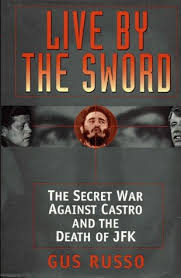
In what is almost certainly the definitive account of the assassination of President John F. Kennedy, Russo reaches some startling—but highly documented—conclusions:
- Lee Harvey Oswald assassinated Kennedy.
- He did it alone.
- Oswald, a former Marine, was a committed Marxist—whose hero was Castro.
- The CIA’s ongoing campaign to overthrow and/or assassinate Castro was an open secret throughout the Gulf.
- Oswald visited New Orleans in the spring of 1963.
- There he learned that Castro was in the crosshairs of the CIA.
- For this, he blamed John F. Kennedy.
- Oswald told his Russian-born wife, Marina: “Fidel Castro needs defenders. I’m going to join his army of volunteers.”
- Jack Ruby, a Dallas nightclub owner, murdered Oswald because he was distraught over Kennedy’s death.
- Ruby was not part of a Mafia conspiracy to silence Oswald.
- Skeptics of the Warren Commission—which concluded that Oswald had acted alone–asked the wrong question: “Who killed Kennedy?”
- They should have asked: “Why was he killed?”
- The answer–according to Russo: “The Kennedys’ relentless pursuit of Castro and Cuba backfired in tragedy on that terrible day in November, 1963.”
Another book well worth reading about America’s Cuban obsession during the early 1960s is American Tabloid, by James Ellroy.
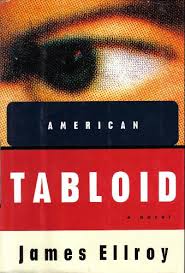
Although a novel, it vividly captures the atmosphere of intrigue, danger and sleaziness that permeated that era in a way that dry, historical documents never can.
“The 50’s are finished,” reads its paperback dust jacket. “Zealous young lawyer Robert Kennedy has a red-hot jones to nail Jimmy Hoffa. JFK has his eyes on the Oval Office.
“J. Edgar Hoover is swooping down on the Red Menace. Howard Hughes is dodging subpoenas and digging up Kennedy dirt. And Castro is mopping up the bloody aftermath of his new Communist nation….
“Mob bosses, politicos, snitches, psychos, fall guys and femmes fatale. They’re mixing up a Molotov cocktail guaranteed to end the country’s innocence with a bang.”
Among the legacies of America’s twisted romance with anti-Castro Cubans:
- Following the JFK assassination, there was a cover-up.
- Its purpose: To protect the reputation of the United States Government—and that of its newly-martyred President.
- The CIA and FBI concealed the CIA-Mafia assassination plots from the Warren Commission assigned to investigate Kennedy’s murder.
- Other government officials participating in the cover-up included Attorney General Robert F. Kennedy and President Lyndon B. Johnson.
- Ironically, this secrecy ignited the widespread—and false—belief that the President had died at the hands of a government conspiracy.
- Robert Kennedy feared that his relentless pursuit of Castro might have led Castro to “take out” JFK first.
- Fearing his own assassination if he continued Kennedy’s efforts to murder Castro, President Johnson ordered the CIA to halt its campaign to overthrow and/or assassinate the Cuban leader.
- The huge Cuban community throughout Florida—and especially Miami—continues to exert a blackmailing influence on American politics.
- Right-wing politicians from Richard Nixon to Donald Trump have reaped electoral rewards by catering to the demands of this hate-obsessed voting block.
- These Cuban ex-patriots hope that the United States will launch a full-scale military invasion of the island to remove Castro.
- Having grown rich and soft in the United States, they fear to risk their own lives by returning to Cuba to overthrow the Castro regime—as he had overthrown Fulgencio Batista.
- Only President Barack Obama had the political courage to re-establish diplomatic relations with Cuba—in 2015.
- This occurred long after the United States had done so with such former enemies as the Soviet Union, China and Vietnam.
- Donald Trump—obsessed with reversing Obama’s record—has reinstated travel and trade restrictions on Cuba. It has also allowed American citizens to sue foreign businesses using property seized during the 1959 Cuban revolution,
The Cuban Missile Crisis remains the single most dangerous moment of the 50-year Cold War, when the world stood only minutes away from nuclear Armageddon.
That crisis stemmed from the American Right’s twisted obsession with Cuba, an obsession that continues today.
So what are the lessons to be learned from that obsession?
- The United States should end the half-century contamination of American politics by those Cubans who live only for their hatred of Castro—and those political candidates who live to exploit it.
- (For example: Presidential candidate Bernie Sanders’ recent—and truthful—statement that Castro created a literacy program for poor Cuban children has ignited bipartisan outrage. If Sanders becomes the Democratic nominee, it has virtually guaranteed his
- A population of about 1,700,000 Cuban exiles living in Florida should not be allowed to shape the domestic and foreign policy of a nation of 300 million.
- Those who continue to hate—or love—Fidel Castro should be left to their own private feud.
- But that is a feud they should settle on their own island, and not from the shores of the United States.
ABC NEWS, ADLAI STEVENSON, ALTERNET, AMERICABLOG, AMERICAN TABLOID (BOOK), ANTI-CASTRO CUBANS, AP, ASSASSINATION, BABY BOOMER RESISTANCE, BARACK OBAMA, BAY OF PIGS, BUZZFEED, CBS NEWS, CIA, CNN, COMMUNISM, CROOKS AND LIARS, CUBA, CUBAN MISSILE CRISIS, CURTIS LEMAY, DAILY KOZ, DONALD TRUMP, DRUDGE RETORT, DWIGHT D. EISENHOWER, EX-COMM, FACEBOOK, FBI, FIDEL CASTRO, FIVETHIRTYEIGHT, FLORIDA, FULGENCIO BATISTA, GUS RUSSO, HARPER’S MAGAZINE, J. EDGAR HOOVER, JACK RUBY, JAMES ELLROY, JOHN F. KENNEDY, JOHNNY ROSELLI, LEE HARVEY OSWALD, LIVE BY THE SWORD (BOOK), LYNDON B. JOHNSON, MAFIA, MARCO RUBIO, MARINA OSWALD, MEDIA MATTERS, MOTHER JONES, MOVEON, MSNBC, NBC NEWS, NEWSWEEK, NIKITA KHRUSHCHEV, NPR, OPERATION MONGOOSE, PBS NEWSHOUR, POLITICO, POLITICUSUSA, RAW STORY, REUTERS, RICHARD M. NIXON, ROBERT F. KENNEDY, ROBERT MACNAMARA, SALON, SAM GIANCANA, SANTOS TRAFFICANTE, SEATTLE TIMES, SLATE, TALKING POINTS MEMO, THE ATLANTIC, THE CHICAGO SUN-TIMES, THE CHICAGO TRIBUNE, THE DAILY BEAST, THE DAILY BLOG, THE GUARDIAN, THE HILL, THE HUFFINGTON POST, THE LOS ANGELES TIMES, THE NATION, THE NEW REPUBLIC, THE NEW YORK TIMES, THE VILLAGE VOICE, THE WASHINGTON POST, THINKPROGRESS, TIME, TRUTHDIG, TRUTHOUT, TWITTER, TWO POLITICAL JUNKIES, U.S. NEWS & WORLD REPORT, UPI, USA TODAY, WARREN COMMISSION, WONKETTE
In Bureaucracy, History, Military, Politics, Social commentary on March 2, 2020 at 12:06 am
On October 22, 1962, President John F. Kennedy went on nationwide TV to announce the discovery of nuclear missiles in Cuba—and his blockade of that island.
He warned that any nuclear missile launched from Cuba against any nation would be regarded as an attack on the United States by the Soviet Union—and would trigger “a full retaliatory response” upon the U.S.S.R.
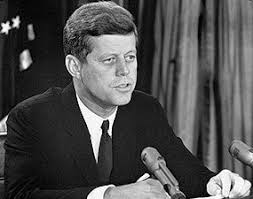
President John F. Kennedy addresses the nation
And he demanded that the Soviets remove all of their offensive weapons from Cuba:
“The path we have chosen for the present is full of hazards, as all paths are, but it is the one most consistent with our character and courage as a nation and our commitments around the world.
“The cost of freedom is always high, but Americans have always paid it. And one path we shall never choose, and that is the path of surrender or submission.”
On October 26, the United States raised the readiness level of Strategic Air Command forces to DEFCON 2—the step just short of war. For the only time in U.S. history, B-52 bombers were dispersed to various locations and made ready to take off, fully equipped, on 15 minutes’ notice.
Other measures taken included:
- One-eighth of America’s 1,436 bombers were on airborne alert.
- About 145 intercontinental ballistic missiles stood on ready alert.
- Air Defense Command redeployed 161 nuclear-armed interceptors to 16 dispersal fields within nine hours with one-third maintaining 15-minute alert status.
- Twenty-three nuclear-armed B-52 were sent to orbit points within striking distance of the Soviet Union.
An invasion date was set for October 29. But the Kennedy Administration—and the American military–didn’t know that the Russian soldiers guarding the missiles had been armed with tactical nuclear weapons.
Had the Marines gone in, those mini-nukes would have been used. And a fullscale nuclear exchange between the United States and the Soviet Union would have almost certainly followed.
At the height of the crisis, Attorney General Robert F. Kennedy offered a solution.
Khrushchev had sent two teletypes to Kennedy. The first had agreed to remove the missiles, but the second had demanded that the United States remove its own missiles from Turkey, which bordered the Soviet Union.
Robert Kennedy’s solution: The administration should ignore the second message—and announce that it had accepted Khrushchev’s offer to remove the missiles.
After this announcement was made, President Kennedy said to his advisers: “It can go either way now.”
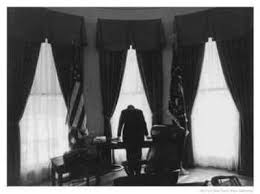
John F. Kennedy in the Oval Office
The crisis ended on October 28. Under enormous pressure, Khrushchev agreed to remove the missiles from Cuba.
Behind his decision lay a secret promise by the Kennedy administration to remove its obsolete nuclear missiles from Turkey, which bordered the Soviet Union. And a public pledge to not invade Cuba.
On the night the crisis ended, there occurred a prophetic exchange between the two Kennedy brothers.
JFK: “Maybe this is the night I should go to the theater”—a reference to Abraham Lincoln’s fatal attendance of Ford’s Theater at the end of the Civil War.
RFK: “If you go, I want to go with you.”
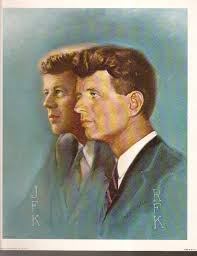
John F. and Robert F. Kennedy
But President Kennedy was not finished with Castro. While continuing the campaign of sabotage throughout Cuba, the Kennedys were preparing something far bigger: A fullscale American invasion of the island.
On October 4, 1963, the Joint Chiefs of Staff submitted its latest version of the invasion plan, known as OPLAN 380-63. Its timetable went:
- January, 1964: Infiltration into Cuba by Cuban exiles.
- July 15, 1964: U.S. conventional forces join the fray.
- August 3, 1964: All-out U.S. air strikes on Cuba.
- October 1, 1964: Full-scale invasion to install “a government friendly to the U.S.”
During the Cuban Missile Crisis, Robert Kennedy—referring to the 1941 Japanese attack on Pearl Harbor—had resisted demands for a “sneak attack” on Cuba by saying: “I don’t want my brother to be the Tojo of the 1960s.”
Now the Kennedys planned such an attack on Cuba just one month before the November, 1964 Presidential election.
Then fate—in the unlikely figure of Lee Harvey Oswald—intervened.
On November 22, 1963, while the President rode through Dallas in an open-air automobile, a rifle-wielding assassin opened fire. He scored two hits on Kennedy—in the back of the neck and head. The second wound proved instantly fatal.
The nation and the world were shocked—and plunged into deep mourning.
But for some of those who had waged a secret, lethal war against Fidel Castro for the previous two years, Kennedy’s death—at least in retrospect—didn’t come as a surprise.
Robert Kennedy, in particular, spent the remaining years of his life agonizing over the possibility that his highly personal war against Castro had backfired.
That Castro, fed up with the CIA’s assassination plots against him, had retaliated with one of his own.
Robert Kennedy’s fears and guilt were compounded by the fact that, while waging war on Castro, he had waged an equally ruthless crusade against organized crime.
He knew that some of the mobsters he had tried to send to prison had played a major role in the CIA’s efforts to “hit” Castro. Had the Mafia—believing itself the victim of a double-cross—put out a “contract” on JFK instead?
It was a question that haunted him until the day he died.
ABC NEWS, ADLAI STEVENSON, ALTERNET, AMERICABLOG, AMERICAN TABLOID (BOOK), ANTI-CASTRO CUBANS, AP, ASSASSINATION, BABY BOOMER RESISTANCE, BARACK OBAMA, BAY OF PIGS, BUZZFEED, CBS NEWS, CIA, CNN, COMMUNISM, CROOKS AND LIARS, CUBA, CUBAN MISSILE CRISIS, CURTIS LEMAY, DAILY KOZ, DONALD TRUMP, DRUDGE RETORT, DWIGHT D. EISENHOWER, EX-COMM, FACEBOOK, FBI, FIDEL CASTRO, FIVETHIRTYEIGHT, FLORIDA, FULGENCIO BATISTA, GUS RUSSO, HARPER’S MAGAZINE, J. EDGAR HOOVER, JACK RUBY, JAMES ELLROY, JOHN F. KENNEDY, JOHNNY ROSELLI, LEE HARVEY OSWALD, LIVE BY THE SWORD (BOOK), LYNDON B. JOHNSON, MAFIA, MARCO RUBIO, MARINA OSWALD, MEDIA MATTERS, MOTHER JONES, MOVEON, MSNBC, NBC NEWS, NEWSWEEK, NIKITA KHRUSHCHEV, NPR, OPERATION MONGOOSE, PBS NEWSHOUR, POLITICO, POLITICUSUSA, RAW STORY, REUTERS, RICHARD M. NIXON, ROBERT F. KENNEDY, ROBERT MACNAMARA, SALON, SAM GIANCANA, SANTOS TRAFFICANTE, SEATTLE TIMES, SLATE, TALKING POINTS MEMO, THE ATLANTIC, THE CHICAGO SUN-TIMES, THE CHICAGO TRIBUNE, THE DAILY BEAST, THE DAILY BLOG, THE GUARDIAN, THE HILL, THE HUFFINGTON POST, THE LOS ANGELES TIMES, THE NATION, THE NEW REPUBLIC, THE NEW YORK TIMES, THE VILLAGE VOICE, THE WASHINGTON POST, THINKPROGRESS, TIME, TRUTHDIG, TRUTHOUT, TWITTER, TWO POLITICAL JUNKIES, U.S. NEWS & WORLD REPORT, UPI, USA TODAY, WARREN COMMISSION, WONKETTE
In Bureaucracy, History, Military, Politics, Social commentary on February 28, 2020 at 12:12 am
In April, 1961, the CIA tried to overthrow the Communist regime of Cuba’s “Maximum Leader,” Fidel Castro, at the Bay of Pigs.
When that failed, President John F. Kennedy ordered Castro’s removal through a campaign of sabotage and assassination.
These covert operatives became known within the CIA as the Special Group, and were ultimately supervised by Robert F. Kennedy, the President’s brother and Attorney General.
The war against Castro became known within the CIA as Operation Mongoose.
But not everyone in the CIA was enthusiastic about the “get Castro” effort.
“Everyone at CIA was surprised at Kennedy’s obsession with Fidel,” recalled Sam Halpern, who was assigned to the Cuba Project. “They thought it was a waste of time. We all knew [Fidel] couldn’t hurt us. Most of us at CIA initially liked Kennedy, but why go after this little guy?

“One thing is for sure: Kennedy wasn’t doing it out of national security concerns. It was a personal thing. The Kennedy family felt personally burnt by the Bay of Pigs and sought revenge.”
It was all-out war. Among the tactics used:
- Hiring Cuban gangsters to murder Cuban police officials and Soviet technicians.
- Sabotaging mines.
- Paying up to $100,000 per “hit” for the murder or kidnapping of Cuban officials.
- Using biological and chemical warfare against the Cuban sugar industry.
“Bobby (Kennedy) wanted boom and bang all over the island,” recalled Halpern. “It was stupid. The pressure from the White House was very great.”
Among that “boom and bang” were a series of assassination plots against Castro, in which the Mafia was to be a key player.
Chicago Mobster Johnny Rosselli proposed a simple plan: through its underworld connections in Cuba, the Mafia would recruit a Cuban in Castro’s entourage, such as a waiter or bodyguard, who would poison him.
The CIA’s Technical Services division produced a botulinus toxin which was then injected into Castro’s favorite brand of cigars. The CIA also produced simpler botulinus toxin pills that could be dissolved in his food or drink.
But the deputized Mafia contacts failed to deliver any of the poisons to Castro.
Rosselli told the CIA that the first poisoner had been discharged from Castro’s employ before he could kill him, and the back-up agent got “cold feet.”
Other proposals or attempts included:
- Planting colorful seashells rigged to explode at a site where Castro liked to go skindiving.
- Trying to arrange for his being presented with a wetsuit impregnated with noxious bacteria and mold spores, or with lethal chemical agents.
- Attempting to infect Castro’s scuba regulator with tuberculous bacilli.
- Trying to douse his handkerchiefs, tea and coffee with other lethal bacteria.
Former members of the Kennedy Administration later insisted that neither John nor Robert Kennedy knew or approved of these assassination plots. But the sheer weight of available evidence indicates otherwise.
Bobby, in particular, was constantly pressing the CIA to “do something” about Castro. In the world of covert action, words like “Kill Castro” aren’t committed to paper. Or even spoken.
Castro, rightly seeing his life and regime threatened, appealed to Nikita Khrushchev, leader of the Soviet Union, for assistance.

1960s poster of Fidel Castro and Nikita Khrushchev
Keizers [CC BY-SA 3.0 (https://creativecommons.org/licenses/by-sa/3.0)%5D
Khrushchev was quick to comply: “We must not allow the communist infant to be strangled in its crib,” he told members of his inner circle.
By October, 1962, the Soviet Union had sent more than
- 40,000 soldiers,
- 1,300 field pieces,
- 700 anti-aircraft guns,
- 350 tanks and
- 150 jets
to Cuba to deter another invasion.
Most importantly, Khrushchev began supplying Castro with nuclear-tipped ballistic missiles.
Their discovery, on October 15, 1962, ignited the single most dangerous confrontation of the 50-year Cold War.
Suddenly, the United States and the Soviet Union—bristling with nuclear weapons—found themselves on the brink of nuclear war.
At the time, Kennedy officials claimed they couldn’t understand why Khrushchev had placed nuclear missiles in Cuba. “Maybe Khrushchev’s gone mad” was a typical public musing.
This remained the official American view for years afterward—as depicted in Robert Kennedy’s memoir, Thirteen Days: A Memoir of the Cuban Missile Crisis, published in 1969, the year after his assassination.
No admission was made that JFK had been waging a no-holds-barred campaign to overthrow the Cuban government and assassinate its leader.
The same proved true for the 1974 doc-u-drama, The Missiles of October, starring William Devane as John F. Kennedy and Martin Sheen as Robert Kennedy.
On October 16, President Kennedy was informed of the missile installations. He immediately convened a group of his 12 most important advisers, which became known as Ex-Comm, for Executive Committee.
Then followed seven days of guarded and intense debate by Kennedy and his advisers. Some of the participants—such as Air Force General Curtis LeMay—urged an all-out air strike against the missile sites.
Others—such as Adlai Stevenson, the United States delegate to the United Nations—urged a reliance on quiet diplomacy.
It was Secretary of Defense Robert S. McNamara who suggested a middle course: A naval blockade—a “quarantine” in Kennedy’s softened term—around Cuba. This would hopefully prevent the arrival of more Soviet offensive weapons on the island.
Finally, the President decided to to impose a naval blockade.
On October 22, Kennedy went on nationwide TV to announce the discovery of the missiles and his blockade of Cuba.
ABC NEWS, ADLAI STEVENSON, ALTERNET, AMERICABLOG, AMERICAN TABLOID (BOOK), ANTI-CASTRO CUBANS, AP, ASSASSINATION, BABY BOOMER RESISTANCE, BARACK OBAMA, BAY OF PIGS, BUZZFEED, CBS NEWS, CIA, CNN, COMMUNISM, CROOKS AND LIARS, CUBA, CUBAN MISSILE CRISIS, CURTIS LEMAY, DAILY KOZ, DONALD TRUMP, DRUDGE RETORT, DWIGHT D. EISENHOWER, EX-COMM, FACEBOOK, FBI, FIDEL CASTRO, FIVETHIRTYEIGHT, FLORIDA, FULGENCIO BATISTA, GUS RUSSO, HARPER’S MAGAZINE, J. EDGAR HOOVER, JACK RUBY, JAMES ELLROY, JOHN F. KENNEDY, JOHNNY ROSELLI, LEE HARVEY OSWALD, LIVE BY THE SWORD (BOOK), LYNDON B. JOHNSON, MAFIA, MARCO RUBIO, MARINA OSWALD, MEDIA MATTERS, MOTHER JONES, MOVEON, MSNBC, NBC NEWS, NEWSWEEK, NIKITA KHRUSHCHEV, NPR, OPERATION MONGOOSE, PBS NEWSHOUR, POLITICO, POLITICUSUSA, RAW STORY, REUTERS, RICHARD M. NIXON, ROBERT F. KENNEDY, ROBERT MACNAMARA, SALON, SAM GIANCANA, SANTOS TRAFFICANTE, SEATTLE TIMES, SLATE, TALKING POINTS MEMO, THE ATLANTIC, THE CHICAGO SUN-TIMES, THE CHICAGO TRIBUNE, THE DAILY BEAST, THE DAILY BLOG, THE GUARDIAN, THE HILL, THE HUFFINGTON POST, THE LOS ANGELES TIMES, THE NATION, THE NEW REPUBLIC, THE NEW YORK TIMES, THE VILLAGE VOICE, THE WASHINGTON POST, THINKPROGRESS, TIME, TRUTHDIG, TRUTHOUT, TWITTER, TWO POLITICAL JUNKIES, U.S. NEWS & WORLD REPORT, UPI, USA TODAY, WARREN COMMISSION, WONKETTE
In Bureaucracy, History, Military, Politics, Social commentary on February 27, 2020 at 1:14 am
On November 25, 2016, Fidel Castro, Cuba’s longtime “Maximum Leader,” died at the age of 90.
Old age and disease finally achieved what years of plotting by CIA and Mafia assassins could not.
To his supporters he was a tireless champion of the poor and a foe of American imperialism. To his enemies he was a ruthless dictator who drove his country to economic ruin in the name of a failed ideology–communism.
His reign began on January 1, 1959, when he swept triumphantly into Havana after a two-year guerrilla campaign against Cuban dictator Fulgencio Batista.
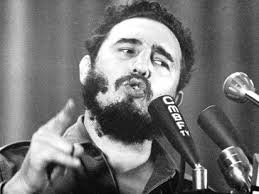
Fidel Castro
Almost immediately, hundreds of thousands of Cubans began fleeing to America. The first émigrés were more than 215,000 Batista followers. The exodus increased, peaking at approximately 78,000 in 1962.
In October, 1962, Castro stopped regularly scheduled travel between the two countries, and asylum seekers began sailing from Cuba to Florida.
Between 1962 and 1979, hundreds of thousands of Cubans entered the United States under the Attorney General’s parole authority.
By 2008, more than 1.24 million Cubans were living in the United States, mostly in South Florida, where the population of Miami was about one-third Cuban. Their sheer numbers transformed the state’s political, economic and cultural life. And not entirely for the better.
Many of these Cubans viewed themselves as political exiles, rather than immigrants, hoping to eventually return to Cuba after its Communist regime fell from power.
The large number of Cubans in South Florida, particularly in Miami’s “Little Havana,” allowed them to preserve their culture and customs to a degree rare for immigrant groups.
With so many discontented immigrants concentrated in Florida, they became a potential force for politicians to court.
And the issue guaranteed to sway their votes was unrelenting hostility to Castro. Unsurprisingly, most of their votes went to Right-wing Republicans.
John F. Kennedy was the first President to face this dilemma.
During the closing months of the administration of President Dwight D. Eisenhower, the CIA had begun training Cuban exiles for an invasion of their former homeland.
The exiles’ goal: To do what Castro had done—seek refuge in the mountains and launch a successful anti-Castro revolution.
But word of the coming invasion quickly leaked: The exiles were terrible secret-keepers. (A joke at the CIA went: “A Cuban thinks a secret is something you tell to only 300 people.”)
Kennedy insisted the invasion must appear to be an entirely Cuban enterprise. He refused to commit U.S. Marines and Air Force bombers.
More than 1,400 invaders landed on April 17, 1961 at the Bay of Pigs—and were quickly overwhelmed, with hundreds of the men taken prisoner.
Kennedy publicly took the blame for its failure: “Victory has a hundred fathers but defeat is an orphan.” But privately he seethed, and ordered the CIA to redouble its efforts to remove Castro at all costs.
To make certain his order was carried out, he appointed his brother, Robert—then Attorney General–to oversee the CIA’s “Castro removal” program.
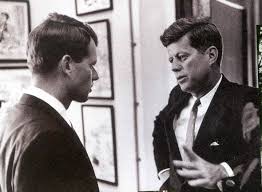
Robert F. Kennedy and John F. Kennedy
It’s here that America’s obsession with Cuba entered its darkest and most disgraceful period.
The CIA and the Mafia entered into an unholy alliance to assassinate Castro—each for its own benefit:
- The CIA wanted to please Kennedy.
- The mobsters wanted to regain their casino and brothel holdings that had made Cuba their private playground in pre-Castro times. They also hoped to use their pose as patriots to win immunity from future prosecution.
The CIA supplied poisons and explosives to various members of the Mafia. It was then up to the mobsters to assassinate Castro.
The CIA asked Johnny Roselli, a mobster linked to the Chicago syndicate, to go to Florida in 1961 and 1962 to organize assassination teams of Cuban exiles. They were to infiltrate their homeland and assassinate Castro.
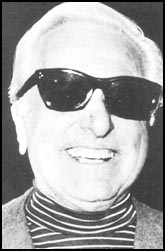
Johnny Roselli
Rosselli called upon two other crime figures: Chicago Mafia boss Sam Giancana and Santos Trafficante, the Costra Nostra chieftain for Tampa, for assistance.
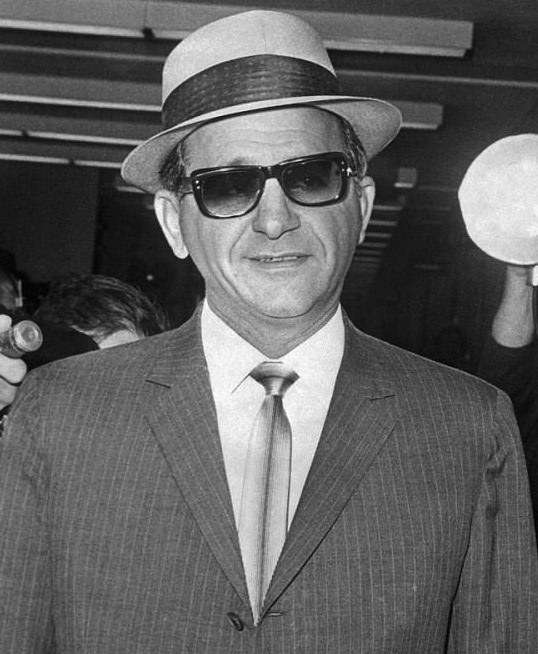
Sam Giancana
Giancana, using the name “Sam Gold” in his dealings with the CIA, was meanwhile being hounded by the FBI on direct orders of Attorney General Robert Kennedy.
The mobsters were authorized to offer $150,000 to anyone who would kill Castro and were promised any support the Agency could yield.
Giancana was to locate someone who was close enough to Castro to be able to drop pills into his food. Trafficante would serve as courier to Cuba, helping to make arrangements for the murder on the island.
Rosselli was to be the main link between all of the participants in the plot.
The available sources disagree on what actually happened. Some believe that the Mob made a genuine effort to “whack” Fidel.
Others are convinced the mobsters simply ran a scam on the government. They pretended to carry out their “patriotic duty” while in fact making no effort at all to penetrate Castro’s security.
The CIA’s war against Castro was known as Operation Mongoose—the mongoose being a deadly enemy of the cobra. And those entrusted with this assignment were known as the Special Group.
“We were hysterical about Castro at about the time of the Bay of Pigs and thereafter,” Secretary of Defense Robert S. McNamara later testified before Congress about these efforts. “And there was pressure from JFK and RFK to do something about Castro.”
ABC NEWS, ADOLF HITLER, ALTERNET, AMERICABLOG, AP, BABY BOOMER RESISTANCE, BARACK OBAMA, BENITO MUSSOLINI, BLACKBEARD, BUZZFEED, CAPTAIN RICHARD PHILLIPS, CBS NEWS, CNN, CROOKS AND LIARS, DAILY KOZ, DONALD TRUMP, DRUDGE RETORT, FACEBOOK, FASCISM, FIVETHIRTYEIGHT, FRANCISCO FRANCO, HARPER’S MAGAZINE, HENRY MORGAN, LUNG CANCER, MEDIA MATTERS, MOTHER JONES, MOVEON, MOVIES, MSNBC, NBC NEWS, NEWSWEEK, NPR, PBS NEWSHOUR, PIRATES, POLITICO, POLITICUSUSA, PRESIDENTIAL MEDAL OF FREEDOM, RAW STORY, REUTERS, RUSH LIMBAUGH, SALON, SEAL TEAM 6, SEATTLE TIMES, SLATE, SMOKING, SOMALIA, STATE OF THE UNION, TALKING POINTS MEMO, THE ATLANTIC, THE CHICAGO SUN-TIMES, THE CHICAGO TRIBUNE, THE DAILY BEAST, THE DAILY BLOG, THE GUARDIAN, THE HILL, THE HUFFINGTON POST, THE LOS ANGELES TIMES, THE NATION, THE NEW REPUBLIC, THE NEW YORK TIMES, THE RUSH LIMBAUGH SHOW, THE VILLAGE VOICE, THE WASHINGTON POST, THINKPROGRESS, TIME, TOM HANKS, TRUTHDIG, TRUTHOUT, TWITTER, TWO POLITICAL JUNKIES, U.S. NEWS & WORLD REPORT, UPI, USA TODAY, WONKETTE
In Bureaucracy, History, Military, Politics, Social commentary on February 19, 2020 at 12:06 am
On February 4, President Donald Trump awarded the Presidential Medal of Freedom to Right-wing propagandist Rush Limbaugh.
It was the Big Surprise on the night of his fourth annual State of the Union address to the nation.
And all that Limbaugh had had to do to earn the prestigeous medal was to spend 30 years spewing hatred at anyone who rejected a Fascistic agenda. And—oh, yes—for the longtime cigar smoker to announce the day before that he had been diagnosed with Stage 4 lung cancer.
Previously, Limbaugh had declared that smoking didn’t cause cancer.

Rush Limbaugh
The Medal of Freedom is supposed to be awarded “for especially meritorious contribution to
- the security or national interests of the United States;
- world peace; or
- cultural or other significant public or private endeavors.”
So let’s take a look at one of Limbaugh’s “meritorious contributions to the security or national interests of the United States.”
On April 8, 2009, four Somali pirates boarded the Maersk Alabama when it was located 240 miles southeast of the Somalian port city of Eyl.
The ship, en route to Mombasa, Kenya, was carrying 17,000 tons of cargo, including 5,000 tons of relief supplies for Kenya, Somalia, and Uganda.
As the pirates boarded the ship, the crew members locked themselves in the engine room. To buy time for his crewmen, the captain, Richard Phillips, surrendered to the pirates.
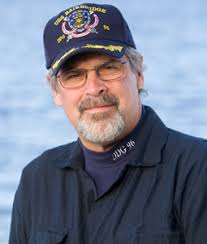
Captain Richard Phillips
The crew later overpowered one of the pirates, and sought to exchange their captive for Phillips. The crew released the pirate, but the other three pirates refused to release Phillips.
The pirates left with Philips in a lifeboat which carried ten days of food rations, water and basic survival supplies.
On April 8, the destroyer USSS Bainbridge and the frigate USSS Halyburton were dispatched to the Gulf of Aden to deal with the hostage situation, and reached Maersk Alabama early on April 9.
On April 9, a standoff began between the Bainbridge and the pirates in the Maersk Alabama’s lifeboat, where they continued to hold Phillips hostage.
On April 12, marksmen from SEAL Team 6 simultaneously opened fire with telescopic-sighted assault rifles and killed the three pirates on the lifeboat.
The SEALS believed Phillips faced an immediate threat of execution, having received a report that one of the pirates was pointing an AK-47 at his back.
The SEALS, known for their legendary marksmanship, took out all three pirates with shots to the head.
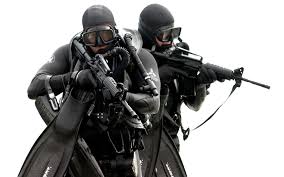
SEAL Team marksmen
Phillips was rescued in good condition.
The vast majority of Americans rejoiced. The Maersk Alabama had been the first American cargo ship to be hijacked in 200 years. And the encounter had ended with the ship and crew safe and its captain rescued without injury.
But not everyone was happy about the outcome. Naturally, the pirates infesting the Somali coastline were infuriated at this setback.
But, surprisingly, there were some Americans who felt more sympathetically toward the Somali pirates than the man who had ordered Phillips’ rescue: President Barack Obama.
One of these was Rush Limbaugh, the American Right’s chief propagandist.
The Rush Limbaugh Show airs throughout the U.S. on over 400 stations and is the highest-rated talk-radio program in the United States. When Limbaugh speaks, his “dittohead” audience listens—and acts as he decrees.
On April 14, 2009, Limbaugh gave his take on the rescue of Captain Richard Phillips:
“The Somali pirates, the merchant marine organizers who took a US merchant captain hostage for five days were inexperienced youths, the defense secretary, Roberts Gates, said yesterday, adding that the hijackers were between 17 and 19 years old.
“Now, just imagine the hue and cry had a Republican president ordered the shooting of black teenagers on the high seas….
“They were kids. The story is out, I don’t know if it’s true or not, but apparently the hijackers, these kids, the merchant marine organizers, Muslim kids, were upset.
“They wanted to just give the captain back and head home because they were running out of food. They were running out of fuel, they were surrounded by all these US Navy ships, big ships, and they just wanted out of there. That’s the story.
“But then when one of them put a gun to the back of the captain, Mr. Phillips, then bam, bam, bam. There you have it, and three teenagers shot on the high seas at the order of President Obama.”
And there you have it—an American Fascist making common cause with the heirs of Blackbeard and Henry Morgan against the nation’s first black President.
The rescue of Richard Phillips has been dramatized in the 2013 movie, “Captain Phillips,” starring Tom Hanks in the title role.
Audiences cheered at the climactic moment when the three pirates met their deserved fate. But what they didn’t see depicted was Limbaugh’s Greek chorus for the Right—and the sheer hatred he and they have for anyone who doesn’t share their Fascistic views.
The ordeal of Captain Phillips and the crew of the Maersk Alabama is over. But the heirs of Blackbeard still roam the seas near Somalia.
And the heirs of Francisco Franco, Adolf Hitler and Benito Mussolini still conspire to remake America in their own Rightist image.
2012 PRESIDENTIAL CAMPAIGN, ABC NEWS, ALTERNET, AMERICABLOG, AP, BABY BOOMER RESISTANCE, BARACK OBAMA, BIRTH CONTROL, BUZZFEED, CBS NEWS, CNN, CROOKS AND LIARS, DAILY KOZ, DONALD TRUMP, DRUDGE RETORT, FACEBOOK, FIVETHIRTYEIGHT, GLORIA ALLRED, GORGETOWN UNIVERSITY LAW COLLEGE, HARPER’S MAGAZINE, HERMAN CAIN, LUNG CANCER, MEDIA MATTERS, MOTHER JONES, MOVEON, MSNBC, NBC NEWS, NEWSWEEK, NPR, PBS NEWSHOUR, POLITICO, POLITICUSUSA, RAW STORY, REUTERS, RUSH LIMBAUGH, SALON, SANDRA FLUKE, SEATTLE TIMES, SEXUAL HARASSMENT, SHARON BIALEK, SLATE, TALKING POINTS MEMO, THE ATLANTIC, THE CHICAGO SUN-TIMES, THE CHICAGO TRIBUNE, THE DAILY BEAST, THE DAILY BLOG, THE GUARDIAN, THE HILL, THE HUFFINGTON POST, THE LOS ANGELES TIMES, THE NATION, THE NEW REPUBLIC, THE NEW YORK TIMES, THE VILLAGE VOICE, THE WASHINGTON POST, THINKPROGRESS, TIME, TRUTHDIG, TRUTHOUT, TWITTER, TWO POLITICAL JUNKIES, U.S. NEWS & WORLD REPORT, UPI, USA TODAY, VIAGRA, WONKETTE
In Entertainment, History, Politics, Social commentary on February 18, 2020 at 12:06 am
On February 3, Right-wing talk radio propagandist Rush Limbaugh stunned his 20-million Fascistic followers with the news that he had been diagnosed with Stage Four lung cancer.
No doubt Limbaugh himself was even more stunned: In April, 2015, as a constant cigar smoker, he told his radio listeners that smoking was not dangerous.
“Firsthand smoke takes 50 years to kill people, if it does. Not everybody that smokes gets cancer. Now, it’s true that everybody who smokes dies, but so does everyone who eats carrots.
“I would like a medal for smoking cigars, is what I’m saying,” Limbaugh added.
On February 4, 2020, the day after he announced his cancer diagnosis, he got one: President Donald Trump awarded him the Presidential Medal of Freedom—the Nation’s highest civilian honor.
But while Limbaugh’s millions of Right-wing “dittoheads” are in mourning, at least two women will not be shedding tears on his behalf.
One is Sandra Fluke, an American lawyer and women’s rights activist.
Fluke was a third-year Georgetown University law student when she testified before Congress on February 23, 2012. Her subject: The need for insurance companies to cover birth control.
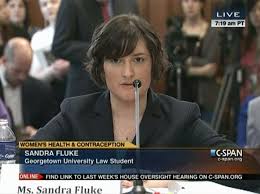
Sandra Fluke
Fluke explained that many universities—such as Jesuit ones—refused to provide insurance coverage for contraception. As a result, such costs can run as high as $3,000 during the three years a woman attends law school.
On February 29 and March 1, 2012, Limbaugh—the spokesman for the American Right—called Fluke a “slut” and a “prostitute.”
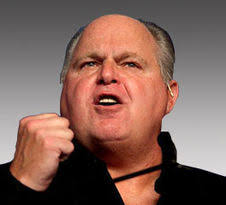
Rush Limbaugh
Limbaugh further charged that she couldn’t afford contraceptives because she was “having too much sex.”
Then Limbaugh—who likes to champion the glories of “family values”—closed with this salacious gem:
“So Ms. Fluke and the rest of you Feminazis, here’s the deal: If we are going to pay for your contraceptives and thus pay for you to have sex, we want something for it. And I’ll tell you want it is. We want you to post the videos online so we can all watch.”
On March 3, 2012, President Barack Obama called Fluke to say that her parents should be proud of her for speaking out for women.
After learning of the President’s phone call during his radio show, Limbaugh made a kissing noise with his lips and mocked Obama:
“That is so compassionate. What a great guy. The President called her to make sure she’s OK. What is she, 30 years old? Thirty years old, student at Georgetown Law who admits to having so much sex she can’t afford it.”
Another woman who won’t mourn when Limbaugh croaks is Sharon Bialek. She was one of multiple women who accused 2012 Presidential candidate Herman Cain of making aggressive and unwanted sexual advances.
On November 7, 2011, she gave a press conference where she recounted the following:
In mid-July 1997, she asked Cain—then CEO of the National Restaurant Association—for help in finding a new job or getting her old one back. Bialek had been laid off from the educational foundation of the NRA.

Sharon Bialek
Cain offered to help and she traveled to Washington to meet him.
Cain took her to an Italian restaurant for dinner. Then:
“While we were driving back to the hotel, he said that he would show me where the National Restaurant Association offices were. He parked the car down the block. I thought that we were going to go into the offices so that he could show me around.
“But instead of going into the offices, he suddenly reached over and put his hand on my leg under my skirt and reached for my genitals. He also grabbed my head and brought it toward his crotch. I was very, very surprised and very shocked.”
When she rejected his advances, he replied: “You want a job, right?”
Bialek never got her job back—or help from Cain in finding another one.
On November 7, 2011, Limbaugh attacked Bialek. Calling her a “babe” and “the blonde bombshell,” he joked about Cain’s attempt to extort sexual favors via her need for a job.
“Ha-ha-ha-ha,” laughed Limbaugh, whose net worth exceeded $400 million. “That’s it. Cain decided to provide her with his idea of a ‘stimulus package.’”
But Limbaugh wasn’t through: “Get this now. I have been wrong in pronouncing the fourth Cain accuser’s name as “Be-allek.” Gloria Allred [Bialek’s attorney] says that her name is pronounced ‘Bye-a-lick,’ as in ‘Buy a Lick.’”
To drive home his point, he made crude slumping noises over the microphone.
Limbaugh’s attitude toward women may well be influenced by his own appearance and history with them. He was balding, grotesquely obese—weighing at least 300 pounds—and usually reeked of toxic cigar smoke.
And he may have had “trouble” in the bedroom department: In June 2006, Customs officials confiscated Viagra from Limbaugh’s luggage at Palm Beach International Airport, as he was returning from the Dominican Republic. The prescription wasn’t in Limbaugh’s name.
He has been married four times—and divorced from his first three wives:
- Roxy Maxine McNeely (1977 – 1980).
- Michelle Sixta (1983 – 1990).
- Marta Fitzgerald (1994 – 2004).
- In 2010, he married Kathryn Rogers.
When Limbaugh finally dies, the biggest regret many women may have is that his 20 million Fascistic disciples can’t be buried with him.
ABC NEWS, ALTERNET, AMERICABLOG, ANCHOR BABIES, AP, BABY BOOMER RESISTANCE, BARACK OBAMA, BUZZFEED, CBS NEWS, CNN, CROOKS AND LIARS, DAILY KOZ, DONALD TRUMP, DRUDGE RETORT, FACEBOOK, FBI, FIVETHIRTYEIGHT, HARPER’S MAGAZINE, ILLEGAL ALIENS, illegal immigration, IMMIGRATION AND CUSTOMS ENFORCEMENT (ICE), JUSTICE DEPARTMENT, Kamala Harris, MEDIA MATTERS, MEXICO, MICHELLE OBAMA, MOTHER JONES, MOVEON, MSNBC, NBC NEWS, NEWSWEEK, NPR, PBS NEWSHOUR, POLITICO, POLITICUSUSA, RACKETEER INFLUENCED CORRUPT ORGANIZATIONS ACT, RAW STORY, REUTERS, SALON, SAN FRANCISCO, sanctuary cities, SEATTLE TIMES, SLATE, TALKING POINTS MEMO, THE ATLANTIC, THE CHICAGO SUN-TIMES, THE CHICAGO TRIBUNE, THE DAILY BEAST, THE DAILY BLOG, THE GUARDIAN, THE HILL, THE HUFFINGTON POST, THE LOS ANGELES TIMES, THE NATION, THE NEW REPUBLIC, THE NEW YORK TIMES, THE VILLAGE VOICE, THE WALL STREET JOURNAL, THE WASHINGTON POST, THINKPROGRESS, TIME, TRUTHDIG, TRUTHOUT, TWITTER, TWO POLITICAL JUNKIES, U.S. NEWS & WORLD REPORT, U.S.-MEXICO WALL, UPI, USA TODAY, USA TODAY DONALD TRUMP, WAL-MART, WONKETTE
In Bureaucracy, Business, History, Law, Law Enforcement, Politics, Social commentary on February 14, 2020 at 12:06 am
According to President Donald Trump, stopping illegal immigration is easy.
Just build a massive, impenetrable wall along the U.S./Mexican border to keep out Mexican immigrants.
“Building a wall is easy, and it can be done inexpensively,” Trump said in an interview. “It’s not even a difficult project if you know what you’re doing.”
Really?
Among the obstacles to erecting such a barrier:
- The United States/Mexican border stretches for 1,954 miles—and encompasses rivers, deserts and mountains.
- Environmental and engineering problems.
- Squabbles with ranchers who don’t want to give up any of their land.
- Building such a wall would cost untold billions of dollars.
- Drug traffickers and alien smugglers could easily tunnel under it into the United States—as they are now doing.
There are, in fact, cheaper and more effective remedies for combating illegal immigration.
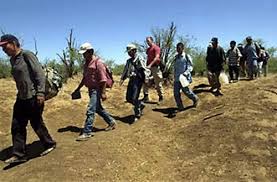
Illegal aliens crossing into the United States
(1) The Justice Department should vigorously attack the “sanctuary movement” that officially thwarts the immigration laws of the United States.
Among the 31 “sanctuary cities” of this country: Washington, D.C.; New York City; Los Angeles; Chicago; San Francisco; Santa Ana; San Diego; Salt Lake City; Phoenix; Dallas; Houston; Austin; Detroit; Jersey City; Minneapolis; Miami; Denver; Baltimore; Seattle; Portland, Oregon; New Haven, Connecticut; and Portland, Maine.
These cities have adopted “sanctuary” ordinances that do not allow municipal funds or resources to be used to enforce federal immigration laws, usually by not allowing police or municipal employees to inquire about one’s immigration status.
(2) The most effective way to combat this movement: Indict the highest-ranking officials of those cities which have actively violated Federal immigration laws.
This would include Mayors, members of the Board of Supervisors and chiefs of police, as well as any other officials who are found obstructing Federal immigration laws.
(3) Even if some indicted officials escaped conviction, the results would prove worthwhile.
City officials would be forced to spend huge sums of their own money for attorneys and face months or even years of prosecution.
And this, in turn, would send a devastating warning to officials in other “sanctuary cities” that the same fate lies in store for them.
(4) CEOs whose companies—like Wal-Mart—systematically employ illegal aliens should be held directly accountable for the actions of their subordinates.
They should be indicted by the Justice Department under the Racketeer Influenced Corrupt Organizations (RICO) Act, the way Mafia bosses are prosecuted for ordering their own subordinates to commit crimes.
Upon conviction, the CEO should be sentenced to a mandatory prison term of at least 20 years.
This would prove a more effective remedy for combating illegal immigration than stationing tens of thousands of soldiers on the U.S./Mexican border.
CEOs forced to account for their subordinates’ actions would take drastic steps to ensure that their companies strictly complied with Federal immigration laws.
(5) The Government should stop granting automatic citizenship to “anchor babies” born to illegal aliens in the United States.
A comparable practice would be allowing bank robbers who had eluded the FBI to keep their illegally-obtained loot.
A person who violates the bank robbery laws of the United States is legally prosecutable for bank robbery, whether he’s immediately arrested or remains uncaught for years. The same should be true for those born illegally within this country.
If they’re not here legally at the time of birth, they should not be considered citizens and should—like their parents—be subject to deportation.
(6) The United States Government–from the President on down–should scrap its apologetic tone on the right to control its national borders.
First Lady Michelle Obama—accompanied by Margarita Zavala, the wife of then-Mexican President Felipe Calderon—was visiting a second-grade class in Silver Spring, Maryland.
A second-grade girl said: “My Mom, she says says that Barack Obama is taking everybody away that doesn’t have papers.”
“Yeah, well, that’s something that we have to work on right?”
Replied Mrs. Obama. “To make sure that people can be here with the right kind of papers, right?”
The girl then said: “But my mom doesn’t have any….”
Obama: “Well, we’ll have to work on that. We have to fix that, and everybody’s got to work together in Congress to make sure that happens.”
The Mexican Government doesn’t consider itself racist for strictly enforcing its immigration laws.
The United States Government should not consider itself racist for insisting on the right to do the same.
(7) Voting materials and ballots should be published in one language: English.
In Mexico, voting materials are published in one language—Spanish.
Throughout the United States, millions of Mexican illegals refuse to learn English and yet demand that voting materials and ballots be made available to them in Spanish.
(8) The United States should impose economic and even military sanctions against countries–such as China and Mexico–whose citizens make up the bulk of illegal aliens.
Mexico, for example, uses its American border to rid itself of those who might demand major reforms in the country’s political and economic institutions.
Such nations must learn that dumping their unwanted’s on the United States now comes at an unfavorably high price. Otherwise those dumpings will continue.
2016 PRESIDENTIAL ELECTION, 2020 PRESIDENTIAL ELECTION, 9/11, ABC NEWS, ADOLF HITLER, AFGHANISTAN, ALTERNET, AMERICABLOG, AP, ASIANS, BABY BOOMER RESISTANCE, BARACK OBAMA, BLACKS, BORDER WALL, BULLYING, BUZZFEED, CANADA, CBS NEWS, CNN, COMMUNISM, CORRUPTION, CROOKS AND LIARS, DAILY KOZ, DONALD TRUMP, DRUDGE RETORT, EMOLUENTS CLAUSE, FACEBOOK, FASCISM, FBI, FIRST AMENDMENT, FIVETHIRTYEIGHT, FREEDOM OF THE PRESS, GEORGE W. BUSH, GREAT BRITAIN, GREAT DEPRESSION, HARPER’S MAGAZINE, HILLARY CLINTON, HISPANICS, IMPEACHMENT, IRAQ, JEWS, JOSEPH BIDEN, MEDIA MATTERS, MOTHER JONES, MOVEON, MSNBC, MUSLIMS, NAZI GERMANY, NAZI PARTY, NBC NEWS, NEWSWEEK, NPR, PAUL VON HINDENBURG, PBS NEWSHOUR, POLITICO, POLITICUSUSA, RACISM, RAW STORY, REPUBLICANS, REUTERS, ROBERT PAYNE, SALON, SEATTLE TIMES, SLATE, TALKING POINTS MEMO, THE ATLANTIC, THE CHICAGO SUN-TIMES, THE CHICAGO TRIBUNE, THE DAILY BEAST, THE DAILY BLOG, THE GUARDIAN, THE HILL, THE HUFFINGTON POST, THE LIFE AND DEATH OF ADOLF HITLER, THE LOS ANGELES TIMES, THE LOS ANGELS TIMES, THE NATION, THE NEW REPUBLIC, THE NEW YORK TIMES, THE VILLAGE VOICE, THE WASHINGTON POST, THINKPROGRESS, TIME, TRUTHDIG, TRUTHOUT, TWITTER, TWO POLITICAL JUNKIES, U.S. NEWS & WORLD REPORT, UKRAINE, UNITED STATES CONSTITUTION, UPI, USA TODAY, VLADIMIR PUTIN, WONKETTE, WORLD WAR 11
In Bureaucracy, History, Law, Politics, Social commentary on February 13, 2020 at 12:12 am
In his bestselling 1973 biography, The Life and Death of Adolf Hitler, British historian Robert Payne harshly condemned the German people for the rise of the Nazi dictator.
“[They] allowed themselves to be seduced by him and came to enjoy the experience….[They] followed him with joy and enthusiasm because he gave them license to pillage and murder to their hearts’ content. They were his servile accomplices, his willing victims….
“If he answered their suppressed desires, it was not because he shared them, but because he could make use of them. He despised the German people, for they were merely the instruments of his will.”
On November 8, 2016, millions of ignorant, hate-filled, Right-wing Americans elected Donald Trump—a man reflecting their own hate and ignorance—to the Presidency.
Yet, in some ways, Americans had fewer excuses for turning to a Fascistic style of government than the Germans did.
Adolf Hitler, joined the National Socialist German Workers (Nazi) Party in 1919—the year after World War 1 ended.
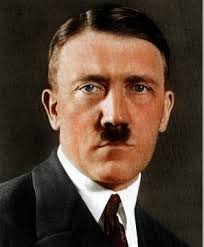
Adolf Hitler
In 1923, he staged a coup attempt in Bavaria—which was quickly and brutally put down by police. He was arrested and sentenced to less than a year in prison.
After that, Hitler decided that winning power through violence was no longer an option. He must win it through election—or appointment.
When the 1929 Depression struck Germany, the fortunes of Hitler’s Nazi party rose as the life savings of ordinary Germans fell. Streets echoed with bloody clashes between members of Hitler’s Nazi Stormtroopers and those of the German Communist Party.
Germans desperately looked for a leader—a Fuhrer—who could somehow deliver them from the threat of financial ruin and Communist takeover.
In early 1933, members of his own cabinet persuaded aging German president, Paul von Hindenburg, that only Hitler’s appointment as Chancellor could do this.
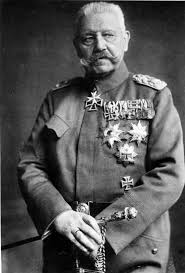
Paul von Hindenburg
Hindenburg was reluctant to do so. He considered Hitler a dangerous radical. But he let himself be convinced that he could “box in” and control Hitler by putting him in the Cabinet.
So, on January 30, 1933, Hindenburg appointed Adolf Hitler Chancellor (the equivalent of Attorney General) of Germany.
On August 2, 1934, Hindenburg died. Hitler immediately assumed the titles—and duties—of the offices of Chancellor and President. His rise to total power was complete.
It had taken him 15 years to do so.
In 2015, Donald Trump declared his candidacy for President.
Now, consider this:
- The country was technically at war in the Middle East—but the fate of the United States was not truly threatened, as it had been during the Civil War.
- There was no draft; if you didn’t know someone in the military, you didn’t care about the casualties taking place.
- Nor were these conflicts—in Iraq and Afghanistan—imposing domestic shortages on Americans, as World War II had.
- Thanks to government loans from President Barack Obama, American capitalism had been saved from its own excesses during the George W. Bush administration.
- Employment was up. CEOs were doing extremely well.
- In contrast to the corruption that had plagued the administration of Ronald Reagan, whom Republicans idolize, no such scandals plagued the Obama Presidency.
- Nor had there been any large-scale terrorist attacks on American soil—as there had on 9/11 under President George W. Bush.
Yet—not 17 months after announcing his candidacy for President—enough Americans fervently embraced Donald Trump to give him the most powerful position in the country and the world.
.jpg/220px-Donald_Trump_August_19,_2015_(cropped).jpg)
Donald Trump
The message of Barack Obama’s 2008 campaign had been one of hope: “Yes, We Can!”
That of Donald Trump’s campaign was one of hatred toward everyone who was not an avid Trump supporter: “No, You Can’t!”
Whites comprised the overwhelming majority of the audiences at Trump rallies. Not all were racists, but many of those who were advertised it on T-shirts: “MAKE AMERICA WHITE AGAIN.”
Birthrates among non-whites were rising. By 2045, whites would make up less than 50 percent of the American population.
The 2008 election of the first black President had shocked whites. His 2012 re-election had deprived them of the hope that 2008 had been an accident.
Then came 2016—and the possibility that a black President might actually be followed by a woman: Hillary Clinton.
Since Trump became President, he has:
- Fired an FBI director for investigating Russia’s subversion of the 2016 Presidential election.
- Attacked Federal judges whose rulings displeased him.
- So tyrannized his staffers that 43% of them have abandoned him. Nearly 2,000 government positions remain vacant.
- Repeatedly and enthusiastically defended Vladimir Putin, the dictator of Russia, America’s mortal enemy.
- Attacked and alienated America’s oldest allies, such as Canada and Great Britain.
- Shut down the United States Government for over a month, imperiling the lives of 800,000 Federal employees, to extort money from Congress for a worthless wall on the U.S.-Mexico border.
- Attacked the free press as “the enemy of the people.”
- Used his position as President to further enrich himself, in violation of the Emoluments Clause of the Constitution.
- Been impeached (but not convicted) for trying to extort Ukraine’s president into smearing former Vice President Joseph Biden, a possible rival for President in 2020.
All of this should be remembered the next time an American blames Germans for their embrace of Adolf Hitler.


 Bureaucracybuster's Blog
2020 PRESIDENTIAL ELECTION, 9/11 ATTACKS, ABC NEWS, ABUSE OF POWER, AIDS, AIDS EPIDEMIC, AIRLINES, ALEX M. AZAR, ALTERNET, AMERICABLOG, AP, BABY BOOMER RESISTANCE, BARACK OBAMA, BUZZFEED, CARNIVAL CRUISE LINES, CBS NEWS, CENTERS FOR DISEASE CONTROL AND PREVENTION, CHARLES GEORGE GORDON, CHARLTON HESTON, CNN, CORONAVIRUS, CROOKS AND LIARS, CRUISE LINES, DAILY KOZ, DEPARTMENT OF HEALTH AND HUMAN SERVICES, DEPARTMENT OF HOMELAND SECURITY, DONALD TRUMP, DRUDGE RETORT, EBOLA, FACEBOOK, FIVETHIRTYEIGHT, HARPER’S MAGAZINE, IMPEACHMENT, JOHN BOLTON, KATHIE LEE GIFFORD, KHARTOUM (MOVIE), LAURENCE OLIVER, MASS HYSTERIA, MEDIA MATTERS, MOHAMMED, MOTHER JONES, MOVEON, MSNBC, NATIONAL SECURITY COUNCIL, NBC NEWS, NEWSWEEK, NPR, PBS NEWSHOUR, POLITICO, POLITICUSUSA, RAW STORY, REPUBLICANS, REUTERS, SALON, SEATTLE TIMES, SLATE, STOCK MARKET, SURGICAL MASKS, TALKING POINTS MEMO, THE ATLANTIC, THE CHICAGO SUN-TIMES, THE CHICAGO TRIBUNE, THE DAILY BEAST, THE DAILY BLOG, THE GUARDIAN, THE HILL, THE HUFFINGTON POST, THE LOS ANGELES TIMES, THE NATION, THE NEW REPUBLIC, THE NEW YORK TIMES, THE VILLAGE VOICE, THE WASHINGTON POST, THINKPROGRESS, TIME, TIMOTHY ZIEMER, TOM BOSSERT, TOM FRIEDMAN, TOURISM INDUSTRY, TRUTHDIG, TRUTHOUT, TWITTER, TWO POLITICAL JUNKIES, U.S. NEWS & WORLD REPORT, UNITED STATES HOUSE OF REPRESENTATIVES, UNITED STATES SENATE, UPI, USA TODAY, WONKETTE
DYING OF THE FEAR: PART ONE (OF TWO)
In Bureaucracy, Business, Entertainment, History, Politics, Social commentary on March 10, 2020 at 9:52 amThe outbreak of the Coronavirus has terrified Americans in ways not seen since the September 11, 2001 terror attacks on New York City and Washington, D.C.
For months after that horror, the two most profitable businesses in the country were video rental stores and food delivery services.
People stayed indoors—and at home, as if they believed this was the one place they would be safe. Everyone feared the next big terror attack—and didn’t want to be on hand when it exploded.
Restaurants, nightclubs, amusement parks and the airlines suffered accordingly.
World Trade Center – September 11, 2001
In the early 1980s, the AIDS epidemic had truly frightened millions of Americans. At first, no one knew what caused it—or, more importantly, how it was spread.
At first, gays were thought to be the only ones at risk. Then the list of potential victims kept expanding to
But with the passage of time—and the introduction of AIDS-fighting drugs that allowed victims to generally live ordinary lives—Americans’ fears gradually decreased. AIDS was seen as a disease like tuberculosis—dangerous, but unlikely to strike if you took reasonable precautions.
And now America is facing a new fear—that of the Coronavirus, otherwise known as COVID-19.
Coronavirus
In December 2019, a pneumonia outbreak was reported in Wuhan, China. By December 31, the outbreak was traced to a novel strain of Coronavirus.
Coronaviruses are a group of viruses that affect birds and mammals. In humans, Coronaviruses cause respiratory tract infections that are typically mild, such as the common cold. Coronaviruses can cause pneumonia and may cause bronchitis.
When the virus surfaced in China, Americans didn’t worry, as it seemed confined to Wuhan. But then it began spreading.
By January 30, 2020, 9,976 cases had been reported in at least 21 countries, including the first case in the United States.
At that time, United States health authorities repeatedly assured Americans they had nothing to worry about, that “we’re on it.”
For example: On January 28, Secretary of Health and Human Services Alex M. Azar II stated at a press conference: “We’ve been monitoring this virus and preparing a response since back in December, but it’s more than that. Preparing for these kinds of outbreaks is part of daily life at HHS and for America’s public health professionals.
“Preparedness is a day job around here. We are constantly making investments, training personnel at all levels, carrying out simulations and exercises, and sharing information.
“This commitment goes straight to the top: The President and I have been speaking regularly about this outbreak, and I have been speaking with the senior officials at HHS and the White House multiple times each day since the outbreak began to represent an international threat.”
This was strictly boilerplate rhetoric. What Azar didn’t say was this:
Above all: Azar didn’t dare say that Trump doesn’t see Coronavirus as a threat to the lives of 300-plus American citizens. Instead, he sees it as a threat to his continued reign as President.
Trump has repeatedly “joked” about how great it would be if the United States—like China—had a “President-for-Life.” And he has accused those Democrats who impeached him for obstructing Congress and abuse of power as guilty of treason.
In the Coronavirus, Trump has met his match in an enemy he cannot bribe or intimidate. The tragedy is that untold numbers of Americans will pay the price for his ignorance and narcissism.
Share this: