Posts Tagged ‘BARACK OBAMA’
2016 PRESIDENTIAL ELECTION, 2020 PRESIDENTIAL ELECTION, ABC NEWS, ABORTION, ALTERNET, AMERICABLOG, AP, BABY BOOMER RESISTANCE, BARACK OBAMA, BLOOMBERG, BUZZFEED, CBS NEWS, CIA, CNN, CROOKS AND LIARS, DAILY KOZ, DONALD TRUMP. COVID-19, DRUDGE RETORT, FACEBOOK, FBI, FIVETHIRTYEIGHT, FOX NEWS, HARPER’S MAGAZINE, JOE BIDEN, KGB, MEDIA MATTERS, MOTHER JONES, MOVEON, MSNBC, NAZI GERMANY, NAZIS, NBC NEWS, NEVILLE CHAMBERLAIN, NEWSWEEK, NPR, PBS NEWSHOUR, POLITICO, POLITICUSUSA, RAW STORY, REUTERS, SALON, SEATTLE TIMES, SLATE, TALKING POINTS MEMO, THE ATLANTIC, THE CHICAGO SUN-TIMES, THE CHICAGO TRIBUNE, THE DAILY BEAST, THE DAILY BLOG, THE GUARDIAN, THE HILL, THE HUFFINGTON POST, THE LOS ANGELES TIMES, THE NATION, THE NEW REPUBLIC, THE NEW YORK TIMES, THE VILLAGE VOICE, THE WASHINGTON POST, THINKPROGRESS, TIME, TREASON, TRUMP TOWER, TRUTHDIG, TRUTHOUT, TWITTER, TWO POLITICAL JUNKIES, U.S. NEWS & WORLD REPORT, UPI, USA TODAY, VLADIMIR PUTIN, WHITE HOUSE PANDEMIC OFFICE, WINSTON CHURCHILL, WONKETTE
In Bureaucracy, History, Medical, Politics, Social commentary on April 6, 2020 at 12:15 am
Recently a longtime friend of mine sent me a furious and insulting email. I hadn’t insulted or harmed him in any way, so it came as a total surprise to me—-until I read it.
He and I had long disagreed about the virtues of the Trump administration. I had assumed that politics was one of those areas where we would agree to disagree and still remain on good terms. So you can imagine my surprise when I opened his email and found this waiting for me:
Steffen, WE are worlds apart on our beliefs & knowledge when it comes to political differences. Although I am astonished that I have always referred to you as “an educated & intelligent individual”, I now feel that your opinions are simply based on total hatred because of your negative references.
In other words – you are nothing more than a typical deranged democrat with nothing good to offer this Country nor the American People other than “HATRED” for a duly elected President who will undoubtedly be re-elected in a landslide of the American People..
At first I hesitated to reply. We had been friends for more than 20 years, and I didn’t want to risk ending such a long and otherwise enjoyable friendship. But I quickly decided that a strong reply was not simply in order, but demanded.
Too many people—especially Democrats—-allow such assaults to go unanswered—-and, even worse, unpunished. As a result, they find themselves the victims of even worse attacks.
Here, in part, is the email I sent him in return.
I find it amazing that so many Right-wingers who preach HATRED against millions of their fellow Americans are the first to scream HATRED when those THEY hate refuse to accept their lies or aggression.
For example: From June 15, 2015, when he launched his Presidential campaign, until October 24, 2016, Trump fired almost 4,000 angry, insulting tweets at 281 people and institutions that had somehow offended him. That doesn’t sound like a love-filled man to me.
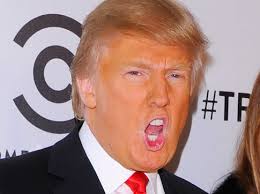
Donald Trump
The Original Nazis behaved the same way: They had no hesitation about invading other people’s countries and massacring their inhabitants. But if a country dared resist their aggression, the Original Fuhrer yelled “They’re attacking me!”
If you HONESTLY look at the way your Commie-kissing Fuhrer has handled the COVID-19 outbreak—-and NOT in the way Fox News is portraying it–then you must realize that he is responsible for its now infecting so many tens of thousands of Americans.
For starters: In 2018, he gutted the White House Pandemic Office which President Obama had set up in 2014 at the time of the Ebola outbreak in West Africa. The purpose of that office was to act as an early-warning system for the next epidemic.
But Trump, as a lifelong racist, has tried since taking office to destroy every vestige of Obama’s legacy. So, naturally, the White House Pandemic Office had to go.
To put this in military terms: It was like deliberately shutting off the radar system before an enemy launched a devastating airstrike.

COVID-19 virus
News of the COVID-19 outbreak emerged by the end of December, 2019. But your Fuhrer frittered away the first two months of the year.
He diminished its virulence. He claimed it was no more than a version of the common cold. He didn’t take action to see that the nation’s hospitals were supplied with medical equipment for combating a mass plague.
He has blamed governors for the virus that is now sweeping the nation—-instead of doing what a LEGITIMATE President does and taking it upon himself to organize an effective, well-coordinated response to the emergency.
Why? because he didn’t want to say or do anything that might cause the almighty stock market to fall. From Day One of his Fuhrership he has bragged that the stock market owed its success entirely to him. He feared that if it fell, so would his chances to be re-elected—-which is his ONE, OVER-ARCHING OBSESSION.
Responding to his charge that I was “nothing more than “a typical deranged democrat” I wrote:
I have plenty of criticisms to offer the Democrats—-most importantly, their general tendency toward cowardice every time a Republican yells “boo!” at them. The Democrats, for the most part, offer the country a party of Neville Chamberlains when what it desperately needs is a party of Winston Churchills.
I AM admittedly liberal on some things—-such as the right of a woman to decide for herself whether she wants to have children.
While I am liberal on some issues, I am CONSERVATIVE on others. Unlike you, I DON’T support a man who sides with the former head of the KGB against our own FBI and CIA. If you want an example of this, you need look no further than his dual press conference in Helsinki with Putin on July 16, 2018.
Associated Press Reporter Jonathan Lemire said to Trump: “Just now President Putin denied having anything to do with the election interference in 2016. Every U.S. intelligence agency has concluded that Russia did. My first question for you, sir, is who do you believe?”
Trump responded by attacking Democrats and the FBI as partners in a conspiracy.
60 MINUTES, ABC NEWS, ALTERNET, AMERICABLOG, AP, BABY BOOMER RESISTANCE, BARACK OBAMA, BLOOMBERG, BUZZFEED, CARL MUELLER, CBS NEWS, CIA, CNN, CROOKS AND LIARS, DAILY KOS, DAILY KOZ, DRUDGE RETORT, FACEBOK, FACEBOOK, FIVETHIRTYEIGHT, HARPER’S MAGAZINE, IMPERIAL HUBRIS, ISLAM, ISLAMIC STATE OF IRAQ AND THE LEVANT, KAYLA MUELLER, MARCHING TOWARD HELL, MEDIA MATTERS, MICHAEL SCHEUER, MOTHER JONES, MOVEON, MSNBC, MUSLIMS, NBC NEWS, NEWSWEEK, NPR, OSAMA BIN LADEN, PBS NEWSHOUR, POLITICO, POLITICUSUSA, RAW STORY, REUTERS, SALON, SEATTLE TIMES, SLATE, SYRIA, TALKING POINTS MEMO, THE ATLANTIC, THE CHICAGO SUN-TIMES, THE CHICAGO TRIBUNE, THE DAILY BEAST, THE DAILY BLOG, THE GUARDIAN, THE HILL, THE HUFFINGTON POST, THE LOS ANGELES TIMES, THE NATION, THE NEW REPUBLIC, THE NEW YORK TIMES, THE VILLAGE VOICE, THE WALL STREET JOURNAL, THE WASHINGTON POST, THINKPROGRESS, TIME, TRUTHDIG, TRUTHOUT, TWITTER, TWO POLITICAL JUNKIES, U.S. NEWS & WORLD REPORT, UPI, USA TODAY, VIETNAM WAR, WONKETTE
In Bureaucracy, History, Military, Politics, Social commentary on April 3, 2020 at 12:05 am
“When trouble comes up anywhere in the world, they don’t call Beijing. They don’t call Moscow. They call us.”
So spoke President Barack Obama on the September 28, 2014 edition of 60 Minutes.
And, according to former CIA agent Michael Scheuer, that’s the problem: America can’t learn to mind its own business.
Scheuer is a 20-year CIA veteran—as well as an author, historian, foreign policy critic and political analyst.

Michael Scheuer
From 1996 to 1999 he headed Alec Station, the CIA’s unit assigned to track Osama bin Laden at the agency’s Counterterrorism Center.
He has served as an adjunct professor at Georgetown University’s Center for Peace and Security Studies.
He is best-known as the author of two seminal works on America’s fight against terrorism: Imperial Hubris: Why the West is Losing the War on Terror (2003) and Marching Toward Hell: America and Islam after Iraq (2008).
Scheuer says that Islamics don’t hate Americans because of “our way of life”—with its—freedoms of speech and worship and its highly secular, commercialized culture.
Instead, Islamic hatred toward the United States stems from America’s six longstanding policies in the Middle East:
- U.S. support for apostate, corrupt, and tyrannical Muslim governments
- U.S. and other Western troops on the Arabian Peninsula
- U.S. support for Israel that keeps Palestinians in the Israelis’ thrall
- U.S. pressure on Arab energy producers to keep oil prices low
- U.S. occupation of Iraq and Afghanistan
- U.S. support for Russia, India, and China against their Muslim militants
Scheuer contends that no amount of American propaganda will win “the hearts and minds” of Islamics who can “see, hear, experience, and hate” these policies firsthand.
But there is another danger facing America, says Scheuer, one that threatens “the core of our social and civil institutions.”
And in Marching Toward Hell he bluntly indicts that threat: The “profound and willful ignorance” of America’s “bipartisan governing elite.”
Scheuer defines this elite as “the inbred set of individuals who have influenced…drafted and conducted U.S. foreign policy” since 1973.
Within that group are:
- politicians
- journalists
- academics
- preachers
- civil servants
- military officers
- philanthropists.
“Some are Republicans, others Democrats; some are evangelicals, others atheists; some are militarists, others pacifists; some are purveyors of Western civilization, others are multiculturalists,” writes Scheuer.
But for all their political and/or philosophical differences, the members of this governing elite share one belief in common.
According to Scheuer, that belief is “an unquenchable ardor to have the United States intervene in all places, situations and times.”
And he warns that this “bipartisan governing elite” must radically change its policies–such as unconditional support for Israel and corrupt, tyrannical Muslim governments.
Otherwise, Americans will be locked in an endless “hot war” with the Islamic world.
During his September 28, 2014 appearance on 60 Minutes, President Obama admitted that the mostly Sunni-Muslim Iraqi army had refused to combat the Sunni army of ISIS.
Then followed this exchange:
Steve Kroft: What happens if the Iraqis don’t fight or can’t fight?
President Obama: Well….
Steve Kroft: What’s the end game?
President Obama: I’m not going to speculate on failure at the moment. We’re just getting started. Let’s see how they do.
It was precisely such a mindset that led the United States, step by step, into the Vietnam quagmire.
As in the case of Vietnam, the United States lacks:
- Real or worthwhile allies in Iraq or Syria;
- A working knowledge of the peoples it wants to influence in either country;
- Clearly-defined goals that it seeks to accomplish in that region.
America rushed to disaster in Vietnam because its foreign policy elite felt it had to “do something” to fight Communism anywhere in the world.
In December, 2012, Kayla Mueller, an idealistic 24-year-old American woman, arrived in Syria to assist Syrians caught up in their own civil war. And on August 4, 2013, she had been kidnapped and held for ransom. In 2015, she had been killed—whether by her terrorist kidnappers or Jordanian airstrikes remains unclear.
On February 23, 2015, Carl Mueller appeared on the “Today” show, Carl Mueller to protest the refusal of the United States Government to pay ransom demands to terrorist kidnappers.
“How many mistakes have we all made in life that were naïve and didn’t get caught at? Kayla was just in a place that was more dangerous than most. And she couldn’t help herself. She had to go in there and had to help.”
But did she?

Kayla Mueller
There were thousands of communities within the United States desperate for the help of a caring social activist. And thousands of organizations—such as Volunteers in Service to America (VISTA), Habitat for Humanity and Catholic Relief Services—that would have been thrilled to enlist her services.
And she could have made lives better without constantly facing the dangers of kidnapping by Islamics determined to humiliate and slaughter Americans.
Michael Sheuer is right: The United States should learn to mind its own business and quit intervening in the affairs of Middle Eastern governments and peoples.
Kayla Mueller is proof of the rightness of that assertion.
2003 IRAQ WAR, ABC NEWS, ADOLF HITLER, AFFORDABLE CARE ACT, ALTERNET, AMERICABLOG, ANDREW CUOMO, AP, BABY BOOMER RESISTANCE, BARACK OBAMA, BLOOMBERG, BUZZFEED, CBS NEWS, CNN, CORONAVIRUS, CROOKS AND LIARS, DAILY KOZ, DEMOCRATS, DONALD TRUMP, DRUDGE RETORT, FACE SHIELDS, FACEBOOK, FEDERAL EMERGENCY MANAGEMENT AGENCY, FIVETHIRTYEIGHT, FOX NEWS, FRANKLIN D. ROOSEVELT, GEORGE W. BUSH, GRETCHEN WHITMER, HARPER’S MAGAZINE, JAY INSLEE, JOE BIDEN, LYNDON B. JOHNSON, MEDIA MATTERS, MEDICARE, MIKE PENCE, MOTHER JONES, MOVEON, MSNBC, N95 RESPIRATORS, NBC NEWS, NEWSWEEK, NPR, PBS NEWSHOUR, POLITICO, POLITICUSUSA, PRISONERS-OF-WAR, RAW STORY, REPUBLICANS, REUTERS, RUDY GIULIANI, SALON, SEAN HANNITY SHOW, SEATTLE TIMES, SLATE, SOCIAL SECURITY, SOVIET UNION, SURGICAL MASKS, TALKING POINTS MEMO, THE ATLANTIC, THE CHICAGO SUN-TIMES, THE CHICAGO TRIBUNE, THE DAILY BEAST, THE DAILY BLOG, THE GUARDIAN, THE HILL, THE HUFFINGTON POST, THE LOS ANGELES TIMES, THE NATION, THE NEW REPUBLIC, THE NEW YORK TIMES, THE VILLAGE VOICE, THE WASHINGTON POST, THINKPROGRESS, TIME, TRUTHDIG, TRUTHOUT, TWITTER, TWO POLITICAL JUNKIES, U.S. NEWS & WORLD REPORT, UKRAINE, UPI, USA TODAY, VENDORS, VENTILATORS, VOLODYMIR ZELENSKY, WASHINGTON MONTHLY, WONKETTE
In Bureaucracy, History, Law, Law Enforcement, Medical, Politics, Social commentary on April 1, 2020 at 12:21 am
On June 22, 1941, German Fuhrer Adolf Hitler sent three million soldiers smashing into the Soviet Union. During the first six months—June to December, 1941—German armies lured huge Soviet forces into gigantic “cauldron battles,” surrounding and exterminating them.
An estimated 5.7 million prisoners of war (POWs) fell into German hands. The Germans found themselves surprised and overwhelmed by the sheer numbers of them. But their mandate demanded that they keep marching forward—ever forward.
So they simply imprisoned their captives behind barbed wire and wasted no food or medical care on them. Between starvation, illness and the brutal Russian cold, at least 3.5 million POWs died in custody.
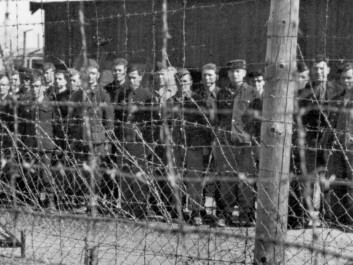
Soviet POW’s
Republicans have learned a serious lesson from this. If you simply deprive those you detest of food, clothing and shelter, you don’t need gas chambers or firing squads.
That has been their chief reason for opposing Social Security since President Franklin D. Roosevelt signed it into law in 1935.
That is why they opposed President Lyndon B. Johnson when he pushed Medicare through Congress in 1965.
And that is why they have fervently tried to overturn the Affordable Care Act—better known as Obamacare—since it went into effect in 2010.
Of course, Republicans will never admit this. Their mantra has always been they fear such programs will bankrupt the country.
That claim might have credibility—if they didn’t recklessly plunge into budget-busting wars like the 2003 Iraq war started by President George W. Bush. Not a single Republican opposed this needless, bloody conflict—which has cost the United States more than $1.1 trillion.
But the best evidence of Republicans’ desire to use illness as a weapon against those Americans they hate comes from President Donald J. Trump.
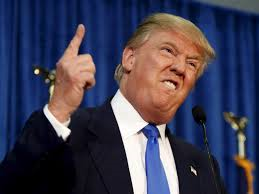
Donald Trump
On March 26, during an interview on Fox News, Trump blamed the failures of his administration’s response to Coronavirus on Democratic state governors like Andrew Cuomo (NY), Jay Inslee (WA), and Gretchen Whitmer (MI).
On March 27, during his press briefing, Trump said he told Vice President Mike Pence—who’s officially in charge of the White House’s response effort—to not call Inslee and Whitmer because they weren’t “appreciative” enough of his efforts.
Trump said this even as hospitals in each of their states were being overwhelmed with Coronavirus patients.
“I tell him—I mean I’m a different type of person— I say, ‘Mike, don’t call the governor in Washington, you’re wasting your time with him. Don’t call the woman in Michigan,’” Trump said. “If they don’t treat you right, I don’t call.”
Trump said that when people criticized him, they were criticizing the federal government: “When they’re not appreciative to me, they’re not appreciative to the Army Corps, they’re not appreciative to FEMA. It’s not right.”
Trump also attacked Whitmer on Right-wing Fox News’ “Sean Hannity Show”: “I don’t know if she knows what’s going on, but all she does is sit there and blame the federal government.”
That same day—March 27—Whitmer told a Michigan radio station: “What I’ve gotten back is that vendors with whom we’ve procured contracts—they’re being told not to send stuff to Michigan. It’s really concerning. I reached out to the White House last night and asked for a phone call with the president, ironically at the time this stuff was going on.”
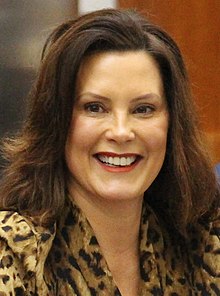
Gretchen Whitmer
Julia Pickett / CC BY-SA (https://creativecommons.org/licenses/by-sa/4.0)
A March 29 story in the Washington Monthly sheds light on what lay behind Whitmer’s inability to secure desperately-needed ventilators from her longtime vendors. Its headline ran: “What If Trump Decides to Save Republicans But Not Democrats?”
And it was followed by a sub-headline: “He’s providing vital resources to red states and ignoring blue states.”
Florida submitted a request to the Federal Emergency Management Agency on March 11 for 430,000 surgical masks, 180,000 N95 respirators, 82,000 face shields and 238,000 gloves—and received a shipment with everything three days later.
It received an identical shipment on March 23, and is awaiting a third.
In 2019, Trump demanded a “favor” from the embattled Ukrainian President Volodymyr Zelensky—“dirt” on Democratic Presidential candidate Joe Biden—in return for releasing military aid Ukraine needed to combat an increasingly aggressive Russia.
Now he is apparently demanding Democratic governors praise him and blame themselves if they want their citizens to receive desperately-needed medical supplies.
On Fox News, Rudy Giuliani, Trump’s personal lawyer, bluntly told governors: “Take the blame when you have to. When you play with your boss, sometimes it’s better when you don’t win the golf game. He’s the boss, he’s got all the resources.”
This is precisely the dictatorial arrogance of which Republicans falsely accused President Barack Obama.
The Washington Monthly story concludes on an ominous note: “What if the White House simply gives all the masks and ventilators to red states and counties, leaving blue ones to struggle? What mechanisms of accountability are left?
“U.S. democracy wasn’t set up to deal with a president openly behaving like a James Bond villain while being protected by a political party behaving more like a mafia than a civic institution.”
ABC NEWS, ADOLF HITLER, ALTERNET, AMERICABLOG, ANTHONY FAUCI, AP, BABY BOOMER RESISTANCE, BARACK OBAMA, BERLIN, BUZZFEED, CBS NEWS, CENTERS FOR DISEASE CONTROL, CNN, COMMISSARS, CORONAVIRUS, CROOKS AND LIARS, DAILY KOZ, DEPARTMENT OF HEALTH AND HUMAN SERVICES, DEPARTMENT OF HOMELAND SECURITY, DONALD TRUMP, DRUDGE RETORT, FACEBOOK, FIVETHIRTYEIGHT, FRIEDRICH VON PAULUS, GERMAN-SOVIET NON-AGGRESSION PACT, GREAT BRITAIN, HARPER’S MAGAZINE, JOHN BOLTON, JOSEPH STALIN, MALARIA, MEDIA MATTERS, MICK MULVANEY, MOSCOW, MOTHER JONES, MOVEON, MSNBC, NATIONAL INSTITUTE OF ALLERGY AND INFECTIOUS DISEASES, NAZI GERMANY, NBC NEWS, NEWSWEEK, NIKITA KHRUSHCHEV, NPR, PBS NEWSHOUR, POLAND, POLITICO, POLITICUSUSA, PRISONERS-OF-WAR, RAW STORY, REUTERS, ROLLING STONE MAGAZINE, SALON, SEATTLE TIMES, SLATE, SOVIET UNION, STALINGRAD, TALKING POINTS MEMO, THE ATLANTIC, THE CHICAGO SUN-TIMES, THE CHICAGO TRIBUNE, THE DAILY BEAST, THE DAILY BLOG, THE GUARDIAN, THE HILL, THE HUFFINGTON POST, THE LOS ANGELES TIMES, THE NATION, THE NATIONAL SECURITY COUNCIL, THE NEW REPUBLIC, THE NEW YORK TIMES, THE VILLAGE VOICE, THE WASHINGTON POST, THE WHITE HOUSE PANDEMIC OFFICE, THINKPROGRESS, THIRD REICH, TIME, TOM BOSSERT, TRUTHDIG, TRUTHOUT, TWITTER, TWO POLITICAL JUNKIES, U.S. NEWS & WORLD REPORT, UNITED STATES, UPI, USA TODAY, Vladimir Lenin, WEHRMACHT, WEIMAR REPUBLIC, WONKETTE
In Bureaucracy, History, Medical, Military, Politics, Social commentary on March 26, 2020 at 12:27 am
Two dictators. Two crises.
Next up: Donald Trump.
Soviet dictator Joseph Stalin received multiple warnings that his supposed ally, Nazi Germany, would soon invade Russia. He ignored all of them. And when the invasion came—on June 22, 1941—the result was the loss of 26 million men, women and children and four years of devastation.
President Donald Trump similarly received warnings that Coronavirus was now a major world threat—and would likely hit the United States. Like Stalin, he ignored those warnings—with similarly disastrous consequences for the United States.
The virus first appeared in Wuhan, China, in December, 2019. Its first reported victim became ill on December 1.
By December 31, the outbreak was traced to a novel strain of Coronavirus.
Coronaviruses are a group of viruses that affect birds and mammals. In humans, Coronaviruses can cause pneumonia and may cause bronchitis.
Coronavirus
According to the March 21 edition of Rolling Stone magazine: “The United States intelligence community has been warning the president since January and February about the dire consequences that would occur when coronavirus reached America, but the president seemed determined to play down the threat, leaving the country largely unaware and unprepared.”
An anonymous Intelligence official cited by the Washington Post said: “Donald Trump may not have been expecting this, but a lot of other people in the government were—they just couldn’t get him to do anything about it. The system was blinking red.”
Trump first learned of the virus on January 3, 2020. This did not prevent him from playing golf on January 4, 5, 18 and 19.
On January 19, the first Coronavirus case appeared in the United States.
On January 27, then-acting chief of staff Mick Mulvaney tried to get the President to act. But, according to officials who spoke with the Post, Trump was “dismissive” of early briefings “because he did not believe that the virus had spread widely throughout the United States.”
Trump fired Mulvaney one month later.
Then, for Trump, it was back to the golf course—on February 1, 2, 15.

Refusing to take action against the emerging Coronavirus threat, Trump repeatedly made statements that minimized it.
January 22: “We have it totally under control. It’s one person coming in from China. We have it under control. It’s going to be just fine.”
January 30: “We think we have it very well under control. We have very little problem in this country at this moment –five—and those people are all recuperating successfully. But we’re working very closely with China and other countries, and we think it’s going to have a very good ending for us .…that I can assure you.”
February 10: “Now, the virus that we’re talking about having to do—you know, a lot of people think that goes away in April with the heat—as the heat comes in. Typically, that will go away in April. We’re in great shape though. We have 12 cases—11 cases, and many of them are in good shape now.”
February 28: “[Democrats] tried the impeachment hoax…They lost…. And this is their new hoax.”
A major reason for the spectacular early victories of the German army in Russia was that, from 1936 to 1938, Stalin had gutted his own military by a series of systematic purges. Thus, there were few experienced, competent officers—from army corps commanders to four-star generals—to mount a strategic defense.
Similarly, upon taking office, Trump had gutted the permanent epidemic monitoring and command groups set up inside the White House: The National Security Council (NSC) and the Department of Homeland Security (DHS).
Pathologically jealous of President Barack Obama, Trump has tried to destroy every vestige of Obama’s legacy as the first black President of the United States. And these disease-monitoring groups were set up by Obama following the Ebola outbreak in West Africa in 2014.
In the spring of 2018, Trump pushed Congress to cut $15 billion from national health spending—and cutting the global disease-fighting budgets of the Centers for Disease Control, National Security Council, Department of Homeland Security (DHS) and the Department of Health and Human Services.
In April, 2018, then-National Security Adviser John Bolton forced Tom Bossert, director of the infectious disease unit at DHS, to resign—along with his entire team.
On February 29, the first American died of Coronavirus.
Trump continued to be unconcerned about the growing threat.
On March 7, reporters asked him if he was concerned that Coronavirus had arrived in Washington, D.C. He replied: “No, I’m not concerned at all. No, we’ve done a great job with it.”
And in a March 9 tweet, Trump wrote: “So last year 37,000 Americans died from the common Flu. It averages between 27,000 and 70,000 per year. Nothing is shut down, life & the economy go on. At this moment there are 546 confirmed cases of CoronaVirus, with 22 deaths. Think about that!”
Perhaps most dangerously of all, Trump has from the outset blatantly contradicted health officials—even when standing next to them at press conferences.
On March 21, Trump insisted he had a “very good” feeling about using a malaria drug to combat the virus. It fell to Dr. Anthony Fauci, head of the National Institute of Allergy and Infectious Diseases, to set the record straight: “No.”
As of March 26, the United States had 68,489 Coronavirus cases—with 1,032 deaths.
ABC NEWS, ADOLF HITLER, ALTERNET, AMERICABLOG, ANTHONY FAUCI, AP, BABY BOOMER RESISTANCE, BARACK OBAMA, BERLIN, BUZZFEED, CBS NEWS, CENTERS FOR DISEASE CONTROL, CNN, COMMISSARS, CORONAVIRUS, CROOKS AND LIARS, DAILY KOZ, DEPARTMENT OF HEALTH AND HUMAN SERVICES, DEPARTMENT OF HOMELAND SECURITY, DONALD TRUMP, DRUDGE RETORT, FACEBOOK, FIVETHIRTYEIGHT, FRIEDRICH VON PAULUS, GERMAN-SOVIET NON-AGGRESSION PACT, GREAT BRITAIN, HARPER’S MAGAZINE, JOHN BOLTON, JOSEPH STALIN, MALARIA, MEDIA MATTERS, MICK MULVANEY, MOSCOW, MOTHER JONES, MOVEON, MSNBC, NATIONAL INSTITUTE OF ALLERGY AND INFECTIOUS DISEASES, NAZI GERMANY, NBC NEWS, NEWSWEEK, NIKITA KHRUSHCHEV, NPR, PBS NEWSHOUR, POLAND, POLITICO, POLITICUSUSA, PRISONERS OF WAR, RAW STORY, REUTERS, ROLLING STONE MAGAZINE, SALON, SEATTLE TIMES, SLATE, SOVIET UNION, STALINGRAD, TALKING POINTS MEMO, THE ATLANTIC, THE CHICAGO SUN-TIMES, THE CHICAGO TRIBUNE, THE DAILY BEAST, THE DAILY BLOG, THE GUARDIAN, THE HILL, THE HUFFINGTON POST, THE LOS ANGELES TIMES, THE NATION, THE NATIONAL SECURITY COUNCIL, THE NEW REPUBLIC, THE NEW YORK TIMES, THE VILLAGE VOICE, THE WASHINGTON POST, THE WHITE HOUSE PANDEMIC OFFICE, THINKPROGRESS, THIRD REICH, TIME, TOM BOSSERT, TRUTHDIG, TRUTHOUT, TWITTER, TWO POLITICAL JUNKIES, U.S. NEWS & WORLD REPORT, UNITED STATES, UPI, USA TODAY, Vladimir Lenin, WEHRMACHT, WEIMAR REPUBLIC, WONKETTE
In Bureaucracy, History, Medical, Military, Politics, Social commentary on March 25, 2020 at 12:25 am
Two dictators. Two crises.
First up: Joseph Stalin.
“I know what Hitler’s up to. He thinks he’s outsmarted me. But in actuality, it is I who have outsmarted him.”
So spoke Joseph Stalin, absolute dictator of the Soviet Union, to his future successor, Nikita Khrushchev, in 1939.
Less than two years later, on June 22, 1941, three million German soldiers poured across the western border of the Soviet Union.
On August 23, 1939, Stalin had signed the German-Soviet Nonaggression Pact with German Fuhrer Adolf Hitler. The reason: Each dictator got what he wanted—for the moment. Hitler was planning to invade Poland in a matter of days—and he wanted to avoid a war with the Soviet Union. And Stalin got what he wanted: The eastern half of Poland.
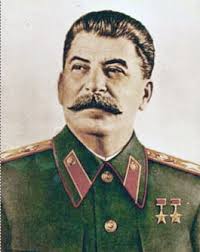
Joseph Stalin
The agreement stunned the world. Since 1919, Nazis and Communists had fought bitter battles against each other in the streets of Germany during the Weimar Republic.
When this was replaced in 1933 by the Third Reich, German Communists were rounded up and imprisoned, if not murdered, by Hitler’s ruthless secret police, the Schutzstaffel (“Protective Squads”).
For the moment, however, all of that was conveniently forgotten.
But Hitler hadn’t forgotten his life’s ambition to conquer the Soviet Union and utterly destroy “the scourge of Jewish-Marxism.”
Stalin received numerous warnings from the United States and Great Britain about the coming invasion. But he dismissed them as efforts by the West to trick him into violating the pact and turning Nazi Germany into his mortal enemy.
When informed of the attack, Stalin at first believed it was being made by rogue German forces. He refused to order an immediate counterattack. Upon being convinced that the Wehrmacht intended to wage all-out war, he went into a funk in his dacha and shut himself off from everyone. To his closest associates he wailed: “Lenin left us a great inheritance and we, his heirs, have fucked it all up!”
Meanwhile, the Red Air Force was destroyed on the ground by the awesome Luftwaffe. And the Wehrmacht was advancing at a rate of 25 miles a day.
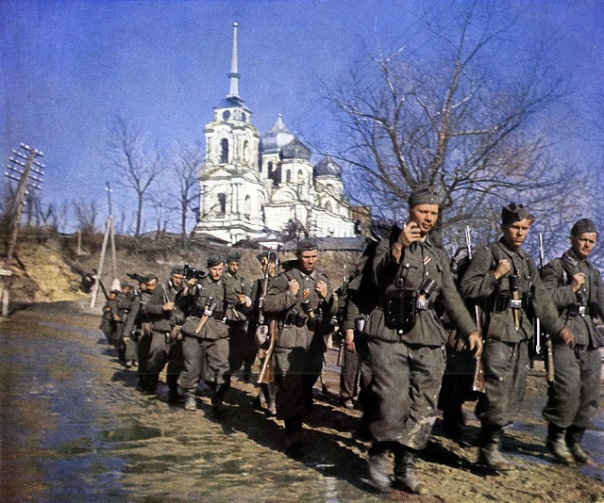
German soldiers marching through Russia
On July 3, after 10 days of brooding (and probably drinking heavily) in his dacha, Stalin finally took to the airways. He didn’t speak live; Radio Moscow played a recording of his voice across the Soviet Union.
Never a spellbinding orator, Stalin spoke in slow and faltering tones. Nevertheless, his opening words were startling: “Comrades! Citizens! Brothers and sisters! Men of our army and navy! I am addressing you, my friends!”
Stalin had never addressed an audience this way, and he never would again. Born Joseph Vissarionovich Djugashvili, he had given himself the name of “Stalin”—“Man of Steel.” And he had lived up to it, sending tens of thousands to the Soviet penal system known as the Gulag while ordering the executions of tens of thousands of others.
He said the “peace loving” Soviet Union had been attacked by “fiends and cannibals.” He claimed the non-aggression pact with Germany had given the army much-needed time to rearm and reorganize its forces. He claimed the Germans wanted to restore the rule of the landlords and re-establish Tsarism.
He repeatedly spoke of the treachery of the enemy—and of the need for constant vigilance against traitors: “We must wage a ruthless fight against all disorganizers of the rear, deserters, panic-mongers and rumor-mongers.”
This was accompanied by orders unprecedented in any other army: Those taken prisoner by the Germans were to be considered traitors—and shot or imprisoned. Those suspected of wounding themselves to avoid combat were also subject to summary execution. So were soldiers who had been legitimately wounded in battle but were suspected of inflicting those injuries.
The first two years of the war—1941 to 1943—proved disastrous for the Soviet Union.
During the first six months—June to December, 1941—German armies lured huge Soviet forces into gigantic “cauldron battles,” surrounding and exterminating them. An estimated 5.7 million prisoners of war (POWs) fell into German hands. Of these, at least 3.5 million died in custody.
But then the infamous Russian cold and snows of winter halted the Wehrmacht before Moscow. In the summer of 1942 German forces once again mounted a ferocious offensive, driving all the way to the Volga—and Stalingrad.
But they became bogged down in bitter house-to-house fighting. With the arrival of winter, Soviet forces surrounded the Wehrmacht’s powerful Sixth Army. The besiegers became the besieged. On February 2, 1943, Field Marshal Friedrich von Paulus surrendered what remained of his army. The battle cost Germany 500,000 men, including 91,000 taken prisoner.
As the Red Army finally began to go over on the offensive, Stalin relaxed the iron controls that had long stifled creativity on the part of his commandeers.
The infamous political commissars were removed from control over Russian generals. Gold braid and fancy uniforms were manufactured and rushed to the front as morale boosters.
At last, Stalin realized there was no way to win a life-and-death struggle than to give his soldiers the flexibility they needed.
The war would last another two years—costing the Soviet Union at least 26 million citizens—before it ended with the Red flag flying over Berlin.
ABC NEWS, ADOLF HITLER, AFGHANISTAN, AFRIKA KORPS, ALTERNET, AMERICABLOG, AP, BABY BOOMER RESISTANCE, BARACK OBAMA, BUZZFEED, CBS NEWS, CNN, CROOKS AND LIARS, DAILY KOZ, DONALD TRUMP, DRUDGE RETORT, EL ELAMEIN, ERWIN ROMMEL, FACEBOOK, FIVETHIRTYEIGHT, FRIEDRICH VON PAULUS, GEORGE W. BUSH, GREAT BRITAIN, HARPER’S MAGAZINE, IRAQ, JAPAN, JOSEPH GOEBBELS, MEDIA MATTERS, MOSCOW, MOTHER JONES, MOVEON, MSNBC, NAZI GERMANY, NBC NEWS, NEWSWEEK, NPR, PBS NEWSHOUR, PEARL HARBOR, POLITICO, POLITICUSUSA, RAW STORY, REUTERS, SALON, SEATTLE TIMES, SLATE, SOVIET UNION, STALINGRAD, TALKING POINTS MEMO, THANKSGIVING MESSAGE TO U.S. TROOPS, THE ATLANTIC, THE CHICAGO SUN-TIMES, THE CHICAGO TRIBUNE, THE DAILY BEAST, THE DAILY BLOG, THE GUARDIAN, THE HILL, THE HUFFINGTON POST, THE LOS ANGELES TIMES, THE NATION, THE NEW REPUBLIC, THE NEW YORK TIMES, THE VILLAGE VOICE, THE WASHINGTON POST, THINKPROGRESS, TIME, TOTAL WAR SPEECH, TRUTHDIG, TRUTHOUT, TWITTER, TWO POLITICAL JUNKIES, U.S. NEWS & WORLD REPORT, UNITED STATES, UPI, USA TODAY, WEHRMACHT, WINSTON CHURCHILL, WONKETTE, WORLD WAR ii
In Bureaucracy, History, Military, Politics, Social commentary on March 20, 2020 at 12:08 am
By February, 1943, the tide of war had turned irrevocably for Nazi Germany.
The string of quick and easy victories that had started on September 1, 1939 was over:
- Poland
- Norway
- Denmark
- Holland
- Belgium
- Luxembourg
- Greece
- France.
All had fallen under the heel of the Nazi jackboot. The swastika flag still flew triumphantly over the capitols of these once-free nations.
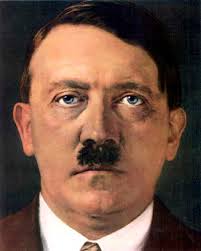
Adolf Hitler
And the word—and whim—of Germany’s Fuhrer, Adolf Hitler remained law for their populations.
But by March, 1943, all except the most fanatical Nazis could see that Germany was on a collision course with disaster.
- Under the unshakable leadership of Prime Minister Winston Churchill, Great Britain still remained a sworn enemy of the Third Reich.
- After six months of spectacular victories against the Soviet Union, the Wehrmacht had become hopelessly bogged down in the snow before Moscow.
- On December 11, 1941, following the attack on Pearl Harbor by his ally, Japan, Hitler declared war on the United States—thus pitting the Reich against the world’s two most powerful nations: America and Russia.
- In November, 1942, at El Alamein, the British Army halted the advance of General Erwin Rommel and his famed Afrika Korps across North Africa.
- On February 2, 1943, General Friedrich von Paulus surrendered the remains of the once-powerful Sixth Army at Stalingrad. The Reich suffered 730,000 total casualties, including nearly 91,000 German prisoners taken prisoner.
- On June 6, 1944, American, British and Canadian armies overwhelmed German’s “impregnable wall of death” on the Normandy beaches.
- In February, 1945, following the Vistula-Oder Offensive, the Red Army temporarily halted 37 miles east of Berlin.
So, by March, 1943, Germany desperately needed to hear some good news. And Propaganda Minister Joseph Goebbels was eager to supply it.
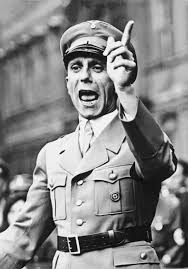
Joseph Goebbels
He did so in one of his last public addresses, delivered to a large but carefully selected audience in Gorlitz.
For Goebbels, the greatest challenge to the Reich lay in “the Bolshevist danger in the East.” And, for him, the solution was clear: “Total war is the demand of the hour.”
“Our soldiers, as soon as the great push on the Eastern Front gets under way, will ask no mercy and give no mercy.
“Already, our forces have begun softening up operations, and in the next weeks and months the big offensive will begin. They will go into battle with devotion like congregations going to a religious service.
“So, as the Fuhrer has overcome crises in the past, so will he triumph now.
“The other day he told me ‘I firmly believe that we shall overcome this crisis. I firmly believe that our army of millions will beat back our enemy and annihilate him. And some day our banners will be victorious. This is my life’s unshakable belief.'”
Thunderous applause repeatedly interrupted Goebbels’ address. Yet this could not replace the enormous losses Germany had suffered since 1939. Nor could it reverse the march of the Allied armies as they closed in on the Reich from East and West.
Now, fast-forward 74 years to November 23, 2017—Thanksgiving Day.
Donald Trump, President of the United States, speaks by video teleconference to American forces stationed in Iraq and Afghanistan.
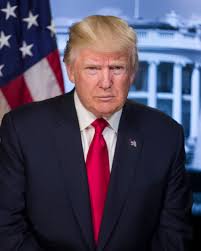
Donald Trump
President George W. Bush had risked his life to fly into Baghdad in 2003 to spend Thanksgiving with American forces. He flew into Iraq once again to visit troops in June, 2006.
And President Barack Obama took a similar risk when he visited American soldiers in Iraq in 2009, in Afghanistan in 2010, 2012 and 2014.
For Trump—who had five times dodged the draft during the Vietnam war—visiting an actual combat zone was apparently out of the question.
So he addressed American troops from the safety and comfort of his Mar-a-Lago Club and Resort in Palm Beach, Florida.
The address started off predictably enough: “It’s an honor to speak with you all and to give God thanks for the blessings of freedom and for the heroes who really have this tremendous courage that you do to defend us and to defend freedom.”
But, being Trump, he could not resist paying homage to himself: “We’re being talked about again as an armed forces. We’re really winning. We know how to win, but we have to let you win. They weren’t letting you win before; they we’re letting you play even. We’re letting you win….”
In short: You’re doing the grunt work, but the glory belongs to me.
“They say we’ve made more progress against ISIS than they did in years of the previous administration, and that’s because I’m letting you do your job….”
Translation: All those sacrifices you made under Presidents Bush and Obama went for nothing.
“A lot of things have happened with our country over the last very short period of time, and they’re really good — they’re really good. I especially like saying that companies are starting to come back.
“Now we’re working on tax cuts—big, fat, beautiful tax cuts. And hopefully we’ll get that and then you’re going to really see things happen.”
Or, put another way: Be grateful they elected me—because you’re about to see the 1% richest get even richer. Too bad you won’t be so lucky.
2003 IRAQ WAR, 401(KS), 9/11 TERRORIST ATTACKS, ABC NEWS, ALTERNET, AMERICABLOG, AP, ARNOLD SCHWARTZNEGGER, ASIANS, BABY BOOMER RESISTANCE, BARACK OBAMA, BILL CLINTON, BLACKS, BUZZFEED, CBS NEWS, CNN, COLD WAR, CORONAVIRUS, CROOKS AND LIARS, DAILY KOZ, DEMOCRATS, DONALD TRUMP, DRUDGE RETORT, ECONOMY, FACEBOOK, FIVETHIRTYEIGHT, FUNDAMENTALIST RELIGION, GEORGE H.W. BUSH, HARPER’S MAGAZINE, HILLARY CLINTON, HISPANICS, ISLAM, ISRAELIS, JOHN OLIVER, MEDIA MATTERS, MERYL STREEP, MOTHER JONES, MOVEON, MSNBC, MUSLIMS, NBC NEWS, NEIL YOUNG, NEWSWEEK, NPR, PBS NEWSHOUR, POLITICO, POLITICUSUSA, PRISONERS-OF-WAR, RAW STORY, REPUBLICANS, REUTERS, SALON, SARAH HUCKABEE SANDERS, SEATTLE TIMES, SLATE, SOVIET UNION, SUICIDE BOMBERS, SUSAN PAGE, TALKING POINTS MEMO, THE ATLANTIC, THE CHICAGO SUN-TIMES, THE CHICAGO TRIBUNE, THE DAILY BEAST, THE DAILY BLOG, THE DISABLED, THE GUARDIAN, THE HILL, THE HUFFINGTON POST, THE LOS ANGELES TIMES, THE NATION, THE NEW REPUBLIC, THE NEW YORK TIMES, THE VILLAGE VOICE, THE WASHINGTON POST, THINKPROGRESS, TIME, TRUTHDIG, TRUTHOUT, TWITTER, TWO POLITICAL JUNKIES, U.S. NEWS & WORLD REPORT, UPI, USA TODAY, WOMEN, WONKETTE, WORLD WAR ii
In Bureaucracy, History, Military, Politics, Social commentary on March 19, 2020 at 12:07 am
There’s a reason why Republicans win so many elections—especially at the Presidential level.
Republicans learned long ago that most voters aren’t moved by appeals to their rationality. Instead, what counts with them is emotions.
And Republicans long ago became experts at appealing to these—especially the baser ones.
For Republicans, the Big Three are:
Hatred
Greed
Fear
Hatred: There can be no better example of a politician who has played successfully on the hatred of American voters than Donald Trump. If Barack Obama was the 2008 candidate of “Hope and Change,” then Trump was the 2016 candidate of “Hate and Fear.”
From June 15, 2015, when he launched his Presidential campaign, until October 24, 2016, Trump fired almost 4,000 angry, insulting tweets at 281 people and institutions that had somehow offended him.
Donald Trump
The New York Times needed two full pages of its print edition to showcase them.
Among his targets:
- Hillary Clinton
- The New York Times
- President Barack Obama
- CNN
- Actress Meryl Streep
- The Washington Post
- Singer Neil Young
- Democrats
- Actor Arnold Schwarzenegger
- Republicans
- Comedian John Oliver
- The State of New Jersey
- Beauty pageant contestants
Others he clearly delighted in insulting during the campaign included:
- Women
- Blacks
- Hispanics
- Asians
- Muslims
- The disabled
- Prisoners-of-war
Greed: On August 23, 2018, Trump, as President, offered additional evidence that he’s “not like other people.” He did so by giving an unprecedented reason why he shouldn’t be impeached: “I tell you what, if I ever got impeached, I think the market would crash, I think everybody would be very poor.”
White House Press Secretary Sarah Huckabee Sanders doubtless spoke for millions of Trump supporters when she said, on June 4, 2018:
“Since taking office, the President has strengthened American leadership, security, prosperity, and accountability. And as we saw from Friday’s jobs report, our economy is stronger, Americans are optimistic, and business is booming.”
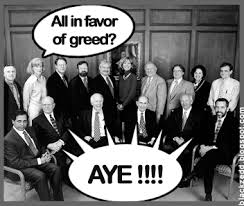
Susan Page, Washington Bureau Chief for USA TODAY, summed up the popularity of the “Greed Appeal” to voters on the March 13 edition of “Washington Week in Review”:
“USA Today has conducted a poll about the economic concerns that are out there….And Congress—you’re seeing fear in this country about the economy.
“In fact, when we did this poll this week about how Americans’ lives have been affected by the Coronavirus, people expressed more concern about the economic and financial effect than they did about the health effect. And you know, that goes to why this matters so much to President Trump.
“How many voters have you talked to who said, you know, I don’t really like President Trump’s tweets, but I like what I see happening in my 401(k)? And when they look at their 401(k) this week, it may not look quite as bright as it did before.”
Fear: From the end of World War II in 1945 to the collapse of the Soviet Union in 1991, the Enemy of Choice for Republicans was the Communists.
Millions of Americans were so pathologically frightened by “The Red Menace” that any Democratic politician libeled as a “Communist,” “Comsymp,” “fellow traveler” was considered at least a potential traitor, if not an actual one.
Among the Republican politicians who rode to victory on a wave of Red hysteria: Richard Nixon and Joseph McCarthy
Even as late as 1992, President George H.W. Bush and the Republican establishment charged that Arkansas Governor Bill Clinton might be a KGB plant. Their evidence: During his tenure at Oxford University in 1969-70, Clinton had briefly visited Moscow—and thus might have been turned into a “Manchurian Candidate.”
After the collapse of the Soviet Union, Right-wingers had to settle for attacking their opponents as “liberals” and “soft on crime.” But these charges didn’t carry the same weight as “Communists” and “traitors.”
Then, on September 11, 2001, Republicans—and their Right-wing supporters—at last found a suitable replacement for the Red Menace: The Maniacal Muslim.
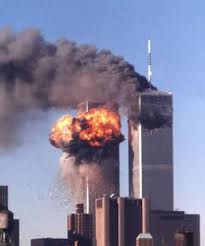
World Trade Center on September 11, 2001
Led by President George W. Bush, Republicans used fear of Muslims to con and bully the nation into a needless, bloody, budget-busting war on Iraq. Seventeen years later, that war continues.
So how can Democrats counter such appeals? By making equally ruthless use of them.
For example—Fear: Republicans rely heavily on support from rural America—where fundamentalist religious beliefs hold sway. Instead of ridiculing those beliefs, Democrats—even those who are atheists—should make use of them.
How?
- By recognizing that fundamentalists believe that widespread plague is a sign of God’s displeasure; and
- Repeatedly proclaiming that the Coronavirus is God’s judgment on a sinful nation for electing Donald Trump President.
Democrats must closely study the beliefs of their sworn enemies and make skillful use of them—as the Israelis have done.
Suicide bombers’ attacks in Israel sharply decreased after Israelis started patrolling with bomb-sniffing dogs.
Why?
Islamics believe that dogs are defiling creatures—and that if their blood is mingled with that of a dog, they won’t go to Heaven to claim those 72 willing virgins.
To defeat your enemy, you must learn his weaknesses—and ruthlessly attack them.
ABC NEWS, ALTERNET, AMERICABLOG, AP, BABY BOOMER RESISTANCE, BARACK OBAMA, BAY OF PIGS, BUZZFEED, CBS NEWS, CNN, CORONAVIRUS, CROOKS AND LIARS, CUBA, DAILY KOZ, DAVID BROOKS, DONALD TRUMP, DRUDGE RETORT, DWIGHT D. EISENHOWER, EBOLA, FACEBOOK, FIDEL CASTRO, FIVETHIRTYEIGHT, FULGENCIO BATISTA, GALLUP POLL, GEORGE W. BUSH, HARPER’S MAGAZINE, JOHN F. KENNEDY, MEDIA MATTERS, MOTHER JONES, MOVEON, MSNBC, NBC NEWS, NEWSWEEK, NPR, PBS NEWSHOUR, POLITICO, POLITICUSUSA, RAW STORY, REUTERS, SALON, SEATTLE TIMES, SLATE, TALKING POINTS MEMO, THE ATLANTIC, THE CHICAGO SUN-TIMES, THE CHICAGO TRIBUNE, THE DAILY BEAST, THE DAILY BLOG, THE GUARDIAN, THE HILL, THE HUFFINGTON POST, THE LOS ANGELES TIMES, THE NATION, THE NEW REPUBLIC, THE NEW YORK TIMES, THE VILLAGE VOICE, THE WASHINGTON POST, THINKPROGRESS, TIM ZIEMER, TIME, TOLUSE OLORUNNIPA, TRUTHDIG, TRUTHOUT, TWITTER, TWO POLITICAL JUNKIES, U.S. NEWS & WORLD REPORT, UPI, USA TODAY, WASHINGTON WEEK IN REVIEW, WHITE HOUSE PANDEMIC OFFICE, WONKETTE, YAMICHE ALCINDOR
In Bureaucracy, History, Politics, Social commentary on March 18, 2020 at 1:23 am
On March 13, President Donald Trump addressed a subject he clearly resented being asked about: His gutting of an early-warning medical system set up to confront pandemics.
In 2014, following the Ebola outbreak in West Africa, President Barack Obama created the White House Pandemic Office, run by the White House’s National Security Council (NSC).
Heading it was Rear Admiral Tim Ziemer. Under President George W. Bush, he had successfully fought malaria overseas. His topflight team of infectious disease and public health experts was creating a national bio-defense strategy. Their goal: Coordinate agencies to make the United States more resilient to the threat of epidemics and biological warfare.
In May, 2018, Trump ordered the NSC’s global health security unit shut down. The reason: Trump’s pathological jealousy of and hatred for Obama.
On March 13, at a White House press conference, Yamiche Alcindor, the PBS Newshour’s White House Correspondent, dared to ask Trump: “My first question is: You said that you don’t take responsibility, but you did disband the White House Pandemic Office and the officials that were working in that office left this administration abruptly. So, what responsibility do you take to that?
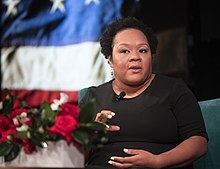
Yamiche Alcindor
“And the officials that worked in that office said that you—that the White House lost valuable time because that office was disbanded. What do you make of that?”
Then followed this exchange:
TRUMP: Well, I just think it’s a nasty question, because what we’ve done is—and Tony had said numerous times that we saved thousands of lives because of the quick closing. And when you say me, I didn’t do it. We have a group of people.
ALCINDOR: It’s your administration.
TRUMP: I could ask, perhaps—my administration, but I could perhaps ask Tony about that, because I don’t know anything about it. I mean, you say we did that. I don’t know anything about it.
ALCINDOR: You don’t know about the—
TRUMP: We’re spending—
ALCINDOR: — About the reorganization that happened in the National Security Council?
TRUMP: No, I don’t know. It’s the—it’s the administration, perhaps they do that. You know, people let people go. You know, you used to be with a different newspaper than you are now. You know, things like that happen.
Trump’s refusal to accept responsibility for the greatest crisis of his tenure as President flagrantly contrasts with how President John F. Kennedy responded to a similar crisis.
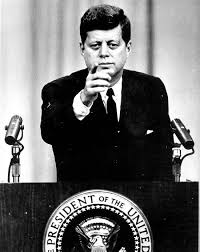
John F. Kennedy press conference
On April 17, 1961, the U.S. Navy landed 1,400 CIA-trained Cuban exiles on Cuba to overthrow the Communist government of Fidel Castro. Landing at the Bay of Pigs, they were supposed to head into the mountains—as Castro himself had done against the dictatorship of Fulgencio Batista in 1956—and raise the cry of revolution.
When the invaders surged onto the beaches, they found Castro’s army waiting for them. Many of the invaders were killed on the spot. Others were captured.
It was a major public relations setback for the newly-installed Kennedy administration, which had raised hopes for a change in American-Soviet relations.
Kennedy, trying to abort widespread criticism, publicly took the blame for the setback: “There’s an old saying that victory has a hundred fathers and defeat is an orphan….I’m the responsible officer of the Government.”
Ironically, the crisis—and his taking responsibility for it—hugely increased Kennedy’s popularity. The national Gallup Poll reported that 83 percent of Americans approved of the job he was doing as President.
To a White House aide, Kennedy half-joked: “It’s just like Eisenhower—the worse I do, the more popular I get.”
By contrast, Trump’s “handling” of the Coronavirus plague has brought him probably the worst reviews of his more than three years as President.
Conservative New York Times columnist David Brooks attacked Trump in terms usually reserved for serial killers. On the March 13 edition of The PBS Newshour, he said:
“This is what happens when you elect a sociopath as president, who doesn’t care, who has treated this whole thing for the past month as if it’s about him. ‘How do people like me?’ Minimizing the risks. ‘Does the stock market reflect well on me?’ And he hasn’t done the things a normal human being would do, which was to, let’s take precautions….
“And he’s incapable of that. And he’s even created an information distortion field around him.”
And Toluse Olorunnipa, White House reporter for The Washington Post, said: “He likes having powerful people around him to praise what he’s done. He tried to get them all up to the podium to talk about how great of a response he has provided, and I think that’s—trying to get that co-signed from CEOs and powerful people is a key part of his presidency.”
Kimberly Atkins, senior Washington news correspondent for WBUR, Boston’s NPR News Station: “We have seen the president not only be all over the place but his instinct was to try to downplay it [Coronavirus] because he saw it as a political threat—to say that people would get better….
“Even today he’s saying, ‘We have everything under control. We have this website that people can go to and find out where they can get tested.’ The website isn’t even done yet.”
2016 PRESIDENTIAL CAMPAIGN, 2020 PRESIDENTIAL CAMPAIGN, ABC NEWS, ALTERNET, AMERICABLOG, AP, BABY BOOMER RESISTANCE, BARACK OBAMA, BERNIE SANDERS, BUZZFEED, CBS NEWS, CNN, CORONAVIRUS, CROOKS AND LIARS, DAILY KOZ, DONALD TRUMP, DRUDGE RETORT, FACEBOOK, FIVETHIRTYEIGHT, FOX AND FRIENDS, FOX BUSINESS NETWORK, HARPER’S MAGAZINE, IMPEACHMENT, MEDIA MATTERS, MOTHER JONES, MOVEON, MSNBC, NBC NEWS, NEWSWEEK, NPR, PBS NEWSHOUR, POLITICO, POLITICUSUSA, RAW STORY, REUTERS, ROBERT MUELLER, SALON, SEATTLE TIMES, SLATE, STOCK MARKET, TALKING POINTS MEMO, THE ATLANTIC, THE CHICAGO SUN-TIMES, THE CHICAGO TRIBUNE, THE DAILY BEAST, THE DAILY BLOG, THE GUARDIAN, THE HILL, THE HUFFINGTON POST, THE LOS ANGELES TIMES, THE NATION, THE NEW REPUBLIC, THE NEW YORK TIMES, THE VILLAGE VOICE, THE WASHINGTON POST, THINKPROGRESS, TIME, TRISH REGAN, TRUTHDIG, TRUTHOUT, TWITTER, TWO POLITICAL JUNKIES, U.S. NEWS & WORLD REPORT, UPI, USA TODAY, VLADIMIR PUTIN, WONKETTE
In Bureaucracy, Business, History, Politics, Social commentary on March 12, 2020 at 12:23 am
COVID-19 has so far stricken 1,016 Americans and caused 31 deaths. The virus is raging in 33 states. The stock market has had its worst week of trading since the “Wall Street meltdown” of 2008.
But on March 9, Trish Regan, host of Trish Regan Primetime on the Fox Business Network, attacked not the virus but those who do not share her fervent embrace of Donald Trump.
“We’ve reached a tipping point,” said Regan. “The hate is boiling. Many in the liberal media are using Coronavirus in an attempt to demonize and destroy the President, despite the virus originating halfway around the world.
“This is yet another attempt to impeach the President. And sadly, it seems the left cares little for any of the destruction they leave in their wake, including losses in the stock market. This, unfortunately, is all just part of the political casualties for them.
“This is impeachment all over again. And like with the Mueller investigation, like with Ukraine-gate, they don’t care who they hurt. Whether it be their need to create mass hysteria to encourage a market sell-off unlike anything we’ve seen recently, or whether it be to create mass hysteria to stop our economy dead in its tracks, don’t kid yourself. They told us how much they crave a recession as a way to get rid of Donald Trump.”

Trish Regan
To make certain no one in the television audience missed the point, an electronically generated caption read: “Coronavirus Impeachment Scam.”
On the same day that Regan accused Trump’s critics of being haters, Trump himself was directing hate through his weapon of choice: Twitter:
“The Fake News Media and their partner, the Democrat Party, is doing everything within its semi-considerable power (it used to be greater!) to inflame the CoronaVirus situation, far beyond what the facts would warrant. Surgeon General, ‘The risk is low to the average American.’”
Actually, with the virus spreading quickly throughout at least 33 states, the risk is not low to the average American. It is not the news that’s fake, but the lies and ignorance Trump is spouting.
Coronavirus
And: “Now the Democrats are trying to smear Bernie with Russia, Russia, Russia. They are driving him Crazy!”
This was a reference to warnings by national security officials that Russia—through its state-owned media—is trying to sow social media agitation and disinformation within the United States. The goal: To ensure that Vermont Senator Bernie Sanders wins the Democratic nomination for President.
According to these officials, Russian President Vladimir Putin believes Sanders would be far easier for Trump—his preferred candidate—to beat in November.
During the 2016 Presidential race, Trump openly called on “Russia”—i.e., Vladimir Putin—to “find the 33,000 emails that are missing [from Democratic Presidential candidate Hillary Clinton’s computer]. I think you will probably be rewarded mightily by our press.” Hours later, the Main Intelligence Directorate in Moscow targeted Clinton’s personal office and hit more than 70 other Clinton campaign accounts.

Vladimir Putin
Kremlin.ru / CC BY (https://creativecommons.org/licenses/by/4.0)
And still more from Trump: “The Obama/Biden Administration is the most corrupt Administration in the history of our Country!”
This is a flat-out lie. President Barack Obama was never the subject of a Congressional or Special Prosecutor investigation—unlike Trump, who was impeached last December by the House of Representatives but acquitted by a majority-Republican Senate.
Perhaps what’s most upsetting Trump is that, since coming into office, he has touted the success of the stock market and claimed to be responsible for it. And now the market—owing to fears of Coronavirus and the Trump administration’s failures to stem it—is tanking.
On August 28, 2018, appearing on “Fox and Friends,” Trump had boasted: “I tell you what, if I ever got impeached, I think the market would crash, I think everybody would be very poor.”
So now Trump is coming under attack in the only area where he could once claim success—even if he had nothing to do with it.
On Facebook, a NYMAG.COM story on Trish Regan’s rant ignited the following reactions:
“Are these Fox News people asses or what? The entire country of Italy is shut down because of this virus. The virus doesn’t give a fat rat’s ass about Trump or impeachment. Just about spreading and infecting.”
And: “OMG. Someone needs to sue Fox News. News is supposed to be factual reported events. I saw a news clip from Fox suggesting this is blown out of proportion by the democrats just to hurt Trump. Idiots, I used to work for the CDC (Centers for Disease Control & Prevention). Better listen to what they say. The President lies…. Sue Fox News for libel.”
The truth is that people like Trish Regan are not asses. Assuming they are allows them to skirt responsibility for what they do and the consequences it brings. They know what they’re doing—and that is to keep in power a Russian-supported tyrant by any means at hand.
And since the truth won’t help them they resort to lies—even if untold numbers of trusting Americans follow their “advice” and become victims of a raging and deadly virus.
2020 PRESIDENTIAL ELECTION, 9/11 ATTACKS, ABC NEWS, ABUSE OF POWER, AIDS, AIDS EPIDEMIC, AIRLINES, ALEX M. AZAR, ALTERNET, AMERICABLOG, AP, BABY BOOMER RESISTANCE, BARACK OBAMA, BUZZFEED, CARNIVAL CRUISE LINES, CBS NEWS, CENTERS FOR DISEASE CONTROL AND PREVENTION, CHARLES GEORGE GORDON, CHARLTON HESTON, CNN, CORONAVIRUS, CROOKS AND LIARS, CRUISE LINES, DAILY KOZ, DEPARTMENT OF HEALTH AND HUMAN SERVICES, DEPARTMENT OF HOMELAND SECURITY, DONALD TRUMP, DRUDGE RETORT, EBOLA, FACEBOOK, FIVETHIRTYEIGHT, HARPER’S MAGAZINE, IMPEACHMENT, JOHN BOLTON, KATHIE LEE GIFFORD, KHARTOUM (MOVIE), LAURENCE OLIVER, MASS HYSTERIA, MEDIA MATTERS, MOHAMMED, MOTHER JONES, MOVEON, MSNBC, NATIONAL SECURITY COUNCIL, NBC NEWS, NEWSWEEK, NPR, PBS NEWSHOUR, POLITICO, POLITICUSUSA, RAW STORY, REPUBLICANS, REUTERS, SALON, SEATTLE TIMES, SLATE, STOCK MARKET, SURGICAL MASKS, TALKING POINTS MEMO, THE ATLANTIC, THE CHICAGO SUN-TIMES, THE CHICAGO TRIBUNE, THE DAILY BEAST, THE DAILY BLOG, THE GUARDIAN, THE HILL, THE HUFFINGTON POST, THE LOS ANGELES TIMES, THE NATION, THE NEW REPUBLIC, THE NEW YORK TIMES, THE VILLAGE VOICE, THE WASHINGTON POST, THINKPROGRESS, TIME, TIMOTHY ZIEMER, TOM BOSSERT, TOM FRIEDMAN, TOURISM INDUSTRY, TRUTHDIG, TRUTHOUT, TWITTER, TWO POLITICAL JUNKIES, U.S. NEWS & WORLD REPORT, UNITED STATES HOUSE OF REPRESENTATIVES, UNITED STATES SENATE, UPI, USA TODAY, WONKETTE
In Bureaucracy, Business, History, Politics, Social commentary on March 11, 2020 at 12:06 am
There’s an Arabian myth that offers a timely commentary on the hysteria surrounding the Coronavirus.
Mohammed is walking along the road from Medina to Mecca when he meets the Genie of Cholera.
“Where are you going, O Cursed One?” asks Mohammed.
“To Mecca, to kill 10,000 of the faithful,” replies the genie.

“All right,” says Mohammed. “See to it that you kill no more than 10,000.”
Six months later the two meet again—and Mohammed is furious: “You are a filthy liar!”
“Why do you say that?” demands the Genie of Cholera.
“Because when I reached Mecca, there were 30,000 dead, not the 10,000 you promised.”
“Oh, I kept by my word and killed only 10,000,” replies the genie. “But 20,000 more died of the fear.”
Fear is stalking the streets of the United States today.
Medical supply companies are rushing to turn out millions of surgical face masks—not for use by doctors but ordinary Americans.
Medical professionals warn that this will prove counter-productive for doctors and ordinary citizens.
Doctors and nurses need those masks when they’re performing surgery—or just coming in contact with patients who might be carrying the Coronavirus. They also wear them when examining patients suffering from routine illnesses.
Standard surgical masks are designed to protect against large, airborne droplets. They cannot protect against viruses. Their loose fit makes it possible for droplets to enter around the edges of the mask.
Standard surgical mask
The N-95 respirator mask is a tight-fitting upgrade that forces inhaled air toward the mask but not its edges. It can filter out 95% of particulates—but not viral particles.
Nor has panic-buying been restricted to face masks. Hand sanitizers, bottled water, toilet paper—even rubbing alcohol—have been snapped off shelves, leaving stores empty of them.
“It’s been nuts,” says Costco’s Chief Financial Officer, Richard A. Galanti.
Businesses that rely on regular patrons—such as restaurants and movie theaters—are especially suffering.
In New York City and San Francisco, businesses in the Chinese community have been hard-hit. It was in Wuhan, China, that the Coronavirus first erupted. Millions of people continue to identify it as a peculiarly Chinese ailment.
The industries most affected are those directly connected to tourism. Cruise ship lines have proven a ready source of contagion, bringing large numbers of people together in what can amount to a floating hothouse for viruses.
Cruise ships have played a major role in the outbreak. More than 700 cases have been linked to the Diamond Princess cruise ship, which was quarantined off the coast of Japan for two weeks. At least 21 more cases were confirmed aboard the Grand Princess cruise ship that docked in Oakland, Calif., on March 9.

Diamond Princess cruise ship
File:Diamond Princess (ship, 2004) and Port of Toba.jpg
The State Department and Centers for Disease Control and Prevention (CDC) have warned elderly and medically vulnerable Americans to avoid cruise ships until the outbreak ends. The CDC recommends that travelers “defer all cruise ship travel worldwide.”
During the 1980s, Kathie Lee Gifford appeared in a series of TV ads for Carnival Cruise Lines, singing an upbeat jingle:
If they could see you now out on a Funship cruise
You’re eating fancy food and doing what you choose.
I’d like your friends back home to get a good look
At the first-rate Carnival cruise that you took.
All I can say is “Wow!” hey look at where you are.
Tonight you’re living life just like a movie star!
What a Funship, holy cow!
They’d never believe it
If your friends could see you now!
This ode to pure hedonism has given way to a climate of sheer panic—among those still aboard cruise liners, those thinking about embarking on cruises and—most especially—among cruise shipping line companies.
A more updated version of Kathie Lee’s song could go:
If they could see you now on a Corona cruise
You’re locked inside your room and someone took your shoes.
I’m sure your friends back home will look on with dread
As the ship docks in port and they haul off the dead.
Hey, look at where you’ll be
You’re turning blue for air
Right there upon the sea!
What a fright ship, holy cow!
They’re sure to believe it
And the doctor’s coming now!
And how is the cruise industry responding to the Coronavirus outbreak? By running more TV ads to sign up more passengers!
Perhaps it’s time for Americans to haul out their DVD players and watch Khartoum—a 1966 movie that offers a timely lesson in courage well-suited to the Coronavirus panic.

It’s based on the true story of British General Charles George Gordon (Charlton Heston) sent to the Sudan in 1884 to evacuate the city of Khartoum before it’s besieged by the army of a dervish fanatic called “The Madhi”—“The Expected One” (Laurence Oliver).
But the siege starts before Gordon can evacuate its 30,000 citizens.
The Madhi orders a bombardment, and frightened townspeople rush into the public square—where Gordon is calmly seated on a camel, holding a Sudanese girl.
As they look up expectedly for guidance, Gordon gently says to the little girl: “I don’t ask you to be unafraid, merely to act unafraid.”
Americans would do well to remember those words—and act on them.


 Bureaucracybuster's Blog
_and_Port_of_Toba.jpg)
2016 PRESIDENTIAL ELECTION, 2020 PRESIDENTIAL ELECTION, ABC NEWS, ABORTION, ALTERNET, AMERICABLOG, AP, BABY BOOMER RESISTANCE, BARACK OBAMA, BLOOMBERG, BUZZFEED, CBS NEWS, CIA, CNN, CROOKS AND LIARS, DAILY KOZ, DONALD TRUMP. COVID-19, DRUDGE RETORT, FACEBOOK, FBI, FIVETHIRTYEIGHT, FOX NEWS, HARPER’S MAGAZINE, JOE BIDEN, KGB, MEDIA MATTERS, MOTHER JONES, MOVEON, MSNBC, NAZI GERMANY, NAZIS, NBC NEWS, NEVILLE CHAMBERLAIN, NEWSWEEK, NPR, PBS NEWSHOUR, POLITICO, POLITICUSUSA, RAW STORY, REUTERS, SALON, SEATTLE TIMES, SLATE, TALKING POINTS MEMO, THE ATLANTIC, THE CHICAGO SUN-TIMES, THE CHICAGO TRIBUNE, THE DAILY BEAST, THE DAILY BLOG, THE GUARDIAN, THE HILL, THE HUFFINGTON POST, THE LOS ANGELES TIMES, THE NATION, THE NEW REPUBLIC, THE NEW YORK TIMES, THE VILLAGE VOICE, THE WASHINGTON POST, THINKPROGRESS, TIME, TREASON, TRUMP TOWER, TRUTHDIG, TRUTHOUT, TWITTER, TWO POLITICAL JUNKIES, U.S. NEWS & WORLD REPORT, UPI, USA TODAY, VLADIMIR PUTIN, WHITE HOUSE PANDEMIC OFFICE, WINSTON CHURCHILL, WONKETTE
THE MIND OF A STORMTRUMPER: PART ONE (OF TWO)
In Bureaucracy, History, Medical, Politics, Social commentary on April 6, 2020 at 12:15 amRecently a longtime friend of mine sent me a furious and insulting email. I hadn’t insulted or harmed him in any way, so it came as a total surprise to me—-until I read it.
He and I had long disagreed about the virtues of the Trump administration. I had assumed that politics was one of those areas where we would agree to disagree and still remain on good terms. So you can imagine my surprise when I opened his email and found this waiting for me:
Steffen, WE are worlds apart on our beliefs & knowledge when it comes to political differences. Although I am astonished that I have always referred to you as “an educated & intelligent individual”, I now feel that your opinions are simply based on total hatred because of your negative references.
In other words – you are nothing more than a typical deranged democrat with nothing good to offer this Country nor the American People other than “HATRED” for a duly elected President who will undoubtedly be re-elected in a landslide of the American People..
At first I hesitated to reply. We had been friends for more than 20 years, and I didn’t want to risk ending such a long and otherwise enjoyable friendship. But I quickly decided that a strong reply was not simply in order, but demanded.
Too many people—especially Democrats—-allow such assaults to go unanswered—-and, even worse, unpunished. As a result, they find themselves the victims of even worse attacks.
Here, in part, is the email I sent him in return.
I find it amazing that so many Right-wingers who preach HATRED against millions of their fellow Americans are the first to scream HATRED when those THEY hate refuse to accept their lies or aggression.
For example: From June 15, 2015, when he launched his Presidential campaign, until October 24, 2016, Trump fired almost 4,000 angry, insulting tweets at 281 people and institutions that had somehow offended him. That doesn’t sound like a love-filled man to me.
Donald Trump
The Original Nazis behaved the same way: They had no hesitation about invading other people’s countries and massacring their inhabitants. But if a country dared resist their aggression, the Original Fuhrer yelled “They’re attacking me!”
If you HONESTLY look at the way your Commie-kissing Fuhrer has handled the COVID-19 outbreak—-and NOT in the way Fox News is portraying it–then you must realize that he is responsible for its now infecting so many tens of thousands of Americans.
For starters: In 2018, he gutted the White House Pandemic Office which President Obama had set up in 2014 at the time of the Ebola outbreak in West Africa. The purpose of that office was to act as an early-warning system for the next epidemic.
But Trump, as a lifelong racist, has tried since taking office to destroy every vestige of Obama’s legacy. So, naturally, the White House Pandemic Office had to go.
To put this in military terms: It was like deliberately shutting off the radar system before an enemy launched a devastating airstrike.
COVID-19 virus
News of the COVID-19 outbreak emerged by the end of December, 2019. But your Fuhrer frittered away the first two months of the year.
He diminished its virulence. He claimed it was no more than a version of the common cold. He didn’t take action to see that the nation’s hospitals were supplied with medical equipment for combating a mass plague.
He has blamed governors for the virus that is now sweeping the nation—-instead of doing what a LEGITIMATE President does and taking it upon himself to organize an effective, well-coordinated response to the emergency.
Why? because he didn’t want to say or do anything that might cause the almighty stock market to fall. From Day One of his Fuhrership he has bragged that the stock market owed its success entirely to him. He feared that if it fell, so would his chances to be re-elected—-which is his ONE, OVER-ARCHING OBSESSION.
Responding to his charge that I was “nothing more than “a typical deranged democrat” I wrote:
I have plenty of criticisms to offer the Democrats—-most importantly, their general tendency toward cowardice every time a Republican yells “boo!” at them. The Democrats, for the most part, offer the country a party of Neville Chamberlains when what it desperately needs is a party of Winston Churchills.
I AM admittedly liberal on some things—-such as the right of a woman to decide for herself whether she wants to have children.
While I am liberal on some issues, I am CONSERVATIVE on others. Unlike you, I DON’T support a man who sides with the former head of the KGB against our own FBI and CIA. If you want an example of this, you need look no further than his dual press conference in Helsinki with Putin on July 16, 2018.
Associated Press Reporter Jonathan Lemire said to Trump: “Just now President Putin denied having anything to do with the election interference in 2016. Every U.S. intelligence agency has concluded that Russia did. My first question for you, sir, is who do you believe?”
Trump responded by attacking Democrats and the FBI as partners in a conspiracy.
Share this: