Bill O’Reilly, the former host of the Fox News Channel program The O’Reilly Factor, has offered his own solution to fighting terrorism: A multinational mercenary army, based on a NATO coalition and trained by the United States.
“We would select them, special forces would train them—a 25,000-man force to be deployed to fight on the ground against worldwide terrorism. Not just ISIS,” O’Reilly said on “CBS This Morning” on September 24, 2014.
Bill O’Reilly
Actually, O’Reilly’s idea is the subject of The Profession, a 2011 novel by bestselling author Steven Pressfield.
Pressfield made his literary reputation with four classic novels about classical Greece.
In Gates of Fire (1998) he explored the rigors and heroism of Spartan society—and the famous last stand of its 300 picked warriors at Thermopylae.
In Tides of War (2000) Pressfield depicted the rise and fall of Alcibiades, Athens’ greatest general, as he shifted his loyalties from that city to its arch-enemy, Sparta, and then to Persia, the enemy of both.
In The Virtues of War (2004) he took on the identity of Alexander the Great, explaining to his readers what it was like to command armies that swept across the known world, destroying all who dared oppose them.
Finally, in The Afghan Campaign (2006) Pressfield—this time from the viewpoint of a lowly Greek soldier—refought Alexander’s brutal, three-year anti-guerrilla campaign in Afghanistan.
Steven Pressfield
But in The Profession, Pressfield created a seemingly plausible world set into the future of 2032. The book’s own dust jacket offers the best summary of its plot-line:
“The year is 2032. The third Iran-Iraq war is over. The 11/11 dirty bomb attack on the port of Long Beach, California is receding into memory. Saudi Arabia has recently quelled a coup. Russians and Turks are clashing in the Caspian Basin.
“Iranian armored units, supported by the satellite and drone power of their Chinese allies, have emerged from their enclaves in Tehran and are sweeping south attempting to recapture the resource rich territory that had been stolen from them, in their view, by Lukoil, BP, and ExxonMobil and their privately-funded armies.
“Everywhere military force is for hire. Oil companies, multi-national corporations and banks employ powerful, cutting-edge mercenary armies to control global chaos and protect their riches.
“Even nation states enlist mercenary forces to suppress internal insurrections, hunt terrorists, and do the black bag jobs necessary to maintain the new New World Order.
“Force Insertion is the world’s merc monopoly. Its leader is the disgraced former United States Marine General James Salter, stripped of his command by the president for nuclear saber-rattling with the Chinese and banished to the Far East.”
Salter appears as a hybrid of World War II General Douglas MacArthur and Iraqi War General Stanley McCrystal. Like MacArthur, Salter has butted heads with his President—and paid dearly for it. Now his ambition is no less than to become President himself—by popular acclaim.
And like McCrystal, he is a pure warrior who leads from the front and is revered by his men. Salter seizes Saudi oil fields, then offers them as a gift to America. By doing so, he makes himself the most popular man in the country—and a guaranteed occupant of the White House.
And in 2032 the United States is a far different nation from the one its Founding Fathers created in 1776.
“Any time that you have the rise of mercenaries…society has entered a twilight era, a time past the zenith of its arc,” says Salter.”The United States is an empire…but the American people lack the imperial temperament. We’re not legionaries, we’re mechanics. In the end the American Dream boils down to what? ‘I’m getting mine and the hell with you.'”
Americans, asserts Salter, have come to like mercenaries: “They’ve had enough of sacrificing their sons and daughters in the name of some illusory world order. They want someone else’s sons and daughters to bear the burden….
“They want their problems to go away. They want me to to make them go away.”
And so Salter will “accept whatever crown, of paper or gold, that my country wants to press upon me.”
More than 500 years ago, Niccolo Machiavelli warned of the dangers of relying on mercenaries:
“Mercenaries…are useless and dangerous. And if a prince holds on to his state by means of mercenary armies, he will never be stable or secure; for they are disunited, ambitious, without discipline, disloyal; they are brave among friends; among enemies they are cowards.
Niccolo Machiavelli
“They have neither the fear of God nor fidelity to men, and destruction is deferred only so long as the attack is. For in peace one is robbed by them, and in war by the enemy.”
Centuries ago, Niccolo Machiavelli issued a warning against relying on men whose first love is their own enrichment.
Steven Pressfield, in a work of fiction, has given us a nightmarish vision of a not-so-distant America where “Name your price” has become the byword for an age.
In a closed-door speech to Republican donors on March 3, 2018, President Donald Trump revealed his ultimate intention: To overthrow America’s constitutional government.
He praised China’s President, Xi Jinping, for recently assuming full dictatorial powers: “He’s now president for life. President for life. No, he’s great. And look, he was able to do that. I think it’s great. Maybe we’ll have to give that a shot some day.”
The statement was greeted with cheers and laughter by Republican donors.
Upon taking office as the Nation’s 45th President, Donald Trump attacked or undermined one public or private institution after another.
Donald Trump
Among these:
American Intelligence: Even before taking office, Trump refused to accept the findings of the FBI, CIA and NSA that Russian Intelligence agents had intervened in the 2016 election to ensure his victory.
“I think it’s ridiculous,” he told “Fox News Sunday.” “I think it’s just another excuse. I don’t believe it….No, I don’t believe it at all.”
And when FBI Director James Comey dared to pursue a probe into “the Russia thing,” Trump fired him without warning.
American law enforcement agencies: Trump repeatedly attacked his own Attorney General, Jeff Sessions, for not “protecting” him from agents pursuing the Russia investigation.
On November 8, 2018, Trump abruptly fired him, following Democrats’ winning control of the House in the 2018 midterm elections.
He threatened to fire Rod J. Rosenstein, the deputy attorney general, who oversaw Special Counsel Robert Mueller’s investigation into Russian subversion of the 2016 election.
He intended to fire Mueller during the summer of 2017, but was talked out of it by aides fearful that it would set off calls for his impeachment.
American military agencies:In 2020, Trump declined to visit an American cemetery near Paris in 2018, and referred to U.S. Marines buried there as “losers” and “suckers.”
While President, Trump regularly abused military officials, calling Chairman of the Joint Chief of Staff Mark Milley a “dumbass” and former Secretary of Defense James Mattis “the world’s most overrated general.”
The press: On February 17, 2017, Trump tweeted: “The FAKE NEWS media (failing@nytimes, @NBCNews, @ABC, @CBS, @CNN) is not my enemy, it is the enemy of the American People!”
Appearing before the Conservative Political Action Conference on February 24, Trump said: “I want you all to know that we are fighting the fake news. It’s fake, phony, fake….I’m against the people that make up stories and make up sources. They shouldn’t be allowed to use sources unless they use somebody’s name. Let their name be put out there.”
The judiciary: Trump repeatedly attacked Seattle US District Judge James Robart, who halted Trump’s first travel ban.
In one tweet, Trump claimed: “Just cannot believe a judge would put our country in such peril. If something happens blame him and court system. People pouring in. Bad!”
At Trump’s bidding, White House aide Stephen Miller attacked the Ninth Circuit Court of Appeals: “We have a judiciary that has taken far too much power and become, in many cases, a supreme branch of government.”
President Barack Obama:For five years, Trump popularized the slander that President Barack Obama was born in Kenya—and was therefore not an American citizen or a legitimate President..
Even after Obama released the long-form version of his birth certificate—on April 27, 2011—Trump tweeted, on August 6, 2012: “An ‘extremely credible source’ has called my office and told me that @BarackObama‘s birth certificate is a fraud.”
Trump was later forced to admit he had no evidence to back up his slanderous claims.
Barack Obama
* * * * *
Nor, since leaving the White House, has Trump stopped trying to undermine one American institution after another.
Facing 91 criminal counts in four cases, he has discredited the judicial system, attacking judges, prosecutors, witnesses—and even their family members.
He has attacked Independent Counsel Jack Smith as “deranged” and accused him of trying to invalidate his candidacy for President in 2024.
He has attacked retired U.S. Army General Mark Milley for calling him “a wannabe dictator,” and said that Milley deserved execution as a traitor.
Milley had successfully averted war with China by calling his Chinese military counterparts in the final weeks of Trump’s administration to assure them that Trump was not planning to attack China.
He claims voter fraud where none exists, casting doubt on the integrity of the electoral system.
He claims himself to be the victim of “the deep state” inside the federal bureaucracy.
He attacks the integrity of the FBI—causing previously “law and order” Republicans to demand its defunding.
Donald Trump isn’t crazy, as many of his critics charge. He knows exactly what he’s doing—and why.
He intends to strip every potential challenger to his authority—or his version of reality—of legitimacy with the public. If he succeeds, there will be:
No independent press to reveal his failures and crimes.
No independent law enforcement agencies to investigate his abuses of office.
No independent judiciary to hold him accountable.
No independent military to dissent as he recklessly hurtles toward a nuclear disaster.
No candidate—Democrat or Republican—to challenge him for re-election in 2028—or any other year..
No candidate—Democrat or Republican—to challenge his remaining in office as “President-for-Life.”
In May, 2014, Yevgeny Prigozhin founded the Kremlin-affiliated mercenary army Wagner Group.
Since Russian President Vladimir Putin ordered a “special military operation” against Ukraine on February 24, 2022, Wagner has played a major role in the fighting.
Prigozhin has repeatedly clashed with Russian Defense Minister Sergei Shoigu, blaming him for a lack of ammunition to his embattled fighters—resulting in thousands of casualties.
On June 23, 2023, Prigozhin claimed that regular Russian armed forces had launched missile strikes against Wagner forces, killing a “huge” number.
He announced: “The council of commanders of PMC Wagner has made a decision—the evil that the military leadership of the country brings must be stopped.”
In response, criminal charges were filed against Prigozhin by the Russian Federal Security Service —the renamed KGB—for inciting an armed rebellion.
Wagner withdrew from Ukraine, occupied the Russian city of Rostov-on-Don and headed for Moscow. While doing so, Wagner shot down a Russian fighter plane and several military helicopters.
Putin decried the action as treason, and vowed to quash the uprising.
Talks between Prigozhin and Belarussian president Alexander Lukashenko resulted in charges being dropped. Wagner ceased its march on Moscow. Prigozhin will move to Belarus but remain under investigation for treason. Wagner troops will return to Ukraine.
The danger of relying on mercenaries forms the plot of The Profession, a 2011 novel by bestselling author Steven Pressfield.
Pressfield made his literary reputation with a series of classic novels about ancient Greece.
In Gates of Fire(1998) he explored the rigors and heroism of Spartan society—and the famous last stand of its 300 picked warriors at Thermopylae.
In The Virtues of War(2004) he entered the mind of Alexander the Great, whose armies swept across the known world, destroying all who dared oppose them.
But in The Profession, Pressfield created a plausible world set into the future of 2032. The book’s own dust jacket offers the best summary of its plot-line:
“Everywhere military force is for hire. Oil companies, multi-national corporations and banks employ powerful, cutting-edge mercenary armies to control global chaos and protect their riches.
“Force Insertion is the world’s merc monopoly. Its leader is the disgraced former United States Marine General James Salter, stripped of his command by the president for nuclear saber-rattling with the Chinese and banished to the Far East.’
Steven Pressfield
Salter appears as a hybrid of World War II General Douglas MacArthur and Iraqi War General Stanley McCrystal.
Like MacArthur, Salter has butted heads with his President—and paid dearly for it. Now his ambition is no less than to become President himself—by popular acclaim. And like McCrystal, he is a pure warrior who leads from the front and is revered by his men.
Salter seizes Saudi Arabian oil fields, then offers them as a gift to America. By doing so, he makes himself the most popular man in the country—and a guaranteed occupant of the White House.
And in 2032 the United States is a far different nation from the one its Founding Fathers created in 1776.
Douglas MacArthur (left), Stanley McCrystal (right)
“The United States is an empire…but the American people lack the imperial temperament,” asserts Salter. “We’re not legionaries, we’re mechanics. In the end the American Dream boils down to what? ‘I’m getting mine and the hell with you.’”
Americans, says Salter, have come to like mercenaries: “They’ve had enough of sacrificing their sons and daughters in the name of some illusory world order. They want someone else’ssons and daughters to bear the burden….
“They want their problems to go away. They want meto to make them go away.”
And so Salter will “accept whatever crown, of paper or gold, that my country wants to press upon me.”
Returning to the United States, he is acclaimed as a hero—and the next President.
He is under no delusion that his country is on a downward spiral toward oblivion: “Any time that you have the rise of mercenaries…society has entered a twilight era, a time past the zenith of its arc.”
Nor does he believe that his Presidency will arrest that decline: “But maybe in the short run, it’s better that my hand be on the wheel…rather than some other self-aggrandizing sonofabitch whose motives might not be as well intentioned….”
More than 500 years ago, Niccolo Machiavelli warned of the dangers of relying on mercenaries:
“Mercenaries…are useless and dangerous. And if a prince holds on to his state by means of mercenary armies, he will never be stable or secure; for they are disunited, ambitious, without discipline, disloyal; they are brave among friends; among enemies they are cowards.
Niccolo Machiavelli
“They have neither the fear of God nor fidelity to men, and destruction is deferred only so long as the attack is. For in peace one is robbed by them, and in war by the enemy.”
Centuries ago, Niccolo Machiavelli issued a warning against relying on men whose first love is their own enrichment.
Steven Pressfield, in a work of fiction, has given us a nightmarish vision of a not-so-distant America where “Name your price” has become the byward for an age.
In “Excalibur,” director John Boorman’s brilliant 1981 telling of the King Arthur legends, Merlin warns Arthur’s knights–and us: “For it is the doom of men that they forget.”
Not so Steven Pressfield, who repeatedly holds up the past as a mirror to our present. Case in point: His 2006 novel,The Afghan Campaign.
By 2006, Americans had been fighting in Afghanistan for five years. And after 20 years into the same war, Americans reached the same conclusion: The best outcome was to get out.
Pressfield’s novel, although set 2,000 years into the past, has much to teach us about what our soldiers faced in that same alien, unforgiving land.
Matthias, a young Greek seeking glory and opportunity, joins the army of Alexander the Great. But the Persian Empire has fallen, and the days of conventional, set-piece battles—where you can easily tell friend from foe—are over.
Alexander next plans to conquer India, but to get there he must first enter Afghanistan. It’s here that the Macedonians meet a new—and deadly—kind of enemy.
“Here the foe does not meet us in pitched battle,” warns Alexander. “Even when we defeat him, he will no accept our dominion. He comes back again and again. He hates us with a passion whose depth is exceeded only by his patience and his capacity for suffering.”
Alexander the Great
Matthias learns this early. In his first raid on an Afghan village, he’s ordered to execute a helpless prisoner. When he hesitates, he’s brutalized by his superior until he strikes out with his sword—and botches the job.
But, soon, exposed to an unending series of atrocities—committed by himself and his comrades on Afghans, and by Afghans on his own fellow soldiers—he finds himself transformed.
And he hates it. He agonizes over the gap between the ideals he embraced when he became a soldier—and the brutalities that have drained him of everything but a grim determination to survive at any cost:
“When we were boys, we rode from dark to dark, training for the charge and the chase. We dreamed of standing before our king as knights and heroes. I still do. There must be some way to be a good soldier in a rotten war.”
It’s a sentiment no doubt expressed by countless Americans in Afghanistan—and Vietnam.
Pressfield, a former Marine himself, repeatedly contrasts how civilians see war as a kind of “glorious” child’s-play with how soldiers actually experience it.
Steven Pressfield
He creates an extraordinary exchange between Costas, an ancient-world version of a CNN war correspondent, and Lucas, a soldier whose morality is outraged at how Costas and his ilk routinely prettify the indescribable.
Costas wants to give his audience a beautifully antiseptic view of the conflict. Lucas will have none of it.
And we know the truth of this exchange immediately. For we know there are doubtless brutalities inflicted by our troops on the enemy—and atrocities inflicted by the enemy upon them—that never make the headlines, let alone the TV cameras.
We also know that, decades from now, thousands of our former soldiers will carry horrific memories to their graves. These memories will remain sealed from public view, allowing their fellow but un-blooded Americans to sleep peacefully, unaware of and unaffected by the terrible price that others have paid on their behalf.
Afghanistan
Like the Macedonians (who call themselves “Macks”), our own soldiers found themselves serving in an all-but-forgotten land among a populace whose values could not be more alien from our own if they came from Mars.
Instinctively, they turned to one another—not only for physical security but to preserve their last vestiges of humanity. As the war-weary veteran, Lucas, advises:
“Never tell anyone except your mates. Only you don’t need to tell them. They know. They know you. Better than a man knows his wife, better than he knows himself. They’re bound to you and you to them, like wolves in a pack. It’s not you and them. You are them. The unit is indivisible. One dies, we all die.”
Put conversely: One lives, we all live.
Pressfield has reached into the past to reveal fundamental truths about the present that most of us could probably not accept if contained in a modern-day memoir.
These truths take on an immediate poignancy owing to our 20-year war in Afghanistan. But they will remain just as relevant decades from now, when our now-young soldiers are old and retired.
This book has been described as a sequel to Pressfield’sThe Virtues of War: A Novel of Alexander the Great, which appeared in 2004. But it isn’t.
Virtuesshowcased the brilliant and luminous (if increasingly dark and explosive) personality of Alexander the Great, whose good-vs.-evil rhetoric—like that of President George W. Bush—inspired men to hurl themselves into countless battles on his behalf.
ButAfghanthrusts us directly into the flesh-and-blood realities created by that rhetoric: The horrors of men traumatized by an often unseen but always menacing enemy, and the horrors they must inflict in return if they are to survive in a hostile and alien world.
And the most glorious exploits do not always furnish us with the clearest discoveries of virtue or vice in men; sometimes a matter of less moment, an expression or a jest, informs us better of their characters and inclinations, than the most famous sieges, the greatest armaments, or the bloodiest battles whatsoever.
—Plutarch, “Life of Alexander”
In a closed-door speech to Republican donors on March 3, 2018, President Donald Trump proved the accuracy of Plutarch’s observation.
He praised China’s President, Xi Jinping, for recently assuming full dictatorial powers: “He’s now president for life. President for life. No, he’s great. And look, he was able to do that. I think it’s great. Maybe we’ll have to give that a shot some day.”
The statement was greeted with cheers and laughter by Republican donors.
And, in making that unguarded statement, Trump revealed his ultimate intention: To overthrow America’s constitutional government.
Donald Trump
Since then, Trump continued to “joke” about serving more than the legal limit of eight years.
In April, 2019, at a White House event, he said he might remain in the Oval Office “at least for 10 or 14 years.”
In May, 2019, Trump retweeted Evangelical leader Jerry Falwell Jr.’s suggestion that he’s owed “2 yrs added to his 1st term” due to distractions caused by the Robert Mueller investigation.
Anyone who thought he was simply joking got a rude awakening on July 30, 2020, when Trump tweeted: “With Universal Mail-In Voting (not Absentee Voting, which is good), 2020 will be the most INACCURATE & FRAUDULENT Election in history. It will be a great embarrassment to the USA. Delay the Election until people can properly, securely and safely vote???”
Leaders of both Republican and Democratic parties quickly attacked Trump for suggesting that the election might be delayed.
With COVID-19 ravaging the nation and many economists predicting a coming Depression, Trump was desperate to reverse his falling poll numbers. But the election was now less than 100 days away and, short of a miracle—or indefinitely postponing the vote—he looked increasingly like a one-term President.
Coronavirus
Since taking office as the Nation’s 45th President, Donald Trump had attacked or undermined one public or private institution after another.
Among these:
American Intelligence: Even before taking office, Trump refused to accept the findings of the FBI, CIA and NSA that Russian Intelligence agents had intervened in the 2016 election to ensure his victory.
And when FBI Director James Comey dared to pursue a probe into “the Russia thing,” Trump fired him without warning.
American law enforcement agencies: Trump repeatedly attacked—and later fired—his own Attorney General, Jeff Sessions, for not “protecting” him from agents pursuing the Russia investigation.
He repeatedly attacked the integrity of Deputy FBI Director Andrew G. McCabe until the latter resigned.
He threatened to fire Rod J. Rosenstein, the deputy attorney general who oversaw Special Counsel Robert Mueller’s investigation into Russian subversion of the 2016 election.
The press: On February 17, 2017, Trump tweeted: “The FAKE NEWS media (failing@nytimes, @NBCNews, @ABC, @CBS, @CNN) is not my enemy, it is the enemy of the American People!”
Seven days later, appearing before the Conservative Political Action Conference on February 24, Trump said: “I want you all to know that we are fighting the fake news. It’s fake, phony, fake….I’m against the people that make up stories and make up sources. They shouldn’t be allowed to use sources unless they use somebody’s name. Let their name be put out there.”
The judiciary: Trump repeatedly attacked Seattle U.S/ District Judge James Robart, who halted Trump’s first travel ban.
At Trump’s bidding, White House aide Stephen Miller attacked the Ninth Circuit Court of Appeals: “We have a judiciary that has taken far too much power and become, in many cases, a supreme branch of government.”
President Barack Obama:For five years, Trump, more than anyone else, popularized the slander that Barack Obama was born in Kenya—and was therefore not an American citizen.
Even after Obama released the long-form version of his birth certificate—on April 27, 2011—Trump tweeted, on August 6, 2012: “An ‘extremely credible source’ has called my office and told me that @BarackObama‘s birth certificate is a fraud.”
Barack Obama
On March 4, 2017, in a series of unhinged tweets, Trump accused Obama of tapping his Trump Tower phones prior to the election: “Terrible! Just found out that Obama had my ‘wires tapped’ in Trump Tower just before the victory. Nothing found. This is McCarthyism!”
Trump was later forced to admit he had no evidence to back up his slanderous claims.
* * * * *
Donald Trump wasn’t crazy, as many of his critics charge. He knew what he was doing—and why.
He had tried to strip every potential challenger to his authority–and version of reality—of legitimacy. He intends there will be:
No independent press to reveal his failures and crimes.
No independent law enforcement agencies to investigate his abuses of office.
No independent judiciary to hold him accountable.
No independent military to dissent as he recklessly hurtles toward a nuclear disaster.
No candidate—Democrat or Republican—to challenge him for re-election in 2020.
In short: No one—ever—to challenge his remaining in office as “President-for-Life.”
And the most glorious exploits do not always furnish us with the clearest discoveries of virtue or vice in men. Sometimes a matter of less moment, an expression or a jest, informs us better of their characters and inclinations, than the most famous sieges, the greatest armaments, or the bloodiest battles whatsoever.
—Plutarch, “Life of Alexander”
On January 6, 2021, Hope Hicks had a problem: She feared she might never work again.
She had served in President Donald Trump’s administration as White House Director of Strategic Communication from January to September, 2017.
From 2017 to 2018 she served as White House Communications Director. After leaving the White House, she returned to serve as Counselor to the President from 2020 to 2021.
Hope Hicks
And then came the Trump-inspired attack on Congress on January 6.
Among the infamies and crimes Trump committed—and Hicks witnessed—during his four years as President:
Repeatedly attacking the nation’s free press as “the enemy of the American people” for daring to report his growing list of crimes and disasters.
Publicly siding with Russian dictator Vladimir Putin against American Intelligence agencies—such as the FBI, CIA and National Security Agency—which unanimously agreed that Russia had interfered with the 2016 Presidential election.
Giving highly classified CIA Intelligence to Russian Foreign Minister Sergey Lavrov and Russian Ambassador Sergey Kislyak.
Using his position as President to further enrich himself, in violation of the Emoluments Clause of the Constitution.
Attacking and alienating America’s oldest allies, such as Canada and Great Britain.
Firing FBI Director James Comey for refusing to pledge his personal loyalty to Trump—and continuing to investigate Russian subversion of the 2016 election.
Two Fuhrers: Adolf Hitler and Donald Trump
Shutting down the Federal Government on December 22, 2018, because Democrats refused to fund his useless “border wall” between the United States and Mexico. An estimated 380,000 government employees were furloughed and another 420,000 were ordered to work without pay for 35 days.
Allowing the deadly COVID-19 virus to ravage the country, killing 400,000 Americans by the time he left office.
Attacking medical experts and governors who urged Americans to wear masks and socially distance to protect themselves against the deadly COVID-19 virus.
Urging his followers to illegally vote twice for him in the upcoming 2020 Presidential election.
Repeatedly lying—while still in office and afterward—that the 2020 election had been “stolen” from him by massive voter fraud.
Illegally trying to pressure state legislatures and governors to stop the certification of the vote that had made Joe Biden the president-elect.
Inciting his followers to attack the Capitol Building where Senators and Representatives were meeting to count the Electoral Votes won by himself and Joe Biden. His objective: Stop the count, which he knew would prove him the loser.
So Hope had plenty to feel tormented about.
Yet it wasn’t any of these offenses that upset her.
It was something far more personal: She feared that the public’s association of her with Trump’s attack on Congress would doom her, at age 32, to permanent unemployment.
On January 6, 2021, she exchanged a series of texts with Julie Radford, First Daughter Ivanka Trump’s chief of staff.
HICKS: “In one day he [Trump] ended every future opportunity that doesn’t include speaking engagements at the local proud boys [sic] chapter
“And all of us that didn’t have jobs lined up will be perpetually unemployed
“I’m so mad and upset
“We all look like domestic terrorists now”
RADFORD: “Oh yes I’ve been crying for an hour”
HICKS: “This made us all unemployable
“Like untouchable
“God I’m so fucking mad”
RADFORD: “I know there isn’t a chance of finding a job
“Visa also sent me a blow off email today
“Already”
HICKS: “Nope. Not being dramatic, but we are all fucked.
[Referring to Trump]: “Attacking the VP [Vice President Mike Pence]?
“Wtf is wrong with him”
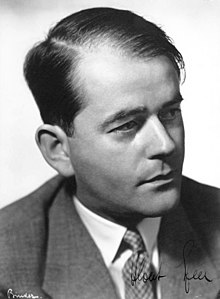
Albert Speer, former architect and Minister of Armaments for his late Fuhrer, Adolf Hitler, would have fully empathized.
With the collapse of the Third Reich, he found himself hurled from power and facing trial as a war criminal at Nuremberg.
His prosecutor, Robert H. Jackson, said: “Speer joined in planning and executing the program to dragoon prisoners of war and foreign workers into German war industries, which waxed in output while the workers waned in starvation.”
Yet Speer falsely claimed he had simply been an apolitical architect who had been drafted into serving as Minister of Armaments—and hadn’t known about the Holocaust.
The prosecution couldn’t prove he had. So he escaped a death sentence—and was sentenced to 20 years’ imprisonment.
Emerging from prison in 1966, Speer lamented that no architectural firm in postwar Germany would hire “Hitler’s architect.”
So he spent the rest of his life writing—at great profit—about his 12 years as a high-ranking official in the Third Reich. As “The Good Nazi,” he portrayed himself as a political innocent deceived into hell by a Mephistopheles-like Hitler.
Like Speer, Hope Hicks has repudiated her own former Fuhrer—after serving him during his worst infamies.
And, like Speer, she isn’t facing the dangers of poverty. Her net worth is estimated at $1 million, owing to her past work as a model and public relations agent.
There are several good reasons for skipping Christmas this year—if not in years beyond 2020.
Reason #1: The historical realities behind the event.
There is no reference anywhere in the Bible to the month, day—or even the year—of Jesus’ birth.
There are no sources outside the Bible that give a date to Jesus’ birth.
Jesus never commanded his followers to celebrate his birth—but he did call on them to remember his death. It’s called Easter.
Many of the “religious” traditions associated with Christmas stem from the pagan Roman festival, Saturnalia, which celebrated the “birthday” of the sun.
This was celebrated December 17-25.
Saturnalia traditions included feasting, gift-giving, lighting candles (to ward off evil spirits) and displaying wreaths (as a sign of coming spring).
Early Christians tried mightily to convince their members to stop celebrating the Saturnalia.
When these efforts failed, the Roman Catholic Church, in 336 A.D. “Christianised” the festival by naming Saturnalia’s concluding day, December 25, as Jesus’ birthday.
Reason #2: It’s based on a story that’s patently false.
The story of the Three Wise Men—or Kings—bringing gifts to the infant Jesus was added long after Jesus’ birth.
Realistically, there was no reason why anyone in Israel would have known—or cared—about the birth of yet another Jewish child.
If he had actually been born the son of a king, then his birth might have mattered to people generally.
In his 1973 bestselling Alexander the Great, Robin Lane Fox explains that “in antiquity…life’s perspective was reversed, and youth was mostly described through a series of anecdotes which falsely mirrored the feats of the adult future; proven kings or bishops were remembered as kings or bishops when young.”
Thus, Alexander the Great, the future conqueror of the Persian empire, has been depicted—as a boy—astonishing Persian ambassadors with precocious questions about the innermost workings of that empire.
For followers of the crucified Jesus, it was essential to establish his divinity from the outset of his birth. And what better way to do this than having not one but three Kings show up, uninvited, to declare his reign over them?
Reason #3: It’s actually blasphemous.
Assume, for a moment, that the story of the Three Wise Men—or Kings—is true.
The whole point of the story is to establish that Jesus’ birth was a truly special event—and a recognition of his fate to redeem humanity from sin.
No one else in that story is depicted as giving—or getting—gifts.
No matter how much a child might be loved today, almost no one expects him to be a future savior.
So giving him gifts is essentially a parody of the acknowledgement of Jesus’ divinity.
Reason #4: Christmas is overwhelmingly a commercial—not a religious—event.
The Christmas shopping season can start as early as September. Some consumers begin shopping even earlier.
For 2019, industry analysts expected the average American to spend $920 on holiday gifts, up from $885 in 2018 and reaching a total of more than $1 trillion.
Santa Clause made his first appearance in Coca-Cola magazine ads in the 1920s.
In 2019, the average cost of Christmas was $668, up from $633 in 2018.
In 2019, 20% of consumers anticipated taking on debt due to Christmas shopping, with the average amount being $720.
For many stores, holiday shopping accounts for nearly a third of annual sales.
Reason #5: At least for 2020, celebrating Christmas within large families could prove fatal.
A December 19 story in Business Insider carries the attention-catching headline: “The Thanksgiving Surge in Coronavirus Deaths is Here. It’s ‘Horrifically Awful,’ a Hospital Chaplain Said.” To sum up its contents:
More than 47,000 Americans have died from COVID-19 since Thanksgiving.
COVID-19 is now the country’s leading cause of death.
It’s just the beginning of the effects of Thanksgiving travel and gatherings,
The Centers for Disease Control and Prevention begged Americans to forego traveling for Thanksgiving. But at least 55 million Americans ignored that warning. Their selfish, egotistical mantra—“I want to be with my family!”—overrode their supposed concern for the lives of their relatives.
As a result, untold numbers of those families will not again be sharing Thanksgiving—or anything else.
And Dr. Anthony Fauci, the nation’s top expert on infectious diseases, has warned that the Christmas season will pose an even greater threat.
COVID-19 Virus
People will gather not just for Christmas Eve or Christmas Day, but for New Year’s Eve and New Year’s Day—not to mention any parties held in-between those dates.
The virus spreads faster indoors, where large numbers of people don’t wear masks, pack closely together, and talk or laugh loudly, thus spreading the droplets across a room.
There will be people who insist that Christmas is a religious event that they are commanded to celebrate—even in the midst of a deadly plague.
For those people, it’s a good time to remember the advice of 1 Corinthians 13:11: “When I was a child, I spoke as a child, I understood as a child, I thought as a child; but when I became a man, I put away childish things.”
And the most glorious episodes do not always furnish us with the clearest discoveries of virtue or vice in men. Sometimes a matter of less moment, an expression or a jest, informs us better of their characters and inclinations than the most famous sieges, the greatest armaments, or the bloodiest battles.”
—Plutarch, Alexander the Great
It’s all about him.
By March 27, more than 100,000 Americans had died of COVID-19.
According to sociology professor Kathleen Cagney, who directs the University of Chicago’s Population Research Center: “What is different about this is, it is affecting all of us in a variety of ways, even if some of us are able to social distance in more effective ways than others. But we all feel at risk.”
But Donald Trump, President of the United States, had a far bigger worry than a virus that had no vaccine or cure. While others worried about the lives of their fellow Americans, Trump was worried about his chances for re-election the coming November.
Donald Trump
On March 27, Trump spoke by phone with evangelical leaders and thanked them for their past political support. Then, instead of focusing on the pandemic that threatened their flocks as well as everyone else, he urged them to focus on his own re-election.
“It’s a big date, November 3,” Trump said. “That’s going to be one of the biggest dates in the history of religion, as far as I’m concerned. So, I want you to be, we have to keep aware of that, ‘cause as we fight this, people are forgetting about anything else.
“You turn on the news, and all you see is the Coronavirus or whatever. Some people call it the Chinese virus, they call it a lot of different things—but the virus, that’s all you see. You don’t see anything else.
“So people are forgetting we have the most important election that we’ve had, and I guess when I say the 2016 election, perhaps that’ll always be very special for all of us, but without this one, without a victory here, so much of that can disappear.”
The conference call was organized by the Family Research Council, which is identified as an anti-LGBTQ hate group by the Southern Poverty Law Center, an organization that tracks hate groups in America.
Tony Perkins, the group’s leader, tried—but failed—to direct Trump’s attention to COVID-19. He asked Trump how he wanted the assembled pastors to pray for him.
Trump replied: “Well, I think the health of our country, the strength of our country. We were doing something amazing and then one day, it just ended. So that would be it, and the fact that we make the right choice on November 3 is very important. Tony, you understand that better than most.”
Eight days earlier, on March 19, Trump had had a very different conversation with governors desperately seeking medical equipment to fight COVID-19.
Massachusetts Governor Charlie Baker told Trump during a video conference:
“I’m not quite sure what to do with this, so I’m just going to throw it out there for you. We took very seriously the push [from Trump]….that we should not just rely on the [Federal Government] stockpile, that we should go out there and buy stuff and put in orders and try to create pressure on manufacturers and distributors, and I gotta tell you that on three big orders, we lost to the feds.”
Charlie Baker
Baker, a moderate Republican, added, “I’ve got a feeling that if someone has the chance to sell to you and to sell to me, I am going to lose on every one of those.”
Trump chuckled at the remark, clearly finding mirth in the misfortune of not only the governor but his constituents.
Trump replied he still wanted governors to obtain their own medical equipment—such as respirators and protective gear for doctors and nurses.
“Prices are always a component of that also. And maybe that’s why you lost to the feds, OK, that’s probably why,” Trump said, admitting that the federal government has greater buying power than any state.
The conference was a made-for-TV event at Federal Emergency Management Agency headquarters in Washington.
Trump repeated his belief that the onus should be on the states—and not the federal government—to obtain needed equipment to combat the pandemic.
“The federal government’s not supposed to be out there buying vast amounts of items and then shipping,” Trump had earlier said at a White House briefing. “You know, we’re not a shipping clerk.”
By contrast, Presidents such as Franklin D. Roosevelt and Lyndon B. Johnson had seen it as the responsibility of the Federal Government to ensure that help was directed where most needed.
Roosevelt is still revered as the President who saw Americans through the Great Depression. And Johnson receives praise for his championing of civil rights for blacks and efforts to eliminate poverty.
On the same day as Trump’s conference call with American governors, New York City Mayor Bill de Blasio said that the city—then the center of the worst Coronavirus outbreak in the country—was two to three weeks away from running out of crucial medical supplies.
And the most glorious exploits do not always furnish us with the clearest discoveries of virtue or vice in men; sometimes a matter of less moment, an expression or a jest, informs us better of their characters and inclinations, than the most famous sieges, the greatest armaments, or the bloodiest battles whatsoever.
—Plutarch, “Life of Alexander”
In a closed-door speech to Republican donors on March 3, 2018, President Donald Trump proved the accuracy of Plutarch’s observation.
He praised China’s President, Xi Jinping, for recently assuming full dictatorial powers: “He’s now president for life. President for life. No, he’s great. And look, he was able to do that. I think it’s great. Maybe we’ll have to give that a shot some day.”
The statement was greeted with cheers and laughter by Republican donors.
And, in making that unguarded statement, Trump revealed his ultimate intention: To overthrow America’s constitutional government.
Donald Trump
Since then, Trump has continued to “joke” about serving more than the legal limit of eight years.
In April, 2019, at a White House event, he said he might remain in the Oval Office “at least for 10 or 14 years.”
In May, 2019, Trump retweeted Evangelical leader Jerry Falwell Jr.’s suggestion that he’s owed “2 yrs added to his 1st term” due to distractions caused by the Robert Mueller investigation.
Anyone who thought he was simply joking got a rude awakening on July 30, 2020, when Trump tweeted: “With Universal Mail-In Voting (not Absentee Voting, which is good), 2020 will be the most INACCURATE & FRAUDULENT Election in history. It will be a great embarrassment to the USA. Delay the Election until people can properly, securely and safely vote???”
Leaders of both Republican and Democratic parties quickly attacked Trump for suggesting that the election might be delayed.
With COVID-19 ravaging the nation and many economists predicting a coming Depression, Trump is desperate to reverse his falling poll numbers. But the election is now less than 100 days away and, short of a miracle—or indefinitely postponing the vote—he looks increasingly like a one-term President.
Coronavirus
Since taking office as the Nation’s 45th President, Donald Trump has attacked or undermined one public or private institution after another.
Among these:
American Intelligence: Even before taking office, Trump refused to accept the findings of the FBI, CIA and NSA that Russian Intelligence agents had intervened in the 2016 election to ensure his victory.
And when FBI Director James Comey dared to pursue a probe into “the Russia thing,” Trump fired him without warning.
American law enforcement agencies: Trump repeatedly attacked—and later fired—his own Attorney General, Jeff Sessions, for not “protecting” him from agents pursuing the Russia investigation.
He repeatedly attacked the integrity of Deputy FBI Director Andrew G. McCabe until the latter resigned.
He threatened to fire Rod J. Rosenstein, the deputy attorney general who oversaw Special Counsel Robert Mueller’s investigation into Russian subversion of the 2016 election.
The press: On February 17, 2017, Trump tweeted: “The FAKE NEWS media (failing@nytimes, @NBCNews, @ABC, @CBS, @CNN) is not my enemy, it is the enemy of the American People!”
Seven days later, appearing before the Conservative Political Action Conference on February 24, Trump said: “I want you all to know that we are fighting the fake news. It’s fake, phony, fake….I’m against the people that make up stories and make up sources. They shouldn’t be allowed to use sources unless they use somebody’s name. Let their name be put out there.”
The judiciary: Trump repeatedly attacked Seattle U.S/ District Judge James Robart, who halted Trump’s first travel ban.
At Trump’s bidding, White House aide Stephen Miller attacked the Ninth Circuit Court of Appeals: “We have a judiciary that has taken far too much power and become, in many cases, a supreme branch of government.”
President Barack Obama:For five years, Trump, more than anyone else, popularized the slander that Barack Obama was born in Kenya—and was therefore not an American citizen.
Even after Obama released the long-form version of his birth certificate—on April 27, 2011—Trump tweeted, on August 6, 2012: “An ‘extremely credible source’ has called my office and told me that @BarackObama‘s birth certificate is a fraud.”
Barack Obama
On March 4, 2017, in a series of unhinged tweets, Trump accused Obama of tapping his Trump Tower phones prior to the election: “Terrible! Just found out that Obama had my ‘wires tapped’ in Trump Tower just before the victory. Nothing found. This is McCarthyism!”
Trump was later forced to admit he had no evidence to back up his slanderous claims.
* * * * *
Donald Trump isn’t crazy, as many of his critics charge. He knows what he’s doing—and why.
He has tried to strip every potential challenger to his authority–and version of reality—of legitimacy. He intends there will be:
No independent press to reveal his failures and crimes.
No independent law enforcement agencies to investigate his abuses of office.
No independent judiciary to hold him accountable.
No independent military to dissent as he recklessly hurtles toward a nuclear disaster.
No candidate—Democrat or Republican—to challenge him for re-election in 2020.
In short: No one—ever—to challenge his remaining in office as “President-for-Life.”
From October 10 to 12, 2019, attendees of the American Priority Conference at the Trump National Doral Miami resort got a treat that was supposed to be kept secret.
They got to watch a series of Right-wing videos featuring graphic acts of violence against those President Donald Trump hates. One of these, “The Trumpsman,” featured a digitized Trump shooting, stabbing and setting fire to such liberals as:
Former President Bill Clinton
Former Vice President Joe Biden
Former Democratic Presidential candidate Hillary Clinton
Democratic Speaker of the House Nancy Pelosi
Former President Barack Obama
Vermont United States Senator Bernie Sanders
Even Republicans who have dared to disagree with Trump—such as Utah Senator Mitt Romney and the late Arizona Senator John McCain—met a brutal end.
Legitimate news media—such as CBS, BBC, ABC, CNN, The New York Times and The Washington Post—were also depicted as among Trump’s victims.
The New York Times broke the news of the video’s showing. Since then, the American Priority Conference has rushed to disavow it—and the firestorm of outrage it set off.
So has the Trump White House.
And America’s major news media have demanded that Trump strongly condemn the video.
If Donald Trump had a history of truthfulness and humanity, his denouncing the video would prove highly believable. But he has neither.
He is a serial liar—TheWashington Post noted on August 12, 2019 that, since taking office on January 20, 2017, Trump had made more than 12,000 false or misleading claims.
As for his reputation as a humanitarian:
As a Presidential candidate, Trump repeatedly used Twitter to attack hundreds of real and imagined enemies in politics, journalism, TV and films.
From June 15, 2015, when he launched his Presidential campaign, until October 24, 2016, Trump fired almost 4,000 angry, insulting tweets at 281 people and institutions that had somehow offended him.
And he has continued to do so. Since taking office on January 20, 2017, Trump had insulted hundreds of people (including private citizens), places, and institutions on Twitter, ranging from politicians to journalists and news outlets to entire countries.
Donald Trump
Summing up Trump’s legacy of hatred, longtime Republican Presidential adviser David Gergen said:
“Trump unleashed the dogs of hatred in this country from the day he declared he was running for president, and they’ve been snarling and barking at each other ever since. It’s just inevitable there are going to be acts of violence that grow out of that.”
So any Trump statement claiming that he strongly condemns the video should rightly be discounted as mere propaganda.
The video was first uploaded on YouTube in 2018 by a account named TheGeekzTeam. The GeekzTeam is a frequent contributor to MemeWorld, a pro-Trump website. Its creator was prominent Twitter user Carpe Donktum.
MemeWorld, embarrassed that its Right-wing porn has become a national scandal, now claims:
“The Kingsman video is CLEARLY satirical and the violence depicted is metaphoric. No reasonable person would believe that this video was a call to action or an endorsement of violence towards the media. The only person that could potentially be ‘incited’ by this video is Donald Trump himself, as the main character of the video is him. THERE IS NO CALL TO ACTION.”
Of course, that was not how the Right reacted in 2017 when comedian Kathy Griffin posed for a photograph holding up what was meant to look like Trump’s bloody, severed head.
A furious Right-wing backlash cost her gigs as a comedian and made her the target of a Secret Service investigation into whether she was a credible threat. She even had to buy metal detectors to post at her appearances at comedy clubs: “There were all kinds of incidents. A guy came at me with a knife in Houston.”
Cindy McCain, widow of Senator John McCain, wasn’t buying the Right’s disavowals, tweeting: “Reports describing a violent video played at a Trump Campaign event in which images of reporters & @John McCain are being slain by Pres Trump violate every norm our society expects from its leaders & the institutions that bare their names. I stand w/ @whca in registering my outrage”.
Nor was Democratic Presidential candidate Beto O’Rourke: “This video isn’t funny. It will get people killed.”
* * * * *
The video was produced by Rightists who believed it reflected what Donald Trump would do to his enemies if only he could get away with it. And given his near-constant calls for violence against his critics, they were absolutely correct.
But the video’s critics are wrong to call for its suppression.
On the contrary—it should be seen for what it is: The Mein Kampf of Donald Trump and his fanatical followers, in and outside the Republican party.
Like Adolf Hitler’s autobiography, it depicts the future America can expect if the Right gains the power to live out its murderous fantasies.
And the fantasy Right-wingers prize most: The brutal extermination of everyone who refuses to submit to their Fascistic tyranny.
The hour is late and the clock is ticking as the Right conspires to give Trump this power as “President-for-Life.”
It now remains to be seen if enough Americans are willing to stand fast against the brutal intentions of these specialists in evil.
Steffen White’s Email: Sparta480@aol.com Former reporter, legal investigator and troubleshooter. Columnist at Bureaucracybuster.com. Fighting political and bureaucratic arrogance, incompetence and/or indifference.
When making complaints in writing, carefully review your email or letter before sending it. Remove any words that are vulgar or profane. Don't make sweeping accusations: "Your agency is a waste."
Don't attribute motives to people you've had problems with, such as: "The postal clerk refused to help me because he's a drunk." If the person actually appeared to be drunk, then be precise in your description: "As he leaned over the counter I could smell beer on his breath. Behind him, in a waste basket, I saw an empty bottle of Coors beer."
Show how the failure of the official to address your problem reflects badly on the company or agency: "This is not the level of service your ads would lead potential customers to expect."
If necessary, note any regulatory agencies that can make life rough for the company or agency if your complaint isn't resolved. For the phone company, for example, cite the FCC or the PUC. But do this only after you have stated you hope your complaint can be settled amicably and privately within the company.








.jpg)
 Bureaucracybuster's Blog
ABC NEWS, AFGHANISTAN, ALCIBIADES, ALEXANDER THE GREAT, ALTERNET, AMERICABLOG, AP, BABY BOOMER RESISTANCE, BBC, BILL O'REILLY, BLOOMBERG, BUZZFEED, CBS NEWS, CNN, CROOKS AND LIARS, DAILY KOS, FIVETHIRTYEIGHT, FOX NEWS CHANNEL, GATES OF FIRE (BOOK), HARPER’S MAGAZINE, HUFFINGTON POST, MEDIA MATTERS, MERCENARIES, MOTHER JONES, MOVEON, MSNBC, NBC NEWS, NEW REPUBLIC, NEWSDAY, NEWSWEEK, NICCOLO MACHIAVELLI, NPR, PBS NEWSHOUR, POLITICO, POLITICUSUSA, RAW STORY, REUTERS, SALON, SEATTLE TIMES, SLATE, SPARTA, STEVEN PRESSFIELD, TALKING POINTS MEMO, THE AFGHAN CAMPAIGN (BOOK), THE ATLANTIC, THE CHICAGO SUN-TIMES, THE CHICAGO TRIBUNE, THE DAILY BEAST, THE DAILY BLOG, THE GUARDIAN, THE HILL, THE HUFFINGTON POST, THE INTERCEPT, THE LOS ANGELES TIMES, THE NATION, THE NEW REPUBLIC, THE NEW YORK TIMES, THE NEW YORKER, THE O'REILLY FACTOR, THE PROFESSION (BOOK), THE VILLAGE VOICE, THE VIRTUES OF WAR, THE VIRTUES OF WAR (BOOK), THE WASHINGTON POST, THERMOPYLAE, THINKPROGRESS, TIDES OF WAR (BOOK), TIME, TRUTHDIG, TRUTHOUT, TWO POLITICAL JUNKIES, U.S. NEWS & WORLD REPORT, UPI, USA TODAY, X
WHEN PATRIOTS BECOME PREDATORS
In Business, History, Military, Politics, Social commentary on May 6, 2024 at 12:12 amBill O’Reilly, the former host of the Fox News Channel program The O’Reilly Factor, has offered his own solution to fighting terrorism: A multinational mercenary army, based on a NATO coalition and trained by the United States.
“We would select them, special forces would train them—a 25,000-man force to be deployed to fight on the ground against worldwide terrorism. Not just ISIS,” O’Reilly said on “CBS This Morning” on September 24, 2014.
Bill O’Reilly
Actually, O’Reilly’s idea is the subject of The Profession, a 2011 novel by bestselling author Steven Pressfield.
Pressfield made his literary reputation with four classic novels about classical Greece.
In Gates of Fire (1998) he explored the rigors and heroism of Spartan society—and the famous last stand of its 300 picked warriors at Thermopylae.
In Tides of War (2000) Pressfield depicted the rise and fall of Alcibiades, Athens’ greatest general, as he shifted his loyalties from that city to its arch-enemy, Sparta, and then to Persia, the enemy of both.
In The Virtues of War (2004) he took on the identity of Alexander the Great, explaining to his readers what it was like to command armies that swept across the known world, destroying all who dared oppose them.
Finally, in The Afghan Campaign (2006) Pressfield—this time from the viewpoint of a lowly Greek soldier—refought Alexander’s brutal, three-year anti-guerrilla campaign in Afghanistan.
Steven Pressfield
But in The Profession, Pressfield created a seemingly plausible world set into the future of 2032. The book’s own dust jacket offers the best summary of its plot-line:
“The year is 2032. The third Iran-Iraq war is over. The 11/11 dirty bomb attack on the port of Long Beach, California is receding into memory. Saudi Arabia has recently quelled a coup. Russians and Turks are clashing in the Caspian Basin.
“Iranian armored units, supported by the satellite and drone power of their Chinese allies, have emerged from their enclaves in Tehran and are sweeping south attempting to recapture the resource rich territory that had been stolen from them, in their view, by Lukoil, BP, and ExxonMobil and their privately-funded armies.
“Everywhere military force is for hire. Oil companies, multi-national corporations and banks employ powerful, cutting-edge mercenary armies to control global chaos and protect their riches.
“Even nation states enlist mercenary forces to suppress internal insurrections, hunt terrorists, and do the black bag jobs necessary to maintain the new New World Order.
“Force Insertion is the world’s merc monopoly. Its leader is the disgraced former United States Marine General James Salter, stripped of his command by the president for nuclear saber-rattling with the Chinese and banished to the Far East.”
Salter appears as a hybrid of World War II General Douglas MacArthur and Iraqi War General Stanley McCrystal. Like MacArthur, Salter has butted heads with his President—and paid dearly for it. Now his ambition is no less than to become President himself—by popular acclaim.
And like McCrystal, he is a pure warrior who leads from the front and is revered by his men. Salter seizes Saudi oil fields, then offers them as a gift to America. By doing so, he makes himself the most popular man in the country—and a guaranteed occupant of the White House.
And in 2032 the United States is a far different nation from the one its Founding Fathers created in 1776.
“Any time that you have the rise of mercenaries…society has entered a twilight era, a time past the zenith of its arc,” says Salter.”The United States is an empire…but the American people lack the imperial temperament. We’re not legionaries, we’re mechanics. In the end the American Dream boils down to what? ‘I’m getting mine and the hell with you.'”
Americans, asserts Salter, have come to like mercenaries: “They’ve had enough of sacrificing their sons and daughters in the name of some illusory world order. They want someone else’s sons and daughters to bear the burden….
“They want their problems to go away. They want me to to make them go away.”
And so Salter will “accept whatever crown, of paper or gold, that my country wants to press upon me.”
More than 500 years ago, Niccolo Machiavelli warned of the dangers of relying on mercenaries:
“Mercenaries…are useless and dangerous. And if a prince holds on to his state by means of mercenary armies, he will never be stable or secure; for they are disunited, ambitious, without discipline, disloyal; they are brave among friends; among enemies they are cowards.
Niccolo Machiavelli
“They have neither the fear of God nor fidelity to men, and destruction is deferred only so long as the attack is. For in peace one is robbed by them, and in war by the enemy.”
Centuries ago, Niccolo Machiavelli issued a warning against relying on men whose first love is their own enrichment.
Steven Pressfield, in a work of fiction, has given us a nightmarish vision of a not-so-distant America where “Name your price” has become the byword for an age.
Both warnings are well worth heeding.
Share this: