Posts Tagged ‘2016 PRESIDENTIAL CAMPAIGN’
2016 PRESIDENTIAL CAMPAIGN, ABC NEWS, ADOLF HITLER, ALTERNET, AMERICABLOG, AP, BABY BOOMER RESISTANCE, BARACK OBAMA, BERNIE SANDERS, BUZZFEED, CBS NEWS, CNN, CROOKS AND LIARS, DAILY KOZ, DAVID BROOKS, DEMOCRATIC PARTY, DONALD TRUMP, ELIZABETH WARREN, FACEBOOK, FIVETHIRTYEIGHT, HILLARY CLINTON, JEB BUSH, JOHN KASICH, JOSEPH MCCARTHY, LIBERALS, MARCO RUBIO, MARK SHIELDS, MITCH MCCONNELL, MOTHER JONES, MOVEON, MSNBC, NBC NEWS, NEWSWEEK, NEWT GINGRICH, NOCCOLO MACHIAVELLI, NPR, OBAMA GIRL VIDEO, PBS NEWSHOUR, POLITICO, POLITICUSUSA, RAND PAUL, RAW STORY, REPUBLICAN PARTY, REPUBLICANS, REUTERS, RICK PERRY, SALON, SEATTLE TIMES, SLANDER, SLATE, STEPHEN COLBERT, STORMY DANIELS, TALKING POINTS MEMO, TED CRUZ, THE ATLANTIC, THE CHICAGO SUN-TIMES, THE CHICAGO TRIBUNE, THE DAILY BEAST, THE DAILY BLOG, THE GUARDIAN, THE HILL, THE HUFFINGTON POST, THE LOS ANGELES TIMES, THE NATION, THE NEW YORK TIMES, THE PRINCE, THE WASHINGTON POST, THINKPROGRESS, TIME, TREVOR NOAH, TRUTHDIG, TWITTER, U.S. NEWS & WORLD REPORT, UPI, USA TODAY, VLADIMIR PUTIN
In Bureaucracy, History, Humor, Politics, Social commentary on December 5, 2019 at 12:02 am
Words are weapons—or can be, if used properly.
Republicans learned this truth after World War II.
- Richard Nixon became a United States Senator by attacking Helen Gahagen Douglas as “the Pink Lady.”
- Senator Joseph R. McCarthy and other Red-baiting Republicans essentially paralyzed the Democratic party through such slanderous terms as “Comsymps,” “fellow-travelers” and “Fifth Amendment Communists.”
Since 1945, Republicans have won the majority of Presidential elections: In 1952, 1956, 1968, 1972, 1980, 1984, 1988, 2000, 2004, 2016.
As a whole, Democrats have shown themselves indifferent to or ignorant of the power of effective language.
Many of them—such as former President Barack Obama—take the view: “I’m not going to get into the gutter like my opponents.” Thus, they take the “high ground” while their sworn Republican enemies undermine them via “smear and fear” tactics.
As far back as the early 1950s, slander-hurling Wisconsin U.S. Senator Joseph R. McCarthy demonstrated the effectiveness of such tactics. Wrote Pulitzer-Prize winning author David Halberstam, in his monumental study of the origins of the Vietnam War, The Best and the Brightest:
“But if they did not actually stick, and they did not, [McCarthy’s] charges had an equally damaging effect: They poisoned. Where there was smoke, there must be fire. He wouldn’t be saying these things [voters reasoned] unless there was something to it.”
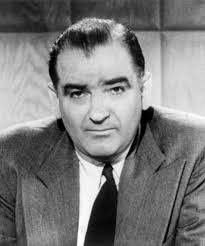
Joseph McCarthy
President Donald J. Trump solicited aid from Russian Communists to win the Presidency in 2016. He solicited aid from Chinese Communists to retain it in 2020. He has attacked countless Americans and world leaders—including those who preside over America’s NATO alliance. Yet the one man he has never even criticized is Russian dictator Vladimir Putin.
Yet faced with such clear-cut evidence, Democrats have refused to directly accuse him of treason.
For example, Democrats could routinely refer to him ad ads as
- “TrumPutin”
- “Commissar-in-Chief”
- “Putin’s Poodle”
- “Red Donald”
- “Putin’s Puppet”
- “Trumpy Traitor.”
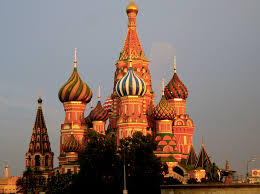
The Kremlin
Opponents of Trump-apologist U.S. Senator Mitch McConnell (R-KY) have effectively dubbed him “Moscow Mitch”—in large part for his accepting at least $4.5 million from a Russian oligarch linked to Putin.
But Trump has gotten a free pass on treason from politicians and news media alike.
Similarly, upon taking office, Trump has acted far more like a dictatorial Henry VIII than a democratically-elected President. Yet here, too, Democrats have failed to capitalize on this obvious truth. They could easily do so through terms like:
- “Carrot Caligula”
- “Fake President”
- “El Dunce.”
Tyrants are conspicuously vulnerable to ridicule. Yet here, too, Democrats have proven unable or unwilling to make use of this powerful weapon.
In this YouTube-obsessed age, Democrats could effectively assail Trump with a series of ridiculing videos. For example, Trump’s well-established “bromance” with Putin could be turned into a parody of the famous Beatles’ song, “With a Little Help From My Friends”:
What do I do when the bank calls me in?
(Does it worry you to be in debt?)
How do I feel when I need rubles fast?
(Do you worry Vlad might say “Nyet”?)
No, I get by with a little help from my Vlad.
Mm, I can lie with a little help from my Vlad.
Mm, you’re gonna fry with a little help from my Vlad.

Many of Trump’s fiercest defenders in the House and Senate have taken “campaign contributions” (i.e., bribes) from Russian oligarchs. They could be pointedly attacked by turning the Muppet song, “The Rainbow Connection,” into “The Russian Connection.”
And Right-wingers taking bribes?
For traitors with something to hide.
And some choose to believe it.
It’s clear as the old KGB.
The bribers, the traitors–you’ll see.
The 2008, “Obama Girl” video was not an attack video. Yet this generated huge interest in his candidacy—especially among young voters. It was funny and offered a catchy tune that, once heard, was impossible to forget.
An equally catchy tune could prove the same for Trump—in a totally different way.
The clash between Trump and porn “star” Stormy Daniels has been replaced by even more salacious scandals. But it could easily be revised through a parody of the Frank Sinatra classic, “Love and Marriage”:
What a couple–they’re so dumb and wormy.
They are, I tell you, brother
A filth that really suits each other.
When his wife’s away, Trump thinks, “Why worry?
And they don’t mind I’m really stinky.”
Trump has repeatedly shown that he does not take well to ridicule. Pouring on enough of it could lead him to a blunder so outrageous that even Republicans might feel obliged to break ranks with him.
Admittedly, late-night comedians like Stephen Colbert and Trevor Noah have inflicted huge comic damage on Trump’s image and ego.
But it’s one thing for a professional comedian to serve up such barbs—and another for a major political party to do so through a series of blistering TV ads.
Humorists could easily provide the material. But it will take Democrats the courage to use it.
2016 PRESIDENTIAL CAMPAIGN, 2016 PRESIDENTIAL ELECTION, 2020 PRESIDENTIAL ELECTION, ABC NEWS, ADOLF HITLER, ALTERNET, AMERICABLOG, AP, BABY BOOMER RESISTANCE, BARACK OBAMA, BERNIE SANDERS, BUZZFEED, CBS NEWS, CNN, COMMUNISM, CROOKS AND LIARS, DAILY KOZ, DAVID BROOKS, DAVID HALBERSTAM, DEMOCRATIC PARTY, DEMOCRATS, DONALD TRUMP, ELIZABETH WARREN, FACEBOOK, FIVETHIRTYEIGHT, HELEN GAHAGAN DOUGLAS, HILLARY CLINTON, HITLER, JEB BUSH, JOHN KASICH, JOSEPH MCCARTHY, JOSEPH R. MCCARTHY, LANGUAGE, LIBERALS, MARCO RUBIO, MARK SHIELDS, MITCH MCCONNELL, MOTHER JONES, MOVEON, MSNBC, NATO, NBC NEWS, NEWSWEEK, NEWT GINGRICH, NOCCOLO MACHIAVELLI, NPR, OBAMA GIRL VIDEO, PBS NEWSHOUR, POLITICO, POLITICUSUSA, RAND PAUL, RAW STORY, REPUBLICAN PARTY, REPUBLICANS, REUTERS, RICHARD NIXON, RICK PERRY, RUSSIA, SALON, SATIRE, SEATTLE TIMES, SLANDER, SLATE, STEPHEN COLBERT, STORMY DANIELS, TALKING POINTS MEMO, TED CRUZ, THE ATLANTIC, THE CHICAGO SUN-TIMES, THE CHICAGO TRIBUNE, THE DAILY BEAST, THE DAILY BLOG, THE GUARDIAN, THE HILL, THE HUFFINGTON POST, THE LOS ANGELES TIMES, THE NATION, THE NEW YORK TIMES, THE PRINCE, THE WASHINGTON POST, THINKPROGRESS, TIME, TREVOR NOAH, TRUTHDIG, TWITTER, U.S. NEWS & WORLD REPORT, UPI, USA TODAY, VLADIMIR PUTIN
In Bureaucracy, History, Politics, Social commentary on December 4, 2019 at 12:42 am
In 1996, Newt Gingrich, then Republican Speaker of the House of Representatives, wrote a memo that encouraged Republicans to “speak like Newt.”
Entitled “Language: A Key Mechanism of Control,” it urged Republicans to attack Democrats with such words as “corrupt,” “selfish,” “destructive,” “hypocrisy,” “liberal,” “sick,” and “traitors.”
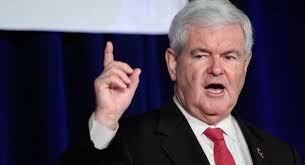
Newt Gingrich
Even worse, Gingrich encouraged the news media to disseminate such accusations. Among his suggestions:
- “Fights make news.”
- Create a “shield issue” to deflect criticism: “A shield issue is, just, you know, your opponent is going to attack you as lacking compassion. You better…show up in the local paper holding a baby in the neonatal center.”
In the memo, Gingrich advised:
“….In the video “We are a Majority,” Language is listed as a key mechanism of control used by a majority party, along with Agenda, Rules, Attitude and Learning.
“As the tapes have been used in training sessions across the country and mailed to candidates we have heard a plaintive plea: ‘I wish I could speak like Newt.’
“That takes years of practice. But, we believe that you could have a significant impact on your campaign and the way you communicate if we help a little. That is why we have created this list of words and phrases….
“This list is prepared so that you might have a directory of words to use in writing literature and mail, in preparing speeches, and in producing electronic media.
“The words and phrases are powerful. Read them. Memorize as many as possible. And remember that like any tool, these words will not help if they are not used.”
Here is the list of words Gingrich urged his followers to use in describing “the opponent, their record, proposals and their party”:
- abuse of power
- anti- (issue): flag, family, child, jobs
- betray
- bizarre
- bosses
- bureaucracy
- cheat
- coercion
- “compassion” is not enough
- collapse(ing)
- consequences
- corrupt
- corruption
- criminal rights
- crisis
- cynicism
- decay
- deeper
- destroy
- destructive
- devour
- disgrace
- endanger
- excuses
- failure (fail)
- greed
- hypocrisy
- ideological
- impose
- incompetent
- insecure
- insensitive
|
- intolerant
- liberal
- lie
- limit(s)
- machine
- mandate(s)
- obsolete
- pathetic
- patronage
- permissive attitude
- pessimistic
- punish (poor …)
- radical
- red tape
- self-serving
- selfish
- sensationalists
- shallow
- shame
- sick
- spend(ing)
- stagnation
- status quo
- steal
- taxes
- they/them
- threaten
- traitors
- unionized
- urgent (cy)
- waste
- welfare
|
Yes, speaking like Newt—or Adolf Hitler or Joseph R. McCarthy—“takes years of practice.”
And to the dismay of both Republicans and Democrats, Donald Trump has learned his lessons well.
On May 27, 2016, conservative New York Times columnist David Brooks analyzed the use of insults by Republican Presidential front-runner Donald Trump. He did so with his counterpart, liberal syndicated columnist, Mark Shields, on The PBS Newshour.
“Trump, for all his moral flaws, is a marketing genius. And you look at what he does. He just picks a word and he attaches it to a person. Little Marco [Rubio], Lyin’ Ted [Cruz], Crooked Hillary [Clinton].
“And that’s a word. And that’s how marketing works. It’s a simple, blunt message, but it gets under.
“It sticks, and it diminishes. And so it has been super effective for him, because he knows how to do that. And she [Hillary Clinton] just comes with, ‘Oh, he’s divisive.’
“These are words that are not exciting people. And her campaign style has gotten, if anything…a little more stagnant and more flat.”
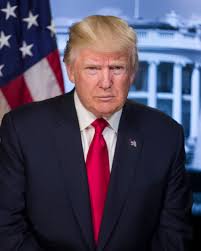
Donald Trump
MARK SHIELDS: “Donald Trump gratuitously slandered Ted Cruz’s wife. He libeled Ted Cruz’s father for being potentially part of Lee Harvey Oswald’s assassination of the president of the United States, suggesting that he was somehow a fellow traveler in that.
“This is a libel. You don’t get over it….”
Hillary Clinton wasn’t the only Presidential candidate who proved unable to cope with Trump’s gift for insult. His targets—and insults—included:
- Former Texas Governor Rick Perry: “Wears glasses to seem smart.”
- Former Florida Governor Jeb Bush: “Low Energy Jeb.”
- Vermont U.S. Senator Bernie Sanders: “Crazy Bernie.”
- Ohio Governor John Kasich: “Mathematically dead and totally desperate.”
Trump has reserved his most insulting words for women. For example:
- Carly Fiorina, his Republican primary competitor: “Look at that face. Would anyone vote for that?”
- Megyn Kelly, Fox News reporter: “You could see there was blood coming out of her eyes. Blood coming out of her wherever.”
- California Rep. Maxine Waters: “An extremely low IQ person.”
- Speaker of the House Nancy Pelosi: “MS-13 Lover Nancy Pelosi.”
Only one candidate has shown the ability to rattle Trump: Massachusetts Senator Elizabeth Warren.
As Mark Shields noted on The PBS Newshour.
“Elizabeth Warren gets under Donald Trunp’s skin. And I think she’s been the most effective adversary. I think she’s done more to unite the Democratic party than either Hillary Clinton or Bernie Sanders.
“I mean, she obviously—he can’t stay away from her. He is tweeting about her.”
And David Brooks offered: “And so the tactics…is either you do what Elizabeth Warren has done, like full-bore negativity, that kind of [get] under the skin, or try to ridicule him and use humor.”
A May 12, 2016 story on CNN—“Elizabeth Warren Gives Trump a Dose of His Own Medicine on Twitter”—noted: “Whenever Trump criticizes her, Warren fires right back at him, sometimes twice as hard.”
2016 PRESIDENTIAL CAMPAIGN, ABC NEWS, ALTERNET, AP, BUZZFEED, CBS NEWS, CIA, CNN, CRAIG UNGER, CROOKS AND LIARS, DAILY KOZ, DONALD TRUMP, DONALD TRUMP JR., FACEBOOK, FBI, GREG MILLER, HILLARY CLINTON, HOUSE OF TRUMP HOUSE OF PUTIN (BOOK), ISLAMIC STATE OF IRAQ AND SYRIA (ISIS), ISRAELI INTELLIGENCE, JARED KUSHNER, LINDSEY GRAHAM, MICHAEL FLYNN, MOTHER JONES, MOVEON, MSNBC, NATALIA VESELNITSKAYA, NBC NEWS, NEWSWEEK, NPR, POLITICO, RAW STORY, REPUBLICAN PARTY, REPUBLICANS, REUTERS, RUSSIA, SALON, SEATTLE TIMES, SLATE, THE APPRENTICE (BOOK), THE ATLANTIC, THE CHICAGO SUN-TIMES, THE CHICAGO TRIBUNE, THE DAILY BEAST, THE GUARDIAN, THE HILL, THE HUFFINGTON POST, THE LOS ANGELES TIMES, THE NATION, THE NEW YORK TIMES, THE WASHINGTON POST, TIME, TREASON, TRUMP TOWER MEETING, TWITTER, U.S. NEWS & WORLD REPORT, UNITED STATES DEPARTMENT OF STATE, UPI, USA TODAY, VLADIMIR PUTIN
In Bureaucracy, Business, History, Politics, Social commentary on December 3, 2019 at 12:07 am
Once you have decided on a treason,
Sign on with a man named Donald Trump.
And when you find your hatred is a reason,
Then on your country you can take a dump.
There really isn’t any need for worry,
Just do it and then go ahead and lie.
Like giving Russians secrets in the White House,
And that avoids those pests named “F.B.I.”
President Donald J. Trump has been repeatedly accused of having a decades-long relationship with Russian President Vladimir Putin and the Russian Mafia.
He has just as repeatedly denied it.
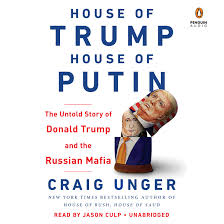
But author Craig Unger vividly documents those ties in House of Trump, House of Putin: The Untold Story of Donald Trump and the Russian Mafia.
According to its dust jacket, Trump’s inauguration was “the culmination of Vladimir Putin’s long mission to undermine Western democracy, a mission that he and his hand-selected group of oligarchs and Mafia kingpins had ensnared Trump in, starting more than twenty years ago with the massive bailout of a string of sensational Trump hotel and casino failures in Atlantic City.

“…Craig Unger methodically traces the deep-rooted alliance between the highest echelons of American political operatives and the biggest players in the frightening underworld of the Russian Mafia. He traces Donald Trump’s sordid ascent from foundering real estate tycoon to leader of the free world….
“Without Trump, Russia would have lacked a key component in its attempts to return to imperial greatness. Without Russia, Trump would not be president.”
Yes, treason isn’t something that comes easy.
It’s an act that makes most people want to gag.
But you can earn those rubles that you long for
And the Right will back you up and wave the flag.
‘Cause it’s treason by numbers, 1, 2, 3,
It’s as easy to do as your G.O.P.
Treason by numbers, 1, 2, 3,
It’s as easy to do as your G.O.P.
Another book documenting the unholy alliance between Trump and Russian oligarchs is The Apprentice: Trump, Russia and the Subversion of Democracy by Greg Miller.
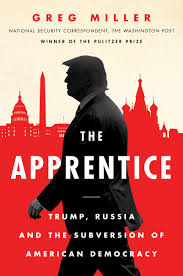
Among the subjects it covers:
- The Trump Tower meeting, where the Trump campaign sought “dirt” on Hillary Clinton from Russian Intelligence agents.
- The penetration by Russian Intelligence of computer systems used by Democrats.
- How Jared Kushner, Trump’s son-in-law, tried to set up a secret back channel to Moscow via Russian diplomatic facilities.
- Trump’s giving Russian officials highly classified secrets supplied by Israeli Intelligence;
- Trump’s clashes with the FBI and CIA.
Miller is a veteran investigative journalist and twice winner of the Pulitzer Prize. Among his stories: National security adviser Michael Flynn’s discussing U.S. sanctions with Russian officials prior to Trump’s inauguration. The story contributed to Flynn’s ouster.
Trump is the most prominent Republican to have sold out his country for Russian monies. But he’s far from being the only one.
Senator Lindsey Graham (R-SC), a rabid defender of Trump, is another.
Graham has received at least $800,000 in campaign donations from Len Blavatnik, an oil oligarch with ties to Putin.
According to the Dallas Morning News, Blavatnik was “one of the largest donors to GOP Political Action Committees (PACs) in the 2015-16 election cycle.”
His net worth has been estimated at $20 billion.
The Federal Election Commission reveals that Blavatnik’s campaign contributions in 2009-10 were divided along party lines. During that season he contributed $53,400.
In 2011-12 his contributions remained bipartisan and increased to $135,552. In 2013-14 they rose to $273,600 and went to Democrats and Republicans.
Then, in 2015-16, Blavatnik pumped $6.35 million into GOP PACs.
In 2017, he gave millions of dollars to top Republican leaders. Among his biggest recipients: Senator Mitch McConnell (KY), Senator Marco Rubio (FLA) and Lindsey Graham.
Specifically, Blavatnik contributed:
- A total of $1.5 million to PACs associated with Rubio.
- $1 million to Trump’s Inaugural Committee.
- $1 million to McConnell’s Senate Leadership Fund.
- $3.5 million to a PAC associated with McConnell.
- $1.1 million to Unintimidated PAC, associated with Wisconsin Governor Scott Walker.
- $200,000 to the Arizona Grassroots Action PAC, associated with Arizona Senator John McCain.
- $250,000 to New Day for America PAC, associated with Ohio Governor John Kasich.
- $800,000 went to the Security is Strength PAC, associated with Senator Lindsey Graham.
The Kremlin
Graham’s PAC received $500,000 in May, 2015, from Blavatnik’s company, Access Industries. This was just before Trump declared his candidacy for President.
Blavatnik gave $300,000 more to Graham in October 2015, long after Graham had ceased to be a viable candidate for the GOP Presidential nomination.
Blavatnik donated another $57,000 to Graham’s campaign directly. The Senator’s campaign later returned $13,500.
Graham abandoned his 2016 campaign for president on December 21, 2015.
A Ukrainian food industry executive who once worked for the sanctioned Russian bank, Sberbank, also made large donations to Graham’s presidential campaign.
Now you can join the list of Right-wing traitors
In history’s dark and evil hall of shame.
Their ranks are filled with greedy, racist haters.
At least the ones that we all know by name.
But if you can con you way into the White House
If you become the leader of the land,
Then treason is the sport of the elected,
And Republicans will give you a big hand.
‘Cause it’s treason by numbers,1, 2, 3,
It’s as easy to do as your G.O.P.
Treason by numbers, 1, 2, 3,
It’s as easy to do
As your God-damned G.O.P.
2016 PRESIDENTIAL CAMPAIGN, ABC NEWS, ADAM SCHIFF, ALTERNET, AP, BUZZFEED, CBS NEWS, CNN, CROOKS AND LIARS, DAILY KOZ, DONALD TRUMP, DONALD TRUMP JUNIOR, FACEBOOK, FBI, GRU (RUSSIAN MILITARY INTELLIGENCE), HILLARY CLINTON, HOUSE INTELLIGENCE COMMITTEE, HOUSE OF REPRESENTATIVES, HOUSE PERMANENT SELECT COMMITTEE ON INTELLIGENCE, JARED KUSHNER, JULIUS CAESAR, JULIUS CAESAR (PLAY), KELLEYANNE CONWAY, KEVIN MCCARTHY, LINDSEY GRAHAM, MARCUS BRUTUS, MARK ANTONY, MIKE CONAWAY, MOTHER JONES, MOVEON, MSNBC, MUELLER REPORT, NBC NEWS, NEWSWEEK, NPR, PAUL MANAFORT, PBS NEWSHOUR, POLITICO, RAW STORY, REPUBLICANS, REUTERS, ROBERT MUELLER, RONNA MCDANIEL, RUSSIA, SALON, SEATTLE TIMES, SLATE, SUBVERSION, THE ATLANTIC, THE CHICAGO SUN-TIMES, THE CHICAGO TRIBUNE, THE DAILY BEAST, THE GUARDIAN, THE HILL, THE HUFFINGTON POST, THE LOS ANGELES TIMES, THE NATION, THE NEW YORK TIMES, THE WASHINGTON POST, TIME, TREASON, TWITTER, U.S. NEWS & WORLD REPORT, UPI, USA TODAY, WIKILEAKS, WILLIAM BAR, WILLIAM SHAKESPEARE
In Bureaucracy, Entertainment, History, Politics, Social commentary on November 27, 2019 at 12:07 am
On March 24, 2019, Attorney General William Barr received the long-awaited report by Special Counsel Robert Mueller about Russian efforts to subvert the 2016 Presidential election.
According to Barr, the report—which no one else in the government had seen—showed no evidence that President Donald Trump had colluded with Russian Intelligence agents.
And now House Republicans—acting entirely on that claim—suddenly went on the offensive.
On March 28, all nine Republicans on the House Permanent Select Committee on Intelligence demanded in a letter that Representative Adam Schiff (D-California) resign as its chairman.
On the same day, President Donald Trump tweeted: “Congressman Adam Schiff, who spent two years knowingly and unlawfully lying and leaking, should be forced to resign from Congress!”
Other Republicans quickly joined the chorus:
- House Minority Leader Kevin McCarthy (R-California): Schiff owes “an apology to the American public” and should step down from his post as head of the Intelligence committee.
- Republican National Committee Chairwoman Ronna McDaniel: “They [Schiff and House Judiciary Chairman Jerry Nadler, D-New York] should be removed from their chairmanships. They owe the American people an apology. They owe this President an apology, and they have work to do to heal this democracy because this is our country we are talking about.”
- South Carolina Senator Lindsey Graham: “He’s getting into conspiracy land and he’s acting like an Oliver Stone type figure. That to me is not helpful to him but I’m not going to ask him to resign from Congress.”
- White House Adviser Kelleyanne Conway: “He’s been on every TV show 50 times a day for practically the last two years, promising Americans that this President would either be impeached or indicted. He has no right, as somebody who has been peddling a lie, day after day after day, unchallenged. Unchallenged and not under oath. Somebody should have put him under oath and said, ‘You have evidence, where is it?’”
On March 28, Schiff—speaking in a firm and controlled voice—addressed his critics in the House and beyond.
It was a speech worthy of the one William Shakespeare put into the mouth of Mark Antony at the funeral of Julius Caesar.

Adam Schiff
“My colleagues may think it’s okay that the Russians offered dirt on the Democratic candidate for President as part of what was described as ‘the Russian government’s effort to help the Trump campaign.’ You might think that’s okay.
“My colleagues might think it’s okay that when that was offered to the son of the President, who had a pivotal role in the campaign, that the President’s son did not call the FBI, he did not adamantly refuse that foreign help. No, instead that son said that he would ‘love’ the help of the Russians. You might think it’s okay that he took that meeting.
“You might think it’s okay that Paul Manafort, the campaign chair, someone with great experience running campaigns, also took that meeting.
“You might think it’s okay that the President’s son-in-law also took that meeting.
“You might think it’s okay that they concealed it from the public.
“You might think it’s okay that their only disappointment after that meeting was that the dirt they received on Hillary Clinton wasn’t better. You might think that’s okay.![]()
![]()
![]()
“You might think it’s okay that when it was discovered a year later that they’d lied about that meeting and said it was about adoptions, you might think it’s okay that the President is reported to have helped dictate that lie. You might think that’s okay. I don’t.
![]()
“You might think it’s okay that the Presidential chairman of a campaign would offer information about that campaign to a Russian in exchange for money or debt forgiveness. You might think that’s okay. I don’t.
“You might think it’s okay that campaign chairman offered polling data, campaign polling data to someone linked to Russian intelligence. I don’t think that’s okay.
“You might think it’s okay that the President himself called on Russia to hack his opponent’s emails, ‘if they were listening.’
“You might think it’s okay that later that day, in fact, the Russians attempted to hack a server affiliated with that campaign. I don’t think that’s okay.
“You might think that it’s okay that the President’s son-in-law sought to establish a secret back channel of communications with the Russians through a Russian diplomatic facility. I don’t think that’s okay.
“You might think it’s okay that an associate of the President made direct contact with the GRU [the Russian military Intelligence agency] through Guccifer 2 and Wikileaks, that is considered a hostile Intelligence agency.
“You might think that it’s okay that a senior campaign official was instructed to reach that associate and find out what that hostile Intelligence agency had to say, in terms of dirt on his opponent.
“You might think it’s okay that the National Security Adviser-Designate [Mike Flynn] secretly conferred with the Russian ambassador about undermining U.S. sanctions, and you might think it’s okay he lied about it to the FBI. You might say that’s all okay.
“You might say that’s just what you need to do to win, but I don’t think it’s okay. I think it’s immoral. I think it’s unethical. I think it’s unpatriotic. And yes, I think it’s corrupt and evidence of collusion.”
Not one Republican dared challenge even one accusation Schiff had made.
2016 PRESIDENTIAL CAMPAIGN, ABC NEWS, ADAM SCHIFF, ALTERNET, AP, BUZZFEED, CBS NEWS, CNN, CROOKS AND LIARS, DAILY KOZ, DONALD TRUMP, FACEBOOK, HOUSE INTELLIGENCE COMMITTEE, HOUSE OF REPRESENTATIVES, HOUSE PERMANENT SELECT COMMITTEE ON INTELLIGENCE, JULIUS CAESAR, JULIUS CAESAR (PLAY), MARCUS BRUTUS, MARK ANTONY, MIKE CONAWAY, MOTHER JONES, MOVEON, MSNBC, MUELLER REPORT, NBC NEWS, NEWSWEEK, NPR, PBS NEWSHOUR, POLITICO, RAW STORY, REPUBLICANS, REUTERS, ROBERT MUELLER, RUSSIA, SALON, SEATTLE TIMES, SLATE, SUBVERSION, THE ATLANTIC, THE CHICAGO SUN-TIMES, THE CHICAGO TRIBUNE, THE DAILY BEAST, THE GUARDIAN, THE HILL, THE HUFFINGTON POST, THE LOS ANGELES TIMES, THE NATION, THE NEW YORK TIMES, THE WASHINGTON POST, TIME, TWITTER, U.S. NEWS & WORLD REPORT, UPI, USA TODAY, WILLIAM BAR, WILLIAM SHAKESPEARE
In Bureaucracy, Entertainment, History, Law, Politics, Social commentary on November 26, 2019 at 12:15 am
“Friends, Romans, countrymen—lend me your ears!”
It’s the opening line of a speech once widely memorized by schoolboys in English literature classes. It’s from William Shakespeare’s “Julius Caesar,” and it’s a far more sophisticated piece of writing than most people realize.
Mark Antony, addressing a crowd of Romans at the funeral of his former patron, Julius Caesar, faces a serious problem.
Caesar has been murdered by a band of conspirators who feared he intended to make himself king. The chief conspirator, Marcus Brutus, is one of the most honored men in ancient Rome. And he has just addressed the same crowd.
As a result, they are now convinced that the assassination was fully justified. They assume that Antony intends to attack the conspirators. And they are ready to attack him—maybe physically—if he does.
But Antony is too smart to do that—at least initially.
Instead, he assures the crowd: “I come to bury Caesar, not to praise him.”
And he praises the chief conspirator: “The noble Brutus hath told you Caesar was ambitious. If so, it was a grievous fault—and grievously hath Caesar answered it.”
Then he introduces a line he will repeat with great effectiveness throughout the rest of his speech: “For Brutus is an honorable man—so are they all, all honorable men.”

The “Death of Julius Caesar,” as depicted by Vincenzo Camuccini.
For Antony, the line is ironic. But it serves his purpose to appease the crowd. Later, he will wield it like a sword against the same conspirators.
“He was my friend, faithful and just to me.” And then: “But Brutus says he was ambitious, and Brutus is an honorable man.”
Antony then goes on to extol Caesar as the foremost Roman of his time:
- As a military victor: “You all do know this mantle. I remember the first time ever Caesar put it on. ‘Twas on…that day he overcame the Nervii.”
- As a humanitarian: “When that the poor hath cried, Caesar hath wept.”
And then, as if against his better judgment, he says: “But here’s a parchment with the seal of Caesar. I found it in his closet—’tis his will. Let but the commons hear this testament—which, pardon me, I do not mean to read—and they would go and kiss dead Caesar’s wounds.”
This inflames the crowd’s curiosity and greed: What has Caesar left them? And Antony’s refusing to read the alleged will only makes them determined to hear it.
Now the crowd is entirely at Antony’s disposal. They hurl abuse at the conspirators: “They were traitors!” “They were villains, murderers!”
So Antony, claiming to read Caesar’s will, pronounces: “To every Roman citizen he gives…seventy-five drachmas.”
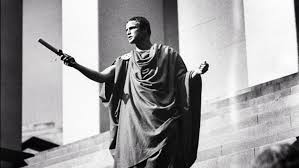
Marlon Brando as Mark Antony in the 1953 film, “Julius Caesar”
Is this truly Caesar’s will? And, if so, does it really make this bequest? No one knows.
In addition, claims Antony, Caesar has left his fellow citizens “his private arbours and new-planted orchards on this side Tiber. He hath left them you, and to your heirs forever, common pleasures, to walk abroad, and recreate yourselves.”
By now the crowd is fired up—against the conspirators.
“Here was a Caesar!” cries Antony. “When comes such another?”
A citizen shouts: “We’ll burn [Caesar’s] body in the holy place. And with the brands fire the traitors’ houses.”
The crowd disperses—to pay fiery homage to Caesar and burn the houses of Brutus and the other conspirators.
Caesar’s assassins flee Rome for their lives. In time, they will face the legions of Antony and Octavian, the young nephew of Caesar—and choose suicide over capture and execution.
Apparently Rep. Adam Schiff (D-California) is familiar with Shakespeare’s play.
Because, on March 28, 2019, he used the same repetitive technique in addressing his “Republican colleagues” on the House Permanent Select Committee on Intelligence.
Days earlier, Attorney General William Barr had claimed to summarize the long-awaited report by Special Counsel Robert Mueller about Russian efforts to subvert the 2016 Presidential election.
According to Barr, the report—which no one else in the government had seen—showed no evidence that President Donald Trump had colluded with Russian Intelligence agents.
And now House Republicans—acting entirely on that claim—were going on the offensive.
On March 28, Rep. Mike Conaway (R-Texas) and all other eight Republicans on the Committee demanded in a letter that Schiff resign as its chairman.
“Mr. Chairman,” the letter read, “since prior to the inauguration of President Trump in January 2017, you’ve been at the center of a well-orchestrated media campaign claiming, among other things, that the Trump campaign colluded with the Russian government.
“On March 24, 2019, the special counsel delivered his findings to the Department of Justice….The special counsel’s investigation did not find that the Trump campaign or anyone associated with it conspired or coordinated with Russia in its efforts to influence the 2016 election….
“Despite these findings, you continue to proclaim to the media that there is ‘significant evidence of collusion.’
“The findings of the Special Counsel conclusively refute your past and present conclusions and have exposed you as having abused your position to knowingly promote false information, having damaged the integrity of this Committee, and undermined faith in U.S. Government institutions.”
2016 PRESIDENTIAL CAMPAIGN, ABC NEWS, ALTERNET, AMERICABLOG, AP, APPLE CORPORATION, BABY BOOMER RESISTANCE, BUZZFEED, CBS NEWS, CHINA, CNN, CROOKS AND LIARS, DAILY KOZ, DARIUS ADAMCZYK, EMPLOYERS RESPONSIBILITY ACT, FACEBOOK, FIVETHIRTYEIGHT, HILLARY CLINTON, HONEYWELL INTERNATIONAL, JOHN DIVINE, MERGERS AND ACQUISITIONS, MEXICO, MICHIGAN, MOODY’S INVESTORS SERVICE, MOTHER JONES, MOVEON, MSNBC, NBC NEWS, NEWSWEEK, NPR, OUTSOURCING, PBS NEWSHOUR, PENNSYLVANIA, POLITICO, POLITICUSUSA, POPULISM, RAW STORY, REUTERS, Ronald Reagan, RUSTBELT STATES, S&P 500 COMPANIES, SALON, SEATTLE TIMES, SLATE, SUPPLY SIDE ECONOMICS, TALKING POINTS MEMO, TAX CUTS, THE ATLANTIC, THE CHICAGO SUN-TIMES, THE CHICAGO TRIBUNE, THE DAILY BEAST, THE DAILY BLOG, THE GUARDIAN, THE HILL, THE HUFFINGTON POST, THE LOS ANGELES TIMES, THE NATION, THE NEW YORK TIMES, THE WASHINGTON POST, THINKPROGRESS, TIM COOK, TIME, TRICKLE-DOWN ECONOMICS, TRUTHDIG, TWITTER, U.S. NEWS & WORLD REPORT, UPI, USA TODAY
In Bureaucracy, Business, History, Law, Law Enforcement, Politics, Social commentary on November 18, 2019 at 12:30 am
Among the provisions of a nationwide Employers Responsibility Act:
(5) Employers would be required to provide full medical and pension benefits for all employees, regardless of their full-time or part-time status.
Increasingly, employers are replacing full-time workers with part-time ones—solely to avoid paying medical and pension benefits.
Requiring employers to act humanely and responsibly toward all their employees would encourage them to provide full-time positions—and hasten the death of this greed-based practice.
(6) Employers of part-time workers would be required to comply with all federal labor laws.
Under current law, part-time employees are not protected against such abuses as discrimination, sexual harassment and unsafe working conditions. Closing this loophole would immediately create two positive results:
- Untold numbers of currently-exploited workers would be protected from the abuses of predatory employers; and
- Even predatorily-inclined employers would be encouraged to offer permanent, fulltime jobs rather than only part-time ones—since a major incentive for offering part-time jobs would now be eliminated.
(7) Employers would be encouraged to hire to their widest possible limits,through a combination of financial incentives and legal sanctions. Among those incentives:
Employers demonstrating a willingness to hire would receive substantial Federal tax credits, based on the number of new, permanent employees hired per year.
Employers claiming eligibility for such credits would be required to make their financial records available to Federal investigators. Employers found making false claims would be prosecuted for perjury and tax fraud, and face heavy fines and imprisonment if convicted.
(8) Among those sanctions: Employers refusing to hire could be required to prove, in court:
- Their economic inability to hire further employees, and/or
- The unfitness of the specific, rejected applicant.
Companies found guilty of unjustifiably refusing to hire would face the same penalties as now applying in cases of discrimination on the basis of age, race, sex and disability.
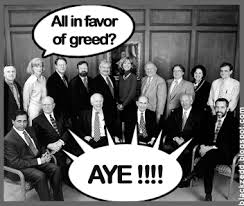
Two benefits would result from this:
- Employers would thus fund it easier to hire than to refuse to do so; and
- Job-seekers would no longer be prevented from even being considered for employment because of arbitrary and interminable “hiring freeze.”
(9) Employers refusing to hire would be required to pay an additional “crime tax.”
Sociologists and criminologists agree that “the best cure for crime is a job.” Thus, employers who refuse to hire contribute to a growing crime rate in this Nation. Such non-hiring employers would be required to pay an additional tax, which would be earmarked for agencies of the criminal justice system at State and Federal levels.
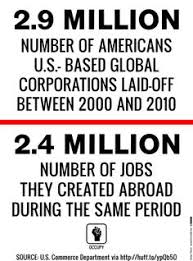
(10) The seeking of “economic incentives” by companies in return for moving to or remaining in cities/states would be strictly forbidden.
Such “economic incentives” usually:
- allow employers to ignore existing laws protecting employees from unsafe working conditions;
- allow employers to ignore existing laws protecting the environment;
- allow employers to pay their employees the lowest acceptable wages, in return for the “privilege” of working at these companies; and/or
- allow employers to pay little or no business taxes, at the expense of communities who are required to make up for lost tax revenues.
(11) Employers who continue to make such overtures would be criminally prosecuted for attempted bribery or extortion:
- Bribery, if they offered to move to a city/state in return for “economic incentives,” or
- Extortion, if they threatened to move their companies from a city/state if they did not receive such “economic incentives.”
This would protect employees against artificially-depressed wages and unsafe working conditions; protect the environment in which these employees live; and protect cities/states from being pitted against one another at the expense of their economic prosperity.
* * * * *
For thousands of years, otherwise highly intelligent men and women believed that kings ruled by divine right. That kings held absolute power, levied extortionate taxes and sent countless millions of men off to war—all because God wanted it that way.
That lunacy was dealt a deadly blow in 1776 when American Revolutionaries threw off the despotic rule of King George III of England.
But today, millions of Americans remain imprisoned by an equally outrageous and dangerous theory: The Theory of the Divine Right of Employers.

Summing up this employer-as-God attitude, Calvin Coolidge still speaks for the overwhelming majority of employers and their paid shills in government: “The man who builds a factory builds a temple, and the man who works there worships there.”
America can no longer afford such a dangerous fallacy as the Theory of the Divine Right of Employers.
Americans did not win their freedom from Great Britain—and its enslaving doctrine of “the divine right of kings”—-by begging for their rights.
And Americans will not win their freedom from their corporate masters–-and the equally enslaving doctrine of “the divine right of employers”—-by begging for the right to work and support themselves and their families.
Corporations can—and do—spend millions of dollars on TV ads, selling lies—lies such as the “skills gap,” and how if the wealthy are forced to pay their fair share of taxes, jobs will inevitably disappear.
But Americans can choose to reject those lies—and demand that employers behave like patriots instead of predators.
2016 PRESIDENTIAL CAMPAIGN, ABC NEWS, ALTERNET, AMERICABLOG, AP, APPLE CORPORATION, BABY BOOMER RESISTANCE, BUZZFEED, CBS NEWS, CHINA, CNN, CROOKS AND LIARS, DAILY KOZ, DARIUS ADAMCZYK, EMPLOYERS RESPONSIBILITY ACT, FACEBOOK, FIVETHIRTYEIGHT, HILLARY CLINTON, HONEYWELL INTERNATIONAL, JOHN DIVINE, MERGERS AND ACQUISITIONS, MEXICO, MICHIGAN, MOODY’S INVESTORS SERVICE, MOTHER JONES, MOVEON, MSNBC, NBC NEWS, NEWSWEEK, NPR, OUTSOURCING, PBS NEWSHOUR, PENNSYLVANIA, POLITICO, POLITICUSUSA, POPULISM, RAW STORY, REUTERS, Ronald Reagan, RUSTBELT STATES, S&P 500 COMPANIES, SALON, SEATTLE TIMES, SLATE, SUPPLY SIDE ECONOMICS, TALKING POINTS MEMO, TAX CUTS, THE ATLANTIC, THE CHICAGO SUN-TIMES, THE CHICAGO TRIBUNE, THE DAILY BEAST, THE DAILY BLOG, THE GUARDIAN, THE HILL, THE HUFFINGTON POST, THE LOS ANGELES TIMES, THE NATION, THE NEW YORK TIMES, THE WASHINGTON POST, THINKPROGRESS, TIM COOK, TIME, TRICKLE-DOWN ECONOMICS, TRUTHDIG, TWITTER, U.S. NEWS & WORLD REPORT, UPI, USA TODAY
In Bureaucracy, Business, History, Law, Law Enforcement, Politics, Social commentary on November 15, 2019 at 12:36 am
Ronald Reagan, like every major Republican Presidential candidate since, promised that giving tax cuts to the wealthy would prove highly beneficial to ordinary workers.
The official name for this policy was “supply side economics.” In reality, it was known—and functioned—as “trickle down economics.” And among the actions Reagan took to enforce it:
- On January 28, 1981, keeping a pledge to his financial backers in the oil industry, Reagan abolished Federal controls on the price of oil.
- Within a week, Exxon, Texaco and Shell raised gasoline prices and prices of home heating oil.
- Reagan saw it as his duty to put a floor under prices, not a ceiling above them.
- Reagan believed that when government helped business it wasn’t interfering. Loaning money to bail out a financially incompetent Chrysler was “supporting the free enterprise system.”
- But putting a high-profits tax on price-gouging corporations or filing anti-trust suits against them was “Communistic” and therefore intolerable.
- Tax-breaks for wealthy businesses meant helping America become stronger.
- But welfare for the poor or the victims of a predatory marketplace economy weakened America by sapping its morale.
To be unemployed in America is considered by most Americans—including the unemployed—the same as being a bum.
And Republicans are quick to point accusing fingers at those willing-to-work Americans who can’t find willing-to-hire employers.
According to Republicans such as Mitt Romney and Herman Cain: If you can’t find a job, it’s entirely your fault. Employers, on the other hand, are not legally or even morally expected to provide jobs for those willing and able to work.
But America can put an end to this disgraceful situation.
The answer lies in three words: Employers Responsibility Act (ERA).
If passed by Congress and vigorously enforced by the U.S. Departments of Justice and Labor, an ERA would ensure full-time, permanent and productive employment for millions of capable, job-seeking Americans.
And it would achieve this without raising taxes or creating controversial government “make work” programs.
Such legislation would legally require employers to demonstrate as much initiative for hiring as job-seekers are now expected to show in searching for work. 
An ERA would simultaneously address the following evils for which employers are directly responsible:
- The loss of jobs within the United States owing to companies’ moving their operations abroad—solely to pay substandard wages to their new employees.
- The mass firings of employees which usually accompany corporate mergers or acquisitions.
- The widespread victimization of part-time employees, who are not legally protected against such threats as racial discrimination, sexual harassment and unsafe working conditions.
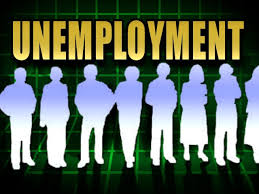
- The refusal of many employers to create better than menial, low-wage jobs.
- The widespread employer practice of extorting “economic incentives” from cities or states in return for moving to or remaining in those areas. Such “incentives” usually absolve employers from complying with laws protecting the environment and/or workers’ rights.
- The refusal of many employers to provide medical and pension benefits—nearly always in the case of part-time employees, and, increasingly, for full-time, permanent ones as well.
- Rising crime rates, due to rising unemployment.
Among its provisions:
(1) American companies that close plants in the United States and open others abroad would be forbidden to sell products made in those foreign plants within the United States.
This would protect both American and foreign workers from employers seeking to profit at their expense. American workers would be ensured of continued employment. And foreign laborers would be protected against substandard wages and working conditions.
Companies found violating this provision would be subject to Federal criminal prosecution. Guilty verdicts would result in heavy fines and lengthy imprisonment for their owners and top managers.
(2) Large companies (those employing more than 100 persons) would be required to create entry-level training programs for new, future employees.
These would be modeled on programs now existing for public employees, such as firefighters, police officers and members of the armed services.
Such programs would remove the employer excuse, “I’m sorry, but we can’t hire you because you’ve never had any experience in this line of work.” After all, the Air Force has never rejected an applicant because, “I’m sorry, but you’ve never flown a plane before.”
This Nation has greatly benefited from the humane and professional efforts of the men and women who have graduated from public-sector training programs. There is no reason for the private sector to shun programs that have succeeded so brilliantly for the public sector.
(3) Employers would receive tax credits for creating professional, well-paying, full-time jobs.
This would encourage the creation of better than the menial, dead-end, low-paying and often part-time jobs which exist in the service industry. Employers found using such tax credits for any other purpose would be prosecuted for tax fraud.
(4) A company that acquired another—through a merger or buyout—would be forbidden to fire en masse the career employees of that acquired company.
This would be comparable to the protection existing for career civil service employees. Such a ban would prevent a return to the predatory “corporate raiding” practices of the 1980s, which left so much human and economic wreckage in their wake.
2016 PRESIDENTIAL CAMPAIGN, ABC NEWS, ALTERNET, AMERICA INSIDE OUT (BOOK), AMERICABLOG, AP, APPLE CORPORATION, BABY BOOMER RESISTANCE, BUZZFEED, CBS NEWS, CELINDA LAKE, CHINA, CNN, CROOKS AND LIARS, DAILY KOZ, DARIUS ADAMCZYK, DAVID SHOENBRUN, DONALD TRUMP, DRUG-TESTING, EMPLOYERS RESPONSIBILITY ACT, FACEBOOK, FISHER INVESTMENTS, FIVETHIRTYEIGHT, FORBES MAGAZINE, HILLARY CLINTON, HONEYWELL INTERNATIONAL, JOHN DIVINE, KENNETH FISHER, MEDICAL INSURANCE, MERGERS AND ACQUISITIONS, MEXICO, MICHIGAN, MOODY’S INVESTORS SERVICE, MOTHER JONES, MOVEON, MSNBC, NBC NEWS, NEWSWEEK, NPR, OUTSOURCING, PBS NEWSHOUR, PENNSYLVANIA, POLITICO, POLITICUSUSA, POPULISM, RAW STORY, REPUBLICANS, REUTERS, Ronald Reagan, RUSTBELT STATES, S&P 500 COMPANIES, SALON, SEATTLE TIMES, SLATE, SUPPLY SIDE ECONOMICS, TALKING POINTS MEMO, TAX CUTS, TAX CUTS AND JOBS ACT OF 2017, THE ATLANTIC, THE CHICAGO SUN-TIMES, THE CHICAGO TRIBUNE, THE DAILY BEAST, THE DAILY BLOG, THE GUARDIAN, THE HILL, THE HUFFINGTON POST, THE LOS ANGELES TIMES, THE NATION, THE NEW YORK TIMES, THE WASHINGTON POST, THINKPROGRESS, TIM COOK, TIME, TRICKLE-DOWN ECONOMICS, TRUTHDIG, TWITTER, U.S. NEWS & WORLD REPORT, UNEMPLOYMENT, UP, UPI, USA TODAY, WAL-MART, WEALTH GAP
In Bureaucracy, Business, History, Law, Law Enforcement, Politics, Social commentary on November 14, 2019 at 12:08 am
During the 2016 Presidential campaign, Donald Trump assumed a role that utterly confounded his Democratic opponent, Hillary Clinton.
He adopted the role of a populist, appealing to blue-collar voters. He visited “Rustbelt” states like Michigan and Pennsylvania and vowed to “bring back” jobs that had been lost to China, such as those in coal mining and manufacturing
Clinton, on the other hand, made two deadly mistakes:
First, she offered a “love-your-CEO” economic plan to the unemployed—and suffered for it.
And, second, she didn’t deign to visit those “Rustbelt” states, assuming she had them “locked up.”
Most economists agree that, in a globalized economy, such jobs are not coming back, no matter who becomes President.
Even so, voters backed the man who came to promise them a better future, and shunned the woman who didn’t come to promise them any future at all.
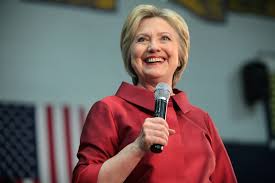
Hillary Clinton (Gage Skidmore photo)
In May, 2016, Democratic pollster CeLinda Lake had warned Clinton to revamp her economic platform. Clinton ignored the advice.
“Democrats simply have to come up with a more robust economic frame and message,” Lake said after the election. “We’re never going to win those white, blue-collar voters if we’re not better on the economy. And 27 policy papers and a list of positions is not a frame. We can laugh about it all we want, but Trump had one.”
Had Clinton offered struggling or unemployed workers a realistic plan for turning their lives around, the 2016 election might well have had a different ending.
But, since winning the White House, Trump has not been able to “bring back jobs” lost to corporations’ “outsourcing” to countries like China and Mexico.
Nor have huge tax cuts for corporations resulted in large-scale hiring. He claimed that, with this extra income, CEOs would invest in their businesses and create tens of thousands of new jobs. And through his Tax Cuts and Jobs Act of 2017, which Republicans rammed through Congress, the corporate income tax rate has been slashed from 35% to 21%.
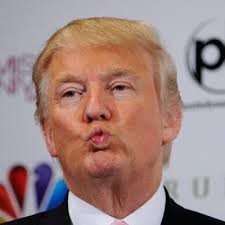
Donald Trump
But that’s not what some of the biggest S&P 500 companies predicted they would do if they got those tax cuts. The people they wanted to please were investors, not workers. And, least of all, those seeking work but unable to find employers willing to hire.
Darius Adamczyk, CEO of Honeywell International Inc., said “tax reform” would “offer greater flexibility for Honeywell.” He added that the corporation would invest more cash in the United States to pay for mergers and acquisitions, share buybacks and paying down debt.
He didn’t say anything about hiring more workers.
According to Moody’s Investors Service, American corporations have stockpiled nearly $1.8 trillion in cash overseas.
Apple has more than $240 billion of that total.
Apple’s CEO Tim Cook said the company wanted to bring back offshore cash if tax rates for doing so were lower: “What we would do with it, let’s wait and see exactly what it is, but as I’ve said before we are always looking at acquisitions.”
Apple expected a tax windfall if Trump’s tax-cutting plan passed Congress. And analysts openly expected Apple to use those monies to boost its capital return program via buybacks, dividends and perhaps making a big acquisition.
What analysts didn’t expect Apple to do with its tax cut monies was create new American jobs.
Most of the offshore cash brought home by U.S. companies in past tax holidays was used to buy back shares or make acquisitions, not to fund investments in production capacity or jobs.
Corporations were not legally required to use those tax cut savings to hire more workers. And Trump’s tax cut legislation has no such requirement, either.
According to John Divine, staff writer for U.S. News & World Report‘s Money section: “As long as there are no strings attached on how or where companies spend these savings, taxpayers get a raw deal.”
Tax cuts for the wealthy have been a favorite—perhaps the favorite—Republican mantra since 1980, when former California Governor Ronald Reagan ran for and became President.
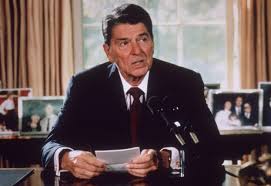
Ronald Reagan
Reagan, like every major Republican Presidential candidate since, promised that giving tax cuts to the wealthy would prove highly beneficial to ordinary workers.
The official name for this policy was “supply side economics.” In reality, it was known—and functioned—as “trickle down economics.”
“A rising tide lifts all boats,” claimed Reagan. A more realistic slogan for the results of his economics policies would have been: “A rising tide lifts some yachts.”
Among those charting Reagan’s economics legacy as President was former CBS Correspondent David Schoenbrun. In his bestselling autobiography, America Inside Out: At Home and Abroad from Roosevelt to Reagan, he wrote:
“[According to Republicans] welfare for the rich is good for America. But welfare for the poor is bad for America, even for the poor themselves, for it encourages them to be shiftless and lazy.
“Somehow, loans to the inefficient management of American corporations would not similarly encourage them in their inefficient methods.”
To be unemployed in America is considered by most Americans—including the unemployed—the same as being a bum.
And Republicans are quick to point accusing fingers at those willing-to-work Americans who can’t find willing-to-hire employers.
2016 PRESIDENTIAL CAMPAIGN, ABC NEWS, ALTERNET, AMERICABLOG, AP, BABY BOOMER RESISTANCE, BILL MAULDIN, BUZZFEED, CBS NEWS, CHINA, CIA, CNN, CROOKS AND LIARS, DAILY KOZ, DONALD TRUMP, EXTORTION, FACEBOOK, FBI, FIVETHIRTYEIGHT, HILLARY CLINTON, JOE BIDEN, LUCIAN K. TRUSCOTT JR., MOTHER JONES, MOVEON, MSNBC, NAZI GERMANY, NBC NEWS, NEWSWEEK, NPR, PBS NEWSHOUR, POLITICO, POLITICUSUSA, RAW STORY, REUTERS, RUSSIA, SALON, SAVING PRIVATE RYAN, SEATTLE TIMES, SLATE, STEVEN SPIELBERG, TALKING POINTS MEMO, THE ATLANTIC, THE CHICAGO SUN-TIMES, THE CHICAGO TRIBUNE, THE DAILY BEAST, THE DAILY BLOG, THE GUARDIAN, THE HILL, THE HUFFINGTON POST, THE LOS ANGELES TIMES, THE NATION, THE NEW YORK TIMES, THE WASHINGTON POST, THINKPROGRESS, TIME, TRUMP FOUNDATION, TRUTHDIG, TWITTER, U.S. NEWS & WORLD REPORT, UKRAINE, UPI, USA TODAY, VETERANS’ DAY, VIETNAM WAR, VLADIMIR PUTIN, WORLD WAR 11
In Bureaucracy, History, Military, Politics, Social commentary on November 13, 2019 at 12:06 am
If President Donald Trump expected a warm welcome when he attended the 100th Veterans Day Parade in Manhattan, he was rudely disappointed.
“Lock him up!” yelled many protesters, echoing chants at his own rallies against Hillary Clinton, his 2016 rival for President.
Other New Yorkers plastered their windows with large anti-Trump signs: “DUMP TRUMP!” “IMPEACH!” “CONVICT!”
One demonstrator held up a sign: “Draft Dodger,” a reference to Trump’s avoiding military service in Vietnam through five draft deferments, including one for bone spurs.
“My grandfather fought in World War II, he was a colonel and an immigrant from Russia,” said a 52-year-old woman who only identified herself as Liz.
“He would be horrified at the corruption and hate in the White House right now. He was a Republican, but he was not a racist. He was completely committed to this country.”
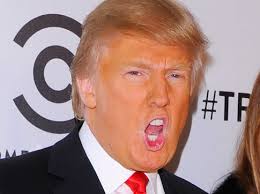
Donald Trump
Another woman, Janet Gonzelez, 85, attacked Trump’s “upside down” foreign policy in the Middle East. Asked what she would tell Trump if she met him, she replied: “Fuck you.”
Speaking behind bullet-proof plexiglass, Trump tried to drown out a throng of protesters shouting and blowing whistles outside the west entrance of Madison Square Park.
“Our veterans risked everything for us. Now it is our duty to serve and protect them every single day of our lives,” Trump said, as a chorus of boos echoed in the distance.
What Trump did not mention was that, only four days earlier, a New York judge had ordered him to pay $2 million in damages owing to misuse of funds by the Trump Foundation.
In January, 2016, Trump had held a televised fundraiser for veterans. He claimed that the funds would be distributed to charities serving the needs of veterans.
But the Trump Foundation improperly used $2.82 million it received from that fundraiser to fuel his campaign for President.
Thus, the man who had ripped off American veterans was now presiding over a day created to honor them.
There is no better way to trace the decline of the United States than to compare the 2019 Manhattan Veterans’ Day celebration with the 1946 one at the Sicily-Rome American Cemetery, near the town of Nettuno.
The cemetery held about 20,000 American graves, mostly of soldiers who had died in Sicily or at Anzio, fighting Nazi Germany.
Presiding over that event was Lt. General Lucian K. Truscott, Jr., the U.S. Fifth Army Commander.
Unlike many other generals, Truscott had shared in the dangers of combat, pouring over maps on the hood of his jeep with company commanders as bullets or shells whizzed about him.
When it came his turn to speak, Truscott moved to the podium. Then he turned his back on the assembled visitors—which included several Congressmen.
The audience he now faced were the graves of his fellow soldiers.
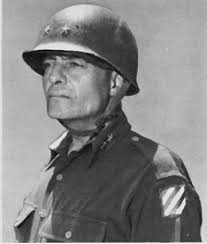
Lt. General Lucian K. Truscott, Jr.
Among those who heard Truscott’s speech was Bill Mauldin, the famous cartoonist for the Army newspaper, Stars and Stripes. Mauldin had created Willie and Joe, the unshaved, slovenly-looking “dogfaces” who came to symbolize the GI.
It’s from Mauldin that we have the fullest account of Truscott’s speech that day.
“He apologized to the dead men for their presence there. He said that everybody tells leaders that it is not their fault that men get killed in war, but that every leader knows in his heart that this is not altogether true.
“He said he hoped anybody here through any mistake of his would forgive him, but he realized that he was asking a hell of a lot under the circumstances….
“Truscott said he would not speak of the ‘glorious’ dead because he didn’t see much glory in getting killed in your teens or early twenties.
“He promised that if in the future he ran into anybody, especially old men, who thought death in battle was glorious, he would straighten them out. He said he thought it was the least he could do.”
Then Truscott walked away, without acknowledging his audience of celebrities.
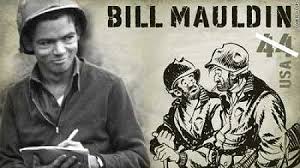
Bill Mauldin and “Willie and Joe,” the characters he made famous
Contrast the character of Lucian Truscott with that of the man who now holds the office of President of the United States.
Donald Trump has:
- Equated his reckless sex life during the 1970s with the risks American soldiers faced in Vietnam.
- Relentlessly defended Russian dictator Vladimir Putin against all criticism, even as he’s slandered literally hundreds of his fellow citizens on Twitter.
- Attacked the FBI and CIA for concluding that Russia intervened in the 2016 election to help him win the White House.
- Tried to extort the president of Ukraine to slander former Vice President Joe Biden, his possible rival for the White House in 2020.
- “Joked” that it would be “great” if the United States had a “President-for-Life”—like China.
Saving Private Ryan, Steven Spielberg’s 1998 World War II epic, opens with a scene of an American flag snapping in the wind.
Except that the brilliant colors of Old Glory have been washed out, leaving only black-and-white stripes and black stars.
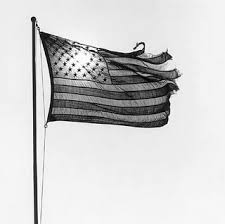
Small wonder that, for many Americans, Old Glory has taken on a darker, washed-out appearance—in real-life as in film.
2016 PRESIDENTIAL CAMPAIGN, A HIGHER LOYALTY (BOOK), ABC NEWS, ADAM SCHIFF, ALTERNET, AMERICABLOG, ANTHONY "FAT TONY" SALERNO, AP, “FLIPPING”, BABY BOOMER RESISTANCE, BERNIE SANDERS, BUZZFEED, CBS NEWS, CIA, CNN, CROOKS AND LIARS, DAILY KOZ, DEMOCRATIC NATIONAL COMMITTEE (DNC), DONALD TRUMP, ESQUIRE, EXTORTION, FACEBOOK, FBI, FIVETHIRTYEIGHT, FOX AND FRIENDS, FOX NEWS, FOX NEWS NETWORK, GAMBINO MAFIA FAMILY, HILLARY CLINTON, HOUSE OF REPRESENTATIVES, HUNTER BIDEN, IVANA TRUMP, JAMES COMEY, JEFF SESSIONS, JOE BIDEN, JOHN DEAN, JOHN GOTTI, MAFIA, MICHAEL COHEN, MICHAEL FLYNN, MICK MULVANEY, MOTHER JONES, MOVEON, MSNBC, NANCY PELOSI, NBC NEWS, NEWSWEEK, NPR, ORGANIZED CRIME, ORGANIZED CRIME CONTROL ACT OF 1970, PAM BONDI, PAUL CASTELLANO, PBS NEWSHOUR, POLITICO, POLITICUSUSA, RACKETEER INFLUENCED CORRUPT ORGANIZATIONS ACT (RICO), RAW STORY, REINCE PRIEBUS, REPUBLICANS, REUTERS, RICHARD M. NIXON, RICHARD NIXON, ROBERT MUELLER, RUSSIA, SALON, SEATTLE TIMES, SLATE, STORMY DANIELS, TALKING POINTS MEMO, THE ATLANTIC, THE CHICAGO SUN-TIMES, THE CHICAGO TRIBUNE, THE DAILY BEAST, THE DAILY BLOG, THE GUARDIAN, THE HILL, THE HUFFINGTON POST, THE LOS ANGELES TIMES, THE NATION, THE NEW YORK TIMES, THE WASHINGTON POST, THINKPROGRESS, TIME, TREASON, TRUMP ORGANIZATION, TRUTHDIG, TWITTER, U.S. NEWS & WORLD REPORT, UKRAINE, UNITED STATES DEPARTMENT OF JUSTICE, UNITED STATES JUSTICE DEPARTMENT, UPI, USA TODAY, VLADIMIR PUTIN, VOLODYMYR ZELENSKY, WHISTLEBLOWERS, WIKILEAKS
In Bureaucracy, History, Law, Law Enforcement, Politics, Social commentary on October 1, 2019 at 12:08 am
Former FBI Director James Comey has had firsthand experience in attacking organized crime—and in spotting its leaders.
In his bestselling memoir, A Higher Loyalty, he writes:
“As I found myself thrust into the Trump orbit, I once again was having flashbacks to my earlier career as a prosecutor against the mob. The silent circle of assent. The boss in complete control. The loyalty oaths. The us-versus-them worldview. The lying about all things, large and small, in service to some code of loyalty that put the organization above morality and the truth.”

James Comey
Validating Comey’s comparison of Trump to a mobster:
On August 21, 2018, Trump’s former attorney, Michael Cohen, pleaded guilty to eight counts of campaign finance violations, tax fraud and bank fraud. He also said he had made illegal campaign contributions “in coordination and at the direction of a candidate for federal office”—Donald Trump.
On August 23, on the Fox News program, “Fox and Friends,” Trump attacked Cohen for “flipping” on him:
“For 30, 40 years I’ve been watching flippers. Everything’s wonderful and then they get 10 years in jail and they—they flip on whoever the next highest one is, or as high as you can go. It—it almost ought to be outlawed. It’s not fair.””
Making “flipping” illegal would undo decades of organized crime prosecutions—and make future ones almost impossible.

United States Department of Justice
To penetrate the secrets of criminal organizations, investigators and prosecutors need the testimony of those who are parties to those secrets.
The Organized Crime Control Act of 1970 gave Justice Department prosecutors unprecedented weapons for attacking crime syndicates across the country. One of these was the authority to give witnesses immunity from prosecution on the basis of their own testimony.
Thus, a witness to a criminal conspiracy could be forced to tell all he knew—and thus implicate his accomplices—and bosses. In turn, he wouldn’t be prosecuted on the basis of his testimony.
Organized crime members aggressively damn such “rats.” There is no more obscene word in a mobster’s vocabulary.
But no President—until Trump—has ever attacked those who make possible a war on organized crime.
On August 19, he tweeted:
“The failing @nytimes wrote a Fake piece today implying that because White House Councel Don McGahn was giving hours of testimony to the Special Councel, he must be a John Dean type “RAT.” But I allowed him and all others to testify – I didn’t have to. I have nothing to hide……”
In 1973, former White House Counsel John Dean testified before the United States Senate on a litany of crimes committed by President Richard M. Nixon. Dean didn’t lie about Nixon—who ultimately resigned in disgrace.
For Trump, Dean’s sin is that he “flipped” on his former boss, violating the Mafia’s code of omerta, or silence.
But Trump feels completely different abut “flippers” when their revelations serve his interests.
On July 22, 2016, Wikileaks released 19,252 emails and 8,034 attachments hacked from computers of the highest-ranking officials of the Democratic National Committee (DNC).
The leak revealed a DNC bias for Hillary Clinton and against her lone challenger, Vermont United States Senator Bernie Sanders. Clinton, who was about to receive the Democratic nomination for President, was thoroughly embarrassed. Sanders’ supporters were enraged.
Donald Trump’s reaction:
- “WikiLeaks, I love WikiLeaks.”
- “This WikiLeaks stuff is unbelievable. It tells you the inner heart, you gotta read it.”
- This WikiLeaks is like a treasure trove.”
- “WikiLeaks just came out with a new one just a little while ago it’s just been shown that a rigged system with more collusion, probably illegal, between the Department of Justice the Clinton campaign and the State Department, you saw that.”
But now Trump has reverted to his longtime hatred of “leakers.”
In July, 2019, he told his acting chief of staff, Mick Mulvaney, to withhold almost $400 million in promised military aid for Ukraine, which faces increasing aggression from Russia.
On July 25, Trump telephoned Ukrainian President Volodymyr Zelensky to “request” a “favor”: Investigate Democratic Presidential Candidate Joe Biden and his son, Hunter, who has had business dealings in Ukraine.
The reason for such an investigation: To find embarrassing “dirt” on Biden.
But then a CIA whistleblower filed a complaint about the extortion attempt—and the media and Congress soon learned of it.
Rep. Adam Schiff, D-Calif., tweeted: “The transcript of the call reads like a classic mob shakedown: — We do a lot for Ukraine — There’s not much reciprocity — I have a favor to ask — Investigate my opponent — My people will be in touch — Nice country you got there. It would be a shame if something happened to her.”
On September 24, 2019, Nancy Pelosi, speaker to the House of Representatives, announced a formal impeachment inquiry into Trump.
On September 26, Trump told a private group at a midtown hotel: “I want to know who’s the person, who’s the person who gave the whistleblower the information? Because that’s close to a spy.
“You know what we used to do in the old days when we were smart? Right? The spies and treason, we used to handle it a little differently than we do now.”


 Bureaucracybuster's Blog
2016 PRESIDENTIAL CAMPAIGN, ABC NEWS, ADOLF HITLER, ALTERNET, AMERICABLOG, AP, BABY BOOMER RESISTANCE, BARACK OBAMA, BERNIE SANDERS, BUZZFEED, CBS NEWS, CNN, CROOKS AND LIARS, DAILY KOZ, DAVID BROOKS, DEMOCRATIC PARTY, DONALD TRUMP, ELIZABETH WARREN, FACEBOOK, FIVETHIRTYEIGHT, HILLARY CLINTON, JEB BUSH, JOHN KASICH, JOSEPH MCCARTHY, LIBERALS, MARCO RUBIO, MARK SHIELDS, MITCH MCCONNELL, MOTHER JONES, MOVEON, MSNBC, NBC NEWS, NEWSWEEK, NEWT GINGRICH, NOCCOLO MACHIAVELLI, NPR, OBAMA GIRL VIDEO, PBS NEWSHOUR, POLITICO, POLITICUSUSA, RAND PAUL, RAW STORY, REPUBLICAN PARTY, REPUBLICANS, REUTERS, RICK PERRY, SALON, SEATTLE TIMES, SLANDER, SLATE, STEPHEN COLBERT, STORMY DANIELS, TALKING POINTS MEMO, TED CRUZ, THE ATLANTIC, THE CHICAGO SUN-TIMES, THE CHICAGO TRIBUNE, THE DAILY BEAST, THE DAILY BLOG, THE GUARDIAN, THE HILL, THE HUFFINGTON POST, THE LOS ANGELES TIMES, THE NATION, THE NEW YORK TIMES, THE PRINCE, THE WASHINGTON POST, THINKPROGRESS, TIME, TREVOR NOAH, TRUTHDIG, TWITTER, U.S. NEWS & WORLD REPORT, UPI, USA TODAY, VLADIMIR PUTIN
WORDS ARE WEAPONS: PART TWO (END)
In Bureaucracy, History, Humor, Politics, Social commentary on December 5, 2019 at 12:02 amWords are weapons—or can be, if used properly.
Republicans learned this truth after World War II.
Since 1945, Republicans have won the majority of Presidential elections: In 1952, 1956, 1968, 1972, 1980, 1984, 1988, 2000, 2004, 2016.
As a whole, Democrats have shown themselves indifferent to or ignorant of the power of effective language.
Many of them—such as former President Barack Obama—take the view: “I’m not going to get into the gutter like my opponents.” Thus, they take the “high ground” while their sworn Republican enemies undermine them via “smear and fear” tactics.
As far back as the early 1950s, slander-hurling Wisconsin U.S. Senator Joseph R. McCarthy demonstrated the effectiveness of such tactics. Wrote Pulitzer-Prize winning author David Halberstam, in his monumental study of the origins of the Vietnam War, The Best and the Brightest:
“But if they did not actually stick, and they did not, [McCarthy’s] charges had an equally damaging effect: They poisoned. Where there was smoke, there must be fire. He wouldn’t be saying these things [voters reasoned] unless there was something to it.”
Joseph McCarthy
President Donald J. Trump solicited aid from Russian Communists to win the Presidency in 2016. He solicited aid from Chinese Communists to retain it in 2020. He has attacked countless Americans and world leaders—including those who preside over America’s NATO alliance. Yet the one man he has never even criticized is Russian dictator Vladimir Putin.
Yet faced with such clear-cut evidence, Democrats have refused to directly accuse him of treason.
For example, Democrats could routinely refer to him ad ads as
The Kremlin
Opponents of Trump-apologist U.S. Senator Mitch McConnell (R-KY) have effectively dubbed him “Moscow Mitch”—in large part for his accepting at least $4.5 million from a Russian oligarch linked to Putin.
But Trump has gotten a free pass on treason from politicians and news media alike.
Similarly, upon taking office, Trump has acted far more like a dictatorial Henry VIII than a democratically-elected President. Yet here, too, Democrats have failed to capitalize on this obvious truth. They could easily do so through terms like:
Tyrants are conspicuously vulnerable to ridicule. Yet here, too, Democrats have proven unable or unwilling to make use of this powerful weapon.
In this YouTube-obsessed age, Democrats could effectively assail Trump with a series of ridiculing videos. For example, Trump’s well-established “bromance” with Putin could be turned into a parody of the famous Beatles’ song, “With a Little Help From My Friends”:
What do I do when the bank calls me in?
(Does it worry you to be in debt?)
How do I feel when I need rubles fast?
(Do you worry Vlad might say “Nyet”?)
No, I get by with a little help from my Vlad.
Mm, I can lie with a little help from my Vlad.
Mm, you’re gonna fry with a little help from my Vlad.
Many of Trump’s fiercest defenders in the House and Senate have taken “campaign contributions” (i.e., bribes) from Russian oligarchs. They could be pointedly attacked by turning the Muppet song, “The Rainbow Connection,” into “The Russian Connection.”
The 2008, “Obama Girl” video was not an attack video. Yet this generated huge interest in his candidacy—especially among young voters. It was funny and offered a catchy tune that, once heard, was impossible to forget.
An equally catchy tune could prove the same for Trump—in a totally different way.
The clash between Trump and porn “star” Stormy Daniels has been replaced by even more salacious scandals. But it could easily be revised through a parody of the Frank Sinatra classic, “Love and Marriage”:
Trump has repeatedly shown that he does not take well to ridicule. Pouring on enough of it could lead him to a blunder so outrageous that even Republicans might feel obliged to break ranks with him.
Admittedly, late-night comedians like Stephen Colbert and Trevor Noah have inflicted huge comic damage on Trump’s image and ego.
But it’s one thing for a professional comedian to serve up such barbs—and another for a major political party to do so through a series of blistering TV ads.
Humorists could easily provide the material. But it will take Democrats the courage to use it.
Share this: