Archive for the ‘Politics’ Category
ABC NEWS, ALAMO, ALTERNET, AMERICABLOG, ANDREW JACKSON, ANTONIO LOPEZ DE SANTA ANNA, AP, BABY BOOMER RESISTANCE, BBC, BLOOMBERG NEWS, BLUESKY, BUZZFEED, CBS NEWS, CHARLES VII, CNN, CROOKS AND LIARS, DAILY KOS, DEPARTMENT OF HOMELAND SECURITY, DONALD TRUMP, FIVETHIRTYEIGHT, FRANCE, GAVIN NEWSOM, HARPER’S MAGAZINE, HUFFINGTON POST, IMMIGRATION AND CUSTOMS ENFORCEMENT (ICE), JOAN OF ARC, KAREN BASS, LONE STAR: A HISTORY OF TEXAS AND THE TEXANS (BOOK), MEDIA MATTERS, MOTHER JONES, MOVEON, MSNBC, NATIONAL GUARD, NBC NEWS, NEWSDAY, NEWSWEEK, NPR, PBS NEWSHOUR, POLITICO, POLITICUSUSA, RAW STORY, REUTERS, RUSSIA, SALON, SAM HOUSTON, SEATTLE TIMES, SLATE, T.R. FEHRENBACH, TALKING POINTS MEMO, TEXAS, THE ATLANTIC, THE CHICAGO SUN-TIMES, THE CHICAGO TRIBUNE, THE DAILY BEAST, THE DAILY BLOG, THE GUARDIAN, THE HILL, THE HUFFINGTON POST, THE INTERCEPT, THE LOS ANGELES TIMES, THE NATION, THE NEW REPUBLIC, THE NEW YORK TIMES, THE NEW YORKER, THE VILLAGE VOICE, THE WASHINGTON POST, THINKPROGRESS, TIME, TOM HOMAN, TRUTHDIG, TRUTHOUT, TWO POLITICAL JUNKIES, U.S. NEWS & WORLD REPORT, UKRAINE, UPI, USA TODAY, VLADIMIR PUTIN, VOLODYMYR ZELENSKY, WILLIAM BARRET TRAVIS, WONKETTE, X
In Bureaucracy, History, Law, Law Enforcement, Military, Politics, Social commentary on July 4, 2025 at 1:03 am
In The Last Lion, his three-volume biography of Winston Churchill, author William Manchester boldly summed up the prime minister’s most important contribution during World War II:
“The spirit [of courage], if indeed within them, lay dormant until he became prime minister and they, kindled by his soaring prose, came to see themselves as he saw them and emerged a people transformed, the admiration of free men everywhere.”
The same may one day be said about California Governor Gavin C. Newsom.
On June 11, Newsom addressed not only President Donald Trump’s response to civil disorders in Los Angeles, but the threat he posed to California, every other state—and democracy itself.
* * * * *
Authoritarian regimes begin by targeting people who are least able to defend themselves. But they do not stop there. Trump and his loyalists thrive on division because it allows them to take more power and exert even more control.
By the way, Trump – he’s not opposed to lawlessness and violence, as long as it serves HIM. What more evidence do we need than January 6th?
I ask everyone to take the time to reflect on this perilous moment. A president who wants to be bound by no law or constitution. Perpetrating a unified assault on American traditions.
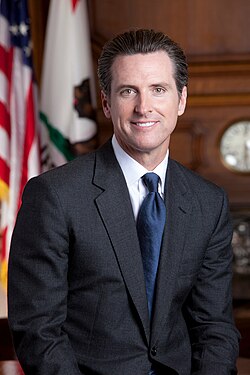
Gavin Newsom
This is a President who, in just over 140 days, has fired government watchdogs that could hold him accountable for corruption and fraud. He’s declared a war on culture, on history, on science – on knowledge itself. Databases, quite literally vanishing.
He’s delegitimizing news organizations and assaulting the First Amendment. At the threat of defunding them, he’s dictating what universities can teach. Targeting law firms and the judicial branch that are the foundation of an orderly, civil society.
Calling for a sitting Governor [himself] to be arrested for no other reason than – to use his words – “for getting elected.”
And we all know, this Saturday [June 14] he’s ordering our American heroes – the United States military – forcing them to put on a vulgar display to celebrate his birthday, just as other failed dictators have done in the past.
Look, this isn’t just about protests in LA. When Donald Trump sought blanket authority to commandeer the National Guard, he made that order apply to every state in this nation. This is about all of us. This is about you.
California may be first – but it clearly won’t end here. Other states are next. Democracy is next.
Democracy is under assault right before our eyes – the moment we’ve feared has arrived. He’s taking a wrecking ball to our founding fathers’ historic project: Three independent, coequal branches of government.
There are no longer any checks and balances. Congress is nowhere to be found. [House] Speaker [Mike] Johnson has completely abdicated that responsibility.
The rule of law has increasingly given way to the rule of Don.
The founding fathers did not live and die to see this moment. It’s time for all of us to stand up. [Supreme Court Justice Louis] Brandeis said it best: In a democracy, the most important office is not president, it’s certainly not governor. The most important office is office of citizen.
At this moment, we must all stand up and be held to a higher level of accountability. If you exercise your First Amendment rights, please do so peacefully.
I know many of you are feeling deep anxiety, stress, and fear. But I want you to know that YOU are the antidote to that fear and anxiety.
What Donald Trump wants most is your fealty. Your silence. To be complicit in this moment. Do NOT give in to him.
* * * * *
Volodymyr Zelensky (January 25, 1978 – ) is a former attorney, actor and comedian who, as the sixth president of Ukraine, now leads his country in a life-or-death struggle against the aggressive Russia’s dictator Vladimir Putin.
On February 24, 2022, Putin launched an all-out attack on Ukraine.

Volodymyr Zelensky
During the assault by Russian troops on the capital of Kiev, the Biden administration urged Zelensky to evacuate to a safer location and offered to help him do so. Zelensky refused, saying: “The fight is here [in Kiev]; I need ammunition, not a ride.”
As CBS correspondent Scott Pelley put it: “The moment Zelensky told his people he refused to flee, they refused to fall.”
Russia expected Kiev to fall in three days. But more than three years after the invasion, Kiev still remains defiant—and in the hands of Ukrainians.
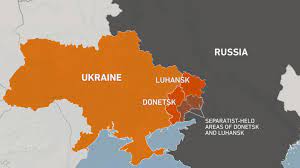
Ukraine vs. Russia
When Zelensky wasn’t broadcasting defiance at Russia and rousing Ukrainians to heroism, he was often visiting the battlefront.
Zelensky sees Ukraine’s struggle as the opening round of Russia’s war against the West.
“Some are….saying, ‘We can’t defend Ukraine because there could be a nuclear war.’ I think that today, no one in this world can predict what Russia will do. If they invade further into our territory, then they will definitely move closer and closer to Europe. They will only become stronger and less predictable.”
Millions of Americans—such as those who took part in nationwide “No Kings” protests on June 14—feel the same way about Donald Trump and his own dictatorial regime.
ABC NEWS, ALAMO, ALTERNET, AMERICABLOG, ANDREW JACKSON, ANTONIO LOPEZ DE SANTA ANNA, AP, BABY BOOMER RESISTANCE, BBC, BLOOMBERG NEWS, BLUESKY, BUZZFEED, CBS NEWS, CHARLES VII, CNN, CROOKS AND LIARS, DAILY KOS, DEPARTMENT OF HOMELAND SECURITY, DONALD TRUMP, FIVETHIRTYEIGHT, FRANCE, GAVIN NEWSOM, HARPER’S MAGAZINE, HUFFINGTON POST, IMMIGRATION AND CUSTOMS ENFORCEMENT (ICE), JOAN OF ARC, KAREN BASS, LONE STAR: A HISTORY OF TEXAS AND THE TEXANS (BOOK), MEDIA MATTERS, MOTHER JONES, MOVEON, MSNBC, NATIONAL GUARD, NBC NEWS, NEWSDAY, NEWSWEEK, NPR, PBS NEWSHOUR, POLITICO, POLITICUSUSA, RAW STORY, REUTERS, RUSSIA, SALON, SAM HOUSTON, SEATTLE TIMES, SLATE, T.R. FEHRENBACH, TALKING POINTS MEMO, TEXAS, THE ATLANTIC, THE CHICAGO SUN-TIMES, THE CHICAGO TRIBUNE, THE DAILY BEAST, THE DAILY BLOG, THE GUARDIAN, THE HILL, THE HUFFINGTON POST, THE INTERCEPT, THE LOS ANGELES TIMES, THE NATION, THE NEW REPUBLIC, THE NEW YORK TIMES, THE NEW YORKER, THE VILLAGE VOICE, THE WASHINGTON POST, THINKPROGRESS, TIME, TOM HOMAN, TRUTHDIG, TRUTHOUT, TWO POLITICAL JUNKIES, U.S. NEWS & WORLD REPORT, UKRAINE, UPI, USA TODAY, VLADIMIR PUTIN, VOLODYMYR ZELENSKY, WILLIAM BARRET TRAVIS, WONKETTE, X
In Bureaucracy, History, Law, Law Enforcement, Military, Politics, Social commentary on July 3, 2025 at 12:11 am
On June 11, California Governor Gavin Newsom addressed not only President Donald Trump’s response to civil disorders in Los Angeles, but the threat he posed to California, every other state—and democracy itself.
* * * * *
What’s happening right now is very different than anything we’ve seen before. On Saturday morning, when federal agents jumped out of an unmarked van near a Home Depot parking lot, they began grabbing people.
A deliberate targeting of a heavily Latino suburb.
A similar scene also played out when a clothing company was raided downtown.
In other actions: a US citizen, 9 months pregnant – arrested.
A four-year-old girl – taken.

Families separated. Friends disappearing.
In response, everyday Angelinos came out to exercise their Constitutional right to free speech and assembly. To protest their government’s actions.
In turn, the State of California and the City and County of Los Angeles sent our police officers to help keep the peace, and with some exceptions, they were successful.
Like many states, California is no stranger to this sort of civil unrest. We manage it regularly … and with our own law enforcement.
But this, again, was different.
What then ensued was the use of tear gas. Flash-bang grenades. Rubber bullets. Federal agents, detaining people and undermining their due process rights.
Donald Trump, without consulting with California’s law enforcement leaders, commandeered 2,000 of our state’s National Guard members to deploy on our streets. Illegally, and for no reason.
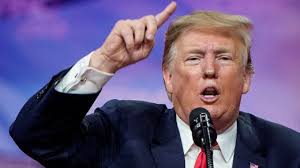
Donald Trump
This brazen abuse of power by a sitting President inflamed a combustible situation … putting our people, our officers, and the National Guard at risk.
That’s when the downward spiral began.
He doubled down on his dangerous National Guard deployment by fanning the flames even harder. And the President did it on purpose.
As the news spread throughout LA, anxiety for family and friends ramped up.
Protests started again. By night, several dozen lawbreakers became violent and destructive. They vandalized property. They tried to assault police officers.
Many of you have seen video clips of cars burning on cable news. If you incite violence or destroy our communities, you are going to be held accountable. That kind of criminal behavior will not be tolerated.

Full stop. Already, more than 370 people have been arrested. And we’re reviewing tapes to build additional cases, and people will be prosecuted to the fullest extent of the law.
Again, thanks to our law enforcement officers and the majority of Angelenos who protested peacefully, this situation was winding down and was concentrated in just a few square blocks downtown.
But that’s not what Donald Trump wanted. He again chose escalation; he chose more force. He chose theatrics over public safety – he federalized another 2,000 Guard members. He deployed more than 700 active U.S. Marines.
These are men and women trained in foreign combat, not domestic law enforcement.
We honor their service. We honor their bravery. But we do not want our streets militarized by our own Armed Forces. Not in L.A. Not in California. Not anywhere.
We’re seeing unmarked cars in school parking lots. Kids, afraid to attend their own graduation.
Trump is pulling a military dragnet across LA, well beyond his stated intent to just go after violent and serious criminals. His agents are arresting dishwashers, gardeners, day laborers and seamstresses.

That’s just weakness. Weakness, masquerading as strength.
Donald Trump’s government isn’t protecting our communities – they are traumatizing our communities. And that seems to be the point.
California will keep fighting on behalf of our people – all of our people – including in the courts. Yesterday, we filed a legal challenge to President Trump’s reckless deployment of American troops to a major American city.
Today, we sought an emergency court order to stop the use of the American military to engage in law enforcement activities across Los Angeles. If some of us can be snatched off the streets without a warrant, based only on suspicion or skin color, then none of us are safe.
Authoritarian regimes begin by targeting people who are least able to defend themselves. But they do not stop there. Trump and his loyalists thrive on division because it allows them to take more power and exert even more control.
By the way, Trump – he’s not opposed to lawlessness and violence, as long as it serves HIM. What more evidence do we need than January 6th?
I ask everyone to take the time to reflect on this perilous moment. A president who wants to be bound by no law or constitution. Perpetrating a unified assault on American traditions.
This is a President who, in just over 140 days, has fired government watchdogs that could hold him accountable for corruption and fraud. He’s declared a war on culture, on history, on science – on knowledge itself. Databases, quite literally vanishing.
He’s delegitimizing news organizations and assaulting the First Amendment. At the threat of defunding them, he’s dictating what universities can teach. Targeting law firms and the judicial branch that are the foundation of an orderly, civil society.
Calling for a sitting Governor [Newsom himself] to be arrested for no other reason than – to use his words – “for getting elected.”
ABC NEWS, ALAMO, ALTERNET, AMERICABLOG, ANDREW JACKSON, ANTONIO LOPEZ DE SANTA ANNA, AP, BABY BOOMER RESISTANCE, BBC, BLOOMBERG NEWS, BLUESKY, BUZZFEED, CBS NEWS, CHARLES VII, CNN, CROOKS AND LIARS, DAILY KOS, DEPARTMENT OF HOMELAND SECURITY, DONALD TRUMP, FIVETHIRTYEIGHT, FRANCE, GAVIN NEWSOM, HARPER’S MAGAZINE, HUFFINGTON POST, IMMIGRATION AND CUSTOMS ENFORCEMENT (ICE), JOAN OF ARC, KAREN BASS, LONE STAR: A HISTORY OF TEXAS AND THE TEXANS (BOOK), MEDIA MATTERS, MOTHER JONES, MOVEON, MSNBC, NATIONAL GUARD, NBC NEWS, NEWSDAY, NEWSWEEK, NPR, PBS NEWSHOUR, POLITICO, POLITICUSUSA, RAW STORY, REUTERS, RUSSIA, SALON, SAM HOUSTON, SEATTLE TIMES, SLATE, T.R. FEHRENBACH, TALKING POINTS MEMO, TEXAS, THE ATLANTIC, THE CHICAGO SUN-TIMES, THE CHICAGO TRIBUNE, THE DAILY BEAST, THE DAILY BLOG, THE GUARDIAN, THE HILL, THE HUFFINGTON POST, THE INTERCEPT, THE LOS ANGELES TIMES, THE NATION, THE NEW REPUBLIC, THE NEW YORK TIMES, THE NEW YORKER, THE VILLAGE VOICE, THE WASHINGTON POST, THINKPROGRESS, TIME, TOM HOMAN, TRUTHDIG, TRUTHOUT, TWO POLITICAL JUNKIES, U.S. NEWS & WORLD REPORT, UKRAINE, UPI, USA TODAY, VLADIMIR PUTIN, VOLODYMYR ZELENSKY, WILLIAM BARRET TRAVIS, WONKETTE, X
In Bureaucracy, History, Law, Law Enforcement, Military, Politics, Social commentary on July 2, 2025 at 12:10 am
History is filled with examples of men—and women—who in moments of crisis rose to challenge a deadly enemy. One of these is California Governor Gavin C. Newsom.
On June 6, protests erupted in Los Angeles against Immigration and Customs Enforcement (ICE). The demonstrations were triggered by ICE raids at multiple locations in the city to arrest suspected illegal aliens.
The first raid occurred within the Los Angeles Fashion District; two other raids occurred at a clothing wholesaler and a Home Depot in Westlake.
Word of these arrests quickly spread, and so did demonstrations, with the Department of Homeland Security (DHS) stating that 44 people were arrested for suspected immigration violations and one person was arrested for obstruction.
David Huerta, the California president of the Service Employees International Union, was arrested for blocking a vehicle and charged with felony conspiracy to impede an officer.
The epicenter of the protests became the Los Angeles Metropolitan Detention Center at 535 N Alameda Street. About 200 protesters remained at the facility by 7 p.m., when the Los Angeles Police Department (LAPD) declared the protest to be an unlawful assembly and ordered protesters to disperse

Some protesters hurled chunks of broken concrete toward officers; the LAPD responded with tear gas, pepper spray and flash-bang grenades to disperse the crowd. At 8:24 p.m. a citywide tactical alert was announced.
On June 7, the protests continued. About 1,000 people surrounded a local branch building used by Homeland Security.
California Governor Newsom deployed California Highway Patrol units to protect Los Angeles freeways.
By June 7, 118 illegal aliens had been arrested in Los Angeles, according to the DHS.
That evening, President Donald Trump signed a memorandum deploying 2,000 members of the California National Guard to the protests for either 60 days or for a length of time “at the discretion of the secretary of defense.”
He did so without the request—or consent—of Governor Newsom.
If a Democratic President did so in a Republican state, Congressional Republicans would scream “STATES’ RIGHTS!” and accuse the President of being a dictator. But since Trump is a Republican, Congressional Republicans enthusiastically supported his action.

National Guard troops in L.A.
In a tweet, Secretary of Defense Pete Hegseth said that active duty Marines were on “high alert” at Camp Pendleton.
And Trump later threatened to “have troops everywhere” if the protests spread to other cities. “If we see danger to our country and our citizens,” the Marines would be deployed to Los Angeles.
Newsom retorted that the National Guard—and especially the Marines—weren’t needed. The LAPD and Los Angeles County Sheriff’s Department were fully capable of protecting Federal property and dispersing the protesters.
He called on Trump to return control of the Guard to California—and withdraw the Marines, who are trained for combat, not handling civil unrest.
Thomas Homan, White House Executive Associate Director of Enforcement and Removal Operations, told NBC News that Newsom and Los Angeles Mayor Karen Bass could potentially face federal charges over their response to the ICE raids.
Homan had previously threatened arrest for anyone who obstructs immigration enforcement. When asked whether that would include Newsom or Bass, Homan did not rule it out.
“I’ll say it about anybody,” Homan said. “You cross that line, it’s a felony to knowingly harbor and conceal an illegal alien. It’s a felony to impede law enforcement doing their job.”

Tom Homan
Newsom quickly responded to Homan: “Trump’s border czar is threatening to arrest me for speaking out. Come and get me, tough guy.
“What the hell are they doing? These guys need to grow up, they need to stop and we need to push back and I’m sorry to be so clear but that kind of bloviating is exhausting. So Tom, arrest me. Let’s go.”
Homan just as quickly backed down: “There’s no intention to arrest the governor right now. I don’t know if he crossed that line.” Homan said he would “leave that up” to the Justice Department.
When asked about the idea of arresting Newsom, Trump said, “I’d do it if I were Tom. Gavin likes the publicity, but I think it would be a great thing.”
On June 11, Newsom addressed not only Trump’s response to civil disorders in Los Angeles, but the threat he posed to not only California, every other state—and democracy itself.
GOVERNOR GAVIN NEWSOM’S ADDRESS TO CALIFORNIA: DEMOCRACY AT A CROSSROADS ON JUNE 11, 2025
I want to say a few words about the events of the last few days. This past weekend, federal agents conducted large-scale workplace raids in and around Los Angeles. Those raids continue as I speak.
California is no stranger to immigration enforcement. But instead of focusing on undocumented immigrants with serious criminal records and people with final deportation orders – a strategy both parties have long supported – this administration is pushing mass deportations.
Indiscriminately targeting hardworking immigrant families, regardless of their roots or risk.
What’s happening right now is very different than anything we’ve seen before. On Saturday morning, when federal agents jumped out of an unmarked van near a Home Depot parking lot, they began grabbing people.
A deliberate targeting of a heavily Latino suburb.
ABC NEWS, ALAMO, ALTERNET, AMERICABLOG, ANDREW JACKSON, ANTONIO LOPEZ DE SANTA ANNA, AP, BABY BOOMER RESISTANCE, BBC, BLOOMBERG NEWS, BLUESKY, BUZZFEED, CBS NEWS, CHARLES VII, CNN, CROOKS AND LIARS, DAILY KOS, DEPARTMENT OF HOMELAND SECURITY, DONALD TRUMP, FIVETHIRTYEIGHT, FRANCE, GAVIN NEWSOM, HARPER’S MAGAZINE, HUFFINGTON POST, IMMIGRATION AND CUSTOMS ENFORCEMENT (ICE), JOAN OF ARC, KAREN BASS, LONE STAR: A HISTORY OF TEXAS AND THE TEXANS (BOOK), MEDIA MATTERS, MOTHER JONES, MOVEON, MSNBC, NATIONAL GUARD, NBC NEWS, NEWSDAY, NEWSWEEK, NPR, PBS NEWSHOUR, POLITICO, POLITICUSUSA, RAW STORY, REUTERS, RUSSIA, SALON, SAM HOUSTON, SEATTLE TIMES, SLATE, T.R. FEHRENBACH, TALKING POINTS MEMO, TEXAS, THE ATLANTIC, THE CHICAGO SUN-TIMES, THE CHICAGO TRIBUNE, THE DAILY BEAST, THE DAILY BLOG, THE GUARDIAN, THE HILL, THE HUFFINGTON POST, THE INTERCEPT, THE LOS ANGELES TIMES, THE NATION, THE NEW REPUBLIC, THE NEW YORK TIMES, THE NEW YORKER, THE VILLAGE VOICE, THE WASHINGTON POST, THINKPROGRESS, TIME, TOM HOMAN, TRUTHDIG, TRUTHOUT, TWO POLITICAL JUNKIES, U.S. NEWS & WORLD REPORT, UKRAINE, UPI, USA TODAY, VLADIMIR PUTIN, VOLODYMYR ZELENSKY, WILLIAM BARRET TRAVIS, WONKETTE, X
In Bureaucracy, History, Law, Law Enforcement, Military, Politics, Social commentary on July 1, 2025 at 12:10 am
On November 30, 1954—the 80th birthday of former British Prime Minister Winston Churchill—he gave an uncharacteristically modest assessment of his World War II legacy:
“It was the nation and the race dwelling all around the globe that had the lion’s heart. I had the luck to be called upon to give the roar.”
But author William Manchester was having nothing of it. In his monumental trilogy, The Last Lion, he wrote:
“It wasn’t that simple. The spirit, if indeed within them, lay dormant until he became prime minister and they, kindled by his soaring prose, came to see themselves as he saw them and emerged a people transformed, the admiration of free men everywhere.”
Characteristically it was Churchill who said: “Courage is rightly esteemed the first of human qualities because it is the quality which guarantees all others.”
History is filled with examples of men—and women—who in moments of crisis rose to challenge a deadly enemy.
Not all of them prevailed against the odds they faced.
Joan of Arc (c. 1412 – 30 May 1431) was an illiterate peasant girl who, in France’s darkest hour, became its greatest hero. After she arranged an interview with King Charles V11, he sent her with a relief army to lift the siege of Orléans.
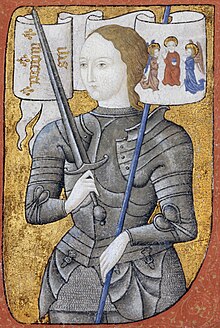
Joan of Arc
She had never wielded a lance or sword, or even ridden a war horse. She had never studied military strategy nor even seen a battlefield. Yet nine days after arriving with an army at Orléans, she lifted the English siege of the city on May 8, 1429.
On May 4, her army attacked the outlying fortress of Saint Loup. She arrived just as the French soldiers were retreating after a failed attempt. Her sudden appearance roused the soldiers to cheer and launch another assault—which overwhelmed the fortress.
In June, Joan decisively defeated the English at the Battle of Patay. She then advanced on Reims, entering the city on July 16. The next day, Charles, the rightful heir to the French throne, was consecrated as the King of France in Reims Cathedral with Joan at his side.
These victories paved the way for the final French victory in the Hundred Years’ War at Castillon in 1453.
On May 23, 1430, while relieving the siege of Compiegne, she was captured by Burgundians troops and exchanged to the English. Tried for heresy, she was declared guilty and burned at the stake on May 30,1431.
Only 19 when she died, she had, through her inspired leadership, restored the kingdom of France.
William Barret Travis (August 1, 1809 – March 6, 1836) was a South Carolina lawyer whose courage and eloquence inspired 200 Texans at the Alamo to hold back an army of 2,000 Mexican soldiers.
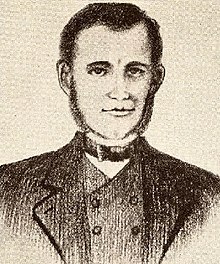
William Barret Travis
Few of the defenders had known each other before finding themselves besieged. None of them had had professional military training. Some had served in local militias or as irregulars fighting Indians under the command of frontier officers such as Andrew Jackson. Since the vast majority of the garrison were volunteers, they could have deserted the fortress at any time.
Holding them in place was Travis. Gifted with an eloquence beyond his 26 years, he gave purpose to their stand. As historian T.R. Fehrenbach writes in his monumental book, Lone Star: A History of Texas and the Texans:
“From the Alamo, from his first message before the arrival of the Mexicans to his last, his words had the ring of prophecy. The Texas historian who stated publicly that few people would want to have a son serve under William Barret Travis had forgotten, in the comforts of long security, the reasons why men make war.”
When the final assault came before dawn on March 6, 1836, the roughly 200 defenders killed and wounded about 600 of their enemies—inflicting a casualty rate of 33% on the Mexican army.
Travis’ body was found near his cannon on the north wall. He had been shot through the forehead.
The garrison’s sacrifice inspired Sam Houston’s ragtag army to fall on the Mexican army at San Jacinto on April 21. Slaughtering about 800 soldiers, the Texans captured Mexican dictator Antonio Lopez de Santa Anna—and forced him to surrender control of Texas in return for his life.
And now, as the United States faces the unprecedented danger of a Fascistic dictatorship under President Donald J. Trump, another hero has arisen.
Gavin Christopher Newsom (October 10, 1967) has been the 40th governor of California since 2019. During the COVID-19 pandemic in 2020, he imposed strict lockdown measures, thus saving countless lives by preventing a far greater spread of the virus.

Gavin Newsom
In doing so, he aroused the wrath of then-President Donald J. Trump, who promoted false “cures” such as drinking bleach and shining UV light up people’s rectums. Trump’s goal: “Keep America open”—so he could take credit for a robust economy, no matter how many people died.
Since being reelected in 2024 and taking office on January 20, Trump has committed, among other abuses:
- Deploying Marines and the National Guard to Los Angeles (against the wishes of the governor);
- Intimidating elected officials and judges;
- Purging the government of its inspectors general independent watchdogs;
- Blocking Congressional funding to agencies and universities; and
- Ignoring Constitutional guarantees of due process for those accused of being in the country illegally.
ABC NEWS, ALTERNET, AMERICABLOG, AP, BABY BOOMER RESISTANCE, BBC, BLOOMBERG, BUZZFEED, CBS NEWS, CNN, CROOKS AND LIARS, DAILY KOS, FBI, FIVETHIRTYEIGHT, FOOTBALL, GANG VIOLENCE, GANGS, GLADIATORS, HARPER’S MAGAZINE, HUFFINGTON POST, LEGION OF HONOR, MEDIA MATTERS, MOTHER JONES, MOVEON, MSNBC, NAPOLEON BONAPARTE, NBC NEWS, NEW REPUBLIC, NEWSDAY, NEWSWEEK, NPR, PBS NEWSHOUR, POLITICO, POLITICUSUSA, RAW STORY, REPUBLICANS, REUTERS, ROMAN EMPIRE, SALON, SEATTLE TIMES, SLATE, TALKING POINTS MEMO, TAX REVENUES, THE ATLANTIC, THE CHICAGO SUN-TIMES, THE CHICAGO TRIBUNE, THE DAILY BEAST, THE DAILY BLOG, THE GUARDIAN, THE HILL, THE HUFFINGTON POST, THE INTERCEPT, THE LOS ANGELES TIMES, THE NATION, THE NEW REPUBLIC, THE NEW YORK TIMES, THE NEW YORKER, THE VILLAGE VOICE, THE WALL STREET JOURNAL, THE WASHINGTON POST, THINKPROGRESS, TIME, TRUTHDIG, TRUTHOUT, TWO POLITICAL JUNKIES, U.S. NEWS & WORLD REPORT, UPI, USA TODAY, X
In Bureaucracy, Business, History, Law, Law Enforcement, Politics, Social commentary on June 30, 2025 at 12:27 am
There is a phrase that’s well-known south of the border: “Pan, o palo.” Or, in English: “Bread or the stick.”
And this, in turn, comes down to: Do as I say and you’ll get this nice reward. Disobey me and you’ll get your head bashed in.
According to the FBI’s website, “some 33,000 violent street gangs, motorcycle gangs, and prison gangs are criminally active in the U.S. today.
“Many are sophisticated and well organized; all use violence to control neighborhoods and boost their illegal money-making activities, which include robbery, drug and gun trafficking, prostitution and human trafficking, and fraud. Many gang members continue to commit crimes even after being sent to jail.”
Gangs are responsible for an average of 48% of violent crime in most jurisdictions and up to 90% in others.
FBI seal
These gangs aren’t going to disappear, no matter how many of their members die or wind up in prison.
For decades, the rhetoric of the Cold War has carried over into the debate over policing. “Hawks” on the Right have demanded a “hard” approach to law enforcement, emphasizing punishment. “Doves” on the Left have pursued a “soft” line, stressing social programs and rehabilitation.
But it isn’t enough to be “hard” or “soft” in pursuing the goal of a safe, law-abiding society. It’s necessary to be “smart” above all.
If you can’t eradicate evil, then you should try to direct at least some of its elements onto a safer path.
So it’s clearly time for an innovative approach to gangbusting.
Instead of merely using “the stick,” state and federal governments should use a combination of rewards and punishments to reduce gang membership and protect innocent citizens who are often the victims of gangland violence.
Each state should invite its resident gang members to take part in a series of competition for the title of “State Gang Champion.” These would be modeled on competitions now existing within the National Football League—a series of playoffs to determine which two gangs will duke it out in the “Super Rumble.”
These competitions would be completely voluntary, thus eliminating any charges of State coercion. They would be modeled on the country’s current mania for “Ultimate Warrior” contests for kickboxers and bare-knuckled fighters.
Contestants—from at least 10 opposing gangs—would meet in a football-sized arena.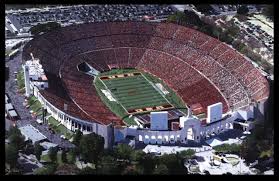
No firearms would be allowed, thus ensuring safety for spectators. Contestants could otherwise arm themselves with whatever weapons they desired—such as baseball bats, swords, axes, spears or chains.
Everyone who agreed to participate would automatically be guaranteed full immunity for whatever carnage they inflicted.
The object of these contests would be to officially determine which State gang was the “baddest” for the year. Tickets could be purchased by fans looking for an afternoon’s festival of gore.
Television networks could—-and no doubt would—vie for rights to film the events, just as they now do for streaming wrestling or boxing matches.
So why would hardcore gangs even consider participating in such a series of contests?
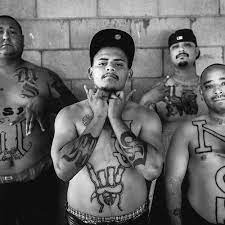
L.A. gang
For a multitude of reasons.
First, they would be able to eliminate members of rival gangs without risk of prosecution and imprisonment.
Second, they would be able to gauge—through the heat of combat—the toughness of their enemies and their own members.
Third, they would gain at least temporary stardom—just as successful gladiators did under the Roman Empire and winning football quarterbacks do today.
Fourth, the winning gang would gain official status as “The Baddest” gang in the State for that year.
On this last point: Napoleon Bonaparte created the Order of the Legion of Honor, distributed 15,000 crosses to his soldiers and called his troops the “Grand Army.” When someone criticized him for giving “toys” to his war-hardened veterans, Napoleon replied: “Men are ruled by toys.”
And for the State there would be gains as well.
First, these contests would literally eliminate a great many gang members who could not be removed any other way.
Second, police and prosecutors could concentrate their limited resources on gangs that refused to participate and/or were deemed to pose the greatest threat.
Third, millions of dollars in State revenues would be generated through ticket sales and the selling of streaming rights.
Fourth, for Republican politicians, there would be an added bonus: Their constituents would find this an especially attractive way to fight crime because it would adhere to the two concepts most precious to Right-wingers: Killing people and making money.
Admittedly, many law-abiding citizens would be repulsed by the carnage that would result from implementing this proposal. But these are generally the people who disdain boxing or wrestling contests anyway.
Given our increasingly jaded and violence-prone society, however, even most of these people would eventually tolerate these contests as an effective way to simultaneously raise badly-needed tax revenues and reduce the size of criminal gangs.
In short: With sufficient creativity and ruthlessness, it should be possible to reclaim control of our streets from the evils of gang violence.
ABC NEWS, ALEX JONES, ALTERNET, AMERICABLOG, AP, BABY BOOMER RESISTANCE, BARACK OBAMA, BBC, BC NEWS, BLOOMBERG, BLOOMBERG NEWS, BLUESKY, BUREAU OF LAND MANAGEMENT, BUZZFEED, CBS NEWS, CIVIL WAR, CLIVEN BUNDY, CNN, CROOKS AND LIARS, DAILY KOS, FBI, FIVETHIRTYEIGHT, HARPER’S MAGAZINE, HUFFINGTON POST, MEDIA MATTERS, MILITIA GROUPS, MOTHER JONES, MOVEON, MSNBC, NBC NEWS, NEVADA, NEW REPUBLIC, NEWSDAY, NEWSWEEK, NICCOLO MACHIAVELLI, NPR, PBS NEWSHOUR, POLITICO, POLITICUSUSA, RAW STORY, REUTERS, SALON, SEATTLE TIMES, SLATE, SWAT TEAMS, TALKING POINTS MEMO, THE ATLANTIC, THE CHICAGO SUN-TIMES, THE CHICAGO TRIBUNE, THE DAILY BEAST, THE DAILY BLOG, THE DISCOURSES, THE GUARDIAN, THE HILL, THE HUFFINGTON POST, THE INTERCEPT, THE LOS ANGELES TIMES, THE NATION, THE NEW REPUBLIC, THE NEW YORK TIMES, THE NEW YORKER, THE PRINCE, THE VILLAGE VOICE, THE WASHINGTON POST, THINKPROGRESS, TIME, TRUTHDIG, TRUTHOUT, TWO POLITICAL JUNKIES, U.S. MARSHALS SERVICE, U.S. NEWS & WORLD REPORT, ULYSSES S. GRANT, UPI, USA TODAY, WILLIAM T. SHERMAN, X
In Bureaucracy, History, Law, Law Enforcement, Politics, Social commentary on June 27, 2025 at 12:13 am
President Barack Obama—and Neil Kornze, the director of the Federal Bureau of Land Management (BLM)—had some serious lessons to learn about the uses of power.
For more than 20 years, Cliven Bundy, a Nevada cattle rancher, has refused to pay fees for grazing cattle on public lands, some 80 miles north of Las Vegas.
BLM said Bundy owed close to $1 million. He said his family had used the land since the 1870s and didn’t recognize the federal government’s jurisdiction.
In 2013, a federal judge ordered Bundy to remove his livestock. He ignored the order, and in early April, 2014, BLM agents rounded up more than 400 of his cattle.
Over the weekend of April 12-13, Bundy’s family and other ranchers—backed up by a motley assortment of self-declared militiamen armed with rifles and pistols—confronted the agents.

Bureau of Land Management logo
U.S. Government, Public domain, via Wikimedia Commons
Fearing another Waco—regarded by Right-wing Americans as a second Alamo—the BLM agents backed down and released Bundy’s cattle. And then retreated.
Right-wing bloggers and commentators portrayed the incident as a victory over Federal tyranny.
According to Alex Jones’ Infowars.com: “Historic! Feds Forced to Surrender to American Citizens.”
Right-wingers depicted Bundy as a put-upon Everyman being “squeezed” by the dictatorial Federal government.
They deliberately ignored a number of inconvenient truths—such as:
- Bundy claimed that his grazing rights were established in 1880 when his ancestors settled the land where his ranch sits.
- But the Nevada constitution—adopted in 1864 as a condition of statehood—contradicted Bundy’s right to operate as a law unto himself.
- The constitution says: “The people inhabiting said territory do agree and declare, that they forever disclaim all right and title to the unappropriated public lands lying within said territory, and that the same shall be and remain at the sole and entire disposition of the United States.
- In 1934, the Taylor Grazing Act gave existing ranchers permits allowing them to run their herds on federal land
- In turn, ranchers paid user fees, which were lower than what most private landowners would have charged.
- Amidst mounting fees and fines, Bundy repeatedly slugged it out in court against government lawyers. He lost.
- In 1998, a federal judge permanently barred him from letting his cattle graze on protected federal land.
Bundy’s refusal to recognize the federal government’s jurisdiction amounted to: “I will recognize—and obey—only those laws that I happen to agree with.”

Cliven Bundy
Gage Skidmore from Peoria, AZ, United States of America, CC BY-SA 2.0 <https://creativecommons.org/licenses/by-sa/2.0>, via Wikimedia Commons
And the BLM’s performance offers a textbook lesson on how not to promote respect for the law—or for those who enforce it.
As Niccolo Machiavelli, the father of modern political science warned more than 500 years ago in The Prince:
[A ruler] is rendered despicable by being thought changeable, frivolous, effeminate, timid and irresolute—which [he] must guard against as a rock of danger…. [He] must contrive that his actions show grandeur, spirit, gravity and fortitude.
As to the government of his subjects, let his sentence be irrevocable, and let him adhere to his decisions so that no one may think of deceiving or cozening him.
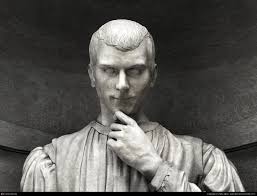
Niccolo Machiavelli
In his master-work, The Discourses, he outlines the consequences of allowing lawbreakers to go unpunished:
.…Having established rewards for good actions and penalties for evil ones, and having rewarded a citizen for conduct who afterwards commits a wrong, he should be chastised for that without regard to his previous merits….
For if a citizen who has rendered some eminent service to the state should add to the reputation and influence which he has thereby acquired the confident audacity of being able to commit any wrong without fear of punishment, he will in a little while become so insolent and overbearing as to put an end to all power of the law.
The conduct of the agents of BLM violated that sage counsel on all counts.
BLM agents should have expected trouble from Right-wing militia groups—and come fully prepared to deal with it.
The FBI and the U.S. Marshals Service, for example, have created heavily-armed, highly-trained SWAT teams to deal with those who threaten violence against the Federal Government. One or both of those agencies should have backed up the BLM agents with such force.
Civil War General William Tecumseh Sherman had a formula for dealing with domestic terrorists of his own time.
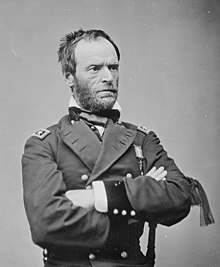
General Willilam Tecumseh Sherman
Writing to his commander, Ulysses S. Grant, about the best way to treat Confederate guerrillas, he advised:
“They cannot be made to love us, but they may be made to fear us. We cannot change the hearts of those people of the South.
“But we can make war so terrible that they will realize the fact that….they are still mortal and should exhaust all peaceful remedies before they fly to war.”
On January 6, 2021, President Donald Trump incited his Right-wing supporters to violently storm the United States Capitol building. Their goal: To overturn the legitimate results of the 2020 Presidential election won by former Vice President Joe Biden.
For three hours, the mob inflicted $30 million worth of damage on the building. Its police shot only one of their 2,00-2,500 attackers.
This encouraged Right-wingers to think themselves untouchable—and to continue supporting the man who had incited their treasonous violence.
2016 PRESIDENTIAL ELECTION, 2020 PRESIDENTIAL ELECTION, ABC NEWS, ABUSE OF POWER, ADOLF HITLER, ALTERNET, AMERICABLOG, AP, BABY BOOMER RESISTANCE, BORDER WALL, BUZZFEED, CBS NEWS, CIA, CNN, COVID-19, CROOKS AND LIARS, DAILY KOS, DEMOCRATS, DONALD TRUMP, E. JEAN CARROLL, EMOLUMENTS CLAUSE OF THE UNITED STATES CONSTITUTION, FBI, FEDERAL GOVERNMENT SHUTDOWN, FIVETHIRTYEIGHT, HARPER’S MAGAZINE, HEINRICH HIMMLER, J.D. VANCE, JAMES COMEY, JANUARY 6 COUP ATTEMPT, JEWS, KEVIN MCCARTHY, KIM JONG-UN, MEDIA MATTERS, MITCH MCCONNELL, MOTHER JONES, MOVEON, MSNBC, NATIONAL SECURITY AGENCY, NBC NEWS, NEWSWEEK, NPR, PBS NEWSHOUR, POLITICO, POLITICUSUSA, RAW STORY, REPUBLICAN NATIONAL CONVENTION, REPUBLICANS, REUTERS, SALON, SCHUTZSTAFFEL, SEATTLE TIMES, SLATE, SS, TALKING POINTS MEMO, THE ATLANTIC, THE CHICAGO SUN-TIMES, THE CHICAGO TRIBUNE, THE DAILY BEAST, THE DAILY BLOG, THE GUARDIAN, THE HILL, THE HOLOCAUST, THE HUFFINGTON POST, THE LOS ANGELES TIMES, THE NATION, THE NEW REPUBLIC, THE NEW YORK TIMES, THE VILLAGE VOICE, THE WASHINGTON POST, THINKPROGRESS, TIME, TRUTHDIG, TRUTHOUT, TWO POLITICAL JUNKIES, U.S. NEWS & WORLD REPORT, UPI, USA TODAY, VLADIMIR PUTIN, WHERMACHT, WONKETTE, X, XI JINPING
In Bureaucracy, History, Law, Law Enforcement, Politics, Social commentary on June 26, 2025 at 12:22 am
On October 4, 1943, SS-Reichsfuhrer Heinrich Himmler addressed SS officers stationed in Posen, Poland, about the ongoing campaign to exterminate the Jews of Europe.
He gave a similar speech two days later to an audience of Reichsleiters (national leaders) and Gauleiters (governors), as well as other government representatives.
Himmler intended to alert Reich officials of the extermination campaign the Schutzstaffel (“Protective Squads”)—otherwise known as the SS—and Wehrmacht (German army) had been waging since June, 1941.
The purpose: To make his listeners accessories to his monumental crimes—and to warn them there was no turning back.

Heinrich Himmler
Either Nazi Germany won the war that its Fuhrer, Adolf Hitler, had unintentionally unleashed on September 1, 1939—or its topmost officials would themselves face extinction as war criminals.
Said Himmler:
“I want to also mention a very difficult subject before you, with complete candor. It should be discussed amongst us, yet nevertheless, we will never speak about it in public. I am talking about the evacuation of the Jews, the extermination of the Jewish people.
“It is one of those things that is easily said: ‘The Jewish people is being exterminated.’…Most of you will know what it means when 100 bodies lie together, when 500 are there or when there are 1,000. And to have seen this through and—with the exception of human weakness—to have remained decent, has made us hard and is a page of glory never mentioned and never to be mentioned….”
Fast forward 81 years—to July, 2024.
On July 15, 2024, the Republican National Convention met in Milwaukee, Wisconsin to nominate former President Donald Trump for President of the United States and Ohio Senator J.D. Vance for Vice President.
Most of the attendees of Himmler’s speech at Posen hadn’t known the full details of the systematic extermination of the Jews. But everyone at the Republican convention knew Trump’s history:
- Publicly siding with Russian dictator Vladimir Putin against American Intelligence agencies—such as the FBI, CIA and National Security Agency—which unanimously agreed that Russia had interfered with the 2016 Presidential election.
- Using his position as President to further enrich himself, in violation of the Emoluments Clause of the Constitution.
- Praising brutal Communist dictators Putin, Xi Jinping and Kim Jong-Un.
- Firing FBI Director James Comey for refusing to pledge his personal loyalty to Trump—and continuing to investigate Russian subversion of the 2016 election.
- Openly lusting for his daughter, Ivanka.
- Shutting down the Federal Government on December 22, 2018, because Democrats refused to fund his useless “border wall” between the United States and Mexico. About 380,000 government employees were furloughed and another 420,000 were forced to work without pay for 35 days.
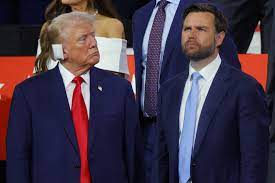
Donald Trump and J.D. Vance
- Allowing the deadly COVID-19 virus to ravage the country, killing 400,000 Americans by the time he left office.
- Attacking medical experts and governors who urged Americans to wear masks and socially distance to protect themselves against the deadly COVID-19 virus.
- Repeatedly lying—while still in office and afterward—that the 2020 election had been “stolen” from him by massive voter fraud.
- Illegally trying to pressure state legislatures and governors to stop the certification of the vote that had made Joe Biden the President-elect.
- Inciting his followers on January 6, 2021, to attack the Capitol Building where Senators and Representatives were counting the Electoral College votes won by himself and Joe Biden. His objective: Stop the count, which he knew would prove him the loser.

At the time of the January 6, 2021 coup attempt, even Republicans admitted Trump’s responsibility for it.
House Minority Leader Kevin McCarthy frantically phoned Trump, insisting that the rioters—who were breaking into his office through the windows—were the President’s supporters. He begged Trump to call them off.
“Well, Kevin, I guess these people are more upset about the election than you are,” Trump said.
But on January 28, “My Kevin” groveled before Trump at his Mar-a-Lago estate in Palm Beach, Florida, while they discussed how to win a House majority in the 2022 midterm elections
And Senate Majority Leader Mitch McConnell said on January 12: “The mob was fed lies. They were provoked by the president and other powerful people.”
But when the Senate met to try Trump for inciting an insurrection, McConnell voted to acquit him—and successfully urged his fellow Republicans to do the same.
At the 2024 Republican convention, House Speaker Mike Johnson declared: “We in the Republican Party are the law and order team.”
But he ignored Trump’s past conviction for raping advice columnist E. Jean Carroll and his 34 felony convictions for scheming to illegally influence the 2016 election by paying hush money to a porn “star” after the two had sex.
Heinrich Himmler diabolically entangled his fellow Nazis in his own crimes.
Attendees at the Republican convention could not plead ignorance of Trump’s crimes. They were knowingly, enthusiastically championing a proven criminal for the highest office in the nation.
History has brutally condemned those Germans who, knowing the full extent of Adolf Hitler’s crimes, nevertheless signed on to perpetuate them.
History will render the same damning verdict against those Republicans who provided similar support for Donald Trump.
2020 PRESIDENTIAL ELECTION, ABC NEWS, ABUSE OF POWER, ADAM SCHIFF, ADOLF HITLER, ALAN DERSHOWITZ, ALTERNET, AMERICABLOG, AP, ARTICLES OF IMPEACHMENT, BABY BOOMER RESISTANCE, BILL TAYLOR, BUZZFEED, CBS NEWS, CNN, CROOKS AND LIARS, DAILY KOZ, DEMOCRATS, DONALD TRUMP, DRUDGE RETORT, FACEBOOK, FIONA HILL, FIVETHIRTYEIGHT, HARPER’S MAGAZINE, HEINRICH HIMMLER, HUNTER BIDEN, JEWS, JOE BIDEN, JOHN BOLTON, JOHN ROBERTS, JOSEPH BIDEN, LAURA COOPER, MARIE YOVANOVICH, MEDIA MATTERS, MOTHER JONES, MOVEON, MSNBC, NBC NEWS, NEWSWEEK, NPR, OBSTRUCTION OF CONGRESS, PBS NEWSHOUR, POLITICO, POLITICUSUSA, RAND PAUL, RAW STORY, REPUBLICANS, REUTERS, SALON, SCHUTZSTAFFEL, SEATTLE TIMES, SLATE, TALKING POINTS MEMO, THE ATLANTIC, THE CHICAGO SUN-TIMES, THE CHICAGO TRIBUNE, THE DAILY BEAST, THE DAILY BLOG, THE GUARDIAN, THE HILL, THE HOLOCAUST, THE HUFFINGTON POST, THE LOS ANGELES TIMES, THE NATION, THE NEW REPUBLIC, THE NEW YORK TIMES, THE PENTAGON, THE VILLAGE VOICE, THE WASHINGTON POST, THINKPROGRESS, TIME, TRUTHDIG, TRUTHOUT, TWO POLITICAL JUNKIES, U.S. NEWS & WORLD REPORT, UKRAINE, UNITED STATES HOUSE OF REPRESENTATIVES, UNITED STATES SENATE, UPI, USA TODAY, VOLODYMYR ZELENSKY, WHERMACHT, WITNESSES, WONKETTE, X
In Bureaucracy, History, Law, Law Enforcement, Military, Politics, Social commentary on June 25, 2025 at 12:15 am
On October 4, 1943, SS Reichsfuhrer Heinrich Himmler addressed SS officers stationed in Posen, Poland, about the ongoing campaign to exterminate the Jews of Europe.
He gave a similar speech two days later to an audience of Reichsleiters (national leaders) and Gauleiters (governors), as well as other government representatives.
Himmler intended to alert Reich officials of the extermination campaign the Schutzstaffel (“Protective Squads”)—otherwise known as the SS—and Wehrmacht (German army) had been waging since June, 1941.
The purpose: To make his listeners accessories to his monumental crimes—and to warn them there was no turning back.

Heinrich Himmler
Either Nazi Germany won the war that its Fuhrer, Adolf Hitler, had unintentionally unleashed on September 1, 1939—or its topmost officials would themselves face extinction as war criminals.
Said Himmler:
“I want to also mention a very difficult subject before you, with complete candor. It should be discussed amongst us, yet nevertheless, we will never speak about it in public. I am talking about the evacuation of the Jews, the extermination of the Jewish people.
“It is one of those things that is easily said: ‘The Jewish people is being exterminated.’…Most of you will know what it means when 100 bodies lie together, when 500 are there or when there are 1,000. And to have seen this through and—with the exception of human weakness—to have remained decent, has made us hard and is a page of glory never mentioned and never to be mentioned….
“But altogether we can say: We have carried out this most difficult task for the love of our people. And we have suffered no defect within us, in our soul, in our character.”
Fast forward 76 years—to January, 2020.
On December 18, 2019, the Democratic-controlled House of Representatives approved two Articles of Impeachment against President Donald Trump:
Article 1: Abuse of Power: For pressuring Ukraine to assist him in his re-election campaign by damaging former Vice President Joseph Biden, his possible 2020 Democratic rival; and
Article 2: Obstruction of Congress: For obstructing Congress by blocking testimony of subpoenaed witnesses and refusing to provide documents in response to House subpoenas in the impeachment inquiry.
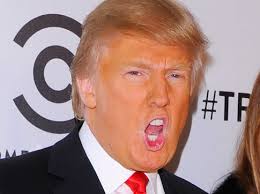
Donald Trump
Trump’s defense in the House had consisted of:
- Refusing to testify himself;
- Refusing to produce witnesses on his behalf;
- Refusing to turn over requested documents;
- Claiming that Democrats were preventing him from testifying or producing witnesses;
- Ordering administration officials to not testify before the six House impeachment committees investigating his behavior.
Those government employees who testified did so voluntarily—and at risk of retaliation. Among these were:
- Ukraine ambassador Bill Taylor;
- Laura Cooper, the top Pentagon official overseeing Ukraine-related U.S. policy;
- Former White House official Fiona Hill; and
- Former U.S. Ambassador to Ukraine Marie Yovanovitch.
They offered damning testimony against Trump.
When the trial began in the United States Senate on January 16, 2020, Trump’s legal team:
- Did not call any witnesses;
- Did not deny that Trump had sought to coerce Ukrainian President Volodymyr Zelensky into interfering with the 2020 election;
- Attacked Joseph and Hunter Biden as if they were on trial;
- Kentucky Republican Senator Rand Paul submitted a written question to presiding Chief Justice John Roberts that included the name of the alleged whistleblower to Trump’s coercion. Roberts refused to read it aloud;
- Paul raced outside the Senate and gave a press conference, where he named the alleged whistleblower—whose identity is protected by law.

Rand Paul
Perhaps even more frightening: One of Trump’s attorneys, Alan Dershowitz—once a liberal icon— offered Trump and all future Presidents a blanket of immunity worthy of a king:
“If a president does something which he believes will help him get elected in the public interest, that cannot be the kind of quid pro quo that results in impeachment. Every public official that I know believes that his election is of the public interest.”
Responding to that argument, House Manager Adam Schiff (D-CA) said: “It’s been a remarkable evolution of the presidential defense. It began with, ‘none of that stuff happened here.’ It began with ‘nothing to see here.’ It migrated to, ‘OK, they did seek investigations of the president’s political rival.’ And then it became OK.”
Meanwhile, the Senate majority of 53 Republicans vigorously supported Trump’s demand that no witnesses to his crimes be allowed to testify.
Among these witnesses: Former National Security Adviser John Bolton.
On December 29, 2019, The New York Times broke a sensational story:
In a forthcoming book, Bolton had written that Trump had told him, in August 2019, that he wanted to continue freezing aid to Ukraine until its officials began investigating the Bidens.
Despite—or because of—this bombshell report, Senate Republicans absolutely refused to admit the testimony of witnesses.
By following the same strategy as Heinrich Himmler, Trump entangled Republicans in his own crimes.
His infamy is now theirs.
History has brutally condemned those Germans who, knowing the full extent of Adolf Hitler’s crimes, nevertheless signed on to perpetuate and conceal them.
History will render the same damning verdict against House and Senate Republicans who provided similar cover for Donald Trump.
2020 PRESIDENTIAL ELECTION, ABC NEWS, ABRAHAM LINCOLN, ADAM SCHIFF, ALEXANDER VINDMAN, ALTERNET, AMERICABLOG, AP, BABY BOOMER RESISTANCE, BLOOMBERG, BUZZFEED, CBS NEWS, CNN, CROOKS AND LIARS, DAILY KOZ, DAVID BROOKS, DEMOCRATS, DONALD TRUMP, DRUDGE RETORT, FACEBOOK, FIVETHIRTYEIGHT, FOX NEWS NETWORK, GERRYMANDERING, HARPER’S MAGAZINE, HOUSE INTELLIGENCE COMMITTEE, HOWARD BAKER, HUNTER BIDEN, JOE BIDEN, JOEL MATHIS, LYNDON JOHNSON, MARIA YOVANOVICH, MARK SHIELDS, MEDIA MATTERS, MEDICAID, MICK MULVANEY, MOTHER JONES, MOVEON, MSNBC, NATIONAL SECURITY COUNCIL, NBC NEWS, NEWSWEEK, NPR, PBS NEWSHOUR, POLITICO, POLITICUSUSA, RAW STORY, REPUBLICANS, REUTERS, RICHARD NIXON, RUDI GIULIANI, RUSSIA, SALON, SEATTLE TIMES, SLATE, TALKING POINTS MEMO, THE ATLANTIC, THE CHICAGO SUN-TIMES, THE CHICAGO TRIBUNE, THE DAILY BEAST, THE DAILY BLOG, THE GUARDIAN, THE HILL, THE HUFFINGTON POST, THE LOS ANGELES TIMES, THE NATION, THE NEW REPUBLIC, THE NEW YORK TIMES, THE VILLAGE VOICE, THE WASHINGTON POST, THINKPROGRESS, TIME, TRUTHDIG, TRUTHOUT, TWO POLITICAL JUNKIES, U.S. NEWS & WORLD REPORT, UKRAINE, UPI, USA TODAY, VOLODYMYR ZELENSKY, VOTER ID LAWS, WATERGATE, WONKETTE, X
In Bureaucracy, History, Law, Law Enforcement, Military, Politics, Social commentary on June 24, 2025 at 12:16 am
On November 14, 2019, the CNN website showcased an opinion piece by Jane Carr and Laura Juncadella entitled: “Fractured States of America.”
And it opened:
“Some worry that it’s already too late, that we’ve crossed a threshold of polarization from which there is no return. Others look toward a future where more moderate voices are heeded and heard, and Americans can find better ways to relate to each other. Still others look back to history for a guide—perhaps for what not to do, or at the very least for proof that while it’s been bad before, progress is still possible.”
A series of sub-headlines summed up many of the comments reported.
- “I was starting to hate people that I have loved for years.”
- “Voting for Trump cost me my friends.”
- “I feel like I’m living in hostile territory.”
- “Our children are watching this bloodsport.”
- “A student’s Nazi-style salute reflects the mate.”
- “Our leaders reflect the worst of us.”
- “I truly believe I will be assaulted over a bumper sticker.”
- “It already feels like a cold war.”
It’s natural to regret that the United States has become so self-destructively polarized. And to wish that its citizens could somehow reach across the chasm that divides them and find common cause with one another.
But that is to ignore the brutal truth that America now faces a choice:
- To submit to the tyrannical aggression of a ruthless political party convinced that they are entitled to power to manipulate and undermine the country’s democratic processes; or
- To fiercely resist that aggression and the destruction of those democratic processes.
In a November 14, 2019 column, “Republicans Can’t Abandon Trump Now Because They’re All Guilty,” freelance journalist Joel Mathis warned: “Trump’s abuses of power mirror those of the GOP as a whole. Republicans can’t turn on him, because doing so would be to indict their party’s entire approach to politics.”
For example:
- At the state level, GOP legislatures have passed numerous voter ID laws over the last decade. Officially, the reason has been to prevent non-citizens from voting. In reality, the motive is to depress turnout among Democratic constituencies.
- When Democrats have won elections, Republicans have tried to block them from carrying out their policies. In Utah, voters approved Medicaid expansion at the ballot box—but Republicans nullified this.
- In North Carolina, Republican legislators prevented voters from choosing their representatives. Instead, Republican representatives chose voters through partisan sorting. In August, 2018, the state’s Supreme Court ruled the legislative gerrymandered district map unconstitutional.
The upshot of all this: “The president and his party are united in the belief that their entitlement to power allows them to manipulate and undermine the country’s democratic processes….”


At the time of the January 6, 2021 coup attempt, even Republicans admitted Donald Trump’s responsibility for it.
House Minority Leader Kevin McCarthy frantically phoned Trump, insisting that the rioters—who were breaking into his office through the windows—were the President’s supporters. He begged Trump to call them off.
“Well, Kevin, I guess these people are more upset about the election than you are,” Trump said.
But on January 28, 2021, “My Kevin” groveled before Trump at his Mar-a-Lago estate in Palm Beach, Florida, while they discussed how to win a House majority in the 2022 midterm elections
And Senate Majority Leader Mitch McConnell said on January 12: “The mob was fed lies. They were provoked by the president and other powerful people.”
But when the Senate met to try Trump for inciting an insurrection, McConnell voted to acquit him—and successfully urged his fellow Republicans to do the same.
* * * * *
The United States has indeed become a polarized country. But it’s not the polarization between Republicans and Democrats, or between conservatives and liberals.
It’s the polarization between
- Those intent on enslaving everyone who doesn’t subscribe to their Fascistic beliefs and agenda—and those who resist being enslaved.
- Those who believe in reason and science—and those who believe in an infallible “strong man” who rejects both.
- Those who cherish education—and those who celebrate ignorance.
- Those who believe in the rule of law—and those who believe in their right to act as a law unto themselves.
- Those who believe in treating others (especially the less fortunate) with decency—and those who believe in the triumph of intimidation and force.
Those who hoped that Republicans would choose patriotism over partisanship got their answer on February 5, 2020. That was when the Republican-dominated Senate—ignoring the overwhelming evidence against him—acquitted Donald Trump on impeachment articles: Obstruction of Congress and Abuse of Power.
And they got their answer again on February 13, 2021, when Senate Republicans voted to acquit him of Incitement of Insurrection.
It’s natural to regret that the United States has become a sharply divided nation. But those who lament this should realize there is only one choice:
Either non-Fascist Americans will destroy the Republican party and its voters that threaten to enslave them—or they will be enslaved by Republicans and their voters who believe they are entitled to manipulate and undermine the country’s democratic processes.
There is no middle ground.
ABC NEWS, ADOLF HITLER, ALI KHAMENEI, ALTERNET, AMERICABLOG, AP, B-52 BOMBERS, BABY BOOMER RESISTANCE, BATTLE OF BRITAIN (MOVIE), BBC, BENITO MUSSOLINI, BLOOMBERG, BLUESKY, BUNKER BUSTER BOMBS, BUZZFEED, CBS NEWS, CHAIRMAN OF THE JOINT CHIEFS OF STFF, CNN, CROOKS AND LIARS, DAILY KOS, DAN CAINE, DONALD TRUMP, FIVETHIRTYEIGHT, FORDO, HARPER’S MAGAZINE, HERMANN GORING, HUFFINGTON POST, IRAN, ISRAEL, JOINT CHIEFS OF STFF, LUFTWAFFE, MEDIA MATTERS, MOTHER JONES, MOVEON, MSNBC, NBC NEWS, NEW REPUBLIC, NEWSDAY, NEWSWEEK, NPR, NUCLEAR WEAPONS SITES, OPERATION MIDNIGHT HAMMER, PBS NEWSHOUR, POLITICO, POLITICUSUSA, RAW STORY, REUTERS, SALON, SEATTLE TIMES, SLATE, TALKING POINTS MEMO, THE ATLANTIC, THE CHICAGO SUN-TIMES, THE CHICAGO TRIBUNE, THE DAILY BEAST, THE DAILY BLOG, THE GUARDIAN, THE HILL, THE HUFFINGTON POST, THE INTERCEPT, THE LOS ANGELES TIMES, THE NATION, THE NEW REPUBLIC, THE NEW YORK TIMES, THE NEW YORKER, THE VILLAGE VOICE, THE WASHINGTON POST, THINKPROGRESS, TIME, TRUTHDIG, TRUTHOUT, TWO POLITICAL JUNKIES, U.S. NEWS & WORLD REPORT, UPI, USA TODAY, WINSTON CHURCHILL, WORLD WAR 11, X
In Bureaucracy, Business, History, Military, Politics, Social commentary on June 23, 2025 at 12:11 am
The 1969 classic, Battle of Britain, features a scene that could have been filmed after President Donald Trump launched unprovoked airstrikes against Iran on June 21.
The movie dramatizes the heroic struggle of vastly outnumbered Royal Air Force (RAF) pilots against the numerically superior German air force, the Luftwaffe, during World War II.
Adolf Hitler, Germany’s Fuhrer, knows that to launch a successful naval invasion of Britain, he first must wipe the RAF from the skies.
The aerial combat begins during the summer of 1940 and climaxes that September.

The turning point in the Battle—and the movie—occurs when a squadron of German bombers lost in bad weather at night accidentally bombs London. Attacks on London had been specifically forbidden by Hitler—for fear that they might bring the United States into the war.
An enraged British Prime Minister Winston Churchill orders a retaliatory attack on Berlin.
Since the eruption of World War II on September 1, 1939, with Hitler’s invasion of Poland. this is the first time that Berlin has been attacked. In fact, Hermann Goring, chief of the Luftwaffe, has said: “If ever a bomb falls on Berlin, you can call me Meyer.”
Now Hitler—who has ravaged Poland and France, and repeatedly bombed Britain, is enraged.
It’s perfectly OK for him to ravage other countries. It’s just unfair for his enemies to strike back.
He orders his faithful to assemble at the Reichstag, the German parliament, where he will outline his plans for knocking Britain out of the war.
In the movie, Battle of Britain, Hitler’s address is brilliantly—if briefly—staged, complete with rows of diehard Nazi women screaming their allegiance to their Fuhrer.
Hitler (played by Rolf Stiefel) starts his speech slowly, just as the real Hitler normally did to build to a shattering climax: “Last night, bombs were dropped on Berlin.
“So be it. Two can play at that game.
“If the RAF drops 200, 300, 400 bombs, then in one night we shall drop 2,000, 3,000, 4,000 bombs!”
His speech is interrupted by cheers from the Nazi faithful.

Adolf Hitler addressing the faithful in Battle of Britain
“If they attack our cities, then we will WIPE THEIRS OUT!
“The hour will come when one of us must break. And it will never be National Socialist Germany!”
“NEVER! NEVER! NEVER!” screams the frenzied crowd.
“The English are filled with curiosity. They keep asking ‘Why doesn’t he come?’ Be patient. We are coming! We are coming!”
The Reichstag explodes with cheers of expected victory.
Britain went on to repulse the Luftwaffe’s attacks on its cities—and celebrate its victory at the end of the war.
That speech—in the movie and history—happened in 1940.
Fast forward to June 21, 2025: Newly re-elected President Donald Trump orders seven B-2 bombers to attack three nuclear weapons sites in Iran.
Donald Trump
The attack, dubbed Operation Midnight Hammer, opens with a U.S. submarine launching more than 24 Tomahawk cruise missiles against targets at the site in Isfahan.
At about 6:40 p.m. ET, or 2:10 a.m. in Iran, the lead B-2 drops two “bunker-buster” bombs known as the GBU-57 Massive Ordnance Penetrators (MOPs) on the site at Fordo.
The GBU-57 bomb is designed to penetrate up to 200 feet (60 meters) underground before exploding. Armed with 6,000 pounds of explosives, it’s able to reach and destroy weapons of mass destruction located in well-protected facilities
For 25 minutes, a total of 14 30,000-pound bombs are dropped on targets at Fordo, Isfahan and Natanz. The Tomahawk missiles land at Isfahan after bombs are dropped on the two other sites. No shots are fired at the planes as they leave Iranian airspace.
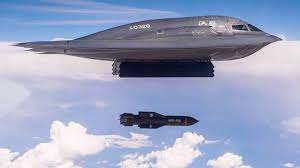
B-2 bomber drops “bunker buster” bomb
More than 125 U.S. aircraft participate in this mission, including the B-2 bombers, fighter jets, refueling planes and surveillance aircraft. More than 75 precision-guided weapons are used in the attack.
“Initial battle damage assessments indicate that all three sites sustained extremely severe damage and destruction,” says General Dan Caine, chairman of the Joint Chiefs of Staff.
He notes that a full assessment will take time.
“Our forces remain on high alert and are fully postured to respond to any Iranian retaliation or proxy attacks, which would be an incredibly poor choice,” Caine said. “We will defend ourselves.”
Always intent on having the last word, Trump adds on his website, Truth Social: “ANY RETALIATION BY IRAN AGAINST THE UNITED STATES OF AMERICA WILL BE MET WITH FORCE FAR GREATER THAN WHAT WAS WITNESSED TONIGHT.”
Like Hitler, it’s perfectly OK for him to ravage other countries. It’s just unfair for his enemies to strike back.
On April 12, 2025, Trump and Iran had begun a series of negotiations aimed at reaching a nuclear peace agreement. This followed a letter from Trump to Supreme Leader Ali Khamenei, setting a 60-day deadline for Iran to reach an agreement.
Like Hitler, Trump makes demands, offers no concessions and threatens destruction if his demands aren’t met.

Ali Khamenei
Khamenei.ir, CC BY 4.0 <https://creativecommons.org/licenses/by/4.0>, via Wikimedia Commons
On June 12, Israel launches all-out attacks on Iran, targeting Iran’s top military leaders, nuclear scientists, and politician Ali Shamkhani, who has been overseeing the negotiations with the United States.
Following the attacks, Iran suspends nuclear talks indefinitely.
There is no telling how Iran and its Islamic allies will respond. But that a response is coming is absolutely certain.

 Bureaucracybuster's Blog
ABC NEWS, ALAMO, ALTERNET, AMERICABLOG, ANDREW JACKSON, ANTONIO LOPEZ DE SANTA ANNA, AP, BABY BOOMER RESISTANCE, BBC, BLOOMBERG NEWS, BLUESKY, BUZZFEED, CBS NEWS, CHARLES VII, CNN, CROOKS AND LIARS, DAILY KOS, DEPARTMENT OF HOMELAND SECURITY, DONALD TRUMP, FIVETHIRTYEIGHT, FRANCE, GAVIN NEWSOM, HARPER’S MAGAZINE, HUFFINGTON POST, IMMIGRATION AND CUSTOMS ENFORCEMENT (ICE), JOAN OF ARC, KAREN BASS, LONE STAR: A HISTORY OF TEXAS AND THE TEXANS (BOOK), MEDIA MATTERS, MOTHER JONES, MOVEON, MSNBC, NATIONAL GUARD, NBC NEWS, NEWSDAY, NEWSWEEK, NPR, PBS NEWSHOUR, POLITICO, POLITICUSUSA, RAW STORY, REUTERS, RUSSIA, SALON, SAM HOUSTON, SEATTLE TIMES, SLATE, T.R. FEHRENBACH, TALKING POINTS MEMO, TEXAS, THE ATLANTIC, THE CHICAGO SUN-TIMES, THE CHICAGO TRIBUNE, THE DAILY BEAST, THE DAILY BLOG, THE GUARDIAN, THE HILL, THE HUFFINGTON POST, THE INTERCEPT, THE LOS ANGELES TIMES, THE NATION, THE NEW REPUBLIC, THE NEW YORK TIMES, THE NEW YORKER, THE VILLAGE VOICE, THE WASHINGTON POST, THINKPROGRESS, TIME, TOM HOMAN, TRUTHDIG, TRUTHOUT, TWO POLITICAL JUNKIES, U.S. NEWS & WORLD REPORT, UKRAINE, UPI, USA TODAY, VLADIMIR PUTIN, VOLODYMYR ZELENSKY, WILLIAM BARRET TRAVIS, WONKETTE, X
A CHURCHILLL FOR CALIFORNIA: PART FOUR (END)
In Bureaucracy, History, Law, Law Enforcement, Military, Politics, Social commentary on July 4, 2025 at 1:03 amIn The Last Lion, his three-volume biography of Winston Churchill, author William Manchester boldly summed up the prime minister’s most important contribution during World War II:
“The spirit [of courage], if indeed within them, lay dormant until he became prime minister and they, kindled by his soaring prose, came to see themselves as he saw them and emerged a people transformed, the admiration of free men everywhere.”
The same may one day be said about California Governor Gavin C. Newsom.
On June 11, Newsom addressed not only President Donald Trump’s response to civil disorders in Los Angeles, but the threat he posed to California, every other state—and democracy itself.
* * * * *
Authoritarian regimes begin by targeting people who are least able to defend themselves. But they do not stop there. Trump and his loyalists thrive on division because it allows them to take more power and exert even more control.
By the way, Trump – he’s not opposed to lawlessness and violence, as long as it serves HIM. What more evidence do we need than January 6th?
I ask everyone to take the time to reflect on this perilous moment. A president who wants to be bound by no law or constitution. Perpetrating a unified assault on American traditions.
Gavin Newsom
This is a President who, in just over 140 days, has fired government watchdogs that could hold him accountable for corruption and fraud. He’s declared a war on culture, on history, on science – on knowledge itself. Databases, quite literally vanishing.
He’s delegitimizing news organizations and assaulting the First Amendment. At the threat of defunding them, he’s dictating what universities can teach. Targeting law firms and the judicial branch that are the foundation of an orderly, civil society.
Calling for a sitting Governor [himself] to be arrested for no other reason than – to use his words – “for getting elected.”
And we all know, this Saturday [June 14] he’s ordering our American heroes – the United States military – forcing them to put on a vulgar display to celebrate his birthday, just as other failed dictators have done in the past.
Look, this isn’t just about protests in LA. When Donald Trump sought blanket authority to commandeer the National Guard, he made that order apply to every state in this nation. This is about all of us. This is about you.
California may be first – but it clearly won’t end here. Other states are next. Democracy is next.
Democracy is under assault right before our eyes – the moment we’ve feared has arrived. He’s taking a wrecking ball to our founding fathers’ historic project: Three independent, coequal branches of government.
There are no longer any checks and balances. Congress is nowhere to be found. [House] Speaker [Mike] Johnson has completely abdicated that responsibility.
The rule of law has increasingly given way to the rule of Don.
The founding fathers did not live and die to see this moment. It’s time for all of us to stand up. [Supreme Court Justice Louis] Brandeis said it best: In a democracy, the most important office is not president, it’s certainly not governor. The most important office is office of citizen.
At this moment, we must all stand up and be held to a higher level of accountability. If you exercise your First Amendment rights, please do so peacefully.
I know many of you are feeling deep anxiety, stress, and fear. But I want you to know that YOU are the antidote to that fear and anxiety.
What Donald Trump wants most is your fealty. Your silence. To be complicit in this moment. Do NOT give in to him.
* * * * *
Volodymyr Zelensky (January 25, 1978 – ) is a former attorney, actor and comedian who, as the sixth president of Ukraine, now leads his country in a life-or-death struggle against the aggressive Russia’s dictator Vladimir Putin.
On February 24, 2022, Putin launched an all-out attack on Ukraine.
Volodymyr Zelensky
During the assault by Russian troops on the capital of Kiev, the Biden administration urged Zelensky to evacuate to a safer location and offered to help him do so. Zelensky refused, saying: “The fight is here [in Kiev]; I need ammunition, not a ride.”
As CBS correspondent Scott Pelley put it: “The moment Zelensky told his people he refused to flee, they refused to fall.”
Russia expected Kiev to fall in three days. But more than three years after the invasion, Kiev still remains defiant—and in the hands of Ukrainians.
Ukraine vs. Russia
When Zelensky wasn’t broadcasting defiance at Russia and rousing Ukrainians to heroism, he was often visiting the battlefront.
Zelensky sees Ukraine’s struggle as the opening round of Russia’s war against the West.
“Some are….saying, ‘We can’t defend Ukraine because there could be a nuclear war.’ I think that today, no one in this world can predict what Russia will do. If they invade further into our territory, then they will definitely move closer and closer to Europe. They will only become stronger and less predictable.”
Millions of Americans—such as those who took part in nationwide “No Kings” protests on June 14—feel the same way about Donald Trump and his own dictatorial regime.
Share this: