Archive for the ‘Military’ Category
2016 PRESIDENTIAL ELECTION, ABC NEWS, ADOLF HITLER, ALTERNET, AP, BARACK OBAMA, BILL MAULDIN, BUZZFEED, CBS NEWS, CHARLOTTESVILLE DEMONSTRATIONS, CIA, CNN, CROOKS AND LIARS, DAILY KOZ, DONALD TRUMP, DONALD TRUMP JUNIOR, DRAFT DODGING, FACEBOOK, FBI, GENERAL LUCIAN K. TRUSCOTT, GEORGE W. BUSH, HILLARY CLINTON, IRAQ WAR, JAMES COMEY, JARED KUSHNER, MEMORIAL DAY, MOTHER JONES, MOVEON, MSNBC, NBC NEWS, NEWSWEEK, NPR, OLD GLORY, PAUL MANAFORT, POLITICO, RAW STORY, REUTERS, RUSSIA, SADDAM HUSSEIN, SALON, SAVING PRIVATE RYAN, SEATTLE TIMES, SLATE, STEVEN SPIELBERG, THE ATLANTIC, THE CHICAGO SUN-TIMES, THE CHICAGO TRIBUNE, THE DAILY BEAST, THE GUARDIAN, THE HILL, THE HUFFINGTON POST, THE LOS ANGELES TIMES, THE NATION, THE NEW YORK TIMES, THE WASHINGTON POST, TIME, TWITTER, U.S. NEWS & WORLD REPORT, UPI, USA TODAY, VIETNAM WAR, VLADIMIR PUTIN, WEAPONS OF MASS DESTRUCTION, WHITE HOUSE CORRESPONDENTS DINNER, WORLD WAR 11
In History, Military, Politics, Social commentary on May 28, 2018 at 12:40 am
Saving Private Ryan, Steven Spielberg’s 1998 World War II epic, opens with a scene of an American flag snapping in the wind.
Except that the brilliant colors of Old Glory have been washed out, leaving only black-and-white stripes and black stars.
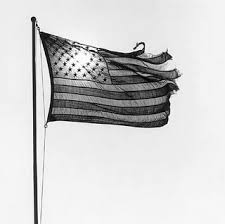
And then the movie opens—not during World war II but the present day.
Did Spielberg know something that his audience could only sense? Such as that the United States, for all its military power, has become a pale shadow of its former glory?
May 30, 1945, marked the first Memorial Day after World War II ended in Europe. On that day, the Sicily-Rome American Cemetery, near the town of Nettuno, held about 20,000 graves.
Most were soldiers who died in Sicily, at Salerno, or at Anzio. One of the speakers at the ceremony was Lieutenant General Lucian K. Truscott, Jr., the U.S. Fifth Army Commander.
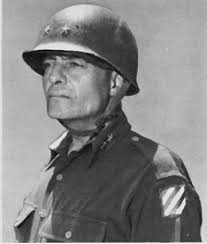
Lieutenant General Lucian K. Truscott, Jr.
Unlike many other generals, Truscott had shared in the dangers of combat, pouring over maps on the hood of his jeep with company commanders as bullets or shells whizzed about him.
When it came his turn to speak, Truscott moved to the podium. Then he turned his back on the assembled visitors—which included several Congressmen.
The audience he now faced were the graves of his fellow soldiers.
Among those who heard Truscott’s speech was Bill Mauldin, the famous cartoonist for the Army newspaper, Stars and Stripes. Mauldin had created Willie and Joe, the unshaved, slovenly-looking “dogfaces” who came to symbolize the GI.
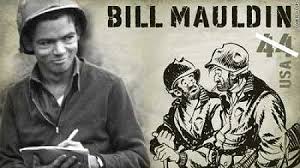
Bill Mauldin and “Willie and Joe,” the characters he made famous
It’s from Mauldin that we have the fullest account of Truscott’s speech that day.
“He apologized to the dead men for their presence there. He said that everybody tells leaders that it is not their fault that men get killed in war, but that every leader knows in his heart that this is not altogether true.
“He said he hoped anybody here through any mistake of his would forgive him, but he realized that he was asking a hell of a lot under the circumstances….
“Truscott said he would not speak of the ‘glorious’ dead because he didn’t see much glory in getting killed in your teens or early twenties.
“He promised that if in the future he ran into anybody, especially old men, who thought death in battle was glorious, he would straighten them out. He said he thought it was the least he could do.
“It was the most moving gesture I ever saw,” wrote Mauldin.
Then Truscott walked away, without acknowledging his audience of celebrities.
Fast forward 59 years later—to March 24, 2004.
At a White House Correspondents dinner in Washington, D.C., President George W. Bush joked publicly about the absence of Weapons of Mass Destruction (WMDs) in Iraq.
One year earlier, he had ordered the invasion of Iraq on the premise that its dictator, Saddam Hussein, possessed WMDs he intended to use against the United States.
While an overhead projector displayed photos of a puzzled-looking Bush searching around the Oval Office, Bush recited a comedy routine.
“Those Weapons of Mass Destruction have gotta be here somewhere,” Bush laughed, while a photo showed him poking around the corners of the Oval Office.
“Nope—no weapons over there! Maybe there’s under here,” he said, as a photo showed him looking under a desk.
In a scene that could have occurred under the Roman emperor Nero, an assembly of wealthy, pampered men and women—the elite of America’s media and political classes—laughed heartily during Bush’s performance.
In short: Ha, ha! And you thought there were WMDs in Iraq? The joke’s on you, dummies!
Then fast forward another 12 years—to November 8, 2016.
That was when the Republican party elected a five-times draft dodger named Donald Trump as President of the United States. A man who:
- Claimed that “bone spurs” made it impossible for him to serve his country during the Vietnam war.
- Had equated his reckless sex life during the 1970s with the risks members of the military ran in Vietnam.
- Has relentlessly defended Russian dictator Vladimir Putin against all criticism, even as he’s slandered literally hundreds of his fellow citizens on Twitter.
- Authorized his son, Donald, Jr., his son-in-law, Jared Kushner, and his then-campaign manager, Paul Manafort, to meet with Russian Intelligence agents at Trump Tower in June, 2016. The reason for the meeting: To obtain “dirt” the Russians claimed to have on Democratic Presidential candidate Hillary Clinton.
- Has rejected the findings by the FBI and CIA that Russia intervened in the 2016 election to help him win the White House.
- Ruthlessly attacked the integrity of FBI and CIA agents charged with defending the nation against subversion.
- Fired FBI Director James Comey for investigating Russian subversion of the 2016 Presidential election.
- Refused to condemn Nazi demonstrators in Charlottesville, Virginia—as if those who opposed Fascism were as evil as those who idolized Adolf Hitler.
- Has “joked” that it would be “great” if the United States had a “President-for-Life”—like China.
Small wonder then, that, for many people, Old Glory has taken on a darker, washed-out appearance—in real-life as in film.
2016 PRESIDENTIAL CAMPAIGN, ABC NEWS, ACADEMY AWARDS, ALEXANDER SHUSTOROVICH, ALTERNET, ANDREW INTRATER, AP, ARCHIBALD COX, BARACK OBAMA, BENGHAZI INVESTIGATION, BEST ACTOR OSCAR, BUZZFEED, CBS NEWS, CHUCK GRASSLEY, CIA, CNN, CROOKS AND LIARS, DAILY KOZ, DAVID BROOKS, DEPARTMENT OF HOMELAND SECURITY, DEVIN NUNES, DONALD TRUMP, DONALD TRUMP JR., DONALD TRUMP’S INAUGURAL COMMITTEE, DWIGHT D. EISENHOWER, EMAILS INVESTIGATION, FACEBOOK, FBI, FEDERAL ELECTIONS COMMISSION, FOX NEWS, FRED ZINNEMANN, GARY COOPER, GEORGE W. BUSH, GRACE KELLY, HIGH NOON, HILLARY CLINTON, HOUSE INTELLIGENCE COMMITTEE, JAMES COMEY, JARED KUSHNER, JEFF SESSIONS, JOHN KASICH, JOHN MCCAIN, JOSEPH R. MCCARTHY, KGB, LEN BLAVATNIK, LESTER HOLT, LINDSEY GRAHAM, MARCO RUBIO, MARK SHIELDS, MICHAEL FLYNN, MITCH MCCONNELL, MOTHER JONES, MOVEON, MSNBC, NATIONAL SECURITY AGENCY, NBC NEWS, NEWSWEEK, NPR, OFFICE OF THE DIRECTOR OF NATIONAL INTELLIGENCE, PAUL MANAFORT, PAUL RYAN, PBS NEWSHOUR, PEW RESEARCH SURVEY, POLITICAL ACTION COMMITTEES (PACS), POLITICAL CONSULTANTS, POLITICO, PRINCETON UNIVERSITY, RAW STORY, REPUBLICAN PARTY, REPUBLICANS, REUTERS, RICHARD M. NIXON, ROBERT S. MUELLER 111, ROD ROSENSTEIN, RUDOLPH GIULIANI, RUSSIA, RUSSIAN OLIGARCHS, SALON, SCOTT WALKER, SEATTLE TIMES, SENATE INTELLIGENCE COMMITTEE, SENATE LEADERSHIP FUND, SERGEY KISLYAK, SERGEY LAVROV, SIMON KUKES, SLATE, SOVIET UNION, TEX RITTER, THE ATLANTIC, THE CHICAGO SUN-TIMES, THE CHICAGO TRIBUNE, THE DAILY BEAST, THE GUARDIAN, THE HILL, THE HUFFINGTON POST, THE LOS ANGELES TIMES, THE NATION, THE NEW YORK TIMES, THE WASHINGTON POST, TIME, TRUMP INAUGURAL COMMITTEE, TRUMP TOWER, TWITTER, U.S. NEWS & WORLD REPORT, UNITED STATES DEPARTMENT OF JUSTICE, UNITED STATES DEPARTMENT OF STATE, UNITED STATES HOUSE OF REPRESENTATIVES, UNITED STATES MARINE CORPS, UNITED STATES SENATE, UNIVERSITY OF VIRGINIA LAW SCHOOL, UP, UPI, USA TODAY, VIETNAM WAR, VLADIMIR PUTIN, WILL KANE
In Bureaucracy, Entertainment, History, Law Enforcement, Military, Social commentary on May 24, 2018 at 12:04 am
On April 27, 2018, the House Intelligence Committee, after a sham “investigation,” concluded there had been “no collusion” between Russian Intelligence agents and members of the Trump Presidential campaign.
Among the evidence ignored: The now-infamous meeting at Trump Tower, in June, 2016, between Donald Trump’s son, Donald Jr.; his son-in-law, Jared Kushner; and his then-campaign manager, Paul Manafort, with Russian Intelligence agents.
The reason for the meeting: The Russians claimed to have dirt to offer on Hillary Clinton.
The “no collusion” verdict was inevitable, since the committee was chaired by California’s Republican Representative Devin Nunes, a wholly-owned subsidiary of Trump. Nunes had even improperly shared “secret” committee documents with the President.

Devin Nunes
The Senate Intelligence Committee, on the other hand, agreed with the conclusions previously reached by the American Intelligence community (CIA, FBI, National Security Agency): The Russians had worked to subvert the American political process and elect Trump over Clinton.
March 17, 2018, marked the start of the second year of Special Counsel Robert Mueller’s investigation to uncover “any links and/or coordination between the Russian government and individuals associated with the campaign of President Donald Trump, and any matters that arose or may arise directly from the investigation.”
By that date, Mueller had:
- Indicted 19 people—including four former Trump campaign advisers.
- Indicted three Russian companies.
- Obtained five guilty pleas—and the cooperation of all five defendants.
- Unveiled Russians’ determination to elect Trump over Hillary Clinton.
- Revealed that former National Security Adviser Michael Flynn discussed removing sanctions against Russia with then-Russian ambassador, Sergey Kislyak, during the transition period.
- Discovered that Trump associates knew about Russian outreach efforts during the campaign.
By contrast:
- Republicans spent four years investigating the 2012 attack on the United States embassy in Benghazi, Libya. Their goal: To derail the presumed 2016 Presidential candidacy of then-Secretary of State Hillary Clinton. But no indictments followed.
- Republicans spent two years investigating Hillary Clinton’s use of a private email server while Secretary of State. Again, no indictments followed.
It’s past time for Republicans to remember the lesson taught by High Noon, the classic 1952 Western starring Gary Cooper and Grace Kelly.

Town marshal Will Kane (Cooper) has just married Amy Fowler (Kelly) a Quaker. It should be the happiest day of his life. But shortly after the ceremony, word comes that Frank Miller—a notorious murderer Kane once sent to prison—has been released.
Even worse, Miller—joined by three other killers—is coming into town on the noon train to kill Kane.
Kane’s first instinct is to flee: He and his wife get into a buggy and dash out of town. But then his sense of duty takes over. He returns to town, intending to recruit a posse.
But this proves impossible—everyone is scared to death of Miller and his gang. And everyone Kane approaches has a reason for not backing him up.
Even Amy—a fervent believer in non-violence—threatens to leave him if he stands up to Miller. She will be on the noon train leaving town—with or without him.
When the clock strikes noon, the train arrives, and Kane—alone—faces his enemies. He shoots and kills two of them.
Then, as he’s pinned down by the third, he gets some unexpected help—from his wife: Amy shoots the would-be killer in the back—only to be taken hostage by Miller himself.
Miller tells Kane to leave his concealed position or he’ll kill Amy. Kane steps into the open—and Amy claws at Miller’s face, buying Kane the time he needs to shoot Miller down.
At that point, the townspeople rush to embrace Kane and congratulate him. But he’s now seen them for the cowards they are and holds them in total contempt.
Saying nothing, he drops the marshal’s star into the dirt. He and Amy then get into a buggy and leave town.
Fred Zinnemann, the film’s director, intended the movie as an attack on those frightened into silence by Joseph McCarthy, the infamous Red-baiting Senator from Wisconsin.
Will Kane fought to protect himself and his town from a gang of murderous outlaws.
Robert Mueller is fighting to discover the truth behind Russian subversion of the American political system.
The difference between these two conflicts is this: We know how Kane’s fight ended—with a good man defeating evil men.
We do not know if Mueller will ultimately triumph over his—and America’s—mortal enemies.
Robert Mueller—as a soldier, prosecutor, FBI director and now Special Counsel—took an oath to “support and defend the Constitution of the United States against all enemies, foreign and domestic.”
So did Donald Trump when he was inaugurated President. And so did every member of the House of Representatives and the Senate.
The difference between Robert Mueller, and the overwhelming majority of Republican Congressional members who have refused to support him, is this: Mueller, like a compass pointing True North, has always stayed faithful to that oath.
In doing so, he is carrying on his shoulders the burdens created when millions of racist, hate-filled Americans deliberately sent a Russian-backed egomaniac and would-be dictator to the White House.
2016 PRESIDENTIAL CAMPAIGN, ABC NEWS, ACADEMY AWARDS, ALEXANDER SHUSTOROVICH, ALTERNET, ANDREW INTRATER, AP, ARCHIBALD COX, BARACK OBAMA, BENGHAZI INVESTIGATION, BEST ACTOR OSCAR, BUZZFEED, CBS NEWS, CHUCK GRASSLEY, CIA, CNN, CROOKS AND LIARS, DAILY KOZ, DAVID BROOKS, DEPARTMENT OF HOMELAND SECURITY, DEVIN NUNES, DONALD TRUMP, DONALD TRUMP JR., DONALD TRUMP’S INAUGURAL COMMITTEE, DWIGHT D. EISENHOWER, EMAILS INVESTIGATION, FACEBOOK, FBI, FEDERAL ELECTIONS COMMISSION, FOX NEWS, FRED ZINNEMANN, GARY COOPER, GEORGE W. BUSH, GRACE KELLY, HIGH NOON, HILLARY CLINTON, HOUSE INTELLIGENCE COMMITTEE, JAMES COMEY, JARED KUSHNER, JEFF SESSIONS, JOHN KASICH, JOHN MCCAIN, JOSEPH R. MCCARTHY, KGB, LEN BLAVATNIK, LESTER HOLT, LINDSEY GRAHAM, MARCO RUBIO, MARK SHIELDS, MICHAEL FLYNN, MITCH MCCONNELL, MOTHER JONES, MOVEON, MSNBC, NATIONAL SECURITY AGENCY, NBC NEWS, NEWSWEEK, NPR, OFFICE OF THE DIRECTOR OF NATIONAL INTELLIGENCE, PAUL MANAFORT, PAUL RYAN, PBS NEWSHOUR, PEW RESEARCH SURVEY, POLITICAL ACTION COMMITTEES (PACS), POLITICAL CONSULTANTS, POLITICO, PRINCETON UNIVERSITY, RAW STORY, REPUBLICAN PARTY, REPUBLICANS, REUTERS, RICHARD M. NIXON, ROBERT S. MUELLER 111, ROD ROSENSTEIN, RUDOLPH GIULIANI, RUSSIA, RUSSIAN OLIGARCHS, SALON, SCOTT WALKER, SEATTLE TIMES, SENATE INTELLIGENCE COMMITTEE, SENATE LEADERSHIP FUND, SERGEY KISLYAK, SERGEY LAVROV, SIMON KUKES, SLATE, SOVIET UNION, TEX RITTER, THE ATLANTIC, THE CHICAGO SUN-TIMES, THE CHICAGO TRIBUNE, THE DAILY BEAST, THE GUARDIAN, THE HILL, THE HUFFINGTON POST, THE LOS ANGELES TIMES, THE NATION, THE NEW YORK TIMES, THE WASHINGTON POST, TIME, TRUMP INAUGURAL COMMITTEE, TRUMP TOWER, TWITTER, U.S. NEWS & WORLD REPORT, UNITED STATES DEPARTMENT OF JUSTICE, UNITED STATES DEPARTMENT OF STATE, UNITED STATES HOUSE OF REPRESENTATIVES, UNITED STATES MARINE CORPS, UNITED STATES SENATE, UNIVERSITY OF VIRGINIA LAW SCHOOL, UP, UPI, USA TODAY, VIETNAM WAR, VLADIMIR PUTIN, WILL KANE
In Bureaucracy, Entertainment, History, Law, Law Enforcement, Military, Social commentary on May 23, 2018 at 12:20 am
Altogether, four Russian oligarchs—Len Blavatnik, Alexander Shustorovich, Andrew Intrater and Simon Kukes––contributed $10.4 million from the start of the 2015-16 election cycle through September 2017. Of this, 99% went to Republicans.
As Senate Majority Leader, Kentucky United States Senator Mitch McConnell participated in high-level intelligence briefings in 2016. From agencies such as the FBI, CIA and the code-cracking National Security Agency, he learned that the Russians were trying to subvert the electoral process.

In October, 2016, the Department of Homeland Security (DHS) and the Office of the Director of National Intelligence (DNI) issued a joint statement: The Russian government had directed the effort to subvert the 2016 Presidential election.
Two weeks later, McConnell’s PAC accepted a $1 million donation from Blavatnik.
On March 30, 2017, McConnell’s PAC accepted another $1 million from Blavatnik. This was just 10 days after former FBI Director James Comey testified before the House Intelligence Committee about Russia’s efforts to subvert the 2016 election.
Billionaires don’t give huge sums to politicians without expecting to get something in return. And this is especially true—and frightening—when the contributors are linked to a former KGB agent like Vladimir Putin, whose aggressive intentions are increasingly on display.
So Special Counsel Robert Mueller is facing increased hostility from Republicans who no doubt fear their own ownership by Moscow will become a focus of his investigation.
But there is another powerful reason why so many Republicans have closed ranks with Trump against him:
#2: Republicans fear enraging Trump’s fanatical base.
On August 30, 2017, an article in Salon sought to explain why President Donald Trump was so popular among his supporters.
Its headline ran: “Most Americans Strongly Dislike Trump, But the Angry Minority That Adores Him Controls Our Politics.”
It described these voters as representing about one-third of the Republican party:
“These are older and more conservative white people, for the most part, who believe he should not listen to other Republicans and should follow his own instincts….
“They like Trump’s coarse personality, and approve of the fact that he treats women like his personal playthings. They enjoy it when he expresses sympathy for neo-Nazis and neo-Confederate white supremacists.
“They cheer when he declares his love for torture, tells the police to rough up suspects and vows to mandate the death penalty for certain crimes. (Which of course the president cannot do.)
“…This cohort of the Republican party didn’t vote for Trump because of his supposed policies on trade or his threat to withdraw from NATO. They voted for him because he said out loud what they were thinking. A petty, sophomoric, crude bully is apparently what they want as a leader.”
And keeping that cohort constantly stirred up is the Right-wing Fox News Network. This is not a source of legitimate news but the propaganda arm of the Fascistic Right and the Republican party.
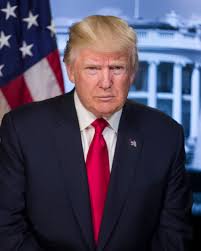
Donald Trump
On May 18, 2018, conservative New York Times columnist David Brooks offered this political commentary on The PBS Newshour: “I would just say, I observe politically, I do think if Trump fired Mueller tomorrow, the Republican Party would back him.
“Because I think FOX News has created a predicate. They have done thousands of surveys and investigations about Mueller as a political operative.”
And Brooks’ fellow political commentator, liberal syndicated columnist Mark Shields, echoed those sentiments: “At the same time, I think what we learned is that the defense of Donald Trump, led by himself and [his attorney] Rudy Giuliani, is to savage and torment, denigrate, vilify and libel Bob Mueller.
“Bob Mueller happens to be an American who turned down an eight-figure income to be a major corporate lawyer, instead became a public servant. He’s a man who volunteered and carries the wounds of battle from having been a Marine platoon leader in Vietnam.
“He is a public servant. He has not said a word. He has not given an interview. He has not leaked to anybody. And he stands vilified by Trump and Giuliani and their cohorts and their outriders. It is indefensible.
“And they are trying to exact the same damage upon the Justice Department of the country, the FBI and this country that Joe McCarthy did on the State Department, which has never fully recovered from his libelous attacks.”
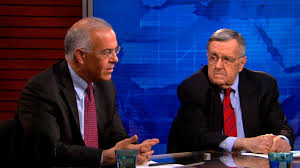
David Brooks and Mark Shields
According to a Pew Research Center survey, that one-third of Republicans who fanatically support Trump comprise only 16% of the population. That leaves 65% of Republicans who are revolted by Trump’s personality and behavior.
But that 65% of Republicans are being advised by GOP political consultants to vigorously support him.
“Your heart tells you that he’s bad for the country,” one anonymous consultant told the Salon reporter. “Your head looks at polling data among Republican primary voters and sees how popular he is.”
It’s precisely these hard-core Fascists who come out in mid-term elections—and they’re scaring the remaining 65% who make up the GOP establishment.
The highest priority of that establishment, after all, is to hold onto their privileged positions in the House and Senate. And anything that might jeopardize that—including what’s best for the country—can go hang.
2016 PRESIDENTIAL CAMPAIGN, 2016 PRESIDENTIAL RACE, ABC NEWS, ACADEMY AWARDS, ALEXANDER SHUSTOROVICH, ALTERNET, ANDREW INTRATER, AP, ARCHIBALD COX, BARACK OBAMA, BENGHAZI INVESTIGATION, BEST ACTOR OSCAR, BUZZFEED, CBS NEWS, CIA, CNN, CROOKS AND LIARS, DAILY KOZ, DAVID BROOKS, DEPARTMENT OF HOMELAND SECURITY, DEVIN NUNES, DONALD TRUMP, DONALD TRUMP JR., DONALD TRUMP’S INAUGURAL COMMITTEE, DWIGHT D. EISENHOWER, EMAILS INVESTIGATION, FACEBOOK, FBI, FEDERAL ELECTIONS COMMISSION, FOX NEWS, FRED ZINNEMANN, GARY COOPER, GEORGE W. BUSH, GRACE KELLY, HIGH NOON, HILLARY CLINTON, HOUSE INTELLIGENCE COMMITTEE, JAMES COMEY, JARED KUSHNER, JEFF SESSIONS, JOHN KASICH, JOHN MCCAIN, JOSEPH MCCARTHY, JOSEPH R. MCCARTHY, KGB, LEN BLAVATNIK, LESTER HOLT, LINDSEY GRAHAM, MARCO RUBIO, MARK SHIELDS, MICHAEL FLYNN, MITCH MCCONNELL, MOTHER JONES, MOVEON, MSNBC, NATIONAL SECURITY AGENCY, NBC NEWS, NEWSWEEK, NPR, OFFICE OF THE DIRECTOR OF NATIONAL INTELLIGENCE, PAUL MANAFORT, PAUL RYAN, PBS NEWSHOUR, PEW RESEARCH SURVEY, POLITICAL ACTION COMMITTEES (PACS), POLITICAL CONSULTANTS, POLITICO, PRINCETON UNIVERSITY, RAW STORY, REPUBLICAN PARTY, REPUBLICANS, REUTERS, RICHARD M. NIXON, ROBERT MUELLER III, ROBERT S. MUELLER 111, ROD ROSENSTEIN, RUDOLPH GIULIANI, RUSSIA, RUSSIAN OLIGARCHS, SALON, SCOTT WALKER, SEATTLE TIMES, SENATE INTELLIGENCE COMMITTEE, SENATE LEADERSHIP FUND, SERGEY KISLYAK, SERGEY LAVROV, SIMON KUKES, SLATE, SOVIET UNION, SUPREME COURT, TEX RITTER, THE ATLANTIC, THE CHICAGO SUN-TIMES, THE CHICAGO TRIBUNE, THE DAILY BEAST, THE GUARDIAN, THE HILL, THE HUFFINGTON POST, THE LOS ANGELES TIMES, THE NATION, THE NEW YORK TIMES, THE WASHINGTON POST, TIME, TRUMP INAUGURAL COMMITTEE, TRUMP TOWER, TWITTER, U.S. NEWS & WORLD REPORT, UNITED STATES DEPARTMENT OF JUSTICE, UNITED STATES DEPARTMENT OF STATE, UNITED STATES HOUSE OF REPRESENTATIVES, UNITED STATES MARINE CORPS, UNITED STATES SENATE, UNIVERSITY OF VIRGINIA LAW SCHOOL, UP, UPI, USA TODAY, USA TODAY DONALD TRUMP, USA TODAY HIGH NOON, VIETNAM WAR, VLADIMIR PUTIN, WILL KANE
In Bureaucracy, History, Law, Law Enforcement, Military, Politics, Social commentary on May 21, 2018 at 12:26 am
His face is lined and his gray hair is topped with a black hat. This is clearly not a young man. If he’s seen his share of violence, he doesn’t talk about it.
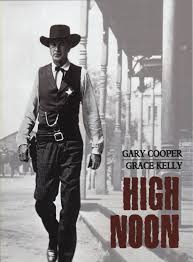
He’s about to face four armed and vicious criminals who intend to murder him. And he’s going to do it without support from the very citizens he’s sworn to defend.
His name: Will Kane, as played by Gary Cooper. And he’s the local marshal of an anonymous Western town.
“High Noon,” the 1952 movie in which this story takes place, won a Best Actor Academy Award for its star, Cooper. It was nominated for another six Academy Awards and won four (Actor, Editing, Music-Score, and Music-Song).
Its opening tune, “Do Not Forsake Me, Oh My Darling,” played incessantly on radios throughout the United States. President Dwight D. Eisenhower added his kudos to the movie, and often hummed its theme in the White House.
Fast forward to an America 66 years later.
A similar morality play is now occurring—in real life, not on a movie set. At stake isn’t simply the life of one man but perhaps the future of American democracy.
Carrying that burden is Robert Swan Mueller III.
Like the Gary Cooper character in “High Noon,” he is not a young man—born on August 7, 1944. And, like Cooper’s Will Kane, he is tall, gray-haired and tight-lipped.
But while Cooper never saw military service, Mueller did. A 1966 graduate of Princeton University, he served as a Marine Corps infantry platoon commander during the Vietnam War.
Wounded in combat, among the military awards he received were:
- The Bronze Star Medal with Combat “V” for heroism (for saving a wounded Marine while under enemy fire).
- The Purple Heart Medal (awarded for wounds in combat).
- Two Navy and Marine Corps Commendation Medals with Combat “V”.
- Combat Action Ribbon.
- National Defense Service Medal.
Having given three years of his life (1968-1971) to the Marines, Mueller devoted the rest of his life to law enforcement.
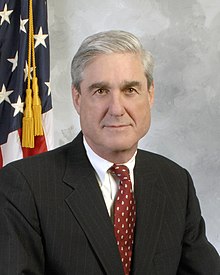
Robert Mueller
A 1973 graduate of the University of Virginia Law School, Mueller served as:
- United States Attorney for the District of Massachusetts (1986-1987);
- United States Assistant Attorney General for the Criminal Division (1990-1993);
- United States Attorney for the Northern District of California (1998-2001);
- United States Deputy Attorney General (January 20, 2001– May 10, 2001).
On September 4, 2001—seven days before Al Qaeda’s monstrous 9/11 attacks on Washington and New York—President George W. Bush appointed him director of the Federal Bureau of Investigation (FBI).
Widely praised for his integrity and effectiveness, he served his full 10-year term—the legal maximum.
But when President Barack Obama took office in 2009, he asked Mueller—a lifelong Republican—to stay on for an additional two years until a suitable replacement could be found.
Mueller agreed—and was succeeded by a fellow Justice Department colleague named James Comey.
Retiring from the FBI in 2013 at age 69, Mueller’s 27-year career as a dedicated law enforcer seemed at last to be over.
Then, on May 9, 2017, President Donald Trump fired Comey as FBI director. There were five reasons for this:
- Comey had refused to pledge his personal loyalty to Trump. Trump had made the “request” during a private dinner at the White House in January.
- Comey told Trump that he would always be honest with him. But that didn’t satisfy Trump’s demand that the head of the FBI act as his personal secret police chief—as was the case in the former Soviet Union.
- Trump had tried to coerce Comey into dropping the FBI’s investigation into former National Security Adviser Michael Flynn, for his secret ties to Russia and Turkey. Comey had similarly resisted that demand.
- Comey had recently asked the Justice Department to fund an expanded FBI investigation into well-documented contacts between Trump’s 2016 Presidential campaign and Russian Intelligence agents.
- The goal of that collaboration: To elect Trump over Hillary Clinton, a longtime foe of Russian President Vladimir Putin.

James Comey
On May 10—the day after firing Comey—Trump met in the Oval Office with Russian Foreign Minister Sergey Lavrov and Russian Ambassador Sergey Kislyak.
Kislyak is reportedly a top recruiter for Russia’s SVR foreign intelligence agency. He has been closely linked with Jeff Sessions, now Attorney General, and fired National Security Adviser Mike Flynn.
“I just fired the head of the F.B.I.,” Trump told the two dignitaries. “He was crazy, a real nut job. I faced great pressure because of Russia. That’s taken off.”
And on May 11, Trump, interviewed on NBC News by reporter Lester Holt, said: “And in fact when I decided to just do it, I said to myself, I said ‘you know, this Russia thing with Trump and Russia is a made-up story, it’s an excuse by the Democrats for having lost an election that they should have won.'”
ABC NEWS, ALTERNET, AMERICABLOG, AP, BABY BOOMER RESISTANCE, BUZZFEED, CANDICE BERGIN, CBS NEWS, CNN, CROOKS AND LIARS, DAILY KOZ, DRUDGE RETORT, ENGLAND, FACEBOOK, FIVETHIRTYEIGHT, FRANCE, GERMANY, HARPER’S MAGAZINE, ISRAEL, JAPAN, JOHN MILIUS, MEDIA MATTERS, MOROCCO, MOTHER JONES, MOVEON, MOVIES, MSNBC, NBC NEWS, NEWSWEEK, NPR, PBS NEWSHOUR, POLITICO, POLITICUSUSA, RAW STORY, REUTERS, SALON, SEAN CONNERY, SEATTLE TIMES, SLATE, TALKING POINTS MEMO, THE ATLANTIC, THE CHICAGO SUN-TIMES, THE CHICAGO TRIBUNE, THE DAILY BEAST, THE DAILY BLOG, THE GUARDIAN, THE HILL, THE HUFFINGTON POST, THE LOS ANGELES TIMES, THE NATION, THE NEW REPUBLIC, THE NEW YORK TIMES, THE VILLAGE VOICE, THE WALL STREET JOURNAL, THE WASHINGTON POST, THE WIND AND THE LION, THEODORE ROOSEVELT, THINKPROGRESS, TIME, TRUTHDIG, TRUTHOUT, TWITTER, TWO POLITICAL JUNKIES, U.S. NEWS & WORLD REPORT, UPI, USA TODAY, USA TODAY ABC NEWS, WONKETTE, WORLD WAR ii, WORLD WAR l, YELLOWSTONE NATIONAL PARK
In Entertainment, History, Military, Politics, Social commentary on May 18, 2018 at 1:12 am
There is a poignant scene in the middle of John Milius’ classic 1975 adventure film, The Wind and the Lion, that Americans would do well to remember.
The movie is set in 1904 America and Morocco. An American woman, Eden Pedicaris (Candice Bergen) and her two children have been kidnapped while vacationing in Tangier.
The kidnapper is a Berber brigand named Mulai Ahmed el Raisuli (Sean Connery—then successfully trying to shed his recent James Bond image).
To Raisuli, the Sultan and his uncle, the Pasha of Tangier, are corrupt and beholden to the European powers struggling to control Morocco.
Raisuli issues an outrageous ransom demand to provoke an international incident, embarrass the Sultan and start a civil war.
In the United States, President Theodore Roosevelt (Brian Keith) is running for re-election. He sees the crisis as a way to win votes and demonstrate America’s military strength as a new power.
So he issues a demand of his own: “Pedicarus alive—or Raisuli dead!”
While events rapidly spiral out of control in the Middle East, Roosevelt decides to vacation in Yellowstone National Park.
One night, a grizzly bear attacks the camp and is shot by Roosevelt and several other campers. The next morning, Roosevelt holds an imprumptu press conference for the reporters who have accompanied him.

Brian Keith (left) as Theodore Roosevelt
REPORTER: Did you take part in killing the grizzly, Mr. President?
ROOSEVELT: Yes, unfortunately.
REPORTER: Why do you say, ‘unfortunately,’ Mr. President?
ROOSEVELT: The American grizzly is a symbol of the American character: strength, intelligence, ferocity. Maybe a little blind and reckless at times, but courageous beyond all doubt. And one other trait that goes with all previous.
REPORTER: And that, Mr. President?
ROOSEVELT: Loneliness. The American grizzly lives out his life alone. Indomitable, unconquered—but always alone. He has no real allies, only enemies, but none of them as great as he.
REPORTER: And you feel this might be an American trait?
ROOSEVELT: Certainly. The world will never love us. They respect us—they might even grow to fear us. But they will never love us, for we have too much audacity! And, we’re a bit blind and reckless at times, too.
REPORTER: Are you perhaps referring to the situation in Morocco and the Panama Canal.
ROOSEVELT: If you say so. The American grizzly embodies the spirit of America. He should be our symbol! Not that ridiculous eagle—he’s nothing more than a dandified vulture.
When the Pasha of Tangier refuses to negotiate with Raisuli to secure the return of Pedecaris, the American Consul to Tangier, Samuel Gummere, decides on action. He confers with Admiral Chadwick, commanding the South Atlantic Squadron, and a Marine captain named Jerome.
Gummere then orders a company of Marines, supported by a small detachment of sailors, to seize the Pasha. But then he admits to the riskiness of the decision:
GUMMERE: You realize, of course, that if we fail in even the slightest way, we’ll all be killed.
CHADWICK: Yes, and the whole world will probably go to war.
JEROME: Gentlemen, if we fail and are killed, I certainly hope the world does go to war.
CHADWICK: A world ar war!
GUMMERE: A world war. Now that would be something to go out on.
In just ten years, they will get their hearts’ desire when World War 1 erupts.
The Marines quickly overwhelm the Pasha’s palace guard, take the Pasha hostage and force him to negotiate.
During the hostage exchange, Raisuli is betrayed and captured by German and Moroccan troops. His friend, the Sherif of Wazan, organizes the Berber tribe for an attack on the Europeans and their Moroccan lackeys.
Eden Pedecaris, who has grown to admire Raisuli, convinces a Marine captain and his men to rescue the Berber chieftain. She argues that President Roosevelt had promised that Raisuli would be unharmed if the Pedecarises were returned safely.
The Berbers and Marines team up to defeat the Germans and their Moroccan allies, rescuing Raisuli in the process.
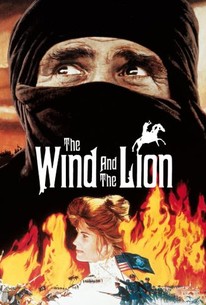
Thirteen years later—in 1917—the United States will officially take on the Germans in World War 1. And in another 37 years—in 1941—America will again declare war on Germany.
The film ends with a confident Theodore Roosevelt expecting (accurately) to be re-elected—and telling reporters that “the fate of Morocco will be decided tomorrow by me.”
The Wind and the Lion is set in an era when
- Nuclear weapons did not exist;
- Russia and China were militarily insignificant nations;
- England was the world’s superpower;
- America, Germany and Japan were on the rise;
- Israel was still a distant dream in the eyes of European Jews;
- The “Great Powers”—Germany, France and Great Britain—were struggling to carve up the Middle East to exploit its massive oil reserves; and
- Americans did not feel threatened by Islamic radicals.
As complex and dangerous as that era often seemed to those living more than 100 years ago, it has been succeeded by one even more complex and dangerous.
In this new and even more lethal era, it is well to remember Theodore Roosevelt’s warning that “we’re a bit blind and reckless at times, too.”
9/11 ATTACKS, ABC NEWS, ALTERNET, AP, BUZZFEED, CBS NEWS, CENSORSHIP, CIA, CNN, CROOKS AND LIARS, DAILY KOZ, DICK CHENEY, DONALD TRUMP, FACEBOOK, GENEVA CONVENTION, GEORGE C. MARSHALL, GEORGE W. BUSH, GINA HASPEL, HARRY S. TRUMAN, JAKE TAPPER, JOHN MCCAIN, KELLY SADLER, LINDSEY GRAHAM, MEGHAN MCCAIN, MERLE MILLER, MOTHER JONES, MOVEON, MSNBC, NBC NEWS, NEWSWEEK, NPR, POLITICO, PRISONERS OF WAR, RAW STORY, REUTERS, SALON, SARAH HUCKABEE SANDERS, SEATTLE TIMES, SLATE, THE ATLANTIC, THE CHICAGO SUN-TIMES, THE CHICAGO TRIBUNE, THE DAILY BEAST, THE GUARDIAN, THE HILL, THE HUFFINGTON POST, THE LOS ANGELES TIMES, THE NATION, THE NEW YORK TIMES, THE VIEW, THE WASHINGTON POST, THOMAS MCINERNEY, TIME, TORTURE, TWITTER, U.S. NEWS & WORLD REPORT, UPI, USA TODAY, VIETNAM WAR, VLADIMIR PUTIN, WATERBOARDING, WILLIAM JENNER
In Bureaucracy, History, Military, Politics, Social commentary on May 15, 2018 at 12:10 am
Arizona United States Senator John McCain knows firsthand about torture.
A Navy pilot during the Vietnam war, he was shot down over Hanoi on October 26, 1967, and captured. He spent five and a half years as a POW in North Vietnam—and was often brutally tortured. He wasn’t released until March 14, 1973.
So he had strong feelings when he learned about President Donald Trump’s pick for director of the Central Intelligence Agency (CIA).
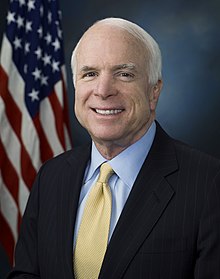
John McCain
This was Gina Haspel, who, in 2002, had operated a “black” CIA site in Thailand where Islamic terrorists were often waterboarded to make them talk.
After the September 11, 2001 Al-Qaeda attacks on New York and Washington, D.C., no one knew if other attacks were about to occur. Or where. The FBI, CIA, National Security Agency (NSA) and other Intelligence agencies were under huge pressure to discover—and foil—any future plots.
The administration of President George W. Bush ruled that waterboarding was not a form of torture, and thus did not violate the Geneva Convention.

Gina Haspel
But for John McCain, waterboarding was torture, even if it didn’t leave its victims permanently scarred and disabled.
As a result, when Haspel’s name was put up for nomination, McCain quickly made clear his opposition.
Enter White House Special Assistant Kelly Sadler, who handles surrogate communications.
Aware that the 81-year-old McCain was dying of brain cancer, Sadler joked to intimates about the Senator’s opposition to Haspel: “It doesn’t matter. He’s dying anyway.”
Leaked to CNN by an anonymous White House official, Sadler’s remark touched off a furor of criticism—and demands for her firing.
McCain’s daughter, Meghan, said on the ABC talk show, “The View”: “Kelly, here’s a little news flash … we’re all dying. I’m dying, you’re dying, we’re all dying. And I want to say, since my dad has been diagnosed … I really feel like I understand the meaning of life, and it is not how you die, it’s how you live.”
Not to be outdone by Sadler, retired Air Force Lieutenant General Thomas McInerney went on the Right-wing Fox News Network to personally attack McCain.
Torture, he said, was effective: “The fact is, is John McCain—it worked on John. That’s why they call him ‘Songbird John.'”
“The fact is those methods can work, and they are effective, as former Vice President Cheney said. And if we have to use them to save a million American lives, we will do whatever we have to,” said McInerney.
There’s no evidence that McCain ever betrayed the United States during his captivity.
CNN correspondent Jake Tapper angrily replied to McInerney’s slander: “First of all, no one calls him ‘Songbird John’ except for crazy people and jerks—and I’m using my language carefully here.”
Meghan McCain responded to McInerney’s attack: “My father’s legacy is going to be talked about hundreds and hundreds of years. These people: Nothingburgers. Nobody is going to remember you.”
Her comment echoed a remark by former President Harry S. Truman about Indiana United States Senator William Jenner. Jenner, a Right-wing Republican, had attacked the patriotism of George C. Marshall, who, as chief of staff of the United States Army, was rightly called “the architect of Allied victory” in World War II.
Asked by biographer Merle Miller for his opinion on Jenner, Truman responded: “In my opinion, General Marshall will go down as one of the great men of his time. And, of course, people like Jenner, they aren’t even a footnote in history.”
Others were equally outraged. South Carolina Republican Senator Lindsey Graham, a close friend of McCain, said: “Ms. Sadler, may I remind you that John McCain has a lot of friends in the United States Senate on both sides of the aisle. Nobody is laughing in the Senate.”
And Meghan McCain added during her appearance on “The View”: “I don’t understand what kind of environment you’re working in when that would be acceptable and then you can come to work the next day and still have a job.”
Of course, for anyone familiar with Donald Trump and his vicious reactions to even the smallest opposition, Sadler’s jibe at McCain should come as no surprise.
Donald Trump
During the 2016 Presidential campaign, Trump infamously said of McCain: “He’s not a war hero. He was a war hero because he was captured. I like people who weren’t captured.”
This from a man who sought—and got—five draft deferments during the Vietnam War. And who has compared his reckless sex-life during the 1970s to risking his life in service to his country.
Officially, White House Press Secretary Sarah Huckabee Sanders refused to confirm or deny Sadler’s joke: “I’m not going to get into a back and forth because people want to create issues of leaked staff meetings.”
Unofficially, Sanders was furious—not at the joke about a dying man, but that someone had leaked it. After assailing the White House communications team, she pouted: “I am sure this conversation is going to leak, too. And that’s just disgusting.”
For Sanders—and her boss—it’s disgusting that Trump’s White House can’t enforce the censorship that reigns in Vladimir Putin’s Kremlin.
ABC NEWS, ALTERNET, ANCHOR BABIES, AP, BARACK OBAMA, BERLIN AIRLIFT, BUZZFEED, CBS NEWS, CNN, CROOKS AND LIARS, DAILY KOZ, DEMOCRATIC PARTY, DEPARTMENT OF HOMELAND SECURITY, EGYPT, FACEBOOK, FRANCISCO SANCHEZ, ILLEGAL ALIENS, illegal immigration, IMMIGRATION AND CUSTOMS ENFORCEMENT, ISRAEL, MEXICO, MITCH MCCONNELL, MOTHER JONES, MOVEON, MSNBC, NBC NEWS, NEWSWEEK, NPR, OPERATION NICKEL GRASS, OUTER LIMITS "ZANTI MISFITS" EPISODE, POLITICO, RACIAL PROFILING, RAW STORY, REPUBLICAN PARTY, REUTERS, RICHARD NIXON, RICK SANTORUM, SALON, SEATTLE TIMES, SLATE, SOVIET UNION, SYRIA, THE ATLANTIC, THE CHICAGO SUN-TIMES, THE CHICAGO TRIBUNE, THE DAILY BEAST, THE GUARDIAN, THE HILL, THE HUFFINGTON POST, THE LOS ANGELES TIMES, THE NATION, THE NEW YORK TIMES, THE OUTER LIMITS, THE WASHINGTON POST, TIME, TWITTER, U.S. NEWS & WORLD REPORT, UPI, USA TODAY, YOM KIPPUR WAR
In Bureaucracy, History, Law, Military, Politics, Social commentary on May 4, 2018 at 12:09 am
Republican Presidential candidates like Donald Trump, Mitt Romney and Rick Santorum have long demanded an end to illegal immigration.
Their, now chief proposed solution: Wholesale deportation of millions of illegal aliens from the United States.
But even if Trump, now President, dared to take such a politically controversial step, could it actually succeed?

Suppose the Federal Government could identify and arrest all or most of the estimated 11 to 20 million illegal aliens now living in the United States. Then what?
Sending them back to their native countries would prove a colossal failure.
Most of America’s illegals come from neighboring Hispanic countries in Central and South America. Which means that as soon as they are deported, most of them cross the Mexican border again.
More importantly: The governments of those Central and South American countries use the United States as a dumping ground—of those citizens who might demand reforms in their political and economic institutions.
But there is one approach that could strike a meaningful blow against illegal immigration. It might well be called “The Zanti Option.”
Viewers of the 1960s sci-fi series, The Outer Limits, will vividly recall its classic 1963 episode, “The Zanti Misfits.”
In this, soldiers at an American Army base in a California ghost town nervously await first-contact with an alien race that has landed a space ship nearby.
The soldiers are warned to steer clear of the ship, and they do. But then an escaped convict (Bruce Dern, in an early role) happens upon the scene—and the ship.
The Zantis, enraged, emerge—and soon the soldiers at the military base find themselves under attack.

A “Zanti”
The soldiers desperately fight back–-with flamethrowers, machineguns or just rifle butts. Finally the soldiers win, wiping out the Zantis.
But now the base—and probably America—faces a wholesale invasion from the planet Zanti to avenge the deaths of their comrades.
So the soldiers wait anxiously for their next transmission from Zanti—which soon arrives.
To their surprise—and relief—it’s a message of thanks: “We will not retaliate. We never intended to. We knew that you could not live with such aliens in your midst.
“It was always our intention that you destroy them…We are incapable of executing our own species, but you are not. You are practiced executioners. We thank you.”
A Republican President could deal with the tsunami of illegal aliens by launching what might be called “Operation Zanti.”
Rather than deport them to countries in Central America—from which they would easily sneak back into the United States—the Federal Government could ship them off to more distant lands.
Like Afghanistan. Or Iraq. Or Syria.
It’s unlikely they would sneak back across the American border from the Middle East.
Such a policy change would:
- Close the Mexican revolving door, which keeps illegal immigration flowing; and
- Send an unmistakably blunt message to other would-be illegals: “The same fate awaits you.”
Although this might seem a far-fetched proposal, it could be easily carried out by the United States Air Force.
According to this agency’s website: “The C-5 Galaxy is one of the largest aircraft in the world and the largest airlifter in the Air Force inventory.
“The C-5 has a greater capacity than any other airlifter. It [can] carry 36 standard pallets and 81 troops simultaneously.
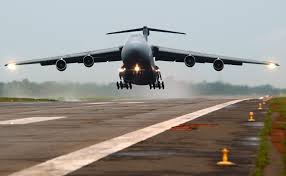
C-5 transport plane
“[It can also carry] any of the Army’s air-transportable combat equipment, including such bulky items as the 74-ton mobile scissors bridge.
“It can also carry outsize and oversize cargo over intercontinental ranges and can take off or land in relatively short distances.”
The C-5 Galaxy’s maximum cargo weight: 281,001 pounds
Click here: C-5 A/B/C Galaxy and C-5M Super Galaxy > U.S. Air Force > Fact Sheet Display
Instead of stuffing these planes with cargo, they could be stuffed wall-to-wall with illegal aliens.
The United States Air Force has a proud history of successfully providing America’s soldiers—and allies—with the supplies they need.
From June 24, 1948 to May 12, 1949, only the Berlin Airlift stood between German citizens and starvation.
The Soviet Union had blocked the railway, road, and canal access to the Berlin sectors under allied control. Their goal: Force the western powers to allow the Soviet zone to supply Berlin with food, fuel, and aid.
This would have given the Soviets control over the entire city.
Air forces from the United States, England, Canada, Australia, New Zealand and South Africa flew over 200,000 flights in one year, dropping more than 4,700 tons of necessities daily to the besiged Berliners.
The success of the Berlin Airlift raised American prestige and embarrassed the Soviets, who lifted the blockade.

The Berlin Airlift
A similar triumph came during the Yom Kippur War after Egypt and Syria attacked Israel without warning on October 6, 1973.
A Watergate-embattled President Richard Nixon ordered “Operation Nickel Grass” to deliver urgently-needed weapons and supplies to Israel.
For 32 days, the Air Force shipped 22,325 tons of ammunition, artillery, tanks and other supplies. These proved invaluable in saving Israel from destruction.
So the mass deportation of millions of illegal aliens lies within America’s technological capability. The only uncertainty: Would any American President be willing to give that order?
ABC NEWS, AFGHANISTAN, ALTERNET, ANWAR SADAT, AP, ARAB SPRING, BARACK OBAMA, BUZZFEED, CBS NEWS, CHINA, CLASS WARFARE, CNN, CONFRONT AND CONCEAL, CROOKS AND LIARS, CYBER WARFARE, DAILY KOZ, DAVID SANGER, DONALD TRUMP, DRONES, EGYPT, FACEBOOK, HOSNI MUBARAK, INCOME INEQUALITY, IRAN, KOREA, MITT ROMNEY, MOTHER JONES, MOVEON, MUSLIM BROTHERHOOD, NBC NEWS, NEWSWEEK, NPR, PAKISTAN, POLITICO, POVERTY, RAW STORY, REPUBLICAN PARTY, REUTERS, SALON, SEATTLE TIMES, SLATE, THE ATLANTIC, THE CHICAGO SUN-TIMES, THE CHICAGO TRIBUNE, THE DAILY BEAST, THE GUARDIAN, THE HILL, THE HUFFINGTON POST, THE LOS ANGELES TIMES, THE NATION, THE NEW YORK TIMES, THE TODAY SHOW, THE WASHINGTON POST, TIME, TWITTER, U.S. NEWS & WORLD REPORT, UPI, USA TODAY, WALL STREET, WEALTH
In Bureaucracy, Business, History, Military, Politics, Social commentary on April 26, 2018 at 12:07 am
A 2012 book offers timely advice for Republicans who believe that serving the interests of the wealthiest 1% will maintain their party in power.
It’s Confront and Conceal: Obama’s Secret Wars and Surprising use of American Power, by David E. Sanger, the chief Washington correspondent for The New York Times.
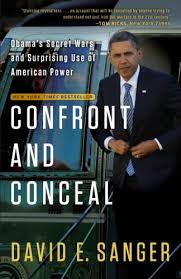
Divided into five sections, it dramatically covers the following subjects:
Afghanistan and Pakistan – How Obama sought to disengage from the former while readying plans to occupy the latter should its growing nuclear arsenal pose a threat to America.
Iran – To prevent the Iranians from building nuclear weapons, Obama authorized a malevolent virus to be inserted into that nation’s computer system.
Drones and Cyber – American drone attacks have wiped out much of Al Qaeda’s leadership—but increasingly strained U.S. relations with Pakistan. And while America has launched cyber attacks on Iran, it remains vulnerable to similar attacks—especially by China.
Arab Spring – America was totally surprised by the popular revolts sweeping the Arab world. And Obama had to balance showing support for the revolutionaries against jeopardizing America’s longtime Arab—and dictatorial—allies.
China and North Korea – The United States found itself financially strained to meet its worldwide military commitments. This forced Obama to use a both persuasion and containment against both these potential adversaries.
And in its section on the Arab Spring, there is an unintended warning to Republicans and their Right-wing followers.
David Sanger (Copyright, Creative Commons)
Sanger analyzes why the vast majority of Egyptians felt no solidarity with Hosni Mubarak, the general/dictator who ruled Egypt from 1981 ti 2911.
Mubarak came to power after Islamic fundamentalists assassinated President Anwar Sadat during a military review. They believed that Sadat had committed the unpardonable crime of signing a peace treaty with Israel.
Mubarack often warned Washington that only he could prevent Egypt from being dominated by fundamentalist, anti-American groups such as the Muslim Brotherhood.
But, writes Sanger, he achieved the very opposite:
“By leaving his citizens without a social safety net, by failing to invest in the country’s crumbling infastructure…he paved the way for the Brotherhood’s success….
“In a land where the state delivers so little, even the smallest [medical] clinic” as provided by the Brotherhood “will win respect and loyalty.
“So when it came time to vote, most Egyptians decided to cast their ballots for candidates they knew could provide something—Islamist or not, it almost didn’t matter….”

Hosni Mubarak (Copyright, Presidenza della Repubblica)
One such Brotherhood supporter, who grew up in the poor, agricultural region of Beni Suef, was quoted as saying:
“The Muslim Brotherhood came into my village, and brought lorries of fruits and vegetables,” selling them at discounted prices. “They supported medical clinics”–and thus won the hearts of the people they served.
Fast forward to Mitt Romney, the 2012 Republican Presidential nominee, and his vision for America.
As Romney saw it, questions about Wall Street scandals and income inequality were driven only by “envy.”
On January 11, 2012, after winning the New Hampshire primary, Romney appeared on NBC’s “The Today Show.” Host Matt Lauer noted that many Americans were concerned “about the distribution of wealth and power in this country.”
“I think it’s about envy,” replied Romney, whose own fortune has been conservatively estimated at $250 million. “I think it’s about class warfare.
“I think when you have a president encouraging the idea of dividing America based on 99 percent versus one percent… you’ve opened up a whole new wave of approach in this country which is entirely inconsistent with the concept of ‘one nation under God.’”
Romney added that it wasn’t necessary to have a public debate about the inequality of wealth distribution in this country.
“I think it’s fine to talk about those things in quiet rooms and discussions about tax policy and the like,” Romney said. “But the President has made this part of his campaign rally.
“Everywhere he goes we hear him talking about millionaires and billionaires and executives and Wall Street. It’s a very envy-oriented, attack-oriented approach and I think it’ll fail.”
Romney did not mention that, in 2007, the richest 1% of the American populace—of which he is a member—owned 34.6% of the country’s total wealth, and the next 19% owned 50.5%.
Thus, the top 20% of Americans owned 85% of the country’s wealth and the bottom 80% of the population owned 15%.
Romney claimed that Obama’s focus on this issue was just “part of his campaign rally.”
Clearly, now-ousted rulers like Mubarak and Muammar Quaddaffi believed “it’s fine to talk about these things” like vast differences in wealth “in quiet rooms.” That is, so long as they and their 1% rich supporters were doing the talking.
But over time their remoteness from the vast majority of their impoverished fellow citizens sealed their doom. When enough people broke into open revolt, even the military decided to change sides.
Mubarack was forced to resign, and Quaddaffi—after waging war against his own people—was captured and murdered.
If Romney’s—and now Donald Trump’s—vision of “everything for the 1%” is allowed to prevail, they and their ultra-privileged supporters may truly learn the lessons of class warfare.
"MISSION: IMPOSSIBLE", 2016 PRESIDENTIAL ELECTION, 9/11, ABC NEWS, ALTERNET, AP, AUGUSTO PINOCHET, AUGUSTO SANDINO, AYATOLLAH RUHOLLAH KHOMEINI, BAY OF PIGS, BUZZFEED, CBS NEWS, CHIANG KAI-SHEK, CHILE, CIA, CNN, CROOKS AND LIARS, CUBA, DAILY KOZ, DONALD TRUMP, DWIGHT D. EISENHOWER, FACEBOOK, FBI, FIDEL CASTRO, FULGENCIO BATISTA, GEORGE W. BUSH, GUATEMALA, HAITI, HONODURAS, IRAQ, JACOBO ARBENZ, JOHN F. KENNEDY, MAFIA, MAO TSE-TUNG, MOHAMMAD MOSADDEGH, MOHAMMAD-REZA SHAH PHLAVI, MOTHER JONES, MOVEON, NATIONAL SECURITY AGENCY, NBC NEWS, NEWSWEEK, NICARAGUA, NPR, OSAMA BIN LADEN, POLITICO, RAW STORY, REUTERS, RICHARD M. NIXON, ROBERT MUELLER, RUSSIA, SADDAM HUSSEIN, SALON, SALVADOR ALLENDE, SEATTLE TIMES, SLATE, SOVIET UNION, THE ATLANTIC, THE CHICAGO SUN-TIMES, THE CHICAGO TRIBUNE, THE DAILY BEAST, THE GUARDIAN, THE HILL, THE HUFFINGTON POST, THE LOS ANGELES TIMES, THE NATION, THE NEW YORK TIMES, THE WASHINGTON POST, TIME, TWITTER, U.S. NEWS & WORLD REPORT, UNITED FRUIT COMPANY, UPI, USA TODAY
In Bureaucracy, History, Military, Politics, Social commentary on April 24, 2018 at 12:15 am
According to the CIA, FBI and National Security Agency (which cracks codes and listens to the telephone conversation of foreign leaders) it’s clear that Russian trolls and Intelligence agents played a major role in subverting the 2016 Presidential election.
Special Counsel Robert Mueller III, assigned in May, 2017, to investigate charges of Russian interference, believes there was collusion. He has secured criminal charges against 19 people, including five guilty pleas. And more are undoubtedly coming.
Robert Mueller
And 65% of Americans believe that Mueller should be allowed to continue his investigation.
Apparently, most Americans don’t like having their elections subverted by enemy nations.
Subverting the governments of other countries is a right that Americans have long reserved for themselves. Among those regimes that have been toppled:
- Between 1898 and 1934, the United States repeatedly intervened with military force in Central America and the Caribbean.
- Americans staged invasions of Honduras in 1903, 1907, 1911, 1912, 1919, 1924 and 1925 to defend U.S. interests. These were defined as Standard Oil and the United Fruit Company.
- The United States occupied Nicaragua almost continuously from 1912 to 1933. Its legacy was the imposition of the tyrannical Somoza family, which ruled from 1936 to 1979.
- The United States occupied Haiti from 1915 to 1934. American banks had lent money to Haiti and requested American government intervention.
- In 1918, 13,000 American soldiers joined armies from Europe and Japan to overthrow the new Soviet government and restore the previous Tsarist regime. By 1920, the invading forces proved unsuccessful and withdrew.
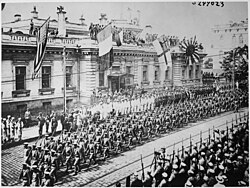
Allied troops parading in Vladivostok, 1918
- From 1946 to 1949, the United States provided military, logistical and other aid to the Right-wing Chinese Nationalist Party of Chiang Kai-shek. Its opponent were Communist forces led by Mao Tse-Tung, who ultimately proved victorious.
- In 1953, the Eisenhower administration ordered the CIA to overthrew the democratically-elected government of of Iranian Prime Minister Mohammad Mosaddegh. His crime: Nationalizing the Iranian oil industry, which had been under British control since 1913. He was succeeded by Mohammad-Reza Shah Phlavi. Whereas Mossadeddgh had ruled as a constitutional monarch, Phlavi was a dictator who depended on United States government support to retain power until he was overthrown in 1979 by the Ayatollah Ruhollah Khomeini.
- In 1954, the CIA overthrew the democratically-elected government of Guatemalan President Jacobo Arbenz. His crime: Installing a series of reforms that expanded the right to vote, allowed workers to organize, legitimized political parties and allowed public debate. Most infuriating to American Right-wingers: His agrarian reform law, which expropriated parts of large land-holdings and redistributed them to agricultural laborers. The United Fruit Company lobbied the United States government to overthrow him—and the CIA went into action. Arbenz was replaced by the first of a series of brutal Right-wing dictators.
- From 1959 until 1963, the United States government was obsessed with overthrowing the revolutionary Cuban government of Fidel Castro. Although not democratically elected, Castro was wildly popular in Cuba for overthrowing the dictatorial Fulgencio Batista. On April 17, 1961, over 1,400 CIA-trained Cuban exiles invaded Cuba at the Bay of Pigs. Cuban military forces crushed the invasion in three days.
- Infuriated with the failure of the Bay of Pigs invasion, President John F. Kennedy authorized “Operation Mongoose” to remove Castro through sabotage and assassination. The CIA, wanting to please Kennedy, teamed up with the Mafia, which wanted to resurrect its casinos on the island. Among the tactics used: Hiring Cuban gangsters to murder police officials and Soviet technicians; sabotaging mines; using biological and chemical warfare against the Cuban sugar industry. None of these proved successful in assassinating Castro nor overturning his regime.
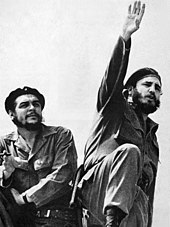
Ernesto “Che” Guevera and Fidel Castro
- In 1970, President Richard M. Nixon ordered the CIA to prevent Marxist Salvador Allende from being democratically elected as president of Chile. When that failed, he ordered the CIA to overthrow Allende. Allende’s crime: A series of liberal reforms, including nationalizing large-scale industries (notably copper mining and banking. In 1973, he was overthrown by Chilean army units and national police. He was followed by Right-wing dictator Augusto Pinochet, who slaughtered 3,200 political dissidents, imprisoned 30,000 and forced another 200,000 Chileans into exile.
And how did Americans react to all these attempts—successful and unsuccessful—at regime change?
Through indifference or outright support.
The popular 1960s TV series, “Mission: Impossible,” regularly depicted a CIA-type agency supporting regimes “we” liked or toppling those “we” didn’t.
Americans generally assume their Presidents and Congress know best who is a “friend” and who is an “enemy.” America’s friends often turn out, for the most part, to be Right-wing dictators like Chiang Kai-Shek, Fulgencio Batista, Augusto Pinochet and Mohammad-Reza Shah Phlavi.
And its enemies often turn out to be liberal reformers like Augusto Sandino, Mohammad Mosaddegh and Salvador Allende.
Americans tend to favor intervention for the flimsiest of reasons. In 2003, President George W. Bush claimed Iraq’s dictator, Saddam Hussein, had plotted 9/11 with Osama bin Laden. There was absolutely no proof to substantiate this, yet Americans overwhelmingly supported Bush’s unprovoked invasion of Iraq.
But now the shoe is on the other foot. Except for President Donald Trump and his fanatical supporters, Americans are furious that a foreign power has dared to install “regime change” on them.
Americans are now tasting the medicine they have dished out to so many other countries. And they find it as repugnant as those countries have found the American brand.
ABC NEWS, ADOLF HITLER, AFGHANISTAN, ALTERNET, AP, BARACK OBAMA, BUZZFEED, CBS NEWS, CNN, CROOKS AND LIARS, DAILY KOZ, DONALD TRUMP, EL ELAMEIN, ERWIN ROMMEL, FACEBOOK, FRIEDRICH VON PAULUS, GEORGE W. BUSH, GREAT BRITAIN, IRAQ, JAPAN, JOSEPH GOEBBELS, MOSCOW, MOTHER JONES, MOVEON, NAZI GERMANY, NBC NEWS, NEWSWEEK, NPR, PEARL HARBOR, POLITICO, RAW STORY, REUTERS, SALON, SEATTLE TIMES, SLATE, SOVIET UNION, STALINGRAD, THANKSGIVING MESSAGE TO U.S. TROOPS, THE ATLANTIC, THE CHICAGO SUN-TIMES, THE CHICAGO TRIBUNE, THE DAILY BEAST, THE GUARDIAN, THE HILL, THE HUFFINGTON POST, THE LOS ANGELES TIMES, THE NATION, THE NEW YORK TIMES, THE WASHINGTON POST, TIME, TOTAL WAR SPEECH, TWITTER, U.S. NEWS & WORLD REPORT, UNITED STATES, UPI, USA TODAY, WEHRMACHT, WINSTON CHURCHILL, WORLD WAR ii
In Bureaucracy, History, Military, Politics, Social commentary on April 20, 2018 at 12:07 am
By February, 1943, the tide of war had turned irrevocably for Nazi Germany.
The string of quick and easy victories that had started on September 1, 1939 was over:
- Poland
- Norway
- Denmark
- Holland
- Belgium
- Luxembourg
- Greece
- France.
All had fallen under the heel of the Nazi jackboot. The swastika flag still flew triumphantly over the capitols of these once-free nations.

And the word—and whim—of Germany’s Fuhrer, Adolf Hitler remained law for their populations.
But by March, 1943, all except the most fanatical Nazis could see that Germany was on a collision course with disaster.
- Under the unshakable leadership of Prime Minister Winston Churchill, Great Britain still remained a sworn enemy of the Third Reich.
- After six months of spectacular victories against the Soviet Union, the Wehrmacht had become hopelessly bogged down in the snow before Moscow.
- On December 11, 1941, following the attack on Pearl Harbor by his ally, Japan, Hitler declared war on the United States—thus pitting the Reich against the world’s two most powerful nations: America and Russia.
- In November, 1942, at El Alamein, the British Army halted the advance of General Erwin Rommel and his famed Afrika Korps across North Africa.
- On February 2, 1943, General Friedrich von Paulus surrendered the remains of the once-powerful Sixth Army at Stalingrad. The Reich suffered 730,000 total casualties, including nearly 91,000 German prisoners taken prisoner.
- On June 6, 1944, American, British and Canadian armies overwhelmed German’s “impregnable wall of death” on the Normandy beaches.
- In February, 1945, following the Vistula-Oder Offensive, the Red Army temporarily halted 37 miles east of Berlin.
So, by March, 1943, Germany desperately needed to hear some good news. And Propaganda Minister Joseph Goebbels was eager to supply it.
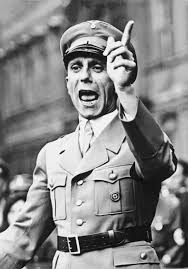
Joseph Goebbels
He did so in one of his last public addresses, delivered to a large but carefully selected audience in Gorlitz.
For Goebbels, the greatest challenge to the Reich lay in “the Bolshevist danger in the East.” And, for him, the solution was clear: “Total war is the demand of the hour.”
“Our soldiers, as soon as the great push on the Eastern Front gets under way, will ask no mercy and give no mercy.
“Already, our forces have begun softening up operations, and in the next weeks and months the big offensive will begin. They will go into battle with devotion like congregations going to a religious service.
“And when our men shoulder their weapons and climb into their tanks, there will be before their eyes the sight of their violated women and murdered children. A cry of vengeance will rise from their throats that will make the enemy tremble with fear!
“So, as the Fuhrer has overcome crises in the past, so will he triumph now.
“The other day he told me ‘I firmly believe that we shall overcome this crisis. I firmly believe that our army of millions will beat back our enemy and annihilate him. And some day our banners will be victorious. This is my life’s unshakable belief.’”
Thunderous applause repeatedly interrupted Goebbels’ address. Yet this could not replace the enormous losses Germany had suffered since 1939. Nor could it reverse the march of the Allied armies as they closed in on the Reich from East and West.
Now, fast-forward 74 years to November 23, 2017—Thanksgiving Day.
Donald Trump, President of the United States, speaks by video teleconference to American forces stationed in Iraq and Afghanistan.
Donald Trump
President George W. Bus had flown into Baghdad in 2003 to spend Thanksgiving with American forces. He flew into Iraq once again to visit troops in June, 2006.
And President Barack Obama visited American soldiers in Iraq in 2009, in Afghanistan in 2010, 2012 and 2014.
Trump’s “visit” was unique—in that he addressed American troops from his Mar-a-Lago Club and Resort in Palm Beach, Florida.
The address started off predictably enough: “It’s an honor to speak with you all and to give God thanks for the blessings of freedom and for the heroes who really have this tremendous courage that you do to defend us and to defend freedom.”
But, being Trump, he could not resist paying homage to himself: “We’re being talked about again as an armed forces. We’re really winning. We know how to win, but we have to let you win. They weren’t letting you win before; they we’re letting you play even. We’re letting you win….
“They say we’ve made more progress against ISIS than they did in years of the previous administration, and that’s because I’m letting you do your job….”
In short: All those sacrifices you made under Presidents Bush and Obama went for nothing.
“A lot of things have happened with our country over the last very short period of time, and they’re really good—they’re really good. I especially like saying that companies are starting to come back.
“Now we’re working on tax cuts—big, fat, beautiful tax cuts. And hopefully we’ll get that and then you’re going to really see things happen.”
Or, put another way: Be grateful they elected me—because you’re about to see the 1% richest get even richer. Too bad you won’t be so lucky.


.svg)


2016 PRESIDENTIAL ELECTION, ABC NEWS, ADOLF HITLER, ALTERNET, AP, BARACK OBAMA, BILL MAULDIN, BUZZFEED, CBS NEWS, CHARLOTTESVILLE DEMONSTRATIONS, CIA, CNN, CROOKS AND LIARS, DAILY KOZ, DONALD TRUMP, DONALD TRUMP JUNIOR, DRAFT DODGING, FACEBOOK, FBI, GENERAL LUCIAN K. TRUSCOTT, GEORGE W. BUSH, HILLARY CLINTON, IRAQ WAR, JAMES COMEY, JARED KUSHNER, MEMORIAL DAY, MOTHER JONES, MOVEON, MSNBC, NBC NEWS, NEWSWEEK, NPR, OLD GLORY, PAUL MANAFORT, POLITICO, RAW STORY, REUTERS, RUSSIA, SADDAM HUSSEIN, SALON, SAVING PRIVATE RYAN, SEATTLE TIMES, SLATE, STEVEN SPIELBERG, THE ATLANTIC, THE CHICAGO SUN-TIMES, THE CHICAGO TRIBUNE, THE DAILY BEAST, THE GUARDIAN, THE HILL, THE HUFFINGTON POST, THE LOS ANGELES TIMES, THE NATION, THE NEW YORK TIMES, THE WASHINGTON POST, TIME, TWITTER, U.S. NEWS & WORLD REPORT, UPI, USA TODAY, VIETNAM WAR, VLADIMIR PUTIN, WEAPONS OF MASS DESTRUCTION, WHITE HOUSE CORRESPONDENTS DINNER, WORLD WAR 11
OLD GLORY’S FINEST HOUR–AND ITS LOWEST
In History, Military, Politics, Social commentary on May 28, 2018 at 12:40 amSaving Private Ryan, Steven Spielberg’s 1998 World War II epic, opens with a scene of an American flag snapping in the wind.
Except that the brilliant colors of Old Glory have been washed out, leaving only black-and-white stripes and black stars.
And then the movie opens—not during World war II but the present day.
Did Spielberg know something that his audience could only sense? Such as that the United States, for all its military power, has become a pale shadow of its former glory?
May 30, 1945, marked the first Memorial Day after World War II ended in Europe. On that day, the Sicily-Rome American Cemetery, near the town of Nettuno, held about 20,000 graves.
Most were soldiers who died in Sicily, at Salerno, or at Anzio. One of the speakers at the ceremony was Lieutenant General Lucian K. Truscott, Jr., the U.S. Fifth Army Commander.
Lieutenant General Lucian K. Truscott, Jr.
Unlike many other generals, Truscott had shared in the dangers of combat, pouring over maps on the hood of his jeep with company commanders as bullets or shells whizzed about him.
When it came his turn to speak, Truscott moved to the podium. Then he turned his back on the assembled visitors—which included several Congressmen.
The audience he now faced were the graves of his fellow soldiers.
Among those who heard Truscott’s speech was Bill Mauldin, the famous cartoonist for the Army newspaper, Stars and Stripes. Mauldin had created Willie and Joe, the unshaved, slovenly-looking “dogfaces” who came to symbolize the GI.
Bill Mauldin and “Willie and Joe,” the characters he made famous
It’s from Mauldin that we have the fullest account of Truscott’s speech that day.
“He apologized to the dead men for their presence there. He said that everybody tells leaders that it is not their fault that men get killed in war, but that every leader knows in his heart that this is not altogether true.
“He said he hoped anybody here through any mistake of his would forgive him, but he realized that he was asking a hell of a lot under the circumstances….
“Truscott said he would not speak of the ‘glorious’ dead because he didn’t see much glory in getting killed in your teens or early twenties.
“He promised that if in the future he ran into anybody, especially old men, who thought death in battle was glorious, he would straighten them out. He said he thought it was the least he could do.
“It was the most moving gesture I ever saw,” wrote Mauldin.
Then Truscott walked away, without acknowledging his audience of celebrities.
Fast forward 59 years later—to March 24, 2004.
At a White House Correspondents dinner in Washington, D.C., President George W. Bush joked publicly about the absence of Weapons of Mass Destruction (WMDs) in Iraq.
One year earlier, he had ordered the invasion of Iraq on the premise that its dictator, Saddam Hussein, possessed WMDs he intended to use against the United States.
While an overhead projector displayed photos of a puzzled-looking Bush searching around the Oval Office, Bush recited a comedy routine.
“Those Weapons of Mass Destruction have gotta be here somewhere,” Bush laughed, while a photo showed him poking around the corners of the Oval Office.
“Nope—no weapons over there! Maybe there’s under here,” he said, as a photo showed him looking under a desk.
In a scene that could have occurred under the Roman emperor Nero, an assembly of wealthy, pampered men and women—the elite of America’s media and political classes—laughed heartily during Bush’s performance.
In short: Ha, ha! And you thought there were WMDs in Iraq? The joke’s on you, dummies!
Then fast forward another 12 years—to November 8, 2016.
That was when the Republican party elected a five-times draft dodger named Donald Trump as President of the United States. A man who:
Small wonder then, that, for many people, Old Glory has taken on a darker, washed-out appearance—in real-life as in film.
Share this: