Archive for the ‘Military’ Category
2016 PRESIDENTIAL CAMPAIGN, 2016 PRESIDENTIAL RACE, ABC NEWS, ACADEMY AWARDS, ALEXANDER SHUSTOROVICH, ALTERNET, ANDREW INTRATER, AP, ARCHIBALD COX, BARACK OBAMA, BENGHAZI INVESTIGATION, BEST ACTOR OSCAR, BUZZFEED, CBS NEWS, CHUCK GRASSLEY, CIA, CNN, CROOKS AND LIARS, DAILY KOZ, DAVID BROOKS, DEPARTMENT OF HOMELAND SECURITY, DEVIN NUNES, DONALD TRUMP, DONALD TRUMP JR., DONALD TRUMP’S INAUGURAL COMMITTEE, DWIGHT D. EISENHOWER, EMAILS INVESTIGATION, FACEBOOK, FBI, FEDERAL ELECTIONS COMMISSION, FOX NEWS, FRED ZINNEMANN, GARY COOPER, GEORGE W. BUSH, GRACE KELLY, HIGH NOON, HILLARY CLINTON, HOUSE INTELLIGENCE COMMITTEE, JACOB WOHL, JAMES COMEY, JARED KUSHNER, JEFF SESSIONS, JENNIFER TAUB, JOHN KASICH, JOHN MCCAIN, JOSEPH MCCARTHY, JOSEPH R. MCCARTHY, KGB, LEN BLAVATNIK, LESTER HOLT, LINDSEY GRAHAM, MARCO RUBIO, MARK SHIELDS, MICHAEL FLYNN, MITCH MCCONNELL, MOTHER JONES, MOVEON, MSNBC, NATIONAL SECURITY AGENCY, NBC NEWS, NEWSWEEK, NPR, OFFICE OF THE DIRECTOR OF NATIONAL INTELLIGENCE, PAUL MANAFORT, PAUL RYAN, PBS NEWSHOUR, PEW RESEARCH SURVEY, POLITICAL ACTION COMMITTEES (PACS), POLITICAL CONSULTANTS, POLITICO, PRINCETON UNIVERSITY, RAW STORY, REPUBLICAN PARTY, REPUBLICANS, REUTERS, RICHARD M. NIXON, ROBERT MUELLER III, ROBERT S. MUELLER 111, ROD ROSENSTEIN, RUDOLPH GIULIANI, RUSSIA, RUSSIAN OLIGARCHS, SALON, SCOTT WALKER, SEATTLE TIMES, SENATE INTELLIGENCE COMMITTEE, SENATE LEADERSHIP FUND, SERGEY KISLYAK, SERGEY LAVROV, SIMON KUKES, SLATE, SOVIET UNION, SUPREME COURT, TEX RITTER, THE ATLANTIC, THE CHICAGO SUN-TIMES, THE CHICAGO TRIBUNE, THE DAILY BEAST, THE GUARDIAN, THE HILL, THE HUFFINGTON POST, THE LOS ANGELES TIMES, THE NATION, THE NEW YORK TIMES, THE WASHINGTON POST, TIME, TRUMP INAUGURAL COMMITTEE, TRUMP TOWER, TWITTER, U.S. NEWS & WORLD REPORT, UNITED STATES DEPARTMENT OF JUSTICE, UNITED STATES DEPARTMENT OF STATE, UNITED STATES HOUSE OF REPRESENTATIVES, UNITED STATES MARINE CORPS, UNITED STATES SENATE, UNIVERSITY OF VIRGINIA LAW SCHOOL, UP, UPI, USA TODAY, USA TODAY DONALD TRUMP, USA TODAY HIGH NOON, VERMONT LAW SCHOOL, VIETNAM WAR, VLADIMIR PUTIN, WILL KANE
In Bureaucracy, History, Law, Law Enforcement, Military, Politics, Social commentary on November 8, 2018 at 12:14 am
On May 17, 2017, Deputy Attorney General Rod Rosenstein appointed Robert S. Mueller III to serve as Special Counsel for the United States Department of Justice.
Rosenstein charged Mueller to investigate “any links and/or coordination between the Russian government and individuals associated with the campaign of President Donald Trump, and any matters that arose or may arise directly from the investigation.”
Since then, Trump, his shills in Congress and Right-wing Fox News have relentlessly attacked Mueller’s integrity and investigative methods.
From the outset of that investigation, there have been widespread fears that Trump would fire Mueller, just as he did FBI Director James Comey. Those fears increased over the weekend of March 17-18, 2018, when Trump spewed a series of angry tweets on Twitter:
- “The Mueller probe should never have been started in that there was no collusion and there was no crime. It was based on fraudulent activities and a Fake Dossier paid for by Crooked Hillary and the DNC, and improperly used in FISA COURT for surveillance of my campaign. WITCH HUNT!”
- “Why does the Mueller team have 13 hardened Democrats, some big Crooked Hillary supporters, and Zero Republicans? Another Dem recently added…does anyone think this is fair? And yet, there is NO COLLUSION!”
- “A total WITCH HUNT with massive conflicts of interest!”
In “High Noon,” Marshal Will Kane faced death at the hands of four cold-blooded killers.
For Mueller, the threat is different. Every day he conducts his investigation under the shadow of being fired by a President who has:
- Already fired an FBI director for investigating proven links between Trump’s 2016 Presidential campaign and Russian Intelligence agents;
- Repeatedly praised Russian dictator Vladimir Putin; and
- Who has “joked” about how great it would be if the United States, like China, had a “President-for-Life.”
Mueller faces another distressing possibility: Even if he’s allowed to complete his investigation, his final report might be suppressed by Trump under a claim of “executive privilege.”
And, on October 30, details emerged about a Right-wing plot to discredit the probe by falsely accusing Mueller of sexually abusing or harassing women.
The Special Counsel’s office issued the following statement: “When we learned last week of allegations that women were offered money to make false claims about the Special Counsel, we immediately referred the matter to the FBI for investigation.”
On October 29, Jacob Wohl, a Fox News contributor and Trump supporter, tweeted: “Several media sources tell me that a scandalous story about Mueller is breaking tomorrow. Should be interesting. Stay tuned!”
Then, on October 30, Jennifer Taub, a law professor at Vermont Law School, told The Atlantic that a man working for Surefire Intelligence, a private investigative agency, had offered to pay her if she could provide dirt on Mueller.
She didn’t respond and forwarded the information to the Special Counsel’s office.
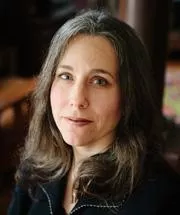
Jennifer Taub
Nor can Mueller, a lifelong Republican, count on protection from Republicans in the House and Senate.
Almost universally, they have refused to speak out against threats by Trump to fire him or deputy Attorney General Rod Rosenstein.
Or, more importantly, to take action to prevent or punish him for doing so.
On April 17, 2018, Republican Senate Majority Leader Mitch McConnell said he would not allow legislation to protect Robert Mueller’s independent investigation into Russian subversion of the 2016 Presidential election to reach the Senate floor.

Mitch McConnell
“I’m the one who decides what we take to the floor. That’s my responsibility as majority leader. We’ll not be having this on the floor of the Senate,” the Kentucky Republican said in an interview on Fox News.
Earlier that day, another Republican, Speaker of the House Paul Ryan, claimed that legislation to protect Mueller was “unnecessary.”
“It would not be in the President’s interest to [fire Mueller] and I think he knows that,” said the Wisconsin Congressman.
Why have so few Republicans dared to stand against Trump?
Two major reasons:
#1: Because many House and Senate Republicans received millions of dollars in “campaign contributions” from Russian oligarchs who are answerable to Russian dictator Vladimir Putin.
In short: Bribe monies.
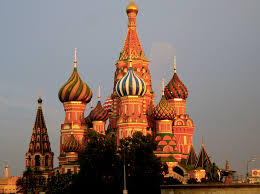
The Kremlin
The following data comes from the Federal Elections Commission.
One major Russian contributor is Len Blavatnik. During the 2015-16 election cycle, he proved one of the largest donors to GOP Political Action Committees (PACs).
Blavatnik’s net worth is estimated at $20 billion. In 2016, he gave $6.35 million to GOP PACs.
In 2017, he gave millions of dollars to top Republican leaders—such as Senators Mitch McConnell, Marco Rubio (Florida) and Lindsey Graham (South Carolina). Specifically, Blavatnik contributed:
- A total of $1.5 million to PACs associated with Rubio.
- $1 million to Trump’s Inaugural Committee.
- $1 million to McConnell’s Senate Leadership Fund.
- $3.5 million to a PAC associated with McConnell.
- $1.1 million to Unintimidated PAC, associated with Wisconsin Governor Scott Walker.
- $200,000 to the Arizona Grassroots Action PAC, associated with Arizona Senator John McCain.
- $250,000 to New Day for America PAC, associated with Ohio Governor John Kasich.
- $800,000 went to the Security is Strength PAC, associated with Senator Lindsey Graham.
Another Russian oligarch, Alexander Shustorovich, contributed $1 million to Trump’s Inaugural Committee.
A third oligarch, Andrew Intrater, contributed $250,000 to Trump’s Inaugural Committee.
And a fourth, Simon Kukes, contributed a total of $283,000, much of it to the Trump Victory Fund.
2016 PRESIDENTIAL CAMPAIGN, 2016 PRESIDENTIAL RACE, ABC NEWS, ACADEMY AWARDS, ALEXANDER SHUSTOROVICH, ALTERNET, ANDREW INTRATER, AP, ARCHIBALD COX, BARACK OBAMA, BENGHAZI INVESTIGATION, BEST ACTOR OSCAR, BUZZFEED, CBS NEWS, CHUCK GRASSLEY, CIA, CNN, CROOKS AND LIARS, DAILY KOZ, DAVID BROOKS, DEPARTMENT OF HOMELAND SECURITY, DEVIN NUNES, DONALD TRUMP, DONALD TRUMP JR., DONALD TRUMP’S INAUGURAL COMMITTEE, DWIGHT D. EISENHOWER, EMAILS INVESTIGATION, FACEBOOK, FBI, FEDERAL ELECTIONS COMMISSION, FOX NEWS, FRED ZINNEMANN, GARY COOPER, GEORGE W. BUSH, GRACE KELLY, HIGH NOON, HILLARY CLINTON, HOUSE INTELLIGENCE COMMITTEE, JACOB WOHL, JAMES COMEY, JARED KUSHNER, JEFF SESSIONS, JENNIFER TAUB, JOHN KASICH, JOHN MCCAIN, JOSEPH MCCARTHY, JOSEPH R. MCCARTHY, KGB, LEN BLAVATNIK, LESTER HOLT, LINDSEY GRAHAM, MARCO RUBIO, MARK SHIELDS, MICHAEL FLYNN, MITCH MCCONNELL, MOTHER JONES, MOVEON, MSNBC, NATIONAL SECURITY AGENCY, NBC NEWS, NEWSWEEK, NPR, OFFICE OF THE DIRECTOR OF NATIONAL INTELLIGENCE, PAUL MANAFORT, PAUL RYAN, PBS NEWSHOUR, PEW RESEARCH SURVEY, POLITICAL ACTION COMMITTEES (PACS), POLITICAL CONSULTANTS, POLITICO, PRINCETON UNIVERSITY, RAW STORY, REPUBLICAN PARTY, REPUBLICANS, REUTERS, RICHARD M. NIXON, ROBERT MUELLER III, ROBERT S. MUELLER 111, ROD ROSENSTEIN, RUDOLPH GIULIANI, RUSSIA, RUSSIAN OLIGARCHS, SALON, SCOTT WALKER, SEATTLE TIMES, SENATE INTELLIGENCE COMMITTEE, SENATE LEADERSHIP FUND, SERGEY KISLYAK, SERGEY LAVROV, SIMON KUKES, SLATE, SOVIET UNION, SUPREME COURT, TEX RITTER, THE ATLANTIC, THE CHICAGO SUN-TIMES, THE CHICAGO TRIBUNE, THE DAILY BEAST, THE GUARDIAN, THE HILL, THE HUFFINGTON POST, THE LOS ANGELES TIMES, THE NATION, THE NEW YORK TIMES, THE WASHINGTON POST, TIME, TRUMP INAUGURAL COMMITTEE, TRUMP TOWER, TWITTER, U.S. NEWS & WORLD REPORT, UNITED STATES DEPARTMENT OF JUSTICE, UNITED STATES DEPARTMENT OF STATE, UNITED STATES HOUSE OF REPRESENTATIVES, UNITED STATES MARINE CORPS, UNITED STATES SENATE, UNIVERSITY OF VIRGINIA LAW SCHOOL, UP, UPI, USA TODAY, USA TODAY DONALD TRUMP, USA TODAY HIGH NOON, VERMONT LAW SCHOOL, VIETNAM WAR, VLADIMIR PUTIN, WILL KANE
In Bureaucracy, History, Law, Law Enforcement, Military, Politics, Social commentary on November 7, 2018 at 12:18 am
For more than a year, Democrats promised/threatened an upcoming “blue wave” aimed at the United States Senate and House of Representatives.
And now, on November 6, the results are in: Democrats have taken control of the House of Representatives.
But Republicans still hold control of the Senate.
Republicans won the House in 2010. And, in 2014, they won control of the Senate.
During 2018, the national news media predictably covered the midterm elections as a horse race, focusing strictly on: “Who’s ahead today?”
Meanwhile, behind-the-scenes, without fanfare, a 74-year-old man has assumed the burdens created when millions of racist, hate-filled Americans deliberately sent a Russian-backed egomaniac and would-be dictator to the White House.
That man is Robert Swan Mueller III.
Like “Will Kane,” the embattled marshal played by Gary Cooper in “High Noon,” he is not a young man—born on August 7, 1944. And, like Cooper’s Will Kane, he is tall, gray-haired and tight-lipped.
But while Cooper never saw military service, Mueller did. A 1966 graduate of Princeton University, he served as a Marine Corps infantry platoon commander during the Vietnam War.
Wounded in combat, among the military awards he received were:
- The Bronze Star Medal with Combat “V” for heroism (for saving a wounded Marine while under enemy fire).
- The Purple Heart Medal (awarded for wounds in combat).
- Two Navy and Marine Corps Commendation Medals with Combat “V”.
- Combat Action Ribbon.
- National Defense Service Medal.
Having given three years of his life (1968-1971) to the Marines, Mueller devoted the rest of his life to law enforcement.
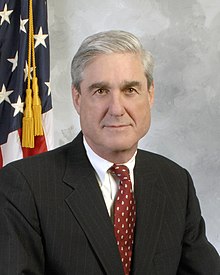
Robert Mueller
A 1973 graduate of the University of Virginia Law School, Mueller served as:
- United States Attorney for the District of Massachusetts (1986-1987);
- United States Assistant Attorney General for the Criminal Division (1990-1993);
- United States Attorney for the Northern District of California (1998-2001);
- United States Deputy Attorney General (January 20, 2001– May 10, 2001).
On September 4, 2001—seven days before Al Qaeda’s monstrous 9/11 attacks on Washington and New York—President George W. Bush appointed him director of the Federal Bureau of Investigation (FBI).
Widely praised for his integrity and effectiveness, he served his full 10-year term—the legal maximum.
But when President Barack Obama took office in 2009, he asked Mueller—a lifelong Republican—to stay on for an additional two years until a suitable replacement could be found.
Mueller agreed—and was succeeded by a fellow Justice Department colleague named James Comey.
Retiring from the FBI in 2013 at age 69, Mueller’s 27-year career as a dedicated law enforcer seemed at last to be over.
Then, on May 9, 2017, President Donald Trump fired Comey as FBI director. There were five reasons for this:
- Comey had refused to pledge his personal loyalty to Trump. Trump had made the “request” during a private dinner at the White House in January.
- Comey told Trump that he would always be honest with him. But that didn’t satisfy Trump’s demand that the head of the FBI act as his personal secret police chief—as was the case in the former Soviet Union.
- Trump had tried to coerce Comey into dropping the FBI’s investigation into former National Security Adviser Michael Flynn, for his secret ties to Russia and Turkey. Comey had similarly resisted that demand.
- Comey had recently asked the Justice Department to fund an expanded FBI investigation into well-documented contacts between Trump’s 2016 Presidential campaign and Russian Intelligence agents.
- The goal of that collaboration: To elect Trump over Hillary Clinton, a longtime foe of Russian President Vladimir Putin.

James Comey
On May 10—the day after firing Comey—Trump met in the Oval Office with Russian Foreign Minister Sergey Lavrov and Russian Ambassador Sergey Kislyak.
Kislyak is reportedly a top recruiter for Russia’s SVR foreign intelligence agency. He has been closely linked with Jeff Sessions, now Attorney General, and fired National Security Adviser Mike Flynn.
“I just fired the head of the F.B.I.,” Trump told the two dignitaries. “He was crazy, a real nut job. I faced great pressure because of Russia. That’s taken off.”
And on May 11, Trump, interviewed on NBC News by reporter Lester Holt, said: “And in fact when I decided to just do it, I said to myself, I said ‘you know, this Russia thing with Trump and Russia is a made-up story, it’s an excuse by the Democrats for having lost an election that they should have won.'”
A national firestorm erupted—unprecedented since President Richard M. Nixon had fired Watergate Special Prosecutor Archibald Cox on October 20, 1973.
To squelch it, Deputy Attorney General Rod Rosenstein moved quickly.
On May 17, 2017, he appointed Robert S. Mueller 111 to serve as Special Counsel for the United States Department of Justice.
Rosenstein charged Mueller to investigate “any links and/or coordination between the Russian government and individuals associated with the campaign of President Donald Trump, and any matters that arose or may arise directly from the investigation.”
Since then, Trump, his shills in Congress and Right-wing Fox News have relentlessly attacked Mueller’s integrity and investigative methods.
ABC NEWS, ALTERNET, AP, APACHES, BROCK PETERS, BUZZFEED, CBS NEWS, CHARLTON HESTON, CIVIL WAR, CNN, CROOKS AND LIARS, DAILY KOZ, FACEBOOK, INDIAN WARS, INDIANS, JAMES COBURN, JIM HUTTON, MAJOR DUNDEE, MEXICO, MICHAEL ANDERSON JR., MOTHER JONES, MOVEON, MOVIES, MSNBC, NBC NEWS, NEWSWEEK, NPR, PBS NEWSHOUR, POLITICO, RAW STORY, REUTERS, RICHARD HARRIS, SALON, SAM PECKINPAH, SAVING PRIVATE RYAN, SEATTLE TIMES, SLATE, SPANISH-AMERICAN WAR, STEVEN SPIELBERG, THE ATLANTIC, THE CHICAGO SUN-TIMES, THE CHICAGO TRIBUNE, THE DAILY BEAST, THE GUARDIAN, THE HILL, THE HUFFINGTON POST, THE LOS ANGELES TIMES, THE NATION, THE NEW YORK TIMES, THE WASHIGNTON POST, THE WASHINGTON POST, THE WILD BUNCH, TIME, TOM HANKS, TWITTER, U.S. NEWS & WORLD REPORT, UPI, USA TODAY, WESTERNS, WORLD WAR 1, WORLD WAR 11
In Entertainment, History, Military, Politics, Social commentary on November 2, 2018 at 12:06 am
Major Dundee is a 1965 Sam Peckinpah Western focusing on a Union cavalry officer (Charlton Heston) who leads a motley troop of soldiers into Mexico to rescue three children kidnapped by Apaches.
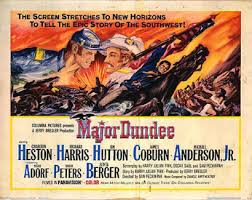
Along the way they liberate Mexican villagers and clash with French lancers trying to establish Mexico as a French colony under would-be emperor Archduke Maximilian 1.
The Wild Bunch is universally recognized as Peckinpah’s greatest achievement. It has certainly had a far greater impact on audiences and critics than Major Dundee. According to Heston, this was really the movie Peckinpah wanted to make while making Dundee, but he couldn’t quite get his mind around it.
As a result, Dundee’s virtues have been tragically overlooked. It has a larger cast of major characters than Bunch, and these are men an audience can truly like and identify with:
- The charm of Benjamin Tyreen (Richard Harris), a Confederate lieutenant forced into Union service;
- The steady courage of Sergeant Gomez;
- The quiet dignity of Aesop (Brock Peters), a black soldier;
- The quest for maturity in young, untried bugler Tim Ryan (Michael Anderson, Jr.);
- The on-the-job training experience of impetuous Lt. Graham (Jim Hutton); and
- The stoic endurance of Indian scout Sam Potts (James Coburn).
These men are charged with a dangerous and dirty mission, and do it as well as they can, but you wouldn’t fear inviting them to meet your family.
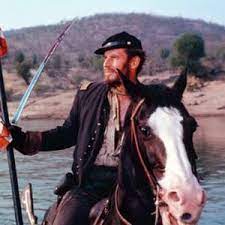
Major Dundee (Charlton Heston)
That was definitely not the case with The Wild Bunch, four hardened killers prepared to rip off anyone, anytime, and leave a trail of bodies in their wake. The only place where you would have felt safe seeing them, in real-life, was behind prison bars.
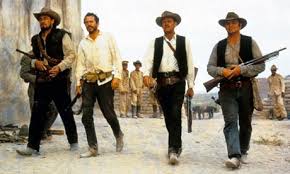
The Wild Bunch
Dundee is an odyssey movie, in the same vein as Saving Private Ryan. Both films start with a battle, followed by the disappearance of characters who need to be searched for and brought back to safety.
Just as Dundee assembles a small force to go into Mexico, so, too, does Captain John Miller (Tom Hanks) do the same, with his hunting ground being France.
Dundee’s men retrieve the kidnapped children and survive a near-fatal battle with Indians. Miller’s men twice clash with the Germans before finding their quarry, James Ryan.
Before Dundee can return to the United States, he must face and defeat a corps of French soldiers. Before Miller can haul Ryan back to safety, he must repulse a German assault.
Both groups of soldiers—Dundee’s and Miller’s—are transformed by their experiences in ways neither group could possibly articulate. (Miller, being a highly literate schoolteacher, would surely do a better job of this than the tight-jawed Dundee.)
Dundee’s soldiers return to a United States that’s just ended its Civil War with a Union victory—and the death of slavery. Miller’s soldiers return to a nation that is now a global superpower.
Of course, Ryan was fortunate in having Steven Spielberg as its director. With his clout, there was no question that Ryan would emerge as the film he wanted.
Peckinpah lacked such clout. And he fought with everyone, including the producer, Jerry Bressler, who ultimately held the power to destroy his film. This guaranteed that his movie would emerge far differently than he had envisioned.
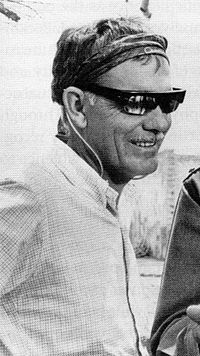
Sam Peckinpah
In 2005, an extended version of Dundee was released, featuring 12 minutes of restored footage. (Much of the original footage was lost after severe cuts to the movie.)
In this new version, we fully see how unsympathetic a character the martinet Dundee really is. Owing to Heston’s career of playing heroes—such as Moses and El Cid—it’s easy to overlook Dundee’s arrogance and lethal fanaticism and automatically view him as a hero.
If he is indeed that, he is a hero with serious flaws.
And his self-imposed mission poses questions for us today:
- Where is the line between professional duty and personal fanaticism?
- How do we balance the success of a mission against its potential costs—especially if they prove appalling?
- At what point—if any—does personal conscience override professional obligations?
Whether intentionally or not, in Major Dundee, Peckinpah laid out a microcosm of the American history that would immediately follow the Civil War.
Former Confederates and Unionists would forego their regional animosities and fight against a recognized mutual enemy—the Indians. This would prove a dirty and drawn-out war, stripped of the glory and (later) treasured memories of the Civil War.
Just as Dundee’s final battle with French lancers ended with an American victory won at great cost, so, too, would America’s forays into the Spanish-American War and World Wars 1 and 11 prove the same.
Ben Tyreen’s commentary on the barbarism of French troops (“Never underestimate the value of a European education”) would be echoed by twentieth-century Americans uncovering the horrors of Dachau and Buchenwald.
And America would learn to project its formidable military power at great cost. Toward the end of the movie, Teresa Santiago (Senta Berger), the ex-patriot Austrian widow, would ask Dundee: “But who do you answer to?”
It is a question that still vividly expresses the view of the international community as this superpower colossus hurtles from one often-disastrous conflict to the next.
9/11 ATTACKS, ABC NEWS, ALTERNATIVE ENERGY SOURCES, ALTERNET, AP, ARAB OIL EMBARGO, BBC, BUZZFEED, CBS NEWS, CHRISTIAN RIGHT, CNN, COLD WAR, CROOKS AND LIARS, DAILY KOS, DAILY KOZ, DONALD TRUMP, EGYPT, FACEBOOK, FOSSIL FUELS, GLOBAL WARMING, IRAN, IRAQ, ISLAM, ISRAEL, JAMAL KHASHOGGI, MECCA, MEDINA, MIDDLE EAST, MOHAMMED BIN SALMAN, MOTHER JONES, MOVEON, MSNBC, NAZI GERMANY, NBC NEWS, NEWSWEEK, NPR, Oil, OSAMA BIN LADEN, PBS NEWSHOUR, POLITICO, RAW STORY, REPUBLICANS, REUTERS, SALON, SAND CURTAIN, SAUDI ARABIA, SEATTLE TIMES, SECOND COMING, SHAH OF IRAN, SHIITE MUSLIMS, SLATE, SOVIET UNION, SUNNI MUSLIMS, TERRORISM, THE ATLANTIC, THE CHICAGO SUN-TIMES, THE CHICAGO TRIBUNE, THE DAILY BEAST, THE GUARDIAN, THE HILL, THE HUFFINGTON POST, THE LOS ANGELES TIMES, THE NATION, THE NEW YORK TIMES, THE WALL STREET JOURNAL, THE WASHINGTON POST, TIME, TRUMP WORLD TOWER, TURKEY, TWITTER, U.S. NEWS & WORLD REPORT, UNITED STATES, UPI, USA TODAY, VENEZUELA, WAHHABISM, WORLD WAR ii
In Bureaucracy, History, Military, Politics, Social commentary on October 23, 2018 at 1:09 am
This is an ideal time for the United States to pull the plug on its devil’s bargain relationship with Saudi Arabia.
Reason #1: The political assassination of Saudi dissident journalist Jamal Khashoggi, a key critic of Saudi King Mohammed bin Salman.
On October 2, Khashoggi walked into the Saudi Consulate in Istanbul to pick up a document allowing him to marry a Turkish woman. Video footage shows Khashoggi walking into the consulate; there is none of him leaving it.
He has not been seen since.
According to Turkish government officials:
- Fifteen Saudi agents flew into Istanbul.
- They waited for Khashoggi inside the consulate and murdered him within two hours of his arrival.
- The assassins used a bone saw to dismember Khashoggi’s corpse.

Jamal Khashoggi
[GFDL (http://www.gnu.org/copyleft/fdl.html)%5D, via Wikimedia Commons
Reason #2: Saudi Arabia is a weak ally.
Trump claims America needs Saudi Arabia as a counter-weight to the growing regional influence of Iran. But Saudi Arabia was unable to defend itself against Saddam Hussein’s Iraq in 1990, after the invasion and takeover of Kuwait.
This was, in fact, why Saudi-born Osama bin Laden decided to declare war on the United States.
He petitioned Saudi King Fahd bin Abdulazis al-Saud to let Saudis oppose any invasion by Iraq. He argued that “infidel” American soldiers stationed in the Kingdom would “pollute” Islam’s two great holy sites: Mecca and Medina.
Having fought against the Soviet Union in Afghanistan during the 1980s, bin Laden offered to help defend Saudi Arabia with his Arab legion.
The king refused—because he knew that, despite all the sophisticated military hardware he had bought from the United States, the Saudis were too militarily weak to resist an invasion.
Bin Laden left the country to wage fulltime war against the United States.
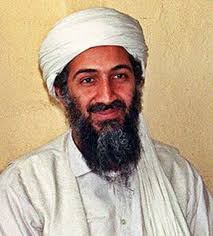
Osama bin Laden
Reason #3: Saudi Arabia is filled with Islamics who hate the United States as “the Great Satan.”
Fifteen of the 19 September 11, 2001 highjackers came from Saudi Arabia.
And Saudi Arabia is the birthplace of Wahhabism, a radical brand of Islam dedicated to “purifying” the world of “unbelievers.”
Reason #4: The only reason the United States cares about Saudi Arabia is that it’s the second-largest oil-producing country (after Venezuela) n the world.
Yet oil consumption threatens the future of the world through global warming. And it keeps America tethered to a regime that is fundamentally unstable and hostile to the West.
Reason #5: The United States can end its dependence on Saudi oil by embarking on a crash program to develop alternatives to oil.
Had this happened during the 1973 Arab oil embargo, the United States would now be energy-independent. America has the technology to do so; it lacks only the will.
Reason #6: Once the United States no longer needs fossil fuels, it can quit financing Middle East dictatorships.
This will end spending billions of dollars every year to prop up dictatorial regimes like those in Saudi Arabia, Iraq and Egypt. America will no longer supply big-ticket military hardware (like fighter planes and missiles) to potentially hostile Islamic regimes.
Reason #7: By withdrawing from the Middle East, the United States can free itself of the burden of acting as Israel’s permanent bodyguard.
Millions of Americans believe they are morally obligated to defend Israel owing to the barbarism of the Holocaust. But America was never a party to this, and has nothing to atone for.
Yet, for decades, the United States has been repeatedly dragged into the never-ending religious conflicts between Israelis and Islamics. Since both sides believe they are doing “God’s will,” there can be no substantial compromise by either.
Reason #8: The United States and its European allies can defend themselves against Islamic terrorism by erecting a “Sand Curtain” around the Middle East.
For 44 years—1947 to 1991—the United States and the Soviet Union were locked in a Cold War. Essentially, the United States drew a ring around the Soviet Union—including those nations its armies had seized following the defeat of Nazi Germany in 1945.
The United States said, in effect: “We can’t liberate the countries you’re now occupying”—because that would have triggered a nuclear World War III. “But we won’t allow you to occupy and enslave any other countries. And if you try to do so, it will mean total war.”
America could withdraw all of its forces from the Middle East—but keep a good portion stationed in Europe.

It could then publicly announce: “From now on, you are the masters of your own destinies—so long as what you do affects only the Middle East.
“We recognize that barbarism and violence have always been a part of life in the Middle East. And we don’t expect this to change.
“We realize you will destroy as many of your own citizens as you can—because they’re Jewish or Christians, or because Sunni Muslims and Shiite Muslims hate each other.
“Just don’t threaten citizens living outside your territories. In short: Europe and the United States are strictly off-limits to you.
“And if you aim your aggression at either, we will consider this an act of war and use all the weapons at our disposal—including nuclear ones—to wipe you from the face of the Earth.“
ABC NEWS, ALTERNET, ANCHOR BABIES, AP, BARACK OBAMA, BERLIN AIRLIFT, BUZZFEED, CBS NEWS, CNN, CROOKS AND LIARS, DAILY KOZ, DEMOCRATIC PARTY, DEPARTMENT OF HOMELAND SECURITY, DONALD TRUMP, EGYPT, EL SALVADOR, FACEBOOK, FAMILY SEPARATION POLICY, GUATEMALA, HONDURAS, ILLEGAL ALIENS, illegal immigration, IMMIGRATION AND CUSTOMS ENFORCEMENT, ISRAEL, JEFF SESSIONS, MEXICO, MOTHER JONES, MOVEON, MSNBC, NBC NEWS, NEWSWEEK, NPR, OPERATION NICKEL GRASS, POLITICO, RACIAL PROFILING, RAW STORY, REPUBLICAN PARTY, REUTERS, RICHARD NIXON, SALON, SEATTLE TIMES, SLATE, SOVIET UNION, SYRIA, THE ATLANTIC, THE CHICAGO SUN-TIMES, THE CHICAGO TRIBUNE, THE DAILY BEAST, THE GUARDIAN, THE HILL, THE HUFFINGTON POST, THE LOS ANGELES TIMES, THE NATION, THE NEW YORK TIMES, THE WASHINGTON POST, TIME, TWITTER, U.S. NEWS & WORLD REPORT, UNITED STATES AIR FORCE, UPI, USA TODAY, YOM KIPPUR WAR
In Bureaucracy, History, Military, Politics, Social commentary on October 19, 2018 at 12:18 am
On May 7, 2018, United States Attorney General Jeff Sessions announced a “zero-tolerance” policy for illegal entry into the United States:
“If you smuggle illegal aliens across our border, then we will prosecute you. If you are smuggling a child, then we will prosecute you and that child will be separated from you as required by law.”
In the past, those arrested while illegally entering the country were held in immigration detention and sent before an immigration judge. The judge decided if they would be deported as unauthorized immigrants.
Most first-time offenders didn’t serve time in prison. If they pleaded guilty, they were sentenced, within minutes, to time served—and deported.
But illegal aliens referred for criminal prosecution were sent to a Federal jail. Several weeks later, a Federal judge determined if they would be imprisoned. And those in Federal jail cannot be kept with their children.
With the change in policy, all arrested illegal aliens would face criminal prosecution.
On June 15, Homeland Security officials confirmed to reporters that, from April 19 to May 31, 1,995 children were separated from 1,940 adults at the U.S.-Mexico border. These adults were referred for prosecution after illegally crossing the border.
Video images showed illegal alien children held behind chain-link cages. Children crying. An audio recording made secretly captured children calling for their mothers and fathers.
A national uproar followed.

Illegal alien families held in cages
Democrats almost unanimously attacked the family-separation policy, while Republicans were divided over it.
On June 20, the family-separation policy was indefinitely suspended by a Presidential executive order.
Still, illegal aliens from Latin and Central America keep pouring into the country—or getting caught while trying to.
The U.S. Border Patrol arrested more than 16,500 family members in September, marking an 80% increase from July—and a new one-month record. The Department of Homeland Security states that agents took 107,212 members of “family units” into custody during fiscal 2018.
And, even now, a caravan of 3,000-4,000 migrants from El Salvador, Honduras and Guatemala is heading toward “El Norte.” Its members claim they are fleeing poverty and violence—and assert that the United States has a moral duty to take them in.
President Donald Trump has threatened to cut all aid payments to the three countries if they don’t prevent their citizens from crossing into the United States. And he has also threatened to use military force to completely close the US-Mexico border.
For Trump, halting illegal immigration is a make-or-break issue. His base—which is the only group of Americans he cares about—has made it clear: Stop the illegals—or be a one-term President.
So it’s possible he could take an even more drastic step his all-out war on illegal immigration.
Rather than deport them to countries in Central America—from which they would easily sneak back into the United States—the Federal Government could ship them off to more distant lands.
Like Afghanistan. Or Iraq. Or Syria.
Such a policy change would:
- Close the Mexican revolving door, which keeps illegal immigration flowing; and
- Send an unmistakably blunt message to other would-be illegals: “The same fate awaits you.”
Although this might seem a far-fetched proposal, it could be easily carried out by the United States Air Force.
According to its website: “The C-5 Galaxy is one of the largest aircraft in the world and the largest airlifter in the Air Force inventory.
“The C-5 has a greater capacity than any other airlifter. It [can] carry 36 standard pallets and 81 troops simultaneously.
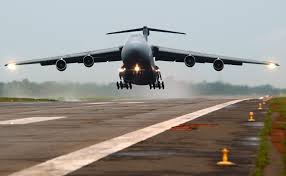
C-5 transport plane
“[It can also carry] any of the Army’s air-transportable combat equipment, including such bulky items as the 74-ton mobile scissors bridge.”
The C-5 Galaxy’s maximum cargo weight: 281,001 pounds
Click here: C-5 A/B/C Galaxy and C-5M Super Galaxy > U.S. Air Force > Fact Sheet Display
Instead of being stuffed with cargo, these planes could be stuffed wall-to-wall with illegal aliens.
The United States Air Force has a proud history of successfully providing America’s soldiers—and allies—with the supplies they need.
From June 24, 1948 to May 12, 1949, only the Berlin Airlift stood between German citizens and starvation.
The Soviet Union had blocked the railway, road, and canal access to the Berlin sectors under allied control. Their goal: Force the western powers to allow the Soviet zone to supply Berlin with food, fuel, and aid.
This would have given the Soviets control over the entire city.
Air forces from the United States, England, Canada, Australia, New Zealand and South Africa flew over 200,000 flights in one year, dropping more than 4,700 tons of necessities daily to the besieged Berliners.
The success of the Berlin Airlift raised American prestige and embarrassed the Soviets, who lifted the blockade.

The Berlin Airlift
A similar triumph came during the Yom Kippur War after Egypt and Syria attacked Israel without warning on October 6, 1973.
A Watergate-embattled President Richard Nixon ordered “Operation Nickel Grass” to deliver urgently-needed weapons and supplies to Israel.
For 32 days, the Air Force shipped 22,325 tons of ammunition, artillery, tanks and other supplies. These proved invaluable in saving Israel from destruction.
So the mass deportation of millions of illegal aliens lies within America’s technological capability.
The only uncertainty: Is Trump willing to give that order?
2016 PRESIDENTIAL ELECTION, ABC NEWS, ALTERNET, AP, BERNIE SANDERS, BRETT KAVANAUGH, BUZZFEED, CBS NEWS, CHRISTINE BLASEY FORD, CNN, CROOKS AND LIARS, DAILY KOZ, DEMOCRATIC NATIONAL COMMITTEE, DONALD TRUMP, FACEBOOK, HILLARY CLINTON, IVANKA TRUMP, JAMAL KHASHOGGI, MARCO RUBIO, MOHAMMED BIN SALMAN, MOTHER JONES, MOVEON, MSNBC, NBC NEWS, NEWSWEEK, NPR, PBS NEWSHOUR, POLITICO, RAW STORY, REPUBLICANS, REUTERS, SALON, SAUDI ARABIA, SEATTLE TIMES, SLATE, THE ATLANTIC, THE CHICAGO SUN-TIMES, THE CHICAGO TRIBUNE, THE DAILY BEAST, THE GUARDIAN, THE HILL, THE HUFFINGTON POST, THE LOS ANGELES TIMES, THE NATION, THE NEW YORK TIMES, THE WASHINGTON POST, TIME, TRUMP WORLD TOWER, TURKEY, TWITTER, U.S. NEWS & WORLD REPORT, UNITED STATES SUPREME COURT, UPI, USA TODAY
In Bureaucracy, Business, History, Law Enforcement, Military, Politics, Social commentary on October 18, 2018 at 12:03 am
Once again, the self-righteous cry of “American exceptionalism” is being taken up by members of the United States Congress.
That is: Americans prize morality over money in international relationships.
It’s a myth the historical record won’t support.
The reason for the self-righteous outrage: The disappearance of Saudi dissident Jamal Khashoggi.
He had worked in the Saudi embassies in Washington and London, establishing himself as an unofficial spokesman for the Saudi royal family.
His independent streak and empathy for the Western perspective made him a uniquely important, well-liked contact for foreign journalists and diplomats seeking to understand the royal perspective.
Then, in 2017, Mohammed bin Salman became crown prince, and quickly consolidated power over the kingdom.
Khashoggi’s independent streak made him unwelcome there, so he moved to Virginia and became a columnist for The Washington Post. He also became the crown prince’s chief critic in the West.
On October 2, Khashoggi walked into the Saudi Consulate in Istanbul to pick up a document.
Khashoggi’s marriage had ended under the strain of his voluntary exile from Saudi Arabia. He had since become engaged to a Turkish woman. He thus needed to obtain a document attesting to his divorce from the Saudi authorities so he could remarry in Turkey. The wedding was scheduled for the following day.
Jamal Khashoggi
[GFDL (http://www.gnu.org/copyleft/fdl.html)%5D, via Wikimedia Commons
Turkish authorities have released video footage of Khashoggi walking into the consulate; they say there is none of him leaving it. The Saudis insist that he left the consulate safely, but have not offered any evidence to support this claim.
Turkish officials speaking anonymously say their government has detailed evidence to prove the following:
- That 15 Saudi agents flew into Istanbul on two private jets.
- The airline company has close ties to the crown prince and Saudi Interior Ministry.
- The agents waited for Khashoggi inside the consulate and murdered him within two hours of his arrival.
- The assassins used a bone saw to dismember Khashoggi’s corpse.
These reports have ignited an explosion of “American exceptionalism” among members of Congress—including Republicans.
“I believe the Trump administration will do something,” Florida United States Senator Marco Rubio said. “The president has said that. But, if he doesn’t, Congress will. That, I can tell you with 100 percent certainty.”
And Vermont Senator Bernie Sanders said: “I think one of the strong things that we can do is not only stop military sales, not only put sanctions on Saudi Arabia, but most importantly, get out of this terrible, terrible war in Yemen led by the Saudis.”
Fueling Republicans’ declared outrage: President Donald Trump’s heated defense of the Saudis—with whom he’s long had a financially profitable relationship.
“They buy all sorts of my stuff,”‘ Trump said in July 2015. “All kinds of toys from Trump. They pay me millions and hundreds of millions.”
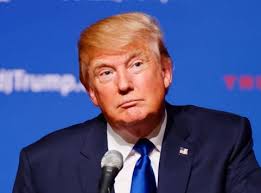
Donald Trump
Among those “toys”:
- In June 2001, he sold the 45th floor of Trump World Tower to the Kingdom of Saudi Arabia for $4.5 million, according to a publicly filed deed for the transaction.
- In August 2015, two months after he launched his presidential campaign, Trump registered eight limited-liability companies that appeared tied to possible deals in the country, according to public records. All of the companies contained “Jeddah,” the name of a Saudi Arabian port city, in their title.
- In 2015, Trump’s daughter Ivanka told Hotelier Middle East, “Dubai is a top priority city for us. We are looking at multiple opportunities in Abu Dhabi, in Qatar, in Saudi Arabia, so those are the four areas where we are seeing the most interest. We haven’t made a final decision in any of the markets but we have many very compelling deals in each of them.”
Of course, Trump is now claiming a higher motive for siding with the Saudis. He doesn’t want to scuttle a major defense deal he made with Saudi Arabia in May, 2017:
“I don’t like the concept of stopping an investment of $110 billion into the United States because you know what they’re going to do, they’re going to take that money and spend it in Russia or China,”
And the next day, Trump said he had spoken with Saudi King Salman: “The king firmly denied any knowledge of it. … It sounded to me like these could have been rogue killers, who knows?”
This is comparable to Trump’s refusal, during his first debate with Hillary Clinton in September, 2016, to admit Russian hacking of the 2016 Democratic National Committee: “It could be Russia, but it could also be China. It could also be lots of other people. It also could be somebody sitting on their bed that weighs 400 pounds.”
“Here we go again with you know you’re guilty until proven innocent. I don’t like that,” said Trump on October 16.
“We just went through that with [Supreme Court nominee] [Brett] Kavanaugh and he was innocent all the way as far as I’m concerned.”
Factual note: Although confirmed as a Supreme Court Justice, Kavanaugh was not proven innocent. The FBI was not allowed to interview Kavanaugh and Christine Blasey Ford, the woman who accused him of attempted rape 36 years ago.
ABC NEWS, AL QAEDA, ALTERNET, AMERICAN EXCEPTIONALISM, AP, BARACK OBAMA, BASHIR AL-ASSAD, BUZZFEED, CBS NEWS, CHILE, CNN, CROOKS AND LIARS, DAILY KOZ, FACEBOOK, HOUSE UN-AMERICAN ACTIVITIES COMMITTEE, HUMAN RIGHTS, IRAN, JOHN BOEHNER, JOHN MCCAIN, MOTHER JONES, MOVEON, MSNBC, NBC NEWS, NEWSWEEK, NICARAGUA, NPR, PBS NEWSHOUR, POLITICO, RAW STORY, REUTERS, RUSSIA, S.I. HAYAKAWA, SALON, SEATTLE TIMES, SLATE, SYRIA, THE ATLANTIC, THE CHICAGO SUN-TIMES, THE CHICAGO TRIBUNE, THE DAILY BEAST, THE GUARDIAN, THE HILL, THE HUFFINGTON POST, THE LOS ANGELES TIMES, THE NATION, THE NEW YORK TIMES, THE WALL STREET JOURNAL, THE WASHINGTON POST, TIME, TWITTER, U.S. NEWS & WORLD REPORT, UPI, USA TODAY, VLADIMIR PUTIN
In Bureaucracy, History, Military, Politics, Social commentary on October 17, 2018 at 12:21 am
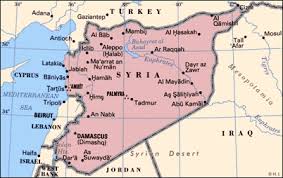
On September 11, 2013, the New York Times published an Op-Ed (guest editorial) from Russian President Vladimir Putin, entitled: “A Plea for Caution from Russia: What Putin Has to Say to Americans About Syria.”
No one should be surprised that Putin came out strongly against an American air strike on Syria.
Its “President” (i.e., dictator) Bashir al-Assad, is, after all, a close ally of Russia. Just as his late father and dictator, Hafez al-Assad, was a close ally of the Soviet Union until its collapse in 1991.
Putin, of course, is a former member of the KGB, the infamous secret police which ruled the Soviet Union from its birth in 1917 to its collapse in 1991.
He grew up under a Communist dictatorship and clearly wishes to return to that era, saying publicly: “First and foremost it is worth acknowledging that the demise of the Soviet Union was the greatest geopolitical catastrophe of the century.”
So it would be unrealistic to expect him to view the current “Syria crisis” the same way that President Barack Obama did.
(A “crisis” for politicians is any event that can be exploited to increase their own status—and thus power. Few politicians really care about the “human rights” of other nations—unless promoting this issue can empower themselves and/or their own nation.
(President Ronald Reagan, for example, often wailed about the Soviets’ oppression of the Polish union, Solidarity—while firing hundreds of unionized air traffic controllers who went on strike.)
(A “crisis” for the media is any event that can be exploited for higher ratings.)
In his September 11, 2013 guest editorial in the New York Times, Putin offered the expected Russian take on Syria:
- Poison gas was used in Syria.
- It wasn’t used by the Syrian Army.
- It was used by “opposition forces, to provoke intervention by their powerful foreign patrons.”
But it was the concluding paragraph that enraged American politicians the most—especially Right-wing ones. In it, Putin took exception with American “exceptionalism.”
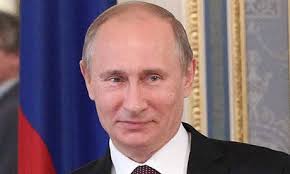
Vladimir Putin
This is the belief that the United States is unlike other nations. That it is unlike other nations in its innocence and steadfast dedication to human rights above all else.
Citizens of nations whose governments have been overthrown by the United States—such as Chile, Iran and Nicaragua—and replaced with brutal dictatorships would strongly disagree.
Referring to then-President Obama, Putin wrote:
“And I would rather disagree with a case he made on American exceptionalism, stating that the United States’ policy is ‘what makes America different. It’s what makes us exceptional.’
“It is extremely dangerous to encourage people to see themselves as exceptional, whatever the motivation.
“There are big countries and small countries, rich and poor, those with long democratic traditions and those still finding their way to democracy. Their policies differ, too.
“We are all different, but when we ask for the Lord’s blessings, we must not forget that God created us equal.”
Putin has never publicly shown any interest in religion. But by invoking “the Lord,” he was able to turn the Christian beliefs of his Western audience into a useful weapon.
“I was insulted,” then-House Speaker John Boehner (R-Ohio) told reporters when asked for his blunt reaction to the editorial.
“I have to be honest with you, I was at dinner, and I almost wanted to vomit,” said U.S. Senator Bob Menendez (D-New Jersey).
Putin had dared to question the self-righteousness of American foreign policy—and those who make it.
Making his case for war with Syria, Obama had said: “America is not the world’s policeman….
“But when, with modest effort and risk, we can stop children from being gassed to death, and thereby make our own children safer over the long run, I believe we should act.
“That’s what makes America different. That’s what makes us exceptional. With humility, but with resolve, let us never lose sight of that essential truth.”
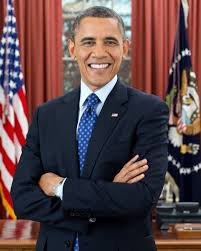
President Barack Obama
In short: Because we consider ourselves “exceptional,” we have the divine right to do whatever we want.
It’s not necessary to see Putin as a champion of democracy (he isn’t) to see the truth in this part of his editorial: “It is extremely dangerous to encourage people to see themselves as exceptional, whatever the motivation.”
From 1938 to 1969, the House Un-American Activities Committee sought to define what was “American” and what was “Un-American.” As if “American” stood for all things virtuous.
Whoever heard of an “Un-French Activities Committee”? Or an “Un-German” or “Un-British” one?
The late S.I. Hayakawa once made an observation that clearly applies to this situation.
Hayakawa was a professor of semantics (the study of meaning, focusing on the relation between words and what they stand for).
In his bestselling book, Language in Thought and Action, he observed that when a person hears a message, he has four ways of responding to it:
- Accept the speaker and his message.
- Accept the speaker but reject the message.
- Accept the message but reject the speaker.
- Reject the message and the speaker.
Americans might want to consider #3 in the recent case of Russian President Vladimir Putin.
ABC NEWS, ALTERNET, AMERICAN EMPIRE, AP, BILL CLINTON, BUREAUCRACY, BUZZFEED, CBS NEWS, CHRIS MATHEWS, CNN, CROOKS AND LIARS, DAILY KOZ, DONALD TRUMP, DWIGHT EISENHOWER, FACEBOOK, FBI, FRANKLIN D. ROOSEVELT, GEORGE H.W. BUSH, GEORGE W. BUSH, GERALD R. FORD, HARRY S. TRUMAN, JEB BUSH, JIMMY CARTER, JOHN F. KENNEDY, LYNDON B. JOHNSON, MOTHER JONES, MOVEON, MSNBC, NBC NEWS, NEWSWEEK, NIGEL HAMILTON, NPR, PBS NEWSHOUR, POLITICO, RAW STORY, REPUBLICAN PARTY, REUTERS, SALON, SEATTLE TIMES, SLATE, SUETONIUS, SYRIAN CIVIL WAR, SYRIAN REFUGEES, TERRORISM, THE ATLANTIC, THE CHICAGO SUN-TIMES, THE CHICAGO TRIBUNE, THE DAILY BEAST, THE GUARDIAN, THE HILL, THE HUFFINGTON POST, THE LOS ANGELES TIMES, THE NATION, THE NEW YORK TIMES, THE TWELVE CAESARS, THE WASHINGTON POST, TIME, TWITTER, U.S. NEWS & WORLD REPORT, UPI, USA TODAY
In Bureaucracy, History, Military, Politics, Social commentary on October 16, 2018 at 12:45 am
September 11, 2018, marked the 17th anniversary of the worst terrorist attack on United States soil.
Inevitably, this was a time to remember the 3,000 Americans whose lives were so cruelly snuffed out.
But it also should have marked a time to remember those who made this atrocity inevitable—by refusing to acknowledge and address the impending threat from Al-Qaeda.
For Republicans, it’s taboo to hold President George W. Bush accountable for this atrocity. That’s why Donald Trump’s daring to note that it happened on Bush’s watch was greeted with a Right-wing outcry.
And Democrats have been too cowardly to state this truth—a major reason for their losing the 2004 Presidential election.
But British historian Nigel Hamilton has chronicled the arrogance and indifference of those officials in his 2010 biography: American Caesars: Lives of the Presidents from Franklin D. Roosevelt to George W. Bush.
Hamilton noted that during the first eight months of the Bush Presidency, Richard Clarke, the national security adviser on terrorism, was forbidden to brief President Bush, despite the mounting evidence that al-Qaeda was planning to strike.
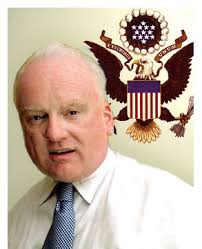
Richard Clarke
Even more vexing for Clarke: During his first eight months as President before September 11, Bush was on vacation 42% of the time, according to the Washington Post.
Clarke was certain that Osama bin Laden had arranged the USS Cole bombing in Aden on October 12, 2000.
For months, Clarke tried to convince others in the Bush Administration that Bin Laden was plotting another attack against the United States—either abroad or at home.
But Clarke could not prevail against the know-it-all arrogance of such higher-ranking Bush officials as Vice President Dick Cheney; Secretary of Defense Donald Rumsfeld; Rumsfeld’s deputy, Paul Wolfowitz; and National Security Adviser Condoleeza Rice.
Rice initially refused to hold a cabinet-level meeting on the subject. Then she insisted the matter be handled only by a more junior Deputy Principals meeting in April, 2001, writes Hamilton.
Wolfowitz, the number-two man at the Department of Defense, said: “I don’t understand why we are beginning by talking about this one man, bin Laden.”
Even after Clarke outlined the threat posed by Al-Qaeda, Wolfowitz—whose real target was Saddam Hussein—said: “You give bin Laden too much credit.”
Wolfowitz insisted that bin Laden couldn’t carry out his terrorist acts without the aid of a state sponsor—namely, Iraq. Wolfowitz, in fact, blamed Iraq for the 1993 bombing of the World Trade Center.
Clarke was stunned, since there was absolutely no evidence of Iraqi involvement in this.“Al-Qaeda plans major acts of terrorism against the United States,” Clarke warned his colleagues.
He pointed out that, like Adolf Hitler, bin Laden had actually published his plans for future destruction.
Osama bin Laden
And Clarke added: “Sometimes, as with Hitler in Mein Kampf, you have to believe that these people will actually do what they say they will do.”
Wolfowitz heatedly traded on his Jewish heritage to bring Clarke’s unwelcome arguments to a halt: “I resent any comparison between the Holocaust and this little terrorist in Afghanistan.”
Writing in outraged fury, Hamilton sums up Clarke’s agonizing frustrations:
- Bush’s senior advisers treated their colleagues who had served in the Clinton administration with contempt.
- President Bush, Vice President Dick Cheney, National Security Adviser Condoleeza Rice, Secretary of Defense Donald Rumsfeld and Deputy Defense Secretary Paul Wolfowitz seemed content to ignore the danger signals of an impending Al-Qaeda attack.
- This left only Secretary of State Colin Powell, his deputy Richard Armitage, Richard Clarke and a skeptical Treasury Secretary, Paul O’Neill, to wage “a lonely battle to waken a seemingly deranged new administration.”
Clarke alerted Federal Intelligence agencies that “Al-Qaeda is planning a major attack on us.” He asked the FBI and CIA to report to his office all they could learn about suspicious persons or activities at home and abroad.
Finally, at a meeting with Condoleeza Rice on September 4, 2001, Clarke challenged her to “picture yourself at a moment when in the very near future Al-Qaeda has killed hundreds of Americans, and imagine asking yourself what you wish then that you had already done.”
Apparently Rice couldn’t imagine such a scenario, because she took no action to prevent it. Nor did she urge anyone else to do so.
Seven days later, Al-Qaeda struck, and 3,000 Americans died horrifically—and needlessly.
Neither Bush, Cheney, Rice, Rumsfeld nor Wolowitz ever admitted their negligence. Nor would any of them be brought to account.
Disgustingly, these were the same officials who, afterward, posed as the Nation’s saviors—and branded anyone who disagreed with them as a traitor.
These are practices the Republican Right continues to exploit to this day.
Only Richard Clarke—who had vainly argued for stepped-up security precautions and taking the fight to Al-Qaeda—gave that apology.
On March 24, 2004, Clarke testified at the public 9/11 Commission hearings. Addressing relatives of victims in the audience, he said: “Your government failed you, those entrusted with protecting you failed you, and I failed you.”
It’s an admission that no other Republican has been willing to make. And it remains an indictment that no Democrat has had the courage to assert.
ABC NEWS, ALTERNET, AMERICAN EMPIRE, AP, BILL CLINTON, BUREAUCRACY, BUZZFEED, CBS NEWS, CHRIS MATHEWS, CNN, CROOKS AND LIARS, DAILY KOZ, DONALD TRUMP, DWIGHT EISENHOWER, FACEBOOK, FBI, FRANKLIN D. ROOSEVELT, GEORGE H.W. BUSH, GEORGE W. BUSH, GERALD R. FORD, HARRY S. TRUMAN, JEB BUSH, JIMMY CARTER, JOHN F. KENNEDY, LYNDON B. JOHNSON, MOTHER JONES, MOVEON, MSNBC, NBC NEWS, NEWSWEEK, NIGEL HAMILTON, NPR, PBS NEWSHOUR, POLITICO, RAW STORY, REPUBLICAN PARTY, REUTERS, SALON, SEATTLE TIMES, SLATE, SUETONIUS, SYRIAN CIVIL WAR, SYRIAN REFUGEES, TERRORISM, THE ATLANTIC, THE CHICAGO SUN-TIMES, THE CHICAGO TRIBUNE, THE DAILY BEAST, THE GUARDIAN, THE HILL, THE HUFFINGTON POST, THE LOS ANGELES TIMES, THE NATION, THE NEW YORK TIMES, THE TWELVE CAESARS, THE WASHINGTON POST, TIME, TWITTER, U.S. NEWS & WORLD REPORT, UPI, USA TODAY
In Bureaucracy, History, Military, Politics, Social commentary on October 15, 2018 at 12:12 am
You don’t ever have to frame anybody, because the truth is always sufficient.
–Willie Stark, in All the King’s Men, by Robert Penn Warren
When one politician wants to truly hurt another, the weapon of choice is not lies. It’s the truth.
And on October 16, 2015, then-Republican Presidential candidate Donald Trump used that weapon to take down his opponent, Jeb Bush, former governor of Florida.
Trump was being interviewed by Bloomberg TV’s Stephanie Ruhle when she asked: Would you be able to comfort the nation in the event of a mass tragedy like 9/11 or the 2012 elementary school shooting in Newtown, Connecticut?
And Trump, who always claims to be smarter, tougher and richer than anyone else, had a ready response: “I think I have a bigger heart than all of them. I think I’m much more competent then all of them.”
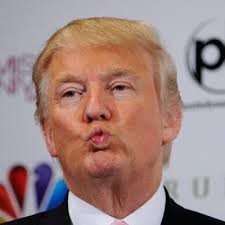
Donald Trump
So far, just what you would expect from Trump. Then:
“I mean, say what you want, the World Trade Center came down during his time.”
“Hold on,” said Ruhle, “you can’t blame George Bush for that.”
“He was President, okay? Blame him or don’t blame him, but he was President,” Trump said. “The World Trade Center came down during his reign.”
Three thousand Americans died during the September 11, 2001 terror attacks on the Pentagon and World Trade Center.
But holding Bush accountable for 9/11 is taboo for Republicans—and avoided by cowardly Democrats.
Whereas Republicans spent four years blaming President Barack Obama for the deaths of four Americans killed in an American consulate in Benghazi, Libya.
Immediately after Trump’s remarks, the Right exploded.
Representative Peter King, Republican of New York, said that no one saw the 9/11 attacks coming and that blaming the former president was a cheap shot.
Speaking on Right-wing Fox Radio, King added: “I think Donald Trump is totally wrong there. That sounds like a Michael Moore talking point.”
And Jeb Bush rushed to his brother’s defense on Twitter: “How pathetic for @realdonaldtrump to criticize the president for 9/11. We were attacked & my brother kept us safe.”
Of course, “my brother” didn’t keep safe those 3,000 Americans who died on 9/11.
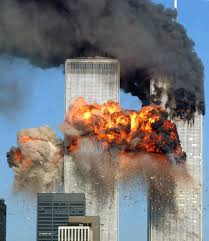
The World Trade Center on September 11, 2001
Nor did Jeb mention that, during his first eight months in office before September 11, George W. Bush was on vacation 42% of the time.
Fortunately, British historian Nigel Hamilton has brutally laid bare the facts of this needless tragedy.
Hamilton is the author of several acclaimed political biographies, including JFK: Reckless Youth and Bill Clinton: Mastering the Presidency.
In 2007, he began research on his 2010 book: American Caesars: The Lives of the Presidents from Franklin D. Roosevelt to George W. Bush.
The inspiration for this came from a classic work of ancient biography: The Twelve Caesars, by Gaius Suetonius Tranquillus—known as Suetonius.
Suetonius, a Roman citizen and historian, had chronicled the lives of the first 12 Caesars of Imperial Rome: Julius Caesar, Augustus, Tiberius, Caligula, Claudius, Nero, Galba, Otho, Vitellius, Vespasian, Titus and Domitian.
Hamilton wanted to examine post-World War II United States history as Suetonius had examined that of ancient Rome: Through the lives of the 12 “emperors” who had held the power of life and death over their fellow citizens—and those of other nations.

For Hamilton, the “greatest of American emperors, the Caesar Augustus of his time,” was Franklin D. Roosevelt, who led his country through the Great Depression and World War II.
His “”great successors” were Harry S. Truman, Dwight D. Eisenhower and John F. Kennedy—who, in turn, contained the Soviet Union abroad and presided over sustained economic prosperity at home.
By contrast, “arguably the worst of all the American Caesars” was “George W. Bush, and his deputy, Dick Cheney, who willfully and recklessly destroyed so much of the moral basis of American leadership in the modern world.”
(Hamilton’s book appeared before Donald Trump reached the Oval Office—and made George W. Bush look like a statesman.)
Among the most lethal of Bush’s offenses: The appointing of officials who refused to take seriously the threat posed by Al-Qaeda.And this arrogance and indifference continued—right up to September 11, 2001, when the World Trade Center and Pentagon became targets for destruction.
The only major administration official who did take Al-Qaeda seriously was Richard Clarke, the chief counter-terrorism adviser on the National Security Council.
Clarke had been thus appointed in 1998 by President Bill Clinton. He continued in the same role under President Bush—but the position was no longer given cabinet-level access.
This put him at a severe disadvantage when dealing with other, higher-ranking Bush officials—such as Vice President Dick Cheney, Secretary of Defense Donald Rumsfeld, Rumsfeld’s deputy, Paul Wolfowitz and National Security Adviser Condoleeza Rice.
These proved to be the officials who refused to believe that Al-Qaeda posed a lethal threat to the United States.
After 9/11, they wrapped themselves in the flag and posed as America’s saviors.
“Indeed,” writes Hamilton, “in the entire first eight months of the Bush Presidency, Clarke was not permitted to brief President Bush a single time, despite mounting evidence of plans for a new al-Qaeda outrage.” [Italics added]
ABC NEWS, ADOLF HITLER, ALTERNET, AMERICABLOG, AP, ASSASSINATION, BABY BOOMER RESISTANCE, BBC, BLOOMBERG, BUZZFEED, CBS NEWS, CNN, CONSPIRACIES, CROOKS AND LIARS, DAILY KOS, DAY OF THE JACKAL, DONALD TRUMP, FACEBOOK, FIVETHIRTYEIGHT, FREDERICK FORSYTHE, GAIUS CASSIUS, HARPER’S MAGAZINE, HUFFINGTON POST, JULIUS CAESAR, LINCOLN MEMORIAL, MAR-A-LAGO, MARCUS BRUTUS, MARK ANTHONY, MEDIA MATTERS, MOTHER JONES, MOVEON, MSNBC, NBC NEWS, NEW REPUBLIC, NEWSDAY, NEWSWEEK, NICCOLO MACHIAVELLI, NPR, PBS NEWSHOUR, PLOTS, POLITICO, POLITICUSUSA, RAW STORY, REUTERS, RICHARD M. NIXON, SALON, SEATTLE TIMES, Secret Service, SLATE, TALKING POINTS MEMO, THE ATLANTIC, THE CHICAGO SUN-TIMES, THE CHICAGO TRIBUNE, THE DAILY BEAST, THE DAILY BLOG, THE DISCOURSES, THE GUARDIAN, THE HILL, THE HUFFINGTON POST, THE INTERCEPT, THE LOS ANGELES TIMES, THE NATION, THE NEW REPUBLIC, THE NEW YORK TIMES, THE NEW YORKER, THE VILLAGE VOICE, THE WALL STREET JOURNAL, THE WASHINGTON POST, THINKPROGRESS, TIME, TRUTHDIG, TRUTHOUT, TWO POLITICAL JUNKIES, U.S. NEWS & WORLD REPORT, UPI, USA TODAY, VIETNAM WAR, WHITE HOUSE STAFFER, X
In Bureaucracy, History, Law Enforcement, Military, Politics, Social commentary on October 11, 2018 at 12:19 am
More than 500 years ago, Niccolo Machiavelli, the Florentine statesman, authored The Discourses on Livy, a work of political history and philosophy. In it, he outlined how citizens of a republic can maintain their freedoms.
One of the longest chapters—Book Three, Chapter Six—covers “Of Conspiracies.” In it, those who wish to conspire against a ruler will find highly useful advice.
And so will those who wish to foil such a conspiracy.
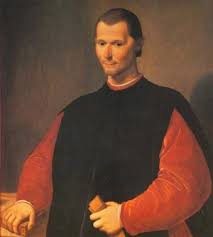

Niccolo Machiavelli
Writes Machiavelli:
For conspirators, there are three ways their efforts can be foiled:
- Discovery through denunciation;
- Discovery through incautiousness;
- Discovery through writings.
Discovery through Denunciation: This occurs through treachery or lack of prudence among one or more conspirators.
Treachery is so common that you can safely tell your plans to only your most trusted friends who are willing to risk their lives for your sake. You may find that you have only one or two of these.
But as you are bring more people into the conspiracy, the chances of discovery greatly increase. It’s impossible to find many who can be completely trusted: For their devotion to you must be greater than their sense of danger and fear of punishment.
Discovery through Carelessness: This happens when one of the conspirators speaks incautiously, so that a third person overhears it Or it may occur from thoughtlessness, when a conspirator tells the secret to his wife or child, or to some other indiscreet person.
When a conspiracy has more than three or four members, its discovery is almost certain, either through treason, imprudence or carelessness.
If more than one conspirator is arrested, the whole plot is discovered, for it will be impossible for any two to agree perfectly as to all their statements.
If only one is arrested, he may—through courage and stubbornness—be able to conceal the names of his accomplices. But then the others, to remain safe, must not panic and flee, since this is certain to be discovered.
If one of them becomes fearful—whether it’s the one who was arrested or is still at liberty—discovery of the conspiracy is certain.
The best way to avoid such detection is to confide your project to your intended fellow conspirators at the moment of execution—and not sooner.
A classic example of this occurred in ancient Persia: A group of nobles assembled to discuss overthrowing a usurper to the throne. The last one to arrive was Darius.
When one of the conspirators asked, “When should we strike?” Darius replied: “We must either go now at this very moment and carry it into execution, or I shall go and denounce you all. For I will not give any of you time to denounce me.”
At that, they went directly to the palace, assassinated the usurper and proclaimed Darius their new king.
Discovery through Writings: You may talk freely with anyone man about everything, for unless you have committed yourself in writing, the “Yes” of one man is worth as much as the “No” of another.
Thus, you should guard most carefully against writing, as against a dangerous rock, for nothing will convict you quicker than your own handwriting.
You may escape, then, from the accusation of a single individual, unless you are convicted by some writing or other pledge, which you should be careful never to give.
If you are denounced, there are means of escaping punishment:
- By denying the accusation and claiming that the person making it hates you; or
- Claiming that your accuser was tortured or coerced into giving false testimony against you.
But the most prudent course is to not tell your intentions to anyone, and to carry out the attempt yourself.
Even if you’re not discovered before you carry out your attack, there are still two dangers facing a conspirator:
Dangers in Execution: These result from:
- An unexpected change in the routine of the intended target;
- The lack of courage among the conspirators; or
- An error on their part, such as leaving some of those alive whom the conspirators intended to kill.
Adolf Hitler, who claimed to have a sixth-sense for danger, was famous for changing his routine at the last minute.
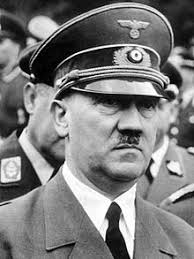

Adolf Hitler
On November 9, 1939, this instinct saved his life. He had been scheduled to give a long speech at a Munich beer hall before the “Old Fighters” of his storm troopers.
But that evening he cut short his speech and left the beer hall. Forty-five minutes later, a bomb exploded inside a pillar—before which Hitler had been speaking.
Conspirators can also be doomed by their good intentions.
In 44 B.C., Gaius Cassius, Marcus Brutus and other Roman senators decided to assassinate Julius Caesar, whose dictatorial ambitions they feared.
Cassius also intended to murder Mark Anthony, Caesar’s strongest ally. But Brutus objected, fearing the plotters would look like butchers, not saviors. Even worse, he allowed Anthony to deliver a eulogy at Caesar’s funeral.
This proved so inflammatory that the mourners rioted, driving the conspirators out of Rome. Soon afterward, they were defeated in a battle with the legions of Anthony and Octavian Caesar—and forced to commit suicide to avoid capture and execution.


 Bureaucracybuster's Blog
2016 PRESIDENTIAL CAMPAIGN, 2016 PRESIDENTIAL RACE, ABC NEWS, ACADEMY AWARDS, ALEXANDER SHUSTOROVICH, ALTERNET, ANDREW INTRATER, AP, ARCHIBALD COX, BARACK OBAMA, BENGHAZI INVESTIGATION, BEST ACTOR OSCAR, BUZZFEED, CBS NEWS, CHUCK GRASSLEY, CIA, CNN, CROOKS AND LIARS, DAILY KOZ, DAVID BROOKS, DEPARTMENT OF HOMELAND SECURITY, DEVIN NUNES, DONALD TRUMP, DONALD TRUMP JR., DONALD TRUMP’S INAUGURAL COMMITTEE, DWIGHT D. EISENHOWER, EMAILS INVESTIGATION, FACEBOOK, FBI, FEDERAL ELECTIONS COMMISSION, FOX NEWS, FRED ZINNEMANN, GARY COOPER, GEORGE W. BUSH, GRACE KELLY, HIGH NOON, HILLARY CLINTON, HOUSE INTELLIGENCE COMMITTEE, JACOB WOHL, JAMES COMEY, JARED KUSHNER, JEFF SESSIONS, JENNIFER TAUB, JOHN KASICH, JOHN MCCAIN, JOSEPH MCCARTHY, JOSEPH R. MCCARTHY, KGB, LEN BLAVATNIK, LESTER HOLT, LINDSEY GRAHAM, MARCO RUBIO, MARK SHIELDS, MICHAEL FLYNN, MITCH MCCONNELL, MOTHER JONES, MOVEON, MSNBC, NATIONAL SECURITY AGENCY, NBC NEWS, NEWSWEEK, NPR, OFFICE OF THE DIRECTOR OF NATIONAL INTELLIGENCE, PAUL MANAFORT, PAUL RYAN, PBS NEWSHOUR, PEW RESEARCH SURVEY, POLITICAL ACTION COMMITTEES (PACS), POLITICAL CONSULTANTS, POLITICO, PRINCETON UNIVERSITY, RAW STORY, REPUBLICAN PARTY, REPUBLICANS, REUTERS, RICHARD M. NIXON, ROBERT MUELLER III, ROBERT S. MUELLER 111, ROD ROSENSTEIN, RUDOLPH GIULIANI, RUSSIA, RUSSIAN OLIGARCHS, SALON, SCOTT WALKER, SEATTLE TIMES, SENATE INTELLIGENCE COMMITTEE, SENATE LEADERSHIP FUND, SERGEY KISLYAK, SERGEY LAVROV, SIMON KUKES, SLATE, SOVIET UNION, SUPREME COURT, TEX RITTER, THE ATLANTIC, THE CHICAGO SUN-TIMES, THE CHICAGO TRIBUNE, THE DAILY BEAST, THE GUARDIAN, THE HILL, THE HUFFINGTON POST, THE LOS ANGELES TIMES, THE NATION, THE NEW YORK TIMES, THE WASHINGTON POST, TIME, TRUMP INAUGURAL COMMITTEE, TRUMP TOWER, TWITTER, U.S. NEWS & WORLD REPORT, UNITED STATES DEPARTMENT OF JUSTICE, UNITED STATES DEPARTMENT OF STATE, UNITED STATES HOUSE OF REPRESENTATIVES, UNITED STATES MARINE CORPS, UNITED STATES SENATE, UNIVERSITY OF VIRGINIA LAW SCHOOL, UP, UPI, USA TODAY, USA TODAY DONALD TRUMP, USA TODAY HIGH NOON, VERMONT LAW SCHOOL, VIETNAM WAR, VLADIMIR PUTIN, WILL KANE
ROBERT MUELLER STILL SUFFERS FOR YOUR SINS: PART TWO (OF FOUR)
In Bureaucracy, History, Law, Law Enforcement, Military, Politics, Social commentary on November 8, 2018 at 12:14 amOn May 17, 2017, Deputy Attorney General Rod Rosenstein appointed Robert S. Mueller III to serve as Special Counsel for the United States Department of Justice.
Rosenstein charged Mueller to investigate “any links and/or coordination between the Russian government and individuals associated with the campaign of President Donald Trump, and any matters that arose or may arise directly from the investigation.”
Since then, Trump, his shills in Congress and Right-wing Fox News have relentlessly attacked Mueller’s integrity and investigative methods.
From the outset of that investigation, there have been widespread fears that Trump would fire Mueller, just as he did FBI Director James Comey. Those fears increased over the weekend of March 17-18, 2018, when Trump spewed a series of angry tweets on Twitter:
In “High Noon,” Marshal Will Kane faced death at the hands of four cold-blooded killers.
For Mueller, the threat is different. Every day he conducts his investigation under the shadow of being fired by a President who has:
Mueller faces another distressing possibility: Even if he’s allowed to complete his investigation, his final report might be suppressed by Trump under a claim of “executive privilege.”
And, on October 30, details emerged about a Right-wing plot to discredit the probe by falsely accusing Mueller of sexually abusing or harassing women.
The Special Counsel’s office issued the following statement: “When we learned last week of allegations that women were offered money to make false claims about the Special Counsel, we immediately referred the matter to the FBI for investigation.”
On October 29, Jacob Wohl, a Fox News contributor and Trump supporter, tweeted: “Several media sources tell me that a scandalous story about Mueller is breaking tomorrow. Should be interesting. Stay tuned!”
Then, on October 30, Jennifer Taub, a law professor at Vermont Law School, told The Atlantic that a man working for Surefire Intelligence, a private investigative agency, had offered to pay her if she could provide dirt on Mueller.
She didn’t respond and forwarded the information to the Special Counsel’s office.
Jennifer Taub
Nor can Mueller, a lifelong Republican, count on protection from Republicans in the House and Senate.
Almost universally, they have refused to speak out against threats by Trump to fire him or deputy Attorney General Rod Rosenstein.
Or, more importantly, to take action to prevent or punish him for doing so.
On April 17, 2018, Republican Senate Majority Leader Mitch McConnell said he would not allow legislation to protect Robert Mueller’s independent investigation into Russian subversion of the 2016 Presidential election to reach the Senate floor.
Mitch McConnell
“I’m the one who decides what we take to the floor. That’s my responsibility as majority leader. We’ll not be having this on the floor of the Senate,” the Kentucky Republican said in an interview on Fox News.
Earlier that day, another Republican, Speaker of the House Paul Ryan, claimed that legislation to protect Mueller was “unnecessary.”
“It would not be in the President’s interest to [fire Mueller] and I think he knows that,” said the Wisconsin Congressman.
Why have so few Republicans dared to stand against Trump?
Two major reasons:
#1: Because many House and Senate Republicans received millions of dollars in “campaign contributions” from Russian oligarchs who are answerable to Russian dictator Vladimir Putin.
In short: Bribe monies.
The Kremlin
The following data comes from the Federal Elections Commission.
One major Russian contributor is Len Blavatnik. During the 2015-16 election cycle, he proved one of the largest donors to GOP Political Action Committees (PACs).
Blavatnik’s net worth is estimated at $20 billion. In 2016, he gave $6.35 million to GOP PACs.
In 2017, he gave millions of dollars to top Republican leaders—such as Senators Mitch McConnell, Marco Rubio (Florida) and Lindsey Graham (South Carolina). Specifically, Blavatnik contributed:
Another Russian oligarch, Alexander Shustorovich, contributed $1 million to Trump’s Inaugural Committee.
A third oligarch, Andrew Intrater, contributed $250,000 to Trump’s Inaugural Committee.
And a fourth, Simon Kukes, contributed a total of $283,000, much of it to the Trump Victory Fund.
Share this: