Archive for the ‘Business’ Category
2020 PRESIDENTIAL ELECTION, ABC NEWS, ABUSE OF POWER, ALTERNET, AMERICABLOG, AMERICANS FOR TAX REFORM, AP, BABY BOOMER RESISTANCE, BARACK OBAMA, BRENDA FITZGERALD, BUZZFEED, CBS NEWS, CENTERS FOR DISEASE CONTROL AND PREVENTION, CNN, CORONAVIRUS, CROOKS AND LIARS, DAILY KOZ, DEMOCRATS, DEPARTMENT OF HEALTH AND HUMAN SERVICES, DEPARTMENT OF HOMELAND SECURITY, DONALD TRUMP, DRUDGE RETORT, EBOLA, FACEBOOK, FIVETHIRTYEIGHT, GROVER NORQUIST, HARPER’S MAGAZINE, IMPEACHMENT, JOE BIDEN, JOHN BOLTON, LIBEL, MEDIA MATTERS, MOTHER JONES, MOVEON, MSNBC, NATIONAL SECURITY COUNCIL, NBC NEWS, NEWSWEEK, NPR, OBSTRUCTION OF CONGRESS, PBS NEWSHOUR, POLITICO, POLITICUSUSA, RAW STORY, REPUBLICANS, REUTERS, ROBERT RAY REDFIELD, SALON, SEATTLE TIMES, SLATE, STOCK MARKET, TALKING POINTS MEMO, THE ATLANTIC, THE CHICAGO SUN-TIMES, THE CHICAGO TRIBUNE, THE DAILY BEAST, THE DAILY BLOG, THE GUARDIAN, THE HILL, THE HUFFINGTON POST, THE LOS ANGELES TIMES, THE NATION, THE NEW REPUBLIC, THE NEW YORK TIMES, THE VILLAGE VOICE, THE WASHINGTON POST, THINKPROGRESS, TIME, TIMOTHY ZIEMER, TOM BOSSERT, TOM FRIEDMAN, TRUTHDIG, TRUTHOUT, TWITTER, TWO POLITICAL JUNKIES, U.S. NEWS & WORLD REPORT, UNITED STATES HOUSE OF REPRESENTATIVES, UNITED STATES SENATE, UPI, USA TODAY, WONKETTE
In Bureaucracy, Business, History, Law, Law Enforcement, Politics, Social commentary on March 9, 2020 at 12:07 am
On August 23, 2018, President Donald Trump offered an unprecedented reason why he shouldn’t be impeached.
Appearing on “Fox and Friends,” he said:
- “I don’t know how you can impeach somebody who’s done a great job.”
- “I tell you what, if I ever got impeached, I think the market would crash, I think everybody would be very poor.”
- Pointing to his head, he said: “Because without this thinking, you would see numbers that you wouldn’t believe in reverse.”
He didn’t say: “I shouldn’t be impeached because I’m innocent. I didn’t collude with Russian Intelligence to subvert the 2016 Presidential election.”
Instead, he appealed to the greed and fear of his voting base—and no doubt hoped to reach beyond it: “Keep me in power or you’ll all suffer for it.”

Donald Trump
On February 5, the Republican-dominated Senate acquitted him of the two charges brought by the Democratic House of Representatives on December 18, 2019:
Article 1: Abuse of Power: For pressuring Ukraine to assist him in his re-election campaign by damaging former Vice President Joseph Biden, his possible 2020 Democratic rival; and
Article 2: Obstruction of Congress: For obstructing Congress by blocking testimony of subpoenaed witnesses and refusing to provide documents in response to House subpoenas in the impeachment inquiry.
So Trump escaped impeachment—and the country is now suffering for it. On February 27, the Dow Jones Industrial Average had its single worst one-day drop in history—falling 1,191 points.
The reason can be summed up in one word: Coronavirus. Simply put, investors hate uncertainty, because it makes it hard to plan. And nothing makes uncertainty like a new and frightening virus that’s easily passed on and for which there is no vaccine or cure.

Coronavirus
CDC/ Alissa Eckert, MS; Dan Higgins, MAM / Public domain
And that causes millions of people to change their everyday behavior in unprecedented ways–such as not attending basketball games, eating in restaurants, flying on airplanes, going on cruises—and simply going to work.
Of course, Trump didn’t create the Coronavirus. But he has made it even more of a threat to Americans than it had to be.
In 2017, nearly 700 positions remained vacant at the Centers for Disease Control and Prevention (CDC) because Trump imposed a hiring freeze. This affected programs supporting local and state public health emergency readiness, infectious disease control and chronic disease prevention.
Making the situation worse: The CDC’s director, Tom Friedman, stepped down in January, 2017, and it wasn’t until July that the agency got another one: Brenda Fitzgerald. But she served only until January, 2018. She was succeeded—two months later—by Robert Ray Redfield, Jr. He has been the director since then.
The post of director of the CDC is considered one of the most crucial public health positions in the government. The CDC is charged with tracking and preventing infectious disease outbreaks in the United States and worldwide.

CDC headquarters in Atlanta, Georgia
Another way Trump has sabotaged America’s ability to respond to the Coronavirus outbreak: Gutting the permanent epidemic monitoring and command groups set up inside the White House: The National Security Council (NSC) and the Department of Homeland Security (DHS).
The reason for this: Trump’s pathological jealousy of and hatred for former President Barack Obama.
Since taking office, Trump has made an all-out effort to destroy every vestige of Obama’s legacy as the first black President of the United States. And these disease-monitoring groups were set up by Obama following the Ebola outbreak in West Africa in 2014.
In the spring of 2018, Trump pushed Congress to cut $15 billion from national health spending—and cutting the global disease-fighting budgets of the CDC, National Security Council, Department of Homeland Security and the Department of Health and Human Services.
The Federal $30 million fund for Complex Crises was eliminated as well.
In April, 2018, National Security Adviser John Bolton forced Tom Bossert, director of the infectious disease unit at DHS, to resign—along with his entire team. In May, 2018, Trump ordered the NSC’s global health security unit shut down.
Rear Admiral Timothy Ziemer, who headed the unit, was reassigned.
Neither the NSC nor the DHS epidemic team has been replaced.
The global health section of the CDC was decimated, and had to reduce the number of countries it was monitoring from 49 to 10.
It’s popular to assume that Trump did all of this out of mere ignorance—and there’s plenty of proof of his ignorance in many areas (such as attributing windmills to causing cancer). But far more is at work here.
The vast majority of those who voted for Trump believe that the Federal Government is evil and its agencies that regulate business should be eliminated.
An example of this constituency is Grover Norquist, founder and president of Americans for Tax Reform, which opposes all tax increases and has forced most Republicans to publicly pledge they will as well, under any circumstances.
His most famous quote: “I’m not in favor of abolishing the government. I just want to shrink it down to the size where we can drown it in the bathtub.”
Under Trump, the epidemic-fighting arm of the Federal Government has become so shrunk that America itself may be the one to drown—in an epidemic of Coronavirus.
ABC NEWS, ALTERNET, AMERICABLOG, AP, BABY BOOMER RESISTANCE, BUZZFEED, CBS NEWS, CNN, COMPUTER FRAUD, CROOKS AND LIARS, CYBERCRIME, DAILY KOZ, DRUDGE RETORT, EMAIL, EMAILS, FACEBOOK, FBI, FIVETHIRTYEIGHT, HARPER’S MAGAZINE, INTERNET, MEDIA MATTERS, MOTHER JONES, MOVEON, MSNBC, NBC NEWS, NEWSWEEK, NIGERIA, NIGERIAN SCAMS, NPR, PASSWORDS, PBS NEWSHOUR, POLITICO, POLITICUSUSA, RAW STORY, REUTERS, SALON, SCAMS, SEATTLE TIMES, SLATE, TALKING POINTS MEMO, THE ATLANTIC, THE CHICAGO SUN-TIMES, THE CHICAGO TRIBUNE, THE DAILY BEAST, THE DAILY BLOG, THE GUARDIAN, THE HILL, THE HUFFINGTON POST, THE LOS ANGELES TIMES, THE NATION, THE NEW REPUBLIC, THE NEW YORK TIMES, THE VILLAGE VOICE, THE WALL STREET JOURNAL, THE WASHINGTON POST, THE WASHINGTONPOST, THINKPROGRESS, TIME, TRUTHDIG, TRUTHOUT, TWITTER, TWO POLITICAL JUNKIES, U.S. NEWS & WORLD REPORT, UPI, USA TODAY, VIRUSES, WONKETTE
In Business, History, Law, Law Enforcement, Social commentary on February 25, 2020 at 12:06 am
In 2018, consumers were victimized in more “emotional romance scams” than any other category of fraud.
“That’s $143 million that consumers reported that they lost in 2018 to romance scams,” said Monica Vaca, of the Federal Trade Commission.
The average loss per victim amounted to $2,600—seven times higher than other frauds. Most of that money was wired or sent with gift cards.
But there are plenty of other online scams to be alert for:
- Email phishing scams
- Credit card scams
- Bank loan scams
- Lottery fee scams
- Online dating scams
- “Nigerian Prince” scams
Here’s how to protect yourself.

- Addressed Generally: “Attention!” “Dear Friend,” “Attention the owner of this email,” “Hello, Dear.” Your name is not mentioned, because this email has been mass-mailed to thousands of intended victims.
- Unsolicited: You’re told that you’ve won a lottery you never entered, or have inherited a fortune from someone you never knew existed.
- Appeals to Religion: “Hello Beloved in the Lord” or “Yours in Christ” seeks to create a bond with those who deeply believe in God.
- Misuse of English: Mis-spellings and faulty grammar usually denote someone—probably a foreigner—using English as a second language. Examples: Run-on sentences; “you’re” for “your”; “except” instead of “accept”; “Dear Beneficial” instead of “Dear Beneficiary.”
- Appeals to Sympathy: “My husband just died” or “I am dying of cancer.” This is to make you feel sorry for the sender and lower your guard as an intended victim.
- Use of Important Titles/Organizations: “Director,” ‘Barrister,” “Secretary General of the United Nations,” “Police Inspector.” This is to impress recipients and convince them that the email comes from a trusted and legitimate organization.
- Request for Personal Information: This includes some combination of: Name / Address / Telephone Number / Bank Name / Bank Account Number / Fax Number / Driver’s License Number / Occupation / Sex / Beneficiary / Passport Number
- Claims of Deposit: “We have deposited the check of your fund to your account” is a typical line to instantly grab your attention. Someone you’ve never heard of claims he has just put a huge amount of money into an account you know nothing about. Nor can you access it unless you first pay a “contact fee.”
- The “Bank” is in Africa: Unless you know you have relatives there, this should be a dead giveaway to a scam. Africa is a continent kept alive by the charity of other nations. It’s not in the business of doling out large sums of money to Westerners.
- Overseas Phone Numbers: If you call these, you’ll have a huge bill. So many people skip calling and just send the money “required” to receive their “cash prize.”
- Highly Personal Requests: Asking you—someone they’ve never met—to assume the burden of acting as the executor of their “Last Will and Testament.”
- Love Scams: The scammer poses as a man or woman—usually outside the United States—seeking love. A series of emails flows back and forth for days/weeks, until the scammer says s/he will be glad to fly to the United States to be yours. All you have to do is put up the money for the flight cost.
- “Make Money From Home”: With most employers refusing to hire, “work from home” scams promise a way to support yourself and your family. You’re required to provide bank information or pay an up-front “registration fee.” Then you wait for job orders—that never come.
- Debt Relief: Scammers promise to relieve most or all of your debt—for a large up-front fee. You pay the fee—and are not only out of that money but still in debt.
- Home Repair Schemes: Huge down payments are required for home repairs that never happen.
- “Free” Trial Offers: The service or product is free for awhile, but you must opt out later to avoid monthly billings.
- The Email Claims to Be From the FBI: The FBI is an investigative agency responsible to the U.S. Department of Justice. It does not resolve financial disputes or secure monies for “deserving” recipients. If the FBI contacts you, it does so by letter or sending agents to your address.
- “I Need Help”: You get an email claiming to be from someone you know—who’s “in jail here in Mexico” or some other foreign country. S/he begs you to send money for bail or bribes to win his/her freedom. If you get such an email, call the person to make certain. Don’t rush to send money—chances are it will go directly to a scammer.

FBI Headquarters
There are several commonsense rules to follow in protecting yourself from online scammers:
- Don’t trust people you’ve never met to want to give you money.
- Shop online only with well-known merchants who have a good reputation.
- Don’t click on unknown links—especially those in emails from unknown senders.
- If you’re required to pay an advance fee—“on faith”—to receive a big amount of money, the odds are it’s a scam.
- If you can’t find any solid information on a company, chances are it doesn’t exist.
- For additional information on how to protect yourself from cybercrime, check out the FBI’s page at https://www.fbi.gov/investigate/cyber.
- If it sounds too good to be true, the odds are: It is untrue.
2016 PRESIDENTIAL CAMPAIGN, 2020 PRESIDENTIAL CAMPAIGN, ABC NEWS, ADOLF HITLER, ALTERNET, AMERICABLOG, ANCIENT GREECE, ANCIENT ROME, AP, BABY BOOMER RESISTANCE, BERNIE SANDERS, BUZZFEED, CATASTROPHE, CBS NEWS, CHINA, CNN, CONSUMER PROTECTION, CORPORATE TAXES, CORRUPTION, CROOKS AND LIARS, DAILY KOZ, DEMOCRATIC PARTY, DONALD TRUMP, DRUDGE RETORT, EXECUTIVE PAYWATCH, FACEBOOK, FIVETHIRTYEIGHT, FORBES, FUNDRAISING, HARPER’S MAGAZINE, HILLARY CLINTON, INCOME INEQUALITY, IVAN THE TERRIBLE, JOE BIDEN, JOSEPH STALIN, LEON TROTSKY, MEDIA MATTERS, MOTHER JONES, MOVEON, MSNBC, NAZI GERMANY, NBC NEWS, NEWSWEEK, NICCOLO MACHIAVELLI, NPR, PBS NEWSHOUR, POLITICO, POLITICUSUSA, RAW STORY, REUTERS, ROBERT PAYNE, SALON, SEATTLE TIMES, SLATE, SPARTACUS, TALKING POINTS MEMO, THE ATLANTIC, THE CHICAGO SUN-TIMES, THE CHICAGO TRIBUNE, THE CORRUPT SOCIETY (BOOK), THE DAILY BEAST, THE DAILY BLOG, THE DISCOURSES, THE FRENCH REVOLUTION, THE GREAT LEVELER (BOOK), THE GUARDIAN, THE HILL, THE HUFFINGTON POST, THE LOS ANGELES TIMES, THE NATION, THE NEW REPUBLIC, THE NEW YORK TIMES, THE RUSSIAN REVOLUTION, THE VILLAGE VOICE, THE WASHINGTON POST, THINKPROGRESS, TIME, TRUTHDIG, TRUTHOUT, TWITTER, TWO POLITICAL JUNKIES, U.S. NEWS & WORLD REPORT, UPI, USA TODAY, VIOLENCE, Vladimir Lenin, WALL STREET, WALTER SCHEIDEL, WATERGATE, WEALTH GAP, WILLIAM SHAKESPEARE, WINSTON CHURCHILL, WONKETTE
In Bureaucracy, Business, History, Law, Politics, Social commentary on February 21, 2020 at 12:07 am
The gap between rich and poor in the United States has never been greater.
A May 1, 2018 article in Forbes—which bills itself as “The Capitalist Tool”—vividly documents this truth.
“In the 1950s, a typical CEO made 20 times the salary of his or her average worker. Last year, [2017] CEO pay at an S&P 500 Index firm soared to an average of 361 times more than the average rank-and-file worker, or pay of $13,940,000 a year, according to an AFL-CIO’s Executive Paywatch news release today.”
The average CEO pay climbed six percent in 2017—while the average production worker earned just $38,613, according to Executive Paywatch.
The average wage—adjusted for inflation—has stagnated for more than 50 years. Meanwhile, CEOs’ average pay since the 1950s has risen by 1000%.
This would not have been news to Niccolo Machiavelli, the father of modern political science. In his masterwork, The Discourses, he observed the human condition as that of constant struggle:
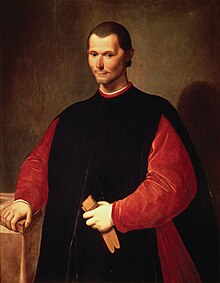
Niccolo Machiavelli
“It was a saying of ancient writers, that men afflict themselves in evil, and become weary of the good, and that both these dispositions produce the same effects.
“For when men are no longer obliged to fight from necessity, they fight from ambition, which passion is so powerful in the hearts of men that it never leaves them, no matter to what height they may rise.
“The reason for this is that nature has created men so that they desire everything, but are unable to attain it. Desire being thus always greater than the faculty of acquiring, discontent with what they have and dissatisfaction with themselves result from it.
“This causes the changes in their fortunes—for as some men desire to have more, while others fear to lose what they have, enmities and war are the consequences. And this brings about the ruin of one province and the elevation of another.”
Author Walter Scheidel, Dickason Professor in the Humanities, Professor of Classics and History at Stanford University, has also given this subject a great deal of thought. And, like Machiavelli, he has reached some highly disturbing conclusions.

Walter Scheidel
World Economic Forum [CC BY-SA 2.0 (https://creativecommons.org/licenses/by-sa/2.0)%5D
Scheidel gave voice to these in his 2017 book, The Great Leveler: Violence and the History of Inequality from the Stone Age to the Twenty-First Century. His thesis: Only violence and catastrophes have consistently reduced inequality throughout history.
According to the book’s jacket blurb: “Are mass violence and catastrophes the only forces that can seriously decrease economic inequality? To judge by thousands of years of history, the answer is yes.
“Tracing the global history of inequality from the Stone Age to today, Walter Scheidel shows that inequality never dies peacefully. Inequality declines when carnage and disaster strike and increases when peace and stability return.
“The Great Leveler is the first book to chart the crucial role of violent shocks in reducing inequality over the full sweep of human history around the world.
“Ever since humans began to farm, herd livestock, and pass on their assets to future generations, economic inequality has been a defining feature of civilization. Over thousands of years, only violent events have significantly lessened inequality.
“The ‘Four Horsemen’ of leveling—mass-mobilization warfare, transformative revolutions, state collapse, and catastrophic plagues—have repeatedly destroyed the fortunes of the rich….
“Today, the violence that reduced inequality in the past seems to have diminished, and that is a good thing. But it casts serious doubt on the prospects for a more equal future.”
Revolutionaries have known the truth of Scheidel’s findings from the gladiators’ revolt of Spartacus (73 – 71 B.C.) to the French Revolution (1789 – 1799) to the overthrow of the Czarist Romanov dynasty (1917).
But American politicians serenely ignore that truth. They depend on the mega-rich for millions of dollars in “campaign contributions”—which pay for self-glorifying ads on TV.
Thus, in 2016, American voters had a “choice” between two “love-the-rich” Presidential candidates: Donald Trump and Hillary Clinton. The result was that millions stayed home or voted in protest for third-party candidates who had no chance of winning.
In his 1975 book, The Corrupt Society: From Ancient Greece to Modern-day America, British historian Robert Payne warned that the predatory rich would not change their behavior: “Nor is there any likelihood that the rich will plow back their money into services to ensure the general good.
“They have rarely demonstrated social responsibility, and they are much more likely to hold on to their wealth at all costs than to renounce any part of it.
“Like the tyrant who lives in a world wholly remote from the world of the people, shielded and protected from all possible influences, the rich are usually the last to observe the social pressures rising from below, and when these social pressures reach flashpoint, it is too late to call in the police or the army.
“The tyrant dies; the police and the army go over to the revolutionaries; and the new government dispossesses the rich by decree. A single authoritative sentence suffices to expunge all private wealth and restore it to the service of the nation.”
For millions of struggling, impoverished Americans, that day cannot come soon enough.
2016 PRESIDENTIAL CAMPAIGN, 2020 PRESIDENTIAL CAMPAIGN, ABC NEWS, ADOLF HITLER, ALTERNET, AMERICABLOG, ANCIENT GREECE, ANCIENT ROME, AP, BABY BOOMER RESISTANCE, BERNIE SANDERS, BUZZFEED, CATASTROPHE, CBS NEWS, CHINA, CNN, CONSUMER PROTECTION, CORPORATE TAXES, CORRUPTION, CROOKS AND LIARS, DAILY KOZ, DEMOCRATIC PARTY, DONALD TRUMP, DRUDGE RETORT, EXECUTIVE PAYWATCH, FACEBOOK, FIVETHIRTYEIGHT, FORBES, FUNDRAISING, HARPER’S MAGAZINE, HILLARY CLINTON, INCOME INEQUALITY, IVAN THE TERRIBLE, JOE BIDEN, JOSEPH STALIN, LEON TROTSKY, MEDIA MATTERS, MOTHER JONES, MOVEON, MSNBC, NAZI GERMANY, NBC NEWS, NEWSWEEK, NICCOLO MACHIAVELLI, NPR, PBS NEWSHOUR, POLITICO, POLITICUSUSA, RAW STORY, REUTERS, ROBERT PAYNE, SALON, SEATTLE TIMES, SLATE, SPARTACUS, TALKING POINTS MEMO, THE ATLANTIC, THE CHICAGO SUN-TIMES, THE CHICAGO TRIBUNE, THE CORRUPT SOCIETY (BOOK), THE DAILY BEAST, THE DAILY BLOG, THE DISCOURSES, THE FRENCH REVOLUTION, THE GREAT LEVELER (BOOK), THE GUARDIAN, THE HILL, THE HUFFINGTON POST, THE LOS ANGELES TIMES, THE NATION, THE NEW REPUBLIC, THE NEW YORK TIMES, THE RUSSIAN REVOLUTION, THE VILLAGE VOICE, THE WASHINGTON POST, THINKPROGRESS, TIME, TRUTHDIG, TRUTHOUT, TWITTER, TWO POLITICAL JUNKIES, U.S. NEWS & WORLD REPORT, UPI, USA TODAY, VIOLENCE, Vladimir Lenin, WALL STREET, WALTER SCHEIDEL, WATERGATE, WEALTH GAP, WILLIAM SHAKESPEARE, WINSTON CHURCHILL, WONKETTE
In Bureaucracy, Business, History, Politics, Social commentary on February 20, 2020 at 12:10 am
Americans are used to Presidential candidates telling lies (euphemistically known as “campaign promises”) to get elected.
But when a candidate actually (and usually accidentally) tells the truth, the results can be electrifying.
On June 18, 2019, Democratic Presidential candidate (and momentary front-runner) Joseph Biden addressed a roomful of donors in New York.
The former Vice President believed that his message would comfort his well-heeled audience of billionaires: Don’t worry, if I’m elected, your standard of living won’t change.
Addressing the 100 or so guests at a fundraiser at the Carlyle Hotel in New York City, Biden said that he had taken heat from “some of the people on my team, on the Democratic side” because he had said that rich people were “just as patriotic as poor people.

Joe Biden
“The truth of the matter is, you all, you all know, you all know in your gut what has to be done. We can disagree in the margins but the truth of the matter is it’s all within our wheelhouse and nobody has to be punished. No one’s standard of living will change, nothing would fundamentally change,” he said.
And he added: “I mean, we may not want to demonize anybody who has made money.

“When we have income inequality as large as we have in the United States today, it brews and ferments political discord and basic revolution. Not a joke. Not a joke … It allows demagogues to step in and say the reason where we are is because of the ‘other’….
“You’re not the other. I need you very badly. I hope if I win this nomination, I won’t let you down. I promise you. I have a bad reputation, I always say what I mean. The problem is I sometimes say all that I mean.”
Biden has talked about decreasing income inequality and promoting workers’ rights. But he’s taken a moderate stance when it comes to taxation.
United States Senator Bernie Sanders (D-VT), on the other hand, has attacked the ultra-rich as responsible for the ever-widening gap between themselves and the poor.
“I love Bernie, but I’m not Bernie Sanders. I don’t think 500 billionaires are the reason why we’re in trouble,” Biden said in March, 2019.
Instead, he proposes expanding tax credits for the poor and middle class, and making the tax code less friendly to rich investors.
Robert Payne, the distinguished British historian, took a different—and darker—view of the rich.
Payne authored more than 110 books. Among his subjects were Adolf Hitler, Ivan the Terrible, Winston Churchill, Joseph Stalin, Vladimir Lenin, William Shakespeare and Leon Trotsky.
In 1975, he published The Corrupt Society: From Ancient Greece to Present-Day America. It proved a summary of many of his previous works.

Among the epochs it covered: The civilizations of ancient Greece, Rome and China; Nazi Germany; the Soviet Union; and Watergate-era America. And the massive corruption each of those epochs had spawned.
In his chapter, “A View of the Uncorrupted Society,” Payne warned: Power and wealth are the main sources of corruption.
“The rich, simply by being rich, are infected with corruption. Their overwhelming desire is to grow richer, but they can do this only at the expense of those who are poorer than themselves.
”Their interests conflict with those of the overall society. They live sheltered from the constant anxieties of the poor, and thus cannot understand them. Nor do they try to.
They see the poor as alien from themselves, and thus come to fear and despise them. And their wealth and influence enables them to buy politicians—who, in turn, write legislation that protects the rich from the poor.
But Payne foresaw an even greater danger from the rich and powerful than their mere isolation from the rest of society: “The mere presence of the rich is corrupting. Their habits, their moral codes, their delight in conspicuous consumption are permanent affronts to the rest of humanity. Vast inequalities of wealth are intolerable in any decent society.”
Writing in 1975, Payne noted that a third of the private wealth was possessed by less than five percent of the population—while about a fifth of the populace lived at the poverty level. By 2000, he predicted, about five percent of the population would possess two-thirds of America’s wealth. And more than half the population would be near or below the starvation level.
The result could only be catastrophe. The only way to halt this this increasing concentration of wealth by fewer people would be through law or violent revolution.
Payne has proven to be an uncanny prophet.
On December 8, 2017, the Seattle Times noted that the wealthiest one percent of Americans owned 40% of the country’s wealth. They owned more wealth than the bottom 90% combined.
From 2013, the share of wealth owned by the one percent increased by nearly three percentage points. Wealth owned by the bottom 90%, meanwhile, fell over the same period.
But this situation need not remain permanent.
ABC NEWS, ALTERNET, AMERICABLOG, ANCHOR BABIES, AP, BABY BOOMER RESISTANCE, BARACK OBAMA, BUZZFEED, CBS NEWS, CNN, CROOKS AND LIARS, DAILY KOZ, DONALD TRUMP, DRUDGE RETORT, FACEBOOK, FBI, FIVETHIRTYEIGHT, HARPER’S MAGAZINE, ILLEGAL ALIENS, illegal immigration, IMMIGRATION AND CUSTOMS ENFORCEMENT (ICE), JUSTICE DEPARTMENT, Kamala Harris, MEDIA MATTERS, MEXICO, MICHELLE OBAMA, MOTHER JONES, MOVEON, MSNBC, NBC NEWS, NEWSWEEK, NPR, PBS NEWSHOUR, POLITICO, POLITICUSUSA, RACKETEER INFLUENCED CORRUPT ORGANIZATIONS ACT, RAW STORY, REUTERS, SALON, SAN FRANCISCO, sanctuary cities, SEATTLE TIMES, SLATE, TALKING POINTS MEMO, THE ATLANTIC, THE CHICAGO SUN-TIMES, THE CHICAGO TRIBUNE, THE DAILY BEAST, THE DAILY BLOG, THE GUARDIAN, THE HILL, THE HUFFINGTON POST, THE LOS ANGELES TIMES, THE NATION, THE NEW REPUBLIC, THE NEW YORK TIMES, THE VILLAGE VOICE, THE WALL STREET JOURNAL, THE WASHINGTON POST, THINKPROGRESS, TIME, TRUTHDIG, TRUTHOUT, TWITTER, TWO POLITICAL JUNKIES, U.S. NEWS & WORLD REPORT, U.S.-MEXICO WALL, UPI, USA TODAY, USA TODAY DONALD TRUMP, WAL-MART, WONKETTE
In Bureaucracy, Business, History, Law, Law Enforcement, Politics, Social commentary on February 14, 2020 at 12:06 am
According to President Donald Trump, stopping illegal immigration is easy.
Just build a massive, impenetrable wall along the U.S./Mexican border to keep out Mexican immigrants.
“Building a wall is easy, and it can be done inexpensively,” Trump said in an interview. “It’s not even a difficult project if you know what you’re doing.”
Really?
Among the obstacles to erecting such a barrier:
- The United States/Mexican border stretches for 1,954 miles—and encompasses rivers, deserts and mountains.
- Environmental and engineering problems.
- Squabbles with ranchers who don’t want to give up any of their land.
- Building such a wall would cost untold billions of dollars.
- Drug traffickers and alien smugglers could easily tunnel under it into the United States—as they are now doing.
There are, in fact, cheaper and more effective remedies for combating illegal immigration.

Illegal aliens crossing into the United States
(1) The Justice Department should vigorously attack the “sanctuary movement” that officially thwarts the immigration laws of the United States.
Among the 31 “sanctuary cities” of this country: Washington, D.C.; New York City; Los Angeles; Chicago; San Francisco; Santa Ana; San Diego; Salt Lake City; Phoenix; Dallas; Houston; Austin; Detroit; Jersey City; Minneapolis; Miami; Denver; Baltimore; Seattle; Portland, Oregon; New Haven, Connecticut; and Portland, Maine.
These cities have adopted “sanctuary” ordinances that do not allow municipal funds or resources to be used to enforce federal immigration laws, usually by not allowing police or municipal employees to inquire about one’s immigration status.
(2) The most effective way to combat this movement: Indict the highest-ranking officials of those cities which have actively violated Federal immigration laws.
This would include Mayors, members of the Board of Supervisors and chiefs of police, as well as any other officials who are found obstructing Federal immigration laws.
(3) Even if some indicted officials escaped conviction, the results would prove worthwhile.
City officials would be forced to spend huge sums of their own money for attorneys and face months or even years of prosecution.
And this, in turn, would send a devastating warning to officials in other “sanctuary cities” that the same fate lies in store for them.
(4) CEOs whose companies—like Wal-Mart—systematically employ illegal aliens should be held directly accountable for the actions of their subordinates.
They should be indicted by the Justice Department under the Racketeer Influenced Corrupt Organizations (RICO) Act, the way Mafia bosses are prosecuted for ordering their own subordinates to commit crimes.
Upon conviction, the CEO should be sentenced to a mandatory prison term of at least 20 years.
This would prove a more effective remedy for combating illegal immigration than stationing tens of thousands of soldiers on the U.S./Mexican border.
CEOs forced to account for their subordinates’ actions would take drastic steps to ensure that their companies strictly complied with Federal immigration laws.
(5) The Government should stop granting automatic citizenship to “anchor babies” born to illegal aliens in the United States.
A comparable practice would be allowing bank robbers who had eluded the FBI to keep their illegally-obtained loot.
A person who violates the bank robbery laws of the United States is legally prosecutable for bank robbery, whether he’s immediately arrested or remains uncaught for years. The same should be true for those born illegally within this country.
If they’re not here legally at the time of birth, they should not be considered citizens and should—like their parents—be subject to deportation.
(6) The United States Government–from the President on down–should scrap its apologetic tone on the right to control its national borders.
First Lady Michelle Obama—accompanied by Margarita Zavala, the wife of then-Mexican President Felipe Calderon—was visiting a second-grade class in Silver Spring, Maryland.
A second-grade girl said: “My Mom, she says says that Barack Obama is taking everybody away that doesn’t have papers.”
“Yeah, well, that’s something that we have to work on right?”
Replied Mrs. Obama. “To make sure that people can be here with the right kind of papers, right?”
The girl then said: “But my mom doesn’t have any….”
Obama: “Well, we’ll have to work on that. We have to fix that, and everybody’s got to work together in Congress to make sure that happens.”
The Mexican Government doesn’t consider itself racist for strictly enforcing its immigration laws.
The United States Government should not consider itself racist for insisting on the right to do the same.
(7) Voting materials and ballots should be published in one language: English.
In Mexico, voting materials are published in one language—Spanish.
Throughout the United States, millions of Mexican illegals refuse to learn English and yet demand that voting materials and ballots be made available to them in Spanish.
(8) The United States should impose economic and even military sanctions against countries–such as China and Mexico–whose citizens make up the bulk of illegal aliens.
Mexico, for example, uses its American border to rid itself of those who might demand major reforms in the country’s political and economic institutions.
Such nations must learn that dumping their unwanted’s on the United States now comes at an unfavorably high price. Otherwise those dumpings will continue.
ABC NEWS, ADOLF HITLER, ALTERNET, AMERICABLOG, AP, BABY BOOMER RESISTANCE, BASKETBALL, BUZZFEED, CBS NEWS, CHIANG KAI-SHEK, CNN, COLD WAR, COLUMBIA BROADCASTING SYSTEM, COMMUNISM, CROOKS AND LIARS, DAILY BEAST, DAILY KOZ, DRUDGE RETORT, EDWARD R. MURROW, ERIK WEMPLE, FACEBOOK, FELICIA SONMEZ, FIVETHIRTYEIGHT, HARPER’S MAGAZINE, JOHN F. KENNEDY, KOBE BRYANT, LIBERALISM, LOYALTY OATH GOVERNMENT EMPLOYEES PROGRAM, MARTY BARON, MEDIA MATTERS, MOTHER JONES, MOVEON, MSNBC, NAZI GERMANY, NBC NEWS, NEWSWEEK, NPR, PBS NEWSHOUR, PENTAGON PAPERS, POLITICO, POLITICUSUSA, RADIO AND TELEVISION NEWS DIRECTORS ASSOCIATION, RAPE, RAW STORY, REUTERS, SALON, SEATTLE TIMES, SEE IT NOW, SLATE, SOVIET UNION, TALKING POINTS MEMO, THE ATLANTIC, THE BLITZ, THE CHICAGO SUN-TIMES, THE CHICAGO TRIBUNE, THE DAILY BEAST, THE DAILY BLOG, THE GUARDIAN, THE HILL, THE HUFFINGTON POST, THE LOS ANGELES TIMES, THE NATION, THE NEW REPUBLIC, THE NEW YORK TIMES, THE VILLAGE VOICE, THE WASHINGTON POST, THINKPROGRESS, TIME, TRACY GRANT, TRUTHDIG, TRUTHOUT, TWITTER, TWO POLITICAL JUNKIES, U.S. NEWS & WORLD REPORT, UNITED STATES INFORMATION AGENCY, UPI, USA TODAY, WATERGATE, WILLIAM L. SHIRER, WILLIAM PALEY, WILLIAM RANDOLPH HEARST, WONKETTE
In Bureaucracy, Business, Entertainment, History, Politics, Social commentary on January 30, 2020 at 12:09 am
During the early and mid-1950s, “CBS” came to have two meanings.
For the overwhelming majority of Americans, it stood for “Columbia Broadcasting System.”
But for many of the reporters and editors working in its News Division, “CBS” came to mean “Cowardly Bastards Syndrome.”
William L. Shirer had worked as a newspaper reporter for Universal News Service, a wire service for William Randolph Hearst. Assigned to Germany, he had been one of the first American reporters to chronicle Adolf Hitler’s rise to power.
In 1937, with the Hearst empire losing money, he found himself fired. Shortly afterward, he was hired by Edward R. Murrow, European manager for CBS News. Murrow hadn’t had any experience in journalism; he needed a top-flight reporter.
Shirer, a veteran reporter speaking fluent German and French, fit that bill.
Together, Shirer and Murrow were the beginning of what would become the CBS News empire. Shirer remained in Nazi Germany until December, 1940, when just ahead of the Gestapo, he left for the United States by passenger ship.

William L. Shirer
Meanwhile, Murrow achieved international fame reporting on the London Blitz, his signature introduction to each broadcast being: “This….is London.”
Thus, when both men returned to the United States after the war, they were genuine celebrities. Murrow took a job as a CBS vice president. Shirer continued to work as a correspondent.
In 1947, however, their longtime friendship came to an end.
Americans’ attitudes toward the Soviet Union—their ally during World War II—were hardening. Right-wingers saw no difference between liberalism and Communism. And Shirer was strongly critical of the Truman “loyalty oath” program for government employees and his catering to foreign dictators like Chiang Kai-Shek.
J. B. Williams, a maker of shaving soap, withdrew sponsorship of Shirer’s highly-rated Sunday news show. Within a month, CBS, through Murrow, moved Shirer’s program to Sunday midday and then canceled it.
Shirer blamed Murrow for not defending him—or the independence of the news division. After being fired by CBS, Shirer warned Murrow; “I’ve been through this before with newspapers. But you’re going to get it, too. Don’t kid yourself.”

Edward R. Murrow
Murrow’s turn did come, starting in 1958, with the cancellation of his hugely successful—and controversial—investigative series, See It Now.
Then, on October 15, 1958, in a speech before the Radio and Television News Directors Association in Chicago, Murrow attacked TV’s emphasis on entertainment and commercialism at the expense of public interest.
William S. Paley, the chairman of CBS and a longtime Murrow friend, never forgave the broadcaster for “biting the hand that feeds him.”
His influence almost ended at CBS, in 1961 Murrow accepted President John F. Kennedy’s invitation to direct the United States Information Agency.
In 1965, Murrow, a heavy cigarette smoker, died of lung cancer at 57. Shirer died in 1993, at 89.
But the Cowardly Bastards Syndrome didn’t die with Shirer and Murrow. It lives on in American journalism—most recently at The Washington Post.
On January 26, basketball celebrity Kobe Bryant died in a helicopter crash in Calabasas, California.
Several hours after Bryant’s death, The Washington Post’s national political reporter, Felicia Sonmez, tweeted a 2016 Daily Beast story that detailed a 2003 sexual assault allegation made against him.
The criminal charge was dropped, but Bryant settled a civil suit with his accuser for an undisclosed amount of money. He didn’t admit guilt, but he admitted that while he saw the encounter as consensual, his accuser did not.
Sonmez’s initial tweet about the allegation against Bryant ignited a firestorm of outrage. But she defended it, writing that “any public figure is worth remembering in their totality.”
 Sports-obsessed fans, who worship celebrity jocks as genuine heroes, loudly disagreed. Sonmez found herself deluged with insults and death threats on Twitter and in her Inbox.
Then came the indignity of being put on suspended leave by her employer—The Washington Post.
Before she was suspended, Sonmez received an email from the Post’s executive editor, Marty Baron: “A real lack of judgment to tweet this. Please stop. You’re hurting this institution by doing this.”
Tracy Grant, the Post’s managing editor, said in a statement that Sonmez’ tweets “displayed poor judgement that undermined the work of her colleagues.”
How tweeting a true story about a dead celebrity “undermined the work of her colleagues” was not explained.
Bryant had been charged with rape.
He had settled out of court on the same charge.
And truth is supposed to be the ultimate defense in a libel or slander lawsuit.
On top of that, Somnez had not even written the story—she had merely posted a Daily Beast story on Twitter.
Erik Wemple, the Post’s media critic, wrote that Grant told Sonmez in an email that her tweet didn’t “pertain” to her “coverage area”—politics.
Responded Wemple: “If journalists at The Post are prone to suspension for tweeting stories off their beats, the entire newsroom should be on administrative leave.”
The Washington Post has had many proud moments—such as the publishing of the Pentagon Papers in 1971 and its monumental coverage of Watergate from 1972 to 1974.
For journalists who cherish their freedom, this moment will long live in infamy.
9/11, ABC NEWS, ACADEMI, AFGHANISTAN, ALTERNET, AMERICABLOG, ANDROID, AP, APPLE IOS, BABY BOOMER RESISTANCE, BOOZ ALLEN HAMILTON, BUZZFEED, CBS NEWS, CENTRAL INTELLIGENCE AGENCY, CNN, COFER BLACK, COLD WAR, CONTRACT EMPLOYEES, CROOKS AND LIARS, DAILY KOZ, DONALD TRUMP, DRUDGE RETORT, EDWARD SNOWDEN, ENRIQUE PRADO, FACEBOOK, FIVETHIRTYEIGHT, FOX NEWS NETWORK, GEORGE W. BUSH, HARPER’S MAGAZINE, IRAQ, JUSTIN AMASH, LAURA INGRAHAM, LEGACY OF ASHES (BOOK), LOCKHEED MARTIN, MEDIA MATTERS, MEET THE PRESS, MERCENARIES, MICROSOFT WINDOWS, MOTHER JONES, MOVEON, MSNBC, NATIONAL SECURITY AGENCY (NSA), NBC NEWS, NEWSWEEK, NICCOLO MACHIAVELLI, NORTH KOREA, NPR, PAUL BREMER, PBS NEWSHOUR, POLITICO, POLITICUSUSA, RAW STORY, REUTERS, ROBERT RICHER, ROLLLING STONE, SALON, SAUDI ARABIA, SEATTLE TIMES, SLATE, SOUTH KOREA, TALKING POINTS MEMO, THE ATLANTIC, THE CHICAGO SUN-TIMES, THE CHICAGO TRIBUNE, THE DAILY BEAST, THE DAILY BLOG, THE GUARDIAN, THE HILL, THE HUFFINGTON POST, THE LOS ANGELES TIMES, THE NATION, THE NEW REPUBLIC, THE NEW YORK TIMES, THE PENTAGON, THE PRINCE, THE VILLAGE VOICE, THE WASHINGTON POST, THINKPROGRESS, TIM WEINER, TIME, TOTAL INTELLIGENCE SOLUTIONS, TRUTHDIG, TRUTHOUT, TWITTER, TWO POLITICAL JUNKIES, U.S. NEWS & WORLD REPORT, UNITED STATES ARMY, UPI, USA TODAY, WIKILEAKS, WONKETTE
In Bureaucracy, Business, History, Military, Politics, Social commentary on January 14, 2020 at 12:05 am
Since the end of the Cold War, the American military and Intelligence communities have grown increasingly dependent on private contractors.
In his 2007 bestseller, Legacy of Ashes: The History of the CIA, Tim Weiner writes:
“Patriotism for profit became a $50-billion-a-year business….The [CIA] began contracting out thousands of jobs to fill the perceived void by the budget cuts that began in 1992.
“A CIA officer could file his retirement papers, turn in his blue identification badge, go to work for a much better salary at a military contractor such as Lockheed Martin or Booz Allen Hamilton, then return to the CIA the next day, wearing a green badge….”

Much of the CIA became totally dependent on mercenaries. They appeared to work for the agency, but their loyalty was actually to their private—and higher-paying—companies.
Writes Weiner: “Legions of CIA veterans quit their posts to sell their services to the agency by writing analyses, creating cover for overseas officers, setting up communications networks, and running clandestine operations.”
One such company was Total Intelligence Solutions, founded in 2007 by Cofer Black, who had been the chief of the CIA’s counter-terrorism center on 9/11. His partners were Robert Richer, formerly the associate deputy director of operations at the CIA, and Enrique Prado, who had been Black’s chief of counter-terror operations at the agency.
Future CIA hires followed suit: Serve for five years, win that prized CIA “credential” and sign up with a private security company to enrich themselves.
This situation met with full support from Right-wing “pro-business” members of Congress and President George W. Bush.
They had long championed the private sector as inherently superior to the public one. And they saw no danger that a man dedicated to enriching himself might put greed ahead of safeguarding his country.
Now President Donald Trump is carrying the employment of mercenaries to an entirely different level.
A January 11 headline in Rolling Stone sums it up thus: “Trump Brags About Serving Up American Troops to Saudi Arabia for Nothing More Than Cash.”
On January 10, Trump, interviewed by Fox News commentator Laura Ingraham, bragged about his positive relationship with Saudi Arabia—and how the Saudi royal family is paying to use American troops:
“Saudi Arabia is paying us for [our troops]. We have a very good relationship with Saudi Arabia. I said, ‘Listen, you’re a very rich country. You want more troops? I’m going to send them to you, but you’ve got to pay us.’
“They’re paying us. They’ve already deposited $1 billion in the bank.
“We are going to help them, but these rich countries have to pay for it. South Korea gave us $500 million… I said, ‘You gotta help us along. We have 32,000 soldiers in South Korea protecting you from North Korea. You’ve gotta pay.’”
Republicans have been silent on Trump’s plan to turn American soldiers into foreign-paid mercenaries. But at least one former Republican has dared to speak out.
Rep. Justin Amash (I-Michigan) recently tweeted: “He sells troops.”
In October, 2019, on “Meet the Press,” Amash accused Trump of breaking his campaign promise to bring troops home.
“There are people who support the president, who believe things he says, but it’s pretty clear he’s not bringing home the troops. He’s just moving them to other parts of the Middle East.”
But there are dangers to relying on mercenaries. Recent examples include:
- Edward Snowden deliberately joined Booz Allen Hamilton to secure a job as a computer systems administrator at the National Security Agency (NSA). This gave him access to thousands of highly classified documents—which, in 2013, he began publicly leaking to a wide range of news organizations.
- His motive, he has claimed, was to warn Americans of the privacy-invading dangers posed by their own Intelligence agencies.
- On March 7, 2017, WikiLeaks published a “data dump” of 8,761 documents code-named “Vault 7.”
- The documents exposed that the CIA had found security flaws in software operating systems such as Microsoft Windows, Android and Apple iOS. These allowed an intruder—such as the CIA—to seize control of a computer or smartphone. The owner could then be photographed through his iPhone camera and have his text messages intercepted.
- According to anonymous U.S. Intelligence and law enforcement sources, the culprits were CIA contract employees.
More ancient sources have also warned against the use of mercenaries. One of these was Niccolo Machiavelli, the Florentine statesman of the Renaissance.
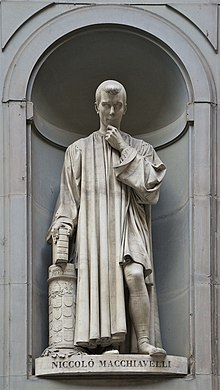
Niccolo Machiavelli
In The Prince, Machiavelli writes:
“Mercenaries…are useless and dangerous. And if a prince holds on to his state by means of mercenary armies, he will never be stable or secure. For they are disunited, ambitious, without discipline, disloyal. They are brave among friends; among enemies they are cowards.
“They have neither the fear of God nor fidelity to man, and destruction is deferred only as the attack is. For in peace one is robbed by them, and in war by the enemy.
“The cause of this is that they have no love or other motive to keep them in the field beyond a trifling wage, which is not enough to make them ready to die for you.”
Centuries after Machiavelli’s warning, Americans are realizing the bitter truth of it firsthand.
ABC NEWS, ALCOHOLISM, ALTERNET, AMERICABLOG, AP, BABY BOOMER RESISTANCE, BAY AREA RAPID TRANSIT (BART) SYSTEM, BUMS, BURGER KING, BUZZFEED, CBS NEWS, CHRISTIAN TONG, CNN, CROOKS AND LIARS, DAILY KOZ, DDMBS (DRUGGIES DRUNKS MENTALS AND BUMS), DEPARTMENT OF PUBLIC WORKS, DRUDGE RETORT, DRUG ADDICTION, DRUGGIES DRUNKS MENTALS AND BUMS (DDMBS), FACEBOOK, FIVETHIRTYEIGHT, HARPER’S MAGAZINE, HOMELESS, INTREDPID URBAN ADVENTURES IN SAN FRANCISCO, LONDON BREED, MCCONALD’S, MEDIA MATTERS, MENTALLY ILL, MOTHER JONES, MOVEON, MSNBC, NAVIGATION CENTERS, NBC NEWS, NEWSWEEK, NPR, PBS NEWSHOUR, PIGEON-FEEDING, POLITICO, POLITICUSUSA, RAW STORY, REUTERS, SALON, SAN FRANCISCO, SAN FRANCISCO BOARD OF SUEPRVISORS, SAN FRANCISCO DEPARTMENT OF HOMELESSNESS AND SUPPORTIVE HOUSING, SAN FRANCISCO TRAVEL ASSOCIATION, SEATTLE TIMES, SLATE, TALKING POINTS MEMO, THE ATLANTIC, THE CHICAGO SUN-TIMES, THE CHICAGO TRIBUNE, THE DAILY BEAST, THE DAILY BLOG, THE GUARDIAN, THE HILL, THE HUFFINGTON POST, THE LOS ANGELES TIMES, THE NATION, THE NEW REPUBLIC, THE NEW YORK TIMES, THE VILLAGE VOICE, THE WASHINGTON POST, THINKPROGRESS, TIME, TOURISM, TRUTHDIG, TRUTHOUT, TWITTER, TWO POLITICAL JUNKIES, U.S. NEWS & WORLD REPORT, UPI, USA TODAY, WONKETTE
In Bureaucracy, Business, History, Law, Law Enforcement, Politics, Social commentary on January 13, 2020 at 12:08 am
The San Francisco Travel Association reported a total of 25.8 million visitors to the city in 2018, up 1.2% over 25.5 million in 2017.
Total spending by visitors was $10 billion, up 2.3% over $9.8 billion in 2017 (including spending on meetings and conventions) and creating 82,538 jobs.
In 2012, the association conducted a survey among San Francisco residents, who named tourism the city’s most important industry.
The study found that 98% of San Franciscan respondents agreed that “tourism is very important or important to the vitality of the city’s economy.” Additionally, when directly asked if they believe tourism is “the city’s most important industry,” almost 70% agreed or strongly agreed.

Downtown San Francisco
Christian Mehlführer, User:Chmehl [CC BY (https://creativecommons.org/licenses/by/2.5)%5D
Yet San Francisco’s political establishment seems determined to destroy its main source of city revenues.
They do so by catering to a population euphemistically called “the homeless,” but which is more accurately described as DDMBs: Druggies, Drunks, Mentals and Bums.
Their legacies include the following:
- The city’s sidewalks reek of human feces and urine.
- Pedestrians must tread carefully to avoid used hypdermic needles and empty cans or bottles of alcoholic beverages.
- Sleeping bags and tents litter sidewalks, making it hard to pass by—especially for the elderly or those using canes or wheelchairs.
- Elevators in the Bay Area Rapid Transit (BART) system are often unusable because “homeless” people urinate in them.
- Restaurants have been forced to close because they’ve become havens for DDMBs. A Burger King at Civic Center Plaza recently suffered this fate. So did a McDonald’s in the Haight Ashbury district.
- Tourists—and residents—are daily forced to sit next to filth-encrusted men and women who reek of urine and/or feces in restaurants and movie theaters, as well as on buses.

Bum passed out near the Cable Car Turnaround on Powell
So what are San Francisco’s politicians doing to curb these offenses against public health—and the tourism industry on which the city depends?
They’re opening a series of “Navigation Centers” to invite even more DDMBs to San Francisco.
According to the city’s Department of Homelessness and Supportive Housing:
- “A Navigation Center is an asset to a community.”
- Such Centers are “a form of Temporary shelter that are low-barrier and high-service, have 24/7 access, and connect clients to resources and services to help them exit homelessness.”
- Services offered include: Health care, benefits counseling, mental health care, housing assistance, substance abuse treatment and employment services.
Since 2015, eight Navigation Centers have been opened throughout San Francisco; six are in operation.
Among the “amenities” they provide:
- Meals
- Privacy
- Space for pets
- Space separate from sleeping areas
- Laundry
- Access to benefits
- Wi-Fi
While city officials increasingly cater to the drug addicts, alcoholics, mentally ill and outright bums who comprise most of this population, San Francisco’s reputation as a tourist mecca is increasingly threatened.
“The large homeless population in San Francisco is more of a mental health and humanitarian issue, although it has affected the tourism and related industries,” said Christian Tong, operations manager for Intrepid Urban Adventures in San Francisco.
“Whether a visitor is staying in Fisherman’s Wharf, North Beach or Union Square, they’ll most likely run into a few of the city’s homeless people, with the largest concentration in the Tenderloin neighborhood.”
A few?
Current estimates peg the homeless population of San Francisco at about 7,500. And it hasn’t changed much during the last 10 years. In 2019, an estimated 2,831 members of this population were sheltered. Another 5,180 were unsheltered. This made for a total of 8,011.
Many DDMBs refuse to enter the city’s available shelters. Some claim these places are dangerous—understandably since they’re peopled with drug addicts, alcoholics, mentally ill and outright bums.
But another reason why many of these shelters go unused is they don’t allow their guests to drink up or drug up.
The city spends about $300 million each year on DDMBs. Dividing that amount by 8,011 provides the figure of $37,448 per DDMB.
Just as roaches flock to areas where huge quantities of food is available, so will DDMBs continue to flock to San Francisco. Especially if other cities/states don’t cater to them.
And while San Francisco politicians are going all-out to provide for DDMBs, they’re fighting a war against those who feed pigeons in parks. This includes posters erected by the Department of Public Works, which read:
“Large population of pigeons is a health hazard. Our huge feral pigeon population is a health hazard and creates many problems in the city.

“Pigeon droppings dirty public spaces, do costly damage to buildings, and can spread life-threatening diseases, especially to the elderly and immune-deficient. Their nesting materials block drains and harbor parasites like bird mites. Pigeon food makes a mess and attracts rats.
“Feeding pigeons promotes over-breeding. Pigeon feeding produces over-breeding.
“Pigeons are harmed when fed. When you feed pigeons, you are not doing them a favor. They lose their natural ability to scavenge and survive on their own.
“Pigeon over population leads to overcrowded, unsanitary conditions and produces sick and injured birds. A smaller flock is healthier and does less damage.”
Substitute “DDMBs” for “pigeons” and you have an accurate description of what San Francisco’s policy toward these people should be.
1984 NOVEL, ABC NEWS, ALTERNET, AMERICABLOG, AP, BABY BOOMER RESISTANCE, BUZZFEED, CBS NEWS, CHRISTMAS, CNN, COMMERCIALISM, CROOKS AND LIARS, DAILY KOZ, DONALD TRUMP, DRUDGE RETORT, EASTASIA, EURASIA, FACEBOOK, FIVETHIRTYEIGHT, FOX NEWS, GEORGE ORWELL, HARPER’S MAGAZINE, JESUS, MEDIA MATTERS, MEGYN KELLY, MOTHER JONES, MOVEON, MSNBC, NBC NEWS, NEWSWEEK, NPR, OCEANIA, PBS NEWSHOUR, POLITICO, POLITICUSUSA, RAW STORY, REUTERS, ROMAN EMPIRE, RUPERT MURDOCH, SALON, SANTA CLAUS, SATURNALIA, SEATTLE TIMES, SLATE, STARBUCK'S, TALKING POINTS MEMO, THE ATLANTIC, THE CHICAGO SUN-TIMES, THE CHICAGO TRIBUNE, THE DAILY BEAST, THE DAILY BLOG, THE GUARDIAN, THE HILL, THE HUFFINGTON POST, THE LOS ANGELES TIMES, THE NATION, THE NEW REPUBLIC, THE NEW YORK TIMES, THE VILLAGE VOICE, THE WASHINGTON POST, THINKPROGRESS, TIME, TRUTHDIG, TRUTHOUT, TWITTER, TWO POLITICAL JUNKIES, U.S. NEWS & WORLD REPORT, UPI, USA TODAY, WAR ON CHRISTMAS, WONKETTE
In Bureaucracy, Business, History, Politics, Social commentary on December 24, 2019 at 12:14 am
Christmas is special. So, each year, the executives at Fox News find a new way to stir up emotions by resurrecting the “war on Christmas” slander.
Fox launched this in 2004 with a recurring segment called “Christmas Under Siege.” Thus, aggressive Fascists cloak themselves in the garb of righteous victims.
Stirring up false controversies is a daily assignment for the alleged reporters of this company owned by Right-wing oligarch Rupert Murdoch.
Perhaps its most outrageous example happened on December 11, 2013. Fox hostess Megyn Kelly offered this on “The Kelly File,” her then-popular Fox News program.


Megyn Kelly
Referring to an article by Slate writer Aisha Harris on “Santa Claus Should Not Be a White Man Anymore,” she said:
“When I saw this headline, I kinda laughed and I said, ‘Oh, this is ridiculous. Yet another person claiming it’s racist to have a white Santa.’
“And by the way, for all you kids watching at home, Santa just is white. But this person is maybe just arguing that we should also have a black Santa. But, you know, Santa is what he is, and just so you know, we’re just debating this because someone wrote about it, kids.”
Of course, Santa Claus is a completely fictional character. Arguing about his skin color is as pointless as arguing about his weight.
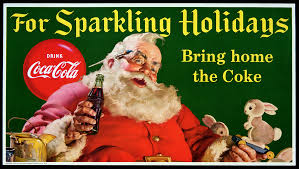
But Kelly wasn’t content to talk only about Santa. So she turned next to Jesus, a historical figure about whom we have not a single reference to his appearance, let alone a picture.
“Just because it makes you feel uncomfortable doesn’t mean it has to change. You know, I mean, Jesus was a white man, too.
“He was a historical figure; that’s a verifiable fact—as is Santa, I want you kids watching to know that—but my point is: How do you revise it, in the middle of the legacy of the story, and change Santa from white to black?”
Santa Claus a verifiable historical figure? Not even Charlie Brown, in the annually telecast “Peanuts” Christmas special, would make that claim.
In 2015, Donald Trump claimed center-stage in “defending” Christmas. And the target of his ire? Starbucks.
In years past, its disposable coffee cups featured snowflakes, winter scenes, reindeer and Christmas ornaments.
But in 2015, Starbucks decided to go with a minimalist, all-red design, its only feature being the company’s green and white logo.
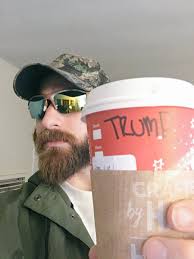
Baked Alaska with his Trump cup
This angered some religious conservatives, who generally care more about symbols than substance. And Trump was eager to enlist evangelicals as voters.
During a campaign rally in October, Trump promised: “I guarantee if I become president, we’re going to be saying ‘Merry Christmas’ at every store.”
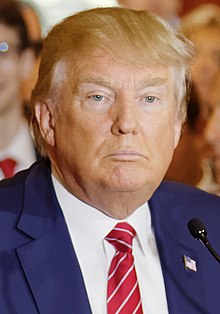
Donald Trump
On November 9, 2015, addressing a crowd of several thousands in Springfield, Illinois, Trump said: “Did you read about Starbucks? No more Merry Christmas on Starbucks.
“I have one of the most successful Starbucks, in Trump Tower. Maybe we should boycott Starbucks? I don’t know. Seriously, I don’t care. That’s the end of that lease, but who cares?
“If I become president, we’re all going to be saying Merry Christmas again, that I can tell you.”
Trump did not explain how he would coerce non-Christian Americans—-such as atheists, Jews and Muslims—into observing a Christian holiday.
Those who claim that Christmas is threatened don’t know—or deliberately ignore—-the following:
- The Christmas shopping season can start as early as September. Some consumers begin even earlier.
- For 2019, industry analysts expect the average American to spend $920 on holiday gifts, up from $885 in 2018 and reaching a total of more than $1 trillion.
- For 2018, consumers spent $717.45 billion to $720.89 billion for the holiday season.
- Holiday sales in 2017 totaled $687.87 billion.
- For many stores, holiday shopping accounts for nearly a third of annual sales.
- In 2016, the average American spent $935.58 on holiday gifts. In 2017, s/he was expected to spend $708.81.
In short, no one is “making war” on Christmas—-except Right-wing broadcasters at Fox News to jack up ratings.
As to the historical realities of this season:
- There is no reference anywhere in the Bible to the month—let alone the day—of Jesus’ birth.
- Jesus never commanded his followers to celebrate his birth—but he did call on them to remember his death. It’s called Easter.
- Many of the “religious” traditions associated with Christmas stem from the pagan Roman festival, Saturnalia, which celebrated the “birthday” of the sun.
- This was celebrated December 17-25.
- Saturnalia traditions included feasting, gift-giving, lighting candles (to ward off evil spirits) and displaying wreaths (as a sign of coming spring).
- Early Christians tried mightily to convince their members to stop celebrating the Saturnalia.
- When these efforts failed, the Roman Catholic Church, in the fourth century, “Christianised” the festival by naming Saturnalia’s concluding day, December 25, as Jesus’ birthday.
In George Orwell’s classic novel, 1984, Oceania is always at war with Eurasia or Eastasia. Its citizens are kept in a constant state of frenzy as they’re directed to search for endless “enemies of the state.”
This, in turn, allows the unseen rulers of Oceania to run their dictatorship without interference.
It’s a lesson well-known to hucksters like Donald Trump and the men who run Fox News.
ABC NEWS, ALAMO, ALTERNET, AMERICABLOG, ANDREW JACKSON, AP, BABY BOOMER RESISTANCE, BUZZFEED, CAMERON JUDD, CBS NEWS, CNN, CROCKETT OF TENNESSEE, CROOKS AND LIARS, DAILY KOZ, DAVID CROCKETT, DAVY CROCKETT: KING OF THE WILD FRONTIER, DONALD TRUMP, FACEBOOK, FIVETHIRTYEIGHT, INDIAN WARS, JAMES BOWIE, MITT ROMNEY, MOTHER JONES, MOVEON, MSNBC, NBC NEWS, NBCNEWS, NEWSWEEK, NPR, PBS NEWSHOUR, POLITICO, POLITICUSUSA, RAW STORY, REUTERS, SALON, SEATTLE TIMES, SLATE, TALKING POINTS MEMO, TEXAS REVOLUTION, THE ATLANTIC, THE CHICAGO SUN-TIMES, THE CHICAGO TRIBUNE, THE DAILY BEAST, THE DAILY BLOG, THE GUARDIAN, THE HILL, THE HUFFINGTON POST, THE LOS ANGELES TIMES, THE NATION, THE NEW YORK TIMES, THE WASHINGTON POST, THINKPROGRESS, TIME, TRUTHDIG, TWITTER, U.S. NEWS & WORLD REPORT, UPI, USA TODAY, WALT DISNEY, WILLIAM BARRETT TRAVIS
In Bureaucracy, Business, History, Military, Politics, Social commentary on December 13, 2019 at 12:04 am
March 6, 2019, marked the 183rd anniversary of the fall of the Alamo, a crumbling former Spanish mission in the heart of San Antonio, Texas.
It’s one of those battles like Thermopylae that have passed from history into legend.
It’s been the subject of novels, movies, biographies, histories and TV dramas (most notably Walt Disney’s 1955 “Davy Crockett: King of the Wild Frontier”).
Perhaps the most extraordinary scene in any Alamo movie or book occurs in the 1993 novel, Crockett of Tennessee, by Cameron Judd.
And it is no less affecting for its being—so far as we know—entirely fictional.
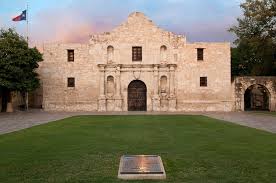
The Alamo
It’s March 5, 1836—the last night of life for the Alamo garrison. The night before the 2,000 men of the Mexican Army hurl themselves at the former mission and slaughter its 200 “Texian” defenders.
The fort’s commander, William Barrett Travis, has drawn his “line in the sand” and invited the garrison to choose: To surrender, to try to escape, or to stay and fight to the death.
And the garrison—except for one man—chooses to stay and fight.
For the garrison, immortality lies only hours away. Or does it?
An hour after deciding to stand and die in the Alamo, wrapped in the gloom of night, Crockett is seized with paralyzing fear.
“We’re going to die here,” he chokes out to his longtime friend, Persius Tarr. “You understand that, Persius? We’re going to die!” 
“I know, Davy. But there ain’t no news in that,” says Tarr. “We’re born to die. Every one of us. Only difference between us and most everybody else is we know when and where it’s going to be.”
“But I can’t be afraid—not me. I’m Crockett. I’m Canebrake Davy. I’m half-horse, half-alligator.”
“I know you are, Davy,” says Tarr. “So do all these men here. That’s why you’re going to get past this.
“You’re going to put that fear behind you and walk back out there and fight like the man you are. The fear’s come and now it’s gone. This is our time, Davy.”
“The glory-time,” says Crockett.
“That’s right, David. The glory-time.”
And then Tarr delivers a sentiment wholly alien to money-obsessed men like Mitt Romney and Donald Trump—who comprise the richest and most privileged 1% of today’s Americans.
“There’s men out there with their eyes on you. You’re the only thing keeping the fear away from them. You’re joking and grinning and fiddling—it gives them courage they wouldn’t have had without you.
“Maybe that’s why you’re here, Davy—to make the little men and the scared men into big and brave men. You’ve always cared about the little men, Davy. Remember who you are.
“You’re Crockett of Tennessee, and your glory-time has come. Don’t you miss a bit of it.”
The next morning, the Mexicans assault the Alamo. Crockett embraces his glory-time—and becomes a legend for all-time.

David Crockett (center) at the fall of the Alamo
David Crockett (1786-1836) lived—and died—a poor man. But this did not prevent him from trying to better the lives of his family and fellow citizens—and even his former enemies.
During the war of 1812, he served as a scout under Andrew Jackson. His foes were the Creek Indians, who had massacred 500 settlers at Fort Mims, Alabama—and threatened to do the same to Crockett’s family and neighbors in Tennessee.
As a Congressman from Tennessee, he championed the rights of poor whites. And he opposed then-President Jackson’s efforts to force the same defeated Indians to depart the lands guaranteed them by treaty.
To Crockett, a promise was sacred—whether given by a single man or the United States Government.

David Crockett
And his presence during the 13-day siege of the Alamo did cheer the spirits of the vastly outnumbered defenders. It’s a matter of historical record that he and a Scotsman named MacGregor often staged musical “duels” to see who could make the most noise.
It was MacGregor with his bagpipes against Crockett and his fiddle.
Contrast this devotion of Crockett to the rights of “the little men,” as Persius Tarr called them, with the attitude of Donald Trump, the alleged billionaire President of the United States.

Donald Trump
On June 16, 2015, while announcing his candidacy, Trump said:
- “…I don’t need anybody’s money. It’s nice. I don’t need anybody’s money. I’m using my own money. I’m not using lobbyists, I’m not using donors. I don’t care. I’m really rich.”
- “I did a lot of great deals and I did them early and young, and now I’m building all over the world….”
- “So I have a total net worth, and now with the increase, it’ll be well over $10 billion.”
- “But here, a total net worth of—net worth, not assets, not—a net worth, after all debt, after all expenses, the greatest assets—Trump Tower, 1290 Avenue of the Americas, Bank of America building in San Francisco, 40 Wall Street, sometimes referred to as the Trump building right opposite the New York—many other places all over the world. So the total is $8,737,540,000.”
Those who give their lives for others are rightly loved and remembered as heroes. Those who dedicate their lives solely to their wallets and egos are rightly soon forgotten.


 Bureaucracybuster's Blog
2020 PRESIDENTIAL ELECTION, ABC NEWS, ABUSE OF POWER, ALTERNET, AMERICABLOG, AMERICANS FOR TAX REFORM, AP, BABY BOOMER RESISTANCE, BARACK OBAMA, BRENDA FITZGERALD, BUZZFEED, CBS NEWS, CENTERS FOR DISEASE CONTROL AND PREVENTION, CNN, CORONAVIRUS, CROOKS AND LIARS, DAILY KOZ, DEMOCRATS, DEPARTMENT OF HEALTH AND HUMAN SERVICES, DEPARTMENT OF HOMELAND SECURITY, DONALD TRUMP, DRUDGE RETORT, EBOLA, FACEBOOK, FIVETHIRTYEIGHT, GROVER NORQUIST, HARPER’S MAGAZINE, IMPEACHMENT, JOE BIDEN, JOHN BOLTON, LIBEL, MEDIA MATTERS, MOTHER JONES, MOVEON, MSNBC, NATIONAL SECURITY COUNCIL, NBC NEWS, NEWSWEEK, NPR, OBSTRUCTION OF CONGRESS, PBS NEWSHOUR, POLITICO, POLITICUSUSA, RAW STORY, REPUBLICANS, REUTERS, ROBERT RAY REDFIELD, SALON, SEATTLE TIMES, SLATE, STOCK MARKET, TALKING POINTS MEMO, THE ATLANTIC, THE CHICAGO SUN-TIMES, THE CHICAGO TRIBUNE, THE DAILY BEAST, THE DAILY BLOG, THE GUARDIAN, THE HILL, THE HUFFINGTON POST, THE LOS ANGELES TIMES, THE NATION, THE NEW REPUBLIC, THE NEW YORK TIMES, THE VILLAGE VOICE, THE WASHINGTON POST, THINKPROGRESS, TIME, TIMOTHY ZIEMER, TOM BOSSERT, TOM FRIEDMAN, TRUTHDIG, TRUTHOUT, TWITTER, TWO POLITICAL JUNKIES, U.S. NEWS & WORLD REPORT, UNITED STATES HOUSE OF REPRESENTATIVES, UNITED STATES SENATE, UPI, USA TODAY, WONKETTE
TWO DANGERS FACING AMERICA: TRUMP—AND THE CORONAVIRUS
In Bureaucracy, Business, History, Law, Law Enforcement, Politics, Social commentary on March 9, 2020 at 12:07 amOn August 23, 2018, President Donald Trump offered an unprecedented reason why he shouldn’t be impeached.
Appearing on “Fox and Friends,” he said:
He didn’t say: “I shouldn’t be impeached because I’m innocent. I didn’t collude with Russian Intelligence to subvert the 2016 Presidential election.”
Instead, he appealed to the greed and fear of his voting base—and no doubt hoped to reach beyond it: “Keep me in power or you’ll all suffer for it.”
Donald Trump
On February 5, the Republican-dominated Senate acquitted him of the two charges brought by the Democratic House of Representatives on December 18, 2019:
Article 1: Abuse of Power: For pressuring Ukraine to assist him in his re-election campaign by damaging former Vice President Joseph Biden, his possible 2020 Democratic rival; and
Article 2: Obstruction of Congress: For obstructing Congress by blocking testimony of subpoenaed witnesses and refusing to provide documents in response to House subpoenas in the impeachment inquiry.
So Trump escaped impeachment—and the country is now suffering for it. On February 27, the Dow Jones Industrial Average had its single worst one-day drop in history—falling 1,191 points.
The reason can be summed up in one word: Coronavirus. Simply put, investors hate uncertainty, because it makes it hard to plan. And nothing makes uncertainty like a new and frightening virus that’s easily passed on and for which there is no vaccine or cure.
Coronavirus
CDC/ Alissa Eckert, MS; Dan Higgins, MAM / Public domain
And that causes millions of people to change their everyday behavior in unprecedented ways–such as not attending basketball games, eating in restaurants, flying on airplanes, going on cruises—and simply going to work.
Of course, Trump didn’t create the Coronavirus. But he has made it even more of a threat to Americans than it had to be.
In 2017, nearly 700 positions remained vacant at the Centers for Disease Control and Prevention (CDC) because Trump imposed a hiring freeze. This affected programs supporting local and state public health emergency readiness, infectious disease control and chronic disease prevention.
Making the situation worse: The CDC’s director, Tom Friedman, stepped down in January, 2017, and it wasn’t until July that the agency got another one: Brenda Fitzgerald. But she served only until January, 2018. She was succeeded—two months later—by Robert Ray Redfield, Jr. He has been the director since then.
The post of director of the CDC is considered one of the most crucial public health positions in the government. The CDC is charged with tracking and preventing infectious disease outbreaks in the United States and worldwide.
CDC headquarters in Atlanta, Georgia
Another way Trump has sabotaged America’s ability to respond to the Coronavirus outbreak: Gutting the permanent epidemic monitoring and command groups set up inside the White House: The National Security Council (NSC) and the Department of Homeland Security (DHS).
The reason for this: Trump’s pathological jealousy of and hatred for former President Barack Obama.
Since taking office, Trump has made an all-out effort to destroy every vestige of Obama’s legacy as the first black President of the United States. And these disease-monitoring groups were set up by Obama following the Ebola outbreak in West Africa in 2014.
In the spring of 2018, Trump pushed Congress to cut $15 billion from national health spending—and cutting the global disease-fighting budgets of the CDC, National Security Council, Department of Homeland Security and the Department of Health and Human Services.
The Federal $30 million fund for Complex Crises was eliminated as well.
In April, 2018, National Security Adviser John Bolton forced Tom Bossert, director of the infectious disease unit at DHS, to resign—along with his entire team. In May, 2018, Trump ordered the NSC’s global health security unit shut down.
Rear Admiral Timothy Ziemer, who headed the unit, was reassigned.
Neither the NSC nor the DHS epidemic team has been replaced.
The global health section of the CDC was decimated, and had to reduce the number of countries it was monitoring from 49 to 10.
It’s popular to assume that Trump did all of this out of mere ignorance—and there’s plenty of proof of his ignorance in many areas (such as attributing windmills to causing cancer). But far more is at work here.
The vast majority of those who voted for Trump believe that the Federal Government is evil and its agencies that regulate business should be eliminated.
An example of this constituency is Grover Norquist, founder and president of Americans for Tax Reform, which opposes all tax increases and has forced most Republicans to publicly pledge they will as well, under any circumstances.
His most famous quote: “I’m not in favor of abolishing the government. I just want to shrink it down to the size where we can drown it in the bathtub.”
Under Trump, the epidemic-fighting arm of the Federal Government has become so shrunk that America itself may be the one to drown—in an epidemic of Coronavirus.
Share this: