Archive for the ‘Business’ Category
ABC NEWS, ABORTION, AFFORDABLE CARE ACT, AFFORDABLE HOUSING, ALTERNET, AMERICABLOG, AP, BABY BOOMER RESISTANCE, BBC, BLACKS, BLOOMBERG NEWS, BUZZFEED, CBS NEWS, CHINA, CNN, COMMUNISM, CORONAVIRUS, CRIME, CROOKS AND LIARS, DAILY KOZ, DENNIS HASTERT, DONALD TRUMP, DWIGHT D. EISENHOWER, ECONOMY, ELECTION-RIGGING, FACEBOOK, FIVETHIRTYEIGHT, FLORIDA, FOOD STAMPS, FRANCIS BELLAMY, GAYS, GLOBALISM, HARPER’S MAGAZINE, HISPANICS, HUFFINGTON POST, illegal immigration, IMPORTS, JANUARY 6 COUP ATTEMPT, JOSH DUGGAR, KIM JONG-UN, LESBIANS, MEDIA MATTERS, MEDICARE, MEXICO, MIKE PENCE, MOTHER JONES, MOVEON, MSNBC, NBC NEWS, NEW REPUBLIC, NEWSDAY, NEWSWEEK, NORTH KOREA, NPR, NUCLEAR FAMILY, PBS NEWSHOUR, PLEDGE OF ALLEGIANCE, POLITICO, POLITICUSUSA, RAW STORY, RELIGIOUS, RELIGIOUS FREEDOM RESTORATION ACT, REUTERS, RICHARD M. NIXON, RICK SCOTT, RUSSIA, SALON, SEATTLE TIMES, SLATE, SOCIAL SECURITY, SOCIALISM, TALKING POINTS MEMO, THE ATLANTIC, THE CHICAGO SUN-TIMES, THE CHICAGO TRIBUNE, THE DAILY BEAST, THE DAILY BLOG, THE GUARDIAN, THE HILL, THE HUFFINGTON POST, THE INTERCEPT, THE LOS ANGELES TIMES, THE NATION, THE NEW REPUBLIC, THE NEW YORK TIMES, THE NEW YORKER, THE VILLAGE VOICE, THE WASHINGTON POST, THINKPROGRESS, TIME, TRADEMARKS, TRANSGENDERS, TRUTHDIG, TRUTHOUT, TWITTER, TWO POLITICAL JUNKIES, U.S. NEWS & WORLD REPORT, UKRAINE, UPI, USA TODAY, VLADIMIR PUTIN, WONKETTE, XI JINPING
In Bureaucracy, Business, History, Law, Law Enforcement, Medical, Military, Politics, Social commentary on November 22, 2022 at 12:16 am
Florida’s Republican United States Senator Rick Scott’s has an “11 Point Plan to Rescue America”—and catapult himself into the White House.
Point 4: We will secure our border, finish building the wall, and name it after President Donald Trump.
The United States is surrounded by water on three sides—East, West and South. So anyone with a boat can smuggle illegal aliens into the country at any point along its 12,383 miles of coastline.
For those who get seasick, there’s a land route available—not across burning Mexican deserts but under them.
Over the years, officials have found at least 200 tunnels along the 2,000-mile-long U.S.-Mexico border, mostly in Arizona and California. They range from rudimentary crawlspaces to “super tunnels” that cost more than a million dollars and are equipped with elevators, ventilation shafts electric lights, and disguised exits and entrances.

Drug tunnel
U.S. Customs and Border Protection, Public domain, via Wikimedia Commons
Many of those who want to infiltrate the United States can simply fly in.
Wealthy and pregnant Chinese women often fly to the United States to “anchor” themselves via a baby born on American soil. The same is true for many Russian women.
And the Number One cause of illegal immigration: Foreigners’ overstaying their visas. In 2017, more than 600,000 foreigners who legally entered the United States overstayed their visas and remained in the country by the end of the year, according to the Department of Homeland Security.
So a wall is not going to solve America’s problem with illegal immigration.
Point 5: We will grow America’s economy, starve Washington’s economy, and stop Socialism.
When Republicans promise to “grow America’s economy,” they mean: Remove all government controls from business.
In real-world terms, this means corporations will be legally allowed to:
- Ignore existing laws protecting employees from unsafe working conditions;
- Ignore existing laws protecting the environment;
- Produce unsafe goods and fraudulent services;
- Pay their employees the lowest acceptable wages, in return for the “privilege” of working at these companies;
- Discriminate on the basis of race, sex, religion or sexual orientation; and/or
- Pay little or no business taxes, at the expense of communities who are required to make up for lost tax revenues.
Anyone who doubts this need only look at the living standards in “Red”, Republican-governed states such as Florida and Texas.
“Starve Washington’s economy” means: Eliminating programs that Republicans don’t like—starting with Social Security, Medicare and the Affordable Care Act. Anything that benefits ordinary Americans and not multi-billion dollar corporations will be slated for scrapping.
“Stopping socialism” is ludicrous: During his Presidency, Donald Trump’s best friends were Communist dictators: Vladimir Putin (Russia), Kim Jong-Un (North Korea) and Xi Jinping (China).
Trump actually bragged that, after an exchange of letters between himself and the murderous Kim Jong-Un, “We fell in love.”

Kim Jong-Un and Donald Trump
Had a Democratic President made a similar statement, Republicans would have screamed “Treason!” In Trump’s case, they said nothing.
Point 6: We will eliminate all federal programs that can be done locally, and enact term limits for federal bureaucrats and Congress.
As for “enacting term limits for federal bureaucrats and Congress”: This is the party that tried to illegally and treasonously overturn the results of a legitimate Presidential election so its candidate—Donald Trump—could remain in office as “President-for-Life” after losing the vote.
Point 7: We will protect the integrity of American Democracy and stop left-wing efforts to rig elections.
Scott’s platform is worth quoting in full on this issue:
Today’s Democrat Party is trying to rig elections and pack the courts because they have given up on Democracy. They don’t believe they can win based on their ideas, so they want to game the system and legalize voter fraud to stay in power. In true Orwellian fashion, Democrats refer to their election rigging plans as “voting rights”. We won’t allow the radical left to destroy our democracy by institutionalizing dishonesty and fraud.
Immediately after the verdict of the November 3, 2020 Presidential election was announced, President Donald Trump ordered his attorneys to file lawsuits overturning the results.
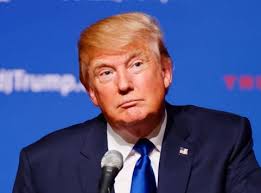
Donald Trump
- Throughout November and December, 2020, cases were filed in Wisconsin, Arizona, Nevada, Michigan, Minnesota and Georgia challenging the election results. None were supported by evidence of fraud—as even Trump’s lawyers admitted when questioned by judges.
- On November 13, nine cases meant to attack President-Elect Joe Biden’s win in key states were denied or dropped. A law firm challenging the vote count in Pennsylvania withdrew from the effort.
- In Michigan, Trump’s attorneys dropped their federal suit to block the certification of Detroit-area ballots.
- By November 21, more than 30 cases were withdrawn by Trump’s attorneys or dismissed by Federal judges—some of them appointed by Trump himself.
Ultimately, from November 3 to December 14, 2020, Trump and his allies lost 59 times in court, either withdrawing cases or having them dismissed by Federal and state judges.
This is the party that, since November, 2020, has sold a lie to millions of Right-wing Americans that the election was “stolen” from Donald trump.
It is Republicans—not Democrats—who have stopped trying to win elections based on their ideas and are now trying to win them by massive voter suppression. It’s hardly a party to be entrusted with election security.
2022 MIDTERM ELECTIONS, ABC NEWS, ABORTION, AFFORDABLE CARE ACT, AFFORDABLE HOUSING, ALTERNET, AMERICABLOG, AP, BABY BOOMER RESISTANCE, BBC, BLACKS, BLOOMBERG NEWS, BUZZFEED, CBS NEWS, CHINA, CNN, COMMUNISM, CORONAVIRUS, CRIME, CROOKS AND LIARS, DAILY KOZ, DENNIS HASTERT, DONALD TRUMP, DWIGHT D. EISENHOWER, ECONOMY, ELECTION DENIERS, ELECTION-RIGGING, FACEBOOK, FIVETHIRTYEIGHT, FLORIDA, FOOD STAMPS, FRANCIS BELLAMY, GAYS, GLOBALISM, HARPER’S MAGAZINE, HISPANICS, HUFFINGTON POST, illegal immigration, IMPORTS, JANUARY 6 COUP ATTEMPT, JOE BIDEN, JOSH DUGGAR, KIM JONG-UN, LESBIANS, MEDIA MATTERS, MEDICARE, MEXICO, MIKE PENCE, MOTHER JONES, MOVEON, MSNBC, NBC NEWS, NEW REPUBLIC, NEWSDAY, NEWSWEEK, NORTH KOREA, NPR, NUCLEAR FAMILY, PBS NEWSHOUR, PLEDGE OF ALLEGIANCE, POLITICO, POLITICUSUSA, RAW STORY, RELIGIOUS, RELIGIOUS FREEDOM RESTORATION ACT, REUTERS, RICHARD M. NIXON, RICK SCOTT, RUSSIA, SALON, SEATTLE TIMES, SLATE, SOCIAL SECURITY, SOCIALISM, TALKING POINTS MEMO, THE ATLANTIC, THE CHICAGO SUN-TIMES, THE CHICAGO TRIBUNE, THE DAILY BEAST, THE DAILY BLOG, THE GUARDIAN, THE HILL, THE HUFFINGTON POST, THE INTERCEPT, THE LOS ANGELES TIMES, THE NATION, THE NEW REPUBLIC, THE NEW YORK TIMES, THE NEW YORKER, THE VILLAGE VOICE, THE WASHINGTON POST, THINKPROGRESS, TIME, TRADEMARKS, TRANSGENDERS, TRUTHDIG, TRUTHOUT, TWITTER, TWO POLITICAL JUNKIES, U.S. NEWS & WORLD REPORT, UKRAINE, UPI, USA TODAY, VLADIMIR PUTIN, WONKETTE, XI JINPING
In Bureaucracy, Business, History, Law, Law Enforcement, Medical, Military, Politics, Social commentary on November 21, 2022 at 12:14 am
For decades, many dissatisfied voters have argued there’s no real difference between the Democratic and Republican parties.
So Rick Scott, former governor of Florida and now a United States Senator from that state, has decided to prove there is a difference between him and every other Presidential candidate.
With the next Presidential election approaching in less than two years, Scott is positioning himself to be the next Republican nominee for that office.
That’s why Scott has crafted “An 11 Point Plan to Rescue America.”
It merits close inspection—because if Scott or someone else with his agenda becomes President of the United States with a united Republican House and Senate behind him, this country will become entirely different from the one that exists today.
It was to prevent that from happening that millions of Democrats—joined by independents and moderate Republicans—turned out in unprecedented numbers on November 8.
For months, Republicans had been predicting that a “Red wave” would sweep Democrats from local, state and Federal offices across the country. Their strategy centered on propagating “The Big Lie” that President Donald Trump was robbed of victory in 2020 by massive voter fraud.
This was of course the authentic voice of former President Trump. Despite four years of lies, crime and treason, he remains in command of the Republican party.
And how did that strategy work out? No candidate who denied the legitimacy of the 2020 election won a 2022 race to run future elections in a swing state.
These include:
- Eight nominees for state elections chief;
- Thirteen nominees for governor;
- Eight nominees for United States Senator.

Rick Scott
Republicans have been stunned by their unexpected losses. The party out of power usually does well in midterm elections. Add to this the fact that President Joe Biden was widely seen as unpopular even among Democrats—and therefore vulnerable.
Nevertheless, Scott remains convinced that he has crafted the winning formula for Republicans—and for his election as President in 2024.
Its provisions follow.
Point 1: Our kids will say the pledge of allegiance, salute the Flag, learn that America is a great country, and choose the school that best fits them.
Like so many Right-wingers, Scott is apparently unaware that the Pledge of Allegiance was written in August, 1892, by the socialist minister Francis Bellamy. He hoped that the pledge would be used by citizens in any country, not just the United States.

Francis Bellamy
In its original form it read:
“I pledge allegiance to my Flag and the Republic for which it stands, one nation, indivisible, with liberty and justice for all.”
In 1923, the words, “the Flag of the United States of America” were added.
In 1954, President Dwight D. Eisenhower encouraged Congress to add the words “under God,” to distinguish Americans from “Godless” Communists.
“Learn that America is a great country” conjures up images of the propaganda force-fed to students of the former Soviet Union—and now in Russia. Just as Russians are taught that their military has never fought an aggressive war, so, too, do Republicans want to erase the subject of slavery and its long-term effects on society from American classrooms
Point 2: Government will never again ask American citizens to disclose their race, ethnicity, or skin color on any government forms.
Republicans have made race—as a source of friction between voters—a crucial part of their electoral campaigns. As far back as 1968, Richard Nixon campaigned on a “Southern strategy”—of stoking white fears of blacks.
It was this that won Nixon the Presidency in 1968 and 1972 and the White House for George H.W. Bush in 1988.
As blacks have gained in population and political clout, they have been succeeded by Hispanics as the Great Enemy for Republicans.
The top priority for Donald Trump—both as a Presidential candidate and President—was building a wall along the U.S.-Mexico border. That this would not have stopped illegal immigration meant nothing to him—or his millions of Right-wing followers.
Without a way to track the growth rates of nonwhites, Republicans won’t know how to target their self-declared enemies.
Point 3: The soft-on-crime days of coddling criminal behavior will end. We will re-fund and respect the police because they, not the criminals, are the good guys.
On January 6, 2021, “law and order” President Donald Trump incited a mob to attack the United States Capitol Building. Inside, members of Congress were meeting to count and certify Electoral College votes for the 2020 Presidential election.
Trump had clearly lost that election in November, yet for the previous two months he had repeatedly and falsely claimed he was the victim of a “rigged” election. His followers, believing that lie, intended to overturn the results of a legitimate election.
After more than three hours, police—using riot gear, shields and batons—retook control of the Capitol. More than 150 officers were injured in the attack by “law and order” Republicans.

January 6, 2021 coup attempt
TapTheForwardAssist, CC BY-SA 4.0 <https://creativecommons.org/licenses/by-sa/4.0>, via Wikimedia Commons
Even after the failed coup, 147 House and Senate Republicans voted to overturn the election.
Not the sort of behavior calculated to instill respect for the rule of law.
2022 MIDTERM ELECTIONS, ABC NEWS, ABORTION, ALTERNET, AMERICABLOG, AP, BABY BOOMER RESISTANCE, BARACK OBAMA, BBC, BLOOMBERG NEWS, BUREAU OF JUSTICE STATISTICS, BUZZFEED, CBS NEWS, CHILD TAX CREDITS, CNN, COVID-19, CRIME, CROOKS AND LIARS, DAILY KOS, DAVID DEPAPE, DEMOCRATS, DEPARTMENT OF HOMELAND SECURITY, DONALD TRUMP, EXTORTION, FBI, FIVETHIRTYEIGHT, GAS, GAS PRICES, HARPER’S MAGAZINE, HUFFINGTON POST, illegal immigration, INFLATION, INSULIN, JAMAL KHASHOGGI, JOE BIDEN, MASS SHOOTINGS, MEDIA MATTERS, MERRICK GARLAND, MOHAMMED BIN SALMAN, MOTHER JONES, MOVEON, MSNBC, NANCY PELOSI, NBC NEWS, NEW REPUBLIC, NEWSDAY, NEWSWEEK, NPR, OPEC, PAUL PELOSI, PBS NEWSHOUR, POLITICO, POLITICUSUSA, PRESCRIPTION DRUGS, PRICES INCREASES, QANON, Racketeer Influenced Corrupt Organizations (RICO) Act, RAW STORY, REPUBLICANS, REUTERS, RUSSIA, SALON, SAUDI ARABIA, SEATTLE TIMES, SLATE, STIMULUS CHECKS, TALKING POINTS MEMO, TAX CUTS AND JOBS ACT OF 2017, THE ATLANTIC, THE CHICAGO SUN-TIMES, THE CHICAGO TRIBUNE, THE DAILY BEAST, THE DAILY BLOG, THE GUARDIAN, THE HILL, THE HUFFINGTON POST, THE INTERCEPT, THE LOS ANGELES TIMES, THE NATION, THE NEW REPUBLIC, THE NEW YORK TIMES, THE NEW YORKER, THE VILLAGE VOICE, THE WASHINGTON POST, THINKPROGRESS, TIME, TRUTHDIG, TRUTHOUT, TWITTER, U.S. NEWS & WORLD REPORT, UNITED STATES DEPARTMENT OF JUSTICE, UPI, USA TODAY
In Bureaucracy, Business, History, Law, Law Enforcement, Politics, Social commentary on November 8, 2022 at 12:16 am
During the 2022 midterm elections, Republicans ran—as usual—on the basis of hate and fear. And Democrats—as usual—ran as on the basis of cowardice and naivety.
On June 24, when six Right-wing Justices on the Supreme Court finally banned legalized abortion, Democrats believed they had a sure issue-winner come November.
But in the months since then, momentum has steadily swung to the Republicans. They have blamed President Joe Biden—and Democrats generally—for the following:
- Inflation;
- Crime;
- Illegal immigration.
While all of these have proven popular with voters, they reveal a tide of ignorance and unrealism among the electorate. Consider:
Inflation: This is a worldwide problem, not simply an American one. Some of this can be blamed on the continuing COVID-19 pandemic. But another reason is simply old-fashioned corporate greed—and the refusal of the Federal Government to attack it.
According to the Commerce Department’s Bureau of Economic Analysis (BEA): From May to August, corporate profit margins were the widest since the 1950s. During the second quarter of 2022 companies continued jacking up prices. This pushed inflation to a 40-year high at the expense of workers and consumers.
“We can argue until the cows come home about the cause of inflation,” writes Chris Becker, senior economist at the Groundwork Collaborative. “But we can’t lose sight of the basic moral point that it is outrageous that corporations are seeing skyrocketing profits while purchasing power for so many American households is declining.”
The Justice Department could deal with this through RICO—the Racketeer Influenced Corrupt Organizations Act. Corporations guilty of extortion—such as those that have priced insulin out of the reach of most Americans—could be prosecuted for extortion.
That would not only bring prices down but serve as a warning for future greed-fueled corporations.
But it takes more than laws to protect the citizens of a nation; it takes prosecutorial courage to enforce those laws. And in Attorney General Merrick Garland, that courage is pathetically lacking.
Republicans claim to have a “plan” for turning around this situation. Yet they have repeatedly voted against:
- Cheaper gas
- Cheaper insulin
- Cheaper prescription drugs
- Stimulus checks
- Child tax credits
In November, 2017, Donald Trump and a Republican-dominated House and Senate rammed the Tax Cuts and Jobs Act of 2017 through Congress.
According to Chye-Ching Huang, Director of Federal Fiscal Policy, the law:
- Encouraged rampant tax avoidance and gaming that undermines the integrity of the tax code.
- Left behind low- and moderate-income Americans.
- Cut the corporate tax rate from 35% to 21%.
- Allowed multinational corporations’ foreign profits to go largely untaxed.
- Benefitted overwhelmingly wealthy shareholders and highly paid executives.
Yet poor and middle-class Americans remain ignorant of this and believe Republicans truly care about them.
One symptom of inflation that especially infuriates Americans: High prices for gas.
In October, Saudi Arabia and Russia steered a group of oil-producing countries in voting to slash oil production by two million barrels per day. OPEC wants to prop up oil prices as global demand slows down.

Mohammed bin Salman Al Saud
Kremlin.ru, CC BY 4.0 <https://creativecommons.org/licenses/by/4.0>, via Wikimedia Commons
The Biden administration tried to persuade OPEC countries to not cut oil output. But Saudi Arabia—the biggest member of the oil-producing cartel—refused.
Some commentators believe that Saudi Crown Prince Mohammed bin Salman was primarily responsible for this. Biden had once pledged to treat Salman as a “pariah” after the brutal murder of journalist Jamal Khashoggi.
Yet there is nothing Biden can do—short of invading Saudi Arabia and taking control of its oil fields.
(President Donald Trump said the United States should have done this after it invaded Iraq.)
Crime: According to the Pew Research Center: Around six-in-10 registered voters (61%) say violent crime is very important when making their decision about who to vote for in this year’s congressional elections.
The Bureau of Justice Statistics, however, reports no recent increase in the U.S. violent crime rate. The FBI also estimates that there was no increase in the violent crime rate in 2021.
There has been a record number of mass shootings in the United States—622 by October. But while Republicans rail against violent crime, they consistently block all efforts to curb the sale of semi-automatic weaponry to anyone who wants it.

AR-15 Rifle
Moreover, while Federal law enforcement agencies—especially the FBI—receive major news coverage, most crime occurs at the local level. The Federal Government has no role to play in it—unless the violation occurs on Federal property or involves a Federal official.
Illegal Immigration: For Republicans, illegal aliens come exclusively from Central and Latin American countries.
Yet David DePape, who assaulted Paul Pelosi, the husband of House Speaker Nancy Pelosi, is a Canadian who overstayed his visa.
According to the latest report from the Department of Homeland Security (DHS), overstayers numbered more than 500,000 in 2020. They represent up to 40% of the total illegal alien population.
Moreover, dealing with illegal alien invasions is a problem that confronts every President, Republican and Democrat.
President Barack Obama was often attacked by immigration groups as the “Deporter in Chief.” Between 2009 and 2015, his administration removed more than 2.5 million people through immigration orders.
According to government data, the Obama administration deported more people than any other administration in history.
Yet, for Republicans, “the crisis at the border” will always remain a rallying cry—as long as it’s aimed at Hispanics.
9/11 TERRORIST ATTACKS, ABC NEWS, AFGHANISTAN, AIRPORT SECURITY, ALTERNET, AP, BIRTH CERTIFICATES, BUZZFEED, CBS NEWS, CNN, CROOKS AND LIARS, DAILY KOS, DEPARTMENT OF HOMELAND SECURITY, DEPARTMENT OF MOTOR VEHICLES, DRIVER'S LICENSES, FACEBOOK, FBI, IDENTIFICATION, JOE BIDEN, MOHAMMED ATTA, MOTHER JONES, MOVEON, MSNBC, NATIONAL CRIME INFORMATION CENTER (NCIC), NATIONAL GUARD, NBC NEWS, NEWSWEEK, NPR, PASSPORTS, PBS NEWSHOUR, POLITICO, RAW STORY, REAL ID ACT, REUTERS, SALON, SAN FRANCISCO FEDERAL BUILDING, SEATTLE TIMES, SECURITY THEATER, SLATE, SOCIAL SECURITY CARD, TALIBAN, TERRORISM, THE ATLANTIC, THE CHICAGO SUN-TIMES, THE CHICAGO TRIBUNE, THE DAILY BEAST, THE GUARDIAN, THE HILL, THE HUFFINGTON POST, THE LOS ANGELES TIMES, THE NATION, THE NEW YORK TIMES, THE WASHINGTON POST, THEODORE BUNDY, TIME, TRANSPORTATION SECURITY ADMINISTRATION, TWITTER, U.S. NEWS & WORLD REPORT, UPI, USA TODAY, WORLD TRADE CENTER
In Bureaucracy, Business, History, Law, Law Enforcement, Military, Politics, Social commentary on November 3, 2022 at 12:10 am
In 2005—four years after 9/11—Congress passed the Real ID Act as a counter-terrorism measure. Its goal was to set security standards for government-issued IDs.
The Act started to be introduced in late 2013. But then its enforcers decided that some states hadn’t complied with all of its requirements.
As a result, driver’s licenses from those states will no longer suffice to pass through airport security. And that includes domestic flights as well as international ones.
The reason: Licenses issued by those states don’t contain enough identifying information to pass muster with the Transportation Security Administration (TSA).
The new IDs will contain one of five small stickers in the upper right corner to comply.

But the final date for compliance with Real ID has been repeatedly postponed—especially during the COVID-19 pandemic. It current deadline is May 3, 2023.
After that, only those who have a REAL ID will be allowed to board domestic flights at TSA security checkpoints and enter certain federal buildings and properties.
So how are residents of these states supposed to cope? The Federal Government is advising them to get a passport.
But, as one New York traveler outlined: “To get a passport I’ll first need to get a certified copy of my birth certificate.
“And to get a copy of my birth certificate I need only to submit a copy of my driver’s license. A copy, no face-to-face, is-that-really you?
“So a New York driver’s license isn’t good enough for flying but it is good enough to get a birth certificate, which gets me a passport, which allows me to fly.”
In California, the following documents are among those accepted as proof of identity:
- Valid U.S. passport
- Social Security card
- Original or certified copy of U.S. birth certificate
- Valid Permanent Resident card
- Utility bills (at least two from different companies)
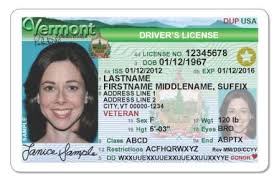
Sample state ID card that’s acceptable under the Real ID Act
So much of what passes for security is actually security theater. It doesn’t actually make us safer, but it makes us feel safer.
And it makes us feel the government is keeping us safe, even when it isn’t.
Consider this: A friend of mine—whom I’ll call Jack—recently applied for a Real ID card as issued by the California Department of Motor Vehicles. He brought a certified copy of his birth certificate, bills from AT&T and Pacific Gas and Electric.
The birth certificate easily passed muster. But for a moment there was a problem with the bills from the utility companies: Jack had been getting his mail through a P.O. box, rather than at the apartment building where he lived.
And the “examiner” wanted to see a document with his home address on it.
Fortunately, Jack was able to fish out another bill with that on it. The “examiner” was satisfied, and Jack left the DMV assured that he would soon receive his TSA-approved Real ID card.
So: How does showing a utility bill document prove your integrity?
No doubt Mohammed Atta—the ringleader of the September 11, 2001 attacks—faithfully paid his utility bills, right up to the day when he highjacked American Airlines Flight 11 and crashed the plane into the North Tower of the World Trade Center.
And, yes, a birth certificate proves you were born in the United States—but so was Timothy McVeigh, who, in 1995, blew up Oklahoma City bombing, killing 168 people.
Nor does a “school document”—which can get you a Real ID card—reveal anything about the character of the person.
Theodore Bundy attended the University of Puget Sound and the University of Washington—before embarking on his career as a burglar, kidnapper, rapist and serial killer.
Another form of security theater includes checking photo IDs to enter State and Federal office buildings.
Knowing a person’s identity is useful—if you have a reliable database system to match it against, such as the FBI’s National Crime Information Center (NCIC).

But if you lack this, forcing people to “show me your ID” is pointless. And that’s assuming the ID isn’t fraudulent.
But people watching the guard performing this security theater ritual assume: “The guard must know what he’s looking for. So we have to be safer for his checking those IDs.”
In fact, most security guards have little training and even less experience. Many of them don’t carry firearms and lack self-defense skills.
According to Salary.com: The median annual salary for an unarmed security guard is $34,696, with a range usually between $31,004 and $39,096.
Not exactly a salary geared to attract “the best and the brightest,” is it?
Making all of this even more infuriating: In August, 2021, at least 76,000 unvetted Afghans were admitted into the United States.
The reason: They were too cowardly to fight the Taliban.
Americans had spent 20 years training them to do just that. And as soon as the Taliban launched a major offensive, they fled to Kabul Airport—leaving their wives, girlfriends, mothers and sisters behind to face slavery and brutality.
So while cowardly Afghans—many of whom no doubt had terrorist backgrounds—didn’t have to prove themselves trustworthy, lifelong and law-abiding Americans must.
2016 PRESIDENTIAL CAMPAIGN, ABC NEWS, ADOLF HITLER, AL CAPONE, ALTERNET, AMERICABLOG, AP, BABY BOOMER RESISTANCE, BARACK OBAMA, BBC, BLOOMBERG NEWS, BUZZFEED, CBS NEWS, CNN, COVID-19, CROOKS AND LIARS, DAILY KOS, DONALD TRUMP, FBI, FIFTH AMENDMENT, FIVETHIRTYEIGHT, HARPER’S MAGAZINE, HILLARY CLINTON, HUFFINGTON POST, JAMES COMEY, JOSEPH STALIN, LETITIA JAMES, LIBEL, MEDIA MATTERS, MOTHER JONES, MOVEON, MSNBC, NAZI GERMANY, NAZI-SOVIET NON-AGGRESSION PACT, NBC NEWS, NEW REPUBLIC, NEW YORK ATTORNEY GENERAL'S OFFICE, NEW YORK TIMES V. SULLIVAN, NEWSDAY, NEWSWEEK, NPR, NUCLEAR WEAPONS, PBS NEWSHOUR, POLITICO, POLITICUSUSA, RAW STORY, REUTERS, RUSSIA, SALON, SEATTLE TIMES, SLATE, TALKING POINTS MEMO, THE ATLANTIC, THE CHICAGO SUN-TIMES, THE CHICAGO TRIBUNE, THE DAILY BEAST, THE DAILY BLOG, THE GUARDIAN, THE HILL, THE HUFFINGTON POST, THE INTERCEPT, THE LOS ANGELES TIMES, THE NATION, THE NEW REPUBLIC, THE NEW YORK TIMES, THE NEW YORKER, THE SS, THE VILLAGE VOICE, THE WASHINGTON POST, THINKPROGRESS, THIRD REICH, TIME, TREASON, TRUMP FOUNDATION, TRUMP TOWER MEETING, TRUMP UNIVERSITY, TRUTHDIG, TRUTHOUT, TWITTER, U.S. NEWS & WORLD REPORT, UKRAINE, UNITED STATES SUPREME COURT, UPI, USA TODAY, VLADIMIR PUTIN, VOLODYMYR ZELENSKY, WEHRMACHT, WORLD WAR 11
In Business, History, Law, Medical, Politics, Social commentary on November 2, 2022 at 12:14 am
On October 3, former President Donald Trump filed a lawsuit against CNN for defamation.
Seeking $475 million in punitive damages, he charged the network with conducting a “campaign of libel and slander” against him.
Trump is claiming that CNN had used its influence to defeat him politically.
“As a part of its concerted effort to tilt the political balance to the left, CNN has tried to taint the Plaintiff with a series of ever-more scandalous, false, and defamatory labels of ‘racist,’ ‘Russian lackey,’ ‘insurrectionist,’ and ultimately ‘Hitler,'” the lawsuit claims.
The lawsuit focuses largely on CNN’s use of the term, “The Big Lie,” to describe Trump’s false claims that widespread voter fraud cost him the 2020 Presidential election.
The phrase dates from Adolf Hitler’s use of it in his autobiography, Mein Kampf: People “more readily fall victims to the big lie than the small lie, since they themselves often tell small lies in little matters but would be ashamed to resort to large-scale falsehoods.”
Trump’s lawsuit claims “The Big Lie” has been used in referring to him more than 7,700 times on CNN since January, 2021.
In addition, the lawsuit cites instances where CNN compared Trump to Hitler. In a January, 2022 report, Fareed Zakaria provided footage of Germany’s dictator.

So what are his odds of winning? Far less than your own of finding loose change in sofa cushions.
First: Donald Trump is a public figure—arguably the most public figure in the world. Plaintiffs who are public figures or government officials must prove themselves victims of actual malice to collect damages.
In the landmark case, New York Times v. Sullivan (1964) the Supreme Court declared that actual malice occurs when a statement is made “with knowledge that it was false or with reckless disregard of whether it was false or not.”
This is a more stringent standard than private citizens have to meet, which is negligence.
Second: Truth is an absolute defense against libel (unless the plaintiff is suing for invasion of privacy). And Trump’s history as a liar, criminal and traitor has been thoroughly established.
Liar:
- He created the lie that Barack Obama—whose birth certificate states unequivocally that he was born in Hawaii—was not an American citizen. The reason: To de-legitimize Obama as a Presidential candidate and President.
- Throughout 2020, he repeatedly lied about the dangers of COVID-19—attacking medical experts who urged citizens to mask up and social distance. As a result, by the time he left office, 400,000 Americans had died of COVID.
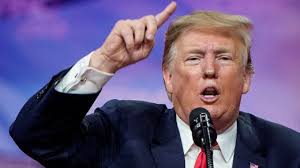
Donald Trump
Criminal:
- He has been forced to shut down his Trump Foundation and forced to pay more than $2 million in court-ordered damages to eight different charities for illegally misusing charitable funds at the Foundation for political purposes.
- He was also forced to close his unaccredited Trump University for scamming its students. He had promised to teach them “the secrets of success” in the real estate industry—then delivered nothing. In 2016, a federal court approved a $25 million settlement with many of those students.
Traitor:
- On July 9, 2016, high-ranking members of his Presidential campaign met at Trump Tower with at least two lobbyists who had ties to Russian dictator Vladimir Putin. The reason: To obtain “dirt” on Democratic candidate Hillary Clinton.
- On July 27, 2016, Trump said at a press conference in Doral, Florida: “Russia, if you’re listening, I hope you are able to find the 30,000 emails that are missing [from Democratic Presidential candidate Hillary Clinton’s computer]. I think you will probably be rewarded mightily by our press.”
These incidents were nothing less than treason—inviting a foreign power, hostile to the United States, to interfere in its Presidential election.
Third—and perhaps the most important of all: In a libel suit, the plaintiff must answer—under oath—all questions put to him by the defendant’s attorneys.
Trump, better than anyone, knows the depths of his own criminality. Just as Al Capone knew his notoriety for evil would make it impossible for him to win a libel suit, so does Trump.
On August 10, he invoked his Fifth Amendment privilege against self-incrimination nearly 450 times during a deposition at the office of New York Attorney General Letitia James, in its probe into the Trump Organization’s business practices.
He would not be allowed to do so as a litigant in a libel suit.
Moreover, he has a history of threatening to file lawsuits—and then failing to do so.
During the 2016 Presidential campaign, at least 12 women publicly accused him of sexually inappropriate behavior—if not assault.
Trump’s reaction: “All of these liars will be sued after the election is over.”
Six years later, he has not filed a single lawsuit for defamation.
So why has he filed a defamation suit against CNN?
Money—not by winning an impossible lawsuit, but by raising it from his gullible and Fascistic followers.
He will claim—once again—that he’s being persecuted and that “they’re not coming after me, they’re coming after you.”
And his millions of media-hating followers will gladly pony up money they will never see again.
If he loses the lawsuit—or pulls out of it—he will claim he’s the victim of “the deep-state establishment.”
And ask his followers for even more money—which they’ll cough up.
ABC, ABC NEWS, ALTERNET, AP, ARNOLD SCHWARZENEGGER, BARACK OBAMA, BUZZFEED, CBS NEWS, CHANNING DUNGEY, CNN, CROOKS AND LIARS, DAILY KOZ, DISNEY, DONALD TRUMP, ELON MUSK, FACEBOOK, FBI, HILLARY CLINTON, JAMES COMEY, JOHN GOODMAN, JOHN OLIVER, LECY GORANSON, MERYL STREEP, MICHAEL FISHMAN, MIKE PENCE, MOTHER JONES, MOVEON, MSNBC, NANCY PELOSI, NBC NEWS, NEIL YOUNG, NEWSWEEK, NPR, PAUL PELOSI, POLITICO, RAW STORY, REUTERS, ROBERT IGER, ROSEANNE, ROSEANNE BARR, SALON, SARAH CHALKE, SARAH GILBERT, SEATTLE TIMES, SLATE, THE ATLANTIC, THE CHICAGO SUN-TIMES, THE CHICAGO TRIBUNE, THE DAILY BEAST, THE GUARDIAN, THE HILL, THE HUFFINGTON POST, THE LOS ANGELES TIMES, THE NATION, THE NEW YORK TIMES, THE WASHINGTON POST, TIME, TV GUIDE, TWITTER, TWITTER RULES, U.S. NEWS & WORLD REPORT, UPI, USA TODAY, VALERIE JARRETT
In Bureaucracy, Business, Entertainment, History, Politics, Social commentary on November 1, 2022 at 12:13 am
From June 15, 2015, when he launched his Presidential campaign, until October 24, 2016, Donald Trump fired nearly 4,000 angry, insulting tweets at 281 people and institutions. The New York Times needed two full pages of its print edition to showcase them.
Among these targets were:
- His Democratic rival, Hillary Clinton
- His fellow Republican Presidential candidates
- Actress Meryl Streep
- News organizations
- President Barack Obama
- Comedian John Oliver
- Obamacare
- Singer Neil Young
- The state of New Jersey
- Actor Arnold Schwarzenegger.
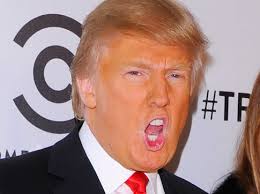
Donald Trump
During his first two weeks as President, Trump attacked 22 people, places and institutions on his @realDonaldTrump account.
Then, on March 4, 2017, Trump falsely accused former President Barack Obama of tapping his Trump Tower phones prior to the election:
“How low has President Obama gone to tapp my phones during the very sacred election process. This is Nixon/Watergate. Bad (or sick) guy!”
Thus, without offering a shred of evidence to back it up, Trump accused his predecessor—on Twitter—of committing an impeachable offense.
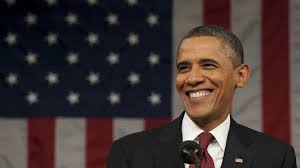
President Barack Obama
On May 9, 2017, Trump abruptly fired FBI Director James Comey—for pursuing an investigation into Russian subversion of the 2016 election.
Just 72 hours after firing Comey, Trump threatened him via Twitter: “James Comey better hope that there are no ‘tapes’ of our conversations before he starts leaking to the press!”
Trump had no such tapes.
And Twitter’s reaction to such a blatant threat? Silence.

James B. Comey
On February 17, 2017, Trump used Twitter to attack the Constitutionally-protected free press:
“The FAKE NEWS media (failing @nytimes, @NBCNews, @ABC, @CBS, @CNN) is not my enemy, it is the enemy of the American People!”
“Enemy of the people” was a popular charge during the 30-year reign of Soviet dictator Joseph Stalin.
On July 2, 2017, Trump tweeted a video showing him punching a man with the CNN logo superimposed on his head during a WWE wrestling match.
Yet Twitter’s Terms of Service stated:
Hateful imagery and display names: You may not use hateful images or symbols in your profile image or profile header. You also may not use your username, display name, or profile bio to engage in abusive behavior, such as targeted harassment or expressing hate towards a person, group, or protected category. We will begin enforcing this rule on December 18, 2017. [Italics added.]
Even foreign leaders were unnerved by Trump’s obsession with Twitter. As CNN Political Analyst Julian Zelizer outlined in a July 3, 2017 article:
“To have one of the most powerful people in the room being someone who is willing to send out explosive and controversial statements through social media, including nasty personal attacks or an edited video of him physically assaulting the media, does not make others….feel very confident about how he will handle deliberations with them.”
On September 25, 2017, Twitter’s top executives justified allowing these repeated violations of “Twitter Rules,” tweeting:
“We hold all accounts to the same Rules, and consider a number of factors when assessing whether Tweets violate our Rules.
“Among the considerations is ‘newsworthiness’ and whether a Tweet is of public interest. This has long been internal policy and we’ll soon update our public-facing rules to reflect it. We need to do better on this, and will.”
Only after Trump incited a mob of his Right-wing followers to attack the U.S. Capitol on January 6, 2021, did Twitter ban him from its website.
But Twitter has never acknowledged publicly that Trump violated any of its guidelines. It rarely even acknowledged Trump’s tweets.
Trump’s apologists fiercely defended his tweetstorms, claiming they allowed him to bypass the media and “communicate directly with the American people.”
One of those apologists was former Twitter CEO Jack Dorsey: “I believe it’s really important to have these conversations out in the open, rather than have them behind closed doors.”

Jack Dorsey
In April, 2017, Twitter announced that it had added 9,000,000 new users, its largest quarter-over-quarter jump in two years.
“We believe Twitter is the best at showing you what’s happening in the world and what’s being talked about,” said Anthony Noto, Twitter’s chief financial officer.
“Having political leaders of the world as well as news agencies participating and driving that is an important element to reinforcing what we’re the best at.”
In short: Trump is good at attracting more Twitter users. and if the company needs to overlook his blatant and repeated violations of its “Twitter Rules,” so be it.
Twitter has been so plagued by trolling that potential investors like the Walt Disney Company have refused to taint their own reputations by partnering with it.
Cyber-bullying, racist comments, violent threats and reputation-smashing phony celebrity accounts have repeatedly brought Twitter harsh criticism.
And now its new owner, Tessla CEO Elon Musk, clearly intends to restore Donald Trump’s Twitter account.
Not content with that, Musk has engaged in a Twitter-smear of his own.
On October 28, David DePape, a Right-wing QAnon fanatic, assaulted Paul Pelosi, husband of House Speaker Nancy Pelosi, in his San Francisco house.
Hours later, Musk tweeted a Right-wing slander: That DePape is a male sex worker who was hired by Paul Pelosi.
Musk later deleted the tweet.
Anyone who wanted to know what the “new” Twitter will be like just found out.
ABC, ABC NEWS, ALTERNET, AP, ARNOLD SCHWARZENEGGER, BARACK OBAMA, BUZZFEED, CBS NEWS, CHANNING DUNGEY, CNN, CROOKS AND LIARS, DAILY KOZ, DISNEY, DONALD TRUMP, ELON MUSK, FACEBOOK, FBI, HILLARY CLINTON, JAMES COMEY, JOHN GOODMAN, JOHN OLIVER, LECY GORANSON, MERYL STREEP, MICHAEL FISHMAN, MIKE PENCE, MOTHER JONES, MOVEON, MSNBC, NANCY PELOSI, NBC NEWS, NEIL YOUNG, NEWSWEEK, NPR, PAUL PELOSI, POLITICO, RAW STORY, REUTERS, ROBERT IGER, ROSEANNE, ROSEANNE BARR, SALON, SARAH CHALKE, SARAH GILBERT, SEATTLE TIMES, SLATE, THE ATLANTIC, THE CHICAGO SUN-TIMES, THE CHICAGO TRIBUNE, THE DAILY BEAST, THE GUARDIAN, THE HILL, THE HUFFINGTON POST, THE LOS ANGELES TIMES, THE NATION, THE NEW YORK TIMES, THE WASHINGTON POST, TIME, TV GUIDE, TWITTER, TWITTER RULES, U.S. NEWS & WORLD REPORT, UPI, USA TODAY, VALERIE JARRETT
In Bureaucracy, Business, Entertainment, History, Politics, Social commentary on October 31, 2022 at 12:22 am
Behind the racism
And the tweet
Behind the venom
And the act
Lies the Hatred.
In less than 12 hours, Roseanne Barr demolished her hit show, Roseanne, and threw the lives of dozens of men and women into unemployed chaos.
A short timeline is instructive:
May 28, 2018 – 1:45 a.m.
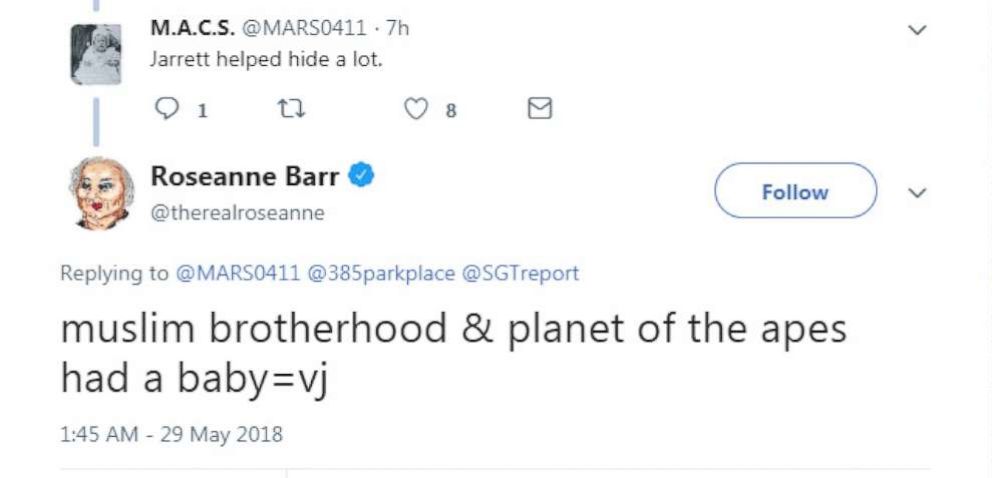
Roseanne Barr takes to Twitter and tweets: “muslim brotherhood and planet of the apes had a baby = vj”
[“vj” stands for “Valerie Jarrett,” a former senior adviser and assistant for public engagement and intergovernmental affairs for then-President Barack Obama. The reference to “planet of the apes” is Barr’s way of comparing Jarrett—who is black—to an ape.]
May 29 – 6:29 a.m.
“It’s a joke.”
[Apparently, Barr has suddenly realized that posting such a racist, poisonous tweet just might not be a good career move. So she’s trying to defuse the bomb before it can explode on her.]
May 29 – 9:28 a.m.
“I apologize. I am now leaving Twitter.”
[Obviously, she’s really worried now.]
May 29 – 7:33 a.m.
“I apologize to Valerie Jarrett and to all Americans. I am truly sorry for making a bad joke about her politics and her looks. I should have known better. Forgive me–my joke was in bad taste.”
[This looks like standard boiletplate, perhaps crafted by someone familiar with corporate-speak. It’s clear that Barr or someone close to her not only recognizes the public relations dangers of her tweet but made an “I was only joking” effort to deflect those dangers. Barr’s idol, President Donald Trump, has often hurled despicable insults at people—and then claimed: “I was only joking.” Perhaps Barr believes—or at least hopes—the same tactic will work for her.]

Roseanne Barr (Pinterest)
May 29 – 9:15 a.m.
Channing Dungey, entertainment president of the American Broadcasting Company (ABC), issues the following announcement: “Roseanne’s Twitter statement is abhorrent, repugnant and inconsistent with our values, and we have decided to cancel her show.”
Robert Iger, CEO of Disney (which owns ABC) tweets: “There was only one thing to do here, and that was the right thing.”
This was, of course, not the first time that Roseanne Barr had starred in her own series. From 1988 to 1997, she had portrayed Roseanne Conner, wife and mother of an Illinois working-class American family. John Goodman had played her husband.
Their three children (Becky, Darlene, and DJ) were played by, respectively, Lecy Goranson (and, later, Sarah Chalke); Sarah Gilbert; and Michael Fishman.
The series reached No. 1 in the Nielsen ratings, and became the most-watched television show in the United States from 1989 to 1990.
The show remained in the top four for six of its nine seasons, and in the top 20 for eight seasons. In 2002, Roseanne was ranked No. 35 on TV Guide’s 50 Greatest TV Shows of All Time.
So when Roseanne pitched an updated version of her show to ABC in 2017, the network was naturally excited.
On May 16, 2017, ABC announced that it would revive Roseanne as a mid-season replacement in 2018, with the original cast returning. Eight episodes were ordered. In November, ABC ordered a ninth episode.
The rebooted version premiered on March 27, 2018, to an initial audience of 27.26 million viewers. On March 30, thrilled by the success of its premiere, ABC renewed Roseanne for another 13 episodes.
Thirteen new episodes of Roseanne represented steady work for dozens of men and women:
- Actors portraying the Conner family.
- Actors in minor roles.
- Costume designers.
- Writers
- Editors
- Makeup artists.
- Caterers.
- Sound techs.
- Lighting techs.
- Production assistants.
Then came Roseanne Barr’s tweet.
And, suddenly, all of these people found themselves unemployed—and uncertain about their futures in the fickle and often unforgiving entertainment industry.
Of course, the person most immediately—and rightly—blamed was Roseanne Barr herself. But she was by no means the only one worthy of condemnation.
A major portion of blame is owed the men who run Twitter.
According to “The Twitter Rules,” posted on the Twitter website:
We believe in freedom of expression and open dialogue, but that means little as an underlying philosophy if voices are silenced because people are afraid to speak up.
In order to ensure that people feel safe expressing diverse opinions and beliefs, we prohibit behavior that crosses the line into abuse, including behavior that harasses, intimidates, or uses fear to silence another user’s voice.
Context matters when evaluating for abusive behavior and determining appropriate enforcement actions. Factors we may take into consideration include, but are not limited to whether:
- the behavior is targeted at an individual or group of people;
- the report has been filed by the target of the abuse or a bystander;
- the behavior is newsworthy and in the legitimate public interest.
Abuse: You may not engage in the targeted harassment of someone, or incite other people to do so. We consider abusive behavior an attempt to harass, intimidate, or silence someone else’s voice….
Hateful conduct: You may not promote violence against, threaten, or harass other people on the basis of race, ethnicity, national origin, sexual orientation, gender, gender identity, religious affiliation, age, disability, or serious disease. Read more about our hateful conduct policy.
All of which leads to the question: Why didn’t Twitter police—and purge—the single greatest abuser of its “Twitter Rules”: Donald Trump?
ABC NEWS, ADOLF HITLER, ADVICE, ALTERNET, AMERICABLOG, AP, BABY BOOMER RESISTANCE, BAY OF PIGS, BBC, BENITO MUSSOLINI, BLOOMBERG NEWS, BUZZFEED, CAESARE BORGIA, CBS NEWS, CNN, CORPORATIONS, CROOKS AND LIARS, CUBA, DAILY KOS, DAILY KOZ, FACEBOOK, FIDEL CASTRO, FIVETHIRTYEIGHT, FLORENCE, HARPER’S MAGAZINE, HUFFINGTON POST, JOHN F. KENNEDY, JOSEPH STALIN, KING PERSEUS OF MACEDON, MEDIA MATTERS, MOTHER JONES, MOVEON, MSNBC, NAZI-SOVIET "NON-AGGRESSION PACT", NBC NEWS, NEW REPUBLIC, NEWSDAY, NEWSWEEK, NICCOLO MACHIAVELLI, NPR, PBS NEWSHOUR, POLITICO, POLITICS, POLITICUSUSA, POPE JULIUS 11, RAW STORY, REUTERS, SALON, SEATTLE TIMES, SLATE, TALKING POINTS MEMO, THE ATLANTIC, THE CHICAGO SUN-TIMES, THE CHICAGO TRIBUNE, THE DAILY BEAST, THE DAILY BLOG, THE DISCOURSES, THE GUARDIAN, THE HILL, THE HUFFINGTON POST, THE INTERCEPT, THE LOS ANGELES TIMES, THE NATION, THE NEW REPUBLIC, THE NEW YORK TIMES, THE NEW YORKER, THE PRINCE, THE SS, THE VILLAGE VOICE, THE WASHINGTON POST, THINKPROGRESS, THIRD REICH, TIME, TRUTHDIG, TRUTHOUT, TWITTER, U.S. NEWS & WORLD REPORT, UKRAINE, UPI, USA TODAY, VLADIMIR PUTIN, VOLODYMYR ZELENSKY, WEHRMACHT, WORLD WAR 11
In Bureaucracy, Business, History, Military, Politics, Social commentary on October 28, 2022 at 12:11 am
Ask the average person, “What do you think of Niccolo Machiavelli?” and he’s likely to say: “The devil.”
In fact, “The Old Nick” became an English term used to describe Satan and slander Machiavelli at the same time.

Niccolo Machiavelli
The truth, however, is more complex. Machiavelli was a passionate Republican, who spent most of his adult life in the service of his beloved city-state, Florence.
The years he spent as a diplomat were tumultuous ones for Italy—with men like Pope Julius II and Caesare Borgia vying for power and plunging Italy into one bloodbath after another.
Florence, for all its wealth, lacked a strong army, and thus lay at the mercy of powerful enemies, such as Borgia. Machiavelli often had to use his wits to keep them at bay.
Machiavelli is best-known for his writing of The Prince, a pamphlet on the arts of gaining and holding power. Its admirers have included Benito Mussolini and Joseph Stalin.
But his longer and more thoughtful work is The Discourses, in which he offers advice on how to maintain liberty within a republic. Among its admirers were many of the men who framed the Constitution of the United States.


Most people believe that Machiavelli advocated evil for its own sake.
Not so. Rather, he recognized that sometimes there is no perfect—or perfectly good—solution to a problem.
Sometimes it’s necessary to take stern—even brutal—action to stop an evil (such as a riot) before it becomes widespread:
“A man who wishes to make a profession of goodness in everything must inevitably come to grief among so many who are not good. And therefore it is necessary for a prince, who wishes to maintain himself, to learn how not to be good, and to use this knowledge and not use it, according to the necessity of the case.”
His counsel remains as relevant today as it did during his lifetime (1469 – 1527). This is especially true for politicians—and students of political science.
But plenty of ordinary citizens can also benefit from the advice he has to offer—such as those in business who are asked to give advice to more powerful superiors.
Machiavelli warns there is danger in urging rulers to take a particular course of action: “For men only judge of matters by the result, all the blame of failure is charged upon him who first advised it, while in case of success he receives commendations. But the reward never equals the punishment.”
This puts would-be counselors in a difficult position: “If they do not advise what seems to them for the good of the republic or the prince, regardless of the consequences to themselves, then they fail to do their duty.
“And if they do advise it, then it is at the risk of their position and their lives, for all men are blind in thus, that they judge of good or evil counsels only by the results.”
Thus, Machiavelli warns that an adviser should “take things moderately, and not to undertake to advocate any enterprise with too much zeal, but to give one’s advice calmly and modestly.”
The person who asked for the advice may follow it, or not, as of his own choice, and not because he was led or forced into it by the adviser.
Above all, the adviser must avoid the danger of urging a course of action that runs “contrary to the wishes of the many.
“For the danger arises when your advice has caused the many to be contravened. In that case, when the result is unfortunate, they all concur in your destruction.”
Or, as President John F. Kennedy famously said after the disastrous invasion of Cuba at the Bay of Pigs in April, 1961: “Victory has a hundred fathers and defeat is an orphan.”
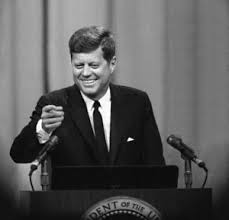
John F. Kennedy
By “not advocating any enterprise with too much zeal,” the adviser gains two advantages:
“The first is, you avoid all danger.
“And the second consists in the great credit which you will have if, after having modestly advised a certain course, your counsel is rejected, and the adoption of a different course results unfortunately.”
Finally, the time to give advice is before a catastrophe occurs, not after. Machiavelli gives a vivid example of what can happen if this rule is ignored.
King Perseus of Macedon had gone to war with Paulus Aemilius—and suffered a humiliating defeat. Fleeing the battlefield with a handful of his men, he later bewailed the disaster that had overtaken him.
Suddenly, one of his lieutenants began to lecture Perseus on the many errors he had committed, which had led to his ruin.
“Traitor,” raged the king, turning upon him, “you have waited until now to tell me all this, when there is no longer any time to remedy it—” And Perseus slew him with his own hands.
Niccolo Machiavelli sums up the lesson as this:
“Thus was this man punished for having been silent when he should have spoken, and for having spoken when he should have been silent.”
Be careful that you don’t make the same mistake.
ABC NEWS, ALAMO, ALTERNET, AMERICABLOG, ANDREW JACKSON, AP, BABY BOOMER RESISTANCE, BUZZFEED, CAMERON JUDD, CBS NEWS, CNN, CROCKETT OF TENNESSEE, CROOKS AND LIARS, DAILY KOZ, DAVID CROCKETT, DAVY CROCKETT: KING OF THE WILD FRONTIER, DONALD TRUMP, FACEBOOK, FIVETHIRTYEIGHT, INDIAN WARS, JAMES BOWIE, MITT ROMNEY, MOTHER JONES, MOVEON, MSNBC, NBC NEWS, NBCNEWS, NEWSWEEK, NPR, PBS NEWSHOUR, POLITICO, POLITICUSUSA, RAW STORY, REUTERS, SALON, SEATTLE TIMES, SLATE, TALKING POINTS MEMO, TEXAS REVOLUTION, THE ATLANTIC, THE CHICAGO SUN-TIMES, THE CHICAGO TRIBUNE, THE DAILY BEAST, THE DAILY BLOG, THE GUARDIAN, THE HILL, THE HUFFINGTON POST, THE LOS ANGELES TIMES, THE NATION, THE NEW YORK TIMES, THE WASHINGTON POST, THINKPROGRESS, TIME, TRUTHDIG, TWITTER, U.S. NEWS & WORLD REPORT, UPI, USA TODAY, WALT DISNEY, WILLIAM BARRETT TRAVIS
In Bureaucracy, Business, History, Military, Politics, Social commentary on October 25, 2022 at 12:13 am
March 6, 2022, marked the 186th anniversary of the fall of the Alamo, a crumbling former Spanish mission in the heart of San Antonio, Texas.
It’s been the subject of novels, movies, biographies, histories and TV dramas (most notably Walt Disney’s 1955 “Davy Crockett: King of the Wild Frontier”).
Perhaps the most extraordinary scene in any Alamo movie or book occurs in the 1993 novel, Crockett of Tennessee, by Cameron Judd.
And it is no less affecting for its being—so far as we know—entirely fictional.
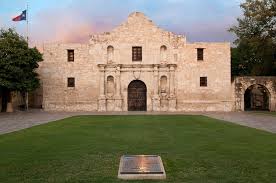
The Alamo
It’s March 5, 1836—the last night of life for the Alamo garrison. The next morning, 2,000 men of the Mexican Army will hurl themselves at the former mission and slaughter its 200 “Texian” defenders.
The fort’s commander, William Barrett Travis, has drawn his “line in the sand” and invited the garrison to choose: To surrender, to try to escape, or to stay and fight to the death.
And the garrison—except for one man—chooses to stay and fight.
For the garrison, immortality lies only hours away. Or does it?
An hour after deciding to stand and die in the Alamo, wrapped in the gloom of night, David Crockett is seized with paralyzing fear.
“We’re going to die here,” he chokes out to his longtime friend, Persius Tarr. “You understand that, Persius? We’re going to die!” 
“I know, Davy. But there ain’t no news in that,” says Tarr. “We’re born to die. Every one of us. Only difference between us and most everybody else is we know when and where it’s going to be.”
“But I can’t be afraid—not me. I’m Crockett. I’m Canebrake Davy. I’m half-horse, half-alligator.”
“I know you are, Davy,” says Tarr. “So do all these men here. That’s why you’re going to get past this.
“You’re going to put that fear behind you and walk back out there and fight like the man you are. The fear’s come and now it’s gone. This is our time, Davy.”
And then Tarr delivers a sentiment wholly alien to money-obsessed men like Donald Trump—who comprise the richest and most privileged 1% of today’s Americans.
“There’s men out there with their eyes on you. You’re the only thing keeping the fear away from them. You’re joking and grinning and fiddling—it gives them courage they wouldn’t have had without you.
“Maybe that’s why you’re here, Davy—to make the little men and the scared men into big and brave men. You’ve always cared about the little men, Davy. Remember who you are.
“You’re Crockett of Tennessee, and your glory-time has come. Don’t you miss a bit of it.”
The next morning, the Mexicans assault the Alamo. Crockett embraces his glory-time—and becomes a legend for all-time.

David Crockett (center) at the fall of the Alamo
David Crockett (1786-1836) lived—and died—a poor man. But this did not prevent him from trying to better the lives of his family and fellow citizens—and even his former enemies.
During the war of 1812, he served as a scout under Andrew Jackson. His foes were the Creek Indians, who had massacred 500 settlers at Fort Mims, Alabama—and threatened to do the same to Crockett’s family and neighbors in Tennessee.
But as a Congressman from Tennessee, he opposed then-President Jackson’s efforts to force the same defeated Indians to depart the lands guaranteed them by treaty.
To Crockett, a promise was sacred—whether given by a single man or the United States Government.

David Crockett
And his presence during the 13-day siege of the Alamo did cheer the spirits of the vastly outnumbered defenders.
Crockett, with his fiddle—and a Scotsman named MacGregor, with his bagpipes—often staged musical “duels” to see who could make the most noise.
Contrast this devotion of Crockett to the rights of “the little men,” with the attitude of Donald Trump, the alleged billionaire former President of the United States.

Donald Trump
Throughout the 2016 Presidential campaign, Trump made such statements as:
- “…I don’t need anybody’s money. It’s nice. I’m using my own money. I’m not using lobbyists, I’m not using donors. I don’t care. I’m really rich.”
- “I did a lot of great deals and I did them early and young, and now I’m building all over the world….”
- “So I have a total net worth, and now with the increase, it’ll be well over $10 billion.”
- My fingers are long and beautiful, as, it has been well documented, are various other parts of my body.”
- “My IQ is one of the highest—and you all know it.”
- “My Twitter has become so powerful that I can actually make my enemies tell the truth.”
- “I think the only difference between me and the other candidates is that I’m more honest and my women are more beautiful.”
Unlike Crockett, who defended the weak, Trump boasted of his power:
“You know I’m automatically attracted to beautiful—I just start kissing them. It’s like a magnet. Just kiss. I don’t even wait. And when you’re a star they let you do it. You can do anything.”
Those who give their lives for others are rightly loved and remembered as heroes. Those who dedicate their lives solely to their wallets and egos are rightly soon forgotten.
2003 IRAQ WAR, ABC NEWS, ADOLF HITLER, ALTERNET, AMERICABLOG, AP, BABY BOOMER RESISTANCE, BBC, BLOOMBERG NEWS, BUZZFEED, CBS NEWS, CHINA, CNN, CRIMEAN PENINSULA, CROOKS AND LIARS, DAILY KOZ, DONALD TRUMP, ECONOMIC SANCTIONS, EDOUARD DELADIER, ENGLAND, FACEBOOK, FIVETHIRTYEIGHT, FRANCE, GEORGE W. BUSH, HARPER’S MAGAZINE, HUFFINGTON POST, IRAN, JOACHIM VON RIBBENTROP, KIEV, MEDIA MATTERS, MOSKOVA (SHIP), MOTHER JONES, MOVEON, MSNBC, MUNICH CONFERENCE, NATO, NBC NEWS, NEVILLE CHAMBERLAIN, NEW REPUBLIC, NEWSDAY, NEWSWEEK, NPR, PBS NEWSHOUR, POLAND, POLITICO, POLITICUSUSA, RAW STORY, REPUBLIC OF GEORGIA, REUTERS, RUBLES, RUSSIA, SADDAM HUSSEIN, SALON, SEATTLE TIMES, SECOND CHECHEN WAR, SLATE, SOVIET UNION, TALKING POINTS MEMO, THE ATLANTIC, THE CHICAGO SUN-TIMES, THE CHICAGO TRIBUNE, THE DAILY BEAST, THE DAILY BLOG, THE GUARDIAN, THE HILL, THE HUFFINGTON POST, THE INTERCEPT, THE LOS ANGELES TIMES, THE NATION, THE NEW REPUBLIC, THE NEW YORK TIMES, THE NEW YORKER, THE VILLAGE VOICE, THE WASHINGTON POST, THINKPROGRESS, TIME, TRUTHDIG, TRUTHOUT, TWITTER, TWO POLITICAL JUNKIES, U.S. NEWS & WORLD REPORT, UKRAINE, UNITED STATES, UPI, USA TODAY, VLADIMIR PUTIN, WONKETTE
In Bureaucracy, Business, History, Military, Politics, Social commentary on October 12, 2022 at 12:10 am
On February 28, CNN’s website published the following headline: Russia faces financial meltdown as sanctions slam its economy.
The story opened:
“Russia was scrambling to prevent financial meltdown Monday as its economy was slammed by a broadside of crushing Western sanctions imposed over the weekend in response to the invasion of Ukraine.”
That unprovoked attack opened on February 24, with missile and artillery attacks, striking major Ukrainian cities, including Kiev.
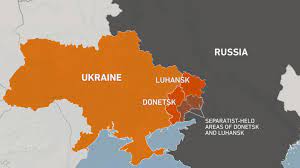
Ukraine vs. Russia
Russian President Vladimir Putin believed that the conquest of Ukraine would be a cakewalk. Intent on restoring the borders of the former Soviet Union, he had swept from one successful war to the next:
- In 1999-2000, he waged the Second Chechen War, restoring federal control of Chechnya.
- In 2008, he invaded the Republic of Georgia, which had declared its independence as the Soviet Union began to crumble. By war’s end, Russia occupied 20% of Georgia’s territory.
- In 2014, Putin invaded and annexed the Crimean Peninsula from Ukraine.
Meanwhile, the North Atlantic Treaty Organization (NATO) launched only verbal condemnations.
The reasons:
- Fear of igniting a nuclear war;
- Belief that Russia was simply acting within its own sphere of influence; and/or
- Then-President Donald Trump’s repeated attacks on NATO and displays of subservience to Putin.
NATO emblem
Russia had began massing troops on the Ukrainian border in 2021.
When the invasion came, the United States and its Western European allies retaliated with unprecedented economic sanctions.
Among the resulting casualties:
- The ruble crashed.
- Russia’s central bank more than doubled interest rates to 20%.
- Economists predicted the Russian economy could decline by five percent.
- The West—especially the United States—froze at least half of the $630 billion in international reserves that Putin had amassed to stave off tough sanctions.
Then the war bogged down for Russia:
- In late August, Ukraine, using missile systems supplied by the United States, destroyed Russian ammunition dumps and a Russian air base in Crimea.
- By September, Ukrainian forces recaptured much of the northeastern Kharkiv region, including the city of Izium, which the Russians had been using as a logistics hub.
- On September 21, Putin announced the partial mobilization of 300,000 military reservists. All male citizens below 60 are now eligible to be drafted.
- This, in turn, led at least 194,000 Russian men to such neighboring countries as Turkey, Georgia, Kazakhstan and Mongolia.
In short: The war is not going the way Putin assumed it would.

Vladimir Putin
Kremlin.ru, CC BY 4.0 <https://creativecommons.org/licenses/by/4.0>, via Wikimedia Commons
This is not the first time a dictator has guessed wrong about the results of his actions.
On September 1, 1939, German Fuhrer Adolf Hitler ordered his armies to invade Poland.
Almost a year earlier—on September 29, 1938—he had bullied British Prime Minister Neville Chamberlain and French Prime Minister Edouard Daladier into surrendering the northern, southwest and western regions of Czechoslovakia, inhabited mostly by ethnic Germans.
The Munich Agreement whetted Hitler’s appetite for greater conquests—and fueled his contempt for England and France: “Our enemies are little worms,” he said in a conference with his generals. “I saw them at Munich.”
He believed he could conquer Poland, and Chamberlain and Daladier would meekly ratify his latest acquisition.
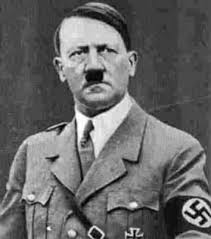
Adolf Hitler
So he was stunned when, on September 3, 1939, Britain and France—however reluctantly—honored their pledged word to Poland and declared war on Germany.
“What now?” Hitler furiously asked his Foreign Minister, Joachim von Ribbentrop.
Ribbentrop had no answer.
Knowing that Germany lacked the resources for a long war, Hitler had intended to fight a series of quick, small wars, gobbling up one country at a time. Now he found himself locked in an endless war with heavyweights France and England—and eventually the Soviet Union and the United States.
He stayed locked into that war until he committed suicide on April 30, 1945, and the Third Reich officially collapsed on May 7.
Fifty-eight years later, on March 21, 2003, President George W. Bush’s attacked Saddam Hussein’s Iraq.
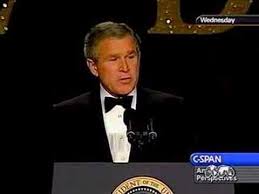
George W. Bush
The war started impressively, with 1,700 air sorties and 504 Cruise missiles.
Within two weeks, American ground forces entered Baghdad. After four days of intense fighting, the Iraqi regime fell. By April 14, the Pentagon reported that major military operations had ended.
On May 1, 2003, Bush declared that the war was won.
But then American forces became embroiled in an endless, nationwide guerrilla war. Eighteen years later, the United States was still fighting in Iraq.
The war that Bush had deliberately provoked:
- Took the lives of 4,484 Americans.
- Cost the United States Treasury at least $2 trillion.
- Allowed Iran—Iraq’s arch enemy—to eagerly fill it.
- Frightened and repelled even America’s closest allies.
- Killed at least 655,000 Iraqis.
- Frightened China and Russia into expanding the size of their militaries.
And Putin?
- A major reason for his attack: To prevent Ukraine from joining NATO.
- But it has frightened Sweden and Finland into joining NATO.
- After four years of the Putin-appeasing Trump administration, the United States, under President Joe Biden, has aggressively supplied sophisticated weapons to Ukraine.
- Through a series of humiliating battlefield defeats and by enraging millions of Russians with a draft, Putin has locked himself into a no-win position.
- And NATO is now fully revitalized to meet future Russian threats.
Thus do the worst intentions of hubristic dictators often come undone.


 Bureaucracybuster's Blog
ABC NEWS, ABORTION, AFFORDABLE CARE ACT, AFFORDABLE HOUSING, ALTERNET, AMERICABLOG, AP, BABY BOOMER RESISTANCE, BBC, BLACKS, BLOOMBERG NEWS, BUZZFEED, CBS NEWS, CHINA, CNN, COMMUNISM, CORONAVIRUS, CRIME, CROOKS AND LIARS, DAILY KOZ, DENNIS HASTERT, DONALD TRUMP, DWIGHT D. EISENHOWER, ECONOMY, ELECTION-RIGGING, FACEBOOK, FIVETHIRTYEIGHT, FLORIDA, FOOD STAMPS, FRANCIS BELLAMY, GAYS, GLOBALISM, HARPER’S MAGAZINE, HISPANICS, HUFFINGTON POST, illegal immigration, IMPORTS, JANUARY 6 COUP ATTEMPT, JOSH DUGGAR, KIM JONG-UN, LESBIANS, MEDIA MATTERS, MEDICARE, MEXICO, MIKE PENCE, MOTHER JONES, MOVEON, MSNBC, NBC NEWS, NEW REPUBLIC, NEWSDAY, NEWSWEEK, NORTH KOREA, NPR, NUCLEAR FAMILY, PBS NEWSHOUR, PLEDGE OF ALLEGIANCE, POLITICO, POLITICUSUSA, RAW STORY, RELIGIOUS, RELIGIOUS FREEDOM RESTORATION ACT, REUTERS, RICHARD M. NIXON, RICK SCOTT, RUSSIA, SALON, SEATTLE TIMES, SLATE, SOCIAL SECURITY, SOCIALISM, TALKING POINTS MEMO, THE ATLANTIC, THE CHICAGO SUN-TIMES, THE CHICAGO TRIBUNE, THE DAILY BEAST, THE DAILY BLOG, THE GUARDIAN, THE HILL, THE HUFFINGTON POST, THE INTERCEPT, THE LOS ANGELES TIMES, THE NATION, THE NEW REPUBLIC, THE NEW YORK TIMES, THE NEW YORKER, THE VILLAGE VOICE, THE WASHINGTON POST, THINKPROGRESS, TIME, TRADEMARKS, TRANSGENDERS, TRUTHDIG, TRUTHOUT, TWITTER, TWO POLITICAL JUNKIES, U.S. NEWS & WORLD REPORT, UKRAINE, UPI, USA TODAY, VLADIMIR PUTIN, WONKETTE, XI JINPING
REPUBLICANS’ NEXT TARGET: DEMOCRACY: PART TWO (OF THREE)
In Bureaucracy, Business, History, Law, Law Enforcement, Medical, Military, Politics, Social commentary on November 22, 2022 at 12:16 amFlorida’s Republican United States Senator Rick Scott’s has an “11 Point Plan to Rescue America”—and catapult himself into the White House.
Point 4: We will secure our border, finish building the wall, and name it after President Donald Trump.
The United States is surrounded by water on three sides—East, West and South. So anyone with a boat can smuggle illegal aliens into the country at any point along its 12,383 miles of coastline.
For those who get seasick, there’s a land route available—not across burning Mexican deserts but under them.
Over the years, officials have found at least 200 tunnels along the 2,000-mile-long U.S.-Mexico border, mostly in Arizona and California. They range from rudimentary crawlspaces to “super tunnels” that cost more than a million dollars and are equipped with elevators, ventilation shafts electric lights, and disguised exits and entrances.
Drug tunnel
U.S. Customs and Border Protection, Public domain, via Wikimedia Commons
Many of those who want to infiltrate the United States can simply fly in.
Wealthy and pregnant Chinese women often fly to the United States to “anchor” themselves via a baby born on American soil. The same is true for many Russian women.
And the Number One cause of illegal immigration: Foreigners’ overstaying their visas. In 2017, more than 600,000 foreigners who legally entered the United States overstayed their visas and remained in the country by the end of the year, according to the Department of Homeland Security.
So a wall is not going to solve America’s problem with illegal immigration.
Point 5: We will grow America’s economy, starve Washington’s economy, and stop Socialism.
When Republicans promise to “grow America’s economy,” they mean: Remove all government controls from business.
In real-world terms, this means corporations will be legally allowed to:
Anyone who doubts this need only look at the living standards in “Red”, Republican-governed states such as Florida and Texas.
“Starve Washington’s economy” means: Eliminating programs that Republicans don’t like—starting with Social Security, Medicare and the Affordable Care Act. Anything that benefits ordinary Americans and not multi-billion dollar corporations will be slated for scrapping.
“Stopping socialism” is ludicrous: During his Presidency, Donald Trump’s best friends were Communist dictators: Vladimir Putin (Russia), Kim Jong-Un (North Korea) and Xi Jinping (China).
Trump actually bragged that, after an exchange of letters between himself and the murderous Kim Jong-Un, “We fell in love.”
Kim Jong-Un and Donald Trump
Had a Democratic President made a similar statement, Republicans would have screamed “Treason!” In Trump’s case, they said nothing.
Point 6: We will eliminate all federal programs that can be done locally, and enact term limits for federal bureaucrats and Congress.
As for “enacting term limits for federal bureaucrats and Congress”: This is the party that tried to illegally and treasonously overturn the results of a legitimate Presidential election so its candidate—Donald Trump—could remain in office as “President-for-Life” after losing the vote.
Point 7: We will protect the integrity of American Democracy and stop left-wing efforts to rig elections.
Scott’s platform is worth quoting in full on this issue:
Today’s Democrat Party is trying to rig elections and pack the courts because they have given up on Democracy. They don’t believe they can win based on their ideas, so they want to game the system and legalize voter fraud to stay in power. In true Orwellian fashion, Democrats refer to their election rigging plans as “voting rights”. We won’t allow the radical left to destroy our democracy by institutionalizing dishonesty and fraud.
Immediately after the verdict of the November 3, 2020 Presidential election was announced, President Donald Trump ordered his attorneys to file lawsuits overturning the results.
Donald Trump
Ultimately, from November 3 to December 14, 2020, Trump and his allies lost 59 times in court, either withdrawing cases or having them dismissed by Federal and state judges.
This is the party that, since November, 2020, has sold a lie to millions of Right-wing Americans that the election was “stolen” from Donald trump.
It is Republicans—not Democrats—who have stopped trying to win elections based on their ideas and are now trying to win them by massive voter suppression. It’s hardly a party to be entrusted with election security.
Share this: