Posts Tagged ‘WORLD WAR 11’
2016 PRESIDENTIAL ELECTION, 9/11, ABC NEWS, ADOLF HITLER, AFGHANISTAN, ALTERNET, AMERICABLOG, AP, ASIANS, BABY BOOMER RESISTANCE, BARACK OBAMA, BLACKS, BLOOMBERG, BULLYING, BUZZFEED, CBS NEWS, CNN, COMMUNISM, CROOKS AND LIARS, DAILY KOZ, DEMOCRASTIC NATIONAL CONVENTION, DONALD TRUMP, DRUDGE REPORT, FACEBOOK, FASCISM, FIVETHIRTYEIGHT, GEORGE W. BUSH, GREAT DEPRESSION, HARPER’S MAGAZINE, HILLARY CLINTON, HISPANICS, IRAQ, JEWS, JOE BIDEN, MEDIA MATTERS, MICHELLE OBAMA, MOTHER JONES, MOVEON, MSNBC, MUSLIMS, NAZI GERMANY, NAZI PARTY, NBC NEWS, NEWSWEEK, NPR, PAUL VON HINDENBURG, PBS NEWSHOUR, POLITICO, POLITICUSUSA, RACISM, RAW STORY, REPUBLICANS, REUTERS, Ronald Reagan, SALON, SEATTLE TIMES, SLATE, TALKING POINTS MEMO, THE ATLANTIC, THE CHICAGO SUN-TIMES, THE CHICAGO TRIBUNE, THE DAILY BEAST, THE DAILY BLOG, THE GUARDIAN, THE HILL, THE HUFFINGTON POST, THE LOS ANGELES TIMES, THE LOS ANGELS TIMES, THE NATION, THE NEW REPUBLIC, THE NEW YORK TIMES, THE VILLAGE VOICE, THE WASHINGTON POST, THINKPROGRESS, TIME, TRUMP EFFECT, TRUTHDIG, TRUTHOUT, TWITTER, TWO POLITICAL JUNKIES, U.S. NEWS & WORLD REPORT, UP, UPI, USA TODAY, WONKETTE, WORLD WAR 11
In Bureaucracy, History, Military, Politics, Social commentary on August 24, 2020 at 12:17 am
On November 8, 2016, millions of ignorant, hate-filled, Right-wing Americans elected Donald Trump—a man reflecting their own hate and ignorance—to the Presidency.
Yet Americans had fewer excuses for turning to a Fascistic style of government than the Germans did.
Adolf Hitler, joined the National Socialist German Workers (Nazi) Party in 1919—the year after World War 1 ended.
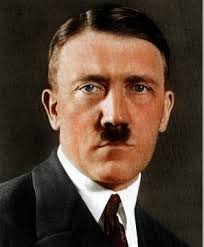
Adolf Hitler
It took him 14 years to win appointment to Chancellor (the equivalent of Attorney General) of Germany in 1933.
In 1923, he staged a coup attempt in Bavaria—which was quickly and brutally put down by police. He was arrested and sentenced to less than a year in prison.
After that, Hitler decided that winning power through violence was no longer an option. He must win it through election—or appointment.
He repeatedly ran for the highest office in Germany—President—but never got a clear majority in a free election.
When the 1929 Depression struck Germany, the fortunes of Hitler’s Nazi party rose as the life savings of ordinary Germans fell. Streets echoed with bloody clashes between members of Hitler’s Nazi Stormtroopers and those of the German Communist Party.
Germany seemed on the verge of collapsing.
Germans desperately looked for a leader—a Fuhrer–who could somehow deliver them from the threat of financial ruin and Communist takeover.
In early 1933, members of his own cabinet persuaded aging German president, Paul von Hindenburg, that only Hitler’s appointment as Chancellor could do this.
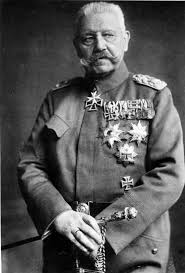
Paul von Hindenburg
Hindenburg was reluctant to do so. He considered Hitler a dangerous radical. But he allowed himself to be convinced that, by putting Hitler in the Cabinet, he could be “boxed in” and thus controlled.
So, on January 30, 1933, he appointed Adolf Hitler Chancellor of Germany.
On August 2, 1934, Hindenburg died, and Hitler immediately assumed the titles–and duties—of the offices of Chancellor and President. His rise to total power was now complete.
In 2015, Donald Trump declared his candidacy for President.
Now, consider this:
- The country was technically at war in the Middle East–but the fate of the United States was not truly threatened, as it had been during the Civil War.
- There was no draft; if you didn’t know someone in the military, you didn’t care about the casualties taking place.
- Nor were these conflicts—in Iraq and Afghanistan–imposing domestic shortages on Americans, as World War II had.
- Thanks to government loans from President Barack Obama, American capitalism had been saved from its own excesses during the George W. Bush administration.
- Employment was up. CEOs were doing extremely well.
- In contrast to the corruption that had plagued the administration of Ronald Reagan, whom Republicans idolize, there had been no such scandals during the Obama Presidency.
- Nor had there been any large-scale terrorist attacks on American soil—as there had on 9/11 under President George W. Bush.
Yet—not 17 months after announcing his candidacy for President—enough Americans fervently embraced Donald Trump to give him the most powerful position in the country and the world.
.jpg/220px-Donald_Trump_August_19,_2015_(cropped).jpg)
Donald Trump
The message of Barack Obama’s 2008 campaign had been one of hope—“Yes, We Can!”
That of Donald Trump’s campaign was one of hatred toward everyone who was not an avid Trump supporter: “No, You Can’t!”
Whites comprised the overwhelming majority of the audiences at Trump rallies. Not all were racists, but many of those who were advertised it on T-shirts: “MAKE AMERICA WHITE AGAIN.”
They knew that demographics were steadily working against them. Birthrates among non-whites were rising. By 2045, whites would make up less than 50 percent of the American population.
The 2008 election of the first black President had shocked these whites. His 2012 re-election had deprived them of the hope that 2008 had been an accident.
Then came 2016—and the possibility that a black President might actually be followed by a woman: Hillary Clinton. And the thought of a woman dictating to men was simply too much to bear.
On August 17, 2020, former First Lady Michelle Obama, speaking at the Democratic National Convention, summed up the legacies of the Obama and Trump administrations:
“When my husband left office with Joe Biden at his side, we had a record-breaking stretch of job creation. We’d secured the right to health care for 20,000,000 people. We were respected around the world, rallying our allies to confront climate change. And our leaders had worked hand-in-hand with scientists to help prevent an Ebola outbreak from becoming a global pandemic.
“Four years later, the state of this nation is very different. More than [170,000] people have died, and our economy is in shambles because of a virus that this president downplayed for too long. It has left millions of people jobless. Too many have lost their health care; too many are struggling to take care of basic necessities like food and rent
“Too many communities have been left in the lurch to grapple with whether and how to open our schools safely. Internationally, we’ve turned our back, not just on agreements forged by my husband, but on alliances championed by presidents like Reagan and Eisenhower.”
All of this should be remembered the next time an American blames Germans for their lethal embrace of Adolf Hitler.
ABC NEWS, ALGIER HISS, ALTERNET, AMERICABLOG, AP, BABY BOOMER RESISTANCE, BARACK OBAMA, BENJAMIN C. BRADLEE, BILL CLINTON, BLOOMBERG, BUZZFEED, CBS NEWS, CBSNEWS, CNN, CROOKS AND LIARS, DAILY KOZ, DANIEL ELLSBURG, DRUDGE REPORT, FACEBOOK, FIVETHIRTYEIGHT, FRENCH LEGION OF HONOR, HARPER’S MAGAZINE, JASON ROBARDS, JOHN F. KENNEDY, JOURNALISM, LYNDON B. JOHNSON, MEDIA MATTERS, MOTHER JONES, MOVEON, MSNBC, NBC NEWS, NEWSWEEK, NPR, PBS NEWSHOUR, PENTAGON PAPERS, POLITICO, POLITICUSUSA, RAW STORY, REPUBLICAN PARTY, REPUBLICANS, REUTERS, RICHARD NIXON, SALON, SEATTLE TIMES, SLATE, TALKING POINTS MEMO, THE ATLANTIC, THE CHICAGO SUN-TIMES, THE CHICAGO TRIBUNE, THE DAILY BEAST, THE DAILY BLOG, THE GUARDIAN, THE HILL, THE HUFFINGTON POST, THE LOS ANGELES TIMES, THE NATION, THE NEW REPUBLIC, THE NEW YORK TIMES, THE PENTAGON PAPERS, THE VILLAGE VOICE, THE WALL STREET JOURNAL, THE WASHINGTON POST, THE WASHINGTONPOST, THINKPROGRESS, TIME, TRUTHDIG, TRUTHOUT, TWITTER, TWO POLITICAL JUNKIES, U.S. NEWS & WORLD REPORT, UPI, USA TODAY, WATERGATE, WONKETTE, WORLD WAR 11
In Bureaucracy, History, Law Enforcement, Politics, Social commentary on August 14, 2020 at 12:11 am
August 9, 2020, marked an anniversary increasingly fewer Americans remember: Forty-six years to the day that Richard Milhous Nixon, 37th President of the United States, resigned in disgrace.
Benjamin Crowninshield Bradlee, the former executive editor of The Washington Post, remains virtually unknown outside the journalism profession. Yet his paper did more than any other to bring Nixon down.
Both Nixon and Bradlee were driven to succeed. And both achieved fame and power in doing so.
Bradlee made his name in journalism.
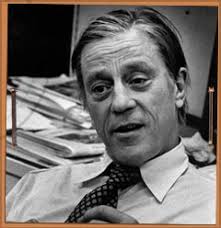
Benjamin C. Bradlee
Nixon made his name in politics.
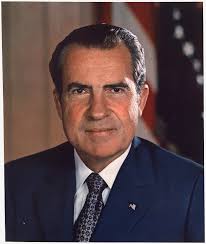
Richard Nixon
Both served in the United States Navy in the Pacific during World War II.
Both had strong connections to John F. Kennedy.
- Bradlee knew him as a friend and reporter during JFK’s years as a Senator and President.
- Nixon—as a Senator and later Vice President—knew Kennedy as a Senatorial colleague and as a political adversary, unsuccessfully contesting him for the Presidency in 1960.
For both, 1948 was a pivotal year.
- Bradlee joined The Washington Post as a reporter.
- Nixon, as a U.S. Representative, accused Algier Hiss, a former State Department official, of having been a Communist spy. Hiss was eventually convicted of perjury and sent to prison.
Both reached their positions of maximum power in 1968:
- Bradlee became executive editor of The Washington Post.
- Nixon became the 37th President of the United States.
But there was a fundamental difference between them:
- Bradlee made it his business to dig up the truth.
- Nixon made it his business to distort the truth—or to conceal it when distortion wasn’t enough.
Nixon and Bradlee had their first major clash in 1971 with the Pentagon Papers, a secret government study of how the United States became enmeshed in the Vietnam war.
- Although the Papers concerned events that had occurred during the Presidencies of John F. Kennedy and Lyndon B. Johnson, Nixon was outraged at their release by a former Defense Department analyst named Daniel Ellsberg.
- Bradlee, as executive editor of The Washington Post, successfully urged his publisher, Katherine Graham, to publish the papers after The New York Times was enjoined from doing so.
- The controversy ended when the Supreme Court ruled, 6–3, that the government failed to meet the burden of proof required for prior restraint of the press.
In 1972, Bradlee and Nixon squared off for their most important battle—a “third-rate burglary” of the Democratic National Committee headquarters at the Watergate Hotel.
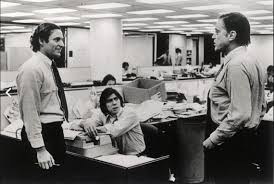
Bob Woodward, Carl Bernstein and Benjamin C. Bradlee
- Bradlee backed two young, aggressive reporters named Bob Woodward and Carl Bernstein, as they probed the burglary.
- This led to their discovering a series of illegal dirty tricks the Nixon re-election campaign had aimed at various Democratic opponents.
- The Post’s revelations led to the formation of the Senate Watergate Committee, the discovery of Nixon’s tape-recordings of his private—and criminal—conversations, and, finally, to Nixon’s own resignation in disgrace on August 9, 1974.
Bradlee became an advocate for education and the study of history.Nixon entered history as the only American President forced to resign from office.
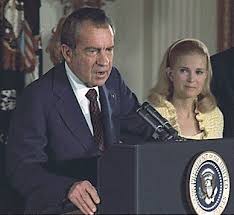
:Richard Nixon saying farewell at the White House
Bradlee became a media celebrity. Nixon became a media target.
- Bradlee was portrayed by Jason Robards in the hit 1976 film, All the President’s Men (for which he won an Academy Award for Best Supporting Actor).
- Nixon was portrayed—in Oliver Stone’s 1995 drama, Nixon—by Anthony Hopkins.
Bradlee and Nixon each published a series of books.
- Bradlee’s: That Special Grace and Conversations With Kennedy focused on his longtime friendship with John F. Kennedy; A Good Life: Newspapering and Other Adventures was Bradlee’s memoirs.
- Nixon’s: Among his 11 titles: Six Crises; RN: The Memoirs of Richard Nixon; The Real War; Leaders; Real Peace; No More Vietnams; Beyond Peace.
After leaving the White House, Nixon worked hard behind-the-scenes to refashion himself into an elder statesman of the Republican Party.
- Throughout the 1980s, he traveled the lecture circuit, wrote books, and met with many foreign leaders, especially those of Third World countries.
- He supported Ronald Reagan for president in 1980, making television appearances portraying himself as the senior statesman above the fray.
- For the rest of his life, he fought ferociously through the courts to prevent the release of most of the infamous “Watergate tapes” that chronicled his crimes as President.
- Only since his death have many of these been made public.
Nixon died on April 22, 1994.
- Eulogists at his funeral included President Bill Clinton and former Presidents Gerald Ford, Ronald Reagan and George H.W. Bush, California Governor Pete Wilson and the Reverend Billy Graham.
- Despite his efforts to portray himself as an elder statesman, Nixon could never erase his infamy as the only President to resign in disgrace.
- To this day, he remains a nonperson within the Republican Party.
Bradlee remained executive editor of The Washington Post until retiring in 1991. But he continued to serve as vice president-at-large until his death on October 21, 2014.
- In 2007, he received the French Legion of Honor, the highest award given by the French government, at a ceremony in Paris.
- In 2013, he was named as a recipient of the Presidential Medal of Freedom by President Barack Obama. He was presented the medal at a White House ceremony on November 20, 2013.
2016 PRESIDENTIAL CAMPAIGN, ABC NEWS, ADOLF HITLER, ALTERNET, AMERICABLOG, AP, ARMED SERVICES, ARTICLES OF IMPEACHMENT, BABY BOOMER RESISTANCE, BARACK OBAMA, BLOOMBERG, BUZZFEED, CBS NEWS, CHILE, CIA, CLAUS VON STAUFFENBERG, CNN, COLD WAR, CROOKS AND LIARS, CUBAN MISSILE CRISIS, DAILY KOZ, DONALD TRUMP, DRUDGE RETORT, EMOLUMENTS CLAUSE, FACEBOOK, FBI, FIVETHIRTYEIGHT, GEORGE FLOYD, GESTAPO, GUATEMALA, HARPER’S MAGAZINE, HUEY LONG, IMPEACHMENT, IRAN, JACOBO ARBENZ, JAMES B. COMEY, JAMES ROBART, JAMES SCHLESINGER, JAMES W. DOUGLASS, JEFF SESSIONS, JFK AND THE UNSPEAKABLE (BOOK), JOHN F. KENNEDY, JOHN KASICH, JOSEPH STALIN, JUSTICE DEPARTMENT, MARTIN NIEMOELLER, MEDIA MATTERS, MIKE PENCE, MOHAMMED MOSADDEGH, MOTHER JONES, MOVEON, MSNBC, MUSLIMS, NATIONAL SECURITY AGENCY, NAZI GERMANY, NBC NEWS, NEWSWEEK, NPR, PBS NEWSHOUR, POLITICO, POLITICUSUSA, RAW STORY, REPUBLICANS, REUTERS, RICHARD M. NIXON, SALON, SALVADOR ALLENDE, SEATTLE TIMES, SLATE, SOVIET UNION, TALKING POINTS MEMO, THE ATLANTIC, THE CHICAGO SUN-TIMES, THE CHICAGO TRIBUNE, THE DAILY BEAST, THE DAILY BLOG, THE GUARDIAN, THE HILL, THE HOLOCAUST, THE HUFFINGTON POST, THE JUDICIARY, THE LOS ANGELES TIMES, THE NATION, THE NEW REPUBLIC, THE NEW YORK TIMES, THE PRESS, THE SS, THE TWILIGHT ZONE, THE VILLAGE VOICE, THE WASHINGTON POST, THINKPROGRESS, THIRD REICH, TIME, TRUTHDIG, TRUTHOUT, TWILIGHT ZONE, TWITTER, TWO POLITICAL JUNKIES, U.S. NEWS & WORLD REPORT, UPI, USA TODAY, VLADIM PUTIN, WEST BERLIN, WEST GERMANY, WILLIAM BARR, WONKETTE, WORLD WAR 11
In Bureaucracy, History, Military, Politics, Social commentary on June 29, 2020 at 1:19 am
On July 20, 1944, members of the Wehrmacht high command failed to assassinate Adolf Hitler with a bomb hidden in a briefcase.
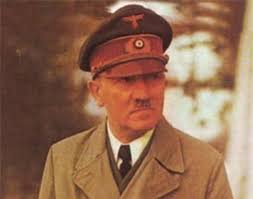
Adolf Hitler
Mass arrests quickly followed.
Among the first victims discovered and executed was the conspiracy’s leader, Colonel Claus von Stauffenberg. Standing before a makeshift firing squad at midnight, he cried: “Long live our sacred Germany!”
At least 7,000 persons were arrested by the Gestapo. According to records of the Fuehrer Conferences on Naval Affairs, 4,980 were executed.
Had the conspiracy succeeded, history would have turned out differently:
Thus, history can be altered by the appearance—or disappearance—of a single individual.
Which brings us back to Donald Trump.
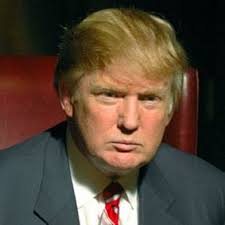
Donald Trump
Since becoming President on January 20, 2017, Trump has attacked or undermined one public or private institution after another, including:
- The Justice Department: Repeatedly attacked his Attorney General, Jeff Sessions, for not “protecting” him from the FBI’s investigating ties between the Trump 2016 Presidential campaign and Russian Intelligence agents. In 2018, Trump fired him.
- Ordered 46 Obama-era prosecutors to resign and fired the Inspectors General of five cabinet departments.
- Appointed William Barr as Attorney General in 2019 to protect him against investigations of his rampant criminality—both before and after he became President.
- The CIA: Refused to accept its findings—and those of the FBI and National Security Agency—that Russian Intelligence agents had intervened in the 2016 election to ensure his victory. Repeatedly defended Russian dictator Vladimir Putin’s denials of this.
- The FBI: Fired FBI Director James B. Comey for refusing to serve as Trump’s private secret police chief.
- Repeatedly violated the Emoluments Clause of the Constitution by using his position as President to further enrich himself.
- The military: Threatened to order the U.S. Armed Forces to violate the rights of Americans protesting police brutality and the killing of George Floyd.
- The press: Tweeted: “The FAKE NEWS media (failing @nytimes, @NBCNews, @ABC, @CBS, @CNN) is not my enemy, it is the enemy of the American People!” (“Enemy of the people” was a favorite charge made by Soviet dictator Joseph Stalin.)
- The judiciary: Repeatedly attacked Seattle U.S. District Judge James Robart, who halted Trump’s first Muslim travel ban.
On February 5, 2020, the Republican-dominated Senate—ignoring the overwhelming evidence against him—acquitted Donald Trump on two impeachment articles:
- Article 1: Abuse of Power: For pressuring Ukraine to assist him in his re-election campaign by smearing former Vice President Joseph Biden, his possible Democratic rival; and
- Article 2: Obstruction of Congress: For blocking testimony of subpoenaed witnesses and refusing to provide documents in response to House subpoenas in the impeachment inquiry.
With Republicans solidly backing Trump, that left only two other institutions capable of ending his reign of criminality and treason: The military and the Intelligence community.
Both have access to vast amounts of secret—and highly embarrassing—-information. And both are expert in leaking choice bits of this to favored members of the media.
If the military refused to carry out Trump’s orders, that would prove a genuine Constitutional crisis. But there would be a historical precedent for this.
In 1974, Secretary of Defense James Schlesinger feared that a Watergate-embattled President Richard M. Nixon might order the military to prevent his removal by impeachment. Schlesinger ordered all Armed Services branches to not accept any order from the White House unless countersigned by Schlesinger himself.
As for the CIA: This agency has been overthrowing heads of state for decades.
In 1953, its coup removed Mohammad Mosaddegh, the prime minister of Iran. In 1954, another coup did the same for Guatemalan president Jacobo Árbenz.
In 1970, Chile’s president, Salvador Allende, fell victim to a CIA-instigated plot.
Millions of Americans believe the CIA engineered the 1963 assassination of President John F. Kennedy. James W. Douglass’ 2008 book, JFK and the Unspeakable, charges that the CIA murdered Kennedy because he wanted to end the Cold War after the Cuban Missile Crisis.
* * * * *
Had Senate Republicans chosen patriotism over partisanship and convicted President Donald J. Trump for high crimes and misdemeanors—or had the military and/or the Intelligence community forced him out of office—history would have turned out differently:
- Trump’s vicious attacks on the press, judiciary and Intelligence community would have ended immediately.
- His efforts to subvert the Justice Department and Armed Services would have stopped.
- He would have faced vigorous prosecution for his litany of crimes—before and during his Presidency.
- Vladimir Putin would have lost his strongest ally in the United States.
- Vice President Mike Pence would have become President—but, burdened by his reputation as Trump’s #1 sycophant, might have been unable to win election in November, 2020; and
- Tarnished by their subservience to a discredited Trump, Republicans would have almost certainly lost the White House and the Senate.
2016 PRESIDENTIAL CAMPAIGN, ABC NEWS, ADOLF HITLER, ALTERNET, AMERICABLOG, AP, ARMED SERVICES, ARTICLES OF IMPEACHMENT, BABY BOOMER RESISTANCE, BARACK OBAMA, BLOOMBERG, BUZZFEED, CBS NEWS, CHILE, CIA, CLAUS VON STAUFFENBERG, CNN, COLD WAR, CROOKS AND LIARS, CUBAN MISSILE CRISIS, DAILY KOZ, DONALD TRUMP, DRUDGE RETORT, EMOLUMENTS CLAUSE, FACEBOOK, FBI, FIVETHIRTYEIGHT, GEORGE FLOYD, GESTAPO, GUATEMALA, HARPER’S MAGAZINE, HUEY LONG, IMPEACHMENT, IRAN, JACOBO ARBENZ, JAMES B. COMEY, JAMES ROBART, JAMES SCHLESINGER, JAMES W. DOUGLASS, JEFF SESSIONS, JFK AND THE UNSPEAKABLE (BOOK), JOHN F. KENNEDY, JOHN KASICH, JOSEPH STALIN, JUSTICE DEPARTMENT, MARTIN NIEMOELLER, MEDIA MATTERS, MIKE PENCE, MOHAMMED MOSADDEGH, MOTHER JONES, MOVEON, MSNBC, MUSLIMS, NATIONAL SECURITY AGENCY, NAZI GERMANY, NBC NEWS, NEWSWEEK, NPR, PBS NEWSHOUR, POLITICO, POLITICUSUSA, RAW STORY, REPUBLICANS, REUTERS, RICHARD M. NIXON, SALON, SALVADOR ALLENDE, SEATTLE TIMES, SLATE, SOVIET UNION, TALKING POINTS MEMO, THE ATLANTIC, THE CHICAGO SUN-TIMES, THE CHICAGO TRIBUNE, THE DAILY BEAST, THE DAILY BLOG, THE GUARDIAN, THE HILL, THE HOLOCAUST, THE HUFFINGTON POST, THE JUDICIARY, THE LOS ANGELES TIMES, THE NATION, THE NEW REPUBLIC, THE NEW YORK TIMES, THE PRESS, THE SS, THE TWILIGHT ZONE, THE VILLAGE VOICE, THE WASHINGTON POST, THINKPROGRESS, THIRD REICH, TIME, TRUTHDIG, TRUTHOUT, TWILIGHT ZONE, TWITTER, TWO POLITICAL JUNKIES, U.S. NEWS & WORLD REPORT, UPI, USA TODAY, VLADIM PUTIN, WEST BERLIN, WEST GERMANY, WILLIAM BARR, WONKETTE, WORLD WAR 11
In Bureaucracy, History, Medical, Military, Politics, Social commentary on June 26, 2020 at 1:23 pm
On July 20, 1944, Colonel Claus Schenk von Stuaffenberg tried to assassinate Adolf Hitler.
He had served with the Wehrmacht in Poland (1939), France (1940) and the Soviet Union (1941).
While serving in Tunisa, he was seriously wounded on April 7, 1943, when Allied fighters strafed his vehicle. He lost his left eye, right hand and two fingers of his left hand after surgery.
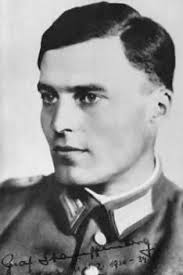
Colonel Claus Schenk von Stuaffenberg
Nevertheless, he now acted as the prime mover for the conspiracy among a growing number of German high command officers to arrest or assassinate Germany’s Fuehrer.
For most of these officers, the motive was craven: The “happy time’ of German victories was over. Germany was losing the war it had launched on the world in 1939–and now they feared the worst.
This was especially true now that the numerically superior forces of the Soviet Union had gone onto the offensive.
For Stauffenberg, there was another reason: His disgust at the horrors he had seen committed by his fellow Wehrmacht soldiers upon defenseless POW’s and civilians in Russia.
Thus, Stauffenberg—more than many Germans–knew firsthand the vengeance his country could expect if the “Thousand-Year Reich” fell.
Something must be done, he believed, to prove to the world that not all Germans—even members of the Wehrmacht—were criminals.
Most of the conspirators wanted to arrest Hitler and surrender to British and American forces—well before the much-feared Russians gained a toehold in Germany.
Stauffenberg didn’t want to arrest Hitler; he wanted to kill him. A live Hitler might eventually be rescued by his Nazi colleagues.
But Hitler was a closely-guarded target. He was surrounded by fanatical bodyguards who were expert marksmen. He often wore a bulletproof vest and a cap lined with three pounds of laminated steel.
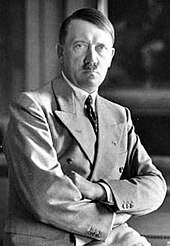
Adolf Hitler
Bundesarchiv, Bild 146-1990-048-29A / CC-BY-SA 3.0 [CC BY-SA 3.0 de (https://creativecommons.org/licenses/by-sa/3.0/de/deed.en)%5D
But his single greatest protection–he claimed—was an instinct for danger. He would suddenly change his schedule—to drop in where he was least expected. Or suddenly depart an event where he was expected to stay a long time.
On November 9, 1939, this instinct saved his life. He was expected to give a long speech at a Munich beer hall before the “old Fighters” of his brown-shirted storm troopers.
Instead, he suddenly cut short his speech and left the beer hall. Forty-five minutes later, a bomb exploded inside a pillar—before which Hitler had been speaking.
Since then, a series of other assassination attempts had been made against Hitler. All of them involved time-bombs. And all of the would-be assassins were members of the German General Staff.
In one case, a bomb secretly stashed aboard Hitler’s plane failed to explode. In another, an officer who had a bomb strapped to himself unexpectedly found his scheduled meeting with Hitler called off. He had to rush into a bathroom to defuse the bomb before it went off.
So now it was the turn of von Stauffenberg. He would carry his bomb—hidden in a briefcase—into a “Hitler conference” packed with military officers.
But Stauffenberg didn’t intend to be a suicide bomber. He meant to direct the government that would replace that of the Nazis.
His bomb—also rigged with a time-fuse—would be left in the conference room while he found an excuse to leave. After the explosion, he would phone one of his fellow conspirators with the news.
Then, the coup—“Operation Valkyrie”—would be on.
Anti-Nazi conspirators would seize control of key posts of the government. The British and Americans would then be informed of Germany’s willingness to surrender. Provided, of course, that the vengeance-seeking Russians did not have a say in its postwar future.
The Wehrmacht and Schutzstaffel (SS) had killed millions of Russians. Many had died in combat. Others had been murdered as captives. Still more had been allowed to die by starvation and exposure to the notorious Russian winter.
So the Germans—both Nazi and anti-Nazi—knew what they could expect if soldiers of the Soviet Union reached German soil.
On July 20, 1944, Stauffenberg appeared at Hitler’s well-guarded military headquarters in East Prussia. Like all his other outposts, Hitler had named it—appropriately enough—“Wolf’s Lair.”

“Wolf’s Lair”
Stauffenberg entered the large, concrete building while the conference was in session. He placed his yellow briefcase next to Hitler—who was standing with his generals at a heavy oaken table. Then he excused himself to take an “urgent” phone call.
After Stauffenberg left the room, Colonel Heinz Brandt, standing next to Hitler, found the briefcase blocking his legs. So he moved it—to the other side of the heavy oaken support, partially shielding Hitler from the blast..
At 12:42 p.m. on July 20, 1944, Stauffenberg’s briefcase bomb erupted.
Brandt died, as did two other officers and a stenographer.
Hitler not only survived, but the plotters failed to seize the key broadcast facilities of the Reich.
This allowed Hitler to make a late-night speech to the nation, revealing the failed plot and assuring Germans that he was alive. And he swore to flush out the “traitorous swine” who had tried to kill him.
He soon proved as bad as his word.
2016 PRESIDENTIAL CAMPAIGN, ABC NEWS, ADOLF HITLER, ALTERNET, AMERICABLOG, AP, ARMED SERVICES, ARTICLES OF IMPEACHMENT, BABY BOOMER RESISTANCE, BARACK OBAMA, BLOOMBERG, BUZZFEED, CBS NEWS, CHILE, CIA, CLAUS VON STAUFFENBERG, CNN, COLD WAR, CROOKS AND LIARS, CUBAN MISSILE CRISIS, DAILY KOZ, DANA ANDREWS, DONALD TRUMP, DRUDGE RETORT, EMOLUMENTS CLAUSE, FACEBOOK, FBI, FIVETHIRTYEIGHT, GEORGE FLOYD, GESTAPO, GUATEMALA, HARPER’S MAGAZINE, HUEY LONG, IMPEACHMENT, IRAN, JACOBO ARBENZ, JAMES B. COMEY, JAMES ROBART, JAMES SCHLESINGER, JAMES W. DOUGLASS, JEFF SESSIONS, JFK AND THE UNSPEAKABLE (BOOK), JOHN F. KENNEDY, JOHN KASICH, JOSEPH STALIN, JUSTICE DEPARTMENT, MARTIN NIEMOELLER, MEDIA MATTERS, MIKE PENCE, MOHAMMED MOSEDDEGH, MOTHER JONES, MOVEON, MSNBC, NATIONAL SECURITY AGENCY, NAZI GERMANY, NBC NEWS, NEWSWEEK, NPR, PBS NEWSHOUR, POLITICO, POLITICUSUSA, RAW STORY, REPUBLICANS, REUTERS, SALON, SALVADOR ALLENDE, SEATTLE TIMES, SLATE, SOVIET UNION, SS, SUPREME COURT, TALKING POINTS MEMO, THE ATLANTIC, THE CHICAGO SUN-TIMES, THE CHICAGO TRIBUNE, THE DAILY BEAST, THE DAILY BLOG, THE GUARDIAN, THE HILL, THE HOLOCAUST, THE HUFFINGTON POST, THE JUDICIARY, THE LOS ANGELES TIMES, THE NATION, THE NEW REPUBLIC, THE NEW YORK TIMES, THE PRESS, THE SS, THE VILLAGE VOICE, THE WASHINGTON POST, THINKPROGRESS, THIRD REICH, TIME, TRUTHDIG, TRUTHOUT, TWILIGHT ZONE, TWITTER, TWO POLITICAL JUNKIES, U.S. NEWS & WORLD REPORT, UPI, USA TODAY, VLADIM PUTIN, WEST BERLIN, WEST GERMANY, WILLIAM BARR, WONKETTE, WORLD WAR 11
In Bureaucracy, History, Medical, Military, Politics, Social commentary on June 25, 2020 at 12:23 am
“When Fascism comes to America, it will be called anti-Fascism.”
–Huey Long, Louisiana Governor/Senator
In the Twilight Zone episode, “No Time Like the Past,” Paul Driscoll (Dana Andrews), a scientist in early 1960s America, uses a time machine to visit Nazi Germany on the eve of World War II.
He’s rented a motel room overlooking the balcony from where the Fuehrer, Adolf Hitler will soon make a speech. And he’s eager to watch that speech—through the lens of a telescopic-sighted rifle.
Just as he’s about to pull the trigger, there’s a knock at his door–by the maid. Driscoll hustles her out as soon as possible, then once again picks up his rifle. He—and viewers—can once again see Hitler through the cross-hairs of his weapon.
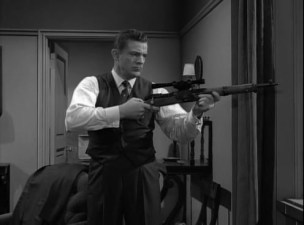
Paul Driscoll prepares to shoot Adolf Hitler
But instead of the anticipated shot, there’s another knock at his door—his time by the black-uniformed secret police, the SS. Driscoll knows the game is up, and disappears into the present just as the thugs break down his door.
And the audience is left to ponder how different the world would have been if Driscoll—or someone in Nazi Germany—had succeeded in assassinating the man whose wars would wipe out the lives of 50 million men, women and children around the globe.
One 2016 Republican candidate for President dared to invoke the menace of Nazi Germany in warning of the dangers of a Donald Trump Presidency. And to argue that Americans could prevent that past from returning.
In November, 2015, John Kasich, the governor of Ohio, was peddling a message of creating jobs, balancing the Federal budget and disdain for Washington, D.C.
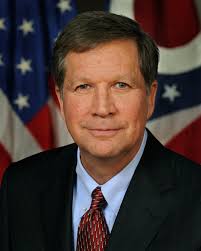
John Kasich
But he remained far behind in the polls, dropping 50% in support in just one month—from September to October. Meanwhile, Trump, the New York billionaire developer, was being backed by 25% of Republican primary voters.
So, with nothing to lose, Kasich decided to take off the gloves. He invoked the “N” word for Republicans: Nazi.
He authorized the creation of a TV ad that opened with ominous music—and the face of a snarling Donald Trump.
“I would like anyone who is listening to consider some thoughts that I’ve paraphrased from the words of German pastor Martin Niemoeller.”
The voice belonged to Tom Moe, a retired colonel in the U.S. Air Force–and a former Vietnam prisoner-of-war.
“You might not care if Donald Trump says Muslims must register with the government, because you’re not one,” continued Moe.
“And you might not care if Donald Trump says he’s going to round up all the Hispanic immigrants, because you’re not one.
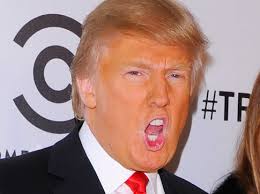
Donald Trump
“And you might not care if Donald Trump says it’s OK to rough up black protesters, because you’re not one.
“And you might not care of Donald Trump wants to suppress journalists, because you’re not one.
“But think about this:
“If he keeps going, and he actually becomes President, he might just get around to you. And you’d better hope that there’s someone left to help you.”
Martin Niemoeller (1892–1984) was a prominent Protestant pastor who had commanded a U-boat during World War 1. He became a bitter public foe of Adolf Hitler.
A staunch anti-Communist, he had initially supported the Nazis as Germany’s only hope of salvation against the Soviet Union.
But when the Nazis made the church subordinate to State authority, Niemoeller created the Pastors’ Emergency League to defend religious freedom.
For his opposition to the Third Reich, Niemoeller spent seven years in concentration camps.
With the collapse of the Reich in 1945, he was freed—and elected President of the Protestant church in Hesse and Nassau in 1947. During the 1960s, he was a president of the World Council of Churches.
He is best remembered for his powerful condemnation of the failure of Germans to protest the increasing oppression of the Nazis:
First they came for the Communists, but I was not a Communist, so I did not speak out.
Then they came for the Socialists, but I was not a Socialist, so I did not speak out.
Then they came for the trade unionists, but I was not a trade unionist, so I did not speak out.
Then they came for the Jews, but I was not a Jew, so I did not speak out.
And when they came for me, there was no one left to speak out for me.
Neither “Adolf Hitler” nor “Nazi Party” was mentioned during the one-minute Kassich video. But a furious Trump threatened to sue Kasich if he could find find anything “not truthful” within the ad.
Apparently he couldn’t find anything “not truthful,” because he never sued.
So threatened the man who had called Mexican immigrants “rapists” and accused President Barack Obama of being a Muslim and an illegal alien.
The Kasich ad was the darkest attack made against Trump by any candidate—Republican or Democrat. And it raises a disturbing question:
If Donald Trump proved to be America’s Adolf Hitler, would there be an American Claus von Stauffenberg?
Colonel Claus Schenk von Stuaffenberg was the German army officer who, on July 20, 1944, tried to assassinate Adolf Hitler.
2016 PRESIDENTIAL ELECTION, 2020 PRESIDENTIAL ELECTION, ABC NEWS, ADAM SCHIFF, ADOLF HITLER, ALTERNET, AMERICABLOG, AP, ARMENIA, BABY BOOMER RESISTANCE, BBC, BUZZFEED, CBS NEWS, CHARLES PIERCE, CNN, CONVERSATION WITH AN AMERICAN WRITER (POEM), CORY GARDNER, CORY GRADINER, CROOKS AND LIARS, DAILY KOS, DAILY KOZ, DIMITRI SHOSTAKOVICH, DONALD TRUMP, ESQUIRE MAGAZINE, FACEBOOK, FBI, FIVETHIRTYEIGHT, FOREIGN SERVICE, GREAT TERROR, HOUSE INTELLIGENCE COMMITTEE, HOUSE OF REPRESENTATIVES, HUNTER BIDEN, JAMES COMEY, JEFF SESSIONS, JOE BIDEN, JONI ERNST, JOSEPH STALIN, KEITH SCHILLER, KYRGYZSTAN, MARIA YOVANOVITCH, MARIE YOVANOVICH, MARTHA MCSALLY, MICHAEL ATKINSON, MIKE FLYNN, MIKHAIL TUKHACHEVESKY, MOTHER JONES, MOVEON, MSNBC, NAZI GERMANY, NBC NEWS, NEWSWEEK, NICCOLO MACHIAVELLI, NIKITA KHRUSHCHEV, NIKOLAI ZHILAYEV, NPR, PBS NEWSHOUR, POLITICO, POLITICUSUSA, RAW STORY, REUTERS, ROBERT MUELLER III, ROD ROSENSTEIN, RUDOLPH GIULIANI, RUDY GIULIANI, RUSSIAN ESPIONAGEky, SALON, SEATTLE TIMES, SENATE INTELLIGENCE COMMITTEE, SERGEY KISLYAK, SERGEY LAVOV, SLATE, SOVIET UNION, STATE DEPARTMENT, TALKING POINTS MEMO, THE ATLANTIC, THE CHICAGO SUN-TIMES, THE CHICAGO TRIBUNE, THE DAILY BEAST, THE DAILY BLOG, THE DISCOURSES, THE GUARDIAN, THE HILL, THE HUFFINGTON POST, THE LOS ANGELES TIMES, THE NATION, THE NEW YORK TIMES, THE WALL STREET JOURNAL, THE WASHINGTON POST, THINKPROGRESS, THOM TILLIS, TIME, TRUTHDIG, TWITTER, U.S. NEWS & WORLD REPORT, UKRAINE, UPI, USA TODAY, WEHRMACHT, WORLD WAR 11, YEVGENEY YEVTUSHENKO
In Bureaucracy, History, Medical, Military, Politics, Social commentary on April 10, 2020 at 12:04 am
On March 30, Captain Brett Crozier, commanding the nuclear aircraft carrier USS Theodore Roosevelt, sent a four-page internal letter to multiple Naval officials, pleading to have the majority of the crew evacuated and quarantined on shore in Guam.
The reason: Dozens of his crew members had been stricken with the deadly Coronavirus. And the ship’s cramped compartments and narrow passageways made “social distancing” impossible.
On March 31, someone leaked the letter to the San Francisco Chronicle, which published it.
On April 1, the Navy ordered the aircraft carrier evacuated.
On April 2, Crozier was relieved of command by acting United States Secretary of the Navy Thomas Modly.
Not content to fire Crozier, Modly visited the ship and stated over its public address system: “If he didn’t think, in my opinion, that this information wasn’t going to get out to the public, in this day and information age that we live in, then he was either (a) too naïve or too stupid to be a commanding officer of a ship like this. The alternative is that he did this on purpose.
“It was a betrayal of trust with me, with his chain of command, with you.”
Thus, for Modly, Crozier’s “crime” was making public what everyone on the ship and countless Navy officials knew.
President Donald Trump echoed Modly’s attitude: “The letter was a five-page letter from a captain, and the letter was all over the place. That’s not appropriate.
“I thought it was terrible, what he did, to write a letter. I mean, this isn’t a class on literature. This is a captain of a massive ship that’s nuclear powered. And he shouldn’t be talking that way in a letter.”
But Crozier wasn’t the only victim of Trump’s “integrity-is-treason” mindset that week.
On April 3, Trump informed Congress that he was removing Michael Atkinson, the inspector general who alerted Congress to his extortion attempt against Volodymyr Zelensky, the president of Ukraine, on July 25, 2019.
Trump told Zelensky: Find embarrassing “dirt” on former Vice President Joseph Biden and his son, Hunter.
Hunter had had business dealings in Ukraine. And Joe Biden might be Trump’s Democratic opponent for the White House in 2020.
To underline the seriousness of his “request,” Trump had withheld $400 million in promised military aid to Ukraine, which is facing an increasingly aggressive Russia.
Reporters asked Congressional Republicans: “Is it appropriate for President Donald Trump to ask a foreign government to investigate his political opponent?”
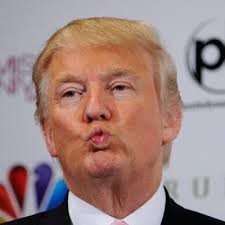
Donald Trump
And those Republicans refusing to answer or condemn such behavior:
Iowa Senator Joni Ernst: “We don’t have all the facts, we don’t know what is accurate. We have a picture painted by the media and we don’t know if that picture is accurate.”
Arizona Senator Martha McSally: “I think what we’ve seen out of [Speaker of the House Nancy] Pelosi and [House Intelligence Committee Chairman Adam] Schiff and others in the House is quite partisan and I think people want us to take a serious look at this and not have it be just partisan bickering going on.”
North Carolina Senator Thom Tillis: “I’m going to leave it to the President to make that decision” on whether his actions were appropriate.
The reason for Republicans’ deafening silence: They didn’t want to anger Trump or his fanatical supporters. And they feared losing their Congressional seats and the perks that go with them.
Michael Atkinson, the Inspector General of the Intelligence Community, showed no such fear.
After the September 11, 2001 attacks on New York and Washington, Atkinson left private law practice and worked for the United States Department of Justice for 15 years.
In 2017, President Trump nominated him as Inspector General of the Intelligence Community. The Senate confirmed him in 2018.
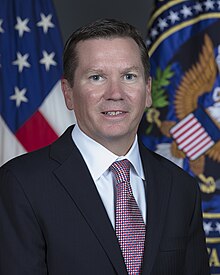
Michael Atkinson
Atkinson, informed by an Intelligence whistleblower of Trump’s extortion attempt, was appalled. He believed that he was obligated by law to report it to the House and Senate Intelligence Committees.
Trump was ultimately impeached by the Democratic-controlled House of Representatives for abusing his office for personal political gain and obstruction of Congress.
But a Republican-controlled Senate—which refused to hear witnesses or act on the overwhelming evidence—quickly exonerated him.
In his April 3 letter to the leaders of the House and Senate Intelligence Committees, Trump wrote: “This is to advise that I am exercising my power as President to remove from office the Inspector General of the Intelligence Community.
“it is vital that I have the fullest confidence in the appointees serving as Inspectors General. That is no longer the case with regard to this Inspector General.”
Clearly, there is a reason why Trump no longer has “the fullest confidence” in Atkinson: He can’t depend on “this Inspector General” to conceal and support any future crimes he might commit.
In his 1960 poem, “Conversation With an American Writer,” the Russian poet, Yevgeney Yevtushenko spoke for those Russians who had maintained their integrity in the face of Stalinist terror:
“You have courage,” they tell me.
It’s not true. I was never courageous.
I simply felt it unbecoming
to stoop to the cowardice of my colleagues.
Unfortunately, the same cannot be said of Republicans in the United States Senate and House of Representatives in the face of Trump terror.
2020 PRESIDENTIAL CAMPAIGN, ABC NEWS, ADOLF HITLER, ALTERNET, AMERICABLOG, AP, BABY BOOMER RESISTANCE, BBC, BRETT CROZIER, BUZZFEED, CBS NEWS, CNN, CONVERSATION WITH AN AMERICAN WRITER (POEM), COVID-19, CROOKS AND LIARS, DAILY KOS, DAILY KOZ, DIMITRI SHOSTAKOVICH, DONALD TRUMP, ESQUIRE MAGAZINE, FACEBOOK, FBI, FIVETHIRTYEIGHT, GREAT TERROR, HOUSE INTELLIGENCE COMMITTEE, HOUSE OF REPRESENTATIVES, HUNTER BIDEN, JOE BIDEN, JONI ERNST, JOSEPH STALIN, MARTHA MCSALLY, MICHAEL ATKINSON, MIKE FLYNN, MIKHAIL TUKHACHEVESKY, MOTHER JONES, MOVEON, MSNBC, NAZI GERMANY, NBC NEWS, NEWSWEEK, NICCOLO MACHIAVELLI, NIKITA KHRUSHCHEV, NIKOLAI ZHILAYEV, NPR, PBS NEWSHOUR, POLITICO, POLITICUSUSA, RAW STORY, REUTERS, ROD ROSENSTEIN, SALON, SEATTLE TIMES, SENATE INTELLIGENCE COMMITTEE, SERGEY KISLYAK, SERGEY LAVOV, SLATE, SOVIET UNION, TALKING POINTS MEMO, THE ATLANTIC, THE CHICAGO SUN-TIMES, THE CHICAGO TRIBUNE, THE DAILY BEAST, THE DAILY BLOG, THE GUARDIAN, THE HILL, THE HUFFINGTON POST, THE LOS ANGELES TIMES, THE NATION, THE NEW YORK TIMES, THE WALL STREET JOURNAL, THE WASHINGTON POST, THINKPROGRESS, THOM TILLIS, THOMAS MODLY, TIME, TRUTHDIG, TWITTER, U.S. NEWS & WORLD REPORT, UKRAINE, UNITED STATES NAVY, UPI, USA TODAY, USS THEODORE ROOSEVELT, VOLODMYR ZELENSKY, WEHRMACHT, WORLD WAR 11, YEVGENEY YEVTUSHENKO
In Bureaucracy, History, Military, Politics, Social commentary on April 9, 2020 at 12:09 am
Nikolai Sergeyvich Zhilayev (pronounced Zill-lay-ev) was a Russian musicologist and the teacher of several 20th-century Russian composers.
Among these: Dimitri Shostakovich (September 25, 1906 – August 9, 1975)
Among his friends—to his ultimate misfortune—was Mikhail Nikolayevich Tukhachevsky, the former military hero now falsely condemned and executed as a traitor by Soviet dictator Joseph Stalin.
In 1938, Zhilayev (November 18, 1881 – January 20, 1938) also became a casualty of what has become known as The Great Terror.
In his posthumously-published memoirs, Testimony, Shostakovich, his pupil and friend, described how Zhilayev faced his end with a calmness that awed even the NKVD (the predecessor to the KGB) secret police sent to arrest him.
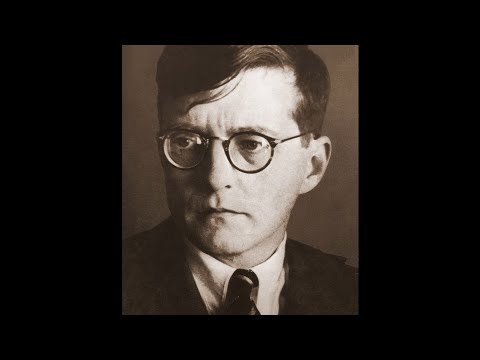
Dimitri Shostakovich
“He had a large picture of Tukhachevsky in his room, and after the announcement that Tukhachevsky had been shot as a traitor to the homeland, Zhilayev did not take the picture down.
“I don’t know if I can explain how heroic a deed that was….As soon as the next poor soul was declared an enemy of the people, everyone destroyed in a panic everything connected with that person….
“And naturally, photographs flew into the fire first, because if someone informed on you, reported that you had a picture of an enemy of the people, it meant certain death.
“Zhilayev wasn’t afraid. When they came for him, Tukhachevsky’s prominently hung portrait amazed even the executioners.”
“What, it’s still up?” one of the secret police asked.
“The time will come,” Zhilayev replied, “when they’ll erect a monument to him.”
As, in fact, has happened.
Meanwhile, Stalin has been universally condemned as one of history’s greatest tyrants.
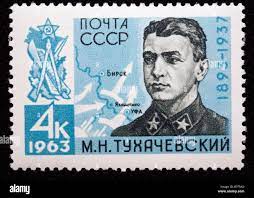
Mikhail Tukhachevsky appears on a 1963 Soviet Union postage stamp
Third hero—Brett Crozier, the former commanding officer of the aircraft carrier USS Theodore Roosevelt.
Graduating from the United States Naval Academy at Annapolis in 1992, he received his Master’s Degree in National Security and Strategic Studies from the Naval War College in 2007.
From 2017 to 2018 he commanded the USS Blue Ridge. In November, 2019, he was given command of the nuclear aircraft carrier USS Theodore Roosevelt.
On March 24, 2020, reports circulated that three members of the crew had tested positive for COVID-19. The next day the number of stricken sailors increased to eight. A few days later, it was “dozens.” The sailors reportedly became ill at sea, two weeks after a port call at Danang, Vietnam.
The initial cases were airlifted to a military hospital. The Roosevelt was ordered to Guam. After the ship docked on March 27, 2020, all 5,000 aboard were ordered to be tested for the virus. But only about 100 stricken sailors were allowed to leave the ship. The rest remained on board.
On March 30, Crozier emailed a four-page internal letter to multiple Naval officials, pleading to have the majority of the crew evacuated and quarantined on shore. Given the crowded sleeping quarters and narrow passageways of the vessel, Crozier wrote that it was impossible to follow social distancing and quarantine procedures:
“This will require a political solution but it is the right thing to do. We are not at war. Sailors do not need to die. If we do not act now, we are failing to properly take care of our most trusted asset—our Sailors….
“This is a necessary risk. Keeping over 4,000 young men and women on board the TR is an unnecessary risk and breaks faith with those Sailors entrusted to our care.”
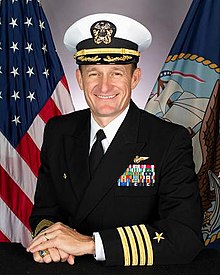
Brett Crozier
Crozier sent his letter via a non-secure, unclassified email to 20 to 30 recipients, as well as the captain’s immediate chain of command. He reportedly believed that his immediate supervisor would not allow him to send it.
And his superior later confirmed that he would not have allowed Crozier to send it.
On March 31, someone leaked the letter to the San Francisco Chronicle, which published it.
On April 1, the Navy ordered the aircraft carrier evacuated. A a skeleton crew of 400 remained aboard to maintain the nuclear reactor, the fire-fighting equipment, and the ship’s galley.
On April 2, Crozier was relieved of command by acting United States Secretary of the Navy Thomas Modly.
By that time, about 114 crew members—out of a total of around 4,000—reportedly tested positive for COVID-19.
As Crozier disembarked, sailors loudly saluted him with a standing ovation: “Cap-tain Cro-zier!”
Modly claimed that Crozier’s letter “raised alarm bells unnecessarily. It undermines our efforts and the chain of command’s efforts to address this problem, and creates a panic and this perception that the Navy’s not on the job, that the government’s not on the job, and it’s just not true.”
Actually, the Trump administration had frittered away January and February, with President Donald Trump giving multiple—and misleading—press conferences. In these, he played down the dangers of COVID-19, saying that “we’re on top of it”—even as the virus spread across the country.
“It was a betrayal. And I can tell you one other thing: because he did that he put it in the public’s forum and it is now a big controversy in Washington, DC,” continued Modly. [Italics added]
This was the United States Navy under President Donald Trump—who throws “betrayal” and “treason” at anyone who dares reveal the truth about institutional crimes and failures.
2020 PRESIDENTIAL CAMPAIGN, ABC NEWS, ADAM SCHIFF, ADOLF HITLER, ALTERNET, AMERICABLOG, AP, BABY BOOMER RESISTANCE, BBC, BRETT CROZIER, BUZZFEED, CBS NEWS, CHARLES PIERCE, CNN, CONVERSATION WITH AN AMERICAN WRITER (POEM), COVID-19, CROOKS AND LIARS, DAILY KOS, DAILY KOZ, DIMITRI SHOSTAKOVICH, DONALD TRUMP, ESQUIRE MAGAZINE, FACEBOOK, FBI, FIVETHIRTYEIGHT, FOREIGN SERVICE, GREAT TERROR, HOUSE INTELLIGENCE COMMITTEE, HOUSE OF REPRESENTATIVES, HUNTER BIDEN, JOE BIDEN, JONI ERNST, JOSEPH STALIN, MARTHA MCSALLY, MICHAEL ATKINSON, MIKHAIL TUKHACHEVESKY, MOTHER JONES, MOVEON, MSNBC, NAZI GERMANY, NBC NEWS, NEWSWEEK, NICCOLO MACHIAVELLI, NIKITA KHRUSHCHEV, NIKOLAI ZHILAYEV, NPR, PBS NEWSHOUR, POLITICO, POLITICUSUSA, RAW STORY, REUTERS, SALON, SEATTLE TIMES, SENATE INTELLIGENCE COMMITTEE, SLATE, SOVIET UNION, TALKING POINTS MEMO, THE ATLANTIC, THE CHICAGO SUN-TIMES, THE CHICAGO TRIBUNE, THE DAILY BEAST, THE DAILY BLOG, THE DISCOURSES, THE GUARDIAN, THE HILL, THE HUFFINGTON POST, THE LOS ANGELES TIMES, THE NATION, THE NEW YORK TIMES, THE WALL STREET JOURNAL, THE WASHINGTON POST, THINKPROGRESS, THOM TILLIS, THOMAS MODLY, TIME, TRUTHDIG, TWITTER, U.S. NEWS & WORLD REPORT, UKRAINE, UNITED STATES NAVY, UPI, USA TODAY, USS THEODORE ROOSEVELT, VOLODMYR ZELENSKY, WEHRMACHT, WORLD WAR 11, YEVGENEY YEVTUSHENKO
In Bureaucracy, History, Military, Politics, Social commentary on April 8, 2020 at 12:08 am
…A truly great man is ever the same under all circumstances. And if his fortune varies, exalting him at one moment and oppressing him at another, he himself never varies, but always preserves a firm courage, which is so closely interwoven with his character that everyone can readily see that the fickleness of fortune has no power over him.
The conduct of weak men is very different. Made vain and intoxicated by good fortune, they attribute their success to merits which they do not possess. And this makes them odious and insupportable to all around them. And when they have afterwards to meet a reverse of fortune, they quickly fall into the other extreme, and become abject and vile.
—Niccolo Machiavelli, The Discourses
Four heroes, three villains.
Two of the heroes are Russians; two are Americans.
The villains: One Russian (actually, Georgian); two American.
First up—in order of disappearance: Mikhail Nikolayevich Tukhachevsky (pronounced too-ka-chev-sky)
Tukhachevsky (February 4, 1893 – June 12, 1937) was a leading Soviet military leader and theoretician from 1918 to 1937.
He commanded the Soviet Western Front during the Russian-Polish War (1920-21) and served as Chief of Staff of the Red Army (1925-1928).
He fought to modernize Soviet armament, as well as develop airborne, aviation and mechanized forces. Almost singlehandedly, he created the theory of deep operations for Soviet forces.

Mikhail Tukhachevsky
All of these innovations would reap huge dividends when the Soviet Union faced the lethal fury of Adolf Hitler’s Wehrmacht.
In 1936, Tukhachevsky warned Soviet dictator Joseph Stalin that Nazi Germany might attack without warning—and ignite a long and murderous war.
Stalin—the son of a Georgian cobbler—resented Tukhachevsky’s coming from a noble family. A monumental egomaniac, he also hated that Tukhachevesky’s fame rivaled his own.
Warned of the approaching German danger, Stalin shouted: “What are you trying to do—frighten Soviet authority?”
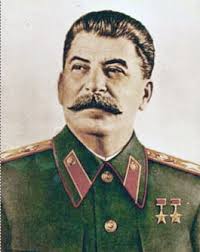
Joseph Stalin
The attack that Tukhachevsky warned against came five years later—on June 22, 1941, leaving at least 26 million Russians dead.
But Tukhachevsky wasn’t alive to command a defense.
The 1930s were a frightening and dangerous time to be alive in the Soviet Union. In 1934, Stalin, seeing imaginary enemies everywhere, ordered a series of purges that lasted right up to the German invasion.
An example of Stalin’s paranoia occurred one day while the dictator walked through the Kremlin corridors with Admiral Ivan Isakov. Officers of the NKVD (the predecessor to the KGB) stood guard at every corner.
“Every time I walk down the corridors,” said Stalin, “I think: Which one of them is it? If it’s this one, he will shoot me in the back. But if I turn the corner, the next one can shoot me in the face.”
In 1937-38, the Red Army fell prey to Stalin’s paranoia.
Its victims included:
- Three of five marshals (five-star generals);
- Thirteen of 15 army commanders (three- and four-star generals);
- Fifty of 57 army corps commanders; and
- One hundred fifty-four out of 186 division commanders.
And heading the list of those marked for death was Marshal Mikhail Tukhachevsky.
Arrested on May 22, 1937, he was interrogated and tortured. As a result, he “confessed” to being a German agent plotting to overthrow Stalin and seize power.
On his confession, which survives in the archives, his bloodstains can clearly be seen.
On June 11, 1937, the Soviet Supreme Court convened a special military tribunal to try Tukhachevsky and eight generals for treason.
It was a sham: The accused were denied defense attorneys, and could not appeal the verdict—-which was foregone: Death.
In a Russian version of poetic justice, five of the eight generals who served as Tukhachevsky’s judges were themselves later condemned and executed as traitors.
Within hours of the verdict, Tukhachevsky was summoned from his cell and shot once in the back of the head.
From 1937 until 1956, Tukhachevsky was officially declared a traitor and fifth-columnist.
Then, on February 25, 1957, Soviet Premier Nikita Khrushchev delivered his bombshell “Secret Speech” to the 20th Congress of the Communist Party of the Soviet Union.
In this, he denounced Stalin (who had died in 1953) as a ruthless tyrant responsible for the slaughter of millions of innocent men, women and children. He condemned Stalin for creating a “personality cult” around himself, and for so weakening the Red Army that Nazi Germany was able to easily overrun half of the Soviet Union from 1941 to 1943.
On January 31, 1957, Tukhachevsky and his co-defendants were declared innocent of all charges and were “rehabilitated.”
Today, he is once again—rightly—considered a Russian hero and military genius. And Stalin is universally—and rightly—seen as a blood-stained tyrant.
Next hero: Nikolai Sergeyvich Zhilayev (pronounced Zill-lay-ev)
Zhilayev (November 18, 1881 – January 20, 1938) was a Russian musicologist and the teacher of several 20th-century Russian composers. Among these: Dimitri Shostakovich.
Zhilayev, a member of the Russian Academy of Art-Sciences, taught at the Moscow Conservatory. Among his friends—to his ultimate misfortune—was Mikhail Tukhachevsky.
In 1938, he, too, became a casualty of what has become known as The Great Terror.
In his posthumously-published memoirs, Testimony, Shostakovich, his pupil and friend, described how Zhilayev faced his end with a calmness that awed even the NKVD secret police sent to arrest him.
2016 PRESIDENTIAL ELECTION, ABC NEWS, ADOLF HITLER, ALTERNET, AMERICABLOG, AP, BABY BOOMER RESISTANCE, BOB WOODWARD, BUZZFEED, CANADA, CBS NEWS, CNN, CROOKS AND LIARS, DAILY KOZ, DAVID BROOKS, DONALD TRUMP, DRUDGE RETORT, ERIC COHN, FACEBOOK, FBI, FEAR: TRUMP IN THE WHITE HOUSE (BOOK), FIVETHIRTYEIGHT, FRANCE, FRANZ HALDER, FREEDOM OF THE PRESS, GUNTER MEISNER, HARPER’S MAGAZINE, HERMAN WOUK, JAMES COMEY, JEFF SESSIONS, JOHN DOWD, KIM JONG ON, MEDIA MATTERS, MOTHER JONES, MOVEON, MSNBC, NAZI GERMANY, NBC NEWS, NEWSWEEK, NPR, PBS NEWSHOUR, POLITICO, POLITICUSUSA, RAW STORY, REUTERS, ROBERT MUELLER, RUSSIA, SALLY YATES, SALON, SEATTLE TIMES, SLATE, SOUTH KOREA, TALKING POINTS MEMO, THE ATLANTIC, THE CHICAGO SUN-TIMES, THE CHICAGO TRIBUNE, THE DAILY BEAST, THE DAILY BLOG, THE GUARDIAN, THE HILL, THE HUFFINGTON POST, THE LOS ANGELES TIMES, THE NATION, THE NEW REPUBLIC, THE NEW YORK TIMES, THE VILLAGE VOICE, THE WASHINGTON POST, THE WINDS OF WAR, THINKPROGRESS, TIME, TRUTHDIG, TRUTHOUT, TWITTER, TWO POLITICAL JUNKIES, U.S. NEWS & WORLD REPORT, UPI, USA TODAY, VLADIMIR PUTIN, WALTER VON BRAUCHITSCH, WONKETTE, WORLD WAR 11
In Bureaucracy, History, Law, Law Enforcement, Military, Politics, Social commentary on February 17, 2020 at 12:18 am
After Donald Trump won the 2016 election, many people feared he would embark on a radical Right-wing agenda. But others hoped that the Washington bureaucracy would “box him in.”
The same sentiments echoed throughout Germany after Adolf Hitler was appointed Chancellor of Germany on January 30, 1933.
The 1983 TV mini-series, The Winds of War, offered a dramatic example of how honorable men can be overwhelmed by a ruthless dictator.
Based on the bestselling 1971 historical novel by Herman Wouk, the mini-series factually re-created the major historical events of World War II.
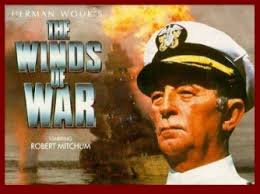
One of those events took place on November 5, 1939.
General Walther von Brauchitsch is summoned to the Chancellery in Berlin to meet with Adolf Hitler. He carries a memorandum signed by all the leaders of the German Wehrmacht asserting that Case Yellow—Hitler’s planned attack against France—is impossible.
Meanwhile, at the German army headquarters at Zossen, in Berlin, the Wehrmacht’s top command wait for word from von Brauchitsch.
ZOSSEN:
Brigadier General Armin von Roon: I must confide in you on a very serious matter. I have been approached by certain army personages of the loftiest rank and prestige with a frightening proposal.
Chief of the General Staff Franz Halder: What did you reply?
Von Roon: That they were talking high treason.
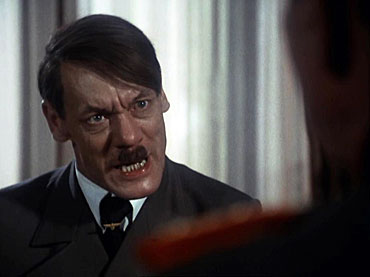
Gunter Meisner as Adolf Hitler in “The Winds of War”
THE WHITE HOUSE:
Fast forward 79 years from Adolf Hitler’s stormy confrontation with Walter von Brauchitsch to September 5, 2018.
On September 5, 2018, The New York Times publishes an anonymous Op-Ed essay by “a senior official in the Trump administration.” This spotlights massive dysfunction within the White House—and put the blame squarely on the President.
Among the revelations:
- “Many of the senior officials in his own administration are working diligently from within to frustrate parts of his agenda and his worst inclinations.”
- “We believe our first duty is to this country, and the president continues to act in a manner that is detrimental to the health of our republic. That is why many Trump appointees have vowed to do what we can to preserve our democratic institutions while thwarting Mr. Trump’s more misguided impulses until he is out of office.”
- “On Russia…the president was reluctant to expel so many of Mr. Putin’s spies as punishment for the poisoning of a former Russian spy in Britain….But his national security team knew better—such actions had to be taken, to hold Moscow accountable.”
- “From the White House to executive branch departments and agencies, senior officials will privately admit their daily disbelief at the commander in chief’s comments and actions. Most are working to insulate their operations from his whims.”
ZOSSEN:
Von Roon: The conspiracy has been going on that long—since Czechoslovakia [1938)?
Halder: If the British had not caved in at Munich [where France and Britain sold out their ally, Czechoslovakia]—perhaps. But they did. And ever then, ever since his big triumph, it has been hopeless. Hopeless.
Von Roon: Empty talk, talk, talk. I am staggered.
Halder: A hundred times I myself could have shot the man. I can still at any time. But what would be the result? Chaos. The people are for him. He has unified the country. We must stick to our posts and save him from making military mistakes.
THE WHITE HOUSE:
On September 11, 2018, legendary investigative reporter Bob Woodward publishes a devastating take on the Trump administration: Fear: Trump in the White House. The text features explosive revelations about the disdain Trump’s staffers have for him:
- Trump was about to sign a letter canceling a free-trade agreement with South Korea. To prevent this, Eric Cohn, his national economic council director, swiped it from Trump’s desk. Trump didn’t notice it missing.
- Secretary of Defense James Mattis said Trump has the understanding of “a fifth or sixth grader.”
- White House Chief of Staff John Kelly called Trump an “idiot” and “unhinged.”
General Walther von Brauchitsch fails to convince Hitler to postpone “Case Yellow”—the invasion of France. Hitler insists that it commence in seven days—on November 12.
And he issues a warning to the entire German General staff: “I will ruthlessly crush everybody up to the rank of a Field Marshal who dares to oppose me. You don’t have to understand. You only have to obey. The German people understand me. I am Germany.”
Due to foul weather, Hitler is forced to postpone the invasion of France until June, 1940. But the German General staff can’t ultimately put off the war that will destroy them—and Germany.
President Donald Trump has:
- Fired FBI Director James Comey.
- Attacked the integrity of the American Intelligence community.
- Attacked the free press as “the enemy of the American people.”
- Branded America’s longtime ally, Canada, as “a national security threat.”
- Praised brutal Communist dictators Vladimir Putin and Kim Jong Un.
- Tried to extort Ukraine into smearing former Vice President Joseph Biden, his 2020 rival for the White House,
Like Hitler, he can equally say: I am the destiny of America.
History has yet to record if Trump’s subordinates will prove more successful than Hitler’s at preserving “our democratic institutions while thwarting Mr. Trump’s more misguided impulses until he is out of office.”
2016 PRESIDENTIAL ELECTION, 2020 PRESIDENTIAL ELECTION, 9/11, ABC NEWS, ADOLF HITLER, AFGHANISTAN, ALTERNET, AMERICABLOG, AP, ASIANS, BABY BOOMER RESISTANCE, BARACK OBAMA, BLACKS, BORDER WALL, BULLYING, BUZZFEED, CANADA, CBS NEWS, CNN, COMMUNISM, CORRUPTION, CROOKS AND LIARS, DAILY KOZ, DONALD TRUMP, DRUDGE RETORT, EMOLUENTS CLAUSE, FACEBOOK, FASCISM, FBI, FIRST AMENDMENT, FIVETHIRTYEIGHT, FREEDOM OF THE PRESS, GEORGE W. BUSH, GREAT BRITAIN, GREAT DEPRESSION, HARPER’S MAGAZINE, HILLARY CLINTON, HISPANICS, IMPEACHMENT, IRAQ, JEWS, JOSEPH BIDEN, MEDIA MATTERS, MOTHER JONES, MOVEON, MSNBC, MUSLIMS, NAZI GERMANY, NAZI PARTY, NBC NEWS, NEWSWEEK, NPR, PAUL VON HINDENBURG, PBS NEWSHOUR, POLITICO, POLITICUSUSA, RACISM, RAW STORY, REPUBLICANS, REUTERS, ROBERT PAYNE, SALON, SEATTLE TIMES, SLATE, TALKING POINTS MEMO, THE ATLANTIC, THE CHICAGO SUN-TIMES, THE CHICAGO TRIBUNE, THE DAILY BEAST, THE DAILY BLOG, THE GUARDIAN, THE HILL, THE HUFFINGTON POST, THE LIFE AND DEATH OF ADOLF HITLER, THE LOS ANGELES TIMES, THE LOS ANGELS TIMES, THE NATION, THE NEW REPUBLIC, THE NEW YORK TIMES, THE VILLAGE VOICE, THE WASHINGTON POST, THINKPROGRESS, TIME, TRUTHDIG, TRUTHOUT, TWITTER, TWO POLITICAL JUNKIES, U.S. NEWS & WORLD REPORT, UKRAINE, UNITED STATES CONSTITUTION, UPI, USA TODAY, VLADIMIR PUTIN, WONKETTE, WORLD WAR 11
In Bureaucracy, History, Law, Politics, Social commentary on February 13, 2020 at 12:12 am
In his bestselling 1973 biography, The Life and Death of Adolf Hitler, British historian Robert Payne harshly condemned the German people for the rise of the Nazi dictator.
“[They] allowed themselves to be seduced by him and came to enjoy the experience….[They] followed him with joy and enthusiasm because he gave them license to pillage and murder to their hearts’ content. They were his servile accomplices, his willing victims….
“If he answered their suppressed desires, it was not because he shared them, but because he could make use of them. He despised the German people, for they were merely the instruments of his will.”
On November 8, 2016, millions of ignorant, hate-filled, Right-wing Americans elected Donald Trump—a man reflecting their own hate and ignorance—to the Presidency.
Yet, in some ways, Americans had fewer excuses for turning to a Fascistic style of government than the Germans did.
Adolf Hitler, joined the National Socialist German Workers (Nazi) Party in 1919—the year after World War 1 ended.
Adolf Hitler
In 1923, he staged a coup attempt in Bavaria—which was quickly and brutally put down by police. He was arrested and sentenced to less than a year in prison.
After that, Hitler decided that winning power through violence was no longer an option. He must win it through election—or appointment.
When the 1929 Depression struck Germany, the fortunes of Hitler’s Nazi party rose as the life savings of ordinary Germans fell. Streets echoed with bloody clashes between members of Hitler’s Nazi Stormtroopers and those of the German Communist Party.
Germans desperately looked for a leader—a Fuhrer—who could somehow deliver them from the threat of financial ruin and Communist takeover.
In early 1933, members of his own cabinet persuaded aging German president, Paul von Hindenburg, that only Hitler’s appointment as Chancellor could do this.
Paul von Hindenburg
Hindenburg was reluctant to do so. He considered Hitler a dangerous radical. But he let himself be convinced that he could “box in” and control Hitler by putting him in the Cabinet.
So, on January 30, 1933, Hindenburg appointed Adolf Hitler Chancellor (the equivalent of Attorney General) of Germany.
On August 2, 1934, Hindenburg died. Hitler immediately assumed the titles—and duties—of the offices of Chancellor and President. His rise to total power was complete.
It had taken him 15 years to do so.
In 2015, Donald Trump declared his candidacy for President.
Now, consider this:
- The country was technically at war in the Middle East—but the fate of the United States was not truly threatened, as it had been during the Civil War.
- There was no draft; if you didn’t know someone in the military, you didn’t care about the casualties taking place.
- Nor were these conflicts—in Iraq and Afghanistan—imposing domestic shortages on Americans, as World War II had.
- Thanks to government loans from President Barack Obama, American capitalism had been saved from its own excesses during the George W. Bush administration.
- Employment was up. CEOs were doing extremely well.
- In contrast to the corruption that had plagued the administration of Ronald Reagan, whom Republicans idolize, no such scandals plagued the Obama Presidency.
- Nor had there been any large-scale terrorist attacks on American soil—as there had on 9/11 under President George W. Bush.
Yet—not 17 months after announcing his candidacy for President—enough Americans fervently embraced Donald Trump to give him the most powerful position in the country and the world.
Donald Trump
The message of Barack Obama’s 2008 campaign had been one of hope: “Yes, We Can!”
That of Donald Trump’s campaign was one of hatred toward everyone who was not an avid Trump supporter: “No, You Can’t!”
Whites comprised the overwhelming majority of the audiences at Trump rallies. Not all were racists, but many of those who were advertised it on T-shirts: “MAKE AMERICA WHITE AGAIN.”
Birthrates among non-whites were rising. By 2045, whites would make up less than 50 percent of the American population.
The 2008 election of the first black President had shocked whites. His 2012 re-election had deprived them of the hope that 2008 had been an accident.
Then came 2016—and the possibility that a black President might actually be followed by a woman: Hillary Clinton.
Since Trump became President, he has:
- Fired an FBI director for investigating Russia’s subversion of the 2016 Presidential election.
- Attacked Federal judges whose rulings displeased him.
- So tyrannized his staffers that 43% of them have abandoned him. Nearly 2,000 government positions remain vacant.
- Repeatedly and enthusiastically defended Vladimir Putin, the dictator of Russia, America’s mortal enemy.
- Attacked and alienated America’s oldest allies, such as Canada and Great Britain.
- Shut down the United States Government for over a month, imperiling the lives of 800,000 Federal employees, to extort money from Congress for a worthless wall on the U.S.-Mexico border.
- Attacked the free press as “the enemy of the people.”
- Used his position as President to further enrich himself, in violation of the Emoluments Clause of the Constitution.
- Been impeached (but not convicted) for trying to extort Ukraine’s president into smearing former Vice President Joseph Biden, a possible rival for President in 2020.
All of this should be remembered the next time an American blames Germans for their embrace of Adolf Hitler.
.jpeg&imgrefurl=http%3A%2F%2Fwww.whataboutclients.com%2Farchives%2F2014%2F09%2Famerican_authen.html&docid=boFt4L_sotcfWM&tbnid=ouxiHfzJFvsrwM%3A&w=240&h=248&ei=NhtPVKT3GJX6oQSa7YKgDg&ved=0CAIQxiAwAA&iact=c)


 Bureaucracybuster's Blog
2016 PRESIDENTIAL ELECTION, 9/11, ABC NEWS, ADOLF HITLER, AFGHANISTAN, ALTERNET, AMERICABLOG, AP, ASIANS, BABY BOOMER RESISTANCE, BARACK OBAMA, BLACKS, BLOOMBERG, BULLYING, BUZZFEED, CBS NEWS, CNN, COMMUNISM, CROOKS AND LIARS, DAILY KOZ, DEMOCRASTIC NATIONAL CONVENTION, DONALD TRUMP, DRUDGE REPORT, FACEBOOK, FASCISM, FIVETHIRTYEIGHT, GEORGE W. BUSH, GREAT DEPRESSION, HARPER’S MAGAZINE, HILLARY CLINTON, HISPANICS, IRAQ, JEWS, JOE BIDEN, MEDIA MATTERS, MICHELLE OBAMA, MOTHER JONES, MOVEON, MSNBC, MUSLIMS, NAZI GERMANY, NAZI PARTY, NBC NEWS, NEWSWEEK, NPR, PAUL VON HINDENBURG, PBS NEWSHOUR, POLITICO, POLITICUSUSA, RACISM, RAW STORY, REPUBLICANS, REUTERS, Ronald Reagan, SALON, SEATTLE TIMES, SLATE, TALKING POINTS MEMO, THE ATLANTIC, THE CHICAGO SUN-TIMES, THE CHICAGO TRIBUNE, THE DAILY BEAST, THE DAILY BLOG, THE GUARDIAN, THE HILL, THE HUFFINGTON POST, THE LOS ANGELES TIMES, THE LOS ANGELS TIMES, THE NATION, THE NEW REPUBLIC, THE NEW YORK TIMES, THE VILLAGE VOICE, THE WASHINGTON POST, THINKPROGRESS, TIME, TRUMP EFFECT, TRUTHDIG, TRUTHOUT, TWITTER, TWO POLITICAL JUNKIES, U.S. NEWS & WORLD REPORT, UP, UPI, USA TODAY, WONKETTE, WORLD WAR 11
AMERICA: TRYING OUT “THE GERMAN EXPERIMENT”
In Bureaucracy, History, Military, Politics, Social commentary on August 24, 2020 at 12:17 amOn November 8, 2016, millions of ignorant, hate-filled, Right-wing Americans elected Donald Trump—a man reflecting their own hate and ignorance—to the Presidency.
Yet Americans had fewer excuses for turning to a Fascistic style of government than the Germans did.
Adolf Hitler, joined the National Socialist German Workers (Nazi) Party in 1919—the year after World War 1 ended.
Adolf Hitler
It took him 14 years to win appointment to Chancellor (the equivalent of Attorney General) of Germany in 1933.
In 1923, he staged a coup attempt in Bavaria—which was quickly and brutally put down by police. He was arrested and sentenced to less than a year in prison.
After that, Hitler decided that winning power through violence was no longer an option. He must win it through election—or appointment.
He repeatedly ran for the highest office in Germany—President—but never got a clear majority in a free election.
When the 1929 Depression struck Germany, the fortunes of Hitler’s Nazi party rose as the life savings of ordinary Germans fell. Streets echoed with bloody clashes between members of Hitler’s Nazi Stormtroopers and those of the German Communist Party.
Germany seemed on the verge of collapsing.
Germans desperately looked for a leader—a Fuhrer–who could somehow deliver them from the threat of financial ruin and Communist takeover.
In early 1933, members of his own cabinet persuaded aging German president, Paul von Hindenburg, that only Hitler’s appointment as Chancellor could do this.
Paul von Hindenburg
Hindenburg was reluctant to do so. He considered Hitler a dangerous radical. But he allowed himself to be convinced that, by putting Hitler in the Cabinet, he could be “boxed in” and thus controlled.
So, on January 30, 1933, he appointed Adolf Hitler Chancellor of Germany.
On August 2, 1934, Hindenburg died, and Hitler immediately assumed the titles–and duties—of the offices of Chancellor and President. His rise to total power was now complete.
In 2015, Donald Trump declared his candidacy for President.
Now, consider this:
Yet—not 17 months after announcing his candidacy for President—enough Americans fervently embraced Donald Trump to give him the most powerful position in the country and the world.
Donald Trump
The message of Barack Obama’s 2008 campaign had been one of hope—“Yes, We Can!”
That of Donald Trump’s campaign was one of hatred toward everyone who was not an avid Trump supporter: “No, You Can’t!”
Whites comprised the overwhelming majority of the audiences at Trump rallies. Not all were racists, but many of those who were advertised it on T-shirts: “MAKE AMERICA WHITE AGAIN.”
They knew that demographics were steadily working against them. Birthrates among non-whites were rising. By 2045, whites would make up less than 50 percent of the American population.
The 2008 election of the first black President had shocked these whites. His 2012 re-election had deprived them of the hope that 2008 had been an accident.
Then came 2016—and the possibility that a black President might actually be followed by a woman: Hillary Clinton. And the thought of a woman dictating to men was simply too much to bear.
On August 17, 2020, former First Lady Michelle Obama, speaking at the Democratic National Convention, summed up the legacies of the Obama and Trump administrations:
“When my husband left office with Joe Biden at his side, we had a record-breaking stretch of job creation. We’d secured the right to health care for 20,000,000 people. We were respected around the world, rallying our allies to confront climate change. And our leaders had worked hand-in-hand with scientists to help prevent an Ebola outbreak from becoming a global pandemic.
“Four years later, the state of this nation is very different. More than [170,000] people have died, and our economy is in shambles because of a virus that this president downplayed for too long. It has left millions of people jobless. Too many have lost their health care; too many are struggling to take care of basic necessities like food and rent
“Too many communities have been left in the lurch to grapple with whether and how to open our schools safely. Internationally, we’ve turned our back, not just on agreements forged by my husband, but on alliances championed by presidents like Reagan and Eisenhower.”
All of this should be remembered the next time an American blames Germans for their lethal embrace of Adolf Hitler.
Share this: