Posts Tagged ‘VIETNAM WAR’
ABC NEWS, ADOLF HITLER, ALTERNET, AMERICABLOG, AP, BABY BOOMER RESISTANCE, BBC, BLIND AMBITION (SERIES), BLOOMBERG, BLUESKY, BUZZFEED, CBS NEWS, CHINA, CIVIL WAR, CNN, CONSPIRACY (MOVIE), CROOKS AND LIARS, DAILY KOS, DONALD TRUMP, DOUGLAS MACARTHUR, FIVETHIRTYEIGHT, GUTS AND GLORY: THE RISE ND FALL OF OLIVER NORTH (SERIES), HARPER’S MAGAZINE, HITLER: THE RISE OF EVIL (SERIES), HITLER’S PEOPLE: THE FACES OF THE THIRD REICH (BOOK), HITLER’S SS: PORTRAIT OF EVIL (MOVIE), HOLOCAUST, HOLOCAUST (SERIES), HUFFINGTON POST, INSIDE THE THIRD REICH (SERIES), JOSEPH MCCARTY, KOREAN WAR, MEDIA MATTERS, MOTHER JONES, MOVEON, MSNBC, NAZI GERMANY, NAZIS, NBC NEWS, NEW REPUBLIC, NEWSDAY, NEWSWEEK, NPR, NUREMBERG (MOVIE), OLIVER NORTH, PBS NEWSHOUR, POLITICO, POLITICUSUSA, RAW STORY, REPUBLICANS, REUTERS, RICHARD J. EVANS, RICHARD NIXON, Ronald Reagan, SALON, SEATTLE TIMES, SLATE, SOVIET UNION, SPANISH-AMERICAN WAR, TAIL GUNNER JOE (MOVIE), TALKING POINTS MEMO, THE ATLANTIC, THE BUNKER (MOVIE), THE CHICAGO SUN-TIMES, THE CHICAGO TRIBUNE, THE DAILY BEAST, THE DAILY BLOG, THE FINAL DAYS (MOVIE), THE GUARDIAN, THE HILL, THE HUFFINGTON POST, THE INTERCEPT, THE LOS ANGELES TIMES, THE NATION, THE NEW REPUBLIC, THE NEW YORK TIMES, THE NEW YORKER, THE PLOT TO KILL HITLER (MOVIE), THE VILLAGE VOICE, THE WASHINGTON POST, THINKPROGRESS, THIRD REICH, TIME, TRUTHDIG, TRUTHOUT, TV, TWO POLITICAL JUNKIES, U.S. NEWS & WORLD REPORT, UPI, USA TODAY, VIETNAM WAR, WORLD WAR 1, WORLD WAR 11, X
In Entertainment, History, Military, Politics, Social commentary on April 2, 2025 at 12:08 am
Future historians—if there are any—may well view the administration of President Donald Trump the same way that historian Richard J. Evans analyzes the Third Reich.
To place the infamy of the Trump administration in the same context as that of the Third Reich, consider the opening paragraph from his latest bestseller: Hitler’s People: The Faces of the Third Reich.
Substitute “Republicans” for “Nazis,” “Donald Trump” for “Adolf Hitler,” and “Americans” for “Germans.”
As in the following:
“Who were the Republicans? What motivated the leaders and functionaries of the Republican movement and those who put their project into action? What had happened to their moral compass?
“Were they in some sense deviant, or deranged, or degenerate? Were they gangsters acting with criminal intent? Or were they ‘ordinary men’ (and a few women), or perhaps, more precisely, ‘ordinary Americans’? Did they come from the margins of society, were they outsiders, or were they in some sense part of American society’s mainstream?
“And how do they explain Trump’s drive to achieve dictatorial power? Was he a kind of empty shell, devoid of personal qualities and without a personal life, into which Americans poured their deepest political ambitions and desires?

“What made otherwise normal people carry out, or approve, terrible and murderous atrocities against Republicans’ real and supposed enemies? Or were they perhaps not normal at all? Beyond this, why did so many leading Americans in responsible positions, in the key institutions of society, go along with the dictatorship….?
“And what did those of them who survived….think of about their conduct during the Trump administration? Did they gain a moral perspective on it, did they repent, did they come to an understanding of what they had done?”
Americans have always considered themselves separate from—and superior to—those in other nations. Germans and Russians might fall prey to evil dictators, but Americans? Never!
Evangelical Americans believe that the United States is divinely inspired—and protected.
Thus, American TV networks have filled the airwaves with movies and doc-u-dramas about Nazi Germany such as: “Hitler: The Rise of Evil,” “The Bunker,” “Nuremberg,” “Holocaust,” “Inside the Third Reich,” “Conspiracy,” “Hitler’s SS: Portrait of Evil,” “The Plot to Kill Hitler.”
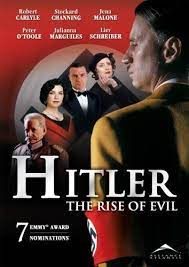
Yet American networks have been unwilling to produce films about the evil of America’s own Right-wing leaders. It’s extremely unlikely that future network executives will OK a miniseries on “Trump: The Rise of Evil.”
To date, only one film—“Tail Gunner Joe”—has been made about the rise and fall of Senator Joseph McCarthy.
For four years (1950-1954) McCarthy terrorized Americans with false charges of a massive Communist conspiracy, leaving broken lives and national mistrust in his wake.
And “Tail Gunner Joe” was made in 1974.
The fall of President Richard Nixon in 1974 led networks to produce such movies as “Blind Ambition” (1979) and “The Final Days” (1989). But those appeared decades ago. And no new ones have appeared since.
In 1989, CBS found the courage to run “Guts and Glory: The Rise and Fall of Oliver North.” What made this unusual was that it appeared only three years after the story of the infamous “Iran-Contra” arms-for-hostages story broke.
But the role of former President Ronald Reagan in waging unjustified terror-war against Nicaragua was totally ignored. And no other movie has since been made on this disgraceful period in United States history.
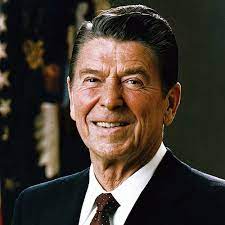
Ronald Reagan
Americans have always been convinced of their own purity as a people—especially when compared to those supposedly corrupt, undemocratic European nations. And so, according to popular mythology, the United States is constantly losing its innocence.
Such as:
I861 – 1865: Civil War—When brother supporting slavery fought brother supporting freedom.
1898: Spanish-American War––The United States freed Cuba from the Spanish.
1917 – 1918: World War 1––When innocent American “doughboys” rushed to Europe to save immoral France and England from the Hunnish Germans.
1942 – 1945: World War II––Once again, Americans rushed to Europe to (again) save impure France and England from (again) the Hunnish Germans and end the Holocaust.
1954 – 1975: Vietnam War––The United States rushed to fight Communism on behalf of a people struggling to be free.
Lost in all these “innocent” scenarios are such unpleasant realities as:
- After the Civil War, millions of former slaves were left to fend for themselves. Although freed, blacks were left poor, despised and subject to violence at any time by the Ku Klux Klan.
- After the Spanish-American war, America seized the Philippines for itself—and relinquished them only in 1946.
- Before World War II, the United States turned away thousands of would-be Jewish immigrants, dooming them to the Holocaust. And it entered the war only after it was attacked at Pearl Harbor.
- During the Vietnam war, the United States defended an unpopular dictatorship in the South against a popular Communist one in the North.
During the 1950s, Baby Boom schoolers were spoon-fed a Disney version of American history. When they grew old enough to witness the struggles for black civil rights and against the Vietnam war, they felt they had been lied to—and reacted with anger and protest.
Generations that have been “protected” against the ugly realities of the past are ill-equipped to cope with those in their own lives.
2012 PRESIDENTIAL RACE, ABC NEWS, ALTERNET, AMERICABLOG, AP, BABY BOOMER RESISTANCE, BARACK OBAMA, BBC, BLOOMBERG, BLUESKY, BUZZFEED, CBS NEWS, CNN, CROOKS AND LIARS, CUBAN MISSILE CRISIS, DAILY KOS, DEPARTMENT OF EDUCATION, DONALD J. TRUMP, FIDEL CASTRO, FIVETHIRTYEIGHT, HARPER’S MAGAZINE, HERMAN CAIN, HUFFINGTON POST, JOHN F. KENNEDY, LINDA MCMAHON, MEDIA MATTERS, MOTHER JONES, MOVEON, MSNBC, NBC NEWS, NEW REPUBLIC, NEWSDAY, NEWSWEEK, NIKITA KHRUSHCHEV, NPR, NUCLEAR TEST BAN TREATY, PBS NEWSHOUR, POLITICO, POLITICUSUSA, RAW STORY, REUTERS, RICK PERRY, SALON, Sarah Palin, SEATTLE TIMES, SLATE, SOVIET UNION, TALKING POINTS MEMO, THE ATLANTIC, THE CHICAGO SUN-TIMES, THE CHICAGO TRIBUNE, THE DAILY BEAST, THE DAILY BLOG, THE GUARDIAN, THE HILL, THE HUFFINGTON POST, THE INTERCEPT, THE LOS ANGELES TIMES, THE MISSILES OF OCTOBER, THE NATION, THE NEW REPUBLIC, THE NEW YORK TIMES, THE NEW YORKER, THE VILLAGE VOICE, THE WALL STREET JOURNAL, THE WASHINGTON POST, THINKPROGRESS, TIME, TRUTHDIG, TRUTHOUT, TWO POLITICAL JUNKIES, U.S. NEWS & WORLD REPORT, UPI, USA TODAY, VIETNAM WAR, X
In Bureaucracy, EDUCATION, History, Politics, Social commentary on March 28, 2025 at 12:06 am
Sixty-one years ago, on November 22, 1963, two bullets slammed into the neck and head of President John Fitzgerald Kennedy.
It has been said that he left his country with three great legacies:
- The Nuclear Test Ban Treaty;
- The Apollo moon landing; and
- The Vietnam war.
Of these, the following can be said with certainty:
- The Test Ban Treaty has prevented atmospheric testing—and poisoning—by almost all the world’s nuclear powers.
- After reaching the moon—in 1969—Americans quickly lost interest in space and have today largely abandoned plans for manned exploration. For America, as for JFK, beating the Russians to the moon was the end-goal.
- Under Presidents Lyndon Johnson and Richard Nixon, 58,000 Americans died in Vietnam; 153,303 were wounded; and billions of dollars were squandered in a hopeless effort to intervene in what was essentially a Vietnamese civil war.
But there was a fourth legacy—and perhaps the most important of all: The belief that mankind could overcome its greatest challenges through rationality and perseverance.
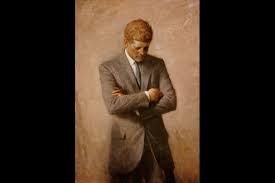
White House painting of JFK
At American University on June 10, 1963, Kennedy called upon his fellow Americans to re-examine the events and attitudes that had led to the Cold War. And he declared that the search for peace was by no means absurd:
“Our problems are man-made; therefore, they can be solved by man. And man can be as big as he wants. No problem of human destiny is beyond human beings.
“Man’s reason and spirit have often solved the seemingly unsolvable, and we believe they can do it again.”
Today, politicians from both parties cannot agree on solutions to even the most vital national problems.
For example: Republicans cannot agree with Democrats that the violent January 6, 2021 attempt by Donald Trump’s supporters to overturn the results of the 2020 Presidential election qualified as treason.
President Kennedy insisted on being well-informed. He speed-read several newspapers every morning and nourished personal relationships with the press—and not for altruistic reasons. These journalistic contacts gave Kennedy additional sources of information and perspectives on national and international issues.
During the 2012 Presidential campaign, Republican Presidential candidates celebrated their ignorance of both.
Former Godfather’s Pizza CEO Herman Cain famously said, “We need a leader, not a reader.” Thus he excused his ignorance for why President Barack Obama had intervened in Libya.
Former Texas Governor Rick Perry and Secretary of Energy showed similar pride in not knowing there are nine judges on the United States Supreme Court. He thought there were eight:
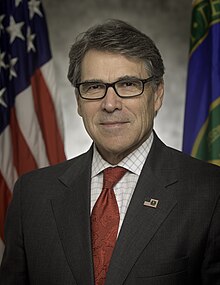
Rick Perry
“Here’s what I do know. That when I put an individual on the Supreme Court, just like I done in Texas, ah, we got nine Supreme Court justices in Texas, ah, they will be strict constructionists….”
In short, it’s the media’s fault if they ask you a question and your answer reveals your own ignorance, stupidity or criminality.
Sarah Palin rewrote history via “The Midnight Ride of Paul Revere”: “He warned the British that they weren’t going to be taking away our arms by ringing those bells and, um, making sure as he’s riding his horse through town to send those warning shots and bells that, uh, we were going to be secure and we were going to be free.”
In fact, Revere wasn’t warning the British about anything. Instead, he was warning his fellow Americans about an impending British attack—as his celebrated catchphrase “The British are coming!” made clear.
During the height of the Cuban Missile Crisis, Kennedy spoke with aides about a book he had just finished: Barbara Tuchman’s The Guns of August, about the events leading to World War 1.
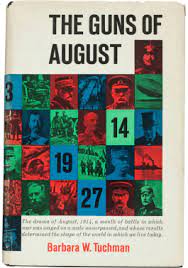
He said that the book’s most important revelation was how European leaders had blindly rushed into war, without thought to the possible consequences. Kennedy told his aides he did not intend to make the same mistake—that, having read his history, he was determined to learn from it.
Republicans attacked President Obama for his Harvard education and articulate use of language. Among their taunts: “Hitler also gave good speeches.”
And they resented his having earned most of his income as a writer of two books: Dreams From My Father and The Audacity of Hope. As if being a writer is somehow subversive.
When knowledge and literacy are attacked as “highfalutin’” arrogance, and ignorance and incoherence are embraced as sincerity, national decline lies just around the corner.
Many Americans believe that decline arrived with the 2016 election of Donald Trump. In fact, they believe it was Trump who announced it after winning the Nevada Republican primary: “We won with poorly educated. I love the poorly educated.”
And as if to underscore his contempt for education, newly-reelected President Trump intends to eliminate the Department of Education. His choice to temporarily head it: Linda McMahon, best known as the former president (1980 – 2009) of World Wrestling Entertainment.
Trump wants McMahon “to put herself out of a job.”
And McMahon agrees: “I want to invite all employees to join us in this historic final mission on behalf of all students.”
In retrospect, the funeral for President Kennedy marked the death of more than a rational and optimistic human being.
It marked the death of Americans’ pride in choosing reasoning and educated citizens for their leaders.
ABC NEWS, ADOLF HITLER, ALTERNET, AMERICABLOG, AP, ASSASSINATION, BABY BOOMER RESISTANCE, BUZZFEED, CBS NEWS, CNN, CONSPIRACIES, CROOKS AND LIARS, DAILY KOS, DAILY KOZ, DAY OF THE JACKAL, DEPARTMENT OF DEFENSE, DEPARTMENT OF HOMELAND SECURITY, DEPARTMENT OF VETERANS AFFAIRS, DONALD TRUMP, DRUDGE RETORT, ENVIRONMENTAL PROTECTION AGENCY, FACEBOOK, FBI, FIVETHIRTYEIGHT, FREDERICK FORSYTHE, GAIUS CASSIUS, HARPER’S MAGAZINE, INTERNAL REVENUE SERVICE, JULIUS CAESAR, LINCOLN MEMORIAL, MAR-A-LAGO, MARCUS BRUTUS, MARK ANTHONY, MEDIA MATTERS, MOTHER JONES, MOVEON, MSNBC, NBC NEWS, NEWSWEEK, NICCOLO MACHIAVELLI, NPR, PBS NEWSHOUR, PLOTS, POLITICO, POLITICUSUSA, RAW STORY, REUTERS, RICHARD M. NIXON, SALON, SEATTLE TIMES, Secret Service, SLATE, TALKING POINTS MEMO, THE ATLANTIC, THE CHICAGO SUN-TIMES, THE CHICAGO TRIBUNE, THE DAILY BEAST, THE DAILY BLOG, THE DISCOURSES, THE GUARDIAN, THE HILL, THE HUFFINGTON POST, THE LOS ANGELES TIMES, THE NATION, THE NEW REPUBLIC, THE NEW YORK TIMES, THE VILLAGE VOICE, THE WALL STREET JOURNAL, THE WASHINGTON POST, THINKPROGRESS, TIME, TRUTHDIG, TRUTHOUT, TWO POLITICAL JUNKIES, U.S. NEWS & WORLD REPORT, UPI, USA TODAY, VIETNAM WAR, WHITE HOUSE STAFFER, WONKETTE, X
In Bureaucracy, History, Law Enforcement, Military, Politics, Social commentary on March 4, 2025 at 12:06 am
More than 500 years ago, Niccolo Machiavelli, the Florentine statesman, authored The Discourses on Livy, a work of political history and philosophy. In it, he outlined how citizens of a republic can maintain their freedoms.
For conspirators, there are three ways their efforts can be foiled.
- Discovery through denunciation;
- Discovery through incautiousness;
- Discovery through writings.
The first has already been covered. Now for the second and third.
Discovery through Writings: “You may talk freely with anyone man about everything, for unless you have committed yourself in writing, the “Yes” of one man is worth as much as the ‘No’ of another.
Thus, you should guard most carefully against writing, as against a dangerous rock, for nothing will convict you quicker than your own handwriting.
If you are denounced, there are means of escaping punishment:
- By denying the accusation and claiming that the person making it hates you; or
- Claiming that your accuser was tortured or coerced into giving false testimony against you.
“But the most prudent course is to not tell your intentions to anyone, and to carry out the attempt yourself.”
Even if you’re not discovered before you carry out your attack, there are still two dangers facing a conspirator:
Dangers in Execution: These result from:
- An unexpected change in the routine of the intended target;
- The lack of courage among the conspirators; or
- An error on their part, such as leaving some of those alive whom the conspirators intended to kill.
Adolf Hitler, who claimed to have a sixth-sense for danger, was famous for changing his routine at the last minute.
On November 9, 1939, this instinct saved his life. He had been scheduled to give a long speech at a Munich beer hall before the “Old Fighters” of his storm troopers.
But that evening he cut short his speech and left the beer hall. Forty-five minutes later, a bomb exploded inside a pillar—before which Hitler had been speaking.
Conspirators can also be doomed by their good intentions.
In 44 B.C., Gaius Cassius, Marcus Brutus and other Roman senators decided to assassinate Julius Caesar, whose dictatorial ambitions they feared.
Cassius also intended to murder Mark Anthony, Caesar’s strongest ally. But Brutus objected, fearing the plotters would look like butchers, not saviors. Even worse, he allowed Anthony to deliver a eulogy at Caesar’s funeral.
This proved so inflammatory that the mourners rioted, driving the conspirators out of Rome. Soon afterward, they were defeated in a battle with the legions of Anthony and Octavian Caesar—and forced to commit suicide to avoid capture and execution.
Machiavelli closes his chapter “Of Conspiracies” with advice to rulers on how they should act when they find a conspiracy has been formed against them.
“If they discover that a conspiracy exists against them, they must, before punishing its authors, strive to learn its nature and extent. And they must measure the danger posed by the conspirators against their own strength.
And if they find it powerful and alarming, they must not expose it until they have amassed sufficient force to crush it. Otherwise, they will only speed their own destruction. They should try to pretend ignorance of it. If the conspirators find themselves discovered, they will be forced by necessity to act without consideration.”
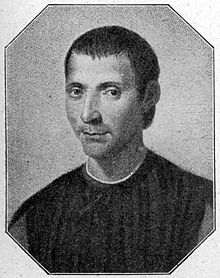
Niccolo Machiavelli
But Machiavelli also notes how important it is for rulers to make themselves loved—or at least respected—by their fellow citizens:
“Note how much more praise those Emperors merited who, after Rome became an empire, conformed to her laws like good princes, than those who took the opposite course.
Titus, Nerva, Trajan, Hadrian, Antoninus and Marcus Auelius did not require the Praetorians nor the multitudinous legions to defend them, because they were protected by their own good conduct, the good will of the people, and by the love of the Senate.
On the other hand, neither the Eastern nor the Western armies saved Caligula, Nero, Vitellius and so many other wicked Emperors from the enemies which their bad conduct and evil lives had raised up against them.”
In his better-known work, The Prince, he warns rulers who—like Donald Trump–are inclined to rule by fear:
“A prince should make himself feared in such a way that if he does not gain love, he at any rate avoids hatred: for fear and the absence of hatred may well go together.”
Donald Trump
By Machiavelli’s standards, Trump has made himself the perfect target for a conspiracy.
Since being inaugurated President a second time, he—and his billionaire enforcer, Elon Musk—have fired about 30,000 federal civil service workers. Another 75,000 have accepted buyouts under threat of being fired.
Among the purged agencies:
- Homeland Security
- Defense
- FBI
- Internal Revenue Service
- Veterans Affairs
- Environmental Protection Agency.
Many of these ex-employees have backgrounds in security. Combine this with the anger fired employees feel at the injustices to themselves and their families, and the result is a recipe for conspiratorial hatred.
“When a prince becomes universally hated, it is likely that he’s harmed some individuals—who thus seek revenge. This desire is increased by seeing that the prince is widely loathed.”
ABC NEWS, ADOLF HITLER, ALTERNET, AMERICABLOG, AP, ASSASSINATION, BABY BOOMER RESISTANCE, BUZZFEED, CBS NEWS, CNN, CONSPIRACIES, CROOKS AND LIARS, DAILY KOS, DAILY KOZ, DAY OF THE JACKAL, DEPARTMENT OF DEFENSE, DEPARTMENT OF HOMELAND SECURITY, DEPARTMENT OF VETERANS AFFAIRS, DONALD TRUMP, DRUDGE RETORT, ENVIRONMENTAL PROTECTION AGENCY, FACEBOOK, FBI, FIVETHIRTYEIGHT, FREDERICK FORSYTHE, GAIUS CASSIUS, HARPER’S MAGAZINE, INTERNAL REVENUE SERVICE, JULIUS CAESAR, LINCOLN MEMORIAL, MAR-A-LAGO, MARCUS BRUTUS, MARK ANTHONY, MEDIA MATTERS, MOTHER JONES, MOVEON, MSNBC, NBC NEWS, NEWSWEEK, NICCOLO MACHIAVELLI, NPR, PBS NEWSHOUR, PLOTS, POLITICO, POLITICUSUSA, RAW STORY, REUTERS, RICHARD M. NIXON, SALON, SEATTLE TIMES, Secret Service, SLATE, TALKING POINTS MEMO, THE ATLANTIC, THE CHICAGO SUN-TIMES, THE CHICAGO TRIBUNE, THE DAILY BEAST, THE DAILY BLOG, THE DISCOURSES, THE GUARDIAN, THE HILL, THE HUFFINGTON POST, THE LOS ANGELES TIMES, THE NATION, THE NEW REPUBLIC, THE NEW YORK TIMES, THE VILLAGE VOICE, THE WALL STREET JOURNAL, THE WASHINGTON POST, THINKPROGRESS, TIME, TRUTHDIG, TRUTHOUT, TWO POLITICAL JUNKIES, U.S. NEWS & WORLD REPORT, UPI, USA TODAY, VIETNAM WAR, WHITE HOUSE STAFFER, WONKETTE, X
In Bureaucracy, History, Law Enforcement, Military, Politics, Social commentary on March 3, 2025 at 12:05 am
More than 500 years ago, Niccolo Machiavelli, the father of modern political science, offered sound advice for would-be conspirators—and for rulers seeking to thwart conspiracies.
He did so in The Discourses on Livy, a work of political history and philosophy. In it, he outlined how citizens of a republic can maintain their freedoms.
One of the longest chapters—Book Three, Chapter Six—covers “Of Conspiracies.” In it, those who wish to conspire against a ruler will find highly useful advice. And so will those who might well become the targets of conspiracies—such as President Donald J. Trump.
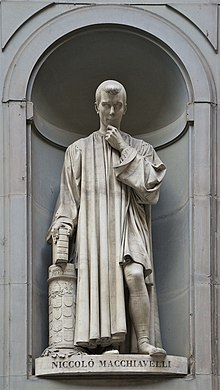
Niccolo Machiavellil
The most dangerous time for a ruler comes when he is universally hated.
Niccolo Machiavelli: “When a prince becomes universally hated, it is likely that he’s harmed some individuals—who thus seek revenge. This desire is increased by seeing the prince is widely loathed.
A prince, then, should avoid incurring such universal hatred….
By doing this, he protects himself from such vengeance-seekers. There are two reasons for this:
(1) Men rarely risk danger to avenge a wrong; and
(2) Even if they want to avenge a wrong, they know they will face almost universal condemnation because the prince is held in such high esteem.”
Machiavelli draws a distinction between plots and conspiracies.
“A plot may be formed by a single individual or by many. The first isn’t a conspiracy, since that would involve at least two participants.”
A single plotter avoids the danger faced by two or more conspirators:
“Since no one knows his intention, he can’t be betrayed by an accomplice.
Anyone may form a plot, whether he is prominent or insignificant, because everyone is at some time allowed to speak to the prince. And he can use this opportunity to satisfy his desire for revenge.”
On the other hand, says Machiavelli, the dangers of assassination by a trusted intimate are slight.
“Few people dare to assault a prince. Of those who do, few or none escapes being killed in the attempt, or immediately afterward. As a result, only a small number of people are willing to incur such certain death.”
Those who take part in a conspiracy against a ruler are “the great men of the state, or those on terms of familiar intercourse with the prince.”
These are men who have access to him. Julius Caesar, for example, was stabbed to death by members of the Roman Senate, who feared his assuming dictatorial powers.
And Adolf Hitler was conspired against by colonels and generals of the German Army. He was in fact holding a war conference when a briefcase bomb exploded, killing three officers and a stenographer, but leaving Hitler only slightly injured.
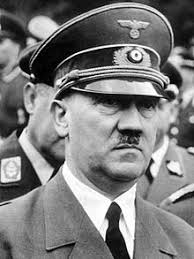

Adolf Hitler
There are three ways a conspiracy can be foiled:
- Discovery through denunciation;
- Discovery through incautiousness;
- Discovery through writings.
Discovery through Denunciation: This occurs through treachery or lack of prudence among one or more conspirators.
“Treachery is so common that you can safely tell your plans to only your most trusted friends who are willing to risk their lives for your sake. You may find that you have only one or two of these.
But as you are bring more people into the conspiracy, the chances of discovery greatly increase. It’s impossible to find many who can be completely trusted: For their devotion to you must be greater than their sense of danger and fear of punishment.”
Discovery through Carelessness: “This happens when one of the conspirators speaks incautiously, so that a third person overhears it Or it may occur from thoughtlessness, when a conspirator tells the secret to his wife or child, or to some other indiscreet person.
When a conspiracy has more than three or four members, its discovery is almost certain, either through treason, imprudence or carelessness.
If more than one conspirator is arrested, the whole plot is discovered, for it will be impossible for any two to agree perfectly as to all their statements.
If only one is arrested, he may—through courage and stubbornness—be able to conceal the names of his accomplices. But then the others, to remain safe, must not panic and flee, since this is certain to be discovered.
If one of them becomes fearful—whether it’s the one who was arrested or is still at liberty—discovery of the conspiracy is certain.
The best way to avoid such detection is to confide your project to your intended fellow conspirators at the moment of execution—and not sooner.”
A classic example of this occurred in ancient Persia. According to the Greek historian Herodotus: A group of nobles assembled to discuss overthrowing a usurper to the throne. The last one to arrive was Darius.
When one of the conspirators asked, “When should we strike?” Darius replied: “We must either go now at this very moment and carry it into execution, or I shall go and denounce you all. For I will not give any of you time to denounce me.”
At that, they went directly to the palace, assassinated the usurper and proclaimed Darius their new king.
2020 PRESIDENTIAL ELECTION, ABC NEWS, ABORTION, AGUSTO PINOCHET, ALTERNET, AMERICABLOG, AMERICAN EXCEPTIONALISM, AMERICAN RECKONING: THE VIETNAM WAR AND OUR NATIONAL IDENTITY (BOOK), AP, AYATOLLAH RUHOLLAH KHOMEINI, BABY BOOMER RESISTANCE, BBC, BENJAMIN FRANKLIN, BIBLE BELT, BLOOMBERG NEWS, BUZZFEED, CBS NEWS, CHILE, CHINA, CHRISTIAN G. APPY, CIA, CIVIL RIGHTS ACT, CIVIL WAR, CNN, COAL MINING, CROOKS AND LIARS, DAILY KOS, DEMOCRATS, DONALD TRUMP, DRUG OVERDOSES, DWIGHT EISENHOWER, EDUCATION, FIVETHIRTYEIGHT, FUNDAMENTALIST CHRISTIANS, GERMANY, GUATEMALA, HARPER’S MAGAZINE, HISTORY, HUFFINGTON POST, INDIA, IRAN, ITALY, JACOBO ARBENZ, JAPAN, JOHN F. KENNEDY, JOSEPH R. BIDEN, LYNDON B. JOHNSON, MEDIA MATTERS, MOHAMMED MOSADDEGH, MOHAMMED-REZA SHAH PHLAVI, MOTHER JONES, MOVEON, MSNBC, MYTHS, NARENDRA MODI, NBC NEWS, NEW REPUBLIC, NEWSDAY, NEWSWEEK, NICARAGUA, NPR, OPIOD ADDICTION, PBS NEWSHOUR, POLITICO, POLITICS, POLITICUSUSA, PORNOGRAPHY, POVERTY, RAW STORY, RELIGIOUS CONSERVATIVES, REPUBLICANS, REUTERS, RICHARD NIXON, ROE V. WADE, RURAL AMERICA, SALON, SALVADORE ALLENDE, SEATTLE TIMES, SLATE, SMOKING, STEEL INDUSTRY, TALKING POINTS MEMO, THE ATLANTIC, THE CHICAGO SUN-TIMES, THE CHICAGO TRIBUNE, THE DAILY BEAST, THE DAILY BLOG, THE GUARDIAN, THE HILL, THE HUFFINGTON POST, THE INTERCEPT, THE LOS ANGELES TIMES, THE NATION, THE NEW REPUBLIC, THE NEW YORK TIMES, THE NEW YORKER, THE VILLAGE VOICE, THE WASHINGTON POST, THINKPROGRESS, THOMAS EDISON, TIME, TRUTHDIG, TRUTHOUT, U.S. NEWS & WORLD REPORT, UNITED STATES, UNITED STATES SUPREME COURT, UPI, USA TODAY, VIETNAM WAR, VOTER IGNORANCE, WORLD WAR 11, X
In Bureaucracy, History, Law, Law Enforcement, Politics, Social commentary on February 21, 2025 at 12:44 am
Americans live by a series of myths—myths they would be wise to abandon. Some are embraced by liberals, others by conservatives, and still others by both.
Myth 4: Americans are knowledgeable about their own history—and that of other nations.
Americans’ ignorance of history—their own and that of other nations—has long been a scandal.
- A 2018 national survey by the Institute for Citizens & Scholars found that only one in three Americans (36%) can actually pass a multiple choice test consisting of items taken from the U.S. Citizenship Test.
- More than half of respondents (60%) didn’t know which countries the United States fought in World War II (Germany, Italy and Japan).
- Only 24% correctly identified one thing Benjamin Franklin was famous for; 37% believed he invented the lightbulb (that inventor was Thomas Edison).
- Twelve percent incorrectly thought WWII General Dwight Eisenhower led troops in the Civil War; six percent thought he was a Vietnam War general.

if Americans are flagrantly ignorant of their own history, they are even worse at the history of other countries.
A major reason for this lies in Americans’ belief that other nations aren’t worth bothering about except when they threaten us. During the Vietnam war, soldiers referred to the United States as “The World”—as if the rest of the planet didn’t exist.
Americans, protected from Europe by the Atlantic Ocean and the Far East by the Pacific Ocean, allowed geography to isolate themselves from the messiness of the rest of the world.
Donald Trump, as President, gave a frightening example of this during a conversation with Indian Prime Minister Narendra Modi: “It’s not like you’ve got China on your border.” In fact, India does share a border with China.
Myth 5: The “Bible Belt” (the Deep South) is the spiritual capitol of America.
On the contrary:
- A 2015 study published in the Archives of Sexual Behavior found that religious conservatives search more for online pornography on Google than anyone else.
- Educational attainment and college graduation rates in the Bible Belt are among the lowest in the nation.
- Smoking rates are high in West Virginia, Kentucky, Arkansas, Tennessee, Louisiana, and Mississippi—and so are rates for smoking-related diseases and deaths.
- Heart disease, obesity, homicide and teenage pregnancies are among the highest in the nation.
Myth 6: Americans are health-conscious.
Comparing the United States with Australia, Austria, Canada, Denmark, Finland, France, Germany, Italy, Japan, Norway, Portugal, Spain, Sweden, Switzerland, the Netherlands, and the United Kingdom, the National Institutes of Health found:
- The United States has the second highest prevalence of HIV infections and the highest incidence of AIDS.
- Americans lose more years of life to alcohol and other drugs than people in peer countries.
- From age 20 onward, U.S. adults have among the highest prevalence rates of diabetes.
- The U.S. death rate from ischemic heart disease is the second highest.
- Lung disease is more prevalent in the United States.
Myth 7: Americans only support democratic regimes.
The United States has long supported foreign dictators—so long as they’re reliably Right-wing.
- Between 1898 and 1934, the United States repeatedly intervened with military force in Central America and the Caribbean.
- The United States occupied Nicaragua almost continuously from 1912 to 1933. Its legacy was the imposition of the tyrannical Somoza family, which ruled from 1936 to 1979.
- In 1953, the Eisenhower administration ordered the CIA to overthrew the democratically-elected government of of Iranian Prime Minister Mohammad Mosaddegh. His crime: Nationalizing the Iranian oil industry, which had been under British control since 1913.
- He was succeeded by Mohammad-Reza Shah Phlavi, a dictator who depended on United States government support to retain power until he was overthrown in 1979 by the Ayatollah Ruhollah Khomeini.
- In 1954, the CIA overthrew the democratically-elected government of Guatemalan President Jacobo Arbenz. His crime: Installing a series of reforms that expanded the right to vote, allowed workers to organize, legitimized political parties and allowed public debate.
- In 1970, President Richard M. Nixon ordered the CIA to prevent Marxist Salvador Allende from being democratically elected as president of Chile. When that failed, he ordered the CIA to overthrow Allende.
- His crime: A series of liberal reforms, including nationalizing large-scale industries (notably copper mining and banking).
- in 1973, he was overthrown by Chilean army units and national police. He was followed by Right-wing dictator Augusto Pinochet, who slaughtered 3,200 political dissidents, imprisoned 30,000 and forced another 200,000 Chileans into exile.
* * * * * * * * * *
Behind these myths: The belief in “American exceptionalism”—that the United States is unlike other nations in its innocence and steadfast dedication to human rights above all else.
Wrote Christian G. Appy, in his 2015 book, American Reckoning: The Vietnam War and Our National Identity:
“It was still unimaginable to most Americans that their own nation would wage aggressive war and justify it with unfounded claims, that it would support undemocratic governments reviled by their own people, and that American troops would be sent to fight in countries where they were widely regarded not as liberators but as imperialist invaders.”
For millions, that belief died a horrific death during the Vietnam war. Yet so long as millions remain convinced that America is guided by God and that its people are His faithful servants, these myths will remain vividly alive.
2020 PRESIDENTIAL ELECTION, ABC NEWS, ABORTION, AGUSTO PINOCHET, ALTERNET, AMERICABLOG, AMERICAN EXCEPTIONALISM, AMERICAN RECKONING: THE VIETNAM WAR AND OUR NATIONAL IDENTITY (BOOK), AP, AYATOLLAH RUHOLLAH KHOMEINI, BABY BOOMER RESISTANCE, BBC, BENJAMIN FRANKLIN, BIBLE BELT, BLOOMBERG NEWS, BUZZFEED, CBS NEWS, CHILE, CHINA, CHRISTIAN G. APPY, CIA, CIVIL RIGHTS ACT, CIVIL WAR, CNN, COAL MINING, CROOKS AND LIARS, DAILY KOS, DEMOCRATS, DONALD TRUMP, DRUG OVERDOSES, DWIGHT EISENHOWER, EDUCATION, FIVETHIRTYEIGHT, FUNDAMENTALIST CHRISTIANS, GERMANY, GUATEMALA, HARPER’S MAGAZINE, HISTORY, HUFFINGTON POST, INDIA, IRAN, ITALY, JACOBO ARBENZ, JAPAN, JOHN F. KENNEDY, JOSEPH R. BIDEN, LYNDON B. JOHNSON, MEDIA MATTERS, MOHAMMED MOSADDEGH, MOHAMMED-REZA SHAH PHLAVI, MOTHER JONES, MOVEON, MSNBC, MYTHS, NARENDRA MODI, NBC NEWS, NEW REPUBLIC, NEWSDAY, NEWSWEEK, NICARAGUA, NPR, OPIOD ADDICTION, PBS NEWSHOUR, POLITICO, POLITICS, POLITICUSUSA, PORNOGRAPHY, POVERTY, RAW STORY, RELIGIOUS CONSERVATIVES, REPUBLICANS, REUTERS, RICHARD NIXON, ROE V. WADE, RURAL AMERICA, SALON, SALVADORE ALLENDE, SEATTLE TIMES, SLATE, SMOKING, STEEL INDUSTRY, TALKING POINTS MEMO, THE ATLANTIC, THE CHICAGO SUN-TIMES, THE CHICAGO TRIBUNE, THE DAILY BEAST, THE DAILY BLOG, THE GUARDIAN, THE HILL, THE HUFFINGTON POST, THE INTERCEPT, THE LOS ANGELES TIMES, THE NATION, THE NEW REPUBLIC, THE NEW YORK TIMES, THE NEW YORKER, THE VILLAGE VOICE, THE WASHINGTON POST, THINKPROGRESS, THOMAS EDISON, TIME, TRUTHDIG, TRUTHOUT, U.S. NEWS & WORLD REPORT, UNITED STATES, UNITED STATES SUPREME COURT, UPI, USA TODAY, VIETNAM WAR, VOTER IGNORANCE, WORLD WAR 11, X
In Bureaucracy, History, Law, Law Enforcement, Politics, Social commentary on February 20, 2025 at 12:44 am
“The great enemy of truth is very often not the lie—deliberate, contrived and dishonest—but the myth, persistent, persuasive and unrealistic. Too often we hold fast to the clichés of our forebears. We subject all facts to a prefabricated set of interpretations. We enjoy the comfort of opinion without the discomfort of thought.”
—John F. Kennedy
Americans live by a series of myths—myths they would be the wiser to abandon. Some are embraced by liberals, others by conservatives, and still others by both.
Myth 1: Americans are highly educated.
According to the 2020 U.S. Census:
- In 2022, the highest level of education of the population age 25 and older in the United States ranged from less than high school to advanced degrees beyond a bachelor’s degree;
- 9% had less than a high school diploma or equivalent;
- 28% had high school as their highest level of school completed;
- 15% had completed some college but didn’t have a degree;
- 10% had an associate degree;
- 23% had a bachelor’s degree;
- 14% had completed advanced education such as a master’s degree, professional degree or doctorate.
Myth 2: Rural America is the repository of old-fashioned virtues.
Years of “hayseed” comedies such as “The Beverly Hillbillies,” “The Real McCoys,” “Green Acres” and “Petticoat Junction” convinced millions of Americans: If you want to find the “real” America, move to rural America.
If rural America is where you’ll find the “real” Americans, the future of the United States lies in peril.

Marshall County, Indiana
Derek Jensen (Tysto), CC BY 2.0 <https://creativecommons.org/licenses/by/2.0>, via Wikimedia Commons
- Rural Americans overwhelmingly support Donald Trump—who refused to accept defeat in a legitimate Presidential election, schemed to overturn the voters’ decision, and finally incited an attack on Congress to illegally remain in office.
- Rural America is home to fundamentalist Christians, who demand an end to legalized abortion and birth control—and thus hope to gain dictatorial control over women’s lives. They brand pro-choice Democrats as “baby killers.”
- During the 2020 Presidential election, Joe Biden won 91 of the nation’s 100 largest counties, but hardly anywhere else.
- Trump won about five times as many counties. Democrats are thriving in major metropolitan areas, but tanking elsewhere.
- Rather than being a Garden of Eden, rural America shares many big-city ills, such as crime, opioid addiction and a decline in life expectancy.
- Nearly all of the economic growth that occurred between the Great Recession and the start of the pandemic happened in a small number of metropolitan areas, making rural residents feel that the recession had never ended.
- Rural Americans refuse to abandon industries that are now dying out—such as in coal mining and steel.
- Trump promised—falsely—to bring those jobs back. Rural voters have forgiven him for this because he delivered on cultural issues—such as appointing anti-abortion Justices to the Supreme Court who overturned Roe v. Wade.
- Nearly half (46.7 percent) of all people living in rural areas are in the South.
- For a century following the Civil War (1861-1865) the South was accurately known as a Democratic stronghold. But that changed after Democratic President Lyndon B. Johnson signed the 1964 Civil Rights Act into law.
- In short: When Democrats went from suppressing black rights to protecting them, the great mass of white, racist rural Southerners moved to the Republican party.
Myth 3: Most Americans take a vital interest in politics.
Most Americans are dismayingly ignorant of politics at all levels—local, state and federal.
- The attempted coup of January 6, 2021, was largely fueled by ignorance. The rioters believed that Donald Trump was the real winner of the 2020 election, and that Joe Biden had “stolen” it through fraud.
- They clung to this belief, despite overwhelming evidence to the contrary, including numerous court decisions rejecting GOP claims of fraud, many of them authored by conservative, Republican-appointed judges.
- And this ignorance continues: A large majority of rural Republicans still believe that Biden was an illegitimate President—just 21% say that he “probably” or “definitely” won.
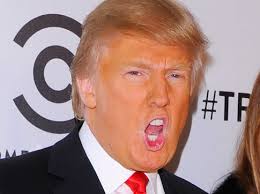
Donald Trump
- Most Americans don’t know the names of their state and federal representatives or even the names of the three branches of government.
- Only one third of Americans can name the three branches of our federal government: executive, legislative, judicial.
- Most voters overestimate the percentage of the federal budget spends on foreign aid (actually, about 1%). Yet they underestimate the amount going to entitlement programs, such as Medicare and Social Security. As a result, they believe we can solve our fiscal problems without either cutting entitlements or raising taxes on the vast majority of Americans.
- Voters also often reward or punish elected officials for events they did not cause, such as short-term economic trends or droughts.
Such ignorance makes people more susceptible to lies and conspiracy theories, including those about the 2020 election.
Myth 4: Americans take pride in their history.
Americans’ ignorance of history—their own and that of other nations—has long been a scandal.
- A 2018 national survey by the Institute for Citizens & Scholars found that only one in three Americans (36%) can actually pass a multiple choice test consisting of items taken from the U.S. Citizenship Test.
- More than half of respondents (60%) didn’t know which countries the United States fought in World War II (Germany, Italy and Japan).
9/11 ATTACKS, ABC NEWS, ALTERNET, AMERICABLOG, AP, BABY BOOMER RESISTANCE, BBC, BLOOMBERG, BLUESKY, BUZZFEED, CBS NEWS, CENSORSHIP, CIA, CNN, CROOKS AND LIARS, DAILY KOS, DAILY KOZ, DICK CHENEY, DONALD TRUMP, FIVETHIRTYEIGHT, GENEVA CONVENTION, GEORGE C. MARSHALL, GEORGE W. BUSH, GINA HASPEL, HARPER’S MAGAZINE, HARRY S. TRUMAN, HUFFINGTON POST, JAKE TAPPER, JOHN MCCAIN, KELLY SADLER, LINDSEY GRAHAM, MEDIA MATTERS, MEGHAN MCCAIN, MERLE MILLER, MOTHER JONES, MOVEON, MSNBC, NBC NEWS, NEW REPUBLIC, NEWSDAY, NEWSWEEK, NPR, PBS NEWSHOUR, POLITICO, POLITICUSUSA, PRISONERS OF WAR, RAW STORY, REUTERS, SALON, SARAH HUCKABEE SANDERS, SEATTLE TIMES, SLATE, TALKING POINTS MEMO, THE ATLANTIC, THE CHICAGO SUN-TIMES, THE CHICAGO TRIBUNE, THE DAILY BEAST, THE DAILY BLOG, THE GUARDIAN, THE HILL, THE HUFFINGTON POST, THE INTERCEPT, THE LOS ANGELES TIMES, THE NATION, THE NEW REPUBLIC, THE NEW YORK TIMES, THE NEW YORKER, THE VIEW, THE VILLAGE VOICE, THE WASHINGTON POST, THINKPROGRESS, THOMAS MCINERNEY, TIME, TORTURE, TRUTHDIG, TRUTHOUT, TWO POLITICAL JUNKIES, U.S. NEWS & WORLD REPORT, UPI, USA TODAY, VIETNAM WAR, VLADIMIR PUTIN, WATERBOARDING, WILLIAM JENNER, X
In Bureaucracy, History, Military, Politics, Social commentary on January 17, 2025 at 12:13 am
Arizona United States Senator John McCain knew firsthand about torture.
A Navy pilot during the Vietnam war, he was shot down over Hanoi on October 26, 1967, and captured. He spent five and a half years as a POW in North Vietnam—and was often brutally tortured. He wasn’t released until March 14, 1973.
So he had strong feelings when he learned about President Donald Trump’s pick for director of the Central Intelligence Agency (CIA).
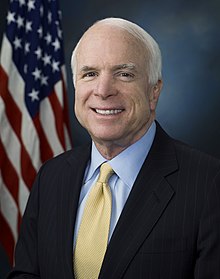
John McCain
This was Gina Haspel, who, in 2002, had operated a “black” CIA site in Thailand where Islamic terrorists were often waterboarded to make them talk.
After the September 11, 2001 Al-Qaeda attacks on New York and Washington, D.C., no one knew if other attacks were about to occur. Or where. The FBI, CIA, National Security Agency (NSA) and other Intelligence agencies were under huge pressure to discover—and foil—any future plots.
The administration of President George W. Bush ruled that waterboarding was not a form of torture, and thus did not violate the Geneva Convention.

Gina Haspel
But for John McCain, waterboarding was torture, even if it didn’t leave its victims permanently scarred and disabled.
As a result, when Haspel’s name was put up for nomination, McCain quickly made clear his opposition.
Enter White House Special Assistant Kelly Sadler, who handled surrogate communications.
Aware that the 81-year-old McCain was dying of brain cancer, Sadler joked to intimates about the Senator’s opposition to Haspel: “It doesn’t matter. He’s dying anyway.”
Leaked to CNN by an anonymous White House official, Sadler’s remark touched off a furor of criticism—and demands for her firing.
McCain’s daughter, Meghan, said on the ABC talk show, “The View”: “Kelly, here’s a little news flash … we’re all dying. I’m dying, you’re dying, we’re all dying. And I want to say, since my dad has been diagnosed … I really feel like I understand the meaning of life, and it is not how you die, it’s how you live.”
Not to be outdone by Sadler, retired Air Force Lieutenant General Thomas McInerney went on the Right-wing Fox News Network to personally attack McCain.
Torture, he said, was effective: “The fact is, is John McCain—it worked on John. That’s why they call him ‘Songbird John.’
“The fact is those methods can work, and they are effective, as former Vice President Cheney said. And if we have to use them to save a million American lives, we will do whatever we have to,” said McInerney.
There’s no evidence that McCain ever betrayed the United States during his captivity.
CNN correspondent Jake Tapper angrily replied to McInerney’s slander: “First of all, no one calls him ‘Songbird John’ except for crazy people and jerks—and I’m using my language carefully here.”
Meghan McCain responded to McInerney’s attack: “My father’s legacy is going to be talked about hundreds and hundreds of years. These people: Nothingburgers. Nobody is going to remember you.”
Her comment echoed a remark by former President Harry S. Truman about Indiana United States Senator William Jenner. Jenner, a Right-wing Republican, had attacked the patriotism of George C. Marshall, who, as chief of staff of the United States Army, was rightly called “the architect of Allied victory” in World War II.
Asked by biographer Merle Miller for his opinion on Jenner, Truman responded: “In my opinion, General Marshall will go down as one of the great men of his time. And, of course, people like Jenner, they aren’t even a footnote in history.”
Others were equally outraged. South Carolina Republican Senator Lindsey Graham, a close friend of McCain, said: “Ms. Sadler, may I remind you that John McCain has a lot of friends in the United States Senate on both sides of the aisle. Nobody is laughing in the Senate.”
And Meghan McCain added during her appearance on “The View”: “I don’t understand what kind of environment you’re working in when that would be acceptable and then you can come to work the next day and still have a job.”
Of course, for anyone familiar with Donald Trump and his vicious reactions to even the smallest opposition, Sadler’s jibe at McCain should come as no surprise.
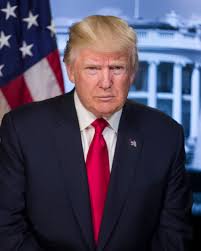
Donald Trump
During the 2016 Presidential campaign, Trump infamously said of McCain: “He’s not a war hero. He was a war hero because he was captured. I like people who weren’t captured.”
This from a man who sought—and got—five draft deferments during the Vietnam War. And who has compared his reckless sex-life during the 1970s to risking his life in service to his country.
Officially, White House Press Secretary Sarah Huckabee Sanders refused to confirm or deny Sadler’s joke: “I’m not going to get into a back and forth because people want to create issues of leaked staff meetings.”
Unofficially, Sanders was furious—not at the joke about a dying man, but that someone had leaked it. After assailing the White House communications team, she pouted: “I am sure this conversation is going to leak, too. And that’s just disgusting.”
Since past is usually prologue, this serves as a warning of what the United States can expect for at least the next four years.
2016 PRESIDENTIAL CAMPAIGN, 9/11 ATTACKS, ABC NEWS, ACADEMY AWARDS, ALTERNET, AMERICABLOG, AP, ASSOCIATED PRESS, BABY BOOMER RESISTANCE, BARACK OBAMA, BBC, BEST ACTRESS, BEST SUPPORTING ACTRESS, BIRTHERS, BLOOMBERG, BULLYING, BUZZFEED, CBS NEWS, CENSORSHIP, CHRIS CUOMO, CNN, CREDIBILITY GAP, CROOKS AND LIARS, DAILY KOS, DAVID BROOKS, DAVID HALBERSTAM, DISABILITY, DONALD TRUMP, FIVETHIRTYEIGHT, FOX AND FRIENDS, FRANK STANTON, FULL METAL JACKET, GEORGE MCGOVERN, GOLDEN GLOBES, HARPER’S MAGAZINE, HILLARY CLINTON, HUFFINGTON POST, JOHN F. KENNEDY, KELLEYANNE CONWAY, KRAMER VS. KRAMER, LYNDON B. JOHNSON, MARK SHIELDS, MEDIA MATTERS, MERYL STREEP, MORLEY SAFER, MOTHER JONES, MOVEON, MSNBC, NAVY SEALS, NBC NEWS, NEEWSWEEK, NEW DAY, NEW REPUBLIC, NEWSDAY, NEWSWEEK, NPR, OSAMA BIN LADEN, PBS NEWSHOUR, PETER ARNETT, POLITICO, POLITICUSUSA, RAW STORY, REUTERS, RICHARD NIXON, RONALD ZIEGLER, SALON, SEATTLE TIMES, SERGE KOVALESKI, SLATE, SOPHIE'S CHOICE, STANLEY KUBRICK, TALKING POINTS MEMO, THE ATLANTIC, THE CHICAGO SUN-TIMES, THE CHICAGO TRIBUNE, THE DAILY BEAST, THE DAILY BLOG, THE GUARDIAN, THE HILL, THE HUFFINGTON POST, THE INTERCEPT, THE IRON LADY, THE LOS ANGELES TIMES, THE NATION, THE NEW REPUBLIC, THE NEW YORK TIMES, THE NEW YORKER, THE VILLAGE VOICE, THE WALL STREET JOURNAL, THE WASHINGTON POST, THINKPROGRESS, TIME, TRUTHDIG, TRUTHOUT, TWO POLITICAL JUNKIES, U.S. NEWS & WORLD REPORT, UPI, USA TODAY, VIETNAM WAR, WATERGATE, X
In Bureaucracy, History, Law, Law Enforcement, Military, Politics, Social commentary on October 21, 2024 at 12:10 am
After being presented with the Cecil B. DeMille Lifetime Achievement Award, Meryl Streep criticized Presidential candidate Donald Trump’s mocking of disabled New York Times reporter Serge Kovaleski.
Kovaleski suffers from arthrogryposis, a congenital condition that restricts the movement of the muscles in his arms.
At a South Carolina rally on November 24, 2015, Trump claimed that Kovaleski was backing away from an article he had written four years earlier.
Trump had earlier said the article proved that New Jersey Muslims had celebrated the September 11, 2001 terror attacks. Kovaleski had insisted there was no credible proof of such celebrations.
Angered at being contradicted, Trump mocked Kovaleski: He flopped his right arm around with his hand held at an odd angle while imitating the reporter: “Now, the poor guy, you’ve got to see this guy: ‘Uhh, I don’t know what I said. Uhh, I don’t remember,’ he’s going like ‘I don’t remember. Maybe that’s what I said.'”
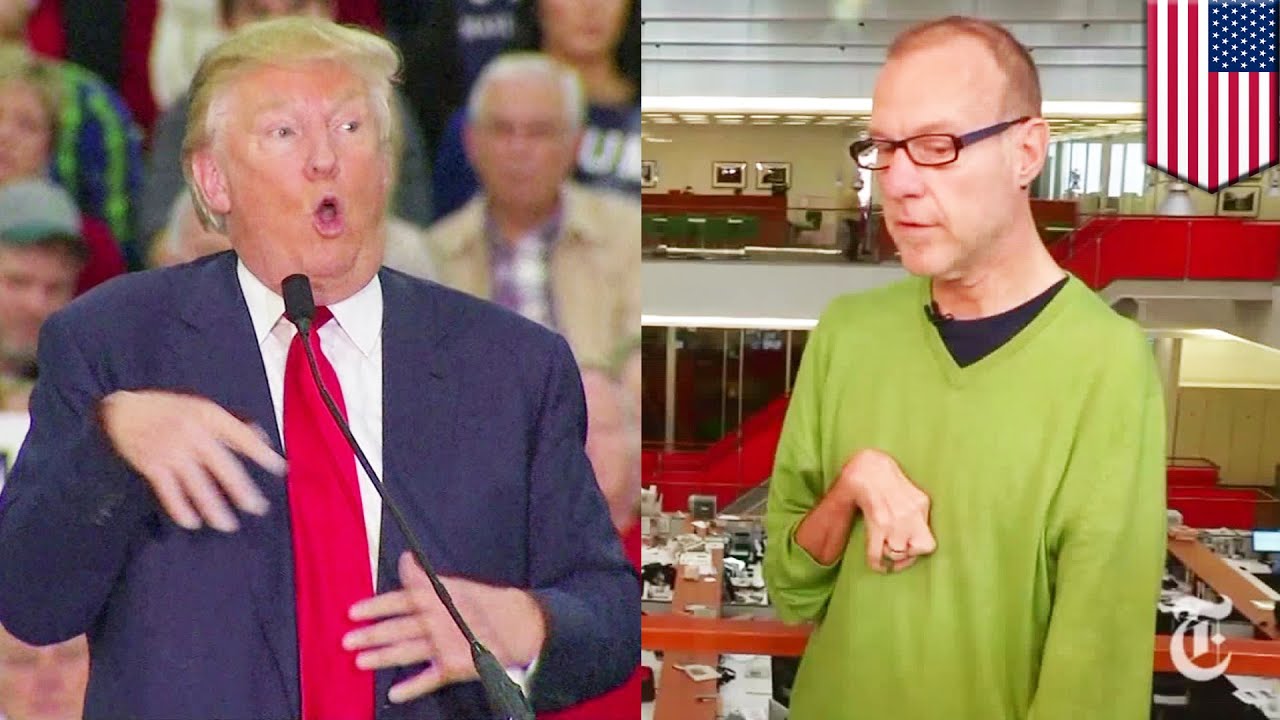
Trump mocking Kovaleski, left; Kovaleski, right
At the Golden Globe Awards on January 8, Streep denounced this behavior that “broke my heart.”
“And this instinct to humiliate, when it’s modeled by someone in the public platform, by someone powerful, it filters down into everybody’s life, because it kind of gives permission for other people to do the same thing.
“Disrespect invites disrespect. Violence incites violence. When the powerful use their position to bully others, we all lose.”

Meryl Streep at the Golden Globes
Streep’s words outraged Trump’s supporters—especially his mouthpiece, Kelleyanne Conway.
Appearing on Right-wing Fox and Friends the next morning, she said: “We have to now form a government, and I’m concerned that somebody with a platform like Meryl Streep is also, I think, inciting people’s worst instincts.
“When she won’t get up there and say, ‘I don’t like it, but let’s try to support him and see where we can find some common ground with him, which [Trump] has actually done from moment one.”
Conway didn’t say what common ground Streep should find with Trump. Perhaps agreeing on mocking the disabled?

Kelleyanne Conway
Then Conway visited CNN’s “New Day,” where she offered a “black-is-white” defense for Trump’s videotaped ridiculing of Kovaleski: It didn’t happen.
The host, Chris Cuomo, having seen the video, wasn’t buying it.
CUOMO: But is [Streep] wrong? Is she wrong that it was wrong for Trump to make gestures like that about a man with disabilities?
CONWAY: He didn’t—but that is not what he did and he has said that a thousand times. As he tweeted out today—
CUOMO: He can say it a million. Look at the video.
CONWAY: Why can’t you—wait, excuse me. Why can’t you give him the benefit of the doubt the way the benefit of the doubt was given to CNN’s polling, all of its analysts?
CUOMO: Because he’s making a disgusting gesture on video talking about Serge.
CONWAY: Not about that reporter and that’s just a fact. That is what he’s said. You should give him—
CUOMO: But how is it not about the reporter?
CONWAY: —the deference and respect if he says that it was—he was not mocking, he was mocking the groveling. He said it again this morning. He has three tweets out about it.
CUOMO: But he’s doing a gesture that goes right to the guy’s vulnerability.
CONWAY: You’re saying you don’t believe him. You’re calling him a liar and you shouldn’t.
CUOMO: Look, Kellyanne, to me that’s like you’re trying to scare me off the point and we both know it’s a waste of time.
CONWAY: I’m not going to scare you off anything.
CUOMO: He’s making a gesture that is so keenly tuned to what Serge’s vulnerability is.
CONWAY: And now you’re giving oxygen to what Meryl Streep said.
CUOMO: Forget about Meryl Streep. This happened before her. If our kids did that, could you imagine what we would say to them?
Conway said she would not bring her children into the discussion.
CUOMO: I will. If my kid did something like that, it’d be a really tough day.
CONWAY: You have to listen to what the president has said about that. Why don’t you believe him?
Conway tried to change the subject to Hillary Clinton: “She was given the benefit of the doubt here constantly.”
When Cuomo asked for specifics, she refused to give them. Then she returned to claiming that Trump had never mocked Kovaleski:
CONWAY: You can’t give him the benefit of the doubt on this, when he’s telling you what was in his heart? You always want to go by what’s come out of his mouth, rather than look at what’s in his heart.
* * * * *
Previously, politicians had defended themselves with arguments like: “You can see right here on the tape, I did (or, I didn’t)….”
Trump has cast aside that logic—and the taped evidence—by demanding: “Believe what I’m telling you, not what you’ve just seen.”
By that rationale, if a security camera shows Trump robbing a bank at gunpoint, we’re supposed to believe him if he says: “No, I didn’t rob that bank. I was simply checking my bank balance.”
Such “logic” holds appeal for paid shills like Kelleyanne Conway. But most people will continue to judge by the evidence.
2016 PRESIDENTIAL CAMPAIGN, 9/11 ATTACKS, ABC NEWS, ACADEMY AWARDS, ALTERNET, AMERICABLOG, AP, ASSOCIATED PRESS, BABY BOOMER RESISTANCE, BARACK OBAMA, BBC, BEST ACTRESS, BEST SUPPORTING ACTRESS, BIRTHERS, BLOOMBERG, BULLYING, BUZZFEED, CBS NEWS, CENSORSHIP, CHRIS CUOMO, CNN, CREDIBILITY GAP, CROOKS AND LIARS, DAILY KOS, DAVID BROOKS, DAVID HALBERSTAM, DISABILITY, DONALD TRUMP, FIVETHIRTYEIGHT, FOX AND FRIENDS, FRANK STANTON, FULL METAL JACKET, GEORGE MCGOVERN, GOLDEN GLOBES, HARPER’S MAGAZINE, HILLARY CLINTON, HUFFINGTON POST, JOHN F. KENNEDY, KELLEYANNE CONWAY, KRAMER VS. KRAMER, LYNDON B. JOHNSON, MARK SHIELDS, MEDIA MATTERS, MERYL STREEP, MORLEY SAFER, MOTHER JONES, MOVEON, MSNBC, NAVY SEALS, NBC NEWS, NEEWSWEEK, NEW DAY, NEW REPUBLIC, NEWSDAY, NEWSWEEK, NPR, OSAMA BIN LADEN, PBS NEWSHOUR, PETER ARNETT, POLITICO, POLITICUSUSA, RAW STORY, REUTERS, RICHARD NIXON, RONALD ZIEGLER, SALON, SEATTLE TIMES, SERGE KOVALESKI, SLATE, SOPHIE'S CHOICE, STANLEY KUBRICK, TALKING POINTS MEMO, THE ATLANTIC, THE CHICAGO SUN-TIMES, THE CHICAGO TRIBUNE, THE DAILY BEAST, THE DAILY BLOG, THE GUARDIAN, THE HILL, THE HUFFINGTON POST, THE INTERCEPT, THE IRON LADY, THE LOS ANGELES TIMES, THE NATION, THE NEW REPUBLIC, THE NEW YORK TIMES, THE NEW YORKER, THE VILLAGE VOICE, THE WALL STREET JOURNAL, THE WASHINGTON POST, THINKPROGRESS, TIME, TRUTHDIG, TRUTHOUT, TWO POLITICAL JUNKIES, U.S. NEWS & WORLD REPORT, UPI, USA TODAY, VIETNAM WAR, WATERGATE, X
In Bureaucracy, History, Law, Law Enforcement, Military, Politics, Social commentary on October 18, 2024 at 12:22 am
For five years, Donald Trump, more than anyone else, popularized the slander that Barack Obama was born in Kenya—and was therefore an illegitimate President.
For more than a year during his 2016 Presidential campaign, Trump continued doing so.
As his popularity fell to less than 1% among blacks, the managers of his campaign urged: Put the “birther” issue behind you.
So, on September 16, 2016—10 days before his scheduled first debate with Democratic Presidential nominee Hillary Clinton—Trump made his version of a reversal.
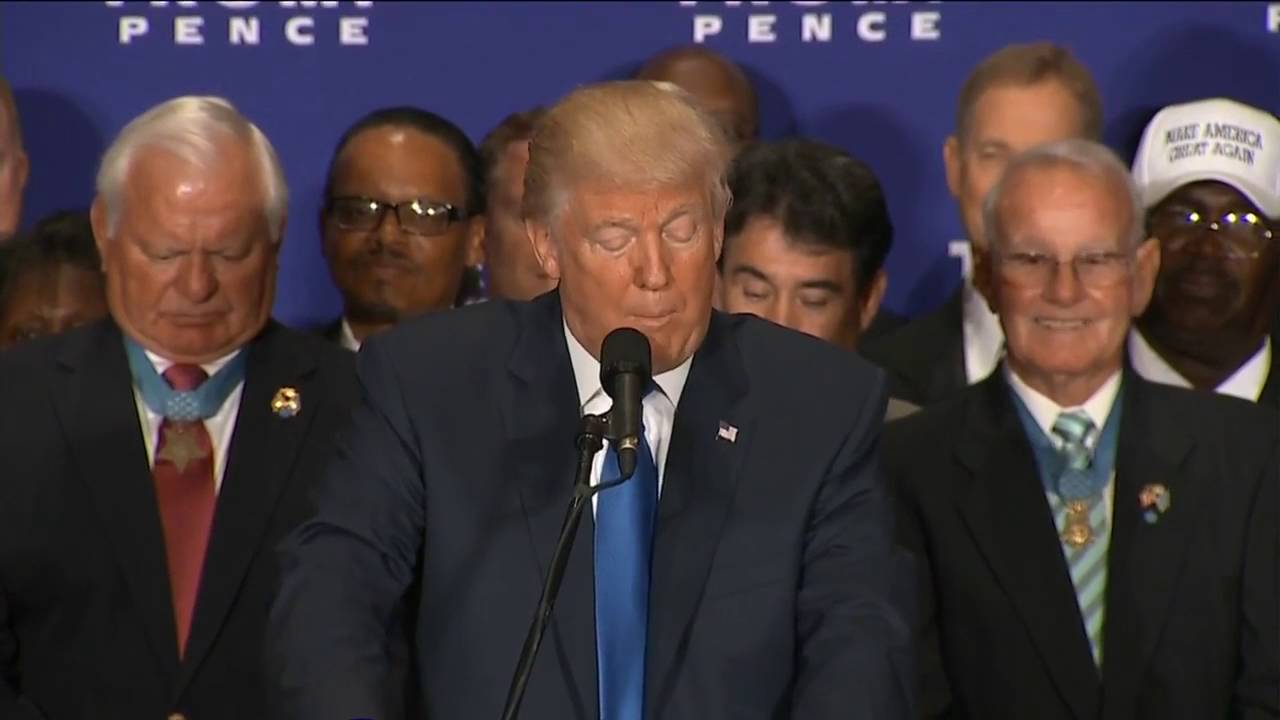
Donald Trump: “President Barack Obama was born in the United States.”
He did so in about seven seconds and 40 words—after spending a half hour paying tribute to the military and promoting his new upscale hotel in Washington, D.C.:
“Now, not to mention her in the same breath, but Hillary Clinton and her campaign of 2008 started the birther controversy.
“I finished it. I finished it. You know what I mean.
“President Barack Obama was born in the United States, period. Now we all want to get back to making America strong and great again.”
His tone made it clear that he felt uneasy making that statement–and wanted to get it over with as fast as possible.
He refused to take questions from reporters covering the event. Nor did he apologize for his five-year campaign of slander.
On the evening of September 16, Hillary Clinton strongly responded to Trump’s comments:
“For five years, he has led the birther movement to de-legitimize our first black president. His campaign was founded on this outrageous lie. There is no erasing it in history.”
And First Lady Michelle Obama slammed Trump for his “birther” claims:
“Then, of course, there were those who questioned, and who continue to question for the past eight years, and up to this very day, whether my husband was even born in this country.
“Well, during his time in office, I think Barack has answered those questions with the examples he set, by going high when they go low. And he’s answered these questions with the progress we’ve achieved together.”
Michelle Obama
But perhaps the best perspective on this event was provided by syndicated columnist Mark Shields and New York Times columnist David Brooks. Each Friday they appear on the PBS Newshour to review the week’s major political events.
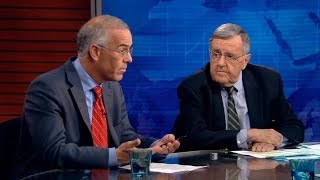
David Brooks and Mark Shields
On September 16, 2016, Shields (a liberal) and Brooks (a conservative) addressed Trump’s about-face on birtherism.
MARK SHIELDS: “I think it’s important to establish right at the outset that [Trump] wasn’t only the loudest and the highest-profile and the most persistent and the most well-publicized birther, he, Donald Trump. He lied. He lied consistently and persistently.
“And, today, without explanation or excuse, he just changed his position and tried to absolutely falsely shift the blame onto Hillary Clinton.
“And this was an appeal to—he debased democracy. He debased the national debate. He appealed to that which is most ignoble or least noble in all of us.”
DAVID BROOKS: “Usually, there’s some tangential relationship to the truth, but a corroding relationship to the truth, frankly, as politics has gone on over the years.
“But now we’re in a reverse, Orwellian inversion of the truth with this. And so we have a team of staffers and then the candidate himself who have taken the normal spin and smashed all the rules.
“And so we are really in Orwell land. We are in 1984. And it’s interesting that an authoritarian personality type comes in at the same time with a complete disrespect for even tangential relationship to the truth that words are unmoored.
“And so I do think this statement sort of shocked me with the purification of a lot of terrible trends that have been happening. And so what’s white is black, and what is up is down, what is down is up. And that really is something new in politics.
“And the fact that there is no penalty for it, apparently—he’s doing fantastic in the last two weeks in the polls–is just somehow where we have gotten.”
Less than two months later, Trump won the Presidency.
Since then, Trump has continued to inhabit what David Brooks called “Orwell land.”
The most recent example of this occurred on January 9, 2017.
The night before, Meryl Streep had enraged Trump and his mouthpiece, Kelleyanne Conway, at the Golden Globes Awards ceremony.
While being presented with the Cecil B. DeMille Lifetime Achievement Award, she had criticized Trump’s mocking, on November 25, 2015, of disabled New York Times reporter Serve Kovaleski:
“There was one performance this year that stunned me. It sank its hooks in my heart. Not because it was good. There was nothing good about it. But it was effective, and it did its job. It made its intended audience laugh and show their teeth.
“It was that moment when the person asking to sit in the most respected seat in our country imitated a disabled reporter. Someone he outranked in privilege, power and the capacity to fight back. It kind of broke my heart when I saw it. I still can’t get it out of my head because it wasn’t in a movie. It was real life.”
2016 PRESIDENTIAL CAMPAIGN, 9/11 ATTACKS, ABC NEWS, ACADEMY AWARDS, ALTERNET, AMERICABLOG, AP, ASSOCIATED PRESS, BABY BOOMER RESISTANCE, BARACK OBAMA, BBC, BEST ACTRESS, BEST SUPPORTING ACTRESS, BIRTHERS, BLOOMBERG, BULLYING, BUZZFEED, CBS NEWS, CENSORSHIP, CHRIS CUOMO, CNN, CREDIBILITY GAP, CROOKS AND LIARS, DAILY KOS, DAVID BROOKS, DAVID HALBERSTAM, DISABILITY, DONALD TRUMP, FIVETHIRTYEIGHT, FOX AND FRIENDS, FRANK STANTON, FULL METAL JACKET, GEORGE MCGOVERN, GOLDEN GLOBES, HARPER’S MAGAZINE, HILLARY CLINTON, HUFFINGTON POST, JOHN F. KENNEDY, KELLEYANNE CONWAY, KRAMER VS. KRAMER, LYNDON B. JOHNSON, MARK SHIELDS, MEDIA MATTERS, MERYL STREEP, MORLEY SAFER, MOTHER JONES, MOVEON, MSNBC, NAVY SEALS, NBC NEWS, NEEWSWEEK, NEW DAY, NEW REPUBLIC, NEWSDAY, NEWSWEEK, NPR, OSAMA BIN LADEN, PBS NEWSHOUR, PETER ARNETT, POLITICO, POLITICUSUSA, RAW STORY, REUTERS, RICHARD NIXON, RONALD ZIEGLER, SALON, SEATTLE TIMES, SERGE KOVALESKI, SLATE, SOPHIE'S CHOICE, STANLEY KUBRICK, TALKING POINTS MEMO, THE ATLANTIC, THE CHICAGO SUN-TIMES, THE CHICAGO TRIBUNE, THE DAILY BEAST, THE DAILY BLOG, THE GUARDIAN, THE HILL, THE HUFFINGTON POST, THE INTERCEPT, THE IRON LADY, THE LOS ANGELES TIMES, THE NATION, THE NEW REPUBLIC, THE NEW YORK TIMES, THE NEW YORKER, THE VILLAGE VOICE, THE WALL STREET JOURNAL, THE WASHINGTON POST, THINKPROGRESS, TIME, TRUTHDIG, TRUTHOUT, TWO POLITICAL JUNKIES, U.S. NEWS & WORLD REPORT, UPI, USA TODAY, VIETNAM WAR, WATERGATE, X
In Bureaucracy, History, Law, Law Enforcement, Military, Politics, Social commentary on October 16, 2024 at 12:26 am
“Credibility gap” is a term that came into use during the mid-1960s to describe public and journalistic distrust of President Lyndon B. Johnson. In particular, the term was applied to his administration’s conduct of the Vietnam war.
It was, in short, a euphemism for accusing government officials of outright lying.
An example of the credibility gap in full swing appeared in Stanley Kubrick’s classic 1987 Vietnam war movie, Full Metal Jacket.
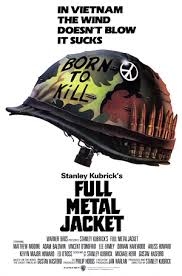
Vietnam was a war where military and political officials spewed a gung-ho version of constant American progress against a tough enemy.
And where civilian reporters like David Halberstam and Walter Cronkite saw—and labeled—the war as a brutal, wasteful and ultimately doomed effort.
Midway through the film, there’s an editorial meeting of The Sea Tiger, the official Marine newspaper.
Lieutenant Lockhart is presiding–and he is determined to give his superiors an endless stream of “all-systems-go” propaganda reports. He reads a series of stories that have been published:
Story #1: DIPLOMATS IN DUNGAREES—MARINE ENGINEERS LEND A HELPING HAND REBUILDING DONG PHUC VILLAGES.
LOCKHART: “Chili, “if we move Vietnamese, they are evacuees. If they come to us to be evacuated, they are refugees.”
Story #2: N.V.A. SOLDIER DESERTS AFTER READING PAMPHLETS.
LOCKHART: “A young North Vietnamese Army regular, who realized his side could not win the war, deserted from his unit after reading Open Arms program pamphlets.”
Story #3: NOT WHILE WE’RE EATING: N.V.A. LEARN MARINES ON A SEARCH AND DESTROY MISSION DON’T LIKE TO BE INTERRUPTED WHILE EATING CHOW.
LOCKHART: “‘Search and destroy.’ Uh, we have a new directive on this. In the future, in place of ‘search and destroy,’ substitute the phrase ‘sweep and clear.’ Got it?”
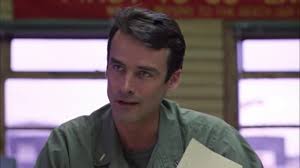
Lt. Lockhart, editor of The Sea Tiger
LOCKHART: “And, Joker—where’s the weenie?”
JOKER: “Sir?”
LOCKHART “The Kill, Joker. I mean, all that fire, the grunts must’ve hit something.”
JOKER: “Didn’t see ’em.”
LOCKHART: “Joker, I’ve told you, we run two basic stories here: Grunts who give half their pay to buy gooks toothbrushes and deodorants—winning of hearts and Minds—okay? And combat action that results in a kill—Winning the War. Now you must have seen blood trails … drag marks?”
JOKER: “It was raining, sir.”
LOCKHART: “Well, that’s why God passed the law of probability. Now rewrite it and give it a happy ending–say, uh, one kill. Make it a sapper or an officer. Grunts like reading about dead officers.”
JOKER: “Okay, an officer. How about a general?”
LOCKHART: “Joker, maybe you’d like our guys to read the paper and feel bad. I mean, in case you didn’t know it, this is not a particularly popular war. Now, it is our job to report the news that these why-are-we-here civilian newsmen ignore.”
So great became the divide between truth and lies during military “press briefings” that reporters started calling them “The Five O’clock Follies.” And even some soldiers took to wearing buttons that said: “Ambushed at Credibility Gap.”
Reporters who dared to write truthfully about the military’s crimes and failures—like David Halberstam of the New York Times and Peter Arnett of the Associated Press—were regarded as traitors by military and political officials.
In 1963, President John F. Kennedy became enraged by Halberstam’s reporting on the corruption of the South Vietnamese government. He pressured New York Times publisher Arthur Ochs Sulzberger to transfer Halberstam to another locale. Sulzberger politely refused—and then, to send a message to Kennedy, extended Halberstam’s stay in Vietnam another six months.
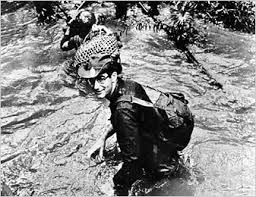
David Halberstam
In 1965, when CBS Correspondent Morley Safer filmed Marines setting fire to the village of Cam Ne with Zippo lighters, President Lyndon B. Johnson was similarly outraged.
He placed an early-morning call to CBS News President Frank Stanton and shouted: “Your boys shat on the American flag!”
The trail of deceit and attempted censorship continued right up to the end of the war—in April, 1975. That was when North Vietnamese forces invaded the South and quickly overwhelmed the incompetent defenses arrayed against them.
And while America was still bogged down in Vietnam, the Watergate scandal erupted on June 17, 1972.

Watergate Hotel
Members of the Nixon administration’s secret “Plumbers Unit” burglarized the offices of the Democratic National Committee at the Watergate Hotel.
Obsessed with re-electing Richard Nixon, they sought incriminating information to discredit U.S. Senator George McGovern, the Democrats’ nominee for President.
When the burglars were caught, President Richard M. Nixon and his topmost officials lied and stonewalled both reporters and investigators seeking the truth.
Nixon’s press secretary, Ronald Ziegler, repeatedly slandered the integrity of The Washington Post for its coverage of the mushrooming Watergate scandal. He called the Watergate break-in “a third-rate burglary” and attacked the Post for “shabby journalism.”
Finally, on April 17, 1973, Ziegler, announced at a press conference: “This is the operative statement. The others are inoperative.”
In short: We’ve been lying to you for the last 10 months. But now we’re telling the truth.
Like Vietnam, the Watergate scandal destroyed the reputations of many of its chief architects. Forty government officials were indicted or jailed.
Vietnam and Watergate were seminal events for Americans coming of age in the late 1960s and early 1970s. They taught an entire generation: Don’t trust the government. Its officials routinely lie, and their lies can be deadly.


 Bureaucracybuster's Blog
ABC NEWS, ADOLF HITLER, ALTERNET, AMERICABLOG, AP, BABY BOOMER RESISTANCE, BBC, BLIND AMBITION (SERIES), BLOOMBERG, BLUESKY, BUZZFEED, CBS NEWS, CHINA, CIVIL WAR, CNN, CONSPIRACY (MOVIE), CROOKS AND LIARS, DAILY KOS, DONALD TRUMP, DOUGLAS MACARTHUR, FIVETHIRTYEIGHT, GUTS AND GLORY: THE RISE ND FALL OF OLIVER NORTH (SERIES), HARPER’S MAGAZINE, HITLER: THE RISE OF EVIL (SERIES), HITLER’S PEOPLE: THE FACES OF THE THIRD REICH (BOOK), HITLER’S SS: PORTRAIT OF EVIL (MOVIE), HOLOCAUST, HOLOCAUST (SERIES), HUFFINGTON POST, INSIDE THE THIRD REICH (SERIES), JOSEPH MCCARTY, KOREAN WAR, MEDIA MATTERS, MOTHER JONES, MOVEON, MSNBC, NAZI GERMANY, NAZIS, NBC NEWS, NEW REPUBLIC, NEWSDAY, NEWSWEEK, NPR, NUREMBERG (MOVIE), OLIVER NORTH, PBS NEWSHOUR, POLITICO, POLITICUSUSA, RAW STORY, REPUBLICANS, REUTERS, RICHARD J. EVANS, RICHARD NIXON, Ronald Reagan, SALON, SEATTLE TIMES, SLATE, SOVIET UNION, SPANISH-AMERICAN WAR, TAIL GUNNER JOE (MOVIE), TALKING POINTS MEMO, THE ATLANTIC, THE BUNKER (MOVIE), THE CHICAGO SUN-TIMES, THE CHICAGO TRIBUNE, THE DAILY BEAST, THE DAILY BLOG, THE FINAL DAYS (MOVIE), THE GUARDIAN, THE HILL, THE HUFFINGTON POST, THE INTERCEPT, THE LOS ANGELES TIMES, THE NATION, THE NEW REPUBLIC, THE NEW YORK TIMES, THE NEW YORKER, THE PLOT TO KILL HITLER (MOVIE), THE VILLAGE VOICE, THE WASHINGTON POST, THINKPROGRESS, THIRD REICH, TIME, TRUTHDIG, TRUTHOUT, TV, TWO POLITICAL JUNKIES, U.S. NEWS & WORLD REPORT, UPI, USA TODAY, VIETNAM WAR, WORLD WAR 1, WORLD WAR 11, X
“AMERICAN HISTORY” ISN’T WHAT IT WAS
In Entertainment, History, Military, Politics, Social commentary on April 2, 2025 at 12:08 amFuture historians—if there are any—may well view the administration of President Donald Trump the same way that historian Richard J. Evans analyzes the Third Reich.
To place the infamy of the Trump administration in the same context as that of the Third Reich, consider the opening paragraph from his latest bestseller: Hitler’s People: The Faces of the Third Reich.
Substitute “Republicans” for “Nazis,” “Donald Trump” for “Adolf Hitler,” and “Americans” for “Germans.”
As in the following:
“Who were the Republicans? What motivated the leaders and functionaries of the Republican movement and those who put their project into action? What had happened to their moral compass?
“Were they in some sense deviant, or deranged, or degenerate? Were they gangsters acting with criminal intent? Or were they ‘ordinary men’ (and a few women), or perhaps, more precisely, ‘ordinary Americans’? Did they come from the margins of society, were they outsiders, or were they in some sense part of American society’s mainstream?
“And how do they explain Trump’s drive to achieve dictatorial power? Was he a kind of empty shell, devoid of personal qualities and without a personal life, into which Americans poured their deepest political ambitions and desires?
“What made otherwise normal people carry out, or approve, terrible and murderous atrocities against Republicans’ real and supposed enemies? Or were they perhaps not normal at all? Beyond this, why did so many leading Americans in responsible positions, in the key institutions of society, go along with the dictatorship….?
“And what did those of them who survived….think of about their conduct during the Trump administration? Did they gain a moral perspective on it, did they repent, did they come to an understanding of what they had done?”
Americans have always considered themselves separate from—and superior to—those in other nations. Germans and Russians might fall prey to evil dictators, but Americans? Never!
Evangelical Americans believe that the United States is divinely inspired—and protected.
Thus, American TV networks have filled the airwaves with movies and doc-u-dramas about Nazi Germany such as: “Hitler: The Rise of Evil,” “The Bunker,” “Nuremberg,” “Holocaust,” “Inside the Third Reich,” “Conspiracy,” “Hitler’s SS: Portrait of Evil,” “The Plot to Kill Hitler.”
Yet American networks have been unwilling to produce films about the evil of America’s own Right-wing leaders. It’s extremely unlikely that future network executives will OK a miniseries on “Trump: The Rise of Evil.”
To date, only one film—“Tail Gunner Joe”—has been made about the rise and fall of Senator Joseph McCarthy.
For four years (1950-1954) McCarthy terrorized Americans with false charges of a massive Communist conspiracy, leaving broken lives and national mistrust in his wake.
And “Tail Gunner Joe” was made in 1974.
The fall of President Richard Nixon in 1974 led networks to produce such movies as “Blind Ambition” (1979) and “The Final Days” (1989). But those appeared decades ago. And no new ones have appeared since.
In 1989, CBS found the courage to run “Guts and Glory: The Rise and Fall of Oliver North.” What made this unusual was that it appeared only three years after the story of the infamous “Iran-Contra” arms-for-hostages story broke.
But the role of former President Ronald Reagan in waging unjustified terror-war against Nicaragua was totally ignored. And no other movie has since been made on this disgraceful period in United States history.
Ronald Reagan
Americans have always been convinced of their own purity as a people—especially when compared to those supposedly corrupt, undemocratic European nations. And so, according to popular mythology, the United States is constantly losing its innocence.
Such as:
I861 – 1865: Civil War—When brother supporting slavery fought brother supporting freedom.
1898: Spanish-American War––The United States freed Cuba from the Spanish.
1917 – 1918: World War 1––When innocent American “doughboys” rushed to Europe to save immoral France and England from the Hunnish Germans.
1942 – 1945: World War II––Once again, Americans rushed to Europe to (again) save impure France and England from (again) the Hunnish Germans and end the Holocaust.
1954 – 1975: Vietnam War––The United States rushed to fight Communism on behalf of a people struggling to be free.
Lost in all these “innocent” scenarios are such unpleasant realities as:
During the 1950s, Baby Boom schoolers were spoon-fed a Disney version of American history. When they grew old enough to witness the struggles for black civil rights and against the Vietnam war, they felt they had been lied to—and reacted with anger and protest.
Generations that have been “protected” against the ugly realities of the past are ill-equipped to cope with those in their own lives.
Share this: