Posts Tagged ‘UKRAINE’
2020 PRESIDENTIAL ELECTION, 2022 MIDTERM ELECTIONS, ABC NEWS, ADAM LAXALT, ADOLF HITLER, ALEXANDER SHUSTOROVICH, ALTERNET, AMERICABLOG, ANDREW INTRATER, AP, AUDREY MURAVIEV, BABY BOOMER RESISTANCE, BARACK OBAMA, BBC, BLOOMBERG NEWS, BUZZFEED, CBS NEWS, CNN, CROOKS AND LIARS, DAILY KOS, DEFENSE INTELLIGENCE AGENCY, DONALD TRUMP, ELECTORAL COLLEGE, ERIC TRUMP, FASCISM, FIVETHIRTYEIGHT, FOX NETWORK, FRANKLIN GRAHAM, HARPER’S MAGAZINE, HUFFINGTON POST, JAMES KIRCHICK, JANUARY 6 COUP ATTEMPT, JESSE BENTON, JOE BIDEN, JOHN KASICH, JOHN MCCAIN, KEVIN MCCARTHY, LEN BLAVATNIK, LIBERALISM, LINDSEY GRAHAM, MARCO RUBIO, MARJORIE TAYLOR GREENE, MEDIA MATTERS, MICHAEL FLYNN, MITCH MCCONNELL, MOTHER JONES, MOVEON, MSNBC, NATIONAL RIFLE ASSOCIATION, NBC NEWS, NEW REPUBLIC, NEWSDAY, NEWSWEEK, NPR, OLIGARCHS, PAUL A. GOSAR, PBS NEWSHOUR, POLITICO, POLITICUSUSA, RAW STORY, REPUBLICANS, REUTERS, Ronald Reagan, ROY DOUGLAS WEAD, RUSSIA, RUSSIA TODAY, SALON, SCOTT WALKER, SEAN HANNITY, SEATTLE TIMES, SERGEY KISLYAK, SIMON KUKES, SLATE, SOVIET UNION, TALKING POINTS MEMO, THE ATLANTIC, THE CHICAGO SUN-TIMES, THE CHICAGO TRIBUNE, THE DAILY BEAST, THE DAILY BLOG, THE GUARDIAN, THE HILL, THE HUFFINGTON POST, THE INTERCEPT, THE LOS ANGELES TIMES, THE NATION, THE NEW REPUBLIC, THE NEW YORK TIMES, THE NEW YORKER, THE VILLAGE VOICE, THE WASHINGTON POST, THINKPROGRESS, TIME, TRUTHDIG, TRUTHOUT, TUCKER CARLSON, TWITTER, U.S. NEWS & WORLD REPORT, UKRAINE, UNITED STATES CAPITOL BUILDING, UNITED STATES HOUSE OF REPRESENTATIVES, UNITED STATES JUSTICE DEPARTMENT, UNITED STATES SENATE, UPI, USA TODAY, VLADIMIR PUTIN, VOLODYMYR ZELENSKY, WINSTON CHURCHILL, WORLD WAR 11
In Bureaucracy, History, Law, Law Enforcement, Military, Politics, Social commentary on January 5, 2023 at 12:12 am
Russian President Vladimir Putin has won acclaim within American conservatives by attacking those they detest—such as gays. And he has extolled Russia’s “traditional values” and assailed the West’s “genderless and infertile” liberalism.
In 2015, Russia-–a secret police state utterly opposed to private ownership of firearms—hosted a delegation from the National Rifle Association.
Both the American Right and Putin reap huge benefits from the propagandistic efforts of the Fox Network. Fox hosts Sean Hannity and Tucker Carlson are big hits in Russia, routinely getting huge airtime as they attack liberalism generally and President Joe Biden in particular.
James Kirchick—a conservative American reporter, foreign correspondent, author, and columnist—has analyzed the turn-about of the Republican party from staunchly anti-Communist to rabidly pro-Putin.
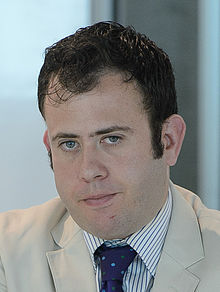
James Kirchick
In a July 27, 2017 essay, “How the GOP became the Party of Putin,” he wrote:
“How did the party of Ronald Reagan’s moral clarity morph into that of Donald Trump’s moral vacuity?
“Russia’s intelligence operatives are among the world’s best. I believe they made a keen study of the American political scene and realized that, during the Obama years, the conservative movement had become ripe for manipulation. Long gone was its principled opposition to the ‘evil empire.’
“What was left was an intellectually and morally desiccated carcass populated by con artists, opportunists, entertainers and grifters operating massively profitable book publishers, radio empires, websites, and a TV network whose stock-in-trade are not ideas but resentments….
“Surveying this lamentable scene, why wouldn’t Russia try to ‘turn’ the American right, whose ethical rot necessarily precedes its rank unscrupulousness?
“Why wouldn’t a ‘religious right’ that embraced a boastfully immoral charlatan like Donald Trump not turn a blind eye toward—or, in the case of [evangelical pastor] Franklin Graham, embrace—an oppressive regime like that ruling Russia?“
Republicans have become a party fueled by hatred and lusting for absolute control—not just of their own members but Americans who totally disagree with their methods and goals.
What Ronald Reagan once said about the leaders of the Soviet Union applies just as accurately to the leaders of his own party: “The only morality they recognize is what will further their cause, meaning they reserve unto themselves the right to commit any crime, to lie, to cheat.”
The ultimate proof of this came in the Right’s attempt to violently overturn the results of the 2020 Presidential election—and to install Donald Trump as a dictatorial “President-for-Life.”
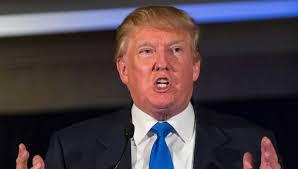
Donald Trump
On November 3, Joe Biden became President-elect of the United States by winning 81,283,495 votes, or 51.4% of the vote, compared to 74,223,755 votes, or 46.9% of the vote cast for President Donald Trump.
In the Electoral College—which actually determines the winner—the results were even more stunning: 306 votes for Biden, compared with 232 for Trump. It takes 270 votes to be declared the victor.
From the moment Biden was declared the winner, Trump tried to overthrow that verdict. He ordered his attorneys to file lawsuits to overturn the election results, charging electoral fraud.
From November 3 to December 14, 2020, Trump and his allies lost 59 times in court, either withdrawing cases for lack of evidence or having them dismissed by Federal and state judges.
Even so, 17 Republican state Attorney Generals—and 126 Republican members of Congress—supported a Texas lawsuit to overturn the results in four battleground states: Georgia, Michigan, Pennsylvania and Wisconsin.
The Supreme Court refused to hear the case.
The vast majority of House and Senate Republicans refused to publicly acknowledge Biden as President-Elect of the United States. They feared being turned out of office by Trump’s fanatical base.
By January 6, 2021, Trump had run out of options for illegally staying in power for the next four years. So that day he incited a fanatical mob of his supporters to intimidate Congressional members counting Electoral College votes to reject the election’s results.
The Stormtrumpers marched to the United States Capitol Building—and quickly brushed aside Capitol Police. More than three hours passed before police—using riot gear, shields and batons—retook control of the Capitol.


Capitol Police facing off with Stormtrumpers
Although House Democrats moved to impeach Trump for his treasonous attack on democracy, Senate Republicans refused to convict him.
Almost two years later, Trump remains free and living a privileged life at his Mar-a-Lago estate in Palm Beach, Florida. He has even declared his candidacy for President in 2024.
And millions of Right-wing voters remain convinced by his lies that the 2020 election was stolen from him. During the 2022 midterms, many Republican candidates for state and federal offices campaigned on that “Stop the Steal” premise.
Republicans won the House, but their failure to win the Senate has led to a civil war within the party. Trump remains the favorite of many. But others blame him for the defeat of many candidates.
They don’t want a candidate who displays moral clarity and compassion. They want a Fuhrer who appeals to their hatreds and craving for a Fascistic dictatorship—and who can make that a reality.
They will remain a constant threat to democracy—and to those Americans who don’t want to live under a Right-wing tyranny.
2020 PRESIDENTIAL ELECTION, 2022 MIDTERM ELECTIONS, ABC NEWS, ADAM LAXALT, ADOLF HITLER, ALEXANDER SHUSTOROVICH, ALTERNET, AMERICABLOG, ANDREW INTRATER, AP, AUDREY MURAVIEV, BABY BOOMER RESISTANCE, BARACK OBAMA, BBC, BLOOMBERG NEWS, BUZZFEED, CBS NEWS, CNN, CROOKS AND LIARS, DAILY KOS, DEFENSE INTELLIGENCE AGENCY, DONALD TRUMP, ELECTORAL COLLEGE, ERIC TRUMP, FASCISM, FIVETHIRTYEIGHT, FOX NETWORK, FRANKLIN GRAHAM, HARPER’S MAGAZINE, HUFFINGTON POST, JAMES KIRCHICK, JANUARY 6 COUP ATTEMPT, JESSE BENTON, JOE BIDEN, JOHN KASICH, JOHN MCCAIN, KEVIN MCCARTHY, LEN BLAVATNIK, LIBERALISM, LINDSEY GRAHAM, MARCO RUBIO, MARJORIE TAYLOR GREENE, MEDIA MATTERS, MICHAEL FLYNN, MITCH MCCONNELL, MOTHER JONES, MOVEON, MSNBC, NATIONAL RIFLE ASSOCIATION, NBC NEWS, NEW REPUBLIC, NEWSDAY, NEWSWEEK, NPR, OLIGARCHS, PAUL A. GOSARE, PBS NEWSHOUR, POLITICO, POLITICUSUSA, RAW STORY, REPUBLICANS, REUTERS, Ronald Reagan, ROY DOUGLAS WEAD, RUSSIA, RUSSIA TODAY, SALON, SCOTT WALKER, SEAN HANNITY, SEATTLE TIMES, SERGEY KISLYAK, SIMON KUKES, SLATE, SOVIET UNION, TALKING POINTS MEMO, THE ATLANTIC, THE CHICAGO SUN-TIMES, THE CHICAGO TRIBUNE, THE DAILY BEAST, THE DAILY BLOG, THE GUARDIAN, THE HILL, THE HUFFINGTON POST, THE INTERCEPT, THE LOS ANGELES TIMES, THE NATION, THE NEW REPUBLIC, THE NEW YORK TIMES, THE NEW YORKER, THE VILLAGE VOICE, THE WASHINGTON POST, THINKPROGRESS, TIME, TRUTHDIG, TRUTHOUT, TUCKER CARLSON, TWITTER, U.S. NEWS & WORLD REPORT, UKRAINE, UNITED STATES CAPITOL BUILDING, UNITED STATES HOUSE OF REPRESENTATIVES, UNITED STATES JUSTICE DEPARTMENT, UNITED STATES SENATE, UPI, USA TODAY, VLADIMIR PUTIN, VOLODYMYR ZELENSKY, WINSTON CHURCHILL, WORLD WAR ii
In Bureaucracy, History, Law, Law Enforcement, Military, Politics, Social commentary on January 4, 2023 at 12:19 am
Many Republicans have accepted “campaign contributions”—bribes—from Russian oligarchs linked to Russian President Vladimir Putin. And the Russians have clearly gotten their money’s worth.
One of these, Len Blavatnik, has already been described in Part One of this series.
Among those Republicans he has funded: House Minority Leader Kevin McCarthy, who is expected to become House Majority Leader in January, 2023. McCarthy has publicly demanded an end to aid for Ukraine’s resistance to Russian aggression.
Another Russian oligarch, Alexander Shustorovich, contributed $1 million to Donald Trump’s Inaugural Committee.
A third oligarch, Andrew Intrater, contributed $250,000 to Trump’s Inaugural Committee.
And a fourth, Simon Kukes, contributed a total of $283,000, much of it to the Trump Victory Fund.
Altogether, four Russian oligarchs—Blavatnik, Shustorovich, Intrater and Kukes––contributed $10.4 million from the start of the 2015-16 election cycle through September 2017. Of this, 99% went to Republicans.

In 2022, Republican political operative Jesse Benton was convicted in federal court of funneling $25,000 from a Russian businessman to Trump’s 2016 presidential campaign.
Roy Douglas “Doug” Wead, a longtime conservative political commentator and author, was indicted by the Justice Department for conspiring to illegally funnel Russian money to the Trump campaign in 2016. He died of a heart attack before he could be brought to trial.
In 2022, Andrey Muraviev, a Russian oligarch, was indicted by a federal grand jury in New York for funneling contributions to other Republican politicians. Among these: Adam Laxalt, who was running for governor of Nevada in 2018.
On February 13, 2017, The Washington Post reported that Acting Attorney General Sally Yates had warned President Trump in late January that National Security Adviser Michael Flynn had lied about his contacts with Russian Ambassador Sergey Kislyak—and that he could be blackmailed by Russian Intelligence.

Michael Flynn
Flynn was forced to resign that same day.
Flynn had been an Army lieutenant general and director of the Defense Intelligence Agency. A leading Trump supporter during the 2016 Presidential campaign, he was rewarded with the post of National Security Adviser when Trump took office.
In December, 2015, he had appeared on Russia Today, the news network that serves as “the Kremlin’s principal international propaganda outlet.” For this he received more than $45,000 as a “speaking fee.” At the gala where Flynn received the fee, he sat next to Putin for dinner.
There was a time—from the end of World War II in 1945 to the collapse of the Soviet Union in 1991—when Republicans posed as America’s stalwart defenders against Communism.
But then many Republicans discovered they could more easily raise campaign contributions by cozying up to Vladimir Putin-–or to oligarchs linked to Putin.
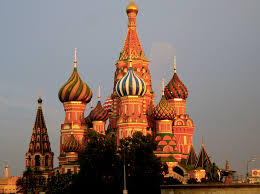
The Kremlin
Of these, Donald Trump stands out predominantly as the first American President known to have colluded with a Russian dictator.
This was an open secret—most explicitly advertised by both Trump and Putin on June 28, 2019.
That advertisement came when the two met in Osaka, Japan—their first since the March 22 release of the Mueller Report, which documented Russia’s subversion of the 2016 Presidential election.
An NBC News reporter asked: Would you tell Putin not to meddle in the 2020 Presidential election?
“Yes, of course I will,” replied Trump, grinning. “Don’t meddle in the election, please.”
And he jokingly wagged his finger at Putin: “Don’t meddle in the election.”
Putin grinned back.
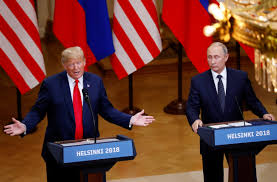
Donald Trump, Vladimir Putin in Helsinki
On numerous occasions, Donald Trump has fiercely denied any Russian connections.
For example: July 27, 2016: “I mean I have nothing to do with Russia. I don’t have any jobs in Russia. I’m all over the world but we’re not involved in Russia.”
Actually, Trump had a highly profitable relationship with Russia—as his son, Eric, unintentionally revealed in 2014: “Well, we don’t rely on American banks. We have all the funding we need out of Russia. We’ve got some guys that really, really love golf, and they’re really invested in our programs. We just go there all the time.”
Conservative authority James Kirchick has indicted Republicans generally for their fervent embrace of Vladimir Putin’s Russia. As he wrote in a July 27, 2017 essay, “How the GOP Became the Party of Putin“:
“For the past four years, I worked at a think tank, the Foreign Policy Initiative, that was bankrolled by Republican donors and regularly criticized the Obama administration….
“What I never expected was that the Republican Party—which once stood for a muscular, moralistic approach to the world, and which helped bring down the Soviet Union—would become a willing accomplice of what the previous Republican presidential nominee rightly called our No. 1 geopolitical foe: Vladimir Putin’s Russia.”
“…Four years ago, I began writing a series of articles about the growing sympathy for Russia among some American conservatives. Back then, the Putin fan club was limited to seemingly fringe figures like Pat Buchanan (‘Is Vladimir Putin a paleoconservative?’ he asked, answering in the affirmative)….
“Today, these figures are no longer on the fringe of GOP politics. According to a Morning Consult-Politico poll from May [2017], an astonishing 49 percent of Republicans consider Russia an ally. Favorable views of Putin-—a career KGB officer who hates America—have nearly tripled among Republicans in the past two years, with 32 percent expressing a positive opinion.”
2020 PRESIDENTIAL ELECTION, 2022 MIDTERM ELECTIONS, ABC NEWS, ADAM LAXALT, ADOLF HITLER, ALEXANDER SHUSTOROVICH, ALTERNET, AMERICABLOG, ANDREW INTRATER, AP, AUDREY MURAVIEV, BABY BOOMER RESISTANCE, BARACK OBAMA, BBC, BLOOMBERG NEWS, BUZZFEED, CBS NEWS, CNN, CROOKS AND LIARS, DAILY KOS, DEFENSE INTELLIGENCE AGENCY, DONALD TRUMP, ELECTORAL COLLEGE, ERIC TRUMP, FASCISM, FIVETHIRTYEIGHT, FOX NETWORK, FRANKLIN GRAHAM, HARPER’S MAGAZINE, HUFFINGTON POST, JAMES KIRCHICK, JANUARY 6 COUP ATTEMPT, JESSE BENTON, JOE BIDEN, JOHN KASICH, JOHN MCCAIN, KEVIN MCCARTHY, LEN BLAVATNIK, LIBERALISM, LINDSEY GRAHAM, MARCO RUBIO, MARJORIE TAYLOR GREENE, MEDIA MATTERS, MICHAEL FLYNN, MITCH MCCONNELL, MOTHER JONES, MOVEON, MSNBC, NATIONAL RIFLE ASSOCIATION, NBC NEWS, NEW REPUBLIC, NEWSDAY, NEWSWEEK, NPR, OLIGARCHS, PAUL A. GOSAR, PBS NEWSHOUR, POLITICO, POLITICUSUSA, RAW STORY, REPUBLICANS, REUTERS, Ronald Reagan, ROY DOUGLAS WEAD, RUSSIA, RUSSIA TODAY, SALON, SCOTT WALKER, SEAN HANNITY, SEATTLE TIMES, SERGEY KISLYAK, SIMON KUKES, SLATE, SOVIET UNION, TALKING POINTS MEMO, THE ATLANTIC, THE CHICAGO SUN-TIMES, THE CHICAGO TRIBUNE, THE DAILY BEAST, THE DAILY BLOG, THE GUARDIAN, THE HILL, THE HUFFINGTON POST, THE INTERCEPT, THE LOS ANGELES TIMES, THE NATION, THE NEW REPUBLIC, THE NEW YORK TIMES, THE NEW YORKER, THE VILLAGE VOICE, THE WASHINGTON POST, THINKPROGRESS, TIME, TRUTHDIG, TRUTHOUT, TUCKER CARLSON, TWITTER, U.S. NEWS & WORLD REPORT, UKRAINE, UNITED STATES CAPITOL BUILDING, UNITED STATES HOUSE OF REPRESENTATIVES, UNITED STATES JUSTICE DEPARTMENT, UNITED STATES SENATE, UPI, USA TODAY, VLADIMIR PUTIN, VOLODYMYR ZELENSKY, WINSTON CHURCHILL, WORLD WAR 11
In Bureaucracy, History, Law, Law Enforcement, Military, Politics, Social commentary on January 3, 2023 at 12:10 am
“Ladies and gentlemen, Americans, in two days we will celebrate Christmas. Maybe candlelit. Not because it’s more romantic, no, but because there will not be—there will be no electricity. Millions won’t have neither heating nor running water. All of these will be the result of Russian missile and drone attacks on our energy infrastructure.
“We’ll celebrate Christmas, and even if there is no electricity, the light of our faith in ourselves will not be put out. If Russian missiles attack us, we’ll do our best to protect ourselves.
“If they attack us with Iranian drones and our people will have to go to bomb shelters on Christmas Eve, Ukrainians will still sit down at the holiday table and cheer up each other. And we don’t have to know everyone’s wish as we know that all of us, millions of Ukrainians, wish the same: Victory. only victory.”
The speaker was Ukrainian President Volodymyr Zelensky. And his audience was a joint session of the Congress of the United States.

Volodymyr Zelensky
President Of Ukraine from Україна, PDM-owner, via Wikimedia Commons
Zelensky—a former comic elected President of Ukraine in 2019—has led his country against Russia’s unprovoked invasion of February 24.
After risking his life in a secrecy-shrouded caravan from Kiev to the Polish city of Rzeszow, Zelensky boarded a United States Air Force jet bound for Washington, D.C.
Arriving there on December 21, he met with President Joe Biden before addressing Congress—in English—that night.
Instead of the traditional business suit, Zelensky wore the famous green shirt he has worn on visits to the front as Ukrainians fiercely resist Russian assaults with troops, tanks, drones, missiles and bombs.
And his bid for additional aid from the United States—which has already committed billions to Ukraine’s defense—paid off: President Biden pledged $1.85 billion of military aid for Ukraine—including the Patriot anti-missile system to repel Russian attacks.
Commentators have compared Zelensky’s address with that of British Prime Minister Winston Churchill to the House of Commons on June 4, 1940.
At that moment, Great Britain faced imminent invasion from the seemingly invincible Third Reich. British troops had been forced to evacuate from France at Dunkirk. And Adolf Hitler’s Luftwaffe (air force) was known to be many times larger than that of Britain.
Even so, Churchill hurled only defiance at Hitler:
“Even though large tracts of Europe and many old and famous states have fallen or may fall into the grip of the Gestapo and all the odious apparatus of Nazi rule, we shall not flag or fail.
“We shall go on to the end, we shall fight in France, we shall fight on the seas and oceans, we shall fight with growing confidence and growing strength in the air, we shall defend our island, whatever the cost may be.
“We shall fight on the beaches, we shall fight on the landing grounds, we shall fight in the fields and in the streets, we shall fight in the hills; we shall never surrender.”

Winston Churchill
Britain depended on the United States for material help in defending itself against an aggressive dictatorship—as Ukraine does now. But Britain enjoyed an advantage denied to Ukraine.
During Britain’s hour of maximum peril, the United States Congress was not dominated a political party in thrall to Nazi bribes.
By contrast: Many Republicans have accepted “campaign contributions”—bribes—from Russian oligarchs linked to Russian President Vladimir Putin.

Vladimir Putin
Kremlin.ru, CC BY 4.0 <https://creativecommons.org/licenses/by/4.0>, via Wikimedia Commons
Putin’s money has been well spent: About 90 House Republicans—out of a total of 213—attended Zelensky’s address, according to CQ Roll Call. Some who did spent much of the speech on their phones.
In 2022, the Biden administration and Congress directed nearly $50 billion in assistance to Ukraine. A November 3 Wall Street Journal poll found that nearly half of Republicans—48%—believe the country is sending too much support to Kyiv.
But they didn’t object to the $2 trillion resulting from President George W. Bush’s needless war on Iraq.
Rep. Marjorie Taylor Greene (R-GA.) spoke for many of these when she promised, at a Save America rally in Sioux City, Iowa, what would happen if the GOP gained control over Congress: “Under Republicans, not another penny will go to Ukraine.”
So did Rep. Paul A. Gosar (R-ARIZ.): “Ukraine is not our ally. Russia is not our enemy.”
One major Russian contributor to Republicans is Len Blavatnik. During the 2015-16 election cycle, he proved one of the largest donors to GOP Political Action Committees (PACs).
Blavatnik’s net worth is estimated at $20 billion. In 2016, he gave $6.35 million to GOP PACs.
In 2017, he gave millions of dollars to top Republican leaders—such as Senators Mitch McConnell (Kentucky), Marco Rubio (Florida) and Lindsey Graham (South Carolina). Specifically, Blavatnik contributed:
- A total of $1.5 million to PACs associated with Rubio.
- $1 million to Trump’s Inaugural Committee.
- $1 million to McConnell’s Senate Leadership Fund.
- $3.5 million to a PAC associated with McConnell.
- $1.1 million to Unintimidated PAC, associated with Wisconsin Governor Scott Walker.
- $200,000 to the Arizona Grassroots Action PAC, associated with Arizona Senator John McCain.
- $250,000 to New Day for America PAC, associated with Ohio Governor John Kasich.
- $800,000 went to the Security is Strength PAC, associated with Senator Lindsey Graham.
2020 PRESIDENTIAL ELECTION, ABC NEWS, ABRAHAM LINCOLN, ALTERNET, AMERICABLOG, AP, APOCALYPSE, ARMAGEDDON, BABY BOOMER RESISTANCE, BLOOMBERG, BOLDNESS, BUZZFEED, CAUTION, CBS NEWS, CHINA, CNN, COVID-19, CROOKS AND LIARS, DONALD TRUMP, FIVETHIRTYEIGHT, GAIUS CASSIUS, HARPER’S MAGAZINE, HUFFINGTON POST, illegal immigration, IMAGE, J.P. MORGAN, JESUS CHRIST, JULIUS CAESAR (PLAY), MAFIA, MEDIA MATTERS, MOTHER JONES, MOVEON, MSNBC, NBC NEWS, NEW YEAR'S DAY, NEW YEAR'S EVE, NEW YORK, NEWSWEEK, NICCOLO MACHIAVELLI, NPR, PBS NEWSHOUR, POLITICO, POLITICUSUSA, RAW STORY, REALITY, REUTERS, RUSSIA, SALON, SEATTLE TIMES, SLATE, SOREN KIERKEGAARD, TALKING POINTS MEMO, THE ATLANTIC, THE CHICAGO SUN-TIMES, THE CHICAGO TRIBUNE, THE DAILY BEAST, THE DAILY BLOG, THE GUARDIAN, THE HILL, THE HUFFINGTON POST, THE LOS ANGELES TIMES, THE MILLENNIUM, THE NATION, THE NEW REPUBLIC, THE NEW YORK TIMES, THE VILLAGE VOICE, THE WASHINGTON POST, THINKPROGRESS, TIME, TITLE 42, TRUTHDIG, TRUTHOUT, TWITTER, TWO POLITICAL JUNKIES, U.S. NEWS & WORLD REPORT, UKRAINE, UNITED STATES HOUSE OF REPRESENTATIVES, UPI, USA TODAY, VLADIMIR PUTIN, WEALTH, WILLIAM SHAESPEARE, WONKETTE
In Bureaucracy, Business, History, Medical, RELIGION, Social commentary on December 30, 2022 at 1:01 am
New Year’s Eve, 2022, will soon lie behind us.
And for many people, saying “Goodbye” to 2022 can’t happen soon enough.
New Year’s Eve is traditionally a time for people to reflect on the major events of the previous 12 months. Some of these are highly personal. Others have been shared by the entire country.
Some of these remembrances inevitably bring pleasure. Others bring pain.
And 2022 has been a year of pain for millions.
Starting on February 24, Russian President Vladimir Putin unleashed a violent assault on Ukraine. Even after his forces were battered by Ukrainian armies, he continued to hurl missiles at Russia’s “brother nation.” As a result, many Ukrainians spent Christmas without electricity or running water.
The invasion was accompanied by Putin’s threats of nuclear war if the West didn’t stop supplying Ukraine with weaponry to repulse his unprovoked attack.
COVID-19 continued to sweep across the globe. Although largely under control in the United States, it remained a mortal threat. In China, that threat surged as the government dropped restrictions that had largely kept it at bay since 2020.
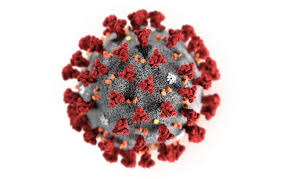
COVID-19
But, as the year ended, hope suddenly dawned: During mid-term elections, millions of Americans rejected Donald Trump’s continuing lies that he had been cheated of victory in 2020. As a result, Republicans won only the House, whereas they had been expected to win the Senate as well.
And as the United States braced itself for an onslaught of tens of thousands—if not millions—of illegal aliens, the Supreme Court upheld—at least temporarily—Title 42.
This policy, begun in 2020, during the early weeks of the COVID-19 pandemic, has allowed immigration agents to expel 2.4.million illegal aliens from the southern border.
At the heart of every New Year’s Eve celebration is the fantasy that you get to start fresh in a matter of hours. And with that fantasy comes hope—that, this time, you can put your sorrows and failures behind you.
And each new year comes with lessons to be learned—and applied.
Each year gives us the chance to learn from history—our own and that of others. Try to learn from your mistakes—and especially those of others. With luck, you won’t repeat your past ones—or those of others. But don’t expect to lead a mistake-free life.
There is a time to be bold—and a time to be cautious. As Niccolo Machiavelli put it: “A prince….must imitate the fox and the lion: For the lion cannot protect himself from traps, and the fox cannot defend himself from wolves.” Learn to tell when is the appropriate time to be which—and to play that role to the hilt.

Niccolo Machiavelli
There is image—and there is reality. J.P. Morgan once said: “A man always has two reasons for doing anything: A good reason and the real reason.” This is never truer than when a corporation or politician is asking for your money / vote. When trying to decide whether to commit yourself to either, ask yourself: Who benefits? For example: When studying a proposed law that claims to aid the environment, find out who supports it. That will usually tell you what you need to know.
Learn how to evaluate others. Once again, Niccolo Machiavelli supplies the answer: “The first impression that one gets of a ruler and his brains is from seeing the men that he has about him. When they are competent and loyal one can always consider him wise, as he has been able to recognize their ability and keep them faithful. But when they are the reverse, one can always form an unfavorable opinion of him, because the first mistake that he makes is in making this choice.”
Don’t confuse wealth with virtue. Too many Americans believe that wealth is a gift that God bestows on the worthy. If this were true, every Mafia boss would be a candidate for sainthood.
Each year is a journey unto itself—filled with countless joys and sorrows. Many of these joys can’t be predicted. And many of these tragedies can’t be prevented.
Learn to tell real dangers from imaginary ones. Computers are real—and sometimes they crash. Men who died 2,000 years ago do not leap out of graveyards, no matter what their disciples predict.
Don’t expect any particular year to usher in the Apocalypse. In any given year there will be wars, famines, earthquakes, riots, floods and a host of other disasters. These have always been with us—and always will be. As Abraham Lincoln once said: “The best thing about the future is that it comes one day at a time.”

Don’t expect some Great Leader to lead you to success. As Gaius Cassius says in William Shakespeare’s “Julius Caesar”: “Men at some time are masters of their fate. The fault, dear Brutus, is not in our stars but in ourselves that we are underlings.”
Don’t expect any particular year or event to usher in your happiness. To again quote Lincoln: “Most people are about as happy as they make up their minds to be.”
If your life seems to make no sense to you, consider this: The philosopher Soren Kierkegaard once noted: “Life can only be understood backwards, but it must be lived forwards.”
ABC NEWS, ALTERNET, AMERICABLOG, AP, BABY BOOMER RESISTANCE, BBC, BLOOMBERG NEWS, BUZZFEED, CBS NEWS, CNN, CROOKS AND LIARS, DAILY KOS, DRONES, FIVETHIRTYEIGHT, HARPER’S MAGAZINE, HUFFINGTON POST, JOHN STEINBECK, KHERSON, KIEV, MEDIA MATTERS, MOTHER JONES, MOVEON, MSNBC, NAZI GERMANY, NBC NEWS, NEW REPUBLIC, NEWSDAY, NEWSWEEK, NORWAY, NPR, PBS NEWSHOUR, POLITICO, POLITICUSUSA, RAW STORY, REUTERS, RUSSIA, SALON, SEATTLE TIMES, SLATE, SOCRATES, SPARTACUS, TALKING POINTS MEMO, TERRORISM, THE ATLANTIC, THE CHICAGO SUN-TIMES, THE CHICAGO TRIBUNE, THE DAILY BEAST, THE DAILY BLOG, THE GUARDIAN, THE HILL, THE HUFFINGTON POST, THE INTERCEPT, THE LOS ANGELES TIMES, THE MOON IS DOWN (BOOK), THE NATION, THE NEW REPUBLIC, THE NEW YORK TIMES, THE NEW YORKER, THE VILLAGE VOICE, THE WASHINGTON POST, THINKPROGRESS, TIME, TRUTHDIG, TRUTHOUT, TWITTER, U.S. NEWS & WORLD REPORT, UKRAINE, UPI, USA TODAY, VLADIMIR PUTIN, WORLD WAR ii
In History, Military, Politics, Social commentary on December 13, 2022 at 12:10 am
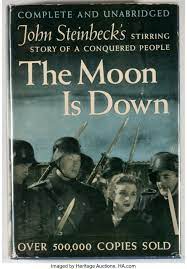
If John Steinbeck’s 1942 novel, The Moon Is Down, were available in Russia, this would be an appropriate time for Russians to plunge into it.
Written to inspire resistance movements in occupied countries, it has appeared in at least 92 editions across the world
It tells the story of a Norwegian village occupied by Germans in World War II.
At first the invasion goes swiftly. Wehrmacht Colonel Lanser establishes his headquarters in the house of the democratically-elected Mayor Orden.
Lanser, a veteran of World War I, considers himself a man of civility and law. But in his heart he knows that “there are no peaceful people” whose freedom has forcibly violated.
After an alderman named Alex Morden is executed for killing a German officer, the townspeople settle into “a slow, silent waiting revenge.”
Any soldier who relaxes his guard, drinks or goes out with a woman, is murdered. Sections of the railroad linking the port with the local mine are routinely sabotaged and the electricity generators are short-circuited.
Between the winter cold and the hostility of the townspeople, the Germans become fearful and disillusioned. One night, a frustrated Lieutenant Tonder asks: “Captain, is this place conquered?”
“Of course.”
“Conquered and we’re afraid; conquered and we’re surrounded,” replies Tonder, hysterically. “Flies conquer the flypaper. Flies capture two hundred miles of new flypaper!”
A few nights later, Tonder knocks at the door of Molly Morden. He doesn’t realize that she nurses a deep hatred of Germans for the execution of her husband, Alex. Tonder desperately wants to escape the fury and loneliness of war. Molly agrees to talk with him, but insists that he leave and return another time.
When he returns the next evening, Molly invites him in—and then kills him with a pair of scissors.

A British plane flies over the town and drops packages of dynamite, which the townspeople hurriedly collect.
Soon afterward, the Germans learn about the droppings. Colonel Lanser arrests Mayor Orden and Doctor Albert Winter. As the two await their uncertain future, Orden tries to remember the speech Socrates delivered before he was put to death:
“Do you remember in school, in the Apology? Socrates says, ‘Someone will say, ‘And are you not ashamed, Socrates, of a course of life which is likely to bring you to an untimely end?’ To him I may fairly answer, ‘There you are mistaken: a man who is good for anything ought not to calculate the chance of living or dying; he ought only to consider whether he is doing right or wrong.’”
Colonel Lanser enters the room and warns Orden: “If you don’t urge your people to not use the dynamite, you will be executed.”
To which Orden replies: “Nothing can change it. You will be destroyed and driven out. The people don’t like to be conquered, sir, and so they will not be. Free men cannot start a war, but once it is started, they can fight on in defeat.
“Herd men, followers of a leader, cannot do that, and so it is always the herd men who win battles and the free men who win wars. You will find that it is so, sir.”
Lanser says that even if Orden doesn’t tell the townspeople to submit, the Germans can put out the story that he did.
“They would know,” Orden says angrily. “You don’t keep secrets. One of your men said that ‘flies have conquered the flypaper’ and now everyone knows. It’s become a song of resistance.”
Explosions begin erupting throughout the town.
As Orden is led outside—to his execution—he tells Winter, quoting Socrates: “’Crito, I owe a cock to Asclepius. Will you remember to pay the debt?’”
“The debt shall be paid,” replies Winter—meaning that resistance will continue.
When Russian President Vladimir Putin attacked Ukraine with 200,000 soldiers on February 24, he had every reason to believe that his unprovoked war would be a cakewalk.
The assault opened with missiles and artillery, striking major Ukrainian cities, including its capitol, Kiev.
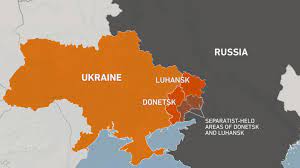
Ukraine vs. Russia
But on the battlefield, fierce Ukrainian resistance staggered the Russians:
- Kiev remained unconquered.
- In late August, using missile systems supplied by the United States, Ukrainian forces destroyed Russian ammunition dumps and a Russian air base in Crimea.
- In September, Ukraine reclaimed 3,090 square miles of northeastern territory from Russian forces.
- On September 21, with Russian forces bogged down or retreating, Putin announced the partial mobilization of 300,000 military reservists. All male citizens below 60 are now eligible to be drafted.
- Ukrainian forces retook the key city of Kherson in November; Russian forces, which had occupied the city since March, withdrew.
- On December 11, Putin’s infamous mercenary army, the Wagner militia, suffered “significant losses” after its Luhansk headquarters was hit during a Ukraine artillery strike.
Unable to win on the battlefield, Putin has turned to terroristic bombings and drone attacks on Ukrainian infrastructure to break the will of the populace.
Defiant Ukrainians continue to hunker down in makeshift shelters against cold and hunger.
Even if he conquers Ukraine, Putin will inherit a hate-filled population thirsting for revenge at every opportunity.
And the Ukrainians—like Spartacus, who resisted the tyranny of Rome—will live on in heroic memory.
2003 IRAQ WAR, ABC NEWS, ADOLF HITLER, ALTERNET, AMERICABLOG, AP, BABY BOOMER RESISTANCE, BBC, BLOOMBERG NEWS, BUZZFEED, CBS NEWS, CNN, CRIMEAN PENINSULA, CROOKS AND LIARS, DAILY KOS, DONALD TRUMP, ECONOMIC SANCTIONS, EDOUARD DELADIER, FACEBOOK, FIVETHIRTYEIGHT, FRANCE, GEORGE W. BUSH, HARPER’S MAGAZINE, HUFFINGTON POST, IRAN, JOACHIM VON RIBBENTROP, KIEV, MEDIA MATTERS, MOSKOVA (SHIP), MOTHER JONES, MOVEON, MSNBC, MUNICH CONFERENCE, NATO, NBC NEWS, NEVILLE CHAMBERLAIN, NEW REPUBLIC, NEWSDAY, NEWSWEEK, NPR, PBS NEWSHOUR, POLAND, POLITICO, POLITICUSUSA, RAW STORY, REPUBLIC OF GEORGIA, REUTERS, RUBLES, RUSSIA, SADDAM HUSSEIN, SALON, SEATTLE TIMES, SECOND CHECHEN WAR, SLATE, SOVIET UNION, TALKING POINTS MEMO, THE ATLANTIC, THE CHICAGO SUN-TIMES, THE CHICAGO TRIBUNE, THE DAILY BEAST, THE DAILY BLOG, THE GUARDIAN, THE HILL, THE HUFFINGTON POST, THE INTERCEPT, THE LOS ANGELES TIMES, THE NATION, THE NEW REPUBLIC, THE NEW YORK TIMES, THE NEW YORKER, THE VILLAGE VOICE, THE WASHINGTON POST, THINKPROGRESS, TIME, TRUTHDIG, TRUTHOUT, TWITTER, TWO POLITICAL JUNKIES, U.S. NEWS & WORLD REPORT, UKRAINE, UNITED STATES, UPI, USA TODAY, VLADIMIR PUTIN, WONKETTE
In Bureaucracy, Business, History, Military, Politics, Social commentary on December 2, 2022 at 12:14 am
On February 24, Russia launched an unprovoked attack on Ukraine with missiles and artillery, striking major Ukrainian cities, including its capitol, Kiev.
Ukraine vs. Russia
Russian President Vladimir Putin had every reason to believe that the conquest of Ukraine would be a cakewalk. Intent on restoring the borders of the former Soviet Union, he had swept from one successful war to the next:
- In 1999-2000, he waged the Second Chechen War, restoring federal control of Chechnya.
- In 2008, he invaded the Republic of Georgia, which had declared its independence as the Soviet Union began to crumble. By war’s end, Russia occupied 20% of Georgia’s territory.
- In 2014, Putin invaded and annexed the Crimean Peninsula from Ukraine.
Meanwhile, the North Atlantic Treaty Organization (NATO) launched only verbal condemnations.
The reasons:
- Fear of igniting a nuclear war;
- Belief that Russia was simply acting within its own sphere of influence; and/or
- Then-President Donald Trump’s repeated attacks on NATO and displays of subservience to Putin.
NATO emblem
When Russia invaded, the United States—now led by anti-Putin President Joe Biden—and its Western European allies retaliated with unprecedented economic sanctions.
Among the resulting casualties:
- The ruble crashed.
- Russia’s central bank more than doubled interest rates to 20%.
- The European subsidiary of Russia’s biggest bank almost collapsed in a massive Depression-era run by savers.
- Economists predicted the Russian economy could decline by five percent.
- The West—especially the United States—froze at least half of the $630 billion in international reserves that Putin had amassed to stave off tough sanctions.
On the battlefield, the war bogged down for Russia:
- Kiev remains unconquered.
- The Moskva, the flagship of Russia’s Black Sea Fleet, was sunk on April 14 after being struck by two Ukrainian Neptune anti-ship missiles.
- On September 21, with Russian forces bogged down or retreating, Putin announced the partial mobilization of 300,000 military reservists. All male citizens below 60 are now eligible to be drafted.
- More than 194,000 Russian men (and their wives or girlfriends) fled to such neighboring countries as Turkey, Georgia, Kazakhstan and Mongolia.
- Ukrainian forces retook the key city of Kherson in November; Russian forces, which had occupied the city since March, withdrew.
In short: The war is not going the way Putin assumed it would.
Vladimir Putin
Kremlin.ru, CC BY 4.0 <https://creativecommons.org/licenses/by/4.0>, via Wikimedia Commons
This is not the first time a dictator has guessed wrong about the results of his actions.
On September 1, 1939, German Fuhrer Adolf Hitler ordered his armies to invade Poland.
Almost a year earlier—on September 29, 1938—he had bullied British Prime Minister Neville Chamberlain and French Prime Minister Edouard Daladier into surrendering the northern, southwest and western regions of Czechoslovakia, inhabited mostly by ethnic Germans.
The Munich Agreement—which Chamberlain boasted meant “peace in our time—only whetted Hitler’s appetite for greater conquests.
It also led him to hold France and England in contempt: “Our enemies are little worms,” he said in a conference with his generals. “I saw them at Munich.”
He believed he could conquer Poland, and Chamberlain and Daladier would meekly ratify his latest acquisition.
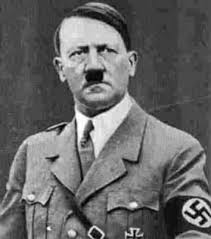
Adolf Hitler
So he was stunned when, on September 3, 1939, Britain and France—however reluctantly—honored their pledged word to Poland and declared war on Germany.
“What now?” Hitler furiously asked his Foreign Minister, Joachim von Ribbentrop.
Ribbentrop had no answer.
Hitler knew that Germany didn’t have the resources for a long war. He had intended to fight a series of quick, small wars, gobbling up one country at a time. Now he found himself locked in an endless war with heavyweights France and England.
In time, he would fatally add the Soviet Union and the United States to his list of enemies.
And he stayed locked into that war until he committed suicide on April 30, 1945, and the Third Reich officially collapsed on May 7.
Fast forward to March 21, 2003 and President George W. Bush’s launching of an attack on Saddam Hussein’s Iraq.

George W. Bush
The war got off to an impressive start with 1,700 air sorties and 504 Cruise missiles.
Within roughly two weeks, American ground forces entered Baghdad, and after four days of intense fighting, the Iraqi regime fell. By April 14, the Pentagon reported that major military operations had ended.
On May 1, 2003, Bush declared that the war was won.
But then American forces became embroiled in an endless, nationwide guerrilla war. Eighteen years later, the United States was still fighting in Iraq.
The war that Bush had deliberately provoked:
- Took the lives of 4,484 Americans.
- Cost the United States Treasury at least $2 trillion.
- Created a Middle East power vacuum.
- Allowed Iran—Iraq’s arch enemy—to eagerly fill it.
- Frightened and repelled even America’s closest allies.
- Killed at least 655,000 Iraqis.
- Frightened China and Russia into expanding the size of their militaries.
Bush came to a better end than Adolf Hitler: He retired from office with a lavish pension and full Secret Service protection.
And Putin?
His attack on Ukraine was reportedly motivated, in part, to ensure that Ukrainians did not join NATO.
But his invasion has frightened Sweden and Finland into joining NATO.
And NATO is now fully revitalized to meet future Russian threats.
Thus can the worst intentions of hubristic dictators come undone.
ABC NEWS, ABORTION, AFFORDABLE CARE ACT, AFFORDABLE HOUSING, ALTERNET, AMERICABLOG, AP, BABY BOOMER RESISTANCE, BBC, BLACKS, BLOOMBERG NEWS, BUZZFEED, CBS NEWS, CHINA, CNN, COMMUNISM, CORONAVIRUS, CRIME, CROOKS AND LIARS, DAILY KOZ, DENNIS HASTERT, DONALD TRUMP, DWIGHT D. EISENHOWER, ECONOMY, ELECTION-RIGGING, FACEBOOK, FIVETHIRTYEIGHT, FLORIDA, FOOD STAMPS, FRANCIS BELLAMY, GAYS, GLOBALISM, HARPER’S MAGAZINE, HISPANICS, HUFFINGTON POST, illegal immigration, IMPORTS, JANUARY 6 COUP ATTEMPT, JOSH DUGGAR, KIM JONG-UN, LESBIANS, MEDIA MATTERS, MEDICARE, MEXICO, MIKE PENCE, MOTHER JONES, MOVEON, MSNBC, NBC NEWS, NEW REPUBLIC, NEWSDAY, NEWSWEEK, NORTH KOREA, NPR, NUCLEAR FAMILY, PBS NEWSHOUR, PLEDGE OF ALLEGIANCE, POLITICO, POLITICUSUSA, RAW STORY, RELIGIOUS, RELIGIOUS FREEDOM RESTORATION ACT, REUTERS, RICHARD M. NIXON, RICK SCOTT, RUSSIA, SALON, SEATTLE TIMES, SLATE, SOCIAL SECURITY, SOCIALISM, TALKING POINTS MEMO, THE ATLANTIC, THE CHICAGO SUN-TIMES, THE CHICAGO TRIBUNE, THE DAILY BEAST, THE DAILY BLOG, THE GUARDIAN, THE HILL, THE HUFFINGTON POST, THE INTERCEPT, THE LOS ANGELES TIMES, THE NATION, THE NEW REPUBLIC, THE NEW YORK TIMES, THE NEW YORKER, THE VILLAGE VOICE, THE WASHINGTON POST, THINKPROGRESS, TIME, TRADEMARKS, TRANSGENDERS, TRUTHDIG, TRUTHOUT, TWITTER, TWO POLITICAL JUNKIES, U.S. NEWS & WORLD REPORT, UKRAINE, UPI, USA TODAY, VLADIMIR PUTIN, WONKETTE, XI JINPING
In Bureaucracy, Business, History, Law, Law Enforcement, Medical, Military, Politics, Social commentary on November 23, 2022 at 12:25 am
Next to the American flag, Republicans have loudly pledged their loyalty to the nuclear family.
And Florida United States Senator Rick Scott, in his “11 Point Plan to Rescue America,” is no exception.
Point 8: We will protect, defend, and promote the American Family at all costs. The nuclear family is crucial to civilization, it is God’s design for humanity, and it must be protected and celebrated. To say otherwise is to deny science.
Scott he claims that the nuclear family is “God’s design for humanity”—and that to disagree is to “deny science.”
Here are the facts:
First of all, there is no scientific proof for the existence of God. It is simply a belief.
Second, the nuclear family—a married couple and their dependent children under the age of 18—is a fast-disappearing species.

Nuclear family – 1955
Seattle Municipal Archives from Seattle, WA, CC BY 2.0 <https://creativecommons.org/licenses/by/2.0>, via Wikimedia Commons
There are currently just 23.1 million American homes with those ‘nuclear families,’ which is the fewest since 1959. So much for “God’s design for humanity.”
Point 9: Men are men, women are women, and unborn babies are babies.
“Men are men, women are women”: Republicans seek to frighten voters into voting for them by appealing to the fear that “Gays and transgenders are coming for your children.”
Without offering proof, they slander their opponents as “groomers”—pedophiles who befriend children and build their trust, leading to their sexual abuse.
Actually, gays don’t prey on heterosexuals but seek out others of their own sexual persuasion. The same is true for transgenders.
Meanwhile, the Republican party has had its own share of closeted pedophiles.
Among them:
- Josh (“18 Kids and Counting”) Duggar, recently sentenced to 12 years for possession of child pornography;
- Dennis Hastert, former Speaker of the House of Representatives, who sexually molested four young boys when he was their high school wrestling coach.
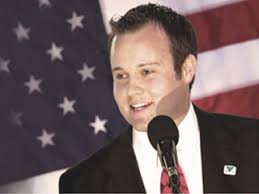
Josh Duggar
As for “Unborn babies are babies”: Those who have not yet been born are fetuses.
While Republicans have waged an almost 50-year war against legalized abortion, they have waged an equally aggressive war against Social Security, Medicare, the Affordable Care Act, food stamps, affordable housing, and aid to the blind and disabled.
In short: They oppose all those programs intended to help those who have been born.
Point 10: Americans will be free to welcome God into all aspects of our lives, and we will stop all government efforts to deny our religious freedom and freedom of speech.
The Democratic party is not trying to “deny our religious freedom and freedom of speech.”
On the contrary: It’s Republicans who have crafted laws to turn claimed religious beliefs into a weapon of discrimination.
A classic example: On March 26, 2015, Indiana’s then-Governor Mike Pence signed into law the Religious Freedom Restoration Act.
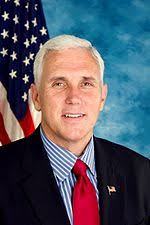
Mike Pence
This allows any individual or corporation to cite its religious beliefs as a defense when sued by a private party.
Thus, a bakery that doesn’t want to make a cake to be used at a gay wedding or a restaurant that doesn’t want to serve lesbian patrons can legally refuse to do so.
Republicans have introduced similar “right-to-discriminate” legislation in other states as well—such as Kansas, Arizona and South Dakota. So far, all have failed to win passage.
Republicans claim they want to “get the government off the backs of the people.” But their fixation on regulating the sexual lives of Americans ensures government intrusions of the most intimate kind.
Point 11: We are Americans, not globalists. America will be dependent on NO other country. We will conduct no trade that takes away jobs or displaces American workers.
This would be laughable except for the bitter truth: Countless numbers of Americans have lost their jobs because their companies deserted the United States for Third World nations like China, Vietnam or Mexico.
There are three reasons for this:
- To pay their employees far less than they would be paid in the United States;
- To avoid American health and safety restrictions on how employees can be treated; and
- To avoid enforcement of quality control regulations which ensure that products are safe and effective for use.
During Donald Trump’s Presidency, the Chinese government granted 18 trademarks to companies linked to him and his daughter, Ivanka, within two months.
In addition, Trump won approval to register three dozen trademarks in China covering everything from bars and hotels to child-care and massage services, raising further concerns over potential conflicts of interest.
From 2005 to 2017, Trump filed for 126 trademarks in China for his business empire.
As for Scott’s claim, “America will be dependent on NO other country”:
Like it or not, the United States can no longer separate itself from the rest of the world.
The ongoing war between Russia and Ukraine has badly affected American imports of grain products from Ukraine. And America’s continued reliance on fossil fuels forces it to depend on despotic Middle East oil kingdoms.
Finally, the Coronavirus pandemic has led to crucial shortages in goods America has long imported: Medicines, electronics, auto parts, solar panels, toys, air conditioners.
Thus, this provision—like the rest of Scott’s plan—runs head-on into the ugliness of sheer reality.
ABC NEWS, ABORTION, AFFORDABLE CARE ACT, AFFORDABLE HOUSING, ALTERNET, AMERICABLOG, AP, BABY BOOMER RESISTANCE, BBC, BLACKS, BLOOMBERG NEWS, BUZZFEED, CBS NEWS, CHINA, CNN, COMMUNISM, CORONAVIRUS, CRIME, CROOKS AND LIARS, DAILY KOZ, DENNIS HASTERT, DONALD TRUMP, DWIGHT D. EISENHOWER, ECONOMY, ELECTION-RIGGING, FACEBOOK, FIVETHIRTYEIGHT, FLORIDA, FOOD STAMPS, FRANCIS BELLAMY, GAYS, GLOBALISM, HARPER’S MAGAZINE, HISPANICS, HUFFINGTON POST, illegal immigration, IMPORTS, JANUARY 6 COUP ATTEMPT, JOSH DUGGAR, KIM JONG-UN, LESBIANS, MEDIA MATTERS, MEDICARE, MEXICO, MIKE PENCE, MOTHER JONES, MOVEON, MSNBC, NBC NEWS, NEW REPUBLIC, NEWSDAY, NEWSWEEK, NORTH KOREA, NPR, NUCLEAR FAMILY, PBS NEWSHOUR, PLEDGE OF ALLEGIANCE, POLITICO, POLITICUSUSA, RAW STORY, RELIGIOUS, RELIGIOUS FREEDOM RESTORATION ACT, REUTERS, RICHARD M. NIXON, RICK SCOTT, RUSSIA, SALON, SEATTLE TIMES, SLATE, SOCIAL SECURITY, SOCIALISM, TALKING POINTS MEMO, THE ATLANTIC, THE CHICAGO SUN-TIMES, THE CHICAGO TRIBUNE, THE DAILY BEAST, THE DAILY BLOG, THE GUARDIAN, THE HILL, THE HUFFINGTON POST, THE INTERCEPT, THE LOS ANGELES TIMES, THE NATION, THE NEW REPUBLIC, THE NEW YORK TIMES, THE NEW YORKER, THE VILLAGE VOICE, THE WASHINGTON POST, THINKPROGRESS, TIME, TRADEMARKS, TRANSGENDERS, TRUTHDIG, TRUTHOUT, TWITTER, TWO POLITICAL JUNKIES, U.S. NEWS & WORLD REPORT, UKRAINE, UPI, USA TODAY, VLADIMIR PUTIN, WONKETTE, XI JINPING
In Bureaucracy, Business, History, Law, Law Enforcement, Medical, Military, Politics, Social commentary on November 22, 2022 at 12:16 am
Florida’s Republican United States Senator Rick Scott’s has an “11 Point Plan to Rescue America”—and catapult himself into the White House.
Point 4: We will secure our border, finish building the wall, and name it after President Donald Trump.
The United States is surrounded by water on three sides—East, West and South. So anyone with a boat can smuggle illegal aliens into the country at any point along its 12,383 miles of coastline.
For those who get seasick, there’s a land route available—not across burning Mexican deserts but under them.
Over the years, officials have found at least 200 tunnels along the 2,000-mile-long U.S.-Mexico border, mostly in Arizona and California. They range from rudimentary crawlspaces to “super tunnels” that cost more than a million dollars and are equipped with elevators, ventilation shafts electric lights, and disguised exits and entrances.

Drug tunnel
U.S. Customs and Border Protection, Public domain, via Wikimedia Commons
Many of those who want to infiltrate the United States can simply fly in.
Wealthy and pregnant Chinese women often fly to the United States to “anchor” themselves via a baby born on American soil. The same is true for many Russian women.
And the Number One cause of illegal immigration: Foreigners’ overstaying their visas. In 2017, more than 600,000 foreigners who legally entered the United States overstayed their visas and remained in the country by the end of the year, according to the Department of Homeland Security.
So a wall is not going to solve America’s problem with illegal immigration.
Point 5: We will grow America’s economy, starve Washington’s economy, and stop Socialism.
When Republicans promise to “grow America’s economy,” they mean: Remove all government controls from business.
In real-world terms, this means corporations will be legally allowed to:
- Ignore existing laws protecting employees from unsafe working conditions;
- Ignore existing laws protecting the environment;
- Produce unsafe goods and fraudulent services;
- Pay their employees the lowest acceptable wages, in return for the “privilege” of working at these companies;
- Discriminate on the basis of race, sex, religion or sexual orientation; and/or
- Pay little or no business taxes, at the expense of communities who are required to make up for lost tax revenues.
Anyone who doubts this need only look at the living standards in “Red”, Republican-governed states such as Florida and Texas.
“Starve Washington’s economy” means: Eliminating programs that Republicans don’t like—starting with Social Security, Medicare and the Affordable Care Act. Anything that benefits ordinary Americans and not multi-billion dollar corporations will be slated for scrapping.
“Stopping socialism” is ludicrous: During his Presidency, Donald Trump’s best friends were Communist dictators: Vladimir Putin (Russia), Kim Jong-Un (North Korea) and Xi Jinping (China).
Trump actually bragged that, after an exchange of letters between himself and the murderous Kim Jong-Un, “We fell in love.”

Kim Jong-Un and Donald Trump
Had a Democratic President made a similar statement, Republicans would have screamed “Treason!” In Trump’s case, they said nothing.
Point 6: We will eliminate all federal programs that can be done locally, and enact term limits for federal bureaucrats and Congress.
As for “enacting term limits for federal bureaucrats and Congress”: This is the party that tried to illegally and treasonously overturn the results of a legitimate Presidential election so its candidate—Donald Trump—could remain in office as “President-for-Life” after losing the vote.
Point 7: We will protect the integrity of American Democracy and stop left-wing efforts to rig elections.
Scott’s platform is worth quoting in full on this issue:
Today’s Democrat Party is trying to rig elections and pack the courts because they have given up on Democracy. They don’t believe they can win based on their ideas, so they want to game the system and legalize voter fraud to stay in power. In true Orwellian fashion, Democrats refer to their election rigging plans as “voting rights”. We won’t allow the radical left to destroy our democracy by institutionalizing dishonesty and fraud.
Immediately after the verdict of the November 3, 2020 Presidential election was announced, President Donald Trump ordered his attorneys to file lawsuits overturning the results.
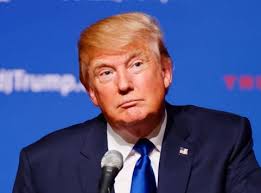
Donald Trump
- Throughout November and December, 2020, cases were filed in Wisconsin, Arizona, Nevada, Michigan, Minnesota and Georgia challenging the election results. None were supported by evidence of fraud—as even Trump’s lawyers admitted when questioned by judges.
- On November 13, nine cases meant to attack President-Elect Joe Biden’s win in key states were denied or dropped. A law firm challenging the vote count in Pennsylvania withdrew from the effort.
- In Michigan, Trump’s attorneys dropped their federal suit to block the certification of Detroit-area ballots.
- By November 21, more than 30 cases were withdrawn by Trump’s attorneys or dismissed by Federal judges—some of them appointed by Trump himself.
Ultimately, from November 3 to December 14, 2020, Trump and his allies lost 59 times in court, either withdrawing cases or having them dismissed by Federal and state judges.
This is the party that, since November, 2020, has sold a lie to millions of Right-wing Americans that the election was “stolen” from Donald trump.
It is Republicans—not Democrats—who have stopped trying to win elections based on their ideas and are now trying to win them by massive voter suppression. It’s hardly a party to be entrusted with election security.
2022 MIDTERM ELECTIONS, ABC NEWS, ABORTION, AFFORDABLE CARE ACT, AFFORDABLE HOUSING, ALTERNET, AMERICABLOG, AP, BABY BOOMER RESISTANCE, BBC, BLACKS, BLOOMBERG NEWS, BUZZFEED, CBS NEWS, CHINA, CNN, COMMUNISM, CORONAVIRUS, CRIME, CROOKS AND LIARS, DAILY KOZ, DENNIS HASTERT, DONALD TRUMP, DWIGHT D. EISENHOWER, ECONOMY, ELECTION DENIERS, ELECTION-RIGGING, FACEBOOK, FIVETHIRTYEIGHT, FLORIDA, FOOD STAMPS, FRANCIS BELLAMY, GAYS, GLOBALISM, HARPER’S MAGAZINE, HISPANICS, HUFFINGTON POST, illegal immigration, IMPORTS, JANUARY 6 COUP ATTEMPT, JOE BIDEN, JOSH DUGGAR, KIM JONG-UN, LESBIANS, MEDIA MATTERS, MEDICARE, MEXICO, MIKE PENCE, MOTHER JONES, MOVEON, MSNBC, NBC NEWS, NEW REPUBLIC, NEWSDAY, NEWSWEEK, NORTH KOREA, NPR, NUCLEAR FAMILY, PBS NEWSHOUR, PLEDGE OF ALLEGIANCE, POLITICO, POLITICUSUSA, RAW STORY, RELIGIOUS, RELIGIOUS FREEDOM RESTORATION ACT, REUTERS, RICHARD M. NIXON, RICK SCOTT, RUSSIA, SALON, SEATTLE TIMES, SLATE, SOCIAL SECURITY, SOCIALISM, TALKING POINTS MEMO, THE ATLANTIC, THE CHICAGO SUN-TIMES, THE CHICAGO TRIBUNE, THE DAILY BEAST, THE DAILY BLOG, THE GUARDIAN, THE HILL, THE HUFFINGTON POST, THE INTERCEPT, THE LOS ANGELES TIMES, THE NATION, THE NEW REPUBLIC, THE NEW YORK TIMES, THE NEW YORKER, THE VILLAGE VOICE, THE WASHINGTON POST, THINKPROGRESS, TIME, TRADEMARKS, TRANSGENDERS, TRUTHDIG, TRUTHOUT, TWITTER, TWO POLITICAL JUNKIES, U.S. NEWS & WORLD REPORT, UKRAINE, UPI, USA TODAY, VLADIMIR PUTIN, WONKETTE, XI JINPING
In Bureaucracy, Business, History, Law, Law Enforcement, Medical, Military, Politics, Social commentary on November 21, 2022 at 12:14 am
For decades, many dissatisfied voters have argued there’s no real difference between the Democratic and Republican parties.
So Rick Scott, former governor of Florida and now a United States Senator from that state, has decided to prove there is a difference between him and every other Presidential candidate.
With the next Presidential election approaching in less than two years, Scott is positioning himself to be the next Republican nominee for that office.
That’s why Scott has crafted “An 11 Point Plan to Rescue America.”
It merits close inspection—because if Scott or someone else with his agenda becomes President of the United States with a united Republican House and Senate behind him, this country will become entirely different from the one that exists today.
It was to prevent that from happening that millions of Democrats—joined by independents and moderate Republicans—turned out in unprecedented numbers on November 8.
For months, Republicans had been predicting that a “Red wave” would sweep Democrats from local, state and Federal offices across the country. Their strategy centered on propagating “The Big Lie” that President Donald Trump was robbed of victory in 2020 by massive voter fraud.
This was of course the authentic voice of former President Trump. Despite four years of lies, crime and treason, he remains in command of the Republican party.
And how did that strategy work out? No candidate who denied the legitimacy of the 2020 election won a 2022 race to run future elections in a swing state.
These include:
- Eight nominees for state elections chief;
- Thirteen nominees for governor;
- Eight nominees for United States Senator.

Rick Scott
Republicans have been stunned by their unexpected losses. The party out of power usually does well in midterm elections. Add to this the fact that President Joe Biden was widely seen as unpopular even among Democrats—and therefore vulnerable.
Nevertheless, Scott remains convinced that he has crafted the winning formula for Republicans—and for his election as President in 2024.
Its provisions follow.
Point 1: Our kids will say the pledge of allegiance, salute the Flag, learn that America is a great country, and choose the school that best fits them.
Like so many Right-wingers, Scott is apparently unaware that the Pledge of Allegiance was written in August, 1892, by the socialist minister Francis Bellamy. He hoped that the pledge would be used by citizens in any country, not just the United States.

Francis Bellamy
In its original form it read:
“I pledge allegiance to my Flag and the Republic for which it stands, one nation, indivisible, with liberty and justice for all.”
In 1923, the words, “the Flag of the United States of America” were added.
In 1954, President Dwight D. Eisenhower encouraged Congress to add the words “under God,” to distinguish Americans from “Godless” Communists.
“Learn that America is a great country” conjures up images of the propaganda force-fed to students of the former Soviet Union—and now in Russia. Just as Russians are taught that their military has never fought an aggressive war, so, too, do Republicans want to erase the subject of slavery and its long-term effects on society from American classrooms
Point 2: Government will never again ask American citizens to disclose their race, ethnicity, or skin color on any government forms.
Republicans have made race—as a source of friction between voters—a crucial part of their electoral campaigns. As far back as 1968, Richard Nixon campaigned on a “Southern strategy”—of stoking white fears of blacks.
It was this that won Nixon the Presidency in 1968 and 1972 and the White House for George H.W. Bush in 1988.
As blacks have gained in population and political clout, they have been succeeded by Hispanics as the Great Enemy for Republicans.
The top priority for Donald Trump—both as a Presidential candidate and President—was building a wall along the U.S.-Mexico border. That this would not have stopped illegal immigration meant nothing to him—or his millions of Right-wing followers.
Without a way to track the growth rates of nonwhites, Republicans won’t know how to target their self-declared enemies.
Point 3: The soft-on-crime days of coddling criminal behavior will end. We will re-fund and respect the police because they, not the criminals, are the good guys.
On January 6, 2021, “law and order” President Donald Trump incited a mob to attack the United States Capitol Building. Inside, members of Congress were meeting to count and certify Electoral College votes for the 2020 Presidential election.
Trump had clearly lost that election in November, yet for the previous two months he had repeatedly and falsely claimed he was the victim of a “rigged” election. His followers, believing that lie, intended to overturn the results of a legitimate election.
After more than three hours, police—using riot gear, shields and batons—retook control of the Capitol. More than 150 officers were injured in the attack by “law and order” Republicans.

January 6, 2021 coup attempt
TapTheForwardAssist, CC BY-SA 4.0 <https://creativecommons.org/licenses/by-sa/4.0>, via Wikimedia Commons
Even after the failed coup, 147 House and Senate Republicans voted to overturn the election.
Not the sort of behavior calculated to instill respect for the rule of law.
1912 PRESIDENTIAL ELECTION, 2016 PRESIDENTIAL ELECTION, 2020 PRESIDENTIAL ELECTION, 2024 PRESIDENTIAL ELECTION, ABC NEWS, ADOLF HITLER, ALBERT SPEER, ALTERNET, AMERICABLOG, AP, BABY BOOMER RESISTANCE, BBC, BLACKS, BLOOMBERG NEWS, BORDER WALL, BUZZFEED, CASEY DESANTIS, CBS NEWS, CIA, CNN, COVID-19, CROOKS AND LIARS, DAILY KOS, DEMOCRATS, DONALD TRUMP, ELECTORAL COLLEGE, FBI, FIVETHIRTYEIGHT, FOX NEWS, GAYS, GOVERNMENT SHUTDOWN, HARPER’S MAGAZINE, HARRY S. TRUMAN, HUFFINGTON POST, ILLEGAL ALIENS, JAMES COMEY, JANUARY 6 COUP ATTEMPT, JOE BIDEN, JOSEPH STALIN, MAGGIE HABERMAN, MASKS, MEDIA MATTERS, MOTHER JONES, MOVEON, MSNBC, NATIONAL SECURITY AGENCY, NAZI GERMANY, NBC NEWS, NEW REPUBLIC, NEW YORK POST, NEWSDAY, NEWSWEEK, NICHOLE HEMMER, NPR, PBS NEWSHOUR, POLITICO, POLITICUSUSA, PROTESTERS, PUBLIC HEALTH WORKERS, RACISM, RAW STORY, REPUBLICANS, REUTERS, ROGER STONE, RON DESANTIS, SALON, SCHOOLS, SEATTLE TIMES, SERGEY KISLYAK, SERGEY LAVROV, SEXUALITY, SLATE, SOVIET UNION, TALKING POINTS MEMO, THE ATLANTIC, THE CHICAGO SUN-TIMES, THE CHICAGO TRIBUNE, THE DAILY BEAST, THE DAILY BLOG, THE GUARDIAN, THE HILL, THE HUFFINGTON POST, THE INTERCEPT, THE LOS ANGELES TIMES, THE NATION, THE NEW REPUBLIC, THE NEW YORK TIMES, THE NEW YORKER, THE PRESS, THE VILLAGE VOICE, THE WASHINGTON POST, THEODORE ROOSEVELT, THINKPROGRESS, TIME, TRUTH SOCIAL, TRUTHDIG, TRUTHOUT, TWITTER, U.S. NEWS & WORLD REPORT, UKRAINE, UPI, USA TODAY, VACCINATIONS, VANDERBILT UNIVERSITY, VLADIMIR PUTIN, VOLODYMYR ZELENSKY, WALL STREET JOURNAL, WALT DISNEY CORPORATION, WILLIMAM HOWWARD TAFT, WOODROW WILSON
In Bureaucracy, History, Law, Law Enforcement, Politics, Social commentary, Uncategorized on November 16, 2022 at 12:10 am
In his coming war against Florida Governor Ron DeSantis, Donald Trump may have the last word.
The former President has warned that if he can’t be the Republican Presidential nominee in 2024, “he’s willing to burn it all down.”
New York Times reporter Maggie Haberman, who has intimately covered Trump for years, has tweeted:
“Yes, Trump is more vulnerable than he’s been in a long time. But that has happened before and he’s survived.”

Maggie Haberman
Andrew Lih, CC BY-SA 4.0 <https://creativecommons.org/licenses/by-sa/4.0>, via Wikimedia Commons
“Trump has extremely few major donors who want to do anything for him right now and a number of them are having active conversations about the best way to stop him. But. Again….sound familiar?
“Trump has made clear he’s willing to burn it all down if he doesn’t get what he wants, which is maintaining his grip on the product line he’s been developing for six years: the Republican party. So a lot of electeds will have to make a choice they’ve not had to before.”
There is precedent for this. After serving two terms in the White House (1901-1909) Theodore Roosevelt became increasingly disillusioned with his handpicked successor: William Howard Taft.

Theodore Roosevelt
By 1912, he decided to run for a third term as a third-party candidate. His candidacy split the Republican vote—and enabled Democrats to elect Woodrow Wilson President.
No doubt many Democrats are now salivating at the possibility of the same occurring in 2024.
And even more of them are looking forward to seeing two would-be tyrants—Donald Trump and Ron DeSantis—trading lethal blows for most of the Presidential year.
Their reaction would be similar to that expressed by then-Senator Harry S. Truman when Nazi Germany invaded the Soviet Union on June 22, 1941: “If we see that Germany is winning the war, we ought to help Russia; and if that Russia is winning, we ought to help Germany, and in that way let them kill as many as possible.”
* * * * *
As the Third Reich came to its fiery end, its dictator, Adolf Hitler, sought to punish the German people for being “unworthy” of his “genius” and losing the war he had started.
His attitude was: “If I can’t rule Germany, then there won’t be a Germany.”
In his infamous “Nero Order,” he decreed the destruction of everything still remaining–industries, ships, harbors, communications, roads, mines, bridges, stores, utility plants, food stuffs.
Fortunately for Germany, one man–Albert Speer–finally broke ranks with his Fuhrer.

Albert Speer
Risking death, he refused to carry out Hitler’s “scorched earth” order. Even more important, he mounted a successful effort to block such destruction and persuade influential military and civilian leaders to disobey the order as well.
As a result, those targets slated for destruction were spared.
Throughout his four years in office, President Donald Trump made it clear that America faced a stark choice: It could remain a constitutional democracy—or allow him to become an all-powerful “President-for-Life.”
Among his outrages:
- Repeatedly attacking the nation’s free press for daring to report his growing list of crimes and disasters, calling it “the enemy of the American people.”
- Siding with Russian dictator Vladimir Putin against the FBI, CIA and National Security Agency which unanimously agreed that Russia had subverted the 2016 Presidential election.
- Firing FBI Director James Comey for investigating that subversion.
- Giving Russian Foreign Minister Sergey Lavrov and Russian Ambassador Sergey Kislyak highly classified CIA Intelligence about an Islamic State plot to turn laptops into concealable bombs.
- Shutting down the Federal Government for 35 days in 2018-19 because Democrats refused to fund his ineffective “border wall” between the United States and Mexico.
- An estimated 380,000 government employees were furloughed and another 420,000 were ordered to work without pay. The shutdown ended due to public outrage—without Trump getting the funding amount he had demanded.
- Trying to coerce Ukrainian President Volodymyr Zelensky to smear former Vice President Joe Biden, who was likely to be his Democratic opponent in the 2020 Presidential election.
- Repeatedly lying about the dangers posed by the COVID-19 virus, and thus enabling it to ravage the country and ultimately kill 400,000 by the time Trump left office.
- Attacking medical experts and governors who urged Americans to wear masks and socially distance to protect themselves from COVID-19.
Trump’s ultimate act of criminality and treason came on January 6, 2021, when he incited his followers to violently attack the United States Capitol Building. Their goal: To prevent Republicans and Democrats from counting the Electoral Votes cast in the 2020 Presidential election.
Trump fully understood that an accurate count of those votes would reveal his loss to Joe Biden: 306 votes for Biden, compared with 232 for Trump.
Fortunately for American democracy, there were enough patriots determined to prevent Trump from becoming the absolute dictator he clearly intended to be.
Like Adolf Hitler, Donald Trump’s attitude was: “If I can’t rule America, there won’t be an America.”
Deprived of his chance to destroy the country he claimed to love, Trump now threatens to destroy the political party that brought him to near-absolute power in 2016.
And Ron DeSantis stands ready to establish himself as an equally Trumpian dictator.
Their party is still waiting for a Republican Albert Speer to step forward and save America from the self-destructive brutalities of its own Right-wing fanatics.


2020 PRESIDENTIAL ELECTION, 2022 MIDTERM ELECTIONS, ABC NEWS, ADAM LAXALT, ADOLF HITLER, ALEXANDER SHUSTOROVICH, ALTERNET, AMERICABLOG, ANDREW INTRATER, AP, AUDREY MURAVIEV, BABY BOOMER RESISTANCE, BARACK OBAMA, BBC, BLOOMBERG NEWS, BUZZFEED, CBS NEWS, CNN, CROOKS AND LIARS, DAILY KOS, DEFENSE INTELLIGENCE AGENCY, DONALD TRUMP, ELECTORAL COLLEGE, ERIC TRUMP, FASCISM, FIVETHIRTYEIGHT, FOX NETWORK, FRANKLIN GRAHAM, HARPER’S MAGAZINE, HUFFINGTON POST, JAMES KIRCHICK, JANUARY 6 COUP ATTEMPT, JESSE BENTON, JOE BIDEN, JOHN KASICH, JOHN MCCAIN, KEVIN MCCARTHY, LEN BLAVATNIK, LIBERALISM, LINDSEY GRAHAM, MARCO RUBIO, MARJORIE TAYLOR GREENE, MEDIA MATTERS, MICHAEL FLYNN, MITCH MCCONNELL, MOTHER JONES, MOVEON, MSNBC, NATIONAL RIFLE ASSOCIATION, NBC NEWS, NEW REPUBLIC, NEWSDAY, NEWSWEEK, NPR, OLIGARCHS, PAUL A. GOSAR, PBS NEWSHOUR, POLITICO, POLITICUSUSA, RAW STORY, REPUBLICANS, REUTERS, Ronald Reagan, ROY DOUGLAS WEAD, RUSSIA, RUSSIA TODAY, SALON, SCOTT WALKER, SEAN HANNITY, SEATTLE TIMES, SERGEY KISLYAK, SIMON KUKES, SLATE, SOVIET UNION, TALKING POINTS MEMO, THE ATLANTIC, THE CHICAGO SUN-TIMES, THE CHICAGO TRIBUNE, THE DAILY BEAST, THE DAILY BLOG, THE GUARDIAN, THE HILL, THE HUFFINGTON POST, THE INTERCEPT, THE LOS ANGELES TIMES, THE NATION, THE NEW REPUBLIC, THE NEW YORK TIMES, THE NEW YORKER, THE VILLAGE VOICE, THE WASHINGTON POST, THINKPROGRESS, TIME, TRUTHDIG, TRUTHOUT, TUCKER CARLSON, TWITTER, U.S. NEWS & WORLD REPORT, UKRAINE, UNITED STATES CAPITOL BUILDING, UNITED STATES HOUSE OF REPRESENTATIVES, UNITED STATES JUSTICE DEPARTMENT, UNITED STATES SENATE, UPI, USA TODAY, VLADIMIR PUTIN, VOLODYMYR ZELENSKY, WINSTON CHURCHILL, WORLD WAR 11
DEMOCRACY’S THREATS: RUSSIANS AND REPUBLICANS – PART THREE (END)
In Bureaucracy, History, Law, Law Enforcement, Military, Politics, Social commentary on January 5, 2023 at 12:12 amRussian President Vladimir Putin has won acclaim within American conservatives by attacking those they detest—such as gays. And he has extolled Russia’s “traditional values” and assailed the West’s “genderless and infertile” liberalism.
In 2015, Russia-–a secret police state utterly opposed to private ownership of firearms—hosted a delegation from the National Rifle Association.
Both the American Right and Putin reap huge benefits from the propagandistic efforts of the Fox Network. Fox hosts Sean Hannity and Tucker Carlson are big hits in Russia, routinely getting huge airtime as they attack liberalism generally and President Joe Biden in particular.
James Kirchick—a conservative American reporter, foreign correspondent, author, and columnist—has analyzed the turn-about of the Republican party from staunchly anti-Communist to rabidly pro-Putin.
James Kirchick
In a July 27, 2017 essay, “How the GOP became the Party of Putin,” he wrote:
“How did the party of Ronald Reagan’s moral clarity morph into that of Donald Trump’s moral vacuity?
“Russia’s intelligence operatives are among the world’s best. I believe they made a keen study of the American political scene and realized that, during the Obama years, the conservative movement had become ripe for manipulation. Long gone was its principled opposition to the ‘evil empire.’
“What was left was an intellectually and morally desiccated carcass populated by con artists, opportunists, entertainers and grifters operating massively profitable book publishers, radio empires, websites, and a TV network whose stock-in-trade are not ideas but resentments….
“Surveying this lamentable scene, why wouldn’t Russia try to ‘turn’ the American right, whose ethical rot necessarily precedes its rank unscrupulousness?
“Why wouldn’t a ‘religious right’ that embraced a boastfully immoral charlatan like Donald Trump not turn a blind eye toward—or, in the case of [evangelical pastor] Franklin Graham, embrace—an oppressive regime like that ruling Russia?“
Republicans have become a party fueled by hatred and lusting for absolute control—not just of their own members but Americans who totally disagree with their methods and goals.
What Ronald Reagan once said about the leaders of the Soviet Union applies just as accurately to the leaders of his own party: “The only morality they recognize is what will further their cause, meaning they reserve unto themselves the right to commit any crime, to lie, to cheat.”
The ultimate proof of this came in the Right’s attempt to violently overturn the results of the 2020 Presidential election—and to install Donald Trump as a dictatorial “President-for-Life.”
Donald Trump
On November 3, Joe Biden became President-elect of the United States by winning 81,283,495 votes, or 51.4% of the vote, compared to 74,223,755 votes, or 46.9% of the vote cast for President Donald Trump.
In the Electoral College—which actually determines the winner—the results were even more stunning: 306 votes for Biden, compared with 232 for Trump. It takes 270 votes to be declared the victor.
From the moment Biden was declared the winner, Trump tried to overthrow that verdict. He ordered his attorneys to file lawsuits to overturn the election results, charging electoral fraud.
From November 3 to December 14, 2020, Trump and his allies lost 59 times in court, either withdrawing cases for lack of evidence or having them dismissed by Federal and state judges.
Even so, 17 Republican state Attorney Generals—and 126 Republican members of Congress—supported a Texas lawsuit to overturn the results in four battleground states: Georgia, Michigan, Pennsylvania and Wisconsin.
The Supreme Court refused to hear the case.
The vast majority of House and Senate Republicans refused to publicly acknowledge Biden as President-Elect of the United States. They feared being turned out of office by Trump’s fanatical base.
By January 6, 2021, Trump had run out of options for illegally staying in power for the next four years. So that day he incited a fanatical mob of his supporters to intimidate Congressional members counting Electoral College votes to reject the election’s results.
The Stormtrumpers marched to the United States Capitol Building—and quickly brushed aside Capitol Police. More than three hours passed before police—using riot gear, shields and batons—retook control of the Capitol.
Capitol Police facing off with Stormtrumpers
Although House Democrats moved to impeach Trump for his treasonous attack on democracy, Senate Republicans refused to convict him.
Almost two years later, Trump remains free and living a privileged life at his Mar-a-Lago estate in Palm Beach, Florida. He has even declared his candidacy for President in 2024.
And millions of Right-wing voters remain convinced by his lies that the 2020 election was stolen from him. During the 2022 midterms, many Republican candidates for state and federal offices campaigned on that “Stop the Steal” premise.
Republicans won the House, but their failure to win the Senate has led to a civil war within the party. Trump remains the favorite of many. But others blame him for the defeat of many candidates.
They don’t want a candidate who displays moral clarity and compassion. They want a Fuhrer who appeals to their hatreds and craving for a Fascistic dictatorship—and who can make that a reality.
They will remain a constant threat to democracy—and to those Americans who don’t want to live under a Right-wing tyranny.
Share this: