Posts Tagged ‘THIRD REICH’
2016 PRESIDENTIAL ELECTION, 2020 PRESIDENTIAL ELECTION, ABC NEWS, ABUSE OF POWER, ADOLF HITLER, ALTERNET, AMANDA CHASE, AMERICABLOG, AP, ARMED SERVICES, BABY BOOMER RESISTANCE, BARACK OBAMA, BLOOMBERG, BUZZFEED, CBS NEWS, CIA, CLAUS VON STAUFFENBERG, CNN, COVID-19, CROOKS AND LIARS, DAILY KOZ, DONALD TRUMP, DRUDGE RETORT, FACEBOOK, FBI, FEDERAL GOVERNMENT SHUTDOWN, FIVETHIRTYEIGHT, GENERAL SERVICES ADMINISTRATION, GESTAPO, HARPER’S MAGAZINE, HILLARY CLINTON, IMPEACHMENT ARTICLES, JAMES B. COMEY, JAMES MATTIS, JOHN KASICH, JOHN MCCAIN, JOSEPH BIDEN, KIM JONG-UN, MARK ESPER, MARTIAL LAW, MARTIN NIEMOELLER, MEDIA MATTERS, MICHAEL FLYNN, MOTHER JONES, MOVEON, MSNBC, MUSLIMS, NATIONAL SECURITY AGENCY, NAZI GERMANY, NBC NEWS, NEWSWEEK, NPR, OBSTRUCTION OF CONGRESS, PBS NEWSHOUR, POLITICO, POLITICUSUSA, RAW STORY, REPUBLICANS, REUTERS, SALON, SEATTLE TIMES, SERGEY KISLYAK, SERGEY LAVROV, SLATE, TALKING POINTS MEMO, THE ATLANTIC, THE CHICAGO SUN-TIMES, THE CHICAGO TRIBUNE, THE DAILY BEAST, THE DAILY BLOG, THE GUARDIAN, THE HILL, THE HUFFINGTON POST, THE LOS ANGELES TIMES, THE NATION, THE NEW REPUBLIC, THE NEW YORK TIMES, THE PENTAGON, THE TWILIGHT ZONE, THE VILLAGE VOICE, THE WASHINGTON POST, THINKPROGRESS, THIRD REICH, TIME, TRUTHDIG, TRUTHOUT, TWENTY-FIFTH AMENDMENT, TWO POLITICAL JUNKIES, U.S. NEWS & WORLD REPORT, UNITED STATES CONSTITUTION, UNITED STATES SECRET SERVICE, UPI, USA TODAY, VLADIMIR PUTIN, VOTER FRAUD, WONKETTE, WORLD WAR 11, X
In History, Law, Law Enforcement, Military, Politics, Social commentary on May 6, 2025 at 12:05 am
On July 20, 1944, Colonel Claus Schenk von Stuaffenberg tried to assassinate Adolf Hitler.
He had served with the Wehrmacht in Poland (1939), France (1940) and the Soviet Union (1941).
While serving in Tunisa, he was seriously wounded on April 7, 1943, when Allied fighters strafed his vehicle. He lost his left eye, right hand and two fingers of his left hand after surgery.
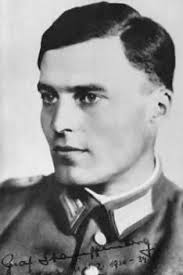
Colonel Claus Schenk von Stuaffenberg
Nevertheless, he now acted as the prime mover for the conspiracy among a growing number of German high command officers to arrest or assassinate Germany’s Fuehrer.
For most of these officers, the motive was craven: The “happy time” of German victories was over. Germany was losing the war it had unleashed on the world in 1939—and now they feared the worst.
This was especially true now that the numerically superior forces of the Soviet Union had gone onto the offensive.
For Stauffenberg, there was another reason: His disgust at the horrors he had seen committed by his fellow Wehrmacht soldiers upon defenseless POW’s and civilians in Russia.
Thus, Stauffenberg—more than many Germans–knew firsthand the vengeance his country could expect if the “Thousand-Year Reich” fell.
Something must be done, he believed, to prove to the world that not all Germans—even members of the Wehrmacht—were criminals.
Most of the conspirators wanted to arrest Hitler and surrender to British and American forces—well before the much-feared Russians gained a toehold in Germany.
Stauffenberg didn’t want to arrest Hitler; he wanted to kill him. A live Hitler might eventually be rescued by his Nazi colleagues.
But Hitler was a closely-guarded target. He was surrounded by fanatical bodyguards who were expert marksmen. He often wore a bulletproof vest and a cap lined with three pounds of laminated steel.
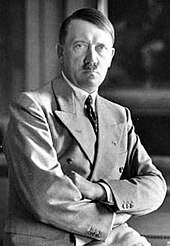
Adolf Hitler
Bundesarchiv, Bild 146-1990-048-29A / CC-BY-SA 3.0 [CC BY-SA 3.0 de (https://creativecommons.org/licenses/by-sa/3.0/de/deed.en)%5D
But his single greatest protection—he claimed—was an instinct for danger. He would suddenly change his schedule—to drop in where he was least expected. Or suddenly depart an event where he was expected to stay a long time.
That instinct had repeatedly saved his life.
A series of assassination attempts had been made against Hitler. All of them involved time-bombs. And all of the would-be assassins were members of the German General Staff.
In one case, a bomb secretly stashed aboard Hitler’s plane failed to explode. In another, an officer who had a bomb strapped to himself unexpectedly found his scheduled meeting with Hitler called off. He had to rush into a bathroom to defuse the bomb before it exploded.
Stauffenberg intended to carry his bomb—hidden in a briefcase—into a “Hitler conference” room packed with military officers. Rigged with a time-fuse, it would be left there while he found an excuse to leave.
After the explosion, he would phone one of his fellow conspirators with the news.
Stauffenberg intended to direct the new government that would replace that of the Nazis—and open peace talks with the British and Americans.
With Hitler dead, the coup—“Operation Valkyrie”—would be on.
Anti-Nazi conspirators would seize control of key posts of the government. The British and Americans would then be informed of Germany’s willingness to surrender. Provided, of course, that the vengeance-seeking Russians did not have a say in its postwar future.
The Wehrmacht and Schutzstaffel (SS) had killed millions of Russians. Many had died in combat. Others had been murdered as captives. Still more had been allowed to die by starvation and exposure to the notorious Russian winter.
So the Germans—both Nazi and anti-Nazi—knew what they could expect if soldiers of the Soviet Union reached German soil.
On July 20, 1944, Stauffenberg appeared at Hitler’s well-guarded military headquarters in East Prussia. Like all his other outposts, Hitler had named it—appropriately enough—“Wolf’s Lair.”

“Wolf’s Lair”
Stauffenberg entered the large, concrete building while the conference was in session. He placed his yellow briefcase next to Hitler—who was standing with his generals at a heavy oaken table. Then he excused himself to take an “urgent” phone call.
After Stauffenberg left the room, Colonel Heinz Brandt, standing next to Hitler, found the briefcase blocking his legs. So he moved it—to the other side of the heavy oaken support, partially shielding Hitler from the blast..
At 12:42 p.m. on July 20, 1944, Stauffenberg’s briefcase bomb erupted.
Brandt died, as did two other officers and a stenographer.
Hitler not only survived, but the plotters failed to seize the key broadcast facilities of the Reich.
This allowed Hitler to make a late-night speech to the nation, revealing the failed plot and assuring Germans that he was still alive. And he swore to flush out the “traitorous swine” who had tried to kill him.
Mass arrests quickly followed.
Among the first victims discovered and executed was the conspiracy’s leader, Colonel Claus von Stauffenberg. Standing before a makeshift firing squad at midnight, he cried: “Long live our sacred Germany!”
At least 7,000 persons were arrested by the Gestapo. Of these, 4,980 were executed.
2016 PRESIDENTIAL ELECTION, 2020 PRESIDENTIAL ELECTION, ABC NEWS, ABUSE OF POWER, ADOLF HITLER, ALTERNET, AMANDA CHASE, AMERICABLOG, AP, ARMED SERVICES, BABY BOOMER RESISTANCE, BARACK OBAMA, BLOOMBERG, BUZZFEED, CBS NEWS, CIA, CLAUS VON STAUFFENBERG, CNN, COVID-19, CROOKS AND LIARS, DAILY KOZ, DANA ANDREWS, DONALD TRUMP, DRUDGE RETORT, FACEBOOK, FBI, FEDERAL GOVERNMENT SHUTDOWN, FIVETHIRTYEIGHT, GENERAL SERVICES ADMINISTRATION, GESTAPO, HARPER’S MAGAZINE, HILLARY CLINTON, IMPEACHMENT ARTICLES, JAMES B. COMEY, JAMES MATTIS, JOHN KASICH, JOHN MCCAIN, JOSEPH BIDEN, KIM JONG-UN, MARK ESPER, MARTIAL LAW, MARTIN NIEMOELLER, MEDIA MATTERS, MICHAEL FLYNN, MOTHER JONES, MOVEON, MSNBC, MUSLIMS, NATIONAL SECURITY AGENCY, NAZI GERMANY, NBC NEWS, NEWSWEEK, NPR, OBSTRUCTION OF CONGRESS, PBS NEWSHOUR, POLITICO, POLITICUSUSA, RAW STORY, REPUBLICANS, REUTERS, SALON, SEATTLE TIMES, SERGEY KISLYAK, SERGEY LAVROV, SLATE, TALKING POINTS MEMO, THE ATLANTIC, THE CHICAGO SUN-TIMES, THE CHICAGO TRIBUNE, THE DAILY BEAST, THE DAILY BLOG, THE GUARDIAN, THE HILL, THE HUFFINGTON POST, THE LOS ANGELES TIMES, THE NATION, THE NEW REPUBLIC, THE NEW YORK TIMES, THE PENTAGON, THE TWILIGHT ZONE, THE VILLAGE VOICE, THE WASHINGTON POST, THINKPROGRESS, THIRD REICH, TIME, TRUTHDIG, TRUTHOUT, TWENTY-FIFTH AMENDMENT, TWO POLITICAL JUNKIES, U.S. NEWS & WORLD REPORT, UNITED STATES CONSTITUTION, UNITED STATES SECRET SERVICE, UPI, USA TODAY, VLADIMIR PUTIN, VOTER FRAUD, WONKETTE, WORLD WAR 11, X
In Bureaucracy, History, Law, Law Enforcement, Military, Politics, Social commentary on May 5, 2025 at 12:09 am
“When Fascism comes to America, it will be called anti-Fascism.”
–Huey Long, Louisiana Governor/Senator
In the Twilight Zone episode, “No Time Like the Past,” Paul Driscoll (Dana Andrews), a scientist in early 1960s America, uses a time machine to visit Nazi Germany on the eve of World War II.
He’s rented a motel room overlooking the balcony from where the Fuhrer, Adolf Hitler will soon make a speech. And he’s eager to watch that speech—through the lens of a telescopic-sighted rifle.
Just as he’s about to pull the trigger, there’s a knock at his door—by the maid. Driscoll hustles her out as soon as possible, then once again picks up his rifle. He—and viewers—can once again see Hitler through the cross-hairs of his weapon.
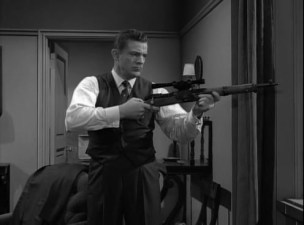
Paul Driscoll prepares to shoot Adolf Hitler
But instead of the anticipated shot, there’s another knock at his door—his time by the black-uniformed secret police, the SS. Driscoll knows the game is up, and disappears into the present just as the thugs break down his door.
And the audience is left to ponder how different the world would have been if Driscoll—or someone in Nazi Germany—had succeeded in assassinating the man whose wars would wipe out the lives of 50 million men, women and children around the globe.
One 2016 Republican candidate for President dared to invoke the menace of Nazi Germany in warning of the dangers of a Donald Trump Presidency. And to argue that Americans could prevent that past from returning.
In November, 2015, John Kasich, the governor of Ohio, was peddling a message of creating jobs, balancing the Federal budget and disdain for Washington, D.C.
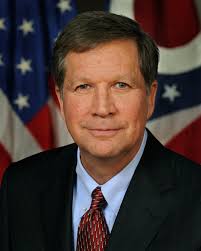
John Kasich
But he remained far behind in the polls, dropping 50% in support in just one month—from September to October. Meanwhile, Trump, the New York billionaire developer, was being backed by 25% of Republican primary voters.
So, with nothing to lose, Kasich decided to take off the gloves. He invoked the “N” word for Republicans: Nazi.
He authorized the creation of a TV ad that opened with ominous music—and the face of a snarling Donald Trump.
“I would like anyone who is listening to consider some thoughts that I’ve paraphrased from the words of German pastor Martin Niemoeller.”
The voice belonged to Tom Moe, a retired colonel in the U.S. Air Force—and a former Vietnam prisoner-of-war.
“You might not care if Donald Trump says Muslims must register with the government, because you’re not one,” continued Moe.
“And you might not care if Donald Trump says he’s going to round up all the Hispanic immigrants, because you’re not one.
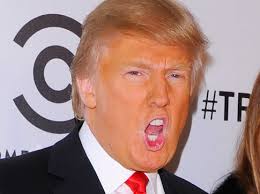
Donald Trump
“And you might not care if Donald Trump says it’s OK to rough up black protesters, because you’re not one.
“And you might not care if Donald Trump wants to suppress journalists, because you’re not one.
“But think about this:
“If he keeps going, and he actually becomes President, he might just get around to you. And you’d better hope that there’s someone left to help you.”
Martin Niemoeller (1892–1984) was a prominent Protestant pastor who had commanded a U-boat during World War 1. He became a bitter public foe of Adolf Hitler.
A staunch anti-Communist, he had initially supported the Nazis as Germany’s only hope of salvation against the Soviet Union.
But when the Nazis made the church subordinate to State authority, Niemoeller created the Pastors’ Emergency League to defend religious freedom.
For his opposition to the Third Reich, Niemoeller spent seven years in concentration camps.
With the collapse of the Reich in 1945, he was freed—and elected President of the Protestant church in Hesse and Nassau in 1947. During the 1960s, he was president of the World Council of Churches.
He is best remembered for his powerful condemnation of the failure of Germans to protest the increasing oppression of the Nazis:
First they came for the Communists, but I was not a Communist, so I did not speak out.
Then they came for the Socialists, but I was not a Socialist, so I did not speak out.
Then they came for the trade unionists, but I was not a trade unionist, so I did not speak out.
Then they came for the Jews, but I was not a Jew, so I did not speak out.
And when they came for me, there was no one left to speak out for me.
Neither “Adolf Hitler” nor “Nazi Party” was mentioned during the one-minute Kasich video. But a furious Trump threatened to sue Kasich if he could find anything “not truthful” within the ad.
Apparently he couldn’t find anything “not truthful,” because he never sued.
So threatened the man who had called Mexican immigrants “rapists” and accused President Barack Obama of being a Muslim and an illegal alien.
The Kasich ad was the darkest attack made against Trump by any candidate–-Republican or Democrat. And it raised a disturbing question:
If Donald Trump proved to be America’s Adolf Hitler, would there be an American Claus von Stauffenberg?
Colonel Claus Schenk von Stuaffenberg was the German army officer who, on July 20, 1944, tried to assassinate Adolf Hitler.
9/11 ATTACKS, ABC NEWS, ADOLF EICHMANN, ADOLF HITLER, ALTERNET, AMERICABLOG, AMERICAN CIVIL LIBERTIES UNION, AP, BABY BOOMER RESISTANCE, BBC, BLOOMBERG, BUZZFEED, CBS NEWS, CNN, CROOKS AND LIARS, DAILY KOS, DEPARTMENT OF HOMELAND SECURITY, DONALD TRUMP, EGYPT, EXECUTIVE ORDER, FACEBOOK, FIVETHIRTYEIGHT, HARPER’S MAGAZINE, HEINRICH HIMMLER, HERMAN GORING, HITLER 1889-1936: HUBRIS, HITLER 1936-1945: NEMESIS, HITLER: ASCENT: 1889-1939, HUFFINGTON POST, IAN KERSHAW, IRAN, IRQA, JOSEPH GOEBBELS, LYBIA, MEDIA MATTERS, MOTHER JONES, MOVEON, MSNBC, MUSLIM REFUGEES, NAZI GERMANY, NBC NEWS, NEW REPUBLIC, NEWSDAY, NEWSWEEK, NPR, OSAMA BIN LADEN, PBS NEWSHOUR, PENTAGON, POLITICO, POLITICUSUSA, RAW STORY, REUTERS, ROBERT PAYNE, SALON, SAUDI ARABIA, SEATTLE TIMES, SLATE, SOMALIA, STALINGRAD (MOVIE), SUDAN, SYRIA, TALKING POINTS MEMO, THE ATLANTIC, THE CHICAGO SUN-TIMES, THE CHICAGO TRIBUNE, THE DAILY BEAST, THE DAILY BLOG, THE GUARDIAN, THE HILL, THE HUFFINGTON POST, THE INTERCEPT, THE LIFE AND DEATH OF ADOLF HITLER, THE LOS ANGELES TIMES, THE NATION, THE NEW REPUBLIC, THE NEW YORK TIMES, THE NEW YORKER, THE VILLAGE VOICE, THE WASHINGTON POST, THINKPROGRESS, THIRD REICH, TIME, TRUTHDIG, TRUTHOUT, TURKEY, TWO POLITICAL JUNKIES, U.S. NEWS & WORLD REPORT, UNITED ARAB EMIRATES, UPI, USA TODAY, VOLKER ULRICH, WALTER SHAUB, WORLD TRADE CENTER, X, YEMEN
In Bureaucracy, Business, History, Law, Law Enforcement, Politics, Social commentary on April 25, 2025 at 12:19 am
In Stalingrad, a 1993 German-made war movie, a platoon of German Army soldiers leaves behind the beaches and beauties of Italy and find themselves fighting desperately to stay alive in Russia.
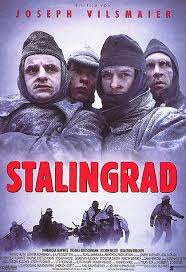
Early in the film, there is an exchange that has its real-life counterpart almost 75 years later.
A young, idealistic German lieutenant, newly transferred to the Russian front, is horrified when he sees a fellow soldier from another unit sadistically beat a Russian prisoner to death.
He seeks out the man’s superior, a captain, and says: “Captain, I must protest about the behavior of your men.”
“You want to protest?” asks the captain, grinning sardonically. “Tell the Fuhrer.”
Fast forward to January 28, 2017, the day after President Donald J. Trump signed into law an executive order which:
- Suspended entry of all refugees to the United States for 120 days;
- Barred Syrian refugees indefinitely;, and
- Blocked entry into the United States for 90 days for citizens from Iran, Iraq, Libya, Somalia, Sudan, Syria and Yemen.
The new rules—and the efforts of security personnel at major international airports to enforce them—triggered a tsunami of chaos and fear among travelers.
“We’ve gotten reports of people being detained all over the country,” said Becca Heller, the director of the International Refugee Assistance Project. “They’re literally pouring in by the minute.”
Refugees on flights when the order was signed on January 27 were detained upon arrival.
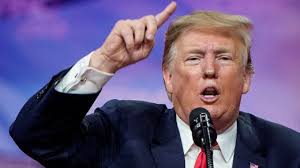
Donald Trump
Many students attending American universities were blocked from returning to the United States from visits abroad.
According to Homeland Security officials, 109 people who were already in transit to the United States when the order was signed were denied access; 173 were stopped before boarding planes heading to America. Eighty-one people who were stopped were eventually given waivers to enter the United States.
Internationally, travelers were seized by panic when they were not allowed to board flights to the United States. In Dubai and Istanbul, airport and immigration officials turned passengers away at boarding gates. At least one family was removed from a flight it had boarded.
Earlier on January 28, Trump, isolated in the White House from all the chaos he had unleashed in airports across the nation and throughout the world, said:
“It’s not a Muslim ban, but we were totally prepared. It’s working out very nicely. You see it at the airports, you see it all over.”
Then the American Civil Liberties Union intervened.

Two Iraqi immigrants, defended by the ACLU, accused Trump of legal and constitutional overreach.
The Iraqis had been detained at John F. Kennedy International Airport in New York City. One had served as an interpreter for American forces in Iraq for a decade. The other was en route to reunite with his wife and son in Texas.
The interpreter, Hameed Khalid Darweesh, was released after nearly 19 hours of detention. So was the other traveler, Haider Sameer Abdulkhaleq Alshawi.
Before the two men were released, one of their lawyers, Mark Doss, a supervising attorney at the International Refugee Assistance Project, asked an official, “Who is the person we need to talk to?”
“Call Mr. Trump,” said the official, who refused to identify himself.
He might just as well have said: “You want to protest? Tell the Fuhrer.”
The ACLU action secured at least a temporary blocking of part of Trump’s order. A Brooklyn judge barred the government from deporting some arrivals who found themselves ensnared by the Presidential order.
Judge Ann M. Donnelly of the Federal District Court in Brooklyn, ruled that sending the travelers home could cause them “irreparable harm.” She said the government was “enjoined and restrained from, in any manner and by any means, removing individuals” who had arrived in the United States with valid visas or refugee status.
But she did not force the administration to let in people otherwise blocked by the executive order who have not yet traveled to the United States. Nor did she issue a broader ruling on the constitutionality of the order.
* * * * *
On November 5, 75 million ignorant, hate-filled, Right-wing Americans re-elected Donald Trump—a man reflecting their own hate and ignorance—to the Presidency.
Summing up Trump’s character in a March 25, 2016 broadcast of The PBS Newshour, conservative political columnist David Brooks warned: “The odd thing about [Trump’s] whole career and his whole language, his whole world view is there is no room for love in it. You get a sense of a man who received no love, can give no love….
“And so you really are seeing someone who just has an odd psychology unleavened by kindness and charity, but where it’s all winners and losers, beating and being beat. And that’s part of the authoritarian personality.”
There were countless warning signs available for Trump’s supporters to see—if they had wanted to see them:
- His facing 91 criminal counts in four cases;
- His threats against his political opponents and Justice Department prosecutors;
- His conviction for raping columnist E. Jean Carroll;
- His continued lying about winning the 2020 Presidential election;
- His conviction on 34 counts of falsifying business records;
- His unjustified attacks the integrity of the FBI—causing previously “law and order” Republicans to demand its defunding.
Those who voted for Trump will now learn the meaning of the Nazi slogan: “The Fuhrer proposes and disposes for all.” Those who voted against him knew this already.
2020 PRESIDENTIL ELECTION, 9/11 ATTACKS, ABC NEWS, ADOLF EICHMANN, ADOLF HITLER, ALTERNET, AMERICABLOG, AMERICAN CIVIL LIBERTIES UNION, AMERICAN CIVIL LIBERTIES UNION (ACLU), AP, AUGUST FLENTJE, BABY BOOMER RESISTANCE, BBC, BLOOMBERG, BUZZFEED, CBS NEWS, CNN, CROOKS AND LIARS, DAILY KOS, DEPARTMENT OF HOMELAND SECURITY, DEPARTMENT OF JUSTICE, DONALD TRUMP, DUBAI, E. JEAN CARROLL, EGYPT, EL SALVADOR, EREZ REUVENI, EXECUTIVE ORDER, FACEBOOK, FALSIFYING BUSINESS RECORDS, FBI, FIVETHIRTYEIGHT, HARPER’S MAGAZINE, HEINRICH HIMMLER, HERMAN GORING, HITLER 1889 – 1936: HUBRIS (BOOK), HITLER 1889-1936: HUBRIS, HITLER 1936 – 1945 NEMESIS (BOOK), HITLER 1936-1945: NEMESIS, HITLER: ASCENT: 1889 – 1939 (BOOK), HITLER: ASCENT: 1889-1939, HUFFINGTON POST, IAN KERSHAW, ILLEGAL ALIENS, IMMIGRATION AND CUSTOMS ENFORCEMENT (ICE), INTERNATIONAL REFUGEE ASSISTANCE PROJECT, IRAN, IRAQ, ISTANBUL, JOSEPH GOEBBELS, KILMAR ABREGO GARCIA, LIBYA, LYBIA, MEDIA MATTERS, MOTHER JONES, MOVEON, MS-13 GANG, MSNBC, MUSLIM REFUGEES, MUSLIMS, NAZI GERMANY, NBC NEWS, NEW REPUBLIC, NEWSDAY, NEWSWEEK, NPR, OSAMA BIN LADEN, PAM BONDI, PAULA XINIS, PBS NEWSHOUR, PENTAGON, POLITICO, POLITICUSUSA, RAW STORY, REUTERS, ROBERT PAYNE, SALON, SAUDI ARABIA, SEATTLE TIMES, SLATE, SOMALIA, STALINGRAD (MOVIE), SUDAN, SYRIA, TALKING POINTS MEMO, THE ATLANTIC, THE CHICAGO SUN-TIMES, THE CHICAGO TRIBUNE, THE DAILY BEAST, THE DAILY BLOG, THE GUARDIAN, THE HILL, THE HUFFINGTON POST, THE INTERCEPT, THE LIFE AND DEATH OF ADOLF HITLER, THE LOS ANGELES TIMES, THE NATION, THE NEW REPUBLIC, THE NEW YORK TIMES, THE NEW YORKER, THE VILLAGE VOICE, THE WASHINGTON POST, THINKPROGRESS, THIRD REICH, TIME, TODD BLANCHE, TRUTHDIG, TRUTHOUT, TURKEY, TWO POLITICAL JUNKIES, U.S. NEWS & WORLD REPORT, UNITED ARAB EMIRATES, UPI, USA TODAY, VOLKER ULRICH, WALTER SHAUB, WERNER WILLIKENS, WORLD TRADE CENTER, X, YEMEN
In Bureaucracy, Business, History, Law, Law Enforcement, Politics, Social commentary on April 24, 2025 at 12:06 am
When historians—-and ordinary citizens—think about the Third Reich, the name of Werner Willikens doesn’t immediately spring to mind.
Adolf Hitler, Herman Goring, Joseph Goebbels, Heinrich Himmler, Adolf Eichmann—yes.
But why Werner Willikens?
British historian and author Ian Kershaw has unearthed the reason.
He has written extensively about the Third Reich. He is best-known for his monumental, two-volume biography, Hitler 1889–1936: Hubris (1998) and Hitler 1936–1945: Nemesis (2000).

Ian Kershaw
Willikens, State Secretary in the Ministry of Food, gave a speech on February 21, 1934 that casts new light on how Hitler came to exercise vast authority over Nazi Germany:
“Everyone who has the opportunity to observe it knows that the Fuhrer can hardly dictate from above everything he intends to realize sooner or later.
“On the contrary, up till now everyone with a post in the new Germany has worked best when he has, so to speak, worked towards the Fuhrer….
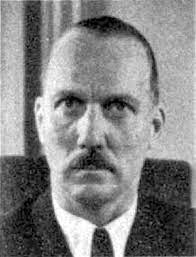
Werner Willikens
“In fact, it is the duty of everybody to try to work towards the Fuhrer along the lines he would wish. Anyone who makes mistakes will notice it soon enough.
“But anyone who really works towards the Fuhrer along his lines and towards his goal will certainly both now and in the future one day have the finest reward in the form of the sudden legal confirmation of his work.”
Volker Ullrich, bestselling author of Hitler: Ascent 1889 – 1939, summed up the results of this interplay between Hitler and his subjects:
“Kershaw tried to show that in many instances Hitler didn’t need to do very much at all since German society–everyone from the underlings surrounding him to ordinary people on the street—-were increasingly inclined to anticipate and fulfill the Fuhrer’s every wish, ‘working towards him.’
“…Kershaw…. illustrate[d] that without the readiness of many people to work for the man in charge, there would have been no way he could have achieved his murderous aims.
“Kershaw’s main thesis was that the dynamics of the Nazi regime arose from the interplay of Hitler’s intentions with activism emanating from subordinate individuals and institutions. The results were ever more radical ‘solutions.'”
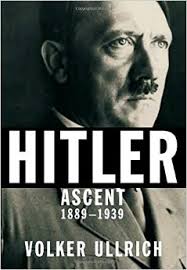
On April 30, 1945, Adolf Hitler simultaneously bit on a cyanide capsule and fired a pistol shot into his right temple.
The concept of “working towards the Fuhrer” seemed to have come to a literally fiery end.
Fast forward almost 80 years later–to January 20, 2025.
Donald J. Trump, upon resuming the office of President, has declared all-out war on illegal aliens within the United States. He has given Immigration and Customs Enforcement (ICE) full powers to seize and deport anyone fitting that description.
Even if that person is a legal resident who has lived in the United States legally with a work permit since 2011 and is protected from deportation by a 2019 court order.
Such was the case with Kilmar Abrego Garcia, a Salvadoran citizen living in Maryland. He illegally entered the United States at age 18 to escape being drafted into the 18th Street Gang.
In 2019 he was arrested in Maryland and detained by federal immigration authorities. An immigration judge granted Garcia protection from deportation because he might risk violence from local gangs in El Salvador.
On March 12, 2025, Garcia was stopped and detained by immigration agents and questioned about his alleged affiliation with the MS-13 gang. MS-13 was originally formed by Salvadoran immigrants fleeing civil war in their homeland and is now involved in myriad illegal enterprises,
ICE deported him to El Salvador, alongside hundreds of other men accused of being gang members.
There was just one problem: Garcia was deported due to a clerical error.
U.S. District Judge Paula Xinis ordered that Garcia be returned to Maryland: “His detention appears wholly lawless.”
In turn, the Justice Department claimed that it could not return him from a sovereign nation.
On April 5, Erez Reuveni, the acting deputy director of the department’s immigration litigation division, struggled to answer questions from the judge about the circumstances of Garcia’s deportation.
Asked why the U.S. couldn’t ask for his return, Reuveni said: “The first thing I did when I got this case on my desk is ask my clients the same question. Our only arguments are jurisdictional. He should not have been sent to El Salvador.
“My answer to a lot of these questions is going to be frustrating, and I am frustrated. The government made a choice here to produce no evidence.”
Attorney General Pam Bondi took issue with how Reuveni handled the case in court. The next day, she ordered him put on administrative leave by Deputy U.S. Attorney Todd Blanche. He is no longer working on the Abrego Garcia case or in the Justice Department in general.
August Flentje, Reuveni’s supervisor, was also placed on administrative leave. Flentje was told he had failed to supervise a subordinate.
In a statement to CNN, Bondi said: “At my direction, every Department of Justice attorney is required to zealously advocate on behalf of the United States. Any attorney who fails to abide by this direction will face consequences.”
Reuveni had been praised as a “top-notched” prosecutor by his superiors in an email announcing his promotion two weeks ago. His crime lay in his failure to “work toward the Fuhrer.“
ABC NEWS, ADOLF HITLER, ALTERNET, AMERICABLOG, AP, BABY BOOMER RESISTANCE, BBC, BLIND AMBITION (SERIES), BLOOMBERG, BLUESKY, BUZZFEED, CBS NEWS, CHINA, CIVIL WAR, CNN, CONSPIRACY (MOVIE), CROOKS AND LIARS, DAILY KOS, DONALD TRUMP, DOUGLAS MACARTHUR, FIVETHIRTYEIGHT, GUTS AND GLORY: THE RISE ND FALL OF OLIVER NORTH (SERIES), HARPER’S MAGAZINE, HITLER: THE RISE OF EVIL (SERIES), HITLER’S PEOPLE: THE FACES OF THE THIRD REICH (BOOK), HITLER’S SS: PORTRAIT OF EVIL (MOVIE), HOLOCAUST, HOLOCAUST (SERIES), HUFFINGTON POST, INSIDE THE THIRD REICH (SERIES), JOSEPH MCCARTY, KOREAN WAR, MEDIA MATTERS, MOTHER JONES, MOVEON, MSNBC, NAZI GERMANY, NAZIS, NBC NEWS, NEW REPUBLIC, NEWSDAY, NEWSWEEK, NPR, NUREMBERG (MOVIE), OLIVER NORTH, PBS NEWSHOUR, POLITICO, POLITICUSUSA, RAW STORY, REPUBLICANS, REUTERS, RICHARD J. EVANS, RICHARD NIXON, Ronald Reagan, SALON, SEATTLE TIMES, SLATE, SOVIET UNION, SPANISH-AMERICAN WAR, TAIL GUNNER JOE (MOVIE), TALKING POINTS MEMO, THE ATLANTIC, THE BUNKER (MOVIE), THE CHICAGO SUN-TIMES, THE CHICAGO TRIBUNE, THE DAILY BEAST, THE DAILY BLOG, THE FINAL DAYS (MOVIE), THE GUARDIAN, THE HILL, THE HUFFINGTON POST, THE INTERCEPT, THE LOS ANGELES TIMES, THE NATION, THE NEW REPUBLIC, THE NEW YORK TIMES, THE NEW YORKER, THE PLOT TO KILL HITLER (MOVIE), THE VILLAGE VOICE, THE WASHINGTON POST, THINKPROGRESS, THIRD REICH, TIME, TRUTHDIG, TRUTHOUT, TV, TWO POLITICAL JUNKIES, U.S. NEWS & WORLD REPORT, UPI, USA TODAY, VIETNAM WAR, WORLD WAR 1, WORLD WAR 11, X
In Entertainment, History, Military, Politics, Social commentary on April 2, 2025 at 12:08 am
Future historians—if there are any—may well view the administration of President Donald Trump the same way that historian Richard J. Evans analyzes the Third Reich.
To place the infamy of the Trump administration in the same context as that of the Third Reich, consider the opening paragraph from his latest bestseller: Hitler’s People: The Faces of the Third Reich.
Substitute “Republicans” for “Nazis,” “Donald Trump” for “Adolf Hitler,” and “Americans” for “Germans.”
As in the following:
“Who were the Republicans? What motivated the leaders and functionaries of the Republican movement and those who put their project into action? What had happened to their moral compass?
“Were they in some sense deviant, or deranged, or degenerate? Were they gangsters acting with criminal intent? Or were they ‘ordinary men’ (and a few women), or perhaps, more precisely, ‘ordinary Americans’? Did they come from the margins of society, were they outsiders, or were they in some sense part of American society’s mainstream?
“And how do they explain Trump’s drive to achieve dictatorial power? Was he a kind of empty shell, devoid of personal qualities and without a personal life, into which Americans poured their deepest political ambitions and desires?

“What made otherwise normal people carry out, or approve, terrible and murderous atrocities against Republicans’ real and supposed enemies? Or were they perhaps not normal at all? Beyond this, why did so many leading Americans in responsible positions, in the key institutions of society, go along with the dictatorship….?
“And what did those of them who survived….think of about their conduct during the Trump administration? Did they gain a moral perspective on it, did they repent, did they come to an understanding of what they had done?”
Americans have always considered themselves separate from—and superior to—those in other nations. Germans and Russians might fall prey to evil dictators, but Americans? Never!
Evangelical Americans believe that the United States is divinely inspired—and protected.
Thus, American TV networks have filled the airwaves with movies and doc-u-dramas about Nazi Germany such as: “Hitler: The Rise of Evil,” “The Bunker,” “Nuremberg,” “Holocaust,” “Inside the Third Reich,” “Conspiracy,” “Hitler’s SS: Portrait of Evil,” “The Plot to Kill Hitler.”
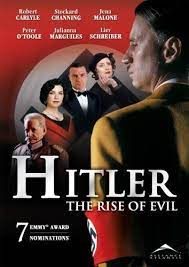
Yet American networks have been unwilling to produce films about the evil of America’s own Right-wing leaders. It’s extremely unlikely that future network executives will OK a miniseries on “Trump: The Rise of Evil.”
To date, only one film—“Tail Gunner Joe”—has been made about the rise and fall of Senator Joseph McCarthy.
For four years (1950-1954) McCarthy terrorized Americans with false charges of a massive Communist conspiracy, leaving broken lives and national mistrust in his wake.
And “Tail Gunner Joe” was made in 1974.
The fall of President Richard Nixon in 1974 led networks to produce such movies as “Blind Ambition” (1979) and “The Final Days” (1989). But those appeared decades ago. And no new ones have appeared since.
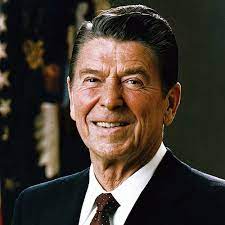
In 1989, CBS found the courage to run “Guts and Glory: The Rise and Fall of Oliver North.” What made this unusual was that it appeared only three years after the story of the infamous “Iran-Contra” arms-for-hostages story broke.
But the role of former President Ronald Reagan in waging unjustified terror-war against Nicaragua was totally ignored. And no other movie has since been made on this disgraceful period in United States history.
Ronald Reagan
Americans have always been convinced of their own purity as a people—especially when compared to those supposedly corrupt, undemocratic European nations. And so, according to popular mythology, the United States is constantly losing its innocence.
Such as:
I861 – 1865: Civil War—When brother supporting slavery fought brother supporting freedom.
1898: Spanish-American War––The United States freed Cuba from the Spanish.
1917 – 1918: World War 1––When innocent American “doughboys” rushed to Europe to save immoral France and England from the Hunnish Germans.
1942 – 1945: World War II––Once again, Americans rushed to Europe to (again) save impure France and England from (again) the Hunnish Germans and end the Holocaust.
1954 – 1975: Vietnam War––The United States rushed to fight Communism on behalf of a people struggling to be free.
Lost in all these “innocent” scenarios are such unpleasant realities as:
- After the Civil War, millions of former slaves were left to fend for themselves. Although freed, blacks were left poor, despised and subject to violence at any time by the Ku Klux Klan.
- After the Spanish-American war, America seized the Philippines for itself—and relinquished them only in 1946.
- Before World War II, the United States turned away thousands of would-be Jewish immigrants, dooming them to the Holocaust. And it entered the war only after it was attacked at Pearl Harbor.
- During the Vietnam war, the United States defended an unpopular dictatorship in the South against a popular Communist one in the North.
During the 1950s, Baby Boom schoolers were spoon-fed a Disney version of American history. When they grew old enough to witness the struggles for black civil rights and against the Vietnam war, they felt they had been lied to—and reacted with anger and protest.
Generations that have been “protected” against the ugly realities of the past are ill-equipped to cope with those in their own lives.
2016 PRESIDENTIAL ELECTION, ABC NEWS, ADOLF HITLER, ALTERNET, AMERICABLOG, ANDREW CUOMO, ANDREW JOHNSON, AP, BABY BOOMER RESISTANCE, BILL CLINTON, BILL DE BLASIO, BLACK LIVES MATTER, BLOOMBERG, BUZZFEED, CBS NEWS, CNN, CORONAVIRUS, COVID-19, CROOKS AND LIARS, DAILY KOZ, DONALD J. TRUMP FOUNDATION, DONALD TRUMP, DRUDGE REPORT, ERNST ROHM, EVAN HOLLANDER, FBI, FIVETHIRTYEIGHT, GEORGE FLOYD, HARPER’S MAGAZINE, HOUSE APPROPRIATIONS COMMITTEE, HUFFINGTON POST, IMPEACHMENT, JAMES COMEY, JEFF SESSIONS, JOHN S. TIGAR, JOSEPH BIDEN, LAFAYETTE SQUARE, MEDIA MATTERS, MOTHER JONES, MOVEON, MSNBC, NATIONAL GUARD, NBC NEWS, NEW YORK CITY, NEWSWEEK, NIGHT OF THE LONG KNIVES, NPR, PBS NEWSHOUR, POLITICO, POLITICUSUSA, PORTLAND, RAW STORY, REUTERS, ROBERT S. MUELLER, RUSSELL T. VOUGHT, SALON, SCHUTZSTAFFEL, SEATTLE, SEATTLE TIMES, Secret Service, SLATE, ST. JOHN’S CHURCH, STORMTROOPERS, TALKING POINTS MEMO, THE ATLANTIC, THE CHICAGO SUN-TIMES, THE CHICAGO TRIBUNE, THE DAILY BEAST, THE DAILY BLOG, THE GUARDIAN, THE HILL, THE HUFFINGTON POST, THE LOS ANGELES TIMES, THE NATION, THE NEW REPUBLIC, THE NEW YORK TIMES, THE VILLAGE VOICE, THE WASHINGTON POST, THINKPROGRESS, THIRD REICH, TIME, TRUMP UNIVERSITY, TRUTHDIG, TRUTHOUT, TWO POLITICAL JUNKIES, U.S. NEWS & WORLD REPORT, UNITED STATES DEPARTMENT OF JUSTICE, UPI, USA TODAY, WASHINGTON D.C., WILLIAM BARR, WONKETTE, X
In Bureaucracy, History, Law, Law Enforcement, Politics, Social commentary on January 3, 2025 at 12:13 am
Eighty-six years after Adolf Hitler declared himself “the Supreme Judge of the German people,” the United States faced the same fate under President Donald J. Trump.
On June 1, 2020, Trump declared: ”I am your President of law and order, and an ally of all peaceful protesters.”
But on that same evening, Trump ordered police, Secret Service agents and National Guard troops to violently remove peaceful protesters from Lafayette Square, which borders St. John’s Church near the White House.
They were protesting the murder of George Floyd, a black unemployed restaurant security guard, by a white Minneapolis police officer on May 25.
The purpose of the removal: To allow Trump to have a photo op outside the church.


Donald Trump at St. John’s Church
On September 2, Trump sent a memo to Russell T. Vought, the director of the Office of Management and Budget, and Attorney General William P. Barr. Its message: Find ways to cut funding to several cities controlled by Democrats.
Trump singled out four cities for defunding: Portland, Oregon; Washington, D.C.; Seattle, Washington; and New York City.
Trump gave his official reason for this move: “Anarchy has recently beset some of our states and cities. My administration will not allow federal tax dollars to fund cities that allow themselves to deteriorate into lawless zones.”
He blamed rising crime rates on Black Lives Matter protesters and blacks who had looted and burned stores during nationwide protests against police brutality. And he claimed that only he could save America from a civil war ignited by such protesters.

At the same time, he totally ignored—or defended—armed white militias who had faced off with Black Lives Matter protesters.
The memo seemed especially aimed at New York City, where Mayor Bill de Blasio and the state’s governor, Andrew Cuomo, had been highly critical of Trump’s failure to stem the Coronavirus pandemic.
On Twitter, Cuomo accused Trump of trying to strip funding that cities and states need to recover from Coronavirus: “He is not a king. He cannot ‘defund’ NYC. It’s an illegal stunt.”

Andrew Cuomo
Bill Neidhardt, a spokesman for de Blasio, tweeted: “As much as Donald Trump wants New York City to drop dead, we will never let this stand. This has nothing to do with ‘law and order’. This is a racist campaign stunt out of the Oval Office to attack millions of people of color.”
Trump’s order was never implemented—and was officially revoked on February 24, 2021, by the Justice Department of President Joe Biden.
As for his claim of being “your President of law and order”:
Trump is only the third United States President—after Andrew Johnson and Bill Clinton—to be impeached. And not once but twice.
He is also the only President to be:
- Convicted of sexually assaulting columnist E. Jean Carroll;
- Convicted on 34 felony counts of falsifying business records to conceal hush money payments to a porn actress;
- Repeatedly and falsely claiming voter fraud cheated him of re-election in 2020, thus undermining the legitimacy of the electoral system;
- Falsely claiming that Haitian immigrants were “eating the dogs, they’re eating the cats” of Ohio residents.
In addition, Trump waged all-out war on the following institutions:
- The FBI: When FBI Director James Comey dared to pursue a probe into Russia’s subversion of the 2016 Presidential election on Trump’s behalf, Trump fired him without warning on May 9, 2017.
- The Press: Viciously attacking the nation’s free press to report his growing list of crimes and disasters, calling it “the enemy of the American people”—a phrase used by Soviet dictator Joseph Stalin.
- The Justice Department: Trump repeatedly attacked his own Attorney General, Jeff Sessions, for not “protecting” him from agents pursuing the Russia investigation. On November 7, 2018, the day after Democrats won a majority of House seats, Trump fired Sessions.
- The Judiciary: On October 20, 2018, Trump attacked U.S. District Judge Jon S. Tigar as an “Obama judge.” Tigar had ruled that the administration must consider asylum claims no matter where migrants cross the U.S. border.
- The Department of Health and Human Services: By lying about the dangers of the COVID-19 virus and promoting quack cures, he caused the deaths of 400,000 Americans by the time he left office.
- The Electoral Process: On September 2, 2020 Trump urged residents in the critical political battleground of North Carolina to try to vote twice in the November 3 election, once by mail and once in person—a totally illegal act.
On the private-sector front:
- On December 10, 2019, Trump paid $2 million to eight charities as part of a settlement where he admitted to misusing funds raised by the Donald J. Trump Foundation. These had been used to promote his presidential bid and pay off business debts. He was forced to close the charity as a result.
- Legal action also forced Trump to shut down his unaccredited Trump University, which the conservative magazine National Review described as a “massive scam.” Although he boasted that he never settled lawsuits, he settled this one in November, 2016, for a reported $25 million rather than go to trial.
When Donald Trump calls himself a “law and order President,” he means: “My order is your law.”
2016 PRESIDENTIAL ELECTION, ABC NEWS, ADOLF HITLER, ALTERNET, AMERICABLOG, ANDREW CUOMO, ANDREW JOHNSON, AP, BABY BOOMER RESISTANCE, BILL CLINTON, BILL DE BLASIO, BLACK LIVES MATTER, BLOOMBERG, BUZZFEED, CBS NEWS, CNN, CORONAVIRUS, COVID-19, CROOKS AND LIARS, DAILY KOZ, DONALD J. TRUMP FOUNDATION, DONALD TRUMP, DRUDGE REPORT, ERNST ROHM, EVAN HOLLANDER, FBI, FIVETHIRTYEIGHT, GEORGE FLOYD, HARPER’S MAGAZINE, HOUSE APPROPRIATIONS COMMITTEE, HUFFINGTON POST, IMPEACHMENT, JAMES COMEY, JEFF SESSIONS, JENNY DURKAN, JOHN S. TIGAR, JOSEPH BIDEN, LAFAYETTE SQUARE, MEDIA MATTERS, MOTHER JONES, MOVEON, MSNBC, NATIONAL GUARD, NBC NEWS, NEW YORK CITY, NEWSWEEK, NIGHT OF THE LONG KNIVES, NPR, PBS NEWSHOUR, POLITICO, POLITICUSUSA, PORTLAND, RAW STORY, REUTERS, ROBERT S. MUELLER, RUSSELL T. VOUGHT, SALON, SCHUTZSTAFFEL, SEATTLE, SEATTLE TIMES, Secret Service, SLATE, ST. JOHN’S CHURCH, STORMTROOPERS, TALKING POINTS MEMO, TED WHEELER, THE ATLANTIC, THE CHICAGO SUN-TIMES, THE CHICAGO TRIBUNE, THE DAILY BEAST, THE DAILY BLOG, THE GUARDIAN, THE HILL, THE HUFFINGTON POST, THE LOS ANGELES TIMES, THE NATION, THE NEW REPUBLIC, THE NEW YORK TIMES, THE VILLAGE VOICE, THE WASHINGTON POST, THINKPROGRESS, THIRD REICH, TIME, TRUMP UNIVERSITY, TRUTHDIG, TRUTHOUT, TWO POLITICAL JUNKIES, U.S. NEWS & WORLD REPORT, UNITED STATES DEPARTMENT OF JUSTICE, UPI, USA TODAY, WASHINGTON D.C., WILLIAM BARR, WONKETTE, X
In Bureaucracy, History, Law, Law Enforcement, Politics, Social commentary on January 2, 2025 at 12:17 am
On June 30, 1934, German Chancellor Adolf Hitler ordered a massive purge of his private army, the S.A., or Brownshirts. It was carried out by Hitler’s elite army-within-an-army, the Schutzstaffel, or Protective Squads, better known as the SS.
The Brownshirts (also known as “Stiormtroopers”) had been instrumental in securing Hitler’s rise to Chancellor of Germany on January 30, 1933. They had intimidated political opponents (especially Communists) and organized mass rallies for the Nazi Party.
But after Hitler reached the pinnacle of power, they became a liability.
Ernst Rohm, their commander, had served as a tough army officer during World War 1. He was one of the few men allowed to use “du,” the personal form of “you” in German, when addressing Hitler.
Rohm urged Hitler to disband the regular German army, the Reichswehr, and replace it with his own undisciplined paramilitary legions as the nation’s defense force.
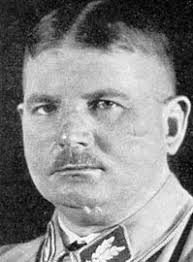
Ernst Rohm
Frightened by Rohm’s ambitions, the generals of the Reichswehr gave Hitler an ultimatum: Get rid of Rohm—or they would get rid of him.
Hitler didn’t hesitate. Backed by armed thugs, he stormed into Rohm’s apartment, catching him in bed with a young S.A. Stormtrooper.
Accusing his onetime friend of treasonously plotting to overthrow him, Hitler screamed: “You’re going to be shot!”
Rohm was not plotting a coup. But the generals had the whip hand—and, for Hitler, that was enough to literally sign Rohm’s death warrant.
Hours later, sitting in a prison cell, Rohm was offered a pistol with a single bullet.
“Adolf himself should do the dirty work,” said Rohm, adding: “All revolutions devour their own children.”
One hour later, Rohm died in a hail of SS bullets.
Earlier throughout that day, so had several hundred of his longtime S.A. cronies. Many of them yelled “Heil Hitler!” as they stood against barracks walls waiting to be shot.
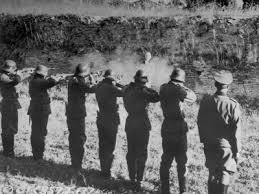
SS firing squad
Thirteen days later, addressing the Reichstag, Germany’s parliament, Hitler justified his purge in a nationally broadcast speech: “If anyone reproaches me and asks why I did not resort to the regular courts of justice, then all I can say is this: In this hour I was responsible for the fate of the German people, and thereby I became the Supreme Judge of the German people!
“I gave the order to shoot the ringleaders in this treason, and I further gave the order to cauterize down to the raw flesh the ulcers of this poisoning of the wells in our domestic life.
“Let the nation know that its existence—which depends on its internal order and security—cannot be threatened with impunity by anyone! And let it be known for all time to come that if anyone raises his hand to strike the State, then certain death is his lot.”
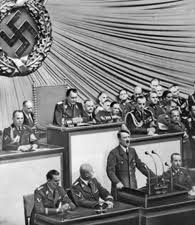
Adolf Hitler addressing parliament
Eighty-six years after Adolf Hitler declared himself “the Supreme Judge of the German people,” the United States faces the same fate under President Donald J. Trump.
On September 2, Trump sent a memo to Russell T. Vought, the director of the Office of Management and Budget, and Attorney General William P. Barr. Its title: “Reviewing Funding to State and Local Government Recipients That Are Permitting Anarchy, Violence and Destruction in American Cities.”
Both officials were ordered to find ways to cut funding to several cities controlled by Democrats.
Donald Trump
Accusing local and state officials of abdicating their duties, Trump wrote: “Anarchy has recently beset some of our states and cities. My administration will not allow federal tax dollars to fund cities that allow themselves to deteriorate into lawless zones.”
In his memo, Trump ordered Vought to issue guidance in 30 days “to the heads of agencies on restricting eligibility of or otherwise disfavoring, to the maximum extent permitted by law, anarchist jurisdictions in the receipt of Federal grants.”
And he gave Barr 14 days to identify “anarchist jurisdictions” that “permitted violence and the destruction of property to persist and have refused to undertake reasonable measures” to restore order.
Trump singled out four cities for defunding: Portland, Oregon; Washington, D.C.; Seattle, Washington; and New York City.
The move threatened billions of dollars for many of the country’s largest urban cities.
But protecting American citizens from crime was not the real reason for this effort.
Polls showed Trump trailing his Democratic rival, former Vice President Joseph R. Biden Jr. As a result, Trump was resorting to the classic Republican tactics of smear and fear.
He wanted to shift public attention from his failure to halt the escalating Coronavirus pandemic—which had already killed more than 189,000 Americans and left 25 million unemployed.
He also wanted to turn Black Lives Matter protests against police brutality into white counter-protest at the ballot box.
Trump had long relied on divide-and-rule tactics to gain and hold power. He hoped to persuade suburban whites that he was the only thing standing between them and a black crime wave about to engulf them.
The hatred that millions of older whites—especially rural ones—felt for most of their fellow Americans gave Trump the White House in 2016. Trump hoped that such hatred—combined with fear—would do it again in 2020.
9/11 ATTACKS, ABC NEWS, ADOLF EICHMANN, ADOLF HITLER, ALTERNET, AMERICABLOG, AMERICAN CIVIL LIBERTIES UNION, AP, BABY BOOMER RESISTANCE, BBC, BLOOMBERG, BUZZFEED, CBS NEWS, CNN, CROOKS AND LIARS, DAILY KOS, DEPARTMENT OF HOMELAND SECURITY, DONALD TRUMP, EGYPT, EXECUTIVE ORDER, FACEBOOK, FIVETHIRTYEIGHT, HARPER’S MAGAZINE, HEINRICH HIMMLER, HERMAN GORING, HITLER 1889-1936: HUBRIS, HITLER 1936-1945: NEMESIS, HITLER: ASCENT: 1889-1939, HUFFINGTON POST, IAN KERSHAW, IRAN, IRQA, JOSEPH GOEBBELS, LYBIA, MEDIA MATTERS, MOTHER JONES, MOVEON, MSNBC, MUSLIM REFUGEES, NAZI GERMANY, NBC NEWS, NEW REPUBLIC, NEWSDAY, NEWSWEEK, NPR, OSAMA BIN LADEN, PBS NEWSHOUR, PENTAGON, POLITICO, POLITICUSUSA, RAW STORY, REUTERS, ROBERT PAYNE, SALON, SAUDI ARABIA, SEATTLE TIMES, SLATE, SOMALIA, STALINGRAD (MOVIE), SUDAN, SYRIA, TALKING POINTS MEMO, THE ATLANTIC, THE CHICAGO SUN-TIMES, THE CHICAGO TRIBUNE, THE DAILY BEAST, THE DAILY BLOG, THE GUARDIAN, THE HILL, THE HUFFINGTON POST, THE INTERCEPT, THE LIFE AND DEATH OF ADOLF HITLER, THE LOS ANGELES TIMES, THE NATION, THE NEW REPUBLIC, THE NEW YORK TIMES, THE NEW YORKER, THE VILLAGE VOICE, THE WASHINGTON POST, THINKPROGRESS, THIRD REICH, TIME, TRUTHDIG, TRUTHOUT, TURKEY, TWO POLITICAL JUNKIES, U.S. NEWS & WORLD REPORT, UNITED ARAB EMIRATES, UPI, USA TODAY, VOLKER ULRICH, WALTER SHAUB, WORLD TRADE CENTER, X, YEMEN
In Bureaucracy, Business, History, Law, Law Enforcement, Politics, Social commentary on December 6, 2024 at 12:10 am
In Stalingrad, a 1993 German-made war movie, a platoon of German Army soldiers leaves behind the beaches and beauties of Italy and find themselves fighting desperately to stay alive in Russia.
Early in the film, there is an exchange that has its real-life counterpart almost 75 years later.
A young, idealistic German lieutenant, newly transferred to the Russian front, is horrified when he sees a fellow soldier from another unit sadistically beat a Russian prisoner to death.
He seeks out the man’s superior, a captain, and says: “Captain, I must protest about the behavior of your men.”
“You want to protest?” asks the captain, grinning sardonically. “Tell the Fuhrer.”
Fast forward to January 28, 2017, the day after President Donald J. Trump signed into law an executive order which:
- Suspended entry of all refugees to the United States for 120 days;
- Barred Syrian refugees indefinitely;, and
- Blocked entry into the United States for 90 days for citizens from Iran, Iraq, Libya, Somalia, Sudan, Syria and Yemen.
The new rules—and the efforts of security personnel at major international airports to enforce them—triggered a tsunami of chaos and fear among travelers.
“We’ve gotten reports of people being detained all over the country,” said Becca Heller, the director of the International Refugee Assistance Project. “They’re literally pouring in by the minute.”
Refugees on flights when the order was signed on January 27 were detained upon arrival.
Donald Trump
Many students attending American universities were blocked from returning to the United States from visits abroad.
According to Homeland Security officials, 109 people who were already in transit to the United States when the order was signed were denied access; 173 were stopped before boarding planes heading to America. Eighty-one people who were stopped were eventually given waivers to enter the United States.
Internationally, travelers were seized by panic when they were not allowed to board flights to the United States. In Dubai and Istanbul, airport and immigration officials turned passengers away at boarding gates. At least one family was removed from a flight it had boarded.
Earlier on January 28, Trump, isolated in the White House from all the chaos he had unleashed in airports across the nation and throughout the world, said:
“It’s not a Muslim ban, but we were totally prepared. It’s working out very nicely. You see it at the airports, you see it all over.”
Then the American Civil Liberties Union intervened.
Two Iraqi immigrants, defended by the ACLU, accused Trump of legal and constitutional overreach.
The Iraqis had been detained at John F. Kennedy International Airport in New York City. One had served as an interpreter for American forces in Iraq for a decade. The other was en route to reunite with his wife and son in Texas.
The interpreter, Hameed Khalid Darweesh, was released after nearly 19 hours of detention. So was the other traveler, Haider Sameer Abdulkhaleq Alshawi.
Before the two men were released, one of their lawyers, Mark Doss, a supervising attorney at the International Refugee Assistance Project, asked an official, “Who is the person we need to talk to?”
“Call Mr. Trump,” said the official, who refused to identify himself.
He might just as well have said: “You want to protest? Tell the Fuhrer.”
The ACLU action secured at least a temporary blocking of part of Trump’s order. A Brooklyn judge barred the government from deporting some arrivals who found themselves ensnared by the Presidential order.
Judge Ann M. Donnelly of the Federal District Court in Brooklyn, ruled that sending the travelers home could cause them “irreparable harm.” She said the government was “enjoined and restrained from, in any manner and by any means, removing individuals” who had arrived in the United States with valid visas or refugee status.
But she did not force the administration to let in people otherwise blocked by the executive order who have not yet traveled to the United States. Nor did she issue a broader ruling on the constitutionality of the order.
* * * * *
On November 5, 75 million ignorant, hate-filled, Right-wing Americans re-elected Donald Trump—a man reflecting their own hate and ignorance—to the Presidency.
Summing up Trump’s character in a March 25, 2016 broadcast of The PBS Newshour, conservative political columnist David Brooks warned: “The odd thing about [Trump’s] whole career and his whole language, his whole world view is there is no room for love in it. You get a sense of a man who received no love, can give no love….
“And so you really are seeing someone who just has an odd psychology unleavened by kindness and charity, but where it’s all winners and losers, beating and being beat. And that’s part of the authoritarian personality.”
There were countless warning signs available for Trump’s supporters to see—if they had wanted to see them:
- His facing 91 criminal counts in four cases;
- His threats against his political opponents and Justice Department prosecutors;
- His conviction for raping columnist E. Jean Carroll;
- His continued lying about winning the 2020 Presidential election;
- His conviction on 34 counts of falsifying business records;
- His unjustified attacks the integrity of the FBI—causing previously “law and order” Republicans to demand its defunding.
Those who voted for Trump will now learn the meaning of the Nazi slogan: “The Fuhrer proposes and disposes for all.” Those who voted against him knew this already.
9/11 ATTACKS, ABC NEWS, ADOLF EICHMANN, ADOLF HITLER, ALTERNET, AMERICABLOG, AMERICAN CIVIL LIBERTIES UNION, AP, BABY BOOMER RESISTANCE, BBC, BLOOMBERG, BUZZFEED, CBS NEWS, CNN, CROOKS AND LIARS, DAILY KOS, DEPARTMENT OF HOMELAND SECURITY, DONALD TRUMP, EGYPT, EXECUTIVE ORDER, FACEBOOK, FIVETHIRTYEIGHT, HARPER’S MAGAZINE, HEINRICH HIMMLER, HERMAN GORING, HITLER 1889-1936: HUBRIS, HITLER 1936-1945: NEMESIS, HITLER: ASCENT: 1889-1939, HUFFINGTON POST, IAN KERSHAW, IRAN, IRQA, JOSEPH GOEBBELS, LYBIA, MEDIA MATTERS, MOTHER JONES, MOVEON, MSNBC, MUSLIM REFUGEES, NAZI GERMANY, NBC NEWS, NEW REPUBLIC, NEWSDAY, NEWSWEEK, NPR, OSAMA BIN LADEN, PBS NEWSHOUR, PENTAGON, POLITICO, POLITICUSUSA, RAW STORY, REUTERS, ROBERT PAYNE, SALON, SAUDI ARABIA, SEATTLE TIMES, SLATE, SOMALIA, STALINGRAD (MOVIE), SUDAN, SYRIA, TALKING POINTS MEMO, THE ATLANTIC, THE CHICAGO SUN-TIMES, THE CHICAGO TRIBUNE, THE DAILY BEAST, THE DAILY BLOG, THE GUARDIAN, THE HILL, THE HUFFINGTON POST, THE INTERCEPT, THE LIFE AND DEATH OF ADOLF HITLER, THE LOS ANGELES TIMES, THE NATION, THE NEW REPUBLIC, THE NEW YORK TIMES, THE NEW YORKER, THE VILLAGE VOICE, THE WASHINGTON POST, THINKPROGRESS, THIRD REICH, TIME, TRUTHDIG, TRUTHOUT, TURKEY, TWO POLITICAL JUNKIES, U.S. NEWS & WORLD REPORT, UNITED ARAB EMIRATES, UPI, USA TODAY, VOLKER ULRICH, WALTER SHAUB, WORLD TRADE CENTER, X, YEMEN
In Bureaucracy, Business, History, Law, Law Enforcement, Politics, Social commentary on December 5, 2024 at 12:32 am
When historians—-and ordinary citizens—think about the Third Reich, the name of Werner Willikens doesn’t immediately spring to mind.
Adolf Hitler, Herman Goring, Joseph Goebbels, Heinrich Himmler, Adolf Eichmann—yes.
But Werner Willikens? Why him?
Ian Kershaw has unearthed the reason.
Ian Kershaw is a British historian and author who has written extensively about the Third Reich. He is best-known for his monumental, two-volume biography, Hitler 1889–1936: Hubris (1998) and Hitler 1936–1945: Nemesis (2000).
Ian Kershaw
Willikens, State Secretary in the Ministry of Food, gave a speech on February 21, 1934 that casts new light on how Hitler came to exercise vast authority over Nazi Germany:
“Everyone who has the opportunity to observe it knows that the Fuhrer can hardly dictate from above everything he intends to realize sooner or later.
“On the contrary, up till now everyone with a post in the new Germany has worked best when he has, so to speak, worked towards the Fuhrer….
“In fact, it is the duty of everybody to try to work towards the Fuhrer along the lines he would wish. Anyone who makes mistakes will notice it soon enough.
“But anyone who really works towards the Fuhrer along his lines and towards his goal will certainly both now and in the future one day have the finest reward in the form of the sudden legal confirmation of his work.”
Volker Ullrich, bestselling author of Hitler: Ascent 1889 – 1939, summed up the results of this interplay between Hitler and his subjects:
“Kershaw tried to show that in many instances Hitler didn’t need to do very much at all since German society–everyone from the underlings surrounding him to ordinary people on the street—-were increasingly inclined to anticipate and fulfill the Fuhrer’s every wish, ‘working towards him.’
“…Kershaw did not minimize the historical role played by Hitler and his insane, ideological fixations, but he did illustrate that without the readiness of many people to work for the man in charge, there would have been no way he could have achieved his murderous aims.
“Kershaw’s main thesis was that the dynamics of the Nazi regime arose from the interplay of Hitler’s intentions with activism emanating from subordinate individuals and institutions. The results were ever more radical ‘solutions.'”
With the Third Reich dying in the flames of Berlin, at about 3:30 p.m. on April 30, 1945, Adolf Hitler simultaneously bit on a cyanide capsule and fired a pistol shot into his right temple.
The concept of “working towards the Fuhrer” seemed to have come to a literally fiery end.
Fast forward almost 72 years later–to 4:42 p.m. on January 27, 2017.
Newly inaugurated President Donald J. Trump signed into law an executive order that:
- Suspended entry of all refugees to the United States for 120 days;
- Barred Syrian refugees indefinitely; and
- Blocked entry into the United States for 90 days for citizens of Iran, Iraq, Libya, Somalia, Sudan, Syria and Yemen.
Trump’s executive order read as follows: “In order to protect Americans, the United States must ensure that those admitted to this country do not bear hostile attitudes toward it and its founding principles.
“The United States cannot, and should not, admit those who do not support the Constitution, or those who would place violent ideologies over American law.”
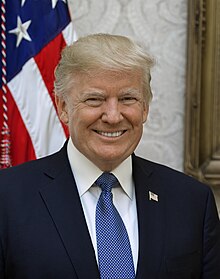
President Donald Trump
But that statement excluded three extremely troubling facts.
First: Over the previous four decades, there had been no fatal attacks within the United States by immigrants from any of those seven banned countries.
Second, approximately 3,000 Americans had been killed by immigrants from Saudi Arabia, the United Arab Emirates, Egypt, and Turkey. Most of those victims died during the attacks on the Pentagon and World Trade Center on September 11, 2001.
In fact, 15 of the 19 highjackers who took part in those attacks came from Saudi Arabia. Osama bin Laden, the mastermind of the attacks, was himself a Saudi from a wealthy family with strong ties to the Saudi Royal Family.
Third, Saudi Arabia, the United Arab Emirates, Egypt, and Turkey were all countries where Trump had close business ties. His properties included two luxury towers in Turkey and golf courses in the United Arab Emirates.
Trump listed companies on his FEC filing possibly related to a development project in Jeddah, Saudi Arabia’s second-biggest city, located outside Mecca: DT Jeddah Technical Services Manager LLC, DT Jeddah Technical Services Manager Member Corp., THC Jeddah Hotel Manager LLC and THC Jeddah Hotel Manager Member Corp.
Trump listed two companies on his FEC filing possibly related to business in Egypt: Trump Marks Egypt and Trump Marks Egypt LLC.
The full dimensions of Trump’s holdings throughout the Middle East aren’t known because he has refused to release his tax returns.
On January 11, 2017, Trump said that:
- He would resign from his positions at the Trump Organization but that he would not divest his ownership.
- The organization would be managed by his sons Eric and Don Jr. and chief financial officer Allen Weisselberg.
- The organization would terminate pending deals and not seek new international business.
Walter Shaub, director of the Office of Government Ethics, said that these measures did not resolve the President’s conflict-of-interest problems and called them “meaningless.”
It was after Trump signed his executive order that the true consequences of “working towards the Fuhrer”—or President—were fully revealed.
2024 PRESIDENTIAL CAMPAIGN, ABC NEWS, ADOLF HITLER, ALTERNET, AMERICABLOG, AP, ATTORNEY GENERAL OF THE UNITED STATES, BABY BOOMER RESISTANCE, BBC, BLOOMBERG, BUZZFEED, CBS NEWS, CNN, CROOKS AND LIARS, DAILY KOS, DONALD TRUMP, ELON MUSK, ERNST ROHM, FBI, FIVETHIRTYEIGHT, HARPER’S MAGAZINE, HEINRICH HIMMLER, HUFFINGTON POST, Kamala Harris, MATT GAETZ, MEDIA MATTERS, MICHAEL COHEN, MOTHER JONES, MOVEON, MSNBC, NATIONAL LABOR RELATIONS BOARD (NLRB), NBC NEWS, NEW REPUBLIC, NEWSDAY, NEWSWEEK, NPR, PAM BONDI, PBS NEWSHOUR, POLITICO, POLITICUSUSA, RAW STORY, REUTERS, SALON, SEATTLE TIMES, SLATE, SPACE X, STORM TROOPERS, TALKING POINTS MEMO, TESLA, THE ATLANTIC, THE CHICAGO SUN-TIMES, THE CHICAGO TRIBUNE, THE DAILY BEAST, THE DAILY BLOG, THE GUARDIAN, THE HILL, THE HUFFINGTON POST, THE INTERCEPT, THE LOS ANGELES TIMES, THE NATION, THE NEW REPUBLIC, THE NEW YORK TIMES, THE NEW YORKER, THE S.A., THE SS, THE VILLAGE VOICE, THE WASHINGTON POST, THINKPROGRESS, THIRD REICH, TIME, TRUTHDIG, TRUTHOUT, TWO POLITICAL JUNKIES, U.S. NEWS & WORLD REPORT, UNITED STATES ATTORNEY’S OFFICE, UNITED STATES DEPARTMENT OF JUSTICE, UPI, USA TODAY, X
In Bureaucracy, Business, History, Law, Law Enforcement, Politics, Social commentary on November 27, 2024 at 12:11 am
Elon Musk is currently riding high.
He is—famously—the world’s richest man, with an estimated net worth of $314 billion as of November 2024, according to the Bloomberg Billionaires Index. He owns Tesla, Inc. X (formerly Twitter), Space X and xAI, an artificial intelligence startup that he founded in 2023.
And he’s used to getting his way: In a notorious video exchange with Donald Trump, the two men discussed firing striking workers.

Elon Musk
The Royal Society, CC BY-SA 3.0 <https://creativecommons.org/licenses/by-sa/3.0>, via Wikimedia Commons
Trump praised Musk for firing workers who went on strike. “You’re the greatest cutter. I look at what you do. You walk in and say, ‘You want to quit?’ I won’t mention the name of the company but they go on strike and you say, ’That’s OK. You’re all gone.’”
Musk said, “Yeah,” and laughed while Trump was talking.
In 2021, the National Labor Relations Board ruled that Musk, in a 2018 Twitter tweet, had unlawfully threatened Tesla employees with the loss of stock options if they voted to unionize.
But in October, 2024, the full 5th Circuit later threw out that decision and voted to hear the matter again.

Tesla headquarters
Larry D. Moore, CC BY 4.0 <https://creativecommons.org/licenses/by/4.0>, via Wikimedia Commons
And now, having successfully backed Trump for the Presidency against Vice President Kamala Harris, Musk feels he has achieved the ultimate in success—in business and politics.
But NBC News delivered a warning on November 13: “Elon Musk may already be overstaying his welcome in Trump’s orbit.”
Two sources involved with the Trump transition team said that Musk has been a near-constant presence at Mar-a-Lago in the week since Election Day.
And he’s begun to annoy people in Trump’s inner circle who believe he’s overstepping his role in the transition.
“‘He’s behaving as if he’s a co-president and making sure everyone knows it,” one source said. “And he’s sure taking lots of credit for the President’s victory. Bragging about America PAC and X to anyone who will listen. He’s trying to make President Trump feel indebted to him. And the President is indebted to no one.”
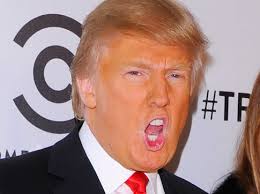
Donald Trump
Yet another source said: “He wants to be seen as having a say in everything (even if he doesn’t).”
The second source said Musk appeared to be pushing his own agenda, instead of focusing on Trump’s: “Appointing people because they are loyal to Elon doesn’t work.”
Trump is an alpha male who enjoys dominating others. Musk operates his companies in a similar way, Dan McAdams, a psychology professor at Northwestern University, told Newsweek.
“Two alphas can probably get along well enough as long as they don’t interfere with each other’s respective domain.
“The big thing that might come between them would be if Musk threatens Trump’s monopoly on American attention. Trump needs to be the center of everybody’s consciousness—and he has pretty much succeeded in accomplishing that extraordinary feat over the past eight years.
“Musk is certainly a narcissist but his self-worth is caught up in what he achieves. He really cares about building electric cars, sending people into space, and so on.
“Trump does not care about anything except himself. His entire self worth depends on others adoring him and fearing him,” McAdams said.
In an October 23 meeting with House Republicans, Trump praised Musk for his time and dedication to the campaign. Trump said Musk set aside his own business interests for the campaign and didn’t ask for anything in return.
Then, in what could have ominous implications for the future, Trump said: “Elon won’t go home. I can’t get rid of him. Until I don’t like him.”
The lawmaker sources insisted that Trump was joking.
So “Rocket Man” Musk, now basking in his “co-President” relationship with Trump, no doubt believes he has every reason to feel confident.
But Trump’s choice for Attorney General—Matt Gaetz—should have sent off alarm bells to Musk.
Gaetz made it clear he would do absolutely anything Trump wants. As Attorney General, he would have had the power to investigate and indict anyone Trump dislikes.
Then Gaetz withdrew his name from nomination following increased scrutiny over allegations of sexual misconduct.
And Pam Bondi, Trump’s replacement for Attorney General after Gaetz withdrew, has proven her own reliability. As Florida Attorney General, she solicited a political contribution from Donald Trump while her office deliberated investigating alleged fraud at Trump University and its affiliates.
After Bondi dropped the Trump University case, Trump wrote her a check $25,000 for her re-election campaign. The money came from the Donald J. Trump Foundation.
Musk has received billions of dollars in Federal contracts—among them $733.5 million for the Space Development Agency (SDA) and two for the National Reconnaissance Office (NRO).
Any of these is vulnerable to an accusation of corruption—warranted or unwarranted. At the very least, many—if not all—of those contracts could be cancelled. At the worst, Musk could find himself locked in combat with Federal prosecutors for the length of Trump’s term.
Ernst Rohm felt invulnerable at the start of 1934. As January 20, 2025, rapidly approaches, so does Elon Musk.
Like Rohm, Musk may live to regret the devotion he’s lavished on his choice for Fuhrer.


&docid=yt8OxrbTDh591M&tbnid=ik44Wblm3ZvX6M%3A&vet=1&w=325&h=475&bih=469&biw=819&ved=0ahUKEwjC-_Ka0enRAhVJKGMKHV61ApUQMwghKAAwAA&iact=c&ictx=1)


 Bureaucracybuster's Blog
2016 PRESIDENTIAL ELECTION, 2020 PRESIDENTIAL ELECTION, ABC NEWS, ABUSE OF POWER, ADOLF HITLER, ALTERNET, AMANDA CHASE, AMERICABLOG, AP, ARMED SERVICES, BABY BOOMER RESISTANCE, BARACK OBAMA, BLOOMBERG, BUZZFEED, CBS NEWS, CIA, CLAUS VON STAUFFENBERG, CNN, COVID-19, CROOKS AND LIARS, DAILY KOZ, DONALD TRUMP, DRUDGE RETORT, FACEBOOK, FBI, FEDERAL GOVERNMENT SHUTDOWN, FIVETHIRTYEIGHT, GENERAL SERVICES ADMINISTRATION, GESTAPO, HARPER’S MAGAZINE, HILLARY CLINTON, IMPEACHMENT ARTICLES, JAMES B. COMEY, JAMES MATTIS, JOHN KASICH, JOHN MCCAIN, JOSEPH BIDEN, KIM JONG-UN, MARK ESPER, MARTIAL LAW, MARTIN NIEMOELLER, MEDIA MATTERS, MICHAEL FLYNN, MOTHER JONES, MOVEON, MSNBC, MUSLIMS, NATIONAL SECURITY AGENCY, NAZI GERMANY, NBC NEWS, NEWSWEEK, NPR, OBSTRUCTION OF CONGRESS, PBS NEWSHOUR, POLITICO, POLITICUSUSA, RAW STORY, REPUBLICANS, REUTERS, SALON, SEATTLE TIMES, SERGEY KISLYAK, SERGEY LAVROV, SLATE, TALKING POINTS MEMO, THE ATLANTIC, THE CHICAGO SUN-TIMES, THE CHICAGO TRIBUNE, THE DAILY BEAST, THE DAILY BLOG, THE GUARDIAN, THE HILL, THE HUFFINGTON POST, THE LOS ANGELES TIMES, THE NATION, THE NEW REPUBLIC, THE NEW YORK TIMES, THE PENTAGON, THE TWILIGHT ZONE, THE VILLAGE VOICE, THE WASHINGTON POST, THINKPROGRESS, THIRD REICH, TIME, TRUTHDIG, TRUTHOUT, TWENTY-FIFTH AMENDMENT, TWO POLITICAL JUNKIES, U.S. NEWS & WORLD REPORT, UNITED STATES CONSTITUTION, UNITED STATES SECRET SERVICE, UPI, USA TODAY, VLADIMIR PUTIN, VOTER FRAUD, WONKETTE, WORLD WAR 11, X
HITLER’S GERMANY HAD ITS RESISTENCE MOVEMENT-–TRUMP’S AMERICA DID NOT: PART TWO (OF THREE)
In History, Law, Law Enforcement, Military, Politics, Social commentary on May 6, 2025 at 12:05 amOn July 20, 1944, Colonel Claus Schenk von Stuaffenberg tried to assassinate Adolf Hitler.
He had served with the Wehrmacht in Poland (1939), France (1940) and the Soviet Union (1941).
While serving in Tunisa, he was seriously wounded on April 7, 1943, when Allied fighters strafed his vehicle. He lost his left eye, right hand and two fingers of his left hand after surgery.
Colonel Claus Schenk von Stuaffenberg
Nevertheless, he now acted as the prime mover for the conspiracy among a growing number of German high command officers to arrest or assassinate Germany’s Fuehrer.
For most of these officers, the motive was craven: The “happy time” of German victories was over. Germany was losing the war it had unleashed on the world in 1939—and now they feared the worst.
This was especially true now that the numerically superior forces of the Soviet Union had gone onto the offensive.
For Stauffenberg, there was another reason: His disgust at the horrors he had seen committed by his fellow Wehrmacht soldiers upon defenseless POW’s and civilians in Russia.
Thus, Stauffenberg—more than many Germans–knew firsthand the vengeance his country could expect if the “Thousand-Year Reich” fell.
Something must be done, he believed, to prove to the world that not all Germans—even members of the Wehrmacht—were criminals.
Most of the conspirators wanted to arrest Hitler and surrender to British and American forces—well before the much-feared Russians gained a toehold in Germany.
Stauffenberg didn’t want to arrest Hitler; he wanted to kill him. A live Hitler might eventually be rescued by his Nazi colleagues.
But Hitler was a closely-guarded target. He was surrounded by fanatical bodyguards who were expert marksmen. He often wore a bulletproof vest and a cap lined with three pounds of laminated steel.
Adolf Hitler
Bundesarchiv, Bild 146-1990-048-29A / CC-BY-SA 3.0 [CC BY-SA 3.0 de (https://creativecommons.org/licenses/by-sa/3.0/de/deed.en)%5D
But his single greatest protection—he claimed—was an instinct for danger. He would suddenly change his schedule—to drop in where he was least expected. Or suddenly depart an event where he was expected to stay a long time.
That instinct had repeatedly saved his life.
A series of assassination attempts had been made against Hitler. All of them involved time-bombs. And all of the would-be assassins were members of the German General Staff.
In one case, a bomb secretly stashed aboard Hitler’s plane failed to explode. In another, an officer who had a bomb strapped to himself unexpectedly found his scheduled meeting with Hitler called off. He had to rush into a bathroom to defuse the bomb before it exploded.
Stauffenberg intended to carry his bomb—hidden in a briefcase—into a “Hitler conference” room packed with military officers. Rigged with a time-fuse, it would be left there while he found an excuse to leave.
After the explosion, he would phone one of his fellow conspirators with the news.
Stauffenberg intended to direct the new government that would replace that of the Nazis—and open peace talks with the British and Americans.
With Hitler dead, the coup—“Operation Valkyrie”—would be on.
Anti-Nazi conspirators would seize control of key posts of the government. The British and Americans would then be informed of Germany’s willingness to surrender. Provided, of course, that the vengeance-seeking Russians did not have a say in its postwar future.
The Wehrmacht and Schutzstaffel (SS) had killed millions of Russians. Many had died in combat. Others had been murdered as captives. Still more had been allowed to die by starvation and exposure to the notorious Russian winter.
So the Germans—both Nazi and anti-Nazi—knew what they could expect if soldiers of the Soviet Union reached German soil.
On July 20, 1944, Stauffenberg appeared at Hitler’s well-guarded military headquarters in East Prussia. Like all his other outposts, Hitler had named it—appropriately enough—“Wolf’s Lair.”
“Wolf’s Lair”
Stauffenberg entered the large, concrete building while the conference was in session. He placed his yellow briefcase next to Hitler—who was standing with his generals at a heavy oaken table. Then he excused himself to take an “urgent” phone call.
After Stauffenberg left the room, Colonel Heinz Brandt, standing next to Hitler, found the briefcase blocking his legs. So he moved it—to the other side of the heavy oaken support, partially shielding Hitler from the blast..
At 12:42 p.m. on July 20, 1944, Stauffenberg’s briefcase bomb erupted.
Brandt died, as did two other officers and a stenographer.
Hitler not only survived, but the plotters failed to seize the key broadcast facilities of the Reich.
This allowed Hitler to make a late-night speech to the nation, revealing the failed plot and assuring Germans that he was still alive. And he swore to flush out the “traitorous swine” who had tried to kill him.
Mass arrests quickly followed.
Among the first victims discovered and executed was the conspiracy’s leader, Colonel Claus von Stauffenberg. Standing before a makeshift firing squad at midnight, he cried: “Long live our sacred Germany!”
At least 7,000 persons were arrested by the Gestapo. Of these, 4,980 were executed.
Share this: