Posts Tagged ‘THE NEW REPUBLIC’
ABC NEWS, ADOLF HITLER, AFFORDABLE CARE ACT, ALBERT SPEER, ALTERNET, AMERICABLOG, AP, BABY BOOMER RESISTANCE, BARACK OBAMA, BLOOMBERG, BUZZFEED, CBS NEWS, CNN, CROOKS AND LIARS, DAILY KOS, DAILY KOZ, DEBT CEILING, DEPARTMENT OF HOMELAND SECURITY, DONALD TRUMP, DRUDGE REPORT, EXTORTION, FACEBOOK, FASCISM, FIVETHIRTYEIGHT, HARPER’S MAGAZINE, HOUSE SPEAKER JOHN BOEHNER, HUFFINGTON POST, MEDIA MATTERS, MOTHER JONES, MOVEON, MSNBC, NAZI GERMANY, NBC NEWS, NEGOTIATING, NEWSWEEK, NPR, OBAMACARE, PAP SMEARS, PBS NEWSHOUR, PLANNED PARENTHOOD, POLITICO, POLITICUSUSA, RAW STORY, REPUBLICAN PARTY, REPUBLICANS, REUTERS, SALON, SEATTLE TIMES, SLATE, TALKING POINTS MEMO, THE ATLANTIC, THE CHICAGO SUN-TIMES, THE CHICAGO TRIBUNE, THE DAILY BEAST, THE DAILY BLOG, THE GUARDIAN, THE HILL, THE HUFFINGTON POST, THE LOS ANGELES TIMES, THE NATION, THE NEW REPUBLIC, THE NEW YORK TIMES, THE VILLAGE VOICE, THE WALL STREET JOURNAL, THE WASHINGTON POST, THINKPROGRESS, TIME, TRICKLE-DOWN ECONOMICS, TRUTHDIG, TRUTHOUT, TWITTER, TWO POLITICAL JUNKIES, U.S. NEWS & WORLD REPORT, UPI, USA TODAY, WARREN BUFFET, WORLD WAR 11
In Bureaucracy, History, Law, Politics, Social commentary on March 13, 2017 at 12:36 am
Albert Speer, Minister of Armaments for the Third Reich, was appalled.
His Fuhrer, Adolf Hitler–the man he had idolized for 14 years–had just passed a death sentence on Germany, the nation he claimed to love above all others.
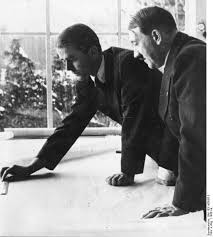
Albert Speer and Adolf Hitler pouring over architectural plans
On March 19, 1945, facing certain defeat, Hitler had ordered a massive “scorched-earth” campaign throughout Germany.
All German agriculture, industry, ships, communications, roads, food stuffs, mines, bridges, stores and utility plants were to be destroyed.
If implemented, it would deprive the entire German population of even the barest necessities after the war.
Click here: Hitler’s “Scorched Earth” Decree and Albert Speer’s Response
Now living in a bunker 50 feet below bomb-shattered Berlin, Hitler gave full vent to his most destructive impulses.
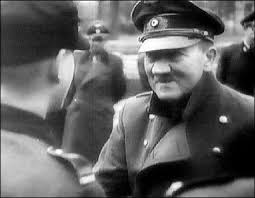
Adolf Hitler addressing boy soldiers as the Third Reich crumbles
“If the war is lost,” Hitler told Speer, “the nation will also perish. This fate is inevitable. There is no necessity to take into consideration the basis which the people will need to continue even a most primitive existence.
“On the contrary, it will be better to destroy these things ourselves, because this nation will have proved to be the weaker one and the future will belong solely to the stronger eastern nation.
“Besides, those who will remain after the battle are only the inferior ones, for the good ones have all been killed.”
Speer argued in vain that there must be a future for the German people. But Hitler refused to back down. He gave Speer 24 hours to reconsider his opposition to the order.
The next day, Speer told Hitler: “My Fuhrer, I stand unconditionally behind you!”
“Then all is well,” said Hitler, suddenly with tears in his eyes.
“If I stand unreservedly behind you,” said Speer, “then you must entrust me rather than the Gauleiters [district Party leaders serving as provincial governors] with the implementation of your decree.”
Filled with gratitude, Hitler signed the decree Speer had thoughtfully prepared before their fateful meeting.
By doing so, Hitler unintentionally gave Speer the power to thwart his “scorched earth” decree.
Speer had been the closest thing to a friend in Hitler’s life. Trained as an architect, he had joined the Nazi Party in 1931.
He met Hitler in 1933, when he presented the Fuhrer with architectural designs for the Nuremberg Rally scheduled for that year.
From then on, Speer became Hitler’s “genius architect” assigned to create buildings meant to last for a thousand years.
In 1943, Hitler appointed him Minister of Armaments, charged with revitalizing the German war effort.
Nevertheless, Speer now crisscrossed Germany, persuading military leaders and district governors to not destroy the vital facilities that would be needed after the war.
“No other senior National Socialist could have done the job,” writes Randall Hanson, author of Disobeying Hitler: German Resistance After Valkyrie.
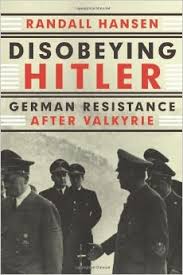
“Speer was one of the very few people in the Reich–perhaps even the only one–with such power to influence actors’ willingness/unwillingness to destroy.”
Despite his later conviction for war crimes at Nuremberg, Speer never regretted his efforts to save Germany from total destruction at the hands of Adolf Hitler.
Fast-forward to the United States since the 2008 election of President Barack Obama.
Republicans have adopted the same my-way-or-else “negotiating” stance as the German Fuhrer. Like him, they are determined to gain and hold absolute power–or destroy the Nation they claim to love.
During his eight years in the White House, Ronald Reagan presided over a tripling of the national debt–and raised the debt limit 17 times.
President George W. Bush nearly doubled it again.
During the George W. Bush Presidency, Republicans in Congress raised the debt ceiling seven times–when the national debt grew to $10.627 trillion due to tax cuts for the rich and wars in Afghanistan and Iraq.
But none of that mattered to Republicans–so long as one of them held the White House.
Then Barack Obama, a Democrat–worse, a black one–became President.
Suddenly, “fiscal integrity” became the byword of Republicans. And in its name, they repeatedly threatened to shut down the government if their legislative demands weren’t met.
In April, 2011, the United States government almost shut down over Republican demands about subsidized pap smears.
During a late-night White House meeting with President Obama and key Congressional leaders, Republican House Speaker John Boehner made this threat:
His conference would not approve funding for the government if any money were allowed to flow to Planned Parenthood through Title X legislation.
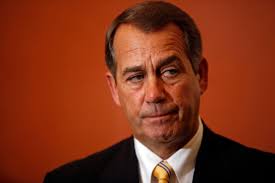
John Boehner
Facing an April 8 deadline, negotiators worked day and night to strike a compromise–and finally reached one.
Three months later–on July 9–Republican extortionists again threatened the Nation with financial ruin and international disgrace unless their demands were met.
By refusing to raise the debt ceiling, they would force the government to default on paying the bills it owed.
President Obama had offered to make historic cuts in the federal government and the social safety net–on which millions of Americans depend for their most basic needs.
But Boehner rejected that offer. He would not agree to the tax increases that Democrats wanted to impose on the wealthiest 1% as part of the bargain.
ABC NEWS, ALTERNET, AMERICABLOG, AP, BABY BOOMER RESISTANCE, BBC, BILL O'REILLY, BLOOMBERG NEWS, BUZZFEED, CBS NEWS, CIA, CNN, CROOKS AND LIARS, DAILY KOS, DEMOCRATIC NATIONAL COMMITTEE, DONALD TRUMP, FACEBOOK, FBI, FIVETHIRTYEIGHT, FOX NEWS, HARPER’S MAGAZINE, HILLARY CLINTON, HUFFINGTON POST, JOE SCARBOROUGH, KGB, KIM JONG-UN, MEDIA MATTERS, MORNING JOE, MOTHER JONES, MOVEON, MSNBC, NANCY PELOSI, NAZI GERMANY, NAZI PARTY, NBC NEWS, NEW REPUBLIC, NEWSDAY, NEWSWEEK, NORTH ATLANTIC TREATY ORGANIZATION (NATO), NPR, PBS NEWSHOUR, POLITICO, POLITICUSUSA, RAW STORY, REPUBLICAN PARTY, REUTERS, RUSSIA, SALON, SEATTLE TIMES, SLATE, SOVIET UNION, TALKING POINTS MEMO, THE ATLANTIC, THE CHICAGO SUN-TIMES, THE CHICAGO TRIBUNE, THE DAILY BEAST, THE DAILY BLOG, THE GUARDIAN, THE HILL, THE HUFFINGTON POST, THE INTERCEPT, THE LOS ANGELES TIMES, THE NATION, THE NEW REPUBLIC, THE NEW YORK TIMES, THE NEW YORKER, THE VILLAGE VOICE, THE WASHINGTON POST, THINKPROGRESS, TIME, TRUTHDIG, TRUTHOUT, TWITTER, U.S. NEWS & WORLD REPORT, UPI, USA TODAY, VLADIMIR PUTIN
In Bureaucracy, History, Military, Politics, Social commentary on February 9, 2017 at 1:44 am
On December 14, 2016, NBC News reported that “U.S. intelligence officials now believe with ‘a high level of confidence’ that Russian President Vladimir Putin became personally involved in the covert Russian campaign to interfere in the U.S. presidential election.”
According to senior Intelligence officials, Putin had several motives:
- Waging a vendetta against Hillary Clinton, whom he has long disliked;
- Publicly disgrace the United States by revealing corruption at the heart of its politics; and
- “Split off key American allies by creating the image that [other countries] couldn’t depend on the U.S. to be a credible global leader anymore.”
The CIA believed that Putin wanted to elect Donald Trump. The FBI wasn’t so certain, feeling that Putin might have simply wanted to do as much harm as possible.
Even so, an air of unreality clung to all of this.
On June 2, 2016, before an audience in San Diego, California, Democratic Presidential candidate Hillary Clinton had noted Trump’s strange attraction to dictators:
“And I have to say, I don’t understand Donald [Trump’s] bizarre fascination with dictators and strongmen who have no love for America.
“He praised China for the Tiananmen Square massacre; he said it showed strength.
“He said, ‘You’ve got to give Kim Jong Un credit’ for taking over North Korea–something he did by murdering everyone he saw as a threat, including his own uncle, which Donald described gleefully, like he was recapping an action movie.
“And he said if he were grading Vladimir Putin as a leader, he’d give him an A. Now, I’ll leave it to the psychiatrists to explain his affection for tyrants,” said Clinton.

Vladimir Putin
On December 18, 2015, Trump appeared on MSNBC’s “Morning Joe.” Its host, Joe Scarborough, was upset by Trump’s praise for Putin:
SCARBOROUGH: Well, I mean, [he’s] also a person who kills journalists, political opponents, and invades countries. obviously that would be a concern, would it not?
TRUMP: He’s running his country, and at least he’s a leader. Unlike what we have in this country.
SCARBOROUGH: But again: He kills journalists that don’t agree with him.
TRUMP: I think our country does plenty of killing, also, Joe, so, you know. There’s a lot of stupidity going on in the world right now, Joe. A lot of killing going on. A lot of stupidity. And that’s the way it is.
SCARBOROUGH: I’m confused. So I mean, you obviously condemn Vladimir Putin killing journalists and political opponents, right?
TRUMP: Oh sure, absolutely.
And Trump went far beyond handing out compliments.
On July 22, 2016, Wikileaks released 19,252 emails and 8,034 attachments hacked from computers of the highest-ranking officials of the Democratic National Committee (DNC). Early reports traced the leak to Russian hackers.
And Trump’s reaction?
At a press conference in Doral, Florida he declared: “Russia, if you are listening, I hope you are able to find the 33,000 emails that are missing–I think you will probably be rewarded mightily by our press.”
This was nothing less than treason–calling upon a foreign power, hostile to the United States, to interfere in its Presidential election.
As President, Trump has defended the leader of the Communist world against hostile journalists and American Intelligence agencies.
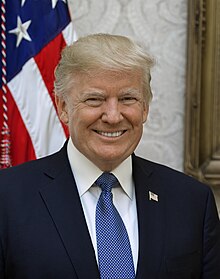
Donald Trump
On February 5, he gave an interview to Fox News host Bill O’Reilly. As startled viewers watched, there occurred this exchange:
O’REILLY: Do you respect Putin?
TRUMP: I do respect him but—
O’REILLY: Do you? Why?
TRUMP: Well, I respect a lot of people but that doesn’t mean I’m going to get along with him. He’s a leader of his country. I say it’s better to get along with Russia than not. And if Russia helps us in the fight against ISIS, which is a major fight, and Islamic terrorism all over the world —that’s a good thing. Will I get along with him? I have no idea.
O’REILLY: But he’s a killer though. Putin’s a killer.
TRUMP: There are a lot of killers. We’ve got a lot of killers. What do you think—our country’s so innocent? You think our country’s so innocent?
O’REILLY: I don’t know of any government leaders that are killers.
TRUMP: Well—take a look at what we’ve done, too. We made a lot of mistakes. I’ve been against the war in Iraq from the beginning.
O’REILLY: But mistakes are different than—
TRUMP: A lot of mistakes, but a lot of people were killed. A lot of killers around, believe me.
Trump launched his Presidential campaign on June 16, 2015. According to The New York Times, by late October, 2016, he had aimed nearly 4,000 insulting tweets at 281 targets.
Among those insulted:
- Women
- Blacks
- Hispanics
- The media
- Muslims
- The disabled
- Asians
- The Pope
- Prisoners-of-war.
Considering his hair-trigger temper and willingness to insult virtually anyone, Trump’s careful, even fawning attitude toward Vladimir Putin stands out.
No wonder House Minority Leader Nancy Pelosi said, following Trump’s February 5 remarks on Putin:
“I want to know what the Russians have on Donald Trump. I think we have to have an investigation by the FBI into his financial, personal and political connections to Russia, and we want to see his tax returns, so we can have truth in the relationship between Putin, whom he admires, and Donald Trump.”
2016 PRESIDENTIAL RACE, ABC NEWS, ADRIANNE ZUCKER, ALTERNET, AMERICABLOG, AP, BABY BOOMER RESISTANCE, BBC, BILL CLINTON, BILLY BUSH, BLOOMBERG NEWS, BUZZFEED, CBS NEWS, CNN, CROOKS AND LIARS, DAILY KOZ, DAYS OF OUR LIVES, DONALD TRUMP, DRUDGE REPORT, FACEBOOK, FIVETHIRTYEIGHT, GAIUS CALIGULA, GAIUS SUETONIUS TRANQUILLUS, HARPER’S MAGAZINE, HILLARY CLINTON, HUFFINGTON POST, IVANKA TRUMP, MEDIA MATTERS, MICHELE BACHMANN, MOTHER JONES, MOVEON, MSNBC, NBC NEWS, NEW REPUBLIC, NEWSDAY, NEWSWEEK, NPR, PBS NEWSHOUR, POLITICO, POLITICUSUSA, RAW STORY, REPUBLICAN PARTY, REUTERS, ROMAN EMPIRE, SALON, SEATTLE TIMES, Secret Service, SEXUAL HARASSMENT, SLATE, TALKING POINTS MEMO, THE ATLANTIC, THE CHICAGO SUN-TIMES, THE CHICAGO TRIBUNE, THE DAILY BEAST, THE DAILY BLOG, THE GUARDIAN, THE HILL, THE HUFFINGTON POST, THE LOS ANGELES TIMES, THE NATION, THE NEW REPUBLIC, THE NEW YORK TIMES, THE NEW YORKER, THE TWELVE CAESARS, THE VILLAGE VOICE, THE WALL STREET JOURNAL, THE WASHINGTON POST, THINKPROGRESS, TIME, TODAY, TRUTHDIG, TRUTHOUT, TWITTER, TWO POLITICAL JUNKIES, U.S. NEWS & WORLD REPORT, UPI, USA TODAY
In Bureaucracy, History, Law, Politics, Social commentary on January 25, 2017 at 8:15 am
The first six months of Gaius Caligula’s reign were successful and popular.
After that, wrote his biographer, Gaius Suetonius Tranquillus: “So much for Caligula as emperor; we must now tell of his career as a monster.”

Gaius Caligula
Among his litany of crimes, according to Suetonius:
“He forced parents to attend the executions of their sons, sending a litter for one man who pleaded ill health, and inviting another to dinner immediately after witnessing the death, and trying to rouse him to gaiety and jesting by a great show of affability.
“He had the manager of his gladiatorial shows and beast-baitings beaten with chains in his presence for several successive days, and would not kill him until he was disgusted at the stench of his putrefied brain.”
Donald Trump has never been charged with murder. But during his second Presidential debate with Democratic nominee Hillary Clinton, he previewed the dangers of a Trump Justice Department: “If I win I am going to instruct my attorney general to get a special prosecutor to look into your situation.”
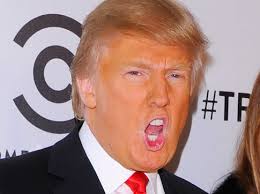
Donald Trump
Nor did he limit himself to making threats against Democrats. On March 16, 2016, he warned Republicans that if he didn’t win the GOP nomination in July, his supporters would literally riot: “I think you’d have riots. I think you would see problems like you’ve never seen before. I think bad things would happen. I really do. I wouldn’t lead it, but I think bad things would happen.”
That Republicans clearly saw this as a threat is undeniable. Paul Ryan, their Speaker of the House, said: “Nobody should say such things in my opinion because to even address or hint to violence is unacceptable.”
Caligula’s egomania soon reached psychotic heights.
- He gave himself several surnames: “Pious,” “Child of the Camp,” “Father of the Armies,” and “Greatest and Best of Caesars.”
- Flattered that he had risen higher than princes and kings, he began to believe himself a god.
- He appeared at the temple of Castor and Pollux to be worshiped as Jupiter Latiaris.
- He also set up a special temple to his own godhead.
Trump’s egomania is literally stamped on his properties. Of the 515 entities he owns, 268 of them–52%–bear his last name. He often refers to his properties as “the swankiest,” “the most beautiful.”
Among the references he’s made to himself:
- “My fingers are long and beautiful, as, it has been well documented, are various other parts of my body.”
- “I think the only difference between me and the other candidates is that I’m more honest and my women are more beautiful.”
- “My Twitter has become so powerful that I can actually make my enemies tell the truth.”
- “My IQ is one of the highest–and you all know it.”
When Caligula wasn’t ordering wholesale Stalin-like purges–ranging from Roman aristocrats to slaves–he was setting new records for debauchery.
According to the Roman historian Gaius Suetonius Tranquillus: “He lived in habitual incest with all his [three] sisters, and at a large banquet he placed each of them in turn below him, while his wife reclined above. Of these he is believed to have violated Drusilla when he was still a minor.”
Trump has never been charged with incest, but he’s repeatedly made sexually inappropriate comments about his daughter, Ivanka:
- “Yeah, she’s really something, and what a beauty, that one. If I weren’t happily married and, ya know, her father …”
- When Trump appeared on the Dr. Oz Show, he was joined on stage by Ivanka. After they kissed, Dr. Oz said: “It’s nice to see a dad kiss his daughter.” Trump: “I kiss her every chance I get.” The remark was edited before the show aired.
- When asked how he would react if Ivanka, a former teen model, posed for Playboy, Trump replied: “I don’t think Ivanka would do that, although she does have a very nice figure. I’ve said if Ivanka weren’t my daughter, perhaps I’d be dating her.”
- “You know who’s one of the great beauties of the world, according to everybody? And I helped create her. Ivanka. My daughter, Ivanka. She’s 6 feet tall, she’s got the best body.”
I
Ivanka Trump
For all his cruelty and egomania, the trait that finally destroyed Caligula was his joy in humiliating others.
His fatal mistake was to taunt Cassius Chaerea, a member of his own bodyguard. Caligula considered Chaerea effeminate because of a weak voice and mocked him with names like “Priapus” and “Venus.”
On January 22 41 A.D. Chaerea and several other bodyguards hacked Caligula to death with swords before other guards could save him.
Among the groups Trump gratuitously insulted during the 2016 Presidential race:
- Latinos
- Asians
- Muslims
- Blacks
- The Disabled
- Women
- Prisoners-of-War
- Journalists
- Celebrities
- Ordinary citizens
The number of people, places and institutions Trump has insulted is so extensive The New York Times compiled a list of 273 of them.
Before taking office as President, Trump added to this list the United States Secret Service. He did so by keeping his longtime private security force, and combining its members with the elite federal agency.
By marginalizing the Secret Service, he clearly sent the message: You’re not good enough, and I don’t trust you.
It remains to be seen if Trump suffers the final fate of Caligula.
2016 PRESIDENTIAL RACE, ABC NEWS, ADRIANNE ZUCKER, ALTERNET, AMERICABLOG, AP, BABY BOOMER RESISTANCE, BBC, BILL CLINTON, BILLY BUSH, BLOOMBERG NEWS, BUZZFEED, CBS NEWS, CNN, CROOKS AND LIARS, DAILY KOZ, DAYS OF OUR LIVES, DONALD TRUMP, DRUDGE REPORT, FACEBOOK, FIVETHIRTYEIGHT, GAIUS CALIGULA, GAIUS SUETONIUS TRANQUILLUS, HARPER’S MAGAZINE, HILLARY CLINTON, HUFFINGTON POST, IVANKA TRUMP, MEDIA MATTERS, MICHELE BACHMANN, MOTHER JONES, MOVEON, MSNBC, NBC NEWS, NEW REPUBLIC, NEWSDAY, NEWSWEEK, NPR, PBS NEWSHOUR, POLITICO, POLITICUSUSA, RAW STORY, REPUBLICAN PARTY, REUTERS, ROMAN EMPIRE, SALON, SEATTLE TIMES, Secret Service, SEXUAL HARASSMENT, SLATE, TALKING POINTS MEMO, THE ATLANTIC, THE CHICAGO SUN-TIMES, THE CHICAGO TRIBUNE, THE DAILY BEAST, THE DAILY BLOG, THE GUARDIAN, THE HILL, THE HUFFINGTON POST, THE LOS ANGELES TIMES, THE NATION, THE NEW REPUBLIC, THE NEW YORK TIMES, THE NEW YORKER, THE TWELVE CAESARS, THE VILLAGE VOICE, THE WALL STREET JOURNAL, THE WASHINGTON POST, THINKPROGRESS, TIME, TODAY, TRUTHDIG, TRUTHOUT, TWITTER, TWO POLITICAL JUNKIES, U.S. NEWS & WORLD REPORT, UPI, USA TODAY
In Bureaucracy, History, Politics, Social commentary on January 24, 2017 at 12:40 pm
Donald Trump is now officially the 45th President of the United States.
But even many Republicans secretly believe he’s better-suited for the role of Gaius Caligula. It was Caligula who, as the mad emperor of Rome, once said: “Bear in mind that I can treat anyone exactly as I please.”

Gaius Caligula
On October 7, 2016, The Washington Post leaked a video of Donald Trump making sexually predatory comments about women.
The remarks came during a 2005 exchange with Billy Bush, then the host of Access Hollywood (and now host of Today).
The two were traveling in an Access Hollywood bus to the set of the soap opera Days of Our Lives, where Trump was to make a cameo appearance.
Neither Trump nor Bush could be seen during the exchange–the video focuses entirely on the bus. But the audio came in clearly–and, for Trump, damningly:
Donald Trump: You know and I moved on her actually. You know she was down on Palm Beach.
Unknown: She used to be great. She’s still very beautiful.
Trump: I moved on her and I failed. I’ll admit it. I did try and fuck her. She was married.
Unknown: That’s huge news.
Trump: No, no, Nancy. No this was—and I moved on her very heavily, in fact, I took her out furniture shopping. She wanted to get some furniture. I said I’ll show you where they have some nice furniture.
I took her out furniture. I moved on her like a bitch, but I couldn’t get there, and she was married. Then all of a sudden I see her, she’s now got the big phony tits and everything. She’s totally changed her look.
[At that point, they spot Adrianne Zucker, the starring actress in Days in Our Lives.]
Donald Trump
Bush: Sheesh, your girl’s hot as shit. In the purple.
Various: Whoa! Yes! Whoa!
Bush: Yes! The Donald has scored. Whoa, my man!
Trump: Look at you. You are a pussy. Maybe it’s a different one.
Bush: It better not be the publicist. No, it’s her. It’s—
Trump: Yeah, that’s her. With the gold. I better use some Tic Tacs just in case I start kissing her. You know I’m automatically attracted to beautiful—I just start kissing them. It’s like a magnet. Just kiss. I don’t even wait. And when you’re a star they let you do it. You can do anything.
Bush: Whatever you want.
Trump: Grab them by the pussy. You can do anything.
When the Washington Post broke the story on October 7, the reaction was immediate–and explosive.
This was not a testosterone-fueled teenager fantasizing about making love with a girl he adored.
This was a 70-year-old man bragging about having used deceit to try to lure a married woman into bed.
And about having used his celebrity status to force himself on women: I moved on her very heavily. Just kiss. I don’t even wait.
Grab them by the pussy. You can do anything.
Gaius Caligula himself couldn’t have said it better.
Gaius Caligula lived 29 years and ruled Rome three years, 10 months and eight days. When he died, his reign of depravity and terror died with him.
Today, millions of Americans fear a similar fate will sweep their country now that Donald Trump has become President.
Caligula’s life spanned August 31, 12 A.D. to January 24, 41 A.D. His chief biographer was Gaius Suetonius Tranquillus.

Trump was born on June 14, 1946.
Caligula became Emperor in 37 A.D. after succeeding the Emperor Tiberius, his uncle who had adopted him as a son after his father died.
Trump was elected President on November 8, after winning 304 electoral votes to 227 for his Democratic opponent, Hillary Clinton.
Trump began his real estate career at his father’s real estate and construction company. He rose to wealth and fame after his father, Fred, gave him control of the business in 1971.
Caligula’s reign began well—and popularly. He gave Tiberius a magnificent funeral—then recalled to Rome all those whom Tiberius had banished, and ignored all charges that Tiberius had leveled against them.
He gave bonuses to the military and destroyed lists of those Tiberius had declared traitors. He allowed the magistrates unrestricted jurisdiction, without appeal to himself.
Similarly, soon after acquiring the family business, Trump set out to build his own empire–hotels, golf courses, casinos, skyscrapers across North and South America, Europe and Asia. He named many of them after himself.
He appeared at the Miss USA pageants, which he owned from 1996 to 2015. He hosted and co-produced The Apprentice, an NBC reality television series from 2004 to 2015.
The ancient historians describe Caligula as a noble and enlightened ruler during the first six months of his reign. But in October 37 A.D. he fell seriously ill or perhaps was poisoned.
Caligula soon recovered but emerged a changed man. He began laying claim to divine majesty, and killing or exiling anyone he saw as a threat. He ordered a tribune to murder his brother Tiberius, and drove his father-in‑law Silanus to cut his throat with a razor.
He favorite method of execution was to have a victim tortured with many slight wounds. His infamous order for this: “Strike so that he may feel that he is dying.”
2016 PRESIDENTIAL RACE, ABC NEWS, ALTERNET, AMERICABLOG, AP, BABY BOOMER RESISTANCE, BLOOMBERG, BUZZFEED, CBS NEWS, CIA, CNN, CROOKS AND LIARS, DAILY KOZ, DONALD TRUMP, DRUDGE RETORT, EGOMANIA, FACEBOOK, FBI, FIVETHIRTYEIGHT, HARPER’S MAGAZINE, HILLARY CLINTON, INTELLIGENCE, JOHN BRENNAN, MEDIA MATTERS, MOTHER JONES, MOVEON, MSNBC, NATIONAL SECURITY AGENCY, NBC NEWS, NEWSWEEK, NPR, PBS NEWSHOUR, POLITICO, POLITICUSUSA, RAW STORY, REUTERS, RUSSIA, SALON, SEATTLE TIMES, SLATE, TALKING POINTS MEMO, THE ATLANTIC, THE CHICAGO SUN-TIMES, THE CHICAGO TRIBUNE, THE DAILY BEAST, THE DAILY BLOG, THE GUARDIAN, THE HILL, THE HUFFINGTON POST, THE LOS ANGELES TIMES, THE NATION, THE NEW REPUBLIC, THE NEW YORK TIMES, THE VILLAGE VOICE, THE WASHINGTON POST, THINKPROGRESS, TIME, TRUTHDIG, TRUTHOUT, TWITTER, TWO POLITICAL JUNKIES, U.S. NEWS & WORLD REPORT, U.S. NEWS 7 WORLD REPORT, UPI, USA TODAY, VLADIMIR PUTIN, WONKETTE
In Bureaucracy, History, Military, Politics, Social commentary on January 23, 2017 at 1:21 am
On January 21, Donald Trump–on his first full day as President–visited the CIA headquarters in Langley, Virginia.
Officially, he was there to pay tribute to the men and women who serve on the front lines of America’s Intelligence community.
The men and women who dedicate their lives to finding out when and where America’s enemies are planning to strike. And to countering those threats.
Unofficially, Trump was there for a reason he would never admit: To make amends for a smear campaign he had waged since November against the CIA in particular and the Intelligence community in general.
The reason: He had been enraged at the unanimous findings by the FBI, CIA and the National Security Agency that Russian President Vladimir Putin had intervened in the 2016 Presidential election to ensure the defeat of Trump’s Democratic opponent, Hillary Clinton.
And now Trump was appearing before what, to CIA employees, was the agency’s most sacred site: The star-studded memorial wall honoring the 117 CIA officers who had fallen in the line of duty.
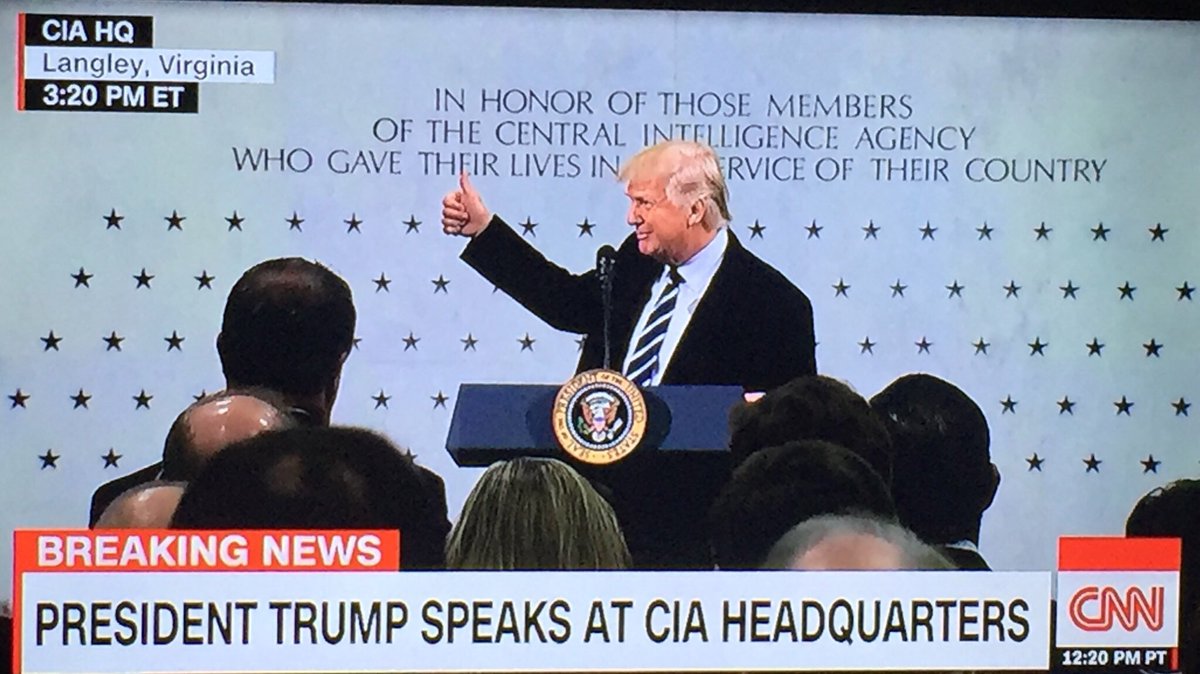
Donald Trump at the CIA
So what did Trump spend much of his time talking about?
Himself, of course.
Here are the major excerpts:
….You know, when I was young and when I was — of course, I feel young. I feel like I’m 30, 35, 39. Somebody said, are you young? I said, I think I’m young. You know, I was stopping — when we were in the final month of that campaign, four stops, five stops, seven stops. Speeches, speeches, in front of 25,000, 30,000 people, 15,000, 19,000 from stop to stop. I feel young….
When I was young, we were always winning things in this country. We’d win with trade. We’d win with wars….We don’t win anymore. The old expression, “to the victor belong the spoils” — you remember.
I always used to say, keep the oil. I wasn’t a fan of Iraq. I didn’t want to go into Iraq. But I will tell you, when we were in, we got out wrong. And I always said, in addition to that, keep the oil….
Now, I said it for economic reasons. But if you think about it….if we kept the oil you probably wouldn’t have ISIS because that’s where they made their money in the first place. So we should have kept the oil. But okay. Maybe you’ll have another chance….
And the reason you’re my first stop is that, as you know, I have a running war with the media. They are among the most dishonest human beings on Earth.
And they sort of made it sound like I had a feud with the intelligence community. And I just want to let you know, the reason you’re the number-one stop is exactly the opposite — exactly. And they understand that, too.
And I was explaining about the numbers. We did a thing yesterday at the speech. Did everybody like the speech? I’ve been given good reviews. But we had a massive field of people. You saw them. Packed. I get up this morning, I turn on one of the networks, and they show an empty field.
I say, wait a minute, I made a speech. I looked out, the field was — it looked like a million, million and a half people. They showed a field where there were practically nobody standing there.
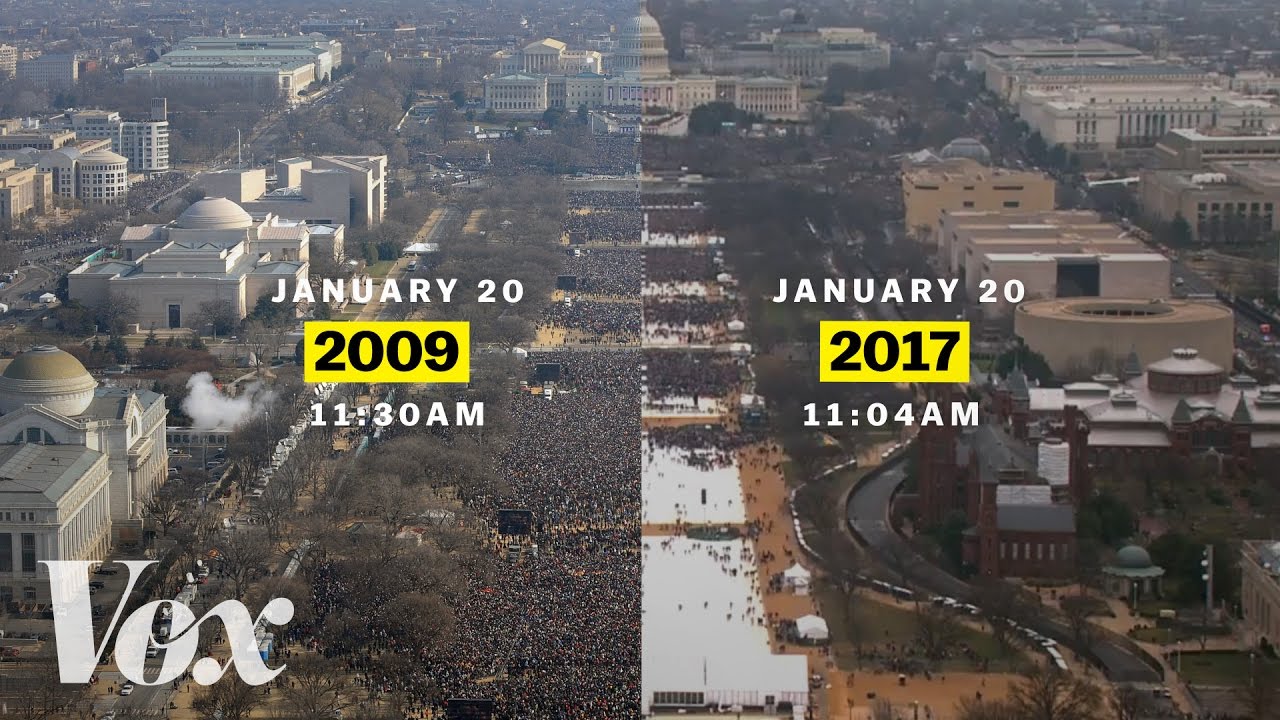

Crowds at Trump and Obama Inaugurals
And they said, Donald Trump did not draw well. I said, it was almost raining, the rain should have scared them away, but God looked down and he said, we’re not going to let it rain on your speech.
In fact, when I first started, I said, oh, no. The first line, I got hit by a couple of drops. And I said, oh, this is too bad, but we’ll go right through it. But the truth is that it stopped immediately.
It was amazing. And then it became really sunny. And then I walked off and it poured right after I left. It poured. But, you know, we have something that’s amazing because we had — it looked — honestly, it looked like a million and a half people. Whatever it was, it was….
We had 250,000 people literally around — you know, in the little bowl that we constructed. That was 250,000 people. The rest of the 20-block area, all the way back to the Washington Monument, was packed. So we caught them, and we caught them in a beauty. And I think they’re going to pay a big price.
So a reporter for Time magazine — and I have been on there cover, like, 14 or 15 times. I think we have the all-time record in the history of Time Magazine.
I’ve been on it for 15 times this year. I don’t think that’s a record….that can ever be broken. Do you agree with that? What do you think?
* * * * *
At least one former CIA director, John Brennan, thought Trump’s remarks were “despicable.”
“Former CIA Director Brennan is deeply saddened and angered at Donald Trump’s despicable display of self-aggrandizement in front of CIA’s Memorial Wall of Agency heroes. Brennan says that Trump should be ashamed of himself,” Nick Shapiro, Brennan’s former deputy chief of staff, said in a tweeted statement.
2016 PRESIDENTIAL RACE, ABC NEWS, ALTERNET, AMERICABLOG, ANN COULTER, AP, BABY BOOMER RESISTANCE, BARACK OBAMA, BBC, BIRTH CERTIFICATE, BIRTHERISM, BLOOMBERG NEWS, BUZZFEED, CBS NEWS, CHUCK TODD, CNN, CROOKS AND LIARS, DAILY KOS, DONALD TRUMP, FACEBOOK, FIVETHIRTYEIGHT, HARPER’S MAGAZINE, HILLARY CLINTON, HUFFINGTON POST, JOHN LEWIS, JOHN MCCAIN, MEDIA MATTERS, MEET THE PRESS, MOTHER JONES, MOVEON, MSNBC, MUSLIMS, NBC NEWS, NEW REPUBLIC, NEWSDAY, NEWSWEEK, NPR, PBS NEWSHOUR, POLITICO, POLITICUSUSA, RAW STORY, REINCE PREIBUS, REPUBLICAN PARTY, REUTERS, SALON, Sarah Palin, SEATTLE TIMES, SLATE, SOVIET UNION, STEVEN BANNON, TALKING POINTS MEMO, TAX RETURNS, TEA PARTY, THE APPRENTICE, THE ATLANTIC, THE CHICAGO SUN-TIMES, THE CHICAGO TRIBUNE, THE DAILY BEAST, THE DAILY BLOG, THE GUARDIAN, THE HILL, THE HUFFINGTON POST, THE INTERCEPT, THE LOS ANGELES TIMES, THE NATION, THE NEW REPUBLIC, THE NEW YORK TIMES, THE NEW YORKER, THE VILLAGE VOICE, THE WASHINGTON POST, THINKPROGRESS, THIS WEEK, TIME, TRUTHDIG, TRUTHOUT, TWITTER, U.S. NEWS & WORLD REPORT, UPI, USA TODAY, VLADIMIR PUTIN
In Bureaucracy, History, Politics, Social commentary on January 20, 2017 at 12:06 am
For five years, Donald Trump, more than anyone else, popularized the slander that President Barack Obama was born in Kenya–and was therefore not an American citizen.
For more than a year during his 2016 Presidential campaign, Trump continued doing so.
Meanwhile, Trump’s popularity steadily fell among blacks–to 1%, compared to the 91% of black voters who backed Hillary Clinton.
Even the managers of Trump’s campaign urged him to put the “birther” issue behind him.
And so, on September 16, 2016–10 days before his scheduled first debate with Democratic Presidential nominee Hillary Clinton–Trump made his version of a reversal.
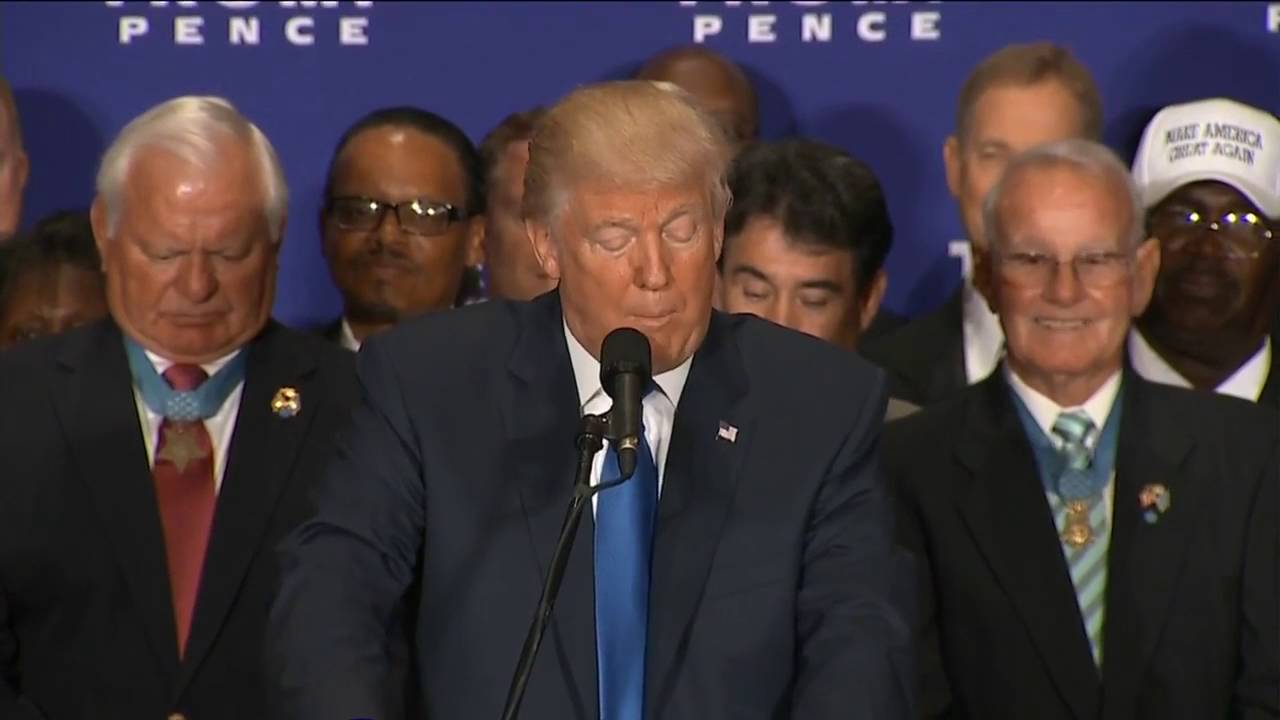
Donald Trump: “President Barack Obama was born in the United States.”
He did so in about seven seconds and 40 words–after spending a half hour paying tribute to the military and promoting his new upscale hotel in Washington, D.C.:
“Now, not to mention her in the same breath, but Hillary Clinton and her campaign of 2008 started the birther controversy.
“I finished it. I finished it. You know what I mean.
“President Barack Obama was born in the United States, period. Now we all want to get back to making America strong and great again.”
His tone made it clear that he felt uneasy making that statement–and wanted to get it over with as fast as possible.
He refused to take questions from reporters covering the event. Nor did he apologize for his five-year campaign of slander.
Nor did any Republican apologize for the eight-year campaign of slander and obstruction their party had waged against the Nation’s first black President.
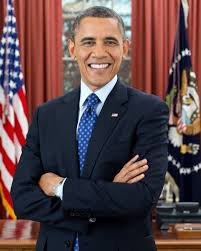
President Barack Obama
Among its highlights:
- In September, 2009, Joe Wilson (R-SC) yelled “You lie!” during Obama’s health care speech to Congress.
- In January, 2010, an effigy of President Barack Obama was found hanging from a building in Plains, Georgia.
- In December, 2011, Brent Bozell, who runs the right-wing Media Research Center, called Obama to “a skinny, ghetto crackhead.”
- In December, 2011, Rep. Jim Sensenbrenner (R-Wisc.), said of Michelle Obama: “She lectures us on eating right while she has a large posterior herself.”
- In January, 2012, Mitt Romney’s son, Matt, said his father might release his tax returns “as soon as President Obama releases his grades and birth certificate and sort of a long list of things.”
- In February, 2012, right-wing columnist Ann Coulter offered: “Voters with forty years of politically correct education are ecstatic to have the first Black president. They just love the idea even if we did get Flavor Flav instead of Thomas Sowell.”
- In May, 2012, a flatbed truck drove through new York holding a trailer with eight mannequin-like bodies hanging on nooses. One of the figures resembled President Obama, with a sign on the truck reading: “Obama Is Onboard, Find Out Why. Visit YouTube.com And Search Keyword PatriotPhipps.”

- In May, 2012, Patrick Lanzo, a bar owner in Paulding County, Georgia, posted a sign reading: “I do not support the nigger in the White House.” In 2009 he posted a sign that read, “Obama’s plan for health-care: nigger rig it.” Lanzo advertises his establishment as a “Klan bar.”
- Throughout the 2012 Presidential campaign, Newt Gingrich repeatedly called Obama “the greatest food stamp President in American history.”
- Obama has been portrayed as a shoeshine man, an Islamic terrorist and a chimp. The image of his altered face has been shown on a product called Obama Waffles in the manner of Aunt Jemima and Uncle Ben. He has been repeatedly depicted with a Hitler forelock and mustache.
- Among the protest signs they have brandished by Tea Party members: “Obama’s Plan: White Slavery,” “The American Taxpayers are the Jews for Obama’s Ovens,” and “Obama was Not Bowing [to the Saudi King] He was Sucking Saudi Jewels.”
- Other Tea Party posters: “Imam Obama Wants to Ban Pork” and “The Zoo Has An African Lion, and the White House Has a Lyin’ African.”
- Tea Partiers have chanted at Obama: “Bye, bye, Blackbird” and “Kenyan go home!”
- During the Republican-imposed government shutdown–October 1-17, 2013–Rep. Pete Sessions (R-Texas) told Obama: “I cannot even stand to look at you,” The incident occurred when Obama met with lawmakers to try to find a resolution to the shutdown.
- On October 1, 2013, Congressional Republicans shut down the government in an attempt to force President Barack Obama to de-fund his signature achievement: The Affordable Care Act (ACA). President Obama refused, and 800,000 federal workers were furloughed.
- On October 14, while Republicans were threatening to drive the nation into bankruptcy by refusing to raise the debt ceiling, former Alaska Governor Sarah Palin posted on Facebook her “secret plan” to impeach President Obama:
- “It’s time for the president to be honest with the American people for a change. Defaulting on our national debt is an impeachable offense, and any attempt by President Obama to unilaterally raise the debt limit without Congress is also an impeachable offense.”
- In short: If the Republicans force the country into default, Obama should be impeached. And if the President finds a way to avoid default, he should be impeached.
* * * * *
When Republicans say, “We need to support our President,” they don’t mean every President.
They mean: Every Republican President. And only every Republican President.
For Republicans, Presidents elected by Democrats are usurpers: They are to be obstructed as often as possible–and impeached whenever possible.
2016 PRESIDENTIAL RACE, ABC NEWS, ALTERNET, AMERICABLOG, ANN COULTER, AP, BABY BOOMER RESISTANCE, BARACK OBAMA, BBC, BIRTH CERTIFICATE, BIRTHERISM, BLOOMBERG NEWS, BUZZFEED, CBS NEWS, CHUCK TODD, CNN, CROOKS AND LIARS, DAILY KOS, DONALD TRUMP, FACEBOOK, FIVETHIRTYEIGHT, HARPER’S MAGAZINE, HILLARY CLINTON, HUFFINGTON POST, JOHN LEWIS, JOHN MCCAIN, MEDIA MATTERS, MEET THE PRESS, MOTHER JONES, MOVEON, MSNBC, MUSLIMS, NBC NEWS, NEW REPUBLIC, NEWSDAY, NEWSWEEK, NPR, PBS NEWSHOUR, POLITICO, POLITICUSUSA, RAW STORY, REINCE PREIBUS, REPUBLICAN PARTY, REUTERS, SALON, Sarah Palin, SEATTLE TIMES, SLATE, SOVIET UNION, TALKING POINTS MEMO, TAX RETURNS, TEA PARTY, THE APPRENTICE, THE ATLANTIC, THE CHICAGO SUN-TIMES, THE CHICAGO TRIBUNE, THE DAILY BEAST, THE DAILY BLOG, THE GUARDIAN, THE HILL, THE HUFFINGTON POST, THE INTERCEPT, THE LOS ANGELES TIMES, THE NATION, THE NEW REPUBLIC, THE NEW YORK TIMES, THE NEW YORKER, THE VILLAGE VOICE, THE WASHINGTON POST, THINKPROGRESS, THIS WEEK, TIME, TRUTHDIG, TRUTHOUT, TWITTER, U.S. NEWS & WORLD REPORT, UPI, USA TODAY, VLADIMIR PUTIN
In Bureaucracy, History, Politics, Social commentary on January 19, 2017 at 3:46 pm
Reince Priebus, the incoming White House Chief of Staff for soon-to-be President Donald J. Trump, is furious.
There are three reasons for his outrage.
First, millions of Americans are questioning whether Trump was legitimately elected. Their suspicions are based on solid evidence, supplied by the American Intelligence community, that Russian President Vladimir Putin intervened in the 2016 Presidential election to help him defeat Hillary Clinton.
Second, among those Americans are members of the United States Congress–such as Georgia Democratic Representative John Lewis.
On the January 15 edition of “Meet the Press,” Lewis was asked by host Chuck Todd: “Do you plan on trying to forge a relationship with Donald Trump?”
“No,” said Lewis. “I believe forgiveness. I believe in trying to work with people. It’s going to be hard. It’s going to be very difficult. I don’t see this president-elect as a legitimate president.”
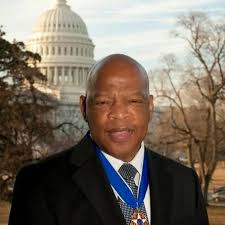
John Lewis
“You do not consider him a legitimate president. Why is that?”
“I think the Russians participated in helping this man get elected and they helped destroy the candidacy of Hillary Clinton.”
And the third reason Priebus is outraged: He believes–or at least claims to believe–that President Barack Obama should vouch for Trump’s legitimacy.
“I think President Obama should step up,” Priebus said January 15 on ABC’s “This Week.” “We’ve had a great relationship with the White House….I think the administration can do a lot of good by telling folks that are on the Republican side of the aisle, look, we may have lost the election on the Democratic side, but it’s time to come together.”
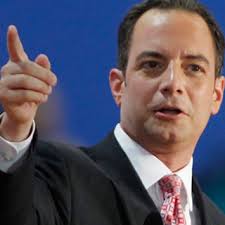
Reince Priebus
“You didn’t have Republicans questioning whether or not Obama legitimately beat John McCain in 2008,” Priebus added.
“This Week” host George Stephanopoulos replied that Trump had questioned Obama’s legitimacy as an American citizen until almost the end of the 2016 Presidential race.
“But look, George, that’s not the point!” Priebus said, visibly agitated. “The point is not where Barack Obama was born! The point is that we’ve got congressmen on the Democratic side of the aisle that are questioning the legitimacy of President-elect Trump.”
In short: Let’s ignore Trump’s five-year slander campaign against the legitimacy of President Obama. What’s important is that people are questioning the legitimacy of a Republican elected with the help of Russian Communists.
In 2011, Trump, then-host of NBC’s “The Apprentice,” was thinking of running for President against Obama.
Seeking to gain popularity among America’s Right-wing, Trump almost singlehandedly created the popular fiction that the President was born in Kenya–and was not an American citizen.
His motive: To convince Americans that Obama was an illegitimate President.
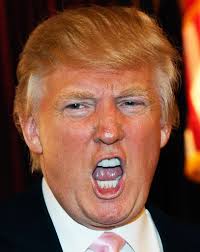
Donald Trump
Among the statements Trump made:
February 10, 2011: “Our current president came out of nowhere. Came out of nowhere. In fact, I’ll go a step further: The people that went to school with him, they never saw him, they don’t know who he is. It’s crazy.”
March 23, 2011: “I want him to show his birth certificate. I want him to show his birth certificate. … There’s something on that birth certificate that he doesn’t like.”
March 28, 2011: “I am really concerned” [that Obama wasn’t born in the United States]. He said that the birth announcement for Obama in a Hawaii newspaper could have been planted “for whatever reason.”
March 30, 2011: “If you are going to be president of the United States you have to be born in this country. And there is a doubt as to whether or not he was. … He doesn’t have a birth certificate. He may have one, but there’s something on that, maybe religion, maybe it says he is a Muslim. I don’t know. Maybe he doesn’t want that. Or he may not have one. But I will tell you this. If he wasn’t born in this country, it’s one of the great scams of all time.”
April 7, 2011: “I have people that have been studying it, and they cannot believe what they’re finding. You are not allowed to be a president if you’re not born in this country. Right now I have real doubts.”
April 25, 2011: “I’ve been told very recently…that the birth certificate is missing. I’ve been told that it’s not there or it doesn’t exist. And if that’s the case, it’s a big problem.”
On April 27, President Obama released his original, long-form Hawiian birth certificate.
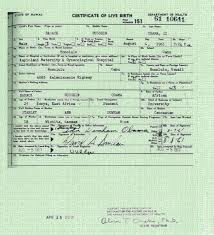
The long-form version of President Obama’s birth certificate
“We do not have time for this kind of silliness,” said Obama at a press conference, speaking as a father might to a roomful of spiteful children. “We have better stuff to do. I have got better stuff to do. We have got big problems to solve.
“We are not going to be able to do it if we are distracted, we are not going to be able to do it if we spend time vilifying each other…if we just make stuff up and pretend that facts are not facts, we are not going to be able to solve our problems if we get distracted by side shows and carnival barkers.”
Trump responded with a series of tweets on Twitter–all of them attacking the legitimacy of the birth certificate that President Obama had released.
ABC NEWS, ALTERNET, AMERICABLOG, AP, BABY BOOMER RESISTANCE, BBC, BLOOMBERG NEWS, BUZZFEED, CBS NEWS, CNN, CROOKS AND LIARS, DAILY KOZ, DRUG-TESTING, EMPLOYERS RESPONSIBILITY ACT, FACEBOOK, FISHER INVESTMENTS, FIVETHIRTYEIGHT, FORBES MAGAZINE, HARPER’S MAGAZINE, HUFFINGTON POST, KENNETH FISHER, MEDIA MATTERS, MEDICAL INSURANCE, MOTHER JONES, MOVEON, MSNBC, NBC NEWS, NEW REPUBLIC, NEWSDAY, NEWSWEEK, NPR, PBS NEWSHOUR, POLITICO, POLITICUSUSA, RAW STORY, REPUBLICANS, REUTERS, SALON, SEATTLE TIMES, SLATE, TALKING POINTS MEMO, THE ATLANTIC, THE CHICAGO SUN-TIMES, THE CHICAGO TRIBUNE, THE DAILY BEAST, THE DAILY BLOG, THE GUARDIAN, THE HILL, THE HUFFINGTON POST, THE LOS ANGELES TIMES, THE NATION, THE NEW REPUBLIC, THE NEW YORK TIMES, THE NEW YORKER, THE VILLAGE VOICE, THE WASHINGTON POST, THINKPROGRESS, TIME, TRUTHDIG, TRUTHOUT, TWITTER, TWO POLITICAL JUNKIES, U.S. NEWS & WORLD REPORT, UNEMPLOYMENT, UPI, USA TODAY, WAL-MART, WEALTH GAP, WONKETTE
In Bureaucracy, History, Law, Law Enforcement, Politics, Social commentary on January 9, 2017 at 12:31 am
America can quickly find employment for willing-to-work job-seekers–by installing a nationwide Employers Responsibility Act. Its last seven provisions would read as follows:
(9) Employers refusing to hire would be required to pay an additional “crime tax.”
Sociologists and criminologists agree that “the best cure for crime is a job.” Thus, employers who refuse to hire contribute to a growing crime rate in this Nation. Such non-hiring employers would be required to pay an additional tax, which would be earmarked for agencies of the criminal justice system at State and Federal levels.
(10) The seeking of “economic incentives” by companies in return for moving to or remaining in cities/states would be strictly forbidden.
Such “economic incentives” usually:
- allow employers to ignore existing laws protecting employees from unsafe working conditions;
- allow employers to ignore existing laws protecting the environment;
- allow employers to pay their employees the lowest acceptable wages, in return for the “privilege” of working at these companies; and/or
- allow employers to pay little or no business taxes, at the expense of communities who are required to make up for lost tax revenues.
(11) Employers who continue to make such overtures would be criminally prosecuted for attempted bribery or extortion:
- Bribery, if they offered to move to a city/state in return for “economic incentives,” or
- Extortion, if they threatened to move their companies from a city/state if they did not receive such “economic incentives.”
This would protect employees against artificially-depressed wages and unsafe working conditions; protect the environment in which these employees live; and protect cities/states from being pitted against one another at the expense of their economic prosperity.
(12) The U.S. Departments of Justice and Labor would regularly monitor the extent of employer compliance with the provisions of this act.
Among these measures: Sending undercover agents, posing as highly-qualified job-seekers, to apply at companies—and then vigorously prosecuting those employers who blatantly refused to hire despite their proven economic ability to do so.
This would be comparable to the long-time and legally-validated practice of using undercover agents to determine compliance with fair-housing laws.
(13) The Justice Department and/or the Labor Department would be required to maintain a publicly-accessible database on those companies that have been cited, sued and/or convicted for such offenses as:
- discrimination,
- harassment,
- health and/or safety violations or
- violating immigration laws.
Employers would be legally required to regularly provide such information to these agencies, so that it would remain accurate and up-to-date.
Such information would arm job applicants with vital information about the employers they were approaching. They could thus decide in advance if an employer is deserving of their skills and dedication.
As matters now stand, employers can legally demand to learn even the most private details of an applicant’s life without having to disclose even the most basic information about themselves and their history of treating employees.
(14) CEOs whose companies employ illegal aliens would be held directly accountable for the actions of their subordinates. Upon conviction, the CEO would be sentenced to a mandatory prison term of at least 10 years.
This would prove a more effective remedy for controlling illegal immigration than stationing tens of thousands of soldiers on the U.S./Mexican border. With CEOs forced to account for their subordinates’ actions, they would take drastic steps to ensure their companies complied with Federal immigration laws.
Without employers eager to hire illegal aliens at a fraction of the money paid to American workers, the invasions of illegal job-seekers would quickly come to an end.
(15) A portion of employers’ existing Federal taxes would be set aside to create a national clearinghouse for placing unemployed but qualified job-seekers.
* * * * *
For thousands of years, otherwise highly intelligent men and women believed that kings ruled by divine right. That kings held absolute power, levied extortionate taxes and sent countless millions of men off to war–all because God wanted it that way.
That lunacy was dealt a deadly blow in 1776 when American Revolutionaries threw off the despotic rule of King George III of England.
But today, millions of Americans remain imprisoned by an equally outrageous and dangerous theory: The Theory of the Divine Right of Employers.

Summing up this employer-as-God attitude, Calvin Coolidge still speaks for the overwhelming majority of employers and their paid shills in government: “The man who builds a factory builds a temple, and the man who works there worships there.”
America can no longer afford such a dangerous fallacy as the Theory of the Divine Right of Employers.
Americans did not win their freedom from Great Britain–-and its enslaving doctrine of “the divine right of kings”-–by begging for their rights.
And Americans will not win their freedom from their corporate masters–-and the equally enslaving doctrine of “the divine right of employers”––by begging for the right to work and support themselves and their families.
Corporations can–and do–spend millions of dollars on TV ads, selling lies–lies such as the “skills gap,” and how if the wealthy are forced to pay their fair share of taxes, jobs will inevitably disappear.
But Americans can choose to reject those lies–and demand that employers behave like patriots instead of predators.
ABC NEWS, ALTERNET, AMERICABLOG, AP, BABY BOOMER RESISTANCE, BBC, BLOOMBERG NEWS, BUZZFEED, CBS NEWS, CNN, CROOKS AND LIARS, DAILY KOZ, DRUG-TESTING, EMPLOYERS RESPONSIBILITY ACT, FACEBOOK, FISHER INVESTMENTS, FIVETHIRTYEIGHT, FORBES MAGAZINE, HARPER’S MAGAZINE, HUFFINGTON POST, KENNETH FISHER, MEDIA MATTERS, MEDICAL INSURANCE, MOTHER JONES, MOVEON, MSNBC, NBC NEWS, NEW REPUBLIC, NEWSDAY, NEWSWEEK, NPR, PBS NEWSHOUR, POLITICO, POLITICUSUSA, RAW STORY, REPUBLICANS, REUTERS, SALON, SEATTLE TIMES, SLATE, TALKING POINTS MEMO, THE ATLANTIC, THE CHICAGO SUN-TIMES, THE CHICAGO TRIBUNE, THE DAILY BEAST, THE DAILY BLOG, THE GUARDIAN, THE HILL, THE HUFFINGTON POST, THE LOS ANGELES TIMES, THE NATION, THE NEW REPUBLIC, THE NEW YORK TIMES, THE NEW YORKER, THE VILLAGE VOICE, THE WASHINGTON POST, THINKPROGRESS, TIME, TRUTHDIG, TRUTHOUT, TWITTER, TWO POLITICAL JUNKIES, U.S. NEWS & WORLD REPORT, UNEMPLOYMENT, UPI, USA TODAY, WAL-MART, WEALTH GAP, WONKETTE
In Bureaucracy, History, Law, Law Enforcement, Politics, Social commentary on January 6, 2017 at 12:10 am
An Employers Responsibility Act (ERA) would simultaneously address the following evils for which employers are directly responsible:
- The loss of jobs within the United States owing to companies’ moving their operations abroad—solely to pay substandard wages to their new employees.
- The mass firings of employees which usually accompany corporate mergers or acquisitions.
- The widespread victimization of part-time employees, who are not legally protected against such threats as racial discrimination, sexual harassment and unsafe working conditions.
- The refusal of many employers to create better than menial, low-wage jobs.
- The widespread employer practice of extorting “economic incentives” from cities or states in return for moving to or remaining in those areas. Such “incentives” usually absolve employers from complying with laws protecting the environment and/or workers’ rights.
- The refusal of many employers to provide medical and pension benefits—nearly always in the case of part-time employees, and, increasingly, for full-time, permanent ones as well.
- Rising crime rates, due to rising unemployment.
Among its provisions:
(1) American companies that close plants in the United States and open others abroad would be forbidden to sell products made in those foreign plants within the United States.
This would protect both American and foreign workers from employers seeking to profit at their expense. American workers would be ensured of continued employment. And foreign laborers would be protected against substandard wages and working conditions.
Companies found violating this provision would be subject to Federal criminal prosecution. Guilty verdicts would result in heavy fines and lengthy imprisonment for their owners and top managers.
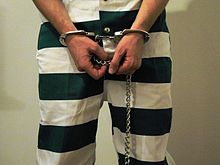
(2) Large companies (those employing more than 100 persons) would be required to create entry-level training programs for new, future employees.
These would be modeled on programs now existing for public employees, such as firefighters, police officers and members of the armed services.
Such programs would remove the employer excuse, “I’m sorry, but we can’t hire you because you’ve never had any experience in this line of work.” After all, the Air Force has never rejected an applicant because, “I’m sorry, but you’ve never flown a plane before.”
This Nation has greatly benefited from the humane and professional efforts of the men and women who have graduated from public-sector training programs. There is no reason for the private sector to shun programs that have succeeded so brilliantly for the public sector.
(3) Employers would receive tax credits for creating professional, well-paying, full-time jobs.
This would encourage the creation of better than the menial, dead-end, low-paying and often part-time jobs which exist in the service industry. Employers found using such tax credits for any other purpose would be prosecuted for tax fraud.
(4) A company that acquired another—through a merger or buyout—would be forbidden to fire en masse the career employees of that acquired company.
This would be comparable to the protection existing for career civil service employees. Such a ban would prevent a return to the predatory “corporate raiding” practices of the 1980s, which left so much human and economic wreckage in their wake.
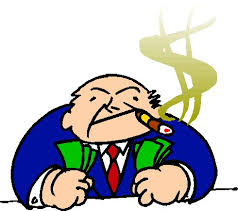
The wholesale firing of employees would trigger the prosecution of the company’s new owners. Employees could still be fired, but only for provable just cause, and only on a case-by-case basis.
(5) Employers would be required to provide full medical and pension benefits for all employees, regardless of their full-time or part-time status.
Increasingly, employers are replacing full-time workers with part-time ones—solely to avoid paying medical and pension benefits.
Requiring employers to act humanely and responsibly toward all their employees would encourage them to provide full-time positions—and hasten the death of this greed-based practice.
(6) Employers of part-time workers would be required to comply with all federal labor laws.
Under current law, part-time employees are not protected against such abuses as discrimination, sexual harassment and unsafe working conditions. Closing this loophole would immediately create two positive results:
- Untold numbers of currently-exploited workers would be protected from the abuses of predatory employers; and
- Even predatorily-inclined employers would be encouraged to offer permanent, fulltime jobs rather than only part-time ones—since a major incentive for offering part-time jobs would now be eliminated.
(7) Employers would be encouraged to hire to their widest possible limits,through a combination of financial incentives and legal sanctions. Among those incentives:
Employers demonstrating a willingness to hire would receive substantial Federal tax credits, based on the number of new, permanent employees hired per year.
Employers claiming eligibility for such credits would be required to make their financial records available to Federal investigators. Employers found making false claims would be prosecuted for perjury and tax fraud, and face heavy fines and imprisonment if convicted.
(8) Among those sanctions: Employers refusing to hire could be required to prove, in court:
- Their economic inability to hire further employees, and/or
- The unfitness of the specific, rejected applicant.
Companies found guilty of unjustifiably refusing to hire would face the same penalties as now applying in cases of discrimination on the basis of age, race, sex and disability.
Two benefits would result from this:
- Employers would thus fund it easier to hire than to refuse to do so; and
- Job-seekers would no longer be prevented from even being considered for employment because of arbitrary and interminable “hiring freeze.”
ABC NEWS, ALTERNET, AMERICABLOG, AP, BABY BOOMER RESISTANCE, BBC, BLOOMBERG NEWS, BUZZFEED, CBS NEWS, CNN, CROOKS AND LIARS, DAILY KOZ, DRUG-TESTING, EMPLOYERS RESPONSIBILITY ACT, FACEBOOK, FISHER INVESTMENTS, FIVETHIRTYEIGHT, FORBES MAGAZINE, HARPER’S MAGAZINE, HUFFINGTON POST, KENNETH FISHER, MEDIA MATTERS, MEDICAL INSURANCE, MOTHER JONES, MOVEON, MSNBC, NBC NEWS, NEW REPUBLIC, NEWSDAY, NEWSWEEK, NPR, PBS NEWSHOUR, POLITICO, POLITICUSUSA, RAW STORY, REPUBLICANS, REUTERS, SALON, SEATTLE TIMES, SLATE, TALKING POINTS MEMO, THE ATLANTIC, THE CHICAGO SUN-TIMES, THE CHICAGO TRIBUNE, THE DAILY BEAST, THE DAILY BLOG, THE GUARDIAN, THE HILL, THE HUFFINGTON POST, THE LOS ANGELES TIMES, THE NATION, THE NEW REPUBLIC, THE NEW YORK TIMES, THE NEW YORKER, THE VILLAGE VOICE, THE WASHINGTON POST, THINKPROGRESS, TIME, TRUTHDIG, TRUTHOUT, TWITTER, TWO POLITICAL JUNKIES, U.S. NEWS & WORLD REPORT, UNEMPLOYMENT, UPI, USA TODAY, WAL-MART, WEALTH GAP, WONKETTE
In Bureaucracy, History, Law, Law Enforcement, Politics, Social commentary on January 5, 2017 at 1:42 pm
According to a new Morning Consult/POLITICO poll, voters know what they want to hear when President-elect Donald Trump gives his Inaugural Address on January 20.
- Seventy-five percent of voters want him to talk about bringing manufacturing jobs back from other countries and keeping manufacturing jobs in the United States; and
- Fifty-two percent percent want to hear Trump discuss his threats of slapping tariffs on imported goods made in China and Mexico.
The poll was conducted December 28-29, surveying 2,000 registered voters. The margin of error is plus or minus 2 percentage points.
During the 2016 Presidential race, Trump attacked American corporations that operate overseas and import their products back here, or that are considering plans to move more jobs overseas.
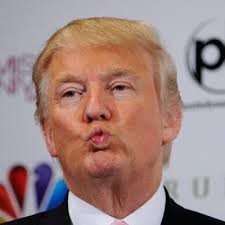
Donald Trump
And he threatened to slap high import duties and tariffs on products made in Mexico, China and other countries that impose similar barriers on American-made goods.
Yet, for decades, American politicians ignored the single greatest cause of unemployment among Americans: The refusal of employers to hire.
Employers like Kenneth Fisher, chief executive officer of Fisher Investments, who said, in 2012: “Believe it or not, I’m for fewer jobs, not more.”
In the Christmas Eve, 2012 issue of Forbes, he asserted: “Job Growth is Overrated.”
“Throughout 2012 we heard politicians and pundits of all stripes yammering endlessly on the need for job growth—that we don’t have enough jobs. It’s pure rubbish.”
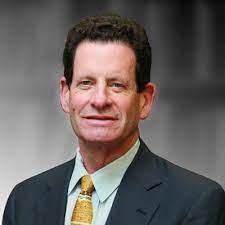
Kenneth Fisher
According to Fisher, jobs are actually signs of weakness in the economy. Fewer employees can produce more products—and that’s good for us all.
For Fisher, the template for future economic success is Walmart, the nation’s largest private employer: “With Walmart you get an awe-inspiring company at 13 times my January 2014 earnings estimate, with a 2.2% dividend yield.”
Of course, it’s easy for Fisher—a billionaire—to take a “What? Me Worry?” attitude about the unemployment problems facing millions of willing-to-work Americans.
And it’s certainly easier for him to identify with his fellow billionaire boys club members, the Waltons, than with the low-paid employees of Walmart.
In December, 2013, Walmart announced that it would deny health insurance to newly-hired employees who work less than 30 hours a week.
Walmart eliminates healthcare coverage for certain workers if their average work-week falls below 30 hours—which regularly happens at the direction of company managers.
Fisher certainly doesn’t have to worry about getting top-notch medical care anytime he thinks he needs it.
Another thing that Fisher clearly admires about Walmart: Its gross profits. In 2016, its sales revenues stood at 482.13 billion.
In 2016, C. Douglas McMillon, president and CEO of Walmart Stores, made $19,404,042 in total compensation. Of this total:
- $1,263,231 came as a salary;
- $3,406,971 was received as a bonus;
- $0 was received in stock options;
- $14,270,786 was awarded as stock; and
- $463,054 came from other types of compensation.
On the other hand: Until April, 2015, only about 6,000 Walmart employees out of more than 1.2 million nationwide were paid the $7.25 an hour federal minimum wage.
In April, 2015, the company’s starting pay became $9 an hour, and the average pay for full-time retail workers there became about $13 an hour.
This raise wasn’t prompted by generosity from Walmart’s owners. It came came from sheer necessity.
For more than 50 years, Walmart paid its employees such depressed wages that many full-time workers couldn’t live on them. The company became notorious for helping its new employees to sign up for state and federal welfare programs.
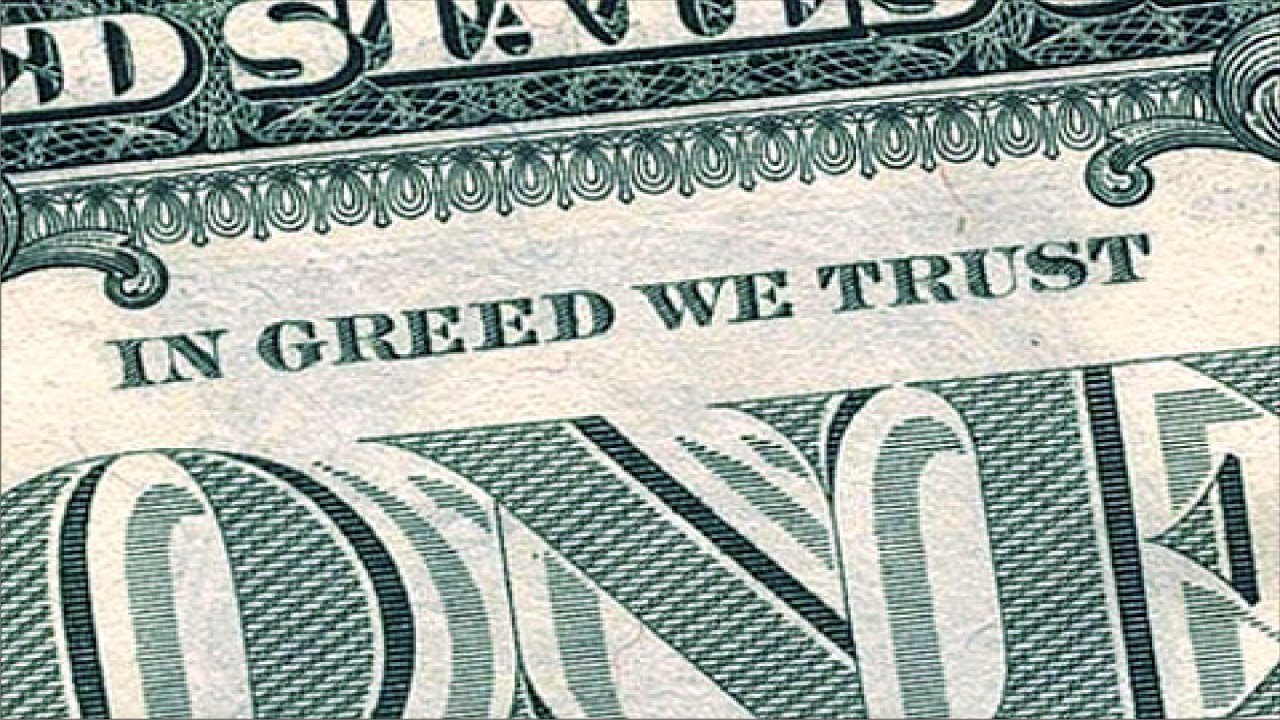
This made Walmart the single largest private-sector beneficiary of public assistance. According to Barry Ritzholtz, of Rithholz Wealth Management, American taxpayers “have been subsidizing the wages of the publicly traded, private-sector company to the tune of $2.66 billion in government largess a year.”
As a result, turnover at Walmart has been correspondingly high–at 44%, as compared with six percent at Costco.
And Fisher conveniently ignores the huge emotional role that being employed plays in the United States.
The majority of Americans–especially men–derive their sense of identity from what they do for a living.
Ask a man, “What do you do?” and he’s almost certain to reply: “I’m a fireman.” Or “I’m a salesman.”
To be unemployed in America is considered by most Americans–including the unemployed–the same as being a bum.
And Republicans are quick to point accusing fingers at those willing-to-work Americans who can’t find willing-to-hire employers.
According to Republicans such as Mitt Romney and Herman Cain: If you can’t find a job, it’s entirely your fault.
And when Republicans are forced–by public pressure or Democratic majorities–to provide benefits to the unemployed, these nearly always come at a price.
Those receiving subsistence monies are, in many states, required to undergo drug-testing, even though there is no evidence of widespread drug-abuse among the unemployed.
But America can put an end to this “I’ve-got-mine-and-the-hell-with-you” job-killing arrogance of people like Kenneth Fisher.
The answer lies in three words: Employers Responsibility Act (ERA).
If passed by Congress and vigorously enforced by the U.S. Departments of Justice and Labor, an ERA would ensure full-time, permanent and productive employment for millions of capable, job-seeking Americans.
And it would achieve this without raising taxes or creating controversial government “make work” programs.
Such legislation would legally require employers to demonstrate as much initiative for hiring as job-seekers are now expected to show in searching for work.


 Bureaucracybuster's Blog
ABC NEWS, ADOLF HITLER, AFFORDABLE CARE ACT, ALBERT SPEER, ALTERNET, AMERICABLOG, AP, BABY BOOMER RESISTANCE, BARACK OBAMA, BLOOMBERG, BUZZFEED, CBS NEWS, CNN, CROOKS AND LIARS, DAILY KOS, DAILY KOZ, DEBT CEILING, DEPARTMENT OF HOMELAND SECURITY, DONALD TRUMP, DRUDGE REPORT, EXTORTION, FACEBOOK, FASCISM, FIVETHIRTYEIGHT, HARPER’S MAGAZINE, HOUSE SPEAKER JOHN BOEHNER, HUFFINGTON POST, MEDIA MATTERS, MOTHER JONES, MOVEON, MSNBC, NAZI GERMANY, NBC NEWS, NEGOTIATING, NEWSWEEK, NPR, OBAMACARE, PAP SMEARS, PBS NEWSHOUR, PLANNED PARENTHOOD, POLITICO, POLITICUSUSA, RAW STORY, REPUBLICAN PARTY, REPUBLICANS, REUTERS, SALON, SEATTLE TIMES, SLATE, TALKING POINTS MEMO, THE ATLANTIC, THE CHICAGO SUN-TIMES, THE CHICAGO TRIBUNE, THE DAILY BEAST, THE DAILY BLOG, THE GUARDIAN, THE HILL, THE HUFFINGTON POST, THE LOS ANGELES TIMES, THE NATION, THE NEW REPUBLIC, THE NEW YORK TIMES, THE VILLAGE VOICE, THE WALL STREET JOURNAL, THE WASHINGTON POST, THINKPROGRESS, TIME, TRICKLE-DOWN ECONOMICS, TRUTHDIG, TRUTHOUT, TWITTER, TWO POLITICAL JUNKIES, U.S. NEWS & WORLD REPORT, UPI, USA TODAY, WARREN BUFFET, WORLD WAR 11
HITLER, THE GOP AND “SCORCHED EARTH”: PART ONE (OF THREE)
In Bureaucracy, History, Law, Politics, Social commentary on March 13, 2017 at 12:36 amAlbert Speer, Minister of Armaments for the Third Reich, was appalled.
His Fuhrer, Adolf Hitler–the man he had idolized for 14 years–had just passed a death sentence on Germany, the nation he claimed to love above all others.
Albert Speer and Adolf Hitler pouring over architectural plans
On March 19, 1945, facing certain defeat, Hitler had ordered a massive “scorched-earth” campaign throughout Germany.
All German agriculture, industry, ships, communications, roads, food stuffs, mines, bridges, stores and utility plants were to be destroyed.
If implemented, it would deprive the entire German population of even the barest necessities after the war.
Click here: Hitler’s “Scorched Earth” Decree and Albert Speer’s Response
Now living in a bunker 50 feet below bomb-shattered Berlin, Hitler gave full vent to his most destructive impulses.
Adolf Hitler addressing boy soldiers as the Third Reich crumbles
“If the war is lost,” Hitler told Speer, “the nation will also perish. This fate is inevitable. There is no necessity to take into consideration the basis which the people will need to continue even a most primitive existence.
“On the contrary, it will be better to destroy these things ourselves, because this nation will have proved to be the weaker one and the future will belong solely to the stronger eastern nation.
“Besides, those who will remain after the battle are only the inferior ones, for the good ones have all been killed.”
Speer argued in vain that there must be a future for the German people. But Hitler refused to back down. He gave Speer 24 hours to reconsider his opposition to the order.
The next day, Speer told Hitler: “My Fuhrer, I stand unconditionally behind you!”
“Then all is well,” said Hitler, suddenly with tears in his eyes.
“If I stand unreservedly behind you,” said Speer, “then you must entrust me rather than the Gauleiters [district Party leaders serving as provincial governors] with the implementation of your decree.”
Filled with gratitude, Hitler signed the decree Speer had thoughtfully prepared before their fateful meeting.
By doing so, Hitler unintentionally gave Speer the power to thwart his “scorched earth” decree.
Speer had been the closest thing to a friend in Hitler’s life. Trained as an architect, he had joined the Nazi Party in 1931.
He met Hitler in 1933, when he presented the Fuhrer with architectural designs for the Nuremberg Rally scheduled for that year.
From then on, Speer became Hitler’s “genius architect” assigned to create buildings meant to last for a thousand years.
In 1943, Hitler appointed him Minister of Armaments, charged with revitalizing the German war effort.
Nevertheless, Speer now crisscrossed Germany, persuading military leaders and district governors to not destroy the vital facilities that would be needed after the war.
“No other senior National Socialist could have done the job,” writes Randall Hanson, author of Disobeying Hitler: German Resistance After Valkyrie.
“Speer was one of the very few people in the Reich–perhaps even the only one–with such power to influence actors’ willingness/unwillingness to destroy.”
Despite his later conviction for war crimes at Nuremberg, Speer never regretted his efforts to save Germany from total destruction at the hands of Adolf Hitler.
Fast-forward to the United States since the 2008 election of President Barack Obama.
Republicans have adopted the same my-way-or-else “negotiating” stance as the German Fuhrer. Like him, they are determined to gain and hold absolute power–or destroy the Nation they claim to love.
During his eight years in the White House, Ronald Reagan presided over a tripling of the national debt–and raised the debt limit 17 times.
President George W. Bush nearly doubled it again.
During the George W. Bush Presidency, Republicans in Congress raised the debt ceiling seven times–when the national debt grew to $10.627 trillion due to tax cuts for the rich and wars in Afghanistan and Iraq.
But none of that mattered to Republicans–so long as one of them held the White House.
Then Barack Obama, a Democrat–worse, a black one–became President.
Suddenly, “fiscal integrity” became the byword of Republicans. And in its name, they repeatedly threatened to shut down the government if their legislative demands weren’t met.
In April, 2011, the United States government almost shut down over Republican demands about subsidized pap smears.
During a late-night White House meeting with President Obama and key Congressional leaders, Republican House Speaker John Boehner made this threat:
His conference would not approve funding for the government if any money were allowed to flow to Planned Parenthood through Title X legislation.
John Boehner
Facing an April 8 deadline, negotiators worked day and night to strike a compromise–and finally reached one.
Three months later–on July 9–Republican extortionists again threatened the Nation with financial ruin and international disgrace unless their demands were met.
By refusing to raise the debt ceiling, they would force the government to default on paying the bills it owed.
President Obama had offered to make historic cuts in the federal government and the social safety net–on which millions of Americans depend for their most basic needs.
But Boehner rejected that offer. He would not agree to the tax increases that Democrats wanted to impose on the wealthiest 1% as part of the bargain.
Share this: