Posts Tagged ‘THE BLITZ’
ABC NEWS, ADOLF HITLER, ALTERNET, AMERICABLOG, AMERICAN REVOLUTION, ANDREW JACKSON, AP, BABY BOOMER RESISTANCE, BBC, BLOOMBERG NEWS, BUZZFEED, CBS NEWS, CHECHENS, CNN, CROOKS AND LIARS, DAILY KOS, FIVETHIRTYEIGHT, FORT MIMS MASSACRE, GREAT BRITAIN, HARPER’S MAGAZINE, HUFFINGTON POST, MEDIA MATTERS, MERCENARIES, MOTHER JONES, MOVEON, MSNBC, NAZI-SOVIET "NON-AGGRESSION PACT", NBC NEWS, NEW REPUBLIC, NEWSDAY, NEWSWEEK, NICCOLO MACHIAVELLI, NPR, NUCLEAR WEAPONS, PBS NEWSHOUR, POLITICO, POLITICUSUSA, RAW STORY, REUTERS, SALON, SEATTLE TIMES, SLATE, TALKING POINTS MEMO, THE ATLANTIC, THE BLITZ, THE CHICAGO SUN-TIMES, THE CHICAGO TRIBUNE, THE DAILY BEAST, THE DAILY BLOG, THE DISCOURSES, THE GUARDIAN, THE HILL, THE HUFFINGTON POST, THE INTERCEPT, THE LOS ANGELES TIMES, THE NATION, THE NEW REPUBLIC, THE NEW YORK TIMES, THE NEW YORKER, THE PRINCE, THE SS, THE VILLAGE VOICE, THE WASHINGTON POST, THINKPROGRESS, THIRD REICH, TIME, TRUTHDIG, TRUTHOUT, TWITTER, U.S. NEWS & WORLD REPORT, UKRAINE, UPI, USA TODAY, VLADIMIR PUTIN, VOLODYMYR ZELENSKY, WAR OF 1812, WEHRMACHT, WORLD WAR 11
In Bureaucracy, History, Military, Politics, Social commentary on June 28, 2023 at 12:12 am
Vladimir Putin believes himself to be a serious student of history. But he has drawn the wrong lessons from the past.
During the American Revolution (1775-1783) and the War of 1812 (1812-1815) Great Britain encouraged Indian attacks on American settlers.
One of the worst of these attacks occurred on August 30, 1813, when over 700 Creek Indians destroyed Fort Mims, near Mobile, Alabama. About 500 militiamen, settlers, slaves and Creeks loyal to the Americans were slaughtered or captured.

Fort Mims massacre
Inflaming the Indians against settlers didn’t help the British on the battlefield—in the American Revolution or the War of 1812. But it did incite long-lasting hatred by the vast majority of Americans against the British—and even greater hatred of the Indians.
To cite one example: The Fort Mims massacre inspired General Andrew Jackson to take the field, eventually destroying the Creeks as a nation and wresting Florida from Spain for the United States.
The British lost their American colony. And the Indians were gradually driven from their dominance of the continent.
Similarly, Vladimir Putin has turned to Chechen mercenaries for help in conquering Ukraine. They are known as “Kadyrovtsy” or “Kadyrovites” after their leader, Ramzan Kadyrov, Chechnya’s pro-Kremlin strongman.
Human rights groups, witnesses and survivors have for decades accused them of murders, kidnappings and the torture of Kadyrov’s rivals and critics.
Just as the Indians hoped to use their alliance with the British to defeat their Anglo-American enemies, so, too, do Chechen mercenaries hope to ingratiate themselves with the Kremlin.

Vladimir Putin
Kremlin.ru, CC BY 4.0 <https://creativecommons.org/licenses/by/4.0>, via Wikimedia Commons
Yet that alliance has not advanced Russia’s fortunes on the battlefield, just as the British-Indian alliance did not gain victory for the British.
As Niccolo Machiavelli, writing more than 500 years ago in The Prince, warned: “[Mercenaries] have neither the fear of God nor fidelity to man, and destruction is deferred only as the attack is. For in peace one is robbed by them, and in war by the enemy.”
Moreover, the atrocities committed by Indians and Chechens only inflamed their enemies to seek revenge.
In his masterwork, The Discourses, Machiavelli offered a lesson on the power of mercy even in the midst of war.
“Marcus Furius Camillus, a Roman general, was besieging the city of the Faliscians, and had surrounded it. A teacher charged with the education of the children of some of the noblest families of that city decided to ingratiate himself with Camillus by leading those children into the Roman camp.
“Presenting them to Camillus the teacher said to him, ‘By means of these children as hostages, you will be able to compel the city to surrender.’
“Camillus not only declined the offer but had the teacher stripped and his hands tied behind his back. Then he had a rod put into the hands of each of the children and directed them to whip the teacher all the way back to the city.
“Upon learning this, the citizens of Faliscia were so much touched by the humanity and integrity of Camillus, that they surrendered the place to him without any further defense.”
Summing up the meaning of this, Machiavelli writes: “This example shows that an act of humanity and benevolence will at all times have more influence over the minds of men than violence and ferocity. It also proves that provinces and cities which no armies…could conquer, have yielded to an act of humanity, benevolence, chastity or generosity.
“…History also shows us how much the people desire to find such virtues in great men, and how much they are extolled by historians and biographers of princes….Amongst these, Xenophon takes great pains to show how many victories, how much honor and fame, Cyrus gained by his humanity and affability, and by his not having exhibited a single instance of pride, cruelty or luxuriousness, nor of any of the other vices that are apt to stain the lives of men.”

Niccolo Machiavelli
Then there has been Putin’s use of terror-attacks on Ukrainian cities.
Using bombers and long-range artillery, Putin has tried to compensate for losses on the battlefield by terrorizing Ukrainians into surrender.
Adolf Hitler applied the same tactic against an equally stubborn Great Britain during the Second World War. in 1940-41.
Unable to invade England because the British Navy controlled the sea, Hitler turned to terror-bombing.
He believed he could terrorize Britons into demanding that their government yield to German surrender demands.
From September 7, 1940 to May 21, 1941, the Luftwaffe subjected England—and especially London—to a ruthless bombing campaign that became known as The Blitz.
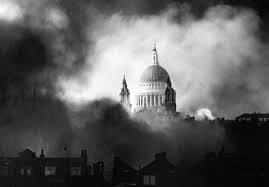
The undamaged St. Paul’s Cathredal, December, 1940
During 267 days—almost 37 weeks—between 40,000 and 43,000 British civilians were killed. About 139,000 others were wounded.
But the terror-bombing only inflamed Britons to fight Germany even more stubbornly.
Vladimir Putin has learned nothing from these historical lessons.
He has employed mercenaries and terror-bombing against patriotic Ukrainians—who continue to sweep Russian forces from their country.
If he employs even “small” tactical weapons, he risks triggering a fullscale NATO response—thus destroying the Russian empire he hopes to re-create.
Finally: Even if he conquers Ukraine, he will inherit a hate-filled population thirsting for revenge at every opportunity.
ABC NEWS, ADOLF HITLER, ALTERNET, AMERICABLOG, AMERICAN REVOLUTION, ANDREW JACKSON, AP, BABY BOOMER RESISTANCE, BBC, BLOOMBERG NEWS, BUZZFEED, CBS NEWS, CHECHENS, CNN, CROOKS AND LIARS, DAILY KOS, FIVETHIRTYEIGHT, FORT MIMS MASSACRE, GREAT BRITAIN, HARPER’S MAGAZINE, HUFFINGTON POST, MEDIA MATTERS, MERCENARIES, MOTHER JONES, MOVEON, MSNBC, NAZI-SOVIET "NON-AGGRESSION PACT", NBC NEWS, NEW REPUBLIC, NEWSDAY, NEWSWEEK, NICCOLO MACHIAVELLI, NPR, NUCLEAR WEAPONS, PBS NEWSHOUR, POLITICO, POLITICUSUSA, RAW STORY, REUTERS, SALON, SEATTLE TIMES, SLATE, TALKING POINTS MEMO, THE ATLANTIC, THE BLITZ, THE CHICAGO SUN-TIMES, THE CHICAGO TRIBUNE, THE DAILY BEAST, THE DAILY BLOG, THE DISCOURSES, THE GUARDIAN, THE HILL, THE HUFFINGTON POST, THE INTERCEPT, THE LOS ANGELES TIMES, THE NATION, THE NEW REPUBLIC, THE NEW YORK TIMES, THE NEW YORKER, THE PRINCE, THE SS, THE VILLAGE VOICE, THE WASHINGTON POST, THINKPROGRESS, THIRD REICH, TIME, TRUTHDIG, TRUTHOUT, TWITTER, U.S. NEWS & WORLD REPORT, UKRAINE, UPI, USA TODAY, VLADIMIR PUTIN, VOLODYMYR ZELENSKY, WAR OF 1812, WEHRMACHT, WORLD WAR 11
In Bureaucracy, History, Military, Politics, Social commentary on October 10, 2022 at 12:10 am
Vladimir Putin believes himself to be a serious student of history. If so, he has drawn the wrong lessons from the past.
During the American Revolution (1775-1783) and the War of 1812 (1812-1815) Great Britain encouraged Indian attacks on American settlers.
One of the worst of these attacks occurred on August 30, 1813, when over 700 Creek Indians destroyed Fort Mims, near Mobile, Alabama. About 500 militiamen, settlers, slaves and Creeks loyal to the Americans were slaughtered or captured.
Fort Mims massacre
Inflaming the Indians against settlers didn’t help the British on the battlefield—in the American Revolution or the War of 1812. But it did incite long-lasting hatred by the vast majority of Americans against the British—and even greater hatred of the Indians.
To cite one example: The Fort Mims massacre inspired General Andrew Jackson to take the field, eventually destroying the Creeks as a nation and wresting Florida from Spain for the United States.
The British lost their American colony. And the Indians were gradually driven from their dominance of the continent.
Similarly, Vladimir Putin has turned to Chechen mercenaries for help in conquering Ukraine. They are known as “Kadyrovtsy” or “Kadyrovites” after their leader, Ramzan Kadyrov, Chechnya’s pro-Kremlin strongman.
Human rights groups, witnesses and survivors have for decades accused them of murders, kidnappings and the torture of Kadyrov’s rivals and critics.
Just as the Indians hoped to use their alliance with the British to defeat their Anglo-American enemies, so, too, do Chechen mercenaries hope to ingratiate themselves with the Kremlin.
Vladimir Putin
Kremlin.ru, CC BY 4.0 <https://creativecommons.org/licenses/by/4.0>, via Wikimedia Commons
Yet that alliance has not advanced Russia’s fortunes on the battlefield, just as the British-Indian alliance did not gain victory for the British.
As Niccolo Machiavelli, writing more than 500 years ago in The Prince, warned: “[Mercenaries] have neither the fear of God nor fidelity to man, and destruction is deferred only as the attack is. For in peace one is robbed by them, and in war by the enemy.”
Moreover, the atrocities committed by Indians and Chechens only inflamed their enemies to seek revenge.
In his masterwork, The Discourses, Machiavelli offered a lesson on the power of mercy even in the midst of war.
“Marcus Furius Camillus, a Roman general, was besieging the city of the Faliscians, and had surrounded it. A teacher charged with the education of the children of some of the noblest families of that city decided to ingratiate himself with Camillus by leading those children into the Roman camp.
“Presenting them to Camillus the teacher said to him, ‘By means of these children as hostages, you will be able to compel the city to surrender.’
“Camillus not only declined the offer but had the teacher stripped and his hands tied behind his back. Then he had a rod put into the hands of each of the children and directed them to whip the teacher all the way back to the city.
“Upon learning this, the citizens of Faliscia were so much touched by the humanity and integrity of Camillus, that they surrendered the place to him without any further defense.”
Summing up the meaning of this, Machiavelli writes: “This example shows that an act of humanity and benevolence will at all times have more influence over the minds of men than violence and ferocity. It also proves that provinces and cities which no armies…could conquer, have yielded to an act of humanity, benevolence, chastity or generosity.
“…History also shows us how much the people desire to find such virtues in great men, and how much they are extolled by historians and biographers of princes….Amongst these, Xenophon takes great pains to show how many victories, how much honor and fame, Cyrus gained by his humanity and affability, and by his not having exhibited a single instance of pride, cruelty or luxuriousness, nor of any of the other vices that are apt to stain the lives of men.”
Niccolo Machiavelli
Then there has been Putin’s use of terror-attacks on Ukrainian cities.
Using bombers and long-range artillery, Putin has tried to compensate for losses on the battlefield by terrorizing Ukrainians into surrender.
Adolf Hitler applied the same tactic against an equally stubborn Great Britain during the Second World War. in 1940-41.
Unable to invade England because the British Navy controlled the sea, Hitler turned to terror-bombing.
He believed he could terrorize Britons into demanding that their government yield to German surrender demands.
From September 7, 1940 to May 21, 1941, the Luftwaffe subjected England—and especially London—to a ruthless bombing campaign that became known as The Blitz.
The undamaged St. Paul’s Cathredal, December, 1940
During 267 days—almost 37 weeks—between 40,000 and 43,000 British civilians were killed. About 139,000 others were wounded.
But the terror-bombing only inflamed Britons to fight Germany even more stubbornly.
Vladimir Putin has learned nothing from these historical lessons.
He has employed mercenaries and terror-bombing against patriotic Ukrainians—who continue to sweep Russian forces from their country.
If he employs even “small” tactical weapons, he risks triggering a fullscale NATO response—thus destroying the Russian empire he hopes to re-create.
Finally: Even if he conquers Ukraine, he will inherit a hate-filled population thirsting for revenge at every opportunity.
ABC NEWS, ADOLF HITLER, ALTERNET, AMERICABLOG, AP, BABY BOOMER RESISTANCE, BLOOMBERG, BUZZFEED, CBS NEWS, CNN, CORONAVIRUS, COVID-19, CROOKS AND LIARS, DAILY KOZ, DONALD TRUMP, DRUDGE RETORT, ENGLAND, FACEBOOK, FBI, FIVETHIRTYEIGHT, HARPER’S MAGAZINE, HERMAN CAIN, JAMES COMEY, LIFTWAFFE, MEDIA MATTERS, MOTHER JONES, MOVEON, MSNBC, NBC NEWS, NEWSWEEK, NPR, PBS NEWSHOUR, POLITICO, POLITICUSUSA, RAW STORY, REUTERS, ROYAL AIR FORCE, SALON, SEATTLE TIMES, SERGEY KISLYAK, SERGEY LAVROV, SLATE, SOVIET UNION, TALKING POINTS MEMO, THE ATLANTIC, THE BLITZ, THE CHICAGO SUN-TIMES, THE CHICAGO TRIBUNE, THE DAILY BEAST, THE DAILY BLOG, THE GUARDIAN, THE HILL, THE HUFFINGTON POST, THE LOS ANGELES TIMES, THE NATION, THE NEW REPUBLIC, THE NEW YORK TIMES, THE VILLAGE VOICE, THE WASHINGTON POST, THINKPROGRESS, TIME, TRUTHDIG, TRUTHOUT, TWITTER, TWO POLITICAL JUNKIES, U.S. NEWS & WORLD REPORT, UPI, USA TODAY, WEHRMACHT, WONKETTE
In Bureaucracy, History, Military, Politics, Social commentary, Uncategorized on August 19, 2022 at 12:10 am
Sometimes your worst enemies aid you in ways you could never help yourself.
From July 10 to October 31, 1940, hundreds of badly-outnumbered pilots of the British Royal Air Force (RAF) fought off relentless attacks by Germany’s feared Luftwaffe—since known as the Battle of Britain.
But Adolf Hitler wasn’t prepared to give up. He believed he could so terrorize Britons that they would insist that their government submit to German surrender demands.
From September 7, 1940 to May 21, 1941, the Luftwaffe subjected England—and especially London—to a ruthless bombing campaign that became known as The Blitz.
The undamaged St. Paul’s Cathredal, December, 1940
More than 100 tons of high explosives were dropped on 16 British cities.
During 267 days—almost 37 weeks—between 40,000 and 43,000 British civilians were killed. About 139,000 others were wounded.
Clearly, what Great Britain desperately needed most was a miracle.
Exactly that happened on June 22, 1941.
With 134 Divisions at full fighting strength and 73 more divisions for deployment behind the front, the German Wehrmacht invaded the Soviet Union.
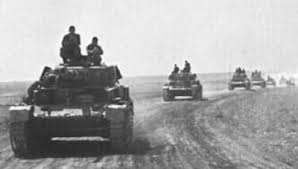
German tanks invading Russia
Joseph Stalin, the longtime Soviet dictator, was stunned. The invasion had come less than two years after Germany had signed a non-aggression pact with the Soviet Union.
Now they were locked in a fight to the death.
People in England were suddenly hopeful. Britain now had an ally whose resources might tip the balance against Hitler—as they did.
Fast forward to 2020.
After Donald Trump became President of the United States in 2017, he seemed invincible: Over the next three years, he:
- Repeatedly and viciously attacked the nation’s free press for daring to report his growing list of crimes and disasters, calling it “the enemy of the American people.”
- Publicly sided with Russian dictator Vladimir Putin against American Intelligence agencies (FBI, CIA, National Security Agency) which unanimously agreed that Russia had subverted the 2016 Presidential election,
- Fired FBI Director James Comey for investigating that subversion.
- Gave Russian Foreign Minister Sergey Lavrov and Russian Ambassador Sergey Kislyak highly classified CIA Intelligence about an Islamic State plot to turn laptops into concealable bombs.
- Allowed predatory corporations to subvert Federal regulatory protections for consumers and the environment.
- Shut down the Federal Government for more than a month on December 22, 2018, because Democrats refused to fund his “border wall” between the United States and Mexico. An estimated 380,000 government employees were furloughed and another 420,000 were ordered to work without pay.
- Attempted to extort a “favor” from Ukrainian President Volodymyr Zelensky: Threatening to withhold military aid unless Zelensky agreed to slander Hunter Biden, the son of Democratic Presidential candidate Joseph Biden.
- Threatened members of Congress with treason charges for daring to challenge him.
- After being acquitted of impeachable offenses by the Senate, Trump fired the Inspectors General (IG) of five cabinet departments in six weeks.
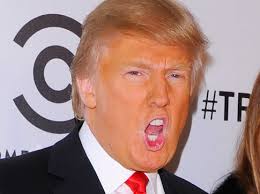
Donald Trump
And through all those outrages, House and Senate Republican majorities remained silent or vigorously supported him.
Democrats seemed unable to cope with Trump’s legislative agenda and his personal attacks on Twitter and in press conferences.
Even when the press unearthed his latest corruptions, the public didn’t care.
Then, in January, 2020, the Coronavirus pandemic struck the United States.
On February 29, the first American died from the disease.
Donald Trump’s first reaction was to minimize the threat: “We have it totally under control. It’s one person coming in from China.”
Then he turned to outright lying: “Now the Democrats are politicizing the Coronavirus….They tried the impeachment hoax….It’s all turning, they lost….And this is their new hoax.”
When many of the nation’s mayors and governors urged citizens to wear face masks and socially distance themselves from others, Trump urged his supporters to defy both. And they did as he ordered—marching down streets shoulder-to-shoulder, most of them not wearing masks, and with many of them carrying automatic rifles.
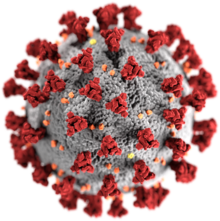
Coronavirus
In March, when much of the country’s businesses shut down, Trump demanded their immediate reopening—although there was no vaccine nor even adequate testing and contact-tracing facilities. This would allow him to claim he had “restored” the American economy.
Many states—especially in the South and Midwest—reopened prematurely. As a result, by his last day in office—January 20, 2021—American COVID-19 deaths numbered 400,000.
Then Trump demanded that Americans put their children at risk by sending them back to school in the fall—so their parents could return to work. Then he could claim he’d “saved” the American economy—and be re-elected.
Meanwhile, countless Stormtrumpers in Texas, Florida and other Red states had died because they refused to wear masks and/or social distance. His most high profile supporter to die: Herman Cain, the 2012 Republican Presidential candidate.
Significantly, Cain died one month after attending Trump’s Tulsa rally on June 20.
Thus, Trump, through his arrogance and ignorance, had inflicted far greater casualties on his core supporters and poll numbers than the Democrats ever could—or would.
His lies had been exposed. His followers were succumbing to a disease he called a Democratic hoax. He had nothing to offer as a cure for the economy—or the pandemic. And his polls were tanking.
Seventy-nine years earlier, events turned around for England when all seemed lost. The same proved true for former Vice President Joe Biden on November 3.
2016 PRESIDENTIAL ELECTION, ABC NEWS, ADOLF HITLER, ALTERNET, AMERICABLOG, AP, BABY BOOMER RESISTANCE, BLOOMBERG, BUZZFEED, CBS NEWS, CIA, CNN, CRIMEAN PENINSULA, CROOKS AND LIARS, DAILY KOZ, DONALD TRUMP, DRUDGE RETORT, ECONOMIC SANCTIONS, ENGLAND, FACEBOOK, FBI, FIVETHIRTYEIGHT, HARPER’S MAGAZINE, JOSEPH BIDEN, JOSEPH STALIN, LIFTWAFFE, MEDIA MATTERS, MOTHER JONES, MOVEON, MSNBC, NATIONAL SECURITY AGENCY, NBC NEWS, NEWSWEEK, NORTH ATLANTIC TREATY ORGANIZATION (NATO), NPR, OLIGARCHS, PBS NEWSHOUR, POLITICO, POLITICUSUSA, RAW STORY, REPUBLIC OF GEORGIA, REUTERS, ROYAL AIR FORCE, RUSSIA, SALON, SEATTLE TIMES, SECOND CHECHEN WAR, SLATE, SOVIET UNION, TALKING POINTS MEMO, THE ATLANTIC, THE BLITZ, THE CHICAGO SUN-TIMES, THE CHICAGO TRIBUNE, THE DAILY BEAST, THE DAILY BLOG, THE GUARDIAN, THE HILL, THE HUFFINGTON POST, THE LOS ANGELES TIMES, THE NATION, THE NEW REPUBLIC, THE NEW YORK TIMES, THE VILLAGE VOICE, THE WASHINGTON POST, THINKPROGRESS, TIME, TRUTHDIG, TRUTHOUT, TWITTER, TWO POLITICAL JUNKIES, U.S. NEWS & WORLD REPORT, UKRAINE, UPI, USA TODAY, VLADIMIR PUTIN, VOLODYMYR ZELENSKY, WEHRMACHT, WONKETTE, WORLD WAR 11
In Bureaucracy, History, Military, Politics, Social commentary on March 30, 2022 at 12:14 am
Sometimes your worst enemies aid you in ways you could never help yourself.
From July 10 to October 31, 1940, hundreds of badly-outnumbered pilots of the British Royal Air Force (RAF) fought off relentless attacks by Germany’s feared Luftwaffe—since known as the Battle of Britain.
But Adolf Hitler wasn’t prepared to give up. He believed he could so terrorize Britons that they would insist that their government submit to German surrender demands.
From September 7, 1940 to May 21, 1941, the Luftwaffe subjected England—and especially London—to a ruthless bombing campaign that became known as The Blitz.
The undamaged St. Paul’s Cathredal, December, 1940
More than 100 tons of high explosives were dropped on 16 British cities.
During 267 days—almost 37 weeks—between 40,000 and 43,000 British civilians were killed. About 139,000 others were wounded.
Clearly, what Great Britain desperately needed most was a miracle.
Exactly that happened on June 22, 1941.
With 134 Divisions at full fighting strength and 73 more divisions for deployment behind the front, the German Wehrmacht invaded the Soviet Union.
German tanks invading Russia
Joseph Stalin, the longtime Soviet dictator, was stunned. The invasion had come less than two years after Germany had signed a non-aggression pact with the Soviet Union.
Now they were locked in a fight to the death.
People in England were suddenly hopeful. Britain now had a powerful ally whose resources might tip the balance against Hitler.
Fast forward to 2022.
The North Atlantic Treaty Organization (NATO) was created in March, 1949 by the United States, Canada, Great Britain, France, Belgium, the Netherlands and Luxembourg. In 1952, Greece, Turkey and West Germany were admitted.
NATO emblem
Its purpose: To provide collective security against the Soviet Union.
Following World War II, Soviet dictator Joseph Stalin had refused to withdraw his occupying forces from the Eastern European countries they had entered on their way to defeating Nazi Germany.
These Soviet-dominate countries: Poland, Hungary, Czechoslovakia, Romania, Bulgaria, Albania and East Germany.
Behind NATO stood the threat of the American “nuclear umbrella”—and Article V, which states that an attack on one ally would trigger a counterattack by all of them.
From its founding in 1949 to 2017, America’s leadership of NATO—and the importance of the alliance—remained unquestioned.
The Presidency of Donald J. Trump (2017-2021) dramatically changed both.
From the outset, Trump attacked NATO as being “very unfair” to the United States. He attacked its members as deadbeats who didn’t contribute an equal share of monies to the organization.
But Trump’s disdain for NATO may well have been grounded in his “bromance” with Russian President Vladimir Putin.
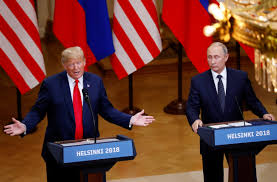
Donald Trump and Vladimir Putin press conference
He had refused to accept the unanimous conclusion of the FBI, CIA and National Security Agency that Russia had interfered in the 2016 Presidential election to put him in the White House over Hillary Clinton.
He had often praised Putin, both during the 2016 campaign and after entering the White House.
And he had publicly defended Putin against these agencies in an infamous press conference with Putin in Helsinki, Finland, on July 16, 2018.
On January 14, 2019, the New York Times reported that, several times in 2018, Trump discussed withdrawing the United States from NATO. This would effectively doom the 29-nation alliance and empower Russia, which had spent years seeking to weaken it.
Meanwhile, Putin, intent on restoring the borders of the former Soviet Union, swept from one war to the next.
- In 1999-2000, he waged the Second Chechen War, restoring federal control of Chechnya.
- In 2008, he invaded the Republic of Georgia, which had declared its independence as the Soviet Union began to crumble. The war ended with 20% of Georgia’s territory under Russian military occupation.
- In 2014, Putin invaded and subsequently annexed the Crimean Peninsula from Ukraine.
Through all of this, NATO did nothing but launch verbal condemnations.
The reason:
- Fear of igniting a nuclear war; and/or
- Belief that Russia was simply acting within its own sphere of influence.
Coupled with Trump’s repeated displays of subservience, it’s likely that Putin felt he could get away with any aggression.
On February 24, Putin ordered the invasion of Ukraine. And those who had thought the Cold War was over realized it wasn’t.
Suddenly, NATO came alive—with a vengeance:
- At least 40,000 allied troops are now under direct NATO command in the eastern part of the alliance.
- More than 130 fighter jets are on advanced high alert.
- More than 200 allied ships are stationed at sea in the region.
- NATO activated defense plans that would allow military commanders to deploy elements of the multinational Response Force.
Perhaps most important, the United States has a President—Joe Biden—who is not in thrall to Putin. As a result, it has led the world in imposing harsh economic sanctions on Russia:
- Russia has become a global economic pariah.
- Over 30 countries, representing well over half the world’s economy, have announced sanctions and export controls targeting Russia.
- The country’s banking system has all but collapsed.
- On the stock market, the ruble is worth less than the penny.
- And oligarchs linked to Putin have had their assets frozen around the world.
Seventy-nine years ago, events turned around for England when all seemed lost. The same has happened for NATO and the United States.
ABC NEWS, ADOLF HITLER, ALTERNET, AMERICABLOG, AP, BABY BOOMER RESISTANCE, BLOOMBERG, BUZZFEED, CBS NEWS, CNN, CORONAVIRUS, COVID-19, CROOKS AND LIARS, DAILY KOZ, DONALD TRUMP, DRUDGE RETORT, ENGLAND, FACEBOOK, FBI, FIVETHIRTYEIGHT, HARPER’S MAGAZINE, HERMAN CAIN, JAMES COMEY, LIFTWAFFE, MEDIA MATTERS, MOTHER JONES, MOVEON, MSNBC, NBC NEWS, NEWSWEEK, NPR, PBS NEWSHOUR, POLITICO, POLITICUSUSA, RAW STORY, REUTERS, ROYAL AIR FORCE, SALON, SEATTLE TIMES, SERGEY KISLYAK, SERGEY LAVROV, SLATE, SOVIET UNION, TALKING POINTS MEMO, THE ATLANTIC, THE BLITZ, THE CHICAGO SUN-TIMES, THE CHICAGO TRIBUNE, THE DAILY BEAST, THE DAILY BLOG, THE GUARDIAN, THE HILL, THE HUFFINGTON POST, THE LOS ANGELES TIMES, THE NATION, THE NEW REPUBLIC, THE NEW YORK TIMES, THE VILLAGE VOICE, THE WASHINGTON POST, THINKPROGRESS, TIME, TRUTHDIG, TRUTHOUT, TWITTER, TWO POLITICAL JUNKIES, U.S. NEWS & WORLD REPORT, UPI, USA TODAY, WEHRMACHT, WONKETTE
In Bureaucracy, History, Military, Politics, Social commentary, Uncategorized on August 5, 2020 at 12:04 am
Sometimes your worst enemies aid you in ways you could never help yourself.
From July 10 to October 31, 1940, hundreds of badly-outnumbered pilots of the British Royal Air Force (RAF) fought off relentless attacks by Germany’s feared Luftwaffe—since known as the Battle of Britain.
But Adolf Hitler wasn’t prepared to give up. He believed he could so terrorize Britons that they would insist that their government submit to German surrender demands.
From September 7, 1940 to May 21, 1941, the Luftwaffe subjected England—and especially London—to a ruthless bombing campaign that became known as The Blitz.
The undamaged St. Paul’s Cathredal, December, 1940
More than 100 tons of high explosives were dropped on 16 British cities.
During 267 days—almost 37 weeks—between 40,000 and 43,000 British civilians were killed. About 139,000 others were wounded.
Clearly, what Great Britain desperately needed most was a miracle.
Exactly that happened on June 22, 1941.
With 134 Divisions at full fighting strength and 73 more divisions for deployment behind the front, the German Wehrmacht invaded the Soviet Union.
German tanks invading Russia
Joseph Stalin, the longtime Soviet dictator, was stunned. The invasion had come less than two years after Germany had signed a non-aggression pact with the Soviet Union.
Now they were locked in a fight to the death.
People in England were suddenly hopeful. Britain now had an ally whose resources might tip the balance against Hitler.
Fast forward to 2020.
After Donald Trump became President of the United States in 2017, he seemed invincible: Over the next three years, he:
- Repeatedly and viciously attacked the nation’s free press for daring to report his growing list of crimes and disasters, calling it “the enemy of the American people.”
- Publicly sided with Russian dictator Vladimir Putin against American Intelligence agencies (FBI, CIA, National Security Agency) which unanimously agreed that Russia had subverted the 2016 Presidential election,
- Fired FBI Director James Comey for investigating that subversion.
- Gave Russian Foreign Minister Sergey Lavrov and Russian Ambassador Sergey Kislyak highly classified CIA Intelligence about an Islamic State plot to turn laptops into concealable bombs.
- Allowed predatory corporations to subvert Federal regulatory protections for consumers and the environment.
- Shut down the Federal Government for more than a month on December 22, 2018, because Democrats refused to fund his “border wall” between the United States and Mexico. An estimated 380,000 government employees were furloughed and another 420,000 were ordered to work without pay.
- Attempted to extort a “favor” from Ukrainian President Volodymyr Zelensky: Threatening to withhold military aid unless Zelensky agreed to slander Hunter Biden, the son of Democratic Presidential candidate Joseph Biden.
- Threatened members of Congress with treason charges for daring to challenge him.
- Since being acquitted of impeachable offenses by the Senate, Trump fired the Inspectors General (IG) of five cabinet departments in six weeks.
Donald Trump
And through all those outrages, House and Senate Republican majorities remained silent or vigorously supported him.
Democrats seemed unable to cope with Trump’s legislative agenda and his personal attacks on Twitter and in press conferences.
Even when the press unearthed his latest corruptions, the public didn’t care.
Then, in January, 2020, the Coronavirus pandemic struck the United States.
On February 29, the first American died from the disease.
Donald Trump’s first reaction was to minimize the threat: “We have it totally under control. It’s one person coming in from China.”
Then he turned to outright lying: “Now the Democrats are politicizing the Coronavirus….They tried the impeachment hoax….It’s all turning, they lost….And this is their new hoax.”
When many of the nation’s mayors and governors urged citizens to wear face masks and socially distance themselves from others, Trump urged his supporters to defy both. And they did as he ordered—marching down streets shoulder-to-shoulder, most of them not wearing masks, and with many of them carrying automatic rifles.
Coronavirus
In March, when much of the country’s businesses shut down, Trump demanded their immediate reopening—although there was no vaccine nor even adequate testing and contact-tracing facilities. This would allow him to claim he had “restored” the American economy.
Many states—especially in the South and Midwest—reopened prematurely. As a result, American COVID-19 cases now number 4.7 million—and deaths number at least 157,302.
Now Trump demands that Americans put their children at risk by sending them back to school in the fall—so their parents can return to work. Then he can claim he’s “saved” the American economy—and be re-elected.
Meanwhile, countless Stormtrumpers in Texas, Florida and other Red states have died because they refused to wear masks and/or social distance. His most high profile supporter to die so far: Herman Cain, the 2012 Republican Presidential candidate.
Significantly, Cain died one month after attending Trump’s Tulsa rally on June 20.
Thus, Trump, through his arrogance and ignorance, has inflicted far greater casualties on his core supporters and poll numbers than the Democrats ever could—or would.
His lies have been exposed. His followers are succumbing to a disease he called a Democratic hoax. He has nothing to offer in a way of a cure for the economy—or the pandemic. And his polls are tanking.
Seventy-nine years ago, events turned around for England when all seemed lost. The same may be about to happen for the United States.
ABC NEWS, ADOLF HITLER, ALTERNET, AMERICABLOG, AP, BABY BOOMER RESISTANCE, BASKETBALL, BUZZFEED, CBS NEWS, CHIANG KAI-SHEK, CNN, COLD WAR, COLUMBIA BROADCASTING SYSTEM, COMMUNISM, CROOKS AND LIARS, DAILY BEAST, DAILY KOZ, DRUDGE RETORT, EDWARD R. MURROW, ERIK WEMPLE, FACEBOOK, FELICIA SONMEZ, FIVETHIRTYEIGHT, HARPER’S MAGAZINE, JOHN F. KENNEDY, KOBE BRYANT, LIBERALISM, LOYALTY OATH GOVERNMENT EMPLOYEES PROGRAM, MARTY BARON, MEDIA MATTERS, MOTHER JONES, MOVEON, MSNBC, NAZI GERMANY, NBC NEWS, NEWSWEEK, NPR, PBS NEWSHOUR, PENTAGON PAPERS, POLITICO, POLITICUSUSA, RADIO AND TELEVISION NEWS DIRECTORS ASSOCIATION, RAPE, RAW STORY, REUTERS, SALON, SEATTLE TIMES, SEE IT NOW, SLATE, SOVIET UNION, TALKING POINTS MEMO, THE ATLANTIC, THE BLITZ, THE CHICAGO SUN-TIMES, THE CHICAGO TRIBUNE, THE DAILY BEAST, THE DAILY BLOG, THE GUARDIAN, THE HILL, THE HUFFINGTON POST, THE LOS ANGELES TIMES, THE NATION, THE NEW REPUBLIC, THE NEW YORK TIMES, THE VILLAGE VOICE, THE WASHINGTON POST, THINKPROGRESS, TIME, TRACY GRANT, TRUTHDIG, TRUTHOUT, TWITTER, TWO POLITICAL JUNKIES, U.S. NEWS & WORLD REPORT, UNITED STATES INFORMATION AGENCY, UPI, USA TODAY, WATERGATE, WILLIAM L. SHIRER, WILLIAM PALEY, WILLIAM RANDOLPH HEARST, WONKETTE
In Bureaucracy, Business, Entertainment, History, Politics, Social commentary on January 30, 2020 at 12:09 am
During the early and mid-1950s, “CBS” came to have two meanings.
For the overwhelming majority of Americans, it stood for “Columbia Broadcasting System.”
But for many of the reporters and editors working in its News Division, “CBS” came to mean “Cowardly Bastards Syndrome.”
William L. Shirer had worked as a newspaper reporter for Universal News Service, a wire service for William Randolph Hearst. Assigned to Germany, he had been one of the first American reporters to chronicle Adolf Hitler’s rise to power.
In 1937, with the Hearst empire losing money, he found himself fired. Shortly afterward, he was hired by Edward R. Murrow, European manager for CBS News. Murrow hadn’t had any experience in journalism; he needed a top-flight reporter.
Shirer, a veteran reporter speaking fluent German and French, fit that bill.
Together, Shirer and Murrow were the beginning of what would become the CBS News empire. Shirer remained in Nazi Germany until December, 1940, when just ahead of the Gestapo, he left for the United States by passenger ship.

William L. Shirer
Meanwhile, Murrow achieved international fame reporting on the London Blitz, his signature introduction to each broadcast being: “This….is London.”
Thus, when both men returned to the United States after the war, they were genuine celebrities. Murrow took a job as a CBS vice president. Shirer continued to work as a correspondent.
In 1947, however, their longtime friendship came to an end.
Americans’ attitudes toward the Soviet Union—their ally during World War II—were hardening. Right-wingers saw no difference between liberalism and Communism. And Shirer was strongly critical of the Truman “loyalty oath” program for government employees and his catering to foreign dictators like Chiang Kai-Shek.
J. B. Williams, a maker of shaving soap, withdrew sponsorship of Shirer’s highly-rated Sunday news show. Within a month, CBS, through Murrow, moved Shirer’s program to Sunday midday and then canceled it.
Shirer blamed Murrow for not defending him—or the independence of the news division. After being fired by CBS, Shirer warned Murrow; “I’ve been through this before with newspapers. But you’re going to get it, too. Don’t kid yourself.”

Edward R. Murrow
Murrow’s turn did come, starting in 1958, with the cancellation of his hugely successful—and controversial—investigative series, See It Now.
Then, on October 15, 1958, in a speech before the Radio and Television News Directors Association in Chicago, Murrow attacked TV’s emphasis on entertainment and commercialism at the expense of public interest.
William S. Paley, the chairman of CBS and a longtime Murrow friend, never forgave the broadcaster for “biting the hand that feeds him.”
His influence almost ended at CBS, in 1961 Murrow accepted President John F. Kennedy’s invitation to direct the United States Information Agency.
In 1965, Murrow, a heavy cigarette smoker, died of lung cancer at 57. Shirer died in 1993, at 89.
But the Cowardly Bastards Syndrome didn’t die with Shirer and Murrow. It lives on in American journalism—most recently at The Washington Post.
On January 26, basketball celebrity Kobe Bryant died in a helicopter crash in Calabasas, California.
Several hours after Bryant’s death, The Washington Post’s national political reporter, Felicia Sonmez, tweeted a 2016 Daily Beast story that detailed a 2003 sexual assault allegation made against him.
The criminal charge was dropped, but Bryant settled a civil suit with his accuser for an undisclosed amount of money. He didn’t admit guilt, but he admitted that while he saw the encounter as consensual, his accuser did not.
Sonmez’s initial tweet about the allegation against Bryant ignited a firestorm of outrage. But she defended it, writing that “any public figure is worth remembering in their totality.”
 Sports-obsessed fans, who worship celebrity jocks as genuine heroes, loudly disagreed. Sonmez found herself deluged with insults and death threats on Twitter and in her Inbox.
Then came the indignity of being put on suspended leave by her employer—The Washington Post.
Before she was suspended, Sonmez received an email from the Post’s executive editor, Marty Baron: “A real lack of judgment to tweet this. Please stop. You’re hurting this institution by doing this.”
Tracy Grant, the Post’s managing editor, said in a statement that Sonmez’ tweets “displayed poor judgement that undermined the work of her colleagues.”
How tweeting a true story about a dead celebrity “undermined the work of her colleagues” was not explained.
Bryant had been charged with rape.
He had settled out of court on the same charge.
And truth is supposed to be the ultimate defense in a libel or slander lawsuit.
On top of that, Somnez had not even written the story—she had merely posted a Daily Beast story on Twitter.
Erik Wemple, the Post’s media critic, wrote that Grant told Sonmez in an email that her tweet didn’t “pertain” to her “coverage area”—politics.
Responded Wemple: “If journalists at The Post are prone to suspension for tweeting stories off their beats, the entire newsroom should be on administrative leave.”
The Washington Post has had many proud moments—such as the publishing of the Pentagon Papers in 1971 and its monumental coverage of Watergate from 1972 to 1974.
For journalists who cherish their freedom, this moment will long live in infamy.


 Bureaucracybuster's Blog
ABC NEWS, ADOLF HITLER, ALTERNET, AMERICABLOG, AMERICAN REVOLUTION, ANDREW JACKSON, AP, BABY BOOMER RESISTANCE, BBC, BLOOMBERG NEWS, BUZZFEED, CBS NEWS, CHECHENS, CNN, CROOKS AND LIARS, DAILY KOS, FIVETHIRTYEIGHT, FORT MIMS MASSACRE, GREAT BRITAIN, HARPER’S MAGAZINE, HUFFINGTON POST, MEDIA MATTERS, MERCENARIES, MOTHER JONES, MOVEON, MSNBC, NAZI-SOVIET "NON-AGGRESSION PACT", NBC NEWS, NEW REPUBLIC, NEWSDAY, NEWSWEEK, NICCOLO MACHIAVELLI, NPR, NUCLEAR WEAPONS, PBS NEWSHOUR, POLITICO, POLITICUSUSA, RAW STORY, REUTERS, SALON, SEATTLE TIMES, SLATE, TALKING POINTS MEMO, THE ATLANTIC, THE BLITZ, THE CHICAGO SUN-TIMES, THE CHICAGO TRIBUNE, THE DAILY BEAST, THE DAILY BLOG, THE DISCOURSES, THE GUARDIAN, THE HILL, THE HUFFINGTON POST, THE INTERCEPT, THE LOS ANGELES TIMES, THE NATION, THE NEW REPUBLIC, THE NEW YORK TIMES, THE NEW YORKER, THE PRINCE, THE SS, THE VILLAGE VOICE, THE WASHINGTON POST, THINKPROGRESS, THIRD REICH, TIME, TRUTHDIG, TRUTHOUT, TWITTER, U.S. NEWS & WORLD REPORT, UKRAINE, UPI, USA TODAY, VLADIMIR PUTIN, VOLODYMYR ZELENSKY, WAR OF 1812, WEHRMACHT, WORLD WAR 11
VLADIMIR PUTIN: LEARNING THE WRONG LESSONS OF HISTORY
In Bureaucracy, History, Military, Politics, Social commentary on June 28, 2023 at 12:12 amVladimir Putin believes himself to be a serious student of history. But he has drawn the wrong lessons from the past.
During the American Revolution (1775-1783) and the War of 1812 (1812-1815) Great Britain encouraged Indian attacks on American settlers.
One of the worst of these attacks occurred on August 30, 1813, when over 700 Creek Indians destroyed Fort Mims, near Mobile, Alabama. About 500 militiamen, settlers, slaves and Creeks loyal to the Americans were slaughtered or captured.
Fort Mims massacre
Inflaming the Indians against settlers didn’t help the British on the battlefield—in the American Revolution or the War of 1812. But it did incite long-lasting hatred by the vast majority of Americans against the British—and even greater hatred of the Indians.
To cite one example: The Fort Mims massacre inspired General Andrew Jackson to take the field, eventually destroying the Creeks as a nation and wresting Florida from Spain for the United States.
The British lost their American colony. And the Indians were gradually driven from their dominance of the continent.
Similarly, Vladimir Putin has turned to Chechen mercenaries for help in conquering Ukraine. They are known as “Kadyrovtsy” or “Kadyrovites” after their leader, Ramzan Kadyrov, Chechnya’s pro-Kremlin strongman.
Human rights groups, witnesses and survivors have for decades accused them of murders, kidnappings and the torture of Kadyrov’s rivals and critics.
Just as the Indians hoped to use their alliance with the British to defeat their Anglo-American enemies, so, too, do Chechen mercenaries hope to ingratiate themselves with the Kremlin.
Vladimir Putin
Kremlin.ru, CC BY 4.0 <https://creativecommons.org/licenses/by/4.0>, via Wikimedia Commons
Yet that alliance has not advanced Russia’s fortunes on the battlefield, just as the British-Indian alliance did not gain victory for the British.
As Niccolo Machiavelli, writing more than 500 years ago in The Prince, warned: “[Mercenaries] have neither the fear of God nor fidelity to man, and destruction is deferred only as the attack is. For in peace one is robbed by them, and in war by the enemy.”
Moreover, the atrocities committed by Indians and Chechens only inflamed their enemies to seek revenge.
In his masterwork, The Discourses, Machiavelli offered a lesson on the power of mercy even in the midst of war.
“Marcus Furius Camillus, a Roman general, was besieging the city of the Faliscians, and had surrounded it. A teacher charged with the education of the children of some of the noblest families of that city decided to ingratiate himself with Camillus by leading those children into the Roman camp.
“Presenting them to Camillus the teacher said to him, ‘By means of these children as hostages, you will be able to compel the city to surrender.’
“Camillus not only declined the offer but had the teacher stripped and his hands tied behind his back. Then he had a rod put into the hands of each of the children and directed them to whip the teacher all the way back to the city.
“Upon learning this, the citizens of Faliscia were so much touched by the humanity and integrity of Camillus, that they surrendered the place to him without any further defense.”
Summing up the meaning of this, Machiavelli writes: “This example shows that an act of humanity and benevolence will at all times have more influence over the minds of men than violence and ferocity. It also proves that provinces and cities which no armies…could conquer, have yielded to an act of humanity, benevolence, chastity or generosity.
“…History also shows us how much the people desire to find such virtues in great men, and how much they are extolled by historians and biographers of princes….Amongst these, Xenophon takes great pains to show how many victories, how much honor and fame, Cyrus gained by his humanity and affability, and by his not having exhibited a single instance of pride, cruelty or luxuriousness, nor of any of the other vices that are apt to stain the lives of men.”
Niccolo Machiavelli
Then there has been Putin’s use of terror-attacks on Ukrainian cities.
Using bombers and long-range artillery, Putin has tried to compensate for losses on the battlefield by terrorizing Ukrainians into surrender.
Adolf Hitler applied the same tactic against an equally stubborn Great Britain during the Second World War. in 1940-41.
Unable to invade England because the British Navy controlled the sea, Hitler turned to terror-bombing.
He believed he could terrorize Britons into demanding that their government yield to German surrender demands.
From September 7, 1940 to May 21, 1941, the Luftwaffe subjected England—and especially London—to a ruthless bombing campaign that became known as The Blitz.
The undamaged St. Paul’s Cathredal, December, 1940
During 267 days—almost 37 weeks—between 40,000 and 43,000 British civilians were killed. About 139,000 others were wounded.
But the terror-bombing only inflamed Britons to fight Germany even more stubbornly.
Vladimir Putin has learned nothing from these historical lessons.
He has employed mercenaries and terror-bombing against patriotic Ukrainians—who continue to sweep Russian forces from their country.
If he employs even “small” tactical weapons, he risks triggering a fullscale NATO response—thus destroying the Russian empire he hopes to re-create.
Finally: Even if he conquers Ukraine, he will inherit a hate-filled population thirsting for revenge at every opportunity.
Share this: