Posts Tagged ‘SLATE’
ABC NEWS, ALTERNET, ARNOLD SCHWARXENEGGER, BARACK OBAMA, BREITBART NEWS, BUZZFEED, CBS NEWS, CIA, CNN, DAILY KOS, DONALD TRUMP, FACEBOOK, FBI, FLETCHER KNEBEL, HILLARY LINTON, JEFF SESSIONS, JOHN OLIVER, JOSH EARNEST, MARK LEVIN, MENTAL ILLNESS, MERYL STREETP, MOTHER JONES, MOVEON, NATIONAL SECURITY AGENCY, NBC NEWS, NEIL YOUNG, NEW JERSEY, NEWSWEEK, NIGHT AT CAMP DAVID, NPR, OBAMACARE, POLITICO, RAW STORY, RUSSIA, SALON, SEVEN DAYS IN MAY, SLATE, THE CHICAGO SUN-TIMES, THE CHICAGO TRIBUNE, THE DAILY BEAST, THE HUFFINGTON POST, THE LOS ANGELES TIMES, THE NEW YORK TIMES, THE WALL STREET JOURNAL, THE WASHINGTON POST, THIS WEEK, TIME, TWITTER, U.S. NEWS & WORLD REPORT, USA TODAY, WATERGATE, WIRETAPPING
In Bureaucracy, History, Medical, Politics, Social commentary on January 5, 2018 at 11:02 am
On March 4, 2017, in a series of unhinged tweets, President Donald J. Trump accused former President Barack Obama of tapping his Trump Tower phones prior to the election:
“Terrible! Just found out that Obama had my ‘wires tapped’ in Trump Tower just before the victory. Nothing found. This is McCarthyism!”
“Is it legal for a sitting President to be ‘wire tapping’ a race for president prior to an election? Turned down by court earlier. A NEW LOW!”
“I’d bet a good lawyer could make a great case out of the fact that President Obama was tapping my phones in October, just prior to Election!”
“How low has President Obama gone to tapp my phones during the very sacred election process. This is Nixon/Watergate. Bad (or sick) guy!”
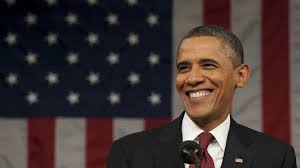
President Barack Obama
Trump offered no proof to substantiate his libelous claims.
There are three plausible theories about what prompted Trump’s accusations.
Theory #1: They were prompted by Right-wing media outlets that had been pushing wiretapping claims in recent days.
On March 2, Right-wing radio host Mark Levin claimed that Obama had used “powers of the federal government to surveil members of the Trump campaign.”
Referring to Attorney General Jeff Sessions and his newly disclosed meetings with Russia’s ambassador in 2016, Levin asked: “Today’s reporting on Sessions having a chance meeting with the ambassador–where did that information come from? Look at the timing of it. Was Obama surveilling top Trump campaign officials during the election?”
On March 3, the Fascist media site Breitbart News echoed that charge. Its story was based on Levin’s show and offered no evidence to back up its accusations.
Trump could have first contacted the directors of the FBI, CIA and National Security Agency–the agencies which are authorized to conduct such an operation. He couldhave asked them, “Did you wiretap me?”
They could have quickly and confidentially given him an answer. And if it was “Yes,” they would have been able to provide him with the records to document it.
That would have been the action of a rational President. But Trump chose to act like a child–or, worse, an unbalanced adult.
After reading the Breitbart story, Trump impulsively chose to go on Twitter and make libelous accusations.
Theory #2: Trump, under scrutiny for ties between his campaign and Russia, sought to deflect attention by making an outrageous accusation.
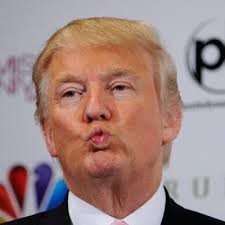
Donald Trump
Former White House Press Secretary Josh Earnest gave his own take on Trump’s motivation. Appearing on the March 5, 2017 edition of ABC’s “This Week”, he said: “We know exactly why President Trump tweeted what he tweeted.
“Because there is one page in the Trump White House crisis management playbook. And that is simply to tweet or say something outrageous to distract from the scandal, and the bigger the scandal, the more outrageous the tweet.”
Earnest served as White House Press Secretary under President Obama from 2014 to 2017.
He added: Obama could not have legally ordered a wiretap: “The President of the United States does not have the authority to unilaterally order the wiretapping of an American citizen.”
Theory #3: Trump is too mentally unbalanced to hold the Presidency–and command of America’s nuclear arsenal.
Trump’s shoot-first-and-never-mind-the-consequences approach to life has been thoroughly documented.
From June 15, 2015, when he launched his Presidential campaign, until October 24, 2016, he fired nearly 4,000 angry, insulting tweets at 281 people and institutions. The New York Times needed two full pages of its print edition to showcase them.
Among these targets were:
- His Democratic rival, Hillary Clinton
- His fellow Republican Presidential candidates
- Actress Meryl Streep
- News organizations
- President Barack Obama
- Comedian John Oliver
- Obamacare
- Singer Neil Young
- The state of New Jersey
- Actor Arnold Schwarzenegger.
And during his first two weeks as President, Trump attacked 22 people, places and things on his @realDonaldTrump account.
Trump’s vindictiveness, his narcissism, his compulsive aggression, his complaints that his “enemies” in government and the press are trying to destroy him, have caused many to ask: Could the President of the United States be suffering from mental illness?
One who has dared to answer this question is John D. Gartner, a practicing psychotherapist.
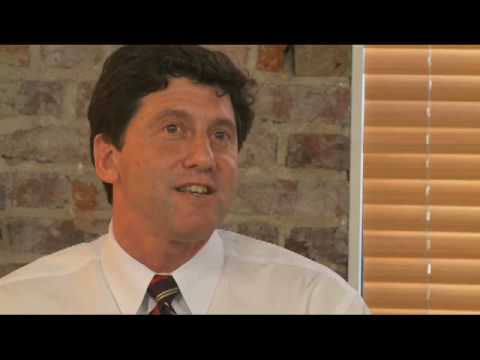
John D. Gartner
Gartner graduated magna cum laude from Princeton University, received his Ph.D in clinical psychology from the University of Massachusetts, and served as a part time assistant professor of psychiatry at Johns Hopkins University Medical School for 28 years.
During an interview by U.S. News & World Report (published on January 27), Gartner said: “Donald Trump is dangerously mentally ill and temperamentally incapable of being president.”
Gartner said that Trump suffers from “malignant narcissism,” whose symptoms include anti-social behavior, sadism, aggressiveness, paranoia and grandiosity.
“We’ve seen enough public behavior by Donald Trump now that we can make this diagnosis indisputably,” says Gartner, who admits he has not personally examined Trump.
In 1965, Fletcher Knebel, the best-selling author of Seven Days in May, raised the then-unthinkable question: “What would happen if the President of the U.S.A. went stark-raving mad?”
He did so in his novel, Night of Camp David.
In 1965, the idea that an American President might become insane was thought so outlandish it could only appear in a novel.
Fifty-three years later, it’s no longer unthinkable. For millions, it’s a terrifying reality.
"THE UNTOUCHABLES" MOVIE, ABC NEWS, AL CAPONE, ALCOHOL, ALTERNET, AP, BUZZFEED, CBS NEWS, CNN, CONSUMER FINANCIAL PROTECTION BUREAU, CROOKS AND LIARS, DAILY KOZ, DODD-FRANK FINANCIAL REFORM LAW, DONALD TRUMP, DRY STATES, ELLIOT NESS, FACEBOOK, FISCAL CLIFF, FLORENCE HARDING, IDAHO, KEVIN COSTNER, MAFIA, MIKE CRAPO, MORMONS, MOTHER JONES, MOVEON, NBC NEWS, NEWSWEEK, NPR, POLITICO, PROHIBITION, RAW STORY, REPUBLICAN PARTY, REUTERS, SALON, SEATTLE TIMES, SLATE, THE ATLANTIC, THE CHICAGO SUN-TIMES, THE CHICAGO TRIBUNE, THE DAILY BEAST, THE GUARDIAN, THE HILL, THE HUFFINGTON POST, THE LOS ANGELES TIMES, THE NATION, THE NEW YORK TIMES, THE WASHINGTON POST, TIME, TWITTER, U.S. NEWS & WORLD REPORT, U.S. TREASURY DEPARTMENT, UPI, USA TODAY, WALL STREET, WARREN G. HARDING, WOMEN'S CHRISTIAN TEMPERANCE UNION, WORD OF WISDOM
In Bureaucracy, History, Law, Law Enforcement, Politics, Social commentary on January 4, 2018 at 12:10 am
At the end of the 1987 movie, “The Untouchables,” a reporter accosts Elliot Ness (Kevin Costner): “Mr. Ness, they’re saying that Congress will repeal Prohibition. If that happens, what will you do?”
And Ness—who has just spent the entire movie trying to put arch-bootlegger Al Capone out of business—replies: “I think I’ll have a drink.”
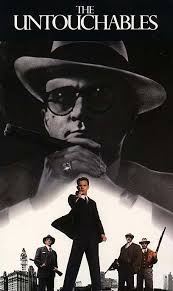
“The Untouchables” (1987)
In 1920, America went “dry”—officially.
The reason: Congressional passage of the Volstead Act—named after Andrew Volstead, chairman of the House Judiciary Committee who managed the legislation.
For Americans generally, the law had a shorter name: Prohibition.
For 12 years—from 1920 to 1932—the United States Treasury Department declared war on the manufacture and sale of alcoholic beverages throughout the country.
It was a losing war. Untold numbers of local police officers gladly turned a blind eye—for a price—to the bootleggers operating in their midst. So did legions of agents of the Treasury Department’s Prohibition Bureau.
And police weren’t the only ones willing to ignore the law. So were politicians at all levels. At the highest level: Warren G. Harding, 29th President of the United States.
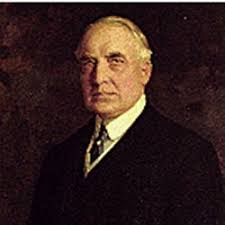
Warren G. Harding
Harding allowed bootleg whiskey to be served to his guests during after-dinner parties. His wife, Florence, known as “The Duchess,” mixed drinks for the visitors.
Many of those public officials (and private citizens) who regularly indulged felt the law was needed to enforce “morality” onto others—especially the poor and immigrants.
Prohibition ended in 1932—to the sorrow of two major organizations. The first was anti-alcohol groups such as the Women’s Christian Temperance Union. The second was the Mafia—which had raised millions of dollars via the sale of forbidden spirits.
Today Americans (except those living in officially “dry” states like Florida, Georgia and Alabama) can easily and legally obtain all the booze they can afford to buy.
But even in “wet” states, it’s illegal to drink and drive—as third-term United States Senator Mike Crapo (R-Idaho) found out in 2012.
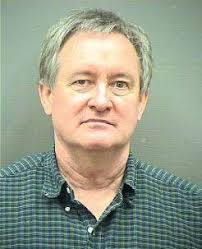
Mike Crapo
Crapo had been elected to the House of Representatives in 1992. After three terms in the House he successfully ran for the Senate in 1998.
On December 23, 2012, Crapo was arrested in Alexandria, Virginia, for driving under the influence. Crapo was pulled over after an officer saw him run a red light.
According to CBS News, Crapo failed several field sobriety tests and was taken into custody without incident. He was later released on an unsecured $1,000 bond.
On January 4, 2013, Crapo pleaded guilty to a drunk driving charge and was sentenced to a $250 fine and court costs, one-year suspension of his driver’s license, and court-ordered alcohol education and awareness classes.
But there’s more to this tale than mere political embarrassment. There’s also a story of religious hypocrisy to be told.
Crapo is a member of the Church of Jesus Christ of Latter-day Saints—the Mormons. He graduated from the church’s Brigham Young University in 1973 with a B.A. in political science.
Among those acts that Mormons are forbidden to partake in is the drinking of alcohol. It’s part of the “Word of Wisdom” embraced by staunch church members: A ban on any use of alcohol, tobacco, coffee and tea.
Indulging in any of these won’t get you excommunicated (as will, say, adultery or murder, which the church puts on the same level of evil). But it can get you banned from entering a Mormon temple, reserved for only the most devout members.
It is in their temples that Mormons perform such rituals as wedding ceremonies and proxy “baptisms for the dead.”
This inevitably came as a huge embarrassment for a man who represents Idaho, a state:
- Where government maintains a monopoly over sales of beverages with greater than 16% ABV;
- Where beer can be sold in grocery stores but not wine;
- Where the sale of distilled spirits is allowed only in certified Liquor Dispensary stores;
- Where 414,182 Mormons comprise the largest single religious group—at 26% of the population.
Thus, Crapo quickly released the following statement:
“I am deeply sorry for the actions that resulted in this circumstance. I made a mistake for which I apologize to my family, my Idaho constituents and any others who have put their trust in me.
“I accept total responsibility and will deal with whatever penalty comes my way in this matter. I will also undertake measures to ensure that this circumstance is never repeated.”
In November, 2016, Crapo was re-elected to a fourth Senate term.
Among his legislative accomplishments:
- Opposing President Barack Obama’s Affordable Care Act, which makes access to health care available to all Americans. He did so after being diagnosed with prostate cancer in 1999 and undergoing surgery to remove all or part of the prostate gland in January 2000.
- Opposing expanded background checks for all gun buyers.
- Chairing the Committee on Banking, Housing and Urban Affairs, where he attacked the Consumer Financial Protection Bureau.
- Urging President Donald Trump to withdraw the United States from the climate-change Paris Agreement.
- Chairing the Committee on Banking, Housing and Urban Affairs, where he sought repeal of the Consumer Financial Protection Bureau. Created by the Dodd-Frank financial reform law, its purpose is to prevent a repeat of the 2008 Wall Street “meltdown” caused by the unchecked greed of speculators.
ABC NEWS, ALTERNET, AMERICABLOG, AP, BABY BOOMER RESISTANCE, BBC, BLOOMBERG, BUZZFEED, CALVIN COOLIDGE, CBS NEWS, CHERYL BEHYMER, CNN, CROOKS AND LIARS, DAILY KOS, DAILY KOZ, EMPLOYERS, FACEBOOK, FISHER & PHILLIPS LAW FIRM, FIVETHIRTYEIGHT, GLASSDOOR, HARPER’S MAGAZINE, HUFFINGTON POST, JERRY BROWN, JOB-SEEKERS, MEDIA MATTERS, MOTHER JONES, MOVEON, MSNBC, NBC NEWS, NEW REPUBLIC, NEWSDAY, NEWSWEEK, NPR, PBS NEWSHOUR, POLITICO, POLITICUSUSA, RAW STORY, REUTERS, SALARY HISTORY, SALON, SEATTLE TIMES, SLATE, SUSAN EGGMAN, TALKING POINTS MEMO, THE ATLANTIC, THE CHICAGO SUN-TIMES, THE CHICAGO TRIBUNE, THE DAILY BEAST, THE DAILY BLOG, THE GUARDIAN, THE HILL, THE HUFFINGTON POST, THE INTERCEPT, THE LOS ANGELES TIMES, THE NATION, THE NEW REPUBLIC, THE NEW YORK TIMES, THE NEW YORKER, THE VILLAGE VOICE, THE WASHINGTON POST, THINKPROGRESS, TIME, TRUTHDIG, TRUTHOUT, TWITTER, TWO POLITICAL JUNKIES, U.S. NEWS & WORLD REPORT, UNEMPLOYMENT, UPI, USA TODAY, USA TODAY NICCOLO MACHIAVELLI, WAGE GAP, X
In Bureaucracy, Business, History, Politics, Social commentary on January 3, 2018 at 2:38 am
“All those who have written upon civil institutions demonstrate…that whoever desires to found a state and give it laws, must start with assuming that all men are bad and ever ready to display their vicious nature, whenever they may find occasion for it.
“If their evil disposition remains concealed for a time, it must be attributed to some unknown reason; and we must assume that it lacked occasion to show itself. But time, which has been said to be the father of all truth, does not fail to bring it to light.”
Niccolo Machiavelli knew what he was writing about.
And now, California legislators have wisely—if belatedly—acted on that warning by reigning in the vicious nature of corporate employers.
As of January 1, it is now illegal for California employers to ask job applicants about their former salaries and benefits.
Governor Jerry Brown signed a new state privacy bill into law during the last week of December, 2017.
This is good news for applicants who believe they shouldn’t be judged on how much—or little—money they earned in the past.
The truth is that, for decades, employers have used “salary histories” to discriminate against applicants who earned large—or small—salaries in their previous jobs.
For example: If an applicant had been paid a miserly wage even though he had performed major tasks for an employer, the new potential one would use that low salary as a weapon against him: “Well, it says here you earned $—– in your most recent job. Why should we pay you more than that?”
And if an applicant had earned a high salary, an employer would often use that against him: “We can’t afford to match that, let alone give you more than that.” In many cases, employers simply refused to give a reason for refusing to hire the applicant.
In either case, it was clearly an “I win/You lose” situation.
And, naturally, when employers whined about how expensive it was to pay a living wage to those who made their profits a reality, they never mentioned the exorbitant salary paid to their own CEO.
According to Glassdoor: “Across all companies, the average CEO pay was $13.8 million per year, the average median worker pay was about $77,800, and the average ratio of CEO pay to median worker pay was 204. In other words, on average, CEOs earn around 204 times what his or her median worker earns.” 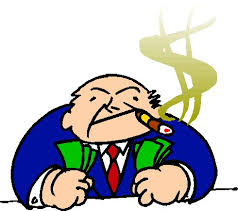
One job-seeking applicant tried to finesse the salary history demand by filling out the job application form except for the salary history part. He then attached a cover-letter, which read:
“I am interested in speaking with you or one of your representatives about the above-named position. I have filled out the required application—-with the exception of the box inquiring into my Current/last Income.
“I have in the past responded to ‘Salary History’ inquires and have found these have only one purpose: To elicit the lowest salary received, so that the salary to be offered can be adjusted to that level.
“I have been paid on a per-hour basis, a per-assignment basis, and on a bi-weekly basis. Each of these salaries was for a different job, and each job required a specific set of skills and efforts on my part.
“I am prepared to discuss in detail how my skills and experiences can prove of use to your company. But I do not discuss past salaries earned with anyone but the Internal Revenue Service.
“If you are prepared to hire on the basis of what I can do for your company, and not on the basis of what other employers have paid me in the past for assignments that had nothing to do with your company, please contact me at your earliest convenience.”
As of January 1, 2018, California job-seekers will no longer have to worry about that part of the application.
Supporters of the law believe it will help reduce the notorious wage-gap between male and female employees.
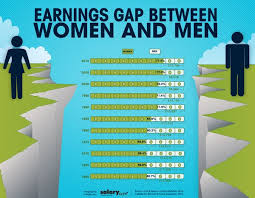
“Women negotiating a salary shouldn’t have to wrestle an entire history of wage disparity,” said the bill’s principal author, California Assemblywoman Susan Talamantes Eggman.
California’s new law also requires potential employers to disclose a salary range for the job in question, should an applicant ask about it.
This arms job seekers with valuable information because they will now know how much a company is willing to offer for that position.
In the past, employers held that information close to the vest as one more way of gaining control over their potential employee.
Although California has long been a trailblazer in employee/employer relations, it was not the first state to pass such a law. Oregon, Delaware and Massachusetts had already passed laws forbidding employers from asking about salary history.
Many employers and their paid shills believe that President Calvin Coolidge was right when he said: “The man who builds a factory builds a temple; the man who works there worships there.”
Cheryl Behymer, an attorney for the law firm Fisher & Phillips, which represents employers, said: “Here’s another point where the government is dictating to an employer how to conduct its business and employers resent that.”
As do all tyrants forced to relinquish any part of their tyranny.
ABC NEWS, ALTERNET, AP, ARMAGEDDON, BUZZFEED, CBS NEWS, CNN, CROOKS AND LIARS, DAILY KOZ, FACEBOOK, JESUS CHRIST, MOTHER JONES, MOVEON, NBC NEWS, NEW YEAR'S DAY, NEW YEAR'S EVE, NEWSWEEK, NPR, POLITICO, RAW STORY, REUTERS, RIOTS, SALON, SAN FRANCISCO, SEATTLE TIMES, SLATE, SOREN KIERKEGAARD, THE ATLANTIC, THE CHICAGO SUN-TIMES, THE CHICAGO TRIBUNE, THE DAILY BEAST, THE GUARDIAN, THE HILL, THE HUFFINGTON POST, THE LOS ANGELES TIMES, THE MILLENNIUM, THE NATION, THE NEW YORK TIMES, THE WASHINGTON POST, TIME, TWITTER, U.S. NEWS & WORLD REPORT, UPI, USA TODAY, Y2K
In Business, History, Social commentary on January 2, 2018 at 12:06 am
New Year’s Eve, 2017, now lies behind us.
But for those who consciously lived through December 31, 1999, there will never be another New Year’s Eve like it.
New Year’s Eve is traditionally a time for people to reflect on the major events of the previous 12 months. Some of these are highly personal. Others have been shared by the entire country.
Some of these remembrances inevitably bring pleasure. Others bring pain.
But at the heart of every New Year’s Eve celebration is the fantasy that you get to start fresh in a matter of hours. And with that fantasy comes hope—that, this time, you can put your sorrows and failures behind you.
New Year’s Eve, 1999, was marked far more by apprehension and fear than joy.
- Fear of Y2K—that our highly computerized, globally-interconnected world would crash when the “19″ at the start of every year was replaced with a “20″.
- Fear of Armageddon—that Jesus, after dying 2,000 years ago, would return to destroy mankind (except for those 144,000 righteous souls He deemed worthy of salvation).
- Fear of the Millennium itself—of ending not simply another decade and century but an entire thousand-year period of history, and thus losing our historical ties to the familiar highlights of our own (and America’s) past.
And, especially where Y2K was concerned, news commentators were quick to stoke our anxieties.
For those living on the West Coast of the United States on December 31, 1999, the day began with news reports of celebrations of the New Year in such distant countries as Australia and New Zealand.
“So far,” each of these reports ended, “there have been no reports of Y2K-related outages.”
But the underlying message was clear: Stay tuned—it could still happen. And this message kept blaring for the rest of the day and into the evening.
Long before New Year’s Eve, TV newscasters repeatedly warned that, when midnight struck on January 1, 2000, the three places you did not want to be were:
- In an airplane.
- In an elevator.
- In a hospital.
Countless numbers of people in America and around the world stocked up on food, water, batteries and other essentials for surviving an emergency.
Merchants and police feared widespread rioting and violence. If Y2K didn’t set it off, then fears of a heaven-sent Apocalypse might.
In San Francisco, along Powell Street—a major center of tourism and commerce—store owners boarded up their doors and windows as New Year’s Eve approached. Many closed earlier than usual that day.
At 9 p.m. California time, a friend of mine turned off a VCR and turned on a local news station to watch celebrations—or chaos—unfold in New York City.
If the lights went off in New York at midnight Eastern time, then, in three more hours, the same would happen in California.
When he saw lights glittering in Times Square, he felt reasonably certain that Y2K would probably be a dud.
Fortunately, no Y2K disasters occurred.
Three people I know decided to throw an “End of the World” party. They didn’t believe the world was coming to an end. But they decided to throw an “absolute last blast” party as though it were.
Among the items they stockpiled for this occasion:
- Country pork spareribs
- Yams
- Crabs
- Apple cidar
- Black olives
- Fresh cranberries
- Avacodos
- Chocolate chip ice cream
- Lambrusco
- Gin and tonic water
- Root beer
- Smoked cheese
- Artichoke hearts
- Pumpkin cream mousse cake
- Chocolate cake
- Pickles
- Asparagus
It was definitely an unforgettable night.
New Year’s Eve 1999 is now 18 years distant. But some lessons may still be learned from it:
Each year is a journey unto itself–filled with countless joys and sorrows. Many of these joys can’t be predicted. And many of these tragedies can’t be prevented.
Learn to tell real dangers from imaginary ones. Computers are real—and sometimes they crash. Men who died 2,000 years ago do not leap out of graveyards, no matter what their disciples predict.
Don’t expect any particular year to usher in the Apocalypse. In any given year there will be wars, famines, earthquakes, riots, floods and a host of other disasters. These have always been with us–and always will be. As Abraham Lincoln once said: “The best thing about the future is that it comes one day at a time.”

Don’t expect some Great Leader to lead you to success. As Gaius Cassius says in William Shakespeare’s “Julius Caesar”: “Men at some time are masters of their fate. The fault, dear Brutus, is not in our stars but in ourselves that we are underlings.”
Don’t expect any particular year or event to usher in your happiness. To again quote Lincoln: “Most people are about as happy as they make up their minds to be.”
If your life seems to make no sense to you, consider this: The philosopher Soren Kierkegaard once noted: “Life can only be understood backwards, but it must be lived forwards.”
9/11, ABC NEWS, ALTERNET, AP, BILL CLINTON, BUREAUCRACY, BUZZFEED, CBS NEWS, CNN, COMMUNIST JOKES, CROOKS AND LIARS, DAILY KOZ, FACEBOOK, GERMANS, GULF WAR, HUMOR, ILLEGAL ALIENS, immigration, INVESTIGATIVE PROJECT ON TERRORISM, IRAQIS, ISLAMOFASCISM, ISRAEL, JAPANESE, JIHAD, JIHADIST, JIHIADI, KGB, LANGUAGE, MADELINE ALBRIGHT, MOTHER JONES, MOVEON, MUSLIMS, NBC NEWS, NEWSWEEK, NICCOLO MACHIAVELLI, NPR, POLITICAL CORRECTNESS, POLITICO, RAW STORY, REUTERS, SALON, SATIRE, SEATTLE TIMES, SLATE, STEVEN EMERSON, TERRORISM, THE, THE ATLANTIC, THE CHICAGO SUN-TIMES, THE CHICAGO TRIBUNE, THE DAILY BEAST, THE GUARDIAN, THE HILL, THE HUFFINGTON POST, THE LOS ANGELES TIMES, THE NATION, THE NEW YORK TIMES, THE PRINCE, THE WASHINGTON POST, TIME, TWITTER, U.S. NEWS & WORLD REPORT, U.S. STATE DEPARTMENT, UNDOCUMENTED IMMIGRANTS, UPI, USA TODAY, VIETNAM WAR, VIETNAMESE, WORLD WAR 11
In History, Humor, Politics, Social commentary, Uncategorized on January 1, 2018 at 12:10 am
On June 8, 2010, newspapers around the world headlined the latest triumph of Politically Correct language.
The Israeli government had apologized for circulating a video parodying the lyrics of Michael Jackson’s hit, “We Are the World.” Its purpose: To mock terrorists from the Gaza flotilla smuggling arms into Gaza.
In early June, 2010, six Hamas ships set out in defiance of the Israel’s blockade of Gaza. One of those ships, the Mavi Marmara, suffered nine casualties during a subsequent Israeli raid on the flotilla.
In the video, Israelis dressed up as terrorists offer their own take on the incident through song.

Among its lyrics:
We’ll make the world
Abandon reason.
We’ll make them all believe that the Hamas
Is Momma Theresa.
We are peaceful travelers
We’re waving our own knives.
The truth will never find its way to your TV.
Click here: The Flotilla Choir Presents We Con The World – YouTube
The Israeli Government Press Office distributed footage of the music video to foreign journalists on June 4, but then sent an apology to reporters just hours later, insisting it had been an accident.
“The contents of the video in no way represent the official policy of either the Government Press Office or of the State of Israel,” Israel’s Government Press Office later told CNN.
But the retraction did not stop “We Con the World” from becoming an Internet hit, getting over three million views in less than a week
By issuing such an apology the Israeli government forfeited a vital weapon in its ongoing struggle for not simply sovereignty but survival: Ridicule.
Every great tyrant has feared the laughter of his enemies. For that reason, the Roman Emperor Augustus banished the satirical poet, Ovid, from Rome and the KGB worked overtime to suppress anti-Communist jokes.

It’s clear that Israeli bureaucrats—like American ones—have caught the Political Correctness disease, where even the most criminally depraved are off-limits as targets for satire.
During most of the eight-year Presidency of Bill Clinton, the State Department applied the “rogue state” moniker to nations like Iran, Iraq and North Korea.
In a 1994 lecture, Madeleine Albright, then U.S. ambassador to the United Nations, defined a rogue state as one that actively tried to undermine the international system.
But in 2000, the State Department declared that it would no longer refer to such nations as “rogues.” Instead, they would now be referred to as “states of concern.”
“Rogue,” said a State Department spokesman, was “inflammatory,” and might hamper the efforts of the United States to reach agreements with its sworn enemies.
In short, it’s become Politically Incorrect to refer to even our sworn enemies as enemies.
As Steven Emerson, president of the Investigative Project on Terrorism (IPT) puts it: “If you can’t name your enemy, how can you defeat him?”
During World War 11, GIs—and their commanders—routinely referred to German soldiers as “Krauts.” Japanese soldiers were universally referred to as “Japs.”
Throughout the Vietnam war, North Vietnamese troops were called “gooks,” “dinks” and “Charlie.” During the 1991 Gulf War, American soldiers called Iraqi soldiers “ragheads.”
Admittedly, that’s not the sort of language to use in polite company.
But there is nothing polite about war, and it’s unrealistic to expect those whose lives could be snuffed out at any moment to be Politically Correct in talking about deadly enemies.
The United States has been at war with Islamic nations since September 11, 2001. But terms such as “jihadist,” “jihadi” and “mujahedeen” are now officially forbidden by the Pentagon.
So is “Islamofascism,” a term often used to describe Islamic aggression against other countries—especially non-Muslim ones.
Similarly, the American government now seeks to impose the same Political Correctness restrictions on how to refer to daily invasions of its sovereign borders.
“Illegal alien” is taboo—although totally accurate. An “alien” is defined as “a foreigner, especially one who is not a naturalized citizen of the country where they are living.”
And a foreigner who violates another country’s immigration laws is in that country illegally.
“Undocumented immigrant” is the new fashionable term to be used by all federal agents charged with enforcing Anmerica’s immigration laws.
Liberals feel that this sounds nicer, and won’t offend our “little brown brothers” south of the Rio Grande.
“Undocumented immigrant” makes it seem as though the mass violations of America’s national border are no big deal. You might even think the illegal alien simply lost his legal papers while sneaking across the border.
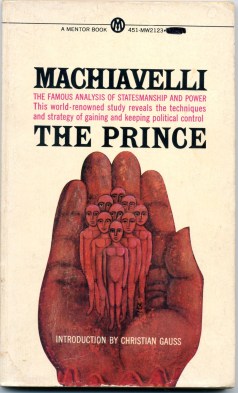
More than 500 years ago, Niccolo Machiavelli, the father of modern political science, laid out the guidelines for effective propaganda. In his notorious book, The Prince, he wrote:
…Men in general judge more by the eyes than by the hands, for every one can see, but very few have to feel. Everyone sees what you appear to be, few feel what you are….
Apparently, many people in government are now convinced: If you don’t admit there is a problem, the problem doesn’t exist.
ABC NEWS, ALTERNET, AP, BBC, BOB CORKER, BUZZFEED, CBS NEWS, CNN, COMMODUS, DAILY KOS, DONALD TRUMP, FACEBOOK, MIKA BRZEZINSKI, MORNING JOE, MOTHER JONES, MOVEON, NBC NEWS, NEWSWEEK, NICCOLO MACHIAVELLI, NPR, POLITICO, QATER, RAW STORY, REPORTERS COMMITTEE FOR FREEDOM OF THE PRESS, REUTERS, REX TILLERSON, SALON, SARAH HUCKABEE SANDERS, SAUDI ARABIA, SEATTLE TIMES, SLATE, THE ATLANTIC, THE CHICAGO SUN-TIMES, THE CHICAGO TRIBUNE, THE DAILY BEAST, THE GUARDIAN, THE HILL, THE HUFFINGTON POST, THE LOS ANGELES TIMES, THE NEW YORK TIMES, THE PRINCE, THE WALL STREET JOURNAL, THE WASHINGTON POST, TIME, TODD WOMACK, TWITTER, U.S. NEWS & WORLD REPORT, UPI, USA TODAY
In Bureaucracy, History, Politics, Self-Help, Social commentary on December 29, 2017 at 12:29 am
If Donald Trump ever read The Prince, by Niccolo Machiavelli, the Florentine statesman, he’s decided he doesn’t need it. And his ever-falling popularity among Americans clearly proves his mistake.
First published in 1532, The Prince lays bare the qualities needed by a successful political leader. At the top of this list must be creating and preserving a sense of his own dignity. Thus, he must appear to be a combination of mercy, faith, integrity, humanity and religion.
As Machiavelli puts it:
A prince must take great care that nothing goes out of his mouth which is not full of the above-named five qualities, and he should seem to be all mercy, faith, integrity, humanity and religion.
Since taking office on January 20, Trump has violated Machiavelli’s injunction on integrity with a vengeance. He has been caught in repeated falsehoods–so many, in fact, that the New York Times gave over its June 23 front page to a story headlined: “Trump’s Lies.”
According to the Times, Trump “told public falsehoods or lies every day for his first 40 days.”
“There is simply no precedent,” went the Times‘ opinion piece, “for an American president to spend so much time telling untruths. Every president has shaded the truth or told occasional whoppers.
“No other president—of either party—has behaved as Trump is behaving. He is trying to create an atmosphere in which reality is irrelevant.”

Donald Trump
Machiavelli also advises:
[He] must contrive that his actions show grandeur, spirit, gravity and fortitude….
It’s hard to convey those qualities in a series of 140-character rants on Twitter. Yet, from the start of his Presidency, Trump has put his ambitions, excuses and rants on social media.
As CNN Political Analyst Julian Zelizer outlined in a July 3 article:
“Putting aside the specific content of the recent blasts from the Oval smart phone, the President’s ongoing Twitter storms make all leaders uneasy. The heads of government in most nations prefer a certain amount of predictability and decorum from other heads of state.
“To have one of the most powerful people in the room being someone who is willing to send out explosive and controversial statements through social media, including nasty personal attacks or an edited video of him physically assaulting the media, does not make others….feel very confident about how he will handle deliberations with them.”
Trump’s apologists have fiercely defended his tweetstorms, claiming they allow him to bypass the media and “communicate directly with the American people.”
On October 8, Trump attacked retiring Tennessee United States Senator Bob Corker on Twitter:
“Senator Bob Corker ‘begged’ me to endorse him for re-election in Tennessee. I said ‘NO’ and he dropped out (said he could not win without…”
“..my endorsement). He also wanted to be Secretary of State, I said “NO THANKS.” He is also largely responsible for the horrendous Iran Deal!”
“…Hence, I would fully expect Corker to be a negative voice and stand in the way of our great agenda. Didn’t have the guts to run!”
Corker decided to give Trump a taste of his own Twitter medicine: “It’s a shame the White House has become an adult day care center. Someone obviously missed their shift this morning.”
Later that day, Corker told The New York Times: “He concerns me. He would have to concern anyone who cares about our nation.
“I know for a fact that every single day at the White House, it’s a situation of trying to contain him,”
And Todd Womack, Corker’s chief of staff, flatly called Trump a liar: “The president called Senator Corker on Monday afternoon and asked him to reconsider his decision not to seek reelection and reaffirmed that he would have endorsed him, as he has said many times.”
Machiavelli urged rulers to safeguard their reputations:

Niccolo Machiavelli
…A prince must show himself a lover of merit, give preferment to the able, and honor those who excel in every art.
Besides this, he ought, at convenient seasons of the year, to keep the people occupied with festivals and shows….mingle with them from time to time, and give them an example of his humanity and munificence, always upholding, however, the majesty of his dignity, which must never be allowed to fail in anything whatever.
Rulers who disregard this advice do so at their peril:
A prince need trouble little about conspiracies when the people are well disposed. But when they are hostile and hold him in hatred, then he must fear everything and everybody….
…[The Roman Emperor Commodus], being of a cruel and bestial disposition, in order to…exercise his rapacity on the people, he sought to favor the soldiers and render them licentious.
On the other hand, by not maintaining his dignity, by often descending into the theater to fight with gladiators and committing other contemptible actions…he became despicable in the eyes of the soldiers. And being hated on the one hand and despised on the other, he was conspired against and killed.
Donald Trump has repeatedly violated these lessons. It remains to be seen if he will pay a price for doing so.
1984, ABC NEWS, ALTERNET, AP, BUZZFEED, CBS NEWS, CHRISTMAS, CNN, CROOKS AND LIARS, DAILY KOZ, FACEBOOK, FOX NEWS, GEORGE ORWELL, JESUS, MEGYN KELLY, MOTHER JONES, MOVEON, NBC NEWS, NEWSWEEK, NPR, POLITICO, RAW STORY, REUTERS, SALON, SANTA CLAUS, SEATTLE TIMES, SLATE, STARBUCK'S, THE ATLANTIC, THE CHICAGO SUN-TIMES, THE CHICAGO TRIBUNE, THE DAILY BEAST, THE GUARDIAN, THE HILL, THE HUFFINGTON POST, THE LOS ANGELES TIMES, THE NATION, THE NEW YORK TIMES, THE WASHINGTON POST, TIME, TWITTER, U.S. NEWS & WORLD REPORT, UPI, USA TODAY, WAR ON CHRISTMAS
In Bureaucracy, Business, History, Politics, Social commentary on December 28, 2017 at 12:22 am
The annual “war on Christmas” is over—for now.
Every December, Americans relive the traditions of the Christmas holiday season:
- Christmas trees
- Nativity scenes
- Singing carols
- Exchanging gifts with family and friends.
And if you’re an employee of Fox News, creating fresh ways to stir up controversy over a non-existent “war on Christmas.”
Stirring up false controversies is a daily assignment for the alleged reporters of Fox News, which is owned by Right-wing oligarch Rupert Murdoch.
But Christmas is special, so, each year, the executives at Fox find a new way to stir up emotions by resurrecting the “war on Christmas” slander.
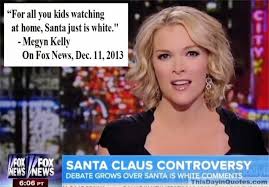
In 2013, it fell to Fox hostess Megyn Kelly to carry the ball. And she did so on December 11 on “The Kelly File,” her then-popular Fox News program.
Referring to an article by Slate writer Aisha Harris on “Santa Claus Should Not Be a White Man Anymore,” she said:
“When I saw this headline, I kinda laughed and I said, ‘Oh, this is ridiculous. Yet another person claiming it’s racist to have a white Santa.’
“And by the way, for all you kids watching at home, Santa just is white. But this person is maybe just arguing that we should also have a black Santa. But, you know, Santa is what he is, and just so you know, we’re just debating this because someone wrote about it, kids.”
Of course, Santa Claus is a completely fictional character. Arguing about his skin color is as pointless as arguing about his weight.
But Kelly wasn’t content to talk only about Santa. So she turned next to Jesus, a historical figure about whom we have not a single reference to his appearance, let alone a picture.
“Just because it makes you feel uncomfortable doesn’t mean it has to change. You know, I mean, Jesus was a white man, too,” Kelly said.
“He was a historical figure; that’s a verifiable fact—as is Santa, I want you kids watching to know that—but my point is: How do you revise it, in the middle of the legacy of the story, and change Santa from white to black?”
Santa Claus a verifiable historical figure? Not even Charlie Brown, in the annually telecast “Peanuts” Christmas special, would make that claim.
Like Fox News, Donald Trump has found there’s a lot of support to be gained by claiming there’s a “war on Christmas.”
In 2015, Starbucks issued a plain red cup minus imagery, triggering a backlash among image-obsessed Christians, who saw it as an “attack” on Christmas.
When Trump—then running for President—learned of the change in Starbucks cups, he was outraged. Or claimed to be.
“Did you read about Starbucks?” Trump asked supporters during a rally in Springfield, Ill. “No more ‘Merry Christmas’ at Starbucks. No more. Maybe we should boycott Starbucks.
“If I become president, we’re all going to be saying ‘Merry Christmas’ again,” Trump told the crowd—as if, by becoming President, he could, like a king, issue such an order. “That I can tell you. That I can tell you! Unbelievable.”
Donald Trump
On November 17, 2016, a Trumpster using the screen name Baked Alaska came up with a new idea to intimidate Starbucks.
Going on Twitter, he advised fellow Trumpsters to proceed with “Operation #TrumpCup.” All they had to do was:
- Go to Starbucks & tell them your name is Trump.
- If they refuse take video
- Pls share and spread the word.
One Trumpster subsequently posted on Twitter the following: “I got my Starbucks with Trump name. He yelled Trump get your drink #TrumpCup“
Another one proudly tweeted: “@bakedalaska did this today. They didn’t want to, said it was too political. I reminded her the campaign was over & he’s our president now. pic.twitter.com/LHgi7Vqexh.”
And after Trump became President, his fanatical followers were quick to thank him for “allowing us to say ‘Merry Christmas’ again.”
They did so in a $1 million ad that began running after Christmas Day.
Sponsored by the pro-Trump political action committee, America First Policies, the ad features several “average Americans” thanking Trump in the style of a king’s subjects paying homage to an absolute monarch:
Narrator: “Every day, Americans are standing up to thank President Trump for making America great again.”
Man: “Thank you for cutting my taxes.”
Man: “Thank you for fixing our economy.”
Woman: “Thank you for keeping my family safe.”
Man: “Thank you for putting America first.”
And, at the end, a little girl says, “Thank you, President Trump, for letting us say ‘Merry Christmas’ again.”
In George Orwell’s classic novel, 1984, Oceania is always at war with Eurasia or Eastasia. Its citizens are kept in a constant state of frenzy as they’re directed to search for endless “enemies of the state.”
This, in turn, allows the unseen rulers of Oceania to run their dictatorship without interference.
It’s a blueprint for power not lost on the men who run Fox News.
Or on Donald Trump
ABC NEWS, ADOLF HITLER, ALTERNET, AP, BBC, BUZZFEED, CBS NEWS, CNN, DAILY KOS, DAVID BROOKS, DONALD TRUMP, FACEBOOK, FBI, GEORGE C. SCOTT, GEORGE S. PATTON, GESTAPO, HOGAN’S HEROES, JAMES COMEY, JIMMY CARTER, MEL BROOKS, MIKE FLYNN, MOTHER JONES, MOVEON, NAZI GERMANY, NBC NEWS, NEWSWEEK, NPR, PAUL RYAN, PBS NEWSHOUR, POLITICO, RAW STORY, REPUBLICAN PARTY, REUTERS, RICHARD GRUNBERGER, RICHARD NIXON, ROBERT MEULLER, Ronald Reagan, SALON, SEATTLE TIMES, SLATE, SOVIET UNION, THE 12-YEAR REICH, THE ATLANTIC, THE CHICAGO SUN-TIMES, THE CHICAGO TRIBUNE, THE DAILY BEAST, THE GUARDIAN, THE HILL, THE HUFFINGTON POST, THE LOS ANGELES TIMES, THE NEW YORK TIMES, THE WALL STREET JOURNAL, THE WASHINGTON POST, TIME, TWITTER, U.S. NEWS & WORLD REPORT, UPI, USA TODAY, WAFFEN-SS, WEHRMACHT
In Bureaucracy, History, Law, Law Enforcement, Politics, Social commentary on December 27, 2017 at 2:10 am
While the Nazi Party ruled Germany from 1933 to 1945, its influence over all aspects of Germans’ lives was suffocating.
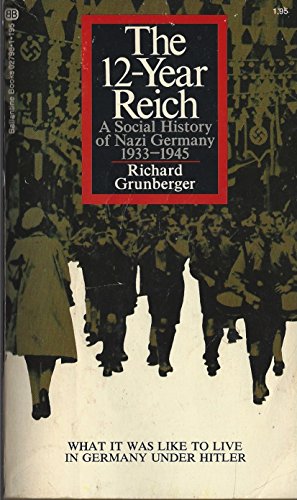
“The persuasive influence of the Nazi regime reached into every corner of everyday life in Germany,” reads the back cover of Richard Grunberger’s classic 1971 book, The 12-Year Reich.
“Censorship prevailed, education was undermined, family life was idealized, but children were encouraged to turn in disloyal parents.
“‘Volk’ festivals, party rallies, awards, uniforms, pageantry all played a part in the massive effort to shape the mind of a nation.”
And yet, after the Reich surrendered unconditionally to the Allies on May 8, 1945, a strange thing happened: Virtually no one in Germany admitted to having been a Nazi—or having even known one.
American and British soldiers couldn’t find any German veterans willing to admit they had ever fought against Western, democratic nations. All the once-proud legionaries of the Wehrmacht and Waffen-SS swore they had been fighting “the real enemy”—the Russians—on the Eastern front.
And then there were all the stories of Germans who, at great risk to themselves, had hidden Jews in their attics. Which left unanswered the question: If so many “good Germans” had saved so many Jews, how had six million Jews died horrifically before the Reich fell?
In short: Adolf Hitler had lost the war he started—making him a loser nobody wanted to be identified with.
In the decades since, the “loser” tag has continued to stick with those who once served the Third Reich. Mel Brooks has repeatedly turned German soldiers—once the pride of the battlefield—into idiotic comic foils.
Even the fearsome Gestapo was spoofed for laughs on the long-running TV comedy, “Hogan’s Heroes.”

“Hogan’s Heroes”
“Americans love a winner,” George C. Scott as George S. Patton says at the outset of the classic 1970 movie. “And will not tolerate a loser.”
And that is why Republicans have stuck so closely with President Donald J. Trump.
A typical example of this occurred on June 8 after former FBI director James Comey testified before the United States Senate Select Committee on Intelligence.
Comey revealed that, on February 14, Trump had ordered everyone but Comey to leave a crowded meeting in the Oval Office.
“I want to talk about Mike Flynn,” said Trump.
Flynn had resigned the previous day from his position as National Security Adviser. The FBI was investigating him for his previously undisclosed ties to Russia.
“I hope you can see your way clear to letting this go, to letting Flynn go,” said Trump. “He is a good guy. I hope you can let this go.”
This was clearly an attempt by Trump to obstruct the FBI’s investigation.
Yet Republican House Speaker Paul Ryan rushed to excuse his clearly illegal behavior: “He’s new at government, so therefore I think he’s learning as he goes.”
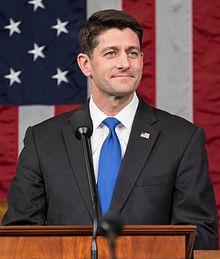
Paul Ryan
David Brooks, the conservative New York Times columnist, offered a more accurate explanation of Trump’s motives. Speaking on The PBS Newshour, Brooks said:
“We are a nation of laws. Donald Trump lives in an entirely different cultural universe. He is more clannist, believing in clan, believing in family, believing in loyalty, not recognizing objective law, not recognizing the procedures that is really how modern government operates….
“It’s not only that he doesn’t know the rules, but at all along and throughout his presidency, he has sort of trampled on the rules almost as a matter of policy, as a matter of character, because he doesn’t believe in that kind of relationships. It’s all personal loyalty, not about laws and norms and standards.”
Republicans don’t fear that Trump will trash the institutions that Americans have cherished for more than 200 years. Institutions like an independent judiciary, a free press, and an incorruptible Justice Department.
He has already attacked all of these—and Republicans have either said nothing or rushed to his defense.
What Republicans truly fear about Donald Trump is that he will finally cross one line too many—like firing Special Counsel Robert Meuller. And that the national outrage following this will force them to launch impeachment proceedings against him.
But it isn’t even Trump they fear will be destroyed.
What they most fear losing is their own hold on nearly absolute power in Congress and the White House.
If Trump is impeached and possibly indicted, he will become a man no one any longer fears. He will be a figure held up to ridicule and condemnation.
Like Adolf Hitler. Like Richard Nixon.
And his Congressional supporters will be branded as losers along with him.
Republicans vividly remember what happened after Nixon was forced to resign on August 9, 1974: Democrats, riding a wave of reform fever, swept Republicans out of the House and Senate—and Jimmy Carter into the White House.
What Ronald Reagan once said about the leadership of the Soviet Union now literally applies to that of the Republican Party:
“They…have openly and publicly declared that the only morality they recognize is what will further their cause, meaning they reserve unto themselves the right to commit any crime, to lie, to cheat, in order to attain that.”
ABC NEWS, ADOLF HITLER, ALBERT SPEER, ALTERNET, ANDY BIGGS, AP, BUZZFEED, CBS NEWS, CNN, CROOKS AND LIARS, DAILY KOZ, DONALD TRUMP, FACEBOOK, FBI, FOX NEWS NETWORK, GEORGE PAPADOPOULOS, GEORGE W. BUSH, JASON CHAFFETZ, JIM JORDAN, JUSTICE DEPARTMENT, LOUIS GOHMERT, MATTHEW GAETS, MICHAEL FLYNN, MOTHER JONES, MOVEON, NAZI GERMANY, NBC NEWS, NEWSWEEK, NPR, ORIN HATCH, PAUL MANAFORT, PAUL RYAN, POLITICO, RAW STORY, REPUBLICANS, REUTERS, RICK GATES, ROBERT MUELLER, SALON, SEAN HANNITY, SEATTLE TIMES, SERGEY KISLYAK, SERGEY LAVROV, SLATE, THE ATLANTIC, THE CHICAGO SUN-TIMES, THE CHICAGO TRIBUNE, THE DAILY BEAST, THE GUARDIAN, THE HILL, THE HUFFINGTON POST, THE LOS ANGELES TIMES, THE NATION, THE NEW YORK TIMES, THE WASHINGTON POST, TIME, TWITTER, U.S. NEWS & WORLD REPORT, UPI, USA TODAY, USA TODAY JAMES COMEY, WORLD WAR 11
In Bureaucracy, History, Law Enforcement, Politics, Social commentary on December 26, 2017 at 3:26 pm
On March 19, 1945, facing certain defeat, German Fuhrer Adolf Hitler ordered a massive “scorched-earth” campaign throughout Germany.
Albert Speer, Minister of Armaments for the Third Reich, was appalled. All German agriculture, industry, ships, communications, roads, food stuffs, mines, bridges, stores and utility plants were to be destroyed.
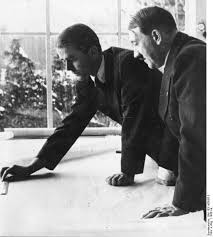
Albert Speer and Adolf Hitler pouring over architectural plans
If implemented, it would deprive the entire German population of even the barest necessities after the war.
Now living in a bunker 50 feet below bomb-shattered Berlin, Hitler gave full vent to his most destructive impulses.
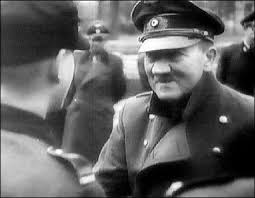
Adolf Hitler addressing boy soldiers as the Third Reich crumbles
“If the war is lost,” Hitler told Speer, “the nation will also perish. This fate is inevitable. There is no necessity to take into consideration the basis which the people will need to continue even a most primitive existence.
“On the contrary, it will be better to destroy these things ourselves, because this nation will have proved to be the weaker one and the future will belong solely to the stronger eastern nation.
“Besides, those who will remain after the battle are only the inferior ones, for the good ones have all been killed.”
Republicans have adopted the same “my-way-or-else” stance as Hitler. Like him, they are determined to gain and hold absolute power—or destroy the Nation they claim to love.
Take their current attitude toward—and attacks on—the U.S.Department of Justice and its chief investigative agency, the FBI.
On May 9, 2017, President Donald Trump fired FBI Director James Comey. Comey had been leading an investigation into alleged collusion between Trump advisers and Russian officials when he was fired.
At first, Trump claimed that he fired Comey for mishandling the FBI’s investigation into Hillary Clinton’s use of a private email server.
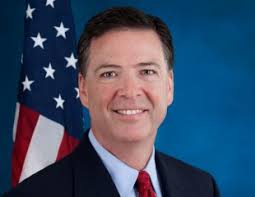
James Comey
But, during a May 10 meeting at the White House, Trump admitted to Russian Foreign Minister Sergey Lavrov and Russian Ambassador Sergey Kislyak: “I faced great pressure because of Russia. That’s taken off.”
Following the uproar over Comey’s firing, on May 17, the Justice Department appointed former FBI director Robert Mueller as Special Counsel to investigate any links the between Russian government and Trump campaign members.
Congressional Republicans joined Democrats in praising the appointment.
- House Oversight and Government Reform Chairman Jason Chaffetz, R-Utah, who had relentlessly pursued Hillary Clinton, said: “Mueller is a great selection. Impeccable credentials. Should be widely accepted.”
- “I commend (Department of Justice) for bringing in an independent voice to help bring clarity to this situation,” said Senator Orrin Hatch, R-Utah, a senior member of the Senate Judiciary Committee.
- House Speaker Paul Ryan, R-Wis., said, “My priority has been to ensure thorough and independent investigations are allowed to follow the facts wherever they may lead. That is what we’ve been doing here in the House. The addition of Robert Mueller as special counsel is consistent with this goal, and I welcome his role at the Department of Justice.”
Yet, since May, Trump, his shills in Congress and Right-wing Fox News have relentlessly attacked Mueller’s integrity and investigative methods. This despite the fact that Mueller was appointed by Republican President George W. Bush and served with an impeccable reputation for 12 years as FBI director (2001-2013).
The attacks grew increasingly vicious as Mueller uncovered evidence linking former high-ranking members of the Trump Presidential campaign to Russian Intelligence officials:
- Former national security adviser Michael Flynn pleaded guilty in December to lying to the FBI about his private conversations with Russian ambassador Kislyak. He is now cooperating with Mueller’s office.
- Trump’s former campaign chairman Paul Manafort and his deputy Rick Gates were indicted in October. They have pleaded not guilty and ordered under house arrest.
- George Papadopoulos, the former Trump campaign foreign policy adviser, pleaded guilty in October to lying to the FBI about his dealings with two Russians who had ties to the Russian government.
And the Republican response?
- “A witch hunt continues against the president with tremendous bias, no purpose and no end in sight,” charged Rep. Matthew Gaets (R-Florida).
- Gaetz joined Rep. Andy Biggs (R-Arizona) and Louie Gohmert (R-Texas) in demanding that Mueller resign because he was the FBI director in 2010 when Federal agencies approved the sale of Uranium One, a Canadian energy company, to a Russian nuclear-energy firm.
- “I think the public trust in this whole thing is gone,” said Rep. Jim Jordan (R-Ohio), a founder of the Right-wing Freedom Caucus.
- “Let’s start off with the head of the snake,” said Sean Hannity, the Fascistic commentator on Right-wing Fox News. “Mueller’s credibility is in the gutter tonight with these new discoveries, his conflicts of interests, his clear bias, the corruption are on full display. Mueller is frankly a disgrace to the American justice system and has put the country now on the brink of becoming a banana republic.”
There are three reasons for these attacks:
First, Republicans fear that Trump’s followers—the hard-core Fascists who turn out in mid-term elections—will reject them if they reject Trump.
Second, they fear that if Mueller’s investigation leads to Trump’s impeachment, they will be turned out of Congress—as many were after Richard Nixon resigned in disgrace.
Third, reports have circulated that many Congressional Republicans have received financial (and possibly intelligence) support from the Kremlin.
ABC NEWS, ALTERNET, AP, BUZZFEED, CBS NEWS, CLASS WARFARE, CNN, CROOKS AND LIARS, DAILY KOZ, DANA CARVEY, DICK CHENEY, ECONOMIC DISPARITY, FACEBOOK, FRANK CAPRA, GEORGE BAILEY, HENRY F. POTTER, IT'S A WONDERFUL LIFE, JAMES STEWART, LIONEL BARRYMORE, MOTHER JONES, MOVEON, MOVIES, NBC NEWS, NEWSWEEK, NPR, POLITICO, RAW STORY, REUTERS, SALON, SATURDAY NIGHT LIVE, SEATTLE TIMES, SLATE, THE ATLANTIC, THE CHICAGO SUN-TIMES, THE CHICAGO TRIBUNE, THE DAILY BEAST, THE GUARDIAN, THE HILL, THE HUFFINGTON POST, THE LOS ANGELES TIMES, THE NATION, THE NEW Y ORK TIMES, THE NEW YORK TIMES, THE WASHINGTON POST, TIME, TWITTER, U.S. NEWS & WORLD REPORT, UNEMPLOYMENT, UPI, USA TODAY
In Business, Entertainment, Law, Law Enforcement, Politics, Social commentary on December 25, 2017 at 12:01 am
Every Christmas, TV audiences find comfort and triumph in the rerunning of a black-and-white 1946 movie: It’s a Wonderful Life.
It’s the story of George Bailey (James Stewart), a decent husband and father who hovers on the brink of suicide—until his guardian angel, Clarence, suddenly intervenes.

Clarence reveals to George what his home town, Bedford Falls, New York, would be like if he had never been born. George finds himself shocked to learn:
- With no counterweight to the schemes of rapacious slumlord Henry F. Potter, Bedford Falls becomes Potterville, filled with pawn shops and sleazy nightclubs.
- With no George Bailey to save his younger brother, Harry, from drowning in a frozen pond, Harry drowns.
- With no Harry to live to become a Naval fighter pilot in World War II, he’s not on hand to shoot down two Japanese planes targeting an American troopship.
- As a result, the troopship and its crew are destroyed.
George is forced to face the significant role he has played in the lives of so many others.
Armed with this knowledge, he once again embraces life, running through the snow-covered streets of Bedford Falls and shouting “Merry Christmas!” to everyone he meets.
Audiences have hailed George Bailey as an Everyman hero—and the film as a life-affirming testament to the unique importance of each individual.
But there is another aspect of the movie that has not been so closely studied: The legacy of its villain, Henry F. Potter, who, as played by Lionel Barrymore, bears a striking resemblance to former Vice President Dick Cheney.

Henry F. Potter
It is Potter—the richest man in Bedford Falls—whose insatiable greed threatens to destroy it. And it is Potter whose criminality drives George Bailey to the brink of suicide.
The antagonism between Bailey and Potter starts early in the movie. George dreams of leaving Bedford Falls and building skyscrapers. Meanwhile, he works at the Bailey Building and Loan Association, which plays a vital role in the life of the community.
Potter, a member of the Building and Loan Association board, tries to persuade the board of directors to dissolve the firm. He objects to their providing home loans for the working poor.
George persuades them to reject Potter’s proposal, but they agree only on condition that George run the Building and Loan. Reluctantly, George agrees.
Later, Potter tries to lure George away from the Building and Loan, offering him a $20,000 salary and the chance to visit Europe. George is briefly tempted.
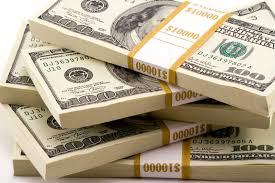
But then he realizes that Potter intends to close down the Building and Loan and deny financial help to those who most need it. Angrily, he turns down Potter’s offer:
“You sit around here and you spin your little webs and you think the whole world revolves around you and your money. Well, it doesn’t, Mr. Potter!
“In the whole vast configuration of things, I’d say you were nothing but a scurvy little spider.”
It is a setback for Potter, but he’s willing to bide his time for revenge.
On Christmas Eve morning, the town prepares a hero’s welcome for George’s brother, Harry. George’s scatter-brained Uncle Billy visits Potter’s bank to deposit $8,000 of the Building and Loan’s cash funds.
He taunts Potter by reading the newspaper headlines announcing the coming tribute. Potter snatches the paper, and Billy unthinkingly allows the money to be snatched with it.
When Billy leaves, Potter opens the paper and sees the money. He keeps it, knowing that misplacement of bank money will bankrupt the Building and Loan and bring criminal charges against George.
But at the last minute, word of George’s plight reaches his wide range of grateful friends. A flood of townspeople arrive with more than enough donations to save George and the Building and Loan.
The movie ends on a triumphant note, with George basking in the glow of love from his family and friends.
But no critic seems to have noticed that Henry Potter’s theft has gone unnoticed. (Uncle Billy can’t recall how he lost the money.) Potter is richer by $8,000. And ready to go on taking advantage of others.
Perhaps it’s time to see Potter’s actions in a new light—that of America’s richest 1%, ever ready to prey upon the weaknesses of others.
Justice never catches up with Potter in the movie. But the joke-writers at Saturday Night Live have conjured up a satisfactory punishment for his avarice.
In this version, Uncle Billy suddenly remembers that he left the money with Potter. Enraged, George Bailey (Dana Carvey) leads his crowd of avenging friends to Potter’s office.
Potter realizes the jig is up and offers to return the money. But George wants more than that—and he and his friends proceed to stomp and beat Potter to death.
The skit ends with with George and his friends singing “Auld Ang Syne”—as they do in the movie—as they finish off Potter with clubs.
America is rapidly a divided nation—one where the richest 1% lord it over an increasingly impoverished 99%.
The time may be coming when many Americans are ready to embrace the SNL approach to economic justice.




.jpg)


 Bureaucracybuster's Blog
ABC NEWS, ALTERNET, ARNOLD SCHWARXENEGGER, BARACK OBAMA, BREITBART NEWS, BUZZFEED, CBS NEWS, CIA, CNN, DAILY KOS, DONALD TRUMP, FACEBOOK, FBI, FLETCHER KNEBEL, HILLARY LINTON, JEFF SESSIONS, JOHN OLIVER, JOSH EARNEST, MARK LEVIN, MENTAL ILLNESS, MERYL STREETP, MOTHER JONES, MOVEON, NATIONAL SECURITY AGENCY, NBC NEWS, NEIL YOUNG, NEW JERSEY, NEWSWEEK, NIGHT AT CAMP DAVID, NPR, OBAMACARE, POLITICO, RAW STORY, RUSSIA, SALON, SEVEN DAYS IN MAY, SLATE, THE CHICAGO SUN-TIMES, THE CHICAGO TRIBUNE, THE DAILY BEAST, THE HUFFINGTON POST, THE LOS ANGELES TIMES, THE NEW YORK TIMES, THE WALL STREET JOURNAL, THE WASHINGTON POST, THIS WEEK, TIME, TWITTER, U.S. NEWS & WORLD REPORT, USA TODAY, WATERGATE, WIRETAPPING
IS THERE A MADMAN IN THE WHITE HOUSE?
In Bureaucracy, History, Medical, Politics, Social commentary on January 5, 2018 at 11:02 amOn March 4, 2017, in a series of unhinged tweets, President Donald J. Trump accused former President Barack Obama of tapping his Trump Tower phones prior to the election:
“Terrible! Just found out that Obama had my ‘wires tapped’ in Trump Tower just before the victory. Nothing found. This is McCarthyism!”
“Is it legal for a sitting President to be ‘wire tapping’ a race for president prior to an election? Turned down by court earlier. A NEW LOW!”
“I’d bet a good lawyer could make a great case out of the fact that President Obama was tapping my phones in October, just prior to Election!”
“How low has President Obama gone to tapp my phones during the very sacred election process. This is Nixon/Watergate. Bad (or sick) guy!”
President Barack Obama
Trump offered no proof to substantiate his libelous claims.
There are three plausible theories about what prompted Trump’s accusations.
Theory #1: They were prompted by Right-wing media outlets that had been pushing wiretapping claims in recent days.
On March 2, Right-wing radio host Mark Levin claimed that Obama had used “powers of the federal government to surveil members of the Trump campaign.”
Referring to Attorney General Jeff Sessions and his newly disclosed meetings with Russia’s ambassador in 2016, Levin asked: “Today’s reporting on Sessions having a chance meeting with the ambassador–where did that information come from? Look at the timing of it. Was Obama surveilling top Trump campaign officials during the election?”
On March 3, the Fascist media site Breitbart News echoed that charge. Its story was based on Levin’s show and offered no evidence to back up its accusations.
Trump could have first contacted the directors of the FBI, CIA and National Security Agency–the agencies which are authorized to conduct such an operation. He couldhave asked them, “Did you wiretap me?”
They could have quickly and confidentially given him an answer. And if it was “Yes,” they would have been able to provide him with the records to document it.
That would have been the action of a rational President. But Trump chose to act like a child–or, worse, an unbalanced adult.
After reading the Breitbart story, Trump impulsively chose to go on Twitter and make libelous accusations.
Theory #2: Trump, under scrutiny for ties between his campaign and Russia, sought to deflect attention by making an outrageous accusation.
Donald Trump
Former White House Press Secretary Josh Earnest gave his own take on Trump’s motivation. Appearing on the March 5, 2017 edition of ABC’s “This Week”, he said: “We know exactly why President Trump tweeted what he tweeted.
“Because there is one page in the Trump White House crisis management playbook. And that is simply to tweet or say something outrageous to distract from the scandal, and the bigger the scandal, the more outrageous the tweet.”
Earnest served as White House Press Secretary under President Obama from 2014 to 2017.
He added: Obama could not have legally ordered a wiretap: “The President of the United States does not have the authority to unilaterally order the wiretapping of an American citizen.”
Theory #3: Trump is too mentally unbalanced to hold the Presidency–and command of America’s nuclear arsenal.
Trump’s shoot-first-and-never-mind-the-consequences approach to life has been thoroughly documented.
From June 15, 2015, when he launched his Presidential campaign, until October 24, 2016, he fired nearly 4,000 angry, insulting tweets at 281 people and institutions. The New York Times needed two full pages of its print edition to showcase them.
Among these targets were:
And during his first two weeks as President, Trump attacked 22 people, places and things on his @realDonaldTrump account.
Trump’s vindictiveness, his narcissism, his compulsive aggression, his complaints that his “enemies” in government and the press are trying to destroy him, have caused many to ask: Could the President of the United States be suffering from mental illness?
One who has dared to answer this question is John D. Gartner, a practicing psychotherapist.
John D. Gartner
Gartner graduated magna cum laude from Princeton University, received his Ph.D in clinical psychology from the University of Massachusetts, and served as a part time assistant professor of psychiatry at Johns Hopkins University Medical School for 28 years.
During an interview by U.S. News & World Report (published on January 27), Gartner said: “Donald Trump is dangerously mentally ill and temperamentally incapable of being president.”
Gartner said that Trump suffers from “malignant narcissism,” whose symptoms include anti-social behavior, sadism, aggressiveness, paranoia and grandiosity.
“We’ve seen enough public behavior by Donald Trump now that we can make this diagnosis indisputably,” says Gartner, who admits he has not personally examined Trump.
In 1965, Fletcher Knebel, the best-selling author of Seven Days in May, raised the then-unthinkable question: “What would happen if the President of the U.S.A. went stark-raving mad?”
He did so in his novel, Night of Camp David.
In 1965, the idea that an American President might become insane was thought so outlandish it could only appear in a novel.
Fifty-three years later, it’s no longer unthinkable. For millions, it’s a terrifying reality.
Share this: