Posts Tagged ‘ROBERT MUELLER’
2016 PRESIDENTIAL ELECTION, ABC NEWS, ADOLF HITLER, AL QAEDA, ALTERNET, AMERICAN EXCEPTIONALISM, AMERICAN NAZIS, AMERICAN RECKONING: THE VIETNAM WAR AND OUR NATIONAL IDENTITY (BOOK), AP, BARACK OBAMA, BASHIR AL-ASSAD, BUZZFEED, CANADA, CBS NEWS, CHINA, CHRISTIAN G. APPY, CNN, CROOKS AND LIARS, DAILY KOZ, DEMOCRATS, EMOLUMENTS CLAUSE, FACEBOOK, FASCISM, FBI, FEDERAL JUDICIARY, FLATTERY, GOVERNMENT SHUTDOWN, GREAT BRITAIN, HOUSE UN-AMERICAN ACTIVITIES COMMITTEE, HUMAN RIGHTS, INTELLIGENCE COMMUNITY, JAMES COMEY, JEFF SESSIONS, JOHN BOEHNER, JOHN MCCAIN, KIM JONG-UN, KU KLUX KLAN, MICHAEL FLYNN, MOTHER JONES, MOVEON, MSNBC, NBC NEWS, NEWSWEEK, NPR, PBS NEWSHOUR, POLITICO, RAW STORY, REPUBLICANS, REUTERS, ROBERT MUELLER, RUSSIA, RUSSIAN SUBVERSION, SALLY YATES, SALON, SEATTLE TIMES, SLATE, SYRIA, THE ATLANTIC, THE CHICAGO SUN-TIMES, THE CHICAGO TRIBUNE, THE DAILY BEAST, THE GUARDIAN, THE HILL, THE HUFFINGTON POST, THE LOS ANGELES TIMES, THE NATION, THE NEW YORK TIMES, THE PRESS, THE WASHINGTON POST, TIME, TREASON, TWITTER, TYRANNY, U.S. NEWS & WORLD REPORT, UNITED STATES CONSTITUTION, UPI, USA TODAY, VIETNAM WAR, VLADIMIR PUTIN, WILLIAM BARR
In Bureaucracy, History, Military, Politics, Social commentary on June 4, 2019 at 12:05 am
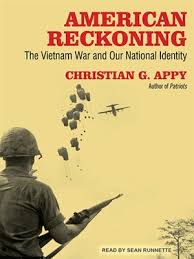
“Who are we?” asks Christian G. Appy in the opening of his 2015 book, American Reckoning: The Vietnam War and Our National Identity.
For Appy, it’s impossible to understand the enormous impact of the Vietnam war on the United States without first understanding the image that Americans had of themselves before that conflict. And he describes that image as:
“The broad faith that the United States [was] a unique force for good in the world, superior not only in its military and economic power but in the quality of its government and institutions, the character and morality of its people, and its way of life…..
“It was still unimaginable to most Americans that their own nation would wage aggressive war and justify it with unfounded claims, that it would support undemocratic governments reviled by their own people, and that American troops would be sent to fight in countries where they were widely regarded not as liberators but as imperialist invaders.”
Appy contends that, for millions of Americans, the Vietnam war dealt a mortal blow to that tremendously appealing self-image.
Yet for millions more, the United States remains an exemplary nation with a divine mission to lead other nations—willingly or unwillingly—to follow its example. And those Americans become furious when anyone—especially a foreigner—dares question that belief.
On September 11, 2013, the New York Times published an Op-Ed (guest editorial) from Russian President Vladimir Putin, entitled: “A Plea for Caution from Russia: What Putin Has to Say to Americans About Syria.”
To no one’s surprise, Putin strongly opposed an American air strike on Syria. Its “President” (i.e., dictator) Bashir al-Assad, is a close ally of Russia. Just as his late father and dictator, Hafez al-Assad, was a close ally of the Soviet Union.
And Putin is a former member of the KGB, the infamous secret police which ruled the Soviet Union from its birth in 1917 to its collapse in 1991.
In his September 11 guest editorial in the New York Times, Putin offered the expected Russian take on Syria:
- Poison gas was used in Syria.
- It wasn’t used by the Syrian Army.
- “Opposition forces [used it] to provoke intervention by their powerful foreign patrons.”
- “There are few champions of democracy in Syria. But there are more than enough [al] Qaeda fighters and extremists of all stripes battling the government.”
But it’s the concluding paragraph that enraged American politicians the most—especially Right-wing ones. In it, Putin took exception with American “exceptionalism.”
Referring to then-President Barack Obama, Putin wrote:
“And I would rather disagree with a case he made on American exceptionalism, stating that the United States’ policy is ‘what makes America different. It’s what makes us exceptional.’
“It is extremely dangerous to encourage people to see themselves as exceptional, whatever the motivation. There are big countries and small countries, rich and poor, those with long democratic traditions and those still finding their way to democracy. Their policies differ, too.
“We are all different, but when we ask for the Lord’s blessings, we must not forget that God created us equal.”
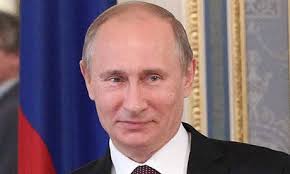
Vladimir Putin
Putin has never publicly shown any interest in religion. But by invoking “the Lord,” he was able to turn the Christian beliefs of his Western audience into a useful weapon.
Americans’ outrage quickly erupted.
“I was insulted,” then-House Speaker John Boehner (R-Ohio) told reporters when asked for his blunt reaction to the editorial.
“I have to be honest with you, I was at dinner, and I almost wanted to vomit,” said U.S. Senator Bob Menendez (D-New Jersey).
Putin had dared to question the self-righteousness of American foreign policy—and those who make it.
Making his case for war with Syria, Obama had said: “America is not the world’s policeman….But when, with modest effort and risk, we can stop children from being gassed to death, and thereby make our own children safer over the long run, I believe we should act.
“That’s what makes America different. That’s what makes us exceptional. With humility, but with resolve, let us never lose sight of that essential truth.”
In short: Because we consider ourselves “exceptional,” we have the divine right to do whatever we want.
It’s not necessary to see Putin as a champion of democracy (he isn’t) to see the truth in this part of his editorial:
“It is extremely dangerous to encourage people to see themselves as exceptional, whatever the motivation.”
From 1938 to 1969, the House Un-American Activities Committee sought to define what was “American” and what was “Un-American.” As if “American” stood for all things virtuous.
Whoever heard of an “Un-French Activities Committee”? Or an “Un-German” or “Un-British” one?
The late S.I. Hayakawa was a professor of semantics (the study of the relationship between words and what they stand for).
In his bestselling book, Language in Thought and Action, he observed that a person has four ways of responding to a message:
- Accept the speaker and his message.
- Accept the speaker but reject the message.
- Accept the message but reject the speaker.
- Reject the message and the speaker.
Americans might want to consider #3 where “American exceptionalism” is concerned.
2003 IRAQ WAR, ABC NEWS, ADOLF HITLER, ALTERNET, AP, BARACK OBAMA, BILL KRISTOL, BUZZFEED, CBS NEWS, CNN, CONSTITUTION OF THE UNITED STATES, CROOKS AND LIARS, DAILY KOZ, DEMOCRATIC PARTY, DEMOCRATS, DONALD TRUMP, ELIZABETH WARREN, FACEBOOK, FUHRER OATH, GEORGE W. BUSH, IMPEACHMENT, MEET THE PRESS, MOTHER JONES, MOVEON, MSNBC, MUELLER REPORT, NAZI GERMANY, NBC NEWS, NEWSWEEK, NPR, PAUL VON HINDENBURG, PBS NEWSHOUR, POLITICO, RAW STORY, REPUBLICAN PARTY, REPUBLICANS, REUTERS, ROBERT MUELLER, SADDAM HUSSEIN, SALON, SEATTLE TIMES, SLATE, SYRIA, THE ATLANTIC, THE CHICAGO SUN-TIMES, THE CHICAGO TRIBUNE, THE DAILY BEAST, THE GUARDIAN, THE HILL, THE HUFFINGTON POST, THE LOS ANGELES TIMES, THE NATION, THE NEW YORK TIMES, THE WASHINGTON POST, TIME, TWITTER, U.S. NEWS & WORLD REPORT, UNITED STATES HOUSE OF REPRESENTATIVES, UNITED STATES SENATE, UPI, USA TODAY
In Bureaucracy, History, Law, Law Enforcement, Military, Politics, Social commentary on May 14, 2019 at 12:05 am
William Kristol—a Right-wing political analyst—has been dubbed “the godfather of neoconservatism.” And with good reason.
During the first two years of the George W. Bush administration, as the editor of the Weekly Standard, he was one of the leading instigators of the 2003 war with Iraq.
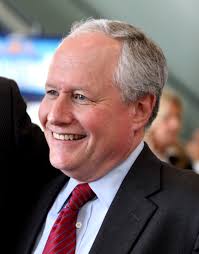
Bill Kristol
He—like senior officials on the George W. Bush administration—falsely claimed that Iraqi dictator Saddam Hussein had weapons of mass destruction and planned to use them against the United States.
Another Kristol lie: Hussein planned 9/11 with Osama bin Laden.
He has never apologized for either lie—or the resulting war that killed 4,487 American soldiers and wounded another 32,226.
But even after the disaster of the 2003 war against Iraq, Kristol wasn’t through urging the United States into another murderous quagmire.
In a September, 2013 column, Kristol called for a return to war—not only in Syria but Iran as well:
“…Soon after voting to authorize the use of force against the [Bashar al-] Assad regime, Republicans might consider moving an authorization for the use of force against the Iranian nuclear weapons program.
“They can explain that [President Barack] Obama’s dithering in the case of Syria shows the utility of unequivocally giving him the authority to act early with respect to Iran.”
So it’s no small thing that Kristol has found himself agreeing with Democratic Massachusetts United States Senator and 2020 Presidential candidate Elizabeth Warren that Democrats should begin impeachment proceedings against President Donald Trump.
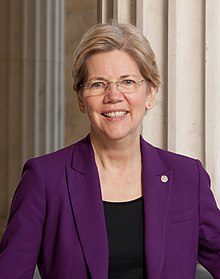
Elizabeth Warren
He did so on a segment of MSNBC’s “Meet the Press” on May 7, 2019.
Earlier in the day, Elizabeth Warren had stated on the Senate floor:
“More than 600 federal prosecutors have now said that what’s laid out in the Mueller Report would constitute obstruction of justice, and would trigger a prosecution for any human being in this country other than the President of the United States.
“Robert Mueller put all of the facts together for us, put all of the information together for us, and abided by the Trump administration declaration under the Office of Legal Counsel that a sitting president cannot be indicted for his crimes.
“We took an oath not to try and protect Donald Trump, we took an oath to protect and serve the Constitution of the United States of America, and the way we do that is we begin impeachment proceedings now against this president.”
On February 15, 2019, Kristol had posted this tweet on Twitter:
“Members of Congress take this oath of office (see Title 5, Section 3331 of the United States Code): “I do solemnly swear (or affirm) that I will support and defend the Constitution of the United States against all enemies, foreign and domestic; that I will bear true faith and allegiance to the same; that I take this obligation freely, without any mental reservation or purpose of evasion, and that I will well and faithfully discharge the duties of the office on which I am about to enter. So help me God.”
On May 7, in a blistering attack on his fellow Republicans, he posted “the new GOP Congressional oath”:
“I do solemnly swear that I will support and defend Donald Trump against all oversight; that I will bear true faith and allegiance to him; that I take this obligation despite mental reservation and in the spirit of evasion of duty. So help me God.”
Hours later, Kristol appeared before a “Meet the Press” panel and attacked Democrats for being “so terrified about the word impeachment that we can’t even have hearings….I must say I agree with Elizabeth Warren. I never thought I would say this.
“Robert Mueller’s report… invited Congress to take a look for itself at the obstruction of justice charges. They have an obligation to do it. They don’t have to impeach him. They may take a look and decide there aren’t grounds for impeachment. Maybe they wanna censure him…I think Elizabeth Warren’s right. Begin the hearings.”
Kristol’s “new GOP Congressional oath” is a deadly reminder of another oath that had fatal consequences for Nazi Germany—and the world.
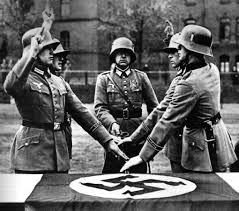
Soldiers swearing the Fuhrer Oath
On August 2, 1934, President Paul von Hindenburg died. Adolf Hitler was then serving as Reich Chancellor—the equivalent of attorney general. Within hours, the Nazi Reichstag [parliament] announced the following law, back-dated to August 1st:
“The office of Reich President will be combined with that of Reich Chancellor. The existing authority of the Reich President will consequently be transferred to the Führer and Reich Chancellor, Adolf Hitler.”
Immediately following the announcement of the new Führer law, the German Officer Corps and every individual soldier in the German Army was made to swear a brand new oath of allegiance:
“I swear by God this holy oath, that I will render to Adolf Hitler, Führer of the German Reich and People, Supreme Commander of the Armed Forces, unconditional obedience, and that I am ready, as a brave soldier, to risk my life at any time for this oath.”
No doubt Kristol, who considers himself a dyed-in-the-wool conservative, remembers all too well the fate of those old-time conservatives who dared oppose Hitler.
The lucky ones were sent to concentration camps. The unlucky ones wound up on meat hooks.
2016 PRESIDENTIAL CAMPAIGN, ABC NEWS, ALEXANDER SHUSTOROVICH, ALTERNET, ANDREW INTRATER, AP, BARACK OBAMA, BILL CLINTON, BLACKS, BUZZFEED, CBS NEWS, CHUCK GRASSLEY, CIA, CITIZENS UNITED, CNN, COMMUNISM, CROOKS AND LIARS, DAILY KOZ, DEMOCRATIC PARTY, DEPARTMENT OF HOMELAND SECURITY, DONALD TRUMP, DWIGHT D. EISENHOWER, EDWARD R. MURROW, FACEBOOK, FBI, FEDERAL ELECTIONS COMMISSION, FOX NEWS, FRANKLIN D. ROOSEVELT, GEORGE C. MARSHALL, GEORGE H.W. BUSH, GOP, GREAT SOCIETY, H.L. HUNT, HARRY S. TRUMAN, HILLARY CLINTON, HOUSE OF REPRESENTATIVES, HOWARD HUGHES, JAMES COMEY, JOHN BIRCH SOCIETY, JOHN F. KENNEDY, JOHN KASICH, JOHN STEINBECK, JOSEPH R. MCCARTHY, JOSEPH STALIN, KGB, LEN BLAVATNIK, LIBERALS, LINDSEY GRAHAM, LUCILLE BALL, LYNDON B. JOHNSON, MARCO RUBIO, MEDICAL CARE, MITCH MCCONNELL, MITT ROMNEY, MOTHER JONES, MOVEON, NATIONAL SECURITY AGENCY, NBC NEWS, NEWSWEEK, NORTH ATLANTIC TREATY ORGANIZATION (NATO), NPR, OFFICE OF THE DIRECTOR OF NATIONAL INTELLIGENCE, OLIGARCHS, ORRIN HATCH, PAUL RYAN, PETE SEEGER, POLITICAL ACTION COMMITTEES (PACS), POLITICO, PROPAGANDA, RAW STORY, REPUBLICAN PARTY, REPUBLICANS, REUTERS, RICHARD NIXON, ROBERT MUELLER, ROBERT WELCH, ROD ROSENSTEIN, RODNEY KING RIOTS, RUSSIA, SALON, SCAPEGOATING, SCOTT WALKER, SEATTLE TIMES, SENATE LEADERSHIP FUND, SIMON KUKES, SLATE, SOCIALISTS, SOVIET UNION, SUPREME COURT, THE ATLANTIC, THE CHICAGO SUN-TIMES, THE CHICAGO TRIBUNE, THE DAILY BEAST, THE GUARDIAN, THE HILL, THE HUFFINGTON POST, THE LOS ANGELES TIMES, THE NATION, THE NEW YORK TIMES, THE WASHINGTON POST, TIME, TRUMP INAUGURAL COMMITTEE, TWITTER, U.S. NEWS & WORLD REPORT, UNITED STATES SUPREME COURT, UPI, USA TODAY, VLADIMIR PUTIN, WIKILEAKS, WORLD WAR 11
In Bureaucracy, History, Military, Politics, Social commentary on May 13, 2019 at 12:07 am
During the 1970s and 1980s, Republicans continue to accuse Democrats of being acting agents—or at least unwitting pawns—of “the Communist conspiracy.”
As late as 1992, President George H.W. Bush and the Republican establishment charge that Arkansas Governor Bill Clinton might be a KGB plant.
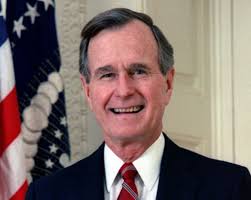
George H.W. Bush
Their “evidence”: During his tenure at Oxford University in 1969-70, Clinton had briefly visited Moscow.
In short: Clinton might have been “programmed” as a real-life “Manchurian candidate” to become, first, Governor of Arkansas—one of America’s poorest states—and then President.
Making this charge even more absurd: The Soviet Union had officially dissolved in December, 1991.
After the Soviet Union’s collapse, Republicans find that accusing Democrats of being “Commies” doesn’t carry the same weight.
So they turn to “domestic enemies” to rail—and run—against: Liberals, blacks, Hispanics, “uppity” women, war protesters, lesbians, gays, and—after 9/11—Muslims.
From 1945 to 1991, it is unthinkable for a Republican Presidential candidate to pay tribute to a Soviet dictator.
But that utterly changes when Donald J. Trump, a “reality TV” host with longstanding financial ties to Russian oligarchs, runs for President of the United States.
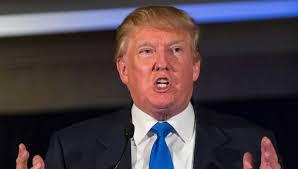
Donald Trump
Trump lavishly praises Russian President Vladimir Putin—and even invites him to directly interfere in the 2016 Presidential race.
The reason for the Trump-Putin bromance is simple: Each has something to offer the other.
Putin wants the United States to ditch the North Atlantic Treaty Organization (NATO) alliance, which has preserved Western Europe from Russian aggression since World War II. And Trump has often attacked America’s funding of NATO as a drain on the American economy.
And Trump wants to be President. For this, Putin can supply monies, Internet trolls to confuse voters with falsified news, and even the hacking of key voting centers.
These Russian monies are officially classified as “campaign contributions”—not bribes.
On July 22, 2016, Wikileaks releases 19,252 emails and 8,034 attachments hacked from computers of the highest-ranking officials of the Democratic National Committee (DNC). Early reports trace the leak to Russian hackers.
“Russia, if you are listening,” Trump says at a press conference in Doral, Florida, “I hope you are able to find the 33,000 emails that are missing [from Democratic Presidential candidate Hillary Clinton’s computer]. I think you will probably be rewarded mightily by our press.”
This is treason—calling upon a foreign power, hostile to the United States, to interfere in its Presidential election.
Hours later, the Main Intelligence Directorate in Moscow targets Clinton’s personal office and hits more than 70 other Clinton campaign accounts.
Nor is Trump the only Republican receiving “help” from Putin. A network of Russian oligarchs—all of them answerable to Putin—has been increasingly contributing to top Republicans.
According to the Federal Election Commission:
One such major contributor is Len Blavatnik, who holds citizenship in both the United States and the United Kingdom. During the 2015-16 election cycle, he proves one of the largest donors to GOP Political Action Committees (PACs).
Blavatnik’s net worth is estimated at $20 billion. Before 2016, he donates to both Democrats and Republicans in meager amounts. But in 2016, he gives $6.35 million to GOP PACs.
Millions of dollars go to top Republican leaders—such as Senators Mitch McConnell, Marco Rubio (Florida) and Lindsey Graham (South Carolina). Specifically, he contributes:
- A total of $1.5 million to PACs associated with Rubio.
- $1 million to Trump’s Inaugural Committee.
- $41,000 to both Republicans and Democrats in 2017.
- $1 million to McConnell’s Senate Leadership Fund.
- $3.5 million to a PAC associated with McConnell.
- $1.1 million to Unintimidated PAC, associated with Wisconsin Governor Scott Walker.
- $200,000 to the Arizona Grassroots Action PAC, associated with Arizona Senator John McCain.
- $250,000 to New Day for America PAC, associated with Ohio Governor John Kasich.
- $800,000 went to the Security is Strength PAC, associated with Senator Lindsey Graham.
Another Russian oligarch, Alexander Shustorovich, contributes $1 million to Trump’s Inaugural Committee.
Altogether, four Russian oligarchs—Blavatnik, Shustorovich, Andrew Intrater and Simon Kukes—–contribute $10.4 million from the start of the 2015-16 election cycle through September 2017. Of this, 99% went to Republicans.
As Senate Majority Leader, Mitch McConnell participates in high-level intelligence briefings in 2016. From agencies such as the FBI, CIA and the code-cracking National Security Agency, he learns that the Russians are trying to subvert the electoral process.

In October, 2016, the Department of Homeland Security (DHS) and the Office of the Director of National Intelligence (DNI) issue a joint statement: The Russian government had directed the effort to subvert the 2016 Presidential election.
Two weeks later, McConnell’s PAC accepts a $1 million donation from Blavatnik.
On March 30, 2017, McConnell’s PAC accepts another $1 million from Blavatnik. This is just 10 days after former FBI Director James Comey testifies before the House Intelligence Committee about Russia’s efforts to subvert the 2016 election.
* * * * * * * * * *
So, what has changed in the Republican Party? Essentially nothing.
Its enemies changed—from Russian Communists to American liberals—but its goal remains the same: The quest for absolute power.
When Americans feared Communism, Republicans depicted themselves as the only ones who could be trusted to protect the United States. Big contributions poured in from Right-wing billionaires like H.L. Hunt and Howard Hughes.
But when Republicans found they could enrich themselves and stay in power via Russian “campaign contributions,” they decided: Better Red than un-elected.
2016 PRESIDENTIAL CAMPAIGN, ABC NEWS, ALEXANDER SHUSTOROVICH, ALTERNET, ANDREW INTRATER, AP, BARACK OBAMA, BILL CLINTON, BLACKS, BUZZFEED, CBS NEWS, CHUCK GRASSLEY, CIA, CITIZENS UNITED, CNN, COMMUNISM, CROOKS AND LIARS, DAILY KOZ, DEMOCRATIC PARTY, DEPARTMENT OF HOMELAND SECURITY, DONALD TRUMP, DWIGHT D. EISENHOWER, EDWARD R. MURROW, FACEBOOK, FBI, FEDERAL ELECTIONS COMMISSION, FOX NEWS, FRANKLIN D. ROOSEVELT, GEORGE C. MARSHALL, GEORGE H.W. BUSH, GOP, GREAT SOCIETY, H.L. HUNT, HARRY S. TRUMAN, HILLARY CLINTON, HOUSE OF REPRESENTATIVES, HOWARD HUGHES, JAMES COMEY, JOHN BIRCH SOCIETY, JOHN F. KENNEDY, JOHN KASICH, JOHN STEINBECK, JOSEPH R. MCCARTHY, JOSEPH STALIN, KGB, LEN BLAVATNIK, LIBERALS, LINDSEY GRAHAM, LUCILLE BALL, LYNDON B. JOHNSON, MARCO RUBIO, MEDICAL CARE, MITCH MCCONNELL, MITT ROMNEY, MOTHER JONES, MOVEON, NATIONAL SECURITY AGENCY, NBC NEWS, NEWSWEEK, NORTH ATLANTIC TREATY ORGANIZATION (NATO), NPR, OFFICE OF THE DIRECTOR OF NATIONAL INTELLIGENCE, OLIGARCHS, ORRIN HATCH, PAUL RYAN, PETE SEEGER, POLITICAL ACTION COMMITTEES (PACS), POLITICO, PROPAGANDA, RAW STORY, REPUBLICAN PARTY, REPUBLICANS, REUTERS, RICHARD NIXON, ROBERT MUELLER, ROBERT WELCH, ROD ROSENSTEIN, RODNEY KING RIOTS, RUSSIA, SALON, SCAPEGOATING, SCOTT WALKER, SEATTLE TIMES, SENATE LEADERSHIP FUND, SIMON KUKES, SLATE, SOCIALISTS, SOVIET UNION, SUPREME COURT, THE ATLANTIC, THE CHICAGO SUN-TIMES, THE CHICAGO TRIBUNE, THE DAILY BEAST, THE GUARDIAN, THE HILL, THE HUFFINGTON POST, THE LOS ANGELES TIMES, THE NATION, THE NEW YORK TIMES, THE WASHINGTON POST, TIME, TRUMP INAUGURAL COMMITTEE, TWITTER, U.S. NEWS & WORLD REPORT, UNITED STATES SUPREME COURT, UPI, USA TODAY, VLADIMIR PUTIN, WIKILEAKS, WORLD WAR 11
In Bureaucracy, History, Military, Politics, Social commentary on May 10, 2019 at 12:07 am
On September 7, 2018, former President Barack Obama asked: “What happened to the Republican Party?”
He did so as a guest speaker at the University of Illinois. And he quickly answered it:
“Its central organizing principle in foreign policy was the fight against communism, and now they’re cozying up to the former head of the KGB. Actively blocking legislation that would defend our elections from Russian attack. What happened?”
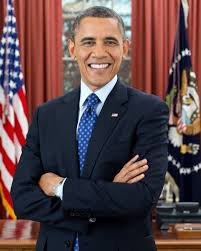
Barack Obama as President
On the surface, it seems the Republican Party has drastically changed. But, in reality, there has been no substantial change at all.
In 1932, Democratic nominee Franklin D. Roosevelt wins election against Republican President Herbert Hoover. So popular is he that he wins an unprecedented four terms—12 years!—in the White House, seeing America through the Great Depression and World War II,
In 1945, Roosevelt suddenly dies in office, leaving Vice President Harry S. Truman in command. He lacks the imperial magnetism and eloquence of FDR, so Republicans assume that 1948 will be a cakewalk for them.
But it isn’t. Instead, Truman wins a second term—and rubs it in by holding up the now-defunct headline, “DEWEY DEFEATS TRUMAN” for reporters to photograph.
By 1952, Republicans have been locked out of the White House for 20 years. They’re desperate to return—and angry enough to do anything to win.
They find attacking the integrity of their fellow Americans a highly effective tactic.
During the 1950s, Wisconsin United States Senator Joseph R. McCarthy rides a wave of paranoia to national prominence—by attacking the patriotism of anyone who disagrees with him.
Elected to the Senate in 1946, he rises to national prominence on February 9, 1950, after giving a fiery speech in Wheeling, West Virginia:
“The State Department is infested with communists. I have here in my hand a list of 205—a list of names that were made known to the Secretary of State as being members of the Communist Party and who nevertheless are still working and shaping policy in the State Department.”
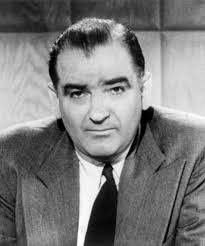
Senator Joseph R. McCarthy
Americans are already growing increasingly fearful of Communism:
- Soviet dictator Joseph Stalin has not withdrawn the Red Army from the countries it has occupied in Eastern Europe during World War II.
- In 1948, the Soviet Union develops—and demonstrates—its own atomic bomb, an achievement U.S. scientists had claimed would not happen for at least a decade.
- In 1949, China falls to the triumphant armies of Mao Tse Tung. Generalissimo Chaing Kai Shek is driven from mainland China to the tiny island of Taiwan.
Anti-communism as a lever to political advancement sharply accelerates following McCarthy’s speech.
Any American can be accused of being a Communist or a Communist sympathizer—”a Comsymp” or “fellow traveler” in the style of the era.
Among those accused:
- Secretary of State George C. Marshall, who had overseen America’s strategy for defeating Nazi Germany and Imperial Japan
- President Harry S. Truman
- Playwrights Lillian Hellman and Arthur Miller
- Actors Charlie Chaplin, Zero Mostel, Lloyd Bridges, Howard Da Silva, Edward G. Robinson and John Garfield
- Composers Arron Copland and Elmer Bernstein
- Physicist J. Robert Oppenheimer, who presided over the creation of America’s atomic bomb
- Actresses Lee Grant, Delores del Rio, Ruth Gordon and Lucille Ball
- Journalists Edward R. Murrow and William L. Shirer, who had chronicled the rise of Nazi Germany
- Folksinger Pete Seeger
- Writers Irwin Shaw, Howard Fast, John Steinbeck and Dashiell Hammett
Even “untouchable” Republicans become targets for such slander.
The most prominent of these is President Dwight D. Eisenhower—labeled ”a conscious, dedicated agent of the Communist Conspiracy” by Robert Welch, founder of the John Birch Society in 1958.
In 1953, McCarthy attacks the leadership of the United States Army as “a hotbed of traitors” and convenes an inquiry through the Senate Permanent Subcommittee on Investigations.
But the hearings backfire, exposing McCarthy as a bullying demagogue. A Senate committee condemns his behavior as acting “contrary to senatorial ethics and tended to bring the Senate into dishonor and disrepute.”
Yet even without McCarthy, Republicans ride the issue of anti-Communism to victory from 1948 to 1992. “Respectable” anti-Communists—like Richard M. Nixon—depict themselves as the only ones who can be trusted to safeguard America.
Republicans hold the White House for eight years under Dwight D. Eisenhower, then lose it in 1960 to John F. Kennedy and again in 1964 to Lyndon B. Johnson.
By 1968, with the nation mired in Vietnam and convulsed by antiwar demonstrations and race riots, Americans turn once more to those who prey upon their fears and hates.
They elect Richard Nixon, who promises to end the Vietnam war and attack “uppity” blacks and antiwar demonstrators—and, above all, “the Communist menace.”
The same strategy re-elects him in 1972.
Jimmy Carter wins the Presidency in 1976 and loses it in 1980 to Ronald Reagan.
Reagan doesn’t want to continue the “stalemate” of “containing” Communism. He intends to roll it back. Tensions rise between the United States and the Soviet Union—the highest since the Cuban Missile Crisis of 1962.
American proxies fight Soviet proxies in Afghanistan and Central America, but the world escapes nuclear holocaust.
ABC NEWS, ADOPTIONS, ALTERNET, AP, BUZZFEED, CBS NEWS, CNN, CROOKS AND LIARS, DAILY KOZ, DONALD TRUMP JUNIOR, FACEBOOK, HILLARY CLINTON, JARED KUSHNER, JAY SEKULOW, MAGNITSKY ACT, MOTHER JONES, MOVEON, MSNBC, Natalia NATALIA VESELNITSKAYA, NBC NEWS, NEWSWEEK, NPR, PAUL MANAFORT, POLITICO, RAW STORY, REUTERS, RINAT AKHMETSHIN, ROBERT MUELLER, RUDOLPH GIULIANI, RUSSIA, RUSSIAN INTELLIGENCE, SALON, SARAH HUCKABEE SANDERS, SEATTLE TIMES, SERGEI MAGNITSKY, SLATE, THE ATLANTIC, THE CHICAGO SUN-TIMES, THE CHICAGO TRIBUNE, THE DAILY BEAST, THE GUARDIAN, THE HILL, THE HUFFINGTON POST, THE LOS ANGELES TIMES, THE NATION, THE NEW YORK TIMES, THE WASHINGTON POST, TIME, TRUMP TOWER, TWITTER, U.S. NEWS & WORLD REPORT, UPI, USA TODAY, USA TODAY DONALD TRUMP, VLADIMIR PUTIN
In Bureaucracy, History, Law, Politics, Social commentary on April 5, 2019 at 12:17 am
On March 24, Attorney General William Barr released a four-page summary of Special Counsel Robert S. Mueller’s “Report on the Investigation into Russian Interference in the 2016 Presidential Election.”
According to Barr: “The Special Counsel did not find that the Trump campaign, or anyone associated with it, conspired or coordinated with the Russian government in these efforts, despite multiple offers from Russian-affiliated individuals to assist the Trump campaign.”
Really?
Then consider the infamous meeting at Trump Tower on June 9, 2016.
Among its attendees:
- Trump’s son, Donald Trump Jr.;
- His son-in-law, Jared Kushner;
- His then-campaign manager Paul Manafort;
- At least two lobbyists with ties to Russian dictator Vladimir Putin, including Russian lawyer Natalia Veselnitskaya; and
- Rinat Akhmetshin, a former Soviet counterintelligence officer suspected of “having ongoing ties to Russian Intelligence.”
A year later, when The New York Times broke the story, the Trump team scrambled to explain it in as innocent a way as possible.
July 8, 2017: Donald Trump, Jr., issued the statement: “It was a short introductory meeting. I asked Jared and Paul to stop by. We primarily discussed a program about the adoption of Russian children that was active and popular with American families years ago and was since ended by the Russian government, but it was not a campaign issue at the time and there was no follow up.
“I was asked to attend the meeting by an acquaintance, but was not told the name of the person I would be meeting with beforehand.”

Donald Trump, Jr. [Gage Skidmore photo]
July 9: He added: “No details or supporting information was provided or even offered.”
July 9: The New York Times reported that, at the meeting, Trump Jr. was promised damaging information about Democratic Presidential nominee Hillary Clinton.
July 9: Trump Jr. issued a new statement: “After pleasantries were exchanged, the woman stated that she had information that individuals connected to Russia were funding the Democratic National Committee and supporting Ms. Clinton.
“Her statements were vague, ambiguous and made no sense. No details or supporting information was provided or even offered. It quickly became clear that she had no meaningful information. She then changed subjects and began discussing the adoption of Russian children and mentioned the Magnitsky Act.”
[This is a bipartisan bill passed by Congress in 2012, to punish Russian officials responsible for the torture and death of a Russian tax accountant, Sergei Magnitsky, in a Moscow prison in 2009.]
“It became clear to me that this was the true agenda all along and that the claims of potentially helpful information were a pretext for the meeting.”

Trump Tower
(By Jorge Láscar from Australia)
July 11: Trump, Jr., tweeted: “The information they suggested they had about Hillary Clinton I thought was Political Opposition Research. I first wanted to just have a phone call but when that didn’t work out, they said the woman would be in New York and asked if I would meet.
“I decided to take the meeting. The woman, as she has said publicly, was not a government official. And, as we have said, she had no information to provide and wanted to talk about adoption policy and the Magnitsky Act.”
July 16: Trump’s lawyer, Jay Sekulow, went on “Meet the Press” to announce: “Let me say this—but I do want to be clear—that the President was not involved in the drafting of the statement and did not issue the statement. It came from Donald Trump Jr.”
July 31: The Washington Post broke the news that Trump himself “personally dictated” the July 8 statement issued by his son.
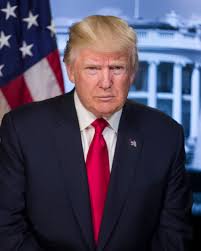
Donald Trump
August 1: White House Press Secretary Sarah Sanders said: “[President Trump] certainly didn’t dictate [the statement] but he—like I said, he weighed in, offered suggestion like any father would do.”
June 2, 2018: Trump’s lawyers drafted a memo to Special Counsel Robert Mueller: “You have received all of the notes, communications and testimony indicating that the President dictated a short but accurate response to the New York Times article on behalf of his son, Donald Trump, Jr.
“His son then followed up by making a full public disclosure regarding the meeting, including his public testimony that there was nothing to the meeting and certainly no evidence of collusion.”
June 3, 2018: Trump attorney Rudolph Giuliani said on “Meet the Press”: “I think [Sekulow] was uninformed at the time just like I was when I came into the case. He was just in the case. This is a point that maybe wasn’t clarified in terms of recollection and his understanding of it.”
June 15, 2018: Trump, in a White House press conference, said: “It’s irrelevant. It’s a statement to the New York Times—the phony, failing New York Times…That’s not a statement to a high tribunal of judges.”
Almost two months later, on August 5, Trump tweeted: “Fake News reporting, a complete fabrication, that I am concerned about the meeting my wonderful son, Donald, had in Trump Tower. This was a meeting to get information on an opponent, totally legal and done all the time in politics – and it went nowhere. I did not know about it!”
Thus, by Donald Trump’s own admission, a secret meeting “about the adoption of Russian children” has become “a meeting to get information on an opponent.”
ABC NEWS, ABRAHAM LINCOLN, ADAM SCHIFF, ALTERNET, ANDREW MCCABE, AP, BUZZFEED, CBS NEWS, CIA, CNN, CROOKS AND LIARS, DAILY KOZ, DONALD TRUMP, DONALD TRUMP JUNIOR, EGOMANIA, ELAINE CHAO, ERIC SALWELL, FACEBOOK, FBI, FRANKLIN D. ROOSEVELT, HILLARY CLINTON, JAMES COMEY, JEFF SESSIONS, JERRY NADLER, JOHN BRENNAN, JOSEPH STALIN, LINDSEY GRAHAM, MIKE PENCE, MOTHER JONES, MOVEON, MSNBC, NBC NEWS, NEWSWEEK, NPR, PBS NEWSHOUR, POLITICO, PURGE, RAW STORY, REUTERS, RICHARD BLUMENTHAL, RICK PERRY, ROBERT MUELLER, RUDOLPH GIULIANI, RUSSIA, SALON, SEATTLE TIMES, SLATE, THE ATLANTIC, THE CHICAGO SUN-TIMES, THE CHICAGO TRIBUNE, THE DAILY BEAST, THE GUARDIAN, THE HILL, THE HUFFINGTON POST, THE LOS ANGELES TIMES, THE NATION, THE NEW YORK TIMES, THE WASHINGTON POST, TIME, TOM PEREZ, TOM PRICE, TWITTER, U.S. NEWS & WORLD REPORT, UPI, USA TODAY
In Bureaucracy, History, Law, Politics, Social commentary on April 3, 2019 at 12:10 am
For Donald Trump, American history begins and ends with himself. To hear him tell it:
- “It is much easier to act presidential than what we are doing here tonight, believe me. With the exception of the late, great Abraham Lincoln, I can be more presidential than any president that’s ever held this office.”
- “Almost everyone agrees that my administration has done more in less than two years than any other Administration in the history of our Country. I’m tough as hell on people & if I weren’t, nothing would get done. Also, I question everybody and everything—which is why I got elected!”
- “Never has there been a President with few exceptions—case of FDR, he had a major Depression to handle—who has passed more legislation and who has done more things than what we’ve done.”
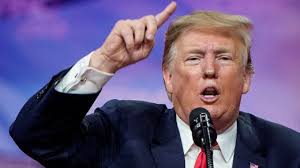
President Donald Trump
- “The amazing thing is that you have certain people who are conservative Republicans that if my name weren’t Trump, if it were John Smith, they would say I’m the greatest president in history and I blow Ronald Reagan away,”
- “How do you impeach a President who has won perhaps the greatest election of all time, done nothing wrong (no Collusion with Russia, it was the Dems that Colluded), had the most successful first two years of any president, and is the most popular Republican in party history 93%?”
Soviet dictator Joseph Stalin couldn’t tolerate criticism or dissent. He dubbed those who disagreed with him “enemies of the people.” And for 30 years, he unleashed a series of purges that slaughtered 20-25 million of his fellow Russians.
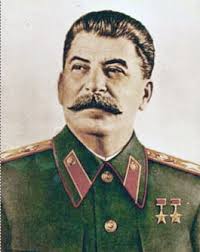
Joseph Stalin
President Donald Trump also can’t abide disagreement or criticism. He’s repeatedly called the media who report his crimes and follies “the enemy of the people.” And he’s used insults, lawsuits and threats of violence to intimidate and/or injure his perceived enemies.
Now Trump may be moving on to a new and even more dangerous phase.
Trump has repeatedly claimed to be “cleared” by the report of Special Counsel Robert Mueller. This despite the fact that it’s been seen only by William Barr, his handpicked Attorney General.
Trump is now acting like a king who feels himself the victim of a failed overthrow. In fact, he has said as much:
“There are a lot of people out there that have done some very, very evil things, very bad things—I would say treasonous things against our country. Those people will certainly be looked at. I’ve been looking at them for a long time.”
And: “This was an illegal takedown that failed and hopefully somebody’s going to be looking at the other side.”
On March 25, Trump’s re-election campaign sent a memo to television producers instructing them to “employ basic journalistic standards when booking” six current or former government officials that the campaign accused of making “outlandish, false claims, without evidence” about Trump’s collusion with Russia while on air.
Specifically:
- Senator Richard Blumenthal (D-Connecticut)
- Representative Jerry Nadler (D-New York), chairman of the House Judiciary Committee
- Democratic National Committee Chairman Tom Perez
- John Brennan, former director of the Central Intelligence Agency
- Representative Adam Schiff (D-California), chairman of the House Intelligence Committee
- Representative Eric Swalwell (D-California), who has indicated he might run for President
Rudolph Giuliani, Trump’s private attorney and a former Federal prosecutor, offered a chilling threat: “If there are people who contrived this investigation, who made up this collusion, maybe they themselves should be investigated.”
Senator Lindsey Graham (R-South Carolina) warned: “I believe that Donald Trump got scrutiny like nobody else in the history of the presidency, since Nixon probably ….To those who were abusive of the process in 2016 on the other side, you haven’t had much scrutiny, but that’s coming.”
And since Graham heads the Senate Judiciary Committee, which oversees the Justice Department, that is no idle threat.

Lindsey Graham
Hurling an insult and threat at Adam Schiff, Donald Trump, Jr., tweeted: “#fullofSchiff has been flagrantly lying to the American people & slandering POTUS & me for years for airtime. Should he not face any repercussions for the lies?”
There was, of course, nothing illegal about a legitimate Justice Department investigation of proven links between Russian Intelligence agents and members of Trump’s 2016 Presidential campaign.
What is almost certainly coming is an illegal purge worthy of Joseph Stalin.
And Americans who believe “it can’t happen here” also once couldn’t imagine that:
- Trump would demand that FBI Director James Comey pledge his loyalty to Trump. When he refused, Trump fired him.
- Andrew McCabe, the FBI’s deputy director, would open an investigation to determine if Trump “had been working on behalf of Russia against American interests.” When this became known, Trump forced him out of the Bureau.
- Trump would repeatedly demand that then-Attorney General Jeff Sessions prosecute his former Presidential rival, Hillary Clinton, although the FBI had not found her guilty of a crime.
Trump commands the FBI and the Justice Department, and is backed by a compliant Republican Senate. He has appointed 92 Federal judges—and can expect at least some of them to uphold convictions against his real and imagined enemies.
In short: Trump is poised to “get even” with his critics in the media—and Congress.
2016 PRESIDENTIAL CAMPAIGN, ABC NEWS, ADAM SCHIFF, ALTERNET, AP, BUZZFEED, CBS NEWS, CNN, CROOKS AND LIARS, DAILY KOZ, DONALD TRUMP, DONALD TRUMP JUNIOR, FACEBOOK, FBI, GRU (RUSSIAN MILITARY INTELLIGENCE), HILLARY CLINTON, HOUSE INTELLIGENCE COMMITTEE, HOUSE OF REPRESENTATIVES, HOUSE PERMANENT SELECT COMMITTEE ON INTELLIGENCE, JARED KUSHNER, JULIUS CAESAR, JULIUS CAESAR (PLAY), KELLEYANNE CONWAY, KEVIN MCCARTHY, LINDSEY GRAHAM, MARCUS BRUTUS, MARK ANTONY, MIKE CONAWAY, MOTHER JONES, MOVEON, MSNBC, MUELLER REPORT, NBC NEWS, NEWSWEEK, NPR, PAUL MANAFORT, PBS NEWSHOUR, POLITICO, RAW STORY, REPUBLICANS, REUTERS, ROBERT MUELLER, RONNA MCDANIEL, RUSSIA, SALON, SEATTLE TIMES, SLATE, SUBVERSION, THE ATLANTIC, THE CHICAGO SUN-TIMES, THE CHICAGO TRIBUNE, THE DAILY BEAST, THE GUARDIAN, THE HILL, THE HUFFINGTON POST, THE LOS ANGELES TIMES, THE NATION, THE NEW YORK TIMES, THE WASHINGTON POST, TIME, TREASON, TWITTER, U.S. NEWS & WORLD REPORT, UPI, USA TODAY, WIKILEAKS, WILLIAM BAR, WILLIAM SHAKESPEARE
In Bureaucracy, Entertainment, History, Law, Politics, Social commentary on April 2, 2019 at 12:10 am
On March 24, 2019, Attorney General William Barr received the long-awaited report by Special Counsel Robert Mueller about Russian efforts to subvert the 2016 Presidential election.
According to Barr, the report—which no one else in the government has seen—showed no evidence that President Donald Trump had colluded with Russian Intelligence agents.
And now House Republicans—acting entirely on that claim—suddenly went on the offensive.
On March 28, all nine Republicans on the House Permanent Select Committee on Intelligence demanded in a letter that Representative Adam Schiff (D-California) resign as its chairman.
On the same day, President Donald Trump tweeted: “Congressman Adam Schiff, who spent two years knowingly and unlawfully lying and leaking, should be forced to resign from Congress!”
Other Republicans quickly joined the chorus:
- House Minority Leader Kevin McCarthy (R-California): Schiff owes “an apology to the American public” and should step down from his post as head of the Intelligence committee.
- Republican National Committee Chairwoman Ronna McDaniel: “They [Schiff and House Judiciary Chairman Jerry Nadler, D-New York] should be removed from their chairmanships. They owe the American people an apology. They owe this President an apology, and they have work to do to heal this democracy because this is our country we are talking about.”
- South Carolina Senator Lindsey Graham: “He’s getting into conspiracy land and he’s acting like an Oliver Stone type figure. That to me is not helpful to him but I’m not going to ask him to resign from Congress.”
- White House Adviser Kelleyanne Conway: “He’s been on every TV show 50 times a day for practically the last two years, promising Americans that this President would either be impeached or indicted. He has no right, as somebody who has been peddling a lie, day after day after day, unchallenged. Unchallenged and not under oath. Somebody should have put him under oath and said, ‘You have evidence, where is it?’”
On March 28, Schiff—speaking in a firm and controlled voice—addressed his critics in the House and beyond.
It was a speech worthy of that given by Mark Antony at the funeral of Julius Caesar.

Adam Schiff
“My colleagues may think it’s okay that the Russians offered dirt on the Democratic candidate for President as part of what was described as ‘the Russian government’s effort to help the Trump campaign.’ You might think that’s okay.
“My colleagues might think it’s okay that when that was offered to the son of the President, who had a pivotal role in the campaign, that the President’s son did not call the FBI, he did not adamantly refuse that foreign help. No, instead that son said that he would ‘love’ the help of the Russians. You might think it’s okay that he took that meeting.
“You might think it’s okay that Paul Manafort, the campaign chair, someone with great experience running campaigns, also took that meeting.
“You might think it’s okay that the President’s son-in-law also took that meeting.
“You might think it’s okay that they concealed it from the public.
“You might think it’s okay that their only disappointment after that meeting was that the dirt they received on Hillary Clinton wasn’t better. You might think that’s okay.![]()
![]()
![]()
“You might think it’s okay that when it was discovered a year later that they’d lied about that meeting and said it was about adoptions, you might think it’s okay that the President is reported to have helped dictate that lie. You might think that’s okay. I don’t.
![]()
“You might think it’s okay that the Presidential chairman of a campaign would offer information about that campaign to a Russian in exchange for money or debt forgiveness. You might think that’s okay. I don’t.
“You might think it’s okay that campaign chairman offered polling data, campaign polling data to someone linked to Russian intelligence. I don’t think that’s okay.
“You might think it’s okay that the President himself called on Russia to hack his opponent’s emails, ‘if they were listening.’
“You might think it’s okay that later that day, in fact, the Russians attempted to hack a server affiliated with that campaign. I don’t think that’s okay.
“You might think that it’s okay that the President’s son-in-law sought to establish a secret back channel of communications with the Russians through a Russian diplomatic facility. I don’t think that’s okay.
“You might think it’s okay that an associate of the President made direct contact with the GRU [the Russian military Intelligence agency] through Guccifer 2 and Wikileaks, that is considered a hostile Intelligence agency.
“You might think that it’s okay that a senior campaign official was instructed to reach that associate and find out what that hostile Intelligence agency had to say, in terms of dirt on his opponent.
“You might think it’s okay that the National Security Adviser-Designate [Mike Flynn] secretly conferred with the Russian ambassador about undermining U.S. sanctions, and you might think it’s okay he lied about it to the FBI. You might say that’s all okay.
“You might say that’s just what you need to do to win, but I don’t think it’s okay. I think it’s immoral. I think it’s unethical. I think it’s unpatriotic. And yes, I think it’s corrupt and evidence of collusion.”
Not one Republican dared challenge even one accusation Schiff had made.
2016 PRESIDENTIAL CAMPAIGN, ABC NEWS, ADAM SCHIFF, ALTERNET, AP, BUZZFEED, CBS NEWS, CNN, CROOKS AND LIARS, DAILY KOZ, DONALD TRUMP, FACEBOOK, HOUSE INTELLIGENCE COMMITTEE, HOUSE OF REPRESENTATIVES, HOUSE PERMANENT SELECT COMMITTEE ON INTELLIGENCE, JULIUS CAESAR, JULIUS CAESAR (PLAY), MARCUS BRUTUS, MARK ANTONY, MIKE CONAWAY, MOTHER JONES, MOVEON, MSNBC, MUELLER REPORT, NBC NEWS, NEWSWEEK, NPR, PBS NEWSHOUR, POLITICO, RAW STORY, REPUBLICANS, REUTERS, ROBERT MUELLER, RUSSIA, SALON, SEATTLE TIMES, SLATE, SUBVERSION, THE ATLANTIC, THE CHICAGO SUN-TIMES, THE CHICAGO TRIBUNE, THE DAILY BEAST, THE GUARDIAN, THE HILL, THE HUFFINGTON POST, THE LOS ANGELES TIMES, THE NATION, THE NEW YORK TIMES, THE WASHINGTON POST, TIME, TWITTER, U.S. NEWS & WORLD REPORT, UPI, USA TODAY, WILLIAM BAR, WILLIAM SHAKESPEARE
In Bureaucracy, Entertainment, History, Law, Politics, Social commentary on April 1, 2019 at 12:07 am
“Friends, Romans, countrymen—lend me your ears!”
It’s the opening line of a speech once widely memorized by schoolboys in English literature classes. It’s from William Shakespeare’s “Julius Caesar,” and it’s a far more sophisticated piece of writing than most people realize.
Mark Antony, addressing a crowd of Romans at the funeral of his former patron, Julius Caesar, faces a serious problem.
Caesar has been murdered by a band of conspirators who feared he intended to make himself king. The chief conspirator, Marcus Brutus, is one of the most honored men in ancient Rome. And he has just addressed the same crowd.
As a result, they are now convinced that the assassination was fully justified. They assume that Antony intends to attack the conspirators. And they are ready to attack him—maybe physically—if he does.
But Antony is too smart to do that—at least initially.
Instead, he assures the crowd: “I come to bury Caesar, not to praise him.”
And he praises the chief conspirator: “The noble Brutus hath told you Caesar was ambitious. If so, it was a grievous fault—and grievously hath Caesar answered it.”
Then he introduces a line he will repeat with great effectiveness throughout the rest of his speech: “For Brutus is an honorable man—so are they all, all honorable men.”

The “Death of Julius Caesar,” as depicted by Vincenzo Camuccini.
For Antony, the line is ironic. But it serves his purpose to appease the crowd. Later, he will wield it like a sword against the same conspirators.
“He was my friend, faithful and just to me.” And then: “But Brutus says he was ambitious, and Brutus is an honorable man.”
Antony then goes on to extol Caesar as the foremost Roman of his time:
- As a military victor: “You all do know this mantle. I remember the first time ever Caesar put it on. ‘Twas on…that day he overcame the Nervii.”
- As a humanitarian: “When that the poor hath cried, Caesar hath wept.”
And then, as if against his better judgment, he says: “But here’s a parchment with the seal of Caesar. I found it in his closet—’tis his will. Let but the commons hear this testament—which, pardon me, I do not mean to read—and they would go and kiss dead Caesar’s wounds.”
This inflames the crowd’s curiosity and greed: What has Caesar left them? And Antony’s refusing to read the alleged will only makes them determined to hear it.
Now the crowd is entirely at Antony’s disposal. They hurl abuse at the conspirators: “They were traitors!” “They were villains, murderers!”
So Antony, claiming to read Caesar’s will, pronounces: “To every Roman citizen he gives…seventy-five drachmas.”
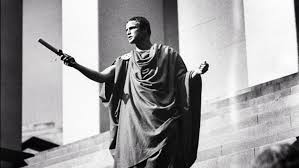
Marlon Brando as Mark Antony in the 1953 film, “Julius Caesar”
Is this truly Caesar’s will? And, if so, does it really make this bequest? No one knows.
In addition, claims Antony, Caesar has left his fellow citizens “his private arbours and new-planted orchards on this side Tiber. He hath left them you, and to your heirs forever, common pleasures, to walk abroad, and recreate yourselves.”
By now the crowd is fired up—against the conspirators.
“Here was a Caesar!” cries Antony. “When comes such another?”
A citizen shouts: “We’ll burn [Caesar’s] body in the holy place. And with the brands fire the traitors’ houses.”
The crowd disperses—to pay fiery homage to Caesar and burn the houses of Brutus and the other conspirators.
Caesar’s assassins flee Rome for their lives. In time, they will face the legions of Antony and Octavian, the young nephew of Caesar—and choose suicide over capture and execution.
Apparently Rep. Adam Schiff (D-California) is familiar with Shakespeare’s play.
Because, on March 28, he used the same repetitive technique in addressing his “Republican colleagues” on the House Permanent Select Committee on Intelligence.
Days earlier, Attorney General William Barr had claimed to summarize the long-awaited report by Special Counsel Robert Mueller about Russian efforts to subvert the 2016 Presidential election.
According to Barr, the report—which no one else in the government has seen—showed no evidence that President Donald Trump had colluded with Russian Intelligence agents.
And now House Republicans—acting entirely on that claim—were going on the offensive.
On March 28, Rep. Mike Conaway (R-Texas) and all other eight Republicans on the Committee demanded in a letter that Schiff resign as its chairman.
“Mr. Chairman,” the letter read, “since prior to the inauguration of President Trump in January 2017, you’ve been at the center of a well-orchestrated media campaign claiming, among other things, that the Trump campaign colluded with the Russian government.
“On March 24, 2019, the special counsel delivered his findings to the Department of Justice….The special counsel’s investigation did not find that the Trump campaign or anyone associated with it conspired or coordinated with Russia in its efforts to influence the 2016 election….
“Despite these findings, you continue to proclaim to the media that there is ‘significant evidence of collusion.’
“The findings of the Special Counsel conclusively refute your past and present conclusions and have exposed you as having abused your position to knowingly promote false information, having damaged the integrity of this Committee, and undermined faith in U.S. Government institutions.”
"MISSION: IMPOSSIBLE", 2016 PRESIDENTIAL ELECTION, 9/11, ABC NEWS, ALTERNET, AP, AUGUSTO PINOCHET, AUGUSTO SANDINO, AYATOLLAH RUHOLLAH KHOMEINI, BAY OF PIGS, BUZZFEED, CBS NEWS, CHIANG KAI-SHEK, CHILE, CIA, CNN, CROOKS AND LIARS, CUBA, DAILY KOZ, DONALD TRUMP, DWIGHT D. EISENHOWER, FACEBOOK, FIDEL CASTRO, FULGENCIO BATISTA, GEORGE W. BUSH, GUATEMALA, HAITI, HONODURAS, IRAQ, JACOBO ARBENZ, JOHN F. KENNEDY, MAFIA, MAO TSE-TUNG, MOHAMMAD MOSADDEGH, MOHAMMAD-REZA SHAH PHLAVI, MOTHER JONES, MOVEON, NATIONAL SECURITY AGENCY, NBC NEWS, NEWSWEEK, NICARAGUA, NPR, OSAMA BIN LADEN, POLITICO, RAW STORY, REUTERS, RICHARD M. NIXON, ROBERT MUELLER, RUSSIA, SADDAM HUSSEIN, SALON, SALVADOR ALLENDE, SEATTLE TIMES, SLATE, SOVIET UNION, THE ATLANTIC, THE CHICAGO SUN-TIMES, THE CHICAGO TRIBUNE, THE DAILY BEAST, THE GUARDIAN, THE HILL, THE HUFFINGTON POST, THE LOS ANGELES TIMES, THE NATION, THE NEW YORK TIMES, THE WASHINGTON POST, TIME, TWITTER, U.S. NEWS & WORLD REPORT, UNITED FRUIT COMPANY, UPI, USA TODAY
In Bureaucracy, History, Military, Politics, Social commentary on March 13, 2019 at 12:04 am
The CIA, FBI and National Security Agency (which cracks codes and listens to the telephone conversation of foreign leaders) unanimously agree: Russian trolls and Intelligence agents played a major role in subverting the 2016 Presidential election.
Special Counsel Robert Mueller III, assigned in May, 2017, to investigate charges of Russian interference, believes there was collusion. He has indicted or obtained guilty pleas from 34 people and three companies. And more are undoubtedly coming.
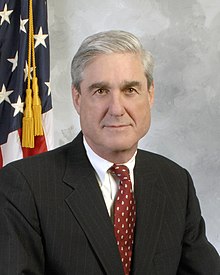
Robert Mueller
And about 58% of Americans believe that President Donald Trump has tried to obstruct the investigation.
Apparently, most Americans don’t like having their elections subverted by enemy nations.
Subverting the governments of other countries is a right that Americans have long reserved for themselves. Among those regimes that have been toppled:
- Between 1898 and 1934, the United States repeatedly intervened with military force in Central America and the Caribbean.
- Americans staged invasions of Honduras in 1903, 1907, 1911, 1912, 1919, 1924 and 1925 to defend U.S. interests. These were defined as Standard Oil and the United Fruit Company.
- The United States occupied Nicaragua almost continuously from 1912 to 1933. Its legacy was the imposition of the tyrannical Somoza family, which ruled from 1936 to 1979.
- The United States occupied Haiti from 1915 to 1934. American banks had lent money to Haiti and requested American government intervention.
- In 1918, 13,000 American soldiers joined armies from Europe and Japan to overthrow the new Soviet government and restore the previous Czarist regime. By 1920, the invading forces proved unsuccessful and withdrew.
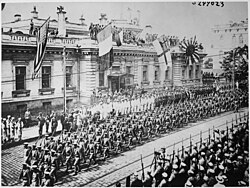
Allied troops parading in Vladivostok, 1918
- From 1946 to 1949, the United States provided military, logistical and other aid to the Right-wing Chinese Nationalist Party of Chiang Kai-shek. Its opponent: Communist forces led by Mao Tse-Tung, who ultimately proved victorious.
- In 1953, the Eisenhower administration ordered the CIA to overthrew the democratically-elected government of of Iranian Prime Minister Mohammad Mosaddegh. His crime: Nationalizing the Iranian oil industry, which had been under British control since 1913. He was succeeded by Mohammad-Reza Shah Phlavi.
- Whereas Mossadeddgh had ruled as a constitutional monarch, Phlavi was a dictator who depended on United States government support to retain power until he was overthrown in 1979 by the Ayatollah Ruhollah Khomeini.
- In 1954, the CIA overthrew the democratically-elected government of Guatemalan President Jacobo Arbenz. His crime: Installing a series of reforms that expanded the right to vote, allowed workers to organize, legitimized political parties and allowed public debate. Most infuriating to American Right-wingers: His agrarian reform law, which expropriated parts of large land-holdings and redistributed them to agricultural laborers.
- The United Fruit Company lobbied the United States government to overthrow him—and the CIA went into action. Arbenz was replaced by the first of a series of brutal Right-wing dictators.
- From 1959 until 1963, the United States government was obsessed with overthrowing the revolutionary Cuban government of Fidel Castro. Although not democratically elected, Castro was wildly popular in Cuba for overthrowing the dictatorial Fulgencio Batista.
- On April 17, 1961, over 1,400 CIA-trained Cuban exiles invaded Cuba at the Bay of Pigs. Cuban military forces crushed the invasion in three days.
- Infuriated with the failure of the Bay of Pigs invasion, President John F. Kennedy authorized “Operation Mongoose” to remove Castro through sabotage and assassination. The CIA, wanting to please Kennedy, teamed up with the Mafia, which wanted to resurrect its casinos on the island.
- Among the tactics used: Hiring Cuban gangsters to murder police officials and Soviet technicians; sabotaging mines; using biological and chemical warfare against the Cuban sugar industry. None of these proved successful in assassinating Castro nor overturning his regime.
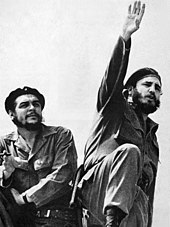
Ernesto “Che” Guevera and Fidel Castro
- In 1970, President Richard M. Nixon ordered the CIA to prevent Marxist Salvador Allende from being democratically elected as president of Chile. When that failed, he ordered the CIA to overthrow Allende. Allende’s crime: A series of liberal reforms, including nationalizing large-scale industries (notably copper mining and banking).
- In 1973, he was overthrown by Chilean army units and national police. He was followed by Right-wing dictator Augusto Pinochet, who slaughtered 3,200 political dissidents, imprisoned 30,000 and forced another 200,000 Chileans into exile.
And how did Americans react to all these attempts—successful and unsuccessful—at regime change?
Through indifference or outright support.
The popular 1960s TV series, “Mission: Impossible,” regularly depicted a CIA-type agency supporting regimes “we” liked or toppling those “we” didn’t.
Americans generally assume their Presidents and Congress know best who is a “friend” and who is an “enemy.” America’s friends usually turn out to be Right-wing dictators like Chiang Kai-Shek, Fulgencio Batista, Augusto Pinochet and Mohammad-Reza Shah Phlavi.
And its enemies often turn out to be liberal reformers like Augusto Sandino, Mohammad Mosaddegh and Salvador Allende.
Americans tend to favor intervention for the flimsiest of reasons. In 2003, President George W. Bush claimed Iraq’s dictator, Saddam Hussein, had plotted 9/11 with Osama bin Laden. There was absolutely no proof to substantiate this, yet Americans overwhelmingly supported Bush’s unprovoked invasion of Iraq.
But now the shoe is on the other foot.
Except for President Donald Trump and his fanatical supporters, Americans are furious that a foreign power has dared to install “regime change” on them.
Americans are now tasting the medicine they have dished out to so many other countries. And they find it as repugnant as those countries have found the American brand.
ABC NEWS, ADOLF HITLER, ALTERNET, AP, BUZZFEED, CBS NEWS, CNN, CROOKS AND LIARS, DAILY KOZ, DAVID BROOKS, DEMOCRATS, DONALD TRUMP, FACEBOOK, HOUSE OF REPRESENTATIVES, HOUSE OVERSIGHT COMMITTEE, JACKIE SPEIER, JIM JORDAN, JIMMY CARTER, MARK SHIELDS, MICHAEL COHEN, MOTHER JONES, MOVEON, MSNBC, NBC NEWS, NEWSWEEK, NPR, PBS NEWSHOUR, POLITICO, RAW STORY, REPUBLICANS, REUTERS, RICHARD NIXON, ROBERT MUELLER, SALON, SEATTLE TIMES, SLATE, STORMY DANIELS, THE ATLANTIC, THE CHICAGO SUN-TIMES, THE CHICAGO TRIBUNE, THE DAILY BEAST, THE GUARDIAN, THE HILL, THE HUFFINGTON POST, THE LOS ANGELES TIMES, THE NATION, THE NEW YORK TIMES, THE PBS NEWSHOUR, THE WASHINGTON POST, TIME, TWITTER, U.S. NEWS & WORLD REPORT, UNITED STATES SENATE, UPI, USA TODAY
In Bureaucracy, Business, History, Politics, Social commentary on March 5, 2019 at 12:16 am
“Just another week in Caligula’s Rome.”
That was how conservative New York Times columnist David Brooks summed up President Donald Trump’s Washington, D.C. for the week of February 24 to March 1, 2019.
Every Friday Books faces off with liberal syndicated columnist Mark Shields on The PBS Newshour. And on the program for March 1, the two men found common cause in sizing up the appearance of Michael Cohen before the House Oversight Committee two days earlier.
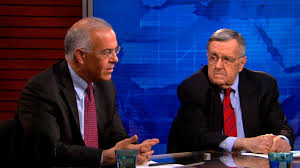
David Brooks and Mark Shields on “The PBS Newshour”
During that hearing, Cohen, Trump’s longtime attorney and fixer:
- Condemned his former boss as “a racist, a conman [and] a cheat.”
- Confirmed that Trump had instructed him to pay $130,000 in hush money to porn “star” Stormy Daniels, to buy her silence during the 2016 Presidential campaign.
- Provided the committee with a copy of a check Trump wrote from his personal bank account—after he became President—“to reimburse me for the hush money payments I made.”
- Produced “copies of letters I wrote at Mr. Trump’s direction that threatened his high school, colleges, and the College Board not to release his grades or SAT scores.”
But for Brooks, far more was at stake than the individual accusations:
“To me, it was more of a moral occasion, more than anything else. What it illustrates is a President and, frankly, Michael Cohen who long ago decided that celebrity and wealth is more important than being a good person. And they have dragged us all down there with us.
“And the people they have dragged most effectively are the House Republicans, a lot of them on that committee, who decided that they were completely incurious about whether Donald Trump was a good guy or a bad guy or a really awful guy, that—their own leader, they didn’t seem to care about that, but they were going to rip the skin off Michael Cohen.
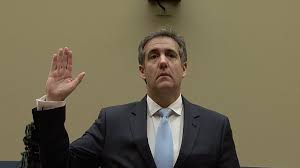
Michael Cohen testifying before Congress
“And so they attacked him. And what struck me is how moral corrosion happens, that you decide you’re going to defend or ignore Trump. And then to do that, you have to morally distance yourself from him. And then you have to morally distance yourself from him every day.
“And, eventually, you just get numb to everything. And so [Ohio Republican Representative] Jim Jordan and other people on the committee were saying, oh, we all knew this, like, it’s all unremarkable. And so that’s—that’s how moral corrosion happens.”
During the hearing, California Representative Jackie Speier asked Cohen: How many times did Trump ask you to intimidate creditors?
Cohen estimated the number at 500.
For Shields, this counted as especially despicable behavior: “And—but the thing about it is, when he stiffed those small business—the plumbers and the electricians who did the work in the Trump projects, and he came back, and Donald Trump loved to hear about it, I mean, reveled in it.
“Now, I mean, at what point do you say that there’s no honor here? I mean, there’s nothing to admire.”
Shields was equally appalled by the refusal of Trump’s Republican committee defenders to condemn his moral depravity—as a businessman or President.
“If you can’t deal with the message, you shoot the messenger. And that’s what their whole strategy was.
“The very fact that not a single member of the Republican committee defended Donald Trump or what he was charged or alleged to have done, to me, was revealing. They just decided to go after Michael Cohen.”
So why have Republicans aligned themselves with such a man?
Republicans don’t fear that Trump will trash the institutions that Americans have cherished for more than 200 years. Institutions like an independent judiciary, a free press, and an incorruptible Justice Department.
He has already attacked all of these—and Republicans have either said nothing or rushed to his defense.
What Republicans truly fear about Donald Trump is that he will finally cross one line too many—like firing Special Counsel Robert Mueller. And that the national outrage following this will force them to launch impeachment proceedings against him.
But it isn’t even Trump they fear will be destroyed.
What they most fear losing is their own hold on nearly absolute power in Congress and the White House. And the riches that go with it.
If Trump is impeached and possibly indicted, he will become a man no one any longer fears. He will be a figure held up to ridicule and condemnation.
Like Adolf Hitler.
Like Richard Nixon.
And his supporters will be branded as losers along with him.
Republicans vividly remember what happened after Nixon was forced to resign on August 9, 1974: Democrats, riding a wave of reform fever, swept Republicans out of the House and Senate—and Jimmy Carter into the White House.
House and Senate Republicans can imagine a future without Trump—but not one where they disappear.
If they are conflicted—whether to continue supporting Trump or desert him—the reason is the same: How can I hold onto my power and all the privileges that go with it?


 Bureaucracybuster's Blog
2016 PRESIDENTIAL ELECTION, ABC NEWS, ADOLF HITLER, AL QAEDA, ALTERNET, AMERICAN EXCEPTIONALISM, AMERICAN NAZIS, AMERICAN RECKONING: THE VIETNAM WAR AND OUR NATIONAL IDENTITY (BOOK), AP, BARACK OBAMA, BASHIR AL-ASSAD, BUZZFEED, CANADA, CBS NEWS, CHINA, CHRISTIAN G. APPY, CNN, CROOKS AND LIARS, DAILY KOZ, DEMOCRATS, EMOLUMENTS CLAUSE, FACEBOOK, FASCISM, FBI, FEDERAL JUDICIARY, FLATTERY, GOVERNMENT SHUTDOWN, GREAT BRITAIN, HOUSE UN-AMERICAN ACTIVITIES COMMITTEE, HUMAN RIGHTS, INTELLIGENCE COMMUNITY, JAMES COMEY, JEFF SESSIONS, JOHN BOEHNER, JOHN MCCAIN, KIM JONG-UN, KU KLUX KLAN, MICHAEL FLYNN, MOTHER JONES, MOVEON, MSNBC, NBC NEWS, NEWSWEEK, NPR, PBS NEWSHOUR, POLITICO, RAW STORY, REPUBLICANS, REUTERS, ROBERT MUELLER, RUSSIA, RUSSIAN SUBVERSION, SALLY YATES, SALON, SEATTLE TIMES, SLATE, SYRIA, THE ATLANTIC, THE CHICAGO SUN-TIMES, THE CHICAGO TRIBUNE, THE DAILY BEAST, THE GUARDIAN, THE HILL, THE HUFFINGTON POST, THE LOS ANGELES TIMES, THE NATION, THE NEW YORK TIMES, THE PRESS, THE WASHINGTON POST, TIME, TREASON, TWITTER, TYRANNY, U.S. NEWS & WORLD REPORT, UNITED STATES CONSTITUTION, UPI, USA TODAY, VIETNAM WAR, VLADIMIR PUTIN, WILLIAM BARR
“AMERICAN EXCEPTIONALISM” IS KILLING US: PART ONE (OF TWO)
In Bureaucracy, History, Military, Politics, Social commentary on June 4, 2019 at 12:05 am“Who are we?” asks Christian G. Appy in the opening of his 2015 book, American Reckoning: The Vietnam War and Our National Identity.
For Appy, it’s impossible to understand the enormous impact of the Vietnam war on the United States without first understanding the image that Americans had of themselves before that conflict. And he describes that image as:
“The broad faith that the United States [was] a unique force for good in the world, superior not only in its military and economic power but in the quality of its government and institutions, the character and morality of its people, and its way of life…..
“It was still unimaginable to most Americans that their own nation would wage aggressive war and justify it with unfounded claims, that it would support undemocratic governments reviled by their own people, and that American troops would be sent to fight in countries where they were widely regarded not as liberators but as imperialist invaders.”
Appy contends that, for millions of Americans, the Vietnam war dealt a mortal blow to that tremendously appealing self-image.
Yet for millions more, the United States remains an exemplary nation with a divine mission to lead other nations—willingly or unwillingly—to follow its example. And those Americans become furious when anyone—especially a foreigner—dares question that belief.
On September 11, 2013, the New York Times published an Op-Ed (guest editorial) from Russian President Vladimir Putin, entitled: “A Plea for Caution from Russia: What Putin Has to Say to Americans About Syria.”
To no one’s surprise, Putin strongly opposed an American air strike on Syria. Its “President” (i.e., dictator) Bashir al-Assad, is a close ally of Russia. Just as his late father and dictator, Hafez al-Assad, was a close ally of the Soviet Union.
And Putin is a former member of the KGB, the infamous secret police which ruled the Soviet Union from its birth in 1917 to its collapse in 1991.
In his September 11 guest editorial in the New York Times, Putin offered the expected Russian take on Syria:
But it’s the concluding paragraph that enraged American politicians the most—especially Right-wing ones. In it, Putin took exception with American “exceptionalism.”
Referring to then-President Barack Obama, Putin wrote:
“And I would rather disagree with a case he made on American exceptionalism, stating that the United States’ policy is ‘what makes America different. It’s what makes us exceptional.’
“It is extremely dangerous to encourage people to see themselves as exceptional, whatever the motivation. There are big countries and small countries, rich and poor, those with long democratic traditions and those still finding their way to democracy. Their policies differ, too.
“We are all different, but when we ask for the Lord’s blessings, we must not forget that God created us equal.”
Vladimir Putin
Putin has never publicly shown any interest in religion. But by invoking “the Lord,” he was able to turn the Christian beliefs of his Western audience into a useful weapon.
Americans’ outrage quickly erupted.
“I was insulted,” then-House Speaker John Boehner (R-Ohio) told reporters when asked for his blunt reaction to the editorial.
“I have to be honest with you, I was at dinner, and I almost wanted to vomit,” said U.S. Senator Bob Menendez (D-New Jersey).
Putin had dared to question the self-righteousness of American foreign policy—and those who make it.
Making his case for war with Syria, Obama had said: “America is not the world’s policeman….But when, with modest effort and risk, we can stop children from being gassed to death, and thereby make our own children safer over the long run, I believe we should act.
“That’s what makes America different. That’s what makes us exceptional. With humility, but with resolve, let us never lose sight of that essential truth.”
In short: Because we consider ourselves “exceptional,” we have the divine right to do whatever we want.
It’s not necessary to see Putin as a champion of democracy (he isn’t) to see the truth in this part of his editorial:
“It is extremely dangerous to encourage people to see themselves as exceptional, whatever the motivation.”
From 1938 to 1969, the House Un-American Activities Committee sought to define what was “American” and what was “Un-American.” As if “American” stood for all things virtuous.
Whoever heard of an “Un-French Activities Committee”? Or an “Un-German” or “Un-British” one?
The late S.I. Hayakawa was a professor of semantics (the study of the relationship between words and what they stand for).
In his bestselling book, Language in Thought and Action, he observed that a person has four ways of responding to a message:
Americans might want to consider #3 where “American exceptionalism” is concerned.
Share this: