Posts Tagged ‘OSAMA BIN LADEN’
9/11 TERROR ATTACKS, ABC NEWS, ADOLF HITLER, AFGHANISTAN, ALBERT SPEER, ALTERNET, AMERICABLOG, AP, BABY BOOMER RESISTANCE, BBC, BLOOMBERG, BUZZFEED, CBS NEWS, CIVIL WAR, CNN, COLUMBIA, CROOKS AND LIARS, DAILY KOS, EMERSON COLLEGE, EMORY UNIVERSITY, FIVETHIRTYEIGHT, GAZA, GEORGIA, HAMAS, HARPER’S MAGAZINE, HARVARD, HUFFINGTON POST, INSIDE THE THIRD REICH (MOVIE), IRAQ, ISRAEL, MEDIA MATTERS, MOTHER JONES, MOVEON, MSNBC, NAZI GERMANY, NBC NEWS, NEW REPUBLIC, NEWSDAY, NEWSWEEK, NPR, OSAMA BIN LADEN, PALESTINIANS, PBS NEWSHOUR, POLITICO, POLITICUSUSA, RAW STORY, REUTERS, RUTGER HAUER, SALON, SEATTLE TIMES, SLATE, SMART BOMBS, TALKING POINTS MEMO, THE ATLANTIC, THE CHICAGO SUN-TIMES, THE CHICAGO TRIBUNE, THE DAILY BEAST, THE DAILY BLOG, THE GUARDIAN, THE HILL, THE HUFFINGTON POST, THE INTERCEPT, THE LOS ANGELES TIMES, THE NATION, THE NEW REPUBLIC, THE NEW YORK TIMES, THE NEW YORKER, THE VILLAGE VOICE, THE WASHINGTON POST, THINKPROGRESS, THIRD REICH, TIME, TRUTHDIG, TRUTHOUT, TWITTER, TWO POLITICAL JUNKIES, U.S. NEWS & WORLD REPORT, UNIVERSITY OF CALIFORNIA, UNIVERSITY OF TEXAS AT AUSTIN, UPI, USA TODAY, WILLIAM TECUMSEH SHERMAN, WORLD WAR 11, YALE
In Bureaucracy, Entertainment, History, Military, Politics, Social commentary on April 29, 2024 at 2:03 am
On October 7, the Hamas terrorist organization which governs Gaza invaded Israel, killing 1,139 soldiers and civilians, and kidnapping another 253—including women and children.
Since then, Israel has pounded Gaza with bombs, missiles. tanks and soldiers. About 62% of all homes have been destroyed. More than a million residents have been rendered homeless. Damages have been estimated at over $13 billion.
To date, more than 31,184 Palestinians have been killed and 72,889 injured, according to the local health authorities.
Across the nation, scores of university students have protested Israel’s retaliation against Gaza.
Among the universities targeted: Columbia, Harvard, Yale, the University of Texas at Austin, the University of Southern California, Emory University in Atlanta, Boston’s Emerson College.
Clashes have erupted between pro-Palestinian and pro-Israeli students. Jewish students have been threatened with death. And several universities—such as USC—have been forced to cancel upcoming graduation ceremonies for fear of violence.
This has forced universities to call on police to clear pro-Palestinian encampments and arrest demonstrators who make it impossible for serious-minded students to get an education.

Aftermath of an Israeli air strike in Gaza
Palestinian News & Information Agency (Wafa) in contract with APAimages, CC BY-SA 3.0 <https://creativecommons.org/licenses/by-sa/3.0>, via Wikimedia Commons
As a result, it’s time for a commonsense update on the war—and the terrorism-supporting questions that go with it.
“Why are the Israelis bombing Gaza?”
Because they don’t like having their men, women and children slaughtered and kidnapped.
“Why does the United States allow Israel to bomb Gaza?”
Israel is a sovereign country and does not take its orders from the United States.
“Hamas only slaughtered 1,139 Israelis. But Israelis have killed over 31,000 Palestinians. That’s so unfair.”
Under this logic, Israel should be allowed to kill only 1,139 Palestinians: “I smacked you in the mouth once, so you should be allowed to smack me in the mouth once. Actually, you shouldn’t be allowed to smack me back at all.”
“Israel is waging war on civilians—not Hamas.”
Hamas has deliberately embedded itself among a civilian population: “Ha, ha, you’ll have to kill all these innocent people in order to kill us.” For Israel to accept such sanctuary would be to confer immunity on Hamas and guarantee ceaseless future attacks.

Emblem of Hamas
“Palestinians didn’t attack Israel—Hamas did.”
Hamas is overwhelmingly supported by Palestinians. A man who shelters a known killer is by definition an accessory to that killer’s crimes. Yet Hamas refuses to allow civilians to take shelter in its tunnels. Nor does it use its underground network to supply much-needed food and resources for Gazans.
“Israel is fighting a war of genocide against Gaza!”
The universal rallying cry among Gaza residents—and their Islamic and non-Islamic allies—is: “From the river to the sea, Palestine will be free.” Which means: When Israel is destroyed and its citizens are slaughtered.
For Hamas, no “two-state solution” will do.
According to CNN, several videos are circulating online that “show Israeli soldiers in Gaza behaving in offensive and disrespectful ways toward the civilian population. Other videos show soldiers ransacking private homes, destroying civilian property and using racist and hateful language.”
Soldiers are universally notorious for showing disrespect for their enemies, whether civilian or military.
During the Civil War, Union General William Tecumseh Sherman set out on his legendary “March to the Sea” through Georgia in 1864. His soldiers ravaged the countryside, destroyed all sources of food and forage and left behind hungry and demoralized Southerners.
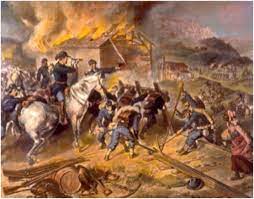
Sherman’s March
As for Israeli soldiers “using racist and hateful language”: During World War II, GIs referred to Germans as “krauts” and to Japanese as “Japs.” During the Vietnam war, grunts called Vietcong and North Vietnamese soldiers “gooks.” In Afghanistan and Iraq, Americans used “ragheads” and “Hajiis” to describe their enemies.
War is, by its nature, destructive—of lives, of property, of feelings for humanity.
William Tecumseh Sherman minced no words in describing its evil: “You cannot qualify war in harsher terms than I will. War is cruelty, and you cannot refine it….You might as well appeal against the thunder-storm as against these terrible hardships of war….
“They are inevitable, and the only way the people of Atlanta can hope once more to live in peace and quiet at home, is to stop the war….”
Sherman’s words—which appeared in a September 12, 1864 letter to Atlanta Mayor James M. Calhoun—could be addressed to Hamas and the Gaza residents who support it:
“Now that war comes home to you, you feel very different. You depreciate its horrors, but did not feel them when you sent car-loads of soldiers and ammunition, and moulded shells and shot, to carry war into Kentucky and Tennessee, to desolate the homes of hundreds of thousands of good people who only asked to live in peace at their old homes, and under the Government of their inheritance.”
“The Holy Land.”
There is no “holy land.” There is only desert claimed by two warring religions. Both sides believe “God is on our side.” So there will never be peace, only eternal war—until global warming finally makes the Middle East so hot that no one can live there.
9/11 ATTACKS, ABC NEWS, ADOLF HITLER, AFGHANISTAN, AL QAEDA, ALTERNET, AP, BASHAR AL-ASSAD, BUZZFEED, CARLOS THE JACKAL, CBS NEWS, CHINA, CNN, CONGRESS, CROOKS AND LIARS, DAILY KOZ, HARRY S. TRUMAN, HIZBOLLAH, IRAQ, ISLAM, ISRAEL, MOTHER JONES, MOVEON, MSNBC, NAZI GERMANY, NBC NEWS, NEWSWEEK, NPR, OSAMA BIN LADEN, PBS NEWSHOUR, POLITICO, RAW STORY, RELIGION, REUTERS, RUSSIA, SALON, SEATTLE TIMES, SHIITE MUSLIMS, SLATE, SUNNI MUSLIMS, SYRIA, TERRORISM, THE ATLANTIC, THE CHICAGO SUN-TIMES, THE CHICAGO TRIBUNE, THE DAILY BEAST, THE GUARDIAN, THE HILL, THE HUFFINGTON POST, THE LOS ANGELES TIMES, THE NATION, THE NEW YORK TIMES, THE SYRIAN OBSERVATORY FOR HUMAN RIGHTS, THE WASHINGTON POST, THE WORLD POST, TIME, TWITTER, U.S. NEWS & WORLD REPORT, UPI, USA TODAY, VLADIMIR PUTIN, WORLD WAR 1
In Bureaucracy, History, Military, Politics, Social commentary on February 23, 2024 at 12:10 am
The headline in the February 6, 2016 edition of The World Post read: “Geneva III: The Stillborn Conference and the Endemic Failure of the International Community.”
Then came the waterworks:
“While approaching the fifth anniversary of the Syrian civil war on March 15 — which claimed more than 300,000 lives, approximately 700,000 wounded, 4 million fled the country, and another 6 million displaced within Syria — the international community has failed to put an end to bloodshed in this war-torn country.”
The Syrian conflict began on March 15, 2011, triggered by protests demanding political reforms and the ouster of dictator Bashar al-Assad.
According to the Syrian Observatory for Human Rights—which is safely located in Great Britain—the total number of dead is now more than 310,000.

And who does the Observatory—and The World Post-–blame for this Islamic self-slaughter?
The West, of course:
“The silence of the International community for the war crimes and crimes against humanity committed in Syria encourages the criminals to kill more and more Syrian people because they have not found anyone that deter them from continuing their crimes that cause to wound more than 1,500,000 people; some of them with permanent disabilities, make hundreds of thousands children without parents, displace more than half of Syrian people and destroy infrastructure, private and public properties.”
Got that? It’s the duty of non-Muslims to bring civilized behavior to Islamics.
And why are all these murderers eagerly slaughtering one another?
Because of a Muslim religious dispute that traces back to the fourth century.
Yes, it’s Sunni Muslims, who make up a majority of Islamics, versus Shiite Muslims, who comprise a minority.
Each group considers the other takfirs—that is, “apostates.” And, in Islam, being labeled an apostate can easily get you murdered.
On November 30, 2023, the Global Center for the Responsibility to Protect estimated that at least 580,000 Syrians had died in the war.
There is, however, an optimistic way to view this conflict:
- Put another way: 580,000 potential or actual Islamic terrorists will never pose a threat to the United States or Western Europe.
- The United States cannot be held in any way responsible for it.
In fact, it’s in America’s best interests that this conflict last as long as possible and spread as widely as possible throughout the Islamic community.
Here are four reasons why:
First: In Syria, two of America’s most deadly enemies are waging war on each other.
Yes, it’s Hizbollah (Party of God) vs. Al-Qaeda (The Base).
Hizbollah is comprised of Shiite Muslims. A sworn enemy of Israel, it has kidnapped scores of Americans suicidal enough to visit Lebanon and truck-bombed the Marine barracks in Beirut in 1983, killing 299 Americans.
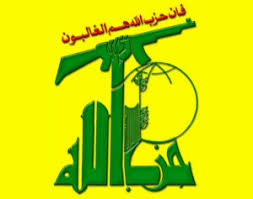
Flag of Hizbollah
Al Qaeda—which gave us 9/11—is comprised of Sunni Muslims. It considers Shiites as heretics and seeks their extermination. It has attacked the mosques and gatherings of liberal Muslims, Suffis and other non-Sunnis. And despite the death of its creator, Osama bin Laden, in 2011, it still seeks to destroy the United States.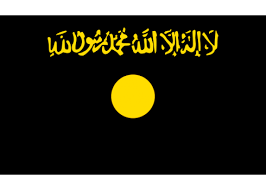
Flag of Al Qaeda
Second: Since 1979, Syria has been listed by the U.S. State Department as a sponsor of terrorism.
Among the terrorist groups it supports: Hizbollah and Hamas. For many years, Syria provided a safe-house in Damascus for Illich Ramirez Sanchez—the notorious international terrorist known as Carlos the Jackal.
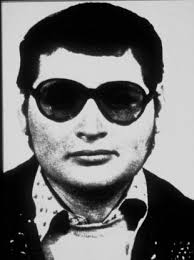
Illich Ramirez Sanches “Carlos the Jackal”
Third: China and Russia are supporting the Assad dictatorship—and the brutalities it commits against its own citizens.
This reflects badly on them—not the United States. And any move by the United States to directly attack the Assad regime could ignite an all-out war with Russia and/or China.
What happens if Russian and American forces start trading salvos? Or if Russian President Vladimir Putin orders an attack on America’s ally, Israel, in return for America’s attack on Russia’s ally, Syria?
It was exactly that scenario—Great Powers going to war over conflicts between their small-state allies—that triggered World War I.
Fourth: While Islamic nations like Syria, Iraq and Afghanistan wage war within their own borders, they will lack the resources—and incentive—to attack the United States.
Every dead Hizbollah, Al-Qaeda and ISIS member makes the United States far safer. So does the death of every sympathizer of Hizbollah, Al-Qaeda and ISIS.
The peoples of the Middle East have long memories for those who commit brutalities against them. In their veins, the cult of the blood feud runs deep.
When Al-Qaeda blows up civilians in Beirut, their relatives will urge Hizbollah to take brutal revenge. And Hizbollah will do so. Similarly, when Hizbollah does, those who support Al-Qaeda will demand even more brutal reprisals against Hizbollah.
No American could instill such hatred in Al-Qaeda for Hizbollah—or vice versa. This is entirely a war of religious and sectarian hatred.
In fact, this conflict could easily become the Islamic equivalent of “the Hundred Years War” that raged from 1337 to 1453 between England and France.
When Adolf Hitler invaded the Soviet Union in 1941, then-Senator Harry S. Truman said: “I hope the Russians kill lots of Nazis—and vice versa.”
That should be America’s position whenever its sworn enemies start killing off each other. Americans should welcome such self-slaughters, not become entrapped in them.
2016 PRESIDENTIAL ELECTION, 2020 PRESIDENTIAL ELECTION, ABC NEWS, ALTERNET, AMERICABLOG, AP, BABY BOOMER RESISTANCE, BARACK OBAMA, BBC, BILL KRISTOL, BLOOMBERG, BUZZFEED, CBS NEWS, CNN, CROOKS AND LIARS, DAILY KOS, FIVETHIRTYEIGHT, GEORGE W. BUSH, HARPER’S MAGAZINE, HITLER LOYALTY OATH, HOLOCAUST, HUFFINGTON POST, IRAN, IRAQ, IRAQ WAR, JANUARY 6 COUP ATTEMPT, JOHN MCCAIN, JOSEPH BIDEN, JOSEPHUS, LINDSEY GRAHAM, MEDIA MATTERS, MOTHER JONES, MOVEON, MSNBC, NBC NEWS, NEW REPUBLIC, NEWSDAY, NEWSWEEK, NOTRE DAME CATHEDRAL, NOTRE DAME CATHEDRAL FIRE, NPR, NUCLEAR WEAPONS, OSAMA BIN LADEN, PBS NEWSHOUR, PENTAGON, PHILLIPPE MARTINEZ, PIERRE DERRIEN, POLITICO, POLITICUSUSA, RAW STORY, REPUBLICANS, REUTERS, SALON, SEATTLE TIMES, SLATE, SUPPLEMENTAL NUTRITION ASSISTANCE PROGRAM (SNAP), SYRIA, TALKING POINTS MEMO, THE ATLANTIC, THE CHICAGO SUN-TIMES, THE CHICAGO TRIBUNE, THE DAILY BEAST, THE DAILY BLOG, THE GUARDIAN, THE HILL, THE HUFFINGTON POST, THE INTERCEPT, THE LOS ANGELES TIMES, THE NATION, THE NEW REPUBLIC, THE NEW YORK TIMES, THE NEW YORKER, THE PENTAGON, THE VILLAGE VOICE, THE WASHINGTON POST, THINKPROGRESS, TIME, TOMAHAWK CRUISE MISSILES, TRUTHDIG, TRUTHOUT, TWO POLITICAL JUNKIES, U.S. NEWS & WORLD REPORT, UPI, USA TODAY, WEEKLY STANDARD, X, YELLOW VEST PROTESTERS
In Bureaucracy, Business, History, Military, Politics, Social commentary on December 29, 2023 at 12:17 am
On April 15, 2019, millions across France gasped in horror at the sight of Notre Dame Cathedral going up in flames.
The Cathedral, perhaps the most iconic building in Paris, is visited by more than 14 million people every year. Built between 1160 and 1345, it has long been one of the most important sites in Christendom.
A law passed in 1905 classified the cathedral as a Historical Monument and thus the property of the state. But its use is dedicated exclusively to the Roman Catholic Church. Catholics are estimated to comprise between 41% and 88% of France’s population.
Yet by April 19, for untold numbers of French citizens, horror and sadness had been replaced by anger.

Notre Dame Cathedral fire
LeLaisserPasserA38, CC BY-SA 4.0 <https://creativecommons.org/licenses/by-sa/4.0>, via Wikimedia Commons
So what had happened to arouse this?
First, French President Emmanuel Macron addressed the nation to speak about the fire. In doing so, he totally ignored the violent protests against inequality that had erupted throughout the country since November 2018.
Low-paid workers and pensioners accused Macron’s government of favoring the rich. The activists were named Yellow Vests—after the fluorescent jackets French motorists are required to keep in their cars.
Second, in just a few hours, billionaires pledged hundreds of millions of dollars (euros) to help restore the damaged cathedral.
“You’re there, looking at all these millions accumulating, after spending five months in the streets fighting social and fiscal injustice. It’s breaking my heart,” Ingrid Levavasseur, a founding leader of the movement, told The Associated Press.
“What happened at Notre Dame is obviously a deplorable tragedy. But nobody died,” Levavasseur said. “I’ve heard someone speaking of national mourning. Are they out of their minds?”
“The yellow vests will show their anger against the billion found in four days for stones, and nothing for the needy,” wrote Pierre Derrien on Facebook.
More than $1 billion was pledged for the cathedral’s restoration, and many French citizens believed the money could be better spent elsewhere. And the billionaires’ donations entitled them to huge tax deductions.
“If they can give dozens of millions to rebuild Notre Dame, they should stop telling us there is no money to respond to the social emergency,” CGT trade union leader Philippe Martinez said.
But this is generally how the rich and powerful react to the needs of the neediest.
In 2016, returning to Congress after their traditional summer recess, House Republicans planned to cut $23 billion in food stamps for the poor. This included ending waivers that allowed some adults to get temporary assistance while they were in school or training for a job.
The cuts were to include drug tests of applicants and tougher work rules. As Republicans see it: There’s no point in “helping” the poor if you can’t humiliate them.
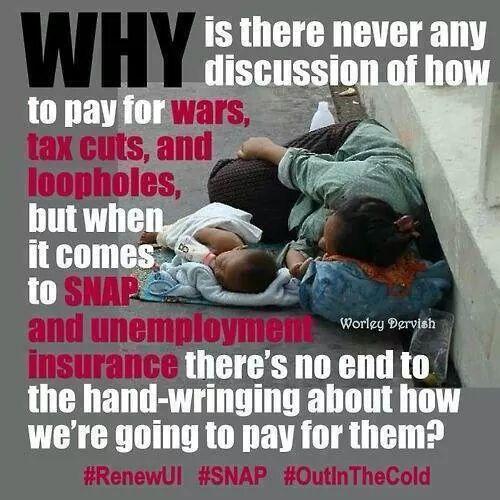
The food stamp program, now called the Supplemental Nutrition Assistance Program, or SNAP, served more than 46 million Americans and cost $74 billion in 2015.
Meanwhile, Republicans were eager to spend billions of dollars for another project: An unnecessary war with Syria.
One of these right-wingers was Bill Kristol, editor of the Weekly Standard—and one of the leading instigators of the 2003 war with Iraq.
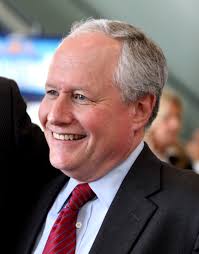
Bill Kristol
He—like senior officials on the George W. Bush administration—falsely claimed that Iraqi dictator Saddam Hussein had weapons of mass destruction and planned to use them against the United States.
Another Kristol lie: Hussein planned 9/11 with Osama bin Laden.
He has never apologized for either lie—or the resulting war that cost $3 trillion and killed 4,487 American soldiers and wounded another 32,226.
In a September, 2013 column, Kristol called for a return to slaughter—not only in Syria but Iran as well:
“…Soon after voting to authorize the use of force against the [Bashar al-] Assad regime, Republicans might consider moving an authorization for the use of force against the Iranian nuclear weapons program.
“They can explain that [President Barack] Obama’s dithering in the case of Syria shows the utility of unequivocally giving him the authority to act early with respect to Iran.”
Among Republican U.S. Senators calling for war were Arizona’s John McCain and South Carolina’s Lindsey Graham, who issued a joint statement:
“Using stand-off weapons, without boots on the ground, and at minimal risk to our men and women in uniform, we can significantly degrade Assad’s air power and ballistic missile capabilities and help to establish and defend safe areas on the ground.”
In addition: A major weapon for “degrading Assad’s air power” would be Tomahawk Cruise missiles. A single one of these costs $1,410,000.
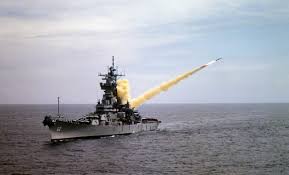
Firing of a Tomahawk Cruise missile
A protracted missile strike would rain literally billions of dollars’ worth of American missiles on Syria.
Meanwhile, the Pentagon was spending about $27 million a week to maintain the increased U.S. Navy presence in the Mediterranean Sea and Middle East region to keep watch over Syria and be prepared to strike.
Navy officials said it cost about $25 million a week for the carrier group and $2 million a week for each destroyer.
Is there a lesson to be learned from all this?
Yes.
Powerful people—whether generals, politicians or the wealthy—will always find abundant money and resources available for pet projects they consider important.
It’s only when it comes to projects that other people actually need that the powerful will claim there is, unfortunately, a cash shortage.
9/11 TERROR ATTACKS, ABC NEWS, ADOLF HITLER, AFGHANISTAN, ALBERT SPEER, ALTERNET, AMERICABLOG, AP, BABY BOOMER RESISTANCE, BBC, BLOOMBERG, BUZZFEED, CBS NEWS, CIVIL WAR, CNN, CROOKS AND LIARS, DAILY KOS, FIVETHIRTYEIGHT, GAZA, GEORGIA, HAMAS, HARPER’S MAGAZINE, HUFFINGTON POST, INSIDE THE THIRD REICH (MOVIE), IRAQ, ISRAEL, MEDIA MATTERS, MOTHER JONES, MOVEON, MSNBC, NAZI GERMANY, NBC NEWS, NEW REPUBLIC, NEWSDAY, NEWSWEEK, NPR, OSAMA BIN LADEN, PALESTINIANS, PBS NEWSHOUR, POLITICO, POLITICUSUSA, RAW STORY, REUTERS, RUTGER HAUER, SALON, SEATTLE TIMES, SLATE, SMART BOMBS, TALKING POINTS MEMO, THE ATLANTIC, THE CHICAGO SUN-TIMES, THE CHICAGO TRIBUNE, THE DAILY BEAST, THE DAILY BLOG, THE GUARDIAN, THE HILL, THE HUFFINGTON POST, THE INTERCEPT, THE LOS ANGELES TIMES, THE NATION, THE NEW REPUBLIC, THE NEW YORK TIMES, THE NEW YORKER, THE VILLAGE VOICE, THE WASHINGTON POST, THINKPROGRESS, THIRD REICH, TIME, TRUTHDIG, TRUTHOUT, TWITTER, TWO POLITICAL JUNKIES, U.S. NEWS & WORLD REPORT, UPI, USA TODAY, WILLIAM TECUMSEH SHERMAN, WORLD WAR 11
In Bureaucracy, Entertainment, History, Military, Politics, Social commentary on December 19, 2023 at 12:13 am
The 1982 TV-movie, “Inside the Third Reich,” offers a scene that has no doubt echoed throughout Gaza during the last two months.
It’s 1940, and the British—fed up with being repeatedly attacked by German bombers—are retaliating with an air raid on Berlin.
For the first time in its seven-year history, Adolf Hitler’s Third Reich is under attack.
Albert Speer (played by Rutger Hauer), Hitler’s favorite architect, is forced to take cover in an underground bomb shelter. It’s dark and cramped.
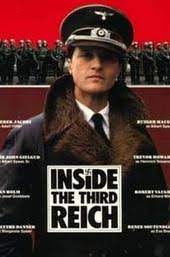
Rutger Hauer as Albert Speer
A woman sits next to him, sobbing repeatedly: “The German people only want peace. Why won’t they make peace? Why won’t they make peace?”
By which she means—intentionally or not: Why won’t the British simply agree to give Germany whatever it wants?
There has been a lot of this sentiment coursing through Gaza—and its allies in the Islamic world and elsewhere. It’s not stated as honestly as it is below, but translates to this anyway:
“Why won’t the Israelis allow Hamas to slaughter them—as it did on October 7?”
(Under the cover of thousands of rockets fired from Gaza, an estimated 1,200 men, women and children were slaughtered by Hamas terrorists in streets, houses, kibbutz communities and at a rave music festival. About 250 others were kidnapped and taken into Gaza.)
“Why are the Israelis bombing us?”
(Because they don’t like having their men, women and children slaughtered and kidnapped.)
“Why does the United States allow Israel to bomb us?”
(Americans didn’t like it when 3,000 of their own citizens were slaughtered on 9/11. Within a month, America began pulverizing Afghanistan—home of 9/11 mastermind Osama bin Laden—and its occupation lasted 20 years.)
“We only slaughtered 1,200 Israelis. But they have killed—by our estimate—18,000 Palestinians. That’s so unfair.”
(Under this logic, Israel should be allowed to kill only 1,200 Palestinians: “I smacked you in the mouth once, so you should be allowed to smack me in the mouth once. Actually, you shouldn’t be allowed to smack me back at all.”)
“Israel is waging war on civilians—not Hamas.”
(Hamas has deliberately embedded itself among a civilian population: “Ha, ha, you’ll have to kill all these innocent people in order to kill us.” For Israel to accept such sanctuary would be to confer immunity on Hamas and guarantee ceaseless future attacks.)

Emblem of Hamas
“Palestinians didn’t attack Israel—Hamas did.”
(Hamas is overwhelmingly supported by Palestinians. A man who shelters a known killer is by definition an accessory to that killer’s crimes. Yet Hamas refuses to allow civilians to take shelter in its tunnels. Nor does it use its underground network to supply much-needed food and resources for Gazans.)
“Israel is fighting a war of genocide against Gaza!”
(The universal rallying cry among Gaza residents—and their Islamic and non-Islamic allies—is: “From the river to the sea, Palestine will be free.” Which means: When Israel is destroyed and its citizens are slaughtered. For Hamas, no “two-state solution” will do.)
According to CNN, several videos are circulating online that “show Israeli soldiers in Gaza behaving in offensive and disrespectful ways toward the civilian population. Other videos show soldiers ransacking private homes, destroying civilian property and using racist and hateful language.”
(Soldiers are universally notorious for showing disrespect for their enemies, whether civilian or military. During the Civil War, Union General William Tecumseh Sherman set out on his legendary “March to the Sea” through Georgia in 1864. His soldiers ravaged the countryside, destroyed all sources of food and forage and left behind hungry and demoralized Southerners.
Sherman’s March
(As for Israeli soldiers “using racist and hateful language”: During World War II, GIs referred to Germans as “krauts” and to Japanese as “Japs.” During the Vietnam war, grunts called Vietcong and North Vietnamese soldiers “gooks.” In Afghanistan and Iraq, Americans used “ragheads” and “Hajiis” to describe their enemies.
(War is, by its nature, destructive—of lives, of property, of feelings for humanity.
(William Tecumseh Sherman minced no words in describing its evil: “You cannot qualify war in harsher terms than I will. War is cruelty, and you cannot refine it….You might as well appeal against the thunder-storm as against these terrible hardships of war….
(“They are inevitable, and the only way the people of Atlanta can hope once more to live in peace and quiet at home, is to stop the war….”
(Sherman’s words—which appeared in a September 12, 1864 letter to Atlanta Mayor James M. Calhoun—could be addressed to Hamas and the Gaza residents who support it:
(“Now that war comes home to you, you feel very different. You depreciate its horrors, but did not feel them when you sent car-loads of soldiers and ammunition, and moulded shells and shot, to carry war into Kentucky and Tennessee, to desolate the homes of hundreds of thousands of good people who only asked to live in peace at their old homes, and under the Government of their inheritance.”)
“The Holy Land.”
(There is no “holy land.” There is only desert claimed by two warring religions. Both sides believe “God is on our side.” So there will never be peace, only eternal war—until global warming finally makes the Middle East so hot that no one can live there.)
"MISSION: IMPOSSIBLE", 2016 PRESIDENTIAL ELECTION, ABC NEWS, ALTERNET, AMERICABLOG, AP, AUGUSTO PINOCHET, AUGUSTO SANDINO, AYATOLLAH RUHOLLAH KHOMEINI, ” 9/11, BABY BOOMER RESISTANCE, BAY OF PIGS, BBC, BLOOMBERG NEWS, BUZZFEED, CBS NEWS, CHIANG KAI-SHEK, CHILE, CIA, CNN, CROOKS AND LIARS, CUBA, DAILY KOS, DAILY KOZ, DONALD TRUMP, DWIGHT D. EISENHOWER, FIDEL CASTRO, FIVETHIRTYEIGHT, FULGENCIO BATISTA, GEORGE W. BUSH, GUATEMALA, HAITI, HARPER’S MAGAZINE, HONODURAS, HUFFINGTON POST, IRAQ, JACOBO ARBENZ, JOHN F. KENNEDY, MAFIA, MAO TSE-TUNG, MEDIA MATTERS, MOHAMMAD MOSADDEGH, MOHAMMAD-REZA SHAH PHLAVI, MOTHER JONES, MOVEON, MSNBC, NATIONAL SECURITY AGENCY, NBC NEWS, NEW REPUBLIC, NEWSDAY, NEWSWEEK, NICARAGUA, NPR, OSAMA BIN LADEN, PBS NEWSHOUR, POLITICO, POLITICUSUSA, RAW STORY, REUTERS, RICHARD M. NIXON, ROBERT MUELLER, RUSSIA, SADDAM HUSSEIN, SALON, SALVADOR ALLENDE, SEATTLE TIMES, SLATE, SOVIET UNION, TALKING POINTS MEMO, THE ATLANTIC, THE CHICAGO SUN-TIMES, THE CHICAGO TRIBUNE, THE DAILY BEAST, THE DAILY BLOG, THE GUARDIAN, THE HILL, THE HUFFINGTON POST, THE INTERCEPT, THE LOS ANGELES TIMES, THE NATION, THE NEW REPUBLIC, THE NEW YORK TIMES, THE NEW YORKER, THE VILLAGE VOICE, THE WASHINGTON POST, THINKPROGRESS, TIME, TRUTHDIG, TRUTHOUT, TWITTER, U.S. NEWS & WORLD REPORT, UNITED FRUIT COMPANY, UPI, USA TODAY
In Bureaucracy, History, Military, Politics, Social commentary on November 3, 2023 at 12:13 am
The CIA, FBI and National Security Agency (which cracks codes and listens to the telephone conversation of foreign leaders) unanimously agree: Russian trolls and Intelligence agents played a major role in subverting the 2016 Presidential election.
Special Counsel Robert Mueller III, assigned in May, 2017, to investigate charges of Russian interference, believed there was collusion. He indicted or obtained guilty pleas from 34 people and three companies.
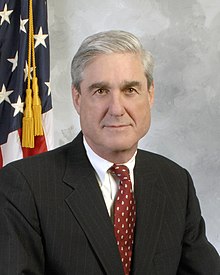
Robert Mueller
And about 58% of Americans believe that President Donald Trump tried to obstruct the investigation.
Apparently, most Americans don’t like having their elections subverted by enemy nations.
Subverting the governments of other countries is a right that Americans have long reserved for themselves. Among those regimes that have been toppled:
- Between 1898 and 1934, the United States repeatedly intervened with military force in Central America and the Caribbean.
- Americans staged invasions of Honduras in 1903, 1907, 1911, 1912, 1919, 1924 and 1925 to defend U.S. interests. These were defined as Standard Oil and the United Fruit Company.
- The United States occupied Nicaragua almost continuously from 1912 to 1933. Its legacy was the imposition of the tyrannical Somoza family, which ruled from 1936 to 1979.
- The United States occupied Haiti from 1915 to 1934. American banks had lent money to Haiti and requested American government intervention.
- In 1918, 13,000 American soldiers joined armies from Europe and Japan to overthrow the new Soviet government and restore the previous Czarist regime. By 1920, the invading forces proved unsuccessful and withdrew.
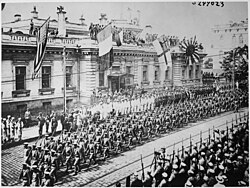
Allied troops parading in Vladivostok, 1918
- From 1946 to 1949, the United States provided military, logistical and other aid to the Right-wing Chinese Nationalist Party of Chiang Kai-shek. Its opponent: Communist forces led by Mao Tse-Tung, who ultimately proved victorious.
- In 1953, the Eisenhower administration ordered the CIA to overthrew the democratically-elected government of of Iranian Prime Minister Mohammad Mosaddegh. His crime: Nationalizing the Iranian oil industry, which had been under British control since 1913. He was succeeded by Mohammad-Reza Shah Phlavi.
- Whereas Mossadeddgh had ruled as a constitutional monarch, Phlavi was a dictator who depended on United States government support to retain power until he was overthrown in 1979 by the Ayatollah Ruhollah Khomeini.
- In 1954, the CIA overthrew the democratically-elected government of Guatemalan President Jacobo Arbenz. His crime: Installing a series of reforms that expanded the right to vote, allowed workers to organize, legitimized political parties and allowed public debate. Most infuriating to American Right-wingers: His agrarian reform law, which expropriated parts of large land-holdings and redistributed them to agricultural laborers.
- The United Fruit Company lobbied the United States government to overthrow him—and the CIA went into action. Arbenz was replaced by the first of a series of brutal Right-wing dictators.
- From 1959 until 1963, the United States government was obsessed with overthrowing the revolutionary Cuban government of Fidel Castro. Although not democratically elected, Castro was wildly popular in Cuba for overthrowing the dictatorial Fulgencio Batista.
- On April 17, 1961, over 1,400 CIA-trained Cuban exiles invaded Cuba at the Bay of Pigs. Cuban military forces crushed the invasion in three days.
- Infuriated with the failure of the Bay of Pigs invasion, President John F. Kennedy authorized “Operation Mongoose” to remove Castro through sabotage and assassination. The CIA, wanting to please Kennedy, teamed up with the Mafia, which wanted to resurrect its casinos on the island.
- Among the tactics used: Hiring Cuban gangsters to murder police officials and Soviet technicians; sabotaging mines; using biological and chemical warfare against the Cuban sugar industry. None of these proved successful in assassinating Castro nor overturning his regime.
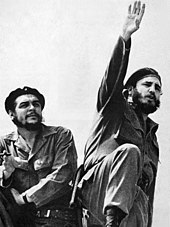
Ernesto “Che” Guevera and Fidel Castro
- In 1970, President Richard M. Nixon ordered the CIA to prevent Marxist Salvador Allende from being democratically elected as president of Chile. When that failed, he ordered the CIA to overthrow Allende. Allende’s crime: A series of liberal reforms, including nationalizing large-scale industries (notably copper mining and banking).
- In 1973, he was overthrown by Chilean army units and national police. He was followed by Right-wing dictator Augusto Pinochet, who slaughtered 3,200 political dissidents, imprisoned 30,000 and forced another 200,000 Chileans into exile.
And how did Americans react to all these attempts—successful and unsuccessful—at regime change?
Through indifference or outright support.
The popular 1960s TV series, “Mission: Impossible,” regularly depicted a CIA-type agency supporting regimes “we” liked or toppling those “we” didn’t.
Americans generally assume their Presidents and Congress know best who is a “friend” and who is an “enemy.” America’s friends usually turn out to be Right-wing dictators like Chiang Kai-Shek, Fulgencio Batista, Augusto Pinochet and Mohammad-Reza Shah Phlavi.
And its enemies often turn out to be liberal reformers like Augusto Sandino, Mohammad Mosaddegh and Salvador Allende.
Americans tend to favor intervention for the flimsiest of reasons. In 2003, President George W. Bush claimed Iraq’s dictator, Saddam Hussein, had plotted 9/11 with Osama bin Laden. There was absolutely no proof to substantiate this, yet Americans overwhelmingly supported Bush’s unprovoked invasion of Iraq.
But now the shoe is on the other foot.
Except for President Donald Trump and his fanatical supporters, Americans are furious that a foreign power has dared to install “regime change” on them.
Americans are now tasting the medicine they have dished out to so many other countries. And they find it as repugnant as those countries have found the American brand.
"MISSION: IMPOSSIBLE", 2016 PRESIDENTIAL ELECTION, ABC NEWS, ADAM SCHIFF, ALTERNET, AMERICABLOG, AP, AUGUSTO PINOCHET, AUGUSTO SANDINO, AYATOLLAH RUHOLLAH KHOMEINI, ” 9/11, BABY BOOMER RESISTANCE, BAY OF PIGS, BERNARD LAW MONTGOMERY, BUZZFEED, CBS NEWS, CHIANG KAI-SHEK, CHILE, CIA, CNN, CROOKS AND LIARS, CUBA, DAILY KOZ, DONALD TRUMP, DRUDGE RETORT, DWIGHT D. EISENHOWER, FBI, FIDEL CASTRO, FIVETHIRTYEIGHT, FULGENCIO BATISTA, GEORGE W. BUSH, GUATEMALA, HAITI, HARPER’S MAGAZINE, HONODURAS, HUNTER BIDEN, IRAQ, JACOBO ARBENZ, JOE BIDEN, JOHN F. KENNEDY, MAFIA, MAO TSE-TUNG, MEDIA MATTERS, MICK MULVANEY, MOHAMMAD MOSADDEGH, MOHAMMAD-REZA SHAH PHLAVI, MOTHER JONES, MOVEON, MSNBC, NANCY PELOSI, NATIONAL SECURITY AGENCY, NBC NEWS, NEWSWEEK, NICARAGUA, NPR, OSAMA BIN LADEN, PBS NEWSHOUR, POLITICO, POLITICUSUSA, RAW STORY, REUTERS, RICHARD M. NIXON, RUSSIA, SADDAM HUSSEIN, SALON, SALVADOR ALLENDE, SEATTLE TIMES, SLATE, SOVIET UNION, TALKING POINTS MEMO, THE ATLANTIC, THE CHICAGO SUN-TIMES, THE CHICAGO TRIBUNE, THE DAILY BEAST, THE DAILY BLOG, THE GUARDIAN, THE HILL, THE HUFFINGTON POST, THE LOS ANGELES TIMES, THE NATION, THE NEW REPUBLIC, THE NEW YORK TIMES, THE VILLAGE VOICE, THE WASHINGTON POST, THINKPROGRESS, TIME, TRUTHDIG, TRUTHOUT, TWITTER, TWO POLITICAL JUNKIES, U.S. NEWS & WORLD REPORT, UKRAINE, UNITED FRUIT COMPANY, UPI, USA TODAY, VOLODYMYR ZELENSKY, WINSTON CHURCHILL, WONKETTE, WORLD WAR 11
In Bureaucracy, History, Politics, Social commentary on September 22, 2023 at 12:18 am
“I have news for everybody: Get over it. There’s going to be political influence in foreign policy.”
The speaker was White House chief of staff Mick Mulvaney. And in an October 17, 2019 press conference, he was trying to put the best possible spin on President Donald Trump’s latest outrage: An attempt to extort a “favor” from the president of Ukraine.
In July, 2019, Trump told Mulvaney to withhold almost $400 million in promised military aid for Ukraine, which faces increasing aggression from Russia.
On July 25, Trump telephoned Ukrainian President Volodymyr Zelensky to “request” a “favor”: Investigate Democratic Presidential Candidate Joe Biden and his son, Hunter, who had had business dealings in Ukraine.The reason for such an investigation: To find embarrassing “dirt” on Biden.
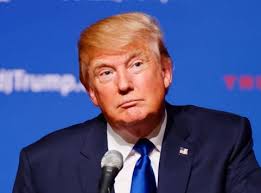
Donald Trump
But then a CIA whistleblower filed a complaint about the extortion attempt—and the media and Congress soon learned of it.
Rep. Adam Schiff, D-Calif., tweeted: “The transcript of the call reads like a classic mob shakedown: — We do a lot for Ukraine — There’s not much reciprocity — I have a favor to ask — Investigate my opponent — My people will be in touch — Nice country you got there. It would be a shame if something happened to her.”
On September 24, 2019, Nancy Pelosi, speaker to the House of Representatives, announced a formal impeachment inquiry into Trump.
During World War II, President Franklin D. Roosevelt didn’t hesitate to leverage the great economic and military power of the United States to gain concessions from Winston Churchill, the prime minister of Great Britain.
At Roosevelt’s insistence, for example, it was an American—General Dwight D. Eisenhower—who was appointed Supreme Allied Commander in Europe. Had the British gotten their way, the post would have almost certainly gone to British Field Marshal Bernard Law Montgomery.
Roosevelt’s insistence, however, had nothing to do with personally benefiting himself.
But the unpleasant truth remains that subverting the governments of other countries is a right that Americans have long reserved for themselves. For example:
- Between 1898 and 1934, the United States repeatedly intervened with military force in Central America and the Caribbean.
- Americans staged invasions of Honduras in 1903, 1907, 1911, 1912, 1919, 1924 and 1925 to defend U.S. interests. These were defined as Standard Oil and the United Fruit Company.
- The United States occupied Nicaragua almost continuously from 1912 to 1933. Its legacy was the imposition of the tyrannical Somoza family, which ruled from 1936 to 1979.
- The United States occupied Haiti from 1915 to 1934. American banks had lent money to Haiti and requested American government intervention.
- In 1918, 13,000 American soldiers joined armies from Europe and Japan to overthrow the new Soviet government and restore the previous Tsarist regime. By 1920, the invading forces proved unsuccessful and withdrew.
Allied troops parading in Vladivostok, 1918
- In 1953, President Dwight D. Eisenhower ordered the CIA to overthrew the democratically-elected government of of Iranian Prime Minister Mohammad Mosaddegh. His crime: Nationalizing the Iranian oil industry, which had been under British control since 1913.
- He was succeeded by Mohammad-Reza Shah Phlavi. Whereas Mossadeddgh had ruled as a constitutional monarch, Phlavi was a dictator who depended on United States government support to retain power until he was overthrown in 1979 by the Ayatollah Ruhollah Khomeini.
- In 1954, the CIA overthrew the democratically-elected government of Guatemalan President Jacobo Arbenz. His crime: Installing a series of reforms that expanded the right to vote, allowed workers to organize, legitimized political parties and allowed public debate.
- Most infuriating to American Right-wingers: His agrarian reform law, which expropriated parts of large land-holdings and redistributed them to agricultural laborers.
- From 1959 until 1963, the United States government was obsessed with overthrowing the revolutionary Cuban government of Fidel Castro. Although not democratically elected, Castro was wildly popular in Cuba for overthrowing the dictatorial Fulgencio Batista.
- On April 17, 1961, over 1,400 CIA-trained Cuban exiles invaded Cuba at the Bay of Pigs. Cuban military forces crushed the invasion in three days.
- Infuriated with the failure of the Bay of Pigs invasion, President John F. Kennedy authorized “Operation Mongoose” to remove Castro through sabotage and assassination. The CIA, wanting to please Kennedy, teamed up with the Mafia, which wanted to resurrect its casinos on the island.
Ernesto “Che” Guevera and Fidel Castro
- In 1970, President Richard M. Nixon ordered the CIA to prevent Marxist Salvador Allende from being democratically elected as president of Chile. When that failed, he ordered the CIA to overthrow Allende.
- Allende’s crime: A series of liberal reforms, including nationalizing large-scale industries (notably copper mining and banking). In 1973, he was overthrown by Chilean army units and national police.
- He was followed by Right-wing dictator Augusto Pinochet, who slaughtered 3,200 political dissidents, imprisoned 30,000 and forced another 200,000 Chileans into exile.
Americans reacted to all these attempts—successful and unsuccessful—with indifference or outright support.
The popular 1960s TV series, “Mission: Impossible,” regularly depicted a CIA-type agency supporting regimes “we” liked or toppling those “we” didn’t.
Americans generally assume their Presidents and Congress know best who is a “friend” and who is an “enemy.” America’s friends often turn out, for the most part, to be Right-wing dictators like Fulgencio Batista, Augusto Pinochet and Mohammad-Reza Shah Phlavi.
And its enemies often turn out to be liberal reformers like Augusto Sandino, Jacobo Arbenz, Mohammad Mosaddegh and Salvador Allende.
ABC NEWS, AL QAEDA, ALTERNET, AMERICABLOG, AMERICAN CAESARS: THE LIVES OF THE PRESIDENTS FROM FRANKLIN D. ROOSEVELT TO GEORGE W. BUSH, AMERICAN EMPIRE, AP, ” 9/11, BABY BOOMER RESISTANCE, BASHAR AL-ASSAD, BILL CLINTON, BLOOMBERG, BUREAUCRACY, BUZZFEED, CBS NEWS, CHRIS MATHEWS, CNN, CONDOLEEZA RICE, CROOKS AND LIARS, DAILY KOZ, DONALD TRUMP, DRUDGE REPORT, DWIGHT EISENHOWER, FACEBOOK, FBI, FIVETHIRTYEIGHT, FRANKLIN D. ROOSEVELT, GEORGE H.W. BUSH, GEORGE W. BUSH, GERALD R. FORD, HARPER’S MAGAZINE, HARRY S. TRUMAN, HUFFINGTON POST, JIMMY CARTER, JOHN F. KENNEDY, LYNDON B. JOHNSON, MEDIA MATTERS, MOTHER JONES, MOVEON, MSNBC, NBC NEWS, NEWSWEEK, NIGEL HAMILTON, NPR, OSAMA BIN LADEN, PBS NEWSHOUR, POLITICO, POLITICUSUSA, RAW STORY, REPUBLICAN PARTY, REUTERS, RICHARD CLARKE, RICHARD NIXON, ROMAN EMPIRE, SALON, SEATTLE TIMES, SEPTEMBER 11, SLATE, SUETONIUS, SYRIA, TALKING POINTS MEMO, TERRORISM, THE ATLANTIC, THE CHICAGO SUN-TIMES, THE CHICAGO TRIBUNE, THE DAILY BEAST, THE DAILY BLOG, THE GUARDIAN, THE HILL, THE HUFFINGTON POST, THE LOS ANGELES TIMES, THE NATION, THE NEW REPUBLIC, THE NEW YORK TIMES, THE TWELVE CAESARS, THE VILLAGE VOICE, THE WASHINGTON POST, THINKPROGRESS, TIME, TRUTHDIG, TRUTHOUT, TWITTER, TWO POLITICAL JUNKIES, U.S. NEWS & WORLD REPORT, UPI, USA TODAY
In Bureaucracy, History, Military, Politics, Social commentary on September 15, 2023 at 12:12 am
Colonel Brandt: “I wonder what we’ll do after we lose the war.”
Captain Kiesel: “Prepare for the next one.”
–-“The Cross of Iron,” film by Sam Peckinpah
On September 12, 2001, President George W. Bush attended a meeting of the National Security Council.
“Why shouldn’t we go against Iraq, not just Al-Qaeda?” demanded Donald Rumsfeld, the Secretary of Defense.
Vice President Dick Cheney enthusiastically agreed.
Secretary of State Colin Powell then pointed out there was absolutely no evidence that Iraq had had anything to do with 9/11 or Al-Qaeda. And he added: “The American people want us to do something about Al-Qaeda”—not Iraq.
On November 21, 2001, only 10 weeks after 9/11, Bush told Rumsfeld: It’s time to turn to Iraq.
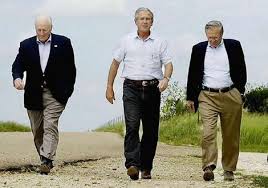
Liars Club: Dick Cheney, George Bush, Donald Rumsfeld
Bush and his war-hungry Cabinet officials knew that Americans demanded vengeance on Al-Qaeda’s mastermind, Osama bin Laden, and not Iraqi dictator Saddam Hussein. So they repeatedly fabricated “links” between the two:
- Saddam had worked hand-in-glove with Bin Laden to plan 9/11.
- Saddam was harboring and supporting Al-Qaeda throughout Iraq.
- Saddam, with help from Al-Qaeda, was scheming to build a nuclear bomb.
Yet as early as September 22, 2001, Bush had received a classified President’s Daily Brief intelligence report, which stated that there was no evidence linking Saddam Hussein to 9/11.
The report added that there was scant credible evidence that Iraq had any significant collaborative ties with Al-Qaeda.
Even more important: Saddam had tried to monitor Al Qaeda through his intelligence service—because he saw Al-Qaeda and other theocratic radical Islamist organizations as a potential threat to his secular regime.
Bush administration officials repeatedly claimed that Iraq possessed huge quantities of chemical and biological weapons, in violation of UN resolutions. And they further claimed that US intelligence agencies had determined:
- the precise locations where these weapons were stored;
- the identities of those involved in their production; and
- the military orders issued by Saddam Hussein for their use in the event of war.
Among other lies stated as fact by members of the Bush administration:
- Iraq had sought uranium from Niger, in west Africa.
- Thousands of aluminum tubes imported by Iraq could be used in centrifuges to create enriched uranium.
- Iraq had up to 20 long-range Scud missiles, prohibited under UN sanctions.
- Iraq had massive stockpiles of chemical and biological agents, including nerve gas, anthrax and botulinum toxin.
- Saddam Hussein had issued chemical weapons to front-line troops who would use them when US forces crossed into Iraq.
Consider the following:
August 26, 2002: Cheney told the Veterans of Foreign Wars, “There is no doubt that Saddam Hussein now has weapons of mass destruction. There is no doubt he is amassing them to use against our friends, against our allies and against us.”
September 8, 2002: National Security Advisor Condoleeza Rice said on CNN: ”There is certainly evidence that Al-Qaeda people have been in Iraq. There is certainly evidence that Saddam Hussein cavorts with terrorists.”
September 18, 2002: Rumsfeld told the House Armed Services Committee, “We do know that the Iraqi regime has chemical and biological weapons. His regime has amassed large, clandestine stockpiles of chemical weapons—including VX, sarin, cyclosarin and mustard gas.”
October 7, 2002: Bush declared in a nationally televised speech in Cincinnati that Iraq “possesses and produces chemical and biological weapons. It is seeking nuclear weapons.”
March 16, 2003: Cheney declared on NBC’s “Meet the Press”: “We believe [Saddam Hussein] has, in fact, reconstituted nuclear weapons.”
March 30, 2003: On ABC’s “This Week” program, 10 days into the war, Rumsfeld said: “We know where they [weapons of mass destruction] are.”
Bush never regretted his decision to invade Iraq, which occurred on March 20, 2003.
Even as American occupying forces repeatedly failed to turn up any evidence of “weapons of mass destruction” (WMDs), Bush and his minions claimed the invasion a good thing.
In fact, Bush—who hid out the Vietnam war in the Texas Air National Guard—even joked publicly about the absence of WMDs.
He did so at a White House Correspondents dinner on March 24, 2004—one year after he had started the war.
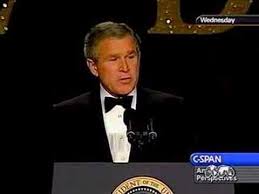
George W. Bush at the 2004 White House Correspondents’ dinner
To Bush, the non-existent WMDs were nothing more than the butt of a joke that night. While an overhead projector displayed photos of a puzzled-looking Bush searching around the Oval Office, Bush recited a comedy routine.
Click here: Bush laughs at no WMD in Iraq – YouTube
“Those weapons of mass destruction have gotta be somewhere,” Bush laughed, while a photo showed him poking around the corners in the Oval Office.
“Nope–no weapons over there! Maybe they’re under here,” he said, as a photo showed him looking under a desk.
Meanwhile, an assembly of wealthy, pampered men and women—the elite of America’s media and political classes—laughed heartily during Bush’s performance. It was a scene worthy of the court of the ancient Caesars, complete with royal flunkies.
Ultimately, the war that Bush had deliberately provoked
- Took the lives of 4,484 Americans.
- Cost the United States Treasury at least $2 trillion.
- Created a Middle East power vacumn.
- Allowed Iran–Iraq’s arch enemy–to eagerly fill it.
- Killed at least 655,000 Iraqis.
- Bush retired from office with a lavish pension and full Secret Service protection.
- He wrote his memoirs and was paid $7 for the first 1.5 million copies.
- Cheney, Rumsfeld, Rice retired to private business, wrote their own memoirs, and lived in comfort as respected elder statesmen.
ABC NEWS, AL QAEDA, ALTERNET, AMERICABLOG, AMERICAN CAESARS: THE LIVES OF THE PRESIDENTS FROM FRANKLIN D. ROOSEVELT TO GEORGE W. BUSH, AMERICAN EMPIRE, AP, ” 9/11, BABY BOOMER RESISTANCE, BASHAR AL-ASSAD, BILL CLINTON, BLOOMBERG, BUREAUCRACY, BUZZFEED, CBS NEWS, CHRIS MATHEWS, CNN, CONDOLEEZA RICE, CROOKS AND LIARS, DAILY KOZ, DONALD TRUMP, DRUDGE REPORT, DWIGHT EISENHOWER, FACEBOOK, FBI, FIVETHIRTYEIGHT, FRANKLIN D. ROOSEVELT, GEORGE H.W. BUSH, GEORGE W. BUSH, GERALD R. FORD, HARPER’S MAGAZINE, HARRY S. TRUMAN, HUFFINGTON POST, JIMMY CARTER, JOHN F. KENNEDY, LYNDON B. JOHNSON, MEDIA MATTERS, MOTHER JONES, MOVEON, MSNBC, NBC NEWS, NEWSWEEK, NIGEL HAMILTON, NPR, OSAMA BIN LADEN, PBS NEWSHOUR, POLITICO, POLITICUSUSA, RAW STORY, REPUBLICAN PARTY, REUTERS, RICHARD CLARKE, RICHARD NIXON, ROMAN EMPIRE, SALON, SEATTLE TIMES, SEPTEMBER 11, SLATE, SUETONIUS, SYRIA, TALKING POINTS MEMO, TERRORISM, THE ATLANTIC, THE CHICAGO SUN-TIMES, THE CHICAGO TRIBUNE, THE DAILY BEAST, THE DAILY BLOG, THE GUARDIAN, THE HILL, THE HUFFINGTON POST, THE LOS ANGELES TIMES, THE NATION, THE NEW REPUBLIC, THE NEW YORK TIMES, THE TWELVE CAESARS, THE VILLAGE VOICE, THE WASHINGTON POST, THINKPROGRESS, TIME, TRUTHDIG, TRUTHOUT, TWITTER, TWO POLITICAL JUNKIES, U.S. NEWS & WORLD REPORT, UPI, USA TODAY
In Bureaucracy, History, Military, Politics, Social commentary on September 14, 2023 at 12:43 am
September 11, 2023, marks the 22nd anniversary of the worst terrorist attack on United States soil. Inevitably, this is a time to remember all those whose lives were so cruelly snuffed out.
But it should also be a time to remember those who made this atrocity inevitable—by refusing to acknowledge and address the impending threat from Al-Qaeda.
British historian Nigel Hamilton has chronicled their arrogance and indifference in his 2010 biography: American Caesars: Lives of the Presidents from Franklin D. Roosevelt to George W. Bush.
Hamilton noted that Richard Clarke, the national security advisor on terrorism, was certain that Osama bin Laden had arranged the [USS.] Cole bombing in Aden on October 12, 2000.

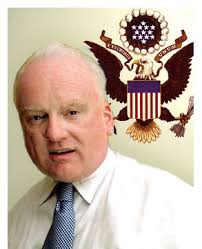
Richard Clarke
Aude, CC BY-SA 3.0 <https://creativecommons.org/licenses/by-sa/3.0>, via Wikimedia Commons
For months, Clarke tried to convince others in the Bush Administration that Bin Laden was plotting another attack against the United States—either abroad or at home.
But Clarke could not prevail against the know-it-all arrogance of such higher-ranking Bush officials as Vice President Dick Cheney; Secretary of Defense Donald Rumsfeld; Rumsfeld’s deputy, Paul Wolfowitz; and National Security Advisor Condoleeza Rice.
Rice initially refused to hold a cabinet-level meeting on the subject. Then she “insisted the matter be handled only by a more junior Deputy Principals meeting” in April, 2001, writes Hamilton.
Wolfowitz, the number-two man at the Department of Defense, said: “I don’t understand why we are beginning by talking about this one man, bin Laden.”
Even after Clarke outlined the threat posed by Al-Qaeda, Wolfowitz—whose real target was Saddam Hussein—said: “You give bin Laden too much credit.”
Wolfowitz insisted that bin Laden couldn’t carry out his terrorist acts without the aid of a state sponsor—namely, Iraq.
Wolfowitz, in fact, blamed Iraq for the 1993 bombing of the World Trade Center. Clarke was stunned, since there was absolutely no evidence of Iraqi involvement in this.
“Al-Qaeda plans major acts of terrorism against the United States,” Clarke warned his colleagues. He pointed out that, like Adolf Hitler, bin Laden had actually published his plans for future destruction.
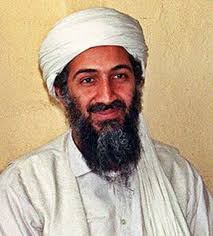
Osama bin Laden
And he added: “Sometimes, as with Hitler in Mein Kampf, you have to believe that these people will actually do what they say they will do.”
Wolfowitz heatedly traded on his Jewish heritage to bring Clarke’s unwelcome arguments to a halt: “I resent any comparison between the Holocaust and this little terrorist in Afghanistan.”
Writing in outraged fury, Hamilton sums up Clarke’s agonizing frustrations:
- Bush’s senior advisors treated their colleagues who had served in the Clinton administration with contempt.
- President Bush, Vice President Dick Cheney, National Security Advisor Condoleeza Rice, Secretary of Defense Donald Rumsfeld and Deputy Defense Secretary Paul Wolfowitz seemed content to ignore the danger signals of an impending Al-Qaeda attack.
- This left only Secretary of State Colin Powell, his deputy Richard Armitage, Richard Clarke and a skeptical Treasury Secretary, Paul O’Neill, to wage “a lonely battle to waken a seemingly deranged new administration.”
Clarke alerted Federal Intelligence agencies that “Al-Qaeda is planning a major attack on us.” He asked the FBI and CIA to report to his office all they could learn about suspicious persons or activities at home and abroad.
Finally, at a meeting with Rice on September 4, 2001, Clarke challenged her to “picture yourself at a moment when in the very near future Al-Qaeda has killed hundreds of Americans, and imagine asking yourself what you wish then that you had already done.”
Seven days later, Al-Qaeda struck, and 3,000 Americans died horrifically—and needlessly.
Neither Bush, Cheney, Rice, Rumsfeld nor Wolfowitz ever admitted their negligence. Nor would any of them be brought to account.
Disgustingly, these were the same officials who, afterward, posed as the Nation’s saviors–and branded anyone who disagreed with them as a traitor, practices the Right continues to exploit to this day.
Only Richard Clarke—who had vainly argued for stepped-up security precautions and taking the fight to Al-Qaeda—gave that apology.
On March 24, 2004, Clarke testified at the public 9/11 Commission hearings. Addressing relatives of victims in the audience, he said: “Your government failed you, those entrusted with protecting you failed you, and I failed you.”
Yet even worse was to come.
On the evening after the September 11 attacks, Bush took Clarke aside during a meeting in the White House Situation Room:
“I want you, as soon as you can, to go back over everything, everything. See if Saddam [Hussein, the dictator of Iraq] did this. See if he’s linked in any way.”
Clarke was stunned: “But, Mr. President, Al-Qaeda did this.”
“I know, I know,” said Bush. “But see if Saddam was involved. I want to know.”
Hussein had not plotted the attack—and there was no evidence proving that he did. But the attack gave “W” the excuse he wanted to remove the man he blamed for the 1992 defeat of his father, President George H.W. Bush.
Bush believed that his father would have been re-elected if he had “gone all the way” into Baghdad during the 1991 Gulf War.
He would finish the job that his father had started but failed to compete.
On September 12, 2001, Bush attended a meeting of the National Security Council.
“Why shouldn’t we go against Iraq, not just Al-Qaeda?” demanded Donald Rumsfeld, the Secretary of Defense.
Vice President Dick Cheney enthusiastically agreed.
ABC NEWS, AL QAEDA, ALTERNET, AMERICABLOG, AMERICAN CAESARS: THE LIVES OF THE PRESIDENTS FROM FRANKLIN D. ROOSEVELT TO GEORGE W. BUSH, AMERICAN EMPIRE, AP, ” 9/11, BABY BOOMER RESISTANCE, BASHAR AL-ASSAD, BILL CLINTON, BLOOMBERG, BUREAUCRACY, BUZZFEED, CBS NEWS, CHRIS MATHEWS, CNN, CONDOLEEZA RICE, CROOKS AND LIARS, DAILY KOZ, DONALD TRUMP, DRUDGE REPORT, DWIGHT EISENHOWER, FACEBOOK, FBI, FIVETHIRTYEIGHT, FRANKLIN D. ROOSEVELT, GEORGE H.W. BUSH, GEORGE W. BUSH, GERALD R. FORD, HARPER’S MAGAZINE, HARRY S. TRUMAN, HUFFINGTON POST, JIMMY CARTER, JOHN F. KENNEDY, LYNDON B. JOHNSON, MEDIA MATTERS, MOTHER JONES, MOVEON, MSNBC, NBC NEWS, NEWSWEEK, NIGEL HAMILTON, NPR, OSAMA BIN LADEN, PBS NEWSHOUR, POLITICO, POLITICUSUSA, RAW STORY, REPUBLICAN PARTY, REUTERS, RICHARD CLARKE, RICHARD NIXON, ROMAN EMPIRE, SALON, SEATTLE TIMES, SEPTEMBER 11, SLATE, SUETONIUS, SYRIA, TALKING POINTS MEMO, TERRORISM, THE ATLANTIC, THE CHICAGO SUN-TIMES, THE CHICAGO TRIBUNE, THE DAILY BEAST, THE DAILY BLOG, THE GUARDIAN, THE HILL, THE HUFFINGTON POST, THE LOS ANGELES TIMES, THE NATION, THE NEW REPUBLIC, THE NEW YORK TIMES, THE TWELVE CAESARS, THE VILLAGE VOICE, THE WASHINGTON POST, THINKPROGRESS, TIME, TRUTHDIG, TRUTHOUT, TWITTER, TWO POLITICAL JUNKIES, U.S. NEWS & WORLD REPORT, UPI, USA TODAY
In Bureaucracy, History, Military, Politics, Social commentary on September 13, 2023 at 12:22 am
It’s that time of year again–-yet another anniversary celebration of September 11, 2001.
The day when Islamic terrorists slammed two jetliners into the World Trade Center and a third into the Pentagon.
They would have crashed a fourth jetliner into the White House or Capitol Building except for the heroic resistance of passengers aboard United Airlines Flight 93.
In the years immediately following 9/11, politicians of both parties used this anniversary to wave flags and make self-serving patriotic speeches.
This was especially true for officials of the administration of President George W. Bush—which, even as the rubble was being cleared at the Pentagon and World Trade Center, was preparing to use the attack as an excuse to topple Iraqi dictator Saddam Hussein.
Hussein had not plotted 9/11, and there was no evidence that he did. But that didn’t matter to Bush and those planning the invasion and conquest of Iraq.
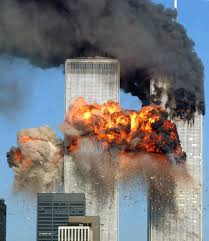
World Trade Center on September 11, 2001
So here it is, 22 years later, and, once again, politicians are using 9/11 as a prop to advance their careers.
Donald Trump, the Republican favorite for the Presidential nomination, wrote: “Those who experienced the horror of the September 11 terrorist attacks can never erase the pain and anguish of that fateful day.”
And President Joe Biden wrote: “What remains constant, and will always remain constant, is the character of our nation.”
As on past commemorations of 9/11, those who died will be remembered by friends and relatives of those who knew and loved them.
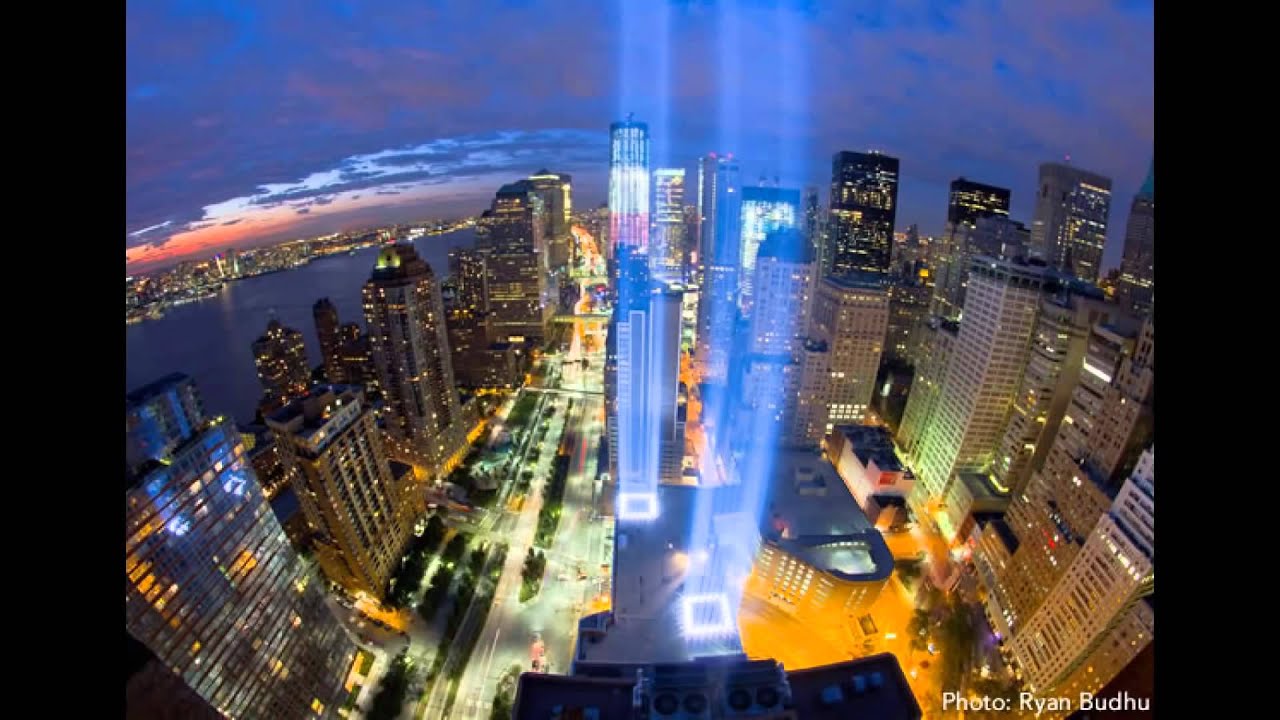
Tribute to 9/11 World Trade Center Victims
It is in fact appropriate to remember the innocents who died on that day—and the heroism of the police and firefighters who died trying to save them.
But it’s equally important to remember those who made 9/11 not simply possible but inevitable.
And that does not mean only the 19 highjackers who turned those planes into fuel-bombs. It means the officials at the highest levels of the administration of President George W. Bush.
Officials who, to this day, have never been held accountable in any way for the resulting death and destruction.
And who have been allowed to blatantly lie that they “kept us safe” from terrorism.
Obviously, such an indictment is not going to be presented by TV commentators today—not even on such liberal networks as CNN and MSNBC. And most definitely not on the right-wing Fox network.
Fortunately, British historian Nigel Hamilton has dared to lay bare the facts of this disgrace. Hamilton is the author of several acclaimed political biographies, including JFK: Reckless Youth and Bill Clinton: Mastering the Presidency.
In 2007, he began research on his latest book: American Caesars: The Lives of the Presidents From Franklin D. Roosevelt to George W. Bush.


Nigel Hamilton
By Nigel Hamilton (Nigel Hamilton picture)
The inspiration for this came from a classic work of ancient biography: The Twelve Caesars, by Gaius Suetonius Tranquillus–-known as Suetonius.
Suetonius, a Roman citizen and historian, had chronicled the lives of the first twelve Caesars of imperial Rome: Julius Caesar, Augustus, Tiberius, Caligula, Claudius, Nero, Galba, Otho, Vitellius, Vespasian, Titus and Domitian.
Hamilton wanted to examine post-World War II United States history as Suetonius had examined that of ancient Rome: Through the lives of the 12 “emperors” who had held the power of life and death over their fellow citizens—and those of other nations.
For Hamilton, the “greatest of American emperors, the Caesar Augustus of his time,” was Franklin D. Roosevelt, who led his country through the Great Depression and World War II.
His “”great successors” were Harry S. Truman, Dwight D. Eisenhower and John F. Kennedy—who, in turn, contained the Soviet Union abroad and presided over sustained economic prosperity at home.
By contrast, “arguably the worst of all the American Caesars” was “George W. Bush, and his deputy, Dick Cheney, who willfully and recklessly destroyed so much of the moral basis of American leadership in the modern world.”
Among the most lethal of Bush’s offenses: The appointing of officials who refused to take seriously the threat posed by Al-Qaeda.
And this arrogance and indifference continued–right up to September 11, 2001, when the World Trade Center and Pentagon became targets for destruction.
Among the few administration officials who did take Al-Qaeda seriously was Richard Clarke, the chief counter-terrorism adviser on the National Security Council.
Clarke had been thus appointed in 1998 by President Bill Clinton. He continued in the same role under President Bush—but the position was no longer given cabinet-level access.
This put him at a severe disadvantage when dealing with other, higher-ranking Bush officials—such as Vice President Dick Cheney, Secretary of Defense Donald Rumsfeld, Rumsfeld’s deputy, Paul Wolfowitz and National Security Advisor Condoleeza Rice.
These turned out to be the very officials who refused to believe that Al-Qaeda posed a lethal threat to the United States.
“Indeed,” writes Hamilton, “in the entire first eight months of the Bush Presidency, Clarke was not permitted to brief President Bush a single time, despite mounting evidence of plans for a new al-Qaeda outrage.” [Italics added]
Nor did it help that, during his first eight months in office before September 11, Bush was on vacation, according to the Washington Post, 42% of the time.
ABC NEWS, ADOLF HITLER, ALTERNET, AMERICABLOG, AP, BABY BOOMER RESISTANCE, BATTLE OF OMDURMAN, BLOOMBERG, BONE SPURS, BRITISH ARMY, BUZZFEED, CBS NEWS, CNN, CROOKS AND LIARS, DAILY KOZ, DEMOCRATS, DONALD TRUMP, DRAFT DODGING, DRUDGE RETORT, EGYPT, FIVETHIRTYEIGHT, FOUR QUEEN’S OWN HUSSARS REGIMENT, GEORGE FLOYD, HARPER’S MAGAZINE, IMPEACHMENT, INDIA, JESUS, JOSEPH STALIN, KAYLEIGH MCENANY, KIM JONG-UN, LAFAYETTE PARK, LOS ANGELES, MEDIA MATTERS, MEMES, MOTHER JONES, MOVEON, MSNBC, MURIEL BOWSER, NATIONAL GUARD, NAZI GERMANY, NBC NEWS, NEW YORK CITY, NEWSWEEK, NORTH KOREA, NPR, OSAMA BIN LADEN, PBS NEWSHOUR, POLITICO, POLITICUSUSA, RAW STORY, REPUBLICANS, REUTERS, RUSSIA, SALON, SAN FRANCISCO, SCOTLAND YARD’S SPECIAL BRANCH, SEATTLE TIMES, Secret Service, SLATE, ST. JOHN’S CHURCH, TALKING POINTS MEMO, TEAR GAS, THE ATLANTIC, THE CHICAGO SUN-TIMES, THE CHICAGO TRIBUNE, THE DAILY BEAST, THE DAILY BLOG, THE GUARDIAN, THE HILL, THE HUFFINGTON POST, THE LOS ANGELES TIMES, THE NATION, THE NEW REPUBLIC, THE NEW YORK TIMES, THE VILLAGE VOICE, THE WASHINGTON POST, THINKPROGRESS, TIME, TITAN MINI-SUB, TITANIC, TRUTHDIG, TRUTHOUT, TWENTY-FIRST LANCERS, TWITTER, TWO POLITICAL JUNKIES, U.S. NEWS & WORLD REPORT, U.S. PARK POLICE, UPI, USA TODAY, VIETNAM WAR, VLADIMIR PUTIN, WALTER THOMPSON, WHITE HOUSE, WINSTON CHURCHILL, WONKETTE, WORLD WAR 11
In Bureaucracy, History, Law Enforcement, Military, Politics, Social commentary on June 26, 2023 at 12:14 am
There are literally no limits to which Donald Trump’s fanatical supporters will go to convince others he’s a heroic champion worthy of their reverence.
Today, on Facebook and Twitter, his disciples post images of him that are not only false but laughably so.
One such image was posted by “Nick Adams (Alpha Male)” and showed the jowly, grotesquely overweight, 77-year-old ex-President as a muscular bodybuilder. And it came with the caption: “President Trump is a TITAN!”
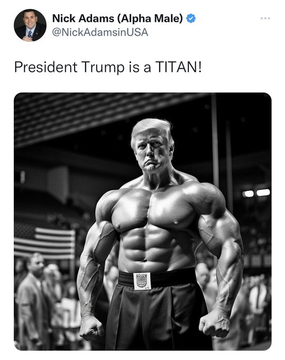
Ironically, the tweet came on the same day—June 22—when news broke of the implosion of the Titan mini-sub and the loss of its five-man crew. The tragedy occurred during a dive to view the wreckage of the Titanic, which sank in 1912.
Other memes have depicted Trump—a notorious draft-dodger who received no fewer than five deferments to escape the Vietnam war—as a military hero, clad in full military gear.
One even claimed he had killed Osama bin Laden—an act that occurred when Barack Obama was President and Trump was safely presiding over the TV show, “The Apprentice.”
Other propagandists for Trump have depicted him as beloved by Jesus. This despite the fact that Trump is a notorious liar, egomaniac, adulterer, thief and materialist.
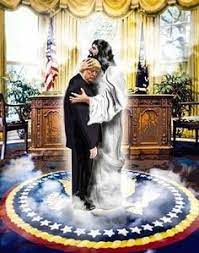
Still others have tried to compare Trump to historical titans—like Winston Churchill.
On May 25, 2020, mass protests erupted across the country following the murder of George Floyd, a black unemployed restaurant security guard, by Derek Chauvin, a white Minneapolis police officer.
Cities such as Los Angeles, San Francisco and New York City saw stores looted, vandalized and/or burned. In response, President Trump called for harsh policing, telling governors in a nationwide conference call that they must “dominate” protesters or be seen as “weak.”
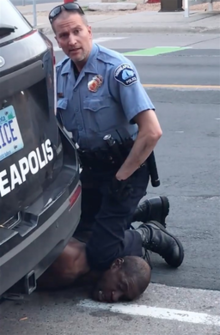
Death of George Floyd
To drive home his point, on June 1, Trump ordered police, Secret Service agents and National Guard troops to violently remove peaceful protesters from Lafayette Square, which borders St. John’s Church near the White House.
The purpose of the removal: So Trump—holding a Bible upside down—could have a photo-op in front of the church.
On June 3, White House Press Secretary Kayleigh McEnany compared Trump’s photo-op in front of St. John’s Episcopal Church to former British Prime Minister Winston Churchill’s visits to bombed British cities during World War II:
“Through all of time, we have seen presidents and leaders across the world who have had leadership moments and very powerful symbols that were important for a nation to see at any given time to show a message of resilience and determination.
“Like Churchill, we saw him inspecting the bombing damage. It sent a powerful message of leadership to the British people.”

Kayleigh McEnany
Comparing Trump to Churchill proved a triumph of imagination on McEnany’s part:
- Churchill was an avowed and relentless opponent of Fascism—and especially its most infamous exponent, German Chancellor Adolf Hitler.
- During the 1930s, as Europe’s democracies ignored or quailed before Nazi threats, Churchill demanded that England arm for the coming war against Nazi Germany.
- Trump, a Fascistic dictator by nature, tried to rule by fiat and identified with dictators—most notably Communist ones, such as Russia’s Vladimir Putin and North Korea’s Kim Jong-Un.
- Throughout World War II, Churchill had only one bodyguard—Inspector Walter Thompson, of Scotland Yard’s Special Branch.

Winston Churchill (testing a submachinegun); Walter Thompson (in black fedora)
- Trump was constantly protected by hundreds of Secret Service agents who were supplemented by platoons of local police.
- During bombing raids, Churchill often climbed atop London buildings to watch the bombardment—or raced to cities he had just learned were under attack.
- During the George Floyd protests, Trump ducked into the White House’s bombproof bunker.
- Trump turned the normally well-protected White House into an armed fortress. Block after block of tall, black reinforced fencing had been erected in recent days. Tan military vehicles rolled along Pennsylvania Avenue and camo-clad troops patrolled the corner where tourists once bought red, white and blue USA sweatshirts.
- As a young man, Churchill had served as a second lieutenant in the Fourth Queen’s Own Hussars regiment of the British Army. He volunteered to campaign against Islamic rebels in the Swat Valley of northwest India. In Egypt, he joined the 21st Lancers and saw action in the Battle of Omdurman.
- Trump had used his father’s influence to win five draft deferments during the Vietnam war—four allowing him to complete college and one for “bone spurs.”
Donald Trump is by no means the first tyrant to be hailed as a hero.
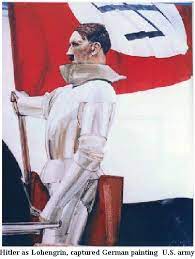
Nazi Germany’s Adolf Hitler—who almost certainly never rode a horse—was depicted as an armor-clad knight holding a swastika banner while astride a spirited steed.
And the Soviet Union’s Joseph Stalin—whose pockmarked face, short stature and widening girth were visible to all who met him—was depicted in posters as handsome, gigantic and trim.
Tyrants pay close attention to how they are depicted. They want to be seen as forever modest, humble, wise and courageous—the embodiment of virtue and patriotism.
To depict them as they usually are—vain, arrogant, stupid, cowardly—they consider a personal affront and a challenge to their absolute rule.


 Bureaucracybuster's Blog
9/11 TERROR ATTACKS, ABC NEWS, ADOLF HITLER, AFGHANISTAN, ALBERT SPEER, ALTERNET, AMERICABLOG, AP, BABY BOOMER RESISTANCE, BBC, BLOOMBERG, BUZZFEED, CBS NEWS, CIVIL WAR, CNN, COLUMBIA, CROOKS AND LIARS, DAILY KOS, EMERSON COLLEGE, EMORY UNIVERSITY, FIVETHIRTYEIGHT, GAZA, GEORGIA, HAMAS, HARPER’S MAGAZINE, HARVARD, HUFFINGTON POST, INSIDE THE THIRD REICH (MOVIE), IRAQ, ISRAEL, MEDIA MATTERS, MOTHER JONES, MOVEON, MSNBC, NAZI GERMANY, NBC NEWS, NEW REPUBLIC, NEWSDAY, NEWSWEEK, NPR, OSAMA BIN LADEN, PALESTINIANS, PBS NEWSHOUR, POLITICO, POLITICUSUSA, RAW STORY, REUTERS, RUTGER HAUER, SALON, SEATTLE TIMES, SLATE, SMART BOMBS, TALKING POINTS MEMO, THE ATLANTIC, THE CHICAGO SUN-TIMES, THE CHICAGO TRIBUNE, THE DAILY BEAST, THE DAILY BLOG, THE GUARDIAN, THE HILL, THE HUFFINGTON POST, THE INTERCEPT, THE LOS ANGELES TIMES, THE NATION, THE NEW REPUBLIC, THE NEW YORK TIMES, THE NEW YORKER, THE VILLAGE VOICE, THE WASHINGTON POST, THINKPROGRESS, THIRD REICH, TIME, TRUTHDIG, TRUTHOUT, TWITTER, TWO POLITICAL JUNKIES, U.S. NEWS & WORLD REPORT, UNIVERSITY OF CALIFORNIA, UNIVERSITY OF TEXAS AT AUSTIN, UPI, USA TODAY, WILLIAM TECUMSEH SHERMAN, WORLD WAR 11, YALE
UGLY–AND UNSPOKEN–TRUTHS ABOUT THE ISRAEL-GAZA WAR
In Bureaucracy, Entertainment, History, Military, Politics, Social commentary on April 29, 2024 at 2:03 amOn October 7, the Hamas terrorist organization which governs Gaza invaded Israel, killing 1,139 soldiers and civilians, and kidnapping another 253—including women and children.
Since then, Israel has pounded Gaza with bombs, missiles. tanks and soldiers. About 62% of all homes have been destroyed. More than a million residents have been rendered homeless. Damages have been estimated at over $13 billion.
To date, more than 31,184 Palestinians have been killed and 72,889 injured, according to the local health authorities.
Across the nation, scores of university students have protested Israel’s retaliation against Gaza.
Among the universities targeted: Columbia, Harvard, Yale, the University of Texas at Austin, the University of Southern California, Emory University in Atlanta, Boston’s Emerson College.
Clashes have erupted between pro-Palestinian and pro-Israeli students. Jewish students have been threatened with death. And several universities—such as USC—have been forced to cancel upcoming graduation ceremonies for fear of violence.
This has forced universities to call on police to clear pro-Palestinian encampments and arrest demonstrators who make it impossible for serious-minded students to get an education.
Aftermath of an Israeli air strike in Gaza
Palestinian News & Information Agency (Wafa) in contract with APAimages, CC BY-SA 3.0 <https://creativecommons.org/licenses/by-sa/3.0>, via Wikimedia Commons
As a result, it’s time for a commonsense update on the war—and the terrorism-supporting questions that go with it.
“Why are the Israelis bombing Gaza?”
Because they don’t like having their men, women and children slaughtered and kidnapped.
“Why does the United States allow Israel to bomb Gaza?”
Israel is a sovereign country and does not take its orders from the United States.
“Hamas only slaughtered 1,139 Israelis. But Israelis have killed over 31,000 Palestinians. That’s so unfair.”
Under this logic, Israel should be allowed to kill only 1,139 Palestinians: “I smacked you in the mouth once, so you should be allowed to smack me in the mouth once. Actually, you shouldn’t be allowed to smack me back at all.”
“Israel is waging war on civilians—not Hamas.”
Hamas has deliberately embedded itself among a civilian population: “Ha, ha, you’ll have to kill all these innocent people in order to kill us.” For Israel to accept such sanctuary would be to confer immunity on Hamas and guarantee ceaseless future attacks.
Emblem of Hamas
“Palestinians didn’t attack Israel—Hamas did.”
Hamas is overwhelmingly supported by Palestinians. A man who shelters a known killer is by definition an accessory to that killer’s crimes. Yet Hamas refuses to allow civilians to take shelter in its tunnels. Nor does it use its underground network to supply much-needed food and resources for Gazans.
“Israel is fighting a war of genocide against Gaza!”
The universal rallying cry among Gaza residents—and their Islamic and non-Islamic allies—is: “From the river to the sea, Palestine will be free.” Which means: When Israel is destroyed and its citizens are slaughtered.
For Hamas, no “two-state solution” will do.
According to CNN, several videos are circulating online that “show Israeli soldiers in Gaza behaving in offensive and disrespectful ways toward the civilian population. Other videos show soldiers ransacking private homes, destroying civilian property and using racist and hateful language.”
Soldiers are universally notorious for showing disrespect for their enemies, whether civilian or military.
During the Civil War, Union General William Tecumseh Sherman set out on his legendary “March to the Sea” through Georgia in 1864. His soldiers ravaged the countryside, destroyed all sources of food and forage and left behind hungry and demoralized Southerners.
Sherman’s March
As for Israeli soldiers “using racist and hateful language”: During World War II, GIs referred to Germans as “krauts” and to Japanese as “Japs.” During the Vietnam war, grunts called Vietcong and North Vietnamese soldiers “gooks.” In Afghanistan and Iraq, Americans used “ragheads” and “Hajiis” to describe their enemies.
War is, by its nature, destructive—of lives, of property, of feelings for humanity.
William Tecumseh Sherman minced no words in describing its evil: “You cannot qualify war in harsher terms than I will. War is cruelty, and you cannot refine it….You might as well appeal against the thunder-storm as against these terrible hardships of war….
“They are inevitable, and the only way the people of Atlanta can hope once more to live in peace and quiet at home, is to stop the war….”
Sherman’s words—which appeared in a September 12, 1864 letter to Atlanta Mayor James M. Calhoun—could be addressed to Hamas and the Gaza residents who support it:
“Now that war comes home to you, you feel very different. You depreciate its horrors, but did not feel them when you sent car-loads of soldiers and ammunition, and moulded shells and shot, to carry war into Kentucky and Tennessee, to desolate the homes of hundreds of thousands of good people who only asked to live in peace at their old homes, and under the Government of their inheritance.”
“The Holy Land.”
There is no “holy land.” There is only desert claimed by two warring religions. Both sides believe “God is on our side.” So there will never be peace, only eternal war—until global warming finally makes the Middle East so hot that no one can live there.
Share this: