Posts Tagged ‘NORTH KOREA’
ABC NEWS, ADOLF HITLER, ALTERNET, AMERICABLOG, AP, BABY BOOMER RESISTANCE, BARACK OBAMA, BBC, BILL CLINTON, BLOOMBERG NEWS, BUZZFEED, CBS NEWS, CHINA, CHRIS MATTHEWS, CNN, CNN'S "STARTING POINT", CROOKS AND LIARS, CZECHOSLAVAKIA, DAILY KOS, DARRELL ISSA, DAVID BROOKS, DEBT CEILING, DENMARK, EXECUTIVE ORDERS, EXTORTION, FIVETHIRTYEIGHT, GEORGE W. BUSH, GREENLAND, HARPER’S MAGAZINE, HOUSE SPEAKER JOHN BOEHNER, HUFFINGTON POST, immigration reform, INSIDER, IRAN, JANET YELLEN, JIMMY CARTER, JOSEPH BIDEN, MEDIA MATTERS, MITCH MCCONNELL, MOTHER JONES, MOVEON, MSNBC, MSNBC'S "HARDBALL", NANCY PELOSI, NAZI GERMANY, NBC NEWS, NEGOTIATING, NEVILLE CHAMBERLAIN, NEW REPUBLIC, NEWSDAY, NEWSWEEK, NEWT GINGRICH, NICCOLO MACHIAVELLI, NORTH KOREA, NPR, PAP SMEARS, PBS NEWSHOUR, PITUFFIK SPACE BASE, PLANNED PARENTHOOD, POLAND, POLITICO, POLITICUSUSA, R.I.CO. ACT, RAW STORY, REPUBLICAN PARTY, REPUBLICANS, REUTERS, Ronald Reagan, RUSSIA, SALON, SEATTLE TIMES, SLATE, TALKING POINTS MEMO, THE ATLANTIC, THE CHICAGO SUN-TIMES, THE CHICAGO TRIBUNE, THE DAILY BEAST, THE DAILY BLOG, THE GUARDIAN, THE HAMILTON PROJECT, THE HILL, THE HUFFINGTON POST, THE LOS ANGELES TIMES, THE NATION, THE NEW REPUBLIC, THE NEW YORK TIMES, THE NEW YORKER, THE PRINCE, THE VILLAGE VOICE, THE WASHINGTON POST, THINKPROGRESS, TIME, TITLE X, TRUTHDIG, TRUTHOUT, TWITTER, TWO POLITICAL JUNKIES, U.S. NEWS & WORLD REPORT, UPI, USA TODAY, WARREN BUFFET, WENDY EDELBERG, WINSTON CHURCHILL, WONKETTE, WORLD WAR 11, X
In Bureaucracy, Business, History, Law, Military, Politics, Social commentary on January 9, 2025 at 12:10 am
Contrary to popular belief, Adolf Hitler did not constantly rage at everyone. On the contrary: he could, when he desired, be charming, especially to women. He used rage as a weapon, knowing that most people feel intimidated by it.
In his “negotiations” for control of Austria with Austrian Chancellor Kurt von Schuschnigg. Hitler opened with insults and threats at the outset of their discussion. Then there was a period of calm, to convince the Austrian chancellor the worst was over.
Finally, he once again attacked—this time with so much fury that Schuschnigg was terrified into submission.
With one stroke of a pen, Austria became a vassal-state to Nazi Germany.
Seven months later, in September, 1938, Hitler turned his rage and aggression against Czechoslovakia.
Once again, he opened “negotiations” with a lie: The Czechoslovak government was trying to exterminate 3.5 million Germans living in the “Sudetenland.”
This consisted of the northern, southwest and western regions of Czechoslovakia, inhabited mostly by ethnic Germans.
Then he followed this up with the threat of war: Germany would protect its citizens and halt such “oppression.”
For British Prime Minister Neville Chamberlain, the thought of another European war erupting less than 20 years after the end of World War I was simply unthinkable.

The Cenotaph, in London, honoring the unknown British dead of World War 1
Something had to be done to prevent it. And he believed himself to be just the man to do it.
He quickly sent Hitler a telegram, offering to help resolve the crisis: “I could come to you by air and am ready to leave tomorrow. Please inform me of earliest time you can receive me, and tell me the place of the meeting. I should be grateful for a very early reply.”
Once again, another head-of-state was prepared to meet Hitler on his home ground. Again, Hitler took this concession as a sign of weakness. And Chamberlain’s use of such words as “please” and “grateful” only further convinced Hitler of another impending triumph.
Chamberlain was determined to grant Hitler’s every demand—so long as this meant avoiding a second world war.
As a political party, Democrats have generally copied this same “strategy” when dealing with Republicans.
On January 6, 2021, President Donald Trump—supported by at least 147 Republicans in the House and Senate—incited a treasonous coup to remain in office. This despite the overwhelming evidence that he had lost the 2020 election to former Vice President Joseph Biden.
By the time the Biden administration neared its end, not one Republican House or Senate member supporting such treason had been indicted for that infamy. Let alone tried, convicted and imprisoned.
Had this occurred, the Biden administration’s agenda would have been far more advanced than it is. Republicans who were raising funds for re-election campaigns would have been forced to raise them to pay huge legal bills.
They would have had far less time to plot to overthrow democracy. Instead, their attention would have been increasingly focused on their upcoming trials for treason.
Even more important: Donald Trump should have been indicted for treason by no later than mid-2021. Even then, the evidence was overwhelming that he had instigated the coup attempt.
Yet it wasn’t until November 18, 2022, that Jack Smith was appointed Special Counsel to oversee the criminal investigations into Trump’s role in the January 6 Capitol attack and his illegal storage of classified documents at his Mar-a-Lago estate.
And Smith allowed Trump-appointed Florida Judge Aileen Cannon to repeatedly postpone the stolen documents trial.
Meanwhile, Trump won repeated delays in his trial for inciting a violent attack on the Capitol. His victory on November 5 guarantees he will not be prosecuted for any of his crimes.

To bring down Mafia “boss of all bosses” John Gotti, the FBI waged a seven-year, $75 million campaign—which included the use of electronic bugs and recruitment of informants.
To date, there is no evidence that the Bureau applied such an effort against Trump—although he, unlike Gotti, threatens the very foundations of American democracy.
To avert war, British Prime Minister Neville Chamberlain met with German Chancellor Adolf Hitler in Berchtesgaden, Germany, on September 15, 1938.
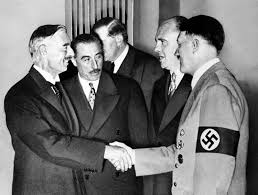
Neville Chamberlain and Adolf Hitler
During their talks, Chamberlain said he had come to discuss German grievances. But, he added, it was necessary in all circumstances to exclude the use of force.
Hitler appeared to be shocked that he could be accused of such intentions: “Force? Who speaks of force?“
Then, without warning, he switched to an aggressive mode. He accused the Czechs of having mobilized their army in May. They had mobilized–in response to the mobilization of the German army.
“I shall not put up with this any longer,” shouted Hitler. “I shall settle this question in one way or another. I shall take matters in my own hands!”
Suddenly, Chamberlain seemed alarmed—and possibly angry: “If I understood you right, you are determined to proceed against Czechoslovakia in any case. If this is so, why did you let me come to Berchtesgaden?”
Hitler was taken aback by the unexpected show of defiance. He realized he was about to lose his chance to bully the British into accepting his latest demands.
ABC NEWS, ADOLF HITLER, ALTERNET, AMERICABLOG, AP, BABY BOOMER RESISTANCE, BARACK OBAMA, BBC, BILL CLINTON, BLOOMBERG NEWS, BUZZFEED, CANADA, CBS NEWS, CHINA, CHRIS MATTHEWS, CNN, CNN'S "STARTING POINT", CROOKS AND LIARS, CZECHOSLAVAKIA, DAILY KOS, DARRELL ISSA, DAVID BROOKS, DEBT CEILING, DENMARK, DONALD TRUMP, DRUG TRAFFICKING, EXECUTIVE ORDERS, EXTORTION, FIVETHIRTYEIGHT, GEORGE W. BUSH, GREENLAND, HARPER’S MAGAZINE, HOUSE SPEAKER JOHN BOEHNER, HUFFINGTON POST, ILLEGAL ALIENS, immigration reform, INSIDER, IRAN, JANET YELLEN, JIMMY CARTER, JOSEPH BIDEN, JUSTIN TRUDEAU, MEDIA MATTERS, MEXICO, MITCH MCCONNELL, MOTHER JONES, MOVEON, MSNBC, MSNBC'S "HARDBALL", NANCY PELOSI, NAZI GERMANY, NBC NEWS, NEGOTIATING, NEVILLE CHAMBERLAIN, NEW REPUBLIC, NEWSDAY, NEWSWEEK, NEWT GINGRICH, NICCOLO MACHIAVELLI, NORTH KOREA, NPR, PANAMA CANAL, PAP SMEARS, PBS NEWSHOUR, PITUFFIK SPACE BASE, PLANNED PARENTHOOD, POLAND, POLITICO, POLITICUSUSA, R.I.CO. ACT, RAW STORY, REPUBLICAN PARTY, REPUBLICANS, REUTERS, Ronald Reagan, RUSSIA, SALON, SEATTLE TIMES, SLATE, TALKING POINTS MEMO, TARIFFS, THE ATLANTIC, THE CHICAGO SUN-TIMES, THE CHICAGO TRIBUNE, THE DAILY BEAST, THE DAILY BLOG, THE GUARDIAN, THE HAMILTON PROJECT, THE HILL, THE HUFFINGTON POST, THE LOS ANGELES TIMES, THE NATION, THE NEW REPUBLIC, THE NEW YORK TIMES, THE NEW YORKER, THE PRINCE, THE VILLAGE VOICE, THE WASHINGTON POST, THINKPROGRESS, TIME, TITLE X, TRUTHDIG, TRUTHOUT, TWITTER, TWO POLITICAL JUNKIES, U.S. NEWS & WORLD REPORT, UPI, USA TODAY, WARREN BUFFET, WENDY EDELBERG, WINSTON CHURCHILL, WONKETTE, WORLD WAR 11, X
In Bureaucracy, Business, History, Law, Law Enforcement, Military, Politics, Social commentary on January 8, 2025 at 12:10 am
By studying the “negotiating” methods used by Adolf Hitler, Americans generally—and Democrats in particular—can learn much about the mindset and “negotiating” style of today’s Republican party.
Consider President-Elect Donald Trump’s recent threats against not only Canada but Panama—specifically, to retake control of the Panama Canal.
On December 25, Trump told a conservative conference in Arizona that Panama was charging US ships “ridiculous, highly unfair” fees to use its namesake canal.
The United States built the canal during the administration of President Theodore Roosevelt and opened it in 1914. It remained controlled by the United States until President Jimmy Carter signed a a 1977 agreement for its eventual handover to Panama in 1999.

Panama Canal (in white)
But this week, Trump threatened that if shipping rates were not lowered, “we will demand that the Panama Canal be returned to us, in full, quickly and without question.”
He accused China of operating the canal and lamented that the United States “puts in Billions of Dollars in ‘repair’ money, but will have absolutely nothing to say about ‘anything.’”
On December 25, Trump posted on his website, Truth Social: “Merry Christmas to all, including to the wonderful soldiers of China, who are lovingly, but illegally, operating the Panama Canal.”
“There is not a single Chinese soldier in the canal,” the president of Panama, José Raúl Mulino, told reporters the next day, adding that there is “absolutely no Chinese interference.”
Trump’s threats against Panama may be connected with the outstanding tax evasion case he faces in the country.
In 2019, the owners of a Panama City hotel tower that was previously managed and operated under the Trump brand accused the Trump Organization of pocketing money meant to pay taxes. According to a lawsuit, Trump’s companies simply kept the money, “intentionally evading taxes” and leaving the new owner liable for millions.
Yet the blunt truth remains: Unless Trump goes to war with Panama, his threat to take over the canal is effectively meaningless.
During the 2024 Presidential campaign, Trump denied reading Adolf Hitler’s notorious book, Mein Kampf (“My Struggle.”)
In the past, however, he has acknowledged owning a copy of it. And he has adopted the same “negotiating” style as the late Fuhrer: Do-as-I-say-or-I’ll-destroy-you.
A classic example of Hitler’s “bargaining style” came in 1938, when he invited Austrian Chancellor Kurt von Schuschnigg to his mountaintop retreat in Obersalzberg, Germany.

Kurt von Schuschnigg
Hitler, an Austrian by birth, intended to annex his native land to Germany. Schuschnigg was aware of Hitler’s desire, but nevertheless felt secure in accepting the invitation. He had been assured that the question of Austrian sovereignty would not arise.
The meeting occurred on February 12, 1938.
Shuschnigg opened the discussion with a friendly compliment. Walking over to a large window, he admired the breathtaking view of the mountains.
HITLER: We haven’t come here to talk about the lovely view or the weather!
Austria has anyway never done anything which was of help to the German Reich….I am resolutely determined to make an end to all this business. The German Reich is a great power. Nobody can and nobody will interfere if it restores order on its frontiers.
SCHUSCHNIGG: We simply have to go on living alongside one another, the little state next to the big one. We have no other choice.
And that is why I ask you to tell me what your concrete complaints are. We will do all in our power to sort things out and establish a friendly relationship, as far as it is possible to do so.
HITLER: That’s what you say, Herr Schuschnigg. And I am telling you that I intend to clear up the whole of the so-called Austrian question—one way or another. Do you think I don’t know that you are fortifying Austria’s border with the Reich?
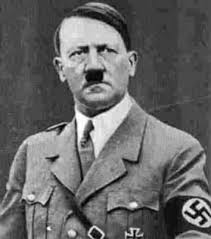
Adolf Hitler
SCHUSCHNIGG: There can be no suggestion at all of that—
HITLER: Ridiculous explosive chambers are being built under bridges and roads—
This was a lie, and Hitler knew it was a lie. But no matter. It gave him an excuse to threaten to destroy Austria—as he was to destroy so many other nations during the next seven years.
HITLER: I have only to give one command and all this comic stuff on the border will be blown to pieces overnight. You don’t seriously think you could hold me up, even for half an hour, do you?
Who knows—perhaps you will find me one morning in Vienna like a spring storm. Then you will go through something! I’d like to spare the Austrians that.
The S.A. [Hitler’s private army of Stormtroopers] and the [Condor] lLegion [which had bombed much of Spain into rubble during the three-year Spanish Civil War] would come in after the troops and nobody—not even I—could stop them from wreaking vengeance.
Schnuschigg made a cardinal mistake in dealing with Hitler: He showed fear. And this was precisely what the Nazi dictator looked for in an opponent.
Contrary to popular belief, Hitler did not constantly rage at everyone. On the contrary: he could, when he desired, be charming, especially to women. He used rage as a weapon, knowing that most people feel intimidated by it.
ABC NEWS, ADOLF HITLER, ALTERNET, AMERICABLOG, AP, BABY BOOMER RESISTANCE, BARACK OBAMA, BBC, BILL CLINTON, BLOOMBERG NEWS, BUZZFEED, CANADA, CBS NEWS, CHINA, CHRIS MATTHEWS, CNN, CNN'S "STARTING POINT", CROOKS AND LIARS, CZECHOSLAVAKIA, DAILY KOS, DARRELL ISSA, DAVID BROOKS, DEBT CEILING, DENMARK, DONALD TRUMP, DRUG TRAFFICKING, EXECUTIVE ORDERS, EXTORTION, FIVETHIRTYEIGHT, GEORGE W. BUSH, GREENLAND, HARPER’S MAGAZINE, HOUSE SPEAKER JOHN BOEHNER, HUFFINGTON POST, ILLEGAL ALIENS, immigration reform, INSIDER, IRAN, JANET YELLEN, JIMMY CARTER, JOSEPH BIDEN, JUSTIN TRUDEAU, MEDIA MATTERS, MEXICO, MITCH MCCONNELL, MOTHER JONES, MOVEON, MSNBC, MSNBC'S "HARDBALL", NANCY PELOSI, NAZI GERMANY, NBC NEWS, NEGOTIATING, NEVILLE CHAMBERLAIN, NEW REPUBLIC, NEWSDAY, NEWSWEEK, NEWT GINGRICH, NICCOLO MACHIAVELLI, NORTH KOREA, NPR, PAP SMEARS, PBS NEWSHOUR, PITUFFIK SPACE BASE, PLANNED PARENTHOOD, POLAND, POLITICO, POLITICUSUSA, R.I.CO. ACT, RAW STORY, REPUBLICAN PARTY, REPUBLICANS, REUTERS, Ronald Reagan, RUSSIA, SALON, SEATTLE TIMES, SLATE, TALKING POINTS MEMO, TARIFFS, THE ATLANTIC, THE CHICAGO SUN-TIMES, THE CHICAGO TRIBUNE, THE DAILY BEAST, THE DAILY BLOG, THE GUARDIAN, THE HAMILTON PROJECT, THE HILL, THE HUFFINGTON POST, THE LOS ANGELES TIMES, THE NATION, THE NEW REPUBLIC, THE NEW YORK TIMES, THE NEW YORKER, THE PRINCE, THE VILLAGE VOICE, THE WASHINGTON POST, THINKPROGRESS, TIME, TITLE X, TRUTHDIG, TRUTHOUT, TWITTER, TWO POLITICAL JUNKIES, U.S. NEWS & WORLD REPORT, UPI, USA TODAY, WARREN BUFFET, WENDY EDELBERG, WINSTON CHURCHILL, WONKETTE, WORLD WAR 11, X
In Bureaucracy, Business, History, Law, Law Enforcement, Military, Politics, Social commentary on January 7, 2025 at 12:10 am
Once again, Republicans are ruthlessly playing “chicken” with the nation’s financial and military security.
Even before taking the oath of office as President on January 20, 2025, Donald Trump has rushed to make an enemy of America’s longtime ally—Canada.
At a November 30 dinner at Mar-a-Lago, Trump’s estate in Palm Beach, Florida, he told Canadian Prime Minister Justin Trudeau that Canada could become the 51st state of the United States.
Canada’s Public Safety Minister Dominic LeBlanc, who attended the dinner, insisted that Trump was joking.
But on December 2, Trump threatened to impose a 25% tax on all products entering the United States from Canada and Mexico unless they stopped the flow of drugs and illegal aliens.
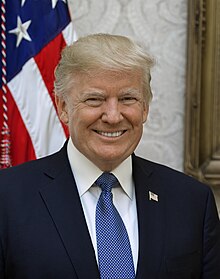
Donald Trump
And on December 3, Trump posted on his Truth Social platform an AI-generated image of himself standing on a mountain with a Canadian flag beside him. Its caption: “Oh Canada!”
Trudeau had requested the Mar-a-Lago meeting to convince Trump that the northern border is completely different from the southern one with Mexico.
“Less than one percent of migrants coming into the United States irregularly come from Canada and 0.2 percent of the fentanyl coming into the United States comes from Canada,” Trudeau said in Parliament.
During the last fiscal year, American customs agents seized 43 pounds of fentanyl at the Canadian border, compared with 21,100 pounds at the Mexican border.
Most of the fentanyl reaching the U.S. is made by Mexican drug cartels using precursor chemicals smuggled from Asia.
Utterly unmentioned in Trump’s demand: It’s America’s insatiable demand for illicit drugs that is the root cause of the drug trade.

Justin Trudeau
CC BY 3.0 <https://creativecommons.org/licenses/by/3.0>, via Wikimedia Commons
On immigration, the U.S. Border Patrol reported 1.53 million encounters with would-be illegal aliens at the Mexican border between October 2023 and September 2024. At the Canadian border, there were 23,721 such encounters.
Also unmentioned—if not deliberately ignored by Trump: Canada plays a substantial role as a U.S. trading partner. About 60% of U.S. crude oil imports are from Canada, and 85% of U.S. electricity imports as well.
Canada is also the largest foreign supplier of steel, aluminum and uranium to the U.S. and has 34 critical minerals and metals that the Pentagon eagerly desires. About 77% of Canada’s exports go to the U.S.
Trudeau pleaded with Trump not to impose the tariff because because it would “kill” Canada’s economy.
Trump responded: “So your country can’t survive unless it’s ripping off the US to the tune of $100 billion?”
His comments referred to the US trade deficit with Canada.
The U.S. had a $75 billion trade deficit with Canada last year but a third of what Canada sells into the U.S. is energy exports and prices have been high.
Trudeau left the meeting without reassurance that Trump would not impose a 25% tariff on products from Canada.
Republicans, in short, are one again utilizing the same “negotiating” strategy as Nazi Germany’s Fuhrer, Adolf Hitler.
And Democrats—out of cowardice or an ignorance of history—are once again refusing to publicly make this comparison.
By studying Adolf Hitler’s mindset and “negotiating” methods, we can learn much about the mindset and “negotiating” style of today’s Republican party.
Robert Payne, author of the bestselling biography, The Life and Death of Adolf Hitler (1973), described Hitler’s “negotiating” style thus:
“Although Hitler prized his own talents as a negotiator, a man always capable of striking a good bargain, he was totally lacking in finesse.
“He was incapable of bargaining. He was like a man who goes up to a fruit peddler and threatens to blow his brains out if he does not sell his applies at the lowest possible price.”
A classic example of Hitler’s “bargaining style” came in 1938, when he invited Austrian Chancellor Kurt von Schuschnigg to his mountaintop retreat in Obersalzberg, Germany.
Hitler, an Austrian by birth, intended to annex his native land to Germany. Schuschnigg was aware of Hitler’s desire, but nevertheless felt secure in accepting the invitation. He had been assured that the question of Austrian sovereignty would not arise.
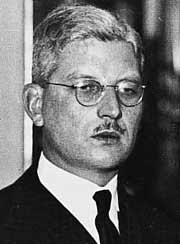
Kurt von Schuschnigg
The meeting occurred on February 12, 1938.
Shuschnigg opened the discussion with a friendly compliment. Walking over to a large window, he admired the breathtaking view of the mountains.
HITLER: We haven’t come here to talk about the lovely view or the weather!
Austria has anyway never done anything which was of help to the German Reich….I am resolutely determined to make an end to all this business. The German Reich is a great power. Nobody can and nobody will interfere if it restores order on its frontiers.
SCHUSCHNIGG: I am aware of your attitude toward the Austrian question and toward Austrian history….As we Austrians see it, the whole of our history is a very essential and valuable part of German history….And Austria’s contribution is a considerable one.
HITLER: It is absolutely zero—that I can assure you! Every national impulse has been trampled underfoot by Austria….
I could call myself an Austrian with just the same right—indeed with even more right—than you, Herr Schuschnigg. Why don’t you once try a plebiscite in Austria in which you and I run against each other? Then you would see!
2016 PRESIDENTIAL CAMPAIGN, ABC NEWS, ADOLF HITLER, ALTERNET, AMERICABLOG, AP, BABY BOOMER RESISTANCE, BARACK OBAMA, BBC, BLOOMBERG NEWS, BURT LANCASTER, BUZZFEED, CBS NEWS, CIA, CNN, CONCENTRATION CAMPS, CONSERVATIVE POLITICAL ACTION CONVENTION (C-PAC)), CROOKS AND LIARS, DACHAU, DAILY KOS, DAVID BROOKS, DEMOCRATS, DONALD TRUMP, FBI, FEDERAL GOVERNMENT SHUTDOWN, FIVETHIRTYEIGHT, FREEDOM OF THE PRESS, HARPER’S MAGAZINE, HUFFINGTON POST, IMMIGRATION AND CUSTOMS ENFORCEMENT (ICE), JAMES COMEY, JAMES ROBART, JEWS, JUDGMENT AT NUREMBERG, KIM JONG-UN, LAUREN BOEBERT, LYING, MEDIA MATTERS, MOTHER JONES, MOVEON, MSNBC, NATIONAL SECURITY AGENCY, NAZI GERMANY, NBC NEWS, NEW REPUBLIC, NEWSDAY, NEWSWEEK, NORTH KOREA, NPR, PBS NEWSHOUR, POLITICO, POLITICUSUSA, RACISM, RAW STORY, REPUBLICANS, REUTERS, ROBERT PAYNE, ROBERT S. MUELLER, RUSSIA, SALON, SEATTLE TIMES, SLATE, SPENCER TRACY, TALKING POINTS MEMO, THE ATLANTIC, THE CHICAGO SUN-TIMES, THE CHICAGO TRIBUNE, THE DAILY BEAST, THE DAILY BLOG, THE GUARDIAN, THE HILL, THE HUFFINGTON POST, THE LIFE AND DEATH OF ADOLF HITLER (BOOK), THE LOS ANGELES TIMES, THE NATION, THE NEW REPUBLIC, THE NEW YORK TIMES, THE NEW YORKER, THE VILLAGE VOICE, THE WASHINGTON POST, THINKPROGRESS, TIME, TRUTHDIG, TRUTHOUT, TWO POLITICAL JUNKIES, U.S. NEWS & WORLD REPORT, UPI, USA TODAY, VLADIMIR PUTIN, WONKETTE, X
In Bureaucracy, History, Law, Law Enforcement, Military, Politics, Social commentary on August 23, 2024 at 12:14 am
Those who have seen the classic 1960 movie, “Judgment at Nuremberg,” will remember its pivotal moment.
That’s when Burt Lancaster, as Ernst Janning, the once distinguished German judge, confesses his guilt and that of Nazi Germany in a controlled, yet emotional, outburst.
Addressing the court—presided over by Chief Judge Dan Haywood (Spencer Tracy)—Janning explains the forces that led to the triumph of evil.
“My counsel would have you believe we were not aware of the concentration camps. Not aware? Where were we?
“Where were we when Hitler began shrieking his hate in the Reichstag? When our neighbors were dragged out in the middle of the night to Dachau?
“Where were we when every village in Germany has a railroad terminal where cattle cars were filled with children being carried off to their extermination? Where were we when they cried out in the night to us? Were we deaf? Dumb? Blind?
“My counsel says we were not aware of the extermination of the millions. He would give you the excuse we were only aware of the extermination of the hundreds. Does that make us any the less guilty?
“Maybe we didn’t know the details, but if we didn’t know, it was because we didn’t want to know.”

It’s possible to imagine an equally conscience-stricken member of the Donald Trump administration making a similar statement:
“My counsel would have you believe we were not aware of the ICE concentration camps. Not aware? Where were we?
“Where were we when Trump began shrieking his hate across the country? When Trump called our free press ‘the enemy of the people’?
“Where were we when Trump openly praised Vladimir Putin and attacked those in the FBI, CIA and other Intelligence agencies sworn to protect us?
“Where were we when the victims of Trump’s hatred cried out in the night to us? Were we deaf? Dumb? Blind?
“My counsel says we were not aware of Trump’s treasonous collusion with Vladimir Putin—and his intention to betray American freedoms in exchange for the Presidency. He would give you the excuse we were misled by the lying rhetoric coming out of the White House.
“Does that make us any the less guilty? Maybe we didn’t know the details—but if we didn’t know, it was because we didn’t want to know.”
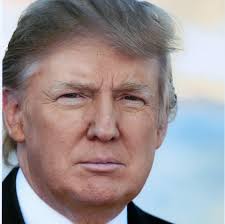
Donald Trump
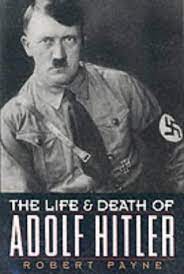
In his bestselling 1973 biography, The Life and Death of Adolf Hitler, British historian Robert Payne harshly condemned the German people for the rise of the Nazi dictator:
“Ultimately, the responsibility for the rise of Hitler lies with the German people, who allowed themselves to be seduced by him and came to enjoy the experience….
“They followed him with joy and enthusiasm because he gave them license to pillage and murder to their hearts’ content. They were his servile accomplices, his willing victims….
“If he answered their suppressed desires, it was not because he shared them, but because he could make use of them. He despised the German people, for they were merely the instruments of his will.”
On November 8, 2016, 62,984,828 ignorant, hate-filled, Right-wing Americans catapulted Donald Trump—a man, charged conservative New York Times columnist David Brooks, with an “odd psychology unleavened by kindness and charity”—into the Presidency.
And on November 3, 2020, 74,223,975 those same Americans again voted for him.
Upon taking office in January, 2017, Trump began undermining one public or private institution after another.
- Repeatedly and viciously attacking the nation’s free press for daring to report his growing list of crimes and disasters, calling it “the enemy of the American people.”
- Brutally attacking American Intelligence agencies—such as the FBI, CIA and National Security Agency—which unanimously agreed that Russia had interfered with the 2016 Presidential election.
- Firing FBI Director James Comey for refusing to pledge his personal loyalty to Trump—and continuing to investigate Russian subversion of the 2016 election.
- Lying so often—30,573 times in four years—he’s universally distrusted, at home and abroad.
- Shutting down the Federal government from December 22, 2018 to January 25, 2019—because Democrats refused to fund his useless “border wall” between the United States and Mexico. This lasted until January 25, 2019, when Trump caved to public pressure.
- Lying about the dangers of the deadly COVID-19 virus, thus allowing it to ravage the country and kill 400,000 Americans.
- Refusing to accept the outcome of a legitimate Presidential election in 2020 and falsely claiming himself the victim of massive voter fraud.
- Inciting thousands of his followers to storm the United States Capitol Building to prevent the winner, Joe Biden, from being declared President-elect.
**********
So why have millions of Americans stood by Trump despite the wreckage he has made of American foreign and domestic policy?
Their #1 reason: Hatred—of most of their fellow Americans.
Republicans know that if you deprive those you detest of food, clothing, shelter—and medical care—you don’t need gas chambers or firing squads. Or even rigged vote-counts.
That’s why they campaign furiously to eliminate Social Security, Food Stamps, Medicare and the Affordable Care Act.
Far more than the once fear-inspiring Communist Party, Republican voters now pose a “clear and present danger” to American liberties.
2020 PRESIDENTIAL ELECTION, 2024 PRESIDENTIAL ELECTION, ABC NEWS, ABORTION, ADAM SCHIFF, ALTERNET, AMERICABLOG, ANNE APPLEBAUM, AP, ASSASSINATION, AUTOCRACY INC. (BOOK), “PRESIDENT-FOR-LIFE”, BABY BOOMER RESISTANCE, BARACK OBAMA, BBC, BILL O'REILLY, BIRTH CONTROL, BLOOMBERG, BUZZFEED, CAPITOL PUNISHMENT, CBS NEWS, CHINA, CHRISTIANITY, CHRISTIANS, CIA, CNN, CONSERVATIVE POLITICAL ACTION CONFERENCE (C-PAC), CROOKS AND LIARS, DAILY KOS, DEPARTMENT OF HOMELAND SECURITY, DICTATORSHIP, DONALD TRUMP, ENVIRONMENTAL PROTECTION AGENCY, FBI, FEDERAL COMMUNICATIONS COMMISSION (FCC), FEDERAL TRADE COMMISSION (FTC), FIVETHIRTYEIGHT, FOX NEWS SUNDAY, FRANKLIN D. ROOSEVELT, HARPER’S MAGAZINE, HERITAGE FOUNDATION, HUFFINGTON POST, INTELLIGENCE AGENCIES, JACK SMITH, JAMES MATTIS, JANUARY 6 COUP ATTEMPT, JEFF SESSIONS, JOE BIDEN, JUDICIARY, Kamala Harris, KIM JONG-UN, MARK MILLEY, MEDIA MATTERS, MILITARY AGENCIES, MORNING JOE (SHOW), MOTHER JONES, MOVEON, MSNBC, NATIONAL ASSOCIATION OF BLACK JOURNALISTS, NATIONAL OCEANIC AND ATMOSPHERIC ASSOCIATION (NOAA), NATIONAL RIFLE ASSOCIATION, NATIONAL SECURITY AGENCY, NBC NEWS, NEW REPUBLIC, NEWSDAY, NEWSWEEK, NORTH KOREA, NPR, PBS NEWSHOUR, POLITICO, POLITICUSUSA, PRESIDENTIAL TRANSITION PROJECT, PROJECT 2025, PUBLIC TRANSIT SYSTEMS, RAW STORY, REUTERS, ROBERT MUELLER, ROD J. ROSENSTEIN, RUSSIA, SALON, SCARFACE (MOVIE), SEATTLE TIMES, SLATE, TALKING POINTS MEMO, TAX CUTS, THE ATLANTIC, THE CHICAGO SUN-TIMES, THE CHICAGO TRIBUNE, THE DAILY BEAST, THE DAILY BLOG, THE GUARDIAN, THE HILL, THE HUFFINGTON POST, THE INTERCEPT, THE LOS ANGELES TIMES, THE NATION, THE NEW REPUBLIC, THE NEW YORK TIMES, THE NEW YORKER, THE PRESS, THE VILLAGE VOICE, THE WASHINGTON POST, THINKPROGRESS, THOMAS MATTHEW CROOKS, TIME, TRUTHDIG, TRUTHOUT, TURNING POINT BELIEVERS’ SUMMIT, TWO POLITICAL JUNKIES, U.S. NEWS & WORLD REPORT, UNITED STATES DEPARTMENT OF JUSTICE, UPI, USA TODAY, VLADIMIR PUTIN, VOTER FRAUD, X, XI JINPING
In Bureaucracy, History, Law, Law Enforcement, Military, Politics, Social commentary, Uncategorized on August 22, 2024 at 12:12 am
On August 1, Pulitzer Prize winning historian Anne Applebaum warned about Donald Trump’s dictatorial ambitions on the PBS Newshour. As the author of Autocracy, Inc.: The Dictators Who Want to Run the World, she brings a specialist’s perspective to this subject.
She defines an “autocrat” as someone “who seeks to rule with no checks and balances, with no checks on his authority, with no judges, no media, no intermediary figures or institutions, who wants to control everything that happens in the state and to make all of the decisions.”
Asked if Trump wants to be an autocrat, she replied:
“Sometimes, he says so in the language he uses about—whether it’s about President Xi, who he admires, or President Putin, who he admires, or even the dictator of North Korea, who’s driven his country into poverty and isolation, who he also admires….
“And he has very few kind words for American allies or for fellow democracies. It’s really the absolute—people with absolute power that he wants to be like.
“And you can also hear in the language he uses, whether it’s about judges, or whether it’s about the media, or whether it’s about American institutions of other kind, about the electoral system, that he has great disdain for the institutions of democracy and the rules that were set up to make sure that power is checked in our country and that the executive isn’t a king.
“And those are disturbing traits. And they would be disturbing at any time in history, but they’re particularly disturbing now, when we have the rise of so many leaders with absolute power around the world who would love to have a transactional American president to do deals with.”
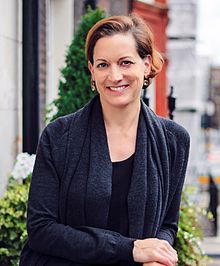
Anne Applebaum
Hb19821970, CC BY-SA 3.0 <https://creativecommons.org/licenses/by-sa/3.0>, via Wikimedia Commons
Upon taking office as the Nation’s 45th President, Donald Trump deliberately set out to attack or undermine one long-cherished public or private institution after another.
Among these:
- American Intelligence agencies: Even before taking office, Trump refused to accept the findings of the FBI, CIA and NSA that Russian Intelligence agents had intervened in the 2016 election to ensure his victory.
- “I think it’s ridiculous,” he told “Fox News Sunday.” “I think it’s just another excuse. I don’t believe it….No, I don’t believe it at all.”
- American military agencies: In 2020, Trump declined to visit an American military cemetery near Paris, and referred to U.S. Marines buried there as “losers” and “suckers.”
- While President, Trump regularly abused military officials, calling Chairman of the Joint Chief of Staff Mark Milley a “dumbass” and his former Secretary of Defense James Mattis “the world’s most overrated general.”

Mark Milley
- The press: On February 17, 2017, Trump tweeted: “The FAKE NEWS media (failing @nytimes, @NBCNews, @ABC, @CBS, @CNN) is not my enemy, it is the enemy of the American People!”
- At the Conservative Political Action Conference (C-PAC)on February 24, 2017, Trump said: “I want you all to know that we are fighting the fake news. It’s fake, phony, fake….I’m against the people that make up stories and make up sources. They shouldn’t be allowed to use sources unless they use somebody’s name. Let their name be put out there.”
- The judiciary: Trump repeatedly attacked Seattle US District Judge James Robart, who halted Trump’s first Muslim travel ban.
- In one tweet, Trump claimed: “Just cannot believe a judge would put our country in such peril. If something happens blame him and court system. People pouring in. Bad!”
- Barack Obama: For five years, Trump popularized the slander that Obama was born in Kenya—and not an American citizen or a legitimate President.
- Trump was later forced to admit he had no evidence to back up his slanderous claims.
* * * * *
Since leaving the White House, Donald Trump has continued to undermine one American institution after another.
- Facing 91 criminal counts in four cases, he has attacked judges, prosecutors, witnesses—and even their family members.
- He has attacked Independent Counsel Jack Smith as “deranged” and accused him of trying to invalidate his candidacy for President in 2024.
- He claims voter fraud where none exists, casting doubt on the integrity of the electoral system.
- He has attacked retired U.S. Army General Mark Milley for calling him “a wannabe dictator,” and said that Milley deserved execution as a traitor.
- He claims himself to be the victim of “the deep state” inside the federal bureaucracy.
- He attacks the integrity of the FBI—causing previously “law and order” Republicans to demand its defunding.
Donald Trump isn’t crazy, as many of his critics charge. He knows exactly what he’s doing—and why.
He intends to strip every potential challenger to his authority—or his version of reality—of legitimacy with the public.
If he succeeds, there will be:
- No independent press to reveal his failures and crimes.
- No independent law enforcement agencies to investigate his abuses of office.
- No independent judiciary to hold him accountable.
- No independent military to dissent as he recklessly hurtles toward a nuclear disaster.
- No candidate—Democrat or Republican—to challenge him for re-election in 2028—or any other year..
- No candidate—Democrat or Republican—to challenge his remaining in office as “President-for-Life.”
2020 PRESIDENTIAL ELECTION, 2024 PRESIDENTIAL ELECTION, ABC NEWS, ABORTION, ADAM SCHIFF, ALTERNET, AMERICABLOG, ANNE APPLEBAUM, AP, ASSASSINATION, AUTOCRACY INC. (BOOK), “PRESIDENT-FOR-LIFE”, BABY BOOMER RESISTANCE, BARACK OBAMA, BBC, BILL O'REILLY, BIRTH CONTROL, BLOOMBERG, BUZZFEED, CAPITOL PUNISHMENT, CBS NEWS, CHINA, CHRISTIANITY, CHRISTIANS, CIA, CNN, CONSERVATIVE POLITICAL ACTION CONFERENCE (C-PAC), CROOKS AND LIARS, DAILY KOS, DEPARTMENT OF HOMELAND SECURITY, DICTATORSHIP, DONALD TRUMP, ENVIRONMENTAL PROTECTION AGENCY, FBI, FEDERAL COMMUNICATIONS COMMISSION (FCC), FEDERAL TRADE COMMISSION (FTC), FIVETHIRTYEIGHT, FOX NEWS SUNDAY, FRANKLIN D. ROOSEVELT, HARPER’S MAGAZINE, HERITAGE FOUNDATION, HUFFINGTON POST, INTELLIGENCE AGENCIES, JACK SMITH, JAMES MATTIS, JANUARY 6 COUP ATTEMPT, JEFF SESSIONS, JOE BIDEN, JUDICIARY, Kamala Harris, KIM JONG-UN, MARK MILLEY, MEDIA MATTERS, MILITARY AGENCIES, MORNING JOE (SHOW), MOTHER JONES, MOVEON, MSNBC, NATIONAL ASSOCIATION OF BLACK JOURNALISTS, NATIONAL OCEANIC AND ATMOSPHERIC ASSOCIATION (NOAA), NATIONAL RIFLE ASSOCIATION, NATIONAL SECURITY AGENCY, NBC NEWS, NEW REPUBLIC, NEWSDAY, NEWSWEEK, NORTH KOREA, NPR, PBS NEWSHOUR, POLITICO, POLITICUSUSA, PRESIDENTIAL TRANSITION PROJECT, PROJECT 2025, PUBLIC TRANSIT SYSTEMS, RAW STORY, REUTERS, ROBERT MUELLER, ROD J. ROSENSTEIN, RUSSIA, SALON, SCARFACE (MOVIE), SEATTLE TIMES, SLATE, TALKING POINTS MEMO, TAX CUTS, THE ATLANTIC, THE CHICAGO SUN-TIMES, THE CHICAGO TRIBUNE, THE DAILY BEAST, THE DAILY BLOG, THE GUARDIAN, THE HILL, THE HUFFINGTON POST, THE INTERCEPT, THE LOS ANGELES TIMES, THE NATION, THE NEW REPUBLIC, THE NEW YORK TIMES, THE NEW YORKER, THE PRESS, THE VILLAGE VOICE, THE WASHINGTON POST, THINKPROGRESS, THOMAS MATTHEW CROOKS, TIME, TRUTHDIG, TRUTHOUT, TURNING POINT BELIEVERS’ SUMMIT, TWO POLITICAL JUNKIES, U.S. NEWS & WORLD REPORT, UNITED STATES DEPARTMENT OF JUSTICE, UPI, USA TODAY, VLADIMIR PUTIN, VOTER FRAUD, X, XI JINPING
In Bureaucracy, History, Law, Law Enforcement, Military, Politics, Social commentary on August 21, 2024 at 12:13 am
Donald Trump’s ambition to become absolute dictator fits brilliantly into the goals of Project 2025, also known as the Presidential Transition Project.
This is a collection of policy proposals to fundamentally reshape the U.S. federal government in the event of a Republican victory in the 2024 Presidential election.
Established in 2022 by the Right-wing Heritage Foundation, the project aims to recruit tens of thousands of radical Right-wingers to the District of Columbia to replace existing federal civil servants.
Under Project 2025:
- Republicans consider federal employees to be subversives who comprise the “deep state.”
- Replacing tenured civil servants with thousands of political hacks will arm Republicans with the power to establish an absolute dictatorship under the next Republican president.
- Republicans believe the Department of Justice has “forfeited the trust” of the American people by investigating Donald Trump’s proven collaboration with Russia to win the 2016 Presidential election.
- As a result, the DOJ must be thoroughly “reformed” and tightly overseen by the White House.
- The director of the FBI must be personally accountable to the President—just as the head of the KGB is personally accountable to Vladimir Putin.
Seal of the Justice Department
- Federal employees could be instantly fired for not obeying illegal orders, or on mere whim—including the whim of the President.
- The Department of Homeland Security would be abolished.
- The Environmental Protection Agency would be stripped of its authority to protect the air, water and soil.
- States would be prevented from adopting stricter regulations on vehicular emissions, like California has done.
- The National Oceanic and Atmospheric Administration (NOAA) which the project calls “one of the main drivers of the climate change alarm industry,” would be abolished.

- Fossil fuels—the leading cause of global warming—would be favored and environmental regulations to combat climate change abolished.
- Federal funding for all public transit systems across the country would be eliminated.
- Traditionally independent federal agencies such as the Department of Justice, Federal Communications Commission and the Federal Trade Commission would be placed under Presidential control.
- The wealthiest 1% would receive massive tax cuts at the expense of the poor and middle class.
- Conception would be designated as the point where life begins.
- Abortion would be outlawed.
- Access to birth control would be sharply restricted, if not banned.
- Christianity would be designated as the official religion of the United States.
- The use of capital punishment would be revived and expanded—and the right of appeals sharply restricted.
Trump has prospered by slandering Democrats as “Marxists,” “Socialists” and “Communists.” And other Republicans have also deployed the terms. Yet he has repeatedly expressed admiration for such brutal Communist dictators as Russia’s Vladimir Putin, North Korea’s Kim Jong-Un and China’s Xi Jinping.
In a closed-door speech to Republican donors on March 3, 2018, then-President Trump had revealed his ultimate intention: To overthrow America’s constitutional government.
He praised China’s President, Xi Jinping, for recently assuming full dictatorial powers: “He’s now president for life. President for life. No, he’s great. And look, he was able to do that. I think it’s great. Maybe we’ll have to give that a shot some day.”
The statement was greeted with cheers and laughter by Republican donors.
He has lavishly praised Russian dictator Vladimir Putin, such as during his appearance on the December 18, 2015 edition of MSNBC’s “Morning Joe”:
“He’s running his country, and at least he’s a leader, unlike what we have in this country”—-a reference to then-President Barack Obama.
During a February, 2017 interview with Fox News host Bill O’Reilly, Trump defended Putin’s killing of political opponents.
O’Reilly: “But he’s a killer.”
Trump: “There are a lot of killers. You think our country’s so innocent?”
Another Communist dictator he has lavishly praised is North Korea’s Kim Jong-Un. Asked by a Fox News reporter why he did so, he replied:
“He’s a tough guy. Hey, when you take over a country, tough country, tough people, and you take it over from your father…If you could do that at 27 years old, I mean, that’s one in 10,000 that could do that.”
in short: Kim must be doing something right, because he’s in power. And it doesn’t matter how he came to power—or the price his country is paying for it.
Asked about his relationship with Kim, Trump infamously said: “[Kim] wrote me beautiful letters and they’re great letters. We fell in love.”
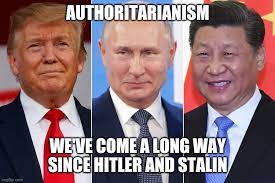
Upon taking office as the Nation’s 45th President, Donald Trump attacked or undermined one public or private institution after another.
Among these:
- American law enforcement agencies: Trump repeatedly attacked his own Attorney General, Jeff Sessions, for not “protecting” him from agents pursuing the Russia investigation.
- On November 8, 2018, Trump abruptly fired him, following Democrats’ winning control of the House in the 2018 midterm elections.
- He threatened to fire Rod J. Rosenstein, the deputy attorney general, who oversaw Special Counsel Robert Mueller’s investigation into Russian subversion of the 2016 election.
- He intended to fire Mueller during the summer of 2017, but was talked out of it by aides fearful that it would set off calls for his impeachment.
- When FBI Director James Comey dared to pursue a probe into “the Russia thing,” Trump fired him without warning.
2020 PRESIDENTIAL ELECTION, 2024 PRESIDENTIAL ELECTION, ABC NEWS, ABORTION, ADAM SCHIFF, ALTERNET, AMERICABLOG, ANNE APPLEBAUM, AP, ASSASSINATION, AUTOCRACY INC. (BOOK), “PRESIDENT-FOR-LIFE”, BABY BOOMER RESISTANCE, BARACK OBAMA, BBC, BILL O'REILLY, BIRTH CONTROL, BLOOMBERG, BUZZFEED, CAPITOL PUNISHMENT, CBS NEWS, CHINA, CHRISTIANITY, CHRISTIANS, CIA, CNN, CONSERVATIVE POLITICAL ACTION CONFERENCE (C-PAC), CROOKS AND LIARS, DAILY KOS, DEPARTMENT OF HOMELAND SECURITY, DICTATORSHIP, DONALD TRUMP, ENVIRONMENTAL PROTECTION AGENCY, FBI, FEDERAL COMMUNICATIONS COMMISSION (FCC), FEDERAL TRADE COMMISSION (FTC), FIVETHIRTYEIGHT, FOX NEWS SUNDAY, FRANKLIN D. ROOSEVELT, HARPER’S MAGAZINE, HERITAGE FOUNDATION, HUFFINGTON POST, INTELLIGENCE AGENCIES, JACK SMITH, JAMES MATTIS, JANUARY 6 COUP ATTEMPT, JEFF SESSIONS, JOE BIDEN, JUDICIARY, Kamala Harris, KIM JONG-UN, MARK MILLEY, MEDIA MATTERS, MILITARY AGENCIES, MORNING JOE (SHOW), MOTHER JONES, MOVEON, MSNBC, NATIONAL ASSOCIATION OF BLACK JOURNALISTS, NATIONAL OCEANIC AND ATMOSPHERIC ASSOCIATION (NOAA), NATIONAL RIFLE ASSOCIATION, NATIONAL SECURITY AGENCY, NBC NEWS, NEW REPUBLIC, NEWSDAY, NEWSWEEK, NORTH KOREA, NPR, PBS NEWSHOUR, POLITICO, POLITICUSUSA, PRESIDENTIAL TRANSITION PROJECT, PROJECT 2025, PUBLIC TRANSIT SYSTEMS, RAW STORY, REUTERS, ROBERT MUELLER, ROD J. ROSENSTEIN, RUSSIA, SALON, SCARFACE (MOVIE), SEATTLE TIMES, SLATE, TALKING POINTS MEMO, TAX CUTS, THE ATLANTIC, THE CHICAGO SUN-TIMES, THE CHICAGO TRIBUNE, THE DAILY BEAST, THE DAILY BLOG, THE GUARDIAN, THE HILL, THE HUFFINGTON POST, THE INTERCEPT, THE LOS ANGELES TIMES, THE NATION, THE NEW REPUBLIC, THE NEW YORK TIMES, THE NEW YORKER, THE PRESS, THE VILLAGE VOICE, THE WASHINGTON POST, THINKPROGRESS, THOMAS MATTHEW CROOKS, TIME, TRUTHDIG, TRUTHOUT, TURNING POINT BELIEVERS’ SUMMIT, TWO POLITICAL JUNKIES, U.S. NEWS & WORLD REPORT, UNITED STATES DEPARTMENT OF JUSTICE, UPI, USA TODAY, VLADIMIR PUTIN, VOTER FRAUD, X, XI JINPING
In Bureaucracy, History, Law, Law Enforcement, Military, Politics, Social commentary on August 20, 2024 at 12:10 am
“I always tell the truth. Even when I lie.”
—Tony Montana, “Scarface”
“Four more years, it’ll be fixed, it’ll be fine, you won’t have to vote anymore.”
On July 26, former President Donald Trump confirmed—intentionally or unintentionally—that the fears of his enemies were correct. If he won office for a second time, he would act as the all-powerful dictator he has long lusted to be.
And which he nearly became in 2020, after refusing to accept the outcome of a legitimate Presidential election where former Vice President Joe Biden got more votes than he did.
The site of his confession was the Turning Point Believers’ Summit in West Palm Beach, Florida. To his audience of evangelical Christians, Trump announced:

“You gotta get out and vote. Just this time. In four years you don’t have to vote, OK? In four years don’t vote, I don’t care. But we’ll have it all straightened out, so it’ll be much different.
“Christians, get out and vote! Just this time. You won’t have to do it anymore, you know what? Four more years. You know what? It’ll be fixed! It’ll be fine! You won’t have to vote anymore, my beautiful Christians. I love you, Christians! I’m a Christian.
“I love you, you got to get out and vote. In four years, you don’t have to vote again. We’ll have it fixed so good, you’re not going to have to vote.”
Why would they not have to vote again? Because there won’t be any more elections for President because Trump would be President until he died.
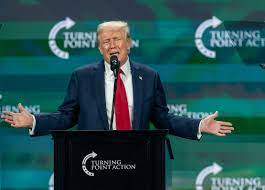
Donald Trump at Turning Point Believers’ Summit
From the moment Trump declared his candidacy for the Presidency on June 15, 2015, throughout his four years in office and the almost eight months the Presidential campaign of 2024, much of the mainstream media has repeatedly ignored the threats he poses.
But Trump’s comments at the Turning Point Believers’ Summit have grabbed attention from the nation’s most important news media. Among these:
- MSN Metro
- Reuters
- CBS News
- The New York Times
- Mother Jones
- News Nation
- USA Today
- Newsweek
- The Hill
- CNN
- National Public Radio
- The Washington Post
Democrats pounced on Trump’s statements. Vice President Kamala Harris released a statement of her own: “When Vice President Harris says this election is about freedom she means it.”
Rep. Adam Schiff (D-Calif.) who had presided over Trump’s first impeachment trial, wrote: “This year democracy is on the ballot, and if we are to save it, we must vote against authoritarianism.”
Naturally Trump’s campaign disagreed: “President Trump was talking about the importance of faith, uniting this country and bringing prosperity to every American, as opposed to the divisive political environment that has sowed so much division and even resulted in an assassination attempt.”
In fact, it has been Donald Trump who created “the divisive political environment.” On July 31 he appeared at the National Association of Black Journalists—to falsely accuse Kamala Harris of misleading voters about her race:
“I didn’t know she was Black until a number of years ago when she happened to turn Black and now she wants to be known as Black. So, I don’t know, is she Indian or is she Black?”
As for the motives for Thomas Matthew Crooks’ July 13 assassination attempt on Trump: A vigorous FBI investigation has revealed him as an intelligent loner with few friends, a thin social media presence and no strong political beliefs offering a motive for his action.
If Trump wins a second term in the White House, he can—by law—serve only four years. But Trump has spent his entire life defying the law—including when he was President.
His most egregious offense came after he lost the 2020 Presidential election: He refused to accept his defeat, refused to leave office, tried to pressure states to “find” non-existent Electoral College votes for him, and finally incited a violent riot against Congress to stop the Electoral Vote count.

Stormtrumpers attacking the Capitol Building
Tyler Merbler from USA, CC BY 2.0 <https://creativecommons.org/licenses/by/2.0>, via Wikimedia Commons
In May, 2024, speaking at a National Rifle Association gathering, Trump “joked” about serving more than two terms as president.
He referred to the four-term, 12-year Presidency of Democratic Franklin D. Roosevelt. Roosevelt was the only president to serve more than two terms. The two-term limit was added after Roosevelt’s death.
“You know, FDR, 16 years—almost 16 years—he was four terms. I don’t know, are we going to be considered three-term? Or two-term?”
By raising the question of “three terms,” Trump was resurrecting The Big Lie: That he won the 2020 Presidential campaign but was cheated of victory by massive voter fraud.
In fact, Trump’s ambition to become absolute dictator fits brilliantly into the goals of Project 2025, also known as the Presidential Transition Project.
This is a collection of policy proposals to fundamentally reshape the U.S. federal government in the event of a Republican victory in the 2024 Presidential election.
Established in 2022 by the Right-wing Heritage Foundation, the project aims to recruit tens of thousands of radical Right-wingers to the District of Columbia to replace existing federal civil servants.
2020 PRESIDENTIAL ELECTION, ABC NEWS, ALTERNET, ALVIN BRAGG, AMERICABLOG, AP, BABY BOOMER RESISTANCE, BBC, BLOOMBERG NEWS, BUZZFEED, CANADA, CBS NEWS, CHINA, CLASSIFIED DOCUMENTS, CNN, COMMUNISTS, CONFEDERATES, CONSPIRING TO OBSTRUCT JUSTICE, COVID-19, CROOKS AND LIARS, DAILY KOS, DEMOCRATS, DONALD TRUMP, DONALD TRUMP JR., E. JEAN CARROLL, EMOLUMENTS CLAUSE, ERIC TRUMP, FASCISTS, FBI, FIVETHIRTYEIGHT, GREAT BRITAIN, HARPER’S MAGAZINE, HILLARY CLINTON, HUFFINGTON POST, IVANKA TRUMP, JACK SMITH, JAMES COMEY, JANUARY 6 COUP ATTEMPT, JOSEPH BIDEN, JUAN MERCHAN, Kamala Harris, KEN PAXTON, KIM JONG-UN, KU KLUX KLAN, MANHATTAN DISTRICT ATTORNEY'S OFFICE, MAR-A-LAGO, MARXISTS, MARY TRUMP, MEDIA MATTERS, MERRICK GARLAND, MICHAEL COHEN, MOTHER JONES, MOVEON, MSNBC, NATO, NAZIS, NBC NEWS, NEW REPUBLIC, NEW YORK ATTORNEY GENERAL'S OFFICE, NEWSDAY, NEWSWEEK, NICCOLO MACHIAVELLI, NORTH KOREA, NPR, NUCLEAR WEAPONS, PAM BONDI, PBS NEWSHOUR, POLITICO, POLITICUSUSA, RAW STORY, REPUBLICANS, REUTERS, RUSSIA, SALON, SEATTLE TIMES, Secret Service, SLATE, STORMY DANIELS, TALKING POINTS MEMO, THE ATLANTIC, THE CHICAGO SUN-TIMES, THE CHICAGO TRIBUNE, THE DAILY BEAST, THE DAILY BLOG, THE GUARDIAN, THE HILL, THE HUFFINGTON POST, THE INTERCEPT, THE LOS ANGELES TIMES, THE NATION, THE NEW REPUBLIC, THE NEW YORK TIMES, THE NEW YORKER, THE VILLAGE VOICE, THE WASHINGTON POST, THINKPROGRESS, TIME, TREASON, TRUMP TOWER, TRUTHDIG, TRUTHOUT, TWITTER, U.S. NEWS & WORLD REPORT, UNITED STATES AIR FORCE, UNITED STATES ARMY, UNITED STATES CONSTITUTION, UNITED STATES DEPARTMENT OF JUSTICE, UNITED STATES HOUSE OF REPRESENTATVES, UNITED STATES MARINES, UNITED STATES NAVY, UPI, USA TODAY, VLADIMIR PUTIN, XI JINPING
In Bureaucracy, History, Law, Law Enforcement, Politics, Social commentary on June 5, 2024 at 12:16 am
Commentators have long speculated on why millions of Americans remain fanatically committed to Donald Trump.
There has been far less speculation on why so many law enforcers have turned a blind eye to Trump’s decades of criminality, if not treason.
Among those guilty:
- The Justice Department did not indict Trump for the series of threats he made—directly and indirectly—against Republicans and Democrats throughout the 2016 Presidential campaign.
- The United States Secret Service did not charge him with threatening the life of Presidential candidate Hillary Clinton: “Hillary [Clinton] wants to abolish, essentially abolish, the Second Amendment. If she gets to pick her [Supreme Court] judges, nothing you can do folks. Although the Second Amendment people, maybe there is, I don’t know.”
- The Justice Department did not prosecute Trump for treason, even though he solicited aid from Russia, a nation hostile to the United States. On July 27, 2016. Trump publicly invited “Russia”—i.e., Vladimir Putin—to hack Hillary Clinton’s emails: “I will tell you this, Russia: If you’re listening, I hope you’re able to find the 30,000 emails that are missing. I think you will probably be rewarded mightily by our press.”
There are at least two reasons why Trump has been allowed to insult and even threaten prosecutors and judges without facing the punishment an ordinary citizen would:
Cowardice: They fear Trump will slander them by claiming he’s the victim of a “witch hunt” to remove him from the 2024 Presidential race.
And/or they fear physical attack from his legions of fanatical followers.
Awe of the Presidency: They fear their careers will be tainted by prosecuting or judging a man who won the votes of 70 million Americans.
There are, however, remedies for both cowardice and awe:
Cowardice: Prosecutors and judges should expect threats and slanders from Trump. This is how he has traditionally responded to attempts to hold him legally accountable.
If judges and prosecutors fear violence from Trump’s fanatical followers, they can easily obtain round-the-clock protection by local and/or federal law enforcement agencies.
Awe: Trump is no longer President. He no longer commands Presidential immunity nor the powers of that office—such as being able to cite “executive privilege” to prevent the release of documents or testimony.
His refusals to accept this reality should be bluntly ignored.
More importantly, as President, he:
- Took no action to protect Americans from the deadly COVID-19 virus;
- Constantly sided with Russian dictator Vladimir Putin against the United States;
- Attacked the independent judiciary and free press;
- Praised Nazis and Ku Klux Klansmen;
- Fired FBI Director James Comey for refusing to pledge his personal loyalty to Trump and turn the agency into Trump’s private police force;
- Used his position as President to further enrich himself in violation of the Emoluments Clause of the Constitution;
- Attacked and alienated America’s oldest democratic allies, such as Canada and Great Britain;
- Refused to accept the results of a legitimate Presidential election; and
- Incited a deadly attack on Congress so he could illegally remain in office.
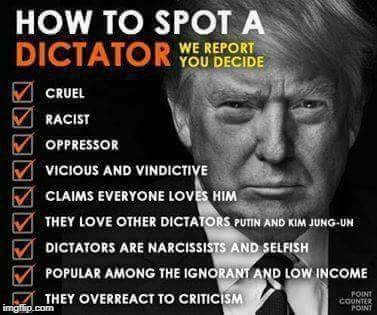
Those are only some of the despicable actions he took while in office.
The Presidency has long held most Americans in awe. This is largely because the man (and it’s always been a man) who holds it is elected by all Americans, and not just those of a particular city or state.
And he alone has control of America’s enormous military—the Army, Navy, Marines and Air Force—as well as a nuclear arsenal that can literally destroy all life on Earth.
Americans have long assumed that a victorious Presidential candidate has been blessed by God, and thus automatically commands a respect—if not reverence—denied to ordinary mortals.
But respect must be earned. And anyone guilty of even a small number of the crimes committed by Donald Trump long ago forfeited any right to such regard.
Once a President leaves office, he should be treated as any other American citizen—and held to the same standards as an ordinary citizen.
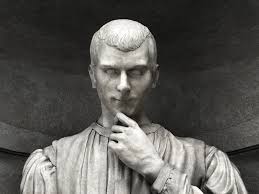
Niccolo Machiavelli
Niccolo Machiavelli, the Florentine statesman and father of modern political science, has eloquently warned of the dangers of ignoring this truth:
…No well-ordered republic should ever cancel the crimes of its citizens by their merits. But having established rewards for good actions and penalties for evil ones, and having rewarded a citizen for conduct who afterwards commits a wrong, he should be chastised for that without regard to his previous merits. And a state that properly observes this principle will long enjoy its liberty, but if otherwise, it will speedily come to ruin.
For if a citizen who has rendered some eminent service to the state should add to the reputation and influence which he has thereby acquired the confident audacity of being able to commit any wrong without fear of punishment, he will in a little while become so insolent and overbearing as to put an end to all power of the law.
Putting an end to “all power of the law” and setting himself up as “The Law” is precisely what Donald Trump tried to do after losing the 2020 Presidential election—and is still trying to do.
2020 PRESIDENTIAL ELECTION, ABC NEWS, ALTERNET, ALVIN BRAGG, AMERICABLOG, AP, BABY BOOMER RESISTANCE, BBC, BLOOMBERG NEWS, BUZZFEED, CANADA, CBS NEWS, CHINA, CLASSIFIED DOCUMENTS, CNN, COMMUNISTS, CONFEDERATES, CONSPIRING TO OBSTRUCT JUSTICE, COVID-19, CROOKS AND LIARS, DAILY KOS, DEMOCRATS, DONALD TRUMP, DONALD TRUMP JR., E. JEAN CARROLL, EMOLUMENTS CLAUSE, ERIC TRUMP, FASCISTS, FBI, FIVETHIRTYEIGHT, GREAT BRITAIN, HARPER’S MAGAZINE, HILLARY CLINTON, HUFFINGTON POST, IVANKA TRUMP, JACK SMITH, JAMES COMEY, JANUARY 6 COUP ATTEMPT, JOSEPH BIDEN, JUAN MERCHAN, Kamala Harris, KEN PAXTON, KIM JONG-UN, KU KLUX KLAN, MANHATTAN DISTRICT ATTORNEY'S OFFICE, MAR-A-LAGO, MARXISTS, MARY TRUMP, MEDIA MATTERS, MERRICK GARLAND, MICHAEL COHEN, MOTHER JONES, MOVEON, MSNBC, NATO, NAZIS, NBC NEWS, NEW REPUBLIC, NEW YORK ATTORNEY GENERAL'S OFFICE, NEWSDAY, NEWSWEEK, NICCOLO MACHIAVELLI, NORTH KOREA, NPR, NUCLEAR WEAPONS, PAM BONDI, PBS NEWSHOUR, POLITICO, POLITICUSUSA, RAW STORY, REPUBLICANS, REUTERS, RUSSIA, SALON, SEATTLE TIMES, Secret Service, SLATE, STORMY DANIELS, TALKING POINTS MEMO, THE ATLANTIC, THE CHICAGO SUN-TIMES, THE CHICAGO TRIBUNE, THE DAILY BEAST, THE DAILY BLOG, THE GUARDIAN, THE HILL, THE HUFFINGTON POST, THE INTERCEPT, THE LOS ANGELES TIMES, THE NATION, THE NEW REPUBLIC, THE NEW YORK TIMES, THE NEW YORKER, THE VILLAGE VOICE, THE WASHINGTON POST, THINKPROGRESS, TIME, TREASON, TRUMP TOWER, TRUTHDIG, TRUTHOUT, TWITTER, U.S. NEWS & WORLD REPORT, UNITED STATES AIR FORCE, UNITED STATES ARMY, UNITED STATES CONSTITUTION, UNITED STATES DEPARTMENT OF JUSTICE, UNITED STATES HOUSE OF REPRESENTATVES, UNITED STATES MARINES, UNITED STATES NAVY, UPI, USA TODAY, VLADIMIR PUTIN, XI JINPING
In Bureaucracy, History, Law, Law Enforcement, Politics, Social commentary on June 4, 2024 at 12:13 am
Donald Trump has lost the Presidential immunity shielding him from a wide range of civil lawsuits and criminal prosecutions.
He now faces unprecedented challenges from a legal system that had long ignored his rampant criminality.
Thus, regaining that Presidential immunity is arguably the biggest reason why he wants to become President again.
Although he no longer holds the Presidency, Trump repeatedly acts as though he does. He has asserted “executive privilege” on behalf of former members of his administration to block their testimony before courts, grand juries and even the office of Special Counsel Jack Smith.
He hid behind layers of Secret Service protection while attacking Manhattan District Attorney Alvin Bragg and even New York Supreme Court Justice Juan Merchan, who presided over his arraignment and trial in the Stormy Daniels hush money payment case.

Juan Merchan
“The criminal is the district attorney because he illegally leaked massive amounts of grand jury information,” Trump told supporters at Mar-a-Lago. “For which he should be prosecuted, or at a minimum he should resign.”
As for Merchan: “I have a Trump-hating judge with a Trump-hating wife and family whose daughter work[ed] for Kamala Harris.”
In Trump’s vocabulary, “Trump-hating” is the absolute worst sin/crime that can be committed.
Another man he has attacked as a “Trump hater” is Special Counsel Jack Smith, who’s also investigating Trump’s role in inciting his followers to attack Congress on January 6, 2021.

Jack Smith
The purpose of that attack: To stop the Electoral College vote count that would certify former Vice President Joseph Biden as the actual winner of the 2020 Presidential election.
In a July 4, 2023 post on his website, Truth Social, Trump falsely claimed:
“As my Poll numbers go higher & higher, the Communists, Marxists, & Fascists get more & more CRAZY with their ridiculous Indictments & Election Interference plans & plots, all controlled by an out of control, & very corrupt, DOJ/FBI. They have WEAPONIZED Law Enforcement in America at a level not seen before.”
Trump’s reference to “Communists, Marxists, & Fascists” as his enemies is particularly noteworthy.
He was, after all, the President who:
- Defended Russian dictator Vladimir Putin against findings by the FBI, CIA and National Security Agency that Russia had interfered in the 2020 Presidential election;
- Boasted that he and North Korean dictator Kim Jong-Un “fell in love” after an exchange of letters; and
- Praised Chinese strongman Xi Jinping for making himself “President-for-Life: “No, he’s great. And look, he was able to do that. I think it’s great. Maybe we’ll have to give that a shot some day.”
Given his subsequent efforts to remain in office despite losing the 2020 Presidential election, it’s clear that he had himself in mind when he “joked” about “giving that a shot some day.”
In his post, Trump continued: “Deranged Jack Smith, who is a sick puppet for A.G. Garland & Crooked Joe Biden, should be DEFUNDED & put out to rest. Republicans must get tough or the Dems will steal another Election. MAGA!”
By “A.G. Garland” Trump meant Attorney General Merrick Garland. By “put out to rest,” he meant that his followers should assassinate Smith.
Despite all this, Trump’s millions of Right-wing followers remain fanatically loyal to him.
Why?
On August 30, 2017, an article in Salon examined why Donald Trump’s base supports him so fanatically: “Most Americans Strongly Dislike Trump, But the Angry Minority That Adores Him Controls Our Politics.”
It described these voters as representing about one-third of the Republican party:
“These are older and more conservative white people, for the most part, who believe he should not listen to other Republicans and should follow his own instincts….
“They like Trump’s coarse personality, and approve of the fact that he treats women like his personal playthings. They enjoy it when he expresses sympathy for neo-Nazis and neo-Confederate white supremacists.

Supporters giving the Nazi “Sieg Heil” salute to Trump
“They cheer when he declares his love for torture, tells the police to rough up suspects and vows to mandate the death penalty for certain crimes. (Which of course the president cannot do.)
“…This cohort of the Republican party didn’t vote for Trump because of his supposed policies on trade or his threat to withdraw from NATO. They voted for him because he said out loud what they were thinking. A petty, sophomoric, crude bully is apparently what they want as a leader.”
What is harder to explain is why so many law enforcers have turned a blind eye to Trump’s decades of criminality, if not treason. Among those who have:
- Florida Attorney General Pam Bondi personally solicited a political contribution from Donald Trump around the same time her office deliberated joining an investigation of alleged fraud at Trump University and its affiliates. After Bondi dropped the Trump University case, he wrote her a $25,000 check for her re-election campaign. The money came from the Donald J. Trump Foundation.
- Republican Texas Attorney General Ken Paxton moved to muzzle a former state regulator who says he was ordered in 2010 to drop a fraud investigation into Trump University for political reasons. After the Texas case was dropped, Trump cut a $35,000 check to the gubernatorial campaign of then-attorney general and now Texas Governor Greg Abbott.
2020 PRESIDENTIAL ELECTION, ABC NEWS, ALTERNET, ALVIN BRAGG, AMERICABLOG, AP, BABY BOOMER RESISTANCE, BBC, BLOOMBERG NEWS, BUZZFEED, CANADA, CBS NEWS, CHINA, CLASSIFIED DOCUMENTS, CNN, COMMUNISTS, CONFEDERATES, CONSPIRING TO OBSTRUCT JUSTICE, COVID-19, CROOKS AND LIARS, DAILY KOS, DEMOCRATS, DONALD TRUMP, DONALD TRUMP JR., E. JEAN CARROLL, EMOLUMENTS CLAUSE, ERIC TRUMP, FASCISTS, FBI, FIVETHIRTYEIGHT, GREAT BRITAIN, HARPER’S MAGAZINE, HILLARY CLINTON, HUFFINGTON POST, IVANKA TRUMP, JACK SMITH, JAMES COMEY, JANUARY 6 COUP ATTEMPT, JOSEPH BIDEN, JUAN MERCHAN, Kamala Harris, KEN PAXTON, KIM JONG-UN, KU KLUX KLAN, MANHATTAN DISTRICT ATTORNEY'S OFFICE, MAR-A-LAGO, MARXISTS, MARY TRUMP, MEDIA MATTERS, MERRICK GARLAND, MICHAEL COHEN, MOTHER JONES, MOVEON, MSNBC, NATO, NAZIS, NBC NEWS, NEW REPUBLIC, NEW YORK ATTORNEY GENERAL'S OFFICE, NEWSDAY, NEWSWEEK, NICCOLO MACHIAVELLI, NORTH KOREA, NPR, NUCLEAR WEAPONS, PAM BONDI, PBS NEWSHOUR, POLITICO, POLITICUSUSA, RAW STORY, REPUBLICANS, REUTERS, RUSSIA, SALON, SEATTLE TIMES, Secret Service, SLATE, STORMY DANIELS, TALKING POINTS MEMO, THE ATLANTIC, THE CHICAGO SUN-TIMES, THE CHICAGO TRIBUNE, THE DAILY BEAST, THE DAILY BLOG, THE GUARDIAN, THE HILL, THE HUFFINGTON POST, THE INTERCEPT, THE LOS ANGELES TIMES, THE NATION, THE NEW REPUBLIC, THE NEW YORK TIMES, THE NEW YORKER, THE VILLAGE VOICE, THE WASHINGTON POST, THINKPROGRESS, TIME, TREASON, TRUMP TOWER, TRUTHDIG, TRUTHOUT, TWITTER, U.S. NEWS & WORLD REPORT, UNITED STATES AIR FORCE, UNITED STATES ARMY, UNITED STATES CONSTITUTION, UNITED STATES DEPARTMENT OF JUSTICE, UNITED STATES HOUSE OF REPRESENTATVES, UNITED STATES MARINES, UNITED STATES NAVY, UPI, USA TODAY, VLADIMIR PUTIN, XI JINPING
In Bureaucracy, History, Law, Law Enforcement, Politics, Social commentary on June 3, 2024 at 1:09 am
On May 30, 2024 former President Donald Trump was convicted by a Manhattan jury of all 34 charges of falsifying business records He thus became the first current or former president to be convicted of a felony.
He’s also the first major-party presidential nominee to be convicted of a crime in the midst of a campaign for the White House.
On April 1, CNN reported/editorialized: “The Manhattan district attorney’s office has been investigating Trump in connection with his alleged role in a hush money payment scheme and cover-up involving adult film star Stormy Daniels that dates to the 2016 presidential election.”
Throughout the trial—which began on April 15—Trump aggressively attacked Manhattan District Attorney Alvin Bragg as pursuing a leftist agenda to prevent him from running for President in 2024.
“If they can do this to me,” he has thundered in countless fund-raising appeals to his Right-wing followers, “they can do this to you.”
Which raises the question: How many others have tried to illegally pay hush-money to a porn “actress” to silence her during a Presidential campaign?
Nor is that the end of Trump’s prosecutorial troubles.
On June 13, 2023, he became the first ex-President to be formally booked by the Justice Department on federal charges.
Seal of the Department of Justice
He’s now facing 40 felony charges based on his retaining and hiding classified government documents from authorities.
These charges include:
- Willfully retaining national defense information: Storing 31 classified documents at his estate at Mar-a-Lago, in Palm Beach, Florida.
- Conspiring to obstruct justice: Conspiring to keep those documents from the grand jury.
- Withholding a document or a record: Misleading one of his attorneys by moving boxes of classified documents so the attorney could not find or introduce them to the grand jury.
- Concealing a document in a federal investigation: Hiding Trump’s possession of classified documents at Mar-a-Lago from the FBI and causing a false certificate to be submitted to the FBI.
- Scheme to conceal: Hiding his continued possession of documents from the FBI and the grand jury.
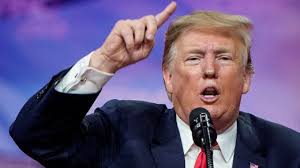
Donald Trump
Each charge carries a maximum fine of $250,000, with maximum prison sentences between five and 20 years.
According to Trump, facing 40 felony charges is “an honor because I’m doing it for you, I’m doing it for our country, to show how evil and sinister a place it has become. Make America great again! We’re not going to let them get away with it.”
In short: To save America, Trump has volunteered for this indictment. He isn’t the one who illegally removed and tried to retain almost 300 highly classified documents.
You did.
And he, like Jesus, is taking your sins upon himself.
Trump has repeatedly tried to make himself appear the victim of “a Democratic-led witch hunt.” But if politics has tainted the dispensing of justice in Trump’s case, it’s been on his behalf.
As President, he had immunity from criminal and civil lawsuits. He couldn’t be tried at local, state and federal levels.
And he had good reason to avoid facing trial at any level. He was facing at least five cases while he held office:
- The Manhattan District Attorney’s criminal case against the Trump Organization: For falsifying New York business records to conceal his hush money payoff to porn “star” Stormy Daniels for his extramarital tryst with her.
- The New York Attorney General’s civil investigation into the Trump Organization: For engaging in years of financial fraud to obtain a host of economic benefits.
- The E. Jean Carroll defamation lawsuit: For calling her a liar after she claimed he raped her in the 1990s.
- The Mary Trump lawsuit: For defrauding his niece out of millions of dollars.
- The Trump Tower lawsuit: Five people claim that Keith Schiller, the Trump Organization’s then chief of security, hit one of them on the head when they were protesting outside the company’s Manhattan headquarters in 2015.
Since leaving the White House, Trump has seen additional cases pile up against him. Among these:
- The Justice Department’s criminal investigation into Trump’s efforts to illegally overturn the 2020 presidential election.
- The Justice Department’s criminal investigation into Trump’s inciting an attack on Congress on January 6, 2021.
- The Justice Department’s criminal investigation into Trump’s illegally taking classified documents to his Mar-a-Lago estate and refusing to return them to the government.
- The House of Representatives’ January 6 lawsuit for trying to prevent Congress from certifying the Electoral College votes on January 6, 2021.
- The Eric Swalwell lawsuit by the California Representative for trying to block the Electoral College vote count.
- The Capitol Police January 6 lawsuits for emotional and physical injuries sustained by officers during the January 6, 2021 attack by Trump’s followers.
- The Michael Cohen lawsuit by Trump’s former attorney and fixer. He claims Trump retaliated against him after he said he was writing a tell-all about his years working for Trump.
- The Class Action lawsuit against the Trumps [Donald, Don Jr., Ivanka and Eric] and their business. This alleges that “the defendants used their brand name to defraud thousands of working-class individuals by promoting numerous businesses in exchange for ’secret payments.’”
Now his Presidential immunity is gone and he faces unprecedented challenges from a legal system that had long ignored his rampant criminality.

 Bureaucracybuster's Blog
ABC NEWS, ADOLF HITLER, ALTERNET, AMERICABLOG, AP, BABY BOOMER RESISTANCE, BARACK OBAMA, BBC, BILL CLINTON, BLOOMBERG NEWS, BUZZFEED, CBS NEWS, CHINA, CHRIS MATTHEWS, CNN, CNN'S "STARTING POINT", CROOKS AND LIARS, CZECHOSLAVAKIA, DAILY KOS, DARRELL ISSA, DAVID BROOKS, DEBT CEILING, DENMARK, EXECUTIVE ORDERS, EXTORTION, FIVETHIRTYEIGHT, GEORGE W. BUSH, GREENLAND, HARPER’S MAGAZINE, HOUSE SPEAKER JOHN BOEHNER, HUFFINGTON POST, immigration reform, INSIDER, IRAN, JANET YELLEN, JIMMY CARTER, JOSEPH BIDEN, MEDIA MATTERS, MITCH MCCONNELL, MOTHER JONES, MOVEON, MSNBC, MSNBC'S "HARDBALL", NANCY PELOSI, NAZI GERMANY, NBC NEWS, NEGOTIATING, NEVILLE CHAMBERLAIN, NEW REPUBLIC, NEWSDAY, NEWSWEEK, NEWT GINGRICH, NICCOLO MACHIAVELLI, NORTH KOREA, NPR, PAP SMEARS, PBS NEWSHOUR, PITUFFIK SPACE BASE, PLANNED PARENTHOOD, POLAND, POLITICO, POLITICUSUSA, R.I.CO. ACT, RAW STORY, REPUBLICAN PARTY, REPUBLICANS, REUTERS, Ronald Reagan, RUSSIA, SALON, SEATTLE TIMES, SLATE, TALKING POINTS MEMO, THE ATLANTIC, THE CHICAGO SUN-TIMES, THE CHICAGO TRIBUNE, THE DAILY BEAST, THE DAILY BLOG, THE GUARDIAN, THE HAMILTON PROJECT, THE HILL, THE HUFFINGTON POST, THE LOS ANGELES TIMES, THE NATION, THE NEW REPUBLIC, THE NEW YORK TIMES, THE NEW YORKER, THE PRINCE, THE VILLAGE VOICE, THE WASHINGTON POST, THINKPROGRESS, TIME, TITLE X, TRUTHDIG, TRUTHOUT, TWITTER, TWO POLITICAL JUNKIES, U.S. NEWS & WORLD REPORT, UPI, USA TODAY, WARREN BUFFET, WENDY EDELBERG, WINSTON CHURCHILL, WONKETTE, WORLD WAR 11, X
HITLER DAYS ARE HERE AGAIN: PART THREE (OF FOUR)
In Bureaucracy, Business, History, Law, Military, Politics, Social commentary on January 9, 2025 at 12:10 amContrary to popular belief, Adolf Hitler did not constantly rage at everyone. On the contrary: he could, when he desired, be charming, especially to women. He used rage as a weapon, knowing that most people feel intimidated by it.
In his “negotiations” for control of Austria with Austrian Chancellor Kurt von Schuschnigg. Hitler opened with insults and threats at the outset of their discussion. Then there was a period of calm, to convince the Austrian chancellor the worst was over.
Finally, he once again attacked—this time with so much fury that Schuschnigg was terrified into submission.
With one stroke of a pen, Austria became a vassal-state to Nazi Germany.
Seven months later, in September, 1938, Hitler turned his rage and aggression against Czechoslovakia.
Once again, he opened “negotiations” with a lie: The Czechoslovak government was trying to exterminate 3.5 million Germans living in the “Sudetenland.”
This consisted of the northern, southwest and western regions of Czechoslovakia, inhabited mostly by ethnic Germans.
Then he followed this up with the threat of war: Germany would protect its citizens and halt such “oppression.”
For British Prime Minister Neville Chamberlain, the thought of another European war erupting less than 20 years after the end of World War I was simply unthinkable.
The Cenotaph, in London, honoring the unknown British dead of World War 1
Something had to be done to prevent it. And he believed himself to be just the man to do it.
He quickly sent Hitler a telegram, offering to help resolve the crisis: “I could come to you by air and am ready to leave tomorrow. Please inform me of earliest time you can receive me, and tell me the place of the meeting. I should be grateful for a very early reply.”
Once again, another head-of-state was prepared to meet Hitler on his home ground. Again, Hitler took this concession as a sign of weakness. And Chamberlain’s use of such words as “please” and “grateful” only further convinced Hitler of another impending triumph.
Chamberlain was determined to grant Hitler’s every demand—so long as this meant avoiding a second world war.
As a political party, Democrats have generally copied this same “strategy” when dealing with Republicans.
On January 6, 2021, President Donald Trump—supported by at least 147 Republicans in the House and Senate—incited a treasonous coup to remain in office. This despite the overwhelming evidence that he had lost the 2020 election to former Vice President Joseph Biden.
By the time the Biden administration neared its end, not one Republican House or Senate member supporting such treason had been indicted for that infamy. Let alone tried, convicted and imprisoned.
Had this occurred, the Biden administration’s agenda would have been far more advanced than it is. Republicans who were raising funds for re-election campaigns would have been forced to raise them to pay huge legal bills.
They would have had far less time to plot to overthrow democracy. Instead, their attention would have been increasingly focused on their upcoming trials for treason.
Even more important: Donald Trump should have been indicted for treason by no later than mid-2021. Even then, the evidence was overwhelming that he had instigated the coup attempt.
Yet it wasn’t until November 18, 2022, that Jack Smith was appointed Special Counsel to oversee the criminal investigations into Trump’s role in the January 6 Capitol attack and his illegal storage of classified documents at his Mar-a-Lago estate.
And Smith allowed Trump-appointed Florida Judge Aileen Cannon to repeatedly postpone the stolen documents trial.
Meanwhile, Trump won repeated delays in his trial for inciting a violent attack on the Capitol. His victory on November 5 guarantees he will not be prosecuted for any of his crimes.
To bring down Mafia “boss of all bosses” John Gotti, the FBI waged a seven-year, $75 million campaign—which included the use of electronic bugs and recruitment of informants.
To date, there is no evidence that the Bureau applied such an effort against Trump—although he, unlike Gotti, threatens the very foundations of American democracy.
To avert war, British Prime Minister Neville Chamberlain met with German Chancellor Adolf Hitler in Berchtesgaden, Germany, on September 15, 1938.
Neville Chamberlain and Adolf Hitler
During their talks, Chamberlain said he had come to discuss German grievances. But, he added, it was necessary in all circumstances to exclude the use of force.
Hitler appeared to be shocked that he could be accused of such intentions: “Force? Who speaks of force?“
Then, without warning, he switched to an aggressive mode. He accused the Czechs of having mobilized their army in May. They had mobilized–in response to the mobilization of the German army.
“I shall not put up with this any longer,” shouted Hitler. “I shall settle this question in one way or another. I shall take matters in my own hands!”
Suddenly, Chamberlain seemed alarmed—and possibly angry: “If I understood you right, you are determined to proceed against Czechoslovakia in any case. If this is so, why did you let me come to Berchtesgaden?”
Hitler was taken aback by the unexpected show of defiance. He realized he was about to lose his chance to bully the British into accepting his latest demands.
Share this: