Posts Tagged ‘NICCOLO MACHIAVELLI’
2020 PRESIDENTIAL ELECTION, ABC NEWS, ALTERNET, AMERICABLOG, AP, BABY BOOMER RESISTANCE, BBC, BLOOMBERG NEWS, BUZZFEED, CBS NEWS, CLASSIFIED DOCUMENTS, CNN, CROOKS AND LIARS, DAILY KOS, DONALD TRUMP, FANI WILLIS, FIVETHIRTYEIGHT, HARPER’S MAGAZINE, HUFFINGTON POST, JACK SMITH, JANUARY 6 COUP ATTEMPT, JOE BIDEN, LETITIA JAMES, MAR-A-LAGO, MEDIA MATTERS, MOTHER JONES, MOVEON, MSNBC, NBC NEWS, NEW REPUBLIC, NEWSDAY, NEWSWEEK, NICCOLO MACHIAVELLI, NPR, PBS NEWSHOUR, POLITICO, POLITICUSUSA, RAW STORY, REPUBLICANS, REUTERS, SALON, SEATTLE TIMES, SLATE, TALKING POINTS MEMO, THE ATLANTIC, THE CHICAGO SUN-TIMES, THE CHICAGO TRIBUNE, THE DAILY BEAST, THE DAILY BLOG, THE DISCOURSES (BOOK), THE GUARDIAN, THE HILL, THE HUFFINGTON POST, THE INTERCEPT, THE LOS ANGELES TIMES, THE NATION, THE NEW REPUBLIC, THE NEW YORK TIMES, THE NEW YORKER, THE VILLAGE VOICE, THE WASHINGTON POST, THINKPROGRESS, TIME, TRUTH SOCIAL, TRUTHDIG, TRUTHOUT, TWITTER, U.S. NEWS & WORLD REPORT, UNITED STATES DEPARTMENT OF JUSTICE, UPI, USA TODAY
In Bureaucracy, History, Law, Law Enforcement, Politics, Social commentary on July 26, 2023 at 12:20 am
Donald Trump has no doubt heard of Niccolo Machiavelli, the Florentine statesman of the Renaissance.
But he certainly hasn’t learned anything from him.
Consider the way he has repeatedly insulted his nemesis, Jack Smith.
Smith was appointed Special Counsel for the United States Department of Justice on November 18, 2022.

Jack Smith
His assignment: Oversee the criminal investigations into former President Donald Trump’s behavior regarding:
- The January 6, 2021 attack on the United States Capitol; and
- His taking and storage of classified government documents at his Mar-a-Largo estate in Palm Beach, Florida.
Since then, Trump has launched a series of vicious attacks on Smith—despite the fact that Smith holds the power to indict and prosecute him for multiple felonies.
For example: On June 8, Smith indicted Trump on 37 federal felony counts for illegally retaining hundreds of classified documents at Mar-a-Lago. Trump pleaded not guilty to all charges.

Boxes of classified documents in Mar-a-Lago bathroom
At a press conference, Smith defended his team’s work and emphasized the seriousness of the charges: “Our laws that protect national defense information are critical to the safety and security of the United States, and they must be enforced.”
He also emphasized that Trump “must be presumed innocent until proven guilty beyond a reasonable doubt in a court of law.”
Trump quickly responded: “The prosecutor in the case, I will call our case, is a thug. I have named him ‘Deranged Jack Smith. He’s a behind-the-scenes guy, but his record is absolutely atrocious. He does political hit jobs. He’s a raging and uncontrolled Trump hater, as is his wife, who happened to be the producer of that Michelle Obama puff piece. This is the guy I’ve got.”
On June 27, Trump, using his social network Truth Social, continued his attack on Smith:
COULD SOMEBODY PLEASE EXPLAIN TO THE DERANGED, TRUMP HATING JACK SMITH, HIS FAMILY, AND HIS FRIENDS, THAT AS PRESIDENT OF THE UNITED STATES, I COME UNDER THE PRESIDENTIAL RECORDS ACT, AS AFFIRMED BY THE CLINTON SOCKS CASE, NOT BY THIS PSYCHOS’ FANTASY OF THE NEVER USED BEFORE ESPIONAGE ACT OF 1917. “SMITH” SHOULD BE LOOKING AT CROOKED JOE BIDDEN AND ALL OF THE CRIMES THAT HE HAS PERPETRATED ON THE AMERICAN PUBLIC, INCLUDING THE MILLIONS & MILLIONS OF DOLLARS HE EXTORTED FROM FOREIGN COUNTRIES!

Donald Trump
So: Where does Niccolo Machiavelli enter this story?
In his masterwork, The Discourses, published in 1531, Machiavelli laid out his advice for preserving liberties within a republic.
His counsel on gratuitously handing out insults and threats could have been written with Donald Trump in mind:
-
“I hold it to be a proof of great prudence for men to abstain from threats and insulting words towards any one.
-
“For neither the one nor the other in any way diminishes the strength of the enemy—but the one makes him more cautious, and the other increases his hatred of you, and makes him more persevering in his efforts to injure you.”

Niccolo Machiavelli
Meanwhile, Smith has not responded to Trump’s slanders.
“Smith is not going to play this case out in public,” said Steve Friedland, a law professor at Elon University and a former federal prosecutor. “We’ve seen that in other cases, and that’s true for most prosecutors.” “
“Trump has done this with [New York Attorney General] Letitia James, he has done this with [Fulton County District Attorney] Fani Willis, just every prosecutor that’s investigated him,” Neama Rahmani, a former federal prosecutor, told ABC News.
James has sued Trump for fraud and Willis is investigating Trump’s efforts to gain unearned votes in Georgia to overturn the 2020 electoral victory of Joe Biden.
According to Machiavelli, Trump’s continued outbursts against Smith illustrate another great truth: That it’s possible to tell a truly great man from an imposter:
“A truly great man is ever the same under all circumstances. And if his fortune varies, exalting him at one moment and oppressing him at another, he himself never varies, but always preserves a firm courage, which is so closely interwoven with his character that everyone can readily see that the fickleness of fortune has no power over him.
“The conduct of weak men is very different. Made vain and intoxicated by good fortune, they attribute their success to merits which they do not possess, and this makes them odious and insupportable to all around them. And when they have afterwards to meet a reverse of fortune, they quickly fall into the other extreme, and become abject and vile.
“Thence it comes that princes of this character think more of flying in adversity than of defending themselves, like men who, having made a bad use of prosperity, are wholly unprepared for any defense against reverses.”
Trump is desperately trying to appear as the victim of a “weaponized” Justice Department eager to eliminate him as a 2024 Presidential candidate. He has railed against the “Deep State”—by which he means agencies he no longer controls.
And he has called on his allies within the Republican party to derail the continuing probes—especially by defunding Smith’s office or the entire Justice Department.
So far, neither Trump’s whining nor his allies have deterred Smith from his prosecutorial efforts.
ABC NEWS, ALTERNET, AMERICABLOG, AP, BABY BOOMER RESISTANCE, BBC, BEDBUGS, BLOOMBERG, BLOOMBERG NEWS, BUILDING INSPECTION, BUZZFEED, CBS NEWS, CNN, CROOKS AND LIARS, DAILY KOS, FIVETHIRTYEIGHT, HARPER’S MAGAZINE, HUFFINGTON POST, LANDLORDS, MEDIA MATTERS, MOTHER JONES, MOVEON, MSNBC, NBC NEWS, NEW REPUBLIC, NEWSDAY, NEWSWEEK, NICCOLO MACHIAVELLI, NPR, PBS NEWSHOUR, POLITICO, POLITICUSUSA, RAW STORY, RENT BOARD, RENT CONTROL, RENTERS, REUTERS, SALON, SAN FRANCISCO, SAN FRANCISCO HUMAN RIGHTS COMMISSION, SEATTLE TIMES, SLATE, SLUMLORDS, TALKING POINTS MEMO, THE ATLANTIC, THE CHICAGO SUN-TIMES, THE CHICAGO TRIBUNE, THE DAILY BEAST, THE DAILY BLOG, THE GUARDIAN, THE HILL, THE HUFFINGTON POST, THE INTERCEPT, THE LOS ANGELES TIMES, THE NATION, THE NEW REPUBLIC, THE NEW YORK TIMES, THE NEW YORKER, THE VILLAGE VOICE, THE WALL STREET JOURNAL, THE WASHINGTON POST, THINKPROGRESS, TIME, TRUTHDIG, TRUTHOUT, TWITTER, TWO POLITICAL JUNKIES, U.S. NEWS & WORLD REPORT, UPI, USA TODAY, VERMIN, WILLIAM TECUMSEH SHERMAN, WONKETTE
In Bureaucracy, Business, History, Law, Law Enforcement, Politics, Social commentary on July 25, 2023 at 12:11 am
…Whoever desires to found a state and give it laws, must start with assuming that all men are bad and ever ready to display their vicious nature…. If their evil disposition remains concealed for a time…we must assume that it lacked occasion to show itself. But time, which has been said to be the father of all truth, does not fail to bring it to light.
—-Niccolo Machiavelli, The Discourses
Niccolo Machiavelli
As of 2022, seven states—California, Maine, Maryland, Minnesota, New Jersey, New York, Oregon and the District of Columbia—offer tenant protections via residential rent control.
Only 34 out of 482 cities in California have strong tenant protections.
And only 15 cities in California have rent controls on landlords’ greed: Alameda, Berkeley, Beverly Hills, East Palo Alto, Hayward, Los Angeles, Los Gatos, Mountain View, Oakland, Palm Springs, Richmond. San Francisco, San Jose, Santa Monica, and West Hollywood.
In California, 17% of the population lives in apartments—more than 6.7 million people or 2.1 million more than New York.
Nationwide, almost 39 million people in the United States—nearly one in eight—live in apartments.
Many tenants have lived with rotting floors, bedbugs, nonworking toilets, mice/rats, chipping lead-based paint and other outrages for not simply months but years.

And yet, there is little enthusiasm among these millions of people to protect themselves against predatory landlords.
Still, even in those cities where rent boards and building inspection agencies exist, landlords continue to victimize tenants every day.
Take San Francisco, for example.
To hear slumlords tell it, San Francisco is a “renters’ paradise,” where obnoxious, lazy, rent-evading tenants constantly take advantage of hard-working, put-upon landlords.
Don’t believe it.
A recent case shows the absolute necessity for reining in predatory landlords before they can inflict serious financial and emotional damage on tenants.

In September, 2021, Frank and Carol Thomas (not their real names) moved into a one-bedroom San Francisco apartment for $1,000 a month.
Frank had been manager of the apartment complex for 10 years. Now he simply wanted to be a tenant.
Meanwhile, Carol suffered three close personal losses:
- Her father died in January, in Knoxville, Tennessee;
- Her best friend died in June.
- Her aunt died in July.
Then, in August, Frank left for Tennessee to explore possible business opportunities there. It was while visiting Nashville that he suffered a heart attack and died.
This required Carol to travel to Nashville to:
- Arrange for Frank’s cremation;
- Obtain the release of his personal effects—including the release of his car, which had been impounded
She also had to spend time in Knoxville to:
- Arrange for the disposal of her father’s remains;
- Attend to his piano business;
- Attend to his estate, including arranging for the sale of his house.
Since she couldn’t afford commuting between California and Tennessee, Carol stayed at her deceased father’s house in Knoxville while making all these arrangements.
Weeks later, she returned to her San Francisco apartment.
In April, 2022, Carol received a notice from the property management company responsible for the premises.
It stated that Carol Thomas was last seen in her apartment in November, 2021 and currently lived at her family home in Knoxville, Tennessee.
The notice also stated that her rent would rise from $1,000 per month to $1,695 per month. 
Fortunately, Carol had a friend who had worked as a reporter and legal investigator. He was able to draft a response to her landlord’s rent demand.
It opened: “There is a moral dimension to this case that must not be overlooked.”
First, it extolled Frank Thomas’ 10 years as building manager for the property management company now trying to raise Carol’s rent.
Then it pointed out: “During the time Carol was gone, she paid her rent in full and on time. Had she not, We Screw Tenants [not the company’s real name] would now be demanding her eviction.
“What We Screw Tenants is trying to do is to literally profit from the death of this man and the grief of this woman.
“This is utterly despicable. Morally, it’s on a par with robbing corpses and selling fentanyl to schoolchildren.
“If We Screw Tenants is willing to try to extort monies from the widow of its former building manager, it will do the same the next time a tenant is required to leave one of its buildings for weeks.
“As compensation for this deplorable behavior, We Screw Tenants should provide Ms. Thomas with a moratorium on rent increases for at least ten years.”
Carol, who was in her early 60s, showed the suggested response to a case officer of the San Francisco Human Rights Commission.
The officer then contacted We Screw Tenants and said he would be filing a complaint for elder abuse against the company.
The company immediately promised to drop its demand for a $695 raise in rent—if Carol agreed to forego any legal action.
Carol has not yet decided if she wants to pursue a lawsuit.
But she was able to fend off a predatory property management company—only because San Francisco has:
- Rent control laws limiting landlords’ greed; and
- A Human Rights Commission dedicated to protecting citizens against discrimination.
Other tenants—throughout California and the nation—usually don’t prove so fortunate.
ABC NEWS, ADVICE, ALTERNET, AMERICABLOG, AP, BABY BOOMER RESISTANCE, BARACK OBAMA, BLOOMBERG, BUZZFEED, CBS NEWS, CNN, CORONAVIRUS, COVID-19, CROOKS AND LIARS, DAILY KOZ, DAVID BROOKS, DONALD TRUMP, DRUDGE RETORT, ECONOMY, EHRBERT HOOVER, FIVETHIRTYEIGHT, FRANKLIN D. ROOSEVELT, GREAT DEPRESSION, HARPER’S MAGAZINE, HARRY S. TRUMAN, MASKS, MEDIA MATTERS, MOTHER JONES, MOVEON, MSNBC, NBC NEWS, NEWSWEEK, NICCOLO MACHIAVELLI, NPR, NUEMBERG RALLIES, PBS NEWSHOUR, PENNSYLVANIA, POLITICO, POLITICUSUSA, RAW STORY, REUTERS, SALON, SEATTLE TIMES, SLATE, SOCIAL DISTANCING, TALKING POINTS MEMO, THE ATLANTIC, THE CHICAGO SUN-TIMES, THE CHICAGO TRIBUNE, THE DAILY BEAST, THE DAILY BLOG, THE DISCOURSES, THE GUARDIAN, THE HILL, THE HUFFINGTON POST, THE LOS ANGELES TIMES, THE NATION, THE NEW REPUBLIC, THE NEW YORK TIMES, THE PBS NEWSHOUR, THE VILLAGE VOICE, THE WASHINGTON POST, THINKPROGRESS, TIME, TRUTHDIG, TRUTHOUT, TWITTER, TWO POLITICAL JUNKIES, U.S. NEWS & WORLD REPORT, UPI, USA TODAY, WISCONSIN, WONKETTE
In Bureaucracy, History, Politics, Social commentary on July 24, 2023 at 12:10 am
The father of modern political science, Niccolo Machiavelli (1469 – 1527) is widely thought of as the personification of Satan.
Actually, Machiavelli was a passionate republican, who spent most of his life in the service of his beloved city-state, Florence.
Florence, despite its wealth, lacked a strong army—and lay at the mercy of powerful enemies, such as Cesare Borgia. Machiavelli often had to use his wits to keep them at bay.

Niccolo Machiavelli
In his masterwork, The Discourses, he warned that life is complex and no course of action is guaranteed safe or successful.
Donald Trump, on the other hand, is a man of simplistic “solutions” for simplistic audiences.
By early April, 2020, he refused to issue a national “stay-at-home” order to contain the spread of the Coronavirus. When states began issuing shutdown orders of their own, he railed against those orders and demanded that “we need to reopen the country.”

Donald Trump
What lay behind this demand were two hidden agendas. He wanted to:
- Quickly revitalize—and take credit for—a once-booming economy, even though this was largely created by President Barack Obama.
- Return to his Nuremberg-style rallies, where he could slander anyone he wanted while basking in the worship of thousands of his fanatical followers.
Which is why he clearly missed this warning Machiavelli offered in The Discourses:
“…I shall speak here only of those dangers to which those expose themselves who counsel a republic or a prince to undertake some grave and important enterprise in such a manner as to take upon themselves all the responsibility of the same.
“For as men only judge of matters by the result, all the blame of failure is charged upon him who first advised it, while in case of success he receives commendations. But the reward never equals the punishment….
“I see no other course than to take things moderately, and not to undertake to advocate any enterprise with too much zeal, but to give one’s advice calmly and modestly.
“If either then the republic or the prince decides to follow it, they may do so, as it were, of their own will, and not as though they were drawn into it by your importunity.
“In adopting this course it is not reasonable to suppose that either the prince or republic will manifest any ill will towards you on account of a resolution not taken contrary to the wishes of the many.”
But, by May, more Americans were wary about “reopening the country” than about rushing to do so.
On the May 15, 2020 edition of The PBS Newshour, New York Times columnist David Brooks noted:
“If you look at actual behavior, people locked themselves down before any politician took a move. And even in those states where the politicians are opening up, people are still locking down….
“And so I think the key decisions right now are not being made in statehouses and certainly not the White House. They’re being made in living rooms, as people decide, is it safe? Can I go out?”

Coronavirus
By pushing his mantra—“America needs to reopen NOW!”—Trump was risking the lives of millions of Americans. But he was also risking the future of his Presidency.
If “reopening” the country proved disastrous, he had no back-up plan to offer.
Several states—such as Wisconsin and Pennsylvania—that re-opened saw swarms of people flooding into bars and restaurants. They didn’t wear masks or practice “social distancing.” Packed together like sardines, they offered themselves like a Right-wing sacrifice to Coronavirus.
The results were inevitable.
A new wave of COVID-19 erupted after America “reopened.” More employees were laid off—or refused to come to work for fear of Coronavirus.
The economy continued to tank.
As summer neared its end and millions of students faced returning to school, Trump offered his next “solution” to the Coronavirus pandemic: Send them back to school—-and not through virtual classes at home.
Trump wanted children to return to possibly COVID-19-infected classrooms.
And he wasn’t asking parents to send their children back to school. He was ordering them to.
On July 8, he tweeted that he might withhold federal funding from schools that did not resume in-person classes this fall.
Why was he so insistent on this?
Trump knew that before parents could return to work, their kids needed to return to class, He hoped that would boost the economy—for which he could take credit.
And that would boost his chances for re-election in November.
Just as the ancient Canaanites sacrificed their children to the god Moloch, so Trump expected his followers—and opponents—to risk their children’s lives for him.
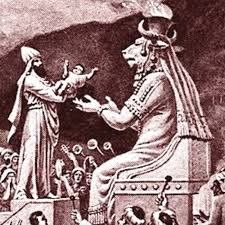
A child sacrifice to Moloch
Ancient Canaanites offering their children as sacrifices to Moloch
And the sacrifices quickly started coming. On August 10, 2020, CBS News reported:
“Nearly 100,000 children tested positive for the Coronavirus in the last two weeks of July, a new report from the American Academy of Pediatrics finds. Just over 97,000 children tested positive for the Coronavirus from July 16 to July 30, according to the association.”
Those who still support Trump clearly value the lives of their children far less than putting a ruthless psychopath back into power.
ABC NEWS, ALTERNET, AMERICABLOG, AP, BABY BOOMER RESISTANCE, BBC, BEDBUGS, BLOOMBERG NEWS, BUILDING INSPECTION, BUSINESS, BUZZFEED, CBS NEWS, CHRIS MATHEWS, CNN, CROOKS AND LIARS, DAILY KOS, DAILY KOZ, FEDERAL ASSET FORFEITURE STATUTES, FIVETHIRTYEIGHT, HARPER’S MAGAZINE, HUFFINGTON POST, KIP MACY, LANDLORDS, MEDIA MATTERS, MOTHER JONES, MOVEON, MSNBC, NBC NEWS, NEW REPUBLIC, NEWSDAY, NEWSWEEK, NICCOLO MACHIAVELLI, NICOLE MACY, NPR, PBS NEWSHOUR, POLITICO, POLITICUSUSA, RAW STORY, RENT CONTROL, RENTERS, REUTERS, ROBERT F. KENNEDY, SALON, SAN FRANCISCO, SAN FRANCISCO DEPARTMENT OF BUILDING INSPECTION, SAN FRANCISCO DEPARTMENT OF PUBLIC HEALTH, SEATTLE TIMES, SLATE, SLUMLORDS, TALKING POINTS MEMO, THE ATLANTIC, THE CHICAGO SUN-TIMES, THE CHICAGO TRIBUNE, THE DAILY BEAST, THE DAILY BLOG, THE GUARDIAN, THE HILL, THE HUFFINGTON POST, THE INTERCEPT, THE LOS ANGELES TIMES, THE NATION, THE NEW REPUBLIC, THE NEW YORK TIMES, THE NEW YORKER, THE VILLAGE VOICE, THE WALL STREET JOURNAL, THE WASHINGTON POST, THINKPROGRESS, TIME, TRUTHDIG, TRUTHOUT, TWITTER, U.S. NEWS & WORLD REPORT, UPI, USA TODAY, WILLIAM TECUMSEH SHERMAN
In Bureaucracy, History, Law, Law Enforcement, Politics, Social commentary on July 13, 2023 at 12:10 am
City agencies need to see landlords for what they truly are—as, at best, potential predators, if not actual ones. And to act aggressively on that knowledge.
As Niccolo Machiavelli warned:
“All those who have written upon civil institutions demonstrate…that whoever desires to found a state and give it laws, must start with assuming that all men are bad and ever ready to display their vicious nature, whenever they may find occasion for it.
“If their evil disposition remains concealed for a time, it must be attributed to some unknown reason; and we must assume that it lacked occasion to show itself. But time, which has been said to be the father of all truth, does not fail to bring it to light.”
Niccolo Machiavelli
The power of slumlords calls to mind the scene in 1987’s The Untouchables, where Sean Connery’s veteran cop tells Eliot Ness: “Everybody knows where the liquor is. It’s just a question of: Who wants to cross Capone?”
Many tenants have lived with rotting floors, bedbugs, nonworking toilets, mice/rats, chipping lead-based paint and other outrages for not simply months but years.
This holds true across the United States. But it also holds true in San Francisco—the “renters’ paradise” where the District Attorney’s Office hasn’t prosecuted a slumlord in decades.

Part Two of this series presented a series of badly-needed, long-overdue reforms for the San Francisco Department of Building Inspection (DBI). This is the agency charged to ensuring safe housing conditions for San Francisco residents.
Renters across the country should demand similar protections.
This concluding part will cover the remainder of those needed reforms.
- Landlords should be required to bring all the units in a building up to existing building codes, and not just those in need of immediate repair.
- Landlords should be legally required to hire a certified-expert contractor to perform building repairs. To save money—that they can well afford to spend—-many landlords insist on making such repairs despite their not being trained or experienced in doing so. They thereby risk the health and/or safety of their tenants.
- DBI should not view itself as a “mediation” agency between landlords and tenants. Most landlords hate DBI and will always do so. They believe they should be allowed to treat their tenants like serfs, if not slaves, raise extortionate rents anytime they desire, and maintain their buildings in whatever state they wish.
- Above all, DBI must stop viewing itself as a regulatory agency and start seeing itself as a law enforcement one. The FBI doesn’t ask criminals to comply with the law. It applies whatever amount of pressure is needed to force their compliance. William Tecumseh Sherman, speaking of the rebellious Southern states, said it best: “They cannot be made to love us, but they may be made to fear us.”
- The San Francisco District Attorney’s Office should create a special unit to investigate and prosecute slumlords. Prosecutors should offer rewards to citizens who provide tips on major outrages by the city’s slumlords.

- Install Rent Control protections for tenants on fixed incomes. San Francisco is notorious for having the highest rents in the nation. The average rent for a one-bedroom apartment runs $3,000 a month. Even those in the vaunted high-tech industry spend most of their income on rent.
- For tenants on fixed incomes—seniors, disabled, students—the predatory greed of landlords amounts to a staged-in eviction notice. Social Security recipients often don’t get a cost-of-living increase if there hasn’t been a rise in gasoline prices. But many of them don’t own cars—while the price of everything else—such as groceries—has sharply risen.
- Allowing landlords to jack up rents to the fullest extent possible every year will eventually drive out all tenants who are not multimillionaires. In fact, an unknown portion of this City’s homeless population doubtless stems from the ability of landlords to gradually raise rents above tenants’ ability to afford them.
- In 1979, San Franciscans passed a Rent Control law to protect tenants against predatory rent hikes and unfair evictions. As a result, a landlord can only raise a tenant’s rent a certain percentage every year. This is set by the set by the Rent Stabilization and Arbitration Board, more popularly known as the “Rent Board.”
- But there is a gaping hole in the law: Once a tenant moves out, the landlord can jack up the rent as high as he wants. This is why the average rent in San Francisco is priced beyond most middle-class wage-earners.
- In addition, landlords are allowed to charge tenants yearly fees to maintain the existence of the Rent Board. This is both unfair and insulting, since the Board was created to protect tenants from predatory landlords. Most tenants have far less money to pay such fees than do landlords, who are free to raise rents every year. And landlords—unlike tenants—can and do write off Rent Board fees on their taxes every year.
As Robert F. Kennedy wrote: “Every society gets the kind of criminal it deserves. What is equally true is that every community gets the kind of law enforcement it insists on.”
2016 PRESIDENTIAL CAMPAIGN, ABC NEWS, AFGHANISTAN, ALTERNET, AMERICABLOG, AP, BABY BOOMER RESISTANCE, BARACK OBAMA, BBC, BEDBUGS, BLOOMBERG, BLOOMBERG NEWS, BUILDING INSPECTION, BUSINESS, BUZZFEED, CBS NEWS, CENTER FOR AMERICAN PROGRESS ACTION FUND, CHRIS MATHEWS, CIA, CLINTON WATTS, CNN, CRAIG UNGER, CROOKS AND LIARS, DAILY KOS, DAILY KOZ, DAVID ROTHKOPF, DEPARTMENT OF HOMELAND SECURITY, DIRECTOR OF NATIONAL INTELLIGENCE, DONALD TRUMP, DONALD TRUMP JR., DRUDGE RETORT, ERIC TRUMP, FBI, FBI’S COUNTERTERRORISM DIVISION, FEDERAL ASSET FORFEITURE STATUTES, FIVETHIRTYEIGHT, FOX NEWS, G7, GEORGE PAPADOPOULOS, GREG MILLER, HARPER’S MAGAZINE, HILLARY CLINTON, HOUSE INTELLIGENCE COMMITTEE, HOUSE OF TRUMP HOUSE OF PUTIN (BOOK), HUFFINGTON POST, ISLAMIC STATE OF IRAQ AND SYRIA (ISIS), ISRAELI INTELLIGENCE, JAMES CARLOS BLAKE, JAMES COMEY, JARED KUSHNER, JEFF SESSIONS, JOE SCARBOROUGH, JOINT TERRORISM TASK FORCE, KIM JONG-UN, KIP MACY, LANDLORDS, MAIN INTELLIGENCE DIRECTORATE, MALCOM W. NANCE, MEDIA MATTERS, MICHAEL FLYNN, MICHAEL ISIKOFF, MOSCOW PROJECT, MOTHER JONES, MOVEON, MSNBC, NATALIA VESELNITSKAYA, NATIONAL SECURITY AGENCY, NBC NEWS, NEW REPUBLIC, NEWSDAY, NEWSWEEK, NICCOLO MACHIAVELLI, NICOLE MACY, NPR, OFFICE OF THE DIRECTOR OF NATIONAL INTELLIGENCE, PAUL MANAFORT, PBS NEWSHOUR, POLITICO, POLITICUSUSA, PRESIDENT’S DAILY BRIEFING, PRINCETON UNIVERSITY, RAW STORY, RENT BOARD, RENT CONTROL, RENTERS, REPUBLICAN PARTY, REPUBLICANS, REUTERS, REX TILLERSON, RICHARD M. NIXON, RINAT AKHMETSHIN, ROBERT F. KENNEDY, ROBERT S. MUELLER 111, ROD ROSENSTEIN, RUSSIA, RUSSIAN ROULETTE (BOOK), SALLY YATES, SALON, SAN FRANCISCO, SAN FRANCISCO DEPARTMENT OF BUILDING INSPECTION, SAN FRANCISCO DEPARTMENT OF PUBLIC HEALTH, SEAL TEAM SIX, SEATTLE TIMES, SENATE INTELLIGENCE COMMITTEE, SERGEY KISLYAK, SERGEY LAVROV, SLATE, SLUMLORDS, TALIBAN, TALKING POINTS MEMO, THE APPRENTICE (BOOK), THE ATLANTIC, THE CHICAGO SUN-TIMES, THE CHICAGO TRIBUNE, THE DAILY BEAST, THE DAILY BLOG, THE FRIENDS OFPANCHO VILLA (BOOK(), THE GUARDIAN, THE HILL, THE HUFFINGTON POST, THE INTERCEPT, THE LOS ANGELES TIMES, THE NATION, THE NEW REPUBLIC, THE NEW YORK TIMES, THE NEW YORKER, THE PLOT TO DESTROY DEMOCRACY (BOOK), THE VILLAGE VOICE, THE WALL STREET JOURNAL, THE WASHINGTON POST, THINKPROGRESS, TIME, TREASON, TRUMP TOWER MEETING, TRUTHDIG, TRUTHOUT, TWITTER, TWO POLITICAL JUNKIES, U.S. NAVY SEALS, U.S. NEWS & WORLD REPORT, UNITED STATES DEPARTMENT OF JUSTICE, UNITED STATES DEPARTMENT OF STATE, UPI, USA TODAY, VICTOR YANUKOVYCH, VLADIMIR PUTIN, WIKILEAKS, WILLIAM BARR, WILLIAM TECUMSEH SHERMAN, WONKETTE, XI JINPING
In Bureaucracy, History, Law, Law Enforcement, Politics, Social commentary on July 12, 2023 at 12:10 am
“We investigate complaints of building code violations and compel building owners to fix the violations.”
So boasts the website for the San Francisco Department of Building Inspection (DBI).
Yet DBI has long been outmaneuvered by predatory, law-breaking landlords.
And San Francisco renters—many of them elderly, poor and/or disabled—have been the victims of landlord greed, neglect and/or harassment.
Among the reforms that DBI should immediately enact:
- Hit slumlord violators with a fine—payable immediately—for at least $2,000 to $5,000 for each health/safety-code violation. The slumlord would be told he could reclaim 75-80% of the money only if he fully corrected the violation within 30 days. The remaining portion of the levied fine would go into the City coffers, to be shared among DBI and other City agencies.
- This would put the onus on the slumlord, not DBI. Appealing to his greed would ensure his willingness to comply with the ordered actions. As matters now stand, it is DBI who must repeatedly check with the slumlord to find out if its orders have been complied with.
- If the landlord failed to comply with the actions ordered within 30 days, the entire fine would go into the City’s coffers-–to be divided among DBI and other agencies charged with protecting San Francisco residents.
- In addition. he would be hit again with a fine at least twice the amount of the first one.
- Inspectors for DBI should be allowed to cite landlords for violations that fall under the jurisdiction of the Department of Public Health (DPH). They could then pass the information to DPH for its own investigation.
- If the DBI inspector later discovered that the landlord had not corrected the DPH violation within a designated time-period, DBI should be allowed to levy its own fine for his failure to do so.
- If DPH objects to this, DBI should propose that DPH’s own inspectors be armed with similar cross-jurisdictional authority. Each agency would thus have increased motivation for spotting and correcting health/safety violations that threaten the lives of San Francisco residents.
- This would instantly turn DBI and DPH into allies, not competitors. And it would mean that whether a citizen called DBI or DPH, s/he could be assured of getting the necessary assistance. As matters now stand, many residents are confused by the conflicting jurisdictions of both agencies.
- DBI should insist that its Inspectors Division be greatly expanded.DBI can attain this by arguing that reducing the number of Inspectors cuts (1) protection for San Francisco renters–and (2) monies that could go to the general City welfare.
- The Inspection Division should operate independently of DBI.Currently, too many high-ranking DBI officials tilt toward landlords because they are landlords themselves.
- DBI should create a Special Research Unit to compile records on the worst slumlord offenders. Thus, a slumlord with a repeat history of defying DBI Notices of Violation could be treated more harshly than a landlord who was a first-time offender.
- Turning DBI into a revenue-producing agency would enable the City to raise desperately-needed revenues—in a highly popular way. Fining delinquent slumlords would be as popular as raising taxes on tobacco companies. Only slumlords and their hired lackey allies would object.
- DBI should legally require landlords to rehabilitate a unit every time a new tenant moves in, or have it examined by a DBI inspector every two years. A tenant can occupy a unit for ten or more years, then die or move out, and the landlord immediately rents the unit to the first person who comes along, without making any repairs or upgrades whatsoever.
- Slumlords, unlike drug-dealers, can’t move their buildings from one street or city to another. If they want to make money in San Francisco, they will have to submit to the jurisdiction of landlord-regulating agencies.
- DBI should require landlords to post their Notices of Violation in public areas of their buildings—and levy severe fines for failing to do so. When DBI orders a slumlord to take corrective action, s/he is the only one who is notified. If that slumlord refuses to comply with that directive, s/he is the only one who knows it. Given the pressing demands on DBI, weeks or months will pass before the agency learns about this violation of its orders. Tenants have a right to know if their landlord is complying with the law—so they can promptly notify inform DBI if a violation is occurring.

- Landlords should be legally required to give each tenant a list of the major city agencies (such as DBI, the Rent Board and the Department of Public Health) that exist to help tenants solve problems with their housing.
- DBI should launch—and maintain—a citywide advertising campaign to alert residents about its services. Everyone knows the FBI pursues bank robbers. But too many San Franciscans don’t even know that DBI exists, let alone what laws it enforces. This should be an in-your-face campaign: “Do you have bedbugs in your apartment? Has your stove stopped working? Are you afraid to ride in your building elevator because it’s always malfunctioning? Have you complained to your landlord and gotten the runaround? Then call DBI at—- Or drop us an email at_____.”
ABC NEWS, ALTERNET, AMERICABLOG, AP, BABY BOOMER RESISTANCE, BBC, BEDBUGS, BLOOMBERG NEWS, BUILDING INSPECTION, BUSINESS, BUZZFEED, CBS NEWS, CHRIS MATHEWS, CNN, CROOKS AND LIARS, DAILY KOS, DAILY KOZ, FEDERAL ASSET FORFEITURE STATUTES, FIVETHIRTYEIGHT, HARPER’S MAGAZINE, HUFFINGTON POST, KIP MACY, LANDLORDS, MEDIA MATTERS, MOTHER JONES, MOVEON, MSNBC, NBC NEWS, NEW REPUBLIC, NEWSDAY, NEWSWEEK, NICCOLO MACHIAVELLI, NICOLE MACY, NPR, PBS NEWSHOUR, POLITICO, POLITICUSUSA, RAW STORY, RENT BOARD, RENT CONTROL, RENTERS, REUTERS, ROBERT F. KENNEDY, SALON, SAN FRANCISCO, SAN FRANCISCO DEPARTMENT OF BUILDING INSPECTION, SAN FRANCISCO DEPARTMENT OF PUBLIC HEALTH, SEATTLE TIMES, SLATE, SLUMLORDS, TALKING POINTS MEMO, THE ATLANTIC, THE CHICAGO SUN-TIMES, THE CHICAGO TRIBUNE, THE DAILY BEAST, THE DAILY BLOG, THE GUARDIAN, THE HILL, THE HUFFINGTON POST, THE INTERCEPT, THE LOS ANGELES TIMES, THE NATION, THE NEW REPUBLIC, THE NEW YORK TIMES, THE NEW YORKER, THE VILLAGE VOICE, THE WALL STREET JOURNAL, THE WASHINGTON POST, THINKPROGRESS, TIME, TRUTHDIG, TRUTHOUT, TWITTER, U.S. NEWS & WORLD REPORT, UPI, USA TODAY, WILLIAM TECUMSEH SHERMAN
In Bureaucracy, History, Law, Law Enforcement, Politics, Social commentary on July 11, 2023 at 12:11 am
As of 2022, seven states—California, Maine, Maryland, Minnesota, New Jersey, New York, Oregon and the District of Columbia—offer tenant protections via residential rent control.
Only 34 out of 482 cities in California have strong tenant protections.
And only 15 cities in California have rent controls on landlords’ greed: Alameda, Berkeley, Beverly Hills, East Palo Alto, Hayward, Los Angeles, Los Gatos, Mountain View, Oakland, Palm Springs, Richmond. San Francisco, San Jose, Santa Monica, and West Hollywood.
To hear slumlords tell it, San Francisco is a “renters’ paradise,” where obnoxious, lazy, rent-evading tenants constantly take advantage of hard-working, put-upon landlords.
Don’t believe it.
Kip and Nicole Macy are two former San Francisco slumlords who pled guilty to felony charges of residential burglary, stalking and attempted grand theft.

Nicole and Kip Macy
Determined to evict rent control-protected tenants from their apartment building in the South of Market district, they unleashed a reign of terror in 2006:
- Cut holes in the floor of one tenant’s living room with a power saw—while he was inside his unit.
- Cut out sections of the floor joists to make the building collapse.
- Created fictitious email accounts to appear as a tenant who had filed a civil suit against the Macys—and used these to fire the tenant’s attorney.
- Cut the tenants’ telephone lines and shut off their electricity, gas and water.
- Changed the locks on all the apartments without warning.
- Mailed death threats.
- Kicked one of their tenants in the ribs.
- Hired workers to board up a tenant’s windows from the outside while he still lived there.
- Falsely reported trespassers in a tenant’s apartment, leading police to hold him and a friend at gunpoint.
- Broke into the units of three tenants and removed all their belongings.
- Again broke into the units of the same three victims and soaked their beds, clothes and electronics with ammonia.
The Macys were arrested in April, 2008, posted a combined total of $500,000 bail and then fled the country after being indicted in early 2009.
In May, 2012, Italian police arrested and deported them back to America a year later.
Having pled guilty, they were sentenced in September, 2013, to a prison term of four years and four months.
How could such a campaign of terror go on for two years against law-abiding San Francisco tenants?
Simple.
Even in the city misnamed as a “renter’s paradise,” slumlords are treated like gods by the very agencies that are supposed to protect tenants against their abuses.
The power of slumlords calls to mind the scene in 1987’s The Untouchables, where Sean Connery’s veteran cop tells Eliot Ness: “Everybody knows where the liquor is. It’s just a question of: Who wants to cross Capone?”
Everybody in San Francisco knows who the slumlords are. But the District Attorney’s Office hasn’t criminally prosecuted a slumlord in decades.
Many tenants have lived with rotting floors, bedbugs, nonworking toilets, mice/rats, chipping lead-based paint and other outrages for not simply months but years.
Consider the situation at the San Francisco Department of Building Inspection (DBI), which is charged with ensuring that apartment buildings are in habitable condition.
Under San Francisco law:
- A landlord is automatically given 30 days to correct a health/safety violation. If he drags his feet on the matter, the tenant must live with that problem until it’s resolved.
- If the landlord claims for any reason that he can’t fix the problem within one month, DBI doesn’t demand that he prove this. Instead, it automatically gives him another month.
- A slumlord has to work at being hit with a fine—by letting a problem go uncorrected for three to six months.
- And even then, repeat slumlord offenders often avoid the fine by pleading for leniency.
- That’s because many DBI officials are themselves landlords.
But the situation doesn’t have to remain this way.
How could it be changed?
By learning some valuable lessons from the “war on drugs” and applying them to regulating slumlords.
Consider:
- In 2022, at least 25,000 untested rape kits sat in law enforcement agencies and crime labs across the country.
- But illegal drug kits are automatically rushed to the had of the line.
It isn’t simply because local/state/Federal lawmen universally believe that illicit drugs pose a deadly threat to the Nation’s security.
It’s because:
- Federal asset forfeiture laws allow the Justice Department to seize properties used to “facilitate” violations of Federal anti-drug laws.
- Local and State law enforcement agencies are allowed to keep some of the proceeds once the property has been sold.
- Thus, financially-strapped police agencies have found that pursuing drug-law crimes is a great way to fill their own coffers.
- Prosecutors and lawmen view the seizing of drug-related properties as crucial to eliminating the financial clout of drug-dealing operations.
It’s long past time for San Francisco agencies to apply the same attitude–and methods–toward slumlords. 
DBI should become not merely a law enforcing agency but a revenue-creating one. And those revenues should come from predatory slumlords who routinely violate the City’s laws protecting tenants.
By doing so, DBI could vastly:
- Enhance its own prestige and authority;
- Improve living conditions for thousands of San Francisco renters; and
- Bring millions of desperately-needed dollars into the City’s cash-strapped coffers.
ABC NEWS, ADMIRAL IVAN ISAKOV, ADOLF HITLER, ALBERT SPEER, ALTERNET, ANDREW MCCABE, AP, BOB WOODWARD, BUZZFEED, CBS NEWS, CHEKA, CIA, CNN, COUNTER-SURVEILLANCE, CROOKS AND LIARS, DAILY KOZ, DEMOCRATIC PARTY, DONALD TRUMP, FBI, FSB, GENRIKH YAGODA, HEINRICH HIMMLER, HERMANN GOERING, HOUSE OF REPRESENTATIVES, JAMES COMEY, JEFF SESSIONS, JOSEPH STALIN, KGB, KRISJEN NIELSEN, LAVRENTY BERIA, MOTHER JONES, MOVEON, MSNBC, NBC NEWS, NEWSWEEK, NICCOLO MACHIAVELLI, NIKOLAI YEZHOV, NKVD, NPR, PBS NEWSHOUR, POLITICO, RACHEL BRAND, RANDOLPF “TEX” ALLES, RAW STORY, REPUBLICAN PARTY, REUTERS, SALLY YATES, SALON, SEAN SPICER, SEATTLE TIMES, SLATE, SOVIET UNION, SS, STORMY DANIELS, SURVEILLANCE, THE APPRENTICE, THE ATLANTIC, THE CHICAGO SUN-TIMES, THE CHICAGO TRIBUNE, THE DAILY BEAST, THE GUARDIAN, THE HILL, THE HUFFINGTON POST, THE LOS ANGELES TIMES, THE NATION, THE NEW YORK TIMES, THE PRINCE, THE WASHINGTON POST, TIME, TWITTER, U.S. NEWS & WORLD REPORT, UPI, USA TODAY
In Bureaucracy, History, Law, Law Enforcement, Military, Politics, Social commentary on July 7, 2023 at 12:30 am
In January, 2018, the White House banned the use of personal cell phones in the West Wing. The official reason: National security.
The real reason: To prevent staffers from leaking to reporters.
More ominously, well-suited men roamed the halls of the West Wing, carrying devices that pick up signals from phones that aren’t government-issued.
“Did someone forget to put their phone away?” one of the men would ask if such a device was detected. If no one said they had a phone, the detection team started searching the room.

Phone detector
The devices can tell which type of phone is in the room.
This is the sort of behavior Americans have traditionally—and correctly—associated with dictatorships
In his memo outlining the policy, then-Chief of Staff John Kelly warned that anyone who violated the phone ban could be punished, including “being indefinitely prohibited from entering the White House complex.”
Yet even these draconian methods did not end White House leaks.
White House officials still spoke with reporters throughout the day and often aired their grievances, whether about annoying colleagues or competing policy priorities.
Aides with private offices sometimes called reporters on their desk phones. Others got their cell phones and called or texted reporters during lunch breaks.
According to an anonymous White House source: “The cellphone ban is for when people are inside the West Wing, so it really doesn’t do all that much to prevent leaks. If they banned all personal cellphones from the entire [White House] grounds, all that would do is make reporters stay up later because they couldn’t talk to their sources until after 6:30 pm.”

Other sources believed that leaks wouldn’t end unless Trump started firing staffers. But there was always the risk of firing the wrong people. Thus, to protect themselves, those who leaked might well accuse tight-lipped co-workers.
Within the Soviet Union (especially during the reign of Joseph Stalin) fear of secret police surveillance was widespread—and absolutely justified.
Among the methods used to keep conversations secret:
- Turning on the TV or radio to full volume.
- Turning on a water faucet at full blast.
- Turning the dial of a rotary phone to the end—and sticking a pencil in one of the small holes for numbers.
- Standing six to nine feet away from the hung-up receiver.
- Going for “a walk in the woods.”
- Saying nothing sensitive on the phone.
The secret police (known as the Cheka, the NKVD, the MGB, the KGB, and now the FSB) operated on seven working principles:
- Your enemy is hiding.
- Start from the usual suspects.
- Study the young.
- Stop the laughing.
- Rebellion spreads like wildfire.
- Stamp out every spark.
- Order is created by appearance.
Trump has always ruled through bribery and fear. He’s bought off (or tried to) those who might cause him trouble—like porn actress Stormy Daniels. And he’s threatened or filed lawsuits against those he couldn’t or didn’t want to bribe—such as contractors who have worked on various Trump properties.
But Trump couldn’t buy the loyalty of employees working in an atmosphere of hostility—which breeds resentment and fear. And some of them took revenge by sharing with reporters the latest crimes and follies of the Trump administration.
The more Trump waged war on the “cowards and traitors” who worked most closely with him, the more some of them found opportunities to strike back. This inflamed Trump even more—and led him to seek even more repressive methods against his own staffers.
This proved a no-win situation for Trump.
The results were twofold:
- Constant turnovers of staffers—with their replacements having to undergo lengthy background checks before coming on; and
- Continued leaking of embarrassing secrets by resentful employees who stayed.
**********
As host of NBC’s “The Apprentice,” Trump became infamous for booting off contestants with the phrase: “You’re fired.” In fact, he so delighted in using this that, in 2004, he tried to gain trademark ownership of it.
But the U.S. Patent and Trademark Office rejected his application. American copyright law explicitly prohibits copyright protections for short phrases or sayings.
Upon taking office as President, Trump bullied and insulted even White House officials and his own handpicked Cabinet officers. This resulted in an avalanche of firings and resignations.
The first two years of Trump’s White House saw more firings, resignations, and reassignments of top staffers than any other first-term administration in modern history. His Cabinet turnover exceeded that of any other administration in the last 100 years.
In 1934, Soviet dictator Joseph Stalin, seeing imaginary enemies everywhere, ordered a series of purges that lasted right up to the German invasion in 1941.
No one was safe from execution—not even the men who slaughtered as many as 20 to 60 million.
Fittingly, for all the fear he inspired, Stalin was plagued by paranoia. He lived in constant fear of assassination. Although surrounded by bodyguards, he distrusted even them.
Thus Stalin, who had turned the Soviet Union into a vast prison, became its leading prisoner.
Similarly, Donald Trump daily proved the accuracy of the age-old warning: “You can build a throne of bayonets, but you can’t sit on it.”
ABC NEWS, ADMIRAL IVAN ISAKOV, ADOLF HITLER, ALBERT SPEER, ALTERNET, ANDREW MCCABE, AP, BOB WOODWARD, BUZZFEED, CBS NEWS, CHEKA, CIA, CNN, COUNTER-SURVEILLANCE, CROOKS AND LIARS, DAILY KOZ, DEMOCRATIC PARTY, DONALD TRUMP, FBI, FSB, GENRIKH YAGODA, HEINRICH HIMMLER, HERMANN GOERING, HOUSE OF REPRESENTATIVES, JAMES COMEY, JEFF SESSIONS, JOSEPH STALIN, KGB, KRISJEN NIELSEN, LAVRENTY BERIA, MOTHER JONES, MOVEON, MSNBC, NBC NEWS, NEWSWEEK, NICCOLO MACHIAVELLI, NIKOLAI YEZHOV, NKVD, NPR, PBS NEWSHOUR, POLITICO, RACHEL BRAND, RANDOLPF “TEX” ALLES, RAW STORY, REPUBLICAN PARTY, REUTERS, SALLY YATES, SALON, SEATTLE TIMES, SLATE, SOVIET UNION, SS, STORMY DANIELS, SURVEILLANCE, THE APPRENTICE, THE ATLANTIC, THE CHICAGO SUN-TIMES, THE CHICAGO TRIBUNE, THE DAILY BEAST, THE GUARDIAN, THE HILL, THE HUFFINGTON POST, THE LOS ANGELES TIMES, THE NATION, THE NEW YORK TIMES, THE PRINCE, THE WASHINGTON POST, TIME, TWITTER, U.S. NEWS & WORLD REPORT, UPI, USA TODAY
In Bureaucracy, History, Law, Law Enforcement, Military, Politics, Social commentary on July 6, 2023 at 12:15 am
Donald Trump has often been compared to Adolf Hitler. But his reign bears far more resemblance to that of Joseph Stalin.
Germany’s Fuhrer, for all his brutality, maintained a relatively stable government by keeping the same men in office—from the day he took power on January 30, 1933, to the day he blew out his brains on April 30, 1945.
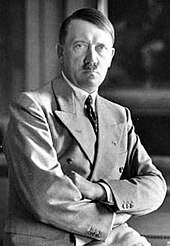
Adolf Hitler
Bundesarchiv, Bild 146-1990-048-29A / CC-BY-SA 3.0 [CC BY-SA 3.0 de (https://creativecommons.org/licenses/by-sa/3.0/de/deed.en)%5D
Heinrich Himmler, a former chicken farmer, remained head of the dreaded, black-uniformed Schutzstaffel, or Protection Squads, known as the SS, from 1929 until his suicide in 1945.
In April, 1934, Himmler was appointed assistant chief of the Gestapo (Secret State Police) in Prussia, and from that position he extended his control over the police forces of the whole Reich.
Hermann Goering, an ace fighter pilot in World War 1, served as Reich commissioner for aviation and head of the newly developed Luftwaffe, the German air force, from 1935 to 1945.
And Albert Speer, Hitler’s favorite architect, held that position from 1933 until 1942, when Hitler appointed him Reich Minister of Armaments and War Production. He held that position until the Third Reich collapsed in April, 1945.
Soviet Premier Joseph Stalin, by contrast, purged his ministers constantly. For example: From 1934 to 1953, Stalin had no fewer than three chiefs of his secret police, then named the NKVD:
- Genrikh Yagoda – (July 10, 1934 – September 26, 1936)
- Nikolai Yezhov (September 26, 1936 – November 25, 1938) and
- Lavrenty Beria (November, 1938 – March, 1953).
Stalin purged Yagoda and Yezhov, with both men executed after their arrest.
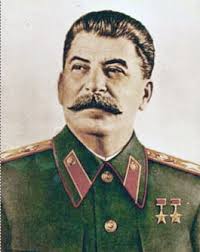
Joseph Stalin
He reportedly wanted to purge Beria, too, but the latter may have acted first. There has been speculation that Beria slipped warfarin, a blood-thinner often used to kill rats, into Stalin’s drink, causing him to die of a cerebral hemorrhage.
Stalin’s record for slaughter far eclipses that of Hitler.
For almost 30 years, through purges and starvation caused by enforced collections of farmers’ crops, Stalin slaughtered 20 to 60 million people.
The 1930s were a frightening and dangerous time to be alive in the Soviet Union. In 1934, Stalin, seeing imaginary enemies everywhere, ordered a series of purges that lasted right up to the German invasion in 1941.
An example of Stalin’s paranoia occurred one day while the dictator walked through the Kremlin corridors with Admiral Ivan Isakov. Officers of the NKVD (the predecessor to the KGB) stood guard at every corner.
“Every time I walk down the corridors,” said Stalin, “I think: Which one of them is it? If it’s this one, he will shoot me in the back. But if I turn the corner, the next one can shoot me in the face.”
Another Russian-installed tyrant who has sought to rule by fear: President Donald J. Trump.
In fact, he admitted as much to journalist Bob Woodward during the 2016 Presidential race: “Real power is—I don’t even want to use the word—fear.”

Donald Trump
As a Presidential candidate, Trump repeatedly used Twitter to attack hundreds of real and imagined enemies in politics, journalism, TV and films.
As President, he continued to insult virtually everyone, verbally and on Twitter. His targets included Democrats, Republicans, the media, foreign leaders and even members of his Cabinet.
In Russian, the word for “purge” is “chistka,” for “cleansing.” Among the victims of Trump’s recurring chistkas:
- Sally Yates – Assistant United States Attorney General
- James Comey – FBI Director
- Andrew McCabe – FBI Deputy Director
- Jeff Sessions – United States Attorney General
- Rachel Brand – Associate United States Attorney General
- Randolph “Tex” Alles – Director of the United States Secret Service
- Krisjen Nielsen – Secretary of the Department of Homeland Security
In his infamous political treatise, The Prince, Niccolo Machiavelli, the Florentine statesman, asked: “Is it is better to be loved or feared?”
And he answered it thus:
“The reply is, that one ought to be both feared and loved, but as it is difficult for the two to go together, it is much safer to be feared than loved.
“For it may be said of men in general that they are ungrateful, voluble, dissemblers, anxious to avoid danger and covetous of gain; as long as you benefit them, they are entirely yours….
“And the prince who has relied solely on their words, without making other preparations, is ruined….
“And men have less scruple in offending one who makes himself loved than one who makes himself feared; for love is held by a chain of obligations which, men being selfish, is broken whenever it serves their purpose; but fear is maintained by a dread of punishment which never fails.”
But Machiavelli warned about relying primarily on fear: “Still, a prince should make himself feared in such a way that if he does not gain love, he at any rate avoids hatred, for fear and the absence of hatred may well go together.”
**********
Donald Trump has violated that counsel throughout his life. He not only makes enemies, he revels in doing so—and in the fury he has aroused.
Filled with a poisonous hatred that encompasses almost everyone, Trump, as Presidential candidate and President, repeatedly played to the hatreds of his Right-wing base.
As first-mate Starbuck said of Captain Ahab in Herman Melville’s classic novel, Moby Dick: “He is a champion of darkness.”
ABC NEWS, ACADEMI, AFGHANISTAN, ALTERNET, ANDROID, AP, APPLE IOS, ” 9/11, BARACK OBAMA, BLACKWATER, BOOZ ALLEN HAMILTON, BUZZFEED, CBS NEWS, CENTRAL INTELLIGENCE AGENCY, CNN, COFER BLACK, COLD WAR, CONTRACT EMPLOYEES, CROOKS AND LIARS, DAILY KOZ, DONALD TRUMP, EDWARD SNOWDEN, ENRIQUE PRADO, ERIK PRINCE, GEORGE W. BUSH, GREEN BERETS, IRAQ, LEGACY OF ASHES (BOOK), LOCKHEED MARTIN, MERCENARIES, MICROSOFT WINDOWS, MOTHER JONES, MOVEON, NATIONAL SECURITY AGENCY, NAVY SEALS, NBC NEWS, NEWSWEEK, NICCOLO MACHIAVELLI, NPR, PAUL BREMER, POLITICO, RAW STORY, REUTERS, ROBERT RICHER, SALON, SEATTLE TIMES, SLATE, SMARTPHONES, THE ATLANTIC, THE CHICAGO SUN-TIMES, THE CHICAGO TRIBUNE, THE DAILY BEAST, THE GUARDIAN, THE HILL, THE HUFFINGTON POST, THE LOS ANGELES TIMES, THE NATION, THE NEW YORK TIMES, THE PENTAGON, THE WASHINGTON POST, TIM WEINER, TIME, TORTURE, TOTAL INTELLIGENCE SOLUTIONS, TWITTER, U.S. NEWS & WORLD REPORT, UNITED STATES AIR FORCE, UNITED STATES ARMY, UPI, USA TODAY, WIKILEAKS, XE SERVICES
In Bureaucracy, Business, History, Military, Politics, Social commentary on June 30, 2023 at 12:05 am
The United States had been fighting in Afghanistan for almost 16 years—and between 2001 and 2017 had spent an estimated $714 billion.
Still, there was no end in sight.
Then Erik Prince suggested a remedy: Mercenaries—via his private company, Academi.
For $3.5 billion in taxpayer monies, he claimed that he could vin a victory that had eluded the United States Air Force, Army (including Green Berets) and Navy SEALs.

Erik Prince
By Miller Center [CC BY 2.0 (https://creativecommons.org/licenses/by/2.0)%5D, via Wikimedia Commons
In 1997, Prince created Blackwater, a private security company providing support to military and police agencies.
In August, 2003, Blackwater got the first of a series of Federal contracts to deploy its forces in Iraq. For $21 million, it safeguarded Paul Bremer, America’s proconsul running the occupation.
Ultimately, Blackwater got $1 billion to provide security for American officials and soldiers in Iraq and Afghanistan.
According to human rights organizations, Blackwater abused Iraqis and engaged in torture to obtain information.
In September, 2007, Blackwater guards killed 17 Iraqi civilians and injured 20 more in a Baghdad traffic circle.
Owing to its highly controversial activities in Iraq, Prince renamed the company Xe Services in 2009 and then Academi in 2011.
By 2018, against opposition by the Pentagon, Prince lobbied President Donald Trump to let Academi privatize the war in Afghanistan.
Ultimately, his company did not become the sole American military force in Afghanistan—despite his sister, Betsy Devos, being the Secretary of Education.
Since the end of the Cold War, the American military and Intelligence communities have grown increasingly dependent on private contractors.
In his 2007 bestseller, Legacy of Ashes: The History of the CIA, Tim Weiner writes:
“Patriotism for profit became a $50-billion-a-year business….The [CIA] began contracting out thousands of jobs to fill the perceived void by the budget cuts that began in 1992.
“A CIA officer could file his retirement papers, turn in his blue identification badge, go to work for a much better salary at a military contractor such as Lockheed Martin or Booz Allen Hamilton, then return to the CIA the next day, wearing a green badge….”

Much of the CIA became totally dependent on mercenaries. They appeared to work for the agency, but their loyalty was actually to their private–and higher-paying—companies.
Writes Weiner: “Legions of CIA veterans quit their posts to sell their services to the agency by writing analyses, creating cover for overseas officers, setting up communications networks, and running clandestine operations.”
One such company was Total Intelligence Solutions, founded in 2007 by Cofer Black, who had been the chief of the CIA’s counter-terrorism center on 9/11. His partners were Robert Richer, formerly the associate deputy director of operations at the CIA, and Enrique Prado, who had been Black’s chief of counter-terror operations at the agency.
Future CIA hires followed suit: Serve for five years, win that prized CIA “credential” and sign up with a private security company to enrich yourself.
This situation met with full support from Right-wing “pro-business” members of Congress and President George W. Bush.
They had long championed the private sector as inherently superior to the public one. And they saw no danger that a man dedicated to enriching himself might put greed ahead of safeguarding his country.
But there are dangers to hiring men whose first love is profit. Recent examples include:
- Edward Snowden deliberately joined Booz Allen Hamilton to secure a job as a computer systems administrator at the National Security Agency (NSA). This gave him access to thousands of highly classified documents—which, in 2013, he began publicly leaking to a wide range of news organizations.
- His motive, he claimed, was to warn Americans of the privacy-invading dangers posed by their own Intelligence agencies.
- On March 7, 2017, WikiLeaks published a “data dump” of 8,761 documents codenamed “Vault 7.”
- The documents exposed that the CIA had found security flaws in software operating systems such as Microsoft Windows, Android and Apple iOS. These allowed an intruder—such as the CIA—to seize control of a computer or smartphone. The owner could then be photographed through his iPhone camera and have his text messages intercepted.
- According to anonymous U.S. Intelligence and law enforcement sources, the culprits were CIA contract employees.
But there are others who have offered a timely warning against the use of mercenaries. One of these is Niccolo Machiavelli, the Florentine statesman of the Renaissance.
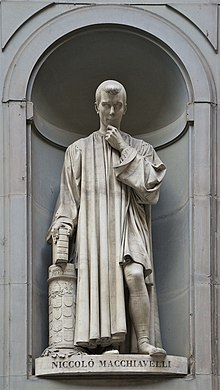
Niccolo Machiavelli
In The Prince, Machiavelli writes:
“Mercenaries…are useless and dangerous. And if a prince holds on to his state by means of mercenary armies, he will never be stable or secure. For they are disunited, ambitious, without discipline, disloyal. They are brave among friends; among enemies they are cowards.
“They have neither the fear of God nor fidelity to man, and destruction is deferred only as the attack is. For in peace one is robbed by them, and in war by the enemy.
“The cause of this is that they have no love or other motive to keep them in the field beyond a trifling wage, which is not enough to make them ready to die for you.”
Centuries after Machiavelli’s warning, Americans are realizing the bitter truth of it firsthand.
ABC NEWS, ADOLF HITLER, ALTERNET, AMERICABLOG, AMERICAN REVOLUTION, ANDREW JACKSON, AP, BABY BOOMER RESISTANCE, BBC, BLOOMBERG NEWS, BUZZFEED, CBS NEWS, CHECHENS, CNN, CROOKS AND LIARS, DAILY KOS, FIVETHIRTYEIGHT, FORT MIMS MASSACRE, GREAT BRITAIN, HARPER’S MAGAZINE, HUFFINGTON POST, MEDIA MATTERS, MERCENARIES, MOTHER JONES, MOVEON, MSNBC, NAZI-SOVIET "NON-AGGRESSION PACT", NBC NEWS, NEW REPUBLIC, NEWSDAY, NEWSWEEK, NICCOLO MACHIAVELLI, NPR, NUCLEAR WEAPONS, PBS NEWSHOUR, POLITICO, POLITICUSUSA, RAW STORY, REUTERS, SALON, SEATTLE TIMES, SLATE, TALKING POINTS MEMO, THE ATLANTIC, THE BLITZ, THE CHICAGO SUN-TIMES, THE CHICAGO TRIBUNE, THE DAILY BEAST, THE DAILY BLOG, THE DISCOURSES, THE GUARDIAN, THE HILL, THE HUFFINGTON POST, THE INTERCEPT, THE LOS ANGELES TIMES, THE NATION, THE NEW REPUBLIC, THE NEW YORK TIMES, THE NEW YORKER, THE PRINCE, THE SS, THE VILLAGE VOICE, THE WASHINGTON POST, THINKPROGRESS, THIRD REICH, TIME, TRUTHDIG, TRUTHOUT, TWITTER, U.S. NEWS & WORLD REPORT, UKRAINE, UPI, USA TODAY, VLADIMIR PUTIN, VOLODYMYR ZELENSKY, WAR OF 1812, WEHRMACHT, WORLD WAR 11
In Bureaucracy, History, Military, Politics, Social commentary on June 28, 2023 at 12:12 am
Vladimir Putin believes himself to be a serious student of history. But he has drawn the wrong lessons from the past.
During the American Revolution (1775-1783) and the War of 1812 (1812-1815) Great Britain encouraged Indian attacks on American settlers.
One of the worst of these attacks occurred on August 30, 1813, when over 700 Creek Indians destroyed Fort Mims, near Mobile, Alabama. About 500 militiamen, settlers, slaves and Creeks loyal to the Americans were slaughtered or captured.

Fort Mims massacre
Inflaming the Indians against settlers didn’t help the British on the battlefield—in the American Revolution or the War of 1812. But it did incite long-lasting hatred by the vast majority of Americans against the British—and even greater hatred of the Indians.
To cite one example: The Fort Mims massacre inspired General Andrew Jackson to take the field, eventually destroying the Creeks as a nation and wresting Florida from Spain for the United States.
The British lost their American colony. And the Indians were gradually driven from their dominance of the continent.
Similarly, Vladimir Putin has turned to Chechen mercenaries for help in conquering Ukraine. They are known as “Kadyrovtsy” or “Kadyrovites” after their leader, Ramzan Kadyrov, Chechnya’s pro-Kremlin strongman.
Human rights groups, witnesses and survivors have for decades accused them of murders, kidnappings and the torture of Kadyrov’s rivals and critics.
Just as the Indians hoped to use their alliance with the British to defeat their Anglo-American enemies, so, too, do Chechen mercenaries hope to ingratiate themselves with the Kremlin.

Vladimir Putin
Kremlin.ru, CC BY 4.0 <https://creativecommons.org/licenses/by/4.0>, via Wikimedia Commons
Yet that alliance has not advanced Russia’s fortunes on the battlefield, just as the British-Indian alliance did not gain victory for the British.
As Niccolo Machiavelli, writing more than 500 years ago in The Prince, warned: “[Mercenaries] have neither the fear of God nor fidelity to man, and destruction is deferred only as the attack is. For in peace one is robbed by them, and in war by the enemy.”
Moreover, the atrocities committed by Indians and Chechens only inflamed their enemies to seek revenge.
In his masterwork, The Discourses, Machiavelli offered a lesson on the power of mercy even in the midst of war.
“Marcus Furius Camillus, a Roman general, was besieging the city of the Faliscians, and had surrounded it. A teacher charged with the education of the children of some of the noblest families of that city decided to ingratiate himself with Camillus by leading those children into the Roman camp.
“Presenting them to Camillus the teacher said to him, ‘By means of these children as hostages, you will be able to compel the city to surrender.’
“Camillus not only declined the offer but had the teacher stripped and his hands tied behind his back. Then he had a rod put into the hands of each of the children and directed them to whip the teacher all the way back to the city.
“Upon learning this, the citizens of Faliscia were so much touched by the humanity and integrity of Camillus, that they surrendered the place to him without any further defense.”
Summing up the meaning of this, Machiavelli writes: “This example shows that an act of humanity and benevolence will at all times have more influence over the minds of men than violence and ferocity. It also proves that provinces and cities which no armies…could conquer, have yielded to an act of humanity, benevolence, chastity or generosity.
“…History also shows us how much the people desire to find such virtues in great men, and how much they are extolled by historians and biographers of princes….Amongst these, Xenophon takes great pains to show how many victories, how much honor and fame, Cyrus gained by his humanity and affability, and by his not having exhibited a single instance of pride, cruelty or luxuriousness, nor of any of the other vices that are apt to stain the lives of men.”

Niccolo Machiavelli
Then there has been Putin’s use of terror-attacks on Ukrainian cities.
Using bombers and long-range artillery, Putin has tried to compensate for losses on the battlefield by terrorizing Ukrainians into surrender.
Adolf Hitler applied the same tactic against an equally stubborn Great Britain during the Second World War. in 1940-41.
Unable to invade England because the British Navy controlled the sea, Hitler turned to terror-bombing.
He believed he could terrorize Britons into demanding that their government yield to German surrender demands.
From September 7, 1940 to May 21, 1941, the Luftwaffe subjected England—and especially London—to a ruthless bombing campaign that became known as The Blitz.
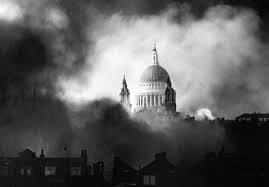
The undamaged St. Paul’s Cathredal, December, 1940
During 267 days—almost 37 weeks—between 40,000 and 43,000 British civilians were killed. About 139,000 others were wounded.
But the terror-bombing only inflamed Britons to fight Germany even more stubbornly.
Vladimir Putin has learned nothing from these historical lessons.
He has employed mercenaries and terror-bombing against patriotic Ukrainians—who continue to sweep Russian forces from their country.
If he employs even “small” tactical weapons, he risks triggering a fullscale NATO response—thus destroying the Russian empire he hopes to re-create.
Finally: Even if he conquers Ukraine, he will inherit a hate-filled population thirsting for revenge at every opportunity.


2020 PRESIDENTIAL ELECTION, ABC NEWS, ALTERNET, AMERICABLOG, AP, BABY BOOMER RESISTANCE, BBC, BLOOMBERG NEWS, BUZZFEED, CBS NEWS, CLASSIFIED DOCUMENTS, CNN, CROOKS AND LIARS, DAILY KOS, DONALD TRUMP, FANI WILLIS, FIVETHIRTYEIGHT, HARPER’S MAGAZINE, HUFFINGTON POST, JACK SMITH, JANUARY 6 COUP ATTEMPT, JOE BIDEN, LETITIA JAMES, MAR-A-LAGO, MEDIA MATTERS, MOTHER JONES, MOVEON, MSNBC, NBC NEWS, NEW REPUBLIC, NEWSDAY, NEWSWEEK, NICCOLO MACHIAVELLI, NPR, PBS NEWSHOUR, POLITICO, POLITICUSUSA, RAW STORY, REPUBLICANS, REUTERS, SALON, SEATTLE TIMES, SLATE, TALKING POINTS MEMO, THE ATLANTIC, THE CHICAGO SUN-TIMES, THE CHICAGO TRIBUNE, THE DAILY BEAST, THE DAILY BLOG, THE DISCOURSES (BOOK), THE GUARDIAN, THE HILL, THE HUFFINGTON POST, THE INTERCEPT, THE LOS ANGELES TIMES, THE NATION, THE NEW REPUBLIC, THE NEW YORK TIMES, THE NEW YORKER, THE VILLAGE VOICE, THE WASHINGTON POST, THINKPROGRESS, TIME, TRUTH SOCIAL, TRUTHDIG, TRUTHOUT, TWITTER, U.S. NEWS & WORLD REPORT, UNITED STATES DEPARTMENT OF JUSTICE, UPI, USA TODAY
THE FRIGHTENED TYRANT VS. THE RELENTLESS PROSECUTOR
In Bureaucracy, History, Law, Law Enforcement, Politics, Social commentary on July 26, 2023 at 12:20 amDonald Trump has no doubt heard of Niccolo Machiavelli, the Florentine statesman of the Renaissance.
But he certainly hasn’t learned anything from him.
Consider the way he has repeatedly insulted his nemesis, Jack Smith.
Smith was appointed Special Counsel for the United States Department of Justice on November 18, 2022.
Jack Smith
His assignment: Oversee the criminal investigations into former President Donald Trump’s behavior regarding:
Since then, Trump has launched a series of vicious attacks on Smith—despite the fact that Smith holds the power to indict and prosecute him for multiple felonies.
For example: On June 8, Smith indicted Trump on 37 federal felony counts for illegally retaining hundreds of classified documents at Mar-a-Lago. Trump pleaded not guilty to all charges.
Boxes of classified documents in Mar-a-Lago bathroom
At a press conference, Smith defended his team’s work and emphasized the seriousness of the charges: “Our laws that protect national defense information are critical to the safety and security of the United States, and they must be enforced.”
He also emphasized that Trump “must be presumed innocent until proven guilty beyond a reasonable doubt in a court of law.”
Trump quickly responded: “The prosecutor in the case, I will call our case, is a thug. I have named him ‘Deranged Jack Smith. He’s a behind-the-scenes guy, but his record is absolutely atrocious. He does political hit jobs. He’s a raging and uncontrolled Trump hater, as is his wife, who happened to be the producer of that Michelle Obama puff piece. This is the guy I’ve got.”
On June 27, Trump, using his social network Truth Social, continued his attack on Smith:
COULD SOMEBODY PLEASE EXPLAIN TO THE DERANGED, TRUMP HATING JACK SMITH, HIS FAMILY, AND HIS FRIENDS, THAT AS PRESIDENT OF THE UNITED STATES, I COME UNDER THE PRESIDENTIAL RECORDS ACT, AS AFFIRMED BY THE CLINTON SOCKS CASE, NOT BY THIS PSYCHOS’ FANTASY OF THE NEVER USED BEFORE ESPIONAGE ACT OF 1917. “SMITH” SHOULD BE LOOKING AT CROOKED JOE BIDDEN AND ALL OF THE CRIMES THAT HE HAS PERPETRATED ON THE AMERICAN PUBLIC, INCLUDING THE MILLIONS & MILLIONS OF DOLLARS HE EXTORTED FROM FOREIGN COUNTRIES!
Donald Trump
So: Where does Niccolo Machiavelli enter this story?
In his masterwork, The Discourses, published in 1531, Machiavelli laid out his advice for preserving liberties within a republic.
His counsel on gratuitously handing out insults and threats could have been written with Donald Trump in mind:
Niccolo Machiavelli
Meanwhile, Smith has not responded to Trump’s slanders.
“Smith is not going to play this case out in public,” said Steve Friedland, a law professor at Elon University and a former federal prosecutor. “We’ve seen that in other cases, and that’s true for most prosecutors.” “
“Trump has done this with [New York Attorney General] Letitia James, he has done this with [Fulton County District Attorney] Fani Willis, just every prosecutor that’s investigated him,” Neama Rahmani, a former federal prosecutor, told ABC News.
James has sued Trump for fraud and Willis is investigating Trump’s efforts to gain unearned votes in Georgia to overturn the 2020 electoral victory of Joe Biden.
According to Machiavelli, Trump’s continued outbursts against Smith illustrate another great truth: That it’s possible to tell a truly great man from an imposter:
“A truly great man is ever the same under all circumstances. And if his fortune varies, exalting him at one moment and oppressing him at another, he himself never varies, but always preserves a firm courage, which is so closely interwoven with his character that everyone can readily see that the fickleness of fortune has no power over him.
“The conduct of weak men is very different. Made vain and intoxicated by good fortune, they attribute their success to merits which they do not possess, and this makes them odious and insupportable to all around them. And when they have afterwards to meet a reverse of fortune, they quickly fall into the other extreme, and become abject and vile.
“Thence it comes that princes of this character think more of flying in adversity than of defending themselves, like men who, having made a bad use of prosperity, are wholly unprepared for any defense against reverses.”
Trump is desperately trying to appear as the victim of a “weaponized” Justice Department eager to eliminate him as a 2024 Presidential candidate. He has railed against the “Deep State”—by which he means agencies he no longer controls.
And he has called on his allies within the Republican party to derail the continuing probes—especially by defunding Smith’s office or the entire Justice Department.
So far, neither Trump’s whining nor his allies have deterred Smith from his prosecutorial efforts.
Share this: