Posts Tagged ‘MSNBC’
2016 PRESIDENTIAL RACE, ABC NEWS, ABCNEWS, ALTERNET, AMERICABLOG, AP, BABY BOOMER RESISTANCE, BBC, BERNIE SANDERS, BLOOD FEUD, BLOOMBERG NEWS, BROTHERS: THE HIDDEN HISTORY OF THE KENNEDY YEARS, BUZZFEED, CARLOS MARCELLO, CBS NEWS, CIA, CNN, COTTER SMITH, CROOKS AND LIARS, CUBA, DAILY KOS, DAVID TALBOT, DONALD TRUMP, ERNEST BORGNINE, FBI, FIDEL CASTRO, FIVETHIRTYEIGHT, GUS RUSSO, HARPER’S MAGAZINE, HILLARY CLINTON, HUFFINGTON POST, INTERNATIONAL BROTHERHOOD OF TEAMSTERS, J. EDGAR HOOVER, JAMES R. HOFFA, JOHN F. KENNEDY, JUSTICE DEPARTMENT, LIVE BY THE SWORD: THE SECRET WAR AGAINST CASTRO AND THE DEATH OF JFK, MAFIA, MEDIA MATTERS, MOTHER JONES, MOVEON, MSNBC, NBC NEWS, NEW REPUBLIC, NEWSDAY, NEWSWEEK, NPR, PBS NEWSHOUR, POLITICO, POLITICUSUSA, RAFAEL EDWARD CRUZ, RAW STORY, REUTERS, ROBERT BLAKE, ROBERT F. KENNEDY, SALON, SAM GROOM, SEATTLE TIMES, Secret Service, SENATE LABOR RACKETS COMMITTEE, SLATE, TALKING POINTS MEMO, THE ATLANTIC, THE CHICAGO SUN-TIMES, THE CHICAGO TRIBUNE, THE DAILY BEAST, THE DAILY BLOG, THE GUARDIAN, THE HILL, THE HUFFINGTON POST, THE INTERCEPT, THE LOS ANGELES TIMES, THE NATION, THE NEW REPUBLIC, THE NEW YORK TIMES, THE NEW YORKER, THE VILLAGE VOICE, THE WALL STREET JOURNAL, THE WASHINGTON POST, THINKPROGRESS, TIME, TRUTHDIG, TRUTHOUT, TWITTER, U.S. NEWS & WORLD REPORT, UPI
In Bureaucracy, History, Law, Law Enforcement, Politics, Social commentary on April 22, 2016 at 12:10 am
The 1983 TV mini-series, Blood Feud, chronicles the decade-long struggle between Robert F. Kennedy and James R. Hoffa.
Having “helped” Kennedy (Cotter Smith) to oust corrupt Teamsters President Dave Beck, Hoffa (Robert Blake) believes that Kennedy should now be satisfied: “He’s got his scalp. Now he can move on to other things while I run the union.”
But Hoffa has guessed wrong–with fatal results. Realizing that he’s been “played” by Hoffa, a furious Kennedy strikes back.
He orders increased surveillance of Hoffa and his topmost associates. He subpoenas union records and members of both the Teamsters and the Mafia to appear before his committee in public hearings.
And he tries to enlist the aid of legendary FBI Director J. Edgar Hoover (Ernest Borgnine). But Hoover wants no part of a war against organized crime, whose existence he refuses to admit.

Meanwhile, Kennedy’s confrontations with Hoffa grow increasingly fierce. In open hearings, Kennedy accuses Hoffa of receiving kickbacks in the name of his wife. Hoffa damns him for “dirtying my wife’s name.”
Kennedy secures an indictment against Hoffa for hiring a spy to infiltrate the Senate Labor Rackets Committee. He’s so certain of a conviction that he tells the press he’ll “jump off the Capitol building” if Hoffa beats the rap.
But Hoffa’s lawyer, Edward Bennett Williams (Jose Ferrer) puts Kennedy himself on the witness stand. There he portrays Kennedy as a spoiled rich man who’s waging a vendetta against Hoffa.
Hoffa beats the rap, and offers to send Kennedy a parachute. But he jokingly warns reporters: “Hey, Bobby, you better have it checked. I don’t trust myself!”
By 1959, Robert Kennedy’s work as chief counsel for the Senate Labor Rackets Committee is over. But not his determination to send Teamsters President James Hoffa to prison.
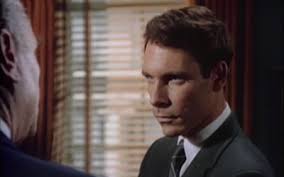
Cotter Smith as Robert Kennedy
Throughout 1960, he manages the Presidential campaign for his brother, John F. Kennedy (Sam Groom). By a margin of only 100,000 votes, JFK wins the election.
Hoffa thinks that his troubles are over, that “Bobby” will move on to other pursuits and forget about the Teamsters.
Hoffa is partly right: Kennedy moves on to another job. But it’s the office of United States Attorney General.
JFK, needing someone in the Cabinet he can trust completely, browbeats Robert into becoming the the nation’s top cop.
For Hoffa, it’s a nightmare come true.
As Attorney General, Kennedy no longer has to beg J. Edgar Hoover to attack organized crime. He can–and does–order him to do so.
Throughout the country, the Mafia feels a new heat as FBI agents plant illegal electronic microphones (“bugs”) in their innermost sanctums. Agents openly tail mobsters–and send them to prison in large numbers.
And Kennedy sets up a special unit, composed of topflight prosecutors and investigators, to go after just one man: James Riddle Hoffa. The press comes to call it the “Get Hoffa” squad.
Hoffa continues to beat federal prosecutors in court. But he believes he’s under constant surveillance by the FBI, and his nerves are starting to crack.
Convinced that the FBI has bugged his office, he literally tears apart the room, hoping to find the bug. But he fails to do so.
What he doesn’t know is he’s facing a more personal danger–from one of his closest associates.
He tells a trusted colleague, Edward Grady Partin (Brian Dennehy) how easy it would be to assassinate Kennedy with a rifle or bomb.
Later, Partin gets into a legal jam–and is abandoned by the Teamsters. Hoping to cut a deal, he relays word to the Justice Department of Hoffa’s threats against the Attorney General.
Now working for the Justice Department, Partin sends in reports on Hoffa’s juror-bribing efforts in yet another trial. Hoffa again beats the rap–but now Kennedy has the insider’s proof he needs to put him away for years.
Meanwhile, the Mafia despairs of the increasing pressure of the Justice Department. At a swanky restaurant, several high-ranking members agree that “something” must be done.
[Although this scene is fictional, it’s clearly based on an infamous outburst of Carlos Marcello, the longtime Mafia boss of New Orleans.
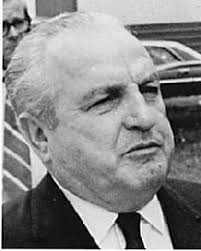
Carlos Marcello
[In 1961, Marcello was deported to his native Guatemala on orders by RFK. After illegally re-entering the country, he swore vengeance against the Attorney General.
[In September, 1962, during a meeting with several mob colleagues, he flew into a rage when someone mentioned Kennedy.
“Take the stone out of my shoe!” he shouted, echoing a Sicilian curse. “Don’t you worry about that little Bobby sonofabitch. He’s going to be taken care of!”
[When one of his colleagues warned that murdering RFK would trigger the wrath of his brother, President John F.Kennedy, Marcello replied: “In Sicily they say if you want to kill a dog you don’t cut off the tail. You go for the head.”
[Marcello believed that the death of President Kennedy would render the Attorney General powerless. And he added that he planned to use a “nut” to do the job.]
On November 22, 1963, President John F. Kennedy is assassinated in Dallas, Texas.
Blood Feud clearly implies that the Mafia was responsible.
2016 PRESIDENTIAL RACE, ABC NEWS, ALTERNET, AMERICABLOG, AP, BABY BOOMER RESISTANCE, BBC, BERNIE SANDERS, BLOOD FEUD, BLOOMBERG NEWS, BROTHERS: THE HIDDEN HISTORY OF THE KENNEDY YEARS, BUZZFEED, CARLOS MARCELLO, CBS NEWS, CIA, CNN, COTTER SMITH, CROOKS AND LIARS, CUBA, DAILY KOS, DAVID TALBOT, DONALD TRUMP, ERNEST BORGNINE, FBI, FIDEL CASTRO, FIVETHIRTYEIGHT, GUS RUSSO, HARPER’S MAGAZINE, HILLARY CLINTON, HUFFINGTON POST, INTERNATIONAL BROTHERHOOD OF TEAMSTERS, J. EDGAR HOOVER, JAMES R. HOFFA, JOHN F. KENNEDY, JUSTICE DEPARTMENT, LIVE BY THE SWORD: THE SECRET WAR AGAINST CASTRO AND THE DEATH OF JFK, MAFIA, MEDIA MATTERS, MOTHER JONES, MOVEON, MSNBC, NBC NEWS, NEW REPUBLIC, NEWSDAY, NEWSWEEK, NPR, PBS NEWSHOUR, POLITICO, POLITICUSUSA, RAFAEL EDWARD CRUZ, RAW STORY, REUTERS, ROBERT BLAKE, ROBERT F. KENNEDY, SALON, SAM GROOM, SEATTLE TIMES, Secret Service, SENATE LABOR RACKETS COMMITTEE, SLATE, TALKING POINTS MEMO, THE ATLANTIC, THE CHICAGO SUN-TIMES, THE CHICAGO TRIBUNE, THE DAILY BEAST, THE DAILY BLOG, THE GUARDIAN, THE HILL, THE HUFFINGTON POST, THE INTERCEPT, THE LOS ANGELES TIMES, THE NATION, THE NEW REPUBLIC, THE NEW YORK TIMES, THE NEW YORKER, THE VILLAGE VOICE, THE WALL STREET JOURNAL, THE WASHINGTON POST, THINKPROGRESS, TIME, TRUTHDIG, TRUTHOUT, TWITTER, U.S. NEWS & WORLD REPORT, UPI
In Bureaucracy, History, Law, Law Enforcement, Politics, Social commentary on April 21, 2016 at 12:37 pm
Today, America has four major candidates running for President: Donald Trump, Rafael Edward Cruz, Hillary Clinton and Bernie Sanders.
Trump is a billionaire businessman; Cruz is a U.S. Senator from Texas; Clinton is a former First Lady, U.S. Senator and Secretary of State; and Sanders is a U.S. Senator from Vermont.
Despite the great differences in their backgrounds, they all share one thing in common: Extremely high negatives among voters.
But 48 years ago, Senator Robert Francis Kennedy aroused passions of an altogether different sort.
Kennedy had been a United States Attorney General (1961-1964) and Senator (1964-1968). But it was his connection to his beloved and assassinated brother, President John F. Kennedy, for which he was best known.

Robert F. Kennedy campaigning for President
Millions saw RFK as the only candidate who could make life better for America’s impoverished–while standing firmly against those who threatened the Nation’s safety.
As television correspondent Charles Quinn observed: “I talked to a girl in Hawaii who was for [George] Wallace [the segregationist governor of Alabama]. And I said ‘Really?’ [She said] ‘Yeah, but my real candidate is dead.’
“You know what I think it was? All these whites, all these blue collar people who supported Kennedy…all of these people felt that Kennedy would really do what he thought best for the black people, but, at the same time, would not tolerate lawlessness and violence.
“They were willing to gamble…because they knew in their hearts that the country was not right. They were willing to gamble on this man who would try to keep things within reasonable order; and at the same time do some of the things they knew really should be done.”
Campaigning for the Presidency in 1968, RFK had just won the crucial California primary on June 4–when he was shot in the back of the head. His killer: Sirhan Sirhan, a young Palestinian furious at Kennedy’s support for Israel.
On June 8, 1,200 men and women boarded a specially-reserved passenger train at New York’s Pennsylvania Station. They were accompanying Kennedy’s body to its final resting place at Arlington National Cemetery.
As the train slowly moved along 225 miles of track, throngs of men, women and children lined the rails to pay their final respects to a man they considered a genuine hero.
Little Leaguers clutched their baseball caps across their chests. Uniformed firemen and policemen saluted. Burly men in shirtsleeves held hardhats over their hearts. Black men in overalls waved small American flags. Women from all levels of society stood and cried.

A nation says goodbye to Robert Kennedy
Commenting on RFK’s legacy, historian William L. O’Neil wrote in Coming Apart: An Informal History of America in the 1960′s:
“…He aimed so high that he must be judged for what he meant to do, and, through error and tragic accident, failed at….He will also be remembered as an extraordinary human being who, though hated by some, was perhaps more deeply loved by his countrymen than any man of his time.
“That too must be entered into the final account, and it is no small thing. With his death something precious disappeared from public life.”
Eleven years earlier, as a young, idealistic attorney, Kennedy had declared war on James Riddle Hoffa, the president of the Mafia-dominated International Brotherhood of Teamsters Union.
As chief counsel for the Senate Labor Rackets Committee, Kennedy was appalled at the corruption he discovered among high-ranking Teamster officials. As he saw it, under Hoffa’s leadership, the union was nothing less than “a conspiracy of evil.”
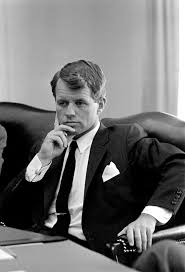
Robert Francis Kennedy as Chief Counsel, Senate Labor Rackets Committee
Hoffa, in turn, held an equally unflattering view of Kennedy. “A rich punk,” said Hoffa, who didn’t know or care about “the average workingman.”
In 1983, Blood Feud, a two-part TV mini-series, depicted the 11-year animosity between Kennedy and Hoffa. Although it took some dramatic liberties, its portrayal of the major events of that period remains essentially accurate.
Today, labor unions are a rapidly-vanishing species, commanding far less political influence than they did 50 years ago. As a result, young viewers of this series may find it hard to believe that labor ever held such sway, or that the Teamsters posed such a threat.
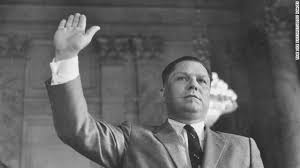
James Riddle Hoffa testifying before the Senate Labor Rackets Committee
And in an age when millions see “Big Government” as the enemy, they may feel strong reservations about the all-out war that Robert F. Kennedy waged against Hoffa.
Blood Feud opens in 1957, when Hoffa (Robert Blake) is a rising figure within the Teamsters. Kennedy (Cotter Smith) is chief counsel for the Senate Labor Rackets Committee.
At first, Hoffa tries to ingratiate himself with Kennedy, telling him: “I know everybody who can help me and anybody who can hurt me.”
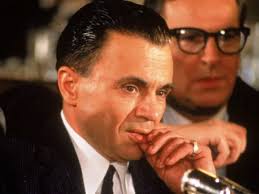
Robert Blake as James R. Hoffa
A wily Hoffa decides to parley Kennedy’s anti-corruption zeal into a path to power for himself. Via his attorney, Eddie Cheyfitz, he feeds Kennedy incriminating evidence against Dave Beck, president of the Teamsters.
Confronted with a Senate subpoena, Beck flees the country–paving the way for Hoffa to assume the top position in the union. Hoffa believes he has solved two problems at once.
ABC NEWS, ALTERNET, AMERICABLOG, ANCHOR BABIES, AP, BABY BOOMER RESISTANCE, BARACK OBAMA, BBC, BLOOMBERG NEWS, BUZZFEED, CBS NEWS, CNN, CROOKS AND LIARS, DAILY KOZ, DONALD TRUMP, FACEBOOK, FBI, FIVETHIRTYEIGHT, HARPER’S MAGAZINE, HUFFINGTON POST, ILLEGAL ALIENS, illegal immigration, IMMIGRATION AND CUSTOMS ENFORCEMENT (ICE), JUSTICE DEPARTMENT, Kamala Harris, MEDIA MATTERS, MEXICO, MICHELLE OBAMA, MOTHER JONES, MOVEON, MSNBC, NBC NEWS, NEW REPUBLIC, NEWSDAY, NEWSWEEK, NPR, PBS NEWSHOUR, POLITICO, POLITICUSUSA, RACKETEER INFLUENCED CORRUPT ORGANIZATIONS ACT, RAW STORY, REUTERS, SALON, SAN FRANCISCO, sanctuary cities, SEATTLE TIMES, SLATE, TALKING POINTS MEMO, THE ATLANTIC, THE CHICAGO SUN-TIMES, THE CHICAGO TRIBUNE, THE DAILY BEAST, THE DAILY BLOG, THE GUARDIAN, THE HILL, THE HUFFINGTON POST, THE LOS ANGELES TIMES, THE NATION, THE NEW REPUBLIC, THE NEW YORK TIMES, THE NEW YORKER, THE VILLAGE VOICE, THE WALL STREET JOURNAL, THE WASHINGTON POST, THINKPROGRESS, TIME, TRUTHDIG, TRUTHOUT, TWITTER, TWO POLITICAL JUNKIES, U.S. NEWS & WORLD REPORT, U.S.-MEXICO WALL, UPI, USA TODAY, USA TODAY DONALD TRUMP, WAL-MART
In Bureaucracy, Business, History, Law, Law Enforcement, Politics, Social commentary on April 12, 2016 at 12:04 am
According to Donald Trump, stopping illegal immigration is easy.
Just build a massive, impenetrable wall along the U.S./Mexican border to keep out Mexican immigrants.
“Building a wall is easy, and it can be done inexpensively,” Trump said in an interview. “It’s not even a difficult project if you know what you’re doing.”
Really?
Among the obstacles to erecting such a barrier:
- The United States/Mexican border stretches for 1,954 miles—and encompasses rivers, deserts and mountains.
- Environmental and engineering problems.
- Squabbles with ranchers who don’t want to give up any of their land.
- Building such a wall would cost untold billions of dollars.
- Drug traffickers and alien smugglers could easily tunnel under it into the United States—as they are now doing.
Click here: Trump says building a U.S.-Mexico wall is ‘easy.’ But is it really? – The Washington Post
There are, in fact, cheaper and more effective remedies for combating illegal immigration.
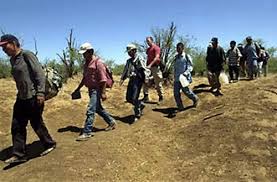
Illegal aliens crossing into the United States
(1) The Justice Department should vigorously attack the “sanctuary movement” that officially thwarts the immigration laws of the United States.
Among the 31 “sanctuary cities” of this country: Washington, D.C.; New York City; Los Angeles; Chicago; San Francisco; Santa Ana; San Diego; Salt Lake City; Phoenix; Dallas; Houston; Austin; Detroit; Jersey City; Minneapolis; Miami; Denver; Baltimore; Seattle; Portland, Oregon; New Haven, Connecticut; and Portland, Maine.
These cities have adopted “sanctuary” ordinances that do not allow municipal funds or resources to be used to enforce federal immigration laws, usually by not allowing police or municipal employees to inquire about one’s immigration status.
(2) The most effective way to combat this movement: Indict the highest-ranking officials of those cities who have actively violated Federal immigration laws.
In San Francisco, for example, former District Attorney Kamala Harris—who is now Vice President of the United States—created a secret and illegal program called Back on Track, which provided training for jobs that illegal aliens could not legally hold.
![]() She also prevented Immigration and Customs Enforcement (ICE) from deporting even those illegal aliens convicted of a felony.
She also prevented Immigration and Customs Enforcement (ICE) from deporting even those illegal aliens convicted of a felony.
(3) Even if some indicted officials escaped conviction, the results would prove worthwhile.
City officials would be forced to spend huge sums of their own money for attorneys and face months or even years of prosecution.
And this, in turn, would send a devastating warning to officials in other “sanctuary cities” that the same fate lies in store for them.
(4) CEOs whose companies—like Wal-Mart—systematically employ illegal aliens should be held directly accountable for the actions of their subordinates.
They should be indicted by the Justice Department under the Racketeer Influenced Corrupt Organizations (RICO) Act, the way Mafia bosses are prosecuted for ordering their own subordinates to commit crimes.
Upon conviction, the CEO should be sentenced to a mandatory prison term of at least 20 years.
This would prove a more effective remedy for combating illegal immigration than stationing tens of thousands of soldiers on the U.S./Mexican border.
CEOs forced to account for their subordinates’ actions would take drastic steps to ensure that their companies strictly complied with Federal immigration laws.
(5) The Government should stop granting automatic citizenship to “anchor babies” born to illegal aliens in the United States.
A comparable practice would be allowing bank robbers who had eluded the FBI to keep their illegally-obtained loot.
A person who violates the bank robbery laws of the United States is legally prosecutable for bank robbery, whether he’s immediately arrested or remains uncaught for years. The same should be true for those born illegally within this country.
If they’re not here legally at the time of birth, they should not be considered citizens and should—like their parents—be subject to deportation.
(6) The United States Government–from the President on down–should scrap its apologetic tone on the right to control its national borders.
First Lady Michelle Obama—accompanied by Margarita Zavala, the wife of then-Mexican President Felipe Calderon—was visiting a second-grade class in Silver Spring, Maryland.
A second-grade girl said: “My Mom, she says says that Barack Obama is taking everybody away that doesn’t have papers.”
“Yeah, well, that’s something that we have to work on right?”
Replied Mrs. Obama. “To make sure that people can be here with the right kind of papers, right?”
The girl then said: “But my mom doesn’t have any….”
Obama: “Well, we’ll have to work on that. We have to fix that, and everybody’s got to work together in Congress to make sure that happens.”
The Mexican Government doesn’t consider itself racist for strictly enforcing its immigration laws.
The United States Government should not consider itself racist for insisting on the right to do the same.
(7) Voting materials and ballots should be published in one language: English.
In Mexico, voting materials are published in one language—Spanish.
Throughout the United States, millions of Mexican illegals refuse to learn English and yet demand that voting materials and ballots be made available to them in Spanish.
(8) The United States should impose economic and even military sanctions against countries—such as China and Mexico—whose citizens make up the bulk of illegal aliens.
Mexico, for example, uses its American border to rid itself of those who might demand major reforms in the country’s political and economic institutions.
Such nations must learn that dumping their unwanteds on the United States now comes at an unfavorably high price. Otherwise those dumpings will continue.
2016 REPUBLICAN CONVENTION, ABC NEWS, AFFORDABLE CARE ACT, BARACK OBAMA, BILL CLINTON, CBS NEWS, CHRIS MATTHEWS, CNN, CUBAN MISSILE CRISIS, DEBT CEILING, DONALD TRUMP, EXTORTION, FACEBOOK, HARDBALL, JOHN F. KENNEDY, JUDGE MERRICK GARLAND, MSNBC, NBC NEWS, NEWT GINGRICH, NICCOLO MACHIAVELLI, OBAMACARE, Racketeer Influenced Corrupt Organizations (RICO) Act, REPUBLICANS, RICHARD WOLFFE, ROBERT PAYNE, THE CHICAGO SUN-TIMES, THE CHICAGO TRIBUNE, THE LIFE AND DEATH OF ADOLF HITLER, THE LOS ANGELES TIMES, THE NEW YORK TIMES, THE PRINCE, THE WALL STREET JOURNAL, THE WASHINGTON POST, TWITTER, U.S. HOUSE OF REPRESENTATIVES, U.S. JUSTICE DEPARTMENT, U.S. SENATE, U.S. SENATOR MITCH MCCONNELL, U.S. SUPREME COURT, USA PATRIOT ACT, WARREN BUFFETT
In Bureaucracy, History, Law, Law Enforcement, Politics, Social commentary on March 25, 2016 at 12:04 am
In September, 2013, President Barack Obama and Senate Democrats refused to knuckle under to yet another Republican extortion threat: Defund the Affordable Care Act (ACA) or we’ll shut down the government.
Republicans claimed it was Obama and Senate Democrats who refused to see reason and negotiate.
But then a Republican accidentally gave away the real reason for the shutdown.
“We’re not going to be disrespected,” Rep. Marlin Stutzman (R-Ind.) told the Washington Examiner. “We have to get something out of this. And I don’t know what that even is.”
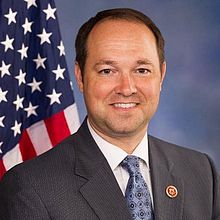
Marlin Stutzman
In short, Republicans–as admitted by Martlin Stutzman–were out to get “respect.” A member of the Crips or Bloods couldn’t have said it better.
The shutdown began on October 1, 2013–and ended 16 days later with even Republicans admitting it had been a failure.
President Obama, a former attorney, denounced House Republicans as guilty of “extortion” and “blackmail.” Had the President acted to prosecute such criminal conduct, the results would have been:
- Facing lengthy prison terms, those indicted Republicans would been forced to lawyer-up. That in itself would have been no small thing, since good criminal lawyers cost big bucks.
- Obsessed with their own personal survival, they would have found little time for engaging in the same thuggish behavior that got them indicted. In fact, doing so would have only made their conviction more likely.
- Those Republicans who hadn’t been indicted would have realized: “I could be next.” This would have produced a chilling effect on their willingness to engage in further acts of subversion and/or extortion.
- The effect on Right-wing Republicans would have been the same as that of President Ronald Reagan’s firing of striking air traffic controllers: “You cross me and threaten the security of this Nation at your own peril.”

True, some prosecuted Republicans might have beaten the rap. But first they would have been forced to spend huge amounts of time and money on their defense.
And with 75% of Americans voicing disgust with Congress, most of those prosecuted might well have been convicted.
It would have been a long time before Republicans again dared to engage in such behavior.
The ancient Greeks believed: “A man’s character is his fate.” It is Obama’s character–and America’s fate–that he is more inclined to conciliation than confrontation.
Richard Wolffe chronicled Obama’s winning of the White House in his book Renegade: The Making of a President. He noted that Obama was always more comfortable when responding to Republican attacks on his character than he was in making attacks of his own.
Obama came into office determined to find common ground with Republicans. But they quickly made it clear to him that they only wanted his political destruction.
At that point, he should have put aside his hopes for a “Kumbaya moment” and applied what Niccolo Machiavelli famously said in The Prince on the matter of love versus fear:
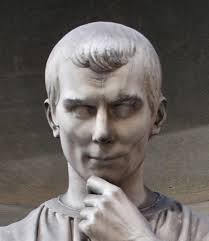
Niccolo Machiavelli
From this arises the question whether it is better to be loved than feared, or feared more than loved. The reply is, that one ought to be both feared and loved, but as it is difficult for the two to go together, it is much safer to be feared than loved.
For it may be said of men in general that they are ungrateful, voluble, dissemblers, anxious to avoid danger and covetous of gain.
As long as you benefit them, they are entirely yours: they offer you their blood, their goods, their life and their children, when the necessity is remote. But when it approaches, they revolt….
And men have less scruple in offending one who makes himself loved than one who makes himself feared; for love is held by a chain of obligations which, men being selfish, is broken whenever it serves their purpose; but fear is maintained by a dread of punishment which never fails.
By refusing to vigorously prosecute acts of Republican extortion, President Obama has unleashed twin disasters upon himself and the United States:
First, Republicans have been encouraged to intensify their acts of aggression against him.
Their most recent act: Refusing to meet with federal appeals court judge Merrick Garland. Obama’s designated nominee to the Supreme Court after the February 13 death of Justice Antonin Scalia.
Kentucky United States Senator Mitch McConnell has flatly stated: There will be no Supreme Court hearings–not during regular business or a post-election lame-duck session.
Had Obama proceeded with indictments against Republican extortion in 2011 or 2013, McConnell–who supported the extortion attempts of those years–would now be desperately meeting with his lawyers.
Second, Republicans have unleashed their tactics of extortion against one another.
Donald Trump, their front-running Presidential candidate, has openly threatened to aim violence at Republican delegates who do not accept him as their nominee.
As Philip Klein, the managing editor of the Washington Examiner, recently wrote:
“Political commentators now routinely talk about the riots that would break out in Cleveland if Trump were denied the nomination, about how his supporters have guns and all hell could break loose, that they would burn everything to the ground. It works to Trump’s advantage to not try too hard to dispel these notions.”
Thus, those who submit to the aggression of criminals only encourage contempt–and increased aggression–from those same criminals.
2016 REPUBLICAN CONVENTION, ABC NEWS, AFFORDABLE CARE ACT, BARACK OBAMA, BILL CLINTON, CBS NEWS, CHRIS MATTHEWS, CNN, CUBAN MISSILE CRISIS, DEBT CEILING, DONALD TRUMP, EXTORTION, FACEBOOK, HARDBALL, JOHN F. KENNEDY, JUDGE MERRICK GARLAND, MSNBC, NBC NEWS, NEWT GINGRICH, NICCOLO MACHIAVELLI, OBAMACARE, Racketeer Influenced Corrupt Organizations (RICO) Act, REPUBLICANS, RICHARD WOLFFE, ROBERT PAYNE, THE CHICAGO SUN-TIMES, THE CHICAGO TRIBUNE, THE LIFE AND DEATH OF ADOLF HITLER, THE LOS ANGELES TIMES, THE NEW YORK TIMES, THE PRINCE, THE WALL STREET JOURNJAL, TWITTER, U.S. HOUSE OF REPRESENTATIVES, U.S. JUSTICE DEPARTMENT, U.S. SENATE, U.S. SENATOR MITCH MCCONNELL, U.S. SUPREME COURT, USA PATRIOT ACT, WARREN BUFFETT
In Bureaucracy, History, Law, Law Enforcement, Politics, Social commentary on March 24, 2016 at 12:30 am
On July 9, 2011, Republican extortionists threatened the Nation with financial ruin and international disgrace unless their demands were met.
President Barack Obama could have countered that danger with the Racketeer Influenced Corrupt Organizations (RICO) Act. Among the crimes it authorizes for prosecution: Extortion.
Extortion is defined as “a criminal offense which occurs when a person unlawfully obtains either money, property or services from a person(s), entity, or institution, through coercion.”
And if President Obama had believed that RICO was not sufficient to deal with extortionate behavior, he could have relied on the USA Patriot Act of 2001, passed in the wake of 9/11.
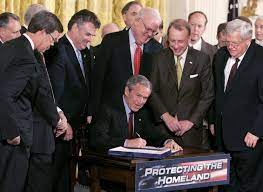
President George W. Bush signs the USA Patriot Act into law – October 26, 2001
In Section 802, the Act defines domestic terrorism. Among the behavior that is defined as criminal:
“Activities that…appear to be intended…to influence the policy of a government by intimidation or coercion [and]…occur primarily within the territorial jurisdiction of the United States.”
The remedies for punishing such criminal behavior were legally in place. President Obama needed only to direct the Justice Department to apply them.
Prosecuting members of Congress would not have violated the separation-of-powers principle. Congressmen have in the past been investigated, indicted and convicted for various criminal offenses.
Such prosecutions–and especially convictions–would have served notice on current and future members of Congress that the lives and fortunes of American citizens may not be held hostage as part of a negotiated settlement.
On August 1, Chris Matthews, host of MSNBC’s “Hardball,” wrapped up his program with a search for “options” to avoid another round of Republican extortion tactics.
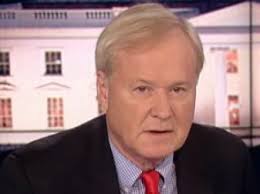
Chris Matthews
“I want to know what steps the president ‘could’ have taken to avoid this hostage-taking.
“…Is there another way than either buckling to the Republicans or letting the government and the country crash?
“How does he use the power of the presidency, the logic, emotion and basic patriotism of the people, to thwart those willing to threaten, disrupt, even possibly destroy to get their way?”
The answer to his questions–then and now–is: Replace the law of fear with the rule of law.
But there was another way Obama could have stood up to Republican extortionists: By urging his fellow Americans to rally to him in a moment of supreme national danger.
President John F. Kennedy did just that–successfully–during the most dangerous crisis of his administration.
Addressing the Nation on October 22, 1962, Kennedy shocked his fellow citizens by revealing that the Soviet Union had installed offensive nuclear missiles in Cuba.
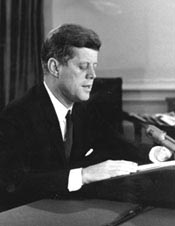
John F. Kennedy
After outlining a series of steps he had taken to end the crisis, Kennedy sought to reassure and inspire his audience. His words are worth remembering today:
“The path we have chosen for the present is full of hazards, as all paths are, but it is the one most consistent with our character and courage as a nation and our commitments around the world.
“The cost of freedom is always high, but Americans have always paid it. And one path we shall never choose, and that is the path of surrender or submission.”
President Obama could have sent that same message to the extortionists of the Republican Party.
Yet this was another option he failed to exploit. And he and the Nation have continued to pay the price for it.
In the fall of 2013, Republicans once again threatened to shut down the Federal Government unless the President agreed to defund the Affordable Care Act (ACA), better known as “Obamacare.
They were enraged that millions of uninsured Americans might receive medical care on a par with that given members of the House and Senate.
So on September 20, the House voted on a short-term government funding bill that included a provision to defund Obamacare.
That provision was a no-go for Senate Democrats and President Obama. If the House and Senate couldn’t reach a compromise, many functions of the federal government would be shut down indefinitely on October 1.
The official reason given by Republicans: They wanted to save the country from bankruptcy–although the Congressional Budget Office stated that the ACA would lower future deficits and Medicare spending.
After passing the House and Senate, the ACA had been signed into law by President Obama on March 23, 2010.
On June 28, 2012, the United States Supreme Court–whose Chief Justice, John Roberts, is a Republican–had upheld the constitutionality of the ACA.
Yet House Republicans continued searching for a way to stop the law from taking effect. By September, 2013, they had voted 42 times to repeal “Obamacare.”
But their efforts had failed; the Democratic-led Senate made it clear it would never go along with such legislation.
Finally, unable to legally overturn the Act or to legislatively repeal it, House Republicans fell back on something much simpler: Threats and fear.
Threats–of voting to shut down salaries paid to most Federal employees. Most, because they themselves would continue to draw hefty salaries while denying them to FBI agents, air traffic controllers and members of the military, among others.
And fear–that would be generated throughout the Federal government, the United States and America’s international allies.
On October 1, 2013, House Republicans made good on their threat. They “shut down the government.”
2016 REPUBLICAN CONVENTION, ABC NEWS, AFFORDABLE CARE ACT (ACA), BARACK OBAMA, BILL CLINTON, CBS NEWS, CHRIS MATTHEWS, CNN, CUBAN MISSILE CRISIS, DEBT CEILING, DONALD TRUMP, EXTORTION, FACEBOOK, HARDBALL, JOHN F. KENNEDY, JUDGE MERRICK GARLAND, MAFIA, MSNBC, NBC NEWS, NEWT GINGRICH, NICCOLO MACHIAVELLI, OBAMACARE, Racketeer Influenced Corrupt Organizations (RICO) Act, REPUBLICANS, RICHARD WOLFFE, ROBERT PAYNE, THE CHICAGO SUN-TIMES, THE CHICAGO TRIBUNE, THE LIFE AND DEATH OF ADOLF HITLER, THE LOS ANGELES TIMES, THE NEW YORK TIMES, THE PRINCE, THE WALL STREET JOURNAL, THE WASHINGTON POST, U.S. HOUSE OF REPRESENTATIVES, U.S. JUSTICE DEPARTMENT, U.S. SENATE, U.S. SENATOR MITCH MCCONNELL, U.S. SUPREME COURT, USA PATRIOT ACT, WARREN BUFFETT
In Bureaucracy, History, Law, Law Enforcement, Politics, Social commentary on March 23, 2016 at 12:01 am
On July 9, 2011, Republican extortionists threatened the Nation with financial ruin and international disgrace unless their demands were met. They refused to raise the debt ceiling unless Democrats agreed to massively cut social programs for the elderly, poor and disabled.
If Congress failed to raise the borrowing limit of the federal government by August 2, the date when the U.S. reached the limit of its borrowing abilities, it would begin defaulting on its loans.
As Warren Buffett, CEO of Berkshire Hathaway, explained the looming economic catastrophe: “If you don’t send out Social Security checks, I would hate to think about the credit meeting at S&P and Moody’s the next morning.
“If you’re not paying millions and millions and millions of people that range in age from 65 on up, money you promised them, you’re not a AAA,” said Buffett.

Warren Buffett
A triple-A credit rating is the highest possible rating that can be received.
And while Republicans demanded that the disadvantaged tighten their belts, they rejected any raising of taxes on their foremost constituency–the wealthiest 1%.
To raise taxes on the wealthy, they insisted, would be a “jobs-killer.” It would “discourage” corporate CEOs from creating tens of thousands of jobs they “want” to create.
Republicans knew this argument was a lie. And so did the editors of Time. The difference between them: The editors of Time were willing to reveal the truth.
In its June 20, 2011 cover-story on “What U.S. Economic Recovery? Five Destructive Myths,” Rana Foroohar, the magazine’s assistant managing editor in charge of economics and business, delivered this warning: Profit-seeking corporations can’t be relied on to ”make it all better.”
Wrote Foroohar:
“There is a fundamental disconnect between the fortunes of American companies, which are doing quite well, and American workers, most of whom are earning a lower hourly wage now than they did during the recession.
“The thing is, companies make plenty of money; they just don’t spend it on workers here.
“There may be $2 trillion sitting on the balance sheets of American corporations globally, but firms show no signs of wanting to spend it in order to hire workers at home.”
As the calendar moved ever closer to the fateful date of August 2, Republican leaders continued to insist: Any deal that includes taxes “can’t pass the House.”
One senior Republican said talks would go right up to–and maybe beyond–the brink of default.
“I think we’ll be here in August,” said Republican Rep. Pete Sessions, of Texas. “We are not going to leave town until a proper deal gets done.”
President Obama had previously insisted on extending the debt ceiling through 2012. But in mid-July, he simply asked congressional leaders to review three options with their members:
- The “Grand Bargain” choice—favored by Obama–would cut deficits by about $4 trillion, including spending cuts and new tax revenues.
- A medium-range plan would aim to reduce the deficit by about $2 trillion.
- The smallest option would cut between $1 trillion and $1.5 trillion, without increased tax revenue or any Medicare and Medicaid cuts.
And the Republican response?
Said Rep. Darrell Issa, chairman of the Oversight and Government Reform Committee: “Quite frankly, [Republican] members of Congress are getting tired of what the president won’t do and what the president wants.”
Noted political analyst Chris Matthews summed up the sheer criminality of what happened within the House of Representatives.
Speaking on MSNBC’s “Hardball,” on July 28–five days before Congress reached its August 2 deadline to raise the debt-ceiling–Matthews noted:
“The first people to bow to the demands of those threatening to blow up the economy were the Republicans in the House, the leaders. The leaders did what the followers told them to do: meet the demands, hold up the country to get their way.

Chris Matthews
“Those followers didn’t win the Senate, or the Presidency, just the House. But by using the House they were able to hold up the entire United States government. They threatened to blow things up economically and it worked.
“They said they were willing to do that–just to get their way–not by persuasion, not by politics, not by democratic government, but by threatening the destruction of the country’s finances.
“Right. So what’s next? The power grid? Will they next time threaten to close down the country’s electricity and communications systems?”

With the United States teetering on the brink of national bankruptcy, President Obama faced three choices:
- Counter Republican extortion attempts via RICO–the Racketeer Influenced Corrupt Organizations Act.
- Make a “Cuban Missile Crisis”-style address to the American people, seeking to rally them against a criminal threat to the financial security of the Nation.
- Cave in to Republican demands.
Unfortunately for Obama and the Nation, he chose Number Three.
But he could have countered that danger via the Racketeer Influenced Corrupt Organizations (RICO) Act.
In 1970, Congress passed RICO, Title 18, United States Code, Sections 1961-1968. Its goal: Destroy the Mafia.
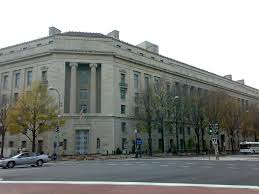
U.S. Department of Justice
RICO opens with a series of definitions of “racketeering activity” which can be prosecuted by Justice Department attorneys. Among those crimes: Extortion.
Extortion is defined as “a criminal offense which occurs when a person unlawfully obtains either money, property or services from a person(s), entity, or institution, through coercion.”
2016 REPUBLICAN CONVENTION, ABC NEWS, AFFORDABLE CARE ACT (ACA), BARACK OBAMA, BILL CLINTON, CBS NEWS, CHRIS MATTHEWS, CNN, CUBAN MISSILE CRISIS, DEBT CEILING, DONALD TRUMP, EXTORTION, FACEBOOK, HARDBALL, JOHN F. KENNEDY, JUDGE MERRICK GARLAND, MAFIA, MSNBC, NBC NEWS, NEWT GINGRICH, NICCOLO MACHIAVELLI, OBAMACARE, Racketeer Influenced Corrupt Organizations (RICO) Act, REPUBLICANS, RICHARD WOLFFE, ROBERT PAYNE, THE CHICAGO SUN-TIMES, THE CHICAGO TRIBUNE, THE LIFE AND DEATH OF ADOLF HITLER, THE LOS ANGELES TIMES, THE NEW YORK TIMES, THE PRINCE, THE WALL STREET JOURNAL, THE WASHINGTON POST, TWITTER, U.S. HOUSE OF REPRESENTATIVES, U.S. JUSTICE DEPARTMENT, U.S. SENATE, U.S. SENATOR MITCH MCCONNELL, U.S. SUPREME COURT, USA PATRIOT ACT, WARREN BUFFETT
In Bureaucracy, History, Law, Law Enforcement, Politics, Social commentary on March 22, 2016 at 12:01 am
On March 16, Donald Trump, the front-runner for the Republican Presidential nomination, issued a warning to his fellow Right-wingers: If he didn’t win the GOP nomination at the convention in July, his supporters would literally riot.
“I think we’ll win before getting to the convention. But I can tell you if we didn’t, if we’re 20 votes short or if we’re 100 short and we’re at 1,100 and somebody else is at 500 or 400…I don’t think you can say that we don’t get it automatically. I think you’d have riots.
“I think you would see problems like you’ve never seen before. I think bad things would happen. I really do. I wouldn’t lead it, but I think bad things would happen.”
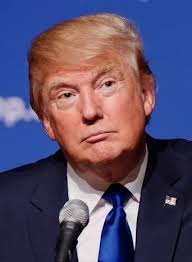
Donald Trump
An NBC reporter summed it up as follows: “As Trump indicated, there is a very real possibility he might lose the nomination if he wins only a plurality of delegates thanks to party rules that allow delegates to support different candidates after the initial ballot.
“In that context, the message to Republicans was clear on [March 16]: Nice convention you got there, shame if something happened to it.”
Anyone who’s ever watched a Mafia movie has heard similar threats: “You really ought to think about paying that protection money. Nice family you got–it would be a shame if anything happened to ’em.”
Paul Ryan, Republican Speaker of the House of Representatives, was quick to respond.
On March 17, he said that it was “unacceptable” for Trump to suggest there would be rioting if he was not chosen as the Republican nominee.
“Nobody should say such things in my opinion because to even address or hint to violence is unacceptable.”
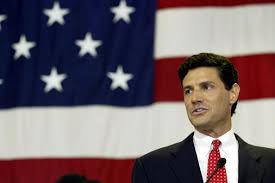
Paul Ryan
And Ohio governor and Republican presidential candidate John Kasich chinned in. “Leaders don’t imply violence,” Kasich told “Face the Nation” on March 20.
“When he says that there could be riots, that’s inappropriate. I think you understand that, okay? Secondly, while we have our differences and disagreements, we’re Americans. Americans don’t say, ‘Let’s take to the streets and have violence.’

John Kasich
“I don’t even want to use the word ‘riots’ or ‘violence.’ That’s inappropriate. Our kids are watching. Now…that doesn’t mean I’m not running a positive campaign, but those kind of comments are way out of bounds. Frankly, they’re outrageous,” said Kasich.”
Yet, for all their public outrage, Republicans are no strangers to the uses of extortion and threats. Their tactics are straight out of the playbook of Adolf Hitler.
Robert Payne, author of the bestselling biography, The Life and Death of Adolf Hitler (1973), described the “negotiating” style of the Nazi dictator thus:
“Although Hitler prized his own talents as a negotiator, a man always capable of striking a good bargain, he was totally lacking in finesse. He was incapable of bargaining. He was like a man who goes up to a fruit peddler and threatens to blow his brains out if he does not sell his applies at the lowest possible price.”
In 1994, Newt Gingrich, then Speaker of the House of Representatives, shut down the Federal Government. Officially, the reason was a budget impasse with President Bill Clinton.
Unofficially–and in reality–the reason was altogether different: Clinton had forced him to sit in the back of Air Force One on a trip to Israel for the funeral of former prime minister Yitzhak Rabin.
“This is petty,” Gingrich confessed to startled reporters. “I’m going to say up front it’s petty, But I think it’s human.
“When you land at Andrews [Air Force Base, in Washington, D.C.] and you’ve been on the plane for 25 hours and nobody has talked to you and they ask you to get off by the back ramp….You just wonder, where is their sense of manners, where is their sense of courtesy?”
Gingrich’s childish verbal tirade was a public relations disaster for the Republicans. “Cry Baby,” screamed the New York Daily News, next to a picture of Gingrich in a diaper.

When House Democrats brought a poster-sized image of the cartoon onto the floor, the Republican majority forced them to remove it.
But the damage was done, and Republicans paid a fearful price at the polls for the shutdown and Gingrich’s candor about the reason for it, losing heavily in the House and Senate.
Still, the Republicans continued their policy of my-way-or-else.
In April, 2011, the United States government almost shut down over Republican demands about subsidized pap smears.
During a late-night White House meeting with President Barack Obama and key Congressional leaders, Republican House Speaker John Boehner made this threat:
His conference would not approve funding for the government if any money were allowed to flow to Planned Parenthood through Title X legislation.
Facing an April 8 deadline, negotiators worked day and night to strike a compromise–and finally reached one.
Three months later–on July 9–Republican extortionists again threatened the Nation with financial ruin and international disgrace unless their demands were met.

Sign of The Black Hand
President Obama had offered to make historic cuts in the federal government and the social safety net–on which millions of Americans depend for their most basic needs.
But House Speaker John Boehner rejected that offer. He would not agree to the tax increases that Democrats wanted to impose on the wealthiest 1% as part of the bargain.

John Boehner
2016 PRESIDENTIAL RACE, ABC NEWS, ABRAHAM LINCOLN, ALTERNET, AMERICABLOG, AP, BABY BOOMER RESISTANCE, BARACK OBAMA, BBC, BLOOMBERG NEWS, BUZZFEED, CBS NEWS, CIVIL RIGHTS ACT OF 1964, CIVIL WAR, CNN, CROOKS AND LIARS, DAILY KOS, DANIEL DAY-LEWIS, DONALD TRUMP, EMANCIPATION PROCLAMATION, FACEBOOK, FIVETHIRTYEIGHT, HARPER’S MAGAZINE, HUFFINGTON POST, LYNDON B. JOHNSON, MEDIA MATTERS, MITT ROMNEY, MOTHER JONES, MOVEON, MOVIES, MSNBC, NBC NEWS, NEW REPUBLIC, NEWSDAY, NEWSWEEK, NPR, PBS NEWSHOUR, POLITICO, POLITICUSUSA, RAW STORY, REUTERS, SALON, SEATTLE TIMES, SLATE, SLAVERY, STEVEN SPIELBERG, TALKING POINTS MEMO, THE ATLANTIC, THE CHICAGO SUN-TIMES, THE CHICAGO TRIBUNE, THE DAILY BEAST, THE DAILY BLOG, THE GUARDIAN, THE HILL, THE HUFFINGTON POST, THE INTERCEPT, THE LOS ANGELES TIMES, THE NATION, THE NEW REPUBLIC, THE NEW YORK TIMES, THE NEW YORKER, THE VILLAGE VOICE, THE WASHINGTON POST, THINKPROGRESS, THIRTEENTH AMENDMENT, TIME, TRUTHDIG, TRUTHOUT, TWITTER, U.S. NEWS & WORLD REPORT, UPI, VOTER ID LAWS, VOTING RIGHTS ACT OF 1965
In Bureaucracy, Entertainment, History, Law, Military, Politics, Social commentary on March 17, 2016 at 12:36 pm
Steven Spielberg’s Lincoln is more than a mesmerizing history lesson.
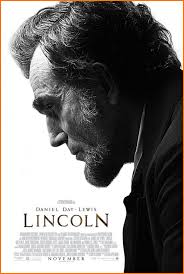
It’s a timely reminder that racism and repression are not confined to any one period or political party.
At the heart of the film: Abraham Lincoln (Daniel Day-Lewis) wants to win ratification of what will be the Thirteenth Amendment to the United States Constitution. An amendment that will forever ban slavery.
True, Lincoln, in 1862, had issued the Emancipation Proclamation. This—in theory—freed slaves held in the Confederate states that had seceded from the Union in 1861.
But Lincoln regards this as a temporary wartime measure. He fears that once the war ends, the Supreme Court may rule the Proclamation unconstitutional. This might allow Southerners to continue practicing slavery, even after losing the war.
To prevent this, Congress must pass an anti-slavery amendment.
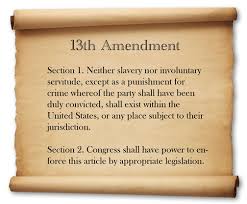
But winning Congressional passage of such an amendment won’t be easy.
The Senate had ratified its passage in 1864. But the amendment must secure approval from the House of Representatives to become law.
And the House is filled with men–there are no women menmbers during the 19th century–who seethe with hostility.
Some are hostile to Lincoln personally. One of them dubs him a dictator–Abraham Africanus.” Another accuses him of shifting his positions for the sake of expediency.
Other members–white men all–are hostile to the idea of “equality between the races.” To them, ending slavery means opening the door to interracial marriage–especially marriage between black men and white women.
Perhaps even worse, it means possibly giving blacks–or women–the the right to vote.
In fact, the possibility that blacks might win voting rights arises early in the movie. Lincoln is speaking to a couple of black Union soldiers, and one of them is unafraid to voice his discontent. He’s upset that black soldiers are paid less than white ones–and that they’re led only by white officers.
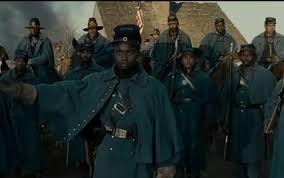
He says that, in time, maybe this will change. Maybe, in 100 years, he guesses, blacks will get the right to vote.
(To the shame of all Americans, that’s how long it will eventually take. Not until the passage of the Voting Rights Act of 1965 will blacks be guaranteed legal protection against discriminatory voting practices.)
To understand the Congressional debate over the Thirteenth Amendment, it’s necessary to remember this: In Lincoln’s time, the Republicans were the party of progressives.
The party was founded on an anti-slavery platform. Its members were thus reviled as “Black Republicans.” And until the 1960s, the South was solidly Democratic.
Democrats were the ones defending the status quo–slavery–and opposing freed blacks in the South of Reconstruction and long afterward.
In short, in the 18th century, Democrats in the South acted as Republicans do now. The South went Republican only after a Democratic President–Lyndon B. Johnson–rammed the Civil Rights Act of 1964 through Congress.
Watching this re-enactment of the 1865 debate in Lincoln is like watching the current Presidential campaign. The same mentalities are at work:
-
Those (in this case, slave-owners) who already have a great deal want to gain even more at the expense of others.
-
Those (slaves and freed blacks) who have little strive to gain more or at least hang onto what they have.
-
Those who defend the privileged wealthy refuse to allow their “social inferiors” to enjoy similar privileges (such as the right to vote).
During the 2012 Presidential race, Republicans tried to bar those likely to vote for President Barack Obama from getting into the voting booth. But their bogus “voter ID” restrictions were struck down in courts across the nation.
Listening to those opposing the amendment, one is reminded of Mitt Romney’s infamous comments about the “47%”:
“Well, there are 47% of the people who will vote for the president no matter what….
“Who are dependent upon government, who believe that–that they are victims, who believe that government has a responsibility to care for them, who believe that they’re entitled to healthcare, to food, to housing, to you name it. But that’s–it’s an entitlement. And the government should give it to them.”
Put another way: “Who says people have a right to obtain medical care, food and housing? If they can’t inherit unearned wealth the way I did, screw them.”
In the end, it’s Abraham Lincoln who has the final word–and leaves his nation the better for it. Through diplomacy and backroom dealings (trading political offices for votes) he wins passage of the anti-slavery amendment.
The ownership of human chattel is finally an ugly memory of the American past.
The movie closes with a historically-correct tribute to Lincoln’s generosity toward those who opposed him–in Congress and on the battlefield. It occurs during Lincoln’s Second Inaugural Address:
“With malice toward none, with charity for all….To bind up the nation’s wounds. To care for him who shall have bourne the battle, and for his widow and his orphan….”
This ending presents a vivid philosophical contrast with the increasingly mean-spirited rhetoric and policies of 2016’s Republican candidates for President–especially those of Donald Trump.
Watching Lincoln, you realize how incredibly lucky America was as a nation to have had such leadership when it was most urgently needed.
.
ABC NEWS, ALAMO, ALTERNET, ANTONIO LOPEZ DE SANTA ANNA, AP, BUZZFEED, CBS NEWS, CNN, CROOKS AND LIARS, DAILY KOZ, DAVID CROCKETT, FACEBOOK, JAMES BOWIE, MEXICO, MOTHER JONES, MOVEON, MSNBC, NBC NEWS, NEWSWEEK, NPR, PBS NEWSHOUR, POLITICO, RAW STORY, REUTERS, SALON, SAM HOUSTON, SAN ANTONIO, SEATTLE TIMES, SLATE, SLAVERY, STEPHEN F. AUSTIN, TEXAS, TEXAS DECLARATION OF INDEPENDENCE, TEXAS REVOLUTION, THE ATLANTIC, THE CHICAGO SUN-TIMES, THE CHICAGO TRIBUNE, THE DAILY BEAST, THE GUARDIAN, THE HILL, THE HUFFINGTON POST, THE LOS ANGELES TIMES, THE NATION, THE NEW YORK TIMES, THE WASHINGTON POST, THERMOPYLAE, THREE HUNDRED SPARTANS, TIME, TWITTER, U.S. NEWS & WORLD REPORT, UPI, USA TODAY, WILLIAM BARRET TRAVIS
In Bureaucracy, History, Military, Politics on March 6, 2016 at 12:01 am
On the night before the final Mexican assault, one man escaped the Alamo to testify to the defenders’ courage. Or so goes the most famous story of the 13-day siege.
He was Louis Rose, a veteran of the Napoleonic wars and the dreadful 1812 retreat from Moscow. Unwilling to die in a hopeless battle, he slipped over a wall and sneaked through Mexican siege lines.
At Grimes County, he found shelter at the homestead of Abraham and Mary Ann Zuber. Their son, William, later claimed that his parents told him of Rose’s visit–and his story of Travis’ “line in the sand” speech.
In 1873, he published the tale in the Texas Almanac.
But many historians believe it is a fabrication. The story comes to us third-hand–from Rose to the Zubers to their son. And it was published 37 years after the Alamo fell.
Even if Travis didn’t draw a line in the sand, every member of the garrison, by remaining to stay, had crossed over his own line.
After a 12-day siege, Santa Anna decided to overwhelm the Alamo.
Some of his officers objected. They wanted to wait for bigger siege cannon to arrive–to knock down the Alamo’s three-feet-thick adobe walls. Without shelter, the defenders would be forced to surrender.
But Santa Anna insisted on an all-out assault: “Without blood and tears, there is no glory.”
The first assault came at about 5 a.m. on Sunday, March 6, 1836.
The fort’s riflemen–aided by 14 cannons–repulsed it. And the second assault as well.
But the third assault proved unstoppable. The Alamo covered three acres, and held at most 250 defenders–against 2,000 Mexican soldiers.
When the Mexicans reached the fort, they mounted scaling ladders and poured over the walls.
Travis was one of the first defenders to fall–shot through the forehead after firing a shotgun into the Mexican soldiery below.

Death of William Barrett Travis (waving sword)
Mexicans broke into the room where the ailing James Bowie lay.
In Three Roads to the Alamo, historian William C. Davis writes that Bowie may have been unconscious or delirious. Mistaking him for a coward, the soldiers bayoneted him and blew out his brains.
But some accounts claim that Bowie died fighting–shooting two Mexicans with pistols, then plunging his famous knife into a third before being bayoneted. Nearly every Alamo movie depicts Bowie’s death this way.

James Bowie’s death
As the Mexicans poured into the fort, at least 60 Texans tried to escape over the walls into the surrounding prairie. But they were quickly dispatched by lance-bearing Mexican cavalry.
The death of David Crockett remains highly controversial.
Baby boomers usually opt for the Walt Disney version: Davy swinging “Old Betsy” as Mexicans surround him. Almost every Alamo movie depicts him fighting to the death.

David Crockett’s Death
But Mexican Lieutenant Colonel Jose Enrique de la Pena claimed Crockett was one of seven Texans who surrendered or were captured and brought before Santa Anna after the battle. Santa Anna ordered their immediate execution, and they were hacked to death with sabers.
Only the 2004 remake of The Alamo has dared to depict this version. Although this version is now accepted by most historians, some still believe the de la Pena diary from which it comes is a forgery.
An hour after the battle erupted, it was over.
That afternoon, Santa Anna ordered the bodies of the slain defenders stacked and burned in three pyres.
Contrary to popular belief, some of the garrison survived:
- Joe, a black slave who had belonged to William B. Travis, the Alamo’s commander;
- Susanah Dickinson, the wife of a lieutenant killed in the Alamo, and her baby, Angelina;
- Several Mexican women and their children.
Also contrary to legend, the bravery of the Alamo defenders did not buy time for Texas to raise an army against Santa Anna. This didn’t happen until after the battle.
But their sacrifice proved crucial in securing Texas’ independence:
- The Alamo’s destruction warned those Texans who had not supported the revolution that they had no choice: They must win, die or flee their homes to the safety of the United States.
- It stirred increasing numbers of Americans to enter Texas and enlist in Sam Houston’s growing army.
- Santa Anna’s army was greatly weakened, losing 600 killed and wounded–a casualty rate of 33%.
- The nearly two-week siege bought time for the Texas convention to meet at Washington-on-the-Brazos and declare independence from Mexico.
On April 21, 1836, Santa Anna made a crucial mistake: During his army’s afternoon siesta, he failed to post sentries around his camp.
That afternoon, Sam Houston’s 900-man army struck the 1,400-man Mexican force at San Jacinto. In 18 minutes, the Texans–shouting “Remember the Alamo!”–killed about 700 Mexican soldiers and wounded 200 others.
The next day, a Texas patrol captured Santa Anna–wearing the uniform of a Mexican private. Resisting angry demands to hang the Mexican dictator, Houston forced Santa Anna to surrender control of Texas in return for his life.
The victory at San Jacinto won the independence of Texas. But the 13-day siege and fall of the Alamo remains the most famous and celebrated part of that conflict.
In 480 B.C., 300 Spartans won immortality at Thermopylae, a narrow mountain pass in ancient Greece, by briefly holding back an invading Persian army of thousands.
Although they died to the last man, their sacrifice inspired the rest of Greece to defeat its invaders.
Like Thermopylae, the battle of the Alamo proved both a defeat–and a victory.
ABC NEWS, ALAMO, ALTERNET, ANTONIO LOPEZ DE SANTA ANNA, AP, BUZZFEED, CBS NEWS, CNN, CROOKS AND LIARS, DAILY KOZ, DAVID CROCKETT, FACEBOOK, JAMES BOWIE, MEXICO, MOTHER JONES, MOVEON, MSNBC, NBC NEWS, NEWSWEEK, NPR, PBS NEWSHOUR, POLITICO, RAW STORY, REUTERS, SALON, SAM HOUSTON, SAN ANTONIO, SEATTLE TIMES, SLATE, SLAVERY, STEPHEN F. AUSTIN, TEXAS, TEXAS DECLARATION OF INDEPENDENCE, TEXAS REVOLUTION, THE ATLANTIC, THE CHICAGO SUN-TIMES, THE CHICAGO TRIBUNE, THE DAILY BEAST, THE GUARDIAN, THE HILL, THE HUFFINGTON POST, THE LOS ANGELES TIMES, THE NATION, THE NEW YORK TIMES, THE WASHINGTON POST, THERMOPYLAE, THREE HUNDRED SPARTANS, TIME, TWITTER, U.S. NEWS & WORLD REPORT, UPI, USA TODAY, WILLIAM B. TRAVIS
In Bureaucracy, History, Military on March 4, 2016 at 12:28 am
Sunday, March 6, 2016, marks the 180th anniversary of the most famous event in Texas history: The fall of the Alamo, a crumbling former Spanish mission in the heart of San Antonio.
After a 12-day siege, 180 to 250 Texans were overwhelmed by 2,000 Mexican soldiers.
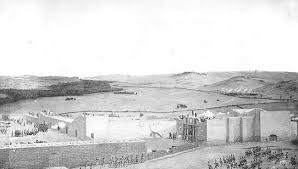
Mexican troops advancing on the Alamo
Americans “remember the Alamo”–but usually for the wrong reasons.
Some historians believe the battle should have never been fought.
The Alamo was not Thermopylae–a narrow mountain pass blocking the Persian march into ancient Greece. Santa Anna could have simply bypassed it.
In fact, several of Santa Anna’s generals urged the Mexican dictator to do just that–leave a small guard to hold down the fort’s defenders and wipe out the undefended, widely-separated Texas settlements.
But pride held Santa Anna fast to the Alamo. His brother-in-law, General Perfecto de Cos, had been forced to surrender the old mission to revolting Texans in December, 1835.
Santa Anna meant to redeem the fort–and his family honor–by force.
In virtually every Alamo movie, its two co-commanders, James Bowie and William Barret Travis, are portrayed as on the verge of all-out war–with each other.
In John Wayne’s heavily fictionalized 1960 film, The Alamo, Bowie and Travis agree to fight a duel as soon as they’ve whipped the Mexicans besieging them.

James Bowie

William B. Travis
In fact, the frictions between the two lasted only a short while. Just before the siege, some of Bowie’s volunteers–a far larger group than Travis’ regulars–got drunk.
Travis ordered them jailed–and Bowie ordered his men to release them. Bowie then went on a roaring drunk. The next day, a sober Bowie apologized to Travis and agreed they should share command.
This proved a wise decision, for just as the siege started, Bowie was felled by worsening illness–typhoid-pneumonia or tuberculosis.
In almost every Alamo movie, Bowie repeatedly leaves the fort to ambush unsuspecting Mexicans.
In reality, he stayed bed-ridden and lay close to death throughout the 13-day siege.
The Texans intended to make a suicidal stand.
Not true.
From the first day of the siege–February 23–almost to the last–March 6, 1836–messengers rode out of the Alamo seeking help. The defenders believed that if they could cram enough men into the three-acre former mission, they could hold Santa Anna at bay.
No reinforcements reached the Alamo.
Not so. On March 1, 32 men from Gonzalez–the only ones to answer Travis’ call–sneaked through the Mexican lines to enter the Alamo.
Meanwhile, the largest Texan force lay at Fort Deviance in Goliad, 85 miles away. This consisted of 500 men commanded by James Walker Fannin, a West Point dropout.
Fannin was better-suited for the role of Hamlet than military commander.
Upon receiving a plea of help from Travis, he set out in a halfhearted attempt to reach the mission. But when a supply wagon broke down, he returned to Fort Defiance and sat out the rest of the siege.
When the Mexican army approached Fort Defiance, Fannin and 400 of his men panicked and fled into the desert. They were surrounded, forced to surrender, and massacred on March 27
The Alamo garrison was fully prepared to confront the Mexican army.
False. When the Mexicans suddenly arrived in San Antonio on the morning of February 23, 1836, they caught the Texans completely by surprise.
The previous night, they had been celebrating the birthday of George Washington. The Texans rushed headlong into the Alamo, hauling all the supplies they could hastily scrounge.
Santa Anna sent a courier under a flag of truce to the Alamo, demanding unconditional surrender. In effect, the Texans were being given the choice of later execution.
Travis replied with a shot from the fort’s biggest cannon, the 18-pounder (so named for the weight of its cannonball).
Santa Anna ordered the hoisting of a blood-red flag and the opening of an artillery salvo. The siege of the Alamo was on.
San Houston, who was elected general of the non-existent army of Texas, desperately tried to relieve the siege.
Not so.
At Washington-on-the-Brazos, 169 miles east of San Antonio, Texan delegates assembled to form a new government. When news reached the delegates that Travis desperately needed reinforcements, many of them wanted to rush to his defense.
But Houston and others declared they must first declare Texas’ independence. On March 2, 1836, they did just that. Houston spent a good deal of the time drunk.

Sam Houston
Did Travis draw a line?
Easily the most famous Alamo story is that of “the line in the sand.”
On the night of March 5–just prior to the final assault–there was a lull in the near-constant Mexican bombardment. Travis assembled his men and gave them a choice:
They could try to surrender and hope that Santa Anna would be merciful. They could try to escape. Or they could stay and fight.
With his sword, Travis drew a line in the dirt and invited those who would stay to cross over to him.
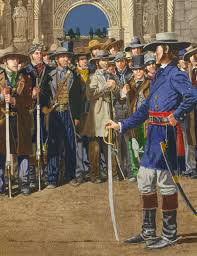
The entire garrison did–except for two men.
One of these was bed-ridden James Bowie. He asked that his sick-bed be carried over to Travis. The other was a veteran of the Napoleonic wars–Louis Rose.


&docid=SiluTuHYHtjaZM&tbnid=uLB-PLYDVdkkVM%3A&w=455&h=341&ei=zeN_VI_hKYHjoATGs4Bo&ved=0CAIQxiAwAA&iact=c)


.jpg&imgrefurl=https%3A%2F%2Fen.wikipedia.org%2Fwiki%2FDonald_Trump&docid=oUQ97aEz8anNMM&tbnid=QsnpHu5vtl_y5M%3A&w=342&h=465&ved=0ahUKEwjN_t6ZzNDLAhUE0mMKHRRiAzcQxiAIAg&iact=c&ictx=1)


 Bureaucracybuster's Blog
2016 PRESIDENTIAL RACE, ABC NEWS, ABCNEWS, ALTERNET, AMERICABLOG, AP, BABY BOOMER RESISTANCE, BBC, BERNIE SANDERS, BLOOD FEUD, BLOOMBERG NEWS, BROTHERS: THE HIDDEN HISTORY OF THE KENNEDY YEARS, BUZZFEED, CARLOS MARCELLO, CBS NEWS, CIA, CNN, COTTER SMITH, CROOKS AND LIARS, CUBA, DAILY KOS, DAVID TALBOT, DONALD TRUMP, ERNEST BORGNINE, FBI, FIDEL CASTRO, FIVETHIRTYEIGHT, GUS RUSSO, HARPER’S MAGAZINE, HILLARY CLINTON, HUFFINGTON POST, INTERNATIONAL BROTHERHOOD OF TEAMSTERS, J. EDGAR HOOVER, JAMES R. HOFFA, JOHN F. KENNEDY, JUSTICE DEPARTMENT, LIVE BY THE SWORD: THE SECRET WAR AGAINST CASTRO AND THE DEATH OF JFK, MAFIA, MEDIA MATTERS, MOTHER JONES, MOVEON, MSNBC, NBC NEWS, NEW REPUBLIC, NEWSDAY, NEWSWEEK, NPR, PBS NEWSHOUR, POLITICO, POLITICUSUSA, RAFAEL EDWARD CRUZ, RAW STORY, REUTERS, ROBERT BLAKE, ROBERT F. KENNEDY, SALON, SAM GROOM, SEATTLE TIMES, Secret Service, SENATE LABOR RACKETS COMMITTEE, SLATE, TALKING POINTS MEMO, THE ATLANTIC, THE CHICAGO SUN-TIMES, THE CHICAGO TRIBUNE, THE DAILY BEAST, THE DAILY BLOG, THE GUARDIAN, THE HILL, THE HUFFINGTON POST, THE INTERCEPT, THE LOS ANGELES TIMES, THE NATION, THE NEW REPUBLIC, THE NEW YORK TIMES, THE NEW YORKER, THE VILLAGE VOICE, THE WALL STREET JOURNAL, THE WASHINGTON POST, THINKPROGRESS, TIME, TRUTHDIG, TRUTHOUT, TWITTER, U.S. NEWS & WORLD REPORT, UPI
A CLASH OF TITANS: PART TWO (OF THREE)
In Bureaucracy, History, Law, Law Enforcement, Politics, Social commentary on April 22, 2016 at 12:10 amThe 1983 TV mini-series, Blood Feud, chronicles the decade-long struggle between Robert F. Kennedy and James R. Hoffa.
Having “helped” Kennedy (Cotter Smith) to oust corrupt Teamsters President Dave Beck, Hoffa (Robert Blake) believes that Kennedy should now be satisfied: “He’s got his scalp. Now he can move on to other things while I run the union.”
But Hoffa has guessed wrong–with fatal results. Realizing that he’s been “played” by Hoffa, a furious Kennedy strikes back.
He orders increased surveillance of Hoffa and his topmost associates. He subpoenas union records and members of both the Teamsters and the Mafia to appear before his committee in public hearings.
And he tries to enlist the aid of legendary FBI Director J. Edgar Hoover (Ernest Borgnine). But Hoover wants no part of a war against organized crime, whose existence he refuses to admit.
Meanwhile, Kennedy’s confrontations with Hoffa grow increasingly fierce. In open hearings, Kennedy accuses Hoffa of receiving kickbacks in the name of his wife. Hoffa damns him for “dirtying my wife’s name.”
Kennedy secures an indictment against Hoffa for hiring a spy to infiltrate the Senate Labor Rackets Committee. He’s so certain of a conviction that he tells the press he’ll “jump off the Capitol building” if Hoffa beats the rap.
But Hoffa’s lawyer, Edward Bennett Williams (Jose Ferrer) puts Kennedy himself on the witness stand. There he portrays Kennedy as a spoiled rich man who’s waging a vendetta against Hoffa.
Hoffa beats the rap, and offers to send Kennedy a parachute. But he jokingly warns reporters: “Hey, Bobby, you better have it checked. I don’t trust myself!”
By 1959, Robert Kennedy’s work as chief counsel for the Senate Labor Rackets Committee is over. But not his determination to send Teamsters President James Hoffa to prison.
Cotter Smith as Robert Kennedy
Throughout 1960, he manages the Presidential campaign for his brother, John F. Kennedy (Sam Groom). By a margin of only 100,000 votes, JFK wins the election.
Hoffa thinks that his troubles are over, that “Bobby” will move on to other pursuits and forget about the Teamsters.
Hoffa is partly right: Kennedy moves on to another job. But it’s the office of United States Attorney General.
JFK, needing someone in the Cabinet he can trust completely, browbeats Robert into becoming the the nation’s top cop.
For Hoffa, it’s a nightmare come true.
As Attorney General, Kennedy no longer has to beg J. Edgar Hoover to attack organized crime. He can–and does–order him to do so.
Throughout the country, the Mafia feels a new heat as FBI agents plant illegal electronic microphones (“bugs”) in their innermost sanctums. Agents openly tail mobsters–and send them to prison in large numbers.
And Kennedy sets up a special unit, composed of topflight prosecutors and investigators, to go after just one man: James Riddle Hoffa. The press comes to call it the “Get Hoffa” squad.
Hoffa continues to beat federal prosecutors in court. But he believes he’s under constant surveillance by the FBI, and his nerves are starting to crack.
Convinced that the FBI has bugged his office, he literally tears apart the room, hoping to find the bug. But he fails to do so.
What he doesn’t know is he’s facing a more personal danger–from one of his closest associates.
He tells a trusted colleague, Edward Grady Partin (Brian Dennehy) how easy it would be to assassinate Kennedy with a rifle or bomb.
Later, Partin gets into a legal jam–and is abandoned by the Teamsters. Hoping to cut a deal, he relays word to the Justice Department of Hoffa’s threats against the Attorney General.
Now working for the Justice Department, Partin sends in reports on Hoffa’s juror-bribing efforts in yet another trial. Hoffa again beats the rap–but now Kennedy has the insider’s proof he needs to put him away for years.
Meanwhile, the Mafia despairs of the increasing pressure of the Justice Department. At a swanky restaurant, several high-ranking members agree that “something” must be done.
[Although this scene is fictional, it’s clearly based on an infamous outburst of Carlos Marcello, the longtime Mafia boss of New Orleans.
Carlos Marcello
[In 1961, Marcello was deported to his native Guatemala on orders by RFK. After illegally re-entering the country, he swore vengeance against the Attorney General.
[In September, 1962, during a meeting with several mob colleagues, he flew into a rage when someone mentioned Kennedy.
“Take the stone out of my shoe!” he shouted, echoing a Sicilian curse. “Don’t you worry about that little Bobby sonofabitch. He’s going to be taken care of!”
[When one of his colleagues warned that murdering RFK would trigger the wrath of his brother, President John F.Kennedy, Marcello replied: “In Sicily they say if you want to kill a dog you don’t cut off the tail. You go for the head.”
[Marcello believed that the death of President Kennedy would render the Attorney General powerless. And he added that he planned to use a “nut” to do the job.]
On November 22, 1963, President John F. Kennedy is assassinated in Dallas, Texas.
Blood Feud clearly implies that the Mafia was responsible.
Share this: